EP4301097A1 - A system and a method for commissioning of lighting system elements - Google Patents
A system and a method for commissioning of lighting system elements Download PDFInfo
- Publication number
- EP4301097A1 EP4301097A1 EP22181764.6A EP22181764A EP4301097A1 EP 4301097 A1 EP4301097 A1 EP 4301097A1 EP 22181764 A EP22181764 A EP 22181764A EP 4301097 A1 EP4301097 A1 EP 4301097A1
- Authority
- EP
- European Patent Office
- Prior art keywords
- lighting system
- lighting
- control
- elements
- network
- Prior art date
- Legal status (The legal status is an assumption and is not a legal conclusion. Google has not performed a legal analysis and makes no representation as to the accuracy of the status listed.)
- Pending
Links
Images

Classifications
-
- H—ELECTRICITY
- H05—ELECTRIC TECHNIQUES NOT OTHERWISE PROVIDED FOR
- H05B—ELECTRIC HEATING; ELECTRIC LIGHT SOURCES NOT OTHERWISE PROVIDED FOR; CIRCUIT ARRANGEMENTS FOR ELECTRIC LIGHT SOURCES, IN GENERAL
- H05B47/00—Circuit arrangements for operating light sources in general, i.e. where the type of light source is not relevant
- H05B47/10—Controlling the light source
- H05B47/175—Controlling the light source by remote control
- H05B47/198—Grouping of control procedures or address assignation to light sources
- H05B47/199—Commissioning of light sources
-
- H—ELECTRICITY
- H05—ELECTRIC TECHNIQUES NOT OTHERWISE PROVIDED FOR
- H05B—ELECTRIC HEATING; ELECTRIC LIGHT SOURCES NOT OTHERWISE PROVIDED FOR; CIRCUIT ARRANGEMENTS FOR ELECTRIC LIGHT SOURCES, IN GENERAL
- H05B47/00—Circuit arrangements for operating light sources in general, i.e. where the type of light source is not relevant
- H05B47/10—Controlling the light source
- H05B47/175—Controlling the light source by remote control
- H05B47/19—Controlling the light source by remote control via wireless transmission
Definitions
- the disclosure relates generally to commissioning of lighting system elements to be elements of a local lighting control network via which the lighting system elements are accessible. More particularly, the disclosure relates to a control system for controlling commissioning of lighting system elements, to a commissioning apparatus for commissioning lighting system elements, to a lighting system element, to a lighting system, and to a method for commissioning lighting system elements.
- lighting system elements are configured to be elements of a local lighting control network to make the lighting system elements accessible for e.g. control purposes and to enable the lighting system elements to communicate with each other.
- Each lighting system element can be for example a luminaire, a control panel, a sensor such as a motion or light sensor, or some other element of a lighting system.
- the local lighting control network makes it possible to implement different functionalities in a lighting system such as for example a functionality where one or more luminaires is/are switched on in response to a certain motion sensor observing motion or an actuation of certain control panel element.
- lighting system elements need to be commissioned to be elements of a local lighting control network of the kind mentioned above.
- the commissioning of a lighting system element comprises typically a process of authenticating the lighting system element and providing it with appropriate network credentials, such as e.g. a device identifier, a corresponding password, and/or other data, which enable the lighting system element to become an element of the local lighting control network.
- network credentials such as e.g. a device identifier, a corresponding password, and/or other data
- the commissioning of a lighting system may further comprise configuring the lighting system to react to different events such as sensor signals or control panel actuations.
- the network credentials may be created and/or contained in a central controller of the lighting system.
- the lighting system elements are installed in their intended locations, which may be physically at the other end of the building compared to the central controller, out of reach of the wireless reach of the central controller, and therefore the credentials cannot be directly communicated from the central controller to the lighting system elements. Therefore, a method is needed to securely transmit the credentials to the lighting system elements using an intermediate commissioning device to carry the credentials.
- the local lighting control network can be based on for example the Thread network protocol which is an Internet Protocol version 6 "IPv6" -based, low-power mesh networking technology for Internet of things “IoT” devices.
- IPv6 Internet Protocol version 6
- a method according to the invention comprises sending, from a commissioning apparatus to a control system of the lighting system, a device identifier related to the commissioning apparatus in response to a need to commission one or more lighting system elements to be one or more elements of the local lighting control network via which the one or more lighting system elements are accessible.
- the commissioning apparatus is connected to the control system via a data transfer arrangement such that inappropriate and possibly hostile devices cannot be connected to the control system.
- a wired connection to the control system and a socket of the control system for the wired connection can be in a locked room, or there can be a wireless connection protected with a password and/or other protection means.
- a proprietary software may be needed in the commissioning apparatus to be able to establish the data transfer arrangement.
- the method comprises encrypting, at the control system, network credentials by using the device identifier as at least a part of an encryption key, wherein the network credentials enable the one or more lighting system elements to be one or more elements of the local lighting control network.
- the method comprises sending the encrypted network credentials from the control system to the commissioning apparatus.
- the method comprises decrypting, at the commissioning apparatus, the encrypted network credentials, and sending, from the commissioning apparatus, the decrypted network credentials and the device identifier to the one or more lighting system elements to commission the one or more lighting system elements to be one or more elements of the local lighting control network.
- the decrypted network credentials and the device identifier can be transferred from the commissioning apparatus to the one or more lighting system elements via for example point-to-point Bluetooth ® links or via a Bluetooth ® piconet.
- Each network element which has received the network credentials and the device identifier becomes an element of the lighting control network and deactivates its ability to receive data from outside the local lighting control network to prevent inappropriate tampering of the lighting system element by external devices.
- a data communication protocol that is used between the commissioning apparatus and the one or more lighting system elements, e.g. Bluetooth ® point-to-point or Bluetooth ® piconet, is advantageously different from a data communication protocol used inside the local lighting control network e.g. the Thread network protocol.
- the use of the different data communication protocols makes it easier to prevent inappropriate tampering of successfully commissioned lighting system elements by external devices which do not belong to the local lighting control network.
- the method comprises sending, from the control system and via the local lighting control network, a query message to the above-mentioned one or more lighting system elements in response to a situation in which the control system has recognized accession of the one or more lighting system elements into the local lighting control network.
- the recognition can be based on e.g. the Thread network protocol.
- the method comprises sending, from the control system and via the local lighting control network, a return-command to the one or more lighting system elements in response to a situation in which the one or more lighting system elements have failed to reply to the above-mentioned query message with a reply message indicative of the device identifier, the return-command setting the one or more lighting system elements into a non-commissioned state in which the one or more lighting system elements are capable of communicating with the commissioning apparatus and are outside the local lighting control network.
- the control system authenticates, with the aid of the above-mentioned query message, that the commissionings have been carried out by an appropriate commissioning apparatus and not by any inappropriate and possibly hostile entity.
- Successfully commissioned lighting system elements are advantageously enabled to communicate within the local lighting control network only, to prevent inappropriate tampering of these lighting system elements by inappropriate and possibly hostile external entities from outside the local lighting control network.
- a control system for controlling commissioning of lighting system elements.
- a control system according to the invention comprises:
- the data processing system of the control system is configured to:
- a commissioning apparatus for commissioning lighting system elements.
- a commissioning apparatus according to the invention comprises:
- the data processing system of the commissioning apparatus is configured to:
- a lighting system element that can be for example a luminaire, a control panel, a sensor such as a motion or light sensor, or some other element of a lighting system.
- a lighting system element according to the invention comprises:
- the data processing system of the lighting system element is configured to:
- a new lighting system that comprises:
- Figure 1 illustrates a lighting system according to an exemplifying and non-limiting embodiment.
- the lighting system comprises lighting system elements 102, 103, 104, and 105 each of which is a lighting system element according to an exemplifying and non-limiting embodiment.
- the lighting system elements 102-104 are luminaires and the lighting system element 105 is a control panel for manually controlling the luminaires.
- the lighting system comprises a control system 101.
- the above-mentioned control panel when commissioned, may be configured to transmit signals corresponding to manual inputs by a user interacting with the control panel to the control system 101, which may be configured to send control commands based on the inputs addressed to one or more of the luminaires 102-104.
- the control panel may be configured to directly control the one or more luminaires 102-104.
- the control system 101 is configured to control commissioning of the lighting system elements 102-105 to be elements of a local lighting control network 106 via which the lighting system elements 102-105 are accessible to communicate with the control system 101.
- the local lighting control network 106 can be based on for example the Thread network protocol which is an Internet Protocol version 6 "IPv6"-based, low-power mesh networking technology for Internet of things "IoT" devices. Lighting control commands used in the local lighting control network may be based on for example the DALI protocol.
- the control system 101 may also act as a central controller of the lighting system, in other words, control other functionalities of the lighting system, such as for example automatic activation and deactivation of the luminaires.
- a lighting system may comprise two or more control systems each of which is configured to control a subset of lighting system elements.
- the lighting system illustrated in figure 1 is connected to a commissioning apparatus 107 according to an exemplifying and non-limiting embodiment and configured to commission the lighting system elements 102-105 to be elements of the local lighting control network 106.
- the commissioning apparatus 107 comprises a mobile device 114 and an application computer 115 which are wirelessly connected to each other with e.g. a Bluetooth ® connection.
- the connection between the mobile device and the application computer may be a wired connection, for example by using a data cable.
- connection may alternatively be based on, for example, using a camera of the mobile device and/or the application computer, to read information for example in the form of a QR code from the screen of the other device.
- the commissioning apparatus 107 may consist of an application computer, such as a laptop computer, which can easily be carried around in the area where the lighting system is to be commissioned. However, a smaller mobile device may be more convenient to carry around and to place in locations close to the lighting system elements typically installed in the ceiling.
- the commissioning apparatus for example the application computer 115 of the commissioning apparatus, comprises software used to configure the lighting system, such as assigning luminaires into groups, assigning sensors to control groups of luminaires or individual luminaires, and configuring different lighting scenes, which can be recalled, for example, by using a control panel.
- the control system 101 comprises a first communication interface 108 configured to connect communicatively to the commissioning apparatus 107.
- the first communication interface 108 of the control system 101 can be configured to support for example one of the following to communicate with the commissioning apparatus 107: a wired data link, a Wi-Fi network protocol based on the IEEE 802.11 standard, and the Bluetooth ® protocol.
- a data link between the control system 101 and the commissioning apparatus 107 is a wired data link that may comprise an optical fiber or an electric data cable.
- the commissioning apparatus 107 is connected to the control system 101 via a data transfer arrangement such that inappropriate and possibly hostile devices cannot be connected to the control system 101.
- the control system 101 comprises a second communication interface 109 configured to connect wirelessly and communicatively to the lighting system elements 102-105 via the local lighting control network 106 that can be e.g. a Thread network.
- the control system 101 comprises a data processing system 110 connected to the first and second communication interfaces 108 and 109.
- the commissioning apparatus 107 comprises a first communication interface 111 configured to connect communicatively to the control system 101 with for example a wired data link, a Wi-Fi network protocol based on the IEEE 802.11 standard, or the Bluetooth ® protocol.
- the first communication interface 111 is connected to the control system 101 with the wired data link.
- the commissioning apparatus 107 comprises a second communication interface 112 configured to connect wirelessly and communicatively to the lighting system elements 102-105 via for example Bluetooth ® piconet or Bluetooth ® point-to-point connections. Using Bluetooth piconet allows to connect to several lighting system elements at the same time, enabling faster commissioning of the lighting system.
- the commissioning apparatus 107 comprises a data processing system 113 connected to the first and second communication interfaces 111 and 112 of the commissioning apparatus 107.
- the data processing system 113 of the commissioning apparatus 107 is constituted by data processors 116 and 117 of the mobile device 114 and the application computer 115, respectively.
- the data processing system 113 of the commissioning apparatus 107 is configured to control the first communication interface 111 of the commissioning apparatus 107 to send, to the control system 101, a device identifier related to the commissioning apparatus 107 in response to a need to commission the lighting system elements 102-105, or at least some of them, to be elements of the local lighting control network 106. It is also possible that the first communication interface 111 of the commissioning apparatus 107 is configured to implement a connection to the internet and correspondingly the first communication interface 108 of the control system 101 is configured to implement a connection to the internet, and the first communication interface 111 of the commissioning apparatus 107 is configured to send the device identifier to the control system 101 via the internet.
- the device identifier can be for example a phone number of the mobile device 114 of the commissioning apparatus 107, an International Mobile Equipment Identity "IMEI" code of the mobile device 114, or a media access control "MAC" address of the mobile device 114 or of the application computer 115 of the the commissioning apparatus 107. It is also possible that the device identifier is a temporary device identifier that can be formed for example by using the MAC address or the IMEI code as a seed and by using a time stamp or some other varying data to modify the seed to obtain the temporary device identifier.
- IMEI International Mobile Equipment Identity
- MAC media access control
- the data processing system 110 of the control system 101 is configured to encrypt network credentials by using the above-mentioned device identifier related to the commissioning apparatus 107 as at least a part of an encryption key in response to reception of the device identifier from the commissioning apparatus 107.
- the network credentials may comprise for example passwords and/or other data which enable the lighting system elements 102-105 to be elements of the local lighting control network 106.
- the network credentials can be stored in a memory device of the control system 101 or in a memory device accessible by the control system 101.
- the data processing system 110 of the control system 101 is configured to control the first communication interface 108 of the control system 101 to send the encrypted network credentials to the commissioning apparatus 107 to enable the commissioning apparatus 107 to commission the lighting system elements 102-105 to be elements of the local lighting control network 106.
- the data processing system 113 of the commissioning apparatus 107 is configured to receive, from the control system 101, the above-mentioned encrypted network credentials.
- the data processing system 113 of the commissioning apparatus 107 is configured to decrypt the encrypted network credentials and control the second communication interface 112 of the commissioning apparatus 107 to send the decrypted network credentials and the device identifier related to the commissioning apparatus 107 to the lighting system elements 102-105 to commission the lighting system elements 102-105 to be elements of the local lighting control network 106.
- the second communication interface 112 of the commissioning apparatus 107 can be configured to use Bluetooth piconet or Bluetooth ® point-to-point connections to send the decrypted network credentials and the device identifier to the lighting system elements 102-105.
- the commissioning apparatus may display identifiers of all Bluetooth devices within its reach, and the user of the commissioning apparatus may select among all devices those lighting system elements 102-105 the user intends to commission to the lighting control network. The selection may be performed for example based on the form of the identifier, which may decode the type of the device.
- the commissioning apparatus may be configured to instruct a selected device to identify itself, for example a luminaire may be instructed to blink its light visibly when selected, so that the user can be verify which lighting system elements are about to be commissioned to the lighting control network.
- the commissioning apparatus for example the mobile device of the commissioning apparatus, can be provided with a device 130 for determining the location of the apparatus, such as a Global Positioning System "GPS" device.
- GPS Global Positioning System
- the commissioning apparatus can save into its memory the current location of the commissioning apparatus together with the identifiers of the lighting system elements it is connected to. In this manner, the approximate locations of all the lighting system elements commissioned using the commissioning apparatus will be saved in the memory of the commissioning apparatus.
- the information related to which lightning system elements e.g.
- luminaires, control panels, and/ or sensors, were commissioned without the commissioning device changing location in between can be used to identify lighting system elements likely located in the same space, such as in the same room, and relatively close to each other. This information can be of great importance at a later stage, when the commissioning apparatus can be used to configure the operation of the lighting system, such as which luminaires should react to signals from a certain sensor.
- knowing the approximate locations allows to place the lighting system elements on a floorplan of a building, so that a maintenance can see from their monitoring screen that a light source of a luminaire needs to be replaced in certain room, or usage statistics based on motion sensor signals can be collected and shown.
- the lighting system element 102 is explained in more details below.
- the other lighting system elements 103-105 may comprise means corresponding to those of the lighting system element 102 for becoming and operating as elements of the local lighting control network 106.
- the lighting system element 102 comprises a first communication interface 119 configured to connect wirelessly and communicatively to the commissioning apparatus 107.
- the first communication interface 119 of the lighting system element 102 can be configured to support for example the Bluetooth piconet or a Bluetooth ® point-to-point connection.
- the lighting system element 102 comprises a second communication interface 120 configured to connect wirelessly and communicatively to the local lighting control network 106 that can be for example a Thread network.
- the lighting system element 102 comprises a data processing system 121 connected to the first and second communication interfaces 119 and 120 of the lighting system element 102.
- the data processing system 121 of the lighting system element 102 is configured to deactivate the first communication interface 119 of the lighting system element 102 and activate the second communication interface 120 of the lighting system element 102 in response to reception of the above-mentioned network credentials and the device identifier related to the commissioning apparatus 107 from the commissioning apparatus 107.
- the data processing system 121 of the lighting system element 102 is configured to commission the lighting system element 102 to be an element of the local lighting control network 106 with the aid of the received network credentials.
- the lighting system elements can be configured to join the local lighting control network 106 in a limited mode, wherein they can be seen by the local lighting control network 106 but are not yet fully functional elements of the local lighting control network 106.
- the data processing system 110 of the control system 101 is configured to control the second communication interface 109 of the control system 101 to send a query message to the lighting system elements 102-105 in response to a situation in which the control system 101 has recognized accession of the lighting system elements 102-105 into the local lighting control network 106.
- the recognition can be based on e.g. functionalities of the Thread network protocol.
- the data processing system 121 of the lighting system element 102 is configured to control the second communication interface 120 of the lighting system element 102 to send, to the control system 101 via the local lighting control network 106, a reply message indicative of the above-mentioned device identifier related to the commissioning apparatus 107 in response to reception of the above-mentioned query message from the control system 101 via the local lighting control network 106.
- the data processing system 110 of the control system 101 is configured to control the second communication interface 109 of the control system 101 to send, via the local lighting control network 106, a return-command to one or more of the lighting system elements 102-105 in response to a situation in which the one or more of the lighting system elements 102-105 has/have failed to reply to the above-mentioned query message with a reply message indicative of the device identifier related to the commissioning apparatus 107.
- the return-command sets the one or more of the lighting system elements 102-105 into a non-commissioned state in which the lighting system elements 102-105 are capable of communicating with the commissioning apparatus 107 and are outside the local lighting control network 106.
- the above-mentioned return-command may comprise a sub-command to activate the one or more of the lighting system elements 102-105 to be capable of communicating with the commissioning apparatus 107. It is also possible that the lighting system elements 102-105 are configured to automatically activate themselves to communicate with the commissioning apparatus 107 in response to a reception of the return-command. In this way, the lighting system elements are available to be commissioned again in case they have failed to respond with an appropriate device identifier related to the commissioning apparatus 107.
- the data processing system 110 is configured to set, in status bookkeeping maintained by the control system 101, a status of each of the lighting system elements 102-105 to be an allowed device in response to a situation in which the lighting system element under consideration has successfully replied to the above-mentioned query message with a reply message indicative of the device identifier related to the commissioning apparatus 107.
- the control system 101 will only address communications to the allowed devices and only communications from the allowed devices are accepted by the control system 101.
- the local lighting control network 106 also allows lighting system elements to address each other directly, such as a control panel being configured to directly control one or more of the luminaires 102-104, the control system 101 is configured to share a list of allowed devices also to one or more appropriate elements of the local lighting control network 106.
- the data processing system 110 is configured to set a validity time for the device identifier received from the commissioning apparatus 107 and to control the second communication interface 109 of the control system 101 to send the above-mentioned return-command to the lighting system elements 102-105 if the validity time of the device identifier has elapsed when receiving, from the lighting system elements 102-105, the reply messages indicative of the device identifier related to the commissioning apparatus 107.
- the data processing system 121 of the lighting system element 102 is configured to deactivate the second communication interface 120 of the lighting system element 102 and activate the first communication interface 119 of the lighting system element 102 in response to receiving, from the control system 101 via the local lighting control network 106, the above-mentioned return-command to return to the non-commissioned state.
- Each of the data processing system 110 of the control device 101, the data processing system 113 of the commissioning apparatus 107, and the data processing system 121 of the lighting system element 102 can be implemented with one or more data processor circuits each of which can be a programmable data processor provided with an appropriate software, a dedicated hardware data processor such as for example an application specific integrated circuit "ASIC", and/or a configurable hardware data processor such as for example a field programmable gate array "FPGA”.
- each of the data processing systems 110, 113, and 121 may comprise one or more memory devices such as e.g. a random-access memory "RAM” circuit.
- RAM random-access memory
- a computer program according to an exemplifying and non-limiting embodiment for running the control device 101 comprises computer executable instructions to control the programmable data processing system of the control device 101 to:
- a computer program according to an exemplifying and non-limiting embodiment for running the commissioning apparatus 107 comprises computer executable instructions to control the programmable data processing system of the commissioning apparatus 107 to:
- the exemplifying commissioning apparatus 107 illustrated in figure 1 comprises the mobile device 114 and the application computer 115.
- the computer program for running the commissioning apparatus 107 may comprise two computer program modules - one for the mobile device 114 and another for the application computer 115. It is also possible that the computer program for running the commissioning apparatus 107 is a single computer program module which is loaded into the programmable data processors of both the mobile device 114 and the application computer 115, and the programmable data processors of the mobile device 114 and the application computer 115 are configured to use relevant parts, e.g. relevant subroutines and functions, of the computer program.
- a computer program according to an exemplifying and non-limiting embodiment for running the lighting system element 102 comprises computer executable instructions to control the programmable data processing system of the lighting system element 102 to:
- a data processor program product comprises a non-volatile data processor readable medium encoded with a data processor program according to an embodiment of invention.
- a non-volatile data processor readable medium is encoded with a data processor program according to an embodiment of invention.
- a signal according to an exemplifying and non-limiting embodiment is encoded to carry information defining a data processor program according to an embodiment of invention.
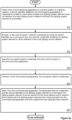
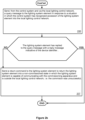
- FIGS. 2a and 2b show a flowchart of a method according to an exemplifying and non-limiting embodiment for commissioning lighting system elements to be elements of a local lighting control network of a lighting system.
- the method comprises the following actions:
- the above-mentioned return-command comprises a sub-command to activate each of the one or more lighting system elements to be capable of communicating with the commissioning apparatus.
- a method comprises setting, at the control system, a validity time for the device identifier received from the commissioning apparatus and sending, from the control system and via the local lighting control network, the return-command to the one or more lighting system elements if the validity time of the device identifier has elapsed when receiving the reply message indicative of the device identifier from the one or more lighting system elements.
- a method comprises setting, in status bookkeeping maintained by the control system, a status of each of the lighting system elements to be an allowed device in response to a situation in which the lighting system element under consideration has successfully replied to the above-mentioned query message with a reply message indicative of the device identifier related to the commissioning apparatus.
- the control system will only address communications to the allowed devices and only communications from the allowed devices are accepted by the control system.
- a method comprises sharing, from the control system to one or more of the elements of the local lighting control network, a list of allowed devices to make these one or more elements, e.g. a control panel, of the local lighting control network aware of the elements of the local lighting control network which are eligible to directly communicate with the one or more elements, e.g. to be controlled by the one or more elements.
- the device identifier is sent from the commissioning apparatus to the control system with one of the following: a wired data link, a wireless data link based on a Wi-Fi network protocol based on the IEEE 802.11 standard, a wireless data link based on the Bluetooth ® protocol.
- the device identifier is sent from the commissioning apparatus to the control system via the internet.
- the local lighting control network is based on the Thread network protocol.
- the commissioning apparatus comprises a mobile device and an application computer.
- the mobile device sends the device identifier to the application computer, receives the encrypted network credentials from the application computer, decrypts the encrypted network credentials, and sends the decrypted network credentials and the device identifier to the one or more lighting system elements.
- the application computer forwards the device identifier to the control system, receives the encrypted network credentials from the control system, and forwards the received encrypted network credentials to the mobile device.
- the network credentials and the device identifier are sent from the commissioning apparatus to the one or more lighting system elements via a Bluetooth piconet network or via Bluetooth ® point-to-point connections.
- a method comprises determining a location of the commissioning apparatus, and storing, into a memory, location data indicative of the location of the commissioning apparatus together with identifier data of one or more of the lighting system elements when the commissioning apparatus is wirelessly and communicatively connected to the one or more of the lighting system elements.
Landscapes
- Engineering & Computer Science (AREA)
- Computer Networks & Wireless Communication (AREA)
- Circuit Arrangement For Electric Light Sources In General (AREA)
Abstract
Description
- The disclosure relates generally to commissioning of lighting system elements to be elements of a local lighting control network via which the lighting system elements are accessible. More particularly, the disclosure relates to a control system for controlling commissioning of lighting system elements, to a commissioning apparatus for commissioning lighting system elements, to a lighting system element, to a lighting system, and to a method for commissioning lighting system elements.
- In many lighting systems, lighting system elements are configured to be elements of a local lighting control network to make the lighting system elements accessible for e.g. control purposes and to enable the lighting system elements to communicate with each other. Each lighting system element can be for example a luminaire, a control panel, a sensor such as a motion or light sensor, or some other element of a lighting system. The local lighting control network makes it possible to implement different functionalities in a lighting system such as for example a functionality where one or more luminaires is/are switched on in response to a certain motion sensor observing motion or an actuation of certain control panel element.
- In many cases, lighting system elements need to be commissioned to be elements of a local lighting control network of the kind mentioned above. Especially in a case of wirelessly controlled lighting network, the commissioning of a lighting system element comprises typically a process of authenticating the lighting system element and providing it with appropriate network credentials, such as e.g. a device identifier, a corresponding password, and/or other data, which enable the lighting system element to become an element of the local lighting control network. Furthermore, there is often a need to ensure that successfully commissioned lighting system elements are not tampered via inappropriate and possibly hostile external devices when the lighting system elements belong to the local lighting control network. The commissioning of a lighting system may further comprise configuring the lighting system to react to different events such as sensor signals or control panel actuations.
- The network credentials may be created and/or contained in a central controller of the lighting system. At the time of commissioning, the lighting system elements are installed in their intended locations, which may be physically at the other end of the building compared to the central controller, out of reach of the wireless reach of the central controller, and therefore the credentials cannot be directly communicated from the central controller to the lighting system elements. Therefore, a method is needed to securely transmit the credentials to the lighting system elements using an intermediate commissioning device to carry the credentials.
- The following presents a simplified summary in to provide a basic understanding of some aspects of various invention embodiments. The summary is not an extensive overview of the invention. It is neither intended to identify key or critical elements of the invention nor to delineate the scope of the invention. The following summary merely presents some concepts in a simplified form as a prelude to a more detailed description of exemplifying embodiments of the invention.
- In accordance with the invention, there is provided a new method for commissioning lighting system elements to be elements of a local lighting control network of a lighting system. The local lighting control network can be based on for example the Thread network protocol which is an Internet Protocol version 6 "IPv6" -based, low-power mesh networking technology for Internet of things "IoT" devices.
- A method according to the invention comprises sending, from a commissioning apparatus to a control system of the lighting system, a device identifier related to the commissioning apparatus in response to a need to commission one or more lighting system elements to be one or more elements of the local lighting control network via which the one or more lighting system elements are accessible. Advantageously, the commissioning apparatus is connected to the control system via a data transfer arrangement such that inappropriate and possibly hostile devices cannot be connected to the control system. For example, there can be a wired connection to the control system and a socket of the control system for the wired connection can be in a locked room, or there can be a wireless connection protected with a password and/or other protection means. Additionally, or alternatively, a proprietary software may be needed in the commissioning apparatus to be able to establish the data transfer arrangement.
- The method comprises encrypting, at the control system, network credentials by using the device identifier as at least a part of an encryption key, wherein the network credentials enable the one or more lighting system elements to be one or more elements of the local lighting control network. The method comprises sending the encrypted network credentials from the control system to the commissioning apparatus. The method comprises decrypting, at the commissioning apparatus, the encrypted network credentials, and sending, from the commissioning apparatus, the decrypted network credentials and the device identifier to the one or more lighting system elements to commission the one or more lighting system elements to be one or more elements of the local lighting control network. The decrypted network credentials and the device identifier can be transferred from the commissioning apparatus to the one or more lighting system elements via for example point-to-point Bluetooth® links or via a Bluetooth® piconet. Each network element which has received the network credentials and the device identifier becomes an element of the lighting control network and deactivates its ability to receive data from outside the local lighting control network to prevent inappropriate tampering of the lighting system element by external devices. A data communication protocol that is used between the commissioning apparatus and the one or more lighting system elements, e.g. Bluetooth® point-to-point or Bluetooth® piconet, is advantageously different from a data communication protocol used inside the local lighting control network e.g. the Thread network protocol. The use of the different data communication protocols makes it easier to prevent inappropriate tampering of successfully commissioned lighting system elements by external devices which do not belong to the local lighting control network.
- The method comprises sending, from the control system and via the local lighting control network, a query message to the above-mentioned one or more lighting system elements in response to a situation in which the control system has recognized accession of the one or more lighting system elements into the local lighting control network. The recognition can be based on e.g. the Thread network protocol.
- The method comprises sending, from the control system and via the local lighting control network, a return-command to the one or more lighting system elements in response to a situation in which the one or more lighting system elements have failed to reply to the above-mentioned query message with a reply message indicative of the device identifier, the return-command setting the one or more lighting system elements into a non-commissioned state in which the one or more lighting system elements are capable of communicating with the commissioning apparatus and are outside the local lighting control network.
- In the above-described method according to the invention, the control system authenticates, with the aid of the above-mentioned query message, that the commissionings have been carried out by an appropriate commissioning apparatus and not by any inappropriate and possibly hostile entity. Successfully commissioned lighting system elements are advantageously enabled to communicate within the local lighting control network only, to prevent inappropriate tampering of these lighting system elements by inappropriate and possibly hostile external entities from outside the local lighting control network.
- In accordance with the invention, there is also provided a new control system for controlling commissioning of lighting system elements. A control system according to the invention comprises:
- a first communication interface configured to connect communicatively to a commissioning apparatus,
- a second communication interface configured to connect wirelessly and communicatively, with e.g. the Thread network protocol, to the lighting system elements, and
- a data processing system connected to the first and second communication interfaces.
- The data processing system of the control system is configured to:
- encrypt network credentials by using a device identifier as an encryption key in response to reception of the device identifier from the commissioning apparatus, the network credentials enabling one or more of the lighting system elements to be one or more elements of a local lighting control network, e.g. a Thread network, via which the one or more lighting system elements are accessible,
- control the first communication interface to send the encrypted network credentials to the commissioning apparatus to enable the commissioning apparatus to commission the one or more of the lighting system elements to be the one or more elements of the local lighting control network,
- control the second communication interface to send, via the local lighting control network, a query message to the one or more lighting system elements in response to a situation in which the control system has recognized accession of the one or more lighting system elements into the local lighting control network, and
- control the second communication interface to send, via the local lighting control network, a return-command to the one or more lighting system elements in response to a situation in which the one or more lighting system elements have failed to reply to the above-mentioned query message with a reply message indicative of the device identifier, the return-command setting the one or more lighting system elements into a non-commissioned state in which the one or more lighting system elements are capable of communicating with the commissioning apparatus and are outside the local lighting control network.
- In accordance with the invention, there is also provided a new commissioning apparatus for commissioning lighting system elements. A commissioning apparatus according to the invention comprises:
- a first communication interface configured to connect communicatively to a control system configured to control the commissioning of the lighting system elements,
- a second communication interface configured to connect wirelessly and communicatively, with e.g. the Thread network protocol, to the lighting system elements, and
- a data processing system connected to the first and second communication interfaces.
- The data processing system of the commissioning apparatus is configured to:
- control the first communication interface to send, to the control system, a device identifier related to the commissioning apparatus in response to a need to commission one or more of the lighting system elements to be one or more elements of a local lighting control network via which the one or more lighting system elements are accessible,
- receive, from the control system, network credentials encrypted by using the device identifier as an encryption key, and
- decrypt the encrypted network credentials and control the second communication interface to send the decrypted network credentials and the device identifier to the one or more lighting system elements to commission the one or more lighting system elements to be the one or more elements of the local lighting control network.
- In accordance with the invention, there is also provided a new lighting system element that can be for example a luminaire, a control panel, a sensor such as a motion or light sensor, or some other element of a lighting system. A lighting system element according to the invention comprises:
- a first communication interface configured to connect wirelessly and communicatively, e.g. with the Bluetooth® point-to-point or the Bluetooth® piconet, to a commissioning apparatus for commissioning the lighting system element to be an element of a local lighting control network via which the lighting system element is accessible,
- a second communication interface configured to connect wirelessly and communicatively, e.g. with the Thread network protocol, to the local lighting control network, and
- a data processing system connected to the first and second communication interfaces,
- The data processing system of the lighting system element is configured to:
- deactivate the first communication interface and activate the second communication interface in response to reception of network credentials and a device identifier from the commissioning apparatus via the first communication interface,
- commission the lighting system element to be an element of the local lighting control network based on the received network credentials,
- control the second communication interface to send, to the local lighting control network, a reply message indicative of the received device identifier in response to reception of a query message from the local lighting control network via the second communication interface, and.
- deactivate the second communication interface and activate the first communication interface in response to receiving, from the local lighting control network, a return-command to return to a non-commissioned state.
- In accordance with the invention, there is also provided a new lighting system that comprises:
- lighting system elements according to the invention and capable of being commissioned to be elements of a local lighting control network by a commissioning apparatus according to the invention, and
- at least one control system according to the invention and configured to control commissioning of the lighting system elements to be the elements of the local lighting control network via which the lighting system elements are accessible.
- Exemplifying and non-limiting embodiments are described in accompanied dependent claims.
- Various exemplifying and non-limiting embodiments both as to constructions and to methods of operation, together with additional objects and advantages thereof, will be best understood from the following description of specific exemplifying and non-limiting embodiments when read in conjunction with the accompanying drawings.
- The verbs "to comprise" and "to include" are used in this document as open limitations that neither exclude nor require the existence of also un-recited features.
- The words "communicate", "communication" and "communicatively" do not necessarily mean in this document a bidirectional communication implemented with bidirectional data transfer but, depending on the context, a unidirectional communication implemented with unidirectional data transfer is possible, too. For example, transfer of network credentials and a device identifier from the commissioning apparatus to lighting system elements represents unidirectional communication.
- The features recited in dependent claims are mutually freely combinable unless otherwise explicitly stated.
- Furthermore, it is to be understood that the use of "a" or "an", i.e. a singular form, throughout this document does not exclude a plurality.
- Exemplifying and non-limiting embodiments and their advantages are explained in greater detail below with reference to the accompanying drawings, in which:
-
figure 1 illustrates a lighting system according to an exemplifying and non-limiting embodiment, and -
figures 2a and2b show a flowchart of a method according to an exemplifying and non-limiting embodiment for commissioning lighting system elements to be elements of a local lighting control network of a lighting system. - The specific examples provided in the description below should not be construed as limiting the scope and/or the applicability of the accompanied claims. Lists and groups of examples provided in the description below are not exhaustive unless otherwise explicitly stated.
-
Figure 1 illustrates a lighting system according to an exemplifying and non-limiting embodiment. In this exemplifying case, the lighting system compriseslighting system elements lighting system element 105 is a control panel for manually controlling the luminaires. Furthermore, the lighting system comprises acontrol system 101. The above-mentioned control panel, when commissioned, may be configured to transmit signals corresponding to manual inputs by a user interacting with the control panel to thecontrol system 101, which may be configured to send control commands based on the inputs addressed to one or more of the luminaires 102-104. Alternatively, when commissioned, the control panel may be configured to directly control the one or more luminaires 102-104. - According to an exemplifying and non-limiting embodiment, the
control system 101 is configured to control commissioning of the lighting system elements 102-105 to be elements of a locallighting control network 106 via which the lighting system elements 102-105 are accessible to communicate with thecontrol system 101. The locallighting control network 106 can be based on for example the Thread network protocol which is an Internet Protocol version 6 "IPv6"-based, low-power mesh networking technology for Internet of things "IoT" devices. Lighting control commands used in the local lighting control network may be based on for example the DALI protocol. In addition to the commissioning control, thecontrol system 101 may also act as a central controller of the lighting system, in other words, control other functionalities of the lighting system, such as for example automatic activation and deactivation of the luminaires. A lighting system according to another exemplifying and non-limiting embodiment may comprise two or more control systems each of which is configured to control a subset of lighting system elements. The lighting system illustrated infigure 1 is connected to acommissioning apparatus 107 according to an exemplifying and non-limiting embodiment and configured to commission the lighting system elements 102-105 to be elements of the locallighting control network 106. In this exemplifying case, thecommissioning apparatus 107 comprises amobile device 114 and anapplication computer 115 which are wirelessly connected to each other with e.g. a Bluetooth® connection. In another example, the connection between the mobile device and the application computer may be a wired connection, for example by using a data cable. The connection may alternatively be based on, for example, using a camera of the mobile device and/or the application computer, to read information for example in the form of a QR code from the screen of the other device. In yet another example, thecommissioning apparatus 107 may consist of an application computer, such as a laptop computer, which can easily be carried around in the area where the lighting system is to be commissioned. However, a smaller mobile device may be more convenient to carry around and to place in locations close to the lighting system elements typically installed in the ceiling. Advantageously, the commissioning apparatus, for example theapplication computer 115 of the commissioning apparatus, comprises software used to configure the lighting system, such as assigning luminaires into groups, assigning sensors to control groups of luminaires or individual luminaires, and configuring different lighting scenes, which can be recalled, for example, by using a control panel. - The
control system 101 comprises afirst communication interface 108 configured to connect communicatively to thecommissioning apparatus 107. Thefirst communication interface 108 of thecontrol system 101 can be configured to support for example one of the following to communicate with the commissioning apparatus 107: a wired data link, a Wi-Fi network protocol based on the IEEE 802.11 standard, and the Bluetooth® protocol. In the exemplifying case illustrated infigure 1 , a data link between thecontrol system 101 and thecommissioning apparatus 107 is a wired data link that may comprise an optical fiber or an electric data cable. Advantageously, thecommissioning apparatus 107 is connected to thecontrol system 101 via a data transfer arrangement such that inappropriate and possibly hostile devices cannot be connected to thecontrol system 101. For example, there can be a wired connection to thecontrol system 101 and a socket of thecontrol system 101 for the wired connection can be in a locked room, or there can be a wireless connection protected with a password and/or other protection means. Same security measures can be in place to prevent unauthorized configuration and reconfiguration of the lighting system. Thecontrol system 101 comprises asecond communication interface 109 configured to connect wirelessly and communicatively to the lighting system elements 102-105 via the locallighting control network 106 that can be e.g. a Thread network. Furthermore, thecontrol system 101 comprises adata processing system 110 connected to the first and second communication interfaces 108 and 109. - The
commissioning apparatus 107 comprises afirst communication interface 111 configured to connect communicatively to thecontrol system 101 with for example a wired data link, a Wi-Fi network protocol based on the IEEE 802.11 standard, or the Bluetooth® protocol. In this exemplifying case, thefirst communication interface 111 is connected to thecontrol system 101 with the wired data link. Thecommissioning apparatus 107 comprises asecond communication interface 112 configured to connect wirelessly and communicatively to the lighting system elements 102-105 via for example Bluetooth® piconet or Bluetooth® point-to-point connections. Using Bluetooth piconet allows to connect to several lighting system elements at the same time, enabling faster commissioning of the lighting system. Thecommissioning apparatus 107 comprises adata processing system 113 connected to the first and second communication interfaces 111 and 112 of thecommissioning apparatus 107. In this exemplifying case, thedata processing system 113 of thecommissioning apparatus 107 is constituted bydata processors mobile device 114 and theapplication computer 115, respectively. - The
data processing system 113 of thecommissioning apparatus 107 is configured to control thefirst communication interface 111 of thecommissioning apparatus 107 to send, to thecontrol system 101, a device identifier related to thecommissioning apparatus 107 in response to a need to commission the lighting system elements 102-105, or at least some of them, to be elements of the locallighting control network 106. It is also possible that thefirst communication interface 111 of thecommissioning apparatus 107 is configured to implement a connection to the internet and correspondingly thefirst communication interface 108 of thecontrol system 101 is configured to implement a connection to the internet, and thefirst communication interface 111 of thecommissioning apparatus 107 is configured to send the device identifier to thecontrol system 101 via the internet. The device identifier can be for example a phone number of themobile device 114 of thecommissioning apparatus 107, an International Mobile Equipment Identity "IMEI" code of themobile device 114, or a media access control "MAC" address of themobile device 114 or of theapplication computer 115 of the thecommissioning apparatus 107. It is also possible that the device identifier is a temporary device identifier that can be formed for example by using the MAC address or the IMEI code as a seed and by using a time stamp or some other varying data to modify the seed to obtain the temporary device identifier. - The
data processing system 110 of thecontrol system 101 is configured to encrypt network credentials by using the above-mentioned device identifier related to thecommissioning apparatus 107 as at least a part of an encryption key in response to reception of the device identifier from thecommissioning apparatus 107. The network credentials may comprise for example passwords and/or other data which enable the lighting system elements 102-105 to be elements of the locallighting control network 106. The network credentials can be stored in a memory device of thecontrol system 101 or in a memory device accessible by thecontrol system 101. - The
data processing system 110 of thecontrol system 101 is configured to control thefirst communication interface 108 of thecontrol system 101 to send the encrypted network credentials to thecommissioning apparatus 107 to enable thecommissioning apparatus 107 to commission the lighting system elements 102-105 to be elements of the locallighting control network 106. - The
data processing system 113 of thecommissioning apparatus 107 is configured to receive, from thecontrol system 101, the above-mentioned encrypted network credentials. Thedata processing system 113 of thecommissioning apparatus 107 is configured to decrypt the encrypted network credentials and control thesecond communication interface 112 of thecommissioning apparatus 107 to send the decrypted network credentials and the device identifier related to thecommissioning apparatus 107 to the lighting system elements 102-105 to commission the lighting system elements 102-105 to be elements of the locallighting control network 106. Thesecond communication interface 112 of thecommissioning apparatus 107 can be configured to use Bluetooth piconet or Bluetooth® point-to-point connections to send the decrypted network credentials and the device identifier to the lighting system elements 102-105. The commissioning apparatus may display identifiers of all Bluetooth devices within its reach, and the user of the commissioning apparatus may select among all devices those lighting system elements 102-105 the user intends to commission to the lighting control network. The selection may be performed for example based on the form of the identifier, which may decode the type of the device. Alternatively, the commissioning apparatus may be configured to instruct a selected device to identify itself, for example a luminaire may be instructed to blink its light visibly when selected, so that the user can be verify which lighting system elements are about to be commissioned to the lighting control network. - The commissioning apparatus, for example the mobile device of the commissioning apparatus, can be provided with a
device 130 for determining the location of the apparatus, such as a Global Positioning System "GPS" device. When the commissioning apparatus is has formed a connection with one or more lighting system elements, the commissioning apparatus can save into its memory the current location of the commissioning apparatus together with the identifiers of the lighting system elements it is connected to. In this manner, the approximate locations of all the lighting system elements commissioned using the commissioning apparatus will be saved in the memory of the commissioning apparatus. On one hand, the information related to which lightning system elements, e.g. luminaires, control panels, and/ or sensors, were commissioned without the commissioning device changing location in between can be used to identify lighting system elements likely located in the same space, such as in the same room, and relatively close to each other. This information can be of great importance at a later stage, when the commissioning apparatus can be used to configure the operation of the lighting system, such as which luminaires should react to signals from a certain sensor. On the other hand, in a lighting system that can be remotely monitored, for example to obtain information on the operation of the lighting system and possible failures, knowing the approximate locations allows to place the lighting system elements on a floorplan of a building, so that a maintenance can see from their monitoring screen that a light source of a luminaire needs to be replaced in certain room, or usage statistics based on motion sensor signals can be collected and shown. - The
lighting system element 102 is explained in more details below. The other lighting system elements 103-105 may comprise means corresponding to those of thelighting system element 102 for becoming and operating as elements of the locallighting control network 106. Thelighting system element 102 comprises afirst communication interface 119 configured to connect wirelessly and communicatively to thecommissioning apparatus 107. Thefirst communication interface 119 of thelighting system element 102 can be configured to support for example the Bluetooth piconet or a Bluetooth® point-to-point connection. Thelighting system element 102 comprises asecond communication interface 120 configured to connect wirelessly and communicatively to the locallighting control network 106 that can be for example a Thread network. Thelighting system element 102 comprises adata processing system 121 connected to the first and second communication interfaces 119 and 120 of thelighting system element 102. - The
data processing system 121 of thelighting system element 102 is configured to deactivate thefirst communication interface 119 of thelighting system element 102 and activate thesecond communication interface 120 of thelighting system element 102 in response to reception of the above-mentioned network credentials and the device identifier related to thecommissioning apparatus 107 from thecommissioning apparatus 107. Thedata processing system 121 of thelighting system element 102 is configured to commission thelighting system element 102 to be an element of the locallighting control network 106 with the aid of the received network credentials. Initially, the lighting system elements can be configured to join the locallighting control network 106 in a limited mode, wherein they can be seen by the locallighting control network 106 but are not yet fully functional elements of the locallighting control network 106. - The
data processing system 110 of thecontrol system 101 is configured to control thesecond communication interface 109 of thecontrol system 101 to send a query message to the lighting system elements 102-105 in response to a situation in which thecontrol system 101 has recognized accession of the lighting system elements 102-105 into the locallighting control network 106. The recognition can be based on e.g. functionalities of the Thread network protocol. - The
data processing system 121 of thelighting system element 102 is configured to control thesecond communication interface 120 of thelighting system element 102 to send, to thecontrol system 101 via the locallighting control network 106, a reply message indicative of the above-mentioned device identifier related to thecommissioning apparatus 107 in response to reception of the above-mentioned query message from thecontrol system 101 via the locallighting control network 106. - The
data processing system 110 of thecontrol system 101 is configured to control thesecond communication interface 109 of thecontrol system 101 to send, via the locallighting control network 106, a return-command to one or more of the lighting system elements 102-105 in response to a situation in which the one or more of the lighting system elements 102-105 has/have failed to reply to the above-mentioned query message with a reply message indicative of the device identifier related to thecommissioning apparatus 107. The return-command sets the one or more of the lighting system elements 102-105 into a non-commissioned state in which the lighting system elements 102-105 are capable of communicating with thecommissioning apparatus 107 and are outside the locallighting control network 106. The above-mentioned return-command may comprise a sub-command to activate the one or more of the lighting system elements 102-105 to be capable of communicating with thecommissioning apparatus 107. It is also possible that the lighting system elements 102-105 are configured to automatically activate themselves to communicate with thecommissioning apparatus 107 in response to a reception of the return-command. In this way, the lighting system elements are available to be commissioned again in case they have failed to respond with an appropriate device identifier related to thecommissioning apparatus 107. - In a control system according to an exemplifying and non-limiting embodiment, the
data processing system 110 is configured to set, in status bookkeeping maintained by thecontrol system 101, a status of each of the lighting system elements 102-105 to be an allowed device in response to a situation in which the lighting system element under consideration has successfully replied to the above-mentioned query message with a reply message indicative of the device identifier related to thecommissioning apparatus 107. In this embodiment, thecontrol system 101 will only address communications to the allowed devices and only communications from the allowed devices are accepted by thecontrol system 101. If the locallighting control network 106 also allows lighting system elements to address each other directly, such as a control panel being configured to directly control one or more of the luminaires 102-104, thecontrol system 101 is configured to share a list of allowed devices also to one or more appropriate elements of the locallighting control network 106. - In a control system according to an exemplifying and non-limiting embodiment, the
data processing system 110 is configured to set a validity time for the device identifier received from thecommissioning apparatus 107 and to control thesecond communication interface 109 of thecontrol system 101 to send the above-mentioned return-command to the lighting system elements 102-105 if the validity time of the device identifier has elapsed when receiving, from the lighting system elements 102-105, the reply messages indicative of the device identifier related to thecommissioning apparatus 107. - The
data processing system 121 of thelighting system element 102 is configured to deactivate thesecond communication interface 120 of thelighting system element 102 and activate thefirst communication interface 119 of thelighting system element 102 in response to receiving, from thecontrol system 101 via the locallighting control network 106, the above-mentioned return-command to return to the non-commissioned state. - Each of the
data processing system 110 of thecontrol device 101, thedata processing system 113 of thecommissioning apparatus 107, and thedata processing system 121 of thelighting system element 102 can be implemented with one or more data processor circuits each of which can be a programmable data processor provided with an appropriate software, a dedicated hardware data processor such as for example an application specific integrated circuit "ASIC", and/or a configurable hardware data processor such as for example a field programmable gate array "FPGA". Furthermore, each of thedata processing systems figure 1 where thedata processing system 113 of thecommissioning apparatus 107 is constituted by thedata processors data processors - In an exemplifying case where the
data processing system 110 of thecontrol device 101 is a programmable data processing system, a computer program according to an exemplifying and non-limiting embodiment for running thecontrol device 101 comprises computer executable instructions to control the programmable data processing system of thecontrol device 101 to: - encrypt network credentials by using a device identifier as at least a part of an encryption key in response to reception of the device identifier from the
commissioning apparatus 107, the network credentials enabling one or more of the lighting system elements to be one or more elements of a locallighting control network 106 via which the one or more lighting system elements are accessible, - control the
first communication interface 108 of thecontrol device 101 to send the encrypted network credentials to thecommissioning apparatus 107 to enable the commissioning apparatus to commission the one or more of the lighting system elements 102-105 to be the one or more elements of the locallighting control network 106, - control the
second communication interface 109 to send, via the locallighting control network 106, a query message to one or more of the lighting system elements 102-105 in response to a situation in which thecontrol system 101 has recognized accession of the one or more lighting system elements into the locallighting control network 106, and - control the
second communication interface 109 to send, via the local lighting control network, a return-command to the one or more lighting system elements 102-105 in response to a situation in which the one or more lighting system elements 102-105 have failed to reply to the above-mentioned query message with a reply message indicative of the above-mentioned device identifier, the return-command setting the one or more lighting system elements 102-105 into a non-commissioned state in which the one or more lighting system elements 102-105 are capable of communicating with thecommissioning apparatus 107 and are outside the locallighting control network 106. - In an exemplifying case where the
data processing system 113 of thecommissioning apparatus 107 is a programmable data processing system, a computer program according to an exemplifying and non-limiting embodiment for running thecommissioning apparatus 107 comprises computer executable instructions to control the programmable data processing system of thecommissioning apparatus 107 to: - control the
first communication interface 111 of thecommissioning apparatus 107 to send, to thecontrol system 101, a device identifier related to thecommissioning apparatus 107 in response to a need to commission one or more of the lighting system elements 102-105 to be one or more elements of the locallighting control network 106 via which the one or more lighting system elements are accessible, - receive, from the
control system 101, network credentials encrypted by using the device identifier as at least a part of an encryption key, and - decrypt the encrypted network credentials and control the
second communication interface 112 of the of thecommissioning apparatus 107 to send the decrypted network credentials and the device identifier to the one or more lighting system elements 102-105 to commission the one or more lighting system elements to be the one or more elements of the locallighting control network 106. - The exemplifying
commissioning apparatus 107 illustrated infigure 1 , comprises themobile device 114 and theapplication computer 115. In this exemplifying case, the computer program for running thecommissioning apparatus 107 may comprise two computer program modules - one for themobile device 114 and another for theapplication computer 115. It is also possible that the computer program for running thecommissioning apparatus 107 is a single computer program module which is loaded into the programmable data processors of both themobile device 114 and theapplication computer 115, and the programmable data processors of themobile device 114 and theapplication computer 115 are configured to use relevant parts, e.g. relevant subroutines and functions, of the computer program. - In an exemplifying case where the
data processing system 121 of thelighting system element 102 is a programmable data processing system, a computer program according to an exemplifying and non-limiting embodiment for running thelighting system element 102 comprises computer executable instructions to control the programmable data processing system of thelighting system element 102 to: - deactivate the
first communication interface 119 of thelighting system element 102 and activate thesecond communication interface 120 of thelighting system element 102 in response to reception of network credentials and a device identifier from thecommissioning apparatus 107 via thefirst communication interface 119 of thelighting system element 102, - commission the lighting system element to be an element of the local
lighting control network 106 based on the network credentials, - control the
second communication interface 120 of thelighting system element 102 to send, to the locallighting control network 106, a reply message indicative of the received device identifier in response to reception of a query message from the locallighting control network 106 via thesecond communication interface 120 of thelighting system element 102, and. - deactivate the
second communication interface 120 of thelighting system element 102 and activate thefirst communication interface 119 of thelighting system element 102 in response to receiving, from the locallighting control network 106, a return-command to return to a non-commissioned state. - A data processor program product according to an exemplifying and non-limiting embodiment comprises a non-volatile data processor readable medium encoded with a data processor program according to an embodiment of invention.
- A non-volatile data processor readable medium according to an exemplifying and non-limiting embodiment is encoded with a data processor program according to an embodiment of invention.
- A signal according to an exemplifying and non-limiting embodiment is encoded to carry information defining a data processor program according to an embodiment of invention.
-
Figures 2a and2b show a flowchart of a method according to an exemplifying and non-limiting embodiment for commissioning lighting system elements to be elements of a local lighting control network of a lighting system. The method comprises the following actions: - action 201: sending, from a commissioning apparatus to a control system of the lighting system, a device identifier related to the commissioning apparatus in response to a need to commission one or more of the lighting system elements to be one or more elements of a local lighting control network via which the one or more lighting system elements are accessible,
- action 202: encrypting, at the control system, network credentials by using the device identifier as at least a part of an encryption key, the network credentials enabling the one or more lighting system elements to be the one or more elements of the local lighting control network,
- action 203: sending the encrypted network credentials from the control system to the commissioning apparatus,
- action 204: decrypting, at the commissioning apparatus, the encrypted network credentials,
- action 205: sending, from the commissioning apparatus, the decrypted network credentials and the device identifier to the one or more lighting system elements to commission the one or more lighting system elements to be one or more elements of the local lighting control network and to deactivate the one or more lighting system elements from receiving data from the commissioning apparatus and from outside the local lighting control network,
- action 206: sending, from the control system and via the local lighting control network, a query message to the one or more lighting system elements in response to a situation in which the control system has recognized accession of the one or more lighting system elements into the local lighting control network, and
- action 207: sending, from the control system and via the local lighting control network, a return-command to the one or more lighting system elements in response to a situation in which the one or more lighting system elements have failed to reply to the above-mentioned query message with a reply message indicative of the above-mentioned device identifier, the return-command setting the one or more lighting system elements into a non-commissioned state in which the one or more lighting system elements are capable of communicating with the commissioning apparatus and are outside the local lighting control network.
- In a method according to an exemplifying and non-limiting embodiment, the above-mentioned return-command comprises a sub-command to activate each of the one or more lighting system elements to be capable of communicating with the commissioning apparatus.
- A method according to an exemplifying and non-limiting embodiment comprises setting, at the control system, a validity time for the device identifier received from the commissioning apparatus and sending, from the control system and via the local lighting control network, the return-command to the one or more lighting system elements if the validity time of the device identifier has elapsed when receiving the reply message indicative of the device identifier from the one or more lighting system elements.
- A method according to an exemplifying and non-limiting embodiment comprises setting, in status bookkeeping maintained by the control system, a status of each of the lighting system elements to be an allowed device in response to a situation in which the lighting system element under consideration has successfully replied to the above-mentioned query message with a reply message indicative of the device identifier related to the commissioning apparatus. In this embodiment, the control system will only address communications to the allowed devices and only communications from the allowed devices are accepted by the control system. A method according to an exemplifying and non-limiting embodiment comprises sharing, from the control system to one or more of the elements of the local lighting control network, a list of allowed devices to make these one or more elements, e.g. a control panel, of the local lighting control network aware of the elements of the local lighting control network which are eligible to directly communicate with the one or more elements, e.g. to be controlled by the one or more elements.
- In a method according to an exemplifying and non-limiting embodiment, the device identifier is sent from the commissioning apparatus to the control system with one of the following: a wired data link, a wireless data link based on a Wi-Fi network protocol based on the IEEE 802.11 standard, a wireless data link based on the Bluetooth® protocol.
- In a method according to an exemplifying and non-limiting embodiment, the device identifier is sent from the commissioning apparatus to the control system via the internet.
- In a method according to an exemplifying and non-limiting embodiment, the local lighting control network is based on the Thread network protocol.
- In a method according to an exemplifying and non-limiting embodiment, the commissioning apparatus comprises a mobile device and an application computer. The mobile device sends the device identifier to the application computer, receives the encrypted network credentials from the application computer, decrypts the encrypted network credentials, and sends the decrypted network credentials and the device identifier to the one or more lighting system elements. The application computer forwards the device identifier to the control system, receives the encrypted network credentials from the control system, and forwards the received encrypted network credentials to the mobile device.
- In a method according to an exemplifying and non-limiting embodiment, the network credentials and the device identifier are sent from the commissioning apparatus to the one or more lighting system elements via a Bluetooth piconet network or via Bluetooth® point-to-point connections.
- A method according to an exemplifying and non-limiting embodiment comprises determining a location of the commissioning apparatus, and storing, into a memory, location data indicative of the location of the commissioning apparatus together with identifier data of one or more of the lighting system elements when the commissioning apparatus is wirelessly and communicatively connected to the one or more of the lighting system elements.
- The specific examples provided in the description given above should not be construed as limiting the scope and/or the applicability of the appended claims. Lists and groups of examples provided in the description given above are not exhaustive unless otherwise explicitly stated.
Claims (15)
- A control system (101) for controlling commissioning of lighting system elements (102-105), the control system comprising:- a first communication interface (108) configured to connect communicatively to a commissioning apparatus (107),- a second communication interface (109) configured to connect wirelessly and communicatively to the lighting system elements (102-105), and- a data processing system (110) connected to the first and second communication interfaces,characterized in that the data processing system (110) is configured to:- encrypt network credentials by using a device identifier as at least a part of an encryption key in response to reception of the device identifier from the commissioning apparatus (107), the network credentials enabling one or more of the lighting system elements to be one or more elements of a local lighting control network (106) via which the one or more lighting system elements are accessible,- control the first communication interface (108) to send the encrypted network credentials to the commissioning apparatus (107) to enable the commissioning apparatus to commission the one or more of the lighting system elements (102-105) to be the one or more elements of the local lighting control network (106),- control the second communication interface (109) to send, via the local lighting control network (106), a query message to the one or more lighting system elements (102-105) in response to a situation in which the control system has recognized accession of the one or more lighting system elements into the local lighting control network (106), and- control the second communication interface (109) to send, via the local lighting control network (106), a return-command to the one or more lighting system elements (102-105) in response to a situation in which the one or more lighting system elements have failed to reply to the query message with a reply message indicative of the device identifier, the return-command setting the one or more lighting system elements (102-105) into a non-commissioned state in which the one or more lighting system elements are capable of communicating with the commissioning apparatus (107) and are outside the local lighting control network (106).
- A control system according to claim 1, wherein the return-command comprises a sub-command to activate each of the one or more lighting system elements (102-105) to be capable of communicating with the commissioning apparatus (107).
- A control system according to claim 1 or 2, wherein the data processing system (110) is configured to set a validity time for the device identifier received from the commissioning apparatus (107) and to control the second communication interface (109) to send the return-command to the one or more lighting system elements (102-105) if the validity time of the device identifier has elapsed when receiving the reply message indicative of the device identifier from the one or more lighting system elements (102-105).
- A control system according to any one of claims 1-3, wherein the first communication interface (108) is configured to support one of the following to communicate with the commissioning apparatus (107): a wired data link, a Wi-Fi network protocol based on IEEE 802.11 standard, Bluetooth® protocol.
- A control system according to any one of claims 1-4, wherein the second communication interface (109) is configured to support Thread network protocol to communicate with the lighting system elements.
- A commissioning apparatus (107) for commissioning lighting system elements (102-105), the commissioning apparatus comprising:- a first communication interface (111) configured to connect communicatively to a control system (101) configured to control the commissioning of the lighting system elements,- a second communication interface (112) configured to connect wirelessly and communicatively to the lighting system elements (102-105), and- a data processing system (113) connected to the first and second communication interfaces,characterized in that the data processing system (113) is configured to:- control the first communication interface to send, to the control system (101), a device identifier related to the commissioning apparatus in response to a need to commission one or more of the lighting system elements to be one or more elements of a local lighting control network (106) via which the one or more lighting system elements are accessible,- receive, from the control system (101), network credentials encrypted by using the device identifier as at least a part of an encryption key, and- decrypt the encrypted network credentials and control the second communication interface to send the decrypted network credentials and the device identifier to the one or more lighting system elements (102-105) to commission the one or more lighting system elements to be the one or more elements of the local lighting control network (106).
- A commissioning apparatus according to claim 6, wherein the commissioning apparatus comprises a mobile device (114) and an application computer (115), the mobile device (114) being configured to: send the device identifier to the application computer, receive the encrypted network credentials from the application computer, decrypt the encrypted network credentials, and send the decrypted network credentials and the device identifier to the one or more lighting system elements (102-105), and the application computer (115) being configured to: forward the device identifier to the control system (101), receive the encrypted network credentials from the control system, and forward the received encrypted network credentials to the mobile device (114).
- A commissioning apparatus according to claim 6 or 7, wherein the first communication interface (111) is configured to support one of the following to communicate with the control system (101): a wired data link, a Wi-Fi network protocol based on IEEE 802.11 standard, Bluetooth® protocol.
- A commissioning apparatus according to any one of claims 6-8, wherein the second communication interface (112) is configured to support one of the following to send the decrypted network credentials and the device identifier to the one or more lighting system elements (102-105): Bluetooth piconet, Bluetooth® point-to-point connections.
- A commissioning apparatus according to any one of claims 6-9, wherein the commissioning apparatus comprises a device (130) for determining a location of the commissioning apparatus, and the data processing system (113) is configured to store, into a memory, location data indicative of the location of the commissioning apparatus together with identifier data of one or more of the lighting system elements when the commissioning apparatus is wirelessly and communicatively connected to the one or more of the lighting system elements.
- A lighting system element (102) comprising:- a first communication interface (119) configured to connect wirelessly and communicatively to a commissioning apparatus (107) for commissioning the lighting system element to be an element of a local lighting control network (106) via which the lighting system element is accessible,- second communication interface (120) configured to connect wirelessly and communicatively to the local lighting control network (106), and- a data processing system (121) connected to the first and second communication interfaces,characterized in that the data processing system (121) is configured to:- deactivate the first communication interface (119) and activate the second communication interface (120) in response to reception of network credentials and a device identifier from the commissioning apparatus (107) via the first communication interface,- commission the lighting system element to be the element of the local lighting control network (106) based on the network credentials,- control the second communication interface (120) to send, to the local lighting control network (106), a reply message indicative of the received device identifier in response to reception of a query message from the local lighting control network via the second communication interface, and.- deactivate the second communication interface (120) and activate the first communication interface (119) in response to receiving, from the local lighting control network (106), a return-command to return to a non-commissioned state.
- A lighting system element according to claim 11, wherein the first communication interface (119) is configured to support one of the following to communicate wirelessly with the commissioning apparatus (107): Bluetooth piconet, a Bluetooth® point-to-point connection.
- A lighting system element according to claim 11 or 12, wherein the second communication interface (120) is configured to support Thread network protocol to communicate wirelessly via the local lighting control network (106).
- A lighting system comprising:- lighting system elements (102-105) according to any one of claims 11-13 and capable of being commissioned to be elements of a local lighting control network by a commissioning apparatus (107) according to any one of claims 6-10, and- at least one control system (101) according to any one of claims 1-5 and configured to control commissioning of the lighting system elements to be the elements of the local lighting control network (106) via which the lighting system elements are accessible.
- A method for commissioning lighting system elements of a lighting system, characterized in that the method comprises:- sending (201), from a commissioning apparatus to a control system of the lighting system, a device identifier related to the commissioning apparatus in response to a need to commission one or more of the lighting system elements to be one or more elements of a local lighting control network via which the one or more lighting system elements are accessible,- encrypting (202), at the control system, network credentials by using the device identifier as at least a part of an encryption key, the network credentials enabling the one or more lighting system elements to be the one or more elements of the local lighting control network,- sending (203) the encrypted network credentials from the control system to the commissioning apparatus,- decrypting (204), at the commissioning apparatus, the encrypted network credentials,- sending (205), from the commissioning apparatus, the decrypted network credentials and the device identifier to the one or more lighting system elements to commission the one or more lighting system elements to be the one or more elements of the local lighting control network and to deactivate the one or more lighting system elements from receiving data from the commissioning apparatus and from outside the local lighting control network,- sending (206), from the control system and via the local lighting control network, a query message to the one or more lighting system elements in response to a situation in which the control system has recognized accession of the one or more lighting system elements into the local lighting control network, and- sending (207), from the control system and via the local lighting control network, a return-command to the one or more lighting system elements in response to a situation in which the one or more lighting system elements have failed to reply to the query message with a reply message indicative of the device identifier, the return-command setting the one or more lighting system elements into a non-commissioned state in which the one or more lighting system elements are capable of communicating with the commissioning apparatus and are outside the local lighting control network.
Priority Applications (1)
| Application Number | Priority Date | Filing Date | Title |
|---|---|---|---|
| EP22181764.6A EP4301097A1 (en) | 2022-06-29 | 2022-06-29 | A system and a method for commissioning of lighting system elements |
Applications Claiming Priority (1)
| Application Number | Priority Date | Filing Date | Title |
|---|---|---|---|
| EP22181764.6A EP4301097A1 (en) | 2022-06-29 | 2022-06-29 | A system and a method for commissioning of lighting system elements |
Publications (1)
| Publication Number | Publication Date |
|---|---|
| EP4301097A1 true EP4301097A1 (en) | 2024-01-03 |
Family
ID=82492566
Family Applications (1)
| Application Number | Title | Priority Date | Filing Date |
|---|---|---|---|
| EP22181764.6A Pending EP4301097A1 (en) | 2022-06-29 | 2022-06-29 | A system and a method for commissioning of lighting system elements |
Country Status (1)
| Country | Link |
|---|---|
| EP (1) | EP4301097A1 (en) |
Citations (3)
| Publication number | Priority date | Publication date | Assignee | Title |
|---|---|---|---|---|
| US20170117963A1 (en) * | 2015-02-27 | 2017-04-27 | Xicato, Inc. | Commissioning of devices on a lighting communications network |
| WO2017093416A1 (en) * | 2015-12-04 | 2017-06-08 | Philips Lighting Holding B.V. | A commissioning device for commissioning a new device into a system and a method thereof |
| US9820361B1 (en) * | 2016-07-20 | 2017-11-14 | Abl Ip Holding Llc | Wireless lighting control system |
-
2022
- 2022-06-29 EP EP22181764.6A patent/EP4301097A1/en active Pending
Patent Citations (3)
| Publication number | Priority date | Publication date | Assignee | Title |
|---|---|---|---|---|
| US20170117963A1 (en) * | 2015-02-27 | 2017-04-27 | Xicato, Inc. | Commissioning of devices on a lighting communications network |
| WO2017093416A1 (en) * | 2015-12-04 | 2017-06-08 | Philips Lighting Holding B.V. | A commissioning device for commissioning a new device into a system and a method thereof |
| US9820361B1 (en) * | 2016-07-20 | 2017-11-14 | Abl Ip Holding Llc | Wireless lighting control system |
Similar Documents
| Publication | Publication Date | Title |
|---|---|---|
| US10680883B2 (en) | Devices and systems for consumer-installed hub-based intermediate-range packetized wireless networks utilizing assignable operational channels | |
| KR102350430B1 (en) | Over-the-air provisioning and configuration of hardware elements in a home automation system | |
| EP1847058B1 (en) | Method and apparatus for device detection and multi-mode security in a wireless control network | |
| US9788352B2 (en) | System and method for multiple Wi-Fi devices automatically connecting to specified access point | |
| JP4130882B2 (en) | Out-of-band management and traffic monitoring of wireless access points | |
| EP3100472B1 (en) | A method for commissioning and joining of a field device to a network | |
| US20180288618A1 (en) | Bootstrapping in a secure wireless network | |
| EP3635299B1 (en) | Air-conditioner repeater, air-conditioner system and a control method thereof | |
| US20200004227A1 (en) | Devices and methods for requesting and/or supplying information | |
| JP2019502230A (en) | Commissioning device and method for commissioning a new device into a system | |
| EP4186259B1 (en) | Configuring wireless network using ephemeral gateway | |
| US10206081B1 (en) | Deployment of intermediate-range devices using a short-range mobile device | |
| EP3345461B1 (en) | Installing and commissioning transceivers coupled to loads | |
| EP3069333B1 (en) | Mobile user interface for security panel | |
| EP3217768B1 (en) | Secure commissioning of wireless enabled lighting devices | |
| US12363561B2 (en) | Autonomous provisioning of a decentralized network | |
| KR102500819B1 (en) | The building management method using broadcasting | |
| CN116458111A (en) | Method, configurator and system for configuring a plurality of operatively interconnected node devices in a network | |
| EP3836761B1 (en) | A gateway device and a method for connecting lighting system elements to a data transfer network | |
| JP2024506533A (en) | wireless communication system | |
| CN118677933A (en) | Mixed networking system based on Zigbee and Knx | |
| US20180248868A1 (en) | Method and communication system for secured and automated communication |
Legal Events
| Date | Code | Title | Description |
|---|---|---|---|
| PUAI | Public reference made under article 153(3) epc to a published international application that has entered the european phase |
Free format text: ORIGINAL CODE: 0009012 |
|
| STAA | Information on the status of an ep patent application or granted ep patent |
Free format text: STATUS: THE APPLICATION HAS BEEN PUBLISHED |
|
| AK | Designated contracting states |
Kind code of ref document: A1 Designated state(s): AL AT BE BG CH CY CZ DE DK EE ES FI FR GB GR HR HU IE IS IT LI LT LU LV MC MK MT NL NO PL PT RO RS SE SI SK SM TR |
|
| STAA | Information on the status of an ep patent application or granted ep patent |
Free format text: STATUS: REQUEST FOR EXAMINATION WAS MADE |
|
| 17P | Request for examination filed |
Effective date: 20240613 |
|
| RBV | Designated contracting states (corrected) |
Designated state(s): AL AT BE BG CH CY CZ DE DK EE ES FI FR GB GR HR HU IE IS IT LI LT LU LV MC MK MT NL NO PL PT RO RS SE SI SK SM TR |
|
| GRAP | Despatch of communication of intention to grant a patent |
Free format text: ORIGINAL CODE: EPIDOSNIGR1 |
|
| STAA | Information on the status of an ep patent application or granted ep patent |
Free format text: STATUS: GRANT OF PATENT IS INTENDED |
|
| INTG | Intention to grant announced |
Effective date: 20260316 |