EP4300317A1 - Program analysis device and method - Google Patents
Program analysis device and method Download PDFInfo
- Publication number
- EP4300317A1 EP4300317A1 EP22760101.0A EP22760101A EP4300317A1 EP 4300317 A1 EP4300317 A1 EP 4300317A1 EP 22760101 A EP22760101 A EP 22760101A EP 4300317 A1 EP4300317 A1 EP 4300317A1
- Authority
- EP
- European Patent Office
- Prior art keywords
- analysis
- equation
- processing
- analysis equation
- program
- Prior art date
- Legal status (The legal status is an assumption and is not a legal conclusion. Google has not performed a legal analysis and makes no representation as to the accuracy of the status listed.)
- Pending
Links
Images



Classifications
-
- G—PHYSICS
- G06—COMPUTING OR CALCULATING; COUNTING
- G06F—ELECTRIC DIGITAL DATA PROCESSING
- G06F11/00—Error detection; Error correction; Monitoring
- G06F11/36—Prevention of errors by analysis, debugging or testing of software
- G06F11/3668—Testing of software
- G06F11/3696—Methods or tools to render software testable
-
- G—PHYSICS
- G06—COMPUTING OR CALCULATING; COUNTING
- G06F—ELECTRIC DIGITAL DATA PROCESSING
- G06F11/00—Error detection; Error correction; Monitoring
- G06F11/36—Prevention of errors by analysis, debugging or testing of software
-
- G—PHYSICS
- G06—COMPUTING OR CALCULATING; COUNTING
- G06F—ELECTRIC DIGITAL DATA PROCESSING
- G06F11/00—Error detection; Error correction; Monitoring
- G06F11/36—Prevention of errors by analysis, debugging or testing of software
- G06F11/3604—Analysis of software for verifying properties of programs
-
- G—PHYSICS
- G06—COMPUTING OR CALCULATING; COUNTING
- G06F—ELECTRIC DIGITAL DATA PROCESSING
- G06F11/00—Error detection; Error correction; Monitoring
- G06F11/36—Prevention of errors by analysis, debugging or testing of software
- G06F11/3604—Analysis of software for verifying properties of programs
- G06F11/3608—Analysis of software for verifying properties of programs using formal methods, e.g. model checking, abstract interpretation
-
- G—PHYSICS
- G06—COMPUTING OR CALCULATING; COUNTING
- G06F—ELECTRIC DIGITAL DATA PROCESSING
- G06F11/00—Error detection; Error correction; Monitoring
- G06F11/36—Prevention of errors by analysis, debugging or testing of software
- G06F11/3668—Testing of software
- G06F11/3672—Test management
- G06F11/3676—Test management for coverage analysis
-
- G—PHYSICS
- G06—COMPUTING OR CALCULATING; COUNTING
- G06F—ELECTRIC DIGITAL DATA PROCESSING
- G06F11/00—Error detection; Error correction; Monitoring
- G06F11/36—Prevention of errors by analysis, debugging or testing of software
- G06F11/3668—Testing of software
- G06F11/3672—Test management
- G06F11/3684—Test management for test design, e.g. generating new test cases
-
- G—PHYSICS
- G06—COMPUTING OR CALCULATING; COUNTING
- G06N—COMPUTING ARRANGEMENTS BASED ON SPECIFIC COMPUTATIONAL MODELS
- G06N20/00—Machine learning
- G06N20/20—Ensemble learning
Definitions
- Example embodiments relate to a program analysis device and method.
- a program analysis method may be largely classified into a static analysis method and a dynamic analysis method.
- the static analysis method refers to a method of verifying and analyzing errors in a rule or security vulnerabilities by analyzing a source code of a program without executing the program.
- the dynamic analysis method refers to a method of analyzing a program while executing the program.
- Pointer analysis is one of program static analysis methods and used to identify all object(s) that may be indicated with a pointer variable or an expression in a program execution process before executing a program.
- a result of the pointer analysis may be used for bug detecting, program verification, or automatic program repair.
- an appropriate high-performance analysis strategy needs to be prepared. For example, in the case of performing analysis without considering context, a plurality of false alarms not occurring during actual execution of a program may be detected din an analysis process. The false alarms overload a developer's work, which causes resources and time for program development to be wasted. On the contrary, in the case of performing analysis in consideration of context, the number of false alarms detected significantly decreases and accuracy and practicality of the analysis are improved. However, an amount of time required for analysis of the program significantly increases.
- Example embodiments provide a program analysis device and method that may more accurately and quickly perform an automatic static analysis on a program at low cost.
- the program analysis device may include a selection unit configured to select one of top-down processing and bottom-up processing for at least one analysis equation among a plurality of analysis equations; a first learning unit configured to, in response to the selection unit selecting the top-down processing, perform the top-down processing for the at least one analysis equation on the basis of a first learning algorithm and acquire at least one first learned analysis equation; and a second learning unit configured to, in response to the selection unit selecting the bottom-up processing, perform the top-down processing for the at least one analysis equation on the basis of a second learning algorithm and acquire at least one second learned analysis equation.
- the program analysis method may include selecting one of top-down processing and bottom-up processing for at least one analysis equation among a plurality of analysis equations; and in response to the selection unit selecting the bottom-up processing, performing top-down processing for the at least one analysis equation on the basis of a second learning algorithm and acquiring at least one second learned analysis equation.
- a single “unit” may be implemented as a single physical or logical component, a plurality of “units” may be implemented as a single physical or logical component, or a single “unit” may be implemented as a plurality of physical or logical components.
- a single “unit” may be implemented as a single physical or logical component
- a plurality of “units” may be implemented as a single physical or logical component
- a single “unit” may be implemented as a plurality of physical or logical components.
- one portion includes another portion, it does not exclude still another portion other than the other portion and represents that still another portion may be further included according to a selection of a designer, unless otherwise stated.
- Terms, such as “first” and “second,” are used to distinguish one component from another component and do not represent sequential expression unless otherwise stated.
- a singular expression may include a plural expression unless there is a clear exception from the context.
- FIGS. 1 to 7 an example embodiment of a program analysis device is described with reference to FIGS. 1 to 7 .
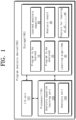
- FIG. 1 is a diagram illustrating an example embodiment of a program analysis device.
- a program analysis device 100 may include an input/output (I/O) unit 101, a processor 110, and a storage 190, and at least two of the I/O unit 101, the processor 110, and the storage 190 may be provided to transmit a command/instruction or data in a form of an electrical signal.
- I/O input/output
- processor 110 processor 110
- storage 190 storage 190
- the I/O unit 101 may receive a command/instruction, data, or a program (which may be referred to as an app, an application, or software) required for operating the program analysis device 100 from a user, a designer, or other external electronic devices (not shown) and/or may output a learning result, an analysis result, or a program according to an operation of the processor 110 to the user or the designer in a visual form or an auditory manner, or may transmit the same to the other external electronic device in a form of an electrical signal through a wired or wireless communication network.
- a command/instruction, data, or a program which may be referred to as an app, an application, or software
- the I/O unit 101 may simultaneously or sequentially receive a program to be learned 10, a program to be analyzed 20, at least one learning algorithm 30, features for learning (feature, a1, a2, ..., an), and the like stored in the storage 190 from the user or the other electronic device, may output a learned analysis equation 80 or a learning result 90 to the user, or may transmit the same to the other electronic device.
- the I/O unit 101 may be provided in an integral form with the program analysis device 100 and may be provided to be physically separable therefrom.
- the I/O unit 101 may include, for example, an input device such as a keyboard, a mouse, a tablet, a touchscreen, a touchpad, a track ball, a track pad, a scanner device, an image capturing module, a motion detection sensor, a pressure sensor, a proximity sensor, and/or a microphone and may include, for example, an output device such as a display, a printer device, a speaker device, and/or an image output terminal.
- an input device such as a keyboard, a mouse, a tablet, a touchscreen, a touchpad, a track ball, a track pad, a scanner device, an image capturing module, a motion detection sensor, a pressure sensor, a proximity sensor, and/or a microphone
- an output device such as a display, a printer device, a speaker device, and/or an image output terminal.
- the I/O unit 101 may include a data I/O terminal capable of receiving data from another external device (e.g., a portable memory device) or a communication module (e.g., a LAN card, a short-distance communication module, and a mobile communication module) connected to the other external device through a wired/wireless communication network.
- a data I/O terminal capable of receiving data from another external device (e.g., a portable memory device) or a communication module (e.g., a LAN card, a short-distance communication module, and a mobile communication module) connected to the other external device through a wired/wireless communication network.
- the I/O unit 101 may be omitted if necessary.
- the processor 110 may acquire at least one analysis equation 80 for performing analysis on the program to be analyzed 20 and/or may perform analysis (e.g., static analysis) on the program to be analyzed 20 using the acquired at least one analysis equation 80.
- the processor 110 may also perform only a process of acquiring the at least one analysis equation 80.
- the acquired analysis equation 80 may be transmitted to the other electronic device through the I/O unit 101 and then used to analyze a program by the other electronic device.
- the processor 110 may also perform only a process of analyzing the program 20 on the basis of the at least one analysis equation 80.
- the at least one analysis equation 80 may be one acquired by the other electronic device.
- the processor 110 may include at least one of an analysis equation learning unit 120 configured to acquire the at least one learned analysis equation 80 on the basis of the at least one learning algorithm 30 and an analysis unit 140 configured to perform analysis on the basis of the at least one learned analysis equation 80 acquired by the learning algorithm 30.
- the analysis equation learning unit 120 and the analysis unit 140 may be logically separable and may be physically separable depending on example embodiments.
- each of the analysis equation learning unit 120 and the analysis unit 140 may be implemented as a program code.
- each program code may be included in addition to or separate from one or two or more program packages.
- each of the analysis equation learning unit 120 and the analysis unit 140 may be implemented by employing a separate semiconductor chip.
- the processor 110 may be implemented on the basis of, for example, a central processing unit (CPU), a micro controller unit (MCU), an application processor (AP), a micro processor (MICOM), an electronic control unit (ECU), and/or other electronic devices capable of processing various arithmetic operations and generating control signals.
- the devices may be produced by employing, for example, a part related to one or two or more semiconductor chips.
- the storage 190 may transitorily or non-transitorily store data or a program required for operating the program analysis device 100.
- the storage 190 may transitorily or non-transitorily store the at least one program to be learned 10 used for learning and generation of the analysis equation 80 by the analysis equation learning unit 120, the program to be analyzed 20 in which an error presence status is analyzed by the analysis unit 140, the predetermined learning algorithm 30 used for learning of the analysis equation 80, the at least one learned analysis equation 80 of which a learning result is acquired, the analysis result 90 about the program to be analyzed 20, and/or the at least one feature (a1, a2, ..., an) used for learning and generation of the analysis equation 80.
- the at least one program to be learned 10 and the program to be analyzed 20 may be the same as each other or may differ from each other.
- the program to be analyzed 20 may be omitted.
- the storage 190 may not store some data or algorithms of the components (10 to 90) and/or may store other various data or algorithms in addition thereto. Also, the storage 190 may store at least one setting or command/instruction for operation of the processor 110 or may store a program or a program package for operation of the processor 110.
- the program or the program package for operation of the processor 110 may be directly prepared or modified by the designer and then stored in the storage 190, and may also be stored in the storage 190 through a recording medium such as a memory device or DVD, and/or may also be acquired or updated through an electronic software distribution network accessible through a wired or wireless communication network.
- the storage 190 may include at least one of, for example, a main memory device and an auxiliary memory device.
- the main memory device may include read only memory (ROM) and/or random access memory (RAM) and the auxiliary memory device may be implemented by using at least one recording medium capable of permanently or semi-permanently storing data, such as a flash memory device, a secure digital (SD) card, a solid state drive (SSD), a hard disc drive (HDD), a magnetic drum, a compact disc (CD), a DVD, and/or a floppy disk.
- a flash memory device such as a flash memory device, a secure digital (SD) card, a solid state drive (SSD), a hard disc drive (HDD), a magnetic drum, a compact disc (CD), a DVD, and/or a floppy disk.
- SD secure digital
- HDD hard disc drive
- CD compact disc
- DVD digital versatile disc
- the program analysis device 100 may be implemented by a single information processing device or by combining two or more same or different information processing devices.
- the information processing device may include, for example, a desktop computer, a laptop computer, a smartphone, a tablet PC, a smart watch, a head mounted display (HMD) device, a navigation device, a portable game console, a personal digital assistant (PDA), a digital television (TV), a set-top box, an artificial intelligence (AI) sound playback device (AI speaker), home appliances (a refrigerator, a washing machine), a manned moving object (a vehicle such as a car, a bus, and a two-wheeled vehicle), an unmanned mobile object (a robot cleaner), a manned flying object, an unmanned aerial vehicle (a drone), a home or industrial robot, an industrial machine, an electronic blackboard, an electronic billboard, and an automated teller machine (ATM), but is not limited thereto.
- the designer or the user may consider and apply at least one of various devices capable of performing
- the program analysis device 100 may be provided to receive, from another device, a program that includes the program to be learned 10, the program to be analyzed 20, or the learning algorithm 30 and/or to transmit an analysis result or the program to the other device through communication with the external other device.
- communication between the program analysis device 100 and the other device may be performed on the basis of a wired communication network, a wireless communication network, or combination thereof.
- the wireless communication network is based on at least one of short-distance communication network technology and long-distance communication network technology.
- the short-distance communication network technology may include wireless fidelity (Wi-Fi), Wi-Fi Direct, Bluetooth, ZigBee communication, CAN communication, radio frequency identification (RFID), and/or near field communication (NFC).
- the long-distance communication technology may include, for example, a mobile communication standard, such as 3GPP, 3GPP2, WiBro, and WiMAX series.
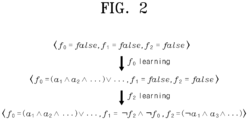
- FIG. 2 illustrates an example of a process of sequentially learning an analysis equation.
- each analysis equation f 0 , f 1 , f 2 may be set to a predefined initial value, such as false
- the analysis equation learning unit 120 of the processor 110 may generate each analysis equation f i (f 0 , f 1 , f 2 , etc.) to include at least one feature (a 1 , a 2 , ..., a n ) by performing learning on each analysis equation f i (f 0 , f 1 , f 2 , etc.) at least once.
- the analysis equation f i represents a program component (e.g., function) to which an analysis depth of i needs to be given.
- the analysis equation f i may represent a set of functions to be analyzed with the analysis depth of i.
- Each analysis equation f 0 , f 1 , f 2 does not have a common function therebetween.
- the analysis equation f i may include a logical expression produced using a disjunctive model.
- the analysis equation f i (f 0 , f 1 , f 2 , etc.) may be generated by using one feature (a 1 , a 2 , ..., a n ) alone or by combining two or more features (a 1 , a 2 , ..., a n ) among the one or more features (a 1 , a 2 , ..., a n ) as shown in Equation 1 below.
- the feature (a 1 , a 2 , ..., a n ) refers to a function of verifying or asking what feature a component of a program (e.g., which may include JAVA method and the same as below) and may be defined as Equation 2 below.
- a i P M P ⁇ true false
- [[a]] p represents a set of methods in which an output value is void in program P.
- a feature added with an equation or a symbol i.e., complex feature
- complex feature [[ ⁇ a]] p may be defined to represent a set of functions that do not have the feature a (e.g., a set of functions of which output value is not void), [[a i ⁇ a j ]] may be defined to represent a set of functions that have all of two features a i and a j , and/or [[a i ⁇ a j ]] may be defined to represent a set of functions that have at least one of the two features a i and a j .
- the designer or the user may further define a new complex feature according to an arbitrary selection and may also define each of the complex features differently from those described above.
- the processor 110 may simultaneously perform learning on all or some of the analysis equations f 0 , f 1 , and f 2 .
- the processor 110 may sequentially perform learning on each of the analysis equations f 0 , f 1 , and f 2 one by one.
- the processor 110 may perform learning on one analysis equation f 0 , may perform learning on another analysis equation f 2 , and may perform learning on still another analysis equation f 1 .
- Sequentially performing learning on each of the analysis equations f 0 , f 1 , and f 2 may have the effect of reducing a search space in which learning is to be performed.
- a space to be searched for calculation and acquisition of one analysis equation f a is
- a search space for acquiring (k+1) analysis equations at a time is
- k+1 is too broad, which makes it very difficult to detect an optimal analysis equation.
- the search space is given as (k+1)*
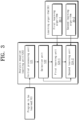
- FIG. 3 is a diagram illustrating an example embodiment of an analysis equation learning unit
- FIG. 4 illustrates an example of a program code corresponding to an operation of an analysis equation learning unit
- procedure L EARN (F, P, K, A) function (method) is an example of a program code of a function that represents an operation of the analysis equation learning unit 120.
- F denotes a static analyzer to be used for learning
- P denotes a program
- k denotes a maximum analysis depth
- A denotes a set of features (a 1 , a 2 , ..., a n ).
- the analysis equation learning unit 120 may include an initial processing unit 121, a selection unit 122, a first learning unit 124-1, and a second learning unit 124-2.
- the initial processing unit 121 may initialize all or some of the analysis equations f 0 to f k to be learned in relation to the program to be learned 10 to a predefined value (e.g., false) (line 2). Also, the initial processing unit 121 may allocate a predefined initial value at least one variable (top, bot) to be used within the function (lines 3 and 4). For example, the variables top and bot may be initialized to k and 0, respectively.
- the variable top refers to a variable for identifying each top-down processing (top-down) performed by the first learning unit 124-1 and may be provided to decrease by 1 each time top-down processing is performed (see line 10).
- the variable bot refers to a variable for identifying each bottom-up processing (bottom-up) performed by the second learning unit 124-2 and may be designed to increase by 1 each time bottom-up processing is performed (see line 14).
- the selection unit 122 may simultaneously or sequentially select at least one analysis equation (f bot or f top ) that has not been acquired since learning processing is not performed among the analysis equations f 0 to f k to be learned (line 6). Unprocessed at least one analysis equation (f bot or f top ) may be initialized to a value of false as described above. Subsequently, the selection unit 122 may determine whether to perform bottom-up processing or perform top-down processing thereon (line 7). That is, the selection unit 122 may determine whether to process the analysis equation (f bot or f top ) to be learned using the first learning unit 124-1 or to process the same using the second learning unit 124-2.
- the selection unit 122 may estimate whether the given top-down processing ( ⁇ top ) is a possible problem solving method.
- the top-down processing ( ⁇ j ) refers to processing performed to acquire logical expression f j with a deepest analysis depth among unlearned logical expressions ⁇ f i , f i+1 , ..., fj> and the top-down processing ( ⁇ j ) for the analysis equation f j may be given as Equation 4 below.
- ⁇ j ⁇ Find ⁇ j minimizing ⁇ p ⁇ P cost F p H ⁇ j p subject to Precise ⁇ j F P
- function Precise ( ⁇ j ,F,P ) is a function that determines whether an acquired parameter ⁇ j is sufficiently sophisticated for learning data.
- functions each of which analysis depth is not determined are processed to have a depth of j-1 and learned.
- Precise ( ⁇ j ,F,P ) may be defined as Equation 5 below.
- Precise ⁇ j F P ⁇ p ⁇ P proved F p H ⁇ j p ⁇ p ⁇ P proved F p k ⁇ ⁇
- Precise ( ⁇ j ,F,P ) is a function that is satisfied when a ratio of queries proved in relation to ⁇ j and queries proven in relation to a parameter (k) having a greatest possible accuracy by applying the depth k to all of program components (e.g., function) is greater than a predetermined threshold ( ⁇ : ⁇ [0,1]).
- a heuristic function H ⁇ j refers to a function that determines an analysis depth for each program component (e.g., function) present in an arbitrary program P and may be defined, for example, as Equation 6 below.
- the top-down processing ( ⁇ j ) relates to finding f j that maximizes performance of the heuristic function H ⁇ j for relatively large j (i.e., for the analysis equation f j having a relatively large analysis depth).
- an analysis equation that minimizes a set of functions represented by f j within the limit of maintaining accuracy needs to be found.
- the selection unit 122 if processing of the analysis equation is terminated within a given cost threshold (C) range, the selection unit 122 returns a predetermined value (e.g., true). On the contrary, if analysis and processing may not be completed within the given cost threshold (C) range, the selection unit 122 returns a value (e.g., false) different from the predetermined value.
- This operation may be performed using at least one function (e.g., ChooseProblem (top, ⁇ , F, P, f rem )).
- the top-down processing ( ⁇ j ) is determined to be processible (line 8) and the top-down processing ( ⁇ top ) is performed for the given function f top (line 9).
- the top-down processing ( ⁇ top ) may be performed by the first processing unit 124-1 and the first processing unit 124-1 may perform the top-down processing ( ⁇ top ) using a first learning algorithm 30-1. Therefore, a learned analysis equation corresponding to the top-down processing ( ⁇ top ) (hereinafter, a first learned analysis equation) may be acquired.
- a function ( m ⁇ f 0 ⁇ f 1 ⁇ f k ) in which a depth is not determined may be set and processed to have the depth of j-1 in an example embodiment.
- a value acquired by subtracting 1 from a value of the existing variable top is input to the variable top. Therefore, learning on an analysis equation with a relatively low analysis depth (j-1) may be performed. That is, if learning on the analysis equation f j may be performed and the top-down processing ( ⁇ j-1 ) is equally selected in a subsequent selection process, learning on the analysis equation f j-1 may be performed in response thereto.
- top-down processing ( ⁇ top ) is determined to be impossible and another processing (i.e., bottom-up processing ( ⁇ bot )) is selected and performed (lines 11 to 14).
- analysis equation f top may be returned (line 12).
- f' top is separated from other decomposition equations used as f bot .
- a value acquired by adding 1 to a value of the existing variable bot is input to the variable bot (line 14). Therefore, learning on an analysis equation with a relatively deeper analysis depth may be performed. That is, if an analysis equation (hereinafter, a second learned analysis equation) learned by performing learning on the analysis equation f j with a relatively shallow analysis depth (i) is acquired and the bottom-up processing ( ⁇ j-1 ) is selected in a subsequent selection process, learning on the analysis equation f i+1 may be performed and another second learned analysis equation may be acquired in response thereto.
- a second learned analysis equation learned by performing learning on the analysis equation f j with a relatively shallow analysis depth (i) is acquired and the bottom-up processing ( ⁇ j-1 ) is selected in a subsequent selection process, learning on the analysis equation f i+1 may be performed and another second learned analysis equation may be acquired in response thereto.
- the bottom-up processing ( ⁇ bot ) may be performed on the basis of a second learning algorithm 30-2 to be processed by the second processing unit 124-2 and the second learning algorithm 30-2 may include, for example, SPEC2GEN function to be described below.
- the aforementioned bottom-up processing ( ⁇ i ) may be designed to be acquired by calculating Equation 8 below.
- the selection unit 122 may repeatedly select the top-down processing ( ⁇ top ), may repeatedly select the bottom-up processing ( ⁇ bot ), and also may alternately select the top-down processing ( ⁇ top ) and the bottom-up processing ( ⁇ bot ) depending on a situation. Therefore, although the top-down processing ( ⁇ top ) is selected in a previous process, the top-down processing ( ⁇ j ) or the bottom-up processing ( ⁇ bot ) is not necessarily selected in a subsequent process.
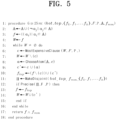
- FIG. 5 illustrates an example of a program code corresponding to an operation of a first learning unit.
- the first learning unit 124-1 may perform top-down processing ( ⁇ top ).
- the top-down processing ( ⁇ top ) may be implemented on the basis of an algorithm that gradually performs learning from a general analysis equation to a specific logical expression.
- the top-down processing ( ⁇ top ) may be performed through the predefined first learning algorithm 30-1 and the first learning algorithm 30-1 may include GEN2SPEC (bot, top, ⁇ f 0 , f 1 , ..., f k >, F, P, A, f rem ) function.
- the GEN2SPEC function sets a target set that includes a set (A) of individual features (a j ) and negation ( ⁇ a j ) thereof (line 2) and is provided to generate the analysis equation f as a most general initial analysis equation by including the individual features (a i ) of the target set or a logical sum of at least one individual feature(s) (a j ) (line 3).
- the feature a may be acquired (line 8).
- the feature a represents the most identical or similar feature to the clause c and may be acquired, for example, using Equation 10 below.
- ChooseAtom A c ⁇ argmax _ a ⁇ A c ⁇ p ⁇ P c ⁇ a p if A c ⁇ ⁇ false otherwise
- a refined clause c' is acquired by combining the clause c and the feature ⁇ a ⁇ (line 9) and a new analysis equation f top is acquired by substituting the existing clause c on the basis of the refined clause c' (line 10).
- a new parameter ( ⁇ ) is determined by separating connection between the respective functions t 0 to f k (line 11) and whether the set ( ⁇ ) of functions is sophisticated is determined using the aforementioned precise ( ⁇ j , F , P ) function (line 12). If the parameter ( ⁇ ) is sophisticated, the analysis equation f is updated by the analysis equation f top (line 13) and the refined clause c' is added to the work list (W) (line 14). Otherwise, updating of the analysis equation f and the work list (W) is not performed. This process is repeated until the work list (W) becomes a null set.
- FIG. 6 illustrates an example of a program code corresponding to an operation of a second learning unit.
- the second learning unit 124-2 may perform bottom-up processing ( ⁇ bot ).
- the bottom-up processing ( ⁇ bot ) may include an algorithm that is implemented to gradually generalize from an analysis equation including a set of a relatively small number of functions to an analysis equation including a set of a large number of program components.
- the bottom-up processing ( ⁇ bot ) may be performed on the basis of the second learning algorithm 30-2 and may be performed, for example, using SPEC2GEN (bot, top, ⁇ f 0 , f 1 , ..., f k >, F, P, A, f rem ) function as illustrated in FIG. 6 .
- SPEC2GEN a target set that includes a set (A) of individual features (a j ) and negation ( ⁇ a j ) thereof is set (line 2) and the analysis equation f is defined by the initial analytic function (e.g., InitialFormula (A, P)) (line 3).
- Equation 11 Equation 11 below.
- C ClausesThatProveQueries P A , ⁇ c ′ ⁇ C .
- c ′ ⁇ c ⁇ c ′ c
- ClausesThatProveQueries(P,A) of Equation 11 may be defined as Equation 12.
- ClausesThatProveQueries P A AtomsThatProveQuery P q A
- AtomsThatProveQuery(P,q,A) of Equation 12 may be defined as in Equation 13.
- AtomsThatProveQuery P q A a ⁇ A , q ⁇ proved F p H ⁇ a p
- the initial analysis equation f generated according to the above Equation 11 to Equation 13 represents queries by a possible smallest set of clauses.
- the initial analysis equation f is input to the work list (W) (line 4) and, if the work list is not a null set (line 5), at least one clause c may be selected (line 6) and the clause c may be removed from the work list (W) (line 7).
- the at least one clause c may be performed using ChooseClause(W) function as in Equation 14 below.
- ChooseClause W argmin c ⁇ W ⁇ p ⁇ P c p
- the second learning unit 144-2 repeatedly performs generalization on the clause (lines 8 to 20).
- the feature a is acquired using the ChooseAtom function of Equation 10 (line 9).
- the acquired feature a is false, repetition is terminated (lines 10 and 11) and, on the contrary, if the feature a is not false, a generalized analysis equation f top and a generalized set ( ⁇ ) are acquired, respectively (lines 13 and 14).
- the analysis equation f top is defined as a union of a difference set acquired by subtracting the clause c from the analysis equation f and a difference set acquired by subtracting a set of features ⁇ a ⁇ from the clause c and the generalized set ( ⁇ ) may be determined by separating connection between the respective functions f 0 to f k .
- FIG. 7 illustrates an example of an operation of an analysis unit.
- the learned analysis equation 80 may be acquired as illustrated in FIG. 7 .
- the learned analysis equation 80 may include at least one of at least one first learned analysis equation acquired by the first learning unit 144-1 and at least one second learned analysis equation acquired by the second learning unit 144-2.
- the analysis unit 140 may determine an analysis depth of each function or a combination of two or more functions of the program to be analyzed 20 (e.g., Method 1 20-1 to Method 4 20-4) to be analyzed on the basis of the learned analysis equation 80 and may output the analysis result 90.
- the analysis unit 140 may perform determination and classification such that Method 1 20-1 and Method 4 20-4
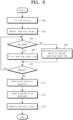
- FIG. 8 is a flowchart illustrating an example embodiment of a program analysis method.
- initialization for all or some of analysis equations to be learned in relation to a program to be learned or at least one variable may be performed (400).
- the initialization may be performed by processing an analysis equation to a value of false or by allocating a value of 0 or k to the variable.
- At least one analysis equation (e.g., f top or f bot ) for which learning processing is not performed previously or subsequently may be selected.
- the at least one analysis equation (f top or f bot ) for which learning processing is not performed may be initialized to, for example, a value of false.
- Whether to perform bottom-up processing or to perform top-down processing on the at least one analysis equation for which learning processing is not performed may be determined (404 and 408).
- a selection of the top-down processing and the bottom-up processing for example, whether the top-down processing is possible for a given function set is initially determined. Whether the top-down processing is possible may be determined using the ChooseProblem(top, ⁇ , F, P, f rem ) function of the above Equation 7. If the ChooseProblem(top, ⁇ , F, P, f rem ) function of Equation 7 outputs a value of true, the top-down processing may be determined to be possible (yes in operation 404). On the contrary, if the ChooseProblem(top, ⁇ , F, P, f rem ) function outputs a value of false, the bottom-up processing may be determined to be possible (no in operation 404).
- top-down processing on the at least one analysis equation is performed (yes in operation 404), learning on the at least one analysis equation is performed on the basis of a first learning algorithm, for example, the GEN2SPEC function (406). That is, the bottom-up processing may be performed through a first learning unit as described above. Accordingly, a first learned analysis equation may be acquired.
- a first learning algorithm for example, the GEN2SPEC function (406).
- the bottom-up processing may be performed in response thereto (408) and processing on the at least one analysis equation may be performed on the basis of a second learning algorithm, for example, the SPEC2GEN function.
- a second learning algorithm for example, the SPEC2GEN function.
- the analysis equation f' top is acquired according to the second learning algorithm and an intersection (f rem ⁇ ⁇ f' top ) between negation ( ⁇ f' top ) of f' top and f rem is input to the variable f bot .
- Processing by the second learning algorithm may be performed in the same manner as described above through a second learning unit and a second learned analysis equation may be acquired accordingly.
- a process of selectively performing the bottom-up processing or the top-down processing may be repeatedly performed until a selection on a processing method (i.e., top-down processing or bottom-up processing) for all or preset some of analysis equation(s) and processing according thereto (i.e., top-down processing or bottom-up processing) are terminated (412). That is, if the top-down processing or the bottom-up processing for all or preset some of analysis equation(s) is determined, the process of selecting the bottom-up or top-down processing method for the analysis equation and the bottom-up or top-down processing process according thereto may be terminated.
- a processing method i.e., top-down processing or bottom-up processing
- processing according thereto i.e., top-down processing or bottom-up processing
- At least one learned analysis equation is determined (412, 414).
- a program to be analyzed may be input (416).
- the program to be analyzed may be a program to be learned.
- the program to be analyzed may be analyzed on the basis of the aforementioned analysis equation and an analysis depth for each function within the program to be analyzed may be determined accordingly (418). If necessary, an analysis result may be output to an outside.
- the program analysis method according to the aforementioned example embodiments may be implemented in a form of a program executable by a computer device.
- the program may include, alone or in combination with program instructions, data files, and data structures.
- the program may be designed and produced using a machine language code or an advanced language code.
- the program may be specially designed to implement the methods or may be implemented using various types of functions or definitions that are known and available to one of ordinary skill in the field of computer software.
- the computer device may be implemented by including a processor or a memory capable of realizing a function of the program and may further include a communication device if necessary.
- the program to implement the aforementioned program analysis method may be recorded in computer-readable recording media.
- the media may include, for example, a semiconductor storage device, such as a solid state drive (SSD), ROM, RAM, and a flash memory; magnetic disk storage media, such as a hard disk and a floppy disk; optical recording media, such as compact disk and DVD; magneto-optical recording media such as a floptical disk; and at least one type of physical device capable of storing a specific program executed according to a call of a computer such as a magnetic tape.
- SSD solid state drive
- ROM read only memory
- RAM random access memory
- flash memory such as a solid state drive (SSD), ROM, RAM, and a flash memory
- magnetic disk storage media such as a hard disk and a floppy disk
- optical recording media such as compact disk and DVD
- magneto-optical recording media such as a floptical disk
- at least one type of physical device capable of storing a specific program executed according to a call of a computer such as a magnetic tape.
- program analysis device and method are described with reference to at least one example embodiment, the program analysis device and method are not limited to the aforementioned example embodiments.
- Various devices or methods that may be implemented by one of ordinary skill in the art through changes and modifications on the basis of the aforementioned example embodiments may be an example of the aforementioned program analysis device and method.
- the aforementioned techniques are performed in different order from the described method and/or components of the described structures, functions, circuits, and devices are coupled or combined in a different form from the aforementioned method or replaced or substituted by another component or equivalent, it may be an example embodiment of the aforementioned program analysis device and method.
Landscapes
- Engineering & Computer Science (AREA)
- Theoretical Computer Science (AREA)
- Physics & Mathematics (AREA)
- General Engineering & Computer Science (AREA)
- General Physics & Mathematics (AREA)
- Computer Hardware Design (AREA)
- Quality & Reliability (AREA)
- Software Systems (AREA)
- Artificial Intelligence (AREA)
- Computer Vision & Pattern Recognition (AREA)
- Data Mining & Analysis (AREA)
- Evolutionary Computation (AREA)
- Medical Informatics (AREA)
- Computing Systems (AREA)
- Mathematical Physics (AREA)
- Information Retrieval, Db Structures And Fs Structures Therefor (AREA)
- Debugging And Monitoring (AREA)
- Stored Programmes (AREA)
Abstract
Description
- Example embodiments relate to a program analysis device and method.
- A program analysis method may be largely classified into a static analysis method and a dynamic analysis method. The static analysis method refers to a method of verifying and analyzing errors in a rule or security vulnerabilities by analyzing a source code of a program without executing the program. The dynamic analysis method refers to a method of analyzing a program while executing the program.
- Pointer analysis is one of program static analysis methods and used to identify all object(s) that may be indicated with a pointer variable or an expression in a program execution process before executing a program. A result of the pointer analysis may be used for bug detecting, program verification, or automatic program repair. For fast and accurate pointer analysis, an appropriate high-performance analysis strategy needs to be prepared. For example, in the case of performing analysis without considering context, a plurality of false alarms not occurring during actual execution of a program may be detected din an analysis process. The false alarms overload a developer's work, which causes resources and time for program development to be wasted. On the contrary, in the case of performing analysis in consideration of context, the number of false alarms detected significantly decreases and accuracy and practicality of the analysis are improved. However, an amount of time required for analysis of the program significantly increases.
- Example embodiments provide a program analysis device and method that may more accurately and quickly perform an automatic static analysis on a program at low cost.
- Provided are a program analysis device and a program analysis method to solve the aforementioned subjects.
- The program analysis device may include a selection unit configured to select one of top-down processing and bottom-up processing for at least one analysis equation among a plurality of analysis equations; a first learning unit configured to, in response to the selection unit selecting the top-down processing, perform the top-down processing for the at least one analysis equation on the basis of a first learning algorithm and acquire at least one first learned analysis equation; and a second learning unit configured to, in response to the selection unit selecting the bottom-up processing, perform the top-down processing for the at least one analysis equation on the basis of a second learning algorithm and acquire at least one second learned analysis equation.
- The program analysis method may include selecting one of top-down processing and bottom-up processing for at least one analysis equation among a plurality of analysis equations; and in response to the selection unit selecting the bottom-up processing, performing top-down processing for the at least one analysis equation on the basis of a second learning algorithm and acquiring at least one second learned analysis equation.
- According to the aforementioned program analysis device and method, it is possible to automatically generate analysis equations to be used for analysis using given at least one program and to perform fast and accurate analysis when analyzing other programs by applying the analysis equations generated in this process. Therefore, it is possible to achieve the effect of saving cost (resources, labor, etc.) and an amount of time required for analysis.
- According to the aforementioned program analysis device and method, it is possible to automatically generate analysis equations of various analysis depths for selecting a part to be analyzed relatively deeply and in detail and a part to be analyzed relatively shallowly and roughly in terms of program analysis.
- According to the aforementioned program analysis device and method, it is possible to analyze a program quickly enough to roughly analyze all contexts while being accurate enough to analyze all contexts in detail.
- According to the aforementioned program analysis device and method, it is possible to quickly and accurately perform a static analysis through effective strategy.
-
-
FIG. 1 is a diagram according to an example embodiment of a program analysis device. -
FIG. 2 illustrates an example of a process of sequentially learning an analysis equation. -
FIG. 3 is a diagram illustrating an example embodiment of an analysis equation learning unit. -
FIG. 4 illustrates an example of a program code corresponding to an operation of an analysis equation learning unit. -
FIG. 5 illustrates an example of a program code corresponding to an operation of a first learning unit. -
FIG. 6 illustrates an example of a program code corresponding to an operation of a second learning unit. -
FIG. 7 illustrates an example of an operation of an analysis unit. -
FIG. 8 is a flowchart illustrating an example embodiment of a program analysis method. - Throughout the following specification, like reference numerals refer to like elements unless otherwise specified. The terms added with "unit" in the following may be implemented in software or hardware. Depending on example embodiments, a single "unit" may be implemented as a single physical or logical component, a plurality of "units" may be implemented as a single physical or logical component, or a single "unit" may be implemented as a plurality of physical or logical components. When it is described that one portion is connected to another portion throughout the specification, it may represent a physical connection or may represent an electrical connection depending on the portion and the other portion. Also, when it is described that one portion includes another portion, it does not exclude still another portion other than the other portion and represents that still another portion may be further included according to a selection of a designer, unless otherwise stated. Terms, such as "first" and "second," are used to distinguish one component from another component and do not represent sequential expression unless otherwise stated. Also, a singular expression may include a plural expression unless there is a clear exception from the context.
- Hereinafter, an example embodiment of a program analysis device is described with reference to
FIGS. 1 to 7 . -
FIG. 1 is a diagram illustrating an example embodiment of a program analysis device. - Referring to
FIG. 1 , aprogram analysis device 100 may include an input/output (I/O)unit 101, aprocessor 110, and astorage 190, and at least two of the I/O unit 101, theprocessor 110, and thestorage 190 may be provided to transmit a command/instruction or data in a form of an electrical signal. - The I/
O unit 101 may receive a command/instruction, data, or a program (which may be referred to as an app, an application, or software) required for operating theprogram analysis device 100 from a user, a designer, or other external electronic devices (not shown) and/or may output a learning result, an analysis result, or a program according to an operation of theprocessor 110 to the user or the designer in a visual form or an auditory manner, or may transmit the same to the other external electronic device in a form of an electrical signal through a wired or wireless communication network. For example, the I/O unit 101 may simultaneously or sequentially receive a program to be learned 10, a program to be analyzed 20, at least onelearning algorithm 30, features for learning (feature, a1, a2, ..., an), and the like stored in thestorage 190 from the user or the other electronic device, may output alearned analysis equation 80 or alearning result 90 to the user, or may transmit the same to the other electronic device. The I/O unit 101 may be provided in an integral form with theprogram analysis device 100 and may be provided to be physically separable therefrom. The I/O unit 101 may include, for example, an input device such as a keyboard, a mouse, a tablet, a touchscreen, a touchpad, a track ball, a track pad, a scanner device, an image capturing module, a motion detection sensor, a pressure sensor, a proximity sensor, and/or a microphone and may include, for example, an output device such as a display, a printer device, a speaker device, and/or an image output terminal. Also, depending on example embodiment, the I/O unit 101 may include a data I/O terminal capable of receiving data from another external device (e.g., a portable memory device) or a communication module (e.g., a LAN card, a short-distance communication module, and a mobile communication module) connected to the other external device through a wired/wireless communication network. The I/O unit 101 may be omitted if necessary. - The
processor 110 may acquire at least oneanalysis equation 80 for performing analysis on the program to be analyzed 20 and/or may perform analysis (e.g., static analysis) on the program to be analyzed 20 using the acquired at least oneanalysis equation 80. Depending on example embodiments, theprocessor 110 may also perform only a process of acquiring the at least oneanalysis equation 80. In this case, the acquiredanalysis equation 80 may be transmitted to the other electronic device through the I/O unit 101 and then used to analyze a program by the other electronic device. Also, theprocessor 110 may also perform only a process of analyzing theprogram 20 on the basis of the at least oneanalysis equation 80. Here, the at least oneanalysis equation 80 may be one acquired by the other electronic device. - According to an example embodiment, the
processor 110 may include at least one of an analysisequation learning unit 120 configured to acquire the at least one learnedanalysis equation 80 on the basis of the at least onelearning algorithm 30 and ananalysis unit 140 configured to perform analysis on the basis of the at least one learnedanalysis equation 80 acquired by thelearning algorithm 30. Here, the analysisequation learning unit 120 and theanalysis unit 140 may be logically separable and may be physically separable depending on example embodiments. When logically separated, each of the analysisequation learning unit 120 and theanalysis unit 140 may be implemented as a program code. Here, each program code may be included in addition to or separate from one or two or more program packages. When physically separated, each of the analysisequation learning unit 120 and theanalysis unit 140 may be implemented by employing a separate semiconductor chip. A detailed operation and a function of each of the analysisequation learning unit 120 and theanalysis unit 140 are further described below. Theprocessor 110 may be implemented on the basis of, for example, a central processing unit (CPU), a micro controller unit (MCU), an application processor (AP), a micro processor (MICOM), an electronic control unit (ECU), and/or other electronic devices capable of processing various arithmetic operations and generating control signals. The devices may be produced by employing, for example, a part related to one or two or more semiconductor chips. - The
storage 190 may transitorily or non-transitorily store data or a program required for operating theprogram analysis device 100. For example, thestorage 190 may transitorily or non-transitorily store the at least one program to be learned 10 used for learning and generation of theanalysis equation 80 by the analysisequation learning unit 120, the program to be analyzed 20 in which an error presence status is analyzed by theanalysis unit 140, thepredetermined learning algorithm 30 used for learning of theanalysis equation 80, the at least one learnedanalysis equation 80 of which a learning result is acquired, theanalysis result 90 about the program to be analyzed 20, and/or the at least one feature (a1, a2, ..., an) used for learning and generation of theanalysis equation 80. Depending on example embodiments, the at least one program to be learned 10 and the program to be analyzed 20 may be the same as each other or may differ from each other. When the at least one program to be learned 10 is the same as the program to be analyzed 20, the program to be analyzed 20 may be omitted. Depending on example embodiments, thestorage 190 may not store some data or algorithms of the components (10 to 90) and/or may store other various data or algorithms in addition thereto. Also, thestorage 190 may store at least one setting or command/instruction for operation of theprocessor 110 or may store a program or a program package for operation of theprocessor 110. The program or the program package for operation of theprocessor 110 may be directly prepared or modified by the designer and then stored in thestorage 190, and may also be stored in thestorage 190 through a recording medium such as a memory device or DVD, and/or may also be acquired or updated through an electronic software distribution network accessible through a wired or wireless communication network. Thestorage 190 may include at least one of, for example, a main memory device and an auxiliary memory device. The main memory device may include read only memory (ROM) and/or random access memory (RAM) and the auxiliary memory device may be implemented by using at least one recording medium capable of permanently or semi-permanently storing data, such as a flash memory device, a secure digital (SD) card, a solid state drive (SSD), a hard disc drive (HDD), a magnetic drum, a compact disc (CD), a DVD, and/or a floppy disk. - The
program analysis device 100 may be implemented by a single information processing device or by combining two or more same or different information processing devices. Here, the information processing device may include, for example, a desktop computer, a laptop computer, a smartphone, a tablet PC, a smart watch, a head mounted display (HMD) device, a navigation device, a portable game console, a personal digital assistant (PDA), a digital television (TV), a set-top box, an artificial intelligence (AI) sound playback device (AI speaker), home appliances (a refrigerator, a washing machine), a manned moving object (a vehicle such as a car, a bus, and a two-wheeled vehicle), an unmanned mobile object (a robot cleaner), a manned flying object, an unmanned aerial vehicle (a drone), a home or industrial robot, an industrial machine, an electronic blackboard, an electronic billboard, and an automated teller machine (ATM), but is not limited thereto. In addition to the aforementioned devices, the designer or the user may consider and apply at least one of various devices capable of performing calculation processing and control of information as theprogram analysis device 100 according to a situation or a condition. - Also, the
program analysis device 100 may be provided to receive, from another device, a program that includes the program to be learned 10, the program to be analyzed 20, or thelearning algorithm 30 and/or to transmit an analysis result or the program to the other device through communication with the external other device. Here, communication between theprogram analysis device 100 and the other device may be performed on the basis of a wired communication network, a wireless communication network, or combination thereof. Here, the wireless communication network is based on at least one of short-distance communication network technology and long-distance communication network technology. For example, the short-distance communication network technology may include wireless fidelity (Wi-Fi), Wi-Fi Direct, Bluetooth, ZigBee communication, CAN communication, radio frequency identification (RFID), and/or near field communication (NFC). The long-distance communication technology may include, for example, a mobile communication standard, such as 3GPP, 3GPP2, WiBro, and WiMAX series. - Hereinafter, an operation of the analysis
equation learning unit 120 is further described with reference toFIGS. 2 to 6 . -
FIG. 2 illustrates an example of a process of sequentially learning an analysis equation. - According to an example embodiment, as illustrated in
FIG. 2 , if one or two or more pre-learning analysis equations fi (f0, f1, f2, etc.) are given (in this case, each analysis equation f0, f1, f2 may be set to a predefined initial value, such as false), the analysisequation learning unit 120 of theprocessor 110 may generate each analysis equation fi (f0, f1, f2, etc.) to include at least one feature (a1, a2, ..., an) by performing learning on each analysis equation fi (f0, f1, f2, etc.) at least once. - Here, the analysis equation fi represents a program component (e.g., function) to which an analysis depth of i needs to be given. For example, the analysis equation fi may represent a set of functions to be analyzed with the analysis depth of i. Each analysis equation f0, f1, f2 does not have a common function therebetween. For example, a function included in the analysis equation f0 is not included in the other analysis equations f1 and f2 (f0∩f1∩f2=ϕ).
- The analysis equation fi may include a logical expression produced using a disjunctive model. In detail, when features (a1, a2, ..., an) are given, the analysis equation fi (f0, f1, f2, etc.) may be generated by using one feature (a1, a2, ..., an) alone or by combining two or more features (a1, a2, ..., an) among the one or more features (a1, a2, ..., an) as shown in
Equation 1 below.
- Here, the feature (a1, a2, ..., an) refers to a function of verifying or asking what feature a component of a program (e.g., which may include JAVA method and the same as below) and may be defined as
Equation 2 below.
- In detail, for feature a that "output value (output) is void," [[a]]p represents a set of methods in which an output value is void in program P. A feature added with an equation or a symbol (i.e., complex feature) may represent property of a function that is difficult to express only with each individual feature. This may be expressed in a form of a declaration. For example, complex feature [[¬a]]p may be defined to represent a set of functions that do not have the feature a (e.g., a set of functions of which output value is not void), [[ai∧aj]] may be defined to represent a set of functions that have all of two features ai and aj, and/or [[ai∨aj]] may be defined to represent a set of functions that have at least one of the two features ai and aj. In addition thereto, the designer or the user may further define a new complex feature according to an arbitrary selection and may also define each of the complex features differently from those described above.
- According to an example embodiment, the
processor 110 may simultaneously perform learning on all or some of the analysis equations f0, f1, and f2. According to another example embodiment, theprocessor 110 may sequentially perform learning on each of the analysis equations f0, f1, and f2 one by one. In detail, for example, theprocessor 110 may perform learning on one analysis equation f0, may perform learning on another analysis equation f2, and may perform learning on still another analysis equation f1. Sequentially performing learning on each of the analysis equations f0, f1, and f2 may have the effect of reducing a search space in which learning is to be performed. For example, in a case in which analysis equations f0 to fk (k denotes an integer of 0 or more) are to be acquired through learning and here, a space to be searched for calculation and acquisition of one analysis equation fa is |S|, a search space for acquiring (k+1) analysis equations at a time is |S|k+1. However, this search space |S|k+1 is too broad, which makes it very difficult to detect an optimal analysis equation. However, unlike this, in the case of sequentially acquiring one or more analysis equations f0 to fk by repeating a process of acquiring only one analysis equation at a time (k+1) times, the search space is given as (k+1)*|S|. Therefore, the search space for analysis equation acquisition significantly decreases, which may result in increasing search efficiency and reducing resources, time, and cost. -
FIG. 3 is a diagram illustrating an example embodiment of an analysis equation learning unit, andFIG. 4 illustrates an example of a program code corresponding to an operation of an analysis equation learning unit. InFIG. 4 , procedure LEARN (F, P, K, A) function (method) is an example of a program code of a function that represents an operation of the analysisequation learning unit 120. Here, F denotes a static analyzer to be used for learning, P denotes a program, k denotes a maximum analysis depth, and A denotes a set of features (a1, a2, ..., an). - Referring to
FIG. 3 , to acquire the aforementioned analysis equations f0 to fk, the analysisequation learning unit 120 may include aninitial processing unit 121, aselection unit 122, a first learning unit 124-1, and a second learning unit 124-2. - Referring to
FIG. 4 , theinitial processing unit 121 may initialize all or some of the analysis equations f0 to fk to be learned in relation to the program to be learned 10 to a predefined value (e.g., false) (line 2). Also, theinitial processing unit 121 may allocate a predefined initial value at least one variable (top, bot) to be used within the function (lines 3 and 4). For example, the variables top and bot may be initialized to k and 0, respectively. Here, the variable top refers to a variable for identifying each top-down processing (top-down) performed by the first learning unit 124-1 and may be provided to decrease by 1 each time top-down processing is performed (see line 10). Also, the variable bot refers to a variable for identifying each bottom-up processing (bottom-up) performed by the second learning unit 124-2 and may be designed to increase by 1 each time bottom-up processing is performed (see line 14). - The
selection unit 122 may simultaneously or sequentially select at least one analysis equation (fbot or ftop) that has not been acquired since learning processing is not performed among the analysis equations f0 to fk to be learned (line 6). Unprocessed at least one analysis equation (fbot or ftop) may be initialized to a value of false as described above. Subsequently, theselection unit 122 may determine whether to perform bottom-up processing or perform top-down processing thereon (line 7). That is, theselection unit 122 may determine whether to process the analysis equation (fbot or ftop) to be learned using the first learning unit 124-1 or to process the same using the second learning unit 124-2. - According to an example embodiment, when executing an analysis method having a most sophisticated abstraction currently available for given logical expression parameter (Π), the
selection unit 122 may estimate whether the given top-down processing (ψtop) is a possible problem solving method. Here, the logical expression parameter (Π) of the function may be given byEquation 3 below.
- The top-down processing (ψj) refers to processing performed to acquire logical expression fj with a deepest analysis depth among unlearned logical expressions <fi, fi+1, ..., fj> and the top-down processing (ψj) for the analysis equation fj may be given as
Equation 4 below.
- Here, function Precise(Π j,F,P) is a function that determines whether an acquired parameter Π j is sufficiently sophisticated for learning data. In this case, functions each of which analysis depth is not determined are processed to have a depth of j-1 and learned. For example, Precise(Π j,F,P) may be defined as
Equation 5 below.
- That is, Precise(Π j,F,P) is a function that is satisfied when a ratio of queries proved in relation to Π j and queries proven in relation to a parameter (k) having a greatest possible accuracy by applying the depth k to all of program components (e.g., function) is greater than a predetermined threshold (γ: γ∈[0,1]). Meanwhile, a heuristic function H Π j refers to a function that determines an analysis depth for each program component (e.g., function) present in an arbitrary program P and may be defined, for example, as
Equation 6 below.
- That is, the top-down processing (ψj) relates to finding fj that maximizes performance of the heuristic function H Π j for relatively large j (i.e., for the analysis equation fj having a relatively large analysis depth). To maximize the performance of the heuristic function H Π j , an analysis equation that minimizes a set of functions represented by fj within the limit of maintaining accuracy needs to be found.
- To this end, if processing of the analysis equation is terminated within a given cost threshold (C) range, the
selection unit 122 returns a predetermined value (e.g., true). On the contrary, if analysis and processing may not be completed within the given cost threshold (C) range, theselection unit 122 returns a value (e.g., false) different from the predetermined value. This operation may be performed using at least one function (e.g., ChooseProblem (top, Π, F, P, frem)). Here, ChooseProblem (top, Π, F, P, frem) function may be expressed asEquation 7 below.
- If the predetermined value, that is, true is output, the top-down processing (ψj) is determined to be processible (line 8) and the top-down processing (ψtop) is performed for the given function ftop (line 9). According to an example embodiment, the top-down processing (ψtop) may be performed by the first processing unit 124-1 and the first processing unit 124-1 may perform the top-down processing (ψtop) using a first learning algorithm 30-1. Therefore, a learned analysis equation corresponding to the top-down processing (ψtop) (hereinafter, a first learned analysis equation) may be acquired. Here, in the above problem, a function (m ∉ f 0∨f 1∨···∨fk ) in which a depth is not determined may be set and processed to have the depth of j-1 in an example embodiment. Meanwhile, when the top-down processing (ψtop) is performed, a value acquired by subtracting 1 from a value of the existing variable top is input to the variable top. Therefore, learning on an analysis equation with a relatively low analysis depth (j-1) may be performed. That is, if learning on the analysis equation fj may be performed and the top-down processing (ψj-1) is equally selected in a subsequent selection process, learning on the analysis equation fj-1 may be performed in response thereto. Accordingly, at least one analysis equation (fm, , m= j, j-1, j-2, ... ) is processed (ψm) in a top-down manner (i.e., in a direction in which an analysis depth becomes shallow) and at least one first learned analysis equation corresponding thereto is acquired.
- On the contrary, if a value different from the predetermined value, that is, false is output, the top-down processing (ψtop) is determined to be impossible and another processing (i.e., bottom-up processing (ψbot)) is selected and performed (
lines 11 to 14). In response to the bottom-up processing (ψbot) being performed, analysis equation ftop may be returned (line 12). An intersection (frem∧¬f'top) between negation (¬f'top) of ftop and frem (frem is a logical expression in which it is coprime with fk within f0 (line 6)) is input to the variable fbot (line 13). Therefore, the negation of f'top is separated from other decomposition equations used as fbot. In response to the bottom-up processing (ψbot) being performed, a value acquired by adding 1 to a value of the existing variable bot is input to the variable bot (line 14). Therefore, learning on an analysis equation with a relatively deeper analysis depth may be performed. That is, if an analysis equation (hereinafter, a second learned analysis equation) learned by performing learning on the analysis equation fj with a relatively shallow analysis depth (i) is acquired and the bottom-up processing (ψj-1) is selected in a subsequent selection process, learning on the analysis equation fi+1 may be performed and another second learned analysis equation may be acquired in response thereto. As a result, at least one analysis equation (fn, m= i,i+ 1, i+2, ... ) may be processed (ψm) in a bottom-up manner (i.e., in a direction in which an analysis depth increases) and one or two or more second learned analysis equations corresponding thereto may be performed. The bottom-up processing (ψbot) may be performed on the basis of a second learning algorithm 30-2 to be processed by the second processing unit 124-2 and the second learning algorithm 30-2 may include, for example, SPEC2GEN function to be described below. - According to an example embodiment, the aforementioned bottom-up processing (ψi) may be designed to be acquired by calculating
Equation 8 below.
- Contrary to the top-down processing (ψj), in the bottom-up processing (ψi), an analysis equation that maximizes a set of functions represented by fi for relatively small i (i.e., for the analysis equation fi with the relatively shallow analysis depth) within the limit of maintaining accuracy maximizes performance of the heuristic function H Π j .In this case, functions each of which analysis depth is not determined are processed to have a depth of j and analyzed.
- The aforementioned process may be repeated until the variables bot and top are equal to each other (i.e., top=bot) (see
lines 5 and 16). In the process of iteration, theselection unit 122 may repeatedly select the top-down processing (ψtop), may repeatedly select the bottom-up processing (ψbot), and also may alternately select the top-down processing (ψtop) and the bottom-up processing (ψbot) depending on a situation. Therefore, although the top-down processing (ψtop) is selected in a previous process, the top-down processing (ψj) or the bottom-up processing (ψbot) is not necessarily selected in a subsequent process. -
FIG. 5 illustrates an example of a program code corresponding to an operation of a first learning unit. - As described above, the first learning unit 124-1 may perform top-down processing (ψtop). In this case, the top-down processing (ψtop) may be implemented on the basis of an algorithm that gradually performs learning from a general analysis equation to a specific logical expression.
- Referring to an example embodiment of
FIG. 5 , the top-down processing (ψtop) may be performed through the predefined first learning algorithm 30-1 and the first learning algorithm 30-1 may include GEN2SPEC (bot, top, <f0, f1, ..., fk>, F, P, A, frem) function. In detail, the GEN2SPEC function sets a target set that includes a set (A) of individual features (aj) and negation (¬aj) thereof (line 2) and is provided to generate the analysis equation f as a most general initial analysis equation by including the individual features (ai) of the target set or a logical sum of at least one individual feature(s) (aj) (line 3). Then, the analysis equation f is recorded in a work list (W) (line 4). If the work list (W) is not a null set, a clause c to be refined is selected from the work list (W) and removed from the work list (W) (lines 6 and 7). In this case, selection of c may be performed on the basis ofEquation 9 that is designed to return the clause c that consumes largest cost, as follows:
- Sequentially, the feature a may be acquired (line 8). The feature a represents the most identical or similar feature to the clause c and may be acquired, for example, using
Equation 10 below.
- Sequentially, a refined clause c' is acquired by combining the clause c and the feature {a} (line 9) and a new analysis equation ftop is acquired by substituting the existing clause c on the basis of the refined clause c' (line 10). Subsequently, a new parameter (Π) is determined by separating connection between the respective functions t0 to fk (line 11) and whether the set (Π) of functions is sophisticated is determined using the aforementioned precise (Πj,F,P) function (line 12). If the parameter (Π) is sophisticated, the analysis equation f is updated by the analysis equation ftop (line 13) and the refined clause c' is added to the work list (W) (line 14). Otherwise, updating of the analysis equation f and the work list (W) is not performed. This process is repeated until the work list (W) becomes a null set.
-
FIG. 6 illustrates an example of a program code corresponding to an operation of a second learning unit. - As described above, the second learning unit 124-2 may perform bottom-up processing (ψbot). Here, the bottom-up processing (ψbot) may include an algorithm that is implemented to gradually generalize from an analysis equation including a set of a relatively small number of functions to an analysis equation including a set of a large number of program components.
- According to an example embodiment, the bottom-up processing (ψbot) may be performed on the basis of the second learning algorithm 30-2 and may be performed, for example, using SPEC2GEN (bot, top, <f0, f1, ..., fk>, F, P, A, frem) function as illustrated in
FIG. 6 . In the SPEC2GEN function according to an example embodiment, a target set that includes a set (A) of individual features (aj) and negation (¬aj) thereof is set (line 2) and the analysis equation f is defined by the initial analytic function (e.g., InitialFormula (A, P)) (line 3). - Here, InitialFormula (A, P) may be given as
Equation 11 below.
- ClausesThatProveQueries(P,A) of
Equation 11 may be defined asEquation 12.
- The function AtomsThatProveQuery(P,q,A) of
Equation 12 may be defined as inEquation 13.
- The initial analysis equation f generated according to the
above Equation 11 toEquation 13 represents queries by a possible smallest set of clauses. - Sequentially, the initial analysis equation f is input to the work list (W) (line 4) and, if the work list is not a null set (line 5), at least one clause c may be selected (line 6) and the clause c may be removed from the work list (W) (line 7). The at least one clause c may be performed using ChooseClause(W) function as in
Equation 14 below.
- Once the clause c is acquired, the second learning unit 144-2 repeatedly performs generalization on the clause (
lines 8 to 20). In detail, the feature a is acquired using the ChooseAtom function of Equation 10 (line 9). Here, if the acquired feature a is false, repetition is terminated (lines 10 and 11) and, on the contrary, if the feature a is not false, a generalized analysis equation ftop and a generalized set (Π) are acquired, respectively (lines 13 and 14). The analysis equation ftop is defined as a union of a difference set acquired by subtracting the clause c from the analysis equation f and a difference set acquired by subtracting a set of features {a} from the clause c and the generalized set (Π) may be determined by separating connection between the respective functions f0 to fk. - Subsequently, whether the generalized analysis equation ftop is sophisticated may be reviewed. To this end, the aforementioned precise(Π j, F, P) function may be used. If the generalized analysis equation ftop is determined to be sophisticated as a calculation result of the precise(Π j, F, P) function, the analysis equation ftop is returned (
lines 15 and 16). On the contrary, if the analysis equation ftop is not determined to be sophisticated (line 17), the analysis equation ftop is input to f (line 18) and the aforementioned process is repeated (line 20). That is, the clause c is further generalized. If there is no feature to be subtracted from the clause c (line 10), another clause is generalized (line 6). - The aforementioned process may be repeated until the work list (W) becomes a null set (
lines 5 and 21). -
FIG. 7 illustrates an example of an operation of an analysis unit. - As described above, the learned
analysis equation 80, for example, analysis equations f0, f1 and f2, may be acquired as illustrated inFIG. 7 . Here, the learnedanalysis equation 80 may include at least one of at least one first learned analysis equation acquired by the first learning unit 144-1 and at least one second learned analysis equation acquired by the second learning unit 144-2. In this case, theanalysis unit 140 may determine an analysis depth of each function or a combination of two or more functions of the program to be analyzed 20 (e.g.,Method 1 20-1 toMethod 4 20-4) to be analyzed on the basis of the learnedanalysis equation 80 and may output theanalysis result 90. In detail, for example, in a situation in which the analysis equation f0 (i.e., a set of functions to be analyzed at shallowest depth) is given as (¬a1∧a2), the analysis equation f1 (i.e., a set of functions to be analyzed at medium depth) is given as (a1∧¬a2), and the analysis equation f2 (i.e., a set of functions to be analyzed at deepest depth) is given as (a1∧a2)∨(¬a1∧¬a2) according to a learning result, ifMethod 1 20-1 of the program to be analyzed 20 includes features a1 and a2 ({a1, a2}),Method 2 20-2 includes the feature a1 ({ a1}),Method 3 20-3 includes the feature a2 ({a2}), andMethod 4 20-4 does not include any feature, theanalysis unit 140 may perform determination and classification such thatMethod 1 20-1 andMethod 4 20-4 are very accurately analyzed,Method 2 20-2 is relatively less accurately analyzed compared toMethod 1 20-1 andMethod 4 20-4, andMethod 3 20-3 is approximately analyzed, using the given analysis equations f0 to f2. Therefore, when a specific function is called, an analysis strategy may be constructed by distinguishing and selecting the context with an appropriate depth suitable for the corresponding function and when employed for a pointer analysis, the pointer analysis may be more quickly and accurately performed. - Hereinafter, an example embodiment of a program analysis method is described with reference to
FIG. 8 . -
FIG. 8 is a flowchart illustrating an example embodiment of a program analysis method. - According to the example embodiment of the program analysis method illustrated in
FIG. 8 , initialization for all or some of analysis equations to be learned in relation to a program to be learned or at least one variable (e.g., the aforementioned top and bot) may be performed (400). The initialization may be performed by processing an analysis equation to a value of false or by allocating a value of 0 or k to the variable. - Simultaneously with the initialization, at least one analysis equation (e.g., ftop or fbot) for which learning processing is not performed previously or subsequently may be selected. The at least one analysis equation (ftop or fbot) for which learning processing is not performed may be initialized to, for example, a value of false.
- Whether to perform bottom-up processing or to perform top-down processing on the at least one analysis equation for which learning processing is not performed may be determined (404 and 408). Regarding a selection of the top-down processing and the bottom-up processing, for example, whether the top-down processing is possible for a given function set is initially determined. Whether the top-down processing is possible may be determined using the ChooseProblem(top, Π, F, P, frem) function of the
above Equation 7. If the ChooseProblem(top, Π, F, P, frem) function ofEquation 7 outputs a value of true, the top-down processing may be determined to be possible (yes in operation 404). On the contrary, if the ChooseProblem(top, Π, F, P, frem) function outputs a value of false, the bottom-up processing may be determined to be possible (no in operation 404). - If the top-down processing on the at least one analysis equation is performed (yes in operation 404), learning on the at least one analysis equation is performed on the basis of a first learning algorithm, for example, the GEN2SPEC function (406). That is, the bottom-up processing may be performed through a first learning unit as described above. Accordingly, a first learned analysis equation may be acquired.
- On the contrary, if the top-down processing is not performed (no in operation 404), the bottom-up processing may be performed in response thereto (408) and processing on the at least one analysis equation may be performed on the basis of a second learning algorithm, for example, the SPEC2GEN function. In detail, for example, in a bottom-up processing process, the analysis equation f'top is acquired according to the second learning algorithm and an intersection (frem∧¬f'top) between negation (¬f'top) of f'top and frem is input to the variable fbot. Processing by the second learning algorithm may be performed in the same manner as described above through a second learning unit and a second learned analysis equation may be acquired accordingly.
- A process of selectively performing the bottom-up processing or the top-down processing (404 to 408) may be repeatedly performed until a selection on a processing method (i.e., top-down processing or bottom-up processing) for all or preset some of analysis equation(s) and processing according thereto (i.e., top-down processing or bottom-up processing) are terminated (412). That is, if the top-down processing or the bottom-up processing for all or preset some of analysis equation(s) is determined, the process of selecting the bottom-up or top-down processing method for the analysis equation and the bottom-up or top-down processing process according thereto may be terminated.
- According to a result of repeating the process of determining the bottom-up processing or the top-down processing (404, 408) and applying the first learning algorithm according thereto (406) or applying the second learning algorithm (408), at least one learned analysis equation is determined (412, 414).
- While determining the analysis equation, before determining the analysis equation, and/or after determining the analysis equation, a program to be analyzed may be input (416). The program to be analyzed may be a program to be learned. The program to be analyzed may be analyzed on the basis of the aforementioned analysis equation and an analysis depth for each function within the program to be analyzed may be determined accordingly (418). If necessary, an analysis result may be output to an outside.
- The program analysis method according to the aforementioned example embodiments may be implemented in a form of a program executable by a computer device. Here, the program may include, alone or in combination with program instructions, data files, and data structures. The program may be designed and produced using a machine language code or an advanced language code. The program may be specially designed to implement the methods or may be implemented using various types of functions or definitions that are known and available to one of ordinary skill in the field of computer software. Also, here, the computer device may be implemented by including a processor or a memory capable of realizing a function of the program and may further include a communication device if necessary. Also, the program to implement the aforementioned program analysis method may be recorded in computer-readable recording media. The media may include, for example, a semiconductor storage device, such as a solid state drive (SSD), ROM, RAM, and a flash memory; magnetic disk storage media, such as a hard disk and a floppy disk; optical recording media, such as compact disk and DVD; magneto-optical recording media such as a floptical disk; and at least one type of physical device capable of storing a specific program executed according to a call of a computer such as a magnetic tape.
- Although the program analysis device and method are described with reference to at least one example embodiment, the program analysis device and method are not limited to the aforementioned example embodiments. Various devices or methods that may be implemented by one of ordinary skill in the art through changes and modifications on the basis of the aforementioned example embodiments may be an example of the aforementioned program analysis device and method. For example, although the aforementioned techniques are performed in different order from the described method and/or components of the described structures, functions, circuits, and devices are coupled or combined in a different form from the aforementioned method or replaced or substituted by another component or equivalent, it may be an example embodiment of the aforementioned program analysis device and method.
Claims (15)
- A program analysis device comprising:a selection unit configured to select one of top-down processing and bottom-up processing for at least one analysis equation among a plurality of analysis equations;a first learning unit configured to, in response to the selection unit selecting the top-down processing, perform the top-down processing for the at least one analysis equation on the basis of a first learning algorithm and acquire at least one first learned analysis equation; anda second learning unit configured to, in response to the selection unit selecting the bottom-up processing, perform the top-down processing for the at least one analysis equation on the basis of a second learning algorithm and acquire at least one second learned analysis equation.
- The program analysis device of claim 1, wherein the second learning unit is configured to set a target set that includes a set of at least one feature and negation thereof, to define an initial analysis equation using an initial analytic function, to select and acquire at least one clause and generalize the at least one clause, to acquire at least one generalized analysis equation using the generalized clause and the initial analysis equation, and to perform the bottom-up processing by examining a sophistication status of the acquired at least one generalized analysis equation.
- The program analysis device of claim 2, wherein, if the at least one generalized analysis equation is not determined to be sophisticated, a more generalized analysis equation is acquired for the at least one generalized analysis equation.
- The program analysis device of claim 1, wherein the selection unit is configured to select the top-down processing if processing of an analysis equation is capable of being completed within a given cost threshold range and to select the bottom-up processing if processing of the analysis equation is incapable of being completed within the given cost threshold range.
- The program analysis device of claim 1, wherein the selection unit is configured to select one of the top-down processing and the bottom-up processing for the at least one analysis equation until the top-down processing or the bottom-up processing is selected for all of the plurality of analysis equations.
- The program analysis device of claim 1, wherein the first learning unit is configured to set a target set that includes a set of at least one feature and negation thereof, to generate an initial analysis equation by including a logical sum of individual features of the target set, to acquire a refined clause by determining clauses and features and then combining the determined clauses and features, to acquire a new analysis equation on the basis of the refined clause and the initial analysis equation, and to perform the top-down processing by examining a sophistication status of the new analysis equation.
- The program analysis device of claim 1, further comprising:
an analysis unit configured to determine an analysis depth for at least one function of a program to be analyzed using at least one of the first learned analysis equation and second learned analysis equation. - A program analysis method comprising:selecting one of top-down processing and bottom-up processing for at least one analysis equation among a plurality of analysis equations; andin response to the selection unit selecting the bottom-up processing, performing top-down processing for the at least one analysis equation on the basis of a second learning algorithm and acquiring at least one second learned analysis equation.
- The program analysis method of claim 8, wherein the performing the top-down processing for the at least one analysis equation on the basis of the second learning algorithm and the acquiring the at least one second learned analysis equation comprises:setting a target set that includes a set of at least one feature and negation thereof;defining an initial analysis equation using an initial analytic function;selecting and acquiring at least one clause and generalizing the at least one clause;acquiring at least one generalized analysis equation using the generalized clause and the initial analysis equation; andperforming the bottom-up processing by examining a sophistication status of the acquired at least one generalized analysis equation and acquiring the second learned equation.
- The program analysis method of claim 9, wherein the performing the top-down processing for the at least one analysis equation on the basis of the second learning algorithm and the acquiring the at least one second learned analysis equation further comprises:
if the at least one generalized analysis equation is not determined to be sophisticated, acquiring a more generalized analysis equation for the at least one generalized analysis equation. - The program analysis method of claim 8, wherein the selecting one of the top-down processing and the bottom-up processing for the at least one analysis equation among the plurality of analysis equations comprises:selecting the top-down processing if processing of an analysis equation is capable of being completed within a given cost threshold range; andselecting the bottom-up processing if processing of the analysis equation is incapable of being completed within the given cost threshold range.
- The program analysis method of claim 8, further comprising:
when the top-down processing or the bottom-up processing is selected for all of the plurality of analysis equations, terminating a selection on one of the top-down processing and the bottom-up processing for the at least one analysis equation. - The program analysis method of claim 8, further comprising:
in response to the selection unit selecting the top-down processing, performing the top-down processing for the at least one analysis equation on the basis of a first learning algorithm and acquiring at least one first learned analysis equation. - The program analysis method of claim 13, wherein the performing the top-down processing for the at least one analysis equation on the basis of the first learning algorithm and the acquiring the at least one first learned analysis equation comprises:setting a target set that includes a set of at least one feature and negation thereof;generating an initial analysis equation by including a logical sum of individual features of the target set;acquiring a refined clause by determining clauses and features and then combining the determined clauses and features;acquiring a new analysis equation on the basis of the refined clause and the initial analysis equation; andexamining a sophistication status of the new analysis equation.
- The program analysis method of claim 1, further comprising:
determining an analysis depth for at least one function of a program to be analyzed using the second learned analysis equation.
Applications Claiming Priority (2)
| Application Number | Priority Date | Filing Date | Title |
|---|---|---|---|
| KR1020210026393A KR102491925B1 (en) | 2021-02-26 | 2021-02-26 | Apparatus and method for analysing promgram |
| PCT/KR2022/002759 WO2022182185A1 (en) | 2021-02-26 | 2022-02-25 | Program analysis device and method |
Publications (2)
| Publication Number | Publication Date |
|---|---|
| EP4300317A1 true EP4300317A1 (en) | 2024-01-03 |
| EP4300317A4 EP4300317A4 (en) | 2025-01-22 |
Family
ID=83049537
Family Applications (1)
| Application Number | Title | Priority Date | Filing Date |
|---|---|---|---|
| EP22760101.0A Pending EP4300317A4 (en) | 2021-02-26 | 2022-02-25 | PROGRAM ANALYSIS APPARATUS AND METHOD |
Country Status (5)
| Country | Link |
|---|---|
| US (1) | US20240184685A1 (en) |
| EP (1) | EP4300317A4 (en) |
| JP (1) | JP2024508840A (en) |
| KR (1) | KR102491925B1 (en) |
| WO (1) | WO2022182185A1 (en) |
Family Cites Families (22)
| Publication number | Priority date | Publication date | Assignee | Title |
|---|---|---|---|---|
| US6029002A (en) * | 1995-10-31 | 2000-02-22 | Peritus Software Services, Inc. | Method and apparatus for analyzing computer code using weakest precondition |
| JP4633203B2 (en) * | 1996-08-07 | 2011-02-16 | マイクロソフト コーポレーション | Method and apparatus for detecting execution error of simulated program |
| US7533365B1 (en) * | 2004-02-03 | 2009-05-12 | Borland Software Corporation | Development system with methodology for run-time restoration of UML model from program code |
| US7644397B2 (en) * | 2004-06-19 | 2010-01-05 | Apple Inc. | Software performance analysis using data mining |
| JP2008003641A (en) * | 2004-09-17 | 2008-01-10 | Catena Corp | Software generation method |
| CN100465853C (en) * | 2004-11-15 | 2009-03-04 | 南京大学 | Method of Software Security Assurance Based on Program Internal Behavior Monitoring |
| US20060282437A1 (en) * | 2005-06-09 | 2006-12-14 | Gopalakrishnan Balasubramanian | Apparatus, system, and method for ordered processing of a hierarchical data structure according to a data source |
| US8924938B2 (en) * | 2006-09-28 | 2014-12-30 | Nec Laboratories America, Inc. | Software testing using machine learning |
| EP2577453A1 (en) * | 2010-05-27 | 2013-04-10 | The Mathworks, Inc. | Partitioning block diagrams into executable contextual models |
| US8527366B2 (en) * | 2011-02-08 | 2013-09-03 | International Business Machines Corporation | Configuring a product or service via social interactions |
| JP6107455B2 (en) * | 2013-06-14 | 2017-04-05 | 富士電機株式会社 | Test schedule determination device and program |
| US9928040B2 (en) * | 2013-11-12 | 2018-03-27 | Microsoft Technology Licensing, Llc | Source code generation, completion, checking, correction |
| KR101989802B1 (en) * | 2017-02-28 | 2019-06-18 | 주식회사 스패로우 | Method for performing test using test case and apparatus for the same |
| KR20180119260A (en) * | 2017-04-25 | 2018-11-02 | 코드마인드(주) | Method and device for analyzing program |
| KR102013657B1 (en) * | 2017-05-26 | 2019-08-23 | 충남대학교산학협력단 | Apparatus for statically analyzing assembly code including assoxiated multi files |
| US11544267B2 (en) * | 2018-04-11 | 2023-01-03 | Sap Se | Hierarchical window function |
| KR102114547B1 (en) * | 2018-05-08 | 2020-05-25 | 한국과학기술원 | Testing method and apparatus of target function incluede in target program |
| US11237943B2 (en) * | 2019-03-08 | 2022-02-01 | Fujitsu Limited | Generating inputs for computer-program testing |
| JP2020149300A (en) * | 2019-03-13 | 2020-09-17 | オムロン株式会社 | Graph display device, graph display method, and graph display program |
| TWI850359B (en) * | 2019-04-03 | 2024-08-01 | 木刻思股份有限公司 | An information processing system and method |
| KR102074909B1 (en) * | 2019-09-06 | 2020-02-07 | 세종대학교산학협력단 | Apparatus and method for classifying software vulnerability |
| US11307850B2 (en) * | 2020-09-22 | 2022-04-19 | Oracle International Corporation | Efficient change analysis in poly-lingual corpus hierarchies |
-
2021
- 2021-02-26 KR KR1020210026393A patent/KR102491925B1/en active Active
-
2022
- 2022-02-25 EP EP22760101.0A patent/EP4300317A4/en active Pending
- 2022-02-25 WO PCT/KR2022/002759 patent/WO2022182185A1/en not_active Ceased
- 2022-02-25 JP JP2023552139A patent/JP2024508840A/en active Pending
- 2022-02-25 US US18/278,503 patent/US20240184685A1/en active Pending
Also Published As
| Publication number | Publication date |
|---|---|
| KR20220122149A (en) | 2022-09-02 |
| KR102491925B1 (en) | 2023-01-26 |
| EP4300317A4 (en) | 2025-01-22 |
| WO2022182185A1 (en) | 2022-09-01 |
| US20240184685A1 (en) | 2024-06-06 |
| JP2024508840A (en) | 2024-02-28 |
Similar Documents
| Publication | Publication Date | Title |
|---|---|---|
| Urooj et al. | Malware detection: a framework for reverse engineered android applications through machine learning algorithms | |
| US11188643B2 (en) | Methods and apparatus for detecting a side channel attack using hardware performance counters | |
| KR102167011B1 (en) | An image traning apparatus extracting hard negative samples being used to training a neural network based on sampling and a threshold adjusting adaptively and a method performed by the image training apparatus | |
| US10567398B2 (en) | Method and apparatus for remote malware monitoring | |
| KR20220059194A (en) | Method and apparatus of object tracking adaptive to target object | |
| KR102151318B1 (en) | Method and apparatus for malicious detection based on heterogeneous information network | |
| KR20230108075A (en) | Method and apparatus for object recognition | |
| AU2022202270A1 (en) | Securely designing and executing an automation workflow based on validating the automation workflow | |
| CN118382858A (en) | Indirect function call target identification in software | |
| CN115964496A (en) | Intelligent detection method and device for sensitive text of communication platform | |
| US10586335B2 (en) | Hand segmentation in a 3-dimensional image | |
| Löffler et al. | Don’t get me wrong: How to apply deep visual interpretations to time series | |
| CN110363121A (en) | Fingerprint image processing method and device, storage medium and electronic device | |
| US10915794B2 (en) | Neural network classification through decomposition | |
| TWI713019B (en) | Data label generation, model training, event recognition method and device | |
| KR102635546B1 (en) | Method for automatically pruning search space using machine learning in symbolic execution | |
| US20140278296A1 (en) | Selective importance sampling | |
| US20240184685A1 (en) | Program analysis device and method | |
| KR101628602B1 (en) | Similarity judge method and appratus for judging similarity of program | |
| CN112742026A (en) | Game control method, device, storage medium and electronic equipment | |
| JP6815743B2 (en) | Image processing equipment and its methods, programs | |
| US9852371B2 (en) | Using radial basis function networks and hyper-cubes for excursion classification in semi-conductor processing equipment | |
| KR102528593B1 (en) | Apparatus, method, computer-readable storage medium and computer program for identifying abnormal process | |
| CN115422522A (en) | Abnormal equipment judgment reference establishment method, abnormal equipment identification method, abnormal equipment judgment reference establishment device, abnormal equipment identification device and abnormal equipment identification device | |
| KR20230106896A (en) | Method of training nueral network model, and estimating acoustic event and localization, and electronic device perporming the methods |
Legal Events
| Date | Code | Title | Description |
|---|---|---|---|
| STAA | Information on the status of an ep patent application or granted ep patent |
Free format text: STATUS: THE INTERNATIONAL PUBLICATION HAS BEEN MADE |
|
| PUAI | Public reference made under article 153(3) epc to a published international application that has entered the european phase |
Free format text: ORIGINAL CODE: 0009012 |
|
| STAA | Information on the status of an ep patent application or granted ep patent |
Free format text: STATUS: REQUEST FOR EXAMINATION WAS MADE |
|
| 17P | Request for examination filed |
Effective date: 20230920 |
|
| AK | Designated contracting states |
Kind code of ref document: A1 Designated state(s): AL AT BE BG CH CY CZ DE DK EE ES FI FR GB GR HR HU IE IS IT LI LT LU LV MC MK MT NL NO PL PT RO RS SE SI SK SM TR |
|
| DAV | Request for validation of the european patent (deleted) | ||
| DAX | Request for extension of the european patent (deleted) | ||
| A4 | Supplementary search report drawn up and despatched |
Effective date: 20250103 |
|
| RIC1 | Information provided on ipc code assigned before grant |
Ipc: G06N 20/20 20190101ALI20241219BHEP Ipc: G06F 11/36 20060101AFI20241219BHEP |