EP4298453B1 - Terrestrial gnss backup using tv transmitters - Google Patents
Terrestrial gnss backup using tv transmitters Download PDFInfo
- Publication number
- EP4298453B1 EP4298453B1 EP21709353.3A EP21709353A EP4298453B1 EP 4298453 B1 EP4298453 B1 EP 4298453B1 EP 21709353 A EP21709353 A EP 21709353A EP 4298453 B1 EP4298453 B1 EP 4298453B1
- Authority
- EP
- European Patent Office
- Prior art keywords
- transmitter
- broadcast signal
- information
- transmitters
- signal
- Prior art date
- Legal status (The legal status is an assumption and is not a legal conclusion. Google has not performed a legal analysis and makes no representation as to the accuracy of the status listed.)
- Active
Links
Images


Classifications
-
- G—PHYSICS
- G01—MEASURING; TESTING
- G01S—RADIO DIRECTION-FINDING; RADIO NAVIGATION; DETERMINING DISTANCE OR VELOCITY BY USE OF RADIO WAVES; LOCATING OR PRESENCE-DETECTING BY USE OF THE REFLECTION OR RERADIATION OF RADIO WAVES; ANALOGOUS ARRANGEMENTS USING OTHER WAVES
- G01S5/00—Position-fixing by co-ordinating two or more direction or position line determinations; Position-fixing by co-ordinating two or more distance determinations
- G01S5/02—Position-fixing by co-ordinating two or more direction or position line determinations; Position-fixing by co-ordinating two or more distance determinations using radio waves
- G01S5/10—Position of receiver fixed by co-ordinating a plurality of position lines defined by path-difference measurements, e.g. omega or decca systems
-
- G—PHYSICS
- G01—MEASURING; TESTING
- G01S—RADIO DIRECTION-FINDING; RADIO NAVIGATION; DETERMINING DISTANCE OR VELOCITY BY USE OF RADIO WAVES; LOCATING OR PRESENCE-DETECTING BY USE OF THE REFLECTION OR RERADIATION OF RADIO WAVES; ANALOGOUS ARRANGEMENTS USING OTHER WAVES
- G01S1/00—Beacons or beacon systems transmitting signals having a characteristic or characteristics capable of being detected by non-directional receivers and defining directions, positions, or position lines fixed relatively to the beacon transmitters; Receivers co-operating therewith
- G01S1/02—Beacons or beacon systems transmitting signals having a characteristic or characteristics capable of being detected by non-directional receivers and defining directions, positions, or position lines fixed relatively to the beacon transmitters; Receivers co-operating therewith using radio waves
- G01S1/022—Means for monitoring or calibrating
- G01S1/024—Means for monitoring or calibrating of beacon transmitters
-
- G—PHYSICS
- G01—MEASURING; TESTING
- G01S—RADIO DIRECTION-FINDING; RADIO NAVIGATION; DETERMINING DISTANCE OR VELOCITY BY USE OF RADIO WAVES; LOCATING OR PRESENCE-DETECTING BY USE OF THE REFLECTION OR RERADIATION OF RADIO WAVES; ANALOGOUS ARRANGEMENTS USING OTHER WAVES
- G01S1/00—Beacons or beacon systems transmitting signals having a characteristic or characteristics capable of being detected by non-directional receivers and defining directions, positions, or position lines fixed relatively to the beacon transmitters; Receivers co-operating therewith
- G01S1/02—Beacons or beacon systems transmitting signals having a characteristic or characteristics capable of being detected by non-directional receivers and defining directions, positions, or position lines fixed relatively to the beacon transmitters; Receivers co-operating therewith using radio waves
- G01S1/04—Details
- G01S1/042—Transmitters
- G01S1/0428—Signal details
-
- G—PHYSICS
- G01—MEASURING; TESTING
- G01S—RADIO DIRECTION-FINDING; RADIO NAVIGATION; DETERMINING DISTANCE OR VELOCITY BY USE OF RADIO WAVES; LOCATING OR PRESENCE-DETECTING BY USE OF THE REFLECTION OR RERADIATION OF RADIO WAVES; ANALOGOUS ARRANGEMENTS USING OTHER WAVES
- G01S5/00—Position-fixing by co-ordinating two or more direction or position line determinations; Position-fixing by co-ordinating two or more distance determinations
- G01S5/02—Position-fixing by co-ordinating two or more direction or position line determinations; Position-fixing by co-ordinating two or more distance determinations using radio waves
- G01S5/0205—Details
- G01S5/0236—Assistance data, e.g. base station almanac
-
- H—ELECTRICITY
- H04—ELECTRIC COMMUNICATION TECHNIQUE
- H04W—WIRELESS COMMUNICATION NETWORKS
- H04W64/00—Locating users or terminals or network equipment for network management purposes, e.g. mobility management
- H04W64/006—Locating users or terminals or network equipment for network management purposes, e.g. mobility management with additional information processing, e.g. for direction or speed determination
Definitions
- the present disclosure relates to positioning, navigation, and timing (PNT) services, and in particular to a system comprising terrestrial transmitters and a receiver of digital wireless broadcast signals, corresponding methods, and said broadcast signal.
- PNT positioning, navigation, and timing
- GNSS Global navigation satellite systems
- GPS Global navigation satellite systems
- GALILEO transmit unencrypted signals of very low power. These signals may easily be jammed, for example using a 5W jammer, or even spoofed using low-cost software-defined radio (SDR) communication systems.
- SDR software-defined radio
- a GNSS backup system to provide timing and position to critical infrastructure, such as power grids, ports, airports, road tolls, cash machines, stock exchanges, and the like.
- the object of the present disclosure is to provide a robust GNSS backup system.
- a first aspect of the present disclosure relates to a method of geographic positioning of a receiver based on communicated positioning information.
- the method comprises: transmitting, by three or more time-synchronized terrestrial transmitters, a respective digital wireless broadcast signal comprising transmitter information directly or indirectly indicative of a geographic position of the transmitter of the broadcast signal, and timing information indicative of a timing of the broadcast signal; receiving, from the three or more transmitters, the respective broadcast signal at a respective time of arrival (TOA); calculating, in dependence of the respective timing information and the respective TOA, a plurality of time differences of arrival (TDOAs) of each of the transmitters but a reference transmitter of the transmitters; determining, in dependence of the respective transmitter information, a geographic position of each of the transmitters; and calculating a geographic position of the receiver in dependence of the geographic positions of the transmitters and the plurality of TDOAs.
- TOA time of arrival
- TDOAs time differences of arrival
- the method may further comprise receiving a correction information indicative of a temporal correction of the timing information of the respective broadcast signal.
- the correction information may depend on a ground conductivity detected at a geographic position in between the transmitters.
- the broadcast signal may comprise a Further Evolved Multicast Broadcast Mobile Service (FeMBMS) signal including the transmitter information and the timing information.
- FeMBMS Evolved Multicast Broadcast Mobile Service
- the broadcast signal may comprise DVB-T2 extension frames (FEF) including the FeMBMS signal.
- FEF DVB-T2 extension frames
- the broadcast signal may comprise an NB-IoT signal including the transmitter information and the timing information; and the broadcast signal may comprise a guard band of another broadcasting service, the guard band including the NarrowBand Internet of Things (NB-IoT) signal.
- NB-IoT NarrowBand Internet of Things
- the transmitter information may comprise at least one of: a transmitter identifier, and a geographic transmitter position.
- the timing information may comprise at least one of: a timestamp of the transmission by the transmitter of the broadcast signal, and a positioning reference signal (PRS) mapped into the broadcast signal.
- PRS positioning reference signal
- a mapping of the PRS to time-frequency resources of the broadcast signal may depend on a cryptographic key.
- the time-synchronizing of the transmitters may comprise providing a common primary reference clock (PRC) source for the transmitters.
- PRC primary reference clock
- the time-synchronizing may comprise using Precision Time Protocol (PTP).
- PTP Precision Time Protocol
- the time-synchronizing may comprise using Synchronous Ethernet (SyncE) protocol.
- Synchronous Ethernet Synchronous Ethernet
- a second aspect of the present disclosure relates to a method of transmitting positioning information for geographic positioning of a receiver.
- the method comprises: transmitting a digital wireless broadcast signal, comprising transmitter information directly or indirectly indicative of a geographic position of the transmitter of the broadcast signal, and timing information indicative of a timing of the broadcast signal.
- the broadcast signal may comprise an FeMBMS signal including the transmitter information and the timing information.
- the broadcast signal may comprise DVB-T2 FEF including the FeMBMS signal.
- the broadcast signal may comprise an NB-IoT signal including the transmitter information and the timing information; and the broadcast signal may comprise a guard band of another broadcasting service, the guard band including the NB-IoT signal.
- the transmitter information may comprise at least one of: a transmitter identifier, and a geographic transmitter position.
- the timing information may comprise at least one of: a timestamp of the transmission by the transmitter of the broadcast signal, and a PRS mapped into the broadcast signal.
- a mapping of the PRS to time-frequency resources of the broadcast signal may depend on a cryptographic key.
- the time-synchronizing of the transmitter may comprise providing a common PRC source for the transmitter.
- the time-synchronizing of the transmitter may comprise using PTP.
- the time-synchronizing of the transmitter may comprise using SyncE.
- a third aspect of the present disclosure relates to a terrestrial transmitter of a digital wireless broadcast signal.
- the transmitter comprises: a processing unit configured to transmit the digital wireless broadcast signal comprising transmitter information directly or indirectly indicative of a geographic position of the transmitter of the broadcast signal, and timing information indicative of a timing of the broadcast signal.
- the broadcast signal may comprise an FeMBMS signal including the transmitter information and the timing information.
- the broadcast signal may comprise DVB-T2 FEF including the FeMBMS signal.
- the broadcast signal may comprise an NB-IoT signal including the transmitter information and the timing information; and the broadcast signal may comprise a guard band of another broadcasting service, the guard band including the NB-IoT signal.
- the transmitter information may comprise at least one of: a transmitter identifier, and a geographic transmitter position.
- the timing information may comprise at least one of: a timestamp of the transmission by the transmitter of the broadcast signal, and a PRS mapped into the broadcast signal.
- a mapping of the PRS to time-frequency resources of the broadcast signal may depend on a cryptographic key.
- a fourth aspect of the present disclosure relates to a method of geographic positioning of a receiver based on received positioning information.
- the method comprises: receiving, from three or more time-synchronized terrestrial transmitters, a respective digital wireless broadcast signal at a respective TOA, the respective broadcast signal comprising transmitter information directly or indirectly indicative of a geographic position of the transmitter of the broadcast signal, and timing information indicative of a timing of the broadcast signal; calculating, in dependence of the respective timing information and the respective TOA, a plurality of TDOAs of each of the transmitters but a reference transmitter of the transmitters; determining, in dependence of the respective transmitter information, a geographic position of each of the transmitters; and calculating a geographic position of the receiver in dependence of the geographic positions of the transmitters and the plurality of TDOAs.
- the broadcast signal may comprise an FeMBMS signal including the transmitter information and the timing information.
- the broadcast signal may comprise DVB-T2 FEF including the FeMBMS signal.
- the broadcast signal may comprise an NB-IoT signal including the transmitter information and the timing information; and the broadcast signal may comprise a guard band of another broadcasting service, the guard band including the NB-IoT signal.
- the transmitter information may comprise at least one of: a transmitter identifier, and a geographic transmitter position.
- the timing information may comprise at least one of: a timestamp of the transmission by the transmitter of the broadcast signal, and a PRS mapped into the broadcast signal.
- a mapping of the PRS to time-frequency resources of the broadcast signal may depend on a cryptographic key.
- the method may further comprise receiving a correction information indicative of a temporal correction of the timing information of the respective broadcast signal.
- the correction information may depend on a ground conductivity detected at a geographic position in between the transmitters.
- the determining the geographic position of each of the transmitters may comprise retrieving the respective geographic position of the respective transmitter in dependence of the transmitter identifier, for example from a database hosted or cached by the receiver 5, or directly from the geographic transmitter position of the respective transmitter information.
- the calculating the geographic position of the receiver may comprise performing multilateration in dependence of the geographic positions of the transmitters and a plurality of pseudo-range differences corresponding to the plurality of TDOAs .
- a fifth aspect of the present disclosure relates to a receiver of digital wireless broadcast signals.
- the receiver comprises: a processing unit configured to receive, from three or more time-synchronized terrestrial transmitters, a respective digital wireless broadcast signal at a respective TOA, the respective broadcast signal comprising transmitter information directly or indirectly indicative of a geographic position of the transmitter of the broadcast signal, and timing information indicative of a timing of the broadcast signal; calculate, in dependence of the respective timing information and the respective TOA, a plurality of TDOAs of each of the transmitters but a reference transmitter of the transmitters; determining, in dependence of the respective transmitter information, a geographic position of each of the transmitters; and calculating the geographic position of the receiver in dependence of the geographic positions of the transmitters and the plurality of TDOAs.
- the broadcast signal may comprise an FeMBMS signal including the transmitter information and the timing information.
- the broadcast signal may comprise DVB-T2 FEF including the FeMBMS signal.
- the broadcast signal may comprise an NB-IoT signal including the transmitter information and the timing information; and the broadcast signal may comprise a guard band of another broadcasting service, the guard band including the NB-IoT signal.
- the transmitter information may comprise at least one of: a transmitter identifier, and a geographic transmitter position.
- the timing information may comprise at least one of: a timestamp of the transmission by the transmitter of the broadcast signal, and a PRS mapped into the broadcast signal.
- a mapping of the PRS to time-frequency resources of the broadcast signal may depend on a cryptographic key.
- a sixth aspect of the present disclosure relates to a system of communicating positioning information for geographic positioning of a receiver comprises three or more time-synchronized terrestrial transmitters of respective digital wireless broadcast signals according to the third aspect or any of its implementations; and a receiver of the digital wireless broadcast signals according to the fifth aspect or any of its implementations.
- a seventh aspect of the present disclosure relates to a digital wireless broadcast signal.
- the broadcast signal comprises: transmitter information directly or indirectly indicative of a geographic position of a terrestrial transmitter of the broadcast signal; and timing information indicative of a timing of the broadcast signal.
- the broadcast signal may comprise an FeMBMS signal including the transmitter information and the timing information.
- the broadcast signal may comprise DVB-T2 FEF including the FeMBMS signal.
- the broadcast signal may comprise an NB-IoT signal including the transmitter information and the timing information; and the broadcast signal may comprise a guard band of another broadcasting service, the guard band including the NB-IoT signal.
- the transmitter information may comprise at least one of: a transmitter identifier, and a geographic transmitter position.
- the timing information may comprise at least one of: a timestamp of the transmission by the transmitter of the broadcast signal, and a PRS mapped into the broadcast signal.
- a mapping of the PRS to time-frequency resources of the broadcast signal may depend on a cryptographic key.
- the present disclosure provides a terrestrial GNSS backup system that is largely invulnerable to jamming and spoofing.
- the system is based on broadcasting of digital television (TV) signals including 3GPP signals, such as FeMBMS or NB-IoT, with embedded positioning information.
- TV digital television
- 3GPP signals such as FeMBMS or NB-IoT
- FIG. 1 illustrates a system 4, 5 comprising terrestrial transmitters 4 and a receiver 5 in accordance with the present disclosure, and corresponding methods 1, 2, 3 in accordance with the present disclosure;
- the system 4, 5 is for communicating positioning information from the three (or more) time-synchronized terrestrial transmitters 4 for geographic positioning of the receiver 5 of the digital wireless broadcast signals 6.
- Each of the terrestrial transmitters 4 shown to the left of FIG. 1 performs a method 2 of transmitting positioning information for geographic positioning of the receiver 5.
- the method 2 comprises a step of time-synchronizing 201 the transmitters 4.
- the time-synchronizing 201 of the transmitters 4 may comprise providing the transmitters 4 with a common primary reference clock (PRC) source in accordance with a master-slave synchronization approach.
- the time-synchronizing 201 of the transmitters 4 may comprise using the Precision Time Protocol (PTP, IEEE 1588) for clock synchronization and/or the Synchronous Ethernet (SyncE) protocol for clock syntonization (i.e., frequency synchronization).
- PTP Precision Time Protocol
- the transmitters 4 need to be synchronized to 3GPP frame boundaries, and the PRS occasions for all transmitters 4 on a same frequency layer need to be aligned in time.
- the method 2 further comprises a step of transmitting 202 a digital wireless broadcast signal 6.
- the digital wireless broadcast signal 6 comprises transmitter information 601 and timing information 602.
- the transmitter information 601 is directly or indirectly indicative of a geographic position of a terrestrial transmitter 4 of the broadcast signal 6.
- the transmitter information 601 may comprise at least one of: a transmitter identifier, and a geographic transmitter position.
- the timing information 602 is indicative of a timing of the broadcast signal 6.
- the timing information 602 may comprise at least one of: a timestamp of the transmission by the transmitter 4 of the broadcast signal 6, and a positioning reference signal (PRS) 607 mapped into the broadcast signal 6.
- PRS positioning reference signal
- a PRS as used herein may refer to a pseudo-random QPSK sequence that is mapped into time-frequency resources of a 4G/5G signal in diagonal patterns with shifts in frequency and time.
- PRS facilitate ranging measurements of a terminal (receiver) from eNodeB (transmitter) signals to improve positioning performance.
- a PRS configuration index I PRS defines the PRS transmission schedule (i.e., ⁇ PRS and T PRS ) .
- a mapping of the PRS 607 to time-frequency resources of the broadcast signal 6 may depend on a cryptographic key.
- the mapping of the PRS 607 to time-frequency resources of the broadcast signal 6 may be made time-variant such that an ability to continuously track the PRS 607 requires knowledge and use of the cryptographic key.
- the broadcast signal 6 may comprise a 3GPP multicast / broadcast signal.
- the broadcast signal 6 may comprise an FeMBMS signal 603 including the transmitter information 601 and the timing information 602, wherein the broadcast signal 6 may comprise DVB-T2 extension frames (FEF) 604 including the FeMBMS signal 603.
- the broadcast signal 6 may comprise an NB-IoT signal 605 including the transmitter information 601 and the timing information 602; and the broadcast signal 6 may comprise a guard band 606 of another broadcasting service (e.g., DVB-T2), the guard band 606 including the NB-IoT signal 605.
- DVB-T2 another broadcasting service
- Both concepts achieve a similar purpose, the NB-IoT approach being less spectrally efficient, however.
- FeMBMS as used herein may refer to a 3GPP point-to-multipoint service for efficient cellular multicast/broadcast.
- the service involves deploying IP multicast, forming dynamic single-frequency networks (SFNs) across cells, and the like measures.
- SFNs single-frequency networks
- NB-IoT as used herein may refer to a 3GPP Low Power Wide Area Network (LPWAN) service for battery-efficient machine-to-machine (M2M) communication.
- LPWAN Low Power Wide Area Network
- M2M machine-to-machine
- NB-IoT derives its name from its support of bandwidth-limited receivers (200kHz).
- DVB-T2 as used herein may refer to an ETSI standard for broadcast transmission of digital terrestrial television and suited for carrying HDTV signals.
- the receiver 5 on its part performs a method 3 of geographic positioning of the receiver 5 based on received positioning information.
- the method 3 comprises a step of receiving 302 a respective digital wireless broadcast signal 6 at a respective time of arrival (TOA) from three or more time-synchronized terrestrial transmitters 4.
- the respective broadcast signal 6 comprises transmitter information 601 and timing information 602.
- Time of arrival as used herein may refer to an absolute time instant when a radio signal emanating from a transmitter reaches a remote receiver.
- TOA corresponds to a sum of a time of transmission (TOT) and a time of flight from the respective transmitter i (TOF i ):
- TOA i TOT + TOF i .
- Each TDOA ij locates the receiver 5 on a hyperbola focused on the involved transmitters 4, and the geographic position of the receiver 5 is at an intersection of multiple hyperbolas.
- the transmitter information 601 is directly or indirectly indicative of a geographic position of a terrestrial transmitter 4 of the broadcast signal 6.
- the transmitter information 601 may comprise at least one of: a transmitter identifier, and a geographic transmitter position.
- the timing information 602 is indicative of a timing of the broadcast signal 6.
- the timing information 602 may comprise at least one of: a timestamp of the transmission by the transmitter 4 of the broadcast signal 6, and a positioning reference signal (PRS) 607 mapped into the broadcast signal 6.
- PRS positioning reference signal
- a mapping of the PRS 607 to time-frequency resources of the broadcast signal 6 may depend on a cryptographic key.
- the broadcast signal 6 may comprise a 3GPP multicast / broadcast signal.
- the broadcast signal 6 may comprise an FeMBMS signal 603 including the transmitter information 601 and the timing information 602, wherein the broadcast signal 6 may comprise DVB-T2 extension frames (FEF) 604 including the FeMBMS signal 603.
- the broadcast signal 6 may comprise an NB-IoT signal 605 including the transmitter information 601 and the timing information 602; and the broadcast signal 6 may comprise a guard band 606 of another broadcasting service (e.g., DVB-T2), the guard band 606 including the NB-IoT signal 605.
- DVB-T2 another broadcasting service
- the method 3 further comprises a step of calculating 303 a plurality of time differences of arrival (TDOAs) of each of the transmitters 4 but a reference transmitter 4 of the transmitters 4 in dependence of the respective timing information 602 and the respective TOA.
- TDOAs time differences of arrival
- the method 3 may further comprise a step of receiving 304 a correction information indicative of a temporal correction of the timing information 602 of a respective broadcast signal 6.
- the correction information may depend on a ground conductivity, since its variations may influence a propagation of the broadcast signal 6.
- Ground conductivity may be detected by a network of terrestrial monitoring stations located at geographic positions in between the transmitters 4 and broadcasting or otherwise communicating a difference between their fixed geographic positions and the geographic positions indicated by the transmitters 4.
- Receivers 5 may correct their pseudo-range differences by the same amount.
- the method 3 further comprises a step of determining 305 a geographic position of each of the transmitters 4 in dependence of the respective transmitter information 601.
- the determining 305 the geographic position of each of the transmitters 4 may comprise retrieving the respective geographic position of the respective transmitter 4 in dependence of the transmitter identifier, for example from a database hosted or cached by the receiver 5, or directly from the geographic transmitter position of the respective transmitter information 601.
- the method 3 further comprises a step of calculating 306 a geographic position of the receiver 5 in dependence of the geographic positions of the transmitters 4 and the plurality of TDOAs.
- the calculating 306 the geographic position of the receiver 5 may comprise performing multilateration in dependence of the geographic positions of the transmitters 4 and a plurality of pseudo-range differences corresponding to the plurality of TDOAs (pseudo-range differences are obtained when multiplying TDOAs by the group velocity, i.e. the speed of propagation of an information carried by the broadcast signal 6).
- Multilateration as used herein may refer to a technique for geographic positioning based on measurement of TOAs of energy waves having a known group velocity when propagating from multiple transmitters. These transmitters are at known geographic locations and have synchronized clocks. A minimum of d + 1 TOAs are required to determine the receiver's geographic position in d dimensions.
- the transmitters 4 and the receiver 5 forming the system 4, 5 perform a method 1 of geographic positioning of the receiver 5 based on communicated positioning information.
- the method 1 substantially comprises the steps already explained in connection with the methods 2, 3 above.
- FIG. 2 - 5 schematically illustrate digital wireless broadcast signals 6 in accordance with the present disclosure.
- a digital wireless broadcast signal 6 comprises transmitter information 601 and timing information 602.
- the transmitter information 601 is directly or indirectly indicative of a geographic position of a terrestrial transmitter 4 of the broadcast signal 6.
- the transmitter information 601 may comprise at least one of: a transmitter identifier, and a geographic transmitter position.
- the timing information 602 is indicative of a timing of the broadcast signal 6.
- the timing information 602 may comprise at least one of: a timestamp of the transmission by the transmitter 4 of the broadcast signal 6, and a positioning reference signal (PRS) 607 mapped into the broadcast signal 6.
- PRS positioning reference signal
- a mapping of the PRS 607 to time-frequency resources of the broadcast signal 6 may depend on a cryptographic key.
- the broadcast signal 6 may comprise a 3GPP multicast / broadcast signal.
- the broadcast signal 6 may comprise an FeMBMS signal 603 including the transmitter information 601 and the timing information 602, wherein the broadcast signal 6 may comprise DVB-T2 extension frames (FEF) 604 including the FeMBMS signal 603.
- the broadcast signal 6 may comprise an NB-IoT signal 605 including the transmitter information 601 and the timing information 602; and the broadcast signal 6 may comprise a guard band 606 of another broadcasting service (e.g., DVB-T2), the guard band 606 including the NB-IoT signal 605.
- DVB-T2 another broadcasting service
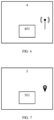
- FIG. 6 schematically illustrates a terrestrial transmitter 4 in accordance with the present disclosure.
- a terrestrial transmitter 4 of a digital wireless broadcast signal 6 comprises a processing unit 401.
- the processing unit 401 is configured to transmit 202 the digital wireless broadcast signal 6 comprising transmitter information 601 and timing information 602.
- the transmitter information 601 is directly or indirectly indicative of a geographic position of a terrestrial transmitter 4 of the broadcast signal 6.
- the transmitter information 601 may comprise at least one of: a transmitter identifier, and a geographic transmitter position.
- the timing information 602 is indicative of a timing of the broadcast signal 6.
- the timing information 602 may comprise at least one of: a timestamp of the transmission by the transmitter 4 of the broadcast signal 6, and a positioning reference signal (PRS) 607 mapped into the broadcast signal 6.
- PRS positioning reference signal
- a mapping of the PRS 607 to time-frequency resources of the broadcast signal 6 may depend on a cryptographic key.
- the broadcast signal 6 may comprise a 3GPP multicast / broadcast signal.
- the broadcast signal 6 may comprise an FeMBMS signal 603 including the transmitter information 601 and the timing information 602, wherein the broadcast signal 6 may comprise DVB-T2 extension frames (FEF) 604 including the FeMBMS signal 603.
- the broadcast signal 6 may comprise an NB-IoT signal 605 including the transmitter information 601 and the timing information 602; and the broadcast signal 6 may comprise a guard band 606 of another broadcasting service (e.g., DVB-T2), the guard band 606 including the NB-IoT signal 605.
- DVB-T2 another broadcasting service
- FIG. 7 schematically illustrates a receiver 5 in accordance with the present disclosure.
- a receiver 5 of digital wireless broadcast signals 6 comprises a processing unit 501.
- the processing unit 501 is configured to receive 302, from three or more time-synchronized terrestrial transmitters 4, a respective digital wireless broadcast signal 6 at a respective time of arrival (TOA).
- the respective broadcast signal 6 comprises transmitter information 601 and timing information 602.
- the transmitter information 601 is directly or indirectly indicative of a geographic position of a terrestrial transmitter 4 of the broadcast signal 6.
- the transmitter information 601 may comprise at least one of: a transmitter identifier, and a geographic transmitter position.
- the timing information 602 is indicative of a timing of the broadcast signal 6.
- the timing information 602 may comprise at least one of: a timestamp of the transmission by the transmitter 4 of the broadcast signal 6, and a positioning reference signal (PRS) 607 mapped into the broadcast signal 6.
- PRS positioning reference signal
- a mapping of the PRS 607 to time-frequency resources of the broadcast signal 6 may depend on a cryptographic key.
- the broadcast signal 6 may comprise a 3GPP multicast / broadcast signal.
- the broadcast signal 6 may comprise an FeMBMS signal 603 including the transmitter information 601 and the timing information 602, wherein the broadcast signal 6 may comprise DVB-T2 extension frames (FEF) 604 including the FeMBMS signal 603.
- the broadcast signal 6 may comprise an NB-IoT signal 605 including the transmitter information 601 and the timing information 602; and the broadcast signal 6 may comprise a guard band 606 of another broadcasting service (e.g., DVB-T2), the guard band 606 including the NB-IoT signal 605.
- DVB-T2 another broadcasting service
- the processing unit 501 is further configured to calculate 303, in dependence of the respective timing information 602 and the respective TOA, a plurality of time differences of arrival (TDOAs) of each of the transmitters 4 but a reference transmitter 4 of the transmitters 4.
- TDOAs time differences of arrival
- the processing unit 501 may further be configured to receive 304 a correction information indicative of a temporal correction of the timing information 602 of a respective broadcast signal 6.
- the correction information may depend on a ground conductivity detected at a geographic position in between the transmitters.
- the processing unit 501 is further configured to determine 305, in dependence of the respective transmitter information 601, a geographic position of each of the transmitters 4.
- the determining 305 the geographic position of each of the transmitters 4 may comprise retrieving the respective geographic position of the respective transmitter 4 in dependence of the transmitter identifier, for example from a database hosted or cached by the receiver 5, or directly from the geographic transmitter position of the respective transmitter information 601.
- the processing unit 501 is further configured to calculating 306 the geographic position of the receiver 5 in dependence of the geographic positions of the transmitters 4 and the plurality of TDOAs.
- the calculating 306 the geographic position of the receiver 5 may comprise performing multilateration in dependence of the geographic positions of the transmitters 4 and a plurality of pseudo-range differences corresponding to the plurality of TDOAs.
Landscapes
- Engineering & Computer Science (AREA)
- Physics & Mathematics (AREA)
- General Physics & Mathematics (AREA)
- Radar, Positioning & Navigation (AREA)
- Remote Sensing (AREA)
- Computer Networks & Wireless Communication (AREA)
- Position Fixing By Use Of Radio Waves (AREA)
Description
- The present disclosure relates to positioning, navigation, and timing (PNT) services, and in particular to a system comprising terrestrial transmitters and a receiver of digital wireless broadcast signals, corresponding methods, and said broadcast signal.
- Global navigation satellite systems (GNSS) such as GPS or GALILEO transmit unencrypted signals of very low power. These signals may easily be jammed, for example using a 5W jammer, or even spoofed using low-cost software-defined radio (SDR) communication systems.
- Accordingly, there is a need for a GNSS backup system to provide timing and position to critical infrastructure, such as power grids, ports, airports, road tolls, cash machines, stock exchanges, and the like.
- Document
US 2012165012 discloses observed TDOA determination employing a reference transmitter with transmitter synchronization. - The object of the present disclosure is to provide a robust GNSS backup system.
- The claimed subject-matter is defined by the appended independent claims. Preferred embodiments are set forth in the dependent claims and in the following description and drawings.
- A first aspect of the present disclosure relates to a method of geographic positioning of a receiver based on communicated positioning information. The method comprises: transmitting, by three or more time-synchronized terrestrial transmitters, a respective digital wireless broadcast signal comprising transmitter information directly or indirectly indicative of a geographic position of the transmitter of the broadcast signal, and timing information indicative of a timing of the broadcast signal; receiving, from the three or more transmitters, the respective broadcast signal at a respective time of arrival (TOA); calculating, in dependence of the respective timing information and the respective TOA, a plurality of time differences of arrival (TDOAs) of each of the transmitters but a reference transmitter of the transmitters; determining, in dependence of the respective transmitter information, a geographic position of each of the transmitters; and calculating a geographic position of the receiver in dependence of the geographic positions of the transmitters and the plurality of TDOAs.
- The method may further comprise receiving a correction information indicative of a temporal correction of the timing information of the respective broadcast signal.
- The correction information may depend on a ground conductivity detected at a geographic position in between the transmitters.
- The broadcast signal may comprise a Further Evolved Multicast Broadcast Mobile Service (FeMBMS) signal including the transmitter information and the timing information.
- The broadcast signal may comprise DVB-T2 extension frames (FEF) including the FeMBMS signal.
- The broadcast signal may comprise an NB-IoT signal including the transmitter information and the timing information; and the broadcast signal may comprise a guard band of another broadcasting service, the guard band including the NarrowBand Internet of Things (NB-IoT) signal.
- The transmitter information may comprise at least one of: a transmitter identifier, and a geographic transmitter position.
- The timing information may comprise at least one of: a timestamp of the transmission by the transmitter of the broadcast signal, and a positioning reference signal (PRS) mapped into the broadcast signal.
- A mapping of the PRS to time-frequency resources of the broadcast signal may depend on a cryptographic key.
- The time-synchronizing of the transmitters may comprise providing a common primary reference clock (PRC) source for the transmitters.
- The time-synchronizing may comprise using Precision Time Protocol (PTP).
- The time-synchronizing may comprise using Synchronous Ethernet (SyncE) protocol.
- A second aspect of the present disclosure relates to a method of transmitting positioning information for geographic positioning of a receiver. The method comprises: transmitting a digital wireless broadcast signal, comprising transmitter information directly or indirectly indicative of a geographic position of the transmitter of the broadcast signal, and timing information indicative of a timing of the broadcast signal.
- The broadcast signal may comprise an FeMBMS signal including the transmitter information and the timing information.
- The broadcast signal may comprise DVB-T2 FEF including the FeMBMS signal.
- The broadcast signal may comprise an NB-IoT signal including the transmitter information and the timing information; and the broadcast signal may comprise a guard band of another broadcasting service, the guard band including the NB-IoT signal.
- The transmitter information may comprise at least one of: a transmitter identifier, and a geographic transmitter position.
- The timing information may comprise at least one of: a timestamp of the transmission by the transmitter of the broadcast signal, and a PRS mapped into the broadcast signal.
- A mapping of the PRS to time-frequency resources of the broadcast signal may depend on a cryptographic key.
- The time-synchronizing of the transmitter may comprise providing a common PRC source for the transmitter.
- The time-synchronizing of the transmitter may comprise using PTP.
- The time-synchronizing of the transmitter may comprise using SyncE.
- A third aspect of the present disclosure relates to a terrestrial transmitter of a digital wireless broadcast signal. The transmitter comprises: a processing unit configured to transmit the digital wireless broadcast signal comprising transmitter information directly or indirectly indicative of a geographic position of the transmitter of the broadcast signal, and timing information indicative of a timing of the broadcast signal.
- The broadcast signal may comprise an FeMBMS signal including the transmitter information and the timing information.
- The broadcast signal may comprise DVB-T2 FEF including the FeMBMS signal.
- The broadcast signal may comprise an NB-IoT signal including the transmitter information and the timing information; and the broadcast signal may comprise a guard band of another broadcasting service, the guard band including the NB-IoT signal.
- The transmitter information may comprise at least one of: a transmitter identifier, and a geographic transmitter position.
- The timing information may comprise at least one of: a timestamp of the transmission by the transmitter of the broadcast signal, and a PRS mapped into the broadcast signal.
- A mapping of the PRS to time-frequency resources of the broadcast signal may depend on a cryptographic key.
- A fourth aspect of the present disclosure relates to a method of geographic positioning of a receiver based on received positioning information. The method comprises: receiving, from three or more time-synchronized terrestrial transmitters, a respective digital wireless broadcast signal at a respective TOA, the respective broadcast signal comprising transmitter information directly or indirectly indicative of a geographic position of the transmitter of the broadcast signal, and timing information indicative of a timing of the broadcast signal; calculating, in dependence of the respective timing information and the respective TOA, a plurality of TDOAs of each of the transmitters but a reference transmitter of the transmitters; determining, in dependence of the respective transmitter information, a geographic position of each of the transmitters; and calculating a geographic position of the receiver in dependence of the geographic positions of the transmitters and the plurality of TDOAs.
- The broadcast signal may comprise an FeMBMS signal including the transmitter information and the timing information.
- The broadcast signal may comprise DVB-T2 FEF including the FeMBMS signal.
- The broadcast signal may comprise an NB-IoT signal including the transmitter information and the timing information; and the broadcast signal may comprise a guard band of another broadcasting service, the guard band including the NB-IoT signal.
- The transmitter information may comprise at least one of: a transmitter identifier, and a geographic transmitter position.
- The timing information may comprise at least one of: a timestamp of the transmission by the transmitter of the broadcast signal, and a PRS mapped into the broadcast signal.
- A mapping of the PRS to time-frequency resources of the broadcast signal may depend on a cryptographic key.
- The method may further comprise receiving a correction information indicative of a temporal correction of the timing information of the respective broadcast signal.
- The correction information may depend on a ground conductivity detected at a geographic position in between the transmitters.
- The determining the geographic position of each of the transmitters may comprise retrieving the respective geographic position of the respective transmitter in dependence of the transmitter identifier, for example from a database hosted or cached by the
receiver 5, or directly from the geographic transmitter position of the respective transmitter information. - The calculating the geographic position of the receiver may comprise performing multilateration in dependence of the geographic positions of the transmitters and a plurality of pseudo-range differences corresponding to the plurality of TDOAs .
- A fifth aspect of the present disclosure relates to a receiver of digital wireless broadcast signals. The receiver comprises: a processing unit configured to receive, from three or more time-synchronized terrestrial transmitters, a respective digital wireless broadcast signal at a respective TOA, the respective broadcast signal comprising transmitter information directly or indirectly indicative of a geographic position of the transmitter of the broadcast signal, and timing information indicative of a timing of the broadcast signal; calculate, in dependence of the respective timing information and the respective TOA, a plurality of TDOAs of each of the transmitters but a reference transmitter of the transmitters; determining, in dependence of the respective transmitter information, a geographic position of each of the transmitters; and calculating the geographic position of the receiver in dependence of the geographic positions of the transmitters and the plurality of TDOAs.
- The broadcast signal may comprise an FeMBMS signal including the transmitter information and the timing information.
- The broadcast signal may comprise DVB-T2 FEF including the FeMBMS signal.
- The broadcast signal may comprise an NB-IoT signal including the transmitter information and the timing information; and the broadcast signal may comprise a guard band of another broadcasting service, the guard band including the NB-IoT signal.
- The transmitter information may comprise at least one of: a transmitter identifier, and a geographic transmitter position.
- The timing information may comprise at least one of: a timestamp of the transmission by the transmitter of the broadcast signal, and a PRS mapped into the broadcast signal.
- A mapping of the PRS to time-frequency resources of the broadcast signal may depend on a cryptographic key.
- A sixth aspect of the present disclosure relates to a system of communicating positioning information for geographic positioning of a receiver comprises three or more time-synchronized terrestrial transmitters of respective digital wireless broadcast signals according to the third aspect or any of its implementations; and a receiver of the digital wireless broadcast signals according to the fifth aspect or any of its implementations.
- A seventh aspect of the present disclosure relates to a digital wireless broadcast signal. The broadcast signal comprises: transmitter information directly or indirectly indicative of a geographic position of a terrestrial transmitter of the broadcast signal; and timing information indicative of a timing of the broadcast signal.
- The broadcast signal may comprise an FeMBMS signal including the transmitter information and the timing information.
- The broadcast signal may comprise DVB-T2 FEF including the FeMBMS signal.
- The broadcast signal may comprise an NB-IoT signal including the transmitter information and the timing information; and the broadcast signal may comprise a guard band of another broadcasting service, the guard band including the NB-IoT signal.
- The transmitter information may comprise at least one of: a transmitter identifier, and a geographic transmitter position.
- The timing information may comprise at least one of: a timestamp of the transmission by the transmitter of the broadcast signal, and a PRS mapped into the broadcast signal.
- A mapping of the PRS to time-frequency resources of the broadcast signal may depend on a cryptographic key.
- The present disclosure provides a terrestrial GNSS backup system that is largely invulnerable to jamming and spoofing. The system is based on broadcasting of digital television (TV) signals including 3GPP signals, such as FeMBMS or NB-IoT, with embedded positioning information. The resulting positioning approach
- requires no extra / dedicated spectrum,
- is compatible with Observed Time Difference Of Arrival (OTDOA) positioning in 3GPP 4G,
- can be carried out using existing 3GPP 4G modem chipsets (with OTDOA support, commercially available in US) with mainly SW modifications,
- can be used worldwide,
- is energy efficient due to integration in TV transmitters,
- is more economical, as existing TV transmitters and antennas are reused and transmitters do not have to be significantly modified, and
- is attack-proof.
- The above-described aspects and implementations will now be explained with reference to the accompanying drawings, in which the same or similar reference numerals designate the same or similar elements.
- The features of these aspects and implementations may be combined with each other unless specifically stated otherwise.
- The drawings are to be regarded as being schematic representations, and elements illustrated in the drawings are not necessarily shown to scale. Rather, the various elements are represented such that their function and general purpose become apparent to those skilled in the art.
-
FIG. 1 illustrates a system comprising terrestrial transmitters and a receiver in accordance with the present disclosure, and corresponding methods in accordance with the present disclosure; -
FIGs. 2 - 5 schematically illustrate digital wireless broadcast signals in accordance with the present disclosure; -
FIG. 6 schematically illustrates a terrestrial transmitter in accordance with the present disclosure; and -
FIG. 7 schematically illustrates a receiver in accordance with the present disclosure. -
FIG. 1 illustrates asystem terrestrial transmitters 4 and areceiver 5 in accordance with the present disclosure, andcorresponding methods - The
system terrestrial transmitters 4 for geographic positioning of thereceiver 5 of the digital wireless broadcast signals 6. - Each of the
terrestrial transmitters 4 shown to the left ofFIG. 1 performs amethod 2 of transmitting positioning information for geographic positioning of thereceiver 5. - The
method 2 comprises a step of time-synchronizing 201 thetransmitters 4. The time-synchronizing 201 of thetransmitters 4 may comprise providing thetransmitters 4 with a common primary reference clock (PRC) source in accordance with a master-slave synchronization approach. The time-synchronizing 201 of thetransmitters 4 may comprise using the Precision Time Protocol (PTP, IEEE 1588) for clock synchronization and/or the Synchronous Ethernet (SyncE) protocol for clock syntonization (i.e., frequency synchronization). For example, it may be chosen to use a "High Accuracy Request-Response Default PTP Profile" (Annex 1.5) of IEEE 1588-2019 to interconnect switches and nodes, which is also commonly referred to as CERN's "White Rabbit" time synchronization protocol. Thetransmitters 4 need to be synchronized to 3GPP frame boundaries, and the PRS occasions for alltransmitters 4 on a same frequency layer need to be aligned in time. - The
method 2 further comprises a step of transmitting 202 a digitalwireless broadcast signal 6. The digitalwireless broadcast signal 6 comprisestransmitter information 601 andtiming information 602. - The
transmitter information 601 is directly or indirectly indicative of a geographic position of aterrestrial transmitter 4 of thebroadcast signal 6. Thetransmitter information 601 may comprise at least one of: a transmitter identifier, and a geographic transmitter position. - The
timing information 602 is indicative of a timing of thebroadcast signal 6. Thetiming information 602 may comprise at least one of: a timestamp of the transmission by thetransmitter 4 of thebroadcast signal 6, and a positioning reference signal (PRS) 607 mapped into thebroadcast signal 6. - A PRS as used herein may refer to a pseudo-random QPSK sequence that is mapped into time-frequency resources of a 4G/5G signal in diagonal patterns with shifts in frequency and time. PRS facilitate ranging measurements of a terminal (receiver) from eNodeB (transmitter) signals to improve positioning performance. PRS are transmitted in pre-defined "positioning occasions". Positioning occasions occur with a periodicity TPRS (subframes, or milli-seconds) and then extend across a number NPRS of consecutive subframes. A starting subframe of PRS transmission, relative to SFN=0, is given by the cell specific PRS subframe offset Δ PRS. A PRS configuration index IPRS defines the PRS transmission schedule (i.e., Δ PRS and TPRS ). A mapping of the PRS 607 to time-frequency resources of the
broadcast signal 6 may depend on a cryptographic key. The mapping of the PRS 607 to time-frequency resources of thebroadcast signal 6 may be made time-variant such that an ability to continuously track the PRS 607 requires knowledge and use of the cryptographic key. By deriving the PRS 607 time-frequency pattern from a pseudo-random sequence, usage may be restricted to subscribed users, and the navigation signal may be authenticated to harden the system against spoofing. - The
broadcast signal 6 may comprise a 3GPP multicast / broadcast signal. In particular, thebroadcast signal 6 may comprise anFeMBMS signal 603 including thetransmitter information 601 and thetiming information 602, wherein thebroadcast signal 6 may comprise DVB-T2 extension frames (FEF) 604 including theFeMBMS signal 603. Alternatively, thebroadcast signal 6 may comprise an NB-IoT signal 605 including thetransmitter information 601 and thetiming information 602; and thebroadcast signal 6 may comprise aguard band 606 of another broadcasting service (e.g., DVB-T2), theguard band 606 including the NB-IoT signal 605. Both concepts achieve a similar purpose, the NB-IoT approach being less spectrally efficient, however. - FeMBMS as used herein may refer to a 3GPP point-to-multipoint service for efficient cellular multicast/broadcast. The service involves deploying IP multicast, forming dynamic single-frequency networks (SFNs) across cells, and the like measures.
- NB-IoT as used herein may refer to a 3GPP Low Power Wide Area Network (LPWAN) service for battery-efficient machine-to-machine (M2M) communication. NB-IoT derives its name from its support of bandwidth-limited receivers (200kHz).
- DVB-T2 as used herein may refer to an ETSI standard for broadcast transmission of digital terrestrial television and suited for carrying HDTV signals.
- The
receiver 5 on its part performs amethod 3 of geographic positioning of thereceiver 5 based on received positioning information. - The
method 3 comprises a step of receiving 302 a respective digitalwireless broadcast signal 6 at a respective time of arrival (TOA) from three or more time-synchronizedterrestrial transmitters 4. Therespective broadcast signal 6 comprisestransmitter information 601 andtiming information 602. - Time of arrival (TOA) as used herein may refer to an absolute time instant when a radio signal emanating from a transmitter reaches a remote receiver. TOA corresponds to a sum of a time of transmission (TOT) and a time of flight from the respective transmitter i (TOFi):

- Time difference of arrival (TDOA) as used herein may refer to a difference between TOAs, which effectively cancels the TOT:

- Each TDOAij locates the
receiver 5 on a hyperbola focused on theinvolved transmitters 4, and the geographic position of thereceiver 5 is at an intersection of multiple hyperbolas. - The
transmitter information 601 is directly or indirectly indicative of a geographic position of aterrestrial transmitter 4 of thebroadcast signal 6. Thetransmitter information 601 may comprise at least one of: a transmitter identifier, and a geographic transmitter position. - The
timing information 602 is indicative of a timing of thebroadcast signal 6. Thetiming information 602 may comprise at least one of: a timestamp of the transmission by thetransmitter 4 of thebroadcast signal 6, and a positioning reference signal (PRS) 607 mapped into thebroadcast signal 6. A mapping of the PRS 607 to time-frequency resources of thebroadcast signal 6 may depend on a cryptographic key. - The
broadcast signal 6 may comprise a 3GPP multicast / broadcast signal. In particular, thebroadcast signal 6 may comprise anFeMBMS signal 603 including thetransmitter information 601 and thetiming information 602, wherein thebroadcast signal 6 may comprise DVB-T2 extension frames (FEF) 604 including theFeMBMS signal 603. Alternatively, thebroadcast signal 6 may comprise an NB-IoT signal 605 including thetransmitter information 601 and thetiming information 602; and thebroadcast signal 6 may comprise aguard band 606 of another broadcasting service (e.g., DVB-T2), theguard band 606 including the NB-IoT signal 605. - The
method 3 further comprises a step of calculating 303 a plurality of time differences of arrival (TDOAs) of each of thetransmitters 4 but areference transmitter 4 of thetransmitters 4 in dependence of therespective timing information 602 and the respective TOA. - The
method 3 may further comprise a step of receiving 304 a correction information indicative of a temporal correction of thetiming information 602 of arespective broadcast signal 6. The correction information may depend on a ground conductivity, since its variations may influence a propagation of thebroadcast signal 6. Ground conductivity may be detected by a network of terrestrial monitoring stations located at geographic positions in between thetransmitters 4 and broadcasting or otherwise communicating a difference between their fixed geographic positions and the geographic positions indicated by thetransmitters 4.Receivers 5 may correct their pseudo-range differences by the same amount. - The
method 3 further comprises a step of determining 305 a geographic position of each of thetransmitters 4 in dependence of therespective transmitter information 601. The determining 305 the geographic position of each of thetransmitters 4 may comprise retrieving the respective geographic position of therespective transmitter 4 in dependence of the transmitter identifier, for example from a database hosted or cached by thereceiver 5, or directly from the geographic transmitter position of therespective transmitter information 601. - The
method 3 further comprises a step of calculating 306 a geographic position of thereceiver 5 in dependence of the geographic positions of thetransmitters 4 and the plurality of TDOAs. The calculating 306 the geographic position of thereceiver 5 may comprise performing multilateration in dependence of the geographic positions of thetransmitters 4 and a plurality of pseudo-range differences corresponding to the plurality of TDOAs (pseudo-range differences are obtained when multiplying TDOAs by the group velocity, i.e. the speed of propagation of an information carried by the broadcast signal 6). - Multilateration as used herein may refer to a technique for geographic positioning based on measurement of TOAs of energy waves having a known group velocity when propagating from multiple transmitters. These transmitters are at known geographic locations and have synchronized clocks. A minimum of d+1 TOAs are required to determine the receiver's geographic position in d dimensions.
- Collectively, the
transmitters 4 and thereceiver 5 forming thesystem method 1 of geographic positioning of thereceiver 5 based on communicated positioning information. Themethod 1 substantially comprises the steps already explained in connection with themethods -
FIG. 2 - 5 schematically illustrate digital wireless broadcast signals 6 in accordance with the present disclosure; and - A digital
wireless broadcast signal 6 comprisestransmitter information 601 andtiming information 602. - The
transmitter information 601 is directly or indirectly indicative of a geographic position of aterrestrial transmitter 4 of thebroadcast signal 6. Thetransmitter information 601 may comprise at least one of: a transmitter identifier, and a geographic transmitter position. - The
timing information 602 is indicative of a timing of thebroadcast signal 6. Thetiming information 602 may comprise at least one of: a timestamp of the transmission by thetransmitter 4 of thebroadcast signal 6, and a positioning reference signal (PRS) 607 mapped into thebroadcast signal 6. A mapping of the PRS 607 to time-frequency resources of thebroadcast signal 6 may depend on a cryptographic key. - The
broadcast signal 6 may comprise a 3GPP multicast / broadcast signal. In particular, thebroadcast signal 6 may comprise anFeMBMS signal 603 including thetransmitter information 601 and thetiming information 602, wherein thebroadcast signal 6 may comprise DVB-T2 extension frames (FEF) 604 including theFeMBMS signal 603. Alternatively, thebroadcast signal 6 may comprise an NB-IoT signal 605 including thetransmitter information 601 and thetiming information 602; and thebroadcast signal 6 may comprise aguard band 606 of another broadcasting service (e.g., DVB-T2), theguard band 606 including the NB-IoT signal 605. -
FIG. 6 schematically illustrates aterrestrial transmitter 4 in accordance with the present disclosure. - A
terrestrial transmitter 4 of a digitalwireless broadcast signal 6 comprises aprocessing unit 401. - The
processing unit 401 is configured to transmit 202 the digitalwireless broadcast signal 6 comprisingtransmitter information 601 andtiming information 602. - The
transmitter information 601 is directly or indirectly indicative of a geographic position of aterrestrial transmitter 4 of thebroadcast signal 6. Thetransmitter information 601 may comprise at least one of: a transmitter identifier, and a geographic transmitter position. - The
timing information 602 is indicative of a timing of thebroadcast signal 6. Thetiming information 602 may comprise at least one of: a timestamp of the transmission by thetransmitter 4 of thebroadcast signal 6, and a positioning reference signal (PRS) 607 mapped into thebroadcast signal 6. - A mapping of the PRS 607 to time-frequency resources of the
broadcast signal 6 may depend on a cryptographic key. - The
broadcast signal 6 may comprise a 3GPP multicast / broadcast signal. In particular, thebroadcast signal 6 may comprise anFeMBMS signal 603 including thetransmitter information 601 and thetiming information 602, wherein thebroadcast signal 6 may comprise DVB-T2 extension frames (FEF) 604 including theFeMBMS signal 603. Alternatively, thebroadcast signal 6 may comprise an NB-IoT signal 605 including thetransmitter information 601 and thetiming information 602; and thebroadcast signal 6 may comprise aguard band 606 of another broadcasting service (e.g., DVB-T2), theguard band 606 including the NB-IoT signal 605. -
FIG. 7 schematically illustrates areceiver 5 in accordance with the present disclosure. - A
receiver 5 of digital wireless broadcast signals 6 comprises aprocessing unit 501. - The
processing unit 501 is configured to receive 302, from three or more time-synchronizedterrestrial transmitters 4, a respective digitalwireless broadcast signal 6 at a respective time of arrival (TOA). Therespective broadcast signal 6 comprisestransmitter information 601 andtiming information 602. - The
transmitter information 601 is directly or indirectly indicative of a geographic position of aterrestrial transmitter 4 of thebroadcast signal 6. Thetransmitter information 601 may comprise at least one of: a transmitter identifier, and a geographic transmitter position. - The
timing information 602 is indicative of a timing of thebroadcast signal 6. Thetiming information 602 may comprise at least one of: a timestamp of the transmission by thetransmitter 4 of thebroadcast signal 6, and a positioning reference signal (PRS) 607 mapped into thebroadcast signal 6. A mapping of the PRS 607 to time-frequency resources of thebroadcast signal 6 may depend on a cryptographic key. - The
broadcast signal 6 may comprise a 3GPP multicast / broadcast signal. In particular, thebroadcast signal 6 may comprise anFeMBMS signal 603 including thetransmitter information 601 and thetiming information 602, wherein thebroadcast signal 6 may comprise DVB-T2 extension frames (FEF) 604 including theFeMBMS signal 603. Alternatively, thebroadcast signal 6 may comprise an NB-IoT signal 605 including thetransmitter information 601 and thetiming information 602; and thebroadcast signal 6 may comprise aguard band 606 of another broadcasting service (e.g., DVB-T2), theguard band 606 including the NB-IoT signal 605. - The
processing unit 501 is further configured to calculate 303, in dependence of therespective timing information 602 and the respective TOA, a plurality of time differences of arrival (TDOAs) of each of thetransmitters 4 but areference transmitter 4 of thetransmitters 4. - The
processing unit 501 may further be configured to receive 304 a correction information indicative of a temporal correction of thetiming information 602 of arespective broadcast signal 6. The correction information may depend on a ground conductivity detected at a geographic position in between the transmitters. - The
processing unit 501 is further configured to determine 305, in dependence of therespective transmitter information 601, a geographic position of each of thetransmitters 4. The determining 305 the geographic position of each of thetransmitters 4 may comprise retrieving the respective geographic position of therespective transmitter 4 in dependence of the transmitter identifier, for example from a database hosted or cached by thereceiver 5, or directly from the geographic transmitter position of therespective transmitter information 601. - The
processing unit 501 is further configured to calculating 306 the geographic position of thereceiver 5 in dependence of the geographic positions of thetransmitters 4 and the plurality of TDOAs. The calculating 306 the geographic position of thereceiver 5 may comprise performing multilateration in dependence of the geographic positions of thetransmitters 4 and a plurality of pseudo-range differences corresponding to the plurality of TDOAs.
Claims (33)
- A method (1) of geographic positioning of a receiver (5) based on communicated positioning information, comprisingtransmitting (202), by three or more time-synchronized (201) terrestrial transmitters (4), a respective digital wireless broadcast signal (6) comprisingtransmitter information (601) directly or indirectly indicative of a geographic position of the transmitter (4) of the broadcast signal (6); andtiming information (602) indicative of a timing of the broadcast signal (6);receiving (302), by the receiver (5) and from the three or more transmitters (4), the respective broadcast signal (6) at a respective time of arrival (TOA);calculating (303), by the receiver (5), in dependence of the respective timing information (602) and the respective TOA, a plurality of time differences of arrival (TDOAs) of each of the transmitters (4) but a reference transmitter (4) of the transmitters (4);determining (305), by the receiver (5), in dependence of the respective transmitter information (601), a geographic position of each of the transmitters (4); andcalculating (306), by the receiver (5), a geographic position of the receiver (5) in dependence of the geographic positions of the transmitters (4) and the plurality of TDOAs,the respective broadcast signal (6) comprising an FeMBMS signal (603) including the transmitter information (601) and the timing information (602).
- The method (1) of claim 1,
the broadcast signal (6) comprising DVB-T2 extension frames (FEF) (604) including the FeMBMS signal (603). - The method (1) of claim 1 or claim 2,
the transmitter information (601) comprising at least one of:a transmitter identifier, anda transmitter position. - The method (1) of any one of the claims 1 to 3,
the timing information (602) comprising at least one of:a timestamp of the transmission by the transmitter (4) of the broadcast signal (6), anda positioning reference signal (PRS) (607) mapped into the broadcast signal (6). - The method (1) of claim 4,
a mapping of the PRS (607) to time-frequency resources of the broadcast signal (6) depending on a cryptographic key. - The method (1) of any one of the claims 1 to 5, further comprising
the time-synchronizing (201) of the transmitters (4) comprising providing a common primary reference clock (PRC) source for the transmitters (4). - The method (1) of any one of the claims 1 to 6,
the time-synchronizing (201) comprising using the Precision Time Protocol (PTP). - The method (1) of any one of the claims 1 to 7,
the time-synchronizing (201) comprising using the Synchronous Ethernet (SyncE) protocol. - The method (3) of any one of the claims 1 to 8, further comprising
receiving (304), by the receiver (5), correction information indicative of a temporal correction of the timing information (602) of the respective broadcast signal (6). - The method (3) of claim 9,
the correction information depending on a ground conductivity detected at a geographic position in between the transmitters (4). - A method (2) of transmitting positioning information for geographic positioning of a receiver (5), comprisingtransmitting (202) a digital wireless broadcast signal (6), comprisingtransmitter information (601) directly or indirectly indicative of a geographic position of the transmitter (4) of the broadcast signal (6); andtiming information (602) indicative of a timing of the broadcast signal (6),the broadcast signal (6) comprising an FeMBMS signal (603) including the transmitter information (601) and the timing information (602).
- The method (2) of claim 11,
the broadcast signal (6) comprising DVB-T2 extension frames (FEF) (604) including the FeMBMS signal (603). - The method (2) of claim 11 or claim 12,
the transmitter information (601) comprising at least one of:a transmitter identifier, anda transmitter position. - The method (2) of any one of the claims 11 to 13,
the timing information (602) comprising at least one of:a timestamp of the transmission by the transmitter (4) of the broadcast signal (6), anda positioning reference signal (PRS) (607) mapped into the broadcast signal (6). - The method (2) of claim 14,
a mapping of the PRS (607) to time-frequency resources of the broadcast signal (6) depending on a cryptographic key. - The method (2) of any one of the claims 11 to 15,
the time-synchronizing (201) of the transmitter (4) comprising providing a common primary reference clock (PRC) source for the transmitter (4). - The method (2) of any one of the claims 11 to 16,
the time-synchronizing (201) of the transmitter (4) comprising using the Precision Time Protocol (PTP). - The method (2) of any one of the claims 11 to 17,
the time-synchronizing (201) of the transmitter (4) comprising using the Synchronous Ethernet (SyncE) protocol. - A terrestrial transmitter (4) of a digital wireless broadcast signal (6), comprisinga processing unit (401) configured to
transmit (202) the digital wireless broadcast signal (6) comprisingtransmitter information (601) directly or indirectly indicative of a geographic position of the transmitter (4) of the broadcast signal (6); andtiming information (602) indicative of a timing of the broadcast signal (6),the broadcast signal (6) comprising an FeMBMS signal (603) including the transmitter information (601) and the timing information (602). - The transmitter (4) of claim 19,
the broadcast signal (6) comprising DVB-T2 extension frames (FEF) (604) including the FeMBMS signal (603). - The transmitter (4) of claim 19 or claim 20,
the transmitter information (601) comprising at least one of:a transmitter identifier, anda transmitter position. - The transmitter (4) of any one of the claims 19 to 21,
the timing information (602) comprising at least one of:a timestamp of the transmission by the transmitter (4) of the broadcast signal (6), anda positioning reference signal (PRS) (607) mapped into the broadcast signal (6). - The transmitter (4) of claim 22,
a mapping of the PRS (607) to time-frequency resources of the broadcast signal (6) depending on a cryptographic key. - A method (3) of geographic positioning of a receiver (5) based on received positioning information, comprisingreceiving (302), from three or more time-synchronized terrestrial transmitters (4), a respective digital wireless broadcast signal (6) at a respective time of arrival (TOA), the respective broadcast signal (6) comprisingtransmitter information (601) directly or indirectly indicative of a geographic position of the transmitter (4) of the broadcast signal (6); andtiming information (602) indicative of a timing of the broadcast signal (6);calculating (303), in dependence of the respective timing information (602) and the respective TOA, a plurality of time differences of arrival (TDOAs) of each of the transmitters (4) but a reference transmitter (4) of the transmitters (4);determining (305), in dependence of the respective transmitter information (601), a geographic position of each of the transmitters (4); andcalculating (306) a geographic position of the receiver (5) in dependence of the geographic positions of the transmitters (4) and the plurality of TDOAs,the respective broadcast signal (6) comprising an FeMBMS signal (603) including the transmitter information (601) and the timing information (602).
- A receiver (5) of digital wireless broadcast signals (6), comprisinga processing unit (501) configured toreceive (302), from three or more time-synchronized terrestrial transmitters (4), a respective digital wireless broadcast signal (6) at a respective time of arrival (TOA), the respective broadcast signal (6) comprisingtransmitter information (601) directly or indirectly indicative of a geographic position of the transmitter (4) of the broadcast signal (6); andtiming information (602) indicative of a timing of the broadcast signal (6);calculate (303), in dependence of the respective timing information (602) and the respective TOA, a plurality of time differences of arrival (TDOAs) of each of the transmitters (4) but a reference transmitter (4) of the transmitters (4);determine (305), in dependence of the respective transmitter information (601), a geographic position of each of the transmitters (4); andcalculate (306) the geographic position of the receiver (5) in dependence of the geographic positions of the transmitters (4) and the plurality of TDOAs,the respective broadcast signal (6) comprising an FeMBMS signal (603) including the transmitter information (601) and the timing information (602).
- The receiver (5) of claim 25,
the broadcast signal (6) comprising DVB-T2 extension frames (FEF) (604) including the FeMBMS signal (603). - The receiver (5) of claim 25 or claim 26,
the transmitter information (601) comprising at least one of:a transmitter identifier, anda transmitter position. - The receiver (5) of any one of the claims 25 to 27,
the timing information (602) comprising at least one of:a timestamp of the transmission by the transmitter (4) of the broadcast signal (6), anda positioning reference signal (PRS) (607) mapped into the broadcast signal (6). - The receiver (5) of claim 28,
a mapping of the PRS (607) to time-frequency resources of the broadcast signal (6) depending on a cryptographic key. - The receiver (5) of any one of the claims 25 to 29,
the processing unit (501) further configured to
receive (304) correction information indicative of a temporal correction of the timing information (602) of the respective broadcast signal (6). - The receiver (5) of claim 30,
the correction information depending on a ground conductivity detected at a geographic position in between the transmitters (4). - A system (4, 5) of communicating positioning information for geographic positioning of a receiver (5), comprisingthree or more time-synchronized terrestrial transmitters (4) of respective digital wireless broadcast signals (6) according to any one of the claims 19 to 23; anda receiver (5) of the digital wireless broadcast signals (6) according to any one of the claims 25 to 31.
- A digital wireless broadcast signal (6), comprisingtransmitter information (601) directly or indirectly indicative of a geographic position of a terrestrial transmitter (4) of the broadcast signal (6); andtiming information (602) indicative of a timing of the broadcast signal (6);the broadcast signal (6) comprising an FeMBMS signal (603) including the transmitter information (601) and the timing information (602).
Applications Claiming Priority (1)
| Application Number | Priority Date | Filing Date | Title |
|---|---|---|---|
| PCT/EP2021/054660 WO2022179688A1 (en) | 2021-02-25 | 2021-02-25 | Terrestrial gnss backup using tv transmitters |
Publications (2)
| Publication Number | Publication Date |
|---|---|
| EP4298453A1 EP4298453A1 (en) | 2024-01-03 |
| EP4298453B1 true EP4298453B1 (en) | 2024-12-25 |
Family
ID=74853615
Family Applications (1)
| Application Number | Title | Priority Date | Filing Date |
|---|---|---|---|
| EP21709353.3A Active EP4298453B1 (en) | 2021-02-25 | 2021-02-25 | Terrestrial gnss backup using tv transmitters |
Country Status (2)
| Country | Link |
|---|---|
| EP (1) | EP4298453B1 (en) |
| WO (1) | WO2022179688A1 (en) |
Family Cites Families (2)
| Publication number | Priority date | Publication date | Assignee | Title |
|---|---|---|---|---|
| US20100331012A1 (en) * | 2009-06-29 | 2010-12-30 | Yang Zhang | TDOA-Based Reconstruction of Base Station Location Data |
| US9091746B2 (en) * | 2010-07-01 | 2015-07-28 | Qualcomm Incorporated | Determination of positions of wireless transceivers to be added to a wireless communication network |
-
2021
- 2021-02-25 EP EP21709353.3A patent/EP4298453B1/en active Active
- 2021-02-25 WO PCT/EP2021/054660 patent/WO2022179688A1/en not_active Ceased
Also Published As
| Publication number | Publication date |
|---|---|
| EP4298453A1 (en) | 2024-01-03 |
| WO2022179688A1 (en) | 2022-09-01 |
Similar Documents
| Publication | Publication Date | Title |
|---|---|---|
| CA2828323C (en) | Differential correction system enhancement leverages roving receivers enabled for a non-gps, secondary pn&t signal to characterize local errors | |
| CN101084453B (en) | Transfer of calibrated time information in a mobile terminal | |
| CN113424609B (en) | Position estimation for non-terrestrial networks | |
| US8339317B2 (en) | Methods, systems and devices for determining the location of a mobile device based on simulcast communication signals | |
| EP2167987B1 (en) | Facilitating mobile station location using a ground-based cellular network | |
| US20070298761A1 (en) | Method and system for locating a wireless device in a wireless communication network | |
| CN101843029A (en) | System and method for distributing time and frequency over a network | |
| CN103645459A (en) | Position location for wireless communication systems | |
| US20150055636A1 (en) | Alternatives To Satellite Signals For Synchronization In Macro Network | |
| EP3714644A1 (en) | Nodes and methods for determining and enabling a synchronized time reference in a wireless communications network | |
| JP6302887B2 (en) | Signal output device | |
| US20250023652A1 (en) | Broadcast positioning system supporting location services through over-the-air television (tv) signals | |
| US9295017B2 (en) | Methods and arrangement for supporting base station synchronization by use of long wave signaling | |
| EP2954740B1 (en) | Systems and methods for virtually synchronizing unsynchronized or loosely synchronized networks for position location determination | |
| US9110151B2 (en) | Method and device for improving the localization and mobility control of persons or things | |
| EP4298453A1 (en) | Terrestrial gnss backup using tv transmitters | |
| CN103777211B (en) | The transmission method of ionosphere delay corrected parameter, device and Navsat | |
| GB2456150A (en) | A transmitter providing a signal indicating a time difference between respective reference clocks of a first and second global navigation satellite system | |
| KR100766484B1 (en) | World time standard multicasting method using satellite | |
| US12181590B2 (en) | Terrestrial positioning system and method for improved terrestrial positioning | |
| CN119678604A (en) | Location reliability information for device location | |
| WO2025221700A1 (en) | Open pnt access to cellular network supporting accurate and resilient pnt services |
Legal Events
| Date | Code | Title | Description |
|---|---|---|---|
| STAA | Information on the status of an ep patent application or granted ep patent |
Free format text: STATUS: UNKNOWN |
|
| STAA | Information on the status of an ep patent application or granted ep patent |
Free format text: STATUS: THE INTERNATIONAL PUBLICATION HAS BEEN MADE |
|
| PUAI | Public reference made under article 153(3) epc to a published international application that has entered the european phase |
Free format text: ORIGINAL CODE: 0009012 |
|
| STAA | Information on the status of an ep patent application or granted ep patent |
Free format text: STATUS: REQUEST FOR EXAMINATION WAS MADE |
|
| 17P | Request for examination filed |
Effective date: 20230109 |
|
| AK | Designated contracting states |
Kind code of ref document: A1 Designated state(s): AL AT BE BG CH CY CZ DE DK EE ES FI FR GB GR HR HU IE IS IT LI LT LU LV MC MK MT NL NO PL PT RO RS SE SI SK SM TR |
|
| DAV | Request for validation of the european patent (deleted) | ||
| DAX | Request for extension of the european patent (deleted) | ||
| REG | Reference to a national code |
Ref country code: DE Free format text: PREVIOUS MAIN CLASS: G01S0005020000 Ref country code: DE Ref legal event code: R079 Ref document number: 602021023850 Country of ref document: DE Free format text: PREVIOUS MAIN CLASS: G01S0005020000 Ipc: H04W0064000000 |
|
| GRAP | Despatch of communication of intention to grant a patent |
Free format text: ORIGINAL CODE: EPIDOSNIGR1 |
|
| STAA | Information on the status of an ep patent application or granted ep patent |
Free format text: STATUS: GRANT OF PATENT IS INTENDED |
|
| RIC1 | Information provided on ipc code assigned before grant |
Ipc: G01S 1/04 20060101ALI20240923BHEP Ipc: G01S 1/02 20100101ALI20240923BHEP Ipc: G01S 5/10 20060101ALI20240923BHEP Ipc: G01S 5/14 20060101ALI20240923BHEP Ipc: G01S 5/06 20060101ALI20240923BHEP Ipc: G01S 5/02 20100101ALI20240923BHEP Ipc: H04W 64/00 20090101AFI20240923BHEP |
|
| INTG | Intention to grant announced |
Effective date: 20241002 |
|
| GRAS | Grant fee paid |
Free format text: ORIGINAL CODE: EPIDOSNIGR3 |
|
| GRAA | (expected) grant |
Free format text: ORIGINAL CODE: 0009210 |
|
| STAA | Information on the status of an ep patent application or granted ep patent |
Free format text: STATUS: THE PATENT HAS BEEN GRANTED |
|
| AK | Designated contracting states |
Kind code of ref document: B1 Designated state(s): AL AT BE BG CY CZ DE DK EE ES FI FR GB GR HR HU IS IT LT LU LV MC MK MT NL NO PL PT RO RS SE SI SK SM TR |
|
| RBV | Designated contracting states (corrected) |
Designated state(s): AL AT BE BG CY CZ DE DK EE ES FI FR GB GR HR HU IS IT LT LU LV MC MK MT NL NO PL PT RO RS SE SI SK SM TR |
|
| REG | Reference to a national code |
Ref country code: GB Ref legal event code: FG4D |
|
| REG | Reference to a national code |
Ref country code: DE Ref legal event code: R096 Ref document number: 602021023850 Country of ref document: DE |
|
| P01 | Opt-out of the competence of the unified patent court (upc) registered |
Free format text: CASE NUMBER: APP_7343/2025 Effective date: 20250212 |
|
| REG | Reference to a national code |
Ref country code: LT Ref legal event code: MG9D |
|
| PG25 | Lapsed in a contracting state [announced via postgrant information from national office to epo] |
Ref country code: HR Free format text: LAPSE BECAUSE OF FAILURE TO SUBMIT A TRANSLATION OF THE DESCRIPTION OR TO PAY THE FEE WITHIN THE PRESCRIBED TIME-LIMIT Effective date: 20241225 |
|
| PG25 | Lapsed in a contracting state [announced via postgrant information from national office to epo] |
Ref country code: FI Free format text: LAPSE BECAUSE OF FAILURE TO SUBMIT A TRANSLATION OF THE DESCRIPTION OR TO PAY THE FEE WITHIN THE PRESCRIBED TIME-LIMIT Effective date: 20241225 |
|
| PG25 | Lapsed in a contracting state [announced via postgrant information from national office to epo] |
Ref country code: BG Free format text: LAPSE BECAUSE OF FAILURE TO SUBMIT A TRANSLATION OF THE DESCRIPTION OR TO PAY THE FEE WITHIN THE PRESCRIBED TIME-LIMIT Effective date: 20241225 |
|
| PG25 | Lapsed in a contracting state [announced via postgrant information from national office to epo] |
Ref country code: NO Free format text: LAPSE BECAUSE OF FAILURE TO SUBMIT A TRANSLATION OF THE DESCRIPTION OR TO PAY THE FEE WITHIN THE PRESCRIBED TIME-LIMIT Effective date: 20250325 |
|
| PG25 | Lapsed in a contracting state [announced via postgrant information from national office to epo] |
Ref country code: GR Free format text: LAPSE BECAUSE OF FAILURE TO SUBMIT A TRANSLATION OF THE DESCRIPTION OR TO PAY THE FEE WITHIN THE PRESCRIBED TIME-LIMIT Effective date: 20250326 Ref country code: LV Free format text: LAPSE BECAUSE OF FAILURE TO SUBMIT A TRANSLATION OF THE DESCRIPTION OR TO PAY THE FEE WITHIN THE PRESCRIBED TIME-LIMIT Effective date: 20241225 |
|
| PGFP | Annual fee paid to national office [announced via postgrant information from national office to epo] |
Ref country code: AT Payment date: 20250417 Year of fee payment: 5 |
|
| PG25 | Lapsed in a contracting state [announced via postgrant information from national office to epo] |
Ref country code: RS Free format text: LAPSE BECAUSE OF FAILURE TO SUBMIT A TRANSLATION OF THE DESCRIPTION OR TO PAY THE FEE WITHIN THE PRESCRIBED TIME-LIMIT Effective date: 20250325 |
|
| REG | Reference to a national code |
Ref country code: NL Ref legal event code: MP Effective date: 20241225 |
|
| PG25 | Lapsed in a contracting state [announced via postgrant information from national office to epo] |
Ref country code: NL Free format text: LAPSE BECAUSE OF FAILURE TO SUBMIT A TRANSLATION OF THE DESCRIPTION OR TO PAY THE FEE WITHIN THE PRESCRIBED TIME-LIMIT Effective date: 20241225 |
|
| REG | Reference to a national code |
Ref country code: AT Ref legal event code: MK05 Ref document number: 1755220 Country of ref document: AT Kind code of ref document: T Effective date: 20241225 |
|
| PG25 | Lapsed in a contracting state [announced via postgrant information from national office to epo] |
Ref country code: SM Free format text: LAPSE BECAUSE OF FAILURE TO SUBMIT A TRANSLATION OF THE DESCRIPTION OR TO PAY THE FEE WITHIN THE PRESCRIBED TIME-LIMIT Effective date: 20241225 |
|
| PG25 | Lapsed in a contracting state [announced via postgrant information from national office to epo] |
Ref country code: PL Free format text: LAPSE BECAUSE OF FAILURE TO SUBMIT A TRANSLATION OF THE DESCRIPTION OR TO PAY THE FEE WITHIN THE PRESCRIBED TIME-LIMIT Effective date: 20241225 |
|
| PG25 | Lapsed in a contracting state [announced via postgrant information from national office to epo] |
Ref country code: ES Free format text: LAPSE BECAUSE OF FAILURE TO SUBMIT A TRANSLATION OF THE DESCRIPTION OR TO PAY THE FEE WITHIN THE PRESCRIBED TIME-LIMIT Effective date: 20241225 |
|
| PG25 | Lapsed in a contracting state [announced via postgrant information from national office to epo] |
Ref country code: IS Free format text: LAPSE BECAUSE OF FAILURE TO SUBMIT A TRANSLATION OF THE DESCRIPTION OR TO PAY THE FEE WITHIN THE PRESCRIBED TIME-LIMIT Effective date: 20250425 |
|
| PG25 | Lapsed in a contracting state [announced via postgrant information from national office to epo] |
Ref country code: PT Free format text: LAPSE BECAUSE OF FAILURE TO SUBMIT A TRANSLATION OF THE DESCRIPTION OR TO PAY THE FEE WITHIN THE PRESCRIBED TIME-LIMIT Effective date: 20250428 |
|
| PG25 | Lapsed in a contracting state [announced via postgrant information from national office to epo] |
Ref country code: EE Free format text: LAPSE BECAUSE OF FAILURE TO SUBMIT A TRANSLATION OF THE DESCRIPTION OR TO PAY THE FEE WITHIN THE PRESCRIBED TIME-LIMIT Effective date: 20241225 |
|
| PG25 | Lapsed in a contracting state [announced via postgrant information from national office to epo] |
Ref country code: AT Free format text: LAPSE BECAUSE OF FAILURE TO SUBMIT A TRANSLATION OF THE DESCRIPTION OR TO PAY THE FEE WITHIN THE PRESCRIBED TIME-LIMIT Effective date: 20241225 Ref country code: RO Free format text: LAPSE BECAUSE OF FAILURE TO SUBMIT A TRANSLATION OF THE DESCRIPTION OR TO PAY THE FEE WITHIN THE PRESCRIBED TIME-LIMIT Effective date: 20241225 |
|
| PG25 | Lapsed in a contracting state [announced via postgrant information from national office to epo] |
Ref country code: SK Free format text: LAPSE BECAUSE OF FAILURE TO SUBMIT A TRANSLATION OF THE DESCRIPTION OR TO PAY THE FEE WITHIN THE PRESCRIBED TIME-LIMIT Effective date: 20241225 |
|
| PG25 | Lapsed in a contracting state [announced via postgrant information from national office to epo] |
Ref country code: CZ Free format text: LAPSE BECAUSE OF FAILURE TO SUBMIT A TRANSLATION OF THE DESCRIPTION OR TO PAY THE FEE WITHIN THE PRESCRIBED TIME-LIMIT Effective date: 20241225 |
|
| PG25 | Lapsed in a contracting state [announced via postgrant information from national office to epo] |
Ref country code: IT Free format text: LAPSE BECAUSE OF FAILURE TO SUBMIT A TRANSLATION OF THE DESCRIPTION OR TO PAY THE FEE WITHIN THE PRESCRIBED TIME-LIMIT Effective date: 20241225 |
|
| PG25 | Lapsed in a contracting state [announced via postgrant information from national office to epo] |
Ref country code: SE Free format text: LAPSE BECAUSE OF FAILURE TO SUBMIT A TRANSLATION OF THE DESCRIPTION OR TO PAY THE FEE WITHIN THE PRESCRIBED TIME-LIMIT Effective date: 20241225 |
|
| PG25 | Lapsed in a contracting state [announced via postgrant information from national office to epo] |
Ref country code: MC Free format text: LAPSE BECAUSE OF FAILURE TO SUBMIT A TRANSLATION OF THE DESCRIPTION OR TO PAY THE FEE WITHIN THE PRESCRIBED TIME-LIMIT Effective date: 20241225 |
|
| REG | Reference to a national code |
Ref country code: DE Ref legal event code: R097 Ref document number: 602021023850 Country of ref document: DE |
|
| PG25 | Lapsed in a contracting state [announced via postgrant information from national office to epo] |
Ref country code: DK Free format text: LAPSE BECAUSE OF FAILURE TO SUBMIT A TRANSLATION OF THE DESCRIPTION OR TO PAY THE FEE WITHIN THE PRESCRIBED TIME-LIMIT Effective date: 20241225 |
|
| PG25 | Lapsed in a contracting state [announced via postgrant information from national office to epo] |
Ref country code: LU Free format text: LAPSE BECAUSE OF NON-PAYMENT OF DUE FEES Effective date: 20250225 |
|
| PLBE | No opposition filed within time limit |
Free format text: ORIGINAL CODE: 0009261 |
|
| STAA | Information on the status of an ep patent application or granted ep patent |
Free format text: STATUS: NO OPPOSITION FILED WITHIN TIME LIMIT |
|
| 26N | No opposition filed |
Effective date: 20250926 |
|
| REG | Reference to a national code |
Ref country code: BE Ref legal event code: MM Effective date: 20250228 |
|
| PG25 | Lapsed in a contracting state [announced via postgrant information from national office to epo] |
Ref country code: BE Free format text: LAPSE BECAUSE OF NON-PAYMENT OF DUE FEES Effective date: 20250228 |
|
| PGFP | Annual fee paid to national office [announced via postgrant information from national office to epo] |
Ref country code: GB Payment date: 20260219 Year of fee payment: 6 |
|
| PGFP | Annual fee paid to national office [announced via postgrant information from national office to epo] |
Ref country code: DE Payment date: 20260217 Year of fee payment: 6 |
|
| PGFP | Annual fee paid to national office [announced via postgrant information from national office to epo] |
Ref country code: FR Payment date: 20260219 Year of fee payment: 6 |