EP4297524A1 - Methods and apparatus to set mrb configuration for ue to receive mbs multicast in rrc inactive state - Google Patents
Methods and apparatus to set mrb configuration for ue to receive mbs multicast in rrc inactive state Download PDFInfo
- Publication number
- EP4297524A1 EP4297524A1 EP23176767.4A EP23176767A EP4297524A1 EP 4297524 A1 EP4297524 A1 EP 4297524A1 EP 23176767 A EP23176767 A EP 23176767A EP 4297524 A1 EP4297524 A1 EP 4297524A1
- Authority
- EP
- European Patent Office
- Prior art keywords
- multicast
- mrb
- configuration
- inactive state
- rrc
- Prior art date
- Legal status (The legal status is an assumption and is not a legal conclusion. Google has not performed a legal analysis and makes no representation as to the accuracy of the status listed.)
- Pending
Links
Images



Classifications
-
- H—ELECTRICITY
- H04—ELECTRIC COMMUNICATION TECHNIQUE
- H04W—WIRELESS COMMUNICATION NETWORKS
- H04W76/00—Connection management
- H04W76/40—Connection management for selective distribution or broadcast
-
- H—ELECTRICITY
- H04—ELECTRIC COMMUNICATION TECHNIQUE
- H04W—WIRELESS COMMUNICATION NETWORKS
- H04W4/00—Services specially adapted for wireless communication networks; Facilities therefor
- H04W4/06—Selective distribution of broadcast services, e.g. multimedia broadcast multicast service [MBMS]; Services to user groups; One-way selective calling services
-
- H—ELECTRICITY
- H04—ELECTRIC COMMUNICATION TECHNIQUE
- H04W—WIRELESS COMMUNICATION NETWORKS
- H04W4/00—Services specially adapted for wireless communication networks; Facilities therefor
- H04W4/50—Service provisioning or reconfiguring
-
- H—ELECTRICITY
- H04—ELECTRIC COMMUNICATION TECHNIQUE
- H04W—WIRELESS COMMUNICATION NETWORKS
- H04W76/00—Connection management
- H04W76/20—Manipulation of established connections
- H04W76/27—Transitions between radio resource control [RRC] states
Definitions
- the disclosed embodiments relate generally to wireless communication, and, more particularly, to MRB configuration for UE receiving multicast in the radio resource control (RRC) INACTIVE state.
- RRC radio resource control
- Various cellular systems including both 4G/LTE and 5G/NR systems, may provide a multicast functionality, which allows user equipments (UEs) in the system to receive multicast services transported by the cellular system.
- UEs user equipments
- a variety of applications may rely on communication over multicast transmission, such as live stream, video distribution, vehicle-to-everything (V2X) communication, public safety (PS) communication, file download, and so on.
- V2X vehicle-to-everything
- PS public safety
- file download file download
- the legacy system the multicast service is received by UE which is in the RRC CONNECTED state.
- the service needs to address high load/congestion scenario.
- improvements for the multicast service in terms of power saving, service coverage and spectrum efficiency become an important topic.
- Improvements and enhancements are required to improve multicast service with new ability to configure and receive the multicast services.
- the UE joins a multicast session, receives an MRB configuration for a multicast service, establishes an MRB for reception of the multicast service in the RRC INACTIVE state based on the MRB configuration, and receives data transmission of the multicast service with the established MRB in the RRC INACTIVE state.
- the MRB configuration is received in an RRC release message.
- the multicast MRB configuration is delivered in the suspendconfig.
- the UE stores the MRB configuration in the buffer when the multicast session has not started when the MRB configuration is received.
- the UE receives a notification for the multicast session starting in the RRC INACTIVE state and establishes the MRB based on the stored MRB configuration.
- the multicast session is in session when the UE receives the MRB configuration.
- the UE establishes the MRB in the RRC INACTIVE state based on the received MRB configuration.
- the UE receives the multicast service in the RRC INACTIVE and updates the multicast resource/MTCH information based on one or more predefined conditions.
- the UE updates the MTCH information in the INACTIVE state when the UE moves to another cell in the same RAN-based notification area (RNA).
- the UE updates the MTCH information when detecting network updates.
- the multicast resource information is updated periodically.
- NR new radio access technology, or 5G technology
- NR may support various wireless communication services, such as enhanced mobile broadband targeting wide bandwidth, millimeter wave targeting high carrier frequency, massive machine type communications targeting non-backward compatible MTC techniques, and/or mission critical targeting ultra-reliable low-latency communications. These services may include latency and reliability requirements. These services may also have different transmission time intervals (TTI) to meet respective quality of service (QoS) requirements. In addition, these services may co-exist in the same subframe.
- TTI transmission time intervals
- QoS quality of service
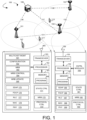
- FIG. 1 is a schematic system diagram illustrating an exemplary wireless network for the UE to receive multicast services in the RRC INACTIVE state in accordance with embodiments of the current invention.
- Wireless system 100 includes one or more fixed base infrastructure units forming a network distributed over a geographical region.
- base stations/gNBs 101, 102, and 103 serve a number of mobile stations, such as UE 111, 112, and 113, within a serving area, for example, a cell, or within a cell sector.
- one or more base stations are coupled to a controller forming an access network that is coupled to one or more core networks, through a network entity, such as network entity 106.
- gNB 101, gNB 102 and gNB 103 are base stations in the wireless network, the serving area of which may or may not overlap with each other.
- UE or mobile station 112 is only in the service area of gNB 101 and connected with gNB 101.
- UE 112 is connected with gNB 101 only.
- UE 111 is in the overlapping service area of gNB 101 and gNB 102 and may switch back and forth between gNB 101 and gNB 102.
- UE 113 is in the overlapping service area of gNB 102 and gNB 103 and may switch back and forth between gNB 102 and gNB 103.
- Base stations such as gNB 101, 102, and 103 are connected the network through network entities, such as network entity 106 through backhaul connections, such as 136, 137, and 138, respectively.
- Xn connections 131 and 132 connect the non-co-located receiving base units.
- Xn connection 131 connects gNB 101 and gNB 102.
- Xn connection 132 connects gNB 102 and gNB 103.
- These Xn/NG connections can be either ideal or non-ideal.
- both gNB 101 and gNB 102 provide the same Multicast and Broadcast Services (MBS), service continuity during handover is guaranteed when UE 111 moves from gNB 101 to gNB 102 and vice versa.
- MBS Multicast and Broadcast Services
- FIG. 1 further illustrates simplified block diagrams of a base station and a mobile device/UE for data/control transmissions.
- gNB 102 has an antenna 156, which transmits and receives radio signals.
- An RF transceiver circuit 153 coupled with the antenna 156, receives RF signals from antenna 156, converts them to baseband signals, and sends them to a processor 152.
- RF transceiver 153 also converts received baseband signals from processor 152, converts them to RF signals, and sends out to antenna 156.
- Processor 152 processes the received baseband signals and invokes different functional modules to perform features in gNB 102.
- Memory 151 stores program instructions and data 154 to control the operations of gNB 102.
- control module 155 is configured to receive a joining request for a multicast service from a UE in a wireless network, transmit a multicast radio bearer (MRB) configuration/PTM configuration to the UE for the multicast service preparing for a multicast reception in a UE RRC INACTIVE state for the UE, transmit the multicast to the UE in the RRC INACTIVE state, and update MTCH information for the multicast service based on one or more preconfigured conditions.
- MRB multicast radio bearer
- An RRC state controller 181 performs access control for the UE.
- An MRB controller 182 performs control function to establish/add, reconfigure/modify, and release/remove an MRB based on different sets of conditions for MRB establishment, reconfiguration, and release.
- a protocol stack controller 183 manages to add, modify, or remove the protocol stack for the MRB.
- the protocol stack includes PHY layer 189, MAC layer 188, RLC layer 187, PDCP layer 186 and SDAP layer 185.
- UE 111 has an antenna 165, which transmits and receives radio signals.
- the RF transceiver 163 may comprise two RF modules (not shown). A first RF module is used for HF transmitting and receiving, and the other RF module is used for different frequency bands transmitting and receiving, which is different from the HF transceiver.
- RF transceiver 163 also converts received baseband signals from processor 162, converts them to RF signals, and sends out to antenna 165.
- Processor 162 processes the received baseband signals and invokes different functional modules to perform features in the UE 111.
- Memory 161 stores program instructions and data 164 to control the operations of the UE 111.
- Antenna 165 sends uplink transmission and receives downlink transmissions to/from antenna 156 of gNB 102.
- UE 111 also includes a set of control modules that carry out functional tasks. These control modules can be implemented by circuits, software, firmware, or a combination of them.
- An RRC State controller 171 controls UE's RRC state according to network's command and UE conditions. RRC supports the following states, RRC IDLE, RRC CONNECTED and RRC INACTIVE.
- An MRB controller 172 controls to establish/add, reconfigure/modify and release/remove a DRB based on different sets of conditions for MRB establishment, reconfiguration and release.
- a protocol stack controller 173 manages to add, modify or remove the protocol stack for the MRB.
- the protocol stack includes SDAP layer 175, PDCP layer 176, RLC layer 177, MAC layer 178 and PHY layer 179.
- a multicast management module 191 joins a multicast session in the wireless network.
- a configuration module 192 receives a MRB configuration for the multicast service from the wireless network.
- An MRB module 193 establishes an MRB for reception of a multicast service in a radio resource control (RRC) INACTIVE state based on the MRB configuration.
- RRC radio resource control
- a multicast control module 194 receives data transmissions of the multicast service from the wireless network with the established MRB in the RRC INACTIVE state.
- a multicast update module 195 obtains and updates multicast traffic channel (MTCH) information for the multicast service in the RRC INACTIVE state upon detecting one or more preconfigured conditions, and wherein the one or more preconfigured conditions comprise UE moving to another cell in a same RAN-based notification area (RNA), UE updates its interest in the multicast session, a periodic MTCH update, and detects changes of the multicast services.
- MTCH multicast traffic channel
- Figure 2A illustrates an exemplary NR wireless system with centralized upper layers of the NR radio interface stacks and UE stack with multicast protocol and unicast protocol in accordance with embodiments of the current invention.
- Different protocol split options between central unit (CU) and distributed unit (DU) of gNB may be possible.
- the functional split between the CU and DU of gNB may depend on the transport layer.
- Low performance transport between the CU and DU of gNB can enable the higher protocol layers of the NR radio stacks to be supported in the CU, since the higher protocol layers have lower performance requirements on the transport layer in terms of bandwidth, delay, synchronization, and jitter.
- SDAP and PDCP layers are located in the CU, while RLC, MAC and PHY layers are located in the DU.
- a core unit 201 is connected with one central unit 211 with gNB upper layer 252.
- gNB upper layer 252 includes the PDCP layer and optionally the SDAP layer.
- Central unit 211 connects with distributed units 221, 222, and 221.
- Distributed units 221, 222, and 223 each corresponds to a cell 231, 232, and 233, respectively.
- the DUs 221, 222 and 223 include gNB lower layers 251, respectively.
- gNB lower layers 251 include the PHY, MAC and the RLC layers.
- each gNB/DU has the protocol stacks 261 including SDAP, PDCP, RLC, MAC and PHY layers.
- FIG. 2B illustrates an exemplary top level diagram for the UE to receive multicast in the RRC INACTIVE state in accordance with embodiments of the current invention.
- the UE joins a multicast service and receives the multicast service in RRC INACTIVE state.
- the UE joins a multicast session.
- the UE receives multicast radio bearer (MRB) configuration.
- MRB multicast radio bearer
- the UE receives the MRB configuration in the RRC INACTIVE state.
- the UE receives an RRC Release message with the multicast configuration indicated with the suspend configuration.
- the RRC release message puts the UE into the RRC INACTIVE state.
- MRB multicast radio bearer
- the multicast service is in session.
- the UE at step 283, configured the MRB in RRC INACTIVE state based on the MRB configuration.
- the MRB configuration is received when the multicast session is not started/activated yet.
- the UE at step 288, stores the MRB configuration and monitors for the multicast service.
- the UE receives a notification in the RRC INACTIVE state for the start/activation of the multicast session.
- the notification is a group paging notification.
- the UE in the INACTIVE state configures the MRB for multicast based on the stored MRB configuration.
- the UE receives multicast data transmission in the RRC INACTIVE state.
- the UE obtains and updates MTCH information for the multicast service in the RRC INACTIVE state upon detecting one or more predefined conditions.
- UE updates the MTCH information for the multicast when the UE moves to another cell in a same RAN-based notification area (RNA).
- RNA RAN-based notification area
- the UE updates the MTCH information for the multicast when detecting changes of the MTCH information for multicast services.
- the MTCH information/multicast configuration is updated periodically.
- UE updates its interest in the multicast session is mapped to the multicast session.
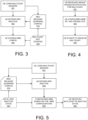
- Figure 3 illustrates an exemplary flow chart for the UE to store the MRB configuration when the multicast is not in session/not activated in accordance with embodiments of the current invention.
- the UE joins a multicast session.
- the session is not started yet, or the session has already started but temporarily has no DL data.
- the network sends the UE to INACTIVE state.
- the UE receives RRCRelease with suspendconfig.
- the multicast MRB configuration is delivered in the suspendconfig.
- the network sends UE to RRC idle by RRCRelease, and the MRB configuration is delivered in the RRCRelease message.
- the UE detects that the multicast session is not started when the UE receives the multicast configuration.
- the UE stores the multicast configuration in buffer.
- Figure 4 illustrates an exemplary flow chart for the UE to apply the stored MRB configuration upon receiving notification of the multicast service in accordance with embodiments of the current invention.
- the UE receives notification for the multicast session activation when the UE is in the RRC INACTIVE state.
- the notification is a group paging notification.
- the UE performs a multicast MRB configuration procedure according to the stored multicast configuration in the RRC INACTIVE state.
- UE is in RRC IDLE state, and UE requests to switch back to RRC CONNECTED, then performs a multicast MRB configuration procedure according to the stored multicast configuration.
- UE starts to receive the multicast service.
- UE stays in RRC INACTIVE state to receive multicast service.
- Figure 5 illustrates an exemplary flow chart for the UE to configure MRB and receive multicast service in the RRC INACTIVE state in accordance with embodiments of the current invention.
- the UE joins the multicast session when the session has already started.
- the network wants the UE to receive data in RRC INACTIVE state and sends UE to RRC INACTIVE state by RRCRelease with suspendconfig.
- the UE receives RRCRelease with suspendconfig.
- the UE enters RRC INACTIVE state.
- the multicast MRB configuration is delivered in the suspendconfig.
- UE in INACTIVE state 520, performs a multicast MRB configuration procedure according to the indication (510) received from the network. After UE performs the multicast MRB configuration, at step 505, UE starts to receive the multicast service in RRC INACTIVE state.
- FIG. 6 illustrates an example message diagram for UE to set MRB configuration for multicast reception by RRCRelease message and perform a multicast MRB configuration procedure in accordance with embodiments of the current invention.
- UE 601 is connected with gNB 602.
- UE 601 is in the RRC CONNECTED state (611).
- the UE joins the multicast session.
- the network sends UE to RRC INACTIVE state by RRCRelease with suspend indication.
- the UE enters RRC INACTIVE state.
- the multicast session After entering the RRC INACTIVE state, the multicast session has not yet started or there is temporarily no DL data in the multicast session (631).
- the multicast MRB configuration is delivered in the suspend indication, which indicates the MTCH information for the upcoming multicast session.
- the UE stores the MRB configuration in RRC INACTIVE state.
- the multicast session starts, or the DL multicast data starts.
- the UE receives a group paging notification from the network.
- UE establishes an RRC connection and receives multicast service in RRC CONNECTED.
- UE performs a multicast MRB configuration procedure.
- the MRB configuration procedure is based on the stored multicast configuration.
- the UE receives the multicast service in RRC INACTIVE.
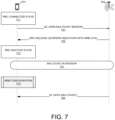
- FIG. 7 illustrates an exemplary message diagram for the UE to receive multicast in RRC INACTIVE state with multicast in session/session activating in accordance with embodiments of the current invention.
- UE 701 is connected with gNB 702.
- UE 701 is in the RRC CONNECTED state (711).
- the UE joins the multicast session.
- the network sends UE to RRC INACTIVE state.
- the UE receives RRCRelease with suspend indication.
- the UE enters the RRC INACTIVE state.
- the multicast MRB configuration is delivered in the suspend indication, which indicates the MTCH information for the upcoming multicast session.
- the multicast MRB configuration is delivered by RRCReconfiguration message before RRCRelease message.
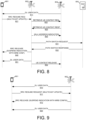
- FIG 8 illustrates an exemplary message diagram for UE to trigger a multicast update procedure and receive multicast service from target gNB in RRC INACTIVE state in accordance with embodiments of the current invention.
- UE 801 is connected with source gNB 803 in a wireless network.
- gNB 803 is connected with the network access and mobility management function (AMF) 804.
- AMF network access and mobility management function
- the UE performs MRB configuration / PTM configuration / MTCH updates upon detecting one or more predefined conditions.
- the UE updates the MRB configuration when the UE performs handover to another cell with the same RNA.
- the UE performs handover from source gNB 803 to target gNB 802, which is also connected with AMF 804.
- the UE receives DL multicast data from source gNB 803 in RRC INACTIVE state.
- the UE sends RRCResumeRequest to the target gNB 802, providing the inactive RNTI (I-RNTI), allocated by the last serving gNB and an appropriate cause value.
- the cause value is specific to update multicast reception in RRC INACTIVE.
- UE sends RRCResumeRequest with multicast update for ResumeCause when UE moves to a different cell.
- UE sends RRCResumeRequest with multicast update for ResumeCause when UE is in the same cell, but the MTCH information for multicast service which UE interested in has been changed.
- UE sends RRCResumeRequest with multicast update for ResumeCause periodically.
- target gNB 802 if able to resolve the gNB identity contained in the I-RNTI, requests the last serving gNB 803 to provide UE Context, and provides the cause value received at step 821 to the last serving gNB 803.
- source gNB 803 sends retrieve UE context response to target gNB 802.
- the target gNB 802 provides forwarding addresses to source gNB 803.
- target gNB 802 sends PATH SWITCH REQUEST to AMF 804.
- AMF 804 indicates PATH SWITCH RESPONSE to target gNB 802.
- target gNB 802 keeps the UE in RRC_INACTIVE state by sending RRCRelease with suspend indication.
- the multicast MRB configuration is delivered in the suspend indication, which indicates the MTCH information for the multicast session which UE is interested in.
- UE performs multicast MRB configuration procedure according to the indication.
- the UE receives multicast service from target gNB 802 in RRC INACTIVE state.
- target gNB 802 triggers the release of the UE resources at the last serving gNB/source gNB 803.
- Figure 9 illustrates an exemplary message diagram for the case when UE triggers multicast update procedure and the gNB decides not to relocate the UE context in accordance with embodiments of the current invention.
- UE 901 is connected with gNB 902.
- UE receives the DL user data in RRC INACTIVE state from the gNB 902.
- UE 901 sends RRCResumeRequest to the gNB 902, providing the I-RNTI, allocated by the last serving gNB and an appropriate cause value.
- the cause value is specific to update multicast reception in RRC INACTIVE.
- UE sends RRCResumeRequest with multicast update for ResumeCause when UE moves to a different cell.
- UE sends RRCResumeRequest with multicast update for ResumeCause when UE is in the same cell, but the MTCH information for multicast service which UE interested in has been changed.
- UE sends RRCResumeRequest with multicast update for ResumeCause periodically.
- gNB 902 keeps the UE 901 in RRC_INACTIVE state by sending RRCRelease with suspend indication.
- the multicast MRB configuration is delivered in the suspend indication, which indicates the MTCH information for the multicast session which UE is interested in.
- UE performs multicast MRB configuration procedure according to the indication.
- the UE receives multicast service in RRC INACTIVE state.
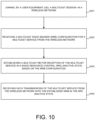
- FIG. 10 illustrates an exemplary flow chart for the UE to receive multicast in RRC INACTIVE state in accordance with embodiments of the current invention.
- the UE joins a multicast session in a wireless network.
- the UE receives a multicast radio bearer (MRB) configuration for the multicast service from the wireless network.
- MRB multicast radio bearer
- the UE establishes a MRB for reception of a multicast service in a radio resource control (RRC) INACTIVE state based on the MRB configuration.
- RRC radio resource control
- the UE receives data transmissions of the multicast service from the wireless network with the established MRB in the RRC INACTIVE state.
- FIG 11 illustrates an exemplary flow chart for a network entity to configure and update MRB configuration for the UE receive multicast services in the RRC INACTIVE state in accordance with embodiments of the current invention.
- the network entity receives a joining request for a multicast session from a user equipment (UE) in a wireless network.
- the network entity transmits a multicast radio bearer (MRB) configuration to the UE for a multicast service preparing for a multicast reception in a radio resource control (RRC) INACTIVE state for the UE.
- RRC radio resource control
- the network entity transmits the multicast data to the UE in the RRC INACTIVE state.
- the network entity updates multicast traffic channel (MTCH) information for the multicast service based on one or more preconfigured conditions.
- MTCH multicast traffic channel
Landscapes
- Engineering & Computer Science (AREA)
- Computer Networks & Wireless Communication (AREA)
- Signal Processing (AREA)
- Multimedia (AREA)
- Mobile Radio Communication Systems (AREA)
Abstract
Description
- The disclosed embodiments relate generally to wireless communication, and, more particularly, to MRB configuration for UE receiving multicast in the radio resource control (RRC) INACTIVE state.
- With the exponential growth of wireless data services, the content delivery to large mobile user groups has grown rapidly. Various cellular systems, including both 4G/LTE and 5G/NR systems, may provide a multicast functionality, which allows user equipments (UEs) in the system to receive multicast services transported by the cellular system. A variety of applications may rely on communication over multicast transmission, such as live stream, video distribution, vehicle-to-everything (V2X) communication, public safety (PS) communication, file download, and so on. In the legacy system, the multicast service is received by UE which is in the RRC CONNECTED state. With the development of the multicast services, the service needs to address high load/congestion scenario. With the growth of the multicast services, improvements for the multicast service in terms of power saving, service coverage and spectrum efficiency become an important topic.
- Improvements and enhancements are required to improve multicast service with new ability to configure and receive the multicast services.
- Apparatus and methods are provided for the UE to receive multicast transmission in RRC INACTIVE state. Methods and a user equipment according to the invention are defined in the independent claims. The dependent claims define preferred embodiments thereof. In one embodiment, the UE joins a multicast session, receives an MRB configuration for a multicast service, establishes an MRB for reception of the multicast service in the RRC INACTIVE state based on the MRB configuration, and receives data transmission of the multicast service with the established MRB in the RRC INACTIVE state. Preferably, the MRB configuration is received in an RRC release message. Preferably, the multicast MRB configuration is delivered in the suspendconfig. Preferably, the UE stores the MRB configuration in the buffer when the multicast session has not started when the MRB configuration is received. Preferably, the UE receives a notification for the multicast session starting in the RRC INACTIVE state and establishes the MRB based on the stored MRB configuration. Alternatively or additionally preferably, the multicast session is in session when the UE receives the MRB configuration. The UE establishes the MRB in the RRC INACTIVE state based on the received MRB configuration. Preferably, the UE receives the multicast service in the RRC INACTIVE and updates the multicast resource/MTCH information based on one or more predefined conditions. Preferably, the UE updates the MTCH information in the INACTIVE state when the UE moves to another cell in the same RAN-based notification area (RNA). Alternatively or additionally preferably, the UE updates the MTCH information when detecting network updates. Alternatively or additionally preferably, the multicast resource information is updated periodically.
- This summary does not purport to define the invention. The invention is defined by the claims.
- The accompanying drawings, where like numerals indicate like components, illustrate embodiments of the invention.
-
Figure 1 is a schematic system diagram illustrating an exemplary wireless network for the UE to receive multicast services in the RRC INACTIVE state in accordance with embodiments of the current invention. -
Figure 2A illustrates an exemplary NR wireless system with centralized upper layers of the NR radio interface stacks and UE stack with multicast protocol and unicast protocol in accordance with embodiments of the current invention. -
Figure 2B illustrates an exemplary top level diagram for the UE to receive multicast in the RRC INACTIVE state in accordance with embodiments of the current invention. -
Figure 3 illustrates an exemplary flow chart for the UE stores the MRB configuration when the multicast is not in session in accordance with embodiments of the current invention. -
Figure 4 illustrates an exemplary flow chart for the UE to apply the stored MRB configuration upon receiving notification of the multicast service in accordance with embodiment of the current invention. -
Figure 5 illustrates an exemplary flow chart for the UE to configure MRB and receive multicast service in the RRC INACTIVE state in accordance with embodiments of the current invention. -
Figure 6 illustrates an example message diagram for UE to set MRB configuration for multicast reception by RRCRelease message and perform a multicast MRB configuration procedure in accordance with embodiments of the current invention. -
Figure 7 illustrates an exemplary message diagram for the UE to receive multicast in RRC INACTIVE state with multicast in session in accordance with embodiments of the current invention. -
Figure 8 illustrates an exemplary message diagram for UE to trigger a multicast update procedure and receive multicast service from target gNB in RRC INACTIVE state in accordance with embodiments of the current invention. -
Figure 9 illustrates an exemplary message diagram for the case when UE triggers a multicast update procedure and the gNB decides not to relocate the UE context in accordance with embodiments of the current invention. -
Figure 10 illustrates an exemplary flow chart for the UE to receive multicast in the RRC INACTIVE state in accordance with embodiments of the current invention. -
Figure 11 illustrates an exemplary flow chart for the base station to configure and update MRB configuration for the UE receiving multicast services in the RRC INACTIVE state in accordance with embodiments of the current invention. - Reference will now be made in detail to some embodiments of the invention, examples of which are illustrated in the accompanying drawings.
- Aspects of the present disclosure provide methods, apparatus, processing systems, and computer readable mediums for NR (new radio access technology, or 5G technology) or other radio access technology. NR may support various wireless communication services, such as enhanced mobile broadband targeting wide bandwidth, millimeter wave targeting high carrier frequency, massive machine type communications targeting non-backward compatible MTC techniques, and/or mission critical targeting ultra-reliable low-latency communications. These services may include latency and reliability requirements. These services may also have different transmission time intervals (TTI) to meet respective quality of service (QoS) requirements. In addition, these services may co-exist in the same subframe.
-
Figure 1 is a schematic system diagram illustrating an exemplary wireless network for the UE to receive multicast services in the RRC INACTIVE state in accordance with embodiments of the current invention.Wireless system 100 includes one or more fixed base infrastructure units forming a network distributed over a geographical region. As an example, base stations/gNBs network entity 106. gNB 101, gNB 102 and gNB 103 are base stations in the wireless network, the serving area of which may or may not overlap with each other. As an example, UE ormobile station 112 is only in the service area of gNB 101 and connected with gNB 101. UE 112 is connected with gNB 101 only. UE 111 is in the overlapping service area of gNB 101 and gNB 102 and may switch back and forth between gNB 101 and gNB 102. UE 113 is in the overlapping service area of gNB 102 and gNB 103 and may switch back and forth between gNB 102 and gNB 103. Base stations, such as gNB 101, 102, and 103 are connected the network through network entities, such asnetwork entity 106 through backhaul connections, such as 136, 137, and 138, respectively.Xn connections Xn connection 131 connects gNB 101 and gNB 102.Xn connection 132 connects gNB 102 and gNB 103. These Xn/NG connections can be either ideal or non-ideal. Preferably, both gNB 101 and gNB 102 provide the same Multicast and Broadcast Services (MBS), service continuity during handover is guaranteed when UE 111 moves from gNB 101 to gNB 102 and vice versa. -
Figure 1 further illustrates simplified block diagrams of a base station and a mobile device/UE for data/control transmissions. gNB 102 has anantenna 156, which transmits and receives radio signals. AnRF transceiver circuit 153, coupled with theantenna 156, receives RF signals fromantenna 156, converts them to baseband signals, and sends them to aprocessor 152.RF transceiver 153 also converts received baseband signals fromprocessor 152, converts them to RF signals, and sends out toantenna 156.Processor 152 processes the received baseband signals and invokes different functional modules to perform features ingNB 102.Memory 151 stores program instructions anddata 154 to control the operations ofgNB 102.gNB 102 also includes a set ofcontrol modules 155 that carry out functional tasks to communicate with mobile stations. In one novel aspect,control module 155 is configured to receive a joining request for a multicast service from a UE in a wireless network, transmit a multicast radio bearer (MRB) configuration/PTM configuration to the UE for the multicast service preparing for a multicast reception in a UE RRC INACTIVE state for the UE, transmit the multicast to the UE in the RRC INACTIVE state, and update MTCH information for the multicast service based on one or more preconfigured conditions. AnRRC state controller 181 performs access control for the UE. AnMRB controller 182 performs control function to establish/add, reconfigure/modify, and release/remove an MRB based on different sets of conditions for MRB establishment, reconfiguration, and release. Aprotocol stack controller 183 manages to add, modify, or remove the protocol stack for the MRB. The protocol stack includesPHY layer 189,MAC layer 188,RLC layer 187,PDCP layer 186 andSDAP layer 185. -
UE 111 has anantenna 165, which transmits and receives radio signals. AnRF transceiver circuit 163, coupled with theantenna 165, receives RF signals fromantenna 165, converts them to baseband signals, and sends them toprocessor 162. Preferably, theRF transceiver 163 may comprise two RF modules (not shown). A first RF module is used for HF transmitting and receiving, and the other RF module is used for different frequency bands transmitting and receiving, which is different from the HF transceiver.RF transceiver 163 also converts received baseband signals fromprocessor 162, converts them to RF signals, and sends out toantenna 165.Processor 162 processes the received baseband signals and invokes different functional modules to perform features in theUE 111.Memory 161 stores program instructions anddata 164 to control the operations of theUE 111.Antenna 165 sends uplink transmission and receives downlink transmissions to/fromantenna 156 ofgNB 102. -
UE 111 also includes a set of control modules that carry out functional tasks. These control modules can be implemented by circuits, software, firmware, or a combination of them. AnRRC State controller 171 controls UE's RRC state according to network's command and UE conditions. RRC supports the following states, RRC IDLE, RRC CONNECTED and RRC INACTIVE. AnMRB controller 172 controls to establish/add, reconfigure/modify and release/remove a DRB based on different sets of conditions for MRB establishment, reconfiguration and release. Aprotocol stack controller 173 manages to add, modify or remove the protocol stack for the MRB. The protocol stack includesSDAP layer 175,PDCP layer 176,RLC layer 177,MAC layer 178 andPHY layer 179. - A
multicast management module 191 joins a multicast session in the wireless network. Aconfiguration module 192 receives a MRB configuration for the multicast service from the wireless network. AnMRB module 193 establishes an MRB for reception of a multicast service in a radio resource control (RRC) INACTIVE state based on the MRB configuration. Amulticast control module 194 receives data transmissions of the multicast service from the wireless network with the established MRB in the RRC INACTIVE state. Amulticast update module 195 obtains and updates multicast traffic channel (MTCH) information for the multicast service in the RRC INACTIVE state upon detecting one or more preconfigured conditions, and wherein the one or more preconfigured conditions comprise UE moving to another cell in a same RAN-based notification area (RNA), UE updates its interest in the multicast session, a periodic MTCH update, and detects changes of the multicast services. -
Figure 2A illustrates an exemplary NR wireless system with centralized upper layers of the NR radio interface stacks and UE stack with multicast protocol and unicast protocol in accordance with embodiments of the current invention. Different protocol split options between central unit (CU) and distributed unit (DU) of gNB may be possible. The functional split between the CU and DU of gNB may depend on the transport layer. Low performance transport between the CU and DU of gNB can enable the higher protocol layers of the NR radio stacks to be supported in the CU, since the higher protocol layers have lower performance requirements on the transport layer in terms of bandwidth, delay, synchronization, and jitter. Preferably, SDAP and PDCP layers are located in the CU, while RLC, MAC and PHY layers are located in the DU. Acore unit 201 is connected with onecentral unit 211 with gNBupper layer 252. Preferably 250, gNBupper layer 252 includes the PDCP layer and optionally the SDAP layer.Central unit 211 connects with distributedunits units cell DUs lower layers 251, respectively. Preferably, gNBlower layers 251 include the PHY, MAC and the RLC layers. Alternatively or additionally preferably 260, each gNB/DU has the protocol stacks 261 including SDAP, PDCP, RLC, MAC and PHY layers. -
Figure 2B illustrates an exemplary top level diagram for the UE to receive multicast in the RRC INACTIVE state in accordance with embodiments of the current invention. In one novel aspect, the UE joins a multicast service and receives the multicast service in RRC INACTIVE state. Atstep 281, the UE joins a multicast session. At step 282, the UE receives multicast radio bearer (MRB) configuration. Preferably, the UE receives the MRB configuration in the RRC INACTIVE state. Alternatively or additionally preferably (291), the UE receives an RRC Release message with the multicast configuration indicated with the suspend configuration. The RRC release message puts the UE into the RRC INACTIVE state. Preferably (292), when the MRB configuration is received, the multicast service is in session. The UE, atstep 283, configured the MRB in RRC INACTIVE state based on the MRB configuration. Alternatively or additionally preferably (293), the MRB configuration is received when the multicast session is not started/activated yet. The UE, at step 288, stores the MRB configuration and monitors for the multicast service. Atstep 289, the UE receives a notification in the RRC INACTIVE state for the start/activation of the multicast session. Preferably, the notification is a group paging notification. Upon receiving the notification, the UE in the INACTIVE state configures the MRB for multicast based on the stored MRB configuration. Atstep 284, the UE receives multicast data transmission in the RRC INACTIVE state. Preferably (285), the UE obtains and updates MTCH information for the multicast service in the RRC INACTIVE state upon detecting one or more predefined conditions. Preferably (295), UE updates the MTCH information for the multicast when the UE moves to another cell in a same RAN-based notification area (RNA). Alternatively or additionally preferably (296), the UE updates the MTCH information for the multicast when detecting changes of the MTCH information for multicast services. Alternatively or additionally preferably (297), the MTCH information/multicast configuration is updated periodically. Alternatively or additionally preferably (298), UE updates its interest in the multicast session. -
Figure 3 illustrates an exemplary flow chart for the UE to store the MRB configuration when the multicast is not in session/not activated in accordance with embodiments of the current invention. Atstep 301, the UE joins a multicast session. In one scenario, when UE joins the multicast session, the session is not started yet, or the session has already started but temporarily has no DL data. In this scenario, the network sends the UE to INACTIVE state. Preferably, at step 310, the UE receives RRCRelease with suspendconfig. Preferably, the multicast MRB configuration is delivered in the suspendconfig. Preferably, the network sends UE to RRC idle by RRCRelease, and the MRB configuration is delivered in the RRCRelease message. Preferably, atstep 320, the UE detects that the multicast session is not started when the UE receives the multicast configuration. Atstep 303, the UE stores the multicast configuration in buffer. -
Figure 4 illustrates an exemplary flow chart for the UE to apply the stored MRB configuration upon receiving notification of the multicast service in accordance with embodiments of the current invention. At step 401, the UE receives notification for the multicast session activation when the UE is in the RRC INACTIVE state. Preferably, the notification is a group paging notification. At step 402, preferably, the UE performs a multicast MRB configuration procedure according to the stored multicast configuration in the RRC INACTIVE state. Alternatively or additionally preferably, UE is in RRC IDLE state, and UE requests to switch back to RRC CONNECTED, then performs a multicast MRB configuration procedure according to the stored multicast configuration. After UE performs the multicast MRB configuration, atstep 403, UE starts to receive the multicast service. Preferably, UE stays in RRC INACTIVE state to receive multicast service. -
Figure 5 illustrates an exemplary flow chart for the UE to configure MRB and receive multicast service in the RRC INACTIVE state in accordance with embodiments of the current invention. Atstep 501, the UE joins the multicast session when the session has already started. In one scenario, the network wants the UE to receive data in RRC INACTIVE state and sends UE to RRC INACTIVE state by RRCRelease with suspendconfig. At step 510, the UE receives RRCRelease with suspendconfig. Atstep 502, the UE enters RRC INACTIVE state. Preferably, the multicast MRB configuration is delivered in the suspendconfig. At step 503, UE, inINACTIVE state 520, performs a multicast MRB configuration procedure according to the indication (510) received from the network. After UE performs the multicast MRB configuration, atstep 505, UE starts to receive the multicast service in RRC INACTIVE state. -
Figure 6 illustrates an example message diagram for UE to set MRB configuration for multicast reception by RRCRelease message and perform a multicast MRB configuration procedure in accordance with embodiments of the current invention.UE 601 is connected with gNB 602.UE 601 is in the RRC CONNECTED state (611). Atstep 621, the UE joins the multicast session. In one scenario, the UE joined a multicast session in RRC CONNECTED state and there is temporarily no DL data in the multicast session or the multicast session has not started yet. Atstep 622, the network sends UE to RRC INACTIVE state by RRCRelease with suspend indication. Preferably, the UE enters RRC INACTIVE state. After entering the RRC INACTIVE state, the multicast session has not yet started or there is temporarily no DL data in the multicast session (631). Preferably, the multicast MRB configuration is delivered in the suspend indication, which indicates the MTCH information for the upcoming multicast session. At step 613, the UE stores the MRB configuration in RRC INACTIVE state. Atstep 632, the multicast session starts, or the DL multicast data starts. Atstep 623, the UE receives a group paging notification from the network. Preferably, UE establishes an RRC connection and receives multicast service in RRC CONNECTED. Preferably (614), UE performs a multicast MRB configuration procedure. Preferably, the MRB configuration procedure is based on the stored multicast configuration. Atstep 640, the UE receives the multicast service in RRC INACTIVE. -
Figure 7 illustrates an exemplary message diagram for the UE to receive multicast in RRC INACTIVE state with multicast in session/session activating in accordance with embodiments of the current invention.UE 701 is connected with gNB 702.UE 701 is in the RRC CONNECTED state (711). Atstep 721, the UE joins the multicast session. In one scenario, the UE joined a multicast session in RRC CONNECTED state and the multicast session is ongoing. Preferably, the network sends UE to RRC INACTIVE state. Atstep 722, the UE receives RRCRelease with suspend indication. Atstep 712, the UE enters the RRC INACTIVE state. Preferably, the multicast MRB configuration is delivered in the suspend indication, which indicates the MTCH information for the upcoming multicast session. Alternatively or additionally preferably, the multicast MRB configuration is delivered by RRCReconfiguration message before RRCRelease message. Upon receiving the MRB configuration and the multicast is in session (731), the UE performs a multicast MRB configuration procedure atstep 713. Atstep 750, the UE receives the multicast service in RRC INACTIVE state. -
Figure 8 illustrates an exemplary message diagram for UE to trigger a multicast update procedure and receive multicast service from target gNB in RRC INACTIVE state in accordance with embodiments of the current invention.UE 801 is connected withsource gNB 803 in a wireless network.gNB 803 is connected with the network access and mobility management function (AMF) 804. Preferably, the UE performs MRB configuration / PTM configuration / MTCH updates upon detecting one or more predefined conditions. Preferably, the UE updates the MRB configuration when the UE performs handover to another cell with the same RNA. As illustrated, the UE performs handover fromsource gNB 803 to target gNB 802, which is also connected withAMF 804. Atstep 811, the UE receives DL multicast data fromsource gNB 803 in RRC INACTIVE state. Atstep 821, the UE sends RRCResumeRequest to the target gNB 802, providing the inactive RNTI (I-RNTI), allocated by the last serving gNB and an appropriate cause value. Preferably, the cause value is specific to update multicast reception in RRC INACTIVE. Preferably, UE sends RRCResumeRequest with multicast update for ResumeCause when UE moves to a different cell. Preferably, UE sends RRCResumeRequest with multicast update for ResumeCause when UE is in the same cell, but the MTCH information for multicast service which UE interested in has been changed. Preferably, UE sends RRCResumeRequest with multicast update for ResumeCause periodically. Atstep 822, target gNB 802, if able to resolve the gNB identity contained in the I-RNTI, requests the last servinggNB 803 to provide UE Context, and provides the cause value received atstep 821 to the last servinggNB 803. Atstep 823,source gNB 803 sends retrieve UE context response to target gNB 802. Atstep 830, if loss of DL user data buffered in the last servinggNB 803 shall be prevented, the target gNB 802 provides forwarding addresses to sourcegNB 803. Atstep 831, target gNB 802 sends PATH SWITCH REQUEST toAMF 804. Atstep 832,AMF 804 indicates PATH SWITCH RESPONSE to target gNB 802. At step 840, target gNB 802 keeps the UE in RRC_INACTIVE state by sending RRCRelease with suspend indication. Preferably, the multicast MRB configuration is delivered in the suspend indication, which indicates the MTCH information for the multicast session which UE is interested in. UE performs multicast MRB configuration procedure according to the indication. At step 851, the UE receives multicast service from target gNB 802 in RRC INACTIVE state. Atstep 852, target gNB 802 triggers the release of the UE resources at the last serving gNB/source gNB 803. -
Figure 9 illustrates an exemplary message diagram for the case when UE triggers multicast update procedure and the gNB decides not to relocate the UE context in accordance with embodiments of the current invention.UE 901 is connected withgNB 902. Atstep 910, beforeUE 901 triggers the multicast update procedure, UE receives the DL user data in RRC INACTIVE state from thegNB 902. Atstep 911,UE 901 sends RRCResumeRequest to thegNB 902, providing the I-RNTI, allocated by the last serving gNB and an appropriate cause value. Preferably, the cause value is specific to update multicast reception in RRC INACTIVE. Preferably, UE sends RRCResumeRequest with multicast update for ResumeCause when UE moves to a different cell. Preferably, UE sends RRCResumeRequest with multicast update for ResumeCause when UE is in the same cell, but the MTCH information for multicast service which UE interested in has been changed. Preferably, UE sends RRCResumeRequest with multicast update for ResumeCause periodically. Atstep 912,gNB 902 keeps theUE 901 in RRC_INACTIVE state by sending RRCRelease with suspend indication. Preferably, the multicast MRB configuration is delivered in the suspend indication, which indicates the MTCH information for the multicast session which UE is interested in. UE performs multicast MRB configuration procedure according to the indication. At step 920, the UE receives multicast service in RRC INACTIVE state. -
Figure 10 illustrates an exemplary flow chart for the UE to receive multicast in RRC INACTIVE state in accordance with embodiments of the current invention. Atstep 1001, the UE joins a multicast session in a wireless network. Atstep 1002, the UE receives a multicast radio bearer (MRB) configuration for the multicast service from the wireless network. Atstep 1003, the UE establishes a MRB for reception of a multicast service in a radio resource control (RRC) INACTIVE state based on the MRB configuration. Atstep 1004, the UE receives data transmissions of the multicast service from the wireless network with the established MRB in the RRC INACTIVE state. -
Figure 11 illustrates an exemplary flow chart for a network entity to configure and update MRB configuration for the UE receive multicast services in the RRC INACTIVE state in accordance with embodiments of the current invention. Atstep 1101, the network entity receives a joining request for a multicast session from a user equipment (UE) in a wireless network. Atstep 1102, the network entity transmits a multicast radio bearer (MRB) configuration to the UE for a multicast service preparing for a multicast reception in a radio resource control (RRC) INACTIVE state for the UE. Atstep 1103, the network entity transmits the multicast data to the UE in the RRC INACTIVE state. Atstep 1104, the network entity updates multicast traffic channel (MTCH) information for the multicast service based on one or more preconfigured conditions. - Although the present invention has been described in connection with certain specific embodiments for instructional purposes, the present invention is not limited thereto. Accordingly, various modifications, adaptations, and combinations of various features of the described embodiments can be practiced without departing from the scope of the invention as set forth in the claims.
Claims (15)
- A method comprising:joining, by a user equipment, in the following also referred to as UE, a multicast session in a wireless network (1001);receiving a multicast radio bearer, in the following also referred to as MRB, configuration for a multicast service from the wireless network (1002);establishing a MRB for reception of the multicast service in a radio resource control, in the following also referred to as RRC, INACTIVE state based on the MRB configuration (1003); andreceiving data transmissions of the multicast service from the wireless network with the established MRB in the RRC INACTIVE state (1004).
- The method of claim 1, wherein the MRB configuration is received in a RRC release message;
wherein preferably the MRB configuration is delivered by suspendconfig in the RRC release message. - The method of claim 1 or 2, further comprising storing the MRB configuration by the UE if the multicast session is not started when the MRB configuration is received.
- The method of claim 3, further comprising:
receiving a notification from the wireless network that the multicast session is started, and wherein the establishing of the MRB involves applying the stored MRB configuration upon receiving the notification;
wherein preferably the notification is a group notification carried in a group paging. - The method of any one of claims 1 to 4, further comprises obtaining and updating multicast traffic channel, in the following also referred to as MTCH, information for the multicast service in the RRC INACTIVE state upon detecting one or more preconfigured conditions.
- The method of claim 5, wherein the one or more preconfigured conditions comprises UE moving to another cell in a same RAN-based notification area, in the following also referred to as RNA, UE updates its interest in the multicast session, a periodic MTCH update and detecting changes of the MTCH information for multicast services;wherein preferably the UE obtains the MTCH information by sending a RRCResumeRequest to the wireless network;wherein further preferably the RRCResumeRequest includes one or more elements comprising an inactive RNTI, in the following also referred to as I-RNTI, allocated by a serving cell, and an appropriate cause value.
- A method comprising:receiving, by a network entity, a joining request for a multicast session from a user equipment, in the following also referred to as UE, in a wireless network (1101);transmitting, by a network entity of a wireless network, a multicast radio bearer, in the following also referred to as MRB, configuration to the UE for a multicast service preparing for a multicast reception in a radio resource control, in the following also referred to as RRC, INACTIVE state for the UE (1102);transmitting multicast data for the multicast service to the UE in the RRC INACTIVE state (1103); andupdating multicast traffic channel, in the following also referred to as MTCH, information for the multicast service based on one or more preconfigured conditions (1104).
- The method of claim 7, wherein the MRB configuration is transmitted in a RRC release message;
wherein preferably the MRB configuration is delivered by suspendconfig in the RRC release message. - The method of claim 7 or 8, wherein the network entity updates the MTCH information periodically.
- The method of any one of claims 7 to 9, further comprising switching path for the UE to a target cell to receive the multicast data in the RRC INACTIVE state.
- A user equipment (111), in the following also referred to as UE, comprising:a transceiver (163) that transmits and receives radio frequency, in the following also referred to as RF, signal in a wireless network;a multicast management module (191) that joins a multicast session in the wireless network;a configuration module (192) that receives a multicast radio bearer, in the following also referred to as MRB, configuration for a multicast service from the wireless network;an MRB module (193) that establishes a MRB for reception of the multicast service in a radio resource control, in the following also referred to as RRC, INACTIVE state based on the MRB configuration; anda multicast control module (194) that receives data transmissions of the multicast service from the wireless network with the established MRB in the RRC INACTIVE state.
- The UE (111) of claim 11, wherein the MRB configuration is received in a RRC release message;
wherein preferably the MRB configuration is delivered by suspendconfig in the RRC release message. - The UE (111) of claim 11 or 12, wherein the configuration module (192) further stores the MRB configuration if the multicast session is not started when the MRB configuration is received.
- The UE (111) of claim 13, wherein the multicast control module (194) further receives a notification from the wireless network that the multicast session is started and applies the stored MRB configuration upon receiving the notification.
- The UE (111) of any one of claims 11 to 14, further comprises a multicast update module (195) that obtains and updates multicast traffic channel, in the following also referred to as MTCH, information for the multicast service in the RRC INACTIVE state upon detecting one or more preconfigured conditions, and wherein the one or more preconfigured conditions comprise UE moving to another cell in a same RAN-based notification area, in the following also referred to as RNA, UE updates its interest in the multicast session, a periodic MTCH update, and detects changes of the multicast services.
Applications Claiming Priority (2)
| Application Number | Priority Date | Filing Date | Title |
|---|---|---|---|
| PCT/CN2022/099878 WO2023245346A1 (en) | 2022-06-20 | 2022-06-20 | Methods and apparatus to set mrb configuration for ue to receive mbs multicast in rrc inactive state |
| CN202310581137.XA CN117278945A (en) | 2022-06-20 | 2023-05-22 | Method and user equipment for receiving multicast in RRC inactive state |
Publications (1)
| Publication Number | Publication Date |
|---|---|
| EP4297524A1 true EP4297524A1 (en) | 2023-12-27 |
Family
ID=86688614
Family Applications (1)
| Application Number | Title | Priority Date | Filing Date |
|---|---|---|---|
| EP23176767.4A Pending EP4297524A1 (en) | 2022-06-20 | 2023-06-01 | Methods and apparatus to set mrb configuration for ue to receive mbs multicast in rrc inactive state |
Country Status (2)
| Country | Link |
|---|---|
| US (1) | US20230413380A1 (en) |
| EP (1) | EP4297524A1 (en) |
Citations (2)
| Publication number | Priority date | Publication date | Assignee | Title |
|---|---|---|---|---|
| WO2022031127A1 (en) * | 2020-08-06 | 2022-02-10 | Samsung Electronics Co., Ltd. | Methods and systems for managing mbs service continuity for a ue |
| WO2022085757A1 (en) * | 2020-10-22 | 2022-04-28 | 京セラ株式会社 | Communication control method |
Family Cites Families (46)
| Publication number | Priority date | Publication date | Assignee | Title |
|---|---|---|---|---|
| US11399406B2 (en) * | 2019-10-24 | 2022-07-26 | Qualcomm Incorporated | Maintaining a multicast/broadcast radio bearer in an idle state or an inactive state |
| CN113225695B (en) * | 2020-01-21 | 2022-12-20 | 大唐移动通信设备有限公司 | Method, device and medium for receiving and indicating Multimedia Broadcast Multicast Service (MBMS) service |
| US12369224B2 (en) * | 2020-02-05 | 2025-07-22 | Lg Electronics Inc. | Method and apparatus for switching of multicast and broadcast service between multicast and unicast in a wireless communication system |
| WO2022002830A1 (en) * | 2020-06-29 | 2022-01-06 | Telefonaktiebolaget Lm Ericsson (Publ) | Multicast and broadcast services for user equipments in idle and inactive states |
| US12408184B2 (en) * | 2020-08-06 | 2025-09-02 | Samsung Electronics Co., Ltd. | Methods and systems for managing multicast broadcast service (MBS) services |
| EP4211934A1 (en) * | 2020-09-10 | 2023-07-19 | Toyota Jidosha Kabushiki Kaisha | System and method for maintaining multicast broadcast service continuity in idle and inactive states |
| CN114554624A (en) * | 2020-11-25 | 2022-05-27 | 维沃移动通信有限公司 | Communication indication method, device and network side equipment |
| CN116918358A (en) * | 2021-01-06 | 2023-10-20 | 京瓷株式会社 | Communication control method and user equipment |
| CN117083886A (en) * | 2021-03-30 | 2023-11-17 | 高通股份有限公司 | Multicast radio bearer configuration information |
| EP4319205A4 (en) * | 2021-04-01 | 2025-01-01 | Beijing Xiaomi Mobile Software Co., Ltd. | METHOD AND DEVICE FOR TRANSMITTING A MULTICAST BROADCAST SERVICE AND STORAGE MEDIUM |
| WO2022239690A1 (en) * | 2021-05-10 | 2022-11-17 | 京セラ株式会社 | Communication control method and user equipment |
| EP4316193A4 (en) * | 2021-05-12 | 2024-08-21 | Samsung Electronics Co., Ltd. | METHOD FOR SENDING AND RECEIVING A MULTICAST SESSION ACTIVATION NOTIFICATION |
| WO2022240984A2 (en) * | 2021-05-14 | 2022-11-17 | Parsa Wireless Communications, Llc | Multicast broadcast services notification and operation in inactive state |
| CN115551082A (en) * | 2021-06-30 | 2022-12-30 | 华为技术有限公司 | Communication method, device and system for multicast service |
| CN118741733A (en) * | 2021-08-03 | 2024-10-01 | 交互数字专利控股公司 | Multicast and Broadcast Service Reliability Indicator |
| WO2023069377A2 (en) * | 2021-10-20 | 2023-04-27 | Google Llc | Managing paging for multicast and/or broadcast services (mbs) services |
| CN118266245A (en) * | 2021-10-21 | 2024-06-28 | 谷歌有限责任公司 | Managing multicast services in switch |
| JP7767600B2 (en) * | 2021-10-21 | 2025-11-11 | グーグル エルエルシー | Managing configurations for multicast and unicast communications |
| CN118451781A (en) * | 2021-10-21 | 2024-08-06 | 谷歌有限责任公司 | Managing reception of multicast and/or broadcast services after state transitions |
| CN116390173A (en) * | 2021-12-23 | 2023-07-04 | 北京三星通信技术研究有限公司 | Method for supporting multimedia broadcast multicast service MBS broadcast service transmission |
| KR20240129607A (en) * | 2021-12-29 | 2024-08-27 | 엘지전자 주식회사 | Method and device for processing connections based on multicast type in wireless communication system |
| WO2023132209A1 (en) * | 2022-01-04 | 2023-07-13 | 京セラ株式会社 | Communication method |
| CN116567864A (en) * | 2022-01-29 | 2023-08-08 | 北京三星通信技术研究有限公司 | Method for supporting multicast transmission, base station, electronic equipment and storage medium |
| EP4480142A1 (en) * | 2022-02-18 | 2024-12-25 | Telefonaktiebolaget LM Ericsson (publ) | Handling multicast communications |
| US12604366B2 (en) * | 2022-03-18 | 2026-04-14 | Parsa Wireless Communications Llc | Multicast service delivery for use in inactive state |
| US20230328763A1 (en) * | 2022-04-12 | 2023-10-12 | Parsa Wireless Communications Llc | Multicast mobility support in inactive state |
| KR20250006858A (en) * | 2022-05-31 | 2025-01-13 | 지티이 코포레이션 | Multicast and broadcast services under various wireless resource control conditions |
| WO2023230855A1 (en) * | 2022-05-31 | 2023-12-07 | Zte Corporation | Multicast and broadcast service in various radio resource control states |
| KR20250003633A (en) * | 2022-05-31 | 2025-01-07 | 지티이 코포레이션 | Multicast and broadcast services in various wireless resource control states |
| WO2023245346A1 (en) * | 2022-06-20 | 2023-12-28 | Mediatek Singapore Pte. Ltd. | Methods and apparatus to set mrb configuration for ue to receive mbs multicast in rrc inactive state |
| US20250351218A1 (en) * | 2022-07-25 | 2025-11-13 | Qualcomm Incorporated | Radio resource control (rrc) state selection for multicast service reception |
| CN117528424A (en) * | 2022-07-28 | 2024-02-06 | 华为技术有限公司 | A communication method and device |
| KR20250036075A (en) * | 2022-08-09 | 2025-03-13 | 지티이 코포레이션 | Resource-efficient delivery of multicast and broadcast services |
| WO2024034566A1 (en) * | 2022-08-09 | 2024-02-15 | 京セラ株式会社 | Communication method |
| KR20240021552A (en) * | 2022-08-10 | 2024-02-19 | 삼성전자주식회사 | Method and apparatus for mbs sps reception in rrc inactive mode |
| JP7799853B2 (en) * | 2022-09-28 | 2026-01-15 | 京セラ株式会社 | Communication method, user device, mobile communication system, program, and chipset |
| EP4580222A4 (en) * | 2022-09-28 | 2025-12-03 | Kyocera Corp | COMMUNICATION PROCEDURES |
| CN117812544A (en) * | 2022-09-30 | 2024-04-02 | 华为技术有限公司 | A communication method and communication device |
| WO2024096048A1 (en) * | 2022-11-02 | 2024-05-10 | 京セラ株式会社 | Communication method |
| CN118042420A (en) * | 2022-11-02 | 2024-05-14 | 北京三星通信技术研究有限公司 | Method and device for supporting multicast service transmission |
| CN120153619A (en) * | 2022-11-04 | 2025-06-13 | 深圳Tcl新技术有限公司 | Method and apparatus for receiving paging for MBS multicast services and PTM multicast configuration updates in an RRC inactive state |
| JP7792025B2 (en) * | 2023-02-03 | 2025-12-24 | 京セラ株式会社 | COMMUNICATION METHOD, USER EQUIPMENT, PROCESSOR, PROGRAM, AND MOBILE COMMUNICATION SYSTEM |
| WO2024162427A1 (en) * | 2023-02-03 | 2024-08-08 | 京セラ株式会社 | Communication method |
| WO2024170343A1 (en) * | 2023-02-14 | 2024-08-22 | Canon Kabushiki Kaisha | Configuring a ue for multicast reception |
| CN118678301A (en) * | 2023-03-17 | 2024-09-20 | 夏普株式会社 | Method for processing MCCH configuration information and user equipment |
| WO2024210086A1 (en) * | 2023-04-04 | 2024-10-10 | 京セラ株式会社 | Communication method and user device |
-
2023
- 2023-06-01 EP EP23176767.4A patent/EP4297524A1/en active Pending
- 2023-06-18 US US18/337,011 patent/US20230413380A1/en active Pending
Patent Citations (3)
| Publication number | Priority date | Publication date | Assignee | Title |
|---|---|---|---|---|
| WO2022031127A1 (en) * | 2020-08-06 | 2022-02-10 | Samsung Electronics Co., Ltd. | Methods and systems for managing mbs service continuity for a ue |
| WO2022085757A1 (en) * | 2020-10-22 | 2022-04-28 | 京セラ株式会社 | Communication control method |
| EP4216579A1 (en) * | 2020-10-22 | 2023-07-26 | Kyocera Corporation | Communication control method |
Non-Patent Citations (3)
| Title |
|---|
| "3rd Generation Partnership Project; Technical Specification Group Services and System Aspects; Study on architectural enhancements for 5G multicast-broadcast services (Release 17)", vol. SA WG2, no. V17.0.0, 31 March 2021 (2021-03-31), pages 1 - 298, XP052000263, Retrieved from the Internet <URL:https://ftp.3gpp.org/Specs/archive/23_series/23.757/23757-h00.zip 23757-h00.docx> [retrieved on 20210331] * |
| MEDIATEK INC: "Discussion on multicast enhancement for RRC INACTIVE state", vol. RAN WG2, no. Electronic; 20221010 - 20221019, 30 September 2022 (2022-09-30), XP052263201, Retrieved from the Internet <URL:https://ftp.3gpp.org/tsg_ran/WG2_RL2/TSGR2_119bis-e/Docs/R2-2209876.zip R2-2209876 Discussion on multicast reception in RRC INACTIVE.docx> [retrieved on 20220930] * |
| XIAONAN ZHANG ET AL: "Discuss on PTM configuration for multicast in RRC INACTIVE", vol. 3GPP RAN 2, no. Athens, GR; 20230227 - 20230303, 17 February 2023 (2023-02-17), XP052244933, Retrieved from the Internet <URL:https://www.3gpp.org/ftp/TSG_RAN/WG2_RL2/TSGR2_121/Docs/R2-2300286.zip R2-2300286 Discuss on PTM configuration for multicast in RRC INACTIVE.docx> [retrieved on 20230217] * |
Also Published As
| Publication number | Publication date |
|---|---|
| US20230413380A1 (en) | 2023-12-21 |
Similar Documents
| Publication | Publication Date | Title |
|---|---|---|
| JP5203431B2 (en) | Multimedia broadcast / multicast service transmission / reception processing method and related communication apparatus | |
| US20230262533A1 (en) | Communication control method | |
| US8660053B2 (en) | Method for receiving and transmitting MBMS service, terminal for receiving MBMS service, and network for transmitting MBMS service | |
| US20110141908A1 (en) | Wireless transmitting device and wireless receiving device | |
| US12408086B2 (en) | Apparatus and method for providing MBS data to user equipment in cellular communication system | |
| US20220124463A1 (en) | Methods and apparatus to deliver reliable multicast services via multicast radio bearer (mrb) | |
| JP2020519156A (en) | Relay of broadcast/multicast distribution from relay UE to remote UE | |
| CN114868425A (en) | Data transmission method and device, network equipment and terminal equipment | |
| US9065613B2 (en) | Apparatus and method for supporting E-MBS service in multicarrier system | |
| CN114390447B (en) | Method and user equipment for multicast broadcast services | |
| US20230189299A1 (en) | Communication control method | |
| JP2014520440A (en) | Voice call service via multimedia broadcast multicast service bearer | |
| CN113645572A (en) | Communication method, device and storage medium | |
| WO2021174399A1 (en) | Clock synchronization method and apparatus, device, and storage medium | |
| JP7613568B2 (en) | COMMUNICATION METHOD, TERMINAL DEVICE, AND NETWORK DEVICE | |
| US12520378B2 (en) | Methods and apparatus to set initial PDCP state variables for multicast | |
| CN117278945A (en) | Method and user equipment for receiving multicast in RRC inactive state | |
| US20230413380A1 (en) | Methods and apparatus to set mrb configuration for ue to receive mbs multicast in rrc inactive state | |
| EP4322704A1 (en) | Pdu session status ie handling for mbs | |
| WO2022021235A1 (en) | Mbs service transmission method and apparatus, and communication device | |
| EP4171163B1 (en) | Methods and apparatus of si acquisition for sidelink relay operation | |
| EP4240100A1 (en) | Broadcast service restoration for multicast/broadcast service upon radio access node failure or restart | |
| WO2024034567A1 (en) | Communication method | |
| US20240023142A1 (en) | Methods and apparatus to update mrb configuration by common multicast signaling for mbs multicast reception in rrc inactive state | |
| CN116391408A (en) | Method and device for dynamically switching multicast and broadcast service (MBS) packet transmission modes |
Legal Events
| Date | Code | Title | Description |
|---|---|---|---|
| PUAI | Public reference made under article 153(3) epc to a published international application that has entered the european phase |
Free format text: ORIGINAL CODE: 0009012 |
|
| STAA | Information on the status of an ep patent application or granted ep patent |
Free format text: STATUS: THE APPLICATION HAS BEEN PUBLISHED |
|
| AK | Designated contracting states |
Kind code of ref document: A1 Designated state(s): AL AT BE BG CH CY CZ DE DK EE ES FI FR GB GR HR HU IE IS IT LI LT LU LV MC ME MK MT NL NO PL PT RO RS SE SI SK SM TR |
|
| STAA | Information on the status of an ep patent application or granted ep patent |
Free format text: STATUS: REQUEST FOR EXAMINATION WAS MADE |
|
| 17P | Request for examination filed |
Effective date: 20240618 |
|
| RBV | Designated contracting states (corrected) |
Designated state(s): AL AT BE BG CH CY CZ DE DK EE ES FI FR GB GR HR HU IE IS IT LI LT LU LV MC ME MK MT NL NO PL PT RO RS SE SI SK SM TR |