EP4296957A1 - Three-dimensional model generation device, three-dimensional model generation method, and program - Google Patents
Three-dimensional model generation device, three-dimensional model generation method, and program Download PDFInfo
- Publication number
- EP4296957A1 EP4296957A1 EP22774942.1A EP22774942A EP4296957A1 EP 4296957 A1 EP4296957 A1 EP 4296957A1 EP 22774942 A EP22774942 A EP 22774942A EP 4296957 A1 EP4296957 A1 EP 4296957A1
- Authority
- EP
- European Patent Office
- Prior art keywords
- dimensional model
- dimensional
- user
- model generation
- unit
- Prior art date
- Legal status (The legal status is an assumption and is not a legal conclusion. Google has not performed a legal analysis and makes no representation as to the accuracy of the status listed.)
- Granted
Links
Images




Classifications
-
- G—PHYSICS
- G06—COMPUTING OR CALCULATING; COUNTING
- G06T—IMAGE DATA PROCESSING OR GENERATION, IN GENERAL
- G06T19/00—Manipulating three-dimensional [3D] models or images for computer graphics
- G06T19/20—Editing of three-dimensional [3D] images, e.g. changing shapes or colours, aligning objects or positioning parts
-
- G—PHYSICS
- G06—COMPUTING OR CALCULATING; COUNTING
- G06T—IMAGE DATA PROCESSING OR GENERATION, IN GENERAL
- G06T13/00—Animation
- G06T13/20—Three-dimensional [3D] animation
- G06T13/40—Three-dimensional [3D] animation of characters, e.g. humans, animals or virtual beings
-
- G—PHYSICS
- G06—COMPUTING OR CALCULATING; COUNTING
- G06T—IMAGE DATA PROCESSING OR GENERATION, IN GENERAL
- G06T17/00—Three-dimensional [3D] modelling for computer graphics
-
- G—PHYSICS
- G06—COMPUTING OR CALCULATING; COUNTING
- G06T—IMAGE DATA PROCESSING OR GENERATION, IN GENERAL
- G06T5/00—Image enhancement or restoration
- G06T5/77—Retouching; Inpainting; Scratch removal
-
- G—PHYSICS
- G06—COMPUTING OR CALCULATING; COUNTING
- G06V—IMAGE OR VIDEO RECOGNITION OR UNDERSTANDING
- G06V40/00—Recognition of biometric, human-related or animal-related patterns in image or video data
- G06V40/10—Human or animal bodies, e.g. vehicle occupants or pedestrians; Body parts, e.g. hands
-
- G—PHYSICS
- G06—COMPUTING OR CALCULATING; COUNTING
- G06T—IMAGE DATA PROCESSING OR GENERATION, IN GENERAL
- G06T2207/00—Indexing scheme for image analysis or image enhancement
- G06T2207/30—Subject of image; Context of image processing
- G06T2207/30196—Human being; Person
-
- G—PHYSICS
- G06—COMPUTING OR CALCULATING; COUNTING
- G06T—IMAGE DATA PROCESSING OR GENERATION, IN GENERAL
- G06T2219/00—Indexing scheme for manipulating 3D models or images for computer graphics
- G06T2219/20—Indexing scheme for editing of 3D models
- G06T2219/2004—Aligning objects, relative positioning of parts
Definitions
- the present disclosure relates to a three-dimensional model generation device, a three-dimensional model generation method, and a program.
- Patent Literature 1 Japanese Laid-open Patent Publication No. 2011-113421
- the user When generating a three-dimensional image based on a two-dimensional image of a user that is captured with a camera, the user generates a three-dimensional image of the upper body of the user in general.
- a communication space such as a VR space, however, it is required to generate a three-dimensional image of the whole body of the user and participate in a meeting for sensation of presence in the space.
- the present disclosure was made in view of the above-described circumstances and an object of the present disclosure is to make it possible to easily generate a three-dimensional model of a whole body for participation in a VR space.
- a three-dimensional model generation device includes: an upper-body model generation unit configured to generate an upper-body three-dimensional model based on captured-image information on an upper body of a subject that is acquired by an imaging device; and a lower-body model selection unit configured to select a lower-body three-dimensional model corresponding to the upper body of the subject from a plurality of lower-body three-dimensional models set previously, by analyzing an attribute of the subject based on the captured-image information.
- a three-dimensional model generation method includes the steps of: generating an upper-body three-dimensional model based on captured-image information on an upper body of a subject that is acquired by an imaging device; and selecting a lower-body three-dimensional model corresponding to the upper body of the subject from a plurality of lower-body three-dimensional models set previously, by analyzing an attribute of the subject based on the captured-image information.
- a program causes a computer that operates as a three-dimensional model generation device to execute the steps of: generating an upper-body three-dimensional model based on captured-image information on an upper body of a subject that is acquired by an imaging device; and selecting a lower-body three-dimensional model corresponding to the upper body of the subject from a plurality of lower-body three-dimensional models set previously, by analyzing an attribute of the subject based on the captured-image information.
- an effect that it is possible to easily generate a three-dimensional model of a whole body for participation in a VR space is enabled.
- FIG. 1 is a block configuration diagram illustrating a three-dimensional model generation system according to the first embodiment.
- a three-dimensional model generation system 10 includes a camera (imaging device) 11, a three-dimensional model generation device 12, and a display device 13.
- the camera 11 acquires captured-image information obtained by capturing an image of a user (subject).
- the camera 11 is capable of capturing an image of the upper body of a self who is the user. In this case, it is preferable that the camera 11 capture the upper body of the user from the head to at least the waist.
- the camera 11 transmits the captured-image information to the three-dimensional model generation device 12.
- the three-dimensional model generation device 12 Based on the captured-image information obtained by the camera 11 by image capturing, the three-dimensional model generation device 12 generates a three-dimensional model of the whole body of the user.
- the three-dimensional model generation device 12 transmits the generated three-dimensional model of the whole body to a virtual space configuration system 14.
- the three-dimensional model generation device 12 includes, for example, an arithmetic circuit, such as a CPU (Central Processing Unit). A specific configuration of the three-dimensional model generation device 12 will be described below.
- the virtual space configuration system 14 connects to personal computers (three-dimensional model generation devices 12) of a plurality of users via a network, such as the Internet. Based on the three-dimensional model of the whole body that is generated by the personal computers (the three-dimensional model generation devices 12) of the users, the virtual space configuration system 14 generates information on a VR space. The virtual space configuration system 14 outputs the generated information on the VR space to the display device 13. Note that the virtual space configuration system 14 is, for example, a server.
- the display device 13 Based on the information on the VR space that is acquired from the virtual space configuration system 14, the display device 13 displays an image of the VR space that is viewed by the user himself/herself.
- the display device 13 is, for example, a HMD (Head Mount Display) or a liquid crystal display.
- a plurality of lower-body three-dimensional models that are set previously are stored in a lower-body model database 26.
- the lower-body model database 26 outputs a given lower-body three-dimensional model to the three-dimensional model generation device 12 based on a request of the three-dimensional model generation device 12 and details thereof will be described below.
- the lower-body model database 26 is, for example, a server and includes at least an external storage memory device, such as a HDD (Hard Disk Drive), and a memory. Note that the virtual space configuration system 14 and the lower-body model database 26 may be configured integrally.
- the three-dimensional model generation device 12 includes an upper-body model generation unit 21, a lower-body model selection unit 22, and a whole-body model generation unit 23.
- the three-dimensional model generation device 12 includes a gender analysis unit 24 and a clothing analysis unit 25.
- the lower-body model selection unit 22 is connected to the lower-body model database 26.
- the upper-body model generation unit 21 generates an upper-body three-dimensional model based on captured-image information on the upper body of a user that is acquired by the camera 11 by image capturing. Specifically, the upper-body three-dimensional model is generated based on a two-dimensional model of the upper body of the user of which image is captured by the camera 11. It is preferable to use, for example, an existing technique, such as the light section method or the pattern projection method, as a method of generating an upper-body three-dimensional model.
- the gender analysis unit 24 and the clothing analysis unit 25 analyze the attribute of the user.
- the attribute herein refers to the gender and clothing of the user; however, other may apply.
- the gender analysis unit 24 analyzes the gender of the user based on the captured-image information on the upper body of the user that is acquired by the camera 11 by image capturing and specifies whether the user is male or female.
- the clothing analysis unit 25 analyzes the clothing of the user based on the captured-image information on the upper body of the user that is acquired by the camera 11 by image capturing and specifies a type of the clothing.
- the analysis by the gender analysis unit 24 and the clothing analysis unit 25 is, for example, image analysis using AI (artificial intelligence), and machine learning, such as deep learning, may be used. Note that the analysis by the gender analysis unit 24 and the clothing analysis unit 25 is not limited to image analysis using AI and other analysis methods may be used.
- the lower-body model selection unit 22 selects a lower-body three-dimensional model based on the result of the analysis by the gender analysis unit 24 and the clothing analysis unit 25.
- the lower-body three-dimensional models that are set previously are stored in the lower-body model database 26.
- the lower-body model selection unit 22 selects a lower-body three-dimensional model in the gender and clothing that are the most appropriate to and that are the same as those of the gender and clothing of the user from the lower-body three-dimensional models that are stored in the lower-body model database 26.
- the whole-body model generation unit 23 generates the whole-body three-dimensional model by synthesizing the three-dimensional model of the upper body of the user that is generated by the upper-body model generation unit 21 and the three-dimensional model of the lower body of the user that is selected by the lower-body model selection unit 22.
- the lower-body model selection unit 22 has no color information and no texture information. For this reason, when synthesizing the three-dimensional model of the upper body of the user and the three-dimensional model of the lower body, the whole-body model generation unit 23 adds color information and texture information to the lower-body three-dimensional model according to color information and texture information in the upper-body three-dimensional model and generates the whole-body three-dimensional model.
- FIG. 2 is an illustration illustrating examples of a male lower-body model in the lower-body model database.
- FIG. 3 is an illustration illustrating examples of a female lower-body model in the lower-body model database.
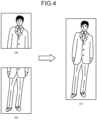
- FIG. 4 is an illustration illustrating an example of a method of generating a whole-body model.
- a plurality of lower-body three-dimensional models such as (a) a suit pants style and (b) a button-shirt pants style, are stored in the lower-body model database 26.
- a plurality of lower-body three-dimensional models such as (a) a pants style and (b) a skirt style, are stored in the lower-body model database 26.
- three-dimensional models of not only males and females but also adult males and females and child females and males may be prepared or unisex lower-body three-dimensional models may be used.
- the whole-body model generation unit 23 synthesizes the three-dimensional model of the upper body of the user that is generated by the upper-body model generation unit 21 and the three-dimensional model of the lower body of the user that is selected by the lower-body model selection unit 22.
- the upper-body model generation unit 21 generates a three-dimensional model (a) of an upper body in a suit jacket style
- the lower-body model selection unit 22 selects a three-dimensional model (b) of a lower body in a suit pants style from the lower-body model database 26.
- the lower-body model selection unit 22 selects a lower-body three-dimensional model that is the most suitable to the three-dimensional model of the upper body of the user that is generated by the upper-body model generation unit 21.
- the most suitable lower-body three-dimensional model herein is a lower-body three-dimensional model that is similar to the upper-body three-dimensional model in gender and the type of clothing.
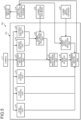
- FIG. 5 is a block configuration diagram illustrating a three-dimensional model generation system according to a second embodiment.
- a three-dimensional model generation system 10A includes the camera 11, a three-dimensional model generation device 12A, and the display device 13.
- the camera 11 and the display device 13 herein are the same as those of the first embodiment and thus description thereof will be omitted.
- a plurality of lower-body three-dimensional motions that are previously set are stored in a lower-body motion database 37.
- a three-dimensional motion refers to a motion of a three-dimensional model.
- the lower-body motion database 37 outputs a given lower-body three-dimensional model to the three-dimensional model generation device 12 based on a request of the three-dimensional model generation device 12 and details thereof will be described below.
- the lower-body model database 26 is, for example, a server, or the like, and includes at least an external storage device, such as a HDD (Hard Disk Drive), and a memory. Note that the virtual space configuration system 14 and the lower-body model database 26 may be configured integrally.
- the three-dimensional model generation device 12A generates a whole-body three-dimensional model of a user based on captured-image information obtained by the camera 11 by image capturing and generates a whole-body three-dimensional motion.
- the three-dimensional model generation device 12A includes the upper-body model generation unit 21, the lower-body model selection unit 22, the whole-body model generation unit 23, the gender analysis unit 24, and the clothing analysis unit 25 and the lower-body model database 26 is connected to the lower-body model selection unit 22.
- the three-dimensional model generation device 12A includes a head tracking unit (an upper-body motion acquisition unit) 31, a face tracking unit (the upper-body motion acquisition unit) 32, a hand tracking unit (the upper-body motion acquisition unit) 33, a bone addition unit 34, a lower-body motion selection unit 35, and a whole-body motion generation unit 36.
- the lower-body motion selection unit 35 is connected to the lower-body motion database 37.
- the upper-body model generation unit 21, the lower-body model selection unit 22, the whole-body model generation unit 23, the gender analysis unit 24, the clothing analysis unit 25, and the lower-body model database 26 are the same as those of the first embodiment and thus description thereof will be omitted.
- the head tracking unit 31 acquires a three-dimensional motion of the head of the user by tracking a position of the head of the user based on captured-image information on the upper body of the user that is acquired by the camera 11 by image capturing.
- the face tracking unit 32 acquires a three-dimensional motion of the face of the user by tracking the expression of the face of the user based on the captured-image information on the upper body of the user that is acquired by the camera 11 by image capturing.
- the hand tracking unit 33 acquires three-dimensional motions of the hands of the user by tracking the position of the hands of the user based on the captured-image information on the upper body of the user that is acquired by the camera 11 by image capturing.
- Analysis by the head tracking unit 31, the face tracking unit 32, and the hand tracking unit 33 is, for example, image analysis using AI; however, other analysis methods may be used.
- the bone addition unit 34 adds joint information on the user to a three-dimensional model of the whole body of the user that is generated by the whole-body model generation unit 23. It is preferable that the joint information of the user be set previously according to the user.
- the lower-body motion selection unit 35 selects a lower-body three-dimensional motion that is the most appropriate according to VR-space situation information that is acquired from the virtual space configuration system 14.
- the VR-space situation information is information indicating a situation of a VR space.
- the VR-space situation information is, for example, information in which a meeting is set and is information indicating a situation in which a three-dimensional model sits.
- the lower-body motion selection unit 35 selects a lower-body three-dimensional motion that is the most appropriate to the VR-space situation information from a plurality of lower-body three-dimensional motions that are stored in the lower-body motion database 37.
- the whole-body motion generation unit 36 generates a whole-body three-dimensional motion by synthesizing, with the three-dimensional model of the whole body of the user that is generated by the whole-body model generation unit 23 and to which the joint information is added by the bone addition unit 34, the three-dimensional motion of the head of the user that is acquired by the head tracking unit 31, the three-dimensional motion of the face of the user that is acquired by the face tracking unit 32, the three-dimensional motions of the hands of the user that are acquired by the hand tracking unit 33, and the lower-body three-dimensional motion that is selected by the lower-body motion selection unit 35.
- the three-dimensional model generation device 12A outputs the whole-body three-dimensional model and the whole-body three-dimensional motion that are generated to the virtual space configuration system 14.
- the three-dimensional model generation system 10 generates a VR space based on the three-dimensional model of the whole body of the user that is connected and the three-dimensional motion of the whole body.
- the display device 13 displays an image of the VR space viewed from the user himself/herself based on information on the VR space that is generated by the virtual space configuration system 14.
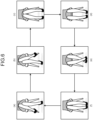
- FIG. 6 is an illustration illustrating an example of lower-body three-dimensional motions in the lower-body three-dimensional motion database.
- the upper-body model generation unit 21 generates an upper-body three-dimensional model based on captured-image information on the upper body of a user that is acquired by the camera 11 by image capturing.
- the gender analysis unit 24 analyzes the gender of the user based on the captured-image information on the upper-body of the user and the clothing analysis unit 25 analyzes the clothing of the user based on the captured-image information on the upper body of the user.
- the lower-body model selection unit 22 selects a lower-body three-dimensional model that is the most appropriate based on the gender of the user that is analyzed by the gender analysis unit 24 and the type of clothing of the user that is analyzed by the clothing analysis unit 25.
- the whole-body model generation unit 23 generates a whole-body three-dimensional model by synthesizing the three-dimensional model of the upper body of the user that is generated by the upper-body model generation unit 21 and the three-dimensional model of the lower body of the user that is selected by the lower-body model selection unit 22.
- the bone addition unit 34 then adds joint information on the user to the three-dimensional model of the whole body of the user that is generated by the whole-body model generation unit 23.
- the lower-body motion selection unit 35 selects a lower-body three-dimensional motion that matches the VR-space situation information from the lower-body motion database 37.
- the lower-body three-dimensional motion that matches the VR-space situation information is, for example, a lower-body three-dimensional motion corresponding to a posture of the user (a standing posture or a sitting posture) in the VR space. For example, as illustrated in FIG.
- the lower-body three-dimensional motion is a motion of repeating (a) a posture with the left leg crossed, (b) a posture with the right leg crossed, (c) a posture with the knees put together, (d) a posture with the knees open, (e) a posture with the feet crossed, and (f) a posture with the feet aligned.
- a lower-body three-dimensional motion may be configured by combining the posture with the feet crossed, a posture with the feet closed, and the posture with the feet open. Note that the number of postures of which the lower-body three-dimensional motion consists is not limited to six.
- the whole-body motion generation unit 36 generates a whole-body three-dimensional motion by synthesizing a three-dimensional motion of the head, a three-dimensional motion of the face, and three-dimensional motions of the hands with the three-dimensional model of the whole body of the user and synthesizing the lower-body three-dimensional motion with the three-dimensional model of the whole body of the user.
- FIG. 7 is a block configuration diagram illustrating a three-dimensional model generation system according to a third embodiment.
- a three-dimensional model generation system 10B includes the camera 11, a three-dimensional model generation device 12B, and the display device 13.
- the camera 11 and the display device 13 herein are the same as those of the first embodiment and thus description thereof will be omitted.
- the three-dimensional model generation device 12B generates a whole-body three-dimensional model of a user based on captured-image information obtained by the camera 11 by image capturing and generates a whole-body three-dimensional motion.
- the three-dimensional model generation device 12B includes the upper-body model generation unit 21, the lower-body model selection unit 22, the whole-body model generation unit 23, the gender analysis unit 24, and the clothing analysis unit 25 and the lower-body model database 26 is connected to the lower-body model selection unit 22.
- the three-dimensional model generation device 12B includes the head tracking unit 31, the face tracking unit 32, the hand tracking unit 33, the bone addition unit 34, the lower-body motion selection unit 35, and the whole-body motion generation unit 36.
- the lower-body motion selection unit 35 is connected to the lower-body motion database 37.
- the three-dimensional model generation device 12B further includes an upper-body posture estimation unit 41.
- the upper-body model generation unit 21, the lower-body model selection unit 22, the whole-body model generation unit 23, the gender analysis unit 24, the clothing analysis unit 25, and the lower-body model database 26 are the same as those of the first embodiment and thus description thereof will be omitted.
- the head tracking unit 31, the face tracking unit 32, the hand tracking unit 33, and the bone addition unit 34 are the same as those of the second embodiment and thus description thereof will be omitted.
- the upper-body posture estimation unit 41 estimates a state of a user by analyzing a posture of the upper body of the user based on the captured-image information on the upper body of the user that is acquired by the camera 11 by image capturing.
- the upper-body posture estimation unit 41 specifies a proper posture, a forward-leaning posture, a backward-leaning posture, or the like, of the user.
- the analysis by the upper-body posture estimation unit 41 is, for example, image analysis using AI; however, other analysis methods may be used.
- the lower-body motion selection unit 35 selects a lower-body three-dimensional motion that is the most appropriate according to VR-space situation information that is acquired from the virtual space configuration system 14 and the state of the posture of the upper body of the user that is estimated by the upper-body posture estimation unit 41.
- the whole-body motion generation unit 36 generates a whole-body three-dimensional motion by synthesizing a three-dimensional motion of the head of the user, a three-dimensional motion of the face of the user, three-dimensional motions of the hands of the user with the three-dimensional model of the whole body of the user, and the three-dimensional motion of the lower body of the user with the three-dimensional model of the whole body of the user.
- the three-dimensional model generation device 12A outputs the whole-body three-dimensional model and the whole-body three-dimensional motion that are generated to the virtual space configuration system 14.
- the three-dimensional model generation system 10 generates a VR space based on the three-dimensional model of the whole body of the user that is connected and the three-dimensional motion of the whole body.
- the display device 13 displays an image of the VR space viewed from the user himself/herself based on information on the VR space that is generated by the virtual space configuration system 14.
- FIG. 8 is an illustration illustrating examples of a posture of a lower-body model with respect to a proper posture of an upper-body model.
- FIG. 9 is an illustration illustrating examples of the posture of the lower-body model with respect to the backward-leaning posture of the upper-body model.
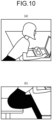
- FIG. 10 is an illustration illustrating an example of the posture of the lower-body model with respect to a forward-leaning posture of the upper-body model.
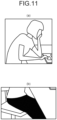
- FIG. 11 is an illustration illustrating an example of the posture of the lower-body model with respect to a posture with a cheek resting on a hand of the upper-body model.
- the upper-body model generation unit 21 generates an upper-body three-dimensional model based on captured-image information on the upper body of a user that is acquired by the camera 11 by image capturing.
- the gender analysis unit 24 analyzes the gender of the user based on the captured-image information on the upper-body of the user and the clothing analysis unit 25 analyzes the clothing of the user based on the captured-image information on the upper body of the user.
- the lower-body model selection unit 22 selects a lower-body three-dimensional model that is the most appropriate based on the gender of the user that is analyzed by the gender analysis unit 24 and the type of clothing of the user that is analyzed by the clothing analysis unit 25.
- the whole-body model generation unit 23 generates a whole-body three-dimensional model by synthesizing the three-dimensional model of the upper body of the user that is generated by the upper-body model generation unit 21 and the three-dimensional model of the lower body of the user that is selected by the lower-body model selection unit 22.
- the bone addition unit 34 then adds joint information on the user to the three-dimensional model of the whole body of the user that is generated by the whole-body model generation unit 23.
- the upper-body posture estimation unit 41 by estimates a state of the user by analyzing a posture of the upper body of the user based on the captured-image information on the upper body of the user that is acquired by the camera 11 by image capturing. As illustrated in FIG. 8 , when the upper body of the user is in a proper posture (a), the upper-body posture estimation unit 41 selects lower-body three-dimensional motions (b) and (c) corresponding to the proper posture (a). As illustrated in FIG. 9 , when the upper body of the user is in a backward-leaning posture (a), the upper-body posture estimation unit 41 selects lower-body three-dimensional motions (b) and (c) corresponding to the backward-leaning posture (a). As illustrated in FIG.
- the upper-body posture estimation unit 41 selects a lower-body three-dimensional motion (b) corresponding to the forward-leaning posture (a).
- the upper-body posture estimation unit 41 selects a lower-body three-dimensional motion (b) corresponding to the posture with a cheek resting on a hand (a). Note that, as for the number of postures of which the lower-body three-dimensional motion consists, one or a plurality of postures are set.
- the whole-body motion generation unit 36 generates a whole-body three-dimensional motion by synthesizing a three-dimensional motion of the head, a three-dimensional motion of the face, and three-dimensional motions of the hands with the three-dimensional model of the whole body of the user and synthesizing the lower-body three-dimensional motion with the three-dimensional model of the whole body of the user.
- the embodiments include the upper-body model generation unit 21 that generates an upper-body three-dimensional model based on captured-image information on an upper body of a user (subject) that is acquired by the camera (imaging device) 11 and the lower-body model selection unit 22 selects a lower-body three-dimensional model corresponding to the upper body of the user from a plurality of lower-body three-dimensional models set previously, by analyzing an attribute of the user based on the captured-image information.
- the lower-body three-dimensional model corresponding to the upper-body three-dimensional model that is generated based on the captured-image information on the upper body of the user is selected. It is thus possible to easily generate a whole-body three-dimensional model for participation in a VR space.
- the embodiments include the lower-body motion selection unit 35 that selects a motion of the lower-body three-dimensional model that is selected according to information indicating a situation of a virtual space. For this reason, a three-dimensional model of the whole body of the user is generated and a lower-body three-dimensional motion is generated and a lower-body three-dimensional motion is generated, which enables sensation of presence in a communication space, such as a VR space.
- the embodiment includes the upper-body posture estimation unit 41 that estimates a state of the user by analyzing a posture of the upper body of the user based on the captured-image information, and the lower-body motion selection unit 35 selects the motion of the lower-body three-dimensional model based on the information indicating the situation of the virtual space and the posture of the upper body that is estimated by the upper-body posture estimation unit 41.
- the upper-body posture estimation unit 41 estimates a state of the user by analyzing a posture of the upper body of the user based on the captured-image information
- the lower-body motion selection unit 35 selects the motion of the lower-body three-dimensional model based on the information indicating the situation of the virtual space and the posture of the upper body that is estimated by the upper-body posture estimation unit 41.
- the three-dimensional model generation devices 12, 12A and 12B according to the present disclosure have been described, and they may be implemented in various different modes other than the above-described embodiments.
- Each component of the three-dimensional model generation devices 12, 12A and 12B illustrated in the drawings is a functional idea and need not necessarily be configured physically as illustrated in the drawings.
- specific modes of each device are not limited to those illustrated in the drawings and all or part of the device may be functionally or physically distributed or integrated in any unit according to the processing load and usage of each device.
- the configurations of the three-dimensional model generation devices 12, 12A AND 12B are implemented by a program that is loaded into a memory as software, or the like.
- they have been described as functional blocks that are realized by cooperation of hardware or software thereof.
- these functional blocks can be realized in various forms by only hardware, only software or a combination of hardware and software.
- the three-dimensional model generation device, the three-dimensional model generation method, and the program of the present disclosure are, for example, applicable to a meeting using a VR space.
Landscapes
- Engineering & Computer Science (AREA)
- Physics & Mathematics (AREA)
- Theoretical Computer Science (AREA)
- General Physics & Mathematics (AREA)
- Computer Graphics (AREA)
- Software Systems (AREA)
- Geometry (AREA)
- Human Computer Interaction (AREA)
- Multimedia (AREA)
- General Engineering & Computer Science (AREA)
- Computer Hardware Design (AREA)
- Architecture (AREA)
- Processing Or Creating Images (AREA)
- Image Generation (AREA)
- User Interface Of Digital Computer (AREA)
Abstract
Description
- The present disclosure relates to a three-dimensional model generation device, a three-dimensional model generation method, and a program.
- In recent years, meetings using a VR space by sharing a VR space that realizes virtual reality (VR) between a plurality of users have been increasing. In such a meeting, it is considered that avatars corresponding to the users are generated and participate in a VR space. A web meeting in which a plurality of users participate is held by the users from distant places via terminal devices and a network. In this case, an image of a self is captured with a camera, generates a three-dimensional image based on a two-dimensional captured image of the self, and causes the three-dimensional image of the self to participate in a VR space. Such three-dimensional model generation methods include, for example, one described in Patent Literature 1 below.
- Patent Literature 1:
Japanese Laid-open Patent Publication No. 2011-113421 - When generating a three-dimensional image based on a two-dimensional image of a user that is captured with a camera, the user generates a three-dimensional image of the upper body of the user in general. In a communication space, such as a VR space, however, it is required to generate a three-dimensional image of the whole body of the user and participate in a meeting for sensation of presence in the space.
- The present disclosure was made in view of the above-described circumstances and an object of the present disclosure is to make it possible to easily generate a three-dimensional model of a whole body for participation in a VR space.
- To solve the above problem and achieve the object, a three-dimensional model generation device according to the present disclosure includes: an upper-body model generation unit configured to generate an upper-body three-dimensional model based on captured-image information on an upper body of a subject that is acquired by an imaging device; and a lower-body model selection unit configured to select a lower-body three-dimensional model corresponding to the upper body of the subject from a plurality of lower-body three-dimensional models set previously, by analyzing an attribute of the subject based on the captured-image information.
- A three-dimensional model generation method according to the present disclosure includes the steps of: generating an upper-body three-dimensional model based on captured-image information on an upper body of a subject that is acquired by an imaging device; and selecting a lower-body three-dimensional model corresponding to the upper body of the subject from a plurality of lower-body three-dimensional models set previously, by analyzing an attribute of the subject based on the captured-image information.
- A program according to the present disclosure causes a computer that operates as a three-dimensional model generation device to execute the steps of: generating an upper-body three-dimensional model based on captured-image information on an upper body of a subject that is acquired by an imaging device; and selecting a lower-body three-dimensional model corresponding to the upper body of the subject from a plurality of lower-body three-dimensional models set previously, by analyzing an attribute of the subject based on the captured-image information.
- According to the present disclosure, an effect that it is possible to easily generate a three-dimensional model of a whole body for participation in a VR space is enabled.
-
-
FIG. 1 is a block configuration diagram illustrating a three-dimensional model generation system according to a first embodiment. -
FIG. 2 is an illustration illustrating examples of a male lower-body model in a lower-body model database. -
FIG. 3 is an illustration illustrating examples of a female lower-body model in a lower-body model database. -
FIG. 4 is an illustration illustrating an example of a method of generating a whole-body model. -
FIG. 5 is a block configuration diagram illustrating a three-dimensional model generation system according to a second embodiment. -
FIG. 6 is an illustration illustrating an example of lower-body three-dimensional motions in a lower-body three-dimensional motion database. -
FIG. 7 is a block configuration diagram illustrating a three-dimensional model generation system according to a third embodiment. -
FIG. 8 is an illustration illustrating examples of a posture of a lower-body model with respect to a proper posture of an upper-body model. -
FIG. 9 is an illustration illustrating examples of the posture of the lower-body model with respect to a backward-leaning posture of the upper-body model. -
FIG. 10 is an illustration illustrating an example of the posture of the lower-body model with respect to a forward-leaning posture of the upper-body model. -
FIG. 11 is an illustration illustrating an example of the posture of the lower-body model with respect to a posture with a cheek resting on a hand of the upper-body model. - With reference to the accompanying drawings, embodiments of a three-dimensional model generation device, a three-dimensional model generation method, and a program according to the present disclosure will be described in detail below. The embodiments do not limit the invention.
- In a first embodiment, a device that generates a three-dimensional model (avatar) of a plurality of users in a meeting where the users share a VR space that realizes virtual reality and a method will be described below. Note that the three-dimensional model generation device and the method are applicable not only to a meeting using a VR space but also to, for example, an exhibition, a fair, and a party.
-
FIG. 1 is a block configuration diagram illustrating a three-dimensional model generation system according to the first embodiment. - In the first embodiment, as illustrated in
FIG. 1 , a three-dimensionalmodel generation system 10 includes a camera (imaging device) 11, a three-dimensionalmodel generation device 12, and a display device 13. - The camera 11 acquires captured-image information obtained by capturing an image of a user (subject). The camera 11 is capable of capturing an image of the upper body of a self who is the user. In this case, it is preferable that the camera 11 capture the upper body of the user from the head to at least the waist. The camera 11 transmits the captured-image information to the three-dimensional
model generation device 12. - Based on the captured-image information obtained by the camera 11 by image capturing, the three-dimensional
model generation device 12 generates a three-dimensional model of the whole body of the user. The three-dimensionalmodel generation device 12 transmits the generated three-dimensional model of the whole body to a virtual space configuration system 14. The three-dimensionalmodel generation device 12 includes, for example, an arithmetic circuit, such as a CPU (Central Processing Unit). A specific configuration of the three-dimensionalmodel generation device 12 will be described below. - The virtual space configuration system 14 connects to personal computers (three-dimensional model generation devices 12) of a plurality of users via a network, such as the Internet. Based on the three-dimensional model of the whole body that is generated by the personal computers (the three-dimensional model generation devices 12) of the users, the virtual space configuration system 14 generates information on a VR space. The virtual space configuration system 14 outputs the generated information on the VR space to the display device 13. Note that the virtual space configuration system 14 is, for example, a server.
- Based on the information on the VR space that is acquired from the virtual space configuration system 14, the display device 13 displays an image of the VR space that is viewed by the user himself/herself. The display device 13 is, for example, a HMD (Head Mount Display) or a liquid crystal display.
- A plurality of lower-body three-dimensional models that are set previously are stored in a lower-
body model database 26. The lower-body model database 26 outputs a given lower-body three-dimensional model to the three-dimensionalmodel generation device 12 based on a request of the three-dimensionalmodel generation device 12 and details thereof will be described below. The lower-body model database 26 is, for example, a server and includes at least an external storage memory device, such as a HDD (Hard Disk Drive), and a memory. Note that the virtual space configuration system 14 and the lower-body model database 26 may be configured integrally. - The three-dimensional
model generation device 12 includes an upper-bodymodel generation unit 21, a lower-bodymodel selection unit 22, and a whole-bodymodel generation unit 23. The three-dimensionalmodel generation device 12 includes agender analysis unit 24 and aclothing analysis unit 25. The lower-bodymodel selection unit 22 is connected to the lower-body model database 26. - The upper-body
model generation unit 21 generates an upper-body three-dimensional model based on captured-image information on the upper body of a user that is acquired by the camera 11 by image capturing. Specifically, the upper-body three-dimensional model is generated based on a two-dimensional model of the upper body of the user of which image is captured by the camera 11. It is preferable to use, for example, an existing technique, such as the light section method or the pattern projection method, as a method of generating an upper-body three-dimensional model. - The
gender analysis unit 24 and theclothing analysis unit 25 analyze the attribute of the user. The attribute herein refers to the gender and clothing of the user; however, other may apply. Thegender analysis unit 24 analyzes the gender of the user based on the captured-image information on the upper body of the user that is acquired by the camera 11 by image capturing and specifies whether the user is male or female. Theclothing analysis unit 25 analyzes the clothing of the user based on the captured-image information on the upper body of the user that is acquired by the camera 11 by image capturing and specifies a type of the clothing. The analysis by thegender analysis unit 24 and theclothing analysis unit 25 is, for example, image analysis using AI (artificial intelligence), and machine learning, such as deep learning, may be used. Note that the analysis by thegender analysis unit 24 and theclothing analysis unit 25 is not limited to image analysis using AI and other analysis methods may be used. - The lower-body
model selection unit 22 selects a lower-body three-dimensional model based on the result of the analysis by thegender analysis unit 24 and theclothing analysis unit 25. The lower-body three-dimensional models that are set previously are stored in the lower-body model database 26. Based on the gender of the user that is specified by thegender analysis unit 24 and the type of clothing that is specified by theclothing analysis unit 25, the lower-bodymodel selection unit 22 selects a lower-body three-dimensional model in the gender and clothing that are the most appropriate to and that are the same as those of the gender and clothing of the user from the lower-body three-dimensional models that are stored in the lower-body model database 26. - The whole-body
model generation unit 23 generates the whole-body three-dimensional model by synthesizing the three-dimensional model of the upper body of the user that is generated by the upper-bodymodel generation unit 21 and the three-dimensional model of the lower body of the user that is selected by the lower-bodymodel selection unit 22. Note that the lower-bodymodel selection unit 22 has no color information and no texture information. For this reason, when synthesizing the three-dimensional model of the upper body of the user and the three-dimensional model of the lower body, the whole-bodymodel generation unit 23 adds color information and texture information to the lower-body three-dimensional model according to color information and texture information in the upper-body three-dimensional model and generates the whole-body three-dimensional model. -
FIG. 2 is an illustration illustrating examples of a male lower-body model in the lower-body model database.FIG. 3 is an illustration illustrating examples of a female lower-body model in the lower-body model database.FIG. 4 is an illustration illustrating an example of a method of generating a whole-body model. - The three-dimensional model generation method of the first embodiment includes a step of generating an upper-body three-dimensional model based on captured-image information on the upper body of a user that is acquired by the camera 11 by image capturing, a step of selecting a lower-body three-dimensional model that is the most suitable to the upper body of the user from a plurality of lower-body three-dimensional models previously set, by analyzing an attribute of the user based on the captured-image information of the camera 11, and a step of generating a whole-body three dimensional model by synthesizing the upper-body three-dimensional model and the lower-body three-dimensional model.
- As illustrated in
FIG. 1 , the upper-bodymodel generation unit 21 generates an upper-body three-dimensional model based on captured-image information on the upper body of the user that is acquired by the camera 11 by image capturing. Thegender analysis unit 24 analyzes the gender of the user based on the captured-image information on the upper body of the user and theclothing analysis unit 25 analyzes the clothing of the user based on the captured-image information on the upper body of the user. The lower-bodymodel selection unit 22 selects a lower-body three-dimensional model that is the most appropriate based on the gender of the user that is analyzed by thegender analysis unit 24 and the type of clothing of the user that is analyzed by theclothing analysis unit 25. - As illustrated in
FIG. 2 , if the user is male, a plurality of lower-body three-dimensional models, such as (a) a suit pants style and (b) a button-shirt pants style, are stored in the lower-body model database 26. As illustrated inFIG. 3 , if the user is female, a plurality of lower-body three-dimensional models, such as (a) a pants style and (b) a skirt style, are stored in the lower-body model database 26. Note that, for genders, three-dimensional models of not only males and females but also adult males and females and child females and males may be prepared or unisex lower-body three-dimensional models may be used. - As illustrated in
FIG. 1 , the whole-bodymodel generation unit 23 synthesizes the three-dimensional model of the upper body of the user that is generated by the upper-bodymodel generation unit 21 and the three-dimensional model of the lower body of the user that is selected by the lower-bodymodel selection unit 22. As illustrated inFIGS. 1 to 4 , once the upper-bodymodel generation unit 21 generates a three-dimensional model (a) of an upper body in a suit jacket style, the lower-bodymodel selection unit 22 selects a three-dimensional model (b) of a lower body in a suit pants style from the lower-body model database 26. In this case, the lower-bodymodel selection unit 22 selects a lower-body three-dimensional model that is the most suitable to the three-dimensional model of the upper body of the user that is generated by the upper-bodymodel generation unit 21. The most suitable lower-body three-dimensional model herein is a lower-body three-dimensional model that is similar to the upper-body three-dimensional model in gender and the type of clothing. - When synthesizing the upper-body three-dimensional model and the lower-body three-dimensional model, the whole-body
model generation unit 23 adjusts the scale ratio of the lower-body three-dimensional model such that the waist size of the upper-body three-dimensional model and the waist size of the lower-body three-dimensional model are equal. The whole-bodymodel generation unit 23 adjusts a joint position in a vertical direction in consideration of connection between the clothing of the upper-body three-dimensional model and the clothing of the lower-body three-dimensional model. The whole-bodymodel generation unit 23 may adjust the joint position between the upper-body three-dimensional model and the lower-body three-dimensional model such that the generated whole-body three-dimensional model has an average height that is determined previously. Furthermore, the whole-bodymodel generation unit 23 performs smoothing processing on the joint between the upper-body three-dimensional model and the lower-body three-dimensional model such that no feeling of strangeness is caused in the joint. When generating the whole-body three-dimensional model, the whole-bodymodel generation unit 23 adds color and texture to the lower-body three-dimensional model in accordance with the color and texture of the clothing of the upper-body three-dimensional model. -
FIG. 5 is a block configuration diagram illustrating a three-dimensional model generation system according to a second embodiment. - In the second embodiment, as illustrated in
FIG. 5 , a three-dimensionalmodel generation system 10A includes the camera 11, a three-dimensionalmodel generation device 12A, and the display device 13. The camera 11 and the display device 13 herein are the same as those of the first embodiment and thus description thereof will be omitted. - A plurality of lower-body three-dimensional motions that are previously set are stored in a lower-body motion database 37. A three-dimensional motion refers to a motion of a three-dimensional model. The lower-body motion database 37 outputs a given lower-body three-dimensional model to the three-dimensional
model generation device 12 based on a request of the three-dimensionalmodel generation device 12 and details thereof will be described below. Note that the lower-body model database 26 is, for example, a server, or the like, and includes at least an external storage device, such as a HDD (Hard Disk Drive), and a memory. Note that the virtual space configuration system 14 and the lower-body model database 26 may be configured integrally. - The three-dimensional
model generation device 12A generates a whole-body three-dimensional model of a user based on captured-image information obtained by the camera 11 by image capturing and generates a whole-body three-dimensional motion. - The three-dimensional
model generation device 12A includes the upper-bodymodel generation unit 21, the lower-bodymodel selection unit 22, the whole-bodymodel generation unit 23, thegender analysis unit 24, and theclothing analysis unit 25 and the lower-body model database 26 is connected to the lower-bodymodel selection unit 22. The three-dimensionalmodel generation device 12A includes a head tracking unit (an upper-body motion acquisition unit) 31, a face tracking unit (the upper-body motion acquisition unit) 32, a hand tracking unit (the upper-body motion acquisition unit) 33, a bone addition unit 34, a lower-bodymotion selection unit 35, and a whole-bodymotion generation unit 36. The lower-bodymotion selection unit 35 is connected to the lower-body motion database 37. - The upper-body
model generation unit 21, the lower-bodymodel selection unit 22, the whole-bodymodel generation unit 23, thegender analysis unit 24, theclothing analysis unit 25, and the lower-body model database 26 are the same as those of the first embodiment and thus description thereof will be omitted. - The head tracking unit 31 acquires a three-dimensional motion of the head of the user by tracking a position of the head of the user based on captured-image information on the upper body of the user that is acquired by the camera 11 by image capturing. The
face tracking unit 32 acquires a three-dimensional motion of the face of the user by tracking the expression of the face of the user based on the captured-image information on the upper body of the user that is acquired by the camera 11 by image capturing. Thehand tracking unit 33 acquires three-dimensional motions of the hands of the user by tracking the position of the hands of the user based on the captured-image information on the upper body of the user that is acquired by the camera 11 by image capturing. Analysis by the head tracking unit 31, theface tracking unit 32, and thehand tracking unit 33 is, for example, image analysis using AI; however, other analysis methods may be used. - The bone addition unit 34 adds joint information on the user to a three-dimensional model of the whole body of the user that is generated by the whole-body
model generation unit 23. It is preferable that the joint information of the user be set previously according to the user. - The lower-body
motion selection unit 35 selects a lower-body three-dimensional motion that is the most appropriate according to VR-space situation information that is acquired from the virtual space configuration system 14. The VR-space situation information is information indicating a situation of a VR space. The VR-space situation information is, for example, information in which a meeting is set and is information indicating a situation in which a three-dimensional model sits. Based on the VR-space situation information, the lower-bodymotion selection unit 35 selects a lower-body three-dimensional motion that is the most appropriate to the VR-space situation information from a plurality of lower-body three-dimensional motions that are stored in the lower-body motion database 37. - The whole-body
motion generation unit 36 generates a whole-body three-dimensional motion by synthesizing, with the three-dimensional model of the whole body of the user that is generated by the whole-bodymodel generation unit 23 and to which the joint information is added by the bone addition unit 34, the three-dimensional motion of the head of the user that is acquired by the head tracking unit 31, the three-dimensional motion of the face of the user that is acquired by theface tracking unit 32, the three-dimensional motions of the hands of the user that are acquired by thehand tracking unit 33, and the lower-body three-dimensional motion that is selected by the lower-bodymotion selection unit 35. - Once the three-dimensional
model generation device 12A generates the three-dimensional model of the whole body of the user and the whole-body three-dimensional motion, the three-dimensionalmodel generation device 12A outputs the whole-body three-dimensional model and the whole-body three-dimensional motion that are generated to the virtual space configuration system 14. The three-dimensionalmodel generation system 10 generates a VR space based on the three-dimensional model of the whole body of the user that is connected and the three-dimensional motion of the whole body. The display device 13 displays an image of the VR space viewed from the user himself/herself based on information on the VR space that is generated by the virtual space configuration system 14. -
FIG. 6 is an illustration illustrating an example of lower-body three-dimensional motions in the lower-body three-dimensional motion database. - As illustrated in
FIG. 5 , the upper-bodymodel generation unit 21 generates an upper-body three-dimensional model based on captured-image information on the upper body of a user that is acquired by the camera 11 by image capturing. Thegender analysis unit 24 analyzes the gender of the user based on the captured-image information on the upper-body of the user and theclothing analysis unit 25 analyzes the clothing of the user based on the captured-image information on the upper body of the user. The lower-bodymodel selection unit 22 selects a lower-body three-dimensional model that is the most appropriate based on the gender of the user that is analyzed by thegender analysis unit 24 and the type of clothing of the user that is analyzed by theclothing analysis unit 25. The whole-bodymodel generation unit 23 generates a whole-body three-dimensional model by synthesizing the three-dimensional model of the upper body of the user that is generated by the upper-bodymodel generation unit 21 and the three-dimensional model of the lower body of the user that is selected by the lower-bodymodel selection unit 22. The bone addition unit 34 then adds joint information on the user to the three-dimensional model of the whole body of the user that is generated by the whole-bodymodel generation unit 23. - The lower-body
motion selection unit 35 selects a lower-body three-dimensional motion that matches the VR-space situation information from the lower-body motion database 37. The lower-body three-dimensional motion that matches the VR-space situation information is, for example, a lower-body three-dimensional motion corresponding to a posture of the user (a standing posture or a sitting posture) in the VR space. For example, as illustrated inFIG. 6 , when the user is in the standing posture, the lower-body three-dimensional motion is a motion of repeating (a) a posture with the left leg crossed, (b) a posture with the right leg crossed, (c) a posture with the knees put together, (d) a posture with the knees open, (e) a posture with the feet crossed, and (f) a posture with the feet aligned. When the user is in the standing posture, similarly, a lower-body three-dimensional motion may be configured by combining the posture with the feet crossed, a posture with the feet closed, and the posture with the feet open. Note that the number of postures of which the lower-body three-dimensional motion consists is not limited to six. - The whole-body
motion generation unit 36 generates a whole-body three-dimensional motion by synthesizing a three-dimensional motion of the head, a three-dimensional motion of the face, and three-dimensional motions of the hands with the three-dimensional model of the whole body of the user and synthesizing the lower-body three-dimensional motion with the three-dimensional model of the whole body of the user. -
FIG. 7 is a block configuration diagram illustrating a three-dimensional model generation system according to a third embodiment. - In the third embodiment, as illustrated in
FIG. 7 , a three-dimensionalmodel generation system 10B includes the camera 11, a three-dimensionalmodel generation device 12B, and the display device 13. The camera 11 and the display device 13 herein are the same as those of the first embodiment and thus description thereof will be omitted. - The three-dimensional
model generation device 12B generates a whole-body three-dimensional model of a user based on captured-image information obtained by the camera 11 by image capturing and generates a whole-body three-dimensional motion. - The three-dimensional
model generation device 12B includes the upper-bodymodel generation unit 21, the lower-bodymodel selection unit 22, the whole-bodymodel generation unit 23, thegender analysis unit 24, and theclothing analysis unit 25 and the lower-body model database 26 is connected to the lower-bodymodel selection unit 22. The three-dimensionalmodel generation device 12B includes the head tracking unit 31, theface tracking unit 32, thehand tracking unit 33, the bone addition unit 34, the lower-bodymotion selection unit 35, and the whole-bodymotion generation unit 36. The lower-bodymotion selection unit 35 is connected to the lower-body motion database 37. The three-dimensionalmodel generation device 12B further includes an upper-body posture estimation unit 41. - The upper-body
model generation unit 21, the lower-bodymodel selection unit 22, the whole-bodymodel generation unit 23, thegender analysis unit 24, theclothing analysis unit 25, and the lower-body model database 26 are the same as those of the first embodiment and thus description thereof will be omitted. The head tracking unit 31, theface tracking unit 32, thehand tracking unit 33, and the bone addition unit 34 are the same as those of the second embodiment and thus description thereof will be omitted. - The upper-body posture estimation unit 41 estimates a state of a user by analyzing a posture of the upper body of the user based on the captured-image information on the upper body of the user that is acquired by the camera 11 by image capturing. The upper-body posture estimation unit 41, for example, specifies a proper posture, a forward-leaning posture, a backward-leaning posture, or the like, of the user. The analysis by the upper-body posture estimation unit 41 is, for example, image analysis using AI; however, other analysis methods may be used.
- The lower-body
motion selection unit 35 selects a lower-body three-dimensional motion that is the most appropriate according to VR-space situation information that is acquired from the virtual space configuration system 14 and the state of the posture of the upper body of the user that is estimated by the upper-body posture estimation unit 41. The whole-bodymotion generation unit 36 generates a whole-body three-dimensional motion by synthesizing a three-dimensional motion of the head of the user, a three-dimensional motion of the face of the user, three-dimensional motions of the hands of the user with the three-dimensional model of the whole body of the user, and the three-dimensional motion of the lower body of the user with the three-dimensional model of the whole body of the user. - Once the three-dimensional
model generation device 12A generates the three-dimensional model of the whole body of the user and the whole-body three-dimensional motion, the three-dimensionalmodel generation device 12A outputs the whole-body three-dimensional model and the whole-body three-dimensional motion that are generated to the virtual space configuration system 14. The three-dimensionalmodel generation system 10 generates a VR space based on the three-dimensional model of the whole body of the user that is connected and the three-dimensional motion of the whole body. The display device 13 displays an image of the VR space viewed from the user himself/herself based on information on the VR space that is generated by the virtual space configuration system 14. -
FIG. 8 is an illustration illustrating examples of a posture of a lower-body model with respect to a proper posture of an upper-body model.FIG. 9 is an illustration illustrating examples of the posture of the lower-body model with respect to the backward-leaning posture of the upper-body model.FIG. 10 is an illustration illustrating an example of the posture of the lower-body model with respect to a forward-leaning posture of the upper-body model.FIG. 11 is an illustration illustrating an example of the posture of the lower-body model with respect to a posture with a cheek resting on a hand of the upper-body model. - As illustrated in
FIG. 7 , the upper-bodymodel generation unit 21 generates an upper-body three-dimensional model based on captured-image information on the upper body of a user that is acquired by the camera 11 by image capturing. Thegender analysis unit 24 analyzes the gender of the user based on the captured-image information on the upper-body of the user and theclothing analysis unit 25 analyzes the clothing of the user based on the captured-image information on the upper body of the user. The lower-bodymodel selection unit 22 selects a lower-body three-dimensional model that is the most appropriate based on the gender of the user that is analyzed by thegender analysis unit 24 and the type of clothing of the user that is analyzed by theclothing analysis unit 25. The whole-bodymodel generation unit 23 generates a whole-body three-dimensional model by synthesizing the three-dimensional model of the upper body of the user that is generated by the upper-bodymodel generation unit 21 and the three-dimensional model of the lower body of the user that is selected by the lower-bodymodel selection unit 22. The bone addition unit 34 then adds joint information on the user to the three-dimensional model of the whole body of the user that is generated by the whole-bodymodel generation unit 23. - The upper-body posture estimation unit 41 by estimates a state of the user by analyzing a posture of the upper body of the user based on the captured-image information on the upper body of the user that is acquired by the camera 11 by image capturing. As illustrated in
FIG. 8 , when the upper body of the user is in a proper posture (a), the upper-body posture estimation unit 41 selects lower-body three-dimensional motions (b) and (c) corresponding to the proper posture (a). As illustrated inFIG. 9 , when the upper body of the user is in a backward-leaning posture (a), the upper-body posture estimation unit 41 selects lower-body three-dimensional motions (b) and (c) corresponding to the backward-leaning posture (a). As illustrated inFIG. 10 , when the upper body of the user is in a forward-leaning posture (a), the upper-body posture estimation unit 41 selects a lower-body three-dimensional motion (b) corresponding to the forward-leaning posture (a). As illustrated inFIG. 11 , when the upper body of the user is in a posture with a cheek resting on a hand (a), the upper-body posture estimation unit 41 selects a lower-body three-dimensional motion (b) corresponding to the posture with a cheek resting on a hand (a). Note that, as for the number of postures of which the lower-body three-dimensional motion consists, one or a plurality of postures are set. - The whole-body
motion generation unit 36 generates a whole-body three-dimensional motion by synthesizing a three-dimensional motion of the head, a three-dimensional motion of the face, and three-dimensional motions of the hands with the three-dimensional model of the whole body of the user and synthesizing the lower-body three-dimensional motion with the three-dimensional model of the whole body of the user. - The embodiments include the upper-body
model generation unit 21 that generates an upper-body three-dimensional model based on captured-image information on an upper body of a user (subject) that is acquired by the camera (imaging device) 11 and the lower-bodymodel selection unit 22 selects a lower-body three-dimensional model corresponding to the upper body of the user from a plurality of lower-body three-dimensional models set previously, by analyzing an attribute of the user based on the captured-image information. - For this reason, the lower-body three-dimensional model corresponding to the upper-body three-dimensional model that is generated based on the captured-image information on the upper body of the user is selected. It is thus possible to easily generate a whole-body three-dimensional model for participation in a VR space.
- The embodiments include the lower-body
motion selection unit 35 that selects a motion of the lower-body three-dimensional model that is selected according to information indicating a situation of a virtual space. For this reason, a three-dimensional model of the whole body of the user is generated and a lower-body three-dimensional motion is generated and a lower-body three-dimensional motion is generated, which enables sensation of presence in a communication space, such as a VR space. - The embodiment includes the upper-body posture estimation unit 41 that estimates a state of the user by analyzing a posture of the upper body of the user based on the captured-image information, and the lower-body
motion selection unit 35 selects the motion of the lower-body three-dimensional model based on the information indicating the situation of the virtual space and the posture of the upper body that is estimated by the upper-body posture estimation unit 41. Thus, it is possible to increase relevance between an upper-body three-dimensional motion and the lower-body three-dimensional motion. - The three-dimensional
model generation devices - Each component of the three-dimensional
model generation devices - The configurations of the three-dimensional
model generation devices - The above-described components include one that is assumable easily by those skilled in the art and one substantially the same. Furthermore, combinations can be made as appropriate in the above-described configuration. Furthermore, various omissions, replacements and changes in the configuration can be made within the scope of the invention.
- The three-dimensional model generation device, the three-dimensional model generation method, and the program of the present disclosure are, for example, applicable to a meeting using a VR space.
-
- 10, 10A, 10B Three-dimensional model generation system
- 11 Camera (imaging device)
- 12, 12A, 12B Three-dimensional model generation device
- 13 Display device
- 21 Upper-body model generation unit
- 22 Lower-body model selection unit
- 23 Whole-body model generation unit
- 24 Gender analysis unit
- 25 Clothing analysis unit
- 26 Lower-body model database
- 31 Head tracking unit (upper-body motion acquisition unit)
- 32 Face tracking unit (upper-body motion acquisition unit)
- 33 Hand tracking unit (upper-body motion acquisition unit)
- 34 Bone addition unit
- 35 Lower-body motion selection unit
- 36 Whole-body motion generation unit
- 37 Lower-body motion database
- 41 Upper-body posture estimation unit
Claims (5)
- A three-dimensional model generation device comprising:an upper-body model generation unit configured to generate an upper-body three-dimensional model based on captured-image information on an upper body of a subject that is acquired by an imaging device; anda lower-body model selection unit configured to select a lower-body three-dimensional model corresponding to the upper body of the subject from a plurality of lower-body three-dimensional models set previously, by analyzing an attribute of the subject based on the captured-image information.
- The three-dimensional model generation device according to claim 1, comprising a lower-body motion selection unit configured to select a motion of the selected lower-body three-dimensional model according to information indicating a situation of a virtual space.
- The three-dimensional model generation device according to claim 2, comprising:an upper-body posture estimation unit configured to estimate a state of the subject by analyzing a posture of the upper body of the subject based on the captured-image information,wherein the lower-body motion selection unit is configured to select the motion of the lower-body three-dimensional model based on the information indicating the situation of the virtual space and the posture of the upper body that is estimated by the upper-body posture estimation unit.
- A three-dimensional model generation method comprising the steps of:generating an upper-body three-dimensional model based on captured-image information on an upper body of a subject that is acquired by an imaging device; andselecting a lower-body three-dimensional model corresponding to the upper body of the subject from a plurality of lower-body three-dimensional models set previously, by analyzing an attribute of the subject based on the captured-image information.
- A program that causes a computer that operates as a three-dimensional model generation device to execute the steps of:generating an upper-body three-dimensional model based on captured-image information on an upper body of a subject that is acquired by an imaging device; andselecting a lower-body three-dimensional model corresponding to the upper body of the subject from a plurality of lower-body three-dimensional models set previously, by analyzing an attribute of the subject based on the captured-image information.
Applications Claiming Priority (2)
| Application Number | Priority Date | Filing Date | Title |
|---|---|---|---|
| JP2021048997A JP7655033B2 (en) | 2021-03-23 | 2021-03-23 | 3D model generating device, 3D model generating method and program |
| PCT/JP2022/008565 WO2022202145A1 (en) | 2021-03-23 | 2022-03-01 | Three-dimensional model generation device, three-dimensional model generation method, and program |
Publications (3)
| Publication Number | Publication Date |
|---|---|
| EP4296957A1 true EP4296957A1 (en) | 2023-12-27 |
| EP4296957A4 EP4296957A4 (en) | 2024-07-31 |
| EP4296957B1 EP4296957B1 (en) | 2025-09-24 |
Family
ID=83395544
Family Applications (1)
| Application Number | Title | Priority Date | Filing Date |
|---|---|---|---|
| EP22774942.1A Active EP4296957B1 (en) | 2021-03-23 | 2022-03-01 | Three-dimensional model generation device, three-dimensional model generation method, and program |
Country Status (5)
| Country | Link |
|---|---|
| US (1) | US20240127532A1 (en) |
| EP (1) | EP4296957B1 (en) |
| JP (1) | JP7655033B2 (en) |
| CN (1) | CN116997936A (en) |
| WO (1) | WO2022202145A1 (en) |
Families Citing this family (1)
| Publication number | Priority date | Publication date | Assignee | Title |
|---|---|---|---|---|
| CN118864783A (en) * | 2024-06-20 | 2024-10-29 | 上海英立视电子有限公司 | Human body image generation method and system combining three-dimensional model and user-end screen |
Family Cites Families (3)
| Publication number | Priority date | Publication date | Assignee | Title |
|---|---|---|---|---|
| JP2011113421A (en) | 2009-11-29 | 2011-06-09 | Emi Yasui | Three-dimensional modeling system |
| JP2018116537A (en) | 2017-01-19 | 2018-07-26 | ソニー株式会社 | Information processing apparatus, information processing method, and program |
| JP6692481B1 (en) | 2019-06-19 | 2020-05-13 | グリー株式会社 | Computer program, information processing method, and information processing system |
-
2021
- 2021-03-23 JP JP2021048997A patent/JP7655033B2/en active Active
-
2022
- 2022-03-01 CN CN202280021371.0A patent/CN116997936A/en active Pending
- 2022-03-01 EP EP22774942.1A patent/EP4296957B1/en active Active
- 2022-03-01 WO PCT/JP2022/008565 patent/WO2022202145A1/en not_active Ceased
-
2023
- 2023-09-08 US US18/463,331 patent/US20240127532A1/en active Pending
Also Published As
| Publication number | Publication date |
|---|---|
| JP7655033B2 (en) | 2025-04-02 |
| WO2022202145A1 (en) | 2022-09-29 |
| CN116997936A (en) | 2023-11-03 |
| EP4296957A4 (en) | 2024-07-31 |
| US20240127532A1 (en) | 2024-04-18 |
| EP4296957B1 (en) | 2025-09-24 |
| JP2022147658A (en) | 2022-10-06 |
Similar Documents
| Publication | Publication Date | Title |
|---|---|---|
| JP7504968B2 (en) | Avatar display device, avatar generation device and program | |
| US20210074004A1 (en) | Image processing method and apparatus, image device, and storage medium | |
| CN113160418B (en) | Three-dimensional reconstruction method, device and system, medium and computer equipment | |
| US20230401740A1 (en) | Data processing method and apparatus, and device and medium | |
| WO2021261188A1 (en) | Avatar generation method, program, avatar generation system, and avatar display method | |
| CN110637324B (en) | Three-dimensional data system and three-dimensional data processing method | |
| EP4296957A1 (en) | Three-dimensional model generation device, three-dimensional model generation method, and program | |
| Makled et al. | Investigating user embodiment of inverse-kinematic avatars in smartphone augmented reality | |
| WO2023035725A1 (en) | Virtual prop display method and apparatus | |
| Cha et al. | Mobile. Egocentric human body motion reconstruction using only eyeglasses-mounted cameras and a few body-worn inertial sensors | |
| JP7442107B2 (en) | Video playback device, video playback method, and video distribution system | |
| Nishiyama et al. | Synthesizing realistic image-based avatars by body sway analysis | |
| Jang et al. | Elmo: Enhanced real-time lidar motion capture through upsampling | |
| Ohkawa et al. | Generative modeling of shape-dependent self-contact human poses | |
| KR20210076559A (en) | Apparatus, method and computer program for generating training data of human model | |
| JP2024052519A (en) | Information processing device, information processing method, and program | |
| Ryu et al. | Mocap-ARM: A Natural Avatar Motion Rendering System Based on Loose-Fit Sensor Jacket | |
| Makled et al. | DPIK: User Embodiment of Dual-Point Tracked Avatars Using Hand IK and Face Tracking for Smartphone AR Users | |
| Christoff | Modeling of 3D Human Body for Photorealistic Avatar Generation: A Review | |
| CN119597149A (en) | User interaction method, device, equipment, storage medium and program product | |
| Salamah | NaturalWalk: An Anatomy-based Synthesizer for Human Walking Motions | |
| CN120747359A (en) | Human body model generation method, device, equipment and computer readable storage medium | |
| WO2024069944A1 (en) | Information processing device, information processing method, and program |
Legal Events
| Date | Code | Title | Description |
|---|---|---|---|
| STAA | Information on the status of an ep patent application or granted ep patent |
Free format text: STATUS: THE INTERNATIONAL PUBLICATION HAS BEEN MADE |
|
| PUAI | Public reference made under article 153(3) epc to a published international application that has entered the european phase |
Free format text: ORIGINAL CODE: 0009012 |
|
| STAA | Information on the status of an ep patent application or granted ep patent |
Free format text: STATUS: REQUEST FOR EXAMINATION WAS MADE |
|
| 17P | Request for examination filed |
Effective date: 20230919 |
|
| AK | Designated contracting states |
Kind code of ref document: A1 Designated state(s): AL AT BE BG CH CY CZ DE DK EE ES FI FR GB GR HR HU IE IS IT LI LT LU LV MC MK MT NL NO PL PT RO RS SE SI SK SM TR |
|
| DAV | Request for validation of the european patent (deleted) | ||
| DAX | Request for extension of the european patent (deleted) | ||
| A4 | Supplementary search report drawn up and despatched |
Effective date: 20240702 |
|
| RIC1 | Information provided on ipc code assigned before grant |
Ipc: G06F 3/04845 20220101ALI20240626BHEP Ipc: G06T 19/00 20110101ALI20240626BHEP Ipc: G06T 13/40 20110101AFI20240626BHEP |
|
| GRAP | Despatch of communication of intention to grant a patent |
Free format text: ORIGINAL CODE: EPIDOSNIGR1 |
|
| STAA | Information on the status of an ep patent application or granted ep patent |
Free format text: STATUS: GRANT OF PATENT IS INTENDED |
|
| INTG | Intention to grant announced |
Effective date: 20250411 |
|
| GRAS | Grant fee paid |
Free format text: ORIGINAL CODE: EPIDOSNIGR3 |
|
| GRAA | (expected) grant |
Free format text: ORIGINAL CODE: 0009210 |
|
| STAA | Information on the status of an ep patent application or granted ep patent |
Free format text: STATUS: THE PATENT HAS BEEN GRANTED |
|
| RAP3 | Party data changed (applicant data changed or rights of an application transferred) |
Owner name: JVCKENWOOD CORPORATION |
|
| AK | Designated contracting states |
Kind code of ref document: B1 Designated state(s): AL AT BE BG CH CY CZ DE DK EE ES FI FR GB GR HR HU IE IS IT LI LT LU LV MC MK MT NL NO PL PT RO RS SE SI SK SM TR |
|
| REG | Reference to a national code |
Ref country code: GB Ref legal event code: FG4D |
|
| REG | Reference to a national code |
Ref country code: CH Ref legal event code: EP |
|
| REG | Reference to a national code |
Ref country code: DE Ref legal event code: R096 Ref document number: 602022022015 Country of ref document: DE |
|
| REG | Reference to a national code |
Ref country code: IE Ref legal event code: FG4D |
|
| PG25 | Lapsed in a contracting state [announced via postgrant information from national office to epo] |
Ref country code: NO Free format text: LAPSE BECAUSE OF FAILURE TO SUBMIT A TRANSLATION OF THE DESCRIPTION OR TO PAY THE FEE WITHIN THE PRESCRIBED TIME-LIMIT Effective date: 20251224 |
|
| REG | Reference to a national code |
Ref country code: LT Ref legal event code: MG9D |
|
| PG25 | Lapsed in a contracting state [announced via postgrant information from national office to epo] |
Ref country code: FI Free format text: LAPSE BECAUSE OF FAILURE TO SUBMIT A TRANSLATION OF THE DESCRIPTION OR TO PAY THE FEE WITHIN THE PRESCRIBED TIME-LIMIT Effective date: 20250924 |
|
| PG25 | Lapsed in a contracting state [announced via postgrant information from national office to epo] |
Ref country code: HR Free format text: LAPSE BECAUSE OF FAILURE TO SUBMIT A TRANSLATION OF THE DESCRIPTION OR TO PAY THE FEE WITHIN THE PRESCRIBED TIME-LIMIT Effective date: 20250924 |
|
| PG25 | Lapsed in a contracting state [announced via postgrant information from national office to epo] |
Ref country code: GR Free format text: LAPSE BECAUSE OF FAILURE TO SUBMIT A TRANSLATION OF THE DESCRIPTION OR TO PAY THE FEE WITHIN THE PRESCRIBED TIME-LIMIT Effective date: 20251225 |
|
| PG25 | Lapsed in a contracting state [announced via postgrant information from national office to epo] |
Ref country code: SE Free format text: LAPSE BECAUSE OF FAILURE TO SUBMIT A TRANSLATION OF THE DESCRIPTION OR TO PAY THE FEE WITHIN THE PRESCRIBED TIME-LIMIT Effective date: 20250924 |
|
| PG25 | Lapsed in a contracting state [announced via postgrant information from national office to epo] |
Ref country code: LV Free format text: LAPSE BECAUSE OF FAILURE TO SUBMIT A TRANSLATION OF THE DESCRIPTION OR TO PAY THE FEE WITHIN THE PRESCRIBED TIME-LIMIT Effective date: 20250924 |
|
| PG25 | Lapsed in a contracting state [announced via postgrant information from national office to epo] |
Ref country code: BG Free format text: LAPSE BECAUSE OF FAILURE TO SUBMIT A TRANSLATION OF THE DESCRIPTION OR TO PAY THE FEE WITHIN THE PRESCRIBED TIME-LIMIT Effective date: 20250924 |
|
| PG25 | Lapsed in a contracting state [announced via postgrant information from national office to epo] |
Ref country code: RS Free format text: LAPSE BECAUSE OF FAILURE TO SUBMIT A TRANSLATION OF THE DESCRIPTION OR TO PAY THE FEE WITHIN THE PRESCRIBED TIME-LIMIT Effective date: 20251224 |
|
| REG | Reference to a national code |
Ref country code: NL Ref legal event code: MP Effective date: 20250924 |
|
| PG25 | Lapsed in a contracting state [announced via postgrant information from national office to epo] |
Ref country code: NL Free format text: LAPSE BECAUSE OF FAILURE TO SUBMIT A TRANSLATION OF THE DESCRIPTION OR TO PAY THE FEE WITHIN THE PRESCRIBED TIME-LIMIT Effective date: 20250924 |
|
| REG | Reference to a national code |
Ref country code: AT Ref legal event code: MK05 Ref document number: 1840997 Country of ref document: AT Kind code of ref document: T Effective date: 20250924 |
|
| PG25 | Lapsed in a contracting state [announced via postgrant information from national office to epo] |
Ref country code: SM Free format text: LAPSE BECAUSE OF FAILURE TO SUBMIT A TRANSLATION OF THE DESCRIPTION OR TO PAY THE FEE WITHIN THE PRESCRIBED TIME-LIMIT Effective date: 20250924 |
|
| PGFP | Annual fee paid to national office [announced via postgrant information from national office to epo] |
Ref country code: GB Payment date: 20260202 Year of fee payment: 5 |
|
| PG25 | Lapsed in a contracting state [announced via postgrant information from national office to epo] |
Ref country code: ES Free format text: LAPSE BECAUSE OF FAILURE TO SUBMIT A TRANSLATION OF THE DESCRIPTION OR TO PAY THE FEE WITHIN THE PRESCRIBED TIME-LIMIT Effective date: 20250924 |
|
| PGFP | Annual fee paid to national office [announced via postgrant information from national office to epo] |
Ref country code: DE Payment date: 20260128 Year of fee payment: 5 |
|
| PG25 | Lapsed in a contracting state [announced via postgrant information from national office to epo] |
Ref country code: AT Free format text: LAPSE BECAUSE OF FAILURE TO SUBMIT A TRANSLATION OF THE DESCRIPTION OR TO PAY THE FEE WITHIN THE PRESCRIBED TIME-LIMIT Effective date: 20250924 |
|
| PG25 | Lapsed in a contracting state [announced via postgrant information from national office to epo] |
Ref country code: IT Free format text: LAPSE BECAUSE OF FAILURE TO SUBMIT A TRANSLATION OF THE DESCRIPTION OR TO PAY THE FEE WITHIN THE PRESCRIBED TIME-LIMIT Effective date: 20250924 |
|
| PG25 | Lapsed in a contracting state [announced via postgrant information from national office to epo] |
Ref country code: IS Free format text: LAPSE BECAUSE OF FAILURE TO SUBMIT A TRANSLATION OF THE DESCRIPTION OR TO PAY THE FEE WITHIN THE PRESCRIBED TIME-LIMIT Effective date: 20260124 |
|
| PG25 | Lapsed in a contracting state [announced via postgrant information from national office to epo] |
Ref country code: PT Free format text: LAPSE BECAUSE OF FAILURE TO SUBMIT A TRANSLATION OF THE DESCRIPTION OR TO PAY THE FEE WITHIN THE PRESCRIBED TIME-LIMIT Effective date: 20260126 Ref country code: CZ Free format text: LAPSE BECAUSE OF FAILURE TO SUBMIT A TRANSLATION OF THE DESCRIPTION OR TO PAY THE FEE WITHIN THE PRESCRIBED TIME-LIMIT Effective date: 20250924 |
|
| PG25 | Lapsed in a contracting state [announced via postgrant information from national office to epo] |
Ref country code: PL Free format text: LAPSE BECAUSE OF FAILURE TO SUBMIT A TRANSLATION OF THE DESCRIPTION OR TO PAY THE FEE WITHIN THE PRESCRIBED TIME-LIMIT Effective date: 20250924 |
|
| PG25 | Lapsed in a contracting state [announced via postgrant information from national office to epo] |
Ref country code: SK Free format text: LAPSE BECAUSE OF FAILURE TO SUBMIT A TRANSLATION OF THE DESCRIPTION OR TO PAY THE FEE WITHIN THE PRESCRIBED TIME-LIMIT Effective date: 20250924 Ref country code: EE Free format text: LAPSE BECAUSE OF FAILURE TO SUBMIT A TRANSLATION OF THE DESCRIPTION OR TO PAY THE FEE WITHIN THE PRESCRIBED TIME-LIMIT Effective date: 20250924 |