EP4296346A1 - Portable device for isolating nucleic acids from blood - Google Patents
Portable device for isolating nucleic acids from blood Download PDFInfo
- Publication number
- EP4296346A1 EP4296346A1 EP22891172.3A EP22891172A EP4296346A1 EP 4296346 A1 EP4296346 A1 EP 4296346A1 EP 22891172 A EP22891172 A EP 22891172A EP 4296346 A1 EP4296346 A1 EP 4296346A1
- Authority
- EP
- European Patent Office
- Prior art keywords
- channel
- blood
- portable device
- nucleic acid
- battery
- Prior art date
- Legal status (The legal status is an assumption and is not a legal conclusion. Google has not performed a legal analysis and makes no representation as to the accuracy of the status listed.)
- Pending
Links
Images


Classifications
-
- C—CHEMISTRY; METALLURGY
- C12—BIOCHEMISTRY; BEER; SPIRITS; WINE; VINEGAR; MICROBIOLOGY; ENZYMOLOGY; MUTATION OR GENETIC ENGINEERING
- C12M—APPARATUS FOR ENZYMOLOGY OR MICROBIOLOGY; APPARATUS FOR CULTURING MICROORGANISMS FOR PRODUCING BIOMASS, FOR GROWING CELLS OR FOR OBTAINING FERMENTATION OR METABOLIC PRODUCTS, i.e. BIOREACTORS OR FERMENTERS
- C12M47/00—Means for after-treatment of the produced biomass or of the fermentation or metabolic products, e.g. storage of biomass
- C12M47/06—Hydrolysis; Cell lysis; Extraction of intracellular or cell wall material
-
- C—CHEMISTRY; METALLURGY
- C12—BIOCHEMISTRY; BEER; SPIRITS; WINE; VINEGAR; MICROBIOLOGY; ENZYMOLOGY; MUTATION OR GENETIC ENGINEERING
- C12N—MICROORGANISMS OR ENZYMES; COMPOSITIONS THEREOF; PROPAGATING, PRESERVING, OR MAINTAINING MICROORGANISMS; MUTATION OR GENETIC ENGINEERING; CULTURE MEDIA
- C12N15/00—Mutation or genetic engineering; DNA or RNA concerning genetic engineering, vectors, e.g. plasmids, or their isolation, preparation or purification; Use of hosts therefor
- C12N15/09—Recombinant DNA-technology
- C12N15/10—Processes for the isolation, preparation or purification of DNA or RNA
- C12N15/1003—Extracting or separating nucleic acids from biological samples, e.g. pure separation or isolation methods; Conditions, buffers or apparatuses therefor
- C12N15/1006—Extracting or separating nucleic acids from biological samples, e.g. pure separation or isolation methods; Conditions, buffers or apparatuses therefor by means of a solid support carrier, e.g. particles, polymers
- C12N15/101—Extracting or separating nucleic acids from biological samples, e.g. pure separation or isolation methods; Conditions, buffers or apparatuses therefor by means of a solid support carrier, e.g. particles, polymers by chromatography, e.g. electrophoresis, ion-exchange, reverse phase
-
- B—PERFORMING OPERATIONS; TRANSPORTING
- B01—PHYSICAL OR CHEMICAL PROCESSES OR APPARATUS IN GENERAL
- B01D—SEPARATION
- B01D57/00—Separation, other than separation of solids, not fully covered by a single other group or subclass, e.g. B03C
- B01D57/02—Separation, other than separation of solids, not fully covered by a single other group or subclass, e.g. B03C by electrophoresis
-
- B—PERFORMING OPERATIONS; TRANSPORTING
- B01—PHYSICAL OR CHEMICAL PROCESSES OR APPARATUS IN GENERAL
- B01L—CHEMICAL OR PHYSICAL LABORATORY APPARATUS FOR GENERAL USE
- B01L3/00—Containers or dishes for laboratory use, e.g. laboratory glassware; Droppers
- B01L3/50—Containers for the purpose of retaining a material to be analysed, e.g. test tubes
- B01L3/502—Containers for the purpose of retaining a material to be analysed, e.g. test tubes with fluid transport, e.g. in multi-compartment structures
- B01L3/5027—Containers for the purpose of retaining a material to be analysed, e.g. test tubes with fluid transport, e.g. in multi-compartment structures by integrated microfluidic structures, i.e. dimensions of channels and chambers are such that surface tension forces are important, e.g. lab-on-a-chip
- B01L3/50273—Containers for the purpose of retaining a material to be analysed, e.g. test tubes with fluid transport, e.g. in multi-compartment structures by integrated microfluidic structures, i.e. dimensions of channels and chambers are such that surface tension forces are important, e.g. lab-on-a-chip characterised by the means or forces applied to move the fluids
-
- C—CHEMISTRY; METALLURGY
- C12—BIOCHEMISTRY; BEER; SPIRITS; WINE; VINEGAR; MICROBIOLOGY; ENZYMOLOGY; MUTATION OR GENETIC ENGINEERING
- C12M—APPARATUS FOR ENZYMOLOGY OR MICROBIOLOGY; APPARATUS FOR CULTURING MICROORGANISMS FOR PRODUCING BIOMASS, FOR GROWING CELLS OR FOR OBTAINING FERMENTATION OR METABOLIC PRODUCTS, i.e. BIOREACTORS OR FERMENTERS
- C12M23/00—Constructional details, e.g. recesses, hinges
- C12M23/54—Constructional details, e.g. recesses, hinges hand portable
-
- C—CHEMISTRY; METALLURGY
- C12—BIOCHEMISTRY; BEER; SPIRITS; WINE; VINEGAR; MICROBIOLOGY; ENZYMOLOGY; MUTATION OR GENETIC ENGINEERING
- C12M—APPARATUS FOR ENZYMOLOGY OR MICROBIOLOGY; APPARATUS FOR CULTURING MICROORGANISMS FOR PRODUCING BIOMASS, FOR GROWING CELLS OR FOR OBTAINING FERMENTATION OR METABOLIC PRODUCTS, i.e. BIOREACTORS OR FERMENTERS
- C12M35/00—Means for application of stress for stimulating the growth of microorganisms or the generation of fermentation or metabolic products; Means for electroporation or cell fusion
- C12M35/02—Electrical or electromagnetic means, e.g. for electroporation or for cell fusion
-
- C—CHEMISTRY; METALLURGY
- C12—BIOCHEMISTRY; BEER; SPIRITS; WINE; VINEGAR; MICROBIOLOGY; ENZYMOLOGY; MUTATION OR GENETIC ENGINEERING
- C12N—MICROORGANISMS OR ENZYMES; COMPOSITIONS THEREOF; PROPAGATING, PRESERVING, OR MAINTAINING MICROORGANISMS; MUTATION OR GENETIC ENGINEERING; CULTURE MEDIA
- C12N15/00—Mutation or genetic engineering; DNA or RNA concerning genetic engineering, vectors, e.g. plasmids, or their isolation, preparation or purification; Use of hosts therefor
- C12N15/09—Recombinant DNA-technology
- C12N15/10—Processes for the isolation, preparation or purification of DNA or RNA
- C12N15/1003—Extracting or separating nucleic acids from biological samples, e.g. pure separation or isolation methods; Conditions, buffers or apparatuses therefor
-
- G—PHYSICS
- G01—MEASURING; TESTING
- G01N—INVESTIGATING OR ANALYSING MATERIALS BY DETERMINING THEIR CHEMICAL OR PHYSICAL PROPERTIES
- G01N27/00—Investigating or analysing materials by the use of electric, electrochemical, or magnetic means
- G01N27/26—Investigating or analysing materials by the use of electric, electrochemical, or magnetic means by investigating electrochemical variables; by using electrolysis or electrophoresis
- G01N27/416—Systems
- G01N27/447—Systems using electrophoresis
- G01N27/44704—Details; Accessories
- G01N27/44713—Particularly adapted electric power supply
-
- G—PHYSICS
- G01—MEASURING; TESTING
- G01N—INVESTIGATING OR ANALYSING MATERIALS BY DETERMINING THEIR CHEMICAL OR PHYSICAL PROPERTIES
- G01N27/00—Investigating or analysing materials by the use of electric, electrochemical, or magnetic means
- G01N27/26—Investigating or analysing materials by the use of electric, electrochemical, or magnetic means by investigating electrochemical variables; by using electrolysis or electrophoresis
- G01N27/416—Systems
- G01N27/447—Systems using electrophoresis
- G01N27/44756—Apparatus specially adapted therefor
- G01N27/44791—Microapparatus
-
- B—PERFORMING OPERATIONS; TRANSPORTING
- B01—PHYSICAL OR CHEMICAL PROCESSES OR APPARATUS IN GENERAL
- B01L—CHEMICAL OR PHYSICAL LABORATORY APPARATUS FOR GENERAL USE
- B01L2200/00—Solutions for specific problems relating to chemical or physical laboratory apparatus
- B01L2200/12—Specific details about manufacturing devices
-
- B—PERFORMING OPERATIONS; TRANSPORTING
- B01—PHYSICAL OR CHEMICAL PROCESSES OR APPARATUS IN GENERAL
- B01L—CHEMICAL OR PHYSICAL LABORATORY APPARATUS FOR GENERAL USE
- B01L2400/00—Moving or stopping fluids
- B01L2400/04—Moving fluids with specific forces or mechanical means
- B01L2400/0403—Moving fluids with specific forces or mechanical means specific forces
- B01L2400/0415—Moving fluids with specific forces or mechanical means specific forces electrical forces, e.g. electrokinetic
- B01L2400/0421—Moving fluids with specific forces or mechanical means specific forces electrical forces, e.g. electrokinetic electrophoretic flow
-
- C—CHEMISTRY; METALLURGY
- C12—BIOCHEMISTRY; BEER; SPIRITS; WINE; VINEGAR; MICROBIOLOGY; ENZYMOLOGY; MUTATION OR GENETIC ENGINEERING
- C12Q—MEASURING OR TESTING PROCESSES INVOLVING ENZYMES, NUCLEIC ACIDS OR MICROORGANISMS; COMPOSITIONS OR TEST PAPERS THEREFOR; PROCESSES OF PREPARING SUCH COMPOSITIONS; CONDITION-RESPONSIVE CONTROL IN MICROBIOLOGICAL OR ENZYMOLOGICAL PROCESSES
- C12Q1/00—Measuring or testing processes involving enzymes, nucleic acids or microorganisms; Compositions therefor; Processes of preparing such compositions
- C12Q1/68—Measuring or testing processes involving enzymes, nucleic acids or microorganisms; Compositions therefor; Processes of preparing such compositions involving nucleic acids
- C12Q1/6806—Preparing nucleic acids for analysis, e.g. for polymerase chain reaction [PCR] assay
-
- G—PHYSICS
- G01—MEASURING; TESTING
- G01N—INVESTIGATING OR ANALYSING MATERIALS BY DETERMINING THEIR CHEMICAL OR PHYSICAL PROPERTIES
- G01N30/00—Investigating or analysing materials by separation into components using adsorption, absorption or similar phenomena or using ion-exchange, e.g. chromatography or field flow fractionation
- G01N30/02—Column chromatography
- G01N30/88—Integrated analysis systems specially adapted therefor, not covered by a single one of the groups G01N30/04 - G01N30/86
Definitions
- the present invention relates to a portable device for isolating nucleic acid from blood, and more particularly, a portable device for isolating nucleic acid from blood which is capable of extracting and isolating nucleic acid from blood without separate preprocessing.
- Blood contains various components including cells such as white blood cells and red blood cells, cell-derived small particles such as platelets and exosomes, plasma proteins and lipids, nucleic acid fragments or metabolites, and the like.
- a genomic deoxyribonucleic acid (DNA) of a blood sample may be used to diagnose human health conditions and the presence or absence of diseases. Therefore, extraction of nucleic acid from the blood in a laboratory is important for performing molecular research application programs.
- DNA genomic deoxyribonucleic acid
- the present invention is directed to providing a portable device for isolating nucleic acid from blood capable of extracting and isolating nucleic acid from blood without separate preprocessing.
- One aspect of the present invention provides a portable device for isolating nucleic acid from blood, the portable device including a body, a channel that is formed on an upper surface of the body in a groove shape with a set standard and provides a path for moving the blood, a pair of platinum wires of which ends are in contact with both ends of the channel, and a battery of which both electrodes are connected to the other ends of the pair of platinum wires and which provides an electrical force, wherein the blood dropped into the channel in contact with the platinum wire connected to a negative electrode of the battery is moved toward the channel in contact with the platinum wire connected to a positive electrode of the battery due to the electrical force provided by the battery so that the nucleic acid is isolated from the blood.
- the channel may allow the battery to apply a voltage to the groove through the pair of platinum wires in contact with a buffer solution filling the groove so as to move non-preprocessed nucleic acid in the blood, and the nucleic acid may move from the negative electrode to the positive electrode due to electrical properties and thus may be separated from the blood when the voltage is applied to the nucleic acid.
- a substance moved toward the channel in contact with the platinum wire connected to the positive electrode within a set time when a certain voltage is applied to the channel through the battery may be determined to be the nucleic acid.
- the ends of the pair of platinum wires may be in contact with the channel, which are immersed in the buffer solution and have a preset length and a preset thickness.
- the channel may be implemented in any of various shapes and implemented such that a width, a length, and a depth of the channel are set to be smaller than those of the body.
- the body may be an electrophoresis device implemented using a three-dimensional (3D) printer and made of a non-flammable material through which a current does not flow.
- 3D three-dimensional
- a portable device quickly isolates nucleic acid components from blood without separate preprocessing and thus can be usefully used in diagnosis, is simply used and portable, and thus can secure on-site performance and effectiveness.
- a process of isolating the nucleic acid from the whole blood using the electrophoresis device is not difficult, used buffers can be easily purchased in the market by ordinary people, and thus user satisfaction can be improved.
- the portable device can be simply used without separate reagent preprocessing for the blood, PCR inhibitors generated when the whole blood is directly used can be removed and an influence on a diagnostic result using the nucleic acid can be minimized.
- the portable device is small and light and thus easily moves, has a simple structure that does not affect the diagnostic result due to damage to the portable device, and has a low price, high user convenience, and a short process time and thus has a high potential for commercialization.
- a portable device for isolating nucleic acid from blood according to an embodiment of the present invention will be described with reference to FIGS. 1 to 5 .
- FIG. 1 is a perspective view illustrating a portable device for isolating nucleic acid from blood according to an embodiment of the present invention
- FIG. 2 is a schematic view of FIG. 1 .
- the body 10 may be an electrophoresis device implemented using a three-dimensional (3D) printer and made of a non-flammable material through which a current does not flow.
- 3D three-dimensional
- the channel 11 is formed on an upper surface of the body 10 in a groove shape with a set standard and provides a path for moving the blood.
- the channel 11 allows the battery 30 to apply a voltage to the groove through a pair of platinum wires 20 in contact with a buffer solution 12 filling the groove so as to move the non-preprocessed nucleic acid in the blood.
- the channel 11 may be formed of a material and shape capable of introducing the buffer solution 12 into the groove.
- channel 11 may be implemented in any of various shapes and may be implemented such that the width, the length, and the depth thereof are set to be smaller than those of the body 10.
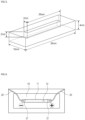
- FIG. 3 is a view illustrating specifications of a body and a channel illustrated in FIG. 1 .
- platinum wires 20 are provided as a pair, so that ends 21 thereof are in contact with both ends of the channel 11, and the other ends thereof are connected to both electrodes of the battery 30.
- a portion connected to the battery 30 may be a general cable such as a clamp cable, and only a material of each of the ends 21 in contact with both ends of the channel 11 may be platinum.
- only the ends 21 of the platinum wires 20, which are immersed in the buffer solution 12 filling the channel 11 may be made of platinum, and the other portions thereof may be made of any material as long as the material may allow the battery 30 to apply the voltage to the channel 11.
- ends 21 of the pair of platinum wires 20 may have a preset length and a preset thickness.
- the ends 21 of the platinum wires 20 immersed in the buffer solution 12 may be manufactured with a standard in which the length is 5 mm and the thickness (diameter) is 0.3 mm, but the present invention is not limited thereto,
- the battery 30 is connected to the other ends of the pair of platinum wires 20 to provide an electrical force.
- FIG. 4 is a schematic view illustrating a real example of the body illustrated in FIG. 1 .
- the body 10 may be manufactured using the 3D printer (SMART3D Printer) and may be manufactured in a portable size.
- the channel 11 is filled with the buffer solution 12
- the ends 21 of the pair of platinum wires 20 are in contact with both ends of the channel 11, and thus the voltage is applied to the buffer solution 12.
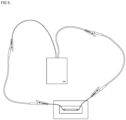
- FIG. 5 is a view illustrating a real example of the portable device for isolating nucleic acid from blood according to the embodiment of the present invention.
- the portable device 100 for isolating nucleic acid from blood is a portable device for isolating only the nucleic acid from a small amount of a non-preprocessed blood sample.
- the blood dropped into the channel 11 in contact with the platinum wire 20 connected to a negative electrode of the battery 30 is moved toward the channel 11 in contact with the platinum wire 20 connected to a positive electrode of the battery 30 due to the electrical force provided by the battery 30 so that the nucleic acid is isolated from the blood.
- a substance moved toward the channel 11 in contact with the platinum wire 20 connected to the positive electrode within a set time when a certain voltage is applied to the channel 11 through the battery 30 is determined to be the nucleic acid.
- the collected blood is put into the buffer solution 12 filling the channel 11, components of the blood are broken, and when a current flows in the buffer solution 12, charged materials move from the negative electrode to the positive electrode.
- the nucleic acid which is the lightest among various substances in the blood, first moves toward the positive electrode, the substance that arrives first, that is, arrives at the fastest time, can be determined to be the nucleic acid.
- the nucleic acid since the nucleic acid has an electric charge, when the blood is dropped and the voltage is applied thereto, the nucleic acid moves from the negative electrode to the positive electrode due to electrical properties and thus is separated from the blood.
- the portable device for isolating nucleic acid from blood can be usefully used for diagnosis by quickly isolating the nucleic acid from blood without separate preprocessing, and can secure on-site performance and effectiveness because the portable device is simple to use and is portable.
- a process of isolating the nucleic acid from the whole blood using the electrophoresis device is not difficult, the used buffers may be easily purchased in the market by ordinary people, and thus user satisfaction can be improved.
- the portable device since the portable device may be simply used without separate reagent preprocessing for the blood, PCR inhibitors generated when the whole blood is directly used can be removed and an influence on a diagnostic result using the nucleic acid can be minimized.
- the portable device is small and light and thus easily moves, has a simple structure that does not affect the diagnostic result due to damage to the portable device, and has a low price, high user convenience, and a short process time and thus has a high potential for commercialization.
Landscapes
- Health & Medical Sciences (AREA)
- Chemical & Material Sciences (AREA)
- Life Sciences & Earth Sciences (AREA)
- Engineering & Computer Science (AREA)
- Genetics & Genomics (AREA)
- Organic Chemistry (AREA)
- Zoology (AREA)
- Wood Science & Technology (AREA)
- Bioinformatics & Cheminformatics (AREA)
- Biomedical Technology (AREA)
- Biotechnology (AREA)
- Molecular Biology (AREA)
- General Health & Medical Sciences (AREA)
- General Engineering & Computer Science (AREA)
- Biochemistry (AREA)
- Analytical Chemistry (AREA)
- Physics & Mathematics (AREA)
- Microbiology (AREA)
- Chemical Kinetics & Catalysis (AREA)
- Electrochemistry (AREA)
- Biophysics (AREA)
- Sustainable Development (AREA)
- Plant Pathology (AREA)
- Immunology (AREA)
- Crystallography & Structural Chemistry (AREA)
- Pathology (AREA)
- General Physics & Mathematics (AREA)
- Cell Biology (AREA)
- Clinical Laboratory Science (AREA)
- Power Engineering (AREA)
- Dispersion Chemistry (AREA)
- Environmental & Geological Engineering (AREA)
- Electromagnetism (AREA)
- Hematology (AREA)
- Investigating Or Analysing Biological Materials (AREA)
- Proteomics, Peptides & Aminoacids (AREA)
Abstract
Description
- The present invention relates to a portable device for isolating nucleic acid from blood, and more particularly, a portable device for isolating nucleic acid from blood which is capable of extracting and isolating nucleic acid from blood without separate preprocessing.
- Blood contains various components including cells such as white blood cells and red blood cells, cell-derived small particles such as platelets and exosomes, plasma proteins and lipids, nucleic acid fragments or metabolites, and the like.
- When individual components of the blood are measured, health conditions and diseases may be diagnosed, and thus the blood is used as a useful biological sample for diagnosis. Among them, a genomic deoxyribonucleic acid (DNA) of a blood sample may be used to diagnose human health conditions and the presence or absence of diseases. Therefore, extraction of nucleic acid from the blood in a laboratory is important for performing molecular research application programs.
- For the extraction of the nucleic acid from the blood, it is essential to select a method suitable for the situation. In general, various devices and reagents are widely used to isolate nucleic acid components from the blood, but it is difficult to perform a polymerase chain reaction (PCR) directly using whole blood, and thus a laboratory-level processing procedure of isolating the blood components should be performed in advance. That is, a technology of measuring the individual components by simply isolating the blood has limitations in that time and complex procedures requiring the devices and reagents are required.
- However, for on-site diagnosis, it is essential to select an appropriate extraction method satisfying rapidity, cost-effectiveness and technical requirements. Even in previous research, PCR analysis directly using the blood without experimental procedures such as DNA extraction and purification has been attempted. However, these experiment methods are still difficult due to PCR inhibitors induced by blood compounds.
- Thus, it is necessary to develop a device that is portable for the on-site diagnosis and easily and conveniently isolate the nucleic acid from the whole blood.
-
Korean Patent Application Publication No. 10-2014-0026400 (published on March 5, 2014 - The present invention is directed to providing a portable device for isolating nucleic acid from blood capable of extracting and isolating nucleic acid from blood without separate preprocessing.
- One aspect of the present invention provides a portable device for isolating nucleic acid from blood, the portable device including a body, a channel that is formed on an upper surface of the body in a groove shape with a set standard and provides a path for moving the blood, a pair of platinum wires of which ends are in contact with both ends of the channel, and a battery of which both electrodes are connected to the other ends of the pair of platinum wires and which provides an electrical force, wherein the blood dropped into the channel in contact with the platinum wire connected to a negative electrode of the battery is moved toward the channel in contact with the platinum wire connected to a positive electrode of the battery due to the electrical force provided by the battery so that the nucleic acid is isolated from the blood.
- The channel may allow the battery to apply a voltage to the groove through the pair of platinum wires in contact with a buffer solution filling the groove so as to move non-preprocessed nucleic acid in the blood, and the nucleic acid may move from the negative electrode to the positive electrode due to electrical properties and thus may be separated from the blood when the voltage is applied to the nucleic acid.
- The channel may be formed of a material and shape that allow the buffer solution to be introduced into the groove, and the buffer solution may be a physiological saline solution.
- A substance moved toward the channel in contact with the platinum wire connected to the positive electrode within a set time when a certain voltage is applied to the channel through the battery may be determined to be the nucleic acid.
- The ends of the pair of platinum wires may be in contact with the channel, which are immersed in the buffer solution and have a preset length and a preset thickness.
- The channel may be implemented in any of various shapes and implemented such that a width, a length, and a depth of the channel are set to be smaller than those of the body.
- The body may be an electrophoresis device implemented using a three-dimensional (3D) printer and made of a non-flammable material through which a current does not flow.
- As described above, according to the present invention, a portable device quickly isolates nucleic acid components from blood without separate preprocessing and thus can be usefully used in diagnosis, is simply used and portable, and thus can secure on-site performance and effectiveness.
- Further, according to the present invention, a process of isolating the nucleic acid from the whole blood using the electrophoresis device is not difficult, used buffers can be easily purchased in the market by ordinary people, and thus user satisfaction can be improved.
- Further, according to the present invention, since the portable device can be simply used without separate reagent preprocessing for the blood, PCR inhibitors generated when the whole blood is directly used can be removed and an influence on a diagnostic result using the nucleic acid can be minimized.
- Further, according to the embodiment, the portable device is small and light and thus easily moves, has a simple structure that does not affect the diagnostic result due to damage to the portable device, and has a low price, high user convenience, and a short process time and thus has a high potential for commercialization.
-
-
FIG. 1 is a perspective view illustrating a portable device for isolating nucleic acid from blood according to an embodiment of the present invention. -
FIG. 2 is a schematic view ofFIG. 1 . -
FIG. 3 is a view illustrating specifications of a body and a channel illustrated inFIG. 1 . -
FIG. 4 is a schematic view illustrating a real example of the body illustrated inFIG. 1 . -
FIG. 5 is a view illustrating a real example of the portable device for isolating nucleic acid from blood according to the embodiment of the present invention. - Hereinafter, embodiments of the present invention will be described in detail with reference to the accompanying drawings. In this process, the thickness of lines or the size of components illustrated in the drawings may be exaggerated for clarity and convenience of description.
- Further, terms described below are terms defined in consideration of functions in the present disclosure and may change according to the intention or custom of a user or an operator. Therefore, definitions of these terms should be made based on the contents throughout the present specification.
- Hereinafter, embodiments of the present disclosure will be described in more detail with reference to the drawings.
- A portable device for isolating nucleic acid from blood according to an embodiment of the present invention will be described with reference to
FIGS. 1 to 5 . -
FIG. 1 is a perspective view illustrating a portable device for isolating nucleic acid from blood according to an embodiment of the present invention, andFIG. 2 is a schematic view ofFIG. 1 . - As illustrated in
FIGS. 1 and2 , aportable device 100 for isolating nucleic acid from blood according to the embodiment of the present invention includes abody 10, achannel 11, aplatinum wire 20, and abattery 30. - First, the
body 10 is adapted to isolate the nucleic acid from the blood and may be implemented as a diagnostic kit having a portable size. - In this case, the
body 10 may be an electrophoresis device implemented using a three-dimensional (3D) printer and made of a non-flammable material through which a current does not flow. - Further, the
channel 11 is formed on an upper surface of thebody 10 in a groove shape with a set standard and provides a path for moving the blood. - In this case, the
channel 11 allows thebattery 30 to apply a voltage to the groove through a pair ofplatinum wires 20 in contact with abuffer solution 12 filling the groove so as to move the non-preprocessed nucleic acid in the blood. - Thus, the
channel 11 may be formed of a material and shape capable of introducing thebuffer solution 12 into the groove. - In this case, the
buffer solution 12 may be a physiological saline solution. - Further, the
channel 11 may be implemented in any of various shapes and may be implemented such that the width, the length, and the depth thereof are set to be smaller than those of thebody 10. -
FIG. 3 is a view illustrating specifications of a body and a channel illustrated inFIG. 1 . - As illustrated in
FIG. 3 , when thebody 10 has a width of 30 mm, a length of 10 mm, and a height (depth) of 4 mm, thechannel 11 may have a width of 20 mm, a length of 2 mm, and a height (depth) of 2 mm, but the present invention is not limited thereto. - Further, the
platinum wires 20 are provided as a pair, so that ends 21 thereof are in contact with both ends of thechannel 11, and the other ends thereof are connected to both electrodes of thebattery 30. - In this case, a portion connected to the
battery 30 may be a general cable such as a clamp cable, and only a material of each of theends 21 in contact with both ends of thechannel 11 may be platinum. - That is, as illustrated in
FIGS. 1 and2 , only theends 21 of theplatinum wires 20, which are immersed in thebuffer solution 12 filling thechannel 11 may be made of platinum, and the other portions thereof may be made of any material as long as the material may allow thebattery 30 to apply the voltage to thechannel 11. - Further, the ends 21 of the pair of
platinum wires 20 may have a preset length and a preset thickness. - In this case, the ends 21 of the
platinum wires 20 immersed in thebuffer solution 12 may be manufactured with a standard in which the length is 5 mm and the thickness (diameter) is 0.3 mm, but the present invention is not limited thereto, - Finally, the
battery 30 is connected to the other ends of the pair ofplatinum wires 20 to provide an electrical force. -
FIG. 4 is a schematic view illustrating a real example of the body illustrated inFIG. 1 . - As illustrated in
FIG. 4 , thebody 10 may be manufactured using the 3D printer (SMART3D Printer) and may be manufactured in a portable size. In this case, thechannel 11 is filled with thebuffer solution 12, the ends 21 of the pair ofplatinum wires 20 are in contact with both ends of thechannel 11, and thus the voltage is applied to thebuffer solution 12. -
FIG. 5 is a view illustrating a real example of the portable device for isolating nucleic acid from blood according to the embodiment of the present invention. - As illustrated in
FIG. 5 , theportable device 100 for isolating nucleic acid from blood according to the embodiment of the present invention is a portable device for isolating only the nucleic acid from a small amount of a non-preprocessed blood sample. The blood dropped into thechannel 11 in contact with theplatinum wire 20 connected to a negative electrode of thebattery 30 is moved toward thechannel 11 in contact with theplatinum wire 20 connected to a positive electrode of thebattery 30 due to the electrical force provided by thebattery 30 so that the nucleic acid is isolated from the blood. - In detail, a substance moved toward the
channel 11 in contact with theplatinum wire 20 connected to the positive electrode within a set time when a certain voltage is applied to thechannel 11 through thebattery 30 is determined to be the nucleic acid. - In detail, when the collected blood is put into the
buffer solution 12 filling thechannel 11, components of the blood are broken, and when a current flows in thebuffer solution 12, charged materials move from the negative electrode to the positive electrode. In this case, since the nucleic acid, which is the lightest among various substances in the blood, first moves toward the positive electrode, the substance that arrives first, that is, arrives at the fastest time, can be determined to be the nucleic acid. - In this case, since the nucleic acid has an electric charge, when the blood is dropped and the voltage is applied thereto, the nucleic acid moves from the negative electrode to the positive electrode due to electrical properties and thus is separated from the blood.
- As described above, the portable device for isolating nucleic acid from blood according to the embodiment of the present invention can be usefully used for diagnosis by quickly isolating the nucleic acid from blood without separate preprocessing, and can secure on-site performance and effectiveness because the portable device is simple to use and is portable.
- Further, according to the embodiment of the present invention, a process of isolating the nucleic acid from the whole blood using the electrophoresis device is not difficult, the used buffers may be easily purchased in the market by ordinary people, and thus user satisfaction can be improved.
- Further, according to the embodiment of the present invention, since the portable device may be simply used without separate reagent preprocessing for the blood, PCR inhibitors generated when the whole blood is directly used can be removed and an influence on a diagnostic result using the nucleic acid can be minimized.
- Further, according to the embodiment, the portable device is small and light and thus easily moves, has a simple structure that does not affect the diagnostic result due to damage to the portable device, and has a low price, high user convenience, and a short process time and thus has a high potential for commercialization.
- Although the present invention has been described with reference to embodiments illustrated in the drawings, the description is merely illustrative, and those skilled in the art to which the technology belongs should understand that various modifications and other equivalent embodiments may be made. Thus, the true technical scope of the present invention should be determined by the technical spirit of the appended claims.
-
100: Portable device 10: Body 11: Channel 12: Buffer solution 20: Platinum wire 30: Battery
Claims (7)
- A portable device for isolating nucleic acid from blood, the portable device comprising:a body;a channel formed on an upper surface of the body in a groove shape with a set standard and configured to provide a path for moving the blood;a pair of platinum wires of which ends are in contact with both ends of the channel; anda battery of which both electrodes are connected to the other ends of the pair of platinum wires and which provides an electrical force,wherein the blood dropped into the channel in contact with the platinum wire connected to a negative electrode of the battery is moved toward the channel in contact with the platinum wire connected to a positive electrode of the battery due to the electrical force provided by the battery so that the nucleic acid is isolated from the blood.
- The portable device of claim 1, wherein the channel allows the battery to apply a voltage to the groove through the pair of platinum wires in contact with a buffer solution filling the groove so as to move non-preprocessed nucleic acid in the blood, and
the nucleic acid moves from the negative electrode to the positive electrode due to electrical properties and thus is separated from the blood when the voltage is applied to the nucleic acid. - The portable device of claim 2, wherein the channel is formed of a material and shape that allow the buffer solution to be introduced into the groove, and
the buffer solution is a physiological saline solution. - The portable device of claim 1, wherein a substance moved toward the channel in contact with the platinum wire connected to the positive electrode within a set time when a certain voltage is applied to the channel through the battery is determined to be the nucleic acid.
- The portable device of claim 2, wherein the ends of the pair of platinum wires are in contact with the channel, which are immersed in the buffer solution, and have a preset length and a preset thickness.
- The portable device of claim 1, wherein the channel is implemented in any of various shapes and is implemented such that a width, a length, and a depth of the channel are set to be smaller than those of the body.
- The portable device of claim 1, wherein the body is an electrophoresis device implemented using a three-dimensional (3D) printer and made of a non-flammable material through which a current does not flow.
Applications Claiming Priority (2)
| Application Number | Priority Date | Filing Date | Title |
|---|---|---|---|
| KR1020220054714A KR20230155183A (en) | 2022-05-03 | 2022-05-03 | A portable device for isolationg nucleic acids in blood |
| PCT/KR2022/017732 WO2023214630A1 (en) | 2022-05-03 | 2022-11-11 | Portable device for isolating nucleic acids from blood |
Publications (2)
| Publication Number | Publication Date |
|---|---|
| EP4296346A1 true EP4296346A1 (en) | 2023-12-27 |
| EP4296346A4 EP4296346A4 (en) | 2024-11-13 |
Family
ID=88646531
Family Applications (1)
| Application Number | Title | Priority Date | Filing Date |
|---|---|---|---|
| EP22891172.3A Pending EP4296346A4 (en) | 2022-05-03 | 2022-11-11 | PORTABLE DEVICE FOR ISOLATION OF NUCLEIC ACIDS FROM BLOOD |
Country Status (4)
| Country | Link |
|---|---|
| US (1) | US20230357749A1 (en) |
| EP (1) | EP4296346A4 (en) |
| KR (1) | KR20230155183A (en) |
| WO (1) | WO2023214630A1 (en) |
Family Cites Families (5)
| Publication number | Priority date | Publication date | Assignee | Title |
|---|---|---|---|---|
| EP2137523A1 (en) * | 2007-04-04 | 2009-12-30 | Network Biosystems, Inc. | Plastic microfluidic separation and detection platforms |
| US8753868B2 (en) * | 2008-08-04 | 2014-06-17 | General Electric Company | Method and system for selective isolation of target biological molecules in a general purpose system |
| CN103476930A (en) | 2011-04-22 | 2013-12-25 | 索尼公司 | Method for electrophoresis of nucleic acid, method for concentrating and purifying nucleic acid, cartridge for nucleic acid electrophoresis, and method for manufacturing cartridge for nucleic acid electrophoresis |
| KR101915675B1 (en) * | 2012-02-07 | 2018-11-06 | 주식회사 미코바이오메드 | ultra-fast device for the extraction of nucleic acids, and the method for the extraction of nucleic acids using the same |
| KR20180073353A (en) * | 2016-12-22 | 2018-07-02 | 서울대학교산학협력단 | Method and device for extracting nucleic acids using nano-filters |
-
2022
- 2022-05-03 KR KR1020220054714A patent/KR20230155183A/en not_active Ceased
- 2022-11-11 EP EP22891172.3A patent/EP4296346A4/en active Pending
- 2022-11-11 WO PCT/KR2022/017732 patent/WO2023214630A1/en not_active Ceased
-
2023
- 2023-07-14 US US18/222,397 patent/US20230357749A1/en active Pending
Also Published As
| Publication number | Publication date |
|---|---|
| US20230357749A1 (en) | 2023-11-09 |
| WO2023214630A1 (en) | 2023-11-09 |
| KR20230155183A (en) | 2023-11-10 |
| EP4296346A4 (en) | 2024-11-13 |
Similar Documents
| Publication | Publication Date | Title |
|---|---|---|
| US5217591A (en) | Gel electrophoresis sample applicator/retriever | |
| JP6786116B2 (en) | Electrical measuring device for target chemical substances and its method | |
| EP2184602A1 (en) | Micro-channel chip for electrophoresis and method for electrophoresis | |
| JP2010207237A5 (en) | ||
| JP2017523412A (en) | Microfluidic cartridge with pipette operation guide | |
| US20110114487A1 (en) | Apparatus, method, and gel system for analytical and preparative electrophoresis | |
| SG147452A1 (en) | Apparatus and methods for detecting nucleic acid in biological samples | |
| US10067088B2 (en) | Gradient elution isotachophoretic apparatus for separating, purifying, concentrating, quantifying, and/or extracting charged analytes and methods thereof | |
| EP2163305A1 (en) | Device and process for rapid isolation of a compound in a sample | |
| CN1320212A (en) | Method for detecting single nucleotide polymorphism (SNP) and point mutation in gene, detection apparatus and detection chip | |
| US7951279B2 (en) | Electrophoresis apparatus and device therefor | |
| JP5254184B2 (en) | Sample separation adsorption device | |
| US20100300879A1 (en) | Dual electrode injection of analyte into a capillary electrophoretic device | |
| US20230357749A1 (en) | Portable device for isolating nucleic acid from blood | |
| JPH11299496A (en) | Oocyte container and measuring device using the same | |
| EP3264075B1 (en) | Separation transfer device with transfer membrane holder | |
| US7410560B2 (en) | Device for storage and delivery of standards for gel electrophoresis | |
| CN115895867A (en) | Intelligent nucleic acid detection device and method for distinguishing dead and alive pathogenic bacteria from free nucleic acid | |
| CA3100085C (en) | Device for capturing macromolecules and methods for manufacturing and using same | |
| CZ38810U1 (en) | An assembly for the preparation of selected DNA fractions | |
| US20210109062A1 (en) | Device for capturing macromolecules and methods for manufacturing and using same | |
| Rabikoosun | Nucleic acid capture and release device | |
| JP2016145769A (en) | Electrical extraction instrument, electrical extraction device, and electrical extraction method | |
| JP2011095136A (en) | Electrode for electrophoresis and method of analyzing sample |
Legal Events
| Date | Code | Title | Description |
|---|---|---|---|
| STAA | Information on the status of an ep patent application or granted ep patent |
Free format text: STATUS: UNKNOWN |
|
| STAA | Information on the status of an ep patent application or granted ep patent |
Free format text: STATUS: THE INTERNATIONAL PUBLICATION HAS BEEN MADE |
|
| PUAI | Public reference made under article 153(3) epc to a published international application that has entered the european phase |
Free format text: ORIGINAL CODE: 0009012 |
|
| STAA | Information on the status of an ep patent application or granted ep patent |
Free format text: STATUS: REQUEST FOR EXAMINATION WAS MADE |
|
| 17P | Request for examination filed |
Effective date: 20230516 |
|
| AK | Designated contracting states |
Kind code of ref document: A1 Designated state(s): AL AT BE BG CH CY CZ DE DK EE ES FI FR GB GR HR HU IE IS IT LI LT LU LV MC ME MK MT NL NO PL PT RO RS SE SI SK SM TR |
|
| A4 | Supplementary search report drawn up and despatched |
Effective date: 20241015 |
|
| RIC1 | Information provided on ipc code assigned before grant |
Ipc: G01N 30/88 20060101ALI20241009BHEP Ipc: C12N 15/10 20060101ALI20241009BHEP Ipc: G01N 27/447 20060101ALI20241009BHEP Ipc: B01L 3/00 20060101ALI20241009BHEP Ipc: C12M 1/00 20060101AFI20241009BHEP |
|
| DAV | Request for validation of the european patent (deleted) | ||
| DAX | Request for extension of the european patent (deleted) |