EP4296269A1 - Amorphous form and composition containing said amorphous form - Google Patents
Amorphous form and composition containing said amorphous form Download PDFInfo
- Publication number
- EP4296269A1 EP4296269A1 EP22756195.8A EP22756195A EP4296269A1 EP 4296269 A1 EP4296269 A1 EP 4296269A1 EP 22756195 A EP22756195 A EP 22756195A EP 4296269 A1 EP4296269 A1 EP 4296269A1
- Authority
- EP
- European Patent Office
- Prior art keywords
- solid dispersion
- amorphous solid
- acid
- pharmaceutical composition
- compound
- Prior art date
- Legal status (The legal status is an assumption and is not a legal conclusion. Google has not performed a legal analysis and makes no representation as to the accuracy of the status listed.)
- Pending
Links
- 239000000203 mixture Substances 0.000 title claims description 35
- 239000007962 solid dispersion Substances 0.000 claims abstract description 99
- 150000007524 organic acids Chemical class 0.000 claims abstract description 49
- 239000008194 pharmaceutical composition Substances 0.000 claims abstract description 42
- JVTAAEKCZFNVCJ-UHFFFAOYSA-N lactic acid Chemical compound CC(O)C(O)=O JVTAAEKCZFNVCJ-UHFFFAOYSA-N 0.000 claims description 56
- 229920000642 polymer Polymers 0.000 claims description 39
- 229920003088 hydroxypropyl methyl cellulose Polymers 0.000 claims description 32
- 235000010979 hydroxypropyl methyl cellulose Nutrition 0.000 claims description 30
- 239000004310 lactic acid Substances 0.000 claims description 28
- 235000014655 lactic acid Nutrition 0.000 claims description 28
- ZKIAIYBUSXZPLP-UHFFFAOYSA-N brexpiprazole Chemical compound C1=C2NC(=O)C=CC2=CC=C1OCCCCN(CC1)CCN1C1=CC=CC2=C1C=CS2 ZKIAIYBUSXZPLP-UHFFFAOYSA-N 0.000 claims description 17
- 229920001477 hydrophilic polymer Polymers 0.000 claims description 16
- 239000001866 hydroxypropyl methyl cellulose Substances 0.000 claims description 16
- 238000001694 spray drying Methods 0.000 claims description 13
- 229920003169 water-soluble polymer Polymers 0.000 claims description 12
- 229920002678 cellulose Polymers 0.000 claims description 10
- 239000001913 cellulose Substances 0.000 claims description 10
- 238000000034 method Methods 0.000 claims description 10
- 239000008280 blood Substances 0.000 claims description 8
- 210000004369 blood Anatomy 0.000 claims description 8
- 239000007787 solid Substances 0.000 claims description 7
- 208000012902 Nervous system disease Diseases 0.000 claims description 6
- 208000025966 Neurological disease Diseases 0.000 claims description 6
- 150000001735 carboxylic acids Chemical class 0.000 claims description 4
- -1 derivatives thereof Polymers 0.000 claims description 4
- 238000004519 manufacturing process Methods 0.000 claims description 4
- 229920000233 poly(alkylene oxides) Polymers 0.000 claims description 4
- 229920001515 polyalkylene glycol Polymers 0.000 claims description 4
- 229920002451 polyvinyl alcohol Polymers 0.000 claims description 4
- 235000019422 polyvinyl alcohol Nutrition 0.000 claims description 4
- 229920000036 polyvinylpyrrolidone Polymers 0.000 claims description 4
- 239000001267 polyvinylpyrrolidone Substances 0.000 claims description 4
- 235000013855 polyvinylpyrrolidone Nutrition 0.000 claims description 4
- 239000000843 powder Substances 0.000 claims description 4
- 230000002265 prevention Effects 0.000 claims description 4
- UFVKGYZPFZQRLF-UHFFFAOYSA-N hydroxypropyl methyl cellulose Chemical compound OC1C(O)C(OC)OC(CO)C1OC1C(O)C(O)C(OC2C(C(O)C(OC3C(C(O)C(O)C(CO)O3)O)C(CO)O2)O)C(CO)O1 UFVKGYZPFZQRLF-UHFFFAOYSA-N 0.000 claims description 3
- 150000001875 compounds Chemical class 0.000 abstract description 93
- 238000002360 preparation method Methods 0.000 abstract description 8
- YMWUJEATGCHHMB-UHFFFAOYSA-N Dichloromethane Chemical compound ClCCl YMWUJEATGCHHMB-UHFFFAOYSA-N 0.000 description 39
- LFQSCWFLJHTTHZ-UHFFFAOYSA-N Ethanol Chemical compound CCO LFQSCWFLJHTTHZ-UHFFFAOYSA-N 0.000 description 39
- 239000003826 tablet Substances 0.000 description 37
- KRKNYBCHXYNGOX-UHFFFAOYSA-N citric acid Chemical compound OC(=O)CC(O)(C(O)=O)CC(O)=O KRKNYBCHXYNGOX-UHFFFAOYSA-N 0.000 description 30
- 239000000243 solution Substances 0.000 description 25
- VZCYOOQTPOCHFL-OWOJBTEDSA-N Fumaric acid Chemical compound OC(=O)\C=C\C(O)=O VZCYOOQTPOCHFL-OWOJBTEDSA-N 0.000 description 22
- QTBSBXVTEAMEQO-UHFFFAOYSA-N Acetic acid Chemical compound CC(O)=O QTBSBXVTEAMEQO-UHFFFAOYSA-N 0.000 description 18
- 238000004090 dissolution Methods 0.000 description 18
- 239000000017 hydrogel Substances 0.000 description 17
- 201000000980 schizophrenia Diseases 0.000 description 17
- OFOBLEOULBTSOW-UHFFFAOYSA-N Malonic acid Chemical compound OC(=O)CC(O)=O OFOBLEOULBTSOW-UHFFFAOYSA-N 0.000 description 14
- 239000003814 drug Substances 0.000 description 14
- VZCYOOQTPOCHFL-UHFFFAOYSA-N trans-butenedioic acid Natural products OC(=O)C=CC(O)=O VZCYOOQTPOCHFL-UHFFFAOYSA-N 0.000 description 14
- 229940079593 drug Drugs 0.000 description 13
- FEWJPZIEWOKRBE-JCYAYHJZSA-N Dextrotartaric acid Chemical compound OC(=O)[C@H](O)[C@@H](O)C(O)=O FEWJPZIEWOKRBE-JCYAYHJZSA-N 0.000 description 12
- FEWJPZIEWOKRBE-UHFFFAOYSA-N Tartaric acid Natural products [H+].[H+].[O-]C(=O)C(O)C(O)C([O-])=O FEWJPZIEWOKRBE-UHFFFAOYSA-N 0.000 description 12
- WNLRTRBMVRJNCN-UHFFFAOYSA-N adipic acid Chemical compound OC(=O)CCCCC(O)=O WNLRTRBMVRJNCN-UHFFFAOYSA-N 0.000 description 12
- 150000001732 carboxylic acid derivatives Chemical class 0.000 description 12
- 239000011975 tartaric acid Substances 0.000 description 12
- 235000002906 tartaric acid Nutrition 0.000 description 12
- 239000001530 fumaric acid Substances 0.000 description 11
- 229960003943 hypromellose Drugs 0.000 description 11
- 235000005985 organic acids Nutrition 0.000 description 11
- 208000028698 Cognitive impairment Diseases 0.000 description 10
- 235000015165 citric acid Nutrition 0.000 description 10
- 208000010877 cognitive disease Diseases 0.000 description 10
- 239000008203 oral pharmaceutical composition Substances 0.000 description 10
- MUBZPKHOEPUJKR-UHFFFAOYSA-N Oxalic acid Chemical compound OC(=O)C(O)=O MUBZPKHOEPUJKR-UHFFFAOYSA-N 0.000 description 9
- 238000003860 storage Methods 0.000 description 9
- KDYFGRWQOYBRFD-UHFFFAOYSA-N Succinic acid Natural products OC(=O)CCC(O)=O KDYFGRWQOYBRFD-UHFFFAOYSA-N 0.000 description 8
- 208000031555 Treatment-Resistant Schizophrenia Diseases 0.000 description 8
- XBDQKXXYIPTUBI-UHFFFAOYSA-N dimethylselenoniopropionate Natural products CCC(O)=O XBDQKXXYIPTUBI-UHFFFAOYSA-N 0.000 description 8
- 238000004128 high performance liquid chromatography Methods 0.000 description 8
- XNGIFLGASWRNHJ-UHFFFAOYSA-N phthalic acid Chemical compound OC(=O)C1=CC=CC=C1C(O)=O XNGIFLGASWRNHJ-UHFFFAOYSA-N 0.000 description 8
- 238000013268 sustained release Methods 0.000 description 8
- 239000012730 sustained-release form Substances 0.000 description 8
- 208000007415 Anhedonia Diseases 0.000 description 7
- 239000007857 degradation product Substances 0.000 description 7
- 238000000113 differential scanning calorimetry Methods 0.000 description 7
- 230000000694 effects Effects 0.000 description 7
- 239000002702 enteric coating Substances 0.000 description 7
- 238000009505 enteric coating Methods 0.000 description 7
- 238000009472 formulation Methods 0.000 description 7
- 239000013563 matrix tablet Substances 0.000 description 7
- 238000005259 measurement Methods 0.000 description 7
- OKKJLVBELUTLKV-UHFFFAOYSA-N Methanol Chemical compound OC OKKJLVBELUTLKV-UHFFFAOYSA-N 0.000 description 6
- 238000005481 NMR spectroscopy Methods 0.000 description 6
- 235000011054 acetic acid Nutrition 0.000 description 6
- 239000001361 adipic acid Substances 0.000 description 6
- 235000011037 adipic acid Nutrition 0.000 description 6
- 238000007922 dissolution test Methods 0.000 description 6
- 208000024714 major depressive disease Diseases 0.000 description 6
- XLYOFNOQVPJJNP-UHFFFAOYSA-N water Substances O XLYOFNOQVPJJNP-UHFFFAOYSA-N 0.000 description 6
- 238000002441 X-ray diffraction Methods 0.000 description 5
- ZUAAPNNKRHMPKG-UHFFFAOYSA-N acetic acid;butanedioic acid;methanol;propane-1,2-diol Chemical group OC.CC(O)=O.CC(O)CO.OC(=O)CCC(O)=O ZUAAPNNKRHMPKG-UHFFFAOYSA-N 0.000 description 5
- 229960001210 brexpiprazole Drugs 0.000 description 5
- KDYFGRWQOYBRFD-NUQCWPJISA-N butanedioic acid Chemical compound O[14C](=O)CC[14C](O)=O KDYFGRWQOYBRFD-NUQCWPJISA-N 0.000 description 5
- BJEPYKJPYRNKOW-REOHCLBHSA-N (S)-malic acid Chemical compound OC(=O)[C@@H](O)CC(O)=O BJEPYKJPYRNKOW-REOHCLBHSA-N 0.000 description 4
- RTBFRGCFXZNCOE-UHFFFAOYSA-N 1-methylsulfonylpiperidin-4-one Chemical compound CS(=O)(=O)N1CCC(=O)CC1 RTBFRGCFXZNCOE-UHFFFAOYSA-N 0.000 description 4
- WEVYAHXRMPXWCK-UHFFFAOYSA-N Acetonitrile Chemical compound CC#N WEVYAHXRMPXWCK-UHFFFAOYSA-N 0.000 description 4
- 208000028017 Psychotic disease Diseases 0.000 description 4
- 208000027520 Somatoform disease Diseases 0.000 description 4
- BJEPYKJPYRNKOW-UHFFFAOYSA-N alpha-hydroxysuccinic acid Natural products OC(=O)C(O)CC(O)=O BJEPYKJPYRNKOW-UHFFFAOYSA-N 0.000 description 4
- 238000004458 analytical method Methods 0.000 description 4
- JFCQEDHGNNZCLN-UHFFFAOYSA-N anhydrous glutaric acid Natural products OC(=O)CCCC(O)=O JFCQEDHGNNZCLN-UHFFFAOYSA-N 0.000 description 4
- 239000007864 aqueous solution Substances 0.000 description 4
- 229940126534 drug product Drugs 0.000 description 4
- 150000002148 esters Chemical class 0.000 description 4
- 239000000314 lubricant Substances 0.000 description 4
- HQKMJHAJHXVSDF-UHFFFAOYSA-L magnesium stearate Chemical compound [Mg+2].CCCCCCCCCCCCCCCCCC([O-])=O.CCCCCCCCCCCCCCCCCC([O-])=O HQKMJHAJHXVSDF-UHFFFAOYSA-L 0.000 description 4
- 239000001630 malic acid Substances 0.000 description 4
- 235000011090 malic acid Nutrition 0.000 description 4
- 239000011159 matrix material Substances 0.000 description 4
- 230000004770 neurodegeneration Effects 0.000 description 4
- 208000015122 neurodegenerative disease Diseases 0.000 description 4
- 235000019260 propionic acid Nutrition 0.000 description 4
- IUVKMZGDUIUOCP-BTNSXGMBSA-N quinbolone Chemical compound O([C@H]1CC[C@H]2[C@H]3[C@@H]([C@]4(C=CC(=O)C=C4CC3)C)CC[C@@]21C)C1=CCCC1 IUVKMZGDUIUOCP-BTNSXGMBSA-N 0.000 description 4
- 208000029252 treatment-refractory schizophrenia Diseases 0.000 description 4
- KWQJSRXJWYLFRE-UHFFFAOYSA-N 8-(1-benzothiophen-4-yl)-8-aza-5-azoniaspiro[4.5]decane Chemical compound C1CC[N+]2(C1)CCN(CC2)C1=C2C=CSC2=CC=C1 KWQJSRXJWYLFRE-UHFFFAOYSA-N 0.000 description 3
- 208000024827 Alzheimer disease Diseases 0.000 description 3
- 208000020706 Autistic disease Diseases 0.000 description 3
- UHOVQNZJYSORNB-UHFFFAOYSA-N Benzene Chemical group C1=CC=CC=C1 UHOVQNZJYSORNB-UHFFFAOYSA-N 0.000 description 3
- IAZDPXIOMUYVGZ-UHFFFAOYSA-N Dimethylsulphoxide Chemical compound CS(C)=O IAZDPXIOMUYVGZ-UHFFFAOYSA-N 0.000 description 3
- 229920003174 cellulose-based polymer Polymers 0.000 description 3
- 238000011156 evaluation Methods 0.000 description 3
- 230000002496 gastric effect Effects 0.000 description 3
- 239000012535 impurity Substances 0.000 description 3
- VZCYOOQTPOCHFL-UPHRSURJSA-N maleic acid Chemical compound OC(=O)\C=C/C(O)=O VZCYOOQTPOCHFL-UPHRSURJSA-N 0.000 description 3
- 239000011976 maleic acid Substances 0.000 description 3
- 150000002762 monocarboxylic acid derivatives Chemical class 0.000 description 3
- 239000003960 organic solvent Substances 0.000 description 3
- 235000006408 oxalic acid Nutrition 0.000 description 3
- 239000000825 pharmaceutical preparation Substances 0.000 description 3
- XNGIFLGASWRNHJ-UHFFFAOYSA-L phthalate(2-) Chemical compound [O-]C(=O)C1=CC=CC=C1C([O-])=O XNGIFLGASWRNHJ-UHFFFAOYSA-L 0.000 description 3
- 239000000047 product Substances 0.000 description 3
- 208000011117 substance-related disease Diseases 0.000 description 3
- 238000012360 testing method Methods 0.000 description 3
- 238000002411 thermogravimetry Methods 0.000 description 3
- 208000019901 Anxiety disease Diseases 0.000 description 2
- 208000006096 Attention Deficit Disorder with Hyperactivity Diseases 0.000 description 2
- 208000036864 Attention deficit/hyperactivity disease Diseases 0.000 description 2
- 206010003805 Autism Diseases 0.000 description 2
- 208000020925 Bipolar disease Diseases 0.000 description 2
- 208000027691 Conduct disease Diseases 0.000 description 2
- 206010012218 Delirium Diseases 0.000 description 2
- 206010012289 Dementia Diseases 0.000 description 2
- 208000020401 Depressive disease Diseases 0.000 description 2
- IAZDPXIOMUYVGZ-WFGJKAKNSA-N Dimethyl sulfoxide Chemical compound [2H]C([2H])([2H])S(=O)C([2H])([2H])[2H] IAZDPXIOMUYVGZ-WFGJKAKNSA-N 0.000 description 2
- 201000010374 Down Syndrome Diseases 0.000 description 2
- 208000030814 Eating disease Diseases 0.000 description 2
- 208000026097 Factitious disease Diseases 0.000 description 2
- 208000019454 Feeding and Eating disease Diseases 0.000 description 2
- 241000282412 Homo Species 0.000 description 2
- 229920002153 Hydroxypropyl cellulose Polymers 0.000 description 2
- 208000036626 Mental retardation Diseases 0.000 description 2
- 208000019695 Migraine disease Diseases 0.000 description 2
- 208000019022 Mood disease Diseases 0.000 description 2
- 208000008589 Obesity Diseases 0.000 description 2
- 208000002193 Pain Diseases 0.000 description 2
- 208000018737 Parkinson disease Diseases 0.000 description 2
- 229920003171 Poly (ethylene oxide) Polymers 0.000 description 2
- 239000002202 Polyethylene glycol Substances 0.000 description 2
- 239000004372 Polyvinyl alcohol Substances 0.000 description 2
- VYPSYNLAJGMNEJ-UHFFFAOYSA-N Silicium dioxide Chemical compound O=[Si]=O VYPSYNLAJGMNEJ-UHFFFAOYSA-N 0.000 description 2
- 208000000323 Tourette Syndrome Diseases 0.000 description 2
- 208000016620 Tourette disease Diseases 0.000 description 2
- 208000028552 Treatment-Resistant Depressive disease Diseases 0.000 description 2
- DOOTYTYQINUNNV-UHFFFAOYSA-N Triethyl citrate Chemical compound CCOC(=O)CC(O)(C(=O)OCC)CC(=O)OCC DOOTYTYQINUNNV-UHFFFAOYSA-N 0.000 description 2
- 206010047700 Vomiting Diseases 0.000 description 2
- 238000002835 absorbance Methods 0.000 description 2
- 238000010521 absorption reaction Methods 0.000 description 2
- 239000004480 active ingredient Substances 0.000 description 2
- 239000000654 additive Substances 0.000 description 2
- 208000012826 adjustment disease Diseases 0.000 description 2
- 208000015802 attention deficit-hyperactivity disease Diseases 0.000 description 2
- 208000030963 borderline personality disease Diseases 0.000 description 2
- 125000004432 carbon atom Chemical group C* 0.000 description 2
- 239000011248 coating agent Substances 0.000 description 2
- 238000000576 coating method Methods 0.000 description 2
- 208000012839 conversion disease Diseases 0.000 description 2
- 239000013078 crystal Substances 0.000 description 2
- 208000026725 cyclothymic disease Diseases 0.000 description 2
- WGLUMOCWFMKWIL-UHFFFAOYSA-N dichloromethane;methanol Chemical compound OC.ClCCl WGLUMOCWFMKWIL-UHFFFAOYSA-N 0.000 description 2
- 208000037265 diseases, disorders, signs and symptoms Diseases 0.000 description 2
- 235000014632 disordered eating Nutrition 0.000 description 2
- 208000018459 dissociative disease Diseases 0.000 description 2
- VYFYYTLLBUKUHU-UHFFFAOYSA-N dopamine Chemical compound NCCC1=CC=C(O)C(O)=C1 VYFYYTLLBUKUHU-UHFFFAOYSA-N 0.000 description 2
- 239000002552 dosage form Substances 0.000 description 2
- 238000001035 drying Methods 0.000 description 2
- 208000024732 dysthymic disease Diseases 0.000 description 2
- 201000003104 endogenous depression Diseases 0.000 description 2
- 239000002662 enteric coated tablet Substances 0.000 description 2
- 230000029142 excretion Effects 0.000 description 2
- 239000001863 hydroxypropyl cellulose Substances 0.000 description 2
- 235000010977 hydroxypropyl cellulose Nutrition 0.000 description 2
- 230000005764 inhibitory process Effects 0.000 description 2
- 230000007774 longterm Effects 0.000 description 2
- 235000019359 magnesium stearate Nutrition 0.000 description 2
- 201000003995 melancholia Diseases 0.000 description 2
- 206010027599 migraine Diseases 0.000 description 2
- 238000002156 mixing Methods 0.000 description 2
- 201000003152 motion sickness Diseases 0.000 description 2
- 235000020824 obesity Nutrition 0.000 description 2
- 208000019906 panic disease Diseases 0.000 description 2
- 229920001223 polyethylene glycol Polymers 0.000 description 2
- 150000003839 salts Chemical class 0.000 description 2
- 238000005070 sampling Methods 0.000 description 2
- 208000022610 schizoaffective disease Diseases 0.000 description 2
- QZAYGJVTTNCVMB-UHFFFAOYSA-N serotonin Chemical compound C1=C(O)C=C2C(CCN)=CNC2=C1 QZAYGJVTTNCVMB-UHFFFAOYSA-N 0.000 description 2
- 208000012201 sexual and gender identity disease Diseases 0.000 description 2
- 208000015891 sexual disease Diseases 0.000 description 2
- 235000012239 silicon dioxide Nutrition 0.000 description 2
- 208000019116 sleep disease Diseases 0.000 description 2
- 208000020685 sleep-wake disease Diseases 0.000 description 2
- 229940079832 sodium starch glycolate Drugs 0.000 description 2
- 229920003109 sodium starch glycolate Polymers 0.000 description 2
- 239000008109 sodium starch glycolate Substances 0.000 description 2
- 239000007858 starting material Substances 0.000 description 2
- 239000000126 substance Substances 0.000 description 2
- 208000024891 symptom Diseases 0.000 description 2
- 239000000454 talc Substances 0.000 description 2
- 229910052623 talc Inorganic materials 0.000 description 2
- 208000016686 tic disease Diseases 0.000 description 2
- 150000003627 tricarboxylic acid derivatives Chemical class 0.000 description 2
- 239000001069 triethyl citrate Substances 0.000 description 2
- VMYFZRTXGLUXMZ-UHFFFAOYSA-N triethyl citrate Natural products CCOC(=O)C(O)(C(=O)OCC)C(=O)OCC VMYFZRTXGLUXMZ-UHFFFAOYSA-N 0.000 description 2
- 235000013769 triethyl citrate Nutrition 0.000 description 2
- 238000001291 vacuum drying Methods 0.000 description 2
- 230000008673 vomiting Effects 0.000 description 2
- 208000008811 Agoraphobia Diseases 0.000 description 1
- 206010001605 Alcohol poisoning Diseases 0.000 description 1
- 208000007848 Alcoholism Diseases 0.000 description 1
- 208000029197 Amphetamine-Related disease Diseases 0.000 description 1
- 206010002650 Anorexia nervosa and bulimia Diseases 0.000 description 1
- 208000010228 Erectile Dysfunction Diseases 0.000 description 1
- 229920003138 Eudragit® L 30 D-55 Polymers 0.000 description 1
- 229920003134 Eudragit® polymer Polymers 0.000 description 1
- 208000011688 Generalised anxiety disease Diseases 0.000 description 1
- 201000001916 Hypochondriasis Diseases 0.000 description 1
- 208000004356 Hysteria Diseases 0.000 description 1
- 208000030663 Libido disease Diseases 0.000 description 1
- VVQNEPGJFQJSBK-UHFFFAOYSA-N Methyl methacrylate Chemical compound COC(=O)C(C)=C VVQNEPGJFQJSBK-UHFFFAOYSA-N 0.000 description 1
- 208000021384 Obsessive-Compulsive disease Diseases 0.000 description 1
- 206010033664 Panic attack Diseases 0.000 description 1
- 229920003080 Povidone K 25 Polymers 0.000 description 1
- 208000006262 Psychological Sexual Dysfunctions Diseases 0.000 description 1
- 201000001880 Sexual dysfunction Diseases 0.000 description 1
- 206010041250 Social phobia Diseases 0.000 description 1
- PMZURENOXWZQFD-UHFFFAOYSA-L Sodium Sulfate Chemical compound [Na+].[Na+].[O-]S([O-])(=O)=O PMZURENOXWZQFD-UHFFFAOYSA-L 0.000 description 1
- 208000033039 Somatisation disease Diseases 0.000 description 1
- 208000031674 Traumatic Acute Stress disease Diseases 0.000 description 1
- 238000011481 absorbance measurement Methods 0.000 description 1
- 230000009471 action Effects 0.000 description 1
- 239000008186 active pharmaceutical agent Substances 0.000 description 1
- 208000026345 acute stress disease Diseases 0.000 description 1
- 239000000951 adrenergic alpha-1 receptor antagonist Substances 0.000 description 1
- 238000013019 agitation Methods 0.000 description 1
- 206010001584 alcohol abuse Diseases 0.000 description 1
- 208000025746 alcohol use disease Diseases 0.000 description 1
- 125000003118 aryl group Chemical group 0.000 description 1
- 230000015572 biosynthetic process Effects 0.000 description 1
- 208000028683 bipolar I disease Diseases 0.000 description 1
- 208000022257 bipolar II disease Diseases 0.000 description 1
- 210000000692 cap cell Anatomy 0.000 description 1
- 239000002775 capsule Substances 0.000 description 1
- BVKZGUZCCUSVTD-UHFFFAOYSA-N carbonic acid Chemical compound OC(O)=O BVKZGUZCCUSVTD-UHFFFAOYSA-N 0.000 description 1
- 230000015556 catabolic process Effects 0.000 description 1
- 208000015114 central nervous system disease Diseases 0.000 description 1
- 230000008859 change Effects 0.000 description 1
- 238000006243 chemical reaction Methods 0.000 description 1
- 238000009500 colour coating Methods 0.000 description 1
- 229920001577 copolymer Polymers 0.000 description 1
- 230000001955 cumulated effect Effects 0.000 description 1
- 230000003247 decreasing effect Effects 0.000 description 1
- 238000006731 degradation reaction Methods 0.000 description 1
- 238000013461 design Methods 0.000 description 1
- 201000010099 disease Diseases 0.000 description 1
- BNIILDVGGAEEIG-UHFFFAOYSA-L disodium hydrogen phosphate Chemical compound [Na+].[Na+].OP([O-])([O-])=O BNIILDVGGAEEIG-UHFFFAOYSA-L 0.000 description 1
- 208000035475 disorder Diseases 0.000 description 1
- 239000006185 dispersion Substances 0.000 description 1
- 229960003638 dopamine Drugs 0.000 description 1
- 206010013663 drug dependence Diseases 0.000 description 1
- 229940088679 drug related substance Drugs 0.000 description 1
- GDCRSXZBSIRSFR-UHFFFAOYSA-N ethyl prop-2-enoate;2-methylprop-2-enoic acid Chemical compound CC(=C)C(O)=O.CCOC(=O)C=C GDCRSXZBSIRSFR-UHFFFAOYSA-N 0.000 description 1
- 239000012530 fluid Substances 0.000 description 1
- 235000013305 food Nutrition 0.000 description 1
- 235000011087 fumaric acid Nutrition 0.000 description 1
- 210000001035 gastrointestinal tract Anatomy 0.000 description 1
- 239000000499 gel Substances 0.000 description 1
- 208000029364 generalized anxiety disease Diseases 0.000 description 1
- 239000008187 granular material Substances 0.000 description 1
- 230000020169 heat generation Effects 0.000 description 1
- 125000000623 heterocyclic group Chemical group 0.000 description 1
- 125000004435 hydrogen atom Chemical group [H]* 0.000 description 1
- 150000001261 hydroxy acids Chemical class 0.000 description 1
- 125000002887 hydroxy group Chemical group [H]O* 0.000 description 1
- 230000000642 iatrogenic effect Effects 0.000 description 1
- 201000001881 impotence Diseases 0.000 description 1
- 239000004615 ingredient Substances 0.000 description 1
- 238000002347 injection Methods 0.000 description 1
- 239000007924 injection Substances 0.000 description 1
- 239000007788 liquid Substances 0.000 description 1
- 230000003340 mental effect Effects 0.000 description 1
- 125000002496 methyl group Chemical group [H]C([H])([H])* 0.000 description 1
- 229910000402 monopotassium phosphate Inorganic materials 0.000 description 1
- 235000019796 monopotassium phosphate Nutrition 0.000 description 1
- 210000004877 mucosa Anatomy 0.000 description 1
- 239000002547 new drug Substances 0.000 description 1
- 208000027753 pain disease Diseases 0.000 description 1
- 239000004031 partial agonist Substances 0.000 description 1
- 239000000546 pharmaceutical excipient Substances 0.000 description 1
- PJNZPQUBCPKICU-UHFFFAOYSA-N phosphoric acid;potassium Chemical compound [K].OP(O)(O)=O PJNZPQUBCPKICU-UHFFFAOYSA-N 0.000 description 1
- 239000006187 pill Substances 0.000 description 1
- 230000036470 plasma concentration Effects 0.000 description 1
- 239000004014 plasticizer Substances 0.000 description 1
- 208000028173 post-traumatic stress disease Diseases 0.000 description 1
- 239000002244 precipitate Substances 0.000 description 1
- 230000002035 prolonged effect Effects 0.000 description 1
- 230000003236 psychic effect Effects 0.000 description 1
- 229920006395 saturated elastomer Polymers 0.000 description 1
- 229940076279 serotonin Drugs 0.000 description 1
- 239000002400 serotonin 2A antagonist Substances 0.000 description 1
- 230000000697 serotonin reuptake Effects 0.000 description 1
- 230000013275 serotonin uptake Effects 0.000 description 1
- 231100000872 sexual dysfunction Toxicity 0.000 description 1
- RMAQACBXLXPBSY-UHFFFAOYSA-N silicic acid Chemical compound O[Si](O)(O)O RMAQACBXLXPBSY-UHFFFAOYSA-N 0.000 description 1
- 239000000377 silicon dioxide Substances 0.000 description 1
- 229910052938 sodium sulfate Inorganic materials 0.000 description 1
- 235000011152 sodium sulphate Nutrition 0.000 description 1
- 239000002904 solvent Substances 0.000 description 1
- 208000016994 somatization disease Diseases 0.000 description 1
- 238000001228 spectrum Methods 0.000 description 1
- 238000012430 stability testing Methods 0.000 description 1
- 239000001384 succinic acid Substances 0.000 description 1
- 239000012085 test solution Substances 0.000 description 1
- 229940126585 therapeutic drug Drugs 0.000 description 1
- 230000001225 therapeutic effect Effects 0.000 description 1
- 238000002076 thermal analysis method Methods 0.000 description 1
- 230000007704 transition Effects 0.000 description 1
Images



Classifications
-
- C—CHEMISTRY; METALLURGY
- C07—ORGANIC CHEMISTRY
- C07D—HETEROCYCLIC COMPOUNDS
- C07D409/00—Heterocyclic compounds containing two or more hetero rings, at least one ring having sulfur atoms as the only ring hetero atoms
- C07D409/14—Heterocyclic compounds containing two or more hetero rings, at least one ring having sulfur atoms as the only ring hetero atoms containing three or more hetero rings
-
- A—HUMAN NECESSITIES
- A61—MEDICAL OR VETERINARY SCIENCE; HYGIENE
- A61K—PREPARATIONS FOR MEDICAL, DENTAL OR TOILETRY PURPOSES
- A61K9/00—Medicinal preparations characterised by special physical form
- A61K9/14—Particulate form, e.g. powders, Processes for size reducing of pure drugs or the resulting products, Pure drug nanoparticles
- A61K9/141—Intimate drug-carrier mixtures characterised by the carrier, e.g. ordered mixtures, adsorbates, solid solutions, eutectica, co-dried, co-solubilised, co-kneaded, co-milled, co-ground products, co-precipitates, co-evaporates, co-extrudates, co-melts; Drug nanoparticles with adsorbed surface modifiers
- A61K9/145—Intimate drug-carrier mixtures characterised by the carrier, e.g. ordered mixtures, adsorbates, solid solutions, eutectica, co-dried, co-solubilised, co-kneaded, co-milled, co-ground products, co-precipitates, co-evaporates, co-extrudates, co-melts; Drug nanoparticles with adsorbed surface modifiers with organic compounds
-
- A—HUMAN NECESSITIES
- A61—MEDICAL OR VETERINARY SCIENCE; HYGIENE
- A61K—PREPARATIONS FOR MEDICAL, DENTAL OR TOILETRY PURPOSES
- A61K31/00—Medicinal preparations containing organic active ingredients
- A61K31/33—Heterocyclic compounds
- A61K31/395—Heterocyclic compounds having nitrogen as a ring hetero atom, e.g. guanethidine or rifamycins
- A61K31/495—Heterocyclic compounds having nitrogen as a ring hetero atom, e.g. guanethidine or rifamycins having six-membered rings with two or more nitrogen atoms as the only ring heteroatoms, e.g. piperazine or tetrazines
- A61K31/496—Non-condensed piperazines containing further heterocyclic rings, e.g. rifampin, thiothixene or sparfloxacin
-
- A—HUMAN NECESSITIES
- A61—MEDICAL OR VETERINARY SCIENCE; HYGIENE
- A61K—PREPARATIONS FOR MEDICAL, DENTAL OR TOILETRY PURPOSES
- A61K47/00—Medicinal preparations characterised by the non-active ingredients used, e.g. carriers or inert additives; Targeting or modifying agents chemically bound to the active ingredient
- A61K47/06—Organic compounds, e.g. natural or synthetic hydrocarbons, polyolefins, mineral oil, petrolatum or ozokerite
- A61K47/08—Organic compounds, e.g. natural or synthetic hydrocarbons, polyolefins, mineral oil, petrolatum or ozokerite containing oxygen, e.g. ethers, acetals, ketones, quinones, aldehydes, peroxides
- A61K47/12—Carboxylic acids; Salts or anhydrides thereof
-
- A—HUMAN NECESSITIES
- A61—MEDICAL OR VETERINARY SCIENCE; HYGIENE
- A61K—PREPARATIONS FOR MEDICAL, DENTAL OR TOILETRY PURPOSES
- A61K9/00—Medicinal preparations characterised by special physical form
- A61K9/0012—Galenical forms characterised by the site of application
- A61K9/0053—Mouth and digestive tract, i.e. intraoral and peroral administration
-
- A—HUMAN NECESSITIES
- A61—MEDICAL OR VETERINARY SCIENCE; HYGIENE
- A61K—PREPARATIONS FOR MEDICAL, DENTAL OR TOILETRY PURPOSES
- A61K9/00—Medicinal preparations characterised by special physical form
- A61K9/14—Particulate form, e.g. powders, Processes for size reducing of pure drugs or the resulting products, Pure drug nanoparticles
- A61K9/141—Intimate drug-carrier mixtures characterised by the carrier, e.g. ordered mixtures, adsorbates, solid solutions, eutectica, co-dried, co-solubilised, co-kneaded, co-milled, co-ground products, co-precipitates, co-evaporates, co-extrudates, co-melts; Drug nanoparticles with adsorbed surface modifiers
- A61K9/146—Intimate drug-carrier mixtures characterised by the carrier, e.g. ordered mixtures, adsorbates, solid solutions, eutectica, co-dried, co-solubilised, co-kneaded, co-milled, co-ground products, co-precipitates, co-evaporates, co-extrudates, co-melts; Drug nanoparticles with adsorbed surface modifiers with organic macromolecular compounds
-
- A—HUMAN NECESSITIES
- A61—MEDICAL OR VETERINARY SCIENCE; HYGIENE
- A61K—PREPARATIONS FOR MEDICAL, DENTAL OR TOILETRY PURPOSES
- A61K9/00—Medicinal preparations characterised by special physical form
- A61K9/14—Particulate form, e.g. powders, Processes for size reducing of pure drugs or the resulting products, Pure drug nanoparticles
- A61K9/16—Agglomerates; Granulates; Microbeadlets ; Microspheres; Pellets; Solid products obtained by spray drying, spray freeze drying, spray congealing,(multiple) emulsion solvent evaporation or extraction
- A61K9/1605—Excipients; Inactive ingredients
- A61K9/1617—Organic compounds, e.g. phospholipids, fats
-
- A—HUMAN NECESSITIES
- A61—MEDICAL OR VETERINARY SCIENCE; HYGIENE
- A61K—PREPARATIONS FOR MEDICAL, DENTAL OR TOILETRY PURPOSES
- A61K9/00—Medicinal preparations characterised by special physical form
- A61K9/14—Particulate form, e.g. powders, Processes for size reducing of pure drugs or the resulting products, Pure drug nanoparticles
- A61K9/16—Agglomerates; Granulates; Microbeadlets ; Microspheres; Pellets; Solid products obtained by spray drying, spray freeze drying, spray congealing,(multiple) emulsion solvent evaporation or extraction
- A61K9/1605—Excipients; Inactive ingredients
- A61K9/1629—Organic macromolecular compounds
- A61K9/1635—Organic macromolecular compounds obtained by reactions only involving carbon-to-carbon unsaturated bonds, e.g. polyvinyl pyrrolidone, poly(meth)acrylates
-
- A—HUMAN NECESSITIES
- A61—MEDICAL OR VETERINARY SCIENCE; HYGIENE
- A61K—PREPARATIONS FOR MEDICAL, DENTAL OR TOILETRY PURPOSES
- A61K9/00—Medicinal preparations characterised by special physical form
- A61K9/14—Particulate form, e.g. powders, Processes for size reducing of pure drugs or the resulting products, Pure drug nanoparticles
- A61K9/16—Agglomerates; Granulates; Microbeadlets ; Microspheres; Pellets; Solid products obtained by spray drying, spray freeze drying, spray congealing,(multiple) emulsion solvent evaporation or extraction
- A61K9/1605—Excipients; Inactive ingredients
- A61K9/1629—Organic macromolecular compounds
- A61K9/1652—Polysaccharides, e.g. alginate, cellulose derivatives; Cyclodextrin
-
- A—HUMAN NECESSITIES
- A61—MEDICAL OR VETERINARY SCIENCE; HYGIENE
- A61K—PREPARATIONS FOR MEDICAL, DENTAL OR TOILETRY PURPOSES
- A61K9/00—Medicinal preparations characterised by special physical form
- A61K9/20—Pills, tablets, discs, rods
- A61K9/2004—Excipients; Inactive ingredients
- A61K9/2022—Organic macromolecular compounds
- A61K9/205—Polysaccharides, e.g. alginate, gums; Cyclodextrin
- A61K9/2054—Cellulose; Cellulose derivatives, e.g. hydroxypropyl methylcellulose
-
- A—HUMAN NECESSITIES
- A61—MEDICAL OR VETERINARY SCIENCE; HYGIENE
- A61K—PREPARATIONS FOR MEDICAL, DENTAL OR TOILETRY PURPOSES
- A61K9/00—Medicinal preparations characterised by special physical form
- A61K9/20—Pills, tablets, discs, rods
- A61K9/28—Dragees; Coated pills or tablets, e.g. with film or compression coating
- A61K9/2806—Coating materials
- A61K9/2833—Organic macromolecular compounds
- A61K9/284—Organic macromolecular compounds obtained by reactions only involving carbon-to-carbon unsaturated bonds, e.g. polyvinyl pyrrolidone
- A61K9/2846—Poly(meth)acrylates
Definitions
- the present disclosure relates to an amorphous form containing 7-[4-(4-benzo[b]thiophen-4-yl-piperazin-1-yl)butoxy]-1H-quinolin-2-one, and a composition containing the amorphous form.
- compound (I) has dopamine D 2 receptor partial agonist activity, serotonin 5-HT 2A receptor antagonist activity, and adrenergic ⁇ 1 receptor antagonist activity. In addition to those activities, compound (I) is also known to have serotonin uptake inhibition activity (or serotonin reuptake inhibition activity ) together, and thus has a broad therapeutic spectrum for central neurological diseases, in particular, schizophrenia (PTL 1). Brexpiprazole is also known as a drug that is less soluble in water (poorly soluble drug).
- poorly soluble drugs are also less soluble in the gastrointestinal tract, their poor absorption through the gastrointestinal mucosa can be a problem. Thus, even now it is still an important technical issue to design formulations so as to improve the solubility and oral absorption of poorly soluble drugs in order to develop the medicinal benefits of such poorly soluble drugs.
- An object of the present invention is to provide an amorphous solid dispersion containing compound (I) excellent in dissolution, further preferably excellent in stability, an amorphous form containing compound (I) and an organic acid, an amorphous solid dispersion containing the amorphous form, a pharmaceutical composition containing the amorphous form or the amorphous solid dispersion, and methods for preparing these.
- the present inventors found that an amorphous solid dispersion of compound (I) that exhibits excellent dissolution can be obtained by adding a specific polymer to compound (I).
- an amorphous form containing compound (I) and an organic acid can be obtained, and that an amorphous solid dispersion containing compound (I) and an organic acid exhibits excellent dissolution, preferably excellent stability, of compound (I).
- Examples of the disease that is responsive to compound (I) or a salt thereof include schizophrenia, such as treatment-resistant, refractory, or chronic schizophrenia, schizoaffective disorder, psychotic disorder, mood disorder, bipolar disorder (e.g., bipolar I disorder and bipolar II disorder), depression, endogenous depression, major depression, melancholic and treatment-resistant depression, dysthymic disorder, cyclothymic disorder, anxiety disorder (e.g., panic attack, panic disorder, agoraphobia, social phobia, obsessive-compulsive disorder, post-traumatic stress disorder, generalized anxiety disorder, and acute stress disorder), somatoform disorder (e.g., hysteria, somatization disorder, conversion disorder, pain disorder, and hypochondria), factitious disorder, dissociative disorder, sexual disorder (e.g., sexual dysfunction, libido disorder, sexual arousal disorder, and erectile dysfunction), eating disorder (e.g., anorexia nervosa and bulimi
- the present disclosure includes, but is not limited to, an amorphous solid dispersion containing compound (I), an amorphous form containing compound (I) and an organic acid, an amorphous solid dispersion containing the amorphous form, a pharmaceutical composition containing the amorphous form or the amorphous solid dispersion, and methods for preparing these.
- the present disclosure includes all matter disclosed in the present specification and recognizable to those skilled in the art.
- the amorphous form encompassed by the present disclosure contains compound (I) and an organic acid.
- the amorphous form may be referred to as "the amorphous form of the present disclosure.”
- the amorphous solid dispersion of the present disclosure can be prepared, for example, by subjecting a mixture containing compound (I), an organic acid, and an enteric polymer to spray drying (spray-drying treatment).
- the thus-obtained amorphous solid dispersion contains an amorphous form containing compound (I) and an organic acid (i.e., the amorphous form of the present disclosure).
- a preferred example of mixtures subjected to spray-drying treatment is a composition prepared by dissolving compound (I), an organic acid, and an enteric polymer in an organic solvent.
- the organic solvent is preferably, for example, a mixture of dichloromethane and ethanol.
- the ratio by mass of dichloromethane to ethanol of the mixture is preferably within the range of about 80 to 50:20 to 50, and more preferably about 80 to 60:20 to 40.
- the mixture for spray-drying treatment for example, by dissolving an organic acid in ethanol, then adding and mixing dichloromethane, further dissolving an enteric polymer in the solution, and finally adding and dissolving compound (I).
- the spray-drying treatment can be performed according to a known method.
- the ratio by mass of compound (I) to the organic acid contained in the amorphous form or amorphous solid dispersion of the present disclosure is, for example, within the range of about 100:0.1 to 60.
- the upper limit or the lower limit of the range (0.1 to 60) may be, for example, 0.2, 0.3, 0.4, 0.5, 0.6, 0.7, 0.8, 0.9, 1, 2, 3, 4, 5, 6, 7, 8, 9, 10, 11, 12, 13, 14, 15, 16, 17, 18, 19, 20, 21, 22, 23, 24, 25, 26, 27, 28, 29, 30, 31, 32, 33, 34, 35, 36, 37, 38, 39, 40, 41, 42, 43, 44, 45, 46, 47, 48, 49, 50, 51, 52, 53, 54, 55, 56, 57, 58, or 59.
- the range may be about 0.5 to 55 or 1 to 50.
- degradation products refers to impurities formed by chemical changes in an active pharmaceutical ingredient during manufacture or in storage of a drug product due to the action of light, heat, pH, and water, or due to reaction with pharmaceutical additives or directly with a container or closure system.
- the cellulose-based water-soluble polymer for use can be preferably a cellulose-based water-soluble polymer known in the field of pharmaceutical science.
- the cellulose-based water-soluble polymer preferably has a structure in which the hydrogen atom of some of the OH groups of cellulose is replaced with a methyl group and/or a hydroxypropyl group.
- hypromellose (hydroxypropyl methylcellulose) or derivatives of these are preferred.
- hydroxypropyl cellulose and methylcellulose are preferred.
- the hydrophilic polymer for use can also be, for example, a cellulose-based water-soluble polymer with a viscosity of 2.5 to 35,000 mm 2 /s in the form of a 2% aqueous solution.
- a cellulose-based water-soluble polymer with a viscosity of 2.5 to 17.5 mm 2 /s in the form of a 2% aqueous solution is preferred.
- the hydrophilic polymer for use may be the same as or different from the enteric polymer described above.
- the pharmaceutical composition containing the amorphous solid dispersion of the present disclosure contains the enteric polymer described above.
- the enteric polymer is a hydrophilic polymer
- the pharmaceutical composition is encompassed by the pharmaceutical composition containing a hydrophilic polymer.
- the pharmaceutical composition of the present disclosure is a solid pharmaceutical composition
- the pharmaceutical composition contain a mixture of the amorphous form of the present disclosure or the amorphous solid dispersion of the present disclosure with a hydrophilic polymer.
- the sustained-release base may be contained in an amount of, for example, about 30 to 90% by mass or about 50 to 80% by mass based on the mass of the core tablet.
- the hydrogel matrix tablet may further contain other additives.
- additives include disintegrators, lubricants, and fluidizers.
- a preferable example of disintegrators is sodium starch glycolate.
- the disintegrator may be contained in an amount of, for example, about 10 to 50% by mass or about 20 to 40% by mass based on the mass of the core tablet.
- a preferable example of lubricants is magnesium stearate.
- the lubricant may be contained in an amount of, for example, about 0.1 to 5% by mass or about 0.2 to 3% by mass based on the mass of the core tablet.
- a preferable example of fluidizers is silicon dioxide (in particular, light anhydrous silicic acid).
- the fluidizer may be contained in an amount of, for example, about 0.1 to 5% by mass or about 0.1 to 3% by mass based on the mass of the core tablet.
- any oral pharmaceutical composition that can maintain a steady-state blood concentration of compound (I) within the range of about 15 ng/mL to 400 ng/mL or about 50 ng/mL to 300 ng/mL when administered to humans would be usable in the prevention or treatment of central neurological diseases, such as schizophrenia, in the same manner as the conventional tablets already on the market.
- the oral pharmaceutical composition of the present disclosure may be administered orally, preferably at a frequency lower than once a day (e.g., once a week).
- the oral pharmaceutical composition of the present disclosure may preferably be administered, one tablet per dose, or two or more tablets per dose (e.g., two, three, four, or five tablets per dose).
- a person skilled in the art would also be able to appropriately determine the dosage of the oral pharmaceutical composition of the present disclosure to achieve the blood concentration described above referring to the pharmacokinetic information on the conventional tablets described above and the assessment made based on the single-dose protocol and continuous dosing protocol for the oral pharmaceutical composition of the present disclosure.
- the dosage of compound (I) per dose can be about 5 mg to 60 mg, about 10 mg to 60 mg, about 20 mg to 60 mg, or about 45 mg to 60 mg.
- the release rate of compound (I) from each of the obtained amorphous solid dispersions was evaluated by measuring the dissolution rate of compound (I) at one-hour intervals for 24 hours.
- the dissolution test was performed in accordance with the paddle method specified in the dissolution test section of the Japanese Pharmacopoeia, Seventeenth Edition. The test was performed by using 900 mL of the second fluid for dissolution test (pH: approximately 7, potassium dihydrogen phosphate and disodium hydrogen phosphate) described in the Japanese Pharmacopoeia as a test solution, at 37°C at a paddle rotation rate of 50 rpm.
- HPMC AS-HF was used for the enteric polymer for preparing an amorphous solid dispersion, unless otherwise indicated.
- an amorphous solid dispersion in terms of compound (I) was weighed, and a 50% MeCN/50% MeOH solution was added to completely dissolve the dispersion and to make the solution 100 mL. 10 mL of the solution was taken and made up to 25 mL by adding a 1% acetic acid solution. After being filtered through a 0.45-um filter, 50 ⁇ L of this solution was injected into HPLC.
- the measurement conditions for HPLC were as follows.
- the proportion of the area of the peak area of compound (D) in the obtained HPLC chromatogram was calculated based on the total area of the peak area of compound (I) and the peak area of the degradation products of compound (I) taken as 100%.
- the composition of the solution was changed: 20 g of compound (I), 40 g of an enteric polymer (HPMC AS-HF), 10 g of lactic acid (50% of compound (I)) or 0.2 g of lactic acid (1% of compound (I)) were dissolved in 430 g of a mixture of 80% dichloromethane and 20% ethanol (w/w) (the dissolving order was the same as above).
- the following table shows the amount of compound (D) in the amorphous solid dispersions obtained by using various organic acids after storage at 40°C for 4 weeks under closed conditions.
- the amount of each organic acid (%) is a percentage of the mass of the organic acid contained in the individual solutions based on 100% of the mass of compound (I) contained in the solutions subjected to spray drying.
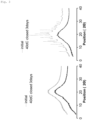
- Amorphous solid dispersions (i) and (ii) were analyzed by X-ray diffractometry immediately after preparation and after storage at 40°C under closed conditions for 3 days since preparation.
- Fig. 3 shows the analysis results.
- Fig. 3 shows the results of amorphous solid dispersion (i) on the right and the results of amorphous solid dispersion (ii) on the left.
- Amorphous solid dispersion (i) showed many peaks after storage at 40°C for 3 days, suggesting that some of the amorphous form transitioned to crystals.
- amorphous solid dispersion (ii) did not show changes in pattern even after storage at 40°C for 3 days, suggesting that amorphous solid dispersion (ii) stably remained amorphous.
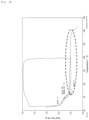
- Amorphous solid dispersion (ii) was subjected to thermogravimetric measurement (TGA) and differential scanning calorimetry (DSC).
- Amorphous solid dispersion (ii) was analyzed by NMR. NMR analysis was also performed in the same manner for compound (I) itself, which was not formed into an amorphous solid dispersion, HPMC AS-HF, and lactic acid. Further, NMR analysis was also performed in the same manner for an amorphous solid dispersion prepared from a solution of HPMC AS-HF and lactic acid ("amorphous solid dispersion (iii)").
- the solution of HPMC AS-HF and lactic acid was a solution of 40 g of HPMC AS-HF and 10 g of lactic acid in 430 g of a mixture of 70% methylene chloride and 30% ethanol (w/w).
- the NMR measurement conditions are shown below.
- the median Tmax (the time it takes for a drug to reach the maximum plasma concentration) was prolonged compared with the conventional tablet.
Landscapes
- Health & Medical Sciences (AREA)
- Chemical & Material Sciences (AREA)
- Engineering & Computer Science (AREA)
- Life Sciences & Earth Sciences (AREA)
- Bioinformatics & Cheminformatics (AREA)
- Public Health (AREA)
- Epidemiology (AREA)
- Pharmacology & Pharmacy (AREA)
- Animal Behavior & Ethology (AREA)
- General Health & Medical Sciences (AREA)
- Medicinal Chemistry (AREA)
- Veterinary Medicine (AREA)
- Organic Chemistry (AREA)
- Nutrition Science (AREA)
- Physiology (AREA)
- Chemical Kinetics & Catalysis (AREA)
- General Chemical & Material Sciences (AREA)
- Oil, Petroleum & Natural Gas (AREA)
- Molecular Biology (AREA)
- Biophysics (AREA)
- Medicinal Preparation (AREA)
- Pharmaceuticals Containing Other Organic And Inorganic Compounds (AREA)
Abstract
Description
- The present disclosure relates to an amorphous form containing 7-[4-(4-benzo[b]thiophen-4-yl-piperazin-1-yl)butoxy]-1H-quinolin-2-one, and a composition containing the amorphous form. The disclosures of all documents cited in the present specification are incorporated herein by reference.
- 7-[4-(4-benzo[b]thiophen-4-yl-piperazin-1-yl)butoxy]-1H-quinolin-2-one ("compound (I)" or "brexpiprazole" below) has dopamine D2 receptor partial agonist activity, serotonin 5-HT2A receptor antagonist activity, and adrenergic α1 receptor antagonist activity. In addition to those activities, compound (I) is also known to have serotonin uptake inhibition activity (or serotonin reuptake inhibition activity ) together, and thus has a broad therapeutic spectrum for central neurological diseases, in particular, schizophrenia (PTL 1). Brexpiprazole is also known as a drug that is less soluble in water (poorly soluble drug). Because poorly soluble drugs are also less soluble in the gastrointestinal tract, their poor absorption through the gastrointestinal mucosa can be a problem. Thus, even now it is still an important technical issue to design formulations so as to improve the solubility and oral absorption of poorly soluble drugs in order to develop the medicinal benefits of such poorly soluble drugs.
- PTL 1:
JP2006-316052A - An object of the present invention is to provide an amorphous solid dispersion containing compound (I) excellent in dissolution, further preferably excellent in stability, an amorphous form containing compound (I) and an organic acid, an amorphous solid dispersion containing the amorphous form, a pharmaceutical composition containing the amorphous form or the amorphous solid dispersion, and methods for preparing these.
- The present inventors found that an amorphous solid dispersion of compound (I) that exhibits excellent dissolution can be obtained by adding a specific polymer to compound (I).
- Additionally, the inventors also found that an amorphous form containing compound (I) and an organic acid can be obtained, and that an amorphous solid dispersion containing compound (I) and an organic acid exhibits excellent dissolution, preferably excellent stability, of compound (I).
- The present disclosure includes, for example, the subject matter described in the following items.
- Item 1.
An amorphous form comprising 7-[4-(4-benzo[b]thiophen-4-yl-piperazin-1-yl)butoxyJ-1H-quinolin-2-one and at least one organic acid. -
Item 2.
The amorphous form according to Item 1, wherein the organic acid is a carboxylic acid. - Item 2a.
The amorphous form according to Item 1, wherein the organic acid is a monocarboxylic acid, a dicarboxylic acid, or a tricarboxylic acid. - Item 2b.
The amorphous form according toItem 1, 2, or 2a, wherein the organic acid is a carboxylic acid having 1 to 8 carbon atoms. - Item 2c.
The amorphous form according toItem 1, 2, 2a, or 2b, wherein the organic acid is at least one carboxylic acid selected from the group consisting of acetic acid, lactic acid, malic acid, citric acid, oxalic acid, tartaric acid, propionic acid, malonic acid, succinic acid, glutaric acid, adipic acid, fumaric acid, maleic acid, and phthalic acid. - Item 2d.
The amorphous form according toItem 1, 2, 2a, 2b, or 2c, wherein the organic acid is at least one carboxylic acid selected from the group consisting of acetic acid, lactic acid, malic acid, tartaric acid, propionic acid, malonic acid, succinic acid, glutaric acid, adipic acid, fumaric acid, and phthalic acid. - Item 3.
The amorphous form according toItem 1, 2, 2a, 2b, 2c, or 2d, wherein the organic acid is lactic acid. - Item 3a.
The amorphous form according toItem 1, 2, 2a, 2b, 2c, 2d, or 3, wherein the ratio by mass of the 7-[4-(4-benzo[b]thiophen-4-yl-piperazin-1-yl)butoxy]-1H-quinolin-2-one to the organic acid is within the range of 100:0.1 to 60. -
Item 4.
An amorphous solid dispersion comprising the amorphous form ofItem 1, 2, 2a, 2b, 2c, 2d, 3, or 3a and at least one enteric polymer. -
Item 5.
An amorphous solid dispersion comprising 7-[4-(4-benzo[b]thiophen-4-yl-piperazin-1-yl)butoxy]-1H-quinolin-2-one and at least one enteric polymer. - Item 6.
The amorphous solid dispersion according toItem - Item 7.
- The amorphous solid dispersion according to any one of
Items 4 to 6, wherein the enteric polymer is at least one selected from the group consisting of hydroxypropyl methylcellulose, derivatives thereof, and polyvinylpyrrolidone. Item 7a. - The amorphous solid dispersion according to any one of
Items 4 to 7, wherein the enteric polymer is hypromellose acetate succinate. Item 7b. - The amorphous solid dispersion according to
Item
- The amorphous solid dispersion according to any one of
-
Item 8.
The amorphous form according toItem 1, 2, 2a, 2b, 2c, 2d, 3, or 3a, or the amorphous solid dispersion according toItem - Item 8a.
The amorphous solid dispersion according toItem -
Item 9.
A method for producing the amorphous form of any one of Items 1 to 3, or the amorphous solid dispersion ofItem - subjecting to spray drying a mixture containing 7-[4-(4-benzo[b]thiophen-4-yl-piperazin-1-yl)butoxyJ-1H-quinolin-2-one, and
- at least one selected from the group consisting of an enteric polymer and an organic acid.
-
Item 10.
A pharmaceutical composition comprising- at least one selected from the group consisting of the amorphous form of
Item 1, 2, or 3 and the amorphous solid dispersion ofItem - a hydrophilic polymer.
- at least one selected from the group consisting of the amorphous form of
- Item 10a.
The pharmaceutical composition according toItem 10, comprising the 7-[4-(4-benzo[b]thiophen-4-yl-piperazin-1-yl)butoxyJ-1H-quinolin-2-one in an amount within the range of 5 mg to 60 mg. - Item 10b.
The pharmaceutical composition according toItem 10 or 10a, comprising the amorphous form and/or the amorphous solid dispersion in an amount within the range of 10 to 40% by mass based on a weight of a core tablet (uncoated tablet). - Item 11.
The pharmaceutical composition according toItem 10, 10a, or 10b, wherein the hydrophilic polymer is at least one selected from the group consisting of cellulose-based water-soluble polymers, polyalkylene oxides, polyalkylene glycols, and polyvinyl alcohols. - Item 11a.
The pharmaceutical composition according toItem 10, 10a, 10b, or 11, wherein the hydrophilic polymer is at least one selected from the group consisting of hydroxypropyl methylcellulose, hydroxypropyl cellulose, and methylcellulose. - Item 11b.
The pharmaceutical composition according toItem 10, 10a, 10b, 11, or 11a, comprising the hydrophilic polymer in an amount within the range of 30 to 90% by mass based on a weight of a core tablet (uncoated tablet). -
Item 12.
The pharmaceutical composition according toItem 10, 10a, 10b, 11, 11a, or 11b, which is an oral solid pharmaceutical composition. - Item 13.
The pharmaceutical composition according toItem 12, wherein after oral administration of the pharmaceutical composition to a human, the steady-state blood concentration of the 7-[4-(4-benzo[b]thiophen-4-yl-piperazin-1-yl)butoxy]-1H-quinolin-2-one is maintained within the range of 15 ng/mL to 400 ng/mL for 1 week. - Item 14.
The pharmaceutical composition according toItem -
Item 15.
The pharmaceutical composition according toItem - Item 15a.
The pharmaceutical composition according toItem - The present invention provides an amorphous form of compound (I) and an amorphous solid dispersion of compound (I) that are suitable for use in a pharmaceutical composition, in particular, in a sustained-release oral pharmaceutical composition, with excellent dissolution, further preferably excellent stability.
- Examples of the disease that is responsive to compound (I) or a salt thereof include schizophrenia, such as treatment-resistant, refractory, or chronic schizophrenia, schizoaffective disorder, psychotic disorder, mood disorder, bipolar disorder (e.g., bipolar I disorder and bipolar II disorder), depression, endogenous depression, major depression, melancholic and treatment-resistant depression, dysthymic disorder, cyclothymic disorder, anxiety disorder (e.g., panic attack, panic disorder, agoraphobia, social phobia, obsessive-compulsive disorder, post-traumatic stress disorder, generalized anxiety disorder, and acute stress disorder), somatoform disorder (e.g., hysteria, somatization disorder, conversion disorder, pain disorder, and hypochondria), factitious disorder, dissociative disorder, sexual disorder (e.g., sexual dysfunction, libido disorder, sexual arousal disorder, and erectile dysfunction), eating disorder (e.g., anorexia nervosa and bulimia nervosa), sleep disorder, adjustment disorder, substance-related disorder (e.g., alcohol abuse, alcohol intoxication and drug addiction, amphetamine addiction, and narcotism), anhedonia (e.g., loss of pleasure, anhedonia, iatrogenic anhedonia, anhedonia of a psychic or mental cause, anhedonia associated with depression, anhedonia associated with schizophrenia), delirium, cognitive impairment, cognitive impairment associated with Alzheimer's disease, Parkinson's disease, and other neurodegenerative diseases, cognitive impairment caused by Alzheimer's disease, Parkinson's disease, and other neurodegenerative diseases, cognitive impairment in schizophrenia, cognitive impairment caused by treatment-resistant, refractory, or chronic schizophrenia, vomiting, motion sickness, obesity, migraine, pain, mental retardation, autistic disorder (autism), Tourette's syndrome, tic disorder, attention deficit hyperactivity disorder, conduct disorder, Down syndrome, impulsive symptoms associated with dementia (e.g., agitation associated with Alzheimer's disease), borderline personality disorder, etc.; and various other CNS diseases.
-
-
Fig. 1 shows the results of the study on the dissolution rate of amorphous solid dispersions containing compound (I) prepared by using various enteric polymers. -
Fig. 2 shows the results of measuring the dissolution rate of compound (I) from amorphous solid dispersions obtained from compound (I), an enteric polymer, and various organic acids. -
Fig. 3 shows the results of analyzing an amorphous solid dispersion of compound (I) and an amorphous solid dispersion containing compound (I) and lactic acid by X-ray diffractometry. -
Fig. 4a shows the results of TGA analysis of each amorphous solid dispersion obtained from compound (I), an enteric polymer, and lactic acid. -
Fig. 4b shows the results of DSC analysis of amorphous solid dispersions each obtained from compound (I), an enteric polymer, and lactic acid. -
Fig. 5 shows the results of NMR measurement of amorphous solid dispersions and their starting materials. -
Fig. 6 shows the results of measuring the dissolution rate of compound (I) from hydrogel matrix tablets (with enteric coating) containing amorphous solid dispersions each obtained from compound (I), an enteric polymer, and lactic acid. - The following describes in more detail embodiments encompassed by the present disclosure. The present disclosure includes, but is not limited to, an amorphous solid dispersion containing compound (I), an amorphous form containing compound (I) and an organic acid, an amorphous solid dispersion containing the amorphous form, a pharmaceutical composition containing the amorphous form or the amorphous solid dispersion, and methods for preparing these. The present disclosure includes all matter disclosed in the present specification and recognizable to those skilled in the art.
- As described above, the amorphous form encompassed by the present disclosure contains compound (I) and an organic acid. In the present specification, the amorphous form may be referred to as "the amorphous form of the present disclosure."
- The organic acid is preferably a carboxylic acid, and more preferably a monocarboxylic acid, a dicarboxylic acid, or a tricarboxylic acid. Hydroxy acid (also referred to as "hydroxycarboxylic acid") is also preferable. For example, a carboxylic acid with 1 to 8 (1, 2, 3, 4, 5, 6, 7, or 8) carbon atoms is preferable. The carboxylic acid may also be substituted with at least one (e.g., 1, 2, or 3) -OH group. The carboxylic acid may also have one aromatic ring (in particular, a benzene ring) or heterocyclic ring in its structure. The carboxylic acid may be linear or branched, and saturated or unsaturated.
- More specifically, the organic acid may be, for example, acetic acid, lactic acid, malic acid, citric acid, oxalic acid, tartaric acid, propionic acid, malonic acid, succinic acid, glutaric acid, adipic acid, fumaric acid, maleic acid, or phthalic acid, with lactic acid being particularly preferable.
- The organic acid may be used singly, or in a combination of two or more. The combination of two or more organic acids for use is particularly preferably a combination of citric acid, tartaric acid, and fumaric acid.
- The amorphous solid dispersion encompassed by the present disclosure contains the amorphous form of the present disclosure and an enteric polymer. In the present specification, the amorphous solid dispersion may be referred to as "the amorphous solid dispersion of the present disclosure."
- The enteric polymer can be any polymer that does not dissolve at low pH and dissolves at near-neutral pH (e.g., a pH of 5 to 6) or at a pH higher than such a pH. For example, polymers that dissolve at a pH of 5, 5.5, 6.0, 6.5, or higher (preferably polymers that do not dissolve at a pH of lower than these pH values) are preferred. Specific examples include nonionic water-soluble polymers, preferably hypromellose (hydroxypropyl methylcellulose), derivatives thereof, and polyvinylpyrrolidone.
- In the present specification, derivatives of hypromellose are preferably an ester of hypromellose and a carboxylic acid (preferably a monocarboxylic acid or a dicarboxylic acid). Examples of carboxylic acids include acetic acid, lactic acid, malic acid, citric acid, oxalic acid, tartaric acid, propionic acid, malonic acid, succinic acid, glutaric acid, adipic acid, fumaric acid, maleic acid, and phthalic acid. Of these carboxylic acids, a single carboxylic acid may form an ester, or a combination of two or more carboxylic acids, may form an ester. Examples of preferred esters of hypromellose and a carboxylic acid include hypromellose acetate succinate, and hypromellose phthalate.
- The amorphous solid dispersion of the present disclosure can be prepared, for example, by subjecting a mixture containing compound (I), an organic acid, and an enteric polymer to spray drying (spray-drying treatment). The thus-obtained amorphous solid dispersion contains an amorphous form containing compound (I) and an organic acid (i.e., the amorphous form of the present disclosure).
- A preferred example of mixtures subjected to spray-drying treatment is a composition prepared by dissolving compound (I), an organic acid, and an enteric polymer in an organic solvent. The organic solvent is preferably, for example, a mixture of dichloromethane and ethanol. The ratio by mass of dichloromethane to ethanol of the mixture is preferably within the range of about 80 to 50:20 to 50, and more preferably about 80 to 60:20 to 40. When a mixture of dichloromethane and ethanol is used as an organic solvent, it is preferable to prepare the mixture for spray-drying treatment, for example, by dissolving an organic acid in ethanol, then adding and mixing dichloromethane, further dissolving an enteric polymer in the solution, and finally adding and dissolving compound (I). The spray-drying treatment can be performed according to a known method.
- The ratio by mass of compound (I) to the organic acid contained in the amorphous form or amorphous solid dispersion of the present disclosure is, for example, within the range of about 100:0.1 to 60. The upper limit or the lower limit of the range (0.1 to 60) may be, for example, 0.2, 0.3, 0.4, 0.5, 0.6, 0.7, 0.8, 0.9, 1, 2, 3, 4, 5, 6, 7, 8, 9, 10, 11, 12, 13, 14, 15, 16, 17, 18, 19, 20, 21, 22, 23, 24, 25, 26, 27, 28, 29, 30, 31, 32, 33, 34, 35, 36, 37, 38, 39, 40, 41, 42, 43, 44, 45, 46, 47, 48, 49, 50, 51, 52, 53, 54, 55, 56, 57, 58, or 59. For example, the range may be about 0.5 to 55 or 1 to 50.
- To increase the stability of the amorphous form or amorphous solid dispersion, it is desirable to add as much organic acid as possible to the extent that the salt of the organic acid does not precipitate. For example, when lactic acid is used as an organic acid, the ratio by mass of compound (I) to the organic acid is especially preferably within the range of about 100:30 to 60, and, for example, more preferably about 100:40 to 60.
- The ratio by mass of compound (I) to an enteric polymer contained in the amorphous solid dispersion of the present disclosure is, for example, within the range of about 100:10 to 500. The upper limit or the lower limit of the range (10 to 500) may be, for example, 20, 30, 40, 50, 60, 70, 80, 90, 100, 110, 120, 130, 140, 150, 160, 170, 180, 190, 200, 210, 220, 230, 240, 250, 260, 270, 280, 290, 300, 310, 320, 330, 340, 350, 360, 370, 380, 390, 400, 410, 420, 430, 440, 450, 460, 470, 480, or 490. For example, the range may be about 20 to 400, or 50 to 300.
- The amorphous solid dispersion of the present disclosure is preferably excellent in stability. In the present specification, the phrase "excellent in stability" means, for example, preferably that after the amorphous solid dispersion of the present disclosure is stored at 40°C under closed conditions for 4 weeks, the peak area of 8-(1-benzothiophen-4-yl)-8-aza-5-azoniaspiro[4.5]decane (also referred to as "compound (D)" in the present specification), which is one of the degradation products of compound (I), in a chromatogram obtained by HPLC measurement accounts for 0.1% or lower of the total of the peak areas of compound (I) and the degradation products of compound (I). The above storage conditions are based on the revised version (Iyakushinpatsu No. 0603001, June 3, 2003) of the Guidelines for Stability Testing of New Drug Substances and Products (Iyakushinpatsu No. 565, issued on May 1, 2001, by the Director of the Evaluation and Licensing Division of the Pharmaceutical and Food Safety Bureau), which were established based on the standards of the International Council for Harmonisation of Technical Requirements for Pharmaceuticals for Human Use (ICH). Humidity is based on section "2.2.7.2. Drug products packaged in impermeable container" in the Guidelines and is not examined in the present application.
- In the present specification, the term "degradation products" refers to impurities formed by chemical changes in an active pharmaceutical ingredient during manufacture or in storage of a drug product due to the action of light, heat, pH, and water, or due to reaction with pharmaceutical additives or directly with a container or closure system.
- The pharmaceutical composition encompassed by the present disclosure contains the amorphous form of the present disclosure or the amorphous solid dispersion of the present disclosure. In addition to this, the pharmaceutical composition further preferably contains a hydrophilic polymer. In the present specification, the pharmaceutical composition may also be referred to as "the pharmaceutical composition of the present disclosure."
- The pharmaceutical composition of the present disclosure is preferably an oral pharmaceutical composition, and is also preferably a solid pharmaceutical composition. More preferably, the pharmaceutical composition of the present disclosure is an oral solid pharmaceutical composition.
- The dosage form of the pharmaceutical composition of the present disclosure is not limited. Examples include tablets, pills, powders, granules, gels, capsules, and powdery inhalants.
- The hydrophilic polymer for use can be, for example, a cellulose-based water-soluble polymer, a polyalkylene oxide (e.g., polyethylene oxide), a polyalkylene glycol (e.g., polyethylene glycol), a polyvinyl alcohol, etc.
- The cellulose-based water-soluble polymer for use can be preferably a cellulose-based water-soluble polymer known in the field of pharmaceutical science. For example, the cellulose-based water-soluble polymer preferably has a structure in which the hydrogen atom of some of the OH groups of cellulose is replaced with a methyl group and/or a hydroxypropyl group. For example, hypromellose (hydroxypropyl methylcellulose) or derivatives of these are preferred. For example, hydroxypropyl cellulose and methylcellulose are preferred.
- The hydrophilic polymer may be used singly, or in a combination of two or more.
- The hydrophilic polymer for use can also be, for example, a cellulose-based water-soluble polymer with a viscosity of 2.5 to 35,000 mm2/s in the form of a 2% aqueous solution. In particular, a cellulose-based water-soluble polymer with a viscosity of 2.5 to 17.5 mm2/s in the form of a 2% aqueous solution is preferred.
- The hydrophilic polymer for use may be the same as or different from the enteric polymer described above. The pharmaceutical composition containing the amorphous solid dispersion of the present disclosure contains the enteric polymer described above. Thus, if the enteric polymer is a hydrophilic polymer, the pharmaceutical composition is encompassed by the pharmaceutical composition containing a hydrophilic polymer.
- In particular, when the pharmaceutical composition of the present disclosure is a solid pharmaceutical composition, it is preferred that the pharmaceutical composition contain a mixture of the amorphous form of the present disclosure or the amorphous solid dispersion of the present disclosure with a hydrophilic polymer.
- If the pharmaceutical composition of the present disclosure is an oral solid pharmaceutical composition, a particularly preferable embodiment is a sustained-release hydrogel composition. The composition contains the amorphous form or amorphous solid dispersion of the present disclosure as an active component and further contains the hydrophilic polymer described above. A preferable dosage form of the sustained-release hydrogel composition is a hydrogel matrix tablet. The hydrogel matrix tablet is a known technique for controlling drug release with a hydrogel formed from water absorbed from the alimentary tract (after a coating film is dissolved due to a rise in pH after gastric excretion, if the tablet is enteric-coated).
- The sustained-release base (hydrogel formation base) for use in the hydrogel matrix tablet can be the hydrophilic polymers described above. More specifically, the sustained-release base can be, for example, a cellulose-based water-soluble polymer, a polyalkylene oxide (e.g., polyethylene oxide), a polyalkylene glycol (e.g., polyethylene glycol), or a polyvinyl alcohol. In the present disclosure, as described above, a cellulose-based polymer is preferably used. If a cellulose-based polymer (e.g., hypromellose) is used as a sustained-release base, the cellulose-based polymer for use preferably has a viscosity of 80 to 35,000 mm2/s in the form of a 2% aqueous solution according to the target dissolution rate.
- The sustained-release base may be contained in an amount of, for example, about 30 to 90% by mass or about 50 to 80% by mass based on the mass of the core tablet.
- The hydrogel matrix tablet may further contain other additives. Examples of such additives include disintegrators, lubricants, and fluidizers. A preferable example of disintegrators is sodium starch glycolate. The disintegrator may be contained in an amount of, for example, about 10 to 50% by mass or about 20 to 40% by mass based on the mass of the core tablet. A preferable example of lubricants is magnesium stearate. The lubricant may be contained in an amount of, for example, about 0.1 to 5% by mass or about 0.2 to 3% by mass based on the mass of the core tablet. A preferable example of fluidizers is silicon dioxide (in particular, light anhydrous silicic acid). The fluidizer may be contained in an amount of, for example, about 0.1 to 5% by mass or about 0.1 to 3% by mass based on the mass of the core tablet.
- The hydrogel matrix tablet is more preferably enteric-coated. For enteric coating, a known enteric coating composition may be used. For example, an enteric coating composition containing an enteric base, such as Eudragit, a plasticizer, such as triethyl citrate, and a lubricant, such as talc, may be preferably used. The enteric coating may be contained in an amount of, for example, about 1 to 40 parts by mass or about 10 to 30 parts by mass, per 100 parts by mass of the core tablet.
- Without any limitation, the steady-state blood concentration of compound (I) is preferably maintained, for example, within the range of 15 ng/mL to 400 ng/mL or 50 ng/mL to 300 ng/mL for 1 week after the oral pharmaceutical composition of the present disclosure is perorally administered to a human (in particular, an adult).
- Conventional tablets (non-release controlled formulation; 0.5-mg tablets, 1-mg tablets, and 2-mg tablets) containing compound (I) have already been marketed as a therapeutic drug for schizophrenia in many countries including Japan, the United States, and European countries. Conventional tablets have been shown to be safe and effective against central neurological diseases, such as schizophrenia, in clinical trials, and have undergone detailed pharmacokinetic analysis. Given such reports on conventional tablets, it can be understood that any oral pharmaceutical composition that can maintain a steady-state blood concentration of compound (I) within the range of about 15 ng/mL to 400 ng/mL or about 50 ng/mL to 300 ng/mL when administered to humans would be usable in the prevention or treatment of central neurological diseases, such as schizophrenia, in the same manner as the conventional tablets already on the market.
- Thus, the oral pharmaceutical composition of the present disclosure may be administered orally, preferably at a frequency lower than once a day (e.g., once a week). The oral pharmaceutical composition of the present disclosure may preferably be administered, one tablet per dose, or two or more tablets per dose (e.g., two, three, four, or five tablets per dose). A person skilled in the art would also be able to appropriately determine the dosage of the oral pharmaceutical composition of the present disclosure to achieve the blood concentration described above referring to the pharmacokinetic information on the conventional tablets described above and the assessment made based on the single-dose protocol and continuous dosing protocol for the oral pharmaceutical composition of the present disclosure. For example, the dosage of compound (I) per dose can be about 5 mg to 60 mg, about 10 mg to 60 mg, about 20 mg to 60 mg, or about 45 mg to 60 mg.
- In the present specification, "comprising" also includes the concepts of consisting essentially of and consisting of. The present disclosure also encompasses any combination of the elements described in the specification.
- The variety of characteristics (e.g., properties, structures, and functions) described above for embodiments of the present disclosure may be combined in any way in identifying the subject matter encompassed by the disclosure. In other words, the present disclosure encompasses all subject matter formed of any possible combination of the characteristics described in the present specification.
- The following describes embodiments of the present disclosure in more detail with reference to Examples. However, the embodiments of the disclosure are not limited to the following Examples. Unless otherwise specified below, compound (I) (brexpiprazole) for use was synthesized according to a known method and then milled with a hammer mill.
- 6 g of compound (I) and 12 g of an enteric polymer were dissolved in 205.5 g of a mixture of 80% dichloromethane and 20% ethanol (w/w) (solid concentration: 8 w/w%). The obtained solution was subjected to spray drying with an atomizer under the following conditions, thereby obtaining an amorphous solid dispersion (specifically spray-dried powder).
- Flow rate (mL/min): 8
- Atomizing air (MPa): 0.15
- Inlet temperature (°C): 75
- Drying Air (m3/min): 0.45
- Overnight vacuum drying at 50°C
- The following enteric polymers were used.
- HPMC AS-LF (hypromellose acetate succinate: Shin-Etsu Chemical Co., Ltd., AQOAT) (dissolved at a pH of 5.5 or higher)
- HPMC AS-MF (hypromellose acetate succinate: Shin-Etsu Chemical Co., Ltd., AQOAT) (dissolved at a pH of 6.0 or higher)
- HPMC AS-HF (hypromellose acetate succinate: Shin-Etsu Chemical Co., Ltd., AQOAT) (dissolved at a pH of 6.8 or higher)
- TC-5R (hypromellose: Shin-Etsu Chemical Co., Ltd.) (viscosity of the 2% aqueous solution at 20°C (Japanese Pharmacopoeia): about 6 mPa·s)
- HP-50 (hypromellose phthalate: Shin-Etsu Chemical Co., Ltd.) (dissolved at a pH of 5.0 or higher; viscosity of the 10% solution in a methanol-dichloromethane mixture (1:1) at 20°C (Japanese Pharmacopoeia): about 55 mPa·s)
- HP-55 (hypromellose phthalate: Shin-Etsu Chemical Co., Ltd.) (dissolved at a pH of 5.5 or higher; viscosity of the 10% solution in a methanol-dichloromethane mixture (1:1) at 20°C (Japanese Pharmacopoeia): about 40 mPa·s)
- K-25 (polyvinylpyrrolidone: BASF Kollidon 25)
- The release rate of compound (I) from each of the obtained amorphous solid dispersions was evaluated by measuring the dissolution rate of compound (I) at one-hour intervals for 24 hours. The dissolution test was performed in accordance with the paddle method specified in the dissolution test section of the Japanese Pharmacopoeia, Seventeenth Edition. The test was performed by using 900 mL of the second fluid for dissolution test (pH: approximately 7, potassium dihydrogen phosphate and disodium hydrogen phosphate) described in the Japanese Pharmacopoeia as a test solution, at 37°C at a paddle rotation rate of 50 rpm. Sampling was performed over time, and compound (I) in the sampling solution was quantified with a UV detector (absorbance measurement wavelength: 323 nm and 380 nm). The first wavelength (323 nm) was set as the wavelength at which the absorbance of the main drug could be maximally detected, and the second wavelength (380 nm) was set as the wavelength at which the absorbance derived from the main drug was not detected. The dissolution rate was defined as the proportion (%) of the mass of dissolved compound (I) of the total amount (mass) of compound (I) contained in each amorphous solid dispersion taken as 100%. Compound (I) itself, which was not made into an amorphous solid dispersion (hammer-milled product; denoted as "HM"), was also examined for dissolution rate by performing the dissolution test.
Fig. 1 shows the results. - The results indicate that the amorphous solid dispersion containing compound (I) prepared by using any of the enteric polymers exhibits excellent dissolution.
- In the following study, HPMC AS-HF was used for the enteric polymer for preparing an amorphous solid dispersion, unless otherwise indicated.
- To examine the stability of compound (I) contained in an amorphous solid dispersion prepared by using HPMC AS-HF as an enteric polymer, the amount of a degradation product of compound (I) generated after storage was measured.
- Specifically, after an amorphous solid dispersion was stored at 40°C for 4 weeks under closed conditions, the amount of generated compound (D) (8-(1-benzothiophen-4-yl)-8-aza-5-azoniaspiro[4.5]decane), which is one of the degradation products of compound (I) (brexpiprazole) was examined by HPLC.

- More specifically, 50 mg of an amorphous solid dispersion in terms of compound (I) was weighed, and a 50% MeCN/50% MeOH solution was added to completely dissolve the dispersion and to make the
solution 100 mL. 10 mL of the solution was taken and made up to 25 mL by adding a 1% acetic acid solution. After being filtered through a 0.45-um filter, 50 µL of this solution was injected into HPLC. The measurement conditions for HPLC were as follows. - HPLC: LC-2010C (Shimadzu)
- Measurement wavelength (nm): 274
- Analysis column: Capcell Pak C18, MGII 3 pm, 4.6 mm I.D. × 150 mm (Shiseido)
- Flow rate (mL/min): 1.7
- Mobile phase: 0.01 mol/L sodium sulfate
- solution/acetonitrile/methanol/acetic acid = 140/45/15/2
- Injection amount (µL): 50
- Measurement time (min): 30
- The proportion of the area of the peak area of compound (D) in the obtained HPLC chromatogram was calculated based on the total area of the peak area of compound (I) and the peak area of the degradation products of compound (I) taken as 100%.
- The results of the above study indicated that compound (D) formed in an amount of 0.14%.
- Subsequently, various organic acids were further dissolved in the solution, and spray drying was performed under the same conditions as above to prepare amorphous solid dispersions. To examine the stability, the obtained amorphous solid dispersions were stored at 40°C for 4 weeks under closed conditions, and then the amount of generated compound (D) was measured by HPLC under the same conditions as above.
- The solutions were prepared by dissolving 6 g of compound (I), 12 g of an enteric polymer (HPMC AS-HF), and 0.6 g, 0.3 g, or 0.06 g of various organic acids in 213.9 g or 210.5 g of a mixture of 80% dichloromethane and 20% ethanol (w/w). As for the dissolution order, an organic acid was completely dissolved in ethanol, then dichloromethane was added and mixed, and an enteric polymer (HPMC AS-HF) was further dissolved therein, followed by finally adding and dissolving compound (I).
- However, in the preparation of a solution in which lactic acid was dissolved as an organic acid, the composition of the solution was changed: 20 g of compound (I), 40 g of an enteric polymer (HPMC AS-HF), 10 g of lactic acid (50% of compound (I)) or 0.2 g of lactic acid (1% of compound (I)) were dissolved in 430 g of a mixture of 80% dichloromethane and 20% ethanol (w/w) (the dissolving order was the same as above).
- In the preparation of a solution in which citric acid, tartaric acid, and fumaric acid were dissolved as organic acids, the composition of the solution was changed: 16 g of compound (I), 32 g of an enteric polymer (HPMC AS-HF), and various organic acids (citric acid 1.6 g, tartaric acid 0.8 g, fumaric acid 1.6 g) were dissolved in 912 g of a mixture of 60% dichloromethane and 40% ethanol (w/w) (the dissolving order was the same as above). Additionally, in this case only, the spray-drying conditions were changed as given below.
- · Flow rate (mL/min): 10
- · Atomizing air (MPa): 0.15
- · Inlet temperature (°C): 80
- · Outlet temperature (°C): 49 to 50
- · Drying air (m3/min): 0.40
- · Overnight vacuum drying at 50°C
- The following table shows the amount of compound (D) in the amorphous solid dispersions obtained by using various organic acids after storage at 40°C for 4 weeks under closed conditions. In the table, the amount of each organic acid (%) is a percentage of the mass of the organic acid contained in the individual solutions based on 100% of the mass of compound (I) contained in the solutions subjected to spray drying.
- The lactic acid used as a starting material was in liquid form with a purity of 85 to 92%, containing about 10% of water as an impurity. The spray drying treatment eliminates water, and the remaining lactic acid content after preparation is about 8.8 g to 10 g. The same is true in the following study.
Table 1 Organic Acid Amount (%) Compound (D) (%) None 0 0.14 Citric Acid 10 0.08 Tartaric Acid 1 0.09 Tartaric Acid 10 0.07 Succinic Acid 10 0.1 Adipic Acid 5 0.1 Fumaric Acid 10 0.08 Lactic Acid 1 0.06 Lactic Acid 50 0.03 Citric Acid + Tartaric Acid + Fumaric Acid 10+5+10 0.03 - The amorphous solid dispersions obtained by using various organic acids were found to exhibit a decrease in degradation of compound (I), which is caused by long-term storage. Additionally, all of the amorphous solid dispersions obtained in this study stably remained amorphous after long-term storage. In other words, the over-time stability of compound (I) contained in each of the amorphous solid dispersions obtained by using various organic acids was found to have improved. This stability was considered satisfactory in light of the revised version (Iyakushinpatsu No. 0624001, June 24, 2003) of the guidelines for impurities in drug products among drugs containing new active ingredients (Yakushin No. 539, June 23, 1997, issued by the Director of the Pharmaceutical Affairs Bureau), which were established based on the ICH standards.
- The release rate of compound (I) from each of the amorphous solid dispersions obtained by using various organic acids was evaluated by measuring the dissolution rate of compound (I) at one-hour intervals for 24 hours. The dissolution test was performed in the same manner as above.
Fig. 2 shows the results. InFig. 2 , "Comp." denotes compound (I). "HF" also denotes HPMC AS-HF. "Cit," "Tar," "Fum," "Lac," "Suc," and "Adi" respectively denote citric acid, tartaric acid, fumaric acid, lactic acid, succinic acid, and adipic acid. "HM" denotes compound (I) itself (hammer-milled product) that was not formed into an amorphous solid dispersion. - As can be seen from the results, the amorphous solid dispersions obtained by using various organic acids exhibited an improved dissolution rate compared with the amorphous solid dispersion obtained without using an organic acid (Comp./HF). In particular, the dissolution rate was notably improved when lactic acid or an organic acid (citric acid, tartaric acid, and fumaric acid) was combined.
- Solution (i) obtained by dissolving 12 g of compound (I) in 162 g of a mixture of 70% dichloromethane and 30% ethanol (w/w) or solution (ii) obtained by dissolving 12 g of compound (I) and 6 g of lactic acid in 162 g of a mixture of 70% dichloromethane and 30% ethanol (w/w) was subjected to spray drying in the same manner as above, thereby obtaining amorphous solid dispersion (i) or amorphous solid dispersion (ii).
- Amorphous solid dispersions (i) and (ii) were analyzed by X-ray diffractometry immediately after preparation and after storage at 40°C under closed conditions for 3 days since preparation.
- The conditions for X-ray diffractometry were as follows.
- Model: X'Pert Pro MPD (Spectris)
- Voltage (kV): 45
- Current (mA): 40
- Configuration: Spinner reflect-trans
- Scan axis: 2 theta
- Start angle: 3.000
- End angle: 40.000
- Step size: 0.0167113
- Time per step: 3.175
- Scan speed (°/s): 0.668451
- Wobble axis: omega
- Number of steps: 5
- Step size: 1.000
-
Fig. 3 shows the analysis results.Fig. 3 shows the results of amorphous solid dispersion (i) on the right and the results of amorphous solid dispersion (ii) on the left. Amorphous solid dispersion (i) showed many peaks after storage at 40°C for 3 days, suggesting that some of the amorphous form transitioned to crystals. On the other hand, amorphous solid dispersion (ii) did not show changes in pattern even after storage at 40°C for 3 days, suggesting that amorphous solid dispersion (ii) stably remained amorphous. - Amorphous solid dispersion (ii) was subjected to thermogravimetric measurement (TGA) and differential scanning calorimetry (DSC).
- The following instruments were used for measurements. The amount of the sample (amorphous solid dispersion (ii)) was about 5 mg in both measurements.
- TGA: TGA Q5000 (TA Instruments)
- DSC: DSC Q2000 (TA Instruments)
- In TGA analysis, the temperature was increased to 250°C at 10°C/min. In DSC analysis, the temperature was first increased to 100°C at 10°C/min to volatilize the dichloromethane and ethanol thought to remain in trace amounts and then decreased to 25°C at 10°C/min, followed by increasing it again to 150°C at 10°C/min.
-
Fig. 4a (TGA analysis) andFig. 4b (DSC analysis) show the results. InFig. 4a , no peaks indicating heat generation were measured (see the area circled with a dotted line). InFig. 4b , no peaks indicating weight change were also measured (see the area circled with a dotted line). These also suggest that amorphous solid dispersion (ii) did not transition to crystals (remained amorphous), thus demonstrating that amorphous solid dispersion (ii) was stable. - Amorphous solid dispersion (ii) was analyzed by NMR. NMR analysis was also performed in the same manner for compound (I) itself, which was not formed into an amorphous solid dispersion, HPMC AS-HF, and lactic acid. Further, NMR analysis was also performed in the same manner for an amorphous solid dispersion prepared from a solution of HPMC AS-HF and lactic acid ("amorphous solid dispersion (iii)"). The solution of HPMC AS-HF and lactic acid was a solution of 40 g of HPMC AS-HF and 10 g of lactic acid in 430 g of a mixture of 70% methylene chloride and 30% ethanol (w/w).
- The NMR measurement conditions are shown below.
- Measuring instrument: ECA-500 (JEOL RESONANCE, Inc.)
- Observed nucleus: 1H
- Sample amount: about 5 mg
- Solvent: DMSO-d6
- Reference value for chemical shift: 2.49 ppm (DMSO)
- Cumulated number: 8
-
Fig. 5 shows the results. InFig. 5 , peaks are misaligned between compound (I) and amorphous solid dispersion (ii) (see the dotted line in the figure). This indicates that compound (I) and lactic acid in amorphous solid dispersion (ii) molecularly interacted. The amorphous form in amorphous solid dispersion (ii) was then found to be formed of compound (I) and lactic acid. - A sustained-release hydrogel formulation containing amorphous solid dispersion (ii) (hydrogel matrix tablet) was produced according to a known commonly used production process. Specifically, hydrogel matrix tablets (uncoated tablets) were prepared by mixing and tableting ingredients so that 41.4 mg of amorphous solid dispersion (ii) (containing 12 mg of compound (I)), 80 mg of hypromellose, 60 mg of sodium starch glycolate, and 0.6 mg of magnesium stearate were contained per tablet. Hydrogel matrix tablets are a known technique for controlling drug release with a hydrogel formed from water absorbed from the alimentary tract (after a coating film is dissolved due to a rise in pH after gastric excretion, if the tablets are coated).
- Additionally, enteric coating was applied to the hydrogel matrix tablets (uncoated tablets) to prepare an enteric-coated drug. Specifically, tablets containing 9.1 mg of a methacrylate copolymer LD (Eudragit L 30 D-55, Evonik), 4.55 mg of talc, and 0.91 mg of triethyl citrate, per tablet, were subjected to enteric coating in accordance with an ordinary method by using a general-purpose coater. Thereafter, color coating was applied by using OPADRY 03A420002 (5.4 mg), thereby obtaining enteric-coated tablets.
- The release rate of compound (I) from the obtained enteric-coated tablets was evaluated by measuring the dissolution rate of compound (I) at one-hour intervals for 24 hours. The dissolution test was performed in the same manner as above.
Fig. 6 shows the results. The enteric-coated drug exhibited an excellent supersaturated dissolution profile. - The blood concentration of compound (I) in peroral administration of the oral pharmaceutical composition of the present disclosure to humans was evaluated based on the following single-dose protocol. The formulation used in this evaluation (test formulation) was a hydrogel matrix tablet prepared in accordance with the present disclosure, containing an amorphous solid dispersion of 12 mg of compound (I) (active ingredient). In the single-dose protocol, a single dose of a conventional tablet of compound (I) (a tablet containing compound (I) not formed into an amorphous solid dispersion) was administered. After cessation, a single dose of 12 mg of a test formulation (a single 12-mg tablet) was administered. The PK parameters of compound (I) were analyzed. The median Tmax (the time it takes for a drug to reach the maximum plasma concentration) was prolonged compared with the conventional tablet. These results appear to indicate that the oral pharmaceutical composition of the present disclosure is able to maintain the blood concentration of compound (I) desirable for a once-weekly formulation (e.g., 15 ng/mL to 400 ng/mL at steady state).
Claims (15)
- An amorphous form comprising 7-[4-(4-benzo[b]thiophen-4-yl-piperazin-1-yl)butoxyJ-1H-quinolin-2-one and at least one organic acid.
- The amorphous form according to claim 1, wherein the organic acid is a carboxylic acid.
- The amorphous form according to claim 1 or 2, wherein the organic acid is lactic acid.
- An amorphous solid dispersion comprising the amorphous form of any one of claims 1 to 3 and at least one enteric polymer.
- An amorphous solid dispersion comprising 7-[4-(4-benzo[b]thiophen-4-yl-piperazin-1-yl)butoxy]-1H-quinolin-2-one and at least one enteric polymer.
- The amorphous solid dispersion according to claim 4 or 5, wherein the enteric polymer is a nonionic water-soluble polymer.
- The amorphous solid dispersion according to any one of claims 4 to 6, wherein the enteric polymer is at least one selected from the group consisting of hydroxypropyl methylcellulose, derivatives thereof, and polyvinylpyrrolidone.
- The amorphous form according to any one of claims 1 to 3, or the amorphous solid dispersion according to any one of claims 4 to 7, which is a spray-dried powder.
- A method for producing the amorphous form of any one of claims 1 to 3, or the amorphous solid dispersion of any one of claims 4 to 8, the method comprisingsubjecting to spray drying a mixture containing7-[4-(4-benzo[b]thiophen-4-yl-piperazin-1-yl)butoxyJ-1H-quinolin-2-one, andat least one selected from the group consisting of an enteric polymer and an organic acid.
- A pharmaceutical composition comprisingat least one selected from the group consisting of the amorphous form of any one of claims 1 to 3 and the amorphous solid dispersion of any one of claims 4 to 8, anda hydrophilic polymer.
- The pharmaceutical composition according to claim 10, wherein the hydrophilic polymer is at least one selected from the group consisting of cellulose-based water-soluble polymers, polyalkylene oxides, polyalkylene glycols, and polyvinyl alcohols.
- The pharmaceutical composition according to claim 10, or 11, which is an oral solid pharmaceutical composition.
- The pharmaceutical composition according to claim 12, wherein after oral administration of the pharmaceutical composition to a human, the steady-state blood concentration of the 7-[4-(4-benzo[b]thiophen-4-yl-piperazin-1-yl)butoxy]-1H-quinolin-2-one is maintained within the range of 15 ng/mL to 400 ng/mL for 1 week.
- The pharmaceutical composition according to any one of claims 9 to 13, for use in the administration of the 7-[4-(4-benzo[b]thiophen-4-yl-piperazin-1-yl)butoxy]-1H-quinolin-2-one at a dose of 5 mg to 60 mg once a week.
- The pharmaceutical composition according to any one of claims 9 to 14, for use in the prevention or treatment of a central neurological disease.
Applications Claiming Priority (2)
| Application Number | Priority Date | Filing Date | Title |
|---|---|---|---|
| PCT/JP2021/005721 WO2022176017A1 (en) | 2021-02-16 | 2021-02-16 | Amorphous material and composition containing said amorphous material |
| PCT/JP2022/006064 WO2022176877A1 (en) | 2021-02-16 | 2022-02-16 | Amorphous form and composition containing said amorphous form |
Publications (2)
| Publication Number | Publication Date |
|---|---|
| EP4296269A1 true EP4296269A1 (en) | 2023-12-27 |
| EP4296269A4 EP4296269A4 (en) | 2025-02-19 |
Family
ID=82930564
Family Applications (1)
| Application Number | Title | Priority Date | Filing Date |
|---|---|---|---|
| EP22756195.8A Pending EP4296269A4 (en) | 2021-02-16 | 2022-02-16 | AMORPHOUS MATERIAL, AND COMPOSITION CONTAINING SAME |
Country Status (5)
| Country | Link |
|---|---|
| US (1) | US20240158380A1 (en) |
| EP (1) | EP4296269A4 (en) |
| JP (1) | JP7834709B2 (en) |
| CN (1) | CN116829553A (en) |
| WO (2) | WO2022176017A1 (en) |
Families Citing this family (1)
| Publication number | Priority date | Publication date | Assignee | Title |
|---|---|---|---|---|
| WO2025154730A1 (en) * | 2024-01-18 | 2025-07-24 | 沢井製薬株式会社 | Solid dispersion, preparation containing solid dispersion, and method for producing solid dispersion |
Family Cites Families (9)
| Publication number | Priority date | Publication date | Assignee | Title |
|---|---|---|---|---|
| IN191496B (en) | 1999-07-30 | 2003-12-06 | Ranbaxy Lab Ltd | |
| GB2383042A (en) | 2001-10-18 | 2003-06-18 | Cipla Ltd | Amorphous alendronate sodium |
| JO3227B1 (en) | 2011-09-08 | 2018-03-08 | Otsuka Pharma Co Ltd | Piperazine-substituted benzothiophene deriveatives as antipsychotic agents |
| JP2013139441A (en) | 2011-12-28 | 2013-07-18 | Otsuka Pharmaceut Co Ltd | Microsphere |
| TWI562991B (en) * | 2012-04-23 | 2016-12-21 | Otsuka Pharma Co Ltd | Dihydrate of benzothiophene compound or of a salt thereof, and process for producing the same |
| AR091349A1 (en) * | 2012-04-30 | 2015-01-28 | Otsuka Pharma Co Ltd | ORAL FORMULATION |
| TWI831347B (en) * | 2014-08-08 | 2024-02-01 | 日商中外製藥股份有限公司 | Solid dispersion containing amorphous body of tetracyclic compound and preparation |
| KR20190066608A (en) * | 2016-09-23 | 2019-06-13 | 델포어, 인코포레이티드 | Small molecule therapeutic compound composition |
| US20190160005A1 (en) * | 2017-11-24 | 2019-05-30 | Biophore India Pharmaceuticals Pvt. Ltd. | Method of Preparing Solid Dispersions of Active Pharmaceutical Ingredients |
-
2021
- 2021-02-16 WO PCT/JP2021/005721 patent/WO2022176017A1/en not_active Ceased
-
2022
- 2022-02-16 JP JP2023500872A patent/JP7834709B2/en active Active
- 2022-02-16 EP EP22756195.8A patent/EP4296269A4/en active Pending
- 2022-02-16 CN CN202280014342.1A patent/CN116829553A/en active Pending
- 2022-02-16 WO PCT/JP2022/006064 patent/WO2022176877A1/en not_active Ceased
- 2022-02-16 US US18/546,602 patent/US20240158380A1/en active Pending
Also Published As
| Publication number | Publication date |
|---|---|
| WO2022176877A1 (en) | 2022-08-25 |
| US20240158380A1 (en) | 2024-05-16 |
| JP7834709B2 (en) | 2026-03-24 |
| WO2022176017A1 (en) | 2022-08-25 |
| JPWO2022176877A1 (en) | 2022-08-25 |
| CN116829553A (en) | 2023-09-29 |
| EP4296269A4 (en) | 2025-02-19 |
Similar Documents
| Publication | Publication Date | Title |
|---|---|---|
| US12465570B2 (en) | Methods | |
| JP6129942B2 (en) | Formulation containing a high dose of tetracyclic compound | |
| JP4816828B2 (en) | Solid pharmaceutical composition containing amorphous solifenacin | |
| US11279682B2 (en) | Vortioxetine pyroglutamate | |
| ZA200703866B (en) | Pharmaceutical formulation containing a release rate controlling compositions | |
| IL274625B (en) | Pharmaceutical preparation excellent in light stability and dissolution property | |
| TW201639575A (en) | Solid preparation | |
| KR20250002779A (en) | GLP1 purified composition | |
| CA2588465C (en) | Pharmaceutical composition containing an anti-nucleating agent | |
| US20240158380A1 (en) | Amorphous form and composition containing said amorphous form | |
| TW201735927A (en) | Film-coating tablet wherein active ingredient has good chemical stability | |
| KR20220112746A (en) | Therapeutic formulations and uses thereof | |
| TW202222321A (en) | Mcl-1 inhibitor formulations | |
| CN113950324A (en) | Naproxen composition as miniature soft capsule | |
| WO2025240802A1 (en) | Novel compositions, devices and methods | |
| HK40100310A (en) | Film-coated tablet with improved stability containing montelukast or pharmaceutically acceptable salt thereof and levocetirizine or pharmaceutically acceptable salt thereof | |
| HK40129881A (en) | Bezuclastinib formulations |
Legal Events
| Date | Code | Title | Description |
|---|---|---|---|
| STAA | Information on the status of an ep patent application or granted ep patent |
Free format text: STATUS: THE INTERNATIONAL PUBLICATION HAS BEEN MADE |
|
| PUAI | Public reference made under article 153(3) epc to a published international application that has entered the european phase |
Free format text: ORIGINAL CODE: 0009012 |
|
| STAA | Information on the status of an ep patent application or granted ep patent |
Free format text: STATUS: REQUEST FOR EXAMINATION WAS MADE |
|
| 17P | Request for examination filed |
Effective date: 20230906 |
|
| AK | Designated contracting states |
Kind code of ref document: A1 Designated state(s): AL AT BE BG CH CY CZ DE DK EE ES FI FR GB GR HR HU IE IS IT LI LT LU LV MC MK MT NL NO PL PT RO RS SE SI SK SM TR |
|
| DAV | Request for validation of the european patent (deleted) | ||
| DAX | Request for extension of the european patent (deleted) | ||
| A4 | Supplementary search report drawn up and despatched |
Effective date: 20250122 |
|
| RIC1 | Information provided on ipc code assigned before grant |
Ipc: A61K 9/28 20060101ALI20250116BHEP Ipc: A61K 9/20 20060101ALI20250116BHEP Ipc: A61K 9/16 20060101ALI20250116BHEP Ipc: A61K 9/14 20060101ALI20250116BHEP Ipc: A61P 25/28 20060101ALI20250116BHEP Ipc: A61P 25/24 20060101ALI20250116BHEP Ipc: A61P 25/22 20060101ALI20250116BHEP Ipc: A61P 25/20 20060101ALI20250116BHEP Ipc: A61P 25/18 20060101ALI20250116BHEP Ipc: A61P 25/06 20060101ALI20250116BHEP Ipc: A61P 25/04 20060101ALI20250116BHEP Ipc: A61K 47/06 20060101ALI20250116BHEP Ipc: A61K 31/496 20060101ALI20250116BHEP Ipc: A61K 9/10 20060101ALI20250116BHEP Ipc: C07D 409/12 20060101AFI20250116BHEP |