EP4294088A1 - Paging monitoring method and apparatus, and device and storage medium - Google Patents
Paging monitoring method and apparatus, and device and storage medium Download PDFInfo
- Publication number
- EP4294088A1 EP4294088A1 EP21930730.3A EP21930730A EP4294088A1 EP 4294088 A1 EP4294088 A1 EP 4294088A1 EP 21930730 A EP21930730 A EP 21930730A EP 4294088 A1 EP4294088 A1 EP 4294088A1
- Authority
- EP
- European Patent Office
- Prior art keywords
- edrx
- cycle
- drx cycle
- terminal device
- ran
- Prior art date
- Legal status (The legal status is an assumption and is not a legal conclusion. Google has not performed a legal analysis and makes no representation as to the accuracy of the status listed.)
- Granted
Links
Images


Classifications
-
- H—ELECTRICITY
- H04—ELECTRIC COMMUNICATION TECHNIQUE
- H04W—WIRELESS COMMUNICATION NETWORKS
- H04W68/00—User notification, e.g. alerting and paging, for incoming communication, change of service or the like
- H04W68/02—Arrangements for increasing efficiency of notification or paging channel
-
- H—ELECTRICITY
- H04—ELECTRIC COMMUNICATION TECHNIQUE
- H04W—WIRELESS COMMUNICATION NETWORKS
- H04W52/00—Power management, e.g. Transmission Power Control [TPC] or power classes
- H04W52/02—Power saving arrangements
- H04W52/0209—Power saving arrangements in terminal devices
- H04W52/0225—Power saving arrangements in terminal devices using monitoring of external events, e.g. the presence of a signal
- H04W52/0229—Power saving arrangements in terminal devices using monitoring of external events, e.g. the presence of a signal where the received signal is a wanted signal
-
- H—ELECTRICITY
- H04—ELECTRIC COMMUNICATION TECHNIQUE
- H04W—WIRELESS COMMUNICATION NETWORKS
- H04W68/00—User notification, e.g. alerting and paging, for incoming communication, change of service or the like
- H04W68/005—Transmission of information for alerting of incoming communication
-
- H—ELECTRICITY
- H04—ELECTRIC COMMUNICATION TECHNIQUE
- H04W—WIRELESS COMMUNICATION NETWORKS
- H04W76/00—Connection management
- H04W76/20—Manipulation of established connections
- H04W76/28—Discontinuous transmission [DTX]; Discontinuous reception [DRX]
-
- H—ELECTRICITY
- H04—ELECTRIC COMMUNICATION TECHNIQUE
- H04W—WIRELESS COMMUNICATION NETWORKS
- H04W52/00—Power management, e.g. Transmission Power Control [TPC] or power classes
- H04W52/02—Power saving arrangements
- H04W52/0209—Power saving arrangements in terminal devices
- H04W52/0212—Power saving arrangements in terminal devices managed by the network, e.g. network or access point is leader and terminal is follower
- H04W52/0216—Power saving arrangements in terminal devices managed by the network, e.g. network or access point is leader and terminal is follower using a pre-established activity schedule, e.g. traffic indication frame
-
- Y—GENERAL TAGGING OF NEW TECHNOLOGICAL DEVELOPMENTS; GENERAL TAGGING OF CROSS-SECTIONAL TECHNOLOGIES SPANNING OVER SEVERAL SECTIONS OF THE IPC; TECHNICAL SUBJECTS COVERED BY FORMER USPC CROSS-REFERENCE ART COLLECTIONS [XRACs] AND DIGESTS
- Y02—TECHNOLOGIES OR APPLICATIONS FOR MITIGATION OR ADAPTATION AGAINST CLIMATE CHANGE
- Y02D—CLIMATE CHANGE MITIGATION TECHNOLOGIES IN INFORMATION AND COMMUNICATION TECHNOLOGIES [ICT], I.E. INFORMATION AND COMMUNICATION TECHNOLOGIES AIMING AT THE REDUCTION OF THEIR OWN ENERGY USE
- Y02D30/00—Reducing energy consumption in communication networks
- Y02D30/70—Reducing energy consumption in communication networks in wireless communication networks
Definitions
- the embodiments of the present disclosure relate to the field of communication technologies, and in particular, to a paging monitoring method and apparatus, a device, and a storage medium.
- a terminal device in the RRC_INACTIVE state needs to monitor a Core Network (CN) paging message initiated by a CN side (CN paging) and a Radio Access Network (RAN) paging message initiated by a RAN side (RAN paging) simultaneously.
- CN Core Network
- RAN Radio Access Network
- Embodiments of the present disclosure provide a paging monitoring method and apparatus, a device and a storage medium.
- the technical solutions are as follows.
- a paging monitoring method is provided, the method is performed by a terminal device, and the method includes:
- a paging monitoring method is provided, the method is performed by a network device, and the method includes: sending first information to a terminal device, where the first information is used to indicate whether a serving cell for the terminal device supports CN eDRX and/or RAN eDRX.
- a paging monitoring apparatus includes:
- a paging monitoring apparatus includes: a sending module, configured to send first information to a terminal device, where the first information is used to indicate whether a serving cell for the terminal device supports CN eDRX and/or RAN eDRX.
- a terminal device includes a transceiver and a processor
- a network device includes a transceiver, the transceiver is configured to send first information to a terminal device, where the first information is used to indicate whether a serving cell for the terminal device supports CN eDRX and/or RAN eDRX.
- a computer-readable storage medium has a computer program stored thereon, and the computer program is used for execution by a processor, so as to implement the above paging monitoring method on the terminal device side, or implement the above paging monitoring method on the network device side.
- a chip includes a programmable logic circuit and/or program instructions, and the chip, when running, is configured to implement the above paging monitoring method on the terminal device side, or the above paging monitoring method on the network device side.
- a computer program product or computer program includes computer instructions, the computer instructions are stored in a computer-readable storage medium, and a processor reads from the computer-readable storage medium and executes the computer instructions, so as to implement the above paging monitoring method on the terminal device side, or the above paging monitoring method on the network device side.
- the network device sends eDRX-related indication information to the terminal device in the serving cell, and indicates to the terminal device, through the indication information, whether the serving cell supports CN eDRX and/or RAN eDRX, so that the terminal device can perform paging monitoring according to the indication information, so as to perform paging monitoring at suitable occasions, achieving the purpose of saving power and not missing paging messages.
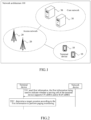
- the network architecture 100 may include a terminal device 10, an access network device 20 and a core network device 30.
- the terminal device 10 may refer to User Equipment (UE), an access terminal, a user unit, a user station, a mobile station, a mobile platform, a remote station, a remote terminal, a mobile device, a wireless communication device, a user agent, or a user device.
- UE User Equipment
- the terminal device 10 may also be a cellular phone, a cordless phone, a Session Initiation Protocol (SIP) phone, a Wireless Local Loop (WLL) station, a Personal Digital Assistant (PDA), a handheld device with wireless communication functions, a computing device or other processing devices connected to a wireless modem, a vehicle-mounted device, a wearable device, a terminal device in a 5th Generation System (5GS), a terminal device in future evolution of a Public Land Mobile Network (PLMN), etc., which are not limited in the embodiments of the present disclosure.
- the devices mentioned above are collectively referred to as terminal devices.
- the number of the terminal devices 10 is generally multiple, and one or more terminal devices 10 may be distributed in a cell managed by each access network device 20.
- the access network device 20 is a device deployed in an access network to provide a wireless communication function for the terminal device 10.
- the access network device 20 may include various forms of macro base stations, micro base stations, relay stations, access points, and so on.
- the name of the device with access network device functions may be different.
- gNodeB or gNB it is called gNodeB or gNB.
- the name "access network device" may change with the evolution of communication technologies.
- the above-mentioned devices that provide the wireless communication function for the terminal device 10 are collectively referred to as access network devices.
- a communication relationship may be established between the terminal device 10 and the core network device 30 through the access network device 20.
- the access network device 20 may be an Evolved Universal Terrestrial Radio Access Network (EUTRAN) or one or more eNodeBs in the EUTRAN.
- EUTRAN Evolved Universal Terrestrial Radio Access Network
- the access network device 20 may be a Radio Access Network (RAN) or one or more gNBs in the RAN.
- RAN Radio Access Network
- the network device refers to the access network device 20, such as a base station, unless otherwise indicated.
- the core network device 30 is a device deployed in a core network.
- the functions of the core network device 30 are mainly to provide user connections, manage users, carry services, and function as a bearer network to provide an interface to external networks.
- the core network device in the 5G NR system may include devices such as an Access and Mobility Management Function (AMF) entity, a User Plane Function (UPF) entity, and a Session Management Function (SMF) entity.
- AMF Access and Mobility Management Function
- UPF User Plane Function
- SMF Session Management Function
- the access network device 20 and the core network device 30 communicate with each other through a certain air interface technology, such as an NG interface in the 5G NR system.
- the access network device 20 and the terminal device 10 communicate with each other through a certain air interface technology, such as a Uu interface.
- the "5G NR system" in the embodiments of the present disclosure may also be called a 5G system or an NR system, and those skilled in the art can understand its meaning.
- the technical solutions described in the embodiments of the present disclosure can be applied to LTE systems, 5G NR systems, and subsequent evolution systems of 5G NR systems, and can also be applied to other communication systems such as NB-IoT (Narrow Band Internet of Things, narrowband Internet of Things) systems, which are not limited in the present disclosure.
- NB-IoT Near Band Internet of Things, narrowband Internet of Things
- the main application scenarios of the 5G NR system include Enhanced Mobile Broadband (eMBB), Ultra Reliable Low Latency Communication (URLLC), and Massive Machine Type Communication (mMTC).
- eMBB Enhanced Mobile Broadband
- URLLC Ultra Reliable Low Latency Communication
- mMTC Massive Machine Type Communication
- eMBB is still targeting at obtaining multimedia content, services and data by the users, and the demand therefor is growing very rapidly.
- eMBB may be deployed in different scenarios, such as indoors, urban areas, rural areas, etc., the capabilities and requirements thereof are also quite different, they cannot be generalized and must be analyzed in detail in conjunction with specific deployment scenarios.
- Typical applications of URLLC include industrial automation, power automation, telemedicine operations (surgeries), traffic safety, etc.
- Typical features of mMTC include high connection density, small data volume, delay-insensitive services, low cost and long service life of the module, etc.
- RRC Radio Resource Control
- RRC_INACTIVE also known as RRC inactive state
- RRC_IDLE also known as RRC idle state
- RRC_ACTIVE also known as RRC connected state
- RRC_IDLE state Mobility is based on cell selection and reselection of UE, paging is initiated by a Core Network (CN), and the paging area is configured by the CN. There is no UE Access Stratum (AS) context on the base station side. And, there is no RRC connection.
- CN Core Network
- AS UE Access Stratum
- RRC_CONNECTED state there is RRC connection, and there is UE AS context in the base station and the UE.
- the network side is aware of the location of the UE in a specific cell level. Mobility is the mobility controlled by the network side. Unicast data can be transmitted between the UE and the base station.
- RRC_INACTIVE state mobility is based on cell selection and reselection of the UE, there is a connection between CN and NR, there is UE AS context on a certain base station, the paging is triggered by RAN, RAN-based paging area is managed by RAN, and the network side is aware of the location of the UE in a level of the RAN-based paging area.
- the main function of paging is to enable the network device to page the terminal device through a paging message when the terminal device is in the RRC_IDLE or RRC_INACTIVE state, or to notify the terminal device of system message change or earthquake tsunami/public warning information through a short message (applicable to all RRC states of the terminal device, including the RRC_ACTIVE state).
- the paging includes a Physical Downlink Control Channel (PDCCH) scrambled by a Paging Radio Network Temporary Identifier (P-RNTI), and a Physical Downlink Share Channel (PDSCH) scheduled by the PDCCH.
- PDCCH Physical Downlink Control Channel
- P-RNTI Paging Radio Network Temporary Identifier
- PDSCH Physical Downlink Share Channel
- the Paging message is transmitted in the PDSCH, and the short message is 8 bits in the PDCCH.
- the terminal device can discontinuously monitor the paging channel, that is, adopting the paging DRX mechanism.
- the terminal device Under the paging DRX mechanism, the terminal device only needs to perform paging monitoring during one Paging Occasion (PO) in each DRX cycle.
- PO is a series of PDCCH monitoring occasions, and it can be composed of multiple slots.
- Paging Frame PF refers to a wireless frame (of fixed 1 0ms), which can contain multiple POs or starting positions of multiple POs.
- the paging DRX cycle is determined jointly by a default DRX cycle in system broadcast and a UE specific DRX cycle configured in high-layer signaling (Non-access stratum (NAS) signaling), and the terminal device takes the minimum of the two as the paging DRX cycle. From the perspective of the network, there can be multiple POs in one Paging DRX cycle, and the position where the terminal device monitors the PO is related to an Identifier (ID) of the terminal device. Specifically, PF and PO of a terminal device in a Paging DRX are determined as follows (TS 38.304):
- the position of the PF and the index of the PO in a Paging DRX cycle can be known. It is specified in TS 38.304 that PO is composed of multiple PDCCH monitoring occasions, and one PO contains X PDCCH monitoring occasions, X being equal to the number of Synchronization Signal and PBCH blocks (SSBs) broadcast in a Master Information Block (MIB) that are actually sent.
- SSBs Synchronization Signal and PBCH blocks
- MIB Master Information Block
- the terminal device After the terminal device knows the PF, the index of the PO, and the number of PDCCH monitoring occasions in the PO, it only needs to know the starting position of the first PDCCH monitoring occasion of the PO through relevant configuration parameters.
- the starting position can be configured through high-layer signaling, or can be obtained based on the PO index.
- the terminal device blindly detects the paging message according to the determined PO.
- the service types of terminal devices are relatively unitary and the traffic activity is very low, such terminal devices are in the non-connected state most of time, and considering that the services of such terminal device are not sensitive to delay requirements, in order to further save power for such terminal devices in the non-connected state, in LTE it introduces the eDRX mechanism for such terminal devices to support a longer paging cycle, that is, the paging cycle is more than 256 SFNs.
- the PTW is specific to the terminal device, and is determined according to a paging hyper frame PH (a start time point PTW_start and an end time point PTW_end within the PH).
- UE_ID_H is obtained based on the hashed ID, and TeDRX,H is the eDRX cycle in a unit of a hyper frame, which is configured by Access and Mobility Management Function (AMF).
- AMF Access and Mobility Management Function
- the terminal device in the RRC_INACTIVE state needs to monitor the CN paging (core network paging message) initiated by the CN side and the RAN paging (access network paging message) initiated by the RAN side simultaneously.
- the terminal device may need to monitor the CN paging and the RAN paging using different eDRX parameters.
- different network devices such as base stations
- the network device sends eDRX-related indication information to the terminal device in the serving cell, and indicates to the terminal device, through the indication information, whether the serving cell supports CN eDRX and/or RAN eDRX, so that the terminal device can perform paging monitoring according to the indication information, so as to perform paging monitoring at suitable occasions, achieving the purpose of saving power and not missing paging messages.
- FIG. 2 shows a flowchart of a paging monitoring method provided by an embodiment of the present disclosure. This method can be applied to the network architecture shown in FIG. 1 .
- the method may include the following steps (210 ⁇ 220).
- a network device sends first information to a terminal device, where the first information is used to indicate whether a serving cell of the terminal device supports CN eDRX and/or RAN eDRX.
- the terminal device receives the first information from the network device, and the terminal device can perform paging monitoring according to the first information.
- whether to support a certain type of eDRX can be understood as whether to support the implementation of this type of eDRX in the form of PTW and PH, for example, to support an eDRX cycle greater than 10.24s.
- whether to support CN eDRX can be understood as whether to support the implementation of CN eDRX in the form of PTW and PH
- whether to support RAN eDRX can be understood as whether to support the implementation of RAN eDRX in the form of PTW and PH.
- the above first information may be sent in the form of a system message.
- the network device broadcasts the system message to the terminal devices in the serving cell, and the system message includes the first information.
- the terminal device is in an inactive state (i.e., RRC_INACTIVE state).
- the network device (which can be a network device in the serving cell of the terminal device, such as a base station) sends the above first information to the terminal device, so that the terminal device can perform paging monitoring according to the first information, so as to perform paging monitoring at an appropriate occasion, achieving the purpose of saving power and not missing paging messages.
- step 220 the terminal device determines a target occasion to perform paging monitoring according to the first information.
- the target occasion refers to a time period during which the terminal device activates the receiving and monitoring function for the paging message, and within this time period, the terminal device has the capability of receiving the paging message.
- the paging message may be a paging message from the CN or a paging message from the RAN
- the terminal device can determine the PTW of the CN eDRX and/or determine the PTW of the RAN eDRX and determine the DRX cycle for receiving the paging message, according to the first information, and calculate the target occasion for receiving the paging message through combination of the above information of the two aspects, to perform paging monitoring.
- the network device sends eDRX-related indication information to the terminal device in the serving cell, and indicates to the terminal device through the indication information whether the serving cell supports CN eDRX and/or RAN eDRX, so that the terminal device can perform paging monitoring according to the indication information, so as to perform paging monitoring at suitable occasions, achieving the purpose of saving power and not missing paging messages.
- FIG. 3 shows a flowchart of a paging monitoring method provided by an embodiment of the present disclosure. This method can be applied to the network architecture shown in FIG. 1 . The method may include the following steps.
- a terminal device receives first information from a network device, where the first information is used to indicate whether a serving cell of the terminal device supports CN eDRX and/or RAN eDRX.
- CN eDRX and RAN eDRX are respectively configured with corresponding configuration parameters, that is, CN eDRX and RAN eDRX each has a set of configuration parameters, instead of sharing the same set of configuration parameters.
- the above configuration parameters include an eDRX cycle and/or a PTW length.
- the configuration parameters configured for CN eDRX and the configuration parameters configured for RAN eDRX may be the same or may be different, which is not limited in the present disclosure.
- the configuration parameters configured for the CN eDRX include the eDRX cycle of T1 and the PTW length of t1
- the configuration parameters configured for the RAN eDRX include the eDRX cycle of T2 and the PTW length of t2; where T1 and T2 may be equal or may be different, t1 and t2 may be equal or may be not equal.
- T1 and T2 may be equal or may be different
- t1 and t2 may be equal or may be not equal.
- the terminal device performs paging monitoring in accordance with the two sets of configuration parameters (including an eDRX cycle and/or a PTW length, for example).
- the terminal device may perform the following step 320 and/or step 330.
- step 320 in a PTW of the CN eDRX, the terminal device determines the DRX cycle in a first manner to perform paging monitoring.
- the first manner is as follows: within the PTW of CN eDRX, the terminal device determines the minimum of a default DRX cycle and a configurable cycle as a target DRX cycle, and performs paging monitoring using the target DRX cycle, where the configurable cycle includes a DRX cycle specific to the terminal device (i.e., a UE specific DRX cycle) and/or a RAN paging cycle.
- the terminal device determines the minimum of a default DRX cycle and a configurable cycle as a target DRX cycle, and performs paging monitoring using the target DRX cycle, where the configurable cycle includes a DRX cycle specific to the terminal device (i.e., a UE specific DRX cycle) and/or a RAN paging cycle.
- the configurable cycle refers to cycle information that can be selectively configured or not configured. For example, if the network device configures the UE specific DRX cycle for the terminal device but does not configure the RAN paging cycle, the terminal device determines the minimum of the default DRX cycle and the UE specific DRX cycle as the target DRX cycle; if the network device configures the RAN paging cycle but does not configure the UE specific DRX cycle for the terminal device, the terminal device determines the minimum of the default DRX cycle and the RAN paging cycle as the target DRX cycle; and if the network device configures the UE specific DRX cycle and the RAN paging cycle for the terminal device cycle, the terminal device determines the minimum of the default DRX cycle, the UE specific DRX cycle and the RAN paging cycle as the target DRX cycle. In addition, if the network device does not configure the UE specific DRX cycle and the RAN paging cycle for the terminal device,
- the terminal device determines the minimum of the default DRX cycle and the configurable cycle as the target DRX cycle, and performs paging monitoring using the target DRX cycle.
- step 330 in a time period that is within the PTW of the RAN eDRX and does not overlap with the PTW of the CN eDRX, the terminal device determines the DRX cycle in a second manner to perform paging monitoring.
- the first manner and the second manner are different.
- the second manner is as follows: in the time period that is within the PTW of the RAN eDRX and does not overlap with the PTW of the CN eDRX, the terminal device uses the default DRX cycle to perform paging monitoring.
- the white-filled rectangular box represents the PTW of CN eDRX
- the black-filled rectangular box represents the portion that is within the PTW of RAN eDRX and does not overlap with the PTW of CN eDRX.
- the terminal device determines the target DRX cycle according to the above method, and uses the target DRX cycle to perform paging monitoring.
- the black solid-line arrows in the PTW of CN eDRX in the figure represent the start position of each target DRX cycle.
- the terminal device uses the default DRX cycle to perform paging monitoring, for example, the dotted arrows in the portion that is within the PTW of RAN eDRX and does not overlap with the PTW of CN eDRX in the figure represent the starting position of each default DRX cycle.
- the terminal device performs paging monitoring in accordance with the configuration parameters of CN eDRX (including an eDRX cycle and/or a PTW length, for example).
- the terminal device may perform the following step 340 and/or step 350.
- step 340 in the PTW of the CN eDRX, the terminal device determines the DRX cycle in a third manner to perform paging monitoring.
- the third manner is as follows: within the PTW of CN eDRX, the terminal device determines the minimum of a default DRX cycle and a configurable cycle as a target DRX cycle, and performs paging monitoring using the target DRX cycle; where the configurable cycle includes a UE specific DRX cycle and/or a RAN paging cycle.
- step 350 outside the PTW of CN eDRX, the terminal device determines the DRX cycle in a fourth manner to perform paging monitoring.
- the third manner is different from the fourth manner.
- the fourth manner is as follows: outside the PTW of CN eDRX, the terminal device uses the RAN paging cycle to perform paging monitoring.
- the white-filled rectangular box represents the PTW of CN eDRX.
- the terminal device determines the target DRX cycle according to the above method, and uses the target DRX cycle to perform paging monitoring.
- the black solid-line arrows in the PTW of CN eDRX in the figure represent the start position of each target DRX cycle.
- the terminal device uses the default DRX cycle to perform paging monitoring.
- the dotted arrows outside the PTW of CN eDRX in the figure represent the starting position of each default DRX cycle.
- the terminal device may perform the following step 360.
- step 360 the terminal device determines the minimum of the default DRX cycle and the configurable cycle as the target DRX cycle, and uses the target DRX cycle to perform paging monitoring; where the configurable cycle includes a UE specific DRX cycle and/or a RAN paging cycle.
- the terminal device determines the target DRX cycle according to the above method, and performs paging monitoring using the target DRX cycle.
- the black solid-line arrows in the figure represent the starting position of each target DRX cycle.
- the terminal device after determining the results on supporting of CN eDRX and/or RAN eDRX by the serving cell based on eDRX-related indication information, the terminal device performs paging monitoring using appropriate cycles in different time periods based on the results, so as to save power and not miss paging messages.
- FIG. 5 shows a flowchart of an eDRX processing method provided by another embodiment of the present disclosure. This method can be applied to the network architecture shown in FIG. 1 . The method may include the following steps.
- a terminal device receives first information from a network device, where the first information is used to indicate whether a serving cell of the terminal device supports CN eDRX and/or RAN eDRX.
- CN eDRX and RAN eDRX share the same set of configuration parameters.
- the above configuration parameters include an eDRX cycle and/or a PTW length.
- the network side firstly configures a set of configuration parameters corresponding to CN eDRX for the terminal device, and the RAN eDRX uses the above configuration parameters corresponding to CN eDRX, so that CN eDRX and RAN eDRX share the same set of configuration parameters.
- the network side configures a set of eDRX-related configuration parameters for the terminal device, and the configuration parameters are applicable to both CN eDRX and RAN eDRX, and in this way, it can also be realized that the both share the same set of configuration parameters.
- the terminal device performs paging monitoring in accordance with the eDRX configuration parameters (i.e., the same set of configuration parameters above, including an eDRX cycle and/or a PTW length, for example).
- the terminal device may perform the following step 520 and/or step 530.
- step 520 in a PTW of eDRX, the terminal device determines a DRX cycle in a fifth manner to perform paging monitoring.
- the fifth manner is as follows: within the PTW of eDRX, the terminal device determines the minimum of a default DRX cycle and a configurable cycle as a target DRX cycle, and performs paging monitoring using the target DRX cycle; where the configurable cycle includes a UE specific DRX cycle and/or a RAN paging cycle.
- step 530 outside the PTW of eDRX, the terminal device does not perform paging monitoring.
- the terminal device determines the target DRX cycle according to the above method, and uses the target DRX cycle to perform paging monitoring.
- the black solid-line arrows in the PTW of eDRX in the figure represent the starting position of each target DRX cycle. Outside the PTW of eDRX, the terminal device does not perform paging monitoring.
- the terminal device performs paging monitoring in accordance with the configuration parameters of CN eDRX (including an eDRX cycle and/or a PTW length, for example).
- the terminal device may perform the following step 540 and/or step 550.
- step 540 in the PTW of CN eDRX, the terminal device determines the DRX cycle in a sixth manner to perform paging monitoring.
- the sixth manner is as follows: within the PTW of CN eDRX, the terminal device determines the minimum of a default DRX cycle and a configurable cycle as a target DRX cycle, and performs paging monitoring using the target DRX cycle; where the configurable cycle includes a UE specific DRX cycle and/or a RAN paging cycle.
- step 550 outside the PTW of CN eDRX, the terminal device determines the DRX cycle in a seventh manner to perform paging monitoring.
- the sixth manner is different from the seventh manner.
- the seventh manner is as follows: outside the PTW of CN eDRX, the terminal device uses the RAN paging cycle to perform paging monitoring.
- the white-filled rectangular box represents the PTW of CN eDRX.
- the terminal device determines the target DRX cycle according to the above method, and performs paging monitoring using the target DRX cycle.
- the black solid-line arrows in the PTW of CN eDRX in the figure represent the start position of each target DRX cycle.
- the terminal device uses the RAN paging cycle to perform paging monitoring.
- the dotted arrows outside the PTW of CN eDRX in the figure represent the starting position of each RAN paging cycle.
- the terminal device may perform the following step 560.
- the terminal device determines the minimum of the default DRX cycle and the configurable cycle as the target DRX cycle, and performs paging monitoring using the target DRX cycle; where the configurable cycle includes a UE specific DRX cycle and/or a RAN paging cycle.
- the terminal device determines the target DRX cycle according to the above method, and uses the target DRX cycle to perform paging monitoring.
- the black solid-line arrows in the figure represent the starting position of each target DRX cycle.
- the terminal device after determining the results on supporting of CN eDRX and/or RAN eDRX by the serving cell based on eDRX-related indication information, the terminal device performs paging monitoring using appropriate cycles in different time periods based on the results, so as to save power and not miss paging messages.
- eDRX configuration parameters may be transmitted between network devices through an air interface (such as an Xn interface).
- an air interface such as an Xn interface
- an anchor network device of the terminal device after receiving data for a terminal device from a core network device, an anchor network device of the terminal device sends a RAN paging message to other network devices in an RAN paging area of the terminal device, the RAN paging message including RAN eDRX configuration parameters of the terminal device.
- the RAN paging message is sent through an air interface (such as an Xn interface) between network devices.
- an air interface such as an Xn interface
- the RAN eDRX configuration parameters include an eDRX cycle and/or a PTW length.
- step 720 other network devices page the terminal device based on the RAN eDRX configuration parameters and other configuration parameters; where the other configuration parameters include at least one of the following: CN eDRX configuration parameters received from the core network device, and corresponding results on supporting of CN eDRX and/or RAN eDRX by cells where the other network devices are located.
- the other network devices determine a paging cycle for the terminal device based on the RAN eDRX configuration parameters and the other configuration parameters, and perform paging for the terminal device based on the paging cycle.
- the method of determining the paging cycle can be the same as those of determining the paging cycle by the terminal device described in the above embodiments, so that the network devices and the terminal device perform paging message sending and paging message monitoring according to the same paging cycle.
- the transmission of eDRX configuration parameters is added on the Xn interface, so that the network devices in the serving cell where the terminal device is located can page the terminal device based on the above configuration parameters, which is helpful to improve a success rate of receiving the paging message.
- the technical solutions of the present disclosure are introduced and described mainly from the perspective of interaction between the terminal device and the network device.
- the above steps performed by the terminal device can be independently implemented as a paging monitoring method on the terminal device side; and the above steps performed by the network device can be independently implemented as a paging monitoring method on the network device side.
- FIG. 8 shows a block diagram of a paging monitoring apparatus provided by an embodiment of the present disclosure.
- the apparatus has the function of implementing the above method examples on the terminal device side, and the function may be implemented by hardware, or may be implemented by the hardware executing corresponding software.
- the apparatus may be the terminal device described above, or may be set in the terminal device.
- the apparatus 800 may include a receiving module 810 and a paging monitoring module 820.
- the receiving module 810 is configured to receive first information from a network device, where the first information is used to indicate whether a serving cell for a terminal device supports CN eDRX and/or RAN eDRX.
- the paging monitoring module 820 is configured to determine a target occasion according to the first information to perform paging monitoring.
- the CN eDRX and the RAN eDRX are respectively configured with corresponding configuration parameters.
- the paging monitoring module 820 is configured to: if the first information indicates that the serving cell supports both the CN eDRX and the RAN eDRX, within a PTW of the CN eDRX, determine a DRX cycle in a first manner to perform paging monitoring; and in a time period that is within a PTW of the RAN eDRX and does not overlap with the PTW of the CN eDRX, determine the DRX cycle in a second manner to perform paging monitoring; where the first manner and the second manner are different.
- the paging monitoring module 820 is configured to: within a paging time window (PTW) of the CN eDRX, determine the minimum of a default DRX cycle and a configurable cycle as a target DRX cycle, and perform paging monitoring using the target DRX cycle, where the configurable cycle includes a DRX cycle specific to the terminal device and/or a RAN paging cycle; and in a time period that is within the PTW of the RAN eDRX and does not overlap with the PTW of the CN eDRX, determine to perform paging monitoring using the default DRX cycle.
- PGW paging time window
- the paging monitoring module 820 is configured to: if the first information indicates that the serving cell supports the CN eDRX but does not support the RAN eDRX, in the PTW of the CN eDRX, determine the DRX cycle in a third manner to perform paging monitoring; and outside the PTW of the CN eDRX, determine the DRX cycle in a fourth manner to perform paging monitoring, where the third manner and the fourth manner are different.
- the paging monitoring module 820 is configured to: within the PTW of the CN eDRX, determine the minimum of the default DRX cycle and the configurable cycle as the target DRX cycle, and perform paging monitoring using the target DRX cycle, where the configurable cycle includes a DRX cycle specific to the terminal device and/or a RAN paging cycle; and outside the PTW of the CN eDRX, perform paging monitoring using the RAN paging cycle.
- the paging monitoring module 820 is configured to: if the first information indicates that the serving cell neither supports the CN eDRX nor supports the RAN eDRX, determine the minimum of the default DRX cycle and the configurable cycle as the target DRX cycle, and perform paging monitoring using the target DRX cycle; where the configurable cycles includes a DRX cycle specific to the terminal device and/or a RAN paging cycle.
- the CN eDRX and the RAN eDRX share the same set of configuration parameters.
- the paging monitoring module 820 is configured to: if the first information indicates that the serving cell supports both the CN eDRX and the RAN eDRX, within a PTW of the eDRX, determine a DRX cycle in a fifth manner to perform paging monitoring; and outside the PTW of the eDRX, not perform paging monitoring.
- the paging monitoring module 820 is configured to determine the minimum of the default DRX cycle and the configurable cycle as the target DRX cycle within the PTW of the eDRX, and use the target DRX cycle to perform paging monitoring, where the configurable cycle includes a DRX cycle specific to the terminal device and/or a RAN paging cycle.
- the paging monitoring module 820 is configured to: if the first information indicates that the serving cell supports the CN eDRX but does not support the RAN eDRX, in a PTW of the CN eDRX, determine the DRX cycle in a sixth manner to perform paging monitoring; and outside the PTW of the CN eDRX, determine the DRX cycle in a seventh manner to perform paging monitoring, where the sixth manner and the seventh manner are different.
- the paging monitoring module 820 is configured to: within the PTW of the CN eDRX, determine the minimum of the default DRX cycle and the configurable cycle as the target DRX cycle, and use the target DRX cycle to perform paging monitoring, where the configurable cycle includes a DRX cycle specific to the terminal device and/or a RAN paging cycle; and outside the PTW of the CN eDRX, use the RAN paging cycle to perform paging monitoring.
- the paging monitoring module 820 is configured to: if the first information indicates that the serving cell neither supports the CN eDRX nor supports the RAN eDRX, determine the minimum of the default DRX cycle and the configurable cycle as the target DRX cycle, and perform paging monitoring using the target DRX cycle, where the configurable cycles includes a DRX cycle specific to the terminal device and/or a RAN paging cycle.
- the configuration parameters include an eDRX cycle and/or a PTW length.
- an anchor network device of the terminal device is configured to, after receiving data for the terminal device from a core network device, send a RAN paging message to other network devices in a RAN paging area of the terminal device, where the RAN paging message includes RAN eDRX configuration parameters of the terminal device.
- the other network devices are configured to page the terminal device based on the RAN eDRX configuration parameters and other configuration parameters; where the other configuration parameters include at least one of the following: CN eDRX configuration parameters received from the core network device, and corresponding results on supporting of CN eDRX and/or RAN eDRX by cells where the other network devices are located.
- the terminal device is in an inactive state.
- the network device sends eDRX-related indication information to the terminal device in the serving cell, and indicates to the terminal device through the indication information whether the serving cell supports CN eDRX and/or RAN eDRX, so that the terminal device can perform paging monitoring according to the indication information, so as to perform paging monitoring at suitable occasions, achieving the purpose of saving power and not missing paging messages.
- FIG. 9 shows a block diagram of a paging monitoring apparatus provided by another embodiment of the present disclosure.
- the apparatus has the function of implementing the above method examples on the network device side, and the function may be implemented by hardware, or may be implemented by hardware executing corresponding software.
- the apparatus may be the network device described above, or may be set in the network device.
- the apparatus 900 may include a sending module 910.
- the sending module 910 is configured to send first information to a terminal device, where the first information is used to indicate whether a serving cell for the terminal device supports CN eDRX and/or RAN eDRX.
- the CN eDRX and the RAN eDRX are respectively configured with corresponding configuration parameters.
- the terminal device determines a DRX cycle to perform paging monitoring in a first manner; and in a time period that is within a PTW of the RAN eDRX and does not overlap with the PTW of the CN eDRX, the terminal device determines the DRX cycle to perform paging monitoring in a second manner, where the first manner is different from the second manner.
- a paging time window PTW
- the terminal device determines the minimum of a default DRX cycle and a configurable cycle as a target DRX cycle, and perform paging monitoring using the target DRX cycle, where the configurable cycle includes a DRX cycle specific to the terminal device and/or a RAN paging cycle; and in the time period that is within the PTW of the RAN eDRX and does not overlap with the PTW of the CN eDRX, the terminal device determines to perform paging monitoring using the default DRX cycle.
- the configurable cycle includes a DRX cycle specific to the terminal device and/or a RAN paging cycle
- the terminal device determines the DRX cycle in a third manner to perform paging monitoring; and outside the PTW of the CN eDRX, the terminal device determines the DRX cycle in a fourth manner to perform paging monitoring, where the third manner and the fourth manner are different.
- the terminal device determines the minimum of the default DRX cycle and the configurable cycle as the target DRX cycle, and performs paging monitoring using the target DRX cycle, where the configurable cycle includes a DRX cycle specific to the terminal device and/or a RAN paging cycle; and outside the PTW of the CN eDRX, the terminal device performs paging monitoring using the RAN paging cycle.
- the terminal device determines the minimum of the default DRX cycle and the configurable cycle as the target DRX cycle, and performs paging monitoring using the target DRX cycle, where the configurable cycle includes a DRX cycle specific to the terminal device and/or a RAN paging cycle.
- the CN eDRX and the RAN eDRX share the same set of configuration parameters.
- the terminal device determines the DRX cycle in a fifth manner to perform paging monitoring; and outside the PTW of the eDRX, the terminal device does not perform paging monitoring.
- the terminal device determines the minimum of the default DRX cycle and the configurable cycle as the target DRX cycle, and performs paging monitoring using the target DRX cycle, where the configurable cycle includes a DRX cycle specific to the terminal device and/or a RAN paging cycle.
- the terminal device determines the DRX cycle in a sixth manner to perform paging monitoring; and outside the PTW of the CN eDRX, the terminal device determines the DRX cycle in a seventh manner to perform paging monitoring, where the sixth manner and the seventh manner are different.
- the terminal device determines the minimum of the default DRX cycle and the configurable cycle as the target DRX cycle, and performs paging monitoring using the target DRX cycle, where the configurable cycle includes a DRX cycle specific to the terminal device and/or a RAN paging cycle; and outside the PTW of the CN eDRX, the terminal device performs paging monitoring using the RAN paging cycle.
- the terminal device determines the minimum of the default DRX cycle and the configurable cycle as the target DRX cycle, and performs paging monitoring using the target DRX cycle, where the configurable cycles includes a DRX cycle specific to the terminal device and/or a RAN paging cycle.
- the configuration parameters include an eDRX cycle and/or a PTW length.
- an anchor network device of the terminal device is configured to, after receiving data for the terminal device from a core network device, send a RAN paging message to other network devices in a RAN paging area of the terminal device, where the RAN paging message includes RAN eDRX configuration parameters of the terminal device.
- the other network devices are configured to page the terminal device based on the RAN eDRX configuration parameters and other configuration parameters; where the other configuration parameters include at least one of the following: CN eDRX configuration parameters received from the core network device, and corresponding results on supporting of CN eDRX and/or RAN eDRX by cells where the other network devices are located.
- the terminal device is in an inactive state.
- the network device sends eDRX-related indication information to the terminal device in the serving cell, and indicates to the terminal device through the indication information whether the serving cell supports CN eDRX and/or RAN eDRX, so that the terminal device can perform paging monitoring according to the indication information, so as to perform paging monitoring at suitable occasions, achieving the purpose of saving power and not missing paging messages.
- FIG. 10 shows a schematic structural diagram of a terminal device 100 provided by an embodiment of the present disclosure.
- the terminal device 100 may include a processor 101, a receiver 102, a transmitter 103, a memory 104 and a bus 105.
- the processor 101 includes one or more processing cores, and the processor 101 executes various functional applications and information processing by running software programs and modules.
- the receiver 102 and the transmitter 103 can be implemented as a transceiver 106, and the transceiver 106 can be a communication chip.
- the memory 104 is connected to the processor 101 through the bus 105.
- the memory 104 may be configured to store a computer program, and the processor is configured to execute the computer program, so as to implement the steps performed by the terminal device in the foregoing method embodiments.
- the memory 104 can be realized by any type of volatile or nonvolatile storage device or a combination thereof, and the volatile or nonvolatile storage device includes but is not limited to: a Random Access Memory (RAM) and a Read Only Memory (ROM), a Erasable Programmable Read-Only Memory (EPROM), an Electrically Erasable Programmable Read-Only Memory (EEPROM ), a flash memory or other solid-state memory technologies, a Compact Disc Read-Only Memory (CD-ROM), a Digital Video Disc (DVD) or other optical storage, tape cartridges, tapes, disks storage or other magnetic storage devices.
- RAM Random Access Memory
- ROM Read Only Memory
- EPROM Erasable Programmable Read-Only Memory
- EEPROM Electrically Erasable Programmable Read-Only Memory
- flash memory or other solid-state memory technologies a Compact Disc Read-Only Memory (CD-ROM), a Digital Video Disc (DVD) or other optical storage, tape cartridges, tapes, disks storage or other magnetic storage
- the transceiver 106 is configured to receive first information from a network device, where the first information is used to indicate whether a serving cell for the terminal device supports CN eDRX and/or RAN eDRX; and the processor 101 is configured to determine a target occasion to perform paging monitoring according to the first information.
- the CN eDRX and the RAN eDRX are respectively configured with corresponding configuration parameters.
- the processor 101 is configured to: if the first information indicates that the serving cell supports both the CN eDRX and the RAN eDRX, within a paging time window (PTW) of the CN eDRX, determine a DRX cycle in a first manner to perform paging monitoring; and in a time period that is within a PTW of the RAN eDRX and does not overlap with the PTW of the CN eDRX, determine the DRX cycle in a second manner to perform paging monitoring, where the first manner and the second manner are different.
- PTW paging time window
- the processor 101 is configured to: within the paging time window (PTW) of the CN eDRX, determine the minimum of a default DRX cycle and a configurable cycle as a target DRX cycle, and perform paging monitoring using the target DRX cycle, where the configurable cycle includes a DRX cycle specific to the terminal device and/or a RAN paging cycle; and in the time period that is within the PTW of the RAN eDRX and does not overlap with the PTW of the CN eDRX, determine to perform paging monitoring using the default DRX cycle.
- PGW paging time window
- the processor 101 is configured to: if the first information indicates that the serving cell supports the CN eDRX but does not support the RAN eDRX, in the PTW of the CN eDRX, determine the DRX cycle in a third manner to perform paging monitoring; and outside the PTW of the CN eDRX, determine the DRX cycle in a fourth manner to perform paging monitoring; where the third manner and the fourth manner are different.
- the processor 101 is configured to: within the PTW of the CN eDRX, determine the minimum of the default DRX cycle and the configurable cycle as the target DRX cycle, and perform paging monitoring using the target DRX cycle, where the configurable cycle includes a DRX cycle specific to the terminal device and/or a RAN paging cycle; and outside the PTW of the CN eDRX, perform paging monitoring using the RAN paging cycle.
- the processor 101 is configured to: if the first information indicates that the serving cell neither supports the CN eDRX nor supports the RAN eDRX, determine the minimum of the default DRX cycle and the configurable cycle as the target DRX cycle, and perform paging monitoring using the target DRX cycle; where the configurable cycles includes a DRX cycle specific to the terminal device and/or a RAN paging cycle.
- the CN eDRX and the RAN eDRX share the same set of configuration parameters.
- the processor 101 is configured to: if the first information indicates that the serving cell supports both the CN eDRX and the RAN eDRX, within the PTW of the eDRX, determine the DRX cycle in a fifth manner to perform paging monitoring; and outside the PTW of the eDRX, not perform paging monitoring.
- the processor 101 is configured to: within the PTW of the eDRX, determine the minimum of the default DRX cycle and the configurable cycle as the target DRX cycle, and perform paging monitoring using the target DRX cycle; where the configurable cycle includes a DRX cycle specific to the terminal device and/or a RAN paging cycle.
- the processor 101 is configured to: if the first information indicates that the serving cell supports the CN eDRX but does not support the RAN eDRX, within the PTW of the CN eDRX, determine the DRX cycle in a sixth manner to perform paging monitoring; and outside the PTW of the CN eDRX, determine the DRX cycle in a seventh manner to perform paging monitoring; where the sixth manner and the seventh manner are different.
- the processor 101 is configured to: within the PTW of the CN eDRX, determine the minimum of the default DRX cycle and the configurable cycle as the target DRX cycle, and perform paging monitoring using the target DRX cycle, where the configurable cycle includes a DRX cycle specific to the terminal device and/or a RAN paging cycle; and outside the PTW of the CN eDRX, perform paging monitoring using the RAN paging cycle.
- the processor 101 is configured to: if the first information indicates that the serving cell neither supports the CN eDRX nor supports the RAN eDRX, determine the minimum of the default DRX cycle and the configurable cycle as the target DRX cycle, and perform paging monitoring using the target DRX cycle; where the configurable cycles includes a DRX cycle specific to the terminal device and/or a RAN paging cycle.
- the configuration parameters include an eDRX cycle and/or a PTW length.
- an anchor network device of the terminal device is configured to, after receiving data for the terminal device from a core network device, send a RAN paging message to other network devices in a RAN paging area of the terminal device, where the RAN paging message includes RAN eDRX configuration parameters of the terminal device.
- the other network devices are configured to page the terminal device based on the RAN eDRX configuration parameters and other configuration parameters; where the other configuration parameters include at least one of the following: CN eDRX configuration parameters received from the core network device, and corresponding results on supporting of CN eDRX and/or RAN eDRX by the cells where the other network devices are located.
- the terminal device is in an inactive state.
- FIG. 11 shows a schematic structural diagram of a network device 110 provided by an embodiment of the present disclosure.
- the network device 110 may include a processor 111, a receiver 112, a transmitter 113, a memory 114 and a bus 115.
- the processor 111 includes one or more processing cores, and the processor 111 executes various functional applications and information processing by running software programs and modules.
- the receiver 112 and the transmitter 113 can be implemented as a transceiver 116, and the transceiver 116 can be a communication chip.
- the memory 114 is connected to the processor 111 through the bus 115.
- the memory 114 may be configured to store a computer program, and the processor 111 is configured to execute the computer program, so as to implement the steps performed by the network device in the foregoing method embodiments.
- the memory 114 can be realized by any type of volatile or nonvolatile storage device or a combination thereof, and the volatile or nonvolatile storage device includes but is not limited to: a Random-Access Memory (RAM) and a Read-Only Memory (ROM), a Erasable Programmable Read-Only Memory (EPROM), an Electrically Erasable Programmable Read-Only Memory (EEPROM ), a flash memory or other solid-state memory technologies, a Compact Disc Read-Only Memory (CD-ROM), a Digital Video Disc (DVD) or other optical storage, tape cartridges, tapes, disks storage or other magnetic storage devices.
- RAM Random-Access Memory
- ROM Read-Only Memory
- EPROM Erasable Programmable Read-Only Memory
- EEPROM Electrically Erasable Programmable Read-Only Memory
- flash memory or other solid-state memory technologies a Compact Disc Read-Only Memory (CD-ROM), a Digital Video Disc (DVD) or other optical storage, tape cartridges, tapes, disk
- the transceiver 116 is configured to send first information to a terminal device, where the first information is used to indicate whether a serving cell for the terminal device supports CN eDRX and/or RAN eDRX.
- the CN eDRX and the RAN eDRX are respectively configured with corresponding configuration parameters.
- the terminal device determines a DRX cycle in a first manner to perform paging monitoring; and in a time period that is within a PTW of the RAN eDRX and does not overlap with the PTW of the CN eDRX, the terminal device determines the DRX cycle in a second manner to perform paging monitoring; where the first manner is different from the second manner.
- a paging time window PTW
- the terminal device determines the minimum of a default DRX cycle and a configurable cycle as a target DRX cycle, and perform paging monitoring using the target DRX cycle, where the configurable cycle includes a DRX cycle specific to the terminal device and/or a RAN paging cycle; and in the time period that is within the PTW of the RAN eDRX and does not overlap with the PTW of the CN eDRX, the terminal device determines to perform paging monitoring using the default DRX cycle.
- the configurable cycle includes a DRX cycle specific to the terminal device and/or a RAN paging cycle
- the terminal device determines the DRX cycle in a third manner to perform paging monitoring; and outside the PTW of the CN eDRX, the terminal device determines the DRX cycle in a fourth manner to perform paging monitoring; where the third manner and the fourth manner are different.
- the terminal device determines the minimum of the default DRX cycle and the configurable cycle as the target DRX cycle, and performs paging monitoring using the target DRX cycle, where the configurable cycle includes a DRX cycle specific to the terminal device and/or a RAN paging cycle; and outside the PTW of the CN eDRX, the terminal device performs paging monitoring using the RAN paging cycle.
- the terminal device determines the minimum of the default DRX cycle and the configurable cycle as the target DRX cycle, and performs paging monitoring using the target DRX cycle; where the configurable cycles includes a DRX cycle specific to the terminal device and/or a RAN paging cycle.
- the CN eDRX and the RAN eDRX share the same set of configuration parameters.
- the terminal device determines the DRX cycle in a fifth manner to perform paging monitoring; and outside the PTW of the eDRX, the terminal device does not perform paging monitoring.
- the terminal device determines the minimum of the default DRX cycle and the configurable cycle as the target DRX cycle, and performs paging monitoring using the target DRX cycle, where the configurable cycle includes a DRX cycle specific to the terminal device and/or a RAN paging cycle.
- the terminal device determines the DRX cycle in a sixth manner to perform paging monitoring; and outside the PTW of the CN eDRX, the terminal device determines the DRX cycle in a seventh manner to perform paging monitoring; where the sixth manner and the seventh manner are different.
- the terminal device determines the minimum of the default DRX cycle and the configurable cycle as the target DRX cycle, and performs paging monitoring using the target DRX cycle, where the configurable cycle includes a DRX cycle specific to the terminal device and/or a RAN paging cycle; and outside the PTW of the CN eDRX, the terminal device performs paging monitoring using the RAN paging cycle.
- the terminal device determines the minimum of the default DRX cycle and the configurable cycle as the target DRX cycle, and performs paging monitoring using the target DRX cycle; where the configurable cycles includes a DRX cycle specific to the terminal device and/or a RAN paging cycle.
- the configuration parameters include an eDRX cycle and/or a PTW length.
- an anchor network device of the terminal device is configured to, after receiving data for the terminal device from a core network device, send a RAN paging message to other network devices in a RAN paging area of the terminal device, where the RAN paging message includes RAN eDRX configuration parameters of the terminal device.
- the other network devices are configured to page the terminal device based on the RAN eDRX configuration parameters and other configuration parameters; where the other configuration parameters include at least one of the following: CN eDRX configuration parameters received from the core network device, and corresponding results on supporting of CN eDRX and/or RAN eDRX by the cells where the other network devices are located.
- the terminal device is in an inactive state.
- An embodiment of the present disclosure also provides a computer-readable storage medium that has stored thereon a computer program, and the computer program is used for being executed by a processor of a terminal device, so as to implement the above paging monitoring method on the terminal device side.
- An embodiment of the present disclosure also provides a computer-readable storage medium that has stored thereon a computer program, and the computer program is used for being executed by a processor of a network device, so as to implement the above paging monitoring method on the network device side.
- the computer-readable storage medium may include a Read-Only Memory (ROM), a Random-Access Memory (RAM), a Solid State Drives (SSD), an optical disc, or the like.
- the random access memory may include a Resistance Random Access Memory (ReRAM) and a Dynamic Random Access Memory (DRAM).
- An embodiment of the present disclosure also provides a chip that includes a programmable logic circuit and/or program instructions, and the chip, when running on a terminal device, is configured to implement the above paging monitoring method on the terminal device side.
- An embodiment of the present disclosure also provides a chip that includes a programmable logic circuit and/or program instructions, and the chip, when running on a network device, is configured to implement the above paging monitoring method on the network device side.
- An embodiment of the present disclosure also provides a computer program product or computer program, the computer program product or computer program includes computer instructions, the computer instructions are stored in a computer-readable storage medium, and a processor of a terminal device reads from the computer-readable storage medium and executes the computer instructions, so as to implement the above paging monitoring method on the terminal device side.
- An embodiment of the present disclosure also provides a computer program product or computer program, the computer program product or computer program includes computer instructions, the computer instructions are stored in a computer-readable storage medium, and a processor of a network device reads from the computer-readable storage medium and executes the computer instructions, so as to implement the above paging monitoring method on the network device side.
- indicate (indicating) mentioned in the embodiments of the present disclosure may be a direct indication or an indirect indication, or may represent an associated relationship. For example, if A indicates B, it may represent that A directly indicates B, for example, B can be obtained from A; or it may represent that A indicates B indirectly, for example, A indicates C, and B can be obtained from C; or it may represent that there is an associated relationship between A and B.
- corresponding may indicate that there is a direct or indirect corresponding relationship between two objects, or may indicate that there is an associated relationship, a relationship of indicating and being indicated, or a relationship of configuring and being configured between the two objects, and so on.
- the numbers of the steps described herein only exemplarily illustrate a possible performing order of the steps.
- the above steps may not be performed according to the order of the numbers, for example, two steps with different numbers are performed at the same time, or two steps with different numbers are performed in a reverse order as that shown in the illustration, which is not limited in the embodiments of the present disclosure.
- the functions described in the embodiments of the present disclosure may be implemented by hardware, software, firmware or any combination thereof.
- the functions may be stored on a computer-readable medium or transmitted as one or more instructions or codes over the computer-readable medium.
- the computer-readable medium includes both a computer storage medium and a communication media including any medium that facilitates transfer of a computer program from one place to another.
- the storage medium may be any available medium that can be accessed by a general purpose or special purpose computer.
Landscapes
- Engineering & Computer Science (AREA)
- Computer Networks & Wireless Communication (AREA)
- Signal Processing (AREA)
- Mobile Radio Communication Systems (AREA)
Abstract
Description
- The embodiments of the present disclosure relate to the field of communication technologies, and in particular, to a paging monitoring method and apparatus, a device, and a storage medium.
- In current standard discussion, introduction of extended Discontinuous Reception (eDRX) mechanism is considered for power saving requirements of reduced capability (RedCap) terminals. For an RRC_IDLE state, it has been decided to support an eDRX cycle longer than 10.24s, and to use a Hyper System Frame Number (H-SFN) and Paging Time Window (PTW) scheme. For an RRC_INACTIVE state, in consideration of the gain in energy saving, it is very likely to introduce an eDRX cycle of more than 10.24s.
- A terminal device in the RRC_INACTIVE state needs to monitor a Core Network (CN) paging message initiated by a CN side (CN paging) and a Radio Access Network (RAN) paging message initiated by a RAN side (RAN paging) simultaneously. When both the CN paging and the RAN paging introduce the eDRX mechanism, how the terminal device performs paging monitoring is a problem that needs to be solved.
- Embodiments of the present disclosure provide a paging monitoring method and apparatus, a device and a storage medium. The technical solutions are as follows.
- According to an aspect of an embodiment of the present disclosure, a paging monitoring method is provided, the method is performed by a terminal device, and the method includes:
- receiving first information from a network device, where the first information is used to indicate whether a serving cell for the terminal device supports CN eDRX and/or RAN eDRX; and
- determining, according to the first information, a target occasion to perform paging monitoring.
- According to an aspect of an embodiment of the present disclosure, a paging monitoring method is provided, the method is performed by a network device, and the method includes:
sending first information to a terminal device, where the first information is used to indicate whether a serving cell for the terminal device supports CN eDRX and/or RAN eDRX. - According to an aspect of an embodiment of the present disclosure, a paging monitoring apparatus is provided, and the apparatus includes:
- a receiving module, configured to receive first information from a network device, where the first information is used to indicate whether a serving cell for a terminal device supports CN eDRX and/or RAN eDRX; and
- a paging monitoring module, configured to determine a target occasion according to the first information to perform paging monitoring.
- According to an aspect of an embodiment of the present disclosure, a paging monitoring apparatus is provided, and the apparatus includes:
a sending module, configured to send first information to a terminal device, where the first information is used to indicate whether a serving cell for the terminal device supports CN eDRX and/or RAN eDRX. - According to an aspect of an embodiment of the present disclosure, a terminal device is provided, and the terminal device includes a transceiver and a processor;
- the transceiver is configured to receive first information from a network device, where the first information is used to indicate whether a serving cell for the terminal device supports CN eDRX and/or RAN eDRX; and
- the processor is configured to determine a target occasion according to the first information to perform paging monitoring.
- According to an aspect of an embodiment of the present disclosure, a network device is provided, and the network device includes a transceiver,
the transceiver is configured to send first information to a terminal device, where the first information is used to indicate whether a serving cell for the terminal device supports CN eDRX and/or RAN eDRX. - According to an aspect of an embodiment of the present disclosure, a computer-readable storage medium is provided, the storage medium has a computer program stored thereon, and the computer program is used for execution by a processor, so as to implement the above paging monitoring method on the terminal device side, or implement the above paging monitoring method on the network device side.
- According to an aspect of an embodiment of the present disclosure, a chip is provided, the chip includes a programmable logic circuit and/or program instructions, and the chip, when running, is configured to implement the above paging monitoring method on the terminal device side, or the above paging monitoring method on the network device side.
- According to an aspect of the embodiments of the present disclosure, a computer program product or computer program is provided, the computer program product or computer program includes computer instructions, the computer instructions are stored in a computer-readable storage medium, and a processor reads from the computer-readable storage medium and executes the computer instructions, so as to implement the above paging monitoring method on the terminal device side, or the above paging monitoring method on the network device side.
- The technical solutions provided in the embodiments of the present disclosure can achieve the following beneficial effects.
- The network device sends eDRX-related indication information to the terminal device in the serving cell, and indicates to the terminal device, through the indication information, whether the serving cell supports CN eDRX and/or RAN eDRX, so that the terminal device can perform paging monitoring according to the indication information, so as to perform paging monitoring at suitable occasions, achieving the purpose of saving power and not missing paging messages.
- In order to clearly describe the technical solutions in the embodiments of the present disclosure, the accompanying drawings which are referred to in the description of the embodiments will be briefly described below. Obviously, the drawings in the following description show merely some embodiments of the present disclosure, and a person of ordinary skill in the art may still derive other drawings from these accompanying drawings without creative efforts.
-
FIG. 1 is a schematic diagram of a network architecture provided by an embodiment of the present disclosure; -
FIG. 2 is a flowchart of a paging monitoring method provided by an embodiment of the present disclosure; -
FIG. 3 is a flowchart of a paging monitoring method provided by another embodiment of the present disclosure; -
FIG. 4 is a schematic diagram of a paging cycle in several situations involved in the embodiment ofFIG. 3 ; -
FIG. 5 is a flowchart of a paging monitoring method provided by another embodiment of the present disclosure; -
FIG. 6 is a schematic diagram of a paging cycle in several situations involved in the embodiment ofFIG. 5 ; -
FIG. 7 is a flow chart of transmitting eDRX configuration parameters between network devices provided by an embodiment of the present disclosure; -
FIG. 8 is a block diagram of a paging monitoring apparatus provided by an embodiment of the present disclosure; -
FIG. 9 is a block diagram of a paging monitoring apparatus provided by another embodiment of the present disclosure; -
FIG. 10 is a schematic structural diagram of a terminal device provided by an embodiment of the present disclosure; and -
FIG. 11 is a schematic structural diagram of a network device provided by an embodiment of the present disclosure. - In order to make the objectives, technical solutions, and advantages of the present disclosure more clear, the implementations of the present disclosure will be further described in detail below in conjunction with the accompanying drawings.
- The network architecture and service scenarios described in the embodiments of the present disclosure are intended to more clearly illustrate the technical solutions of the embodiments of the present disclosure, and do not constitute a limitation on the technical solutions provided by the embodiments of the present disclosure. Those of ordinary skill in the art will understand that with evolution of the network architecture and emergence of new service scenarios, the technical solutions provided in the embodiments of the present disclosure are equally applicable to similar technical problems.
- Refer to
FIG. 1 , which shows a schematic diagram of anetwork architecture 100 provided by an embodiment of the present disclosure. Thenetwork architecture 100 may include aterminal device 10, anaccess network device 20 and acore network device 30. - The
terminal device 10 may refer to User Equipment (UE), an access terminal, a user unit, a user station, a mobile station, a mobile platform, a remote station, a remote terminal, a mobile device, a wireless communication device, a user agent, or a user device. Optionally, theterminal device 10 may also be a cellular phone, a cordless phone, a Session Initiation Protocol (SIP) phone, a Wireless Local Loop (WLL) station, a Personal Digital Assistant (PDA), a handheld device with wireless communication functions, a computing device or other processing devices connected to a wireless modem, a vehicle-mounted device, a wearable device, a terminal device in a 5th Generation System (5GS), a terminal device in future evolution of a Public Land Mobile Network (PLMN), etc., which are not limited in the embodiments of the present disclosure. For convenience of description, the devices mentioned above are collectively referred to as terminal devices. The number of theterminal devices 10 is generally multiple, and one or moreterminal devices 10 may be distributed in a cell managed by eachaccess network device 20. - The
access network device 20 is a device deployed in an access network to provide a wireless communication function for theterminal device 10. Theaccess network device 20 may include various forms of macro base stations, micro base stations, relay stations, access points, and so on. In systems adopting different radio access technologies, the name of the device with access network device functions may be different. For example, in a 5G NR system, it is called gNodeB or gNB. The name "access network device" may change with the evolution of communication technologies. For convenience of description, in the embodiments of the present disclosure, the above-mentioned devices that provide the wireless communication function for theterminal device 10 are collectively referred to as access network devices. Optionally, a communication relationship may be established between theterminal device 10 and thecore network device 30 through theaccess network device 20. Exemplarily, in a Long Term Evolution (LTE) system, theaccess network device 20 may be an Evolved Universal Terrestrial Radio Access Network (EUTRAN) or one or more eNodeBs in the EUTRAN. In a 5G NR system, theaccess network device 20 may be a Radio Access Network (RAN) or one or more gNBs in the RAN. In the embodiments of the present disclosure, the network device refers to theaccess network device 20, such as a base station, unless otherwise indicated. - The
core network device 30 is a device deployed in a core network. The functions of thecore network device 30 are mainly to provide user connections, manage users, carry services, and function as a bearer network to provide an interface to external networks. For example, the core network device in the 5G NR system may include devices such as an Access and Mobility Management Function (AMF) entity, a User Plane Function (UPF) entity, and a Session Management Function (SMF) entity. - In an example, the
access network device 20 and thecore network device 30 communicate with each other through a certain air interface technology, such as an NG interface in the 5G NR system. Theaccess network device 20 and theterminal device 10 communicate with each other through a certain air interface technology, such as a Uu interface. - The "5G NR system" in the embodiments of the present disclosure may also be called a 5G system or an NR system, and those skilled in the art can understand its meaning. The technical solutions described in the embodiments of the present disclosure can be applied to LTE systems, 5G NR systems, and subsequent evolution systems of 5G NR systems, and can also be applied to other communication systems such as NB-IoT (Narrow Band Internet of Things, narrowband Internet of Things) systems, which are not limited in the present disclosure.
- Before introducing the technical solutions of the present disclosure, some background knowledge involved in the present disclosure will be introduced first.
- The main application scenarios of the 5G NR system include Enhanced Mobile Broadband (eMBB), Ultra Reliable Low Latency Communication (URLLC), and Massive Machine Type Communication (mMTC).
- The eMBB is still targeting at obtaining multimedia content, services and data by the users, and the demand therefor is growing very rapidly. On the other hand, since eMBB may be deployed in different scenarios, such as indoors, urban areas, rural areas, etc., the capabilities and requirements thereof are also quite different, they cannot be generalized and must be analyzed in detail in conjunction with specific deployment scenarios. Typical applications of URLLC include industrial automation, power automation, telemedicine operations (surgeries), traffic safety, etc. Typical features of mMTC include high connection density, small data volume, delay-insensitive services, low cost and long service life of the module, etc.
- In the 5G NR network environment, in order to reduce air interface signaling overhead and quickly restore wireless connections and data services, a new Radio Resource Control (RRC) state is defined, i.e., a RRC_INACTIVE state (also known as RRC inactive state). This state is different from the RRC_IDLE state (also known as RRC idle state) and RRC_ACTIVE state (also known as RRC connected state).
- RRC_IDLE state: Mobility is based on cell selection and reselection of UE, paging is initiated by a Core Network (CN), and the paging area is configured by the CN. There is no UE Access Stratum (AS) context on the base station side. And, there is no RRC connection.
- RRC_CONNECTED state: there is RRC connection, and there is UE AS context in the base station and the UE. The network side is aware of the location of the UE in a specific cell level. Mobility is the mobility controlled by the network side. Unicast data can be transmitted between the UE and the base station.
- RRC_INACTIVE state: mobility is based on cell selection and reselection of the UE, there is a connection between CN and NR, there is UE AS context on a certain base station, the paging is triggered by RAN, RAN-based paging area is managed by RAN, and the network side is aware of the location of the UE in a level of the RAN-based paging area.
- Next, the paging mechanism is explained.
- The main function of paging is to enable the network device to page the terminal device through a paging message when the terminal device is in the RRC_IDLE or RRC_INACTIVE state, or to notify the terminal device of system message change or earthquake tsunami/public warning information through a short message (applicable to all RRC states of the terminal device, including the RRC_ACTIVE state).
- The paging includes a Physical Downlink Control Channel (PDCCH) scrambled by a Paging Radio Network Temporary Identifier (P-RNTI), and a Physical Downlink Share Channel (PDSCH) scheduled by the PDCCH. The Paging message is transmitted in the PDSCH, and the short message is 8 bits in the PDCCH.
- For a terminal device in the RRC_IDLE state or RRC_INACTIVE state, since there is no other data communication between the terminal device and the network device, in order to save power for the terminal, the terminal device can discontinuously monitor the paging channel, that is, adopting the paging DRX mechanism. Under the paging DRX mechanism, the terminal device only needs to perform paging monitoring during one Paging Occasion (PO) in each DRX cycle. PO is a series of PDCCH monitoring occasions, and it can be composed of multiple slots. In addition, there is concept of a Paging Frame (PF), and PF refers to a wireless frame (of fixed 1 0ms), which can contain multiple POs or starting positions of multiple POs.
- The paging DRX cycle is determined jointly by a default DRX cycle in system broadcast and a UE specific DRX cycle configured in high-layer signaling (Non-access stratum (NAS) signaling), and the terminal device takes the minimum of the two as the paging DRX cycle. From the perspective of the network, there can be multiple POs in one Paging DRX cycle, and the position where the terminal device monitors the PO is related to an Identifier (ID) of the terminal device. Specifically, PF and PO of a terminal device in a Paging DRX are determined as follows (TS 38.304):
- The SFN (System Frame Number) number of the PF is determined by the following formula:

- An index (i_s) of a PO in a PF is determined by the following formula:

- Some parameters in the above formulas are explained below.
- T: a DRX cycle for the terminal device to receive paging. The network device will broadcast a default DRX cycle. If the RRC/high layer configures a UE specific DRX cycle for the terminal device, the minimum of the DRX cycle broadcast by the network device and the UE specific DRX cycle configured by RRC/high layer is used as the DRX cycle of the terminal device. If the RRC/high layer does not configure the UE specific DRX cycle for the terminal device, the DRX cycle broadcast by the network device is used as the DRX cycle of the terminal device.
- N: the number of PFs included in one DRX cycle.
- Ns: the number of POs included in one PF.
- PF_offset: a time-domain offset used to determine the PF.
- UE_ID: ID of the terminal device, such as 5G-S-TMSI mod 1024.
- For a terminal device, according to the above formulas, the position of the PF and the index of the PO in a Paging DRX cycle can be known. It is specified in TS 38.304 that PO is composed of multiple PDCCH monitoring occasions, and one PO contains X PDCCH monitoring occasions, X being equal to the number of Synchronization Signal and PBCH blocks (SSBs) broadcast in a Master Information Block (MIB) that are actually sent.
- After the terminal device knows the PF, the index of the PO, and the number of PDCCH monitoring occasions in the PO, it only needs to know the starting position of the first PDCCH monitoring occasion of the PO through relevant configuration parameters. The starting position can be configured through high-layer signaling, or can be obtained based on the PO index. The terminal device blindly detects the paging message according to the determined PO.
- Next, the eDRX mechanism in the LTE system will be explained.
- Considering that in scenarios such as NB-IoT and eMTC, the service types of terminal devices are relatively unitary and the traffic activity is very low, such terminal devices are in the non-connected state most of time, and considering that the services of such terminal device are not sensitive to delay requirements, in order to further save power for such terminal devices in the non-connected state, in LTE it introduces the eDRX mechanism for such terminal devices to support a longer paging cycle, that is, the paging cycle is more than 256 SFNs.
- For the terminal device configured with eDRX, if an eDRX cycle of the terminal device is 512, the terminal device calculates its corresponding PO based on T=512. If the eDRX cycle of the terminal device is greater than or equal to 1 Hyper System Frame Number (H-SFN), the terminal device monitors the PDCCH scrambled by the P-RNTI on its own PO in a Paging Time Window (PTW) within one eDRX cycle. The PTW is specific to the terminal device, and is determined according to a paging hyper frame PH (a start time point PTW_start and an end time point PTW_end within the PH).
- PH is a H-SFN that meets the following condition:

- UE_ID_H is obtained based on the hashed ID, and TeDRX,H is the eDRX cycle in a unit of a hyper frame, which is configured by Access and Mobility Management Function (AMF).
- PTW_start is a starting radio frame number of the PTW, which is an SFN that meets the following conditions:


- PTW_end is an end radio frame number of the PTW, which is a SFN that meets the following condition:

where L is a window length of the PTW, which is configured by AMF. - As explained above, the terminal device in the RRC_INACTIVE state needs to monitor the CN paging (core network paging message) initiated by the CN side and the RAN paging (access network paging message) initiated by the RAN side simultaneously. When both the CN paging and the RAN paging introduce the eDRX mechanism, if the two sets of eDRX configuration parameters (including, for example, a PTW and an eDRX cycle) are different, the terminal device may need to monitor the CN paging and the RAN paging using different eDRX parameters. For the network side, different network devices (such as base stations) may have different supports for the two sets of eDRX mechanisms. Therefore, in such situation, how the terminal device performs paging monitoring is a problem that needs to be solved.
- In the technical solutions of the present disclosure, the network device sends eDRX-related indication information to the terminal device in the serving cell, and indicates to the terminal device, through the indication information, whether the serving cell supports CN eDRX and/or RAN eDRX, so that the terminal device can perform paging monitoring according to the indication information, so as to perform paging monitoring at suitable occasions, achieving the purpose of saving power and not missing paging messages.
- In the following, the technical solutions of the present disclosure will be described by way of several embodiments.
- Please refer to
FIG. 2 , which shows a flowchart of a paging monitoring method provided by an embodiment of the present disclosure. This method can be applied to the network architecture shown inFIG. 1 . The method may include the following steps (210~220). - In step 210, a network device sends first information to a terminal device, where the first information is used to indicate whether a serving cell of the terminal device supports CN eDRX and/or RAN eDRX.
- Correspondingly, the terminal device receives the first information from the network device, and the terminal device can perform paging monitoring according to the first information.
- In the embodiments of the present disclosure, whether to support a certain type of eDRX can be understood as whether to support the implementation of this type of eDRX in the form of PTW and PH, for example, to support an eDRX cycle greater than 10.24s. For example, whether to support CN eDRX can be understood as whether to support the implementation of CN eDRX in the form of PTW and PH, and whether to support RAN eDRX can be understood as whether to support the implementation of RAN eDRX in the form of PTW and PH.
- Optionally, the above first information may be sent in the form of a system message. For example, the network device broadcasts the system message to the terminal devices in the serving cell, and the system message includes the first information.
- Optionally, the terminal device is in an inactive state (i.e., RRC_INACTIVE state). In view of that the terminal device needs to monitor the CN paging (a core network paging message) initiated by the CN side and the RAN paging (an access network paging message) initiated by the RAN side simultaneously in the RRC _INACTIVE state, in the present disclosure, the network device (which can be a network device in the serving cell of the terminal device, such as a base station) sends the above first information to the terminal device, so that the terminal device can perform paging monitoring according to the first information, so as to perform paging monitoring at an appropriate occasion, achieving the purpose of saving power and not missing paging messages.
- In
step 220, the terminal device determines a target occasion to perform paging monitoring according to the first information. - The target occasion refers to a time period during which the terminal device activates the receiving and monitoring function for the paging message, and within this time period, the terminal device has the capability of receiving the paging message. In addition, since the paging message may be a paging message from the CN or a paging message from the RAN, the terminal device can determine the PTW of the CN eDRX and/or determine the PTW of the RAN eDRX and determine the DRX cycle for receiving the paging message, according to the first information, and calculate the target occasion for receiving the paging message through combination of the above information of the two aspects, to perform paging monitoring.
- To sum up, in the technical solutions provided by the embodiments of the present disclosure, the network device sends eDRX-related indication information to the terminal device in the serving cell, and indicates to the terminal device through the indication information whether the serving cell supports CN eDRX and/or RAN eDRX, so that the terminal device can perform paging monitoring according to the indication information, so as to perform paging monitoring at suitable occasions, achieving the purpose of saving power and not missing paging messages.
- Please refer to
FIG. 3 , which shows a flowchart of a paging monitoring method provided by an embodiment of the present disclosure. This method can be applied to the network architecture shown inFIG. 1 . The method may include the following steps. - In
step 310, a terminal device receives first information from a network device, where the first information is used to indicate whether a serving cell of the terminal device supports CN eDRX and/or RAN eDRX. - For introduction of the first information, reference can be made to the foregoing embodiments, and the details are not repeated here.
- In this embodiment, CN eDRX and RAN eDRX are respectively configured with corresponding configuration parameters, that is, CN eDRX and RAN eDRX each has a set of configuration parameters, instead of sharing the same set of configuration parameters. Optionally, the above configuration parameters include an eDRX cycle and/or a PTW length. In the case where CN eDRX and RAN eDRX are respectively configured with corresponding configuration parameters, the configuration parameters configured for CN eDRX and the configuration parameters configured for RAN eDRX may be the same or may be different, which is not limited in the present disclosure. For example, the configuration parameters configured for the CN eDRX include the eDRX cycle of T1 and the PTW length of t1, and the configuration parameters configured for the RAN eDRX include the eDRX cycle of T2 and the PTW length of t2; where T1 and T2 may be equal or may be different, t1 and t2 may be equal or may be not equal. In this case, since the two sets of configuration parameters are configured independently, they do not affect each other.
- In an example, as shown in
FIG. 3 , in a case where the first information indicates that the serving cell supports both CN eDRX and RAN eDRX, the terminal device performs paging monitoring in accordance with the two sets of configuration parameters (including an eDRX cycle and/or a PTW length, for example). Optionally, the terminal device may perform thefollowing step 320 and/or step 330. - In
step 320, in a PTW of the CN eDRX, the terminal device determines the DRX cycle in a first manner to perform paging monitoring. - In an example, the first manner is as follows: within the PTW of CN eDRX, the terminal device determines the minimum of a default DRX cycle and a configurable cycle as a target DRX cycle, and performs paging monitoring using the target DRX cycle, where the configurable cycle includes a DRX cycle specific to the terminal device (i.e., a UE specific DRX cycle) and/or a RAN paging cycle.
- In the embodiments of the present disclosure, the configurable cycle refers to cycle information that can be selectively configured or not configured. For example, if the network device configures the UE specific DRX cycle for the terminal device but does not configure the RAN paging cycle, the terminal device determines the minimum of the default DRX cycle and the UE specific DRX cycle as the target DRX cycle; if the network device configures the RAN paging cycle but does not configure the UE specific DRX cycle for the terminal device, the terminal device determines the minimum of the default DRX cycle and the RAN paging cycle as the target DRX cycle; and if the network device configures the UE specific DRX cycle and the RAN paging cycle for the terminal device cycle, the terminal device determines the minimum of the default DRX cycle, the UE specific DRX cycle and the RAN paging cycle as the target DRX cycle. In addition, if the network device does not configure the UE specific DRX cycle and the RAN paging cycle for the terminal device, the terminal device can directly use the default DRX cycle to perform paging monitoring.
- It should be noted that the expression "the terminal device determines the minimum of the default DRX cycle and the configurable cycle as the target DRX cycle, and performs paging monitoring using the target DRX cycle" that appears below is the same as that explained here, and the details will not be repeated below.
- In
step 330, in a time period that is within the PTW of the RAN eDRX and does not overlap with the PTW of the CN eDRX, the terminal device determines the DRX cycle in a second manner to perform paging monitoring. The first manner and the second manner are different. - In an example, the second manner is as follows: in the time period that is within the PTW of the RAN eDRX and does not overlap with the PTW of the CN eDRX, the terminal device uses the default DRX cycle to perform paging monitoring.
- As shown in case (a) in
FIG. 4 , the white-filled rectangular box represents the PTW of CN eDRX, and the black-filled rectangular box represents the portion that is within the PTW of RAN eDRX and does not overlap with the PTW of CN eDRX. Within the PTW of CN eDRX, the terminal device determines the target DRX cycle according to the above method, and uses the target DRX cycle to perform paging monitoring. For example, the black solid-line arrows in the PTW of CN eDRX in the figure represent the start position of each target DRX cycle. In the portion that is within the PTW of RAN eDRX and does not overlap with the PTW of CN eDRX, the terminal device uses the default DRX cycle to perform paging monitoring, for example, the dotted arrows in the portion that is within the PTW of RAN eDRX and does not overlap with the PTW of CN eDRX in the figure represent the starting position of each default DRX cycle. - In another example, as shown in
FIG. 3 , in a case where the first information indicates that the serving cell supports CN eDRX but does not support RAN eDRX (for example, a NG-eNB base station connected to 5GC in R16), the terminal device performs paging monitoring in accordance with the configuration parameters of CN eDRX (including an eDRX cycle and/or a PTW length, for example). Optionally, the terminal device may perform thefollowing step 340 and/or step 350. - In
step 340, in the PTW of the CN eDRX, the terminal device determines the DRX cycle in a third manner to perform paging monitoring. - In an example, the third manner is as follows: within the PTW of CN eDRX, the terminal device determines the minimum of a default DRX cycle and a configurable cycle as a target DRX cycle, and performs paging monitoring using the target DRX cycle; where the configurable cycle includes a UE specific DRX cycle and/or a RAN paging cycle.
- In
step 350, outside the PTW of CN eDRX, the terminal device determines the DRX cycle in a fourth manner to perform paging monitoring. The third manner is different from the fourth manner. - In an example, the fourth manner is as follows: outside the PTW of CN eDRX, the terminal device uses the RAN paging cycle to perform paging monitoring.
- As shown in case (b) in
FIG. 4 , the white-filled rectangular box represents the PTW of CN eDRX. In the PTW of CN eDRX, the terminal device determines the target DRX cycle according to the above method, and uses the target DRX cycle to perform paging monitoring. For example, the black solid-line arrows in the PTW of CN eDRX in the figure represent the start position of each target DRX cycle. Outside the PTW of CN eDRX, the terminal device uses the default DRX cycle to perform paging monitoring. For example, the dotted arrows outside the PTW of CN eDRX in the figure represent the starting position of each default DRX cycle. - In another example, as shown in
FIG. 3 , in a case where the first information indicates that the serving cell neither supports CN eDRX nor supports RAN eDRX, the terminal device may perform thefollowing step 360. - In
step 360, the terminal device determines the minimum of the default DRX cycle and the configurable cycle as the target DRX cycle, and uses the target DRX cycle to perform paging monitoring; where the configurable cycle includes a UE specific DRX cycle and/or a RAN paging cycle. - As shown in case (c) in
FIG. 4 , the terminal device determines the target DRX cycle according to the above method, and performs paging monitoring using the target DRX cycle. For example, the black solid-line arrows in the figure represent the starting position of each target DRX cycle. - To sum up, in this embodiment, in the case where CN eDRX and RAN eDRX have independent configuration parameters, after determining the results on supporting of CN eDRX and/or RAN eDRX by the serving cell based on eDRX-related indication information, the terminal device performs paging monitoring using appropriate cycles in different time periods based on the results, so as to save power and not miss paging messages.
- Please refer to
FIG. 5 , which shows a flowchart of an eDRX processing method provided by another embodiment of the present disclosure. This method can be applied to the network architecture shown inFIG. 1 . The method may include the following steps. - In
step 510, a terminal device receives first information from a network device, where the first information is used to indicate whether a serving cell of the terminal device supports CN eDRX and/or RAN eDRX. - For introduction of the first information, reference may be made to the foregoing embodiments, and the details are not repeated here.
- In this embodiment, CN eDRX and RAN eDRX share the same set of configuration parameters. Optionally, the above configuration parameters include an eDRX cycle and/or a PTW length. For example, the network side firstly configures a set of configuration parameters corresponding to CN eDRX for the terminal device, and the RAN eDRX uses the above configuration parameters corresponding to CN eDRX, so that CN eDRX and RAN eDRX share the same set of configuration parameters. For another example, the network side configures a set of eDRX-related configuration parameters for the terminal device, and the configuration parameters are applicable to both CN eDRX and RAN eDRX, and in this way, it can also be realized that the both share the same set of configuration parameters.
- In an example, as shown in
FIG. 5 , in a case where the first information indicates that the serving cell supports both CN eDRX and RAN eDRX, the terminal device performs paging monitoring in accordance with the eDRX configuration parameters (i.e., the same set of configuration parameters above, including an eDRX cycle and/or a PTW length, for example). Optionally, the terminal device may perform thefollowing step 520 and/or step 530. - In
step 520, in a PTW of eDRX, the terminal device determines a DRX cycle in a fifth manner to perform paging monitoring. - In an example, the fifth manner is as follows: within the PTW of eDRX, the terminal device determines the minimum of a default DRX cycle and a configurable cycle as a target DRX cycle, and performs paging monitoring using the target DRX cycle; where the configurable cycle includes a UE specific DRX cycle and/or a RAN paging cycle.
- In
step 530, outside the PTW of eDRX, the terminal device does not perform paging monitoring. - As shown in case (a) in
FIG. 6 , since CN eDRX and RAN eDRX share the same set of configuration parameters, the eDRX cycles of the two are the same, and the PTW lengths of the two are the same. The white-filled rectangular box represents the PTW of eDRX. In the PTW of eDRX, the terminal device determines the target DRX cycle according to the above method, and uses the target DRX cycle to perform paging monitoring. For example, the black solid-line arrows in the PTW of eDRX in the figure represent the starting position of each target DRX cycle. Outside the PTW of eDRX, the terminal device does not perform paging monitoring. - In another example, as shown in
FIG. 5 , in a case where the first information indicates that the serving cell supports CN eDRX but does not support RAN eDRX (for example, a NG-eNB base station connected to 5GC in R16), the terminal device performs paging monitoring in accordance with the configuration parameters of CN eDRX (including an eDRX cycle and/or a PTW length, for example). Optionally, the terminal device may perform thefollowing step 540 and/or step 550. - In
step 540, in the PTW of CN eDRX, the terminal device determines the DRX cycle in a sixth manner to perform paging monitoring. - In an example, the sixth manner is as follows: within the PTW of CN eDRX, the terminal device determines the minimum of a default DRX cycle and a configurable cycle as a target DRX cycle, and performs paging monitoring using the target DRX cycle; where the configurable cycle includes a UE specific DRX cycle and/or a RAN paging cycle.
- In
step 550, outside the PTW of CN eDRX, the terminal device determines the DRX cycle in a seventh manner to perform paging monitoring. The sixth manner is different from the seventh manner. - In an example, the seventh manner is as follows: outside the PTW of CN eDRX, the terminal device uses the RAN paging cycle to perform paging monitoring.
- As shown in case (b) in
FIG. 6 , the white-filled rectangular box represents the PTW of CN eDRX. In the PTW of CN eDRX, the terminal device determines the target DRX cycle according to the above method, and performs paging monitoring using the target DRX cycle. For example, the black solid-line arrows in the PTW of CN eDRX in the figure represent the start position of each target DRX cycle. Outside the PTW of CN eDRX, the terminal device uses the RAN paging cycle to perform paging monitoring. For example, the dotted arrows outside the PTW of CN eDRX in the figure represent the starting position of each RAN paging cycle. - In another example, as shown in
FIG. 5 , in a case where the first information indicates that the serving cell neither supports CN eDRX nor supports RAN eDRX, the terminal device may perform thefollowing step 560. - In
step 560, the terminal device determines the minimum of the default DRX cycle and the configurable cycle as the target DRX cycle, and performs paging monitoring using the target DRX cycle; where the configurable cycle includes a UE specific DRX cycle and/or a RAN paging cycle. - As shown in case (c) in
FIG. 6 , the terminal device determines the target DRX cycle according to the above method, and uses the target DRX cycle to perform paging monitoring. For example, the black solid-line arrows in the figure represent the starting position of each target DRX cycle. - To sum up, in this embodiment, in the case where CN eDRX and RAN eDRX share the same set of configuration parameters, after determining the results on supporting of CN eDRX and/or RAN eDRX by the serving cell based on eDRX-related indication information, the terminal device performs paging monitoring using appropriate cycles in different time periods based on the results, so as to save power and not miss paging messages.
- In an exemplary embodiment, after eDRX is introduced into RAN paging, eDRX configuration parameters may be transmitted between network devices through an air interface (such as an Xn interface). As shown in
FIG. 7 , the process may include the following steps. - In step 710, after receiving data for a terminal device from a core network device, an anchor network device of the terminal device sends a RAN paging message to other network devices in an RAN paging area of the terminal device, the RAN paging message including RAN eDRX configuration parameters of the terminal device.
- Optionally, the RAN paging message is sent through an air interface (such as an Xn interface) between network devices.
- Optionally, the RAN eDRX configuration parameters include an eDRX cycle and/or a PTW length.
- In step 720, other network devices page the terminal device based on the RAN eDRX configuration parameters and other configuration parameters; where the other configuration parameters include at least one of the following: CN eDRX configuration parameters received from the core network device, and corresponding results on supporting of CN eDRX and/or RAN eDRX by cells where the other network devices are located.
- Optionally, the other network devices determine a paging cycle for the terminal device based on the RAN eDRX configuration parameters and the other configuration parameters, and perform paging for the terminal device based on the paging cycle. The method of determining the paging cycle can be the same as those of determining the paging cycle by the terminal device described in the above embodiments, so that the network devices and the terminal device perform paging message sending and paging message monitoring according to the same paging cycle.
- In this embodiment, after eDRX is introduced in RAN paging, the transmission of eDRX configuration parameters is added on the Xn interface, so that the network devices in the serving cell where the terminal device is located can page the terminal device based on the above configuration parameters, which is helpful to improve a success rate of receiving the paging message.
- It should be noted that, in the foregoing method embodiments, the technical solutions of the present disclosure are introduced and described mainly from the perspective of interaction between the terminal device and the network device. The above steps performed by the terminal device can be independently implemented as a paging monitoring method on the terminal device side; and the above steps performed by the network device can be independently implemented as a paging monitoring method on the network device side.
- Those described below are apparatus embodiments of the present disclosure, which can be used to implement the method embodiments of the present disclosure. For details not disclosed in the apparatus embodiments of the present disclosure, reference can be made to the method embodiments of the present disclosure.
- Please refer to
FIG. 8 , which shows a block diagram of a paging monitoring apparatus provided by an embodiment of the present disclosure. The apparatus has the function of implementing the above method examples on the terminal device side, and the function may be implemented by hardware, or may be implemented by the hardware executing corresponding software. The apparatus may be the terminal device described above, or may be set in the terminal device. As shown inFIG. 8 , theapparatus 800 may include areceiving module 810 and apaging monitoring module 820. - The receiving
module 810 is configured to receive first information from a network device, where the first information is used to indicate whether a serving cell for a terminal device supports CN eDRX and/or RAN eDRX. - The
paging monitoring module 820 is configured to determine a target occasion according to the first information to perform paging monitoring. - In an exemplary embodiment, the CN eDRX and the RAN eDRX are respectively configured with corresponding configuration parameters.
- In an example, the
paging monitoring module 820 is configured to: if the first information indicates that the serving cell supports both the CN eDRX and the RAN eDRX, within a PTW of the CN eDRX, determine a DRX cycle in a first manner to perform paging monitoring; and in a time period that is within a PTW of the RAN eDRX and does not overlap with the PTW of the CN eDRX, determine the DRX cycle in a second manner to perform paging monitoring; where the first manner and the second manner are different. - Optionally, the
paging monitoring module 820 is configured to: within a paging time window (PTW) of the CN eDRX, determine the minimum of a default DRX cycle and a configurable cycle as a target DRX cycle, and perform paging monitoring using the target DRX cycle, where the configurable cycle includes a DRX cycle specific to the terminal device and/or a RAN paging cycle; and in a time period that is within the PTW of the RAN eDRX and does not overlap with the PTW of the CN eDRX, determine to perform paging monitoring using the default DRX cycle. - In another example, the
paging monitoring module 820 is configured to: if the first information indicates that the serving cell supports the CN eDRX but does not support the RAN eDRX, in the PTW of the CN eDRX, determine the DRX cycle in a third manner to perform paging monitoring; and outside the PTW of the CN eDRX, determine the DRX cycle in a fourth manner to perform paging monitoring, where the third manner and the fourth manner are different. - Optionally, the
paging monitoring module 820 is configured to: within the PTW of the CN eDRX, determine the minimum of the default DRX cycle and the configurable cycle as the target DRX cycle, and perform paging monitoring using the target DRX cycle, where the configurable cycle includes a DRX cycle specific to the terminal device and/or a RAN paging cycle; and outside the PTW of the CN eDRX, perform paging monitoring using the RAN paging cycle. - In another example, the
paging monitoring module 820 is configured to: if the first information indicates that the serving cell neither supports the CN eDRX nor supports the RAN eDRX, determine the minimum of the default DRX cycle and the configurable cycle as the target DRX cycle, and perform paging monitoring using the target DRX cycle; where the configurable cycles includes a DRX cycle specific to the terminal device and/or a RAN paging cycle. - In an exemplary embodiment, the CN eDRX and the RAN eDRX share the same set of configuration parameters.
- In an example, the
paging monitoring module 820 is configured to: if the first information indicates that the serving cell supports both the CN eDRX and the RAN eDRX, within a PTW of the eDRX, determine a DRX cycle in a fifth manner to perform paging monitoring; and outside the PTW of the eDRX, not perform paging monitoring. - Optionally, the
paging monitoring module 820 is configured to determine the minimum of the default DRX cycle and the configurable cycle as the target DRX cycle within the PTW of the eDRX, and use the target DRX cycle to perform paging monitoring, where the configurable cycle includes a DRX cycle specific to the terminal device and/or a RAN paging cycle. - In another example, the
paging monitoring module 820 is configured to: if the first information indicates that the serving cell supports the CN eDRX but does not support the RAN eDRX, in a PTW of the CN eDRX, determine the DRX cycle in a sixth manner to perform paging monitoring; and outside the PTW of the CN eDRX, determine the DRX cycle in a seventh manner to perform paging monitoring, where the sixth manner and the seventh manner are different. - Optionally, the
paging monitoring module 820 is configured to: within the PTW of the CN eDRX, determine the minimum of the default DRX cycle and the configurable cycle as the target DRX cycle, and use the target DRX cycle to perform paging monitoring, where the configurable cycle includes a DRX cycle specific to the terminal device and/or a RAN paging cycle; and outside the PTW of the CN eDRX, use the RAN paging cycle to perform paging monitoring. - In another example, the
paging monitoring module 820 is configured to: if the first information indicates that the serving cell neither supports the CN eDRX nor supports the RAN eDRX, determine the minimum of the default DRX cycle and the configurable cycle as the target DRX cycle, and perform paging monitoring using the target DRX cycle, where the configurable cycles includes a DRX cycle specific to the terminal device and/or a RAN paging cycle. - In an exemplary embodiment, the configuration parameters include an eDRX cycle and/or a PTW length.
- In an exemplary embodiment, an anchor network device of the terminal device is configured to, after receiving data for the terminal device from a core network device, send a RAN paging message to other network devices in a RAN paging area of the terminal device, where the RAN paging message includes RAN eDRX configuration parameters of the terminal device.
- The other network devices are configured to page the terminal device based on the RAN eDRX configuration parameters and other configuration parameters; where the other configuration parameters include at least one of the following: CN eDRX configuration parameters received from the core network device, and corresponding results on supporting of CN eDRX and/or RAN eDRX by cells where the other network devices are located.
- In an exemplary embodiment, the terminal device is in an inactive state.
- To sum up, in the technical solutions provided by the embodiments of the present disclosure, the network device sends eDRX-related indication information to the terminal device in the serving cell, and indicates to the terminal device through the indication information whether the serving cell supports CN eDRX and/or RAN eDRX, so that the terminal device can perform paging monitoring according to the indication information, so as to perform paging monitoring at suitable occasions, achieving the purpose of saving power and not missing paging messages.
- Please refer to
FIG. 9 , which shows a block diagram of a paging monitoring apparatus provided by another embodiment of the present disclosure. The apparatus has the function of implementing the above method examples on the network device side, and the function may be implemented by hardware, or may be implemented by hardware executing corresponding software. The apparatus may be the network device described above, or may be set in the network device. As shown inFIG. 9 , theapparatus 900 may include a sendingmodule 910. - The sending
module 910 is configured to send first information to a terminal device, where the first information is used to indicate whether a serving cell for the terminal device supports CN eDRX and/or RAN eDRX. - In an exemplary embodiment, the CN eDRX and the RAN eDRX are respectively configured with corresponding configuration parameters.
- In an example, in a case where the first information indicates that the serving cell supports both the CN eDRX and the RAN eDRX, within a paging time window (PTW) of the CN eDRX, the terminal device determines a DRX cycle to perform paging monitoring in a first manner; and in a time period that is within a PTW of the RAN eDRX and does not overlap with the PTW of the CN eDRX, the terminal device determines the DRX cycle to perform paging monitoring in a second manner, where the first manner is different from the second manner.
- Optionally, within the paging time window (PTW) of the CN eDRX, the terminal device determines the minimum of a default DRX cycle and a configurable cycle as a target DRX cycle, and perform paging monitoring using the target DRX cycle, where the configurable cycle includes a DRX cycle specific to the terminal device and/or a RAN paging cycle; and in the time period that is within the PTW of the RAN eDRX and does not overlap with the PTW of the CN eDRX, the terminal device determines to perform paging monitoring using the default DRX cycle.
- In another example, in a case where the first information indicates that the serving cell supports the CN eDRX but does not support the RAN eDRX, in the PTW of the CN eDRX, the terminal device determines the DRX cycle in a third manner to perform paging monitoring; and outside the PTW of the CN eDRX, the terminal device determines the DRX cycle in a fourth manner to perform paging monitoring, where the third manner and the fourth manner are different.
- Optionally, within the PTW of the CN eDRX, the terminal device determines the minimum of the default DRX cycle and the configurable cycle as the target DRX cycle, and performs paging monitoring using the target DRX cycle, where the configurable cycle includes a DRX cycle specific to the terminal device and/or a RAN paging cycle; and outside the PTW of the CN eDRX, the terminal device performs paging monitoring using the RAN paging cycle.
- In another example, in a case where the first information indicates that the serving cell neither supports the CN eDRX nor supports the RAN eDRX, the terminal device determines the minimum of the default DRX cycle and the configurable cycle as the target DRX cycle, and performs paging monitoring using the target DRX cycle, where the configurable cycle includes a DRX cycle specific to the terminal device and/or a RAN paging cycle. In an exemplary embodiment, the CN eDRX and the RAN eDRX share the same set of configuration parameters.
- In an example, in a case where the first information indicates that the serving cell supports both the CN eDRX and the RAN eDRX, within a PTW of the eDRX, the terminal device determines the DRX cycle in a fifth manner to perform paging monitoring; and outside the PTW of the eDRX, the terminal device does not perform paging monitoring.
- Optionally, within the PTW of the eDRX, the terminal device determines the minimum of the default DRX cycle and the configurable cycle as the target DRX cycle, and performs paging monitoring using the target DRX cycle, where the configurable cycle includes a DRX cycle specific to the terminal device and/or a RAN paging cycle.
- In another example, in a case where the first information indicates that the serving cell supports the CN eDRX but does not support the RAN eDRX, in the PTW of the CN eDRX, the terminal device determines the DRX cycle in a sixth manner to perform paging monitoring; and outside the PTW of the CN eDRX, the terminal device determines the DRX cycle in a seventh manner to perform paging monitoring, where the sixth manner and the seventh manner are different.
- Optionally, within the PTW of the CN eDRX, the terminal device determines the minimum of the default DRX cycle and the configurable cycle as the target DRX cycle, and performs paging monitoring using the target DRX cycle, where the configurable cycle includes a DRX cycle specific to the terminal device and/or a RAN paging cycle; and outside the PTW of the CN eDRX, the terminal device performs paging monitoring using the RAN paging cycle.
- In another example, in a case where the first information indicates that the serving cell neither supports the CN eDRX nor supports the RAN eDRX, the terminal device determines the minimum of the default DRX cycle and the configurable cycle as the target DRX cycle, and performs paging monitoring using the target DRX cycle, where the configurable cycles includes a DRX cycle specific to the terminal device and/or a RAN paging cycle.
- In an exemplary embodiment, the configuration parameters include an eDRX cycle and/or a PTW length.
- In an exemplary embodiment, an anchor network device of the terminal device is configured to, after receiving data for the terminal device from a core network device, send a RAN paging message to other network devices in a RAN paging area of the terminal device, where the RAN paging message includes RAN eDRX configuration parameters of the terminal device.
- The other network devices are configured to page the terminal device based on the RAN eDRX configuration parameters and other configuration parameters; where the other configuration parameters include at least one of the following: CN eDRX configuration parameters received from the core network device, and corresponding results on supporting of CN eDRX and/or RAN eDRX by cells where the other network devices are located.
- In an exemplary embodiment, the terminal device is in an inactive state.
- To sum up, in the technical solutions provided by the embodiments of the present disclosure, the network device sends eDRX-related indication information to the terminal device in the serving cell, and indicates to the terminal device through the indication information whether the serving cell supports CN eDRX and/or RAN eDRX, so that the terminal device can perform paging monitoring according to the indication information, so as to perform paging monitoring at suitable occasions, achieving the purpose of saving power and not missing paging messages.
- It should be noted that when the apparatuses provided in the above embodiments realize the functions thereof, the division of the above-mentioned functional modules is used only as an example for illustration, and in actual applications, the above-mentioned functions can be allocated to be performed by different functional modules according to actual needs. That is, the content structure of the apparatuses is divided into different functional modules to complete all or part of the functions described above.
- Regarding the apparatuses in the above embodiments, the specific manner in which each of the modules performs operation has been described in detail in the embodiments of the related methods, which will not be repeated here.
- Please refer to
FIG. 10 , which shows a schematic structural diagram of aterminal device 100 provided by an embodiment of the present disclosure. Theterminal device 100 may include aprocessor 101, areceiver 102, atransmitter 103, amemory 104 and abus 105. - The
processor 101 includes one or more processing cores, and theprocessor 101 executes various functional applications and information processing by running software programs and modules. - The
receiver 102 and thetransmitter 103 can be implemented as atransceiver 106, and thetransceiver 106 can be a communication chip. - The
memory 104 is connected to theprocessor 101 through thebus 105. - The
memory 104 may be configured to store a computer program, and the processor is configured to execute the computer program, so as to implement the steps performed by the terminal device in the foregoing method embodiments. - In addition, the
memory 104 can be realized by any type of volatile or nonvolatile storage device or a combination thereof, and the volatile or nonvolatile storage device includes but is not limited to: a Random Access Memory (RAM) and a Read Only Memory (ROM), a Erasable Programmable Read-Only Memory (EPROM), an Electrically Erasable Programmable Read-Only Memory (EEPROM ), a flash memory or other solid-state memory technologies, a Compact Disc Read-Only Memory (CD-ROM), a Digital Video Disc (DVD) or other optical storage, tape cartridges, tapes, disks storage or other magnetic storage devices. - In an exemplary embodiment, the
transceiver 106 is configured to receive first information from a network device, where the first information is used to indicate whether a serving cell for the terminal device supports CN eDRX and/or RAN eDRX; and
theprocessor 101 is configured to determine a target occasion to perform paging monitoring according to the first information. - In an exemplary embodiment, the CN eDRX and the RAN eDRX are respectively configured with corresponding configuration parameters.
- In an example, the
processor 101 is configured to: if the first information indicates that the serving cell supports both the CN eDRX and the RAN eDRX, within a paging time window (PTW) of the CN eDRX, determine a DRX cycle in a first manner to perform paging monitoring; and in a time period that is within a PTW of the RAN eDRX and does not overlap with the PTW of the CN eDRX, determine the DRX cycle in a second manner to perform paging monitoring, where the first manner and the second manner are different. - Optionally, the
processor 101 is configured to: within the paging time window (PTW) of the CN eDRX, determine the minimum of a default DRX cycle and a configurable cycle as a target DRX cycle, and perform paging monitoring using the target DRX cycle, where the configurable cycle includes a DRX cycle specific to the terminal device and/or a RAN paging cycle; and in the time period that is within the PTW of the RAN eDRX and does not overlap with the PTW of the CN eDRX, determine to perform paging monitoring using the default DRX cycle. - In another example, the
processor 101 is configured to: if the first information indicates that the serving cell supports the CN eDRX but does not support the RAN eDRX, in the PTW of the CN eDRX, determine the DRX cycle in a third manner to perform paging monitoring; and outside the PTW of the CN eDRX, determine the DRX cycle in a fourth manner to perform paging monitoring; where the third manner and the fourth manner are different. - Optionally, the
processor 101 is configured to: within the PTW of the CN eDRX, determine the minimum of the default DRX cycle and the configurable cycle as the target DRX cycle, and perform paging monitoring using the target DRX cycle, where the configurable cycle includes a DRX cycle specific to the terminal device and/or a RAN paging cycle; and outside the PTW of the CN eDRX, perform paging monitoring using the RAN paging cycle. - In another example, the
processor 101 is configured to: if the first information indicates that the serving cell neither supports the CN eDRX nor supports the RAN eDRX, determine the minimum of the default DRX cycle and the configurable cycle as the target DRX cycle, and perform paging monitoring using the target DRX cycle; where the configurable cycles includes a DRX cycle specific to the terminal device and/or a RAN paging cycle. - In an exemplary embodiment, the CN eDRX and the RAN eDRX share the same set of configuration parameters.
- In an example, the
processor 101 is configured to: if the first information indicates that the serving cell supports both the CN eDRX and the RAN eDRX, within the PTW of the eDRX, determine the DRX cycle in a fifth manner to perform paging monitoring; and outside the PTW of the eDRX, not perform paging monitoring. - Optionally, the
processor 101 is configured to: within the PTW of the eDRX, determine the minimum of the default DRX cycle and the configurable cycle as the target DRX cycle, and perform paging monitoring using the target DRX cycle; where the configurable cycle includes a DRX cycle specific to the terminal device and/or a RAN paging cycle. - In another example, the
processor 101 is configured to: if the first information indicates that the serving cell supports the CN eDRX but does not support the RAN eDRX, within the PTW of the CN eDRX, determine the DRX cycle in a sixth manner to perform paging monitoring; and outside the PTW of the CN eDRX, determine the DRX cycle in a seventh manner to perform paging monitoring; where the sixth manner and the seventh manner are different. - Optionally, the
processor 101 is configured to: within the PTW of the CN eDRX, determine the minimum of the default DRX cycle and the configurable cycle as the target DRX cycle, and perform paging monitoring using the target DRX cycle, where the configurable cycle includes a DRX cycle specific to the terminal device and/or a RAN paging cycle; and outside the PTW of the CN eDRX, perform paging monitoring using the RAN paging cycle. - In another example, the
processor 101 is configured to: if the first information indicates that the serving cell neither supports the CN eDRX nor supports the RAN eDRX, determine the minimum of the default DRX cycle and the configurable cycle as the target DRX cycle, and perform paging monitoring using the target DRX cycle; where the configurable cycles includes a DRX cycle specific to the terminal device and/or a RAN paging cycle. - In an exemplary embodiment, the configuration parameters include an eDRX cycle and/or a PTW length.
- In an exemplary embodiment, an anchor network device of the terminal device is configured to, after receiving data for the terminal device from a core network device, send a RAN paging message to other network devices in a RAN paging area of the terminal device, where the RAN paging message includes RAN eDRX configuration parameters of the terminal device.
- The other network devices are configured to page the terminal device based on the RAN eDRX configuration parameters and other configuration parameters; where the other configuration parameters include at least one of the following: CN eDRX configuration parameters received from the core network device, and corresponding results on supporting of CN eDRX and/or RAN eDRX by the cells where the other network devices are located.
- In an exemplary embodiment, the terminal device is in an inactive state.
- Please refer to
FIG. 11 , which shows a schematic structural diagram of anetwork device 110 provided by an embodiment of the present disclosure. Thenetwork device 110 may include aprocessor 111, areceiver 112, atransmitter 113, amemory 114 and abus 115. - The
processor 111 includes one or more processing cores, and theprocessor 111 executes various functional applications and information processing by running software programs and modules. - The
receiver 112 and thetransmitter 113 can be implemented as atransceiver 116, and thetransceiver 116 can be a communication chip. - The
memory 114 is connected to theprocessor 111 through thebus 115. - The
memory 114 may be configured to store a computer program, and theprocessor 111 is configured to execute the computer program, so as to implement the steps performed by the network device in the foregoing method embodiments. - In addition, the
memory 114 can be realized by any type of volatile or nonvolatile storage device or a combination thereof, and the volatile or nonvolatile storage device includes but is not limited to: a Random-Access Memory (RAM) and a Read-Only Memory (ROM), a Erasable Programmable Read-Only Memory (EPROM), an Electrically Erasable Programmable Read-Only Memory (EEPROM ), a flash memory or other solid-state memory technologies, a Compact Disc Read-Only Memory (CD-ROM), a Digital Video Disc (DVD) or other optical storage, tape cartridges, tapes, disks storage or other magnetic storage devices. - In an exemplary embodiment, the
transceiver 116 is configured to send first information to a terminal device, where the first information is used to indicate whether a serving cell for the terminal device supports CN eDRX and/or RAN eDRX. - In an exemplary embodiment, the CN eDRX and the RAN eDRX are respectively configured with corresponding configuration parameters.
- In an example, in a case where the first information indicates that the serving cell supports both the CN eDRX and the RAN eDRX, within a paging time window (PTW) of the CN eDRX, the terminal device determines a DRX cycle in a first manner to perform paging monitoring; and in a time period that is within a PTW of the RAN eDRX and does not overlap with the PTW of the CN eDRX, the terminal device determines the DRX cycle in a second manner to perform paging monitoring; where the first manner is different from the second manner.
- Optionally, within the paging time window (PTW) of the CN eDRX, the terminal device determines the minimum of a default DRX cycle and a configurable cycle as a target DRX cycle, and perform paging monitoring using the target DRX cycle, where the configurable cycle includes a DRX cycle specific to the terminal device and/or a RAN paging cycle; and in the time period that is within the PTW of the RAN eDRX and does not overlap with the PTW of the CN eDRX, the terminal device determines to perform paging monitoring using the default DRX cycle.
- In another example, in a case where the first information indicates that the serving cell supports the CN eDRX but does not support the RAN eDRX, within the PTW of the CN eDRX, the terminal device determines the DRX cycle in a third manner to perform paging monitoring; and outside the PTW of the CN eDRX, the terminal device determines the DRX cycle in a fourth manner to perform paging monitoring; where the third manner and the fourth manner are different.
- Optionally, within the PTW of the CN eDRX, the terminal device determines the minimum of the default DRX cycle and the configurable cycle as the target DRX cycle, and performs paging monitoring using the target DRX cycle, where the configurable cycle includes a DRX cycle specific to the terminal device and/or a RAN paging cycle; and outside the PTW of the CN eDRX, the terminal device performs paging monitoring using the RAN paging cycle.
- In another example, in a case where the first information indicates that the serving cell neither supports the CN eDRX nor supports the RAN eDRX, the terminal device determines the minimum of the default DRX cycle and the configurable cycle as the target DRX cycle, and performs paging monitoring using the target DRX cycle; where the configurable cycles includes a DRX cycle specific to the terminal device and/or a RAN paging cycle.
- In an exemplary embodiment, the CN eDRX and the RAN eDRX share the same set of configuration parameters.
- In an example, in a case where the first information indicates that the serving cell supports both the CN eDRX and the RAN eDRX, within a PTW of the eDRX, the terminal device determines the DRX cycle in a fifth manner to perform paging monitoring; and outside the PTW of the eDRX, the terminal device does not perform paging monitoring.
- Optionally, within the PTW of the eDRX, the terminal device determines the minimum of the default DRX cycle and the configurable cycle as the target DRX cycle, and performs paging monitoring using the target DRX cycle, where the configurable cycle includes a DRX cycle specific to the terminal device and/or a RAN paging cycle.
- In another example, in a case where the first information indicates that the serving cell supports the CN eDRX but does not support the RAN eDRX, in the PTW of the CN eDRX, the terminal device determines the DRX cycle in a sixth manner to perform paging monitoring; and outside the PTW of the CN eDRX, the terminal device determines the DRX cycle in a seventh manner to perform paging monitoring; where the sixth manner and the seventh manner are different.
- Optionally, within the PTW of the CN eDRX, the terminal device determines the minimum of the default DRX cycle and the configurable cycle as the target DRX cycle, and performs paging monitoring using the target DRX cycle, where the configurable cycle includes a DRX cycle specific to the terminal device and/or a RAN paging cycle; and outside the PTW of the CN eDRX, the terminal device performs paging monitoring using the RAN paging cycle.
- In another example, in a case where the first information indicates that the serving cell neither supports the CN eDRX nor supports the RAN eDRX, the terminal device determines the minimum of the default DRX cycle and the configurable cycle as the target DRX cycle, and performs paging monitoring using the target DRX cycle; where the configurable cycles includes a DRX cycle specific to the terminal device and/or a RAN paging cycle.
- In an exemplary embodiment, the configuration parameters include an eDRX cycle and/or a PTW length.
- In an exemplary embodiment, an anchor network device of the terminal device is configured to, after receiving data for the terminal device from a core network device, send a RAN paging message to other network devices in a RAN paging area of the terminal device, where the RAN paging message includes RAN eDRX configuration parameters of the terminal device.
- The other network devices are configured to page the terminal device based on the RAN eDRX configuration parameters and other configuration parameters; where the other configuration parameters include at least one of the following: CN eDRX configuration parameters received from the core network device, and corresponding results on supporting of CN eDRX and/or RAN eDRX by the cells where the other network devices are located.
- In an exemplary embodiment, the terminal device is in an inactive state.
- An embodiment of the present disclosure also provides a computer-readable storage medium that has stored thereon a computer program, and the computer program is used for being executed by a processor of a terminal device, so as to implement the above paging monitoring method on the terminal device side.
- An embodiment of the present disclosure also provides a computer-readable storage medium that has stored thereon a computer program, and the computer program is used for being executed by a processor of a network device, so as to implement the above paging monitoring method on the network device side.
- Optionally, the computer-readable storage medium may include a Read-Only Memory (ROM), a Random-Access Memory (RAM), a Solid State Drives (SSD), an optical disc, or the like. The random access memory may include a Resistance Random Access Memory (ReRAM) and a Dynamic Random Access Memory (DRAM).
- An embodiment of the present disclosure also provides a chip that includes a programmable logic circuit and/or program instructions, and the chip, when running on a terminal device, is configured to implement the above paging monitoring method on the terminal device side.
- An embodiment of the present disclosure also provides a chip that includes a programmable logic circuit and/or program instructions, and the chip, when running on a network device, is configured to implement the above paging monitoring method on the network device side.
- An embodiment of the present disclosure also provides a computer program product or computer program, the computer program product or computer program includes computer instructions, the computer instructions are stored in a computer-readable storage medium, and a processor of a terminal device reads from the computer-readable storage medium and executes the computer instructions, so as to implement the above paging monitoring method on the terminal device side.
- An embodiment of the present disclosure also provides a computer program product or computer program, the computer program product or computer program includes computer instructions, the computer instructions are stored in a computer-readable storage medium, and a processor of a network device reads from the computer-readable storage medium and executes the computer instructions, so as to implement the above paging monitoring method on the network device side.
- It should be understood that "indicate (indicating)" mentioned in the embodiments of the present disclosure may be a direct indication or an indirect indication, or may represent an associated relationship. For example, if A indicates B, it may represent that A directly indicates B, for example, B can be obtained from A; or it may represent that A indicates B indirectly, for example, A indicates C, and B can be obtained from C; or it may represent that there is an associated relationship between A and B.
- In the description of the embodiments of the present disclosure, the term "corresponding" may indicate that there is a direct or indirect corresponding relationship between two objects, or may indicate that there is an associated relationship, a relationship of indicating and being indicated, or a relationship of configuring and being configured between the two objects, and so on.
- The expression "multiple" mentioned herein means two or more. "And/or" describes the association relationship of the associated objects, indicating that there can be three types of relationships. For example, A and/or B may refers to three cases where A exists alone, A and B exist at the same time, and B exists alone. The character "j" generally indicates that the related objects are in an "or" relationship.
- In addition, the numbers of the steps described herein only exemplarily illustrate a possible performing order of the steps. In some other embodiments, the above steps may not be performed according to the order of the numbers, for example, two steps with different numbers are performed at the same time, or two steps with different numbers are performed in a reverse order as that shown in the illustration, which is not limited in the embodiments of the present disclosure.
- Those skilled in the art can recognize that, in the foregoing one or more examples, the functions described in the embodiments of the present disclosure may be implemented by hardware, software, firmware or any combination thereof. When implemented in software, the functions may be stored on a computer-readable medium or transmitted as one or more instructions or codes over the computer-readable medium. The computer-readable medium includes both a computer storage medium and a communication media including any medium that facilitates transfer of a computer program from one place to another. The storage medium may be any available medium that can be accessed by a general purpose or special purpose computer.
- Those described above are only exemplary embodiments of the present disclosure, and are not intended to limit the present disclosure. Any modification, equivalent replacement, improvement or the like made within the spirit and principle of the present disclosure shall fall within the protection scope of the present disclosure.
Claims (69)
- A paging monitoring method, characterized in that the method is performed by a terminal device, and the method comprises:receiving first information from a network device, wherein the first information is used to indicate whether a serving cell of the terminal device supports Core Network (CN) extended Discontinuous Reception (eDRX) and/or Radio Access Network (RAN) eDRX; anddetermining, according to the first information, a target occasion to perform paging monitoring.
- The method according to claim 1, wherein the CN eDRX and the RAN eDRX are respectively configured with corresponding configuration parameters.
- The method according to claim 2, wherein the determining, according to the first information, the target occasion to perform paging monitoring comprises:in a case where the first information indicates that the serving cell supports both the CN eDRX and the RAN eDRX, within a paging time window (PTW) of the CN eDRX, determining a DRX cycle in a first manner to perform paging monitoring;in a time period that is within a PTW of the RAN eDRX and does not overlap with the PTW of the CN eDRX, determining the DRX cycle in a second manner to perform paging monitoring;wherein the first manner is different from the second manner.
- The method according to claim 3, wherein the determining the DRX cycle in the first manner to perform paging monitoring comprises:determining the minimum of a default DRX cycle and a configurable cycle as a target DRX cycle, and performing paging monitoring using the target DRX cycle, wherein the configurable cycle comprises a DRX cycle specific to the terminal device and/or a RAN paging cycle;the determining the DRX cycle in the second manner to perform paging monitoring comprises:
determining to perform paging monitoring using the default DRX cycle. - The method according to claim 2, wherein the determining, according to the first information, the DRX cycle to perform paging monitoring comprises:in a case where the first information indicates that the serving cell supports the CN eDRX but does not support the RAN eDRX, within a PTW of the CN eDRX, determining a DRX cycle in a third manner to perform paging monitoring;outside the PTW of the CN eDRX, determining the DRX cycle in a fourth manner to perform paging monitoring;wherein the third manner is different from the fourth manner.
- The method according to claim 5, wherein the determining the DRX cycle in the third manner to perform paging monitoring comprises:determining the minimum of a default DRX cycle and a configurable cycle as a target DRX cycle, and performing paging monitoring using the target DRX cycle, wherein the configurable cycle comprises a DRX cycle specific to the terminal device and/or a RAN paging cycle;the determining the DRX cycle in the fourth manner to perform paging monitoring comprises:
performing paging monitoring using the RAN paging cycle. - The method according to claim 2, wherein the determining, according to the first information, the target occasion to perform paging monitoring comprises:
in a case where the first information indicates that the serving cell neither supports the CN eDRX nor supports the RAN eDRX, determining the minimum of a default DRX cycle and a configurable cycle as a target DRX cycle, and performing paging monitoring using the target DRX cycle, wherein the configurable cycle comprises a DRX cycle specific to the terminal device and/or a RAN paging cycle. - The method according to claim 1, wherein the CN eDRX and the RAN eDRX share the same set of configuration parameters.
- The method according to claim 8, wherein the determining, according to the first information, the target occasion to perform paging monitoring comprises:in a case where the first information indicates that the serving cell supports both the CN eDRX and the RAN eDRX, within a PTW of the eDRX, determining a DRX cycle in a fifth manner to perform paging monitoring; andoutside the PTW of the eDRX, not performing paging monitoring.
- The method according to claim 9, wherein the determining the DRX cycle in the fifth manner to perform paging monitoring comprises:
determining the minimum of a default DRX cycle and a configurable cycle as a target DRX cycle, and performing paging monitoring using the target DRX cycle, wherein the configurable cycle comprises a DRX cycle specific to the terminal device and/or a RAN paging cycle. - The method according to claim 8, wherein the determining, according to the first information, the target occasion to perform paging monitoring comprises:in a case where the first information indicates that the serving cell supports the CN eDRX but does not support the RAN eDRX, within a PTW of the CN eDRX, determining a DRX cycle in a sixth manner to perform paging monitoring;outside the PTW of the CN eDRX, determining the DRX cycle in a seventh manner to perform paging monitoring;wherein the sixth manner is different from the seventh manner.
- The method according to claim 11, wherein the determining the DRX cycle in the sixth manner to perform paging monitoring comprises:determining the minimum of a default DRX cycle and a configurable cycle as a target DRX cycle, and performing paging monitoring using the target DRX cycle, wherein the configurable cycle comprises a DRX cycle specific to the terminal device and/or a RAN paging cycle;the determining the DRX cycle in the seventh manner to perform paging monitoring comprises:
performing paging monitoring using the RAN paging cycle. - The method according to claim 8, wherein the determining, according to the first information, the target occasion to perform paging monitoring comprises:
in a case where the first information indicates that the serving cell neither supports the CN eDRX nor supports the RAN eDRX, determining the minimum of a default DRX cycle and a configurable cycle as a target DRX cycle, and performing paging monitoring using the target DRX cycle, wherein the configurable cycle comprises a DRX cycle specific to the terminal device and/or a RAN paging cycle. - The method according to any one of claims 2 to 13, wherein the configuration parameters comprises an eDRX cycle and/or a PTW length.
- The method according to any one of claims 1 to 14, wherein,an anchor network device of the terminal device is configured to, after receiving data for the terminal device from a core network device, send a RAN paging message to other network devices in a RAN paging area of the terminal device, wherein the RAN paging message comprises RAN eDRX configuration parameters of the terminal device;the other network devices are configured to page the terminal device based on the RAN eDRX configuration parameters and other configuration parameters; wherein the other configuration parameters comprise at least one of the following: CN eDRX configuration parameters received from the core network device, and corresponding results on supporting of the CN eDRX and/or the RAN eDRX by cells where the other network devices are located.
- The method according to any one of claims 1 to 15, wherein the terminal device is in an inactive state.
- A paging monitoring method, characterized in that the method is performed by a network device, and the method comprises:
sending first information to a terminal device, wherein the first information is used to indicate whether a serving cell of the terminal device supports Core Network (CN) extended Discontinuous Reception (eDRX) and/or Radio Access Network (RAN) eDRX. - The method according to claim 17, wherein the CN eDRX and the RAN eDRX are respectively configured with corresponding configuration parameters.
- The method according to claim 18, wherein in a case where the first information indicates that the serving cell supports both the CN eDRX and the RAN eDRX,within a paging time window (PTW) of the CN eDRX, the terminal device determines a DRX cycle in a first manner to perform paging monitoring;in a time period that is within a PTW of the RAN eDRX and does not overlap with the PTW of the CN eDRX, the terminal device determines the DRX cycle in a second manner to perform paging monitoring;wherein the first manner is different from the second manner.
- The method according to claim 19, wherein,within the PTW of the CN eDRX, the terminal device determines the minimum of a default DRX cycle and a configurable cycle as a target DRX cycle, and performs paging monitoring using the target DRX cycle, wherein the configurable cycle comprises a DRX cycle specific to the terminal device and/or a RAN paging cycle;in the time period that is within the PTW of the RAN eDRX and does not overlap with the PTW of the CN eDRX, the terminal device determines to perform paging monitoring using the default DRX cycle.
- The method according to claim 18, wherein in a case where the first information indicates that the serving cell supports the CN eDRX but does not support the RAN eDRX,within a PTW of the CN eDRX, the terminal device determines a DRX cycle in a third manner to perform paging monitoring;outside the PTW of the CN eDRX, the terminal device determines the DRX cycle in a fourth manner to perform paging monitoring;wherein the third manner is different from the fourth manner.
- The method according to claim 21 wherein,within the PTW of the CN eDRX, the terminal device determines the minimum of a default DRX cycle and a configurable cycle as a target DRX cycle, and performs paging monitoring using the target DRX cycle, wherein the configurable cycle comprises a DRX cycle specific to the terminal device and/or a RAN paging cycle;outside the PTW of the CN eDRX, the terminal device performs paging monitoring using the RAN paging cycle.
- The method according to claim 18, wherein in a case where the first information indicates that the serving cell neither supports the CN eDRX nor supports the RAN eDRX,
the terminal device determines the minimum of a default DRX cycle and a configurable cycle as a target DRX cycle, and performs paging monitoring using the target DRX cycle, wherein the configurable cycle comprises a DRX cycle specific to the terminal device and/or a RAN paging cycle. - The method according to claim 17, wherein the CN eDRX and the RAN eDRX share the same set of configuration parameters.
- The method according to claim 24, wherein in a case where the first information indicates that the serving cell supports both the CN eDRX and the RAN eDRX,within a PTW of the eDRX, the terminal device determines a DRX cycle in a fifth manner to perform paging monitoring;outside the PTW of the eDRX, the terminal device does not perform paging monitoring.
- The method according to claim 25, wherein within the PTW of the eDRX, the terminal device determines the minimum of a default DRX cycle and a configurable cycle as a target DRX cycle, and performs paging monitoring using the target DRX cycle, wherein, the configurable cycle comprises a DRX cycle specific to the terminal device and/or a RAN paging cycle.
- The method according to claim 24, wherein in a case where the first information indicates that the serving cell supports the CN eDRX but does not support the RAN eDRX,within a PTW of the CN eDRX, the terminal device determines a DRX cycle in a sixth manner to perform paging monitoring;outside the PTW of the CN eDRX, the terminal device determines the DRX cycle in a seventh manner to perform paging monitoring;wherein the sixth manner is different from the seventh manner.
- The method according to claim 27, wherein,within the PTW of the CN eDRX, the terminal device determines the minimum of a default DRX cycle and a configurable cycle as a target DRX cycle, and performs paging monitoring using the target DRX cycle, wherein the configurable cycle comprises a DRX cycle specific to the terminal device and/or a RAN paging cycle;outside the PTW of the CN eDRX, the terminal device performs paging monitoring using the RAN paging cycle.
- The method according to claim 24, wherein in a case where the first information indicates that the serving cell neither supports the CN eDRX nor supports the RAN eDRX,
the terminal device determines the minimum of a default DRX cycle and a configurable cycle as a target DRX cycle, and performs paging monitoring using the target DRX cycle, wherein the configurable cycle comprises a DRX cycle specific to the terminal device and/or a RAN paging cycle. - The method according to any one of claims 18 to 29, wherein the configuration parameters comprise an eDRX cycle and/or a PTW length.
- The method according to any one of claims 17 to 30, whereinan anchor network device of the terminal device is configured to, after receiving data for the terminal device from a core network device, send a RAN paging message to other network devices in a RAN paging area of the terminal device, wherein the RAN paging message comprises RAN eDRX configuration parameters of the terminal device;the other network devices are configured to page the terminal device based on the RAN eDRX configuration parameters and other configuration parameters; wherein the other configuration parameters comprise at least one of the following: CN eDRX configuration parameters received from the core network device, and corresponding results on supporting of the CN eDRX and/or the RAN eDRX by cells where the other network devices are located.
- The method according to any one of claims 17 to 31, wherein the terminal device is in an inactive state.
- A paging monitoring apparatus, characterized in that the apparatus comprises:a receiving module, configured to receive first information from a network device, wherein the first information is used to indicate whether a serving cell of the terminal device supports Core Network (CN) extended Discontinuous Reception (eDRX) and/or Radio Access Network (RAN) eDRX; anda paging monitoring module, configured to determine a target occasion according to the first information to perform paging monitoring.
- The apparatus according to claim 33, wherein the CN eDRX and the RAN eDRX are respectively configured with corresponding configuration parameters.
- The apparatus according to claim 34, wherein the paging monitoring module is configured to:in a case where the first information indicates that the serving cell supports both the CN eDRX and the RAN eDRX, within a paging time window (PTW) of the CN eDRX, determine a DRX cycle in a first manner to perform paging monitoring;in a time period that is within a PTW of the RAN eDRX and does not overlap with the PTW of the CN eDRX, determine the DRX cycle in a second manner to perform paging monitoring;wherein the first manner is different from the second manner.
- The apparatus according to claim 35, wherein the paging monitoring module is configured to:within the PTW of the eDRX, determine the minimum of a default DRX cycle and a configurable cycle as a target DRX cycle, and perform paging monitoring using the target DRX cycle, wherein the configurable cycle comprises a DRX cycle specific to the terminal device and/or a RAN paging cycle;in the time period that is within the PTW of the RAN eDRX and does not overlap with the PTW of the CN eDRX, determine to perform paging monitoring using the default DRX cycle.
- The apparatus according to claim 34, wherein the paging monitoring module is configured to:in a case where the first information indicates that the serving cell supports the CN eDRX but does not support the RAN eDRX, within a PTW of the CN eDRX, determine a DRX cycle in a third manner to perform paging monitoring;outside the PTW of the CN eDRX, determine the DRX cycle in a fourth manner to perform paging monitoring;wherein the third manner is different from the fourth manner.
- The apparatus according to claim 37, wherein the paging monitoring module is configured to:within the PTW of the eDRX, determine the minimum of a default DRX cycle and a configurable cycle as a target DRX cycle, and perform paging monitoring using the target DRX cycle, wherein the configurable cycle comprises a DRX cycle specific to the terminal device and/or a RAN paging cycle;outside the PTW of the CN eDRX, perform paging monitoring using the RAN paging cycle.
- The apparatus according to claim 34, wherein the paging monitoring module is configured to:
in a case where the first information indicates that the serving cell neither supports the CN eDRX nor supports the RAN eDRX, determine the minimum of a default DRX cycle and a configurable cycle as a target DRX cycle, and perform paging monitoring using the target DRX cycle, wherein the configurable cycle comprises a DRX cycle specific to the terminal device and/or a RAN paging cycle. - The apparatus according to claim 33, wherein the CN eDRX and the RAN eDRX share the same set of configuration parameters.
- The apparatus according to claim 40, wherein the paging monitoring module is configured to:in a case where the first information indicates that the serving cell supports both the CN eDRX and the RAN eDRX, within a PTW of the eDRX, determine a DRX cycle in a fifth manner to perform paging monitoring; andoutside the PTW of the eDRX, not perform paging monitoring.
- The apparatus according to claim 41, wherein the paging monitoring module is configured to:
within the PTW of the eDRX, determine the minimum of a default DRX cycle and a configurable cycle as a target DRX cycle, and perform paging monitoring using the target DRX cycle, wherein the configurable cycle comprises a DRX cycle specific to the terminal device and/or a RAN paging cycle. - The apparatus according to claim 40, wherein the paging monitoring module is configured to:in a case where the first information indicates that the serving cell supports the CN eDRX but does not support the RAN eDRX, within a PTW of the CN eDRX, determine a DRX cycle in a sixth manner to perform paging monitoring;outside the PTW of the CN eDRX, determine the DRX cycle in a seventh manner to perform paging monitoring;wherein the sixth manner is different from the seventh manner.
- The apparatus according to claim 43, wherein the paging monitoring module is configured to:within the PTW of the CN eDRX, determine the minimum of a default DRX cycle and a configurable cycle as a target DRX cycle, and perform paging monitoring using the target DRX cycle, wherein the configurable cycle comprises a DRX cycle specific to the terminal device and/or a RAN paging cycle;outside the PTW of the CN eDRX, perform paging monitoring using the RAN paging cycle.
- The apparatus according to claim 40, wherein the paging monitoring module is configured to:
in a case where the first information indicates that the serving cell neither supports the CN eDRX nor supports the RAN eDRX, determine the minimum of a default DRX cycle and a configurable cycle as a target DRX cycle, and perform paging monitoring using the target DRX cycle, wherein the configurable cycle comprises a DRX cycle specific to the terminal device and/or a RAN paging cycle. - The apparatus according to any one of claims 34 to 45, wherein the configuration parameters comprise an eDRX cycle and/or a PTW length.
- The apparatus according to any one of claims 33 to 46, whereinan anchor network device of the terminal device is configured to, after receiving data for the terminal device from a core network device, send a RAN paging message to other network devices in a RAN paging area of the terminal device, wherein the RAN paging message comprises RAN eDRX configuration parameters of the terminal device;the other network devices are configured to page the terminal device based on the RAN eDRX configuration parameters and other configuration parameters; wherein the other configuration parameters comprise at least one of the following: CN eDRX configuration parameters received from the core network device, and corresponding results on supporting of the CN eDRX and/or the RAN eDRX by cells where the other network devices are located.
- The apparatus according to any one of claims 33 to 47, wherein the terminal device is in an inactive state.
- A paging monitoring apparatus, characterized in that the apparatus comprises:
a sending module, configured to send first information to a terminal device, wherein the first information is used to indicate whether a serving cell of the terminal device supports Core Network (CN) extended Discontinuous Reception (eDRX) and/or Radio Access Network (RAN) eDRX. - The apparatus according to claim 49, wherein the CN eDRX and the RAN eDRX are respectively configured with corresponding configuration parameters.
- The apparatus according to claim 50, wherein in a case where the first information indicates that the serving cell supports both the CN eDRX and the RAN eDRX,within a paging time window (PTW) of the CN eDRX, the terminal device determines a DRX cycle in a first manner to perform paging monitoring;in a time period that is within a PTW of the RAN eDRX and does not overlap with the PTW of the CN eDRX, the terminal device determines the DRX cycle in a second manner to perform paging monitoring;wherein the first manner is different from the second manner.
- The apparatus according to claim 51, wherein,within the PTW of the CN eDRX, the terminal device determines the minimum of a default DRX cycle and a configurable cycle as a target DRX cycle, and performs paging monitoring using the target DRX cycle, wherein the configurable cycle comprises a DRX cycle specific to the terminal device and/or a RAN paging cycle;in the time period that is within the PTW of the RAN eDRX and does not overlap with the PTW of the CN eDRX, the terminal device determines to perform paging monitoring using the default DRX cycle.
- The apparatus according to claim 50, wherein in a case where the first information indicates that the serving cell supports the CN eDRX but does not support the RAN eDRX,within a PTW of the CN eDRX, the terminal device determines a DRX cycle in a third manner to perform paging monitoring;outside the PTW of the CN eDRX, the terminal device determines the DRX cycle in a fourth manner to perform paging monitoring;wherein the third manner is different from the fourth manner.
- The apparatus according to claim 53, wherein,within the PTW of the CN eDRX, the terminal device determines the minimum of a default DRX cycle and a configurable cycle as a target DRX cycle, and performs paging monitoring using the target DRX cycle, wherein the configurable cycle comprises a DRX cycle specific to the terminal device and/or a RAN paging cycle;outside the PTW of the CN eDRX, the terminal device performs paging monitoring using the RAN paging cycle.
- The apparatus according to claim 50, wherein in a case where the first information indicates that the serving cell neither supports the CN eDRX nor supports the RAN eDRX,
the terminal device determines the minimum of a default DRX cycle and a configurable cycle as a target DRX cycle, and performs paging monitoring using the target DRX cycle, wherein the configurable cycle comprises a DRX cycle specific to the terminal device and/or a RAN paging cycle. - The apparatus according to claim 49, wherein the CN eDRX and the RAN eDRX share the same set of configuration parameters.
- The apparatus according to claim 56, wherein in a case where the first information indicates that the serving cell supports both the CN eDRX and the RAN eDRX,within a PTW of the eDRX, the terminal device determines a DRX cycle in a fifth manner to perform paging monitoring;outside the PTW of the eDRX, the terminal device does not perform paging monitoring.
- The apparatus according to claim 57, wherein within the PTW of the eDRX, the terminal device determines the minimum of a default DRX cycle and a configurable cycle as a target DRX cycle, and performs paging monitoring using the target DRX cycle, wherein, the configurable cycle comprises a DRX cycle specific to the terminal device and/or a RAN paging cycle.
- The apparatus according to claim 56, wherein in a case where the first information indicates that the serving cell supports the CN eDRX but does not support the RAN eDRX,within a PTW of the CN eDRX, the terminal device determines a DRX cycle in a sixth manner to perform paging monitoring;outside the PTW of the CN eDRX, the terminal device determines the DRX cycle in a seventh manner to perform paging monitoring;wherein the sixth manner is different from the seventh manner.
- The apparatus according to claim 59, wherein,within the PTW of the CN eDRX, the terminal device determines the minimum of a default DRX cycle and a configurable cycle as a target DRX cycle, and performs paging monitoring using the target DRX cycle, wherein the configurable cycle comprises a DRX cycle specific to the terminal device and/or a RAN paging cycle;outside the PTW of the CN eDRX, the terminal device performs paging monitoring using the RAN paging cycle.
- The apparatus according to claim 56, wherein in a case where the first information indicates that the serving cell neither supports the CN eDRX nor supports the RAN eDRX,
the terminal device determines the minimum of a default DRX cycle and a configurable cycle as a target DRX cycle, and performs paging monitoring using the target DRX cycle, wherein the configurable cycle comprises a DRX cycle specific to the terminal device and/or a RAN paging cycle. - The apparatus according to any one of claims 50 to 61, wherein the configuration parameters comprise an eDRX cycle and/or a PTW length.
- The apparatus according to any one of claims 49 to 62, whereinan anchor network device of the terminal device is configured to, after receiving data for the terminal device from a core network device, send a RAN paging message to other network devices in a RAN paging area of the terminal device, wherein the RAN paging message comprises RAN eDRX configuration parameters of the terminal device;the other network devices are configured to page the terminal device based on the RAN eDRX configuration parameters and other configuration parameters; wherein the other configuration parameters comprise at least one of the following: CN eDRX configuration parameters received from the core network device, and corresponding results on supporting of the CN eDRX and/or the RAN eDRX by cells where the other network devices are located.
- The apparatus according to any one of claims 49 to 63, wherein the terminal device is in an inactive state.
- A terminal device, characterized in that the terminal device comprises a transceiver and a processor;the transceiver is configured to receive first information from a network device, wherein the first information is used to indicate whether a serving cell of the terminal device supports Core Network (CN) extended Discontinuous Reception (eDRX) and/or Radio Access Network (RAN) eDRX; andthe processor is configured to determine a target occasion according to the first information to perform paging monitoring.
- A network device, characterized in that the network device comprises a transceiver; the transceiver is configured to send first information to a terminal device, wherein the first information is used to indicate whether a serving cell of the terminal device supports Core Network (CN) extended Discontinuous Reception (eDRX) and/or Radio Access Network (RAN) eDRX.
- A computer-readable storage medium, characterized in that the storage medium has a computer program stored thereon, and the computer program is used for being executed by a processor, so as to implement the paging monitoring method according to any one of claims 1 to 16, or implement the paging monitoring method according to any one of claims 17 to 32.
- A chip, characterized in that the chip comprises a programmable logic circuit and/or program instructions, the chip, when running, is configured to implement the paging monitoring method according to any one of claims 1 to 16, or implement the paging monitoring method according to any one of claims 17 to 32.
- A computer program product or computer program, characterized in that, the computer program product or computer program comprises computer instructions, the computer instructions are stored in a computer-readable storage medium, and a processor reads from the computer-readable storing medium and executes the computer instructions to implement the paging monitoring method according to any one of claims 1 to 16, or implement the paging monitoring method according to any one of claims 17 to 32.
Priority Applications (1)
| Application Number | Priority Date | Filing Date | Title |
|---|---|---|---|
| EP25219575.5A EP4683425A3 (en) | 2021-03-16 | 2021-03-16 | Paging monitoring method and apparatus, and device and storage medium |
Applications Claiming Priority (1)
| Application Number | Priority Date | Filing Date | Title |
|---|---|---|---|
| PCT/CN2021/081098 WO2022193134A1 (en) | 2021-03-16 | 2021-03-16 | Paging monitoring method and apparatus, and device and storage medium |
Related Child Applications (2)
| Application Number | Title | Priority Date | Filing Date |
|---|---|---|---|
| EP25219575.5A Division-Into EP4683425A3 (en) | 2021-03-16 | 2021-03-16 | Paging monitoring method and apparatus, and device and storage medium |
| EP25219575.5A Division EP4683425A3 (en) | 2021-03-16 | 2021-03-16 | Paging monitoring method and apparatus, and device and storage medium |
Publications (4)
| Publication Number | Publication Date |
|---|---|
| EP4294088A1 true EP4294088A1 (en) | 2023-12-20 |
| EP4294088A4 EP4294088A4 (en) | 2024-04-03 |
| EP4294088B1 EP4294088B1 (en) | 2026-01-21 |
| EP4294088C0 EP4294088C0 (en) | 2026-01-21 |
Family
ID=83321792
Family Applications (2)
| Application Number | Title | Priority Date | Filing Date |
|---|---|---|---|
| EP21930730.3A Active EP4294088B1 (en) | 2021-03-16 | 2021-03-16 | Paging monitoring methods and apparatuses |
| EP25219575.5A Pending EP4683425A3 (en) | 2021-03-16 | 2021-03-16 | Paging monitoring method and apparatus, and device and storage medium |
Family Applications After (1)
| Application Number | Title | Priority Date | Filing Date |
|---|---|---|---|
| EP25219575.5A Pending EP4683425A3 (en) | 2021-03-16 | 2021-03-16 | Paging monitoring method and apparatus, and device and storage medium |
Country Status (4)
| Country | Link |
|---|---|
| US (1) | US20230422210A1 (en) |
| EP (2) | EP4294088B1 (en) |
| CN (1) | CN116438889A (en) |
| WO (1) | WO2022193134A1 (en) |
Cited By (2)
| Publication number | Priority date | Publication date | Assignee | Title |
|---|---|---|---|---|
| EP4645976A4 (en) * | 2022-12-28 | 2026-01-28 | Beijing Xiaomi Mobile Software Co Ltd | RADIO CALLING METHOD AND DEVICE, COMMUNICATION DEVICE AND STORAGE MEDIUM |
| EP4611449A4 (en) * | 2022-11-04 | 2026-02-25 | Huawei Tech Co Ltd | COMMUNICATION METHOD AND DEVICE |
Families Citing this family (6)
| Publication number | Priority date | Publication date | Assignee | Title |
|---|---|---|---|---|
| WO2022151259A1 (en) * | 2021-01-14 | 2022-07-21 | Zte Corporation | Method, device, and system for cell measurement in wireless networks |
| CN115175364A (en) | 2021-04-02 | 2022-10-11 | 中兴通讯股份有限公司 | Channel transmitting and receiving method, communication node and storage medium |
| EP4214979B1 (en) * | 2021-05-08 | 2026-08-12 | ZTE Corporation | Scheduling and transmission of system information |
| CN118575457A (en) * | 2022-12-30 | 2024-08-30 | 北京小米移动软件有限公司 | Method and device for sending or receiving indication information and readable storage medium |
| CN120642444A (en) * | 2023-01-31 | 2025-09-12 | Oppo广东移动通信有限公司 | Wireless communication method and device, terminal equipment, and base station |
| CN122296004A (en) * | 2023-12-19 | 2026-06-26 | Oppo广东移动通信有限公司 | Information processing methods and devices, equipment, chips, and storage media |
Family Cites Families (17)
| Publication number | Priority date | Publication date | Assignee | Title |
|---|---|---|---|---|
| US8971933B2 (en) * | 2008-11-18 | 2015-03-03 | Qualcomm Incorporated | Method and apparatus for determining DRX cycle used for paging |
| KR20140041305A (en) * | 2012-09-27 | 2014-04-04 | 삼성전자주식회사 | Apparatus and method for transmitting/receiving data in a user terminal |
| CN104125612B (en) * | 2013-04-28 | 2019-09-24 | 中兴通讯股份有限公司 | Discontinuous reception cycle synchronization method, system and device |
| GB2514117A (en) * | 2013-05-13 | 2014-11-19 | Nec Corp | Communication system |
| US10225101B2 (en) * | 2015-01-16 | 2019-03-05 | Telefonaktiebolaget Lm Ericsson (Publ) | Extended discontinuous receive (eDRX) cycles |
| US10172112B2 (en) * | 2015-05-19 | 2019-01-01 | Telefonaktiebolaget Lm Ericsson (Publ) | Core network node and method—time coordinated cells for extended discontinuous receive (eDRX) |
| EP3520555B1 (en) * | 2016-09-30 | 2025-09-17 | Apple Inc. | Configuration of discontinuous reception (drx) parameters in light connection |
| US10231281B2 (en) * | 2016-11-29 | 2019-03-12 | At&T Mobility Ii Llc | Managing negotiation of extended idle mode discontinuous reception parameters between a user equipment and a core network device |
| WO2020005958A1 (en) * | 2018-06-27 | 2020-01-02 | Sharp Laboratories Of America, Inc. | SYSTEM AND METHOD FOR THE MODIFICATION OF EXTENDED IDLE-MODE DISCONTINUOUS RECEPTION (eDRX) CONNECTION MODE |
| WO2020118726A1 (en) * | 2018-12-14 | 2020-06-18 | Oppo广东移动通信有限公司 | Parameter configuration method and apparatus, network device, and terminal |
| WO2020206166A1 (en) * | 2019-04-02 | 2020-10-08 | Apple Inc. | Connection Resume Procedure for UE in EDRX and RRC Inactive State for MT Data |
| CN111867018B (en) * | 2019-04-30 | 2022-09-23 | 华为技术有限公司 | Communication method, device and system |
| WO2022036649A1 (en) * | 2020-08-20 | 2022-02-24 | 北京小米移动软件有限公司 | Method for determining extended discontinuous reception parameter, communication device, and storage medium |
| WO2022086390A1 (en) * | 2020-10-22 | 2022-04-28 | Telefonaktiebolaget Lm Ericsson (Publ) | Methods for ue energy consumption reduction in rrc_inactive state |
| KR20230121055A (en) * | 2020-12-25 | 2023-08-17 | 광동 오포 모바일 텔레커뮤니케이션즈 코포레이션 리미티드 | Method for determining paging cycle and terminal device |
| WO2022151070A1 (en) * | 2021-01-13 | 2022-07-21 | 华为技术有限公司 | Communication method and apparatus |
| CN122438151A (en) * | 2021-01-15 | 2026-07-21 | 诺基亚通信(上海)股份有限公司 | EDRX selection and configuration process |
-
2021
- 2021-03-16 EP EP21930730.3A patent/EP4294088B1/en active Active
- 2021-03-16 CN CN202180075735.9A patent/CN116438889A/en active Pending
- 2021-03-16 EP EP25219575.5A patent/EP4683425A3/en active Pending
- 2021-03-16 WO PCT/CN2021/081098 patent/WO2022193134A1/en not_active Ceased
-
2023
- 2023-09-08 US US18/243,864 patent/US20230422210A1/en active Pending
Cited By (2)
| Publication number | Priority date | Publication date | Assignee | Title |
|---|---|---|---|---|
| EP4611449A4 (en) * | 2022-11-04 | 2026-02-25 | Huawei Tech Co Ltd | COMMUNICATION METHOD AND DEVICE |
| EP4645976A4 (en) * | 2022-12-28 | 2026-01-28 | Beijing Xiaomi Mobile Software Co Ltd | RADIO CALLING METHOD AND DEVICE, COMMUNICATION DEVICE AND STORAGE MEDIUM |
Also Published As
| Publication number | Publication date |
|---|---|
| EP4294088A4 (en) | 2024-04-03 |
| WO2022193134A1 (en) | 2022-09-22 |
| US20230422210A1 (en) | 2023-12-28 |
| EP4294088B1 (en) | 2026-01-21 |
| EP4683425A3 (en) | 2026-03-25 |
| EP4294088C0 (en) | 2026-01-21 |
| EP4683425A2 (en) | 2026-01-21 |
| CN116438889A (en) | 2023-07-14 |
Similar Documents
| Publication | Publication Date | Title |
|---|---|---|
| EP4294088B1 (en) | Paging monitoring methods and apparatuses | |
| CN115362724B (en) | Paging method, device, equipment and storage medium based on enhanced discontinuous reception | |
| US20240373402A1 (en) | Communication method and apparatus, terminal and network device | |
| US11936582B2 (en) | Resource indication method, electronic device and storage medium | |
| EP4064783B1 (en) | Method for random access, terminal device, and network device | |
| EP4351229B1 (en) | Method and apparatus for determining energy-saving signal monitoring occasion, and terminal device | |
| US20230337184A1 (en) | Paging monitoring method,terminal, and computer device | |
| CN116321372B (en) | Paging indication method, electronic device and storage medium | |
| US12634909B2 (en) | BWP configuration method and apparatus, terminal device, and network device | |
| WO2022141009A1 (en) | Method and apparatus for sending paging message | |
| CN119364491A (en) | Energy-saving information determination method, electronic device and storage medium | |
| WO2023130223A1 (en) | Paging packet id allocation methods and apparatuses, and devices and storage medium | |
| WO2022198593A1 (en) | Paging monitoring method and apparatus, and device and storage medium | |
| EP4167662A1 (en) | Multicast service data receiving method and communication apparatus | |
| CN115348646B (en) | Message transmission method and related device | |
| WO2023060605A1 (en) | Paging indication method and apparatus, and device and storage medium | |
| EP4598143A1 (en) | Resource location determination method, and device, apparatus and storage medium | |
| US20240172121A1 (en) | Method for determining transmission resource for power saving signal, terminal device, chip and storage medium | |
| CN115696512B (en) | Information transmission method and device | |
| WO2025208372A1 (en) | Information processing method and apparatus, and communication system | |
| WO2026030993A1 (en) | Wireless communication method and apparatus, device, and storage medium | |
| WO2025208373A1 (en) | Information processing method and apparatus, and communication system | |
| WO2025217846A1 (en) | Method and apparatus for transmitting information, device, and storage medium | |
| WO2025123246A1 (en) | Wireless communication method and apparatus, device, and storage medium |
Legal Events
| Date | Code | Title | Description |
|---|---|---|---|
| STAA | Information on the status of an ep patent application or granted ep patent |
Free format text: STATUS: THE INTERNATIONAL PUBLICATION HAS BEEN MADE |
|
| PUAI | Public reference made under article 153(3) epc to a published international application that has entered the european phase |
Free format text: ORIGINAL CODE: 0009012 |
|
| STAA | Information on the status of an ep patent application or granted ep patent |
Free format text: STATUS: REQUEST FOR EXAMINATION WAS MADE |
|
| 17P | Request for examination filed |
Effective date: 20230911 |
|
| AK | Designated contracting states |
Kind code of ref document: A1 Designated state(s): AL AT BE BG CH CY CZ DE DK EE ES FI FR GB GR HR HU IE IS IT LI LT LU LV MC MK MT NL NO PL PT RO RS SE SI SK SM TR |
|
| A4 | Supplementary search report drawn up and despatched |
Effective date: 20240305 |
|
| RIC1 | Information provided on ipc code assigned before grant |
Ipc: H04W 76/28 20180101ALI20240228BHEP Ipc: H04W 68/00 20090101ALI20240228BHEP Ipc: H04W 52/02 20090101AFI20240228BHEP |
|
| DAV | Request for validation of the european patent (deleted) | ||
| DAX | Request for extension of the european patent (deleted) | ||
| STAA | Information on the status of an ep patent application or granted ep patent |
Free format text: STATUS: EXAMINATION IS IN PROGRESS |
|
| 17Q | First examination report despatched |
Effective date: 20250109 |
|
| GRAP | Despatch of communication of intention to grant a patent |
Free format text: ORIGINAL CODE: EPIDOSNIGR1 |
|
| STAA | Information on the status of an ep patent application or granted ep patent |
Free format text: STATUS: GRANT OF PATENT IS INTENDED |
|
| INTG | Intention to grant announced |
Effective date: 20250811 |
|
| GRAS | Grant fee paid |
Free format text: ORIGINAL CODE: EPIDOSNIGR3 |
|
| GRAA | (expected) grant |
Free format text: ORIGINAL CODE: 0009210 |
|
| STAA | Information on the status of an ep patent application or granted ep patent |
Free format text: STATUS: THE PATENT HAS BEEN GRANTED |
|
| AK | Designated contracting states |
Kind code of ref document: B1 Designated state(s): AL AT BE BG CH CY CZ DE DK EE ES FI FR GB GR HR HU IE IS IT LI LT LU LV MC MK MT NL NO PL PT RO RS SE SI SK SM TR |
|
| REG | Reference to a national code |
Ref country code: CH Ref legal event code: F10 Free format text: ST27 STATUS EVENT CODE: U-0-0-F10-F00 (AS PROVIDED BY THE NATIONAL OFFICE) Effective date: 20260121 |
|
| REG | Reference to a national code |
Ref country code: DE Ref legal event code: R096 Ref document number: 602021046554 Country of ref document: DE |
|
| REG | Reference to a national code |
Ref country code: IE Ref legal event code: FG4D |
|
| U01 | Request for unitary effect filed |
Effective date: 20260217 |
|
| U07 | Unitary effect registered |
Designated state(s): AT BE BG DE DK EE FI FR IT LT LU LV MT NL PT RO SE SI Effective date: 20260223 |
|
| U20 | Renewal fee for the european patent with unitary effect paid |
Year of fee payment: 6 Effective date: 20260325 |
|
| PG25 | Lapsed in a contracting state [announced via postgrant information from national office to epo] |
Ref country code: RS Free format text: LAPSE BECAUSE OF FAILURE TO SUBMIT A TRANSLATION OF THE DESCRIPTION OR TO PAY THE FEE WITHIN THE PRESCRIBED TIME-LIMIT Effective date: 20260421 |
|
| PG25 | Lapsed in a contracting state [announced via postgrant information from national office to epo] |
Ref country code: ES Free format text: LAPSE BECAUSE OF FAILURE TO SUBMIT A TRANSLATION OF THE DESCRIPTION OR TO PAY THE FEE WITHIN THE PRESCRIBED TIME-LIMIT Effective date: 20260121 |
|
| PG25 | Lapsed in a contracting state [announced via postgrant information from national office to epo] |
Ref country code: PL Free format text: LAPSE BECAUSE OF FAILURE TO SUBMIT A TRANSLATION OF THE DESCRIPTION OR TO PAY THE FEE WITHIN THE PRESCRIBED TIME-LIMIT Effective date: 20260121 |
|
| PG25 | Lapsed in a contracting state [announced via postgrant information from national office to epo] |
Ref country code: GR Free format text: LAPSE BECAUSE OF FAILURE TO SUBMIT A TRANSLATION OF THE DESCRIPTION OR TO PAY THE FEE WITHIN THE PRESCRIBED TIME-LIMIT Effective date: 20260422 |
|
| PG25 | Lapsed in a contracting state [announced via postgrant information from national office to epo] |
Ref country code: NO Free format text: LAPSE BECAUSE OF FAILURE TO SUBMIT A TRANSLATION OF THE DESCRIPTION OR TO PAY THE FEE WITHIN THE PRESCRIBED TIME-LIMIT Effective date: 20260421 |
|
| PG25 | Lapsed in a contracting state [announced via postgrant information from national office to epo] |
Ref country code: HR Free format text: LAPSE BECAUSE OF FAILURE TO SUBMIT A TRANSLATION OF THE DESCRIPTION OR TO PAY THE FEE WITHIN THE PRESCRIBED TIME-LIMIT Effective date: 20260121 |
|
| PG25 | Lapsed in a contracting state [announced via postgrant information from national office to epo] |
Ref country code: IS Free format text: LAPSE BECAUSE OF FAILURE TO SUBMIT A TRANSLATION OF THE DESCRIPTION OR TO PAY THE FEE WITHIN THE PRESCRIBED TIME-LIMIT Effective date: 20260521 |