EP4293548A1 - Method of operating a microprocessor, related processing system and computer program product - Google Patents
Method of operating a microprocessor, related processing system and computer program product Download PDFInfo
- Publication number
- EP4293548A1 EP4293548A1 EP23174155.4A EP23174155A EP4293548A1 EP 4293548 A1 EP4293548 A1 EP 4293548A1 EP 23174155 A EP23174155 A EP 23174155A EP 4293548 A1 EP4293548 A1 EP 4293548A1
- Authority
- EP
- European Patent Office
- Prior art keywords
- func
- result
- address
- res1
- predetermined value
- Prior art date
- Legal status (The legal status is an assumption and is not a legal conclusion. Google has not performed a legal analysis and makes no representation as to the accuracy of the status listed.)
- Granted
Links
Images

Classifications
-
- G—PHYSICS
- G06—COMPUTING OR CALCULATING; COUNTING
- G06F—ELECTRIC DIGITAL DATA PROCESSING
- G06F21/00—Security arrangements for protecting computers, components thereof, programs or data against unauthorised activity
- G06F21/50—Monitoring users, programs or devices to maintain the integrity of platforms, e.g. of processors, firmware or operating systems
- G06F21/52—Monitoring users, programs or devices to maintain the integrity of platforms, e.g. of processors, firmware or operating systems during program execution, e.g. stack integrity ; Preventing unwanted data erasure; Buffer overflow
- G06F21/54—Monitoring users, programs or devices to maintain the integrity of platforms, e.g. of processors, firmware or operating systems during program execution, e.g. stack integrity ; Preventing unwanted data erasure; Buffer overflow by adding security routines or objects to programs
-
- G—PHYSICS
- G06—COMPUTING OR CALCULATING; COUNTING
- G06F—ELECTRIC DIGITAL DATA PROCESSING
- G06F9/00—Arrangements for program control, e.g. control units
- G06F9/06—Arrangements for program control, e.g. control units using stored programs, i.e. using an internal store of processing equipment to receive or retain programs
- G06F9/30—Arrangements for executing machine instructions, e.g. instruction decode
- G06F9/30003—Arrangements for executing specific machine instructions
- G06F9/30007—Arrangements for executing specific machine instructions to perform operations on data operands
- G06F9/3001—Arithmetic instructions
-
- G—PHYSICS
- G06—COMPUTING OR CALCULATING; COUNTING
- G06F—ELECTRIC DIGITAL DATA PROCESSING
- G06F9/00—Arrangements for program control, e.g. control units
- G06F9/06—Arrangements for program control, e.g. control units using stored programs, i.e. using an internal store of processing equipment to receive or retain programs
- G06F9/30—Arrangements for executing machine instructions, e.g. instruction decode
- G06F9/30003—Arrangements for executing specific machine instructions
- G06F9/30007—Arrangements for executing specific machine instructions to perform operations on data operands
- G06F9/30029—Logical and Boolean instructions, e.g. XOR, NOT
-
- G—PHYSICS
- G06—COMPUTING OR CALCULATING; COUNTING
- G06F—ELECTRIC DIGITAL DATA PROCESSING
- G06F9/00—Arrangements for program control, e.g. control units
- G06F9/06—Arrangements for program control, e.g. control units using stored programs, i.e. using an internal store of processing equipment to receive or retain programs
- G06F9/30—Arrangements for executing machine instructions, e.g. instruction decode
- G06F9/30003—Arrangements for executing specific machine instructions
- G06F9/3004—Arrangements for executing specific machine instructions to perform operations on memory
-
- G—PHYSICS
- G06—COMPUTING OR CALCULATING; COUNTING
- G06F—ELECTRIC DIGITAL DATA PROCESSING
- G06F2221/00—Indexing scheme relating to security arrangements for protecting computers, components thereof, programs or data against unauthorised activity
- G06F2221/03—Indexing scheme relating to G06F21/50, monitoring users, programs or devices to maintain the integrity of platforms
- G06F2221/033—Test or assess software
Definitions
- Embodiments of the present disclosure relate to solutions for selectively executing a plurality of software routines.
- Figure 1 shows a block diagram of an exemplary digital processing system 10, such as a micro-controller.
- the processing system 10 comprises a microprocessor 102, usually the Central Processing Unit (CPU), programmed via software instructions.
- the software executed by the microprocessor 102 is stored in a non-volatile program memory 104, such as a Flash memory or EEPROM.
- the memory 104 is configured to store the firmware of the processing unit 102, wherein the firmware includes the software instructions to be executed by the microprocessor 102.
- the non-volatile memory 104 may also be used to store other data, such as configuration data, e.g., calibration data.
- the microprocessor 102 usually has associated also a volatile memory 104b, such as a Random-Access-Memory (RAM).
- RAM Random-Access-Memory
- the memory 104b may be used to store temporary data.
- the communication with the memories 104 and/or 104b is performed via one or more memory controllers 100.
- the memory controller(s) 100 may be integrated in the microprocessor 102 or connected to the microprocessor 102 via a communication channel, such as a system bus of the processing system 10.
- the memories 104 and/or 104b may be integrated with the microprocessor 102 in a single integrated circuit, or the memories 104 and/or 104b may be in the form of a separate integrated circuit and connected to the microprocessor 102, e.g., via the traces of a printed circuit board.
- the microprocessor 102 may have associated one or more (hardware) resources/peripherals 106 selected from the group of:
- the digital processing system 10 may support different functionalities.
- the behavior of the microprocessor 102 is determined by the firmware stored in the memory 104, e.g., the software instructions to be executed by a microprocessor 102 of a micro-controller 10.
- the firmware stored in the memory 104
- Figure 2 shows a typical operation of the software executed by the microprocessor 102.
- the microprocessor 102 executes at a step 1002 one or more software instructions, e.g., in the form of a software subroutine, which generate a given result RES.
- the microprocessor may execute one or more processing operations and/or interact with one or more peripherals 106.
- the result RES may indicate that a password verification was successful or the result of a cryptographic operation.
- the microprocessor 102 may then execute one or more software instructions in order to compare the result RES with an expected result ERES.
- the microprocessor 102 executes at a step 1006 a given first software subroutine, e.g., a routine being started when the correct password has been provided or when the encrypted/decrypted correspond to an expected value.
- the microprocessor 102 executes at a step 1008 a given second software subroutine, e.g., an error handler routine.
- the microprocessor 102 may execute further software instructions or the processing operations may be stopped at a stop step 1010.
- conditional statement at the step 1004 is usually expressed via IF/ELSE statements.
- a typical microprocessor uses indeed an instruction pointer/program counter PC indicating a memory location, typically in the non-volatile program memory 104, containing the software instruction to be executed.
- the software instructions implementing the operations 1002 are stored to a given memory area of the memory 104 and the microprocessor executes sequentially the instructions by increasing the program counter PC.
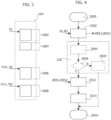
- the first routine 1006 and the second routine 1008 are stored to respective (different) memory locations. For example, this is shown in Figure 3 , where the routine 1006 starts at a memory address func_ok and the routine 1008 starts at a (different) memory address func_fail.
- the step 1004 is implemented via software instructions configured to instruct the microprocessor 102 to selectively jump to the memory address of the first routine 1006 (func_ok) or the second routine 1008 (func_fail).
- the verification step 1004 is usually implemented with at least one conditional jump operation.
- the software instructions 1004 may comprise the following machine code instructions, which are expressed in assembly code:
- this instruction may indeed be implemented with a plurality of instructions, e.g., in order to load the values RES and/or ERES to internal registers of the microprocessor 102.
- the instruction JE (jump if equal) implements a conditional jump, which jumps to the address func_ok, i.e., sets the program counter PC to the address func_ok, when a flag of the microprocessor indicates that the previous comparison operation verified that the values are equal, for example when a zero flag ZF is asserted.
- the third instruction jumps to the address func_fail, i.e., sets the program counter PC to the address func_fail. Specifically, this instruction is only executed when the previous instruction JE not already jumps to the address func_ok.
- microprocessors 102 support various types of conditional jump statements, which permit to verify whether one or more flags are set by the previous instructions, such as a carry flag CF and/or the zero flag ZF.
- IF/THEN statements and in particular the respective conditional jump statements, e.g., obtained by compiling a higher-level programming language, such as C, may be rather dangerous from a security point of view.
- an attacker may modify the comparison result, e.g., assert the flag ZF, whereby the routine 1006 is started, even when the result RES does not correspond to the expected result ERES. Accordingly, in this way, an attacker may force the execution of the routing 1006, even though the result RES does not correspond to the expected result ERES.
- routine func_ok is only started if and only if all of them return the expected value ERES.
- nested duplications of several conditional checks 1004 may be used to force the attacker to perform several faults at precise locations.
- various embodiments of the present disclosure provide solutions for starting a first or a second software routine based on the result RES obtained by a previous software routine.
- Embodiments moreover concern a related processing system, as well as a corresponding computer program product, which can be loaded into the memory of at least one microprocessor and comprises portions of software code for implementing the steps of the method when the software code is run on the microprocessor.
- a computer program product is understood as being equivalent to reference to a computer-readable means containing software instructions for controlling a microprocessor in order to co-ordinate execution of the method.
- various embodiments of the present disclosure relate to solutions, in particular respective software instructions, for operating a microprocessor, such as a microprocessor of a microcontroller.
- the microprocessor has associated a memory comprising a first software routine stored to a first memory area starting at a first address and a second software routine stored to a second memory area starting at a (different) second address.
- the microprocessor obtains data and an expected value, and is configured to start the first software routine when the obtained data correspond to the expected value.
- the second software routine may correspond to an error handler routine.
- the obtained data may correspond to a password, a calculated hash code or a calculated signature
- the expected value may correspond to an expected password, a hash code or signature, respectively.
- the microprocessor generates a first result and a second result by combining the obtained data with the expected value exclusively via first combinational and/or arithmetic operations.
- the first combinational and/or arithmetic operations are configured to, when the obtained data correspond to the expected value, set the first result to a first predetermined value and the second result to a second predetermined value, wherein the second predetermined value has a bit sequence being different from the bit sequence of the first predetermined value.
- the microprocessor may also generate further results.
- the microprocessor obtains then the first address and the second address, and generates an address pointer by combining the first result, the second result, the first address and the second address exclusively via second combinational and/or arithmetic operations.
- the second combinational and/or arithmetic operations are configured to assign to the address pointer the value of the first address.
- the second combinational and/or arithmetic operations are configured to assign to the address pointer the value of the second address.
- the microprocessor jumps to the address pointer, thereby executing the first software routine when the data correspond to the expected value.
- the software instructions used to implement the first combinational and/or arithmetic operations, the second combinational and/or arithmetic operations and the jump operation do not use conditional jump instructions, thereby avoiding the previously mentions security risks.
- the first combinational and/or arithmetic operations may assign any other value to the first and second results.
- the first combinational and/or arithmetic operations are configured to set the first result to the second predetermined value and the second result to the first predetermined value, i.e., the result values are inverted.
- the second combinational and/or arithmetic operations may be configured to generate the address pointer via a swap function. Specifically, when the first result corresponds to the first predetermined value and the second result corresponds to the second predetermined value, the second combinational and/or arithmetic operations assign to the address pointer the value of the first address. Conversely, when the first result corresponds to the second predetermined value and the second result corresponds to the first predetermined value, the second combinational and/or arithmetic operations assign to the address pointer the value of the second address.
- the first combinational and/or arithmetic operations may also assign different values.
- the first combinational and/or arithmetic operations are configured to generate the first result and/or the second result by combining the data, the expected value and the respective predetermined value via exclusive OR operations.
- the first combinational and/or arithmetic operations may combine the data and the expected value via an exclusive OR operation, and add the respective predetermined value.
- the microprocessor may be configured to use an additional mapping function, which then permits to use again the swap function.
- the software instructions may comprise, between the first combinational and/or arithmetic operations and the second combinational and/or arithmetic operations, one or more conditional jump operations configured to, when the first result does not correspond to the first predetermined value or the second result does not correspond to the second predetermined value, jump to the second address. As will be described in greater detail in the following, this may not represent a particular security risk when the second address points to an error handler routine.
- various embodiments of the present disclosure provide solutions for starting a first software routine 1006 or a second software routine 1008 based on the result RES obtained by a previous software routine.
- the software routines 1006 and 1008 may be stored to respective memory areas in the non-volatile memory 104, wherein the software routine 1006 starts at an address func_ok and the software routine 1008 starts at an address func_fail, wherein the address func_fail is different from the address func_ok.
- Figure 4 shows an embodiment of the operation of a microprocessor 102 according to the present invention.
- the microprocessor 102 executes at a step 2002 again one or more software instructions, e.g., in the form of a software subroutine, which generate a given result RES.
- the instructions 2002 generate at least a first result RES1 and one or more further results, such as results RES2, RES3, ... RESN.
- each of the results RES1, ... RESN corresponds to a bit-sequence having a given number of bits, such as 8, 16, 32 or 64 bit.
- the microprocessor 102 operates with a given word size, such as 8, 16, 32 or 64 bits, and each result RES1, ... RESN has the word size of the microprocessor 102.
- the encoding of the bits of the results RES1, ... RESN is not relevant for the scope of the present disclosure.
- the bit sequence of the results RES1, ... RESN may correspond to a signed or unsigned integer value, or any other encoded bit sequence.
- B1 and B2 identify the data to be compared, e.g., respective pointers to memory locations having stored a value (B1) to be compared with an expected value (B2)
- L is an optional parameter indicating the length of the data to be compared
- RES1, RES2 and the optional further results indicate the result of the comparison, e.g., in the form of respective pointers to memory locations used to store the respective comparison result RES1, ... RESN, i.e., at the end of the routine secure_comparison, the respective memory locations have stored the respective results RES1, ... RESN.
- the routine 2002 is configured to set each of the results RES1, ... RESN to a respective first predetermined value ERES1, ... ERESN when the data B1 correspond to the data B2, or when using the parameter L, when the indicated number L of bits or bytes of the data B1 corresponds to the respective indicated number of bits or bytes of data B2.
- the routine 2002 may assign any other value (being different from the respective first predetermined value ERES1, ... ERESN) to the results RES1, ... RESN when the data B1 do not correspond to the data B2, or when using the parameter L, when the indicated number L of bits or bytes of the data B1 does not correspond to the respective indicated number of bits or bytes of data B2.
- the routine 2002 is configured to set in this case each of the results RES1, ... RESN to a respective second predetermined value.
- the value B1 may indicate a password, or a calculated hash code or signature and the value B2 may indicate a respective reference password, or an expected hash code or signature.
- the routine 2002 assigns to each of the results RES1, ... RESN a predetermined first bit sequence ERES1, ... ERESN, wherein the bit sequences are independent /univocal and preferably protected against simple faults. For example, usually the protection against simple faults may be ensured by using bit sequences which do not have all bits set to "1" or "0".
- the microprocessor 102 then executes a sequence of software instructions configured to determine an address/a pointer func, which corresponds to:
- a software instruction instructs the microprocessor 102 to jump to the address func, thereby executing at a step 2014 either the routine 1006 (when the pointer func corresponds to the address func_ok) or the routine 1008 (when the pointer func corresponds to the address func_fail).
- this jump is a conventional jump operation and not a conditional jump operation, e.g., the respective software instruction (JMP) sets the program counter to the value func without performing any verification operation.
- the microprocessor 102 may then execute further software instructions or the processing operations may be stopped at a stop step 2016.
- the respective software instructions should be configured to return the address func_ok or func_fail by comparing the results RES1, ... RESN with respective expected result ERES1, ... ERESN.
- the respective software routines do not use IF/ELSE statements, in particular respective conditional jump operations, but the routine 2012 is implemented exclusively with combinational and/or arithmetic operations.
- RES2! ERES2 ...
- RESN! ERESN where "&" indicates a logic AND operation, "
- the address func_ok when each of the results RES1, ... RESN corresponds to the respective expected result ERES1, ... ERESN, the address func_ok is multiplied with 1 and the address func_fail is multiplied with 0, and the sum of both values, i.e., the address func_ok, is assigned to the pointer func. Conversely, when at least one of the results RES1, ... RESN does not correspond to the respective expected result ERES1, ... ERESN, the address func_ok is multiplied with 0 and the address func_fail is multiplied with 1, and the sum of both values, i.e., the address func_fail, is assigned to the pointer func.
- the routine 2012 implements thus comparison operations.
- the inventors have observed that such a comparison operation may also be implemented with combinational and arithmetic operations.
- the above operations return 1 when the values A and B are different, and 0 when the values A and B correspond.
- the step 2012 may also use other combinational and/or arithmetic operations.
- a conditional swap function is used.
- the above operation ensures that the value func corresponds to the value func_ok when the value RES1 corresponds to the value ERES1 and the value RES2 correspond to the value ERES2. Moreover, the value func corresponds to the value func_fail when the value RES1 corresponds to the value ERES2 and the value RES2 correspond to the value ERES1.
- the routine 2002 when using a conditional swap operation 2012 and the values B1 and B2 do not correspond, the routine 2002 is configured to assign to the result RES1 the value ERES2 and to the result RES2 the value ERES1.
- the software instructions may implement an additional conversion step 2010.
- the step 2004 is configured to set the value RES1 to the value ERES1' when the value RES1 corresponds to the expected value ERES1, and the value RES2 to the value ERES2' when the value RES2 corresponds to the expected value ERES2.
- the second XOR operation of each equation may also be replaced, e.g., with an addition (“+").
- the conversion routine 2010 may comprise one or more verification steps 2006, configured to determine whether the converted values RES1 and RES2 are different from the expected values ERES1' and ERES2'. Moreover, when the converted values RES1 and RES2 are different from the expected values ERES1' and ERES2' (output "N" of the verification step 2006), a software instruction, e.g., implemented via a conditional jump, may jump to the address func_fail. Conversely, when the converted values RES1 and RES2 correspond to the expected values ERES1' and ERES2' (output "Y" of the verification step 2006), the microprocessor 102 may proceed to the step 2012.
- conditional jump to the failure routine 1008 at this stage does not represent a particular security risk, because by forcing the comparison operation 2006 to provide an incorrect result, the jump at the step 2008 to the failure routine 1008 could be omitted.
- routine 2012 would still not assign correctly the address func_ok, because the previously described conditional swap routine 2012 would in this case provide an address pointing neither to the address func_ok nor the address func_fail.
- steps 2006 and 2008 may be implemented with the following software instructions:
- routine 2002 preferably uses only combinational and/or arithmetic operations is order to determine the results RES1, ... RESN, e.g., as a function of the values B1 and B2.
- the above software routines may also be provided in the form of a software library, in order to simplify the software development.
- the user provides to the software routines the values B1 and B2 to be compared and the addresses func_ok and func_fail, and the respective software routines implement the combinational and arithmetic operations in order to compare the values B1 and B2 and select, based on the results RES1, ... RESN and the respective expected results ERES1, ... ERESN, one of the addresses func_ok or func_fail.
- conditional swap operation may only use combinational logic operations, such as AND and OR operations, and optional XOR operations when implementing the mapping of the results RES1 and RES2. Moreover, the operations are performed always on a plurality of bits.
- routines 1006 and 1008 may further be improved by storing the routines 1006 and 1008 to memory areas far away from each other.
- routines 2002 and 2012 may comprise additional instructions in order to introduce random delays in the respective procedure, thereby better hiding the patterns in the instructions and reducing the exploitability of the solution.
Landscapes
- Engineering & Computer Science (AREA)
- Software Systems (AREA)
- Theoretical Computer Science (AREA)
- Physics & Mathematics (AREA)
- General Physics & Mathematics (AREA)
- General Engineering & Computer Science (AREA)
- Computer Security & Cryptography (AREA)
- Computational Mathematics (AREA)
- Mathematical Optimization (AREA)
- Pure & Applied Mathematics (AREA)
- Mathematical Analysis (AREA)
- Computer Hardware Design (AREA)
- Executing Machine-Instructions (AREA)
Abstract
Description
- Embodiments of the present disclosure relate to solutions for selectively executing a plurality of software routines.
-
Figure 1 shows a block diagram of an exemplarydigital processing system 10, such as a micro-controller. - In the example considered, the
processing system 10 comprises amicroprocessor 102, usually the Central Processing Unit (CPU), programmed via software instructions. Usually, the software executed by themicroprocessor 102 is stored in anon-volatile program memory 104, such as a Flash memory or EEPROM. Thus, thememory 104 is configured to store the firmware of theprocessing unit 102, wherein the firmware includes the software instructions to be executed by themicroprocessor 102. Generally, thenon-volatile memory 104 may also be used to store other data, such as configuration data, e.g., calibration data. Themicroprocessor 102 usually has associated also avolatile memory 104b, such as a Random-Access-Memory (RAM). For example, thememory 104b may be used to store temporary data. - As shown in
Figure 1 , usually the communication with thememories 104 and/or 104b is performed via one ormore memory controllers 100. The memory controller(s) 100 may be integrated in themicroprocessor 102 or connected to themicroprocessor 102 via a communication channel, such as a system bus of theprocessing system 10. Similarly, thememories 104 and/or 104b may be integrated with themicroprocessor 102 in a single integrated circuit, or thememories 104 and/or 104b may be in the form of a separate integrated circuit and connected to themicroprocessor 102, e.g., via the traces of a printed circuit board. - In the example considered, the
microprocessor 102 may have associated one or more (hardware) resources/peripherals 106 selected from the group of: - one or more communication interfaces IF, e.g., for exchanging data via the communication system 20, such as a Universal asynchronous receiver/transmitter (UART), Serial Peripheral Interface Bus (SPI), Inter-Integrated Circuit (I2C), Controller Area Network (CAN) bus, and/or Ethernet interface, and/or a debug interface; and/or
- one or more analog-to-digital converters AD and/or digital-to-analog converters DA; and/or
- one or more dedicated digital components DC, such as hardware timers and/or counters, or a cryptographic coprocessor; and/or
- one or more analog components AC, such as comparators, sensors, such as a temperature sensor, etc.; and/or
- one or more mixed signal components MSC, such as a PWM (Pulse-Width Modulation) driver.
- Accordingly, the
digital processing system 10 may support different functionalities. For example, the behavior of themicroprocessor 102 is determined by the firmware stored in thememory 104, e.g., the software instructions to be executed by amicroprocessor 102 of a micro-controller 10. Thus, by installing a different firmware, the same hardware (micro-controller) can be used for different applications. -
Figure 2 shows a typical operation of the software executed by themicroprocessor 102. - Specifically, after a
start step 1000, themicroprocessor 102 executes at astep 1002 one or more software instructions, e.g., in the form of a software subroutine, which generate a given result RES. For example, for this purpose, the microprocessor may execute one or more processing operations and/or interact with one or moreperipherals 106. For example, the result RES may indicate that a password verification was successful or the result of a cryptographic operation. - At a
step 1004, themicroprocessor 102 may then execute one or more software instructions in order to compare the result RES with an expected result ERES. In case the result RES corresponds to the expected value ERES (output "Y" of the verification step 1004), themicroprocessor 102 executes at a step 1006 a given first software subroutine, e.g., a routine being started when the correct password has been provided or when the encrypted/decrypted correspond to an expected value. - Conversely, in case the result RES does not correspond to the expected value ERES (output "N" of the verification step 1004), the
microprocessor 102 executes at a step 1008 a given second software subroutine, e.g., an error handler routine. - Once the
routine microprocessor 102 may execute further software instructions or the processing operations may be stopped at astop step 1010. - For example, in higher-level programming languages, such as C, the conditional statement at the
step 1004 is usually expressed via IF/ELSE statements. - However, as shown in
Figure 3 , a typical microprocessor uses indeed an instruction pointer/program counter PC indicating a memory location, typically in thenon-volatile program memory 104, containing the software instruction to be executed. - Accordingly, in this case, the software instructions implementing the
operations 1002 are stored to a given memory area of thememory 104 and the microprocessor executes sequentially the instructions by increasing the program counter PC. However, in order to implement the IF/ELSE condition, thefirst routine 1006 and thesecond routine 1008 are stored to respective (different) memory locations. For example, this is shown inFigure 3 , where theroutine 1006 starts at a memory address func_ok and theroutine 1008 starts at a (different) memory address func_fail. - Accordingly, in this case, the
step 1004 is implemented via software instructions configured to instruct themicroprocessor 102 to selectively jump to the memory address of the first routine 1006 (func_ok) or the second routine 1008 (func_fail). For example, in this case, theverification step 1004 is usually implemented with at least one conditional jump operation. For example, thesoftware instructions 1004 may comprise the following machine code instructions, which are expressed in assembly code: - CMP RES, ERES
- JE func_ok
- JMP func_fail
- Specifically, the first instruction (CMP) compares the value RES with the expected result ERES and asserts a flag when the value RES and ERES correspond, i.e., when RES = ERES. Generally, this instruction may indeed be implemented with a plurality of instructions, e.g., in order to load the values RES and/or ERES to internal registers of the
microprocessor 102. - Next the instruction JE (jump if equal) implements a conditional jump, which jumps to the address func_ok, i.e., sets the program counter PC to the address func_ok, when a flag of the microprocessor indicates that the previous comparison operation verified that the values are equal, for example when a zero flag ZF is asserted. Finally, the third instruction jumps to the address func_fail, i.e., sets the program counter PC to the address func_fail. Specifically, this instruction is only executed when the previous instruction JE not already jumps to the address func_ok.
- Typically,
modern microprocessors 102 support various types of conditional jump statements, which permit to verify whether one or more flags are set by the previous instructions, such as a carry flag CF and/or the zero flag ZF. - The inventors have observed that such IF/THEN statements, and in particular the respective conditional jump statements, e.g., obtained by compiling a higher-level programming language, such as C, may be rather dangerous from a security point of view. Specifically, recently it has been demonstrated that an attacker may modify the comparison result, e.g., assert the flag ZF, whereby the
routine 1006 is started, even when the result RES does not correspond to the expected result ERES. Accordingly, in this way, an attacker may force the execution of therouting 1006, even though the result RES does not correspond to the expected result ERES. - In security related applications it has thus been proposed to use several invocations of the
routine 1002, and the routine func_ok is only started if and only if all of them return the expected value ERES. Alternatively, nested duplications of severalconditional checks 1004 may be used to force the attacker to perform several faults at precise locations. - However, the inventors have observed that the above solutions have various disadvantages. Specifically, even when implementing
plural verifications 1004, such verifications are still based on conditional jump operations, whereby the respective jump operation is an explicit branch based on a successful comparison, and an attacker could still find the way to jump to that instruction just flipping branch flags. - In view of the above, various embodiments of the present disclosure provide solutions for starting a first or a second software routine based on the result RES obtained by a previous software routine.
- According to one or more embodiments, the above objective is achieved by means of a method having the features specifically set forth in the claims that follow. Embodiments moreover concern a related processing system, as well as a corresponding computer program product, which can be loaded into the memory of at least one microprocessor and comprises portions of software code for implementing the steps of the method when the software code is run on the microprocessor. As used herein, reference to such a computer program product is understood as being equivalent to reference to a computer-readable means containing software instructions for controlling a microprocessor in order to co-ordinate execution of the method.
- The claims are an integral part of the technical teaching of the disclosure provided herein.
- As mentioned before, various embodiments of the present disclosure relate to solutions, in particular respective software instructions, for operating a microprocessor, such as a microprocessor of a microcontroller. The microprocessor has associated a memory comprising a first software routine stored to a first memory area starting at a first address and a second software routine stored to a second memory area starting at a (different) second address. Specifically, in various embodiments, the microprocessor obtains data and an expected value, and is configured to start the first software routine when the obtained data correspond to the expected value. Conversely, the second software routine may correspond to an error handler routine. For example, the obtained data may correspond to a password, a calculated hash code or a calculated signature, and the expected value may correspond to an expected password, a hash code or signature, respectively.
- Specifically, in various embodiments, the microprocessor generates a first result and a second result by combining the obtained data with the expected value exclusively via first combinational and/or arithmetic operations. Specifically, the first combinational and/or arithmetic operations are configured to, when the obtained data correspond to the expected value, set the first result to a first predetermined value and the second result to a second predetermined value, wherein the second predetermined value has a bit sequence being different from the bit sequence of the first predetermined value. In general, the microprocessor may also generate further results.
- In various embodiments, the microprocessor obtains then the first address and the second address, and generates an address pointer by combining the first result, the second result, the first address and the second address exclusively via second combinational and/or arithmetic operations. Specifically, when the first result corresponds to the first predetermined value and the second result corresponds to the second predetermined value, the second combinational and/or arithmetic operations are configured to assign to the address pointer the value of the first address. Conversely, when the first result does not correspond to the first predetermined value or the second result does not correspond to the second predetermined value, the second combinational and/or arithmetic operations are configured to assign to the address pointer the value of the second address.
- Finally, in various embodiments, the microprocessor jumps to the address pointer, thereby executing the first software routine when the data correspond to the expected value.
- Accordingly, in various embodiments, the software instructions used to implement the first combinational and/or arithmetic operations, the second combinational and/or arithmetic operations and the jump operation, do not use conditional jump instructions, thereby avoiding the previously mentions security risks.
- Generally, when the obtained data do not correspond to the expected value, the first combinational and/or arithmetic operations may assign any other value to the first and second results.
- For example, in various embodiments, when the obtained data do not correspond to the expected value, the first combinational and/or arithmetic operations are configured to set the first result to the second predetermined value and the second result to the first predetermined value, i.e., the result values are inverted. In this case, the second combinational and/or arithmetic operations may be configured to generate the address pointer via a swap function. Specifically, when the first result corresponds to the first predetermined value and the second result corresponds to the second predetermined value, the second combinational and/or arithmetic operations assign to the address pointer the value of the first address. Conversely, when the first result corresponds to the second predetermined value and the second result corresponds to the first predetermined value, the second combinational and/or arithmetic operations assign to the address pointer the value of the second address.
- As mentioned before, when the obtained data do not correspond to the expected value, the first combinational and/or arithmetic operations may also assign different values. For example, in various embodiments, the first combinational and/or arithmetic operations are configured to generate the first result and/or the second result by combining the data, the expected value and the respective predetermined value via exclusive OR operations. Alternatively, the first combinational and/or arithmetic operations may combine the data and the expected value via an exclusive OR operation, and add the respective predetermined value.
- In this case, the microprocessor may be configured to use an additional mapping function, which then permits to use again the swap function. Additionally or alternatively, the software instructions may comprise, between the first combinational and/or arithmetic operations and the second combinational and/or arithmetic operations, one or more conditional jump operations configured to, when the first result does not correspond to the first predetermined value or the second result does not correspond to the second predetermined value, jump to the second address. As will be described in greater detail in the following, this may not represent a particular security risk when the second address points to an error handler routine.
- Embodiments of the present disclosure will now be described with reference to the annexed drawings, which are provided purely by way of non-limiting example and in which:
-
Figure 1 shows an example of processing system comprising a microprocessor, such as a micro-controller; -
Figure 2 shows an example of an operation of microprocessor ofFigure 1 ; -
Figure 3 shows a block diagram of a memory organization of the processing system ofFigure 1 ; and -
Figure 4 shows an embodiment of the operation of microprocessor according to the present disclosure. - In the following description, numerous specific details are given to provide a thorough understanding of embodiments. The embodiments can be practiced without one or several specific details, or with other methods, components, materials, etc. In other instances, well-known structures, materials, or operations are not shown or described in detail to avoid obscuring aspects of the embodiments.
- Reference throughout this specification to "one embodiment" or "an embodiment" means that a particular feature, structure, or characteristic described in connection with the embodiment is included in at least one embodiment. Thus, the appearances of the phrases "in one embodiment" or "in an embodiment" in various places throughout this specification are not necessarily all referring to the same embodiment. Furthermore, the particular features, structures, or characteristics may be combined in any suitable manner in one or more embodiments.
- The headings provided herein are for convenience only and do not interpret the scope or meaning of the embodiments.
- As mentioned before, various embodiments of the present disclosure provide solutions for starting a
first software routine 1006 or asecond software routine 1008 based on the result RES obtained by a previous software routine. Specifically, similar toFigure 3 , thesoftware routines non-volatile memory 104, wherein the software routine 1006 starts at an address func_ok and the software routine 1008 starts at an address func_fail, wherein the address func_fail is different from the address func_ok. -
Figure 4 shows an embodiment of the operation of amicroprocessor 102 according to the present invention. Reference can be made toFigure 1 for a general description of the operation of amicroprocessor 102 and arespective processing system 10, such as a micro-controller. - Specifically, after a
start step 2000, themicroprocessor 102 executes at astep 2002 again one or more software instructions, e.g., in the form of a software subroutine, which generate a given result RES. Specifically, in various embodiments, theinstructions 2002 generate at least a first result RES1 and one or more further results, such as results RES2, RES3, ... RESN. - Specifically, in various embodiments, each of the results RES1, ... RESN corresponds to a bit-sequence having a given number of bits, such as 8, 16, 32 or 64 bit. For example, in various embodiments, the
microprocessor 102 operates with a given word size, such as 8, 16, 32 or 64 bits, and each result RES1, ... RESN has the word size of themicroprocessor 102. Generally, the encoding of the bits of the results RES1, ... RESN is not relevant for the scope of the present disclosure. For example, the bit sequence of the results RES1, ... RESN may correspond to a signed or unsigned integer value, or any other encoded bit sequence. - For example, in various embodiments, the
step 2002 implements the following function "secure_comparison":
- For example, in various embodiments, the routine 2002 is configured to set each of the results RES1, ... RESN to a respective first predetermined value ERES1, ... ERESN when the data B1 correspond to the data B2, or when using the parameter L, when the indicated number L of bits or bytes of the data B1 corresponds to the respective indicated number of bits or bytes of data B2. Generally, the routine 2002 may assign any other value (being different from the respective first predetermined value ERES1, ... ERESN) to the results RES1, ... RESN when the data B1 do not correspond to the data B2, or when using the parameter L, when the indicated number L of bits or bytes of the data B1 does not correspond to the respective indicated number of bits or bytes of data B2. For example, in various embodiments, the routine 2002 is configured to set in this case each of the results RES1, ... RESN to a respective second predetermined value. For example, the value B1 may indicate a password, or a calculated hash code or signature and the value B2 may indicate a respective reference password, or an expected hash code or signature.
- Specifically, in various embodiments, when the data B1 and B2 correspond, the routine 2002 assigns to each of the results RES1, ... RESN a predetermined first bit sequence ERES1, ... ERESN, wherein the bit sequences are independent /univocal and preferably protected against simple faults. For example, usually the protection against simple faults may be ensured by using bit sequences which do not have all bits set to "1" or "0".
- For example, the
step 2002 may be implemented with the following instructions:

- Generally, also any other suitable software instructions may be used, which preferably use exclusively combinational and/or arithmetic operations in order to assigned the expected values ERES1 and ERES2 to the values RES1 and RES2, when the bit sequences B1 and B2 correspond, such as:


- At a
step 2012, themicroprocessor 102 then executes a sequence of software instructions configured to determine an address/a pointer func, which corresponds to: - the address func_ok (of the software routine 1006) when each of the results RES1, ... RESN corresponds to the respective expected result ERES1, ... ERESN; and
- the address func_fail (of the software routine 1008) when at least one of the results RES1, ... RESN does not correspond to the respective expected result ERES1, ... ERESN.
- For example, in various embodiments, the
step 2012 implements the following function "dispatcher":
- Moreover, at the end of the
step 2012, a software instruction instructs themicroprocessor 102 to jump to the address func, thereby executing at astep 2014 either the routine 1006 (when the pointer func corresponds to the address func_ok) or the routine 1008 (when the pointer func corresponds to the address func_fail). Specifically, this jump is a conventional jump operation and not a conditional jump operation, e.g., the respective software instruction (JMP) sets the program counter to the value func without performing any verification operation. - Once the routine 1006 or 1008 has been executed, i.e., at the end of the
step 2014, themicroprocessor 102 may then execute further software instructions or the processing operations may be stopped at astop step 2016. - In the following will now be described possible embodiments of the
step 2012. Specifically, as mentioned before, the respective software instructions should be configured to return the address func_ok or func_fail by comparing the results RES1, ... RESN with respective expected result ERES1, ... ERESN. Specifically, in various embodiments, the respective software routines do not use IF/ELSE statements, in particular respective conditional jump operations, but the routine 2012 is implemented exclusively with combinational and/or arithmetic operations. - For example, in a first embodiment, the routine 2012 implements the following operation:

- Accordingly, in the embodiment considered, when each of the results RES1, ... RESN corresponds to the respective expected result ERES1, ... ERESN, the address func_ok is multiplied with 1 and the address func_fail is multiplied with 0, and the sum of both values, i.e., the address func_ok, is assigned to the pointer func. Conversely, when at least one of the results RES1, ... RESN does not correspond to the respective expected result ERES1, ... ERESN, the address func_ok is multiplied with 0 and the address func_fail is multiplied with 1, and the sum of both values, i.e., the address func_fail, is assigned to the pointer func.
- In the embodiment considered, the routine 2012 implements thus comparison operations. Generally, the comparison operation "==" configured to verify whether two results correspond may already be implemented with a combinational logic operation. Conversely, the comparison operation "!=" configured to verify whether two results do not correspond usually requires a conditional jump operation. However, the inventors have observed that such a comparison operation may also be implemented with combinational and arithmetic operations. For example, in various embodiments, the comparison operation "!=" between two values A and B is implemented with the following operations:

- Accordingly, the above operations return 1 when the values A and B are different, and 0 when the values A and B correspond.
- In general, the
step 2012 may also use other combinational and/or arithmetic operations. For example, in a second embodiment, a conditional swap function is used. For example, in various embodiments, thestep 2002 uses as expected results ERES1 and ERES2 complementary bit sequences, such as ERES1 = 0xAAAAAAAA and ERES2 = 0x55555555, and the routine 2012 implements the following operations:
- Specifically, the above operation ensures that the value func corresponds to the value func_ok when the value RES1 corresponds to the value ERES1 and the value RES2 correspond to the value ERES2. Moreover, the value func corresponds to the value func_fail when the value RES1 corresponds to the value ERES2 and the value RES2 correspond to the value ERES1.
- Accordingly, in various embodiments, when using a
conditional swap operation 2012 and the values B1 and B2 do not correspond, the routine 2002 is configured to assign to the result RES1 the value ERES2 and to the result RES2 the value ERES1. For example, similar to the previous description of thestep 2012, for the purpose may be used the following operations at the step 2002:

- Generally, as schematically shown in
Figure 4 , when the routine 1002a does not assign automatically values satisfying the above criteria of the conditional swap function, the software instructions may implement an additional conversion step 2010. - For example, in various embodiments, the step 2010 may be implemented (similar to the above equation) with the following operation:


- Alternatively, in various embodiments, a
first conversion step 2004 may implement the following operations:

step 2004 is configured to set the value RES1 to the value ERES1' when the value RES1 corresponds to the expected value ERES1, and the value RES2 to the value ERES2' when the value RES2 corresponds to the expected value ERES2. As shown in the foregoing in the context of thestep 2002, the second XOR operation of each equation may also be replaced, e.g., with an addition ("+"). - However, the above operations do not correctly map the values RES1 and RES2, when the values do not correspond to the expected results ERES1 and ERES2. Accordingly, in various embodiments, the conversion routine 2010 may comprise one or
more verification steps 2006, configured to determine whether the converted values RES1 and RES2 are different from the expected values ERES1' and ERES2'. Moreover, when the converted values RES1 and RES2 are different from the expected values ERES1' and ERES2' (output "N" of the verification step 2006), a software instruction, e.g., implemented via a conditional jump, may jump to the address func_fail. Conversely, when the converted values RES1 and RES2 correspond to the expected values ERES1' and ERES2' (output "Y" of the verification step 2006), themicroprocessor 102 may proceed to thestep 2012. - Generally, the conditional jump to the
failure routine 1008 at this stage does not represent a particular security risk, because by forcing thecomparison operation 2006 to provide an incorrect result, the jump at thestep 2008 to thefailure routine 1008 could be omitted. However, in this case, the routine 2012 would still not assign correctly the address func_ok, because the previously described conditional swap routine 2012 would in this case provide an address pointing neither to the address func_ok nor the address func_fail. For example, thesteps
  if (RES1 != ERES1')
     func_fail()
  if (RES2 != ERES2')
     func_fail()
Claims (11)
- A method of operating a microprocessor (102) having associated a memory (104), wherein said memory comprises a first software routine (1006) stored to a first memory area starting at a first address (func_ok) and a second software routine (1008) stored to a second memory area starting at a second address (func_fail), wherein the method comprises the steps of:- obtaining data (B1) and an expected value (B2);- generating a first result (RES1) and a second result (RES2) by combining said obtained data (B1) with said expected value (B2) exclusively via first combinational and/or arithmetic operations (2002; 2002, 2010), wherein said first combinational and/or arithmetic operations are configured to:- when said obtained data (B1) correspond to said expected value (B2), set said first result (RES1) to a first predetermined value (ERES1), and- when said obtained data (B1) correspond to said expected value (B2), set said second result (RES2) to a second predetermined value (ERES2), wherein said second predetermined value (ERES2) has a bit sequence being different from the bit sequence of said first predetermined value (ERES1);- obtaining said first address (func_ok) and said second address (func_fail);- generating an address pointer (func) by combining said first result (RES1), said second result (RES2), said first address (func_ok) and said second address (func _fail) exclusively via second combinational and/or arithmetic operations (2012), wherein said second combinational and/or arithmetic operations are configured to:- when said first result (RES1) corresponds to said first predetermined value (ERES1) and said second result (RES2) corresponds to said second predetermined value (ERES2), assign to said address pointer (func) the value of said first address (func_ok), and- when said first result (RES1) does not correspond to said first predetermined value (ERES1) or said second result (RES2) does not correspond to said second predetermined value (ERES2), assign to said address pointer (func) the value of said second address (func_fail);- jumping to said address pointer (func), thereby executing (2014) said first software routine (1006) when said data (B1) correspond to said expected value (B2).
- The method according to Claim 1, wherein said first combinational and/or arithmetic operations (2002; 2002, 2010) are configured to:- when said obtained data (B1) do not correspond to said expected value (B2), set said first result (RES1) to said second predetermined value (ERES2), and- when said obtained data (B1) do not correspond to said expected value (B2), set said second result (RES2) to said first predetermined value (ERES1).
- The method according to Claim 2, wherein said first combinational and/or arithmetic operations (2002; 2002, 2010) are configured to implement the following operations:


- The method according to Claim 2 or Claim 3, wherein said second combinational and/or arithmetic operations (2012) are configured to generate said address pointer (func) via a swap function configured to:- when said first result (RES1) corresponds to said first predetermined value (ERES1) and said second result (RES2) corresponds to said second predetermined value (ERES2), assign to said address pointer (func) the value of said first address (func_ok), and- when said first result (RES1) corresponds to said second predetermined value (ERES2) and said second result (RES2) corresponds to said first predetermined value (ERES1), assign to said address pointer (func) the value of said second address (func_fail).
- The method according to Claim 4, wherein said second combinational and/or arithmetic operations (2012) are configured to implement the following operations:

- The method according to Claim 1, wherein said first combinational and/or arithmetic operations (2002; 2002, 2010) are configured to generate said first result (RES1) and/or said second result (RES2) by:- combining (2002) said data (B1), said expected value (B2) and the respective predetermined value (ERES1, ERES2) via exclusive OR operations, or- combining (2002) said data (B1) and said expected value (B2) via an exclusive OR operation, and adding the respective predetermined value (ERES1, ERES2).
- The method according to Claim 6, comprising:- when (2004) said first result (RES1) does not correspond to said first predetermined value (ERES1), jumping (2008) to said second address (func_fail); and- when (2004) said second result (RES2) does not correspond to said second predetermined value (ERES2), jumping (2008) to said second address (func_fail).
- The method according to any of the previous claims, wherein said data (B1) correspond to a password, a calculated hash code or a calculated signature, and said expected value (B2) corresponds to an expected password, a hash code or signature, respectively.
- The method according to any of the previous claims, wherein said second software routine (1008) corresponds to an error handler routine.
- A processing system comprising a microprocessor (102) and a memory (104) comprises a first software routine (1006) stored to a first memory area starting at a first address (func_ok) and a second software routine (1008) stored to a second memory area starting at a second address (func_fail), and wherein said memory (104) comprises software instructions configured to, when executed by said microprocessor (102), implement the steps of the method according to any of Claims 1 to 9.
- A computer-program product that can be loaded into the memory (104) of a microprocessor (102), wherein the computer program comprises software instructions that, when executed by said microprocessor (102), implement the steps of the method according to any of Claims 1 to 9.
Applications Claiming Priority (1)
| Application Number | Priority Date | Filing Date | Title |
|---|---|---|---|
| IT102022000012680A IT202200012680A1 (en) | 2022-06-15 | 2022-06-15 | PROCEDURE FOR THE OPERATION OF A MICROPROCESSOR, RELATED PROCESSING SYSTEM AND COMPUTER PRODUCT |
Publications (2)
| Publication Number | Publication Date |
|---|---|
| EP4293548A1 true EP4293548A1 (en) | 2023-12-20 |
| EP4293548B1 EP4293548B1 (en) | 2024-09-18 |
Family
ID=83081310
Family Applications (1)
| Application Number | Title | Priority Date | Filing Date |
|---|---|---|---|
| EP23174155.4A Active EP4293548B1 (en) | 2022-06-15 | 2023-05-18 | Method of operating a microprocessor, related processing system and computer program product |
Country Status (3)
| Country | Link |
|---|---|
| US (1) | US12223321B2 (en) |
| EP (1) | EP4293548B1 (en) |
| IT (1) | IT202200012680A1 (en) |
Citations (3)
| Publication number | Priority date | Publication date | Assignee | Title |
|---|---|---|---|---|
| US5770894A (en) * | 1996-07-10 | 1998-06-23 | International Business Machines Corporation | Parallel processing method having arithmetical conditions code based instructions substituted for conventional branches |
| US20110022854A1 (en) * | 2009-07-27 | 2011-01-27 | Nagravision S.A. | Processor-implemented method for ensuring software integrity |
| US20210286622A1 (en) * | 2020-02-26 | 2021-09-16 | Red Hat, Inc. | Optimized branching using safe static keys |
Family Cites Families (4)
| Publication number | Priority date | Publication date | Assignee | Title |
|---|---|---|---|---|
| US10719319B2 (en) * | 2017-12-29 | 2020-07-21 | Intel Corporation | Fine grained control flow enforcement to mitigate malicious call/jump oriented programming |
| IT201900025567A1 (en) | 2019-12-24 | 2021-06-24 | St Microelectronics Srl | PROCEDURE FOR PERFORMING ENCRYPTING OPERATIONS ON A PROCESSING DEVICE, CORRESPONDING PROCESSING DEVICE AND IT PRODUCT |
| IT202000000886A1 (en) | 2020-01-17 | 2021-07-17 | St Microelectronics Srl | PROCEDURE FOR PERFORMING DATA ENCRYPTING OPERATIONS IN A PROCESSING DEVICE, CORRESPONDING PROCESSING DEVICE AND IT PRODUCT |
| IT202000006475A1 (en) | 2020-03-27 | 2021-09-27 | St Microelectronics Srl | PROCEDURE FOR PERFORMING DATA ENCRYPTING OPERATIONS IN A PROCESSING DEVICE, CORRESPONDING PROCESSING DEVICE AND IT PRODUCT |
-
2022
- 2022-06-15 IT IT102022000012680A patent/IT202200012680A1/en unknown
-
2023
- 2023-05-18 EP EP23174155.4A patent/EP4293548B1/en active Active
- 2023-06-01 US US18/327,681 patent/US12223321B2/en active Active
Patent Citations (3)
| Publication number | Priority date | Publication date | Assignee | Title |
|---|---|---|---|---|
| US5770894A (en) * | 1996-07-10 | 1998-06-23 | International Business Machines Corporation | Parallel processing method having arithmetical conditions code based instructions substituted for conventional branches |
| US20110022854A1 (en) * | 2009-07-27 | 2011-01-27 | Nagravision S.A. | Processor-implemented method for ensuring software integrity |
| US20210286622A1 (en) * | 2020-02-26 | 2021-09-16 | Red Hat, Inc. | Optimized branching using safe static keys |
Also Published As
| Publication number | Publication date |
|---|---|
| EP4293548B1 (en) | 2024-09-18 |
| US12223321B2 (en) | 2025-02-11 |
| IT202200012680A1 (en) | 2023-12-15 |
| US20230409319A1 (en) | 2023-12-21 |
Similar Documents
| Publication | Publication Date | Title |
|---|---|---|
| CN101779210B (en) | Method and apparatus for protection of program against monitoring flow manipulation and against incorrect program running | |
| CN1799030A (en) | Method and apparatus for determining access permission | |
| US20230169173A1 (en) | Standardized Interface for Intellectual Property Blocks | |
| EP2996034B1 (en) | Execution flow protection in microcontrollers | |
| EP4293548B1 (en) | Method of operating a microprocessor, related processing system and computer program product | |
| US10372545B2 (en) | Safe reset techniques for microcontroller systems in safety related applications | |
| CN103425459B (en) | Method and apparatus for data processing | |
| US20130007420A1 (en) | Checking the integrity of a program executed by an electronic circuit | |
| CN108701184B (en) | Method and apparatus for packet-based verification of control flow delivery for hardware control flow enforcement | |
| CN118228265A (en) | Virtualization-oriented chip security starting method, system, equipment and medium | |
| Ha et al. | Repica: Rewriting position independent code of arm | |
| US20110099439A1 (en) | Automatic diverse software generation for use in high integrity systems | |
| US20150113637A1 (en) | Data processing arrangement and method for ensuring the integrity of the execution of a computer program | |
| CN117234624A (en) | Method of operating a microprocessor, associated processing system and computer program product | |
| WO2023025370A1 (en) | Control flow integrity | |
| Farrall et al. | Hardware and software support for mixed-criticality multicore systems | |
| JP6229637B2 (en) | In-vehicle control device | |
| CN110515652B (en) | Method, device and storage medium for generating code digest | |
| CN115878444A (en) | Information acquisition method, device, equipment, storage medium and program product | |
| EP4667952A1 (en) | Method for testing a counter, corresponding processing system and computer program product | |
| CN1328635C (en) | Data processing apparatus | |
| JP6221110B2 (en) | Apparatus and method for determining and resolving errors in a processing apparatus | |
| TW200805147A (en) | Securised microprocessor with jump verification | |
| Boender et al. | On the correctness of a branch displacement algorithm | |
| JP6077115B2 (en) | Control device and software rewriting system using the same |
Legal Events
| Date | Code | Title | Description |
|---|---|---|---|
| PUAI | Public reference made under article 153(3) epc to a published international application that has entered the european phase |
Free format text: ORIGINAL CODE: 0009012 |
|
| STAA | Information on the status of an ep patent application or granted ep patent |
Free format text: STATUS: THE APPLICATION HAS BEEN PUBLISHED |
|
| AK | Designated contracting states |
Kind code of ref document: A1 Designated state(s): AL AT BE BG CH CY CZ DE DK EE ES FI FR GB GR HR HU IE IS IT LI LT LU LV MC ME MK MT NL NO PL PT RO RS SE SI SK SM TR |
|
| STAA | Information on the status of an ep patent application or granted ep patent |
Free format text: STATUS: REQUEST FOR EXAMINATION WAS MADE |
|
| 17P | Request for examination filed |
Effective date: 20240229 |
|
| RBV | Designated contracting states (corrected) |
Designated state(s): AL AT BE BG CH CY CZ DE DK EE ES FI FR GB GR HR HU IE IS IT LI LT LU LV MC ME MK MT NL NO PL PT RO RS SE SI SK SM TR |
|
| GRAP | Despatch of communication of intention to grant a patent |
Free format text: ORIGINAL CODE: EPIDOSNIGR1 |
|
| STAA | Information on the status of an ep patent application or granted ep patent |
Free format text: STATUS: GRANT OF PATENT IS INTENDED |
|
| RIC1 | Information provided on ipc code assigned before grant |
Ipc: G06F 9/30 20180101ALI20240627BHEP Ipc: G06F 21/54 20130101AFI20240627BHEP |
|
| INTG | Intention to grant announced |
Effective date: 20240708 |
|
| GRAS | Grant fee paid |
Free format text: ORIGINAL CODE: EPIDOSNIGR3 |
|
| GRAA | (expected) grant |
Free format text: ORIGINAL CODE: 0009210 |
|
| STAA | Information on the status of an ep patent application or granted ep patent |
Free format text: STATUS: THE PATENT HAS BEEN GRANTED |
|
| AK | Designated contracting states |
Kind code of ref document: B1 Designated state(s): AL AT BE BG CH CY CZ DE DK EE ES FI FR GB GR HR HU IE IS IT LI LT LU LV MC ME MK MT NL NO PL PT RO RS SE SI SK SM TR |
|
| REG | Reference to a national code |
Ref country code: GB Ref legal event code: FG4D |
|
| REG | Reference to a national code |
Ref country code: CH Ref legal event code: EP |
|
| REG | Reference to a national code |
Ref country code: IE Ref legal event code: FG4D |
|
| REG | Reference to a national code |
Ref country code: DE Ref legal event code: R096 Ref document number: 602023000582 Country of ref document: DE |
|
| REG | Reference to a national code |
Ref country code: LT Ref legal event code: MG9D |
|
| PG25 | Lapsed in a contracting state [announced via postgrant information from national office to epo] |
Ref country code: NO Free format text: LAPSE BECAUSE OF FAILURE TO SUBMIT A TRANSLATION OF THE DESCRIPTION OR TO PAY THE FEE WITHIN THE PRESCRIBED TIME-LIMIT Effective date: 20241218 |
|
| PG25 | Lapsed in a contracting state [announced via postgrant information from national office to epo] |
Ref country code: GR Free format text: LAPSE BECAUSE OF FAILURE TO SUBMIT A TRANSLATION OF THE DESCRIPTION OR TO PAY THE FEE WITHIN THE PRESCRIBED TIME-LIMIT Effective date: 20241219 Ref country code: FI Free format text: LAPSE BECAUSE OF FAILURE TO SUBMIT A TRANSLATION OF THE DESCRIPTION OR TO PAY THE FEE WITHIN THE PRESCRIBED TIME-LIMIT Effective date: 20240918 |
|
| PG25 | Lapsed in a contracting state [announced via postgrant information from national office to epo] |
Ref country code: BG Free format text: LAPSE BECAUSE OF FAILURE TO SUBMIT A TRANSLATION OF THE DESCRIPTION OR TO PAY THE FEE WITHIN THE PRESCRIBED TIME-LIMIT Effective date: 20240918 |
|
| PG25 | Lapsed in a contracting state [announced via postgrant information from national office to epo] |
Ref country code: LV Free format text: LAPSE BECAUSE OF FAILURE TO SUBMIT A TRANSLATION OF THE DESCRIPTION OR TO PAY THE FEE WITHIN THE PRESCRIBED TIME-LIMIT Effective date: 20240918 |
|
| PG25 | Lapsed in a contracting state [announced via postgrant information from national office to epo] |
Ref country code: HR Free format text: LAPSE BECAUSE OF FAILURE TO SUBMIT A TRANSLATION OF THE DESCRIPTION OR TO PAY THE FEE WITHIN THE PRESCRIBED TIME-LIMIT Effective date: 20240918 |
|
| REG | Reference to a national code |
Ref country code: NL Ref legal event code: MP Effective date: 20240918 |
|
| PG25 | Lapsed in a contracting state [announced via postgrant information from national office to epo] |
Ref country code: RS Free format text: LAPSE BECAUSE OF FAILURE TO SUBMIT A TRANSLATION OF THE DESCRIPTION OR TO PAY THE FEE WITHIN THE PRESCRIBED TIME-LIMIT Effective date: 20241218 |
|
| PG25 | Lapsed in a contracting state [announced via postgrant information from national office to epo] |
Ref country code: RS Free format text: LAPSE BECAUSE OF FAILURE TO SUBMIT A TRANSLATION OF THE DESCRIPTION OR TO PAY THE FEE WITHIN THE PRESCRIBED TIME-LIMIT Effective date: 20241218 Ref country code: NO Free format text: LAPSE BECAUSE OF FAILURE TO SUBMIT A TRANSLATION OF THE DESCRIPTION OR TO PAY THE FEE WITHIN THE PRESCRIBED TIME-LIMIT Effective date: 20241218 Ref country code: LV Free format text: LAPSE BECAUSE OF FAILURE TO SUBMIT A TRANSLATION OF THE DESCRIPTION OR TO PAY THE FEE WITHIN THE PRESCRIBED TIME-LIMIT Effective date: 20240918 Ref country code: HR Free format text: LAPSE BECAUSE OF FAILURE TO SUBMIT A TRANSLATION OF THE DESCRIPTION OR TO PAY THE FEE WITHIN THE PRESCRIBED TIME-LIMIT Effective date: 20240918 Ref country code: GR Free format text: LAPSE BECAUSE OF FAILURE TO SUBMIT A TRANSLATION OF THE DESCRIPTION OR TO PAY THE FEE WITHIN THE PRESCRIBED TIME-LIMIT Effective date: 20241219 Ref country code: FI Free format text: LAPSE BECAUSE OF FAILURE TO SUBMIT A TRANSLATION OF THE DESCRIPTION OR TO PAY THE FEE WITHIN THE PRESCRIBED TIME-LIMIT Effective date: 20240918 Ref country code: BG Free format text: LAPSE BECAUSE OF FAILURE TO SUBMIT A TRANSLATION OF THE DESCRIPTION OR TO PAY THE FEE WITHIN THE PRESCRIBED TIME-LIMIT Effective date: 20240918 |
|
| REG | Reference to a national code |
Ref country code: AT Ref legal event code: MK05 Ref document number: 1725292 Country of ref document: AT Kind code of ref document: T Effective date: 20240918 |
|
| PG25 | Lapsed in a contracting state [announced via postgrant information from national office to epo] |
Ref country code: NL Free format text: LAPSE BECAUSE OF FAILURE TO SUBMIT A TRANSLATION OF THE DESCRIPTION OR TO PAY THE FEE WITHIN THE PRESCRIBED TIME-LIMIT Effective date: 20240918 |
|
| PG25 | Lapsed in a contracting state [announced via postgrant information from national office to epo] |
Ref country code: IS Free format text: LAPSE BECAUSE OF FAILURE TO SUBMIT A TRANSLATION OF THE DESCRIPTION OR TO PAY THE FEE WITHIN THE PRESCRIBED TIME-LIMIT Effective date: 20250118 Ref country code: PT Free format text: LAPSE BECAUSE OF FAILURE TO SUBMIT A TRANSLATION OF THE DESCRIPTION OR TO PAY THE FEE WITHIN THE PRESCRIBED TIME-LIMIT Effective date: 20250120 |
|
| PG25 | Lapsed in a contracting state [announced via postgrant information from national office to epo] |
Ref country code: RO Free format text: LAPSE BECAUSE OF FAILURE TO SUBMIT A TRANSLATION OF THE DESCRIPTION OR TO PAY THE FEE WITHIN THE PRESCRIBED TIME-LIMIT Effective date: 20240918 Ref country code: SM Free format text: LAPSE BECAUSE OF FAILURE TO SUBMIT A TRANSLATION OF THE DESCRIPTION OR TO PAY THE FEE WITHIN THE PRESCRIBED TIME-LIMIT Effective date: 20240918 |
|
| PG25 | Lapsed in a contracting state [announced via postgrant information from national office to epo] |
Ref country code: ES Free format text: LAPSE BECAUSE OF FAILURE TO SUBMIT A TRANSLATION OF THE DESCRIPTION OR TO PAY THE FEE WITHIN THE PRESCRIBED TIME-LIMIT Effective date: 20240918 |
|
| PG25 | Lapsed in a contracting state [announced via postgrant information from national office to epo] |
Ref country code: AT Free format text: LAPSE BECAUSE OF FAILURE TO SUBMIT A TRANSLATION OF THE DESCRIPTION OR TO PAY THE FEE WITHIN THE PRESCRIBED TIME-LIMIT Effective date: 20240918 Ref country code: EE Free format text: LAPSE BECAUSE OF FAILURE TO SUBMIT A TRANSLATION OF THE DESCRIPTION OR TO PAY THE FEE WITHIN THE PRESCRIBED TIME-LIMIT Effective date: 20240918 |
|
| PG25 | Lapsed in a contracting state [announced via postgrant information from national office to epo] |
Ref country code: PL Free format text: LAPSE BECAUSE OF FAILURE TO SUBMIT A TRANSLATION OF THE DESCRIPTION OR TO PAY THE FEE WITHIN THE PRESCRIBED TIME-LIMIT Effective date: 20240918 Ref country code: CZ Free format text: LAPSE BECAUSE OF FAILURE TO SUBMIT A TRANSLATION OF THE DESCRIPTION OR TO PAY THE FEE WITHIN THE PRESCRIBED TIME-LIMIT Effective date: 20240918 |
|
| PG25 | Lapsed in a contracting state [announced via postgrant information from national office to epo] |
Ref country code: SK Free format text: LAPSE BECAUSE OF FAILURE TO SUBMIT A TRANSLATION OF THE DESCRIPTION OR TO PAY THE FEE WITHIN THE PRESCRIBED TIME-LIMIT Effective date: 20240918 Ref country code: IT Free format text: LAPSE BECAUSE OF FAILURE TO SUBMIT A TRANSLATION OF THE DESCRIPTION OR TO PAY THE FEE WITHIN THE PRESCRIBED TIME-LIMIT Effective date: 20240918 |
|
| REG | Reference to a national code |
Ref country code: DE Ref legal event code: R097 Ref document number: 602023000582 Country of ref document: DE |
|
| PGFP | Annual fee paid to national office [announced via postgrant information from national office to epo] |
Ref country code: DE Payment date: 20250423 Year of fee payment: 3 |
|
| PG25 | Lapsed in a contracting state [announced via postgrant information from national office to epo] |
Ref country code: DK Free format text: LAPSE BECAUSE OF FAILURE TO SUBMIT A TRANSLATION OF THE DESCRIPTION OR TO PAY THE FEE WITHIN THE PRESCRIBED TIME-LIMIT Effective date: 20240918 |
|
| PLBE | No opposition filed within time limit |
Free format text: ORIGINAL CODE: 0009261 |
|
| STAA | Information on the status of an ep patent application or granted ep patent |
Free format text: STATUS: NO OPPOSITION FILED WITHIN TIME LIMIT |
|
| 26N | No opposition filed |
Effective date: 20250619 |
|
| PG25 | Lapsed in a contracting state [announced via postgrant information from national office to epo] |
Ref country code: SE Free format text: LAPSE BECAUSE OF FAILURE TO SUBMIT A TRANSLATION OF THE DESCRIPTION OR TO PAY THE FEE WITHIN THE PRESCRIBED TIME-LIMIT Effective date: 20240918 |
|
| PG25 | Lapsed in a contracting state [announced via postgrant information from national office to epo] |
Ref country code: LU Free format text: LAPSE BECAUSE OF NON-PAYMENT OF DUE FEES Effective date: 20250518 |
|
| REG | Reference to a national code |
Ref country code: BE Ref legal event code: MM Effective date: 20250531 |
|
| PG25 | Lapsed in a contracting state [announced via postgrant information from national office to epo] |
Ref country code: MC Free format text: LAPSE BECAUSE OF FAILURE TO SUBMIT A TRANSLATION OF THE DESCRIPTION OR TO PAY THE FEE WITHIN THE PRESCRIBED TIME-LIMIT Effective date: 20240918 |
|
| PG25 | Lapsed in a contracting state [announced via postgrant information from national office to epo] |
Ref country code: IE Free format text: LAPSE BECAUSE OF NON-PAYMENT OF DUE FEES Effective date: 20250518 |
|
| PG25 | Lapsed in a contracting state [announced via postgrant information from national office to epo] |
Ref country code: BE Free format text: LAPSE BECAUSE OF NON-PAYMENT OF DUE FEES Effective date: 20250531 |
|
| PG25 | Lapsed in a contracting state [announced via postgrant information from national office to epo] |
Ref country code: FR Free format text: LAPSE BECAUSE OF NON-PAYMENT OF DUE FEES Effective date: 20250531 |