EP4293076B1 - Self-healing rubber comprising a poly(glycerolmonomethacrylate) boronic ester complex - Google Patents
Self-healing rubber comprising a poly(glycerolmonomethacrylate) boronic ester complex Download PDFInfo
- Publication number
- EP4293076B1 EP4293076B1 EP22179598.2A EP22179598A EP4293076B1 EP 4293076 B1 EP4293076 B1 EP 4293076B1 EP 22179598 A EP22179598 A EP 22179598A EP 4293076 B1 EP4293076 B1 EP 4293076B1
- Authority
- EP
- European Patent Office
- Prior art keywords
- methacrylate
- glycerol mono
- poly
- rubber
- complex
- Prior art date
- Legal status (The legal status is an assumption and is not a legal conclusion. Google has not performed a legal analysis and makes no representation as to the accuracy of the status listed.)
- Active
Links
Images
Classifications
-
- C—CHEMISTRY; METALLURGY
- C08—ORGANIC MACROMOLECULAR COMPOUNDS; THEIR PREPARATION OR CHEMICAL WORKING-UP; COMPOSITIONS BASED THEREON
- C08L—COMPOSITIONS OF MACROMOLECULAR COMPOUNDS
- C08L7/00—Compositions of natural rubber
-
- B—PERFORMING OPERATIONS; TRANSPORTING
- B60—VEHICLES IN GENERAL
- B60C—VEHICLE TYRES; TYRE INFLATION; TYRE CHANGING; CONNECTING VALVES TO INFLATABLE ELASTIC BODIES IN GENERAL; DEVICES OR ARRANGEMENTS RELATED TO TYRES
- B60C1/00—Tyres characterised by the chemical composition or the physical arrangement or mixture of the composition
-
- B—PERFORMING OPERATIONS; TRANSPORTING
- B60—VEHICLES IN GENERAL
- B60C—VEHICLE TYRES; TYRE INFLATION; TYRE CHANGING; CONNECTING VALVES TO INFLATABLE ELASTIC BODIES IN GENERAL; DEVICES OR ARRANGEMENTS RELATED TO TYRES
- B60C1/00—Tyres characterised by the chemical composition or the physical arrangement or mixture of the composition
- B60C1/0016—Compositions of the tread
-
- C—CHEMISTRY; METALLURGY
- C08—ORGANIC MACROMOLECULAR COMPOUNDS; THEIR PREPARATION OR CHEMICAL WORKING-UP; COMPOSITIONS BASED THEREON
- C08F—MACROMOLECULAR COMPOUNDS OBTAINED BY REACTIONS ONLY INVOLVING CARBON-TO-CARBON UNSATURATED BONDS
- C08F8/00—Chemical modification by after-treatment
- C08F8/42—Introducing metal atoms or metal-containing groups
-
- C—CHEMISTRY; METALLURGY
- C08—ORGANIC MACROMOLECULAR COMPOUNDS; THEIR PREPARATION OR CHEMICAL WORKING-UP; COMPOSITIONS BASED THEREON
- C08F—MACROMOLECULAR COMPOUNDS OBTAINED BY REACTIONS ONLY INVOLVING CARBON-TO-CARBON UNSATURATED BONDS
- C08F2810/00—Chemical modification of a polymer
- C08F2810/20—Chemical modification of a polymer leading to a crosslinking, either explicitly or inherently
-
- C—CHEMISTRY; METALLURGY
- C08—ORGANIC MACROMOLECULAR COMPOUNDS; THEIR PREPARATION OR CHEMICAL WORKING-UP; COMPOSITIONS BASED THEREON
- C08L—COMPOSITIONS OF MACROMOLECULAR COMPOUNDS
- C08L2312/00—Crosslinking
- C08L2312/02—Crosslinking with dienes
Definitions
- the present invention relates to the field of self-healing rubbers.
- the present invention refers to a rubber composition comprising a dynamic poly(glycerol mono-methacrylate) boronic ester complex, processes for preparation thereof, and use thereof in a self-healing tire.
- An object of the present invention was to provide a rubber composition which in its cured state provides improved self-healing properties and simultaneously high mechanical strength, to enable its use in tires.
- the present invention refers to a process for preparing a rubber composition comprising at least the following steps:
- poly(glycerol monomethacrylate) or "pGMMA” in abbreviated form means an ⁇ -vinyl oligomer or polymer of glycerol mono-methacrylate.
- poly(glycerol monomethacrylate) is used interchangeably with the term “poly(glycerol monomethacrylate) oligomer”.
- the molecular weight of the poly(glycerol mono-methacrylate) is controlled by the ratio of glycerol mono-methacrylate to Co(II) complex, in particular wherein a ratio of glycerol mono-methacrylate to Co(II) complex of 10 6 : 10 to 10 6 : 180 is used.
- the Co(II) complex is a cobaloxime boron fluoride, in particular the Co(II) complex is bis[(difluoroboryl)-dimethylglyoximato]cobalt(II).
- step (B) the poly(glycerol mono-methacrylate) is mixed with borax at a weight ratio of from 1.0 : 0.05 to 1.0 : 0.4.
- the organic acid used is an ⁇ -vinyl oligomer of methacrylic acid that is mixed with zinc oxide to form a poly(zinc methacrylate)-zinc oxide activator (p(ZnMA)/ZnO) complex, before blending with the dienic rubber, sulfur, and vulcanization accelerator.
- p(ZnMA)/ZnO poly(zinc methacrylate)-zinc oxide activator
- the poly(glycerol mono-methacrylate) has a number average molecular weight (M n ) in the range of from 160 to 3200 g/mol, preferably from 320 to 2400 g/mol. In other preferred embodiments, the poly(glycerol mono-methacrylate) has a dispersity ⁇ of equal to or less than 4, preferably of equal to or less than 2.
- the dienic rubber is selected from the group consisting of a natural rubber, an isoprene rubber, a styrene-butadiene rubber, a butadiene rubber, and combinations thereof.
- the vulcanization accelerator is based on a sulfenamide compound and/or a thiazole compound.
- step (C) additionally a filler is used, in particular wherein the filler is used in an amount of an amount of 5.0 to 80 phr, based on 100 phr of the dienic rubber.
- the present invention further relates to a rubber composition
- a rubber composition comprising
- a preferred rubber composition of the invention comprises
- a further preferred rubber composition comprises
- the rubber composition comprises a filler, preferably in an amount of 5.0 to 80 phr, based on 100 phr of the dienic rubber.
- the present invention further provides a cured rubber or cured rubber composition obtainable by curing the above-described rubber compositions.
- the present invention provides a self-healing tire comprising a tire component, preferably a tread, produced by using the above-described rubber compositions.
- molecular weight refers to a determination by size exclusion chromatography (SEC), and preferably additionally by 1 H nuclear magnetic resonance (NMR) spectroscopy.
- ⁇ refers to the molecular weight distribution ⁇ and is determined from the following equation: wherein M w is the weight average molecular weight and M n is the number average molecular weight.
- the rubber composition according to the present invention is curable and comprises at least a dienic rubber, a poly(glycerol mono-methacrylate) dynamic boronic ester complex, a vulcanization activator system, sulfur, a vulcanization accelerator, and preferably a filler, wherein preferably the vulcanization activator system is zinc oxide (ZnO) and an organic acid.
- the organic acid is stearic acid.
- the organic acid is an ⁇ -vinyl oligomer of methacrylic acid.
- the poly(glycerol mono-methacrylate) is produced by oligomerization or polymerization of glycerol mono-methacrylate by catalytic chain transfer (CCT) using a cobalt (II) complex as catalyst, wherein the degree of the polymerization, or the molecular weight of the poly(glycerol mono-methacrylate) can be controlled by the ratio of the monomer (glycerol mono-methacrylate) and the catalyst.
- CCT catalytic chain transfer
- II cobalt
- ZnO is commonly used as an additive in rubber compositions for tires as it acts as a vulcanization accelerator.
- ZnO is added in combination with stearic acid, and forms a zinc stearate salt in situ.
- ZnO can be used in the form of zinc stearate, or in the form of p(ZnMA)/ZnO.
- the complex can be formed prior to mixing by combing ⁇ -unsaturated oligomers of methacrylic acid with ZnO in water and then lyophilizing to form a dry complex.
- the rubber composition can comprise further additives, in particular additives that are commonly used in the art for tire production.
- additives are lubricants, pigments, activators, softeners, plasticizers, antioxidants, fatty acids (such as stearic acid).
- the total amount of these additives is not more than 10 weight-% based on the 100 weight-% of the rubber composition or not more than 10 phr.
- the Examples 1 to 4 refer to different rubber compositions which show the effect of poly(glycerol mono-methacrylate) dynamic boronic ester complex on the self-healing and mechanical properties of the rubber after curing.
- the formulations used are indicated in Table 1 below, wherein the numerical values relate to phr.
- the comparative formulation was CV1 which contained no pGMMA-Borax but otherwise the same components in the corresponding amounts.
- Table 1 CV1 CV1 CV1 CV1 PG10 PG15 PG20 NR 100 100 100 100 ZnO 5 5 5 5 5 Stearic Acid 1 1 1 1 pGMMA-Borax - 10 15 20 CBS 0.14 0.14 0.14 0.14 Sulfur 0.7 0.7 0.7 0.7 0.7 0.7 0.7
- the components as indicated were blended in a Haake PolyLab twin screw compounder at 40 °C and at 50 rpm.
- the curing properties and optimum curing time (t 90 ) of the compounds were measured using a Montech M3000 moving die rheometer (MDR). Samples were then cured to their t 90 curing time, at a temperature of 150 °C at a pressure of 150 bar in a Collin P200 Hot Press to form 9 ⁇ 9 cm 2 films with a thickness of 1 mm.
- Fig. 2 shows (a) curing curves obtained with the MDR for the formulations of Table 1, and (b) tensile tests of CV1 and the formulations of Table 1.
- the mechanical properties were evaluated by measuring stress (MPa) vs. stroke strain (%) on a Shimadzu AGS-X tensile tester at a strain rate of 100 mm/min. The results are shown in Fig. 2 in comparison with a formulation (CV1) without pGMMA-borax.
- Fig. 3 further shows self-healing tests in terms of recovery in %. These results were obtained by repeating the tensile tests with specimens from each sample that had been cut in half with a scalpel and then overlapped with an area of 4 mm ⁇ 3 mm, before being placed under a 20 N weight at 80 °C for either 30 mins or 2 hours. The percentage recovery value was then calculated from the values obtained from the cut specimens relative to the uncut specimens.
- Table 2 The values for the stress recovery and strain recovery of the cured rubbers of Examples 1 to 4 are shown in Table 2 below.
- Table 2 CV PG10 PG15 PG20 pGMMA-borax (phr) 0 10 15 20 Stress recovery @ 30 mins (%) 13.70 32.16 49.35 60.29 Strain recovery @ 30 mins (%) 29.76 58.18 74.79 74.58 Stress recovery @ 2 hrs (%) - 49.4 54.21 90.13 Strain recovery @ 2 hrs (%) - 70 78.05 83.60
- Fig. 4 shows a DMA analysis of CV1 and the formulations of Table 1. These results were measured on a Tritec 2000 DMA in tension mode at a 1% strain and a frequency of 5 Hz, in the temperature range of -80 and 100 °C
- the Examples 5 and 6 refer to rubber compositions showing the effect of pGMMA-borax on a rubber composition containing additionally pZnMA/ZnO salt (which is a preformed salt of pMAA with ZnO in a weight ratio of 1:1) as the curing activator.
- the formulations used are shown in Table 3 below.
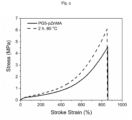
- the mechanical properties were evaluated by measuring stress (MPa) vs. stroke strain (%) on a Shimadzu AGS-X tensile tester at a strain rate of 100 mm/min. The results are shown in Fig. 5 .
- the examples 7 to 9 refer to rubber compositions that show the effect of adding carbon black N234 to compound PG20, as given in Examples 1 to 4.
- the detailed compositions are given in Table 4.
Landscapes
- Chemical & Material Sciences (AREA)
- Organic Chemistry (AREA)
- Health & Medical Sciences (AREA)
- Chemical Kinetics & Catalysis (AREA)
- Medicinal Chemistry (AREA)
- Polymers & Plastics (AREA)
- Engineering & Computer Science (AREA)
- Mechanical Engineering (AREA)
- General Chemical & Material Sciences (AREA)
- Compositions Of Macromolecular Compounds (AREA)
- Tires In General (AREA)
- Polymerisation Methods In General (AREA)
- Addition Polymer Or Copolymer, Post-Treatments, Or Chemical Modifications (AREA)
Description
- The present invention relates to the field of self-healing rubbers. Particularly, the present invention refers to a rubber composition comprising a dynamic poly(glycerol mono-methacrylate) boronic ester complex, processes for preparation thereof, and use thereof in a self-healing tire.
- Self-healing natural rubbers are known in the state of the art. C. Xu et. al., "Design of Self-Healing Supramolecular Rubbers by Introducing Ionic Cross-Links into Natural Rubber via a Controller Vulcanization", ACS Appl. Mater. , describe a controlled peroxide-induced vulcanization to generate ionic crosslinks via polymerization of zinc dimethacrylate in natural rubber. In Ch. Xu et. al., "Self-Healing Natural Rubber with Tailorable Mechanical Properties based Ionic Supramolecular Hybrid Network", ACS Appl. Mater. Interfaces 2017, 9, 29363-29373, DOI: 10.1021/acsami.7b09997, the authors aimed at enhancing the properties of the self-healing natural rubber by an in-situ polymerization reaction of excess zinc oxide (ZnO) and methacrylic acid in natural rubber to form zinc dimethacrylate. While self-healing natural rubbers are known from these publications, their mechanical strength is poor.
- The use of methacrylate-based macromonomers as "sulfur-free" RAFT agents in a polymerisation-induced self-assembly (PISA) system is described in "Toward Sulfur-Free RAFT Polymerization Induced Self-Assembly" by A. Lotierzo, et al., ACS Macro Lett. 2017, 6, 1438-1443, DOI: 10.1021/acsmacrolett.7b00857. The preparation of polymers containing boronic ester dynamic covalent bonds is described in S. Tajbakhsh, et al., "Recyclable Polymers with Boronic Ester Dynamic Bonds Prepared by Miniemulsion Polymerization", ACS Appl. Polym. Mater. 2021, 3, 3402-3415, DOI: 10.1021/acsapm.1c00368.
- Y. Chen et al. describe in "Covalently Cross-Linked Elastomers with Self-Healing and Malleable Abilities Enabled by Boronic Ester Bonds", ACS Appl. Mater. , a thiol-containing boronic ester that is used to cross-link a self-healing styrene butadiene rubber (SBR). Furthermore, in "Mechanically Robust, Self-Healable, and Reprocessable Elastomers Enabled by Dynamic Dual Cross-Links", Macromolecules 2019, 52, 3805-3812, DOI: 10.1021/acs.macromol.9boo419, Y. Chen et al. describe the covalent cross-linking of epoxidized natural rubber (ENR) with a boronic ester cross-linker carrying dithiol through a chemical reaction between epoxy and thiol groups.
- N. Yang et al., "Polyvinyl Alcohol/Silk Fibroin/Borax Hydrogel Ionotronics: A Highly Stretchable, Self-Healable, and Biocompatible Sensing Platform", ACS Appl. Mater. Interfaces 2019, 11, 23632-23638, DOI: 10.1021/acsami.9b06920, report on a biocompatible ionic hydrogel made of polyvinyl alcohol, silk fibroin, and borax, wherein the hydrogel can be used as a sensing platform for monitoring surrounding body motion.
- An object of the present invention was to provide a rubber composition which in its cured state provides improved self-healing properties and simultaneously high mechanical strength, to enable its use in tires.
- Surprisingly, it was found that the use of a complex prepared by crosslinking an oligomer or polymer of glycerol mono-methacrylate with borax in a rubber composition solves the trade-off between self-healing efficiency and mechanical strength in the cured rubber. The cured rubber is self-healing and at the same time achieves high mechanical strength, which permits its use in tires.
- Accordingly, the present invention refers to a process for preparing a rubber composition comprising at least the following steps:
- (A) polymerizing glycerol mono-methacrylate in the presence of a Co(II) complex as catalytic chain transfer agent, to obtain a poly(glycerol mono-methacrylate) being an oligomer or polymer of glycerol mono-methacrylate and having a number average molecular weight (Mn) in the range of from 160 to 3200 g/mol and preferably a dispersity Ð of equal to or less than 4;
- (B) crosslinking the poly(glycerol mono-methacrylate) with borax to obtain a poly(glycerol mono-methacrylate) dynamic boronic ester complex; and
- (C) blending the poly(glycerol mono-methacrylate) dynamic boronic ester complex with a vulcanization activator system, a dienic rubber, sulfur, and a vulcanization accelerator, to prepare the rubber composition.
- Herein, the term "poly(glycerol monomethacrylate)" or "pGMMA" in abbreviated form means an ω-vinyl oligomer or polymer of glycerol mono-methacrylate. Herein, the term "poly(glycerol monomethacrylate)" is used interchangeably with the term "poly(glycerol monomethacrylate) oligomer".
- In a preferred embodiment of the process, in step (A), the molecular weight of the poly(glycerol mono-methacrylate) is controlled by the ratio of glycerol mono-methacrylate to Co(II) complex, in particular wherein a ratio of glycerol mono-methacrylate to Co(II) complex of 106 : 10 to 106 : 180 is used.
- In other preferred embodiments of the process, the Co(II) complex is a cobaloxime boron fluoride, in particular the Co(II) complex is bis[(difluoroboryl)-dimethylglyoximato]cobalt(II).
- In further preferred embodiments, in step (B) the poly(glycerol mono-methacrylate) is mixed with borax at a weight ratio of from 1.0 : 0.05 to 1.0 : 0.4.
- In a preferred embodiment of the process, in step (C), the poly(glycerol mono-methacrylate) boronic ester complex is blended with a vulcanization activator system which is zinc oxide and an organic acid. In a more preferred embodiment, the organic acid used is stearic acid, which forms a vulcanization activator complex with zinc oxide during processing. In another preferred embodiment of the process, the vulcanization activator system is a poly(zinc methacrylate)-zinc oxide activator (p(ZnMA)/ZnO) complex. Preferably, the organic acid used is an ω-vinyl oligomer of methacrylic acid that is mixed with zinc oxide to form a poly(zinc methacrylate)-zinc oxide activator (p(ZnMA)/ZnO) complex, before blending with the dienic rubber, sulfur, and vulcanization accelerator.
- In further preferred embodiments, the poly(glycerol mono-methacrylate) has a number average molecular weight (Mn) in the range of from 160 to 3200 g/mol, preferably from 320 to 2400 g/mol. In other preferred embodiments, the poly(glycerol mono-methacrylate) has a dispersity Ð of equal to or less than 4, preferably of equal to or less than 2.
- In other preferred embodiments, in step (C) the dienic rubber is selected from the group consisting of a natural rubber, an isoprene rubber, a styrene-butadiene rubber, a butadiene rubber, and combinations thereof.
- In exemplary embodiments, in step (C) the vulcanization accelerator is based on a sulfenamide compound and/or a thiazole compound.
- In other preferred embodiments, in step (C) additionally a filler is used, in particular wherein the filler is used in an amount of an amount of 5.0 to 80 phr, based on 100 phr of the dienic rubber.
- The present invention further relates to a rubber composition comprising
- a poly(glycerol mono-methacrylate) dynamic boronic ester complex obtained by polymerizing glycerol mono-methacrylate in the presence of a Co(II) complex as catalytic chain transfer agent, to obtain a poly(glycerol mono-methacrylate) being an oligomer or polymer of glycerol mono-methacrylate and having a number average molecular weight (Mn) in the range of from 160 to 3200 g/mol, and crosslinking the poly(glycerol mono-methacrylate) with borax;
- a vulcanization activator system;
- a dienic rubber;
- sulfur; and
- a vulcanization accelerator.
- A preferred rubber composition of the invention comprises
- a poly(glycerol mono-methacrylate) dynamic boronic ester complex obtained by polymerizing glycerol mono-methacrylate in the presence of a Co(II) complex as catalytic chain transfer agent, to obtain a poly(glycerol mono-methacrylate) being an oligomer or polymer of glycerol mono-methacrylate and having a number average molecular weight (Mn) in the range of from 160 to 3200 g/mol, and crosslinking the poly(glycerol mono-methacrylate) with borax;
- zinc oxide, and an organic acid, preferably zinc oxide and stearic acid;
- a dienic rubber;
- sulfur; and
- a vulcanization accelerator.
- A further preferred rubber composition comprises
- a poly(glycerol mono-methacrylate) dynamic boronic ester complex obtained by polymerizing glycerol mono-methacrylate in the presence of a Co(II) complex as catalytic chain transfer agent, to obtain a poly(glycerol mono-methacrylate) being an oligomer or polymer of glycerol mono-methacrylate and having a number average molecular weight (Mn) in the range of from 160 to 3200 g/mol, and crosslinking the poly(glycerol mono-methacrylate) with borax;
- a poly(zinc methacrylate)-zinc oxide activator (p(ZnMA)/ZnO) complex;
- a dienic rubber;
- sulfur; and
- a vulcanization accelerator.
- In preferred embodiments, the rubber composition comprises a filler, preferably in an amount of 5.0 to 80 phr, based on 100 phr of the dienic rubber.
- The present invention further provides a cured rubber or cured rubber composition obtainable by curing the above-described rubber compositions.
- Furthermore, the present invention provides a self-healing tire comprising a tire component, preferably a tread, produced by using the above-described rubber compositions.
- All references herein to the unit "phr" designate parts by weight per 100 parts by weight of rubber.
- The term "molecular weight" as used herein, such as the number average molecular weight (Mn), refers to a determination by size exclusion chromatography (SEC), and preferably additionally by 1H nuclear magnetic resonance (NMR) spectroscopy.
- The term "dispersity" as used herein, refers to the molecular weight distribution Ð and is determined from the following equation:

- Preferred embodiments of the invention are described in the description hereinafter, in the examples, the figures and the claims.
- The Figures show:
-
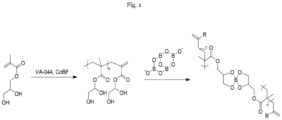
Figure 1 shows the reaction scheme for the formation of the dynamic boronic ester complex. -
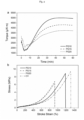
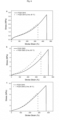
Figure 2 shows curing curves and tensile tests of the cured rubbers of Examples 1 to 4. -
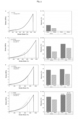
Figure 3 shows mechanical properties of the cured rubbers of Examples 1 to 4. -
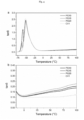
Figure 4 shows DMA analysis of the cured rubbers of Examples 1 to 4. -
Figure 5 shows mechanical properties of the cured rubbers of Examples 5 and 6. -
Figure 6 shows tensile tests of the cured rubbers of Examples 7 to 9. - The rubber composition according to the present invention is curable and comprises at least a dienic rubber, a poly(glycerol mono-methacrylate) dynamic boronic ester complex, a vulcanization activator system, sulfur, a vulcanization accelerator, and preferably a filler, wherein preferably the vulcanization activator system is zinc oxide (ZnO) and an organic acid. In a preferred embodiment, the organic acid is stearic acid. In another preferred embodiment, the organic acid is an ω-vinyl oligomer of methacrylic acid.
- The dienic rubber is preferably selected from natural rubber (NR), styrene-butadiene rubber (SBR), an isoprene rubber, a butadiene rubber (BR), or combinations thereof. Preferably, natural rubber (NR), styrene-butadiene rubber (SBR), or a combination thereof is used. Suitable blends are 80 to 90 weight-% of natural rubber and 20 to 10 weight-% of styrene-butadiene rubber, based on 100 weight-% of the rubber.
- According to the invention the poly(glycerol mono-methacrylate) dynamic boronic ester complex has a number average molecular weight (Mn) in the range of from 160 to 3200 g/mol, in particular with a dispersity (Ð) of equal to or less than 4. Preferably, Mn is in the range of from 240 to 2400 g/mol with a dispersity (Ð) of equal to or less than 2, more preferably Mn is in the range of from 240 to 1600 with a dispersity (Ð) of less than 2. The molecular weight of 160 to 3200 g/mol corresponds to a degree of polymerization of 2 to 40.
- The poly(glycerol mono-methacrylate) is produced by oligomerization or polymerization of glycerol mono-methacrylate by catalytic chain transfer (CCT) using a cobalt (II) complex as catalyst, wherein the degree of the polymerization, or the molecular weight of the poly(glycerol mono-methacrylate) can be controlled by the ratio of the monomer (glycerol mono-methacrylate) and the catalyst.
- An exemplary embodiment for the polymerization using bis[(difluoroboryl)-dimethylglyoximato]cobalt(II) (CoBF) as catalyst, is shown in
Fig. 1 , wherein n indicates the number of monomer units. Preferably, n is 2 to 15. - The cobalt(II) complex or catalyst can be any cobalt complex known in the art for catalytic chain transfer polymerization (CCTP). Suitable catalysts are described, for example, in
EP 1 295 922 A2US 9 090 724 B2 US 9 580 529 B2 - The poly(glycerol mono-methacrylate) is crosslinked with borax, to yield the dynamic boronic esters, as shown in
Fig. 1 . The reaction is carried out preferably in deionized water, preferably at ambient temperatures. In a preferred embodiment, the water is then removed by lyophilization. - The poly(glycerol mono-methacrylate) dynamic boronic ester complex contains a network of dynamic boronic esters, that when added to rubber compositions, endow the cured rubbers with self-healing properties.
- ZnO is commonly used as an additive in rubber compositions for tires as it acts as a vulcanization accelerator. In a preferred embodiment of the invention, ZnO is added in combination with stearic acid, and forms a zinc stearate salt in situ. In the present invention, ZnO can be used in the form of zinc stearate, or in the form of p(ZnMA)/ZnO. When using p(ZnMA)/ZnO, the complex can be formed prior to mixing by combing ω-unsaturated oligomers of methacrylic acid with ZnO in water and then lyophilizing to form a dry complex.
- Suitable fillers for the rubber composition are subject to no restrictions and known in the art of tire production. Exemplary fillers are carbon black, silica, and combinations thereof. Both carbon black and silica with specific surface areas are commercially available and can be used. Fillers are typically used in amounts of 5 phr to 80 phr, preferably of 5 phr to 50 phr, more preferably of 10 phr to 40 phr.
- In the present invention, sulfur is used as crosslinking agent in the vulcanization. The sulfur provides covalent crosslinks in the cured rubber composition contributing to the mechanical strength of the cured rubber.
- Suitable vulcanization accelerators are based on sulfenamide compounds and/or thiazole compounds. Preferably, N-cyclohexyl-2-benzothiazole sulfenamide (known as CBS) or tetramethylthiuram monosulfide is used.
- The rubber composition can comprise further additives, in particular additives that are commonly used in the art for tire production. Such additives are lubricants, pigments, activators, softeners, plasticizers, antioxidants, fatty acids (such as stearic acid). Commonly, the total amount of these additives is not more than 10 weight-% based on the 100 weight-% of the rubber composition or not more than 10 phr.
- The invention also provides cured rubber compositions or cured rubbers obtained after curing of the curable rubber compositions of the invention. The curing can be carried out as known in the art and is subject to no restrictions. Suitable curing temperatures are in the range of from 150 to 160 °C.
- The rubber composition of the invention is particularly used for producing one or more tire components or one or more rubber components of a self-healing tire, including tread or case compounds. In particular, the rubber composition is preferably used for the tread or tread portion of a self-healing tire. Thus, the invention further provides self-healing tires comprising a tire component, more preferably a tread, that is produced by using the self-healing rubber composition of the invention. The production of tire components from the rubber composition in suitable devices is carried out as known in the art.
- The rubber composition of the invention imparts self-healing properties and high mechanical strength to the tire.
- The examples hereinafter illustrate the invention without restricting the scope of protection.
- The Examples 1 to 4 refer to different rubber compositions which show the effect of poly(glycerol mono-methacrylate) dynamic boronic ester complex on the self-healing and mechanical properties of the rubber after curing.
- The formulations used are indicated in Table 1 below, wherein the numerical values relate to phr. The comparative formulation was CV1 which contained no pGMMA-Borax but otherwise the same components in the corresponding amounts.
Table 1: CV1 CV1 CV1 CV1 PG10 PG15 PG20 NR 100 100 100 100 ZnO 5 5 5 5 Stearic Acid 1 1 1 1 pGMMA-Borax - 10 15 20 CBS 0.14 0.14 0.14 0.14 Sulfur 0.7 0.7 0.7 0.7 - The indicated components were as follows.
- NR: natural rubber.
- pGMMA-borax: poly(glycerol mono-methacrylate) dynamic boronic ester complex prepared from poly(glycerol mono-methacrylate (Mn = 1600 g/mol) and borax at a weight ratio of 10 to 1.
- CBS: N-cyclohexyl-2-benzothiazole sulfonamide.
- Sulfur: commercially available sulfur for tire production.
- The components as indicated were blended in a Haake PolyLab twin screw compounder at 40 °C and at 50 rpm. The curing properties and optimum curing time (t90) of the compounds were measured using a Montech M3000 moving die rheometer (MDR). Samples were then cured to their t90 curing time, at a temperature of 150 °C at a pressure of 150 bar in a Collin P200 Hot Press to form 9 × 9 cm2 films with a thickness of 1 mm.
-
Fig. 2 shows (a) curing curves obtained with the MDR for the formulations of Table 1, and (b) tensile tests of CV1 and the formulations of Table 1. The mechanical properties were evaluated by measuring stress (MPa) vs. stroke strain (%) on a Shimadzu AGS-X tensile tester at a strain rate of 100 mm/min. The results are shown inFig. 2 in comparison with a formulation (CV1) without pGMMA-borax. -
Fig. 3 further shows self-healing tests in terms of recovery in %. These results were obtained by repeating the tensile tests with specimens from each sample that had been cut in half with a scalpel and then overlapped with an area of 4 mm × 3 mm, before being placed under a 20 N weight at 80 °C for either 30 mins or 2 hours. The percentage recovery value was then calculated from the values obtained from the cut specimens relative to the uncut specimens. - The values for the stress recovery and strain recovery of the cured rubbers of Examples 1 to 4 are shown in Table 2 below.
Table 2: CV PG10 PG15 PG20 pGMMA-borax (phr) 0 10 15 20 Stress recovery @ 30 mins (%) 13.70 32.16 49.35 60.29 Strain recovery @ 30 mins (%) 29.76 58.18 74.79 74.58 Stress recovery @ 2 hrs (%) - 49.4 54.21 90.13 Strain recovery @ 2 hrs (%) - 70 78.05 83.60 -
Fig. 4 shows a DMA analysis of CV1 and the formulations of Table 1. These results were measured on aTritec 2000 DMA in tension mode at a 1% strain and a frequency of 5 Hz, in the temperature range of -80 and 100 °C - The Examples 5 and 6 refer to rubber compositions showing the effect of pGMMA-borax on a rubber composition containing additionally pZnMA/ZnO salt (which is a preformed salt of pMAA with ZnO in a weight ratio of 1:1) as the curing activator. The formulations used are shown in Table 3 below.
Table 3: PG5- pZnMA NR 100 pZnMA/ZnO 15 pGMMA- Borax 5 CBS 0.14 Sulfur 0.7 - The components as indicated were blended in the same manner as described for Examples 1 to 4.
- The mechanical properties were evaluated by measuring stress (MPa) vs. stroke strain (%) on a Shimadzu AGS-X tensile tester at a strain rate of 100 mm/min. The results are shown in
Fig. 5 . - The examples 7 to 9 refer to rubber compositions that show the effect of adding carbon black N234 to compound PG20, as given in Examples 1 to 4. The detailed compositions are given in Table 4.
Table 4: PG20 CB10 PG20 CB25 PG20 CB40 NR 100 100 100 ZnO 5 5 5 Stearic Acid 1 1 1 pGMMA- Borax 20 20 20 CBS 0.14 0.14 0.14 Sulfur 0.7 0.7 0.7 CB N234 10 25 40 - The components given in Table 4 were blended as described in Examples 1 to 4. Their mechanical properties were again evaluated by measuring stress (MPa) vs. stroke strain (%) on a Shimadzu AGS-X tensile tester at a strain rate of 100 mm/min. The results are shown in
Fig. 6 . Additionally, self-healing efficiencies were evaluated using the same method as described in Examples 1 to 4 and are given in Table 5.Table 5: PG20 CB10 PG20 CB25 PG20 CB40 pGMMA-borax (phr) 20 20 20 CB N234 (phr) 10 25 40 Stress recovery @ 2 hrs (%) 63.79 90.35 71.73 Strain recovery @ 2 hrs (%) 75.22 80.18 76.20 - The results obtained show that the addition of the dynamic boronic ester complexes has a beneficial effect on the self-healing and mechanical properties of the cured rubbers.
Claims (15)
- A process for preparing a rubber composition comprising at least the following steps:(A) polymerizing glycerol mono-methacrylate in the presence of a Co(II) complex as catalytic chain transfer agent, to obtain a poly(glycerol mono-methacrylate) being an oligomer or polymer of glycerol mono-methacrylate and having a number average molecular weight (Mn) in the range of from 160 to 3200 g/mol and preferably a dispersity Ð of equal to or less than 4;(B) crosslinking the poly(glycerol mono-methacrylate) with borax to obtain a poly(glycerol mono-methacrylate) dynamic boronic ester complex; and(C) blending the poly(glycerol mono-methacrylate) dynamic boronic ester complex with a vulcanization activator system, a dienic rubber, sulfur, and a vulcanization accelerator, to prepare the rubber composition.
- The process of claim 1, wherein, in step (A), the molecular weight of the poly(glycerol mono-methacrylate) is controlled by the ratio of glycerol mono-methacrylate to Co(II) complex, in particular wherein a ratio of glycerol mono-methacrylate to Co(II) complex of 106 : 10 to 106 : 180 is used.
- The process of claim 1 or 2, wherein the Co(II) complex is a cobaloxime boron fluoride, in particular wherein the Co(II) complex is bis[(difluoroboryl)-dimethylglyoximato]cobalt(II).
- The process of any one of claims 1 to 3, wherein, in step (B), the poly(glycerol mono-methacrylate) is mixed with borax at a weight ratio of 1.0 : 0.05 to 1.0 : 0.4.
- The process of any one of claims 1 to 4, wherein, in step (C), the vulcanization activator system is zinc oxide and an organic acid, preferably the vulcanization activator system is zinc oxide and stearic acid.
- The process of any one of claims 1 to 4, wherein, in step (C), the vulcanization activator system is a poly(zinc methacrylate)-zinc oxide (p(ZnMA)/ZnO) complex.
- The process of any one of claims 1 to 6, wherein, in step (C), the dienic rubber is selected from the group consisting of a natural rubber, an isoprene rubber, a styrene-butadiene rubber, a butadiene rubber, and combinations thereof.
- The process of any one of claims 1 to 7, wherein, in step (C), the amount of the poly(glycerol mono-methacrylate) dynamic boronic ester complex is 5.0 to 40 phr, based on 100 phr of the dienic rubber.
- The process of any one of claims 1 to 8, wherein, in step (C), additionally a filler is used, in particular wherein the filler is used in an amount of 5.0 to 80 phr, based on 100 phr of the dienic rubber.
- A rubber composition comprising:- a poly(glycerol mono-methacrylate) dynamic boronic ester complex obtained by polymerizing glycerol mono-methacrylate in the presence of a Co(II) complex as catalytic chain transfer agent, to obtain a poly(glycerol mono-methacrylate) being an oligomer or polymer of glycerol mono-methacrylate and having a number average molecular weight (Mn) in the range of from 160 to 3200 g/mol, and crosslinking the poly(glycerol mono-methacrylate) with borax;- a vulcanization activator system;- a dienic rubber;- sulfur; and- a vulcanization accelerator.
- The rubber composition of claim 10, wherein the vulcanization activator system is zinc oxide and an organic acid, preferably the vulcanization activator system is zinc oxide and stearic acid.
- The rubber composition of claim 10, wherein the vulcanization activator system is a poly(zinc methacrylate)-zinc oxide (p(ZnMA)/ZnO) complex.
- The rubber composition of any one of claims 10 to 12, wherein the rubber composition additionally comprises a filler, in particular in an amount of 5.0 to 80 phr, based on 100 phr of the dienic rubber.
- A cured rubber composition obtainable by curing a rubber composition prepared by a process as defined in any one of claims 1 to 9, or a rubber composition according to any one of claims 10 to 13.
- A self-healing tire comprising a tire component, preferably a tread, prepared by using a rubber composition prepared by a process as defined in any one of claims 1 to 9, or a rubber composition according to any one of claims 10 to 13.
Priority Applications (5)
| Application Number | Priority Date | Filing Date | Title |
|---|---|---|---|
| EP22179598.2A EP4293076B1 (en) | 2022-06-17 | 2022-06-17 | Self-healing rubber comprising a poly(glycerolmonomethacrylate) boronic ester complex |
| JP2024573880A JP2025522475A (en) | 2022-06-17 | 2023-06-15 | Self-healing rubber containing poly(glycerol monomethacrylate)-boronic acid ester complexes |
| PCT/EP2023/066084 WO2023242326A1 (en) | 2022-06-17 | 2023-06-15 | Self-healing rubber comprising a poly(glycerolmonomethacrylate) boronic ester complex |
| US18/876,060 US20250382445A1 (en) | 2022-06-17 | 2023-06-15 | Self-healing rubber comprising a poly(glycerolmonomethacrylate) boronic ester complex |
| CN202380047655.1A CN119384457A (en) | 2022-06-17 | 2023-06-15 | Self-healing rubber containing poly(glycerol monomethacrylate) borate complex |
Applications Claiming Priority (1)
| Application Number | Priority Date | Filing Date | Title |
|---|---|---|---|
| EP22179598.2A EP4293076B1 (en) | 2022-06-17 | 2022-06-17 | Self-healing rubber comprising a poly(glycerolmonomethacrylate) boronic ester complex |
Publications (2)
| Publication Number | Publication Date |
|---|---|
| EP4293076A1 EP4293076A1 (en) | 2023-12-20 |
| EP4293076B1 true EP4293076B1 (en) | 2025-04-02 |
Family
ID=82703179
Family Applications (1)
| Application Number | Title | Priority Date | Filing Date |
|---|---|---|---|
| EP22179598.2A Active EP4293076B1 (en) | 2022-06-17 | 2022-06-17 | Self-healing rubber comprising a poly(glycerolmonomethacrylate) boronic ester complex |
Country Status (5)
| Country | Link |
|---|---|
| US (1) | US20250382445A1 (en) |
| EP (1) | EP4293076B1 (en) |
| JP (1) | JP2025522475A (en) |
| CN (1) | CN119384457A (en) |
| WO (1) | WO2023242326A1 (en) |
Family Cites Families (5)
| Publication number | Priority date | Publication date | Assignee | Title |
|---|---|---|---|---|
| CS157212B1 (en) * | 1970-12-23 | 1974-09-16 | ||
| JP2003055416A (en) | 2001-08-22 | 2003-02-26 | Kansai Paint Co Ltd | Method for producing pigment-dispersed resin |
| GB201116663D0 (en) | 2011-09-28 | 2011-11-09 | Unilever Plc | Low viscosity suspending vinyl copolymers |
| CN105189643B (en) * | 2012-08-30 | 2019-01-15 | 派诺聚合物技术公司 | Dual Mechanism Thickeners for Hydraulic Fracturing Fluids |
| CA2896967A1 (en) | 2013-01-04 | 2014-07-10 | Evonik Oil Additives Gmbh | Preparation of low-viscosity polymers |
-
2022
- 2022-06-17 EP EP22179598.2A patent/EP4293076B1/en active Active
-
2023
- 2023-06-15 WO PCT/EP2023/066084 patent/WO2023242326A1/en not_active Ceased
- 2023-06-15 JP JP2024573880A patent/JP2025522475A/en active Pending
- 2023-06-15 CN CN202380047655.1A patent/CN119384457A/en active Pending
- 2023-06-15 US US18/876,060 patent/US20250382445A1/en active Pending
Also Published As
| Publication number | Publication date |
|---|---|
| WO2023242326A1 (en) | 2023-12-21 |
| JP2025522475A (en) | 2025-07-15 |
| EP4293076A1 (en) | 2023-12-20 |
| CN119384457A (en) | 2025-01-28 |
| US20250382445A1 (en) | 2025-12-18 |
Similar Documents
| Publication | Publication Date | Title |
|---|---|---|
| EP3210796B1 (en) | Rubber composition for tyres with good rolling resistance and wet grip properties | |
| KR101723530B1 (en) | Method to improve cold flow resistance of polymers | |
| CN113462022B (en) | A kind of rubber antioxidant composition and its preparation method and application | |
| Das et al. | Room temperature Self-healable and extremely stretchable elastomer with improved mechanical Properties: Exploring a simplistic Metal-Ligand interaction | |
| JP3172224B2 (en) | Elastomeric composition reinforced with fibrids and method for producing the same | |
| CN105255021A (en) | High-intensity and low-compression-permanent-deformation rubber material and preparation method of high-intensity and low-compression permanent deformation rubber material | |
| EP3277732B1 (en) | Diene rubber composition configured to be vulcanized at lower temperature; and manufacturing process of rubber article | |
| EP3849822B1 (en) | Tyre | |
| CN116217813A (en) | A kind of modified EPDM rubber, EPDM composite elastomer and preparation method thereof | |
| EP4293076B1 (en) | Self-healing rubber comprising a poly(glycerolmonomethacrylate) boronic ester complex | |
| US20240294738A1 (en) | Self-healing rubber comprising a poly(methacrylic) oligomer | |
| CN118222096A (en) | Silicone rubber composition, silicone rubber and preparation method of silicone rubber | |
| CN110036065B (en) | Tackifier for rubber composition | |
| KR20170134719A (en) | Methods of functionalizing polymers | |
| CN113248836A (en) | Ethylene propylene diene monomer composition and preparation method thereof | |
| WO2015048398A2 (en) | Thermoset rubber reinforced by supramolecule building blocks | |
| CN102120835A (en) | Method for processing high-molecular-weight rare earth butadiene rubber | |
| EP3408112B1 (en) | Rubber compound to produce an inner liner layer | |
| KR102815005B1 (en) | Reactive eva based copolymer type elastomer composition | |
| CN107148443B (en) | Anti-aging agent for macromolecule product | |
| KR102786770B1 (en) | Manufacturing method of eco-friendly silica dispersant that does not contain heavy metals and silica dispersant using the same | |
| CN114605646B (en) | A reusable thermosetting polyurethane modified polysiloxane material and preparation method thereof | |
| KR102374187B1 (en) | Method of producing rubber composition, rubber composition made by the same, and tire made by employing the same | |
| KR100592987B1 (en) | Rim flange rubber composition for truck and bus tires | |
| CN121574443A (en) | Compositions for forming vulcanizates, vulcanizates, their preparation methods and applications |
Legal Events
| Date | Code | Title | Description |
|---|---|---|---|
| PUAI | Public reference made under article 153(3) epc to a published international application that has entered the european phase |
Free format text: ORIGINAL CODE: 0009012 |
|
| STAA | Information on the status of an ep patent application or granted ep patent |
Free format text: STATUS: THE APPLICATION HAS BEEN PUBLISHED |
|
| AK | Designated contracting states |
Kind code of ref document: A1 Designated state(s): AL AT BE BG CH CY CZ DE DK EE ES FI FR GB GR HR HU IE IS IT LI LT LU LV MC MK MT NL NO PL PT RO RS SE SI SK SM TR |
|
| STAA | Information on the status of an ep patent application or granted ep patent |
Free format text: STATUS: REQUEST FOR EXAMINATION WAS MADE |
|
| 17P | Request for examination filed |
Effective date: 20240619 |
|
| RBV | Designated contracting states (corrected) |
Designated state(s): AL AT BE BG CH CY CZ DE DK EE ES FI FR GB GR HR HU IE IS IT LI LT LU LV MC MK MT NL NO PL PT RO RS SE SI SK SM TR |
|
| GRAP | Despatch of communication of intention to grant a patent |
Free format text: ORIGINAL CODE: EPIDOSNIGR1 |
|
| STAA | Information on the status of an ep patent application or granted ep patent |
Free format text: STATUS: GRANT OF PATENT IS INTENDED |
|
| INTG | Intention to grant announced |
Effective date: 20241025 |
|
| GRAS | Grant fee paid |
Free format text: ORIGINAL CODE: EPIDOSNIGR3 |
|
| GRAA | (expected) grant |
Free format text: ORIGINAL CODE: 0009210 |
|
| STAA | Information on the status of an ep patent application or granted ep patent |
Free format text: STATUS: THE PATENT HAS BEEN GRANTED |
|
| AK | Designated contracting states |
Kind code of ref document: B1 Designated state(s): AL AT BE BG CH CY CZ DE DK EE ES FI FR GB GR HR HU IE IS IT LI LT LU LV MC MK MT NL NO PL PT RO RS SE SI SK SM TR |
|
| REG | Reference to a national code |
Ref country code: GB Ref legal event code: FG4D |
|
| REG | Reference to a national code |
Ref country code: CH Ref legal event code: EP |
|
| REG | Reference to a national code |
Ref country code: IE Ref legal event code: FG4D |
|
| REG | Reference to a national code |
Ref country code: DE Ref legal event code: R096 Ref document number: 602022012470 Country of ref document: DE |
|
| P01 | Opt-out of the competence of the unified patent court (upc) registered |
Free format text: CASE NUMBER: APP_21624/2025 Effective date: 20250507 |
|
| PGFP | Annual fee paid to national office [announced via postgrant information from national office to epo] |
Ref country code: DE Payment date: 20250520 Year of fee payment: 4 |
|
| PGFP | Annual fee paid to national office [announced via postgrant information from national office to epo] |
Ref country code: FR Payment date: 20250520 Year of fee payment: 4 |
|
| PGFP | Annual fee paid to national office [announced via postgrant information from national office to epo] |
Ref country code: AT Payment date: 20250721 Year of fee payment: 4 |
|
| REG | Reference to a national code |
Ref country code: NL Ref legal event code: MP Effective date: 20250402 |
|
| PG25 | Lapsed in a contracting state [announced via postgrant information from national office to epo] |
Ref country code: NL Free format text: LAPSE BECAUSE OF FAILURE TO SUBMIT A TRANSLATION OF THE DESCRIPTION OR TO PAY THE FEE WITHIN THE PRESCRIBED TIME-LIMIT Effective date: 20250402 |
|
| REG | Reference to a national code |
Ref country code: AT Ref legal event code: MK05 Ref document number: 1781255 Country of ref document: AT Kind code of ref document: T Effective date: 20250402 |
|
| PG25 | Lapsed in a contracting state [announced via postgrant information from national office to epo] |
Ref country code: PT Free format text: LAPSE BECAUSE OF FAILURE TO SUBMIT A TRANSLATION OF THE DESCRIPTION OR TO PAY THE FEE WITHIN THE PRESCRIBED TIME-LIMIT Effective date: 20250804 Ref country code: FI Free format text: LAPSE BECAUSE OF FAILURE TO SUBMIT A TRANSLATION OF THE DESCRIPTION OR TO PAY THE FEE WITHIN THE PRESCRIBED TIME-LIMIT Effective date: 20250402 Ref country code: ES Free format text: LAPSE BECAUSE OF FAILURE TO SUBMIT A TRANSLATION OF THE DESCRIPTION OR TO PAY THE FEE WITHIN THE PRESCRIBED TIME-LIMIT Effective date: 20250402 |
|
| REG | Reference to a national code |
Ref country code: LT Ref legal event code: MG9D |
|
| PG25 | Lapsed in a contracting state [announced via postgrant information from national office to epo] |
Ref country code: NO Free format text: LAPSE BECAUSE OF FAILURE TO SUBMIT A TRANSLATION OF THE DESCRIPTION OR TO PAY THE FEE WITHIN THE PRESCRIBED TIME-LIMIT Effective date: 20250702 Ref country code: GR Free format text: LAPSE BECAUSE OF FAILURE TO SUBMIT A TRANSLATION OF THE DESCRIPTION OR TO PAY THE FEE WITHIN THE PRESCRIBED TIME-LIMIT Effective date: 20250703 |
|
| PG25 | Lapsed in a contracting state [announced via postgrant information from national office to epo] |
Ref country code: PL Free format text: LAPSE BECAUSE OF FAILURE TO SUBMIT A TRANSLATION OF THE DESCRIPTION OR TO PAY THE FEE WITHIN THE PRESCRIBED TIME-LIMIT Effective date: 20250402 |
|
| PGFP | Annual fee paid to national office [announced via postgrant information from national office to epo] |
Ref country code: IT Payment date: 20250630 Year of fee payment: 4 |
|
| PG25 | Lapsed in a contracting state [announced via postgrant information from national office to epo] |
Ref country code: BG Free format text: LAPSE BECAUSE OF FAILURE TO SUBMIT A TRANSLATION OF THE DESCRIPTION OR TO PAY THE FEE WITHIN THE PRESCRIBED TIME-LIMIT Effective date: 20250402 |
|
| PG25 | Lapsed in a contracting state [announced via postgrant information from national office to epo] |
Ref country code: AT Free format text: LAPSE BECAUSE OF FAILURE TO SUBMIT A TRANSLATION OF THE DESCRIPTION OR TO PAY THE FEE WITHIN THE PRESCRIBED TIME-LIMIT Effective date: 20250402 Ref country code: HR Free format text: LAPSE BECAUSE OF FAILURE TO SUBMIT A TRANSLATION OF THE DESCRIPTION OR TO PAY THE FEE WITHIN THE PRESCRIBED TIME-LIMIT Effective date: 20250402 |
|
| PG25 | Lapsed in a contracting state [announced via postgrant information from national office to epo] |
Ref country code: RS Free format text: LAPSE BECAUSE OF FAILURE TO SUBMIT A TRANSLATION OF THE DESCRIPTION OR TO PAY THE FEE WITHIN THE PRESCRIBED TIME-LIMIT Effective date: 20250702 |
|
| PG25 | Lapsed in a contracting state [announced via postgrant information from national office to epo] |
Ref country code: IS Free format text: LAPSE BECAUSE OF FAILURE TO SUBMIT A TRANSLATION OF THE DESCRIPTION OR TO PAY THE FEE WITHIN THE PRESCRIBED TIME-LIMIT Effective date: 20250802 |
|
| PG25 | Lapsed in a contracting state [announced via postgrant information from national office to epo] |
Ref country code: LV Free format text: LAPSE BECAUSE OF FAILURE TO SUBMIT A TRANSLATION OF THE DESCRIPTION OR TO PAY THE FEE WITHIN THE PRESCRIBED TIME-LIMIT Effective date: 20250402 |
|
| REG | Reference to a national code |
Ref country code: DE Ref legal event code: R097 Ref document number: 602022012470 Country of ref document: DE |
|
| PG25 | Lapsed in a contracting state [announced via postgrant information from national office to epo] |
Ref country code: SM Free format text: LAPSE BECAUSE OF FAILURE TO SUBMIT A TRANSLATION OF THE DESCRIPTION OR TO PAY THE FEE WITHIN THE PRESCRIBED TIME-LIMIT Effective date: 20250402 Ref country code: DK Free format text: LAPSE BECAUSE OF FAILURE TO SUBMIT A TRANSLATION OF THE DESCRIPTION OR TO PAY THE FEE WITHIN THE PRESCRIBED TIME-LIMIT Effective date: 20250402 |
|
| PG25 | Lapsed in a contracting state [announced via postgrant information from national office to epo] |
Ref country code: CZ Free format text: LAPSE BECAUSE OF FAILURE TO SUBMIT A TRANSLATION OF THE DESCRIPTION OR TO PAY THE FEE WITHIN THE PRESCRIBED TIME-LIMIT Effective date: 20250402 |
|
| PG25 | Lapsed in a contracting state [announced via postgrant information from national office to epo] |
Ref country code: EE Free format text: LAPSE BECAUSE OF FAILURE TO SUBMIT A TRANSLATION OF THE DESCRIPTION OR TO PAY THE FEE WITHIN THE PRESCRIBED TIME-LIMIT Effective date: 20250402 |
|
| PG25 | Lapsed in a contracting state [announced via postgrant information from national office to epo] |
Ref country code: SK Free format text: LAPSE BECAUSE OF FAILURE TO SUBMIT A TRANSLATION OF THE DESCRIPTION OR TO PAY THE FEE WITHIN THE PRESCRIBED TIME-LIMIT Effective date: 20250402 |
|
| REG | Reference to a national code |
Ref country code: CH Ref legal event code: H13 Free format text: ST27 STATUS EVENT CODE: U-0-0-H10-H13 (AS PROVIDED BY THE NATIONAL OFFICE) Effective date: 20260127 |
|
| PG25 | Lapsed in a contracting state [announced via postgrant information from national office to epo] |
Ref country code: MC Free format text: LAPSE BECAUSE OF FAILURE TO SUBMIT A TRANSLATION OF THE DESCRIPTION OR TO PAY THE FEE WITHIN THE PRESCRIBED TIME-LIMIT Effective date: 20250402 |
|
| PLBE | No opposition filed within time limit |
Free format text: ORIGINAL CODE: 0009261 |
|
| STAA | Information on the status of an ep patent application or granted ep patent |
Free format text: STATUS: NO OPPOSITION FILED WITHIN TIME LIMIT |
|
| REG | Reference to a national code |
Ref country code: CH Ref legal event code: L10 Free format text: ST27 STATUS EVENT CODE: U-0-0-L10-L00 (AS PROVIDED BY THE NATIONAL OFFICE) Effective date: 20260211 |
|
| PG25 | Lapsed in a contracting state [announced via postgrant information from national office to epo] |
Ref country code: LU Free format text: LAPSE BECAUSE OF NON-PAYMENT OF DUE FEES Effective date: 20250617 |
|
| REG | Reference to a national code |
Ref country code: BE Ref legal event code: MM Effective date: 20250630 |
|
| PG25 | Lapsed in a contracting state [announced via postgrant information from national office to epo] |
Ref country code: RO Free format text: LAPSE BECAUSE OF FAILURE TO SUBMIT A TRANSLATION OF THE DESCRIPTION OR TO PAY THE FEE WITHIN THE PRESCRIBED TIME-LIMIT Effective date: 20250402 |
|
| 26N | No opposition filed |
Effective date: 20260105 |
|
| PG25 | Lapsed in a contracting state [announced via postgrant information from national office to epo] |
Ref country code: IE Free format text: LAPSE BECAUSE OF NON-PAYMENT OF DUE FEES Effective date: 20250617 |
|
| PG25 | Lapsed in a contracting state [announced via postgrant information from national office to epo] |
Ref country code: BE Free format text: LAPSE BECAUSE OF NON-PAYMENT OF DUE FEES Effective date: 20250630 |
|
| PG25 | Lapsed in a contracting state [announced via postgrant information from national office to epo] |
Ref country code: CH Free format text: LAPSE BECAUSE OF NON-PAYMENT OF DUE FEES Effective date: 20250630 |