EP4290515A1 - Communication support system - Google Patents
Communication support system Download PDFInfo
- Publication number
- EP4290515A1 EP4290515A1 EP23175050.6A EP23175050A EP4290515A1 EP 4290515 A1 EP4290515 A1 EP 4290515A1 EP 23175050 A EP23175050 A EP 23175050A EP 4290515 A1 EP4290515 A1 EP 4290515A1
- Authority
- EP
- European Patent Office
- Prior art keywords
- area
- band
- road noise
- microphone
- unit
- Prior art date
- Legal status (The legal status is an assumption and is not a legal conclusion. Google has not performed a legal analysis and makes no representation as to the accuracy of the status listed.)
- Granted
Links
Images



Classifications
-
- H—ELECTRICITY
- H04—ELECTRIC COMMUNICATION TECHNIQUE
- H04R—LOUDSPEAKERS, MICROPHONES, GRAMOPHONE PICK-UPS OR LIKE ACOUSTIC ELECTROMECHANICAL TRANSDUCERS; ELECTRIC HEARING AIDS; PUBLIC ADDRESS SYSTEMS
- H04R3/00—Circuits for transducers
- H04R3/04—Circuits for transducers for correcting frequency response
-
- G—PHYSICS
- G10—MUSICAL INSTRUMENTS; ACOUSTICS
- G10L—SPEECH ANALYSIS TECHNIQUES OR SPEECH SYNTHESIS; SPEECH RECOGNITION; SPEECH OR VOICE PROCESSING TECHNIQUES; SPEECH OR AUDIO CODING OR DECODING
- G10L21/00—Speech or voice signal processing techniques to produce another audible or non-audible signal, e.g. visual or tactile, in order to modify its quality or its intelligibility
- G10L21/02—Speech enhancement, e.g. noise reduction or echo cancellation
-
- G—PHYSICS
- G10—MUSICAL INSTRUMENTS; ACOUSTICS
- G10K—SOUND-PRODUCING DEVICES; METHODS OR DEVICES FOR PROTECTING AGAINST, OR FOR DAMPING, NOISE OR OTHER ACOUSTIC WAVES IN GENERAL; ACOUSTICS NOT OTHERWISE PROVIDED FOR
- G10K11/00—Methods or devices for transmitting, conducting or directing sound in general; Methods or devices for protecting against, or for damping, noise or other acoustic waves in general
- G10K11/16—Methods or devices for protecting against, or for damping, noise or other acoustic waves in general
- G10K11/175—Methods or devices for protecting against, or for damping, noise or other acoustic waves in general using interference effects; Masking sound
- G10K11/178—Methods or devices for protecting against, or for damping, noise or other acoustic waves in general using interference effects; Masking sound by electro-acoustically regenerating the original acoustic waves in anti-phase
- G10K11/1785—Methods, e.g. algorithms; Devices
- G10K11/17853—Methods, e.g. algorithms; Devices of the filter
- G10K11/17854—Methods, e.g. algorithms; Devices of the filter the filter being an adaptive filter
-
- H—ELECTRICITY
- H04—ELECTRIC COMMUNICATION TECHNIQUE
- H04R—LOUDSPEAKERS, MICROPHONES, GRAMOPHONE PICK-UPS OR LIKE ACOUSTIC ELECTROMECHANICAL TRANSDUCERS; ELECTRIC HEARING AIDS; PUBLIC ADDRESS SYSTEMS
- H04R1/00—Details of transducers, loudspeakers or microphones
- H04R1/10—Earpieces; Attachments therefor ; Earphones; Monophonic headphones
- H04R1/1083—Reduction of ambient noise
-
- G—PHYSICS
- G10—MUSICAL INSTRUMENTS; ACOUSTICS
- G10L—SPEECH ANALYSIS TECHNIQUES OR SPEECH SYNTHESIS; SPEECH RECOGNITION; SPEECH OR VOICE PROCESSING TECHNIQUES; SPEECH OR AUDIO CODING OR DECODING
- G10L25/00—Speech or voice analysis techniques not restricted to a single one of groups G10L15/00 - G10L21/00
- G10L25/48—Speech or voice analysis techniques not restricted to a single one of groups G10L15/00 - G10L21/00 specially adapted for particular use
- G10L25/51—Speech or voice analysis techniques not restricted to a single one of groups G10L15/00 - G10L21/00 specially adapted for particular use for comparison or discrimination
Definitions
- the present invention relates to a technology for supporting communication by speech between users in different areas in an automobile.
- a technique for supporting communication based on speech between users in different areas in an automobile a technique for collecting speech voices of users in a first area of the automobile with a microphone in the first area, and outputting, from a speaker in a second area, the speech voices of which a gain has been adjusted so that the users in the second area can clearly hear the speech voice is known (for example, JP 2002-51392 A ).
- a technique for supporting communication based on speech in a vehicle in a system for supporting a conversation between a user in a first area and a user in the second area by outputting, from a speaker 512 in a second area, a voice of the user picked up by a microphone 501 in the first area and outputting, from a speaker 502 in the first area, a voice of the user picked up by a microphone 511 in the second area, there is also known an echo cancellation technique in which an echo canceller 520 cancels out an echo introduced from the speaker 512 in the second area and routed to the microphone 511 in the second area (for example, JP 2010-16564 A ).
- the echo canceller 520 includes an adaptive filter 521 that receives the output of the microphone 501 in the first area as an input, and an adder 522 that adds the output of the adaptive filter 521 and the output of the microphone 511 in the second area and outputs the result to the speaker 502 in the first area, and cancels an echo by performing an adaptive operation using the output of the adder 522 as an error in the adaptive filter 521.
- Fig. 5B illustrates a configuration in which such a howling canceller 530 is applied to suppress occurrence of howling due to sound introduced from the speaker 502 in the first area and routed to the microphone 511 in the second area.
- the howling canceller 530 includes an adaptive filter 531 and an adder 532 that adds the output of the adaptive filter 531 and the output of microphone 511 in the second area and outputs the result to the speaker 502 in the first area.
- the output of the adder 532 is used as an input of the adaptive filter 531, and the adaptive filter 531 performs an adaptive operation using the output of the adder 532 as an error, thereby suppressing occurrence of howling due to sound introduced from the speaker 502 in the first area and routed to the microphone 511 in the second area.
- Fig. 5C illustrates a configuration in which such a road noise canceller 540 is applied to cancel road noise audible to the user in the first area.
- the road noise canceller 540 includes an adaptive filter 541, an adder 542 that adds the output of the adaptive filter 541 and the output of the microphone 511 in the second area and outputs the result to the speaker 502 in the first area, and a reference signal generation unit 543.
- the reference signal generation unit 543 generates and outputs a reference signal simulating node noise from an output of a sensor 550 that detects a signal correlated with road noise of an acceleration sensor or the like. Then, the reference signal output from the reference signal generation unit 543 is used as an input to the adaptive filter 541, and the adaptive filter 541 performs an adaptation operation with the output of the microphone 501 in the second area as an error, thereby suppressing road noise audible to the user in one area.
- an object of the present invention is to satisfactorily support with a communication support system communication by speech between users in different areas even when a large road noise is being generated.
- the invention relates to a communication support system according to the appended claims. Embodiments are disclosed in the dependent claims.
- the present invention provides a communication support system that supports communication by speech between a user in a first area and a user in a second area in an automobile, the communication support system including a first area microphone that is a microphone disposed in the first area, a second area speaker that is a speaker disposed in the second area, a road noise detection unit that determines or detects whether a large road noise is being generated, a control unit, and a voice processing unit that relays a voice picked up by the first area microphone to the second area speaker.
- control unit causes the voice processing unit to extract a component of a standard band, which is a preset frequency band, of the voice picked up by the first area microphone and to relay the extracted component to the second area speaker, during a period in which the road noise detection unit does not determine or detect that a large road noise is being generated, and causes the voice processing unit to extract a component of a treble band, which is a preset frequency band that does not include at least a band of a lower frequency than the standard band but includes a band having a higher frequency than the standard band, of the voice picked up by the first area microphone and to relay the extracted component to the second area speaker, during a period in which the road noise detection unit determines or detects that a large road noise is being generated.
- a standard band which is a preset frequency band
- the present invention provides a communication support system that supports communication by speech between a user in a first area and a user in a second area in an automobile, the communication support system including: a first area microphone that is a microphone disposed in the first area, a second area speaker that is a speaker disposed in the second area, a road noise detection unit that detects whether a large road noise is being generated, a control unit, and a first voice processing unit.
- the control unit sets a standard band, which is a preset frequency band, as a target band during a period in which the road noise detection unit does not detect that a large road noise is being generated, and sets a treble band, which is a preset frequency band that does not include at least a band of a lower frequency than the standard band but includes a band having a higher frequency than the standard band, as a target band during a period in which the road noise detection unit detects that a large road noise is being generated.
- the first voice processing unit extracts a component of the target band of the voice picked up by the first area microphone, and outputs audio data representing the extracted component to the second area speaker.
- the first voice processing unit includes a downsampling unit that downsamples audio data representing a voice picked up by the first area microphone to audio data having a sampling frequency twice as high as an upper limit of the target band, a howling cancellation unit that receives, as an input, the audio data downsampled by the downsampling unit, selectively performs howling cancellation processing of canceling out a component that is included in the input audio data and has been introduced from the second area speaker and routed to the first area microphone, and outputs the audio data subjected to the howling cancellation processing; and an upsampling unit that upsamples the audio data output from the howling cancellation unit and outputs the audio data toward the second area speaker.
- a downsampling unit that downsamples audio data representing a voice picked up by the first area microphone to audio data having a sampling frequency twice as high as an upper limit of the target band
- a howling cancellation unit that receives, as an input, the audio data downsampled by the downsampling unit, selectively perform
- control unit causes the howling cancellation unit to perform the howling cancellation process during a period in which the road noise detection unit does not detect that a large road noise is being generated, stops the howling cancellation processing performed by the howling cancellation unit during a period in which the road noise detection unit detects that a large road noise is being generated, and outputs the audio data input to the howling cancellation unit as it is.
- the present invention provides a communication support system that supports communication by speech between a user in a first area and a user in a second area in a vehicle, the communication support system including a first area microphone that is a microphone disposed in the first area, a first area speaker that is a speaker disposed in the first area, a second area microphone that is a microphone disposed in the second area, a second area speaker that is a speaker disposed in the second area, a road noise detection unit that detects whether a large road noise is being generated, a control unit, and a first voice processing unit; and a second voice processing unit.
- the control unit sets a standard band, which is a preset frequency band, as a target band during a period in which the road noise detection unit does not detect that a large road noise is being generated, and sets a treble band, which is a preset frequency band that does not include at least a band of a lower frequency than the standard band but includes a band having a higher frequency than the standard band, as a target band during a period in which the road noise detection unit detects that a large road noise is being generated.
- the first voice processing unit extracts a component of the target band of the voice picked up by the first area microphone and outputs audio data representing the extracted component to the second area speaker
- the second voice processing unit extracts a component of the target band of the voice picked up by the second area microphone and outputs audio data representing the extracted component to the first area speaker
- the first voice processing unit further includes a downsampling unit that downsamples audio data representing a voice picked up by the first area microphone to audio data having a sampling frequency that is twice the upper limit of the target band, an echo cancellation unit that performs an echo cancellation process of canceling out a component that is included in the audio data downsampled by the downsampling unit and has been introduced from the first area speaker and routed to the first area microphone, and outputs the audio data subjected to the echo cancellation processing; and an upsampling unit that upsamples the audio data output from the echo cancellation unit and outputs the audio data toward the second area speaker.
- a downsampling unit that downsamples audio data representing a voice picked up by the first area microphone to audio data having a sampling frequency that is twice the upper limit of the target band
- an echo cancellation unit that performs an echo cancellation process of canceling out a component that is included in the audio data downsampled by the downsampling unit and has been introduced from the first area speaker and routed to the first
- a road noise cancellation unit may be provided for applying both the echo cancellation unit and the howling cancellation unit described above to the audio data to be output to the second area speaker by the first voice processing unit.
- a low frequency band in which road noise is concentrated is excluded, and only a treble band that is a frequency band including a high sound band in which sound easily passes is relayed to a speaker for a user in another area from a voice of the user picked up by a microphone. Therefore, even when a large road noise is being generated, communication based on a speech between users can be supported relatively well.
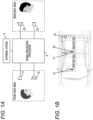
- Fig. 1A illustrates a configuration of an in-vehicle system according to an embodiment.
- the in-vehicle system is a system mounted on an automobile, and includes according to an embodiment, as illustrated in the drawing, a signal processing processor 3 to which the following units are connected: a front seat microphone 11 which is a microphone for a user in a front seat area in a vehicle interior, a front seat speaker 12 which is a speaker for a user in the front seat area, a rear seat microphone 21 which is a microphone for a user in a rear seat area in the vehicle interior, and a rear seat speaker 22 which is a speaker for a user in the rear seat area.
- the signal processing processor 3 is connected to an external system 4 that detects and manages various states of the automobile.
- the front seat microphone 11 and the rear seat microphone 21 output audio data having a predetermined sampling frequency representing picked up sound.
- the front seat speaker 12 and the rear seat speaker 22 emit voice represented by input audio data having a predetermined sampling frequency.
- the signal processing processor 3 outputs the voice of the user in the rear seat area picked up by the rear seat microphone 21 in the rear seat area to the front seat speaker 12 in the front seat area, and outputs the voice of the user in the front seat area picked up by the front seat microphone 11 in the front seat area to rear seat speaker 22 in the rear seat area, thereby supporting communication by conversation between the user in the rear seat area and the user in the front seat area.
- the rear seat area is, for example, an area of a seat behind a driver's seat of an automobile, and the rear seat speaker 22 and the rear seat microphone 21 are disposed in the rear seat area.
- the front seat area is an area of a driver's seat of an automobile, and front seat speaker 12 and front seat microphone 11 are disposed in the front seat area.
- Fig. 2 illustrates a functional configuration of a signal processing processor 3 according to an embodiment.
- each functional unit is implemented by software processing, and each functional unit shares the same resources as those of the signal processing processor 3.
- the signal processing processor 3 includes, as functional units, a control unit 31, a front seat voice processing unit 32 that processes a voice picked up by the front seat microphone 11 and output to the rear seat speaker 22, and the rear seat voice processing unit 33 that processes a voice picked up by the rear seat microphone 21 and output to the front seat speaker 12.
- the front seat voice processing unit 32 and the rear seat voice processing unit 33 have the same configuration, and each include an IIR filter 301, a downsampling unit 302, an echo canceller 303, a howling canceller 304, and an upsampling unit 305.
- the IIR filter 301 is a frequency filter that receives audio data output from the front seat microphone 11 as an input, and an output of the IIR filter 301 is output to the downsampling unit 302.
- the downsampling unit 302 down-samples the audio data input from the IIR filter 301 and converts the sampling frequency into a lower sampling frequency.
- the echo canceller 303 cancels a component correlated with audio data output from the downsampling unit 302 of the rear seat voice processing unit 33 from the audio data output from the downsampling unit 302, thereby canceling out and outputting an echo introduced from the front seat speaker 12 and routed to the front seat microphone 11.
- the configuration of the echo canceller 303 for example, the configuration of the echo canceller 520 illustrated in Fig. 5A can be used.
- the howling canceller 304 cancels a component correlated with the audio data already output from the howling canceller 304 to remove a voice component introduced from the rear seat speaker 22 and routed to the front seat microphone 11 from the audio data output from the downsampling unit 302, thereby suppressing occurrence of howling.
- howling canceller 304 for example, the configuration of howling canceller 530 shown in Fig. 5B can be used.
- the upsampling unit 305 then upsamples the audio data output from the howling canceller 304 by interpolation, generates audio data having a predetermined sampling frequency for output from the speakers, and outputs the audio data to the rear seat speaker 22.
- the filter characteristics of the IIR filter 301, the sampling frequency of the audio data downsampled by the downsampling unit 302, and the characteristics of the upsampling performed by the upsampling unit 305 can be controlled and changed by the control unit 31.
- control unit 31 the operation of the control unit 31 will be described.
- Fig. 3 illustrates a procedure of the assist characteristic switching processing performed by the control unit 31 according to an embodiment.
- sampling frequencies of audio data output from front seat microphone 11 and the rear seat microphone 21 and sampling frequencies of input audio data input from the front seat speaker 12 and the rear seat speaker 22 are both 36 kHz.
- control unit 31 checks whether the road noise is currently large in the assist characteristic switching processing (step 302).
- step 302 in a case where a level of components of 1 kHz or less having a large correlation with each other, included in outputs of the front seat microphone 11 and the rear seat microphone 21, is larger than a predetermined threshold, it is detected or determined that the road noise is currently large.
- step 302 information on the automobile speed and the rotation speed of the automobile is acquired from the external system 4, and when the acquired information indicates that the vehicle is continuously traveling at a high speed of a predetermined speed or more for a predetermined time or more, it is detected or determined that the road noise is currently large.
- the assist band is controlled to be the standard band (step 304).
- the assist band indicates a frequency band of the output of the front seat microphone 11 that the signal processing processor 3 targets for relaying to the rear seat speaker 22 and indicates the frequency band of the output of the rear seat microphone 21 that the signal processing processor 3 targets for relaying to the front seat speaker 12.
- the standard band is, for example, a band of 1200 Hz or less.
- step 304 in order to set the assist band to the band of 1200 Hz or less, the filter characteristic of the IIR filter 301 is set to the filter characteristic for cutting off the component of the frequency band exceeding 1200 Hz, and the sampling frequency after the downsampling of the downsampling unit 302 is set to 2400 Hz.
- the filter characteristic of the IIR filter 301 is set to 2400 Hz in order to remove an unnecessary frequency band exceeding 1200 Hz and to reduce the processing amount after the sample rate of the audio data is reduced.
- echo canceller 303 and howling canceller 304 are set to process the audio data having the sampling frequency of 2400 Hz, and upsampling unit 305 is set to upsample the audio data having the sampling frequency of 2400 Hz into the audio data having the sampling frequency of 36 kHz.
- the upsampling unit 305 is set to perform upsampling so that the audio data to be output does not include a component exceeding 1200 Hz.
- step 306 it is repeatedly checked whether the road noise is currently large until it is determined that the road noise is large (step 306), and when it is determined that the road noise is large, the processing proceeds to step 308.
- step 302 determines whether the road noise is currently large. If it is determined in step 302 that the road noise is currently large, the processing also proceeds to step 308.
- step 308 the operations of the howling canceller 304 in the front seat voice processing unit 32 and the rear seat voice processing unit 33 are invalidated.
- the howling canceller 304 whose operation is invalidated performs a through operation of outputting input audio data as it is.
- control is performed to set the assist band to the treble band (step 310).
- the high sound band does not include the low frequency band included in the standard band but includes a band having a higher frequency than the standard band.
- the treble band is a band from 1 kHz to 10 kHz.
- the filter characteristic of the IIR filter 301 is set to a filter characteristic for cutting off a component in a frequency band other than the frequency band from 1 kHz to 10 kHz, and the sampling frequency after the downsampling of the downsampling unit 302 is set to 20 kHz.
- echo canceller 303 and howling canceller 304 are set to process the audio data having the sampling frequency of 20 kHz, and upsampling unit 305 is set to upsample the audio data having the sampling frequency of 20 kHz into the audio data having the sampling frequency of 36 kHz.
- the upsampling unit 305 performs setting so as to perform upsampling so that the audio data to be output does not include a component of a frequency band other than the frequency band of 1 kHz to 10 kHz.
- step 312 it repeatedly checks whether the road noise is currently large until it is determined that the road noise is not large (step 312), if it is determined that the road noise is not large, invalidation of operation of the howling canceller 304 of the front seat voice processing unit 32 and the rear seat voice processing unit 33 is canceled (step 314), and the processing proceeds from step 304.
- the howling canceller 304 whose invalidation of the operation has been released restarts the operation for suppressing howling described above.
- the assist characteristic switching processing performed by the control unit 31 has been described above.
- the operations of the front seat voice processing unit 32 and the rear seat voice processing unit 33 are performed with the assist band as the standard band (for example, a band of 1200 Hz or less) when the road noise is not large, and with the assist band as the treble band (for example, a band from 1 kHz to 10 kHz) not including the low frequency band included in the standard band but including the band having a higher frequency than the standard band when the road noise is large.
- the standard band for example, a band of 1200 Hz or less
- the assist band as the treble band for example, a band from 1 kHz to 10 kHz
- the assist band is set to a low frequency band, it is possible to sufficiently support the communication based on the speech between the user in the front seat and the user in the rear seat of the automobile.
- the echo canceller 303, the howling canceller 304, and the like are operated for the audio data having a low sampling frequency, so that the processing road of the signal processing processor 3 can be suppressed to be small.
- the high-frequency voice can be picked up by the front seat microphone 11 and the rear seat microphone 21 relatively well and can be heard by the user relatively well.
- this low frequency band is excluded from the processing target, and the processing is performed only for a high frequency band, whereby the occurrence of divergence of the adaptive operation of the adaptive filter of the echo canceller 303 or the howling canceller 304 is suppressed.
- the assist band is the treble band (for example, a band from 1 kHz to 10 kHz) not including the low frequency band included in the standard band but including the band having a higher frequency than the standard band when the road noise is large, it is possible to support communication by speech between the user in the front seat and the user in the rear seat of the automobile as well as possible even when the road noise is large.
- the treble band for example, a band from 1 kHz to 10 kHz
- the echo canceller 303 and the like are operated for audio data having a high sampling frequency. Therefore, the processing road of the signal processing processor 3 increases accordingly, but instead, the operation of the howling canceller 304 is invalidated, so that an increase in the processing road of the signal processing processor 3 can be suppressed.
- the S/N of the path in which the howling sound loops due to disturbance becomes small, and howling hardly occurs.
- the speaker since the speaker usually has high directivity in a high frequency band, howling hardly occurs in the high frequency band.
- invalidating the operation of the howling canceller 304 causes no significant problem when a treble band is set as a frequency band to be relayed by front seat voice processing unit 32 and the rear seat voice processing unit 33 due to large road noise.
- a road noise canceller that cancels road noise may be further provided as a functional unit of the signal processing processor 3 in the above embodiment.
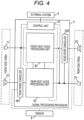
- a road noise canceller 341 that generates a cancellation sound so that the component correlated with the road noise contained in the output of the front seat microphone 11 is minimized using the output of the sensor 5 that detects a signal correlated with road noise, such as an acceleration sensor, and the output of the front seat microphone 11 and cancels road noise in the front seats by adding cancellation sound to the audio data output from the rear seat voice processing unit 33 and outputting the audio data to the front seat speaker 12 and a road noise canceller 342 that generates a cancellation sound so that the component correlated with the road noise contained in the output of the rear seat microphone 21 is minimized using the output of the sensor 5 and the output of the rear seat microphone 21 and cancels road noise in the rear seats by adding the cancellation sound to the audio data output from the front seat voice processing unit 32 and outputting the audio data to the rear seat speakers 22 are provided.
- a configuration of the road noise canceller 341/342 for example, a configuration of road noise canceller 540 illustrated in Fig. 5C can be used.
- the application to the support of communication by speech between the front seat and the rear seat has been described as an example, but the above embodiment can be similarly applied to a case of supporting communication by speech between seats in a combination of arbitrary seats other than the front seat and the rear seat.
- the number of areas is two, but the present embodiment may be expanded to correspond to three or more areas.
Landscapes
- Engineering & Computer Science (AREA)
- Physics & Mathematics (AREA)
- Acoustics & Sound (AREA)
- Signal Processing (AREA)
- Multimedia (AREA)
- Computational Linguistics (AREA)
- Quality & Reliability (AREA)
- Health & Medical Sciences (AREA)
- Audiology, Speech & Language Pathology (AREA)
- Human Computer Interaction (AREA)
- Circuit For Audible Band Transducer (AREA)
- Fittings On The Vehicle Exterior For Carrying Loads, And Devices For Holding Or Mounting Articles (AREA)
Abstract
Description
- The present invention relates to a technology for supporting communication by speech between users in different areas in an automobile.
- As a technique for supporting communication based on speech between users in different areas in an automobile, a technique for collecting speech voices of users in a first area of the automobile with a microphone in the first area, and outputting, from a speaker in a second area, the speech voices of which a gain has been adjusted so that the users in the second area can clearly hear the speech voice is known (for example,
JP 2002-51392 A - Furthermore, as a technique for supporting communication based on speech in a vehicle, as illustrated in
Fig. 5A , in a system for supporting a conversation between a user in a first area and a user in the second area by outputting, from aspeaker 512 in a second area, a voice of the user picked up by amicrophone 501 in the first area and outputting, from aspeaker 502 in the first area, a voice of the user picked up by amicrophone 511 in the second area, there is also known an echo cancellation technique in which anecho canceller 520 cancels out an echo introduced from thespeaker 512 in the second area and routed to themicrophone 511 in the second area (for example,JP 2010-16564 A - The
echo canceller 520 includes anadaptive filter 521 that receives the output of themicrophone 501 in the first area as an input, and anadder 522 that adds the output of theadaptive filter 521 and the output of themicrophone 511 in the second area and outputs the result to thespeaker 502 in the first area, and cancels an echo by performing an adaptive operation using the output of theadder 522 as an error in theadaptive filter 521. - In addition, there is also known a howling canceller technique for canceling out howling using an adaptive filter (for example,
JP 2006-203553 A -
Fig. 5B illustrates a configuration in which such ahowling canceller 530 is applied to suppress occurrence of howling due to sound introduced from thespeaker 502 in the first area and routed to themicrophone 511 in the second area. - As illustrated in the drawing, the
howling canceller 530 includes anadaptive filter 531 and anadder 532 that adds the output of theadaptive filter 531 and the output ofmicrophone 511 in the second area and outputs the result to thespeaker 502 in the first area. The output of theadder 532 is used as an input of theadaptive filter 531, and theadaptive filter 531 performs an adaptive operation using the output of theadder 532 as an error, thereby suppressing occurrence of howling due to sound introduced from thespeaker 502 in the first area and routed to themicrophone 511 in the second area. - There is also known a road noise canceller technique for canceling out road noise of an automobile using an adaptive filter (for example,
JP H6-266374 A -
Fig. 5C illustrates a configuration in which such aroad noise canceller 540 is applied to cancel road noise audible to the user in the first area. - As illustrated in the drawing, the
road noise canceller 540 includes anadaptive filter 541, anadder 542 that adds the output of theadaptive filter 541 and the output of themicrophone 511 in the second area and outputs the result to thespeaker 502 in the first area, and a referencesignal generation unit 543. - The reference
signal generation unit 543 generates and outputs a reference signal simulating node noise from an output of asensor 550 that detects a signal correlated with road noise of an acceleration sensor or the like. Then, the reference signal output from the referencesignal generation unit 543 is used as an input to theadaptive filter 541, and theadaptive filter 541 performs an adaptation operation with the output of themicrophone 501 in the second area as an error, thereby suppressing road noise audible to the user in one area. - In a case where communication based on speech between users in different areas inside the automobile is supported by collecting a speech voice of a user in a first area of the automobile with a microphone in the first area and outputting the collected speech voice from a speaker in a second area, if road noise becomes large due to highspeed traveling, the speech voice is buried in the road noise, and good support cannot be performed.
- In addition, as illustrated in
Figs. 5A and 5B , in a case where an echo canceller or a howling canceller is provided to support mutual conversation between the user in the first area and the user in the second area, if the road noise increases, the adaptive operation of the adaptive filter diverges, and appropriate support may not be performed. - Therefore, an object of the present invention is to satisfactorily support with a communication support system communication by speech between users in different areas even when a large road noise is being generated.
- The invention relates to a communication support system according to the appended claims. Embodiments are disclosed in the dependent claims.
- According to an aspect, the present invention provides a communication support system that supports communication by speech between a user in a first area and a user in a second area in an automobile, the communication support system including a first area microphone that is a microphone disposed in the first area, a second area speaker that is a speaker disposed in the second area, a road noise detection unit that determines or detects whether a large road noise is being generated, a control unit, and a voice processing unit that relays a voice picked up by the first area microphone to the second area speaker. Here, the control unit causes the voice processing unit to extract a component of a standard band, which is a preset frequency band, of the voice picked up by the first area microphone and to relay the extracted component to the second area speaker, during a period in which the road noise detection unit does not determine or detect that a large road noise is being generated, and causes the voice processing unit to extract a component of a treble band, which is a preset frequency band that does not include at least a band of a lower frequency than the standard band but includes a band having a higher frequency than the standard band, of the voice picked up by the first area microphone and to relay the extracted component to the second area speaker, during a period in which the road noise detection unit determines or detects that a large road noise is being generated.
- According to a further aspect, the present invention provides a communication support system that supports communication by speech between a user in a first area and a user in a second area in an automobile, the communication support system including: a first area microphone that is a microphone disposed in the first area, a second area speaker that is a speaker disposed in the second area, a road noise detection unit that detects whether a large road noise is being generated, a control unit, and a first voice processing unit. The control unit sets a standard band, which is a preset frequency band, as a target band during a period in which the road noise detection unit does not detect that a large road noise is being generated, and sets a treble band, which is a preset frequency band that does not include at least a band of a lower frequency than the standard band but includes a band having a higher frequency than the standard band, as a target band during a period in which the road noise detection unit detects that a large road noise is being generated. Further, the first voice processing unit extracts a component of the target band of the voice picked up by the first area microphone, and outputs audio data representing the extracted component to the second area speaker. The first voice processing unit includes a downsampling unit that downsamples audio data representing a voice picked up by the first area microphone to audio data having a sampling frequency twice as high as an upper limit of the target band, a howling cancellation unit that receives, as an input, the audio data downsampled by the downsampling unit, selectively performs howling cancellation processing of canceling out a component that is included in the input audio data and has been introduced from the second area speaker and routed to the first area microphone, and outputs the audio data subjected to the howling cancellation processing; and an upsampling unit that upsamples the audio data output from the howling cancellation unit and outputs the audio data toward the second area speaker. Further, the control unit causes the howling cancellation unit to perform the howling cancellation process during a period in which the road noise detection unit does not detect that a large road noise is being generated, stops the howling cancellation processing performed by the howling cancellation unit during a period in which the road noise detection unit detects that a large road noise is being generated, and outputs the audio data input to the howling cancellation unit as it is.
- According to a further aspect, the present invention provides a communication support system that supports communication by speech between a user in a first area and a user in a second area in a vehicle, the communication support system including a first area microphone that is a microphone disposed in the first area, a first area speaker that is a speaker disposed in the first area, a second area microphone that is a microphone disposed in the second area, a second area speaker that is a speaker disposed in the second area, a road noise detection unit that detects whether a large road noise is being generated, a control unit, and a first voice processing unit; and a second voice processing unit. The control unit sets a standard band, which is a preset frequency band, as a target band during a period in which the road noise detection unit does not detect that a large road noise is being generated, and sets a treble band, which is a preset frequency band that does not include at least a band of a lower frequency than the standard band but includes a band having a higher frequency than the standard band, as a target band during a period in which the road noise detection unit detects that a large road noise is being generated. Further, the first voice processing unit extracts a component of the target band of the voice picked up by the first area microphone and outputs audio data representing the extracted component to the second area speaker, and the second voice processing unit extracts a component of the target band of the voice picked up by the second area microphone and outputs audio data representing the extracted component to the first area speaker. In addition, the first voice processing unit further includes a downsampling unit that downsamples audio data representing a voice picked up by the first area microphone to audio data having a sampling frequency that is twice the upper limit of the target band, an echo cancellation unit that performs an echo cancellation process of canceling out a component that is included in the audio data downsampled by the downsampling unit and has been introduced from the first area speaker and routed to the first area microphone, and outputs the audio data subjected to the echo cancellation processing; and an upsampling unit that upsamples the audio data output from the echo cancellation unit and outputs the audio data toward the second area speaker.
- In the communication support system including the first voice processing unit and the second voice processing unit described above, a road noise cancellation unit may be provided for applying both the echo cancellation unit and the howling cancellation unit described above to the audio data to be output to the second area speaker by the first voice processing unit.
- According to the communication support system as described herein, during a period in which a large road noise is being generated, a low frequency band in which road noise is concentrated is excluded, and only a treble band that is a frequency band including a high sound band in which sound easily passes is relayed to a speaker for a user in another area from a voice of the user picked up by a microphone. Therefore, even when a large road noise is being generated, communication based on a speech between users can be supported relatively well.
- According to the present invention, even when a large road noise is being generated, it is possible to satisfactorily support communication by speech between users in different areas.
-
Figs. 1A and 1B are block diagrams illustrating a configuration of an in-vehicle system according to an embodiment of the present invention. -
Fig. 2 is a block diagram illustrating a configuration of a signal processing processor according to an embodiment of the present invention. -
Fig. 3 is a flowchart illustrating assist characteristic switching processing according to an embodiment of the present invention. -
Fig. 4 is a block diagram illustrating another configuration example of the signal processing processor according to an embodiment of the present invention. -
Figs. 5A to 5C are diagrams illustrating a known echo canceller, a howling canceller, and a road noise canceller. - Hereinafter, embodiments of the present invention will be described by taking an application to an in-vehicle system that supports communication by speech in a vehicle between a user in a front seat and a user in a rear seat of an automobile as an example.
-
Fig. 1A illustrates a configuration of an in-vehicle system according to an embodiment. - The in-vehicle system is a system mounted on an automobile, and includes according to an embodiment, as illustrated in the drawing, a
signal processing processor 3 to which the following units are connected: afront seat microphone 11 which is a microphone for a user in a front seat area in a vehicle interior, afront seat speaker 12 which is a speaker for a user in the front seat area, arear seat microphone 21 which is a microphone for a user in a rear seat area in the vehicle interior, and arear seat speaker 22 which is a speaker for a user in the rear seat area. In addition, thesignal processing processor 3 is connected to anexternal system 4 that detects and manages various states of the automobile. - Here, the
front seat microphone 11 and therear seat microphone 21 output audio data having a predetermined sampling frequency representing picked up sound. In addition, thefront seat speaker 12 and therear seat speaker 22 emit voice represented by input audio data having a predetermined sampling frequency. - The
signal processing processor 3 outputs the voice of the user in the rear seat area picked up by therear seat microphone 21 in the rear seat area to thefront seat speaker 12 in the front seat area, and outputs the voice of the user in the front seat area picked up by thefront seat microphone 11 in the front seat area torear seat speaker 22 in the rear seat area, thereby supporting communication by conversation between the user in the rear seat area and the user in the front seat area. - Here, as illustrated in
Fig. 1B , the rear seat area is, for example, an area of a seat behind a driver's seat of an automobile, and therear seat speaker 22 and therear seat microphone 21 are disposed in the rear seat area. In addition, the front seat area is an area of a driver's seat of an automobile, andfront seat speaker 12 andfront seat microphone 11 are disposed in the front seat area. - Next,
Fig. 2 illustrates a functional configuration of asignal processing processor 3 according to an embodiment. - Here, each functional unit is implemented by software processing, and each functional unit shares the same resources as those of the
signal processing processor 3. - As illustrated in the drawing, the
signal processing processor 3 includes, as functional units, acontrol unit 31, a front seatvoice processing unit 32 that processes a voice picked up by thefront seat microphone 11 and output to therear seat speaker 22, and the rear seatvoice processing unit 33 that processes a voice picked up by therear seat microphone 21 and output to thefront seat speaker 12. - The front seat
voice processing unit 32 and the rear seatvoice processing unit 33 have the same configuration, and each include anIIR filter 301, adownsampling unit 302, anecho canceller 303, ahowling canceller 304, and anupsampling unit 305. - Operations of the front seat
voice processing unit 32 and the rear seatvoice processing unit 33 will be described below. - An operation of each unit of the front seat
voice processing unit 32 will be described first. - The
IIR filter 301 is a frequency filter that receives audio data output from thefront seat microphone 11 as an input, and an output of theIIR filter 301 is output to thedownsampling unit 302. Thedownsampling unit 302 down-samples the audio data input from theIIR filter 301 and converts the sampling frequency into a lower sampling frequency. - The
echo canceller 303 cancels a component correlated with audio data output from thedownsampling unit 302 of the rear seatvoice processing unit 33 from the audio data output from thedownsampling unit 302, thereby canceling out and outputting an echo introduced from thefront seat speaker 12 and routed to thefront seat microphone 11. - Here, as the configuration of the
echo canceller 303, for example, the configuration of theecho canceller 520 illustrated inFig. 5A can be used. - The
howling canceller 304 cancels a component correlated with the audio data already output from thehowling canceller 304 to remove a voice component introduced from therear seat speaker 22 and routed to thefront seat microphone 11 from the audio data output from thedownsampling unit 302, thereby suppressing occurrence of howling. - Here, as the configuration of howling
canceller 304, for example, the configuration of howlingcanceller 530 shown inFig. 5B can be used. - The
upsampling unit 305 then upsamples the audio data output from thehowling canceller 304 by interpolation, generates audio data having a predetermined sampling frequency for output from the speakers, and outputs the audio data to therear seat speaker 22. - Here, the filter characteristics of the
IIR filter 301, the sampling frequency of the audio data downsampled by thedownsampling unit 302, and the characteristics of the upsampling performed by theupsampling unit 305 can be controlled and changed by thecontrol unit 31. - Next, the operations of the respective units of the rear seat
voice processing unit 33 are described by replacing "front seat" and "rear seat" in the above description of the operations of the respective units of the front seatvoice processing unit 32. - Hereinafter, the operation of the
control unit 31 will be described. -
Fig. 3 illustrates a procedure of the assist characteristic switching processing performed by thecontrol unit 31 according to an embodiment. Here, in the following description, it is assumed that sampling frequencies of audio data output fromfront seat microphone 11 and therear seat microphone 21 and sampling frequencies of input audio data input from thefront seat speaker 12 and therear seat speaker 22 are both 36 kHz. - As illustrated in the drawing, the
control unit 31 checks whether the road noise is currently large in the assist characteristic switching processing (step 302). - Here, in
step 302, in a case where a level of components of 1 kHz or less having a large correlation with each other, included in outputs of thefront seat microphone 11 and therear seat microphone 21, is larger than a predetermined threshold, it is detected or determined that the road noise is currently large. - Alternatively, in
step 302, information on the automobile speed and the rotation speed of the automobile is acquired from theexternal system 4, and when the acquired information indicates that the vehicle is continuously traveling at a high speed of a predetermined speed or more for a predetermined time or more, it is detected or determined that the road noise is currently large. - Then, when it is determined that the road noise is not currently large (step 302), the assist band is controlled to be the standard band (step 304).
- Here, the assist band indicates a frequency band of the output of the
front seat microphone 11 that thesignal processing processor 3 targets for relaying to therear seat speaker 22 and indicates the frequency band of the output of therear seat microphone 21 that thesignal processing processor 3 targets for relaying to thefront seat speaker 12. - The standard band is, for example, a band of 1200 Hz or less.
- In a case where the standard band is the band of 1200 Hz or less, in
step 304, in order to set the assist band to the band of 1200 Hz or less, the filter characteristic of theIIR filter 301 is set to the filter characteristic for cutting off the component of the frequency band exceeding 1200 Hz, and the sampling frequency after the downsampling of thedownsampling unit 302 is set to 2400 Hz. - Here, by setting the filter characteristic of the
IIR filter 301 to cut off a low-frequency component exceeding 1/2 of the sampling frequency after the downsampling, anti-aliasing is performed to prevent appearance of the folded noise in the audio data after the downsampling. Furthermore, the sampling frequency after the downsampling of thedownsampling unit 302 is set to 2400 Hz in order to remove an unnecessary frequency band exceeding 1200 Hz and to reduce the processing amount after the sample rate of the audio data is reduced. - In
step 304,echo canceller 303 and howling canceller 304 are set to process the audio data having the sampling frequency of 2400 Hz, andupsampling unit 305 is set to upsample the audio data having the sampling frequency of 2400 Hz into the audio data having the sampling frequency of 36 kHz. In addition, theupsampling unit 305 is set to perform upsampling so that the audio data to be output does not include a component exceeding 1200 Hz. - Then, it is repeatedly checked whether the road noise is currently large until it is determined that the road noise is large (step 306), and when it is determined that the road noise is large, the processing proceeds to step 308.
- On the other hand, in a case where it is determined in
step 302 that the road noise is currently large, the processing also proceeds to step 308. - When the processing proceeds from
step 302 or step 306 to step 308, the operations of thehowling canceller 304 in the front seatvoice processing unit 32 and the rear seatvoice processing unit 33 are invalidated. - Here, the
howling canceller 304 whose operation is invalidated performs a through operation of outputting input audio data as it is. - Then, next, control is performed to set the assist band to the treble band (step 310).
- The high sound band does not include the low frequency band included in the standard band but includes a band having a higher frequency than the standard band. For example, the treble band is a band from 1 kHz to 10 kHz.
- In a case where the treble band is a band from 1 kHz to 10 kHz, in
step 310, in order to set the assist band from 1 kHz to 10 kHz, the filter characteristic of theIIR filter 301 is set to a filter characteristic for cutting off a component in a frequency band other than the frequency band from 1 kHz to 10 kHz, and the sampling frequency after the downsampling of thedownsampling unit 302 is set to 20 kHz. - In
step 310,echo canceller 303 and howling canceller 304 are set to process the audio data having the sampling frequency of 20 kHz, andupsampling unit 305 is set to upsample the audio data having the sampling frequency of 20 kHz into the audio data having the sampling frequency of 36 kHz. In addition, theupsampling unit 305 performs setting so as to perform upsampling so that the audio data to be output does not include a component of a frequency band other than the frequency band of 1 kHz to 10 kHz. - Then, it repeatedly checks whether the road noise is currently large until it is determined that the road noise is not large (step 312), if it is determined that the road noise is not large, invalidation of operation of the
howling canceller 304 of the front seatvoice processing unit 32 and the rear seatvoice processing unit 33 is canceled (step 314), and the processing proceeds fromstep 304. Here, thehowling canceller 304 whose invalidation of the operation has been released restarts the operation for suppressing howling described above. - The assist characteristic switching processing performed by the
control unit 31 has been described above. - According to such an assist characteristic switching processing, the operations of the front seat
voice processing unit 32 and the rear seatvoice processing unit 33 are performed with the assist band as the standard band (for example, a band of 1200 Hz or less) when the road noise is not large, and with the assist band as the treble band (for example, a band from 1 kHz to 10 kHz) not including the low frequency band included in the standard band but including the band having a higher frequency than the standard band when the road noise is large. - Here, when the road noise that hinders the collection and listening of the speech voice is not large, even if the assist band is set to a low frequency band, it is possible to sufficiently support the communication based on the speech between the user in the front seat and the user in the rear seat of the automobile.
- Further, when the road noise is not large, the
echo canceller 303, thehowling canceller 304, and the like are operated for the audio data having a low sampling frequency, so that the processing road of thesignal processing processor 3 can be suppressed to be small. - On the other hand, even when the road noise is large, the high-frequency voice can be picked up by the
front seat microphone 11 and therear seat microphone 21 relatively well and can be heard by the user relatively well. - In addition, since the road noise is concentrated in a low frequency band lower than 1 kHz, this low frequency band is excluded from the processing target, and the processing is performed only for a high frequency band, whereby the occurrence of divergence of the adaptive operation of the adaptive filter of the
echo canceller 303 or thehowling canceller 304 is suppressed. - Therefore, according to the present embodiment in which the assist band is the treble band (for example, a band from 1 kHz to 10 kHz) not including the low frequency band included in the standard band but including the band having a higher frequency than the standard band when the road noise is large, it is possible to support communication by speech between the user in the front seat and the user in the rear seat of the automobile as well as possible even when the road noise is large.
- In addition, in the present embodiment, when the road noise is large, the
echo canceller 303 and the like are operated for audio data having a high sampling frequency. Therefore, the processing road of thesignal processing processor 3 increases accordingly, but instead, the operation of thehowling canceller 304 is invalidated, so that an increase in the processing road of thesignal processing processor 3 can be suppressed. - Here, when the road noise is large, the S/N of the path in which the howling sound loops due to disturbance becomes small, and howling hardly occurs. In addition, since the speaker usually has high directivity in a high frequency band, howling hardly occurs in the high frequency band.
- Accordingly, invalidating the operation of the
howling canceller 304 causes no significant problem when a treble band is set as a frequency band to be relayed by front seatvoice processing unit 32 and the rear seatvoice processing unit 33 due to large road noise. - Here, a road noise canceller that cancels road noise may be further provided as a functional unit of the
signal processing processor 3 in the above embodiment. - In other words, in this case, for example, as illustrated in
Fig. 4 , aroad noise canceller 341 that generates a cancellation sound so that the component correlated with the road noise contained in the output of thefront seat microphone 11 is minimized using the output of thesensor 5 that detects a signal correlated with road noise, such as an acceleration sensor, and the output of thefront seat microphone 11 and cancels road noise in the front seats by adding cancellation sound to the audio data output from the rear seatvoice processing unit 33 and outputting the audio data to thefront seat speaker 12 and aroad noise canceller 342 that generates a cancellation sound so that the component correlated with the road noise contained in the output of therear seat microphone 21 is minimized using the output of thesensor 5 and the output of therear seat microphone 21 and cancels road noise in the rear seats by adding the cancellation sound to the audio data output from the front seatvoice processing unit 32 and outputting the audio data to therear seat speakers 22 are provided. - Here, as a configuration of the
road noise canceller 341/342, for example, a configuration ofroad noise canceller 540 illustrated inFig. 5C can be used. - Furthermore, in the above embodiment, the application to the support of communication by speech between the front seat and the rear seat has been described as an example, but the above embodiment can be similarly applied to a case of supporting communication by speech between seats in a combination of arbitrary seats other than the front seat and the rear seat.
- In each of the above embodiments, the number of areas is two, but the present embodiment may be expanded to correspond to three or more areas.
-
- 3
- Signal processing processor
- 4
- External system
- 11
- Front seat microphone
- 12
- Front seat speaker
- 21
- Rear seat microphone
- 22
- Rear seat speaker
- 31
- Control unit
- 32
- Front seat voice processing unit
- 33
- Rear seat voice processing unit
- 301
- Filter
- 302
- Downsampling unit
- 303
- Echo canceller
- 304
- Howling canceller
- 305
- Upsampling unit
Claims (5)
- A communication support system that is configured to support communication by speech between a user in a first area and a user in a second area in an automobile, the communication support system comprising:a first area microphone that is a microphone disposed in the first area;a second area speaker that is a speaker disposed in the second area;a road noise detection unit that is configured to determine whether a large road noise is being generated;a control unit (31); anda voice processing unit that is configured to relay a voice picked up by the first area microphone to the second area speaker,wherein the control unit (31) is configured to cause the voice processing unit to extract a component of a standard band that is a preset frequency band of the voice picked up by the first area microphone and to relay the extracted component to the second area speaker, during a period in which the road noise detection unit does not determine that a large road noise is being generated, and is configured to cause the voice processing unit to extract a component of a treble band, which is a preset frequency band that does not include at least a band on a low frequency side of the standard band but includes a band having a higher frequency than the standard band of the voice picked up by the first area microphone and to relay the extracted component to the second area speaker, during a period in which the road noise detection unit determines that a large road noise is being generated.
- A communication support system that is configured to support communication by speech between a user in a first area and a user in a second area in an automobile, the communication support system comprising:a first area microphone that is a microphone disposed in the first area;a second area speaker that is a speaker disposed in the second area;a road noise detection unit that is configured to determine whether a large road noise is being generated;a control unit (31); anda first voice processing unit,wherein the control unit (31) is configured to set a standard band, which is a preset frequency band, as a target band during a period in which the road noise detection unit does not determine that a large road noise is being generated, and to set a treble band, which is a preset frequency band that does not include at least a band on a low frequency side of the standard band but includes a band having a higher frequency than the standard band, as a target band during a period in which the road noise detection unit determines that a large road noise is being generated,the first voice processing unit is configured to extract a component of the target band of a voice picked up by the first area microphone, and to output audio data representing the extracted component to the second area speaker,the first voice processing unit includesa downsampling unit (302) that is configured to downsample audio data representing the voice picked up by the first area microphone into audio data having a sampling frequency twice an upper limit of the target band,a howling cancellation unit (304) that is configured to receive, as an input, the audio data downsampled by the downsampling unit (302), to selectively perform howling cancellation processing of canceling out a component that is included in the input audio data and has been introduced from the second area speaker and routed to the first area microphone, and to output the audio data on which the howling cancellation processing has been performed, andan upsampling unit (305) that is configured to upsample the audio data output from the howling cancellation unit (304) and to output the audio data to the second area speaker, andthe control unit (31) is configured to cause the howling cancellation unit (304) to perform the howling cancellation processing during the period in which the road noise detection unit does not determine that a large road noise is being generated, to stop the howling cancellation processing performed by the howling cancellation unit (304) during the period in which the road noise detection unit determines that a large road noise is being generated, and to output the audio data input to the howling cancellation unit (304) as it is.
- A communication support system that is configured to support communication by speech between a user in a first area and a user in a second area in an automobile, the communication support system comprising:a first area microphone that is a microphone disposed in the first area;a first area speaker that is a speaker disposed in the first area;a second area microphone that is a microphone disposed in the second area;a second area speaker that is a speaker disposed in the second area;a road noise detection unit that is configured to determine whether a large road noise is being generated;a control unit (31);a first voice processing unit; anda second voice processing unit,wherein the control unit (31) is configured to set a standard band, which is a preset frequency band, as a target band during a period in which the road noise detection unit does not determine that a large road noise is being generated, and to set a treble band, which is a preset frequency band that does not include at least a band on a low frequency side of the standard band but includes a band having a higher frequency than the standard band, as a target band during a period in which the road noise detection unit determines that a large road noise is being generated,the first voice processing unit is configured to extract a component of the target band of a voice picked up by the first area microphone, and to output audio data representing the extracted component to the second area speaker,the second voice processing unit is configured to extract a component of the target band of a voice picked up by the second area microphone, and to output audio data representing the extracted component to the first area speaker, andthe first voice processing unit includesa downsampling unit (302) that is configured to downsample audio data representing the voice picked up by the first area microphone into audio data having a sampling frequency twice an upper limit of the target band,an echo cancellation unit (303) that is configured to perform echo cancellation processing of canceling a component that is included in the audio data downsampled by the downsampling unit (302) and has been introduced from the first area speaker and routed to the first area microphone, and to output audio data on which the echo cancellation processing has been performed, andan upsampling unit (305) that is configured to upsample the audio data output from the echo cancellation unit (303) and to output the audio data to the second area speaker.
- The communication support system according to claim 2, further comprising:a second area microphone that is a microphone disposed in the second area;a first area speaker that is a speaker disposed in the first area; anda second voice processing unit,wherein the second voice processing unit is configured to extract a component of the target band of a voice picked up by the second area microphone and to output audio data representing the extracted component to the first area speaker, and the first voice processing unit includes an echo cancellation unit (303) that is configured to perform echo cancellation processing of canceling a component that is included in the audio data downsampled by the downsampling unit (302) and has been introduced from the first area speaker and routed to the first area microphone.
- The communication support system according to claim 3 or 4,
wherein the communication support system further comprises: a road noise cancellation unit that is configured to generate a cancellation sound for canceling road noise in the second area based on the voice picked up by the second area microphone, and to add the cancellation sound to audio data to be output from the first voice processing unit to the second area speaker.
Applications Claiming Priority (1)
| Application Number | Priority Date | Filing Date | Title |
|---|---|---|---|
| JP2022092156A JP2023179092A (en) | 2022-06-07 | 2022-06-07 | Communication support system |
Publications (2)
| Publication Number | Publication Date |
|---|---|
| EP4290515A1 true EP4290515A1 (en) | 2023-12-13 |
| EP4290515B1 EP4290515B1 (en) | 2025-07-23 |
Family
ID=86603625
Family Applications (1)
| Application Number | Title | Priority Date | Filing Date |
|---|---|---|---|
| EP23175050.6A Active EP4290515B1 (en) | 2022-06-07 | 2023-05-24 | Communication support system |
Country Status (4)
| Country | Link |
|---|---|
| US (1) | US12464284B2 (en) |
| EP (1) | EP4290515B1 (en) |
| JP (1) | JP2023179092A (en) |
| CN (1) | CN117198309A (en) |
Citations (6)
| Publication number | Priority date | Publication date | Assignee | Title |
|---|---|---|---|---|
| JPH06266374A (en) | 1993-03-17 | 1994-09-22 | Alpine Electron Inc | Noise cancellation system |
| JP2002051392A (en) | 2000-08-01 | 2002-02-15 | Alpine Electronics Inc | In-vehicle conversation assisting device |
| US20020071573A1 (en) * | 1997-09-11 | 2002-06-13 | Finn Brian M. | DVE system with customized equalization |
| JP2006203553A (en) | 2005-01-20 | 2006-08-03 | Yamaha Corp | Feedback canceller |
| JP2010016564A (en) | 2008-07-02 | 2010-01-21 | Panasonic Corp | Speech signal processor |
| US20100329488A1 (en) * | 2009-06-25 | 2010-12-30 | Holub Patrick K | Method and Apparatus for an Active Vehicle Sound Management System |
Family Cites Families (9)
| Publication number | Priority date | Publication date | Assignee | Title |
|---|---|---|---|---|
| EP0304257A3 (en) * | 1987-08-19 | 1989-09-27 | McGregor, Thomas | Voice enhancer system |
| JP3244062B2 (en) * | 1998-09-04 | 2002-01-07 | 日本電気株式会社 | In-vehicle hands-free telephone device |
| US7467084B2 (en) * | 2003-02-07 | 2008-12-16 | Volkswagen Ag | Device and method for operating a voice-enhancement system |
| US8249861B2 (en) * | 2005-04-20 | 2012-08-21 | Qnx Software Systems Limited | High frequency compression integration |
| JP4977551B2 (en) * | 2007-08-13 | 2012-07-18 | 本田技研工業株式会社 | Active noise control device |
| JP2009206629A (en) * | 2008-02-26 | 2009-09-10 | Sony Corp | Audio output device, and audio outputting method |
| JP7255324B2 (en) * | 2019-04-04 | 2023-04-11 | 日本電信電話株式会社 | FREQUENCY CHARACTERISTICS CHANGE DEVICE, METHOD AND PROGRAM |
| WO2020240768A1 (en) * | 2019-05-30 | 2020-12-03 | 日本電信電話株式会社 | In-automobile conversation evaluation value conversion device, in-automobile conversation evaluation value conversion method, and program |
| JP2022065711A (en) * | 2020-10-16 | 2022-04-28 | アルプスアルパイン株式会社 | Voice system |
-
2022
- 2022-06-07 JP JP2022092156A patent/JP2023179092A/en active Pending
-
2023
- 2023-05-11 US US18/196,014 patent/US12464284B2/en active Active
- 2023-05-24 EP EP23175050.6A patent/EP4290515B1/en active Active
- 2023-06-05 CN CN202310657933.7A patent/CN117198309A/en active Pending
Patent Citations (6)
| Publication number | Priority date | Publication date | Assignee | Title |
|---|---|---|---|---|
| JPH06266374A (en) | 1993-03-17 | 1994-09-22 | Alpine Electron Inc | Noise cancellation system |
| US20020071573A1 (en) * | 1997-09-11 | 2002-06-13 | Finn Brian M. | DVE system with customized equalization |
| JP2002051392A (en) | 2000-08-01 | 2002-02-15 | Alpine Electronics Inc | In-vehicle conversation assisting device |
| JP2006203553A (en) | 2005-01-20 | 2006-08-03 | Yamaha Corp | Feedback canceller |
| JP2010016564A (en) | 2008-07-02 | 2010-01-21 | Panasonic Corp | Speech signal processor |
| US20100329488A1 (en) * | 2009-06-25 | 2010-12-30 | Holub Patrick K | Method and Apparatus for an Active Vehicle Sound Management System |
Also Published As
| Publication number | Publication date |
|---|---|
| JP2023179092A (en) | 2023-12-19 |
| CN117198309A (en) | 2023-12-08 |
| US20230396922A1 (en) | 2023-12-07 |
| EP4290515B1 (en) | 2025-07-23 |
| US12464284B2 (en) | 2025-11-04 |
Similar Documents
| Publication | Publication Date | Title |
|---|---|---|
| EP3346683B1 (en) | System and method for echo supression for in-car communication | |
| EP2859772B1 (en) | Wind noise detection for in-car communication systems with multiple acoustic zones | |
| US20020071573A1 (en) | DVE system with customized equalization | |
| US11089404B2 (en) | Sound processing apparatus and sound processing method | |
| CA2242510A1 (en) | Coupled acoustic echo cancellation system | |
| EP1372355B1 (en) | Speech distribution system | |
| US20200380947A1 (en) | Active noise control with feedback compensation | |
| JP2007312364A (en) | Equalization in acoustic signal processing | |
| KR102579909B1 (en) | Acoustic noise cancellation system in the passenger compartment for remote communication | |
| WO2018172131A1 (en) | Apparatus and method for privacy enhancement | |
| WO2002032356A1 (en) | Transient processing for communication system | |
| KR102306739B1 (en) | Method and apparatus for voice enhacement in a vehicle | |
| US12039965B2 (en) | Audio processing system and audio processing device | |
| US12464284B2 (en) | Communication support system | |
| JP2008070878A (en) | Audio signal preprocessing device, audio signal processing device, audio signal preprocessing method, and audio signal preprocessing program | |
| JP2005247181A (en) | In-vehicle hands-free device | |
| JP2018125822A (en) | In-vehicle conversation support device | |
| EP3933837B1 (en) | In-vehicle communication support system | |
| JP2020134566A (en) | Voice processing system, voice processing device and voice processing method | |
| JP5383008B2 (en) | Speech intelligibility improvement system and speech intelligibility improvement method | |
| CN113519169B (en) | Method and apparatus for audio howling attenuation | |
| EP4236284A1 (en) | Communication support system | |
| JP2004309536A (en) | Speech processing unit | |
| JP2019198110A (en) | Sound volume control device | |
| EP4057275A1 (en) | Active noise control system |
Legal Events
| Date | Code | Title | Description |
|---|---|---|---|
| PUAI | Public reference made under article 153(3) epc to a published international application that has entered the european phase |
Free format text: ORIGINAL CODE: 0009012 |
|
| STAA | Information on the status of an ep patent application or granted ep patent |
Free format text: STATUS: THE APPLICATION HAS BEEN PUBLISHED |
|
| AK | Designated contracting states |
Kind code of ref document: A1 Designated state(s): AL AT BE BG CH CY CZ DE DK EE ES FI FR GB GR HR HU IE IS IT LI LT LU LV MC ME MK MT NL NO PL PT RO RS SE SI SK SM TR |
|
| STAA | Information on the status of an ep patent application or granted ep patent |
Free format text: STATUS: REQUEST FOR EXAMINATION WAS MADE |
|
| 17P | Request for examination filed |
Effective date: 20240521 |
|
| RBV | Designated contracting states (corrected) |
Designated state(s): AL AT BE BG CH CY CZ DE DK EE ES FI FR GB GR HR HU IE IS IT LI LT LU LV MC ME MK MT NL NO PL PT RO RS SE SI SK SM TR |
|
| GRAP | Despatch of communication of intention to grant a patent |
Free format text: ORIGINAL CODE: EPIDOSNIGR1 |
|
| STAA | Information on the status of an ep patent application or granted ep patent |
Free format text: STATUS: GRANT OF PATENT IS INTENDED |
|
| INTG | Intention to grant announced |
Effective date: 20250224 |
|
| GRAS | Grant fee paid |
Free format text: ORIGINAL CODE: EPIDOSNIGR3 |
|
| GRAA | (expected) grant |
Free format text: ORIGINAL CODE: 0009210 |
|
| STAA | Information on the status of an ep patent application or granted ep patent |
Free format text: STATUS: THE PATENT HAS BEEN GRANTED |
|
| AK | Designated contracting states |
Kind code of ref document: B1 Designated state(s): AL AT BE BG CH CY CZ DE DK EE ES FI FR GB GR HR HU IE IS IT LI LT LU LV MC ME MK MT NL NO PL PT RO RS SE SI SK SM TR |
|
| P01 | Opt-out of the competence of the unified patent court (upc) registered |
Free format text: CASE NUMBER: APP_28193/2025 Effective date: 20250612 |
|
| REG | Reference to a national code |
Ref country code: GB Ref legal event code: FG4D |
|
| REG | Reference to a national code |
Ref country code: CH Ref legal event code: EP |
|
| REG | Reference to a national code |
Ref country code: IE Ref legal event code: FG4D |
|
| REG | Reference to a national code |
Ref country code: DE Ref legal event code: R096 Ref document number: 602023004961 Country of ref document: DE |
|
| REG | Reference to a national code |
Ref country code: NL Ref legal event code: MP Effective date: 20250723 |
|
| PG25 | Lapsed in a contracting state [announced via postgrant information from national office to epo] |
Ref country code: PT Free format text: LAPSE BECAUSE OF FAILURE TO SUBMIT A TRANSLATION OF THE DESCRIPTION OR TO PAY THE FEE WITHIN THE PRESCRIBED TIME-LIMIT Effective date: 20251124 |
|
| PG25 | Lapsed in a contracting state [announced via postgrant information from national office to epo] |
Ref country code: NL Free format text: LAPSE BECAUSE OF FAILURE TO SUBMIT A TRANSLATION OF THE DESCRIPTION OR TO PAY THE FEE WITHIN THE PRESCRIBED TIME-LIMIT Effective date: 20250723 |
|
| REG | Reference to a national code |
Ref country code: AT Ref legal event code: MK05 Ref document number: 1817303 Country of ref document: AT Kind code of ref document: T Effective date: 20250723 |
|
| PG25 | Lapsed in a contracting state [announced via postgrant information from national office to epo] |
Ref country code: IS Free format text: LAPSE BECAUSE OF FAILURE TO SUBMIT A TRANSLATION OF THE DESCRIPTION OR TO PAY THE FEE WITHIN THE PRESCRIBED TIME-LIMIT Effective date: 20251123 |
|
| PG25 | Lapsed in a contracting state [announced via postgrant information from national office to epo] |
Ref country code: NO Free format text: LAPSE BECAUSE OF FAILURE TO SUBMIT A TRANSLATION OF THE DESCRIPTION OR TO PAY THE FEE WITHIN THE PRESCRIBED TIME-LIMIT Effective date: 20251023 |
|
| REG | Reference to a national code |
Ref country code: LT Ref legal event code: MG9D |
|
| PG25 | Lapsed in a contracting state [announced via postgrant information from national office to epo] |
Ref country code: AT Free format text: LAPSE BECAUSE OF FAILURE TO SUBMIT A TRANSLATION OF THE DESCRIPTION OR TO PAY THE FEE WITHIN THE PRESCRIBED TIME-LIMIT Effective date: 20250723 |
|
| PG25 | Lapsed in a contracting state [announced via postgrant information from national office to epo] |
Ref country code: FI Free format text: LAPSE BECAUSE OF FAILURE TO SUBMIT A TRANSLATION OF THE DESCRIPTION OR TO PAY THE FEE WITHIN THE PRESCRIBED TIME-LIMIT Effective date: 20250723 |
|
| PG25 | Lapsed in a contracting state [announced via postgrant information from national office to epo] |
Ref country code: HR Free format text: LAPSE BECAUSE OF FAILURE TO SUBMIT A TRANSLATION OF THE DESCRIPTION OR TO PAY THE FEE WITHIN THE PRESCRIBED TIME-LIMIT Effective date: 20250723 |
|
| PG25 | Lapsed in a contracting state [announced via postgrant information from national office to epo] |
Ref country code: GR Free format text: LAPSE BECAUSE OF FAILURE TO SUBMIT A TRANSLATION OF THE DESCRIPTION OR TO PAY THE FEE WITHIN THE PRESCRIBED TIME-LIMIT Effective date: 20251024 |
|
| PG25 | Lapsed in a contracting state [announced via postgrant information from national office to epo] |
Ref country code: SE Free format text: LAPSE BECAUSE OF FAILURE TO SUBMIT A TRANSLATION OF THE DESCRIPTION OR TO PAY THE FEE WITHIN THE PRESCRIBED TIME-LIMIT Effective date: 20250723 |
|
| PG25 | Lapsed in a contracting state [announced via postgrant information from national office to epo] |
Ref country code: LV Free format text: LAPSE BECAUSE OF FAILURE TO SUBMIT A TRANSLATION OF THE DESCRIPTION OR TO PAY THE FEE WITHIN THE PRESCRIBED TIME-LIMIT Effective date: 20250723 |
|
| PG25 | Lapsed in a contracting state [announced via postgrant information from national office to epo] |
Ref country code: PL Free format text: LAPSE BECAUSE OF FAILURE TO SUBMIT A TRANSLATION OF THE DESCRIPTION OR TO PAY THE FEE WITHIN THE PRESCRIBED TIME-LIMIT Effective date: 20250723 Ref country code: BG Free format text: LAPSE BECAUSE OF FAILURE TO SUBMIT A TRANSLATION OF THE DESCRIPTION OR TO PAY THE FEE WITHIN THE PRESCRIBED TIME-LIMIT Effective date: 20250723 |
|
| PG25 | Lapsed in a contracting state [announced via postgrant information from national office to epo] |
Ref country code: RS Free format text: LAPSE BECAUSE OF FAILURE TO SUBMIT A TRANSLATION OF THE DESCRIPTION OR TO PAY THE FEE WITHIN THE PRESCRIBED TIME-LIMIT Effective date: 20251023 |
|
| PG25 | Lapsed in a contracting state [announced via postgrant information from national office to epo] |
Ref country code: ES Free format text: LAPSE BECAUSE OF FAILURE TO SUBMIT A TRANSLATION OF THE DESCRIPTION OR TO PAY THE FEE WITHIN THE PRESCRIBED TIME-LIMIT Effective date: 20250723 |
|
| PG25 | Lapsed in a contracting state [announced via postgrant information from national office to epo] |
Ref country code: SM Free format text: LAPSE BECAUSE OF FAILURE TO SUBMIT A TRANSLATION OF THE DESCRIPTION OR TO PAY THE FEE WITHIN THE PRESCRIBED TIME-LIMIT Effective date: 20250723 |
|
| PG25 | Lapsed in a contracting state [announced via postgrant information from national office to epo] |
Ref country code: DK Free format text: LAPSE BECAUSE OF FAILURE TO SUBMIT A TRANSLATION OF THE DESCRIPTION OR TO PAY THE FEE WITHIN THE PRESCRIBED TIME-LIMIT Effective date: 20250723 |
|
| PG25 | Lapsed in a contracting state [announced via postgrant information from national office to epo] |
Ref country code: IT Free format text: LAPSE BECAUSE OF FAILURE TO SUBMIT A TRANSLATION OF THE DESCRIPTION OR TO PAY THE FEE WITHIN THE PRESCRIBED TIME-LIMIT Effective date: 20250723 |
|
| PG25 | Lapsed in a contracting state [announced via postgrant information from national office to epo] |
Ref country code: CZ Free format text: LAPSE BECAUSE OF FAILURE TO SUBMIT A TRANSLATION OF THE DESCRIPTION OR TO PAY THE FEE WITHIN THE PRESCRIBED TIME-LIMIT Effective date: 20250723 |
|
| PG25 | Lapsed in a contracting state [announced via postgrant information from national office to epo] |
Ref country code: EE Free format text: LAPSE BECAUSE OF FAILURE TO SUBMIT A TRANSLATION OF THE DESCRIPTION OR TO PAY THE FEE WITHIN THE PRESCRIBED TIME-LIMIT Effective date: 20250723 Ref country code: SK Free format text: LAPSE BECAUSE OF FAILURE TO SUBMIT A TRANSLATION OF THE DESCRIPTION OR TO PAY THE FEE WITHIN THE PRESCRIBED TIME-LIMIT Effective date: 20250723 |