-
The present disclosure mainly relates to a marine navigation system for safely navigating a ship, and more specifically to a navigation route planning apparatus and method for safely navigating a ship by avoiding collisions with surrounding obstacles using artificial intelligence.
-
In general, a movable body, such as vessel or ship, sets a planned route for navigation from a departure or source location to a destination location before initiating the navigation. Currently, the movable body may include navigation systems and devices for generating a planned route and monitoring the planned route for safely navigating the movable body. Additionally, these conventional navigation systems and devices use a plurality of sensor modules for acquiring movable body information and obstacle information in order to track and identify a position of the nearby obstacles and other ships including the movable body (or own ship) on the planned route for avoiding collisions.
-
However, during navigation on the planned route, there may be scenarios where the planned route has to be changed due to artificial factors, such as appearance of the nearby obstacles and other ships that may cross the planned route. In addition, natural factors, such as sudden changes in oceanographic conditions, tides, and other external disturbance factors can force a change in a navigation route from the planned route. Thus, the vessel navigating personnel might need assistance to navigate through the oceanographic conditions and tides in such a manner as to avoid collision with nearby obstacles or ships and safely navigate the movable body, such as vessel, along the planned route. For the aforementioned reasons, there is a need for providing a system and method that assists the vessel navigating personnel to safely navigate the movable body by avoiding the collisions with the obstacles and other ships.
-
In an embodiment of the present disclosure, there is provided a navigation route planning apparatus that includes a planned route receiving module, a movable body information acquiring module, an obstacle information acquiring module, a collision risk evaluator, and a machine learning module. The planned route receiving module is configured to receive a planned route, a movable body moving on a water surface planned to move along. The movable body information acquiring module is configured to receive movable body information that includes a position, a moving direction, and a speed of the movable body. The obstacle information acquiring module is configured to receive obstacle information that includes a position, a moving direction, and a speed of an obstacle. The collision risk evaluator includes a first neural network that is configured to receive the planned route, the movable body information, and the obstacle information as input data, and generate collision avoidance output data which is a result of collision avoidance of the movable body with the obstacle. The collision risk evaluator is configured to determine whether the movable body avoids the planned route or continues following the planned route based on the collision avoidance output data using the trained first neural network.
-
Additionally, or optionally, the first neural network is further configured to receive a relative positional relationship between the planned route and the obstacle based on the position of the movable body as the input data.
-
Additionally, or optionally, the navigation route planning apparatus further comprises a collision avoidance result input module that is configured to provide a collision risk estimation value that indicates a degree of risk of collision to the machine learning module. The collision risk evaluator is further configured to generate a collision risk estimation value based on the collision avoidance output data using the trained first neural network.
-
Additionally, or optionally, the navigation route planning apparatus further comprises a collision avoidance result input module that is configured to provide collision risk data that includes a closest distance between the movable body and the obstacle as the collision avoidance output data to the machine learning module. The collision risk evaluator is further configured to generate a closest distance output based on the collision avoidance output data using the trained first neural network.
-
Additionally, or optionally, the collision risk data further includes a time required to traverse the closest distance output from a position of the movable body without collision avoidance. The collision risk evaluator determines whether the movable body avoids the planned route or continues following the planned route based on the closest distance output and the time required by the movable body to traverse the closest distance output using the trained first neural network.
-
Additionally, or optionally, the movable body information acquiring module is further configured to periodically receive the movable body information in a first time period. The collision risk evaluator is further configured to determine whether the movable body avoids the planned route or continues following the planned route based on the collision avoidance output data using the trained first neural network.
-
Additionally, or optionally, the obstacle information acquiring module is further configured to periodically receive the obstacle information in a second time period. The collision risk evaluator is further configured to determine whether the movable body avoids the planned route or continues following the planned route based on the collision avoidance output data using the trained first neural network.
-
Additionally, or optionally, the trained first neural network is further configured to periodically receive the input data that includes the latest acquired movable body information and the latest acquired obstacle information as a reference in a third time period. The third time period longer than at least any one of: the first time period and the second time period. The collision risk evaluator is further configured to periodically determine whether the movable body avoids the planned route or continues following the planned route based on the collision avoidance output data using the trained first neural network.
-
Additionally, or optionally, the navigation route planning apparatus further comprises an avoidance route generator. The avoidance route generator includes a second neural network that is configured to receive the planned route, the movable body information, the obstacle information, and the collision avoidance output data as input data, and generate avoidance route output data as a result of avoidance route for avoiding the obstacle. The avoidance route generator is configured to generate an avoidance route in place of the planned route ahead of the current position or a predicted position of the movable body based on the avoidance route output data using the trained second neural network.
-
Additionally, or optionally, the movable body information acquiring module configured to periodically receive the movable body information that includes a moving direction of the movable body. The obstacle information acquiring module is configured to periodically receive the obstacle information of the obstacle. The trained first neural network is further configured to periodically receive the input data that includes the latest acquired movable body information and the latest acquired obstacle information as a reference in the third time period that is longer than at least any one of: the first time period and the second time period. The collision risk evaluator is configured to periodically determine whether the movable body avoids the planned route or continues following the planned route based on the collision avoidance output data using the trained first neural network. The trained second neural network is further configured to periodically receive the input data as a reference when the collision risk evaluator determines that the movable body is required to avoid the planned route. The avoidance route generator is configured to periodically generate the avoidance route in place of the planned route ahead of the current position or a predicted position of the movable body to avoid the collision with the obstacle based on the avoidance route output data using the trained second neural network.
-
Additionally, or optionally, the avoidance route generator is further configured to periodically generate the avoidance route including a return path based on the avoidance route output data. The return path is followed by the movable body to return to the planned route while avoiding collision with the obstacle.
-
Additionally, or optionally, the obstacle information includes information detected by at least one of: a radio detection and ranging (RADAR) device, a light detection and ranging (LIDAR) device, a sound navigation and ranging (SONAR) device, and an image sensor, such as a camera or a video recorder, installed on the movable body, information acquired by automatic identification system (AIS) receiver, information transmitted from another ship, and information acquired by detection of a radio communication at a place other than the movable body.
-
Additionally, or optionally, the obstacle information further includes information relating to other movable bodies that include at least one of: other vessels, tidal currents, weather, reefs, and stranded ships.
-
Additionally, or optionally, the navigation route planning apparatus further comprises a display module that is configured to display the generated avoidance route along with the planned route on a screen of the display module.
-
Additionally, or optionally, a navigation route planning system further comprises a route planning module configured to provide one or more routes for navigation of the movable body from the source location to the destination location, a global navigation satellite system, and one or more sensor modules configured to acquire obstacle information.
-
In another aspect of the present disclosure, there is provided a navigation route planning apparatus. The navigation route planning apparatus further comprises a planned route receiving module, a movable body information acquiring module, an obstacle information acquiring module, and an avoidance route generator. The planned route receiving module is configured to receive a planned route, a movable body moving on a water surface planned to move along. The movable body information acquiring module is configured to receive movable body information that includes a position, a moving direction, and a speed of the movable body. The obstacle information acquiring module is configured to receive obstacle information that includes a position, a moving direction, and a speed of an obstacle. The avoidance route generator includes a first neural network that is configured to receive the planned route, the movable body information, and the obstacle information as input data, and generate avoidance route output data as a result of avoidance route. The avoidance route generator is configured to generate the avoidance route in place of the planned route ahead of a current position or a predicted position of the movable body based on the avoidance route output data using the trained first neural network.
-
In yet another aspect of the present disclosure, there is provided navigation route planning method. The navigation route planning method includes, receiving a planned route, a movable body moving on a water surface planned to move along, receiving movable body information that includes a position, a moving direction, and a speed of the movable body, receiving obstacle information that includes a position, a moving direction, and a speed of an obstacle, receiving the planned route, the movable body information, and the obstacle information as input data, and generating collision avoidance output data which is a result of collision avoidance of the movable body with the obstacle, determining whether the movable body avoids the planned route or continues following the planned route based on the collision avoidance output data using the trained first neural network.
-
In yet another aspect of the present disclosure, there is provided a non-transitory computer-readable medium having stored thereon computer-executable instructions which, when executed by a computer, cause the computer to receive a planned route, a movable body moving on a water surface planned to move along, receive movable body information that includes a position, a moving direction, and a speed of the movable body, receive obstacle information that includes a position, a moving direction, and a speed of an obstacle, receive the planned route, the movable body information, and the obstacle information as input data, and generate collision avoidance output data which is a result of collision avoidance of the movable body with the obstacle, and determine whether the movable body avoids the planned route or continues following on the planned route based on the collision avoidance output data using a trained first neural network.
-
The problem of not being able to display visual information that can be intuitively used by the vessel navigating personnel to navigate the ship safely on the planned route is solved by using a navigation route planning apparatus that generates an avoidance route ahead of a current position or a predicted position of the own ship using artificial intelligence when an obstacle is determined in the planned route. Accordingly, the navigation route planning apparatus of the present disclosure allows the vessel navigating personnel, i.e., a user who operates the own ship to safely navigate the own ship on the avoidance route displayed on a screen of a display module by avoiding collisions with surrounding obstacles such as, but not limited to, target ships, terrains.
-
The illustrated embodiments of the subject matter will be best understood by reference to the drawings, wherein like parts are designated by like numerals throughout. The following description is intended only by way of example, and simply illustrates certain selected embodiments of devices, systems, and processes that are consistent with the subject matter as claimed herein:
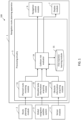
- FIG. 1 is a block diagram illustrating a configuration of a navigation route planning system for safely navigating a movable body (or own ship) according to one embodiment of the present disclosure;
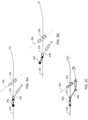
- FIGs. 2A- 2C illustrate an evasion of the own ship from a planned route to avoid collision with an obstacle;
- FIG. 3 is a block diagram illustrating a configuration of the first machine learning module, according to one embodiment of the present disclosure;
- FIG. 4 is a block diagram illustrating the navigation route planning system for safely navigating the own ship, according to one embodiment of the present disclosure;
- FIG. 5 is a block diagram illustrating a configuration of the first machine learning module, according to another embodiment of the present disclosure;
- FIG. 6 is a block diagram illustrating the navigation route planning system for safely navigating the own ship, according to yet another embodiment of the present disclosure;
- FIG. 7 is a block diagram illustrating a configuration of the first machine learning module, according to yet another embodiment of the present disclosure;
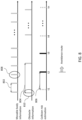
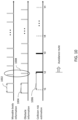
- FIGs. 8-10 illustrate calculation of the collision risk value based on latest movable body information and latest obstacle information, according to various embodiments of the present disclosure;
- FIG. 11 is a block diagram illustrating a configuration of a navigation route planning system for safely navigating the own ship, according to yet another embodiment of the present disclosure;
- FIG. 12 illustrates a region surrounding the own ship;
- FIG. 13 is a block diagram illustrating a configuration of a navigation route planning system for safely navigating the own ship, according to yet another embodiment of the present disclosure;
- FIG. 14 is a block diagram illustrating a configuration of the navigation route planning system for safely navigating the own ship, according to yet another embodiment of the present disclosure;
- FIG. 15 represents a flow chart illustrating a navigation route planning method in accordance with an embodiment of the present disclosure;
- FIGs. 16A and 16B , collectively, represent a flow chart illustrating a navigation route planning method in accordance with another embodiment of the present disclosure;
- FIGs. 17A and 17B , collectively, represent a flow chart illustrating a navigation route planning method in accordance with yet another embodiment of the present disclosure; and
- FIG. 18 represents a flow chart illustrating a navigation route planning method in accordance with yet another embodiment of the present disclosure.
-
Example apparatus are described herein. Other example embodiments or features may further be utilized, and other changes may be made, without departing from the spirit or scope of the subject matter presented herein. In the following detailed description, reference is made to the accompanying drawings, which form a part thereof.
-
The example embodiments described herein are not meant to be limiting. It will be readily understood that the aspects of the present disclosure, as generally described herein, and illustrated in the drawings, can be arranged, substituted, combined, separated, and designed in a wide variety of different configurations, all of which are explicitly contemplated herein.
-
FIG. 1 is a block diagram illustrating a configuration of a navigation route planning system 100 for safely navigating a movable body 200 (hereinafter also referred to as an "own ship 200"), according to one embodiment of the present disclosure. FIGs. 2A- 2C illustrate an evasion of the own ship 200 from a planned route 202 to avoid collision with an obstacle 204.
-
The navigation route planning system 100 may be installed on the own ship 200 for navigation of the own ship 200 from a source location to a destination location. Once the voyage has begun, the navigation of the own ship 200 along a planned route 202 that is a path to be followed by the own ship 200 between the source location and the destination location must be monitored. The navigation route planning system 100 is configured to be used for safely navigating the own ship 200 using artificial intelligence by avoiding collisions with surrounding obstacles such as, but not limited to, target ships, terrains, and other target objects. A ship operator, i.e., a user who operates the own ship 200, navigates the own ship 200 along the planned route 202 with assistance of the navigation route planning system 100. In one embodiment, as illustrated in FIGs. 2A- 2C , the planned route 202 is a path to be followed by the own ship 200 to navigate and safely reach the destination location, and the planned route 202 indicates a route of the own ship 200 moving on a water surface, along which the own ship 200 has planned to move, and a current course direction from a current position of the own ship 200.
-
The navigation route planning system 100 includes a navigation route planning apparatus 1, a route planning module 2, a global navigation satellite system (GNSS) 3, and one or more sensor modules 4. The navigation route planning apparatus 1 include processing circuitry 5, a navigation control module 6, and a display module 7.
-
The route planning module 2 is configured to store a plurality of routes for navigation of the own ship 200. In one embodiment, the ship operator may operate various peripheral devices operably coupled with the navigation route planning apparatus 1 for performing various functions pursuant to functionalities in the present disclosure. For example, the user can provide various kinds of instructions to the navigation route planning apparatus 1 about a source location and a destination location for navigation of the own ship 200 by operating the peripheral devices, such as a keyboard and/or the mouse. Based on the information obtained from the user, such as the source location and the destination location, the route planning module 2 may provide one or more routes for navigation of the own ship 200 from the source location to the destination location. In one embodiment, each route may be associated with route information that may include date and time of travel, weather conditions, tidal conditions, and the like. The route planning module 2 receives a user input from the user regarding selection of a route as the planned route 202 for navigation of the own ship 200 from the source location to the destination location. It will be apparent to person skilled in the art that although in the present embodiment, the user selects the route for travelling, in an alternate embodiment, an optimal route may be selected by the route planning module 2 based on current weather conditions, time of travel, tidal conditions, and the like.
-
The navigation route planning apparatus 1 uses information associated with the own ship 200 and one or more obstacles in the region surrounding the own ship 200 for safely navigating the own ship 200 from the source location to the destination location along the planned route 202. The GNSS 3 acquires movable body information that includes a position, a moving direction, and a speed of the own ship 200. The GNSS 3 accurately acquires the movable body information of the own ship 200 from satellites. The one or more sensor modules 4 acquire obstacle information that includes a position, a moving direction, and a speed of an obstacle 204 that may interfere with the navigation of the own ship 200. The one or more sensor modules 4 may correspond to one or more conventional maritime electronics devices. The one or more sensor modules 4 include at least one of: a radio detection and ranging (RADAR) device, a light detection and ranging (LIDAR) device, a sound navigation and ranging (SONAR) device, an automatic identification system (AIS) receiver, an image sensor, such as a camera or a video recorder, installed on the own ship 200, and the like. In one embodiment, the obstacle information includes information detected by at least one of: the RADAR, the LIDAR device, the SONAR device, and the image sensor, information acquired by the AIS receiver, information transmitted from another ship, and information acquired by detection of a radio communication at a place other than the own ship 200.
-
In one embodiment, the obstacle information further includes information relating to other movable bodies that include at least one of: other vessels, tidal currents, weather, reefs, and stranded ships. It will be apparent to a person skilled in the art that the information relating to the other movable bodies is acquired in a similar manner as the information for the obstacle 204 is acquired.
-
With continued reference to FIG. 1 , the processing circuitry 5 includes a planned route receiving module 51, a movable body information acquiring module 52, an obstacle information acquiring module 53, a collision risk evaluator 54, and a first machine learning module 55.
-
The planned route receiving module 51 may be operably coupled with, and hence in communication with, the route planning module 2 for receiving the route selected by the ship operator as the planned route 202. The movable body information acquiring module 52 may be operably coupled with, and hence in communication with the GNSS 3 for receiving the movable body information associated with the own ship 200. The movable body information acquiring module 52 is further configured to store the acquired movable body information.
-
The obstacle information acquiring module 53 may be operably coupled with, and hence in communication with the one or more sensor modules 4 for receiving the obstacle information associated with the obstacle 204. The obstacle information acquiring module 53 is further configured to store the obstacle information. In one embodiment, the movable body information acquiring module 52 periodically receives the movable body information of the own ship 200, and the obstacle information acquiring module 53 periodically receives the obstacle information of the obstacle 204.
-
The collision risk evaluator 54 may be operably coupled with, and hence in communication with the planned route receiving module 51, the movable body information acquiring module 52, and the obstacle information acquiring module 53. The collision risk evaluator 54 receives the route selected by the user as the planned route 202, the movable body information of the own ship 200, and the obstacle information of the obstacle 204.
-
The collision risk evaluator 54 includes a first neural network (not shown) receives the planned route, the movable body information, and the obstacle information as input data and generates collision avoidance output data which is a result of collision avoidance of the own ship 200 with the obstacle 204 along the current course direction. The first neural network further receives a relative positional relationship between the planned route 202 and the obstacle 204 based on the position of the own ship 200 as the input data. The first neural network is a computational model composed of neurons (or nodes, units, or perceptrons) and connections between the nodes used for solving artificial intelligence problems. The first neural network comprises a plurality of input neurons and at least one output neuron. A strength of each connection is expressed by a numerical value called a weight, which may be modified. The activation of a given node is based on the activations of the nodes that have connections directed at that node and the weights on those connections.
-
The first machine learning module 55 is configured to train the first neural network to learn the collision avoidance output data using the input data as training data. The collision risk evaluator 54 is configured to determine whether the own ship 200 avoids the planned route 202 or continues following the planned route 202 based on the collision avoidance output data using the trained first neural network.
-
Referring now to FIGs. 2A- 2C , in one example, if the obstacle 204 is sailing along a predicted future path 206 and the own ship 200 continues to sail along the planned route 202 such that the predicted future path 206 and the planned route 202 interfere at a point, then the collision risk value is high and there will be a higher risk of collision between the own ship 200 and the obstacle 204. The collision risk evaluator 54 is further configured to generate a collision risk estimation value based on the collision avoidance output data using the trained first neural network and determine whether the own ship 200 avoids the planned route 202 or continues following the planned route 202. Relevant potential risks of collision may be determined by the collision risk estimation value. If the collision risk estimation value is high then the own ship 200 avoids the planned route 202. In one example, if the collision risk evaluator 54 determines that the own ship 200 avoids the planned route 202 based on the collision risk value, then the navigation route planning apparatus 1 facilitates the ship operator to sail the own ship 200 through a different course 208 i.e., an avoidance route from the current position of the own ship 200 as a reference point 210 as illustrated in the FIGs. 2A- 2C . In one example, based on an actual direction of the own ship 200, the current course direction of the own ship 200 is along the planned route 202, as shown in FIG. 2A . In another example, based on an actual direction of the own ship 200, the current course direction of the own ship 200 is along the avoidance route 208, as shown in FIG. 2B .
-
FIG. 3 is a block diagram illustrating a configuration of the first machine learning module 55, according to one embodiment of the present disclosure. The first machine learning module 55 includes a data processing module 302, a training module 304, and an output module 306. During the learning process, the data processing module 302 receives the planned route 202, the movable body information, and the obstacle information as the input data, and processes the input data to generate the training data.
-
Further, the training module 304 stores a learning program 308, a parameter before learning 310, and a hyper parameter 312. The training module 304 receives the training data from the data processing module 302, and trains the first neural network to learn the collision avoidance output data using the training data, the learning program 308, and the hyper parameter 312. The parameter before learning 310 is a value of the collision avoidance output data before learning. The hyper parameter 312 is a parameter whose value is used to control the training of the first neural network. The output module 306 received the output of the training module 304, and stores a learned program 314 and a learned parameter 316 based on the output of the training module 304. The output module 306 provides the trained first neural network to the collision risk evaluator 54 based on the learned program 314, the learned parameter 316, and an inference program 318 stored in the output module 306.
-
After the learning process, the trained first neural network receives the input data as a reference. The collision risk evaluator 54 determines whether the movable body 200 avoids the planned route 202 or continues following the planned route 202 based on the collision avoidance output data using the trained first neural network. The first neural network training involves the use of an error function. Weights are adjusted such as to minimize a sum of average of the error function on the training data. The process of adjusting the weights is commonly referred to as training. A penalty term is generally applied to the error to restrict the weights in some manner that is thought desirable. The penalty term is used to penalize the magnitudes of weights. In this manner, the first neural network is trained and provides more accurate output with each repetition of a task, such as the generation of the collision avoidance output data. Based on the collision avoidance output data, the collision risk evaluator 54 determines whether the own ship 200 avoids the planned route 202 or continues following the planned route 202.
-
Referring now to FIG. 1 , the navigation control module 6 may be operably coupled with, and hence in communication with the collision risk evaluator 54. The navigation control module 6 monitors and controls the navigation of the own ship 200, based on the determination whether the own ship 200 avoids the planned route 202 or continues following the planned route 202. To control the navigation of the own ship 200, the navigation control module 6 may control the position, the moving direction, and the speed of the own ship 200. Based on the determination that the own ship 200 avoids the planned route 202, the navigation control module 6 navigates the own ship 200 along a route, such as the avoidance route 208, different than the current planned route 202.
-
The display module 7 may be located on-board the own ship 200 and provided with, or in electrical connection to, the collision risk evaluator 54 on the own ship 200, as the ship instrument for purposes as will be explained in detail later herein. The display module 7 displays the planned route 202 along which the own ship 200 is traversing. In addition, when the own ship 200 avoids the planned route 202, the display module 7 displays the avoidance route 208 along which the own ship 200 navigates to avoid the collision with the obstacle 204. Thus, the ship operator may safely navigate the own ship 200 by avoiding the collision with the obstacle 204.
-
The display module 7 may be configured as, for example, a display screen that forms part of a navigation assisting device to which a ship operator, i.e., a user, who operates the own ship 200 refers. However, the display module 7 is not limited to the above configuration, and, for example, it may be a display screen for a portable computer which is carried by a ship operator's assistant who monitors the surrounding situation from the own ship 200, a display screen for a passenger to watch in the cabin of the own ship 200, or a display part for a head mounted display, such as a wearable glass, worn by a passenger.
-
FIG. 4 is a block diagram illustrating the navigation route planning system 100 for safely navigating the own ship 200, according to another embodiment of the present disclosure. The navigation route planning system 100 includes the navigation route planning apparatus 1, the route planning module 2, the GNSS 3, and the one or more sensor modules 4. The navigation route planning apparatus 1 includes the processing circuitry 5, the navigation control module 6, and the display module 7. The route planning module 2, the GNSS 3, the one or more sensor modules 4, the navigation control module 6, and the display module 7 function in a similar manner as described in FIG. 1 .
-
The processing circuitry 5 includes the planned route receiving module 51, the movable body information acquiring module 52, the obstacle information acquiring module 53, the collision risk evaluator 54, the first machine learning module 55, and a collision avoidance result input module 57. The planned route receiving module 51, the movable body information acquiring module 52, and the obstacle information acquiring module 53 function in a similar manner as described in FIG. 1 . FIG. 5 is a block diagram illustrating a configuration of the first machine learning module 55, according to another embodiment of the present disclosure.
-
Referring now to FIGs. 4 and 5 . in one embodiment, the collision avoidance result input module 57 receives and provides the collision risk estimation value that indicates a degree of the risk of collision to the first machine learning module 55. The first neural network is configured to receive the collision risk estimation value and generate the collision avoidance output data which is a result of collision avoidance of the own ship 200 with the obstacle 204. During the learning process, the data processing module 302 receives the planned route 202, the movable body information, the obstacle information, and the collision risk estimation value as the input data, and processes the input data to generate the training data. Further, the training module 304 receives the training data from the data processing module 302, and trains the first neural network to learn the collision risk estimation value using the training data, the learning program 308, and the hyper parameter 312. The trained first neural network is configured to receive the input data as a reference.
-
After the learning process, the collision risk evaluator 54 determines whether the own ship 200 avoids the planned route 202 or continues following the planned route 202 based on the collision avoidance output data using the trained first neural network. If the collision risk estimation value is high then the own ship 200 avoids the planned route 202.
-
FIG. 6 is a block diagram illustrating the navigation route planning system 100 for safely navigating the own ship 200, according to yet another embodiment of the present disclosure. The navigation route planning system 100 includes the navigation route planning apparatus 1, the route planning module 2, the GNSS 3, and the one or more sensor modules 4. The navigation route planning apparatus 1 includes the processing circuitry 5, the navigation control module 6, and the display module 7. The route planning module 2, the GNSS 3, the one or more sensor modules 4, the navigation control module 6, and the display module 7 functions in a similar manner as described in FIG. 1 .
-
The processing circuitry 5 includes the planned route receiving module 51, the movable body information acquiring module 52, the obstacle information acquiring module 53, the collision risk evaluator 54, the first machine learning module 55, and the collision avoidance result input module 57. The planned route receiving module 51, the movable body information acquiring module 52, and the obstacle information acquiring module 53 functions in a similar manner as described in FIG. 1 . FIG. 7 is a block diagram illustrating a configuration of the first machine learning module 55, according to yet another embodiment of the present disclosure.
-
Referring now to FIGs. 6 and 7 , the collision risk evaluator 54 is further configured to determine whether the own ship 200 requires to avoid the collision with the obstacle 204 based on collision risk data that includes at least one of: a closest distance and a time required by the own ship 200 to traverse the closest distance.
-
In one embodiment, the collision avoidance result input module 57 receives and provides the collision risk data that includes the closest distance between the own ship 200 and the obstacle 204 to the first machine learning module 55. The first neural network is configured to receive the closest distance between the own ship 200 and the obstacle 204, and generate the collision avoidance output data which is a result of collision avoidance of the own ship 200 with the obstacle 204. During the learning process, the data processing module 302 receives the planned route 202, the movable body information, the obstacle information, and the collision risk data including the closest distance as the input data, and processes the input data to generate the training data. Further, the training module 304 receives the training data from the data processing module 302, and trains the first neural network to learn the collision risk data that includes the closest distance between the own ship 200 and the obstacle 204 using the input data as the training data. The trained first neural network is configured to receive the input data as a reference. After the learning process, the collision risk evaluator 54 generates a closest distance output based on the collision avoidance output data using the trained first neural network. In one embodiment, the closest distance between the own ship 200 and the obstacle 204 is calculated based on the positional relationship between the own ship 200 and the obstacle 204, the relative velocity of the own ship 200 and the obstacle 204, the moving direction, and the speed of the own ship 200 and the obstacle 204. The closest distance output between the own ship 200 and the obstacle 204 may be used to calculate the collision risk value associated with the planned route 202 along the current course direction.
-
In another embodiment, the collision risk data further includes the time required to traverse the closest distance output from a position of the own ship 200 without collision avoidance. The collision avoidance result input module 57 is configured to provide the collision risk data that includes the time required to traverse the closest distance output from a position of the own ship 200 to the first machine learning module 55. The first neural network is configured to receive the time to traverse the closest distance output, and generate the collision avoidance output data which is a result of collision avoidance of the own ship 200 with the obstacle 204. During the learning process, the data processing module 302 receives the planned route 202, the movable body information, the obstacle information, and the collision risk data including the time to traverse the closest distance as the input data, and processes the input data to generate the training data. Further, the training module 304 receives the training data from the data processing module 302, and trains the first neural network to learn the time using the training data. The trained first neural network is further configured to receive the input data as a reference. After the learning process, the collision risk evaluator 54 determines whether the own ship 200 avoids the planned route 202 or continues following the planned route 202 based on the closest distance output and the time required by the movable body 200 to traverse the closest distance output using the trained first neural network.
-
FIGs. 8-10 illustrate calculation of the collision risk value based on latest movable body information and latest obstacle information, according to various embodiments of the present disclosure. As the own ship 200 navigates, the surrounding area of the own ship 200 changes accordingly. Therefore, the movable body information acquiring module 52 is further configured to periodically receive the movable body information in a first time period 802, i.e., at regular intervals of the first time period 802. In one embodiment, the trained first neural network further receives the input data that includes latest acquired movable body information as a reference. Based on the latest acquired movable body information, the collision risk evaluator 54 again determines whether the movable body 200 avoids the planned route 202 or continues following the planned route 202 based on the collision avoidance output data using the trained first neural network.
-
Similarly, the obstacle information acquiring module 53 is further configured to periodically receive the obstacle information in a second time period 804, i.e., at regular intervals of the second time period 804. In one embodiment, the trained first neural network further receives the input data that includes latest acquired obstacle information as a reference. Based on the latest acquired obstacle information, the collision risk evaluator 54 again determines whether the movable body 200 avoids the planned route 202 or continues following the planned route 202 based on the collision avoidance output data using the trained first neural network.
-
In one embodiment, the trained first neural network periodically receives the input data that includes the latest acquired movable body information and the obstacle information as a reference in a third time period 806. The third time period 806 is longer than at least any one of: the first time period 802 and the second time period 804. In this embodiment, the third time period 806 is longer than the first time period 802 and shorter than the second time period 804. Thus, the collision risk evaluator 54 periodically determines, in the third time period 806, whether the own ship 200 avoids the planned route 202 or continues following the planned route 202 based on the collision avoidance output data using the trained first neural network.
-
The movable body information acquiring module 52 receives the movable body information in the first time period 802, which is shorter than the third time period 806. The collision avoidance output data at the timing t2 is determined based on the movable body information and the obstacle information acquired at the timing t1 and t2 that are indicated by circles 808 and 810, respectively.
-
The periodic acquisition of the movable body information and the obstacle information are preferable because higher is a frequency of acquisition, a greater number of times the collision avoidance output data may be determined based on the latest movable body information and the latest obstacle information.
-
Referring now to FIG. 9 , in another embodiment, the collision risk evaluator 54 periodically determines, in a third time period 906, whether the own ship 200 avoids the planned route 202 or continues following the planned route 202. In this embodiment, the third time period 906 is longer than a second time period 904 and shorter than a first time period 902 based on the updated acquired movable body information and the updated acquired obstacle information. The collision avoidance output data at the timing t2 is calculated based on the movable body information and the obstacle information acquired at the timing t1 and t2 that are indicated by circles 908 and 910, respectively.
-
Referring now to FIG. 10 , in yet another embodiment, the collision risk evaluator 54 periodically determines, in a third time period 1006, whether the own ship 200 avoids the planned route 202 or continues following the planned route 202. In this embodiment, the third time period 1006 which is longer than a first time period 1002 and a second time period 1004. The collision avoidance output data at the timing t2 is calculated based on the movable body information and the obstacle information acquired at the timing t2 that is indicated by circle 1008. In FIG. 10 , the obstacle information acquiring module 53 may acquire the obstacle information in the second time period 1004, which is shorter than the third time period 1006.
-
Ideally, it is preferable to acquire both the movable body information and the obstacle information at a high frequency and determine the collision avoidance output data based on the latest information. In one example, the collision avoidance output data determined at the timing t1 does not indicate a collision risk, but the collision avoidance output data determined at t2 indicates a high possibility of collision. Therefore, an avoidance route is generated, and the own ship 200 is required to navigation along the avoidance route. The determined collision avoidance output data at the timing t3 still indicates a collision risk with the obstacle, but the risk of collision decreases at t4 due to the avoidance route.
-
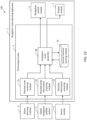
FIG. 11 is a block diagram illustrating a configuration of the navigation route planning system 100 for safely navigating the own ship 200, according to yet another embodiment of the present disclosure.
-
The navigation route planning system 100 includes the navigation route planning apparatus 1, the route planning module 2, the GNSS 3, and the one or more sensor modules 4. The navigation route planning apparatus 1 include the processing circuitry 5, the navigation control module 6, the display module 7. The route planning module 2, the GNSS 3, the one or more sensor modules 4, the navigation control module 6, and the display module 7 functions in a similar manner as described in FIG. 1 .
-
The processing circuitry 5 includes the planned route receiving module 51, the movable body information acquiring module 52, the obstacle information acquiring module 53, the collision risk evaluator 54, the first machine learning module 55, an avoidance route generator 58, and a second machine learning module 59. The planned route receiving module 51, the movable body information acquiring module 52, the obstacle information acquiring module 53, the collision risk evaluator 54, and the first machine learning module 55 functions in a similar manner as described in FIG. 1 .
-
The avoidance route generator 58 may be operably coupled with, and hence in communication with the collision risk evaluator 54, and receives the collision avoidance output data. The avoidance route generator 58 includes a second neural network (not shown) that is configured to receive the planned route 202, the movable body information, the obstacle information, and the collision avoidance output data as input data, and generate avoidance route output data as a result of avoidance route for avoiding the obstacle 204.
-
The machine learning module 59 is configured to train the second neural network to learn the avoidance route output data using the input data as training data. The trained second neural network is configured to receive the input data as a reference. The avoidance route generator 58 is configured to generate the avoidance route 208 in place of the planned route 202 ahead of the current position or a predicted position as the reference point 210 of the own ship 200 based on the avoidance route output data using the trained second neural network. The predicted position of the own ship 200 may be one of: a predicted position on the current course, a predicted position on the planned route 202, or a predicted position on an avoidance route. The avoidance route generator 58 may determine the predicted position based on a current speed and a turning angular velocity of the own ship 200. In one embodiment, the avoidance route generator 58 generates the avoidance route 208 when the obstacle 204 is determined on the planned route 202 of the own ship 200 as illustrated in the FIG. 4 , and when the collision risk evaluator 54 determines that the own ship 200 avoids the planned route 202. If the collision risk value is high then the avoidance route generator 58 generates and sets the avoidance route 208 for the own ship 200 for avoiding collisions with the obstacle 204. The generated avoidance route with a chart may be displayed on the screen of the display module 7. In one embodiment, the generated avoidance route 208 may be automatically inputted to an autopilot of the own ship 200 to navigate the own ship 200 along the avoidance route 208.
-
In one embodiment, the movable body information acquiring module 52 is further configured to periodically receive the movable body information that includes the moving direction of the own ship 200 in the first time period 1002, i.e., at regular intervals of the first time period 1002. Similarly, the obstacle information acquiring module 53 is further configured to periodically receive the obstacle information in the second time period 1004, i.e., at regular intervals of the second time period 1004.
-
The trained first neural network is further configured to periodically receive the input data that includes the latest acquired movable body information and the latest acquired obstacle information as a reference in the third time period 1006. The third time period 1006 is longer than at least one of: the first time period 1002 and the second time period 1004. In this embodiment, the third time period 1006 is longer than the first time period 1002 or the second time period 1004. The collision risk evaluator 54 is configured to periodically determine, in the third time period 1006, whether the movable body 200 avoids the planned route 202 or continues following the planned route 202 based on the collision avoidance output data using the trained first neural network.
-
The trained second neural network is further configured to periodically receive the input data as a reference when the collision risk evaluator 54 determines that the movable body 200 avoids the planned route 202. In one embodiment, the trained second neural network is further configured to periodically receive the input data as a reference in the third time period 1006. The collision avoidance output data at the timing t2 is calculated based on the movable body information and the obstacle information acquired at the timing t2 that is indicated by circle 1008. The avoidance route generator 58 is further configured to periodically generate, in the time period 1006, the avoidance route 208 in place of the planned route 202 ahead of the current position 210 or the predicted position of the movable body 200 to avoid the collision with the obstacle 204 based on the avoidance route output data using the trained second neural network.
-
The navigation control module 6 may be operably coupled with, and hence in communication with the avoidance route generator 58. The navigation control module 6 monitors and controls the navigation of the own ship 200, based on the determination whether the own ship 200 avoids the planned route 202 or continues following the planned route 202. To control the navigation of the own ship 200, the navigation control module 6 may control the position, the moving direction, and the speed of the own ship 200. Based on the determination that the own ship 200 avoids the planned route 202, the navigation control module 6 navigates the own ship 200 along the avoidance route 208 to avoid the obstacle 204.
-
The display module 7 may be operably coupled with, or in electrical connection to, the collision risk evaluator 54 and the avoidance route generator 58. The display module 7 displays the planned route 202 along which the own ship 200 is traversing. In addition, when the own ship 200 avoids the planned route 202, the display module 7 displays the avoidance route 208 along which the own ship 200 navigates to avoid the collision with the obstacle 204. Thus, the ship operator may safely navigate the own ship 200 by avoiding the collision with the obstacle 204.
-
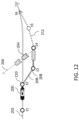
FIG. 12 , illustrates a region surrounding the own ship 200, according to one embodiment of the present disclosure. In one example, if the obstacle 204 is detected on the planned route 202, a collision risk value between the own ship 200 and the obstacle 204 is calculated by the navigation route planning apparatus 1. There will be a risk of collision if the collision risk value is high or equal to the predetermined threshold value. The trained first neural network receives the input data that includes the latest movable body information and the latest obstacle information, and the collision risk avoidance data as a reference at regular intervals of time. The collision risk evaluator 54 periodically determines whether the own ship 200 avoids the planned route 202. In one example, if the collision risk evaluator 54 determines that the own ship 200 avoids the planned route 202, then the avoidance route generator 58 periodically generates and sets the avoidance route 208 for the own ship 200.
-
The avoidance route generator 58 periodically acquires the latest movable body information and the obstacle information at regular interval of times t2, t3, t4, etc. and generates and updates the next avoidance route at each regular interval of time t2, t3, t4, etc. while the own ship 200 is navigating on the avoidance route 208. In one embodiment, the avoidance route generator 58 is further configured to periodically generate the avoidance route 208 that includes a return path 212 based on the avoidance route output data. The return path is followed by the own ship 200 to navigate and return to the planned route 202 while avoiding the collision with the obstacle 204. The navigation on the avoidance route 208 ends at the time interval t6 when the own ship 200 has returned to the planned route 202. In one embodiment, when the avoidance route 208 is generated, the avoidance route 208 scheduled to return to the planned route 202 may also be generated. The navigation control module 6 monitors and controls the navigation of the own ship 200 along the avoidance route 208 to avoid the obstacle 204 and along the return path 212 to return on the planned route 202. The display module 7 displays the return path 212 along with the planned route 202 and the avoidance route 208. Thus, the ship operator may safely navigate the own ship 200 by avoiding the collision with the obstacle 204.
-
FIG. 13 is a block diagram illustrating a configuration of the navigation route planning system 100 for safely navigating the own ship 200, according to yet another embodiment of the present disclosure.
-
The navigation route planning system 100 includes the navigation route planning apparatus 1, the route planning module 2, the GNSS 3, and the one or more sensor modules 4. The navigation route planning apparatus 1 includes the processing circuitry 5, the navigation control module 6, and the display module 7. The route planning module 2, the GNSS 3, and the one or more sensor modules 4 function in a similar manner as described in FIG. 1 , and the navigation control module 6 function in a similar manner as described in FIGs. 11 and 12 .
-
The processing circuitry 5 includes the planned route receiving module 51, the movable body information acquiring module 52, the obstacle information acquiring module 53, the avoidance route generator 58, and the second machine learning module 59. The planned route receiving module 51, the movable body information acquiring module 52, the obstacle information acquiring module 53 function in a similar manner as described in FIG. 1 , and the display module 7 functions in a similar manner as described in FIGs. 11 and 12 .
-
The avoidance route generator 58 may be operably coupled with, and hence in communication with the planned route receiving module 51, the movable body information acquiring module 52, and the obstacle information acquiring module 53. The avoidance route generator 58 receives the route selected by the user as the planned route 202, the movable body information of the own ship 200, and the obstacle information of the obstacle 204.
-
The avoidance route generator 58 includes the trained second neural network that is configured to receive the planned route, the movable body information, and the obstacle information as input data, and generate the avoidance route output data as a result of avoidance route for avoiding the obstacle 204.
-
The second machine learning module 59 may be structurally similar to the first machine learning module 55 as described in FIG. 1 . The second machine learning module 59 trains the trained second neural network to learn the avoidance route output data using the input data as training data. The trained second neural network is configured to receive the input data as a reference. The avoidance route generator 58 generates the avoidance route 208 in place of the planned route 202 ahead of the current position or the predicted position as the reference point 210 of the own ship 200 based on the avoidance route output data using the trained second neural network. The avoidance route generator 58 generates the avoidance route 208 when the obstacle 204 is determined on the planned route 202 of the own ship 200 as illustrated in the FIG. 12 . The avoidance route generator 58 generates the avoidance route 208 based on the avoidance route output data. If the collision risk value is high then the avoidance route generator 58 generates and sets the avoidance route 208 for the own ship 200 for avoiding collisions with the obstacle 204 that is to be avoided. The generated avoidance route with a chart may be displayed on the screen of the display module 7. In one embodiment, the generated avoidance route may be automatically inputted to an autopilot of the own ship 200 to navigate the own ship 200 along the avoidance route 208.
-
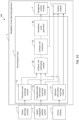
FIG. 14 is a block diagram illustrating a configuration of the navigation route planning system 100 for safely navigating the own ship 200, according to yet another embodiment of the present disclosure.
-
The navigation route planning system 100 includes the navigation route planning apparatus 1, the route planning module 2, the GNSS 3, and the one or more sensor modules 4. The navigation route planning apparatus 1 includes the processing circuitry 5, the navigation control module 6, and the display module 7. The route planning module 2, the GNSS 3, the one or more sensor modules 4, and the navigation control module 6 function in a similar manner as described in FIG. 11 .
-
The processing circuitry 5 includes the planned route receiving module 51, the movable body information acquiring module 52, the obstacle information acquiring module 53, the collision risk evaluator 54, the avoidance route generator 58, and a collision risk estimating module 60. The planned route receiving module 51, the movable body information acquiring module 52, the obstacle information acquiring module 53, the avoidance route generator 58 functions in a similar manner as described in FIG. 11 .
-
The collision risk estimating module 60 may be operably coupled with, and hence in communication with, the planned route receiving module 51, the movable body information acquiring module 52, and the obstacle information acquiring module 53. The collision risk estimating module 60 receives the route selected by the user as the planned route 202, the movable body information of the own ship 200, and the obstacle information of the obstacle 204. The collision risk estimating module 60 determines a collision risk value associated with the planned route 202 along the current course direction based on the movable body information and the obstacle information. The collision risk value is calculated based on the position, the moving direction, and the speed of the own ship 200 and the obstacle 204. The collision risk value indicates a degree of the risk of collision between the own ship 200 and the obstacle 204. In one example, if the collision risk value is high then there will be a higher risk of collision between the own ship 200 and the obstacle 204.
-
The collision risk evaluator 54 is further configured to determine whether the own ship 200 avoids the planned route 202 or continues following the planned route 202 based on the collision risk value associated with the planned route 202. If the collision risk is high then the own ship 200 avoids the planned route 202. In one example, if the collision risk evaluator 54 determines that the own ship 200 avoids the planned route 202 based on the collision risk value, then the navigation route planning apparatus 1 facilitates the ship operator to sail the own ship 200 through the avoidance route 208 from a current position of the own ship 200 as a reference point 210 as illustrated in the FIG. 12 .
-
When the avoidance route 208 is generated, the planned route 208 and the avoidance route 208 are displayed on the screen of the display module 7. In one embodiment, the positions of the own ship 200 and the obstacle 204 when the avoidance route 208 is generated, the planned route 208 along with the avoidance route 208, and the collision risk value may also be displayed on the screen of the display module 7. The ship operator may check the screen of the display module 7 and safely navigate the own ship 200 along the avoidance route 208. The ship operator may also switch to automatic navigation in conjunction with the autopilot of the own ship 200.
-
FIG. 15 represents a flow chart illustrating a navigation route planning method 1500 in accordance with an embodiment of the present disclosure.
-
At step 1502, the planned route receiving module 51 receives the planned route 202 which indicates a route of the own ship 200 and the current course direction from the current position of the own ship 200. The route planning module 2 may provide one or more routes for navigation of the own ship 200 from the source location to the destination location.
-
At step 1504, the obstacle information acquiring module 53 receives the obstacle information from the one or more sensor modules 4. The obstacle information includes the position, the moving direction, and the speed of the obstacle 204. The obstacle information further includes information relating to at least one of: other movable bodies includes other vessels, tidal currents, weather, reefs, and stranded ships.
-
At step 1506, the movable body information acquiring module 52 receives the movable body information that includes the position, the moving direction, and the speed of the own ship 200.
-
If at step 1508, the collision risk evaluator 54 determines that the collision risk is high along the planned route 202, and the own ship 200 avoids the planned route 202 based on the collision risk output data, step 1510 is executed. At step 1510, the avoidance route generator 58 generates the avoidance route 208 in place of the planned route 202 ahead of the current position or the predicted position of the own ship 200, and displays the avoidance route 208 on the screen of the display module 7. If at step 1508, the collision risk evaluator 54 determines that the collision risk is low along the planned route 202 then the ship operator may continue navigating the own ship 200 along the planned route 202.
-
When the obstacle 204 intrudes into or is likely to intrude into the planned route 202 is detected while the own ship 200 navigates along the planned route 202, the position, the moving direction, and the speed of the own ship 200 and the obstacle 204 are inputted into the first neural network learned by the first machine learning module 55. The collision risk evaluator 54 determines whether the own ship 200 avoids the planned route 202 or continues following the planned route 202 based on the collision avoidance output data using the trained first neural network.
-
FIGs. 16A and 16B , collectively, represent a flow chart illustrating a navigation route planning method 1600 in accordance with another embodiment of the present disclosure.
-
At step 1602, the planned route receiving module 51 receives the planned route 202 which indicates a route of the own ship 200 and the current course direction from the current position of the own ship 200. The route planning module 2 may provide one or more routes for navigation of the own ship 200 from the source location to the destination location.
-
At step 1604, the obstacle information acquiring module 53 receives the obstacle information from the one or more sensor modules 4. The obstacle information includes the position, the moving direction, and the speed of the obstacle 204. The obstacle information further includes information relating to at least one of: other movable bodies include other vessels, tidal currents, weather, reefs, and stranded ships. The obstacle information acquiring module 53 is further configured to periodically receive the obstacle information of the obstacle 204.
-
At step 1606, the movable body information acquiring module 52 receives the movable body information that includes the position, the moving direction, and the speed of the own ship 200. The movable body information acquiring module 52 is further configured to periodically receive the movable body information of the own ship 200. The position, the moving direction, and the speed of the own ship 200 may be detected when the obstacle 204 may interfere with the navigation of the own ship 200.
-
If at step 1608, the collision risk evaluator 54 determines that the collision risk is high along the planned route 202 using the first neural network, step 1610 is executed. At step 1610, the collision risk evaluator 54 determines the collision risk value associated with the planned route 202 along the current course direction using the first neural network based on the collision avoidance output data. If at step 1608, the collision risk evaluator 54 determines that the collision risk is low, step 1612 is executed.
-
If at step 1612, it is determined that the third time period has lapsed, step 1608 is executed. If at step 1612, it is determined that the third time period has not lapsed, step 1614 is executed.
-
If at step 1614, it is determined that the first time period has lapsed, step 1606 is executed. If at step 1614, it is determined that the first time period has not lapsed, step 1616 is executed.
-
If at step 1616, it is determined that a second time period has lapsed, step 1604 is executed. The collision risk evaluator 54 periodically input the input data that includes the latest movable body information and the latest obstacle information as a reference to the first neural network learned by the first machine learning module 55 and determines whether the own ship 200 avoids the planned route 202 or continues following the planned route 202, periodically.
-
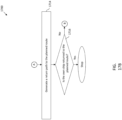
FIGs. 17A and 17B , collectively, represent a flow chart illustrating a navigation route planning method 1700 in accordance with yet another embodiment of the present disclosure.
-
At step 1702, the planned route receiving module 51 receives the planned route 202 which indicates a route of the own ship 200 and the current course direction from the current position of the own ship 200. The route planning module 2 may provide one or more routes for navigation of the own ship 200 from the source location to the destination location.
-
At step 1704, the obstacle information acquiring module 53 receives the obstacle information from the one or more sensor modules 4. The obstacle information includes the position, the moving direction, and the speed of the obstacle 204. The obstacle information further includes information relating to at least one of: other movable bodies include other vessels, tidal currents, weather, reefs, and stranded ships. The obstacle information acquiring module 53 is further configured to periodically receive the obstacle information of the obstacle 204.
-
At step 1706, the movable body information acquiring module 52 receives the movable body information that includes the position, the moving direction, and the speed of the own ship 200. The movable body information acquiring module 52 is further configured to periodically receive the movable body information of the own ship 200. The position, the moving direction, and the speed of the own ship 200 may be detected when the obstacle 204 may interfere with the navigation of the own ship 200.
-
If at step 1708, the collision risk evaluator 54 determines that the collision risk is high along the planned route 202 using the first neural network, step 1710 is executed. At step 1710, the avoidance route generator 58 generates an avoidance route 208 that includes a return path to the planned route 202 for the own ship 200 based on the avoidance route output data, periodically. In one embodiment, the avoidance route generator 58 may also generate the avoidance route 208 that is scheduled to return to the planned route 202.
-
If at step 1712, it is determined that the third time period has lapsed, step 1704 is executed. If at step 1712, it is determined that the third time period has not lapsed, step 1714 is executed.
-
At step 1714, the avoidance route generator 58 generates the return path 212 to the planned route 202 for the own ship 200. If at step 1716, it is determined that the own ship 200 is not returned to the planned route 202, step 1704 is executed. If at step 1716, it is determined that the own ship 200 has returned to the planned route 202, the navigation of the avoidance route is completed and the ship operator may navigate the own ship 200 along the planned route 202.
-
FIG. 18 represents a flow chart illustrating a navigation route planning method 1800 in accordance with yet another embodiment of the present disclosure.
-
At step 1802, the planned route receiving module 51 receives the planned route 202 which indicates a route of the own ship 200 and the current course direction from the current position of the own ship 200. The route planning module 2 may provide one or more routes for navigation of the own ship 200 from the source location to the destination location.
-
At step 1804, the obstacle information acquiring module 53 receives the obstacle information from the one or more sensor modules 4. The obstacle information includes the position, the moving direction, and the speed of the obstacle 204. The obstacle information further includes information relating to at least one of: other movable bodies includes other vessels, tidal currents, weather, reefs, and stranded ships. The obstacle information acquiring module 53 periodically receives the obstacle information of the obstacle 204.
-
At step 1806, the movable body information acquiring module 52 receives the movable body information that includes the position, the moving direction, and the speed of the own ship 200. The movable body information acquiring module 52 periodically receives the movable body information of the own ship 200. The position, the moving direction, and the speed of the own ship 200 may be detected when the obstacle 204 may interfere with the navigation of the own ship 200.
-
At step 1808, the avoidance route generator 58 generates the avoidance route 208 that includes the return path 212 to the planned route 202 for the own ship 200.
-
If at step 1810, it is determined that the own ship 200 is not returned to the planned route 208, steps 1804, 1806, and 1808 are executed again. If at step 1810, it is determined that the own ship 200 has returned to the planned route 202, the navigation of the avoidance route is completed and the ship operator may navigate the own ship 200 along the planned route 202.
DESCRIPTION OF REFERENCE CHARACTERS
-
- 1
- Navigation route planning apparatus
- 2
- Route planning module
- 3
- Global navigation satellite system (GNSS)
- 4
- Sensor modules
- 5
- Processing circuitry
- 6
- Navigation control module
- 51
- Planned route receiving module
- 52
- Movable body information acquiring module
- 53
- Obstacle information acquiring module
- 54
- Collision risk calculator
- 55
- First machine learning module
- 7
- Display module
- 57
- Collision avoidance result input module
- 58
- Avoidance route generator
- 59
- Second machine learning module
- 60
- Collision risk estimating module
- 200
- Movable body (Own Ship)
- 202
- Planned route
- 204
- Obstacle
- 206
- Predicted future path
- 208
- Avoidance route
- 210
- Reference point (Current position of the movable body)
- 212
- Return path