EP4290437A1 - System and method for technology debt assessment - Google Patents
System and method for technology debt assessment Download PDFInfo
- Publication number
- EP4290437A1 EP4290437A1 EP22198304.2A EP22198304A EP4290437A1 EP 4290437 A1 EP4290437 A1 EP 4290437A1 EP 22198304 A EP22198304 A EP 22198304A EP 4290437 A1 EP4290437 A1 EP 4290437A1
- Authority
- EP
- European Patent Office
- Prior art keywords
- technology
- debt
- risk
- resources
- impact
- Prior art date
- Legal status (The legal status is an assumption and is not a legal conclusion. Google has not performed a legal analysis and makes no representation as to the accuracy of the status listed.)
- Granted
Links
Images

Classifications
-
- G—PHYSICS
- G06—COMPUTING OR CALCULATING; COUNTING
- G06Q—INFORMATION AND COMMUNICATION TECHNOLOGY [ICT] SPECIALLY ADAPTED FOR ADMINISTRATIVE, COMMERCIAL, FINANCIAL, MANAGERIAL OR SUPERVISORY PURPOSES; SYSTEMS OR METHODS SPECIALLY ADAPTED FOR ADMINISTRATIVE, COMMERCIAL, FINANCIAL, MANAGERIAL OR SUPERVISORY PURPOSES, NOT OTHERWISE PROVIDED FOR
- G06Q40/00—Finance; Insurance; Tax strategies; Processing of corporate or income taxes
- G06Q40/12—Accounting
-
- G—PHYSICS
- G06—COMPUTING OR CALCULATING; COUNTING
- G06Q—INFORMATION AND COMMUNICATION TECHNOLOGY [ICT] SPECIALLY ADAPTED FOR ADMINISTRATIVE, COMMERCIAL, FINANCIAL, MANAGERIAL OR SUPERVISORY PURPOSES; SYSTEMS OR METHODS SPECIALLY ADAPTED FOR ADMINISTRATIVE, COMMERCIAL, FINANCIAL, MANAGERIAL OR SUPERVISORY PURPOSES, NOT OTHERWISE PROVIDED FOR
- G06Q10/00—Administration; Management
- G06Q10/06—Resources, workflows, human or project management; Enterprise or organisation planning; Enterprise or organisation modelling
- G06Q10/063—Operations research, analysis or management
- G06Q10/0635—Risk analysis of enterprise or organisation activities
Definitions
- the disclosure herein generally relates to the field of technology debt assessment and more specifically, to a method and system for assessing technology landscape to identify technology debts and associated business risks.
- the technology debt represents the quantum of digital technology in a business portfolio that requires continuous attention in terms of investment and people commitment but does not yield the desired business result.
- Embodiments of the disclosure present technological improvements as solutions to one or more of the above-mentioned technical problems recognized by the inventors in conventional systems. For example, in one embodiment, a method and system for assessing technology landscape to identify technology debts and corresponding associated business risks is provided.
- a processor-implemented method for assessing technology landscape to identify technology debts and corresponding associated business risks includes one or more steps such as receiving one or more information from one or more layers of a plurality of technology resources, analyzing each of the plurality of technology resources to determine a current level of debt causing operational issues in a technology landscape and identifying an impact caused by the determined current level of debt of the plurality of technology resources to an enterprise service layer of the technology landscape. Further, a debt risk is calculated for each of the plurality of technology resources based on the identified impact of the plurality of technology resources and a risk score is generated for each of the plurality of technology resources that carry a technology debt due to the contributing factors that are not limited to architectural design decisions and obsolescent hardware and software. Finally, at least one solution is recommended based on the risk score of the technology debt associated with the plurality of technology resources to reduce the technology debt and mitigate the associated risk.
- a system for assessing technology landscape to identify technology debts and corresponding associated business risks includes an input/output interface configured to receive one or more information from one or more layers of a plurality of technology resources of a technology landscape, one or more hardware processors and at least one memory storing a plurality of instructions, wherein the one or more hardware processors are configured to execute the plurality of instructions stored in at least one memory.
- the system is configured to analyze each of the plurality of technology resources to determine a current level of debt causing operational issues in a technology landscape and to identify an impact caused by the determined current level of debt of the plurality of technology resources to an enterprise service layer of the technology landscape.
- the risk arising from the technology debt is calculated for each of the plurality of technology resources based on the identified impact of the plurality of technology resources and a risk score is generated for each of the plurality of technology resources that carry a debt due to the contributing factors that are not limited to architectural design decisions and obsolescent hardware and software.
- at least one solution is recommended based on the risk score of the technology debt associated with the plurality of technology resources to reduce the technology debt and mitigate associated risk.
- one or more non-transitory machine-readable information storage mediums comprising one or more instructions, which when executed by one or more hardware processors causes a method for optimizing placement of data to at least one of a plurality of cloud datacenters complying data residency is provided.
- the method includes one or more steps such as receiving one or more information from one or more layers of a plurality of technology resources, analyzing each of the plurality of technology resources to determine a current level of debt causing operational issues in a technology landscape and identifying an impact caused by the determined current level of debt of the plurality of technology resources to an enterprise service layer of the technology landscape.
- a debt risk is calculated for each of the plurality of technology resources based on the identified impact of the plurality of technology resources and a risk score is generated for each of the plurality of technology resources that carry a technology debt due to the contributing factors that are not limited to architectural design decisions and obsolescent hardware and software.
- at least one solution is recommended based on the risk score of the technology debt associated with the plurality of technology resources to reduce the technology debt and mitigate the associated risk.
- the embodiments herein provide a method and system for assessing technology landscape to identify technology debts.
- the method and system enable enterprises to take stock of their IT landscape across application and infrastructure that are running the risk of becoming obsolete from perspectives like lifespan, design and becoming a potential bottleneck for business agility.
- the present disclosure analyses seven critical dimensions (i.e. security, agility, reliability, resiliency, design, maintainability, and performance) of an IT environment across various infrastructure and application components to arrive at the technology debts associated with each domain.
- FIG. 1 through 4 where similar reference characters denote corresponding features consistently throughout the figures, there are shown preferred embodiments and these embodiments are described in the context of the following exemplary system and/or method.
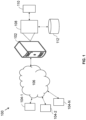
- FIG. 1 illustrates a block diagram of a system (100) for assessing technology landscape to identify technology debts, in accordance with an example embodiment.
- the system (100) may comprise one or more computing devices (102), such as a laptop computer, a desktop computer, a notebook, a workstation, a cloud-based computing environment and the like. It may be understood that the system (100) may be accessed through one or more input/output interfaces 104-1, 104-2... 104-N, collectively referred to as I/O interface (104).
- I/O interface I/O interface
- Examples of the I/O interface (104) may include, but are not limited to, a user interface, a portable computer, a personal digital assistant, a handheld device, a smartphone, a tablet computer, a workstation, and the like.
- the I/O interface (104) are communicatively coupled to the system (100) through a network (106).
- the network (106) may be a wireless or a wired network, or a combination thereof.
- the network (106) can be implemented as a computer network, as one of the different types of networks, such as virtual private network (VPN), intranet, local area network (LAN), wide area network (WAN), the internet, and such.
- the network (106) may either be a dedicated network or a shared network, which represents an association of the different types of networks that use a variety of protocols, for example, Hypertext Transfer Protocol (HTTP), Transmission Control Protocol/Internet Protocol (TCP/IP), and Wireless Application Protocol (WAP), to communicate with each other.
- the network (106) may include a variety of network devices, including routers, bridges, servers, computing devices, storage devices. The network devices within the network (106) may interact with the system (100) through communication links.
- the system (100) supports various connectivity options such as BLUETOOTH ® , USB, ZigBee, and other cellular services.
- the network environment enables connection of various components of the system (100) using any communication link including Internet, WAN, MAN, and so on.
- the system (100) is implemented to operate as a stand-alone device.
- the system (100) may be implemented to work as a loosely coupled device to a smart computing environment.
- the system (100) comprises at least one memory with a plurality of instructions, one or more databases (112), and one or more hardware processors (108) which are communicatively coupled with the at least one memory to execute a plurality of modules (114) therein.
- the components and functionalities of the system (100) are described further in detail.
- FIG. 2 illustrates a functional flow diagram (200) of the system (100) for technology landscape assessment, according to an embodiment of the present disclosure.
- the system (100) is configured to identify technology debts and associated business risks to recommend at least one solution based a risk score of the technology debt associated with a plurality of technology resources to reduce the technology debt and mitigate the associated risk. It would be appreciated the system (100) is configured to deal with five contributing factors or debt loads (i.e., strategy & governance, design & architecture, system of relevance, security & compliance and process adherence) that can contribute toward the domain specific technology debt in existing state of IT operations of the business.
- contributing factors or debt loads i.e., strategy & governance, design & architecture, system of relevance, security & compliance and process adherence
- the one or more I/O interfaces (104) of the system (100) are configured to receive one or more information from one or more layers of a plurality of technology resources of a technology landscape.
- the technology resources such as network devices, databases, storage arrays, servers residing in a technology layers such as network, storage, database, and a computation platform.
- the one or more information describing the make, model, configuration, and design of technology resources are collected by the system (100) and stored in the database of the system (100).
- One or more information such as network devices that are outdated or not having the right firmware, unauthorized changes to security feature or policy configuration, high availability configuration, absence of monitoring solution, absence of backup replication, no disaster recovery plan, operating system incompatible database technologies, missing data encryption, servers running on legacy hardware in technology layers like network, storage, database and computation platform.
- the system (100) is configured to determine scope of assessment of the technology landscape.
- the assessment scope comprises of one or more technology resources that are involved in delivering the technology services and are chosen for the assessment. It is to be noted that the system (100) receives insights about the design and architecture of the technology resources from each technology layer from the subject matter experts (SMEs). Once the information about the technology resources are received, architecture understanding sessions may be held with the experts to validate the data received and their insights about the technology resources in the assessed entity.
- SMEs subject matter experts
- the system (100) is configured to analyze each of the plurality of technology resources to determine a current level of technology debt causing operational issues in the technology landscape.
- the system (100) analyzes seven critical dimensions (i.e. security, agility, reliability, resiliency, design, maintainability, and performance) of an IT environment across various infrastructure and application components (i.e. technology towers/domains) to arrive at the technology debts associated with each tower/domain.
- the technology areas that are found to be free from technology debts are marked by the system as no debt and are not considered for risk scoring.
- the system (100) is configured to identify an impact caused by the determined current level of the technology debt of the plurality of technology resources to an enterprise service layer of the technology landscape.
- the impact refers to but not limited to unplanned business outages, delay in recovery of operations, failure to align IT operations to business objectives, cyber-attacks, data loss and performance issues.
- the system (100) identifies the potential impact of the technology debt in disrupting the stability of the operations. The likelihood of incident occurrence due to the nature of the technology debt and the level of impact due to past incident caused by the technology debt.
- the system (100) is configured to determine percentage of obsolescent hardware/software in the technology landscape and the criticality of the application workloads running on obsolescent components.
- network devices not having the right firmware are unstable and vulnerable to external attacks like DDOS, Ransomware and malware.
- Virtual servers running on clusters without high availability configured causes downtime for the virtual machines in the event of a host failure.
- the servers are not hardened as per the security guidelines and best practices are prone to get breached by security hacks. Storage growth not getting monitored leads to unnecessary files taking up costly storage space.
- the system (100) is configured to calculate a debt risk for each of the plurality of technology resources based on the identified impact of the plurality of technology resources.
- the system (100) with a risk scoring matrix based on predefined parameters and dimensions to identify technology debts that exist in various technology areas and assign a risk score to each of these debts that provides an indication of the level of risk caused by these debts to the organization.
- Technical debt loads causing the technology debts are assigned appropriate risk scoring weightage.
- the technology debt risk scoring performed by the system (100) based on the applied risk scoring parameters.
- a potential impact rating may be assigned as per the mapped potential impact to the technology debt.
- Likelihood of incident occurrence rating may also be assigned as per the mapped likelihood.
- Past impact rating is assigned as per the mapped past impact to the technology debt.
- the information about obsolescence percentage of the technology layer is then considered for calculating the risk score of the technology layer.
- the critically of the application workload running on the obsolescent technology layer is then considered for calculating the risk score of the technology layer.
- a final overall risk score may be generated for the technology layer and an appropriate risk zone may be assigned to that technology layer.
- technology resources that are bound to accumulate technology debts are at every technology layer of the assessed entity's technology landscape. This comprises of but not limited to applications, servers, network, database storage and endpoint devices.
- system (100) provides a risk scoring mechanism that combines risk scoring parameters that are predefined for a technology debt
- system (100) is configured to make recommendation to mitigate risk associated with the identified technology debts.
- a predefined recommendation is available in the system for each technology debt being screened which may be customized during assessment as per the technology debt scenario observed in the assessed technology layer.
- Recommended solution items have dependencies between them that gets mapped by the system to prioritize the recommendations. The recommendations are prioritized based on the impacts, changes, and investment requirements.
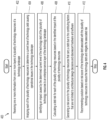
- FIG. 4 to illustrate a processor-implemented method (400) for assessing technology landscape to identify technology debts is provided.
- step (402) receiving one or more information from one or more layers of a plurality of technology resources of a technology landscape.
- step (410) generating a risk score for the plurality of technology resources that carry the technology debt based on the identified impact, a likelihood of incident occurrence, and the calculated debt risk for the plurality of technology resources.
- the embodiments of present disclosure herein address the problem related to assessment of technology debt.
- the widening gap between the emerging technology curve and technology adoption curve of businesses constitute the technology debt for an enterprise. Payoff of such technology debts frequently involve a significant cost to the enterprise. This significant cost sometimes raises the question of whether the investment to payoff is worth the expense and whether it may improve the maturity of the technology landscape for competitive edge, which often entails a consulting engagement by an outside organization to review the IT services, identify the technology debts and propose recommendations which may remediate the risk associated with technology debts.
- the embodiments herein provide a method and system for assessing technology landscape to identify technology debts. The method and system enable enterprises to take stock of their IT landscape across application and infrastructure that are running the risk of becoming obsolete from perspectives.
- Such computer-readable storage means contain program-code means for implementation of one or more steps of the method, when the program runs on a server or mobile device or any suitable programmable device.
- the hardware device can be any kind of device which can be programmed including e.g., any kind of computer like a server or a personal computer, or the like, or any combination thereof.
- the device may also include means which could be e.g., hardware means like e.g., an application-specific integrated circuit (ASIC), a field-programmable gate array (FPGA), or a combination of hardware and software means, e.g., an ASIC and an FPGA, or at least one microprocessor and at least one memory with software modules located therein.
- ASIC application-specific integrated circuit
- FPGA field-programmable gate array
- the means can include both hardware means, and software means.
- the method embodiments described herein could be implemented in hardware and software.
- the device may also include software means. Alternatively, the embodiments may be implemented on different hardware devices, e.g., using a plurality of CPUs.
- the embodiments herein can comprise hardware and software elements.
- the embodiments that are implemented in software include but are not limited to, firmware, resident software, microcode, etc.
- the functions performed by various modules described herein may be implemented in other modules or combinations of other modules.
- a computer-usable or computer readable medium can be any apparatus that can comprise, store, communicate, propagate, or transport the program for use by or in connection with the instruction execution system, apparatus, or device.
- a computer-readable storage medium refers to any type of physical memory on which information or data readable by a processor may be stored.
- a computer-readable storage medium may store instructions for execution by one or more processors, including instructions for causing the processor(s) to perform steps or stages consistent with the embodiments described herein.
- the term "computer-readable medium” should be understood to include tangible items and exclude carrier waves and transient signals, i.e., be non-transitory. Examples include random access memory (RAM), read-only memory (ROM), volatile memory, nonvolatile memory, hard drives, CD ROMs, DVDs, flash drives, disks, and any other known physical storage media.
Landscapes
- Business, Economics & Management (AREA)
- Engineering & Computer Science (AREA)
- Human Resources & Organizations (AREA)
- Economics (AREA)
- Strategic Management (AREA)
- Entrepreneurship & Innovation (AREA)
- Theoretical Computer Science (AREA)
- Development Economics (AREA)
- Marketing (AREA)
- Physics & Mathematics (AREA)
- General Business, Economics & Management (AREA)
- General Physics & Mathematics (AREA)
- Finance (AREA)
- Accounting & Taxation (AREA)
- Game Theory and Decision Science (AREA)
- Educational Administration (AREA)
- Operations Research (AREA)
- Quality & Reliability (AREA)
- Tourism & Hospitality (AREA)
- Technology Law (AREA)
- Management, Administration, Business Operations System, And Electronic Commerce (AREA)
Abstract
Description
- The present application claims priority from
Indian patent application number 202221032866, filed on June 08, 2022 - The disclosure herein generally relates to the field of technology debt assessment and more specifically, to a method and system for assessing technology landscape to identify technology debts and associated business risks.
- With continuous improvements and advancements in technology and rise of digital, stacks of applications, infrastructure get outdated fast. As enterprises continue to run their operations on these fragmented and complex pieces of outdated stack at times with a number of custom codes, it becomes a bottleneck and creates a technology debt. The technology debt represents the quantum of digital technology in a business portfolio that requires continuous attention in terms of investment and people commitment but does not yield the desired business result.
- The widening gap between an emerging technology curve and a technology adoption curve of businesses constitute the technology debt for an enterprise. Payoff of such technology debts frequently involve a significant cost to the enterprise. This significant cost sometimes raises the question of whether the investment to payoff is worth the expense and whether it may improve the maturity of the technology landscape for competitive edge, which often entails a consulting engagement by an outside organization to review the IT services, identify the technology debts and propose recommendations which may remediate the risk associated with technology debts.
- Embodiments of the disclosure present technological improvements as solutions to one or more of the above-mentioned technical problems recognized by the inventors in conventional systems. For example, in one embodiment, a method and system for assessing technology landscape to identify technology debts and corresponding associated business risks is provided.
- In one aspect, a processor-implemented method for assessing technology landscape to identify technology debts and corresponding associated business risks is provided. The method includes one or more steps such as receiving one or more information from one or more layers of a plurality of technology resources, analyzing each of the plurality of technology resources to determine a current level of debt causing operational issues in a technology landscape and identifying an impact caused by the determined current level of debt of the plurality of technology resources to an enterprise service layer of the technology landscape. Further, a debt risk is calculated for each of the plurality of technology resources based on the identified impact of the plurality of technology resources and a risk score is generated for each of the plurality of technology resources that carry a technology debt due to the contributing factors that are not limited to architectural design decisions and obsolescent hardware and software. Finally, at least one solution is recommended based on the risk score of the technology debt associated with the plurality of technology resources to reduce the technology debt and mitigate the associated risk.
- In another aspect, a system for assessing technology landscape to identify technology debts and corresponding associated business risks is provided. The system includes an input/output interface configured to receive one or more information from one or more layers of a plurality of technology resources of a technology landscape, one or more hardware processors and at least one memory storing a plurality of instructions, wherein the one or more hardware processors are configured to execute the plurality of instructions stored in at least one memory.
- Further, the system is configured to analyze each of the plurality of technology resources to determine a current level of debt causing operational issues in a technology landscape and to identify an impact caused by the determined current level of debt of the plurality of technology resources to an enterprise service layer of the technology landscape. The risk arising from the technology debt is calculated for each of the plurality of technology resources based on the identified impact of the plurality of technology resources and a risk score is generated for each of the plurality of technology resources that carry a debt due to the contributing factors that are not limited to architectural design decisions and obsolescent hardware and software. Finally, at least one solution is recommended based on the risk score of the technology debt associated with the plurality of technology resources to reduce the technology debt and mitigate associated risk.
- In yet another aspect, one or more non-transitory machine-readable information storage mediums are provided comprising one or more instructions, which when executed by one or more hardware processors causes a method for optimizing placement of data to at least one of a plurality of cloud datacenters complying data residency is provided. The method includes one or more steps such as receiving one or more information from one or more layers of a plurality of technology resources, analyzing each of the plurality of technology resources to determine a current level of debt causing operational issues in a technology landscape and identifying an impact caused by the determined current level of debt of the plurality of technology resources to an enterprise service layer of the technology landscape. Further, a debt risk is calculated for each of the plurality of technology resources based on the identified impact of the plurality of technology resources and a risk score is generated for each of the plurality of technology resources that carry a technology debt due to the contributing factors that are not limited to architectural design decisions and obsolescent hardware and software. Finally, at least one solution is recommended based on the risk score of the technology debt associated with the plurality of technology resources to reduce the technology debt and mitigate the associated risk.
- It is to be understood that the foregoing general descriptions and the following detailed description are exemplary and explanatory only and are not restrictive of the invention, as claimed.
- The accompanying drawings, which are incorporated in and constitute a part of this disclosure, illustrate exemplary embodiments and, together with the description, serve to explain the disclosed principles:
-
FIG. 1 illustrates a block diagram of an exemplary system for assessing technology landscape to identify technology debts, according to an embodiment of the present disclosure. -
FIG. 2 is a functional flow diagram to illustrate technology landscape assessment, according to an embodiment of the present disclosure. -
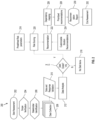
FIG. 3 is a functional block diagram to illustrate risk scoring methodology, according to an embodiment of the present disclosure. -
FIG. 4 is a flow diagram to illustrate a method for assessing technology landscape to identify technology debts, in accordance with some embodiments of the present disclosure. - Exemplary embodiments are described with reference to the accompanying drawings. In the figures, the left-most digit(s) of a reference number identifies the figure in which the reference number first appears. Wherever convenient, the same reference numbers are used throughout the drawings to refer to the same or like parts. While examples and features of disclosed principles are described herein, modifications, adaptations, and other implementations are possible without departing from the scope of the disclosed embodiments.
- The embodiments herein provide a method and system for assessing technology landscape to identify technology debts. The method and system enable enterprises to take stock of their IT landscape across application and infrastructure that are running the risk of becoming obsolete from perspectives like lifespan, design and becoming a potential bottleneck for business agility. The present disclosure analyses seven critical dimensions (i.e. security, agility, reliability, resiliency, design, maintainability, and performance) of an IT environment across various infrastructure and application components to arrive at the technology debts associated with each domain.
- Referring now to the drawings, and more particularly to
FIG. 1 through 4 , where similar reference characters denote corresponding features consistently throughout the figures, there are shown preferred embodiments and these embodiments are described in the context of the following exemplary system and/or method. -
FIG. 1 illustrates a block diagram of a system (100) for assessing technology landscape to identify technology debts, in accordance with an example embodiment. Although the present disclosure is explained considering that the system (100) is implemented on a server, it may be understood that the system (100) may comprise one or more computing devices (102), such as a laptop computer, a desktop computer, a notebook, a workstation, a cloud-based computing environment and the like. It may be understood that the system (100) may be accessed through one or more input/output interfaces 104-1, 104-2... 104-N, collectively referred to as I/O interface (104). Examples of the I/O interface (104) may include, but are not limited to, a user interface, a portable computer, a personal digital assistant, a handheld device, a smartphone, a tablet computer, a workstation, and the like. The I/O interface (104) are communicatively coupled to the system (100) through a network (106). - In an embodiment, the network (106) may be a wireless or a wired network, or a combination thereof. In an example, the network (106) can be implemented as a computer network, as one of the different types of networks, such as virtual private network (VPN), intranet, local area network (LAN), wide area network (WAN), the internet, and such. The network (106) may either be a dedicated network or a shared network, which represents an association of the different types of networks that use a variety of protocols, for example, Hypertext Transfer Protocol (HTTP), Transmission Control Protocol/Internet Protocol (TCP/IP), and Wireless Application Protocol (WAP), to communicate with each other. Further, the network (106) may include a variety of network devices, including routers, bridges, servers, computing devices, storage devices. The network devices within the network (106) may interact with the system (100) through communication links.
- The system (100) supports various connectivity options such as BLUETOOTH®, USB, ZigBee, and other cellular services. The network environment enables connection of various components of the system (100) using any communication link including Internet, WAN, MAN, and so on. In an exemplary embodiment, the system (100) is implemented to operate as a stand-alone device. In another embodiment, the system (100) may be implemented to work as a loosely coupled device to a smart computing environment. Further, the system (100) comprises at least one memory with a plurality of instructions, one or more databases (112), and one or more hardware processors (108) which are communicatively coupled with the at least one memory to execute a plurality of modules (114) therein. The components and functionalities of the system (100) are described further in detail.
- Referring
FIG. 2 , illustrates a functional flow diagram (200) of the system (100) for technology landscape assessment, according to an embodiment of the present disclosure. The system (100) is configured to identify technology debts and associated business risks to recommend at least one solution based a risk score of the technology debt associated with a plurality of technology resources to reduce the technology debt and mitigate the associated risk. It would be appreciated the system (100) is configured to deal with five contributing factors or debt loads (i.e., strategy & governance, design & architecture, system of relevance, security & compliance and process adherence) that can contribute toward the domain specific technology debt in existing state of IT operations of the business. - Herein, the one or more I/O interfaces (104) of the system (100) are configured to receive one or more information from one or more layers of a plurality of technology resources of a technology landscape. The technology resources such as network devices, databases, storage arrays, servers residing in a technology layers such as network, storage, database, and a computation platform. Further, the one or more information describing the make, model, configuration, and design of technology resources are collected by the system (100) and stored in the database of the system (100).
- One or more information such as network devices that are outdated or not having the right firmware, unauthorized changes to security feature or policy configuration, high availability configuration, absence of monitoring solution, absence of backup replication, no disaster recovery plan, operating system incompatible database technologies, missing data encryption, servers running on legacy hardware in technology layers like network, storage, database and computation platform.
- In one embodiment, the system (100) is configured to determine scope of assessment of the technology landscape. The assessment scope comprises of one or more technology resources that are involved in delivering the technology services and are chosen for the assessment. It is to be noted that the system (100) receives insights about the design and architecture of the technology resources from each technology layer from the subject matter experts (SMEs). Once the information about the technology resources are received, architecture understanding sessions may be held with the experts to validate the data received and their insights about the technology resources in the assessed entity.
- In another embodiment, the system (100) is configured to analyze each of the plurality of technology resources to determine a current level of technology debt causing operational issues in the technology landscape. Herein, the system (100) analyzes seven critical dimensions (i.e. security, agility, reliability, resiliency, design, maintainability, and performance) of an IT environment across various infrastructure and application components (i.e. technology towers/domains) to arrive at the technology debts associated with each tower/domain. The technology areas that are found to be free from technology debts are marked by the system as no debt and are not considered for risk scoring.
- In yet another embodiment, the system (100) is configured to identify an impact caused by the determined current level of the technology debt of the plurality of technology resources to an enterprise service layer of the technology landscape. The impact here refers to but not limited to unplanned business outages, delay in recovery of operations, failure to align IT operations to business objectives, cyber-attacks, data loss and performance issues.
- Further, the system (100) identifies the potential impact of the technology debt in disrupting the stability of the operations. The likelihood of incident occurrence due to the nature of the technology debt and the level of impact due to past incident caused by the technology debt. The system (100) is configured to determine percentage of obsolescent hardware/software in the technology landscape and the criticality of the application workloads running on obsolescent components.
- In one example, wherein network devices not having the right firmware are unstable and vulnerable to external attacks like DDOS, Ransomware and malware. Virtual servers running on clusters without high availability configured causes downtime for the virtual machines in the event of a host failure. The servers are not hardened as per the security guidelines and best practices are prone to get breached by security hacks. Storage growth not getting monitored leads to unnecessary files taking up costly storage space.
- In yet another embodiment, the system (100) is configured to calculate a debt risk for each of the plurality of technology resources based on the identified impact of the plurality of technology resources. Herein, the system (100) with a risk scoring matrix based on predefined parameters and dimensions to identify technology debts that exist in various technology areas and assign a risk score to each of these debts that provides an indication of the level of risk caused by these debts to the organization. Technical debt loads causing the technology debts are assigned appropriate risk scoring weightage.
- Referring
FIG. 3 , a functional block diagram (300), illustrating a risk scoring methodology, according to an embodiment of the present disclosure. Herein, the technology debt risk scoring performed by the system (100) based on the applied risk scoring parameters. A potential impact rating may be assigned as per the mapped potential impact to the technology debt. Likelihood of incident occurrence rating may also be assigned as per the mapped likelihood. Past impact rating is assigned as per the mapped past impact to the technology debt. The information about obsolescence percentage of the technology layer is then considered for calculating the risk score of the technology layer. The critically of the application workload running on the obsolescent technology layer is then considered for calculating the risk score of the technology layer. After applying all the risk scoring parameters to the technology layers based on the identified technology debts, a final overall risk score may be generated for the technology layer and an appropriate risk zone may be assigned to that technology layer. - It would be appreciated that the technology resources that are bound to accumulate technology debts are at every technology layer of the assessed entity's technology landscape. This comprises of but not limited to applications, servers, network, database storage and endpoint devices.
- In one illustration, wherein the system (100) provides a risk scoring mechanism that combines risk scoring parameters that are predefined for a technology debt, the input provided by the assesses on the level of past impact due to the identified technology debt, the obsolescence component percentage in every technology area, the security vulnerabilities present in the technology landscape, and the critically of the application workload running on the obsolescent technology component.
- Further, the system (100) is configured to make recommendation to mitigate risk associated with the identified technology debts. A predefined recommendation is available in the system for each technology debt being screened which may be customized during assessment as per the technology debt scenario observed in the assessed technology layer. Recommended solution items have dependencies between them that gets mapped by the system to prioritize the recommendations. The recommendations are prioritized based on the impacts, changes, and investment requirements.
- Referring
FIG. 4 , to illustrate a processor-implemented method (400) for assessing technology landscape to identify technology debts is provided. - Initially, at the step (402), receiving one or more information from one or more layers of a plurality of technology resources of a technology landscape.
- At the next step (404), analyzing each of the plurality of technology resources to determine a current level of technology debt causing operational issues in the technology landscape.
- At the next step (406), identifying an impact caused by the determined current level of the technology debt of the plurality of technology resources to an enterprise service layer of the technology landscape.
- At the next step (408), calculating a debt risk for each of the plurality of technology resources based on the identified impact of the plurality of technology resources.
- At the next step (410), generating a risk score for the plurality of technology resources that carry the technology debt based on the identified impact, a likelihood of incident occurrence, and the calculated debt risk for the plurality of technology resources.
- At the last step (412), recommending at least one solution based on the generated risk score that carry the technology debt to reduce the technology debt and mitigate the debt risk.
- The written description describes the subject matter herein to enable any person skilled in the art to make and use the embodiments. The scope of the subject matter embodiments is defined by the claims and may include other modifications that occur to those skilled in the art. Such other modifications are intended to be within the scope of the claims if they have similar elements that do not differ from the literal language of the claims or if they include equivalent elements with insubstantial differences from the literal language of the claims.
- The embodiments of present disclosure herein address the problem related to assessment of technology debt. The widening gap between the emerging technology curve and technology adoption curve of businesses constitute the technology debt for an enterprise. Payoff of such technology debts frequently involve a significant cost to the enterprise. This significant cost sometimes raises the question of whether the investment to payoff is worth the expense and whether it may improve the maturity of the technology landscape for competitive edge, which often entails a consulting engagement by an outside organization to review the IT services, identify the technology debts and propose recommendations which may remediate the risk associated with technology debts. The embodiments herein provide a method and system for assessing technology landscape to identify technology debts. The method and system enable enterprises to take stock of their IT landscape across application and infrastructure that are running the risk of becoming obsolete from perspectives.
- It is to be understood that the scope of the protection is extended to such a program and in addition to a computer-readable means having a message therein; such computer-readable storage means contain program-code means for implementation of one or more steps of the method, when the program runs on a server or mobile device or any suitable programmable device. The hardware device can be any kind of device which can be programmed including e.g., any kind of computer like a server or a personal computer, or the like, or any combination thereof. The device may also include means which could be e.g., hardware means like e.g., an application-specific integrated circuit (ASIC), a field-programmable gate array (FPGA), or a combination of hardware and software means, e.g., an ASIC and an FPGA, or at least one microprocessor and at least one memory with software modules located therein. Thus, the means can include both hardware means, and software means. The method embodiments described herein could be implemented in hardware and software. The device may also include software means. Alternatively, the embodiments may be implemented on different hardware devices, e.g., using a plurality of CPUs.
- The embodiments herein can comprise hardware and software elements. The embodiments that are implemented in software include but are not limited to, firmware, resident software, microcode, etc. The functions performed by various modules described herein may be implemented in other modules or combinations of other modules. For the purposes of this description, a computer-usable or computer readable medium can be any apparatus that can comprise, store, communicate, propagate, or transport the program for use by or in connection with the instruction execution system, apparatus, or device.
- The illustrated steps are set out to explain the exemplary embodiments shown, and it should be anticipated that ongoing technological development may change the manner in which particular functions are performed. These examples are presented herein for purposes of illustration, and not limitation. Further, the boundaries of the functional building blocks have been arbitrarily defined herein for the convenience of the description. Alternative boundaries can be defined so long as the specified functions and relationships thereof are appropriately performed. Alternatives (including equivalents, extensions, variations, deviations, etc., of those described herein) may be apparent to persons skilled in the relevant art(s) based on the teachings contained herein. Such alternatives fall within the scope of the disclosed embodiments. Also, the words "comprising," "having," "containing," and "including," and other similar forms are intended to be equivalent in meaning and be open ended in that an item or items following any one of these words is not meant to be an exhaustive listing of such item or items, or meant to be limited to only the listed item or items. It must also be noted that as used herein and in the appended claims, the singular forms "a," "an," and "the" include plural references unless the context clearly dictates otherwise.
- Furthermore, one or more computer-readable storage media may be utilized in implementing embodiments consistent with the present disclosure. A computer-readable storage medium refers to any type of physical memory on which information or data readable by a processor may be stored. Thus, a computer-readable storage medium may store instructions for execution by one or more processors, including instructions for causing the processor(s) to perform steps or stages consistent with the embodiments described herein. The term "computer-readable medium" should be understood to include tangible items and exclude carrier waves and transient signals, i.e., be non-transitory. Examples include random access memory (RAM), read-only memory (ROM), volatile memory, nonvolatile memory, hard drives, CD ROMs, DVDs, flash drives, disks, and any other known physical storage media.
- It is intended that the disclosure and examples be considered as exemplary only, with a true scope of disclosed embodiments being indicated by the following claims.
Claims (12)
- A processor-implemented method (400) comprising steps of:receiving (402), via an input/output interface, one or more information from one or more layers of a plurality of technology resources of a technology landscape;analyzing (404), via one or more hardware processors, each of the plurality of technology resources to determine a current level of technology debt causing operational issues in the technology landscape;identifying (406), via the one or more hardware processors, an impact caused by the determined current level of the technology debt of the plurality of technology resources to an enterprise service layer of the technology landscape;calculating (408), via the one or more hardware processors, a debt risk for each of the plurality of technology resources based on the identified impact of the plurality of technology resources;generating (410), via the one or more hardware processors, a risk score for the plurality of technology resources that carry the technology debt based on the identified impact, a likelihood of incident occurrence, and the calculated debt risk for the plurality of technology resources; andrecommending (412), via the one or more hardware processors, at least one solution based on the generated risk score that carry the technology debt to reduce the technology debt and mitigate the debt risk.
- The processor-implemented method (400) of claim 1, wherein the technology debt comprises one or more debt loads.
- The processor-implemented method (400) of claim 2, wherein the one or more debt loads comprising a strategy, a governance, a design, an architecture, a security and compliance, and a process adherence.
- The processor-implemented method (400) of claim 1, wherein the plurality of technology resources is analyzed based on one or more critical dimensions of an information technology (IT) environment across an architecture and one or more technology domains.
- The processor-implemented method (400) of claim 4, wherein the one or more critical dimensions comprising a security, an agility, a reliability, a resiliency, a design, a maintainability, and a performance.
- The processor-implemented method (400) of claim 1, wherein the impact caused by the determined current level of the technology debt comprising unplanned business outages, delay in recovery of operations, failure to align IT operations to business objectives, cyber-attacks, data loss and performance issues.
- The processor-implemented method (400) of claim 1, wherein generating the risk score comprising:determining a potential impact rating based on the identified impact to the technology debt;determining a likelihood of incident occurrence based on the mapped likelihood;determining a past impact rating based on the mapped past impact to the technology debt;calculating the debt risk of the technology layer based on an obsolescence percentage of the technology layer and an application workload running on the obsolescent technology layer; andgenerating the risk score based the determined potential impact rating, the determined likelihood of incident occurrence, the determined past impact rating, and the calculated debt risk of the technology layer.
- A system (100) comprising:an input/output interface (104) to collect one or more information from one or more layers of a plurality of technology resources of a technology landscape;a memory (110) in communication with the one or more hardware processors (108), wherein the one or more hardware processors (108) are configured to execute programmed instructions stored in the memory to:analyze each of the plurality of technology resources to determine a current level of technology debt causing operational issues in the technology landscape;identify an impact caused by the determined current level of the technology debt of the plurality of technology resources to an enterprise service layer of the technology landscape;calculate a debt risk for each of the plurality of technology resources based on the identified impact of the plurality of technology resources;generate a risk score for the plurality of technology resources that carry the technology debt based on the identified impact, a likelihood of incident occurrence, andthe calculated debt risk for the plurality of technology resources; andrecommend at least one solution based on the generated risk score of the technology debt to reduce the technology debt and mitigate the risk.
- The system (100) of claim 8, wherein the one or more debt loads comprising a strategy, a governance, a design, an architecture, a security and compliance, and a process adherence.
- The system (100) of claim 8, wherein the plurality of technology resources is analyzed based on one or more critical dimensions of an information technology (IT) environment across an architecture and one or more technology domains.
- The system (100) of claim 8, wherein generating the risk score comprising:determining a potential impact rating based on the identified impact to the technology debt;determining a likelihood of incident occurrence based on the mapped likelihood;determining a past impact rating based on the mapped past impact to the technology debt;calculating the debt risk of the technology layer based on an obsolescence percentage of the technology layer and an application workload running on the obsolescent technology layer; andgenerating the risk score based the determined potential impact rating, the determined likelihood of incident occurrence, the determined past impact rating, and the calculated debt risk of the technology layer.
- A non-transitory computer readable medium storing one or more instructions which when executed by one or more processors on a system, cause the one or more processors to perform method comprising:receiving, via an input/output interface, one or more information from one or more layers of a plurality of technology resources of a technology landscape;analyzing, via one or more hardware processors, each of the plurality of technology resources to determine a current level of technology debt causing operational issues in the technology landscape, wherein the technology debt comprises one or more debt loads;identifying, via the one or more hardware processors, an impact caused by the determined current level of the technology debt of the plurality of technology resources to an enterprise service layer of the technology landscape;calculating, via the one or more hardware processors, a debt risk for each of the plurality of technology resources based on the identified impact of the plurality of technology resources;generating, via the one or more hardware processors, a risk score for the plurality of technology resources that carry the technology debt based on the identified impact, a likelihood of incident occurrence, and the calculated debt risk for the plurality of technology resources; andrecommending, via the one or more hardware processors, at least one solution based on the generated risk score of the technology debt to reduce the technology debt and mitigate the debt risk.
Applications Claiming Priority (1)
| Application Number | Priority Date | Filing Date | Title |
|---|---|---|---|
| IN202221032866 | 2022-06-08 |
Publications (3)
| Publication Number | Publication Date |
|---|---|
| EP4290437A1 true EP4290437A1 (en) | 2023-12-13 |
| EP4290437B1 EP4290437B1 (en) | 2026-02-11 |
| EP4290437C0 EP4290437C0 (en) | 2026-02-11 |
Family
ID=83506160
Family Applications (1)
| Application Number | Title | Priority Date | Filing Date |
|---|---|---|---|
| EP22198304.2A Active EP4290437B1 (en) | 2022-06-08 | 2022-09-28 | System and method for technology debt assessment |
Country Status (2)
| Country | Link |
|---|---|
| US (1) | US12406313B2 (en) |
| EP (1) | EP4290437B1 (en) |
Families Citing this family (1)
| Publication number | Priority date | Publication date | Assignee | Title |
|---|---|---|---|---|
| US12614140B2 (en) * | 2023-09-11 | 2026-04-28 | Hartford Fire Insurance Company | Technology currency measurement and monitoring system and method |
Citations (2)
| Publication number | Priority date | Publication date | Assignee | Title |
|---|---|---|---|---|
| US20200090088A1 (en) * | 2018-09-14 | 2020-03-19 | International Business Machines Corporation | Enterprise health control processor engine |
| US20200320450A1 (en) * | 2011-10-14 | 2020-10-08 | Albeado, Inc. | Pervasive, domain and situational-aware, adaptive, automated, and coordinated big data analysis, contextual learning and predictive control of business and operational risks and security |
Family Cites Families (18)
| Publication number | Priority date | Publication date | Assignee | Title |
|---|---|---|---|---|
| US20030093347A1 (en) * | 2000-03-15 | 2003-05-15 | Gray Dale F. | Managing risk using macro-financial risk analysis |
| US7937304B2 (en) * | 2003-07-01 | 2011-05-03 | Accenture Global Services Limited | Information technology value strategy |
| US20060248096A1 (en) * | 2005-04-28 | 2006-11-02 | Adam Unternehmensberatung Gmbh | Early detection and warning systems and methods |
| US20080295100A1 (en) * | 2007-05-25 | 2008-11-27 | Computer Associates Think, Inc. | System and method for diagnosing and managing information technology resources |
| US8027894B2 (en) * | 2007-12-28 | 2011-09-27 | Fair Isaac Corporation | Modeling responsible consumer debt consolidation behavior |
| US11244256B2 (en) * | 2009-06-19 | 2022-02-08 | Neu Ip, Llc | System and method for enhancing credit and debt collection |
| WO2014143766A1 (en) * | 2013-03-15 | 2014-09-18 | Derek Gauger | Method and device for facilitating financing for projects |
| US20170083672A1 (en) * | 2014-02-03 | 2017-03-23 | Wendell J. Juneau | Notifying healthcare providers of financially delinquent patients and controlling healthcare claims |
| KR101927317B1 (en) * | 2017-01-17 | 2018-12-10 | 아주대학교산학협력단 | Method and Server for Estimating Debt Management Capability |
| US20190235923A1 (en) * | 2018-02-01 | 2019-08-01 | Connect Financial LLC | Computational Assessment of a Real-World System and Allocation of Resources of the System |
| US12412120B2 (en) * | 2018-05-06 | 2025-09-09 | Strong Force TX Portfolio 2018, LLC | Systems and methods for controlling rights related to digital knowledge |
| US11550299B2 (en) * | 2020-02-03 | 2023-01-10 | Strong Force TX Portfolio 2018, LLC | Automated robotic process selection and configuration |
| US11544782B2 (en) * | 2018-05-06 | 2023-01-03 | Strong Force TX Portfolio 2018, LLC | System and method of a smart contract and distributed ledger platform with blockchain custody service |
| US11307846B2 (en) * | 2019-08-16 | 2022-04-19 | Jpmorgan Chase Bank, N.A. | System and method for implementing a technical debt automation |
| KR102335015B1 (en) * | 2020-01-30 | 2021-12-02 | 아주대학교산학협력단 | Debt management competency assessment system and analysis method for debt management competency information using the same |
| US11741194B2 (en) * | 2020-03-23 | 2023-08-29 | Cognizant Technology Solutions India Pvt. Ltd. | System and method for creating healing and automation tickets |
| US20220198562A1 (en) * | 2020-12-18 | 2022-06-23 | Strong Force TX Portfolio 2018, LLC | Market orchestration system for facilitating electronic marketplace transactions |
| CN113313184B (en) | 2021-06-07 | 2024-05-24 | 西北工业大学 | A heterogeneous integrated approach to automatically detect self-admitted technical debt |
-
2022
- 2022-09-28 EP EP22198304.2A patent/EP4290437B1/en active Active
- 2022-10-03 US US17/937,689 patent/US12406313B2/en active Active
Patent Citations (2)
| Publication number | Priority date | Publication date | Assignee | Title |
|---|---|---|---|---|
| US20200320450A1 (en) * | 2011-10-14 | 2020-10-08 | Albeado, Inc. | Pervasive, domain and situational-aware, adaptive, automated, and coordinated big data analysis, contextual learning and predictive control of business and operational risks and security |
| US20200090088A1 (en) * | 2018-09-14 | 2020-03-19 | International Business Machines Corporation | Enterprise health control processor engine |
Also Published As
| Publication number | Publication date |
|---|---|
| EP4290437B1 (en) | 2026-02-11 |
| EP4290437C0 (en) | 2026-02-11 |
| US20230410213A1 (en) | 2023-12-21 |
| US12406313B2 (en) | 2025-09-02 |
Similar Documents
| Publication | Publication Date | Title |
|---|---|---|
| US11138168B2 (en) | Data analysis and support engine | |
| GB2628925A (en) | Systems and methods for posture-based modeling | |
| US20160292599A1 (en) | Analyzing and remediating operational risks in production computing systems | |
| US20100241891A1 (en) | System and method of predicting and avoiding network downtime | |
| US9798576B2 (en) | Updating and redistributing process templates with configurable activity parameters | |
| US9075704B2 (en) | Mitigating risks during a high availibility and disaster recovery (HA/DR) rehearsal | |
| EP3570242B1 (en) | Method and system for quantifying quality of customer experience (cx) of an application | |
| US9456004B2 (en) | Optimizing risk-based compliance of an information technology (IT) system | |
| US12333612B2 (en) | Systems and methods for dynamic valuation of protection products | |
| US12260176B2 (en) | System and method for extracting issues based on trouble ticket mining | |
| US20240126618A1 (en) | Migration management system and method | |
| US12204505B1 (en) | Computer-implemented system for organizing data migration and a method thereof | |
| EP4290437B1 (en) | System and method for technology debt assessment | |
| EP4207014B1 (en) | System and method for management of life cycle of contracts | |
| Gupta et al. | Post-quantum readiness and cryptographic transition planning for enterprise cloud | |
| EP2835774A1 (en) | A method and device for executing an enterprise process | |
| EP3200135A1 (en) | Method and system for real-time human resource activity impact assessment and real-time improvement | |
| EP4235423A1 (en) | System and method for data residency compliant data placement in cloud | |
| US12476884B2 (en) | System and method for web services relocation and users reallocation for data residency compliance | |
| US20260099386A1 (en) | Efficient and Secure Execution of Computerized Tasks in a Networked System | |
| Bajgorić et al. | Downtime and business continuity | |
| Yunusova | Cyber-Physical Systems and Networking Technologies as a New Frontier for Economic Security: The Impact of Data Integration and Network Infrastructure on National Economies | |
| Perumal | Building Resilient Systems: The Role of Containers and Kubernetes | |
| Sarma | AI for IT Operations (AIOps): Applications, Challenges, and Benefits | |
| Madare | Integration Strategies for Marketing Technology Ecosystems |
Legal Events
| Date | Code | Title | Description |
|---|---|---|---|
| PUAI | Public reference made under article 153(3) epc to a published international application that has entered the european phase |
Free format text: ORIGINAL CODE: 0009012 |
|
| STAA | Information on the status of an ep patent application or granted ep patent |
Free format text: STATUS: REQUEST FOR EXAMINATION WAS MADE |
|
| 17P | Request for examination filed |
Effective date: 20230427 |
|
| AK | Designated contracting states |
Kind code of ref document: A1 Designated state(s): AL AT BE BG CH CY CZ DE DK EE ES FI FR GB GR HR HU IE IS IT LI LT LU LV MC MK MT NL NO PL PT RO RS SE SI SK SM TR |
|
| GRAP | Despatch of communication of intention to grant a patent |
Free format text: ORIGINAL CODE: EPIDOSNIGR1 |
|
| STAA | Information on the status of an ep patent application or granted ep patent |
Free format text: STATUS: GRANT OF PATENT IS INTENDED |
|
| INTG | Intention to grant announced |
Effective date: 20251201 |
|
| GRAS | Grant fee paid |
Free format text: ORIGINAL CODE: EPIDOSNIGR3 |
|
| GRAA | (expected) grant |
Free format text: ORIGINAL CODE: 0009210 |
|
| STAA | Information on the status of an ep patent application or granted ep patent |
Free format text: STATUS: THE PATENT HAS BEEN GRANTED |
|
| AK | Designated contracting states |
Kind code of ref document: B1 Designated state(s): AL AT BE BG CH CY CZ DE DK EE ES FI FR GB GR HR HU IE IS IT LI LT LU LV MC MK MT NL NO PL PT RO RS SE SI SK SM TR |
|
| REG | Reference to a national code |
Ref country code: CH Ref legal event code: F10 Free format text: ST27 STATUS EVENT CODE: U-0-0-F10-F00 (AS PROVIDED BY THE NATIONAL OFFICE) Effective date: 20260211 Ref country code: GB Ref legal event code: FG4D |
|
| REG | Reference to a national code |
Ref country code: CH Ref legal event code: R17 Free format text: ST27 STATUS EVENT CODE: U-0-0-R10-R17 (AS PROVIDED BY THE NATIONAL OFFICE) Effective date: 20260304 |
|
| REG | Reference to a national code |
Ref country code: DE Ref legal event code: R096 Ref document number: 602022030076 Country of ref document: DE |
|
| REG | Reference to a national code |
Ref country code: IE Ref legal event code: FG4D |
|
| U01 | Request for unitary effect filed |
Effective date: 20260304 |
|
| U07 | Unitary effect registered |
Designated state(s): AT BE BG DE DK EE FI FR IT LT LU LV MT NL PT RO SE SI Effective date: 20260311 |
|
| PG25 | Lapsed in a contracting state [announced via postgrant information from national office to epo] |
Ref country code: RS Free format text: LAPSE BECAUSE OF FAILURE TO SUBMIT A TRANSLATION OF THE DESCRIPTION OR TO PAY THE FEE WITHIN THE PRESCRIBED TIME-LIMIT Effective date: 20260511 |
|
| PG25 | Lapsed in a contracting state [announced via postgrant information from national office to epo] |
Ref country code: ES Free format text: LAPSE BECAUSE OF FAILURE TO SUBMIT A TRANSLATION OF THE DESCRIPTION OR TO PAY THE FEE WITHIN THE PRESCRIBED TIME-LIMIT Effective date: 20260211 |
|
| PG25 | Lapsed in a contracting state [announced via postgrant information from national office to epo] |
Ref country code: PL Free format text: LAPSE BECAUSE OF FAILURE TO SUBMIT A TRANSLATION OF THE DESCRIPTION OR TO PAY THE FEE WITHIN THE PRESCRIBED TIME-LIMIT Effective date: 20260211 |
|
| PG25 | Lapsed in a contracting state [announced via postgrant information from national office to epo] |
Ref country code: GR Free format text: LAPSE BECAUSE OF FAILURE TO SUBMIT A TRANSLATION OF THE DESCRIPTION OR TO PAY THE FEE WITHIN THE PRESCRIBED TIME-LIMIT Effective date: 20260512 |
|
| PG25 | Lapsed in a contracting state [announced via postgrant information from national office to epo] |
Ref country code: NO Free format text: LAPSE BECAUSE OF FAILURE TO SUBMIT A TRANSLATION OF THE DESCRIPTION OR TO PAY THE FEE WITHIN THE PRESCRIBED TIME-LIMIT Effective date: 20260511 |
|
| PG25 | Lapsed in a contracting state [announced via postgrant information from national office to epo] |
Ref country code: HR Free format text: LAPSE BECAUSE OF FAILURE TO SUBMIT A TRANSLATION OF THE DESCRIPTION OR TO PAY THE FEE WITHIN THE PRESCRIBED TIME-LIMIT Effective date: 20260211 |
|
| PG25 | Lapsed in a contracting state [announced via postgrant information from national office to epo] |
Ref country code: IS Free format text: LAPSE BECAUSE OF FAILURE TO SUBMIT A TRANSLATION OF THE DESCRIPTION OR TO PAY THE FEE WITHIN THE PRESCRIBED TIME-LIMIT Effective date: 20260611 |