EP4289848A1 - Fused tricyclic cyclin-dependent kinase inhibitor, and preparation method therefor and pharmaceutical use thereof - Google Patents
Fused tricyclic cyclin-dependent kinase inhibitor, and preparation method therefor and pharmaceutical use thereof Download PDFInfo
- Publication number
- EP4289848A1 EP4289848A1 EP22749078.6A EP22749078A EP4289848A1 EP 4289848 A1 EP4289848 A1 EP 4289848A1 EP 22749078 A EP22749078 A EP 22749078A EP 4289848 A1 EP4289848 A1 EP 4289848A1
- Authority
- EP
- European Patent Office
- Prior art keywords
- group
- alkyl
- compound
- cycloalkyl
- formula
- Prior art date
- Legal status (The legal status is an assumption and is not a legal conclusion. Google has not performed a legal analysis and makes no representation as to the accuracy of the status listed.)
- Pending
Links
Classifications
-
- C—CHEMISTRY; METALLURGY
- C07—ORGANIC CHEMISTRY
- C07D—HETEROCYCLIC COMPOUNDS
- C07D498/00—Heterocyclic compounds containing in the condensed system at least one hetero ring having nitrogen and oxygen atoms as the only ring hetero atoms
- C07D498/02—Heterocyclic compounds containing in the condensed system at least one hetero ring having nitrogen and oxygen atoms as the only ring hetero atoms in which the condensed system contains two hetero rings
- C07D498/06—Peri-condensed systems
-
- A—HUMAN NECESSITIES
- A61—MEDICAL OR VETERINARY SCIENCE; HYGIENE
- A61K—PREPARATIONS FOR MEDICAL, DENTAL OR TOILETRY PURPOSES
- A61K31/00—Medicinal preparations containing organic active ingredients
- A61K31/33—Heterocyclic compounds
- A61K31/395—Heterocyclic compounds having nitrogen as a ring hetero atom, e.g. guanethidine or rifamycins
- A61K31/535—Heterocyclic compounds having nitrogen as a ring hetero atom, e.g. guanethidine or rifamycins having six-membered rings with at least one nitrogen and one oxygen as the ring hetero atoms, e.g. 1,2-oxazines
- A61K31/5375—1,4-Oxazines, e.g. morpholine
- A61K31/5383—1,4-Oxazines, e.g. morpholine ortho- or peri-condensed with heterocyclic ring systems
-
- A—HUMAN NECESSITIES
- A61—MEDICAL OR VETERINARY SCIENCE; HYGIENE
- A61P—SPECIFIC THERAPEUTIC ACTIVITY OF CHEMICAL COMPOUNDS OR MEDICINAL PREPARATIONS
- A61P35/00—Antineoplastic agents
-
- A—HUMAN NECESSITIES
- A61—MEDICAL OR VETERINARY SCIENCE; HYGIENE
- A61P—SPECIFIC THERAPEUTIC ACTIVITY OF CHEMICAL COMPOUNDS OR MEDICINAL PREPARATIONS
- A61P37/00—Drugs for immunological or allergic disorders
- A61P37/02—Immunomodulators
-
- C—CHEMISTRY; METALLURGY
- C07—ORGANIC CHEMISTRY
- C07B—GENERAL METHODS OF ORGANIC CHEMISTRY; APPARATUS THEREFOR
- C07B59/00—Introduction of isotopes of elements into organic compounds ; Labelled organic compounds per se
- C07B59/002—Heterocyclic compounds
-
- C—CHEMISTRY; METALLURGY
- C07—ORGANIC CHEMISTRY
- C07D—HETEROCYCLIC COMPOUNDS
- C07D471/00—Heterocyclic compounds containing nitrogen atoms as the only ring hetero atoms in the condensed system, at least one ring being a six-membered ring with one nitrogen atom, not provided for by groups C07D451/00 - C07D463/00
- C07D471/02—Heterocyclic compounds containing nitrogen atoms as the only ring hetero atoms in the condensed system, at least one ring being a six-membered ring with one nitrogen atom, not provided for by groups C07D451/00 - C07D463/00 in which the condensed system contains two hetero rings
- C07D471/06—Peri-condensed systems
-
- C—CHEMISTRY; METALLURGY
- C07—ORGANIC CHEMISTRY
- C07B—GENERAL METHODS OF ORGANIC CHEMISTRY; APPARATUS THEREFOR
- C07B2200/00—Indexing scheme relating to specific properties of organic compounds
- C07B2200/05—Isotopically modified compounds, e.g. labelled
-
- C—CHEMISTRY; METALLURGY
- C07—ORGANIC CHEMISTRY
- C07B—GENERAL METHODS OF ORGANIC CHEMISTRY; APPARATUS THEREFOR
- C07B2200/00—Indexing scheme relating to specific properties of organic compounds
- C07B2200/07—Optical isomers
Definitions
- the present disclosure belongs to the field of pharmaceutics, and relates to a fused tricyclic cyclin-dependent kinase inhibitor and a preparation method therefor, a composition thereof and pharmaceutical use thereof.
- Cyclin-dependent kinases are important cellular enzymes that play an important role in regulating eukaryotic cell division and proliferation.
- the cyclin-dependent kinase catalytic units are activated by regulatory subunits known as cyclins. At least 16 mammalian cyclins have been identified ( Annu. Rev. Pharmacol. Toxicol. (1999) 39:295-312 ).
- Cyclin B/CDK1, cyclin A/CDK2, cyclin E/CDK2, cyclin D/CDK4, cyclin D/CDK6 and likely other heterodynes are important regulators of cell cycle progression. Additional functions of cyclin/CDK heterodynes include regulation of transcription, DNA repair, differentiation and apoptosis ( Annu. Rev. Cell. Dev. Biol. (1997) 13:261-291 ).
- CDK4 has been identified as the singular oncogenic driver in many breast cancers. Accordingly, CDK4 selective inhibitors can provide improved safety or enhanced overall efficacy due to the potential higher and/or continuous dosing compared to dual CDK4/6 inhibitors. Therefore, the development of molecules with high selectivity for CDK4 is of clinical practical value.
- WO2019207463A discloses a class of cyclin-dependent kinase inhibitors.
- the present disclosure provides a compound of formula I or a pharmaceutically acceptable salt thereof,
- the present disclosure provides a compound of formula I or a pharmaceutically acceptable salt thereof, wherein R 1 is H or C 1-6 alkyl.
- the present disclosure provides a compound of formula I or a pharmaceutically acceptable salt thereof, wherein R 1 is H.
- the present disclosure provides a compound of formula I or a pharmaceutically acceptable salt thereof, wherein R 2 is selected from the group consisting of wherein R 9 , R 10 , m and Q are as defined in the compound of formula I.
- the present disclosure provides a compound of formula I or a pharmaceutically acceptable salt thereof, wherein R 2 is wherein R 9 , R 10 , m and Q are as defined in the compound of formula I.
- the present disclosure provides a compound of formula I or a pharmaceutically acceptable salt thereof, wherein R 2 is or wherein R 9 , R 10 , R 11 and m are as defined in the compound of formula I.
- the present disclosure provides a compound of formula I or a pharmaceutically acceptable salt thereof, wherein R 9 is OH or NH 2 ; the NH 2 is optionally substituted with 1 or 2 R a' or R a" ; R and R a" are each independently C 1-6 alkyl.
- the present disclosure provides a compound of formula I or a pharmaceutically acceptable salt thereof, wherein R 9 is OH.
- the present disclosure provides a compound of formula I or a pharmaceutically acceptable salt thereof, wherein R 9 is NH 2 .
- the present disclosure provides a compound of formula I or a pharmaceutically acceptable salt thereof, wherein X is N.
- the present disclosure provides a compound of formula I or a pharmaceutically acceptable salt thereof, wherein Y is CR 7 ; R 7 is selected from the group consisting of H, F, Cl and C 1-6 alkyl.
- the present disclosure provides a compound of formula I or a pharmaceutically acceptable salt thereof, wherein R 3 is selected from the group consisting of H, F and Cl.
- the present disclosure provides a compound of formula I or a pharmaceutically acceptable salt thereof, wherein R 4 is selected from the group consisting of H, C 1-6 alkyl, C 1-6 alkoxy, C 3-8 cycloalkyl and 3-12 membered heterocycloalkyl; the C 1-6 alkyl, C 1-6 alkoxy, C 3-8 cycloalkyl and 3-12 membered heterocycloalkyl are each independently and optionally substituted with one or more R b or deuterium atoms; R b is selected from the group consisting of H, OH, CN, halogen (fluorine, chlorine, bromine or iodine), C 1-6 alkyl, C 1-6 alkoxy, C 1-6 haloalkyl, C 1-6 haloalkoxy and C 3-8 cycloalkyl.
- R 4 is selected from the group consisting of H, C 1-6 alkyl, C 1-6 alkoxy, C 3-8 cycloalkyl and 3-12 membered hetero
- the present disclosure provides a compound of formula I or a pharmaceutically acceptable salt thereof, wherein R 4 is C 1-6 alkyl; the C 1-6 alkyl is optionally substituted with one or more R b or deuterium atoms; R b is selected from the group consisting of OH, CN, halogen (fluorine, chlorine, bromine or iodine), C 1-6 alkyl, C 1-6 alkoxy, C 1-6 haloalkyl, C 1-6 haloalkoxy and C 3-8 cycloalkyl.
- R 4 is C 1-6 alkyl
- the C 1-6 alkyl is optionally substituted with one or more R b or deuterium atoms
- R b is selected from the group consisting of OH, CN, halogen (fluorine, chlorine, bromine or iodine), C 1-6 alkyl, C 1-6 alkoxy, C 1-6 haloalkyl, C 1-6 haloalkoxy and C 3-8 cycl
- the present disclosure provides a compound of formula I or a pharmaceutically acceptable salt thereof, wherein R 4 is C 1-6 alkyl; the C 1-6 alkyl is optionally substituted with one or more R b or deuterium atoms; R b is selected from the group consisting of OH, CN and halogen (fluorine, chlorine, bromine or iodine).
- the present disclosure provides a compound of formula I or a pharmaceutically acceptable salt thereof, wherein L is -(CH 2 ) q -; q is selected from the group consisting of 1 and 2; the -(CH 2 )- is optionally substituted with one or more substituents selected from the group consisting of deuterium, CN, halogen, C 1-6 alkyl, C 3-8 cycloalkyl, C 1-6 alkoxy and 3-12 membered heterocycloalkyl.
- the present disclosure provides a compound of formula I or a pharmaceutically acceptable salt thereof, wherein L is -(CH 2 ) q -; q is selected from 1; the -(CH 2 )- is optionally substituted with one or more substituents selected from the group consisting of deuterium, CN, halogen, C 1-6 alkyl, C 3-8 cycloalkyl, C 1-6 alkoxy and 3-12 membered heterocycloalkyl.
- the present disclosure provides a compound of formula I or a pharmaceutically acceptable salt thereof, wherein L is -(CH 2 ) qa -; q is selected from 1; the -(CH 2 )- is optionally substituted with one or more substituents of deuterium.
- the present disclosure provides a compound of formula I or a pharmaceutically acceptable salt thereof, wherein R 5 and R 6 are each independently selected from the group consisting of H, deuterium, CN, halogen, C 1-6 alkyl and C 3-8 cycloalkyl.
- the compound of formula I or the pharmaceutically acceptable salt thereof provided by the present disclosure is a compound of formula I-2 or a pharmaceutically acceptable salt thereof
- the compound of formula I or the pharmaceutically acceptable salt thereof provided by the present disclosure is a compound of formula I-2 or a pharmaceutically acceptable salt thereof 2, wherein Z is O.
- the compound of formula I or the pharmaceutically acceptable salt thereof provided by the present disclosure is a compound of formula I-2 or a pharmaceutically acceptable salt thereof, wherein Z is CHR 8 ; R 8 is selected from the group consisting of hydrogen, deuterium and halogen.
- the compound of formula I or the pharmaceutically acceptable salt thereof provided by the present disclosure is a compound of formula I-2 or a pharmaceutically acceptable salt thereof
- the compound of formula I or the pharmaceutically acceptable salt thereof provided by the present disclosure is a compound of formula 1-2 or a pharmaceutically acceptable salt thereof
- the compound of formula I or the pharmaceutically acceptable salt thereof provided by the present disclosure is a compound of formula 1-2 or a pharmaceutically acceptable salt thereof
- the compound of formula I or the pharmaceutically acceptable salt thereof provided by the present disclosure is a compound of formula I-2 or a pharmaceutically acceptable salt thereof
- the compound of formula I or the pharmaceutically acceptable salt thereof provided by the present disclosure is a compound of formula I-2 or a pharmaceutically acceptable salt thereof
- the compound of formula I or the pharmaceutically acceptable salt thereof provided by the present disclosure is a compound of formula I-3 or a pharmaceutically acceptable salt thereof
- the compound of formula I or the pharmaceutically acceptable salt thereof provided by the present disclosure is a compound of formula 1-3 or a pharmaceutically acceptable salt thereof, wherein Z is O.
- the compound of formula I or the pharmaceutically acceptable salt thereof provided by the present disclosure is a compound of formula I-3 or a pharmaceutically acceptable salt thereof, wherein Z is CHR 8 ; R 8 is hydrogen, deuterium or halogen.
- the compound of formula I or the pharmaceutically acceptable salt thereof provided by the present disclosure is a compound of formula I-3 or a pharmaceutically acceptable salt thereof
- the compound of formula I or the pharmaceutically acceptable salt thereof provided by the present disclosure is a compound of formula I-3 or a pharmaceutically acceptable salt thereof
- the compound of formula I or the pharmaceutically acceptable salt thereof provided by the present disclosure is a compound of formula I-3 or a pharmaceutically acceptable salt thereof
- the compound of formula I or the pharmaceutically acceptable salt thereof provided by the present disclosure is a compound of formula I-3 or a pharmaceutically acceptable salt thereof
- the compound of formula I or the pharmaceutically acceptable salt thereof provided by the present disclosure is a compound of formula I-3 or a pharmaceutically acceptable salt thereof
- the compound of formula I or the pharmaceutically acceptable salt thereof provided by the present disclosure is selected from the group consisting of and
- Another aspect of the present disclosure provides an isotopically substituted form of the compound of formula I, I-2 or I-3 or the pharmaceutically acceptable salt thereof described above.
- the isotopically substituted form is a deuterated form.
- the deuterium atom has an abundance of greater than 20%.
- the deuterium atom has an abundance of greater than 50%.
- the deuterium atom has an abundance of greater than 90%.
- the deuterium atom has an abundance of greater than 95%.
- the present disclosure also provides a method for preparing the compound of formula I, which comprises a step of reacting a compound of formula I-B with a compound of formula I-C to form the compound of formula I,
- the reaction is carried out in the presence of a catalyst; the catalyst is the metal palladium or the metal nickel.
- the catalyst is selected from the group consisting of palladium/carbon, Raney Ni, tetrakis(triphenylphosphine)palladium(0), palladium dichloride, palladium acetate, [1,1'-bis(diphenylphosphino)ferrocene]palladium(II) dichloride, 1,1'-[1,1'-bis(di-tert-butylphosphino)ferrocene]palladium(II) dichloride, tris(dibenzylideneacetone)dipalladium(0) and 2-dicyclohexylphosphino-2',6'-dimethoxybiphenyl, preferably [1,1 '-bis(diphenylphosphino)ferrocene]palladium(II) dichloride and 2-dicyclohexylphosphino-2',6'-dimethoxybiphenyl.
- Another aspect of the present disclosure provides a compound of formula I-B or a pharmaceutically acceptable salt thereof, wherein LG 1 is a leaving group selected from the group consisting of halogen, sulfonate, boronic acid and borate; X, Y, Z, L, R 3 , R 4 , R 5 and R 6 are as defined in the compound of formula I.
- the present disclosure also provides a pharmaceutical composition
- a pharmaceutical composition comprising a therapeutically effective amount of at least one of the compounds of formulas I, I-2 and I-3 or the pharmaceutically acceptable salts thereof described above or the isotopically substituted forms described above, and a pharmaceutically acceptable excipient.
- a unit dose of the pharmaceutical composition is 0.001 mg-1000 mg.
- the pharmaceutical composition comprises 0.01-99.99% of the compound of formula I, I-2 or I-3 or the pharmaceutically acceptable salt thereof described above or the isotopically substituted form described above based on the total weight of the composition.
- the pharmaceutical composition comprises 0.1-99.9% of the compound of formula I, I-2 or I-3 or the pharmaceutically acceptable salt thereof described above or the isotopically substituted form described above.
- the pharmaceutical composition comprises 0.5%-99.5% of the compound of formula I, I-2 or I-3 or the pharmaceutically acceptable salt thereof described above or the isotopically substituted form described above.
- the pharmaceutical composition comprises 1%-99% of the compound of formula I, I-2 or I-3 or the pharmaceutically acceptable salt thereof described above or the isotopically substituted form described above.
- the pharmaceutical composition comprises 2%-98% of the compound of formula I, I-2 or I-3 or the pharmaceutically acceptable salt thereof described above or the isotopically substituted form described above.
- the pharmaceutical composition comprises 0.01%-99.99% of a pharmaceutically acceptable excipient based on the total weight of the composition.
- the pharmaceutical composition comprises 0.1%-99.9% of a pharmaceutically acceptable excipient.
- the pharmaceutical composition comprises 0.5%-99.5% of a pharmaceutically acceptable excipient.
- the pharmaceutical composition comprises 1%-99% of a pharmaceutically acceptable excipient.
- the pharmaceutical composition comprises 2%-98% of a pharmaceutically acceptable excipient.
- the present disclosure also provides a method for preventing and/or treating a cyclin-dependent kinase-associated disease, which comprises administering to a patient in need thereof a therapeutically effective amount of the compound of formula I, I-2 or I-3 or the pharmaceutically acceptable salt thereof described above or the isotopically substituted form described above, or the pharmaceutical composition described above.
- the present disclosure also provides a method for preventing and/or treating cancer, which comprises administering to a patient in need thereof a therapeutically effective amount of the compound of formula I, I-2 or I-3 or the pharmaceutically acceptable salt thereof described above or the isotopically substituted form described above, or the pharmaceutical composition described above.
- the present disclosure also provides use of the compound of formula I, I-2 or I-3 or the pharmaceutically acceptable salt thereof described above or the isotopically substituted form described above, or the pharmaceutical composition described above in the preparation of a medicament for preventing and/or treating a cyclin-dependent kinase-associated disease.
- the present disclosure also provides use of the compound of formula I, I-2 or I-3 or the pharmaceutically acceptable salt thereof described above or the isotopically substituted form described above, or the pharmaceutical composition described above in the preparation of a medicament for preventing and/or treating cancer.
- the cyclin-dependent kinase-associated disease is selected from the group consisting of a cell proliferation disease, cancer and an immune disease.
- the cancer in the present disclosure is selected from the group consisting of breast cancer, ovarian cancer, bladder cancer, uterine cancer, prostate cancer, lung cancer (including NSCLC, SCLC, squamous cellcarcinoma or adenocarcinoma), esophageal cancer, head and neck cancer, intestinal cancer, kidney cancer (including RCC), liver cancer (including HCC), pancreatic cancer, gastric cancer and thyroid cancer.
- the cyclin-dependent kinase in the present disclosure is CDK4.
- Another aspect of the present disclosure provides use of the compound of formula I, I-2 or I-3 or the pharmaceutically acceptable salt thereof described above or the isotopically substituted form described above as a medicament.
- the compound of formulas I, 1-2 or 1-3 or the pharmaceutically acceptable salt thereof described above or the isotopically substituted form described above, or the pharmaceutical composition described above provided by the present disclosure reduces gastrointestinal and/or hematologic toxicity.
- the pharmaceutically acceptable salt of the compound in the present disclosure is an inorganic or organic salt.
- the compounds of the present disclosure may exist in specific geometric or stereoisomeric forms.
- the present disclosure contemplates all such compounds, including cis and trans isomers, (-)- and (+)-enantiomers, (R)- and (S)-enantiomers, diastereomers, (D)-isomer, (L)-isomer, and racemic mixtures and other mixtures thereof, such as enantiomerically or diastereomerically enriched mixtures, all of which are within the scope of the present disclosure.
- Additional asymmetric carbon atoms may be present in substituents such as an alkyl group. All such isomers and mixtures thereof are included within the scope of the present disclosure.
- the compounds of the present disclosure containing asymmetric carbon atoms can be isolated in optically active pure form or in racemic form.
- the optically active pure form can be isolated from a racemic mixture or synthesized using chiral starting materials or chiral reagents.
- Optically active (R)- and (S)-enantiomers, and D- and L-isomers can be prepared by chiral synthesis, chiral reagents or other conventional techniques. If one enantiomer of a certain compound of the present disclosure is desired, it may be prepared by asymmetric synthesis or derivatization with a chiral auxiliary, wherein the resulting mixture of diastereomers is separated and the auxiliary group is cleaved to provide the pure desired enantiomer.
- salts of diastereomers are formed with an appropriate optically active acid or base, followed by resolution of diastereomers by conventional methods known in the art, and the pure enantiomers are obtained by recovery.
- separation of enantiomers and diastereomers is typically accomplished by chromatography using a chiral stationary phase, optionally in combination with chemical derivatization (e.g., carbamate formation from amines).
- a bond " " represents an unspecified configuration-that is, if chiral isomers exist in the chemical structure, the bond “ “ “ may be “ “ or “ “, or contains both the configurations of " " and “ “.
- the bond " " represents an unspecified configuration, including a cis (E) or trans (Z) configuration.
- tautomer or "tautomeric form” refers to structural isomers of different energies that can interconvert via a low energy barrier.
- proton tautomers also known as proton transfer tautomers
- proton migration such as keto-enol and imine-enamine
- lactam-lactim isomerization.
- An example of a lactam-lactim equilibrium is present between A and B as shown below.
- the present disclosure also comprises isotopically-labeled compounds which are identical to those recited herein but have one or more atoms replaced by an atom having an atomic mass or mass number different from the atomic mass or mass number usually found in nature.
- isotopes that can be incorporated into the compound of the present disclosure include isotopes of hydrogen, carbon, nitrogen, oxygen, phosphorus, sulfur, fluorine, iodine, and chlorine, such as 2 H, 3 H, 11 C, 13 C, 14 C, 13 N, 15 N, 15 O, 17 O, 18 O, 31 P, 32 P, 35 S, 18 F, 123 I, 125 I and 36 Cl.
- the position when a position is specifically assigned deuterium (D), the position should be construed as deuterium with an abundance that is at least 1000 times greater than the natural abundance of deuterium (which is 0.015%) (i.e., at least 10% deuterium incorporation).
- the compounds of examples comprise deuterium having an abundance that is greater than at least 1000 times the natural abundance, at least 2000 times the natural abundance, at least 3000 times the natural abundance, at least 4000 times the natural abundance, at least 5000 times the natural abundance, at least 6000 times the natural abundance, or higher times the natural abundance.
- the present disclosure also comprises various deuterated forms of the compound of formula (I). Each available hydrogen atom connected to a carbon atom may be independently replaced with a deuterium atom.
- deuterated starting materials can be used in preparing the deuterated forms of the compound of formula (I), or they can be synthesized using conventional techniques with deuterated reagents including, but not limited to, deuterated borane, tri-deuterated borane in tetrahydrofuran, deuterated lithium aluminum hydride, deuterated iodoethane, deuterated iodomethane, and the like.
- cycloalkyl refers to a saturated or partially unsaturated monocyclic or polycyclic hydrocarbon substituent.
- the cycloalkyl ring contains 3 to 20 carbon atoms, preferably 3 to 12 carbon atoms, and more preferably 3 to 6 carbon atoms.
- monocyclic cycloalkyl include cyclopropyl, cyclobutyl, cyclopentyl, cyclopentenyl, cyclohexyl, cyclohexenyl, cyclohexadienyl, cycloheptyl, cycloheptatrienyl, cyclooctyl, and the like.
- Polycyclic cycloalkyl includes spiro cycloalkyl, fused cycloalkyl, and bridged cycloalkyl.
- the cycloalkyl ring may be fused to an aryl, heteroaryl or heterocycloalkyl ring, wherein the ring attached to the parent structure is cycloalkyl; non-limiting examples include indanyl, tetrahydronaphthyl, benzocycloheptyl, and the like.
- the cycloalkyl may be optionally substituted or unsubstituted, and when it is substituted, the substituent is preferably one or more groups independently selected from the group consisting of halogen, hydroxy, oxo, nitro, cyano, C 1-6 alkyl, C 1-6 alkoxy, C 3-7 cycloalkyl, 3-12 membered heterocyclyl, and the like.
- heterocyclyl also referred to as heterocycloalkyl, refers to a saturated or partially unsaturated monocyclic or polycyclic hydrocarbon substituent containing 3 to 20 ring atoms, wherein one or more of the ring atoms are heteroatoms selected from the group consisting of nitrogen, oxygen and S(O) m (where m is an integer of 0 to 2), excluding a ring moiety of -O-O-, -O-S- or -S-S-, and the remaining ring atoms are carbon atoms.
- the heterocyclyl preferably contains 3 to 12 ring atoms, of which 1 to 4 are heteroatoms; and more preferably contains 3 to 8 ring atoms.
- Non-limiting examples of monocyclic heterocyclyl include pyrrolidinyl, imidazolidinyl, tetrahydrofuranyl, tetrahydrothienyl, dihydroimidazolyl, dihydrofuranyl, dihydropyrazolyl, dihydropyrrolyl, piperidinyl, piperazinyl, morpholinyl, thiomorpholinyl, homopiperazinyl, etc.
- Polycyclic heterocyclyl includes spiro heterocyclyl, fused heterocyclyl, and bridged heterocyclyl.
- Non-limiting examples of "heterocyclyl” include: and the like.
- the heterocyclyl ring may be fused to an aryl, heteroaryl or cycloalkyl ring, wherein the ring linked to the parent structure is heterocyclyl; its non-limiting examples include: etc.
- the heterocyclyl may be optionally substituted or unsubstituted, and when it is substituted, the substituent is preferably one or more groups independently selected from the group consisting of halogen, hydroxy, oxo, nitro, cyano, C 1-6 alkyl, C 1-6 alkoxy, C 3-7 cycloalkyl, 3-12 membered heterocyclyl, and the like.
- aryl refers to a 6- to 14-membered, preferably 6- to 12-membered, carbon monocyclic or fused polycyclic (i.e., rings sharing a pair of adjacent carbon atoms) group having a conjugated ⁇ -electron system, such as phenyl and naphthyl.
- the aryl ring may be fused to a heteroaryl, heterocyclyl or cycloalkyl ring, wherein the ring linked to the parent structure is the aryl ring; its non-limiting examples include: and
- the aryl may be substituted or unsubstituted, and when it is substituted, the substituent is preferably one or more groups independently selected from the group consisting of halogen, hydroxy, oxo, nitro, cyano, C 1-6 alkyl, C 1-6 alkoxy, C 3-7 cycloalkyl, 3-12 membered heterocyclyl, and the like, preferably phenyl.
- heteroaryl refers to a heteroaromatic system containing 1 to 4 heteroatoms and 5 to 14 ring atoms, wherein the heteroatoms are selected from the group consisting of oxygen, sulfur and nitrogen. Heteroaryl is preferably 6- to 12-membered, more preferably 5- or 6-membered.
- Non-limiting examples of heteroaryl include: imidazolyl, furyl, thienyl, thiazolyl, pyrazolyl, oxazolyl, pyrrolyl, tetrazolyl, pyridyl, pyrimidinyl, thiadiazole, pyrazine, and the like.
- the heteroaryl ring may be fused to an aryl, heterocyclyl or cycloalkyl ring, wherein the ring linked to the parent structure is the heteroaryl ring; its non-limiting examples include:
- the heteroaryl may be optionally substituted or unsubstituted, and when it is substituted, the substituent is preferably one or more groups independently selected from the group consisting of halogen, hydroxy, oxo, nitro, cyano, C 1-6 alkyl, C 1-6 alkoxy, C 3-7 cycloalkyl, 3-12 membered heterocyclyl, and the like.
- alkoxy refers to -O-(alkyl) and -O-(unsubstituted cycloalkyl), wherein the alkyl is as defined above.
- alkoxy include: methoxy, ethoxy, propoxy, butoxy, cyclopropyloxy, cyclobutoxy, cyclopentyloxy and cyclohexyloxy.
- the alkoxy may be optionally substituted or unsubstituted, and when it is substituted, the substituent is preferably one or more groups independently selected from the group consisting of halogen, hydroxy, oxo, nitro, cyano, C 1-6 alkyl, C 1-6 alkoxy, C 3-7 cycloalkyl, 3-12 membered heterocyclyl, and the like.
- hydroxy refers to the -OH group.
- halogen refers to fluorine, chlorine, bromine, or iodine.
- amino refers to -NH 2 .
- cyano refers to -CN.
- nitro refers to -NO 2 .
- Optional or “optionally” means that the event or circumstance subsequently described may, but does not necessarily, occur, and that the description includes instances where the event or circumstance occurs or does not occur.
- a heterocyclyl group optionally substituted with alkyl means that the alkyl may be, but does not necessarily, present, and that the description includes instances where the heterocyclyl group is or is not substituted with the alkyl.
- Substituted means that one or more, preferably up to 5, more preferably 1 to 3 hydrogen atoms in the group are independently substituted with a corresponding number of substituents. It goes without saying that a substituent is only in its possible chemical position, and those skilled in the art will be able to determine (experimentally or theoretically) possible or impossible substitution without undue effort. For example, it may be unstable when an amino or hydroxy group having free hydrogen is bound to a carbon atom having an unsaturated (e.g., olefinic) bond.
- “Pharmaceutical composition” refers to a mixture containing one or more of the compounds described herein or a physiologically and pharmaceutically acceptable salt or pro-drug thereof, and other chemical components, for example physiologically and pharmaceutically acceptable carriers and excipients.
- the pharmaceutical composition is intended to promote the administration to an organism, so as to facilitate the absorption of the active ingredient, thereby exerting biological activity.
- NMR nuclear magnetic resonance
- MS mass spectrometry
- MS analysis was performed on a Shimadzu 2010 Mass Spectrometer or Agilent 6110A MSD Mass Spectrometer.
- Chiral HPLC analysis used Chiralpak IC-3 100 ⁇ 4.6mm I.D., 3 ⁇ m, Chiralpak AD-3 150 ⁇ 4.6mm I.D., 3 ⁇ m, Chiralpak AD-3 50 ⁇ 4.6mm I.D., 3 ⁇ m, Chiralpak AS-3 150 ⁇ 4.6mm I.D., 3 ⁇ m, Chiralpak AS-3 100 ⁇ 4.6mm I.D., 3 ⁇ m, ChiralCel OD-3 150 ⁇ 4.6mm I.D., 3 ⁇ m, Chiralcel OD-3 100 ⁇ 4.6mm I.D., 3 ⁇ m, ChiralCel OJ-H 150 ⁇ 4.6mm I.D., 5 ⁇ m, and Chiralcel OJ-3 150 ⁇ 4.6mm I.D., 3 ⁇ m chromatography columns.
- TLC thin-layer chromatography
- Yantai Huanghai silica gel of 100-200 mesh, 200-300 mesh or 300-400 mesh was generally used as a carrier in column chromatography.
- Preparative chiral chromatography used DAICEL CHIRALPAK IC (250 mm ⁇ 30 mm, 10 ⁇ m) or Phenomenex-Amylose-1 (250 mm ⁇ 30 mm, 5 ⁇ m).
- CombiFlash preparative flash chromatograph used was CombiFlash Rf150 (TELEDYNE ISCO).
- the mean inhibition of kinase and the IC 50 value were determined on a NovoStar microplate reader (BMG, Germany).
- the reactions can all be performed in an argon atmosphere or a nitrogen atmosphere unless otherwise specified.
- the argon atmosphere or nitrogen atmosphere means that the reaction flask is connected to a balloon containing about 1 L of argon or nitrogen.
- the hydrogen atmosphere means that the reaction flask is connected to a balloon containing about 1 L of hydrogen.
- Hydrogenation reactions generally involved 3 cycles of vacuumization and hydrogen purging.
- Microwave reactions were performed on a CEM Discover-S 908860 microwave reactor.
- a solution refers to an aqueous solution unless otherwise specified.
- reaction temperature refers to room temperature, i.e., 20 °C to 30 °C, unless otherwise specified.
- reaction processes in the examples were monitored by thin-layer chromatography (TLC).
- the volume ratio of the solvents was adjusted according to the polarity of the compound, or by adding a small amount of basic or acidic reagents such as triethylamine and acetic acid.
- the reaction was cooled to room temperature and filtered. The filtrate was collected and concentrated under reduced pressure. The residue was purified by C-18 reversed-phase chromatography to give a crude mixture.
- the crude product was chirally resolved (column: DAICEL CHIRALPAK AD (250 mm ⁇ 30 mm, 10 ⁇ m); conditions: 45% EtOH (0.1% NH 3 ⁇ H 2 O) in CO 2 ; flow rate: 80 mL/min) into isomer 1 (3.8 mg, yield: 17%) and isomer 2 (4.4 mg, yield: 20%).
- the residue was purified by C-18 reversed-phase chromatography to give a crude mixture.
- the crude product was chirally resolved [column: DAICEL CHIRALPAK AD (250 mm ⁇ 30 mm,10 ⁇ m); conditions: 0.1% NH 3 ⁇ H 2 O IPA, Begin B: 45%; End B: 45%; flow rate (mL/min): 70)] into isomer 1 (6.2 mg, yield: 9.2%) and isomer 2 (7.7 mg, yield: 11%).
- the residue was purified by C-18 reversed-phase chromatography to give the crude mixture 4f.
- the crude product was chirally resolved [column: DAICEL CHIRALPAK AD (250 mm ⁇ 30 mm,10 ⁇ m); conditions: 0.1% NH 3 ⁇ H 2 O ETOH, Begin B: 40%; End B: 40%; flow rate (mL/min): 60)] into the title compound isomer 1 (25.2 mg, yield: 17%) and the title compound isomer 2 (22 mg, yield: 15%).
- Test Example 1 Assay of Disclosed Compounds for Cyclin-Dependent Kinase Activity
- 1 ⁇ kinase buffer (CDK2) 50 mM HEPES, pH 7.5, 0.0015% Brij-35
- 1 ⁇ kinase buffer (CDK4) (20 mM HEPES, pH 7.5, 0.01% Triton X-100) and stop solution (100 mM HEPES, pH 7.5, 0.015% Brij-35, 0.2% Coating Reagent #3, 50 mM EDTA) were prepared.
- a proper amount of kinase was added to 1 ⁇ kinase buffer to prepare 2.5 ⁇ enzyme solution; 5 ⁇ compound dilution (1 ⁇ kinase buffer, 10% DMSO) corresponding to the test concentration of the compound was prepared; a proper amount of FAM-labeled polypeptide and ATP was added to 1 ⁇ kinase buffer to prepare 2.5 ⁇ substrate solution.
- X the log value of the compound concentration
- Y the percent inhibition of the compound.
- the starting concentration for in vitro CDK (CDK2 and CDK9) kinase activity assays was 1 ⁇ M.
- the concentration was 3-fold diluted to a total of 10 concentrations, and each assay was performed in duplicate.
- the compound PHA-793887 was used as a control compound.
- 1 ⁇ kinase reaction buffer 40 mM Tris-HCl, pH 7.4, 20 mM Mg2Cl2, 0.1 mg/mL BSA, 50 ⁇ M DTT
- 1 volume of 5 ⁇ kinase reaction buffer and 4 volumes of water were prepared, and DTT (final concentration: 50 ⁇ M) was added.
- 50 nL of diluted compound working solution final concentration of DMSO was 1%) was transferred to each well of a reaction plate (784075, Greiner) using Echo655.
- the reaction plate was sealed with a plate sealing film and centrifuged at 1000 g for 1 min.
- 2 ⁇ enzyme 0.3 ng/ ⁇ L CDK2/cyclin E1 or CDK9/cyclin T1 was prepared using 1 ⁇ kinase reaction buffer.
- the biochemical inhibitory activity of the compounds of the present disclosure against CDKs was determined through the above assays.
- the determined IC 50 values are shown in Table 1, Table 2 and Table 3.
- Table 1 Compound CDK4/D1 (nM) CDK6/D3 (nM) Staurosporine 70 253 Isomer 1 with a retention time of 2.903 min in Example 1 26 >1000 Isomer 2 with a retention time of 3.997 min in Example 1 11 301 Isomer 1 with a retention time of 2.094 min in Example 2 2.5 39 Isomer 2 with a retention time of 2.499 min in Example 2 1.5 9.1 Table 2.
- the metabolic reactions of representative substrates of 5 major human CYP subtypes were evaluated using 150-donor pooled human liver microsomes (purchased from Corning, Cat. No. 452117).
- the effects of different concentrations of the test compounds on the metabolic reactions of phenacetin (CYP1A2), diclofenac sodium (CYP2C9), S-mephenytoin (CYP2C19), bufuralol hydrochloride (CYP2D6) and midazolam (CYP3A4/5) were determined by liquid chromatography-tandem mass spectrometry (LC/MS/MS).
- thermodynamic solubility of the compounds was determined in a pH 7.4 phosphate buffer. Both the sample supernatant and the standard of known concentration were tested by LC/MS/MS.
- Compound A (compound A is Example A94 of WO 2019207463A and was synthesized using the method disclosed in the patent application).
- NaH 2 PO 4 ⁇ 2H 2 O analytical reagent
- NaH 2 PO 4 analytical reagent
- NaOH analytical reagent
- the tip was washed with acetonitrile for 5 s and then with purified water for 5 s. Then the first 50 ⁇ L was discarded as waste, and the remaining 700 ⁇ L was added to a 96-well sample plate containing glass tubes. The plate was then centrifuged for 30 min (25 °C, 4000 rpm). 10 ⁇ L of the sample of the second centrifugation was pipetted into 990 ⁇ L of a mixture of acetonitrile and water (1:1) containing an internal standard (100 ⁇ sample). 10 ⁇ L of the dilution was pipetted into 990 ⁇ L of a mixture of acetonitrile and water (1:1) containing an internal standard (10,000 ⁇ sample).
- the sample dilution factor may vary depending on the solubility level and the LC/MS signal response. Table 5.
- the recorded behavior and dilution factors Record Behavior of samples in phosphate buffer after 24 h Dilution factor No signal A completely clear solution 10000 S A clear solution with a small amount of solids 10000 S100 A clear solution with a large amount of solids 100 1 A solution with a small amount of floating powder 10000 2 A suspension with a small amount of foam 10000 3 A solution with a large amount of floating powder 100 4 A suspension with a large amount of foam 100
- 10 ⁇ L of 10 ⁇ g/mL standard was pipetted into 990 ⁇ L of a mixture of acetonitrile and water (1:1) containing an internal standard to give a 0.1 ⁇ g/mL standard.
- the sample dilution factor may vary depending on the LC/MS signal response. Samples were analyzed by LC/MS/MS. All compounds were tested individually.
- sample area ratio sample ⁇ DF sample ⁇ [STD] / area ratio STD DF: dilution factor.
- Percent cell viability % I sample / ( I vehicle ⁇ 100 I(sample) represents the fluorescence intensity of the sample, and I(vehicle) represents the fluorescence intensity of 0.1% DMSO to the cells.
- the luciferase activity was expressed in terms of RFU/RLU, where RLU is the mean luminescence intensity value of two replicates of each concentration of each compound, and RFU is the mean fluorescence intensity of two replicates of each concentration of each compound.
- Induction fold RLU test compound / RFU test compound RLU blank / RFU blank Table 7.
- Some of the determined PXR induction values Compound Compound concentration ( ⁇ M) Cell viability (%) Induction fold Rifampicin 20.0 93.07 17.60 0.0195 103.39 1.33
Landscapes
- Chemical & Material Sciences (AREA)
- Organic Chemistry (AREA)
- Health & Medical Sciences (AREA)
- Veterinary Medicine (AREA)
- Animal Behavior & Ethology (AREA)
- Public Health (AREA)
- General Health & Medical Sciences (AREA)
- Life Sciences & Earth Sciences (AREA)
- Medicinal Chemistry (AREA)
- Pharmacology & Pharmacy (AREA)
- Nuclear Medicine, Radiotherapy & Molecular Imaging (AREA)
- General Chemical & Material Sciences (AREA)
- Chemical Kinetics & Catalysis (AREA)
- Immunology (AREA)
- Epidemiology (AREA)
- Engineering & Computer Science (AREA)
- Bioinformatics & Cheminformatics (AREA)
- Pharmaceuticals Containing Other Organic And Inorganic Compounds (AREA)
- Nitrogen And Oxygen Or Sulfur-Condensed Heterocyclic Ring Systems (AREA)
- Heterocyclic Carbon Compounds Containing A Hetero Ring Having Oxygen Or Sulfur (AREA)
- Nitrogen Condensed Heterocyclic Rings (AREA)
Abstract
Description
- The present disclosure belongs to the field of pharmaceutics, and relates to a fused tricyclic cyclin-dependent kinase inhibitor and a preparation method therefor, a composition thereof and pharmaceutical use thereof.
- Cyclin-dependent kinases (CDKs) are important cellular enzymes that play an important role in regulating eukaryotic cell division and proliferation. The cyclin-dependent kinase catalytic units are activated by regulatory subunits known as cyclins. At least 16 mammalian cyclins have been identified (Annu. Rev. Pharmacol. Toxicol. (1999) 39:295-312). Cyclin B/CDK1, cyclin A/CDK2, cyclin E/CDK2, cyclin D/CDK4, cyclin D/CDK6 and likely other heterodynes are important regulators of cell cycle progression. Additional functions of cyclin/CDK heterodynes include regulation of transcription, DNA repair, differentiation and apoptosis (Annu. Rev. Cell. Dev. Biol. (1997) 13:261-291).
- In recent years, the greatest progress in the field of breast cancer therapy has undoubtedly been the use of CDK4/6 alone or in combination with endocrine therapy for hormone receptor positive advanced breast cancer. For example, palbociclib, ribociclib and abemaciclib have been approved for the treatment of hormone receptor (HR)-positive, human epidermal growth factor receptor 2 (HER2)-negative advanced or metastatic breast cancer in combination with aromatase inhibitors in post-menopausal women, and palbociclib and abemaciclib have been approved for the treatment of hormone receptor (HR)-positive, human epidermal growth factor receptor 2 (HER2)-negative advanced or metastatic breast cancer in combination with fulvestrant in post-menopausal women after disease progression following endocrine therapy (Nature Reviews (2016) 13:417-430; and J Clin Oncol 2017, 35, 2875-2884). While CDK4/6 inhibitors have shown significant clinical efficacy in ER-positive metastatic breast cancer, as with other kinases, their effects may be limited over time by the development of primary or acquired resistance.
- Treatment with CDK4/6 inhibitors has been clinically shown to cause adverse reactions, such as gastrointestinal and/or hematologic toxicity, and acquired resistance may develop over time. Emerging data suggest that cyclin D3-CDK6 may be associated with the observed hematologic toxicity. (Malumbres et al., Mammalian Cells Cycle without the D-Type Cyclin-Dependent Kinases Cdk4 and Cdk6, (2004) Cell 118(4):493-504; Sicinska et al., Essential Role for Cyclin D3 in Granulocyte Colony-Stimulating Factor-Driven Expansion of Neutrophil Granulocytes (2006), Mol. Cell Biol 26(21):8052-8060; and Cooper et al., A unique function for cyclin D3 in early B cell development, (2006), Nat. Immunol. 5(7):489-497). CDK4 has been identified as the singular oncogenic driver in many breast cancers. Accordingly, CDK4 selective inhibitors can provide improved safety or enhanced overall efficacy due to the potential higher and/or continuous dosing compared to dual CDK4/6 inhibitors. Therefore, the development of molecules with high selectivity for CDK4 is of clinical practical value.
WO2019207463A discloses a class of cyclin-dependent kinase inhibitors. - The present disclosure provides a compound of formula I or a pharmaceutically acceptable salt thereof,

- wherein R1 is selected from the group consisting of H, C1-6 alkyl, C1-6 haloalkyl and C3-8 cycloalkyl; the C1-6 alkyl, C1-6 haloalkyl and C3-8 cycloalkyl are each independently and optionally substituted with one or more Ra;
- R2 is a structure of formula II:

- each R10 is independently selected from the group consisting of OH, halogen, CN, NH2, C1-6 alkyl, C1-6 alkoxy, C1-6 haloalkyl, C1-6 haloalkoxy, C3-8 cycloalkyl and 3-12 membered heterocycloalkyl; the C1-6 alkyl, C1-6 alkoxy, C1-6 haloalkyl, C3-8 cycloalkyl and 3-12 membered heterocycloalkyl are each independently and optionally substituted with one or more Rb;
- Q is NR11 or O;
- or Q is CR12R13, wherein R12 and R13, together with the carbon atom to which they are attached, form a 3-12 membered heterocycloalkyl group containing N or O of NR11 as a ring atom; the heterocycloalkyl group is optionally substituted with one or more R10;
- R11 is selected from the group consisting of H, C1-6 alkyl, C1-6 haloalkyl, SO2Rc, SO2NRdRe, CORf, COORf and CONRgRh; the C1-6 alkyl and C1-6 haloalkyl are each independently and optionally substituted with one or more substituents selected from the group consisting of Ra, Rb, SO2Rc, SO2NRdRe, CORf, COORf and CONRgRh;
- m is 0, 1 or 2;
- n is 0, 1, 2, 3 or 4;
- p is 1, 2 or 3;
- X is N or CH;
- Y is N or CR7; R7 is selected from the group consisting of H, F, Cl, CN, C1-6 alkyl and C1-6 alkoxy; the C1-6 alkyl and C1-6 alkoxy are each independently and optionally substituted with one or more Ra;
- R3 is selected from the group consisting of H, F, Cl, CN, CH2F, CHF2 and CF3;
- R4 is selected from the group consisting of H, C1-6 alkyl, C1-6 alkoxy, C3-8 cycloalkyl and 3-12 membered heterocycloalkyl; the C1-6 alkyl, C1-6 alkoxy, C3-8 cycloalkyl and 3-12 membered heterocycloalkyl are each independently and optionally substituted with one or more Rb or deuterium atoms;
- Z is O or CHR8; R8 is selected from the group consisting of hydrogen, deuterium and halogen;
- L is -(CH2)q-; the -(CH2)- is optionally substituted with one or more substituents selected from the group consisting of deuterium, CN, halogen, C1-6 alkyl, C3-8 cycloalkyl, C1-6 alkoxy and 3-12 membered heterocycloalkyl; the C1-6 alkyl, C3-8 cycloalkyl, C1-6 alkoxy and 3-12 membered heterocycloalkyl are each independently and optionally substituted with one or more Rb or deuterium atoms;
- q is 1, 2, 3 or 4;
- R5 and R6 are each independently selected from the group consisting of H, deuterium, CN, halogen, C1-6 alkyl, C3-8 cycloalkyl, C1-6 alkoxy and 3-12 membered heterocycloalkyl; the C1-6 alkyl, C3-8 cycloalkyl, C1-6 alkoxy and 3-12 membered heterocycloalkyl are each optionally and independently substituted with one or more Rb or deuterium atoms;
- Ra and Rb are each independently selected from the group consisting of H, OH, CN, halogen (fluorine, chlorine, bromine or iodine), C1-6 alkyl, C1-6 alkoxy, C1-6 haloalkyl, C1-6 haloalkoxy, C3-8 cycloalkyl, 3-12 membered heterocycloalkyl and NRa'Ra"; the C1-6 alkyl, C1-6 alkoxy, C1-6 haloalkyl, C3-8 cycloalkyl and 3-12 membered heterocycloalkyl are each independently and optionally substituted with one or more substituents selected from the group consisting of NH2, NHCH3, N(CH3)2, halogen, OH, C1-6 alkyl, C1-6 alkoxy, C1-6 haloalkyl, C3-8 cycloalkyl and 3-12 membered heterocycloalkyl;
- Ra' and Ra" are each independently selected from the group consisting of H, C1-6 alkyl, C1-6 haloalkyl, C3-8 cycloalkyl and 3-12 membered heterocycloalkyl; the C1-6 alkyl, C1-6 haloalkyl, C3-8 cycloalkyl and 3-12 membered heterocycloalkyl are each independently and optionally substituted with one or more substituents selected from the group consisting of NH2, NHCH3, N(CH3)2, halogen, OH, C1-6 alkyl, C1-6 alkoxy, C1-6 haloalkyl, C1-6 haloalkoxy, C3-8 cycloalkyl and 3-12 membered heterocycloalkyl; or Ra' and Ra", together with the N atom to which they are attached, form a 3-12 membered heterocycloalkyl group; the 3-12 membered heterocycloalkyl group is optionally substituted with one or more substituents selected from the group consisting of halogen, OH, C1-6 alkyl, C1-6 alkoxy, C1-6 haloalkyl, C1-6 haloalkoxy, C3-8 cycloalkyl and 3-12 membered heterocycloalkyl;
- Rc, Rd and Re are each independently selected from the group consisting of H, C1-6 alkyl, C1-6 alkoxy, C3-8 cycloalkyl and C1-6 haloalkyl;
- Rf is selected from the group consisting of H, C1-6 alkyl, C1-6 haloalkyl, C3-8 cycloalkyl and 3-12 membered heterocycloalkyl; the C1-6 alkyl, C1-6 haloalkyl, C3-8 cycloalkyl and 3-12 membered heterocycloalkyl are each independently and optionally substituted with one or more substituents selected from the group consisting of NH2, NHCH3, N(CH3)2, halogen, OH, C1-6 alkyl, C1-6 alkoxy, C1-6 haloalkyl, C3-8 cycloalkyl and 3-12 membered heterocycloalkyl;
- Rg and Rh are each independently selected from the group consisting of H, C1-6 alkyl, C1-6 alkoxy, C1-6 haloalkyl and C3-8 cycloalkyl; the C1-6 alkoxy, C1-6 haloalkyl and C3-8 cycloalkyl are each independently and optionally substituted with one or more Ra or Rb.
- In an alternative embodiment, the present disclosure provides a compound of formula I or a pharmaceutically acceptable salt thereof, wherein R1 is H or C1-6 alkyl.
- In an alternative embodiment, the present disclosure provides a compound of formula I or a pharmaceutically acceptable salt thereof, wherein R1 is H.
- In an alternative embodiment, the present disclosure provides a compound of formula I or a pharmaceutically acceptable salt thereof, wherein R2 is selected from the group consisting of


- In an alternative embodiment, the present disclosure provides a compound of formula I or a pharmaceutically acceptable salt thereof, wherein R2 is

- In an alternative embodiment, the present disclosure provides a compound of formula I or a pharmaceutically acceptable salt thereof, wherein R2 is


- In an alternative embodiment, the present disclosure provides a compound of formula I or a pharmaceutically acceptable salt thereof, wherein R9 is OH or NH2; the NH2 is optionally substituted with 1 or 2 Ra' or Ra"; R and Ra" are each independently C1-6 alkyl.
- In an alternative embodiment, the present disclosure provides a compound of formula I or a pharmaceutically acceptable salt thereof, wherein R9 is OH.
- In an alternative embodiment, the present disclosure provides a compound of formula I or a pharmaceutically acceptable salt thereof, wherein R9 is NH2.
- In an alternative embodiment, the present disclosure provides a compound of formula I or a pharmaceutically acceptable salt thereof, wherein X is N.
- In an alternative embodiment, the present disclosure provides a compound of formula I or a pharmaceutically acceptable salt thereof, wherein Y is CR7; R7 is selected from the group consisting of H, F, Cl and C1-6 alkyl.
- In an alternative embodiment, the present disclosure provides a compound of formula I or a pharmaceutically acceptable salt thereof, wherein R3 is selected from the group consisting of H, F and Cl.
- In an alternative embodiment, the present disclosure provides a compound of formula I or a pharmaceutically acceptable salt thereof, wherein R4 is selected from the group consisting of H, C1-6 alkyl, C1-6 alkoxy, C3-8 cycloalkyl and 3-12 membered heterocycloalkyl; the C1-6 alkyl, C1-6 alkoxy, C3-8 cycloalkyl and 3-12 membered heterocycloalkyl are each independently and optionally substituted with one or more Rb or deuterium atoms; Rb is selected from the group consisting of H, OH, CN, halogen (fluorine, chlorine, bromine or iodine), C1-6 alkyl, C1-6 alkoxy, C1-6 haloalkyl, C1-6 haloalkoxy and C3-8 cycloalkyl.
- In an alternative embodiment, the present disclosure provides a compound of formula I or a pharmaceutically acceptable salt thereof, wherein R4 is C1-6 alkyl; the C1-6 alkyl is optionally substituted with one or more Rb or deuterium atoms; Rb is selected from the group consisting of OH, CN, halogen (fluorine, chlorine, bromine or iodine), C1-6 alkyl, C1-6 alkoxy, C1-6 haloalkyl, C1-6 haloalkoxy and C3-8 cycloalkyl.
- In an alternative embodiment, the present disclosure provides a compound of formula I or a pharmaceutically acceptable salt thereof, wherein R4 is C1-6 alkyl; the C1-6 alkyl is optionally substituted with one or more Rb or deuterium atoms; Rb is selected from the group consisting of OH, CN and halogen (fluorine, chlorine, bromine or iodine).
- In an alternative embodiment, the present disclosure provides a compound of formula I or a pharmaceutically acceptable salt thereof, wherein L is -(CH2)q-; q is selected from the group consisting of 1 and 2; the -(CH2)- is optionally substituted with one or more substituents selected from the group consisting of deuterium, CN, halogen, C1-6 alkyl, C3-8 cycloalkyl, C1-6 alkoxy and 3-12 membered heterocycloalkyl.
- In an alternative embodiment, the present disclosure provides a compound of formula I or a pharmaceutically acceptable salt thereof, wherein L is -(CH2)q-; q is selected from 1; the -(CH2)- is optionally substituted with one or more substituents selected from the group consisting of deuterium, CN, halogen, C1-6 alkyl, C3-8 cycloalkyl, C1-6 alkoxy and 3-12 membered heterocycloalkyl.
- In an alternative embodiment, the present disclosure provides a compound of formula I or a pharmaceutically acceptable salt thereof, wherein L is -(CH2)qa-; q is selected from 1; the -(CH2)- is optionally substituted with one or more substituents of deuterium.
- In an alternative embodiment, the present disclosure provides a compound of formula I or a pharmaceutically acceptable salt thereof, wherein R5 and R6 are each independently selected from the group consisting of H, deuterium, CN, halogen, C1-6 alkyl and C3-8 cycloalkyl.
- In an alternative embodiment, the compound of formula I or the pharmaceutically acceptable salt thereof provided by the present disclosure is a compound of formula I-2 or a pharmaceutically acceptable salt thereof,

- wherein R9 is OH or NH2; the NH2 is optionally substituted with 1 or 2 Ra' or Ra"; Ra' and Ra" are each independently C1-6 alkyl;
- R10 are each independently selected from the group consisting of H, OH, halogen, CN, NH2, C1-6 alkyl, C1-6 alkoxy, C1-6 haloalkyl and C1-6 haloalkoxy;
- m is 0, 1, or 2;
- R11 is selected from the group consisting of SO2Rc, SO2NRdRe, CORf, COORf and CONRgRh;
- Rc, Rd and Rc are each independently selected from the group consisting of H, C1-6 alkyl, C1-6 alkoxy, C3-8 cycloalkyl and C1-6 haloalkyl;
- Rf is selected from the group consisting of H, C1-6 alkyl, C1-6 haloalkyl, C3-8 cycloalkyl and 3-12 membered heterocycloalkyl;
- Rg and Rh are each independently selected from the group consisting of H, C1-6 alkyl, C1-6 alkoxy, C1-6 haloalkyl and C3-8 cycloalkyl;
- R7 is selected from the group consisting of H, F, Cl and C1-6 alkyl;
- R3 is selected from the group consisting of H, F and Cl;
- R4 is selected from the group consisting of H, C1-6 alkyl, C1-6 alkoxy, C3-8 cycloalkyl and 3-12 membered heterocycloalkyl; the C1-6 alkyl, C1-6 alkoxy, C3-8 cycloalkyl and 3-12 membered heterocycloalkyl are each independently and optionally substituted with one or more Rb or deuterium atoms; Rb is selected from the group consisting of H, OH, CN and halogen (fluorine, chlorine, bromine or iodine);
- R5 and R6 are each independently selected from the group consisting of H, deuterium, CN, halogen, C1-6 alkyl and C3-8 cycloalkyl;
- Z is O or CHR8; R8 is selected from the group consisting of hydrogen, deuterium and halogen.
- In an alternative embodiment, the compound of formula I or the pharmaceutically acceptable salt thereof provided by the present disclosure is a compound of formula I-2 or a pharmaceutically acceptable salt thereof 2, wherein Z is O.
- In an alternative embodiment, the compound of formula I or the pharmaceutically acceptable salt thereof provided by the present disclosure is a compound of formula I-2 or a pharmaceutically acceptable salt thereof, wherein Z is CHR8; R8 is selected from the group consisting of hydrogen, deuterium and halogen.
- In an alternative embodiment, the compound of formula I or the pharmaceutically acceptable salt thereof provided by the present disclosure is a compound of formula I-2 or a pharmaceutically acceptable salt thereof,
- wherein R9 is OH or NH2; the NH2 is optionally substituted with 1 or 2 Ra' or Ra"; Ra' and Ra" are each independently C1-6 alkyl;
- m is 0;
- R11 is SO2Rc;
- Rc is selected from the group consisting of H, C1-6 alkyl and C1-6 haloalkyl;
- R7 is selected from the group consisting of H, F, Cl and C1-6 alkyl;
- R3 is selected from the group consisting of H, F and Cl;
- R4 is selected from the group consisting of H, C1-6 alkyl and C1-6 alkoxy; the C1-6 alkyl and C1-6 alkoxy are each independently and optionally substituted with one or more Rb or deuterium atoms; Rb is selected from the group consisting of H, OH, CN and halogen (fluorine, chlorine, bromine or iodine);
- R5 and R6 are each independently selected from the group consisting of H, deuterium, CN, halogen and C1-6 alkyl.
- In an alternative embodiment, the compound of formula I or the pharmaceutically acceptable salt thereof provided by the present disclosure is a compound of formula 1-2 or a pharmaceutically acceptable salt thereof,
- wherein R9 is OH;
- m is 0;
- R11 is SO2Rc;
- Rc is C1-6 alkyl or C1-6 haloalkyl;
- R7 is F or Cl;
- R3 is F or Cl;
- R4 is H or C1-6 alkyl, the C1-6 alkyl is optionally substituted with one or more Rb or deuterium atoms; Rb is selected from the group consisting of H, OH, CN and halogen (fluorine, chlorine, bromine or iodine);
- R5 and R6 are each independently H or C1-6 alkyl.
- In an alternative embodiment, the compound of formula I or the pharmaceutically acceptable salt thereof provided by the present disclosure is a compound of formula 1-2 or a pharmaceutically acceptable salt thereof,
- wherein R9 is OH;
- m is 0;
- R11 is SO2Rc;
- Rc is selected from the group consisting of methyl, ethyl, n-propyl, isopropyl, n-butyl, isobutyl and tert-butyl;
- R7 is F or Cl;
- R3 is F or Cl;
- R4 is H or C1-6 alkyl, the C1-6 alkyl is optionally substituted with one or more Rb or deuterium atoms; Rb is H or OH;
- R5 and R6 are each independently selected from the group consisting of H, methyl, ethyl, n-propyl, isopropyl, n-butyl, isobutyl and tert-butyl.
- In an alternative embodiment, the compound of formula I or the pharmaceutically acceptable salt thereof provided by the present disclosure is a compound of formula I-2 or a pharmaceutically acceptable salt thereof,
- wherein R9 is OH;
- m is 0;
- R11 is SO2Rc;
- Rc is selected from the group consisting of methyl, ethyl and n-propyl;
- R7 is F or Cl;
- R3 is F or Cl;
- R4 is selected from the group consisting of H, methyl, ethyl, n-propyl, isopropyl, n-butyl, isobutyl and tert-butyl; the methyl, ethyl, n-propyl, isopropyl, n-butyl, isobutyl and tert-butyl are each independently and optionally substituted with one or more Rb; Rb is H or OH;
- R5 and R6 are each independently selected from the group consisting of H, methyl, ethyl, n-propyl, isopropyl, n-butyl, isobutyl and tert-butyl.
- In an alternative embodiment, the compound of formula I or the pharmaceutically acceptable salt thereof provided by the present disclosure is a compound of formula I-2 or a pharmaceutically acceptable salt thereof,
- wherein R9 is OH;
- m is 0;
- R11 is SO2Rc;
- Rc is methyl;
- R7 is F or Cl;
- R3 is F or Cl;
- R4 is selected from the group consisting of H, methyl, ethyl, n-propyl and isopropyl;
- R5 and R6 are each independently selected from the group consisting of H, methyl, ethyl, n-propyl and isopropyl.
- In an alternative embodiment, the compound of formula I or the pharmaceutically acceptable salt thereof provided by the present disclosure is a compound of formula I-3 or a pharmaceutically acceptable salt thereof,

- wherein R9 is OH or NH2; the NH2 is optionally substituted with 1 or 2 Ra' or Ra"; Ra' and Ra" are each independently C1-6 alkyl;
- R10 are each independently selected from the group consisting of OH, halogen, CN, NH2, C1-6 alkyl, C1-6 alkoxy, C1-6 haloalkyl and C1-6 haloalkoxy;
- m is 0, 1, or 2;
- R7 is selected from the group consisting of H, F, Cl and C1-6 alkyl;
- R3 is selected from the group consisting of H, F and Cl;
- R4 is selected from the group consisting of H, C1-6 alkyl, C1-6 alkoxy, C3-8 cycloalkyl and 3-12 membered heterocycloalkyl; the C1-6 alkyl, C1-6 alkoxy, C3-8 cycloalkyl and 3-12 membered heterocycloalkyl are each independently and optionally substituted with one or more Rb or deuterium atoms; Rb is selected from the group consisting of H, OH, CN and halogen (fluorine, chlorine, bromine or iodine);
- R5 and R6 are each independently selected from the group consisting of H, deuterium, CN, halogen, C1-6 alkyl and C3-8 cycloalkyl;
- Z is O or CHR8; R8 is selected from the group consisting of hydrogen, deuterium and halogen.
- In an alternative embodiment, the compound of formula I or the pharmaceutically acceptable salt thereof provided by the present disclosure is a compound of formula 1-3 or a pharmaceutically acceptable salt thereof, wherein Z is O.
- In an alternative embodiment, the compound of formula I or the pharmaceutically acceptable salt thereof provided by the present disclosure is a compound of formula I-3 or a pharmaceutically acceptable salt thereof, wherein Z is CHR8; R8 is hydrogen, deuterium or halogen.
- In an alternative embodiment, the compound of formula I or the pharmaceutically acceptable salt thereof provided by the present disclosure is a compound of formula I-3 or a pharmaceutically acceptable salt thereof,
- wherein R9 is OH or NH2; the NH2 is optionally substituted with 1 or 2 Ra' or Ra"; Ra' and Ra" are each independently C1-6 alkyl;
- m is 0;
- R7 is selected from the group consisting of H, F, Cl and C1-6 alkyl;
- R3 is selected from the group consisting of H, F and Cl;
- R4 is selected from the group consisting of H, C1-6 alkyl and C1-6 alkoxy; the C1-6 alkyl and C1-6 alkoxy are each independently and optionally substituted with one or more Rb or deuterium atoms; Rb is selected from the group consisting of H, OH, CN and halogen (fluorine, chlorine, bromine or iodine);
- R5 and R6 are each independently selected from the group consisting of H, deuterium, CN, halogen and C1-6 alkyl.
- In an alternative embodiment, the compound of formula I or the pharmaceutically acceptable salt thereof provided by the present disclosure is a compound of formula I-3 or a pharmaceutically acceptable salt thereof,
- wherein R9 is OH;
- m is 0;
- R7 is F or Cl;
- R3 is F or Cl;
- R4 is H or C1-6 alkyl, the C1-6 alkyl is optionally substituted with one or more Rb or deuterium atoms; Rb is selected from the group consisting of H, OH, CN and halogen (fluorine, chlorine, bromine or iodine);
- R5 and R6 are each independently H or C1-6 alkyl.
- In an alternative embodiment, the compound of formula I or the pharmaceutically acceptable salt thereof provided by the present disclosure is a compound of formula I-3 or a pharmaceutically acceptable salt thereof,
- wherein R9 is OH;
- m is 0;
- R7 is F or Cl;
- R3 is F or Cl;
- R4 is H or C1-6 alkyl, the C1-6 alkyl is optionally substituted with one or more Rb or deuterium atoms; Rb is H or OH;
- R5 and R6 are each independently selected from the group consisting of H, methyl, ethyl, n-propyl, isopropyl, n-butyl, isobutyl and tert-butyl.
- In an alternative embodiment, the compound of formula I or the pharmaceutically acceptable salt thereof provided by the present disclosure is a compound of formula I-3 or a pharmaceutically acceptable salt thereof,
- wherein R9 is OH;
- m is 0;
- R7 is F or Cl;
- R3 is F or Cl;
- R4 is selected from the group consisting of H, methyl, ethyl, n-propyl, isopropyl, n-butyl, isobutyl and tert-butyl; the methyl, ethyl, n-propyl, isopropyl, n-butyl, isobutyl and tert-butyl are each independently and optionally substituted with one or more Rb; Rb is H or OH;
- R5 and R6 are each independently selected from the group consisting of H, methyl, ethyl, n-propyl, isopropyl, n-butyl, isobutyl and tert-butyl.
- In an alternative embodiment, the compound of formula I or the pharmaceutically acceptable salt thereof provided by the present disclosure is a compound of formula I-3 or a pharmaceutically acceptable salt thereof,
- wherein R9 is OH;
- m is 0;
- R7 is F or Cl;
- R3 is F or Cl;
- R4 is selected from the group consisting of H, methyl, ethyl, n-propyl and isopropyl; R5 and R6 are each independently selected from the group consisting of H, methyl, ethyl, n-propyl and isopropyl.
- In an alternative embodiment, the compound of formula I or the pharmaceutically acceptable salt thereof provided by the present disclosure is selected from the group consisting of





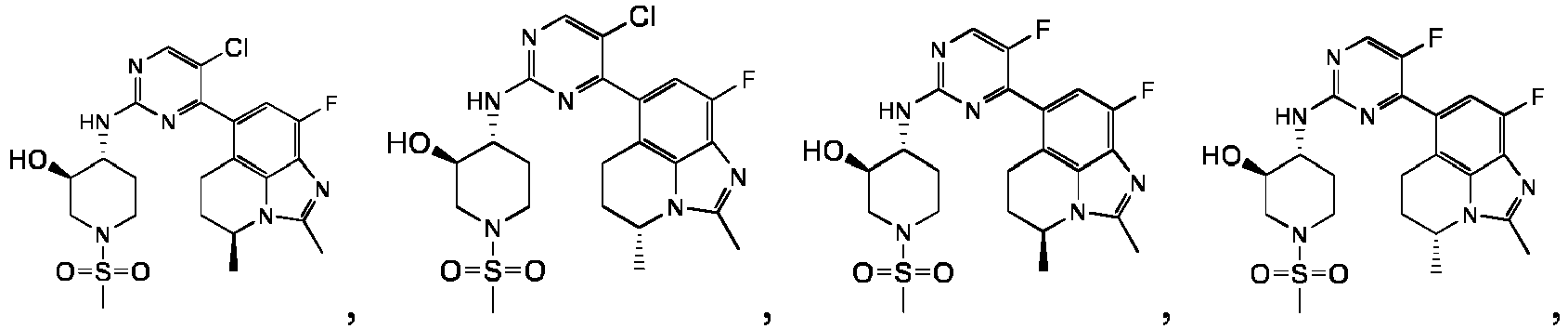


- Another aspect of the present disclosure provides an isotopically substituted form of the compound of formula I, I-2 or I-3 or the pharmaceutically acceptable salt thereof described above. In an alternative embodiment, the isotopically substituted form is a deuterated form.
- In an alternative embodiment, in the compound of formula I or the pharmaceutically acceptable salt thereof, the deuterium atom has an abundance of greater than 20%.
- In an alternative embodiment, in the compound of formula I or the pharmaceutically acceptable salt thereof, the deuterium atom has an abundance of greater than 50%.
- In an alternative embodiment, in the compound of formula I or the pharmaceutically acceptable salt thereof, the deuterium atom has an abundance of greater than 90%.
- In an alternative embodiment, in the compound of formula I or the pharmaceutically acceptable salt thereof, the deuterium atom has an abundance of greater than 95%.
- The present disclosure also provides a method for preparing the compound of formula I, which comprises a step of reacting a compound of formula I-B with a compound of formula I-C to form the compound of formula I,

- wherein LG1 is a leaving group; the leaving group is preferably halogen, sulfonate, boronic acid and borate;
- X, Y, Z, L, R1, R2, R3, R4, R5 and R6 are as defined in the compound of formula I.
- In some embodiments, the reaction is carried out in the presence of a catalyst; the catalyst is the metal palladium or the metal nickel.
- In some embodiments, the catalyst is selected from the group consisting of palladium/carbon, Raney Ni, tetrakis(triphenylphosphine)palladium(0), palladium dichloride, palladium acetate, [1,1'-bis(diphenylphosphino)ferrocene]palladium(II) dichloride, 1,1'-[1,1'-bis(di-tert-butylphosphino)ferrocene]palladium(II) dichloride, tris(dibenzylideneacetone)dipalladium(0) and 2-dicyclohexylphosphino-2',6'-dimethoxybiphenyl, preferably [1,1 '-bis(diphenylphosphino)ferrocene]palladium(II) dichloride and 2-dicyclohexylphosphino-2',6'-dimethoxybiphenyl.
- Another aspect of the present disclosure provides a compound of formula I-B or a pharmaceutically acceptable salt thereof,

- The present disclosure also provides a pharmaceutical composition comprising a therapeutically effective amount of at least one of the compounds of formulas I, I-2 and I-3 or the pharmaceutically acceptable salts thereof described above or the isotopically substituted forms described above, and a pharmaceutically acceptable excipient.
- In some embodiments, a unit dose of the pharmaceutical composition is 0.001 mg-1000 mg.
- In certain embodiments, the pharmaceutical composition comprises 0.01-99.99% of the compound of formula I, I-2 or I-3 or the pharmaceutically acceptable salt thereof described above or the isotopically substituted form described above based on the total weight of the composition.
- In certain embodiments, the pharmaceutical composition comprises 0.1-99.9% of the compound of formula I, I-2 or I-3 or the pharmaceutically acceptable salt thereof described above or the isotopically substituted form described above.
- In certain embodiments, the pharmaceutical composition comprises 0.5%-99.5% of the compound of formula I, I-2 or I-3 or the pharmaceutically acceptable salt thereof described above or the isotopically substituted form described above.
- In certain embodiments, the pharmaceutical composition comprises 1%-99% of the compound of formula I, I-2 or I-3 or the pharmaceutically acceptable salt thereof described above or the isotopically substituted form described above.
- In certain embodiments, the pharmaceutical composition comprises 2%-98% of the compound of formula I, I-2 or I-3 or the pharmaceutically acceptable salt thereof described above or the isotopically substituted form described above.
- In certain embodiments, the pharmaceutical composition comprises 0.01%-99.99% of a pharmaceutically acceptable excipient based on the total weight of the composition.
- In certain embodiments, the pharmaceutical composition comprises 0.1%-99.9% of a pharmaceutically acceptable excipient.
- In certain embodiments, the pharmaceutical composition comprises 0.5%-99.5% of a pharmaceutically acceptable excipient.
- In certain embodiments, the pharmaceutical composition comprises 1%-99% of a pharmaceutically acceptable excipient.
- In certain embodiments, the pharmaceutical composition comprises 2%-98% of a pharmaceutically acceptable excipient.
- The present disclosure also provides a method for preventing and/or treating a cyclin-dependent kinase-associated disease, which comprises administering to a patient in need thereof a therapeutically effective amount of the compound of formula I, I-2 or I-3 or the pharmaceutically acceptable salt thereof described above or the isotopically substituted form described above, or the pharmaceutical composition described above.
- The present disclosure also provides a method for preventing and/or treating cancer, which comprises administering to a patient in need thereof a therapeutically effective amount of the compound of formula I, I-2 or I-3 or the pharmaceutically acceptable salt thereof described above or the isotopically substituted form described above, or the pharmaceutical composition described above.
- The present disclosure also provides use of the compound of formula I, I-2 or I-3 or the pharmaceutically acceptable salt thereof described above or the isotopically substituted form described above, or the pharmaceutical composition described above in the preparation of a medicament for preventing and/or treating a cyclin-dependent kinase-associated disease.
- The present disclosure also provides use of the compound of formula I, I-2 or I-3 or the pharmaceutically acceptable salt thereof described above or the isotopically substituted form described above, or the pharmaceutical composition described above in the preparation of a medicament for preventing and/or treating cancer.
- In an alternative embodiment, the cyclin-dependent kinase-associated disease is selected from the group consisting of a cell proliferation disease, cancer and an immune disease. The cancer in the present disclosure is selected from the group consisting of breast cancer, ovarian cancer, bladder cancer, uterine cancer, prostate cancer, lung cancer (including NSCLC, SCLC, squamous cellcarcinoma or adenocarcinoma), esophageal cancer, head and neck cancer, intestinal cancer, kidney cancer (including RCC), liver cancer (including HCC), pancreatic cancer, gastric cancer and thyroid cancer.
- In an alternative embodiment, the cyclin-dependent kinase in the present disclosure is CDK4.
- Another aspect of the present disclosure provides use of the compound of formula I, I-2 or I-3 or the pharmaceutically acceptable salt thereof described above or the isotopically substituted form described above as a medicament.
- The compound of formulas I, 1-2 or 1-3 or the pharmaceutically acceptable salt thereof described above or the isotopically substituted form described above, or the pharmaceutical composition described above provided by the present disclosure reduces gastrointestinal and/or hematologic toxicity.
- In another aspect, the pharmaceutically acceptable salt of the compound in the present disclosure is an inorganic or organic salt.
- The compounds of the present disclosure may exist in specific geometric or stereoisomeric forms. The present disclosure contemplates all such compounds, including cis and trans isomers, (-)- and (+)-enantiomers, (R)- and (S)-enantiomers, diastereomers, (D)-isomer, (L)-isomer, and racemic mixtures and other mixtures thereof, such as enantiomerically or diastereomerically enriched mixtures, all of which are within the scope of the present disclosure. Additional asymmetric carbon atoms may be present in substituents such as an alkyl group. All such isomers and mixtures thereof are included within the scope of the present disclosure. The compounds of the present disclosure containing asymmetric carbon atoms can be isolated in optically active pure form or in racemic form. The optically active pure form can be isolated from a racemic mixture or synthesized using chiral starting materials or chiral reagents. Optically active (R)- and (S)-enantiomers, and D- and L-isomers can be prepared by chiral synthesis, chiral reagents or other conventional techniques. If one enantiomer of a certain compound of the present disclosure is desired, it may be prepared by asymmetric synthesis or derivatization with a chiral auxiliary, wherein the resulting mixture of diastereomers is separated and the auxiliary group is cleaved to provide the pure desired enantiomer. Alternatively, when the molecule contains a basic functional group (e.g., amino) or an acidic functional group (e.g., carboxyl), salts of diastereomers are formed with an appropriate optically active acid or base, followed by resolution of diastereomers by conventional methods known in the art, and the pure enantiomers are obtained by recovery. Furthermore, separation of enantiomers and diastereomers is typically accomplished by chromatography using a chiral stationary phase, optionally in combination with chemical derivatization (e.g., carbamate formation from amines).
- In the chemical structure of the compound of the present disclosure, a bond "" represents an unspecified configuration-that is, if chiral isomers exist in the chemical structure, the bond "
 " may be "" or "
 ", or contains both the configurations of "
 " and "
 ".The bond "" represents an unspecified configuration, including a cis (E) or trans (Z) configuration.
- The compounds and intermediates of the present disclosure may also exist in different tautomeric forms, and all such forms are included within the scope of the present disclosure. The term "tautomer" or "tautomeric form" refers to structural isomers of different energies that can interconvert via a low energy barrier. For example, proton tautomers (also known as proton transfer tautomers) include interconversion via proton migration, such as keto-enol and imine-enamine, lactam-lactim isomerization. An example of a lactam-lactim equilibrium is present between A and B as shown below.

- All compounds in the present disclosure can be drawn as form A or form B. All tautomeric forms are within the scope of the present disclosure. The nomenclature of the compounds does not exclude any tautomers.
- The present disclosure also comprises isotopically-labeled compounds which are identical to those recited herein but have one or more atoms replaced by an atom having an atomic mass or mass number different from the atomic mass or mass number usually found in nature. Examples of isotopes that can be incorporated into the compound of the present disclosure include isotopes of hydrogen, carbon, nitrogen, oxygen, phosphorus, sulfur, fluorine, iodine, and chlorine, such as 2H, 3H, 11C, 13C, 14C, 13N, 15N, 15O, 17O, 18O, 31P, 32P, 35S, 18F, 123I, 125I and 36Cl.
- Unless otherwise specified, when a position is specifically assigned deuterium (D), the position should be construed as deuterium with an abundance that is at least 1000 times greater than the natural abundance of deuterium (which is 0.015%) (i.e., at least 10% deuterium incorporation). The compounds of examples comprise deuterium having an abundance that is greater than at least 1000 times the natural abundance, at least 2000 times the natural abundance, at least 3000 times the natural abundance, at least 4000 times the natural abundance, at least 5000 times the natural abundance, at least 6000 times the natural abundance, or higher times the natural abundance. The present disclosure also comprises various deuterated forms of the compound of formula (I). Each available hydrogen atom connected to a carbon atom may be independently replaced with a deuterium atom. Those skilled in the art are able to synthesize the deuterated forms of the compound of formula (I) with reference to the relevant literature. Commercially available deuterated starting materials can be used in preparing the deuterated forms of the compound of formula (I), or they can be synthesized using conventional techniques with deuterated reagents including, but not limited to, deuterated borane, tri-deuterated borane in tetrahydrofuran, deuterated lithium aluminum hydride, deuterated iodoethane, deuterated iodomethane, and the like.
- Terms and definitions:
- "Pharmaceutically acceptable excipient" includes, but is not limited to, any adjuvant, carrier, excipient, glidant, sweetener, diluent, preservative, dye/colorant, flavoring agent, surfactant, wetting agent, dispersant, suspending agent, stabilizer, isotonic agent, solvent or emulsifier that has been approved by the U.S. food and drug administration as acceptable for use in humans or livestock animals.
- "Alkyl" refers to a saturated aliphatic hydrocarbon group, including linear and branched groups of 1 to 20 carbon atoms, preferably alkyl having 1 to 12 carbon atoms, and more preferably alkyl having 1 to 6 carbon atoms. Non-limiting examples include methyl, ethyl, n-propyl, isopropyl, n-butyl, isobutyl, tert-butyl, sec-butyl, n-pentyl, 1,1-dimethylpropyl, 1,2-dimethylpropyl, 2,2-dimethylpropyl, 1-ethylpropyl, 2-methylbutyl, 3-methylbutyl and various branched isomers thereof, and the like. The alkyl may be substituted or unsubstituted, and when it is substituted, the substituent may be substituted at any available point of attachment, and the substituent is preferably one or more groups independently selected from the group consisting of halogen, hydroxy, oxo, nitro, cyano, C1-6 alkyl, C1-6 alkoxy, C3-7 cycloalkyl, 3-12 membered heterocyclyl, and the like.
- "Alkenyl" includes branched and linear alkenyl having 2 to 12 carbon atoms or alkenyl containing aliphatic hydrocarbon groups. For example, "C2-6 alkenyl" refers to an alkenyl group having 2, 3, 4, 5 or 6 carbon atoms. Examples of alkenyl include, but are not limited to, ethenyl, allyl, 1-propenyl, 1-butenyl, 2-butenyl, 3-butenyl, 2-methylbut-2-enyl, 3-methylbut-1-enyl, 1-pentenyl, 3-pentenyl, and 4-hexenyl. The alkenyl may be substituted or unsubstituted, and when it is substituted, the substituent may be substituted at any available point of attachment, and the substituent is preferably one or more groups independently selected from the group consisting of halogen, hydroxy, oxo, nitro, cyano, C1-6 alkyl, C1-6 alkoxy, C3-7 cycloalkyl, 3-12 membered heterocyclyl, and the like.
- "Alkynyl" includes branched and linear alkynyl having 2 to 12 carbon atoms or alkynyl containing aliphatic hydrocarbon groups, or alkynyl having a particular number of carbon atoms (if the particular number is specified), e.g., ethynyl, propynyl (e.g., 1-propynyl, 2-propynyl), 3-butynyl, pentynyl, hexynyl and 1-methylpent-2-ynyl. The alkynyl may be substituted or unsubstituted, and when it is substituted, the substituent may be substituted at any available point of attachment, and the substituent is preferably one or more groups independently selected from the group consisting of halogen, hydroxy, oxo, nitro, cyano, C1-6 alkyl, C1-6 alkoxy, C3-7 cycloalkyl, 3-12 membered heterocyclyl, and the like.
- The term "cycloalkyl" refers to a saturated or partially unsaturated monocyclic or polycyclic hydrocarbon substituent. The cycloalkyl ring contains 3 to 20 carbon atoms, preferably 3 to 12 carbon atoms, and more preferably 3 to 6 carbon atoms. Non-limiting examples of monocyclic cycloalkyl include cyclopropyl, cyclobutyl, cyclopentyl, cyclopentenyl, cyclohexyl, cyclohexenyl, cyclohexadienyl, cycloheptyl, cycloheptatrienyl, cyclooctyl, and the like. Polycyclic cycloalkyl includes spiro cycloalkyl, fused cycloalkyl, and bridged cycloalkyl.
- The cycloalkyl ring may be fused to an aryl, heteroaryl or heterocycloalkyl ring, wherein the ring attached to the parent structure is cycloalkyl; non-limiting examples include indanyl, tetrahydronaphthyl, benzocycloheptyl, and the like. The cycloalkyl may be optionally substituted or unsubstituted, and when it is substituted, the substituent is preferably one or more groups independently selected from the group consisting of halogen, hydroxy, oxo, nitro, cyano, C1-6 alkyl, C1-6 alkoxy, C3-7 cycloalkyl, 3-12 membered heterocyclyl, and the like.
- The term "heterocyclyl", also referred to as heterocycloalkyl, refers to a saturated or partially unsaturated monocyclic or polycyclic hydrocarbon substituent containing 3 to 20 ring atoms, wherein one or more of the ring atoms are heteroatoms selected from the group consisting of nitrogen, oxygen and S(O)m (where m is an integer of 0 to 2), excluding a ring moiety of -O-O-, -O-S- or -S-S-, and the remaining ring atoms are carbon atoms. The heterocyclyl preferably contains 3 to 12 ring atoms, of which 1 to 4 are heteroatoms; and more preferably contains 3 to 8 ring atoms. Non-limiting examples of monocyclic heterocyclyl include pyrrolidinyl, imidazolidinyl, tetrahydrofuranyl, tetrahydrothienyl, dihydroimidazolyl, dihydrofuranyl, dihydropyrazolyl, dihydropyrrolyl, piperidinyl, piperazinyl, morpholinyl, thiomorpholinyl, homopiperazinyl, etc. Polycyclic heterocyclyl includes spiro heterocyclyl, fused heterocyclyl, and bridged heterocyclyl. Non-limiting examples of "heterocyclyl" include:


- The heterocyclyl ring may be fused to an aryl, heteroaryl or cycloalkyl ring, wherein the ring linked to the parent structure is heterocyclyl; its non-limiting examples include:

- The heterocyclyl may be optionally substituted or unsubstituted, and when it is substituted, the substituent is preferably one or more groups independently selected from the group consisting of halogen, hydroxy, oxo, nitro, cyano, C1-6 alkyl, C1-6 alkoxy, C3-7 cycloalkyl, 3-12 membered heterocyclyl, and the like.
- The term "aryl" refers to a 6- to 14-membered, preferably 6- to 12-membered, carbon monocyclic or fused polycyclic (i.e., rings sharing a pair of adjacent carbon atoms) group having a conjugated π-electron system, such as phenyl and naphthyl. The aryl ring may be fused to a heteroaryl, heterocyclyl or cycloalkyl ring, wherein the ring linked to the parent structure is the aryl ring; its non-limiting examples include:


- The aryl may be substituted or unsubstituted, and when it is substituted, the substituent is preferably one or more groups independently selected from the group consisting of halogen, hydroxy, oxo, nitro, cyano, C1-6 alkyl, C1-6 alkoxy, C3-7 cycloalkyl, 3-12 membered heterocyclyl, and the like, preferably phenyl.
- The term "heteroaryl" refers to a heteroaromatic system containing 1 to 4 heteroatoms and 5 to 14 ring atoms, wherein the heteroatoms are selected from the group consisting of oxygen, sulfur and nitrogen. Heteroaryl is preferably 6- to 12-membered, more preferably 5- or 6-membered. For example, Non-limiting examples of heteroaryl include: imidazolyl, furyl, thienyl, thiazolyl, pyrazolyl, oxazolyl, pyrrolyl, tetrazolyl, pyridyl, pyrimidinyl, thiadiazole, pyrazine,

- The heteroaryl ring may be fused to an aryl, heterocyclyl or cycloalkyl ring, wherein the ring linked to the parent structure is the heteroaryl ring; its non-limiting examples include:


- The heteroaryl may be optionally substituted or unsubstituted, and when it is substituted, the substituent is preferably one or more groups independently selected from the group consisting of halogen, hydroxy, oxo, nitro, cyano, C1-6 alkyl, C1-6 alkoxy, C3-7 cycloalkyl, 3-12 membered heterocyclyl, and the like.
- The term "alkoxy" refers to -O-(alkyl) and -O-(unsubstituted cycloalkyl), wherein the alkyl is as defined above. Non-limiting examples of alkoxy include: methoxy, ethoxy, propoxy, butoxy, cyclopropyloxy, cyclobutoxy, cyclopentyloxy and cyclohexyloxy. The alkoxy may be optionally substituted or unsubstituted, and when it is substituted, the substituent is preferably one or more groups independently selected from the group consisting of halogen, hydroxy, oxo, nitro, cyano, C1-6 alkyl, C1-6 alkoxy, C3-7 cycloalkyl, 3-12 membered heterocyclyl, and the like.
- The term "hydroxy" refers to the -OH group.
- The term "halogen" refers to fluorine, chlorine, bromine, or iodine.
- The term "amino" refers to -NH2.
- The term "cyano" refers to -CN.
- The term "nitro" refers to -NO2.
- The term "oxo" refers to the =O substituent.
- "Optional" or "optionally" means that the event or circumstance subsequently described may, but does not necessarily, occur, and that the description includes instances where the event or circumstance occurs or does not occur. For example, "a heterocyclyl group optionally substituted with alkyl" means that the alkyl may be, but does not necessarily, present, and that the description includes instances where the heterocyclyl group is or is not substituted with the alkyl.
- "Substituted" means that one or more, preferably up to 5, more preferably 1 to 3 hydrogen atoms in the group are independently substituted with a corresponding number of substituents. It goes without saying that a substituent is only in its possible chemical position, and those skilled in the art will be able to determine (experimentally or theoretically) possible or impossible substitution without undue effort. For example, it may be unstable when an amino or hydroxy group having free hydrogen is bound to a carbon atom having an unsaturated (e.g., olefinic) bond.
- "Pharmaceutical composition" refers to a mixture containing one or more of the compounds described herein or a physiologically and pharmaceutically acceptable salt or pro-drug thereof, and other chemical components, for example physiologically and pharmaceutically acceptable carriers and excipients. The pharmaceutical composition is intended to promote the administration to an organism, so as to facilitate the absorption of the active ingredient, thereby exerting biological activity.
- The following examples further illustrate the present disclosure, but the present disclosure is not limited thereto.
- Experimental procedures without conditions specified in the examples of the present disclosure were generally conducted according to conventional conditions, or according to conditions recommended by the manufacturers of the starting materials or commercial products. Reagents without specific origins indicated are commercially available conventional reagents.
- The structures of the compounds were determined by nuclear magnetic resonance (NMR) spectroscopy and/or mass spectrometry (MS). NMR shifts (δ) were given in 10-6 (ppm). NMR analysis was performed on a Bruker AVANCE-400 nuclear magnetic resonance instrument, with deuterated dimethyl sulfoxide (DMSO-d6 ), deuterated chloroform (CDCl3) and deuterated methanol (CD3OD) as solvents and tetramethylsilane (TMS) as an internal standard.
- MS analysis was performed on a Shimadzu 2010 Mass Spectrometer or Agilent 6110A MSD Mass Spectrometer.
- HPLC analysis was performed on Shimadzu LC-20A systems, Shimadzu LC-2010HT series, or Agilent 1200 LC high-performance liquid chromatograph (Ultimate XB-C18 3.0 × 150 mm chromatography column or Xtimate C18 2.1 × 30 mm chromatography column).
- Chiral HPLC analysis used Chiralpak IC-3 100 × 4.6mm I.D., 3 µm, Chiralpak AD-3 150 × 4.6mm I.D., 3 µm, Chiralpak AD-3 50 × 4.6mm I.D., 3 µm, Chiralpak AS-3 150 × 4.6mm I.D., 3 µm, Chiralpak AS-3 100 × 4.6mm I.D., 3µm, ChiralCel OD-3 150 × 4.6mm I.D., 3 µm, Chiralcel OD-3 100 × 4.6mm I.D., 3µm, ChiralCel OJ-H 150 × 4.6mm I.D., 5 µm, and Chiralcel OJ-3 150 × 4.6mm I.D., 3 µm chromatography columns.
- Yantai Huanghai HSGF254 or Qingdao GF254 silica gel plates, 0.15-0.2 mm layer thickness, were adopted for thin-layer chromatography (TLC) analysis and 0.4-0.5 mm layer thickness for TLC separation and purification.
- Yantai Huanghai silica gel of 100-200 mesh, 200-300 mesh or 300-400 mesh was generally used as a carrier in column chromatography.
- Preparative chiral chromatography used DAICEL CHIRALPAK IC (250 mm × 30 mm, 10 µm) or Phenomenex-Amylose-1 (250 mm × 30 mm, 5 µm).
- The CombiFlash preparative flash chromatograph used was CombiFlash Rf150 (TELEDYNE ISCO).
- The mean inhibition of kinase and the IC50 value were determined on a NovoStar microplate reader (BMG, Germany).
- Known starting materials described herein may be synthesized using or according to methods known in the art, or may be purchased from ABCR GmbH & Co. KG, Acros Organics, Aldrich Chemical Company, Accela ChemBio Inc., Chembee Chemicals, and other companies.
- In the examples, the reactions can all be performed in an argon atmosphere or a nitrogen atmosphere unless otherwise specified.
- The argon atmosphere or nitrogen atmosphere means that the reaction flask is connected to a balloon containing about 1 L of argon or nitrogen.
- The hydrogen atmosphere means that the reaction flask is connected to a balloon containing about 1 L of hydrogen.
- Pressurized hydrogenation reactions were performed using a Parr 3916EKX hydrogenator and a Qinglan QL-500 hydrogenator, or an HC2-SS hydrogenator.
- Hydrogenation reactions generally involved 3 cycles of vacuumization and hydrogen purging.
- Microwave reactions were performed on a CEM Discover-S 908860 microwave reactor. In the examples, a solution refers to an aqueous solution unless otherwise specified.
- In the examples, the reaction temperature refers to room temperature, i.e., 20 °C to 30 °C, unless otherwise specified.
- The reaction processes in the examples were monitored by thin-layer chromatography (TLC).
- For the developing solvent for reactions, the eluent system for column chromatography purification and the developing solvent system for thin-layer chromatography, the volume ratio of the solvents was adjusted according to the polarity of the compound, or by adding a small amount of basic or acidic reagents such as triethylamine and acetic acid.
-
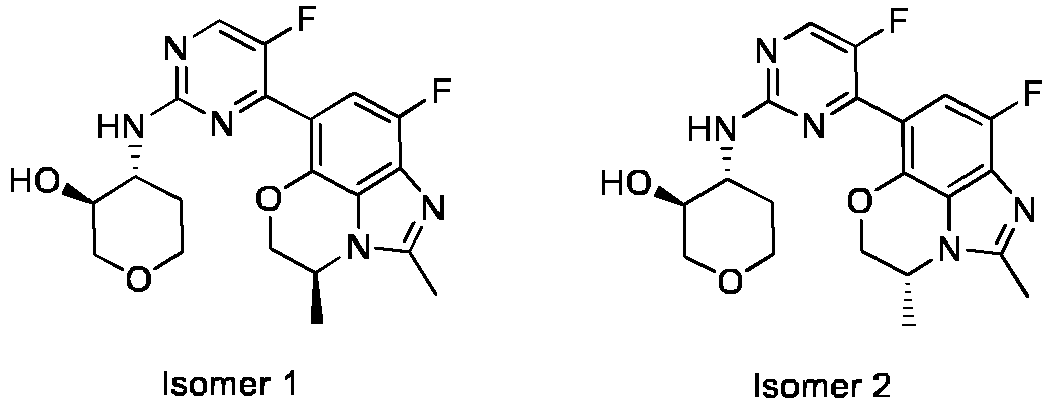

- Compound 1a (3.5 g, 14.8 mmol) was dissolved in 16 mL of dichloromethane. A solution of nitric acid in dichloromethane (2 mol/L, 16 mL) was added. The reaction was carried out at room temperature for 20 min. The reaction mixture was poured into 50 mL of ice water. The organic phase was separated, and the aqueous phase was extracted with dichloromethane (50 mL × 2). The organic phases were combined, dried over anhydrous sodium sulfate and filtered. The filtrate was collected and concentrated under reduced pressure to give the title compound 1b (3.8 g, yield: 91%).
MS (ESI) m/z 279.0, 281.0 [M-H]- - Compound 1b (3.8 g, 13.5 mmol) was dissolved in 60 mL of methanol. 25 mL of concentrated hydrochloric acid was added, and stannous chloride dihydrate (9.2 g, 40.6 mmol) was added portionwise. The reaction was carried out at room temperature for 20 min. The reaction mixture was concentrated, and 100 mL of saturated sodium bicarbonate solution was added. The mixture was extracted with ethyl acetate (100 mL × 3). The organic phases were combined, dried over anhydrous sodium sulfate and filtered. The filtrate was collected and concentrated under reduced pressure. The residue was purified by column chromatography on silica gel using petroleum ether and ethyl acetate as eluents to give the title compound 1c (2.0 g, yield: 59%).
MS (ESI) m/z 249.1, 251.1 [M-H]- - Compound 1c (200 mg, 0.8 mmol) was dissolved in 4 mL of acetone, and the solution was cooled to 0 °C. Potassium carbonate (121 mg, 0.9 mmol) and bromoacetone (120 mg, 0.9 mmol) were added at 0 °C. The reaction was carried out at room temperature for 2 h. 20 mL of water was added, and the mixture was extracted with ethyl acetate (20 mL × 3). The organic phases were combined, dried over anhydrous sodium sulfate and filtered. The filtrate was collected and concentrated under reduced pressure. The residue was dissolved in 5 mL of tetrahydrofuran. 0.5 mL of trifluoroacetic acid was added, and sodium cyanoborohydride (75 mg, 1.2 mmol) was added portionwise. The reaction was carried out at room temperature for 2 h. The reaction mixture was poured into 20 mL of saturated sodium bicarbonate solution. The mixture was extracted with ethyl acetate (20 mL × 3). The organic phases were combined, dried over anhydrous sodium sulfate and filtered. The filtrate was collected and concentrated under reduced pressure. The residue was purified by column chromatography on silica gel using petroleum ether and ethyl acetate as eluents to give the title compound 1d (160 mg, yield: 69%).
MS (ESI) m/z 291.2, 293.2 [M+H]+ - Compound 1d (160 mg, 0.5 mmol) was dissolved in 4 mL of methanol. 2 mL of concentrated hydrochloric acid was added, and stannous chloride dihydrate (496 mg, 2.2 mmol) was added portionwise. The reaction was carried out at room temperature for 2 h. The reaction mixture was poured into 20 mL of saturated sodium bicarbonate solution. The mixture was extracted with ethyl acetate (20 mL × 3). The organic phases were combined, dried over anhydrous sodium sulfate and filtered. The filtrate was collected and concentrated under reduced pressure. The residue was purified by column chromatography on silica gel using petroleum ether and ethyl acetate as eluents to give the title compound 1e (105 mg, yield: 73%).
MS (ESI) m/z 261.3, 263.3 [M+H]+ - Compound 1e (105 mg, 0.4 mmol) was dissolved in 2 mL of concentrated hydrochloric acid. 0.5 mL of acetic acid was added, and the reaction was carried out at 120 °C for 2 h. The reaction mixture was concentrated, and 30 mL of saturated sodium bicarbonate solution was added. The mixture was extracted with ethyl acetate (30 mL × 3). The organic phases were combined, dried over anhydrous sodium sulfate and filtered. The filtrate was collected and concentrated under reduced pressure. The residue was purified by C-18 reversed-phase chromatography to give the title compound 1f (17 mg, yield: 15%).
MS (ESI) m/z 241.3, 243.3 [M+H]+ - Compound 1f (40 mg, 0.14 mmol), bis(pinacolato)diboron (57 mg, 0.22 mmol), potassium acetate (29 mg, 0.29 mmol) and [1,1'-bis(diphenylphosphino)ferrocene]palladium(II) dichloride (21 mg, 0.03 mmol) were sequentially dissolved in 2 mL of 1,4-dioxane in a nitrogen atmosphere. The reaction was carried out at 100 °C for 1 h. The reaction mixture was cooled to room temperature, and 1,3,5,7-tetramethyl-6-phenyl-2,4,8-trioxa-6-phosphaadamantane (8 mg, 0.03 mmol), potassium carbonate (41 mg, 0.29 mmol), 2,4-dichloro-5-fluoropyrimidine (35 mg, 0.21 mmol), tris(dibenzylideneacetone)dipalladium(0) (26 mg, 0.03 mmol) and 0.5 mL of water were added. The reaction was carried out at 80 °C for 1 h. The reaction mixture was cooled to room temperature and filtered. The filtrate was collected and concentrated under reduced pressure. The residue was purified by C-18 reversed-phase chromatography to give the title compound 1g (18 mg, yield: 38%).
MS (ESI) m/z 337.2 [M+H]+ - Compound 1g (18 mg, 0.05 mmol), (3S,4R)-4-aminotetrahydro-2H-pyran-3-ol (7.5 mg, 0.06 mmol), (S)-(-)-2,2"-bis(diphenylphosphino)-1,1"-binaphthyl (6.2 mg, 0.01 mmol) and palladium acetate (2.2 mg, 0.01 mmol) were sequentially dissolved in 2 mL of tetrahydrofuran in a nitrogen atmosphere. Cesium carbonate (41 mg, 0.13 mmol) was added, and the reaction was carried out at 80 °C for 1 h.
- The reaction was cooled to room temperature and filtered. The filtrate was collected and concentrated under reduced pressure. The residue was purified by C-18 reversed-phase chromatography to give a crude mixture. The crude product was chirally resolved (column: DAICEL CHIRALPAK AD (250 mm × 30 mm, 10 µm); conditions: 45% EtOH (0.1% NH3·H2O) in CO2; flow rate: 80 mL/min) into isomer 1 (3.8 mg, yield: 17%) and isomer 2 (4.4 mg, yield: 20%).
-
- Column: DAICEL CHIRALPAK AD-3 (150 mm × 4.6 mm, 3 µm);
- condition: 40% EtOH (0.05% DEA) under a CO2 condition;
- flow rate: 2.5 mL/min;
- ABPR: 1500 psi;
- temperature: 35 °C.
- The compound with a retention time of 2.903 min was defined as isomer 1; MS (ESI) m/z 418.3 [M+H]+.
- The compound with a retention time of 3.997 min was defined as isomer 2; MS (ESI) m/z 418.3 [M+H]+.
-


- Compound 1f (50 mg, 0.18 mmol), bis(pinacolato)diboron (67 mg, 0.26 mmol), potassium acetate (37 mg, 0.38 mmol) and [1,1'-bis(diphenylphosphino)ferrocene]palladium(II) dichloride (26 mg, 0.04 mmol) were sequentially dissolved in 2 mL of 1,4-dioxane in a nitrogen atmosphere. The reaction was carried out at 100 °C for 1 h. The reaction mixture was cooled to room temperature, and 1,3,5,7-tetramethyl-6-phenyl-2,4,8-trioxa-6-phosphaadamantane (10 mg, 0.04 mmol), potassium carbonate (51 mg, 0.37 mmol), 2,4-dichloro-5-fluoropyrimidine (52 mg, 0.28 mmol), tris(dibenzylideneacetone)dipalladium(0) (32 mg, 0.04 mmol) and 0.5 mL of water were added. The reaction was carried out at 80 °C for 1 h. The reaction mixture was cooled to room temperature and filtered. The filtrate was collected and concentrated under reduced pressure. The residue was purified by C-18 reversed-phase chromatography to give the title compound 2a (30 mg, yield: 48%).
- MS (ESI) m/z 353.1 [M+H]+
- Compound 2a (30 mg, 0.08 mmol), (3R,4R)-4-amino-1-(methylsulfonyl)piperidin-3-ol (19.4 mg, 0.10 mmol, prepared using the method disclosed in the patent application "
WO 2019/207463 A1 "), (S)-(-)-2,2"-bis(diphenylphosphino)-1,1"-binaphthyl (10 mg, 0.02 mmol) and palladium acetate (4.4 mg, 0.02 mmol) were sequentially dissolved in 2 mL of tetrahydrofuran in a nitrogen atmosphere. Cesium carbonate (52 mg, 0.16 mmol) was added, and the reaction was carried out at 80 °C for 1 h. The reaction was cooled to room temperature and filtered. The filtrate was collected and concentrated under reduced pressure. The residue was purified by C-18 reversed-phase chromatography to give a crude mixture. The crude product was chirally resolved (column: DAICEL CHIRALCEL OD-H (250 mm × 30 mm, 5 µm); 50% EtOH (0.1% NH3·H2O) in CO2; flow rate: 80 mL/min) into isomer 1 (4.4 mg, yield: 10%) and isomer 2 (3.3 mg, yield: 8%). -
- Column: DAICEL CHIRALPAK AD-3 (50 mm × 4.6 mm, 3 µm);
- mobile phases: A: CO2; B: isopropanol (0.05% DEA); gradient: 5%-40% B within 2 min, maintaining 40% B for 1.2 min, then 5% B for 0.8 min;
- flow rate: 4 mL/min;
- ABPR: 1500 psi;
- temperature: 35 °C.
- The compound with a retention time of 2.094 min was defined as isomer 1;
- MS (ESI) m/z 511.3 [M+H]+
- 1H NMR (400MHz, DMSO-d6) δ = 8.38 (s, 1H), 7.48 (br s, 1H), 6.91 (br d, J=11.0 Hz, 1H), 5.21 (br s, 1H), 4.86 (br d, J=6.5 Hz, 1H), 4.52 - 4.44 (m, 1H), 4.24 (br d, J=10.8 Hz, 1H), 3.77 (br s, 1H), 3.64 - 3.55 (m, 2H), 3.48 (br d, J=13.6 Hz, 1H), 2.89 (s, 3H), 2.69 - 2.63 (m, 1H), 2.60 (s, 3H), 1.39 (d, J=6.8 Hz, 3H), 1.24 (br s, 2H), 1.18 - 1.04 (m, 1H).
- The compound with a retention time of 2.499 min was defined as isomer 2;
- MS (ESI) m/z 511.3 [M+H]+
- 1H NMR (400MHz, DMSO-d6) δ = 8.38 (s, 1H), 7.47 (br s, 1H), 6.91 (br d, J=11.5 Hz, 1H), 5.21 (br d, J=4.0 Hz, 1H), 4.86 (br d, J=6.5 Hz, 1H), 4.48 (dd, J=1.8, 11.5 Hz, 1H), 4.36 (t, J=5.0 Hz, 2H), 4.24 (br d, J=9.5 Hz, 1H), 3.76 (br s, 1H), 3.59 (br d, J=8.0 Hz, 2H), 2.89 (s, 3H), 2.67 (br d, J=9.3 Hz, 1H), 2.60 (s, 3H), 1.58 - 1.46 (m, 1H), 1.39 (d, J=6.8 Hz, 3H), 1.24 (br s, 1H).
-


- Compound 2a (55 mg, 0.16 mmol), (3S,4R)-4-aminotetrahydro-2H-pyran-3-ol (18 mg, 0.16 mmol), (S)-(-)-2,2"-bis(diphenylphosphino)-1,1"-binaphthyl (20 mg, 0.03 mmol) and palladium acetate (6.7 mg, 0.03 mmol) were sequentially dissolved in 3 mL of tetrahydrofuran in a nitrogen atmosphere. Cesium carbonate (104 mg, 0.32 mmol) was added, and the reaction was carried out at 85 °C for 3 h. The reaction mixture was cooled to room temperature and filtered. The filtrate was collected and concentrated under reduced pressure. The residue was purified by C-18 reversed-phase chromatography to give a crude mixture. The crude product was chirally resolved [column: DAICEL CHIRALPAK AD (250 mm × 30 mm,10 µm); conditions: 0.1% NH3·H2O IPA, Begin B: 45%; End B: 45%; flow rate (mL/min): 70)] into isomer 1 (6.2 mg, yield: 9.2%) and isomer 2 (7.7 mg, yield: 11%).
-
- Column: DAICEL CHIRALCEL OD-3 (100 mm × 4.6 mm, 3 µm);
- mobile phases: A: CO2; B: ethanol (0.05% DEA); gradient: 5%-40% B within 4 min, maintaining 40% B for 2.5 min, then 5% B for 1.5 min;
- flow rate: 2.8 mL/min;
- ABPR: 1500 psi;
- temperature: 35 °C.
- The compound with a retention time of 3.518 min was defined as isomer 1;
- MS (ESI) m/z 434.3 [M+H]+
- 1H NMR (400MHz, DMSO-d6) δ = 8.37 (s, 1H), 7.45 (br s, 1H), 6.90 (d, J=11.5 Hz, 1H), 4.93 (d, J=5.3 Hz, 1H), 4.86 (br d, J=6.8 Hz, 1H), 4.48 (dd, J=1.6, 11.7 Hz, 1H), 4.24 (br d, J=9.3 Hz, 1H), 3.84 - 3.74 (m, 3H), 3.53 - 3.40 (m, 2H), 3.03 (br t, J=10.2 Hz, 1H), 2.60 (s, 3H), 2.01 - 1.90 (m, 1H), 1.54 - 1.44 (m, 1H), 1.38 (d, J=6.5 Hz, 3H).
- The compound with a retention time of 4.165 min was defined as isomer 2;
- MS (ESI) m/z 434.3 [M+H]+
- 1H NMR (400MHz, DMSO-d6) δ = 8.37 (s, 1H), 7.46 (br s, 1H), 6.91 (br d, J=11.5 Hz, 1H), 4.93 (d, J=5.3 Hz, 1H), 4.86 (br d, J=6.5 Hz, 1H), 4.47 (br d, J=10.5 Hz, 1H), 4.23 (br d, J=9.8 Hz, 1H), 3.86 - 3.74 (m, 3H), 3.54 - 3.44 (m, 1H), 3.32 - 3.27 (m, 1H), 3.03 (br t, J=10.3 Hz, 1H), 2.60 (s, 3H), 1.95 (br d, J=13.1 Hz, 1H), 1.54 - 1.43 (m, 1H), 1.38 (d, J=6.5 Hz, 3H).
-


- Compound 1f (2.0 g, 7 mmol) and selenium dioxide (3.1 g, 28 mmol) were sequentially added to 30 mL of 1,4-dioxane in a nitrogen atmosphere. The reaction was carried out at 95 °C for 8 h. The reaction mixture was cooled to room temperature and filtered. The filtrate was collected and concentrated under reduced pressure. The residue was purified by C-18 reversed-phase chromatography to give the title compound 4a (930 mg, yield: 44%). MS (ESI) m/z 299.1, 301.1 [M+H]+
- Compound 4a (930 mg, 3.1 mmol) was dissolved in 20 mL of tetrahydrofuran in a nitrogen atmosphere. The temperature was reduced to -20 °C. A solution of methylmagnesium bromide in tetrahydrofuran (3 mol/L, 1.5 mL, 4.5 mmol) was added dropwise, and the reaction was carried out at -20 °C for 4 h. The reaction was quenched with 5 mL of water. The reaction mixture was concentrated under reduced pressure. The residue was purified by C-18 reversed-phase chromatography to give the title compound 4b (830 mg, yield: 85%).
MS (ESI) m/z 315.2, 317.2 [M+H]+ - Compound 4b (600 mg, 1.9 mmol) was dissolved in 20 mL of tetrahydrofuran at room temperature, and Dess-Martin periodinane (2.0 g, 4.8 mmol) was added. The mixture was heated to 80 °C and was allowed to react for 2 h. The reaction mixture was cooled to room temperature and filtered. The filtrate was collected and concentrated under reduced pressure. The residue was purified by C-18 reversed-phase chromatography to give the title compound 4c (350 mg, yield: 59%).
MS (ESI) m/z 313.1, 315.1 [M+H]+ - Compound 4c (350 mg, 1.1 mmol) was dissolved in 20 mL of tetrahydrofuran in a nitrogen atmosphere. The temperature was reduced to -20 °C. A solution of methylmagnesium bromide in tetrahydrofuran (3 mol/L, 0.7 mL, 2.1 mmol) was added dropwise, and the reaction was carried out at -20 °C for 4 h. The reaction was quenched with 5 mL of water. The reaction mixture was concentrated under reduced pressure. The residue was purified by C-18 reversed-phase chromatography to give the title compound 4d (260 mg, yield: 71%).
MS (ESI) m/z 329.2, 331.2 [M+H]+ - Compound 4d (260 mg, 0.8 mmol), bis(pinacolato)diboron (305 mg, 1.2 mmol), potassium acetate (157 mg, 1.6 mmol) and [1,1'-bis(diphenylphosphino)ferrocene]palladium(II) dichloride (117 mg, 0.2 mmol) were sequentially dissolved in 5 mL of 1,4-dioxane in a nitrogen atmosphere. The reaction was carried out at 100 °C for 2 h. The reaction mixture was cooled to room temperature, and 1,3,5,7-tetramethyl-6-phenyl-2,4,8-trioxa-6-phosphaadamantane (58 mg, 0.2 mmol), potassium carbonate (221 mg, 1.6 mmol), 2,4-dichloro-5-fluoropyrimidine (220 mg, 1.2 mmol), tris(dibenzylideneacetone)dipalladium(0) (183 mg, 0.2 mmol) and 1 mL of water were added. The reaction was carried out at 80 °C for 1 h. The reaction mixture was cooled to room temperature and filtered. The filtrate was collected and concentrated under reduced pressure. The residue was purified by C-18 reversed-phase chromatography to give the title compound 4e (129 mg, yield: 41%).
MS (ESI) m/z 397.3 [M+H]+ - Compound 4e (124 mg, 0.31 mmol), (3S,4R)-4-aminotetrahydro-2H-pyran-3-ol (19 mg, 0.16 mmol), (S)-(-)-2,2"-bis(diphenylphosphino)-1,1"-binaphthyl (118 mg, 0.5 mmol) and palladium acetate (14 mg, 0.06 mmol) were sequentially dissolved in 5 mL of tetrahydrofuran in a nitrogen atmosphere. Cesium carbonate (202 mg, 0.62 mmol) was added, and the reaction was carried out at 85 °C for 3 h. The reaction mixture was cooled to room temperature and filtered. The filtrate was collected and concentrated under reduced pressure. The residue was purified by C-18 reversed-phase chromatography to give the crude mixture 4f. The crude product was chirally resolved [column:
DAICEL CHIRALPAK AD (250 mm × 30 mm,10 µm); conditions: 0.1% NH3·H2O ETOH, Begin B: 40%; End B: 40%; flow rate (mL/min): 60)] into the title compound isomer 1 (25.2 mg, yield: 17%) and the title compound isomer 2 (22 mg, yield: 15%). -
- Column: DAICEL CHIRALCEL AD-3 (100 mm × 4.6 mm, 3 µm);
- mobile phases: A: CO2; B: ethanol (0.05% DEA); gradient: 5%-40% B within 2 min, maintaining 40% B for 1.2 min, then 5% B for 0.8 min;
- flow rate: 4 mL/min;
- ABPR: 1500 psi;
- temperature: 35 °C.
- The compound with a retention time of 1.887 min was defined as isomer 2;
- MS (ESI) m/z 478.1 [M+H]+
- 1H NMR (400MHz, DMSO-dd) δ = 8.37 (s, 1H), 7.45 (br s, 1H), 6.92 (d, J=11.3 Hz, 1H), 5.82 (br s, 1H), 5.23 (q, J=6.4 Hz, 1H), 4.93 (d, J=5.3 Hz, 1H), 4.47 (d, J=11.0 Hz, 1H), 4.22 (br d, J=11.3 Hz, 1H), 3.89 - 3.67 (m, 3H), 3.39 - 3.25 (m, 2H), 3.03 (br t, J=10.2 Hz, 1H), 1.95 (br d, J=10.5 Hz, 1H), 1.68 (s, 3H), 1.62 (s, 3H), 1.54 - 1.47 (m, 1H), 1.45 (d, J=6.5 Hz, 3H).
- The compound with a retention time of 2.078 min was defined as isomer 1;
- MS (ESI) m/z 478.1 [M+H]+
- 1H NMR (400MHz, DMSO-dd) δ = 8.37 (s, 1H), 7.45 (br s, 1H), 6.92 (d, J=11.5 Hz, 1H), 5.82 (s, 1H), 5.29 - 5.19 (m, 1H), 4.93 (d, J=5.5 Hz, 1H), 4.47 (d, J=11.3 Hz, 1H), 4.21 (br d, J=10.3 Hz, 1H), 3.85 - 3.75 (m, 3H), 3.53 - 3.40 (m, 2H), 3.03 (br t, J=10.4 Hz, 1H), 1.94 (br s, 1H), 1.67 (s, 3H), 1.62 (s, 3H), 1.53 - 1.47 (m, 1H), 1.45 (d, J=6.5 Hz, 3H).
- The present invention is further described below using test examples, but these examples are not intended to limit the scope of the present invention.
-
Reagent Manufacturer Cat. No. CDK4/cyclin D1 kinase activity, CDK6/cyclin D3 kinase activity CDK4/cyclin D1 ProQinase 0142-0143-1 CDK6/cyclin D3 Carna 04-107 Peptide FAM-P18 GL Biochem P080319-XY114202 Peptide FAM-P8 GL Biochem P100804-XZ112396 ATP Sigma A7699-1G DMSO Sigma 474382 EDTA Sigma E5134 Staurosporine Selleckchem S142105 Ribociclib MCE HY-15777 Compound A In-house synthesis Compound A CDK1/cyclin B kinase activity, CDK9/cyclin T1 kinase activity ADP-Glo kinase assay Promega V9102 CDK1/cyclin B proqinase 0134-0135-1 CDK9/cyclin T1 Wuxi Biortus BP480/792/691 PHA-793887 Selleck S1487 Histone H1 SignalChem H10-54N ATP Promega V910B DMSO Sigma D8418 Compound A is Example A94 of WO 2019/207463A1 and was synthesized using the method disclosed in the patent application. - In vitro CDK kinase activity was tested using a mobility shift assay. In the experiment, the starting concentration of the test compounds for the inhibition of CDK activity was 300 nM. The concentration was 3-fold diluted to a total of 10 concentrations, and each assay was performed in duplicate. The compound staurosporine was used as a standard control.
- 1× kinase buffer (CDK2) (50 mM HEPES, pH 7.5, 0.0015% Brij-35), 1× kinase buffer (CDK4) (20 mM HEPES, pH 7.5, 0.01% Triton X-100) and stop solution (100 mM HEPES, pH 7.5, 0.015% Brij-35, 0.2% Coating Reagent #3, 50 mM EDTA) were prepared. A proper amount of kinase was added to 1× kinase buffer to prepare 2.5× enzyme solution; 5× compound dilution (1× kinase buffer, 10% DMSO) corresponding to the test concentration of the compound was prepared; a proper amount of FAM-labeled polypeptide and ATP was added to 1× kinase buffer to prepare 2.5× substrate solution. 5 µL of 5× compound dilution and 10 µL of 2.5× enzyme solution were added to reaction wells of a 384-well reaction plate, and they were well mixed and incubated at room temperature for 10 min; 10 µL of 2.5× substrate solution was added to the 384-well plate, and the plate was centrifuged at 1000 rpm for 1 min; the reaction plate was incubated at 28 °C for 60 min (biochemical incubator model: SPX-100B-Z); 30 µL of stop solution was added to the 384-well reaction plate to stop the reactions, and the plate was centrifuged at 1000 rpm for 1 min; finally, conversion rate readings were taken on Caliper EZ Reader II (excitation wavelength: 400 nm; emission wavelengths: 445 nm and 520 nm).
- The IC50 values of the compounds were obtained by fitting using XLFit excel add-in version 5.4.0.8. Fitting formula:

- X: the log value of the compound concentration; Y: the percent inhibition of the compound.
- The starting concentration for in vitro CDK (CDK2 and CDK9) kinase activity assays was 1 µM. The concentration was 3-fold diluted to a total of 10 concentrations, and each assay was performed in duplicate. The compound PHA-793887 was used as a control compound.
- 1× kinase reaction buffer (40 mM Tris-HCl, pH 7.4, 20 mM Mg2Cl2, 0.1 mg/mL BSA, 50 µM DTT), 1 volume of 5× kinase reaction buffer and 4 volumes of water were prepared, and DTT (final concentration: 50 µM) was added. 50 nL of diluted compound working solution (final concentration of DMSO was 1%) was transferred to each well of a reaction plate (784075, Greiner) using Echo655. The reaction plate was sealed with a plate sealing film and centrifuged at 1000 g for 1 min. 2× enzyme (0.3 ng/µL CDK2/cyclin E1 or CDK9/cyclin T1) was prepared using 1× kinase reaction buffer. 2.5 µL of the above kinase solution was added to each well. The reaction plate was sealed with a plate sealing film, centrifuged at 1000 g for 1 min and left at room temperature for 10 min. A mixture of 2× kinase substrate and ATP was prepared using 1× kinase reaction buffer. 2× CDK2/CylinE1 kinase substrate was 0.4 mg/mL histone H1 and 30 µM ATP. 2.5 µL of the mixture of 2× histone H1 and ATP was added to the reaction plate. The plate was centrifuged at 1000 g for 30 s, and the reaction was started. After the kinase assay reaction was carried out at room temperature for 120 min, 4 µL of ADP-Glo reagent was added, and the reaction was carried out at room temperature for 40 min. Then 8 µL of kinase assay reagent was added, and the reaction was carried out at room temperature for 40 min. The luminescence signals were read using Envision 2104.
- Data analysis is shown below:
- a)

- SignalAve_PC: an average value for all positive control wells in the whole plate.
- SignalAveVC: an average value for all negative control wells in the whole plate.
- Signalcmpd: an average value for wells corresponding to the test compounds.
- b) Compound IC50: obtained using GraphPad 8.0 and the following non-linear fitting formula:

- The biochemical inhibitory activity of the compounds of the present disclosure against CDKs (CDK1, CDK4, CDK6 and CDK9) was determined through the above assays. The determined IC50 values are shown in Table 1, Table 2 and Table 3.
Table 1. Compound CDK4/D1 (nM) CDK6/D3 (nM) Staurosporine 70 253 Isomer 1 with a retention time of 2.903 min in Example 1 26 >1000 Isomer 2 with a retention time of 3.997 min in Example 1 11 301 Isomer 1 with a retention time of 2.094 min in Example 2 2.5 39 Isomer 2 with a retention time of 2.499 min in Example 2 1.5 9.1 Table 2. Compound CDK4/D1 (nM) CDK6/D3 (nM) Ribociclib 27 77 Isomer 1 with a retention time of 3.518 min in Example 3 15 64 4f (racemate) in Example 4 15 171 Table 3. Compound CDK1/B (nM) CDK4/D1 (nM) CDK6/D3 (nM) CDK9/T1 (nM) Compound A 325 4.8 121 190 Isomer 2 with a retention time of 1.887 min in Example 4 >1000 14 228 >1000 Isomer 1 with a retention time of 2.078 min in Example 4 >1000 8.2 105 >1000 - The metabolic reactions of representative substrates of 5 major human CYP subtypes (CYP1A2, CYP2C9, CYP2C19, CYP2D6, CYP3A4) were evaluated using 150-donor pooled human liver microsomes (purchased from Corning, Cat. No. 452117). The effects of different concentrations of the test compounds on the metabolic reactions of phenacetin (CYP1A2), diclofenac sodium (CYP2C9), S-mephenytoin (CYP2C19), bufuralol hydrochloride (CYP2D6) and midazolam (CYP3A4/5) were determined by liquid chromatography-tandem mass spectrometry (LC/MS/MS).
- 30 µM phenacetin, 10 µM diclofenac sodium, 35 µM S-mephenytoin, 5 µM bufuralol hydrochloride, 3 µM midazolam, 1 mM NADPH, and test compounds (at concentrations of 0.1 µmol/L, 0.3 µmol/L, 1 µmol/L, 3 µmol/L, 10 µmol/L, and 30 µmol/L, respectively) or positive compound or blank control were incubated with 200 µL of a reaction system of pooled human liver microsomes (0.2 mg/mL) (100 mmol/L phosphate buffer, pH 7.4, containing 0.3% by volume of DMSO, 0.6% by volume of acetonitrile, and 0.1% by volume of methanol) at 37 °C for 5 min. Then, 200 µL of acetonitrile containing 3% formic acid and 40 nM internal standard verapamil was added, and the mixture was centrifuged at 4000 rpm for 50 min. The mixture was cooled on ice for 20 min and centrifuged at 4000 rpm for 20 min to precipitate the protein. 200 µL of the supernatant was taken for LC/MS/MS analysis.
- The peak area was calculated from the chromatogram. The residual activity rate (%) was calculated by the following formula:


- The half maximal inhibitory concentrations (IC50) against CYP were calculated by Excel XLfit 5.3.1.3.
- The determined half maximal inhibitory concentrations (IC50) values against CYP are shown in Table 4 below.
Table 4. Half maximal inhibitory concentrations (IC50) of the compounds of the present disclosure against CYP Examples No. CYP 1A2 (µM) CYP 2C9 (µM) CYP 2C19 (µM) CYP 2D6 (µM) CYP 3A4 (µM) Compound A >30 22 >30 >30 16 Isomer 2 with a retention time of 1.887 min in Example 4 >30 >30 >30 >30 >30 Isomer 1 with a retention time of 2.078 min in Example 4 >30 >30 >30 >30 >30 - The thermodynamic solubility of the compounds was determined in a pH 7.4 phosphate buffer. Both the sample supernatant and the standard of known concentration were tested by LC/MS/MS.
- Compound A (compound A is Example A94 of
WO 2019207463A and was synthesized using the method disclosed in the patent application). - NaH2PO4·2H2O (analytical reagent), NaH2PO4 (analytical reagent), and NaOH (analytical reagent).
- 1.5 mL flat-bottomed glass tubes (BioTech Solutions); molded polytetrafluoroethylene caps (BioTech Solutions), polytetrafluoroethylene-coated stirring bars (BioTech Solutions), Eppendorf ThermoMixer, and 96-well deep-well plates.
- 15.6 g of NaH2PO4·2H2O was weighed out, placed into a 1 L glass flask and dissolved in 1 L of deionized water. The pH of the solution was approximately 4.7, and then the pH was adjusted to 7.4 with 10 M NaOH.
- 1 mg of each compound powder was accurately weighed out and placed in a glass tube. The pH 7.4 sodium phosphate buffer was added to the glass tube in an amount of 1 mL per mg. A stirring bar was added to each glass tube, and a cap was put on. The sample plate containing the glass tubes was placed into Eppendorf ThermoMixer and incubated at 25 °C at 1100 rpm for 24 h. After the incubation, the caps were removed, and the stirring bars were removed using a magnet. The behavior in each glass tube was recorded. The plate was centrifuged at 25 °C at 4000 rpm for 30 min. 750 µL of the supernatant was collected using a pipette. The tip was washed with acetonitrile for 5 s and then with purified water for 5 s. Then the first 50 µL was discarded as waste, and the remaining 700 µL was added to a 96-well sample plate containing glass tubes. The plate was then centrifuged for 30 min (25 °C, 4000 rpm). 10 µL of the sample of the second centrifugation was pipetted into 990 µL of a mixture of acetonitrile and water (1:1) containing an internal standard (100× sample). 10 µL of the dilution was pipetted into 990 µL of a mixture of acetonitrile and water (1:1) containing an internal standard (10,000× sample). The sample dilution factor may vary depending on the solubility level and the LC/MS signal response.
Table 5. The recorded behavior and dilution factors Record Behavior of samples in phosphate buffer after 24 h Dilution factor No signal A completely clear solution 10000 S A clear solution with a small amount of solids 10000 S100 A clear solution with a large amount of solids 100 1 A solution with a small amount of floating powder 10000 2 A suspension with a small amount of foam 10000 3 A solution with a large amount of floating powder 100 4 A suspension with a large amount of foam 100 - 1 mg of each compound powder was accurately weighed out and added to a glass tube, and DMSO was added to each glass tube in an amount of 1 mL per mg. A stirring bar was added to each glass tube and a cap was put on. The plate containing glass tubes of the standard was placed into Eppendorf ThermoMixer and incubated at 25 °C at 1,100 rpm for 2 h to fully dissolve the powders. Whether the solids could be completely dissolved was observed, and compounds that could not be completely dissolved in DMSO solution were recorded. 10 µL of 1 mg/mL standard was pipetted into 990 µL of a mixture of acetonitrile and water (1:1) containing an internal standard to give a 10 µg/mL standard. 10 µL of 10 µg/mL standard was pipetted into 990 µL of a mixture of acetonitrile and water (1:1) containing an internal standard to give a 0.1 µg/mL standard. The sample dilution factor may vary depending on the LC/MS signal response. Samples were analyzed by LC/MS/MS. All compounds were tested individually.
- All calculations were performed by Microsoft Excel.
- Samples were analyzed by LC/MS/MS and quantified according to the standard of known concentration. The solubility of the test compounds was calculated by the following formula: [sample] = area ratio sample × DF sample × [STD] / area ratio STD DF: dilution factor.
- STD: test compound standard.
Table 6. The solubility of the compounds of the present disclosure Example No. Solubility (µM) Compound A 16 Isomer 2 with a retention time of 1.887 min in Example 4 2126 Isomer 1 with a retention time of 2.078 min in Example 4 2203 -
- 1. The potential of the test compounds to induce the activity of drug metabolism enzymes by in vitro activating PXR was evaluated. EC50 values were obtained by assaying different concentrations of test compounds (30, 10, 3.33, 1.11, 0.370 and 0.123 µM) by in vitro activating PXR. The concentrations of the positive control rifampicin were 20, 5, 1.25, 0.312, 0.0781 and 0.195 µM.
-
- 1) DPX2 (HepG2 cells were stably transfected with the human PXR gene and the fluorescent reporter gene) cells were purchased from Puracyp (Carlsbad, CA).
- 2) The test compounds were provided by the sponsor; the control drug (rifampicin) was purchased from Sigma (St. Louis, MO).
- 3) The CellTiter-Fluor™ cell viability assay kit and the One-Glo fluorescence assay kit were purchased from Promega (Madison, WI); fetal bovine serum (FBS) was purchased from Corning (Manassas, VA); the MTS3 shaker was purchased from IKA Labortechnik (Staufen, Germany); DMEM, penicillin and streptomycin were purchased from local suppliers; hygromycin B and G418 were purchased from Merck (Darmstadt, Germany); the cell culture medium and DPX2 cells were purchased from Puracyp Inc.
-
- 1) 50 mL of FBS was added to 450 mL of cell culture medium.
- 2) DPX2 cells were cultured in a T-75 culture flask in a 37 °C, 5% CO2 incubator with 95% relative humidity. When covering 80-90% of the bottom of the culture flask, the cells were digested.
- 3) The top layer of the cells cultured in the T-75 culture flask was washed with 8 mL of PBS, and the PBS was pipetted off. The cells were digested with 3 mL of pancreatin at 37 °C for about 5 min or until they were floating in the pancreatin. 10 mL (excessive) of a serum-containing medium was added to neutralize the pancreatin.
- 4) The cell suspension was transferred to a conical-bottomed centrifuge tube and centrifuged at 120 g for 10 min. The cells were suspended in the plating medium and adjusted to a concentration of 4 × 10⁵ cells/mL. 100 µL of diluted cells were added to each well of a 96-well cell culture plate. The culture plate was placed in an incubator and incubated at 37 °C for 24 h before PXR activation assays.
-
- 1) The test compounds and positive compound (rifampicin) were prepared in DMSO and the compounds were diluted with a serum-free medium at 37 °C. The final concentrations of the positive control rifampicin were 20, 5, 1.25, 0.312, 0.0781 and 0.195 µM. The final concentrations of the test compounds were 30, 10, 3.33, 1.11, 0.370 and 0.123 µM. The final concentration of DMSO was 0.1%. To 1 mL of pre-incubated medium, 1 µL of DMSO was added as a solvent control.
- 2) The cell culture plate was removed from the incubator, and the medium was discarded. 100 µL of each of the test compounds and positive compound was added to an appropriate well in duplicate, and the cell plate was placed in an incubator and incubated for 24 h.
-
- 1) After 2 days of drug treatment, quantification of PXR activation could be performed on the culture.
- 2) The CellTiter-Fluor™ cell viability assay kit and the One-Glo luciferase reagent were equilibrated to room temperature. The GF-AFC (10 µL) substrate was added to assay buffer (10 mL) to form 2× reagent, and the reagent was then diluted to 1× with 10 mL of PBS; the ONE-Glo substrate was added to the ONE-Glo luciferase assay buffer.
- 3) The cell culture plate was removed from the incubator, and the medium in each well was discarded. The plate was washed twice with PBS. 1× CellTiter-Fluor™ reagent was added to a sterilized reagent reservoir, and 50 µL was transferred to each well using a multi-channel pipette. The plate was incubated at 37 °C for 30 min.
- 4) The 96-well cell plate was removed from the incubator and analyzed on a microplate reader operating in the fluorescence mode at an excitation wavelength of 400 nm and an emission wavelength of 505 nm to measure the fluorescence value in each well.
- 5) The ONE-Glo reagent was poured into a reagent reservoir, and then 50 µL was transferred to each well using a multi-channel pipette. The reagent was gently and well mixed, and the mixture was incubated and well mixed at room temperature for 5 min. After the incubation, the luminescence value of each well was read using a luminometer.
- The calculation formula for cell viability:

- All data were calculated using Microsoft Excel.
- The luciferase activity was expressed in terms of RFU/RLU, where RLU is the mean luminescence intensity value of two replicates of each concentration of each compound, and RFU is the mean fluorescence intensity of two replicates of each concentration of each compound.
- The calculation formula for induction fold:

Table 7. Some of the determined PXR induction values Compound Compound concentration (µM) Cell viability (%) Induction fold Rifampicin 20.0 93.07 17.60 0.0195 103.39 1.33 Compound A 10.0 94.32 48.51 0.123 99.67 1.04 Isomer 2 with a retention time of 1.887 min in Example 4 10.00 108.37 1.48 0.123 102.41 0.99 Isomer 1 with a retention time of 2.078 min in Example 4 10.00 117.18 1.43 0.123 99.16 0.87
Claims (22)
- A compound of formula I or a pharmaceutically acceptable salt thereof,
 wherein R1 is selected from the group consisting of H, C1-6 alkyl, C1-6 haloalkyl and C3-8 cycloalkyl; the C1-6 alkyl, C1-6 haloalkyl and C3-8 cycloalkyl are each independently and optionally substituted with one or more Ra;R2 is a structure of formula II:
 each R10 is independently selected from the group consisting of OH, halogen, CN, NH2, C1-6 alkyl, C1-6 alkoxy, C1-6 haloalkyl, C1-6 haloalkoxy, C3-8 cycloalkyl and 3-12 membered heterocycloalkyl; the C1-6 alkyl, C1-6 alkoxy, C1-6 haloalkyl, C3-8 cycloalkyl and 3-12 membered heterocycloalkyl are each independently and optionally substituted with one or more Rb;Q is NR11 or O;or Q is CR12R13, wherein R12 and R13, together with the carbon atom to which they are attached, form a 3-12 membered heterocycloalkyl group containing N or O of NR11 as a ring atom; the heterocycloalkyl group is optionally substituted with one or more R10; R11 is selected from the group consisting of H, C1-6 alkyl, C1-6 haloalkyl, SO2Rc, SO2NRdRe, CORf, COORf and CONRgRh; the C1-6 alkyl and C1-6 haloalkyl are each independently and optionally substituted with one or more substituents selected from the group consisting of Ra, Rb, SO2Rc, SO2NRdRe, CORf, COORf and CONRgRh;m is 0, 1 or 2;n is 0, 1, 2, 3 or 4;p is 1, 2 or 3;X is N or CH;Y is N or CR7;R7 is selected from the group consisting of H, F, Cl, CN, C1-6 alkyl and C1-6 alkoxy; the C1-6 alkyl and C1-6 alkoxy are each independently and optionally substituted with one or more Ra;R3 is selected from the group consisting of H, F, Cl, CN, CH2F, CHF2 and CF3;R4 is selected from the group consisting of H, C1-6 alkyl, C1-6 alkoxy, C3-8 cycloalkyl and 3-12 membered heterocycloalkyl; the C1-6 alkyl, C1-6 alkoxy, C3-8 cycloalkyl and 3-12 membered heterocycloalkyl are each independently and optionally substituted with one or more Rb or deuterium atoms;Z is O or CHR8; R8 is selected from the group consisting of hydrogen, deuterium and halogen;L is -(CH2)q-; the -(CH2)- is optionally substituted with one or more substituents selected from the group consisting of deuterium, CN, halogen, C1-6 alkyl, C3-8 cycloalkyl, C1-6 alkoxy and 3-12 membered heterocycloalkyl; the C1-6 alkyl, C3-8 cycloalkyl, C1-6 alkoxy and 3-12 membered heterocycloalkyl are each independently and optionally substituted with one or more Rb or deuterium atoms;q is 1, 2, 3 or 4;R5 and R6 are each independently selected from the group consisting of H, deuterium, CN, halogen, C1-6 alkyl, C3-8 cycloalkyl, C1-6 alkoxy and 3-12 membered heterocycloalkyl; the C1-6 alkyl, C3-8 cycloalkyl, C1-6 alkoxy and 3-12 membered heterocycloalkyl are each optionally and independently substituted with one or more Rb or deuterium atoms;Ra and Rb are each independently selected from the group consisting of H, OH, CN, halogen, C1-6 alkyl, C1-6 alkoxy, C1-6 haloalkyl, C1-6 haloalkoxy, C3-8 cycloalkyl, 3-12 membered heterocycloalkyl and NRa'Ra"; the C1-6 alkyl, C1-6 alkoxy, C1-6 haloalkyl, C3-8 cycloalkyl and 3-12 membered heterocycloalkyl are each independently and optionally substituted with one or more substituents selected from the group consisting of NH2, NHCH3, N(CH3)2, halogen, OH, C1-6 alkyl, C1-6 alkoxy, C1-6 haloalkyl, C3-8 cycloalkyl and 3-12 membered heterocycloalkyl;Ra' and Ra" are each independently selected from the group consisting of H, C1-6 alkyl, C1-6 haloalkyl, C3-8 cycloalkyl and 3-12 membered heterocycloalkyl; the C1-6 alkyl, C1-6 haloalkyl, C3-8 cycloalkyl and 3-12 membered heterocycloalkyl are each independently and optionally substituted with one or more substituents selected from the group consisting of NH2, NHCH3, N(CH3)2, halogen, OH, C1-6 alkyl, C1-6 alkoxy, C1-6 haloalkyl, C1-6 haloalkoxy, C3-8 cycloalkyl and 3-12 membered heterocycloalkyl;or Ra' and Ra", together with the N atom to which they are attached, form a 3-12 membered heterocycloalkyl group; the 3-12 membered heterocycloalkyl group is optionally substituted with one or more substituents selected from the group consisting of halogen, OH, C1-6 alkyl, C1-6 alkoxy, C1-6 haloalkyl, C1-6 haloalkoxy, C3-8 cycloalkyl and 3-12 membered heterocycloalkyl;Rc, Rd and Re are each independently selected from the group consisting of H, C1-6 alkyl, C1-6 alkoxy, C3-8 cycloalkyl and C1-6 haloalkyl;Rf is selected from the group consisting of H, C1-6 alkyl, C1-6 haloalkyl, C3-8 cycloalkyl and 3-12 membered heterocycloalkyl; the C1-6 alkyl, C1-6 haloalkyl, C3-8 cycloalkyl and 3-12 membered heterocycloalkyl are each independently and optionally substituted with one or more substituents selected from the group consisting of NH2, NHCH3, N(CH3)2, halogen, OH, C1-6 alkyl, C1-6 alkoxy, C1-6 haloalkyl, C3-8 cycloalkyl and 3-12 membered heterocycloalkyl;Rg and Rh are each independently selected from the group consisting of H, C1-6 alkyl, C1-6 alkoxy, C1-6 haloalkyl and C3-8 cycloalkyl; the C1-6 alkoxy, C1-6 haloalkyl and C3-8 cycloalkyl are each independently and optionally substituted with one or more Ra or Rb.
 - The compound of formula I or the pharmaceutically acceptable salt thereof according to claim 1, wherein R1 is H or C1-6 alkyl, preferably H.
- The compound of formula I or the pharmaceutically acceptable salt thereof according to claim 1, wherein R2 is selected from the group consisting of


- The compound of formula I or the pharmaceutically acceptable salt thereof according to claim 3, wherein R2 is
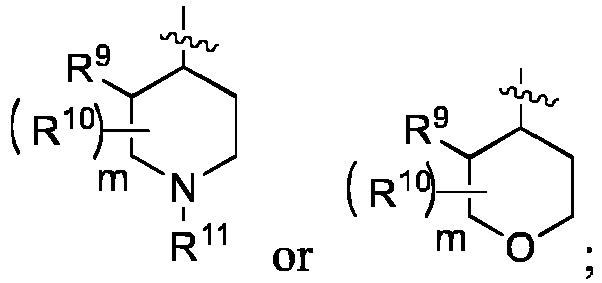
- The compound of formula I or the pharmaceutically acceptable salt thereof according to claim 3 or 4, wherein R9 is OH or NH2; the NH2 is optionally substituted with 1 or 2 Ra' or Ra"; Ra' and Ra" are each independently C1-6 alkyl.
- The compound of formula I or the pharmaceutically acceptable salt thereof according to claim 1, wherein X is N.
- The compound of formula I or the pharmaceutically acceptable salt thereof according to claim 1, wherein Y is CR7; R7 is selected from the group consisting of H, F, Cl and C1-6 alkyl, preferably F and Cl.
- The compound of formula I or the pharmaceutically acceptable salt thereof according to claim 1, wherein R3 is selected from the group consisting of H, F and Cl, preferably F and Cl.
- The compound of formula I or the pharmaceutically acceptable salt thereof according to claim 1, wherein R4 is selected from the group consisting of H, C1-6 alkyl, C1-6 alkoxy, C3-8 cycloalkyl and 3-12 membered heterocycloalkyl, the C1-6 alkyl, C1-6 alkoxy, C3-8 cycloalkyl and 3-12 membered heterocycloalkyl are each independently and optionally substituted with one or more Rb or deuterium atoms, and Rb is selected from the group consisting of OH, CN, halogen, C1-6 alkyl, C1-6 alkoxy, C1-6 haloalkyl, C1-6 haloalkoxy and C3-8 cycloalkyl; preferably, R4 is C1-6 alkyl, the C1-6 alkyl is optionally substituted with one or more Rb or deuterium atoms, and Rb is OH or halogen.
- The compound of formula I or the pharmaceutically acceptable salt thereof according to claim 1, wherein L is -(CH2)q-; q is selected from the group consisting of 1 and 2; the -(CH2)- is optionally substituted with one or more substituents selected from the group consisting of deuterium, CN, halogen, C1-6 alkyl, C3-8 cycloalkyl, C1-6 alkoxy and 3-12 membered heterocycloalkyl;preferably, q is selected from 1; the -(CH2)- is optionally substituted with one or more substituents selected from the group consisting of H, deuterium, CN, halogen, C1-6 alkyl, C3-8 cycloalkyl, C1-6 alkoxy and 3-12 membered heterocycloalkyl;most preferably, q is selected from 1; the -(CH2)- is optionally substituted with one or more deuterium atoms.
- The compound of formula I or the pharmaceutically acceptable salt thereof according to claim 1, wherein R5 and R6 are each independently selected from the group consisting of H, deuterium, CN, halogen, C1-6 alkyl and C3-8 cycloalkyl.
- The compound of formula I or the pharmaceutically acceptable salt thereof according to any one of claims 1-11, being a compound of formula I-3 or a pharmaceutically acceptable salt thereof,
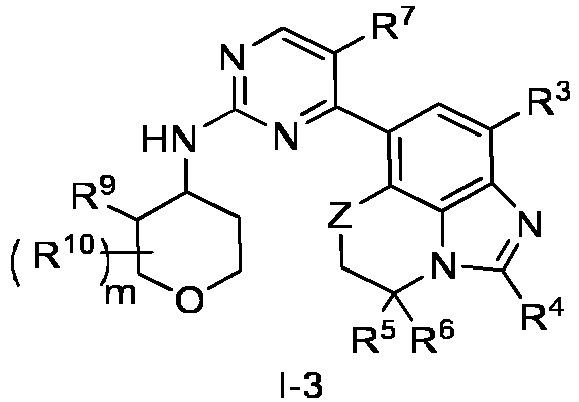 wherein R9 is OH or NH2; the NH2 is optionally substituted with 1 or 2 Ra' or Ra"; Ra' and Ra" are each independently C1-6 alkyl;R10 are each independently selected from the group consisting of OH, halogen, CN, NH2, C1-6 alkyl, C1-6 alkoxy, C1-6 haloalkyl and C1-6 haloalkoxy;m is 0, 1, or 2;R7 is selected from the group consisting of H, F, Cl and C1-6 alkyl;R3 is selected from the group consisting of H, F and Cl;R4 is selected from the group consisting of H, C1-6 alkyl, C1-6 alkoxy, C3-8 cycloalkyl and 3-12 membered heterocycloalkyl; the C1-6 alkyl, C1-6 alkoxy, C3-8 cycloalkyl and 3-12 membered heterocycloalkyl are each independently and optionally substituted with one or more Rb or deuterium atoms; Rb is selected from the group consisting of H, OH, CN and halogen;R5 and R6 are each independently selected from the group consisting of H, deuterium, CN, halogen, C1-6 alkyl and C3-8 cycloalkyl;Z is O or CHR8; R8 is selected from the group consisting of hydrogen, deuterium and halogen.
 - The compound of formula I or the pharmaceutically acceptable salt thereof according to claim 12, wherein Z is O.
- The compound of formula I or the pharmaceutically acceptable salt thereof according to claim 12, wherein Z is CHR8; R8 is selected from the group consisting of hydrogen, deuterium and halogen.
- The compound of formula I or the pharmaceutically acceptable salt thereof according to claim 13 or 14,wherein R9 is OH or NH2; the NH2 is optionally substituted with 1 or 2 Ra' or Ra"; Ra' and Ra" are each independently C1-6 alkyl;m is 0;R7 is selected from the group consisting of H, F, Cl and C1-6 alkyl;R3 is selected from the group consisting of H, F and Cl;R4 is selected from the group consisting of H, C1-6 alkyl and C1-6 alkoxy; the C1-6 alkyl and C1-6 alkoxy are each independently and optionally substituted with one or more Rb or deuterium atoms; Rb is selected from the group consisting of H, OH, CN and halogen;R5 and R6 are each independently selected from the group consisting of H, deuterium, CN, halogen and C1-6 alkyl;preferably,wherein R9 is OH;m is 0;R7 is F or Cl;R3 is F or Cl;R4 is H or C1-6 alkyl, the C1-6 alkyl is optionally substituted with one or more Rb or deuterium atoms; Rb is selected from the group consisting of OH, CN and halogen;R5 and R6 are each independently H or C1-6 alkyl;more preferably,wherein R9 is OH;m is 0;R7 is F or Cl;R3 is F or Cl;R4 is H or C1-6 alkyl, the C1-6 alkyl is optionally substituted with one or more Rb or deuterium atoms; Rb is OH;R5 and R6 are each independently selected from the group consisting of H, methyl, ethyl, n-propyl, isopropyl, n-butyl, isobutyl and tert-butyl;even preferably,wherein R9 is OH;m is 0;R7 is F or Cl;R3 is F or Cl;R4 is selected from the group consisting of H, methyl, ethyl, n-propyl, isopropyl, n-butyl, isobutyl and tert-butyl; the methyl, ethyl, n-propyl, isopropyl, n-butyl, isobutyl and tert-butyl are each independently and optionally substituted with one or more Rb; Rb is OH;R5 and R6 are each independently selected from the group consisting of H, methyl, ethyl, n-propyl, isopropyl, n-butyl, isobutyl and tert-butyl;particularly preferably,wherein R9 is OH;m is 0;R7 is F or Cl;R3 is F or Cl;R4 is selected from the group consisting of H, methyl, ethyl, n-propyl and isopropyl;R5 and R6 are each independently selected from the group consisting of H, methyl, ethyl, n-propyl and isopropyl.
- The compound of formula I or the pharmaceutically acceptable salt thereof according to any one of claims 1-15, being selected from the group consisting of








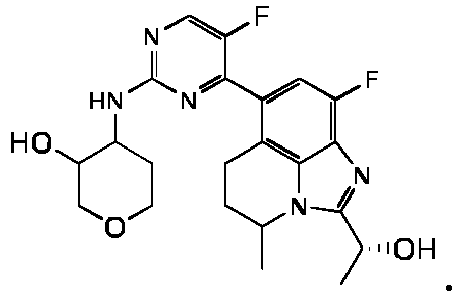
- An isotopically substituted form of the compound of formula I or the pharmaceutically acceptable salt thereof according to any one of claims 1-16, wherein preferably the isotopically substituted form is a deuterated form.
- A method for preparing the compound of formula I or the pharmaceutically acceptable salt thereof according to any one of claims 1-16, comprising a step of reacting a compound of formula I-B with a compound of formula I-C to form the compound of formula I,
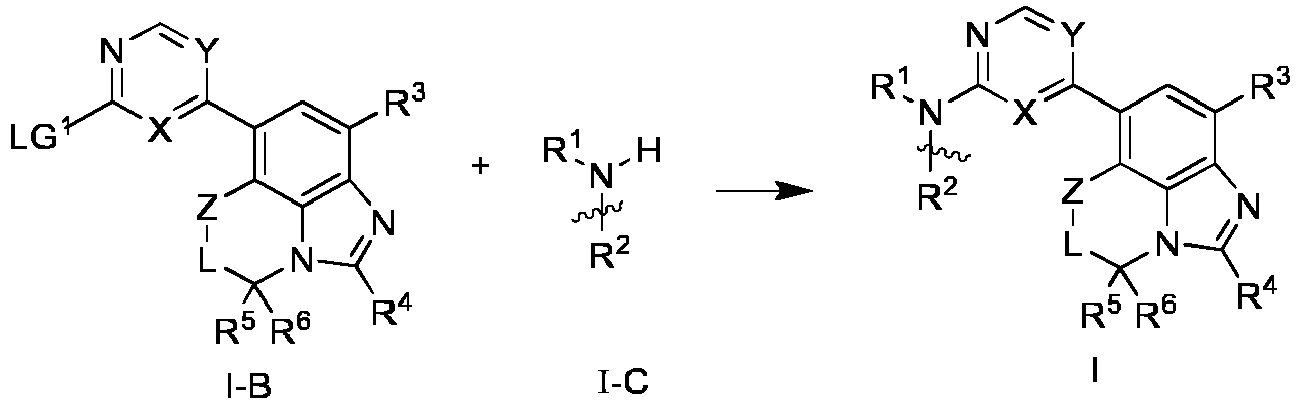 wherein LG1 is a leaving group selected from the group consisting of halogen, sulfonate, boronic acid and borate;X, Y, Z, L, R1, R2, R3, R4, R5 and R6 are as defined in claim 1.
 - A pharmaceutical composition comprising the compound of formula I or the pharmaceutically acceptable salt thereof according to any one of claims 1-16, or the isotopically substituted form according to claim 17, and a pharmaceutically acceptable excipient.
- Use of the compound of formula I or the pharmaceutically acceptable salt thereof according to any one of claims 1-16, or the isotopically substituted form according to claim 17, or the pharmaceutical composition according to claim 19 in the preparation of a medicament for preventing and/or treating a cyclin-dependent kinase-associated disease.
- Use of the compound of formula I or the pharmaceutically acceptable salt thereof according to any one of claims 1-16, or the isotopically substituted form according to claim 17, or the pharmaceutical composition according to claim 19 in the preparation of a medicament for preventing and/or treating cancer, wherein the cancer is selected from the group consisting of breast cancer, ovarian cancer, bladder cancer, uterine cancer, prostate cancer, lung cancer, esophageal cancer, head and neck cancer, intestinal cancer, kidney cancer, liver cancer, pancreatic cancer, gastric cancer and thyroid cancer.
- A compound of formula I-B or a pharmaceutically acceptable salt thereof,

Applications Claiming Priority (5)
| Application Number | Priority Date | Filing Date | Title |
|---|---|---|---|
| CN202110152320 | 2021-02-03 | ||
| CN202110342800 | 2021-03-30 | ||
| CN202110485700 | 2021-04-30 | ||
| CN202110667137 | 2021-06-16 | ||
| PCT/CN2022/074509 WO2022166799A1 (en) | 2021-02-03 | 2022-01-28 | Fused tricyclic cyclin-dependent kinase inhibitor, and preparation method therefor and pharmaceutical use thereof |
Publications (2)
| Publication Number | Publication Date |
|---|---|
| EP4289848A1 true EP4289848A1 (en) | 2023-12-13 |
| EP4289848A4 EP4289848A4 (en) | 2024-08-07 |
Family
ID=82741975
Family Applications (1)
| Application Number | Title | Priority Date | Filing Date |
|---|---|---|---|
| EP22749078.6A Pending EP4289848A4 (en) | 2021-02-03 | 2022-01-28 | CONDENSED TRICYCLIC CYCLIN-DEPENDENT KINASE INHIBITORS, PRODUCTION PROCESSES THEREOF AND PHARMACEUTICAL USE THEREOF |
Country Status (10)
| Country | Link |
|---|---|
| US (1) | US20240140963A1 (en) |
| EP (1) | EP4289848A4 (en) |
| JP (1) | JP7904214B2 (en) |
| KR (1) | KR20230142735A (en) |
| CN (5) | CN120682245A (en) |
| AU (1) | AU2022217309A1 (en) |
| CA (1) | CA3206898A1 (en) |
| MX (1) | MX2023008896A (en) |
| TW (1) | TW202231282A (en) |
| WO (1) | WO2022166799A1 (en) |
Families Citing this family (7)
| Publication number | Priority date | Publication date | Assignee | Title |
|---|---|---|---|---|
| WO2024027631A1 (en) * | 2022-08-01 | 2024-02-08 | 江苏恒瑞医药股份有限公司 | Crystal form of fused tricyclic derivative and preparation method |
| WO2024066986A1 (en) * | 2022-09-30 | 2024-04-04 | 楚浦创制(武汉)医药科技有限公司 | 2-aminopyrimidine compound, and use and pharmaceutical composition thereof |
| TW202513069A (en) | 2023-07-21 | 2025-04-01 | 美商冰洲石生物科技公司 | Aminopyrimidine derivatives as cyclin-dependent kinase inhibitors |
| CN121399137A (en) | 2023-07-27 | 2026-01-23 | 上海拓界生物医药科技有限公司 | Oxygen-containing fused tricyclic derivative and preparation method and application thereof |
| WO2026024674A1 (en) | 2024-07-22 | 2026-01-29 | Genesis Therapeutics, Inc. | Methods of treating skp2-associated cancers |
| WO2026086864A1 (en) * | 2024-10-24 | 2026-04-30 | 江苏恒瑞医药股份有限公司 | Combined use of kat6 inhibitor |
| WO2026158568A1 (en) * | 2025-01-24 | 2026-07-30 | 江苏恒瑞医药股份有限公司 | Crystalline form of cyclin-dependent kinase inhibitor, pharmaceutical composition, and use thereof |
Family Cites Families (8)
| Publication number | Priority date | Publication date | Assignee | Title |
|---|---|---|---|---|
| TW201444820A (en) | 2013-03-13 | 2014-12-01 | Abbvie Inc | Pyridine CDK9 kinase inhibitors |
| EA035469B1 (en) | 2013-03-15 | 2020-06-22 | Инсайт Холдингс Корпорейшн | Tricyclic heterocycles as bet protein inhibitors |
| EA031243B1 (en) | 2013-12-06 | 2018-12-28 | Дженентек, Инк. | Serine/threonine kinase inhibitors |
| WO2016015604A1 (en) | 2014-07-26 | 2016-02-04 | Sunshine Lake Pharma Co., Ltd. | Compounds as cdk small-molecule inhibitors and uses thereof |
| CN110818690B (en) * | 2016-07-26 | 2021-08-10 | 深圳市塔吉瑞生物医药有限公司 | Aminopyrimidines useful for inhibiting protein tyrosine kinase activity |
| KR102543603B1 (en) | 2016-12-22 | 2023-06-14 | 베타 파머수티컬 컴퍼니 리미티드 | Benzoimidazole derivatives, preparation methods and uses thereof |
| CN118286225A (en) * | 2018-04-26 | 2024-07-05 | 辉瑞公司 | 2-Amino-pyridine or 2-amino-pyrimidine derivatives as cyclin-dependent kinase inhibitors |
| CN113698391B (en) * | 2020-05-21 | 2023-06-06 | 上海拓界生物医药科技有限公司 | 4-aminopyrimidine or 2-aminotriazine compound and preparation method thereof |
-
2022
- 2022-01-28 CN CN202510830412.6A patent/CN120682245A/en active Pending
- 2022-01-28 CA CA3206898A patent/CA3206898A1/en active Pending
- 2022-01-28 CN CN202510830512.9A patent/CN120682246A/en active Pending
- 2022-01-28 US US18/263,870 patent/US20240140963A1/en active Pending
- 2022-01-28 WO PCT/CN2022/074509 patent/WO2022166799A1/en not_active Ceased
- 2022-01-28 KR KR1020237027643A patent/KR20230142735A/en active Pending
- 2022-01-28 EP EP22749078.6A patent/EP4289848A4/en active Pending
- 2022-01-28 AU AU2022217309A patent/AU2022217309A1/en active Pending
- 2022-01-28 CN CN202510830626.3A patent/CN120682247A/en active Pending
- 2022-01-28 CN CN202510830697.3A patent/CN120682248A/en active Pending
- 2022-01-28 TW TW111104090A patent/TW202231282A/en unknown
- 2022-01-28 MX MX2023008896A patent/MX2023008896A/en unknown
- 2022-01-28 CN CN202280008155.2A patent/CN116583524B/en active Active
- 2022-01-28 JP JP2023545857A patent/JP7904214B2/en active Active
Also Published As
| Publication number | Publication date |
|---|---|
| AU2022217309A1 (en) | 2023-09-14 |
| JP7904214B2 (en) | 2026-08-12 |
| CN120682246A (en) | 2025-09-23 |
| CN116583524A (en) | 2023-08-11 |
| TW202231282A (en) | 2022-08-16 |
| CN116583524B (en) | 2025-06-13 |
| CN120682248A (en) | 2025-09-23 |
| WO2022166799A1 (en) | 2022-08-11 |
| KR20230142735A (en) | 2023-10-11 |
| CA3206898A1 (en) | 2022-08-11 |
| EP4289848A4 (en) | 2024-08-07 |
| US20240140963A1 (en) | 2024-05-02 |
| JP2024504452A (en) | 2024-01-31 |
| CN120682245A (en) | 2025-09-23 |
| CN120682247A (en) | 2025-09-23 |
| MX2023008896A (en) | 2023-08-09 |
Similar Documents
| Publication | Publication Date | Title |
|---|---|---|
| CN116583524B (en) | Fused tricyclic cyclin-dependent kinase inhibitors and preparation methods and medical uses thereof | |
| EP4086261B1 (en) | Process for the preparation of coelenterazine analogues | |
| CN113698391B (en) | 4-aminopyrimidine or 2-aminotriazine compound and preparation method thereof | |
| EP3632906B1 (en) | Azaaryl derivative, preparation method therefor, and application thereof for use in pharmacy | |
| EP3689875B1 (en) | Use of triazolopyrimidine, triazolopyridine compounds and composition thereof for treating prc2-mediated diseases | |
| EP4567040A1 (en) | Crystal form of fused tricyclic derivative and preparation method | |
| Akiu et al. | Discovery of DS68702229 as a potent, orally available NAMPT (nicotinamide phosphoribosyltransferase) activator | |
| CN116217588A (en) | An oxygen-containing condensed tricyclic derivative and its preparation method and application | |
| CN117486898A (en) | Crystal form and preparation method of a fused tricyclic derivative | |
| CN114516878B (en) | Tricyclic compounds and their medicinal uses | |
| Lee et al. | 3, 5-Bis (aminopyrimidinyl) indole Derivatives: Synthesis and Evaluation of Pim Kinase Inhibitory Activities. | |
| EA049412B1 (en) | CONDENSED TRICYCLIC CYCLIN-DEPENDENT KINASE INHIBITOR, A METHOD FOR ITS PRODUCTION, AND ITS PHARMACEUTICAL APPLICATION | |
| AU2024297868A1 (en) | Oxygen-containing fused tricyclic derivative, and preparation method therefor and use thereof | |
| Miura et al. | Discovery of three-dimensional bicyclo [3.3. 1] nonanols as novel heat shock protein 90 inhibitors | |
| HK40098284A (en) | Fused tricyclic cyclin-dependent kinase inhibitor, and preparation method therefor and pharmaceutical use thereof | |
| HK40098284B (en) | Fused tricyclic cyclin-dependent kinase inhibitor, and preparation method therefor and pharmaceutical use thereof | |
| CA3299619A1 (en) | Oxygen-containing fused tricyclic derivative, and preparation method therefor and use thereof | |
| Sun et al. | Design, synthesis, and biological evaluation of diaminopyrimidine derivatives as novel focal adhesion kinase inhibitors | |
| CN117736208A (en) | Pyrrole [2,3-d ] pyrimidine derivative, and preparation method and application thereof | |
| JP2010173971A (en) | Indoloquinoxaline carboxylic acid derivative or pharmacologically allowable salt thereof, and casein kinase 2 inhibitor containing the same as active component | |
| Chen | Synthesis and chemistry of kinamycins and related antibiotics |
Legal Events
| Date | Code | Title | Description |
|---|---|---|---|
| STAA | Information on the status of an ep patent application or granted ep patent |
Free format text: STATUS: THE INTERNATIONAL PUBLICATION HAS BEEN MADE |
|
| PUAI | Public reference made under article 153(3) epc to a published international application that has entered the european phase |
Free format text: ORIGINAL CODE: 0009012 |
|
| STAA | Information on the status of an ep patent application or granted ep patent |
Free format text: STATUS: REQUEST FOR EXAMINATION WAS MADE |
|
| 17P | Request for examination filed |
Effective date: 20230824 |
|
| AK | Designated contracting states |
Kind code of ref document: A1 Designated state(s): AL AT BE BG CH CY CZ DE DK EE ES FI FR GB GR HR HU IE IS IT LI LT LU LV MC MK MT NL NO PL PT RO RS SE SI SK SM TR |
|
| DAV | Request for validation of the european patent (deleted) | ||
| DAX | Request for extension of the european patent (deleted) | ||
| A4 | Supplementary search report drawn up and despatched |
Effective date: 20240708 |
|
| RIC1 | Information provided on ipc code assigned before grant |
Ipc: A61P 35/00 20060101ALI20240702BHEP Ipc: A61K 31/5383 20060101ALI20240702BHEP Ipc: C07D 498/06 20060101ALI20240702BHEP Ipc: C07D 401/14 20060101ALI20240702BHEP Ipc: C07D 491/06 20060101ALI20240702BHEP Ipc: C07D 487/06 20060101AFI20240702BHEP |
|
| RAP1 | Party data changed (applicant data changed or rights of an application transferred) |
Owner name: JIANGSU HENGRUI PHARMACEUTICALS CO., LTD. |