EP4289828A1 - Method for the preparation of a 3,6-dihydro-2h-1,3,4-oxadiazin-2-one - Google Patents
Method for the preparation of a 3,6-dihydro-2h-1,3,4-oxadiazin-2-one Download PDFInfo
- Publication number
- EP4289828A1 EP4289828A1 EP22178272.5A EP22178272A EP4289828A1 EP 4289828 A1 EP4289828 A1 EP 4289828A1 EP 22178272 A EP22178272 A EP 22178272A EP 4289828 A1 EP4289828 A1 EP 4289828A1
- Authority
- EP
- European Patent Office
- Prior art keywords
- compound
- formula
- solvent
- acid
- trifluoromethyl
- Prior art date
- Legal status (The legal status is an assumption and is not a legal conclusion. Google has not performed a legal analysis and makes no representation as to the accuracy of the status listed.)
- Ceased
Links
- 238000000034 method Methods 0.000 title abstract description 35
- 238000002360 preparation method Methods 0.000 title abstract description 21
- XFOHCLJOWFIWRP-UHFFFAOYSA-N 3,6-dihydro-1,3,4-oxadiazin-2-one Chemical compound O=C1NN=CCO1 XFOHCLJOWFIWRP-UHFFFAOYSA-N 0.000 title description 6
- 150000001875 compounds Chemical class 0.000 abstract description 79
- LFQSCWFLJHTTHZ-UHFFFAOYSA-N Ethanol Chemical compound CCO LFQSCWFLJHTTHZ-UHFFFAOYSA-N 0.000 description 70
- XEKOWRVHYACXOJ-UHFFFAOYSA-N Ethyl acetate Chemical compound CCOC(C)=O XEKOWRVHYACXOJ-UHFFFAOYSA-N 0.000 description 45
- 230000015572 biosynthetic process Effects 0.000 description 44
- 238000003786 synthesis reaction Methods 0.000 description 43
- OKKJLVBELUTLKV-UHFFFAOYSA-N Methanol Chemical compound OC OKKJLVBELUTLKV-UHFFFAOYSA-N 0.000 description 39
- XLYOFNOQVPJJNP-UHFFFAOYSA-N water Substances O XLYOFNOQVPJJNP-UHFFFAOYSA-N 0.000 description 31
- 239000000203 mixture Substances 0.000 description 27
- -1 Hydroxy(tosyloxy)iodo Chemical group 0.000 description 22
- 239000002904 solvent Substances 0.000 description 21
- 238000006243 chemical reaction Methods 0.000 description 19
- 239000000243 solution Substances 0.000 description 19
- JNTJTCXFIXNXDV-VIFPVBQESA-N FC1=CC=C(C=C1)C1=C(C=C(C=C1)C1=NNC(O[C@H]1C)=O)C(F)(F)F Chemical compound FC1=CC=C(C=C1)C1=C(C=C(C=C1)C1=NNC(O[C@H]1C)=O)C(F)(F)F JNTJTCXFIXNXDV-VIFPVBQESA-N 0.000 description 18
- BWHMMNNQKKPAPP-UHFFFAOYSA-L potassium carbonate Chemical compound [K+].[K+].[O-]C([O-])=O BWHMMNNQKKPAPP-UHFFFAOYSA-L 0.000 description 16
- WEVYAHXRMPXWCK-UHFFFAOYSA-N Acetonitrile Chemical compound CC#N WEVYAHXRMPXWCK-UHFFFAOYSA-N 0.000 description 15
- 238000005160 1H NMR spectroscopy Methods 0.000 description 14
- KDLHZDBZIXYQEI-UHFFFAOYSA-N Palladium Chemical compound [Pd] KDLHZDBZIXYQEI-UHFFFAOYSA-N 0.000 description 14
- YXFVVABEGXRONW-UHFFFAOYSA-N Toluene Chemical compound CC1=CC=CC=C1 YXFVVABEGXRONW-UHFFFAOYSA-N 0.000 description 14
- 239000007795 chemical reaction product Substances 0.000 description 13
- 235000019439 ethyl acetate Nutrition 0.000 description 13
- 229940093499 ethyl acetate Drugs 0.000 description 13
- IAZDPXIOMUYVGZ-UHFFFAOYSA-N Dimethylsulphoxide Chemical compound CS(C)=O IAZDPXIOMUYVGZ-UHFFFAOYSA-N 0.000 description 12
- HEMHJVSKTPXQMS-UHFFFAOYSA-M Sodium hydroxide Chemical compound [OH-].[Na+] HEMHJVSKTPXQMS-UHFFFAOYSA-M 0.000 description 12
- 239000000047 product Substances 0.000 description 12
- IMNFDUFMRHMDMM-UHFFFAOYSA-N N-Heptane Chemical compound CCCCCCC IMNFDUFMRHMDMM-UHFFFAOYSA-N 0.000 description 11
- VEXZGXHMUGYJMC-UHFFFAOYSA-N Hydrochloric acid Chemical compound Cl VEXZGXHMUGYJMC-UHFFFAOYSA-N 0.000 description 10
- AFVFQIVMOAPDHO-UHFFFAOYSA-N Methanesulfonic acid Chemical compound CS(O)(=O)=O AFVFQIVMOAPDHO-UHFFFAOYSA-N 0.000 description 10
- QTBSBXVTEAMEQO-UHFFFAOYSA-N Acetic acid Chemical compound CC(O)=O QTBSBXVTEAMEQO-UHFFFAOYSA-N 0.000 description 9
- WYURNTSHIVDZCO-UHFFFAOYSA-N Tetrahydrofuran Chemical compound C1CCOC1 WYURNTSHIVDZCO-UHFFFAOYSA-N 0.000 description 8
- 239000012071 phase Substances 0.000 description 8
- 229910000027 potassium carbonate Inorganic materials 0.000 description 8
- QDRKDTQENPPHOJ-UHFFFAOYSA-N sodium ethoxide Chemical compound [Na+].CC[O-] QDRKDTQENPPHOJ-UHFFFAOYSA-N 0.000 description 8
- YMWUJEATGCHHMB-UHFFFAOYSA-N Dichloromethane Chemical compound ClCCl YMWUJEATGCHHMB-UHFFFAOYSA-N 0.000 description 7
- 206010028980 Neoplasm Diseases 0.000 description 7
- WQDUMFSSJAZKTM-UHFFFAOYSA-N Sodium methoxide Chemical compound [Na+].[O-]C WQDUMFSSJAZKTM-UHFFFAOYSA-N 0.000 description 7
- 239000003153 chemical reaction reagent Substances 0.000 description 7
- NXQGGXCHGDYOHB-UHFFFAOYSA-L cyclopenta-1,4-dien-1-yl(diphenyl)phosphane;dichloropalladium;iron(2+) Chemical compound [Fe+2].Cl[Pd]Cl.[CH-]1C=CC(P(C=2C=CC=CC=2)C=2C=CC=CC=2)=C1.[CH-]1C=CC(P(C=2C=CC=CC=2)C=2C=CC=CC=2)=C1 NXQGGXCHGDYOHB-UHFFFAOYSA-L 0.000 description 7
- 239000000463 material Substances 0.000 description 7
- 239000007787 solid Substances 0.000 description 7
- UHOVQNZJYSORNB-UHFFFAOYSA-N Benzene Chemical compound C1=CC=CC=C1 UHOVQNZJYSORNB-UHFFFAOYSA-N 0.000 description 6
- KRKNYBCHXYNGOX-UHFFFAOYSA-N citric acid Chemical compound OC(=O)CC(O)(C(O)=O)CC(O)=O KRKNYBCHXYNGOX-UHFFFAOYSA-N 0.000 description 6
- 150000002148 esters Chemical class 0.000 description 6
- 239000000543 intermediate Substances 0.000 description 6
- 230000004048 modification Effects 0.000 description 6
- 238000012986 modification Methods 0.000 description 6
- 229940093956 potassium carbonate Drugs 0.000 description 6
- 235000011181 potassium carbonates Nutrition 0.000 description 6
- NLKNQRATVPKPDG-UHFFFAOYSA-M potassium iodide Chemical compound [K+].[I-] NLKNQRATVPKPDG-UHFFFAOYSA-M 0.000 description 6
- 238000000634 powder X-ray diffraction Methods 0.000 description 6
- 230000008569 process Effects 0.000 description 6
- YNAVUWVOSKDBBP-UHFFFAOYSA-N Morpholine Chemical compound C1COCCN1 YNAVUWVOSKDBBP-UHFFFAOYSA-N 0.000 description 5
- 230000002378 acidificating effect Effects 0.000 description 5
- 239000008346 aqueous phase Substances 0.000 description 5
- 201000011510 cancer Diseases 0.000 description 5
- 238000004895 liquid chromatography mass spectrometry Methods 0.000 description 5
- 229940098779 methanesulfonic acid Drugs 0.000 description 5
- 125000002496 methyl group Chemical group [H]C([H])([H])* 0.000 description 5
- 229910052763 palladium Inorganic materials 0.000 description 5
- 239000003586 protic polar solvent Substances 0.000 description 5
- KZPYGQFFRCFCPP-UHFFFAOYSA-N 1,1'-bis(diphenylphosphino)ferrocene Chemical compound [Fe+2].C1=CC=C[C-]1P(C=1C=CC=CC=1)C1=CC=CC=C1.C1=CC=C[C-]1P(C=1C=CC=CC=1)C1=CC=CC=C1 KZPYGQFFRCFCPP-UHFFFAOYSA-N 0.000 description 4
- ZAFNJMIOTHYJRJ-UHFFFAOYSA-N Diisopropyl ether Chemical compound CC(C)OC(C)C ZAFNJMIOTHYJRJ-UHFFFAOYSA-N 0.000 description 4
- 208000033962 Fontaine progeroid syndrome Diseases 0.000 description 4
- 239000007818 Grignard reagent Substances 0.000 description 4
- CPELXLSAUQHCOX-UHFFFAOYSA-N Hydrogen bromide Chemical compound Br CPELXLSAUQHCOX-UHFFFAOYSA-N 0.000 description 4
- MZRVEZGGRBJDDB-UHFFFAOYSA-N N-Butyllithium Chemical compound [Li]CCCC MZRVEZGGRBJDDB-UHFFFAOYSA-N 0.000 description 4
- CDBYLPFSWZWCQE-UHFFFAOYSA-L Sodium Carbonate Chemical compound [Na+].[Na+].[O-]C([O-])=O CDBYLPFSWZWCQE-UHFFFAOYSA-L 0.000 description 4
- UIIMBOGNXHQVGW-UHFFFAOYSA-M Sodium bicarbonate Chemical compound [Na+].OC([O-])=O UIIMBOGNXHQVGW-UHFFFAOYSA-M 0.000 description 4
- FAPWRFPIFSIZLT-UHFFFAOYSA-M Sodium chloride Chemical class [Na+].[Cl-] FAPWRFPIFSIZLT-UHFFFAOYSA-M 0.000 description 4
- 150000001408 amides Chemical class 0.000 description 4
- 239000000010 aprotic solvent Substances 0.000 description 4
- 238000004587 chromatography analysis Methods 0.000 description 4
- 238000004440 column chromatography Methods 0.000 description 4
- 238000002290 gas chromatography-mass spectrometry Methods 0.000 description 4
- 150000004795 grignard reagents Chemical class 0.000 description 4
- 238000000227 grinding Methods 0.000 description 4
- 238000004128 high performance liquid chromatography Methods 0.000 description 4
- 238000004949 mass spectrometry Methods 0.000 description 4
- BDAGIHXWWSANSR-UHFFFAOYSA-N methanoic acid Natural products OC=O BDAGIHXWWSANSR-UHFFFAOYSA-N 0.000 description 4
- 125000000956 methoxy group Chemical group [H]C([H])([H])O* 0.000 description 4
- 239000012074 organic phase Substances 0.000 description 4
- SCVFZCLFOSHCOH-UHFFFAOYSA-M potassium acetate Chemical compound [K+].CC([O-])=O SCVFZCLFOSHCOH-UHFFFAOYSA-M 0.000 description 4
- 235000011121 sodium hydroxide Nutrition 0.000 description 4
- 229940083608 sodium hydroxide Drugs 0.000 description 4
- 239000007858 starting material Substances 0.000 description 4
- 239000000725 suspension Substances 0.000 description 4
- RYHBNJHYFVUHQT-UHFFFAOYSA-N 1,4-Dioxane Chemical compound C1COCCO1 RYHBNJHYFVUHQT-UHFFFAOYSA-N 0.000 description 3
- LBUNNMJLXWQQBY-UHFFFAOYSA-N 4-fluorophenylboronic acid Chemical compound OB(O)C1=CC=C(F)C=C1 LBUNNMJLXWQQBY-UHFFFAOYSA-N 0.000 description 3
- VYPSYNLAJGMNEJ-UHFFFAOYSA-N Silicium dioxide Chemical compound O=[Si]=O VYPSYNLAJGMNEJ-UHFFFAOYSA-N 0.000 description 3
- 238000006069 Suzuki reaction reaction Methods 0.000 description 3
- DKGAVHZHDRPRBM-UHFFFAOYSA-N Tert-Butanol Chemical compound CC(C)(C)O DKGAVHZHDRPRBM-UHFFFAOYSA-N 0.000 description 3
- 239000002253 acid Substances 0.000 description 3
- 230000003197 catalytic effect Effects 0.000 description 3
- 239000012069 chiral reagent Substances 0.000 description 3
- 239000003480 eluent Substances 0.000 description 3
- 238000001914 filtration Methods 0.000 description 3
- JVTAAEKCZFNVCJ-UHFFFAOYSA-N lactic acid Chemical compound CC(O)C(O)=O JVTAAEKCZFNVCJ-UHFFFAOYSA-N 0.000 description 3
- IUYHWZFSGMZEOG-UHFFFAOYSA-M magnesium;propane;chloride Chemical compound [Mg+2].[Cl-].C[CH-]C IUYHWZFSGMZEOG-UHFFFAOYSA-M 0.000 description 3
- 238000004519 manufacturing process Methods 0.000 description 3
- 239000004810 polytetrafluoroethylene Substances 0.000 description 3
- 229920001343 polytetrafluoroethylene Polymers 0.000 description 3
- FPGGTKZVZWFYPV-UHFFFAOYSA-M tetrabutylammonium fluoride Chemical compound [F-].CCCC[N+](CCCC)(CCCC)CCCC FPGGTKZVZWFYPV-UHFFFAOYSA-M 0.000 description 3
- 238000004704 ultra performance liquid chromatography Methods 0.000 description 3
- OSWFIVFLDKOXQC-UHFFFAOYSA-N 4-(3-methoxyphenyl)aniline Chemical compound COC1=CC=CC(C=2C=CC(N)=CC=2)=C1 OSWFIVFLDKOXQC-UHFFFAOYSA-N 0.000 description 2
- YUCBLVFHJWOYDN-PPIALRKJSA-N 4-[(r)-[(2r,4s,5r)-5-ethyl-1-azabicyclo[2.2.2]octan-2-yl]-(6-methoxyquinolin-4-yl)methoxy]-1-[(r)-[(2r,4r,5s)-5-ethyl-1-azabicyclo[2.2.2]octan-2-yl]-(6-methoxyquinolin-4-yl)methoxy]phthalazine Chemical compound C1=C(OC)C=C2C([C@@H](OC=3C4=CC=CC=C4C(O[C@@H]([C@@H]4N5CC[C@@H]([C@@H](C5)CC)C4)C=4C5=CC(OC)=CC=C5N=CC=4)=NN=3)[C@H]3C[C@@H]4CCN3C[C@@H]4CC)=CC=NC2=C1 YUCBLVFHJWOYDN-PPIALRKJSA-N 0.000 description 2
- IJGRMHOSHXDMSA-UHFFFAOYSA-N Atomic nitrogen Chemical compound N#N IJGRMHOSHXDMSA-UHFFFAOYSA-N 0.000 description 2
- YRYSNJRREQGBOS-ZETCQYMHSA-N C[C@H]1C(=NNC(O1)=O)C1=CC(=C(C=C1)N1N=C(C=C1)C(F)(F)F)C(F)(F)F Chemical compound C[C@H]1C(=NNC(O1)=O)C1=CC(=C(C=C1)N1N=C(C=C1)C(F)(F)F)C(F)(F)F YRYSNJRREQGBOS-ZETCQYMHSA-N 0.000 description 2
- 229920000742 Cotton Polymers 0.000 description 2
- IAZDPXIOMUYVGZ-WFGJKAKNSA-N Dimethyl sulfoxide Chemical compound [2H]C([2H])([2H])S(=O)C([2H])([2H])[2H] IAZDPXIOMUYVGZ-WFGJKAKNSA-N 0.000 description 2
- ABQOWYKZOMELPA-UHFFFAOYSA-N FC(N1N=CC(=C1)C1=C(C=C(C=C1)C1=NNC(OC1)=O)C(F)(F)F)F Chemical compound FC(N1N=CC(=C1)C1=C(C=C(C=C1)C1=NNC(OC1)=O)C(F)(F)F)F ABQOWYKZOMELPA-UHFFFAOYSA-N 0.000 description 2
- OAKJQQAXSVQMHS-UHFFFAOYSA-N Hydrazine Chemical compound NN OAKJQQAXSVQMHS-UHFFFAOYSA-N 0.000 description 2
- XZVRWQQQWLPFRB-QMMMGPOBSA-N NC1=NC=CC(=C1)C1=C(C=C(C=C1)C1=NNC(O[C@H]1C)=O)C(F)(F)F Chemical compound NC1=NC=CC(=C1)C1=C(C=C(C=C1)C1=NNC(O[C@H]1C)=O)C(F)(F)F XZVRWQQQWLPFRB-QMMMGPOBSA-N 0.000 description 2
- 229940123263 Phosphodiesterase 3 inhibitor Drugs 0.000 description 2
- 239000004280 Sodium formate Substances 0.000 description 2
- QAOWNCQODCNURD-UHFFFAOYSA-N Sulfuric acid Chemical compound OS(O)(=O)=O QAOWNCQODCNURD-UHFFFAOYSA-N 0.000 description 2
- ZMANZCXQSJIPKH-UHFFFAOYSA-N Triethylamine Chemical compound CCN(CC)CC ZMANZCXQSJIPKH-UHFFFAOYSA-N 0.000 description 2
- 239000012391 XPhos Pd G2 Substances 0.000 description 2
- 239000003054 catalyst Substances 0.000 description 2
- 238000006555 catalytic reaction Methods 0.000 description 2
- 239000003795 chemical substances by application Substances 0.000 description 2
- 238000004296 chiral HPLC Methods 0.000 description 2
- 239000013078 crystal Substances 0.000 description 2
- ZUOUZKKEUPVFJK-UHFFFAOYSA-N diphenyl Chemical compound C1=CC=CC=C1C1=CC=CC=C1 ZUOUZKKEUPVFJK-UHFFFAOYSA-N 0.000 description 2
- 238000004090 dissolution Methods 0.000 description 2
- 238000003821 enantio-separation Methods 0.000 description 2
- 235000019253 formic acid Nutrition 0.000 description 2
- 125000005843 halogen group Chemical group 0.000 description 2
- 125000000592 heterocycloalkyl group Chemical group 0.000 description 2
- 229910000042 hydrogen bromide Inorganic materials 0.000 description 2
- PNDPGZBMCMUPRI-UHFFFAOYSA-N iodine Chemical compound II PNDPGZBMCMUPRI-UHFFFAOYSA-N 0.000 description 2
- 239000007788 liquid Substances 0.000 description 2
- HNQIVZYLYMDVSB-UHFFFAOYSA-N methanesulfonimidic acid Chemical compound CS(N)(=O)=O HNQIVZYLYMDVSB-UHFFFAOYSA-N 0.000 description 2
- 239000003960 organic solvent Substances 0.000 description 2
- 150000002907 osmium Chemical class 0.000 description 2
- CTSLXHKWHWQRSH-UHFFFAOYSA-N oxalyl chloride Chemical compound ClC(=O)C(Cl)=O CTSLXHKWHWQRSH-UHFFFAOYSA-N 0.000 description 2
- 239000002570 phosphodiesterase III inhibitor Substances 0.000 description 2
- 235000011056 potassium acetate Nutrition 0.000 description 2
- 239000000843 powder Substances 0.000 description 2
- 125000006239 protecting group Chemical group 0.000 description 2
- 238000000746 purification Methods 0.000 description 2
- 230000006340 racemization Effects 0.000 description 2
- 229920006395 saturated elastomer Polymers 0.000 description 2
- 238000013341 scale-up Methods 0.000 description 2
- 238000012216 screening Methods 0.000 description 2
- 238000000926 separation method Methods 0.000 description 2
- 150000003384 small molecules Chemical class 0.000 description 2
- 235000017557 sodium bicarbonate Nutrition 0.000 description 2
- 229910000030 sodium bicarbonate Inorganic materials 0.000 description 2
- 235000017550 sodium carbonate Nutrition 0.000 description 2
- 229910000029 sodium carbonate Inorganic materials 0.000 description 2
- 229940001593 sodium carbonate Drugs 0.000 description 2
- HLBBKKJFGFRGMU-UHFFFAOYSA-M sodium formate Chemical compound [Na+].[O-]C=O HLBBKKJFGFRGMU-UHFFFAOYSA-M 0.000 description 2
- 235000019254 sodium formate Nutrition 0.000 description 2
- 239000000126 substance Substances 0.000 description 2
- 238000000967 suction filtration Methods 0.000 description 2
- BCNZYOJHNLTNEZ-UHFFFAOYSA-N tert-butyldimethylsilyl chloride Chemical compound CC(C)(C)[Si](C)(C)Cl BCNZYOJHNLTNEZ-UHFFFAOYSA-N 0.000 description 2
- FYSNRJHAOHDILO-UHFFFAOYSA-N thionyl chloride Chemical compound ClS(Cl)=O FYSNRJHAOHDILO-UHFFFAOYSA-N 0.000 description 2
- 231100000331 toxic Toxicity 0.000 description 2
- 230000002588 toxic effect Effects 0.000 description 2
- 239000003643 water by type Substances 0.000 description 2
- UGOMMVLRQDMAQQ-UHFFFAOYSA-N xphos Chemical group CC(C)C1=CC(C(C)C)=CC(C(C)C)=C1C1=CC=CC=C1P(C1CCCCC1)C1CCCCC1 UGOMMVLRQDMAQQ-UHFFFAOYSA-N 0.000 description 2
- ANFZGSBFEPFDNR-VUWPPUDQSA-N (2s)-1-morpholin-4-yl-2-(oxan-2-yloxy)propan-1-one Chemical compound O([C@@H](C)C(=O)N1CCOCC1)C1CCCCO1 ANFZGSBFEPFDNR-VUWPPUDQSA-N 0.000 description 1
- RPAJSBKBKSSMLJ-DFWYDOINSA-N (2s)-2-aminopentanedioic acid;hydrochloride Chemical class Cl.OC(=O)[C@@H](N)CCC(O)=O RPAJSBKBKSSMLJ-DFWYDOINSA-N 0.000 description 1
- SACVSUQLLHEZLY-UHFFFAOYSA-N 1-(difluoromethyl)-4-(4,4,5,5-tetramethyl-1,3,2-dioxaborolan-2-yl)pyrazole Chemical compound O1C(C)(C)C(C)(C)OB1C1=CN(C(F)F)N=C1 SACVSUQLLHEZLY-UHFFFAOYSA-N 0.000 description 1
- NGNBDVOYPDDBFK-UHFFFAOYSA-N 2-[2,4-di(pentan-2-yl)phenoxy]acetyl chloride Chemical compound CCCC(C)C1=CC=C(OCC(Cl)=O)C(C(C)CCC)=C1 NGNBDVOYPDDBFK-UHFFFAOYSA-N 0.000 description 1
- DCYKWKYBNWRLLZ-UHFFFAOYSA-N 4-(4,4,5,5-tetramethyl-1,3,2-dioxaborolan-2-yl)pyridin-2-amine Chemical compound O1C(C)(C)C(C)(C)OB1C1=CC=NC(N)=C1 DCYKWKYBNWRLLZ-UHFFFAOYSA-N 0.000 description 1
- FTIZUXGKTNJZEG-UHFFFAOYSA-N 4-bromo-1-iodo-2-(trifluoromethyl)benzene Chemical compound FC(F)(F)C1=CC(Br)=CC=C1I FTIZUXGKTNJZEG-UHFFFAOYSA-N 0.000 description 1
- 125000001255 4-fluorophenyl group Chemical group [H]C1=C([H])C(*)=C([H])C([H])=C1F 0.000 description 1
- HBAQYPYDRFILMT-UHFFFAOYSA-N 8-[3-(1-cyclopropylpyrazol-4-yl)-1H-pyrazolo[4,3-d]pyrimidin-5-yl]-3-methyl-3,8-diazabicyclo[3.2.1]octan-2-one Chemical class C1(CC1)N1N=CC(=C1)C1=NNC2=C1N=C(N=C2)N1C2C(N(CC1CC2)C)=O HBAQYPYDRFILMT-UHFFFAOYSA-N 0.000 description 1
- FGUUSXIOTUKUDN-IBGZPJMESA-N C1(=CC=CC=C1)N1C2=C(NC([C@H](C1)NC=1OC(=NN=1)C1=CC=CC=C1)=O)C=CC=C2 Chemical compound C1(=CC=CC=C1)N1C2=C(NC([C@H](C1)NC=1OC(=NN=1)C1=CC=CC=C1)=O)C=CC=C2 FGUUSXIOTUKUDN-IBGZPJMESA-N 0.000 description 1
- LHMCMBWRKRFIOH-YFKPBYRVSA-N ClC1=C(C=C(C=C1)C1=NNC(O[C@H]1C)=O)C(F)(F)F Chemical compound ClC1=C(C=C(C=C1)C1=NNC(O[C@H]1C)=O)C(F)(F)F LHMCMBWRKRFIOH-YFKPBYRVSA-N 0.000 description 1
- BUDQDWGNQVEFAC-UHFFFAOYSA-N Dihydropyran Chemical compound C1COC=CC1 BUDQDWGNQVEFAC-UHFFFAOYSA-N 0.000 description 1
- 101000864272 Homo sapiens Schlafen family member 12 Proteins 0.000 description 1
- 101000588476 Homo sapiens [heparan sulfate]-glucosamine N-sulfotransferase NDST3 Proteins 0.000 description 1
- 101001098818 Homo sapiens cGMP-inhibited 3',5'-cyclic phosphodiesterase A Proteins 0.000 description 1
- 101001098812 Homo sapiens cGMP-inhibited 3',5'-cyclic phosphodiesterase B Proteins 0.000 description 1
- DGAQECJNVWCQMB-PUAWFVPOSA-M Ilexoside XXIX Chemical compound C[C@@H]1CC[C@@]2(CC[C@@]3(C(=CC[C@H]4[C@]3(CC[C@@H]5[C@@]4(CC[C@@H](C5(C)C)OS(=O)(=O)[O-])C)C)[C@@H]2[C@]1(C)O)C)C(=O)O[C@H]6[C@@H]([C@H]([C@@H]([C@H](O6)CO)O)O)O.[Na+] DGAQECJNVWCQMB-PUAWFVPOSA-M 0.000 description 1
- BZLVMXJERCGZMT-UHFFFAOYSA-N Methyl tert-butyl ether Chemical compound COC(C)(C)C BZLVMXJERCGZMT-UHFFFAOYSA-N 0.000 description 1
- 238000005481 NMR spectroscopy Methods 0.000 description 1
- ZLMJMSJWJFRBEC-UHFFFAOYSA-N Potassium Chemical compound [K] ZLMJMSJWJFRBEC-UHFFFAOYSA-N 0.000 description 1
- KWYUFKZDYYNOTN-UHFFFAOYSA-M Potassium hydroxide Chemical compound [OH-].[K+] KWYUFKZDYYNOTN-UHFFFAOYSA-M 0.000 description 1
- 229910006124 SOCl2 Inorganic materials 0.000 description 1
- 102100029916 Schlafen family member 12 Human genes 0.000 description 1
- DHXVGJBLRPWPCS-UHFFFAOYSA-N Tetrahydropyran Chemical compound C1CCOCC1 DHXVGJBLRPWPCS-UHFFFAOYSA-N 0.000 description 1
- 238000002441 X-ray diffraction Methods 0.000 description 1
- 102100031395 [heparan sulfate]-glucosamine N-sulfotransferase NDST3 Human genes 0.000 description 1
- 230000001476 alcoholic effect Effects 0.000 description 1
- 229910052783 alkali metal Inorganic materials 0.000 description 1
- 150000001340 alkali metals Chemical class 0.000 description 1
- 238000005576 amination reaction Methods 0.000 description 1
- 150000001412 amines Chemical class 0.000 description 1
- 239000002246 antineoplastic agent Substances 0.000 description 1
- 238000013459 approach Methods 0.000 description 1
- 150000001491 aromatic compounds Chemical class 0.000 description 1
- 230000008901 benefit Effects 0.000 description 1
- 230000002051 biphasic effect Effects 0.000 description 1
- 239000004305 biphenyl Substances 0.000 description 1
- 235000010290 biphenyl Nutrition 0.000 description 1
- ZADPBFCGQRWHPN-UHFFFAOYSA-N boronic acid Chemical compound OBO ZADPBFCGQRWHPN-UHFFFAOYSA-N 0.000 description 1
- 230000031709 bromination Effects 0.000 description 1
- 238000005893 bromination reaction Methods 0.000 description 1
- GDTBXPJZTBHREO-UHFFFAOYSA-N bromine Chemical compound BrBr GDTBXPJZTBHREO-UHFFFAOYSA-N 0.000 description 1
- 102100037093 cGMP-inhibited 3',5'-cyclic phosphodiesterase A Human genes 0.000 description 1
- 102100037094 cGMP-inhibited 3',5'-cyclic phosphodiesterase B Human genes 0.000 description 1
- FJDQFPXHSGXQBY-UHFFFAOYSA-L caesium carbonate Chemical compound [Cs+].[Cs+].[O-]C([O-])=O FJDQFPXHSGXQBY-UHFFFAOYSA-L 0.000 description 1
- 229910000024 caesium carbonate Inorganic materials 0.000 description 1
- 229910052801 chlorine Inorganic materials 0.000 description 1
- 238000013375 chromatographic separation Methods 0.000 description 1
- 229910052681 coesite Inorganic materials 0.000 description 1
- 230000009918 complex formation Effects 0.000 description 1
- 230000008878 coupling Effects 0.000 description 1
- 238000010168 coupling process Methods 0.000 description 1
- 238000005859 coupling reaction Methods 0.000 description 1
- 229910052906 cristobalite Inorganic materials 0.000 description 1
- 239000012043 crude product Substances 0.000 description 1
- 239000002178 crystalline material Substances 0.000 description 1
- 238000002425 crystallisation Methods 0.000 description 1
- 230000008025 crystallization Effects 0.000 description 1
- DEZRYPDIMOWBDS-UHFFFAOYSA-N dcm dichloromethane Chemical compound ClCCl.ClCCl DEZRYPDIMOWBDS-UHFFFAOYSA-N 0.000 description 1
- 238000013461 design Methods 0.000 description 1
- 238000001514 detection method Methods 0.000 description 1
- DGODWNOPHMXOTR-UHFFFAOYSA-N dipotassium;dioxido(dioxo)osmium;dihydrate Chemical compound O.O.[K+].[K+].[O-][Os]([O-])(=O)=O DGODWNOPHMXOTR-UHFFFAOYSA-N 0.000 description 1
- 239000006185 dispersion Substances 0.000 description 1
- 238000009826 distribution Methods 0.000 description 1
- CETRZFQIITUQQL-UHFFFAOYSA-N dmso dimethylsulfoxide Chemical compound CS(C)=O.CS(C)=O CETRZFQIITUQQL-UHFFFAOYSA-N 0.000 description 1
- 239000003814 drug Substances 0.000 description 1
- 229940079593 drug Drugs 0.000 description 1
- 238000007876 drug discovery Methods 0.000 description 1
- 230000002526 effect on cardiovascular system Effects 0.000 description 1
- 230000000694 effects Effects 0.000 description 1
- 238000000132 electrospray ionisation Methods 0.000 description 1
- QQSGDKKFXBGYON-UHFFFAOYSA-N ethoxy-methylperoxy-(6-methyl-2-propan-2-ylpyrimidin-4-yl)oxy-sulfanylidene-$l^{5}-phosphane Chemical compound CCOP(=S)(OOC)OC1=CC(C)=NC(C(C)C)=N1 QQSGDKKFXBGYON-UHFFFAOYSA-N 0.000 description 1
- 125000004494 ethyl ester group Chemical group 0.000 description 1
- 238000002474 experimental method Methods 0.000 description 1
- 238000000605 extraction Methods 0.000 description 1
- 239000012467 final product Substances 0.000 description 1
- 238000003818 flash chromatography Methods 0.000 description 1
- 229910052731 fluorine Inorganic materials 0.000 description 1
- 125000001207 fluorophenyl group Chemical group 0.000 description 1
- 239000011888 foil Substances 0.000 description 1
- 238000004817 gas chromatography Methods 0.000 description 1
- 230000008826 genomic mutation Effects 0.000 description 1
- 238000010438 heat treatment Methods 0.000 description 1
- 239000001307 helium Substances 0.000 description 1
- 229910052734 helium Inorganic materials 0.000 description 1
- SWQJXJOGLNCZEY-UHFFFAOYSA-N helium atom Chemical compound [He] SWQJXJOGLNCZEY-UHFFFAOYSA-N 0.000 description 1
- 125000001072 heteroaryl group Chemical group 0.000 description 1
- 125000002887 hydroxy group Chemical group [H]O* 0.000 description 1
- 230000002519 immonomodulatory effect Effects 0.000 description 1
- 238000002347 injection Methods 0.000 description 1
- 239000007924 injection Substances 0.000 description 1
- 239000002198 insoluble material Substances 0.000 description 1
- 239000004310 lactic acid Substances 0.000 description 1
- 235000014655 lactic acid Nutrition 0.000 description 1
- 238000011031 large-scale manufacturing process Methods 0.000 description 1
- 238000004811 liquid chromatography Methods 0.000 description 1
- YNESATAKKCNGOF-UHFFFAOYSA-N lithium bis(trimethylsilyl)amide Chemical compound [Li+].C[Si](C)(C)[N-][Si](C)(C)C YNESATAKKCNGOF-UHFFFAOYSA-N 0.000 description 1
- YCCXQARVHOPWFJ-UHFFFAOYSA-M magnesium;ethane;chloride Chemical compound [Mg+2].[Cl-].[CH2-]C YCCXQARVHOPWFJ-UHFFFAOYSA-M 0.000 description 1
- 230000014759 maintenance of location Effects 0.000 description 1
- 238000013178 mathematical model Methods 0.000 description 1
- 238000005259 measurement Methods 0.000 description 1
- 229910052751 metal Inorganic materials 0.000 description 1
- 239000002184 metal Substances 0.000 description 1
- SKTCDJAMAYNROS-UHFFFAOYSA-N methoxycyclopentane Chemical compound COC1CCCC1 SKTCDJAMAYNROS-UHFFFAOYSA-N 0.000 description 1
- WFJRIDQGVSJLLH-UHFFFAOYSA-N methyl n-aminocarbamate Chemical compound COC(=O)NN WFJRIDQGVSJLLH-UHFFFAOYSA-N 0.000 description 1
- 125000002757 morpholinyl group Chemical group 0.000 description 1
- 229910052757 nitrogen Inorganic materials 0.000 description 1
- 238000007339 nucleophilic aromatic substitution reaction Methods 0.000 description 1
- 238000010651 palladium-catalyzed cross coupling reaction Methods 0.000 description 1
- 239000002245 particle Substances 0.000 description 1
- 238000003921 particle size analysis Methods 0.000 description 1
- 229910052700 potassium Inorganic materials 0.000 description 1
- 239000011591 potassium Substances 0.000 description 1
- 238000001556 precipitation Methods 0.000 description 1
- 239000002243 precursor Substances 0.000 description 1
- 238000012545 processing Methods 0.000 description 1
- 239000008213 purified water Substances 0.000 description 1
- 230000005855 radiation Effects 0.000 description 1
- 239000011541 reaction mixture Substances 0.000 description 1
- 230000035484 reaction time Effects 0.000 description 1
- 238000001953 recrystallisation Methods 0.000 description 1
- 238000010992 reflux Methods 0.000 description 1
- 230000004044 response Effects 0.000 description 1
- 239000011369 resultant mixture Substances 0.000 description 1
- 238000012552 review Methods 0.000 description 1
- 238000007363 ring formation reaction Methods 0.000 description 1
- 230000035945 sensitivity Effects 0.000 description 1
- 239000000741 silica gel Substances 0.000 description 1
- 229910002027 silica gel Inorganic materials 0.000 description 1
- 239000000377 silicon dioxide Substances 0.000 description 1
- 229910052708 sodium Inorganic materials 0.000 description 1
- 239000011734 sodium Substances 0.000 description 1
- 239000011780 sodium chloride Substances 0.000 description 1
- 239000011877 solvent mixture Substances 0.000 description 1
- 238000001228 spectrum Methods 0.000 description 1
- 230000000707 stereoselective effect Effects 0.000 description 1
- 238000003756 stirring Methods 0.000 description 1
- 229910052682 stishovite Inorganic materials 0.000 description 1
- 125000001981 tert-butyldimethylsilyl group Chemical group [H]C([H])([H])[Si]([H])(C([H])([H])[H])[*]C(C([H])([H])[H])(C([H])([H])[H])C([H])([H])[H] 0.000 description 1
- 238000012360 testing method Methods 0.000 description 1
- WHRNULOCNSKMGB-UHFFFAOYSA-N tetrahydrofuran thf Chemical compound C1CCOC1.C1CCOC1 WHRNULOCNSKMGB-UHFFFAOYSA-N 0.000 description 1
- 230000001225 therapeutic effect Effects 0.000 description 1
- JOXIMZWYDAKGHI-UHFFFAOYSA-N toluene-4-sulfonic acid Chemical compound CC1=CC=C(S(O)(=O)=O)C=C1 JOXIMZWYDAKGHI-UHFFFAOYSA-N 0.000 description 1
- 230000002110 toxicologic effect Effects 0.000 description 1
- 231100000027 toxicology Toxicity 0.000 description 1
- 230000007704 transition Effects 0.000 description 1
- 229910052723 transition metal Inorganic materials 0.000 description 1
- 150000003624 transition metals Chemical class 0.000 description 1
- 229910052905 tridymite Inorganic materials 0.000 description 1
- 238000000825 ultraviolet detection Methods 0.000 description 1
- 238000010626 work up procedure Methods 0.000 description 1
Images

Classifications
-
- C—CHEMISTRY; METALLURGY
- C07—ORGANIC CHEMISTRY
- C07D—HETEROCYCLIC COMPOUNDS
- C07D273/00—Heterocyclic compounds containing rings having nitrogen and oxygen atoms as the only ring hetero atoms, not provided for by groups C07D261/00 - C07D271/00
- C07D273/02—Heterocyclic compounds containing rings having nitrogen and oxygen atoms as the only ring hetero atoms, not provided for by groups C07D261/00 - C07D271/00 having two nitrogen atoms and only one oxygen atom
- C07D273/04—Six-membered rings
Definitions
- the present invention provides a method for the preparation of a 3,6-dihydro-2H-1,3,4-oxadiazin-2-one, novel intermediate compounds and their use in the methods for the preparation of a 3,6-dihydro-2H-1,3,4-oxadiazin-2-one.
- Phenotypic screening identified certain PDE3 inhibitors to be useful for the treatment of certain cancers. In the past those compounds were only known to be used for the treatment of cardiovascular indications ( Nature Reviews Drug Discovery 13, 290-314, (2014 )). Furthermore as it could be seen that not all PDE3 inhibitors are useful for the treatment of cancer it has been found that only those compounds which stabilize a complex formation between PDE3A and/or PDE3B and SLFN12 cause sell sensitivity and can be used for the treatment of cancer.
- the starting material is commercially available.
- the following disadvantages prevent from upscaling this synthesis route:
- the variant 2 is the reaction of a compound of formula (II) with an organo boron compound to achieve at a compound of formula (I), the so called Suzuki coupling reaction.
- X is a halogen atom
- a compound of formula (IV) and oxalyl chloride, in a solvent such as e.g. DMF/DCM, are reacted at a temperature range of 0 °C to RT, for 1h-20 h, then HN(OCH 3 )CH 3 •HCl, Et 3 N/CH 2 Cl 2 , is added at RT, and the mixture is subsequently reacted for 1h- 3d;
- a compound (IV-1) and R 4 CH 2 MgBr, in which R 4 is as defined supra, in a solvent such as e.g. THF, are reacted at 0 °C to RT, for 1h - 20 h, in order to obtain an intermediate compound of formula (III); and subsequent conversion of intermediate (III) into compounds of general formula (I) by the following steps: whereby conversion of compound (III) to compound (V) by introduction of R 3 again is described (i) via Suzuki coupling reaction, (j) nucleophilic aromatic substitution or (k) by transition metal catalysed amination.
- a compound of formula (V) and Hydroxy(tosyloxy)iodo)benzene in a solvent such as e.g. DMSO, water are reacted at RT, for 18 h; or a compound of formula (V) and iodine, in a solvent such as e.g. DMSO, are reacted at 60 °C, for 18h
- step (a) H 2 NNHCOOCH 3 , and HCI (aq), are reacted in a solvent such as e.g. MeOH, at RT, for 5h;
- step (b) and potassium carbonate are reacted in a solvent such as e.g. acetonitrile, at 60 °C, for 18h or the reaction product of step (b) and NaOEt/EtOH, are reacted at 0 °C for 10 min, or the reaction product of step (b) and NaH, are reacted in EtOH, at 0 °C for 10 min;
- a solvent such as e.g. acetonitrile, at 60 °C, for 18h
- the reaction product of step (b) and NaOEt/EtOH are reacted at 0 °C for 10 min
- EtOH at 0 °C for 10 min
- step (h) sodium formate and sodium hydrogencarbonate
- a solvent such as e.g. CH 3 CN, water, at 65°C, for 24h inorder to obtain the same product as from step (a) which subsequently may be converted to a compound of formula (I) via steps (b) and (c);
- step (h) The reaction product of step (h), potassium acetate and potassium iodide are reacted for 18h at RT;
- step (e) H 2 NNHCOOCH 3 and HCI (aq), are reacted in a solvent such as e.g . MeOH, at RT for 5-18h;
- step (f) and potassium carbonate are reacted in a solvent such as e.g. acetonitrile, at 60 °C, for about 18h or the reaction product of step (f) and NaOEt/EtOH, are reacted at 0 °C for 10 min, or the reaction product of step (f) and NaH, are reacted in a solvent such as e.g. EtOH, at 0 °C for 10 min in order to obtain a compound of formula (I); Enantiomeric separation is conducted on the last step and 50% of the end product is lost which makes this route a very unefficient route.
- a solvent such as e.g. acetonitrile, at 60 °C, for about 18h
- the reaction product of step (f) and NaOEt/EtOH are reacted at 0 °C for 10 min
- a solvent such as e.g. EtOH
- reaction product of step (i, j or k) and a bromination reagent like Br 2 /hydrogen bromide are reacted in a solvent such as e.g. acetic acid and water, at room temperature, for 18.
- a solvent such as e.g. acetic acid and water
- M is a metal-containing group, such as e.g. Li, or MgBr, or MgCI; and X is F, Cl, or Br; and DG is a group displacable from compounds of formula (VII) with reactands of formula (VI), selected from morpholinyl or N(OCH 3 )CH 3 (Weinreb amide); and PG is a protecting group suitable for hydroxy groups, e.g. a tri-(C 1 C 4 -alkyl)-silyl group such as e.g. tert-butyl-dimethylsilyl.
- reactands of formula (VI) selected from morpholinyl or N(OCH 3 )CH 3 (Weinreb amide)
- PG is a protecting group suitable for hydroxy groups, e.g. a tri-(C 1 C 4 -alkyl)-silyl group such as e.g. tert-butyl-dimethylsilyl.
- the object of the present invention is to provide a method for preparation of 3,6-dihydro-2H-1,3,4-oxadiazin-2-ones, especially (6S)-5-[4'-fluoro-2-(trifluoromethyl)[biphenyl]-4-yl]-6-methyl-3,6-dihydro-2H-1,3,4-oxadiazin-2-one not suffering from the disadvantages as outlined above which can be worked in industrial scale.
- the invention provides the synthesis of compound (I) comprising the following steps: Scheme (Ia-Ic): Convergent synthesis of the compound of formula (I)
- this synthesis does not only not suffer from the disadvantages mentioned above but surprisingly in addition delivers the product in a much higher enantiomeric purity and chemical purity (without chromatography in the last synthesis steps) than the synthesis which is provided in WO2019/025562 even though the chiral center is introduced earlier in the synthesis route compared to the WO2019/025562 synthesis.
- the commercially available compound of formula (VIII) is reacted with morpholine under basic conditions in a protic solvent, especially an alcoholate of an alkali metal (sodium, potassium) in an alcoholic solution, such as e.g. sodiummethanolate in methanol or sodiumethanolate in ethanol, in order to obtain a compound of formula (IX) which is further converted into a compound of formula (VI) by allowing to react the compound of formula (IX) with dihydropyrane in an aprotic solvent, especially in dichloromethane under acidic catalysis such as e.g. methanesulfonic acid with tetrahydropyrane in order to obtain a compound of formula (VI).
- a protic solvent especially an alcoholate of an alkali metal (sodium, potassium) in an alcoholic solution, such as e.g. sodiummethanolate in methanol or sodiumethanolate in ethanol
- a compound of formula (IX) which is further converted into a compound of formula (
- the morpholine group in the reaction step (VIII) ⁇ (IX) can be replaced by the Weinreb amide residue -(N(CH 3 )OCH 3 ) by performing a standard amide coupling reacting the acid or acid chloride with the amine, or reacting the ester (VIII) with Cl-Mg-N(CH 3 )(OCH 3 ) under conditions known to the person with ordinary skill.
- One aspect of the invention is the use of compound (VI) for the preparation of a compound of formula (I).
- Another aspect of the invention is the method of preparing a compound of formula (I) comprising the provision of a compound of formula (VI) by reacting a compound of formula (VIII) with morpholine or the Weinreb amide and further converting the obtained compound of formula (IX) into a compound of formula (VI) or the Weinreb analog by adding the protecting group dihydropyranyl under the conditions as outlined above and which is reacted subsequently in several steps to result in a compound of formula (I).
- One aspect of the invention is the compound of formula (V) and its use for the preparation of a compound of formula (I) as well as the use of Pd(dppf) 2 Cl 2 [1,1'-Bis(diphenylphosphino)ferrocene]dichloropalladium(II) ) for its preparation.
- one aspect of the invention is the synthesis of a compound of formula (I) comprising the step (VII) ⁇ (V) as outlined above.
- Compound (V) is converted into a Grignard reagent by reacting it with isopropylmagnesiumchloride or ethylmagnesiumchloride or by converting compound (V) into another organometal compound by reacting it with an alternative organometal reagent such as e.g. butyllithium in an aprotic solvent such as tetrahydrofurane (THF) or heptane or a mixture thereof at room temperature or below, for butyllithium at -78°C, and reacting the so obtained Grignard reagent or organometal reagent of the compound of formula (V) subsequently with the compound of formula (VI) so providing the compound of formula (IV)
- an alternative organometal reagent such as e.g. butyllithium in an aprotic solvent such as tetrahydrofurane (THF) or heptane or a mixture thereof at room temperature or below, for butyllithium at -78°C
- One aspect of the invention is the compound of formula (IV) and its use for the preparation of a compound of formula (I).
- one aspect of the invention is the synthesis of a compound of formula (I) comprising the step (V) ⁇ (IV) as outlined above.
- Acidic conditions can be achieved by using a solution of hydrochloric acid, such as e.g. aqueous hydrochloric acid, hydrochloric acid in methanol, hydrochloric acid in acetic acid ethylester, sulfuric acid, p-toluolsulfonic acid, methanesulfonic acid, preferably methanesulfonic acid.
- hydrochloric acid such as e.g. aqueous hydrochloric acid, hydrochloric acid in methanol, hydrochloric acid in acetic acid ethylester, sulfuric acid, p-toluolsulfonic acid, methanesulfonic acid, preferably methanesulfonic acid.
- aprotic solvent toluol or ethylacetate preferably ethylacetate can be used and as protic solvent or solvent mixture water and/or methanol or ethanol can be used.
- One aspect of the invention is the compound of formula (III) and its use for the preparation of a compound of formula (I).
- one aspect of the invention is the synthesis of a compound of formula (I) comprising the step (IV) ⁇ (III) as outlined above.
- the intermediate compound of formula (III) is reacted with NH 2 NHCOOCH 3 or NH 2 NHCOOCH 2 CH 3 under acidic conditions in a suitable solvent to provide the compound of formula (II)
- Acidic catalytic conditions are achieved by using methanesulfonic acid, alternatively hydrochloric acid in a suitable solvent such as e.g. water, methanol, ethanol, dioxan, cyclopentylmethylether or acetic acid ethylester or any mixtures thereof.
- Catalytic amounts of acid may be sufficient to achieve the desired reaction.
- a catalytic amount can be any amount of less than equimolar, preferably about 0,1mol% of acid relative to the starting material of compound (III) is used, more preferably the ratio as used in the example.
- the preferred solvent is acetic acid ethylester.
- One aspect of the invention is the compound of formula (II) and its use for the preparation of a compound of formula (I).
- one aspect of the invention is the synthesis of a compound of formula (I) comprising the step (III) ⁇ (II) as outlined above.
- the preparation of the compound of formula (I) is achieved by allowing a compound of formula (II) to react under basic conditions in a protic solvent thereby providing the compound of formula (I).
- aqueous sodiumhydroxide - or potassiumhydroxide solution or sodiummethanolate in methanol or sodiumethanolate in ethanol can be used, preferably aqueous sodiumhydroxide solution is used, more preferably 45% sodium hydroxide solution in water.
- the protic solvent is methanol or ethanol, preferably ethanol.
- the method above comprises a further a purification step.
- Such purification method could be a chromatography, such as e.g. column chromatography or a crystallization.
- NMR peak forms are stated as they appear in the spectra, possible higher order effects have not been considered.
- Chemical names were generated using the ACD/Name software from ACD/Labs. In some cases generally accepted names of commercially available reagents were used in place of ACD/Name generated names.
- X-Ray diffraction patterns were recorded at room temperature using XRD-Transmissions-Diffractometer X'Pert PRO (PANalytical) (radiation Cu K alpha 1, wavelength 1.5406 ⁇ , 40mA, 40kV). There was no sample preparation. All X-Ray reflections are quoted as °2 ⁇ (theta) values (peak maxima) with a resolution of ⁇ 0.2°.
- X-ray powder diffraction (XRPD) data were recorded on a STOE STADI P diffractometer using monochromatized CuKa1-radiation, a position sensitive detector, at generator settings of 40 kV and 40 mA.
- the samples were collected in transition mode, being prepared as a thin layer between two foils.
- the scanning range was between 2 ° and 40 ° 2 theta with a 0.5° step at 15 sec/step.
- a citric acid solution in water (prepared from 2,70 kg citric acid and 10,10 kg water) was added to the mixture at 20 °C. The addition takes about 60 min.
- the organic solvent of the upper organic phase (approx. 22,5 L) was distilled off (approx. 17,5 L solvent was distilled off) at 50 °C and 80 mbar to gave an oil. 8,10 kg Ethyl acetate were added to the oil and the solvent was removed at 50 °C and 80 mbar (approx. 9 L solvent was distilled off). To the residue was added 9,10 kg Ethyl acetate.
- the upper organic phase (approx. 16 L) was distilled off at 50 °C and 80 mbar to give an oil. 5 kg Ethyl acetate was added to the oil and the solvent was distilled off at 50 °C and 80 mbar to give an oil.
- the resulting oil was distilled ( ⁇ 0,1 mbar, 100 °C) or can be alternatively purified by flash chromatography (SiO 2 ) with Heptane/Ethyl acetate (2:1) to give the purified (2S)-1-[4'-fluoro-2-(trifluoromethyl)- [biphenyl]-4-yl]-2-hydroxypropan-1-one (approx. 1,2 kg) as a slightly yellow oil in 68% yield over 2 steps.
- the precipitated product was filtered and washed twice with each time 2 kg cold Diisopropyl ether.
- micronization step could be performed.
- Example 5 In analogy to Example 5, five batches were prepared and subsequently combined and micronized twice in a row to give 5,60 kg of micronized material. Here, details for micronization are given: Five batches of (6S)-5-[4'-fluoro-2-(trifluoromethyl)[biphenyl]-4-yl]-6-methyl-3,6-dihydro-2H-1,3,4-oxadiazin-2-one were prepared according to Example 5 and were combined. The combined batches were micronized twice in a row using an air jet mill.
- Example 6 lab synthesis [g] scale for comparison following the route as disclosed in example 135 of WO2019/025562, last step:
- the resultant mixture was degassed via nitrogen-filled balloon for 5 mins, with subsequent heating at 80 °C for 2 hours. After this time, the mixture was diluted with Ethyl acetate (50 mL) and washed with saturated aqueous NaCl solution (3 x 20 mL), dried (Na 2 SO 4 ), filtered and concentrated at reduced pressure. The residue was purified via Biotage Isolera chromatography (using a gradient of eluents; 1:0 to 1:1 Heptane: Ethyl acetate).
- the XRPD of Modification B as obtained is illustrated in FIG. 3 obtained by method A.
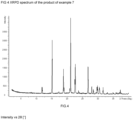
- the XRPD of the product obtained is shown in FIG. 4 obtained by method A, which is modification C. Its reflections are shown in the following table: Reflections [°2Theta] 8.3 11.8 11.9 15.1 15.1 17.3 18.8 18.9 20.9 21.1 22.5 22.6 23.6 26.8 28.0 28.5 29.6 29.8 30.4 30.5 31.5 31.6 33.0 34.9 35.1 35.8 36.2 36.6 36.9 37.3 37.6
Landscapes
- Chemical & Material Sciences (AREA)
- Organic Chemistry (AREA)
- Organic Low-Molecular-Weight Compounds And Preparation Thereof (AREA)
Abstract
The present invention provides methods for the preparation of Compound (I)
intermediate compounds and their use for the preparation of compound (I).
Description
- The present invention provides a method for the preparation of a 3,6-dihydro-2H-1,3,4-oxadiazin-2-one, novel intermediate compounds and their use in the methods for the preparation of a 3,6-dihydro-2H-1,3,4-oxadiazin-2-one.
- Cancer kills over 550,000 people in the United States and over 8 million people world-wide each year. New agents, including small molecules, molecules that impact tissue-specific growth requirements, and immunomodulatory agents, have been shown to benefit a subset of patients whose cancers have unique genomic mutations or other characteristics. Unfortunately, many cancer patients are still left without effective therapeutic options.
- One approach to identify new anti-cancer agents is phenotypic screening to discover novel small molecules displaying strong selectivity between cancer cell lines, followed by predictive chemogenomics to identify the cell features associated with drug response. Phenotypic screening identified certain PDE3 inhibitors to be useful for the treatment of certain cancers. In the past those compounds were only known to be used for the treatment of cardiovascular indications (Nature Reviews Drug Discovery 13, 290-314, (2014)). Furthermore as it could be seen that not all PDE3 inhibitors are useful for the treatment of cancer it has been found that only those compounds which stabilize a complex formation between PDE3A and/or PDE3B and SLFN12 cause sell sensitivity and can be used for the treatment of cancer. Especially this has been found for (6S)-5-[4'-fluoro-2-(trifluoromethyl)[biphenyl]-4-yl]-6-methyl-3,6-dihydro-2H-1,3,4-oxadiazin-2-one, known from
WO2019/025562 . Processes for its production in a lab scale can be found therein, some of them are shown on the following pages, e.g. the synthesis suitable for substituted 3,6-dihydro-2H-1,3,4-oxadiazin-2-ones, including 5-{4-[1-(difluoromethyl)-1H-pyrazol-4-yl]-3-(trifluoromethyl)phenyl}-3,6-dihydro-2H-1,3,4-oxadiazin-2-one, (6S)-5-[4-(2-aminopyridin-4-yl)-3-(trifluoromethyl)phenyl]-6-methyl-3,6-dihydro-2H-1,3,4-oxadiazin-2-one, (6S)-6-methyl-5-{3-(trifluoromethyl)-4-[3-(trifluoromethyl)-1H-pyrazol-1-yl]phenyl}-3,6-dihydro-2H-1,3,4-oxadiazin-2-one, and (6S)-5-[4'-fluoro-2-(trifluoromethyl)[biphenyl]-4-yl]-6-methyl-3,6-dihydro-2H-1,3,4-oxadiazin-2-one is described and is reproduced below exemplarily for (6S)-5-[4'-fluoro-2-(trifluoromethyl)[biphenyl]-4-yl]-6-methyl-3,6-dihydro-2H-1,3,4-oxadiazin-2-one as follows:
- (a) (i) SOCl2, (ii) NH(CH3)(OCH3), yield 79%
- (b) CH3CH2-Mg-Br, yield 81%
- (c) (i) Li-hexamethyldisilazane, (ii) tert-butyldimethylchlorosilane, yield 75%
- (d) AD-mix alpha (Sigma-Aldrich), methanesulfonamide, tert-butanol/water, yield 65%
- (e) H2N-NHC(O)OCH3, NaOCH3, 62% yield
- (f) PdXPhosG2, K2CO3, 1,4-dioxane/water, 53% yield, 95% purity, 63%ee for scale-up to [g] portions and 98,0%ee if smaller lab scale amounts were used
- The starting material is commercially available. The following disadvantages prevent from upscaling this synthesis route:
- most of the steps need a column chromatography
- step c has long reaction times and need very low temperature (-78°C)
- the chiral reagent use in step (d) leads not to sufficient enantiomeric purity, at best an ee of 98% were obtained, if small amounts of material are used.
- Furthermore, toxicological and process-related critically Osmium salts are used in this synthesis.
- for step f) a palladium reagent is necessary which is very unfavourable for a last step of an upscaled synthesis as even traces of palladium have to be removed, requiring a tedious work-up using column chromatographies.
- Further routes are disclosed in
WO2019/025562 , some of them are described below very generally to provide an overview only asWO2019/025562 is publically available to derive further details therefrom: -

- (a) Hydroxy(tosyloxy)iodo)benzene, DMSO, water, RT, 18 h; or iodine, DMSO, 60 °C, 18h. For the preparation of the starting material for steps (a) and (h) see
e.g. Scheme 3. - (b) H2NNHCOOCH3, HCI (aq), MeOH, RT, 5h;
- (c) potassium carbonate, acetonitrile, 60 °C, 18h or NaOEt/EtOH, 0 °C, 10 min, or NaH, EtOH, 0 °
C 10 min; - (d) sodium formate, sodium hydrogencarbonate, CH3CN, water, 65°C, 24h;
- (e) potassium acetate, potassium iodide, 18h, RT;
- (f) H2NNHCOOCH3, HCI (aq), MeOH, RT, 5-18h;
- (g) potassium carbonate, CH3CN, 60 °C, 18h or NaOEt/EtOH, 0 °
C 10 min, or NaH, EtOH, 0 °C 10 min; - (h) Br2, acetic acid, hydrogen bromide, 18h, room temperature;
- Compounds of formula (II) containing chiral centers can be optionally separated by methods known to the person skilled in the art, such as e.g. chiral chromatography, to obtain individual enantiomers or diastereomers. This methodology is not efficient for scale-up as half of the product is lost in the last step, the same applies for the next variants (i), (j) and (k) and the chiral chromatography is too cost intensive.
and (i) is a Suzuki coupling,
(j), (k): suitable for R3 = NR7R8, opt. subst. N-linked heterocycloalkyl, partially unsaturated heterocycloalkyl or heteroaryl , again here very unfavourable Pd chemistry is used in the last step. - The
variant 2 is the reaction of a compound of formula (II) with an organo boron compound to achieve at a compound of formula (I), the so called Suzuki coupling reaction. Some alternatives for specific R3 groups are also disclosed which seem not to be of relevance here. -

- A compound of formula (IV) and oxalyl chloride, in a solvent such as e.g. DMF/DCM, are reacted at a temperature range of 0 °C to RT, for 1h-20 h, then HN(OCH3)CH3 •HCl, Et3N/CH2Cl2, is added at RT, and the mixture is subsequently reacted for 1h- 3d;
- A compound (IV-1) and R4CH2MgBr, in which R4 is as defined supra, in a solvent such as e.g. THF, are reacted at 0 °C to RT, for 1h - 20 h, in order to obtain an intermediate compound of formula (III);
and subsequent conversion of intermediate (III) into compounds of general formula (I) by the following steps:
- A compound of formula (V) and Hydroxy(tosyloxy)iodo)benzene in a solvent such as e.g. DMSO, water are reacted at RT, for 18 h; or a compound of formula (V) and iodine, in a solvent such as e.g. DMSO, are reacted at 60 °C, for 18h
- The reaction product of step (a), H2NNHCOOCH3, and HCI (aq), are reacted in a solvent such as e.g. MeOH, at RT, for 5h;
- The reaction product of step (b) and potassium carbonate are reacted in a solvent such as e.g. acetonitrile, at 60 °C, for 18h or the reaction product of step (b) and NaOEt/EtOH, are reacted at 0 °C for 10 min, or the reaction product of step (b) and NaH, are reacted in EtOH, at 0 °C for 10 min;
- The reaction product of step (h), sodium formate and sodium hydrogencarbonate, are reacted in a solvent such as e.g. CH3CN, water, at 65°C, for 24h inorder to obtain the same product as from step (a) which subsequently may be converted to a compound of formula (I) via steps (b) and (c);
- The reaction product of step (h), potassium acetate and potassium iodide are reacted for 18h at RT;
- The reaction product of step (e), H2NNHCOOCH3 and HCI (aq), are reacted in a solvent such as e.g. MeOH, at RT for 5-18h;
- The reaction product of step (f) and potassium carbonate are reacted in a solvent such as e.g. acetonitrile, at 60 °C, for about 18h or the reaction product of step (f) and NaOEt/EtOH, are reacted at 0 °C for 10 min, or the reaction product of step (f) and NaH, are reacted in a solvent such as e.g. EtOH, at 0 °C for 10 min in order to obtain a compound of formula (I); Enantiomeric separation is conducted on the last step and 50% of the end product is lost which makes this route a very unefficient route.
- The reaction product of step (i, j or k) and a bromination reagent like Br2/hydrogen bromide are reacted in a solvent such as e.g. acetic acid and water, at room temperature, for 18.
-

- (c) LiHMDS/THF, 1 h, -78 °C, then tBDMSCI (tert-butyldimethylchloro silane), -78 °C to RT, 15h - 2d;
- (d) AD-Mix-a, CH3SO2NH2/tBuOH/water, 0 °C to RT 15 h - 2d;
- (e) 1. H 2NNHCOOCH3, HCI, MeOH; 2. NaOEt/EtOH or NaOMe/MeOH or NaH/EtOH, chromatography, 97%ee of (IIa);
-

- M is a metal-containing group, such as e.g. Li, or MgBr, or MgCI; and X is F, Cl, or Br; and DG is a group displacable from compounds of formula (VII) with reactands of formula (VI), selected from morpholinyl or N(OCH3)CH3 (Weinreb amide); and PG is a protecting group suitable for hydroxy groups, e.g. a tri-(C1C4-alkyl)-silyl group such as e.g. tert-butyl-dimethylsilyl. Compounds of formulae (VI) and (VII) are known to the person skilled in the art and can be readily prepared from commercially available precursors by known methods.
- (a) THF, -20 °C - 20 °C, 1h - 24h, (b) 1. H2NNHCOOCH3, HCI, MeOH; 2. TBAF (tetrabutylammonium fluoride), THF; 3. NaOEt/EtOH or NaOMe/MeOH; conversion to a compound of formula (I) can be achieved following Synthesis Variant I, step (i), (j) or (k) mentioned above.
- For industrial implementation and the production of larger kilogram amounts, the preparative processes and routes described above are suitable to only a limited extent. Employing suitable building blocks to synthesize (6S)-5-[4'-fluoro-2-(trifluoromethyl)[biphenyl]-4-yl]-6-methyl-3,6-dihydro-2H-1,3,4-oxadiazin-2-one, the most significant disadvantages for upscaling can be summarized as follows over all alternatives:
- all of them require a synthesis step under very low temperature conditions
- in many of them Palladium is used for the last step
- the chiral reagent used is expensive and/or toxic
- all of them require several chromatographic separations, including one chiral separation step
- all of them suffer from low yields
- It was therefore desirable to develop a new synthesis, which circumvents these disadvantages and is suitable for large scale production.
- Thus, the object of the present invention is to provide a method for preparation of 3,6-dihydro-2H-1,3,4-oxadiazin-2-ones, especially (6S)-5-[4'-fluoro-2-(trifluoromethyl)[biphenyl]-4-yl]-6-methyl-3,6-dihydro-2H-1,3,4-oxadiazin-2-one not suffering from the disadvantages as outlined above which can be worked in industrial scale.
- It has now been found, and this constitutes a basis of the present invention, that the method for the preparation of the 3,6-dihydro-2H-1,3,4-oxadiazin-2-one below provides higher overall yields, the process can be conducted safely and saves energy as no low temperature step is included and is suitable for a larger scale production.
- As a first aspect the invention provides the synthesis of compound (I) comprising the following steps:

- It is found that this synthesis does not only not suffer from the disadvantages mentioned above but surprisingly in addition delivers the product in a much higher enantiomeric purity and chemical purity (without chromatography in the last synthesis steps) than the synthesis which is provided in
WO2019/025562 even though the chiral center is introduced earlier in the synthesis route compared to theWO2019/025562 synthesis. - The main differences to the already published synthesis of (6S)-5-[4'-fluoro-2-(trifluoromethyl)[biphenyl]-4-yl]-6-methyl-3,6-dihydro-2H-1,3,4-oxadiazin-2-one are:
- completely changed reaction sequence (oxadiazinone cyclization in the last step)
- chiral centre from chiral-pool lactic acid, addition of a novel Grignard reagent of the aromatic compound (V) to lactic acid derivative, surprisingly no racemization under the Grignard conditions
- stereoselective hydrazine formation, again surprisingly no racemization under the reaction conditions
- circumvention of low-temperature steps
- critical toxic osmium salts which were contained in the chiral reagent Ad-mix used in the lab synthesis are not used anymore
- palladium-catalyzed cross-coupling is placed at the beginning of the synthesis sequence which now circumvents issues with Palladium-residues that might be difficult to separate from the end product when using Palladium at the end of the synthesis sequence
- use of column chromatography is significantly reduced; instead, destinations and precipitations of intermediates as well as the final product were introduced.
- overall yield over 6 linear steps is increased to 25% yield compared to 10% of the lab synthesis.
- novel synthesis was performed on kg-scale and delivers the product surprisingly in a very high enantiomeric excess (> 99,5 % ee) and reproducible high quality.
- The synthesis of a compound of formula (I)

- The commercially available compound of formula (VIII)

in order to obtain a compound of formula (IX)

- The morpholine group in the reaction step (VIII) → (IX) can be replaced by the Weinreb amide residue -(N(CH3)OCH3) by performing a standard amide coupling reacting the acid or acid chloride with the amine, or reacting the ester (VIII) with Cl-Mg-N(CH3)(OCH3) under conditions known to the person with ordinary skill.
- One aspect of the invention is the use of compound (VI) for the preparation of a compound of formula (I).
- Another aspect of the invention is the method of preparing a compound of formula (I) comprising the provision of a compound of formula (VI) by reacting a compound of formula (VIII) with morpholine or the Weinreb amide and further converting the obtained compound of formula (IX) into a compound of formula (VI) or the Weinreb analog by adding the protecting group dihydropyranyl under the conditions as outlined above and which is reacted subsequently in several steps to result in a compound of formula (I).
-

- Compound (VII) is reacted with 4-fluorophenyl)boronic acid under palladium catalysis with Pd(dppf)2Cl2 [1,1'-Bis(diphenylphosphino)ferrocene]dichloropalladium(II) ) (and addition of cesiumcarbonate or sodiumcarbonate or potassiumcarbonate in a mixture of toluene and water
thereby providing the compound of formula (V)
- It was surprising that this catalyst was the only one out of the large group of Pd catalysts which provided sufficient selectivity in this reaction.
- One aspect of the invention is the compound of formula (V) and its use for the preparation of a compound of formula (I) as well as the use of Pd(dppf)2Cl2 [1,1'-Bis(diphenylphosphino)ferrocene]dichloropalladium(II) ) for its preparation.
- Further one aspect of the invention is the synthesis of a compound of formula (I) comprising the step (VII) → (V) as outlined above.
- Compound (V) is converted


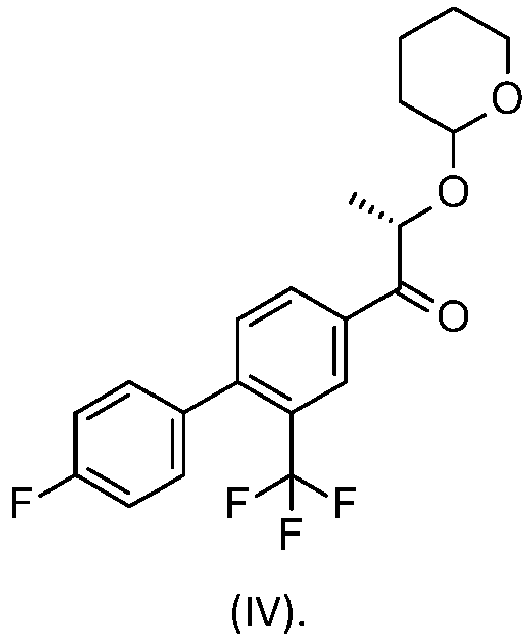
- One aspect of the invention is the compound of formula (IV) and its use for the preparation of a compound of formula (I).
- Further one aspect of the invention is the synthesis of a compound of formula (I) comprising the step (V) → (IV) as outlined above.
- Allowing an intermediate compound of formula (IV)


- Acidic conditions can be achieved by using a solution of hydrochloric acid, such as e.g. aqueous hydrochloric acid, hydrochloric acid in methanol, hydrochloric acid in acetic acid ethylester, sulfuric acid, p-toluolsulfonic acid, methanesulfonic acid, preferably methanesulfonic acid.
- As an aprotic solvent toluol or ethylacetate, preferably ethylacetate can be used and as protic solvent or solvent mixture water and/or methanol or ethanol can be used.
- One aspect of the invention is the compound of formula (III) and its use for the preparation of a compound of formula (I).
- Further one aspect of the invention is the synthesis of a compound of formula (I) comprising the step (IV) → (III) as outlined above.
- The intermediate compound of formula (III)


- Acidic catalytic conditions are achieved by using methanesulfonic acid, alternatively hydrochloric acid in a suitable solvent such as e.g. water, methanol, ethanol, dioxan, cyclopentylmethylether or acetic acid ethylester or any mixtures thereof. Catalytic amounts of acid may be sufficient to achieve the desired reaction. A catalytic amount can be any amount of less than equimolar, preferably about 0,1mol% of acid relative to the starting material of compound (III) is used, more preferably the ratio as used in the example.
- The preferred solvent is acetic acid ethylester.
- One aspect of the invention is the compound of formula (II) and its use for the preparation of a compound of formula (I).
- Further one aspect of the invention is the synthesis of a compound of formula (I) comprising the step (III) → (II) as outlined above.
- The preparation of the compound of formula (I)


- For basic conditions an aqueous sodiumhydroxide - or potassiumhydroxide solution or sodiummethanolate in methanol or sodiumethanolate in ethanol can be used, preferably aqueous sodiumhydroxide solution is used, more preferably 45% sodium hydroxide solution in water.
- The protic solvent is methanol or ethanol, preferably ethanol.
- Optionally the method above comprises a further a purification step.
- Such purification method could be a chromatography, such as e.g. column chromatography or a crystallization.
- Some aspects of the invention are the reactions steps as outlined above following the reaction conditions as disclosed in examples 1-5 and their use for the preparation of the compound of formula (I).
- As outlined for (6S)-5-[4'-fluoro-2-(trifluoromethyl)[biphenyl]-4-yl]-6-methyl-3,6-dihydro-2H-1,3,4-oxadiazin-2-one above, the corresponding reactions steps can be used to prepare the following compounds: 5-{4-[1-(difluoromethyl)-1H-pyrazol-4-yl]-3-(trifluoromethyl)phenyl}-3,6-dihydro-2H-1,3,4-oxadiazin-2-one, (6S)-5-[4-(2-aminopyridin-4-yl)-3-(trifluoromethyl)phenyl]-6-methyl-3,6-dihydro-2H-1,3,4-oxadiazin-2-one, (6S)-6-methyl-5-{3-(trifluoromethyl)-4-[3-(trifluoromethyl)-1H-pyrazol-1-yl]phenyl}-3,6-dihydro-2H-1,3,4-oxadiazin-2-one, and (6S)-5-[4'-fluoro-2-(trifluoromethyl)[biphenyl]-4-yl]-6-methyl-3,6-dihydro-2H-1,3,4-oxadiazin-2-one by using the appropriate boronic acid compound, e.g. 1-(difluoromethyl)-4-(4,4,5,5-tetramethyl-1,3,2-dioxaborolan-2-yl)-1H-pyrazole, 2-aminopyridine-4-boronic acid pinacol ester, or 4-fluorophenyl boronic acid in order to introduce the ring moiety different from fluorophenyl in the reaction sequence (VII) → (V).
- NMR peak forms are stated as they appear in the spectra, possible higher order effects have not been considered.
- Chemical names were generated using the ACD/Name software from ACD/Labs. In some cases generally accepted names of commercially available reagents were used in place of ACD/Name generated names.
- The following table 1 lists the abbreviations used in this paragraph and in the Examples section as far as they are not explained within the text body. Other abbreviations have their meanings customary per se to the skilled person.
- The following table lists the abbreviations used herein.
- d
- doublet (1H-NMR signal)
- Ad-mix alpha
- Reagent, Aldrich, contains (DHQ)2PHAL, Potassium carbonate, powder, Potassium ferricyanide, Potassium osmate dihydrate
- DCM
- dichloromethane
- DMSO
- dimethylsulfoxide
- dppf
- 1,1'-bis(diphenylphosphino)ferrocene
- ee
- Enantiomeric excess
- eq.
- equivalent(s)
- ESI
- electro-spray ionization (MS)
- Et
- ethyl
- EtOAc
- ethyl acetate
- g
- gram
- GCMS
- gas chromatography-coupled mass spectroscopy
- h
- hour(s)
- 1H-NMR
- proton nuclear magnetic resonance spectroscopy
- HPLC
- high performance liquid chromatography
- Hz
- hertz
- Kg
- kilogram
- L
- litre
- LCMS
- liquid chromatography-coupled mass spectroscopy
- M
- molarity
- m
- metre
- m
- multiplet (1H-NMR signal)
- mbar
- millibar
- Me
- methyl
- MeOH
- methanol
- MHz
- megahertz
- MS
- mass spectrometry
- min
- minute(s)
- mL
- millilitre
- mm
- millimetre
- MS
- mass spectroscopy
- m/z
- mass-to-charge ratio (MS)
- nm
- nanometer
- ppm
- parts per million
- Pd(dppf)Cl2
- [1,1'-Bis (diphenylphosphino)ferrocene]palladium (II) dichloride
- q
- quartet (1H-NMR signal)
- quin
- quintett (1H-NMR signal)
- rt
- room temperature
- Rt
- retention time (HPLC)
- s
- singlet (1H-NMR signal)
- sat.
- saturated (solution)
- t
- triplet (1H-NMR signal)
- THF
- tetrahydrofuran
- UPLC
- high performance liquid chromatography
- UV
- ultraviolet
- v
- volume
- µm
- micrometre
- °C
- degree celsius
- The various aspects of the invention described in this application are illustrated by the following examples which are not meant to limit the invention in any way.
- The example testing experiments described herein serve to illustrate the present invention and the invention is not limited to the examples given.
- All reagents, for which the synthesis is not described in the experimental part, are either commercially available, or are known compounds or may be formed from known compounds by known methods by a person skilled in the art.
- Instrument: Waters ACQUITY SQD UPLC system; column: Waters Acquity UPLC HSS T3 1.8 µm 50 x 1 mm; eluent A: 1 l water + 0.25 ml 99% formic acid, eluent B: 1 l acetonitrile + 0.25 ml 99% formic acid; gradient: 0.0 min 90% A → 1.2
min 5% A → 2.0min 5% A; flow rate: 0.40 ml/min; UV detection: 208 - 400 nm. - Instrument: Thermo Scientific DSQII, Thermo Scientific Trace GC Ultra system; column: Restek RTX-35MS, 15
m x 200 µm x 0.33 µm; constant helium flow: 1.20 ml/min; oven: 60°C; inlet: 220°C; gradient: 60°C, 30°C/min → 300°C (hold time 3.33 min). - System: High performance liquid chromatograph equipped with gradient pumps, UV detector & attached with data recorder and integrator software; column: Chiralpak IA (250*4.6 mm, 5µm); flow: 1 mL/min; column temperature: 40°C; injection volume 10µL, detection 292 nm, run time: 15 min; mobile phase: n-heptane / 2-propanole 90/10 (v/v).
- There was no sample preparation.
- X-Ray diffraction patterns were recorded at room temperature using XRD-Transmissions-Diffractometer X'Pert PRO (PANalytical) (radiation Cu K alpha 1, wavelength 1.5406 Å, 40mA, 40kV). There was no sample preparation. All X-Ray reflections are quoted as °2Θ (theta) values (peak maxima) with a resolution of ±0.2°.
- X-ray powder diffraction (XRPD) data were recorded on a STOE STADI P diffractometer using monochromatized CuKa1-radiation, a position sensitive detector, at generator settings of 40 kV and 40 mA. The samples were collected in transition mode, being prepared as a thin layer between two foils. The scanning range was between 2 ° and 40 ° 2 theta with a 0.5° step at 15 sec/step.
-

- To 166,3 kg toluene and 96,0 kg water were added 24,0 kg (68,4 mol) commercially available 4-bromo-1-iodo-2-(trifluoromethyl)benzene, 12,5 kg (89,3 mol) (4-fluorophenyl)boronic acid and 21,7 kg (204,7 mol) sodium carbonate. To the mixture was added 250 g (0,34 mol) Pd(dppf)Cl2 and the resulting biphasic solution was heated to 50-60°C and stirred for 6 h. The mixture was cooled down to 20 °C and the phases were separated. The aqueous phase was extracted with 41,6 kg toluene and the toluene phases were combined. The organic phase was filtered through silica gel (12 Kg) to remove Pd-residues. Subsequently, the organic solvent was removed in vacuo to give crude product, which was distilled (1 mbar, 120 °C) to give 16,6 kg 4-bromo-4'-fluoro-2-(trifluoromethyl)[biphenyl] as a colorless liquid in 76% yield.
- 1H NMR (600 MHz, DMSO-d 6) δ ppm: 7,29 (m, 2 H), 7,36 (t, J=7,63 Hz, 3 H), 7,94 (dd, J1 =8,22 Hz, J2 =1,96 Hz, 1 H), 8,00 (d, J=1,96 Hz, 1 H).
- GCMS (method 2): Rt = 4,69 min; MS m/z = 320, 318 (M-H)+, 219, 170, 110.
-

- To 1,80 kg (5,64 mol) 4-bromo-4'-fluoro-2-(trifluoromethyl)[biphenyl] were added 1,60 kg THF. At 20 °C, 3,30 kg (6,77 mol) Isopropylmagnesium chloride 2M in THF were added to the above prepared solution over 45 min. During preparation of the Grignard solution, the reaction mixture gets heated to 28°C and the mixture was stirred at 28°C for 5 h. The mixture was cooled to 0-4 °C.
- A solution of 1,53 kg (6,28 mol) (2S)-1-(morpholin-4-yl)-2-(tetrahydro-2H-pyran-2-yloxy)propan-1-one prepared according to J. Pesti et al., Org. Process Res. Dev. 2009, 13, 716-728; (using the alternative enantiomer as an ethylester as starting material) in 3,20 kg THF was added to the above prepared Grignard reagent at 0-4 °C within 30 min. The mixture was heated to 20 °C and is stirred for 30 min at 20 °C.
- A citric acid solution in water (prepared from 2,70 kg citric acid and 10,10 kg water) was added to the mixture at 20 °C. The addition takes about 60 min.
- 11,34 kg Ethyl acetate are added to the quenched mixture and the two-phasic mixture was stirred for 10 min at 20 °C. The phases are separated and the lower aqueous phase is discarded.
- To the upper organic phase (approx. 24 L) was added 6,50 kg saturated NaCl solution in water and the mixture was stirred for 10 min at 20 °C. The phases were separated and the lower aqueous phase was discarded.
- The organic solvent of the upper organic phase (approx. 22,5 L) was distilled off (approx. 17,5 L solvent was distilled off) at 50 °C and 80 mbar to gave an oil. 8,10 kg Ethyl acetate were added to the oil and the solvent was removed at 50 °C and 80 mbar (approx. 9 L solvent was distilled off). To the residue was added 9,10 kg Ethyl acetate.
- The prepared solution of (2R)-1-[4'-fluoro-2-(trifluoromethyl)[biphenyl]-4-yl]-2-(tetrahydro-2H-pyran-2-yloxy)propan-1-one in Ethyl acetate (approx. 12 kg solution) was used in the next step (synthesis of (2R)-1-[4'-fluoro-2-(trifluoromethyl)[biphenyl]-4-yl]-2-hydroxypropan-1-one).
- 1H NMR (600 MHz, DMSO-d 6) δ ppm: 0,99 (m, 1 H), 1,25 (m, 1 H), 1,38 (d, J=6,65 Hz, 3 H), 1,44 (d, J=6,85 Hz, 3 H), 1,48 (m, 5 H), 1,69 (m, 5 H), 3,47 (m, 1 H), 3,55 (d, J=4,89 Hz, 1 H), 3,63 (td, J1 =7,43 Hz, J2 =7,43 Hz, J3 =3,52 Hz, 1 H), 3,81 (m, 1 H), 4,67 (t, J=3,33 Hz, 1 H), 4,82 (dd, J1 =5,09 Hz, J2 =2,15 Hz, 1 H), 5,09 (q, J=6,65 Hz, 1 H), 5,24 (q, J=7,04 Hz, 1 H), 7,32 (td, J1 =8,90 Hz, J2 =0,98 Hz, 4 H), 7,42 (m, 4 H), 7,60 (dd, J1 =7,92 Hz, J2 =4,79 Hz, 2 H), 8,34 (m, 3 H), 8,49 (s, 1 H).
- GCMS (method 2): Rt = 3,67 min; MS m/z = 240, 219, 201, 170.
-

- To 12 kg solution of (2S)-1-[4'-fluoro-2-(trifluoromethyl)[biphenyl]-4-yl]-2-(tetrahydro-2H-pyran-2-yloxy)propan-1-one in Ethyl acetate (see example 2) was added 1,09 kg (11,3 mol) of methanesulfonic acid at 20 °C. The mixture was stirred for 2 h at 20 °C.
- 8 kg water were added to the dark mixture at 20 °C and the mixture was stirred for 10 min. The phases are separated and the aqueous phase (approx. 9 kg) was extracted with 3 kg Ethyl acetate.
- The Ethyl acetate phases from both extractions were combined and 6 kg saturated NaCl solution in water was added. The mixture was stirred for 10 min. The phases were separated and the lower aqueous phase was discarded.
- The upper organic phase (approx. 16 L) was distilled off at 50 °C and 80 mbar to give an oil. 5 kg Ethyl acetate was added to the oil and the solvent was distilled off at 50 °C and 80 mbar to give an oil.
- The resulting oil was distilled (< 0,1 mbar, 100 °C) or can be alternatively purified by flash chromatography (SiO2) with Heptane/Ethyl acetate (2:1) to give the purified (2S)-1-[4'-fluoro-2-(trifluoromethyl)- [biphenyl]-4-yl]-2-hydroxypropan-1-one (approx. 1,2 kg) as a slightly yellow oil in 68% yield over 2 steps.
- 1H NMR (600 MHz, DMSO-d6) δ ppm: 1,34 (d, J=6,85 Hz, 3 H), 5,07 (quin, J=6,65 Hz, 1 H), 5,61 (d, J=6,46 Hz, 1 H), 7,32 (t, J=8,80 Hz, 2 H), 7,41 (dd, J1 =8,51 Hz, J2 =5,58 Hz, 2 H), 7,58 (d, J=8,02 Hz, 1 H), 8,32 (d, J=8,02 Hz, 1 H), 8,37 (s, 1 H).
- The two steps described here (synthesis of (2S)-1-[4'-fluoro-2-(trifluoromethyl)[biphenyl]-4-yl]-2-(tetrahydro-2H-pyran-2-yloxy)propan-1-one and synthesis of (2S)-1-[4'-fluoro-2-(trifluoromethyl)[biphenyl]-4-yl]-2-hydroxypropan-1-one) were performed several times and batches were combined to get 3,05 kg of (2S)-1-[4'-fluoro-2-(trifluoromethyl)[biphenyl]-4-yl]-2-hydroxypropan-1-one to perform the next step (Example 4) in reasonable batch size.
-

- To 3,05 kg (9,76 mol) (2S)-1-[4'-fluoro-2-(trifluoromethyl)[biphenyl]-4-yl]-2-hydroxypropan-1-one was added 21,2 kg ethanol. 0,88 kg (9,76 mol) methyl hydrazine carboxylate as well as 0,1 L of
HCI 0,1M in water (0,01 mol) were added at 20 °C. The mixture was heated to reflux for 18 h. - Approx. 20 L of solvent were distilled off at 90 °C and 7,4 kg Diisopropyl ether was added. Approx. 9 L of solvent were distilled off at 80-90 °C and 7,4 kg Diisopropyl ether was added. Approx. 12 L of solvent were distilled off at 80-90 °C and 7,4 kg Diisopropyl ether was added. The mixture was cooled to 2 °C over 60 min and was stirred for approx. 8 h at 2 °C.
- The precipitated product was filtered and washed twice with each
time 2 kg cold Diisopropyl ether. - The wet product was dried at 50 °C in-vacuo to give 2,01 kg of methyl (2Z)-2-{(2S)-1-[4'-fluoro-2-(trifluoromethyl)[biphenyl]-4-yl]-2-hydroxypropylidene}hydrazinecarboxylate as a white solid in 54% yield.
- 1H NMR (400 MHz, DMSO-d 6) δ ppm: 1,38 (d, J=6,72 Hz, 3 H), 3,72 (s, 3 H), 5,27 (dd, J1 =6,79 Hz, J2 =3,36 Hz, 1 H), 6,38 (d, J=3,06 Hz, 1 H), 7,36 (m, 5 H), 8,00 (d, J=8,34 Hz, 1 H), 8,12 (s, 1 H), 11,06 (s, 1 H).
- LCMS (method 1): Rt = 1,04 min; MS (ESIpos): m/z = 385 (M+H)+
-

- To 15,8 kg ethanol was added 2,00 kg (5,20 mol) methyl (2Z)-2-{(2S)-1-[4'-fluoro-2-(trifluoromethyl) [biphenyl]-4-yl]-2-hydroxypropylidene}hydrazinecarboxylate at 20 °C. 464 g sodium hydroxide solution (45% in water) was added and the mixture was stirred at 20 °C for 1 h. Subsequently, 312 g acetic acid was added and the mixture was stirred at 20 °C for 30 min.
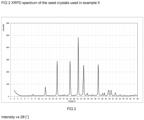
- After filtration (final processing), 21,0 kg purified water was added to the mixture at 20°C. A suspension of seed crystals*) (modification C) in ethanol/water (1:1) was added. The mixture was stirred for at 20 °C for 8 h. The crystallized product was filtered, washed twice each time with 2 L water/ethanol (1:1) and dried at 50°C in-vacuo to give 1,68 kg (6S)-5-[4'-fluoro-2-(trifluoromethyl)[biphenyl]-4-yl]-6-methyl-3,6-dihydro-2H-1,3,4-oxadiazin-2-one as a white solid in 92% yield.
- 0,5 g of (6S)-5-[4'-fluoro-2-(trifluoromethyl)[biphenyl]-4-yl]-6-methyl-3,6-dihydro-2H-1,3,4-oxadiazin-2-one (obtained as modification A and B in analogy to e.g. published methods) were added to 10 mL of a 1:1 mixture of water/ethanol (approx.. 5 w.%). A suspension of (6S)-5-[4'-fluoro-2-(trifluoromethyl)[biphenyl]-4-yl]-6-methyl-3,6-dihydro-2H-1,3,4-oxadiazin-2-one in ethanol/water (1:1) was formed. After stirring the suspension for 16 h at 30 °C, the suspension was filtered. The solid was dried to obtain (6S)-5-[4'-fluoro-2-(trifluoromethyl)[biphenyl]-4-yl]-6-methyl-3,6-dihydro-2H-1,3,4-oxadiazin-2-one in modification C as shown in
FIG. 2 , obtained by method B. - 1H NMR (500 MHz, DMSO-d 6) δ ppm: 1,49 (d, J=6,94 Hz, 3 H), 5,96 (q, J=6,91 Hz,1 H), 7,31 (t, J=7,96 Hz, 2 H), 7,40 (t, J=6,48 Hz, 2 H), 7,53 (d, J=8,04 Hz, 1 H), 8,06 (dd, J1 =8,12 Hz, J2 =1,50 Hz, 1 H), 8,17 (s, 1 H), 11,32 (s, 1 H).
- LCMS (method 1): Rt = 1,02 min; MS (ESIneg): m/z = 351 (M-H)-
- Chiral HPLC (method 3): Rt (R-enantiomer) = 10,5 min; Rt (S-enantiomer) = 11,5 min. ee (S-enantiomer) > 99,5%.
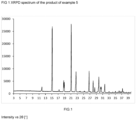
- The XRPD of Modification C as obtained by example 1.5 is illustrated by
FIG. 1 obtained using method B. - Subsequently optionally a micronization step could be performed.
- In analogy to Example 5, five batches were prepared and subsequently combined and micronized twice in a row to give 5,60 kg of micronized material. Here, details for micronization are given:
Five batches of (6S)-5-[4'-fluoro-2-(trifluoromethyl)[biphenyl]-4-yl]-6-methyl-3,6-dihydro-2H-1,3,4-oxadiazin-2-one were prepared according to Example 5 and were combined. The combined batches were micronized twice in a row using an air jet mill. -
Used Device Mill 200 mm spiral jet mill (Bayer design) Dosinq device (Type) vibrating chute Grinding chamber lining (material) PTFE Injector motive nozzle (diameter) 2,9 mm Grindinq nozzle (diameter) 2,2 mm 32°Collectinq nozzle (diameter) 8 mm PTFE Outlet opening (diameter) 28,3 mm PTFE -
Grinding Parameter Actual value Injector air pressure [bar] 4,3 Grindinq air pressure [bar] 6 Product throughput [g/min] 100 Total grinding time [min] 68 - Particle Size distribution (X10/X50/X90): 1,2/4/10 µm.
-
- Laser diffraction pattern analyzer (Sympatec HELOS & RODOS), R3:0.5/0.9.... 175µm), (100 mm focal length).
- Dry dispersion (RODOS) at 4 bar,
- Mathematical model (LD) - Sympatec Code, basis Fraunhofer Diffraction
- In a vessel was charged (6S)-5-[4-chloro-3-(trifluoromethyl)phenyl]-6-methyl-3,6-dihydro-2H-1,3,4-oxadiazin-2-one (7.65 g, 25.10 mmol), 4-fluorophenylboronic acid (5.27 mg, 37.64 mmol) ,2-(Dicyclohexylphosphino)-2',4',6'-triisopropylbiphenyl (XPhos, 718 mg, 1.51 mmol) and K2CO3 (7.18 g, 50.19 mmol) and Chloro(2-dicyclohexylphosphino-2',4',6'-triisopropyl-1,1'-biphenyl)[2-(2'-amino-1,1'-biphenyl)]palladium(II), X-Phos aminobiphenyl palladium chloride precatalyst (XPhos-Pd-G2, 1.18 g, 0.75 mmol) in 1,4-dioxane (115 mL) and water (38.4 mL). The resultant mixture was degassed via nitrogen-filled balloon for 5 mins, with subsequent heating at 80 °C for 2 hours. After this time, the mixture was diluted with Ethyl acetate (50 mL) and washed with saturated aqueous NaCl solution (3 x 20 mL), dried (Na2SO4), filtered and concentrated at reduced pressure. The residue was purified via Biotage Isolera chromatography (using a gradient of eluents; 1:0 to 1:1 Heptane: Ethyl acetate). The desired fractions were combined, concentrated in vacuo and triturated with tert-butyl methyl ether/Heptane (1:1) with the insoluble material isolated by suction filtration and dried in vacuo to give a grey powder (6.45 g, 95.88 %ee). This material was suspended in 40%Ethanol/Water and warmed to facilitate dissolution. Once the majority of the material was dissolved, the solution was filtered through a cotton plug and allowed to cool to room temperature and stand at room temperature for 60 h. After this time, the crystallized material was isolated by suction filtration and dried in vacuo to afford the product as a colourless crystalline solid (4.48 g, 89.1 %ee). This material was suspended in 40%Ethanol/Water and warmed to facilitate dissolution, with the solution was filtered through a cotton plug and allowed to cool to room temperature and stand at room temperature for 16 h, with the crop of crystalline material isolated to afford (6S)-5-[4'-fluoro-2-(trifluoromethyl)[biphenyl]-4-yl]-6-methyl-3,6-dihydro-2H-1,3,4-oxadiazin-2-one in 39% yield (3.46 g, 93.78 %ee)
- The XRPD of Modification B as obtained is illustrated in
FIG. 3 obtained by method A. - In a flask (6S)-5-[4'-fluoro-2-(trifluoromethyl)[biphenyl]-4-yl]-6-methyl-3,6-dihydro-2H-1,3,4-oxadiazin-2-one, 2.00 g, (93.78 %ee) of the product obtained in example 6 which was stored a room temperature for about 7 month, was suspended in 20 mL of water and 20 mL of ethanol and stirred at room temperature for 30 min. The solid was collected by filtration and the collected solids were again suspended in 20 mL of water and 20 mL of ethanol and stirred at room temperature for 30 min. The remaining crystalline solid was collected by filtration again, dried in a vacuum oven at 50°C overnight to yield 1.62g of the title compound (6S)-5-[4'-fluoro-2-(trifluoromethyl)[biphenyl]-4-yl]-6-methyl-3,6-dihydro-2H-1,3,4-oxadiazin-2-one with 99.7% ee (99% purity by LCMS and H-NMR).
- The XRPD of the product obtained is shown in
FIG. 4 obtained by method A, which is modification C. Its reflections are shown in the following table:Reflections [°2Theta] 8.3 11.8 11.9 15.1 15.1 17.3 18.8 18.9 20.9 21.1 22.5 22.6 23.6 26.8 28.0 28.5 29.6 29.8 30.4 30.5 31.5 31.6 33.0 34.9 35.1 35.8 36.2 36.6 36.9 37.3 37.6
Claims (20)
- A method for the preparation of a compound of formula (I)


- The method of claim 1, where the basic condition is an aqueous sodiumhydroxide - or potassiumhydroxide solution or sodiummethanolate in methanol or sodiumethanolate in ethanol.
- The method of claim 1 further comprising a purification step.
- The method of claim 1, where the protic solvent is methanol or ethanol.
- The method of claim 1, further comprising the step of allowing an intermediate compound of formula (III)


- The method of claim 5 where acidic conditions are achieved by addition of a solution of hydrochloric acid in a suitable solvent selected from water, methanol, dioxan, cyclopentylmethylether or acetic acid ethylester or any mixtures thereof.
- The method of claim 6 where the amount of hydrochloric acid is catalytic.
- The method of claims 1 and 5, further comprising the step of allowing an intermediate compound of formula (IV)
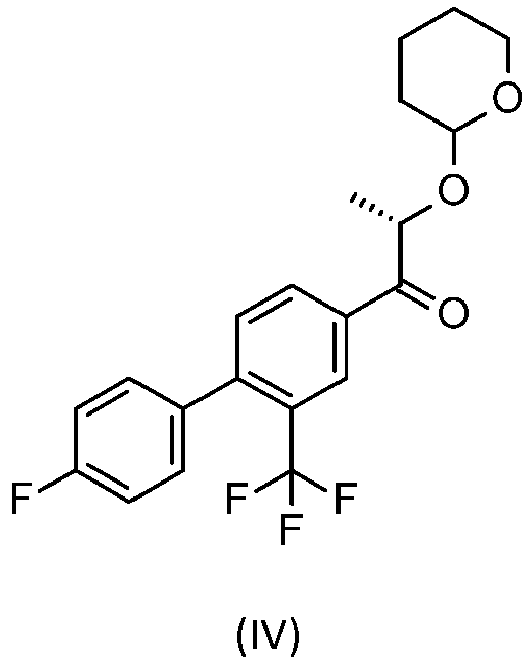

- The method according to claim 8 where aqueous hydrochloric acid, hydrochloric acid in methanol, hydrochloric acid in acetic acid ethylester, sulfuric acid, p-toluolsulfonic acid, or methanesulfonic acid is used to achieve the acidic conditions.
- The method according to claim 8 where acetic acid ethylester or toluol is used as aprotic solvent or water and/or methanol or ethanol is used as protic solvent or mixture of solvents.
- The method of claims 1, 5 or 8, further comprising the step of converting the compound of formula (V)

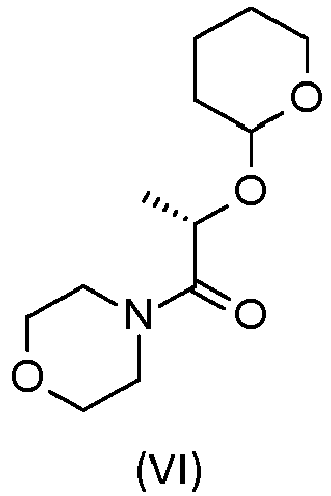

- The method according to claim 11, where the aprotic solvent is tetrahydrofurane or a mixture of tetrahydrofurane with heptane.
- The method according to claim 11, where the compound forming the organometal reagent reacting with the compound of formula (V) is ethylmagnesiumchloride or Butyllithium.
- The method of claims 1, 5, 8, or 11, further comprising the step of reacting the compound (VII)
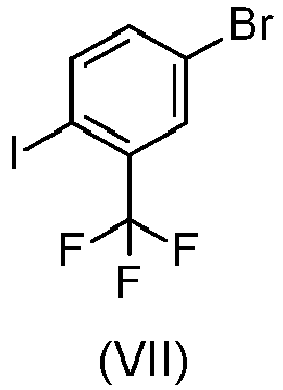
thereby providing the compound of formula (V)
- The method according to claim 14 where the palladium catalyst is [1,1'-Bis (diphenylphosphino)ferrocene]palladium (II) dichloride.
- The intermediate compound (V) according to claim 13

- The intermediate compound (IV)

- The intermediate compound (III)

- The intermediate compound (II)

- Use of intermediate compounds (II), (III), (IV), (V) and (VI) for the preparation of compound (I).
Priority Applications (2)
| Application Number | Priority Date | Filing Date | Title |
|---|---|---|---|
| EP22178272.5A EP4289828A1 (en) | 2022-06-10 | 2022-06-10 | Method for the preparation of a 3,6-dihydro-2h-1,3,4-oxadiazin-2-one |
| PCT/EP2023/065338 WO2023237651A1 (en) | 2022-06-10 | 2023-06-08 | Method for the preparation of a 3,6-dihydro-2h-1,3,4-oxadiazin-2-one |
Applications Claiming Priority (1)
| Application Number | Priority Date | Filing Date | Title |
|---|---|---|---|
| EP22178272.5A EP4289828A1 (en) | 2022-06-10 | 2022-06-10 | Method for the preparation of a 3,6-dihydro-2h-1,3,4-oxadiazin-2-one |
Publications (1)
| Publication Number | Publication Date |
|---|---|
| EP4289828A1 true EP4289828A1 (en) | 2023-12-13 |
Family
ID=82020252
Family Applications (1)
| Application Number | Title | Priority Date | Filing Date |
|---|---|---|---|
| EP22178272.5A Ceased EP4289828A1 (en) | 2022-06-10 | 2022-06-10 | Method for the preparation of a 3,6-dihydro-2h-1,3,4-oxadiazin-2-one |
Country Status (2)
| Country | Link |
|---|---|
| EP (1) | EP4289828A1 (en) |
| WO (1) | WO2023237651A1 (en) |
Citations (1)
| Publication number | Priority date | Publication date | Assignee | Title |
|---|---|---|---|---|
| WO2019025562A1 (en) | 2017-08-04 | 2019-02-07 | Bayer Aktiengesellschaft | Dihydrooxadiazinones |
-
2022
- 2022-06-10 EP EP22178272.5A patent/EP4289828A1/en not_active Ceased
-
2023
- 2023-06-08 WO PCT/EP2023/065338 patent/WO2023237651A1/en not_active Ceased
Patent Citations (1)
| Publication number | Priority date | Publication date | Assignee | Title |
|---|---|---|---|---|
| WO2019025562A1 (en) | 2017-08-04 | 2019-02-07 | Bayer Aktiengesellschaft | Dihydrooxadiazinones |
Non-Patent Citations (3)
| Title |
|---|
| DATABASE 1,1'-Biphenyl, 4-bromo-4' [online] 6 January 2022 (2022-01-06), AOBCHEM USA: "1,1'-Biphenyl, 4-bromo-4'-fluoro-2-(trifluoromethyl)-", XP055980847, Database accession no. 2755723-38-5 * |
| J. PESTI ET AL., ORG. PROCESS RES. DEV., vol. 13, 2009, pages 716 - 728 |
| NATURE REVIEWS DRUG DISCOVERY, vol. 13, 2014, pages 290 - 314 |
Also Published As
| Publication number | Publication date |
|---|---|
| WO2023237651A1 (en) | 2023-12-14 |
Similar Documents
| Publication | Publication Date | Title |
|---|---|---|
| US11542245B2 (en) | Preparative process | |
| RU2682660C9 (en) | Method of obtaining pde4 inhibitor | |
| JP7492765B2 (en) | Process for preparing purine derivatives | |
| JPWO2014042176A1 (en) | Process for producing fused heterocyclic derivative and production intermediate thereof | |
| JP2006517218A (en) | Preparation of arylalkyl carbamate derivatives and their therapeutic use | |
| CN118812481A (en) | Method for producing heterocyclic acetamide derivatives | |
| CN108794357B (en) | N-difluoromethyl hydrazone compound and synthesis method thereof | |
| CN111848607B (en) | Novel BCL-2/BCL-XL inhibitor, pharmaceutical composition and application | |
| Meyer et al. | Hydrochlorofluoromethylation of unactivated alkenes with chlorofluoroacetic acid | |
| WO2020064818A1 (en) | Process for the preparation of sphingosine-1-phosphate receptor agonist | |
| WO2023237651A1 (en) | Method for the preparation of a 3,6-dihydro-2h-1,3,4-oxadiazin-2-one | |
| WO2020171073A1 (en) | Method for producing benzazepine derivative and intermediate of same | |
| JP3440305B2 (en) | 7- (N-substituted amino) -2-phenylheptanoic acid ester derivative and method for producing the derivative | |
| EP4330229B1 (en) | Method for producing pyrrolidine compound | |
| JP7700399B1 (en) | Selective synthesis of single axially chiral compounds | |
| JP4509327B2 (en) | Process for producing N, N-disubstituted-4-aminocrotonic acid ester | |
| JP6695235B2 (en) | A method for producing (4-hydroxy) -1-piperidinoalkylcarboxylic acid ester, and 4- [4-[(4- Method for producing chlorophenyl) (2-pyridyl) methoxy] piperidino] butanoic acid. | |
| JP2006508156A (en) | Method for producing terbinafine using platinum as catalyst | |
| CN116178280A (en) | A preparation method of rosuvastatin calcium genotoxic impurity | |
| JP2022035954A (en) | N-boc-lactam derivative and method for producing the same, and method for producing cyclic amine derivative | |
| KR20230072437A (en) | Preparation method of isoxazole derivatives and intermediates thereof | |
| JP4507390B2 (en) | 1-alkyl-1-substituted-3-organosulfonyloxyazetidinium salts and process for producing the same | |
| HK40035144B (en) | Preparation process of two compounds | |
| JPS62207235A (en) | Method for producing isopropenyl ether or ester derivative | |
| JP2005281168A (en) | Method for producing 3-pyrrolidinol |
Legal Events
| Date | Code | Title | Description |
|---|---|---|---|
| PUAI | Public reference made under article 153(3) epc to a published international application that has entered the european phase |
Free format text: ORIGINAL CODE: 0009012 |
|
| STAA | Information on the status of an ep patent application or granted ep patent |
Free format text: STATUS: THE APPLICATION HAS BEEN PUBLISHED |
|
| AK | Designated contracting states |
Kind code of ref document: A1 Designated state(s): AL AT BE BG CH CY CZ DE DK EE ES FI FR GB GR HR HU IE IS IT LI LT LU LV MC MK MT NL NO PL PT RO RS SE SI SK SM TR |
|
| STAA | Information on the status of an ep patent application or granted ep patent |
Free format text: STATUS: THE APPLICATION HAS BEEN REFUSED |
|
| 18R | Application refused |
Effective date: 20240109 |