EP4287032A1 - Software update device, vehicle-mounted terminal device, and software update system - Google Patents
Software update device, vehicle-mounted terminal device, and software update system Download PDFInfo
- Publication number
- EP4287032A1 EP4287032A1 EP21921666.0A EP21921666A EP4287032A1 EP 4287032 A1 EP4287032 A1 EP 4287032A1 EP 21921666 A EP21921666 A EP 21921666A EP 4287032 A1 EP4287032 A1 EP 4287032A1
- Authority
- EP
- European Patent Office
- Prior art keywords
- vehicle
- package
- software
- common package
- identification information
- Prior art date
- Legal status (The legal status is an assumption and is not a legal conclusion. Google has not performed a legal analysis and makes no representation as to the accuracy of the status listed.)
- Granted
Links
Images





Classifications
-
- H—ELECTRICITY
- H04—ELECTRIC COMMUNICATION TECHNIQUE
- H04W—WIRELESS COMMUNICATION NETWORKS
- H04W4/00—Services specially adapted for wireless communication networks; Facilities therefor
- H04W4/30—Services specially adapted for particular environments, situations or purposes
- H04W4/40—Services specially adapted for particular environments, situations or purposes for vehicles, e.g. vehicle-to-pedestrians [V2P]
- H04W4/44—Services specially adapted for particular environments, situations or purposes for vehicles, e.g. vehicle-to-pedestrians [V2P] for communication between vehicles and infrastructures, e.g. vehicle-to-cloud [V2C] or vehicle-to-home [V2H]
-
- G—PHYSICS
- G06—COMPUTING OR CALCULATING; COUNTING
- G06F—ELECTRIC DIGITAL DATA PROCESSING
- G06F8/00—Arrangements for software engineering
- G06F8/60—Software deployment
- G06F8/65—Updates
-
- G—PHYSICS
- G07—CHECKING-DEVICES
- G07C—TIME OR ATTENDANCE REGISTERS; REGISTERING OR INDICATING THE WORKING OF MACHINES; GENERATING RANDOM NUMBERS; VOTING OR LOTTERY APPARATUS; ARRANGEMENTS, SYSTEMS OR APPARATUS FOR CHECKING NOT PROVIDED FOR ELSEWHERE
- G07C5/00—Registering or indicating the working of vehicles
- G07C5/008—Registering or indicating the working of vehicles communicating information to a remotely located station
-
- H—ELECTRICITY
- H04—ELECTRIC COMMUNICATION TECHNIQUE
- H04L—TRANSMISSION OF DIGITAL INFORMATION, e.g. TELEGRAPHIC COMMUNICATION
- H04L67/00—Network arrangements or protocols for supporting network services or applications
- H04L67/34—Network arrangements or protocols for supporting network services or applications involving the movement of software or configuration parameters
Definitions
- the present invention relates to a software updating device, an in-vehicle terminal, and a software updating system.
- Patent Document 1 In a maintenance system for maintaining software of an in-vehicle terminal devices of vehicles, a technology is known in which an information center selects, based on installed software/hardware information on the vehicle side, target software that is a candidate for version upgrade and transmits the selected target software to the vehicles (Patent Document 1).
- a demonstration image showing the functions realized by the target software is displayed to the user on the vehicle side, and the user decides whether to accept the target software upgrade. If the user then chooses to accept the target software upgrade, the in-vehicle terminal devices request that the information center transmit the target software, and the information center transmits the target software to the in-vehicle terminal devices.
- Patent Document 1 Japanese Laid-Open Patent Application No. 11-027749
- a server that functions as the information center stores the target software and transmits the target software to the in-vehicle terminal devices.
- software updates are prepared for each vehicle, there is the problem that the number of processing steps to be executed by the server to update the software stored in the in-vehicle terminal devices of each vehicle and the capacity of the storage device of the server will be increased.
- the problem to be solved by the present invention is to provide a software updating device, an in-vehicle terminal device, and a software updating system with which the server processing load and storage capacity can be reduced in a process of updating vehicle software.
- the present invention solves the problem described above by means of a software updating device that uses software update data of a vehicle to update software, comprising a storage device that stores a common package including at least the update data, and an identification package including common package identification information assigned to the common package and vehicle identification information that is associated with the common package identification information and that identifies the vehicle, wherein the identification package including the vehicle identification information associated with the target vehicle that is subject to the software update is transmitted to the target vehicle, and the common package to which is assigned the common package identification information included in the identification package is transmitted to the target vehicle in accordance with a request from the target vehicle.
- the storage capacity of the server and the processing load on the server can be reduced.
- FIG. 1 is a block diagram showing an example of a software updating system 100, comprising a software updating device 1, an in-vehicle terminal device 20 mounted on a vehicle 2, and a communication network 3 according to the present embodiment.
- the software updating system 100 is a FOTA (Firmware Over The Air) system that can update the software of the ECU installed in the vehicle 2 by means of OTA (Over The Air).
- the software updating device 1 and the in-vehicle terminal device 20 can transmit and receive data to and from each other via the communication network 3.
- the software updating device 1 When a software supplier inputs update data for overwriting the software, the software updating device 1 stores the update data. Then, when there is a request for the software update data from the in-vehicle terminal device 20, the software updating device 1 transmits a distribution package that includes the update data to the in-vehicle terminal device 20 that made the request via the communication network 3. Upon receiving the distribution package from the software updating device 1, the in-vehicle terminal device 20 uses the update data included in the distribution package to overwrite and update the software of the ECU to be updated.
- the communication network 3 is configured to include the Internet, a mobile communication network such as a 4G line, or the like.
- the update data of the software are update program data for updating the software of the ECU of the vehicle 2 provided by the software supplier.
- the update data may be all data corresponding to the entire software after the update or differential data corresponding to the difference between the pre- and postupdate software. Further, the update data may be compressed by means of a known data compression technology.
- the software update data received by the vehicle may be ensured to be data for updating its own software.
- An example of a method for ensuring that the update data are data for updating the software of the target vehicle is a method in which the update data and vehicle identification information for identifying the vehicle to be updated are included in the distribution package, and the distribution package is transmitted to the vehicle to be updated.
- a vehicle that receives the distribution package compares a vehicle identification number included in the distribution package with its own vehicle identification number, thereby confirming that the update data included in the distribution package are data for updating its own software.
- the data structure of the distribution package is a structure in which vehicle identification information and update data are stored in association with each other, so that, if there is a plurality of target vehicles, there are a number of pieces of vehicle identification information corresponding to the number of vehicles, and update data are stored in accordance with each piece of vehicle identification information; therefore, the same number of distribution packages as the number of vehicles is required. Then, since the data size of the update data is greater than that of the vehicle identification information, preparing and storing the same number of distribution packages that include update data as the number of vehicles requires a large storage capacity. Further, all of the target vehicles are subjected to a software update, so that the required number of processing steps also increases.
- the software updating device 1 divides the distribution packages into two types and transmits them to the in-vehicle terminal device 20. Specifically, the software updating device 1 uses a common package that includes update data in common among a plurality of vehicles. Further, for each vehicle to be updated, the software updating device 1 prepares an identification package that includes vehicle identification information and common package identification information as information for determining whether the common package represents data for updating the software of the target vehicles. That is, in the present embodiment, instead of preparing packages that include update data of large data size in accordance with the number of vehicles, the relevant package of large data size is prepared as data common to all vehicles to be updated, and packages containing vehicle identification information and common package identification information of small data size are prepared in accordance with the number of vehicles. This allows the vehicle 2 to use the package containing the vehicle identification number to confirm that the update data is for updating its own software, thereby enhancing cyber security while reducing the storage capacity and processing steps for the software update. A more detailed description will be given below.
- the software updating device 1 is a server that manages the software update data provided by the software supplier and transmits the update data to the vehicle to be updated.
- the software updating device 1 comprises a controller 10, a storage device 11, a communication device 12, and an input device 13, which are configured to be able to carry out data communication with each other.
- the controller 10 in the present embodiment comprises a computer provided with hardware and software, and this computer includes ROM (Read-Only Memory) in which programs are stored, a CPU (Central Processing Unit) that executes the programs stored in the ROM, and RAM (Random-Access Memory) that functions as an accessible storage device.
- ROM Read-Only Memory
- CPU Central Processing Unit
- RAM Random-Access Memory
- the controller 10 manages a software update list and updates the software update list that manages the update data when software update data is input from the software supplier. Further, the controller 10 generates a common package (described in detail below) including the input update data, and stores the generated common package in the storage device 11.
- the software update list manages, for each software update campaign, a campaign ID, a target VIN, a target ECU, a software version of the updated software, a link to the common package, and a common package identifier.
- the update data are managed for each campaign of the input update data.
- Campaign means a unit of information for managing the input update data in association with information, etc., concerning one or more vehicles to be updated.
- the target VIN is the vehicle identification number (abbreviated as VIN) of the vehicle to be updated.
- the target ECU is the ECU that is to receive the software update.
- a software update campaign is not limited to a case in which the target ECU is a single ECU; if there are a plurality of target ECUs, the plurality of ECUs may be assigned as the target ECU.
- the software version is the version of updated software distributed to the in-vehicle terminal device 20.
- the controller 10 assigns a campaign ID to the software update campaign.
- a campaign ID is an identification number that is assigned to identify a software update campaign.
- the controller 10 also stores the generated common package in the storage device 11 and inputs a link to the storage destination into the software update list as a link to the common package.
- a common package identifier is identification information for identifying the common package.
- the controller 10 inputs the common package identifier generated for each common package into the software update list.
- the controller 10 stores the generated software update list in the storage device 11.
- the controller 10 determines whether a software update is necessary for all vehicles under management. Specifically, the controller 10 first, compares the vehicle identification number of each vehicle and the target VIN managed as the target of the software update, and determines whether the vehicle identification numbers match. If the vehicle identification numbers match, the controller 10 compares the current ECU software version of the vehicle with the matching vehicle identification number, and the software version of the updated software. Then, if the current ECU software version of the vehicle is an older software version than the software version of the updated software, the controller 10 determines than a software update is necessary.
- the controller 10 determines that a software update is necessary, an identification package is generated for each vehicle for which it has been determined that a software update is necessary, and the generated identification package is transmitted to the in-vehicle terminal device 20 of given the vehicle. If there is more than one target vehicle, the controller 10 generates a different identification package for each of the plurality of target vehicles.
- the identification package includes, for each target vehicle, the vehicle identification information corresponding to the target vehicle, and a common package identifier that is assigned to the common package that is used to identify the common package.
- the identification package is data for the in-vehicle terminal device 20 to determine whether the common package is data for updating the software of its own vehicle. For example, the identification package includes a vehicle identification number (VIN) as vehicle identification information.
- VIN vehicle identification number
- FIG. 3A is a diagram showing the relationship between a common package and an identification package.
- the common package includes update data and a common package identifier, as described further below. If the vehicles to be updated are vehicle A, vehicle B, and vehicle C, an identification package for vehicle A, an identification package for vehicle B, and identification package for vehicle C are generated as identification packages.
- Each identification package includes each vehicle's VIN and the same common package identifier common to the plurality of vehicles.
- Each vehicle VIN is associated with a common package identifier. Specifically, the VIN of each vehicle is the VIN of the vehicle subject to software update using the update data included in the common package.
- the common package identifier included in the identification package and the common package identifier included in the common package are identical.
- the vehicle identification information may be information concerning the vehicle type of the vehicle.
- the in-vehicle terminal device 20 that has acquired the identification package compares the vehicle identification number included in the identification package with its own vehicle identification number to determine whether the vehicle identification number included in the identification package and its own vehicle identification number match, thereby confirming that the update data are data for updating its own software. If the vehicle identification numbers match, the in-vehicle terminal device 20 can confirm that the common package corresponding to the common package identifier included in the identification package is the package for its own vehicle.
- the common package identifier is identification information that identifies the common package and is used for the in-vehicle terminal device 20 to authenticate that the common package transmitted to the in-vehicle terminal device 20 is data requested by the in-vehicle terminal device 20.
- the common package identifier is, for example, a hash value generated from the common package using a hash function. Specifically, the common package identifier is generated from data contained in the common package. For example, the common package identifier is generated by calculating a hash value from the update data. In the present embodiment, a common calculation formula for calculating the hash value is implemented in the software updating device 1 and the in-vehicle terminal device 20.
- the software updating device 1 and the in-vehicle terminal device 20 then separately calculate the hash value.
- the calculation of the hash value is executed using various types of calculation formulas, for example, checksum, CRC, ND5, SHA-1, etc.
- the common package identifier may be prescribed value, such as a campaign ID assigned to a campaign.
- the identification package does not include the update data itself.
- the data size of the VIN included in the identification package is 17 bytes; thus, the VIN has a small amount of data. That is, the identification package does not include data of large size but data of small size. Therefore, compared to a case in which a package including the software itself and vehicle identification information for identifying the target vehicle is generated and stored for each vehicle, the processing man-hours required for updating the software in the controller 10 and the storage capacity of the storage device 11 can be reduced.
- the controller 10 may also generate an identifier using the vehicle identification number of the vehicle 2 to be updated as the common package identifier included in the identification package.
- the controller 10 includes the value obtained by adding the vehicle identification number of the vehicle 2 to the hash value generated from the common package in the identification package as a common package identifier.
- the vehicle 2 that has acquired an identification package can subtract its own vehicle identification number from the common package identifier (the value obtained by adding the vehicle identification number to the hash value) included in the identification package, thereby calculating the hash value generated from the common package.
- the software updating device 1 uses the VIN and the hash value of the common package to calculate the common package identifier by means of the calculation formula described above and transmits the calculated common package identifier to the vehicle 2.
- the vehicle 2 then uses the common package identifier and the VIN to calculate the hash value of the common package by means of the calculation formula described above.
- the controller 10 may also generate an identification package including additional data, in addition to the vehicle identification number and the common package identifier. As shown in Figure 3B , additional data included in the identification package are, for example, the location data of the common package and the decompression password for the common package.
- the location data of the common package are, for example, the URL of a server on which the common package is stored. It can thus be ensured that the in-vehicle terminal device 20 that has acquired the identification package acquires a common package from an appropriate storage server.
- the decompression password for the common package is the password for decompressing the compressed common package.
- the controller 10 may also include in the identification package a common key for encrypting and decrypting data contained in the identification package.
- the vehicle identification number may be used as the common key.
- a key for encrypting and decrypting data is not limited to a common key and may be a public key used in public key cryptography.
- the controller 10 may include a password in the identification package for downloading the common package or a password for encrypting the communication path between the software updating device 1 and the in-vehicle terminal device 20.
- the controller 10 may also encrypt the identification package and transmit the encrypted identification package to the in-vehicle terminal device 20.
- the in-vehicle terminal device 20 decrypts the encrypted identification package, thereby acquiring the data contained in the identification package. It is thus possible to increase the cyber security of the identification package.
- the controller 10 After transmitting the identification package to the in-vehicle terminal device 20, the controller 10 receives a request signal requesting acquisition of the common package from the in-vehicle terminal device 20. When the request signal is received from the in-vehicle terminal device 20, the controller 10 transmits the common package including the common package identifier specified in the request signal to the in-vehicle terminal device 20.
- the common package is a package that includes the update data and the common package identifier.
- the common package is a package generated for each software update campaign. That is, if there is a plurality of vehicles to be updated in the campaign, the common package is a package common to the plurality of vehicles to be updated.
- the controller 10 prepares a common package commonly used by the million vehicles and transmits the same common package to each vehicle.
- the common package identifier is the same as the common package identifier included in the identification package.
- the controller 10 generates a common package when there is input of update data from the software supplier. The controller 10 stores the generated common package in the storage device 11.
- the common package may include ancillary data.
- Ancillary data may include the software version of the updated software and an electronic signature.
- Electronic signatures are used to authenticate the integrity of the update data, that is, that it has not been falsified, contains no garbled characters, etc.
- An electronic signature is, for example, a hash value calculated from the update data that has been encrypted.
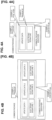
- Figure 4A is a diagram showing an example of a common package.
- the common package (PKG03.zip) includes a common package identifier in addition to a file (CONTENTS.zip) including update data (ECM_v3.bin) and an electronic signature (Signature.txt).
- the common package identifier is a hash value calculated from a file (CONTENTS.zip) in which the update data (ECM_v3.bin) and the electronic signature (Signature.txt) are combined in an archive format such as zip or tar.
- the common package identifier may be prescribed value, such as a campaign ID.
- the common package identifier may be generated by calculating a hash value from a file (CONTENTS.zip) in which a plurality of pieces of update data (update data 1, update data 2, and update data 3) and the electronic signatures (electronic signature 1, electronic signature 2, and electronic signature 3) of the plurality of pieces of update data are combined.
- the common package may include a file (CONTENTS.zip) in which a plurality of pieces of update data and the electronic signatures of the plurality of pieces of update data are combined, and a campaign ID serving as the identifier of the common package corresponding to the file.
- a file CONTENTS.zip
- the common package identifier may not include a common package identifier.
- the in-vehicle terminal device 20 that has received a common package calculates a hash value from the common package using a hash function and acquires the calculated hash value as the common package identifier.
- Figure 5A is a diagram showing an example of a common package.
- the common package is shown as a file (PKG03.zip) that combines update data (ECM_v3.bin) and an electronic signature (Signature.txt).
- the common package is shown as a file (PKG03.zip) that combines a plurality of pieces of update data (update data 1, update data 2, and update data 3) and the electronic signatures (electronic signature 1, electronic signature 2, and electronic signature 3) corresponding to each of the pieces of update data.
- the in-vehicle terminal device 20 that has received a common package calculates a hash value from the common package using a hash function and acquires the calculated hash value as the common package identifier.
- the storage device 11 stores various data relating to software update of the ECU of the vehicle 2. Specifically, the storage device 11 stores a common package. In addition, the storage device 11 stores a database that manages a software update list. Further, the storage device 11 may store an identification package.
- the communication device 12 is connected to the in-vehicle communication device 22 of the in-vehicle terminal device 20 via the communication network 3 and transmits and receive various data. For example, the communication device 12 transmits a common package and an identification package generated by the controller 10 to the in-vehicle communication device 22.
- the input device 13 accepts data input by the software supplier. Specifically, the input device 13 receives input update data for the software of the vehicle 2.
- the input device 13 In addition to the update data, the input device 13 also receives ancillary data including the vehicle identification information of the target vehicle to be updated, the target ECU to be updated, and the software version of the updated software. Upon receiving the input update data, the input device 13 outputs the update data to the controller 10.
- the in-vehicle terminal device 20 controls the various ECUs installed in the vehicle, and, upon receiving the update data for the software of the ECU from the software updating device 1, the in-vehicle terminal device updates the software of the ECU using the update data.
- the in-vehicle terminal device 20 has a CGW (Central Gateway) 21, the in-vehicle communication device 22, an ECU 23, and an in-vehicle storage device 24, and is connected such that data communication is possible between the CGW21 and the in-vehicle communication device 22, and between the CGW 21 and the ECU 23.
- CGW Central Gateway
- the CGW 21 is a vehicle gateway device that has a data relay function, and, upon acquiring update data are acquired from the in-vehicle communication device 22, this vehicle gateway device distributes the update data to the ECU to be updated.
- the CGW 21 determines whether the vehicle identification number included in the identification package received from the software updating device 1 and the vehicle identification number of the host vehicle match. Specifically, the CGW 21 acquires the vehicle identification number of the target vehicle from the in-vehicle storage device 24. Then, when an identification package is received from the software updating device 1 via the in-vehicle communication device 22, the CGW 21 acquires the vehicle identification number from the identification package and compares the vehicle identification number included in the identification package with the target vehicle identification number.
- the CGW 21 determines whether the vehicle identification number included in the identification package and the vehicle identification number of the target vehicle match. Upon determining the vehicle identification number included in the identification package and the vehicle identification number of the target vehicle match, the CGW 21 transmits a request signal requesting acquisition of a common package to the software updating device 1 via the in-vehicle communication device 22. Specifically, the CGW 21 acquires a common package identifier from the identification package and transmits a request signal requesting acquisition of the common package to which the common package identifier is assigned. As described above, the CGW21 compares the vehicle identification number included in the identification package with the vehicle identification number of the target vehicle, thereby confirming that the information of the identification package is for updating the software of the target vehicle. The CGW 21 can then acquire the common package, which is data for updating the software of the target vehicle, by requesting acquisition of the common package to which the common package identifier included in the identification package is assigned.
- the CGW21 Upon receiving the common package from the software updating device 1, the CGW21 acquires a common package identifier from the common package. For example, in the case that the common package identifier is stored in the common package in the software updating device 1, the CGW 21 acquires the common package identifier stored in the common package. In addition, if the common package identifier is generated by calculating a hash value from the common package, the CGW 21 may calculate a hash value from the acquired common package to acquire the common package identifier. CGW 21 then determines whether the acquired common package identifier and the common package identifier included in the identification package match. Upon determining the acquired common package identifier and the common package identifier included in the identification package match, the CGW21 then extracts update data from the common package.
- the CGW21 then transmits the extracted update data to the ECU to be updated and uses the update data to update the ECU software to be updated.
- the CGW21 can compare the common package identifier acquired from the common package with the common package identifier included in the identification package, thereby confirming that the common package transmitted from the software updating device 1 is the requested common package. In this way, the CGW 21 can prevent software that was not intended to be updated by the software supplier from being updated.
- the CGW 21 aggregates the software versions of the software of a plurality of the ECUs 23. Specifically, CGW 21 aggregates the software versions of the ECUs at the time that the ignition power of the vehicle 2 is turned on. The CGW 21 also aggregates the ECU software versions at that time at regular intervals. The CGW 21 transmits the aggregated ECU software versions to the software updating device 1 via the in-vehicle communication device 22.
- the in-vehicle communication device 22 carries out data communication with the software updating device 1 via the communication network 3, and, upon receiving an identification package and a common package including software from the software updating device 1, the in-vehicle communication device forwards the received identification package and common package to the CGW 21.
- the in-vehicle communication device 22 may use different communication paths depending on the type of data received. Specifically, in the case of receiving update data from the software updating device 1, the in-vehicle communication device 22 receives the update data via a first communication path for providing software. Further, when receiving other data besides update data, the in-vehicle communication device 22 receives this data other than update data via a second communication path for providing data other than software update data.
- the in-vehicle communication device 22 receives the map data via the second communication path.
- the first communication path is a communication path with a higher security level than the second communication path.
- the security level is a value that is set higher for a communication path that is evaluated to have a lower security risk in a security risk analysis of the communication path.
- the ECU 23 includes, for example, body system ECUs, a travel system ECU, and an information system ECU.
- Body system ECUs are ECUs that control the body system, such as door ECUs that control the locking and unlocking of doors, meter ECUs that control meter displays, an air conditioner ECU that controls the operation of an air conditioner, window ECUs that control the opening and closing of windows.
- the travel system ECU is an ECU that controls the travel system, such as an engine ECU that controls operation of the engine, a brake ECU that controls the operation of the brakes, a power steering ECU that controls the operation of the power steering.
- the information system ECU is an ECU that controls the information system, such as a navigation ECU that controls the navigation system and an audio ECU that controls audio equipment.
- the type of ECU 23 is not limited to those of the illustrated configuration.
- update data are acquired from the CGW 21, the ECU 23 uses the update data to update the software.
- the ECU 23 manages the software version of the software and transmits the software version in accordance with a request signal from the CGW 21.
- the in-vehicle storage device 24 stores various data.
- the in-vehicle storage device 24 stores the vehicle identification number assigned to the host vehicle.
- FIG. 6 shows the control flow for executing a software update control process in the software updating device 1.
- the control flow starts from Step S1.
- Step S1 the software updating device 1 receives the update data input by the software supplier.
- Step S2 the software updating device 1 generates a software update list based on the update data acquired in Step S1.
- Step S3 the software updating device 1 generates a common package based on the update data acquired in Step S1.
- the software updating device 1 generates a common package including update data and a common package identifier.
- the software updating device 1 may generate a common package that includes update data but does not include a common package identifier.
- Step S4 the software updating device 1 receives the vehicle identification number of the vehicle 2 and the ECU software version of the vehicle 2 from the in-vehicle terminal device 20.
- Step S5 the software updating device 1 determines whether a software update is necessary.
- the software updating device 1 compares the vehicle identification number acquired from the in-vehicle terminal device 20 and the vehicle identification number of the vehicle to be updated stored in the software update list. The software updating device 1 then determines whether software version of the ECU of the vehicle with the matching vehicle identification number matches the software version of the updated software. Upon determining a software update is necessary, the software updating device 1 proceeds to Step S6. Upon determining a software update is not necessary, the software updating device 1 terminates the control flow. The control of Steps S4-S5 is respectively executed for all vehicles under management.
- Step S6 the software updating device 1 generates an identification package for each vehicle for which a software update is determined to be necessary in Step S5.
- the identification package includes the vehicle identification number of the vehicle 2 for which a software update is determined to be necessary in Step S5 and the common package identifier of the common package generated in Step S3.
- Step S7 the software updating device 1 transmits the identification package generated in Step S6 to the in-vehicle terminal device 20. Specifically, the software updating device 1 transmits the identification package including the vehicle identification number associated with the target vehicle for which the software is to be updated to the in-vehicle terminal device 20 of the target vehicle.
- Step S8 the software updating device 1 receives a request signal requesting acquisition of the common package from the in-vehicle terminal device 20.
- Step S9 the software updating device 1 searches for a common package to which the common package identifier requested by the in-vehicle terminal device 20 is assigned. Specifically, the software updating device 1 searches for a common package to which the requested common package identifier is assigned from among a plurality of common packages stored in the storage device 11 in accordance with the requested common package identifier. In Step S10, the software updating device 1 transmits the common package retrieved in Step S9 to the in-vehicle terminal device 20. After completing Step S10, the software updating device 1 terminates the control flow. Further, in the present embodiment, the control of Steps S6-S10 is executed for all vehicles that have been determined to require a software update.
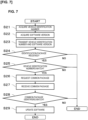
- Figure 7 shows a control flow for executing a software update control process in the in-vehicle terminal device 20.
- the in-vehicle terminal device 20 starts the control flow from Step S21.
- the in-vehicle terminal device 20 may start the control flow from Step S21 at regular intervals.
- Step S21 the CGW21 acquires the vehicle identification number of the host vehicle from the in-vehicle storage device 24.
- the CGW 21 aggregates the software versions of the ECUs 23 of the vehicle 2. Specifically, the CGW 21 acquires the software versions of the ECUs from all the ECUs 23 installed in the vehicle 2.
- Step S23 the CGW 21 transmits the vehicle identification number acquired in Step S21 and the software versions acquired in Step S22 to the software updating device 1.
- Step S24 the CGW 21 determines whether an identification package has been received from the software updating device 1. Upon determining an identification package has been received, the CGW21 proceeds to Step S25. Upon determining an identification package has not been received, the CGW 21 terminates the control flow.
- Step S25 the CGW 21 determines whether the vehicle identification numbers match. That is, the CGW 21 compares the vehicle identification number included in the identification package with the vehicle identification number of the host vehicle to determine whether the vehicle identification numbers match. Upon determining the vehicle identification numbers match, the CGW 21 proceeds to Step S26. Upon determining the vehicle identification numbers do not match, the CGW 21 terminates the control flow.
- Step S26 the CGW21 requests a common package. Specifically, the CGW 21 acquires the common package identifier from the identification package received in Step S24 and transmits to the software updating device 1 a request signal requesting acquisition of the common package to which the common package identifier is assigned.
- Step S27 the CGW 21 receives a common package via the in-vehicle communication device 22.
- Step S28 the CGW 21 determines whether the common package identifiers match. That is, the CGW 21 compares the common package identifier included in the identification package received in Step S24 with the common package identifier acquired from the common package received in Step S27, thereby determining whether the common package identifiers match.
- Step S29 Upon determining the common package identifiers match, the CGW 21 proceeds to Step S29. Upon determining the common package identifiers do not match, the CGW21 terminates the control flow. In Step S29, the CGW 21 updates the software. Specifically, the in-vehicle terminal device 20 acquires update data from the common package received in Step S27 and uses the update data to update the software of the ECU of the vehicle 2.
- FIG. 8 is a sequence diagram of the software update control process in the software updating system.
- the control flow starts from Step S31.
- Step S31 the software updating device 1 receives the update data input by the software supplier.
- Step S32 the software updating device 1 generates a software update list based on update data acquired in Step S1.
- Step S33 the software updating device 1 generates a common package based on the update data acquired in Step S31.
- Step S34 the in-vehicle terminal device 20 acquires the vehicle identification number of the host vehicle and the software version of each ECU of the host vehicle.
- Step S35 the in-vehicle terminal device 20 transmits the vehicle identification number and the software versions acquired in Step S34 to the software updating device 1.
- Step S36 the software updating device 1 determines, based on the vehicle identification number received from the in-vehicle terminal device 20 and the software version, whether a software update of the vehicle 2 is necessary. Upon determining a software update is necessary, the software updating device 1 proceeds to Step S37. Upon determining a software update is not necessary, the software updating device 1 terminates the control flow.
- the control of Steps S34-S36 is executed for all vehicles under management. For example, when the vehicle ignition power is turned on or at regular intervals, the control of Steps S4-S6 is executed.
- Step S37 the software updating device 1 generates an identification package for each of the vehicles 2 for which a software update is determined to be necessary in Step S36.
- Step S38 the software updating device 1 transmits the identification package generated in Step S37 to the in-vehicle terminal device 20.
- Step S39 the in-vehicle terminal device 20 determines whether the vehicle identification number included in the identification package received in Step S38 matches the vehicle identification number of the host vehicle. Upon determining the vehicle identification numbers match, the in-vehicle terminal device 20 proceeds to Step S40. Upon determining the vehicle identification numbers do not match, the in-vehicle terminal device 20 terminates the control flow.
- Step S40 the in-vehicle terminal device 20 transmits a request signal requesting acquisition of the common package to the software updating device 1.
- Step S41 the software updating device 1 searches for the common package requested by the in-vehicle terminal device 20 in Step S40.
- Step S42 the software updating device 1 transmits the common package retrieved in Step S41 to the in-vehicle terminal device 20.
- Step S43 the in-vehicle terminal device 20 determines whether the common package identifier included in the identification package transmitted in Step S38 matches the common package identifier acquired from the common package transmitted in Step S42. Upon determining the common package identifiers match, the in-vehicle terminal device 20 proceeds to Step S44. Upon determining the common package identifiers do not match, the in-vehicle terminal device 20 terminates the control flow.
- Step S44 the in-vehicle terminal device 20 updates the software of the vehicle 2. In the present embodiment, the control of Steps S37-S44 is executed with respect to all vehicles that have been determined to require a software update.
- the present embodiment concerns a software updating device provided outside of a vehicle that uses software update data of the vehicle to update software, comprises a storage device that stores a common package including at least the update data, and an identification package including common package identification information assigned to the common package and vehicle identification information that is associated with the common package identification information and that identifies the vehicle, , wherein the identification package including the vehicle identification information associated with a target vehicle that is subject to the software update is transmitted to the target vehicle, and the common package to which is assigned the common package identification information included in the identification package is transmitted to the target vehicle in accordance with a request from the target vehicle. It is thus possible to reduce the server storage capacity and processing load on the server in a process of updating vehicle software.
- an identification package including common package identification information common to the plurality of target vehicles and vehicle identification information assigned to each of the plurality of target vehicles is generated for each of the plurality of target vehicles.
- the same common package is transmitted to a plurality of target vehicles. As a result, even if there is a plurality of vehicles whose software is to be updated, the same common package is transmitted, so that it is possible to reduce the storage capacity.
- an identification package is generated that includes a hash value generated from the common package using a hash function as common package identification information. This allows the data size of the identification package to be reduced relative to when the entire update data are included.
- common package identification information is generated based on the vehicle identification information of the target vehicle, and an identification package that includes the generated common package identification information and vehicle identification information is generated.
- the present embodiment is a vehicle-mounted terminal device of a vehicle that acquires update data of software to be updated from a server provided outside of the vehicle and updates the software of the vehicle, wherein an identification package, stored in the server, that includes common package identification information that includes the update data and that is assigned to each common package stored in the server, and vehicle identification information for identifying the vehicle, associated with the common package identification information, is received from the server, the common package identification information is acquired from the received identification package, the common package to which the acquired common package identification information is assigned is received from the server, and the update data included in the received common package is used, thereby updating the software of the vehicle.
- the update data from the server when the update data from the server are acquired, the update data are acquired from the server via a first communication path, and the first communication path is a communication path with higher security level than a second communication path for supplying data other than the update data. It is thus possible to increase the strength of cyber security of the update data.
- the present embodiment relates to a software updating system comprising an in-vehicle terminal device installed in a vehicle and a software updating device provided outside of the vehicle that uses software update data of the vehicle to update the software, wherein the software updating device is provided with a storage device that stores a common package that includes at least the update data and an identification package that includes common package identification information assigned to the common package and vehicle identification information that is associated with the common package identification information and that identifies the vehicle, and transmits to the vehicle the identification package that includes the vehicle identification information associated with the vehicle that is subject to the software update and the common package to which is assigned the common package identification information included in the identification package in accordance with a request from the vehicle; and wherein the vehicle receives from the software updating device the identification package that includes the vehicle identification information of the vehicle, acquires the common package identification information from the received identification package, receives the common package to which the acquired common package identification information is assigned from the software updating device, and uses the update data included in the received common package to update the software of the vehicle. It is thus possible to reduce the
Landscapes
- Engineering & Computer Science (AREA)
- Software Systems (AREA)
- General Engineering & Computer Science (AREA)
- Theoretical Computer Science (AREA)
- Physics & Mathematics (AREA)
- General Physics & Mathematics (AREA)
- Computer Security & Cryptography (AREA)
- Computer Networks & Wireless Communication (AREA)
- Signal Processing (AREA)
- Stored Programmes (AREA)
Abstract
Description
- The present invention relates to a software updating device, an in-vehicle terminal, and a software updating system.
- In a maintenance system for maintaining software of an in-vehicle terminal devices of vehicles, a technology is known in which an information center selects, based on installed software/hardware information on the vehicle side, target software that is a candidate for version upgrade and transmits the selected target software to the vehicles (Patent Document 1).
- In the technology disclosed in
Patent Document 1, a demonstration image showing the functions realized by the target software is displayed to the user on the vehicle side, and the user decides whether to accept the target software upgrade. If the user then chooses to accept the target software upgrade, the in-vehicle terminal devices request that the information center transmit the target software, and the information center transmits the target software to the in-vehicle terminal devices. - Patent Document 1:
Japanese Laid-Open Patent Application No. 11-027749 - In the technology of
Patent Document 1, a server that functions as the information center stores the target software and transmits the target software to the in-vehicle terminal devices. In the case that software updates are prepared for each vehicle, there is the problem that the number of processing steps to be executed by the server to update the software stored in the in-vehicle terminal devices of each vehicle and the capacity of the storage device of the server will be increased. - The problem to be solved by the present invention is to provide a software updating device, an in-vehicle terminal device, and a software updating system with which the server processing load and storage capacity can be reduced in a process of updating vehicle software.
- The present invention solves the problem described above by means of a software updating device that uses software update data of a vehicle to update software, comprising a storage device that stores a common package including at least the update data, and an identification package including common package identification information assigned to the common package and vehicle identification information that is associated with the common package identification information and that identifies the vehicle, wherein the identification package including the vehicle identification information associated with the target vehicle that is subject to the software update is transmitted to the target vehicle, and the common package to which is assigned the common package identification information included in the identification package is transmitted to the target vehicle in accordance with a request from the target vehicle.
- By means of the present invention, in the processing of vehicle software updates, the storage capacity of the server and the processing load on the server can be reduced.
-
-
Figure 1 shows a diagram of an example of the configuration of a software updating system according to the present embodiment. -
Figure 2 shows an example of a software update list according to the present embodiment. -
Figure 3A shows a diagram of the relationship between a common package and an identification package. -
Figure 3B shows an example of the identification package according to the present embodiment. -
Figure 4A shows an example of the common package according to the present embodiment. -
Figure 4B shows an example of the common package according to the present embodiment. -
Figure 5A shows an example of the common package according to the present embodiment. -
Figure 5B shows an example of the common package according to the present embodiment. -
Figure 6 shows an example of the control flow of a software updating device according to the present embodiment. -
Figure 7 shows an example of the control flow of an in-vehicle terminal device according to the present embodiment. -
Figure 8 shows a sequence diagram of the control flow in a software updating system according to the present embodiment. - An embodiment of the system according to the present invention will be described with reference to the drawings. The configuration of a software updating system for updating the software of an ECU (Electronic Control Unit) of a vehicle according to the present embodiment will be described with reference to
Figure 1. Figure 1 is a block diagram showing an example of asoftware updating system 100, comprising asoftware updating device 1, an in-vehicle terminal device 20 mounted on avehicle 2, and acommunication network 3 according to the present embodiment. Thesoftware updating system 100 is a FOTA (Firmware Over The Air) system that can update the software of the ECU installed in thevehicle 2 by means of OTA (Over The Air). The software updatingdevice 1 and the in-vehicle terminal device 20 can transmit and receive data to and from each other via thecommunication network 3. When a software supplier inputs update data for overwriting the software, the software updatingdevice 1 stores the update data. Then, when there is a request for the software update data from the in-vehicle terminal device 20, thesoftware updating device 1 transmits a distribution package that includes the update data to the in-vehicle terminal device 20 that made the request via thecommunication network 3. Upon receiving the distribution package from thesoftware updating device 1, the in-vehicle terminal device 20 uses the update data included in the distribution package to overwrite and update the software of the ECU to be updated. Thecommunication network 3 is configured to include the Internet, a mobile communication network such as a 4G line, or the like. The update data of the software are update program data for updating the software of the ECU of thevehicle 2 provided by the software supplier. The update data may be all data corresponding to the entire software after the update or differential data corresponding to the difference between the pre- and postupdate software. Further, the update data may be compressed by means of a known data compression technology. - In an OTA software update, in order to prevent a software update not intended by the software supplier from the standpoint of cyber security, the software update data received by the vehicle may be ensured to be data for updating its own software. An example of a method for ensuring that the update data are data for updating the software of the target vehicle is a method in which the update data and vehicle identification information for identifying the vehicle to be updated are included in the distribution package, and the distribution package is transmitted to the vehicle to be updated. In this case, a vehicle that receives the distribution package compares a vehicle identification number included in the distribution package with its own vehicle identification number, thereby confirming that the update data included in the distribution package are data for updating its own software. However, the data structure of the distribution package is a structure in which vehicle identification information and update data are stored in association with each other, so that, if there is a plurality of target vehicles, there are a number of pieces of vehicle identification information corresponding to the number of vehicles, and update data are stored in accordance with each piece of vehicle identification information; therefore, the same number of distribution packages as the number of vehicles is required. Then, since the data size of the update data is greater than that of the vehicle identification information, preparing and storing the same number of distribution packages that include update data as the number of vehicles requires a large storage capacity. Further, all of the target vehicles are subjected to a software update, so that the required number of processing steps also increases.
- In contrast, in the present embodiment, the
software updating device 1 divides the distribution packages into two types and transmits them to the in-vehicle terminal device 20. Specifically, thesoftware updating device 1 uses a common package that includes update data in common among a plurality of vehicles. Further, for each vehicle to be updated, thesoftware updating device 1 prepares an identification package that includes vehicle identification information and common package identification information as information for determining whether the common package represents data for updating the software of the target vehicles. That is, in the present embodiment, instead of preparing packages that include update data of large data size in accordance with the number of vehicles, the relevant package of large data size is prepared as data common to all vehicles to be updated, and packages containing vehicle identification information and common package identification information of small data size are prepared in accordance with the number of vehicles. This allows thevehicle 2 to use the package containing the vehicle identification number to confirm that the update data is for updating its own software, thereby enhancing cyber security while reducing the storage capacity and processing steps for the software update. A more detailed description will be given below. - The
software updating device 1 is a server that manages the software update data provided by the software supplier and transmits the update data to the vehicle to be updated. Thesoftware updating device 1 comprises acontroller 10, astorage device 11, acommunication device 12, and aninput device 13, which are configured to be able to carry out data communication with each other. Thecontroller 10 in the present embodiment comprises a computer provided with hardware and software, and this computer includes ROM (Read-Only Memory) in which programs are stored, a CPU (Central Processing Unit) that executes the programs stored in the ROM, and RAM (Random-Access Memory) that functions as an accessible storage device. - The
controller 10 manages a software update list and updates the software update list that manages the update data when software update data is input from the software supplier. Further, thecontroller 10 generates a common package (described in detail below) including the input update data, and stores the generated common package in thestorage device 11. As shown inFigure 2 , for example, the software update list manages, for each software update campaign, a campaign ID, a target VIN, a target ECU, a software version of the updated software, a link to the common package, and a common package identifier. When update data are to be input, the update data are managed for each campaign of the input update data. Campaign means a unit of information for managing the input update data in association with information, etc., concerning one or more vehicles to be updated. The target VIN is the vehicle identification number (abbreviated as VIN) of the vehicle to be updated. The target ECU is the ECU that is to receive the software update. A software update campaign is not limited to a case in which the target ECU is a single ECU; if there are a plurality of target ECUs, the plurality of ECUs may be assigned as the target ECU. The software version is the version of updated software distributed to the in-vehicle terminal device 20. When update data from the software supplier is input to thecontroller 10, the controller assigns a campaign ID to the software update campaign. A campaign ID is an identification number that is assigned to identify a software update campaign. Thecontroller 10 also stores the generated common package in thestorage device 11 and inputs a link to the storage destination into the software update list as a link to the common package. A common package identifier is identification information for identifying the common package. Thecontroller 10 inputs the common package identifier generated for each common package into the software update list. Thecontroller 10 stores the generated software update list in thestorage device 11. - The
controller 10 determines whether a software update is necessary for all vehicles under management. Specifically, thecontroller 10 first, compares the vehicle identification number of each vehicle and the target VIN managed as the target of the software update, and determines whether the vehicle identification numbers match. If the vehicle identification numbers match, thecontroller 10 compares the current ECU software version of the vehicle with the matching vehicle identification number, and the software version of the updated software. Then, if the current ECU software version of the vehicle is an older software version than the software version of the updated software, thecontroller 10 determines than a software update is necessary. - If the
controller 10 determines that a software update is necessary, an identification package is generated for each vehicle for which it has been determined that a software update is necessary, and the generated identification package is transmitted to the in-vehicle terminal device 20 of given the vehicle. If there is more than one target vehicle, thecontroller 10 generates a different identification package for each of the plurality of target vehicles. The identification package includes, for each target vehicle, the vehicle identification information corresponding to the target vehicle, and a common package identifier that is assigned to the common package that is used to identify the common package. The identification package is data for the in-vehicle terminal device 20 to determine whether the common package is data for updating the software of its own vehicle. For example, the identification package includes a vehicle identification number (VIN) as vehicle identification information.Figure 3A is a diagram showing the relationship between a common package and an identification package. The common package includes update data and a common package identifier, as described further below. If the vehicles to be updated are vehicle A, vehicle B, and vehicle C, an identification package for vehicle A, an identification package for vehicle B, and identification package for vehicle C are generated as identification packages. Each identification package includes each vehicle's VIN and the same common package identifier common to the plurality of vehicles. Each vehicle VIN is associated with a common package identifier. Specifically, the VIN of each vehicle is the VIN of the vehicle subject to software update using the update data included in the common package. The common package identifier included in the identification package and the common package identifier included in the common package are identical. In addition, if the vehicle to be updated is identified by vehicle type, the vehicle identification information may be information concerning the vehicle type of the vehicle. In the present embodiment, the in-vehicle terminal device 20 that has acquired the identification package compares the vehicle identification number included in the identification package with its own vehicle identification number to determine whether the vehicle identification number included in the identification package and its own vehicle identification number match, thereby confirming that the update data are data for updating its own software. If the vehicle identification numbers match, the in-vehicle terminal device 20 can confirm that the common package corresponding to the common package identifier included in the identification package is the package for its own vehicle. - Further, the common package identifier is identification information that identifies the common package and is used for the in-
vehicle terminal device 20 to authenticate that the common package transmitted to the in-vehicle terminal device 20 is data requested by the in-vehicle terminal device 20. The common package identifier is, for example, a hash value generated from the common package using a hash function. Specifically, the common package identifier is generated from data contained in the common package. For example, the common package identifier is generated by calculating a hash value from the update data. In the present embodiment, a common calculation formula for calculating the hash value is implemented in thesoftware updating device 1 and the in-vehicle terminal device 20. Thesoftware updating device 1 and the in-vehicle terminal device 20 then separately calculate the hash value. The calculation of the hash value is executed using various types of calculation formulas, for example, checksum, CRC, ND5, SHA-1, etc. The common package identifier may be prescribed value, such as a campaign ID assigned to a campaign. In the present embodiment, the identification package does not include the update data itself. The data size of the VIN included in the identification package is 17 bytes; thus, the VIN has a small amount of data. That is, the identification package does not include data of large size but data of small size. Therefore, compared to a case in which a package including the software itself and vehicle identification information for identifying the target vehicle is generated and stored for each vehicle, the processing man-hours required for updating the software in thecontroller 10 and the storage capacity of thestorage device 11 can be reduced. - The
controller 10 may also generate an identifier using the vehicle identification number of thevehicle 2 to be updated as the common package identifier included in the identification package. For example, thecontroller 10 includes the value obtained by adding the vehicle identification number of thevehicle 2 to the hash value generated from the common package in the identification package as a common package identifier. In this case, thevehicle 2 that has acquired an identification package can subtract its own vehicle identification number from the common package identifier (the value obtained by adding the vehicle identification number to the hash value) included in the identification package, thereby calculating the hash value generated from the common package. Thecontroller 10 may also use an arithmetic formula in which the "common package identifier" = f (hash value of the common package, VIN) and "common package hash value = g ("common package identifier", VIN)." Thesoftware updating device 1 uses the VIN and the hash value of the common package to calculate the common package identifier by means of the calculation formula described above and transmits the calculated common package identifier to thevehicle 2. Thevehicle 2 then uses the common package identifier and the VIN to calculate the hash value of the common package by means of the calculation formula described above. - The
controller 10 may also generate an identification package including additional data, in addition to the vehicle identification number and the common package identifier. As shown inFigure 3B , additional data included in the identification package are, for example, the location data of the common package and the decompression password for the common package. The location data of the common package are, for example, the URL of a server on which the common package is stored. It can thus be ensured that the in-vehicle terminal device 20 that has acquired the identification package acquires a common package from an appropriate storage server. The decompression password for the common package is the password for decompressing the compressed common package. Thecontroller 10 may also include in the identification package a common key for encrypting and decrypting data contained in the identification package. For example, the vehicle identification number may be used as the common key. Further, a key for encrypting and decrypting data is not limited to a common key and may be a public key used in public key cryptography. Thecontroller 10 may include a password in the identification package for downloading the common package or a password for encrypting the communication path between thesoftware updating device 1 and the in-vehicle terminal device 20. Thecontroller 10 may also encrypt the identification package and transmit the encrypted identification package to the in-vehicle terminal device 20. The in-vehicle terminal device 20 decrypts the encrypted identification package, thereby acquiring the data contained in the identification package. It is thus possible to increase the cyber security of the identification package. - After transmitting the identification package to the in-
vehicle terminal device 20, thecontroller 10 receives a request signal requesting acquisition of the common package from the in-vehicle terminal device 20. When the request signal is received from the in-vehicle terminal device 20, thecontroller 10 transmits the common package including the common package identifier specified in the request signal to the in-vehicle terminal device 20. The common package is a package that includes the update data and the common package identifier. The common package is a package generated for each software update campaign. That is, if there is a plurality of vehicles to be updated in the campaign, the common package is a package common to the plurality of vehicles to be updated. For example, if there are a million vehicles to which the update data are to be applied in a campaign, thecontroller 10 prepares a common package commonly used by the million vehicles and transmits the same common package to each vehicle. In addition, the common package identifier is the same as the common package identifier included in the identification package. In the present embodiment, thecontroller 10 generates a common package when there is input of update data from the software supplier. Thecontroller 10 stores the generated common package in thestorage device 11. - In addition to the update data, the common package may include ancillary data. Ancillary data may include the software version of the updated software and an electronic signature. Electronic signatures are used to authenticate the integrity of the update data, that is, that it has not been falsified, contains no garbled characters, etc. An electronic signature is, for example, a hash value calculated from the update data that has been encrypted.
Figure 4A is a diagram showing an example of a common package. InFigure 4A , the common package (PKG03.zip) includes a common package identifier in addition to a file (CONTENTS.zip) including update data (ECM_v3.bin) and an electronic signature (Signature.txt). The common package identifier is a hash value calculated from a file (CONTENTS.zip) in which the update data (ECM_v3.bin) and the electronic signature (Signature.txt) are combined in an archive format such as zip or tar. In addition, the common package identifier may be prescribed value, such as a campaign ID. Also, as shown inFigure 4B , when the software of a plurality of ECUs is to be updated in a campaign, the common package identifier may be generated by calculating a hash value from a file (CONTENTS.zip) in which a plurality of pieces of update data (updatedata 1, updatedata 2, and update data 3) and the electronic signatures (electronic signature 1,electronic signature 2, and electronic signature 3) of the plurality of pieces of update data are combined. Additionally, in the case that the identifier of the common package is a prescribed value, such as the campaign ID, the common package may include a file (CONTENTS.zip) in which a plurality of pieces of update data and the electronic signatures of the plurality of pieces of update data are combined, and a campaign ID serving as the identifier of the common package corresponding to the file. - Also, the common package identifier may not include a common package identifier. In this case, the in-
vehicle terminal device 20 that has received a common package calculates a hash value from the common package using a hash function and acquires the calculated hash value as the common package identifier.Figure 5A is a diagram showing an example of a common package. InFigure 5A , the common package is shown as a file (PKG03.zip) that combines update data (ECM_v3.bin) and an electronic signature (Signature.txt). In addition, inFigure 5B , in the case that there is a plurality of pieces of update data in a campaign, the common package is shown as a file (PKG03.zip) that combines a plurality of pieces of update data (updatedata 1, updatedata 2, and update data 3) and the electronic signatures (electronic signature 1,electronic signature 2, and electronic signature 3) corresponding to each of the pieces of update data. In this case as well, the in-vehicle terminal device 20 that has received a common package calculates a hash value from the common package using a hash function and acquires the calculated hash value as the common package identifier. - The
storage device 11 stores various data relating to software update of the ECU of thevehicle 2. Specifically, thestorage device 11 stores a common package. In addition, thestorage device 11 stores a database that manages a software update list. Further, thestorage device 11 may store an identification package. Thecommunication device 12 is connected to the in-vehicle communication device 22 of the in-vehicle terminal device 20 via thecommunication network 3 and transmits and receive various data. For example, thecommunication device 12 transmits a common package and an identification package generated by thecontroller 10 to the in-vehicle communication device 22. Theinput device 13 accepts data input by the software supplier. Specifically, theinput device 13 receives input update data for the software of thevehicle 2. In addition to the update data, theinput device 13 also receives ancillary data including the vehicle identification information of the target vehicle to be updated, the target ECU to be updated, and the software version of the updated software. Upon receiving the input update data, theinput device 13 outputs the update data to thecontroller 10. - The in-
vehicle terminal device 20 controls the various ECUs installed in the vehicle, and, upon receiving the update data for the software of the ECU from thesoftware updating device 1, the in-vehicle terminal device updates the software of the ECU using the update data. The in-vehicle terminal device 20 has a CGW (Central Gateway) 21, the in-vehicle communication device 22, anECU 23, and an in-vehicle storage device 24, and is connected such that data communication is possible between the CGW21 and the in-vehicle communication device 22, and between theCGW 21 and theECU 23. - The
CGW 21 is a vehicle gateway device that has a data relay function, and, upon acquiring update data are acquired from the in-vehicle communication device 22, this vehicle gateway device distributes the update data to the ECU to be updated. First, theCGW 21 determines whether the vehicle identification number included in the identification package received from thesoftware updating device 1 and the vehicle identification number of the host vehicle match. Specifically, theCGW 21 acquires the vehicle identification number of the target vehicle from the in-vehicle storage device 24. Then, when an identification package is received from thesoftware updating device 1 via the in-vehicle communication device 22, theCGW 21 acquires the vehicle identification number from the identification package and compares the vehicle identification number included in the identification package with the target vehicle identification number. Then, theCGW 21 determines whether the vehicle identification number included in the identification package and the vehicle identification number of the target vehicle match. Upon determining the vehicle identification number included in the identification package and the vehicle identification number of the target vehicle match, theCGW 21 transmits a request signal requesting acquisition of a common package to thesoftware updating device 1 via the in-vehicle communication device 22. Specifically, theCGW 21 acquires a common package identifier from the identification package and transmits a request signal requesting acquisition of the common package to which the common package identifier is assigned. As described above, the CGW21 compares the vehicle identification number included in the identification package with the vehicle identification number of the target vehicle, thereby confirming that the information of the identification package is for updating the software of the target vehicle. TheCGW 21 can then acquire the common package, which is data for updating the software of the target vehicle, by requesting acquisition of the common package to which the common package identifier included in the identification package is assigned. - Upon receiving the common package from the
software updating device 1, the CGW21 acquires a common package identifier from the common package. For example, in the case that the common package identifier is stored in the common package in thesoftware updating device 1, theCGW 21 acquires the common package identifier stored in the common package. In addition, if the common package identifier is generated by calculating a hash value from the common package, theCGW 21 may calculate a hash value from the acquired common package to acquire the common package identifier.CGW 21 then determines whether the acquired common package identifier and the common package identifier included in the identification package match. Upon determining the acquired common package identifier and the common package identifier included in the identification package match, the CGW21 then extracts update data from the common package. The CGW21 then transmits the extracted update data to the ECU to be updated and uses the update data to update the ECU software to be updated. As described above, the CGW21 can compare the common package identifier acquired from the common package with the common package identifier included in the identification package, thereby confirming that the common package transmitted from thesoftware updating device 1 is the requested common package. In this way, theCGW 21 can prevent software that was not intended to be updated by the software supplier from being updated. - Moreover, the
CGW 21 aggregates the software versions of the software of a plurality of theECUs 23. Specifically,CGW 21 aggregates the software versions of the ECUs at the time that the ignition power of thevehicle 2 is turned on. TheCGW 21 also aggregates the ECU software versions at that time at regular intervals. TheCGW 21 transmits the aggregated ECU software versions to thesoftware updating device 1 via the in-vehicle communication device 22. - The in-vehicle communication device 22 carries out data communication with the
software updating device 1 via thecommunication network 3, and, upon receiving an identification package and a common package including software from thesoftware updating device 1, the in-vehicle communication device forwards the received identification package and common package to theCGW 21. The in-vehicle communication device 22 may use different communication paths depending on the type of data received. Specifically, in the case of receiving update data from thesoftware updating device 1, the in-vehicle communication device 22 receives the update data via a first communication path for providing software. Further, when receiving other data besides update data, the in-vehicle communication device 22 receives this data other than update data via a second communication path for providing data other than software update data. For example, if an external map data provider provides map data used in the vehicle to the in-vehicle terminal device 20, the in-vehicle communication device 22 receives the map data via the second communication path. The first communication path is a communication path with a higher security level than the second communication path. The security level is a value that is set higher for a communication path that is evaluated to have a lower security risk in a security risk analysis of the communication path. - The
ECU 23 includes, for example, body system ECUs, a travel system ECU, and an information system ECU. Body system ECUs are ECUs that control the body system, such as door ECUs that control the locking and unlocking of doors, meter ECUs that control meter displays, an air conditioner ECU that controls the operation of an air conditioner, window ECUs that control the opening and closing of windows. The travel system ECU is an ECU that controls the travel system, such as an engine ECU that controls operation of the engine, a brake ECU that controls the operation of the brakes, a power steering ECU that controls the operation of the power steering. The information system ECU is an ECU that controls the information system, such as a navigation ECU that controls the navigation system and an audio ECU that controls audio equipment. The type ofECU 23 is not limited to those of the illustrated configuration. When update data are acquired from theCGW 21, theECU 23 uses the update data to update the software. In addition, theECU 23 manages the software version of the software and transmits the software version in accordance with a request signal from theCGW 21. - The in-
vehicle storage device 24 stores various data. In the present embodiment, the in-vehicle storage device 24 stores the vehicle identification number assigned to the host vehicle. - A software update control process executed by the
software updating device 1 will now be described.Figure 6 shows the control flow for executing a software update control process in thesoftware updating device 1. In the present embodiment, when the software supplier inputs update data to theinput device 13, the control flow starts from Step S1. - In Step S1, the
software updating device 1 receives the update data input by the software supplier. In Step S2, thesoftware updating device 1 generates a software update list based on the update data acquired in Step S1. In Step S3, thesoftware updating device 1 generates a common package based on the update data acquired in Step S1. Specifically, thesoftware updating device 1 generates a common package including update data and a common package identifier. Thesoftware updating device 1 may generate a common package that includes update data but does not include a common package identifier. In Step S4, thesoftware updating device 1 receives the vehicle identification number of thevehicle 2 and the ECU software version of thevehicle 2 from the in-vehicle terminal device 20. In Step S5, thesoftware updating device 1 determines whether a software update is necessary. Specifically, for each vehicle, thesoftware updating device 1 compares the vehicle identification number acquired from the in-vehicle terminal device 20 and the vehicle identification number of the vehicle to be updated stored in the software update list. Thesoftware updating device 1 then determines whether software version of the ECU of the vehicle with the matching vehicle identification number matches the software version of the updated software. Upon determining a software update is necessary, thesoftware updating device 1 proceeds to Step S6. Upon determining a software update is not necessary, thesoftware updating device 1 terminates the control flow. The control of Steps S4-S5 is respectively executed for all vehicles under management. - In Step S6, the
software updating device 1 generates an identification package for each vehicle for which a software update is determined to be necessary in Step S5. The identification package includes the vehicle identification number of thevehicle 2 for which a software update is determined to be necessary in Step S5 and the common package identifier of the common package generated in Step S3. In Step S7, thesoftware updating device 1 transmits the identification package generated in Step S6 to the in-vehicle terminal device 20. Specifically, thesoftware updating device 1 transmits the identification package including the vehicle identification number associated with the target vehicle for which the software is to be updated to the in-vehicle terminal device 20 of the target vehicle. In Step S8, thesoftware updating device 1 receives a request signal requesting acquisition of the common package from the in-vehicle terminal device 20. In Step S9, thesoftware updating device 1 searches for a common package to which the common package identifier requested by the in-vehicle terminal device 20 is assigned. Specifically, thesoftware updating device 1 searches for a common package to which the requested common package identifier is assigned from among a plurality of common packages stored in thestorage device 11 in accordance with the requested common package identifier. In Step S10, thesoftware updating device 1 transmits the common package retrieved in Step S9 to the in-vehicle terminal device 20. After completing Step S10, thesoftware updating device 1 terminates the control flow. Further, in the present embodiment, the control of Steps S6-S10 is executed for all vehicles that have been determined to require a software update. - The software update control process executed by the in-
vehicle terminal device 20 will now be described.Figure 7 shows a control flow for executing a software update control process in the in-vehicle terminal device 20. In the present embodiment, when the ignition power is turned on, the in-vehicle terminal device 20 starts the control flow from Step S21. The in-vehicle terminal device 20 may start the control flow from Step S21 at regular intervals. - In Step S21, the CGW21 acquires the vehicle identification number of the host vehicle from the in-
vehicle storage device 24. In Step S22, theCGW 21 aggregates the software versions of theECUs 23 of thevehicle 2. Specifically, theCGW 21 acquires the software versions of the ECUs from all theECUs 23 installed in thevehicle 2. In Step S23, theCGW 21 transmits the vehicle identification number acquired in Step S21 and the software versions acquired in Step S22 to the software updating device 1.In Step S24, theCGW 21 determines whether an identification package has been received from thesoftware updating device 1. Upon determining an identification package has been received, the CGW21 proceeds to Step S25. Upon determining an identification package has not been received, theCGW 21 terminates the control flow. In Step S25, theCGW 21 determines whether the vehicle identification numbers match. That is, theCGW 21 compares the vehicle identification number included in the identification package with the vehicle identification number of the host vehicle to determine whether the vehicle identification numbers match. Upon determining the vehicle identification numbers match, theCGW 21 proceeds to Step S26. Upon determining the vehicle identification numbers do not match, theCGW 21 terminates the control flow. - In Step S26, the CGW21 requests a common package. Specifically, the
CGW 21 acquires the common package identifier from the identification package received in Step S24 and transmits to the software updating device 1 a request signal requesting acquisition of the common package to which the common package identifier is assigned. In Step S27, theCGW 21 receives a common package via the in-vehicle communication device 22. In Step S28, theCGW 21 determines whether the common package identifiers match. That is, theCGW 21 compares the common package identifier included in the identification package received in Step S24 with the common package identifier acquired from the common package received in Step S27, thereby determining whether the common package identifiers match. Upon determining the common package identifiers match, theCGW 21 proceeds to Step S29. Upon determining the common package identifiers do not match, the CGW21 terminates the control flow. In Step S29, theCGW 21 updates the software. Specifically, the in-vehicle terminal device 20 acquires update data from the common package received in Step S27 and uses the update data to update the software of the ECU of thevehicle 2. - The software update control process of the software updating system according to the present embodiment will now be described with reference to the flowchart of
Figure 8. Figure 8 is a sequence diagram of the software update control process in the software updating system. In the present embodiment, when the software supplier inputs software update data to theinput device 13, the control flow starts from Step S31. - In Step S31, the
software updating device 1 receives the update data input by the software supplier. In Step S32, thesoftware updating device 1 generates a software update list based on update data acquired in Step S1. In Step S33, thesoftware updating device 1 generates a common package based on the update data acquired in Step S31. In Step S34, the in-vehicle terminal device 20 acquires the vehicle identification number of the host vehicle and the software version of each ECU of the host vehicle. In Step S35, the in-vehicle terminal device 20 transmits the vehicle identification number and the software versions acquired in Step S34 to thesoftware updating device 1. In Step S36, thesoftware updating device 1 determines, based on the vehicle identification number received from the in-vehicle terminal device 20 and the software version, whether a software update of thevehicle 2 is necessary. Upon determining a software update is necessary, thesoftware updating device 1 proceeds to Step S37. Upon determining a software update is not necessary, thesoftware updating device 1 terminates the control flow. The control of Steps S34-S36 is executed for all vehicles under management. For example, when the vehicle ignition power is turned on or at regular intervals, the control of Steps S4-S6 is executed. - In Step S37, the
software updating device 1 generates an identification package for each of thevehicles 2 for which a software update is determined to be necessary in Step S36. In Step S38, thesoftware updating device 1 transmits the identification package generated in Step S37 to the in-vehicle terminal device 20. In Step S39, the in-vehicle terminal device 20 determines whether the vehicle identification number included in the identification package received in Step S38 matches the vehicle identification number of the host vehicle. Upon determining the vehicle identification numbers match, the in-vehicle terminal device 20 proceeds to Step S40. Upon determining the vehicle identification numbers do not match, the in-vehicle terminal device 20 terminates the control flow. In Step S40, the in-vehicle terminal device 20 transmits a request signal requesting acquisition of the common package to thesoftware updating device 1. - In Step S41, the
software updating device 1 searches for the common package requested by the in-vehicle terminal device 20 in Step S40. In Step S42, thesoftware updating device 1 transmits the common package retrieved in Step S41 to the in-vehicle terminal device 20. In Step S43, the in-vehicle terminal device 20 determines whether the common package identifier included in the identification package transmitted in Step S38 matches the common package identifier acquired from the common package transmitted in Step S42. Upon determining the common package identifiers match, the in-vehicle terminal device 20 proceeds to Step S44. Upon determining the common package identifiers do not match, the in-vehicle terminal device 20 terminates the control flow. In Step S44, the in-vehicle terminal device 20 updates the software of thevehicle 2. In the present embodiment, the control of Steps S37-S44 is executed with respect to all vehicles that have been determined to require a software update. - As described above, the present embodiment concerns a software updating device provided outside of a vehicle that uses software update data of the vehicle to update software, comprises a storage device that stores a common package including at least the update data, and an identification package including common package identification information assigned to the common package and vehicle identification information that is associated with the common package identification information and that identifies the vehicle, , wherein the identification package including the vehicle identification information associated with a target vehicle that is subject to the software update is transmitted to the target vehicle, and the common package to which is assigned the common package identification information included in the identification package is transmitted to the target vehicle in accordance with a request from the target vehicle. It is thus possible to reduce the server storage capacity and processing load on the server in a process of updating vehicle software.
- Further, in the present embodiment, if there is a plurality of target vehicles, an identification package including common package identification information common to the plurality of target vehicles and vehicle identification information assigned to each of the plurality of target vehicles is generated for each of the plurality of target vehicles. As a result, even if there is a plurality of vehicles whose software is to be updated, identification information is generated for each vehicle, so that it is possible to reduce the storage capacity.
- Further, in the present embodiment, the same common package is transmitted to a plurality of target vehicles. As a result, even if there is a plurality of vehicles whose software is to be updated, the same common package is transmitted, so that it is possible to reduce the storage capacity.
- Further, in the present embodiment, an identification package is generated that includes a hash value generated from the common package using a hash function as common package identification information. This allows the data size of the identification package to be reduced relative to when the entire update data are included.
- Further, in the present embodiment, common package identification information is generated based on the vehicle identification information of the target vehicle, and an identification package that includes the generated common package identification information and vehicle identification information is generated. As a result, since only the target vehicle can acquire the identification information for identifying the common package, the strength of cyber security can be increased.
- Further, the present embodiment is a vehicle-mounted terminal device of a vehicle that acquires update data of software to be updated from a server provided outside of the vehicle and updates the software of the vehicle, wherein an identification package, stored in the server, that includes common package identification information that includes the update data and that is assigned to each common package stored in the server, and vehicle identification information for identifying the vehicle, associated with the common package identification information, is received from the server, the common package identification information is acquired from the received identification package, the common package to which the acquired common package identification information is assigned is received from the server, and the update data included in the received common package is used, thereby updating the software of the vehicle.
- Further, in the present embodiment, a determination is made as to whether the vehicle identification information included in the received identification package and the vehicle identification information assigned to the vehicle match, and upon determining the vehicle identification information match, a determination is made as to whether the common package identification information included in the identification package and the common package identification information acquired from the common package match; and upon determining the common package identification information match, the software is updated. This makes possible a guarantee that that the update data for the vehicle are data for updating its own software.
- Further, in the present embodiment, a determination is made as to whether the vehicle identification information included in the received identification package and the vehicle identification information assigned to the vehicle match; upon determining the vehicle identification information match, a request signal requesting acquisition of the common package is transmitted to the server, and the common package is received from the server as a response signal to the request signal. This makes possible a guarantee that that the update data for the vehicle are data for updating its own software.
- Further, in the present embodiment, when the update data from the server are acquired, the update data are acquired from the server via a first communication path, and the first communication path is a communication path with higher security level than a second communication path for supplying data other than the update data. It is thus possible to increase the strength of cyber security of the update data.
- Further, the present embodiment relates to a software updating system comprising an in-vehicle terminal device installed in a vehicle and a software updating device provided outside of the vehicle that uses software update data of the vehicle to update the software, wherein the software updating device is provided with a storage device that stores a common package that includes at least the update data and an identification package that includes common package identification information assigned to the common package and vehicle identification information that is associated with the common package identification information and that identifies the vehicle, and transmits to the vehicle the identification package that includes the vehicle identification information associated with the vehicle that is subject to the software update and the common package to which is assigned the common package identification information included in the identification package in accordance with a request from the vehicle; and wherein the vehicle receives from the software updating device the identification package that includes the vehicle identification information of the vehicle, acquires the common package identification information from the received identification package, receives the common package to which the acquired common package identification information is assigned from the software updating device, and uses the update data included in the received common package to update the software of the vehicle. It is thus possible to reduce the storage capacity of the server and the processing load on the server in a process of updating vehicle software.
- The above-described embodiment is meant to facilitate an understanding of the present invention and is not intended to limit the present invention. Thus, the elements disclosed in the above-described embodiment are intended to include all design modifications and equivalents thereof that fall within the technical scope of the present invention.
-
- 100
- Software updating system
- 1
- Software updating device
- 10
- Controller
- 11
- Storage device
- 12
- Communication device
- 13
- Input device
- 2
- Vehicle
- 20
- In-vehicle terminal device
- 21
- CGW
- 22
- In-vehicle communication device
- 23
- ECU
- 24
- In-vehicle storage device
- 3
- Communication network
Claims (10)
- A software updating device provided outside of a vehicle for updating software using software update data of the vehicle, comprising:a storage device configured to store a common package including at least the update data and an identification package that includes common package identification information assigned to the common package and vehicle identification information that is associated with the common package identification information for identifying the vehicle,the software updating device configured to transmit the identification package including the vehicle identification information associated with a target vehicle, which is subject to the software update, to the target vehicle, andthe software updating device configured to transmit the common package to which is assigned the common package identification information included in the identification package to the target vehicle in response to a request from the target vehicle.
- The software updating device according to claim 1, wherein if there is a plurality of the target vehicles, the identification package including the common package identification information common to the plurality of target vehicles and the vehicle identification information assigned to each of the plurality of target vehicles is generated for each of the plurality of target vehicles.
- The software updating device according to claim 2, wherein the same common package is transmitted to the plurality of target vehicles.
- The software updating device according to any one of claims 1 to 3, wherein the identification package is generated including a hash value generated from the common package using a hash function as the common package identification information.
- The software updating device according to any one of claims 1 to 3, whereinthe common package identification information is generated based on the vehicle identification information of the target vehicle, andthe identification package is generated including the generated common package identification information and the vehicle identification information.
- An in-vehicle terminal device of a vehicle that acquires update data for software to be updated from a server provided outside of the vehicle and updates the software of the vehicle, whereinan identification package stored in the server and including common package identification information, which includes the update data that is assigned to each common package stored in the server, and vehicle identification information, which is associated with the common package identification information for identifying the vehicle, is received from the server,the common package identification information is acquired from the received identification package,the common package to which the acquired common package identification information is assigned is received from the server, andthe update data included in the received common package is used to update the software of the vehicle.
- The in-vehicle terminal device according to claim 6, whereina determination is made as to whether the vehicle identification information included in the received identification package matches the vehicle identification information assigned to the vehicle,upon determining the vehicle identification information match, a determination is made as to whether the common package identification information included in the identification package matches the common package identification information acquired from the common package, andupon determining the common package identification information match, the software is updated.
- The in-vehicle terminal device according to claim 7, whereina determination is made as to whether the vehicle identification information included in the received identification package matches the vehicle identification information assigned to the vehicle,upon determining the vehicle identification information match, a request signal requesting acquisition of the common package is transmitted to the server, andthe common package is received from the server as a response signal to the request signal.
- The in-vehicle terminal device according to any one of claims 6 to 8, whereinwhen the update data are acquired from the server, the update data are acquired from the server via a first communication path, andthe first communication path is a communication path with a higher security level than a second communication path for supplying data other than the update data.
- A software updating system comprising: an in-vehicle terminal device installed in a vehicle; and a software updating device provided outside of the vehicle, andsoftware update data of the vehicle is used to update the software, whereinthe software updating device,includes a storage device configured to store a common package that includes at least the update data and an identification package that includes common package identification information assigned to the common package and vehicle identification information that is associated with the common package identification information for identifying the vehicle,transmits to the vehicle the identification package that includes the vehicle identification information associated with the vehicle that is subject to a software update, andtransmits to the vehicle the common package to which is assigned the common package identification information included in the identification package in response to a request from the vehicle,the vehiclereceives from the software updating device the identification package that includes the vehicle identification information of the vehicle,acquires the common package identification information from the received identification package,receives the common package to which the acquired common package identification information is assigned from the software updating device, anduses the update data included in the received common package to update the software of the vehicle.
Applications Claiming Priority (1)
| Application Number | Priority Date | Filing Date | Title |
|---|---|---|---|
| PCT/JP2021/002961 WO2022162815A1 (en) | 2021-01-28 | 2021-01-28 | Software update device, vehicle-mounted terminal device, and software update system |
Publications (3)
| Publication Number | Publication Date |
|---|---|
| EP4287032A1 true EP4287032A1 (en) | 2023-12-06 |
| EP4287032A4 EP4287032A4 (en) | 2024-03-27 |
| EP4287032B1 EP4287032B1 (en) | 2026-02-25 |
Family
ID=82653172
Family Applications (1)
| Application Number | Title | Priority Date | Filing Date |
|---|---|---|---|
| EP21921666.0A Active EP4287032B1 (en) | 2021-01-28 | 2021-01-28 | Software update device, vehicle-mounted terminal device, and software update system |
Country Status (5)
| Country | Link |
|---|---|
| US (1) | US12436753B2 (en) |
| EP (1) | EP4287032B1 (en) |
| JP (1) | JP7494944B2 (en) |
| CN (1) | CN116888580A (en) |
| WO (1) | WO2022162815A1 (en) |
Families Citing this family (7)
| Publication number | Priority date | Publication date | Assignee | Title |
|---|---|---|---|---|
| CN118302745A (en) * | 2021-06-23 | 2024-07-05 | 大众汽车股份公司 | Software Update Management for Transportation |
| DE102022004825A1 (en) | 2022-12-20 | 2024-06-20 | Mercedes-Benz Group AG | Method and system for distributing software components to vehicles |
| US20260037248A1 (en) * | 2023-01-05 | 2026-02-05 | Lg Energy Solution, Ltd. | Software Update Apparatus and Method |
| JP7856078B2 (en) * | 2023-10-10 | 2026-05-11 | トヨタ自動車株式会社 | Vehicle identification method and vehicle identification system |
| US12632244B2 (en) | 2024-05-10 | 2026-05-19 | Atieva, Inc. | Over the air cloud solution |
| TWI917002B (en) * | 2024-10-17 | 2026-03-01 | 佳駿科技股份有限公司 | Automated Over-the-Air Download Testing System |
| KR20260085627A (en) * | 2024-12-02 | 2026-06-09 | 현대자동차주식회사 | Method for activating fod service of vehicle, electronic device and fod server applying the same |
Family Cites Families (9)
| Publication number | Priority date | Publication date | Assignee | Title |
|---|---|---|---|---|
| JP3591229B2 (en) | 1997-07-04 | 2004-11-17 | トヨタ自動車株式会社 | Software maintenance system and on-board terminal software maintenance system |
| KR20110092007A (en) * | 2010-02-08 | 2011-08-17 | 주식회사 만도 | Vehicle software download system and method |
| US8713558B2 (en) * | 2010-09-01 | 2014-04-29 | Red Hat, Inc. | Generating package profiles in software package repositories using selective subsets of packages |
| JP5527146B2 (en) * | 2010-09-30 | 2014-06-18 | ブラザー工業株式会社 | Terminal device and program |
| JP2014021914A (en) * | 2012-07-23 | 2014-02-03 | Sumitomo Electric Ind Ltd | Terminal device, management device, communication system, data file updating method, and data file updating program |
| JP6243259B2 (en) | 2014-02-28 | 2017-12-06 | ファナック株式会社 | Programmable controller sequence program replacement method |
| US10430173B2 (en) * | 2015-10-19 | 2019-10-01 | Harman International Industries, Incorporated | Techniques for updating components of a computer device while enabling components for availability |
| JP6861615B2 (en) * | 2017-11-30 | 2021-04-21 | 株式会社日立製作所 | In-vehicle software distribution system, in-vehicle software distribution server, and in-vehicle software distribution method |
| US12289200B2 (en) * | 2020-09-08 | 2025-04-29 | Amazon Technologies, Inc. | Virtual vehicle domain control unit (DCU) service and orchestration environments |
-
2021
- 2021-01-28 CN CN202180092369.8A patent/CN116888580A/en active Pending
- 2021-01-28 JP JP2022577902A patent/JP7494944B2/en active Active
- 2021-01-28 US US18/259,595 patent/US12436753B2/en active Active
- 2021-01-28 EP EP21921666.0A patent/EP4287032B1/en active Active
- 2021-01-28 WO PCT/JP2021/002961 patent/WO2022162815A1/en not_active Ceased
Also Published As
| Publication number | Publication date |
|---|---|
| US12436753B2 (en) | 2025-10-07 |
| JP7494944B2 (en) | 2024-06-04 |
| EP4287032B1 (en) | 2026-02-25 |
| EP4287032A4 (en) | 2024-03-27 |
| CN116888580A (en) | 2023-10-13 |
| JPWO2022162815A1 (en) | 2022-08-04 |
| WO2022162815A1 (en) | 2022-08-04 |
| US20240061671A1 (en) | 2024-02-22 |
Similar Documents
| Publication | Publication Date | Title |
|---|---|---|
| EP4287032B1 (en) | Software update device, vehicle-mounted terminal device, and software update system | |
| US9515829B2 (en) | Information distribution method, information distribution system and in-vehicle terminal | |
| EP2863303B1 (en) | Method for confirming correction program, confirming program for confirming correction program, and information processing apparatus | |
| EP3319266B1 (en) | Software distribution processing device, vehicle, software distribution processing method, and computer program | |
| CN109804350B (en) | Vehicle-mounted device determination system and information collection device | |
| US20220284743A1 (en) | Center device and in-vehicle electronic control device | |
| CN111565182B (en) | Vehicle diagnosis method and device and storage medium | |
| US20200019397A1 (en) | System and method for controlling rollback of firmware | |
| US20090138699A1 (en) | Software module management device and program | |
| CN111279310A (en) | Vehicle-mounted equipment upgrading method and related equipment | |
| CN114846469A (en) | Vehicle control system for network security and financial transactions | |
| CN103778367A (en) | Method and terminal for detecting safety of application installation package based on application certificate and auxiliary server | |
| CN103679005A (en) | Method to enable development mode of a secure electronic control unit | |
| US20180300472A1 (en) | Vehicle Data Rewrite Control Device and Vehicle Data Rewrite Authentication System | |
| US20140075517A1 (en) | Authorization scheme to enable special privilege mode in a secure electronic control unit | |
| KR20240025970A (en) | Apparatus for controlling a vehicle including rxswin information, and system for controlling a vehicle having the apparatus | |
| US11989550B2 (en) | Center device and in-vehicle electronic control device | |
| US20240028731A1 (en) | Method for modifying software in a motor vehicle | |
| US20260052130A1 (en) | Method for storing an identifier on a central computing device | |
| US12562908B2 (en) | Request processing system | |
| CN113329107B (en) | Method and device for coping with influence of operating system change on equipment fingerprint calculation | |
| CN109802929A (en) | Client-side program upgrade method and computer readable storage medium based on dual system | |
| US20240169076A1 (en) | Center apparatus, vehicle-side system, content protection method, and storage medium storing content protection program | |
| EP4597928A1 (en) | Function management system and function management method | |
| RU2812276C2 (en) | Method for installing computing component and related electronic device |
Legal Events
| Date | Code | Title | Description |
|---|---|---|---|
| STAA | Information on the status of an ep patent application or granted ep patent |
Free format text: STATUS: THE INTERNATIONAL PUBLICATION HAS BEEN MADE |
|
| PUAI | Public reference made under article 153(3) epc to a published international application that has entered the european phase |
Free format text: ORIGINAL CODE: 0009012 |
|
| STAA | Information on the status of an ep patent application or granted ep patent |
Free format text: STATUS: REQUEST FOR EXAMINATION WAS MADE |
|
| 17P | Request for examination filed |
Effective date: 20230824 |
|
| AK | Designated contracting states |
Kind code of ref document: A1 Designated state(s): AL AT BE BG CH CY CZ DE DK EE ES FI FR GB GR HR HU IE IS IT LI LT LU LV MC MK MT NL NO PL PT RO RS SE SI SK SM TR |
|
| REG | Reference to a national code |
Ref legal event code: R079 Ipc: G06F0008650000 Ref country code: DE Ref legal event code: R079 Ref document number: 602021048971 Country of ref document: DE Free format text: PREVIOUS MAIN CLASS: G06F0013000000 Ipc: G06F0008650000 |
|
| A4 | Supplementary search report drawn up and despatched |
Effective date: 20240227 |
|
| RIC1 | Information provided on ipc code assigned before grant |
Ipc: G06F 8/65 20180101AFI20240221BHEP |
|
| DAV | Request for validation of the european patent (deleted) | ||
| DAX | Request for extension of the european patent (deleted) | ||
| GRAP | Despatch of communication of intention to grant a patent |
Free format text: ORIGINAL CODE: EPIDOSNIGR1 |
|
| STAA | Information on the status of an ep patent application or granted ep patent |
Free format text: STATUS: GRANT OF PATENT IS INTENDED |
|
| RIC1 | Information provided on ipc code assigned before grant |
Ipc: G06F 8/65 20180101AFI20250910BHEP Ipc: H04L 67/00 20220101ALI20250910BHEP Ipc: H04W 4/44 20180101ALI20250910BHEP |
|
| INTG | Intention to grant announced |
Effective date: 20250924 |
|
| GRAS | Grant fee paid |
Free format text: ORIGINAL CODE: EPIDOSNIGR3 |
|
| GRAA | (expected) grant |
Free format text: ORIGINAL CODE: 0009210 |
|
| STAA | Information on the status of an ep patent application or granted ep patent |
Free format text: STATUS: THE PATENT HAS BEEN GRANTED |
|
| AK | Designated contracting states |
Kind code of ref document: B1 Designated state(s): AL AT BE BG CH CY CZ DE DK EE ES FI FR GB GR HR HU IE IS IT LI LT LU LV MC MK MT NL NO PL PT RO RS SE SI SK SM TR |
|
| REG | Reference to a national code |
Ref country code: CH Ref legal event code: F10 Free format text: ST27 STATUS EVENT CODE: U-0-0-F10-F00 (AS PROVIDED BY THE NATIONAL OFFICE) Effective date: 20260225 Ref country code: GB Ref legal event code: FG4D |
|
| REG | Reference to a national code |
Ref country code: DE Ref legal event code: R096 Ref document number: 602021048971 Country of ref document: DE |
|
| REG | Reference to a national code |
Ref country code: IE Ref legal event code: FG4D |
|
| REG | Reference to a national code |
Ref country code: NL Ref legal event code: MP Effective date: 20260225 |
|
| PG25 | Lapsed in a contracting state [announced via postgrant information from national office to epo] |
Ref country code: RS Free format text: LAPSE BECAUSE OF FAILURE TO SUBMIT A TRANSLATION OF THE DESCRIPTION OR TO PAY THE FEE WITHIN THE PRESCRIBED TIME-LIMIT Effective date: 20260525 |
|
| PG25 | Lapsed in a contracting state [announced via postgrant information from national office to epo] |
Ref country code: ES Free format text: LAPSE BECAUSE OF FAILURE TO SUBMIT A TRANSLATION OF THE DESCRIPTION OR TO PAY THE FEE WITHIN THE PRESCRIBED TIME-LIMIT Effective date: 20260225 |
|
| PG25 | Lapsed in a contracting state [announced via postgrant information from national office to epo] |
Ref country code: PL Free format text: LAPSE BECAUSE OF FAILURE TO SUBMIT A TRANSLATION OF THE DESCRIPTION OR TO PAY THE FEE WITHIN THE PRESCRIBED TIME-LIMIT Effective date: 20260225 |
|
| PG25 | Lapsed in a contracting state [announced via postgrant information from national office to epo] |
Ref country code: GR Free format text: LAPSE BECAUSE OF FAILURE TO SUBMIT A TRANSLATION OF THE DESCRIPTION OR TO PAY THE FEE WITHIN THE PRESCRIBED TIME-LIMIT Effective date: 20260526 |
|
| REG | Reference to a national code |
Ref country code: LT Ref legal event code: MG9D |
|
| PG25 | Lapsed in a contracting state [announced via postgrant information from national office to epo] |
Ref country code: LT Free format text: LAPSE BECAUSE OF FAILURE TO SUBMIT A TRANSLATION OF THE DESCRIPTION OR TO PAY THE FEE WITHIN THE PRESCRIBED TIME-LIMIT Effective date: 20260225 |
|
| PG25 | Lapsed in a contracting state [announced via postgrant information from national office to epo] |
Ref country code: NO Free format text: LAPSE BECAUSE OF FAILURE TO SUBMIT A TRANSLATION OF THE DESCRIPTION OR TO PAY THE FEE WITHIN THE PRESCRIBED TIME-LIMIT Effective date: 20260525 |
|
| PG25 | Lapsed in a contracting state [announced via postgrant information from national office to epo] |
Ref country code: AT Free format text: LAPSE BECAUSE OF FAILURE TO SUBMIT A TRANSLATION OF THE DESCRIPTION OR TO PAY THE FEE WITHIN THE PRESCRIBED TIME-LIMIT Effective date: 20260225 Ref country code: SE Free format text: LAPSE BECAUSE OF FAILURE TO SUBMIT A TRANSLATION OF THE DESCRIPTION OR TO PAY THE FEE WITHIN THE PRESCRIBED TIME-LIMIT Effective date: 20260225 Ref country code: FI Free format text: LAPSE BECAUSE OF FAILURE TO SUBMIT A TRANSLATION OF THE DESCRIPTION OR TO PAY THE FEE WITHIN THE PRESCRIBED TIME-LIMIT Effective date: 20260225 |
|
| REG | Reference to a national code |
Ref country code: AT Ref legal event code: MK05 Ref document number: 1891630 Country of ref document: AT Kind code of ref document: T Effective date: 20260225 |
|
| PG25 | Lapsed in a contracting state [announced via postgrant information from national office to epo] |
Ref country code: HR Free format text: LAPSE BECAUSE OF FAILURE TO SUBMIT A TRANSLATION OF THE DESCRIPTION OR TO PAY THE FEE WITHIN THE PRESCRIBED TIME-LIMIT Effective date: 20260225 |
|
| PG25 | Lapsed in a contracting state [announced via postgrant information from national office to epo] |
Ref country code: PT Free format text: LAPSE BECAUSE OF FAILURE TO SUBMIT A TRANSLATION OF THE DESCRIPTION OR TO PAY THE FEE WITHIN THE PRESCRIBED TIME-LIMIT Effective date: 20260625 Ref country code: IS Free format text: LAPSE BECAUSE OF FAILURE TO SUBMIT A TRANSLATION OF THE DESCRIPTION OR TO PAY THE FEE WITHIN THE PRESCRIBED TIME-LIMIT Effective date: 20260625 |
|
| PG25 | Lapsed in a contracting state [announced via postgrant information from national office to epo] |
Ref country code: NL Free format text: LAPSE BECAUSE OF FAILURE TO SUBMIT A TRANSLATION OF THE DESCRIPTION OR TO PAY THE FEE WITHIN THE PRESCRIBED TIME-LIMIT Effective date: 20260225 |
|
| PG25 | Lapsed in a contracting state [announced via postgrant information from national office to epo] |
Ref country code: LV Free format text: LAPSE BECAUSE OF FAILURE TO SUBMIT A TRANSLATION OF THE DESCRIPTION OR TO PAY THE FEE WITHIN THE PRESCRIBED TIME-LIMIT Effective date: 20260225 |
|
| PG25 | Lapsed in a contracting state [announced via postgrant information from national office to epo] |
Ref country code: BG Free format text: LAPSE BECAUSE OF FAILURE TO SUBMIT A TRANSLATION OF THE DESCRIPTION OR TO PAY THE FEE WITHIN THE PRESCRIBED TIME-LIMIT Effective date: 20260225 |