EP4286833A1 - Methods of determining phosphate concentration in a water sample - Google Patents
Methods of determining phosphate concentration in a water sample Download PDFInfo
- Publication number
- EP4286833A1 EP4286833A1 EP22176715.5A EP22176715A EP4286833A1 EP 4286833 A1 EP4286833 A1 EP 4286833A1 EP 22176715 A EP22176715 A EP 22176715A EP 4286833 A1 EP4286833 A1 EP 4286833A1
- Authority
- EP
- European Patent Office
- Prior art keywords
- water sample
- silicate
- ppm
- phosphate concentration
- temperature
- Prior art date
- Legal status (The legal status is an assumption and is not a legal conclusion. Google has not performed a legal analysis and makes no representation as to the accuracy of the status listed.)
- Granted
Links
Images

Classifications
-
- G—PHYSICS
- G01—MEASURING; TESTING
- G01N—INVESTIGATING OR ANALYSING MATERIALS BY DETERMINING THEIR CHEMICAL OR PHYSICAL PROPERTIES
- G01N21/00—Investigating or analysing materials by the use of optical means, i.e. using sub-millimetre waves, infrared, visible or ultraviolet light
- G01N21/75—Systems in which material is subjected to a chemical reaction, the progress or the result of the reaction being investigated
- G01N21/77—Systems in which material is subjected to a chemical reaction, the progress or the result of the reaction being investigated by observing the effect on a chemical indicator
- G01N21/78—Systems in which material is subjected to a chemical reaction, the progress or the result of the reaction being investigated by observing the effect on a chemical indicator producing a change of colour
-
- G—PHYSICS
- G01—MEASURING; TESTING
- G01N—INVESTIGATING OR ANALYSING MATERIALS BY DETERMINING THEIR CHEMICAL OR PHYSICAL PROPERTIES
- G01N33/00—Investigating or analysing materials by specific methods not covered by groups G01N1/00 - G01N31/00
- G01N33/18—Water
- G01N33/182—Specific anions in water
-
- G—PHYSICS
- G01—MEASURING; TESTING
- G01N—INVESTIGATING OR ANALYSING MATERIALS BY DETERMINING THEIR CHEMICAL OR PHYSICAL PROPERTIES
- G01N31/00—Investigating or analysing non-biological materials by the use of the chemical methods specified in the subgroup; Apparatus specially adapted for such methods
- G01N31/22—Investigating or analysing non-biological materials by the use of the chemical methods specified in the subgroup; Apparatus specially adapted for such methods using chemical indicators
-
- G—PHYSICS
- G01—MEASURING; TESTING
- G01N—INVESTIGATING OR ANALYSING MATERIALS BY DETERMINING THEIR CHEMICAL OR PHYSICAL PROPERTIES
- G01N2201/00—Features of devices classified in G01N21/00
- G01N2201/12—Circuits of general importance; Signal processing
- G01N2201/121—Correction signals
- G01N2201/1211—Correction signals for temperature
Definitions
- the present invention relates to a method for determining phosphate in a water sample.
- the molybdenum blue method and the molybdenum yellow method are among the currently most commonly used methods for measuring orthophosphate in a water system, in particular in industrial water.
- the molybdenum blue method is very sensitive and is suitable for measuring orthophosphate in low concentrations.
- the orthophosphate concentration may sometimes reach as high as tens of ppm.
- the molybdenum blue method is easily saturated so that the water sample must be diluted before the measurement is performed.
- the molybdenum yellow method has a wide range of measurement and is therefore more suitable for industrial water samples.
- the first step of the molybdenum yellow method is to acidify the water sample and to add a molybdate, where the orthophosphate and the molybdate react in the acidic aqueous solution to generate a solution that contains the phosphomolybdic acid (a heteropoly acid).
- a color development agent such as vanadate, is then added to the aforesaid phosphomolybdic acid containing solution to develop a yellow color.
- the absorbance of the water sample is subsequently measured photometrically using a spectrometer, thereby optically determining the concentration of the orthophosphate contained in water.
- the equilibrium lies on the right-hand side of the equation in an acid medium (pH ⁇ 2).
- a wastewater sample is measured photometrically, the reagent is added, and after a delay time of from 4 to 5 minutes, a second measurement is carried out.
- the phosphate concentration can be determined from the yellow coloration with the aid of a standard solution.
- the intensity of the yellow color is here proportional to the phosphate concentration when the measurement solution is strongly acidic.
- WO 2016/133882 A1 describes a variant where the composition for measuring the concentration of orthophosphate in a water system is provided in solid form, in particular as a dried powder, in order to facilitate transportation, packaging and use.
- the composition for measuring the concentration of orthophosphate in a water system comprises:
- the color development agent for developing the phosphomolybdic acid is a color development agent used in the molybdenum yellow method that develop a color for the phosphomolybdic acid formed from the reaction between the molybdate and the orthophosphate in the water system under the acidic conditions, for example, vanadates, for example, ammonium vanadate, sodium vanadate and potassium vanadate.
- US 2020/0340925 describes a variant of the molybdenum yellow method which focuses on reliably determining small phosphate concentrations. US 2020/0340925 thereby describes a method for determining phosphate in a water sample comprising:
- US 2020/0340925 describes that the coloring reagent, i.e., a reagent based on molybdate and vanadate, is divided by firstly adding an acid before a first photometric measurement is carried out and then adding the coloring component to the same water sample solution and carrying out the second photometric measurement.
- a disadvantage of the molybdenum yellow method is that inaccuracies have been observed, in particular, when processing a wastewater sample and/or an industrial water sample having a low phosphate content at warm temperatures.
- An object of the present invention is to provide an improvement of the molybdenum yellow method to overcome the above inaccuracies.
- the present invention provides a method for determining a phosphate concentration in a water sample.
- the method includes providing the water sample, determining a first phosphate concentration of the water sample via a molybdenum yellow method or via a variant of the molybdenum yellow method at a first temperature, and, if the first phosphate concentration falls within a specified range, determining a corrected phosphate concentration of the water sample via the molybdenum yellow method or via the variant of the molybdenum yellow method at a second temperature.
- the second temperature for the corrected phosphate concentration is preferably 30-35 °C, if the specified range of the first phosphate concentration is from 5-10 ppm, the second temperature for the corrected phosphate concentration is preferably 35-40 °C, and if the specified range of the first phosphate concentration is from 10-15 ppm, the second temperature for the corrected phosphate concentration is preferably 40-44 °C.
- the first temperature is preferably from 40-60 °C, more preferably from 43-47 °C, and most preferably at approximately 45 °C.
- the first temperature can, for example, be 40 °C, 41 °C, 42 °C, 43 °C, 44 °C, 45 °C, 46, °C 47 °C, 48 °C, 49, °C, 50 °C, 51 °C, 52 °C, 53 °C, 54 °C, 55 °C 56 °C, 57 °C, 58 °C, 59 °C or 60 °C.
- the water sample is preferably divided into two water samples, for example, a first water sample and a second water sample.
- the determining of the first phosphate concentration is preferably performed with one of the two water samples, for example, with the first water sample, while the determining of the second phosphate concentration is performed with the other of the two water samples, for example, with the second water sample.
- the determining of the first phosphate concentration and the determining of the second phosphate concentration is performed by adjusting the temperature of the water sample from the first temperature to the second temperature.
- the molybdenum yellow method will take a certain amount of time, for example, up to five minutes.
- the skilled person can instead use a single sample and perform the analysis with an analysis system where the single sample can be heated and/or cooled in situ. Analysis systems with heating and/or cooling systems have previously been described, for example, in US 4,004,708 , US 4,619,530 or in CN 104316479 A , each of which is incorporated by reference herein.
- An aspect of the present invention therefore includes an analyzer having a flexible photometric reaction chamber with a flexible temperature range of 25-60 °C which can be heated and/or cooled between any temperature from 26-60 °C within a matter of seconds.
- This practically immediate temperature adjustment allows a photometric measurement to be conducted first at the first temperature, and almost immediately thereafter, at the second temperature, with the same sample.
- a skilled person could, merely as an example, perform a first analysis at 45 °C, and a second analysis at 30 °C. Any difference in the analysis result could thereby be the result of an interference.
- the use of two temperatures could therefore also be used by a skilled person to check and/or validate the analysis result obtained at another temperature.
- any combination of temperatures between 25 and 60 °C is possible (provided that the starting temperature is not equal to the ending temperature), for example: Starting Temperature Ending Temperature 25 37 49 Combined With 25 37 49 26 38 50 26 38 50 27 39 51 27 39 51 28 40 52 28 40 52 29 41 53 29 41 53 30 42 54 30 42 54 31 43 55 31 43 55 32 44 56 32 44 56 33 45 57 33 45 57 34 46 58 34 46 58 35 47 59 35 47 59 36 48 60 36 48 60
- the water sample is preferably a wastewater sample or an industrial water sample.
- wastewater sample or an industrial water sample.
- samples are usually photometrically analyzed at approximately 45 °C.
- the corrected phosphate concentration preferably mitigates an effect of an interference of the phosphate concentration at this temperature.
- the interference is preferably a silicate interference.
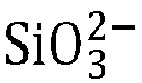
- silicate is thereby understood to be any member of a family of anions consisting of silicon and oxygen, usually with the general formula SiO 4 ⁇ x 4 ⁇ 2 x ⁇ n where 0 ⁇ x ⁇ 2.
- the name is also used for any salt of such anions, such as sodium metasilicate; or any ester containing the corresponding chemical group, such as tetramethyl orthosilicate.
- silicate is used to mean silicate minerals, ionic solids with silicate anions, as well as rock types that consist predominantly of such minerals.
- the term also includes minerals where aluminum or other tetravalent atoms replace some of the silicon atoms, as in the aluminosilicates.
- the interference of the present invention is of course not limited to silicate, other examples of interference are also known to the skilled person, for example, Zr(IV) and Ti(IV), Ta(V) and Nb(V), W(VI).
- a variant of the method for determining a phosphate concentration in a water sample of the present invention includes providing the water sample, determining a first phosphate concentration of the water sample via a molybdenum yellow method or via a variant of the molybdenum yellow method at a temperature of from 40-50 °C, preferably from 43-47 °C, very preferably at approximately 45 °C, determining a silicate concentration of the water sample, and correcting the first phosphate concentration by applying a phosphate correction value so as to eliminate an interference effect of the silicate concentration.
- the solution is mixed once again, left to react for 5 minutes, and then measured in the photometer against a reagent blank prepared with Ultrapure water in an analogous manner.
- Another method is the "Silicomolybdate/Heteropoly Blue Method" of Hach Lange GmbH.
- the Silicomolybdate Method involves the reaction of molybdate ion with silica and phosphate under acid conditions to form a yellow color. Citric acid is added to destroy the phosphomolybdic acid complex (the yellow color formed due to phosphate), but not the silicomolybdic acid complex. For large amounts of silica, the remaining yellow color is intense enough to be read directly.
- an amino-naphthol sulfonic acid reducing agent is used to convert the faint yellow color to a dark heteropoly blue species.
- the color formed is directly proportional to the amount of silica present in the original sample; a colorimetric measurement of this intensity provides an accurate means of determining the silica concentration.
- Some forms of silica (usually polymeric) will not react with ammonium molybdate and must be digested with sodium bicarbonate to be converted to a reactive form.
- Silicic acid reacts with water and hydrates as follows: H 2 SiO 3 + 3H 2 O ⁇ H 8 SiO 6
- This silicomolybdic acid is then reduced to a blue color (heteropoly species) by an amino naphthol sulfonic acid for low concentrations.
- This silicomolybdic acid is then reduced to a blue color (heteropoly species) by an amino naphthol sulfonic acid for low concentrations.
- the phosphate correction value is preferably,
- the phosphate correction value can also be provided by a look-up table and/or an assumption modeling which represents the interference effect of the silicate concentration at a specific temperature.
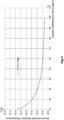
- An example of an assumption modeling is shown, for example, in Fig. 4 .
- a skilled person would then deduct this interference effect from the first phosphate concentration based on the silicate concentration of the water sample determined, for example, in ppm silicate, and temperature at which the first phosphate concentration was determined. The corrected first phosphate concentration will then be obtained absent the interference effect of the silicate concentration.
- a variant of the method for determining a phosphate concentration in a water sample of the present invention is to eliminate the interference effects of silicate by always determining the phosphate concentration at a temperature where no, or at least minimal, such interference effects occur.
- This variant preferably provides the water sample, establishes a temperature of the water sample of preferably 30-35 °C, and then determines the phosphate concentration of the water sample via the molybdenum yellow method or a variant thereof.
- the temperature of the water sample can, for example, even be lower than 30 °C, for example, from 10-30 °C. Preference is however given to a temperature of 30 °C, 31 °C, 32 °C, 33 °C and 35 °C, for example, 30 °C.
- silicate here SiO 2
- a sample run was performed under standard conditions using the Phosphax sc Phosphat-Analysator from Hach Lange GmbH, 0.05-15 mg/l PO 4 -P (55 ⁇ l reagent to 1 ml sample at 45 °C and less than 5 Minutes reaction time) with a silicate range of 0-100 mg/l SiO 2 . It was thereby determined that the interference of silicate can result in up to 0.37 ppm phosphate equivalents as PO 4 -P with 100 ppm silicate. Table 1 sets forth the data of samples run between 0-100 ppm SiO 2 . Table 1 Sample ppm SiO 2 ppm PO4-P equivalent 1 0 0.00 2 25 0.10 3 50 0.17 4 100 0.37
- a first sample run was repeated under optimized conditions using the Phosphax sc Phosphat-Analysator from Hach Lange GmbH, 0.05-15 mg/l PO 4 -P (70 ⁇ l reagent to 1 ml sample at 45 °C and less than 5 Minutes reaction time) with a silicate range of 0-100 mg/l SiO 2 .
- the only difference between Examples 1 and 2 was therefore that more reagent (70 ⁇ l instead of 55 ⁇ l) was used. It was thereby determined that the interference of silicate can result in up to 0.22 ppm phosphate equivalents as PO 4 -P with 100 ppm silicate.
- Table 2 sets forth the data of samples run between 0-100 ppm SiO 2 .
- Table 2 Sample ppm SiO 2 ppm PO4-P equivalent 1 0 0.00 2 25 0.05 3 50 0.11 4 100 0.22
- the interference impact could therefore be reduced by up to 40 % by manipulating the sample-to-reagent ratio.
- Example 2 was repeated at a temperature of 30 °C instead of 45 °C. It was thereby determined that the interference of silicate can be significantly reduced.
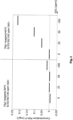
- Table 3 sets forth the data of samples run between 0-100 ppm SiO 2 . A comparison of the results of Examples 2 and 3 are set forth in Fig. 1. Fig. 1 thereby clearly shows that the interference of silicate is significant at higher temperatures (i.e., 45 °C) compared to lower temperatures (i.e., 30 °C).
- Table 3 Sample ppm SiO 2 ppm PO4-P equivalent at 45 °C ppm PO4-P equivalent at 30 °C 1 0 0.00 -0.001 2 25 0.05 0.000 3 50 0.11 0.000 4 100 0.22 0.015
- Examples 2 and 3 shows that the interference of silicate can be corrected based on a combination of temperature and sample-to-reagent ratio to approximately 93-100 %.
- Fig. 4 shows, for example, an assumption modeling between reaction temperature and silicate interference based on a reagent ratio of 70 ⁇ l to 1 ml sample. Fig. 4 thereby shows that the effect of silicate interference is reduced when the temperature is lowered.
- a skilled person can use such an assumption modeling to choose a reaction temperature with an expected silicate interference in order to minimize the impact of SiO 2 .
Landscapes
- Life Sciences & Earth Sciences (AREA)
- Chemical & Material Sciences (AREA)
- Health & Medical Sciences (AREA)
- Physics & Mathematics (AREA)
- Pathology (AREA)
- Immunology (AREA)
- General Physics & Mathematics (AREA)
- Analytical Chemistry (AREA)
- Biochemistry (AREA)
- General Health & Medical Sciences (AREA)
- Engineering & Computer Science (AREA)
- Food Science & Technology (AREA)
- Medicinal Chemistry (AREA)
- Biophysics (AREA)
- Molecular Biology (AREA)
- Chemical Kinetics & Catalysis (AREA)
- Plasma & Fusion (AREA)
- Investigating Or Analyzing Non-Biological Materials By The Use Of Chemical Means (AREA)
Abstract
Description
- The present invention relates to a method for determining phosphate in a water sample.
- Attempts have been made for many years to reduce phosphate pollution in the environment, in particular from wastewaters.
- According to the German Waste Water Ordinance, water treatment plants having a designed capacity for servicing more than 10,000 inhabitants must adhere to a discharge concentration of phosphate of not more than 2 mg/l. This value is 1 mg/l for a designed capacity for more than 100,000 inhabitants.
- An exact determination of phosphate content is therefore necessary.
- The molybdenum blue method and the molybdenum yellow method are among the currently most commonly used methods for measuring orthophosphate in a water system, in particular in industrial water. The molybdenum blue method is very sensitive and is suitable for measuring orthophosphate in low concentrations. However, in industrial water system, the orthophosphate concentration may sometimes reach as high as tens of ppm. When the orthophosphate concentration in water is high, the molybdenum blue method is easily saturated so that the water sample must be diluted before the measurement is performed. In contrast to the molybdenum blue method, the molybdenum yellow method has a wide range of measurement and is therefore more suitable for industrial water samples.
- The first step of the molybdenum yellow method is to acidify the water sample and to add a molybdate, where the orthophosphate and the molybdate react in the acidic aqueous solution to generate a solution that contains the phosphomolybdic acid (a heteropoly acid). A color development agent, such as vanadate, is then added to the aforesaid phosphomolybdic acid containing solution to develop a yellow color. The absorbance of the water sample is subsequently measured photometrically using a spectrometer, thereby optically determining the concentration of the orthophosphate contained in water.
-
DE 27 28 706 describes a method for automatic phosphate determination using the molybdenum yellow method which uses as a reagent a solution which contains 25 g of ammonium heptamolybdate, 1 g of ammonium monovanadate, 56 ml of concentrated sulfuric acid, and 1 g of sodium chloride per liter. The molybdate and vanadate components form a yellow-colored complex together with phosphate. It is presumed that the following reaction takes place:
(NH4)6Mo7O24 + NH4VO3 + PO4 3- → (NH4)3PO4 × NH4VO3 × 16 MoO3
- The equilibrium lies on the right-hand side of the equation in an acid medium (pH < 2). In this method, a wastewater sample is measured photometrically, the reagent is added, and after a delay time of from 4 to 5 minutes, a second measurement is carried out. The phosphate concentration can be determined from the yellow coloration with the aid of a standard solution. The intensity of the yellow color is here proportional to the phosphate concentration when the measurement solution is strongly acidic.
- Variants of the above method are also known.
- For example,
WO 2016/133882 A1 describes a variant where the composition for measuring the concentration of orthophosphate in a water system is provided in solid form, in particular as a dried powder, in order to facilitate transportation, packaging and use. The composition for measuring the concentration of orthophosphate in a water system comprises: - (a) An acid in solid form;
- (b) A water soluble molybdate; and
- (c) A color development agent for developing the phosphomolybdic acid.
-
WO 2016/133882 A1 describes that the color development agent for developing the phosphomolybdic acid is a color development agent used in the molybdenum yellow method that develop a color for the phosphomolybdic acid formed from the reaction between the molybdate and the orthophosphate in the water system under the acidic conditions, for example, vanadates, for example, ammonium vanadate, sodium vanadate and potassium vanadate. - Another variant of molybdenum yellow method is described, for example, in
US 4,544,639 which describes a process for determining the amount of organic phosphonate present in an aqueous solution, comprising the steps of: - (a) Adding 1000 to 20,000 ppm of a strong oxidizing agent and 8 ppb to 5000 ppm silver ion to the aqueous solution;
- (b) Allowing the organic phosphonate present in said solution to react to form orthophosphate;
- (c) Precipitating any excess silver in said solution by the addition of 1000 to 50,000 ppm of a reducing agent or at least an equimolar amount of a halide, based on the silver ion added in Step (a), and removing any precipitate formed;
- (d) Adding to said
solution 5 to 30 percent, by volume, of an aqueous acid solution containing 500 to 2000 ppm of ions selected from the group consisting of molybdate ion and vanadate ion, and if a halide is used in Step (c), adding 1000 to 50,000 ppm of a reducing agent; - (e) Measuring the absorbance of said solution at 625 to 880 nanometers and determining the orthophosphate concentration from a calibration curve of orthophosphate concentration versus absorbance; and
- (f) Subtracting any orthophosphate present in the original aqueous solution from the orthophosphate concentration determined in Step (e), to give the total organic phosphonate concentration.
-
US 2020/0340925 describes a variant of the molybdenum yellow method which focuses on reliably determining small phosphate concentrations.US 2020/0340925 thereby describes a method for determining phosphate in a water sample comprising: - (a) Providing a water sample;
- (b) Adding an acid so that the concentration of the acid in the water sample is at least 0.5 wt.-%;
- (c) Performing a first photometric measurement of the water sample solution;
- (d) Adding a coloring component to the photometric water sample solution;
- (e) Performing a second photometric measurement; and
- (f) Calculating the phosphate concentration from the difference between the first photometric measurement and the second photometric measurement.
-
US 2020/0340925 describes that the coloring reagent, i.e., a reagent based on molybdate and vanadate, is divided by firstly adding an acid before a first photometric measurement is carried out and then adding the coloring component to the same water sample solution and carrying out the second photometric measurement. - Each of
DE 27 28 706 A ,WO 2016/133882 A1 ,US 4,544,639 andUS 2020/0340925 are incorporated by reference herein. A skilled person would have knowledge of other variants, and the above examples of the molybdenum yellow method is not intended to be limiting. - A disadvantage of the molybdenum yellow method is that inaccuracies have been observed, in particular, when processing a wastewater sample and/or an industrial water sample having a low phosphate content at warm temperatures.
- An object of the present invention is to provide an improvement of the molybdenum yellow method to overcome the above inaccuracies.
- In an embodiment, the present invention provides a method for determining a phosphate concentration in a water sample. The method includes providing the water sample, determining a first phosphate concentration of the water sample via a molybdenum yellow method or via a variant of the molybdenum yellow method at a first temperature, and, if the first phosphate concentration falls within a specified range, determining a corrected phosphate concentration of the water sample via the molybdenum yellow method or via the variant of the molybdenum yellow method at a second temperature.
- In an embodiment of the present invention, if the specified range of the first phosphate concentration is < 5 ppm, the second temperature for the corrected phosphate concentration is preferably 30-35 °C, if the specified range of the first phosphate concentration is from 5-10 ppm, the second temperature for the corrected phosphate concentration is preferably 35-40 °C, and if the specified range of the first phosphate concentration is from 10-15 ppm, the second temperature for the corrected phosphate concentration is preferably 40-44 °C.
- In an embodiment of the present invention, the first temperature is preferably from 40-60 °C, more preferably from 43-47 °C, and most preferably at approximately 45 °C. The first temperature can, for example, be 40 °C, 41 °C, 42 °C, 43 °C, 44 °C, 45 °C, 46, °C 47 °C, 48 °C, 49, °C, 50 °C, 51 °C, 52 °C, 53 °C, 54 °C, 55 °C 56 °C, 57 °C, 58 °C, 59 °C or 60 °C.
- In an embodiment of the present invention, the water sample is preferably divided into two water samples, for example, a first water sample and a second water sample. The determining of the first phosphate concentration is preferably performed with one of the two water samples, for example, with the first water sample, while the determining of the second phosphate concentration is performed with the other of the two water samples, for example, with the second water sample.
- In an embodiment of the present invention, the determining of the first phosphate concentration and the determining of the second phosphate concentration is performed by adjusting the temperature of the water sample from the first temperature to the second temperature. A skilled person knows that the molybdenum yellow method will take a certain amount of time, for example, up to five minutes. Instead than running two samples, which would then up to 10 minutes, excluding any preparation time, the skilled person can instead use a single sample and perform the analysis with an analysis system where the single sample can be heated and/or cooled in situ. Analysis systems with heating and/or cooling systems have previously been described, for example, in
US 4,004,708 ,US 4,619,530 or inCN 104316479 A , each of which is incorporated by reference herein. An aspect of the present invention therefore includes an analyzer having a flexible photometric reaction chamber with a flexible temperature range of 25-60 °C which can be heated and/or cooled between any temperature from 26-60 °C within a matter of seconds. This practically immediate temperature adjustment allows a photometric measurement to be conducted first at the first temperature, and almost immediately thereafter, at the second temperature, with the same sample. A skilled person could, merely as an example, perform a first analysis at 45 °C, and a second analysis at 30 °C. Any difference in the analysis result could thereby be the result of an interference. The use of two temperatures could therefore also be used by a skilled person to check and/or validate the analysis result obtained at another temperature. As stated above, any combination of temperatures between 25 and 60 °C is possible (provided that the starting temperature is not equal to the ending temperature), for example:Starting Temperature Ending Temperature 25 37 49 Combined With 25 37 49 26 38 50 26 38 50 27 39 51 27 39 51 28 40 52 28 40 52 29 41 53 29 41 53 30 42 54 30 42 54 31 43 55 31 43 55 32 44 56 32 44 56 33 45 57 33 45 57 34 46 58 34 46 58 35 47 59 35 47 59 36 48 60 36 48 60 - In an embodiment of the present invention, the water sample is preferably a wastewater sample or an industrial water sample. A skilled person knows that such samples are usually photometrically analyzed at approximately 45 °C.
- The corrected phosphate concentration preferably mitigates an effect of an interference of the phosphate concentration at this temperature.
- The interference is preferably a silicate interference. The term "silicate" is thereby understood to be any member of a family of anions consisting of silicon and oxygen, usually with the general formula



- A variant of the method for determining a phosphate concentration in a water sample of the present invention includes providing the water sample, determining a first phosphate concentration of the water sample via a molybdenum yellow method or via a variant of the molybdenum yellow method at a temperature of from 40-50 °C, preferably from 43-47 °C, very preferably at approximately 45 °C, determining a silicate concentration of the water sample, and correcting the first phosphate concentration by applying a phosphate correction value so as to eliminate an interference effect of the silicate concentration.
- A skilled person would know many methods of determining the silicate concentration of a water sample. One such method is described in ASTM D859-16 (2021)e1. Another method is the Spectroquant® Silicate Test 101813 of Merck KGaA which starts by pipetting 20 mL of sample solution into a plastic test vessel, after which 200 µL of a reagent (Si-1) is added. The solution is then mixed and then left to stand for 5 minutes. After the standing time, 200 µL a second reagent (Si-2) is added and the solution is mixed, then 1.00 mL of a third reagent (Si-3) is added. The solution is mixed once again, left to react for 5 minutes, and then measured in the photometer against a reagent blank prepared with Ultrapure water in an analogous manner. Another method is the "Silicomolybdate/Heteropoly Blue Method" of Hach Lange GmbH. The Silicomolybdate Method involves the reaction of molybdate ion with silica and phosphate under acid conditions to form a yellow color. Citric acid is added to destroy the phosphomolybdic acid complex (the yellow color formed due to phosphate), but not the silicomolybdic acid complex. For large amounts of silica, the remaining yellow color is intense enough to be read directly. For low concentrations, an amino-naphthol sulfonic acid reducing agent is used to convert the faint yellow color to a dark heteropoly blue species. The color formed is directly proportional to the amount of silica present in the original sample; a colorimetric measurement of this intensity provides an accurate means of determining the silica concentration. Some forms of silica (usually polymeric) will not react with ammonium molybdate and must be digested with sodium bicarbonate to be converted to a reactive form. Silicic acid reacts with water and hydrates as follows:
H2SiO3 + 3H2O → H8SiO6
- This hydrated silicic acid reacts with molybdate in the presence of acids to form silicomolybdic acid.
H8SiO6 + 12(NH4)2MoO4 + 12H2SO4 → H8[Si(Mo2O7)6] + 12(NH4)2SO4 + 12H2O
- This silicomolybdic acid is then reduced to a blue color (heteropoly species) by an amino naphthol sulfonic acid for low concentrations. The above examples are not intended to be limiting and a skilled person would have knowledge of additional methods.
- In an embodiment of the present invention, the phosphate correction value is preferably,
- a) from 0 to 25 ppm of silicate: (the determined ppm silicate) x 0.10/(25 ppm silicate),
- b) from > 25 to 50 ppm of silicate: additionally to a), (the determined ppm silicate exceeding 25 ppm) x 0.07/(25 ppm silicate), and
- c) from > 50 to 100 ppm of silicate: additionally to a) and b), (the determined ppm silicate exceeding 50 ppm) x 0.20/(50 ppm silicate).
- The above correction values are merely provided as an example. A skilled person can calculate narrower or broader ranges based on the water sample usually used. In an embodiment of the present invention, the phosphate correction value can also be provided by a look-up table and/or an assumption modeling which represents the interference effect of the silicate concentration at a specific temperature. An example of an assumption modeling is shown, for example, in
Fig. 4 . A skilled person would then deduct this interference effect from the first phosphate concentration based on the silicate concentration of the water sample determined, for example, in ppm silicate, and temperature at which the first phosphate concentration was determined. The corrected first phosphate concentration will then be obtained absent the interference effect of the silicate concentration. - A variant of the method for determining a phosphate concentration in a water sample of the present invention is to eliminate the interference effects of silicate by always determining the phosphate concentration at a temperature where no, or at least minimal, such interference effects occur. This variant preferably provides the water sample, establishes a temperature of the water sample of preferably 30-35 °C, and then determines the phosphate concentration of the water sample via the molybdenum yellow method or a variant thereof. The temperature of the water sample can, for example, even be lower than 30 °C, for example, from 10-30 °C. Preference is however given to a temperature of 30 °C, 31 °C, 32 °C, 33 °C and 35 °C, for example, 30 °C.
- The present invention is described in greater detail below on the basis of embodiments and of the drawings in which:
-
Fig. 1 shows the optimizing of silicate interference at temperatures of 30 °C and 45 °C. -
Fig. 2 shows an algorithm for forecasting a result of an increasing/decreasing phosphate concentration slope. -
Fig. 3 shows a typically run of a wastewater plant in the range of < 5mg/l PO4-P over time. -
Fig. 4 shows an assumption modeling between reaction temperature and silicate interference. - The present invention is explained in greater detail below based on the following examples which are provided to show how the present invention can be practically applied in the real world. The examples are not intended to be limiting.
- In order to investigate the impact that silicate (here SiO2) has on an orthophosphate measurement, a sample run was performed under standard conditions using the Phosphax sc Phosphat-Analysator from Hach Lange GmbH, 0.05-15 mg/l PO4-P (55 µl reagent to 1 ml sample at 45 °C and less than 5 Minutes reaction time) with a silicate range of 0-100 mg/l SiO2. It was thereby determined that the interference of silicate can result in up to 0.37 ppm phosphate equivalents as PO4-P with 100 ppm silicate. Table 1 sets forth the data of samples run between 0-100 ppm SiO2.
Table 1 Sample ppm SiO2 ppm PO4-P equivalent 1 0 0.00 2 25 0.10 3 50 0.17 4 100 0.37 - A first sample run was repeated under optimized conditions using the Phosphax sc Phosphat-Analysator from Hach Lange GmbH, 0.05-15 mg/l PO4-P (70 µl reagent to 1 ml sample at 45 °C and less than 5 Minutes reaction time) with a silicate range of 0-100 mg/l SiO2. The only difference between Examples 1 and 2 was therefore that more reagent (70 µl instead of 55 µl) was used. It was thereby determined that the interference of silicate can result in up to 0.22 ppm phosphate equivalents as PO4-P with 100 ppm silicate. Table 2 sets forth the data of samples run between 0-100 ppm SiO2.
Table 2 Sample ppm SiO2 ppm PO4-P equivalent 1 0 0.00 2 25 0.05 3 50 0.11 4 100 0.22 - The interference impact could therefore be reduced by up to 40 % by manipulating the sample-to-reagent ratio.
- Example 2 was repeated at a temperature of 30 °C instead of 45 °C. It was thereby determined that the interference of silicate can be significantly reduced. Table 3 sets forth the data of samples run between 0-100 ppm SiO2. A comparison of the results of Examples 2 and 3 are set forth in
Fig. 1. Fig. 1 thereby clearly shows that the interference of silicate is significant at higher temperatures (i.e., 45 °C) compared to lower temperatures (i.e., 30 °C).Table 3 Sample ppm SiO2 ppm PO4-P equivalent at 45 °C ppm PO4-P equivalent at 30 ° C 1 0 0.00 -0.001 2 25 0.05 0.000 3 50 0.11 0.000 4 100 0.22 0.015 - Examples 2 and 3 shows that the interference of silicate can be corrected based on a combination of temperature and sample-to-reagent ratio to approximately 93-100 %.
- The above Examples demonstrate that varying only the ratio of sample-to-reagent will not in and of itself significantly minimize or entirely eliminate silicate interference. The above Examples also show, however, that changing the reaction temperature, for example, in the range of 30-60 °C, can significantly minimize or entirely eliminate silicate interference. While the present invention does not propose any conclusive underlying theory for this technical effect, it is believed that reaction kinetics may be influenced based on the Arrhenius equation in combination with the chosen concentration level. A practical application of this observation thereby involves dividing the measuring range into segmented reaction temperature areas or zones to thereby minimize or entirely eliminate silicate interference. For example, 50 mg/l of silicate showed an impact of 0.17 mg/l phosphate under standard conditions at 45 °C (see Example 1 above). A reduction of the temperature to 30 °C reduced this interference entirely (see Example 3 above). An analysis with high resolution down to 0.05 mg/l is therefore possible.
- It is also possible to run an assumption modeling for various phosphate concentrations.
Fig. 4 shows, for example, an assumption modeling between reaction temperature and silicate interference based on a reagent ratio of 70 µl to 1 ml sample.Fig. 4 thereby shows that the effect of silicate interference is reduced when the temperature is lowered. A skilled person can use such an assumption modeling to choose a reaction temperature with an expected silicate interference in order to minimize the impact of SiO2.
Claims (10)
- A method for determining a phosphate concentration in a water sample, the method comprising:providing the water sample;determining a first phosphate concentration of the water sample via a molybdenum yellow method or via a variant of the molybdenum yellow method at a first temperature; andif the first phosphate concentration falls within a specified range, determining a corrected phosphate concentration of the water sample via the molybdenum yellow method or via the variant of the molybdenum yellow method at a second temperature.
- The method as recited in claim 1, wherein,if the specified range of the first phosphate concentration is < 5 ppm, the second temperature for the corrected phosphate concentration is 30-35 °C,if the specified range of the first phosphate concentration is from 5-10 ppm, the second temperature for the corrected phosphate concentration is 35-40 °C, andif the specified range of the first phosphate concentration is from 10-15 ppm, the second temperature for the corrected phosphate concentration is 40-44 °C.
- The method as recited in claim 1 or 2, wherein the first temperature is from 40-60 °C, preferably from 43-47 °C, most preferably at approximately 45 °C.
- The method as recited in at least one of claims 1-3, wherein,the water sample is divided into a first water sample and a second water sample, andthe determining of the first phosphate concentration is performed with the first water sample and the determining of the second phosphate concentration is performed with the second water sample.
- The method as recited in at least one of claims 1-3, wherein the determining of the first phosphate concentration and the determining of the second phosphate concentration is performed by adjusting the temperature of the water sample from the first temperature to the second temperature.
- The method as recited in at least one of claims 1-5, wherein the water sample is a wastewater sample or an industrial water sample.
- The method as recited in at least one of claims 1-6, wherein the corrected phosphate concentration mitigates an effect of an interference of the a phosphate concentration.
- The method as recited in claim 7, wherein the interference is a silicate interference.
- A method for determining a phosphate concentration in a water sample, the method comprising:providing the water sample;determining a first phosphate concentration of the water sample via a molybdenum yellow method or via a variant of the molybdenum yellow method at a temperature of from 40-50 °C, preferably from 43-47 °C, preferably at approximately 45 °C;determining a silicate concentration of the water sample in ppm silicate; andcorrecting the first phosphate concentration by applying a phosphate correction value so as to eliminate an interference effect of the silicate concentration.
- The method as recited in claim 9, characterized in that the phosphate correction value is,a) from 0 to 25 ppm of silicate: (the determined ppm silicate) x 0.10/(25 ppm silicate),b) from > 25 to 50 ppm of silicate: additionally to a), (the determined ppm silicate exceeding 25 ppm) x 0.07/(25 ppm silicate), andc) from > 50 to 100 ppm of silicate: additionally to a) and b), (the determined ppm silicate exceeding 50 ppm) x 0.20/(50 ppm silicate).
Priority Applications (4)
| Application Number | Priority Date | Filing Date | Title |
|---|---|---|---|
| EP22176715.5A EP4286833B1 (en) | 2022-06-01 | 2022-06-01 | Method of determining phosphate concentration in a water sample |
| PCT/EP2023/064637 WO2023232919A1 (en) | 2022-06-01 | 2023-06-01 | Method of determining phosphate concentration in a water sample |
| US18/869,115 US20260002922A1 (en) | 2022-06-01 | 2023-06-01 | Method of determining phosphate concentration in a water sample |
| CN202380043655.4A CN119213299A (en) | 2022-06-01 | 2023-06-01 | Method for determining phosphate concentration in water samples |
Applications Claiming Priority (1)
| Application Number | Priority Date | Filing Date | Title |
|---|---|---|---|
| EP22176715.5A EP4286833B1 (en) | 2022-06-01 | 2022-06-01 | Method of determining phosphate concentration in a water sample |
Publications (3)
| Publication Number | Publication Date |
|---|---|
| EP4286833A1 true EP4286833A1 (en) | 2023-12-06 |
| EP4286833C0 EP4286833C0 (en) | 2025-08-06 |
| EP4286833B1 EP4286833B1 (en) | 2025-08-06 |
Family
ID=82196506
Family Applications (1)
| Application Number | Title | Priority Date | Filing Date |
|---|---|---|---|
| EP22176715.5A Active EP4286833B1 (en) | 2022-06-01 | 2022-06-01 | Method of determining phosphate concentration in a water sample |
Country Status (4)
| Country | Link |
|---|---|
| US (1) | US20260002922A1 (en) |
| EP (1) | EP4286833B1 (en) |
| CN (1) | CN119213299A (en) |
| WO (1) | WO2023232919A1 (en) |
Families Citing this family (1)
| Publication number | Priority date | Publication date | Assignee | Title |
|---|---|---|---|---|
| CN120801295A (en) * | 2025-08-07 | 2025-10-17 | 北京华科仪科技股份有限公司 | Rapid measurement method for trace silicate and phosphate |
Citations (7)
| Publication number | Priority date | Publication date | Assignee | Title |
|---|---|---|---|---|
| US4004708A (en) | 1975-12-19 | 1977-01-25 | Philadelphia Suburban Corporation | Fire-responsive tank top |
| DE2728706A1 (en) | 1977-06-25 | 1979-01-18 | Hoechst Ag | PROCEDURE FOR AUTOMATIC PHOSPHATE DETERMINATION |
| US4544639A (en) | 1983-10-21 | 1985-10-01 | Calgon Corporation | Process for determining the amount of organic phosphonate present in an aqueous solution |
| US4619530A (en) | 1983-07-08 | 1986-10-28 | Personal Diagnostics, Inc. | Combined cuvette with integral optical elements and electrical circuit with photoemissive and photosensitive elements in intimate optical contact with said optical elements |
| CN104316479A (en) | 2014-11-03 | 2015-01-28 | 成都卓微科技有限公司 | Thermostat for spectrophotometer |
| WO2016133882A1 (en) | 2015-02-16 | 2016-08-25 | Ecolab Usa Inc. | Composition and method for measuring orthophosphate concentration in water system and use of said composition |
| US20200340925A1 (en) | 2017-09-20 | 2020-10-29 | Hach Lange Gmbh | Method for determining phosphate |
-
2022
- 2022-06-01 EP EP22176715.5A patent/EP4286833B1/en active Active
-
2023
- 2023-06-01 CN CN202380043655.4A patent/CN119213299A/en active Pending
- 2023-06-01 US US18/869,115 patent/US20260002922A1/en active Pending
- 2023-06-01 WO PCT/EP2023/064637 patent/WO2023232919A1/en not_active Ceased
Patent Citations (7)
| Publication number | Priority date | Publication date | Assignee | Title |
|---|---|---|---|---|
| US4004708A (en) | 1975-12-19 | 1977-01-25 | Philadelphia Suburban Corporation | Fire-responsive tank top |
| DE2728706A1 (en) | 1977-06-25 | 1979-01-18 | Hoechst Ag | PROCEDURE FOR AUTOMATIC PHOSPHATE DETERMINATION |
| US4619530A (en) | 1983-07-08 | 1986-10-28 | Personal Diagnostics, Inc. | Combined cuvette with integral optical elements and electrical circuit with photoemissive and photosensitive elements in intimate optical contact with said optical elements |
| US4544639A (en) | 1983-10-21 | 1985-10-01 | Calgon Corporation | Process for determining the amount of organic phosphonate present in an aqueous solution |
| CN104316479A (en) | 2014-11-03 | 2015-01-28 | 成都卓微科技有限公司 | Thermostat for spectrophotometer |
| WO2016133882A1 (en) | 2015-02-16 | 2016-08-25 | Ecolab Usa Inc. | Composition and method for measuring orthophosphate concentration in water system and use of said composition |
| US20200340925A1 (en) | 2017-09-20 | 2020-10-29 | Hach Lange Gmbh | Method for determining phosphate |
Non-Patent Citations (3)
| Title |
|---|
| LIANG ET AL: "Flow injection analysis of nanomolar level orthophosphate in seawater with solid phase enrichment and colorimetric detection", MARINE CHEMISTRY, ELSEVIER SCIENCE B.V., AMSTERDAM, NL, vol. 103, no. 1-2, 12 December 2006 (2006-12-12), pages 122 - 130, XP005809623, ISSN: 0304-4203, DOI: 10.1016/J.MARCHEM.2006.06.013 * |
| MA JIAN ET AL: "Underway analysis of nanomolar dissolved reactive phosphorus in oligotrophic seawater with automated on-line solid phase extraction and spectrophotometric system", ANALYTICA CHIMICA ACTA, ELSEVIER, AMSTERDAM, NL, vol. 950, 15 November 2016 (2016-11-15), pages 80 - 87, XP029826012, ISSN: 0003-2670, DOI: 10.1016/J.ACA.2016.11.029 * |
| MCGRAW ET AL: "Autonomous microfluidic system for phosphate detection", TALANTA, ELSEVIER, AMSTERDAM, NL, vol. 71, no. 3, 30 January 2007 (2007-01-30), pages 1180 - 1185, XP005864558, ISSN: 0039-9140, DOI: 10.1016/J.TALANTA.2006.06.011 * |
Also Published As
| Publication number | Publication date |
|---|---|
| WO2023232919A1 (en) | 2023-12-07 |
| US20260002922A1 (en) | 2026-01-01 |
| EP4286833C0 (en) | 2025-08-06 |
| CN119213299A (en) | 2024-12-27 |
| EP4286833B1 (en) | 2025-08-06 |
Similar Documents
| Publication | Publication Date | Title |
|---|---|---|
| Narayana et al. | A spectrophotometric method for the determination of nitrite and nitrate | |
| WO2012016350A1 (en) | Simultaneous determination of multiple analytes in industrial water system | |
| US20260002922A1 (en) | Method of determining phosphate concentration in a water sample | |
| Bosque-Sendra et al. | Speciation of vanadium (IV) and vanadium (V) with Eriochrome Cyanine R in natural waters by solid phase spectrophotometry | |
| KR101534562B1 (en) | chlorine detecting reagent and the detecting kit and the chlorine detecting method | |
| KR101340766B1 (en) | the detecting reagent for high concentration of phosphate and the detecting kit using thereof | |
| Smith et al. | Spectrophotometric determination of silicate in natural waters by formation of α-molybdosilicic acid and reduction with a tin (IV)-ascorbic acid-oxalic acid mixture | |
| US12235255B2 (en) | Method of determining chemical oxygen demand (COD) for high chloride samples | |
| Narayana et al. | An easy spectrophotometric method for the determination of hypochlorite using thionin | |
| KR101340695B1 (en) | the detecting reagent for low concentration of phosphate and the detecting kit using thereof | |
| Nagaraja et al. | Spectrophotometric determination of nitrate in polluted water using a new coupling reagent | |
| Campı́ns-Falcó et al. | The H-point and generalized H-point standard additions methods for flow injection procedures | |
| KR101350081B1 (en) | the method for detecting high concentration of phosphate | |
| KR102716610B1 (en) | a silica detecting kit and the silica detecting method using thereof | |
| Cai et al. | Potential errors in the use of the Murphy and Riley method for determination of phosphorus in soil extracts | |
| KR101340767B1 (en) | the detecting method for low concentration of phosphate | |
| Boudra et al. | Determination of vanadium by solid-phase spectrophotometry after its preconcentration as an Eriochrome Cyanine R complex on a dextran-type exchanger | |
| Narayana et al. | Spectrophotometric method for the determination of iodate using methylene blue as a chromogenic reagent | |
| KR101346666B1 (en) | nitrate concentration detecting agent and the kit using thereof | |
| JPH04109166A (en) | Quantification method for silica | |
| Tkácová et al. | Determination of chlorine dioxide and chlorite in water supply systems by verified methods | |
| US11714050B2 (en) | Method for determining phosphate | |
| CN113640239A (en) | Spectrophotometric detection method for nitrate and nitrite | |
| KR102765408B1 (en) | a Low-concentration fluorine concentration detection kit and the low-concentration fluorine concentration detection method using the same | |
| Quianfeng | Study of the titanium-phenylfluorone complex formed in the presence of Triton X-305 and emulsifier OP |
Legal Events
| Date | Code | Title | Description |
|---|---|---|---|
| PUAI | Public reference made under article 153(3) epc to a published international application that has entered the european phase |
Free format text: ORIGINAL CODE: 0009012 |
|
| STAA | Information on the status of an ep patent application or granted ep patent |
Free format text: STATUS: THE APPLICATION HAS BEEN PUBLISHED |
|
| AK | Designated contracting states |
Kind code of ref document: A1 Designated state(s): AL AT BE BG CH CY CZ DE DK EE ES FI FR GB GR HR HU IE IS IT LI LT LU LV MC MK MT NL NO PL PT RO RS SE SI SK SM TR |
|
| STAA | Information on the status of an ep patent application or granted ep patent |
Free format text: STATUS: REQUEST FOR EXAMINATION WAS MADE |
|
| 17P | Request for examination filed |
Effective date: 20240524 |
|
| RBV | Designated contracting states (corrected) |
Designated state(s): AL AT BE BG CH CY CZ DE DK EE ES FI FR GB GR HR HU IE IS IT LI LT LU LV MC MK MT NL NO PL PT RO RS SE SI SK SM TR |
|
| GRAP | Despatch of communication of intention to grant a patent |
Free format text: ORIGINAL CODE: EPIDOSNIGR1 |
|
| STAA | Information on the status of an ep patent application or granted ep patent |
Free format text: STATUS: GRANT OF PATENT IS INTENDED |
|
| INTG | Intention to grant announced |
Effective date: 20250228 |
|
| GRAS | Grant fee paid |
Free format text: ORIGINAL CODE: EPIDOSNIGR3 |
|
| GRAA | (expected) grant |
Free format text: ORIGINAL CODE: 0009210 |
|
| STAA | Information on the status of an ep patent application or granted ep patent |
Free format text: STATUS: THE PATENT HAS BEEN GRANTED |
|
| AK | Designated contracting states |
Kind code of ref document: B1 Designated state(s): AL AT BE BG CH CY CZ DE DK EE ES FI FR GB GR HR HU IE IS IT LI LT LU LV MC MK MT NL NO PL PT RO RS SE SI SK SM TR |
|
| REG | Reference to a national code |
Ref country code: GB Ref legal event code: FG4D |
|
| REG | Reference to a national code |
Ref country code: CH Ref legal event code: EP |
|
| REG | Reference to a national code |
Ref country code: DE Ref legal event code: R096 Ref document number: 602022018751 Country of ref document: DE |
|
| REG | Reference to a national code |
Ref country code: IE Ref legal event code: FG4D |
|
| U01 | Request for unitary effect filed |
Effective date: 20250902 |
|
| U07 | Unitary effect registered |
Designated state(s): AT BE BG DE DK EE FI FR IT LT LU LV MT NL PT RO SE SI Effective date: 20250908 |
|
| PG25 | Lapsed in a contracting state [announced via postgrant information from national office to epo] |
Ref country code: IS Free format text: LAPSE BECAUSE OF FAILURE TO SUBMIT A TRANSLATION OF THE DESCRIPTION OR TO PAY THE FEE WITHIN THE PRESCRIBED TIME-LIMIT Effective date: 20251206 |
|
| PG25 | Lapsed in a contracting state [announced via postgrant information from national office to epo] |
Ref country code: NO Free format text: LAPSE BECAUSE OF FAILURE TO SUBMIT A TRANSLATION OF THE DESCRIPTION OR TO PAY THE FEE WITHIN THE PRESCRIBED TIME-LIMIT Effective date: 20251106 |
|
| PG25 | Lapsed in a contracting state [announced via postgrant information from national office to epo] |
Ref country code: HR Free format text: LAPSE BECAUSE OF FAILURE TO SUBMIT A TRANSLATION OF THE DESCRIPTION OR TO PAY THE FEE WITHIN THE PRESCRIBED TIME-LIMIT Effective date: 20250806 |
|
| PG25 | Lapsed in a contracting state [announced via postgrant information from national office to epo] |
Ref country code: GR Free format text: LAPSE BECAUSE OF FAILURE TO SUBMIT A TRANSLATION OF THE DESCRIPTION OR TO PAY THE FEE WITHIN THE PRESCRIBED TIME-LIMIT Effective date: 20251107 |
|
| PG25 | Lapsed in a contracting state [announced via postgrant information from national office to epo] |
Ref country code: PL Free format text: LAPSE BECAUSE OF FAILURE TO SUBMIT A TRANSLATION OF THE DESCRIPTION OR TO PAY THE FEE WITHIN THE PRESCRIBED TIME-LIMIT Effective date: 20250806 |
|
| PG25 | Lapsed in a contracting state [announced via postgrant information from national office to epo] |
Ref country code: RS Free format text: LAPSE BECAUSE OF FAILURE TO SUBMIT A TRANSLATION OF THE DESCRIPTION OR TO PAY THE FEE WITHIN THE PRESCRIBED TIME-LIMIT Effective date: 20251106 |
|
| PG25 | Lapsed in a contracting state [announced via postgrant information from national office to epo] |
Ref country code: ES Free format text: LAPSE BECAUSE OF FAILURE TO SUBMIT A TRANSLATION OF THE DESCRIPTION OR TO PAY THE FEE WITHIN THE PRESCRIBED TIME-LIMIT Effective date: 20250806 |
|
| PG25 | Lapsed in a contracting state [announced via postgrant information from national office to epo] |
Ref country code: SM Free format text: LAPSE BECAUSE OF FAILURE TO SUBMIT A TRANSLATION OF THE DESCRIPTION OR TO PAY THE FEE WITHIN THE PRESCRIBED TIME-LIMIT Effective date: 20250806 |
|
| PG25 | Lapsed in a contracting state [announced via postgrant information from national office to epo] |
Ref country code: CZ Free format text: LAPSE BECAUSE OF FAILURE TO SUBMIT A TRANSLATION OF THE DESCRIPTION OR TO PAY THE FEE WITHIN THE PRESCRIBED TIME-LIMIT Effective date: 20250806 |
|
| PG25 | Lapsed in a contracting state [announced via postgrant information from national office to epo] |
Ref country code: SK Free format text: LAPSE BECAUSE OF FAILURE TO SUBMIT A TRANSLATION OF THE DESCRIPTION OR TO PAY THE FEE WITHIN THE PRESCRIBED TIME-LIMIT Effective date: 20250806 |