EP4285010B1 - Alternator modulation for control of exhaust heating element - Google Patents
Alternator modulation for control of exhaust heating element Download PDFInfo
- Publication number
- EP4285010B1 EP4285010B1 EP22706149.6A EP22706149A EP4285010B1 EP 4285010 B1 EP4285010 B1 EP 4285010B1 EP 22706149 A EP22706149 A EP 22706149A EP 4285010 B1 EP4285010 B1 EP 4285010B1
- Authority
- EP
- European Patent Office
- Prior art keywords
- heating element
- electric heating
- voltage
- alternator
- power
- Prior art date
- Legal status (The legal status is an assumption and is not a legal conclusion. Google has not performed a legal analysis and makes no representation as to the accuracy of the status listed.)
- Active
Links
Images





Classifications
-
- H—ELECTRICITY
- H05—ELECTRIC TECHNIQUES NOT OTHERWISE PROVIDED FOR
- H05B—ELECTRIC HEATING; ELECTRIC LIGHT SOURCES NOT OTHERWISE PROVIDED FOR; CIRCUIT ARRANGEMENTS FOR ELECTRIC LIGHT SOURCES, IN GENERAL
- H05B3/00—Ohmic-resistance heating
- H05B3/0019—Circuit arrangements
-
- F—MECHANICAL ENGINEERING; LIGHTING; HEATING; WEAPONS; BLASTING
- F01—MACHINES OR ENGINES IN GENERAL; ENGINE PLANTS IN GENERAL; STEAM ENGINES
- F01N—GAS-FLOW SILENCERS OR EXHAUST APPARATUS FOR MACHINES OR ENGINES IN GENERAL; GAS-FLOW SILENCERS OR EXHAUST APPARATUS FOR INTERNAL-COMBUSTION ENGINES
- F01N3/00—Exhaust or silencing apparatus having means for purifying, rendering innocuous, or otherwise treating exhaust
- F01N3/08—Exhaust or silencing apparatus having means for purifying, rendering innocuous, or otherwise treating exhaust for rendering innocuous
- F01N3/10—Exhaust or silencing apparatus having means for purifying, rendering innocuous, or otherwise treating exhaust for rendering innocuous by thermal or catalytic conversion of noxious components of exhaust
- F01N3/18—Exhaust or silencing apparatus having means for purifying, rendering innocuous, or otherwise treating exhaust for rendering innocuous by thermal or catalytic conversion of noxious components of exhaust characterised by methods of operation; Control
- F01N3/20—Exhaust or silencing apparatus having means for purifying, rendering innocuous, or otherwise treating exhaust for rendering innocuous by thermal or catalytic conversion of noxious components of exhaust characterised by methods of operation; Control specially adapted for catalytic conversion
- F01N3/2006—Periodically heating or cooling catalytic reactors, e.g. at cold starting or overheating
- F01N3/2013—Periodically heating or cooling catalytic reactors, e.g. at cold starting or overheating using electric or magnetic heating means
-
- F—MECHANICAL ENGINEERING; LIGHTING; HEATING; WEAPONS; BLASTING
- F01—MACHINES OR ENGINES IN GENERAL; ENGINE PLANTS IN GENERAL; STEAM ENGINES
- F01N—GAS-FLOW SILENCERS OR EXHAUST APPARATUS FOR MACHINES OR ENGINES IN GENERAL; GAS-FLOW SILENCERS OR EXHAUST APPARATUS FOR INTERNAL-COMBUSTION ENGINES
- F01N9/00—Electrical control of exhaust gas treating apparatus
-
- G—PHYSICS
- G01—MEASURING; TESTING
- G01R—MEASURING ELECTRIC VARIABLES; MEASURING MAGNETIC VARIABLES
- G01R31/00—Arrangements for testing electric properties; Arrangements for locating electric faults; Arrangements for electrical testing characterised by what is being tested not provided for elsewhere
- G01R31/36—Arrangements for testing, measuring or monitoring the electrical condition of accumulators or electric batteries, e.g. capacity or state of charge [SoC]
- G01R31/371—Arrangements for testing, measuring or monitoring the electrical condition of accumulators or electric batteries, e.g. capacity or state of charge [SoC] with remote indication, e.g. on external chargers
-
- G—PHYSICS
- G08—SIGNALLING
- G08B—SIGNALLING SYSTEMS, e.g. PERSONAL CALLING SYSTEMS; ORDER TELEGRAPHS; ALARM SYSTEMS
- G08B21/00—Alarms responsive to a single specified undesired or abnormal condition and not otherwise provided for
- G08B21/18—Status alarms
-
- H—ELECTRICITY
- H01—ELECTRIC ELEMENTS
- H01M—PROCESSES OR MEANS, e.g. BATTERIES, FOR THE DIRECT CONVERSION OF CHEMICAL ENERGY INTO ELECTRICAL ENERGY
- H01M10/00—Secondary cells; Manufacture thereof
- H01M10/42—Methods or arrangements for servicing or maintenance of secondary cells or secondary half-cells
- H01M10/48—Accumulators combined with arrangements for measuring, testing or indicating the condition of cells, e.g. the level or density of the electrolyte
- H01M10/488—Cells or batteries combined with indicating means for external visualization of the condition, e.g. by change of colour or of light density
-
- H—ELECTRICITY
- H02—GENERATION; CONVERSION OR DISTRIBUTION OF ELECTRIC POWER
- H02J—ELECTRIC POWER NETWORKS; CIRCUIT ARRANGEMENTS OR SYSTEMS FOR SUPPLYING OR DISTRIBUTING ELECTRIC POWER; SYSTEMS FOR STORING ELECTRIC ENERGY
- H02J7/00—Circuit arrangements for charging or discharging batteries or for supplying loads from batteries
- H02J7/70—Circuit arrangements for charging or discharging batteries or for supplying loads from batteries characterised by the mechanical construction
- H02J7/751—Circuit arrangements for charging or discharging batteries or for supplying loads from batteries characterised by the mechanical construction concerning the insertion or the connection of the batteries
-
- H—ELECTRICITY
- H02—GENERATION; CONVERSION OR DISTRIBUTION OF ELECTRIC POWER
- H02J—ELECTRIC POWER NETWORKS; CIRCUIT ARRANGEMENTS OR SYSTEMS FOR SUPPLYING OR DISTRIBUTING ELECTRIC POWER; SYSTEMS FOR STORING ELECTRIC ENERGY
- H02J7/00—Circuit arrangements for charging or discharging batteries or for supplying loads from batteries
- H02J7/80—Circuit arrangements for charging or discharging batteries or for supplying loads from batteries including monitoring or indicating arrangements
-
- H—ELECTRICITY
- H02—GENERATION; CONVERSION OR DISTRIBUTION OF ELECTRIC POWER
- H02P—CONTROL OR REGULATION OF ELECTRIC MOTORS, ELECTRIC GENERATORS OR DYNAMO-ELECTRIC CONVERTERS; CONTROLLING TRANSFORMERS, REACTORS OR CHOKE COILS
- H02P9/00—Arrangements for controlling electric generators for the purpose of obtaining a desired output
- H02P9/14—Arrangements for controlling electric generators for the purpose of obtaining a desired output by variation of field
-
- H—ELECTRICITY
- H05—ELECTRIC TECHNIQUES NOT OTHERWISE PROVIDED FOR
- H05B—ELECTRIC HEATING; ELECTRIC LIGHT SOURCES NOT OTHERWISE PROVIDED FOR; CIRCUIT ARRANGEMENTS FOR ELECTRIC LIGHT SOURCES, IN GENERAL
- H05B1/00—Details of electric heating devices
- H05B1/02—Automatic switching arrangements specially adapted to apparatus ; Control of heating devices
- H05B1/0227—Applications
- H05B1/023—Industrial applications
- H05B1/0236—Industrial applications for vehicles
-
- F—MECHANICAL ENGINEERING; LIGHTING; HEATING; WEAPONS; BLASTING
- F01—MACHINES OR ENGINES IN GENERAL; ENGINE PLANTS IN GENERAL; STEAM ENGINES
- F01N—GAS-FLOW SILENCERS OR EXHAUST APPARATUS FOR MACHINES OR ENGINES IN GENERAL; GAS-FLOW SILENCERS OR EXHAUST APPARATUS FOR INTERNAL-COMBUSTION ENGINES
- F01N2240/00—Combination or association of two or more different exhaust treating devices, or of at least one such device with an auxiliary device, not covered by indexing codes F01N2230/00 or F01N2250/00, one of the devices being
- F01N2240/16—Combination or association of two or more different exhaust treating devices, or of at least one such device with an auxiliary device, not covered by indexing codes F01N2230/00 or F01N2250/00, one of the devices being an electric heater, i.e. a resistance heater
-
- H—ELECTRICITY
- H01—ELECTRIC ELEMENTS
- H01M—PROCESSES OR MEANS, e.g. BATTERIES, FOR THE DIRECT CONVERSION OF CHEMICAL ENERGY INTO ELECTRICAL ENERGY
- H01M10/00—Secondary cells; Manufacture thereof
- H01M10/42—Methods or arrangements for servicing or maintenance of secondary cells or secondary half-cells
- H01M10/425—Structural combination with electronic components, e.g. electronic circuits integrated to the outside of the casing
- H01M2010/4271—Battery management systems including electronic circuits, e.g. control of current or voltage to keep battery in healthy state, cell balancing
-
- H—ELECTRICITY
- H01—ELECTRIC ELEMENTS
- H01M—PROCESSES OR MEANS, e.g. BATTERIES, FOR THE DIRECT CONVERSION OF CHEMICAL ENERGY INTO ELECTRICAL ENERGY
- H01M10/00—Secondary cells; Manufacture thereof
- H01M10/42—Methods or arrangements for servicing or maintenance of secondary cells or secondary half-cells
- H01M10/425—Structural combination with electronic components, e.g. electronic circuits integrated to the outside of the casing
- H01M2010/4278—Systems for data transfer from batteries, e.g. transfer of battery parameters to a controller, data transferred between battery controller and main controller
-
- Y—GENERAL TAGGING OF NEW TECHNOLOGICAL DEVELOPMENTS; GENERAL TAGGING OF CROSS-SECTIONAL TECHNOLOGIES SPANNING OVER SEVERAL SECTIONS OF THE IPC; TECHNICAL SUBJECTS COVERED BY FORMER USPC CROSS-REFERENCE ART COLLECTIONS [XRACs] AND DIGESTS
- Y02—TECHNOLOGIES OR APPLICATIONS FOR MITIGATION OR ADAPTATION AGAINST CLIMATE CHANGE
- Y02E—REDUCTION OF GREENHOUSE GAS [GHG] EMISSIONS, RELATED TO ENERGY GENERATION, TRANSMISSION OR DISTRIBUTION
- Y02E60/00—Enabling technologies; Technologies with a potential or indirect contribution to GHG emissions mitigation
- Y02E60/10—Energy storage using batteries
-
- Y—GENERAL TAGGING OF NEW TECHNOLOGICAL DEVELOPMENTS; GENERAL TAGGING OF CROSS-SECTIONAL TECHNOLOGIES SPANNING OVER SEVERAL SECTIONS OF THE IPC; TECHNICAL SUBJECTS COVERED BY FORMER USPC CROSS-REFERENCE ART COLLECTIONS [XRACs] AND DIGESTS
- Y02—TECHNOLOGIES OR APPLICATIONS FOR MITIGATION OR ADAPTATION AGAINST CLIMATE CHANGE
- Y02T—CLIMATE CHANGE MITIGATION TECHNOLOGIES RELATED TO TRANSPORTATION
- Y02T10/00—Road transport of goods or passengers
- Y02T10/10—Internal combustion engine [ICE] based vehicles
- Y02T10/12—Improving ICE efficiencies
Definitions
- NOx emissions level 0.02 g/bhp-hr for the composite FTP cycle for 2027.
- Vehicles regulate NOx emission levels, in part, by incorporating catalysts into their exhaust systems.
- a heating element eHeater is used to increase the effectiveness of the catalyst in the exhaust system.
- an eHeater may be placed in a vehicle's exhaust system in order to activate a catalyst used, e.g., to lower NOx emissions.
- Conventional methods of implementing an eHeater involve use of a fixed-voltage output of a motor/generator being selectively applied to a heater by way of a switch controlled by a microprocessor.
- a fixed-voltage output typically a fixed voltage output of an alternator that is regulated to be maintained at +48V, is both delivered to the eHeater selectively via the switch, and provided, through conversion at a DC-DC converter to a +12V level, to additional vehicle loads.
- TDD total harmonic distortion
- US20180142630 discloses a 3-phase driven resistor load bank, electrically connected to an engine-generator-set is controlled to maintain a minimum generator load by turning ON and OFF load-bank heaters for optimal operation of the engine.
- An operator selects KW power output that best meets electrical load conditions and the load bank converts surplus electrical energy to heat, then cooled by the exhaust gas.
- the exhaust-gas-cooled resistive heater load bank mounted in gas flow path, provides a dummy load to the gen-set which allows gen-set to operate at operator defined load level to enhance engine performance and reduce maintenance costs.
- the gas flow cools the inline resistive heater elements.
- the 3-phase AC power to the resistor load bank is only switched ON/OFF at zero-crossing points to eliminate electrical noise.
- US9512757 discloses a proportional heater controlling a diesel powered electrical generator with a diesel particulate filter (DPF).
- a proportional control is applied to the heater based upon exhaust temperature.
- the heater heats exhaust gas to a regeneration temperature to remove soot and sulphur from the processed gas when the diesel fuel has a sulphur content exceeding 1,000 ppm.
- the heater is supplied power via SCRs to reduce electromagnetic and radio frequency interference.
- a manual override permits the operator to set a temperature setpoint, force the heater to meet a certain temperature and establish a load bank for diesel engine electrical generator set.
- US20120003131 relates to an apparatus for dissipating energy into the exhaust gas of an internal combustion engine
- a container for confining a flow path for exhaust gas from an internal combustion engine where the container has an inlet and an outlet.
- a porous, electrically conductive mesh is placed in the container such that exhaust gas can flow through the conductive mesh.
- At least two electrical terminals are in permanent electrical contact with the conductive mesh.
- An electrical power supply completes an electrical circuit through the conductive mesh with the power supply having two or more electrical outputs electrically connected to an equal number of electrical terminals on the conductive mesh.
- the apparatus provides a filter, heater, electrical load and silencer. Further heating strategies are known from WO2020159991A1 and US2018156144A1 .
- the present disclosure relates to a circuit for controlling power output to an exhaust heating element, and method of operation of such a circuit.
- the circuit uses a microprocessor to actuate a switch and selectively modulate a field coil of a motor/generator, such as an alternator.
- a motor/generator such as an alternator.
- an output of a motor/generator may be a variable voltage, rather than including circuit elements for maintaining a constant voltage, as is the case in existing control circuits.
- a system for modulating power provided to an electric heating element of a vehicle exhaust system includes a controller controlling a switch, and an alternator having a first field terminal input, wherein the first field terminal input is connected to the switch.
- the system further includes an electric heating element connected to at least an output of the alternator.
- the controller is configured to determine a power demand for the electric heating element and modulate the first field terminal input to cause the alternator to provide power to the electric heating element according to the power demand.
- a method of delivering power to an electric heating element of a vehicle exhaust system includes initializing a voltage output at a generator output terminal of an alternator with an initial input voltage. The method further includes determining, at a controller, a power demand for an electric heating element, the electric heating element being electrically connected to the generator output terminal. The method also includes actuating, by the controller, a switch that is electrically connected to a first field terminal of the alternator to modulate power output from the alternator at a generator output terminal and delivered to the electric heating element in accordance with the calculated power level.
- embodiments of the present invention are directed to a circuit for controlling power output to an exhaust heating element, and a method of operation of such a circuit.
- the circuit uses a controller, such as a microprocessor, to actuate a switch and selectively modulate a field coil of a motor/generator, such as an alternator.
- the present circuit systems and methods can be used by any vehicle exhaust system employing an electric heating element.
- An exhaust system for a truck such as a diesel exhaust system, is shown below; however, other implementations are possible and contemplated.
- a simplified circuit and method for providing power to the exhaust heating element are described.
- a variable-voltage signal may be output by the alternator provided to the heating element.
- power delivery to the electric heating element may be highly accurate, may accommodate manufacturing and operating variances, and may compensate for loss or efficiency within the power delivery system.
- the controller may actuate a switch to modulate a field coil of an alternator in accordance with a wide variety of inputs.
- the controller may modulate a signal at a field terminal of an alternator by actuating a switch in accordance with a determined duty cycle to induce current in a field coil of an alternator, thereby controlling power output from the alternator on a variable-voltage generator output line that is connected, for example directly connected, from the alternator to the heating element.
- Such an arrangement avoids use of costly circuit components that would otherwise be included on a constant-voltage supply line output from an alternator, and both simplifies and improves overall circuit operation for power delivery.
- the vehicle 101 may be operated by an operator 10, along a driving surface 12.
- the vehicle 101 includes, among other features, a vehicle controller 120, a vehicle electrical system 130, a motor/generator 140, which may include an alternator 145, a powertrain 150, and exhaust system 160, exhaust system sensors 170, and various other vehicle subsystems 180.
- the vehicle electrical system 130 may include one or more batteries that are usable to power accessory subsystems within the vehicle 101, and may be integrated with the motor/generator 140 two provide electrical power to such subsystems.
- the exhaust system sensors 170 may include a variety of sensors determining the status of an exhaust system, and may include current and/or voltage sensors associated with circuits providing electric power to the exhaust heater 165, and may also include sensors, such as temperature or gas sensors, within the exhaust system 160, to determine effectiveness of catalytic processes occurring within that exhaust system.
- the regulator 302 receives feedback via an output line 306 to control a fixed-voltage output of the motor/generator 310 on the DC voltage bus 308.
- the regulator 302 and motor/generator 310 are configured to maintain a +48V output voltage on the DC voltage bus 308.
- An electric heating element 312 is positioned at an exhaust system of the vehicle, for example to heat exhaust gases and/or catalyst components within the exhaust system to activate the catalyst, thereby reducing NOx emission levels to within environmental requirements.
- a switch 314 may be actuated to selectively connect the DC voltage bus 308 to the electric heating element, thereby selectively applying the constant voltage to that electric heating element 312.
- the switch may be implemented as an electrically-actuated switching element, such as a transistor, and may be controlled by a microcontroller (not shown).
- the switch 314 is modulated to a duty cycle that is directly proportional to power demand at the electric heating element 312.
- a DC-DC converter 320 may also be electrically connected to the DC voltage bus 308, and may step down from the voltage at the DC voltage bus (e.g., +48V) to a lower DC voltage for use by other vehicle loads needing a lower DC voltage.
- the DC-DC converter 320 may be configured to output a constant +12V DC voltage.
- Other voltage levels, and DC-DC converters, may be used as well.
- a capacitor 316 may be electrically connected between the DC voltage bus 308 and chassis ground.
- an additional resistive element 318 is shown, and represents additional loads (e.g., from the vehicle) that may draw from the DC voltage bus 308.
- the additional loads, as well as the DC-DC converter 320, may be, in this configuration, particularly adapted to receive a constant DC voltage signal.
- FIGURE 4 illustrates an example power delivery circuit 400 that may be used to implement aspects of the present disclosure.
- a controller 402 is electrically connected to the field terminal of the motor/generator 310.
- the motor/generator 310 has a variable voltage output 404, which is modulated directly by the controller 402 via a control input 406 to the field terminal of an alternator included within the motor/generator 310.
- the controller 402 may calculate a power demand of an electric heating element 312 based on an amount of heat desired to be generated, and may accordingly modulate the input to the field terminal of the motor/generator 310.
- a generator output terminal 508 provides an output voltage from the alternator 510.
- the generator output terminal 508 outputs a variable voltage signal in accordance with the manner in which the alternator 510 operates, as discussed further below.
- the generator output terminal 508 is electrically connected to an electric heating element 312, which is also connected to chassis ground. Accordingly, a voltage from the generator output terminal 508 is delivered to the electric heating element 312, for use in heating exhaust gases of a vehicle exhaust system as described above.
- the microcontroller 502 can control the voltage at the generator output terminal 508 in such a manner. Specifically, by actuating the switch 504 to connect the first field terminal 506 to the chassis ground, the microcontroller can induce a current through the field coil in the field section 520, thereby causing voltage output at the generator output terminal 508. By applying a pulse width modulation scheme at the switch 504, the microcontroller 502 ultimately controls power delivered to the electric heating element 312.
- the microcontroller 502 may select a duty cycle for pulse width modulation of the switch 504 based on a selected target power level and feedback power delivered to the electric heating element 312.
- the microcontroller 502 may utilize feedforward maps constructed to map a particular feed-forward duty cycle to a particular power demand of the heater, based on characteristics of the heater and alternator.
- Rheater corresponds to a resistance of the heating element
- Vheater corresponds to a voltage at the positive terminal of the heating element relative to ground
- Iheater corresponds to a current through the heating element 312, respectively.
- the microcontroller 502 may determine a duty cycle, and use that duty cycle to modulate the field terminal 506 to meet power demand. While in the above a mapped response of the heater to a delivered voltage is used in feed-forward maps stored in memory that correlate the duty cycle to output power, the microcontroller may alternatively use other sensed conditions utilize current engine speed, engine coolant temperature, or various other metrics for calculated power output.
- FIGURE 6 illustrates a further power delivery circuit 600, in accordance with the power delivery circuit of FIGURE 5 , in accordance with aspects of the present disclosure.
- additional sensing elements are provided within the circuit to allow for feedback-based duty cycle determinations at the microcontroller 502.
- a voltage sensor 602a and a current sensor 604a are positioned at the generator output terminal 508, and a second voltage sensor 602b and second current sensor 604b are positioned at the second field terminal 512.
- feedback-based control may be implemented to directly drive the electric heating element 312.
- Q demand is a thermal energy demanded value, in kilowatts, and represents total heat delivery.
- Q target represents a thermal energy target value, in kilowatts, and is defined as a moving average window (MAW) over a series of samples taken over time to arrive at a desired temperature, as follows:
- MAW moving average window
- the moving average window may be a predetermined number of samples taken periodically, for example per second over a 10-30 second window.
- Q target may be selected such that an exhaust temperature is 275 degrees Celsius (i.e., at Texh des as noted below).
- Q start is a thermal energy required to reach a target mid-bed SCR temperature, in kiloJoules.
- Q loss represents heat losses through the exhaust system, and is based, at least in part, on vehicle speed (to accommodate convective effects of wind) and ambient temperature during vehicle operation. Q loss may be directly calculated, or may be derived from a lookup table based on a range of typical operating vehicle speeds and ambient temperatures, which may be initialized and stored in memory of the vehicle.
- the moving average window may be a predetermined number of samples taken periodically, for example per second over a 10-30 second window.
- P add is an instantaneous power delivered by the heating element.
- Texh des is a desired exhaust temperature from the engine, in degrees Celsius. In some examples, this may be set at about 275 degrees Celsius.
- Texh fb is a feedback exhaust temperature from the engine, in degrees Celsius.
- Q add is an optional term and represents thermal energy added from an optional, added heating element, in kiloJoules.
- a more specific power demand may be calculated, and therefore power demand may be adjusted based on feedback from voltage and current sensors. Additionally, feedback may be provided from temperature sensors at desired locations within the exhaust system, for example at thermocouples 206, 214 of the exhaust system described above.
- the application of feedback-based duty cycle determinations at the microprocessor may be particularly advantageous to compensate for production tolerances of any of the related parts which may have performance that changes with age. This can improve long-term power demand tracking, as the components within the exhaust system age, and use of feed-forward maps alone would gradually lose accuracy. Additionally, modulation of the field current may be compensated for as the output voltage of the generator rises, since power output is nonlinear in nature and maximum power output of the alternator can vary according to the rate at which the alternator shaft is turning, in addition to how much current is passing through the field coil. Overall, combinations of feed-forward maps, feedback systems, or combinations thereof may be employed to ensure accurate power delivery and compliance with environmental regulations by ensuring proper catalyst operations in a vehicle exhaust system.
- FIGURE 7 a flowchart of an example method 700 of controlling power delivery to an electric heating element of a vehicle exhaust system, in accordance with aspects of the present disclosure.
- the example method 700 may be performed using the power delivery circuits described herein, with all or a portion of the method 700 being performed by a controller, such as controllers 402, 502 of FIGURES 4-6 , as may be implemented as discrete control circuits and/or within an engine control unit (ECU).
- ECU engine control unit
- the method 700 is instantiated by initializing an electric heating element of an exhaust system (at step 702).
- Initializing an electric heating element of the exhaust system may include, for example, applying an initialization voltage to a field terminal of an alternator, such as by using a +12V voltage supply as the voltage supply 518 described above in conjunction with FIGURES 5-6 . Use of such a voltage supply may result in a voltage of greater than +11V being applied at the second field terminal 512 of an alternator 510, due to some voltage drop over diode 516.
- Initializing the overall exhaust system may also include initializing one or more calculation values for feedback or feed-forward power delivery calculations used to set a duty cycle for actuating a switch, thereby modulating the field terminal of the alternator.
- the initialized calculation values may include, for example, feed-forward duty cycle and power delivery values, or initial sensor values used in a feedback-based power delivery calculation.
- the computing device 900 also includes a storage medium 908.
- services may be accessed using a computing device that does not include means for persisting data to a local storage medium. Therefore, the storage medium 908 depicted in FIGURE 9 is optional.
- the storage medium 908 may be volatile or nonvolatile, removable or non-removable, implemented using any technology capable of storing information such as, but not limited to, a hard drive, solid state drive, CD-ROM, DVD, or other disk storage, magnetic tape, magnetic disk storage, or the like.
- computer-readable medium includes volatile and nonvolatile and removable and non-removable media implemented in any method or technology capable of storing information, such as computer-readable instructions, data structures, program modules, or other data.
- system memory 904 and storage medium 908 depicted in FIGURE 9 are examples of computer-readable media.
- FIGURE 9 does not show some of the typical components of many computing devices.
- the computing device 900 may include input devices, such as a keyboard, keypad, mouse, trackball, microphone, video camera, touchpad, touchscreen, electronic pen, stylus, or the like.
- Such input devices may be coupled to the computing device 900 by wired or wireless connections including RF, infrared, serial, parallel, Bluetooth, USB, or other suitable connection protocols using wireless or physical connections.
- data can be captured by input devices and transmitted or stored for future processing.
- the processing may include encoding data streams, which can be subsequently decoded for presentation by output devices.
- Media data can be captured by multimedia input devices and stored by saving media data streams as files on a computer-readable storage medium (e.g., in memory or persistent storage on a client device, server, administrator device, or some other device).
- Input devices can be separate from and communicatively coupled to computing device 900 (e.g., a client device), or can be integral components of the computing device 900.
- multiple input devices may be combined into a single, multifunction input device (e.g., a video camera with an integrated microphone).
- the computing device 900 may also include output devices such as a display, speakers, printer, etc.
- the output devices may include video output devices such as a display or touchscreen.
- the output devices also may include audio output devices such as external speakers or earphones.
- the output devices can be separate from and communicatively coupled to the computing device 900, or can be integral components of the computing device 900.
- Input functionality and output functionality may be integrated into the same input/output device (e.g., a touchscreen). Any suitable input device, output device, or combined input/output device either currently known or developed in the future may be used with described systems.
- the computing logic can be stored in any type of computer-readable medium (e.g., a non-transitory medium such as a memory or storage medium) or computer storage device and be stored on and executed by one or more general-purpose or special-purpose processors, thus creating a special- purpose computing device configured to provide functionality described herein.
- a computer-readable medium e.g., a non-transitory medium such as a memory or storage medium
- computer storage device e.g., a non-transitory medium such as a memory or storage medium
- general-purpose or special-purpose processors e.g., a general-purpose or special-purpose processors
Landscapes
- Engineering & Computer Science (AREA)
- Chemical & Material Sciences (AREA)
- Chemical Kinetics & Catalysis (AREA)
- Power Engineering (AREA)
- Physics & Mathematics (AREA)
- General Physics & Mathematics (AREA)
- General Engineering & Computer Science (AREA)
- Mechanical Engineering (AREA)
- Combustion & Propulsion (AREA)
- Electrochemistry (AREA)
- Emergency Management (AREA)
- Business, Economics & Management (AREA)
- General Chemical & Material Sciences (AREA)
- Manufacturing & Machinery (AREA)
- Health & Medical Sciences (AREA)
- Toxicology (AREA)
- Exhaust Gas After Treatment (AREA)
- Control Of Eletrric Generators (AREA)
- Secondary Cells (AREA)
- Charge And Discharge Circuits For Batteries Or The Like (AREA)
Description
- Government agencies enforce requirements for reduction in NOx emissions. For example, the California Air Resources Board (ARB) has mandated a NOx emissions level of 0.02 g/bhp-hr for the composite FTP cycle for 2027. Vehicles regulate NOx emission levels, in part, by incorporating catalysts into their exhaust systems. In examples, a heating element (eHeater) is used to increase the effectiveness of the catalyst in the exhaust system.
- For example, an eHeater may be placed in a vehicle's exhaust system in order to activate a catalyst used, e.g., to lower NOx emissions. Conventional methods of implementing an eHeater involve use of a fixed-voltage output of a motor/generator being selectively applied to a heater by way of a switch controlled by a microprocessor. Such a fixed-voltage output, typically a fixed voltage output of an alternator that is regulated to be maintained at +48V, is both delivered to the eHeater selectively via the switch, and provided, through conversion at a DC-DC converter to a +12V level, to additional vehicle loads.
- Use of such existing circuitry and systems used in delivering power to an eHeater results in relatively low total harmonic distortion (THD), which is advantageous for the DC-DC converter to deliver a reliable, lower voltage signal for use elsewhere within an electrical system of the vehicle. However, it is relatively expensive to implement, because of the required additional circuit elements involved to maintain such a low-distortion signal.
-
US20180142630 discloses a 3-phase driven resistor load bank, electrically connected to an engine-generator-set is controlled to maintain a minimum generator load by turning ON and OFF load-bank heaters for optimal operation of the engine. An operator selects KW power output that best meets electrical load conditions and the load bank converts surplus electrical energy to heat, then cooled by the exhaust gas. The exhaust-gas-cooled resistive heater load bank, mounted in gas flow path, provides a dummy load to the gen-set which allows gen-set to operate at operator defined load level to enhance engine performance and reduce maintenance costs. The gas flow cools the inline resistive heater elements. The 3-phase AC power to the resistor load bank is only switched ON/OFF at zero-crossing points to eliminate electrical noise.US9512757 US20120003131 relates to an apparatus for dissipating energy into the exhaust gas of an internal combustion engine includes a container for confining a flow path for exhaust gas from an internal combustion engine where the container has an inlet and an outlet. A porous, electrically conductive mesh is placed in the container such that exhaust gas can flow through the conductive mesh. At least two electrical terminals are in permanent electrical contact with the conductive mesh. An electrical power supply completes an electrical circuit through the conductive mesh with the power supply having two or more electrical outputs electrically connected to an equal number of electrical terminals on the conductive mesh. The apparatus provides a filter, heater, electrical load and silencer. Further heating strategies are known fromWO2020159991A1 andUS2018156144A1 . - In general, the present disclosure relates to a circuit for controlling power output to an exhaust heating element, and method of operation of such a circuit. The circuit, in some aspects, uses a microprocessor to actuate a switch and selectively modulate a field coil of a motor/generator, such as an alternator. Additionally, in some aspects, an output of a motor/generator may be a variable voltage, rather than including circuit elements for maintaining a constant voltage, as is the case in existing control circuits.
- In a first aspect, a system for modulating power provided to an electric heating element of a vehicle exhaust system is provided. The system includes a controller controlling a switch, and an alternator having a first field terminal input, wherein the first field terminal input is connected to the switch. The system further includes an electric heating element connected to at least an output of the alternator. The controller is configured to determine a power demand for the electric heating element and modulate the first field terminal input to cause the alternator to provide power to the electric heating element according to the power demand.
- In a second aspect, a method of delivering power to an electric heating element of a vehicle exhaust system is provided. The method includes initializing a voltage output at a generator output terminal of an alternator with an initial input voltage. The method further includes determining, at a controller, a power demand for an electric heating element, the electric heating element being electrically connected to the generator output terminal. The method also includes actuating, by the controller, a switch that is electrically connected to a first field terminal of the alternator to modulate power output from the alternator at a generator output terminal and delivered to the electric heating element in accordance with the calculated power level.
- This summary is provided to introduce a selection of concepts in a simplified form that are further described below in the Detailed Description. This summary is not intended to identify key features or essential features of the claimed subject matter, nor is it intended to be used to limit the scope of the claimed subject matter.
- Non-limiting and non-exhaustive examples are described with reference to the following figures:
-
FIGURE 1 illustrates an example vehicle environment in which aspects of the present disclosure can be implemented. -
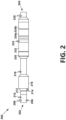
FIGURE 2 illustrates an example close-coupled catalyst and underbody aftertreatment system that may be operable in accordance with aspects of the present disclosure. -
FIGURE 3 illustrates a conventional implementation of a power delivery circuit for an exhaust heating element. -
FIGURE 4 illustrates an example implementation of a power delivery circuit in accordance with aspects of the present disclosure. -
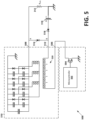
FIGURE 5 illustrates an example detailed circuit diagram of a power delivery circuit in accordance with aspects of the present disclosure. -
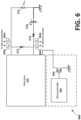
FIGURE 6 illustrates a variation on the power delivery circuit ofFIGURE 5 , in accordance with aspects of the present disclosure. -
FIGURE 7 is a flowchart of an example method of controlling power delivery to an exhaust heating element, in accordance with aspects of the present disclosure. -
FIGURE 8 is a chart illustrating a comparison between calculated power demand and actual power delivered using the power delivery circuits and control methods described herein. -
FIGURE 9 is a block diagram of a computing device appropriate for use within the vehicle environment described herein to implement embodiments of the present disclosure. - As briefly described above, embodiments of the present invention are directed to a circuit for controlling power output to an exhaust heating element, and a method of operation of such a circuit. The circuit, in some aspects, uses a controller, such as a microprocessor, to actuate a switch and selectively modulate a field coil of a motor/generator, such as an alternator.
- The present circuit systems and methods can be used by any vehicle exhaust system employing an electric heating element. One example of an exhaust system for a truck, such as a diesel exhaust system, is shown below; however, other implementations are possible and contemplated.
- Advantageously, a simplified circuit and method for providing power to the exhaust heating element are described. In conjunction with the simplified circuit, a variable-voltage signal may be output by the alternator provided to the heating element. Using various calculated feed-forward and feedback mechanisms, power delivery to the electric heating element may be highly accurate, may accommodate manufacturing and operating variances, and may compensate for loss or efficiency within the power delivery system.
- In example embodiments, the controller may actuate a switch to modulate a field coil of an alternator in accordance with a wide variety of inputs. For example, the controller may modulate a signal at a field terminal of an alternator by actuating a switch in accordance with a determined duty cycle to induce current in a field coil of an alternator, thereby controlling power output from the alternator on a variable-voltage generator output line that is connected, for example directly connected, from the alternator to the heating element. Such an arrangement avoids use of costly circuit components that would otherwise be included on a constant-voltage supply line output from an alternator, and both simplifies and improves overall circuit operation for power delivery.
-
FIGURE 1 is an illustration depicting a side view of avehicle 101 implementing a system for alternator modulation for control of an electric heating element of a vehicle exhaust system, according to an example embodiment of the present disclosure. Thevehicle 101 is one example of a type of vehicle that may be implement such control and power delivery processes described herein. - In some examples, the
vehicle 101 may be a heavy-duty truck such as a part of a tractor-trailer combination. Thevehicle 101 may have what is sometimes referred to as, a fifth wheel by which a box-like, flat-bed, or tanker semi-trailer 103 (among other examples). may be attached for transporting cargo or the like. While thevehicle 101 is depicted as a truck inFIGURE 1 , it should be appreciated that the present technology is applicable to any type of vehicle where automated throttle filtering may be desired. - In the example shown, the
vehicle 101 may be operated by an operator 10, along a drivingsurface 12. Thevehicle 101, in the example shown, includes, among other features, avehicle controller 120, a vehicleelectrical system 130, a motor/generator 140, which may include analternator 145, a powertrain 150, and exhaust system 160, exhaust system sensors 170, and various other vehicle subsystems 180. - The
vehicle controller 120 includes a programmable circuit, such as a computing device, which may be operable to control one or more subsystems of thevehicle 101. For example, thevehicle controller 120 may receive one or more sensor signals associated with the motor/generator 140, the powertrain 150, or exhaust system sensors 170, for actuating one or more subsystems in response to sensed conditions and/or user inputs. In some example embodiments, thevehicle controller 120 may include instructions for modulating an input signal to the motor/generator 140, and in particular toalternator 145, which may in turn deliver power to a heating element within the exhaust system 160, as discussed further below. - The vehicle
electrical system 130 may include one or more batteries that are usable to power accessory subsystems within thevehicle 101, and may be integrated with the motor/generator 140 two provide electrical power to such subsystems. - The motor/
generator 140 and associated powertrain 150 may operate to generate power and to convert the power into movement. For example, the motor/generator 140 may include a power source, such as an engine, as well as analternator 145. The powertrain 150 may various components that operate to convert the engine's power into movement of the vehicle (e.g. the transmission, driveshafts, differential, and axles). The powertrain 150 may be one of various types of powertrains or hybrid powertrains; in particular examples, the powertrain comprises an internal combustion powertrain, such as diesel powertrain or hybrid diesel powertrain. In some examples, the powertrain 150 and motor/generator 140 include an engine, such as a diesel engine, which expels exhaust gases to the exhaust system 160. - The exhaust system 160 is operatively connected to the motor/
generator 140 and powertrain 150, receiving expelled gases from a diesel engine, and providing various treatment operations prior to exhausting such gases. The various treatment operations may include sound dampening as well as exhaust gas treatment processes, such as catalyzing certain gases, such as NOx gases, which may be regulated in terms of the volume expelled. In the example shown, the exhaust system 160 includes a heating element, shown as exhaust heater 165. The exhaust heater 165 may be an electrically controlled heating element positioned along the exhaust system, such as seen in the example underbody aftertreatment system ofFIGURE 2 , below, used to heat exhaust gases or a catalyst to neutralize exhaust gases. - In the example shown, the exhaust system sensors 170 may include a variety of sensors determining the status of an exhaust system, and may include current and/or voltage sensors associated with circuits providing electric power to the exhaust heater 165, and may also include sensors, such as temperature or gas sensors, within the exhaust system 160, to determine effectiveness of catalytic processes occurring within that exhaust system.
- The
vehicle 101 may include one or more other vehicle subsystems 180, such as accessory power systems, lighting systems, vehicle cabin temperature conditioning systems, communication systems, and various other types of equipment. Each of the other vehicle subsystems 180 may also be powered via the vehicleelectrical system 130. -
FIGURE 2 illustrates an example close-coupled catalyst and underbody aftertreatment system 200 that may be operable in accordance with aspects of the present disclosure. In examples, the underbody aftertreatment system 200 may be utilized within an exhaust system 160 of a vehicle, as seen inFIGURE 1 , above. - In the example shown, the underbody aftertreatment system 200 has an
inlet end 202 and anoutlet end 204. Theinlet end 202 will be positioned and connected to a diesel engine, for example to receive engine exhaust. A conduit for exhaust gas extends between theinlet end 202 and theoutlet end 204, and includes a variety of sensors and treatment systems positioned along a path between ends 202, 204 as described herein. - In the example shown, a
thermocouple 206, aNOx sensor 208, and anexhaust fluid injector 210 may be positioned proximate theinlet end 202. Thethermocouple 206 is positioned to determine a temperature of exhaust gas exiting the engine and entering the underbody aftertreatment system 200. TheNOx sensor 208 is also positioned to detect NOx levels within exhaust gas exiting the engine and entering the underbody aftertreatment system 200. Theexhaust fluid injector 210 is positioned to selectively inject small quantities of diesel exhaust fluid into the exhaust system upstream of a catalyst, where the diesel exhaust fluid may vaporize and decompose to form ammonia and carbon dioxide. The ammonia is used in conjunction with the catalyst to convert NOx to nitrogen and water, thereby reducing the levels of NOx exhausted by a vehicle. - In the example shown, a
heating element 212 may be positioned immediately upstream along the exhaust path from a close-coupledcatalyst 216. Additionally, athermocouple 214 may be used in conjunction with the close coupledcatalyst 216 to determine a temperature at which exhaust gases enter the catalyst region. Theheating element 212 may be electrically connected to receive a voltage, as managed via a controller, in accordance with the methods and circuits described below, to cause theheating element 212 to raise a temperature of the exhaust gases and or close-coupledcatalyst 216, to ensure an appropriate catalytic reaction between the close-coupledcatalyst 216, the exhaust gases, and the diesel exhaust fluid. In some examples, theheating element 212 may comprise a resistive heating element, and as such may be referred to as an electric heating element herein. - Downstream of the close-coupled
catalyst 216, afurther NOx sensor 218 may be positioned along the exhaust path, for example to determine NOx levels of exhaust gases after the catalytic reaction at the close-coupledcatalyst 216. An output of theNOx sensor 218 may be used to determine the effectiveness of the catalytic reaction, and may be used to adjust an amount of diesel exhaust fluid injected upstream of the close-coupledcatalyst 216. - In the example shown, a
diesel oxidation catalyst 220 may be positioned downstream of the close-coupledcatalyst 216. Generally speaking, the diesel oxidation catalyst promotes chemical oxidation of carbon monoxide and gas phase hydrocarbons, for example to oxidize nitric oxide to nitrogen dioxide. Adiesel particulate filter 222 may be positioned downstream of the diesel oxidation catalyst to 20, and may capture remaining diesel particulates passing through the exhaust path. - In the example shown, a further underbody
exhaust fluid injector 224 may inject, at a second location downstream of theexhaust fluid injector 210, a further amount of exhaust fluid for use in a catalyzing reaction at one or moreunderbody catalyst regions 226a-b. An exhaust-end NOx sensor 228 may detect NOx levels at theoutlet end 204 prior to emission. - Although the underbody aftertreatment system 200 as disclosed includes a particular set of sensors and catalysts, as well as order of fair positioning along an exhaust path, it is noted that a variety of alternative arrangements are possible as well. Furthermore, although the
heating element 212 is shown as being included within the underbody aftertreatment system 200 upstream of the close-coupledcatalyst 216, it is noted that theheating element 212 may be placed elsewhere along the exhaust path. For example, in some embodiments theheating element 212 may be positioned between the underbodyexhaust fluid injector 224 and the underbody catalyst 226. Additionally, other heating elements (not shown) may be included at different locations along the exhaust path. The systems and methods described herein are usable with aheating element 212 positioned in a variety of locations, or with multiple such resistive heating elements. - In example implementations, the
heating element 212 may be a resistive heating element, and may have power demands that are greater than are able to be supplied by a conventional 12V charging system. Accordingly, especially so the exhaust system remains compliant with upcoming legislation, power levels delivered to theheating element 212 require use of the output of a motor/generator, which typically will be higher voltage and higher current. As illustrated inFIGURE 3 , a conventional implementation of apower delivery circuit 300 may be used in a vehicle to deliver power to an exhaust heating element. In the example shown, aregulator 302 is electrically connected to a field terminal of a motor/generator 310, for example viaelectrical connection 304. The motor/generator 310 can be implemented as, or including, an alternator, and outputs voltage on aDC voltage bus 308. - In the example shown, the
regulator 302 receives feedback via an output line 306 to control a fixed-voltage output of the motor/generator 310 on theDC voltage bus 308. In example embodiments, theregulator 302 and motor/generator 310 are configured to maintain a +48V output voltage on theDC voltage bus 308. - An
electric heating element 312 is positioned at an exhaust system of the vehicle, for example to heat exhaust gases and/or catalyst components within the exhaust system to activate the catalyst, thereby reducing NOx emission levels to within environmental requirements. To control the extent of heating at theelectric heating element 312, aswitch 314 may be actuated to selectively connect theDC voltage bus 308 to the electric heating element, thereby selectively applying the constant voltage to thatelectric heating element 312. In such cases, the switch may be implemented as an electrically-actuated switching element, such as a transistor, and may be controlled by a microcontroller (not shown). Theswitch 314 is modulated to a duty cycle that is directly proportional to power demand at theelectric heating element 312. - In addition, within the
circuit 300, a DC-DC converter 320 may also be electrically connected to theDC voltage bus 308, and may step down from the voltage at the DC voltage bus (e.g., +48V) to a lower DC voltage for use by other vehicle loads needing a lower DC voltage. For example, the DC-DC converter 320 may be configured to output a constant +12V DC voltage. Other voltage levels, and DC-DC converters, may be used as well. To help maintain a consistent voltage, acapacitor 316 may be electrically connected between theDC voltage bus 308 and chassis ground. - In the example shown, an additional
resistive element 318 is shown, and represents additional loads (e.g., from the vehicle) that may draw from theDC voltage bus 308. The additional loads, as well as the DC-DC converter 320, may be, in this configuration, particularly adapted to receive a constant DC voltage signal. -
FIGURE 4 illustrates an examplepower delivery circuit 400 that may be used to implement aspects of the present disclosure. In this example, acontroller 402 is electrically connected to the field terminal of the motor/generator 310. In this construction, rather than using a constant voltage output on aDC voltage bus 308, the motor/generator 310 has avariable voltage output 404, which is modulated directly by thecontroller 402 via acontrol input 406 to the field terminal of an alternator included within the motor/generator 310. Thecontroller 402 may calculate a power demand of anelectric heating element 312 based on an amount of heat desired to be generated, and may accordingly modulate the input to the field terminal of the motor/generator 310. - In example implementations, the
controller 402 selectively actuates a switching element, such as an electrical switch (e.g. a MOSFET), which is electrically connected between the field terminal atcontrol input 406 and chassis ground. Thecontroller 402 may specifically modulate the field coil by applying a pulse width modulation (PWM) scheme at the field coil of an alternator of the motor/generator 310 to achieve a desired power level at theelectric heating element 312. In some implementations, thecontroller 402 may receive feedback as to the actual power delivered to theelectric heating element 312, or as to the amount of heat actually generated, to adjust the power delivered. - In example implementations, the
controller 402 may be a separate control circuit maintained within a vehicle control infrastructure. In other implementations, thecontroller 402 may be implemented such that an electrical switch is controlled directly from a vehicle's engine control unit (ECU). - Although in this implementation, total harmonic distortion or ripple may be higher as compared to in the constant DC voltage implementation described above in conjunction with
FIGURE 3 , suppression of harmonic distortion is not important to theheating element 312, which operates as a simple resistor. Accordingly, a more expensive, high-voltage switching element, such asswitch 314 and associated ripple mitigation circuitry and capacitive elements, may be avoided. In particular, because distortion is acceptable, a less expensive switching element, such as a low cost FET/transistor may be utilized. - Notably, the
power delivery circuit 400 may be implemented in parallel with, and separate from but overlaid onto an existing vehicle charging system. Furthermore, thepower delivery circuit 400 does not require a constant output voltage at thevoltage output 404 delivered to theelectric heating element 312, and reduces the need for large capacitors and other voltage stabilization circuit elements that would otherwise be required in a power delivery circuit such as that seen above in conjunction withFIGURE 3 . Still further, thepower delivery circuit 400 does not require a separate, external voltage source higher than the 12V source typically included in vehicle electrical systems, but instead relies on output of the alternator to achieve appropriate power delivery levels. -
FIGURE 5 illustrates an example detailed circuit diagram of apower delivery circuit 500 in accordance with aspects of the present disclosure. The example detailedpower delivery circuit 500 represents one possible implementation of a power delivery circuit consistent with the principles described above in conjunction withFIGURE 4 . - In the example shown, the
power delivery circuit 500 includes amicrocontroller 502 that controls aswitch 504, such as a MOSFET or other transistor-based switching element. Theswitch 504 is electrically connected between afirst field terminal 506 of analternator 510 and a chassis ground. - In the example shown, a generator output terminal 508 provides an output voltage from the
alternator 510. The generator output terminal 508 outputs a variable voltage signal in accordance with the manner in which thealternator 510 operates, as discussed further below. The generator output terminal 508 is electrically connected to anelectric heating element 312, which is also connected to chassis ground. Accordingly, a voltage from the generator output terminal 508 is delivered to theelectric heating element 312, for use in heating exhaust gases of a vehicle exhaust system as described above. - In the example shown, the
alternator 510 may be a multi-phase alternator, one phase of which is shown. Afield section 520 of thealternator 510 may be used to induce current within each phase of the alternator, for example to initialize operation of the alternator at the time a vehicle motor/generator is started. - In the example
power delivery circuit 500 as illustrated, adiode 514 is connected between the generator output terminal 508 and asecond field terminal 512. Additionally, avoltage source 518 anddiode 516 are electrically connected between the second field terminal 508 and a chassis ground. - The
diodes second field terminal 512 the higher voltage of the two voltages between (1) the voltage at the generator output terminal 508, and (2) the voltage output by thevoltage source 518. Thevoltage source 518 generally corresponds to an initialization voltage source, such as a +12V source. - In operation, the
second field terminal 512 is initially provided an initialization voltage fromvoltage source 518. To induce current in thefield section 520 of thealternator 510, themicrocontroller 502 may selectively actuateswitch 504, thereby causing current to flow through the coils of the field section. A current will subsequently be induced in coils of respective phases of thealternator 510, resulting in an output voltage appearing at the generator output terminal 508. Once engine speeds cause the rotor shaft of the alternator to spin at an adequate speed to produce sufficient power, the voltage at the generator output terminal 508, and consequently at thesecond field terminal 512, can be increased beyond the initialization voltage to a peak output voltage (e.g., in examples, up to +48V). By adjusting a current that passes through the field coil in thefield section 520, themicrocontroller 502 can control the voltage at the generator output terminal 508 in such a manner. Specifically, by actuating theswitch 504 to connect thefirst field terminal 506 to the chassis ground, the microcontroller can induce a current through the field coil in thefield section 520, thereby causing voltage output at the generator output terminal 508. By applying a pulse width modulation scheme at theswitch 504, themicrocontroller 502 ultimately controls power delivered to theelectric heating element 312. - In the example shown, the
microcontroller 502 may select a duty cycle for pulse width modulation of theswitch 504 based on a selected target power level and feedback power delivered to theelectric heating element 312. In particular, themicrocontroller 502 may utilize feedforward maps constructed to map a particular feed-forward duty cycle to a particular power demand of the heater, based on characteristics of the heater and alternator. For example, a feedforward duty cycle may be determined by power demand and feedback from the electric heating element in accordance with the following equations:

- In the above, Rheater corresponds to a resistance of the heating element, Vheater corresponds to a voltage at the positive terminal of the heating element relative to ground, and Iheater corresponds to a current through the
heating element 312, respectively. In examples, themicrocontroller 502 may determine a duty cycle, and use that duty cycle to modulate thefield terminal 506 to meet power demand. While in the above a mapped response of the heater to a delivered voltage is used in feed-forward maps stored in memory that correlate the duty cycle to output power, the microcontroller may alternatively use other sensed conditions utilize current engine speed, engine coolant temperature, or various other metrics for calculated power output. - In addition to, or in place of, static, feed-forward maps that correlate predetermined duty cycle values to target power output levels, a variety of feedback processes may be applied to more accurately tie the determined duty cycle of switching the
switch 504 at the microcontroller to power output. -
FIGURE 6 illustrates a further power delivery circuit 600, in accordance with the power delivery circuit ofFIGURE 5 , in accordance with aspects of the present disclosure. In the example power delivery circuit 600, additional sensing elements are provided within the circuit to allow for feedback-based duty cycle determinations at themicrocontroller 502. In particular, avoltage sensor 602a and acurrent sensor 604a are positioned at the generator output terminal 508, and a second voltage sensor 602b and second current sensor 604b are positioned at thesecond field terminal 512. By monitoring current and voltage at the generator output terminal 508 and second field terminal, feedback-based control may be implemented to directly drive theelectric heating element 312. In particular, an output of the current andvoltage sensors 602a-b, 604a0b may be fed back to themicrocontroller 502, which may calculate the power demand for the electric heating element (Pdemand) as follows:
- In the above calculation of power demand, the following definitions may be used:
- Qdemand is a thermal energy demanded value, in kilowatts, and represents total heat delivery.
- Qtarget represents a thermal energy target value, in kilowatts, and is defined as a moving average window (MAW) over a series of samples taken over time to arrive at a desired temperature, as follows:

- Qstart is a thermal energy required to reach a target mid-bed SCR temperature, in kiloJoules.
- Qloss represents heat losses through the exhaust system, and is based, at least in part, on vehicle speed (to accommodate convective effects of wind) and ambient temperature during vehicle operation. Qloss may be directly calculated, or may be derived from a lookup table based on a range of typical operating vehicle speeds and ambient temperatures, which may be initialized and stored in memory of the vehicle.
- Qengine is a thermal energy actual value, in kilowatts, and is defined as a moving average window over a series of samples taken over time that is used to arrive at the actual temperature, as follows:

- Padd is an instantaneous power delivered by the heating element.
- Texhdes is a desired exhaust temperature from the engine, in degrees Celsius. In some examples, this may be set at about 275 degrees Celsius.
- Texhfb is a feedback exhaust temperature from the engine, in degrees Celsius.
- Qadd is an optional term and represents thermal energy added from an optional, added heating element, in kiloJoules.
- Using the above calculations for Pdemand, a more specific power demand may be calculated, and therefore power demand may be adjusted based on feedback from voltage and current sensors. Additionally, feedback may be provided from temperature sensors at desired locations within the exhaust system, for example at
thermocouples - It is noted that, because the feedback-based systems compare actual power delivery to desired power delivery, the application of feedback-based duty cycle determinations at the microprocessor may be particularly advantageous to compensate for production tolerances of any of the related parts which may have performance that changes with age. This can improve long-term power demand tracking, as the components within the exhaust system age, and use of feed-forward maps alone would gradually lose accuracy. Additionally, modulation of the field current may be compensated for as the output voltage of the generator rises, since power output is nonlinear in nature and maximum power output of the alternator can vary according to the rate at which the alternator shaft is turning, in addition to how much current is passing through the field coil. Overall, combinations of feed-forward maps, feedback systems, or combinations thereof may be employed to ensure accurate power delivery and compliance with environmental regulations by ensuring proper catalyst operations in a vehicle exhaust system.
- Referring now to
FIGURE 7 , a flowchart of an example method 700 of controlling power delivery to an electric heating element of a vehicle exhaust system, in accordance with aspects of the present disclosure. The example method 700 may be performed using the power delivery circuits described herein, with all or a portion of the method 700 being performed by a controller, such ascontrollers FIGURES 4-6 , as may be implemented as discrete control circuits and/or within an engine control unit (ECU). - In the example shown, the method 700 is instantiated by initializing an electric heating element of an exhaust system (at step 702). Initializing an electric heating element of the exhaust system may include, for example, applying an initialization voltage to a field terminal of an alternator, such as by using a +12V voltage supply as the
voltage supply 518 described above in conjunction withFIGURES 5-6 . Use of such a voltage supply may result in a voltage of greater than +11V being applied at thesecond field terminal 512 of analternator 510, due to some voltage drop overdiode 516. Initializing the overall exhaust system may also include initializing one or more calculation values for feedback or feed-forward power delivery calculations used to set a duty cycle for actuating a switch, thereby modulating the field terminal of the alternator. The initialized calculation values may include, for example, feed-forward duty cycle and power delivery values, or initial sensor values used in a feedback-based power delivery calculation. - The method 700 includes calculating a power demand of the electric heating element to achieve a desired temperature of the electric heating element (step 704). Calculating the power demand can include simply selecting a power delivery level for use in determining an appropriate duty cycle value from a feed-forward map of power delivery values. In alternative examples, calculating the power demand can include, for example, performing a mathematical calculation of power demand based on feedback regarding current temperature at a portion of the exhaust system (e.g., at a thermocouple of the exhaust system as described above).
- In some example embodiments, the method 700 optionally includes, determining a feed-forward duty cycle for operation of a switch via a controller (e.g., switches seen in
FIGURES 4-6 , above) (step 706). The feed-forward duty cycle can be calculated using the equation (2) above, or can be determined from pre-calculated values, by looking up a duty cycle based on a desired target power delivery level of the alternator to the electric heating element. - In some further example embodiments, the method 700 optionally includes setting, or adjusting, a duty cycle for operation based on feedback from one or more sensors (step 708). The feedback from one or more sensors may include: feedback from engine speed sensors, a temperature from a temperature sensor in the exhaust system (e.g.,
thermocouples 206, 216), current and/or voltage levels obtained from current andvoltage sensors 602a-b, 604a-b, and various other sensors. - The method further includes applying PWM-based modulation to a field terminal of an alternator to modulate power output from a generator output terminal of an alternator (step 710). The PWM-based modulation involves actuating a switch in accordance with the determined duty cycle to establish, for that duty cycle, a current at a field terminal of the alternator (e.g., across
terminals - As operation of the method 700 continues, one or more of the steps 704-710 may be repeated, for example on a continual, periodic, or as-required basis to adjust a power output of the alternator delivered to the electric heating element. Additionally, although the steps are described in a particular order, it is noted that the controller may perform steps 704-710 in different orders, for example calculating feedback-based duty cycle before determining the feed-forward duty cycle, or without use of feed-forward duty cycle mappings at all. Furthermore, in some examples, the feedback-based adjustment of the duty cycle may be excluded.
-
FIGURE 8 is a chart 800 illustrating a comparison between calculated power demand and actual power delivered using the power delivery circuits and control methods described herein. The chart 800 illustrates correspondence between the determined power demand and output for an electric heating element in accordance with aspects of the present disclosure. As can be seen in the example, a power demand in watts, calculated by the controller, over recorded time tracks closely to the actual power output at the electric heating element, as detected at a feedback circuit obtained from voltage and current readings at sensors such as those described above in conjunction withFIGURE 6 . In particular, through use of both feedforward and feedback control, it is possible for a controller to closely match desired power output to an electric heating element of an exhaust system of a vehicle, and thereby comply with applicable exhaust system regulations while implementing a simpler, lower cost solution providing at least the same accuracy as in existing exhaust systems. -
FIGURE 9 is a block diagram of anillustrative computing device 900 appropriate for use in accordance with embodiments of the present disclosure. For example, thecomputing device 900 may be used to implement the controller described above (which, in some implementations, may comprise the engine control unit of the vehicle). The description below is applicable to servers, personal computers, mobile phones, smart phones, tablet computers, embedded computing devices, and other currently available or yet-to-be-developed devices that may be used in accordance with embodiments of the present disclosure. - In its most basic configuration, the
computing device 900 includes at least oneprocessor 902 and a system memory 904 connected by a communication bus 906. Depending on the exact configuration and type of device, the system memory 904 may be volatile or nonvolatile memory, such as read-only memory ("ROM"), random access memory ("RAM"), EEPROM, flash memory, or other memory technology. Those of ordinary skill in the art and others will recognize that system memory 904 typically stores data or program modules that are immediately accessible to or currently being operated on by theprocessor 902. In some examples, system memory 904 may store an application 950 to perform elements of the present systems and methods, such as the alternator modulation control for an electric heating element as described herein. In this regard, theprocessor 902 may serve as a computational center of thecomputing device 900 by supporting the execution of instructions. Additionally, system memory 904 may storeoperational data 955, for example data collected from temperature sensors, voltage sensors, and current sensors associated with a vehicle exhaust system, and/or vehicle operational data from other sensors as noted above to assist with feedback-based adjustment of calculations of power demand at an electric heating element. - As further illustrated in
FIGURE 9 , thecomputing device 900 may include anetwork interface 910 comprising one or more components for communicating with other devices over a network. Embodiments of the present disclosure may access basic services that utilize thenetwork interface 910 to perform communications using common network protocols. Thenetwork interface 910 may also include a wireless network interface configured to communicate via one or more wireless communication protocols, such as WiFi, 2G, 3G, 4G, LTE, WiMAX, Bluetooth, or the like. - In the illustrative embodiment depicted in
FIGURE 9 , thecomputing device 900 also includes astorage medium 908. However, services may be accessed using a computing device that does not include means for persisting data to a local storage medium. Therefore, thestorage medium 908 depicted inFIGURE 9 is optional. In any event, thestorage medium 908 may be volatile or nonvolatile, removable or non-removable, implemented using any technology capable of storing information such as, but not limited to, a hard drive, solid state drive, CD-ROM, DVD, or other disk storage, magnetic tape, magnetic disk storage, or the like. - As used herein, the term "computer-readable medium" includes volatile and nonvolatile and removable and non-removable media implemented in any method or technology capable of storing information, such as computer-readable instructions, data structures, program modules, or other data. In this regard, the system memory 904 and
storage medium 908 depicted inFIGURE 9 are examples of computer-readable media. - For ease of illustration and because it is not important for an understanding of the claimed subject matter,
FIGURE 9 does not show some of the typical components of many computing devices. In this regard, thecomputing device 900 may include input devices, such as a keyboard, keypad, mouse, trackball, microphone, video camera, touchpad, touchscreen, electronic pen, stylus, or the like. Such input devices may be coupled to thecomputing device 900 by wired or wireless connections including RF, infrared, serial, parallel, Bluetooth, USB, or other suitable connection protocols using wireless or physical connections. - In any of the described examples, data can be captured by input devices and transmitted or stored for future processing. The processing may include encoding data streams, which can be subsequently decoded for presentation by output devices. Media data can be captured by multimedia input devices and stored by saving media data streams as files on a computer-readable storage medium (e.g., in memory or persistent storage on a client device, server, administrator device, or some other device). Input devices can be separate from and communicatively coupled to computing device 900 (e.g., a client device), or can be integral components of the
computing device 900. In some embodiments, multiple input devices may be combined into a single, multifunction input device (e.g., a video camera with an integrated microphone). Thecomputing device 900 may also include output devices such as a display, speakers, printer, etc. The output devices may include video output devices such as a display or touchscreen. The output devices also may include audio output devices such as external speakers or earphones. The output devices can be separate from and communicatively coupled to thecomputing device 900, or can be integral components of thecomputing device 900. Input functionality and output functionality may be integrated into the same input/output device (e.g., a touchscreen). Any suitable input device, output device, or combined input/output device either currently known or developed in the future may be used with described systems. - In general, functionality of computing devices described herein may be implemented in computing logic embodied in hardware or software instructions, which can be written in a programming language, such as C, C++, COBOL, JAVA™, PHP, Perl, HTML, CSS, JavaScript, VBScript, ASPX, Microsoft .NET™ languages such as C#, or the like. Computing logic may be compiled into executable programs or written in interpreted programming languages. Generally, functionality described herein can be implemented as logic modules that can be duplicated to provide greater processing capability, merged with other modules, or divided into sub-modules. The computing logic can be stored in any type of computer-readable medium (e.g., a non-transitory medium such as a memory or storage medium) or computer storage device and be stored on and executed by one or more general-purpose or special-purpose processors, thus creating a special- purpose computing device configured to provide functionality described herein.
Claims (16)
- A system (101) for modulating power provided to an electric heating element of a vehicle exhaust system (160), the system comprising:a controller (402, 502) controlling a switch (504);an alternator (145, 510) having a first field terminal input (506), wherein the first field terminal input is connected to the switch; andan electric heating element (165, 212, 312) connected to at least an output of the alternator;characterised in thatthe controller is configured to determine a power demand for the electric heating element and modulate the first field terminal input by actuating the switch in accordance with a duty cycle determined based on the power demand to cause the alternator to provide power to the electric heating element according to the power demand.
- The system of claim 1, wherein the vehicle exhaust system comprises a diesel aftertreatment system (200) extending a length between an inlet (202) and an outlet (204), the inlet being upstream of the outlet, and wherein the electric heating element is positioned toward the inlet from one or more catalysts (216, 220) included along the length.
- The system of claim 1, wherein the electric heating element is electrically connected between a generator output terminal (508) and a chassis ground.
- The system of claim 3, wherein the generator output terminal is directly connected to the electric heating element.
- The system of claim 3, further comprising:a voltage source (518) electrically connected between the chassis ground and a second field terminal input (512) to the alternator;a first diode (514) electrically connected between the generator output terminal and the second field terminal input; anda second diode (516) electrically connected between the voltage source and the second field terminal input.
- The system of claim 5, further comprising:a first sensor (602a, 604a) electrically connected at the generator output terminal; anda second sensor (602b, 604b) electrically connected at the second field terminal input.
- The system of claim 6, wherein the first sensor includes a first voltage sensor (602a) and a first current sensor (602b), and the second sensor includes a second voltage sensor (602b) and a second current sensor (604b).
- The system of claim 1, wherein the duty cycle is calculated in accordance with the following equation:

wherein Pdemand corresponds to the power demand for the electric heating element calculated by the controller, Rheater corresponds to a resistance of the electric heating element, and Valternator corresponds to a voltage output at the generator output terminal. - The system of claim 1, further comprising a sensor at the electric heating element, the sensor providing feedback to the controller regarding an exhaust system temperature in response to the power provided to the electric heating element from the alternator.
- The system of claim 9, wherein the controller is further configured to adjust modulation of the first field terminal input in accordance with the feedback.
- A method (700) of delivering power to an electric heating element (165, 212, 312) of a vehicle exhaust system, the method comprising:initializing (702) a voltage output at a generator output terminal (508) of an alternator (145, 510) with an initial input voltage;determining (704), at a controller (402, 502), a power demand for an electric heating element (165, 312), the electric heating element being electrically connected to the generator output terminal; andactuating (710), by the controller, a switch (504) that is electrically connected to a first field terminal (506) of the alternator in accordance with a duty cycle determined based on the power demand to modulate power output from the alternator at the generator output terminal and delivered to the electric heating element in accordance with the power demand.
- The method of claim 11, wherein the controller comprises a microprocessor that determines the duty cycle for actuating the switch by calculating a feed-forward duty cycle based on the power demand from the electric heating element, a resistance of the electric heating element, and a voltage output from the alternator provided to the electric heating element.
- The method of claim 11, wherein initializing the voltage output includes applying the initial input voltage at a second field terminal of the alternator.
- The method of claim 11, further comprising:sensing a first current and a first voltage at the generator output terminal;sensing a second current and a second voltage at a second field terminal of the alternator;based, at least in part, on the first current, the first voltage, the second current, and the second voltage, calculating power demand as an adjusted target thermal energy demand.
- The method of claim 11, wherein the microprocessor selectively actuates the switch to connect a second field terminal (512) of the alternator to a chassis ground, thereby inducing current through a coil (520) included in the alternator based on a voltage difference between the field terminal and the second field terminal.
- The method of claim 11, further comprising receiving feedback from at least one sensor of the vehicle exhaust system and adjusting the power delivered to the electric heating element at the microprocessor by adjusting a duty cycle of actuation of the switch.
Priority Applications (1)
| Application Number | Priority Date | Filing Date | Title |
|---|---|---|---|
| EP25161626.4A EP4539065A3 (en) | 2021-02-01 | 2022-02-01 | Alternator modulation for control of exhaust heating element |
Applications Claiming Priority (2)
| Application Number | Priority Date | Filing Date | Title |
|---|---|---|---|
| US202163144368P | 2021-02-01 | 2021-02-01 | |
| PCT/US2022/014760 WO2022165428A1 (en) | 2021-02-01 | 2022-02-01 | Alternator modulation for control of exhaust heating element |
Related Child Applications (2)
| Application Number | Title | Priority Date | Filing Date |
|---|---|---|---|
| EP25161626.4A Division EP4539065A3 (en) | 2021-02-01 | 2022-02-01 | Alternator modulation for control of exhaust heating element |
| EP25161626.4A Division-Into EP4539065A3 (en) | 2021-02-01 | 2022-02-01 | Alternator modulation for control of exhaust heating element |
Publications (2)
| Publication Number | Publication Date |
|---|---|
| EP4285010A1 EP4285010A1 (en) | 2023-12-06 |
| EP4285010B1 true EP4285010B1 (en) | 2025-04-09 |
Family
ID=80448955
Family Applications (2)
| Application Number | Title | Priority Date | Filing Date |
|---|---|---|---|
| EP22706149.6A Active EP4285010B1 (en) | 2021-02-01 | 2022-02-01 | Alternator modulation for control of exhaust heating element |
| EP25161626.4A Pending EP4539065A3 (en) | 2021-02-01 | 2022-02-01 | Alternator modulation for control of exhaust heating element |
Family Applications After (1)
| Application Number | Title | Priority Date | Filing Date |
|---|---|---|---|
| EP25161626.4A Pending EP4539065A3 (en) | 2021-02-01 | 2022-02-01 | Alternator modulation for control of exhaust heating element |
Country Status (4)
| Country | Link |
|---|---|
| US (3) | US12035427B2 (en) |
| EP (2) | EP4285010B1 (en) |
| CA (1) | CA3207230A1 (en) |
| WO (1) | WO2022165428A1 (en) |
Families Citing this family (5)
| Publication number | Priority date | Publication date | Assignee | Title |
|---|---|---|---|---|
| US12367752B2 (en) * | 2020-04-15 | 2025-07-22 | Acumuladores Moura S/A | Method for operating and running a system for mounting and controlling accumulators in workstations |
| US12035427B2 (en) | 2021-02-01 | 2024-07-09 | Paccar Inc. | Alternator modulation for control of exhaust heating element |
| WO2022242894A1 (en) * | 2021-05-16 | 2022-11-24 | Eaton Intelligent Power Limited | Aftertreatment heater power electronics |
| CN120231644A (en) * | 2023-12-28 | 2025-07-01 | 康明斯有限公司 | Aftertreatment system heater control |
| US20250372755A1 (en) * | 2024-05-28 | 2025-12-04 | Fca Us Llc | High voltage battery temperature cooling optimization performance pages |
Citations (2)
| Publication number | Priority date | Publication date | Assignee | Title |
|---|---|---|---|---|
| US20180156144A1 (en) * | 2015-06-01 | 2018-06-07 | Tpr Co., Ltd. | Vehicle power storage system and method of controlling the vehicle power storage system |
| WO2020159991A1 (en) * | 2019-01-29 | 2020-08-06 | Watlow Electric Manufacturing Company | Virtual sensing system |
Family Cites Families (14)
| Publication number | Priority date | Publication date | Assignee | Title |
|---|---|---|---|---|
| JP3425279B2 (en) * | 1995-08-25 | 2003-07-14 | 本田技研工業株式会社 | Exhaust gas purification device for internal combustion engine |
| JP3358405B2 (en) * | 1995-09-21 | 2002-12-16 | トヨタ自動車株式会社 | Control device for internal combustion engine equipped with electrically heated catalyst |
| JPH1089052A (en) * | 1996-09-18 | 1998-04-07 | Toyota Motor Corp | Power control device for electric heating type catalytic converter |
| US7394394B2 (en) * | 2002-06-19 | 2008-07-01 | Tarma, L.L.C. | Battery monitor with wireless remote communication |
| WO2012003183A1 (en) * | 2010-07-01 | 2012-01-05 | Rypos, Inc. | Integrated diesel particulate filter and electric load bank |
| US9512756B2 (en) * | 2013-04-24 | 2016-12-06 | Richard Boggs | Proportional heater control for diesel emission system for marine powered generator set |
| US20140342193A1 (en) * | 2013-05-17 | 2014-11-20 | Tenergy Corporation | Smart battery system |
| JP6171027B2 (en) * | 2013-12-16 | 2017-07-26 | 株式会社日立製作所 | Battery system |
| US9431837B2 (en) * | 2014-04-30 | 2016-08-30 | Johnson Controls Technology Company | Integrated battery management system and method |
| US10498905B2 (en) * | 2015-11-23 | 2019-12-03 | Net Irrigate, LLC | Self-powered cloud-based wireless state-change notifier |
| US20170345101A1 (en) * | 2016-05-24 | 2017-11-30 | Powin Energy Corporation | World-wide web of networked, smart, scalable, plug & play battery packs having a battery pack operating system, and applications thereof |
| US20180142630A1 (en) * | 2016-11-21 | 2018-05-24 | Richard Boggs | Diesel Electric Generator Load Bank System Cooled by Exhaust Gas and Method Therefor |
| US11668215B2 (en) * | 2019-10-25 | 2023-06-06 | ECC TEC MSJ Incorporated | Catalytic converter |
| US12035427B2 (en) | 2021-02-01 | 2024-07-09 | Paccar Inc. | Alternator modulation for control of exhaust heating element |
-
2022
- 2022-02-01 US US17/590,063 patent/US12035427B2/en active Active
- 2022-02-01 CA CA3207230A patent/CA3207230A1/en active Pending
- 2022-02-01 WO PCT/US2022/014760 patent/WO2022165428A1/en not_active Ceased
- 2022-02-01 EP EP22706149.6A patent/EP4285010B1/en active Active
- 2022-02-01 EP EP25161626.4A patent/EP4539065A3/en active Pending
-
2023
- 2023-04-20 US US18/304,131 patent/US20230258726A1/en active Pending
-
2024
- 2024-07-08 US US18/766,031 patent/US12484115B2/en active Active
Patent Citations (2)
| Publication number | Priority date | Publication date | Assignee | Title |
|---|---|---|---|---|
| US20180156144A1 (en) * | 2015-06-01 | 2018-06-07 | Tpr Co., Ltd. | Vehicle power storage system and method of controlling the vehicle power storage system |
| WO2020159991A1 (en) * | 2019-01-29 | 2020-08-06 | Watlow Electric Manufacturing Company | Virtual sensing system |
Also Published As
| Publication number | Publication date |
|---|---|
| US20230258726A1 (en) | 2023-08-17 |
| EP4539065A3 (en) | 2025-09-03 |
| WO2022165428A1 (en) | 2022-08-04 |
| US20250048495A1 (en) | 2025-02-06 |
| WO2022165428A8 (en) | 2023-09-14 |
| EP4539065A2 (en) | 2025-04-16 |
| US12035427B2 (en) | 2024-07-09 |
| US12484115B2 (en) | 2025-11-25 |
| EP4285010A1 (en) | 2023-12-06 |
| CA3207230A1 (en) | 2022-08-04 |
| US20220243631A1 (en) | 2022-08-04 |
Similar Documents
| Publication | Publication Date | Title |
|---|---|---|
| EP4285010B1 (en) | Alternator modulation for control of exhaust heating element | |
| US12152523B2 (en) | Aftertreatment heater power electronics | |
| CN111497822B (en) | Methods for after-treatment of exhaust gas from hybrid machines | |
| US8650860B2 (en) | Catalyst temperature control system for a hybrid engine | |
| US10450915B2 (en) | Emission control system with induction heating and methods for use therewith | |
| EP3174369B1 (en) | Emission control system with controlled induction heating and methods for use therewith | |
| CN111980787B (en) | Engine exhaust heat management method and system | |
| WO2008039272A1 (en) | Hybrid engine exhaust gas temperature control system | |
| US8898032B2 (en) | Method for estimating an exhaust gas temperature | |
| US20180252135A1 (en) | Emission control system with resonant frequency measurement and methods for use therewith | |
| CN109931127A (en) | The emission-control equipment of internal combustion engine | |
| US8720185B2 (en) | Use of Braking energy to augment exhaust heat for improved operation of exhaust aftertreatment devices | |
| US10590818B2 (en) | Emission control system with frequency controlled induction heating and methods for use therewith | |
| EP3496510B1 (en) | Emission control system with location controlled induction heating and methods for use therewith | |
| CN116136190A (en) | Method for heating exhaust system | |
| CN103032133A (en) | Electrically heated oxidation catalyst particulate matter protection | |
| KR20180065779A (en) | Battery power generation control device and method of diesel vehicle | |
| CN105554918A (en) | method and apparatus for heating a providing mechanism in connection with an internal combustion engine | |
| US20230228209A1 (en) | Systems and methods for modelling aftertreatment temperature of a vehicle | |
| US10662845B2 (en) | Emission control system with location controlled induction heating and methods for use therewith | |
| JP2021134775A (en) | Exhaust emission control system | |
| US11530655B1 (en) | Systems and methods for controlling engine torque | |
| US20230184153A1 (en) | Systems and methods for maintaining aftertreatment capability during vehicle life | |
| CN118327741A (en) | Method, device and equipment for determining engine oil temperature | |
| CN117999401A (en) | Vehicle-mounted control device |
Legal Events
| Date | Code | Title | Description |
|---|---|---|---|
| STAA | Information on the status of an ep patent application or granted ep patent |
Free format text: STATUS: UNKNOWN |
|
| STAA | Information on the status of an ep patent application or granted ep patent |
Free format text: STATUS: THE INTERNATIONAL PUBLICATION HAS BEEN MADE |
|
| PUAI | Public reference made under article 153(3) epc to a published international application that has entered the european phase |
Free format text: ORIGINAL CODE: 0009012 |
|
| STAA | Information on the status of an ep patent application or granted ep patent |
Free format text: STATUS: REQUEST FOR EXAMINATION WAS MADE |
|
| 17P | Request for examination filed |
Effective date: 20230822 |
|
| AK | Designated contracting states |
Kind code of ref document: A1 Designated state(s): AL AT BE BG CH CY CZ DE DK EE ES FI FR GB GR HR HU IE IS IT LI LT LU LV MC MK MT NL NO PL PT RO RS SE SI SK SM TR |
|
| DAV | Request for validation of the european patent (deleted) | ||
| DAX | Request for extension of the european patent (deleted) | ||
| GRAP | Despatch of communication of intention to grant a patent |
Free format text: ORIGINAL CODE: EPIDOSNIGR1 |
|
| STAA | Information on the status of an ep patent application or granted ep patent |
Free format text: STATUS: GRANT OF PATENT IS INTENDED |
|
| INTG | Intention to grant announced |
Effective date: 20241028 |
|
| GRAS | Grant fee paid |
Free format text: ORIGINAL CODE: EPIDOSNIGR3 |
|
| GRAA | (expected) grant |
Free format text: ORIGINAL CODE: 0009210 |
|
| STAA | Information on the status of an ep patent application or granted ep patent |
Free format text: STATUS: THE PATENT HAS BEEN GRANTED |
|
| AK | Designated contracting states |
Kind code of ref document: B1 Designated state(s): AL AT BE BG CH CY CZ DE DK EE ES FI FR GB GR HR HU IE IS IT LI LT LU LV MC MK MT NL NO PL PT RO RS SE SI SK SM TR |
|
| REG | Reference to a national code |
Ref country code: GB Ref legal event code: FG4D |
|
| REG | Reference to a national code |
Ref country code: CH Ref legal event code: EP |
|
| REG | Reference to a national code |
Ref country code: DE Ref legal event code: R096 Ref document number: 602022012902 Country of ref document: DE |
|
| REG | Reference to a national code |
Ref country code: IE Ref legal event code: FG4D |
|
| P01 | Opt-out of the competence of the unified patent court (upc) registered |
Free format text: CASE NUMBER: APP_19751/2025 Effective date: 20250424 |
|
| REG | Reference to a national code |
Ref country code: NL Ref legal event code: FP |
|
| REG | Reference to a national code |
Ref country code: SE Ref legal event code: TRGR |
|
| REG | Reference to a national code |
Ref country code: AT Ref legal event code: MK05 Ref document number: 1783680 Country of ref document: AT Kind code of ref document: T Effective date: 20250409 |
|
| PG25 | Lapsed in a contracting state [announced via postgrant information from national office to epo] |
Ref country code: FI Free format text: LAPSE BECAUSE OF FAILURE TO SUBMIT A TRANSLATION OF THE DESCRIPTION OR TO PAY THE FEE WITHIN THE PRESCRIBED TIME-LIMIT Effective date: 20250409 Ref country code: PT Free format text: LAPSE BECAUSE OF FAILURE TO SUBMIT A TRANSLATION OF THE DESCRIPTION OR TO PAY THE FEE WITHIN THE PRESCRIBED TIME-LIMIT Effective date: 20250811 Ref country code: ES Free format text: LAPSE BECAUSE OF FAILURE TO SUBMIT A TRANSLATION OF THE DESCRIPTION OR TO PAY THE FEE WITHIN THE PRESCRIBED TIME-LIMIT Effective date: 20250409 |
|
| REG | Reference to a national code |
Ref country code: LT Ref legal event code: MG9D |
|
| PG25 | Lapsed in a contracting state [announced via postgrant information from national office to epo] |
Ref country code: GR Free format text: LAPSE BECAUSE OF FAILURE TO SUBMIT A TRANSLATION OF THE DESCRIPTION OR TO PAY THE FEE WITHIN THE PRESCRIBED TIME-LIMIT Effective date: 20250710 Ref country code: NO Free format text: LAPSE BECAUSE OF FAILURE TO SUBMIT A TRANSLATION OF THE DESCRIPTION OR TO PAY THE FEE WITHIN THE PRESCRIBED TIME-LIMIT Effective date: 20250709 |
|
| PG25 | Lapsed in a contracting state [announced via postgrant information from national office to epo] |
Ref country code: PL Free format text: LAPSE BECAUSE OF FAILURE TO SUBMIT A TRANSLATION OF THE DESCRIPTION OR TO PAY THE FEE WITHIN THE PRESCRIBED TIME-LIMIT Effective date: 20250409 |
|
| PG25 | Lapsed in a contracting state [announced via postgrant information from national office to epo] |
Ref country code: BG Free format text: LAPSE BECAUSE OF FAILURE TO SUBMIT A TRANSLATION OF THE DESCRIPTION OR TO PAY THE FEE WITHIN THE PRESCRIBED TIME-LIMIT Effective date: 20250409 |
|
| PG25 | Lapsed in a contracting state [announced via postgrant information from national office to epo] |
Ref country code: HR Free format text: LAPSE BECAUSE OF FAILURE TO SUBMIT A TRANSLATION OF THE DESCRIPTION OR TO PAY THE FEE WITHIN THE PRESCRIBED TIME-LIMIT Effective date: 20250409 |
|
| PG25 | Lapsed in a contracting state [announced via postgrant information from national office to epo] |
Ref country code: AT Free format text: LAPSE BECAUSE OF FAILURE TO SUBMIT A TRANSLATION OF THE DESCRIPTION OR TO PAY THE FEE WITHIN THE PRESCRIBED TIME-LIMIT Effective date: 20250409 |
|
| PG25 | Lapsed in a contracting state [announced via postgrant information from national office to epo] |
Ref country code: RS Free format text: LAPSE BECAUSE OF FAILURE TO SUBMIT A TRANSLATION OF THE DESCRIPTION OR TO PAY THE FEE WITHIN THE PRESCRIBED TIME-LIMIT Effective date: 20250709 |
|
| PG25 | Lapsed in a contracting state [announced via postgrant information from national office to epo] |
Ref country code: IS Free format text: LAPSE BECAUSE OF FAILURE TO SUBMIT A TRANSLATION OF THE DESCRIPTION OR TO PAY THE FEE WITHIN THE PRESCRIBED TIME-LIMIT Effective date: 20250809 |
|
| PG25 | Lapsed in a contracting state [announced via postgrant information from national office to epo] |
Ref country code: LV Free format text: LAPSE BECAUSE OF FAILURE TO SUBMIT A TRANSLATION OF THE DESCRIPTION OR TO PAY THE FEE WITHIN THE PRESCRIBED TIME-LIMIT Effective date: 20250409 |
|
| REG | Reference to a national code |
Ref country code: DE Ref legal event code: R097 Ref document number: 602022012902 Country of ref document: DE |
|
| PG25 | Lapsed in a contracting state [announced via postgrant information from national office to epo] |
Ref country code: DK Free format text: LAPSE BECAUSE OF FAILURE TO SUBMIT A TRANSLATION OF THE DESCRIPTION OR TO PAY THE FEE WITHIN THE PRESCRIBED TIME-LIMIT Effective date: 20250409 Ref country code: SM Free format text: LAPSE BECAUSE OF FAILURE TO SUBMIT A TRANSLATION OF THE DESCRIPTION OR TO PAY THE FEE WITHIN THE PRESCRIBED TIME-LIMIT Effective date: 20250409 |
|
| PG25 | Lapsed in a contracting state [announced via postgrant information from national office to epo] |
Ref country code: CZ Free format text: LAPSE BECAUSE OF FAILURE TO SUBMIT A TRANSLATION OF THE DESCRIPTION OR TO PAY THE FEE WITHIN THE PRESCRIBED TIME-LIMIT Effective date: 20250409 |
|
| PG25 | Lapsed in a contracting state [announced via postgrant information from national office to epo] |
Ref country code: EE Free format text: LAPSE BECAUSE OF FAILURE TO SUBMIT A TRANSLATION OF THE DESCRIPTION OR TO PAY THE FEE WITHIN THE PRESCRIBED TIME-LIMIT Effective date: 20250409 |
|
| PG25 | Lapsed in a contracting state [announced via postgrant information from national office to epo] |
Ref country code: SK Free format text: LAPSE BECAUSE OF FAILURE TO SUBMIT A TRANSLATION OF THE DESCRIPTION OR TO PAY THE FEE WITHIN THE PRESCRIBED TIME-LIMIT Effective date: 20250409 |
|
| PLBE | No opposition filed within time limit |
Free format text: ORIGINAL CODE: 0009261 |
|
| STAA | Information on the status of an ep patent application or granted ep patent |
Free format text: STATUS: NO OPPOSITION FILED WITHIN TIME LIMIT |
|
| REG | Reference to a national code |
Ref country code: CH Ref legal event code: L10 Free format text: ST27 STATUS EVENT CODE: U-0-0-L10-L00 (AS PROVIDED BY THE NATIONAL OFFICE) Effective date: 20260218 |
|
| PGFP | Annual fee paid to national office [announced via postgrant information from national office to epo] |
Ref country code: NL Payment date: 20260226 Year of fee payment: 5 |
|
| 26N | No opposition filed |
Effective date: 20260112 |
|
| PGFP | Annual fee paid to national office [announced via postgrant information from national office to epo] |
Ref country code: SE Payment date: 20260227 Year of fee payment: 5 |
|
| PGFP | Annual fee paid to national office [announced via postgrant information from national office to epo] |
Ref country code: GB Payment date: 20260227 Year of fee payment: 5 |
|
| PGFP | Annual fee paid to national office [announced via postgrant information from national office to epo] |
Ref country code: DE Payment date: 20260227 Year of fee payment: 5 |
|
| PGFP | Annual fee paid to national office [announced via postgrant information from national office to epo] |
Ref country code: IT Payment date: 20260219 Year of fee payment: 5 |
|
| PGFP | Annual fee paid to national office [announced via postgrant information from national office to epo] |
Ref country code: FR Payment date: 20260225 Year of fee payment: 5 |