EP4283414A1 - Maintaining healthy rooms for users using mobile credentials - Google Patents
Maintaining healthy rooms for users using mobile credentials Download PDFInfo
- Publication number
- EP4283414A1 EP4283414A1 EP23174974.8A EP23174974A EP4283414A1 EP 4283414 A1 EP4283414 A1 EP 4283414A1 EP 23174974 A EP23174974 A EP 23174974A EP 4283414 A1 EP4283414 A1 EP 4283414A1
- Authority
- EP
- European Patent Office
- Prior art keywords
- management system
- building management
- local
- user
- sensors
- Prior art date
- Legal status (The legal status is an assumption and is not a legal conclusion. Google has not performed a legal analysis and makes no representation as to the accuracy of the status listed.)
- Pending
Links
Images



Classifications
-
- G—PHYSICS
- G06—COMPUTING OR CALCULATING; COUNTING
- G06Q—INFORMATION AND COMMUNICATION TECHNOLOGY [ICT] SPECIALLY ADAPTED FOR ADMINISTRATIVE, COMMERCIAL, FINANCIAL, MANAGERIAL OR SUPERVISORY PURPOSES; SYSTEMS OR METHODS SPECIALLY ADAPTED FOR ADMINISTRATIVE, COMMERCIAL, FINANCIAL, MANAGERIAL OR SUPERVISORY PURPOSES, NOT OTHERWISE PROVIDED FOR
- G06Q50/00—Information and communication technology [ICT] specially adapted for implementation of business processes of specific business sectors, e.g. utilities or tourism
- G06Q50/10—Services
- G06Q50/26—Government or public services
- G06Q50/265—Personal security, identity or safety
-
- G—PHYSICS
- G05—CONTROLLING; REGULATING
- G05B—CONTROL OR REGULATING SYSTEMS IN GENERAL; FUNCTIONAL ELEMENTS OF SUCH SYSTEMS; MONITORING OR TESTING ARRANGEMENTS FOR SUCH SYSTEMS OR ELEMENTS
- G05B15/00—Systems controlled by a computer
- G05B15/02—Systems controlled by a computer electric
-
- G—PHYSICS
- G05—CONTROLLING; REGULATING
- G05B—CONTROL OR REGULATING SYSTEMS IN GENERAL; FUNCTIONAL ELEMENTS OF SUCH SYSTEMS; MONITORING OR TESTING ARRANGEMENTS FOR SUCH SYSTEMS OR ELEMENTS
- G05B2219/00—Program-control systems
- G05B2219/20—Pc systems
- G05B2219/26—Pc applications
- G05B2219/2642—Domotique, domestic, home control, automation, smart house
Definitions
- the following description relates to systems and methods for environmental monitoring and user health.
- the following description relates to maintaining healthy rooms for using mobile credentials and, more specifically, methods and systems for controlling access to spaces using a system to maintain healthy rooms for users using mobile credentials.
- Cruise ships are essentially large hotels at sea in which thousands of people, customers, staff and officers live on a boat together for days at a time and often share the same spaces inside the boat.
- Each individual is typically given a key card, which provides the individual access to various parts of the boat.
- his key card might give him access to his stateroom and the common areas of the boat.
- his key card might give him access to his stateroom, the common areas of the boat and the bridge or engine areas.
- a system for environmental monitoring and user health includes a multi-sensor deployed in a local space of a building to sense multiple characteristics of the local space and a building management system receptive of signals from the multi-sensor, the signals being indicative of the multiple characteristics sensed by the multi-sensor.
- the building management system is configured to determine whether the local space is exhibiting an unhealthy condition based on the signals and to prevent user access, which would be otherwise authorized, to the local space exhibiting the unhealthy condition while the unhealthy condition persists.
- the building includes a cruise ship and the local space includes a stateroom or a portion of a stateroom of a user.
- the multiple characteristics of the local space sensed by the multi-sensor include at least humidity, temperature and noise levels of the local space.
- the multi-sensor is communicative with the building management system via wired or wireless communications and the building management system includes a central server, a gateway communicatively interposed between the central server and one or more of the multi-sensors and a cloud network communicatively interposed between the gateway and the central server.
- the building management system prevents user access to the local space by disabling a key card of a user from unlocking a door lock of the local space.
- the building management system is further configured to notify the user as to the unhealthy condition and a status of user access.
- the building management system is further configured to at least one of control fire/water doors, direct users to lifeboats and track user locations.
- a system for environmental monitoring and user health includes multi-sensors, each of which is deployed in local spaces of a building to sense multiple characteristics of each local space, and a building management system receptive of signals from each of the multi-sensors, the signals being indicative of the multiple characteristics sensed by each of the multi-sensors.
- the building management system is configured to determine whether one or more local spaces are exhibiting an unhealthy condition based on the signals and to prevent user access, which would be otherwise authorized, to the one or more local spaces exhibiting the unhealthy condition while the unhealthy condition persists.
- the building includes a cruise ship and one or more of the local spaces includes a stateroom or a portion of a stateroom of a user.
- the multiple characteristics of the local spaces sensed by each of the multi-sensors includes at least humidity, temperature and noise levels of the local spaces.
- each of the multi-sensors is communicative with the building management system via wired or wireless communications and the building management system includes a central server, a gateway communicatively interposed between the central server and one or more of the multi-sensors and a cloud network communicatively interposed between the gateway and the central server.
- the building management system prevents user access to the one or more local spaces exhibiting the unhealthy condition by disabling a key card of a user from unlocking door locks of the one or more local spaces.
- the building management system is further configured to notify the user as to the unhealthy condition and a status of user access.
- the building management system is further configured to at least one of control fire/water doors, direct users to lifeboats and track user locations.
- a method for environmental monitoring and user health includes deploying multi-sensors to sense multiple characteristics of each local space of a building, generating signals indicative of the multiple characteristics sensed by each of the multi-sensors, receiving the signals at a building management system, determining, at the building management system, whether one or more local spaces are exhibiting an unhealthy condition based on the signals and preventing, by the building management system, user access that would be otherwise authorized to the one or more local spaces exhibiting the unhealthy condition while the unhealthy condition persists.
- the building includes a cruise ship and one or more of the local spaces includes a stateroom or a portion of a stateroom of a user and the multiple characteristics of the local spaces sensed by each of the multi-sensors includes at least humidity, temperature and noise levels of the local spaces.
- each of the multi-sensors is communicative with the building management system via wired or wireless communications and the building management system includes a central server, a gateway communicatively interposed between the central server and one or more of the multi-sensors and a cloud network communicatively interposed between the gateway and the central server.
- the preventing of user access to the one or more local spaces exhibiting the unhealthy condition includes disabling a key card of a user from unlocking door locks of the one or more local spaces.
- the method further includes notifying, by the building management system, the user as to the unhealthy condition and a status of user access.
- the method further includes at least one of controlling, by the building management system, fire/water doors, directing, by the building management system, users to lifeboats and tracking, by the building management system, user locations.
- Multi-sensor detectors are deployed throughout a cruise ship and monitor the spaces on board.
- the multi-sensor detectors communicate with a central server through a gateway to report their readings. If a user tries to enter an unhealthy space (for example, a space in which a local multi-sensor detector detects humidity levels, temperatures, noise, etc., that are indicative of an unhealthy condition) and is permitted to do so, this could impact his health especially in cases in which the user in unaware of the unhealthy condition of the space.
- an unhealthy space for example, a space in which a local multi-sensor detector detects humidity levels, temperatures, noise, etc., that are indicative of an unhealthy condition
- systems and methods are provided in which the multi-sensor detectors are deployed throughout a cruise ship to monitor the spaces on board and communicate their findings to a central server. As such, a determination can be made as to whether a given space is characterized as having an unhealthy condition and, in an event a user attempts to access the space, a further determination can be made as to whether to prevent access even if the user's credentials would otherwise grant such access.
- a centralized system such as Autronica Autroguard TM , will decide to engage door locks on the doors to that stateroom. This can be done over wireless technology, with an alert sent to the user's mobile phone. Subsequently, once the user comes toward the stateroom, the engaged door locks will prevent the user from accessing an interior of the stateroom at least until the unhealthy condition subsides regardless of the user's credentials.
- This centralized system can also identify healthy spaces for the user, control fire doors/watertight doors to close to control the spreading of fire/water during an emergency and can assist directing users toward lifeboats in an emergency.
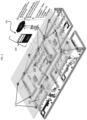
- a system 201 for environmental monitoring and user health is provided for use in a building, such as a cruise ship 101 as shown in FIG. 1 .
- the system 201 includes multi-sensors 210 and a building management system 220.
- Each of the multi-sensors 210 is respectively deployed in local spaces 230 of the building (hereinafter referred to as the cruise ship 101). Each of the multi-sensors 210 is configured to sense multiple characteristics of each local space 230. In accordance with embodiments, the multiple characteristics of the local spaces 230 sensed by each of the multi-sensors 210 includes at least humidity, temperature and noise levels of the local spaces 230 and, in some cases, can include humidity, temperature and noise levels as well as air quality, ventilation, lighting and views, water quality, safety and security and dusts and pets.
- one or more of the local spaces 230 can include a stateroom 231 or a portion of a stateroom (i.e., a living room, a bedroom or a bathroom of a stateroom) of a user.
- a stateroom i.e., a living room, a bedroom or a bathroom of a stateroom
- the building management system 220 is receptive of signals from each of the multi-sensors 210, where the signals are indicative of the multiple characteristics sensed by each of the multi-sensors 210.
- the building management system 220 is configured to determine whether one or more local spaces 230 are exhibiting an unhealthy condition based on the signals.
- the building management system 220 is also configured to prevent user access, which would be otherwise authorized, to the one or more local spaces 230 exhibiting the unhealthy condition while the unhealthy condition persists.
- each of the multi-sensors 210 can be communicative with the building management system 220 via wired or wireless communications (see FIG. 3 ) and/or with each other (see FIG. 4 ) to form a network or web 401 of multi-sensors 210.
- the building management system 220 can include a central server 221, one or more gateways 222 communicatively interposed between the central server 221 and one or more of the multi-sensors 210 and a cloud network 223 communicatively interposed between the one or more gateways 222 and the central server 221.
- the building management system 220 offers multiple functionalities. These include, but are not limited to, a capability to prevent user access to the one or more local spaces 210 exhibiting the unhealthy condition by disabling a key card of a user from unlocking door locks 310 (see FIG. 3 ) of the one or more local spaces 210.
- the functionalities further include a capability to notify the user as to the unhealthy condition and a status of user access as well as at least one of a capability to control fire/water doors, a capability to direct users to lifeboats and a capability to track user locations.
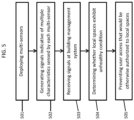
- a method for environmental monitoring and user health is provided.
- the method can be executed by the systems and features described herein and includes deploying multi-sensors to sense multiple characteristics of each local space of a building (block 501), generating signals indicative of the multiple characteristics sensed by each of the multi-sensors (block 502), receiving the signals at a building management system (block 503), determining, at the building management system, whether one or more local spaces are exhibiting an unhealthy condition based on the signals (block 504) and preventing, by the building management system, user access that would be otherwise authorized to the one or more local spaces exhibiting the unhealthy condition while the unhealthy condition persists (block 505).
- the building can include a cruise ship and one or more of the local spaces can include a stateroom or a portion of a stateroom of a user.
- the multiple characteristics of the local spaces sensed by each of the multi-sensors can include at least humidity, temperature and noise levels of the local spaces and, in some cases, can include humidity, temperature and noise levels as well as air quality, ventilation, lighting and views, water quality, safety and security and dusts and pets.
- each of the multi-sensors is communicative with the building management system via wired or wireless communications and the building management system includes a central server, a gateway communicatively interposed between the central server and one or more of the multi-sensors and a cloud network communicatively interposed between the gateway and the central server.
- the preventing of user access to the one or more local spaces exhibiting the unhealthy condition of block 505 can include disabling a key card of a user from unlocking door locks of the one or more local spaces.
- the method can further include notifying, by the building management system, the user as to the unhealthy condition and a status of user access and at least one of controlling, by the building management system, fire/water doors, directing, by the building management system, users to lifeboats and tracking, by the building management system, user locations.
- the system when users come near to room door locks (i.e., for an unhealthy room), the system will send a signal to lock to hold/block user entry by enabling/disabling a dead-bolt (or privacy lock). This condition can be maintained until the unhealthy condition of the room returns to normal.
- the system described herein can be leveraged for hotel spaces in hospitality businesses.
- the system can monitor hotel room conditions to ascertain a health status (i.e., by monitoring air quality, humidity, temperature, etc.) and then convey that health status to the user.
- Such communications can be done via mobile phones and be based on guest mobile credentialing system.
Landscapes
- Business, Economics & Management (AREA)
- Engineering & Computer Science (AREA)
- Tourism & Hospitality (AREA)
- Physics & Mathematics (AREA)
- General Physics & Mathematics (AREA)
- Health & Medical Sciences (AREA)
- Primary Health Care (AREA)
- Development Economics (AREA)
- Educational Administration (AREA)
- Theoretical Computer Science (AREA)
- General Business, Economics & Management (AREA)
- Economics (AREA)
- General Health & Medical Sciences (AREA)
- Human Resources & Organizations (AREA)
- Marketing (AREA)
- Computer Security & Cryptography (AREA)
- Strategic Management (AREA)
- General Engineering & Computer Science (AREA)
- Automation & Control Theory (AREA)
- Alarm Systems (AREA)
Abstract
Description
- The following description relates to systems and methods for environmental monitoring and user health. In particular, the following description relates to maintaining healthy rooms for using mobile credentials and, more specifically, methods and systems for controlling access to spaces using a system to maintain healthy rooms for users using mobile credentials.
- It is becoming increasing important to monitor air quality in closed spaces. This is particularly important in cases in which large numbers of people occupy a same closed space for a significant period of time, such as with cruise ships for example. Cruise ships are essentially large hotels at sea in which thousands of people, customers, staff and officers live on a boat together for days at a time and often share the same spaces inside the boat. Each individual is typically given a key card, which provides the individual access to various parts of the boat. In the case of a customer, his key card might give him access to his stateroom and the common areas of the boat. For an officer, his key card might give him access to his stateroom, the common areas of the boat and the bridge or engine areas.
- In any case, it is very important for each individual on board a cruise ship to remain healthy during a cruise. This can be difficult, however, given the prevalence of viruses and other pathogens as well as other types of dangers on board. These other types of dangers can be identified by certain physical characteristics, such as high humidity and/or temperature levels, loud noises, etc.
- According to an aspect of the disclosure, a system for environmental monitoring and user health is provided. The system includes a multi-sensor deployed in a local space of a building to sense multiple characteristics of the local space and a building management system receptive of signals from the multi-sensor, the signals being indicative of the multiple characteristics sensed by the multi-sensor. The building management system is configured to determine whether the local space is exhibiting an unhealthy condition based on the signals and to prevent user access, which would be otherwise authorized, to the local space exhibiting the unhealthy condition while the unhealthy condition persists.
- Optionally, the building includes a cruise ship and the local space includes a stateroom or a portion of a stateroom of a user.
- Optionally, the multiple characteristics of the local space sensed by the multi-sensor include at least humidity, temperature and noise levels of the local space.
- Optionally, the multi-sensor is communicative with the building management system via wired or wireless communications and the building management system includes a central server, a gateway communicatively interposed between the central server and one or more of the multi-sensors and a cloud network communicatively interposed between the gateway and the central server.
- Optionally, the building management system prevents user access to the local space by disabling a key card of a user from unlocking a door lock of the local space.
- Optionally, the building management system is further configured to notify the user as to the unhealthy condition and a status of user access.
- Optionally, the building management system is further configured to at least one of control fire/water doors, direct users to lifeboats and track user locations.
- According to an aspect of the disclosure, a system for environmental monitoring and user health is provided. The system includes multi-sensors, each of which is deployed in local spaces of a building to sense multiple characteristics of each local space, and a building management system receptive of signals from each of the multi-sensors, the signals being indicative of the multiple characteristics sensed by each of the multi-sensors. The building management system is configured to determine whether one or more local spaces are exhibiting an unhealthy condition based on the signals and to prevent user access, which would be otherwise authorized, to the one or more local spaces exhibiting the unhealthy condition while the unhealthy condition persists.
- Optionally, the building includes a cruise ship and one or more of the local spaces includes a stateroom or a portion of a stateroom of a user.
- Optionally, the multiple characteristics of the local spaces sensed by each of the multi-sensors includes at least humidity, temperature and noise levels of the local spaces.
- Optionally, each of the multi-sensors is communicative with the building management system via wired or wireless communications and the building management system includes a central server, a gateway communicatively interposed between the central server and one or more of the multi-sensors and a cloud network communicatively interposed between the gateway and the central server.
- Optionally, the building management system prevents user access to the one or more local spaces exhibiting the unhealthy condition by disabling a key card of a user from unlocking door locks of the one or more local spaces.
- Optionally, the building management system is further configured to notify the user as to the unhealthy condition and a status of user access.
- Optionally, the building management system is further configured to at least one of control fire/water doors, direct users to lifeboats and track user locations.
- According to an aspect of the disclosure, a method for environmental monitoring and user health is provided. The method includes deploying multi-sensors to sense multiple characteristics of each local space of a building, generating signals indicative of the multiple characteristics sensed by each of the multi-sensors, receiving the signals at a building management system, determining, at the building management system, whether one or more local spaces are exhibiting an unhealthy condition based on the signals and preventing, by the building management system, user access that would be otherwise authorized to the one or more local spaces exhibiting the unhealthy condition while the unhealthy condition persists.
- Optionally, the building includes a cruise ship and one or more of the local spaces includes a stateroom or a portion of a stateroom of a user and the multiple characteristics of the local spaces sensed by each of the multi-sensors includes at least humidity, temperature and noise levels of the local spaces.
- Optionally, each of the multi-sensors is communicative with the building management system via wired or wireless communications and the building management system includes a central server, a gateway communicatively interposed between the central server and one or more of the multi-sensors and a cloud network communicatively interposed between the gateway and the central server.
- Optionally, the preventing of user access to the one or more local spaces exhibiting the unhealthy condition includes disabling a key card of a user from unlocking door locks of the one or more local spaces.
- Optionally, the method further includes notifying, by the building management system, the user as to the unhealthy condition and a status of user access.
- Optionally, the method further includes at least one of controlling, by the building management system, fire/water doors, directing, by the building management system, users to lifeboats and tracking, by the building management system, user locations.
- These and other advantages and features will become more apparent from the following description taken in conjunction with the drawings.
- The subject matter, which is regarded as the disclosure, is particularly pointed out and distinctly claimed in the claims at the conclusion of the specification. Embodiments of the invention are described by way of example only. The foregoing and other features and advantages of the disclosure are apparent from the following detailed description taken in conjunction with the accompanying drawings in which:
-
FIG. 1 is a front view of a cruise ship in accordance with exemplary embodiments; -
FIG. 2 is a perspective schematic illustration of a system for environmental monitoring and user health in accordance with exemplary embodiments; -
FIG. 3 is a flow diagram illustrating communications between multi-sensors and a building management system in accordance with exemplary embodiments; -
FIG. 4 is a plan view illustrating a web of multi-sensors in accordance with exemplary embodiments; and -
FIG. 5 is a flow diagram illustrating a method for environmental monitoring and user health in accordance with exemplary embodiments. - Multi-sensor detectors are deployed throughout a cruise ship and monitor the spaces on board. The multi-sensor detectors communicate with a central server through a gateway to report their readings. If a user tries to enter an unhealthy space (for example, a space in which a local multi-sensor detector detects humidity levels, temperatures, noise, etc., that are indicative of an unhealthy condition) and is permitted to do so, this could impact his health especially in cases in which the user in unaware of the unhealthy condition of the space.
- Thus, as will be described below, systems and methods are provided in which the multi-sensor detectors are deployed throughout a cruise ship to monitor the spaces on board and communicate their findings to a central server. As such, a determination can be made as to whether a given space is characterized as having an unhealthy condition and, in an event a user attempts to access the space, a further determination can be made as to whether to prevent access even if the user's credentials would otherwise grant such access.
- That is, in an exemplary case, once a user's stateroom on a cruise ship is found to have an unhealthy condition by the local multi-sensor detector(s) (i.e., the stateroom elevated humidity, elevated temperature, loud noises, etc.), a centralized system, such as Autronica Autroguard ™, will decide to engage door locks on the doors to that stateroom. This can be done over wireless technology, with an alert sent to the user's mobile phone. Subsequently, once the user comes toward the stateroom, the engaged door locks will prevent the user from accessing an interior of the stateroom at least until the unhealthy condition subsides regardless of the user's credentials. This centralized system can also identify healthy spaces for the user, control fire doors/watertight doors to close to control the spreading of fire/water during an emergency and can assist directing users toward lifeboats in an emergency.
- With reference to
FIGS. 1 and2 , asystem 201 for environmental monitoring and user health is provided for use in a building, such as acruise ship 101 as shown inFIG. 1 . As shown inFIG. 2 , thesystem 201 includes multi-sensors 210 and abuilding management system 220. - Each of the multi-sensors 210 is respectively deployed in
local spaces 230 of the building (hereinafter referred to as the cruise ship 101). Each of the multi-sensors 210 is configured to sense multiple characteristics of eachlocal space 230. In accordance with embodiments, the multiple characteristics of thelocal spaces 230 sensed by each of the multi-sensors 210 includes at least humidity, temperature and noise levels of thelocal spaces 230 and, in some cases, can include humidity, temperature and noise levels as well as air quality, ventilation, lighting and views, water quality, safety and security and dusts and pets. In the particular case in which the building is thecruise ship 101, one or more of thelocal spaces 230 can include astateroom 231 or a portion of a stateroom (i.e., a living room, a bedroom or a bathroom of a stateroom) of a user. - The
building management system 220 is receptive of signals from each of the multi-sensors 210, where the signals are indicative of the multiple characteristics sensed by each of the multi-sensors 210. Thebuilding management system 220 is configured to determine whether one or morelocal spaces 230 are exhibiting an unhealthy condition based on the signals. Thebuilding management system 220 is also configured to prevent user access, which would be otherwise authorized, to the one or morelocal spaces 230 exhibiting the unhealthy condition while the unhealthy condition persists. - With reference to
FIGS. 3 and4 , each of themulti-sensors 210 can be communicative with thebuilding management system 220 via wired or wireless communications (seeFIG. 3 ) and/or with each other (seeFIG. 4 ) to form a network orweb 401 ofmulti-sensors 210. In any case, thebuilding management system 220 can include acentral server 221, one ormore gateways 222 communicatively interposed between thecentral server 221 and one or more of themulti-sensors 210 and acloud network 223 communicatively interposed between the one ormore gateways 222 and thecentral server 221. - The
building management system 220 offers multiple functionalities. These include, but are not limited to, a capability to prevent user access to the one or morelocal spaces 210 exhibiting the unhealthy condition by disabling a key card of a user from unlocking door locks 310 (seeFIG. 3 ) of the one or morelocal spaces 210. The functionalities further include a capability to notify the user as to the unhealthy condition and a status of user access as well as at least one of a capability to control fire/water doors, a capability to direct users to lifeboats and a capability to track user locations. - With reference to
FIG. 5 , a method for environmental monitoring and user health is provided. As shown inFIG. 5 , the method can be executed by the systems and features described herein and includes deploying multi-sensors to sense multiple characteristics of each local space of a building (block 501), generating signals indicative of the multiple characteristics sensed by each of the multi-sensors (block 502), receiving the signals at a building management system (block 503), determining, at the building management system, whether one or more local spaces are exhibiting an unhealthy condition based on the signals (block 504) and preventing, by the building management system, user access that would be otherwise authorized to the one or more local spaces exhibiting the unhealthy condition while the unhealthy condition persists (block 505). - As above, the building can include a cruise ship and one or more of the local spaces can include a stateroom or a portion of a stateroom of a user. In these or other cases, the multiple characteristics of the local spaces sensed by each of the multi-sensors can include at least humidity, temperature and noise levels of the local spaces and, in some cases, can include humidity, temperature and noise levels as well as air quality, ventilation, lighting and views, water quality, safety and security and dusts and pets. Also as above, each of the multi-sensors is communicative with the building management system via wired or wireless communications and the building management system includes a central server, a gateway communicatively interposed between the central server and one or more of the multi-sensors and a cloud network communicatively interposed between the gateway and the central server.
- In accordance with embodiments, the preventing of user access to the one or more local spaces exhibiting the unhealthy condition of
block 505 can include disabling a key card of a user from unlocking door locks of the one or more local spaces. In addition, the method can further include notifying, by the building management system, the user as to the unhealthy condition and a status of user access and at least one of controlling, by the building management system, fire/water doors, directing, by the building management system, users to lifeboats and tracking, by the building management system, user locations. - In another embodiment, when users come near to room door locks (i.e., for an unhealthy room), the system will send a signal to lock to hold/block user entry by enabling/disabling a dead-bolt (or privacy lock). This condition can be maintained until the unhealthy condition of the room returns to normal.
- In another embodiment, the system described herein can be leveraged for hotel spaces in hospitality businesses. For example, where hotel rooms have electronic door locks, the system can monitor hotel room conditions to ascertain a health status (i.e., by monitoring air quality, humidity, temperature, etc.) and then convey that health status to the user. Such communications can be done via mobile phones and be based on guest mobile credentialing system.
- Technical effects and benefits of the present disclosure are the enablement of a system to maintain a good environment and can help with faster evacuation processes.
- While the disclosure is provided in detail in connection with only a limited number of embodiments, it should be readily understood that the disclosure is not limited to such disclosed embodiments. Rather, the disclosure can be modified to incorporate any number of variations, alterations, substitutions or equivalent arrangements not heretofore described, but which are commensurate with the spirit and scope of the disclosure. Additionally, while various embodiments of the disclosure have been described, it is to be understood that the exemplary embodiment(s) may include only some of the described exemplary aspects. Accordingly, the disclosure is not to be seen as limited by the foregoing description, but is only limited by the scope of the appended claims.
Claims (15)
- A system for environmental monitoring and user health, the system comprising:a multi-sensor (210) deployed in a local space (230) of a building to sense multiple characteristics of the local space; anda building management system (220) receptive of signals from the multi-sensor (210), the signals being indicative of the multiple characteristics sensed by the multi-sensor,the building management system being configured to determine whether the local space (230) is exhibiting an unhealthy condition based on the signals and to prevent user access, which would be otherwise authorized, to the local space exhibiting the unhealthy condition while the unhealthy condition persists.
- The system according to claim 1, wherein the building management system (220) prevents user access to the local space (230) by disabling a key card of a user from unlocking a door lock (310) of the local space.
- A system for environmental monitoring and user health, the system comprising:multi-sensors (210), each of which is deployed in local spaces (230) of a building to sense multiple characteristics of each local space; anda building management system (220) receptive of signals from each of the multi-sensors, the signals being indicative of the multiple characteristics sensed by each of the multi-sensors,the building management system (220) being configured to determine whether one or more local spaces (230) are exhibiting an unhealthy condition based on the signals and to prevent user access, which would be otherwise authorized, to the one or more local spaces exhibiting the unhealthy condition while the unhealthy condition persists.
- The system according to claim 3, wherein the building management system (220) prevents user access to the one or more local spaces (230) exhibiting the unhealthy condition by disabling a key card of a user from unlocking door locks (310) of the one or more local spaces.
- The system according to any preceding claim, wherein the building comprises a cruise ship (101) and the local space (230), or one or more of the local spaces (230), comprises a stateroom or a portion of a stateroom of a user.
- The system according to any preceding claim, wherein the multiple characteristics of the local space (230) sensed by the multi-sensor (210), or of the local spaces (230) sensed by each of the multi-sensors (210), comprise at least humidity, temperature and noise levels of the local space or local spaces.
- The system according to any preceding claim, wherein the multi-sensor (210), or each of the multi-sensors (210), is communicative with the building management system (220) via wired or wireless communications and the building management system comprises:a central server (221);a gateway (222) communicatively interposed between the central server (221) and one or more of the multi-sensors (210); anda cloud network (223) communicatively interposed between the gateway and the central server.
- The system according to any preceding claim, wherein the building management system (220) is further configured to notify the user as to the unhealthy condition and a status of user access.
- The system according to any preceding claim, wherein the building management system (220) is further configured to at least one of control fire/water doors, direct users to lifeboats and track user locations.
- A method for environmental monitoring and user health, the method comprising:deploying multi-sensors (210) to sense multiple characteristics of each local space (230) of a building;generating signals indicative of the multiple characteristics sensed by each of the multi-sensors;receiving the signals at a building management system (220);determining, at the building management system, whether one or more local spaces (230) are exhibiting an unhealthy condition based on the signals; andpreventing, by the building management system (220), user access that would be otherwise authorized to the one or more local spaces (230) exhibiting the unhealthy condition while the unhealthy condition persists.
- The method according to claim 10, wherein:the building comprises a cruise ship (101) and one or more of the local spaces (230) comprises a stateroom or a portion of a stateroom of a user, andthe multiple characteristics of the local spaces (230) sensed by each of the multi-sensors comprise at least humidity, temperature and noise levels of the local spaces.
- The method according to claim 10 or 11, wherein each of the multi-sensors (210) is communicative with the building management system (220) via wired or wireless communications and the building management system comprises:a central server (221);a gateway (222) communicatively interposed between the central server (221) and one or more of the multi-sensors (210); anda cloud network (223) communicatively interposed between the gateway (222) and the central server (221).
- The method according to claim 10, 11 or 12, wherein the preventing of user access to the one or more local spaces (230) exhibiting the unhealthy condition comprises disabling a key card of a user from unlocking door locks (310) of the one or more local spaces.
- The method according to any of claims 10 to 13, further comprising notifying, by the building management system (220), the user as to the unhealthy condition and a status of user access.
- The method according to any of claims 10 to 14, further comprising at least one of:controlling, by the building management system (220), fire/water doors;directing, by the building management system, users to lifeboats; andtracking, by the building management system, user locations.
Applications Claiming Priority (1)
| Application Number | Priority Date | Filing Date | Title |
|---|---|---|---|
| US202263345651P | 2022-05-25 | 2022-05-25 |
Publications (1)
| Publication Number | Publication Date |
|---|---|
| EP4283414A1 true EP4283414A1 (en) | 2023-11-29 |
Family
ID=86497642
Family Applications (1)
| Application Number | Title | Priority Date | Filing Date |
|---|---|---|---|
| EP23174974.8A Pending EP4283414A1 (en) | 2022-05-25 | 2023-05-23 | Maintaining healthy rooms for users using mobile credentials |
Country Status (2)
| Country | Link |
|---|---|
| US (1) | US12493919B2 (en) |
| EP (1) | EP4283414A1 (en) |
Citations (4)
| Publication number | Priority date | Publication date | Assignee | Title |
|---|---|---|---|---|
| US20200286350A1 (en) * | 2019-03-06 | 2020-09-10 | Honeywell International Inc. | Building health analysis and management system |
| US20210018884A1 (en) * | 2019-07-18 | 2021-01-21 | Siemens Industry, Inc. | Systems and methods for intelligent disinfection of susceptible environments based on occupant density |
| US11170593B1 (en) * | 2020-05-05 | 2021-11-09 | Royal Caribbean Cruises Ltd. | Multifunction smart door device |
| US20210393834A1 (en) * | 2020-06-19 | 2021-12-23 | Honeywell International Inc. | Systems and methods for reducing disease transmission among occupants of a building |
Family Cites Families (24)
| Publication number | Priority date | Publication date | Assignee | Title |
|---|---|---|---|---|
| US8514069B2 (en) * | 2009-11-12 | 2013-08-20 | MTN Satellite Communications | Tracking passengers on cruise ships |
| JP5416066B2 (en) * | 2010-09-14 | 2014-02-12 | 株式会社日立製作所 | Air conditioning control support device in building management system |
| US20120280812A1 (en) * | 2011-05-04 | 2012-11-08 | General Electric Company | Rfid based guidance in remote locations |
| EP2885776B1 (en) | 2012-08-14 | 2019-06-05 | Berendsen A/S | A hygiene behaviour support system |
| US8888002B2 (en) * | 2012-09-18 | 2014-11-18 | Sensormatic Electronics, LLC | Access control reader enabling remote applications |
| US9007172B2 (en) * | 2012-12-21 | 2015-04-14 | Verizon Patent And Licensing Inc. | Smart key card |
| US20140188287A1 (en) | 2012-12-31 | 2014-07-03 | Ashok Sabata | iComfort: Method to measure and control your micro-climate using a smart phone |
| EP3111411A4 (en) | 2014-02-28 | 2017-08-09 | Delos Living, LLC | Systems, methods and articles for enhancing wellness associated with habitable environments |
| WO2017011504A1 (en) | 2015-07-13 | 2017-01-19 | Carrier Corporation | Safety automation system |
| CN105116848B (en) | 2015-07-17 | 2018-04-10 | 大连理工大学 | Residential architecture indoor air chemical pollution and Health Category evaluation Internet of things system |
| EP3504942A4 (en) | 2016-08-24 | 2020-07-15 | Delos Living LLC | SYSTEMS, METHODS AND ARTICLES FOR IMPROVING WELL-BEING IN LIVABLE ENVIRONMENTS |
| US10045184B2 (en) * | 2016-11-11 | 2018-08-07 | Carnival Corporation | Wireless guest engagement system |
| KR20190096264A (en) | 2018-02-08 | 2019-08-19 | 주식회사 디사인플러스 | Smart door lock system |
| WO2019210172A1 (en) | 2018-04-27 | 2019-10-31 | Sweny Tim | System and method for evaluating and reserving rooms |
| US11384950B2 (en) | 2019-01-16 | 2022-07-12 | Airviz Inc. | Proactive building air quality management |
| US20200378641A1 (en) | 2019-05-30 | 2020-12-03 | Air Distribution Technologies Ip, Llc | Techniques for detecting or considering habitat air quality |
| FI20196006A1 (en) | 2019-11-22 | 2021-05-23 | Iisy | System and method for evaluating building health by measuring indoor air |
| US10861120B1 (en) * | 2019-12-06 | 2020-12-08 | Royal Caribbean Cruises Ltd. | Dynamic routing during muster |
| US11854688B2 (en) | 2020-02-19 | 2023-12-26 | Taiwan Semiconductor Manufacturing Co., Ltd. | Semiconductor device and method |
| WO2021168279A1 (en) | 2020-02-21 | 2021-08-26 | Inspironics Corporation | Connected facility systems |
| US20210350490A1 (en) * | 2020-05-05 | 2021-11-11 | Royal Caribbean Cruises Ltd. | Cruise embarkation systems and methods for prevention of disease transmission |
| US12073058B1 (en) * | 2020-06-24 | 2024-08-27 | Raptor Technologies LLC | Emergency management system |
| KR102308033B1 (en) | 2020-10-21 | 2021-10-01 | (주)엔팩에스앤지 | Smart air purification device for cabin and air quality improvement method using it |
| US20230335272A1 (en) * | 2022-04-13 | 2023-10-19 | Johnson Controls Tyco IP Holdings LLP | Building management system with water and air-based biological sensing |
-
2023
- 2023-05-23 EP EP23174974.8A patent/EP4283414A1/en active Pending
- 2023-05-25 US US18/323,532 patent/US12493919B2/en active Active
Patent Citations (4)
| Publication number | Priority date | Publication date | Assignee | Title |
|---|---|---|---|---|
| US20200286350A1 (en) * | 2019-03-06 | 2020-09-10 | Honeywell International Inc. | Building health analysis and management system |
| US20210018884A1 (en) * | 2019-07-18 | 2021-01-21 | Siemens Industry, Inc. | Systems and methods for intelligent disinfection of susceptible environments based on occupant density |
| US11170593B1 (en) * | 2020-05-05 | 2021-11-09 | Royal Caribbean Cruises Ltd. | Multifunction smart door device |
| US20210393834A1 (en) * | 2020-06-19 | 2021-12-23 | Honeywell International Inc. | Systems and methods for reducing disease transmission among occupants of a building |
Also Published As
| Publication number | Publication date |
|---|---|
| US12493919B2 (en) | 2025-12-09 |
| US20230385973A1 (en) | 2023-11-30 |
Similar Documents
| Publication | Publication Date | Title |
|---|---|---|
| US10854026B2 (en) | System and method for premise management | |
| US12131603B2 (en) | Scalable systems and methods for monitoring and concierge service | |
| US10726650B1 (en) | Controlled indoor access using smart indoor door knobs | |
| US7132941B2 (en) | System for monitoring an environment | |
| US8305211B1 (en) | Method and apparatus for surveillance system peering | |
| KR20170004958A (en) | System of living | |
| JP6012538B2 (en) | Entrance / exit management system, control method of entrance / exit management system, and computer device for entrance / exit management system | |
| US12100281B2 (en) | Firearm regulation system and related methods | |
| CN114663838B (en) | Safety protection methods, devices, electronic equipment and storage media | |
| EP3899880B1 (en) | Emergency delegation | |
| US11908307B2 (en) | Security system | |
| KR102401090B1 (en) | Two-factor authentication door lock | |
| US12493919B2 (en) | Maintaining healthy rooms for users using mobile credentials | |
| JP6296638B2 (en) | Security system and security method | |
| CN109920107A (en) | A kind of electric power facility door safety control system | |
| US8413897B2 (en) | Device for securing an enclosed space by identification | |
| US20250232624A1 (en) | Lock to lock communication | |
| JP2011012420A (en) | Building monitoring system and program | |
| JP2006227756A (en) | Cooperation controller | |
| CN107978118A (en) | Anti-theft fireproof method and system | |
| JP4915669B2 (en) | Crime prevention lighting system | |
| JP2009127311A (en) | Electric lock system | |
| JP2000242874A (en) | Crime preventing receiver, crime preventing system using the same, and room entering and leaving management system | |
| JP2006146879A (en) | Security system | |
| JP2006146866A (en) | Security system |
Legal Events
| Date | Code | Title | Description |
|---|---|---|---|
| PUAI | Public reference made under article 153(3) epc to a published international application that has entered the european phase |
Free format text: ORIGINAL CODE: 0009012 |
|
| STAA | Information on the status of an ep patent application or granted ep patent |
Free format text: STATUS: THE APPLICATION HAS BEEN PUBLISHED |
|
| AK | Designated contracting states |
Kind code of ref document: A1 Designated state(s): AL AT BE BG CH CY CZ DE DK EE ES FI FR GB GR HR HU IE IS IT LI LT LU LV MC ME MK MT NL NO PL PT RO RS SE SI SK SM TR |
|
| STAA | Information on the status of an ep patent application or granted ep patent |
Free format text: STATUS: REQUEST FOR EXAMINATION WAS MADE |
|
| 17P | Request for examination filed |
Effective date: 20240529 |
|
| RBV | Designated contracting states (corrected) |
Designated state(s): AL AT BE BG CH CY CZ DE DK EE ES FI FR GB GR HR HU IE IS IT LI LT LU LV MC ME MK MT NL NO PL PT RO RS SE SI SK SM TR |
|
| GRAP | Despatch of communication of intention to grant a patent |
Free format text: ORIGINAL CODE: EPIDOSNIGR1 |
|
| STAA | Information on the status of an ep patent application or granted ep patent |
Free format text: STATUS: GRANT OF PATENT IS INTENDED |
|
| INTG | Intention to grant announced |
Effective date: 20251216 |
|
| GRAS | Grant fee paid |
Free format text: ORIGINAL CODE: EPIDOSNIGR3 |