EP4282997A2 - Streamlined lithium-ion battery waste recycling - Google Patents
Streamlined lithium-ion battery waste recycling Download PDFInfo
- Publication number
- EP4282997A2 EP4282997A2 EP23174776.7A EP23174776A EP4282997A2 EP 4282997 A2 EP4282997 A2 EP 4282997A2 EP 23174776 A EP23174776 A EP 23174776A EP 4282997 A2 EP4282997 A2 EP 4282997A2
- Authority
- EP
- European Patent Office
- Prior art keywords
- solution
- leaching
- pls
- basic solution
- valuable metals
- Prior art date
- Legal status (The legal status is an assumption and is not a legal conclusion. Google has not performed a legal analysis and makes no representation as to the accuracy of the status listed.)
- Pending
Links
- 238000004064 recycling Methods 0.000 title claims abstract description 23
- 229910001416 lithium ion Inorganic materials 0.000 title claims abstract description 12
- HBBGRARXTFLTSG-UHFFFAOYSA-N Lithium ion Chemical compound [Li+] HBBGRARXTFLTSG-UHFFFAOYSA-N 0.000 title claims abstract description 10
- 239000002699 waste material Substances 0.000 title description 11
- 238000000034 method Methods 0.000 claims abstract description 102
- 229910052751 metal Inorganic materials 0.000 claims abstract description 81
- 239000002184 metal Substances 0.000 claims abstract description 81
- 238000002386 leaching Methods 0.000 claims abstract description 70
- 239000012535 impurity Substances 0.000 claims abstract description 67
- PXHVJJICTQNCMI-UHFFFAOYSA-N Nickel Chemical compound [Ni] PXHVJJICTQNCMI-UHFFFAOYSA-N 0.000 claims abstract description 64
- 239000011572 manganese Substances 0.000 claims abstract description 63
- 229910052748 manganese Inorganic materials 0.000 claims abstract description 56
- 150000002739 metals Chemical class 0.000 claims abstract description 56
- 229910052759 nickel Inorganic materials 0.000 claims abstract description 50
- 239000003153 chemical reaction reagent Substances 0.000 claims abstract description 35
- 229910052744 lithium Inorganic materials 0.000 claims abstract description 35
- 239000002253 acid Substances 0.000 claims abstract description 33
- 238000001556 precipitation Methods 0.000 claims abstract description 23
- 230000002829 reductive effect Effects 0.000 claims abstract description 20
- WHXSMMKQMYFTQS-UHFFFAOYSA-N Lithium Chemical compound [Li] WHXSMMKQMYFTQS-UHFFFAOYSA-N 0.000 claims abstract description 5
- 229910017052 cobalt Inorganic materials 0.000 claims abstract description 3
- 239000010941 cobalt Substances 0.000 claims abstract description 3
- GUTLYIVDDKVIGB-UHFFFAOYSA-N cobalt atom Chemical compound [Co] GUTLYIVDDKVIGB-UHFFFAOYSA-N 0.000 claims abstract description 3
- PWHULOQIROXLJO-UHFFFAOYSA-N Manganese Chemical compound [Mn] PWHULOQIROXLJO-UHFFFAOYSA-N 0.000 claims abstract 2
- 239000000243 solution Substances 0.000 claims description 60
- MHAJPDPJQMAIIY-UHFFFAOYSA-N Hydrogen peroxide Chemical compound OO MHAJPDPJQMAIIY-UHFFFAOYSA-N 0.000 claims description 59
- 239000003637 basic solution Substances 0.000 claims description 43
- 239000002244 precipitate Substances 0.000 claims description 40
- WMFOQBRAJBCJND-UHFFFAOYSA-M Lithium hydroxide Chemical compound [Li+].[OH-] WMFOQBRAJBCJND-UHFFFAOYSA-M 0.000 claims description 39
- 239000010949 copper Substances 0.000 claims description 34
- 229910052782 aluminium Inorganic materials 0.000 claims description 25
- 229910052802 copper Inorganic materials 0.000 claims description 24
- 239000002002 slurry Substances 0.000 claims description 20
- 239000003638 chemical reducing agent Substances 0.000 claims description 19
- XEEYBQQBJWHFJM-UHFFFAOYSA-N Iron Chemical compound [Fe] XEEYBQQBJWHFJM-UHFFFAOYSA-N 0.000 claims description 18
- QAOWNCQODCNURD-UHFFFAOYSA-N Sulfuric acid Chemical compound OS(O)(=O)=O QAOWNCQODCNURD-UHFFFAOYSA-N 0.000 claims description 15
- 230000002378 acidificating effect Effects 0.000 claims description 15
- XGZVUEUWXADBQD-UHFFFAOYSA-L lithium carbonate Chemical compound [Li+].[Li+].[O-]C([O-])=O XGZVUEUWXADBQD-UHFFFAOYSA-L 0.000 claims description 12
- NWUYHJFMYQTDRP-UHFFFAOYSA-N 1,2-bis(ethenyl)benzene;1-ethenyl-2-ethylbenzene;styrene Chemical compound C=CC1=CC=CC=C1.CCC1=CC=CC=C1C=C.C=CC1=CC=CC=C1C=C NWUYHJFMYQTDRP-UHFFFAOYSA-N 0.000 claims description 11
- 239000003456 ion exchange resin Substances 0.000 claims description 11
- 229920003303 ion-exchange polymer Polymers 0.000 claims description 11
- 229910052808 lithium carbonate Inorganic materials 0.000 claims description 11
- 238000000975 co-precipitation Methods 0.000 claims description 10
- 239000002198 insoluble material Substances 0.000 claims description 10
- 238000012545 processing Methods 0.000 claims description 10
- 238000009388 chemical precipitation Methods 0.000 claims description 8
- 238000005342 ion exchange Methods 0.000 claims description 7
- 239000000463 material Substances 0.000 claims description 7
- 238000011144 upstream manufacturing Methods 0.000 claims description 7
- 239000000047 product Substances 0.000 claims description 6
- 150000003467 sulfuric acid derivatives Chemical class 0.000 claims description 6
- RYGMFSIKBFXOCR-UHFFFAOYSA-N Copper Chemical compound [Cu] RYGMFSIKBFXOCR-UHFFFAOYSA-N 0.000 claims description 5
- XAGFODPZIPBFFR-UHFFFAOYSA-N aluminium Chemical compound [Al] XAGFODPZIPBFFR-UHFFFAOYSA-N 0.000 claims description 5
- 238000001179 sorption measurement Methods 0.000 claims description 5
- 239000003480 eluent Substances 0.000 claims description 4
- 230000001172 regenerating effect Effects 0.000 claims description 4
- OKTJSMMVPCPJKN-UHFFFAOYSA-N Carbon Chemical compound [C] OKTJSMMVPCPJKN-UHFFFAOYSA-N 0.000 claims description 3
- 229910002804 graphite Inorganic materials 0.000 claims description 3
- 239000010439 graphite Substances 0.000 claims description 3
- XLYOFNOQVPJJNP-UHFFFAOYSA-M hydroxide Chemical compound [OH-] XLYOFNOQVPJJNP-UHFFFAOYSA-M 0.000 abstract description 7
- BVKZGUZCCUSVTD-UHFFFAOYSA-L Carbonate Chemical compound [O-]C([O-])=O BVKZGUZCCUSVTD-UHFFFAOYSA-L 0.000 abstract description 3
- 150000001875 compounds Chemical class 0.000 abstract 1
- HEMHJVSKTPXQMS-UHFFFAOYSA-M Sodium hydroxide Chemical compound [OH-].[Na+] HEMHJVSKTPXQMS-UHFFFAOYSA-M 0.000 description 42
- 238000012360 testing method Methods 0.000 description 13
- MUBZPKHOEPUJKR-UHFFFAOYSA-N Oxalic acid Chemical compound OC(=O)C(O)=O MUBZPKHOEPUJKR-UHFFFAOYSA-N 0.000 description 10
- CDBYLPFSWZWCQE-UHFFFAOYSA-L Sodium Carbonate Chemical compound [Na+].[Na+].[O-]C([O-])=O CDBYLPFSWZWCQE-UHFFFAOYSA-L 0.000 description 10
- 238000000926 separation method Methods 0.000 description 10
- 239000011734 sodium Substances 0.000 description 9
- 239000003513 alkali Substances 0.000 description 8
- 230000008901 benefit Effects 0.000 description 8
- 229910052742 iron Inorganic materials 0.000 description 8
- 238000004519 manufacturing process Methods 0.000 description 8
- 239000000203 mixture Substances 0.000 description 8
- 238000011084 recovery Methods 0.000 description 8
- 238000002425 crystallisation Methods 0.000 description 7
- 230000008025 crystallization Effects 0.000 description 7
- 238000004090 dissolution Methods 0.000 description 7
- 229910001317 nickel manganese cobalt oxide (NMC) Inorganic materials 0.000 description 7
- 239000002243 precursor Substances 0.000 description 7
- 239000010406 cathode material Substances 0.000 description 6
- 230000000052 comparative effect Effects 0.000 description 6
- 238000001914 filtration Methods 0.000 description 6
- -1 oxalate ions Chemical class 0.000 description 6
- 239000011347 resin Substances 0.000 description 6
- 229920005989 resin Polymers 0.000 description 6
- PMZURENOXWZQFD-UHFFFAOYSA-L Sodium Sulfate Chemical compound [Na+].[Na+].[O-]S([O-])(=O)=O PMZURENOXWZQFD-UHFFFAOYSA-L 0.000 description 5
- QAOWNCQODCNURD-UHFFFAOYSA-L Sulfate Chemical compound [O-]S([O-])(=O)=O QAOWNCQODCNURD-UHFFFAOYSA-L 0.000 description 5
- 238000004458 analytical method Methods 0.000 description 5
- 238000006243 chemical reaction Methods 0.000 description 5
- 238000009854 hydrometallurgy Methods 0.000 description 5
- INHCSSUBVCNVSK-UHFFFAOYSA-L lithium sulfate Inorganic materials [Li+].[Li+].[O-]S([O-])(=O)=O INHCSSUBVCNVSK-UHFFFAOYSA-L 0.000 description 5
- 238000000746 purification Methods 0.000 description 5
- 229910000029 sodium carbonate Inorganic materials 0.000 description 5
- 229910052938 sodium sulfate Inorganic materials 0.000 description 5
- 238000000638 solvent extraction Methods 0.000 description 5
- 239000007832 Na2SO4 Substances 0.000 description 4
- KWYUFKZDYYNOTN-UHFFFAOYSA-M Potassium hydroxide Chemical compound [OH-].[K+] KWYUFKZDYYNOTN-UHFFFAOYSA-M 0.000 description 4
- 238000005119 centrifugation Methods 0.000 description 4
- 239000003795 chemical substances by application Substances 0.000 description 4
- 238000010908 decantation Methods 0.000 description 4
- 238000000354 decomposition reaction Methods 0.000 description 4
- 239000012452 mother liquor Substances 0.000 description 4
- 238000009853 pyrometallurgy Methods 0.000 description 4
- 241000894007 species Species 0.000 description 4
- 238000011282 treatment Methods 0.000 description 4
- 206010011906 Death Diseases 0.000 description 3
- 238000007599 discharging Methods 0.000 description 3
- 238000000909 electrodialysis Methods 0.000 description 3
- 238000002474 experimental method Methods 0.000 description 3
- 239000012467 final product Substances 0.000 description 3
- XLYOFNOQVPJJNP-ZSJDYOACSA-N heavy water Substances [2H]O[2H] XLYOFNOQVPJJNP-ZSJDYOACSA-N 0.000 description 3
- 235000006408 oxalic acid Nutrition 0.000 description 3
- 239000007800 oxidant agent Substances 0.000 description 3
- BWHMMNNQKKPAPP-UHFFFAOYSA-L potassium carbonate Chemical compound [K+].[K+].[O-]C([O-])=O BWHMMNNQKKPAPP-UHFFFAOYSA-L 0.000 description 3
- 230000001376 precipitating effect Effects 0.000 description 3
- 238000005406 washing Methods 0.000 description 3
- 239000002351 wastewater Substances 0.000 description 3
- VEXZGXHMUGYJMC-UHFFFAOYSA-N Hydrochloric acid Chemical compound Cl VEXZGXHMUGYJMC-UHFFFAOYSA-N 0.000 description 2
- 238000003723 Smelting Methods 0.000 description 2
- RAHZWNYVWXNFOC-UHFFFAOYSA-N Sulphur dioxide Chemical compound O=S=O RAHZWNYVWXNFOC-UHFFFAOYSA-N 0.000 description 2
- 150000007513 acids Chemical class 0.000 description 2
- 229910001854 alkali hydroxide Inorganic materials 0.000 description 2
- 150000008044 alkali metal hydroxides Chemical class 0.000 description 2
- 230000033228 biological regulation Effects 0.000 description 2
- 238000009835 boiling Methods 0.000 description 2
- 239000011575 calcium Substances 0.000 description 2
- 239000013078 crystal Substances 0.000 description 2
- 238000010586 diagram Methods 0.000 description 2
- 230000000694 effects Effects 0.000 description 2
- 238000005265 energy consumption Methods 0.000 description 2
- 230000007613 environmental effect Effects 0.000 description 2
- 238000002354 inductively-coupled plasma atomic emission spectroscopy Methods 0.000 description 2
- 238000011835 investigation Methods 0.000 description 2
- 150000002500 ions Chemical class 0.000 description 2
- 229910000625 lithium cobalt oxide Inorganic materials 0.000 description 2
- 229910002102 lithium manganese oxide Inorganic materials 0.000 description 2
- BFZPBUKRYWOWDV-UHFFFAOYSA-N lithium;oxido(oxo)cobalt Chemical compound [Li+].[O-][Co]=O BFZPBUKRYWOWDV-UHFFFAOYSA-N 0.000 description 2
- VLXXBCXTUVRROQ-UHFFFAOYSA-N lithium;oxido-oxo-(oxomanganiooxy)manganese Chemical compound [Li+].[O-][Mn](=O)O[Mn]=O VLXXBCXTUVRROQ-UHFFFAOYSA-N 0.000 description 2
- 239000011777 magnesium Substances 0.000 description 2
- NUJOXMJBOLGQSY-UHFFFAOYSA-N manganese dioxide Chemical compound O=[Mn]=O NUJOXMJBOLGQSY-UHFFFAOYSA-N 0.000 description 2
- 150000002736 metal compounds Chemical class 0.000 description 2
- 229910000000 metal hydroxide Inorganic materials 0.000 description 2
- 150000004692 metal hydroxides Chemical class 0.000 description 2
- 238000006386 neutralization reaction Methods 0.000 description 2
- 230000003647 oxidation Effects 0.000 description 2
- 238000007254 oxidation reaction Methods 0.000 description 2
- 229910052761 rare earth metal Inorganic materials 0.000 description 2
- 230000036647 reaction Effects 0.000 description 2
- 230000035484 reaction time Effects 0.000 description 2
- 238000012552 review Methods 0.000 description 2
- 239000002893 slag Substances 0.000 description 2
- 229910052708 sodium Inorganic materials 0.000 description 2
- 239000002341 toxic gas Substances 0.000 description 2
- XLYOFNOQVPJJNP-UHFFFAOYSA-N water Chemical compound O XLYOFNOQVPJJNP-UHFFFAOYSA-N 0.000 description 2
- VHUUQVKOLVNVRT-UHFFFAOYSA-N Ammonium hydroxide Chemical compound [NH4+].[OH-] VHUUQVKOLVNVRT-UHFFFAOYSA-N 0.000 description 1
- OYPRJOBELJOOCE-UHFFFAOYSA-N Calcium Chemical compound [Ca] OYPRJOBELJOOCE-UHFFFAOYSA-N 0.000 description 1
- 241000196324 Embryophyta Species 0.000 description 1
- KRHYYFGTRYWZRS-UHFFFAOYSA-M Fluoride anion Chemical compound [F-] KRHYYFGTRYWZRS-UHFFFAOYSA-M 0.000 description 1
- 229910001228 Li[Ni1/3Co1/3Mn1/3]O2 (NCM 111) Inorganic materials 0.000 description 1
- FYYHWMGAXLPEAU-UHFFFAOYSA-N Magnesium Chemical compound [Mg] FYYHWMGAXLPEAU-UHFFFAOYSA-N 0.000 description 1
- GRYLNZFGIOXLOG-UHFFFAOYSA-N Nitric acid Chemical compound O[N+]([O-])=O GRYLNZFGIOXLOG-UHFFFAOYSA-N 0.000 description 1
- DWAQJAXMDSEUJJ-UHFFFAOYSA-M Sodium bisulfite Chemical compound [Na+].OS([O-])=O DWAQJAXMDSEUJJ-UHFFFAOYSA-M 0.000 description 1
- 229910000831 Steel Inorganic materials 0.000 description 1
- RTAQQCXQSZGOHL-UHFFFAOYSA-N Titanium Chemical compound [Ti] RTAQQCXQSZGOHL-UHFFFAOYSA-N 0.000 description 1
- 239000003929 acidic solution Substances 0.000 description 1
- 238000013019 agitation Methods 0.000 description 1
- NDPGDHBNXZOBJS-UHFFFAOYSA-N aluminum lithium cobalt(2+) nickel(2+) oxygen(2-) Chemical compound [Li+].[O--].[O--].[O--].[O--].[Al+3].[Co++].[Ni++] NDPGDHBNXZOBJS-UHFFFAOYSA-N 0.000 description 1
- 239000000908 ammonium hydroxide Substances 0.000 description 1
- 239000003011 anion exchange membrane Substances 0.000 description 1
- 239000010405 anode material Substances 0.000 description 1
- 239000002585 base Substances 0.000 description 1
- 230000015572 biosynthetic process Effects 0.000 description 1
- 229910052791 calcium Inorganic materials 0.000 description 1
- AXCZMVOFGPJBDE-UHFFFAOYSA-L calcium dihydroxide Chemical compound [OH-].[OH-].[Ca+2] AXCZMVOFGPJBDE-UHFFFAOYSA-L 0.000 description 1
- 239000000920 calcium hydroxide Substances 0.000 description 1
- 229910001861 calcium hydroxide Inorganic materials 0.000 description 1
- 150000004649 carbonic acid derivatives Chemical class 0.000 description 1
- 239000006182 cathode active material Substances 0.000 description 1
- 238000005341 cation exchange Methods 0.000 description 1
- 150000001768 cations Chemical class 0.000 description 1
- 239000002738 chelating agent Substances 0.000 description 1
- 238000001311 chemical methods and process Methods 0.000 description 1
- 239000012141 concentrate Substances 0.000 description 1
- 238000001816 cooling Methods 0.000 description 1
- 239000008367 deionised water Substances 0.000 description 1
- 229910021641 deionized water Inorganic materials 0.000 description 1
- 230000001419 dependent effect Effects 0.000 description 1
- 238000011161 development Methods 0.000 description 1
- 230000018109 developmental process Effects 0.000 description 1
- 230000005611 electricity Effects 0.000 description 1
- 238000010828 elution Methods 0.000 description 1
- 238000005516 engineering process Methods 0.000 description 1
- 238000001704 evaporation Methods 0.000 description 1
- 230000008020 evaporation Effects 0.000 description 1
- 238000000605 extraction Methods 0.000 description 1
- 230000002349 favourable effect Effects 0.000 description 1
- 239000000446 fuel Substances 0.000 description 1
- 239000008187 granular material Substances 0.000 description 1
- BHEPBYXIRTUNPN-UHFFFAOYSA-N hydridophosphorus(.) (triplet) Chemical compound [PH] BHEPBYXIRTUNPN-UHFFFAOYSA-N 0.000 description 1
- 238000010348 incorporation Methods 0.000 description 1
- 229910052500 inorganic mineral Inorganic materials 0.000 description 1
- 238000009533 lab test Methods 0.000 description 1
- GELKBWJHTRAYNV-UHFFFAOYSA-K lithium iron phosphate Chemical compound [Li+].[Fe+2].[O-]P([O-])([O-])=O GELKBWJHTRAYNV-UHFFFAOYSA-K 0.000 description 1
- VGYDTVNNDKLMHX-UHFFFAOYSA-N lithium;manganese;nickel;oxocobalt Chemical compound [Li].[Mn].[Ni].[Co]=O VGYDTVNNDKLMHX-UHFFFAOYSA-N 0.000 description 1
- 229910052749 magnesium Inorganic materials 0.000 description 1
- 238000012423 maintenance Methods 0.000 description 1
- 239000011707 mineral Substances 0.000 description 1
- 238000002156 mixing Methods 0.000 description 1
- 230000003472 neutralizing effect Effects 0.000 description 1
- 229910017604 nitric acid Inorganic materials 0.000 description 1
- 150000003891 oxalate salts Chemical class 0.000 description 1
- 239000002245 particle Substances 0.000 description 1
- 230000037361 pathway Effects 0.000 description 1
- 230000002572 peristaltic effect Effects 0.000 description 1
- 229910052698 phosphorus Inorganic materials 0.000 description 1
- 239000004033 plastic Substances 0.000 description 1
- 229910000027 potassium carbonate Inorganic materials 0.000 description 1
- 238000002360 preparation method Methods 0.000 description 1
- 238000011165 process development Methods 0.000 description 1
- 239000002994 raw material Substances 0.000 description 1
- 239000012492 regenerant Substances 0.000 description 1
- 230000008929 regeneration Effects 0.000 description 1
- 238000011069 regeneration method Methods 0.000 description 1
- 150000003839 salts Chemical class 0.000 description 1
- VSZWPYCFIRKVQL-UHFFFAOYSA-N selanylidenegallium;selenium Chemical compound [Se].[Se]=[Ga].[Se]=[Ga] VSZWPYCFIRKVQL-UHFFFAOYSA-N 0.000 description 1
- HRZFUMHJMZEROT-UHFFFAOYSA-L sodium disulfite Chemical compound [Na+].[Na+].[O-]S(=O)S([O-])(=O)=O HRZFUMHJMZEROT-UHFFFAOYSA-L 0.000 description 1
- 235000010267 sodium hydrogen sulphite Nutrition 0.000 description 1
- 229910001415 sodium ion Inorganic materials 0.000 description 1
- 229940001584 sodium metabisulfite Drugs 0.000 description 1
- 235000010262 sodium metabisulphite Nutrition 0.000 description 1
- 235000011152 sodium sulphate Nutrition 0.000 description 1
- 230000006641 stabilisation Effects 0.000 description 1
- 238000011105 stabilization Methods 0.000 description 1
- 229910001220 stainless steel Inorganic materials 0.000 description 1
- 239000010935 stainless steel Substances 0.000 description 1
- 239000010959 steel Substances 0.000 description 1
- 239000000126 substance Substances 0.000 description 1
- 235000010269 sulphur dioxide Nutrition 0.000 description 1
- 230000001629 suppression Effects 0.000 description 1
- JBQYATWDVHIOAR-UHFFFAOYSA-N tellanylidenegermanium Chemical compound [Te]=[Ge] JBQYATWDVHIOAR-UHFFFAOYSA-N 0.000 description 1
- RBTVSNLYYIMMKS-UHFFFAOYSA-N tert-butyl 3-aminoazetidine-1-carboxylate;hydrochloride Chemical compound Cl.CC(C)(C)OC(=O)N1CC(N)C1 RBTVSNLYYIMMKS-UHFFFAOYSA-N 0.000 description 1
- 229910052726 zirconium Inorganic materials 0.000 description 1
Images

Classifications
-
- C—CHEMISTRY; METALLURGY
- C22—METALLURGY; FERROUS OR NON-FERROUS ALLOYS; TREATMENT OF ALLOYS OR NON-FERROUS METALS
- C22B—PRODUCTION AND REFINING OF METALS; PRETREATMENT OF RAW MATERIALS
- C22B3/00—Extraction of metal compounds from ores or concentrates by wet processes
- C22B3/04—Extraction of metal compounds from ores or concentrates by wet processes by leaching
- C22B3/06—Extraction of metal compounds from ores or concentrates by wet processes by leaching in inorganic acid solutions, e.g. with acids generated in situ; in inorganic salt solutions other than ammonium salt solutions
-
- C—CHEMISTRY; METALLURGY
- C22—METALLURGY; FERROUS OR NON-FERROUS ALLOYS; TREATMENT OF ALLOYS OR NON-FERROUS METALS
- C22B—PRODUCTION AND REFINING OF METALS; PRETREATMENT OF RAW MATERIALS
- C22B3/00—Extraction of metal compounds from ores or concentrates by wet processes
- C22B3/04—Extraction of metal compounds from ores or concentrates by wet processes by leaching
- C22B3/06—Extraction of metal compounds from ores or concentrates by wet processes by leaching in inorganic acid solutions, e.g. with acids generated in situ; in inorganic salt solutions other than ammonium salt solutions
- C22B3/08—Sulfuric acid, other sulfurated acids or salts thereof
-
- C—CHEMISTRY; METALLURGY
- C01—INORGANIC CHEMISTRY
- C01D—COMPOUNDS OF ALKALI METALS, i.e. LITHIUM, SODIUM, POTASSIUM, RUBIDIUM, CAESIUM, OR FRANCIUM
- C01D15/00—Lithium compounds
- C01D15/08—Carbonates; Bicarbonates
-
- C—CHEMISTRY; METALLURGY
- C01—INORGANIC CHEMISTRY
- C01D—COMPOUNDS OF ALKALI METALS, i.e. LITHIUM, SODIUM, POTASSIUM, RUBIDIUM, CAESIUM, OR FRANCIUM
- C01D5/00—Sulfates or sulfites of sodium, potassium or alkali metals in general
-
- C—CHEMISTRY; METALLURGY
- C01—INORGANIC CHEMISTRY
- C01G—COMPOUNDS CONTAINING METALS NOT COVERED BY SUBCLASSES C01D OR C01F
- C01G53/00—Compounds of nickel
- C01G53/01—Preparation or separation involving a liquid-liquid extraction, an adsorption or an ion-exchange
-
- C—CHEMISTRY; METALLURGY
- C01—INORGANIC CHEMISTRY
- C01G—COMPOUNDS CONTAINING METALS NOT COVERED BY SUBCLASSES C01D OR C01F
- C01G53/00—Compounds of nickel
- C01G53/80—Compounds containing nickel, with or without oxygen or hydrogen, and containing one or more other elements
- C01G53/82—Compounds containing nickel, with or without oxygen or hydrogen, and containing two or more other elements
-
- C—CHEMISTRY; METALLURGY
- C22—METALLURGY; FERROUS OR NON-FERROUS ALLOYS; TREATMENT OF ALLOYS OR NON-FERROUS METALS
- C22B—PRODUCTION AND REFINING OF METALS; PRETREATMENT OF RAW MATERIALS
- C22B23/00—Obtaining nickel or cobalt
- C22B23/04—Obtaining nickel or cobalt by wet processes
- C22B23/0407—Leaching processes
-
- C—CHEMISTRY; METALLURGY
- C22—METALLURGY; FERROUS OR NON-FERROUS ALLOYS; TREATMENT OF ALLOYS OR NON-FERROUS METALS
- C22B—PRODUCTION AND REFINING OF METALS; PRETREATMENT OF RAW MATERIALS
- C22B23/00—Obtaining nickel or cobalt
- C22B23/04—Obtaining nickel or cobalt by wet processes
- C22B23/0407—Leaching processes
- C22B23/0415—Leaching processes with acids or salt solutions except ammonium salts solutions
- C22B23/043—Sulfurated acids or salts thereof
-
- C—CHEMISTRY; METALLURGY
- C22—METALLURGY; FERROUS OR NON-FERROUS ALLOYS; TREATMENT OF ALLOYS OR NON-FERROUS METALS
- C22B—PRODUCTION AND REFINING OF METALS; PRETREATMENT OF RAW MATERIALS
- C22B23/00—Obtaining nickel or cobalt
- C22B23/04—Obtaining nickel or cobalt by wet processes
- C22B23/0453—Treatment or purification of solutions, e.g. obtained by leaching
- C22B23/0461—Treatment or purification of solutions, e.g. obtained by leaching by chemical methods
-
- C—CHEMISTRY; METALLURGY
- C22—METALLURGY; FERROUS OR NON-FERROUS ALLOYS; TREATMENT OF ALLOYS OR NON-FERROUS METALS
- C22B—PRODUCTION AND REFINING OF METALS; PRETREATMENT OF RAW MATERIALS
- C22B26/00—Obtaining alkali, alkaline earth metals or magnesium
- C22B26/10—Obtaining alkali metals
-
- C—CHEMISTRY; METALLURGY
- C22—METALLURGY; FERROUS OR NON-FERROUS ALLOYS; TREATMENT OF ALLOYS OR NON-FERROUS METALS
- C22B—PRODUCTION AND REFINING OF METALS; PRETREATMENT OF RAW MATERIALS
- C22B26/00—Obtaining alkali, alkaline earth metals or magnesium
- C22B26/10—Obtaining alkali metals
- C22B26/12—Obtaining lithium
-
- C—CHEMISTRY; METALLURGY
- C22—METALLURGY; FERROUS OR NON-FERROUS ALLOYS; TREATMENT OF ALLOYS OR NON-FERROUS METALS
- C22B—PRODUCTION AND REFINING OF METALS; PRETREATMENT OF RAW MATERIALS
- C22B3/00—Extraction of metal compounds from ores or concentrates by wet processes
- C22B3/20—Treatment or purification of solutions, e.g. obtained by leaching
- C22B3/22—Treatment or purification of solutions, e.g. obtained by leaching by physical processes, e.g. by filtration, by magnetic means, or by thermal decomposition
-
- C—CHEMISTRY; METALLURGY
- C22—METALLURGY; FERROUS OR NON-FERROUS ALLOYS; TREATMENT OF ALLOYS OR NON-FERROUS METALS
- C22B—PRODUCTION AND REFINING OF METALS; PRETREATMENT OF RAW MATERIALS
- C22B3/00—Extraction of metal compounds from ores or concentrates by wet processes
- C22B3/20—Treatment or purification of solutions, e.g. obtained by leaching
- C22B3/22—Treatment or purification of solutions, e.g. obtained by leaching by physical processes, e.g. by filtration, by magnetic means, or by thermal decomposition
- C22B3/24—Treatment or purification of solutions, e.g. obtained by leaching by physical processes, e.g. by filtration, by magnetic means, or by thermal decomposition by adsorption on solid substances, e.g. by extraction with solid resins
-
- C—CHEMISTRY; METALLURGY
- C22—METALLURGY; FERROUS OR NON-FERROUS ALLOYS; TREATMENT OF ALLOYS OR NON-FERROUS METALS
- C22B—PRODUCTION AND REFINING OF METALS; PRETREATMENT OF RAW MATERIALS
- C22B3/00—Extraction of metal compounds from ores or concentrates by wet processes
- C22B3/20—Treatment or purification of solutions, e.g. obtained by leaching
- C22B3/26—Treatment or purification of solutions, e.g. obtained by leaching by liquid-liquid extraction using organic compounds
- C22B3/38—Treatment or purification of solutions, e.g. obtained by leaching by liquid-liquid extraction using organic compounds containing phosphorus
- C22B3/384—Pentavalent phosphorus oxyacids, esters thereof
- C22B3/3842—Phosphinic acid, e.g. H2P(O)(OH)
-
- C—CHEMISTRY; METALLURGY
- C22—METALLURGY; FERROUS OR NON-FERROUS ALLOYS; TREATMENT OF ALLOYS OR NON-FERROUS METALS
- C22B—PRODUCTION AND REFINING OF METALS; PRETREATMENT OF RAW MATERIALS
- C22B3/00—Extraction of metal compounds from ores or concentrates by wet processes
- C22B3/20—Treatment or purification of solutions, e.g. obtained by leaching
- C22B3/26—Treatment or purification of solutions, e.g. obtained by leaching by liquid-liquid extraction using organic compounds
- C22B3/38—Treatment or purification of solutions, e.g. obtained by leaching by liquid-liquid extraction using organic compounds containing phosphorus
- C22B3/384—Pentavalent phosphorus oxyacids, esters thereof
- C22B3/3846—Phosphoric acid, e.g. (O)P(OH)3
-
- C—CHEMISTRY; METALLURGY
- C22—METALLURGY; FERROUS OR NON-FERROUS ALLOYS; TREATMENT OF ALLOYS OR NON-FERROUS METALS
- C22B—PRODUCTION AND REFINING OF METALS; PRETREATMENT OF RAW MATERIALS
- C22B3/00—Extraction of metal compounds from ores or concentrates by wet processes
- C22B3/20—Treatment or purification of solutions, e.g. obtained by leaching
- C22B3/42—Treatment or purification of solutions, e.g. obtained by leaching by ion-exchange extraction
-
- C—CHEMISTRY; METALLURGY
- C22—METALLURGY; FERROUS OR NON-FERROUS ALLOYS; TREATMENT OF ALLOYS OR NON-FERROUS METALS
- C22B—PRODUCTION AND REFINING OF METALS; PRETREATMENT OF RAW MATERIALS
- C22B3/00—Extraction of metal compounds from ores or concentrates by wet processes
- C22B3/20—Treatment or purification of solutions, e.g. obtained by leaching
- C22B3/44—Treatment or purification of solutions, e.g. obtained by leaching by chemical processes
-
- C—CHEMISTRY; METALLURGY
- C22—METALLURGY; FERROUS OR NON-FERROUS ALLOYS; TREATMENT OF ALLOYS OR NON-FERROUS METALS
- C22B—PRODUCTION AND REFINING OF METALS; PRETREATMENT OF RAW MATERIALS
- C22B7/00—Working up raw materials other than ores, e.g. scrap, to produce non-ferrous metals and compounds thereof; Methods of a general interest or applied to the winning of more than two metals
- C22B7/005—Separation by a physical processing technique only, e.g. by mechanical breaking
-
- C—CHEMISTRY; METALLURGY
- C22—METALLURGY; FERROUS OR NON-FERROUS ALLOYS; TREATMENT OF ALLOYS OR NON-FERROUS METALS
- C22B—PRODUCTION AND REFINING OF METALS; PRETREATMENT OF RAW MATERIALS
- C22B7/00—Working up raw materials other than ores, e.g. scrap, to produce non-ferrous metals and compounds thereof; Methods of a general interest or applied to the winning of more than two metals
- C22B7/006—Wet processes
-
- C—CHEMISTRY; METALLURGY
- C22—METALLURGY; FERROUS OR NON-FERROUS ALLOYS; TREATMENT OF ALLOYS OR NON-FERROUS METALS
- C22B—PRODUCTION AND REFINING OF METALS; PRETREATMENT OF RAW MATERIALS
- C22B7/00—Working up raw materials other than ores, e.g. scrap, to produce non-ferrous metals and compounds thereof; Methods of a general interest or applied to the winning of more than two metals
- C22B7/006—Wet processes
- C22B7/007—Wet processes by acid leaching
-
- H—ELECTRICITY
- H01—ELECTRIC ELEMENTS
- H01M—PROCESSES OR MEANS, e.g. BATTERIES, FOR THE DIRECT CONVERSION OF CHEMICAL ENERGY INTO ELECTRICAL ENERGY
- H01M10/00—Secondary cells; Manufacture thereof
- H01M10/54—Reclaiming serviceable parts of waste accumulators
-
- Y—GENERAL TAGGING OF NEW TECHNOLOGICAL DEVELOPMENTS; GENERAL TAGGING OF CROSS-SECTIONAL TECHNOLOGIES SPANNING OVER SEVERAL SECTIONS OF THE IPC; TECHNICAL SUBJECTS COVERED BY FORMER USPC CROSS-REFERENCE ART COLLECTIONS [XRACs] AND DIGESTS
- Y02—TECHNOLOGIES OR APPLICATIONS FOR MITIGATION OR ADAPTATION AGAINST CLIMATE CHANGE
- Y02P—CLIMATE CHANGE MITIGATION TECHNOLOGIES IN THE PRODUCTION OR PROCESSING OF GOODS
- Y02P10/00—Technologies related to metal processing
- Y02P10/20—Recycling
-
- Y—GENERAL TAGGING OF NEW TECHNOLOGICAL DEVELOPMENTS; GENERAL TAGGING OF CROSS-SECTIONAL TECHNOLOGIES SPANNING OVER SEVERAL SECTIONS OF THE IPC; TECHNICAL SUBJECTS COVERED BY FORMER USPC CROSS-REFERENCE ART COLLECTIONS [XRACs] AND DIGESTS
- Y02—TECHNOLOGIES OR APPLICATIONS FOR MITIGATION OR ADAPTATION AGAINST CLIMATE CHANGE
- Y02W—CLIMATE CHANGE MITIGATION TECHNOLOGIES RELATED TO WASTEWATER TREATMENT OR WASTE MANAGEMENT
- Y02W30/00—Technologies for solid waste management
- Y02W30/50—Reuse, recycling or recovery technologies
- Y02W30/84—Recycling of batteries or fuel cells
Definitions
- the present disclosure relates to a method of recovering valuable metals from black mass.
- LiBs lithium-ion batteries
- EVs electric vehicles
- LiBs may be collected and transferred to a recycling facility that employs mechanical separation methods.
- the batteries are first sorted and discharged to completely drain stored residual energy by known methods, such as using ohmic resistor or cryogenic/inert crushing. Then the batteries are dismantled either manually or by crushing the battery modules in a shredder and/or a mill.
- the granules thereby generated are sieved to separate material such as steel, plastic, aluminum, and copper from what is commonly referred to as "black mass.”
- Chemical pathways for processing black mass include pyrometallurgical and hydrometallurgical processes.
- Pyrometallurgy employs smelting as the core process step which is similar to that used in smelting of ores. This route presents significant hurdles such as high energy consumption, costly toxic gas treatment, and loss of Li to slag.
- the recovered metals are in forms that are unsuitable for battery production and require additional processing to separate into individual metal compounds.
- the first step is leaching the metals from black mass.
- a common leaching agent is sulfuric acid (H 2 SO 4 ) with hydrogen peroxide (H 2 O 2 ) as the reducing agent. Reduction is required because of the presence of higher valence state species, such as Co 3+ and Mn 4+ , in the black mass, formed during the charging-discharging cycle of the battery.
- H 2 SO 4 sulfuric acid
- H 2 O 2 hydrogen peroxide
- Reduction is required because of the presence of higher valence state species, such as Co 3+ and Mn 4+ , in the black mass, formed during the charging-discharging cycle of the battery.
- dissolution of higher valence states is lower relative to their lower valence states (Co 2+ and Mn 2+ ). Ni and, to some extent, Li are closely associated with Co and Mn; hence, their leaching efficiencies are affected by lower Co and Mn dissolution.
- Copper (Cu), iron (Fe), and aluminum (Al) are common impurities in black mass.
- Cu is from the current collector of the anode
- Al is from the current collector of the cathode
- Fe is from the stainless-steel case, all of which can exist as metallic species.
- the dissolution of Cu and Al metal by H 2 SO 4 gives off two and three electrons, respectively, hence can act as reducing agents.
- the oxidation potential of H 2 O 2 is above that of the metallic components; therefore, it can also oxidize and dissolve Al and Cu.
- H 2 O 2 When H 2 O 2 is added during acid leaching, the metals may be rapidly oxidized resulting in loss of the reductive power of Al and Cu and overconsumption of H 2 O 2 .
- H 2 O 2 may act as an oxidizing agent in the presence of Al and Cu instead of a reducing agent as intended.
- the common impurities such as Fe, Al, and Cu in the leachate containing the valuable metals may be removed by processes such as chemical precipitation, ion exchange, solvent extraction, or combinations thereof.
- Chemical precipitation utilizes the differences in the solubility of metal compounds which are dependent on pH and temperature.
- the precipitating reagents that are commonly used are alkali hydroxides or carbonates.
- Such equipment may have a dilute channel filled with a Li 2 SO 4 solution and two concentrate channels separately filled with LiOH and H 2 SO 4 solutions, and the channels are separated by cation-exchange and anion-exchange membranes, respectively.
- the authors reported high ion recovery ratios of Li + and SO 4 - of 94.3 and 87.5%, respectively.
- the purity of the LiOH solution generated is high.
- Electrodialysis equipment and auxiliaries can entail high capital expenditures (CAPEX) and the process is highly energy-intensive and requires high maintenance cost, and therefore this is a disadvantageously costly process.
- solvent extraction is a process step which enables production of individual battery-grade metal sulfates.
- An example is referred to in German patent document DE 102018102026 A1 (Hanisch, C. et al .).
- the described systems are complex, sensitive in operation, and require multiple stages with high degrees of control. They also require effective systems for waste treatment, crud removal, organic vapor emission control, and fire suppression. As such, for implementation of these processes, many pieces of equipment and a large footprint, hence high capital expenditures, are required. Moreover, these processes consume high amounts of reagents, fuel, and electricity.
- United States Patent No. 10,995,014 attempts to eliminate the separation step and above-mentioned issues by producing mixed metal sulfates.
- the mixed metal sulfate solution is crystallized to generate mixed metal sulfate crystals and a mixed metal sulfate mother liquor.
- the mother liquor is reacted with a base to form the mixed metal hydroxides, which in turn are used as the reagent in the impurity removal upstream of crystallization. It has been found from experiments related to the present disclosure that, while crystallization of mixed metal sulfate can easily be performed, it is rather difficult to achieve the desired metal ratios.
- crystallization relies on the solubility of the metal sulfates and each metal sulfate component has different solubilities. Additionally, crystallization is an energy intensive process. After crystallization, the salts are re-dissolved and precipitated as mixed metal hydroxide or carbonate to be used for battery cathode application.
- NMC hydroxide as a reagent in the impurity removal step is preferred to avoid introduction of ionic impurities into the PLS.
- concentrations of Ni, Mn, Co, and Li are governed by their solubility limit at different pH.
- Ni, Mn, Co hydroxide has low solubility at impurity removal pH 4-5, so by adding more NMC to the solution, the extent of precipitation increases which would lead to higher Ni, Mn, and Co losses.
- the present disclosure relates to a method of recovering valuable metals from black mass, where the method includes the steps of acid leaching the black mass in a first stage, to produce acid-leached material, and applying a reducing agent to the acid-leached material in a second stage.
- a two-stage leaching process is employed where acid leaching is employed in the first stage and a reducing agent such as H 2 O 2 is added in the second stage.
- a reducing agent such as H 2 O 2
- one or more of the following advantages may be achieved: (1) the reductive power of impurity metals such as Cu and Al in the black mass may be taken advantage of; (2) H 2 O 2 consumption may be reduced as a result of its efficient use in the second stage leaching where it is most needed; (3) conditions may be provided where H 2 O 2 only acts as a reducing agent and not as an oxidizing agent; and (4) higher temperature in the first stage can be used to improve acid leaching kinetics and reduce the temperature in the second stage of leaching when H 2 O 2 is added to reduce its decomposition.
- the present disclosure also relates to a method of recovering valuable metals from black mass, where the method includes the steps of performing upstream processes on the black mass and using a Li basic solution as a reagent in one or more of the upstream processes.
- a Li basic solution is used as a reagent in one or more upstream processes.
- IX ion exchange
- one or more of the following advantages may be achieved: (1) the use of fresh alkali reagent in impurity removal, ion exchange (IX) resin regeneration, and mixed precipitation may be eliminated; (2) losses of the critical metals to the impurity precipitate during impurity removal by chemical precipitation may be minimized; (3) effective impurity removal by chemical precipitation may be achieved without introduction of a high level of Na that could contaminate the mixed precipitate product or require additional steps of purification (additionally, LiOH has high solubility in acidic pH and will not co-precipitate with impurities or NMC mixed ppt); (4) a Li-containing stream after mixed precipitation may be enriched with Li which minimizes the energy requirement for concentrating the solution prior to Li 2 CO 3 precipitation; and (5) this closed loop process can maximize the recovery of Li.
- the streamlined process described herein can eliminate an unnecessary metals separation step of the recycling process and the metal sulfates dissolution step of the cathode precursor production. This may result in approximately 60% lower capital cost and 50% lower reagent and utility cost relative to known hydrometallurgical processes where Ni, Mn, and Co are separated, without reducing the quality of the product.
- the process includes: (i) acid leaching black mass to form an acidic pregnant leach solution (PLS) containing valuable metals such as Ni, Mn, Co, and Li and impurities, and an insoluble material, where the leaching process is a two-stage process including (a) acid leaching with an acid at suitable conditions and (b) reductive acid leaching with a reducing agent at suitable conditions; (ii) separating the acidic PLS and the insoluble material; (iii) adjusting the pH of the acidic PLS using a Li basic solution to form a pH-adjusted slurry including an impurity precipitate containing the impurities and a pH-adjusted PLS containing valuable metals such as Ni, Mn, Co, and Li; (iv) separating the pH-adjusted PLS
- solvent extraction circuits for separation of Mn, Co, and Ni can be advantageously bypassed.
- Such bypassing may provide a number of advantages, including one or more of the following: (a) reduced equipment cost; (b) reduced building footprint; (c) reduced reagent consumption; (d) reduced waste generation; and (e) improved plant safety.
- two-stage leaching including acid leaching followed by reductive leaching, may be employed.
- Such two-stage leaching may provide a number of advantages, including one or more of the following: (a) increasing Ni, Co, and Li recovery; and (b) reducing H 2 O 2 consumption/reagent cost.
- a Li basic solution may be used instead of NaOH, which may provide a number of advantages, including one or more of the following: (a) more efficient impurity removal/lower loss of Ni and Co; (b) avoidance of introduction of new impurity; (c) reduction of purification requirements; (d) reduction in the amount of wastewater generated; and (e) increased Li recovery.
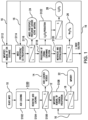
- the present disclosure relates to a process for recovering and purifying Ni, Mn, Co, and Li from black mass 10 ( Fig. 1 ) for use in producing high purity products.
- the black mass 10 may be obtained from recycling of LiB waste.
- the process includes: (i) acid leaching black mass (S100) to form an acidic pregnant leach solution (PLS) containing valuable metals such as Ni, Mn, Co, and Li, and impurities, and an insoluble material, where the leaching process (S100) is a two-stage process including (a) acid leaching (S102) with an acid at suitable conditions and (b) reductive leaching (S104) with a reducing agent at suitable conditions; (ii) separating (S106) the acidic PLS 12 and the insoluble material or acid-leached residue 14; (iii) adjusting (S108) the pH of the acidic PLS 12 using a Li basic solution 16 to form a pH-adjusted slurry 18 including an impurity precipitate containing impurities and a pH-adjusted PLS containing valuable metals such as Ni, Mn, Co, and Li; and (iv) separating (S110) the pH adjusted PLS 20 and
- the process illustrated in Fig. 1 includes: (v) removing (S112) any residual impurities from the pH adjusted PLS 20 by adsorption using an ion exchange resin to form the purified PLS containing valuable metals such as Ni, Mn, Co, and Li, where the removing step (S112) includes (a) eluting the adsorbed impurities from the ion-exchange resin using appropriate eluents and (b) regenerating the ion-exchange resin using the Li basic solution 16; (vi) adjusting (S 114) the pH of the purified PLS containing valuable metals such as Ni, Mn, Co, and Li using the Li basic solution 16 to form a mixed precipitate slurry; (vii) separating (S116) the mixed precipitate containing Ni, Mn, and Co, and a solution containing Li, where the mixed precipitate 24 can be of high purity (up to battery-grade purity) for use as a precursor cathode active material; and (viii) processing (S118)
- the feedstock to the process may be a mixture of cathode and anode materials from recycling of LiB waste or scraps.
- the LiB waste or scraps may include at least one of the LiB chemistries lithium iron phosphate (LFP), lithium cobalt oxide (LCO), lithium manganese oxide (LMO), lithium nickel manganese cobalt oxide (NMC), lithium nickel cobalt aluminum oxide (NCA), and lithium titanate (LTO).
- LFP lithium iron phosphate
- LCO lithium cobalt oxide
- LMO lithium manganese oxide
- NMC lithium nickel manganese cobalt oxide
- NCA lithium nickel cobalt aluminum oxide
- LTO lithium titanate
- the black mass 10 may include least one of the valuable metals Ni, Co, Mn, and Li, graphite (C), and at least one impurity such as iron (Fe), aluminum (Al), copper (Cu), phosphorous (P), calcium (Ca), magnesium (Mg), fluoride (F), zirconium (Zr), zinc (Zn), and rare earth elements (REE).
- the valuable metals Ni, Co, Mn, and Li graphite (C)
- impurity such as iron (Fe), aluminum (Al), copper (Cu), phosphorous (P), calcium (Ca), magnesium (Mg), fluoride (F), zirconium (Zr), zinc (Zn), and rare earth elements (REE).
- the leaching process (S100) is performed in two stages (S102, S104) to efficiently utilize the reducing power of Al and/or Cu metals and prevent overconsumption of H 2 O 2 .
- the feedstock is mixed with acidic solution (S102) to dissolve at least a portion of Ni, Mn, Co, Li, and impurities.
- Suitable acids may include, but are not limited to, mineral acids including sulfuric acid, hydrochloric acid, and nitric acid.
- the amount of acid to be added may be more than the stoichiometric amount required to completely dissolve the Ni, Mn, Co, and Li, and impurities.
- the leaching may be carried out at a temperature equal to or less than the boiling point of the slurry, while the slurry is thoroughly mixed. A portion of at least one Ni, Mn, Co, and Li is dissolved in solution.
- the relatively low leaching efficiency of particularly Co and Mn are due to the formation of higher valence state species, such as Co 3+ and Mn 4+ , during the charging-discharging cycle of the battery. Based on the Eh-pH solution chemistry of the metals, dissolution of higher valence states is lower relative to their lower valence states (Co 2+ and Mn 2+ ). Ni and, to some extent, Li are closely associated with Co and Mn; hence, their leaching efficiencies are affected by lower Co and Mn dissolution.
- the acidic slurry from the first stage of acid leaching may be cooled to a temperature suitable for an efficient reaction with the reducing agent (S104), preferably about 60-70 °C to reduce the rate of H 2 O 2 decomposition.
- the reducing agent may include, but is not limited to, H 2 O 2 , sulfur dioxide, sodium bisulfite, or sodium metabisulfite.
- the amount of the reducing agent may be more than the stoichiometric amount required to reduce the oxidized valuable metals particularly Co 3+ to Co 2+ and Mn 4+ to Mn 2+ while the solution is thoroughly mixed. Any undissolved valuable metals and impurities may be partially present in the insoluble material.
- Separation (S106) of the acidic PLS and the insoluble material 14 may be accomplished by known methods such as gravitational settling, decantation, filtration, centrifugation, or any other appropriate method.
- the insoluble material 14 may contain graphite and may be further purified and regenerated to form a saleable (marketable) product or reused in the process as adsorber for organics.
- the acidic PLS containing Ni, Mn, Co, and Li, and impurities may be added with a suitable alkali reagent to precipitate at least a portion of one or more impurities including, but not limited to, Al, Cu, Fe, P, and Zr.
- Li basic solution 16 can be preferentially used to reduce the introduction of impurities that could occur when using other alkali reagents such as NaOH, Na 2 CO 3 , calcium hydroxide, potassium carbonate (K 2 CO 3 ), potassium hydroxide (KOH) or costly reagents such as Li 2 CO 3 , or LiOH.
- the pH-adjusted slurry 18 that is formed includes an impurity precipitate 22 and a pH-adjusted PLS 20 containing Ni, Mn, Co, and Li, and residual impurities which may be separated by suitable methods such as gravitational settling, decantation, filtration, centrifugation, or any other appropriate method.
- the residual impurities in the pH-adjusted PLS 20 may be removed by ion exchange (S 1 12) using a suitable ion exchange resin.
- the removal of residual impurities, particularly Al and Cu, from the pH-adjusted PLS may be completed without significant co-adsorption of Ni, Mn, Co, and Li.
- the adsorbed impurities may be eluted from the resin by suitable eluents.
- the eluted resin may be regenerated by an alkali reagent in solution form.
- the regenerant can be the Li basic solution 16 containing Li from the process to reduce introduction of new impurities to the solution.
- the regenerated resin may be reused.
- the recovery of valuable metals such as Ni, Mn, and Co from the purified PLS may be performed by adjusting the pH using an alkali reagent.
- the alkali reagent may be Li basic solution 16 to reduce the introduction of impurities that would have been introduced at high levels by using other basic reagents such as Na 2 CO 3 , K 2 CO 3 , NaOH, or KOH or by using other alkali reagents such as Li 2 CO 3 , or LiOH that are costly.
- the pH of precipitation may be at least 6 and up to 9, or at least 6.5 and up to 8.5, or at least 7 up to 8, whereas when an alkali hydroxide is used, the pH of precipitation may be at least 7 and up to 13, or at least 10.5 and up to 12.5, or at least 11 and up to 12.
- the precipitation (S 114) may be carried out at a temperature equal to or less than the boiling point of the slurry while the slurry is thoroughly mixed.
- the mixed or co-precipitation process may be in batch or continuous mode.
- the precipitation may employ a co-precipitation process using a chelating agent such as ammonium hydroxide.
- the mixed precipitate slurry that is formed includes a mixed precipitate 24 containing Ni, Mn, and Co, and a solution containing Li, which can be separated by suitable methods (S 1 16) such as gravitational settling, decantation, filtration, centrifugation, or any other appropriate method.
- the solution containing Li may be further processed (S 1 18) to recover Li basic solution 16 to be used as a reagent for at least one of the frontend processes illustrated in Fig. 1 , including one or more of the following: (i) converting (S122) a portion of the concentrated Li solution into Li 2 CO 3 by reacting stoichiometrically with Na 2 CO 3 , if production of Li 2 CO 3 as Li basic solution or final product is intended; (ii) further purifying the generated Li 2 CO 3 28 if it is intended to be used as a final product for industrial or battery-grade applications; (iii) converting a portion of the concentrated Li solution into a solution of LiOH and sodium sulfate (Na 2 SO 4 ) by metathetically reacting with NaOH (S 120); (iv) crystallizing Na 2 SO 4 through evaporative crystallization or cooling crystallization (S120); (v) separating the crystallized Na 2 SO 4 26 and the mother liquor containing LiOH and soluble Na 2 SO 4
- Comparative Test 1 Two-stage leaching - acid leaching followed by reductive leaching, compared with single-stage leaching where acid leaching and reduction take place simultaneously.
- a black mass sample 1 having the composition shown in Table 1 was considered in the comparative leaching tests.
- the leaching was done in an 800-mL beaker using an overhead agitator and an electrically heated hotplate.
- the reagents used were analytical grade 98 %wt H 2 SO 4 from Merck and industrial grade 50 %wt H 2 O 2 solution.
- About 50 g of the black mass on dry basis was used in each test parameter employed.
- the amount of H 2 SO 4 was 20% in excess of the stoichiometric requirement to form corresponding sulfates of Ni, Co, Mn, Li, Al, Cu, and Fe.
- the amount of H 2 O 2 used was the same for each case.
- the black mass was first leached in H 2 SO 4 solution at 80-90 °C for 2 hours.
- a sample of the slurry was taken for analysis to determine the quantity of metals, particularly Co and Mn, left in the residue.
- the amount of H 2 O 2 was calculated based on amount of residual Co and Mn.
- the acid-leached slurry was cooled to 55-65 °C in preparation for the reduction step.
- H 2 O 2 was added into the slurry via a peristaltic pump at a rate of 1 mL/min.
- the black mass was leached in a solution of H 2 SO 4 and H 2 O 2 at two different temperatures for 2 hours.
- the same amount of H 2 O 2 as calculated in the two-stage leaching was used.
- a sample of the slurry was taken for analysis.
- the relatively low leaching efficiency of Co and Mn in Stage 1 is attributed to the presence of higher valence state species, including Co 3+ and Mn 4+ , from the charging-discharging cycle of the battery.
- the solubility of these higher valence states is lower relative to their lower valence states (Co 2+ and Mn 2+ ).
- Ni and, to some extent, Li are closely associated with Co and Mn; hence, their leaching efficiencies can be affected.
- Al, Cu, and Fe can be present in the black mass as metals, and their dissolution by the acid releases corresponding electrons that can reduce Co 3+ and Mn 4+ , according to the half-cell reactions shown in Table 2.
- the one-step leaching system at 80-90 °C could have suffered either or both of the following causes of inefficient use of H 2 O 2 .
- the rate of decomposition of H 2 O 2 is very fast.
- H 2 O 2 can act as both a reducing agent and an oxidizing agent in the leaching system. Having an oxidation potential above that of Al, Cu, and Fe (including Fe 2+ which also holds a reductive power), it can rapidly react with and oxidize the metals. Therefore, when H 2 O 2 is added in one step with the acid, the reductive power of the metals would not be utilized by Co 3+ and Mn 4+ , which in turn can result in unnecessary over-consumption of H 2 O 2 . The latter cause could be more prevalent in one-step leaching systems at lower temperature.
- An objective of the impurity removal via chemical precipitation step is to remove all the Fe and most of Al and Cu in one step without substantially precipitating any of the critical metals.
- Laboratory experiments were conducted to evaluate the behavior of the metals at different pH using NaOH and Li basic solution as neutralizing agents. About 150 mL of the PLS from the leaching of black mass sample 1 was added to the reagent at different pHs at ambient temperature. The acidic PLS contained 13,000 ppm Mn, 12,000 ppm Co, 23,000 ppm Ni, 6,000 ppm Li, 2,000 ppm Al, 7,000 ppm Cu, and 15 ppm Fe. A stabilization period of 30 minutes at the pH was allowed prior to taking a sample for analysis. The samples were filtered using Whatman 41 filter paper and analyzed using Agilent 5110 ICP-OES. The pH meter was a Thermo Scientific Orion Star A211 pH meter.
- Fig. 2 shows the results of the tests conducted. Understandably, because the Fe concentration is very low in the PLS, the onset of its precipitation was found to be at pH 4 attaining complete precipitation at pH 4. With the relatively higher concentration of Al in the PLS, on the other hand, it almost approached complete precipitation at pH 4.5, with minimal co-precipitation of Co, Mn, and/or Ni. At full precipitation of Al, for example at pH 5.5, the co-precipitation of Co, Mn, and Ni when Li basic solution was used was significantly lower than when NaOH was used at the same pH.
- An acidic PLS with total Ni, Mn, and Co concentrations [TM] of 1 molar obtained by leaching black mass sample 1 was prepared.
- the PLS was split into two parts. The first part went through impurity removal, and mixed precipitation steps using Li basic solution. The second part used NaOH. All parameters such as agitation, temperature, rate of addition, reaction time, and pH were the same for both tests.
- a process in accordance with the present disclosure was tested on a sample of black mass from acid leaching to mixed precipitation.
- About 225 g of the black mass sample 1 having the composition shown in Table 4 was leached via the above-described two-stage leaching (see Fig. 1 , S100).
- the PLS was then adjusted to pH 4.5-4.7 at 30-40 °C using the Li basic solution generated from a previous experiment.
- the resulting slurry was filtered to separate the pH-adjusted PLS and the impurity precipitate.
- the pH-adjusted PLS was then fed to an ion exchange column containing a suitable resin for adsorption of the residual Al and Cu.
- the raffinate, or the purified PLS was adjusted with the Li basic solution to precipitate all the valuable metals Co, Mn, and Ni, which was at a pH of 11-11.5.
- the resulting slurry was filtered to separate the Li-containing solution from the mixed precipitate. The mixed precipitate was then washed and dried.
- the Li-containing solution was processed to produce Li 2 CO 3 and Li basic solution.
- Table 4 Analysis of a black mass Sample 1 and resulting leachate, purified solution, and mixed metal precipitate Composition Black Mass Sample 1 Leachate (mixed metal solution) Purified mixed metal solution
- the mixed metal precipitate produced in Test 4 has a similar composition as the infeed in terms of metal ratios.
- the mixed metal precipitate can be advantageously employed directly in the production of a cathode precursor.
- Fe, Al, and Cu concentrations in the purified solution and the mixed precipitate are low.
- the Na and Li contents are within an acceptable range according to known specifications.
- Ni, Mn, and Co concentrations were not adjusted.
- the concentrations can be adjusted to reach the desirable Ni: Mn: Co.
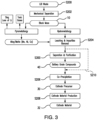
- Fig. 3 provides a schematic comparison between three methods: (1) a hydrometallurgical method of producing a cathode material in accordance with the present disclosure; (2) a pyrometallurgical process; and (3) another hydrometallurgical process.
- the method according to the present disclosure includes providing LiB waste (S200), performing mechanical separation (S202) to obtain black mass 10, leaching and removing impurities (S204), and performing a co-precipitation step (S206) to produce a cathode precursor 30, followed by cathode material production (S208) to produce the cathode material 32.
- the method according to the present disclosure does not lose Li to slag or generate toxic gas as occurs in the pyrometallurgical process.
- the method according to the present disclosure bypasses (S210), that is, does not include, separation and purification steps (S300) to produce battery grade components 40.
- separation and purification steps (S300) are costly aspects of the other hydrometallurgical process illustrated in Fig. 3 , which may be avoided by performing the method according to the present disclosure.
- any numerical range recited herein is intended to include all sub-ranges subsumed therein.
- a range of "1 to 10" is intended to include any and all sub-ranges between and including the recited minimum value of 1 and the recited maximum value of 10, that is, all subranges beginning with a minimum value equal to or greater than 1 and ending with a maximum value equal to or less than 10, and all subranges in between, e.g., 1 to 6.3, or 5.5 to 10, or 2.7 to 6.1.
Landscapes
- Chemical & Material Sciences (AREA)
- Engineering & Computer Science (AREA)
- Organic Chemistry (AREA)
- Materials Engineering (AREA)
- Manufacturing & Machinery (AREA)
- Metallurgy (AREA)
- Mechanical Engineering (AREA)
- Geology (AREA)
- General Life Sciences & Earth Sciences (AREA)
- Environmental & Geological Engineering (AREA)
- Life Sciences & Earth Sciences (AREA)
- Geochemistry & Mineralogy (AREA)
- Inorganic Chemistry (AREA)
- Chemical Kinetics & Catalysis (AREA)
- General Chemical & Material Sciences (AREA)
- Electrochemistry (AREA)
- Manufacture And Refinement Of Metals (AREA)
- Processing Of Solid Wastes (AREA)
- Secondary Cells (AREA)
Abstract
Description
- The present disclosure relates to a method of recovering valuable metals from black mass.
- The demand for lithium-ion batteries (LiBs) is expected to grow to a large extent in several applications, particularly in connection with electric vehicles (EVs), over the next few years. Driven by rapid technological innovation, increasing environmental and energy concerns, favorable government policies, and growing demand from the renewable-energy sector, this massive conversion is accelerating. At this rate, the demand for LiBs could easily outpace the supply of battery-grade components, such as lithium (Li), cobalt (Co), and nickel (Ni), in the near future. Currently, the supply chain of these critical metals from primary sources reveals a range of risks including political, security, and business risks associated with their geographic concentration. To sustain the growth of the EV market, it is important to secure the source of raw materials.
- In the current decade, scraps amounting to up to 10% of the production from gigafactories remain as the primary source of recyclable materials. Despite ongoing efforts in optimizing production lines to reduce such scraps, their quantity can still be significant even when end-of-life (EOL) EV batteries become available for recycling by 2030. The spent batteries that are presently available for recycling are mostly from consumer electronics. Most of these batteries are landfilled or disposed of in some other way because the related environmental regulations have not been fully developed or implemented in many countries. Additionally, they are highly dispersed in small quantities and scattered in different locations. With the coming surge in demand for LiBs in the EV market, the disposal of EOL batteries is expected to ramp up in the next few years. With proactive regulations regarding disposal and collection of spent batteries, recycling of LiB wastes could provide a significant and reliable supply of valuable metals.
- Recycling of LiBs involves physical and chemical processes. At the end of their lives, LiBs may be collected and transferred to a recycling facility that employs mechanical separation methods. The batteries are first sorted and discharged to completely drain stored residual energy by known methods, such as using ohmic resistor or cryogenic/inert crushing. Then the batteries are dismantled either manually or by crushing the battery modules in a shredder and/or a mill. The granules thereby generated are sieved to separate material such as steel, plastic, aluminum, and copper from what is commonly referred to as "black mass."
- Chemical pathways for processing black mass include pyrometallurgical and hydrometallurgical processes. Pyrometallurgy employs smelting as the core process step which is similar to that used in smelting of ores. This route presents significant hurdles such as high energy consumption, costly toxic gas treatment, and loss of Li to slag. Moreover, the recovered metals are in forms that are unsuitable for battery production and require additional processing to separate into individual metal compounds.
- Most hydrometallurgical processes involve metals recovery by leaching, impurities removal, valuable metals separation, and purification of all the critical metals which entail complex process steps. Typically, the first step is leaching the metals from black mass. A common leaching agent is sulfuric acid (H2SO4) with hydrogen peroxide (H2O2) as the reducing agent. Reduction is required because of the presence of higher valence state species, such as Co3+ and Mn4+, in the black mass, formed during the charging-discharging cycle of the battery. Based on the Eh-pH solution chemistry of the metals, dissolution of higher valence states is lower relative to their lower valence states (Co2+ and Mn2+). Ni and, to some extent, Li are closely associated with Co and Mn; hence, their leaching efficiencies are affected by lower Co and Mn dissolution.
- There are a number of studies on processes for recycling of LiB batteries. "A review of recycling spent lithium-ion battery cathode materials using hydrometallurgical treatments" by Jung, J. et al. (2021) and "State-of-the-art lithium-ion battery recycling technologies" by Kaya M. (2022) provide summaries of leaching parameters using reagents in a single-stage process. In most cases, the reaction temperature is higher than 70 °C. As temperature increases, acid leaching kinetics are improved. At higher temperature, however, decomposition of H2O2 is faster, resulting in loss and waste of its reductive power. A similar study was published by Prazanova, A. et al., "Literature Review, Recycling of Lithium-Ion Batteries from Electric Vehicles." There are few process development studies that suggest two-step leaching using different leaching agents in each step intending to preferentially leach Li and Cu in the first step, then the other metals in the second step.
- Chabadhiya, K. et al., "Two-step leaching process and kinetics for an eco-friendly recycling of critical metals from spent Li-ion batteries," refers to a two-step process. In the first step, black mass from spent NMC was leached at 10% pulp density in 0.25M oxalic acid solution, dosed with H2O2 at 80 °C to selectively leach Li and Cu. After filtering the solution, the residue containing Ni, Mn, and Co as their corresponding oxalates was leached in 3M H2SO4 at 6% pulp density, dosed with H2O2 at 60 °C to dissolve Ni, Mn, and Co. There are many drawbacks to employing this process including (1) it requires oxalic acid which is expensive, (2) the recovery of Li from the oxalic acid solution requires solvent extraction, (3) leaching of Ni, Mn, and Co from their oxalate forms requires high acid concentration, (4) the leach solution containing Ni, Mn, Co, and oxalate ions was suggested to be processed via solvent extraction to separate the metals, and (5) the oxalate ions in wastewater may complicate its treatment. Overall, the process may require costly reagents and complex separation process steps which may be avoided in accordance with the present disclosure.
- Copper (Cu), iron (Fe), and aluminum (Al) are common impurities in black mass. Cu is from the current collector of the anode, Al is from the current collector of the cathode, and Fe is from the stainless-steel case, all of which can exist as metallic species. The dissolution of Cu and Al metal by H2SO4 gives off two and three electrons, respectively, hence can act as reducing agents. The oxidation potential of H2O2 is above that of the metallic components; therefore, it can also oxidize and dissolve Al and Cu. When H2O2 is added during acid leaching, the metals may be rapidly oxidized resulting in loss of the reductive power of Al and Cu and overconsumption of H2O2. In other words, H2O2 may act as an oxidizing agent in the presence of Al and Cu instead of a reducing agent as intended.
- The common impurities such as Fe, Al, and Cu in the leachate containing the valuable metals may be removed by processes such as chemical precipitation, ion exchange, solvent extraction, or combinations thereof. Chemical precipitation utilizes the differences in the solubility of metal compounds which are dependent on pH and temperature. The precipitating reagents that are commonly used are alkali hydroxides or carbonates. "Study on valuable metal incorporation in the Fe-Al precipitate during neutralization of LIB leach solution," published by Chernyaev, A. et al., reports an investigation at lab-scale of the use of NaOH and LiOH as neutralization reagents for impurities removal, and concluded that the latter resulted in 50% lower co-precipitation of Ni, Co, and Li.
- According to "A Novel Closed-Loop Process for Recycling Spent Lithium-Ion Battery Cathode Materials," published in 2021 by Jung, et al., hydrometallurgical LiB recycling processes commonly use NaOH or sodium carbonate (Na2CO3) for impurity removal, metal extraction, and Li recovery, which results in a final solution containing large amounts of Na ions that potentially complicate the recycling process. To resolve this, the authors propose replacing these reagents with LiOH or Li2CO3 as the reagents. They reported the development of a closed-loop hydrometallurgical recycling process that employs a three-compartment electrodialysis cell for converting waste solutions containing lithium sulfate into pure LiOH and H2SO4 which can be reused.
- According to another paper published by another set of authors including Jung in 2022, entitled "Electrodialysis of a Lithium Sulphate Solution: An Experimental Investigation," such equipment may have a dilute channel filled with a Li2SO4 solution and two concentrate channels separately filled with LiOH and H2SO4 solutions, and the channels are separated by cation-exchange and anion-exchange membranes, respectively. The authors reported high ion recovery ratios of Li+ and SO4 - of 94.3 and 87.5%, respectively. The purity of the LiOH solution generated is high. Electrodialysis equipment and auxiliaries can entail high capital expenditures (CAPEX) and the process is highly energy-intensive and requires high maintenance cost, and therefore this is a disadvantageously costly process.
- In a known hydrometallurgical processing route, solvent extraction is a process step which enables production of individual battery-grade metal sulfates. An example is referred to in German patent document
DE 102018102026 A1 (Hanisch, C. et al .). The described systems are complex, sensitive in operation, and require multiple stages with high degrees of control. They also require effective systems for waste treatment, crud removal, organic vapor emission control, and fire suppression. As such, for implementation of these processes, many pieces of equipment and a large footprint, hence high capital expenditures, are required. Moreover, these processes consume high amounts of reagents, fuel, and electricity. -
United States Patent No. 10,995,014 (Fraser, R.J. et al - International Patent Publication No.
WO 2022/167622 (Mahmood, A. et al. ) refers to a process of generating NMC hydroxide for use as a reagent for chemical precipitation of Fe and Al in an impurity removal step. In a co-precipitation process, a purified pregnant leach solution (PLS) is adjusted to pH of 8-9 which causes incomplete precipitation of Ni, Mn, and Co while keeping a portion of those metals along with other impurity ions in solution. After filtering off the precipitates, the solution thereby generated is adjusted to higher pH to completely precipitate the remaining metals as NMC hydroxide. According toWO 2022/167622 , using NMC hydroxide as a reagent in the impurity removal step is preferred to avoid introduction of ionic impurities into the PLS. However, the concentrations of Ni, Mn, Co, and Li are governed by their solubility limit at different pH. Ni, Mn, Co hydroxide has low solubility at impurity removal pH 4-5, so by adding more NMC to the solution, the extent of precipitation increases which would lead to higher Ni, Mn, and Co losses. - Disadvantages of the prior art are overcome to a significant extent by the present disclosure.
- The present disclosure relates to a method of recovering valuable metals from black mass, where the method includes the steps of acid leaching the black mass in a first stage, to produce acid-leached material, and applying a reducing agent to the acid-leached material in a second stage.
- Thus, according to one aspect of the present disclosure, a two-stage leaching process is employed where acid leaching is employed in the first stage and a reducing agent such as H2O2 is added in the second stage. With the benefit of this two stage leaching process, one or more of the following advantages may be achieved: (1) the reductive power of impurity metals such as Cu and Al in the black mass may be taken advantage of; (2) H2O2 consumption may be reduced as a result of its efficient use in the second stage leaching where it is most needed; (3) conditions may be provided where H2O2 only acts as a reducing agent and not as an oxidizing agent; and (4) higher temperature in the first stage can be used to improve acid leaching kinetics and reduce the temperature in the second stage of leaching when H2O2 is added to reduce its decomposition.
- The present disclosure also relates to a method of recovering valuable metals from black mass, where the method includes the steps of performing upstream processes on the black mass and using a Li basic solution as a reagent in one or more of the upstream processes.
- Thus, according to another aspect of the present disclosure, a Li basic solution is used as a reagent in one or more upstream processes. With the benefit of this aspect of the present disclosure, one or more of the following advantages may be achieved: (1) the use of fresh alkali reagent in impurity removal, ion exchange (IX) resin regeneration, and mixed precipitation may be eliminated; (2) losses of the critical metals to the impurity precipitate during impurity removal by chemical precipitation may be minimized; (3) effective impurity removal by chemical precipitation may be achieved without introduction of a high level of Na that could contaminate the mixed precipitate product or require additional steps of purification (additionally, LiOH has high solubility in acidic pH and will not co-precipitate with impurities or NMC mixed ppt); (4) a Li-containing stream after mixed precipitation may be enriched with Li which minimizes the energy requirement for concentrating the solution prior to Li2CO3 precipitation; and (5) this closed loop process can maximize the recovery of Li.
- Moreover, the streamlined process described herein can eliminate an unnecessary metals separation step of the recycling process and the metal sulfates dissolution step of the cathode precursor production. This may result in approximately 60% lower capital cost and 50% lower reagent and utility cost relative to known hydrometallurgical processes where Ni, Mn, and Co are separated, without reducing the quality of the product.
- Further, in accordance with another aspect of the present disclosure, there is a process for recovering and purifying Ni, Mn, Co, and Li from black mass obtained from recycling of LiB waste to produce high purity products. The process includes: (i) acid leaching black mass to form an acidic pregnant leach solution (PLS) containing valuable metals such as Ni, Mn, Co, and Li and impurities, and an insoluble material, where the leaching process is a two-stage process including (a) acid leaching with an acid at suitable conditions and (b) reductive acid leaching with a reducing agent at suitable conditions; (ii) separating the acidic PLS and the insoluble material; (iii) adjusting the pH of the acidic PLS using a Li basic solution to form a pH-adjusted slurry including an impurity precipitate containing the impurities and a pH-adjusted PLS containing valuable metals such as Ni, Mn, Co, and Li; (iv) separating the pH-adjusted PLS and the impurity precipitate; (v) removing any residual impurities from the pH-adjusted PLS by adsorption using an ion exchange resin to form the purified PLS containing valuable metals such as Ni, Mn, Co, and Li, where such removing includes (a) eluting the adsorbed impurities from the ion-exchange resin using appropriate eluents and (b) regenerating the ion-exchange resin using the Li basic solution; (vi) adjusting the pH of the purified PLS containing valuable metals such as Ni, Mn, Co, and Li using a Li basic solution to form the mixed precipitate slurry; (vii) separating the mixed precipitate containing Ni, Mn, and Co, and a solution containing Li, where the mixed precipitate can be of high purity (up to battery-grade purity); and (viii) processing the solution containing Li to produce a Li basic solution for use in at least one of above-mentioned steps (iii), (v), and (vi), where the Li basic solution is impure LiOH or Li2CO3 solution.
- According to one aspect of the present disclosure, solvent extraction circuits for separation of Mn, Co, and Ni can be advantageously bypassed. Such bypassing may provide a number of advantages, including one or more of the following: (a) reduced equipment cost; (b) reduced building footprint; (c) reduced reagent consumption; (d) reduced waste generation; and (e) improved plant safety.
- According to another aspect of the present disclosure, two-stage leaching, including acid leaching followed by reductive leaching, may be employed. Such two-stage leaching may provide a number of advantages, including one or more of the following: (a) increasing Ni, Co, and Li recovery; and (b) reducing H2O2 consumption/reagent cost.
- According to another aspect of the present disclosure, a Li basic solution may be used instead of NaOH, which may provide a number of advantages, including one or more of the following: (a) more efficient impurity removal/lower loss of Ni and Co; (b) avoidance of introduction of new impurity; (c) reduction of purification requirements; (d) reduction in the amount of wastewater generated; and (e) increased Li recovery.
-
-
Fig. 1 is a process flow diagram for a streamlined hydrometallurgical advanced recycling process (SHARP) performed in accordance with the present disclosure; -
Fig. 2 includes graphs showing precipitation of metals at different pH using NaOH and Li basic solution; and -
Fig. 3 is a comparative process flow diagram showing pyrometallurgical and hydrometallurgical methods and a method of processing black mass in accordance with the present disclosure. - Referring now to the drawings, where like reference numerals designate like elements, the present disclosure relates to a process for recovering and purifying Ni, Mn, Co, and Li from black mass 10 (
Fig. 1 ) for use in producing high purity products. If desired, theblack mass 10 may be obtained from recycling of LiB waste. - In the example illustrated in
Fig. 1 , the process includes: (i) acid leaching black mass (S100) to form an acidic pregnant leach solution (PLS) containing valuable metals such as Ni, Mn, Co, and Li, and impurities, and an insoluble material, where the leaching process (S100) is a two-stage process including (a) acid leaching (S102) with an acid at suitable conditions and (b) reductive leaching (S104) with a reducing agent at suitable conditions; (ii) separating (S106) theacidic PLS 12 and the insoluble material or acid-leachedresidue 14; (iii) adjusting (S108) the pH of theacidic PLS 12 using a Libasic solution 16 to form a pH-adjustedslurry 18 including an impurity precipitate containing impurities and a pH-adjusted PLS containing valuable metals such as Ni, Mn, Co, and Li; and (iv) separating (S110) the pH adjustedPLS 20 and the impurity precipitate 22. - Further, the process illustrated in
Fig. 1 includes: (v) removing (S112) any residual impurities from the pH adjusted PLS 20 by adsorption using an ion exchange resin to form the purified PLS containing valuable metals such as Ni, Mn, Co, and Li, where the removing step (S112) includes (a) eluting the adsorbed impurities from the ion-exchange resin using appropriate eluents and (b) regenerating the ion-exchange resin using the Li basic solution 16; (vi) adjusting (S 114) the pH of the purified PLS containing valuable metals such as Ni, Mn, Co, and Li using the Li basic solution 16 to form a mixed precipitate slurry; (vii) separating (S116) the mixed precipitate containing Ni, Mn, and Co, and a solution containing Li, where the mixed precipitate 24 can be of high purity (up to battery-grade purity) for use as a precursor cathode active material; and (viii) processing (S118) the solution containing Li to produce the Li basic solution 16 for use in steps (iii), (v), and (vi) (or in at least one of steps (iii), (v), and (vi)), where the Li basic solution 16 is impure LiOH or Li2CO3 solution. - The feedstock to the process (that is, the black mass 10) may be a mixture of cathode and anode materials from recycling of LiB waste or scraps. If desired, the LiB waste or scraps may include at least one of the LiB chemistries lithium iron phosphate (LFP), lithium cobalt oxide (LCO), lithium manganese oxide (LMO), lithium nickel manganese cobalt oxide (NMC), lithium nickel cobalt aluminum oxide (NCA), and lithium titanate (LTO). Further, the
black mass 10 may include least one of the valuable metals Ni, Co, Mn, and Li, graphite (C), and at least one impurity such as iron (Fe), aluminum (Al), copper (Cu), phosphorous (P), calcium (Ca), magnesium (Mg), fluoride (F), zirconium (Zr), zinc (Zn), and rare earth elements (REE). - According to one aspect of the present disclosure, the leaching process (S100) is performed in two stages (S102, S104) to efficiently utilize the reducing power of Al and/or Cu metals and prevent overconsumption of H2O2. Firstly, the feedstock is mixed with acidic solution (S102) to dissolve at least a portion of Ni, Mn, Co, Li, and impurities. Suitable acids may include, but are not limited to, mineral acids including sulfuric acid, hydrochloric acid, and nitric acid. The amount of acid to be added may be more than the stoichiometric amount required to completely dissolve the Ni, Mn, Co, and Li, and impurities. The leaching may be carried out at a temperature equal to or less than the boiling point of the slurry, while the slurry is thoroughly mixed. A portion of at least one Ni, Mn, Co, and Li is dissolved in solution. The relatively low leaching efficiency of particularly Co and Mn are due to the formation of higher valence state species, such as Co3+ and Mn4+, during the charging-discharging cycle of the battery. Based on the Eh-pH solution chemistry of the metals, dissolution of higher valence states is lower relative to their lower valence states (Co2+ and Mn2+). Ni and, to some extent, Li are closely associated with Co and Mn; hence, their leaching efficiencies are affected by lower Co and Mn dissolution.
- Then (after S102), the acidic slurry from the first stage of acid leaching may be cooled to a temperature suitable for an efficient reaction with the reducing agent (S104), preferably about 60-70 °C to reduce the rate of H2O2 decomposition. The reducing agent may include, but is not limited to, H2O2, sulfur dioxide, sodium bisulfite, or sodium metabisulfite. The amount of the reducing agent may be more than the stoichiometric amount required to reduce the oxidized valuable metals particularly Co3+ to Co2+ and Mn4+ to Mn2+ while the solution is thoroughly mixed. Any undissolved valuable metals and impurities may be partially present in the insoluble material. Separation (S106) of the acidic PLS and the
insoluble material 14 may be accomplished by known methods such as gravitational settling, decantation, filtration, centrifugation, or any other appropriate method. - The
insoluble material 14 may contain graphite and may be further purified and regenerated to form a saleable (marketable) product or reused in the process as adsorber for organics. - In operation, the acidic PLS containing Ni, Mn, Co, and Li, and impurities may be added with a suitable alkali reagent to precipitate at least a portion of one or more impurities including, but not limited to, Al, Cu, Fe, P, and Zr. Li
basic solution 16 can be preferentially used to reduce the introduction of impurities that could occur when using other alkali reagents such as NaOH, Na2CO3, calcium hydroxide, potassium carbonate (K2CO3), potassium hydroxide (KOH) or costly reagents such as Li2CO3, or LiOH. The pH-adjustedslurry 18 that is formed includes an impurity precipitate 22 and a pH-adjustedPLS 20 containing Ni, Mn, Co, and Li, and residual impurities which may be separated by suitable methods such as gravitational settling, decantation, filtration, centrifugation, or any other appropriate method. - If desired, the residual impurities in the pH-adjusted
PLS 20 may be removed by ion exchange (S 1 12) using a suitable ion exchange resin. The removal of residual impurities, particularly Al and Cu, from the pH-adjusted PLS may be completed without significant co-adsorption of Ni, Mn, Co, and Li. The adsorbed impurities may be eluted from the resin by suitable eluents. The eluted resin may be regenerated by an alkali reagent in solution form. The regenerant can be the Libasic solution 16 containing Li from the process to reduce introduction of new impurities to the solution. The regenerated resin may be reused. - The recovery of valuable metals such as Ni, Mn, and Co from the purified PLS may be performed by adjusting the pH using an alkali reagent. The alkali reagent may be Li
basic solution 16 to reduce the introduction of impurities that would have been introduced at high levels by using other basic reagents such as Na2CO3, K2CO3, NaOH, or KOH or by using other alkali reagents such as Li2CO3, or LiOH that are costly. When an alkali carbonate is used, the pH of precipitation may be at least 6 and up to 9, or at least 6.5 and up to 8.5, or at least 7 up to 8, whereas when an alkali hydroxide is used, the pH of precipitation may be at least 7 and up to 13, or at least 10.5 and up to 12.5, or at least 11 and up to 12. - If desired, the precipitation (S 114) may be carried out at a temperature equal to or less than the boiling point of the slurry while the slurry is thoroughly mixed. The mixed or co-precipitation process may be in batch or continuous mode. Optionally, the precipitation may employ a co-precipitation process using a chelating agent such as ammonium hydroxide. The mixed precipitate slurry that is formed includes a mixed precipitate 24 containing Ni, Mn, and Co, and a solution containing Li, which can be separated by suitable methods (S 1 16) such as gravitational settling, decantation, filtration, centrifugation, or any other appropriate method.
- The solution containing Li may be further processed (S 1 18) to recover Li
basic solution 16 to be used as a reagent for at least one of the frontend processes illustrated inFig. 1 , including one or more of the following: (i) converting (S122) a portion of the concentrated Li solution into Li2CO3 by reacting stoichiometrically with Na2CO3, if production of Li2CO3 as Li basic solution or final product is intended; (ii) further purifying the generated Li2CO3 28 if it is intended to be used as a final product for industrial or battery-grade applications; (iii) converting a portion of the concentrated Li solution into a solution of LiOH and sodium sulfate (Na2SO4) by metathetically reacting with NaOH (S 120); (iv) crystallizing Na2SO4 through evaporative crystallization or cooling crystallization (S120); (v) separating the crystallized Na2SO4 26 and the mother liquor containing LiOH and soluble Na2SO4 by suitable methods such as gravitational settling, decantation, filtration, centrifugation, or any other appropriate methods, where the mother liquor is the Libasic solution 16; and (vi) further purifying the generated LiOH if it is intended to be used as a final product for industrial or battery-grade applications. - The following examples (Comparative Tests 1 and 2) are illustrative of processes in accordance with the present disclosure:
Comparative Test 1: Two-stage leaching - acid leaching followed by reductive leaching, compared with single-stage leaching where acid leaching and reduction take place simultaneously. - A black mass sample 1 having the composition shown in Table 1 was considered in the comparative leaching tests. The leaching was done in an 800-mL beaker using an overhead agitator and an electrically heated hotplate. The reagents used were analytical grade 98 %wt H2SO4 from Merck and industrial grade 50 %wt H2O2 solution. About 50 g of the black mass on dry basis was used in each test parameter employed. The amount of H2SO4 was 20% in excess of the stoichiometric requirement to form corresponding sulfates of Ni, Co, Mn, Li, Al, Cu, and Fe. The amount of H2O2 used was the same for each case.
- For the two-stage leaching, the black mass was first leached in H2SO4 solution at 80-90 °C for 2 hours. A sample of the slurry was taken for analysis to determine the quantity of metals, particularly Co and Mn, left in the residue. The amount of H2O2 was calculated based on amount of residual Co and Mn. The acid-leached slurry was cooled to 55-65 °C in preparation for the reduction step. H2O2 was added into the slurry via a peristaltic pump at a rate of 1 mL/min.
- For the one-stage leaching, the black mass was leached in a solution of H2SO4 and H2O2 at two different temperatures for 2 hours. The same amount of H2O2 as calculated in the two-stage leaching was used. A sample of the slurry was taken for analysis.
- All samples were filtered using Whatman 41. The solutions and residues were prepared according to established procedures and analyzed using Agilent 5110 ICP-OES.
Table 1: Comparison between Two-Stage Leaching and One-Stage Leaching of Black Mass Sample 1 Metal Black Mass Composition Extent of Leaching Two-Stage Leaching One-Stage Reductive Acid Leaching @ 80-90 °C One-Stage Reductive Acid Leaching @ 55-65 °C Stage 1 - Acid Leaching @ 80-90 °C Stage 2 - Reductive Leaching @ 55-65 °C Mn 11.5% 44% >99% 78% 75% Co 10.3% 86% >99% 81% 77% Ni 22.5% 87% >99% 83% 69% Li 5.8% 97% >99% 94% 90% Al 2.0% 98% >99% 98% 97% Cu 8.6% 90% >99% 96% 99% Fe 0.01% 57% >99% 99% 99% - The relatively low leaching efficiency of Co and Mn in Stage 1 is attributed to the presence of higher valence state species, including Co3+ and Mn4+, from the charging-discharging cycle of the battery. The solubility of these higher valence states is lower relative to their lower valence states (Co2+ and Mn2+). Ni and, to some extent, Li are closely associated with Co and Mn; hence, their leaching efficiencies can be affected. At the same time, Al, Cu, and Fe can be present in the black mass as metals, and their dissolution by the acid releases corresponding electrons that can reduce Co3+ and Mn4+, according to the half-cell reactions shown in Table 2.
Table 2: Reduction Potentials of Metals and Reducing Agent at 30C (V vs. SHE) Half-Cell Reaction Reduction potential, V Co3+ + e- → Co2+ 1.97 H2O2 + 2H+ +2e- →2H2O 1.76 MnO2 + 4H+ + 2e- → Mn2+ + 2H2O 1.23 Fe3+ + e- → Fe2+ 0.77 O2 + H+ +e- → 2H2O2 0.69 Cu2+ + 2e- → Cu 0.34 Fe2+ + 2e- → Fe -0.44 Al3+ + 3e- → Al -1.68 - Known leaching systems for black mass are performed in a single step, that is, the black mass is reacted with the mixture of the lixiviant and the reducing agent. Shown in Table 1, when one-step reductive acid leaching is done, the extent of leaching of particularly Co and Mn were lower at the same amount of H2O2 used in the two-stage leaching given the overall same amount of reaction time.
- The one-step leaching system at 80-90 °C could have suffered either or both of the following causes of inefficient use of H2O2. With high temperature, the rate of decomposition of H2O2 is very fast. Also, H2O2 can act as both a reducing agent and an oxidizing agent in the leaching system. Having an oxidation potential above that of Al, Cu, and Fe (including Fe2+ which also holds a reductive power), it can rapidly react with and oxidize the metals. Therefore, when H2O2 is added in one step with the acid, the reductive power of the metals would not be utilized by Co3+ and Mn4+, which in turn can result in unnecessary over-consumption of H2O2. The latter cause could be more prevalent in one-step leaching systems at lower temperature.
- An objective of the impurity removal via chemical precipitation step (see
Fig. 1 , S108) is to remove all the Fe and most of Al and Cu in one step without substantially precipitating any of the critical metals. Laboratory experiments were conducted to evaluate the behavior of the metals at different pH using NaOH and Li basic solution as neutralizing agents. About 150 mL of the PLS from the leaching of black mass sample 1 was added to the reagent at different pHs at ambient temperature. The acidic PLS contained 13,000 ppm Mn, 12,000 ppm Co, 23,000 ppm Ni, 6,000 ppm Li, 2,000 ppm Al, 7,000 ppm Cu, and 15 ppm Fe. A stabilization period of 30 minutes at the pH was allowed prior to taking a sample for analysis. The samples were filtered using Whatman 41 filter paper and analyzed using Agilent 5110 ICP-OES. The pH meter was a Thermo Scientific Orion Star A211 pH meter. -
Fig. 2 shows the results of the tests conducted. Understandably, because the Fe concentration is very low in the PLS, the onset of its precipitation was found to be atpH 4 attaining complete precipitation atpH 4. With the relatively higher concentration of Al in the PLS, on the other hand, it almost approached complete precipitation at pH 4.5, with minimal co-precipitation of Co, Mn, and/or Ni. At full precipitation of Al, for example at pH 5.5, the co-precipitation of Co, Mn, and Ni when Li basic solution was used was significantly lower than when NaOH was used at the same pH. This means the residual Al and Cu in the PLS can be further minimized, which could lead to relatively longer breakthrough and exhaustion of the IX resin and ultimately lower frequency of elution, thus lower associated reagent cost. Also, Li remained in the solution all throughout the pH range tested as expected because Li as the hydroxide is very soluble. Further, as shown inFig. 2 , the complete precipitation of Al can happen between pH 4.5 and 5, while Cu precipitates at aboutpH 6. At full precipitation of Al, for example at pH 5.5, the co-precipitation of Co, Mn and Ni was significantly lower than when NaOH was used at the same pH. Again, Li remained in the solution throughout the pH range tested as expected because Li as the hydroxide is very soluble. - An acidic PLS with total Ni, Mn, and Co concentrations [TM] of 1 molar obtained by leaching black mass sample 1 was prepared. The PLS was split into two parts. The first part went through impurity removal, and mixed precipitation steps using Li basic solution. The second part used NaOH. All parameters such as agitation, temperature, rate of addition, reaction time, and pH were the same for both tests.
- The precipitates generated were washed with the same amount of deionized water. The washing was collected and measured for conductivity using Thermo Scientific Orion A Star Conductivity Meter and analyzed for Na and Li to monitor the extent of washing. The results are shown in Table 3.
Table 3: Mixed Precipitate Generated by using Li Basic Solution as Reagent Reagent PLS after Impurity Removal PLS after Mixed Precipitation Mixed Precipitate Na, gpL Li, gpL Na, gpL Li, gpL Na, ppm Li, ppm Li basic solution 13 13 20 15 37 87 - The required amount of water to wash the precipitate to reach the same level of Na impurity was significantly higher in the test where NaOH was used as a precipitating agent. It was estimated that by using Li basic solution, there would be at least 50% reduction in evaporation duty of wastewater. In effect, this also means relatively smaller equipment capacity requirement and lower energy consumption.
- The results in Table 3 show that in the presence of a high concentration of Li, mixed Ni, Mn, and Co precipitate was produced with minimal amount of Li. A study by Jo, M. et al. (2018), "Effects of Residual Lithium in the precursors of Li[Ni1/3Co1/3Mn1/3]O2 on their lithium-ion battery performance," reported the involuntary introduction of Li to the precursors during co-precipitation of Ni, Mn, and Co in the presence of Li in solution. Jo, M. et al. observed undesirable cation mixing with the increasing Li content of the precursors. The results in Table 3 show that inclusion of Li in the mixed precipitate can be minimal by applying parameters according to the present disclosure even in the presence of high concentration of Li. It is believed that by applying the process parameters of the present disclosure, almost all Li is adsorbed on the surface of particles rather than inserted into the crystal structure which can be removed by washing.
- A process in accordance with the present disclosure was tested on a sample of black mass from acid leaching to mixed precipitation. About 225 g of the black mass sample 1 having the composition shown in Table 4 was leached via the above-described two-stage leaching (see
Fig. 1 , S100). After separating the insoluble materials, the PLS was then adjusted to pH 4.5-4.7 at 30-40 °C using the Li basic solution generated from a previous experiment. The resulting slurry was filtered to separate the pH-adjusted PLS and the impurity precipitate. The pH-adjusted PLS was then fed to an ion exchange column containing a suitable resin for adsorption of the residual Al and Cu. The raffinate, or the purified PLS, was adjusted with the Li basic solution to precipitate all the valuable metals Co, Mn, and Ni, which was at a pH of 11-11.5. The resulting slurry was filtered to separate the Li-containing solution from the mixed precipitate. The mixed precipitate was then washed and dried. - The Li-containing solution was processed to produce Li2CO3 and Li basic solution.
Table 4: Analysis of a black mass Sample 1 and resulting leachate, purified solution, and mixed metal precipitate Composition Black Mass Sample 1 Leachate (mixed metal solution) Purified mixed metal solution Mixed metal precipitate Ni: Mn: Co 0.5 : 0.3 : 0.2 - - 0.5 : 0.3 : 0.2 Li 5.85% 8.9 gpL 12.7 gpL 0.01% Al 20,000 ppm 2,900 ppm < 1 ppm < 15 ppm Cu 86,000 ppm 11,400 ppm < 1 ppm < 5 ppm Fe 70 ppm 23.4 ppm < 1 ppm < 10 ppm Na 700 ppm 80 ppm 6,100 ppm < 120 ppm - As shown in Table 4, the mixed metal precipitate produced in
Test 4 has a similar composition as the infeed in terms of metal ratios. As a result, the mixed metal precipitate can be advantageously employed directly in the production of a cathode precursor. Fe, Al, and Cu concentrations in the purified solution and the mixed precipitate are low. The Na and Li contents are within an acceptable range according to known specifications. In these experiments, Ni, Mn, and Co concentrations were not adjusted. Alternatively, the concentrations can be adjusted to reach the desirable Ni: Mn: Co. - The same procedure as in
Test 4 was employed in the processing of black mass sample 2. The results are shown in Table 5.Table 5: Analysis of black mass Sample 2 and resulting leachate, purified solution, and mixed metal precipitate Composition Black mass Leachate (mixed metal solution) Purified mixed metal solution Mixed metal precipitate Ni: Mn: Co 0.5 : 0.2 : 0.2 - - 0.5 : 0.2 : 0.2 Li 4.50% 5 gpL 17.9 gpL 0.007% Al 4,000 ppm 400 ppm < 1 ppm < 20 ppm Cu 3,000 ppm 400 ppm < 1 ppm < 0.02 ppm Fe 5,000 ppm 600 ppm < 1 ppm < 0.02 ppm Na 800 ppm 2,000 ppm 2,000 ppm 137 ppm -
Fig. 3 provides a schematic comparison between three methods: (1) a hydrometallurgical method of producing a cathode material in accordance with the present disclosure; (2) a pyrometallurgical process; and (3) another hydrometallurgical process. The method according to the present disclosure includes providing LiB waste (S200), performing mechanical separation (S202) to obtainblack mass 10, leaching and removing impurities (S204), and performing a co-precipitation step (S206) to produce acathode precursor 30, followed by cathode material production (S208) to produce thecathode material 32. As schematically illustrated inFig. 3 , the method according to the present disclosure does not lose Li to slag or generate toxic gas as occurs in the pyrometallurgical process. Moreover, as schematically illustrated inFig. 3 , the method according to the present disclosure bypasses (S210), that is, does not include, separation and purification steps (S300) to producebattery grade components 40. Such separation and purification steps (S300) are costly aspects of the other hydrometallurgical process illustrated inFig. 3 , which may be avoided by performing the method according to the present disclosure. - As used herein, unless otherwise specified, all numbers such as those expressing values, ranges, amounts or percentages may be read as if prefaced by the word "about," even if the term does not expressly appear. Any numerical range recited herein is intended to include all sub-ranges subsumed therein. For example, a range of "1 to 10" is intended to include any and all sub-ranges between and including the recited minimum value of 1 and the recited maximum value of 10, that is, all subranges beginning with a minimum value equal to or greater than 1 and ending with a maximum value equal to or less than 10, and all subranges in between, e.g., 1 to 6.3, or 5.5 to 10, or 2.7 to 6.1. Plural encompasses singular and vice versa. When ranges are given, any endpoints of those ranges and/or numbers within those ranges can be combined within the scope of the present disclosure. "Including," "such as," "for example," and like terms means "including/such as/for example but not limited to."
- The methods recited in the claims which follow should not be limited by the order in which steps are listed.
Claims (20)
- A method of recovering lithium-ion battery materials from black mass, wherein the method comprises:- acid leaching the black mass in a first stage to produce acid-leached material; and- subsequently, applying a reducing agent to the acid-leached material in a second stage.
- The method of claim 1, wherein the reducing agent includes hydrogen peroxide (H2O2).
- The method of claim 1, wherein the black mass may include copper (Cu) and aluminum (Al) impurities, and wherein the copper and aluminum impurities can act as reducing agents in the first stage.
- The method of claim 1, wherein the first stage is performed at a first temperature and the second stage is performed at a second temperature, and the second temperature is lower than the first temperature.
- The method of claim 1, wherein valuable metals recovered by the method include one or more of nickel (Ni), manganese (Mn), cobalt (Co), and lithium (Li).
- A method of recovering valuable metals from black mass, wherein the method comprises:- performing upstream processes on the black mass; and- using a Li basic solution as a reagent in one or more of the upstream processes.
- The method of claim 6, wherein the upstream processes include one or more of impurity removal by chemical precipitation, impurity removal by ion exchange, and mixed or co-precipitation.
- The method of claim 6, further comprising an impurity removal step, and wherein the use of the Li basic solution reduces loss of one or more of Ni, Mn, Co, and Li during the impurity removal step.
- The method of claim 6, wherein the Li basic solution includes an impure solution of lithium hydroxide (LiOH).
- The method of claim 6, wherein the Li basic solution includes an impure solution of lithium carbonate (Li2CO3).
- A process for recovering and purifying valuable metals from black mass obtained from recycling of lithium-ion batteries, wherein the valuable metals include one or more of Ni, Mn, Co, and Li, and wherein the process comprises:a) leaching the black mass to form an acid leached slurry including an acidic pregnant leach solution (PLS) containing the valuable metals and impurities, and an insoluble material;b) separating the acidic PLS and the insoluble material;c) adjusting the pH of the acidic PLS for impurity removal to form a pH-adjusted slurry including an impurity precipitate containing the impurities and a pH-adjusted PLS containing the one or more of Ni, Mn, Co, and Li;d) separating the pH-adjusted PLS and the impurity precipitate;e) removing residual impurities from the pH-adjusted PLS by adsorption using an ion exchange resin to form a purified PLS containing the valuable metals, wherein the removing includes eluting the adsorbed impurities from the ion-exchange resin using an eluent and regenerating the ion-exchange resin;f) adjusting the pH of the purified PLS containing the valuable metals using a Li basic solution to form the mixed precipitate slurry, wherein the concentrations of the valuable metals may be adjusted according to the ratio required for a product by adding corresponding sulfates;g) separating the mixed precipitate containing the valuable metals and a solution containing Li;h) processing the solution containing Li to produce a basic solution for use in at least one of steps (c), (e), and/or (f); andi) recovering Li as high-purity Li2CO3 or high-purity LiOH.
- The process of claim 11 wherein the black mass includes the valuable metals, graphite, and at least one of iron (Fe), Al, and Cu.
- The process of claim 11 wherein the leaching includes a two-stage leaching process including acid leaching with an acid at suitable conditions and reductive leaching with a reducing agent at suitable conditions.
- The process of claim 13 in which the acid includes sulfuric acid and the reducing agent includes hydrogen peroxide (H2O2).
- The process of claim 11 in which the reagent for adjusting the pH includes the Li basic solution.
- The process of claim 11 in which the reagent for regenerating the ion exchange resin includes the Li basic solution.
- The process of claim 11 in which the reagent for mixed precipitation includes the Li basic solution.
- The process of claim 15, wherein the Li basic solution includes an impure solution of LiOH.
- The process of claim 16, wherein the Li basic solution includes an impure solution of LiOH.
- The process of claim 17, wherein the Li basic solution includes an impure solution of LiOH.
Applications Claiming Priority (3)
| Application Number | Priority Date | Filing Date | Title |
|---|---|---|---|
| US202263365422P | 2022-05-27 | 2022-05-27 | |
| US17/804,337 US20230383377A1 (en) | 2022-05-27 | 2022-05-27 | Hydrometallurgical process for lithium-ion battery waste recycling |
| US202263368396P | 2022-07-14 | 2022-07-14 |
Publications (2)
| Publication Number | Publication Date |
|---|---|
| EP4282997A2 true EP4282997A2 (en) | 2023-11-29 |
| EP4282997A3 EP4282997A3 (en) | 2024-02-14 |
Family
ID=86382779
Family Applications (1)
| Application Number | Title | Priority Date | Filing Date |
|---|---|---|---|
| EP23174776.7A Pending EP4282997A3 (en) | 2022-05-27 | 2023-05-23 | Streamlined lithium-ion battery waste recycling |
Country Status (4)
| Country | Link |
|---|---|
| EP (1) | EP4282997A3 (en) |
| JP (1) | JP2023174586A (en) |
| KR (1) | KR20230165722A (en) |
| CA (1) | CA3200529A1 (en) |
Cited By (2)
| Publication number | Priority date | Publication date | Assignee | Title |
|---|---|---|---|---|
| EP4674992A1 (en) * | 2024-07-05 | 2026-01-07 | Mecaware | Process for separating chemical elements from a polymetallic sample |
| WO2026070247A1 (en) * | 2024-09-25 | 2026-04-02 | Jx Metals Circular Solutions Co., Ltd. | Method for recovering metals from lithium ion battery waste |
Families Citing this family (9)
| Publication number | Priority date | Publication date | Assignee | Title |
|---|---|---|---|---|
| WO2025033260A1 (en) | 2023-08-10 | 2025-02-13 | 冨士色素株式会社 | Method for producing electrode active material, electrode, and lithium ion battery |
| EP4583247A1 (en) * | 2024-01-02 | 2025-07-09 | SK Innovation Co., Ltd. | Method and system for recycling metal of lithium secondary battery |
| KR102800032B1 (en) * | 2024-05-02 | 2025-04-28 | 한국지질자원연구원 | The method of recovering valuable metals using anode current collector from used battery |
| WO2025249461A1 (en) * | 2024-05-31 | 2025-12-04 | 三菱マテリアル株式会社 | Treatment method for lithium/nickel/cobalt-containing material |
| KR102846278B1 (en) * | 2024-07-25 | 2025-08-18 | 한국지질자원연구원 | The method of recovering valuable metals using solvoleaching from used battery |
| CN118970254B (en) * | 2024-07-26 | 2025-05-06 | 科立鑫(珠海)新能源有限公司 | Recycling process of waste battery anode material |
| WO2026048253A1 (en) * | 2024-09-02 | 2026-03-05 | 冨士色素株式会社 | Production method for electrode active material, production method for lithium ion battery, electrode active material, and lithium ion battery |
| JP7764991B1 (en) * | 2024-10-30 | 2025-11-06 | Jfeスチール株式会社 | Precursor manufacturing method and cathode material manufacturing method |
| JP7768472B1 (en) * | 2024-10-30 | 2025-11-12 | Jfeスチール株式会社 | Precursor manufacturing method and cathode material manufacturing method |
Citations (5)
| Publication number | Priority date | Publication date | Assignee | Title |
|---|---|---|---|---|
| PL396082A1 (en) | 2011-08-25 | 2013-03-04 | Kghm Ecoren Spólka Akcyjna | Method for disposal of waste Zn-C and Zn-Mn batteries remaining after separation of ferromagnetic fraction |
| DE102018102026A1 (en) | 2018-01-30 | 2019-08-01 | Duesenfeld Gmbh | Process for recycling lithium batteries |
| US10995014B1 (en) | 2020-07-10 | 2021-05-04 | Northvolt Ab | Process for producing crystallized metal sulfates |
| WO2022167622A1 (en) | 2021-02-05 | 2022-08-11 | Hitachi Energy Switzerland Ag | Transformer comprising winding |
| PL440688A1 (en) | 2022-03-18 | 2023-09-25 | Elemental Strategic Metals Spółka Z Ograniczoną Odpowiedzialnością | Method of conducting two-stage leaching process of battery masses |
Family Cites Families (6)
| Publication number | Priority date | Publication date | Assignee | Title |
|---|---|---|---|---|
| JP3676926B2 (en) * | 1997-06-04 | 2005-07-27 | 株式会社日鉱マテリアルズ | Method for recovering and regenerating cobalt, nickel, manganese and lithium from battery cathode waste material and battery cathode material |
| CN108517409B (en) * | 2018-04-04 | 2019-11-29 | 长沙矿冶研究院有限责任公司 | A method of recycling valuable metal from waste and old power battery anode waste material |
| CN109402394B (en) * | 2018-10-16 | 2020-06-02 | 长沙矿冶研究院有限责任公司 | Method for comprehensively recovering valuable metals from lithium ion battery electrode waste |
| CN109449523B (en) * | 2018-10-31 | 2021-09-10 | 天齐锂业资源循环技术研发(江苏)有限公司 | Comprehensive recovery method for waste lithium ion battery |
| CN110527836A (en) * | 2019-09-12 | 2019-12-03 | 金川集团股份有限公司 | A kind of method that ion-exchange recycles valuable metal in waste and old nickel cobalt manganese lithium ion battery |
| CN110842006A (en) * | 2019-11-15 | 2020-02-28 | 武汉瑞杰特材料有限责任公司 | Dry purification separation and regeneration method of lithium battery anode recycled material and obtained lithium battery anode recycled material |
-
2023
- 2023-05-23 EP EP23174776.7A patent/EP4282997A3/en active Pending
- 2023-05-24 JP JP2023085184A patent/JP2023174586A/en active Pending
- 2023-05-25 KR KR1020230067496A patent/KR20230165722A/en active Pending
- 2023-05-25 CA CA3200529A patent/CA3200529A1/en active Pending
Patent Citations (5)
| Publication number | Priority date | Publication date | Assignee | Title |
|---|---|---|---|---|
| PL396082A1 (en) | 2011-08-25 | 2013-03-04 | Kghm Ecoren Spólka Akcyjna | Method for disposal of waste Zn-C and Zn-Mn batteries remaining after separation of ferromagnetic fraction |
| DE102018102026A1 (en) | 2018-01-30 | 2019-08-01 | Duesenfeld Gmbh | Process for recycling lithium batteries |
| US10995014B1 (en) | 2020-07-10 | 2021-05-04 | Northvolt Ab | Process for producing crystallized metal sulfates |
| WO2022167622A1 (en) | 2021-02-05 | 2022-08-11 | Hitachi Energy Switzerland Ag | Transformer comprising winding |
| PL440688A1 (en) | 2022-03-18 | 2023-09-25 | Elemental Strategic Metals Spółka Z Ograniczoną Odpowiedzialnością | Method of conducting two-stage leaching process of battery masses |
Non-Patent Citations (11)
| Title |
|---|
| "Study on valuable metal incorporation in the Fe-Al precipitate during neutralization of LIB leach solution", 2021, CHERNYAEV, A |
| CHABADHIYA, K ET AL., TWO-STEP LEACHING PROCESS AND KINETICS FOR AN ECO-FRIENDLY RECYCLING OF CRITICAL METALS FROM SPENT LI-ION BATTERIES |
| CHEN WEI-SHENG, LEE CHENG-HAN, HO HSING-JUNG: "Purification of Lithium Carbonate from Sulphate Solutions through Hydrogenation Using the Dowex G26 Resin", APPLIED SCIENCES, MDPI SWITZERLAND, vol. 8, no. 11, pages 1 - 10, XP093260670, ISSN: 2076-3417, DOI: 10.3390/app8112252 |
| CHIU KAI-LUN, CHEN WEI-SHENG: "Recovery and Separation of Valuable Metals from Cathode Materials of Spent Lithium-Ion Batteries (LIBs) by Ion Exchange", SCIENCE OF ADVANCED MATERIALS, vol. 9, no. 12, 1 December 2017 (2017-12-01), United States , pages 2155 - 2160, XP093260677, ISSN: 1947-2935, DOI: 10.1166/sam.2017.3214 |
| HARPER GAVIN; SOMMERVILLE ROBERTO; KENDRICK EMMA; DRISCOLL LAURA; SLATER PETER; STOLKIN RUSTAM; WALTON ALLAN; CHRISTENSEN PAUL; HE: "Recycling lithium-ion batteries from electric vehicles", NATURE, vol. 575, no. 7781, 1 November 2019 (2019-11-01), pages 75 - 86, XP036920965, DOI: 10.1038/s41586-019-1682-5 |
| JUNG, ELECTRODIALYSIS OF A LITHIUM SULPHATE SOLUTION: AN EXPERIMENTAL INVESTIGATION, 2022 |
| LI ZHENG, HE LIHUA, ZHU YUNFEI, YANG CHAO: "A Green and Cost-Effective Method for Production of LiOH from Spent LiFePO 4", ACS SUSTAINABLE CHEMISTRY & ENGINEERING, vol. 8, no. 42, 26 October 2020 (2020-10-26), US , pages 15915 - 15926, XP093252859, ISSN: 2168-0485, DOI: 10.1021/acssuschemeng.0c04960 |
| LIANG CHEN; XINCUN TANG; YANG ZHANG; LIANXING LI; ZHIWEN ZENG; YI ZHANG;: "Process for the recovery of cobalt oxalate from spent lithium-ion batteries", HYDROMETALLURGY, vol. 108, no. 1, 28 February 2011 (2011-02-28), NL , pages 80 - 86, XP028201016, ISSN: 0304-386X, DOI: 10.1016/j.hydromet.2011.02.010 |
| PRAZANOVA, A ET AL., LITERATURE REVIEW, RECYCLING OF LITHIUM-ION BATTERIES FROM ELECTRIC VEHICLES |
| WEI-SHENG CHEN, HSING-JUNG HO: "Recovery of Valuable Metals from Lithium-Ion Batteries NMC Cathode Waste Materials by Hydrometallurgical Methods", METALS, vol. 8, no. 5, 6 May 2018 (2018-05-06), pages 1 - 16, XP055721704, DOI: 10.3390/met8050321 |
| ZHANG YINGCHAO; WANG WENQIANG; FANG QI; XU SHENGMING: "Improved recovery of valuable metals from spent lithium-ion batteries by efficient reduction roasting and facile acid leaching", WASTE MANAGEMENT, vol. 102, 10 December 2019 (2019-12-10), US , pages 847 - 855, XP085969248, ISSN: 0956-053X, DOI: 10.1016/j.wasman.2019.11.045 |
Cited By (3)
| Publication number | Priority date | Publication date | Assignee | Title |
|---|---|---|---|---|
| EP4674992A1 (en) * | 2024-07-05 | 2026-01-07 | Mecaware | Process for separating chemical elements from a polymetallic sample |
| WO2026008830A1 (en) * | 2024-07-05 | 2026-01-08 | Mecaware | Process for separating chemical elements from a polymetallic sample |
| WO2026070247A1 (en) * | 2024-09-25 | 2026-04-02 | Jx Metals Circular Solutions Co., Ltd. | Method for recovering metals from lithium ion battery waste |
Also Published As
| Publication number | Publication date |
|---|---|
| JP2023174586A (en) | 2023-12-07 |
| KR20230165722A (en) | 2023-12-05 |
| CA3200529A1 (en) | 2023-11-27 |
| EP4282997A3 (en) | 2024-02-14 |
Similar Documents
| Publication | Publication Date | Title |
|---|---|---|
| EP4282997A2 (en) | Streamlined lithium-ion battery waste recycling | |
| EP3904546B1 (en) | Process for recovering components from alkaline batteries | |
| EP3821043B1 (en) | Process for the recycling of spent lithium ion cells | |
| EP3899071B1 (en) | Battery recycling process | |
| US20230387490A1 (en) | Streamlined lithium-ion battery waste recycling | |
| EP3729554B1 (en) | Battery recycling by treatment of the leach with metallic nickel | |
| KR101497921B1 (en) | Recycling methdo of ncm type cathode active material from waste lithium ion battery and ncm type cathode active material recycled by the same | |
| KR20210120669A (en) | Method for recovery of manganese compounds from cathode active material of waste lithium ion battery | |
| US20230187720A1 (en) | Hydrometallurgical Recycling of Lithium-Ion Battery Electrodes | |
| WO2022167662A1 (en) | Process for cathode active material precursor preparation | |
| US20250034676A1 (en) | Oxidative and reductive leaching methods | |
| AU2023215711A1 (en) | Oxidative leaching methods | |
| US20240183005A1 (en) | Method for dissolving a positive electrode material | |
| CN119234048A (en) | Method for processing black pellets into battery chemicals | |
| EP4570931A1 (en) | Process for recovering of metals from accumulators and batteries | |
| CN117127025A (en) | Simplified lithium ion battery waste recycling | |
| EP4129506B1 (en) | Method for treating alloy | |
| US20260081247A1 (en) | Process for recycling aluminum hydroxide from a black mass | |
| US20250349922A1 (en) | Impurity management process for lithium-ion battery recycling | |
| WO2026015863A1 (en) | Method and apparatus for recycling mixed lithium-ion batteries | |
| CN119899942A (en) | Cadmium Removal in Lithium-Ion Battery Recycling | |
| CN120584206A (en) | Method for recycling lithium ion battery material | |
| CN117457955A (en) | Method for preparing iron-chromium electrolyte by using carbon ferrochromium |
Legal Events
| Date | Code | Title | Description |
|---|---|---|---|
| PUAI | Public reference made under article 153(3) epc to a published international application that has entered the european phase |
Free format text: ORIGINAL CODE: 0009012 |
|
| STAA | Information on the status of an ep patent application or granted ep patent |
Free format text: STATUS: THE APPLICATION HAS BEEN PUBLISHED |
|
| AK | Designated contracting states |
Kind code of ref document: A2 Designated state(s): AL AT BE BG CH CY CZ DE DK EE ES FI FR GB GR HR HU IE IS IT LI LT LU LV MC ME MK MT NL NO PL PT RO RS SE SI SK SM TR |
|
| PUAL | Search report despatched |
Free format text: ORIGINAL CODE: 0009013 |
|
| P01 | Opt-out of the competence of the unified patent court (upc) registered |
Effective date: 20231207 |
|
| AK | Designated contracting states |
Kind code of ref document: A3 Designated state(s): AL AT BE BG CH CY CZ DE DK EE ES FI FR GB GR HR HU IE IS IT LI LT LU LV MC ME MK MT NL NO PL PT RO RS SE SI SK SM TR |
|
| RIC1 | Information provided on ipc code assigned before grant |
Ipc: C22B 3/42 20060101ALI20240110BHEP Ipc: C22B 3/24 20060101ALI20240110BHEP Ipc: C01D 15/08 20060101ALI20240110BHEP Ipc: C01D 15/06 20060101ALI20240110BHEP Ipc: B01D 11/02 20060101ALI20240110BHEP Ipc: C22B 47/00 20060101ALI20240110BHEP Ipc: C22B 26/12 20060101ALI20240110BHEP Ipc: C22B 26/10 20060101ALI20240110BHEP Ipc: C22B 3/00 20060101ALI20240110BHEP Ipc: C22B 7/00 20060101ALI20240110BHEP Ipc: C22B 3/44 20060101ALI20240110BHEP Ipc: C22B 3/38 20060101ALI20240110BHEP Ipc: C22B 3/22 20060101ALI20240110BHEP Ipc: C22B 3/08 20060101AFI20240110BHEP |
|
| STAA | Information on the status of an ep patent application or granted ep patent |
Free format text: STATUS: REQUEST FOR EXAMINATION WAS MADE |
|
| 17P | Request for examination filed |
Effective date: 20240813 |
|
| RBV | Designated contracting states (corrected) |
Designated state(s): AL AT BE BG CH CY CZ DE DK EE ES FI FR GB GR HR HU IE IS IT LI LT LU LV MC ME MK MT NL NO PL PT RO RS SE SI SK SM TR |
|
| TPAC | Observations filed by third parties |
Free format text: ORIGINAL CODE: EPIDOSNTIPA |