EP4282908A1 - One-component thermosetting epoxy composition with improved adhesion - Google Patents
One-component thermosetting epoxy composition with improved adhesion Download PDFInfo
- Publication number
- EP4282908A1 EP4282908A1 EP22175108.4A EP22175108A EP4282908A1 EP 4282908 A1 EP4282908 A1 EP 4282908A1 EP 22175108 A EP22175108 A EP 22175108A EP 4282908 A1 EP4282908 A1 EP 4282908A1
- Authority
- EP
- European Patent Office
- Prior art keywords
- epoxy resin
- weight
- resin composition
- thermosetting epoxy
- polymethacrylic acid
- Prior art date
- Legal status (The legal status is an assumption and is not a legal conclusion. Google has not performed a legal analysis and makes no representation as to the accuracy of the status listed.)
- Withdrawn
Links
- 239000000203 mixture Substances 0.000 title claims abstract description 129
- 229920001187 thermosetting polymer Polymers 0.000 title claims abstract description 69
- 239000004593 Epoxy Substances 0.000 title description 9
- 239000003822 epoxy resin Substances 0.000 claims abstract description 112
- 229920000647 polyepoxide Polymers 0.000 claims abstract description 112
- 239000011146 organic particle Substances 0.000 claims abstract description 27
- 239000004609 Impact Modifier Substances 0.000 claims abstract description 15
- LNEPOXFFQSENCJ-UHFFFAOYSA-N haloperidol Chemical compound C1CC(O)(C=2C=CC(Cl)=CC=2)CCN1CCCC(=O)C1=CC=C(F)C=C1 LNEPOXFFQSENCJ-UHFFFAOYSA-N 0.000 claims abstract description 13
- 239000002666 chemical blowing agent Substances 0.000 claims abstract description 12
- 239000004849 latent hardener Substances 0.000 claims abstract description 12
- 125000003700 epoxy group Chemical group 0.000 claims abstract description 5
- 229920002845 Poly(methacrylic acid) Polymers 0.000 claims description 30
- 229920000642 polymer Polymers 0.000 claims description 28
- -1 alkyl methacrylate Chemical compound 0.000 claims description 25
- 239000007788 liquid Substances 0.000 claims description 16
- 229920001577 copolymer Polymers 0.000 claims description 15
- 230000035515 penetration Effects 0.000 claims description 14
- 238000000034 method Methods 0.000 claims description 13
- 238000006116 polymerization reaction Methods 0.000 claims description 13
- 239000000463 material Substances 0.000 claims description 12
- KAKZBPTYRLMSJV-UHFFFAOYSA-N vinyl-ethylene Natural products C=CC=C KAKZBPTYRLMSJV-UHFFFAOYSA-N 0.000 claims description 12
- 230000003014 reinforcing effect Effects 0.000 claims description 10
- QGBSISYHAICWAH-UHFFFAOYSA-N dicyandiamide Chemical compound NC(N)=NC#N QGBSISYHAICWAH-UHFFFAOYSA-N 0.000 claims description 9
- 229920002635 polyurethane Polymers 0.000 claims description 9
- 239000004814 polyurethane Substances 0.000 claims description 9
- NLHHRLWOUZZQLW-UHFFFAOYSA-N Acrylonitrile Chemical compound C=CC#N NLHHRLWOUZZQLW-UHFFFAOYSA-N 0.000 claims description 8
- 238000010438 heat treatment Methods 0.000 claims description 8
- 210000003813 thumb Anatomy 0.000 claims description 8
- 229920001971 elastomer Polymers 0.000 claims description 7
- 230000002787 reinforcement Effects 0.000 claims description 6
- 235000013877 carbamide Nutrition 0.000 claims description 5
- 150000002148 esters Chemical class 0.000 claims description 5
- 239000005060 rubber Substances 0.000 claims description 5
- 150000003672 ureas Chemical class 0.000 claims description 5
- 239000004925 Acrylic resin Substances 0.000 claims description 3
- 229920000178 Acrylic resin Polymers 0.000 claims description 3
- 235000019399 azodicarbonamide Nutrition 0.000 claims description 3
- 239000011258 core-shell material Substances 0.000 claims description 3
- VVQNEPGJFQJSBK-UHFFFAOYSA-N Methyl methacrylate Chemical compound COC(=O)C(C)=C VVQNEPGJFQJSBK-UHFFFAOYSA-N 0.000 claims description 2
- 150000001412 amines Chemical class 0.000 claims description 2
- HAMNKKUPIHEESI-UHFFFAOYSA-N aminoguanidine Chemical class NNC(N)=N HAMNKKUPIHEESI-UHFFFAOYSA-N 0.000 claims description 2
- BVKZGUZCCUSVTD-UHFFFAOYSA-N carbonic acid Chemical class OC(O)=O BVKZGUZCCUSVTD-UHFFFAOYSA-N 0.000 claims description 2
- 150000004649 carbonic acid derivatives Chemical class 0.000 claims description 2
- 150000002357 guanidines Chemical class 0.000 claims description 2
- 150000002460 imidazoles Chemical class 0.000 claims description 2
- 238000002103 osmometry Methods 0.000 claims description 2
- 238000000214 vapour pressure osmometry Methods 0.000 claims description 2
- 239000000758 substrate Substances 0.000 abstract description 14
- 229910052751 metal Inorganic materials 0.000 abstract description 10
- 239000002184 metal Substances 0.000 abstract description 10
- 239000002253 acid Substances 0.000 abstract 1
- 239000010410 layer Substances 0.000 description 25
- 239000004743 Polypropylene Substances 0.000 description 18
- 239000007787 solid Substances 0.000 description 16
- 239000003981 vehicle Substances 0.000 description 11
- VTYYLEPIZMXCLO-UHFFFAOYSA-L Calcium carbonate Chemical compound [Ca+2].[O-]C([O-])=O VTYYLEPIZMXCLO-UHFFFAOYSA-L 0.000 description 10
- IISBACLAFKSPIT-UHFFFAOYSA-N bisphenol A Chemical compound C=1C=C(O)C=CC=1C(C)(C)C1=CC=C(O)C=C1 IISBACLAFKSPIT-UHFFFAOYSA-N 0.000 description 10
- 150000001875 compounds Chemical class 0.000 description 10
- 150000002118 epoxides Chemical group 0.000 description 10
- 239000004604 Blowing Agent Substances 0.000 description 9
- 238000012360 testing method Methods 0.000 description 9
- VYPSYNLAJGMNEJ-UHFFFAOYSA-N Silicium dioxide Chemical compound O=[Si]=O VYPSYNLAJGMNEJ-UHFFFAOYSA-N 0.000 description 8
- XLOMVQKBTHCTTD-UHFFFAOYSA-N Zinc monoxide Chemical compound [Zn]=O XLOMVQKBTHCTTD-UHFFFAOYSA-N 0.000 description 8
- 230000008901 benefit Effects 0.000 description 8
- 125000002887 hydroxy group Chemical group [H]O* 0.000 description 8
- 125000003710 aryl alkyl group Chemical group 0.000 description 7
- 125000003118 aryl group Chemical group 0.000 description 7
- 239000004850 liquid epoxy resins (LERs) Substances 0.000 description 7
- 239000002245 particle Substances 0.000 description 7
- 239000000126 substance Substances 0.000 description 7
- 125000001424 substituent group Chemical group 0.000 description 7
- 125000000217 alkyl group Chemical group 0.000 description 6
- PXKLMJQFEQBVLD-UHFFFAOYSA-N bisphenol F Chemical compound C1=CC(O)=CC=C1CC1=CC=C(O)C=C1 PXKLMJQFEQBVLD-UHFFFAOYSA-N 0.000 description 6
- 229910021485 fumed silica Inorganic materials 0.000 description 6
- 229920005989 resin Polymers 0.000 description 6
- 239000011347 resin Substances 0.000 description 6
- 229920001730 Moisture cure polyurethane Polymers 0.000 description 5
- 229910000831 Steel Inorganic materials 0.000 description 5
- NTXGQCSETZTARF-UHFFFAOYSA-N buta-1,3-diene;prop-2-enenitrile Chemical compound C=CC=C.C=CC#N NTXGQCSETZTARF-UHFFFAOYSA-N 0.000 description 5
- 229910000019 calcium carbonate Inorganic materials 0.000 description 5
- 125000005442 diisocyanate group Chemical group 0.000 description 5
- 239000000945 filler Substances 0.000 description 5
- 238000005187 foaming Methods 0.000 description 5
- 239000000178 monomer Substances 0.000 description 5
- 229920005862 polyol Polymers 0.000 description 5
- 150000003077 polyols Chemical class 0.000 description 5
- 229920001451 polypropylene glycol Polymers 0.000 description 5
- 239000010959 steel Substances 0.000 description 5
- 229920000459 Nitrile rubber Polymers 0.000 description 4
- 239000004698 Polyethylene Substances 0.000 description 4
- 239000011324 bead Substances 0.000 description 4
- GYZLOYUZLJXAJU-UHFFFAOYSA-N diglycidyl ether Chemical class C1OC1COCC1CO1 GYZLOYUZLJXAJU-UHFFFAOYSA-N 0.000 description 4
- 239000003365 glass fiber Substances 0.000 description 4
- 150000002334 glycols Chemical class 0.000 description 4
- 238000004519 manufacturing process Methods 0.000 description 4
- 238000002156 mixing Methods 0.000 description 4
- 229920001748 polybutylene Polymers 0.000 description 4
- 229920000573 polyethylene Polymers 0.000 description 4
- 125000002924 primary amino group Chemical group [H]N([H])* 0.000 description 4
- 239000003381 stabilizer Substances 0.000 description 4
- 239000000454 talc Substances 0.000 description 4
- 229910052623 talc Inorganic materials 0.000 description 4
- 239000011787 zinc oxide Substances 0.000 description 4
- UPMLOUAZCHDJJD-UHFFFAOYSA-N 4,4'-Diphenylmethane Diisocyanate Chemical compound C1=CC(N=C=O)=CC=C1CC1=CC=C(N=C=O)C=C1 UPMLOUAZCHDJJD-UHFFFAOYSA-N 0.000 description 3
- VPWNQTHUCYMVMZ-UHFFFAOYSA-N 4,4'-sulfonyldiphenol Chemical class C1=CC(O)=CC=C1S(=O)(=O)C1=CC=C(O)C=C1 VPWNQTHUCYMVMZ-UHFFFAOYSA-N 0.000 description 3
- 229920003319 Araldite® Polymers 0.000 description 3
- WVDDGKGOMKODPV-UHFFFAOYSA-N Benzyl alcohol Chemical compound OCC1=CC=CC=C1 WVDDGKGOMKODPV-UHFFFAOYSA-N 0.000 description 3
- 229930185605 Bisphenol Natural products 0.000 description 3
- 239000005057 Hexamethylene diisocyanate Substances 0.000 description 3
- 239000000654 additive Substances 0.000 description 3
- 239000000853 adhesive Substances 0.000 description 3
- 125000001931 aliphatic group Chemical group 0.000 description 3
- BRPQOXSCLDDYGP-UHFFFAOYSA-N calcium oxide Chemical compound [O-2].[Ca+2] BRPQOXSCLDDYGP-UHFFFAOYSA-N 0.000 description 3
- 239000000292 calcium oxide Substances 0.000 description 3
- ODINCKMPIJJUCX-UHFFFAOYSA-N calcium oxide Inorganic materials [Ca]=O ODINCKMPIJJUCX-UHFFFAOYSA-N 0.000 description 3
- 125000004432 carbon atom Chemical group C* 0.000 description 3
- 239000006229 carbon black Substances 0.000 description 3
- 238000006243 chemical reaction Methods 0.000 description 3
- 239000002131 composite material Substances 0.000 description 3
- 239000000470 constituent Substances 0.000 description 3
- 238000004070 electrodeposition Methods 0.000 description 3
- 239000006260 foam Substances 0.000 description 3
- RRAMGCGOFNQTLD-UHFFFAOYSA-N hexamethylene diisocyanate Chemical compound O=C=NCCCCCCN=C=O RRAMGCGOFNQTLD-UHFFFAOYSA-N 0.000 description 3
- IQPQWNKOIGAROB-UHFFFAOYSA-N isocyanate group Chemical group [N-]=C=O IQPQWNKOIGAROB-UHFFFAOYSA-N 0.000 description 3
- 229910052749 magnesium Inorganic materials 0.000 description 3
- 239000011777 magnesium Substances 0.000 description 3
- 238000005259 measurement Methods 0.000 description 3
- 150000002739 metals Chemical class 0.000 description 3
- 125000002496 methyl group Chemical group [H]C([H])([H])* 0.000 description 3
- 125000000325 methylidene group Chemical group [H]C([H])=* 0.000 description 3
- KINULKKPVJYRON-PVNXHVEDSA-N n-[(e)-[10-[(e)-(4,5-dihydro-1h-imidazol-2-ylhydrazinylidene)methyl]anthracen-9-yl]methylideneamino]-4,5-dihydro-1h-imidazol-2-amine;hydron;dichloride Chemical compound Cl.Cl.N1CCN=C1N\N=C\C(C1=CC=CC=C11)=C(C=CC=C2)C2=C1\C=N\NC1=NCCN1 KINULKKPVJYRON-PVNXHVEDSA-N 0.000 description 3
- 150000002989 phenols Chemical class 0.000 description 3
- 125000000843 phenylene group Chemical group C1(=C(C=CC=C1)*)* 0.000 description 3
- 229920003229 poly(methyl methacrylate) Polymers 0.000 description 3
- 239000004848 polyfunctional curative Substances 0.000 description 3
- 239000004926 polymethyl methacrylate Substances 0.000 description 3
- 235000013824 polyphenols Nutrition 0.000 description 3
- 238000003860 storage Methods 0.000 description 3
- 238000010998 test method Methods 0.000 description 3
- 150000003573 thiols Chemical group 0.000 description 3
- DVKJHBMWWAPEIU-UHFFFAOYSA-N toluene 2,4-diisocyanate Chemical compound CC1=CC=C(N=C=O)C=C1N=C=O DVKJHBMWWAPEIU-UHFFFAOYSA-N 0.000 description 3
- XLYOFNOQVPJJNP-UHFFFAOYSA-N water Substances O XLYOFNOQVPJJNP-UHFFFAOYSA-N 0.000 description 3
- YBBLOADPFWKNGS-UHFFFAOYSA-N 1,1-dimethylurea Chemical compound CN(C)C(N)=O YBBLOADPFWKNGS-UHFFFAOYSA-N 0.000 description 2
- ALQLPWJFHRMHIU-UHFFFAOYSA-N 1,4-diisocyanatobenzene Chemical compound O=C=NC1=CC=C(N=C=O)C=C1 ALQLPWJFHRMHIU-UHFFFAOYSA-N 0.000 description 2
- VZXPHDGHQXLXJC-UHFFFAOYSA-N 1,6-diisocyanato-5,6-dimethylheptane Chemical compound O=C=NC(C)(C)C(C)CCCCN=C=O VZXPHDGHQXLXJC-UHFFFAOYSA-N 0.000 description 2
- KUBDPQJOLOUJRM-UHFFFAOYSA-N 2-(chloromethyl)oxirane;4-[2-(4-hydroxyphenyl)propan-2-yl]phenol Chemical compound ClCC1CO1.C=1C=C(O)C=CC=1C(C)(C)C1=CC=C(O)C=C1 KUBDPQJOLOUJRM-UHFFFAOYSA-N 0.000 description 2
- XMTQQYYKAHVGBJ-UHFFFAOYSA-N 3-(3,4-DICHLOROPHENYL)-1,1-DIMETHYLUREA Chemical compound CN(C)C(=O)NC1=CC=C(Cl)C(Cl)=C1 XMTQQYYKAHVGBJ-UHFFFAOYSA-N 0.000 description 2
- IJGRMHOSHXDMSA-UHFFFAOYSA-N Atomic nitrogen Chemical compound N#N IJGRMHOSHXDMSA-UHFFFAOYSA-N 0.000 description 2
- 229910001335 Galvanized steel Inorganic materials 0.000 description 2
- 229920013646 Hycar Polymers 0.000 description 2
- 229920002121 Hydroxyl-terminated polybutadiene Polymers 0.000 description 2
- 239000006057 Non-nutritive feed additive Substances 0.000 description 2
- ISWSIDIOOBJBQZ-UHFFFAOYSA-N Phenol Chemical compound OC1=CC=CC=C1 ISWSIDIOOBJBQZ-UHFFFAOYSA-N 0.000 description 2
- PPBRXRYQALVLMV-UHFFFAOYSA-N Styrene Chemical compound C=CC1=CC=CC=C1 PPBRXRYQALVLMV-UHFFFAOYSA-N 0.000 description 2
- 230000001070 adhesive effect Effects 0.000 description 2
- 239000004202 carbamide Substances 0.000 description 2
- YCIMNLLNPGFGHC-UHFFFAOYSA-N catechol Chemical compound OC1=CC=CC=C1O YCIMNLLNPGFGHC-UHFFFAOYSA-N 0.000 description 2
- 239000003795 chemical substances by application Substances 0.000 description 2
- JXCGFZXSOMJFOA-UHFFFAOYSA-N chlorotoluron Chemical compound CN(C)C(=O)NC1=CC=C(C)C(Cl)=C1 JXCGFZXSOMJFOA-UHFFFAOYSA-N 0.000 description 2
- 238000010276 construction Methods 0.000 description 2
- 239000000975 dye Substances 0.000 description 2
- 239000000806 elastomer Substances 0.000 description 2
- JBKVHLHDHHXQEQ-UHFFFAOYSA-N epsilon-caprolactam Chemical compound O=C1CCCCCN1 JBKVHLHDHHXQEQ-UHFFFAOYSA-N 0.000 description 2
- 150000002170 ethers Chemical class 0.000 description 2
- XXOYNJXVWVNOOJ-UHFFFAOYSA-N fenuron Chemical compound CN(C)C(=O)NC1=CC=CC=C1 XXOYNJXVWVNOOJ-UHFFFAOYSA-N 0.000 description 2
- 239000000835 fiber Substances 0.000 description 2
- 239000008397 galvanized steel Substances 0.000 description 2
- 239000007789 gas Substances 0.000 description 2
- 230000014509 gene expression Effects 0.000 description 2
- 239000011521 glass Substances 0.000 description 2
- 238000001746 injection moulding Methods 0.000 description 2
- NIMLQBUJDJZYEJ-UHFFFAOYSA-N isophorone diisocyanate Chemical compound CC1(C)CC(N=C=O)CC(C)(CN=C=O)C1 NIMLQBUJDJZYEJ-UHFFFAOYSA-N 0.000 description 2
- 125000005397 methacrylic acid ester group Chemical group 0.000 description 2
- BMLIZLVNXIYGCK-UHFFFAOYSA-N monuron Chemical compound CN(C)C(=O)NC1=CC=C(Cl)C=C1 BMLIZLVNXIYGCK-UHFFFAOYSA-N 0.000 description 2
- 229920003986 novolac Polymers 0.000 description 2
- 239000000049 pigment Substances 0.000 description 2
- 229920001223 polyethylene glycol Polymers 0.000 description 2
- 239000005056 polyisocyanate Substances 0.000 description 2
- 229920001228 polyisocyanate Polymers 0.000 description 2
- 230000000379 polymerizing effect Effects 0.000 description 2
- 150000008442 polyphenolic compounds Chemical class 0.000 description 2
- 230000008569 process Effects 0.000 description 2
- 239000002994 raw material Substances 0.000 description 2
- GHMLBKRAJCXXBS-UHFFFAOYSA-N resorcinol Chemical compound OC1=CC=CC(O)=C1 GHMLBKRAJCXXBS-UHFFFAOYSA-N 0.000 description 2
- 239000010935 stainless steel Substances 0.000 description 2
- 229910001220 stainless steel Inorganic materials 0.000 description 2
- 229920003051 synthetic elastomer Polymers 0.000 description 2
- 239000005061 synthetic rubber Substances 0.000 description 2
- 125000000391 vinyl group Chemical group [H]C([*])=C([H])[H] 0.000 description 2
- 125000003837 (C1-C20) alkyl group Chemical group 0.000 description 1
- WZYVITZNSOZZSX-UHFFFAOYSA-N 1,1-dimethyl-3-(2-methylpropyl)urea Chemical compound CC(C)CNC(=O)N(C)C WZYVITZNSOZZSX-UHFFFAOYSA-N 0.000 description 1
- SBJCUZQNHOLYMD-UHFFFAOYSA-N 1,5-Naphthalene diisocyanate Chemical compound C1=CC=C2C(N=C=O)=CC=CC2=C1N=C=O SBJCUZQNHOLYMD-UHFFFAOYSA-N 0.000 description 1
- JOLVYUIAMRUBRK-UHFFFAOYSA-N 11',12',14',15'-Tetradehydro(Z,Z-)-3-(8-Pentadecenyl)phenol Natural products OC1=CC=CC(CCCCCCCC=CCC=CCC=C)=C1 JOLVYUIAMRUBRK-UHFFFAOYSA-N 0.000 description 1
- HECLRDQVFMWTQS-RGOKHQFPSA-N 1755-01-7 Chemical compound C1[C@H]2[C@@H]3CC=C[C@@H]3[C@@H]1C=C2 HECLRDQVFMWTQS-RGOKHQFPSA-N 0.000 description 1
- SMZOUWXMTYCWNB-UHFFFAOYSA-N 2-(2-methoxy-5-methylphenyl)ethanamine Chemical compound COC1=CC=C(C)C=C1CCN SMZOUWXMTYCWNB-UHFFFAOYSA-N 0.000 description 1
- NIXOWILDQLNWCW-UHFFFAOYSA-N 2-Propenoic acid Natural products OC(=O)C=C NIXOWILDQLNWCW-UHFFFAOYSA-N 0.000 description 1
- QTWJRLJHJPIABL-UHFFFAOYSA-N 2-methylphenol;3-methylphenol;4-methylphenol Chemical compound CC1=CC=C(O)C=C1.CC1=CC=CC(O)=C1.CC1=CC=CC=C1O QTWJRLJHJPIABL-UHFFFAOYSA-N 0.000 description 1
- 125000003903 2-propenyl group Chemical group [H]C([*])([H])C([H])=C([H])[H] 0.000 description 1
- FOLVZNOYNJFEBK-UHFFFAOYSA-N 3,5-bis(isocyanatomethyl)bicyclo[2.2.1]heptane Chemical compound C1C(CN=C=O)C2C(CN=C=O)CC1C2 FOLVZNOYNJFEBK-UHFFFAOYSA-N 0.000 description 1
- YLKVIMNNMLKUGJ-UHFFFAOYSA-N 3-Delta8-pentadecenylphenol Natural products CCCCCCC=CCCCCCCCC1=CC=CC(O)=C1 YLKVIMNNMLKUGJ-UHFFFAOYSA-N 0.000 description 1
- JZGGZNWADMJJCC-UHFFFAOYSA-N 3-[6-(dimethylcarbamoylamino)hexyl]-1,1-dimethylurea Chemical compound CN(C)C(=O)NCCCCCCNC(=O)N(C)C JZGGZNWADMJJCC-UHFFFAOYSA-N 0.000 description 1
- XRFYZEHRLUNWIJ-UHFFFAOYSA-N 3-pentadec-1-enylphenol Chemical compound CCCCCCCCCCCCCC=CC1=CC=CC(O)=C1 XRFYZEHRLUNWIJ-UHFFFAOYSA-N 0.000 description 1
- WOCGGVRGNIEDSZ-UHFFFAOYSA-N 4-[2-(4-hydroxy-3-prop-2-enylphenyl)propan-2-yl]-2-prop-2-enylphenol Chemical compound C=1C=C(O)C(CC=C)=CC=1C(C)(C)C1=CC=C(O)C(CC=C)=C1 WOCGGVRGNIEDSZ-UHFFFAOYSA-N 0.000 description 1
- NIXOWILDQLNWCW-UHFFFAOYSA-M Acrylate Chemical compound [O-]C(=O)C=C NIXOWILDQLNWCW-UHFFFAOYSA-M 0.000 description 1
- 239000005995 Aluminium silicate Substances 0.000 description 1
- 244000226021 Anacardium occidentale Species 0.000 description 1
- 239000004156 Azodicarbonamide Substances 0.000 description 1
- JOLVYUIAMRUBRK-UTOQUPLUSA-N Cardanol Chemical compound OC1=CC=CC(CCCCCCC\C=C/C\C=C/CC=C)=C1 JOLVYUIAMRUBRK-UTOQUPLUSA-N 0.000 description 1
- FAYVLNWNMNHXGA-UHFFFAOYSA-N Cardanoldiene Natural products CCCC=CCC=CCCCCCCCC1=CC=CC(O)=C1 FAYVLNWNMNHXGA-UHFFFAOYSA-N 0.000 description 1
- 241000579895 Chlorostilbon Species 0.000 description 1
- 239000005510 Diuron Substances 0.000 description 1
- SNRUBQQJIBEYMU-UHFFFAOYSA-N Dodecane Natural products CCCCCCCCCCCC SNRUBQQJIBEYMU-UHFFFAOYSA-N 0.000 description 1
- 229920000103 Expandable microsphere Polymers 0.000 description 1
- UFHFLCQGNIYNRP-UHFFFAOYSA-N Hydrogen Chemical compound [H][H] UFHFLCQGNIYNRP-UHFFFAOYSA-N 0.000 description 1
- 239000005058 Isophorone diisocyanate Substances 0.000 description 1
- FYYHWMGAXLPEAU-UHFFFAOYSA-N Magnesium Chemical compound [Mg] FYYHWMGAXLPEAU-UHFFFAOYSA-N 0.000 description 1
- CERQOIWHTDAKMF-UHFFFAOYSA-M Methacrylate Chemical compound CC(=C)C([O-])=O CERQOIWHTDAKMF-UHFFFAOYSA-M 0.000 description 1
- CERQOIWHTDAKMF-UHFFFAOYSA-N Methacrylic acid Chemical compound CC(=C)C(O)=O CERQOIWHTDAKMF-UHFFFAOYSA-N 0.000 description 1
- IGFHQQFPSIBGKE-UHFFFAOYSA-N Nonylphenol Natural products CCCCCCCCCC1=CC=C(O)C=C1 IGFHQQFPSIBGKE-UHFFFAOYSA-N 0.000 description 1
- 229920012485 Plasticized Polyvinyl chloride Polymers 0.000 description 1
- 239000004952 Polyamide Substances 0.000 description 1
- GOOHAUXETOMSMM-UHFFFAOYSA-N Propylene oxide Chemical class CC1CO1 GOOHAUXETOMSMM-UHFFFAOYSA-N 0.000 description 1
- 239000003677 Sheet moulding compound Substances 0.000 description 1
- 239000012963 UV stabilizer Substances 0.000 description 1
- 229920004482 WACKER® Polymers 0.000 description 1
- 229920000122 acrylonitrile butadiene styrene Polymers 0.000 description 1
- 230000004913 activation Effects 0.000 description 1
- 239000002318 adhesion promoter Substances 0.000 description 1
- 239000012790 adhesive layer Substances 0.000 description 1
- 125000003545 alkoxy group Chemical group 0.000 description 1
- 125000002877 alkyl aryl group Chemical group 0.000 description 1
- 125000002947 alkylene group Chemical group 0.000 description 1
- 239000004411 aluminium Substances 0.000 description 1
- 229910052782 aluminium Inorganic materials 0.000 description 1
- XAGFODPZIPBFFR-UHFFFAOYSA-N aluminium Chemical compound [Al] XAGFODPZIPBFFR-UHFFFAOYSA-N 0.000 description 1
- WNROFYMDJYEPJX-UHFFFAOYSA-K aluminium hydroxide Chemical compound [OH-].[OH-].[OH-].[Al+3] WNROFYMDJYEPJX-UHFFFAOYSA-K 0.000 description 1
- 229910021502 aluminium hydroxide Inorganic materials 0.000 description 1
- 235000012211 aluminium silicate Nutrition 0.000 description 1
- 239000003963 antioxidant agent Substances 0.000 description 1
- 125000002102 aryl alkyloxo group Chemical group 0.000 description 1
- 125000004104 aryloxy group Chemical group 0.000 description 1
- XOZUGNYVDXMRKW-AATRIKPKSA-N azodicarbonamide Chemical compound NC(=O)\N=N\C(N)=O XOZUGNYVDXMRKW-AATRIKPKSA-N 0.000 description 1
- 239000000440 bentonite Substances 0.000 description 1
- 229910000278 bentonite Inorganic materials 0.000 description 1
- SVPXDRXYRYOSEX-UHFFFAOYSA-N bentoquatam Chemical compound O.O=[Si]=O.O=[Al]O[Al]=O SVPXDRXYRYOSEX-UHFFFAOYSA-N 0.000 description 1
- 235000019445 benzyl alcohol Nutrition 0.000 description 1
- 125000001797 benzyl group Chemical group [H]C1=C([H])C([H])=C(C([H])=C1[H])C([H])([H])* 0.000 description 1
- 239000003139 biocide Substances 0.000 description 1
- 229920001400 block copolymer Polymers 0.000 description 1
- 238000000071 blow moulding Methods 0.000 description 1
- 238000009835 boiling Methods 0.000 description 1
- 229910052799 carbon Inorganic materials 0.000 description 1
- PTFIPECGHSYQNR-UHFFFAOYSA-N cardanol Natural products CCCCCCCCCCCCCCCC1=CC=CC(O)=C1 PTFIPECGHSYQNR-UHFFFAOYSA-N 0.000 description 1
- 235000020226 cashew nut Nutrition 0.000 description 1
- 239000003054 catalyst Substances 0.000 description 1
- 239000000919 ceramic Substances 0.000 description 1
- 230000008859 change Effects 0.000 description 1
- 229910001919 chlorite Inorganic materials 0.000 description 1
- 229910052619 chlorite group Inorganic materials 0.000 description 1
- QBWCMBCROVPCKQ-UHFFFAOYSA-N chlorous acid Chemical compound OCl=O QBWCMBCROVPCKQ-UHFFFAOYSA-N 0.000 description 1
- 238000000748 compression moulding Methods 0.000 description 1
- 238000005260 corrosion Methods 0.000 description 1
- 230000007797 corrosion Effects 0.000 description 1
- 229930003836 cresol Natural products 0.000 description 1
- 229910052906 cristobalite Inorganic materials 0.000 description 1
- 230000001186 cumulative effect Effects 0.000 description 1
- 125000000753 cycloalkyl group Chemical group 0.000 description 1
- 239000008367 deionised water Substances 0.000 description 1
- 229910021641 deionized water Inorganic materials 0.000 description 1
- 230000001419 dependent effect Effects 0.000 description 1
- GUJOJGAPFQRJSV-UHFFFAOYSA-N dialuminum;dioxosilane;oxygen(2-);hydrate Chemical compound O.[O-2].[O-2].[O-2].[Al+3].[Al+3].O=[Si]=O.O=[Si]=O.O=[Si]=O.O=[Si]=O GUJOJGAPFQRJSV-UHFFFAOYSA-N 0.000 description 1
- HBYOLNPZXLHVQA-UHFFFAOYSA-J dicalcium dicarbonate Chemical compound [Ca+2].[Ca+2].[O-]C([O-])=O.[O-]C([O-])=O HBYOLNPZXLHVQA-UHFFFAOYSA-J 0.000 description 1
- UFLSLGGVXPPUDQ-UHFFFAOYSA-N dicalcium oxygen(2-) Chemical compound [O--].[O--].[Ca++].[Ca++] UFLSLGGVXPPUDQ-UHFFFAOYSA-N 0.000 description 1
- 239000000539 dimer Substances 0.000 description 1
- 239000006185 dispersion Substances 0.000 description 1
- 125000003438 dodecyl group Chemical group [H]C([H])([H])C([H])([H])C([H])([H])C([H])([H])C([H])([H])C([H])([H])C([H])([H])C([H])([H])C([H])([H])C([H])([H])C([H])([H])C([H])([H])* 0.000 description 1
- 239000010459 dolomite Substances 0.000 description 1
- 229910000514 dolomite Inorganic materials 0.000 description 1
- 238000002296 dynamic light scattering Methods 0.000 description 1
- 230000005670 electromagnetic radiation Effects 0.000 description 1
- 239000010976 emerald Substances 0.000 description 1
- 229910052876 emerald Inorganic materials 0.000 description 1
- 238000001125 extrusion Methods 0.000 description 1
- 239000010433 feldspar Substances 0.000 description 1
- 239000002657 fibrous material Substances 0.000 description 1
- 239000003063 flame retardant Substances 0.000 description 1
- 230000009477 glass transition Effects 0.000 description 1
- 239000012760 heat stabilizer Substances 0.000 description 1
- 150000002430 hydrocarbons Chemical group 0.000 description 1
- 239000001257 hydrogen Substances 0.000 description 1
- 229910052739 hydrogen Inorganic materials 0.000 description 1
- 238000005984 hydrogenation reaction Methods 0.000 description 1
- XLYOFNOQVPJJNP-UHFFFAOYSA-M hydroxide Chemical compound [OH-] XLYOFNOQVPJJNP-UHFFFAOYSA-M 0.000 description 1
- 238000007654 immersion Methods 0.000 description 1
- 239000003112 inhibitor Substances 0.000 description 1
- 230000000977 initiatory effect Effects 0.000 description 1
- NLYAJNPCOHFWQQ-UHFFFAOYSA-N kaolin Chemical compound O.O.O=[Al]O[Si](=O)O[Si](=O)O[Al]=O NLYAJNPCOHFWQQ-UHFFFAOYSA-N 0.000 description 1
- 239000004611 light stabiliser Substances 0.000 description 1
- 239000010445 mica Substances 0.000 description 1
- 229910052618 mica group Inorganic materials 0.000 description 1
- 239000004005 microsphere Substances 0.000 description 1
- 125000002950 monocyclic group Chemical group 0.000 description 1
- 229910052901 montmorillonite Inorganic materials 0.000 description 1
- 229910052757 nitrogen Inorganic materials 0.000 description 1
- 125000001400 nonyl group Chemical group [H]C([*])([H])C([H])([H])C([H])([H])C([H])([H])C([H])([H])C([H])([H])C([H])([H])C([H])([H])C([H])([H])[H] 0.000 description 1
- SNQQPOLDUKLAAF-UHFFFAOYSA-N nonylphenol Chemical compound CCCCCCCCCC1=CC=CC=C1O SNQQPOLDUKLAAF-UHFFFAOYSA-N 0.000 description 1
- CQRYARSYNCAZFO-UHFFFAOYSA-N o-hydroxybenzyl alcohol Natural products OCC1=CC=CC=C1O CQRYARSYNCAZFO-UHFFFAOYSA-N 0.000 description 1
- BVJSUAQZOZWCKN-UHFFFAOYSA-N p-hydroxybenzyl alcohol Chemical compound OCC1=CC=C(O)C=C1 BVJSUAQZOZWCKN-UHFFFAOYSA-N 0.000 description 1
- 238000005453 pelletization Methods 0.000 description 1
- 239000013500 performance material Substances 0.000 description 1
- 239000002530 phenolic antioxidant Substances 0.000 description 1
- 229920003023 plastic Polymers 0.000 description 1
- 239000004033 plastic Substances 0.000 description 1
- 239000004014 plasticizer Substances 0.000 description 1
- 229920002492 poly(sulfone) Polymers 0.000 description 1
- 229920002647 polyamide Polymers 0.000 description 1
- 229920002857 polybutadiene Polymers 0.000 description 1
- 125000003367 polycyclic group Chemical group 0.000 description 1
- 229920006393 polyether sulfone Polymers 0.000 description 1
- 229920001955 polyphenylene ether Polymers 0.000 description 1
- 229920001155 polypropylene Polymers 0.000 description 1
- 239000004800 polyvinyl chloride Substances 0.000 description 1
- 229920000915 polyvinyl chloride Polymers 0.000 description 1
- 239000000843 powder Substances 0.000 description 1
- 238000002360 preparation method Methods 0.000 description 1
- 238000004080 punching Methods 0.000 description 1
- 239000010453 quartz Substances 0.000 description 1
- 229920006395 saturated elastomer Polymers 0.000 description 1
- 239000002689 soil Substances 0.000 description 1
- 239000002904 solvent Substances 0.000 description 1
- 238000007655 standard test method Methods 0.000 description 1
- 239000004616 structural foam Substances 0.000 description 1
- 239000004094 surface-active agent Substances 0.000 description 1
- 239000010435 syenite Substances 0.000 description 1
- 229920001169 thermoplastic Polymers 0.000 description 1
- 239000004416 thermosoftening plastic Substances 0.000 description 1
- 125000003396 thiol group Chemical class [H]S* 0.000 description 1
- 239000013008 thixotropic agent Substances 0.000 description 1
- 125000003944 tolyl group Chemical group 0.000 description 1
- 239000013638 trimer Substances 0.000 description 1
- CENHPXAQKISCGD-UHFFFAOYSA-N trioxathietane 4,4-dioxide Chemical compound O=S1(=O)OOO1 CENHPXAQKISCGD-UHFFFAOYSA-N 0.000 description 1
- DSROZUMNVRXZNO-UHFFFAOYSA-K tris[(1-naphthalen-1-yl-3-phenylnaphthalen-2-yl)oxy]alumane Chemical compound C=1C=CC=CC=1C=1C=C2C=CC=CC2=C(C=2C3=CC=CC=C3C=CC=2)C=1O[Al](OC=1C(=C2C=CC=CC2=CC=1C=1C=CC=CC=1)C=1C2=CC=CC=C2C=CC=1)OC(C(=C1C=CC=CC1=C1)C=2C3=CC=CC=C3C=CC=2)=C1C1=CC=CC=C1 DSROZUMNVRXZNO-UHFFFAOYSA-K 0.000 description 1
- 229930195735 unsaturated hydrocarbon Natural products 0.000 description 1
- 229920006305 unsaturated polyester Polymers 0.000 description 1
- 229920002554 vinyl polymer Polymers 0.000 description 1
- 230000000007 visual effect Effects 0.000 description 1
- 239000001993 wax Substances 0.000 description 1
- 239000013585 weight reducing agent Substances 0.000 description 1
- 238000003466 welding Methods 0.000 description 1
- 239000010456 wollastonite Substances 0.000 description 1
- 229910052882 wollastonite Inorganic materials 0.000 description 1
- 125000005023 xylyl group Chemical group 0.000 description 1
Classifications
-
- C—CHEMISTRY; METALLURGY
- C08—ORGANIC MACROMOLECULAR COMPOUNDS; THEIR PREPARATION OR CHEMICAL WORKING-UP; COMPOSITIONS BASED THEREON
- C08J—WORKING-UP; GENERAL PROCESSES OF COMPOUNDING; AFTER-TREATMENT NOT COVERED BY SUBCLASSES C08B, C08C, C08F, C08G or C08H
- C08J9/00—Working-up of macromolecular substances to porous or cellular articles or materials; After-treatment thereof
- C08J9/0061—Working-up of macromolecular substances to porous or cellular articles or materials; After-treatment thereof characterized by the use of several polymeric components
-
- C—CHEMISTRY; METALLURGY
- C08—ORGANIC MACROMOLECULAR COMPOUNDS; THEIR PREPARATION OR CHEMICAL WORKING-UP; COMPOSITIONS BASED THEREON
- C08J—WORKING-UP; GENERAL PROCESSES OF COMPOUNDING; AFTER-TREATMENT NOT COVERED BY SUBCLASSES C08B, C08C, C08F, C08G or C08H
- C08J2363/00—Characterised by the use of epoxy resins; Derivatives of epoxy resins
-
- C—CHEMISTRY; METALLURGY
- C08—ORGANIC MACROMOLECULAR COMPOUNDS; THEIR PREPARATION OR CHEMICAL WORKING-UP; COMPOSITIONS BASED THEREON
- C08J—WORKING-UP; GENERAL PROCESSES OF COMPOUNDING; AFTER-TREATMENT NOT COVERED BY SUBCLASSES C08B, C08C, C08F, C08G or C08H
- C08J2433/00—Characterised by the use of homopolymers or copolymers of compounds having one or more unsaturated aliphatic radicals, each having only one carbon-to-carbon double bond, and only one being terminated by only one carboxyl radical, or of salts, anhydrides, esters, amides, imides, or nitriles thereof; Derivatives of such polymers
- C08J2433/04—Characterised by the use of homopolymers or copolymers of compounds having one or more unsaturated aliphatic radicals, each having only one carbon-to-carbon double bond, and only one being terminated by only one carboxyl radical, or of salts, anhydrides, esters, amides, imides, or nitriles thereof; Derivatives of such polymers esters
- C08J2433/06—Characterised by the use of homopolymers or copolymers of compounds having one or more unsaturated aliphatic radicals, each having only one carbon-to-carbon double bond, and only one being terminated by only one carboxyl radical, or of salts, anhydrides, esters, amides, imides, or nitriles thereof; Derivatives of such polymers esters of esters containing only carbon, hydrogen, and oxygen, the oxygen atom being present only as part of the carboxyl radical
- C08J2433/10—Homopolymers or copolymers of methacrylic acid esters
-
- C—CHEMISTRY; METALLURGY
- C08—ORGANIC MACROMOLECULAR COMPOUNDS; THEIR PREPARATION OR CHEMICAL WORKING-UP; COMPOSITIONS BASED THEREON
- C08J—WORKING-UP; GENERAL PROCESSES OF COMPOUNDING; AFTER-TREATMENT NOT COVERED BY SUBCLASSES C08B, C08C, C08F, C08G or C08H
- C08J9/00—Working-up of macromolecular substances to porous or cellular articles or materials; After-treatment thereof
- C08J9/0014—Use of organic additives
- C08J9/0028—Use of organic additives containing nitrogen
-
- C—CHEMISTRY; METALLURGY
- C08—ORGANIC MACROMOLECULAR COMPOUNDS; THEIR PREPARATION OR CHEMICAL WORKING-UP; COMPOSITIONS BASED THEREON
- C08J—WORKING-UP; GENERAL PROCESSES OF COMPOUNDING; AFTER-TREATMENT NOT COVERED BY SUBCLASSES C08B, C08C, C08F, C08G or C08H
- C08J9/00—Working-up of macromolecular substances to porous or cellular articles or materials; After-treatment thereof
- C08J9/04—Working-up of macromolecular substances to porous or cellular articles or materials; After-treatment thereof using blowing gases generated by a previously added blowing agent
- C08J9/06—Working-up of macromolecular substances to porous or cellular articles or materials; After-treatment thereof using blowing gases generated by a previously added blowing agent by a chemical blowing agent
- C08J9/08—Working-up of macromolecular substances to porous or cellular articles or materials; After-treatment thereof using blowing gases generated by a previously added blowing agent by a chemical blowing agent developing carbon dioxide
-
- C—CHEMISTRY; METALLURGY
- C08—ORGANIC MACROMOLECULAR COMPOUNDS; THEIR PREPARATION OR CHEMICAL WORKING-UP; COMPOSITIONS BASED THEREON
- C08J—WORKING-UP; GENERAL PROCESSES OF COMPOUNDING; AFTER-TREATMENT NOT COVERED BY SUBCLASSES C08B, C08C, C08F, C08G or C08H
- C08J9/00—Working-up of macromolecular substances to porous or cellular articles or materials; After-treatment thereof
- C08J9/04—Working-up of macromolecular substances to porous or cellular articles or materials; After-treatment thereof using blowing gases generated by a previously added blowing agent
- C08J9/06—Working-up of macromolecular substances to porous or cellular articles or materials; After-treatment thereof using blowing gases generated by a previously added blowing agent by a chemical blowing agent
- C08J9/10—Working-up of macromolecular substances to porous or cellular articles or materials; After-treatment thereof using blowing gases generated by a previously added blowing agent by a chemical blowing agent developing nitrogen, the blowing agent being a compound containing a nitrogen-to-nitrogen bond
- C08J9/102—Azo-compounds
- C08J9/103—Azodicarbonamide
-
- C—CHEMISTRY; METALLURGY
- C08—ORGANIC MACROMOLECULAR COMPOUNDS; THEIR PREPARATION OR CHEMICAL WORKING-UP; COMPOSITIONS BASED THEREON
- C08J—WORKING-UP; GENERAL PROCESSES OF COMPOUNDING; AFTER-TREATMENT NOT COVERED BY SUBCLASSES C08B, C08C, C08F, C08G or C08H
- C08J9/00—Working-up of macromolecular substances to porous or cellular articles or materials; After-treatment thereof
- C08J9/04—Working-up of macromolecular substances to porous or cellular articles or materials; After-treatment thereof using blowing gases generated by a previously added blowing agent
- C08J9/06—Working-up of macromolecular substances to porous or cellular articles or materials; After-treatment thereof using blowing gases generated by a previously added blowing agent by a chemical blowing agent
- C08J9/10—Working-up of macromolecular substances to porous or cellular articles or materials; After-treatment thereof using blowing gases generated by a previously added blowing agent by a chemical blowing agent developing nitrogen, the blowing agent being a compound containing a nitrogen-to-nitrogen bond
- C08J9/104—Hydrazines; Hydrazides; Semicarbazides; Semicarbazones; Hydrazones; Derivatives thereof
- C08J9/105—Hydrazines; Hydrazides; Semicarbazides; Semicarbazones; Hydrazones; Derivatives thereof containing sulfur
Definitions
- the present invention pertains to the field of thermally expandable one-component thermosetting epoxy resin composition, in particular for the production of structural foams and reinforcement of hollow structures, articles for reinforcing hollow structures, their use for reinforcing a hollow structure and a method for reinforcing a hollow structure.
- thermosetting epoxy resin additives An important area of application of thermally expandable, thermosetting epoxy resin additives are found in vehicle construction, especially when foaming cavities in the body-in-white.
- Manufactured products often contain hollow parts that result from the manufacturing process and/or that are designed into the product for various purposes, such as weight reduction.
- Automotive vehicles for example, include several such hollow parts throughout the vehicle, including in the vehicle's roof, engine hood, trunk hood and in vehicle doors.
- the hollow parts of a vehicle's roof can contain applied layers or stripes of an uncured thermosetting epoxy resin composition between roof beam and the roof layer and can still be largely covered by an electro-coating liquid while the applied thermosetting epoxy resin composition between upper and the lower roof layer are already inserted, and afterwards during a heat treatment step, the expandable thermosetting epoxy resin composition expands and firmly connects the two layers in order to reinforce the structure of the vehicle.
- WO 2021190970 A1 discloses tapes consisting of a thermosetting epoxy resin composition, comprising impact modifiers and a blowing agent with good adhesion on metal substrates. Due to the tackiness before cure of such compositions it is necessary to apply handling films on these tapes for storage, transport and handling before application on the substrate. Such handling films are increasing the production cost and handling time of these tapes. It would be advantageous to be able to omit this additional feature. It was tried to increase of filler content of such compositions to decrease the tackiness. However, the decrease in tackiness was surprisingly low and the expansion potential was significantly reduced.
- thermosetting epoxy resin composition that exhibits good material properties after curing, especially good adhesion on metal substrates and at the same time display reduced tackiness before curing and maintain the expansion potential, preferably show increased expansion performance.
- thermosetting epoxy composition as defined in Claim 1.
- thermosetting epoxy resin composition comprising:
- the epoxy resin composition is one-component, meaning that the constituents of the epoxy resin composition, more particularly the epoxy resin and the hardener, are present in one component, without curing taking place at usual ambient temperature or room temperature. It can therefore be handled in this form, whereas with two-component systems the components cannot be mixed until immediately prior to use.
- the curing of the one-component epoxy resin composition is accomplished by heating, typically at a temperature of more than 70°C, as in the range from 100 to 220°C, for example.
- poly in expressions such as polyol or polyisocyanate denotes that the compound has two or more of the stated groups.
- a polyisocyanate for example, is a compound having two or more isocyanate groups.
- Room temperature refers here to a temperature of 23°C, unless otherwise indicated.
- the one-component thermosetting epoxy resin composition preferably has a needle penetration value (in 0.1 mm) of 8-50, more preferably 10-40, 10-30, most preferably 10-20, using a total load (weight of the needle and related parts) of 150 g for 5 second with a needle thickness of 1 mm at 23 °C.
- a needle penetration value is measured as described in the experimental section.
- a value over 50 has the disadvantage that the composition becomes very soft and therefore difficult to handle and to apply.
- the composition also has reduced form stability during handling/application.
- a value under 8 has the disadvantage that the composition becomes very hard and therefore difficult to apply due to its low plasticity.
- the low plasticity also leads to difficulties after application when the composition on the substrate is bent or contacted with an additional substrate.
- thermosetting one-component epoxy resin composition comprises 10 - 65 weight-% of at least one epoxy resin A having on average more than one epoxide group per molecule, based on the total weight of the one-component thermosetting epoxy resin composition.
- the epoxide group is preferably in the form of a glycidyl ether group.
- the fraction of the epoxy resin A having on average more than one epoxide group per molecule is preferably from 15 - 50 weight-%, more preferably 15 - 45 weight-%, 15 - 40 weight-%, most preferably 25 - 35 weight-%, based on the total weight of the one-component thermosetting epoxy resin composition.
- the epoxy resin A having on average more than one epoxide group per molecule is preferably a liquid epoxy resin or a solid epoxy resin.
- the term "solid epoxy resin” is very familiar to the person skilled in the epoxide art and is used in contrast to "liquid epoxy resins".
- the glass transition temperature of solid resins is above room temperature, meaning that at room temperature they can be comminuted into pourable powders.
- Preferred epoxy resins have the formula (II)
- the index s has a value of > 1.5, more particularly from 2 to 12.
- Solid epoxy resins of this kind are available commercially, for example, from Dow or Huntsman or Hexion.
- the index s has a value of less than 1.
- s has a value of less than 0.2.
- the resins in question are therefore preferably diglycidyl ethers of bisphenol A (DGEBA), of bisphenol F and also of bisphenol A/F.
- Liquid resins of these kinds are available for example as Araldite ® GY 250, Araldite ® PY 304, Araldite ® GY 282 (Huntsman) or D.E.R. TM 331 or D.E.R. TM 330 (Dow) or Epikote 828 (Hexion).
- Epoxy resins of these kinds are available commercially under the tradename EPN or ECN and also Tactix ® from Huntsman, or within the product series D.E.N. TM from Dow Chemical.
- the epoxy resin A is preferably a mixture of a solid epoxy resin of the formula (II) and a liquid epoxy resin of the formula (II).
- the weight ratio of said solid / liquid epoxy resin of the formula (II) is from 0.2 - 5, preferably 1 - 5, more preferably 2 - 5.
- the thermosetting one-component epoxy resin composition further comprises 1 - 6 weight% of at least one latent hardener B for epoxy resins, based on the total weight of the one-component thermosetting epoxy resin composition.
- Latent hardeners are substantially inert at room temperature and are activated by elevated temperature, typically at temperatures of 70°C or more, thereby initiating the curing reaction.
- the customary latent hardeners for epoxy resins can be used. Preference is given to a latent epoxy resin hardener containing nitrogen.
- the latent hardener B is preferably selected from dicyandiamide, guanamines, guanidines, aminoguanidines and derivatives thereof, substituted ureas, imidazoles and amine complexes, preferably dicyandiamide.
- the latent hardener B is preferably used in a stoichiometric amount based on the epoxy groups in the composition.
- the molar ratio of the epoxy groups to the active hydrogen of the latent hardener is preferably 0.8 to 1.2, in particular 0.9 to 1.1, preferably 0.95 to 1.05.
- the fraction of the latent hardener is preferably 2 - 5 weight-%, preferably 2- 4 weight-%, based on the total weight of the one-component thermosetting epoxy resin composition.
- thermosetting one-component epoxy resin composition further comprises 0 - 3 weight-%, more particularly 0.1 - 2.5 weight-%, 0.1 - 2.0 weight-%, 0.1 - 1.5 weight-%, preferably 0.1 - 1.0 weight-%, of at least one accelerator C, based on the total weight of the one-component thermosetting epoxy resin composition.
- Preferred accelerators C are substituted ureas, selected more particularly from the list consisting of 3-(3-chloro-4-methylphenyl)-1,1-dimethylurea (chlortoluron), p-chlorophenyl-N,N-dimethylurea (monuron), 3-phenyl-1,1-dimethylurea (fenuron), 3,4-dichlorophenyl-N,N-dimethylurea (diuron), N,N-dimethylurea, N-isobutyl-N',N'-dimethylurea and 1,1'-(hexane-1,6-diyl)bis(3,3'-dimethylurea).
- a particularly preferred accelerator C is N,N-Dimethylurea.
- thermosetting one-component epoxy resin composition further comprises 10 - 50 weight-% of at least one impact modifier D, based on the total weight of the one-component thermosetting epoxy resin composition.
- the impact modifier is added primarily to improve the strength of the thermosetting epoxy resin composition against the impact forces.
- the impact modifier D can be solid or liquid.
- the impact modifier D is preferably selected from the group consisting of blocked polyurethane polymers D1, carboxyl-terminated acrylonitrile/butadiene copolymers D2, epoxy-terminated acrylonitrile / butadiene copolymers D3, liquid rubbers D4 and core-shell polymers D5 . More preferably, the impact modifier D is selected from the group consisting of blocked polyurethane polymers D1, carboxyl-terminated acrylonitrile/butadiene copolymers D2 and liquid rubbers D4, especially blocked polyurethane polymers D1 and carboxyl-terminated acrylonitrile/butadiene copolymers D2.
- a preferred impact modifier D1 is a terminally blocked polyurethane prepolymer of the following formula (III)
- R 1 is a p-valent residue of a linear or branched polyurethane prepolymer PU1, terminated by isocyanate groups, following the removal of the terminal isocyanate groups, and p is from 2 to 8.
- R 2 independently at each occurrence is a substituent selected from the group consisting of
- R 5 , R 6 , R 7 and R 8 each independently of one another are an alkyl or cycloalkyl or aralkyl or arylalkyl group, or R 5 together with R 6 , or R 7 together with R 8 , forms part of a 4- to 7-membered ring which is optionally substituted.
- R 9 ,R 9' and R 10 each independently of one another are an alkyl or aralkyl or arylalkyl group or are an alkyloxy or aryloxy or aralkyloxy group and R 11 is an alkyl group.
- R 12 , R 13 und R 14 each independently of one another are an alkylene group having 2 to 5 C atoms which optionally has double bonds or is substituted, or are a phenylene group or are a hydrogenated phenylene group.
- R 15 , R 16 and R 17 each independently of one another are H or are an alkyl group or are an aryl group or an aralkyl group and R 18 is an aralkyl group or is a mono- or polycyclic, substituted or unsubstituted aromatic group which optionally has aromatic hydroxyl groups.
- R 4 is a residue of an aliphatic, cycloaliphatic, aromatic or araliphatic epoxide containing a primary or secondary hydroxyl group, following the removal of the hydroxide and epoxide groups, and m is 1, 2 or 3.
- Residues for consideration as R 18 include in particular, on the one hand, phenols or polyphenols, especially bisphenols, following removal of a hydroxyl group.
- phenols and bisphenols are, in particular phenol, cresol, resorcinol, pyrocatechol, cardanol (3-pentadecenylphenol (from cashewnut shell oil)), nonylphenol, phenols reacted with styrene or with dicyclopentadiene, bisphenol A, bisphenol F and 2,2'-diallylbisphenol A.
- Residues for contemplation as R 18 are on the other hand, in particular, hydroxybenzyl alcohol and benzyl alcohol following removal of a hydroxyl group.
- R 5 , R 6 , R 7 , R 8 , R 9 , R 9' , R 10 , R 11 , R 15 , R 16 or R 17 is an alkyl group, this group is more particularly a linear or branched C 1 -C 20 alkyl group.
- R 5 , R 6 , R 7 , R 8 , R 9 , R 9' , R 10 , R 15 , R 16 , R 17 or R 18 is an aralkyl group, this moiety is more particularly an aromatic group, which is bonded via methylene, and more particularly is a benzyl group.
- R 5 , R 6 , R 7 , R 8 , R 9 , R 9' or R 10 is an alkylaryl group, this group more particularly is a C 1 to C 20 alkyl group which is bonded via phenylene, such as a tolyl or xylyl group, for example.
- R 2 are preferably the substituents of the formulae ---O-R 18 or
- a preferred substituent of the formula is ⁇ -caprolactam following removal of the NH proton.
- a preferred substituent of the formula ---O-R 18 are monophenols or polyphenols, more particularly monophenols or bisphenols, following removal of a phenolic hydrogen atom.
- Particularly preferred examples of such residues R 2 are residues selected from the group consisting of
- the residue Y here is a saturated or olefinic unsaturated hydrocarbon residue having 1 to 20 C atoms, more particularly having 1 to 15 C atoms.
- Preferred as Y in particular are allyl, methyl, nonyl, dodecyl or an unsaturated C 15 alkyl radical having 1 to 3 double bonds.
- the terminally capped polyurethane prepolymer of the formula (I) is prepared from the isocyanate-terminated linear or branched polyurethane prepolymers PU1 with one or more isocyanate-reactive compounds R 2 H. If a plurality of such isocyanate-reactive compounds are used, the reaction can be effected sequentially or with a mixture of these compounds.
- the reaction is effected in such a way that the one isocyanate-reactive compound or the plurality of isocyanate-reactive compounds R 2 H is/are used stoichiometrically or in a stoichiometric excess, in order to ensure that all NCO groups are converted.
- the polyurethane prepolymer PU1 on which R 1 is based can be prepared from at least one diisocyanate or triisocyanate and from a polymer Q PM with terminal amino, thiol or hydroxyl groups.
- Suitable diisocyanates are aliphatic, cycloaliphatic, aromatic or araliphatic diisocyanates, especially commercial products such as methylenediphenyl diisocyanate (MDI), hexamethylene diisocyanate (HDI), tolylene diisocyanate (TDI), toluidine diisocyanate (TODI), isophorone diisocyanate (IPDI), trimethylhexamethylene diisocyanate (TMDI), 2,5- or 2,6-bis(isocyanatomethyl)bicyclo[2.2.1]heptane, 1,5-naphthalene diisocyanate (NDI), dicyclohexylmethyl diisocyanate (H 12 MDI), p-phenylene diisocyanate (PPDI), m-tetramethylxylylene diisocyanate (TMXDI), etc., and the dimers thereof. Preference is given to HDI, IPDI, MDI or TDI.
- Suitable triisocyanates are trimers or biuretes of aliphatic, cycloaliphatic, aromatic or araliphatic diisocyanates, especially the isocyanurates and biurets of the diisocyanates described in the preceding paragraph.
- Especially suitable polymers Q PM with terminal amino, thiol or hydroxyl groups are polymers Q PM with two or three terminal amino, thiol or hydroxyl groups.
- the polymers Q PM advantageously have an equivalent weight of 300-6000, especially of 600-4000 and especially of 700-2200 g/equivalent of NCO-reactive groups.
- the polymers Q PM are advantageously difunctional or higher-functionality polyols with OH equivalent weights of 300 to 6000 g/OH equivalent, especially of 600 to 4000 g/OH equivalent, preferably 700-2200 g/OH equivalent.
- the polyols are selected from the group consisting of polyethylene glycols, polypropylene glycols, polyethylene glycol-polypropylene glycol block copolymers, polybutylene glycols, hydroxyl-terminated polybutadienes, hydroxyl-terminated butadiene/acrylonitrile copolymers, hydroxyl-terminated synthetic rubbers, the hydrogenation products thereof and mixtures of these said polyols.
- polymers Q PM used may also be difunctional or higher-functionality amino-terminated polyethylene ethers, propylene ethers, as sold, for example, under the Jeffamine ® name by Huntsman, polybutylene ethers, polybutadienes, butadiene/acrylonitrile copolymers, as sold, for example, under the Hycar ® ATBN name by Nanoresins AG, Germany, and further amino-terminated synthetic rubbers or mixtures of the components mentioned.
- Preferred polymers Q PM are polyols with average molecular weights between 600 and 6000 g/mol, selected from the group consisting of polyethylene glycols, polypropylene glycols, polyethylene glycol-polypropylene glycol block polymers, polybutylene glycols, hydroxyl-terminated polybutadienes, hydroxyl-terminated butadiene-acrylonitrile copolymers and mixtures thereof.
- Especially preferred polymers Q PM are ⁇ , ⁇ -dihydroxypolyalkylene glycols with C 2 -C 6 -alkylene groups or with mixed C 2 -C 6 -alkylene groups terminated with amino, thiol or preferably hydroxyl groups. Particular preference is given to polypropylene glycols or polybutylene glycols. Also particularly preferred are hydroxyl-terminated polyoxybutylenes.
- the carboxyl-terminated acrylonitrile/butadiene copolymer or derivative thereof impact modifiers D2 are commercially available under the tradename Hycar ® CTBN from Nanoresins AG, Germany.
- the is epoxy-terminated acrylonitrile/butadiene copolymer or derivative thereof impact modifiers D3 are commercially available under the tradename HyPox TM such as, for example, HyPox TM RA1340 or HyPox TM RA840 from Emerald Performance Materials LLC.
- Preferred liquid rubbers D4 are NBR and SBR.
- the amount of impact modifier D is preferably 15 - 45 weight-%, 20 - 45 weight-%, 30 - 45 weight-%, more preferably 30 - 40 weight-%, based on the total weight of the epoxy resin composition.
- thermosetting one-component epoxy resin composition further comprises 0.01 - 5 weight-% of at least one physical or chemical blowing agent E, based on the total weight of the one-component thermosetting epoxy resin composition.
- Chemical blowing agents are organic or inorganic substances which, under the influence of temperature, humidity, electromagnetic radiation or chemicals, form or split off gaseous substances.
- Such substances are in particular selected from the group consisting of azo-dicarbonamides, sulfohydrazides, hydrogen carbonates and carbonates.
- compositions containing a chemical blowing agent have the advantage of higher volume expansion values upon heating for 15 min at 160 °C. This is shown, for example, in table 2 by the comparison of E3 with E6.
- the at least one physical or chemical blowing agent E is a physical blowing agent. This leads to higher values for the lap shear strength upon heating for 15 min at 160 °C. This is shown, for example, in table 2 by the comparison of E3 with E6.
- Compounds can be used as physical blowing agents which, for example when the temperature, pressure or volume changes, in particular when the temperature rises, change to the gaseous state of matter and thus form a foam structure through volume expansion.
- Such physical blowing agents are in particular liquids which evaporate at elevated temperature.
- gases or low-boiling liquids can be used as physical blowing agents, which are introduced into the composition in microencapsulated form. Both chemical and physical blowing agents can produce foam structures in polymer compositions.
- Preferred physical blowing agents are expandable microspheres, consisting of a thermoplastic shell which is filled with thermally expandable liquids or gases.
- Such microspheres are commercially available, for example, under the trade name Expancel ® from Akzo Nobel, the Netherlands.
- the blowing agent can preferably be foamed at a temperature of 160 160 ° C., in particular from 80 ° C. to 150 ° C., preferably from 90 ° C. to 140 ° C.
- the proportion of at least one physical or chemical blowing agent E is advantageously 0.1 - 4 weight-%, 0.25 - 4 weight-%, preferably 0.5 - 3.5 weight-%, based on the total weight of the one-component thermosetting epoxy resin composition.
- thermosetting one-component epoxy resin composition might further comprise 2 - 35 weight-% of a fibrous anhydrous magnesium oxysulfate MOS, based on the total weight of the one-component thermosetting epoxy resin composition.
- the proportion of fibrous anhydrous magnesium oxysulfate MOS is preferably 5 - 30 weight-%, 7.5 - 25 weight-%, more preferably 7.5 - 20 weight-%, most preferably 10 - 15 weight-%, based on the total weight of the one-component thermosetting epoxy resin composition.
- thermosetting one-component epoxy resin composition further comprises 1.0 - 12.5 weight-% of polymethacrylic acid-based organic particles PP .
- the polymethacrylic acid-based organic particles PP have a number average degree of polymerization of 1,000 to 20,000.
- compositions containing 1.0 - 12.5 weight-% of polymethacrylic acid-based organic particles PP have the advantage of higher volume expansion values and superior penetration and adhesion values. Replacement of said organic particles PP with fibrous material or fumed silica did not exhibit these advantages. This is shown, for example, in table 1 in the comparison of E1 and E2 with Ref.1-3 or in table 2 by the comparison of E3-5 with Ref.4-9 or the comparison of E6 with Ref.10.
- compositions with less than 1.0 weight-% of polymethacrylic acid-based organic particles PP have insufficient penetration and adhesion values. This is shown, for example, in table 2 in the comparison of Ref.5 with Ref. 4 and E3-E5. Composition with more than 12.5 weight-% of polymethacrylic acid-based organic particles PP have the disadvantage of too high viscosities.
- the amount of polymethacrylic acid-based organic particles PP is 2.0 - 10.0 weight-%, preferably 4.0 - 9.0 weight-%, more preferably 6.0 - 8.0 weight-%, based on the total weight of the one-component thermosetting epoxy resin composition.
- compositions containing said preferred range of weight-% of polymethacrylic acid-based organic particles PP have the advantage of higher lap shear strength upon curing for 60 min at 190 °C and superior penetration and adhesion values. This is shown, for example, in table 2 by the comparison of Ref.5, E3, E4 and E5.
- the polymethacrylic acid-based organic particles PP have a number average degree of polymerization of 1500 to 15000, preferably 2000 to 10000, most preferably 3000 to 6000.
- compositions containing said number average degree of polymerization have the advantage of higher volume expansion values and superior penetration and adhesion values. This is shown, for example, in table 2 by the comparison of E3 and E5 with Ref.6-9.
- the number average molecular weight is preferably determined by known osmometry techniques, more preferably by vapour pressure osmometry.
- the polymethacrylic acid-based organic particles PP have an average particle size of 0.1 to 10.0 ⁇ m, preferably 0.5 to 5.0 ⁇ m, more preferably 0.75 to 3.0 ⁇ m, most preferably 0.8 to 1.5 ⁇ m, whereby the average particle size is defined as volume-based cumulative average particle size D50 measured by a dynamic light scattering type particle size measuring device.
- the polymethacrylic acid-based organic particles PP are acrylic resin based or polymethacrylic acid ester based, preferably polymethacrylic acid ester based.
- the acrylic resin is a resin obtained by polymerizing acrylic acid, methacrylic acid, and derivatives thereof as a main monomer, and may contain a polymerization unit of another vinyl group-containing monomer.
- the polymethacrylic acid ester is a resin obtained by polymerizing the methacrylic acid ester as a main component monomer, and may contain a polymerization unit of a monomer other than the methacrylic acid ester.
- the polymethacrylic acid-based organic particles PP are selected from the group consisting of alkyl methacrylate polymer, alkyl methacrylate copolymer and alkyl methacrylate ester copolymer, more preferably alkyl methacrylate polymer, most preferred methyl methacrylate polymer.
- the polymethacrylic acid-based organic particles PP do not have a core-shell structure 1
- the one-component thermosetting epoxy resin composition further comprises at least one filler F.
- Filler F Preference here is given to mica, talc, kaolin, wollastonite, feldspar, syenite, chlorite, bentonite, montmorillonite, calcium carbonate (precipitated or ground), dolomite, quartz, silicas (fumed or precipitated), cristobalite, calcium oxide, aluminium hydroxide, hollow ceramic beads, hollow glass beads, hollow organic beads, glass beads, glass fibres and colour pigments.
- the total fraction of the overall filler F is advantageously 3-50 weight-%, preferably 5-40 weight-%, 8-35 weight-%, based on the total weight of the epoxy resin composition.
- the one-component thermosetting epoxy resin composition may comprise further constituents, especially catalysts, stabilizers, particularly heat and/or light stabilizers, thixotropic agents, plasticizers, solvents, dyes and pigments, corrosion inhibitors, surfactants, defoamers and adhesion promoters.
- the one-component thermosetting epoxy resin composition can also contain one or more additives.
- additives which can be used are processing aids such as waxes, antioxidants, UV stabilizers, dyes, biocides or flame retardants.
- the proportion of processing aid is advantageously 1 to 8% by weight, preferably 2 to 5% by weight, based on the total weight of the composition.
- the one-component thermosetting epoxy resin composition is preferably not tacky at 23 ° C.
- tacky in this this document refers to a surface tack in the sense of instantaneous adhesion or stickiness that is preferably sufficient at 23 ° C so that, when pressed with a thumb, exerting a pressure of 5 kg for 1 second on the surface of the thermosetting epoxy resin composition, the thumb does not stick to the surface of the thermosetting epoxy resin composition.
- a thermosetting epoxy resin composition having an intrinsic weight of 50 g cannot be lifted up for at least 5 seconds.
- thermosetting one-component epoxy resin composition comprises:
- thermosetting epoxy resin composition preferably has a needle penetration value (in 0.1 mm) of 8-50, more preferably 10-40, 10-30, most preferably 10-20, using a total load (weight of the needle and related parts) of 150 g for 5 second with a needle thickness of 1 mm at 23 °C.
- thermosetting epoxy resin composition preferably is non-tacky at 23 °C.
- the preferred one-component thermosetting epoxy resin composition consists to an extent of more than 80 weight%, preferably more than 90 weight%, more particularly more than 95 weight%, especially preferably more than 98 weight%, most preferably more than 99 weight%, based on the total weight of the epoxy resin composition, of the aforementioned constituents.
- compositions according to the present invention can be obtained by mixing the components in any suitable mixing device, e.g. In a dispersion mixer, planetary mixer, twin screw mixer, continuous mixer, extruder or twin-screw extruder.
- the resulting composition can be molded into their desired shape e.g. by extruding, blow molding, pelletizing, injection molding, compression molding, stamping or punching or any other suitable method.
- the mixing of the components preferably comprises an extrusion step, the mixed and extruded composition then being granulated.
- the granulated composition is then preferably brought into its desired shape by injection molding.
- the foaming of the one-component thermosetting epoxy resin composition is preferably carried out independently of the curing of the epoxy resin composition, in particular beforehand.
- the epoxy resin composition cures only when the foaming of the epoxy resin composition has largely taken place. Otherwise, the epoxy resin composition hardens before it has reached the intended place through the foaming. It is therefore preferred that the curing temperature of the epoxy resin composition is above the foaming temperature of the epoxy resin composition.
- thermosetting epoxy resin composition shows the following characteristics after curing:
- the one-component thermosetting epoxy resin composition can be foamed and cured thermally, at a temperature from 120 °C to 220 ° C., preferably from 140 ° C to 200 ° C, preferably within a time period at said temperature of 10 to 60 min.
- Another aspect of the invention is an article having a three-dimensional extent, more preferably having a sheet-like form, more particularly being in the form of a strip or a sheet or a patch, comprising, preferably consisting of, the before mentioned one-component thermosetting epoxy resin composition, in particular for reinforcement in the cavities of structural components.
- these articles are 20 - 500 mm, more preferred 50 - 250 mm, in length, 2 - 15 mm, more preferred 5 - 10 mm, in width and 0.5 - 5 mm, more preferred 1 - 3 mm, in thickness.
- these articles are 20 - 500 mm in length and in width and 0.5 - 5 mm, more preferred 1 - 3 mm, in thickness.
- article in a sheet-like form can be produced with low tackiness before curing and improved expansion potential. Due to their low tackiness, it is not necessary to apply handling films on these films for storage, transport and handling before application on the substrate. Due to their low tackiness, the self-adherence potential (self-tackyness) however upon application on a potential substrate is low.
- Another aspect of the invention is therefore the combination of the before mentioned article in a sheet-like form with another article in a sheet-like form, the later being a thermally expandable composition as well however having a higher tackiness than the inventive composition.
- the two article in a sheet-like form are in direct contact with another.
- This additional aspect of the invention is therefore an article that has a sheet-like form comprising, preferably consisting of, a first sheet-like layer L1 and a second sheet-like layer L2.
- the first sheet-like layer L1 consists of the inventive one-component thermosetting epoxy resin composition described before.
- the second sheet-like layer L2 consists of a one-component thermosetting epoxy resin composition as described before but with an amount of polymethacrylic acid-based organic particles PP of less than 1 wt.-%, preferably less than 0.5 wt.-%, more preferably free of polymethacrylic acid-based organic particles PP .
- Said combination has the advantage of good compatibility and similar expansion properties and mechanical properties.
- the first sheet-like layer L1 and a second sheet-like layer L2 are in direct contact with each other.
- the one-component thermosetting epoxy resin composition used for the second sheet-like layer L2 tacky at 23 ° C.
- tacy in this this document refers to a surface tack in the sense of instantaneous adhesion or stickiness that is preferably sufficient at 23 ° C so that, when pressed with a thumb, exerting a pressure of 5 kg for 1 second on the surface of the thermosetting epoxy resin composition, the thumb remains sticking to the surface of the thermosetting epoxy resin composition.
- a thermosetting epoxy resin composition having an intrinsic weight of 50 g can be lifted up for at least 5 seconds.
- such a handling film is made of polymeric material or metal, preferably polymeric material, more preferably based on vinyl, polyvinyl chloride, plasticized polyvinyl chloride, polyurethane, polyethylene and polypropylene.
- the thickness of the film is between 10 ⁇ m and 2000 ⁇ m, preferably 20 ⁇ m to 500 ⁇ m, more preferably 25 ⁇ m to 200 ⁇ m.
- Heat-stable materials are dimensionally stable at least during the curing process at a curing temperature of 100 - 220 °C, preferably 150 - 210°C.
- Particularly heat-stable materials are metals, plastics (such as ABS, polyamide and polyphenylene ether), polysulfones, polyether sulfones, poly(phenylene ether), and composite materials (such as sheet moulding compounds, unsaturated polyester GRP, composite epoxide materials and composite acrylate materials).
- the structural component being reinforced by the article of the invention is of metal. More particularly the metal has been coated by cathodic electrodeposition (CED).
- CED cathodic electrodeposition
- a particularly preferred use of the articles of the invention is in the reinforcement of metals, especially in body shell construction in the automotive industry.
- the preferred metals include steel and aluminium.
- the preferred examples of steel includes electrolytically galvanized steel, hot-dip galvanized steel, oiled steel, Bonazinc-coated steel, and subsequently phosphatized steel.
- a further aspect of the invention is therefore the use of the articles for reinforcing heat-stable materials, more particularly structural components.
- the structural components being reinforced have a thickness of 0.2 - 1.2 mm, preferably 0.4 -1.0 mm and more preferably 0.5 and 0.6 mm.
- the article comprising, preferably consisting of, a first sheet-like layer L1 and a second sheet-like layer L2, preferably possesses self-adhesive properties due to tackiness of the second sheet-like layer L2, so may preferably be applied without using any fastening means.
- the article may be employed particularly for reinforcement at locations which are not accessible to welding instruments/robots during assembly, owing to inaccessibility/narrow confines.
- Additional fastening means may be employed to secure the articles on the surface of the structural components.
- the article has no additional fastening means.
- the expandable article placed inside the structural component gets foamed up in the course of heating, and by virtue of the full chemical curing of the thermosetting epoxy resin composition it is capable of transmitting large forces and therefore reinforcing the structural component.
- Structural components of this type are preferably used in bodies and / or frames of means of transport and transportation, in particular of vehicles on water or on land or of aircraft.
- the invention preferably includes the use of a reinforcing element according to the invention in bodies or frames of automobiles (in particular roof, engine hood, trunk hood and in doors), trucks, railroad cars, boats, ships, helicopters and airplanes, mostly preferably in automobiles.
- the article is in particular first contacted with the materials to be reinforced, more particularly structural components, at a temperature of between 10°C and 80°C, more particularly between 10°C and 60°C, and are later cured to completion at a temperature of typically 140 - 220°C, more particularly of 150 - 210°C, preferably of between 160 and 205°C.
- the article After being cured, the article provides good mechanical properties (especially high lap shear values and good failure mode) to the structural component.
- the article of the invention gets cured completely when it is subjected to a temperature above the activation temperature of the hardener B. Further, on being cured, the article of the invention gets adhered to the surface of the structural component effectively, especially to metallic substrates.
- a further aspect of the present invention therefore relates to a method for reinforcing a structural component comprising the steps:
- the invention comprises a method for reinforcing structural components, the one-component thermosetting epoxy resin composition being thermally foamable, wherein step i) is followed by step ii).
- the result of the method is a reinforced article.
- the reinforced article of this kind is preferably a vehicle or an ancillary vehicle component.
- a further aspect of the present invention therefore relates to the reinforced article obtained from the aforesaid method.
- Test methods used for the testing of the respective properties in the examples were as follows: Liquid Epoxy Liquid epoxy resin of formula (II) Solid Epoxy Solid epoxy resin of formula (II) PP-1 Alkyl methacrylate polymer, (poly(methyl methacrylate), (Aika Kogyo Co., Ltd., Zefiac F325, average particle size: 1 ⁇ m, Average degree of polymerization: 4000) PP-Ref.1 Alkyl methacrylate copolymer, epoxy group-containing poly(methyl methacrylate) (Aika Kogyo Co., Ltd., Zefiac F301, average particle size: 2 ⁇ m, average degree of polymerization: 20000) PP-Ref.2 Alkyl methacrylate polymer, (poly(methyl methacrylate), (manufactured by Aika Kogyo Co., Ltd., Zephyac F320, average particle size: 2 ⁇ m, average degree of polymerization: 30000) Carbon black Carbon
- the reference compositions Ref.1 - Ref.10 and the compositions E1 - E6 according to the invention were produced.
- the amounts in Table 1 and 2 are in parts by weight.
- the raw materials used were mixed with a sigma mixer for 30 min.
- the compositions E2 and E5 were tested and found not tacky at 23 ° C according to the definition described before.
- Penetration depth was measured by preparing square samples of freshly mixed compositions (30 mm ⁇ 30 mm ⁇ thickness 10 mm). For the measurement, a 1 mm thin needle was placed on the surface of the sample and released to penetrate the sample for 5 sec. The total load (weight of the needle and related parts) was 150 g. The penetrated depth of the needle is given in 0.1 mm. The measurements were performed at 23 °C. High penetration value means low viscosity of the composition.
- the adhesion force was determined based on ASTM D 6195-3 (Standard test methods for loop tack).
- a 175 mm long loop of the composition in strip-form (test specimen) was contacted (25 ⁇ 25 mm) with the surface of stainless steel, with the only force applied being the weight of the pressure-sensitive article itself.
- the test specimen was then removed from the stainless-steel substrate, with the force to remove the test specimen from the substrate being measured by a recording instrument (test method A (using a Tensile Tester) was applied).
- the test temperature was 23°C and the test velocity was set at 300 mm/min.
- Expansions were quantified for each sample by measuring the density before and after expansion.
- the densities were determined according to DIN EN ISO 1183 using the water immersion method (Archimedes principle) in deionized water and a precision balance to measure the mass.
- the Lap shear strength was determined using the following set-up (dimensions in mm):
Landscapes
- Chemical & Material Sciences (AREA)
- Engineering & Computer Science (AREA)
- Materials Engineering (AREA)
- Health & Medical Sciences (AREA)
- Chemical Kinetics & Catalysis (AREA)
- Medicinal Chemistry (AREA)
- Polymers & Plastics (AREA)
- Organic Chemistry (AREA)
- Compositions Of Macromolecular Compounds (AREA)
Abstract
The present invention relates to a one-component thermosetting epoxy resin composition, comprising at least one epoxy resin A having on average more than one epoxide group per molecule, at least one latent hardener B for epoxy resins, at least one impact modifier D, at least one physical or chemical blowing agent E and acid-based organic particles PP. The invention provides thermally expandable epoxy resin compositions with improved adhesion, especially on metal substrates, with low tackiness.
Description
- The present invention pertains to the field of thermally expandable one-component thermosetting epoxy resin composition, in particular for the production of structural foams and reinforcement of hollow structures, articles for reinforcing hollow structures, their use for reinforcing a hollow structure and a method for reinforcing a hollow structure.
- An important area of application of thermally expandable, thermosetting epoxy resin additives are found in vehicle construction, especially when foaming cavities in the body-in-white.
- Manufactured products often contain hollow parts that result from the manufacturing process and/or that are designed into the product for various purposes, such as weight reduction. Automotive vehicles, for example, include several such hollow parts throughout the vehicle, including in the vehicle's roof, engine hood, trunk hood and in vehicle doors.
- It is often desirable to connect/bond the parts/substrates forming the hollow parts additionally at least at certain places to reinforce such openings and cavities so that the structure becomes more resistant to mechanical stress, but with the advantage maintains the low weight of the hollow structure.
- For example, during the manufacture process of a vehicle, the hollow parts of a vehicle's roof can contain applied layers or stripes of an uncured thermosetting epoxy resin composition between roof beam and the roof layer and can still be largely covered by an electro-coating liquid while the applied thermosetting epoxy resin composition between upper and the lower roof layer are already inserted, and afterwards during a heat treatment step, the expandable thermosetting epoxy resin composition expands and firmly connects the two layers in order to reinforce the structure of the vehicle.
-
WO 2021190970 A1 discloses tapes consisting of a thermosetting epoxy resin composition, comprising impact modifiers and a blowing agent with good adhesion on metal substrates. Due to the tackiness before cure of such compositions it is necessary to apply handling films on these tapes for storage, transport and handling before application on the substrate. Such handling films are increasing the production cost and handling time of these tapes. It would be advantageous to be able to omit this additional feature. It was tried to increase of filler content of such compositions to decrease the tackiness. However, the decrease in tackiness was surprisingly low and the expansion potential was significantly reduced. - It is thus desirable to obtain a thermally expandable thermosetting epoxy resin composition that exhibits good material properties after curing, especially good adhesion on metal substrates and at the same time display reduced tackiness before curing and maintain the expansion potential, preferably show increased expansion performance.
- It is an object of the present invention, therefore, to provide thermally expandable epoxy resin compositions with good adhesion on metal substrates, low tackiness before curing and improved expansion potential.
- Surprisingly it has been found that this object can be achieved by the one-component thermosetting epoxy composition as defined in Claim 1.
- Further aspects of the invention are subjects of further independent claims. Particularly preferred embodiments of the invention are subjects of the dependent claims.
- The present invention therefore relates to a one-component thermosetting epoxy resin composition, comprising:
- 10 - 65 weight-% of at least one epoxy resin A having on average more than one epoxide group per molecule;
- 1 - 6 weight% of at least one latent hardener B for epoxy resins;
- 0 - 3 weight-% of at least one accelerator C;
- 10 - 50 weight-% of at least one impact modifier D;
- 0.01 - 5 weight-% of at least one physical or chemical blowing agent E; and
- 1.0 - 12.5 weight-% of polymethacrylic acid-based organic particles PP, wherein the polymethacrylic acid-based organic particles PP have a number average degree of polymerization of 1000 to 17500.
- The epoxy resin composition is one-component, meaning that the constituents of the epoxy resin composition, more particularly the epoxy resin and the hardener, are present in one component, without curing taking place at usual ambient temperature or room temperature. It can therefore be handled in this form, whereas with two-component systems the components cannot be mixed until immediately prior to use.
- The curing of the one-component epoxy resin composition is accomplished by heating, typically at a temperature of more than 70°C, as in the range from 100 to 220°C, for example.
- The prefix "poly" in expressions such as polyol or polyisocyanate denotes that the compound has two or more of the stated groups. A polyisocyanate, for example, is a compound having two or more isocyanate groups.
- The expression "independently of one another" as used below means that in the same molecule, two or more identically denoted substituents may have identical or different meanings in accordance with the definition.
- The dashed lines in the formulae in this document represent in each case the bond between the substituent in question and the associated remainder of the molecule.
- Room temperature refers here to a temperature of 23°C, unless otherwise indicated.
- The one-component thermosetting epoxy resin composition preferably has a needle penetration value (in 0.1 mm) of 8-50, more preferably 10-40, 10-30, most preferably 10-20, using a total load (weight of the needle and related parts) of 150 g for 5 second with a needle thickness of 1 mm at 23 °C. Preferably the needle penetration value is measured as described in the experimental section.
- A value over 50 has the disadvantage that the composition becomes very soft and therefore difficult to handle and to apply. The composition also has reduced form stability during handling/application.
- A value under 8 has the disadvantage that the composition becomes very hard and therefore difficult to apply due to its low plasticity. The low plasticity also leads to difficulties after application when the composition on the substrate is bent or contacted with an additional substrate.
- The thermosetting one-component epoxy resin composition comprises 10 - 65 weight-% of at least one epoxy resin A having on average more than one epoxide group per molecule, based on the total weight of the one-component thermosetting epoxy resin composition. The epoxide group is preferably in the form of a glycidyl ether group.
- The fraction of the epoxy resin A having on average more than one epoxide group per molecule is preferably from 15 - 50 weight-%, more preferably 15 - 45 weight-%, 15 - 40 weight-%, most preferably 25 - 35 weight-%, based on the total weight of the one-component thermosetting epoxy resin composition.
- The epoxy resin A having on average more than one epoxide group per molecule is preferably a liquid epoxy resin or a solid epoxy resin. The term "solid epoxy resin" is very familiar to the person skilled in the epoxide art and is used in contrast to "liquid epoxy resins". The glass transition temperature of solid resins is above room temperature, meaning that at room temperature they can be comminuted into pourable powders.
- Preferred epoxy resins have the formula (II)

- In this formula, the substituents R' and R" independently of one another are either H or CH3.
- In solid epoxy resins, the index s has a value of > 1.5, more particularly from 2 to 12.
- Solid epoxy resins of this kind are available commercially, for example, from Dow or Huntsman or Hexion.
- Compounds of the formula (II) having an index s of 1 to 1.5 are referred to by the person skilled in the art as semi-solid epoxy resins. For the purposes of the present invention, they are considered likewise to be solid resins. Preferred solid epoxy resins, however, are epoxy resins in the narrower sense, in other words where the index s has a value of > 1.5.
- In the case of liquid epoxy resins, the index s has a value of less than 1. Preferably s has a value of less than 0.2.
- The resins in question are therefore preferably diglycidyl ethers of bisphenol A (DGEBA), of bisphenol F and also of bisphenol A/F. Liquid resins of these kinds are available for example as Araldite® GY 250, Araldite® PY 304, Araldite® GY 282 (Huntsman) or D.E.R.™ 331 or D.E.R.™ 330 (Dow) or Epikote 828 (Hexion).
- Of further suitability as epoxy resin A are what are called epoxy novolacs. These compounds have, in particular, the following formula:


- More particularly these are phenol-epoxy or cresol-epoxy novolacs (R2 = CH2).
- Epoxy resins of these kinds are available commercially under the tradename EPN or ECN and also Tactix® from Huntsman, or within the product series D.E.N.™ from Dow Chemical.
- The epoxy resin A is preferably a mixture of a solid epoxy resin of the formula (II) and a liquid epoxy resin of the formula (II). Preferably the weight ratio of said solid / liquid epoxy resin of the formula (II) is from 0.2 - 5, preferably 1 - 5, more preferably 2 - 5.
- The thermosetting one-component epoxy resin composition further comprises 1 - 6 weight% of at least one latent hardener B for epoxy resins, based on the total weight of the one-component thermosetting epoxy resin composition. Latent hardeners are substantially inert at room temperature and are activated by elevated temperature, typically at temperatures of 70°C or more, thereby initiating the curing reaction. The customary latent hardeners for epoxy resins can be used. Preference is given to a latent epoxy resin hardener containing nitrogen.
- The latent hardener B is preferably selected from dicyandiamide, guanamines, guanidines, aminoguanidines and derivatives thereof, substituted ureas, imidazoles and amine complexes, preferably dicyandiamide.
- The latent hardener B is preferably used in a stoichiometric amount based on the epoxy groups in the composition. The molar ratio of the epoxy groups to the active hydrogen of the latent hardener is preferably 0.8 to 1.2, in particular 0.9 to 1.1, preferably 0.95 to 1.05.
- The fraction of the latent hardener is preferably 2 - 5 weight-%, preferably 2- 4 weight-%, based on the total weight of the one-component thermosetting epoxy resin composition.
- The thermosetting one-component epoxy resin composition further comprises 0 - 3 weight-%, more particularly 0.1 - 2.5 weight-%, 0.1 - 2.0 weight-%, 0.1 - 1.5 weight-%, preferably 0.1 - 1.0 weight-%, of at least one accelerator C, based on the total weight of the one-component thermosetting epoxy resin composition.
- Preferred accelerators C are substituted ureas, selected more particularly from the list consisting of 3-(3-chloro-4-methylphenyl)-1,1-dimethylurea (chlortoluron), p-chlorophenyl-N,N-dimethylurea (monuron), 3-phenyl-1,1-dimethylurea (fenuron), 3,4-dichlorophenyl-N,N-dimethylurea (diuron), N,N-dimethylurea, N-isobutyl-N',N'-dimethylurea and 1,1'-(hexane-1,6-diyl)bis(3,3'-dimethylurea). A particularly preferred accelerator C is N,N-Dimethylurea.
- The thermosetting one-component epoxy resin composition further comprises 10 - 50 weight-% of at least one impact modifier D, based on the total weight of the one-component thermosetting epoxy resin composition.
- The impact modifier is added primarily to improve the strength of the thermosetting epoxy resin composition against the impact forces.
- The impact modifier D can be solid or liquid.
- The impact modifier D is preferably selected from the group consisting of blocked polyurethane polymers D1, carboxyl-terminated acrylonitrile/butadiene copolymers D2, epoxy-terminated acrylonitrile / butadiene copolymers D3, liquid rubbers D4 and core-shell polymers D5. More preferably, the impact modifier D is selected from the group consisting of blocked polyurethane polymers D1, carboxyl-terminated acrylonitrile/butadiene copolymers D2 and liquid rubbers D4, especially blocked polyurethane polymers D1 and carboxyl-terminated acrylonitrile/butadiene copolymers D2.
- A preferred impact modifier D1 is a terminally blocked polyurethane prepolymer of the following formula (III)

- In this formula R1 is a p-valent residue of a linear or branched polyurethane prepolymer PU1, terminated by isocyanate groups, following the removal of the terminal isocyanate groups, and p is from 2 to 8.
- Furthermore, R2 independently at each occurrence is a substituent selected from the group consisting of


- In these formulae R5, R6, R7 and R8 each independently of one another are an alkyl or cycloalkyl or aralkyl or arylalkyl group, or R5 together with R6, or R7 together with R8, forms part of a 4- to 7-membered ring which is optionally substituted.
- Furthermore, R9 ,R9' and R10 each independently of one another are an alkyl or aralkyl or arylalkyl group or are an alkyloxy or aryloxy or aralkyloxy group and R11 is an alkyl group.
- R12, R13 und R14 each independently of one another are an alkylene group having 2 to 5 C atoms which optionally has double bonds or is substituted, or are a phenylene group or are a hydrogenated phenylene group.
- R15, R16 and R17 each independently of one another are H or are an alkyl group or are an aryl group or an aralkyl group and R18 is an aralkyl group or is a mono- or polycyclic, substituted or unsubstituted aromatic group which optionally has aromatic hydroxyl groups.
- Finally R4 is a residue of an aliphatic, cycloaliphatic, aromatic or araliphatic epoxide containing a primary or secondary hydroxyl group, following the removal of the hydroxide and epoxide groups, and m is 1, 2 or 3.
- Residues for consideration as R18 include in particular, on the one hand, phenols or polyphenols, especially bisphenols, following removal of a hydroxyl group. Preferred examples of such phenols and bisphenols are, in particular phenol, cresol, resorcinol, pyrocatechol, cardanol (3-pentadecenylphenol (from cashewnut shell oil)), nonylphenol, phenols reacted with styrene or with dicyclopentadiene, bisphenol A, bisphenol F and 2,2'-diallylbisphenol A.
- Residues for contemplation as R18 are on the other hand, in particular, hydroxybenzyl alcohol and benzyl alcohol following removal of a hydroxyl group.
- If R5, R6, R7, R8, R9, R9', R10, R11, R15, R16 or R17 is an alkyl group, this group is more particularly a linear or branched C1-C20 alkyl group.
- If R5, R6, R7, R8, R9, R9', R10, R15, R16, R17 or R18 is an aralkyl group, this moiety is more particularly an aromatic group, which is bonded via methylene, and more particularly is a benzyl group.
- If R5, R6, R7, R8, R9, R9' or R10 is an alkylaryl group, this group more particularly is a C1 to C20 alkyl group which is bonded via phenylene, such as a tolyl or xylyl group, for example.
- The residues R2 are preferably the substituents of the formulae

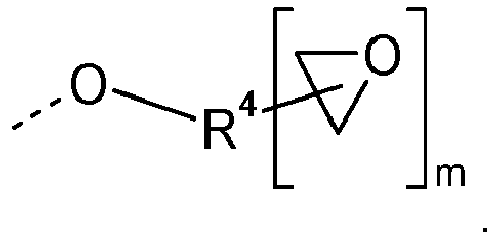
- A preferred substituent of the formula

- A preferred substituent of the formula ---O-R18 are monophenols or polyphenols, more particularly monophenols or bisphenols, following removal of a phenolic hydrogen atom. Particularly preferred examples of such residues R2 are residues selected from the group consisting of


- The residue Y here is a saturated or olefinic unsaturated hydrocarbon residue having 1 to 20 C atoms, more particularly having 1 to 15 C atoms. Preferred as Y in particular are allyl, methyl, nonyl, dodecyl or an unsaturated C15 alkyl radical having 1 to 3 double bonds.
- The terminally capped polyurethane prepolymer of the formula (I) is prepared from the isocyanate-terminated linear or branched polyurethane prepolymers PU1 with one or more isocyanate-reactive compounds R2H. If a plurality of such isocyanate-reactive compounds are used, the reaction can be effected sequentially or with a mixture of these compounds.
- The reaction is effected in such a way that the one isocyanate-reactive compound or the plurality of isocyanate-reactive compounds R2H is/are used stoichiometrically or in a stoichiometric excess, in order to ensure that all NCO groups are converted.
- The polyurethane prepolymer PU1 on which R1 is based can be prepared from at least one diisocyanate or triisocyanate and from a polymer QPM with terminal amino, thiol or hydroxyl groups.
- Suitable diisocyanates are aliphatic, cycloaliphatic, aromatic or araliphatic diisocyanates, especially commercial products such as methylenediphenyl diisocyanate (MDI), hexamethylene diisocyanate (HDI), tolylene diisocyanate (TDI), toluidine diisocyanate (TODI), isophorone diisocyanate (IPDI), trimethylhexamethylene diisocyanate (TMDI), 2,5- or 2,6-bis(isocyanatomethyl)bicyclo[2.2.1]heptane, 1,5-naphthalene diisocyanate (NDI), dicyclohexylmethyl diisocyanate (H12MDI), p-phenylene diisocyanate (PPDI), m-tetramethylxylylene diisocyanate (TMXDI), etc., and the dimers thereof. Preference is given to HDI, IPDI, MDI or TDI.
- Suitable triisocyanates are trimers or biuretes of aliphatic, cycloaliphatic, aromatic or araliphatic diisocyanates, especially the isocyanurates and biurets of the diisocyanates described in the preceding paragraph.
- It will be appreciated that it is also possible to use suitable mixtures of di- or triisocyanates.
- Especially suitable polymers QPM with terminal amino, thiol or hydroxyl groups are polymers QPM with two or three terminal amino, thiol or hydroxyl groups.
- The polymers QPM advantageously have an equivalent weight of 300-6000, especially of 600-4000 and especially of 700-2200 g/equivalent of NCO-reactive groups.
- The polymers QPM are advantageously difunctional or higher-functionality polyols with OH equivalent weights of 300 to 6000 g/OH equivalent, especially of 600 to 4000 g/OH equivalent, preferably 700-2200 g/OH equivalent. Also advantageously, the polyols are selected from the group consisting of polyethylene glycols, polypropylene glycols, polyethylene glycol-polypropylene glycol block copolymers, polybutylene glycols, hydroxyl-terminated polybutadienes, hydroxyl-terminated butadiene/acrylonitrile copolymers, hydroxyl-terminated synthetic rubbers, the hydrogenation products thereof and mixtures of these said polyols.
- In addition, the polymers QPM used may also be difunctional or higher-functionality amino-terminated polyethylene ethers, propylene ethers, as sold, for example, under the Jeffamine® name by Huntsman, polybutylene ethers, polybutadienes, butadiene/acrylonitrile copolymers, as sold, for example, under the Hycar® ATBN name by Nanoresins AG, Germany, and further amino-terminated synthetic rubbers or mixtures of the components mentioned.
- Preferred polymers QPM are polyols with average molecular weights between 600 and 6000 g/mol, selected from the group consisting of polyethylene glycols, polypropylene glycols, polyethylene glycol-polypropylene glycol block polymers, polybutylene glycols, hydroxyl-terminated polybutadienes, hydroxyl-terminated butadiene-acrylonitrile copolymers and mixtures thereof.
- Especially preferred polymers QPM are α,ω-dihydroxypolyalkylene glycols with C2-C6-alkylene groups or with mixed C2-C6-alkylene groups terminated with amino, thiol or preferably hydroxyl groups. Particular preference is given to polypropylene glycols or polybutylene glycols. Also particularly preferred are hydroxyl-terminated polyoxybutylenes.
- The carboxyl-terminated acrylonitrile/butadiene copolymer or derivative thereof impact modifiers D2 are commercially available under the tradename Hycar® CTBN from Nanoresins AG, Germany.
- The is epoxy-terminated acrylonitrile/butadiene copolymer or derivative thereof impact modifiers D3 are commercially available under the tradename HyPox™ such as, for example, HyPox™ RA1340 or HyPox™ RA840 from Emerald Performance Materials LLC.
- Preferred liquid rubbers D4 are NBR and SBR.
- The amount of impact modifier D is preferably 15 - 45 weight-%, 20 - 45 weight-%, 30 - 45 weight-%, more preferably 30 - 40 weight-%, based on the total weight of the epoxy resin composition.
- The thermosetting one-component epoxy resin composition further comprises 0.01 - 5 weight-% of at least one physical or chemical blowing agent E, based on the total weight of the one-component thermosetting epoxy resin composition.
- Chemical blowing agents are organic or inorganic substances which, under the influence of temperature, humidity, electromagnetic radiation or chemicals, form or split off gaseous substances. Such substances are in particular selected from the group consisting of azo-dicarbonamides, sulfohydrazides, hydrogen carbonates and carbonates.
- It was surprisingly found that compositions containing a chemical blowing agent have the advantage of higher volume expansion values upon heating for 15 min at 160 °C. This is shown, for example, in table 2 by the comparison of E3 with E6.
- However, it can also be advantageous if the at least one physical or chemical blowing agent E is a physical blowing agent. This leads to higher values for the lap shear strength upon heating for 15 min at 160 °C. This is shown, for example, in table 2 by the comparison of E3 with E6.
- Compounds can be used as physical blowing agents which, for example when the temperature, pressure or volume changes, in particular when the temperature rises, change to the gaseous state of matter and thus form a foam structure through volume expansion. Such physical blowing agents are in particular liquids which evaporate at elevated temperature. Furthermore, gases or low-boiling liquids can be used as physical blowing agents, which are introduced into the composition in microencapsulated form. Both chemical and physical blowing agents can produce foam structures in polymer compositions.
- Preferred physical blowing agents are expandable microspheres, consisting of a thermoplastic shell which is filled with thermally expandable liquids or gases. Such microspheres are commercially available, for example, under the trade name Expancel® from Akzo Nobel, the Netherlands.
- The blowing agent can preferably be foamed at a temperature of 160 160 ° C., in particular from 80 ° C. to 150 ° C., preferably from 90 ° C. to 140 ° C.
- The proportion of at least one physical or chemical blowing agent E is advantageously 0.1 - 4 weight-%, 0.25 - 4 weight-%, preferably 0.5 - 3.5 weight-%, based on the total weight of the one-component thermosetting epoxy resin composition.
- The thermosetting one-component epoxy resin composition might further comprise 2 - 35 weight-% of a fibrous anhydrous magnesium oxysulfate MOS, based on the total weight of the one-component thermosetting epoxy resin composition. The proportion of fibrous anhydrous magnesium oxysulfate MOS is preferably 5 - 30 weight-%, 7.5 - 25 weight-%, more preferably 7.5 - 20 weight-%, most preferably 10 - 15 weight-%, based on the total weight of the one-component thermosetting epoxy resin composition.
- The thermosetting one-component epoxy resin composition further comprises 1.0 - 12.5 weight-% of polymethacrylic acid-based organic particles PP. The polymethacrylic acid-based organic particles PP have a number average degree of polymerization of 1,000 to 20,000.
- It was surprisingly found that compositions containing 1.0 - 12.5 weight-% of polymethacrylic acid-based organic particles PP have the advantage of higher volume expansion values and superior penetration and adhesion values. Replacement of said organic particles PP with fibrous material or fumed silica did not exhibit these advantages. This is shown, for example, in table 1 in the comparison of E1 and E2 with Ref.1-3 or in table 2 by the comparison of E3-5 with Ref.4-9 or the comparison of E6 with Ref.10.
- Compositions with less than 1.0 weight-% of polymethacrylic acid-based organic particles PP have insufficient penetration and adhesion values. This is shown, for example, in table 2 in the comparison of Ref.5 with Ref. 4 and E3-E5. Composition with more than 12.5 weight-% of polymethacrylic acid-based organic particles PP have the disadvantage of too high viscosities.
- Preferably, the the amount of polymethacrylic acid-based organic particles PP is 2.0 - 10.0 weight-%, preferably 4.0 - 9.0 weight-%, more preferably 6.0 - 8.0 weight-%, based on the total weight of the one-component thermosetting epoxy resin composition.
- It was surprisingly found that compositions containing said preferred range of weight-% of polymethacrylic acid-based organic particles PP have the advantage of higher lap shear strength upon curing for 60 min at 190 °C and superior penetration and adhesion values. This is shown, for example, in table 2 by the comparison of Ref.5, E3, E4 and E5.
- It is further advantageous if the polymethacrylic acid-based organic particles PP have a number average degree of polymerization of 1500 to 15000, preferably 2000 to 10000, most preferably 3000 to 6000.
- It was surprisingly found that compositions containing said number average degree of polymerization have the advantage of higher volume expansion values and superior penetration and adhesion values. This is shown, for example, in table 2 by the comparison of E3 and E5 with Ref.6-9.
- Preferably, the number average degree of polymerization (DP) in this document means the average number of monomeric units per polymer chain. It is related to the number average molecular weight (Mn) by the formula: Mn = M0 X DP, where M0 is the molecular weight of the monomer. The number average molecular weight is preferably determined by known osmometry techniques, more preferably by vapour pressure osmometry.
- Preferably, the polymethacrylic acid-based organic particles PP have an average particle size of 0.1 to 10.0 µm, preferably 0.5 to 5.0 µm, more preferably 0.75 to 3.0 µm, most preferably 0.8 to 1.5 µm, whereby the average particle size is defined as volume-based cumulative average particle size D50 measured by a dynamic light scattering type particle size measuring device.
- It is further advantageous if the polymethacrylic acid-based organic particles PP are acrylic resin based or polymethacrylic acid ester based, preferably polymethacrylic acid ester based.The acrylic resin is a resin obtained by polymerizing acrylic acid, methacrylic acid, and derivatives thereof as a main monomer, and may contain a polymerization unit of another vinyl group-containing monomer. The polymethacrylic acid ester is a resin obtained by polymerizing the methacrylic acid ester as a main component monomer, and may contain a polymerization unit of a monomer other than the methacrylic acid ester.
- More preferably, the polymethacrylic acid-based organic particles PP are selected from the group consisting of alkyl methacrylate polymer, alkyl methacrylate copolymer and alkyl methacrylate ester copolymer, more preferably alkyl methacrylate polymer, most preferred methyl methacrylate polymer.
- Preferably, the polymethacrylic acid-based organic particles PP do not have a core-shell structure1
- In one preferred embodiment, the one-component thermosetting epoxy resin composition further comprises at least one filler F. Preference here is given to mica, talc, kaolin, wollastonite, feldspar, syenite, chlorite, bentonite, montmorillonite, calcium carbonate (precipitated or ground), dolomite, quartz, silicas (fumed or precipitated), cristobalite, calcium oxide, aluminium hydroxide, hollow ceramic beads, hollow glass beads, hollow organic beads, glass beads, glass fibres and colour pigments. Particularly preferred are fillers selected from the group consisting of calcium carbonate, calcium oxide, talc, glass fibres and fumed silicas, more preferably talc, glass fibres and fumed silicas.
- The total fraction of the overall filler F is advantageously 3-50 weight-%, preferably 5-40 weight-%, 8-35 weight-%, based on the total weight of the epoxy resin composition.
- The one-component thermosetting epoxy resin composition may comprise further constituents, especially catalysts, stabilizers, particularly heat and/or light stabilizers, thixotropic agents, plasticizers, solvents, dyes and pigments, corrosion inhibitors, surfactants, defoamers and adhesion promoters.
- The one-component thermosetting epoxy resin composition can also contain one or more additives. Examples of additives which can be used are processing aids such as waxes, antioxidants, UV stabilizers, dyes, biocides or flame retardants.
- The proportion of processing aid is advantageously 1 to 8% by weight, preferably 2 to 5% by weight, based on the total weight of the composition.
- The one-component thermosetting epoxy resin composition is preferably not tacky at 23 ° C. The term "tacky" in this this document refers to a surface tack in the sense of instantaneous adhesion or stickiness that is preferably sufficient at 23 ° C so that, when pressed with a thumb, exerting a pressure of 5 kg for 1 second on the surface of the thermosetting epoxy resin composition, the thumb does not stick to the surface of the thermosetting epoxy resin composition. Preferably in this way, after the surface of the thermosetting epoxy resin composition has been pressed with a thumb at 23 ° C, exerting a pressure of 5 kg for 1 second, a thermosetting epoxy resin composition having an intrinsic weight of 50 g cannot be lifted up for at least 5 seconds.
- A particularly preferred thermosetting one-component epoxy resin composition comprises:
- 10 - 65 weight-%, more particularly 15 - 50 weight-%, preferably 15 - 45 weight-%, 15 - 40 weight-%, most preferably 25 - 35 weight-%, of at least one epoxy resin A having on average more than one epoxide group per molecule, preferably the epoxy resin A is a mixture of a solid epoxy resin of the formula (II) and a liquid epoxy resin of the formula (II);
- 1 - 6 weight%, more particularly 2 - 5 weight-%, preferably 2- 4 weight-%, of at least one latent hardener B for epoxy resins, preferably dicyandiamide;
- 0 - 3 weight-%, more particularly 0.1 - 2.5 weight-%, 0.1 - 2.0 weight-%, 0.1 - 1.5 weight-%, preferably 0.1 - 1.0 weight-%, of at least one accelerator C, preferably a substituted urea;
- 10 - 50 weight-%, more particularly 15 - 45 weight-%, 20 - 45 weight-%, 30 - 45 weight-%, preferably 30 - 40 weight-%, of at least one impact modifier D, preferably selected from the group consisting of blocked polyurethane polymers D1, carboxyl-terminated acrylonitrile/butadiene copolymers D2 and liquid rubbers D4, especially blocked polyurethane polymers D1 and carboxyl-terminated acrylonitrile/butadiene copolymers D2;
- 0.01 - 5 weight-%, more particularly 0.1 - 4 weight-%, 0.25 - 4 weight-%, preferably 0.5 - 3.5 weight-%, of at least one physical or chemical blowing agent E; and
- 3-50 weight-%, preferably 5 - 40 weight%, more preferably 20 - 40 weight%, based on the total weight of the epoxy resin composition, of a filler F selected from the group consisting of calcium carbonate, calcium oxide, talc, glass fibres and fumed silicas.
- Such a thermosetting epoxy resin composition preferably has a needle penetration value (in 0.1 mm) of 8-50, more preferably 10-40, 10-30, most preferably 10-20, using a total load (weight of the needle and related parts) of 150 g for 5 second with a needle thickness of 1 mm at 23 °C.
- Such a thermosetting epoxy resin composition preferably is non-tacky at 23 °C.
- It may further be advantageous if the preferred one-component thermosetting epoxy resin composition consists to an extent of more than 80 weight%, preferably more than 90 weight%, more particularly more than 95 weight%, especially preferably more than 98 weight%, most preferably more than 99 weight%, based on the total weight of the epoxy resin composition, of the aforementioned constituents.
- The compositions according to the present invention can be obtained by mixing the components in any suitable mixing device, e.g. In a dispersion mixer, planetary mixer, twin screw mixer, continuous mixer, extruder or twin-screw extruder.
- After mixing, the resulting composition can be molded into their desired shape e.g. by extruding, blow molding, pelletizing, injection molding, compression molding, stamping or punching or any other suitable method.
- The mixing of the components preferably comprises an extrusion step, the mixed and extruded composition then being granulated. The granulated composition is then preferably brought into its desired shape by injection molding.
- The foaming of the one-component thermosetting epoxy resin composition is preferably carried out independently of the curing of the epoxy resin composition, in particular beforehand. As a result, the epoxy resin composition cures only when the foaming of the epoxy resin composition has largely taken place. Otherwise, the epoxy resin composition hardens before it has reached the intended place through the foaming. It is therefore preferred that the curing temperature of the epoxy resin composition is above the foaming temperature of the epoxy resin composition.
- Preferably, the one-component thermosetting epoxy resin composition shows the following characteristics after curing:
- Volume expansion after 15min @ 160 °C: 50 - 300 %, preferably 80 - 200 %, more preferably 80-150%
- Volume expansion after 60min @ 190 °C: 50 - 400 %, preferably 80 - 300 %, more preferably 100-200%
- Lap shear strength after 15min @ 160 °C: 1 - 20 MPa, preferably 2 - 15 MPa, more preferably 3 - 10 MPa.
- Preferably, the one-component thermosetting epoxy resin composition can be foamed and cured thermally, at a temperature from 120 °C to 220 ° C., preferably from 140 ° C to 200 ° C, preferably within a time period at said temperature of 10 to 60 min.
- Another aspect of the invention is an article having a three-dimensional extent, more preferably having a sheet-like form, more particularly being in the form of a strip or a sheet or a patch, comprising, preferably consisting of, the before mentioned one-component thermosetting epoxy resin composition, in particular for reinforcement in the cavities of structural components.
- Preferably, as strips, these articles are 20 - 500 mm, more preferred 50 - 250 mm, in length, 2 - 15 mm, more preferred 5 - 10 mm, in width and 0.5 - 5 mm, more preferred 1 - 3 mm, in thickness.
- Preferably, as patches, these articles are 20 - 500 mm in length and in width and 0.5 - 5 mm, more preferred 1 - 3 mm, in thickness.
- It was surprisingly found that using the inventive composition, article in a sheet-like form can be produced with low tackiness before curing and improved expansion potential. Due to their low tackiness, it is not necessary to apply handling films on these films for storage, transport and handling before application on the substrate. Due to their low tackiness, the self-adherence potential (self-tackyness) however upon application on a potential substrate is low. Another aspect of the invention is therefore the combination of the before mentioned article in a sheet-like form with another article in a sheet-like form, the later being a thermally expandable composition as well however having a higher tackiness than the inventive composition. Preferably, the two article in a sheet-like form are in direct contact with another.
- This additional aspect of the invention is therefore an article that has a sheet-like form comprising, preferably consisting of, a first sheet-like layer L1 and a second sheet-like layer L2. The first sheet-like layer L1 consists of the inventive one-component thermosetting epoxy resin composition described before. The second sheet-like layer L2 consists of a one-component thermosetting epoxy resin composition as described before but with an amount of polymethacrylic acid-based organic particles PP of less than 1 wt.-%, preferably less than 0.5 wt.-%, more preferably free of polymethacrylic acid-based organic particles PP. Said combination has the advantage of good compatibility and similar expansion properties and mechanical properties. Preferably, the first sheet-like layer L1 and a second sheet-like layer L2 are in direct contact with each other.
- Preferably, the one-component thermosetting epoxy resin composition used for the second sheet-like layer L2 tacky at 23 ° C. The term "tacky" in this this document refers to a surface tack in the sense of instantaneous adhesion or stickiness that is preferably sufficient at 23 ° C so that, when pressed with a thumb, exerting a pressure of 5 kg for 1 second on the surface of the thermosetting epoxy resin composition, the thumb remains sticking to the surface of the thermosetting epoxy resin composition. Preferably in this way, after the surface of the thermosetting epoxy resin composition has been pressed with a thumb at 23 ° C, exerting a pressure of 5 kg for 1 second, a thermosetting epoxy resin composition having an intrinsic weight of 50 g can be lifted up for at least 5 seconds. The combination of such a sheet-like layer L2 with the above mentioned first sheet-like layer L1 would have the advantage that only on the side of the sheet-like layer L2 facing away from first sheet-like layer L1 a handling film would be necessary to prevent the article to stick or soil involuntarily during storage, transport and handling before application on the intended substrate. This is in contrast to articles consisting only of a sheet-like layer L2 that provides good self-adhesiveness on the intended surface but require two separate handling films, namely on both sides of the layer. Due to the low tackiness of the first sheet-like layer L1 a handling film on the first sheet-like layer L1 is not necessary. It is therefore preferred if there is no handling film on the first sheet-like layer L1 but a handling film present on the side of the sheet-like layer L2 facing away from first sheet-like layer L1. Preferably, such a handling film is made of polymeric material or metal, preferably polymeric material, more preferably based on vinyl, polyvinyl chloride, plasticized polyvinyl chloride, polyurethane, polyethylene and polypropylene. Preferably, the thickness of the film is between 10 µm and 2000 µm, preferably 20 µm to 500 µm, more preferably 25 µm to 200 µm.
- The before mentioned articles are preferably used for the reinforcement of heat-stable materials, more particularly structural components. Heat-stable materials are dimensionally stable at least during the curing process at a curing temperature of 100 - 220 °C, preferably 150 - 210°C. Particularly heat-stable materials are metals, plastics (such as ABS, polyamide and polyphenylene ether), polysulfones, polyether sulfones, poly(phenylene ether), and composite materials (such as sheet moulding compounds, unsaturated polyester GRP, composite epoxide materials and composite acrylate materials).
- In a preferred application, the structural component being reinforced by the article of the invention is of metal. More particularly the metal has been coated by cathodic electrodeposition (CED).
- A particularly preferred use of the articles of the invention is in the reinforcement of metals, especially in body shell construction in the automotive industry. The preferred metals include steel and aluminium. The preferred examples of steel includes electrolytically galvanized steel, hot-dip galvanized steel, oiled steel, Bonazinc-coated steel, and subsequently phosphatized steel.
- A further aspect of the invention is therefore the use of the articles for reinforcing heat-stable materials, more particularly structural components.
- Preferably, the structural components being reinforced have a thickness of 0.2 - 1.2 mm, preferably 0.4 -1.0 mm and more preferably 0.5 and 0.6 mm.
- The article comprising, preferably consisting of, a first sheet-like layer L1 and a second sheet-like layer L2, preferably possesses self-adhesive properties due to tackiness of the second sheet-like layer L2, so may preferably be applied without using any fastening means. The article may be employed particularly for reinforcement at locations which are not accessible to welding instruments/robots during assembly, owing to inaccessibility/narrow confines.
- Additional fastening means may be employed to secure the articles on the surface of the structural components. Preferably, the article has no additional fastening means.
- The expandable article placed inside the structural component gets foamed up in the course of heating, and by virtue of the full chemical curing of the thermosetting epoxy resin composition it is capable of transmitting large forces and therefore reinforcing the structural component.
- Structural components of this type are preferably used in bodies and / or frames of means of transport and transportation, in particular of vehicles on water or on land or of aircraft. The invention preferably includes the use of a reinforcing element according to the invention in bodies or frames of automobiles (in particular roof, engine hood, trunk hood and in doors), trucks, railroad cars, boats, ships, helicopters and airplanes, mostly preferably in automobiles.
- The article is in particular first contacted with the materials to be reinforced, more particularly structural components, at a temperature of between 10°C and 80°C, more particularly between 10°C and 60°C, and are later cured to completion at a temperature of typically 140 - 220°C, more particularly of 150 - 210°C, preferably of between 160 and 205°C.
- After being cured, the article provides good mechanical properties (especially high lap shear values and good failure mode) to the structural component. The article of the invention gets cured completely when it is subjected to a temperature above the activation temperature of the hardener B. Further, on being cured, the article of the invention gets adhered to the surface of the structural component effectively, especially to metallic substrates.
- A further aspect of the present invention therefore relates to a method for reinforcing a structural component comprising the steps:
- i) placing the before mentioned one-component thermosetting epoxy resin composition, preferably the before mentioned article, in a cavity of the structural component;
- ii) heating the one-component thermosetting epoxy resin composition, preferably the article, to a temperature from 120 °C to 220 °C, preferably from 140 °C to 200 °C, preferably for 10 to 60 min.
- In particular, the invention comprises a method for reinforcing structural components, the one-component thermosetting epoxy resin composition being thermally foamable, wherein step i) is followed by step ii).
- The result of the method is a reinforced article. The reinforced article of this kind is preferably a vehicle or an ancillary vehicle component.
- A further aspect of the present invention therefore relates to the reinforced article obtained from the aforesaid method.
- The invention is elucidated further in the text below by means of examples which, however, are not intended to restrict the invention in any way.
- Test methods used for the testing of the respective properties in the examples were as follows:
Liquid Epoxy Liquid epoxy resin of formula (II) Solid Epoxy Solid epoxy resin of formula (II) PP-1 Alkyl methacrylate polymer, (poly(methyl methacrylate), (Aika Kogyo Co., Ltd., Zefiac F325, average particle size: 1 µm, Average degree of polymerization: 4000) PP-Ref.1 Alkyl methacrylate copolymer, epoxy group-containing poly(methyl methacrylate) (Aika Kogyo Co., Ltd., Zefiac F301, average particle size: 2 µm, average degree of polymerization: 20000) PP-Ref.2 Alkyl methacrylate polymer, (poly(methyl methacrylate), (manufactured by Aika Kogyo Co., Ltd., Zephyac F320, average particle size: 2 µm, average degree of polymerization: 30000) Carbon black Carbon black Calcium oxide Calcium oxide Stabilizer Hindered phenolic antioxidant MOS MOS-HIGE, fibrous magnesium oxysulfate [MgSO4.5Mg(OH)2 .3H2O], fiber length 10-20 µm, fiber diameter 0.5 µm, BET specific surface area 10 m2 /g, Ube Material Industries, Ltd., Japan. Calcium Carbonate Calcium Carbonate ADCA Chemical blowing agent, azodicarbonamide BA Physical blowing agent, Expancel, Akzo Nobel, Netherlands ZnO Zinc oxide DICY Dicyandiamide Accelerator Substituted urea D1 Terminally blocked polyurethane polymer D1 of formula (I) D2-1 Liquid adduct of the diglycidyl ether of bisphenol A (DGEBA) and a butadiene-acrylonitrile (CTBN) elastomer. D2-2 Solid Liquid adduct of the diglycidyl ether of bisphenol A (DGEBA) and a butadiene-acrylonitrile (CTBN) elastomer. Fumed Silica Fumed Silica, Wacker - According to the information in Table 1 and 2, the reference compositions Ref.1 - Ref.10 and the compositions E1 - E6 according to the invention were produced. The amounts in Table 1 and 2 are in parts by weight. The raw materials used were mixed with a sigma mixer for 30 min. The compositions E2 and E5 were tested and found not tacky at 23 ° C according to the definition described before.
- The following measurements were carried out on the test specimens obtained:
- Penetration depth was measured by preparing square samples of freshly mixed compositions (30 mm × 30 mm × thickness 10 mm). For the measurement, a 1 mm thin needle was placed on the surface of the sample and released to penetrate the sample for 5 sec. The total load (weight of the needle and related parts) was 150 g. The penetrated depth of the needle is given in 0.1 mm. The measurements were performed at 23 °C. High penetration value means low viscosity of the composition.
- The adhesion force was determined based on ASTM D 6195-3 (Standard test methods for loop tack). A 175 mm long loop of the composition in strip-form (test specimen) was contacted (25 × 25 mm) with the surface of stainless steel, with the only force applied being the weight of the pressure-sensitive article itself. The test specimen was then removed from the stainless-steel substrate, with the force to remove the test specimen from the substrate being measured by a recording instrument (test method A (using a Tensile Tester) was applied). The test temperature was 23°C and the test velocity was set at 300 mm/min.
- The expansion stability was tested in all samples by heat treatment of the individual samples at different temperatures as indicated in table 1 and table 2 in an oven. The temperatures, periods and extent of expansion (in % based on the original volume before expansion) are shown in table 1 and table 2.
- Expansions were quantified for each sample by measuring the density before and after expansion. The densities were determined according to DIN EN ISO 1183 using the water immersion method (Archimedes principle) in deionized water and a precision balance to measure the mass.
- The determination follows the general lines of ASTM D1002-10. The Lap shear strength was determined using the following set-up (dimensions in mm):
- Test temperature: 23°C
- Bond area: 10 mm × 20 mm
- Adhesive layer thickness: 2 mm
- Curing: as shown in table 1 and table 2
- Test velocity: 10 mm/min
- Visual assessment of the fracture mode obtained from the tensile shear strength, divided into CF and AF. CF = cohesive fracture, AF = adhesive fracture.
Table 1 Component Ref.1 E1 E2 Ref.2 Ref.3 Liquid epoxy 23 23 23 23 23 D2-1 12.78 12.78 12.78 12.78 12.78 D2-2 25.55 25.55 25.55 25.55 25.55 Solid epoxy 5 5 5 5 5 D-1 7.67 7.67 7.67 7.67 7.67 Stabilizer 0.25 0.25 0.25 0.25 0.25 Carbon black 0.64 0.64 0.64 0.64 0.64 Calucium Oxide 5.07 5.07 5.07 5.07 5.07 Calcium Carbonate 3.0 3.0 3.0 3.0 3.0 MOS 12.78 12.78 12.78 12.78 12.78 Fumed silica 3.5 3.5 3.5 3.5 3.5 ADCA 0.75 0.75 0.75 0.75 0.75 ZnO 3.84 3.84 3.84 3.84 3.84 DICY 2.56 2.56 2.56 2.56 2.56 Accelerator 0.26 0.26 0.26 0.26 0.26 PP-1 5 7.5 MOS 7.5 Fumed silica 7.5 Sum (wt.-%) 106.65 111.65 114.15 114.15 114.15 Expansion [%] 15 min @ 160°C 76.8 91 96.1 52 25.9 60 min @ 190°C 99.8 121.1 137.4 61.8 29.6 LSS [MPa] 15 min @ 160°C 5.6 4.3 4.4 5.8 5.6 60 min @ 190°C 5.6 4.1 4.6 6.9 5.9 Penetration [0.1 mm] 25°C, 55%RH 38.3 29.5 19.2 34.3 29.2 AF [Pa] 23°C, 50%RH 1.4 × 10⁻² 9.4 × 10⁻³ 3.5 × 10⁻⁴ 1.5 × 10⁻² 1.9 × 10⁻³ Table 2, n.d. = not determined Component Ref.4 Ref.5 E3 E4 E5 Ref.6 Ref.7 Ref.8 Ref.9 Ref.10 E6 Liquid epoxy 15 15 15 15 15 15 15 15 15 15 15 D2-1 18 18 18 18 18 18 18 18 18 18 18 D2-2 27 27 27 27 27 27 27 27 27 27 27 Stabilizer 0.25 0.25 0.25 0.25 0.25 0.25 0.25 0.25 0.25 0.25 0.25 Calucium Oxide 4.5 4.5 4.5 4.5 4.5 4.5 4.5 4.5 4.5 4.5 4.5 Calcium Carbonate 12.3 11.8 9.8 7.3 4.8 9.8 4.75 9.8 4.75 15.0 12.5 PP-1 0.5 2.5 5 7.5 2.5 PP-Ref.1 2.5 7.5 PP-Ref.2 2.5 7.5 MOS 12.5 12.5 12.5 12.5 12.5 12.5 12.5 12.5 12.5 12.5 12.5 Fumed silica 3.5 3.5 3.5 3.5 3.5 3.5 3.5 3.5 3.5 3.5 3.5 ADCA 0.75 0.75 0.75 0.75 0.75 0.75 0.75 0.75 0.75 ZnO 3.5 3.5 3.5 3.5 3.5 3.5 3.5 3.5 3.5 BA 1.5 1.5 DICY 2.5 2.5 2.5 2.5 2.5 2.5 2.5 2.5 2.5 2.5 2.5 Accelerator 0.25 0.25 0.25 0.25 0.25 0.25 0.25 0.25 0.25 0.25 0.25 Sum (wt.-%) 100 100 100 100 100 100 100 100 100 100 100 Expansion [%] 15min/160 °C 75.2 83.5 100.9 81.1 86.1 64.6 45.3 46.9 41.7 67.5 61.6 Difference (%) 111 134 108 114 86 60 62 55 91 60min/190 °C 127.6 148.4 132.6 135.2 131.8 112.5 43.6 55.3 41.5 97.4 101.7 Difference (%) 116 104 106 103 88 34 43 33 104 LSS [MPa] 15min/160 °C 6.26 5.86 5.73 4.77 4.96 6.35 6.11 5.98 5.83 5.94 5.56 100CF 100CF 100CF 100CF 100CF 100CF 95CF 100CF 100CF 100CF 100CF 60min/190 °C 5.24 4.83 5.16 n.d. 5.74 5.44 7.33 6.48 6.73 5.46 6.53 100CF 100CF 100CF 100CF 100CF 100CF 98CF 100CF 100CF 100CF 100CF Penetration [0.1 mm] 25°C, 55%RH 22.8 21.8 17.2 13.0 10.8 21.9 24.9 26.6 26.2 24.8 21.5 AF [Pa] 23°C, 50%RH 1.6 × 10⁻² 1.3 × 10⁻² 4.8 × 10⁻³ 5.6 × 10⁻³ 1.3 × 10⁻³ 9.8 × 10⁻³ 1.0 × 10⁻² 1.4 × 10⁻² 1.0 × 10⁻² 8.8 × 10⁻³ 5.5 × 10⁻³
Claims (16)
- A one-component thermosetting epoxy resin composition comprising:- 10 - 65 weight-% of at least one epoxy resin A having on average more than one epoxide group per molecule;- 1 - 6 weight% of at least one latent hardener B for epoxy resins;- 0 - 3 weight-% of at least one accelerator C;- 10 - 50 weight-% of at least one impact modifier D;- 0.01 - 5 weight-% of at least one physical or chemical blowing agent E;- 1.0 - 12.5 weight-% of polymethacrylic acid-based organic particles PP, wherein the polymethacrylic acid-based organic particles PP have a number average degree of polymerization of 1000 to 17500.
- Composition according to Claim 1, characterized in that the amount of polymethacrylic acid-based organic particles PP is 2.0 - 10.0 weight-%, preferably 4.0 - 9.0 weight-%, more preferably 6.0 - 8.0 weight-%, based on the total weight of the one-component thermosetting epoxy resin composition.
- Composition according to any of the preceding claims, characterized in that the polymethacrylic acid-based organic particles PP have a number average degree of polymerization of 1500 to 15000, preferably 2000 to 10000, most preferably 3000 to 6000, the number average degree of polymerization is preferably determined by osmometry techniques, more preferably by vapour pressure osmometry.
- Composition according to any of the preceding claims, characterized in that the polymethacrylic acid-based organic particles PP are acrylic resin based or polymethacrylic acid ester based, preferably polymethacrylic acid ester based, more preferably, the polymethacrylic acid-based organic particles PP are selected from the group consisting of alkyl methacrylate polymer, alkyl methacrylate copolymer and alkyl methacrylate ester copolymer, more preferably alkyl methacrylate polymer, most preferred methyl methacrylate polymer.
- Composition according to any of the preceding claims, characterized in that the polymethacrylic acid-based organic particles PP do not have a core-shell structure1
- Composition according to any of the preceding claims, characterized in that the of at least one physical or chemical blowing agent E is a chemical blowing agent, preferably selected from the group consisting of azo-dicarbonamides, sulfohydrazides, hydrogen carbonates and carbonates.
- Composition according to any of the preceding claims, characterized in that the latent hardener B is preferably selected from dicyandiamide, guanamines, guanidines, aminoguanidines and derivatives thereof, substituted ureas, imidazoles and amine complexes, preferably dicyandiamide.
- Composition according to any of the preceding claims, characterized in that the impact modifier D is selected from the group consisting of blocked polyurethane polymers D1, carboxyl-terminated acrylonitrile/butadiene copolymers D2 and liquid rubbers D4, especially blocked polyurethane polymers D1 and carboxyl-terminated acrylonitrile/butadiene copolymers D2.
- Composition according to any of the preceding claims, characterized in that the thermosetting epoxy resin composition is not tacky at 23 °C, preferably when pressed with a thumb, exerting a pressure of 5 kg for 1 second on the surface of the thermosetting epoxy resin composition, the thumb does not remain sticking to the surface of the thermosetting epoxy resin composition.
- Composition according to any of the preceding claims, characterized in that thermosetting epoxy resin composition has a needle penetration value (in 0.1 mm) of 8-50, more preferably 10-40, 10-30, most preferably 10-20, using a total load (weight of the needle and related parts) of 150 g for 5 second with a needle thickness of 1 mm at 23 °C.
- Article having a three-dimensional extent, more preferably having a sheet-like form, more particularly being in the form of a strip or a sheet or a patch, comprising, preferably consisting of, the one-component thermosetting epoxy resin composition according to claim 1 - 10, in particular for reinforcement in the cavities of structural components.
- Article according to claim 11, characterized in that as strips, these articles are 20 - 500 mm, more preferred 50 - 250 mm, in length, 2 - 15 mm, more preferred 5 - 10 mm, in width and 0.5 - 5 mm, more preferred 1 - 3 mm, in thickness; and as patches, these articles are 20 - 500 mm in length and in width and 0.5 - 5 mm, more preferred 1 - 3 mm, in thickness.
- Article according to claim 11 or 12, characterized in that the article has a sheet-like form comprising, preferably consisting of, a first sheet-like layer L1 and a second sheet-like layer L2, wherein the first sheet-like layer L1 consists of the one-component thermosetting epoxy resin composition according to claim 1 - 10 and the second sheet-like layer L2 consists of a one-component thermosetting epoxy resin composition according to claim 1 - 10 but with an amount of polymethacrylic acid-based organic particles PP of less than 1 wt.-%, preferably less than 0.5 wt.-%, more preferably free of polymethacrylic acid-based organic particles PP.
- Use of the article according to claim 11 - 13 for reinforcing heat-stable materials, more particularly structural components.
- Method for reinforcing a structural component comprising the steps:i) placing a one-component thermosetting epoxy resin composition according to claim 1 - 10 or an article according to claim 11 - 13, in a cavity of a structural component;ii) heating the one-component thermosetting epoxy resin composition or the article to a temperature from 120 °C to 220 °C, preferably from 140 °C to 200 °C, preferably for 10 to 60 min.
- Article obtained by the method according to claim 15.
Priority Applications (1)
| Application Number | Priority Date | Filing Date | Title |
|---|---|---|---|
| EP22175108.4A EP4282908A1 (en) | 2022-05-24 | 2022-05-24 | One-component thermosetting epoxy composition with improved adhesion |
Applications Claiming Priority (1)
| Application Number | Priority Date | Filing Date | Title |
|---|---|---|---|
| EP22175108.4A EP4282908A1 (en) | 2022-05-24 | 2022-05-24 | One-component thermosetting epoxy composition with improved adhesion |
Publications (1)
| Publication Number | Publication Date |
|---|---|
| EP4282908A1 true EP4282908A1 (en) | 2023-11-29 |
Family
ID=81846472
Family Applications (1)
| Application Number | Title | Priority Date | Filing Date |
|---|---|---|---|
| EP22175108.4A Withdrawn EP4282908A1 (en) | 2022-05-24 | 2022-05-24 | One-component thermosetting epoxy composition with improved adhesion |
Country Status (1)
| Country | Link |
|---|---|
| EP (1) | EP4282908A1 (en) |
Citations (3)
| Publication number | Priority date | Publication date | Assignee | Title |
|---|---|---|---|---|
| WO2001046290A1 (en) * | 1999-12-20 | 2001-06-28 | 3M Innovative Properties Company | Ambient-temperature-stable, one-part curable epoxy adhesive |
| WO2003054069A1 (en) * | 2001-12-21 | 2003-07-03 | Henkel Teroson Gmbh | Expandable epoxy resin-based systems modified with thermoplastic polymers |
| WO2021190970A1 (en) | 2020-03-25 | 2021-09-30 | Sika Technology Ag | One-component thermosetting epoxy composition with improved adhesion |
-
2022
- 2022-05-24 EP EP22175108.4A patent/EP4282908A1/en not_active Withdrawn
Patent Citations (3)
| Publication number | Priority date | Publication date | Assignee | Title |
|---|---|---|---|---|
| WO2001046290A1 (en) * | 1999-12-20 | 2001-06-28 | 3M Innovative Properties Company | Ambient-temperature-stable, one-part curable epoxy adhesive |
| WO2003054069A1 (en) * | 2001-12-21 | 2003-07-03 | Henkel Teroson Gmbh | Expandable epoxy resin-based systems modified with thermoplastic polymers |
| WO2021190970A1 (en) | 2020-03-25 | 2021-09-30 | Sika Technology Ag | One-component thermosetting epoxy composition with improved adhesion |
Similar Documents
| Publication | Publication Date | Title |
|---|---|---|
| JP5715638B2 (en) | Structural epoxy resin adhesives containing ketoxime-capped elastomeric reinforcements | |
| BRPI0809752A2 (en) | "STRUCTURAL STICKER OF A COMPONENT AND METHOD" | |
| US10767040B2 (en) | Thermosetting epoxy resin compositions useful as structural reinforcement or structural foam | |
| US9475904B2 (en) | Heat curable epoxy resin composition with water as foaming agent | |
| EP4127016B1 (en) | One-component thermosetting epoxy composition with improved adhesion | |
| CN111372967B (en) | Thermal curing epoxy resin composition with high storage stability | |
| US11161950B2 (en) | Article of thermosetting epoxy resin composition and carbon fibre fabric, and reinforced structural component made therewith | |
| US20240093072A1 (en) | One-component toughened epoxy adhesives | |
| JP7214418B2 (en) | One-component thermosetting epoxy adhesive with improved adhesion | |
| EP4399254A1 (en) | Expandable one-component thermosetting epoxy adhesive with improved adhesion | |
| ES2963082T3 (en) | Procedure for structurally joining substrates with different coefficients of linear thermal expansion | |
| EP4267647A1 (en) | One-component thermosetting epoxy adhesive with improved adhesion at high temperatures | |
| JP7380677B2 (en) | Adhesive set and structure manufacturing method | |
| JP7415780B2 (en) | Adhesive set, structure and manufacturing method thereof | |
| EP4556503A1 (en) | Heat-curing epoxy resin composition suitable for pre-curing processes without additional metal joining techniques |
Legal Events
| Date | Code | Title | Description |
|---|---|---|---|
| PUAI | Public reference made under article 153(3) epc to a published international application that has entered the european phase |
Free format text: ORIGINAL CODE: 0009012 |
|
| STAA | Information on the status of an ep patent application or granted ep patent |
Free format text: STATUS: THE APPLICATION HAS BEEN PUBLISHED |
|
| AK | Designated contracting states |
Kind code of ref document: A1 Designated state(s): AL AT BE BG CH CY CZ DE DK EE ES FI FR GB GR HR HU IE IS IT LI LT LU LV MC MK MT NL NO PL PT RO RS SE SI SK SM TR |
|
| STAA | Information on the status of an ep patent application or granted ep patent |
Free format text: STATUS: THE APPLICATION IS DEEMED TO BE WITHDRAWN |
|
| 18D | Application deemed to be withdrawn |
Effective date: 20240530 |