EP4282905B1 - Preparation process of graphene dispersion in pdms with the simultaneous use of ultrasound and vacuum - Google Patents
Preparation process of graphene dispersion in pdms with the simultaneous use of ultrasound and vacuum Download PDFInfo
- Publication number
- EP4282905B1 EP4282905B1 EP23165177.9A EP23165177A EP4282905B1 EP 4282905 B1 EP4282905 B1 EP 4282905B1 EP 23165177 A EP23165177 A EP 23165177A EP 4282905 B1 EP4282905 B1 EP 4282905B1
- Authority
- EP
- European Patent Office
- Prior art keywords
- graphene
- pdms
- derivatives
- dispersion
- vacuum
- Prior art date
- Legal status (The legal status is an assumption and is not a legal conclusion. Google has not performed a legal analysis and makes no representation as to the accuracy of the status listed.)
- Active
Links
Images

Classifications
-
- C—CHEMISTRY; METALLURGY
- C08—ORGANIC MACROMOLECULAR COMPOUNDS; THEIR PREPARATION OR CHEMICAL WORKING-UP; COMPOSITIONS BASED THEREON
- C08J—WORKING-UP; GENERAL PROCESSES OF COMPOUNDING; AFTER-TREATMENT NOT COVERED BY SUBCLASSES C08B, C08C, C08F, C08G or C08H
- C08J7/00—Chemical treatment or coating of shaped articles made of macromolecular substances
- C08J7/04—Coating
- C08J7/0427—Coating with only one layer of a composition containing a polymer binder
-
- C—CHEMISTRY; METALLURGY
- C08—ORGANIC MACROMOLECULAR COMPOUNDS; THEIR PREPARATION OR CHEMICAL WORKING-UP; COMPOSITIONS BASED THEREON
- C08J—WORKING-UP; GENERAL PROCESSES OF COMPOUNDING; AFTER-TREATMENT NOT COVERED BY SUBCLASSES C08B, C08C, C08F, C08G or C08H
- C08J3/00—Processes of treating or compounding macromolecular substances
- C08J3/24—Crosslinking, e.g. vulcanising, of macromolecules
-
- B—PERFORMING OPERATIONS; TRANSPORTING
- B05—SPRAYING OR ATOMISING IN GENERAL; APPLYING FLUENT MATERIALS TO SURFACES, IN GENERAL
- B05D—PROCESSES FOR APPLYING FLUENT MATERIALS TO SURFACES, IN GENERAL
- B05D1/00—Processes for applying liquids or other fluent materials
- B05D1/002—Processes for applying liquids or other fluent materials the substrate being rotated
- B05D1/005—Spin coating
-
- B—PERFORMING OPERATIONS; TRANSPORTING
- B05—SPRAYING OR ATOMISING IN GENERAL; APPLYING FLUENT MATERIALS TO SURFACES, IN GENERAL
- B05D—PROCESSES FOR APPLYING FLUENT MATERIALS TO SURFACES, IN GENERAL
- B05D2203/00—Other substrates
- B05D2203/30—Other inorganic substrates, e.g. ceramics, silicon
-
- B—PERFORMING OPERATIONS; TRANSPORTING
- B05—SPRAYING OR ATOMISING IN GENERAL; APPLYING FLUENT MATERIALS TO SURFACES, IN GENERAL
- B05D—PROCESSES FOR APPLYING FLUENT MATERIALS TO SURFACES, IN GENERAL
- B05D2203/00—Other substrates
- B05D2203/30—Other inorganic substrates, e.g. ceramics, silicon
- B05D2203/35—Glass
-
- B—PERFORMING OPERATIONS; TRANSPORTING
- B05—SPRAYING OR ATOMISING IN GENERAL; APPLYING FLUENT MATERIALS TO SURFACES, IN GENERAL
- B05D—PROCESSES FOR APPLYING FLUENT MATERIALS TO SURFACES, IN GENERAL
- B05D2518/00—Other type of polymers
- B05D2518/10—Silicon-containing polymers
-
- B—PERFORMING OPERATIONS; TRANSPORTING
- B05—SPRAYING OR ATOMISING IN GENERAL; APPLYING FLUENT MATERIALS TO SURFACES, IN GENERAL
- B05D—PROCESSES FOR APPLYING FLUENT MATERIALS TO SURFACES, IN GENERAL
- B05D2601/00—Inorganic fillers
- B05D2601/20—Inorganic fillers used for non-pigmentation effect
-
- B—PERFORMING OPERATIONS; TRANSPORTING
- B05—SPRAYING OR ATOMISING IN GENERAL; APPLYING FLUENT MATERIALS TO SURFACES, IN GENERAL
- B05D—PROCESSES FOR APPLYING FLUENT MATERIALS TO SURFACES, IN GENERAL
- B05D2601/00—Inorganic fillers
- B05D2601/20—Inorganic fillers used for non-pigmentation effect
- B05D2601/28—Metals
-
- B—PERFORMING OPERATIONS; TRANSPORTING
- B05—SPRAYING OR ATOMISING IN GENERAL; APPLYING FLUENT MATERIALS TO SURFACES, IN GENERAL
- B05D—PROCESSES FOR APPLYING FLUENT MATERIALS TO SURFACES, IN GENERAL
- B05D3/00—Pretreatment of surfaces to which liquids or other fluent materials are to be applied; After-treatment of applied coatings, e.g. intermediate treating of an applied coating preparatory to subsequent applications of liquids or other fluent materials
- B05D3/02—Pretreatment of surfaces to which liquids or other fluent materials are to be applied; After-treatment of applied coatings, e.g. intermediate treating of an applied coating preparatory to subsequent applications of liquids or other fluent materials by baking
-
- B—PERFORMING OPERATIONS; TRANSPORTING
- B05—SPRAYING OR ATOMISING IN GENERAL; APPLYING FLUENT MATERIALS TO SURFACES, IN GENERAL
- B05D—PROCESSES FOR APPLYING FLUENT MATERIALS TO SURFACES, IN GENERAL
- B05D3/00—Pretreatment of surfaces to which liquids or other fluent materials are to be applied; After-treatment of applied coatings, e.g. intermediate treating of an applied coating preparatory to subsequent applications of liquids or other fluent materials
- B05D3/04—Pretreatment of surfaces to which liquids or other fluent materials are to be applied; After-treatment of applied coatings, e.g. intermediate treating of an applied coating preparatory to subsequent applications of liquids or other fluent materials by exposure to gases
- B05D3/0493—Pretreatment of surfaces to which liquids or other fluent materials are to be applied; After-treatment of applied coatings, e.g. intermediate treating of an applied coating preparatory to subsequent applications of liquids or other fluent materials by exposure to gases using vacuum
-
- C—CHEMISTRY; METALLURGY
- C08—ORGANIC MACROMOLECULAR COMPOUNDS; THEIR PREPARATION OR CHEMICAL WORKING-UP; COMPOSITIONS BASED THEREON
- C08J—WORKING-UP; GENERAL PROCESSES OF COMPOUNDING; AFTER-TREATMENT NOT COVERED BY SUBCLASSES C08B, C08C, C08F, C08G or C08H
- C08J2383/00—Characterised by the use of macromolecular compounds obtained by reactions forming in the main chain of the macromolecule a linkage containing silicon with or without sulfur, nitrogen, oxygen, or carbon only; Derivatives of such polymers
- C08J2383/04—Polysiloxanes
- C08J2383/06—Polysiloxanes containing silicon bound to oxygen-containing groups
Definitions
- the subject of the invention is a process for preparing a dispersion of graphene and/or its derivatives in PDMS by simultaneous application of ultrasound and vacuum.
- the dispersion of graphene and/or its derivatives in PDMS is further used to prepare a PDMS/graphene and/or graphene derivatives composite.
- the invention belongs to the field of organic and composite polymer chemistry.
- the process of the invention makes it possible to prepare large quantities of well-dispersed graphene and/or its derivatives based on noble metals in PDMS.
- the elastomeric polymer material PDMS (polymethylsiloxane) is safe for biological use, can be prepared as thin layers by spinning onto various substrates, including uneven ones - as described in Rogers, J. A. O., Schueller, J. A., Whitesides, G. M.: Appl. Phys. Lett. 1998,195, 172 , and has a high coefficient of linear thermal expansion - as described in Müller A., Wapler M. C., Wallrabe U. : Soft Matter. 2019, 15, 779-784 .
- PDMS is a transparent silicone, so a suitable dye or pigment must be added for effective light absorption for e.g., laser-generated ultrasonic applications.
- various light-absorbing carbon materials have been used, such as carbon nanotubes - as described in Li, J., Lan, X., Lei, S., Ou-Yang, J., Yang, X., Zhu. B.: Carbon, 2019, 145, 112-118 .: Chen, Z., Wu, Y., Yang, Y., Li, J., Xie, B., Li, X., Lei, S., Ou-Yang, J., Yang, X., Zhou, Q., Zhu, B.:Nano Energy, 2018, 46, 314-321 : noisymark, S., Colchester, R.J., Blackburn, B.J., Zhang, E.Z., Alles, E.J., Ourselin, S., Beard, P.C., Papakonstantinou, I., Parkin, I.P., Desjardins A.E.
- Graphene is a solid, well-conducting substance composed of pure carbon in which atoms are positioned in a pattern of regular hexagons, similar to graphite but one atom thick.
- Materials consisting of nanoparticles of noble metals (Au, Pt, Pd, Ru) attached to the surface of graphene are derivatives of graphene based on noble metals.
- noble metal-based graphene derivatives such as physical vapour deposition, atomic layer deposition (ADL) and various chemical synthesis approaches - as described in Jiawei, L., Qinglang, M., Zhiqi H., Guigao, L., Zhang, H.: Advanced Materials 2019, 31. 1800696 .
- the graphene was dispersed in ethyl acetate by ultrasonication and the ethyl acetate dispersion of PDMS was added to the resulting dispersion. With vigorous stirring, the ethyl acetate was completely evaporated at 70°C. After cooling the polymer to room temperature, a curing agent and an inhibitor were added to prevent rapid curing of the composite in 3D printing - as described in Wang, Z., Gao, W., Zhang, Q., Zheng, K., Xu, J., Xu, W. Shang, E. Jiang, J. Zhang, J. Liu, Y.: ACS Applied Materials & Interfaces 2019, 11 (1), 1344-1352 .
- THF tetrahydrofuran
- a functional sponge consisting of a PDMS/graphene composite useful for separating oil or non-polar organic solvent from water
- a diluted suspension of the PDMS-graphene solvent solution by ultrasonication was first prepared. This was followed by the application of the graphene-PDMS mixture to the surfaces by solvent evaporation and cross-linking and curing on PDMS. Then followed removal of the deposited composite from the surface and drying of the sample, yielding a functional sponge composed of graphene and PDMS - as described in patent CN106084276 A 2019 .
- a conductive elastic PDMS/graphene composite film with a thickness of about 200 ⁇ m was prepared by mixing graphene with PDMS.
- a mixture of PDMS and a curing agent was prepared and mixed using a centrifugal mixer.
- the PDMS/graphene paste was further dispersed by ultrasonication.
- the PDMS/graphene paste used to prepare the conductive film contained up to 40 % graphene by weight in the polymer composite - as described in Zhang, X.M., Yang, X.L. Wang, K.Y.: J Mater Sci: Mater Electron, 2019, 30, 19319-19324 .
- the graphite microparticles were exfoliated in the molten thermoplastic polymer phase due to repeated shear deformation of the molten polymer phase, so that distributions of single and multilayered layers of graphene nanoparticles, less than 50 nanometres thick along the c-axis direction, were formed in the molten polymer phase - as described in patent EP3603956A1 .
- Diluted PDMS was first applied to the substrate with solvent without any curing agent by the rotation method. By spraying a solution of light-absorbing carbon and metal nanoparticles, the latter were deposited on the surface of the uncured PDMS film.
- the next layer of PDMS was deposited and a curing agent was added to the PDMS in this layer - as described in U.S. Patent 20210047486 .
- the object and goal of the invention is to provide a process for preparing a homogeneous dispersion of graphene and/or its derivatives in PDMS, which is further used for the preparation of PDMS composite materials based on graphene and/or its derivatives, also suitable for the preparation of thin films of PDMS/graphene and/or graphene derivatives composite material with high optical absorption and penetration depth of light comparable to the thickness of the film.
- the object of the invention is solved by a process for preparing a dispersion of graphene and/or its derivatives in a PDMS polymer according to independent patent claims.
- the process according to the invention allows preparation of more homogeneous dispersions of graphene and/or its derivatives, whereby the composite materials prepared from said dispersion are particularly suitable for the preparation of thin films of PDMS/graphene and/or graphene derivatives composite material with high optical absorption and penetration depth of light comparable to the thickness of the film.
- Said thin films of composite material are preferably used for robust optoacoustic lenses.
- graphene derivatives refers to chemically modified graphenes, preferably to chemically modified graphene derivatives based on noble metals (graphene decorated with nanoparticles of noble metals).
- the noble metals are selected from gold (Au), platinum (Pt), ruthenium (Ru) or palladium (Pd).
- the PDMS polymer is preferably an uncured PDMS polymer.
- the process for preparing dispersions of graphene and/or its derivatives in the PDMS polymer includes the following steps:
- the process further comprises adding a curing agent to the dispersion of step C, crosslinking the dispersion of graphene and/or its derivatives in the uncured PDMS and mixing.
- Suitable organic solvents are solvents having a solubility parameter between 7.3-9.5 cal 1/2 cm -3/2 and include acyclic and cyclic hydrocarbons (pentane, hexane, heptane, cyclohexane), aromatic hydrocarbons (xylenes, toluene, benzene), halogenated compounds (chloroform, trichloroethylene) and ethers (diethyl ether, dimethoxyethane, tetrahydrofuran).
- the boiling points of the solvents used to dilute the PDMS and graphene and/or its derivatives are less than 180°C, preferably between 30°C and 80°C.
- Graphene and/or its derivatives are first dispersed in an organic solvent and the mixture is then added to the PDMS already diluted (swollen) with the organic solvent.
- the organic solvent is evaporated simultaneously using ultrasound and vacuum, while the temperature of the preparation of the dispersion of graphene and/or graphene derivatives in the PDMS is maintained at temperatures below the boiling points of the organic solvents used to reduce the viscosity of the uncured PDMS, namely at ultrasonic bath temperatures between 1°C and 70°C, preferably between 20°C and 40°C.
- the sonication is carried out in a solvent, preferably water, which has been cooled during the process by the addition of ice or cold water, thereby preventing possible thermal degradation of the polymer chains and/or graphene.
- the process for preparing a dispersion of graphene and/or derivatives thereof in PDMS is carried out at 0.1 to 2 weight per cent preferably between 0.5 and 1.5 weight per cent, of graphene and/or derivatives thereof, at undepressure of between 100 mPa and 100 kPa, preferably at vacuum of between 100 kPa and 1 kPa, and at ultrasound frequencies above 20 kHz, preferably in the range of between 37 kHz and 80 kHz, including 37 kHz and 80 kHz.
- the process can also be used to prepare dispersions of other graphene derivatives obtained by chemical modification of graphene and 2D materials based on transition metal dichalcogenides.
- the PDMS/graphene and/or graphene derivatives composite is obtained by adding a curing agent to the dispersion of PDMS and graphene and/or graphene derivatives from step C and heating this mixture.
- the mixture of PDMS and graphene and/or graphene derivatives with the added curing agent can be deposited on various substrates such as cured PDMS, glass, silicon, quartz glass, also by the spinning method, and then crosslinked by heating at temperatures above 20°C, preferably at temperatures above 80°C and below 240°C. Thin films of PDMS/graphene and/or graphene derivatives composite materials are obtained.
- the resulting mixture (PDMS + hexane + graphene) was transferred completely into a glass flask with a ground glass joint.
- the glass flask was placed on a Cabreta 4011 rotavapor so that it was approximately one quarter immersed in water in an ultrasonic bath. While the flask was rotating, 80 Hz ultrasound (20% power) was applied for two hours under low vacuum conditions of the water pump, maintaining the temperature of the water bath below 30°C by adding ice. At a final volume of 2 ml, the mixture was stirred with a magnetic stirrer for two hours.
- the substrate with the material applied thereon was degassed at low vacuum for a few minutes and then heated in an oven at 80°C for 1 hour.
- a thin film of PDMS/graphene composite material with a thickness of 15 micrometres was obtained on the substrate.
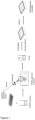
- a schematic representation of the process used to obtain the thin film of PDMS/graphene composite is shown in Figure 1 .
- a glass reagent bottle No. 1 1 g of uncured PDMS (SYLIGARD 184 Silicone Elastomer base) was diluted with 1 ml of hexane (Carbo Erba, ASC Regent).
- a second glass reagent bottle contained 7 mg of graphene decorated with platinum nanoparticles, to which 3 ml of hexane was added. The mixture was dispersed for 5 min in an Elmasonic P 30H ultrasonic bath (frequency 80 Hz, power 400 W, 20%), then the diluted PDMS from the reagent bottle No. 1 was added and stirred.
- the resulting mixture (PDMS + hexane + graphene decorated with platinum nanoparticles) was transferred completely into a glass flask with a ground glass joint.
- the glass flask was placed on a Cabreta 4011 rotavapor so that it was approximately one quarter immersed in water in an ultrasonic bath. While the flask was rotating, 80 Hz ultrasound (20% power) was applied for two hours under low vacuum conditions of the water pump, maintaining the temperature of the water bath below 30 degrees by adding ice. At a final volume of 2 ml, the mixture was further stirred with a magnetic stirrer for two hours.
- the mixture Before adding the curing agent (SYLIGARD 184 Silicone Elastomer Curing Agent) at a ratio of 1 to 10 by weight based of PDFM, the mixture was dispersed in an ultrasonic bath (80 kHz, 20% power) at a temperature of water bath of 20°C for 15 minutes. After the addition of the curing agent, the mixture was further stirred for 30 minutes with a magnetic stirrer. The resulting material was deposited onto different substrates (glass, quartz, polymerised PDMS) by the spinning method between 3000 and 6000 rpm (rotation method machine, Laurell Model WS-650 MZ-23NPP).
- the curing agent SYLIGARD 184 Silicone Elastomer Curing Agent
- the substrates with the material applied thereon was degassed at low vacuum for a few minutes and then heated in an oven at 80°C for 1 hour.
- a thin film of the composite material PDMS/graphene decorated with platinum nanoparticles with a thickness of 20 micrometres was obtained on the substrate.
Landscapes
- Chemical & Material Sciences (AREA)
- Health & Medical Sciences (AREA)
- Chemical Kinetics & Catalysis (AREA)
- Medicinal Chemistry (AREA)
- Polymers & Plastics (AREA)
- Organic Chemistry (AREA)
- Carbon And Carbon Compounds (AREA)
- Compositions Of Macromolecular Compounds (AREA)
Description
- The subject of the invention is a process for preparing a dispersion of graphene and/or its derivatives in PDMS by simultaneous application of ultrasound and vacuum. The dispersion of graphene and/or its derivatives in PDMS is further used to prepare a PDMS/graphene and/or graphene derivatives composite. The invention belongs to the field of organic and composite polymer chemistry. The process of the invention makes it possible to prepare large quantities of well-dispersed graphene and/or its derivatives based on noble metals in PDMS.
- The elastomeric polymer material PDMS (polymethylsiloxane) is safe for biological use, can be prepared as thin layers by spinning onto various substrates, including uneven ones - as described in Rogers, J. A. O., Schueller, J. A., Whitesides, G. M.: Appl. Phys. Lett. 1998,195, 172, and has a high coefficient of linear thermal expansion - as described in Müller A., Wapler M. C., Wallrabe U. : Soft Matter. 2019, 15, 779-784. These properties make it extremely suitable for applications where thermal expansion is very important, such as optoacoustic transducers - as described in Lee T., Baac, H.W., Li Q., Guo, L.J.: Adv Optical Mater, 2018, 6 (24), 1800491 and photothermal actuators - as described in Grigoriadis, C., Haase, N., Butt, H.-J., Müllen, K., Floudas, G.: Adv.Mater. 2010, 22, 1403. PDMS is a transparent silicone, so a suitable dye or pigment must be added for effective light absorption for e.g., laser-generated ultrasonic applications. In particular, various light-absorbing carbon materials have been used, such as carbon nanotubes - as described in Li, J., Lan, X., Lei, S., Ou-Yang, J., Yang, X., Zhu. B.: Carbon, 2019, 145, 112-118.: Chen, Z., Wu, Y., Yang, Y., Li, J., Xie, B., Li, X., Lei, S., Ou-Yang, J., Yang, X., Zhou, Q., Zhu, B.:Nano Energy, 2018, 46, 314-321 : Noimark, S., Colchester, R.J., Blackburn, B.J., Zhang, E.Z., Alles, E.J., Ourselin, S., Beard, P.C., Papakonstantinou, I., Parkin, I.P., Desjardins A.E. : Adv Funct Mater, 2016, 26 (46) , 8390-8396., carbon black for candles - as described in Chang, W.Y., Huang, W., Kim, J., Li, S., Jiang X. : Appl Phys Lett, 2015, 107 (16) 161903-161905., carbon nanofibres - as described in Hsieh, B.Y., Kim, J., Zhu, J., Li, S., Zhang, X , Jiang X.: Appl Phys Lett, 2015, 106 (2) , 021902, carbon black - as described in Hsieh, B.Y., Chen, S.L., Ling, T., Guo, L.J., Li P.C.: Optic Express, 2012, 20 (2), 1588-1596., reduced graphene oxide - as described in Lalwani, G., Cai, X., Nie, L., Wang, L.V., Sitharaman, B.: Photoacoustics, 2013,1 (3), 62-67: Moon, H., Kumar, D., Kim, H., Sim, C., Chang, J.H., Kim, J.M., Kim, H., Lim D.K. : ACS Nano, 2015, 9 (3), 2711-2719 and graphene - as described in Kou, H., Zhang, L., Tan, Q.,Liu, G., Dong, H., Zhang W., Xiong, J. : Sci Rep, 2019, 9, 3916.
- Graphene is a solid, well-conducting substance composed of pure carbon in which atoms are positioned in a pattern of regular hexagons, similar to graphite but one atom thick. Materials consisting of nanoparticles of noble metals (Au, Pt, Pd, Ru) attached to the surface of graphene are derivatives of graphene based on noble metals. Several methods have been used to prepare noble metal-based graphene derivatives, such as physical vapour deposition, atomic layer deposition (ADL) and various chemical synthesis approaches - as described in Jiawei, L., Qinglang, M., Zhiqi H., Guigao, L., Zhang, H.: Advanced Materials 2019, 31. 1800696.
- Several methods for the preparation of graphene-based PDMS composite material are described. Graphene and n-hexane were added to the PDMS to reduce the viscosity, and the hexane was completely evaporated at the boiling point of hexane (69°C) using ultrasound. A curing agent was then added at room temperature and, after crosslinking, the final PDMS/graphene composite material was obtained - as described in Li B., Zhang, Y., Li, T., Yu, H., Guo, Q., Hu, M., Yang J.: Macromol. Mater. Eng. 2022, 2100868-2100878. The graphene was dispersed in ethyl acetate by ultrasonication and the ethyl acetate dispersion of PDMS was added to the resulting dispersion. With vigorous stirring, the ethyl acetate was completely evaporated at 70°C. After cooling the polymer to room temperature, a curing agent and an inhibitor were added to prevent rapid curing of the composite in 3D printing - as described in Wang, Z., Gao, W., Zhang, Q., Zheng, K., Xu, J., Xu, W. Shang, E. Jiang, J. Zhang, J. Liu, Y.: ACS Applied Materials & Interfaces 2019, 11 (1), 1344-1352. THF (tetrahydrofuran) was added separately to PDMS and graphene, and both mixtures were dispersed in ultrasound. The two dispersions were combined, the resulting mixture was further dispersed in the ultrasound and a curing reagent was then added. After removal of the THF from the dispersion on a heating plate at a temperature of 50° to 60° C by rotating at 1100 to 1200 rpm, a PDMS/graphene composite is formed - as described in patent
KR101406085B1 CN106084276 A 2019 . A conductive elastic PDMS/graphene composite film with a thickness of about 200 µm was prepared by mixing graphene with PDMS. First, a mixture of PDMS and a curing agent was prepared and mixed using a centrifugal mixer. The PDMS/graphene paste was further dispersed by ultrasonication. The PDMS/graphene paste used to prepare the conductive film contained up to 40 % graphene by weight in the polymer composite - as described in Zhang, X.M., Yang, X.L. Wang, K.Y.: J Mater Sci: Mater Electron, 2019, 30, 19319-19324. The graphite microparticles were exfoliated in the molten thermoplastic polymer phase due to repeated shear deformation of the molten polymer phase, so that distributions of single and multilayered layers of graphene nanoparticles, less than 50 nanometres thick along the c-axis direction, were formed in the molten polymer phase - as described in patentEP3603956A1 . Diluted PDMS was first applied to the substrate with solvent without any curing agent by the rotation method. By spraying a solution of light-absorbing carbon and metal nanoparticles, the latter were deposited on the surface of the uncured PDMS film. After the nanoparticles were sprayed onto the surface of the uncured PDMS film, the next layer of PDMS was deposited and a curing agent was added to the PDMS in this layer - as described inU.S. Patent 20210047486 . - The preparation of composite materials based on graphene homogeneously dispersed in PDMS poses a technological problem due to the high viscosity of PDMS and the aggregation of graphene, resulting in inhomogeneous graphene-based PDMS composite materials with inferior functional properties. Another technological problem is also the preparation of composite materials based on graphene and PDMS, which would allow the preparation of thin films of PDMS/graphene composite material with high optical absorption and light penetration depth comparable to the film thickness.
- Several different techniques and processes for the preparation of dispersions of graphene and/or its derivatives in PDMS for the preparation of composite PDMS polymer materials based on graphene and/or its derivatives are known and described, but no process for the preparation of a dispersion of graphene and/or its derivatives in PDMS by the simultaneous application of ultrasound and vacuum has been described so far. The object and goal of the invention is to provide a process for preparing a homogeneous dispersion of graphene and/or its derivatives in PDMS, which is further used for the preparation of PDMS composite materials based on graphene and/or its derivatives, also suitable for the preparation of thin films of PDMS/graphene and/or graphene derivatives composite material with high optical absorption and penetration depth of light comparable to the thickness of the film.
- The object of the invention is solved by a process for preparing a dispersion of graphene and/or its derivatives in a PDMS polymer according to independent patent claims.
- The invention will be described by way of embodiments and figures which show:
-
Figure 1 : Schematic representation of a process for preparing a dispersion of graphene and/or its derivatives in PDMS by the simultaneous application of ultrasound and vacuum, and for preparing PDMS composite materials based on graphene and/or its derivatives based on this dispersion. -
Figure 2 : a.) The photo shows a PDMS/graphene composite prepared from a dispersion of graphene in PDMS obtained by the simultaneous application of ultrasound and vacuum. b.) An SEM image of a cross-section of a conductive thin film of a PDMS/graphene composite obtained from a dispersion of graphene and PDMS prepared by the simultaneous application of ultrasound and vacuum, taken with a scanning electron microscope (SEM, JEOL JSM-7600F), did not reveal nanoflakes or clusters of graphene. -
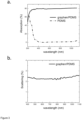
Figure 3 : To check the optical quality of the PDMD/graphene thin film, the absorption and the amount of scattered light/differential scattering was measured.- a) Absorption spectre of the PDMS/graphene composite with 1.1 percent by weight of graphene (full line), applied at 3000 RPM onto a PDMS substrate with a thickness of 15 micrometres by a spinning method. Absorption was assessed after the measurement of reflectance (R) and transmittance (T), A = 1-T + R. The absorption of PDMS without graphene is indicated by the dashed line. The absorption of the composite reaches 80% of the absorbed light relative to PDMS and is independent on the wavelength of the light and almost free of background scattering.
- b) Scattering of light of the PDMS/graphene composite with 1.1 percent by weight of graphene, applied at 3000 RPM onto a PDMS substrate with a thickness of 15 micrometres by the spinning method with respect to the substrate, measured in the reflection geometry and integrated sphere. The light scattering component is only about 2%, confirming the good optical quality of the thin film.
-
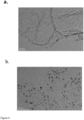
Figure 4 a) is a TEM image of graphene decorated with platinum nanoparticles having a diameter of a few nanometres, taken by a transmission electron microscope (TEM, JEOL 2100 FX). b) is a TEM image of graphene decorated with platinum nanoparticles having a diameter of a few nanometres, taken by a transmission electron microscope (TEM, JEOL 2100 FX). - The process according to the invention allows preparation of more homogeneous dispersions of graphene and/or its derivatives, whereby the composite materials prepared from said dispersion are particularly suitable for the preparation of thin films of PDMS/graphene and/or graphene derivatives composite material with high optical absorption and penetration depth of light comparable to the thickness of the film. Said thin films of composite material are preferably used for robust optoacoustic lenses.
- As the process is carried out using ultrasound and vacuum simultaneously, the process can be carried out at lower temperatures, thus avoiding possible thermal degradation of the polymer chains and/or graphene. The technical problem described herein is solved according to the invention by a process for preparing a dispersion of graphene and/or its derivatives in PDMS by simultaneous application of ultrasound and vacuum. In the context of the present application, the term graphene derivatives refers to chemically modified graphenes, preferably to chemically modified graphene derivatives based on noble metals (graphene decorated with nanoparticles of noble metals). The noble metals are selected from gold (Au), platinum (Pt), ruthenium (Ru) or palladium (Pd).
- The PDMS polymer is preferably an uncured PDMS polymer.
- The process for preparing dispersions of graphene and/or its derivatives in the PDMS polymer includes the following steps:
- A) separate preparation of PDMS and graphene and/or its derivatives, wherein the PDMS and graphene and/or its derivatives are diluted with organic solvents to give a dispersion of graphene and/or its derivatives in the organic solvent and the PDMS swollen with the organic solvent;
- B) adding a dispersion of graphene and/or its derivatives in an organic solvent to the PDMS swollen with an organic solvent or PDMS to produce a mixture of PDMS, solvent and graphene and/or its derivatives;
- C) treating the mixture of step B) by simultaneous application of ultrasound and vacuum, wherein the organic solvent is evaporated and a homogeneous dispersion of PDMS and graphene and/or its derivatives is obtained.
- To prepare composite PDMS polymeric materials based on graphene and/or its derivatives from the dispersion of step C, the process further comprises adding a curing agent to the dispersion of step C, crosslinking the dispersion of graphene and/or its derivatives in the uncured PDMS and mixing.
- Suitable organic solvents are solvents having a solubility parameter between 7.3-9.5 cal 1/2 cm-3/2 and include acyclic and cyclic hydrocarbons (pentane, hexane, heptane, cyclohexane), aromatic hydrocarbons (xylenes, toluene, benzene), halogenated compounds (chloroform, trichloroethylene) and ethers (diethyl ether, dimethoxyethane, tetrahydrofuran). The boiling points of the solvents used to dilute the PDMS and graphene and/or its derivatives are less than 180°C, preferably between 30°C and 80°C.
- Graphene and/or its derivatives are first dispersed in an organic solvent and the mixture is then added to the PDMS already diluted (swollen) with the organic solvent. The organic solvent is evaporated simultaneously using ultrasound and vacuum, while the temperature of the preparation of the dispersion of graphene and/or graphene derivatives in the PDMS is maintained at temperatures below the boiling points of the organic solvents used to reduce the viscosity of the uncured PDMS, namely at ultrasonic bath temperatures between 1°C and 70°C, preferably between 20°C and 40°C. The sonication is carried out in a solvent, preferably water, which has been cooled during the process by the addition of ice or cold water, thereby preventing possible thermal degradation of the polymer chains and/or graphene. The process for preparing a dispersion of graphene and/or derivatives thereof in PDMS is carried out at 0.1 to 2 weight per cent preferably between 0.5 and 1.5 weight per cent, of graphene and/or derivatives thereof, at undepressure of between 100 mPa and 100 kPa, preferably at vacuum of between 100 kPa and 1 kPa, and at ultrasound frequencies above 20 kHz, preferably in the range of between 37 kHz and 80 kHz, including 37 kHz and 80 kHz.
- The process can also be used to prepare dispersions of other graphene derivatives obtained by chemical modification of graphene and 2D materials based on transition metal dichalcogenides.
- The PDMS/graphene and/or graphene derivatives composite is obtained by adding a curing agent to the dispersion of PDMS and graphene and/or graphene derivatives from step C and heating this mixture. The mixture of PDMS and graphene and/or graphene derivatives with the added curing agent can be deposited on various substrates such as cured PDMS, glass, silicon, quartz glass, also by the spinning method, and then crosslinked by heating at temperatures above 20°C, preferably at temperatures above 80°C and below 240°C. Thin films of PDMS/graphene and/or graphene derivatives composite materials are obtained.
- In a glass reagent bottle No. 1, 1 g of uncured PDMS (SYLIGARD 184 Silicone Elastomer base) was diluted with 1 ml of n-hexane (Carbo Erba, ASC Regent). In a second glass reagent bottle, 11 mg of graphene (Single layer graphene, ASC Materials) was added to 3 ml of hexane. The mixture of graphene and hexane was dispersed for 5 min in an Elmasonic P 30H ultrasonic bath (
frequency 80 Hz,power 20%), then the diluted PDMS from the reagent bottle No. 1 was added and stirred. The resulting mixture (PDMS + hexane + graphene) was transferred completely into a glass flask with a ground glass joint. The glass flask was placed on a Cabreta 4011 rotavapor so that it was approximately one quarter immersed in water in an ultrasonic bath. While the flask was rotating, 80 Hz ultrasound (20% power) was applied for two hours under low vacuum conditions of the water pump, maintaining the temperature of the water bath below 30°C by adding ice. At a final volume of 2 ml, the mixture was stirred with a magnetic stirrer for two hours. Before adding the curing agent (SYLIGARD 184 Silicone Elastomer Curing Agent) at a ratio of 1 to 10 by weight of PDFM, the mixture was further dispersed in an ultrasonic bath (80 kHz, 20% power) at 20°C for 15 minutes. After the addition of the curing agent, the mixture was stirred for 30 minutes with a magnetic stirrer. The resulting material was deposited onto different substrates (glass, quartz, silicon, cured PDMS) by the spinning method between 3000 and 6000 rpm (spinning method machine, Laurell Model WS-650 MZ -23NPP).Figure 1 is a schematic representation of the process. After deposition, the substrate with the material applied thereon was degassed at low vacuum for a few minutes and then heated in an oven at 80°C for 1 hour. A thin film of PDMS/graphene composite material with a thickness of 15 micrometres was obtained on the substrate. A schematic representation of the process used to obtain the thin film of PDMS/graphene composite is shown inFigure 1 . - 10 mg of K2PtCl4 (Sigma Aldrich, 99.9 %) was dissolved in 20 ml of distilled water and 10 mg of graphene (Single layer graphene, ASC Materials) was added. The mixture was dispersed in an Elmasonic P 30 H ultrasonic bath for one hour at 37 kHz, 60% power and then centrifuged with a
Mikro 200 Hettich microcentrifuge, 10000 rpm for 10 min. - The precipitate was washed three times with distilled water and once with technical grade ethanol and dried at 40°C. 10.8 grams of graphene decorated with platinum nanoparticles was obtained.
- In a glass reagent bottle No. 1, 1 g of uncured PDMS (SYLIGARD 184 Silicone Elastomer base) was diluted with 1 ml of hexane (Carbo Erba, ASC Regent). A second glass reagent bottle contained 7 mg of graphene decorated with platinum nanoparticles, to which 3 ml of hexane was added. The mixture was dispersed for 5 min in an Elmasonic P 30H ultrasonic bath (
frequency 80 Hz,power 400 W, 20%), then the diluted PDMS from the reagent bottle No. 1 was added and stirred. The resulting mixture (PDMS + hexane + graphene decorated with platinum nanoparticles) was transferred completely into a glass flask with a ground glass joint. The glass flask was placed on a Cabreta 4011 rotavapor so that it was approximately one quarter immersed in water in an ultrasonic bath. While the flask was rotating, 80 Hz ultrasound (20% power) was applied for two hours under low vacuum conditions of the water pump, maintaining the temperature of the water bath below 30 degrees by adding ice. At a final volume of 2 ml, the mixture was further stirred with a magnetic stirrer for two hours. Before adding the curing agent (SYLIGARD 184 Silicone Elastomer Curing Agent) at a ratio of 1 to 10 by weight based of PDFM, the mixture was dispersed in an ultrasonic bath (80 kHz, 20% power) at a temperature of water bath of 20°C for 15 minutes. After the addition of the curing agent, the mixture was further stirred for 30 minutes with a magnetic stirrer. The resulting material was deposited onto different substrates (glass, quartz, polymerised PDMS) by the spinning method between 3000 and 6000 rpm (rotation method machine, Laurell Model WS-650 MZ-23NPP). The substrates with the material applied thereon was degassed at low vacuum for a few minutes and then heated in an oven at 80°C for 1 hour. A thin film of the composite material PDMS/graphene decorated with platinum nanoparticles with a thickness of 20 micrometres was obtained on the substrate.
Claims (9)
- A process for preparing a dispersion of graphene in polymethylsiloxane (PDMS) by simultaneous application of ultrasound and vacuum, characterized in that the process comprises the following steps:A) separate preparation of PDMS and graphene and/or its derivatives, wherein the PDMS and graphene and/or its derivatives are diluted with organic solvents to give a dispersion of graphene and/or its derivatives in the organic solvent and the PDMS swollen with the organic solvent;B) adding a dispersion of graphene and/or its derivatives in an organic solvent to the PDMS swollen with an organic solvent to produce a mixture of PDMS, solvent and graphene and/or its derivatives;C) treating the mixture of step B) by simultaneous application of ultrasound and vacuum, wherein the organic solvent is evaporated to obtain a dispersion of PDMS and graphene and/or its derivatives,wherein the graphene derivatives are chemically modified graphenes, preferably chemically modified graphene derivatives based on noble metals.
- The process according to claim 1, characterised in that the weight proportion of graphene and/or its derivatives is between 0.1 and 2 % by weight based on PDMS, preferably between 0.5 and 1.5 % by weight.
- The process according to claim 1, characterised in that the process is carried out at ultrasonic bath temperatures between 1°C and 70°C, preferably at temperatures between 20°C and 40°C.
- The process according to claim 1, characterised in that the process is carried out at vacuum between 100 mPa and 100 kPa, preferably at vacuum between 100 kPa and 1 kPa.
- The process according to claim 1, characterised in that the process is carried out at ultrasound frequencies above 20 kHz, preferably in the range between 37 and 80 kHz, including 37 and 80 kHz.
- The process according to claim 1, characterized in that the organic solvents are the solvents having a solubility parameter between 7.3-9.5 cal 1/2 cm-3/2, and the boiling point of the organic solvents is below 180°C, preferably between 30° and 80°C.
- The process according to claim 1, characterized in that the noble metals are selected from gold (Au), platinum (Pt), ruthenium (Ru) or palladium (Pd).
- The process according to claim 1, characterized in that the PDMS is an uncured PDMS.
- The process for preparing composite PDMS polymeric materials based on graphene and/or its derivatives from the dispersion prepared according to claims 1 to 8, characterized in that the dispersion of graphene and/or its derivatives in PDMS from step C) is crosslinked by a curing agent.
Applications Claiming Priority (1)
| Application Number | Priority Date | Filing Date | Title |
|---|---|---|---|
| SI202200077A SI26354A (en) | 2022-05-24 | 2022-05-24 | Procedure for preparation of graphene dispersion in PDMS with the simultaneous use of ultrasound and vacuum |
Publications (3)
| Publication Number | Publication Date |
|---|---|
| EP4282905A1 EP4282905A1 (en) | 2023-11-29 |
| EP4282905C0 EP4282905C0 (en) | 2024-08-28 |
| EP4282905B1 true EP4282905B1 (en) | 2024-08-28 |
Family
ID=86142678
Family Applications (1)
| Application Number | Title | Priority Date | Filing Date |
|---|---|---|---|
| EP23165177.9A Active EP4282905B1 (en) | 2022-05-24 | 2023-03-29 | Preparation process of graphene dispersion in pdms with the simultaneous use of ultrasound and vacuum |
Country Status (2)
| Country | Link |
|---|---|
| EP (1) | EP4282905B1 (en) |
| SI (1) | SI26354A (en) |
Families Citing this family (1)
| Publication number | Priority date | Publication date | Assignee | Title |
|---|---|---|---|---|
| CN118082330B (en) * | 2024-02-28 | 2025-12-02 | 浙江大学 | A multi-stimulation bidirectional actuated composite film and its preparation method |
Family Cites Families (7)
| Publication number | Priority date | Publication date | Assignee | Title |
|---|---|---|---|---|
| US20130224452A1 (en) * | 2012-02-28 | 2013-08-29 | Indian Institute Of Technology Madras | Metal nanoparticle-graphene composites and methods for their preparation and use |
| CA2888865C (en) | 2012-10-19 | 2020-05-12 | Rutgers, The State University Of New Jersey | In situ exfoliation method to fabricate a graphene-reinforced polymer matrix composite |
| KR101406085B1 (en) | 2013-07-11 | 2014-06-11 | 전남대학교산학협력단 | A method for preparing graphene/pdms composite and graphene/pdms composite prepared by the same |
| CN106084276B (en) | 2016-06-13 | 2018-12-14 | 东南大学 | A kind of synthetic method of graphene-dimethyl silicone polymer function sponge |
| CN107029565B (en) * | 2017-05-25 | 2019-10-11 | 合肥工业大学 | Optically driven bilayer composite film based on graphene oxide and its preparation method and application |
| KR102220412B1 (en) | 2019-08-13 | 2021-02-24 | 성균관대학교산학협력단 | Method of manufacturing optoacoustic ultrasound generators with high laser-induced damage threshold and high-amplitude ultrasound generators manufactured by the method |
| CN114854197A (en) * | 2022-04-29 | 2022-08-05 | 浙江元盛塑业股份有限公司 | Method for preparing double-component heat-conducting silicone rubber by taking graphene and multi-walled carbon nanotubes as mixed filler |
-
2022
- 2022-05-24 SI SI202200077A patent/SI26354A/en active IP Right Grant
-
2023
- 2023-03-29 EP EP23165177.9A patent/EP4282905B1/en active Active
Also Published As
| Publication number | Publication date |
|---|---|
| EP4282905C0 (en) | 2024-08-28 |
| EP4282905A1 (en) | 2023-11-29 |
| SI26354A (en) | 2023-11-30 |
Similar Documents
| Publication | Publication Date | Title |
|---|---|---|
| Weng et al. | Layer‐by‐layer assembly of cross‐functional semi‐transparent MXene‐carbon nanotubes composite films for next‐generation electromagnetic interference shielding | |
| Gao et al. | Icephobic durability of branched PDMS slippage coatings co-cross-linked by functionalized POSS | |
| Zhang et al. | Sandwich-layered dielectric film with intrinsically excellent adhesion, low dielectric constant, and ultralow dielectric loss for a high-frequency flexible printed circuit | |
| Qi et al. | Surface modification of BMN particles with silane coupling agent for composites with PTFE | |
| Jiang et al. | Preparation of graphene oxide coatings onto carbon fibers by electrophoretic deposition for enhancing interfacial strength in carbon fiber composites | |
| CN108883937A (en) | Carbon nano tube dispersion liquid, its manufacturing method and electric conductivity formed body | |
| EP4282905A1 (en) | Preparation process of graphene dispersion in pdms with the simultaneous use of ultrasound and vacuum | |
| Ren et al. | Preparation of CF/PEEK composites with high mechanical performance using PEEK derivatives as the sizing agent | |
| Wang et al. | Preparation and characterization of uniform polyaniline nano-fibrils using the anodic aluminum oxide template | |
| Wu et al. | Effect of surface functionalized SiO2 particles filled polyolefin on the dielectric properties of laminates | |
| SG173040A1 (en) | Method for introducing carbon particles into a polyurethane surface layer | |
| CN112011137A (en) | A kind of graphene/water-soluble polymer composite material and preparation method thereof | |
| Xu et al. | In situ formation of POSS layer on the surface of polyimide film and anti-atomic oxygen of SiO2/POSS coatings | |
| Cao et al. | Covalent grafting of dielectric films on Cu (111) surface via electrochemical reduction of aryl diazonium salts | |
| EP3810686A1 (en) | Nanoparticles of polydopamine and s-paek (sulfonated-polyaryletherketone) derivatives and water-based process for preparing thereof | |
| Mirjalili et al. | Dispersion stability in carbon nanotube modified polymers and its effect on the fracture toughness | |
| CN108929542A (en) | A kind of dimethyl silicone polymer with negative permittivity/graphene flexible composite film and preparation method thereof | |
| Zhang et al. | Preparation of MWCNTs/CF/PEEK multi-scale composites with good mechanical and electrical conductivity by a two-step process of AFP and out-of-autoclave tempering | |
| WO2016189850A1 (en) | Insulating heat-conducting sheet and method for manufacturing same | |
| Zhang et al. | Facile fabrication of polyurethane-based graphene foam/lead zirconate titanate/polydimethylsiloxane composites with good damping performance | |
| Peng et al. | Preparation of benzocyclobutene-functionalized organic–inorganic hybrid microspheres and their reduction of permittivity to DVSBCB resin | |
| EP2904651A2 (en) | Transparent conductive electrode and associated production method | |
| CN113845776A (en) | Polydimethylsiloxane and silicon dioxide microsphere composite thick film and preparation method thereof | |
| Cao et al. | Covalent grafting of PMMA organic film on porous silicon for achieving ultralow-k organic films | |
| JP7567422B2 (en) | Resin composition and cured film using same |
Legal Events
| Date | Code | Title | Description |
|---|---|---|---|
| PUAI | Public reference made under article 153(3) epc to a published international application that has entered the european phase |
Free format text: ORIGINAL CODE: 0009012 |
|
| STAA | Information on the status of an ep patent application or granted ep patent |
Free format text: STATUS: THE APPLICATION HAS BEEN PUBLISHED |
|
| AK | Designated contracting states |
Kind code of ref document: A1 Designated state(s): AL AT BE BG CH CY CZ DE DK EE ES FI FR GB GR HR HU IE IS IT LI LT LU LV MC ME MK MT NL NO PL PT RO RS SE SI SK SM TR |
|
| STAA | Information on the status of an ep patent application or granted ep patent |
Free format text: STATUS: REQUEST FOR EXAMINATION WAS MADE |
|
| 17P | Request for examination filed |
Effective date: 20240130 |
|
| RBV | Designated contracting states (corrected) |
Designated state(s): AL AT BE BG CH CY CZ DE DK EE ES FI FR GB GR HR HU IE IS IT LI LT LU LV MC ME MK MT NL NO PL PT RO RS SE SI SK SM TR |
|
| GRAP | Despatch of communication of intention to grant a patent |
Free format text: ORIGINAL CODE: EPIDOSNIGR1 |
|
| STAA | Information on the status of an ep patent application or granted ep patent |
Free format text: STATUS: GRANT OF PATENT IS INTENDED |
|
| INTG | Intention to grant announced |
Effective date: 20240402 |
|
| GRAS | Grant fee paid |
Free format text: ORIGINAL CODE: EPIDOSNIGR3 |
|
| GRAA | (expected) grant |
Free format text: ORIGINAL CODE: 0009210 |
|
| STAA | Information on the status of an ep patent application or granted ep patent |
Free format text: STATUS: THE PATENT HAS BEEN GRANTED |
|
| RIN1 | Information on inventor provided before grant (corrected) |
Inventor name: JEZERSEK, MATIJA Inventor name: VELLA, DANIELE Inventor name: MRZEL, ALES |
|
| AK | Designated contracting states |
Kind code of ref document: B1 Designated state(s): AL AT BE BG CH CY CZ DE DK EE ES FI FR GB GR HR HU IE IS IT LI LT LU LV MC ME MK MT NL NO PL PT RO RS SE SI SK SM TR |
|
| REG | Reference to a national code |
Ref country code: CH Ref legal event code: EP |
|
| REG | Reference to a national code |
Ref country code: DE Ref legal event code: R096 Ref document number: 602023000453 Country of ref document: DE |
|
| REG | Reference to a national code |
Ref country code: IE Ref legal event code: FG4D |
|
| U01 | Request for unitary effect filed |
Effective date: 20240830 |
|
| U07 | Unitary effect registered |
Designated state(s): AT BE BG DE DK EE FI FR IT LT LU LV MT NL PT RO SE SI Effective date: 20240906 |
|
| PG25 | Lapsed in a contracting state [announced via postgrant information from national office to epo] |
Ref country code: NO Free format text: LAPSE BECAUSE OF FAILURE TO SUBMIT A TRANSLATION OF THE DESCRIPTION OR TO PAY THE FEE WITHIN THE PRESCRIBED TIME-LIMIT Effective date: 20241128 |
|
| PG25 | Lapsed in a contracting state [announced via postgrant information from national office to epo] |
Ref country code: GR Free format text: LAPSE BECAUSE OF FAILURE TO SUBMIT A TRANSLATION OF THE DESCRIPTION OR TO PAY THE FEE WITHIN THE PRESCRIBED TIME-LIMIT Effective date: 20241129 Ref country code: PL Free format text: LAPSE BECAUSE OF FAILURE TO SUBMIT A TRANSLATION OF THE DESCRIPTION OR TO PAY THE FEE WITHIN THE PRESCRIBED TIME-LIMIT Effective date: 20240828 |
|
| PG25 | Lapsed in a contracting state [announced via postgrant information from national office to epo] |
Ref country code: IS Free format text: LAPSE BECAUSE OF FAILURE TO SUBMIT A TRANSLATION OF THE DESCRIPTION OR TO PAY THE FEE WITHIN THE PRESCRIBED TIME-LIMIT Effective date: 20241228 |
|
| PG25 | Lapsed in a contracting state [announced via postgrant information from national office to epo] |
Ref country code: HR Free format text: LAPSE BECAUSE OF FAILURE TO SUBMIT A TRANSLATION OF THE DESCRIPTION OR TO PAY THE FEE WITHIN THE PRESCRIBED TIME-LIMIT Effective date: 20240828 |
|
| PG25 | Lapsed in a contracting state [announced via postgrant information from national office to epo] |
Ref country code: RS Free format text: LAPSE BECAUSE OF FAILURE TO SUBMIT A TRANSLATION OF THE DESCRIPTION OR TO PAY THE FEE WITHIN THE PRESCRIBED TIME-LIMIT Effective date: 20241128 Ref country code: ES Free format text: LAPSE BECAUSE OF FAILURE TO SUBMIT A TRANSLATION OF THE DESCRIPTION OR TO PAY THE FEE WITHIN THE PRESCRIBED TIME-LIMIT Effective date: 20240828 |
|
| PG25 | Lapsed in a contracting state [announced via postgrant information from national office to epo] |
Ref country code: RS Free format text: LAPSE BECAUSE OF FAILURE TO SUBMIT A TRANSLATION OF THE DESCRIPTION OR TO PAY THE FEE WITHIN THE PRESCRIBED TIME-LIMIT Effective date: 20241128 Ref country code: PL Free format text: LAPSE BECAUSE OF FAILURE TO SUBMIT A TRANSLATION OF THE DESCRIPTION OR TO PAY THE FEE WITHIN THE PRESCRIBED TIME-LIMIT Effective date: 20240828 Ref country code: NO Free format text: LAPSE BECAUSE OF FAILURE TO SUBMIT A TRANSLATION OF THE DESCRIPTION OR TO PAY THE FEE WITHIN THE PRESCRIBED TIME-LIMIT Effective date: 20241128 Ref country code: IS Free format text: LAPSE BECAUSE OF FAILURE TO SUBMIT A TRANSLATION OF THE DESCRIPTION OR TO PAY THE FEE WITHIN THE PRESCRIBED TIME-LIMIT Effective date: 20241228 Ref country code: HR Free format text: LAPSE BECAUSE OF FAILURE TO SUBMIT A TRANSLATION OF THE DESCRIPTION OR TO PAY THE FEE WITHIN THE PRESCRIBED TIME-LIMIT Effective date: 20240828 Ref country code: GR Free format text: LAPSE BECAUSE OF FAILURE TO SUBMIT A TRANSLATION OF THE DESCRIPTION OR TO PAY THE FEE WITHIN THE PRESCRIBED TIME-LIMIT Effective date: 20241129 Ref country code: ES Free format text: LAPSE BECAUSE OF FAILURE TO SUBMIT A TRANSLATION OF THE DESCRIPTION OR TO PAY THE FEE WITHIN THE PRESCRIBED TIME-LIMIT Effective date: 20240828 |
|
| U20 | Renewal fee for the european patent with unitary effect paid |
Year of fee payment: 3 Effective date: 20250129 |
|
| PG25 | Lapsed in a contracting state [announced via postgrant information from national office to epo] |
Ref country code: SM Free format text: LAPSE BECAUSE OF FAILURE TO SUBMIT A TRANSLATION OF THE DESCRIPTION OR TO PAY THE FEE WITHIN THE PRESCRIBED TIME-LIMIT Effective date: 20240828 |
|
| PG25 | Lapsed in a contracting state [announced via postgrant information from national office to epo] |
Ref country code: CZ Free format text: LAPSE BECAUSE OF FAILURE TO SUBMIT A TRANSLATION OF THE DESCRIPTION OR TO PAY THE FEE WITHIN THE PRESCRIBED TIME-LIMIT Effective date: 20240828 |
|
| PG25 | Lapsed in a contracting state [announced via postgrant information from national office to epo] |
Ref country code: SK Free format text: LAPSE BECAUSE OF FAILURE TO SUBMIT A TRANSLATION OF THE DESCRIPTION OR TO PAY THE FEE WITHIN THE PRESCRIBED TIME-LIMIT Effective date: 20240828 |
|
| PLBE | No opposition filed within time limit |
Free format text: ORIGINAL CODE: 0009261 |
|
| STAA | Information on the status of an ep patent application or granted ep patent |
Free format text: STATUS: NO OPPOSITION FILED WITHIN TIME LIMIT |
|
| 26N | No opposition filed |
Effective date: 20250530 |
|
| PG25 | Lapsed in a contracting state [announced via postgrant information from national office to epo] |
Ref country code: MC Free format text: LAPSE BECAUSE OF FAILURE TO SUBMIT A TRANSLATION OF THE DESCRIPTION OR TO PAY THE FEE WITHIN THE PRESCRIBED TIME-LIMIT Effective date: 20240828 |
|
| PG25 | Lapsed in a contracting state [announced via postgrant information from national office to epo] |
Ref country code: IE Free format text: LAPSE BECAUSE OF NON-PAYMENT OF DUE FEES Effective date: 20250329 |
|
| U20 | Renewal fee for the european patent with unitary effect paid |
Year of fee payment: 4 Effective date: 20260204 |