EP4282897A1 - Fluorescent aggregates of poly(cyclohexylene dimethylene terephthalate), method for obtaining same, and use thereof as a physically unclonable label for identifying and/or tracing packaging for cosmetic and/or perfume products - Google Patents
Fluorescent aggregates of poly(cyclohexylene dimethylene terephthalate), method for obtaining same, and use thereof as a physically unclonable label for identifying and/or tracing packaging for cosmetic and/or perfume products Download PDFInfo
- Publication number
- EP4282897A1 EP4282897A1 EP22742314.2A EP22742314A EP4282897A1 EP 4282897 A1 EP4282897 A1 EP 4282897A1 EP 22742314 A EP22742314 A EP 22742314A EP 4282897 A1 EP4282897 A1 EP 4282897A1
- Authority
- EP
- European Patent Office
- Prior art keywords
- packaging
- aggregates
- poly
- technique
- thermoplastic
- Prior art date
- Legal status (The legal status is an assumption and is not a legal conclusion. Google has not performed a legal analysis and makes no representation as to the accuracy of the status listed.)
- Granted
Links
Images






Classifications
-
- B—PERFORMING OPERATIONS; TRANSPORTING
- B65—CONVEYING; PACKING; STORING; HANDLING THIN OR FILAMENTARY MATERIAL
- B65D—CONTAINERS FOR STORAGE OR TRANSPORT OF ARTICLES OR MATERIALS, e.g. BAGS, BARRELS, BOTTLES, BOXES, CANS, CARTONS, CRATES, DRUMS, JARS, TANKS, HOPPERS, FORWARDING CONTAINERS; ACCESSORIES, CLOSURES, OR FITTINGS THEREFOR; PACKAGING ELEMENTS; PACKAGES
- B65D1/00—Rigid or semi-rigid containers having bodies formed in one piece, e.g. by casting metallic material, by moulding plastics, by blowing vitreous material, by throwing ceramic material, by moulding pulped fibrous material or by deep-drawing operations performed on sheet material
- B65D1/02—Bottles or similar containers with necks or like restricted apertures, designed for pouring contents
- B65D1/0207—Bottles or similar containers with necks or like restricted apertures, designed for pouring contents characterised by material, e.g. composition, physical features
-
- C—CHEMISTRY; METALLURGY
- C09—DYES; PAINTS; POLISHES; NATURAL RESINS; ADHESIVES; COMPOSITIONS NOT OTHERWISE PROVIDED FOR; APPLICATIONS OF MATERIALS NOT OTHERWISE PROVIDED FOR
- C09K—MATERIALS FOR MISCELLANEOUS APPLICATIONS, NOT PROVIDED FOR ELSEWHERE
- C09K11/00—Luminescent materials, e.g. electroluminescent or chemiluminescent
- C09K11/06—Luminescent materials, e.g. electroluminescent or chemiluminescent containing organic luminescent materials
-
- A—HUMAN NECESSITIES
- A45—HAND OR TRAVELLING ARTICLES
- A45D—HAIRDRESSING OR SHAVING EQUIPMENT; EQUIPMENT FOR COSMETICS OR COSMETIC TREATMENTS, e.g. FOR MANICURING OR PEDICURING
- A45D37/00—Sachet pads specially adapted for liquid toiletry or cosmetic substances
-
- B—PERFORMING OPERATIONS; TRANSPORTING
- B32—LAYERED PRODUCTS
- B32B—LAYERED PRODUCTS, i.e. PRODUCTS BUILT-UP OF STRATA OF FLAT OR NON-FLAT, e.g. CELLULAR OR HONEYCOMB, FORM
- B32B27/00—Layered products comprising a layer of synthetic resin
- B32B27/36—Layered products comprising a layer of synthetic resin comprising polyesters
-
- B—PERFORMING OPERATIONS; TRANSPORTING
- B65—CONVEYING; PACKING; STORING; HANDLING THIN OR FILAMENTARY MATERIAL
- B65D—CONTAINERS FOR STORAGE OR TRANSPORT OF ARTICLES OR MATERIALS, e.g. BAGS, BARRELS, BOTTLES, BOXES, CANS, CARTONS, CRATES, DRUMS, JARS, TANKS, HOPPERS, FORWARDING CONTAINERS; ACCESSORIES, CLOSURES, OR FITTINGS THEREFOR; PACKAGING ELEMENTS; PACKAGES
- B65D1/00—Rigid or semi-rigid containers having bodies formed in one piece, e.g. by casting metallic material, by moulding plastics, by blowing vitreous material, by throwing ceramic material, by moulding pulped fibrous material or by deep-drawing operations performed on sheet material
-
- B—PERFORMING OPERATIONS; TRANSPORTING
- B65—CONVEYING; PACKING; STORING; HANDLING THIN OR FILAMENTARY MATERIAL
- B65D—CONTAINERS FOR STORAGE OR TRANSPORT OF ARTICLES OR MATERIALS, e.g. BAGS, BARRELS, BOTTLES, BOXES, CANS, CARTONS, CRATES, DRUMS, JARS, TANKS, HOPPERS, FORWARDING CONTAINERS; ACCESSORIES, CLOSURES, OR FITTINGS THEREFOR; PACKAGING ELEMENTS; PACKAGES
- B65D65/00—Wrappers or flexible covers; Packaging materials of special type or form
- B65D65/38—Packaging materials of special type or form
- B65D65/42—Applications of coated or impregnated materials
-
- C—CHEMISTRY; METALLURGY
- C08—ORGANIC MACROMOLECULAR COMPOUNDS; THEIR PREPARATION OR CHEMICAL WORKING-UP; COMPOSITIONS BASED THEREON
- C08G—MACROMOLECULAR COMPOUNDS OBTAINED OTHERWISE THAN BY REACTIONS ONLY INVOLVING UNSATURATED CARBON-TO-CARBON BONDS
- C08G63/00—Macromolecular compounds obtained by reactions forming a carboxylic ester link in the main chain of the macromolecule
- C08G63/02—Polyesters derived from hydroxycarboxylic acids or from polycarboxylic acids and polyhydroxy compounds
- C08G63/12—Polyesters derived from hydroxycarboxylic acids or from polycarboxylic acids and polyhydroxy compounds derived from polycarboxylic acids and polyhydroxy compounds
- C08G63/16—Dicarboxylic acids and dihydroxy compounds
- C08G63/18—Dicarboxylic acids and dihydroxy compounds the acids or hydroxy compounds containing carbocyclic rings
- C08G63/181—Acids containing aromatic rings
- C08G63/183—Terephthalic acids
-
- C—CHEMISTRY; METALLURGY
- C08—ORGANIC MACROMOLECULAR COMPOUNDS; THEIR PREPARATION OR CHEMICAL WORKING-UP; COMPOSITIONS BASED THEREON
- C08G—MACROMOLECULAR COMPOUNDS OBTAINED OTHERWISE THAN BY REACTIONS ONLY INVOLVING UNSATURATED CARBON-TO-CARBON BONDS
- C08G63/00—Macromolecular compounds obtained by reactions forming a carboxylic ester link in the main chain of the macromolecule
- C08G63/02—Polyesters derived from hydroxycarboxylic acids or from polycarboxylic acids and polyhydroxy compounds
- C08G63/12—Polyesters derived from hydroxycarboxylic acids or from polycarboxylic acids and polyhydroxy compounds derived from polycarboxylic acids and polyhydroxy compounds
- C08G63/16—Dicarboxylic acids and dihydroxy compounds
- C08G63/18—Dicarboxylic acids and dihydroxy compounds the acids or hydroxy compounds containing carbocyclic rings
- C08G63/199—Acids or hydroxy compounds containing cycloaliphatic rings
-
- G—PHYSICS
- G09—EDUCATION; CRYPTOGRAPHY; DISPLAY; ADVERTISING; SEALS
- G09F—DISPLAYING; ADVERTISING; SIGNS; LABELS OR NAME-PLATES; SEALS
- G09F3/00—Labels, tag tickets, or similar identification or indication means; Seals; Postage or like stamps
- G09F3/02—Forms or constructions
- G09F3/0291—Labels or tickets undergoing a change under particular conditions, e.g. heat, radiation, passage of time
- G09F3/0294—Labels or tickets undergoing a change under particular conditions, e.g. heat, radiation, passage of time where the change is not permanent, e.g. labels only readable under a special light, temperature indicating labels and the like
-
- H—ELECTRICITY
- H04—ELECTRIC COMMUNICATION TECHNIQUE
- H04L—TRANSMISSION OF DIGITAL INFORMATION, e.g. TELEGRAPHIC COMMUNICATION
- H04L9/00—Cryptographic mechanisms or cryptographic arrangements for secret or secure communications; Network security protocols
- H04L9/08—Key distribution or management, e.g. generation, sharing or updating, of cryptographic keys or passwords
- H04L9/0861—Generation of secret information including derivation or calculation of cryptographic keys or passwords
- H04L9/0866—Generation of secret information including derivation or calculation of cryptographic keys or passwords involving user or device identifiers, e.g. serial number, physical or biometrical information, DNA, hand-signature or measurable physical characteristics
-
- H—ELECTRICITY
- H04—ELECTRIC COMMUNICATION TECHNIQUE
- H04L—TRANSMISSION OF DIGITAL INFORMATION, e.g. TELEGRAPHIC COMMUNICATION
- H04L9/00—Cryptographic mechanisms or cryptographic arrangements for secret or secure communications; Network security protocols
- H04L9/32—Cryptographic mechanisms or cryptographic arrangements for secret or secure communications; Network security protocols including means for verifying the identity or authority of a user of the system or for message authentication, e.g. authorization, entity authentication, data integrity or data verification, non-repudiation, key authentication or verification of credentials
- H04L9/3271—Cryptographic mechanisms or cryptographic arrangements for secret or secure communications; Network security protocols including means for verifying the identity or authority of a user of the system or for message authentication, e.g. authorization, entity authentication, data integrity or data verification, non-repudiation, key authentication or verification of credentials using challenge-response
- H04L9/3278—Cryptographic mechanisms or cryptographic arrangements for secret or secure communications; Network security protocols including means for verifying the identity or authority of a user of the system or for message authentication, e.g. authorization, entity authentication, data integrity or data verification, non-repudiation, key authentication or verification of credentials using challenge-response using physically unclonable functions [PUF]
-
- B—PERFORMING OPERATIONS; TRANSPORTING
- B65—CONVEYING; PACKING; STORING; HANDLING THIN OR FILAMENTARY MATERIAL
- B65D—CONTAINERS FOR STORAGE OR TRANSPORT OF ARTICLES OR MATERIALS, e.g. BAGS, BARRELS, BOTTLES, BOXES, CANS, CARTONS, CRATES, DRUMS, JARS, TANKS, HOPPERS, FORWARDING CONTAINERS; ACCESSORIES, CLOSURES, OR FITTINGS THEREFOR; PACKAGING ELEMENTS; PACKAGES
- B65D2203/00—Decoration means, markings, information elements, contents indicators
-
- C—CHEMISTRY; METALLURGY
- C09—DYES; PAINTS; POLISHES; NATURAL RESINS; ADHESIVES; COMPOSITIONS NOT OTHERWISE PROVIDED FOR; APPLICATIONS OF MATERIALS NOT OTHERWISE PROVIDED FOR
- C09K—MATERIALS FOR MISCELLANEOUS APPLICATIONS, NOT PROVIDED FOR ELSEWHERE
- C09K2211/00—Chemical nature of organic luminescent or tenebrescent compounds
- C09K2211/14—Macromolecular compounds
- C09K2211/1408—Carbocyclic compounds
- C09K2211/1425—Non-condensed systems
Definitions
- the present invention relates to spherical aggregates of semi-crystalline thermoplastic polyester, poly(cyclohexylene dimethylene terephthalate), with a size distribution of between 160 nm and 200 nm which emit fluorescence in the region of the visible spectrum and are deposited on a thermoplastic aromatic polyester or thermoplastic polyolefin substrate.
- the present invention further relates to the process for obtaining said aggregates and to the use of said aggregates as a physically unclonable label, for identifying and/or tracing packaging for cosmetic and/or perfume products.
- the present invention may be comprised within the field of anti-counterfeit packaging, particularly in the field of anti-counterfeit packaging for cosmetic and/or perfume products.
- the most widely used materials in cosmetic packaging belong to the family of aromatic polyesters because they have excellent characteristics such as a high mechanical strength, chemical resistance, and transparency, which makes them suitable to enable storing cosmetics and perfumes.
- materials belonging to the family of aromatic polyesters are cost-effective and malleable; being very versatile materials that allow obtaining packaging of different shapes and finishes.
- packaging composed of this family of aromatic polyesters is easy and cost-effective to transport, and in turn complies with the collection and recycling system effectively.
- PEFs physically unclonable functions
- PEFs Physically unclonable functions
- the present invention relates to the incorporation of fluorescent markers emitting in the region of the visible spectrum as a physically unclonable label for packaging of cosmetic and/or perfume products, in other words, for achieving traceability/identification of said packaging.
- the first aspect of the present invention relates to transparent spherical aggregates deposited on a substrate comprising a thermoplastic aromatic polyester or a thermoplastic polyolefin (hereinafter, the aggregates of the invention) characterized by
- the substrate comprises or consists of a thermoplastic aromatic polyester or thermoplastic polyolefin.
- the word "comprises” refers herein to thermoplastic aromatic polyester substrates, thermoplastic polyolefin substrates, or substrates of the respective derivatives thereof. Furthermore, the variants thereof do not seek to exclude other additives or ingredients.
- the present invention relates to a method for obtaining the aggregates of the present invention (hereinafter, the method of the invention), characterised in that it comprises the following steps:
- Step (a) of the method of the invention refers to dissolving semi-crystalline thermoplastic polyester, poly(cyclohexylene dimethylene terephthalate), in the form of pellet.
- solvents which can be used in this step (a) are
- the temperature at which step (a) of the method is carried out is determined by the solvent used.
- the preferred temperature ranges are those corresponding to room temperature of between 18°C and 27°C; however, for DMSO, the temperature range is higher, Of between room temperature (between 18°C and 27°C) and 260°C.
- step (a) The solution obtained in step (a) is poured over a methanol solution which is at room temperature and under magnetic stirring, forming a precipitate. Said precipitate is collected by means of filtration using a membrane having a pore size of between 0.2 ⁇ m and 0.5 ⁇ m in step (c), thereby separating particles with a size larger than the pore size of the membrane.
- step d) the particles obtained in step (c) are washed at room temperature (between 18°C and 27°C) and dried. Drying can be carried out at room temperature (between 18°C and 27°C) for long periods of time up to 72 h or under vacuum, wherein the periods of time are reduced to a value below 12 h.
- the maximum temperature at which drying can be carried out is the boiling temperature of methanol, i.e., 65°C, with or without vacuum.
- Step (e) refers to the dispersion of the particles obtained in step (d) in ethanol, wherein the concentration of the particles in the dispersion is between 0.001 g/l and 1 g/l
- step (f) refers to the deposition of the dispersion obtained in step (e) on a substrate comprising a thermoplastic aromatic polyester or a thermoplastic polyolefin.
- deposition on a substrate comprising a thermoplastic aromatic polyester or a thermoplastic polyolefin of step (f) is carried out by means of the spray-coating technique, the bar-coating technique, the spin-coating technique, the slot-die coating technique, the inkjet printing technique, the drop coating technique, the electronic thermal printing technique, or the in-mold labeling technique.
- the present invention relates to the use (hereinafter, the use of the invention) of
- the aggregates of the invention being able to be embedded in the packaging, and in turn deposited on an outer and/or inner surface of the packaging, represents an advantage given that, since said aggregates have a high quantum yield that entails a high photoluminiscence, they can be accommodated inside the material constituting the packaging without losing detection efficiency, and furthermore preventing contact with external oxidizing agents or different internal pH upon coming into contact with the product,.
- the fluorescent aggregates of the invention which emit fluorescence in the region of the visible spectrum corresponding to wavelengths of between 380 nm and 526 nm (blue), 493 nm and 585 nm (green), and between 585 nm and 710 nm (red), when they are excited at excitation wavelengths selected from 405 nm, 488 nm, and 561 nm, respectively.
- conventional spectroscopy techniques such as UV-vis absorption, fluorimetry, or infrared can be used. These techniques allow knowing both the absorption/emission wavelengths and the intensity thereof.
- TCSPC time-correlated single-photon counting technique
- Another technique for detecting the fluorescence of the aggregates of the invention could be flash photolysis spectroscopy which uses silicon photodiodes as detectors.
- the percentage by weight of the aggregates of the invention in the packaging is less than 1%.
- the introduction of the aggregates of the invention does not influence the chemical resistance properties of the packaging, since they are present in a minor proportion.
- the packaging is made of poly(cyclohexylene dimethylene terephthalate).
- the composition of the packaging and the composition of the aggregates of the invention being the same represents an advantage, given that recycling is facilitated; extraction or separation processes of the aggregates prior to recycling process, as occurs with fluorescent additives or loads differ from the composition of the packaging, are prevented.
- the multilayer technique uses different sheets of thermoplastic aromatic polyester or thermoplastic polyolefin to form a packaging, putting an adhesive between them and thereby creating a sandwich-type structure. Said sheets can then be formed to give them the desired design.
- the aggregates of the invention which are deposited on a substrate sheet of thermoplastic aromatic polyester or thermoplastic polyolefin are embedded in the packaging by means of multilayer techniques.
- the aggregates of the invention being embedded in the packaging represent an advantage, given that non-interaction with the cosmetic or perfume product and the impossibility of detachment are ensured.
- the aggregates of the invention are deposited on an outer or inner surface of the packaging
- the aggregates of the invention can be deposited on an outer or inner surface of the packaging at industrial level by means of spraying techniques. Therefore, in another preferred embodiment of the use of the present invention, the aggregates of the invention are deposited on an outer or inner surface by means of the spray-coating technique, the bar-coating technique, the spin-coating technique, the slot-die coating technique, the inkjet printing technique, the drop coating technique, and the electronic thermal printing technique.
- the in-mold labeling technique which consists of previously depositing the aggregates of the invention inside a mold by means of spraying (random deposition) or by means of inkjet printing (controlled deposition) and then adding
- Particles are prepared by means of re-precipitation techniques.
- 1 gram of the semi-crystalline thermoplastic polyester, poly(cyclohexylene dimethylene terephthalate) (PCT), in the form of pellet (Eastman AN014) is dissolved in 50 milliliters of dimethylsulfoxide (DMSO) at 190 °C and left under magnetic stirring for 1 hour.
- DMSO dimethylsulfoxide
- the hot solution is slowly poured into a beaker containing 500 milliliters of methanol at room temperature under vigorous magnetic stirring.
- the white precipitate is collected using a nylon 66 filtration membrane having a pore size of 0.45 ⁇ m, washed with 250 milliliters of methanol, and dried under vacuum at room temperature for 12 hours.
- Infrared spectroscopy using a Perkin Elmer Spectrum
- ATR Infrared spectroscopy
- One Fourier transform infrared spectrometer was used to perform qualitative study at the compositional level of the prepared PCT particles, performing scanning from 400 cm -1 up to 4000 cm -1 with a resolution of 1 cm -1 .
- Figure 1 the vibration bands of the chemical groups belonging to the PCT polymer chain are identified.
- Figure 1 shows the infrared spectrum of the PCT polymer in the forms of pellet provided by the industry (Eastar TM Copolyester AN014 from Eastman Chemical Company), where it can be seen that the vibration bands are the same.
- PCT particles were studied by means of differential scanning calorimetry (DSC) with a Netzsch DSC 214 calorimeter with standardized aluminum sample holders and lids.
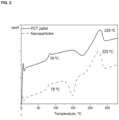
- Samples (5-10 mg) were analyzed in a N 2 atmosphere from 0°C to 290°C, at a speed of 10°C/min, as shown in Figure 2 . Measurements were performed by heating from 0 °C up to 290 °C at a heating speed of 10 °c/min. First, the temperature is lowered to 0 °c, then the first heating is performed up to 290 °C, which allows eliminating the thermal history of the material. Subsequently, the temperature is lowered back to 0 °C and heating is again performed up to 290 °C.
- Tg glass transition temperature
- Tf melting temperature
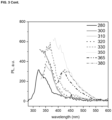
- the bathochromic shift (towards higher wavelengths) of the emission band is observed due to the appearance of new active species in fluorescence due to the induced aggregation state of the PCT nanoparticles.
- PCT particles 1 gram is dispersed in 1 liter of ethanol in an Elmasonic S40H ultrasonic bath at room temperature for 5 minutes.
- the dispersion is deposited by means of spraying on a single face of a PCT film, allowing the solvent to evaporate for at least 12 hours, obtaining PCT aggregates that are deposited on the PCT film.
- PCT aggregates are studied by environmental scanning electron microscopy (SEM), as well as by diffraction through light scattering (DLS) in Malvern ZetasizerNano-ZS90 equipment.
- SEM environmental scanning electron microscopy
- DLS diffraction through light scattering
- Malvern ZetasizerNano-ZS90 equipment Malvern ZetasizerNano-ZS90 equipment.
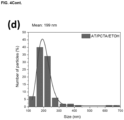
- the studies performed have allowed observing a spherical type aggregate morphology in the nanometer range (160-200 nm), although some aggregates of micrometric order can also be found in an isolated manner.
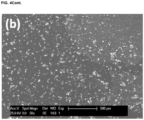
- Figure 4 shows the micrographs obtained by SEM of the PCT nanoparticles sprayed on a film made of the same material (PCT) using ethanol as a solvent.
- PCT aggregates maintains the actual transparency of the PCT film, resulting in a system that would not be detected visually ( Figure 7 ). Furthermore, by having the same composition and being the aggregates in a percentage by weight less than 1%, the chemical resistance properties of the sheet are maintained.
Landscapes
- Engineering & Computer Science (AREA)
- Chemical & Material Sciences (AREA)
- Organic Chemistry (AREA)
- Computer Security & Cryptography (AREA)
- Chemical Kinetics & Catalysis (AREA)
- Medicinal Chemistry (AREA)
- Polymers & Plastics (AREA)
- Health & Medical Sciences (AREA)
- Mechanical Engineering (AREA)
- Signal Processing (AREA)
- Computer Networks & Wireless Communication (AREA)
- Materials Engineering (AREA)
- Theoretical Computer Science (AREA)
- General Physics & Mathematics (AREA)
- Physics & Mathematics (AREA)
- Ceramic Engineering (AREA)
- Wrappers (AREA)
- Compositions Of Macromolecular Compounds (AREA)
- Detergent Compositions (AREA)
- Fats And Perfumes (AREA)
- Packages (AREA)
Abstract
Description
- The present invention relates to spherical aggregates of semi-crystalline thermoplastic polyester, poly(cyclohexylene dimethylene terephthalate), with a size distribution of between 160 nm and 200 nm which emit fluorescence in the region of the visible spectrum and are deposited on a thermoplastic aromatic polyester or thermoplastic polyolefin substrate. The present invention further relates to the process for obtaining said aggregates and to the use of said aggregates as a physically unclonable label, for identifying and/or tracing packaging for cosmetic and/or perfume products.
- Therefore, the present invention may be comprised within the field of anti-counterfeit packaging, particularly in the field of anti-counterfeit packaging for cosmetic and/or perfume products.
- The latest data from the Organization for Economic Cooperation and Development (OECD) reveals the exponential growth of counterfeits around the world. In 2018, international counterfeit and pirated trade accounted for 2.7% of trade worldwide (compared to 1.9% in 2005). In total, they represent about 500 billion Euros; roughly the equivalent of Austria's GDP. During the year 2018, counterfeiting and piracy caused losses of 85 billion Euros and 800,000 jobs in the European Union, reaching more than 8.8 billion Euros and 98,500 direct employments in Spain. Therefore, there are serious counterfeiting problems that threaten the health and safety of society, with significant economic consequences.
- At present there is a wide variety of packaging for cosmetics and perfumery. The designs are in accordance with the type of product they contain, making them suitable for better preserving the cosmetics, showing a better appearance, and being more appealing to the public.
- The most widely used materials in cosmetic packaging belong to the family of aromatic polyesters because they have excellent characteristics such as a high mechanical strength, chemical resistance, and transparency, which makes them suitable to enable storing cosmetics and perfumes. Compared to glass, materials belonging to the family of aromatic polyesters are cost-effective and malleable; being very versatile materials that allow obtaining packaging of different shapes and finishes. Furthermore, due to its low weight, packaging composed of this family of aromatic polyesters is easy and cost-effective to transport, and in turn complies with the collection and recycling system effectively.
- To talk about cosmetic and perfume traceability is to talk about safety. In order to achieve suitable protection of a product (in this case a packaging), good traceability from the origin to the consumer is necessary, in such a way as to ensure that the product (packaging) is not a counterfeit, that it is in good condition, and that it is not harmful to health, in other words, it meets the legal requirements for placement on the market. Furthermore, brand control by means of traceability of cosmetic and perfume products is essential to prevent economic losses and a loss of brand image.
- Therefore, there is a need to develop undetectable systems in the fight against counterfeiting, particularly against the counterfeiting of cosmetic and perfume packaging.
- Incorporating counterfeit labels into products having physically unclonable functions (PUFs) is a promising solution for product authentication. Physically unclonable functions (PUFs) are unique random physical labeling patterns that cannot be copied and must be manufactured by means of a stochastic process which, if read with a suitable analytical tool, can be recorded and stored. The present invention relates to the incorporation of fluorescent markers emitting in the region of the visible spectrum as a physically unclonable label for packaging of cosmetic and/or perfume products, in other words, for achieving traceability/identification of said packaging.
- Specifically, the first aspect of the present invention relates to transparent spherical aggregates deposited on a substrate comprising a thermoplastic aromatic polyester or a thermoplastic polyolefin (hereinafter, the aggregates of the invention) characterized by
- being composed of semi-crystalline thermoplastic polyester, poly(cyclohexylene dimethylene terephthalate)
- having at least a size distribution of between 160 nm and 200 nm
- and emitting fluorescence in the region of the visible spectrum corresponding to wavelengths of between 380nm and 526nm (blue), 493 nm and 585 nm (green), and between 585 nm and 710 nm (red), when irradiated at excitation wavelengths selected from 405 nm, 488 nm, and 561 nm, respectively.
- In the present invention, the substrate comprises or consists of a thermoplastic aromatic polyester or thermoplastic polyolefin. The word "comprises" refers herein to thermoplastic aromatic polyester substrates, thermoplastic polyolefin substrates, or substrates of the respective derivatives thereof. Furthermore, the variants thereof do not seek to exclude other additives or ingredients.
- In a second aspect, the present invention relates to a method for obtaining the aggregates of the present invention (hereinafter, the method of the invention), characterised in that it comprises the following steps:
- a) dissolving semi-crystalline thermoplastic polyester of poly(cyclohexylene dimethylene terephthalate) in the form of pellet,
- b) pouring the solution obtained in step (a) over a methanol solution at room temperature under magnetic stirring,
- c) collecting the precipitate formed in step (b) by means of filtration using a membrane having a pore size of between 0.2 µm and 0.5 µm,
- d) washing and drying the particles obtained in step (c),
- e) dispersing the particles obtained in step (d) in ethanol, wherein the concentration of the particles in the dispersion is between 0.001 g/l and 1 g/l, and
- f) depositing the dispersion obtained in step (e) on a substrate comprising a thermoplastic aromatic polyester or a thermoplastic polyolefin.
- Step (a) of the method of the invention refers to dissolving semi-crystalline thermoplastic polyester, poly(cyclohexylene dimethylene terephthalate), in the form of pellet. Examples of solvents which can be used in this step (a) are
- dimethylsulfoxide (DMSO),
- acids selected from the list consisting of trifluoroacetic acid (TFA), trichloroacetic acid (TCA), or the combination thereof,
- a combination of chloroform and acids selected from the list consisting of trifluoroacetic acid (TFA), trichloroacetic acid (TCA), or the combination thereof,
- dimethylformamide (DMF),
- a combination of dimethylformamide (DMF) and acids selected from the list consisting of trifluoroacetic acid (TFA), trichloroacetic acid (TCA), or the combination thereof,
- 1,1,1,3,3,3-hexafluoro-2-propanol, and
- chlorophenols selected from 2-chlorophenol and 4-chlorophenol.
- The temperature at which step (a) of the method is carried out is determined by the solvent used. For example, for acids and combinations thereof, the preferred temperature ranges are those corresponding to room temperature of between 18°C and 27°C; however, for DMSO, the temperature range is higher, Of between room temperature (between 18°C and 27°C) and 260°C.
- The solution obtained in step (a) is poured over a methanol solution which is at room temperature and under magnetic stirring, forming a precipitate. Said precipitate is collected by means of filtration using a membrane having a pore size of between 0.2 µm and 0.5 µm in step (c), thereby separating particles with a size larger than the pore size of the membrane.
- In step d), the particles obtained in step (c) are washed at room temperature (between 18°C and 27°C) and dried. Drying can be carried out at room temperature (between 18°C and 27°C) for long periods of time up to 72 h or under vacuum, wherein the periods of time are reduced to a value below 12 h. The maximum temperature at which drying can be carried out is the boiling temperature of methanol, i.e., 65°C, with or without vacuum.
- Step (e) refers to the dispersion of the particles obtained in step (d) in ethanol, wherein the concentration of the particles in the dispersion is between 0.001 g/l and 1 g/l, and step (f) refers to the deposition of the dispersion obtained in step (e) on a substrate comprising a thermoplastic aromatic polyester or a thermoplastic polyolefin.
- In a preferred embodiment of the method of the invention, deposition on a substrate comprising a thermoplastic aromatic polyester or a thermoplastic polyolefin of step (f) is carried out by means of the spray-coating technique, the bar-coating technique, the spin-coating technique, the slot-die coating technique, the inkjet printing technique, the drop coating technique, the electronic thermal printing technique, or the in-mold labeling technique.
- In a third aspect, the present invention relates to the use (hereinafter, the use of the invention) of
- the aggregates of the present invention
- of thermoplastic aromatic polyester selected from the list consisting of poly(cyclohexylene dimethylene terephthalate) or poly(ethylene terephthalate)
- or of thermoplastic polyolefin selected from the list consisting of polypropylene and polyethylene,
- are embedded in the packaging, and/or
- are deposited on an outer and/or inner surface of the packaging.
- It should be indicated that the introduction of the aggregates of the invention in a transparent packaging for cosmetic and/or perfume products
- of thermoplastic aromatic polyester selected from the list consisting of poly(cyclohexylene dimethylene terephthalate) or poly(ethylene terephthalate)
- or of thermoplastic polyolefin selected from the list consisting of polypropylene and polyethylene,
- In a preferred embodiment of the use of the invention, said use refers to the use of
- the aggregates of the present invention
- polypropylene or thermoplastic aromatic polyester selected from poly(cyclohexylene dimethylene terephthalate), or poly(ethylene terephthalate) and derivatives thereof,
- or of thermoplastic polyolefin selected from the list consisting of polypropylene, polyethylene, and derivatives thereof,
- are embedded in the packaging, and
- are deposited on an outer and/or inner surface of the packaging,
- The aggregates of the invention being able to be embedded in the packaging, and in turn deposited on an outer and/or inner surface of the packaging, represents an advantage given that, since said aggregates have a high quantum yield that entails a high photoluminiscence, they can be accommodated inside the material constituting the packaging without losing detection efficiency, and furthermore preventing contact with external oxidizing agents or different internal pH upon coming into contact with the product,.
- The surface presence of the aggregates of the invention in the packaging facilitates its processing at industrial level, as well as detection limits during the recognition and analysis of their photoluminiscent emission during signal coding and traceability protocol.
- The presence of the aggregates of the invention inside the packaging allows developing a complex signal coding system using some of the properties or functionalities of the fluid existing inside the packaging and emitting the photoluminiscent signal which allows the detection and specific coding thereof in the form of an unclonable pattern as new traceability and security system.
- For the identification and/or traceability of the fluorescent aggregates of the invention, in other words, which emit fluorescence in the region of the visible spectrum corresponding to wavelengths of between 380 nm and 526 nm (blue), 493 nm and 585 nm (green), and between 585 nm and 710 nm (red), when they are excited at excitation wavelengths selected from 405 nm, 488 nm, and 561 nm, respectively, conventional spectroscopy techniques such as UV-vis absorption, fluorimetry, or infrared can be used. These techniques allow knowing both the absorption/emission wavelengths and the intensity thereof.
- Some techniques for detecting fluorescent species allow calculating the time of the fluorescence lifetime which allows determining with greater precision the emitting species, and in turn the fluorescence decay time or lifetime. The time-correlated single-photon counting technique (TCSPC) is a technique which can be easily used for identifying the fluorescent aggregates of the invention. More specifically, a high-speed electronic photon counter with a resolution of several pixels capable of detecting light at extremely low levels provides excellent characteristics for counting photons with maximum performance. The smaller size of the intensifier tube (8-18 mm), its immunity to magnetic fields up to 3 Teslas, its quick transfer time (40 ps), and the possibility of coupling a photocathode, make it an optimal tool for the traceability/identification of packaging.
- Another technique for detecting the fluorescence of the aggregates of the invention could be flash photolysis spectroscopy which uses silicon photodiodes as detectors.
- The percentage by weight of the aggregates of the invention in the packaging is less than 1%. The introduction of the aggregates of the invention does not influence the chemical resistance properties of the packaging, since they are present in a minor proportion.
- In a more preferred embodiment of the use of the invention, the packaging is made of poly(cyclohexylene dimethylene terephthalate). The composition of the packaging and the composition of the aggregates of the invention being the same represents an advantage, given that recycling is facilitated; extraction or separation processes of the aggregates prior to recycling process, as occurs with fluorescent additives or loads differ from the composition of the packaging, are prevented.
- The multilayer technique uses different sheets of thermoplastic aromatic polyester or thermoplastic polyolefin to form a packaging, putting an adhesive between them and thereby creating a sandwich-type structure. Said sheets can then be formed to give them the desired design. In another preferred embodiment of the use of the present invention, the aggregates of the invention which are deposited on a substrate sheet of thermoplastic aromatic polyester or thermoplastic polyolefin are embedded in the packaging by means of multilayer techniques. The aggregates of the invention being embedded in the packaging represent an advantage, given that non-interaction with the cosmetic or perfume product and the impossibility of detachment are ensured.
- The aggregates of the invention are deposited on an outer or inner surface of the packaging
- of thermoplastic aromatic polyester selected from the list consisting of poly(cyclohexylene dimethylene terephthalate), poly(ethylene terephthalate), and derivatives thereof,
- or of thermoplastic polyolefin selected from the list consisting of polypropylene, polyethylene, and derivatives thereof,
- The aggregates of the invention can be deposited on an outer or inner surface of the packaging at industrial level by means of spraying techniques. Therefore, in another preferred embodiment of the use of the present invention, the aggregates of the invention are deposited on an outer or inner surface by means of the spray-coating technique, the bar-coating technique, the spin-coating technique, the slot-die coating technique, the inkjet printing technique, the drop coating technique, and the electronic thermal printing technique.
- Another technique for the aggregates of the invention to be on the outer or inner surface of the packaging would the in-mold labeling technique which consists of previously depositing the aggregates of the invention inside a mold by means of spraying (random deposition) or by means of inkjet printing (controlled deposition) and then adding
- thermoplastic aromatic polyester selected from the list consisting of poly(cyclohexylene dimethylene terephthalate), poly(ethylene terephthalate), and derivatives thereof
- or thermoplastic polyolefin selected from the list consisting of polypropylene, polyethylene, and derivatives thereof,
- Throughout the description and the claims, the word "comprises" and its variants do not intend to exclude other technical features, additives, components or steps. For those skilled in the art, other objects, advantages and features of the invention may be partially deduced from both the description and the embodiment of the invention. The following examples and figures are provided by way of illustration and are not intended to limit the present invention.
-
-
Figure 1 shows the infrared spectroscopy (ATR-FTIR) spectra of the PCT polymer and PCT nanoparticles. -
Figure 2 shows the differential scanning calorimetry (DSC) curves of the PCT polymer and PCT nanoparticles. -
Figure 3 shows the UV-vis and PL spectra (λexc.= 385 nm) in chloroform (a); and PL spectra at different excitation wavelengths in chloroform (b). -
Figure 4 shows SEM micrographs of films made of the PCT polymer (a) and PCT nanoparticles processed in ethanol (1 g/l) (b and c). The micrographs correspond to magnifications of between x50 and x8000. The graph shows the histogram of the size of the PCT nanoparticles shown in the micrographs (d). -
Figure 5 shows images obtained by means of confocal fluorescence microscopy for (a) film made of PCT polymer without excitation or brightfield microscopy (DIC); (b) film made of the PCT polymer with PCT aggregates which emit fluorescence in the region of the blue, green, and red spectrum visible when an excitation wavelength of 405 nm (c), 488 nm (d), and 561 nm (e), respectively. -
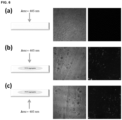
Figure 6 shows images obtained by means of confocal fluorescence microscopy corresponding to an excitation wavelength of 405 nm with the following results: absence of fluorescence emission in the film made of the PCT polymer (a), a blue fluorescence emission if it is directly excited on the PCT aggregates (b), and through the film made of the PCT polymer (c). -
Figure 7 shows the film made of PCT (left); film made of PCT with PCT aggregates (right). - Next, the invention will be illustrated by means of assays carried out by the inventors that demonstrate the effectiveness of the product of the invention.
- Particles are prepared by means of re-precipitation techniques. To that end, 1 gram of the semi-crystalline thermoplastic polyester, poly(cyclohexylene dimethylene terephthalate) (PCT), in the form of pellet (Eastman AN014) is dissolved in 50 milliliters of dimethylsulfoxide (DMSO) at 190 °C and left under magnetic stirring for 1 hour. Next, the hot solution is slowly poured into a beaker containing 500 milliliters of methanol at room temperature under vigorous magnetic stirring. The white precipitate is collected using a nylon 66 filtration membrane having a pore size of 0.45 µm, washed with 250 milliliters of methanol, and dried under vacuum at room temperature for 12 hours.
- Infrared spectroscopy (ATR) using a Perkin Elmer Spectrum One Fourier transform infrared spectrometer was used to perform qualitative study at the compositional level of the prepared PCT particles, performing scanning from 400 cm-1 up to 4000 cm-1 with a resolution of 1 cm-1. In
Figure 1 , the vibration bands of the chemical groups belonging to the PCT polymer chain are identified. Furthermore,Figure 1 shows the infrared spectrum of the PCT polymer in the forms of pellet provided by the industry (Eastar™ Copolyester AN014 from Eastman Chemical Company), where it can be seen that the vibration bands are the same. - The thermal properties of PCT particles were studied by means of differential scanning calorimetry (DSC) with a Netzsch DSC 214 calorimeter with standardized aluminum sample holders and lids. Samples (5-10 mg) were analyzed in a N2 atmosphere from 0°C to 290°C, at a speed of 10°C/min, as shown in
Figure 2 . Measurements were performed by heating from 0 °C up to 290 °C at a heating speed of 10 °c/min. First, the temperature is lowered to 0 °c, then the first heating is performed up to 290 °C, which allows eliminating the thermal history of the material. Subsequently, the temperature is lowered back to 0 °C and heating is again performed up to 290 °C. - From the differential scanning calorimetry (DSC) curves obtained, glass transition temperature (Tg) values of 78-79 °C and melting temperature (Tf) of 225 °C are obtained.
- Comparing the results obtained for the PCT particles with the pelleted PCT polymer, it is concluded that the glass transition temperature (Tg) values are almost identical and that the melting temperature is 4 °C lower for the PCT particles (225 °C), being 229 °C for the pelleted PCT polymer.
- The values obtained do not represent any drawback at industrial level when it comes to treating the nanoparticles with the molten PCT polymer, as explained in more detail in the in-molding type processing techniques.
- The photophysical properties of the synthesized PCT particles were analyzed by means of UV-visible (UV-vis) and fluorescence (PL) spectroscopies (
Figure 3 ). - From the spectra obtained by exciting the nanoparticles at different wavelengths using fluorescence spectroscopy, the bathochromic shift (towards higher wavelengths) of the emission band is observed due to the appearance of new active species in fluorescence due to the induced aggregation state of the PCT nanoparticles.
- Next, 1 gram of PCT particles is dispersed in 1 liter of ethanol in an Elmasonic S40H ultrasonic bath at room temperature for 5 minutes. The dispersion is deposited by means of spraying on a single face of a PCT film, allowing the solvent to evaporate for at least 12 hours, obtaining PCT aggregates that are deposited on the PCT film.
- The geometry and sizes of said PCT aggregates are studied by environmental scanning electron microscopy (SEM), as well as by diffraction through light scattering (DLS) in Malvern ZetasizerNano-ZS90 equipment. The studies performed have allowed observing a spherical type aggregate morphology in the nanometer range (160-200 nm), although some aggregates of micrometric order can also be found in an isolated manner.
-
Figure 4 shows the micrographs obtained by SEM of the PCT nanoparticles sprayed on a film made of the same material (PCT) using ethanol as a solvent. - Once the PCT particles were deposited on a PCT film by means of spray coating using an airbrush, the photophysical properties of the aggregates obtained were studied by fluorescence confocal microscopy (
Figure 5 ). - From the images appearing in
Figure 5 , two main results can be highlighted: - i) the total absence of fluorescence on the part of the PCT film, the measurement of which was performed in areas of the film that do not comprise PCT aggregates, and;
- ii) depending on the excitation wavelength, the PCT aggregates deposited on the PCT film emit in different zones of the visible spectrum. Using excitation lengths of 405, 488, and 561 nm, emissions are collected in the blue, green, and red, respectively.
- The dependence of the luminescence of the packaging has also been studied as a function of the face on which irradiation is carried out; in other words, irradiating the aggregates directly, or on the opposite face, irradiating the aggregates through the PCT polymer film (
Figure 6 ). As a result of the experiment, the same luminescence response was observed by irradiating both faces. - The introduction of PCT aggregates maintains the actual transparency of the PCT film, resulting in a system that would not be detected visually (
Figure 7 ). Furthermore, by having the same composition and being the aggregates in a percentage by weight less than 1%, the chemical resistance properties of the sheet are maintained.
Claims (8)
- Transparent spherical aggregates deposited on a substrate comprising a thermoplastic aromatic polyester or a thermoplastic polyolefin, characterized by• being composed of semi-crystalline thermoplastic polyester, poly(cyclohexylene dimethylene terephthalate),• having at least a size distribution of between 160 nm and 200 nm,• and emitting fluorescence in the region of the visible spectrum corresponding to wavelengths of between 380 nm and 526 nm, 493 nm and 585 nm, and between 585 nm and 710 nm, when they are excited at excitation wavelengths selected from 405 nm, 488 nm, and 561 nm, respectively.
- A method for obtaining the transparent spherical aggregates on a substrate comprising a thermoplastic aromatic polyester or a thermoplastic polyolefin according to claim 1, characterised in that it comprises the following steps:a) dissolving semi-crystalline thermoplastic polyester of poly(cyclohexylene dimethylene terephthalate) in the form of pellet,b) pouring the solution obtained in step (a) over a methanol solution at room temperature under magnetic stirring,c) collecting the precipitate formed in step (b) by means of filtration using a membrane having a pore size of between 0.2 µm and 0.5 µm,d) washing and drying the particles obtained in step (c),e) dispersing the particles obtained in step (d) in ethanol, wherein the concentration of the particles in the dispersion is between 0.001 g/l and 1 g/l, andf) depositing the dispersion obtained in step (e) on a substrate comprising a thermoplastic aromatic polyester or a thermoplastic polyolefin.
- The method according to claim 2, wherein the deposition on a substrate comprising a thermoplastic aromatic polyester or a thermoplastic polyolefin of step (f) is carried out by means of the spray-coating technique, the bar-coating technique, the spin-coating technique, the slot-die coating technique, the inkjet printing technique, the drop coating technique, the electronic thermal printing technique, or the in-mold labeling technique.
- Use of• a plurality of transparent spherical aggregates according to claim 1,as a physically unclonable label, for identifying and/or tracing transparent packaging for cosmetic and/or perfume products• of thermoplastic aromatic polyester selected from the list consisting of poly(cyclohexylene dimethylene terephthalate), poly(ethylene terephthalate), and derivatives thereof• or of thermoplastic polyolefin selected from the list consisting of polypropylene, polyethylene, and derivatives thereof,wherein said plurality of aggregates• are embedded in the packaging, and/or• are deposited on an outer and/or inner surface of the packaging and wherein the percentage by weight of the plurality of aggregates is less than 1% in the packaging.
- Use according to claim 4, wherein the packaging is made of poly(cyclohexylene dimethylene terephthalate).
- Use according to any of claims 4 to 5, wherein the plurality of transparent spherical aggregates is embedded in the packaging by means of multilayer techniques.
- Use according to any of claims 4 to 5, wherein the plurality of transparent spherical aggregates is deposited on an outer or inner surface of the packaging by means of the spray-coating technique, the bar-coating technique, the spin-coating technique, the slot-die coating technique, the inkjet printing technique, the drop coating technique, the electronic thermal printing technique, or the in-mold labeling technique.
- Use according to claim 7, wherein the plurality of transparent spherical aggregates is deposited on an inner and outer surface of the packaging by means of the in-mold labeling technique.
Applications Claiming Priority (2)
| Application Number | Priority Date | Filing Date | Title |
|---|---|---|---|
| ES202130028A ES2918583B2 (en) | 2021-01-19 | 2021-01-19 | FLUORESCENT AGGREGATES OF POLY(CYCLOHEXYLENDIMETHYLENE TEREPTHALATE), PROCEDURE FOR OBTAINING AND USE AS A PHYSICALLY NON-CLONEABLE LABEL TO IDENTIFY AND/OR TRACE PACKAGING FOR COSMETIC PRODUCTS AND/OR PERFUMES |
| PCT/ES2022/070023 WO2022157407A1 (en) | 2021-01-19 | 2022-01-19 | Fluorescent aggregates of poly(cyclohexylene dimethylene terephthalate), method for obtaining same, and use thereof as a physically unclonable label for identifying and/or tracing packaging for cosmetic and/or perfume products |
Publications (4)
| Publication Number | Publication Date |
|---|---|
| EP4282897A1 true EP4282897A1 (en) | 2023-11-29 |
| EP4282897A4 EP4282897A4 (en) | 2024-11-27 |
| EP4282897C0 EP4282897C0 (en) | 2025-12-10 |
| EP4282897B1 EP4282897B1 (en) | 2025-12-10 |
Family
ID=82402516
Family Applications (1)
| Application Number | Title | Priority Date | Filing Date |
|---|---|---|---|
| EP22742314.2A Active EP4282897B1 (en) | 2021-01-19 | 2022-01-19 | Fluorescent aggregates of poly(cyclohexylene dimethylene terephthalate), method for obtaining same, and use thereof as a physically unclonable label for identifying and/or tracing packaging for cosmetic and/or perfume products |
Country Status (4)
| Country | Link |
|---|---|
| US (1) | US20250197716A1 (en) |
| EP (1) | EP4282897B1 (en) |
| ES (2) | ES2918583B2 (en) |
| WO (1) | WO2022157407A1 (en) |
Family Cites Families (8)
| Publication number | Priority date | Publication date | Assignee | Title |
|---|---|---|---|---|
| DE502005005905D1 (en) * | 2005-10-26 | 2008-12-18 | Alcan Tech & Man Ltd | Object with a printed image |
| WO2010140611A1 (en) * | 2009-06-05 | 2010-12-09 | 東レ株式会社 | Polyester film, laminated film, and solar-cell back sheet and solar cell both including same |
| FR2992970B1 (en) * | 2012-07-09 | 2014-07-04 | Commissariat Energie Atomique | USE OF LANTHANIDE COMPLEXES FOR THE OPTICAL MARKING OF PRODUCTS |
| EP3296326A4 (en) * | 2015-05-08 | 2018-12-19 | Nisshinbo Holdings Inc. | Flat elliptical polymer particles, and use thereof |
| KR101712844B1 (en) * | 2015-07-31 | 2017-03-23 | 주식회사 휴비스 | Shaped cross-section hollow fiber and fibrous Assemblies using thereof for high heat-resistance |
| WO2018006389A1 (en) * | 2016-07-08 | 2018-01-11 | 吕尚文 | Composite anti-counterfeiting film |
| CN208093035U (en) * | 2018-04-10 | 2018-11-13 | 深圳市裕同包装科技股份有限公司 | The anti-counterfeiting mark of bore hole 3D |
| US11194094B2 (en) * | 2018-11-05 | 2021-12-07 | Case Western Reserve University | Multilayered structures and uses thereof in security markings |
-
2021
- 2021-01-19 ES ES202130028A patent/ES2918583B2/en active Active
-
2022
- 2022-01-19 EP EP22742314.2A patent/EP4282897B1/en active Active
- 2022-01-19 US US18/271,783 patent/US20250197716A1/en active Pending
- 2022-01-19 ES ES22742314T patent/ES3059503T3/en active Active
- 2022-01-19 WO PCT/ES2022/070023 patent/WO2022157407A1/en not_active Ceased
Also Published As
| Publication number | Publication date |
|---|---|
| EP4282897C0 (en) | 2025-12-10 |
| WO2022157407A1 (en) | 2022-07-28 |
| ES3059503T3 (en) | 2026-03-20 |
| ES2918583B2 (en) | 2023-02-20 |
| EP4282897B1 (en) | 2025-12-10 |
| EP4282897A4 (en) | 2024-11-27 |
| ES2918583A1 (en) | 2022-07-19 |
| US20250197716A1 (en) | 2025-06-19 |
Similar Documents
| Publication | Publication Date | Title |
|---|---|---|
| JP6976348B2 (en) | Coating material for plastic marking, plastic marking method, and identification method of marked plastic | |
| CN102257539B (en) | Marking codes determined by size | |
| CN101412859B (en) | Flake for covert security applications | |
| TWI284659B (en) | Tagged resin, method of making a tagged resin, and articles made therefrom | |
| CN104231746B (en) | Inkjet ink composition | |
| RU2587069C2 (en) | Permanent colouring of lacquer-coated protected documents | |
| CN103044971A (en) | Diffractive surfaces with color shifting backgrounds | |
| DE102014207318B4 (en) | Identification feature with several identification elements arranged in a defined, limited area for identifying an object | |
| KR20240035393A (en) | Recycled heat shrink film for recycling containers | |
| EP4282897B1 (en) | Fluorescent aggregates of poly(cyclohexylene dimethylene terephthalate), method for obtaining same, and use thereof as a physically unclonable label for identifying and/or tracing packaging for cosmetic and/or perfume products | |
| Lee et al. | Selective fluorescent and colorimetric staining of polyurethane microplastics by using a solvatochromic-based dye applicable to environmental samples: Experimental and theoretical implication to adsorption mechanism | |
| López-Manchado et al. | Fluorescent aggregates of poly (cyclohexylene dimethylene terephthalate), method for obtaining same, and use thereof as a physically unclonable label for identifying and/or tracing packaging for cosmetic and/or perfume products | |
| KR20160100357A (en) | Method for producing a marking | |
| Pilon et al. | Removable Identification Technology to Differentiate Food Contact PET in Mixed Waste Streams: Interim Report | |
| KR102647179B1 (en) | Milk Lumilux Dispersion | |
| WO2022112209A1 (en) | Method for labelling products with an optical security feature with a temporal dimension | |
| EP2930662A1 (en) | Bar code holder particle, preparation and use | |
| WO2025119971A1 (en) | Film | |
| HK1203539B (en) | Inkjet ink composition | |
| KR20160077706A (en) | Ink for anti-counterfeiting by using phosphor complex, and the use thereof |
Legal Events
| Date | Code | Title | Description |
|---|---|---|---|
| STAA | Information on the status of an ep patent application or granted ep patent |
Free format text: STATUS: THE INTERNATIONAL PUBLICATION HAS BEEN MADE |
|
| PUAI | Public reference made under article 153(3) epc to a published international application that has entered the european phase |
Free format text: ORIGINAL CODE: 0009012 |
|
| STAA | Information on the status of an ep patent application or granted ep patent |
Free format text: STATUS: REQUEST FOR EXAMINATION WAS MADE |
|
| 17P | Request for examination filed |
Effective date: 20230804 |
|
| AK | Designated contracting states |
Kind code of ref document: A1 Designated state(s): AL AT BE BG CH CY CZ DE DK EE ES FI FR GB GR HR HU IE IS IT LI LT LU LV MC MK MT NL NO PL PT RO RS SE SI SK SM TR |
|
| DAV | Request for validation of the european patent (deleted) | ||
| DAX | Request for extension of the european patent (deleted) | ||
| REG | Reference to a national code |
Ref country code: DE Ref legal event code: R079 Free format text: PREVIOUS MAIN CLASS: C08G0063199000 Ipc: C09K0011060000 Ref country code: DE Ref legal event code: R079 Ref document number: 602022026608 Country of ref document: DE Free format text: PREVIOUS MAIN CLASS: C08G0063199000 Ipc: C09K0011060000 |
|
| A4 | Supplementary search report drawn up and despatched |
Effective date: 20241025 |
|
| RIC1 | Information provided on ipc code assigned before grant |
Ipc: H04L 9/32 20060101ALI20241021BHEP Ipc: H04L 9/08 20060101ALI20241021BHEP Ipc: G09F 3/00 20060101ALI20241021BHEP Ipc: C08G 63/199 20060101ALI20241021BHEP Ipc: C08G 63/183 20060101ALI20241021BHEP Ipc: B65D 1/02 20060101ALI20241021BHEP Ipc: C09K 11/06 20060101AFI20241021BHEP |
|
| GRAP | Despatch of communication of intention to grant a patent |
Free format text: ORIGINAL CODE: EPIDOSNIGR1 |
|
| STAA | Information on the status of an ep patent application or granted ep patent |
Free format text: STATUS: GRANT OF PATENT IS INTENDED |
|
| INTG | Intention to grant announced |
Effective date: 20250711 |
|
| GRAS | Grant fee paid |
Free format text: ORIGINAL CODE: EPIDOSNIGR3 |
|
| GRAA | (expected) grant |
Free format text: ORIGINAL CODE: 0009210 |
|
| STAA | Information on the status of an ep patent application or granted ep patent |
Free format text: STATUS: THE PATENT HAS BEEN GRANTED |
|
| AK | Designated contracting states |
Kind code of ref document: B1 Designated state(s): AL AT BE BG CH CY CZ DE DK EE ES FI FR GB GR HR HU IE IS IT LI LT LU LV MC MK MT NL NO PL PT RO RS SE SI SK SM TR |
|
| REG | Reference to a national code |
Ref country code: CH Ref legal event code: F10 Free format text: ST27 STATUS EVENT CODE: U-0-0-F10-F00 (AS PROVIDED BY THE NATIONAL OFFICE) Effective date: 20251210 Ref country code: GB Ref legal event code: FG4D |
|
| REG | Reference to a national code |
Ref country code: DE Ref legal event code: R096 Ref document number: 602022026608 Country of ref document: DE |
|
| REG | Reference to a national code |
Ref country code: IE Ref legal event code: FG4D |
|
| U01 | Request for unitary effect filed |
Effective date: 20260108 |
|
| U07 | Unitary effect registered |
Designated state(s): AT BE BG DE DK EE FI FR IT LT LU LV MT NL PT RO SE SI Effective date: 20260114 |
|
| U20 | Renewal fee for the european patent with unitary effect paid |
Year of fee payment: 5 Effective date: 20260116 |
|
| REG | Reference to a national code |
Ref country code: ES Ref legal event code: FG2A Ref document number: 3059503 Country of ref document: ES Kind code of ref document: T3 Effective date: 20260320 |
|
| PGFP | Annual fee paid to national office [announced via postgrant information from national office to epo] |
Ref country code: ES Payment date: 20260206 Year of fee payment: 5 |
|
| PG25 | Lapsed in a contracting state [announced via postgrant information from national office to epo] |
Ref country code: NO Free format text: LAPSE BECAUSE OF FAILURE TO SUBMIT A TRANSLATION OF THE DESCRIPTION OR TO PAY THE FEE WITHIN THE PRESCRIBED TIME-LIMIT Effective date: 20260310 |
|
| PG25 | Lapsed in a contracting state [announced via postgrant information from national office to epo] |
Ref country code: HR Free format text: LAPSE BECAUSE OF FAILURE TO SUBMIT A TRANSLATION OF THE DESCRIPTION OR TO PAY THE FEE WITHIN THE PRESCRIBED TIME-LIMIT Effective date: 20251210 |
|
| PGFP | Annual fee paid to national office [announced via postgrant information from national office to epo] |
Ref country code: AT Payment date: 20260301 Year of fee payment: 5 |
|
| PG25 | Lapsed in a contracting state [announced via postgrant information from national office to epo] |
Ref country code: RS Free format text: LAPSE BECAUSE OF FAILURE TO SUBMIT A TRANSLATION OF THE DESCRIPTION OR TO PAY THE FEE WITHIN THE PRESCRIBED TIME-LIMIT Effective date: 20260310 |
|
| PG25 | Lapsed in a contracting state [announced via postgrant information from national office to epo] |
Ref country code: SM Free format text: LAPSE BECAUSE OF FAILURE TO SUBMIT A TRANSLATION OF THE DESCRIPTION OR TO PAY THE FEE WITHIN THE PRESCRIBED TIME-LIMIT Effective date: 20251210 |
|
| PG25 | Lapsed in a contracting state [announced via postgrant information from national office to epo] |
Ref country code: PL Free format text: LAPSE BECAUSE OF FAILURE TO SUBMIT A TRANSLATION OF THE DESCRIPTION OR TO PAY THE FEE WITHIN THE PRESCRIBED TIME-LIMIT Effective date: 20251210 |
|
| PG25 | Lapsed in a contracting state [announced via postgrant information from national office to epo] |
Ref country code: IS Free format text: LAPSE BECAUSE OF FAILURE TO SUBMIT A TRANSLATION OF THE DESCRIPTION OR TO PAY THE FEE WITHIN THE PRESCRIBED TIME-LIMIT Effective date: 20260410 |
|
| PG25 | Lapsed in a contracting state [announced via postgrant information from national office to epo] |
Ref country code: CZ Free format text: LAPSE BECAUSE OF FAILURE TO SUBMIT A TRANSLATION OF THE DESCRIPTION OR TO PAY THE FEE WITHIN THE PRESCRIBED TIME-LIMIT Effective date: 20251210 |
|
| PG25 | Lapsed in a contracting state [announced via postgrant information from national office to epo] |
Ref country code: SK Free format text: LAPSE BECAUSE OF FAILURE TO SUBMIT A TRANSLATION OF THE DESCRIPTION OR TO PAY THE FEE WITHIN THE PRESCRIBED TIME-LIMIT Effective date: 20251210 |