EP4282536A1 - Sorting and compacting system for an aircraft - Google Patents
Sorting and compacting system for an aircraft Download PDFInfo
- Publication number
- EP4282536A1 EP4282536A1 EP22174987.2A EP22174987A EP4282536A1 EP 4282536 A1 EP4282536 A1 EP 4282536A1 EP 22174987 A EP22174987 A EP 22174987A EP 4282536 A1 EP4282536 A1 EP 4282536A1
- Authority
- EP
- European Patent Office
- Prior art keywords
- waste
- aircraft
- lid
- collecting chamber
- chamber
- Prior art date
- Legal status (The legal status is an assumption and is not a legal conclusion. Google has not performed a legal analysis and makes no representation as to the accuracy of the status listed.)
- Withdrawn
Links
Images


Classifications
-
- B—PERFORMING OPERATIONS; TRANSPORTING
- B02—CRUSHING, PULVERISING, OR DISINTEGRATING; PREPARATORY TREATMENT OF GRAIN FOR MILLING
- B02C—CRUSHING, PULVERISING, OR DISINTEGRATING IN GENERAL; MILLING GRAIN
- B02C23/00—Auxiliary methods or auxiliary devices or accessories specially adapted for crushing or disintegrating not provided for in preceding groups or not specially adapted to apparatus covered by a single preceding group
- B02C23/08—Separating or sorting of material, associated with crushing or disintegrating
- B02C23/10—Separating or sorting of material, associated with crushing or disintegrating with separator arranged in discharge path of crushing or disintegrating zone
-
- B—PERFORMING OPERATIONS; TRANSPORTING
- B02—CRUSHING, PULVERISING, OR DISINTEGRATING; PREPARATORY TREATMENT OF GRAIN FOR MILLING
- B02C—CRUSHING, PULVERISING, OR DISINTEGRATING IN GENERAL; MILLING GRAIN
- B02C19/00—Other disintegrating devices or methods
- B02C19/0056—Other disintegrating devices or methods specially adapted for specific materials not otherwise provided for
- B02C19/0081—Other disintegrating devices or methods specially adapted for specific materials not otherwise provided for specially adapted for breaking-up bottles
- B02C19/0087—Other disintegrating devices or methods specially adapted for specific materials not otherwise provided for specially adapted for breaking-up bottles for glass bottles
-
- B—PERFORMING OPERATIONS; TRANSPORTING
- B02—CRUSHING, PULVERISING, OR DISINTEGRATING; PREPARATORY TREATMENT OF GRAIN FOR MILLING
- B02C—CRUSHING, PULVERISING, OR DISINTEGRATING IN GENERAL; MILLING GRAIN
- B02C19/00—Other disintegrating devices or methods
- B02C19/0056—Other disintegrating devices or methods specially adapted for specific materials not otherwise provided for
- B02C19/0081—Other disintegrating devices or methods specially adapted for specific materials not otherwise provided for specially adapted for breaking-up bottles
-
- B—PERFORMING OPERATIONS; TRANSPORTING
- B02—CRUSHING, PULVERISING, OR DISINTEGRATING; PREPARATORY TREATMENT OF GRAIN FOR MILLING
- B02C—CRUSHING, PULVERISING, OR DISINTEGRATING IN GENERAL; MILLING GRAIN
- B02C23/00—Auxiliary methods or auxiliary devices or accessories specially adapted for crushing or disintegrating not provided for in preceding groups or not specially adapted to apparatus covered by a single preceding group
- B02C23/02—Feeding devices
-
- B—PERFORMING OPERATIONS; TRANSPORTING
- B02—CRUSHING, PULVERISING, OR DISINTEGRATING; PREPARATORY TREATMENT OF GRAIN FOR MILLING
- B02C—CRUSHING, PULVERISING, OR DISINTEGRATING IN GENERAL; MILLING GRAIN
- B02C23/00—Auxiliary methods or auxiliary devices or accessories specially adapted for crushing or disintegrating not provided for in preceding groups or not specially adapted to apparatus covered by a single preceding group
- B02C23/08—Separating or sorting of material, associated with crushing or disintegrating
-
- B—PERFORMING OPERATIONS; TRANSPORTING
- B64—AIRCRAFT; AVIATION; COSMONAUTICS
- B64D—EQUIPMENT FOR FITTING IN OR TO AIRCRAFT; FLIGHT SUITS; PARACHUTES; ARRANGEMENT OR MOUNTING OF POWER PLANTS OR PROPULSION TRANSMISSIONS IN AIRCRAFT
- B64D11/00—Passenger or crew accommodation; Flight-deck installations not otherwise provided for
- B64D11/0007—Devices specially adapted for food or beverage distribution services
-
- B—PERFORMING OPERATIONS; TRANSPORTING
- B65—CONVEYING; PACKING; STORING; HANDLING THIN OR FILAMENTARY MATERIAL
- B65F—GATHERING OR REMOVAL OF DOMESTIC OR LIKE REFUSE
- B65F1/00—Refuse receptacles; Accessories therefor
- B65F1/0033—Refuse receptacles; Accessories therefor specially adapted for segregated refuse collecting, e.g. receptacles with several compartments; Combination of receptacles
-
- B—PERFORMING OPERATIONS; TRANSPORTING
- B65—CONVEYING; PACKING; STORING; HANDLING THIN OR FILAMENTARY MATERIAL
- B65F—GATHERING OR REMOVAL OF DOMESTIC OR LIKE REFUSE
- B65F2210/00—Equipment of refuse receptacles
- B65F2210/12—Crushing means
-
- B—PERFORMING OPERATIONS; TRANSPORTING
- B65—CONVEYING; PACKING; STORING; HANDLING THIN OR FILAMENTARY MATERIAL
- B65F—GATHERING OR REMOVAL OF DOMESTIC OR LIKE REFUSE
- B65F2240/00—Types of refuse collected
- B65F2240/112—Bottles
-
- B—PERFORMING OPERATIONS; TRANSPORTING
- B65—CONVEYING; PACKING; STORING; HANDLING THIN OR FILAMENTARY MATERIAL
- B65F—GATHERING OR REMOVAL OF DOMESTIC OR LIKE REFUSE
- B65F2240/00—Types of refuse collected
- B65F2240/12—Cans
Definitions
- this disclosure relates to sorting and compacting systems for aircraft.
- this disclosure related to a trash sorting and compacting system for an aircraft.
- Aircraft waste may arise, for instance, from beverages being served and consumed in-flight. Simply collecting waste to an aircraft trolley or galley insert results in a plurality of bulky plastic bags, which need to be stored and disposed of safely. Although some aircraft use waste compaction systems, they do not provide for sorting, compacting and storing different materials. The conventional techniques have been considered unsatisfactory for their intended purpose. Therefore, there is an ever-present need for improved systems for more efficient compacting and environmentally friendly collecting and sorting methods on aircraft to facilitate recycling.
- a system for sorting and compacting waste on an aircraft includes a waste management system and the waste management system comprises at least one opening to receive waste, at least one crushing chamber configured to crush the waste, and at least one collecting chamber configured to collect the crushed waste provided by the at least one crushing chamber.
- the at least one opening may be configured to receive at least one of: a glass bottle, a plastic bottle and/or a metal can, and the waste may comprise at least one of: a glass bottle, a plastic bottle and/or a metal can.
- the at least one crushing chamber may include a crushing mechanism.
- the at least one opening may include a first lid and the system may further comprise a first detector configured to determine if the first lid is closed or not.
- the system may further comprise a second detector configured to determine that the waste is at least one of: the glass bottle, the plastic bottle and/or the metal can.
- the system may further comprise a second lid configured to allow the crushed waste to pass into the at least one collecting chamber.
- the second lid may be a grid/mesh.
- the system may further comprise a third detector configured to determine if the at least one collecting chamber is full.
- the system may further comprise a liquid collecting chamber.
- the at least one crushing chamber may include a first surface and a second surface.
- the first surface may be configured to extend into the at least one crushing chamber such that the waste can be guided over the first surface to the second surface.
- the system may further comprise a human-machine interface.
- the at least one opening may include a can opening and a bottle opening.
- a method for sorting and compacting waste on an aircraft includes inserting waste into at least one opening provided in a waste management system, crushing the waste in at least one crushing chamber, and collecting the crushed waste in at least one collecting chamber.
- the method may include determining, by a first detector, if a first lid of the at least one opening is closed or not.
- the method may further include determining, by a second detector, that the waste is at least one of: the glass bottle, the plastic bottle and/or the metal can.
- the method may further include determining if an at least one collecting chamber is full, wherein the at least one collecting chamber collect crushed waste.
- the method may further include guiding waste over a first surface to a second surface of the at least one crushing chamber.
- this disclosure relates to sorting, compacting and storing different waste materials.
- passengers may drink beverages from cans or bottles, and cabin crew may serve passengers drinks in-flight from cans or bottles. It is desirable to reduce the amount of waste produced in-flight and to provide an aircraft trolley or insert to sort and compact waste.
- this disclosure provides a separate section in the aircraft trolley (or insert) to compact cans and/or to shatter bottles to reduce the waste volume after consumption.
- FIG. 1 shows an example of an aircraft waste management system 100.
- the aircraft waste management system 100 includes an aircraft trolley 102. It is to be noted that the aircraft trolley 102 could also be a permanent insert and/or attached to a permanent insert in an aircraft galley and is thus not just limited to the aircraft trolley 102.
- a cross-section of the aircraft trolley 102 is represented by line A.
- the cross-section A provides a can compacting system that is integrated within the aircraft trolley 102.
- the aircraft trolley 102 may include a lid 110.
- the lid 110 may be slideable or hinged in order to open the lid to insert a can 104.
- the can 104 may be a standard can of up to 330ml size. However, the can may be of any shape and size that is known in the art.
- the lid detector 112 may alert the user when the lid 110 is not closed properly.
- a crushing chamber 114 is provided to receive the can 104. As shown in Figure 1 , the crushing chamber 114 is arranged to receive a can 104 in a sideways position. However, it is envisaged that the crushing chamber 114 may also be adapted to receive the can 104 in an upright configuration.
- the can detector 116 may also detect when an item that is not a can has been inserted into the crushing chamber 114 (e.g. an obstruction) and the can detector 116 may inform the user that a can has not been inserted properly or that something other than a can has been inserted into the crushing chamber 114.
- the user can then remove the material and re-insert a can.
- the material can be re-directed into a general waste bin (not shown) which may form part of the trolley.
- the can detector 116 may also detect other compositions and inform the user when a material other than metal has been inserted into the crushing chamber 114. If the can 104 is successfully inserted and it is determined that the can 104 is made from the correct material, the crushing chamber 114 includes a crushing mechanism (not shown) that will apply a force (e.g. in the direction of the arrow) to crush the can 104. This therefore provides an automatic detection and crushing mechanism for cans on aircraft within an aircraft trolley and/or an insert in the galley.
- the can 104 may be able to fall into a collecting chamber 120 through a gap 115. Due to the force of gravity, the can 104 will fall into the collecting chamber 120 and the waste 122 is stored in the collecting chamber 120. There may be provided a further detector 118 to determine if the collecting chamber 120 is full. It is envisaged that the collecting chamber 120 may be removed and stored for disposal of the can waste 122. Further, if the collecting chamber 120 becomes full in-flight, it would be possible to remove a full collecting chamber 120 and replace this with an empty collecting chamber 120 for further collection of waste. The full collecting chamber 120 would then be able to be stored until the aircraft has landed and until the general waste is removed by operations teams on the ground. Although not shown in Figure 1 , it is also envisaged that there could be a liquid container provided underneath the collecting chamber 120 to collect residual liquid that may be expelled from the crushed cans. This is discussed in more detail below with reference to Figure 3 .
- Figure 1 shows an aircraft waste management system 100 that is directed to metal cans, it is envisaged also, or as an alternative, that the aircraft waste management system 100 could crush (or compact) plastic bottles.
- FIG. 2 shows an example of an aircraft waste management system 200.
- the aircraft waste management system 200 includes an aircraft trolley 202.
- the aircraft trolley 202 could also be a permanent insert in an aircraft galley and is thus not just limited to the aircraft trolley 202.
- a cross-section of the aircraft trolley 202 is represented by line B.
- the cross-section B provides a glass compacting system that is integrated within the aircraft trolley 202.
- integrated compacting systems it is to be understood that they could also be modular to be added to an aircraft trolley and/or a permanent insert in the galley.
- the aircraft trolley 202 may include a first lid 206.
- the first lid 206 may be slideable or hinged in order to open the lid to insert a glass bottle 204.
- the glass bottle 204 may be a standard glass bottle of up to 750ml in size. However, the glass bottle may be of any shape and size that is known in the art. Of course, there may not be a lid and, instead, there may be an opening for receiving a glass bottle at reference number 206. There may be provided a lid detector 208 to ensure that the lid 206 is closed safely or not. The lid detector 208 may alert the user when the lid 206 is not closed properly.
- a crushing chamber 212 is provided to receive the glass bottle 204. As shown in Figure 2 , the crushing chamber 212 is arranged to receive the glass bottle 204 in an upright position. However, it is envisaged that the crushing chamber 212 may also be adapted to receive the glass bottle 204 in a sideways configuration.
- a glass bottle detector 210 that can safely detect when a glass bottle 204 is inserted into the crushing chamber 212.
- the glass bottle detector 210 may also detect when an item that is not a glass bottle has been inserted into the crushing chamber 212 (e.g. an obstruction) and the glass bottle detector 210 may inform the user that a glass bottle has not been inserted properly or that something other than a glass bottle has been inserted into the crushing chamber 212.
- the user can then remove the material and re-insert a glass bottle.
- the material can be re-directed into a general waste bin (not shown) which may form part of the trolley.
- the glass bottle detector 210 may also detect other compositions and inform the user when a material other than glass has been inserted into the crushing chamber 212. If the glass bottle 204 is successfully inserted and it is determined that the glass bottle 204 is made from the correct material, the crushing chamber 212 includes a crushing mechanism (not shown) that will apply a force (e.g. in the direction of the arrow) to crush (e.g. shatter) the glass bottle 204. This therefore provides an automatic detection and crushing mechanism for glass bottles on aircraft within an aircraft trolley and/or an insert in the galley.
- a second lid 214 at the opposite end of the first lid 206 of the crushing chamber 212.
- the second lid 214 leads to a collection chamber 218.
- the second lid 214 may open automatically such that the glass pieces (cullet) 204 is able to fall into the collecting chamber 218. Due to the force of gravity, the glass pieces 204 will fall into the collecting chamber 218 when the second lid 214 is opened and the waste 220 is stored in the collecting chamber 218.
- the second lid 214 may be a grid or mesh to allow the glass pieces (cullet) fall into the collecting chamber 218.
- the collecting chamber 218 may be removed and stored for disposal of the glass bottle waste 220. Further, if the collecting chamber 218 becomes full in-flight, it would be possible to remove a full collecting chamber 218 and replace this with an empty collecting chamber 218 for further collection of waste. The full collecting chamber 218 would then be able to be stored until the aircraft has landed and until the general waste is removed by operations teams on the ground. Although not shown in Figure 2 , it is also envisaged that there could be a liquid container provided underneath the collecting chamber 218 to collect residual liquid that may be expelled from the crushed bottles. This is discussed in more detail below with reference to Figure 3 .
- a human-machine interface provided on the aircraft trolley 102, 202 to inform the user of the detection of incorrect material and/or the detection that the collecting chambers 120, 218 are full, and/or the detection that any of the lid 110, first lid 206 and/or second lid 214 are not closed properly.
- FIG 3 shows a further example of an aircraft waste management system 300.
- the aircraft waste management system includes an aircraft trolley 300.
- the aircraft trolley 301 could also be a permanent insert in an aircraft galley and is thus not just limited to the aircraft trolley 301.
- the aircraft trolley 301 may include a residual waste chamber 310 for, as an example, food waste.
- the aircraft trolley 301 may also include a cup chamber 312 for receiving used plastic and/or paper cups.
- the cup chamber 312 extends (for example, as a hollow tube) through the aircraft trolley 301 to receive a plurality of plastic and/or paper cups.
- the can opening 314 and the glass bottle opening 316 may also include a lid (not shown) as described in relation to Figures 1 and 2 .
- the aircraft trolley 301 generally includes at least one crushing chamber 302 and at least one collecting chamber 304, as described above in relation to Figures 1 and 2 .
- a liquid collecting chamber 306 to collect residual liquid expelled from crushed cans and/or glass bottles. It is noted that the liquid collecting chamber 306 could extend across both the can and glass bottle waste systems, but could also be separated by a wall 306' for collecting liquid from either the can and/or the glass bottle waste systems.
- the at least one crushing chamber 302, the at least one collecting chamber 304 and the liquid collecting chamber 306 are integrated into the aircraft trolley. Of course, they may also be provided in a modular fashion. It is envisaged that the at least one collecting chamber 304 and the liquid collecting chamber 306 are removable to remove and dispose of the waste collected therein.
- a can (not shown) may fall into the can crushing chamber 302a.
- Figure 3 shows a can crushing chamber 302a that is directed to metal cans, it is envisaged also, or as an alternative, that the can crushing chamber 302a could crush (or compact) plastic bottles.
- a glass bottle (not shown) may fall into the glass bottle crushing chamber 302b.
- the crushing chambers 302a and 302b have crushing mechanisms (not shown) and provide the same function as the crushing chamber 114 and the crushing chamber 212 described above in relation to Figures 1 and 2 .
- the can waste enters a can waste collecting chamber 304a and the glass bottle waste enters a glass bottle waste collecting chamber 304b.
- a filter 305 At the bottom of the can waste collecting chamber 304a and the glass bottle waste collecting chamber 304b, there is provided a filter 305 to allow residual liquid to pass through the filter 305 and into the liquid collecting chamber 306.
- the trolley 301 may also include a sink that is connected to the liquid collecting chamber 306.
- a cabin attendant or user of the trolley 301 would be able to empty the contents of a glass bottle or a metal can into the sink such that liquid waste may be collected in the liquid collecting chamber 306.
- liquid waste could refer to waste liquid and/or unused ice cubes.
- various detectors may be included in the aircraft trolley 301 to determine if the correct material has been inserted into the crushing chamber 302 and also to determine if the at least one lid of the can opening 314 and/or glass bottle opening 316 is safely open or closed. There may also be provided a detector (not shown) in the collecting chamber 304 to determine if the collecting chamber 304 is full. Further, there may also be provided a detector (not shown) in the liquid collecting chamber 306 to determine if the liquid collecting chamber 306 is full.
- a human-machine interface to inform the user of the detection of incorrect material and/or the detection that the collecting chamber 304 and/or the liquid collecting chamber 306 are full, and/or the detection that the lid of the at least one can opening 314 and/or glass bottle opening 316 is not closed and/or open safely.
- FIG. 4 shows a further example of a waste management system 400.
- the waste management system 400 may include a crushing chamber 408.
- the crushing chamber may include a first surface 412 to receive a glass or plastic bottle and/or metal can 402.
- the first surface 412 extends into the crushing chamber 408 such that the glass or plastic bottle and/or metal can can roll to a second surface 414.
- the first surface 412 may act as a first lid and may be hinged to an inner surface of the crushing chamber 408 such that the first lid may be pushed down on insertion of a glass bottle.
- the second surface 414 guides the glass or plastic bottle and/or metal can to a second lid 416.
- the first surface 412 and the second surface 414 therefore act as a 'marble-run' type configuration to guide the glass bottle 402 safely to a position on the second lid 416 to be crushed.
- the crushing chamber 408 includes a crushing mechanism (not shown) to crush the glass or plastic bottle and/or metal can 402 when it is determined that the glass or plastic bottle and/or metal can 402 is safely adjacent to the second lid 416.
- the second lid 416 may open to allow the glass, plastic and/or can waste to fall into a collecting chamber 418.
- the second lid 416 may be a grid or mesh to allow the glass pieced to fall into the collecting chamber 418.
- various detectors may be included in the waste management system 400 to determine if the correct material has been inserted into the crushing chamber 408 and also to determine if the first lid 412 lid is safely closed or not.
- a detector (not shown) in the liquid collecting chamber 422 to determine if the liquid collecting chamber 422 is full.
- there may be included a human-machine interface to inform the user of the detection of incorrect material and/or the detection that the collecting chamber 422 is full, and/or the detection that the first lid 412 is not closed and/or open safely.
- Figure 5 shows an example of a method 500 of using a waste management system on an aircraft - for example those described above in relation to Figures 1 to 4 .
- the term 'glass container' can refer to a glass bottle.
- the glass container could be a metal can or plastic in line with the examples shown in Figures 1 to 4 .
- Step 501 allows a user to insert a waste item (e.g. glass bottle) into the crushing chamber.
- a waste item can be provided through at least one opening to a crushing chamber.
- a detector verifies that a safety lid is closed at step 502a. If the safety lid is not closed (indicated by 'Not OK'), a message (e.g. audio and/or visual message in the trolley) is provided to the user at step 502b. If the detector does verify that the safety lid is closed at step 502a (indicated by 'OK'), then the method optionally moves to step 503a where a detector verifies if the waste item is glass (or metal or plastic).
- step 503b to provide a message (e.g. audio or visual message) to the user such that the waste item can be removed or re-directed to general waste. If the waste item is verified as glass (or metal or plastic), then the method may move to step 504. Of course, since method steps 503a and 503b are optional, the method may move from 502a to step 504 without verifying the material of the waste item.
- a message e.g. audio or visual message
- the waste item e.g. glass/plastic bottle, metal can
- Step 505a provides that the crushed waste (e.g. crushed glass, crushed metal can or crushed plastic bottle) passes into the collecting chamber (e.g. due to gravity or by the crushing mechanism).
- Optional step 505b is included such that any remaining liquid during crushing may enter a liquid collecting chamber.
- a detector determines if remaining crushed waste is obstructing the crushing chamber. If it is determined that crushed waste remains in the crushing chamber, the method returns to step 504 to repeat steps 504, 505a, optionally 505b, and again determines if remaining crushed waste is obstructing the crushing chamber.
- step 506 Is it is determined at step 506 that no remaining crushed waste is obstructing the crushing chamber, the method moves on to step 507a where it is determined if the collecting chamber is full (e.g. full of crushed waste). If the collecting chamber is full, step 507b will alert (e.g. with an audio and/or visual alert) the user that the collecting chamber is full. The user may then replace the full collecting chamber with an empty collecting chamber, or retire the trolley from use. If it is determined that the collecting chamber is not full at step 507a then the method returns to step 501 to repeat the overall method 500.
- the collecting chamber is full (e.g. full of crushed waste). If the collecting chamber is full, step 507b will alert (e.g. with an audio and/or visual alert) the user that the collecting chamber is full. The user may then replace the full collecting chamber with an empty collecting chamber, or retire the trolley from use. If it is determined that the collecting chamber is not full at step 507a then the method returns to step 501 to repeat the overall method 500.
Landscapes
- Engineering & Computer Science (AREA)
- Food Science & Technology (AREA)
- Mechanical Engineering (AREA)
- Aviation & Aerospace Engineering (AREA)
- Disintegrating Or Milling (AREA)
- Processing Of Solid Wastes (AREA)
Abstract
Description
- Generally, this disclosure relates to sorting and compacting systems for aircraft. In particular, this disclosure related to a trash sorting and compacting system for an aircraft.
- Aircraft waste may arise, for instance, from beverages being served and consumed in-flight. Simply collecting waste to an aircraft trolley or galley insert results in a plurality of bulky plastic bags, which need to be stored and disposed of safely. Although some aircraft use waste compaction systems, they do not provide for sorting, compacting and storing different materials. The conventional techniques have been considered unsatisfactory for their intended purpose. Therefore, there is an ever-present need for improved systems for more efficient compacting and environmentally friendly collecting and sorting methods on aircraft to facilitate recycling.
- There is provided a system for sorting and compacting waste on an aircraft, the system includes a waste management system and the waste management system comprises at least one opening to receive waste, at least one crushing chamber configured to crush the waste, and at least one collecting chamber configured to collect the crushed waste provided by the at least one crushing chamber.
- The at least one opening may be configured to receive at least one of: a glass bottle, a plastic bottle and/or a metal can, and the waste may comprise at least one of: a glass bottle, a plastic bottle and/or a metal can.
- The at least one crushing chamber may include a crushing mechanism. The at least one opening may include a first lid and the system may further comprise a first detector configured to determine if the first lid is closed or not.
- The system may further comprise a second detector configured to determine that the waste is at least one of: the glass bottle, the plastic bottle and/or the metal can.
- The system may further comprise a second lid configured to allow the crushed waste to pass into the at least one collecting chamber. The second lid may be a grid/mesh.
- The system may further comprise a third detector configured to determine if the at least one collecting chamber is full.
- The system may further comprise a liquid collecting chamber.
- The at least one crushing chamber may include a first surface and a second surface. The first surface may be configured to extend into the at least one crushing chamber such that the waste can be guided over the first surface to the second surface.
- The system may further comprise a human-machine interface.
- There is also provided an aircraft trolley that includes the system as described above.
- The at least one opening may include a can opening and a bottle opening.
- There is also provided an aircraft insert including the system described above.
- A method for sorting and compacting waste on an aircraft is also provided. The method includes inserting waste into at least one opening provided in a waste management system, crushing the waste in at least one crushing chamber, and collecting the crushed waste in at least one collecting chamber.
- The method may include determining, by a first detector, if a first lid of the at least one opening is closed or not. The method may further include determining, by a second detector, that the waste is at least one of: the glass bottle, the plastic bottle and/or the metal can. The method may further include determining if an at least one collecting chamber is full, wherein the at least one collecting chamber collect crushed waste. The method may further include guiding waste over a first surface to a second surface of the at least one crushing chamber.
-
-
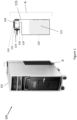
Figure 1 shows an example of an aircraft trolley with an integrated waste system. -
Figure 2 shows an example of an aircraft trolley with another example of an integrated waste system. -
Figure 3 shows another example of an aircraft trolley with a further example of an integrated waste system. -
Figure 4 shows a further example of an integrated waste system. -
Figure 5 shows an example of a method of using an aircraft trolley as described in relation toFigures 1 to 4 . - Generally, this disclosure relates to sorting, compacting and storing different waste materials. For example, on aircraft, passengers may drink beverages from cans or bottles, and cabin crew may serve passengers drinks in-flight from cans or bottles. It is desirable to reduce the amount of waste produced in-flight and to provide an aircraft trolley or insert to sort and compact waste. In general, this disclosure provides a separate section in the aircraft trolley (or insert) to compact cans and/or to shatter bottles to reduce the waste volume after consumption.
-
Figure 1 shows an example of an aircraftwaste management system 100. The aircraftwaste management system 100 includes anaircraft trolley 102. It is to be noted that theaircraft trolley 102 could also be a permanent insert and/or attached to a permanent insert in an aircraft galley and is thus not just limited to theaircraft trolley 102. A cross-section of theaircraft trolley 102 is represented by line A. - Generally, the cross-section A provides a can compacting system that is integrated within the
aircraft trolley 102. Although in this disclosure there are shown integrated compacting systems, it is to be understood that they could also be modular to be added to an aircraft trolley and/or a permanent insert in the galley. Theaircraft trolley 102 may include alid 110. Thelid 110 may be slideable or hinged in order to open the lid to insert acan 104. Thecan 104 may be a standard can of up to 330ml size. However, the can may be of any shape and size that is known in the art. Of course, there may not be a lid and, instead, there may be an opening for receiving a can atreference number 110. There may be provided alid detector 112 to ensure that thelid 110 is closed safely or not. Thelid detector 112 may alert the user when thelid 110 is not closed properly. Acrushing chamber 114 is provided to receive thecan 104. As shown inFigure 1 , thecrushing chamber 114 is arranged to receive acan 104 in a sideways position. However, it is envisaged that the crushingchamber 114 may also be adapted to receive thecan 104 in an upright configuration. There is provided acan detector 116 that can safely detect when acan 104 is inserted into the crushingchamber 114. Thecan detector 116 may also detect when an item that is not a can has been inserted into the crushing chamber 114 (e.g. an obstruction) and thecan detector 116 may inform the user that a can has not been inserted properly or that something other than a can has been inserted into thecrushing chamber 114. The user can then remove the material and re-insert a can. Alternatively, the material can be re-directed into a general waste bin (not shown) which may form part of the trolley. Further, in the context of this application, it is expected that thecan 104 would be a metal can (e.g. aluminium) and, therefore, thecan detector 116 may also detect other compositions and inform the user when a material other than metal has been inserted into the crushingchamber 114. If thecan 104 is successfully inserted and it is determined that thecan 104 is made from the correct material, thecrushing chamber 114 includes a crushing mechanism (not shown) that will apply a force (e.g. in the direction of the arrow) to crush thecan 104. This therefore provides an automatic detection and crushing mechanism for cans on aircraft within an aircraft trolley and/or an insert in the galley. - Once the
can 104 is crushed, thecan 104 may be able to fall into a collectingchamber 120 through agap 115. Due to the force of gravity, thecan 104 will fall into the collectingchamber 120 and thewaste 122 is stored in the collectingchamber 120. There may be provided afurther detector 118 to determine if the collectingchamber 120 is full. It is envisaged that the collectingchamber 120 may be removed and stored for disposal of the can waste 122. Further, if the collectingchamber 120 becomes full in-flight, it would be possible to remove afull collecting chamber 120 and replace this with anempty collecting chamber 120 for further collection of waste. Thefull collecting chamber 120 would then be able to be stored until the aircraft has landed and until the general waste is removed by operations teams on the ground. Although not shown inFigure 1 , it is also envisaged that there could be a liquid container provided underneath the collectingchamber 120 to collect residual liquid that may be expelled from the crushed cans. This is discussed in more detail below with reference toFigure 3 . - Although
Figure 1 shows an aircraftwaste management system 100 that is directed to metal cans, it is envisaged also, or as an alternative, that the aircraftwaste management system 100 could crush (or compact) plastic bottles. -
Figure 2 shows an example of an aircraftwaste management system 200. The aircraftwaste management system 200 includes anaircraft trolley 202. Again, it is to be noted that theaircraft trolley 202 could also be a permanent insert in an aircraft galley and is thus not just limited to theaircraft trolley 202. A cross-section of theaircraft trolley 202 is represented by line B. Generally, the cross-section B provides a glass compacting system that is integrated within theaircraft trolley 202. Once again, although in this disclosure there are shown integrated compacting systems, it is to be understood that they could also be modular to be added to an aircraft trolley and/or a permanent insert in the galley. Theaircraft trolley 202 may include afirst lid 206. Thefirst lid 206 may be slideable or hinged in order to open the lid to insert aglass bottle 204. Theglass bottle 204 may be a standard glass bottle of up to 750ml in size. However, the glass bottle may be of any shape and size that is known in the art. Of course, there may not be a lid and, instead, there may be an opening for receiving a glass bottle atreference number 206. There may be provided alid detector 208 to ensure that thelid 206 is closed safely or not. Thelid detector 208 may alert the user when thelid 206 is not closed properly. A crushingchamber 212 is provided to receive theglass bottle 204. As shown inFigure 2 , the crushingchamber 212 is arranged to receive theglass bottle 204 in an upright position. However, it is envisaged that the crushingchamber 212 may also be adapted to receive theglass bottle 204 in a sideways configuration. There is provided aglass bottle detector 210 that can safely detect when aglass bottle 204 is inserted into the crushingchamber 212. Theglass bottle detector 210 may also detect when an item that is not a glass bottle has been inserted into the crushing chamber 212 (e.g. an obstruction) and theglass bottle detector 210 may inform the user that a glass bottle has not been inserted properly or that something other than a glass bottle has been inserted into the crushingchamber 212. The user can then remove the material and re-insert a glass bottle. Alternatively, the material can be re-directed into a general waste bin (not shown) which may form part of the trolley. Further, in the context of this application, it is expected that theglass bottle 204 would be formed from glass and, therefore, theglass bottle detector 210 may also detect other compositions and inform the user when a material other than glass has been inserted into the crushingchamber 212. If theglass bottle 204 is successfully inserted and it is determined that theglass bottle 204 is made from the correct material, the crushingchamber 212 includes a crushing mechanism (not shown) that will apply a force (e.g. in the direction of the arrow) to crush (e.g. shatter) theglass bottle 204. This therefore provides an automatic detection and crushing mechanism for glass bottles on aircraft within an aircraft trolley and/or an insert in the galley. - As shown in
Figure 2 , there may be provided asecond lid 214 at the opposite end of thefirst lid 206 of the crushingchamber 212. Thesecond lid 214 leads to acollection chamber 218. Once theglass bottle 204 is crushed, thesecond lid 214 may open automatically such that the glass pieces (cullet) 204 is able to fall into the collectingchamber 218. Due to the force of gravity, theglass pieces 204 will fall into the collectingchamber 218 when thesecond lid 214 is opened and thewaste 220 is stored in the collectingchamber 218. Alternatively, thesecond lid 214 may be a grid or mesh to allow the glass pieces (cullet) fall into the collectingchamber 218. There may be provided afurther detector 216 to determine if the collectingchamber 218 is full. It is envisaged that the collectingchamber 218 may be removed and stored for disposal of theglass bottle waste 220. Further, if the collectingchamber 218 becomes full in-flight, it would be possible to remove afull collecting chamber 218 and replace this with anempty collecting chamber 218 for further collection of waste. Thefull collecting chamber 218 would then be able to be stored until the aircraft has landed and until the general waste is removed by operations teams on the ground. Although not shown inFigure 2 , it is also envisaged that there could be a liquid container provided underneath the collectingchamber 218 to collect residual liquid that may be expelled from the crushed bottles. This is discussed in more detail below with reference toFigure 3 . - Further, although not shown in
Figures 1 and2 , there may be provided a human-machine interface provided on theaircraft trolley chambers lid 110,first lid 206 and/orsecond lid 214 are not closed properly. -
Figure 3 shows a further example of an aircraftwaste management system 300. The aircraft waste management system includes anaircraft trolley 300. As above, it is to be noted that theaircraft trolley 301 could also be a permanent insert in an aircraft galley and is thus not just limited to theaircraft trolley 301. Theaircraft trolley 301 may include aresidual waste chamber 310 for, as an example, food waste. Theaircraft trolley 301 may also include acup chamber 312 for receiving used plastic and/or paper cups. Although not shown inFigure 3 , it is envisaged that thecup chamber 312 extends (for example, as a hollow tube) through theaircraft trolley 301 to receive a plurality of plastic and/or paper cups. There is also shown inFigure 3 acan opening 314 for receiving cans and aglass bottle opening 316 for receiving glass bottles. Thecan opening 314 and theglass bottle opening 316 may also include a lid (not shown) as described in relation toFigures 1 and2 . Theaircraft trolley 301 generally includes at least one crushingchamber 302 and at least one collectingchamber 304, as described above in relation toFigures 1 and2 . As shown inFigure 3 , there is also provided aliquid collecting chamber 306 to collect residual liquid expelled from crushed cans and/or glass bottles. It is noted that theliquid collecting chamber 306 could extend across both the can and glass bottle waste systems, but could also be separated by a wall 306' for collecting liquid from either the can and/or the glass bottle waste systems. Further, in the example shown inFigure 3 , the at least one crushingchamber 302, the at least one collectingchamber 304 and theliquid collecting chamber 306 are integrated into the aircraft trolley. Of course, they may also be provided in a modular fashion. It is envisaged that the at least one collectingchamber 304 and theliquid collecting chamber 306 are removable to remove and dispose of the waste collected therein. - As shown in
Figure 3 , from thecan opening 314, a can (not shown) may fall into thecan crushing chamber 302a. AlthoughFigure 3 shows a can crushingchamber 302a that is directed to metal cans, it is envisaged also, or as an alternative, that thecan crushing chamber 302a could crush (or compact) plastic bottles. From theglass bottle opening 316, a glass bottle (not shown) may fall into the glassbottle crushing chamber 302b. The crushingchambers chamber 114 and the crushingchamber 212 described above in relation toFigures 1 and2 . Once crushed, the can waste enters a can waste collectingchamber 304a and the glass bottle waste enters a glass bottlewaste collecting chamber 304b. At the bottom of the can waste collectingchamber 304a and the glass bottlewaste collecting chamber 304b, there is provided afilter 305 to allow residual liquid to pass through thefilter 305 and into theliquid collecting chamber 306. - Although not shown in
Figure 3 , thetrolley 301 may also include a sink that is connected to theliquid collecting chamber 306. In use, a cabin attendant or user of thetrolley 301 would be able to empty the contents of a glass bottle or a metal can into the sink such that liquid waste may be collected in theliquid collecting chamber 306. As an example, liquid waste could refer to waste liquid and/or unused ice cubes. - As with
Figures 1 and2 , various detectors (not shown) may be included in theaircraft trolley 301 to determine if the correct material has been inserted into the crushingchamber 302 and also to determine if the at least one lid of thecan opening 314 and/orglass bottle opening 316 is safely open or closed. There may also be provided a detector (not shown) in the collectingchamber 304 to determine if the collectingchamber 304 is full. Further, there may also be provided a detector (not shown) in theliquid collecting chamber 306 to determine if theliquid collecting chamber 306 is full. Although not shown inFigure 3 , there may be included a human-machine interface to inform the user of the detection of incorrect material and/or the detection that the collectingchamber 304 and/or theliquid collecting chamber 306 are full, and/or the detection that the lid of the at least onecan opening 314 and/orglass bottle opening 316 is not closed and/or open safely. -
Figure 4 shows a further example of awaste management system 400. Thewaste management system 400 may include a crushingchamber 408. The crushing chamber may include afirst surface 412 to receive a glass or plastic bottle and/or metal can 402. Thefirst surface 412 extends into the crushingchamber 408 such that the glass or plastic bottle and/or metal can can roll to asecond surface 414. Thefirst surface 412 may act as a first lid and may be hinged to an inner surface of the crushingchamber 408 such that the first lid may be pushed down on insertion of a glass bottle. Thesecond surface 414 then guides the glass or plastic bottle and/or metal can to asecond lid 416. Thefirst surface 412 and thesecond surface 414 therefore act as a 'marble-run' type configuration to guide theglass bottle 402 safely to a position on thesecond lid 416 to be crushed. The crushingchamber 408 includes a crushing mechanism (not shown) to crush the glass or plastic bottle and/or metal can 402 when it is determined that the glass or plastic bottle and/or metal can 402 is safely adjacent to thesecond lid 416. Once crushed, thesecond lid 416 may open to allow the glass, plastic and/or can waste to fall into a collectingchamber 418. At the bottom of the collectingchamber 418 there may be provided afilter 420 to allow residual liquid waste to filter through to aliquid collecting chamber 422. In the cases where glass bottles are inserted into the crushingchamber 408, thesecond lid 416 may be a grid or mesh to allow the glass pieced to fall into the collectingchamber 418. - As with
Figures 1 ,2 and3 , various detectors (not shown) may be included in thewaste management system 400 to determine if the correct material has been inserted into the crushingchamber 408 and also to determine if thefirst lid 412 lid is safely closed or not. There may also be provided a detector (not shown) in the collectingchamber 418 to determine if the collectingchamber 418 is full. Further, there may also be provided a detector (not shown) in theliquid collecting chamber 422 to determine if theliquid collecting chamber 422 is full. Although not shown inFigure 4 , there may be included a human-machine interface to inform the user of the detection of incorrect material and/or the detection that the collectingchamber 422 is full, and/or the detection that thefirst lid 412 is not closed and/or open safely. -
Figure 5 shows an example of amethod 500 of using a waste management system on an aircraft - for example those described above in relation toFigures 1 to 4 . In theexample method 500 ofFigure 5 , the term 'glass container' can refer to a glass bottle. Of course, the glass container could be a metal can or plastic in line with the examples shown inFigures 1 to 4 . - Step 501 allows a user to insert a waste item (e.g. glass bottle) into the crushing chamber. For example, a waste item can be provided through at least one opening to a crushing chamber. A detector verifies that a safety lid is closed at
step 502a. If the safety lid is not closed (indicated by 'Not OK'), a message (e.g. audio and/or visual message in the trolley) is provided to the user atstep 502b. If the detector does verify that the safety lid is closed atstep 502a (indicated by 'OK'), then the method optionally moves to step 503a where a detector verifies if the waste item is glass (or metal or plastic). If the waste item is not verified as glass (or metal or plastic), the method moves tooptional step 503b to provide a message (e.g. audio or visual message) to the user such that the waste item can be removed or re-directed to general waste. If the waste item is verified as glass (or metal or plastic), then the method may move to step 504. Of course, since method steps 503a and 503b are optional, the method may move from 502a to step 504 without verifying the material of the waste item. - At
step 504, the waste item (e.g. glass/plastic bottle, metal can) is crushed inside the crushing chamber by a crushing mechanism.Step 505a provides that the crushed waste (e.g. crushed glass, crushed metal can or crushed plastic bottle) passes into the collecting chamber (e.g. due to gravity or by the crushing mechanism).Optional step 505b is included such that any remaining liquid during crushing may enter a liquid collecting chamber. Atstep 506, a detector determines if remaining crushed waste is obstructing the crushing chamber. If it is determined that crushed waste remains in the crushing chamber, the method returns to step 504 to repeatsteps step 506 that no remaining crushed waste is obstructing the crushing chamber, the method moves on to step 507a where it is determined if the collecting chamber is full (e.g. full of crushed waste). If the collecting chamber is full,step 507b will alert (e.g. with an audio and/or visual alert) the user that the collecting chamber is full. The user may then replace the full collecting chamber with an empty collecting chamber, or retire the trolley from use. If it is determined that the collecting chamber is not full atstep 507a then the method returns to step 501 to repeat theoverall method 500. - Although this disclosure has been described in terms of preferred examples, it should be understood that these examples are illustrative only and that the claims are not limited to those examples. Those skilled in the art will be able to make modifications and alternatives in view of the disclosure which are contemplated as falling within the scope of the appended claims.
Claims (15)
- A system for sorting and compacting waste on an aircraft, the system comprising:
a waste management system (100, 200, 300, 400), the waste management system (100, 200, 300, 400) comprising:at least one opening (110, 206, 314, 316, 410) to receive waste (104, 204, 402);at least one crushing chamber (114, 212, 302, 408) configured to crush the waste;at least one collecting chamber (120, 218, 304, 418) configured to collect the crushed waste provided by the at least one crushing chamber. - The system of claim 1, wherein the at least one opening is configured to receive at least one of: a glass bottle (204, 402), a plastic bottle and/or a metal can (104), and wherein the waste comprises at least one of: a glass bottle (204, 402), a plastic bottle and/or a metal can (104).
- The system of claim 1 or 2, wherein the at least one crushing chamber (114, 212, 302, 408) includes a crushing mechanism.
- The system of any preceding claim, wherein the at least one opening (110, 206, 314, 316, 410) includes a first lid (110, 206), and wherein the system further comprises a first detector (112, 208) configured to determine if the first lid (110, 206) is closed or not.
- The system of any of claims 2-4, wherein the system further comprises a second detector (116, 210) configured to determine that the waste is at least one of: the glass bottle (204, 402), the plastic bottle and/or the metal can (104).
- The system of claim 4 or 5, wherein the system further comprises a second lid (214, 416) configured to allow the crushed waste to pass into the at least one collecting chamber (120, 218, 304, 418).
- The system of claim 6, wherein the second lid (214, 416) is a lid or a grid/mesh.
- The system of any preceding claim, wherein the system further comprises a third detector (118, 216) configured to determine if the at least one collecting chamber (120, 218, 304, 418) is full.
- The system of any preceding claim, wherein the system further comprises a liquid collecting chamber (306, 422).
- The system of any preceding claim, wherein the at least one crushing chamber (114, 212, 302, 408) includes a first surface (412) and a second surface (414), wherein the first surface (412) is configured to extend into the at least one crushing chamber (114, 212, 302, 408) such that the waste can be guided over the first surface (412) to the second surface (414).
- The system of any preceding claim, wherein the system further comprises a human-machine interface.
- An aircraft trolley including the system of any preceding claim.
- The aircraft trolley of claim 11, wherein the at least one opening includes a can opening (314) and a bottle opening (316)
- An aircraft insert including the system of any of claims 1-11.
- A method for sorting and compacting waste on an aircraft, the method comprising:inserting waste into at least one opening provided in a waste management system;crushing the waste in at least one crushing chamber;collecting the crushed waste in at least one collecting chamber.
Priority Applications (2)
| Application Number | Priority Date | Filing Date | Title |
|---|---|---|---|
| EP22174987.2A EP4282536A1 (en) | 2022-05-24 | 2022-05-24 | Sorting and compacting system for an aircraft |
| US18/315,761 US20230381790A1 (en) | 2022-05-24 | 2023-05-11 | Sorting and compacting system for an aircraft |
Applications Claiming Priority (1)
| Application Number | Priority Date | Filing Date | Title |
|---|---|---|---|
| EP22174987.2A EP4282536A1 (en) | 2022-05-24 | 2022-05-24 | Sorting and compacting system for an aircraft |
Publications (1)
| Publication Number | Publication Date |
|---|---|
| EP4282536A1 true EP4282536A1 (en) | 2023-11-29 |
Family
ID=81846349
Family Applications (1)
| Application Number | Title | Priority Date | Filing Date |
|---|---|---|---|
| EP22174987.2A Withdrawn EP4282536A1 (en) | 2022-05-24 | 2022-05-24 | Sorting and compacting system for an aircraft |
Country Status (2)
| Country | Link |
|---|---|
| US (1) | US20230381790A1 (en) |
| EP (1) | EP4282536A1 (en) |
Citations (5)
| Publication number | Priority date | Publication date | Assignee | Title |
|---|---|---|---|---|
| JPH09206616A (en) * | 1996-02-07 | 1997-08-12 | Tatsuhiro Narimoto | Fractionating and grinding apparatus for waste |
| WO1998056691A1 (en) * | 1997-06-10 | 1998-12-17 | Demil S.R.L. | Apparatus for collecting and compacting recyclable waste |
| EP1695764A1 (en) * | 2005-02-23 | 2006-08-30 | Lucas Ignatius Maria Roose | Device for breaking glassware |
| WO2008116252A1 (en) * | 2007-03-23 | 2008-10-02 | Aldous Montagu Hicks | An apparatus to process used materials |
| US20180093773A1 (en) * | 2016-09-30 | 2018-04-05 | Airbus Operations Gmbh | Trolley, waste module and system for collecting waste |
Family Cites Families (1)
| Publication number | Priority date | Publication date | Assignee | Title |
|---|---|---|---|---|
| US5139205A (en) * | 1991-07-12 | 1992-08-18 | Denis Gallagher | Segregated waste disposal system |
-
2022
- 2022-05-24 EP EP22174987.2A patent/EP4282536A1/en not_active Withdrawn
-
2023
- 2023-05-11 US US18/315,761 patent/US20230381790A1/en active Pending
Patent Citations (5)
| Publication number | Priority date | Publication date | Assignee | Title |
|---|---|---|---|---|
| JPH09206616A (en) * | 1996-02-07 | 1997-08-12 | Tatsuhiro Narimoto | Fractionating and grinding apparatus for waste |
| WO1998056691A1 (en) * | 1997-06-10 | 1998-12-17 | Demil S.R.L. | Apparatus for collecting and compacting recyclable waste |
| EP1695764A1 (en) * | 2005-02-23 | 2006-08-30 | Lucas Ignatius Maria Roose | Device for breaking glassware |
| WO2008116252A1 (en) * | 2007-03-23 | 2008-10-02 | Aldous Montagu Hicks | An apparatus to process used materials |
| US20180093773A1 (en) * | 2016-09-30 | 2018-04-05 | Airbus Operations Gmbh | Trolley, waste module and system for collecting waste |
Also Published As
| Publication number | Publication date |
|---|---|
| US20230381790A1 (en) | 2023-11-30 |
Similar Documents
| Publication | Publication Date | Title |
|---|---|---|
| EP0444745B1 (en) | Compacting and selecting machine for solid and ferrous or non-ferrous metallic refuse such as containers, cans, bottles, and similar | |
| US9573167B2 (en) | Machine for collecting and sorting waste | |
| CN111936017B (en) | Capsule disposal component used | |
| JP2001138327A (en) | PET bottle collection system | |
| US20210101191A1 (en) | Used capsule disposal assembly | |
| KR20210060082A (en) | Unpowered Disposable Cup Separator | |
| US20230381790A1 (en) | Sorting and compacting system for an aircraft | |
| EP3519326B1 (en) | Trolley, waste module and system for collecting waste | |
| KR102464497B1 (en) | Used vegetable oil collection device | |
| JP3204719U (en) | Empty can separation collection box | |
| JPH07291402A (en) | Recycled dust box | |
| CN110466922A (en) | Automatic garbage classification collection device | |
| KR100303757B1 (en) | Empty Can Collector | |
| KR102730459B1 (en) | Disposable beverage container automatic processing device | |
| KR102454543B1 (en) | Apparatus for compressing recycled product | |
| NL2028650B1 (en) | Device, system and method for receiving and handling beverage containers | |
| JPH05138067A (en) | Empty can recovery device | |
| JP2001287096A (en) | Container crusher | |
| EP0682796A1 (en) | A method and plant for handling cans | |
| KR920006244Y1 (en) | Waste bins for billboards | |
| JP2500955B2 (en) | Empty can collection device | |
| JP2510063Y2 (en) | Empty can sorter | |
| KR200266323Y1 (en) | Paper cup vessel | |
| WO2021230880A1 (en) | Trash management and transfer system | |
| KR20210146033A (en) | Drink and the cup separation collecting stand |
Legal Events
| Date | Code | Title | Description |
|---|---|---|---|
| PUAI | Public reference made under article 153(3) epc to a published international application that has entered the european phase |
Free format text: ORIGINAL CODE: 0009012 |
|
| STAA | Information on the status of an ep patent application or granted ep patent |
Free format text: STATUS: THE APPLICATION HAS BEEN PUBLISHED |
|
| AK | Designated contracting states |
Kind code of ref document: A1 Designated state(s): AL AT BE BG CH CY CZ DE DK EE ES FI FR GB GR HR HU IE IS IT LI LT LU LV MC MK MT NL NO PL PT RO RS SE SI SK SM TR |
|
| STAA | Information on the status of an ep patent application or granted ep patent |
Free format text: STATUS: REQUEST FOR EXAMINATION WAS MADE |
|
| 17P | Request for examination filed |
Effective date: 20240527 |
|
| RBV | Designated contracting states (corrected) |
Designated state(s): AL AT BE BG CH CY CZ DE DK EE ES FI FR GB GR HR HU IE IS IT LI LT LU LV MC MK MT NL NO PL PT RO RS SE SI SK SM TR |
|
| STAA | Information on the status of an ep patent application or granted ep patent |
Free format text: STATUS: THE APPLICATION HAS BEEN WITHDRAWN |
|
| 18W | Application withdrawn |
Effective date: 20250806 |