EP4282469A1 - Workflow management system, radiotherapy system, and workflow management method - Google Patents
Workflow management system, radiotherapy system, and workflow management method Download PDFInfo
- Publication number
- EP4282469A1 EP4282469A1 EP21921117.4A EP21921117A EP4282469A1 EP 4282469 A1 EP4282469 A1 EP 4282469A1 EP 21921117 A EP21921117 A EP 21921117A EP 4282469 A1 EP4282469 A1 EP 4282469A1
- Authority
- EP
- European Patent Office
- Prior art keywords
- workflow
- management system
- workflow management
- module
- patient
- Prior art date
- Legal status (The legal status is an assumption and is not a legal conclusion. Google has not performed a legal analysis and makes no representation as to the accuracy of the status listed.)
- Pending
Links
Images


Classifications
-
- A—HUMAN NECESSITIES
- A61—MEDICAL OR VETERINARY SCIENCE; HYGIENE
- A61N—ELECTROTHERAPY; MAGNETOTHERAPY; RADIATION THERAPY; ULTRASOUND THERAPY
- A61N5/00—Radiation therapy
- A61N5/10—X-ray therapy; Gamma-ray therapy; Particle-irradiation therapy
- A61N5/103—Treatment planning systems
- A61N5/1038—Treatment planning systems taking into account previously administered plans applied to the same patient, i.e. adaptive radiotherapy
-
- A—HUMAN NECESSITIES
- A61—MEDICAL OR VETERINARY SCIENCE; HYGIENE
- A61N—ELECTROTHERAPY; MAGNETOTHERAPY; RADIATION THERAPY; ULTRASOUND THERAPY
- A61N5/00—Radiation therapy
- A61N5/10—X-ray therapy; Gamma-ray therapy; Particle-irradiation therapy
- A61N5/103—Treatment planning systems
-
- A—HUMAN NECESSITIES
- A61—MEDICAL OR VETERINARY SCIENCE; HYGIENE
- A61N—ELECTROTHERAPY; MAGNETOTHERAPY; RADIATION THERAPY; ULTRASOUND THERAPY
- A61N5/00—Radiation therapy
- A61N5/10—X-ray therapy; Gamma-ray therapy; Particle-irradiation therapy
- A61N5/103—Treatment planning systems
- A61N5/1037—Treatment planning systems taking into account the movement of the target, e.g. 4D-image based planning
-
- A—HUMAN NECESSITIES
- A61—MEDICAL OR VETERINARY SCIENCE; HYGIENE
- A61N—ELECTROTHERAPY; MAGNETOTHERAPY; RADIATION THERAPY; ULTRASOUND THERAPY
- A61N5/00—Radiation therapy
- A61N5/10—X-ray therapy; Gamma-ray therapy; Particle-irradiation therapy
- A61N5/1042—X-ray therapy; Gamma-ray therapy; Particle-irradiation therapy with spatial modulation of the radiation beam within the treatment head
-
- A—HUMAN NECESSITIES
- A61—MEDICAL OR VETERINARY SCIENCE; HYGIENE
- A61N—ELECTROTHERAPY; MAGNETOTHERAPY; RADIATION THERAPY; ULTRASOUND THERAPY
- A61N5/00—Radiation therapy
- A61N5/10—X-ray therapy; Gamma-ray therapy; Particle-irradiation therapy
- A61N5/1048—Monitoring, verifying, controlling systems and methods
-
- A—HUMAN NECESSITIES
- A61—MEDICAL OR VETERINARY SCIENCE; HYGIENE
- A61N—ELECTROTHERAPY; MAGNETOTHERAPY; RADIATION THERAPY; ULTRASOUND THERAPY
- A61N5/00—Radiation therapy
- A61N5/10—X-ray therapy; Gamma-ray therapy; Particle-irradiation therapy
- A61N5/1048—Monitoring, verifying, controlling systems and methods
- A61N5/1049—Monitoring, verifying, controlling systems and methods for verifying the position of the patient with respect to the radiation beam
-
- A—HUMAN NECESSITIES
- A61—MEDICAL OR VETERINARY SCIENCE; HYGIENE
- A61N—ELECTROTHERAPY; MAGNETOTHERAPY; RADIATION THERAPY; ULTRASOUND THERAPY
- A61N5/00—Radiation therapy
- A61N5/10—X-ray therapy; Gamma-ray therapy; Particle-irradiation therapy
- A61N5/1048—Monitoring, verifying, controlling systems and methods
- A61N5/1064—Monitoring, verifying, controlling systems and methods for adjusting radiation treatment in response to monitoring
-
- A—HUMAN NECESSITIES
- A61—MEDICAL OR VETERINARY SCIENCE; HYGIENE
- A61N—ELECTROTHERAPY; MAGNETOTHERAPY; RADIATION THERAPY; ULTRASOUND THERAPY
- A61N5/00—Radiation therapy
- A61N5/10—X-ray therapy; Gamma-ray therapy; Particle-irradiation therapy
- A61N5/1048—Monitoring, verifying, controlling systems and methods
- A61N5/1064—Monitoring, verifying, controlling systems and methods for adjusting radiation treatment in response to monitoring
- A61N5/1065—Beam adjustment
-
- A—HUMAN NECESSITIES
- A61—MEDICAL OR VETERINARY SCIENCE; HYGIENE
- A61N—ELECTROTHERAPY; MAGNETOTHERAPY; RADIATION THERAPY; ULTRASOUND THERAPY
- A61N5/00—Radiation therapy
- A61N5/10—X-ray therapy; Gamma-ray therapy; Particle-irradiation therapy
- A61N5/1048—Monitoring, verifying, controlling systems and methods
- A61N5/1064—Monitoring, verifying, controlling systems and methods for adjusting radiation treatment in response to monitoring
- A61N5/1065—Beam adjustment
- A61N5/1067—Beam adjustment in real time, i.e. during treatment
-
- A—HUMAN NECESSITIES
- A61—MEDICAL OR VETERINARY SCIENCE; HYGIENE
- A61N—ELECTROTHERAPY; MAGNETOTHERAPY; RADIATION THERAPY; ULTRASOUND THERAPY
- A61N5/00—Radiation therapy
- A61N5/10—X-ray therapy; Gamma-ray therapy; Particle-irradiation therapy
- A61N5/1048—Monitoring, verifying, controlling systems and methods
- A61N5/1064—Monitoring, verifying, controlling systems and methods for adjusting radiation treatment in response to monitoring
- A61N5/1069—Target adjustment, e.g. moving the patient support
-
- A—HUMAN NECESSITIES
- A61—MEDICAL OR VETERINARY SCIENCE; HYGIENE
- A61N—ELECTROTHERAPY; MAGNETOTHERAPY; RADIATION THERAPY; ULTRASOUND THERAPY
- A61N5/00—Radiation therapy
- A61N5/10—X-ray therapy; Gamma-ray therapy; Particle-irradiation therapy
- A61N5/1048—Monitoring, verifying, controlling systems and methods
- A61N5/1064—Monitoring, verifying, controlling systems and methods for adjusting radiation treatment in response to monitoring
- A61N5/1069—Target adjustment, e.g. moving the patient support
- A61N5/107—Target adjustment, e.g. moving the patient support in real time, i.e. during treatment
-
- A—HUMAN NECESSITIES
- A61—MEDICAL OR VETERINARY SCIENCE; HYGIENE
- A61N—ELECTROTHERAPY; MAGNETOTHERAPY; RADIATION THERAPY; ULTRASOUND THERAPY
- A61N5/00—Radiation therapy
- A61N5/10—X-ray therapy; Gamma-ray therapy; Particle-irradiation therapy
- A61N5/1077—Beam delivery systems
- A61N5/1081—Rotating beam systems with a specific mechanical construction, e.g. gantries
-
- G—PHYSICS
- G16—INFORMATION AND COMMUNICATION TECHNOLOGY [ICT] SPECIALLY ADAPTED FOR SPECIFIC APPLICATION FIELDS
- G16H—HEALTHCARE INFORMATICS, i.e. INFORMATION AND COMMUNICATION TECHNOLOGY [ICT] SPECIALLY ADAPTED FOR THE HANDLING OR PROCESSING OF MEDICAL OR HEALTHCARE DATA
- G16H20/00—ICT specially adapted for therapies or health-improving plans, e.g. for handling prescriptions, for steering therapy or for monitoring patient compliance
- G16H20/40—ICT specially adapted for therapies or health-improving plans, e.g. for handling prescriptions, for steering therapy or for monitoring patient compliance relating to mechanical, radiation or invasive therapies, e.g. surgery, laser therapy, dialysis or acupuncture
-
- G—PHYSICS
- G16—INFORMATION AND COMMUNICATION TECHNOLOGY [ICT] SPECIALLY ADAPTED FOR SPECIFIC APPLICATION FIELDS
- G16H—HEALTHCARE INFORMATICS, i.e. INFORMATION AND COMMUNICATION TECHNOLOGY [ICT] SPECIALLY ADAPTED FOR THE HANDLING OR PROCESSING OF MEDICAL OR HEALTHCARE DATA
- G16H30/00—ICT specially adapted for the handling or processing of medical images
- G16H30/20—ICT specially adapted for the handling or processing of medical images for handling medical images, e.g. DICOM, HL7 or PACS
-
- A—HUMAN NECESSITIES
- A61—MEDICAL OR VETERINARY SCIENCE; HYGIENE
- A61N—ELECTROTHERAPY; MAGNETOTHERAPY; RADIATION THERAPY; ULTRASOUND THERAPY
- A61N5/00—Radiation therapy
- A61N5/10—X-ray therapy; Gamma-ray therapy; Particle-irradiation therapy
- A61N5/1048—Monitoring, verifying, controlling systems and methods
- A61N5/1049—Monitoring, verifying, controlling systems and methods for verifying the position of the patient with respect to the radiation beam
- A61N2005/1061—Monitoring, verifying, controlling systems and methods for verifying the position of the patient with respect to the radiation beam using an x-ray imaging system having a separate imaging source
-
- A—HUMAN NECESSITIES
- A61—MEDICAL OR VETERINARY SCIENCE; HYGIENE
- A61N—ELECTROTHERAPY; MAGNETOTHERAPY; RADIATION THERAPY; ULTRASOUND THERAPY
- A61N5/00—Radiation therapy
- A61N5/10—X-ray therapy; Gamma-ray therapy; Particle-irradiation therapy
- A61N5/1048—Monitoring, verifying, controlling systems and methods
- A61N2005/1074—Details of the control system, e.g. user interfaces
-
- G—PHYSICS
- G16—INFORMATION AND COMMUNICATION TECHNOLOGY [ICT] SPECIALLY ADAPTED FOR SPECIFIC APPLICATION FIELDS
- G16H—HEALTHCARE INFORMATICS, i.e. INFORMATION AND COMMUNICATION TECHNOLOGY [ICT] SPECIALLY ADAPTED FOR THE HANDLING OR PROCESSING OF MEDICAL OR HEALTHCARE DATA
- G16H40/00—ICT specially adapted for the management or administration of healthcare resources or facilities; ICT specially adapted for the management or operation of medical equipment or devices
- G16H40/20—ICT specially adapted for the management or administration of healthcare resources or facilities; ICT specially adapted for the management or operation of medical equipment or devices for the management or administration of healthcare resources or facilities, e.g. managing hospital staff or surgery rooms
Definitions
- the present invention relates to a workflow management system, a radiotherapy system, and a workflow management method.
- the present invention relates to the workflow management system applied to the radiotherapy system that irradiates and treats an affected area such as a tumor with radiation such as a particle beam, the radiotherapy system, and the workflow management method.
- a method for irradiating a patient with cancer or the like with radiation such as a particle beam or an X-ray is known.
- the particle beam include a proton beam and a carbon ion beam.
- the radiotherapy system used for irradiation forms dose distribution suitable for a shape of a target such as a tumor in a body of the patient fixed to a patient bed called a couch.
- Conditions in the body of the patient changes every day, such as a change in the shape of the target and a change in a gas pocket of an intestinal tract.
- adaptive treatment in which treatment planning is recreated according to the conditions in the body of the patient on a treatment day has begun to spread.
- treatment in which the treatment planning is recreated while the patient is fixed to the couch on the treatment day is called online adaptive treatment.
- PTL 1 describes a workflow of online adaptive radiotherapy characterized by automatically executing steps of obtaining a command representing treatment planning, generating a patient model stepwise using the command, generating first and second treatment planning, and selecting treatment planning.
- PTL 1 described above describes an automatic workflow of the online adaptive treatment.
- patient fixation, imaging, contour creation, treatment planning creation and selection, and irradiation are sequentially executed.
- the treatment is executed in three steps of patient fixation, imaging, and irradiation, but in the online adaptive treatment, there is a possibility that the treatment time increases due to an increase in implementation matters.
- the present invention has been made in view of the above problems, and an object of the present invention is to provide a workflow management system capable of executing the online adaptive treatment in a short time, a radiotherapy system, and a workflow management method.
- the present invention is a workflow management system that executes a plurality of processes executed to execute radiotherapy according to a predetermined workflow, in which the plurality of processes includes at least a first process and a second process, and the workflow management system executes the following modules (a) and (b) in parallel:
- a time required for the online adaptive treatment can be reduced.
- Positions, sizes, shapes, ranges, and the like of the components illustrated in the drawings may not represent actual positions, sizes, shapes, ranges, and the like in order to facilitate understanding of the invention. Therefore, the present invention is not necessarily limited to the positions, sizes, shapes, ranges, and the like disclosed in the drawings.
- a radiotherapy system 1 includes a workflow manager 10, a patient positioning system 11, a contour creation system 12, a re-planning system 13, a patient quality assurance (QA) system 14, an imaging apparatus 20, an imaging control system 21, an irradiation nozzle 30, an irradiation control system 31, a rotating gantry 40, a gantry control system 41, a couch 50, and a couch control system 51.
- a workflow manager 10 a patient positioning system 11
- a contour creation system 12 includes a re-planning system 13, a patient quality assurance (QA) system 14, an imaging apparatus 20, an imaging control system 21, an irradiation nozzle 30, an irradiation control system 31, a rotating gantry 40, a gantry control system 41, a couch 50, and a couch control system 51.
- QA patient quality assurance
- a bed on which a patient 60 is placed is referred to as the couch 50.
- the couch 50 can move in directions of three orthogonal axes on the basis of an instruction from the couch control system 51, and can further rotate about the respective axes. These movements and rotations can move a position of a target 61 to a desired position.
- An imaging apparatus 20 measures a three-dimensional image of the patient 60 fixed to the couch 50 and the target 61 on the basis of an instruction from the imaging control system 21.
- the three-dimensional image is a CT image, a cone beam CT image, or an MRI image.
- the irradiation nozzle 30 generates radiation used for treatment on the basis of an instruction from the irradiation control system 31. Specifically, desired dose distribution is formed for the target 61 by controlling energy, an irradiation position, and an irradiation dose of the radiation. A part of the irradiation nozzle 30 is installed in the rotating gantry 40 and can rotate together with the rotating gantry 40. The rotating gantry 40 is moved to a desired angle on the basis of an instruction from the gantry control system 41. By changing the angle of the rotating gantry 40, radiation can be emitted from a desired angle.
- the patient positioning system 11 calculates a position correction amount of the patient 60 with respect to the irradiation nozzle 30 on the basis of a reference image generated in advance and the three-dimensional image measured by the imaging apparatus 20.
- An operator 70 checks a calculation result and determines the position correction amount.
- an installation position of the couch 50 is calculated and set in the couch control system 51.
- the contour creation system 12 generates a synthetic CT image used for re-planning on the basis of the reference image generated in advance and the three-dimensional image measured by the imaging apparatus 20. Further, regions of the target and normal tissue are specified on the synthetic CT image, and contour data thereof is created. The operator 70 checks the calculation result, corrects the calculation result as necessary, and then approves the synthetic CT image and the contour data.
- the re-planning system 13 optimizes an irradiation parameter of the radiation on the basis of the synthetic CT image and the contour data to create a day plan. Further, an original treatment planning generated in advance (hereinafter referred to as an original plan) and dose distribution of the day plan are compared and displayed. The operator 70 selects treatment planning to be used for treatment on the day.
- the patient QA system 14 verifies the day plan, and the operator checks and approves a verification result.
- the workflow manager 10 is connected to the imaging control system 21, the irradiation control system 31, the gantry control system 41, the couch control system 51, the patient positioning system 11, the contour creation system 12, the re-planning system 13, and the patient QA system 14, and monitors and manages a progress status of a treatment workflow.
- the workflow management system of the present embodiment includes at least the workflow manager 10, and further includes the patient positioning system 11, the contour creation system 12, the re-planning system 13, and the patient QA system 14.
- FIG. 2 is a schematic configuration diagram illustrating the workflow manager 10 according to the embodiment.
- the workflow manager 10 includes an input device 101 for inputting various parameters and the like, a display device 102, a memory (storage medium) 103, a database (storage medium) 104, an arithmetic processing apparatus 105 (a control apparatus that is an arithmetic element) that creates the workflow and monitors and manages the progress status of the workflow, and a communication device 106 .
- the workflow manager 10 includes a device capable of conducting various types of information processing, for example, an information processing apparatus such as a computer.
- the arithmetic element is, for example, a central processing unit (CPU), a graphic processing unit (GPU), a field-programmable gate array (FPGA), or the like.
- the storage medium includes, for example, a magnetic storage medium such as a hard disk drive (HDD), a semiconductor storage medium such as a random access memory (RAM), a read only memory (ROM), and a solid state drive (SSD), and the like. Further, a combination of an optical disk such as a digital versatile disk (DVD) and an optical disk drive is also used as the storage medium. In addition, a known storage medium such as a magnetic tape medium is also used as the storage medium.
- a program such as firmware is stored in the storage medium.
- the program such as firmware is read from the storage medium and executed, and an overall control of the workflow manager 10 is performed. Further, in addition to the program, the storage medium stores data and the like necessary for each processing of the workflow manager 10.
- LAN local area network
- WAN wide area network
- various apparatuses and systems constituting the radiotherapy system 1, such as the patient positioning system 11 also include the information 5 processing apparatus such as the computer.
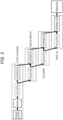
- FIG. 3 illustrates a basic concept of workflow management performed by the workflow manager 10 or the like of the present embodiment.
- the workflow manager 10, the patient positioning system 11, and the like execute each process of patient positioning, contour creation, re-planning, patient QA, and irradiation, similarly to a general online adaptive treatment.
- a feature of the radiotherapy system of the present embodiment is to start calculation of a next process during execution of a step of requesting determination and operation by the operator 70, such as checking and correction of the calculation result, in each process. When there is no correction of the calculation result by the operator 70, previously-started calculation is continued. When there is correction of the calculation result by the operator 70, the previously-started calculation is stopped, and the calculation of the next process is started by reflecting the corrected calculation result.
- the workflow manager 10 manages steps executed in each process as modules divided for each element.
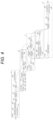
- FIG. 4 illustrates an example of a module-managed workflow.
- a range surrounded by a broken line indicates each process.
- automatically implemented modules are indicated by dotted lines
- modules that need to be implemented (determined and operated) by the operator 70 that is, manually implemented modules
- solid lines the modules that need to be implemented by the operator 70 are implemented after determination and operation by the operator 70.
- the workflow manager 10 Before starting the treatment, the workflow manager 10 holds the CT image, the contour data, the irradiation parameter, a dose distribution index, and a clinical goal as information of the original plan created in a treatment preparation period.
- the workflow includes a positioning process P1, a contour creation process P2, a re-planning process P3, a patient QA process P4, and an irradiation process P5.
- Software modules that respectively execute steps of the positioning process P1, the contour creation process P2, the re-planning process P3, and the patient QA process P4 are respectively held by the patient positioning system 11, the contour creation system 12, the re-planning system 13, and the patient QA system 14, and are respectively executed by the patient positioning system 11 and the like.
- the workflow manager 10 monitors an execution status of each software module executed by the patient positioning system 11 and the like, and receives an execution result (a calculation result) and an execution end notification of the software module as necessary. Once a step is completed, the workflow manager 10 identifies a next step in accordance with the workflow and instructs the software module of the patient positioning system 11 or the like to begin this step.
- step S101 the operator 70 fixes the patient 60 to the couch 50. Further, in step S102, the operator 70 adjusts the position of the couch 50 in order to roughly position the patient 60 with respect to the irradiation nozzle 30 with reference to a laser marker (not illustrated).
- imaging conditions of the imaging apparatus 20 is set by the workflow manager 10.
- the imaging conditions are set on the basis of information on the patient 60, a treatment site, and a previous treatment date.
- step S104 three-dimensional images on the day of the patient 60 and the target 61 are measured.
- step S105 the position correction amount of the patient 60 with respect to the irradiation nozzle 30 is calculated on the basis of the three-dimensional image on the day using the CT image of the original plan as the reference image.
- step S106 approval of the calculation result by the operator 70 is requested.
- the operator 70 checks the calculation result and corrects the position correction amount of the patient 60 as necessary.
- the position correction amount is corrected by the operator 70, the calculation being executed in the contour creation process P2 is discarded, and the process is executed again from step S201 on the basis of the corrected position correction amount.
- the position correction amount is approved in step S106, the position of the couch 50 is corrected in step S107.
- the workflow manager 10 inputs information indicating that the positioning process P1 has been completed to the software module that executes step S208..
- step S201 calculation conditions for deformable image registration (DIR) are set on the basis of the CT image of the original plan and information of the treatment site.
- step S202 a deformable vector field (DVF) is calculated by deforming the CT image of the original plan by deformable image registration using a CT three-dimensional image on the day as the reference image on the basis of the set calculation conditions.
- step S203 a synthetic CT (sCT) image in which pixel values of the three-dimensional image on the day are replaced with pixel values of the CT image of the original plan is generated using the calculated DVF.
- sCT synthetic CT
- steps 204 and S205 are executed.
- step S204 a contour of the normal tissue is calculated on the basis of the synthetic CT image and the DVF.
- step S205 a contour of the target is calculated on the basis of the synthetic CT image and the DVF.
- Step S204 and step S205 may be executed simultaneously or sequentially. In a case of being sequentially executed, subsequent steps may be executed using a calculation result previously executed.
- step S206 and 5301 of the re-planning process P3 are executed.
- step S206 calculation conditions of contour verification is set on the basis of the CT image of the original plan, the contour data, and the information of the treatment site.
- step S207 calculation for verifying the contour data generated in steps S204 and S205 is executed on the basis of the CT image of the original plan, the contour data, and the information of the treatment site.
- step S208 the synthetic CT image, the contour data, and a contour verification result are displayed, and approval of the contour by the operator 70 is requested.
- the operator 70 checks the calculation result and corrects the contours of the normal tissue and the target as necessary.
- the contour is corrected by the operator 70, the calculation being executed in the re-planning process P3. is discarded, and the process is executed again from step S301 on the basis of the corrected contour.
- the workflow manager 10 inputs information indicating that the contour creation process P2 has been completed to the software module that executes step S306. Note that step S208 is not executed unless the information indicating that the positioning process P1 has been completed is input.
- step S301 conditions for optimizing the irradiation parameter are set on the basis of the irradiation parameter of the original plan, the dose distribution index, and the clinical goal.
- the conditions are a dose distribution shape, a dose volume histogram (DVH) index of the target and organ at risk (OAR), a weighting factor of optimization, and the like.
- step S302 the irradiation parameter is optimized on the basis of the synthetic CT image and the contour data to create the day plan.
- step S302 When step S302 is completed, step S303, step S304, steps S401 and S402 of the patient QA process P4, and step S501 of the irradiation process P5 are executed.
- step S303 dose distribution in a case where the irradiation is conducted as the original treatment planning is calculated on the basis of the irradiation parameter of the original plan and the synthetic CT image.
- step S304 the dose distribution of the day plan is calculated on the basis of the irradiation parameter of the day plan and the synthetic CT image.
- step S305 for two dose distributions calculated in steps S303 and S304, dose distribution indexes such as a DVH index, a homogeneity index (HI), and a conformity index (CI) of the target and the OAR are calculated on the basis of the contour data of the original plan and the day plan, and an achievement status of the clinical goal is displayed.
- a DVH index a homogeneity index (HI)
- CI conformity index
- step S306 an evaluation index calculated in step S305 is displayed, and selection of the treatment planning by the operator 70 is requested.
- the operator 70 checks the evaluation index and selects treatment planning to be used for treatment on that day from the original plan and the day plan.
- step S501 of the irradiation process P5 is executed again.
- the workflow manager 10 inputs information indicating that the original plan has been selected to the software module that executes step S502.
- the workflow manager 10 inputs information indicating that the re-planning process P3 has been completed to the software module that executes step S404.
- step S306 is not executed unless the information indicating that the contour creation process P2 has been completed is input.
- steps S401 and S402 are executed.
- step S401 on the basis of the synthetic CT image and the irradiation parameter of the day plan, the dose distribution of the day plan is calculated using a dose calculation algorithm different from that in step S303.
- step S402 it is verified that the radiotherapy system 1 operates correctly during irradiation using the irradiation parameter of the day plan.
- step S403 on the basis of the dose distribution calculated in step S401 and the contour data of the day plan, the dose distribution indexes such as the DVH index, the HI, and the CI of the target and the OAR are calculated, and the achievement status of the clinical goal is displayed.
- a degree of coincidence between the dose distributions calculated in steps S304 and S401 is evaluated by gamma analysis.
- step S404 the evaluation result calculated in step S403 and the verification result in step S402 are displayed, and checking of the result by the operator 70 is requested.
- the workflow manager 10 inputs information indicating that the patient QA process P4 has been completed to the software module that executes step S502.
- a request is made to choose between re-executing the treatment process or stopping the treatment.
- selection of a re-execution step is requested. Note that step 5404 is not executed unless the information indicating that the re-planning process P3 has been completed is input.
- the irradiation parameter is set in each control system in step S501.
- step S502 is executed.
- the operator 70 is requested to permit execution of the irradiation, and if permitted, the irradiation is started.
- the treatment planning includes a plurality of irradiation fields, the position of the couch 50 and the angle of the rotating gantry 40 are sequentially corrected to conduct the irradiation.
- irradiation log data is generated in step S503.
- the irradiation log data includes data of the irradiation position and the irradiation dose of the radiation.
- steps S504 and S505 are executed.
- step S504 an actual dose distribution is calculated on the basis of the irradiation log data and the synthetic CT image. Further, the dose distribution index of the actual dose distribution is calculated using the contour data of the day plan.
- step S505 operation of the radiotherapy system 1 during irradiation is verified on the basis of the irradiation log data and the irradiation parameter of the day plan.
- steps S504 and S505 are completed, the treatment is completed.
- the workflow is created for each treatment site or treatment protocol and registered in the workflow manager 10.
- the workflow to be used during treatment is selected from workflows registered for each treatment planning.
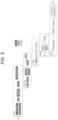
- FIG. 5 illustrates a screen display of the workflow manager 10 during treatment. Three states of completed, executing, and not executed are displayed for each step of the workflow.
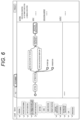
- FIG. 6 illustrates the screen display of the workflow manager 10 at the time of creating the workflow.
- a left region is a part for selecting a registered module.
- An upper central region is a part that builds the workflow, and builds a progress of the steps in the process by connecting the modules.
- a lower central region is a part for displaying an error message or the like.
- the right region is a region for setting each module, and sets an execution condition, an input/output content, and an execution content.
- execution condition whether the module is automatically executed or manually executed, in other words, whether the module requires determination and operation by the operator 70 is set.
- An input condition necessary for executing the processing and the output content output as a result of the processing are preset in each registered module.
- the workflow manager 10 verifies the workflow based on whether an output condition of a connection source module satisfies an input condition of a connection, destination module. If the output condition of the connection source module satisfies the input condition of the connection destination module, the workflow manager 10 performs connection between the modules. On the other hand, if the output condition of the connection source module does not satisfy the input condition of the connection destination module, the workflow manager 10 displays the error message.
- the workflow is constructed by connecting registered modules.
- a new workflow can be created by reading and correcting the registered workflow.
- steps S201 to S207 of the contour creation process P2, S301 to S305 of the re-planning process P3, steps S401 to S403 of the patient QA process P4, and S501 of the irradiation process P5 can be executed in parallel.
- steps S301 to S305 of the re-planning process P3, steps S401 to S403 of the patient QA process P4, and S501 of the irradiation process P5 can be executed in parallel.
- steps S306 of the re-planning process P3, steps S401 to S403 of the patient QA process P4, and S501 of the irradiation process P5 can be executed in parallel.
- the steps executed in each process are managed as modules divided for each element, and the workflow is constructed as a connection of the modules.
- the connection between the modules can be easily constructed and changed, and a flexible workflow according to the preference of a hospital or a doctor can be constructed.
- the workflow illustrated in FIG. 4 is an example, and the steps managed as modules may be further subdivided, and a plurality of steps may be managed by one module.
- the steps illustrated in FIG. 4 can be omitted, and an order of execution can be changed.
- the patient positioning system 11, the contour creation system 12, the re-planning system 13, and the patient QA system 14 may be the same system or may be a part of function of the workflow manager 10.
- each of the above-described configurations, functions, and the like may be realized by hardware, for example, by designing with an integrated circuit.
- each of the above-described configurations, functions, and the like may be realized by software by a processor interpreting and executing a program for realizing each function.
- Information such as a program, a table, and a file for realizing each function can be stored in a recording device such as a memory, a hard disk, and an SSD, or a recording medium such as an IC card, an SD card, and a DVD.
- control lines and information lines indicate what is considered to be necessary for the description, and do not necessarily indicate all the control lines and the information lines on a product. In practice, it may be considered that almost all the configurations are connected to each other.
Landscapes
- Health & Medical Sciences (AREA)
- Engineering & Computer Science (AREA)
- Biomedical Technology (AREA)
- General Health & Medical Sciences (AREA)
- Public Health (AREA)
- Nuclear Medicine, Radiotherapy & Molecular Imaging (AREA)
- Radiology & Medical Imaging (AREA)
- Veterinary Medicine (AREA)
- Pathology (AREA)
- Animal Behavior & Ethology (AREA)
- Life Sciences & Earth Sciences (AREA)
- Epidemiology (AREA)
- Medical Informatics (AREA)
- Primary Health Care (AREA)
- Surgery (AREA)
- Urology & Nephrology (AREA)
- Radiation-Therapy Devices (AREA)
- Image Analysis (AREA)
Abstract
(a) a first module that is included in the first process, displays a result of a first calculation based on a patient image captured during treatment by an imaging apparatus that captures a predetermined region of a patient, and requests an input from an operator;
(b) a second module that is included in the second process, and executes a second calculation based on the patient image during the treatment.
Description
- The present invention relates to a workflow management system, a radiotherapy system, and a workflow management method.
- The present invention relates to the workflow management system applied to the radiotherapy system that irradiates and treats an affected area such as a tumor with radiation such as a particle beam, the radiotherapy system, and the workflow management method.
- A method for irradiating a patient with cancer or the like with radiation such as a particle beam or an X-ray is known. Examples of the particle beam include a proton beam and a carbon ion beam. The radiotherapy system used for irradiation forms dose distribution suitable for a shape of a target such as a tumor in a body of the patient fixed to a patient bed called a couch.
- Conditions in the body of the patient changes every day, such as a change in the shape of the target and a change in a gas pocket of an intestinal tract. In order to improve irradiation accuracy, adaptive treatment in which treatment planning is recreated according to the conditions in the body of the patient on a treatment day has begun to spread. In particular, treatment in which the treatment planning is recreated while the patient is fixed to the couch on the treatment day is called online adaptive treatment.
- As an example of a workflow of online adaptive radiotherapy for recreating the treatment planning on site according to the conditions in the body of the patient on the treatment day, PTL 1 describes a workflow of online adaptive radiotherapy characterized by automatically executing steps of obtaining a command representing treatment planning, generating a patient model stepwise using the command, generating first and second treatment planning, and selecting treatment planning.
- PTL 1:
US 2020/0121951 A - PTL 1 described above describes an automatic workflow of the online adaptive treatment. In this workflow, patient fixation, imaging, contour creation, treatment planning creation and selection, and irradiation are sequentially executed. In the conventional treatment, the treatment is executed in three steps of patient fixation, imaging, and irradiation, but in the online adaptive treatment, there is a possibility that the treatment time increases due to an increase in implementation matters.
- The present invention has been made in view of the above problems, and an object of the present invention is to provide a workflow management system capable of executing the online adaptive treatment in a short time, a radiotherapy system, and a workflow management method.
- In order to solve the above problems, for example, the configuration described in the claims is adopted. That is, the present invention is a workflow management system that executes a plurality of processes executed to execute radiotherapy according to a predetermined workflow, in which the plurality of processes includes at least a first process and a second process, and the workflow management system executes the following modules (a) and (b) in parallel:
- (a) a first module that is included in the first process, displays a result of a first calculation based on a patient image captured during treatment by an imaging apparatus that captures a predetermined region of a patient, and requests an input from an operator;
- (b) a second module that is included in the second process, and executes a second calculation based on the patient image during the treatment.
- According to the present invention, a time required for the online adaptive treatment can be reduced.
-
- [
FIG. 1] FIG. 1 is an overall configuration diagram of a radiotherapy system including a workflow manager according to an embodiment. - [
FIG. 2] FIG. 2 is a block diagram illustrating the workflow manager according to the embodiment. - [
FIG. 3] FIG. 3 is a basic conceptual diagram of workflow management in the workflow manager according to the embodiment. - [
FIG. 4] FIG. 4 is a conceptual diagram of the workflow management in the workflow manager according to the embodiment. - [
FIG. 5] FIG. 5 is a diagram illustrating a display portion that displays a progress status of a workflow in the workflow manager according to the embodiment. - [
FIG. 6] FIG. 6 is a diagram illustrating a display portion at the time of creating the workflow by the workflow manager according to the embodiment. - Hereinafter, embodiments of the present invention will be described with reference to the drawings. The following description and drawings are examples for describing the present invention, and are omitted and simplified as appropriate for the sake of clarity of description. The present invention can be carried out in various other forms. Unless otherwise specified, each component may be singular or plural.
- Note that in the drawings for describing the embodiments, portions having the same functions are denoted by the same reference numerals, and repeated description thereof will be omitted.
- Positions, sizes, shapes, ranges, and the like of the components illustrated in the drawings may not represent actual positions, sizes, shapes, ranges, and the like in order to facilitate understanding of the invention. Therefore, the present invention is not necessarily limited to the positions, sizes, shapes, ranges, and the like disclosed in the drawings.
- In a case where there is a plurality of components having the same or similar functions, the same reference numerals may be attached with different subscripts for description. However, in a case where it is not necessary to distinguish the plurality of components, the description may be made while omitting the subscript.
- As illustrated in
FIG. 1 , a radiotherapy system 1 according to the embodiment includes aworkflow manager 10, apatient positioning system 11, a contour creation system 12, are-planning system 13, a patient quality assurance (QA)system 14, animaging apparatus 20, animaging control system 21, anirradiation nozzle 30, anirradiation control system 31, arotating gantry 40, agantry control system 41, acouch 50, and acouch control system 51. - A bed on which a
patient 60 is placed is referred to as thecouch 50. Thecouch 50 can move in directions of three orthogonal axes on the basis of an instruction from thecouch control system 51, and can further rotate about the respective axes. These movements and rotations can move a position of atarget 61 to a desired position. - An
imaging apparatus 20 measures a three-dimensional image of thepatient 60 fixed to thecouch 50 and thetarget 61 on the basis of an instruction from theimaging control system 21. The three-dimensional image is a CT image, a cone beam CT image, or an MRI image. - The
irradiation nozzle 30 generates radiation used for treatment on the basis of an instruction from theirradiation control system 31. Specifically, desired dose distribution is formed for thetarget 61 by controlling energy, an irradiation position, and an irradiation dose of the radiation. A part of theirradiation nozzle 30 is installed in the rotatinggantry 40 and can rotate together with the rotatinggantry 40. The rotatinggantry 40 is moved to a desired angle on the basis of an instruction from thegantry control system 41. By changing the angle of the rotatinggantry 40, radiation can be emitted from a desired angle. - The
patient positioning system 11 calculates a position correction amount of thepatient 60 with respect to theirradiation nozzle 30 on the basis of a reference image generated in advance and the three-dimensional image measured by theimaging apparatus 20. Anoperator 70 checks a calculation result and determines the position correction amount. On the basis of the determined position correction amount, an installation position of thecouch 50 is calculated and set in thecouch control system 51. - The contour creation system 12 generates a synthetic CT image used for re-planning on the basis of the reference image generated in advance and the three-dimensional image measured by the
imaging apparatus 20. Further, regions of the target and normal tissue are specified on the synthetic CT image, and contour data thereof is created. Theoperator 70 checks the calculation result, corrects the calculation result as necessary, and then approves the synthetic CT image and the contour data. - The
re-planning system 13 optimizes an irradiation parameter of the radiation on the basis of the synthetic CT image and the contour data to create a day plan. Further, an original treatment planning generated in advance (hereinafter referred to as an original plan) and dose distribution of the day plan are compared and displayed. Theoperator 70 selects treatment planning to be used for treatment on the day. - The
patient QA system 14 verifies the day plan, and the operator checks and approves a verification result. - The
workflow manager 10 is connected to theimaging control system 21, theirradiation control system 31, thegantry control system 41, thecouch control system 51, thepatient positioning system 11, the contour creation system 12, there-planning system 13, and thepatient QA system 14, and monitors and manages a progress status of a treatment workflow. - Here, the workflow management system of the present embodiment includes at least the
workflow manager 10, and further includes thepatient positioning system 11, the contour creation system 12, there-planning system 13, and thepatient QA system 14. -
FIG. 2 is a schematic configuration diagram illustrating theworkflow manager 10 according to the embodiment. - As illustrated in
FIG. 2 , theworkflow manager 10 includes aninput device 101 for inputting various parameters and the like, adisplay device 102, a memory (storage medium) 103, a database (storage medium) 104, an arithmetic processing apparatus 105 (a control apparatus that is an arithmetic element) that creates the workflow and monitors and manages the progress status of the workflow, and acommunication device 106 . - The
workflow manager 10 includes a device capable of conducting various types of information processing, for example, an information processing apparatus such as a computer. - The arithmetic element is, for example, a central processing unit (CPU), a graphic processing unit (GPU), a field-programmable gate array (FPGA), or the like. The storage medium includes, for example, a magnetic storage medium such as a hard disk drive (HDD), a semiconductor storage medium such as a random access memory (RAM), a read only memory (ROM), and a solid state drive (SSD), and the like. Further, a combination of an optical disk such as a digital versatile disk (DVD) and an optical disk drive is also used as the storage medium. In addition, a known storage medium such as a magnetic tape medium is also used as the storage medium.
- A program such as firmware is stored in the storage medium. When operation of the
workflow manager 10 is started (for example, when a power is turned on), the program such as firmware is read from the storage medium and executed, and an overall control of theworkflow manager 10 is performed. Further, in addition to the program, the storage medium stores data and the like necessary for each processing of theworkflow manager 10. - Alternatively, some of components constituting the
workflow manager 10 may be connected to each other via a local area network (LAN) or may be connected to each other via a wide area network (WAN) such as the Internet. - Further, although not illustrated, various apparatuses and systems constituting the radiotherapy system 1, such as the
patient positioning system 11 also include the information 5 processing apparatus such as the computer. -
FIG. 3 illustrates a basic concept of workflow management performed by theworkflow manager 10 or the like of the present embodiment. - The
workflow manager 10, thepatient positioning system 11, and the like execute each process of patient positioning, contour creation, re-planning, patient QA, and irradiation, similarly to a general online adaptive treatment. A feature of the radiotherapy system of the present embodiment is to start calculation of a next process during execution of a step of requesting determination and operation by theoperator 70, such as checking and correction of the calculation result, in each process. When there is no correction of the calculation result by theoperator 70, previously-started calculation is continued. When there is correction of the calculation result by theoperator 70, the previously-started calculation is stopped, and the calculation of the next process is started by reflecting the corrected calculation result. - The
workflow manager 10 manages steps executed in each process as modules divided for each element. -
FIG. 4 illustrates an example of a module-managed workflow. In the entire workflow, a range surrounded by a broken line indicates each process. Among the processes, automatically implemented modules are indicated by dotted lines, and modules that need to be implemented (determined and operated) by the operator 70 (that is, manually implemented modules) are indicated by solid lines. The modules that need to be implemented by theoperator 70 are implemented after determination and operation by theoperator 70. - Before starting the treatment, the
workflow manager 10 holds the CT image, the contour data, the irradiation parameter, a dose distribution index, and a clinical goal as information of the original plan created in a treatment preparation period. - The workflow includes a positioning process P1, a contour creation process P2, a re-planning process P3, a patient QA process P4, and an irradiation process P5. Software modules that respectively execute steps of the positioning process P1, the contour creation process P2, the re-planning process P3, and the patient QA process P4 are respectively held by the
patient positioning system 11, the contour creation system 12, there-planning system 13, and thepatient QA system 14, and are respectively executed by thepatient positioning system 11 and the like. - The
workflow manager 10 monitors an execution status of each software module executed by thepatient positioning system 11 and the like, and receives an execution result (a calculation result) and an execution end notification of the software module as necessary. Once a step is completed, theworkflow manager 10 identifies a next step in accordance with the workflow and instructs the software module of thepatient positioning system 11 or the like to begin this step. - Hereinafter, a workflow management method will be described for each process.
- In the positioning process P1, in step S101, the
operator 70 fixes the patient 60 to thecouch 50. Further, in step S102, theoperator 70 adjusts the position of thecouch 50 in order to roughly position the patient 60 with respect to theirradiation nozzle 30 with reference to a laser marker (not illustrated). - In parallel with steps S101 and S102, in S103, imaging conditions of the
imaging apparatus 20 is set by theworkflow manager 10. The imaging conditions are set on the basis of information on thepatient 60, a treatment site, and a previous treatment date. - In step S104, three-dimensional images on the day of the
patient 60 and thetarget 61 are measured. In step S105, the position correction amount of the patient 60 with respect to theirradiation nozzle 30 is calculated on the basis of the three-dimensional image on the day using the CT image of the original plan as the reference image. When step S105 is completed, step S106 and S201 of the contour creation process P2 are executed. - In step S106, approval of the calculation result by the
operator 70 is requested. Theoperator 70 checks the calculation result and corrects the position correction amount of the patient 60 as necessary. When the position correction amount is corrected by theoperator 70, the calculation being executed in the contour creation process P2 is discarded, and the process is executed again from step S201 on the basis of the corrected position correction amount. When the position correction amount is approved in step S106, the position of thecouch 50 is corrected in step S107. In addition, theworkflow manager 10 inputs information indicating that the positioning process P1 has been completed to the software module that executes step S208.. - In the contour creation process P2, first, in step S201, calculation conditions for deformable image registration (DIR) are set on the basis of the CT image of the original plan and information of the treatment site. In step S202, a deformable vector field (DVF) is calculated by deforming the CT image of the original plan by deformable image registration using a CT three-dimensional image on the day as the reference image on the basis of the set calculation conditions. In step S203, a synthetic CT (sCT) image in which pixel values of the three-dimensional image on the day are replaced with pixel values of the CT image of the original plan is generated using the calculated DVF.
- When step S203 is completed, steps 204 and S205 are executed. In step S204, a contour of the normal tissue is calculated on the basis of the synthetic CT image and the DVF. In step S205, a contour of the target is calculated on the basis of the synthetic CT image and the DVF. Step S204 and step S205 may be executed simultaneously or sequentially. In a case of being sequentially executed, subsequent steps may be executed using a calculation result previously executed.
- When steps S204 and S205 are completed, step S206 and 5301 of the re-planning process P3 are executed. In step S206, calculation conditions of contour verification is set on the basis of the CT image of the original plan, the contour data, and the information of the treatment site. In step S207, calculation for verifying the contour data generated in steps S204 and S205 is executed on the basis of the CT image of the original plan, the contour data, and the information of the treatment site.
- In step S208, the synthetic CT image, the contour data, and a contour verification result are displayed, and approval of the contour by the
operator 70 is requested. Theoperator 70 checks the calculation result and corrects the contours of the normal tissue and the target as necessary. When the contour is corrected by theoperator 70, the calculation being executed in the re-planning process P3. is discarded, and the process is executed again from step S301 on the basis of the corrected contour. When the contour is approved in step S208, theworkflow manager 10 inputs information indicating that the contour creation process P2 has been completed to the software module that executes step S306. Note that step S208 is not executed unless the information indicating that the positioning process P1 has been completed is input. - In the re-planning process P3, first, in step S301, conditions for optimizing the irradiation parameter are set on the basis of the irradiation parameter of the original plan, the dose distribution index, and the clinical goal. Here, the conditions are a dose distribution shape, a dose volume histogram (DVH) index of the target and organ at risk (OAR), a weighting factor of optimization, and the like. In step S302, the irradiation parameter is optimized on the basis of the synthetic CT image and the contour data to create the day plan.
- When step S302 is completed, step S303, step S304, steps S401 and S402 of the patient QA process P4, and step S501 of the irradiation process P5 are executed.
- In step S303, dose distribution in a case where the irradiation is conducted as the original treatment planning is calculated on the basis of the irradiation parameter of the original plan and the synthetic CT image. In step S304, the dose distribution of the day plan is calculated on the basis of the irradiation parameter of the day plan and the synthetic CT image. In step S305, for two dose distributions calculated in steps S303 and S304, dose distribution indexes such as a DVH index, a homogeneity index (HI), and a conformity index (CI) of the target and the OAR are calculated on the basis of the contour data of the original plan and the day plan, and an achievement status of the clinical goal is displayed.
- In step S306, an evaluation index calculated in step S305 is displayed, and selection of the treatment planning by the
operator 70 is requested. Theoperator 70 checks the evaluation index and selects treatment planning to be used for treatment on that day from the original plan and the day plan. When the original plan is selected, the calculation being executed in the patient QA process P4 is discarded, and step S501 of the irradiation process P5 is executed again. Further, theworkflow manager 10 inputs information indicating that the original plan has been selected to the software module that executes step S502. Furthermore, when the day plan is selected, theworkflow manager 10 inputs information indicating that the re-planning process P3 has been completed to the software module that executes step S404. When it is determined that modification is necessary for the day plan, the process returns to step S301, and the re-planning process P3 is conducted again. Note that step S306 is not executed unless the information indicating that the contour creation process P2 has been completed is input. - In the patient QA process P4, first, steps S401 and S402 are executed. In step S401, on the basis of the synthetic CT image and the irradiation parameter of the day plan, the dose distribution of the day plan is calculated using a dose calculation algorithm different from that in step S303. In step S402, it is verified that the radiotherapy system 1 operates correctly during irradiation using the irradiation parameter of the day plan.
- In step S403, on the basis of the dose distribution calculated in step S401 and the contour data of the day plan, the dose distribution indexes such as the DVH index, the HI, and the CI of the target and the OAR are calculated, and the achievement status of the clinical goal is displayed. In addition, a degree of coincidence between the dose distributions calculated in steps S304 and S401 is evaluated by gamma analysis.
- In step S404, the evaluation result calculated in step S403 and the verification result in step S402 are displayed, and checking of the result by the
operator 70 is requested. When theoperator 70 approves the result, theworkflow manager 10 inputs information indicating that the patient QA process P4 has been completed to the software module that executes step S502. When theoperator 70 does not approve the result, a request is made to choose between re-executing the treatment process or stopping the treatment. When re-execution of the treatment process is selected, selection of a re-execution step is requested. Note that step 5404 is not executed unless the information indicating that the re-planning process P3 has been completed is input. - In the irradiation process P5, first, the irradiation parameter is set in each control system in step S501.
- Next, if the information indicating that the original plan has been selected or the information indicating that the patient QA process P4 has been completed is input from the
workflow manager 10, step S502 is executed. In step S502, theoperator 70 is requested to permit execution of the irradiation, and if permitted, the irradiation is started. When the treatment planning includes a plurality of irradiation fields, the position of thecouch 50 and the angle of therotating gantry 40 are sequentially corrected to conduct the irradiation. - When the irradiation is completed, irradiation log data is generated in step S503. The irradiation log data includes data of the irradiation position and the irradiation dose of the radiation. When step S503 is completed, steps S504 and S505 are executed. In step S504, an actual dose distribution is calculated on the basis of the irradiation log data and the synthetic CT image. Further, the dose distribution index of the actual dose distribution is calculated using the contour data of the day plan.
- In step S505, operation of the radiotherapy system 1 during irradiation is verified on the basis of the irradiation log data and the irradiation parameter of the day plan. When steps S504 and S505 are completed, the treatment is completed.
- Next, a method of creating the workflow will be described. The workflow is created for each treatment site or treatment protocol and registered in the
workflow manager 10. The workflow to be used during treatment is selected from workflows registered for each treatment planning. -
FIG. 5 illustrates a screen display of theworkflow manager 10 during treatment. Three states of completed, executing, and not executed are displayed for each step of the workflow. -
FIG. 6 illustrates the screen display of theworkflow manager 10 at the time of creating the workflow. A left region is a part for selecting a registered module. An upper central region is a part that builds the workflow, and builds a progress of the steps in the process by connecting the modules. A lower central region is a part for displaying an error message or the like. - The right region is a region for setting each module, and sets an execution condition, an input/output content, and an execution content. In the execution condition, whether the module is automatically executed or manually executed, in other words, whether the module requires determination and operation by the
operator 70 is set. An input condition necessary for executing the processing and the output content output as a result of the processing are preset in each registered module. When theoperator 70 connects a plurality of modules, theworkflow manager 10 verifies the workflow based on whether an output condition of a connection source module satisfies an input condition of a connection, destination module. If the output condition of the connection source module satisfies the input condition of the connection destination module, theworkflow manager 10 performs connection between the modules. On the other hand, if the output condition of the connection source module does not satisfy the input condition of the connection destination module, theworkflow manager 10 displays the error message. - The workflow is constructed by connecting registered modules. In addition, a new workflow can be created by reading and correcting the registered workflow.
- Next, effects of the present embodiment will be described.
- In the present embodiment, it is possible to shorten a treatment time by executing a module requesting an operation by the
operator 70 and a module of the next process in parallel. - Specifically, during execution of step S106 of the positioning process P1, steps S201 to S207 of the contour creation process P2, S301 to S305 of the re-planning process P3, steps S401 to S403 of the patient QA process P4, and S501 of the irradiation process P5 can be executed in parallel. Further, during execution of step S208 of the contour creation process P2, steps S301 to S305 of the re-planning process P3, steps S401 to S403 of the patient QA process P4, and S501 of the irradiation process P5 can be executed in parallel. Furthermore, during execution of step S306 of the re-planning process P3, steps S401 to S403 of the patient QA process P4, and S501 of the irradiation process P5 can be executed in parallel.
- Thus, it is possible to reduce the time required for the online adaptive treatment in online adaptive radiotherapy including a large number of implementation matters to be performed on the day.
- Furthermore, in the present embodiment, the steps executed in each process are managed as modules divided for each element, and the workflow is constructed as a connection of the modules. This makes it possible to easily recognize modules that can be executed in parallel. In addition, the connection between the modules can be easily constructed and changed, and a flexible workflow according to the preference of a hospital or a doctor can be constructed. Furthermore, it is possible to construct a highly scalable workflow that can be updated in units of modules.
- In addition, in the present embodiment, by displaying the progress status of the workflow using a workflow diagram expressed as the connection of the modules, it is possible to easily recognize a completion status of modules executed in parallel.
- Note that the present invention is not limited to the above-described embodiments, and includes various modifications. The above-described embodiments have been described in detail in order to describe the present invention in an easy-to-understand manner, and are not necessarily limited to those having all described configurations.
- For example, the workflow illustrated in
FIG. 4 is an example, and the steps managed as modules may be further subdivided, and a plurality of steps may be managed by one module. The steps illustrated inFIG. 4 can be omitted, and an order of execution can be changed. - Further, the
patient positioning system 11, the contour creation system 12, there-planning system 13, and thepatient QA system 14 may be the same system or may be a part of function of theworkflow manager 10. - Further, some or all of the above-described configurations, functions, processing units, processing means, and the like may be realized by hardware, for example, by designing with an integrated circuit. Further, each of the above-described configurations, functions, and the like may be realized by software by a processor interpreting and executing a program for realizing each function. Information such as a program, a table, and a file for realizing each function can be stored in a recording device such as a memory, a hard disk, and an SSD, or a recording medium such as an IC card, an SD card, and a DVD.
- Furthermore, control lines and information lines indicate what is considered to be necessary for the description, and do not necessarily indicate all the control lines and the information lines on a product. In practice, it may be considered that almost all the configurations are connected to each other.
-
- 1
- radiotherapy system
- 10
- workflow manager
- 11
- patient positioning system
- 12
- contour creation system
- 13
- re-planning system
- 14
- patient QA system
- 20
- imaging apparatus
- 21
- imaging control system
- 30
- irradiation nozzle
- 31
- irradiation control system
- 40
- rotating gantry
- 41
- gantry control system
- 50
- couch
- 51
- couch control system
- 60
- patient
- 61
- target
- 70
- operator
Claims (12)
- A workflow management system that executes a plurality of processes executed to execute radiotherapy according to a predetermined workflow, whereinthe plurality of processes includes at least a first process and a second process, andthe workflow management system executes the following modules (a) and (b) in parallel:(a) a first module that is included in the first process, displays a result of a first calculation based on a patient image captured during treatment by an imaging apparatus that captures a predetermined region of a patient, and requests an input from an operator;(b) a second module that is included in the second process, and executes a second calculation based on the patient image during the treatment.
- The workflow management system according to claim 1, wherein the second module executes the second calculation using the result of the first calculation.
- The workflow management system according to claim 1, wherein the first module determines whether to execute the first calculation again on the basis of the input from the operator.
- The workflow management system according to claim 3, wherein the workflow management system discards the second calculation when determining to execute the first calculation again.
- The workflow management system according to claim 1, wherein
the workflow management system comprises:a plurality of information processing apparatuses that executes the processes including the processes different from each other; anda management device that instructs the information processing apparatus to execute a module in the process. - The workflow management system according to claim 5, wherein the management device receives a calculation result by the process from the information processing apparatus, and transmits the calculation result to an information processing apparatus different from the information processing apparatus that has executed the process.
- The workflow management system according to claim 5, wherein the information processing apparatus waits for execution of the module until receiving an instruction to execute the module from the management device.
- The workflow management system according to claim 1, wherein the workflow management system connects the modules to create the workflow.
- The workflow management system according to claim 8, wherein the workflow management system verifies the workflow on the basis of an output condition of the module of a connection source and an input condition of the module of a connection destination.
- The workflow management system according to claim 8, whereinthe workflow management system displays the workflow by displaying the module and a connection state of the module during execution of the workflow, andthe workflow management system further displays a progress status of the workflow by displaying a progress status for each module.
- A radiotherapy system comprising:an imaging apparatus that images a predetermined region of a patient including a target;a radiation irradiation device for irradiating the target with radiation; anda workflow management system that executes a plurality of processes executed to execute radiotherapy according to a predetermined workflow,wherein the plurality of processes includes at least a first process and a second process, andthe workflow management system executes the following modules (a) and (b) in parallel:(a) a first module that is included in the first process, displays a result of a first calculation based on a patient image captured during treatment by an imaging apparatus that captures a predetermined region of a patient, and requests an input from an operator;(b) a second module that is included in the second process, and executes a second calculation based on the patient, image during the treatment.
- A workflow management method by a workflow management system that executes a plurality of processes executed to execute radiotherapy according to a predetermined workflow, whereinthe plurality of processes includes at least a first process and a second process, andthe workflow management method executes the following modules (a) and (b) in parallel:(a) a first module that is included in the first process, displays a result of a first calculation based on a patient image captured during treatment by an imaging apparatus that captures a predetermined region of a patient, and requests an input from an operator;(b) a second module that is included in the second process, and executes a second calculation based on the patient image during the treatment.
Applications Claiming Priority (2)
| Application Number | Priority Date | Filing Date | Title |
|---|---|---|---|
| JP2021009502A JP7662344B2 (en) | 2021-01-25 | 2021-01-25 | Workflow management system, radiation therapy system, and workflow management method |
| PCT/JP2021/029542 WO2022158012A1 (en) | 2021-01-25 | 2021-08-10 | Workflow management system, radiotherapy system, and workflow management method |
Publications (2)
| Publication Number | Publication Date |
|---|---|
| EP4282469A1 true EP4282469A1 (en) | 2023-11-29 |
| EP4282469A4 EP4282469A4 (en) | 2024-12-18 |
Family
ID=82549644
Family Applications (1)
| Application Number | Title | Priority Date | Filing Date |
|---|---|---|---|
| EP21921117.4A Pending EP4282469A4 (en) | 2021-01-25 | 2021-08-10 | WORKFLOW MANAGEMENT SYSTEM, RADIOTHERAPY SYSTEM AND WORKFLOW MANAGEMENT PROCEDURE |
Country Status (4)
| Country | Link |
|---|---|
| US (1) | US12582841B2 (en) |
| EP (1) | EP4282469A4 (en) |
| JP (2) | JP7662344B2 (en) |
| WO (1) | WO2022158012A1 (en) |
Families Citing this family (1)
| Publication number | Priority date | Publication date | Assignee | Title |
|---|---|---|---|---|
| JP2024135713A (en) * | 2023-03-23 | 2024-10-04 | 株式会社日立ハイテク | Parameter confirmation device, treatment plan verification device, treatment planning device, radiation therapy system, program, and parameter confirmation method |
Family Cites Families (53)
| Publication number | Priority date | Publication date | Assignee | Title |
|---|---|---|---|---|
| EP0673661B1 (en) * | 1994-03-25 | 2003-03-12 | Kabushiki Kaisha Toshiba | Radiotherapy system |
| JP4088058B2 (en) * | 2001-10-18 | 2008-05-21 | 株式会社東芝 | X-ray computed tomography system |
| JP4686128B2 (en) * | 2002-03-06 | 2011-05-18 | トモセラピー インコーポレイテッド | Radiation delivery apparatus control method and radiation therapy delivery system |
| SE522162C2 (en) | 2002-05-06 | 2004-01-20 | Goergen Nilsson | Dose delivery quantification enabling method for radiotherapy treatment, involves analyzing measurements to obtain information about relation between measurements in phantom and information between phantom and treatment source |
| US9586059B2 (en) * | 2004-07-23 | 2017-03-07 | Varian Medical Systems, Inc. | User interface for guided radiation therapy |
| CN101005874B (en) * | 2004-08-13 | 2015-05-20 | 皇家飞利浦电子股份有限公司 | Radiotherapeutic treatment plan adaptation |
| US8989349B2 (en) * | 2004-09-30 | 2015-03-24 | Accuray, Inc. | Dynamic tracking of moving targets |
| US7453983B2 (en) * | 2005-01-20 | 2008-11-18 | Carestream Health, Inc. | Radiation therapy method with target detection |
| US8232535B2 (en) * | 2005-05-10 | 2012-07-31 | Tomotherapy Incorporated | System and method of treating a patient with radiation therapy |
| US8077936B2 (en) * | 2005-06-02 | 2011-12-13 | Accuray Incorporated | Treatment planning software and corresponding user interface |
| US7713205B2 (en) * | 2005-06-29 | 2010-05-11 | Accuray Incorporated | Dynamic tracking of soft tissue targets with ultrasound images, without using fiducial markers |
| WO2007014106A2 (en) * | 2005-07-22 | 2007-02-01 | Tomotherapy Incorporated | System and method of delivering radiation therapy to a moving region of interest |
| US7574251B2 (en) * | 2005-07-22 | 2009-08-11 | Tomotherapy Incorporated | Method and system for adapting a radiation therapy treatment plan based on a biological model |
| US7611452B2 (en) * | 2005-09-30 | 2009-11-03 | Accuray Incorporated | Wizard and template for treatment planning |
| US10279196B2 (en) * | 2006-09-28 | 2019-05-07 | Accuray Incorporated | Radiation treatment planning using four-dimensional imaging data |
| US7894649B2 (en) * | 2006-11-02 | 2011-02-22 | Accuray Incorporated | Target tracking using direct target registration |
| US7623679B2 (en) * | 2006-12-13 | 2009-11-24 | Accuray Incorporated | Temporal smoothing of a deformation model |
| US8467497B2 (en) | 2007-10-25 | 2013-06-18 | Tomotherapy Incorporated | System and method for motion adaptive optimization for radiation therapy delivery |
| JP2011502010A (en) * | 2007-10-25 | 2011-01-20 | トモセラピー・インコーポレーテッド | System and method for motion adaptive optimization of radiation therapy delivery |
| US8086004B2 (en) * | 2008-01-15 | 2011-12-27 | Accuray Incorporated | Use of a single X-ray image for quality assurance of tracking |
| US8295435B2 (en) * | 2008-01-16 | 2012-10-23 | Accuray Incorporated | Cardiac target tracking |
| US7817778B2 (en) | 2008-08-29 | 2010-10-19 | Varian Medical Systems International Ag | Interactive treatment plan optimization for radiation therapy |
| US8175892B2 (en) * | 2009-05-26 | 2012-05-08 | Agile Planet Inc. | System and method for radiation therapy imaging and treatment workflow scheduling and optimization |
| EP2545474A1 (en) | 2010-03-08 | 2013-01-16 | Koninklijke Philips Electronics N.V. | Scheduling of dose calculation tasks including efficient dose calculation |
| US8559596B2 (en) * | 2010-06-08 | 2013-10-15 | Accuray Incorporated | Target Tracking for image-guided radiation treatment |
| EP2617009A1 (en) * | 2010-09-17 | 2013-07-24 | Koninklijke Philips Electronics N.V. | Contour delineation for radiation therapy planning with real-time contour segment impact rendering |
| JP2014502541A (en) | 2010-12-22 | 2014-02-03 | ビューレイ・インコーポレイテッド | System and method for image guidance during medical procedures |
| US10152951B2 (en) * | 2011-02-28 | 2018-12-11 | Varian Medical Systems International Ag | Method and system for interactive control of window/level parameters of multi-image displays |
| US8992405B2 (en) * | 2012-04-09 | 2015-03-31 | Wisconsin Alumni Research Foundation | High-speed tumor segmentation system |
| WO2015019215A1 (en) | 2013-08-06 | 2015-02-12 | Koninklijke Philips N.V. | Method and system for automatic estimation of utility of adaptive radiation therapy re-planning |
| CN107072595B (en) * | 2013-12-31 | 2021-11-26 | 威斯康星州医药大学股份有限公司 | Adaptive re-planning based on multi-modality imaging |
| EP3180084A1 (en) * | 2014-08-15 | 2017-06-21 | Koninklijke Philips N.V. | Supervised 4-d dose map deformation for adaptive radiotherapy planning |
| WO2016145251A1 (en) | 2015-03-10 | 2016-09-15 | Impac Medical Systems, Inc. | Adaptive treatment management system with a workflow management engine |
| HK1259437A1 (en) * | 2015-10-16 | 2019-11-29 | Varian Medical Systems, Inc. | Iterative image reconstruction in image-guided radiation therapy |
| JP6533991B2 (en) * | 2016-02-16 | 2019-06-26 | 東芝エネルギーシステムズ株式会社 | MEDICAL IMAGE PROCESSING APPARATUS, METHOD, PROGRAM, AND RADIATION THERAPY APPARATUS |
| JP2019121240A (en) | 2018-01-09 | 2019-07-22 | 東芝メモリ株式会社 | Workflow scheduling system, workflow scheduling method and electronic apparatus |
| WO2020023961A1 (en) * | 2018-07-27 | 2020-01-30 | Munbodh Reshma | Computer-implemented method of evaluating a protocol for radiation therapy |
| US10799716B2 (en) | 2018-10-18 | 2020-10-13 | Varian Medical Systems International Ag | Streamlined, guided on-couch adaptive workflow |
| CN112399870B (en) * | 2019-04-26 | 2023-03-10 | 上海联影医疗科技股份有限公司 | Systems and methods for robust radiation therapy planning |
| US11278737B2 (en) * | 2019-09-09 | 2022-03-22 | Varian Medical Systems International Ag | Systems and methods for automatic treatment planning and optimization |
| US11786757B2 (en) * | 2020-12-30 | 2023-10-17 | Varian Medical Systems, Inc. | Radiotherapy methods, systems, and workflow-oriented graphical user interfaces |
| US11786756B2 (en) * | 2020-12-30 | 2023-10-17 | Varian Medical Systems, Inc. | Radiotherapy methods, systems, and workflow-oriented graphical user interfaces |
| US11577095B2 (en) * | 2020-12-30 | 2023-02-14 | Varian Medical Systems, Inc. | Radiotherapy methods, systems, and workflow-oriented graphical user interfaces |
| US11759656B2 (en) * | 2020-12-30 | 2023-09-19 | Varian Medical Systems, Inc. | Radiotherapy methods, systems, and workflow-oriented graphical user interfaces |
| US11817210B2 (en) * | 2020-12-30 | 2023-11-14 | Varian Medical Systems, Inc. | Radiotherapy methods, systems, and workflow-oriented graphical user interfaces |
| US11712587B2 (en) * | 2020-12-30 | 2023-08-01 | Varian Medical Systems, Inc. | Radiotherapy methods, systems, and workflow-oriented graphical user interfaces |
| US11604564B2 (en) * | 2020-12-30 | 2023-03-14 | Varian Medical Systems, Inc. | Radiotherapy methods, systems, and workflow-oriented graphical user interfaces |
| US11660473B2 (en) * | 2020-12-30 | 2023-05-30 | Varian Medical Systems, Inc. | Radiotherapy methods, systems, and workflow-oriented graphical user interfaces |
| US11638840B2 (en) * | 2020-12-30 | 2023-05-02 | Varian Medical Systems, Inc. | Radiotherapy methods, systems, and workflow-oriented graphical user interfaces |
| US11607563B2 (en) * | 2020-12-30 | 2023-03-21 | Varian Medical Systems, Inc. | Radiotherapy methods, systems, and workflow-oriented graphical user interfaces |
| US11654303B2 (en) * | 2020-12-30 | 2023-05-23 | Varian Medical Systems, Inc. | Radiotherapy methods, systems, and workflow-oriented graphical user interfaces |
| US11844962B2 (en) * | 2020-12-30 | 2023-12-19 | Varian Medical Systems, Inc. | Radiotherapy methods, systems, and workflow-oriented graphical user interfaces |
| US11679276B2 (en) * | 2021-04-28 | 2023-06-20 | Elekta, Inc. | Real-time anatomic position monitoring for radiotherapy treatment control |
-
2021
- 2021-01-25 JP JP2021009502A patent/JP7662344B2/en active Active
- 2021-08-10 WO PCT/JP2021/029542 patent/WO2022158012A1/en not_active Ceased
- 2021-08-10 EP EP21921117.4A patent/EP4282469A4/en active Pending
- 2021-08-10 US US18/027,466 patent/US12582841B2/en active Active
-
2025
- 2025-04-03 JP JP2025061945A patent/JP2025096386A/en active Pending
Also Published As
| Publication number | Publication date |
|---|---|
| US20240082603A1 (en) | 2024-03-14 |
| JP2022113335A (en) | 2022-08-04 |
| JP2025096386A (en) | 2025-06-26 |
| WO2022158012A1 (en) | 2022-07-28 |
| JP7662344B2 (en) | 2025-04-15 |
| EP4282469A4 (en) | 2024-12-18 |
| US12582841B2 (en) | 2026-03-24 |
Similar Documents
| Publication | Publication Date | Title |
|---|---|---|
| US10507337B2 (en) | Radiotherapy treatment plan optimization workflow | |
| JP6557227B2 (en) | Treatment plan automation | |
| RU2571374C2 (en) | Interactive computerised editor for compensators used in planning radiotherapy | |
| US20100232572A1 (en) | Use of planning atlas in radiation therapy | |
| EP3030316B1 (en) | Method and system for automatic estimation of utility of adaptive radiation therapy re-planning | |
| EP3776567A1 (en) | Decision support tool for adaptive radiotherapy in ct/linac console | |
| JP6684205B2 (en) | An interactive dose-gradient-based optimization method to control IMRT delivery complexity | |
| WO2015060330A1 (en) | Radiation therapy apparatus, system, and method | |
| JP2019136509A (en) | Optimizing radiation dose to overlapping structures | |
| JP2018515274A (en) | How to select beam geometry | |
| JP2025096386A (en) | Workflow management system, radiation therapy system, and workflow management method | |
| JP4429839B2 (en) | Radiotherapy planning apparatus and radiotherapy planning method | |
| JP2018075150A (en) | Radiotherapy planning apparatus and radiotherapy system | |
| JP2022111774A (en) | Determination supporting system, radiotherapy system, and determination supporting method for determination supporting system | |
| JP2017184929A (en) | Radiation therapy planning device | |
| JP2008099807A (en) | Radiotherapy planning apparatus and radiotherapy planning method | |
| JP7281131B2 (en) | Treatment planning device, treatment planning method and program | |
| JP2024135713A (en) | Parameter confirmation device, treatment plan verification device, treatment planning device, radiation therapy system, program, and parameter confirmation method | |
| US20250229103A1 (en) | Treatment plan evaluation system, treatment plan evaluation method, and radiotherapy system provided with treatment plan evaluation system | |
| JP6842318B2 (en) | Radiation therapy planning device | |
| JP2021137323A (en) | Positioning device, radiation therapy system, positioning method and program | |
| JP2024085461A (en) | Radiation therapy support device and radiation therapy system | |
| JP2012080983A (en) | Treatment planning device |
Legal Events
| Date | Code | Title | Description |
|---|---|---|---|
| STAA | Information on the status of an ep patent application or granted ep patent |
Free format text: STATUS: THE INTERNATIONAL PUBLICATION HAS BEEN MADE |
|
| PUAI | Public reference made under article 153(3) epc to a published international application that has entered the european phase |
Free format text: ORIGINAL CODE: 0009012 |
|
| STAA | Information on the status of an ep patent application or granted ep patent |
Free format text: STATUS: REQUEST FOR EXAMINATION WAS MADE |
|
| 17P | Request for examination filed |
Effective date: 20230322 |
|
| AK | Designated contracting states |
Kind code of ref document: A1 Designated state(s): AL AT BE BG CH CY CZ DE DK EE ES FI FR GB GR HR HU IE IS IT LI LT LU LV MC MK MT NL NO PL PT RO RS SE SI SK SM TR |
|
| DAV | Request for validation of the european patent (deleted) | ||
| DAX | Request for extension of the european patent (deleted) | ||
| RAP1 | Party data changed (applicant data changed or rights of an application transferred) |
Owner name: HITACHI HIGH-TECH CORPORATION |
|
| REG | Reference to a national code |
Ref country code: DE Ref legal event code: R079 Free format text: PREVIOUS MAIN CLASS: A61N0005100000 Ipc: G16H0020400000 |
|
| A4 | Supplementary search report drawn up and despatched |
Effective date: 20241115 |
|
| RIC1 | Information provided on ipc code assigned before grant |
Ipc: A61N 5/10 20060101ALI20241112BHEP Ipc: G16H 40/20 20180101ALI20241112BHEP Ipc: G16H 30/20 20180101ALI20241112BHEP Ipc: G16H 20/40 20180101AFI20241112BHEP |