EP4280799A1 - Data receiving method, apparatus and system - Google Patents
Data receiving method, apparatus and system Download PDFInfo
- Publication number
- EP4280799A1 EP4280799A1 EP21918275.5A EP21918275A EP4280799A1 EP 4280799 A1 EP4280799 A1 EP 4280799A1 EP 21918275 A EP21918275 A EP 21918275A EP 4280799 A1 EP4280799 A1 EP 4280799A1
- Authority
- EP
- European Patent Office
- Prior art keywords
- sidelink
- terminal equipment
- timer
- data
- resource
- Prior art date
- Legal status (The legal status is an assumption and is not a legal conclusion. Google has not performed a legal analysis and makes no representation as to the accuracy of the status listed.)
- Pending
Links
Images


Classifications
-
- H—ELECTRICITY
- H04—ELECTRIC COMMUNICATION TECHNIQUE
- H04W—WIRELESS COMMUNICATION NETWORKS
- H04W76/00—Connection management
- H04W76/20—Manipulation of established connections
- H04W76/28—Discontinuous transmission [DTX]; Discontinuous reception [DRX]
-
- H—ELECTRICITY
- H04—ELECTRIC COMMUNICATION TECHNIQUE
- H04W—WIRELESS COMMUNICATION NETWORKS
- H04W72/00—Local resource management
- H04W72/20—Control channels or signalling for resource management
- H04W72/25—Control channels or signalling for resource management between terminals via a wireless link, e.g. sidelink
-
- H—ELECTRICITY
- H04—ELECTRIC COMMUNICATION TECHNIQUE
- H04L—TRANSMISSION OF DIGITAL INFORMATION, e.g. TELEGRAPHIC COMMUNICATION
- H04L1/00—Arrangements for detecting or preventing errors in the information received
- H04L1/12—Arrangements for detecting or preventing errors in the information received by using return channel
- H04L1/16—Arrangements for detecting or preventing errors in the information received by using return channel in which the return channel carries supervisory signals, e.g. repetition request signals
- H04L1/18—Automatic repetition systems, e.g. Van Duuren systems
- H04L1/1812—Hybrid protocols; Hybrid automatic repeat request [HARQ]
-
- H—ELECTRICITY
- H04—ELECTRIC COMMUNICATION TECHNIQUE
- H04L—TRANSMISSION OF DIGITAL INFORMATION, e.g. TELEGRAPHIC COMMUNICATION
- H04L1/00—Arrangements for detecting or preventing errors in the information received
- H04L1/12—Arrangements for detecting or preventing errors in the information received by using return channel
- H04L1/16—Arrangements for detecting or preventing errors in the information received by using return channel in which the return channel carries supervisory signals, e.g. repetition request signals
- H04L1/18—Automatic repetition systems, e.g. Van Duuren systems
- H04L1/1822—Automatic repetition systems, e.g. Van Duuren systems involving configuration of automatic repeat request [ARQ] with parallel processes
-
- H—ELECTRICITY
- H04—ELECTRIC COMMUNICATION TECHNIQUE
- H04L—TRANSMISSION OF DIGITAL INFORMATION, e.g. TELEGRAPHIC COMMUNICATION
- H04L1/00—Arrangements for detecting or preventing errors in the information received
- H04L1/12—Arrangements for detecting or preventing errors in the information received by using return channel
- H04L1/16—Arrangements for detecting or preventing errors in the information received by using return channel in which the return channel carries supervisory signals, e.g. repetition request signals
- H04L1/18—Automatic repetition systems, e.g. Van Duuren systems
- H04L1/1829—Arrangements specially adapted for the receiver end
- H04L1/1835—Buffer management
-
- H—ELECTRICITY
- H04—ELECTRIC COMMUNICATION TECHNIQUE
- H04L—TRANSMISSION OF DIGITAL INFORMATION, e.g. TELEGRAPHIC COMMUNICATION
- H04L1/00—Arrangements for detecting or preventing errors in the information received
- H04L1/12—Arrangements for detecting or preventing errors in the information received by using return channel
- H04L1/16—Arrangements for detecting or preventing errors in the information received by using return channel in which the return channel carries supervisory signals, e.g. repetition request signals
- H04L1/18—Automatic repetition systems, e.g. Van Duuren systems
- H04L1/1829—Arrangements specially adapted for the receiver end
- H04L1/1848—Time-out mechanisms
- H04L1/1851—Time-out mechanisms using multiple timers
-
- H—ELECTRICITY
- H04—ELECTRIC COMMUNICATION TECHNIQUE
- H04L—TRANSMISSION OF DIGITAL INFORMATION, e.g. TELEGRAPHIC COMMUNICATION
- H04L1/00—Arrangements for detecting or preventing errors in the information received
- H04L1/12—Arrangements for detecting or preventing errors in the information received by using return channel
- H04L1/16—Arrangements for detecting or preventing errors in the information received by using return channel in which the return channel carries supervisory signals, e.g. repetition request signals
- H04L1/18—Automatic repetition systems, e.g. Van Duuren systems
- H04L1/1829—Arrangements specially adapted for the receiver end
- H04L1/1861—Physical mapping arrangements
-
- H—ELECTRICITY
- H04—ELECTRIC COMMUNICATION TECHNIQUE
- H04L—TRANSMISSION OF DIGITAL INFORMATION, e.g. TELEGRAPHIC COMMUNICATION
- H04L1/00—Arrangements for detecting or preventing errors in the information received
- H04L1/12—Arrangements for detecting or preventing errors in the information received by using return channel
- H04L1/16—Arrangements for detecting or preventing errors in the information received by using return channel in which the return channel carries supervisory signals, e.g. repetition request signals
- H04L1/18—Automatic repetition systems, e.g. Van Duuren systems
- H04L1/1867—Arrangements specially adapted for the transmitter end
- H04L1/1893—Physical mapping arrangements
-
- H—ELECTRICITY
- H04—ELECTRIC COMMUNICATION TECHNIQUE
- H04L—TRANSMISSION OF DIGITAL INFORMATION, e.g. TELEGRAPHIC COMMUNICATION
- H04L5/00—Arrangements affording multiple use of the transmission path
- H04L5/003—Arrangements for allocating sub-channels of the transmission path
- H04L5/0044—Allocation of payload; Allocation of data channels, e.g. PDSCH or PUSCH
-
- H—ELECTRICITY
- H04—ELECTRIC COMMUNICATION TECHNIQUE
- H04L—TRANSMISSION OF DIGITAL INFORMATION, e.g. TELEGRAPHIC COMMUNICATION
- H04L5/00—Arrangements affording multiple use of the transmission path
- H04L5/003—Arrangements for allocating sub-channels of the transmission path
- H04L5/0053—Allocation of signalling, i.e. of overhead other than pilot signals
- H04L5/0055—Physical resource allocation for ACK/NACK
-
- H—ELECTRICITY
- H04—ELECTRIC COMMUNICATION TECHNIQUE
- H04W—WIRELESS COMMUNICATION NETWORKS
- H04W52/00—Power management, e.g. Transmission Power Control [TPC] or power classes
- H04W52/02—Power saving arrangements
- H04W52/0209—Power saving arrangements in terminal devices
- H04W52/0212—Power saving arrangements in terminal devices managed by the network, e.g. network or access point is leader and terminal is follower
- H04W52/0216—Power saving arrangements in terminal devices managed by the network, e.g. network or access point is leader and terminal is follower using a pre-established activity schedule, e.g. traffic indication frame
-
- H—ELECTRICITY
- H04—ELECTRIC COMMUNICATION TECHNIQUE
- H04W—WIRELESS COMMUNICATION NETWORKS
- H04W52/00—Power management, e.g. Transmission Power Control [TPC] or power classes
- H04W52/02—Power saving arrangements
- H04W52/0209—Power saving arrangements in terminal devices
- H04W52/0225—Power saving arrangements in terminal devices using monitoring of external events, e.g. the presence of a signal
- H04W52/0229—Power saving arrangements in terminal devices using monitoring of external events, e.g. the presence of a signal where the received signal is a wanted signal
-
- H—ELECTRICITY
- H04—ELECTRIC COMMUNICATION TECHNIQUE
- H04W—WIRELESS COMMUNICATION NETWORKS
- H04W52/00—Power management, e.g. Transmission Power Control [TPC] or power classes
- H04W52/02—Power saving arrangements
- H04W52/0209—Power saving arrangements in terminal devices
- H04W52/0261—Power saving arrangements in terminal devices managing power supply demand, e.g. depending on battery level
- H04W52/0274—Power saving arrangements in terminal devices managing power supply demand, e.g. depending on battery level by switching on or off the equipment or parts thereof
- H04W52/028—Power saving arrangements in terminal devices managing power supply demand, e.g. depending on battery level by switching on or off the equipment or parts thereof switching on or off only a part of the equipment circuit blocks
-
- H—ELECTRICITY
- H04—ELECTRIC COMMUNICATION TECHNIQUE
- H04W—WIRELESS COMMUNICATION NETWORKS
- H04W72/00—Local resource management
- H04W72/12—Wireless traffic scheduling
- H04W72/1263—Mapping of traffic onto schedule, e.g. scheduled allocation or multiplexing of flows
-
- H—ELECTRICITY
- H04—ELECTRIC COMMUNICATION TECHNIQUE
- H04W—WIRELESS COMMUNICATION NETWORKS
- H04W76/00—Connection management
- H04W76/10—Connection setup
- H04W76/14—Direct-mode setup
-
- H—ELECTRICITY
- H04—ELECTRIC COMMUNICATION TECHNIQUE
- H04W—WIRELESS COMMUNICATION NETWORKS
- H04W92/00—Interfaces specially adapted for wireless communication networks
- H04W92/16—Interfaces between hierarchically similar devices
- H04W92/18—Interfaces between hierarchically similar devices between terminal devices
-
- Y—GENERAL TAGGING OF NEW TECHNOLOGICAL DEVELOPMENTS; GENERAL TAGGING OF CROSS-SECTIONAL TECHNOLOGIES SPANNING OVER SEVERAL SECTIONS OF THE IPC; TECHNICAL SUBJECTS COVERED BY FORMER USPC CROSS-REFERENCE ART COLLECTIONS [XRACs] AND DIGESTS
- Y02—TECHNOLOGIES OR APPLICATIONS FOR MITIGATION OR ADAPTATION AGAINST CLIMATE CHANGE
- Y02D—CLIMATE CHANGE MITIGATION TECHNOLOGIES IN INFORMATION AND COMMUNICATION TECHNOLOGIES [ICT], I.E. INFORMATION AND COMMUNICATION TECHNOLOGIES AIMING AT THE REDUCTION OF THEIR OWN ENERGY USE
- Y02D30/00—Reducing energy consumption in communication networks
- Y02D30/70—Reducing energy consumption in communication networks in wireless communication networks
Definitions
- This disclosure relates to the field of communication technologies.
- discontinuous reception may be configured on a Uu link for a terminal equipment to achieve a goal of enabling the terminal equipment to save power.
- a semi-statically periodically running timer referred to as drx-OnDurationTimer, may be configured for the terminal equipment, and during running of the timer, the terminal equipment needs to perform blind detection on a downlink control channel (PDCCH); and in the rest of the time, the terminal equipment may not perform detection on the PDCCH, and may even turn off a receiving radio frequency based on implementation, so as to achieve a goal of saving power.
- PDCCH downlink control channel
- Uu DRX also introduces a timer started to run based on an event, which, when a condition is satisfied, is able to dynamically enable the terminal equipment to be switched to active state to perform blind detection on a PDCCH.
- the terminal equipment may be dynamically set to be in active state according to drx-RetransmissionTimerDL or drx-RetransmissionTimerUL configured per HARQ process, which are used respectively to detect PDCCHs scheduling retransmissions on a downlink (DL) and an uplink (UL).
- the terminal equipment is able to be in active state at a time when a network device possibly schedules retransmissions, thereby ensuring that the terminal equipment is able to detect and receive PDCCHs scheduling retransmissions.
- a receiving device When a resource pool is configured with a PSFCH (physical sidelink feedback channel) and HARQ-ACK (hybrid automatic repeat request acknowledgement) is enabled, a receiving device needs to be able to be in active state when a transmitting device transmits retransmission in a case where NACK is fed back, as shown in FIG. 1 , so as to correctly receive retransmitted packets and correctly decode a current transport block (TB). Otherwise, reliability of packet transmission may be affected; or, ACK needing to be transmitted should be timely fed back, so that the transmitting device is able to terminate transmission of the current transport block in advance, thereby avoiding unnecessary retransmission.
- PSFCH physical sidelink feedback channel
- HARQ-ACK hybrid automatic repeat request acknowledgement
- embodiments of this disclosure provide a data reception method and apparatus and a system.
- a data reception apparatus configured in a first terminal equipment, a second terminal equipment transmitting sidelink data to the first terminal equipment, the first terminal equipment being configured with sidelink discontinuous reception, the apparatus including:
- a data reception apparatus configured in a first terminal equipment, a second terminal equipment transmitting sidelink data to the first terminal equipment, the first terminal equipment being configured with sidelink discontinuous reception, the apparatus including:
- a data reception apparatus configured in a first terminal equipment, a second terminal equipment transmitting sidelink data to the first terminal equipment, the first terminal equipment being configured with sidelink discontinuous reception, the apparatus including:
- An advantage of the embodiments of this disclosure exists in that on the one hand, it can ensure that the receiving device is able to receive the transmission of next retransmission in a case where the value that should have been fed back via the PSFCH is "NACK", thereby ensuring reliability of receiving the corresponding TB; and on the other hand, in a case where the value that should have been fed back via the PSFCH is "ACK", the transmitting device is enabled as soon as possible to clear data packets in the buffer to which the current TB corresponds, thereby avoiding unnecessary retransmission.
- terms “first”, and “second”, etc. are used to differentiate different elements with respect to names, and do not indicate spatial arrangement or temporal orders of these elements, and these elements should not be limited by these terms.
- Terms “and/or” include any one and all combinations of one or more relevantly listed terms.
- Terms “contain”, “include” and “have” refer to existence of stated features, elements, components, or assemblies, but do not exclude existence or addition of one or more other features, elements, components, or assemblies.
- single forms “a”, and “the”, etc. include plural forms, and should be understood as “a kind of” or “a type of” in a broad sense, but should not defined as a meaning of "one”; and the term “the” should be understood as including both a single form and a plural form, except specified otherwise.
- the term “according to” should be understood as “at least partially according to”, the term “based on” should be understood as “at least partially based on”, except specified otherwise.
- the term “communication network” or “wireless communication network” may refer to a network satisfying any one of the following communication standards: long term evolution (LTE), long term evolutionadvanced (LTE-A), wideband code division multiple access (WCDMA), and highspeed packet access (HSPA), etc.
- LTE long term evolution
- LTE-A long term evolutionadvanced
- WCDMA wideband code division multiple access
- HSPA highspeed packet access
- communication between devices in a communication system may be performed according to communication protocols at any stage, which may, for example, include but not limited to the following communication protocols: 1G (generation), 2G, 2.5G, 2.75G, 3G, 4G, 4.5G, and 5G and New Radio (NR) in the future, etc., and/or other communication protocols that are currently known or will be developed in the future.
- 1G generation
- 2G 2.5G, 2.75G
- NR New Radio
- the term "network device”, for example, refers to a device in a communication system that accesses a user equipment to the communication network and provides services for the user equipment.
- the network device may include but not limited to the following devices: a node and/or donor in an IAB architecture, a base station (BS), an access point (AP), a transmission reception point (TRP), a broadcast transmitter, a mobile management entity (MME), a gateway, a server, a radio network controller (RNC), a base station controller (BSC), etc.
- the base station may include but not limited to a node B (NodeB or NB), an evolved node B (eNodeB or eNB), and a 5G base station (gNB), etc. Furthermore, it may include a remote radio head (RRH), a remote radio unit (RRU), a relay, or a low-power node (such as a femto, and a pico, etc.).
- NodeB or NB node B
- eNodeB or eNB evolved node B
- gNB 5G base station
- RRH remote radio head
- RRU remote radio unit
- relay or a low-power node (such as a femto, and a pico, etc.).
- base station may include some or all of its functions, and each base station may provide communication coverage for a specific geographical area.
- a term “cell” may refer to a base station and/or its coverage area, depending on a context of the term.
- the term "user equipment (UE)” or “a terminal equipment (TE) or terminal device” refers to, for example, an equipment accessing to a communication network and receiving network services via a network device.
- the terminal equipment may be fixed or mobile, and may also be referred to as a mobile station (MS), a terminal, a subscriber station (SS), an access terminal (AT), and a station, etc.
- the terminal equipment may include but not limited to the following devices: a cellular phone, a personal digital assistant (PDA), a wireless modem, a wireless communication device, a hand-held device, a machine-type communication device, a lap-top, a cordless telephone, a smart cell phone, a smart watch, and a digital camera, etc.
- PDA personal digital assistant
- a wireless modem a wireless communication device
- a hand-held device a machine-type communication device
- a machine-type communication device a lap-top
- a cordless telephone a smart cell phone, a smart watch, and a digital camera, etc.
- the user equipment may also be a machine or a device performing monitoring or measurement.
- the user equipment may include but not limited to a machine-type communication (MTC) terminal, a vehicle mounted communication terminal, a device to device (D2D) terminal, and a machine to machine (M2M) terminal, etc.
- MTC machine-type communication
- D2D device to device
- M2M machine to machine
- network side or “network device side” refers to a side of a network, which may be a base station or one or more network devices including those described above.
- user side or “terminal side” or “terminal equipment side” refers to a side of a user or a terminal, which may be a UE, and may include one or more terminal equipments described above.
- device may refer to a network device, and may also refer to a terminal equipment, except otherwise specified.
- FIG. 2 is a schematic diagram of an application scenario of an embodiment of this disclosure.
- a transmitting device (Tx UE) operates in mode 2
- a receiving device (Rx UE) is configured with SL DRX, and the transmitting device transmits data packets to the receiving device by way of unicast.
- Rx UE transmitting device
- SL DRX transmits data packets to the receiving device by way of unicast.
- a unicast scenario is taken as an example in FIG. 2 ; however, this disclosure is not limited thereto, and the embodiment of this disclosure is also applicable to multicast or broadcast scenarios.
- the SL DRX mechanism of the receiving device is controlled by such timers as SL-drx-OnDurationTimer, SL-drx-InactivityTimer, SL-drx-HARQ-RTT- Timer, and SL-drx-RetransmissionTimer, etc.
- timers as SL-drx-OnDurationTimer, SL-drx-InactivityTimer, SL-drx-HARQ-RTT- Timer, and SL-drx-RetransmissionTimer, etc.
- the DL mechanism reusing Uu DRX is an effective method with relatively small workload of standardization.
- the PSFCH is not transmitted or is omitted due to its low priority, which is a situation needing to be specially considered in specifying SL DRX behaviors
- DTX discontinuous transmission
- a base station needs to decide whether to perform retransmission based on implementations, and a terminal may also decide whether to switch to "active" state based on the implementations; however, in the sidelink, when the transmitting device operates in mode 2, the transmitting device determines the number of times of transmission when resource selection is triggered, and it does not cancel subsequent transmission, unless it receives the ACK, hence, the problem cannot be solved through implementations.
- the receiving device does not correctly decode the received sidelink data, that is, when information carried by the originally transmitted PSFCH is "NACK", but the PSFCH is not transmitted for some reasons, if the receiving device is in "non-active" state after feeding back "NACK", the receiving device is unable to receive the retransmitted data packets, which will lead to degradation of reliability.
- the receiving device correctly decodes the received sidelink data, that is, the information carried via the PSFCH originally to be transmitted is "ACK”, but the PSFCH is not transmitted for some reasons, if the receiving device is in "non-active" state after feeding back "ACK", although the receiving device does not expect to receive corresponding retransmission data packets at this moment, as the transmitting device does not receive "ACK", it may not clear the buffer and cancel subsequent retransmissions at the same time, which will cause the transmitting device to continue transmitting unnecessary retransmissions, thereby wasting resources and power of the transmitting device.
- FIG. 5 is a schematic diagram of possible scenarios where the PSFCH is not transmitted.
- NR V2X New Radio Vehicle to Everything
- the PSFCH cannot be transmitted by a terminal equipment or needs to be discarded when its corresponding priority is relatively low:
- the embodiment of this disclosure provides a data reception method, which shall be described from a side of a first terminal equipment.
- the first terminal equipment is configured with SL DRX
- a second terminal equipment transmits sidelink data to the first terminal equipment.
- the SL DRX configuration may be configured by a network device for the first terminal equipment, or may be preconfigured by the first terminal equipment.
- the first terminal equipment in the embodiment of this disclosure is a receiving device
- the second terminal equipment is a transmitting device.
- FIG. 6 is a schematic diagram of the data reception method of the embodiment of this disclosure. As shown in FIG. 6 , the method includes:
- FIG. 6 only schematically illustrates the embodiment of this disclosure; however, this disclosure is not limited thereto.
- an order of execution of the operations may be appropriately adjusted, and furthermore, some other operations may be added, or some operations therein may be reduced.
- appropriate variants may be made by those skilled in the art according to the above contents, without being limited to what is contained in FIG. 6 .
- the receiving device detects the corresponding PSCCH at a time unit where a corresponding next retransmission resource is present that is set to be SL DRX active time, so as to receive a corresponding retransmitted PSSCH.
- the corresponding sidelink process refers to a sidelink process occupied by transmission (initial transmission or retransmission) of a transport block (TB) of current sidelink data, i.e. a sidelink process to which a current sidelink grant corresponds.
- the receiving device can ensure that the receiving device is able to receive the transmission of next retransmission in a case where the value that should have been fed back via the PSFCH is "NACK", thereby ensuring reliability of receiving the corresponding TB; and at the same time, in a case where the value that should have been fed back via the PSFCH is "ACK", the transmitting device is enabled as soon as possible to clear data packets to which the current TB corresponds in the buffer, thereby avoiding unnecessary retransmission.
- the above time unit may be a slot, that is, the first terminal equipment is at active time in a slot where reserved sidelink shared channel resources are located; however, this disclosure is not limited thereto, and the time unit may also be a symbol set in the slot that may be used for sidelink data transmission, i.e. a symbol set that the first terminal equipment may use for sidelink data transmission in the slot where the reserved sidelink shared channel resources are located is in active time.
- the sidelink control information is sidelink control information (SCI) in a sidelink control channel (PSCCH) corresponding to a transmission of the above sidelink data
- SCI sidelink control information
- PSCCH sidelink control channel
- a sidelink shared channel resource reserved by the sidelink control information for a next transmission of the above sidelink data is also referred to as "a next retransmission resource”. That is, the next retransmission resource is reserved by the SCI in the PSCCH corresponding to the PSSCH received by the receiving device.
- sidelink feedback channel (PSFCH) resources are configured in a reception resource pool of the first terminal equipment, and the control information to which the sidelink data correspond (i.e. the SCI carried by the PSCCH) indicates HARQ-ACK enabling.
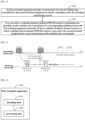
- a decoding result of the received sidelink data by the first terminal equipment is incorrect, i.e. the value that should have been fed back via the PSFCH is "NACK", as the first terminal equipment is at the active time in the time unit where the reserved sidelink shared channel (PSSCH) resource is located, as shown in FIG. 7 , the first terminal equipment may detect a sidelink control channel (PSCCH) to which the next transmission of the sidelink data corresponds in the time unit where the reserved sidelink shared channel (PSSCH) resource is located, so as to receive the next transmission of the sidelink data. Therefore, the receiving device is at least able to receive the corresponding next retransmission, thereby achieving a correct decoding result.
- PSCCH sidelink control channel
- a decoding result of the received sidelink data by the first terminal equipment is correct, i.e. the value that should have been fed back via the PSFCH is "ACK", as the first terminal equipment is at the active time in the time unit where the reserved sidelink shared channel (PSSCH) resource is located, as shown in FIG. 8 , the first terminal equipment may detect a sidelink control channel (PSCCH) to which the next transmission of the sidelink data corresponds in the time unit where the reserved sidelink shared channel (PSSCH) resource is located, so as to receive the next transmission of the sidelink data, and transmit ACK via a sidelink feedback channel (PSFCH) resource to which the reserved sidelink shared channel (PSSCH) resource corresponds.
- PSCCH sidelink control channel
- PSFCH sidelink feedback channel
- the receiving device may feed back "ACK" at corresponding PSFCH resource after receiving the next retransmission of the PSSCH, so that the transmitting device clears data packets to which the current TB corresponds in the buffer, thereby avoiding unnecessary retransmission.
- the first terminal equipment starts a first timer for a corresponding sidelink process at a first symbol after a resource where the sidelink feedback channel is located comes to an end, and starts a second timer after the first timer expires, the first terminal equipment being at active time when the second timer is running.
- the behaviors of SL DRX are controlled by a timer, and a current receiving device starts a timer (referred to as a first timer) for the corresponding sidelink process at the first symbol after the PSFCH resource (a corresponding PSFCH resource in which HARQ-ACK is not transmitted or is discarded) comes to an end, and starts another timer (referred to as a second timer) after the first timer expires, and when the second timer is running, the receiving device is at active time on the sidelink.
- a timer referred to as a first timer
- a second timer another timer
- the first timer is, for example, a sidelink round-trip time timer (SL RTT timer), which may be represented as SL-drx-HARQ-RTT-Timer; however, this disclosure is not limited thereto, and it may also be otherwise represented.
- the second timer is, for example, a sidelink retransmission timer, which may be represented as SL-drx-RetransmissionTime; however, this disclosure is not limited thereto, and it may also be otherwise represented.
- the second timer is set for the first terminal equipment to receive the retransmission of the sidelink data, and the first terminal equipment is at the active time when the second timer is running.
- the first terminal equipment may detect a sidelink control channel (PSCCH) when the second timer is running, so as to receive the next transmission of the sidelink data. Therefore, the receiving device is at least able to receive the corresponding next retransmission, thereby achieving a correct decoding result.
- PSCCH sidelink control channel
- the first terminal equipment may detect a sidelink control channel (PSCCH) when the second timer is running, so as to receive the next transmission of the sidelink data, and transmit ACK via a sidelink feedback channel (PSFCH) resource to which the sidelink shared channel (PSSCH) resource corresponds after the sidelink shared channel (PSSCH) corresponding to the transmission of the sidelink feedback channel is detected.
- PSCCH sidelink control channel
- PSFCH sidelink feedback channel
- the receiving device may feed back "ACK" at a corresponding PSFCH resource after receiving the next retransmission of the PSSCH, so that the transmitting device clears data packets to which the current TB corresponds in the buffer, thereby avoiding unnecessary retransmission.
- the first terminal equipment after receiving the sidelink control channel corresponding to the sidelink data of the sidelink process corresponding to the second timer, if the first terminal equipment is a destination terminal indicated in the sidelink control information carried or borne by the sidelink control channel, and/or if the second terminal equipment is a source terminal indicated in the sidelink control information carried or borne by the sidelink control channel, the first terminal equipment stops the second timer that is running.
- a slot refers to one belonging to a receiving resource pool of the first terminal equipment
- a symbol refers to one within the slot belonging to the receiving resource pool of the first terminal equipment that is able to be used for transmission of sidelink data.
- a time unit where the reserved sidelink shared channel resource is located is set as the active time of the receiving device, and in a case where a sidelink shared channel resource is not reserved, the running duration of the second timer is set as the active time of the receiving device.
- the receiving device when the receiving device is unable to transmit or discards a PSFCH resource, when a result that should be fed back is "NACK", the receiving device may set the corresponding retransmission time to be SL DRX active time, so as to correctly receive and decode data packets of the current TB, and when the result that should be fed back is "ACK", the transmitting device is enabled to end the transmission of the current TB in advance, thereby avoiding unnecessary retransmission.
- the embodiment of this disclosure provides a data reception method, which shall be described from a side of a first terminal equipment.
- a second terminal equipment transmits sidelink data to the first terminal equipment, and the first terminal equipment is configured with SL DRX.
- the SL DRX configuration may be configured by a network device for the first terminal equipment, or may be preconfigured by the first terminal equipment.
- the second terminal equipment in the embodiment of this disclosure is a transmitting device, and the first terminal equipment is a receiving device. Contents in this embodiment identical to those in the embodiment of the first aspect shall not be described herein any further.
- FIG. 9 is a schematic diagram of the data reception method of the embodiment of this disclosure. As shown in FIG. 9 , the method includes:
- FIG. 9 only schematically illustrates the embodiment of this disclosure; however, this disclosure is not limited thereto.
- an order of execution of the operations may be appropriately adjusted, and furthermore, some other operations may be added, or some operations therein may be reduced.
- appropriate variants may be made by those skilled in the art according to the above contents, without being limited to what is contained in FIG. 9 .
- the running duration of the second timer is directly set to be the active time of the receiving device, regardless of whether a sidelink shared channel resource is reserved. Therefore, when a result that should be fed back is "NACK", data packets of the current TB may be correctly received and decoded, and when the result that should be fed back is "ACK”, the transmitting device is enabled to end transmission of the current TB in advance, thereby avoiding unnecessary retransmission.
- a decoding result of the received sidelink data by the first terminal equipment is incorrect, i.e. the value that should have been fed back via the PSFCH is "NACK", as the first terminal equipment is at the active time when the second timer is running, as shown in FIG. 7 , the first terminal equipment may detect a sidelink control channel (PSCCH) when the second timer is running, so as to receive the next transmission of the sidelink data. Therefore, the receiving device is at least able to receive the corresponding next retransmission, thereby achieving a correct decoding result.
- PSCCH sidelink control channel
- decoding a result of the received sidelink data by the first terminal equipment is correct, i.e. the value that should have been fed back via the PSFCH is "ACK", as the first terminal equipment is at the active time when the second timer is running, as shown in FIG. 8 , the first terminal equipment may detect a sidelink control channel (PSCCH) when the second timer is running, so as to receive the next transmission of the sidelink data, and transmit ACK via a sidelink feedback channel (PSFCH) resource to which the sidelink shared channel (PSSCH) resource corresponds after the sidelink shared channel (PSSCH) corresponding to the transmission of the sidelink feedback channel is detected.
- PSCCH sidelink control channel
- PSSCH sidelink shared channel
- the receiving device may feed back "ACK" at a corresponding PSFCH resource after receiving the next retransmission of the PSSCH, so that the transmitting device clears data packets to which the current TB corresponds in the buffer, thereby avoiding unnecessary retransmission.
- the first terminal equipment after receiving the sidelink control channel corresponding to the sidelink data of the sidelink process corresponding to the second timer, if the first terminal equipment is a destination terminal indicated in the sidelink control information carried or borne by the sidelink control channel, and/or if the second terminal equipment is a source terminal indicated in the sidelink control information carried or borne by the sidelink control channel, the first terminal equipment stops the second timer that is running.
- a slot refers to one belonging to a receiving resource pool of the first terminal equipment
- a symbol refers to one within the slot belonging to the receiving resource pool of the first terminal equipment that is able to be used for transmission of sidelink data.
- the running duration of the second timer is set to be the active time of the receiving device, therefore, when a result that should be fed back is "NACK", data packets of the current TB may be correctly received and decoded, and when the result that should be fed back is "ACK", the transmitting device is enabled to end transmission of the current TB in advance, thereby avoiding unnecessary retransmission.
- the embodiment of this disclosure provides a data reception method, which shall be described from a side of a first terminal equipment.
- a second terminal equipment transmits sidelink data to the first terminal equipment, and the first terminal equipment is configured with SL DRX.
- the SL DRX configuration may be configured by a network device for the first terminal equipment, or may be preconfigured by the first terminal equipment.
- the second terminal equipment in the embodiment of this disclosure is a transmitting device, and the first terminal equipment is a receiving device.
- the embodiment of the third aspect may be implemented in combination with the embodiments of the first and second aspects, or may be implemented separately, with contents identical to those in the embodiments of the first and second aspects being not going to be described herein any further.
- FIG. 10 is a schematic diagram of the data reception method of the embodiment of this disclosure. As shown in FIG. 10 , the method includes:
- FIG. 10 only schematically illustrates the embodiment of this disclosure; however, this disclosure is not limited thereto.
- an order of execution of the operations may be appropriately adjusted, and furthermore, some other operations may be added, or some operations therein may be reduced.
- appropriate variants may be made by those skilled in the art according to the above contents, without being limited to what is contained in FIG. 10 .
- the receiving device if collision occurs in the corresponding PSFCH as described earlier after a PSSCH is received and the PSSCH is unable to be transmitted or is discarded due to that its priority is relatively low, if a current receiving device decodes correctly, that is, the value that should be fed back via the PSFCH is "ACK", for a corresponding sidelink process, the receiving device does not need to set a time unit of a corresponding next retransmission resource to be SL DRX active time, and detect a corresponding PSCCH so as to receive a corresponding retransmitted PSSCH, and needs only to transmit corresponding HARQ-ACK feedback at a PSFCH resource to which a PSSCH reserved by the transmitting device for the next retransmission, with a particular value being "ACK".
- the receiving device does not need to extra add a time in "active" state in a case where the TB has been correctly decoded, thereby further saving power of the receiving device itself.
- the above time unit may be a slot, that is, the receiving device does not need to be at active time in a slot where a corresponding next retransmission resource is located; however, this disclosure is not limited thereto, and the time unit may also be a symbol set in the slot that may be used for sidelink data transmission, that is, the receiving device does not need to be at active time in a symbol set that is able to be used for sidelink data transmission in the slot where the corresponding next retransmission resource is located.
- the next retransmission resource is reserved by SCI (sidelink control information) in a PSCCH (sidelink control channel) to which a PSSCH (sidelink shared channel) received by the receiving device corresponds.
- a reception resource pool of the first terminal equipment is configured with sidelink feedback channel (PSFCH) resources, and the control information to which the sidelink data correspond (i.e. the SCI carried by the PSCCH) indicates HARQ-ACK enabling.
- PSFCH sidelink feedback channel
- the first terminal equipment starts a first timer for a corresponding sidelink process at a first symbol after a resource where the sidelink feedback channel is located comes to an end, does not start a second timer after the first timer expires, and transmits ACK at a feedback channel resource to which the reserved sidelink shared channel resource corresponds.
- the second terminal equipment may clear data packets to which the current TB corresponds in the buffer.
- the second timer is set for the first terminal equipment to receive retransmission of the sidelink data, and the first terminal equipment being at active time when the second timer is running.
- behaviors of SL DRX may be controlled by a timer, and the current receiving device starts a first timer for the corresponding SL HARQ process at the first symbol after the PSFCH resource (the PSFCH is not transmitted, or the PSFCH is a corresponding PSFCH resource discarding HARQ-ACK) comes to an end, and the receiving device does not start a second timer after the first timer expires, but transmits corresponding HARQ-ACK feedback at the PSFCH resource to which the PSSCH reserved by the transmitting device for the next retransmission corresponds, with a particular value being "ACK", as shown in FIG. 11 . Therefore, after receiving the "ACK", the transmitting device clears the buffer of the sidelink process to which a current TB corresponds and does not continue to perform retransmission on a selected subsequent resource.
- the receiving device transmits ACK at the PSFCH to which the resource reserved for the further next retransmission corresponds (if any and known to the receiving device), and so on.
- a slot refers to one belonging to a receiving resource pool of the first terminal equipment
- a symbol refers to one within the slot belonging to the receiving resource pool of the first terminal equipment that is able to be used for transmission of sidelink data.
- the current receiving device may feed back "ACK" at a corresponding PSFCH resource after the PSSCH corresponding to the next retransmission, so that the transmitting device clears data packets corresponding the current TB in the buffer, thereby avoiding unnecessary retransmission.
- the receiving device does not need to extra add a time that is in "active" state in a case where the TB has been correctly decoded, thereby further saving power of the receiving device itself.
- the embodiment of this disclosure provides a data reception apparatus.
- FIG. 12 is a schematic diagram of the data reception apparatus of the embodiment of this disclosure.
- the apparatus may be, for example, a terminal equipment (such as the first terminal equipment described above), or may be one or more components or assemblies configured in the terminal equipment, with contents identical to those in the embodiment of the first aspect being not going to be described herein any further.
- the data reception apparatus is configured in the first terminal equipment, the first terminal equipment is configured with sidelink discontinuous reception, and the second terminal equipment transmits sidelink data to the first terminal equipment.
- the data reception apparatus 1200 includes a decoding unit 1201 and a processing unit 1202.
- the decoding unit 1201 decodes a transmission of received sidelink data transmitted by the second terminal equipment to obtain a decoding result; and in a case where a sidelink feedback channel (PSFCH) used for transmitting the decoding result is unable to be transmitted, if sidelink control information to which the transmission of sidelink data received by the first terminal equipment corresponds reserves a sidelink shared channel (PSSCH) resource for a next transmission of the sidelink data, for a corresponding sidelink process, the processing unit 1202 acknowledges that the first terminal equipment is at active time in a time unit where the reserved sidelink shared channel resource is present.
- PSFCH sidelink feedback channel
- PSSCH sidelink shared channel
- a reception resource pool of the first terminal equipment is configured with sidelink feedback channel resources, and the control information to which the sidelink data correspond indicates HARQ-ACK enabling.
- the processing unit 1202 determines to detect a sidelink control channel (PSCCH) to which the next transmission of the sidelink data corresponds in the time unit where the reserved sidelink shared channel resource is present, so as to receive the next transmission of the sidelink data.
- PSCCH sidelink control channel
- the processing unit 1202 detects a sidelink control channel to which the next transmission of the sidelink data corresponds in the time unit where the reserved sidelink shared channel resource is present, so as to receive the next transmission of the sidelink data and transmits ACK via a sidelink feedback channel resource to which the reserved sidelink shared channel resource corresponds.
- the processing unit 1202 starts a first timer for a corresponding sidelink process at a first symbol after a resource where the sidelink feedback channel is located comes to an end, and starts a second timer after the first timer expires, the first terminal equipment being at active time when the second timer is running.
- the processing unit 1202 detects a sidelink control channel when the second timer is running so as to receive the next transmission of the sidelink data.
- the processing unit 1202 detects a sidelink control channel when the second timer is running so as to receive the next transmission of the sidelink data, and after a sidelink shared channel to which the next transmission of the sidelink data corresponds is detected, transmits ACK via a sidelink feedback channel resource to which a resource of the sidelink shared channel corresponds.
- the processing unit 1202 terminates the running second timer.
- the symbol refers to a symbol able to be used for transmission of sidelink data, within a slot belonging to the reception resource pool of the first terminal equipment.
- FIG. 13 is another schematic diagram of the data reception apparatus of the embodiment of this disclosure.
- the apparatus may be, for example, a terminal equipment (such as the first terminal equipment described above), or may be one or more components or assemblies configured in the terminal equipment, with contents identical to those in the embodiment of the second aspect being not going to be described herein any further.
- the data reception apparatus is configured in the first terminal equipment, the first terminal equipment is configured with sidelink discontinuous reception, and the second terminal equipment transmits sidelink data to the first terminal equipment.
- the data reception apparatus 1300 includes a decoding unit 1301 and a processing unit 1302.
- the decoding unit 1301 decodes a transmission of the received sidelink data transmitted by the second terminal equipment to obtain a decoding result; and in a case where a sidelink feedback channel (PSFCH) used for transmitting the decoding result is unable to be transmitted, the processing unit 1302 starts a first timer for a corresponding sidelink process at a first symbol after a resource where the sidelink feedback channel is located comes to an end, and starts a second timer for a corresponding sidelink process after the first timer expires, the first terminal equipment being at active time when the second timer is running.
- PSFCH sidelink feedback channel
- the processing unit 1302 detects a sidelink control channel when the second timer is running so as to receive a next transmission of the sidelink data.
- the processing unit 1302 detects a sidelink control channel when the second timer is running so as to receive the next transmission of the sidelink data, and after a sidelink shared channel to which the next transmission of the sidelink data corresponds is detected, transmits ACK via a sidelink feedback channel resource to which a resource of the sidelink shared channel corresponds.
- the processing unit 1302 terminates the running second timer.
- the symbol refers to a symbol able to be used for transmission of sidelink data, within a slot belonging to the reception resource pool of the first terminal equipment.
- FIG. 14 is a further schematic diagram of the data reception apparatus of the embodiment of this disclosure.
- the apparatus may be, for example, a terminal equipment (such as the first terminal equipment described above), or may be one or more components or assemblies configured in the terminal equipment, with contents identical to those in the embodiment of the third aspect being not going to be described herein any further.
- the data reception apparatus is configured in the first terminal equipment, the first terminal equipment is configured with sidelink discontinuous reception, and the second terminal equipment transmits sidelink data to the first terminal equipment.
- the data reception apparatus 1400 includes a decoding unit 1401 and a processing unit 1402.
- the decoding unit 1401 decodes a transmission of the received sidelink data transmitted by the second terminal equipment to obtain a decoding result, the decoding result being correct; and in a case where a sidelink feedback channel (PSFCH) used for transmitting the decoding result is unable to be transmitted, for a corresponding sidelink process, the processing unit 1402 transmits ACK at a sidelink feedback channel resource to which a sidelink shared channel (PSSCH) resource reserved by the second terminal equipment for a next transmission of the sidelink data corresponds.
- PSFCH sidelink feedback channel
- PSSCH sidelink shared channel
- a reception resource pool of the first terminal equipment is configured with sidelink feedback channel resources, and the control information to which the sidelink data correspond indicates HARQ-ACK enabling.
- the processing unit 1402 starts a first timer for a corresponding sidelink process at a first symbol after a resource where the sidelink feedback channel is located comes to an end, does not start a second timer after the first timer expires, and transmits ACK at a feedback channel resource to which the reserved sidelink shared channel resource corresponds, the second timer being set for the first terminal equipment to receive retransmission of the sidelink data, and the first terminal equipment being at active time when the second timer is running.
- the symbol refers to a symbol able to be used for transmission of sidelink data, within a slot belonging t the reception resource pool of the first terminal equipment.
- connection relationships between the components or modules or signal profiles thereof are only illustrated in FIGs. 12-14 .
- connection relationships between the components or modules or signal profiles thereof are only illustrated in FIGs. 12-14 .
- such related techniques as bus connection, etc. may be adopted.
- the above components or modules may be implemented by hardware, such as a processor, a memory, a transmitter, and a receiver, etc., which are not limited in the embodiment of this disclosure.
- the receiving device can ensure that the receiving device is able to receive the transmission of next retransmission in a case where the value that should have been fed back via the PSFCH is "NACK", thereby ensuring reliability of receiving the corresponding TB; and at the same time, in a case where the value that should have been fed back via the PSFCH is "ACK", the transmitting device is enabled as soon as possible to clear data packets to which the current TB corresponds in the buffer, thereby avoiding unnecessary retransmission. And according to the embodiment of FIG. 14 , the receiving device is made to not need to extra add a time that is in "active" state in a case where the TB has been correctly decoded, thereby further saving power of the receiving device itself.
- the embodiment of this disclosure provides a communication system, and reference may be made to FIG. 2 , with contents identical to those in the embodiments of the first to the fourth aspects being not going to be described herein any further.
- the communication system may at least include a first terminal equipment and a second terminal equipment, the first terminal equipment being configured with SL DRX, wherein,
- the second terminal equipment receives the sidelink data at the configured continuous SL DRX active time.
- the communication system may at least include a first terminal equipment and a second terminal equipment, the first terminal equipment being configured with SL DRX, wherein,
- the communication system may at least include a first terminal equipment and a second terminal equipment, the first terminal equipment being configured with SL DRX, wherein,
- the embodiment of this disclosure further provides a terminal equipment; however, this disclosure is not limited thereto, and it may also be another equipment.
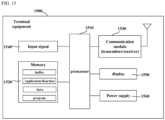
- FIG. 15 is a schematic diagram of the terminal equipment of the embodiment of this disclosure.
- the terminal equipment 1500 may include a processor 1510 and a memory 1520, the memory 1520 storing data and a program and being coupled to the processor 1510.
- the memory 1520 storing data and a program and being coupled to the processor 1510.
- this figure is illustrative only, and other types of structures may also be used, so as to supplement or replace this structure and achieve a telecommunications function or other functions.
- the processor 1510 may be configured to execute a program to carry out the methods as described in the embodiments of the first to third aspects.
- the terminal equipment 1500 may further include a communication module 1530, an input unit 1540, a display 1550, and a power supply 1560; wherein functions of the above components are similar to those in the related art, which shall not be described herein any further. It should be noted that the terminal equipment 1500 does not necessarily include all the parts shown in FIG. 15 , and the above components are not necessary. Furthermore, the terminal equipment 1500 may include parts not shown in FIG. 15 , and the related art may be referred to.
- An embodiment of this disclosure provides a computer readable program, which, when executed in a terminal equipment, will cause the terminal equipment to carry out the methods as described in the embodiments of the first to third aspects.
- An embodiment of this disclosure provides a storage medium storing a computer readable program, which will cause a terminal equipment to carry out the methods as described in the embodiments of the first to third aspects.
- the above apparatuses and methods of this disclosure may be implemented by hardware, or by hardware in combination with software.
- This disclosure relates to such a computer-readable program that when the program is executed by a logic device, the logic device is enabled to carry out the apparatus or components as described above, or to carry out the methods or steps as described above.
- This disclosure also relates to a storage medium for storing the above program, such as a hard disk, a floppy disk, a CD, a DVD, and a flash memory, etc.
- the methods/apparatuses described with reference to the embodiments of this disclosure may be directly embodied as hardware, software modules executed by a processor, or a combination thereof.
- one or more functional block diagrams and/or one or more combinations of the functional block diagrams shown in FIGs. 12-14 may either correspond to software modules of procedures of a computer program, or correspond to hardware modules.
- Such software modules may respectively correspond to the operations shown in FIGs. 6 , 9 and 10 .
- the hardware module for example, may be carried out by firming the soft modules by using a field programmable gate array (FPGA).
- FPGA field programmable gate array
- the soft modules may be located in an RAM, a flash memory, an ROM, an EPROM, and EEPROM, a register, a hard disc, a floppy disc, a CD-ROM, or any memory medium in other forms known in the art.
- a memory medium may be coupled to a processor, so that the processor may be able to read information from the memory medium, and write information into the memory medium; or the memory medium may be a component of the processor.
- the processor and the memory medium may be located in an ASIC.
- the soft modules may be stored in a memory of a mobile terminal, and may also be stored in a memory card of a pluggable mobile terminal.
- the soft modules may be stored in the MEGA-SIM card or the flash memory device of a large capacity.
- One or more functional blocks and/or one or more combinations of the functional blocks in the drawings may be realized as a universal processor, a digital signal processor (DSP), an application-specific integrated circuit (ASIC), a field programmable gate array (FPGA) or other programmable logic devices, discrete gate or transistor logic devices, discrete hardware component or any appropriate combinations thereof carrying out the functions described in this application.
- DSP digital signal processor
- ASIC application-specific integrated circuit
- FPGA field programmable gate array
- the one or more functional block diagrams and/or one or more combinations of the functional block diagrams in the drawings may also be realized as a combination of computing equipment, such as a combination of a DSP and a microprocessor, multiple processors, one or more microprocessors in communication combination with a DSP, or any other such configuration.
Landscapes
- Engineering & Computer Science (AREA)
- Signal Processing (AREA)
- Computer Networks & Wireless Communication (AREA)
- Mobile Radio Communication Systems (AREA)
- Communication Control (AREA)
Abstract
Description
- This disclosure relates to the field of communication technologies.
- In existing standards, discontinuous reception (DRX) may be configured on a Uu link for a terminal equipment to achieve a goal of enabling the terminal equipment to save power. A semi-statically periodically running timer, referred to as drx-OnDurationTimer, may be configured for the terminal equipment, and during running of the timer, the terminal equipment needs to perform blind detection on a downlink control channel (PDCCH); and in the rest of the time, the terminal equipment may not perform detection on the PDCCH, and may even turn off a receiving radio frequency based on implementation, so as to achieve a goal of saving power.
- On the other hand, based on a semi-statically periodically running DRX mechanism, Uu DRX also introduces a timer started to run based on an event, which, when a condition is satisfied, is able to dynamically enable the terminal equipment to be switched to active state to perform blind detection on a PDCCH. Specifically, the terminal equipment may be dynamically set to be in active state according to drx-RetransmissionTimerDL or drx-RetransmissionTimerUL configured per HARQ process, which are used respectively to detect PDCCHs scheduling retransmissions on a downlink (DL) and an uplink (UL). Based on the above Uu DRX operating mechanism, the terminal equipment is able to be in active state at a time when a network device possibly schedules retransmissions, thereby ensuring that the terminal equipment is able to detect and receive PDCCHs scheduling retransmissions.
- It should be noted that the above description of the background is merely provided for clear and complete explanation of this disclosure and for easy understanding by those skilled in the art. And it should not be understood that the above technical solution is known to those skilled in the art as it is described in the background of this disclosure.
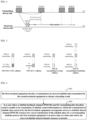
- It was found by the inventors that in the Rel-17 (Release 17) sidelink enhancement project, further enhancements need to be made to the sidelink transmission based on NR (New Radio) technology. One important goal thereof is to study and design the power saving mechanism of certain terminal equipments on the sidelink, such as handheld terminal equipments (P-UEs). The DRX mechanism, as an effective energysaving mechanism applied in a Uu interface, may be reused on the sidelink as a baseline. When a resource pool is configured with a PSFCH (physical sidelink feedback channel) and HARQ-ACK (hybrid automatic repeat request acknowledgement) is enabled, a receiving device needs to be able to be in active state when a transmitting device transmits retransmission in a case where NACK is fed back, as shown in
FIG. 1 , so as to correctly receive retransmitted packets and correctly decode a current transport block (TB). Otherwise, reliability of packet transmission may be affected; or, ACK needing to be transmitted should be timely fed back, so that the transmitting device is able to terminate transmission of the current transport block in advance, thereby avoiding unnecessary retransmission. - In order to solve at least one of the above problems, embodiments of this disclosure provide a data reception method and apparatus and a system.
- According to an aspect of the embodiments of this disclosure, there is provided a data reception apparatus, configured in a first terminal equipment, a second terminal equipment transmitting sidelink data to the first terminal equipment, the first terminal equipment being configured with sidelink discontinuous reception, the apparatus including:
- a decoding unit configured to decode a transmission of received sidelink data transmitted by the second terminal equipment to obtain a decoding result; and
- a processing unit configured to, in a case where a sidelink feedback channel (PSFCH) used for transmitting the decoding result is unable to be transmitted, if sidelink control information to which the transmission of sidelink data received by the first terminal equipment corresponds reserves a sidelink shared channel (PSSCH) resource for a next transmission of the sidelink data, for a corresponding sidelink process, acknowledge that the first terminal equipment is at active time in a time unit where the reserved sidelink shared channel resource is present.
- According to another aspect of the embodiments of this disclosure, there is provided a data reception apparatus, configured in a first terminal equipment, a second terminal equipment transmitting sidelink data to the first terminal equipment, the first terminal equipment being configured with sidelink discontinuous reception, the apparatus including:
- a decoding unit configured to decode a transmission of the received sidelink data transmitted by the second terminal equipment to obtain a decoding result; and
- a processing unit configured to, in a case where a sidelink feedback channel (PSFCH) used for transmitting the decoding result is unable to be transmitted, start a first timer for a corresponding sidelink process at a first symbol after a resource where the sidelink feedback channel is located comes to an end, and start a second timer for a corresponding sidelink process after the first timer expires, the first terminal equipment being at active time when the second timer is running.
- According to a further aspect of the embodiments of this disclosure, there is provided a data reception apparatus, configured in a first terminal equipment, a second terminal equipment transmitting sidelink data to the first terminal equipment, the first terminal equipment being configured with sidelink discontinuous reception, the apparatus including:
- a decoding unit configured to decode a transmission of the received sidelink data transmitted by the second terminal equipment to obtain a decoding result, the decoding result being correct; and
- a processing unit configured to, in a case where a sidelink feedback channel (PSFCH) used for transmitting the decoding result is unable to be transmitted, for a corresponding sidelink process, transmit ACK at a sidelink feedback channel resource to which a sidelink shared channel (PSSCH) resource reserved by the second terminal equipment for a next transmission of the sidelink data corresponds.
- An advantage of the embodiments of this disclosure exists in that on the one hand, it can ensure that the receiving device is able to receive the transmission of next retransmission in a case where the value that should have been fed back via the PSFCH is "NACK", thereby ensuring reliability of receiving the corresponding TB; and on the other hand, in a case where the value that should have been fed back via the PSFCH is "ACK", the transmitting device is enabled as soon as possible to clear data packets in the buffer to which the current TB corresponds, thereby avoiding unnecessary retransmission.
- With reference to the following description and drawings, the particular embodiments of this disclosure are disclosed in detail, and the principle of this disclosure and the manners of use are indicated. It should be understood that the scope of the embodiments of this disclosure is not limited thereto. The embodiments of this disclosure contain many alternations, modifications and equivalents within the scope of the terms of the appended claims.
- Features that are described and/or illustrated with respect to one embodiment may be used in the same way or in a similar way in one or more other embodiments and/or in combination with or instead of the features of the other embodiments.
- It should be emphasized that the term "comprises/comprising/includes/including" when used in this specification is taken to specify the presence of stated features, integers, steps or components but does not preclude the presence or addition of one or more other features, integers, steps, components or groups thereof.
- Elements and features depicted in one drawing or embodiment of the disclosure may be combined with elements and features depicted in one or more additional drawings or embodiments. Moreover, in the drawings, like reference numerals designate corresponding parts throughout the several views and may be used to designate like or similar parts in more than one embodiments.
-
FIG. 1 is schematic diagram of behaviors of a receiving device configured with SL DRX for retransmission; -
FIG. 2 is a schematic diagram of an application scenario of an embodiment of this disclosure; -
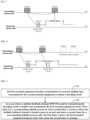
FIG. 3 is a schematic diagram of that retransmission is not received due to that a PSFCH carrying NACK is dropped; -
FIG. 4 is a schematic diagram of unnecessary retransmission due to that a PSFCH carrying ACK is dropped; -
FIG. 5 is a schematic diagram of possible scenarios where the PSFCH is not transmitted; -
FIG. 6 is a schematic diagram of the data reception method of an embodiment of this disclosure; -
FIG. 7 is a schematic diagram of a case where a result that should be fed back is NACK when collision occurs in the PSFCH; -
FIG. 8 is a schematic diagram of a case where a result that should be fed back is ACK when collision occurs in the PSFCH; -
FIG. 9 is another schematic diagram of the data reception method of the embodiment of this disclosure; -
FIG. 10 is a further schematic diagram of the data reception method of the embodiment of this disclosure; -
FIG. 11 is a schematic diagram of a case where a result that should be fed back is ACK and a second timer is not started when collision occurs in the PSFCH; -
FIG. 12 is a schematic diagram of the data reception apparatus of an embodiment of this disclosure; -
FIG. 13 is another schematic diagram of the data reception apparatus of the embodiment of this disclosure; -
FIG. 14 is a further schematic diagram of the data reception apparatus of the embodiment of this disclosure; and -
FIG. 15 is a schematic diagram of the terminal equipment of an embodiment of this disclosure. - These and further aspects and features of this disclosure will be apparent with reference to the following description and attached drawings. In the description and drawings, particular embodiments of the disclosure have been disclosed in detail as being indicative of some of the ways in which the principles of the disclosure may be employed, but it is understood that the disclosure is not limited correspondingly in scope. Rather, the disclosure includes all changes, modifications and equivalents coming within the terms of the appended claims.
- In the embodiments of this disclosure, terms "first", and "second", etc., are used to differentiate different elements with respect to names, and do not indicate spatial arrangement or temporal orders of these elements, and these elements should not be limited by these terms. Terms "and/or" include any one and all combinations of one or more relevantly listed terms. Terms "contain", "include" and "have" refer to existence of stated features, elements, components, or assemblies, but do not exclude existence or addition of one or more other features, elements, components, or assemblies.
- In the embodiments of this disclosure, single forms "a", and "the", etc., include plural forms, and should be understood as "a kind of" or "a type of" in a broad sense, but should not defined as a meaning of "one"; and the term "the" should be understood as including both a single form and a plural form, except specified otherwise. Furthermore, the term "according to" should be understood as "at least partially according to", the term "based on" should be understood as "at least partially based on", except specified otherwise.
- In the embodiments of this disclosure, the term "communication network" or "wireless communication network" may refer to a network satisfying any one of the following communication standards: long term evolution (LTE), long term evolutionadvanced (LTE-A), wideband code division multiple access (WCDMA), and highspeed packet access (HSPA), etc.
- And communication between devices in a communication system may be performed according to communication protocols at any stage, which may, for example, include but not limited to the following communication protocols: 1G (generation), 2G, 2.5G, 2.75G, 3G, 4G, 4.5G, and 5G and New Radio (NR) in the future, etc., and/or other communication protocols that are currently known or will be developed in the future.
- In the embodiments of this disclosure, the term "network device", for example, refers to a device in a communication system that accesses a user equipment to the communication network and provides services for the user equipment. The network device may include but not limited to the following devices: a node and/or donor in an IAB architecture, a base station (BS), an access point (AP), a transmission reception point (TRP), a broadcast transmitter, a mobile management entity (MME), a gateway, a server, a radio network controller (RNC), a base station controller (BSC), etc.
- In the above embodiments, the base station may include but not limited to a node B (NodeB or NB), an evolved node B (eNodeB or eNB), and a 5G base station (gNB), etc. Furthermore, it may include a remote radio head (RRH), a remote radio unit (RRU), a relay, or a low-power node (such as a femto, and a pico, etc.). The term "base station" may include some or all of its functions, and each base station may provide communication coverage for a specific geographical area. And a term "cell" may refer to a base station and/or its coverage area, depending on a context of the term.
- In the embodiments of this disclosure, the term "user equipment (UE)" or "a terminal equipment (TE) or terminal device" refers to, for example, an equipment accessing to a communication network and receiving network services via a network device. The terminal equipment may be fixed or mobile, and may also be referred to as a mobile station (MS), a terminal, a subscriber station (SS), an access terminal (AT), and a station, etc.
- In the above embodiments, the terminal equipment may include but not limited to the following devices: a cellular phone, a personal digital assistant (PDA), a wireless modem, a wireless communication device, a hand-held device, a machine-type communication device, a lap-top, a cordless telephone, a smart cell phone, a smart watch, and a digital camera, etc.
- For another example, in a scenario of the Internet of Things (IoT), etc., the user equipment may also be a machine or a device performing monitoring or measurement. For example, it may include but not limited to a machine-type communication (MTC) terminal, a vehicle mounted communication terminal, a device to device (D2D) terminal, and a machine to machine (M2M) terminal, etc.
- Moreover, the term "network side" or "network device side" refers to a side of a network, which may be a base station or one or more network devices including those described above. The term "user side" or "terminal side" or "terminal equipment side" refers to a side of a user or a terminal, which may be a UE, and may include one or more terminal equipments described above. In this text, "device" may refer to a network device, and may also refer to a terminal equipment, except otherwise specified.
- Scenarios of the embodiments of this disclosure shall be described below by way of examples; however, this disclosure is not limited thereto.
-
FIG. 2 is a schematic diagram of an application scenario of an embodiment of this disclosure. As shown inFIG. 2 . In this scenario, a transmitting device (Tx UE) operates inmode 2, a receiving device (Rx UE) is configured with SL DRX, and the transmitting device transmits data packets to the receiving device by way of unicast. It should be noted that a unicast scenario is taken as an example inFIG. 2 ; however, this disclosure is not limited thereto, and the embodiment of this disclosure is also applicable to multicast or broadcast scenarios. - In the RAN2 (Radio Access Network Group 2) 112-e conference, at least for unicast scenarios, it was agreed to reuse the timer-based mechanism in the Uu interface to control the SL DRX behavior mechanism of the receiving device, that is, on the sidelink, the SL DRX mechanism of the receiving device is controlled by such timers as SL-drx-OnDurationTimer, SL-drx-InactivityTimer, SL-drx-HARQ-RTT- Timer, and SL-drx-RetransmissionTimer, etc. For a case where a resource pool is configured with a PSFCH and HARQ-ACK is enabled, the DL mechanism reusing Uu DRX is an effective method with relatively small workload of standardization. However, for retransmission-related SL DRX behaviors, the PSFCH is not transmitted or is omitted due to its low priority, which is a situation needing to be specially considered in specifying SL DRX behaviors, because in Uu DRX, if discontinuous transmission (DTX) occurs in a PUCCH, a base station needs to decide whether to perform retransmission based on implementations, and a terminal may also decide whether to switch to "active" state based on the implementations; however, in the sidelink, when the transmitting device operates in
mode 2, the transmitting device determines the number of times of transmission when resource selection is triggered, and it does not cancel subsequent transmission, unless it receives the ACK, hence, the problem cannot be solved through implementations. - For example, as shown in
FIG. 3 , if the receiving device does not correctly decode the received sidelink data, that is, when information carried by the originally transmitted PSFCH is "NACK", but the PSFCH is not transmitted for some reasons, if the receiving device is in "non-active" state after feeding back "NACK", the receiving device is unable to receive the retransmitted data packets, which will lead to degradation of reliability. - For another example, as shown in
FIG. 4 , if the receiving device correctly decodes the received sidelink data, that is, the information carried via the PSFCH originally to be transmitted is "ACK", but the PSFCH is not transmitted for some reasons, if the receiving device is in "non-active" state after feeding back "ACK", although the receiving device does not expect to receive corresponding retransmission data packets at this moment, as the transmitting device does not receive "ACK", it may not clear the buffer and cancel subsequent retransmissions at the same time, which will cause the transmitting device to continue transmitting unnecessary retransmissions, thereby wasting resources and power of the transmitting device. -
FIG. 5 is a schematic diagram of possible scenarios where the PSFCH is not transmitted. In NR V2X (New Radio Vehicle to Everything) of Rel-16, due to the following reasons, the PSFCH cannot be transmitted by a terminal equipment or needs to be discarded when its corresponding priority is relatively low: - if the terminal equipment intends to transmit an LTE V2X channel or signal and an NR V2X channel or signal (such as a PSFCH), there exists overlapping therebetween and the terminal equipment obtains priority information T milliseconds before, the terminal equipment transmits a channel or signal of an RAT therein with a higher priority and discards transmission of the other; wherein for a synchronous signal, its priority is indicated by a higher layer, and for a PSFCH, its priority is equal to a priority of a corresponding PSSCH or a priority of a PSSCH with a highest priority;
- if the terminal equipment intends to receive an LTE V2X channel or signal and transmit an NR V2X channel or signal (such as a PSFCH), there exists overlapping therebetween and the terminal equipment obtains priority information T milliseconds before, the terminal equipment transmits or receives a channel or signal of an RAT therein with a higher priority and discards reception or transmission of the other; wherein for a synchronous signal, its priority is indicated by a higher layer, and for a PSFCH, its priority is equal to a priority of a corresponding PSSCH or a priority of a PSSCH with a highest priority, and is indicated by a PSCCH;
- if the terminal equipment intends to transmit multiple PSFCHs and power is limited, the terminal equipment may preferentially transmit N Tx,PSFCH PSFCH resources with priorities from high to low, and discard transmission of remaining PSFCHs, a rule for determining the priorities of the PSFCHs being the same as above;
- if the terminal equipment intends to transmit and receive PSFCHs in two sets separately, the terminal equipment compares priorities of PSFCHs with highest priorities in the sets, transmits or receives a corresponding PSFCH set only, and discards the other set, a rule for determining the priorities of the PSFCHs being the same as above;
- if the terminal equipment transmits both PSFCH (s) and UL transmission (except for PUSCH transmission scheduled by a PRACH and an RAR),
- if the PUCCH or PUSCH is configured with priority index 1,
- if sl-PriorityThresholdULURLLC is configured,
if a corresponding priority of a PSSCH with a highest priority in the PSFCH is higher than sl-PriorityThresholdULURLLC, transmission of the PSFCH is performed preferentially (refer to the above processing); - otherwise, UL transmission is performed preferentially;
- otherwise, UL transmission is performed preferentially;
- if sl-PriorityThresholdULURLLC is configured,
- otherwise,
if the corresponding priority of the PSSCH with the highest priority in the PSFCH is higher than sl-PriorityThresholdULURLLC, transmission of the PSFCH is performed preferentially; otherwise, UL transmission is performed preferentially.
- if the PUCCH or PUSCH is configured with priority index 1,
- Embodiments of this disclosure shall be described below with reference to the accompanying drawings and particular implementations.
- The embodiment of this disclosure provides a data reception method, which shall be described from a side of a first terminal equipment. In the above embodiment, the first terminal equipment is configured with SL DRX, and a second terminal equipment transmits sidelink data to the first terminal equipment. Here, the SL DRX configuration may be configured by a network device for the first terminal equipment, or may be preconfigured by the first terminal equipment. In addition, from the perspective of sidelink data transmission, the first terminal equipment in the embodiment of this disclosure is a receiving device, and the second terminal equipment is a transmitting device.
-
FIG. 6 is a schematic diagram of the data reception method of the embodiment of this disclosure. As shown inFIG. 6 , the method includes: - 601: the first terminal equipment decodes a transmission of received sidelink data transmitted by the second terminal equipment to obtain a decoding result; and
- 602: in a case where a sidelink feedback channel (PSFCH) used for transmitting the decoding result is unable to be transmitted, if sidelink control information to which the transmission of sidelink data received by the first terminal equipment corresponds reserves a sidelink shared channel (PSSCH) resource for a next transmission of the sidelink data, for a corresponding sidelink process, the first terminal equipment is at active time in a time unit where the reserved sidelink shared channel resource is present.
- It should be noted that
FIG. 6 only schematically illustrates the embodiment of this disclosure; however, this disclosure is not limited thereto. For example, an order of execution of the operations may be appropriately adjusted, and furthermore, some other operations may be added, or some operations therein may be reduced. And appropriate variants may be made by those skilled in the art according to the above contents, without being limited to what is contained inFIG. 6 . - In the above embodiment, for the receiving device configured with SL DRX, if collision occurs in the corresponding PSFCH as described earlier after a PSSCH is received and the PSFCH is unable to be transmitted or is discarded due to that its priority is relatively low, for a corresponding sidelink process, the receiving device detects the corresponding PSCCH at a time unit where a corresponding next retransmission resource is present that is set to be SL DRX active time, so as to receive a corresponding retransmitted PSSCH. Here, the corresponding sidelink process refers to a sidelink process occupied by transmission (initial transmission or retransmission) of a transport block (TB) of current sidelink data, i.e. a sidelink process to which a current sidelink grant corresponds.
- Therefore, it can ensure that the receiving device is able to receive the transmission of next retransmission in a case where the value that should have been fed back via the PSFCH is "NACK", thereby ensuring reliability of receiving the corresponding TB; and at the same time, in a case where the value that should have been fed back via the PSFCH is "ACK", the transmitting device is enabled as soon as possible to clear data packets to which the current TB corresponds in the buffer, thereby avoiding unnecessary retransmission.
- In the embodiment of this disclosure, the above time unit may be a slot, that is, the first terminal equipment is at active time in a slot where reserved sidelink shared channel resources are located; however, this disclosure is not limited thereto, and the time unit may also be a symbol set in the slot that may be used for sidelink data transmission, i.e. a symbol set that the first terminal equipment may use for sidelink data transmission in the slot where the reserved sidelink shared channel resources are located is in active time.
- In the embodiment of this disclosure, the sidelink control information is sidelink control information (SCI) in a sidelink control channel (PSCCH) corresponding to a transmission of the above sidelink data, and a sidelink shared channel resource reserved by the sidelink control information for a next transmission of the above sidelink data is also referred to as "a next retransmission resource". That is, the next retransmission resource is reserved by the SCI in the PSCCH corresponding to the PSSCH received by the receiving device.
- In the embodiment of this disclosure, sidelink feedback channel (PSFCH) resources are configured in a reception resource pool of the first terminal equipment, and the control information to which the sidelink data correspond (i.e. the SCI carried by the PSCCH) indicates HARQ-ACK enabling.
- In some embodiments, a decoding result of the received sidelink data by the first terminal equipment is incorrect, i.e. the value that should have been fed back via the PSFCH is "NACK", as the first terminal equipment is at the active time in the time unit where the reserved sidelink shared channel (PSSCH) resource is located, as shown in
FIG. 7 , the first terminal equipment may detect a sidelink control channel (PSCCH) to which the next transmission of the sidelink data corresponds in the time unit where the reserved sidelink shared channel (PSSCH) resource is located, so as to receive the next transmission of the sidelink data. Therefore, the receiving device is at least able to receive the corresponding next retransmission, thereby achieving a correct decoding result. - In some embodiments, a decoding result of the received sidelink data by the first terminal equipment is correct, i.e. the value that should have been fed back via the PSFCH is "ACK", as the first terminal equipment is at the active time in the time unit where the reserved sidelink shared channel (PSSCH) resource is located, as shown in
FIG. 8 , the first terminal equipment may detect a sidelink control channel (PSCCH) to which the next transmission of the sidelink data corresponds in the time unit where the reserved sidelink shared channel (PSSCH) resource is located, so as to receive the next transmission of the sidelink data, and transmit ACK via a sidelink feedback channel (PSFCH) resource to which the reserved sidelink shared channel (PSSCH) resource corresponds. Therefore, although the receiving device has correctly decoded, it may feed back "ACK" at corresponding PSFCH resource after receiving the next retransmission of the PSSCH, so that the transmitting device clears data packets to which the current TB corresponds in the buffer, thereby avoiding unnecessary retransmission. - In the embodiment of this disclosure, if the sidelink control information to which the transmission of sidelink data received by the first terminal equipment corresponds does not reserve a sidelink shared channel resource for the next transmission of the sidelink data, the first terminal equipment starts a first timer for a corresponding sidelink process at a first symbol after a resource where the sidelink feedback channel is located comes to an end, and starts a second timer after the first timer expires, the first terminal equipment being at active time when the second timer is running.
- In the above embodiment, the behaviors of SL DRX are controlled by a timer, and a current receiving device starts a timer (referred to as a first timer) for the corresponding sidelink process at the first symbol after the PSFCH resource (a corresponding PSFCH resource in which HARQ-ACK is not transmitted or is discarded) comes to an end, and starts another timer (referred to as a second timer) after the first timer expires, and when the second timer is running, the receiving device is at active time on the sidelink.
- In the above embodiment, the first timer is, for example, a sidelink round-trip time timer (SL RTT timer), which may be represented as SL-drx-HARQ-RTT-Timer; however, this disclosure is not limited thereto, and it may also be otherwise represented. The second timer is, for example, a sidelink retransmission timer, which may be represented as SL-drx-RetransmissionTime; however, this disclosure is not limited thereto, and it may also be otherwise represented. The second timer is set for the first terminal equipment to receive the retransmission of the sidelink data, and the first terminal equipment is at the active time when the second timer is running.
- In some embodiments, if a decoding result of the received sidelink data by the first terminal equipment is incorrect, i.e. the value that should have been fed back via the PSFCH is "NACK", as the first terminal equipment is at the active time when the second timer is running, as shown in
FIG. 7 , the first terminal equipment may detect a sidelink control channel (PSCCH) when the second timer is running, so as to receive the next transmission of the sidelink data. Therefore, the receiving device is at least able to receive the corresponding next retransmission, thereby achieving a correct decoding result. - In some embodiments, if a decoding result of the received sidelink data by the first terminal equipment is correct, i.e. the value that should have been fed back via the PSFCH is "ACK", as the first terminal equipment is at the active time when the second timer is running, as shown in
FIG. 8 , the first terminal equipment may detect a sidelink control channel (PSCCH) when the second timer is running, so as to receive the next transmission of the sidelink data, and transmit ACK via a sidelink feedback channel (PSFCH) resource to which the sidelink shared channel (PSSCH) resource corresponds after the sidelink shared channel (PSSCH) corresponding to the transmission of the sidelink feedback channel is detected. Therefore, although the receiving device has correctly decoded, it may feed back "ACK" at a corresponding PSFCH resource after receiving the next retransmission of the PSSCH, so that the transmitting device clears data packets to which the current TB corresponds in the buffer, thereby avoiding unnecessary retransmission. - In the embodiment of this disclosure, in some embodiments, after receiving the sidelink control channel corresponding to the sidelink data of the sidelink process corresponding to the second timer, if the first terminal equipment is a destination terminal indicated in the sidelink control information carried or borne by the sidelink control channel, and/or if the second terminal equipment is a source terminal indicated in the sidelink control information carried or borne by the sidelink control channel, the first terminal equipment stops the second timer that is running.
- In the above embodiment, a slot refers to one belonging to a receiving resource pool of the first terminal equipment, and a symbol refers to one within the slot belonging to the receiving resource pool of the first terminal equipment that is able to be used for transmission of sidelink data.
- The above implementations only illustrate the embodiment of this disclosure. However, this disclosure is not limited thereto, and appropriate variants may be made on the basis of these implementations. For example, the above implementations may be executed separately, or one or more of them may be executed in a combined manner.
- According to the method of the embodiment of this disclosure, in a case where a sidelink shared channel resource is reserved, a time unit where the reserved sidelink shared channel resource is located is set as the active time of the receiving device, and in a case where a sidelink shared channel resource is not reserved, the running duration of the second timer is set as the active time of the receiving device. Therefore, when the receiving device is unable to transmit or discards a PSFCH resource, when a result that should be fed back is "NACK", the receiving device may set the corresponding retransmission time to be SL DRX active time, so as to correctly receive and decode data packets of the current TB, and when the result that should be fed back is "ACK", the transmitting device is enabled to end the transmission of the current TB in advance, thereby avoiding unnecessary retransmission.
- The embodiment of this disclosure provides a data reception method, which shall be described from a side of a first terminal equipment. In the above embodiment, a second terminal equipment transmits sidelink data to the first terminal equipment, and the first terminal equipment is configured with SL DRX. Here, the SL DRX configuration may be configured by a network device for the first terminal equipment, or may be preconfigured by the first terminal equipment. In addition, from the perspective of sidelink data transmission, the second terminal equipment in the embodiment of this disclosure is a transmitting device, and the first terminal equipment is a receiving device. Contents in this embodiment identical to those in the embodiment of the first aspect shall not be described herein any further.
-
FIG. 9 is a schematic diagram of the data reception method of the embodiment of this disclosure. As shown inFIG. 9 , the method includes: - 901: the first terminal equipment decodes a transmission of received sidelink data transmitted by the second terminal equipment to obtain a decoding result; and
- 902: in a case where a sidelink feedback channel (PSFCH) used for transmitting the decoding result is unable to be transmitted, the first terminal equipment starts a first timer for a corresponding sidelink process at a first symbol after a resource where the sidelink feedback channel is located comes to an end, and starts a second timer for a corresponding sidelink process after the first timer expires, the first terminal equipment being at active time when the second timer is running.
- It should be noted that
FIG. 9 only schematically illustrates the embodiment of this disclosure; however, this disclosure is not limited thereto. For example, an order of execution of the operations may be appropriately adjusted, and furthermore, some other operations may be added, or some operations therein may be reduced. And appropriate variants may be made by those skilled in the art according to the above contents, without being limited to what is contained inFIG. 9 . - In the embodiment of this disclosure, meanings of the first timer and the second timer are identical to those in the embodiment of the first aspect, and shall not be described herein any further.
- In the embodiment of this disclosure, different from the embodiment of the first aspect, the running duration of the second timer is directly set to be the active time of the receiving device, regardless of whether a sidelink shared channel resource is reserved. Therefore, when a result that should be fed back is "NACK", data packets of the current TB may be correctly received and decoded, and when the result that should be fed back is "ACK", the transmitting device is enabled to end transmission of the current TB in advance, thereby avoiding unnecessary retransmission.
- In some embodiments, a decoding result of the received sidelink data by the first terminal equipment is incorrect, i.e. the value that should have been fed back via the PSFCH is "NACK", as the first terminal equipment is at the active time when the second timer is running, as shown in
FIG. 7 , the first terminal equipment may detect a sidelink control channel (PSCCH) when the second timer is running, so as to receive the next transmission of the sidelink data. Therefore, the receiving device is at least able to receive the corresponding next retransmission, thereby achieving a correct decoding result. - In some embodiments, decoding a result of the received sidelink data by the first terminal equipment is correct, i.e. the value that should have been fed back via the PSFCH is "ACK", as the first terminal equipment is at the active time when the second timer is running, as shown in
FIG. 8 , the first terminal equipment may detect a sidelink control channel (PSCCH) when the second timer is running, so as to receive the next transmission of the sidelink data, and transmit ACK via a sidelink feedback channel (PSFCH) resource to which the sidelink shared channel (PSSCH) resource corresponds after the sidelink shared channel (PSSCH) corresponding to the transmission of the sidelink feedback channel is detected. Therefore, although the receiving device has correctly decoded, it may feed back "ACK" at a corresponding PSFCH resource after receiving the next retransmission of the PSSCH, so that the transmitting device clears data packets to which the current TB corresponds in the buffer, thereby avoiding unnecessary retransmission. - In the embodiment of this disclosure, in some embodiments, after receiving the sidelink control channel corresponding to the sidelink data of the sidelink process corresponding to the second timer, if the first terminal equipment is a destination terminal indicated in the sidelink control information carried or borne by the sidelink control channel, and/or if the second terminal equipment is a source terminal indicated in the sidelink control information carried or borne by the sidelink control channel, the first terminal equipment stops the second timer that is running.
- In the above embodiment, a slot refers to one belonging to a receiving resource pool of the first terminal equipment, and a symbol refers to one within the slot belonging to the receiving resource pool of the first terminal equipment that is able to be used for transmission of sidelink data.
- The above implementations only illustrate the embodiment of this disclosure. However, this disclosure is not limited thereto, and appropriate variants may be made on the basis of these implementations. For example, the above implementations may be executed separately, or one or more of them may be executed in a combined manner.
- According to the method of the embodiment of this disclosure, the running duration of the second timer is set to be the active time of the receiving device, therefore, when a result that should be fed back is "NACK", data packets of the current TB may be correctly received and decoded, and when the result that should be fed back is "ACK", the transmitting device is enabled to end transmission of the current TB in advance, thereby avoiding unnecessary retransmission.
- The embodiment of this disclosure provides a data reception method, which shall be described from a side of a first terminal equipment. In the above embodiment, a second terminal equipment transmits sidelink data to the first terminal equipment, and the first terminal equipment is configured with SL DRX. Here, the SL DRX configuration may be configured by a network device for the first terminal equipment, or may be preconfigured by the first terminal equipment. In addition, from the perspective of sidelink data transmission, the second terminal equipment in the embodiment of this disclosure is a transmitting device, and the first terminal equipment is a receiving device.
- The embodiment of the third aspect may be implemented in combination with the embodiments of the first and second aspects, or may be implemented separately, with contents identical to those in the embodiments of the first and second aspects being not going to be described herein any further.
-
FIG. 10 is a schematic diagram of the data reception method of the embodiment of this disclosure. As shown inFIG. 10 , the method includes: - 1001: the first terminal equipment decodes a transmission of received sidelink data transmitted by the second terminal equipment to obtain a decoding result, the decoding result being correct; and
- 1002: in a case where a sidelink feedback channel (PSFCH) used for transmitting the decoding result is unable to be transmitted, for a corresponding sidelink process, the first terminal equipment transmits ACK at a sidelink feedback channel resource to which a sidelink shared channel (PSSCH) resource reserved by the second terminal equipment for a next transmission of the sidelink data corresponds.
- It should be noted that
FIG. 10 only schematically illustrates the embodiment of this disclosure; however, this disclosure is not limited thereto. For example, an order of execution of the operations may be appropriately adjusted, and furthermore, some other operations may be added, or some operations therein may be reduced. And appropriate variants may be made by those skilled in the art according to the above contents, without being limited to what is contained inFIG. 10 . - In the above embodiment, for the receiving device configured with SL DRX, if collision occurs in the corresponding PSFCH as described earlier after a PSSCH is received and the PSSCH is unable to be transmitted or is discarded due to that its priority is relatively low, if a current receiving device decodes correctly, that is, the value that should be fed back via the PSFCH is "ACK", for a corresponding sidelink process, the receiving device does not need to set a time unit of a corresponding next retransmission resource to be SL DRX active time, and detect a corresponding PSCCH so as to receive a corresponding retransmitted PSSCH, and needs only to transmit corresponding HARQ-ACK feedback at a PSFCH resource to which a PSSCH reserved by the transmitting device for the next retransmission, with a particular value being "ACK".
- Therefore, the receiving device does not need to extra add a time in "active" state in a case where the TB has been correctly decoded, thereby further saving power of the receiving device itself.
- In the above embodiment, the above time unit may be a slot, that is, the receiving device does not need to be at active time in a slot where a corresponding next retransmission resource is located; however, this disclosure is not limited thereto, and the time unit may also be a symbol set in the slot that may be used for sidelink data transmission, that is, the receiving device does not need to be at active time in a symbol set that is able to be used for sidelink data transmission in the slot where the corresponding next retransmission resource is located.
- In the embodiment of this disclosure, the next retransmission resource is reserved by SCI (sidelink control information) in a PSCCH (sidelink control channel) to which a PSSCH (sidelink shared channel) received by the receiving device corresponds.
- In the embodiment of the disclosure, a reception resource pool of the first terminal equipment is configured with sidelink feedback channel (PSFCH) resources, and the control information to which the sidelink data correspond (i.e. the SCI carried by the PSCCH) indicates HARQ-ACK enabling.
- In some embodiments, the first terminal equipment starts a first timer for a corresponding sidelink process at a first symbol after a resource where the sidelink feedback channel is located comes to an end, does not start a second timer after the first timer expires, and transmits ACK at a feedback channel resource to which the reserved sidelink shared channel resource corresponds. Hence, the second terminal equipment may clear data packets to which the current TB corresponds in the buffer. The second timer is set for the first terminal equipment to receive retransmission of the sidelink data, and the first terminal equipment being at active time when the second timer is running.
- In the above embodiment, behaviors of SL DRX may be controlled by a timer, and the current receiving device starts a first timer for the corresponding SL HARQ process at the first symbol after the PSFCH resource (the PSFCH is not transmitted, or the PSFCH is a corresponding PSFCH resource discarding HARQ-ACK) comes to an end, and the receiving device does not start a second timer after the first timer expires, but transmits corresponding HARQ-ACK feedback at the PSFCH resource to which the PSSCH reserved by the transmitting device for the next retransmission corresponds, with a particular value being "ACK", as shown in
FIG. 11 . Therefore, after receiving the "ACK", the transmitting device clears the buffer of the sidelink process to which a current TB corresponds and does not continue to perform retransmission on a selected subsequent resource. - In the above embodiment, if the PSFCH to which the PSSCH reserved for the next retransmission corresponds is still unable to be transmitted (is omitted), the receiving device transmits ACK at the PSFCH to which the resource reserved for the further next retransmission corresponds (if any and known to the receiving device), and so on.
- In the embodiment of this disclosure, meanings of the first timer and the second timer are described in the embodiment of the first aspect, and contents of which are incorporated herein, and shall not be described herein any further.
- In the above embodiment, a slot refers to one belonging to a receiving resource pool of the first terminal equipment, and a symbol refers to one within the slot belonging to the receiving resource pool of the first terminal equipment that is able to be used for transmission of sidelink data.
- The above implementations only illustrate the embodiment of this disclosure. However, this disclosure is not limited thereto, and appropriate variants may be made on the basis of these implementations. For example, the above implementations may be executed separately, or one or more of them may be executed in a combined manner.
- According to the method of the embodiment of this disclosure, if the current receiving device decodes correctly, that is, the value that should have been fed back via the PSFCH is "ACK", although the receiving device has decoded correctly, it may feed back "ACK" at a corresponding PSFCH resource after the PSSCH corresponding to the next retransmission, so that the transmitting device clears data packets corresponding the current TB in the buffer, thereby avoiding unnecessary retransmission. At the same time, the receiving device does not need to extra add a time that is in "active" state in a case where the TB has been correctly decoded, thereby further saving power of the receiving device itself.
- The embodiment of this disclosure provides a data reception apparatus.
-
FIG. 12 is a schematic diagram of the data reception apparatus of the embodiment of this disclosure. The apparatus may be, for example, a terminal equipment (such as the first terminal equipment described above), or may be one or more components or assemblies configured in the terminal equipment, with contents identical to those in the embodiment of the first aspect being not going to be described herein any further. - In the embodiment of this disclosure, the data reception apparatus is configured in the first terminal equipment, the first terminal equipment is configured with sidelink discontinuous reception, and the second terminal equipment transmits sidelink data to the first terminal equipment. As shown in
FIG. 12 , thedata reception apparatus 1200 includes adecoding unit 1201 and aprocessing unit 1202. - In the embodiment of this disclosure, the
decoding unit 1201 decodes a transmission of received sidelink data transmitted by the second terminal equipment to obtain a decoding result; and in a case where a sidelink feedback channel (PSFCH) used for transmitting the decoding result is unable to be transmitted, if sidelink control information to which the transmission of sidelink data received by the first terminal equipment corresponds reserves a sidelink shared channel (PSSCH) resource for a next transmission of the sidelink data, for a corresponding sidelink process, theprocessing unit 1202 acknowledges that the first terminal equipment is at active time in a time unit where the reserved sidelink shared channel resource is present. - In the embodiment of this disclosure, a reception resource pool of the first terminal equipment is configured with sidelink feedback channel resources, and the control information to which the sidelink data correspond indicates HARQ-ACK enabling.
- In some embodiments, if the decoding result is incorrect, the
processing unit 1202 determines to detect a sidelink control channel (PSCCH) to which the next transmission of the sidelink data corresponds in the time unit where the reserved sidelink shared channel resource is present, so as to receive the next transmission of the sidelink data. - In some embodiments, if the decoding result is correct, the
processing unit 1202 detects a sidelink control channel to which the next transmission of the sidelink data corresponds in the time unit where the reserved sidelink shared channel resource is present, so as to receive the next transmission of the sidelink data and transmits ACK via a sidelink feedback channel resource to which the reserved sidelink shared channel resource corresponds. - In some embodiments, if the sidelink control information to which the transmission of sidelink data received by the first terminal equipment corresponds does not reserve a sidelink shared channel resource for the next transmission of the sidelink data, the
processing unit 1202 starts a first timer for a corresponding sidelink process at a first symbol after a resource where the sidelink feedback channel is located comes to an end, and starts a second timer after the first timer expires, the first terminal equipment being at active time when the second timer is running. - In some embodiments, if the decoding result is incorrect, the
processing unit 1202 detects a sidelink control channel when the second timer is running so as to receive the next transmission of the sidelink data. - In some embodiments, if the decoding result is correct, the
processing unit 1202 detects a sidelink control channel when the second timer is running so as to receive the next transmission of the sidelink data, and after a sidelink shared channel to which the next transmission of the sidelink data corresponds is detected, transmits ACK via a sidelink feedback channel resource to which a resource of the sidelink shared channel corresponds. - In some embodiments, after the sidelink control channel corresponding to the sidelink data of the sidelink process to which the second timer corresponds is received, if the first terminal equipment is a destination terminal indicated in the sidelink control information carried by the sidelink control channel, and/or, the second terminal equipment is a source terminal indicated in the sidelink control information carried by the sidelink control channel, the
processing unit 1202 terminates the running second timer. - In some embodiments, the symbol refers to a symbol able to be used for transmission of sidelink data, within a slot belonging to the reception resource pool of the first terminal equipment.
-
FIG. 13 is another schematic diagram of the data reception apparatus of the embodiment of this disclosure. The apparatus may be, for example, a terminal equipment (such as the first terminal equipment described above), or may be one or more components or assemblies configured in the terminal equipment, with contents identical to those in the embodiment of the second aspect being not going to be described herein any further. - In the embodiment of this disclosure, the data reception apparatus is configured in the first terminal equipment, the first terminal equipment is configured with sidelink discontinuous reception, and the second terminal equipment transmits sidelink data to the first terminal equipment. As shown in
FIG. 13 , thedata reception apparatus 1300 includes adecoding unit 1301 and aprocessing unit 1302. - In the embodiment of this disclosure, the
decoding unit 1301 decodes a transmission of the received sidelink data transmitted by the second terminal equipment to obtain a decoding result; and in a case where a sidelink feedback channel (PSFCH) used for transmitting the decoding result is unable to be transmitted, theprocessing unit 1302 starts a first timer for a corresponding sidelink process at a first symbol after a resource where the sidelink feedback channel is located comes to an end, and starts a second timer for a corresponding sidelink process after the first timer expires, the first terminal equipment being at active time when the second timer is running. - In some embodiments, if the decoding result is incorrect, the
processing unit 1302 detects a sidelink control channel when the second timer is running so as to receive a next transmission of the sidelink data. - In some embodiments, if the decoding result is correct, the
processing unit 1302 detects a sidelink control channel when the second timer is running so as to receive the next transmission of the sidelink data, and after a sidelink shared channel to which the next transmission of the sidelink data corresponds is detected, transmits ACK via a sidelink feedback channel resource to which a resource of the sidelink shared channel corresponds. - In some embodiments, after the sidelink control channel corresponding to the sidelink data of the sidelink process to which the second timer corresponds is received, if the first terminal equipment is a destination terminal indicated in the sidelink control information carried by the sidelink control channel, and/or, the second terminal equipment is a source terminal indicated in the sidelink control information carried by the sidelink control channel, the
processing unit 1302 terminates the running second timer. - In some embodiments, the symbol refers to a symbol able to be used for transmission of sidelink data, within a slot belonging to the reception resource pool of the first terminal equipment.
-
FIG. 14 is a further schematic diagram of the data reception apparatus of the embodiment of this disclosure. The apparatus may be, for example, a terminal equipment (such as the first terminal equipment described above), or may be one or more components or assemblies configured in the terminal equipment, with contents identical to those in the embodiment of the third aspect being not going to be described herein any further. - In the embodiment of this disclosure, the data reception apparatus is configured in the first terminal equipment, the first terminal equipment is configured with sidelink discontinuous reception, and the second terminal equipment transmits sidelink data to the first terminal equipment. As shown in
FIG. 14 , thedata reception apparatus 1400 includes adecoding unit 1401 and aprocessing unit 1402. - In the embodiment of this disclosure, the
decoding unit 1401 decodes a transmission of the received sidelink data transmitted by the second terminal equipment to obtain a decoding result, the decoding result being correct; and in a case where a sidelink feedback channel (PSFCH) used for transmitting the decoding result is unable to be transmitted, for a corresponding sidelink process, theprocessing unit 1402 transmits ACK at a sidelink feedback channel resource to which a sidelink shared channel (PSSCH) resource reserved by the second terminal equipment for a next transmission of the sidelink data corresponds. - In the embodiment of this disclosure, a reception resource pool of the first terminal equipment is configured with sidelink feedback channel resources, and the control information to which the sidelink data correspond indicates HARQ-ACK enabling.
- In some embodiments, the
processing unit 1402 starts a first timer for a corresponding sidelink process at a first symbol after a resource where the sidelink feedback channel is located comes to an end, does not start a second timer after the first timer expires, and transmits ACK at a feedback channel resource to which the reserved sidelink shared channel resource corresponds, the second timer being set for the first terminal equipment to receive retransmission of the sidelink data, and the first terminal equipment being at active time when the second timer is running. - In some embodiments, the symbol refers to a symbol able to be used for transmission of sidelink data, within a slot belonging t the reception resource pool of the first terminal equipment.
- The above implementations only illustrate the embodiment of this disclosure. However, this disclosure is not limited thereto, and appropriate variants may be made on the basis of these implementations. For example, the above implementations may be executed separately, or one or more of them may be executed in a combined manner.
- It should be noted that the components or modules related to this disclosure are only described above. However, this disclosure is not limited thereto, and the
data reception apparatuses 1200/1300/1400 may further include other components or modules, and reference may be made to related techniques for particulars of these components or modules. - Furthermore, for the sake of simplicity, connection relationships between the components or modules or signal profiles thereof are only illustrated in
FIGs. 12-14 . However, it should be understood by those skilled in the art that such related techniques as bus connection, etc., may be adopted. And the above components or modules may be implemented by hardware, such as a processor, a memory, a transmitter, and a receiver, etc., which are not limited in the embodiment of this disclosure. - According to the embodiments of
FIGs. 12 and13 of this disclosure, it can ensure that the receiving device is able to receive the transmission of next retransmission in a case where the value that should have been fed back via the PSFCH is "NACK", thereby ensuring reliability of receiving the corresponding TB; and at the same time, in a case where the value that should have been fed back via the PSFCH is "ACK", the transmitting device is enabled as soon as possible to clear data packets to which the current TB corresponds in the buffer, thereby avoiding unnecessary retransmission. And according to the embodiment ofFIG. 14 , the receiving device is made to not need to extra add a time that is in "active" state in a case where the TB has been correctly decoded, thereby further saving power of the receiving device itself. - The embodiment of this disclosure provides a communication system, and reference may be made to
FIG. 2 , with contents identical to those in the embodiments of the first to the fourth aspects being not going to be described herein any further. - In some embodiments, the communication system may at least include a first terminal equipment and a second terminal equipment, the first terminal equipment being configured with SL DRX, wherein,
- the second terminal equipment transmits sidelink data to the first terminal equipment,
- the first terminal equipment decodes a transmission of received sidelink data transmitted by the second terminal equipment to obtain a decoding result, and in a case where a sidelink feedback channel (PSFCH) used for transmitting the decoding result is unable to be transmitted, if sidelink control information to which the transmission of sidelink data received by the first terminal equipment corresponds reserves a sidelink shared channel (PSSCH) resource for a next transmission of the sidelink data, for a corresponding sidelink process, the first terminal equipment is at active time in a time unit where the reserved sidelink shared channel resource is present.
- The second terminal equipment receives the sidelink data at the configured continuous SL DRX active time.
- In some embodiments, the communication system may at least include a first terminal equipment and a second terminal equipment, the first terminal equipment being configured with SL DRX, wherein,
- the second terminal equipment transmits sidelink data to the first terminal equipment,
- the first terminal equipment decodes a transmission of the received sidelink data transmitted by the second terminal equipment to obtain a decoding result; and in a case where a sidelink feedback channel (PSFCH) used for transmitting the decoding result is unable to be transmitted, the first terminal equipment starts a first timer for a corresponding sidelink process at a first symbol after a resource where the sidelink feedback channel is located comes to an end, and starts a second timer for a corresponding sidelink process after the first timer expires, the first terminal equipment being at active time when the second timer is running.
- In some embodiments, the communication system may at least include a first terminal equipment and a second terminal equipment, the first terminal equipment being configured with SL DRX, wherein,
- the second terminal equipment transmits sidelink data to the first terminal equipment,
- the first terminal equipment decodes a transmission of the received sidelink data transmitted by the second terminal equipment to obtain a decoding result, the decoding result being correct; and in a case where a sidelink feedback channel (PSFCH) used for transmitting the decoding result is unable to be transmitted, for a corresponding sidelink process, the first terminal equipment transmits ACK at a sidelink feedback channel resource to which a sidelink shared channel (PSSCH) resource reserved by the second terminal equipment for a next transmission of the sidelink data corresponds.
- The embodiment of this disclosure further provides a terminal equipment; however, this disclosure is not limited thereto, and it may also be another equipment.
-
FIG. 15 is a schematic diagram of the terminal equipment of the embodiment of this disclosure. As shown inFIG. 15 , theterminal equipment 1500 may include aprocessor 1510 and amemory 1520, thememory 1520 storing data and a program and being coupled to theprocessor 1510. It should be noted that this figure is illustrative only, and other types of structures may also be used, so as to supplement or replace this structure and achieve a telecommunications function or other functions. - For example, the
processor 1510 may be configured to execute a program to carry out the methods as described in the embodiments of the first to third aspects. - As shown in
FIG. 15 , theterminal equipment 1500 may further include acommunication module 1530, aninput unit 1540, adisplay 1550, and apower supply 1560; wherein functions of the above components are similar to those in the related art, which shall not be described herein any further. It should be noted that theterminal equipment 1500 does not necessarily include all the parts shown inFIG. 15 , and the above components are not necessary. Furthermore, theterminal equipment 1500 may include parts not shown inFIG. 15 , and the related art may be referred to. - An embodiment of this disclosure provides a computer readable program, which, when executed in a terminal equipment, will cause the terminal equipment to carry out the methods as described in the embodiments of the first to third aspects.
- An embodiment of this disclosure provides a storage medium storing a computer readable program, which will cause a terminal equipment to carry out the methods as described in the embodiments of the first to third aspects.
- The above apparatuses and methods of this disclosure may be implemented by hardware, or by hardware in combination with software. This disclosure relates to such a computer-readable program that when the program is executed by a logic device, the logic device is enabled to carry out the apparatus or components as described above, or to carry out the methods or steps as described above. This disclosure also relates to a storage medium for storing the above program, such as a hard disk, a floppy disk, a CD, a DVD, and a flash memory, etc.
- The methods/apparatuses described with reference to the embodiments of this disclosure may be directly embodied as hardware, software modules executed by a processor, or a combination thereof. For example, one or more functional block diagrams and/or one or more combinations of the functional block diagrams shown in
FIGs. 12-14 may either correspond to software modules of procedures of a computer program, or correspond to hardware modules. Such software modules may respectively correspond to the operations shown inFIGs. 6 ,9 and10 . And the hardware module, for example, may be carried out by firming the soft modules by using a field programmable gate array (FPGA). - The soft modules may be located in an RAM, a flash memory, an ROM, an EPROM, and EEPROM, a register, a hard disc, a floppy disc, a CD-ROM, or any memory medium in other forms known in the art. A memory medium may be coupled to a processor, so that the processor may be able to read information from the memory medium, and write information into the memory medium; or the memory medium may be a component of the processor. The processor and the memory medium may be located in an ASIC. The soft modules may be stored in a memory of a mobile terminal, and may also be stored in a memory card of a pluggable mobile terminal. For example, if equipment (such as a mobile terminal) employs an MEGA-SIM card of a relatively large capacity or a flash memory device of a large capacity, the soft modules may be stored in the MEGA-SIM card or the flash memory device of a large capacity.
- One or more functional blocks and/or one or more combinations of the functional blocks in the drawings may be realized as a universal processor, a digital signal processor (DSP), an application-specific integrated circuit (ASIC), a field programmable gate array (FPGA) or other programmable logic devices, discrete gate or transistor logic devices, discrete hardware component or any appropriate combinations thereof carrying out the functions described in this application. And the one or more functional block diagrams and/or one or more combinations of the functional block diagrams in the drawings may also be realized as a combination of computing equipment, such as a combination of a DSP and a microprocessor, multiple processors, one or more microprocessors in communication combination with a DSP, or any other such configuration.
- This disclosure is described above with reference to particular embodiments. However, it should be understood by those skilled in the art that such a description is illustrative only, and not intended to limit the protection scope of the present disclosure. Various variants and modifications may be made by those skilled in the art according to the principle of the present disclosure, and such variants and modifications fall within the scope of the present disclosure.
- As to implementations containing the above embodiments, following supplements are further disclosed.
- 1. A data reception method, applicable to a first terminal equipment, a second terminal equipment transmitting sidelink data to the first terminal equipment, the first terminal equipment being configured with sidelink discontinuous reception (SL DRX), the method comprising:
- decoding, by the first terminal equipment, a transmission of received sidelink data transmitted by the second terminal equipment to obtain a decoding result; and
- in a case where a sidelink feedback channel (PSFCH) used for transmitting the decoding result is unable to be transmitted, if sidelink control information to which the transmission of sidelink data received by the first terminal equipment corresponds reserves a sidelink shared channel (PSSCH) resource for a next transmission of the sidelink data, for a corresponding sidelink process, being at active time by the first terminal equipment in a time unit where the reserved sidelink shared channel resource is present.
- 2. The method according to supplement 1, wherein a reception resource pool of the first terminal equipment is configured with sidelink feedback channel resources, and the control information to which the sidelink data correspond indicates HARQ-ACK enabling.
- 3. The method according to supplement 1, wherein if the decoding result is incorrect, the method further comprises:
detecting a sidelink control channel (PSCCH) to which the next transmission of the sidelink data corresponds by the first terminal equipment in the time unit where the reserved sidelink shared channel resource is present, so as to receive the next transmission of the sidelink data. - 4. The method according to supplement 1, wherein if the decoding result is correct, the method further comprises:
detecting a sidelink control channel to which the next transmission of the sidelink data corresponds in the time unit where the reserved sidelink shared channel resource is present, so as to receive the next transmission of the sidelink data, and transmitting ACK via a sidelink feedback channel resource to which the reserved sidelink shared channel resource corresponds, by the first terminal equipment. - 5. The method according to supplement 1, wherein if the sidelink control information to which the transmission of sidelink data received by the first terminal equipment corresponds does not reserve a sidelink shared channel resource for the next transmission of the sidelink data, the first terminal equipment starts a first timer for a corresponding sidelink process at a first symbol after a resource where the sidelink feedback channel is located comes to an end, and starts a second timer after the first timer expires, the first terminal equipment being at active time when the second timer is running.
- 6. The method according to supplement 5, wherein if the decoding result is incorrect, the method further comprises:
detecting a sidelink control channel by the first terminal equipment when the second timer is running so as to receive the next transmission of the sidelink data. - 7. The method according to supplement 5, wherein if the decoding result is correct, the method further comprises:
detecting a sidelink control channel when the second timer is running so as to receive the next transmission of the sidelink data, and after a sidelink shared channel to which the next transmission of the sidelink data corresponds is detected, transmitting ACK via a sidelink feedback channel resource to which a resource of the sidelink shared channel corresponds, by the first terminal equipment. - 8. The method according to supplement 5, wherein the method further comprises:
after the sidelink control channel corresponding to the sidelink data of the sidelink process to which the second timer corresponds is received, if the first terminal equipment is a destination terminal indicated in the sidelink control information carried by the sidelink control channel, and/or, the second terminal equipment is a source terminal indicated in the sidelink control information carried by the sidelink control channel, terminating the running second timer by the first terminal equipment. - 9. The method according to any one of supplements 5-8, wherein the symbol refers to a symbol able to be used for transmission of sidelink data, within a slot belonging to the reception resource pool of the first terminal equipment.
- 10. A data reception method, applicable to a first terminal equipment, a second terminal equipment transmitting sidelink data to the first terminal equipment, the first terminal equipment being configured with sidelink discontinuous reception (SL DRX), the method comprising:
- decoding, by the first terminal equipment, a transmission of the received sidelink data transmitted by the second terminal equipment to obtain a decoding result; and
- in a case where a sidelink feedback channel (PSFCH) used for transmitting the decoding result is unable to be transmitted, starting a first timer for a corresponding sidelink process at a first symbol after a resource where the sidelink feedback channel is located comes to an end, and starting a second timer for a corresponding sidelink process after the first timer expires, by the first terminal equipment, the first terminal equipment being at active time when the second timer is running.
- 11. The method according to supplement 10, wherein if the decoding result is incorrect, the method further comprises:
detecting a sidelink control channel by the first terminal equipment when the second timer is running so as to receive a next transmission of the sidelink data. - 12. The method according to supplement 10, wherein if the decoding result is correct, the method further comprises:
detecting a sidelink control channel when the second timer is running so as to receive the next transmission of the sidelink data, and after a sidelink shared channel to which the next transmission of the sidelink data corresponds is detected, transmitting ACK via a sidelink feedback channel resource to which a resource of the sidelink shared channel corresponds, by the first terminal equipment. - 13. The method according to supplement 10, wherein the method further comprises:
after the sidelink control channel corresponding to the sidelink data of the sidelink process to which the second timer corresponds is received, if the first terminal equipment is a destination terminal indicated in the sidelink control information carried by the sidelink control channel, and/or, the second terminal equipment is a source terminal indicated in the sidelink control information carried by the sidelink control channel, terminating the running second timer by the first terminal equipment. - 14. The method according to any one of supplements 10-13, wherein the symbol refers to a symbol able to be used for transmission of sidelink data, within a slot belonging to the reception resource pool of the first terminal equipment.
- 15. A data reception method, applicable to a first terminal equipment, a second terminal equipment transmitting sidelink data to the first terminal equipment, the first terminal equipment being configured with sidelink discontinuous reception (SL DRX), the method comprising:
- decoding, by the first terminal equipment, a transmission of the received sidelink data transmitted by the second terminal equipment to obtain a decoding result, the decoding result being correct; and
- in a case where a sidelink feedback channel (PSFCH) used for transmitting the decoding result is unable to be transmitted, for a corresponding sidelink process, transmitting ACK by the first terminal equipment at a sidelink feedback channel resource to which a sidelink shared channel (PSSCH) resource reserved by the second terminal equipment for a next transmission of the sidelink data corresponds.
- 16. The method according to supplement 15, wherein a reception resource pool of the first terminal equipment is configured with sidelink feedback channel resources, and the control information to which the sidelink data correspond indicates HARQ-ACK enabling.
- 17. The method according to supplement 15, wherein the first terminal equipment starts a first timer for a corresponding sidelink process at a first symbol after a resource where the sidelink feedback channel is located comes to an end, does not start a second timer after the first timer expires, and transmits ACK at a feedback channel resource to which the reserved sidelink shared channel resource corresponds, the second timer being set for the first terminal equipment to receive retransmission of the sidelink data, and the first terminal equipment being at active time when the second timer is running.
- 18. The method according to supplement 17, wherein the symbol refers to a symbol able to be used for transmission of sidelink data, within a slot belonging to the reception resource pool of the first terminal equipment.
- 19. A terminal equipment, comprising a memory and a processor, the memory storing a computer program, and the processor being configured to execute the computer program to carry out the method as described in any one of supplements 1-18.
- 20. A communication system, comprising a first terminal equipment and a second terminal equipment, the first terminal equipment being configured with SL DRX, wherein,
- the second terminal equipment transmits sidelink data to the first terminal equipment,
- the first terminal equipment decodes a transmission of received sidelink data transmitted by the second terminal equipment to obtain a decoding result, and in a case where a sidelink feedback channel (PSFCH) used for transmitting the decoding result is unable to be transmitted, if sidelink control information to which the transmission of sidelink data received by the first terminal equipment corresponds reserves a sidelink shared channel (PSSCH) resource for a next transmission of the sidelink data, for a corresponding sidelink process, the first terminal equipment is at active time in a time unit where the reserved sidelink shared channel resource is present,
- and the second terminal equipment receives the sidelink data at the configured continuous SL DRX active time.
- 21. A communication system, comprising a first terminal equipment and a second terminal equipment, the second terminal equipment being configured with SL DRX, wherein,
- the second terminal equipment transmits sidelink data to the first terminal equipment,
- the first terminal equipment decodes a transmission of the received sidelink data transmitted by the second terminal equipment to obtain a decoding result; and in a case where a sidelink feedback channel (PSFCH) used for transmitting the decoding result is unable to be transmitted, the first terminal equipment starts a first timer for a corresponding sidelink process at a first symbol after a resource where the sidelink feedback channel is located comes to an end, and starts a second timer for a corresponding sidelink process after the first timer expires, the first terminal equipment being at active time when the second timer is running.
- 22. A communication system, comprising a first terminal equipment and a second terminal equipment, the second terminal equipment being configured with SL DRX, wherein,
- the second terminal equipment transmits sidelink data to the first terminal equipment,
- the first terminal equipment decodes a transmission of the received sidelink data transmitted by the second terminal equipment to obtain a decoding result, the decoding result being correct; and in a case where a sidelink feedback channel (PSFCH) used for transmitting the decoding result is unable to be transmitted, for a corresponding sidelink process, the first terminal equipment transmits ACK at a sidelink feedback channel resource to which a sidelink shared channel (PSSCH) resource reserved by the second terminal equipment for a next transmission of the sidelink data corresponds.
Claims (18)
- A data reception apparatus, configured in a first terminal equipment, a second terminal equipment transmitting sidelink data to the first terminal equipment, the first terminal equipment being configured with sidelink discontinuous reception (SL DRX), the apparatus comprising:a decoding unit configured to decode a transmission of received sidelink data transmitted by the second terminal equipment to obtain a decoding result; anda processing unit configured to, in a case where a sidelink feedback channel (PSFCH) used for transmitting the decoding result is unable to be transmitted, if sidelink control information to which the transmission of sidelink data received by the first terminal equipment corresponds reserves a sidelink shared channel (PSSCH) resource for a next transmission of the sidelink data, for a corresponding sidelink process, acknowledge that the first terminal equipment is at active time in a time unit where the reserved sidelink shared channel resource is present.
- The apparatus according to claim 1, wherein a reception resource pool of the first terminal equipment is configured with sidelink feedback channel resources, and the control information to which the sidelink data correspond indicates HARQ-ACK enabling.
- The apparatus according to claim 1, wherein the decoding result is incorrect, the processing unit detects a sidelink control channel (PSCCH) to which the next transmission of the sidelink data corresponds in the time unit where the reserved sidelink shared channel resource is present, so as to receive the next transmission of the sidelink data.
- The apparatus according to claim 1, wherein the decoding result is correct, the processing unit detects a sidelink control channel to which the next transmission of the sidelink data corresponds in the time unit where the reserved sidelink shared channel resource is present, so as to receive the next transmission of the sidelink data and transmits ACK via a sidelink feedback channel resource to which the reserved sidelink shared channel resource corresponds.
- The apparatus according to claim 1, wherein if the sidelink control information to which the transmission of sidelink data received by the first terminal equipment corresponds does not reserve a sidelink shared channel resource for the next transmission of the sidelink data, the processing unit starts a first timer for a corresponding sidelink process at a first symbol after a resource where the sidelink feedback channel is located comes to an end, and starts a second timer after the first timer expires, the first terminal equipment being at active time when the second timer is running.
- The apparatus according to claim 5, wherein the decoding result is incorrect, the processing unit detects a sidelink control channel when the second timer is running so as to receive the next transmission of the sidelink data.
- The apparatus according to claim 5, wherein the decoding result is correct, the processing unit detects a sidelink control channel when the second timer is running so as to receive the next transmission of the sidelink data, and after a sidelink shared channel to which the next transmission of the sidelink data corresponds is detected, transmits ACK via a sidelink feedback channel resource to which a resource of the sidelink shared channel corresponds.
- The apparatus according to claim 5, wherein after the sidelink control channel corresponding to the sidelink data of the sidelink process to which the second timer corresponds is received, if the first terminal equipment is a destination terminal indicated in the sidelink control information carried by the sidelink control channel, and/or, the second terminal equipment is a source terminal indicated in the sidelink control information carried by the sidelink control channel, the processing unit terminates the running second timer.
- The apparatus according to claim 5, wherein the symbol refers to a symbol able to be used for transmission of sidelink data, within a slot belonging to the reception resource pool of the first terminal equipment.
- A data reception apparatus, configured in a first terminal equipment, a second terminal equipment transmitting sidelink data to the first terminal equipment, the first terminal equipment being configured with sidelink discontinuous reception (SL DRX), the apparatus comprising:a decoding unit configured to decode a transmission of the received sidelink data transmitted by the second terminal equipment to obtain a decoding result; anda processing unit configured to, in a case where a sidelink feedback channel (PSFCH) used for transmitting the decoding result is unable to be transmitted, start a first timer for a corresponding sidelink process at a first symbol after a resource where the sidelink feedback channel is located comes to an end, and start a second timer for a corresponding sidelink process after the first timer expires, the first terminal equipment being at active time when the second timer is running.
- The apparatus according to claim 10, wherein the decoding result is incorrect, the processing unit detects a sidelink control channel when the second timer is running so as to receive a next transmission of the sidelink data.
- The apparatus according to claim 10, wherein the decoding result is correct, the processing unit detects a sidelink control channel when the second timer is running so as to receive the next transmission of the sidelink data, and after a sidelink shared channel to which the next transmission of the sidelink data corresponds is detected, transmits ACK via a sidelink feedback channel resource to which a resource of the sidelink shared channel corresponds.
- The apparatus according to claim 10, wherein after the sidelink control channel corresponding to the sidelink data of the sidelink process to which the second timer corresponds is received, if the first terminal equipment is a destination terminal indicated in the sidelink control information carried by the sidelink control channel, and/or, the second terminal equipment is a source terminal indicated in the sidelink control information carried by the sidelink control channel, the processing unit terminates the running second timer.
- The apparatus according to claim 10, wherein the symbol refers to a symbol able to be used for transmission of sidelink data, within a slot belonging to the reception resource pool of the first terminal equipment.
- A data reception apparatus, configured in a first terminal equipment, a second terminal equipment transmitting sidelink data to the first terminal equipment, the first terminal equipment being configured with sidelink discontinuous reception (SL DRX), the apparatus comprising:a decoding unit configured to decode a transmission of the received sidelink data transmitted by the second terminal equipment to obtain a decoding result, the decoding result being correct; anda processing unit configured to, in a case where a sidelink feedback channel (PSFCH) used for transmitting the decoding result is unable to be transmitted, for a corresponding sidelink process, transmit ACK at a sidelink feedback channel resource to which a sidelink shared channel (PSSCH) resource reserved by the second terminal equipment for a next transmission of the sidelink data corresponds.
- The apparatus according to claim 15, wherein a reception resource pool of the first terminal equipment is configured with sidelink feedback channel resources, and the control information to which the sidelink data correspond indicates HARQ-ACK enabling.
- The apparatus according to claim 15, wherein the processing unit starts a first timer for a corresponding sidelink process at a first symbol after a resource where the sidelink feedback channel is located comes to an end, does not start a second timer after the first timer expires, and transmits ACK at a feedback channel resource to which the reserved sidelink shared channel resource corresponds, the second timer being set for the first terminal equipment to receive retransmission of the sidelink data, and the first terminal equipment being at active time when the second timer is running.
- The apparatus according to claim 17, wherein the symbol refers to a symbol able to be used for transmission of sidelink data, within a slot belonging to the reception resource pool of the first terminal equipment.
Applications Claiming Priority (1)
| Application Number | Priority Date | Filing Date | Title |
|---|---|---|---|
| PCT/CN2021/071529 WO2022151060A1 (en) | 2021-01-13 | 2021-01-13 | Data receiving method, apparatus and system |
Publications (2)
| Publication Number | Publication Date |
|---|---|
| EP4280799A1 true EP4280799A1 (en) | 2023-11-22 |
| EP4280799A4 EP4280799A4 (en) | 2024-03-06 |
Family
ID=82446615
Family Applications (1)
| Application Number | Title | Priority Date | Filing Date |
|---|---|---|---|
| EP21918275.5A Pending EP4280799A4 (en) | 2021-01-13 | 2021-01-13 | DATA RECEPTION METHOD, DEVICE AND SYSTEM |
Country Status (6)
| Country | Link |
|---|---|
| US (1) | US20230354469A1 (en) |
| EP (1) | EP4280799A4 (en) |
| JP (1) | JP7632648B2 (en) |
| KR (1) | KR20230118911A (en) |
| CN (1) | CN116671244A (en) |
| WO (1) | WO2022151060A1 (en) |
Families Citing this family (3)
| Publication number | Priority date | Publication date | Assignee | Title |
|---|---|---|---|---|
| US11627591B2 (en) * | 2021-03-24 | 2023-04-11 | Lg Electronics Inc. | Method and apparatus for receiving UE to perform power saving operation based on PSFCH in NR V2X |
| KR20240004980A (en) * | 2021-05-10 | 2024-01-11 | 프라운호퍼 게젤샤프트 쭈르 푀르데룽 데어 안겐반텐 포르슝 에. 베. | Coordination procedures between sidelink UEs |
| EP4572525A1 (en) * | 2022-08-11 | 2025-06-18 | LG Electronics Inc. | Method and apparatus for performing sidelink communication in unlicensed band |
Family Cites Families (12)
| Publication number | Priority date | Publication date | Assignee | Title |
|---|---|---|---|---|
| US11356979B2 (en) * | 2019-04-24 | 2022-06-07 | Samsung Electronics Co., Ltd. | Method and apparatus for NR V2X sidelink HARQ procedure |
| WO2020256462A1 (en) * | 2019-06-19 | 2020-12-24 | 엘지전자 주식회사 | Ue operation method related to sidelink drx in wireless communication system |
| CN111800893B (en) * | 2019-08-22 | 2022-06-17 | 维沃移动通信有限公司 | Side link discontinuous sending and receiving method and device and terminal equipment |
| ES3041036T3 (en) * | 2020-01-21 | 2025-11-06 | Asustek Comp Inc | Method and apparatus of handling device-to-device resource selection with consideration on discontinuous reception operation in a wireless communication system |
| WO2021203248A1 (en) * | 2020-04-07 | 2021-10-14 | 北京小米移动软件有限公司 | Wake-up time control method and device and computer-readable storage medium |
| CN111556590B (en) * | 2020-04-13 | 2022-07-19 | 中国信息通信研究院 | Side link discontinuous receiving method |
| US12593331B2 (en) * | 2020-05-14 | 2026-03-31 | Lg Electronics Inc. | Method and device for receiving sidelink retransmission packet in NR V2X |
| US11844065B2 (en) * | 2020-09-24 | 2023-12-12 | Qualcomm Incorporated | Sidelink discontinuous reception (DRX) operations |
| WO2022086280A1 (en) * | 2020-10-22 | 2022-04-28 | 엘지전자 주식회사 | Method and device for performing sl drx operation in nr v2x |
| KR102749397B1 (en) * | 2020-10-22 | 2025-01-03 | 후지쯔 가부시끼가이샤 | Sidelink discontinuous reception method and device |
| US12581508B2 (en) * | 2020-12-14 | 2026-03-17 | Lg Electronics Inc. | Method and device for performing SL DRX operation in NR V2X on basis of resource allocation information |
| WO2022146105A1 (en) * | 2020-12-31 | 2022-07-07 | 엘지전자 주식회사 | Method for operating sl drx in consideration of mode 1 operation of transmission terminal in nr v2x |
-
2021
- 2021-01-13 JP JP2023541622A patent/JP7632648B2/en active Active
- 2021-01-13 WO PCT/CN2021/071529 patent/WO2022151060A1/en not_active Ceased
- 2021-01-13 EP EP21918275.5A patent/EP4280799A4/en active Pending
- 2021-01-13 CN CN202180087618.4A patent/CN116671244A/en active Pending
- 2021-01-13 KR KR1020237023105A patent/KR20230118911A/en active Pending
-
2023
- 2023-07-07 US US18/219,145 patent/US20230354469A1/en active Pending
Also Published As
| Publication number | Publication date |
|---|---|
| JP7632648B2 (en) | 2025-02-19 |
| WO2022151060A1 (en) | 2022-07-21 |
| US20230354469A1 (en) | 2023-11-02 |
| JP2024502169A (en) | 2024-01-17 |
| EP4280799A4 (en) | 2024-03-06 |
| CN116671244A (en) | 2023-08-29 |
| KR20230118911A (en) | 2023-08-14 |
Similar Documents
| Publication | Publication Date | Title |
|---|---|---|
| US11082164B2 (en) | Data transmission method, terminal device, and network device | |
| US20230247718A1 (en) | Sidelink discontinuous reception method and apparatus | |
| US12526076B2 (en) | Retransmission method and apparatus for sidelink transmission | |
| US20230354469A1 (en) | Data reception method and apparatus and system | |
| US12136999B2 (en) | Data transmission method and apparatus and communication system | |
| US12284686B2 (en) | Random access method and apparatus and communication system | |
| US20230354388A1 (en) | Resource selection method and apparatus and system | |
| US12445229B2 (en) | HARQ process based data transmission method and terminal | |
| CN103096494B (en) | Data transmission method, user equipment and base station based on cross-carrier scheduling | |
| US12425169B2 (en) | Method and apparatus for transmitting and receiving sidelink feedback information | |
| EP4266820A1 (en) | Method and device for communication processing, and communication device | |
| US12308975B2 (en) | HARQ information feedback method and device | |
| US20240073927A1 (en) | Data transmission method and apparatus | |
| US20240113840A1 (en) | Hybrid automatic repeat request method, semi-persistent scheduling method, and communication apparatus | |
| US20230292327A1 (en) | Method and apparatus for data transmission | |
| US12542627B2 (en) | Method for fast scheduling of retransmission | |
| US20240284330A1 (en) | Low power-wakeup signal feedback for wireless networks | |
| CN120883555A (en) | User equipment measurement limitations for protecting critical data reception | |
| HK1241597A1 (en) | Method, apparatus, and system for data transmission in unlicensed shared medium |
Legal Events
| Date | Code | Title | Description |
|---|---|---|---|
| STAA | Information on the status of an ep patent application or granted ep patent |
Free format text: STATUS: THE INTERNATIONAL PUBLICATION HAS BEEN MADE |
|
| PUAI | Public reference made under article 153(3) epc to a published international application that has entered the european phase |
Free format text: ORIGINAL CODE: 0009012 |
|
| STAA | Information on the status of an ep patent application or granted ep patent |
Free format text: STATUS: REQUEST FOR EXAMINATION WAS MADE |
|
| 17P | Request for examination filed |
Effective date: 20230706 |
|
| AK | Designated contracting states |
Kind code of ref document: A1 Designated state(s): AL AT BE BG CH CY CZ DE DK EE ES FI FR GB GR HR HU IE IS IT LI LT LU LV MC MK MT NL NO PL PT RO RS SE SI SK SM TR |
|
| A4 | Supplementary search report drawn up and despatched |
Effective date: 20240207 |
|
| RIC1 | Information provided on ipc code assigned before grant |
Ipc: H04W 92/18 20090101ALN20240201BHEP Ipc: H04L 1/1867 20230101ALI20240201BHEP Ipc: H04W 52/02 20090101ALI20240201BHEP Ipc: H04L 5/00 20060101ALI20240201BHEP Ipc: H04L 1/1822 20230101ALI20240201BHEP Ipc: H04L 1/1829 20230101ALI20240201BHEP Ipc: H04W 76/28 20180101AFI20240201BHEP |
|
| DAV | Request for validation of the european patent (deleted) | ||
| DAX | Request for extension of the european patent (deleted) | ||
| RAP1 | Party data changed (applicant data changed or rights of an application transferred) |
Owner name: 1FINITY INC. |
|
| REG | Reference to a national code |
Ref country code: DE Ref legal event code: R079 Free format text: PREVIOUS MAIN CLASS: H04W0076280000 Ipc: H04L0001182200 |
|
| GRAP | Despatch of communication of intention to grant a patent |
Free format text: ORIGINAL CODE: EPIDOSNIGR1 |
|
| STAA | Information on the status of an ep patent application or granted ep patent |
Free format text: STATUS: GRANT OF PATENT IS INTENDED |