EP4280191A1 - Controlling on-demand user access to smart alerts - Google Patents
Controlling on-demand user access to smart alerts Download PDFInfo
- Publication number
- EP4280191A1 EP4280191A1 EP23173468.2A EP23173468A EP4280191A1 EP 4280191 A1 EP4280191 A1 EP 4280191A1 EP 23173468 A EP23173468 A EP 23173468A EP 4280191 A1 EP4280191 A1 EP 4280191A1
- Authority
- EP
- European Patent Office
- Prior art keywords
- processor
- access
- smart
- network server
- network
- Prior art date
- Legal status (The legal status is an assumption and is not a legal conclusion. Google has not performed a legal analysis and makes no representation as to the accuracy of the status listed.)
- Pending
Links
Images



Classifications
-
- H—ELECTRICITY
- H04—ELECTRIC COMMUNICATION TECHNIQUE
- H04L—TRANSMISSION OF DIGITAL INFORMATION, e.g. TELEGRAPHIC COMMUNICATION
- H04L67/00—Network arrangements or protocols for supporting network services or applications
- H04L67/01—Protocols
- H04L67/12—Protocols specially adapted for proprietary or special-purpose networking environments, e.g. medical networks, sensor networks, networks in vehicles or remote metering networks
-
- G—PHYSICS
- G05—CONTROLLING; REGULATING
- G05B—CONTROL OR REGULATING SYSTEMS IN GENERAL; FUNCTIONAL ELEMENTS OF SUCH SYSTEMS; MONITORING OR TESTING ARRANGEMENTS FOR SUCH SYSTEMS OR ELEMENTS
- G05B19/00—Program-control systems
- G05B19/02—Program-control systems electric
- G05B19/04—Program control other than numerical control, i.e. in sequence controllers or logic controllers
- G05B19/042—Program control other than numerical control, i.e. in sequence controllers or logic controllers using digital processors
-
- G—PHYSICS
- G08—SIGNALLING
- G08B—SIGNALLING SYSTEMS, e.g. PERSONAL CALLING SYSTEMS; ORDER TELEGRAPHS; ALARM SYSTEMS
- G08B25/00—Alarm systems in which the location of the alarm condition is signalled to a central station, e.g. fire or police telegraphic systems
- G08B25/01—Alarm systems in which the location of the alarm condition is signalled to a central station, e.g. fire or police telegraphic systems characterised by the transmission medium
- G08B25/04—Alarm systems in which the location of the alarm condition is signalled to a central station, e.g. fire or police telegraphic systems characterised by the transmission medium using a single signalling line, e.g. in a closed loop
-
- G—PHYSICS
- G08—SIGNALLING
- G08B—SIGNALLING SYSTEMS, e.g. PERSONAL CALLING SYSTEMS; ORDER TELEGRAPHS; ALARM SYSTEMS
- G08B17/00—Fire alarms; Alarms responsive to explosion
- G08B17/10—Actuation by presence of smoke or gases, e.g. automatic alarm devices for analysing flowing fluid materials by the use of optical means
-
- G—PHYSICS
- G08—SIGNALLING
- G08B—SIGNALLING SYSTEMS, e.g. PERSONAL CALLING SYSTEMS; ORDER TELEGRAPHS; ALARM SYSTEMS
- G08B27/00—Alarm systems in which the alarm condition is signalled from a central station to a plurality of substations
-
- G—PHYSICS
- G05—CONTROLLING; REGULATING
- G05B—CONTROL OR REGULATING SYSTEMS IN GENERAL; FUNCTIONAL ELEMENTS OF SUCH SYSTEMS; MONITORING OR TESTING ARRANGEMENTS FOR SUCH SYSTEMS OR ELEMENTS
- G05B2219/00—Program-control systems
- G05B2219/20—Pc systems
- G05B2219/25—Pc structure of the system
- G05B2219/25011—Domotique, I-O bus, home automation, building automation
-
- G—PHYSICS
- G08—SIGNALLING
- G08B—SIGNALLING SYSTEMS, e.g. PERSONAL CALLING SYSTEMS; ORDER TELEGRAPHS; ALARM SYSTEMS
- G08B25/00—Alarm systems in which the location of the alarm condition is signalled to a central station, e.g. fire or police telegraphic systems
- G08B25/01—Alarm systems in which the location of the alarm condition is signalled to a central station, e.g. fire or police telegraphic systems characterised by the transmission medium
- G08B25/10—Alarm systems in which the location of the alarm condition is signalled to a central station, e.g. fire or police telegraphic systems characterised by the transmission medium using wireless transmission systems
Definitions
- Exemplary embodiments of the present disclosure relate in general to programmable computers, and more particularly to computer systems and computer-implemented methods operable to control on-demand user access to smart alerts generated by a building-safety control system.
- Data communication networks transmit digital data from one computer to another computer using a variety of communications channels and protocols.
- the physical connections between networked computing devices are established using cable media and/or wireless media.
- the best-known data communication network is actually a network of networks called an internetwork, or simply the Internet.
- the Internet is the world's largest network and uses a transmission control protocol/internet protocol (TCP/IP) as its protocol suite, along with using IP as its addressing protocol.
- TCP/IP transmission control protocol/internet protocol
- Computers or processors can utilize a data communications network to communicate with or otherwise control other devices or systems on the communications network.
- building-safety control systems have been developed to facilitate the protection and/or evacuation of a building's population in emergencies, including fires and earthquakes, as well as less critical events such as power failures.
- a known building-safety system configuration can include a processor-based controller coupled through a communications network to a variety of smart devices or smart systems of a building, a home, or selected rooms within a building or a home.
- user information e.g., the user's email address
- an access controller of a communications network including a processor operable to send a smart-device access request to a network server of the communications network.
- the processor is further operable to receive a smart-device access advertisement based at least in part on: the network server receiving the smart-device access request; and a determination by the network server that the processor is within an access area.
- the processor is further operable to use the smart-device access advertisement to establish access between the processor and a smart-device of the communications network. Subsequent to establishing the access between the processor and the smart-device, the processor is operable to communicate with the smart-device whether or not the processor is within the access area.
- the determination by the network server that the processor is within the access area is based at least in part on a determination that the smart-device is registered with the network server.
- the determination by the network server that the processor is within the access area is based at least in part on the processor providing the network server with information of a router that is within the access area.
- the smart-device communicates with the network server through the router.
- the smart-device includes a smoke detector; the processor is housed in mobile smartphone; and subsequent to establishing the access between the processor and the smoke detector, the processor receives alerts from the smoke detector.
- the smart-device includes an indoor air quality detector; the processor is housed in mobile smartphone; and subsequent to establishing the access between the processor and the indoor air quality detector, the processor receives alerts from the indoor air quality detector.
- the smart-device access advertisement is capable of establishing access between the processor and an additional smart-device of the communications network.
- the access between the processor and the additional smart-device of the communications network requires that the network server receives additional authorization.
- the network server includes a cloud server.
- the processor is incorporated within a mobile smartphone;
- the network server includes a cloud server;
- the smart-device includes a smoke detector or an indoor air quality detector;
- the access area includes a building or a predetermined region within the building.
- a computer-implemented method of operating an access controller of a communications network includes using a processor to send a smart-device access request to a network server of the communications network.
- the processor is further used to receive a smart-device access advertisement based at least in part on: the network server receiving the smart-device access request; and a determination by the network server that the processor is within an access area.
- the processor further uses the smart-device access advertisement to establish access between the processor and a smart-device of the communications network. Subsequent to establishing the access between the processor and the smart-device, the processor communicates with the smart-device whether or not the processor is within the access area.
- the determination by the network server that the processor is within the access area is based at least in part on a determination that the smart-device is registered with the network server.
- the determination by the network server that the processor is within the access area is based at least in part on the processor providing the network server with information of a router that is within the access area.
- the smart-device communicates with the network server through the router.
- the smart-device includes a smoke detector; the processor is housed in mobile smartphone; and subsequent to establishing the access between the processor and the smoke detector, the processor receives alerts from the smoke detector.
- the smart-device includes an indoor air quality detector; the processor is housed in mobile smartphone; and subsequent to establishing the access between the processor and the indoor air quality detector, the processor receives alerts from the indoor air quality detector.
- the smart-device access advertisement is capable of establishing access between the processor and an additional smart-device of the communications network.
- the access between the processor and the additional smart-device of the communications network requires that the network server receives additional authorization.
- the network server includes a cloud server.
- the communications network includes a building-safety control (BSC) system
- the processor is incorporated within a mobile smartphone
- the network server includes a cloud server
- the smart-device includes a smoke detector or an indoor air quality detector
- the access area includes a building or a predetermined region within the building.
- BSC building-safety control
- the method of the second aspect of the invention may comprise providing and/or using the access controller of the first aspect of the invention.
- the access controller of the first aspect of the invention may be configured for use with the method of the second aspect of the invention.
- Embodiments of the present disclosure provide computer systems and computer-implemented methods operable to control on-demand user access to smart alerts generated by a building-safety control system.
- the on-demand user access is operable to provide a user with access to the smart alerts of an access area by confirming that the user is likely in the access area before providing the user with access to the alerts.
- FIG. 1 embodiments of the disclosure can be applied to a variety of communications networks, including but not limited to a building-safety control (BSC) system 100.
- the BSC system 100 is operable to control on-demand user access to smart alerts generated by the BSC system 100 according to embodiments.
- the BSC system 100 is depicted in FIG. 1 as a simplified diagram illustrating a processor-based control host 120, a smart sensor network 130, a rechargeable battery system 140, and multiple connected smart devices 1-32 in communication over a bus 110.
- An antenna system 112 places the bus 110 in communication with an ISP/carrier cell tower network 150, a remote network sever 160, and a cloud server system 170, configured and arranged as shown.
- the smart device 32 is located in an access area 180.
- User-A is also depicted in access area 180. User-A is in possession of his/her smartphone 190.
- the sensor network 130 can include, for example, electronic heat and smoke sensors; the rechargeable battery system can include a plurality of battery units/sets; and the smart devices 1-32 can include, for example, processor-controlled safety devices (e.g., sprinkler systems, smoke alarms, and the like) and processor-controlled general building systems (e.g., ventilating systems, elevator systems, and the like).
- the BSC system 100 is operable to monitor the smart sensor network 130; detect a potential building emergency based on the smart sensor network 130; and initiate a variety of responses to the detected building emergency, including, for example, activating audible alarms, automatically notifying local fire departments, activating building sprinkler systems, shutting down ventilating systems, shutting down elevators, and the like.
- the cloud server 170 is in wired or wireless electronic communication with one or all of remote network server 160, cell tower network 150, antenna system 112, the bus 110, the host 120, the sensor network 130, the rechargeable battery system 140, and devices 1-32.
- Cloud server 170 can supplement, support, or replace some or all of the functionality of remote network server 160, cell tower network 150, antenna system 112, the bus 110, the host 120, the sensor network 130, the rechargeable battery system 140, and devices 1-32.
- some or all of the functionality of remote network server 160, cell tower network 150, antenna system 112, the bus 110, the host 120, the sensor network 130, the rechargeable battery system 140, and devices 1-32 can be implemented as a node of the cloud server 170.
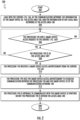
- FIG. 2 is a flow diagram illustrating a methodology 200 in accordance with embodiments.
- the methodology 200 is implemented by a network protocol of the BSC system 100 to control on-demand user access to smart alerts generated by the BSC system 100.
- the network protocol of the BSC system 100 is a set of established rules that dictate how to format, transmit and receive data so that computer network devices -- from servers and routers to endpoints - can communicate, regardless of the differences in their underlying infrastructures, designs or standards. To successfully send and receive information, devices on both sides of a communication exchange must accept and follow protocol conventions.
- the network protocols of the BSC system 100 can be built into software, hardware or both at any component of the BSC system 100.
- the methodology 200 begins at block 202 then moves to block 204 where the servers 170, 160 are loaded with identifying information of the device 32, the access area 180, a router 302 (shown in FIG. 3 ), and or any local area networks of the access area 180.
- the identifying information in effect, registers the access area 180 as an area where on-demand user access to smart alerts generated by the BSC system 100 will be implemented.
- the methodology 200 moves to decision block 206 and determines whether or not a processor of the smartphone 190 (hereinafter, processor 190) sent a smart-device access request to the servers 170, 160. If the answer to the inquiry at decision block 206 is no, the methodology 200 returns to the input to decision block 206 to continue evaluating whether the processor 190 has sent a smart-device access request to the servers 170, 160. If the answer to the inquiry at decision block 206 is yes, the methodology 200 moves to decision block 208 to determine whether the processor 190 is in the access area 180. Any suitable method can be used to make the determination at decision block 208. In some embodiments, the determination at decision block 208 is made by determining whether or not the processor 190 is communicating through the router 308.
- the determination is made based on the processor 190 providing the servers 170, 160 with some or all of the identifying information that was used to register the access area 180 as an area where on-demand user access to smart alerts generated by the BSC system 100 will be implemented. If the answer to the inquiry at decision block 208 is no, the methodology 200 returns to the input to decision block 206 to continue evaluating whether the processor 190 has sent a smart-device access request to the servers 170, 160. If the answer to the inquiry at decision block 208 is yes, the methodology 200 moves to block 210 where the servers 170, 160 either transmits or authorizes the transmission of (e.g., through the smart device 32) a smart-device access advertisement to the processor 190.
- the servers 170, 160 either transmits or authorizes the transmission of (e.g., through the smart device 32) a smart-device access advertisement to the processor 190.
- the smart-device access advertisement can be implemented as a Bluetooth low energy (BLE) advertisement that defines two transmissions types, namely data and advertising transmissions. All peripheral devices, at least initially, begin in advertising mode. Advertising allows devices to broadcast information defining their intentions.
- the smart-device access advertisement broadcasts its intention to provide the processor 190 with access to the smart device 32, along with instructions on how to initiate that access.
- BLE Bluetooth low energy
- the processor 190 uses the smart-device access advertisement to establish communication between the processor 190 and the smart-device 32 that is within the access area 180.
- the processor 190 is operable to communicate with the smart-device 32 whether or not the processor 190 is within the access area 180.
- the methodology 200 ends at block 216.
- FIG. 3 is a simplified block diagram illustrating a BSC system 100A according to embodiments.
- the BSC system 100A is identical to the BSC system100 (shown in FIG. 1 ) except the BSC system 100A shows only a portion of the BSC system 100, and the BSC system 100A includes an access area 180A,which is a more detailed illustration of how the access area 180 (shown in FIG. 1 ) can be implemented.
- the access area 180A represents an area or room of a building.
- the access area 180A can be a room in a hotel where the BSC system 100, 100A is installed.
- the access area 180A includes a router 302 that provides a local Wi-Fi network in the access area 180A, and couples the local Wi-Fi network to the external network (including the internet) represented by the cloud server 170.
- a smart device in the form of a smart smoke alarm 32A is provided in the access area 180A and is coupled through the router 302 to the cloud server 170.
- Guest-A is renting the access area 180A for a week and arrives in the access area 180A with a smartphone (or processor) 190 that includes an App 192 operable to control on-demand user access to smart alerts generated by the smoke alarm 32A using the BSC system 100A.
- the processor 190 and the App 192 can implement the methodology 200 shown in FIG. 2 .
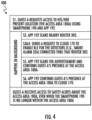
- the processor 190 and the App 192 can implement a methodology 400, which is represented by Step 1 (S 1) through Step 6 (S6) shown in FIG. 3 and FIG. 4 .
- identifying information of the smoke alarm 32A, the router 302, and the location and name of the access area 180A are registered with the BSC system 100, 100A, and the BSC system 100, 100A is operable to identify the access area 180A as an area where on-demand Guest-A access to smart alerts generated by the smoke detector 32A through the BCS system 100, 100A will be provided to any processor (e.g., smartphone/processor 190) that is present in the access area 180A and requests access to alerts from the smoke alarm 32A through the App 192.
- any processor e.g., smartphone/processor 190
- Guest-A uses the smartphone/processor 190 and the App 192 to request access to alerts at the access area 180A.
- the processor 190 and App 192 scans the router 302 (with or without connecting to it) and extracts identifying information (e.g., SSID (service set identifier), MAC address (media access control address), and the like) of the router 302.
- the processor 190 and App 192 send a request to the cloud server 170 for it to enable BLE advertisements from the smoke detector 32A that the cloud server 170 knows is associated with the router 302 and is at the access area 180A.
- the cloud server 170 validates the request received at S3, and sends a request through the router 302 to the smoke detector 32A to enable and/or initiate the transmission of BLE advertisements from the smoke detector 32A.
- the BLE advertisements are transmitted by the cloud server 170.
- the processor 190 and the App 192 scan the BLE advertisement and confirms Guest-A's presence at the Access Area 180A.
- the processor 190 and the App 192 confirm Guest-A's presence at the Access Area 180A to the cloud server 170.
- the smartphone 190 and the App 192 receive access to safety alerts from the smoke detector 32A even when the smartphone 190 is no longer within the access area 180A.
- various limits can be placed on the access provided through the BLE advertisement generated by S1-S6.
- the access provided through the BLE advertisement can be operable to automatically expire after a predetermined time that corresponds to the duration of Guest-A's stay at the access area 180A.
- the access provided through the BLE advertisement can be limited to selected basic types of the smart devices 1-32, and access to more sophisticated types of the smart devices 1-32 can require additional authorization (e.g., building owner authorization), Guest-A authentication information, Guest-A status information (e.g., Guest-A is in a preferred customer program), and the like.
- FIG. 5 illustrates an example of a computer system 500 that can be used to implement the aspects of the disclosure described herein.
- the computer system 500 includes an exemplary computing device ("computer") 502 configured for performing various aspects of the content-based semantic monitoring operations described herein in accordance embodiments of the disclosure.
- exemplary computer system 500 includes network 514, which connects computer 502 to additional systems (not depicted) and can include one or more wide area networks (WANs) and/or local area networks (LANs) such as the Internet, intranet(s), and/or wireless communication network(s).
- WANs wide area networks
- LANs local area networks
- Computer 502 and additional system are in communication via network 514, e.g., to communicate data between them.
- Exemplary computer 502 includes processor cores 504, main memory (“memory”) 510, and input/output component(s) 512, which are in communication via bus 503.
- Processor cores 504 includes cache memory (“cache") 506 and controls 508, which include branch prediction structures and associated search, hit, detect and update logic, which will be described in more detail below.
- Cache 506 can include multiple cache levels (not depicted) that are on or off-chip from processor 504.
- Memory 510 can include various data stored therein, e.g., instructions, software, routines, etc., which, e.g., can be transferred to/from cache 506 by controls 508 for execution by processor 504.
- Input/output component(s) 512 can include one or more components that facilitate local and/or remote input/output operations to/from computer 502, such as a display, keyboard, modem, network adapter, etc. (not depicted).
- Embodiments of the disclosure described herein can be a system, a method, and/or a computer program product at any possible technical detail level of integration
- the computer program product may include a computer readable storage medium (or media) having computer readable program instructions thereon for causing a controller or processor to carry out aspects of the embodiments of the disclosure.
- the computer readable storage medium can be a tangible device that can retain and store instructions for use by an instruction execution device.
- the computer readable storage medium may be, for example, but is not limited to, an electronic storage device, a magnetic storage device, an optical storage device, an electromagnetic storage device, a semiconductor storage device, or any suitable combination of the foregoing.
- a non-exhaustive list of more specific examples of the computer readable storage medium includes the following: a portable computer diskette, a hard disk, a random access memory (RAM), a read-only memory (ROM), an erasable programmable read-only memory (EPROM or Flash memory), a static random access memory (SRAM), a portable compact disc read-only memory (CD-ROM), a digital versatile disk (DVD), a memory stick, a floppy disk, a mechanically encoded device such as punch-cards or raised structures in a groove having instructions recorded thereon, and any suitable combination of the foregoing.
- RAM random access memory
- ROM read-only memory
- EPROM or Flash memory erasable programmable read-only memory
- SRAM static random access memory
- CD-ROM compact disc read-only memory
- DVD digital versatile disk
- memory stick a floppy disk
- a mechanically encoded device such as punch-cards or raised structures in a groove having instructions recorded thereon
- a computer readable storage medium is not to be construed as being transitory signals per se, such as radio waves or other freely propagating electromagnetic waves, electromagnetic waves propagating through a waveguide or other transmission media (e.g., light pulses passing through a fiber-optic cable), or electrical signals transmitted through a wire.
- modules can be implemented as a hardware circuit including custom VLSI circuits or gate arrays, off-the-shelf semiconductors such as logic chips, transistors, or other discrete components.
- a module can also be implemented in programmable hardware devices such as field programmable gate arrays, programmable array logic, programmable logic devices or the like.
- Modules can also be implemented in software for execution by various types of processors.
- An identified module of executable code can, for instance, include one or more physical or logical blocks of computer instructions which can, for instance, be organized as an object, procedure, or function. Nevertheless, the executables of an identified module need not be physically located together but can include disparate instructions stored in different locations which, when joined logically together, function as the module and achieve the stated purpose for the module.
Landscapes
- Physics & Mathematics (AREA)
- General Physics & Mathematics (AREA)
- Engineering & Computer Science (AREA)
- Business, Economics & Management (AREA)
- Emergency Management (AREA)
- Automation & Control Theory (AREA)
- Health & Medical Sciences (AREA)
- Computing Systems (AREA)
- General Health & Medical Sciences (AREA)
- Medical Informatics (AREA)
- Computer Networks & Wireless Communication (AREA)
- Signal Processing (AREA)
- Chemical & Material Sciences (AREA)
- Analytical Chemistry (AREA)
- Telephonic Communication Services (AREA)
Abstract
Description
- Exemplary embodiments of the present disclosure relate in general to programmable computers, and more particularly to computer systems and computer-implemented methods operable to control on-demand user access to smart alerts generated by a building-safety control system.
- Data communication networks transmit digital data from one computer to another computer using a variety of communications channels and protocols. The physical connections between networked computing devices are established using cable media and/or wireless media. The best-known data communication network is actually a network of networks called an internetwork, or simply the Internet. The Internet is the world's largest network and uses a transmission control protocol/internet protocol (TCP/IP) as its protocol suite, along with using IP as its addressing protocol.
- Computers or processors can utilize a data communications network to communicate with or otherwise control other devices or systems on the communications network. For example, so-called building-safety control systems have been developed to facilitate the protection and/or evacuation of a building's population in emergencies, including fires and earthquakes, as well as less critical events such as power failures. A known building-safety system configuration can include a processor-based controller coupled through a communications network to a variety of smart devices or smart systems of a building, a home, or selected rooms within a building or a home.
- For buildings such as rental properties, hotels or office buildings, it can be useful to provide certain users (e.g., hotel guests, short-term renters) with a temporary and controllable way to receive alerts from the relevant building-safety control system. Known methods of providing users with temporary access to alerts from a building-safety control system require interaction between the user and a representative of the building's owner or manager, as well as the exchange of user information (e.g., the user's email address) between the user and a representative of the building's owner or manager.
- It would be beneficial to provide a computer system and/or a computer-implemented method that provides users with temporary access to alerts from a building-safety control system without requiring interaction between the user and a representative of the building's owner or manager, and without requiring the exchange of user information (e.g., the user's email address) between the user and a representative of the building's owner or manager.
- According to a first aspect of the invention, there is provided an access controller of a communications network including a processor operable to send a smart-device access request to a network server of the communications network. The processor is further operable to receive a smart-device access advertisement based at least in part on: the network server receiving the smart-device access request; and a determination by the network server that the processor is within an access area. The processor is further operable to use the smart-device access advertisement to establish access between the processor and a smart-device of the communications network. Subsequent to establishing the access between the processor and the smart-device, the processor is operable to communicate with the smart-device whether or not the processor is within the access area.
- Optionally, the determination by the network server that the processor is within the access area is based at least in part on a determination that the smart-device is registered with the network server.
- Optionally, the determination by the network server that the processor is within the access area is based at least in part on the processor providing the network server with information of a router that is within the access area.
- Optionally, the smart-device communicates with the network server through the router.
- Optionally, the smart-device includes a smoke detector; the processor is housed in mobile smartphone; and subsequent to establishing the access between the processor and the smoke detector, the processor receives alerts from the smoke detector.
- Optionally, the smart-device includes an indoor air quality detector; the processor is housed in mobile smartphone; and subsequent to establishing the access between the processor and the indoor air quality detector, the processor receives alerts from the indoor air quality detector.
- Optionally, the smart-device access advertisement is capable of establishing access between the processor and an additional smart-device of the communications network.
- Optionally, the access between the processor and the additional smart-device of the communications network requires that the network server receives additional authorization.
- Optionally, the network server includes a cloud server.
- Optionally, the processor is incorporated within a mobile smartphone; the network server includes a cloud server; the smart-device includes a smoke detector or an indoor air quality detector; and the access area includes a building or a predetermined region within the building.
- According to a second aspect of the invention, there is provided a computer-implemented method of operating an access controller of a communications network, where the method includes using a processor to send a smart-device access request to a network server of the communications network. The processor is further used to receive a smart-device access advertisement based at least in part on: the network server receiving the smart-device access request; and a determination by the network server that the processor is within an access area. The processor further uses the smart-device access advertisement to establish access between the processor and a smart-device of the communications network. Subsequent to establishing the access between the processor and the smart-device, the processor communicates with the smart-device whether or not the processor is within the access area.
- Optionally, the determination by the network server that the processor is within the access area is based at least in part on a determination that the smart-device is registered with the network server.
- Optionally, the determination by the network server that the processor is within the access area is based at least in part on the processor providing the network server with information of a router that is within the access area.
- Optionally, the smart-device communicates with the network server through the router.
- Optionally, the smart-device includes a smoke detector; the processor is housed in mobile smartphone; and subsequent to establishing the access between the processor and the smoke detector, the processor receives alerts from the smoke detector.
- Optionally, the smart-device includes an indoor air quality detector; the processor is housed in mobile smartphone; and subsequent to establishing the access between the processor and the indoor air quality detector, the processor receives alerts from the indoor air quality detector.
- Optionally, the smart-device access advertisement is capable of establishing access between the processor and an additional smart-device of the communications network.
- Optionally, the access between the processor and the additional smart-device of the communications network requires that the network server receives additional authorization.
- Optionally, the network server includes a cloud server.
- Optionally, the communications network includes a building-safety control (BSC) system; the processor is incorporated within a mobile smartphone; the network server includes a cloud server; the smart-device includes a smoke detector or an indoor air quality detector; and the access area includes a building or a predetermined region within the building.
- The method of the second aspect of the invention may comprise providing and/or using the access controller of the first aspect of the invention. The access controller of the first aspect of the invention may be configured for use with the method of the second aspect of the invention.
- The following descriptions should not be considered limiting in any way. With reference to the accompanying drawings, which are provided by way of example only, like elements are numbered alike:
-
FIG. 1 is a block diagram of a building-safety control system operable to implement an on-demand user access process; -
FIG. 2 is a flow diagram illustrating aspects of an on-demand user access process; -
FIG. 3 is a block diagram of a building-safety control system operable to implement an on-demand user access process; -
FIG. 4 is a flow diagram illustrating aspects of an on-demand user access process; and -
FIG. 5 is a block diagram of a programmable computer system operable to implement aspects of an on-demand user access process. - A detailed description of one or more embodiments of the disclosed systems and methods are presented herein by way of exemplification and not limitation with reference to the Figures.
- Embodiments of the present disclosure provide computer systems and computer-implemented methods operable to control on-demand user access to smart alerts generated by a building-safety control system. In embodiments of the disclosure, the on-demand user access is operable to provide a user with access to the smart alerts of an access area by confirming that the user is likely in the access area before providing the user with access to the alerts.
- With reference now to
FIG. 1 , embodiments of the disclosure can be applied to a variety of communications networks, including but not limited to a building-safety control (BSC)system 100. TheBSC system 100 is operable to control on-demand user access to smart alerts generated by theBSC system 100 according to embodiments. TheBSC system 100 is depicted inFIG. 1 as a simplified diagram illustrating a processor-basedcontrol host 120, asmart sensor network 130, arechargeable battery system 140, and multiple connected smart devices 1-32 in communication over abus 110. Anantenna system 112 places thebus 110 in communication with an ISP/carriercell tower network 150, a remote network sever 160, and acloud server system 170, configured and arranged as shown. In embodiments of the disclosure, thesmart device 32 is located in anaccess area 180. User-A is also depicted inaccess area 180. User-A is in possession of his/hersmartphone 190. - In embodiments of the disclosure, the
sensor network 130 can include, for example, electronic heat and smoke sensors; the rechargeable battery system can include a plurality of battery units/sets; and the smart devices 1-32 can include, for example, processor-controlled safety devices (e.g., sprinkler systems, smoke alarms, and the like) and processor-controlled general building systems (e.g., ventilating systems, elevator systems, and the like). TheBSC system 100 is operable to monitor thesmart sensor network 130; detect a potential building emergency based on thesmart sensor network 130; and initiate a variety of responses to the detected building emergency, including, for example, activating audible alarms, automatically notifying local fire departments, activating building sprinkler systems, shutting down ventilating systems, shutting down elevators, and the like. - The various processor-based operations of the
BSC system 100 described herein can be allocated in any manner among the devices and systems that make up the BSC system100. For example, thecloud server 170 is in wired or wireless electronic communication with one or all ofremote network server 160,cell tower network 150,antenna system 112, thebus 110, thehost 120, thesensor network 130, therechargeable battery system 140, and devices 1-32.Cloud server 170 can supplement, support, or replace some or all of the functionality ofremote network server 160,cell tower network 150,antenna system 112, thebus 110, thehost 120, thesensor network 130, therechargeable battery system 140, and devices 1-32. Additionally, some or all of the functionality ofremote network server 160,cell tower network 150,antenna system 112, thebus 110, thehost 120, thesensor network 130, therechargeable battery system 140, and devices 1-32 can be implemented as a node of thecloud server 170. -
FIG. 2 is a flow diagram illustrating amethodology 200 in accordance with embodiments. Themethodology 200 is implemented by a network protocol of theBSC system 100 to control on-demand user access to smart alerts generated by theBSC system 100. As with other network protocols, the network protocol of theBSC system 100 is a set of established rules that dictate how to format, transmit and receive data so that computer network devices -- from servers and routers to endpoints - can communicate, regardless of the differences in their underlying infrastructures, designs or standards. To successfully send and receive information, devices on both sides of a communication exchange must accept and follow protocol conventions. The network protocols of theBSC system 100 can be built into software, hardware or both at any component of theBSC system 100. - The
methodology 200 begins at block 202 then moves to block 204 where theservers device 32, theaccess area 180, a router 302 (shown inFIG. 3 ), and or any local area networks of theaccess area 180. The identifying information, in effect, registers theaccess area 180 as an area where on-demand user access to smart alerts generated by theBSC system 100 will be implemented. - From
block 204, themethodology 200 moves to decision block 206 and determines whether or not a processor of the smartphone 190 (hereinafter, processor 190) sent a smart-device access request to theservers decision block 206 is no, themethodology 200 returns to the input to decision block 206 to continue evaluating whether theprocessor 190 has sent a smart-device access request to theservers decision block 206 is yes, themethodology 200 moves to decision block 208 to determine whether theprocessor 190 is in theaccess area 180. Any suitable method can be used to make the determination atdecision block 208. In some embodiments, the determination atdecision block 208 is made by determining whether or not theprocessor 190 is communicating through the router 308. In some embodiments, the determination is made based on theprocessor 190 providing theservers access area 180 as an area where on-demand user access to smart alerts generated by theBSC system 100 will be implemented. If the answer to the inquiry atdecision block 208 is no, themethodology 200 returns to the input to decision block 206 to continue evaluating whether theprocessor 190 has sent a smart-device access request to theservers decision block 208 is yes, themethodology 200 moves to block 210 where theservers processor 190. In some embodiments, the smart-device access advertisement can be implemented as a Bluetooth low energy (BLE) advertisement that defines two transmissions types, namely data and advertising transmissions. All peripheral devices, at least initially, begin in advertising mode. Advertising allows devices to broadcast information defining their intentions. In embodiments, the smart-device access advertisement broadcasts its intention to provide theprocessor 190 with access to thesmart device 32, along with instructions on how to initiate that access. - At
block 212, theprocessor 190 uses the smart-device access advertisement to establish communication between theprocessor 190 and the smart-device 32 that is within theaccess area 180. Atblock 214, once the communications authorized atblock 212 have been established, theprocessor 190 is operable to communicate with the smart-device 32 whether or not theprocessor 190 is within theaccess area 180. Themethodology 200 ends atblock 216. -
FIG. 3 is a simplified block diagram illustrating aBSC system 100A according to embodiments. TheBSC system 100A is identical to the BSC system100 (shown inFIG. 1 ) except theBSC system 100A shows only a portion of theBSC system 100, and theBSC system 100A includes anaccess area 180A,which is a more detailed illustration of how the access area 180 (shown inFIG. 1 ) can be implemented. Theaccess area 180A represents an area or room of a building. For example, theaccess area 180A can be a room in a hotel where theBSC system access area 180A includes arouter 302 that provides a local Wi-Fi network in theaccess area 180A, and couples the local Wi-Fi network to the external network (including the internet) represented by thecloud server 170. A smart device in the form of asmart smoke alarm 32A is provided in theaccess area 180A and is coupled through therouter 302 to thecloud server 170. - Guest-A is renting the
access area 180A for a week and arrives in theaccess area 180A with a smartphone (or processor) 190 that includes anApp 192 operable to control on-demand user access to smart alerts generated by thesmoke alarm 32A using theBSC system 100A. In some embodiments, theprocessor 190 and theApp 192 can implement themethodology 200 shown inFIG. 2 . In some embodiments, theprocessor 190 and theApp 192 can implement amethodology 400, which is represented by Step 1 (S 1) through Step 6 (S6) shown inFIG. 3 andFIG. 4 . - The
methodology 400 will now be described with reference to S1 through S6 shown inFIG. 3 andFIG. 4 . Prior to the arrival of Guest-A at theaccess area 180A, identifying information of thesmoke alarm 32A, therouter 302, and the location and name of theaccess area 180A are registered with theBSC system BSC system access area 180A as an area where on-demand Guest-A access to smart alerts generated by thesmoke detector 32A through theBCS system access area 180A and requests access to alerts from thesmoke alarm 32A through theApp 192. - At S1, Guest-A uses the smartphone/
processor 190 and theApp 192 to request access to alerts at theaccess area 180A. At S2, theprocessor 190 andApp 192 scans the router 302 (with or without connecting to it) and extracts identifying information (e.g., SSID (service set identifier), MAC address (media access control address), and the like) of therouter 302. At S3, theprocessor 190 andApp 192 send a request to thecloud server 170 for it to enable BLE advertisements from thesmoke detector 32A that thecloud server 170 knows is associated with therouter 302 and is at theaccess area 180A. At S4, thecloud server 170 validates the request received at S3, and sends a request through therouter 302 to thesmoke detector 32A to enable and/or initiate the transmission of BLE advertisements from thesmoke detector 32A. In some embodiments, the BLE advertisements are transmitted by thecloud server 170. At S5, theprocessor 190 and theApp 192 scan the BLE advertisement and confirms Guest-A's presence at theAccess Area 180A. At S6, theprocessor 190 and theApp 192 confirm Guest-A's presence at theAccess Area 180A to thecloud server 170. After S6, thesmartphone 190 and theApp 192 receive access to safety alerts from thesmoke detector 32A even when thesmartphone 190 is no longer within theaccess area 180A. - In embodiments, various limits can be placed on the access provided through the BLE advertisement generated by S1-S6. For example, in some embodiments, the access provided through the BLE advertisement can be operable to automatically expire after a predetermined time that corresponds to the duration of Guest-A's stay at the
access area 180A. In some embodiments, the access provided through the BLE advertisement can be limited to selected basic types of the smart devices 1-32, and access to more sophisticated types of the smart devices 1-32 can require additional authorization (e.g., building owner authorization), Guest-A authentication information, Guest-A status information (e.g., Guest-A is in a preferred customer program), and the like. -
FIG. 5 illustrates an example of acomputer system 500 that can be used to implement the aspects of the disclosure described herein. Thecomputer system 500 includes an exemplary computing device ("computer") 502 configured for performing various aspects of the content-based semantic monitoring operations described herein in accordance embodiments of the disclosure. In addition tocomputer 502,exemplary computer system 500 includesnetwork 514, which connectscomputer 502 to additional systems (not depicted) and can include one or more wide area networks (WANs) and/or local area networks (LANs) such as the Internet, intranet(s), and/or wireless communication network(s).Computer 502 and additional system are in communication vianetwork 514, e.g., to communicate data between them. -
Exemplary computer 502 includesprocessor cores 504, main memory ("memory") 510, and input/output component(s) 512, which are in communication viabus 503.Processor cores 504 includes cache memory ("cache") 506 and controls 508, which include branch prediction structures and associated search, hit, detect and update logic, which will be described in more detail below.Cache 506 can include multiple cache levels (not depicted) that are on or off-chip fromprocessor 504.Memory 510 can include various data stored therein, e.g., instructions, software, routines, etc., which, e.g., can be transferred to/fromcache 506 bycontrols 508 for execution byprocessor 504. Input/output component(s) 512 can include one or more components that facilitate local and/or remote input/output operations to/fromcomputer 502, such as a display, keyboard, modem, network adapter, etc. (not depicted). - Embodiments of the disclosure described herein can be a system, a method, and/or a computer program product at any possible technical detail level of integration. The computer program product may include a computer readable storage medium (or media) having computer readable program instructions thereon for causing a controller or processor to carry out aspects of the embodiments of the disclosure.
- The computer readable storage medium can be a tangible device that can retain and store instructions for use by an instruction execution device. The computer readable storage medium may be, for example, but is not limited to, an electronic storage device, a magnetic storage device, an optical storage device, an electromagnetic storage device, a semiconductor storage device, or any suitable combination of the foregoing. A non-exhaustive list of more specific examples of the computer readable storage medium includes the following: a portable computer diskette, a hard disk, a random access memory (RAM), a read-only memory (ROM), an erasable programmable read-only memory (EPROM or Flash memory), a static random access memory (SRAM), a portable compact disc read-only memory (CD-ROM), a digital versatile disk (DVD), a memory stick, a floppy disk, a mechanically encoded device such as punch-cards or raised structures in a groove having instructions recorded thereon, and any suitable combination of the foregoing. A computer readable storage medium, as used herein, is not to be construed as being transitory signals per se, such as radio waves or other freely propagating electromagnetic waves, electromagnetic waves propagating through a waveguide or other transmission media (e.g., light pulses passing through a fiber-optic cable), or electrical signals transmitted through a wire.
- For the sake of brevity, conventional techniques related to making and using the disclosed embodiments may or may not be described in detail herein. In particular, various aspects of computing systems and specific computer programs to implement the various technical features described herein are well known. Accordingly, in the interest of brevity, many conventional implementation details are only mentioned briefly or are omitted entirely without providing the well-known system and/or process details.
- Many of the function units of the systems described in this specification have been labeled or described as modules. Embodiments of the disclosure apply to a wide variety of module implementations. For example, a module can be implemented as a hardware circuit including custom VLSI circuits or gate arrays, off-the-shelf semiconductors such as logic chips, transistors, or other discrete components. A module can also be implemented in programmable hardware devices such as field programmable gate arrays, programmable array logic, programmable logic devices or the like. Modules can also be implemented in software for execution by various types of processors. An identified module of executable code can, for instance, include one or more physical or logical blocks of computer instructions which can, for instance, be organized as an object, procedure, or function. Nevertheless, the executables of an identified module need not be physically located together but can include disparate instructions stored in different locations which, when joined logically together, function as the module and achieve the stated purpose for the module.
- The various components, modules, sub-function, and the like of the systems illustrated herein are depicted separately for ease of illustration and explanation. In embodiments of the disclosure, the operations performed by the various components, modules, sub-functions, and the like can be distributed differently than shown without departing from the scope of the various embodiments described herein unless it is specifically stated otherwise.
- For convenience, some of the technical operations described herein are conveyed using informal expressions. For example, a processor that has data stored in its cache memory can be described as the processor "knowing" the data. Similarly, a user sending a load-data command to a processor can be described as the user "telling" the processor to load data. It is understood that any such informal expressions in this detailed description should be read to cover, and a person skilled in the relevant art would understand such informal expressions to cover, the formal and technical description represented by the informal expression.
- The terms "about," "substantially," "approximately," and variations thereof, are intended to include the degree of error associated with measurement of the particular quantity based upon the equipment available at the time of filing the application. For example, "about" can include a range of ± 8% or 5%, or 2% of a given value.
- The terminology used herein is for the purpose of describing particular embodiments only and is not intended to be limiting of the present disclosure. As used herein, the singular forms "a", "an" and "the" are intended to include the plural forms as well, unless the context clearly indicates otherwise. It will be further understood that the terms "comprises" and/or "comprising," when used in this specification, specify the presence of stated features, integers, steps, operations, elements, and/or components, but do not preclude the presence or addition of one or more other features, integers, steps, operations, element components, and/or groups thereof.
- While the present disclosure has been described with reference to an exemplary embodiment or embodiments, it will be understood by those skilled in the art that various changes may be made and equivalents may be substituted for elements thereof without departing from the scope of the present disclosure. In addition, many modifications may be made to adapt a particular situation or material to the teachings of the present disclosure without departing from the essential scope thereof. Therefore, it is intended that the present disclosure not be limited to the particular embodiment disclosed as the best mode contemplated for carrying out this present disclosure, but that the present disclosure will include all embodiments falling within the scope of the claims.
Claims (15)
- An access controller of a communications network, the access controller comprising:a processor operable to send a smart-device access request to a network server of the communications network;the processor further operable to receive a smart-device access advertisement based at least in part on:the network server receiving the smart-device access request; anda determination by the network server that the processor is within an access area; andthe processor further operable to use the smart-device access advertisement to establish access between the processor and a smart-device of the communications network;wherein, subsequent to establishing the access between the processor and the smart-device, the processor is operable to communicate with the smart-device whether or not the processor is within the access area.
- The access controller of claim 1, wherein the determination by the network server that the processor is within the access area is based at least in part on a determination that the smart-device is registered with the network server.
- The access controller of claim 1 or 2, wherein the determination by the network server that the processor is within the access area is based at least in part on the processor providing the network server with information of a router that is within the access area; and optionally
wherein the smart-device communicates with the network server through the router. - The access controller of claim 1, 2 or 3, wherein:the smart-device comprises a smoke detector;the processor is housed in mobile smartphone; andsubsequent to establishing the access between the processor and the smoke detector, the processor receives alerts from the smoke detector.
- The access controller of any preceding claim, wherein:the smart-device comprises an indoor air quality detector;the processor is housed in mobile smartphone; andsubsequent to establishing the access between the processor and the indoor air quality detector, the processor receives alerts from the indoor air quality detector.
- The access controller of any preceding claim, wherein the smart-device access advertisement is capable of establishing access between the processor and an additional smart-device of the communications network; and optionally
wherein the access between the processor and the additional smart-device of the communications network requires that the network server receives additional authorization. - The access controller of any preceding claim, wherein the network server comprises a cloud server.
- The access controller of any preceding claim, wherein:the communications network includes a building-safety control (BSC) system;the processor is incorporated within a mobile smartphone;the network server comprises a cloud server;the smart-device comprises a smoke detector or an indoor air quality detector; andthe access area comprises a building or a predetermined region within the building.
- A computer-implemented method of operating an access controller of a communications network, the method comprising:using a processor to send a smart-device access request to a network server of the communications network;using the processor to receive a smart-device access advertisement based at least in part on:the network server receiving the smart-device access request; anda determination by the network server that the processor is within an access area; andusing the processor to use the smart-device access advertisement to establish access between the processor and a smart-device of the communications network;wherein, subsequent to establishing the access between the processor and the smart-device, the processor communicates with the smart-device whether or not the processor is within the access area.
- The method of claim 9, wherein the determination by the network server that the processor is within the access area is based at least in part on a determination that the smart-device is registered with the network server.
- The method of claim 9 or 10, wherein the determination by the network server that the processor is within the access area is based at least in part on the processor providing the network server with information of a router that is within the access area; and optionally
wherein the smart-device communicates with the network server through the router. - The method of claim 9, 10 or 11, wherein:the smart-device comprises a smoke detector;the processor is housed in mobile smartphone; andsubsequent to establishing the access between the processor and the smoke detector, the processor receives alerts from the smoke detector; and/orwherein:the smart-device comprises an indoor air quality detector;the processor is housed in mobile smartphone; andsubsequent to establishing the access between the processor and the indoor air quality detector, the processor receives alerts from the indoor air quality detector.
- The method of any of claims 9 to 12, wherein the smart-device access advertisement is capable of establishing access between the processor and an additional smart-device of the communications network; and optionally
wherein the access between the processor and the additional smart-device of the communications network requires that the network server receives additional authorization. - The method of any of claims 9 to 13, wherein the network server comprises a cloud server.
- The method of any of claims 9 to 13, wherein:the communications network includes a building-safety control (BSC) system;the processor is incorporated within a mobile smartphone;the network server comprises a cloud server;the smart-device comprises a smoke detector or an indoor air quality detector; andthe access area comprises a building or a predetermined region within the building.
Applications Claiming Priority (1)
| Application Number | Priority Date | Filing Date | Title |
|---|---|---|---|
| US202263342334P | 2022-05-16 | 2022-05-16 |
Publications (1)
| Publication Number | Publication Date |
|---|---|
| EP4280191A1 true EP4280191A1 (en) | 2023-11-22 |
Family
ID=86382754
Family Applications (1)
| Application Number | Title | Priority Date | Filing Date |
|---|---|---|---|
| EP23173468.2A Pending EP4280191A1 (en) | 2022-05-16 | 2023-05-15 | Controlling on-demand user access to smart alerts |
Country Status (3)
| Country | Link |
|---|---|
| US (1) | US20230367279A1 (en) |
| EP (1) | EP4280191A1 (en) |
| CN (1) | CN117082085A (en) |
Citations (3)
| Publication number | Priority date | Publication date | Assignee | Title |
|---|---|---|---|---|
| WO2015157305A1 (en) * | 2014-04-07 | 2015-10-15 | Deliuliis Julia R | Smart hazard detector drills |
| US20190197855A1 (en) * | 2017-12-22 | 2019-06-27 | Carrier Corporation | Emergency notification system and method |
| US20220070014A1 (en) * | 2020-09-02 | 2022-03-03 | Level Up Holding Co., Inc. | System and method for a control system for managing smart devices in a multiple unit property environment |
-
2023
- 2023-05-10 US US18/315,110 patent/US20230367279A1/en active Pending
- 2023-05-15 CN CN202310541232.7A patent/CN117082085A/en active Pending
- 2023-05-15 EP EP23173468.2A patent/EP4280191A1/en active Pending
Patent Citations (3)
| Publication number | Priority date | Publication date | Assignee | Title |
|---|---|---|---|---|
| WO2015157305A1 (en) * | 2014-04-07 | 2015-10-15 | Deliuliis Julia R | Smart hazard detector drills |
| US20190197855A1 (en) * | 2017-12-22 | 2019-06-27 | Carrier Corporation | Emergency notification system and method |
| US20220070014A1 (en) * | 2020-09-02 | 2022-03-03 | Level Up Holding Co., Inc. | System and method for a control system for managing smart devices in a multiple unit property environment |
Also Published As
| Publication number | Publication date |
|---|---|
| CN117082085A (en) | 2023-11-17 |
| US20230367279A1 (en) | 2023-11-16 |
Similar Documents
| Publication | Publication Date | Title |
|---|---|---|
| US12309245B2 (en) | Universal protocol translator | |
| US10812596B2 (en) | In-room device control system | |
| EP3354005B1 (en) | Enabling emergency access to secure wireless communications networks | |
| US20190028874A1 (en) | Communicating location specific emergency information to a mobile device | |
| US20150362927A1 (en) | Thermostat and messaging device and methods thereof | |
| KR20050032529A (en) | Location-based access control for wireless local area networks | |
| US12192189B2 (en) | Smart gateway enabled low cost smart building solution | |
| EP3556151B1 (en) | Method for controlling a radio signal emitted by a connected object, and corresponding gateway and computer program | |
| EP3503053A1 (en) | Emergency notification system and method | |
| US20230367279A1 (en) | Controlling on-demand user access to smart alerts | |
| CN112689983B (en) | Server, user terminal device, electronic device and control method thereof | |
| US20220109895A1 (en) | Geolocationing system and method for use of same | |
| CN110915184A (en) | Automatic building system control limits based on physical presence defined by access control event information and knowledge base system | |
| KR102245469B1 (en) | Method and Device for Information Service using WLAN SSID | |
| EP3737042B1 (en) | In-room device control system | |
| US20200380431A1 (en) | Environmental preference based desk exchange platform | |
| US20150349877A1 (en) | Systems and methods for wireless data exchange without network connectivity | |
| JP6691863B2 (en) | Facility control system and facility control method | |
| KR101390667B1 (en) | Home network management Method by using Wi-Fi and Apparatus thereof | |
| JP7509369B2 (en) | Disaster Information Sharing System | |
| WO2025182229A1 (en) | Control device, faucet system, home system, control device communication method, and control device communication program | |
| JP2025063774A (en) | Disaster prevention radio transmission/reception system, disaster prevention radio transmission/reception method, and disaster prevention radio transmission/reception program | |
| CN119211011A (en) | Use the generated device tags to configure the event system | |
| JP2025132876A (en) | Control device, water faucet system, home system, control device information protection method, and control device information protection program | |
| KR20170035528A (en) | Method and system for providing customized indoor environment for unspecified individuals |
Legal Events
| Date | Code | Title | Description |
|---|---|---|---|
| PUAI | Public reference made under article 153(3) epc to a published international application that has entered the european phase |
Free format text: ORIGINAL CODE: 0009012 |
|
| STAA | Information on the status of an ep patent application or granted ep patent |
Free format text: STATUS: THE APPLICATION HAS BEEN PUBLISHED |
|
| AK | Designated contracting states |
Kind code of ref document: A1 Designated state(s): AL AT BE BG CH CY CZ DE DK EE ES FI FR GB GR HR HU IE IS IT LI LT LU LV MC ME MK MT NL NO PL PT RO RS SE SI SK SM TR |
|
| STAA | Information on the status of an ep patent application or granted ep patent |
Free format text: STATUS: REQUEST FOR EXAMINATION WAS MADE |
|
| 17P | Request for examination filed |
Effective date: 20240521 |
|
| RBV | Designated contracting states (corrected) |
Designated state(s): AL AT BE BG CH CY CZ DE DK EE ES FI FR GB GR HR HU IE IS IT LI LT LU LV MC ME MK MT NL NO PL PT RO RS SE SI SK SM TR |
|
| GRAP | Despatch of communication of intention to grant a patent |
Free format text: ORIGINAL CODE: EPIDOSNIGR1 |
|
| STAA | Information on the status of an ep patent application or granted ep patent |
Free format text: STATUS: GRANT OF PATENT IS INTENDED |
|
| INTG | Intention to grant announced |
Effective date: 20250930 |
|
| GRAS | Grant fee paid |
Free format text: ORIGINAL CODE: EPIDOSNIGR3 |