EP4280036A1 - Character input device, character input method, and character input program - Google Patents
Character input device, character input method, and character input program Download PDFInfo
- Publication number
- EP4280036A1 EP4280036A1 EP23168093.5A EP23168093A EP4280036A1 EP 4280036 A1 EP4280036 A1 EP 4280036A1 EP 23168093 A EP23168093 A EP 23168093A EP 4280036 A1 EP4280036 A1 EP 4280036A1
- Authority
- EP
- European Patent Office
- Prior art keywords
- character string
- input
- character
- unit
- duplicate
- Prior art date
- Legal status (The legal status is an assumption and is not a legal conclusion. Google has not performed a legal analysis and makes no representation as to the accuracy of the status listed.)
- Granted
Links
Images






Classifications
-
- G—PHYSICS
- G06—COMPUTING OR CALCULATING; COUNTING
- G06F—ELECTRIC DIGITAL DATA PROCESSING
- G06F3/00—Input arrangements for transferring data to be processed into a form capable of being handled by the computer; Output arrangements for transferring data from processing unit to output unit, e.g. interface arrangements
- G06F3/01—Input arrangements or combined input and output arrangements for interaction between user and computer
- G06F3/02—Input arrangements using manually operated switches, e.g. using keyboards or dials
- G06F3/023—Arrangements for converting discrete items of information into a coded form, e.g. arrangements for interpreting keyboard generated codes as alphanumeric codes, operand codes or instruction codes
- G06F3/0233—Character input methods
-
- G—PHYSICS
- G06—COMPUTING OR CALCULATING; COUNTING
- G06F—ELECTRIC DIGITAL DATA PROCESSING
- G06F3/00—Input arrangements for transferring data to be processed into a form capable of being handled by the computer; Output arrangements for transferring data from processing unit to output unit, e.g. interface arrangements
- G06F3/01—Input arrangements or combined input and output arrangements for interaction between user and computer
- G06F3/048—Interaction techniques based on graphical user interfaces [GUI]
- G06F3/0487—Interaction techniques based on graphical user interfaces [GUI] using specific features provided by the input device, e.g. functions controlled by the rotation of a mouse with dual sensing arrangements, or of the nature of the input device, e.g. tap gestures based on pressure sensed by a digitiser
- G06F3/0488—Interaction techniques based on graphical user interfaces [GUI] using specific features provided by the input device, e.g. functions controlled by the rotation of a mouse with dual sensing arrangements, or of the nature of the input device, e.g. tap gestures based on pressure sensed by a digitiser using a touch-screen or digitiser, e.g. input of commands through traced gestures
- G06F3/04886—Interaction techniques based on graphical user interfaces [GUI] using specific features provided by the input device, e.g. functions controlled by the rotation of a mouse with dual sensing arrangements, or of the nature of the input device, e.g. tap gestures based on pressure sensed by a digitiser using a touch-screen or digitiser, e.g. input of commands through traced gestures by partitioning the display area of the touch-screen or the surface of the digitising tablet into independently controllable areas, e.g. virtual keyboards or menus
-
- G—PHYSICS
- G06—COMPUTING OR CALCULATING; COUNTING
- G06F—ELECTRIC DIGITAL DATA PROCESSING
- G06F3/00—Input arrangements for transferring data to be processed into a form capable of being handled by the computer; Output arrangements for transferring data from processing unit to output unit, e.g. interface arrangements
- G06F3/01—Input arrangements or combined input and output arrangements for interaction between user and computer
- G06F3/02—Input arrangements using manually operated switches, e.g. using keyboards or dials
- G06F3/023—Arrangements for converting discrete items of information into a coded form, e.g. arrangements for interpreting keyboard generated codes as alphanumeric codes, operand codes or instruction codes
- G06F3/0233—Character input methods
- G06F3/0237—Character input methods using prediction or retrieval techniques
-
- G—PHYSICS
- G06—COMPUTING OR CALCULATING; COUNTING
- G06F—ELECTRIC DIGITAL DATA PROCESSING
- G06F3/00—Input arrangements for transferring data to be processed into a form capable of being handled by the computer; Output arrangements for transferring data from processing unit to output unit, e.g. interface arrangements
- G06F3/16—Sound input; Sound output
- G06F3/167—Audio in a user interface, e.g. using voice commands for navigating, audio feedback
Definitions
- the disclosure relates to a technique for supporting character input.
- a user searches for a travel route to a destination using a vehicle-mounted device (car navigator will be described below as an example).
- the car navigator is provided with a plurality of input methods for inputting a character string corresponding to a destination.
- This input method is keyboard input using a touch panel and input by voice recognition, for example.
- the user uses the touch panel of the car navigator to input a character string corresponding to the destination with a keyboard.
- Patent Literature 1 discloses a technique of a character input method including at least two input methods such as keyboard input and voice input. For example, when the user writes an e-mail, he or she inputs characters with both methods of keyboard input and voice input.
- the user uses keyboard input while the car is stopped, and voice input after starting the car.
- the destination of the car navigator is a character string (hereinafter referred to as a combined character string) acquired by combining the character string input from the keyboard and the character string input by voice.
- the user may acquire a desired combined character string by intentionally deleting the duplicate character strings.
- such operations are troublesome and may cause inconvenience to the user.
- the character input device of the disclosure is configured as follows.
- a character input device converts an input character string into a corresponding conversion character string.
- the character input device includes a first input unit, a second input unit, and a character string combination unit.
- the first input unit accepts input of a first character string by a first input method.
- the second input unit accepts input of a second character string by a second input method different from the first input method.
- the character string combination unit When the input of the first character string is accepted after the input of the second character string is accepted, the character string combination unit generates an input character string candidate by connecting the first character string and the second character string accepted for input this time.
- the character string combination unit extracts an identical character string as a duplicate character string at a tail of the first character string and a head of the second character string; and when the duplicate character string is extracted, generates a character string as one of the input character string candidates formed by connecting the first character string without the duplicate character string and the second character string without the duplicate character string by the duplicate character string.
- the character string combination unit of the character input device generates a character string as one of input character string candidates formed by connecting the second character string immediately after the first character string.
- the character input device includes a score calculation unit that divides the conversion character string of the input character string into vocabulary units for each input character string candidate, and calculates a co-occurrence frequency between the vocabularies; and a priority determination unit that determines priority of conversion character strings according to the co-occurrence frequency calculated by the score calculation unit.
- a character string combination unit of the character input device predicts a joining character string that connects the first character string and the second character string, and generates a character string as one of the input character string candidates formed by connecting the first character string and the second character string with the joining character string.
- the character input device includes: a score calculation unit that divides the conversion character string of each input character string into vocabularies for each input character string candidate and calculates the co-occurrence frequency between vocabularies; and a priority determination unit that determines priority of the conversion character strings according to the co-occurrence frequency calculated by the score calculation unit.
- a character string combination unit of the character input device predicts a joining character string that connects the first character string and the second character string, and generates a character string as one of the input character string candidates formed by connecting the first character string and the second character string with the joining character string.
- One of the first input method and the second input method of the character input device is a key input method, and the other is a voice input method.
- a computer of a character input device that converts an input character string into a corresponding conversion character string performs: a first step of accepting input of a first character string by a first input method; a second step of accepting input of a second character string by a second input method different from the first input method; and a third step of generating, when the input of the second character string is accepted after the input of the first character string is accepted, an input character string candidate by connecting the first character string and the second character string accepted for input this time.
- the third step extracts an identical character string as a duplicate character string at a tail of the first character string and a head of the second character string; and when the duplicate character string is extracted, generates a character string as one of the input character string candidates formed by connecting the first character string without the duplicate character string and the second character string without the duplicate character string by the duplicate character string.
- a character input program of the disclosure causes a computer of a character input device that converts an input character string into a corresponding conversion character string to perform: a first step of accepting input of a first character string by a first input method; a second step of accepting input of a second character string by a second input method different from the first input method; and a third step of generating, when the input of the second character string is accepted after the first character string is accepted, an input character string candidate formed by connecting the first character string and the second character string accepted for input this time.
- the third step extracts an identical character string as a duplicate character string at a tail of the first character string and a head of the second character string; and when the duplicate character string is extracted, generates a character string as one of the input character string candidates formed by connecting the first character string without the duplicate character string and the second character string without the duplicate character string by the duplicate character string.
- Figure 1 is an image diagram of character input by a character input device 10.
- the character input device 10 is mounted, for example, on a vehicle-mounted device.
- the vehicle-mounted device is a car navigator that searches for a travel route to a destination by inputting the destination.
- This vehicle-mounted device includes the character input device 10 for inputting a destination.
- the character input device 10 is provided with a plurality of input methods.
- the character input device 10 is mounted in an electronic device such as a car navigator.
- the electronic device is not limited to car navigator, and may be any device such as a tablet or a personal computer that allows character input.
- a car navigator 100 includes a touch panel.
- a user activates an application (hereinafter referred to as an application) installed in the car navigator 100 using the touch panel.
- an application hereinafter referred to as an application
- the user activates a destination search application, for example.
- the user inputs a character string to an input display unit 50.
- a destination search application will be used for explanation, but the type of application is not limited as long as it has a function of inputting characters.
- the character input device 10 includes a first input unit 21 and a second input unit 22.
- the first input unit 21 is for keyboard input
- the second input unit 22 is for voice input.
- the first input unit 21 accepts input only while the car is stopped.
- the second input unit 22 accepts inputs regardless of whether the car is stopped or running.
- the user operates a car navigator while the car is stopped (for example, while the car is waiting for signals).
- the user uses the first input unit 21 to input a first character string "kyoto shi dobu" (Kyoto city z).
- the user confirms that the signal has turned green, and starts the car.
- the first input unit 21 stops accepting character input.
- the user confirms that the first input unit 21 does not accept character input, and starts input using the second input unit 22.
- the user uses the second input unit 22 to input a second character string "dobutsuen" (zoo).
- the user ends the input of the character string for searching by pressing a button for performing search, for example.
- the character input device 10 combines the first character string “kyoto shi dobu” and the second character string “dobutsuen” to generate a third character string “kyoto shi dobu dobutsuen” (Kyoto city z zoo). At this time, the character input device 10 determines whether or not there is a duplicate character string in the third character string (hereinafter referred to as a duplicate character string).
- the character input device 10 determines that the duplicate character string "dobu” exists, and deletes the duplicate character string "dobu". More specifically, the character input device 10 determines that "dobu”, which is the character string on the tail of the first character string “kyoto shi dobu”, and the character string "dobu” at the head of the second character string “dobutsu” are duplicate character strings.
- the character input device 10 deletes the duplicate character string "dobu” from the first character string “kyoto shi dobu” and generates "kyoto shi” as a part of the first character string. Further, the character input device 10 deletes the duplicate character string "dobu” from the second character string “dobutsuen” and generates "tsuen” as a part of the second character string.
- the character input device 10 joins the part of the first character string “kyoto shi”, the duplicate character string “dobu”, and the part of the second character string, and generates a fourth character string “kyoto shi dobutsuen” (Kyoto city zoo) from “kyoto shi", “dobu”, and "tsuen”.
- This fourth character string corresponds to the "input character string" of the disclosure.
- the character input device 10 acquires a conversion candidate "Kyoto city zoo" of the fourth character string "kyoto shi dobutsuen” from a dictionary database (hereinafter referred to as "dictionary DB").
- the character input device 10 outputs the character string "Kyoto city zoo” to the car navigator.
- the car navigator displays location information that matches the character string "Kyoto city zoo".
- Figure 2 is a block diagram illustrating the configuration of a character input device according to Configuration Example 1.
- Figure 3 is an image diagram of character input by a character input device according to Configuration Example 1.
- the example to which the character input device 10 is applied is not limited to car navigator, and may be other electronic devices capable of inputting characters.
- the character input device 10 includes an input unit 20, a detection unit 30, a display control unit 35, a control unit 40, the input display unit 50, and a dictionary DB 60.
- the input unit 20 includes the first input unit 21 and the second input unit 22.
- the first input unit 21 and the second input unit 22 are activated by operating the car navigator 100.
- the character input device 10 includes a touch panel.
- This touch panel detects a user's operation. Detection of operation includes, for example, those of an operation position, a length of time during which the operation is performed, a temporal change in the operation position, and the like. Detection results of these operations are output to the detection unit 30.
- the detection unit 30 outputs the result to the display control unit 35 and the control unit 40 according to the result input from the touch panel.
- the display control unit 35 outputs to the input display unit 50 so as to display according to the operation result.
- the first input unit 21 accepts key inputs from, for example, a software keyboard. Various keys for character input are displayed on the first input unit 21. The user inputs the first character string by the first input method (key input method) using the first input unit 21.
- the second input unit 22 accepts voice input from a microphone, for example.
- the second input unit 22 outputs voice information (second character string) uttered by the user to a voice recognition unit (not shown).
- the voice recognition unit acquires feature quantities from the waveform of the voice information and quantifies the feature quantities. Further, the voice recognition unit performs algorithm analysis on the quantified information and outputs it to the display control unit 35 as a character string.
- the display control unit 35 causes the input display unit 50 to display the second character string. That is, the user inputs the second character string by the second input method (voice input method) using the second input unit 22.
- the control unit 40 includes a character string acquisition unit 41 and a character string combination unit 42.
- the control unit 40 is configured by a hardware CPU, memory, and other electronic circuits.
- the hardware CPU executes the character input program according to the disclosure, it operates as the character string acquisition unit 41 and the character string combination unit 42.
- the memory has a region for developing the character input program according to the disclosure and a region for temporarily storing data generated when the character input program is executed.
- the control unit 40 may be an LSI that integrates a hardware CPU, memory, and the like.
- the hardware CPU is a computer that performs the character input method according to the disclosure.
- the character string acquisition unit 41 acquires the first character string by the first input method using the first input unit 21 and acquires the second character string by the second input method using the second input unit 22.
- the character string acquisition unit 41 outputs the first character string and the second character string to the character string combination unit 42.
- the character string combination unit 42 combines the first character string and the second character string. Detailed procedures will be described later.
- the character string combination unit 42 outputs a character string acquired by combining the first character string and the second character string to the display control unit 35.
- the display control unit 35 causes the input display unit 50 to display the result.
- the user uses the character string displayed on the input display unit 50 to perform a search.
- the character input device 10 searches a dictionary DB (dictionary database) and a map DB (map database) (not shown). Thereby, the character input device 10 displays the search result and position information.
- dictionary DB dictionary database
- map DB map database
- the user uses the first input unit 21 to input the first character string "kyoto shi dobu" to the input display unit 50 (state (1) in Figure 3 ).
- the first input unit 21 is a software keyboard. The user inputs the first character string "kyoto shi dobu".
- the first input unit 21 outputs the first character string "kyoto shi dobu” to the detection unit 30.
- the first input unit 21 outputs the first character string "kyoto shi dobu” to the detection unit 30.
- the detection unit 30 outputs the first character string "kyoto shi dobu” to the display control unit 35 and the character string acquisition unit 41.
- the display control unit 35 causes the input display unit 50 to display the first character string "kyoto shi dobu".
- the user starts the car.
- the first input unit 21 stops accepting character input.
- the user uses the second input unit 22 to input the second character string following the first character string "kyoto shi dobu". More specifically, the user uses the second input unit 22 to input the second character string "dobutsuen”.
- the second input unit 22 outputs the second character string "dobutsuen” to the detection unit 30.
- the first input unit 21 outputs the second character string "dobutsuen” to the detection unit 30.
- the detection unit 30 outputs the second character string "dobutsuen” to the character string acquisition unit 41 (state (2) in Figure 3 ).
- the character string acquisition unit 41 outputs the first character string “kyoto shi dobu” and the second character string “dobutsuen” to the character string combination unit 42.
- the character string combination unit 42 combines the first character string “kyoto shi dobu” and the second character string “dobutsuen” to create a third character string “kyoto shi dobu dobutsuen” (see state (3) in Figure 3 ). At this time, the character string combination unit 42 determines the duplicate character string between the first character string "kyoto shi dobu” and the second character string "dobutsuen”.
- the character string combination unit 42 determines that the character string "dobu” at the tail of the first character string “kyoto shi dobu", and the character string “dobu” at the head of the second character string “dobutsuen” are duplicate character strings.
- the character string combination unit 42 deletes the duplicate character string "dobu” from the first character string “kyoto shi dobu” and generates "kyoto shi” as a part of the first character string. Further, the character string combination unit 42 deletes the duplicate character string "dobu” from the second character string “dobutsuen” and generates "tsuen” as a part of the second character string.
- the character string combination unit 42 combines the part of the first character string “kyoto shi", the duplicate character string “dobu”, and the part of the second character string “tsuen” to form a fourth character string “kyoto shi dobutsuen” (Kyoto city zoo).
- the character string combination unit 42 may acquire the conversion candidate "Kyoto city zoo" intended by the user from the dictionary DB 60.
- the intended character string may be acquired. Further, when a duplicate character string exists in the first character string and the second character string, it is possible to delete the duplicate character string by determining that the duplicate character string exists. Thus, it is possible to easily acquire the character string intended by the user, and the user can efficiently input characters.
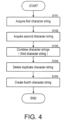
- Figure 4 is a flow chart illustrating the flow of processing of the character input device 10 according to an Operation Example. The processing flow of the character input device 10 will be described with reference to Figures 1 , 2 , 3 , and 4 .
- the first input unit 21 accepts a first character string input by the user using the first input method.
- the first input unit 21 outputs the first character string to the detection unit 30.
- the detection unit 30 outputs the first character string to the character string acquisition unit 41 (S101).
- the second input unit 22 accepts a second character string input by the user using the second input method.
- the second input unit 22 outputs the second character string to the detection unit 30.
- the detection unit 30 outputs the second character string to the character string acquisition unit 41 (S102).
- the character string acquisition unit 41 outputs the first character string and the second character string to the character string combination unit 42.
- the character string combination unit 42 combines the first character string and the second character string to create a third character string (S103).
- the character string combination unit 42 determines the duplicate character string from the character string on the tail of the first character string and the character string on the head of the second character string.
- the character string combination unit 42 deletes the duplicate character strings from the first character string and the second character string (S 104).
- the character string combination unit 42 creates a fourth character string from which duplicate character strings are deleted (S 105).
- the intended character string may be acquired. Further, when a duplicate character string exists in the first character string and the second character string, it is possible to delete the duplicate character string by determining that the duplicate character string exists.
- the user can easily acquire the intended character string without being conscious of the duplicate character strings of the character string input by the first input unit 21 and the character string input by the second input unit 22. That is, the user can efficiently input characters.
- Figure 5 is a flow chart illustrating the flow of processing of the character input device 10 according to Modification Example 1. After performing the process of step S103 in Configuration Example 1, the character string combination unit 42 determines whether or not there is a duplicate character string (S110).
- the character string combination unit 42 determines that there is a duplicate character string (S110: Yes)
- the character string combination unit 42 in step S104 performs processing for deleting the duplicate character string from the third character.
- the character string combination unit 42 when determining that a duplicate character string does not exist (S1 10: No), creates a fourth character string without performing the process of step S104. That is, the fourth character string is the same character string as the third character string. That is, the fourth character string is a character string that has undergone only the process of combining the first character string and the second character string.
- the intended character string may be acquired even when the user performs character input by combining a plurality of input methods (the first input unit 21 and the second input unit 22).
- Configuration Example 2 differs from Configuration Example 1 in that the control unit 40 of the character input device 10 includes a score calculation unit 43 and a priority determination unit 44. The rest of the configuration is the same as that of the character input device 10, and the description of the similar parts is omitted.
- Figure 6 is a block diagram illustrating the configuration of the character input device according to Configuration Example 2.
- Figure 7 is a diagram illustrating the flow of processing of the character input device according to Configuration Example 2.
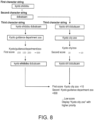
- Figure 8 is a diagram illustrating a flow of processing of the character input device according to Configuration Example 2.
- Figure 9 is a flow chart illustrating the flow of processing of the character input device according to Configuration Example 2.
- the control unit 40 includes the character string acquisition unit 41, the character string combination unit 42, the score calculation unit 43, and the priority determination unit 44.
- the score calculation unit 43 quantifies the co-occurrence relation of the character strings separated into vocabularies. More specifically, when a vocabulary A and a vocabulary B are present, the score calculation unit 43 calculates the score for which the vocabulary A and the vocabulary B appear at the same time.
- the character string combination unit 42 determines the duplicate character string based on the score calculated by the score calculation unit 43. That is, the score calculation unit 43 generates a score that serves as a reference for determining whether or not to delete the duplicate character string, and the character string combination unit 42 determines whether or not to delete the duplicate character string based on the score.
- the score is acquired from the sum of co-occurrence frequencies of neighboring vocabularies.
- the co-occurrence frequency is calculated using co-occurrence information acquired from, for example, a Japanese co-occurrence dictionary. This co-occurrence frequency is compiled into a database into vocabularies (elements) and stored in the dictionary DB 60.
- the co-occurrence frequency is assumed have a higher probability of simultaneous appearance when the number is smaller, and have a lower probability of simultaneous appearance when the number is larger. That is, when the co-occurrence frequency of the vocabulary A and the vocabulary B is "10" and the co-occurrence frequency of the vocabulary A and a vocabulary C is "100", the score calculation unit 43 determines that the probability that the vocabulary A and the vocabulary B appear at the same time is high.
- Figure 7 shows an example in which the first character string is "osaka” (Osaka) and the second character string is "sakai shi tenki” (Sakai city weather).
- the character string combination unit 42 creates third character strings “osaka sakai shi tenki” (Osaka Sakai city whether) and "osaka ishi tenki” (Osaka stone whether).
- the conversion candidate of "osaka sakai shi tenki” is set as the first candidate
- the conversion candidate of "osaka ishi tenki” is set as the second candidate.
- the character string combination unit 42 outputs the first candidate "Osaka Sakai city weather” to the score calculation unit 43.
- the score calculation unit 43 performs morphological analysis on the first candidate "Osaka Sakai city weather”. At this time, the score calculation unit 43 divides it into vocabularies such as "Osaka", "Sakai city”, and "weather”.
- the score calculation unit 43 sets the co-occurrence frequency of "Osaka”/"Sakai city” to "10" and the co-occurrence frequency of "Sakai city”/”weather” to "10". That is, the score calculation unit 43 calculates the score of the first candidate (first score) as "20".
- the character string combination unit 42 outputs the second candidate "Osaka stone weather” to the score calculation unit 43.
- the score calculation unit 43 performs morphological analysis on the second candidate "Osaka stone weather”. At this time, the score calculation unit 43 divides it into vocabularies such as "Osaka", "stone", and "weather”. The score calculation unit 43 sets the co-occurrence frequency of "Osaka”/"stone” to "200" and the co-occurrence frequency of "stone”/"weather” to "200". That is, the score calculation unit 43 calculates the score of the second candidate (second score) as "400".
- the score calculation unit 43 compares the first score and the second score and determines that the first score is low. That is, the score calculation unit 43 determines that the first candidate "Osaka Sakai city weather" is the conversion candidate intended by the user. The score calculation unit 43 outputs the result to the priority determination unit 44. The priority determination unit 44 determines to raise priority of the first candidate "Osaka Sakai city weather” and outputs the result to the character string combination unit 42.
- the character string combination unit 42 outputs the first candidate "Osaka Sakai city weather” to the display control unit 35.
- the display control unit 35 raises the priority of the first candidate "Osaka Sakai city weather” and causes the input display unit 50 to display it.
- Figure 8 illustrates an example in which the first character string is "kyoto shi dobu” (Kyoto city z) and the second character string is “dobutsuen” (zoo).
- the character string combination unit 42 creates "kyoto shidobu dobutsuen” (Kyoto city z zoo) and "kyoto shi dobutsuen” (Kyoto city zoo) as the third character strings.
- the conversion candidate of "kyoto shi dobu dobutsuen” is set as the first candidate
- the conversion candidate of "kyoto shi dobutsuen” is set as the second candidate.
- the character string combination unit 42 outputs the first candidate "Kyoto guidance department zoo" to the score calculation unit 43.
- the score calculation unit 43 performs morphological analysis on the first candidate "Kyoto guidance department zoo". At this time, the score calculation unit 43 divides it into vocabularies such as "Kyoto", “guidance”, "department”, and "zoo".
- the score calculation unit 43 sets the co-occurrence frequency of "Kyoto"/"guidance” to "150", the co-occurrence frequency of "guidance”/"department” to "150", and the co-occurrence frequency of "department"/"zoo" to "200". That is, the score calculation unit 43 calculates the score of the first candidate (first score) as "500".
- the character string combination unit 42 outputs the second candidate "Kyoto city zoo" to the score calculation unit 43.
- the score calculation unit 43 performs morphological analysis on the second candidate "Kyoto city zoo". At this time, the score calculation unit 43 divides it into vocabularies such as "Kyoto city” and "zoo". The score calculation unit 43 sets the co-occurrence frequency of "Kyoto city”/"zoo" to "10". That is, the score calculation unit 43 calculates the score of the second candidate (second score) as "10".
- the score calculation unit 43 compares the first score and the second score and determines that the second score is low. That is, the score calculation unit 43 determines that the second candidate "Kyoto city zoo" is the conversion candidate intended by the user.
- the score calculation unit 43 outputs the result to the priority determination unit 44.
- the priority determination unit 44 determines to raise the priority of the second candidate "Kyoto city zoo" and outputs the result to the character string combination unit 42.
- the character string combination unit 42 outputs the second candidate "Kyoto city zoo" to the display control unit 35.
- the display control unit 35 preferentially displays the second candidate "Kyoto city zoo" on the input display unit 50.
- the character string combination unit 42 determines whether or not there is a duplicate character string (S201). When it is determined that there is no duplicate character string (S201: No), the character string combination unit 42 combines the first character string and the second character string as they are to create a fourth character string (S202). That is, the third character string is taken as the fourth character string.
- the character string combination unit 42 acquires conversion candidates for the fourth character string from the dictionary DB 60 (S203).
- the character string combination unit 42 when determining that there is a duplicate character string (S201: Yes), creates a first candidate and a second candidate (S204). The character string combination unit 42 outputs the first candidate and the second candidate to the score calculation unit 43.
- the score calculation unit 43 performs morphological analysis on the first candidate and the second candidate, and divides the first candidate and the second candidate into vocabularies. Moreover, the score calculation unit 43 calculates the co-occurrence frequency for each vocabulary in the first candidate. Similarly, the score calculation unit 43 calculates the co-occurrence frequency for each vocabulary in the second candidate (S205).
- the score calculation unit 43 calculates the sum of the co-occurrence frequencies of the first candidates (first score) and the sum of the co-occurrence frequencies of the second candidates (second score). Thereby, the score calculation unit 43 compares the first score and the second score (S206). The score calculation unit 43 outputs the result of comparing the first score and the second score to the priority determination unit 44.
- the priority determination unit 44 determines the priority in the display of the first candidate and the second candidate based on the comparison result of the first score and the second score (S207).
- the score calculation unit 43 outputs the fourth character string and conversion candidates for the fourth character string to the character string combination unit 42.
- the intended character string may be acquired.
- Configuration Example 3 differs from Configuration Example 2 in that the score determination unit compares the score with a threshold value and performs a wildcard search based on the score.
- the rest of the configuration is the same as that of the character input device 10, and the description of the similar parts is omitted.
- Figure 10 is an image diagram of character input by the character input device 10 according to Configuration Example 3.
- Figure 11 is a flow chart illustrating a flow of processing of the character input device 10 according to Configuration Example 3.
- Figure 10 illustrates an example in which the first character string is "osaka” (Osaka) and the second character string is "taiikukan” (gymnasium).
- the character string combination unit 42 creates "osaka taiikukan” (Osaka gymnasium) as the third character string.
- the character string combination unit 42 creates a conversion candidate "Osaka gymnasium" for the third character string "osaka taiikukan”.
- the character string combination unit 42 outputs the conversion candidate "Osaka gymnasium” to the score calculation unit 43.
- the score calculation unit 43 performs morphological analysis on the conversion candidate "Osaka gymnasium”. At this time, the score calculation unit 43 divides it into vocabularies such as "Osaka” and "gymnasium”. The score calculation unit 43 sets the co-occurrence frequency of "Osaka”/"gymnasium” to "200" (first score).
- the score calculation unit 43 compares the first score with a preset threshold value.
- This threshold value may be an arbitrary value. Moreover, this threshold value is set to a low value if it is in a state that completely matches or substantially matches the data stored in the dictionary DB 60 or the like. On the other hand, if the user wishes to perform a flexible search, a high threshold value may be set.
- the score calculation unit 43 determines that the conversion candidate is not the character string intended by the user. That is, it is determined that there is character string missing between the first character string "osaka” and the second character string "taiikukan”. That is, the score calculation unit 43 determines that a joining character string is required between the first character string "osaka” and the second character string "taiikukan”. The score calculation unit 43 outputs the result to the character string combination unit 42.
- the character string combination unit 42 adds a joining character string " ⁇ " between the first character string “osaka” and the second character string "taiikukan”. That is, the character string combination unit 42 adds the joining character string as a wildcard.
- the character string combination unit 42 sets the third character string to "osaka * (wildcard) taiikukan” and searches the dictionary DB 60 for conversion candidates.
- the character string combination unit 42 acquires the first prediction candidate "Osaka prefectural gymnasium" and the second prediction candidate "Osaka municipal gymnasium”.
- the character string combination unit 42 outputs the first prediction candidate "Osaka prefectural gymnasium” and the second prediction candidate "Osaka municipal gymnasium” to the score calculation unit 43.
- the score calculation unit 43 performs morphological analysis on the first prediction candidate "Osaka prefectural gymnasium” and the second prediction candidate "Osaka municipal gymnasium”.
- the score calculation unit 43 divides the first prediction candidate "Osaka prefectural gymnasium” into vocabularies such as "Osaka", “prefectural", and "gymnasium”.
- the score calculation unit 43 sets the co-occurrence frequency of "Osaka”/"prefectural” to "10” and the co-occurrence frequency of "prefectural"/"gymnasium” to "10". That is, the score calculation unit 43 calculates the score of the first prediction candidate as "20".
- the score calculation unit 43 divides the second prediction candidate "Osaka municipal gymnasium” into vocabularies such as "Osaka", “municipal”, and "gymnasium”.
- the score calculation unit 43 sets the co-occurrence frequency of "Osaka”/"municipal” to "10" and the co-occurrence frequency of "municipal”/"gymnasium” to "15". That is, the score calculation unit 43 calculates the score of the second prediction candidate as "25".
- the score calculation unit 43 compares the scores of the first prediction candidate and the second prediction candidate with a threshold value. As for the threshold value described above, the score calculation unit 43 compares the score of the first prediction candidate and the score of the second prediction candidate with the threshold value. The score calculation unit 43 determines that the first prediction candidate and the second prediction candidate are the character strings intended by the user, and outputs these prediction candidates to the character string combination unit 42.
- the character string combination unit 42 outputs the first prediction candidate and the second prediction candidate to the display control unit 35.
- the display control unit 35 displays the first prediction candidate and the second prediction candidate on the input display unit 50. At this time, the display control unit 35 may preferentially display a prediction candidate with a smaller threshold value out of the first prediction candidate and the second prediction candidate.
- steps S101 to S103, steps S201 and S206 are the same as those in Configuration Example 2, and therefore are omitted.
- the character string combination unit 42 When it is determined that there is no duplicate character string (S201: No), the character string combination unit 42 combines the first character string and the second character string as they are to create a fourth character string (S202). The character string combination unit 42 acquires conversion candidates for the fourth character string from the dictionary DB 60 (S203).
- the character string combination unit 42 outputs conversion candidates for the fourth character string to the score calculation unit 43.
- the score calculation unit 43 determines whether or not the score is equal to or higher than the threshold value (S301).
- the score calculation unit 43 determines that the conversion candidate is not the character string intended by the user.
- the score calculation unit 43 outputs the result to the character string combination unit 42.
- the character string combination unit 42 adds a joining character string (wildcard) "*" between the first character string and the second character string, and searches for conversion candidates from the dictionary DB 60 (S303). After performing step S303, the character string combination unit 42 performs step S202 again.
- the score calculation unit 43 determines that the conversion candidate is the character string intended by the user.
- the score calculation unit 43 decides the fourth character string (S302).
- the score calculation unit 43 outputs the fourth character string and conversion candidates for the fourth character string to the character string combination unit 42.
- the intended character string may be acquired.
- a wildcard search may be performed. That is, it is possible to easily acquire the character string intended by the user, and the user can input characters more efficiently.
- Modification Example 4 differs from Configuration Example 1 in that the input mode according to Configuration Example 1 is the kana input mode, whereas Modification Example 2 is the alphabet input mode.
- the rest of the configuration is the same as that of the character input device 10, and the description of the similar parts is omitted.
- the character input device 10 according to Configuration Example 2 differs in that in Modification Example 2, the first input unit 21 is in the alphabet input mode and the second input unit 22 accepts English voice input, whereas in the character input device 10 according to Configuration Example 1, the first input unit 21 is in the kana input mode, and the second input unit 22 accepts Japanese input.
- the rest of the configuration of the character input device 10 is the same as that of the character input device 10, and the description of the same portions will be omitted.
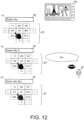
- the first input unit 21 in Figure 12 uses a 12-key keyboard (numeric keyboard), a keyboard with QWERTY layout may be configured.
- the type of language to be input as a character string is not limited to the alphabet input mode, and may be another type of language.
- the type of language may be, for example, Chinese, which is a way that allows users to input the phonetic notation of a word to be input as a character string (intended character string), or German, which is a way that allows the user to input the spelling of the word to be input as a character string.
- the first input unit 21 accepts the first character "Kyoto City Z”.
- the second input unit 22 accepts the second character "Zoo”.
- the character string combination unit 42 deletes the duplicate character string "Z" from the third character string "Kyoto City Z Zoo”. As a result, the character string combination unit 42 creates a fourth character string "Kyoto City Zoo”.
- the user inputs characters by combining a plurality of input methods (the first input unit 21 and the second input unit 22) using an input mode other than Japanese, it is possible to acquire the intended character string. Further, when a duplicate character string exists in the first character string and the second character string, it is possible to delete the duplicate character string by determining that the duplicate character string exists.
- the first input unit 21 is for character input using the software keyboard
- the second input unit 22 is for voice input.
- the first input unit 21 may be voice input
- the second input unit 22 may be character input using a software keyboard.
- first input unit 21 and the second input unit 22 are not limited to character input using a software keyboard or voice input.
- first input unit 21 and the second input unit 22 may be for input by handwriting, input by gesture, or the like.
- a character input device (10) converts an input character string into a corresponding conversion character string.
- the character input device (10) includes a first input unit (21), a second input unit (22), and a character string combination unit (42).
- the first input unit (21) accepts input of a first character string by a first input method.
- the second input unit (22) accepts input of a second character string by a second input method different from the first input method.
- the character string combination unit (42) generates an input character string candidate by connecting the first character string and the second character string accepted for input this time.
- the character string combination unit extracts an identical character string as a duplicate character strings at a tail of the first character string and a head of the second character string; and when the duplicates character string is extracted, generates a character string as one of the input character string candidates formed by connecting the first character string without the duplicate character string and the second character string without the duplicate character string by the duplicate character string.
Landscapes
- Engineering & Computer Science (AREA)
- Theoretical Computer Science (AREA)
- General Engineering & Computer Science (AREA)
- Human Computer Interaction (AREA)
- Physics & Mathematics (AREA)
- General Physics & Mathematics (AREA)
- Multimedia (AREA)
- Health & Medical Sciences (AREA)
- Audiology, Speech & Language Pathology (AREA)
- General Health & Medical Sciences (AREA)
- Machine Translation (AREA)
- Document Processing Apparatus (AREA)
Abstract
Description
- The disclosure relates to a technique for supporting character input.
- A user searches for a travel route to a destination using a vehicle-mounted device (car navigator will be described below as an example). The car navigator is provided with a plurality of input methods for inputting a character string corresponding to a destination. This input method is keyboard input using a touch panel and input by voice recognition, for example.
- For example, while the car is parked (when the running speed is 0), the user uses the touch panel of the car navigator to input a character string corresponding to the destination with a keyboard.
- [Patent Literature 1]
JP2021-532492 -
Patent Literature 1 discloses a technique of a character input method including at least two input methods such as keyboard input and voice input. For example, when the user writes an e-mail, he or she inputs characters with both methods of keyboard input and voice input. - When operating the car navigator using the configuration described in
Patent Literature 1, the user uses keyboard input while the car is stopped, and voice input after starting the car. As a result, the destination of the car navigator is a character string (hereinafter referred to as a combined character string) acquired by combining the character string input from the keyboard and the character string input by voice. - However, when a combined character string is directed combined from a character string input by a user using keyboard and a character string input by voice input, there may be duplicate character strings because the input methods are different. That is, the user is unable to acquire the intended search result.
- At this time, the user may acquire a desired combined character string by intentionally deleting the duplicate character strings. However, such operations are troublesome and may cause inconvenience to the user.
- Accordingly, it is an object of the disclosure to provide a function that enables efficient character input when a plurality of input methods are provided.
- In order to achieve the above object, the character input device of the disclosure is configured as follows.
- A character input device converts an input character string into a corresponding conversion character string. The character input device includes a first input unit, a second input unit, and a character string combination unit. The first input unit accepts input of a first character string by a first input method. The second input unit accepts input of a second character string by a second input method different from the first input method. When the input of the first character string is accepted after the input of the second character string is accepted, the character string combination unit generates an input character string candidate by connecting the first character string and the second character string accepted for input this time. Further, the character string combination unit extracts an identical character string as a duplicate character string at a tail of the first character string and a head of the second character string; and when the duplicate character string is extracted, generates a character string as one of the input character string candidates formed by connecting the first character string without the duplicate character string and the second character string without the duplicate character string by the duplicate character string.
- With such configuration, even if a duplicate character string exists in the combined character strings, the procedure for deleting the duplicate character string may be omitted. That is, the efficiency of user's character input can be improved.
- The character string combination unit of the character input device generates a character string as one of input character string candidates formed by connecting the second character string immediately after the first character string. Moreover, the character input device includes a score calculation unit that divides the conversion character string of the input character string into vocabulary units for each input character string candidate, and calculates a co-occurrence frequency between the vocabularies; and a priority determination unit that determines priority of conversion character strings according to the co-occurrence frequency calculated by the score calculation unit.
- A character string combination unit of the character input device predicts a joining character string that connects the first character string and the second character string, and generates a character string as one of the input character string candidates formed by connecting the first character string and the second character string with the joining character string. Moreover, the character input device includes: a score calculation unit that divides the conversion character string of each input character string into vocabularies for each input character string candidate and calculates the co-occurrence frequency between vocabularies; and a priority determination unit that determines priority of the conversion character strings according to the co-occurrence frequency calculated by the score calculation unit.
- A character string combination unit of the character input device predicts a joining character string that connects the first character string and the second character string, and generates a character string as one of the input character string candidates formed by connecting the first character string and the second character string with the joining character string.
- One of the first input method and the second input method of the character input device is a key input method, and the other is a voice input method.
- According to a character input method of the disclosure, a computer of a character input device that converts an input character string into a corresponding conversion character string performs: a first step of accepting input of a first character string by a first input method; a second step of accepting input of a second character string by a second input method different from the first input method; and a third step of generating, when the input of the second character string is accepted after the input of the first character string is accepted, an input character string candidate by connecting the first character string and the second character string accepted for input this time. The third step: extracts an identical character string as a duplicate character string at a tail of the first character string and a head of the second character string; and when the duplicate character string is extracted, generates a character string as one of the input character string candidates formed by connecting the first character string without the duplicate character string and the second character string without the duplicate character string by the duplicate character string.
- According to a character input program of the disclosure causes a computer of a character input device that converts an input character string into a corresponding conversion character string to perform: a first step of accepting input of a first character string by a first input method; a second step of accepting input of a second character string by a second input method different from the first input method; and a third step of generating, when the input of the second character string is accepted after the first character string is accepted, an input character string candidate formed by connecting the first character string and the second character string accepted for input this time. The third step: extracts an identical character string as a duplicate character string at a tail of the first character string and a head of the second character string; and when the duplicate character string is extracted, generates a character string as one of the input character string candidates formed by connecting the first character string without the duplicate character string and the second character string without the duplicate character string by the duplicate character string.
- According to the disclosure, it is possible to provide a function that enables efficient character input when a plurality of input methods are provided.
-
-
Figure 1 is an image diagram of character input by a character input device according to an Application Example. -
Figure 2 is a block diagram illustrating the configuration of a character input device according to Configuration Example 1. -
Figure 3 is an image diagram of character input by a character input device according to Configuration Example 1. -
Figure 4 is a flow chart illustrating the flow of processing of a character input device according to an Operation Example. -
Figure 5 is a flow chart illustrating the flow of processing of a character input device according to Modification Example 1. -
Figure 6 is a block diagram illustrating the configuration of a character input device according to Configuration Example 2. -
Figure 7 is a diagram illustrating the flow of processing of the character input device according to Configuration Example 2. -
Figure 8 is a diagram illustrating a flow of processing of the character input device according to Configuration Example 2. -
Figure 9 is a flow chart illustrating the flow of processing of the character input device according to Configuration Example 2. -
Figure 10 is an image diagram of character input by a character input device according to Configuration Example 3. -
Figure 11 is a flow chart illustrating a flow of processing of the character input device according to Configuration Example 3. -
Figure 12 is an image diagram of a character input by the character input device according to Modification Example 2. - Embodiments for implementing the disclosure will be described below with reference to several drawings.
-
Figure 1 is an image diagram of character input by acharacter input device 10. Thecharacter input device 10 is mounted, for example, on a vehicle-mounted device. The vehicle-mounted device is a car navigator that searches for a travel route to a destination by inputting the destination. This vehicle-mounted device includes thecharacter input device 10 for inputting a destination. Thecharacter input device 10 is provided with a plurality of input methods. - As described above, the
character input device 10 is mounted in an electronic device such as a car navigator. The electronic device is not limited to car navigator, and may be any device such as a tablet or a personal computer that allows character input. - A specific example in which the user inputs characters will be described. A
car navigator 100 includes a touch panel. A user activates an application (hereinafter referred to as an application) installed in thecar navigator 100 using the touch panel. - The user activates a destination search application, for example. The user inputs a character string to an
input display unit 50. In this example, a destination search application will be used for explanation, but the type of application is not limited as long as it has a function of inputting characters. - Here, the character input methods in the
character input device 10 will be described. Thecharacter input device 10 includes afirst input unit 21 and asecond input unit 22. In the disclosure, thefirst input unit 21 is for keyboard input, and thesecond input unit 22 is for voice input. Thefirst input unit 21 accepts input only while the car is stopped. On the other hand, thesecond input unit 22 accepts inputs regardless of whether the car is stopped or running. - A more specific example will be described using an example in which the user sets a character string "kyoto shi dobutsuen" (Kyoto city zoo) as a destination. The user first performs keyboard input using the
first input unit 21 and then performs voice input using thesecond input unit 22. Details will be described below using the configuration ofFigure 1 . - The user operates a car navigator while the car is stopped (for example, while the car is waiting for signals). The user uses the
first input unit 21 to input a first character string "kyoto shi dobu" (Kyoto city z). - At this time, the user confirms that the signal has turned green, and starts the car. As a result, the
first input unit 21 stops accepting character input. - The user confirms that the
first input unit 21 does not accept character input, and starts input using thesecond input unit 22. The user uses thesecond input unit 22 to input a second character string "dobutsuen" (zoo). The user ends the input of the character string for searching by pressing a button for performing search, for example. - The
character input device 10 combines the first character string "kyoto shi dobu" and the second character string "dobutsuen" to generate a third character string "kyoto shi dobu dobutsuen" (Kyoto city z zoo). At this time, thecharacter input device 10 determines whether or not there is a duplicate character string in the third character string (hereinafter referred to as a duplicate character string). - The
character input device 10 determines that the duplicate character string "dobu" exists, and deletes the duplicate character string "dobu". More specifically, thecharacter input device 10 determines that "dobu", which is the character string on the tail of the first character string "kyoto shi dobu", and the character string "dobu" at the head of the second character string "dobutsu" are duplicate character strings. - The
character input device 10 deletes the duplicate character string "dobu" from the first character string "kyoto shi dobu" and generates "kyoto shi" as a part of the first character string. Further, thecharacter input device 10 deletes the duplicate character string "dobu" from the second character string "dobutsuen" and generates "tsuen" as a part of the second character string. - Next, the
character input device 10 joins the part of the first character string "kyoto shi", the duplicate character string "dobu", and the part of the second character string, and generates a fourth character string "kyoto shi dobutsuen" (Kyoto city zoo) from "kyoto shi", "dobu", and "tsuen". This fourth character string corresponds to the "input character string" of the disclosure. - The
character input device 10 acquires a conversion candidate "Kyoto city zoo" of the fourth character string "kyoto shi dobutsuen" from a dictionary database (hereinafter referred to as "dictionary DB"). Thecharacter input device 10 outputs the character string "Kyoto city zoo" to the car navigator. The car navigator displays location information that matches the character string "Kyoto city zoo". - By providing such a configuration, it is possible to acquire an intended character string even when the user performs operations by combining a plurality of input methods. Further, when a duplicate character string exists in the first character string and the second character string, it is possible to delete the duplicate character string by determining that the duplicate character string exists.
- That is, it is possible to easily acquire the character string intended by the user, and the user can efficiently input characters.
-
Figure 2 is a block diagram illustrating the configuration of a character input device according to Configuration Example 1.Figure 3 is an image diagram of character input by a character input device according to Configuration Example 1. As described above, the example to which thecharacter input device 10 is applied is not limited to car navigator, and may be other electronic devices capable of inputting characters. - As shown in
Figure 2 , thecharacter input device 10 includes aninput unit 20, adetection unit 30, adisplay control unit 35, acontrol unit 40, theinput display unit 50, and adictionary DB 60. - As described above, the
input unit 20 includes thefirst input unit 21 and thesecond input unit 22. For example, as shown inFigure 1 , thefirst input unit 21 and thesecond input unit 22 are activated by operating thecar navigator 100. - The
character input device 10 includes a touch panel. This touch panel detects a user's operation. Detection of operation includes, for example, those of an operation position, a length of time during which the operation is performed, a temporal change in the operation position, and the like. Detection results of these operations are output to thedetection unit 30. Thedetection unit 30 outputs the result to thedisplay control unit 35 and thecontrol unit 40 according to the result input from the touch panel. Thedisplay control unit 35 outputs to theinput display unit 50 so as to display according to the operation result. - The
first input unit 21 accepts key inputs from, for example, a software keyboard. Various keys for character input are displayed on thefirst input unit 21. The user inputs the first character string by the first input method (key input method) using thefirst input unit 21. - The
second input unit 22 accepts voice input from a microphone, for example. Thesecond input unit 22 outputs voice information (second character string) uttered by the user to a voice recognition unit (not shown). The voice recognition unit acquires feature quantities from the waveform of the voice information and quantifies the feature quantities. Further, the voice recognition unit performs algorithm analysis on the quantified information and outputs it to thedisplay control unit 35 as a character string. Thedisplay control unit 35 causes theinput display unit 50 to display the second character string. That is, the user inputs the second character string by the second input method (voice input method) using thesecond input unit 22. - The
control unit 40 includes a characterstring acquisition unit 41 and a characterstring combination unit 42. Thecontrol unit 40 is configured by a hardware CPU, memory, and other electronic circuits. When the hardware CPU executes the character input program according to the disclosure, it operates as the characterstring acquisition unit 41 and the characterstring combination unit 42. Moreover, the memory has a region for developing the character input program according to the disclosure and a region for temporarily storing data generated when the character input program is executed. Thecontrol unit 40 may be an LSI that integrates a hardware CPU, memory, and the like. Moreover, the hardware CPU is a computer that performs the character input method according to the disclosure. - The character
string acquisition unit 41 acquires the first character string by the first input method using thefirst input unit 21 and acquires the second character string by the second input method using thesecond input unit 22. The characterstring acquisition unit 41 outputs the first character string and the second character string to the characterstring combination unit 42. - The character
string combination unit 42 combines the first character string and the second character string. Detailed procedures will be described later. The characterstring combination unit 42 outputs a character string acquired by combining the first character string and the second character string to thedisplay control unit 35. Thedisplay control unit 35 causes theinput display unit 50 to display the result. - The user uses the character string displayed on the
input display unit 50 to perform a search. Thecharacter input device 10 searches a dictionary DB (dictionary database) and a map DB (map database) (not shown). Thereby, thecharacter input device 10 displays the search result and position information. - A more specific configuration will be described with reference to
Figure 3 . The user activates the destination search application of thecar navigator 100. At this time, an example in which the user inputs the character string "kyoto shi dobutsuen" will be described. - While the car is stopped, the user uses the
first input unit 21 to input the first character string "kyoto shi dobu" to the input display unit 50 (state (1) inFigure 3 ). As described above, thefirst input unit 21 is a software keyboard. The user inputs the first character string "kyoto shi dobu". - The
first input unit 21 outputs the first character string "kyoto shi dobu" to thedetection unit 30. Thefirst input unit 21 outputs the first character string "kyoto shi dobu" to thedetection unit 30. Thedetection unit 30 outputs the first character string "kyoto shi dobu" to thedisplay control unit 35 and the characterstring acquisition unit 41. Thedisplay control unit 35 causes theinput display unit 50 to display the first character string "kyoto shi dobu". - Next, the user starts the car. As a result, the
first input unit 21 stops accepting character input. The user uses thesecond input unit 22 to input the second character string following the first character string "kyoto shi dobu". More specifically, the user uses thesecond input unit 22 to input the second character string "dobutsuen". - The
second input unit 22 outputs the second character string "dobutsuen" to thedetection unit 30. Thefirst input unit 21 outputs the second character string "dobutsuen" to thedetection unit 30. Thedetection unit 30 outputs the second character string "dobutsuen" to the character string acquisition unit 41 (state (2) inFigure 3 ). - The character
string acquisition unit 41 outputs the first character string "kyoto shi dobu" and the second character string "dobutsuen" to the characterstring combination unit 42. - The character
string combination unit 42 combines the first character string "kyoto shi dobu" and the second character string "dobutsuen" to create a third character string "kyoto shi dobu dobutsuen" (see state (3) inFigure 3 ). At this time, the characterstring combination unit 42 determines the duplicate character string between the first character string "kyoto shi dobu" and the second character string "dobutsuen". - At this time, the character
string combination unit 42 determines that the character string "dobu" at the tail of the first character string "kyoto shi dobu", and the character string "dobu" at the head of the second character string "dobutsuen" are duplicate character strings. - The character
string combination unit 42 deletes the duplicate character string "dobu" from the first character string "kyoto shi dobu" and generates "kyoto shi" as a part of the first character string. Further, the characterstring combination unit 42 deletes the duplicate character string "dobu" from the second character string "dobutsuen" and generates "tsuen" as a part of the second character string. - Next, the character
string combination unit 42 combines the part of the first character string "kyoto shi", the duplicate character string "dobu", and the part of the second character string "tsuen" to form a fourth character string "kyoto shi dobutsuen" (Kyoto city zoo). As a result, the characterstring combination unit 42 may acquire the conversion candidate "Kyoto city zoo" intended by the user from thedictionary DB 60. - That is, even when the user inputs characters by combining a plurality of input methods (the
first input unit 21 and the second input unit 22), the intended character string may be acquired. Further, when a duplicate character string exists in the first character string and the second character string, it is possible to delete the duplicate character string by determining that the duplicate character string exists. Thus, it is possible to easily acquire the character string intended by the user, and the user can efficiently input characters. -
Figure 4 is a flow chart illustrating the flow of processing of thecharacter input device 10 according to an Operation Example. The processing flow of thecharacter input device 10 will be described with reference toFigures 1 ,2 ,3 , and4 . - The
first input unit 21 accepts a first character string input by the user using the first input method. Thefirst input unit 21 outputs the first character string to thedetection unit 30. Thedetection unit 30 outputs the first character string to the character string acquisition unit 41 (S101). - Next, the
second input unit 22 accepts a second character string input by the user using the second input method. Thesecond input unit 22 outputs the second character string to thedetection unit 30. Thedetection unit 30 outputs the second character string to the character string acquisition unit 41 (S102). - The character
string acquisition unit 41 outputs the first character string and the second character string to the characterstring combination unit 42. The characterstring combination unit 42 combines the first character string and the second character string to create a third character string (S103). - The character
string combination unit 42 determines the duplicate character string from the character string on the tail of the first character string and the character string on the head of the second character string. The characterstring combination unit 42 deletes the duplicate character strings from the first character string and the second character string (S 104). - The character
string combination unit 42 creates a fourth character string from which duplicate character strings are deleted (S 105). - In this way, even when the user inputs characters by combining a plurality of input methods (the
first input unit 21 and the second input unit 22), the intended character string may be acquired. Further, when a duplicate character string exists in the first character string and the second character string, it is possible to delete the duplicate character string by determining that the duplicate character string exists. - That is, the user can easily acquire the intended character string without being conscious of the duplicate character strings of the character string input by the
first input unit 21 and the character string input by thesecond input unit 22. That is, the user can efficiently input characters. - Next, a character input device according to Modification Example 1 will be described with reference to the drawings. In Configuration Example 1, only the process of deleting duplicate character strings is performed, whereas in Modification Example 1, the process of determining whether or not there is a duplicate character string is performed. The rest of the configuration is the same as that of the
character input device 10, and the description of the similar parts is omitted. -
Figure 5 is a flow chart illustrating the flow of processing of thecharacter input device 10 according to Modification Example 1. After performing the process of step S103 in Configuration Example 1, the characterstring combination unit 42 determines whether or not there is a duplicate character string (S110). - When the character
string combination unit 42 determines that there is a duplicate character string (S110: Yes), the characterstring combination unit 42 in step S104 performs processing for deleting the duplicate character string from the third character. - On the other hand, when determining that a duplicate character string does not exist (S1 10: No), the character
string combination unit 42 creates a fourth character string without performing the process of step S104. That is, the fourth character string is the same character string as the third character string. That is, the fourth character string is a character string that has undergone only the process of combining the first character string and the second character string. - Even with such a configuration, the intended character string may be acquired even when the user performs character input by combining a plurality of input methods (the
first input unit 21 and the second input unit 22). - That is, it is possible to easily acquire the character string intended by the user, and the user can efficiently input characters.
- Next, a character input device according to Configuration Example 2 will be described with reference to the drawings. Configuration Example 2 differs from Configuration Example 1 in that the
control unit 40 of thecharacter input device 10 includes ascore calculation unit 43 and apriority determination unit 44. The rest of the configuration is the same as that of thecharacter input device 10, and the description of the similar parts is omitted. -
Figure 6 is a block diagram illustrating the configuration of the character input device according to Configuration Example 2.Figure 7 is a diagram illustrating the flow of processing of the character input device according to Configuration Example 2.Figure 8 is a diagram illustrating a flow of processing of the character input device according to Configuration Example 2.Figure 9 is a flow chart illustrating the flow of processing of the character input device according to Configuration Example 2. - The
control unit 40 includes the characterstring acquisition unit 41, the characterstring combination unit 42, thescore calculation unit 43, and thepriority determination unit 44. Thescore calculation unit 43 quantifies the co-occurrence relation of the character strings separated into vocabularies. More specifically, when a vocabulary A and a vocabulary B are present, thescore calculation unit 43 calculates the score for which the vocabulary A and the vocabulary B appear at the same time. - Here, the method for calculating a score of the third character string by the
score calculation unit 43 will be described. The characterstring combination unit 42 determines the duplicate character string based on the score calculated by thescore calculation unit 43. That is, thescore calculation unit 43 generates a score that serves as a reference for determining whether or not to delete the duplicate character string, and the characterstring combination unit 42 determines whether or not to delete the duplicate character string based on the score. The score is acquired from the sum of co-occurrence frequencies of neighboring vocabularies. - The co-occurrence frequency is calculated using co-occurrence information acquired from, for example, a Japanese co-occurrence dictionary. This co-occurrence frequency is compiled into a database into vocabularies (elements) and stored in the
dictionary DB 60. - The co-occurrence frequency is assumed have a higher probability of simultaneous appearance when the number is smaller, and have a lower probability of simultaneous appearance when the number is larger. That is, when the co-occurrence frequency of the vocabulary A and the vocabulary B is "10" and the co-occurrence frequency of the vocabulary A and a vocabulary C is "100", the
score calculation unit 43 determines that the probability that the vocabulary A and the vocabulary B appear at the same time is high. - (Score calculation method and duplicate character string determination method)
- (1) The character
string combination unit 42 acquires from the dictionary DB 60 a candidate (first candidate) in which the duplicate character string of the third character string is not deleted and a candidate (second candidate) in which the character string is deleted. The characterstring combination unit 42 outputs the respective conversion candidate to thescore calculation unit 43. - (2) The
score calculation unit 43 performs morphological analysis on each of the first candidate and the second candidate, and divides them into vocabularies. - (3) The
score calculation unit 43 acquires the co-occurrence frequency for each of the neighboring vocabularies in the first candidate and the second candidate. - (4) The
score calculation unit 43 calculates the sum (score) of the co-occurrence frequencies of the character strings as conversion candidates. - (5) The
score calculation unit 43 outputs the score for each conversion candidate to the characterstring combination unit 42. - (6) The character
string combination unit 42 selects the conversion candidate with the lowest score. - (7) The character
string combination unit 42 deletes the duplicate character strings based on the score so as to create a fourth character string. - A more specific example of how the character
string combination unit 42 creates the fourth character string will be described with reference toFigures 7 and8 . -
Figure 7 shows an example in which the first character string is "osaka" (Osaka) and the second character string is "sakai shi tenki" (Sakai city weather). At this time, the characterstring combination unit 42 creates third character strings "osaka sakai shi tenki" (Osaka Sakai city whether) and "osaka ishi tenki" (Osaka stone whether). At this time, the conversion candidate of "osaka sakai shi tenki" is set as the first candidate, and the conversion candidate of "osaka ishi tenki" is set as the second candidate. - The character
string combination unit 42 outputs the first candidate "Osaka Sakai city weather" to thescore calculation unit 43. Thescore calculation unit 43 performs morphological analysis on the first candidate "Osaka Sakai city weather". At this time, thescore calculation unit 43 divides it into vocabularies such as "Osaka", "Sakai city", and "weather". Thescore calculation unit 43 sets the co-occurrence frequency of "Osaka"/"Sakai city" to "10" and the co-occurrence frequency of "Sakai city"/"weather" to "10". That is, thescore calculation unit 43 calculates the score of the first candidate (first score) as "20". - Next, the character
string combination unit 42 outputs the second candidate "Osaka stone weather" to thescore calculation unit 43. Thescore calculation unit 43 performs morphological analysis on the second candidate "Osaka stone weather". At this time, thescore calculation unit 43 divides it into vocabularies such as "Osaka", "stone", and "weather". Thescore calculation unit 43 sets the co-occurrence frequency of "Osaka"/"stone" to "200" and the co-occurrence frequency of "stone"/"weather" to "200". That is, thescore calculation unit 43 calculates the score of the second candidate (second score) as "400". - The
score calculation unit 43 compares the first score and the second score and determines that the first score is low. That is, thescore calculation unit 43 determines that the first candidate "Osaka Sakai city weather" is the conversion candidate intended by the user. Thescore calculation unit 43 outputs the result to thepriority determination unit 44. Thepriority determination unit 44 determines to raise priority of the first candidate "Osaka Sakai city weather" and outputs the result to the characterstring combination unit 42. - The character
string combination unit 42 outputs the first candidate "Osaka Sakai city weather" to thedisplay control unit 35. Thedisplay control unit 35 raises the priority of the first candidate "Osaka Sakai city weather" and causes theinput display unit 50 to display it. -
Figure 8 illustrates an example in which the first character string is "kyoto shi dobu" (Kyoto city z) and the second character string is "dobutsuen" (zoo). At this time, the characterstring combination unit 42 creates "kyoto shidobu dobutsuen" (Kyoto city z zoo) and "kyoto shi dobutsuen" (Kyoto city zoo) as the third character strings. At this time, the conversion candidate of "kyoto shi dobu dobutsuen" is set as the first candidate, and the conversion candidate of "kyoto shi dobutsuen" is set as the second candidate. - The character
string combination unit 42 outputs the first candidate "Kyoto guidance department zoo" to thescore calculation unit 43. Thescore calculation unit 43 performs morphological analysis on the first candidate "Kyoto guidance department zoo". At this time, thescore calculation unit 43 divides it into vocabularies such as "Kyoto", "guidance", "department", and "zoo". Thescore calculation unit 43 sets the co-occurrence frequency of "Kyoto"/"guidance" to "150", the co-occurrence frequency of "guidance"/"department" to "150", and the co-occurrence frequency of "department"/"zoo" to "200". That is, thescore calculation unit 43 calculates the score of the first candidate (first score) as "500". - Next, the character
string combination unit 42 outputs the second candidate "Kyoto city zoo" to thescore calculation unit 43. Thescore calculation unit 43 performs morphological analysis on the second candidate "Kyoto city zoo". At this time, thescore calculation unit 43 divides it into vocabularies such as "Kyoto city" and "zoo". Thescore calculation unit 43 sets the co-occurrence frequency of "Kyoto city"/"zoo" to "10". That is, thescore calculation unit 43 calculates the score of the second candidate (second score) as "10". - The
score calculation unit 43 compares the first score and the second score and determines that the second score is low. That is, thescore calculation unit 43 determines that the second candidate "Kyoto city zoo" is the conversion candidate intended by the user. Thescore calculation unit 43 outputs the result to thepriority determination unit 44. Thepriority determination unit 44 determines to raise the priority of the second candidate "Kyoto city zoo" and outputs the result to the characterstring combination unit 42. - The character
string combination unit 42 outputs the second candidate "Kyoto city zoo" to thedisplay control unit 35. Thedisplay control unit 35 preferentially displays the second candidate "Kyoto city zoo" on theinput display unit 50. - Next, the flow of processing of the
character input device 10 in Configuration Example 2 will be described with reference toFigure 9 . Note that steps S101 to S103 are the same as in Configuration Example 1, and therefore are omitted. - The character
string combination unit 42 determines whether or not there is a duplicate character string (S201). When it is determined that there is no duplicate character string (S201: No), the characterstring combination unit 42 combines the first character string and the second character string as they are to create a fourth character string (S202). That is, the third character string is taken as the fourth character string. - The character
string combination unit 42 acquires conversion candidates for the fourth character string from the dictionary DB 60 (S203). - On the other hand, when determining that there is a duplicate character string (S201: Yes), the character
string combination unit 42 creates a first candidate and a second candidate (S204). The characterstring combination unit 42 outputs the first candidate and the second candidate to thescore calculation unit 43. - The
score calculation unit 43 performs morphological analysis on the first candidate and the second candidate, and divides the first candidate and the second candidate into vocabularies. Moreover, thescore calculation unit 43 calculates the co-occurrence frequency for each vocabulary in the first candidate. Similarly, thescore calculation unit 43 calculates the co-occurrence frequency for each vocabulary in the second candidate (S205). - The
score calculation unit 43 calculates the sum of the co-occurrence frequencies of the first candidates (first score) and the sum of the co-occurrence frequencies of the second candidates (second score). Thereby, thescore calculation unit 43 compares the first score and the second score (S206). Thescore calculation unit 43 outputs the result of comparing the first score and the second score to thepriority determination unit 44. - The
priority determination unit 44 determines the priority in the display of the first candidate and the second candidate based on the comparison result of the first score and the second score (S207). Thescore calculation unit 43 outputs the fourth character string and conversion candidates for the fourth character string to the characterstring combination unit 42. - With such a configuration, even when the user inputs characters by combining a plurality of input methods (the
first input unit 21 and the second input unit 22), the intended character string may be acquired. - Further, in the above-described configuration, it is possible to determine whether or not to delete duplicate character strings according to relationship of vocabularies, without being limited to mechanically deleting duplicate character strings. That is, it is possible to easily acquire the character string intended by the user, and the user can input characters more efficiently.
- Next, a character input device according to Configuration Example 3 will be described with reference to the drawings. Configuration Example 3 differs from Configuration Example 2 in that the score determination unit compares the score with a threshold value and performs a wildcard search based on the score. The rest of the configuration is the same as that of the
character input device 10, and the description of the similar parts is omitted. -
Figure 10 is an image diagram of character input by thecharacter input device 10 according to Configuration Example 3.Figure 11 is a flow chart illustrating a flow of processing of thecharacter input device 10 according to Configuration Example 3. -
Figure 10 illustrates an example in which the first character string is "osaka" (Osaka) and the second character string is "taiikukan" (gymnasium). At this time, the characterstring combination unit 42 creates "osaka taiikukan" (Osaka gymnasium) as the third character string. The characterstring combination unit 42 creates a conversion candidate "Osaka gymnasium" for the third character string "osaka taiikukan". - The character
string combination unit 42 outputs the conversion candidate "Osaka gymnasium" to thescore calculation unit 43. Thescore calculation unit 43 performs morphological analysis on the conversion candidate "Osaka gymnasium". At this time, thescore calculation unit 43 divides it into vocabularies such as "Osaka" and "gymnasium". Thescore calculation unit 43 sets the co-occurrence frequency of "Osaka"/"gymnasium" to "200" (first score). - At this time, the
score calculation unit 43 compares the first score with a preset threshold value. This threshold value may be an arbitrary value. Moreover, this threshold value is set to a low value if it is in a state that completely matches or substantially matches the data stored in thedictionary DB 60 or the like. On the other hand, if the user wishes to perform a flexible search, a high threshold value may be set. - For example, when the threshold value is 50, the first score of "Osaka"/"gymnasium" is "200", so the
score calculation unit 43 determines that the conversion candidate is not the character string intended by the user. That is, it is determined that there is character string missing between the first character string "osaka" and the second character string "taiikukan". That is, thescore calculation unit 43 determines that a joining character string is required between the first character string "osaka" and the second character string "taiikukan". Thescore calculation unit 43 outputs the result to the characterstring combination unit 42. - The character
string combination unit 42 adds a joining character string "∗" between the first character string "osaka" and the second character string "taiikukan". That is, the characterstring combination unit 42 adds the joining character string as a wildcard. The characterstring combination unit 42 sets the third character string to "osaka * (wildcard) taiikukan" and searches thedictionary DB 60 for conversion candidates. The characterstring combination unit 42 acquires the first prediction candidate "Osaka prefectural gymnasium" and the second prediction candidate "Osaka municipal gymnasium". - The character
string combination unit 42 outputs the first prediction candidate "Osaka prefectural gymnasium" and the second prediction candidate "Osaka municipal gymnasium" to thescore calculation unit 43. Thescore calculation unit 43 performs morphological analysis on the first prediction candidate "Osaka prefectural gymnasium" and the second prediction candidate "Osaka municipal gymnasium". - At this time, the
score calculation unit 43 divides the first prediction candidate "Osaka prefectural gymnasium" into vocabularies such as "Osaka", "prefectural", and "gymnasium". Thescore calculation unit 43 sets the co-occurrence frequency of "Osaka"/"prefectural" to "10" and the co-occurrence frequency of "prefectural"/"gymnasium" to "10". That is, thescore calculation unit 43 calculates the score of the first prediction candidate as "20". - Similarly, the
score calculation unit 43 divides the second prediction candidate "Osaka municipal gymnasium" into vocabularies such as "Osaka", "municipal", and "gymnasium". Thescore calculation unit 43 sets the co-occurrence frequency of "Osaka"/"municipal" to "10" and the co-occurrence frequency of "municipal"/"gymnasium" to "15". That is, thescore calculation unit 43 calculates the score of the second prediction candidate as "25". - The
score calculation unit 43 compares the scores of the first prediction candidate and the second prediction candidate with a threshold value. As for the threshold value described above, thescore calculation unit 43 compares the score of the first prediction candidate and the score of the second prediction candidate with the threshold value. Thescore calculation unit 43 determines that the first prediction candidate and the second prediction candidate are the character strings intended by the user, and outputs these prediction candidates to the characterstring combination unit 42. - The character
string combination unit 42 outputs the first prediction candidate and the second prediction candidate to thedisplay control unit 35. Thedisplay control unit 35 displays the first prediction candidate and the second prediction candidate on theinput display unit 50. At this time, thedisplay control unit 35 may preferentially display a prediction candidate with a smaller threshold value out of the first prediction candidate and the second prediction candidate. - Next, the flow of processing of the
character input device 10 in Configuration Example 3 will be described with reference toFigure 11 . Note that steps S101 to S103, steps S201 and S206 are the same as those in Configuration Example 2, and therefore are omitted. - When it is determined that there is no duplicate character string (S201: No), the character
string combination unit 42 combines the first character string and the second character string as they are to create a fourth character string (S202). The characterstring combination unit 42 acquires conversion candidates for the fourth character string from the dictionary DB 60 (S203). - The character
string combination unit 42 outputs conversion candidates for the fourth character string to thescore calculation unit 43. Thescore calculation unit 43 determines whether or not the score is equal to or higher than the threshold value (S301). - When it is determined that the score is equal to or higher than the threshold value (S301: Yes), the
score calculation unit 43 determines that the conversion candidate is not the character string intended by the user. Thescore calculation unit 43 outputs the result to the characterstring combination unit 42. - The character
string combination unit 42 adds a joining character string (wildcard) "*" between the first character string and the second character string, and searches for conversion candidates from the dictionary DB 60 (S303). After performing step S303, the characterstring combination unit 42 performs step S202 again. - On the other hand, when it is determined that the score is lower than the threshold value (S301: No), the
score calculation unit 43 determines that the conversion candidate is the character string intended by the user. Thescore calculation unit 43 decides the fourth character string (S302). Thescore calculation unit 43 outputs the fourth character string and conversion candidates for the fourth character string to the characterstring combination unit 42. - With such a configuration, even when the user inputs characters by combining a plurality of input methods (the
first input unit 21 and the second input unit 22), the intended character string may be acquired. - Further, in the above configuration, if it is determined that there is character string missing between the first character string and the second character string, a wildcard search may be performed. That is, it is possible to easily acquire the character string intended by the user, and the user can input characters more efficiently.
- Next, a character input device according to Modification Example 2 will be described. Modification Example 4 differs from Configuration Example 1 in that the input mode according to Configuration Example 1 is the kana input mode, whereas Modification Example 2 is the alphabet input mode. The rest of the configuration is the same as that of the
character input device 10, and the description of the similar parts is omitted. - As shown in
Figure 12 , thecharacter input device 10 according to Configuration Example 2 differs in that in Modification Example 2, thefirst input unit 21 is in the alphabet input mode and thesecond input unit 22 accepts English voice input, whereas in thecharacter input device 10 according to Configuration Example 1, thefirst input unit 21 is in the kana input mode, and thesecond input unit 22 accepts Japanese input. The rest of the configuration of thecharacter input device 10 is the same as that of thecharacter input device 10, and the description of the same portions will be omitted. Although thefirst input unit 21 inFigure 12 uses a 12-key keyboard (numeric keyboard), a keyboard with QWERTY layout may be configured. - An example in which the
first input unit 21 and thesecond input unit 22 are in the alphabet input mode will be described below. However, the type of language to be input as a character string is not limited to the alphabet input mode, and may be another type of language. The type of language may be, for example, Chinese, which is a way that allows users to input the phonetic notation of a word to be input as a character string (intended character string), or German, which is a way that allows the user to input the spelling of the word to be input as a character string. - The
first input unit 21 accepts the first character "Kyoto City Z". Next, thesecond input unit 22 accepts the second character "Zoo". - The character
string combination unit 42 deletes the duplicate character string "Z" from the third character string "Kyoto City Z Zoo". As a result, the characterstring combination unit 42 creates a fourth character string "Kyoto City Zoo". - That is, even when the user inputs characters by combining a plurality of input methods (the
first input unit 21 and the second input unit 22) using an input mode other than Japanese, it is possible to acquire the intended character string. Further, when a duplicate character string exists in the first character string and the second character string, it is possible to delete the duplicate character string by determining that the duplicate character string exists. - That is, it is possible to easily acquire the character string intended by the user, and the user can efficiently input characters.
- In the above example, the
first input unit 21 is for character input using the software keyboard, and thesecond input unit 22 is for voice input. However, thefirst input unit 21 may be voice input, and thesecond input unit 22 may be character input using a software keyboard. - Further, the
first input unit 21 and thesecond input unit 22 are not limited to character input using a software keyboard or voice input. For example, thefirst input unit 21 and thesecond input unit 22 may be for input by handwriting, input by gesture, or the like. - Further, the correspondence relationship between the configuration according to the disclosure and the configuration described above may be described as the following appendix.
- A character input device (10) converts an input character string into a corresponding conversion character string. The character input device (10) includes a first input unit (21), a second input unit (22), and a character string combination unit (42). The first input unit (21) accepts input of a first character string by a first input method. The second input unit (22) accepts input of a second character string by a second input method different from the first input method. when the input of second character string is accepted after the input of the first character string is accepted, the character string combination unit (42) generates an input character string candidate by connecting the first character string and the second character string accepted for input this time. Further, the character string combination unit extracts an identical character string as a duplicate character strings at a tail of the first character string and a head of the second character string; and when the duplicates character string is extracted, generates a character string as one of the input character string candidates formed by connecting the first character string without the duplicate character string and the second character string without the duplicate character string by the duplicate character string.
-
- 10
- Character input device
- 20
- Input unit
- 21
- First input unit
- 22
- Second input unit
- 30
- Detection unit
- 35
- Display control unit
- 40
- Control unit
- 41
- Character string acquisition unit
- 42
- Character string combination unit
- 43
- Score calculation unit
- 44
- Priority determination unit
- 50
- Input display unit
- 60
- Dictionary DB
- 100
- Car navigator
Claims (7)
- A character input device (10), converting an input character string into a corresponding conversion character string, the character input device (10) comprising:a first input unit (21) that accepts input of a first character string by a first input method;a second input unit (22) that accepts input of a second character string by a second input method different from the first input method; anda character string combination unit (42) that, when the input of the second character string is accepted after the input of the first character string is accepted, generates an input character string candidate by connecting the first character string and the second character string accepted for input this time,wherein the character string combination unit (42):extracts an identical character string as a duplicate character string at a tail of the first character string and a head of the second character string, andwhen the duplicate character string is extracted, generates a character string as one of the input character string candidates formed by connecting the first character string without the duplicate character string and the second character string without the duplicate character string by the duplicate character string.
- The character input device (10) according to claim 1,wherein the character string combination unit (42) generates a character string as one of the input character string candidates formed by connecting to the second character string immediately after the first character string,wherein the character input device (10) comprises:a score calculation unit (43) that divides the conversion character string of the input character string into vocabularies for each input character string candidate and calculates a co-occurrence frequency between the vocabularies; anda priority determination unit (44) that determines priority of the conversion character strings according to the co-occurrence frequency calculated by the score calculation unit (43).
- The character input device (10) according to claim 1,wherein the character string combination unit (42) predicts a joining character string that connects the first character string and the second character string, and generates a character string as one of the input character string candidates formed by connecting the first character string and the second character string with the joining character string,wherein the character input device (10) comprises:a score calculation unit (43) that divides the conversion character string of the input character string into vocabularies for each input character string candidate and calculates a co-occurrence frequency between the vocabularies; anda priority determination unit (44) that determines priority of the conversion character strings according to the co-occurrence frequency calculated by the score calculation unit (43).
- The character input device (10) according to claim 2,
wherein the character string combination unit (42) predicts a joining character string that connects the first character string and the second character string, and generates a character string as one of the input character string candidates formed by connecting the first character string and the second character string with the joining character string. - The character input device (10) according to any one of claims 1 to 4, wherein one of the first input method and the second input method is a key input method, and the other is a voice input method.
- A character input method, wherein a computer of a character input device (10) that converts an input character string into a corresponding conversion character string performs:a first step of accepting input of a first character string by a first input method;a second step of accepting input of a second character string by a second input method different from the first input method; anda third step of generating, when the input of the second character string is accepted after the input of the first character string is accepted, an input character string candidate by connecting the first character string and the second character string accepted for input this time,wherein the third step:extracts an identical character string as a duplicate character string at a tail of the first character string and a head of the second character string; andwhen the duplicate character string is extracted, generates a character string as one of the input character string candidates formed by connecting the first character string without the duplicate character string and the second character string without the duplicate character string by the duplicate character string.
- A character input program, causing a computer of a character input device (10) that converts an input character string into a corresponding conversion character string to perform:a first step of accepting input of a first character string by a first input method;a second step of accepting input of a second character string by a second input method different from the first input method; anda third step of generating, when the input of the second character string is accepted after the first character string is accepted, an input character string candidate formed by connecting the first character string and the second character string accepted for input this time,wherein the third step:extracts an identical character string as a duplicate character string at a tail of the first character string and a head of the second character string; andwhen the duplicate character string is extracted, generates a character string as one of the input character string candidates formed by connecting the first character string without the duplicate character string and the second character string without the duplicate character string by the duplicate character string.
Applications Claiming Priority (1)
| Application Number | Priority Date | Filing Date | Title |
|---|---|---|---|
| JP2022082011A JP7841344B2 (en) | 2022-05-19 | 2022-05-19 | Character input device, character input method, and character input program |
Publications (2)
| Publication Number | Publication Date |
|---|---|
| EP4280036A1 true EP4280036A1 (en) | 2023-11-22 |
| EP4280036B1 EP4280036B1 (en) | 2024-11-13 |
Family
ID=86052295
Family Applications (1)
| Application Number | Title | Priority Date | Filing Date |
|---|---|---|---|
| EP23168093.5A Active EP4280036B1 (en) | 2022-05-19 | 2023-04-14 | Character input device, character input method, and character input program |
Country Status (4)
| Country | Link |
|---|---|
| US (1) | US12340149B2 (en) |
| EP (1) | EP4280036B1 (en) |
| JP (1) | JP7841344B2 (en) |
| CN (1) | CN117093080A (en) |
Citations (4)
| Publication number | Priority date | Publication date | Assignee | Title |
|---|---|---|---|---|
| US20080300886A1 (en) * | 2007-05-17 | 2008-12-04 | Kimberly Patch | Systems and methods of a structured grammar for a speech recognition command system |
| US20160313868A1 (en) * | 2013-12-20 | 2016-10-27 | Fuliang Weng | System and Method for Dialog-Enabled Context-Dependent and User-Centric Content Presentation |
| JP2019087058A (en) * | 2017-11-07 | 2019-06-06 | 株式会社Personal AI | Artificial intelligence apparatus for specifying omission in sentence |
| JP2021532492A (en) | 2018-08-01 | 2021-11-25 | 維沃移動通信有限公司Vivo Mobile Communication Co., Ltd. | Character input method and terminal |
Family Cites Families (15)
| Publication number | Priority date | Publication date | Assignee | Title |
|---|---|---|---|---|
| JP2000311216A (en) * | 1990-06-26 | 2000-11-07 | Seiko Epson Corp | Character data linking apparatus and method |
| JP4108772B2 (en) * | 1996-01-12 | 2008-06-25 | シャープ株式会社 | Document processing apparatus and Japanese language processing method |
| CN1752900A (en) * | 2004-09-24 | 2006-03-29 | 北京中星微电子有限公司 | Chinese character input method combined with speech sound identification |
| US7930627B2 (en) * | 2005-09-22 | 2011-04-19 | Konica Minolta Systems Laboratory, Inc. | Office document matching method and apparatus |
| WO2008142799A1 (en) * | 2007-05-24 | 2008-11-27 | Fujitsu Limited | Information search program, recording medium containing the program, information search method, and information search device |
| JP5217838B2 (en) * | 2008-09-24 | 2013-06-19 | 日産自動車株式会社 | In-vehicle device operating device and in-vehicle device operating method |
| US8863256B1 (en) * | 2011-01-14 | 2014-10-14 | Cisco Technology, Inc. | System and method for enabling secure transactions using flexible identity management in a vehicular environment |
| CN102737060B (en) * | 2011-04-14 | 2017-09-12 | 商业对象软件有限公司 | Searching for generally in geocoding application |
| KR20150083173A (en) * | 2014-01-08 | 2015-07-17 | 한국전자통신연구원 | System for editing a text of a portable terminal and method thereof |
| JP6451414B2 (en) * | 2015-03-06 | 2019-01-16 | 富士通株式会社 | Information processing apparatus, summary sentence editing method, and program |
| JP2019153133A (en) * | 2018-03-05 | 2019-09-12 | オムロン株式会社 | Device, method, and program for inputting characters |
| US10831803B2 (en) * | 2018-07-26 | 2020-11-10 | Beijing Jingdong Shangke Information Technology Co., Ltd. | System and method for true product word recognition |
| US20220358727A1 (en) * | 2021-05-07 | 2022-11-10 | Meta Platforms, Inc. | Systems and Methods for Providing User Experiences in AR/VR Environments by Assistant Systems |
| TW202314579A (en) * | 2021-09-17 | 2023-04-01 | 財團法人資訊工業策進會 | Machine reading comprehension apparatus and method |
| US12670671B1 (en) * | 2021-10-27 | 2026-06-30 | Meta Platforms, Inc. | Attention system design for augmented reality systems and virtual reality systems |
-
2022
- 2022-05-19 JP JP2022082011A patent/JP7841344B2/en active Active
-
2023
- 2023-04-07 CN CN202310362655.2A patent/CN117093080A/en active Pending
- 2023-04-14 EP EP23168093.5A patent/EP4280036B1/en active Active
- 2023-04-19 US US18/302,789 patent/US12340149B2/en active Active
Patent Citations (4)
| Publication number | Priority date | Publication date | Assignee | Title |
|---|---|---|---|---|
| US20080300886A1 (en) * | 2007-05-17 | 2008-12-04 | Kimberly Patch | Systems and methods of a structured grammar for a speech recognition command system |
| US20160313868A1 (en) * | 2013-12-20 | 2016-10-27 | Fuliang Weng | System and Method for Dialog-Enabled Context-Dependent and User-Centric Content Presentation |
| JP2019087058A (en) * | 2017-11-07 | 2019-06-06 | 株式会社Personal AI | Artificial intelligence apparatus for specifying omission in sentence |
| JP2021532492A (en) | 2018-08-01 | 2021-11-25 | 維沃移動通信有限公司Vivo Mobile Communication Co., Ltd. | Character input method and terminal |
Also Published As
| Publication number | Publication date |
|---|---|
| US12340149B2 (en) | 2025-06-24 |
| US20230376270A1 (en) | 2023-11-23 |
| CN117093080A (en) | 2023-11-21 |
| JP2023170335A (en) | 2023-12-01 |
| EP4280036B1 (en) | 2024-11-13 |
| JP7841344B2 (en) | 2026-04-07 |
Similar Documents
| Publication | Publication Date | Title |
|---|---|---|
| US7720682B2 (en) | Method and apparatus utilizing voice input to resolve ambiguous manually entered text input | |
| US7319957B2 (en) | Handwriting and voice input with automatic correction | |
| JP5362095B2 (en) | Input method editor | |
| KR101109265B1 (en) | Text input method | |
| JP3962763B2 (en) | Dialogue support device | |
| KR100679042B1 (en) | Speech recognition method and apparatus, navigation system using same | |
| US20050192802A1 (en) | Handwriting and voice input with automatic correction | |
| CA2556065C (en) | Handwriting and voice input with automatic correction | |
| KR20080021692A (en) | Method for generating language model, Kana-Kanji conversion method and apparatus | |
| JP2000298667A (en) | Kanji conversion device using syntactic information | |
| EP4280036B1 (en) | Character input device, character input method, and character input program | |
| KR20080007261A (en) | Circuits, methods, and systems for processing user input of ideographic language phrases | |
| JP3006497B2 (en) | Voice recognition device | |
| JP2001051996A (en) | Morphological analysis method and apparatus, and storage medium storing morphological analysis program | |
| JP2000123006A (en) | Character string conversion apparatus and method | |
| EP4209868A1 (en) | Character input device, character input method, and character input program | |
| JP2014137636A (en) | Information retrieval apparatus and information retrieval method | |
| JP4622861B2 (en) | Voice input system, voice input method, and voice input program | |
| JPH1039894A (en) | Voice input device | |
| JP2001109740A (en) | Chinese document creation device and Chinese document creation method | |
| JP2003233390A (en) | Information terminal equipment | |
| JPH09274613A (en) | Character string prediction method and document creation device using this character string prediction method | |
| JP2000293189A (en) | Speech recognition apparatus and method | |
| JP2000010588A (en) | Voice recognition method and apparatus | |
| JPH0546612A (en) | Text error detector |
Legal Events
| Date | Code | Title | Description |
|---|---|---|---|
| PUAI | Public reference made under article 153(3) epc to a published international application that has entered the european phase |
Free format text: ORIGINAL CODE: 0009012 |
|
| STAA | Information on the status of an ep patent application or granted ep patent |
Free format text: STATUS: REQUEST FOR EXAMINATION WAS MADE |
|
| 17P | Request for examination filed |
Effective date: 20230414 |
|
| AK | Designated contracting states |
Kind code of ref document: A1 Designated state(s): AL AT BE BG CH CY CZ DE DK EE ES FI FR GB GR HR HU IE IS IT LI LT LU LV MC ME MK MT NL NO PL PT RO RS SE SI SK SM TR |
|
| RBV | Designated contracting states (corrected) |
Designated state(s): AL AT BE BG CH CY CZ DE DK EE ES FI FR GB GR HR HU IE IS IT LI LT LU LV MC ME MK MT NL NO PL PT RO RS SE SI SK SM TR |
|
| RIC1 | Information provided on ipc code assigned before grant |
Ipc: G06F 3/023 20060101ALI20240517BHEP Ipc: G06F 3/16 20060101ALI20240517BHEP Ipc: G06F 3/04886 20220101ALI20240517BHEP Ipc: G06F 3/0488 20220101ALI20240517BHEP Ipc: G06F 3/038 20130101AFI20240517BHEP |
|
| GRAP | Despatch of communication of intention to grant a patent |
Free format text: ORIGINAL CODE: EPIDOSNIGR1 |
|
| STAA | Information on the status of an ep patent application or granted ep patent |
Free format text: STATUS: GRANT OF PATENT IS INTENDED |
|
| INTG | Intention to grant announced |
Effective date: 20240628 |
|
| GRAS | Grant fee paid |
Free format text: ORIGINAL CODE: EPIDOSNIGR3 |
|
| GRAA | (expected) grant |
Free format text: ORIGINAL CODE: 0009210 |
|
| STAA | Information on the status of an ep patent application or granted ep patent |
Free format text: STATUS: THE PATENT HAS BEEN GRANTED |
|
| AK | Designated contracting states |
Kind code of ref document: B1 Designated state(s): AL AT BE BG CH CY CZ DE DK EE ES FI FR GB GR HR HU IE IS IT LI LT LU LV MC ME MK MT NL NO PL PT RO RS SE SI SK SM TR |
|
| REG | Reference to a national code |
Ref country code: GB Ref legal event code: FG4D |
|
| REG | Reference to a national code |
Ref country code: CH Ref legal event code: EP |
|
| REG | Reference to a national code |
Ref country code: IE Ref legal event code: FG4D |
|
| REG | Reference to a national code |
Ref country code: DE Ref legal event code: R096 Ref document number: 602023000990 Country of ref document: DE |
|
| REG | Reference to a national code |
Ref country code: LT Ref legal event code: MG9D |
|
| REG | Reference to a national code |
Ref country code: NL Ref legal event code: MP Effective date: 20241113 |
|
| PG25 | Lapsed in a contracting state [announced via postgrant information from national office to epo] |
Ref country code: HR Free format text: LAPSE BECAUSE OF FAILURE TO SUBMIT A TRANSLATION OF THE DESCRIPTION OR TO PAY THE FEE WITHIN THE PRESCRIBED TIME-LIMIT Effective date: 20241113 Ref country code: IS Free format text: LAPSE BECAUSE OF FAILURE TO SUBMIT A TRANSLATION OF THE DESCRIPTION OR TO PAY THE FEE WITHIN THE PRESCRIBED TIME-LIMIT Effective date: 20250313 Ref country code: PT Free format text: LAPSE BECAUSE OF FAILURE TO SUBMIT A TRANSLATION OF THE DESCRIPTION OR TO PAY THE FEE WITHIN THE PRESCRIBED TIME-LIMIT Effective date: 20250313 |
|
| PG25 | Lapsed in a contracting state [announced via postgrant information from national office to epo] |
Ref country code: FI Free format text: LAPSE BECAUSE OF FAILURE TO SUBMIT A TRANSLATION OF THE DESCRIPTION OR TO PAY THE FEE WITHIN THE PRESCRIBED TIME-LIMIT Effective date: 20241113 Ref country code: NL Free format text: LAPSE BECAUSE OF FAILURE TO SUBMIT A TRANSLATION OF THE DESCRIPTION OR TO PAY THE FEE WITHIN THE PRESCRIBED TIME-LIMIT Effective date: 20241113 |
|
| REG | Reference to a national code |
Ref country code: AT Ref legal event code: MK05 Ref document number: 1742169 Country of ref document: AT Kind code of ref document: T Effective date: 20241113 |
|
| PG25 | Lapsed in a contracting state [announced via postgrant information from national office to epo] |
Ref country code: BG Free format text: LAPSE BECAUSE OF FAILURE TO SUBMIT A TRANSLATION OF THE DESCRIPTION OR TO PAY THE FEE WITHIN THE PRESCRIBED TIME-LIMIT Effective date: 20241113 |
|
| PG25 | Lapsed in a contracting state [announced via postgrant information from national office to epo] |
Ref country code: ES Free format text: LAPSE BECAUSE OF FAILURE TO SUBMIT A TRANSLATION OF THE DESCRIPTION OR TO PAY THE FEE WITHIN THE PRESCRIBED TIME-LIMIT Effective date: 20241113 |
|
| PG25 | Lapsed in a contracting state [announced via postgrant information from national office to epo] |
Ref country code: NO Free format text: LAPSE BECAUSE OF FAILURE TO SUBMIT A TRANSLATION OF THE DESCRIPTION OR TO PAY THE FEE WITHIN THE PRESCRIBED TIME-LIMIT Effective date: 20250213 |
|
| PG25 | Lapsed in a contracting state [announced via postgrant information from national office to epo] |
Ref country code: LV Free format text: LAPSE BECAUSE OF FAILURE TO SUBMIT A TRANSLATION OF THE DESCRIPTION OR TO PAY THE FEE WITHIN THE PRESCRIBED TIME-LIMIT Effective date: 20241113 Ref country code: GR Free format text: LAPSE BECAUSE OF FAILURE TO SUBMIT A TRANSLATION OF THE DESCRIPTION OR TO PAY THE FEE WITHIN THE PRESCRIBED TIME-LIMIT Effective date: 20250214 Ref country code: AT Free format text: LAPSE BECAUSE OF FAILURE TO SUBMIT A TRANSLATION OF THE DESCRIPTION OR TO PAY THE FEE WITHIN THE PRESCRIBED TIME-LIMIT Effective date: 20241113 |
|
| PG25 | Lapsed in a contracting state [announced via postgrant information from national office to epo] |
Ref country code: PL Free format text: LAPSE BECAUSE OF FAILURE TO SUBMIT A TRANSLATION OF THE DESCRIPTION OR TO PAY THE FEE WITHIN THE PRESCRIBED TIME-LIMIT Effective date: 20241113 |
|
| PG25 | Lapsed in a contracting state [announced via postgrant information from national office to epo] |
Ref country code: RS Free format text: LAPSE BECAUSE OF FAILURE TO SUBMIT A TRANSLATION OF THE DESCRIPTION OR TO PAY THE FEE WITHIN THE PRESCRIBED TIME-LIMIT Effective date: 20250213 |
|
| PG25 | Lapsed in a contracting state [announced via postgrant information from national office to epo] |
Ref country code: SM Free format text: LAPSE BECAUSE OF FAILURE TO SUBMIT A TRANSLATION OF THE DESCRIPTION OR TO PAY THE FEE WITHIN THE PRESCRIBED TIME-LIMIT Effective date: 20241113 |
|
| PG25 | Lapsed in a contracting state [announced via postgrant information from national office to epo] |
Ref country code: DK Free format text: LAPSE BECAUSE OF FAILURE TO SUBMIT A TRANSLATION OF THE DESCRIPTION OR TO PAY THE FEE WITHIN THE PRESCRIBED TIME-LIMIT Effective date: 20241113 |
|
| PG25 | Lapsed in a contracting state [announced via postgrant information from national office to epo] |
Ref country code: EE Free format text: LAPSE BECAUSE OF FAILURE TO SUBMIT A TRANSLATION OF THE DESCRIPTION OR TO PAY THE FEE WITHIN THE PRESCRIBED TIME-LIMIT Effective date: 20241113 |
|
| PG25 | Lapsed in a contracting state [announced via postgrant information from national office to epo] |
Ref country code: RO Free format text: LAPSE BECAUSE OF FAILURE TO SUBMIT A TRANSLATION OF THE DESCRIPTION OR TO PAY THE FEE WITHIN THE PRESCRIBED TIME-LIMIT Effective date: 20241113 |
|
| PG25 | Lapsed in a contracting state [announced via postgrant information from national office to epo] |
Ref country code: SK Free format text: LAPSE BECAUSE OF FAILURE TO SUBMIT A TRANSLATION OF THE DESCRIPTION OR TO PAY THE FEE WITHIN THE PRESCRIBED TIME-LIMIT Effective date: 20241113 |
|
| PG25 | Lapsed in a contracting state [announced via postgrant information from national office to epo] |
Ref country code: CZ Free format text: LAPSE BECAUSE OF FAILURE TO SUBMIT A TRANSLATION OF THE DESCRIPTION OR TO PAY THE FEE WITHIN THE PRESCRIBED TIME-LIMIT Effective date: 20241113 |
|
| PG25 | Lapsed in a contracting state [announced via postgrant information from national office to epo] |
Ref country code: IT Free format text: LAPSE BECAUSE OF FAILURE TO SUBMIT A TRANSLATION OF THE DESCRIPTION OR TO PAY THE FEE WITHIN THE PRESCRIBED TIME-LIMIT Effective date: 20241113 |
|
| REG | Reference to a national code |
Ref country code: DE Ref legal event code: R097 Ref document number: 602023000990 Country of ref document: DE |
|
| PG25 | Lapsed in a contracting state [announced via postgrant information from national office to epo] |
Ref country code: SE Free format text: LAPSE BECAUSE OF FAILURE TO SUBMIT A TRANSLATION OF THE DESCRIPTION OR TO PAY THE FEE WITHIN THE PRESCRIBED TIME-LIMIT Effective date: 20241113 |
|
| PLBE | No opposition filed within time limit |
Free format text: ORIGINAL CODE: 0009261 |
|
| STAA | Information on the status of an ep patent application or granted ep patent |
Free format text: STATUS: NO OPPOSITION FILED WITHIN TIME LIMIT |
|
| 26N | No opposition filed |
Effective date: 20250814 |
|
| PG25 | Lapsed in a contracting state [announced via postgrant information from national office to epo] |
Ref country code: LU Free format text: LAPSE BECAUSE OF NON-PAYMENT OF DUE FEES Effective date: 20250414 |
|
| PG25 | Lapsed in a contracting state [announced via postgrant information from national office to epo] |
Ref country code: MC Free format text: LAPSE BECAUSE OF FAILURE TO SUBMIT A TRANSLATION OF THE DESCRIPTION OR TO PAY THE FEE WITHIN THE PRESCRIBED TIME-LIMIT Effective date: 20241113 |
|
| REG | Reference to a national code |
Ref country code: BE Ref legal event code: MM Effective date: 20250430 |
|
| PG25 | Lapsed in a contracting state [announced via postgrant information from national office to epo] |
Ref country code: FR Free format text: LAPSE BECAUSE OF NON-PAYMENT OF DUE FEES Effective date: 20250430 |
|
| PG25 | Lapsed in a contracting state [announced via postgrant information from national office to epo] |
Ref country code: BE Free format text: LAPSE BECAUSE OF NON-PAYMENT OF DUE FEES Effective date: 20250430 |
|
| PG25 | Lapsed in a contracting state [announced via postgrant information from national office to epo] |
Ref country code: IE Free format text: LAPSE BECAUSE OF NON-PAYMENT OF DUE FEES Effective date: 20250414 |
|
| PG25 | Lapsed in a contracting state [announced via postgrant information from national office to epo] |
Ref country code: CY Free format text: LAPSE BECAUSE OF FAILURE TO SUBMIT A TRANSLATION OF THE DESCRIPTION OR TO PAY THE FEE WITHIN THE PRESCRIBED TIME-LIMIT Effective date: 20241113 |
|
| PG25 | Lapsed in a contracting state [announced via postgrant information from national office to epo] |
Ref country code: LT Free format text: LAPSE BECAUSE OF FAILURE TO SUBMIT A TRANSLATION OF THE DESCRIPTION OR TO PAY THE FEE WITHIN THE PRESCRIBED TIME-LIMIT Effective date: 20241113 |
|
| PGFP | Annual fee paid to national office [announced via postgrant information from national office to epo] |
Ref country code: DE Payment date: 20260420 Year of fee payment: 4 |