EP4278342B1 - Apparatus and method for confidence evaluation for messages received from traffic control devices - Google Patents
Apparatus and method for confidence evaluation for messages received from traffic control devices Download PDFInfo
- Publication number
- EP4278342B1 EP4278342B1 EP21835484.3A EP21835484A EP4278342B1 EP 4278342 B1 EP4278342 B1 EP 4278342B1 EP 21835484 A EP21835484 A EP 21835484A EP 4278342 B1 EP4278342 B1 EP 4278342B1
- Authority
- EP
- European Patent Office
- Prior art keywords
- vehicle
- compliant
- spat
- vehicles
- contents
- Prior art date
- Legal status (The legal status is an assumption and is not a legal conclusion. Google has not performed a legal analysis and makes no representation as to the accuracy of the status listed.)
- Active
Links
Images


Classifications
-
- B—PERFORMING OPERATIONS; TRANSPORTING
- B60—VEHICLES IN GENERAL
- B60W—CONJOINT CONTROL OF VEHICLE SUB-UNITS OF DIFFERENT TYPE OR DIFFERENT FUNCTION; CONTROL SYSTEMS SPECIALLY ADAPTED FOR HYBRID VEHICLES; ROAD VEHICLE DRIVE CONTROL SYSTEMS FOR PURPOSES NOT RELATED TO THE CONTROL OF A PARTICULAR SUB-UNIT
- B60W60/00—Drive control systems specially adapted for autonomous road vehicles
- B60W60/001—Planning or execution of driving tasks
-
- G—PHYSICS
- G08—SIGNALLING
- G08G—TRAFFIC CONTROL SYSTEMS
- G08G1/00—Traffic control systems for road vehicles
- G08G1/09—Arrangements for giving variable traffic instructions
- G08G1/0962—Arrangements for giving variable traffic instructions having an indicator mounted inside the vehicle, e.g. giving voice messages
- G08G1/0967—Systems involving transmission of highway information, e.g. weather, speed limits
- G08G1/096708—Systems involving transmission of highway information, e.g. weather, speed limits where the received information might be used to generate an automatic action on the vehicle control
- G08G1/096725—Systems involving transmission of highway information, e.g. weather, speed limits where the received information might be used to generate an automatic action on the vehicle control where the received information generates an automatic action on the vehicle control
-
- B—PERFORMING OPERATIONS; TRANSPORTING
- B62—LAND VEHICLES FOR TRAVELLING OTHERWISE THAN ON RAILS
- B62D—MOTOR VEHICLES; TRAILERS
- B62D15/00—Steering not otherwise provided for
- B62D15/02—Steering position indicators ; Steering position determination; Steering aids
- B62D15/021—Determination of steering angle
-
- G—PHYSICS
- G05—CONTROLLING; REGULATING
- G05D—SYSTEMS FOR CONTROLLING OR REGULATING NON-ELECTRIC VARIABLES
- G05D1/00—Control of position, course, altitude or attitude of land, water, air or space vehicles, e.g. using automatic pilots
- G05D1/0011—Control of position, course, altitude or attitude of land, water, air or space vehicles, e.g. using automatic pilots associated with a remote control arrangement
- G05D1/0022—Control of position, course, altitude or attitude of land, water, air or space vehicles, e.g. using automatic pilots associated with a remote control arrangement characterised by the communication link
-
- G—PHYSICS
- G05—CONTROLLING; REGULATING
- G05D—SYSTEMS FOR CONTROLLING OR REGULATING NON-ELECTRIC VARIABLES
- G05D1/00—Control of position, course, altitude or attitude of land, water, air or space vehicles, e.g. using automatic pilots
- G05D1/20—Control system inputs
- G05D1/22—Command input arrangements
- G05D1/221—Remote-control arrangements
- G05D1/226—Communication links with the remote-control arrangements
-
- G—PHYSICS
- G06—COMPUTING OR CALCULATING; COUNTING
- G06V—IMAGE OR VIDEO RECOGNITION OR UNDERSTANDING
- G06V20/00—Scenes; Scene-specific elements
- G06V20/50—Context or environment of the image
- G06V20/56—Context or environment of the image exterior to a vehicle by using sensors mounted on the vehicle
- G06V20/58—Recognition of moving objects or obstacles, e.g. vehicles or pedestrians; Recognition of traffic objects, e.g. traffic signs, traffic lights or roads
- G06V20/582—Recognition of moving objects or obstacles, e.g. vehicles or pedestrians; Recognition of traffic objects, e.g. traffic signs, traffic lights or roads of traffic signs
-
- G—PHYSICS
- G08—SIGNALLING
- G08G—TRAFFIC CONTROL SYSTEMS
- G08G1/00—Traffic control systems for road vehicles
- G08G1/09—Arrangements for giving variable traffic instructions
- G08G1/095—Traffic lights
-
- G—PHYSICS
- G08—SIGNALLING
- G08G—TRAFFIC CONTROL SYSTEMS
- G08G1/00—Traffic control systems for road vehicles
- G08G1/09—Arrangements for giving variable traffic instructions
- G08G1/0962—Arrangements for giving variable traffic instructions having an indicator mounted inside the vehicle, e.g. giving voice messages
- G08G1/0967—Systems involving transmission of highway information, e.g. weather, speed limits
- G08G1/096733—Systems involving transmission of highway information, e.g. weather, speed limits where a selection of the information might take place
- G08G1/09675—Systems involving transmission of highway information, e.g. weather, speed limits where a selection of the information might take place where a selection from the received information takes place in the vehicle
-
- G—PHYSICS
- G08—SIGNALLING
- G08G—TRAFFIC CONTROL SYSTEMS
- G08G1/00—Traffic control systems for road vehicles
- G08G1/09—Arrangements for giving variable traffic instructions
- G08G1/0962—Arrangements for giving variable traffic instructions having an indicator mounted inside the vehicle, e.g. giving voice messages
- G08G1/0967—Systems involving transmission of highway information, e.g. weather, speed limits
- G08G1/096766—Systems involving transmission of highway information, e.g. weather, speed limits where the system is characterised by the origin of the information transmission
- G08G1/096783—Systems involving transmission of highway information, e.g. weather, speed limits where the system is characterised by the origin of the information transmission where the origin of the information is a roadside individual element
-
- G—PHYSICS
- G08—SIGNALLING
- G08G—TRAFFIC CONTROL SYSTEMS
- G08G1/00—Traffic control systems for road vehicles
- G08G1/09—Arrangements for giving variable traffic instructions
- G08G1/0962—Arrangements for giving variable traffic instructions having an indicator mounted inside the vehicle, e.g. giving voice messages
- G08G1/0967—Systems involving transmission of highway information, e.g. weather, speed limits
- G08G1/096766—Systems involving transmission of highway information, e.g. weather, speed limits where the system is characterised by the origin of the information transmission
- G08G1/096791—Systems involving transmission of highway information, e.g. weather, speed limits where the system is characterised by the origin of the information transmission where the origin of the information is another vehicle
-
- H—ELECTRICITY
- H04—ELECTRIC COMMUNICATION TECHNIQUE
- H04W—WIRELESS COMMUNICATION NETWORKS
- H04W4/00—Services specially adapted for wireless communication networks; Facilities therefor
- H04W4/30—Services specially adapted for particular environments, situations or purposes
- H04W4/40—Services specially adapted for particular environments, situations or purposes for vehicles, e.g. vehicle-to-pedestrians [V2P]
-
- B—PERFORMING OPERATIONS; TRANSPORTING
- B60—VEHICLES IN GENERAL
- B60W—CONJOINT CONTROL OF VEHICLE SUB-UNITS OF DIFFERENT TYPE OR DIFFERENT FUNCTION; CONTROL SYSTEMS SPECIALLY ADAPTED FOR HYBRID VEHICLES; ROAD VEHICLE DRIVE CONTROL SYSTEMS FOR PURPOSES NOT RELATED TO THE CONTROL OF A PARTICULAR SUB-UNIT
- B60W2420/00—Indexing codes relating to the type of sensors based on the principle of their operation
- B60W2420/40—Photo, light or radio wave sensitive means, e.g. infrared sensors
- B60W2420/403—Image sensing, e.g. optical camera
-
- G—PHYSICS
- G08—SIGNALLING
- G08G—TRAFFIC CONTROL SYSTEMS
- G08G1/00—Traffic control systems for road vehicles
- G08G1/07—Controlling traffic signals
-
- H—ELECTRICITY
- H04—ELECTRIC COMMUNICATION TECHNIQUE
- H04W—WIRELESS COMMUNICATION NETWORKS
- H04W4/00—Services specially adapted for wireless communication networks; Facilities therefor
- H04W4/30—Services specially adapted for particular environments, situations or purposes
- H04W4/40—Services specially adapted for particular environments, situations or purposes for vehicles, e.g. vehicle-to-pedestrians [V2P]
- H04W4/44—Services specially adapted for particular environments, situations or purposes for vehicles, e.g. vehicle-to-pedestrians [V2P] for communication between vehicles and infrastructures, e.g. vehicle-to-cloud [V2C] or vehicle-to-home [V2H]
-
- H—ELECTRICITY
- H04—ELECTRIC COMMUNICATION TECHNIQUE
- H04W—WIRELESS COMMUNICATION NETWORKS
- H04W4/00—Services specially adapted for wireless communication networks; Facilities therefor
- H04W4/30—Services specially adapted for particular environments, situations or purposes
- H04W4/40—Services specially adapted for particular environments, situations or purposes for vehicles, e.g. vehicle-to-pedestrians [V2P]
- H04W4/46—Services specially adapted for particular environments, situations or purposes for vehicles, e.g. vehicle-to-pedestrians [V2P] for vehicle-to-vehicle communication [V2V]
Definitions
- This patent relates to the determination of the confidence in SPAT-compliant messages received from a traffic lights or other traffic control devices.
- Traffic lights sometimes send signal phase and time (SPAT) messages.
- SPAT messages include the color of the light, how long the color will be displayed, and the next color that will be displayed.
- a vehicle in the vicinity of the light receives the messages as sent.
- Various actions are performed at the vehicle (including controlling components of the vehicle) based upon the SPAT messages.
- US 2018/0257615 A1 refers to an auto braking system for vehicles. And in the SRC a radio is configured to transmit/receive messages to/from surrounding remote vehicles and infrastructures such as traffic lights.
- a SPaT message contains the current status of a traffic light.
- the current status of a traffic light captured by a camera is compared with the traffic light information of the SPaT message.
- the color of the traffic light obtained from the SPaT message is compared with the color of the traffic light obtained from the image. If the colors do not match, the content of the SPAT message is not verified, and the process terminates.
- the message is verified, and automatic emergency braking is executed by a braking device.
- XP031079614 "Enhancing the Security of Local Danger Warnings in VANETs - A Simulative Analysis of Voting Schemes" relates to enhancing the security of warnings in VANETs. Plausibility checks are suggested, and for basic decision methods are presented. The first method is considering only the most recent message. The second method comprises a voting overall receive messages. The third method combines the first and second method, that means a voting is performed, only considering the recent X distinct messages. The fourth method extends the third method with a threshold check.
- XP055894307 "Attacker model for Connected and Automated Vehicles" proposes an attacker model which details attacks occurring in Ground Truth environment and data fusion processes. A security model with the perspective of achieving a secured automotive perception is defined.
- XP007909582 "Security Concepts for Robust and Highly Mobile Ad-hoc Networks" relates to security concepts for mobile ad hoc networks. Plausibility checks are applied to receive messages. First, internal sensors will be checked for consistency and plausibility. Second, incoming messages will be checked for plausibility. E.g., input data such as temperature vary only few over time, if there is a huge change in temperature, the plausibility of this data is low. Also, actual positioning information can be compared to location traces. Another example is if a message about an AC Road section is received, this information could be compared to a temperature curve, the time of the year and positional information with regard to an altitude change or a tunnel.
- the sender of the messages may include incorrect information or the information may be unreliable in other respects.
- the inclusion of incorrect information may be intentional or unintentional.
- the actions performed by the vehicle may not optimal.
- the results may be dangerous.
- the object of the present invention is to provide an improved confidence measure. This object is solved by the subject matter of the independent claims, preferred embodiments are defined in the dependent claims.
- V2X Vehicle-to-everything
- SPAT signal phase and time
- V2X Vehicle-to-everything
- behavior of vehicles is evaluated for consistency and a numeric (or other type of) score or measure assigned to the SPAT-compliant message (indicating reliability of the SPAT message).
- the score is compared to a threshold and based upon the comparison, a determination can be made as to whether to use the SPAT-compliant message to perform an action (e.g., control a component of the vehicle).
- the present approaches rely only upon a comparison of electronically transmitted information (from, for example, a traffic lights and other vehicles) and not upon an evaluation of visual images of the traffic light. Effectively, a correlation between this information (the V2X and SPAT-compliant messages) is performed and a score reflecting the degree or extent of correlation is determined. Based upon the score, various actions can be taken (or not taken).
- the approaches are quick to perform and reliable. Unneeded processing and overhead (e.g., image processing of images of traffic lights) is not required.
- SPAT-compliant and V2X-compliant messages refer to messages or other communications that follow any version of the SPAT and V2X protocols.
- a signal phase and time (SPAT)-compliant message is received from a traffic light (or other traffic control device), and the SPAT-compliant message indicates operational information concerning the traffic light.
- V2X-compliant messages are also received from a plurality of vehicles in the immediate vicinity of the traffic light.
- Contents of the SPAT-compliant message are compared to contents of the V2X-compliant messages. Based upon the comparing, a confidence level, score, or other measure indicating whether the contents of the SPAT-compliant message are reliable, correct, and/or accurate is determined.
- the confidence level is compared to a predetermined threshold.
- a first action is prevented (or blocked) from being taken at the vehicle.
- a second action at the vehicle is performed.
- the first action controls the operation of first components of the vehicle and the second action controls second components of the vehicle.
- the first action and the second action may be the same or different.
- the operational information of the SPAT-compliant message comprises a current color of the traffic light, how long the traffic light will present the current color, and a next color of the traffic light.
- Other examples are possible.
- first action and second action control braking components of the vehicle control engine components of the vehicle, control steering components of the vehicle, or send instructions via a communication network.
- Other examples of actions are possible.
- comparing the contents of the SPAT-compliant message to the contents of the V2X-compliant messages comprises determining whether one or more of movement, speed, acceleration, or location of the plurality of vehicles is consistent with contents of the SPAT-compliant message. In still other examples, comparing the contents of the SPAT message to the contents of the V2X-compliant messages comprises evaluating one or more of the movement of the plurality of vehicles, the acceleration of the plurality of vehicles, the position of the plurality of vehicles, or the speed of the plurality of vehicles.
- the vehicle is an automated vehicle or a semi-automated vehicle.
- Other examples of vehicles are possible.
- a system is disposed at a vehicle and includes a receiver and a control circuit.
- the receiver is configured to receive a signal phase and time (SPAT)-compliant message from a traffic light.
- the SPAT-compliant message indicates operational information concerning the traffic light.
- the receiver is also configured to receive V2X-compliant messages from a plurality of vehicles in the immediate vicinity of the traffic light.
- the control circuit is configured to compare contents of the SPAT-compliant message to contents of the V2X-compliant messages, and based upon the comparing determine a confidence level that the contents of the SPAT-compliant message are reliable, correct, and/or accurate.
- the control circuit is configured to compare the confidence level to a predetermined threshold.
- the control circuit is configured to, when the confidence level is below the predetermined threshold, prevent a first action from being taken at the vehicle.
- the control circuit is configured to, when the confidence level is above the predetermined threshold, perform a second action at the vehicle.
- the first action controls the operation of first components of the vehicle and the second action controls second components of the vehicle.
- the first and second actions may be the same or different.
- a computer readable non-transitory medium has a computer readable program code embodied therein, the computer readable program code adapted to be executed to implement a method.
- the method is performed at a vehicle and includes: receiving a signal phase and time (SPAT)-compliant message from a traffic light, wherein the SPAT-compliant message indicates operational information concerning the traffic light; receiving V2X-compliant messages from a plurality of vehicles in the immediate vicinity of the traffic light; comparing contents of the SPAT-compliant message to contents of the V2X-compliant messages, and based upon the comparing determining a confidence level that the contents of the SPAT-compliant message are reliable, correct and/or accurate; and comparing the confidence level to a predetermined threshold.
- SPAT signal phase and time
- the method further includes when the confidence level is below the predetermined threshold, preventing a first action from being taken at the vehicle; and when the confidence level is above the predetermined threshold, performing a second action at the vehicle.
- the first action controls the operation of first components of the vehicle and the second action controls second components of the vehicle.
- the first and second actions may be the same different.
- a system 100 includes a receiver 102 and a control circuit 104.
- the receiver 102 and the control circuit 104 are disposed in a vehicle 106.
- Other vehicles 108 transmit V2X-compliant messages 110 that are received at the receiver 102.
- the control circuit 104 couples to the receiver 102.
- the control circuit 104 also couples to vehicle modules 112, which as explained elsewhere herein, may in aspects control aspects of operation of the vehicle 106.
- a traffic control device e.g., a traffic light
- the vehicle 106 and other vehicles 108 operate and maneuver over roads 120 and 122, which converge at an intersection 124.
- the traffic control device 114 is deployed at the intersection 124 in any appropriate structure (e.g., by poles, wires, brackets, to mention a few examples).
- the receiver 102 is any type of receiving device that is configured to receive any type of electronic transmission or communication. That is, the receiver 102 is configured to receive transmitted communications in different frequencies, power levels, and having various other parameters. More specifically, the receiver 102 is configured to receive V2X-compliant messages 110 from a plurality of vehicles 108 in the immediate vicinity of the traffic control device (e.g., traffic light) 114. The V2X-compliant messages 110 describe operational, locational, and/or positional information (e.g., position, direction, speed, and acceleration) concerning the vehicles 108. The receiver 102 is also configured to receive a signal phase and time (SPAT)-compliant message 116 from a traffic light. The SPAT-compliant message indicates operational information concerning the traffic light 114. The receiver 102 receives these messages, and may convert the messages from one format to another or may provide other processing of the received messages. The receiver 102 comprises any combination of electronic/hardware or computer software to implement these functions.
- V2X-compliant messages 110 from a plurality of vehicles
- the receiver 102 is a transmitter as well as a receiver and is configured to transmit messages from the vehicle 106.
- a separate transmitter is used to transmit messages and other communications from the vehicle 106.
- Transmitted messages may indicate the status of the vehicle and may also include V2X messages formed by the control circuit 104 and sent to the other vehicles 108.
- the vehicle 106 is any type of vehicle.
- the vehicle 106 may be a fully automated vehicle (e.g., all driving functions are performed automatically), a partially automated vehicle (e.g., some driving functions are performed automatically), or a manually controlled vehicle (e.g., no driving functions are performed automatically).
- the vehicle 106 may be a passenger car, a truck, a ship, an aerial drone, an aircraft, or some other type of ground vehicle. Other examples of vehicles are possible.
- Driving functions include all functionality that controls any function of the vehicle or accessories of the vehicle (e.g., steering, braking, starting, deactivation, etc).
- the vehicles 108 are also any type of vehicle.
- the vehicles 108 may be fully automated vehicles (e.g., all driving functions are performed automatically), partially automated vehicles (e.g., some driving functions are performed automatically), or manually controlled vehicles (e.g., no driving functions are performed automatically).
- the vehicles 108 may be passenger cars, trucks, ships, drones, aircraft, or some other type of ground vehicle. Other examples of vehicles are possible.
- the vehicles 108 may be a mixture of different types vehicles (e.g., some automated, some not automated, some cars, some trucks, etc.).
- the V2X-compliant messages 110 includes messages that follow or are compliant with various V2X protocols.
- the messages may include the position, direction of travel, speed, acceleration, or other information concerning positional, directional, or operational information concerning the vehicles 108.
- the messages 110 may also include identification information concerning the vehicles 108.
- the SPAT-compliant message 116 follows the SPAT protocol or is compliant with the SPAT protocol.
- the messages may include the SPAT-compliant message includes information concerning a current color of the traffic light, how long the traffic light will present the current color, and a next color of the traffic light. Other examples are possible.
- the vehicle modules (or systems or subsystems) 112 control aspects of vehicle operation, communicate with other systems, or otherwise relate to the operation of the vehicle 106.
- the vehicle modules 112 may control braking components of the vehicle 106, control engine components of the vehicle 106, control steering components of the vehicle 106, or send instructions via a communication network that is disposed within or outside the vehicle 106 (e.g., where this communication network communicates with other vehicle components or systems).
- the control circuit 104 may send electronic control signals to these components, and the components are controlled, operated, and/or configured according to these control signals. For instance, a brake control signal may be sent to actuate the brakes of the vehicle 106.
- a lighting control signal may be sent to the headlamps of the vehicle 106.
- An engine control signal may be sent to the engine and this signal controls the speed of the engine.
- a steering control signals causes the steering system of the vehicle to maneuver the vehicle 106 to different locations and according to various paths. Other examples are possible. It will be appreciated that these actions may cause the vehicle 106 to physically change actions, change states of operation, and interact with the physical environment in which the vehicle 106 operates.
- a braking control module may include the actual brake, mechanical connectors to the brake, wires, and a control circuit (or other processing device) that controls the operation of the brake.
- a lighting control system for a head lamp may include the head lamp and wires to the head lamp (e.g., there may not be the need for a separate control circuit in this subsystem).
- some or all of the modules 112 may be coupled to the control circuit 104 by an in-vehicle network, which may be wired or wireless (or combinations of wired and wireless). Other examples and combinations of components and structures are possible.
- the traffic control device 114 is any type of traffic control device such as a traffic light.
- the traffic control device 114 includes a transmitter that transmits the SPAT-compliant messages 116 to the vehicle 106 (and all other vehicles in the vicinity of the traffic control device 114.
- the traffic control device 114 may include a control circuit (or other processing device) to assemble the SPAT messages (from operational information concerning the traffic control device 114 such as color of the light).
- the traffic control device 114 may include lamps, lenses, lights, or other structures that display traffic control information to motorists (e.g., the traffic control device 114 may be a standard traffic light).
- control circuit refers broadly to any microcontroller, computer, or processor-based device with processor, memory, and programmable input/output peripherals, which is generally designed to govern the operation of other components and devices. It is further understood to include common accompanying accessory devices, including memory, transceivers for communication with other components and devices, etc. These architectural options are well known and understood in the art and require no further description here.
- the control circuit 104 may be configured (for example, by using corresponding programming stored in a memory as will be well understood by those skilled in the art) to carry out one or more of the steps, actions, and/or functions described herein.
- the control circuit 104 may include a memory that includes computer instructions that implement any of the functions described herein.
- the control circuit 104 receives the SPAT-compliant message 116 and the V2X-compliant messages 110.
- the control circuit 110 processes and/or analyzes these messages according to approaches known to those skilled in the art to determine the informational content of the messages.
- the control circuit 104 is then configured to compare contents of the SPAT-compliant message 116 to contents of the V2X-compliant messages 110, and based upon the results of the comparing, determine a confidence level that the contents of the SPAT-compliant message are correct.
- the confidence level may be a number (e.g., integer or real number) or any other indicator of a confidence.
- the confidence level represents an estimation of certainty or confidence that the SPAT-compliant message is correct, reliable, or accurate. In aspects, this represents one or more of confidence that the traffic control device 114 has included correct information in the message 116 or that a nefarious actor has not corrupted, changed, highjacked, or mimicked the message 116.
- the control circuit 104 is configured to compare the confidence level to a predetermined threshold.
- the predetermined threshold may be set by a user and may be estimated based upon previous historical information and evaluation of the information. For example, if the confidence level is on a scale of 0 to 10, a threshold of 9 may be used when it is determined that few traffic problems (e.g., accidents) would be likely to occur above that level, but a significant number of issues may occur below that level.
- the control circuit 104 is configured to, when the confidence level is below the predetermined threshold, prevent a first action from being taken at the vehicle. Preventing an action may involve sending instructions to a vehicle component to block the component (e.g., turn off or deactivate the component) or may involve not sending instructions at all (e.g., allowing the component to operate according to its current state or according to a current set of instructions). Other examples of blocking or preventing actions are possible.
- the control circuit 104 is configured to, when the confidence level is above the predetermined threshold, perform a second action at the vehicle 106.
- the first action controls the operation of first components of the vehicle 106 and the second action controls second components of the vehicle 106.
- the components may be the same or different.
- the first action may be the activation of the brakes of the vehicle 106 and the second action may be the activation of brakes of the vehicle 106.
- the first action may be the activation of the brakes of the vehicle 106 and the second action may be the deactivation of brakes of the vehicle 106.
- the first action may be the activation of the brakes of the vehicle 106 and the second action may be the activation of the head lights of the vehicle 106.
- Other examples and combinations of actions are possible.
- the communication network may be a controller area network (CAN) or ethernet to mention two examples.
- the network can be deployed in the vehicle 106 and the network may be coupled directly to other vehicle components. Other examples of networks and couplings are possible.
- comparing the contents of the SPAT-compliant message 116 to the contents of the V2X-compliant messages 110 by the control circuit 104 comprises determining whether one or more of movement, speed, acceleration, or location of the plurality of the vehicles 108 is consistent with contents of the SPAT-compliant message 116. In still other examples, comparing the contents of the SPAT-compliant message 116 to the contents of the V2X-compliant messages 110 by the control circuit 104 comprises evaluating one or more of the movement of the plurality of vehicles 108, the acceleration of the plurality of vehicles 108, the position of the plurality of vehicles 108, or the speed of the plurality of vehicles 108.
- the other vehicles 108 may include the same or similar structures (e.g., control circuit 104, receiver 102, and vehicle modules 112) as the vehicle 106. Consequently, the operations as performed at the vehicles 108 may be the same as those described herein as occurring at the vehicle 106.
- the vehicle 106 may transmit V2X messages to the other vehicles 108.
- the intersection 124 could be a signalized crossing of a street with a (pedestrian) walkway and the plurality of vehicles could be a combination of vehicles and pedestrians or other traffic participants using the walkway. The intersection and walkway could also be combined.
- FIG. 2 one example of an approach for determining the confidence of SPAT-compliant messages is described.
- a signal phase and time (SPAT)-compliant message is received from a traffic light (or other traffic control device).
- the SPAT-compliant message indicates operational information concerning the traffic light.
- the operational information may include the current color of the light, the next color of the light, identification of the light, position of the light, and duration of the color of the light, e.g., how long the current color will be displayed. Other types of operational information may also be received.
- V2X-compliant messages are received from a plurality of vehicles in the immediate vicinity of the traffic light.
- the V2X-compliant messages may include the position, speed, direction of travel, bearing, acceleration, identity, or other characteristics of the vehicle or traffic participants detected by the vehicle. Other examples are possible. Examples of V2X-compliant messages could be a Basic Safety Message (BSM), a Cooperative Awareness Message (CAM), a Decentralized Environmental Notification Message (DENM), and/or Cooperative Perception Message (CPM), to mention a few examples.
- BSM Basic Safety Message
- CAM Cooperative Awareness Message
- DENM Decentralized Environmental Notification Message
- CPM Cooperative Perception Message
- contents of the SPAT-compliant message are compared to contents of the V2X-compliant messages.
- the contents are first extracted and a comparison is made to determine if the informational contents of one are consistent with the informational content of another.
- V2X-compliant messages from other vehicles may indicate that the positions of vehicles are in the vicinity of an intersection with a traffic light. Also, the V2X-compliant messages may indicate these vehicles are stopped.
- the SPAT-compliant messages may indicate that the light is red. Consequently, it can be determined that the SPAT-compliant messages and the V2X messages from the other vehicles are consistent with each other (i.e., stopped vehicles may indicate a red light) and that the SPAT-compliant message may be deemed as being reliable.
- V2X messages from other vehicles may indicate that the positions of vehicles are in the vicinity of an intersection with a traffic light.
- the V2X messages may indicate these vehicles are stopped.
- the SPAT-compliant messages may indicate that the light is green and has been green for a long time, e.g., long enough for traffic to move. Consequently, it can be determined that the SPAT-compliant messages and the V2X messages from the other vehicles are not consistent and that the SPAT-message may be unreliable because stopped vehicles are not likely consistent with a long, green light.
- a confidence level, score, or measure that the contents of the SPAT-compliant message are reliable, correct, or accurate is determined.
- a high confidence e.g., 9 out of 10
- a low level of confidence e.g., 2 out of 10
- multiple factors may be used to determine the score. For example, consistency between the color and the speed of a vehicle may be used. In other examples, consistency between a plurality of vehicles and a traffic light transmitted SPAT-compliant system is determined. In still another example, the number of consistent V2X messages is examined. For example, when the traffic light indicates red and 24 out of 25 vehicles in the vicinity indicate that they are stopped, and the other vehicle is moving, it can still be determined that the SPAT-compliant message is reliable and a high confidence score assigned.
- the comparing may involve comparing between different aspects of the SPAT-compliant message and different aspects of the V2X-compliant messages. In aspects, this may involve assembling a weighted average of the outcomes of various comparisons into a confidence score.
- the confidence level is compared to a predetermined threshold.
- Blocking may involve not taking any action, but also might involve sending messages or control signals to components that prevent a component from taking some action.
- a second action at the vehicle is performed.
- the first action controls the operation of first components of the vehicle and the second action controls second components of the vehicle.
- the first action and the second action may be the same or different.
- FIG. 3 one example of an approach for comparing SPAT-compliant messages and V2X-compliant messages to determine a confidence level is described. It will be appreciated that this approach is only one example and that other examples are possible.
- the approach may be, in one example, implemented as computer instructions executed on a processing device (e.g., control circuit 104 as described in FIG. 1 ).
- the V2X-compliant messages and the SPAT-compliant messages are received at a vehicle (e.g., the vehicle 106 as described in FIG. 1 ). After receipt, the message contents are extracted. The color of the traffic light, duration of the color, and the next color are extracted from the SPAT-compliant message. The position, speed, and acceleration are extracted from each V2X-compliant message from each of the other vehicles.
- step 304 it is determined if the color of the traffic light is consistent with the position and speed of 80% of the other vehicles.
- V2X-compliant messages are received from 10 vehicles, and the speeds of 9 out of 10 are 0 mph and one is 5 mph.
- the SPAT-compliant message is received and indicates the traffic light is red. Consequently, the color of the traffic light (red) is consistent with 90% of the vehicles (showing the vehicles are stopped).
- a high confidence score (e.g., 9) is assigned at step 306.
- a low confidence score (e.g., 2) is assigned.
- an action can be instigated based on the confidence score being above (or at) a threshold), e.g., sending control signal to a vehicle system or component to actuate or deactivate the component.
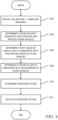
- FIG. 4 one example of using different and multiple comparisons to determine a confidence score is described. As with the example of FIG. 3 , it will be appreciated that this approach is only one example and that other examples are possible.
- the approach may be, in one example, implemented as computer instructions executed on a processing device (e.g., control circuit 104 as described in FIG. 1 ).
- the V2X-compliant messages and the SPAT-compliant messages are received at a vehicle (e.g., the vehicle 106 as described in FIG. 1 ). After receipt, the message contents are extracted. The color of the traffic light, duration of the color, and the next color are extracted from the SPAT-compliant message. The position, speed, and acceleration are extracted from the each V2X-compliant message for each of the other vehicles.
- step 404 it is determined if the color of the traffic light is consistent with the position and speed of the other vehicles.
- V2X-compliant messages are received from 10 vehicles and all are in the vicinity (e.g., within 100 feet) of the traffic light, and the speeds of 9 out of 10 are 0 mph and one is 5 mph.
- the SPAT-compliant message is received and indicates the traffic light is red. Consequently, the color of the traffic light (red) is consistent with 90% of the vehicles (showing the vehicles are completely stopped).
- step 406 it is determined if the next color of the traffic light is consistent with the position and speed of the other vehicles.
- V2X-compliant messages are received from 10 vehicles and all are in the vicinity (e.g., with 100 feet) of the traffic light, and the speeds of 9 out of 10 are 0 mph and one is 5 mph.
- the SPAT-compliant message is received and indicates the next traffic light color is green. Consequently, the next color of the traffic light (green) is consistent with 90% of the vehicles (showing the vehicles are stopped).
- step 408 it is determined if the color of the traffic light is consistent with the acceleration (or deceleration) of the other vehicles.
- V2X-compliant messages are received from 10 vehicles, and the accelerations of 9 out of 10 are 0 and that one vehicle indicates a small deceleration.
- the SPAT-compliant message is received and indicates the traffic light color is red. Consequently, the color of the traffic light (red) is consistent with 100% of the vehicles (showing that 9 out of 10 vehicles are stopped because of the red light or are in the process of stopping, i.e., decelerating, in reaction to the red light).
- the results of steps 402, 404, and 406 are analyzed and a confidence score or measure determined. Different weights can be assigned to the results of each step (e.g., step 402 may have a higher weight than the other steps). In other examples, if all steps 402, 404, and 406 show consistent results (e.g., the traffic light is red and the other vehicles are stopped or stopping), then a high confidence score is assigned. If two out of three steps 402, 404, and 406 show consistent results (e.g., the traffic light is red and some of the other vehicles are stopped or stopping), then a medium confidence score is assigned.
- an action can be instigated or taken based on the confidence score being above (or at) a threshold), e.g., sending control signal to a vehicle system or component to actuate or deactivate the component.
- any of the devices described herein may use a computing device to implement various functionality and operation of these devices.
- a computing device can include but is not limited to a processor, a memory, and one or more input and/or output (I/O) device interface(s) that are communicatively coupled via a local interface.
- the local interface can include, for example but not limited to, one or more buses and/or other wired or wireless connections.
- the processor may be a hardware device for executing software, particularly software stored in memory.
- the processor can be a custom made or commercially available processor, a central processing unit (CPU), an auxiliary processor among several processors associated with the computing device, a semiconductor based microprocessor (in the form of a microchip or chip set) or generally any device for executing software instructions.
- CPU central processing unit
- auxiliary processor among several processors associated with the computing device
- semiconductor based microprocessor in the form of a microchip or chip set
- the memory devices described herein can include any one or combination of volatile memory elements (e.g., random access memory (RAM), such as dynamic RAM (DRAM), static RAM (SRAM), synchronous dynamic RAM (SDRAM), video RAM (VRAM), and so forth)) and/or nonvolatile memory elements (e.g., read only memory (ROM), hard drive, tape, CD-ROM, and so forth).
- volatile memory elements e.g., random access memory (RAM), such as dynamic RAM (DRAM), static RAM (SRAM), synchronous dynamic RAM (SDRAM), video RAM (VRAM), and so forth
- nonvolatile memory elements e.g., read only memory (ROM), hard drive, tape, CD-ROM, and so forth
- ROM read only memory
- the memory can also have a distributed architecture, where various components are situated remotely from one another, but can be accessed by the processor.
- the software in any of the memory devices described herein may include one or more separate programs, each of which includes an ordered listing of executable instructions for implementing the functions described herein.
- the program When constructed as a source program, the program is translated via a compiler, assembler, interpreter, or the like, which may or may not be included within the memory.
- any of the approaches described herein can be implemented at least in part as computer instructions stored on a computer media (e.g., a computer memory as described above) and these instructions can be executed on a processing device such as a microprocessor.
- a processing device such as a microprocessor.
- these approaches can be implemented as any combination of electronic hardware and/or software.
Landscapes
- Engineering & Computer Science (AREA)
- Physics & Mathematics (AREA)
- General Physics & Mathematics (AREA)
- Life Sciences & Earth Sciences (AREA)
- Atmospheric Sciences (AREA)
- Automation & Control Theory (AREA)
- Transportation (AREA)
- Mechanical Engineering (AREA)
- Remote Sensing (AREA)
- Aviation & Aerospace Engineering (AREA)
- Radar, Positioning & Navigation (AREA)
- Computer Networks & Wireless Communication (AREA)
- Human Computer Interaction (AREA)
- Signal Processing (AREA)
- Chemical & Material Sciences (AREA)
- Combustion & Propulsion (AREA)
- Theoretical Computer Science (AREA)
- Multimedia (AREA)
- Traffic Control Systems (AREA)
Description
- This patent relates to the determination of the confidence in SPAT-compliant messages received from a traffic lights or other traffic control devices.
- Traffic lights (and potentially other types of traffic control devices) sometimes send signal phase and time (SPAT) messages. Among other things, SPAT messages include the color of the light, how long the color will be displayed, and the next color that will be displayed. A vehicle in the vicinity of the light receives the messages as sent. Various actions are performed at the vehicle (including controlling components of the vehicle) based upon the SPAT messages.
-
US 2018/0257615 A1 refers to an auto braking system for vehicles. And in the SRC a radio is configured to transmit/receive messages to/from surrounding remote vehicles and infrastructures such as traffic lights. A SPaT message contains the current status of a traffic light. In a verifying process, the current status of a traffic light captured by a camera is compared with the traffic light information of the SPaT message. The color of the traffic light obtained from the SPaT message is compared with the color of the traffic light obtained from the image. If the colors do not match, the content of the SPAT message is not verified, and the process terminates. When the message is verified, and automatic emergency braking is executed by a braking device. - XP031079614 "Enhancing the Security of Local Danger Warnings in VANETs - A Simulative Analysis of Voting Schemes" relates to enhancing the security of warnings in VANETs. Plausibility checks are suggested, and for basic decision methods are presented. The first method is considering only the most recent message. The second method comprises a voting overall receive messages. The third method combines the first and second method, that means a voting is performed, only considering the recent X distinct messages. The fourth method extends the third method with a threshold check.
- XP055894307 "Attacker model for Connected and Automated Vehicles" proposes an attacker model which details attacks occurring in Ground Truth environment and data fusion processes. A security model with the perspective of achieving a secured automotive perception is defined.
- XP007909582 "Security Concepts for Robust and Highly Mobile Ad-hoc Networks" relates to security concepts for mobile ad hoc networks. Plausibility checks are applied to receive messages. First, internal sensors will be checked for consistency and plausibility. Second, incoming messages will be checked for plausibility. E.g., input data such as temperature vary only few over time, if there is a huge change in temperature, the plausibility of this data is low. Also, actual positioning information can be compared to location traces. Another example is if a message about an AC Road section is received, this information could be compared to a temperature curve, the time of the year and positional information with regard to an altitude change or a tunnel.
- However, sometimes the sender of the messages may include incorrect information or the information may be unreliable in other respects. The inclusion of incorrect information may be intentional or unintentional. When the information is incorrect or otherwise unreliable, the actions performed by the vehicle may not optimal. When the information has been intentionally changed and in some situations, the results may be dangerous.
- The object of the present invention is to provide an improved confidence measure. This object is solved by the subject matter of the independent claims, preferred embodiments are defined in the dependent claims.
- For a more complete understanding of the disclosure, reference should be made to the following detailed description and accompanying drawings wherein:
-
FIG. 1 comprises a diagram of a system according to various embodiments of the present invention; -
FIG. 2 comprises a flowchart of an approach according to various embodiments of the present invention; -
FIG. 3 comprises diagram illustrating aspects of the operation of the approaches described herein according to various embodiments of the present invention; -
FIG. 4 comprises diagram illustrating aspects of the operation of the approaches described herein according to various embodiments of the present invention. - Skilled artisans will appreciate that elements in the figures are illustrated for simplicity and clarity. It will further be appreciated that certain actions and/or steps may be described or depicted in a particular order of occurrence while those skilled in the art will understand that such specificity with respect to sequence is not actually required. It will also be understood that the terms and expressions used herein have the ordinary meaning as is accorded to such terms and expressions with respect to their corresponding respective areas of inquiry and study except where specific meanings have otherwise been set forth herein.
- The approaches described herein determine a confidence score (or measure) that is related to the reliability of signal phase and time (SPAT)-compliant messages received at a vehicle or other V2X communication participant. Vehicle-to-everything (V2X)-compliant messages are received from other vehicles and compared to the SPAT-compliant messages. For example, behavior of vehicles (as indicated in the V2X-compliant messages) in view of the content of the SPAT-compliant messages is evaluated for consistency and a numeric (or other type of) score or measure assigned to the SPAT-compliant message (indicating reliability of the SPAT message). The score is compared to a threshold and based upon the comparison, a determination can be made as to whether to use the SPAT-compliant message to perform an action (e.g., control a component of the vehicle).
- Advantageously and in aspects, the present approaches rely only upon a comparison of electronically transmitted information (from, for example, a traffic lights and other vehicles) and not upon an evaluation of visual images of the traffic light. Effectively, a correlation between this information (the V2X and SPAT-compliant messages) is performed and a score reflecting the degree or extent of correlation is determined. Based upon the score, various actions can be taken (or not taken). The approaches are quick to perform and reliable. Unneeded processing and overhead (e.g., image processing of images of traffic lights) is not required.
- As used herein, SPAT-compliant and V2X-compliant messages refer to messages or other communications that follow any version of the SPAT and V2X protocols.
- However, these terms also cover messages that are effectively compliant with these protocols even if the protocol is not completely followed. That is, minor or insubstantial changes to standard SPAT and V2X protocol messages (e.g., rearrangement of information, dropping of some information from the messages) are also covered in the approaches that are described herein.
- In many of these embodiments, at a vehicle, a signal phase and time (SPAT)-compliant message is received from a traffic light (or other traffic control device), and the SPAT-compliant message indicates operational information concerning the traffic light. V2X-compliant messages are also received from a plurality of vehicles in the immediate vicinity of the traffic light.
- Contents of the SPAT-compliant message are compared to contents of the V2X-compliant messages. Based upon the comparing, a confidence level, score, or other measure indicating whether the contents of the SPAT-compliant message are reliable, correct, and/or accurate is determined.
- The confidence level is compared to a predetermined threshold. When the confidence level is below the predetermined threshold, a first action is prevented (or blocked) from being taken at the vehicle. When the confidence level is above the predetermined threshold, a second action at the vehicle is performed. The first action controls the operation of first components of the vehicle and the second action controls second components of the vehicle. The first action and the second action may be the same or different.
- In aspects, the operational information of the SPAT-compliant message comprises a current color of the traffic light, how long the traffic light will present the current color, and a next color of the traffic light. Other examples are possible.
- In other aspects, the first action and second action control braking components of the vehicle, control engine components of the vehicle, control steering components of the vehicle, or send instructions via a communication network. Other examples of actions are possible.
- In examples, comparing the contents of the SPAT-compliant message to the contents of the V2X-compliant messages comprises determining whether one or more of movement, speed, acceleration, or location of the plurality of vehicles is consistent with contents of the SPAT-compliant message. In still other examples, comparing the contents of the SPAT message to the contents of the V2X-compliant messages comprises evaluating one or more of the movement of the plurality of vehicles, the acceleration of the plurality of vehicles, the position of the plurality of vehicles, or the speed of the plurality of vehicles.
- In other examples, the vehicle is an automated vehicle or a semi-automated vehicle. Other examples of vehicles are possible.
- In others of these embodiments, a system is disposed at a vehicle and includes a receiver and a control circuit.
- The receiver is configured to receive a signal phase and time (SPAT)-compliant message from a traffic light. The SPAT-compliant message indicates operational information concerning the traffic light. The receiver is also configured to receive V2X-compliant messages from a plurality of vehicles in the immediate vicinity of the traffic light.
- The control circuit is configured to compare contents of the SPAT-compliant message to contents of the V2X-compliant messages, and based upon the comparing determine a confidence level that the contents of the SPAT-compliant message are reliable, correct, and/or accurate. The control circuit is configured to compare the confidence level to a predetermined threshold. The control circuit is configured to, when the confidence level is below the predetermined threshold, prevent a first action from being taken at the vehicle. The control circuit is configured to, when the confidence level is above the predetermined threshold, perform a second action at the vehicle. The first action controls the operation of first components of the vehicle and the second action controls second components of the vehicle. The first and second actions may be the same or different.
- In still other examples, a computer readable non-transitory medium has a computer readable program code embodied therein, the computer readable program code adapted to be executed to implement a method. The method is performed at a vehicle and includes: receiving a signal phase and time (SPAT)-compliant message from a traffic light, wherein the SPAT-compliant message indicates operational information concerning the traffic light; receiving V2X-compliant messages from a plurality of vehicles in the immediate vicinity of the traffic light; comparing contents of the SPAT-compliant message to contents of the V2X-compliant messages, and based upon the comparing determining a confidence level that the contents of the SPAT-compliant message are reliable, correct and/or accurate; and comparing the confidence level to a predetermined threshold.
- The method further includes when the confidence level is below the predetermined threshold, preventing a first action from being taken at the vehicle; and when the confidence level is above the predetermined threshold, performing a second action at the vehicle. The first action controls the operation of first components of the vehicle and the second action controls second components of the vehicle. The first and second actions may be the same different.
- Referring now to
FIG. 1 , asystem 100 includes areceiver 102 and acontrol circuit 104. Thereceiver 102 and thecontrol circuit 104 are disposed in avehicle 106.Other vehicles 108 transmit V2X-compliant messages 110 that are received at thereceiver 102. Thecontrol circuit 104 couples to thereceiver 102. Thecontrol circuit 104 also couples tovehicle modules 112, which as explained elsewhere herein, may in aspects control aspects of operation of thevehicle 106. A traffic control device (e.g., a traffic light) 114 transmits SPAT-compliant messages 116 that are received at thereceiver 102. Thevehicle 106 andother vehicles 108 operate and maneuver overroads intersection 124. Thetraffic control device 114 is deployed at theintersection 124 in any appropriate structure (e.g., by poles, wires, brackets, to mention a few examples). - The
receiver 102 is any type of receiving device that is configured to receive any type of electronic transmission or communication. That is, thereceiver 102 is configured to receive transmitted communications in different frequencies, power levels, and having various other parameters. More specifically, thereceiver 102 is configured to receive V2X-compliant messages 110 from a plurality ofvehicles 108 in the immediate vicinity of the traffic control device (e.g., traffic light) 114. The V2X-compliant messages 110 describe operational, locational, and/or positional information (e.g., position, direction, speed, and acceleration) concerning thevehicles 108. Thereceiver 102 is also configured to receive a signal phase and time (SPAT)-compliant message 116 from a traffic light. The SPAT-compliant message indicates operational information concerning thetraffic light 114. Thereceiver 102 receives these messages, and may convert the messages from one format to another or may provide other processing of the received messages. Thereceiver 102 comprises any combination of electronic/hardware or computer software to implement these functions. - In other examples, the
receiver 102 is a transmitter as well as a receiver and is configured to transmit messages from thevehicle 106. In still other examples, a separate transmitter is used to transmit messages and other communications from thevehicle 106. Transmitted messages may indicate the status of the vehicle and may also include V2X messages formed by thecontrol circuit 104 and sent to theother vehicles 108. - The
vehicle 106 is any type of vehicle. For example, thevehicle 106 may be a fully automated vehicle (e.g., all driving functions are performed automatically), a partially automated vehicle (e.g., some driving functions are performed automatically), or a manually controlled vehicle (e.g., no driving functions are performed automatically). Thevehicle 106 may be a passenger car, a truck, a ship, an aerial drone, an aircraft, or some other type of ground vehicle. Other examples of vehicles are possible. Driving functions include all functionality that controls any function of the vehicle or accessories of the vehicle (e.g., steering, braking, starting, deactivation, etc). - Similarly, the
vehicles 108 are also any type of vehicle. For example, thevehicles 108 may be fully automated vehicles (e.g., all driving functions are performed automatically), partially automated vehicles (e.g., some driving functions are performed automatically), or manually controlled vehicles (e.g., no driving functions are performed automatically). Thevehicles 108 may be passenger cars, trucks, ships, drones, aircraft, or some other type of ground vehicle. Other examples of vehicles are possible. Thevehicles 108 may be a mixture of different types vehicles (e.g., some automated, some not automated, some cars, some trucks, etc.). - The V2X-
compliant messages 110 includes messages that follow or are compliant with various V2X protocols. For example, the messages may include the position, direction of travel, speed, acceleration, or other information concerning positional, directional, or operational information concerning thevehicles 108. Themessages 110 may also include identification information concerning thevehicles 108. - The SPAT-
compliant message 116 follows the SPAT protocol or is compliant with the SPAT protocol. For example, the messages may include the SPAT-compliant message includes information concerning a current color of the traffic light, how long the traffic light will present the current color, and a next color of the traffic light. Other examples are possible. - The vehicle modules (or systems or subsystems) 112 control aspects of vehicle operation, communicate with other systems, or otherwise relate to the operation of the
vehicle 106. For example, thevehicle modules 112 may control braking components of thevehicle 106, control engine components of thevehicle 106, control steering components of thevehicle 106, or send instructions via a communication network that is disposed within or outside the vehicle 106 (e.g., where this communication network communicates with other vehicle components or systems). Other examples are possible. In these regards, thecontrol circuit 104 may send electronic control signals to these components, and the components are controlled, operated, and/or configured according to these control signals. For instance, a brake control signal may be sent to actuate the brakes of thevehicle 106. A lighting control signal may be sent to the headlamps of thevehicle 106. An engine control signal may be sent to the engine and this signal controls the speed of the engine. A steering control signals causes the steering system of the vehicle to maneuver thevehicle 106 to different locations and according to various paths. Other examples are possible. It will be appreciated that these actions may cause thevehicle 106 to physically change actions, change states of operation, and interact with the physical environment in which thevehicle 106 operates. - It will be appreciated that the vehicle modules (or systems or subsystems) 112 are collections of components and structures. For example, a braking control module may include the actual brake, mechanical connectors to the brake, wires, and a control circuit (or other processing device) that controls the operation of the brake. In other examples, a lighting control system for a head lamp may include the head lamp and wires to the head lamp (e.g., there may not be the need for a separate control circuit in this subsystem). As mentioned elsewhere herein, some or all of the
modules 112 may be coupled to thecontrol circuit 104 by an in-vehicle network, which may be wired or wireless (or combinations of wired and wireless). Other examples and combinations of components and structures are possible. - The
traffic control device 114 is any type of traffic control device such as a traffic light. Thetraffic control device 114 includes a transmitter that transmits the SPAT-compliant messages 116 to the vehicle 106 (and all other vehicles in the vicinity of thetraffic control device 114. Thetraffic control device 114 may include a control circuit (or other processing device) to assemble the SPAT messages (from operational information concerning thetraffic control device 114 such as color of the light). Thetraffic control device 114 may include lamps, lenses, lights, or other structures that display traffic control information to motorists (e.g., thetraffic control device 114 may be a standard traffic light). - It will be appreciated that as used herein the term "control circuit" refers broadly to any microcontroller, computer, or processor-based device with processor, memory, and programmable input/output peripherals, which is generally designed to govern the operation of other components and devices. It is further understood to include common accompanying accessory devices, including memory, transceivers for communication with other components and devices, etc. These architectural options are well known and understood in the art and require no further description here. The
control circuit 104 may be configured (for example, by using corresponding programming stored in a memory as will be well understood by those skilled in the art) to carry out one or more of the steps, actions, and/or functions described herein. Thecontrol circuit 104 may include a memory that includes computer instructions that implement any of the functions described herein. - The
control circuit 104 receives the SPAT-compliant message 116 and the V2X-compliant messages 110. Thecontrol circuit 110 processes and/or analyzes these messages according to approaches known to those skilled in the art to determine the informational content of the messages. Thecontrol circuit 104 is then configured to compare contents of the SPAT-compliant message 116 to contents of the V2X-compliant messages 110, and based upon the results of the comparing, determine a confidence level that the contents of the SPAT-compliant message are correct. The confidence level may be a number (e.g., integer or real number) or any other indicator of a confidence. As mentioned, the confidence level represents an estimation of certainty or confidence that the SPAT-compliant message is correct, reliable, or accurate. In aspects, this represents one or more of confidence that thetraffic control device 114 has included correct information in themessage 116 or that a nefarious actor has not corrupted, changed, highjacked, or mimicked themessage 116. - The
control circuit 104 is configured to compare the confidence level to a predetermined threshold. The predetermined threshold may be set by a user and may be estimated based upon previous historical information and evaluation of the information. For example, if the confidence level is on a scale of 0 to 10, a threshold of 9 may be used when it is determined that few traffic problems (e.g., accidents) would be likely to occur above that level, but a significant number of issues may occur below that level. - The
control circuit 104 is configured to, when the confidence level is below the predetermined threshold, prevent a first action from being taken at the vehicle. Preventing an action may involve sending instructions to a vehicle component to block the component (e.g., turn off or deactivate the component) or may involve not sending instructions at all (e.g., allowing the component to operate according to its current state or according to a current set of instructions). Other examples of blocking or preventing actions are possible. - The
control circuit 104 is configured to, when the confidence level is above the predetermined threshold, perform a second action at thevehicle 106. - As mentioned, the first action controls the operation of first components of the
vehicle 106 and the second action controls second components of thevehicle 106. The components may be the same or different. To take one example, the first action may be the activation of the brakes of thevehicle 106 and the second action may be the activation of brakes of thevehicle 106. In another example, the first action may be the activation of the brakes of thevehicle 106 and the second action may be the deactivation of brakes of thevehicle 106. In yet another example, the first action may be the activation of the brakes of thevehicle 106 and the second action may be the activation of the head lights of thevehicle 106. Other examples and combinations of actions are possible. - In yet other examples, the first action and second action control braking components of the
vehicle 106, control engine components of thevehicle 106, control steering components of thevehicle 106, or send instructions via a communication network. The communication network may be a controller area network (CAN) or ethernet to mention two examples. The network can be deployed in thevehicle 106 and the network may be coupled directly to other vehicle components. Other examples of networks and couplings are possible. - In examples, comparing the contents of the SPAT-
compliant message 116 to the contents of the V2X-compliant messages 110 by thecontrol circuit 104 comprises determining whether one or more of movement, speed, acceleration, or location of the plurality of thevehicles 108 is consistent with contents of the SPAT-compliant message 116. In still other examples, comparing the contents of the SPAT-compliant message 116 to the contents of the V2X-compliant messages 110 by thecontrol circuit 104 comprises evaluating one or more of the movement of the plurality ofvehicles 108, the acceleration of the plurality ofvehicles 108, the position of the plurality ofvehicles 108, or the speed of the plurality ofvehicles 108. - It will be appreciated that the
other vehicles 108 may include the same or similar structures (e.g.,control circuit 104,receiver 102, and vehicle modules 112) as thevehicle 106. Consequently, the operations as performed at thevehicles 108 may be the same as those described herein as occurring at thevehicle 106. In addition, thevehicle 106 may transmit V2X messages to theother vehicles 108. In another aspect, theintersection 124 could be a signalized crossing of a street with a (pedestrian) walkway and the plurality of vehicles could be a combination of vehicles and pedestrians or other traffic participants using the walkway. The intersection and walkway could also be combined. - Referring now to
FIG. 2 , one example of an approach for determining the confidence of SPAT-compliant messages is described. - At
step 202 and at a vehicle, a signal phase and time (SPAT)-compliant message is received from a traffic light (or other traffic control device). The SPAT-compliant message indicates operational information concerning the traffic light. In aspects, the operational information may include the current color of the light, the next color of the light, identification of the light, position of the light, and duration of the color of the light, e.g., how long the current color will be displayed. Other types of operational information may also be received. - At
step 204 and at the vehicle, V2X-compliant messages are received from a plurality of vehicles in the immediate vicinity of the traffic light. The V2X-compliant messages, in aspects, may include the position, speed, direction of travel, bearing, acceleration, identity, or other characteristics of the vehicle or traffic participants detected by the vehicle. Other examples are possible. Examples of V2X-compliant messages could be a Basic Safety Message (BSM), a Cooperative Awareness Message (CAM), a Decentralized Environmental Notification Message (DENM), and/or Cooperative Perception Message (CPM), to mention a few examples. - At
step 206 and at the vehicle, contents of the SPAT-compliant message are compared to contents of the V2X-compliant messages. The contents are first extracted and a comparison is made to determine if the informational contents of one are consistent with the informational content of another. To take one example, V2X-compliant messages from other vehicles may indicate that the positions of vehicles are in the vicinity of an intersection with a traffic light. Also, the V2X-compliant messages may indicate these vehicles are stopped. On the other hand, the SPAT-compliant messages may indicate that the light is red. Consequently, it can be determined that the SPAT-compliant messages and the V2X messages from the other vehicles are consistent with each other (i.e., stopped vehicles may indicate a red light) and that the SPAT-compliant message may be deemed as being reliable. - To take another example, V2X messages from other vehicles may indicate that the positions of vehicles are in the vicinity of an intersection with a traffic light. The V2X messages may indicate these vehicles are stopped. On the other hand, the SPAT-compliant messages may indicate that the light is green and has been green for a long time, e.g., long enough for traffic to move. Consequently, it can be determined that the SPAT-compliant messages and the V2X messages from the other vehicles are not consistent and that the SPAT-message may be unreliable because stopped vehicles are not likely consistent with a long, green light.
- At
step 208 and at the vehicle, based upon the comparing, a confidence level, score, or measure that the contents of the SPAT-compliant message are reliable, correct, or accurate is determined. When a high confidence is determined, a high score (e.g., 9 out of 10) may be assigned while when a low level of confidence is determined a low score (e.g., 2 out of 10) may be assigned. It will be appreciated that multiple factors may be used to determine the score. For example, consistency between the color and the speed of a vehicle may be used. In other examples, consistency between a plurality of vehicles and a traffic light transmitted SPAT-compliant system is determined. In still another example, the number of consistent V2X messages is examined. For example, when the traffic light indicates red and 24 out of 25 vehicles in the vicinity indicate that they are stopped, and the other vehicle is moving, it can still be determined that the SPAT-compliant message is reliable and a high confidence score assigned. - It will be appreciated that the comparing may involve comparing between different aspects of the SPAT-compliant message and different aspects of the V2X-compliant messages. In aspects, this may involve assembling a weighted average of the outcomes of various comparisons into a confidence score.
- At
step 210, the confidence level is compared to a predetermined threshold. - At
step 212 and when the confidence level is below the predetermined threshold, a first action is prevented (or blocked) from being taken at the vehicle. Blocking may involve not taking any action, but also might involve sending messages or control signals to components that prevent a component from taking some action. - At
step 214, and when the confidence level is above the predetermined threshold, a second action at the vehicle is performed. - In aspects, the first action controls the operation of first components of the vehicle and the second action controls second components of the vehicle. The first action and the second action may be the same or different.
- Referring now to
FIG. 3 , one example of an approach for comparing SPAT-compliant messages and V2X-compliant messages to determine a confidence level is described. It will be appreciated that this approach is only one example and that other examples are possible. The approach may be, in one example, implemented as computer instructions executed on a processing device (e.g.,control circuit 104 as described inFIG. 1 ). - At
step 302, the V2X-compliant messages and the SPAT-compliant messages are received at a vehicle (e.g., thevehicle 106 as described inFIG. 1 ). After receipt, the message contents are extracted. The color of the traffic light, duration of the color, and the next color are extracted from the SPAT-compliant message. The position, speed, and acceleration are extracted from each V2X-compliant message from each of the other vehicles. - At
step 304, it is determined if the color of the traffic light is consistent with the position and speed of 80% of the other vehicles. To take one example, V2X-compliant messages are received from 10 vehicles, and the speeds of 9 out of 10 are 0 mph and one is 5 mph. The SPAT-compliant message is received and indicates the traffic light is red. Consequently, the color of the traffic light (red) is consistent with 90% of the vehicles (showing the vehicles are stopped). - If the answer at
step 304 is affirmative, then a high confidence score (e.g., 9) is assigned atstep 306. - If the answer is negative, then at step 308 a determination is made if the color of the traffic light is consistent with the position and speed of 50% of the other vehicles. If the answer is affirmative at
step 308, then a medium confidence score (e.g., 6) is assigned atstep 310. - If the answer is negative at
step 308, atstep 312, then a low confidence score (e.g., 2) is assigned. - At
step 314, an action can be instigated based on the confidence score being above (or at) a threshold), e.g., sending control signal to a vehicle system or component to actuate or deactivate the component. - Referring now to
FIG. 4 , one example of using different and multiple comparisons to determine a confidence score is described. As with the example ofFIG. 3 , it will be appreciated that this approach is only one example and that other examples are possible. The approach may be, in one example, implemented as computer instructions executed on a processing device (e.g.,control circuit 104 as described inFIG. 1 ). - At
step 402, the V2X-compliant messages and the SPAT-compliant messages are received at a vehicle (e.g., thevehicle 106 as described inFIG. 1 ). After receipt, the message contents are extracted. The color of the traffic light, duration of the color, and the next color are extracted from the SPAT-compliant message. The position, speed, and acceleration are extracted from the each V2X-compliant message for each of the other vehicles. - At
step 404, it is determined if the color of the traffic light is consistent with the position and speed of the other vehicles. To take one example, V2X-compliant messages are received from 10 vehicles and all are in the vicinity (e.g., within 100 feet) of the traffic light, and the speeds of 9 out of 10 are 0 mph and one is 5 mph. The SPAT-compliant message is received and indicates the traffic light is red. Consequently, the color of the traffic light (red) is consistent with 90% of the vehicles (showing the vehicles are completely stopped). - At
step 406, it is determined if the next color of the traffic light is consistent with the position and speed of the other vehicles. To take one example, V2X-compliant messages are received from 10 vehicles and all are in the vicinity (e.g., with 100 feet) of the traffic light, and the speeds of 9 out of 10 are 0 mph and one is 5 mph. The SPAT-compliant message is received and indicates the next traffic light color is green. Consequently, the next color of the traffic light (green) is consistent with 90% of the vehicles (showing the vehicles are stopped). - At
step 408, it is determined if the color of the traffic light is consistent with the acceleration (or deceleration) of the other vehicles. To take one example, V2X-compliant messages are received from 10 vehicles, and the accelerations of 9 out of 10 are 0 and that one vehicle indicates a small deceleration. The SPAT-compliant message is received and indicates the traffic light color is red. Consequently, the color of the traffic light (red) is consistent with 100% of the vehicles (showing that 9 out of 10 vehicles are stopped because of the red light or are in the process of stopping, i.e., decelerating, in reaction to the red light). - At
step 410, the results ofsteps steps steps steps step 402 is assigned a weight of .85, and step 404 a weight of .1, and step 402 a weight of .05, and steps 402 and 404 show consistent results whilestep 406 does not, then the confidence score may be calculated as: .85 + .1 + 0 = .95. - At
step 412, an action can be instigated or taken based on the confidence score being above (or at) a threshold), e.g., sending control signal to a vehicle system or component to actuate or deactivate the component. - It should be understood that any of the devices described herein (e.g., the control circuits, the controllers, the receivers, the transmitters, the sensors, any presentation or display devices, or the external devices) may use a computing device to implement various functionality and operation of these devices. In terms of hardware architecture, such a computing device can include but is not limited to a processor, a memory, and one or more input and/or output (I/O) device interface(s) that are communicatively coupled via a local interface. The local interface can include, for example but not limited to, one or more buses and/or other wired or wireless connections. The processor may be a hardware device for executing software, particularly software stored in memory. The processor can be a custom made or commercially available processor, a central processing unit (CPU), an auxiliary processor among several processors associated with the computing device, a semiconductor based microprocessor (in the form of a microchip or chip set) or generally any device for executing software instructions.
- The memory devices described herein can include any one or combination of volatile memory elements (e.g., random access memory (RAM), such as dynamic RAM (DRAM), static RAM (SRAM), synchronous dynamic RAM (SDRAM), video RAM (VRAM), and so forth)) and/or nonvolatile memory elements (e.g., read only memory (ROM), hard drive, tape, CD-ROM, and so forth). Moreover, the memory may incorporate electronic, magnetic, optical, and/or other types of storage media. The memory can also have a distributed architecture, where various components are situated remotely from one another, but can be accessed by the processor.
- The software in any of the memory devices described herein may include one or more separate programs, each of which includes an ordered listing of executable instructions for implementing the functions described herein. When constructed as a source program, the program is translated via a compiler, assembler, interpreter, or the like, which may or may not be included within the memory.
- It will be appreciated that any of the approaches described herein can be implemented at least in part as computer instructions stored on a computer media (e.g., a computer memory as described above) and these instructions can be executed on a processing device such as a microprocessor. However, these approaches can be implemented as any combination of electronic hardware and/or software.
- Those skilled in the art will recognize that a wide variety of other modifications, alterations, and combinations can also be made with respect to the above described embodiments.
Claims (15)
- A method, the method comprising:
at a vehicle:receiving (202) a signal phase and time, SPAT,-compliant message from a traffic light wherein the SPAT-compliant message indicates operational information concerning the traffic light;receiving (204) V2X-compliant messages from a plurality of vehicles in the immediate vicinity of the traffic light, wherein V2X-compliant messages are messages that follow or are compliant with V2X protocols;comparing (206) contents of the SPAT-compliant message to contents of the V2X-compliant messages, and based upon the comparing determining a confidence level that the contents of the SPAT-compliant message are correct;comparing (210) the confidence level to a predetermined threshold,when the confidence level is below the predetermined threshold, preventing a first action from being taken at the vehicle;when the confidence level is above the predetermined threshold, performing a second action at the vehicle;wherein the first action controls the operation of first components of the vehicle and the second action controls second components of the vehicle. - The method of claim 1, wherein the operational information of the SPAT-compliant message comprises a current color of the traffic light, how long the traffic light will present the current color, and a next color of the traffic light.
- The method of claim 1, wherein the first action and second action control braking components of the vehicle, control engine components of the vehicle, control steering components of the vehicle, or send instructions via a communication network.
- The method of claim 1, wherein comparing the contents of the SPAT-compliant message to the contents of the V2X-compliant messages comprises determining whether one or more of movement, speed, acceleration, or location of the plurality of vehicles is consistent with contents of the SPAT-compliant message and/or wherein the vehicle is an automated vehicle or a semi-automated vehicle.
- The method of claim 1, wherein comparing the contents of the SPAT message to the contents of the V2X-compliant messages comprises evaluating one or more of the movement of the plurality of vehicles, the acceleration of the plurality of vehicles, the position of the plurality of vehicles, or the speed of the plurality of vehicles.
- A system, the system being disposed at a vehicle, the system comprising:a receiver (102), the receiver configured to receive a signal phase and time, SPAT,- compliant message (116) from a traffic light (114), wherein the SPAT-compliant message indicates operational information concerning the traffic light, the receiver also configured to receiving V2X-compliant messages (110) from a plurality of vehicles (108) in the immediate vicinity of the traffic light, wherein V2X-compliant messages are messages that follow or are compliant with V2X protocols;a control cicuit (104), the control circuit configured to:compare contents of the SPAT-compliant message to contents of the V2X-compliant messages, and based upon the comparing determining a confidence level that the contents of the SPAT-compliant message are correct;compare the confidence level to a predetermined threshold,when the confidence level is below the predetermined threshold, prevent a first action from being taken at the vehicle;when the confidence level is above the predetermined threshold, perform a second action at the vehicle;wherein the first action controls the operation of first components of the vehicle and the second action controls second components of the vehicle.
- The system of claim 6, wherein the operational information of the SPAT-compliant message comprises a current color of the traffic light, how long the traffic light will present the current color, and a next color of the traffic light.
- The system of claim 6, wherein the first action and second action control braking components of the vehicle, control engine components of the vehicle, control steering components of the vehicle, or send instructions via a communication network.
- The system of claim 6, wherein comparing the contents of the SPAT-compliant message to the contents of the V2X-compliant messages comprises determining whether one or more of movement, speed, acceleration, or location of the plurality of vehicles is consistent with contents of the SPAT-compliant message and/or wherein the vehicle is an automated vehicle or a semi-automated vehicle.
- The system of claim 6, wherein comparing the contents of the SPAT message to the contents of the V2X-compliant messages comprises evaluating one or more of the movement of the plurality of vehicles, the acceleration of the plurality of vehicles, the position of the plurality of vehicles, or the speed of the plurality of vehicles.
- A computer readable non-transitory medium having a computer readable program code embodied therein, the computer readable program code adapted to be executed to implement a method, the method comprising:
at a vehicle:receiving a signal phase and time, SPAT,-compliant message from a traffic light, wherein the SPAT-compliant message indicates operational information concerning the traffic light;receiving V2X-compliant messages from a plurality of vehicles in the immediate vicinity of the traffic light, wherein V2X-compliant messages are messages that follow or are compliant with V2X protocols;comparing contents of the SPAT-compliant message to contents of the V2X-compliant messages, and based upon the comparing determining a confidence level that the contents of the SPAT-compliant message are correct;comparing the confidence level to a predetermined threshold,when the confidence level is below the predetermined threshold, preventing a first action from being taken at the vehicle;when the confidence level is above the predetermined threshold, performing a second action at the vehicle,wherein the first action controls the operation of first components of the vehicle and the second action controls second components of the vehicle. - The computer readable medium of claim 11, wherein the operational information of the SPAT-compliant message comprises a current color of the traffic light, how long the traffic light will present the current color, and a next color of the traffic light.
- The computer readable medium of claim 11, wherein the first action and second action control braking components of the vehicle, control engine components of the vehicle, control steering components of the vehicle, or send instructions via a communication network.
- The computer readable medium of claim 11, wherein the comparing the contents of the SPAT-compliant message to the contents of the V2X-compliant messages comprises determining whether one or more of movement, speed, acceleration, or location of the plurality of vehicles is consistent with contents of the SPAT-compliant message and/or wherein the vehicle is an automated vehicle or a semi-automated vehicle.
- The computer readable medium of claim 11, wherein the comparing the contents of the SPAT message to the contents of the V2X-compliant messages comprises evaluating one or more of the movement of the plurality of vehicles, the acceleration of the plurality of vehicles, the position of the plurality of vehicles, or the speed of the plurality of vehicles.
Applications Claiming Priority (2)
| Application Number | Priority Date | Filing Date | Title |
|---|---|---|---|
| US17/146,653 US12060077B2 (en) | 2021-01-12 | 2021-01-12 | Apparatus and method for confidence evaluation for messages received from traffic control devices |
| PCT/US2021/061329 WO2022154885A1 (en) | 2021-01-12 | 2021-12-01 | Apparatus and method for confidence evaluation for messages received from traffic control devices |
Publications (2)
| Publication Number | Publication Date |
|---|---|
| EP4278342A1 EP4278342A1 (en) | 2023-11-22 |
| EP4278342B1 true EP4278342B1 (en) | 2025-04-09 |
Family
ID=79170793
Family Applications (1)
| Application Number | Title | Priority Date | Filing Date |
|---|---|---|---|
| EP21835484.3A Active EP4278342B1 (en) | 2021-01-12 | 2021-12-01 | Apparatus and method for confidence evaluation for messages received from traffic control devices |
Country Status (4)
| Country | Link |
|---|---|
| US (1) | US12060077B2 (en) |
| EP (1) | EP4278342B1 (en) |
| CN (1) | CN116686024A (en) |
| WO (1) | WO2022154885A1 (en) |
Families Citing this family (3)
| Publication number | Priority date | Publication date | Assignee | Title |
|---|---|---|---|---|
| US11877217B2 (en) * | 2021-02-01 | 2024-01-16 | Toyota Motor Engineering & Manufacturing North America, Inc. | Message processing for wireless messages based on value of information |
| DE102023203276A1 (en) | 2023-04-11 | 2024-10-17 | Robert Bosch Gesellschaft mit beschränkter Haftung | Method and system for supporting at least partially automated driving in the area of traffic light-supported road sections |
| DE102024203107A1 (en) | 2024-04-04 | 2025-10-09 | Robert Bosch Gesellschaft mit beschränkter Haftung | Method for operating an electronic traffic signaling device and for operating a motor vehicle |
Family Cites Families (26)
| Publication number | Priority date | Publication date | Assignee | Title |
|---|---|---|---|---|
| EP2578996B1 (en) | 2008-02-15 | 2018-10-17 | Continental Teves AG & Co. OHG | Vehicle system for navigating and/or driver assistance |
| US9881220B2 (en) | 2013-10-25 | 2018-01-30 | Magna Electronics Inc. | Vehicle vision system utilizing communication system |
| EP3144918B1 (en) * | 2015-09-21 | 2018-01-10 | Urban Software Institute GmbH | Computer system and method for monitoring a traffic system |
| DE102016205141A1 (en) * | 2015-11-04 | 2017-05-04 | Volkswagen Aktiengesellschaft | A method and vehicle communication system for determining a driving intention for a vehicle |
| US10503168B1 (en) | 2016-01-22 | 2019-12-10 | State Farm Mutual Automotive Insurance Company | Autonomous vehicle retrieval |
| WO2017173072A1 (en) * | 2016-03-30 | 2017-10-05 | Interdigital Patent Holdings, Inc. | Method and wireless unit for v2x communication |
| EP3267418A1 (en) * | 2016-07-06 | 2018-01-10 | Volvo Car Corporation | A method for performing a real time analysis of traffic light related data |
| EP3293927B1 (en) * | 2016-09-09 | 2020-10-21 | Nokia Solutions and Networks Oy | Efficient and dynamic support of mobile low latency services |
| US10300894B2 (en) * | 2017-03-13 | 2019-05-28 | Denso International America, Inc. | Auto-braking system for vehicle and method for auto-braking vehicle |
| WO2018182591A1 (en) * | 2017-03-29 | 2018-10-04 | Intel IP Corporation | Message splitting for multi-rat transmission |
| US10157539B1 (en) * | 2017-11-01 | 2018-12-18 | Qualcomm Incorporated | Techniques and apparatuses for prioritizing vehicle-to-everything (V2X) communication messages based on threat level estimation |
| US10458810B2 (en) | 2017-12-21 | 2019-10-29 | GM Global Technology Operations LLC | Traffic light state assessment |
| DE102018204500A1 (en) | 2018-03-23 | 2019-09-26 | Continental Automotive Gmbh | System for generating confidence values in the backend |
| AU2019202088A1 (en) * | 2018-03-26 | 2019-10-10 | Cohda Wireless Pty Ltd | Systems and methods for automatically training neural networks |
| US11043122B2 (en) * | 2018-10-19 | 2021-06-22 | Toyota Jidosha Kabushiki Kaisha | Digital behavioral twin system for intersection management in connected environments |
| KR20190098094A (en) * | 2019-07-31 | 2019-08-21 | 엘지전자 주식회사 | Method and apparatus for determining the validity of a message received by a vehicle in autonomous driving system |
| US11796654B2 (en) * | 2019-09-04 | 2023-10-24 | Qualcomm Incorporated | Distributed sensor calibration and sensor sharing using cellular vehicle-to-everything (CV2X) communication |
| US11328586B2 (en) * | 2019-10-15 | 2022-05-10 | Autotalks Ltd. | V2X message processing for machine learning applications |
| US12118470B2 (en) * | 2019-10-29 | 2024-10-15 | Denso International America, Inc. | System for predicting aggressive driving |
| KR20210073638A (en) * | 2019-12-10 | 2021-06-21 | 엘지전자 주식회사 | Controlling platooning |
| US11595898B2 (en) * | 2020-01-16 | 2023-02-28 | Qualcomm Incorporated | Paging in vehicle to everything communications for power saving |
| US11375344B2 (en) * | 2020-08-05 | 2022-06-28 | Verizon Patent And Licensing Inc. | Vehicle to everything object exchange system |
| US11516620B2 (en) * | 2020-08-05 | 2022-11-29 | Verizon Patent And Licensing Inc. | Vehicle to everything dynamic geofence |
| KR102953118B1 (en) * | 2020-08-24 | 2026-04-14 | 현대자동차주식회사 | Method and Apparatus for Providing Traffic Information to Personal Mobility |
| US11753012B2 (en) * | 2020-09-30 | 2023-09-12 | Toyota Research Institute, Inc. | Systems and methods for controlling the operation of an autonomous vehicle using multiple traffic light detectors |
| CN111932918B (en) * | 2020-10-14 | 2020-12-18 | 之江实验室 | A traffic signal information fusion decision-making method for intelligent networked vehicles |
-
2021
- 2021-01-12 US US17/146,653 patent/US12060077B2/en active Active
- 2021-12-01 EP EP21835484.3A patent/EP4278342B1/en active Active
- 2021-12-01 CN CN202180090385.3A patent/CN116686024A/en active Pending
- 2021-12-01 WO PCT/US2021/061329 patent/WO2022154885A1/en not_active Ceased
Also Published As
| Publication number | Publication date |
|---|---|
| CN116686024A (en) | 2023-09-01 |
| EP4278342A1 (en) | 2023-11-22 |
| US20220219718A1 (en) | 2022-07-14 |
| WO2022154885A1 (en) | 2022-07-21 |
| US12060077B2 (en) | 2024-08-13 |
Similar Documents
| Publication | Publication Date | Title |
|---|---|---|
| US11295143B2 (en) | Information processing apparatus, information processing method, and program | |
| CN110392336B (en) | Method, system, and computer readable medium for providing collaborative awareness between connected vehicles | |
| EP4278342B1 (en) | Apparatus and method for confidence evaluation for messages received from traffic control devices | |
| CN112534487B (en) | Information processing equipment, mobile body, information processing method and program | |
| JP2020030806A (en) | Detection of drowsy driver on the basis of vehicle to everything (v2x) communication | |
| CN112238862B (en) | Open and safety monitoring system for autonomous driving platform | |
| EP3968305A1 (en) | Method, computer program and apparatus for controlling operation of a vehicle equipped with an automated driving function | |
| TW202332608A (en) | Awareness checker for enhancing collaborative driving supervision | |
| KR20220077125A (en) | Information processing apparatus, information processing system, and information processing method | |
| US20180292513A1 (en) | Modulated infrared lighting | |
| CN114248767A (en) | Method, computer program and device for providing hazard information | |
| US12298779B2 (en) | Apparatus and method for confidence evaluation for messages received from traffic control devices | |
| CN114973738A (en) | Special scene traffic identification perception prompting method and device based on V2X | |
| JP7768101B2 (en) | Message control device and message control method | |
| KR20190115435A (en) | Electronic device for vehicle and method for operating the same | |
| KR102574666B1 (en) | Automatic vehicle and method for operating the same | |
| CN111344763B (en) | Vehicle-to-outside information interaction (V2X) communication system | |
| US11417023B2 (en) | Image processing device, image processing method, and program | |
| JP6519829B1 (en) | Electronic control device, monitoring method, program, and gateway device | |
| KR102787706B1 (en) | Autonomous driving mode engagement | |
| US20230024325A1 (en) | Method and device for determining a position for an ego-vehicle and vehicle | |
| Lin et al. | Common driving notification protocol based on classified driving behavior for cooperation intelligent autonomous vehicle using vehicular ad-hoc network technology | |
| JP7422894B2 (en) | Server selection device and server selection system | |
| CN117636683A (en) | Method to support vehicle driving based on selective communication |
Legal Events
| Date | Code | Title | Description |
|---|---|---|---|
| STAA | Information on the status of an ep patent application or granted ep patent |
Free format text: STATUS: UNKNOWN |
|
| STAA | Information on the status of an ep patent application or granted ep patent |
Free format text: STATUS: THE INTERNATIONAL PUBLICATION HAS BEEN MADE |
|
| PUAI | Public reference made under article 153(3) epc to a published international application that has entered the european phase |
Free format text: ORIGINAL CODE: 0009012 |
|
| STAA | Information on the status of an ep patent application or granted ep patent |
Free format text: STATUS: REQUEST FOR EXAMINATION WAS MADE |
|
| 17P | Request for examination filed |
Effective date: 20230814 |
|
| AK | Designated contracting states |
Kind code of ref document: A1 Designated state(s): AL AT BE BG CH CY CZ DE DK EE ES FI FR GB GR HR HU IE IS IT LI LT LU LV MC MK MT NL NO PL PT RO RS SE SI SK SM TR |
|
| DAV | Request for validation of the european patent (deleted) | ||
| DAX | Request for extension of the european patent (deleted) | ||
| GRAP | Despatch of communication of intention to grant a patent |
Free format text: ORIGINAL CODE: EPIDOSNIGR1 |
|
| STAA | Information on the status of an ep patent application or granted ep patent |
Free format text: STATUS: GRANT OF PATENT IS INTENDED |
|
| INTG | Intention to grant announced |
Effective date: 20241202 |
|
| GRAS | Grant fee paid |
Free format text: ORIGINAL CODE: EPIDOSNIGR3 |
|
| GRAA | (expected) grant |
Free format text: ORIGINAL CODE: 0009210 |
|
| STAA | Information on the status of an ep patent application or granted ep patent |
Free format text: STATUS: THE PATENT HAS BEEN GRANTED |
|
| AK | Designated contracting states |
Kind code of ref document: B1 Designated state(s): AL AT BE BG CH CY CZ DE DK EE ES FI FR GB GR HR HU IE IS IT LI LT LU LV MC MK MT NL NO PL PT RO RS SE SI SK SM TR |
|
| REG | Reference to a national code |
Ref country code: GB Ref legal event code: FG4D |
|
| REG | Reference to a national code |
Ref country code: CH Ref legal event code: EP |
|
| REG | Reference to a national code |
Ref country code: DE Ref legal event code: R096 Ref document number: 602021029034 Country of ref document: DE |
|
| REG | Reference to a national code |
Ref country code: IE Ref legal event code: FG4D |
|
| REG | Reference to a national code |
Ref country code: NL Ref legal event code: MP Effective date: 20250409 |
|
| PG25 | Lapsed in a contracting state [announced via postgrant information from national office to epo] |
Ref country code: NL Free format text: LAPSE BECAUSE OF FAILURE TO SUBMIT A TRANSLATION OF THE DESCRIPTION OR TO PAY THE FEE WITHIN THE PRESCRIBED TIME-LIMIT Effective date: 20250409 |
|
| REG | Reference to a national code |
Ref country code: AT Ref legal event code: MK05 Ref document number: 1784264 Country of ref document: AT Kind code of ref document: T Effective date: 20250409 |
|
| PG25 | Lapsed in a contracting state [announced via postgrant information from national office to epo] |
Ref country code: FI Free format text: LAPSE BECAUSE OF FAILURE TO SUBMIT A TRANSLATION OF THE DESCRIPTION OR TO PAY THE FEE WITHIN THE PRESCRIBED TIME-LIMIT Effective date: 20250409 Ref country code: PT Free format text: LAPSE BECAUSE OF FAILURE TO SUBMIT A TRANSLATION OF THE DESCRIPTION OR TO PAY THE FEE WITHIN THE PRESCRIBED TIME-LIMIT Effective date: 20250811 Ref country code: ES Free format text: LAPSE BECAUSE OF FAILURE TO SUBMIT A TRANSLATION OF THE DESCRIPTION OR TO PAY THE FEE WITHIN THE PRESCRIBED TIME-LIMIT Effective date: 20250409 |
|
| REG | Reference to a national code |
Ref country code: LT Ref legal event code: MG9D |
|
| PG25 | Lapsed in a contracting state [announced via postgrant information from national office to epo] |
Ref country code: GR Free format text: LAPSE BECAUSE OF FAILURE TO SUBMIT A TRANSLATION OF THE DESCRIPTION OR TO PAY THE FEE WITHIN THE PRESCRIBED TIME-LIMIT Effective date: 20250710 Ref country code: NO Free format text: LAPSE BECAUSE OF FAILURE TO SUBMIT A TRANSLATION OF THE DESCRIPTION OR TO PAY THE FEE WITHIN THE PRESCRIBED TIME-LIMIT Effective date: 20250709 |
|
| PG25 | Lapsed in a contracting state [announced via postgrant information from national office to epo] |
Ref country code: PL Free format text: LAPSE BECAUSE OF FAILURE TO SUBMIT A TRANSLATION OF THE DESCRIPTION OR TO PAY THE FEE WITHIN THE PRESCRIBED TIME-LIMIT Effective date: 20250409 |
|
| PG25 | Lapsed in a contracting state [announced via postgrant information from national office to epo] |
Ref country code: BG Free format text: LAPSE BECAUSE OF FAILURE TO SUBMIT A TRANSLATION OF THE DESCRIPTION OR TO PAY THE FEE WITHIN THE PRESCRIBED TIME-LIMIT Effective date: 20250409 |
|
| PG25 | Lapsed in a contracting state [announced via postgrant information from national office to epo] |
Ref country code: HR Free format text: LAPSE BECAUSE OF FAILURE TO SUBMIT A TRANSLATION OF THE DESCRIPTION OR TO PAY THE FEE WITHIN THE PRESCRIBED TIME-LIMIT Effective date: 20250409 |
|
| PG25 | Lapsed in a contracting state [announced via postgrant information from national office to epo] |
Ref country code: AT Free format text: LAPSE BECAUSE OF FAILURE TO SUBMIT A TRANSLATION OF THE DESCRIPTION OR TO PAY THE FEE WITHIN THE PRESCRIBED TIME-LIMIT Effective date: 20250409 |
|
| PG25 | Lapsed in a contracting state [announced via postgrant information from national office to epo] |
Ref country code: RS Free format text: LAPSE BECAUSE OF FAILURE TO SUBMIT A TRANSLATION OF THE DESCRIPTION OR TO PAY THE FEE WITHIN THE PRESCRIBED TIME-LIMIT Effective date: 20250709 |
|
| PG25 | Lapsed in a contracting state [announced via postgrant information from national office to epo] |
Ref country code: IS Free format text: LAPSE BECAUSE OF FAILURE TO SUBMIT A TRANSLATION OF THE DESCRIPTION OR TO PAY THE FEE WITHIN THE PRESCRIBED TIME-LIMIT Effective date: 20250809 |
|
| PG25 | Lapsed in a contracting state [announced via postgrant information from national office to epo] |
Ref country code: LV Free format text: LAPSE BECAUSE OF FAILURE TO SUBMIT A TRANSLATION OF THE DESCRIPTION OR TO PAY THE FEE WITHIN THE PRESCRIBED TIME-LIMIT Effective date: 20250409 |
|
| REG | Reference to a national code |
Ref country code: CH Ref legal event code: W10 Free format text: ST27 STATUS EVENT CODE: U-0-0-W10-W00 (AS PROVIDED BY THE NATIONAL OFFICE) Effective date: 20251217 |
|
| REG | Reference to a national code |
Ref country code: DE Ref legal event code: R097 Ref document number: 602021029034 Country of ref document: DE |
|
| PG25 | Lapsed in a contracting state [announced via postgrant information from national office to epo] |
Ref country code: DK Free format text: LAPSE BECAUSE OF FAILURE TO SUBMIT A TRANSLATION OF THE DESCRIPTION OR TO PAY THE FEE WITHIN THE PRESCRIBED TIME-LIMIT Effective date: 20250409 Ref country code: SM Free format text: LAPSE BECAUSE OF FAILURE TO SUBMIT A TRANSLATION OF THE DESCRIPTION OR TO PAY THE FEE WITHIN THE PRESCRIBED TIME-LIMIT Effective date: 20250409 |
|
| RAP4 | Party data changed (patent owner data changed or rights of a patent transferred) |
Owner name: AUMOVIO SYSTEMS, INC. |
|
| PGFP | Annual fee paid to national office [announced via postgrant information from national office to epo] |
Ref country code: FR Payment date: 20251223 Year of fee payment: 5 |
|
| PG25 | Lapsed in a contracting state [announced via postgrant information from national office to epo] |
Ref country code: CZ Free format text: LAPSE BECAUSE OF FAILURE TO SUBMIT A TRANSLATION OF THE DESCRIPTION OR TO PAY THE FEE WITHIN THE PRESCRIBED TIME-LIMIT Effective date: 20250409 |
|
| PG25 | Lapsed in a contracting state [announced via postgrant information from national office to epo] |
Ref country code: EE Free format text: LAPSE BECAUSE OF FAILURE TO SUBMIT A TRANSLATION OF THE DESCRIPTION OR TO PAY THE FEE WITHIN THE PRESCRIBED TIME-LIMIT Effective date: 20250409 |
|
| PG25 | Lapsed in a contracting state [announced via postgrant information from national office to epo] |
Ref country code: SK Free format text: LAPSE BECAUSE OF FAILURE TO SUBMIT A TRANSLATION OF THE DESCRIPTION OR TO PAY THE FEE WITHIN THE PRESCRIBED TIME-LIMIT Effective date: 20250409 |
|
| PG25 | Lapsed in a contracting state [announced via postgrant information from national office to epo] |
Ref country code: IT Free format text: LAPSE BECAUSE OF FAILURE TO SUBMIT A TRANSLATION OF THE DESCRIPTION OR TO PAY THE FEE WITHIN THE PRESCRIBED TIME-LIMIT Effective date: 20250409 |
|
| PLBE | No opposition filed within time limit |
Free format text: ORIGINAL CODE: 0009261 |
|
| STAA | Information on the status of an ep patent application or granted ep patent |
Free format text: STATUS: NO OPPOSITION FILED WITHIN TIME LIMIT |
|
| REG | Reference to a national code |
Ref country code: CH Ref legal event code: L10 Free format text: ST27 STATUS EVENT CODE: U-0-0-L10-L00 (AS PROVIDED BY THE NATIONAL OFFICE) Effective date: 20260218 |
|
| PG25 | Lapsed in a contracting state [announced via postgrant information from national office to epo] |
Ref country code: RO Free format text: LAPSE BECAUSE OF FAILURE TO SUBMIT A TRANSLATION OF THE DESCRIPTION OR TO PAY THE FEE WITHIN THE PRESCRIBED TIME-LIMIT Effective date: 20250409 |
|
| 26N | No opposition filed |
Effective date: 20260112 |
|
| PGFP | Annual fee paid to national office [announced via postgrant information from national office to epo] |
Ref country code: DE Payment date: 20251231 Year of fee payment: 5 |