EP4276943A1 - Battery cathode material and method of preparing the same - Google Patents
Battery cathode material and method of preparing the same Download PDFInfo
- Publication number
- EP4276943A1 EP4276943A1 EP22189934.7A EP22189934A EP4276943A1 EP 4276943 A1 EP4276943 A1 EP 4276943A1 EP 22189934 A EP22189934 A EP 22189934A EP 4276943 A1 EP4276943 A1 EP 4276943A1
- Authority
- EP
- European Patent Office
- Prior art keywords
- carbon
- cathode material
- lithium
- ceramic material
- binder
- Prior art date
- Legal status (The legal status is an assumption and is not a legal conclusion. Google has not performed a legal analysis and makes no representation as to the accuracy of the status listed.)
- Pending
Links
Images




Classifications
-
- H—ELECTRICITY
- H01—ELECTRIC ELEMENTS
- H01M—PROCESSES OR MEANS, e.g. BATTERIES, FOR THE DIRECT CONVERSION OF CHEMICAL ENERGY INTO ELECTRICAL ENERGY
- H01M4/00—Electrodes
- H01M4/02—Electrodes composed of, or comprising, active material
- H01M4/36—Selection of substances as active materials, active masses, active liquids
- H01M4/362—Composites
- H01M4/366—Composites as layered products
-
- H—ELECTRICITY
- H01—ELECTRIC ELEMENTS
- H01M—PROCESSES OR MEANS, e.g. BATTERIES, FOR THE DIRECT CONVERSION OF CHEMICAL ENERGY INTO ELECTRICAL ENERGY
- H01M4/00—Electrodes
- H01M4/02—Electrodes composed of, or comprising, active material
- H01M4/36—Selection of substances as active materials, active masses, active liquids
- H01M4/362—Composites
- H01M4/364—Composites as mixtures
-
- H—ELECTRICITY
- H01—ELECTRIC ELEMENTS
- H01M—PROCESSES OR MEANS, e.g. BATTERIES, FOR THE DIRECT CONVERSION OF CHEMICAL ENERGY INTO ELECTRICAL ENERGY
- H01M4/00—Electrodes
- H01M4/02—Electrodes composed of, or comprising, active material
- H01M4/04—Processes of manufacture in general
- H01M4/0471—Processes of manufacture in general involving thermal treatment, e.g. firing, sintering, backing particulate active material, thermal decomposition, pyrolysis
-
- H—ELECTRICITY
- H01—ELECTRIC ELEMENTS
- H01M—PROCESSES OR MEANS, e.g. BATTERIES, FOR THE DIRECT CONVERSION OF CHEMICAL ENERGY INTO ELECTRICAL ENERGY
- H01M4/00—Electrodes
- H01M4/02—Electrodes composed of, or comprising, active material
- H01M4/13—Electrodes for accumulators with non-aqueous electrolyte, e.g. for lithium-accumulators; Processes of manufacture thereof
- H01M4/131—Electrodes based on mixed oxides or hydroxides, or on mixtures of oxides or hydroxides, e.g. LiCoOx
-
- H—ELECTRICITY
- H01—ELECTRIC ELEMENTS
- H01M—PROCESSES OR MEANS, e.g. BATTERIES, FOR THE DIRECT CONVERSION OF CHEMICAL ENERGY INTO ELECTRICAL ENERGY
- H01M4/00—Electrodes
- H01M4/02—Electrodes composed of, or comprising, active material
- H01M4/13—Electrodes for accumulators with non-aqueous electrolyte, e.g. for lithium-accumulators; Processes of manufacture thereof
- H01M4/136—Electrodes based on inorganic compounds other than oxides or hydroxides, e.g. sulfides, selenides, tellurides, halogenides or LiCoFy
-
- H—ELECTRICITY
- H01—ELECTRIC ELEMENTS
- H01M—PROCESSES OR MEANS, e.g. BATTERIES, FOR THE DIRECT CONVERSION OF CHEMICAL ENERGY INTO ELECTRICAL ENERGY
- H01M4/00—Electrodes
- H01M4/02—Electrodes composed of, or comprising, active material
- H01M4/13—Electrodes for accumulators with non-aqueous electrolyte, e.g. for lithium-accumulators; Processes of manufacture thereof
- H01M4/139—Processes of manufacture
- H01M4/1391—Processes of manufacture of electrodes based on mixed oxides or hydroxides, or on mixtures of oxides or hydroxides, e.g. LiCoOx
-
- H—ELECTRICITY
- H01—ELECTRIC ELEMENTS
- H01M—PROCESSES OR MEANS, e.g. BATTERIES, FOR THE DIRECT CONVERSION OF CHEMICAL ENERGY INTO ELECTRICAL ENERGY
- H01M4/00—Electrodes
- H01M4/02—Electrodes composed of, or comprising, active material
- H01M4/13—Electrodes for accumulators with non-aqueous electrolyte, e.g. for lithium-accumulators; Processes of manufacture thereof
- H01M4/139—Processes of manufacture
- H01M4/1397—Processes of manufacture of electrodes based on inorganic compounds other than oxides or hydroxides, e.g. sulfides, selenides, tellurides, halogenides or LiCoFy
-
- H—ELECTRICITY
- H01—ELECTRIC ELEMENTS
- H01M—PROCESSES OR MEANS, e.g. BATTERIES, FOR THE DIRECT CONVERSION OF CHEMICAL ENERGY INTO ELECTRICAL ENERGY
- H01M4/00—Electrodes
- H01M4/02—Electrodes composed of, or comprising, active material
- H01M4/36—Selection of substances as active materials, active masses, active liquids
- H01M4/48—Selection of substances as active materials, active masses, active liquids of inorganic oxides or hydroxides
- H01M4/485—Selection of substances as active materials, active masses, active liquids of inorganic oxides or hydroxides of mixed oxides or hydroxides for inserting or intercalating light metals, e.g. LiTi2O4 or LiTi2OxFy
-
- H—ELECTRICITY
- H01—ELECTRIC ELEMENTS
- H01M—PROCESSES OR MEANS, e.g. BATTERIES, FOR THE DIRECT CONVERSION OF CHEMICAL ENERGY INTO ELECTRICAL ENERGY
- H01M4/00—Electrodes
- H01M4/02—Electrodes composed of, or comprising, active material
- H01M4/36—Selection of substances as active materials, active masses, active liquids
- H01M4/48—Selection of substances as active materials, active masses, active liquids of inorganic oxides or hydroxides
- H01M4/50—Selection of substances as active materials, active masses, active liquids of inorganic oxides or hydroxides of manganese
- H01M4/505—Selection of substances as active materials, active masses, active liquids of inorganic oxides or hydroxides of manganese of mixed oxides or hydroxides containing manganese for inserting or intercalating light metals, e.g. LiMn2O4 or LiMn2OxFy
-
- H—ELECTRICITY
- H01—ELECTRIC ELEMENTS
- H01M—PROCESSES OR MEANS, e.g. BATTERIES, FOR THE DIRECT CONVERSION OF CHEMICAL ENERGY INTO ELECTRICAL ENERGY
- H01M4/00—Electrodes
- H01M4/02—Electrodes composed of, or comprising, active material
- H01M4/36—Selection of substances as active materials, active masses, active liquids
- H01M4/48—Selection of substances as active materials, active masses, active liquids of inorganic oxides or hydroxides
- H01M4/52—Selection of substances as active materials, active masses, active liquids of inorganic oxides or hydroxides of nickel, cobalt or iron
- H01M4/525—Selection of substances as active materials, active masses, active liquids of inorganic oxides or hydroxides of nickel, cobalt or iron of mixed oxides or hydroxides containing iron, cobalt or nickel for inserting or intercalating light metals, e.g. LiNiO2, LiCoO2 or LiCoOxFy
-
- H—ELECTRICITY
- H01—ELECTRIC ELEMENTS
- H01M—PROCESSES OR MEANS, e.g. BATTERIES, FOR THE DIRECT CONVERSION OF CHEMICAL ENERGY INTO ELECTRICAL ENERGY
- H01M4/00—Electrodes
- H01M4/02—Electrodes composed of, or comprising, active material
- H01M4/36—Selection of substances as active materials, active masses, active liquids
- H01M4/58—Selection of substances as active materials, active masses, active liquids of inorganic compounds other than oxides or hydroxides, e.g. sulfides, selenides, tellurides, halogenides or LiCoFy; of polyanionic structures, e.g. phosphates, silicates or borates
- H01M4/5825—Oxygenated metallic salts or polyanionic structures, e.g. borates, phosphates, silicates, olivines
-
- H—ELECTRICITY
- H01—ELECTRIC ELEMENTS
- H01M—PROCESSES OR MEANS, e.g. BATTERIES, FOR THE DIRECT CONVERSION OF CHEMICAL ENERGY INTO ELECTRICAL ENERGY
- H01M4/00—Electrodes
- H01M4/02—Electrodes composed of, or comprising, active material
- H01M4/62—Selection of inactive substances as ingredients for active masses, e.g. binders, fillers
-
- H—ELECTRICITY
- H01—ELECTRIC ELEMENTS
- H01M—PROCESSES OR MEANS, e.g. BATTERIES, FOR THE DIRECT CONVERSION OF CHEMICAL ENERGY INTO ELECTRICAL ENERGY
- H01M4/00—Electrodes
- H01M4/02—Electrodes composed of, or comprising, active material
- H01M4/62—Selection of inactive substances as ingredients for active masses, e.g. binders, fillers
- H01M4/621—Binders
-
- H—ELECTRICITY
- H01—ELECTRIC ELEMENTS
- H01M—PROCESSES OR MEANS, e.g. BATTERIES, FOR THE DIRECT CONVERSION OF CHEMICAL ENERGY INTO ELECTRICAL ENERGY
- H01M4/00—Electrodes
- H01M4/02—Electrodes composed of, or comprising, active material
- H01M4/62—Selection of inactive substances as ingredients for active masses, e.g. binders, fillers
- H01M4/621—Binders
- H01M4/622—Binders being polymers
-
- H—ELECTRICITY
- H01—ELECTRIC ELEMENTS
- H01M—PROCESSES OR MEANS, e.g. BATTERIES, FOR THE DIRECT CONVERSION OF CHEMICAL ENERGY INTO ELECTRICAL ENERGY
- H01M4/00—Electrodes
- H01M4/02—Electrodes composed of, or comprising, active material
- H01M4/62—Selection of inactive substances as ingredients for active masses, e.g. binders, fillers
- H01M4/624—Electric conductive fillers
- H01M4/625—Carbon or graphite
-
- H—ELECTRICITY
- H01—ELECTRIC ELEMENTS
- H01M—PROCESSES OR MEANS, e.g. BATTERIES, FOR THE DIRECT CONVERSION OF CHEMICAL ENERGY INTO ELECTRICAL ENERGY
- H01M4/00—Electrodes
- H01M4/02—Electrodes composed of, or comprising, active material
- H01M2004/021—Physical characteristics, e.g. porosity, surface area
-
- H—ELECTRICITY
- H01—ELECTRIC ELEMENTS
- H01M—PROCESSES OR MEANS, e.g. BATTERIES, FOR THE DIRECT CONVERSION OF CHEMICAL ENERGY INTO ELECTRICAL ENERGY
- H01M4/00—Electrodes
- H01M4/02—Electrodes composed of, or comprising, active material
- H01M2004/023—Gel electrode
-
- H—ELECTRICITY
- H01—ELECTRIC ELEMENTS
- H01M—PROCESSES OR MEANS, e.g. BATTERIES, FOR THE DIRECT CONVERSION OF CHEMICAL ENERGY INTO ELECTRICAL ENERGY
- H01M4/00—Electrodes
- H01M4/02—Electrodes composed of, or comprising, active material
- H01M2004/026—Electrodes composed of, or comprising, active material characterised by the polarity
- H01M2004/028—Positive electrodes
-
- Y—GENERAL TAGGING OF NEW TECHNOLOGICAL DEVELOPMENTS; GENERAL TAGGING OF CROSS-SECTIONAL TECHNOLOGIES SPANNING OVER SEVERAL SECTIONS OF THE IPC; TECHNICAL SUBJECTS COVERED BY FORMER USPC CROSS-REFERENCE ART COLLECTIONS [XRACs] AND DIGESTS
- Y02—TECHNOLOGIES OR APPLICATIONS FOR MITIGATION OR ADAPTATION AGAINST CLIMATE CHANGE
- Y02E—REDUCTION OF GREENHOUSE GAS [GHG] EMISSIONS, RELATED TO ENERGY GENERATION, TRANSMISSION OR DISTRIBUTION
- Y02E60/00—Enabling technologies; Technologies with a potential or indirect contribution to GHG emissions mitigation
- Y02E60/10—Energy storage using batteries
Definitions
- the present disclosure is related to a battery cathode material and a method of preparing the same.
- Batteries are usually formed by placing positive and negative electrodes in an electrolyte.
- the positive electrode also known as a cathode, undergoes a reduction reaction in which the conductive ions, such as Li + , are reduced to uncharged atoms, such as Li.
- the negative electrode also known as an anode, undergoes an oxidation reaction during discharge.
- the positive electrode material is made mixing the positive conductive unit with the conductive paste and applying it to the electrode sheet and assembling it into a battery.
- the cathode material must have good electrical conductivity and can stabilize a large number of conductive ions, such as Li + .
- Solid-state batteries replace the conventional liquid electrolyte with a solid-state electrolyte.
- the lithium migration efficiency of cathode is poor, and it cannot effectively perform its expected capacity and charging/discharging condition. Therefore, the present disclosure provides a cathode material to improve the energy performance and rate capability of cathodes in the solid-state battery.
- a battery cathode material including a cathode material, a ceramic material, and a first carbon-containing gel.
- the cathode material includes lithium nickel cobalt manganese oxide, lithium nickel cobalt aluminum oxide, lithium nickel manganese oxide, lithium cobalt oxide, lithium iron phosphate, lithium nickel cobalt manganese aluminum oxide, or combinations thereof.
- the ceramic material surrounds the cathode material and includes gallium-, aluminum-, or tantalum-doped lithium lanthanum zirconium oxide, lithium zinc titanate, lithium aluminum titanium phosphate, lithium-zirconium phosphate, lithium zirconate, or combinations thereof.
- the first carbon-containing gel wraps the cathode material and includes a binder and a carbon-containing conductive material, in which the binder includes polyvinylpyrrolidone, polyvinyl alcohol, sodium dodecyl sulfonate, sodium dodecyl benzene sulfonate, glucose, carboxymethyl cellulose, alginate, or combinations thereof, and the carbon-containing conductive material includes a carbon nanotube.
- the weight ratio of the cathode material: the ceramic material: the binder: the carbon-containing conductive material is 100: 0.5-2.5: 0.1-1: 0.1-0.5.
- the ratio of a particle size of the cathode material to a particle size of the ceramic material is about 4000-8000: 50-350.
- the ceramic material is attached to a surface of the cathode material, and the first carbon-containing gel wraps the ceramic material and the cathode material.
- the first carbon-containing gel wraps a surface of the cathode material, and the ceramic material is attached on to the first carbon-containing gel.
- the cathode material and the ceramic material are dispersed in the first carbon-containing gel, and the first carbon-containing gel wraps the cathode material and the ceramic material.
- the battery cathode material further includes a second carbon-containing gel wrapping the cathode material, the ceramic material, and the first carbon-containing gel.
- the carbon nanotube has a length of about 0.5 ⁇ m to about 15 ⁇ m.
- the carbon nanotube includes about 70wt% to 80wt% of a first carbon nanotube, about 10wt% to 20wt% of a second carbon nanotube, and about 0wt% to 10wt% of a third carbon nanotube.
- the first carbon nanotube has a length of less than about 1 ⁇ m
- the second carbon nanotube has a length of about 1 ⁇ m to less than 8 ⁇ m
- the third carbon nanotube has a length of about 8 ⁇ m to 15 ⁇ m.
- a method of preparing a battery cathode material including mixing a cathode material, a ceramic material, a binder, and a carbon-containing conductive material to form a mixed mass, in which the cathode material includes lithium nickel cobalt manganese oxide, lithium nickel cobalt aluminum oxide, lithium nickel manganese oxide, lithium cobalt oxide, lithium iron phosphate, lithium nickel cobalt manganese aluminum oxide, or combinations thereof, the ceramic material includes gallium-, aluminum-, or tantalum-doped lithium lanthanum zirconium oxide, lithium zinc titanate, lithium aluminum titanium phosphate, lithium-zirconium phosphate, lithium zirconate, or combinations thereof , the binder includes polyvinylpyrrolidone, polyvinyl alcohol, sodium dodecyl sulfonate, sodium dodecyl benzene sulfonate, glucose, carboxymethyl cellulose, alginate, or combinations thereof, and
- mixing the cathode material, the ceramic material, the binder, and the carbon-containing conductive material includes mixing the cathode material with a first carbon-containing gel to form a cathode material precursor, in which the first carbon-containing gel includes a first binder and a first carbon-containing conductive material; mixing the ceramic material with a second carbon-containing gel to form a ceramic material gel, in which the second carbon-containing gel includes a second binder and a second carbon-containing conductive material; and mixing the cathode material precursor with the ceramic material gel.
- mixing the cathode material, the ceramic material, the binder, and the carbon-containing conductive material includes mixing the cathode material with a carbon-containing gel to form a cathode material precursor, in which the carbon-containing gel includes the binder and the carbon-containing conductive material; and mixing the ceramic material and a solvent with the cathode material precursor.
- sintering the composite includes sintering at a temperature of about 800°C-880°C in an inert gas.
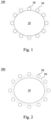
- Fig. 1 is a schematic diagram of a battery cathode material 100 according to some embodiments of the present disclosure.
- the battery cathode material 100 includes a cathode material 10, a ceramic material 20, and a carbon-containing gel 30.
- the ceramic material 20 is attached to a surface of the cathode material 10, and the carbon-containing gel 30 wraps the ceramic material 20 and the cathode material 10.
- the carbon-containing gel 30 forms a thin layer wrapping the surfaces of the ceramic material 20 and the cathode material 10.
- the cathode material 10 includes lithium nickel cobalt manganese oxide (NCM), lithium nickel cobalt aluminum oxide (NCA), lithium nickel manganese oxide (LNMO), lithium cobalt oxide (LCO), lithium iron phosphate (LFP), lithium nickel cobalt manganese aluminum oxide (NCMA), or combinations thereof, or combinations of polycrystalline and monocrystalline.
- the combinations of polycrystalline and monocrystalline refer to the combinations of polycrystalline of the above materials, the combinations of monocrystalline of the above materials, and the combinations of both polycrystalline and monocrystalline of the above materials.
- the cathode material 10 may be a 1: 1 mix of LCO and NCM or a 1:1 mix of LCO and NCMA.
- the cathode material 10 has a particle size of about 4 ⁇ m to 8 ⁇ m.
- the particle size of the cathode material 10 has an impact on the battery rate and capacity. When the particle size is less than 4 ⁇ m, it may be difficult to mix uniformly due to large specific surface area. When the particle size is greater than 8 ⁇ m, the stacking density of cathode material 10 on the electrode plate may poor and it may be unfavorable to the coating and rolling processes. The stacking condition of the cathode material 10 on the positive electrode plate will affect the battery energy density.
- the ceramic material 20 includes lithium lanthanum zirconium oxide (LLZO), lithium zinc titanate (LZTO), lithium aluminum titanium phosphate (LATP), lithium-zirconium phosphate (LZPO), lithium zirconate (LZO), or combinations thereof, that are doped with gallium, aluminum, or tantalum.
- the doping ratio of gallium, aluminum, and tantalum in gallium-, aluminum-, or tantalum-doped lithium lanthanum zirconium oxide is 1-0.8: 0.2-0.05: 0.1-0.05.
- the ceramic material 20 has a particle size of about 50 nm to 350 nm.
- the particle size of the ceramic material 20 When the particle size is less than 50 nm, the active substance of the ceramic material 20 tends to react with the ambient moisture and solvent during the mixing process and becomes passivated, thus losing the effect of enhancing ionic conductivity.. If the particle size of the ceramic material 20 is too large, the cathode material 10 may wrap the surface of the ceramic material 20, resulting in difficulty in uniform bonding between the materials. In some embodiments, the particle size ratio of the cathode material 10 to the ceramic material 20 is about 4000-8000: 50-350. Specifically, the suitable particle size of the ceramic material 20 may be selected depending on the particle size of the cathode material 10 used.
- the particle of ceramic material 20 that wraps the cathode material 10 is too large, it may cause uneven wrapping or over-thick wrapping, making the conductive path too far and causing the counter-effect.
- Selecting the cathode material 10 and ceramic material 20 within the above particle size ratio range has a more suitable wrapping during the mixing and wrapping, so that the wrapping on the surface of the cathode material 10 is more complete, and the thickness after sintering is more uniform.
- a weight of the ceramic material 20 is 0.5% to 10% of a weight of the cathode material 10.
- the cathode material 10 is the source of lithium ions. If too much of the ceramic material 20 is used, the capacity source may be reduced and the effective capacity may be lowered.
- the proportion ceramic material 20 is too small, the lithium-ion conductivity may not be enhanced and there is no effect of protecting the cathode material 10 and enhancing the capacity drawing rate.
- a path for lithium ions to move can be provided, allowing lithium ions inside the cathode material 10 to be more quickly deintercalated and intercalated, further improving the lithium-ion conductivity and overall electrical conductivity of the battery cathode material 100.
- the carbon-containing gel 30 includes a binder and a carbon-containing conductive material (not shown). Specifically, the carbon-containing conductive material may be distributed in the binder.
- the binder includes polyvinylpyrrolidone, polyvinyl alcohol, sodium dodecyl sulfonate, sodium dodecyl benzenesulfonate, glucose, carboxymethyl cellulose, alginate, or combinations thereof.
- the binder carbonizes after sintering to form a conductive carbon source. The binder forms carbon coating on the cathode material 10 during carbonization to improve the poor conductivity of the cathode material 10. Therefore, the amount of binder will affect the thickness and effectiveness of the carbon coating.
- the weight of the binder is 0.5% to 2.5% of the cathode material 10.
- the carbon coating may be too thick, resulting in poor capacity drawing rate and high irreversible capacitance.
- the carbon coating may be too thin, resulting in insufficient electrical conductivity and poor capacity drawing rate.
- the binder makes the carbon-containing conductive material dispersed therein wrap the surfaces of the cathode material 10 and the ceramic material 20 to form a conductive path. Therefore, too less binder is hard to effectively bond the ceramic material 20 and the cathode material 10.
- the carbon-containing conductive material includes a carbon nanotube.
- the carbon nanotube may be a single-walled carbon nanotube, a multi-walled carbon nanotube, or a combination thereof.
- the carbon nanotube may have a length of about 0.5 ⁇ m to 15 ⁇ m.
- the carbon-containing conductive material includes about 70wt% to80 wt% of a first carbon nanotube, about 10wt% to 20wt% of a second carbon nanotube , and about 0wt% to 10wt% of a third carbon nanotube .
- the first carbon nanotube, the second carbon nanotube, and the third carbon nanotube have different lengths.
- the first carbon nanotube has a length of less than about 1 ⁇ m
- the second carbon nanotube has a length of about 1 ⁇ m to less than 8 ⁇ m
- the third carbon nanotube has a length of about 8 ⁇ m to 15 ⁇ m.
- the carbon nanotubes with a length of less than about 1 ⁇ m provide surface conductivity of the battery cathode material 100
- the carbon nanotubes with a length of about 1 ⁇ m to less than 8 ⁇ m provide a conductive bridge to the subspace within the sphere of the battery cathode material 100
- the carbon nanotubes with a length of about 8 ⁇ m to 15 ⁇ m provide conductive wrapping and expansion inhibition of the entire sphere of the battery cathode material 100.
- the weight of the carbon-containing conductive material is 0.1% to 0.5% of the cathode material 10.
- the carbon-containing conductive material can form a conductive bridge around the cathode material 10 and the ceramic material 20, allowing electrons to be conducted between different cathode materials 10.
- the electrical conductivity can be improved, as well as the cycle performance and the thermal stability performance of the battery cathode material 100.
- the much carbon-containing conductive material leads to poor capacity drawing rate and high irreversible capacitance. Too less carbon-containing conductive material cannot improve the conductivity effectively.
- the weight ratio of the cathode material 10: the ceramic material 20: the binder: the carbon-containing conductive material is 100: 0.5-2.5: 0.1-1: 0.1-0.5.
- Fig. 2 is a schematic diagram of a battery cathode material 200 according to some embodiments of the present disclosure.
- the battery cathode material 200 includes a cathode material 10, a ceramic material 20, and a carbon-containing gel 30.
- the carbon-containing gel 30 forms a thin layer wrapping the surface of the cathode material 10, and the ceramic material 20 further attaches to the carbon-containing gel 30.
- the carbon-containing gel 30 includes a binder and a carbon-containing conductive material (not shown).
- the carbon-containing conductive material can be distributed in the binder.
- the binder makes the carbon-containing conductive material dispersed therein wrap the surface of the cathode material 10.
- the ceramic material 20 attaches to the surface of the cathode material 10 to form a conductive path.
- the details of particle size, material, and composition ratio of the cathode material 10, the ceramic material 20, and the carbon-containing gel 30 of the battery cathode material 200 can be referred to the embodiment of the battery cathode material 100 above and are not repeated here.
- Fig. 3 is a schematic diagram of a battery cathode material 300 according to some embodiments of the present disclosure.
- the battery cathode material 300 includes a cathode material 10, a ceramic material 20, and a carbon-containing gel 30.
- the cathode material 10 and the ceramic material 20 are dispersed in the carbon-containing gel 30, and the carbon-containing gel 30 forms a thin layer wrapping the surfaces of the cathode material 10 and the ceramic material 20.
- a carbon-containing conductive material can be distributed in a binder.
- the binder makes the carbon-containing conductive material dispersed therein wrap the surfaces of the cathode material 10 and the ceramic material 20, allowing the cathode material 10 and the ceramic material 20 to adhere together to form a conductive path.
- the details of particle size, material, and composition ratio of the cathode material 10, the ceramic material 20, and the carbon-containing gel 30 in the battery cathode material 300 can be referred to the embodiment of the battery cathode material 100 above and are not repeated here.
- Fig. 4 is a schematic diagram of a battery cathode material 400 according to some embodiments of the present disclosure.
- the battery cathode material 400 includes a cathode material 10, a ceramic material 20, a first carbon-containing gel 31, and a second carbon-containing gel 32.
- a portion of the ceramic material 20 is attached to the surface of the cathode material 10, and the first carbon-containing gel 31 forms a thin layer wrapping the ceramic material 20 and the cathode material 10.
- a portion of the ceramic material 20 is dispersed in the second carbon-containing gel 32, and the second carbon-containing gel 32 further wraps the cathode material 10, the ceramic material 20, and the first carbon-containing gel 31.
- the details of size, material, and composition ratio of the cathode material 10 and the ceramic material 20 in the battery cathode material 400 can be referred to the embodiment of the battery cathode material 100 above and are not repeated here.
- the first carbon-containing gel 31 and the second carbon-containing gel 32 may respectively include a binder and a carbon-containing conductive material.
- the carbon-containing conductive material may include carbon nanotubes 33, 34, 35 of different lengths as shown in Fig. 4 .
- the carbon-containing conductive material may include 70wt% to 80wt% of the carbon nanotube 33, 10wt% to 20wt% of the carbon nanotube 34, and 0wt% to 10wt% of the carbon nanotubes 35.
- the carbon nanotube 33 has a length of less than about 1 ⁇ m
- the carbon nanotube 34 has a length of about 1 ⁇ m to less than 8 ⁇ m
- the carbon nanotube 35 has a length of about 8 ⁇ m to 15 ⁇ m.
- the material, composition ratio, and/or thickness of the first carbon-containing gel 31 may be the same as those of the second carbon-containing gel 32. In other embodiments, the material, composition ratio, and/or thickness of the first carbon-containing gel 31 may be different from those of the second carbon-containing gel 32.
- the details of the material and content of the binder and the content of the carbon nanotubes 33, 34, 35 can be referred to the embodiment of the battery cathode material 100 above and are not repeated here.
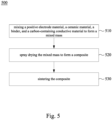
- Figs. 5 to 8 are flowcharts of a method 500 of preparing the battery cathode material according to some embodiments of the present disclosure. As shown in Fig. 5 , the method 500 includes operations 510, 520, and 530.
- the method of preparing the battery cathode material 100 (as shown in Fig. 1 ) is described.
- the cathode material 10 the ceramic material 20, the binder, and the carbon-containing conductive material are mixed to form a mixed mass 100a.
- the operation 510 may include sub-operations 502, 504, and 506.
- the cathode material 10 is mixed with the first carbon-containing gel 31 to form a cathode material precursor 40.
- the first carbon-containing gel 31 includes a first binder and a first carbon-containing conductive material.
- the cathode material 10, the first binder, and the first carbon-containing conductive material may be any of the above-described cathode materials, binders, and carbon-containing conductive materials, which are not repeated herein.
- mixing the cathode material 10 with the first carbon-containing gel 31 is performed at a temperature of about 30°C to 40°C.
- the cathode material 10 and the first carbon-containing gel 31 may be mixed and emulsified for 30 minutes to form a mixed gel. Afterwards, the mixed gel is spray dried to form the cathode material precursor 40.
- the ceramic material 20 is mixed with the second carbon-containing gel 32 to form a ceramic material gel 42.
- the second carbon-containing gel 32 includes a second binder and a second carbon-containing conductive material.
- the ceramic material 20, the second binder, and the second carbon-containing conductive material may be any of the above-described ceramic materials, binders, and carbon-containing conductive materials, which are not repeated herein.
- the second carbon-containing gel 32 may be the same as the first carbon-containing gel 31. In other embodiments, the second carbon-containing gel 32 is different from the first carbon-containing gel 31.
- mixing the ceramic material 20 with the second carbon-containing gel 32 is performed at a temperature of about 25°C to 45°C.
- the ceramic material 20 and the second carbon-containing gel 32 may be mixed and emulsified for 1 hour to form the homogeneously mixed ceramic material gel 42.
- the cathode material precursor 40 and the ceramic material gel 42 are mixed to form a mixed mass 100a.
- the cathode material precursor 40 and the ceramic material gel 42 are mixed in a planetary mixer at a speed of about 800 rpm for 1 hour.
- the mixed mass 100a is spray dried to form a composite.
- the composite may have the structure shown in Fig. 1 .
- a powder-like composite is formed.
- the composite may have the ceramic material 20 attached to the surface of the cathode material 10, while the carbon-containing gel wraps the cathode material 10 and the ceramic material 20.
- the composite is sintered.
- sintering the composite includes sintering in an inert gas at a temperature of about 800°C to 880°C.
- the temperature is increased to 800°C-880°C at a heating rate of 5°C/min under nitrogen (with 2 L/min feed), and thereafter, the temperature is maintained to sinter the composite for about 6 hours to form the battery cathode material 100 as shown in Fig. 1 .
- the method of preparing the battery cathode material 200 (as shown in Fig. 2 ) is described.
- the cathode material 10 the ceramic material 20, the binder, and the carbon-containing conductive material are mixed to form a mixed mass 200a.
- the operation 510 may include sub-operations 502' and 508.
- the cathode material 10 is mixed with the carbon-containing gel 30 to form the cathode material precursor 40.
- the carbon-containing gel 30 includes a binder and a carbon-containing conductive material.
- the cathode material 10, the binder, and the carbon-containing conductive material may be any of the above-described cathode materials, binders, and carbon-containing conductive materials, which are not repeated herein.
- the cathode material 10 and the first carbon-containing gel 31 may be mixed and emulsified for 30 minutes to form a mixed gel. Afterwards, the mixed gel is spray dried to form the cathode material precursor 40.
- the ceramic material 20 and a solvent 22 are mixed with the cathode material precursor 40.
- the solvent 22 is an anhydrous solvent or a low water content solvent (less than about 200ppm), including ethanol, isopropanol, dimethylacetamide (DMAC), methylpyrrolidone (NMP), ethyl acetate (EA), and dimethylformamide (DMF), and the like, or combinations thereof.
- the ceramic material 20 may be placed in the solvent first, and then mixed with the cathode material precursor 40 to form the mixed mass 200a.
- the cathode material precursor 40, the ceramic material 20, and the solvent 22 were mixed in a planetary mixer at a speed of about 800 rpm for 1 hour.
- the mixed mass 200a is spray dried to form a composite.
- the composite may have the structure shown in Fig. 2 .
- a powder-like composite is formed.
- the composite may have the carbon-containing gel 30 wrapping the cathode material 10, and the ceramic material 20 attached to the cathode material 10 by the carbon-containing gel 30.
- the composite is sintered.
- sintering the composite includes sintering in an inert gas at a temperature of about 800°C to 880°C.
- the temperature is increased to 800°C-880°C at a heating rate of 5°C/min under nitrogen (with 2 L/min feed), and thereafter, the temperature is maintained to sinter the composite for about 6 hours to form the battery cathode material 200 as shown in fig. 2 .
- the method of preparing the battery cathode material 300 (as shown in Fig. 3 ) is described.
- the cathode material 10, the ceramic material 20, the binder, and the carbon-containing conductive material are mixed to form a mixed mass 300a.
- the cathode material 10, the ceramic material 20, and the carbon-containing gel 30 are mixed.
- the carbon-containing gel 30 includes a binder and a carbon-containing conductive material.
- the cathode material 10, the ceramic material 20, the binder, and the carbon-containing conductive material may be any of the above-mentioned cathode materials, ceramic materials, binders, and carbon-containing conductive materials, which are not repeated herein.
- the cathode material 10, the ceramic material 20, and the carbon-containing gel 30 are mixed and emulsified for 2 hours to form a mixed gel.
- the mixed mass 300a is spray dried to form a composite.
- the composite may have the structure shown in Fig. 3 .
- a powder-like composite is formed.
- the composite may have the cathode material 10 and the ceramic material 20 dispersed in the carbon-containing gel 30 and wrapped by the carbon-containing gel 30.
- the composite is sintered.
- sintering the composite includes sintering in an inert gas at a temperature of about 800°C to 880°C.
- the temperature is increased to 800°C-880°C at a heating rate of 5°C/min under nitrogen (with 2 L/min nitrogen feed), and thereafter, the temperature is maintained to sinter the composite for about 6 hours to form the battery cathode material 300 as shown in Fig. 3 .
- the battery cathode material As described above, according to the embodiments of the present disclosure, there are provided the battery cathode material and the method of preparing the same.
- the battery cathode material of the present disclosure is ceramic material-modified and the ceramic material is bound to the surface of the cathode material.
- nano - or micronized ceramic material By adding nano - or micronized ceramic material, a path for lithium ions to move can be provided. In other words, the conductivity can be increased by establishing a conductive path through the ceramic material. Therefore, when the battery cathode material is applied to the solid-state battery, the lithium-ion conduction and the overall conductivity can be improved, which in turn improves the energy performance and the rate capacity of the solid-state battery.
Landscapes
- Chemical & Material Sciences (AREA)
- Chemical Kinetics & Catalysis (AREA)
- Electrochemistry (AREA)
- General Chemical & Material Sciences (AREA)
- Inorganic Chemistry (AREA)
- Composite Materials (AREA)
- Engineering & Computer Science (AREA)
- Materials Engineering (AREA)
- Manufacturing & Machinery (AREA)
- Crystallography & Structural Chemistry (AREA)
- Battery Electrode And Active Subsutance (AREA)
Abstract
A battery cathode material includes cathode material, ceramic material, and carbon-containing gel. The cathode material includes lithium nickel cobalt manganese oxide (NCM), lithium nickel cobalt aluminum oxide (NCA), lithium nickel manganese oxide (LNMO), lithium cobalt oxide (LCO), lithium iron phosphate (LFP), lithium nickel cobalt manganese aluminum oxide (NCMA), or combinations thereof. The ceramic material surrounds the cathode material, and includes gallium, aluminum, or tantalum doped lithium lanthanum zirconium oxide (LLZO), lithium zinc titanate (LZTO), lithium aluminum titanium phosphate (LATP), lithium-zirconium phosphate (LZPO), lithium zirconate (LZO), or combinations thereof. The carbon-containing gel wrapping the cathode material, and includes binder and carbon-containing conductive material, in which the binder includes polyvinylpyrrolidone, polyvinyl alcohol, sodium dodecyl sulfonate, sodium dodecylbenzenesulfonate, glucose, carboxymethyl cellulose, alginate, or combinations thereof, and the carbon-containing conductive material includes carbon nanotube.
Description
- The present disclosure is related to a battery cathode material and a method of preparing the same.
- Batteries are usually formed by placing positive and negative electrodes in an electrolyte. The positive electrode, also known as a cathode, undergoes a reduction reaction in which the conductive ions, such as Li+, are reduced to uncharged atoms, such as Li. On the other hand, the negative electrode, also known as an anode, undergoes an oxidation reaction during discharge. In general, the positive electrode material is made mixing the positive conductive unit with the conductive paste and applying it to the electrode sheet and assembling it into a battery. To increase overall ionic and electronic conductivity, the cathode material must have good electrical conductivity and can stabilize a large number of conductive ions, such as Li+.
- Solid-state batteries replace the conventional liquid electrolyte with a solid-state electrolyte. However, under the condition of densely pressed electrode sheets and no liquid electrolyte for ion conduction, the lithium migration efficiency of cathode is poor, and it cannot effectively perform its expected capacity and charging/discharging condition. Therefore, the present disclosure provides a cathode material to improve the energy performance and rate capability of cathodes in the solid-state battery.
- According to various embodiments of the present disclosure, there is provided a battery cathode material including a cathode material, a ceramic material, and a first carbon-containing gel. The cathode material includes lithium nickel cobalt manganese oxide, lithium nickel cobalt aluminum oxide, lithium nickel manganese oxide, lithium cobalt oxide, lithium iron phosphate, lithium nickel cobalt manganese aluminum oxide, or combinations thereof. The ceramic material surrounds the cathode material and includes gallium-, aluminum-, or tantalum-doped lithium lanthanum zirconium oxide, lithium zinc titanate, lithium aluminum titanium phosphate, lithium-zirconium phosphate, lithium zirconate, or combinations thereof. The first carbon-containing gel wraps the cathode material and includes a binder and a carbon-containing conductive material, in which the binder includes polyvinylpyrrolidone, polyvinyl alcohol, sodium dodecyl sulfonate, sodium dodecyl benzene sulfonate, glucose, carboxymethyl cellulose, alginate, or combinations thereof, and the carbon-containing conductive material includes a carbon nanotube.
- According to some embodiments of the present disclosure, the weight ratio of the cathode material: the ceramic material: the binder: the carbon-containing conductive material is 100: 0.5-2.5: 0.1-1: 0.1-0.5.
- According to some embodiments of the present disclosure, the ratio of a particle size of the cathode material to a particle size of the ceramic material is about 4000-8000: 50-350.
- According to some embodiments of the present disclosure, the ceramic material is attached to a surface of the cathode material, and the first carbon-containing gel wraps the ceramic material and the cathode material.
- According to some embodiments of the present disclosure, the first carbon-containing gel wraps a surface of the cathode material, and the ceramic material is attached on to the first carbon-containing gel.
- According to some embodiments of the present disclosure, the cathode material and the ceramic material are dispersed in the first carbon-containing gel, and the first carbon-containing gel wraps the cathode material and the ceramic material.
- According to some embodiments of the present disclosure, the battery cathode material further includes a second carbon-containing gel wrapping the cathode material, the ceramic material, and the first carbon-containing gel.
- According to some embodiments of the present disclosure, the carbon nanotube has a length of about 0.5 µm to about 15 µm.
- According to some embodiments of the present disclosure, the carbon nanotube includes about 70wt% to 80wt% of a first carbon nanotube, about 10wt% to 20wt% of a second carbon nanotube, and about 0wt% to 10wt% of a third carbon nanotube.
- According to some embodiments of the present disclosure, the first carbon nanotube has a length of less than about 1 µm, the second carbon nanotube has a length of about 1 µm to less than 8 µm, and the third carbon nanotube has a length of about 8 µm to 15 µm.
- According to various embodiments of the present disclosure, there is provided a method of preparing a battery cathode material, including mixing a cathode material, a ceramic material, a binder, and a carbon-containing conductive material to form a mixed mass, in which the cathode material includes lithium nickel cobalt manganese oxide, lithium nickel cobalt aluminum oxide, lithium nickel manganese oxide, lithium cobalt oxide, lithium iron phosphate, lithium nickel cobalt manganese aluminum oxide, or combinations thereof, the ceramic material includes gallium-, aluminum-, or tantalum-doped lithium lanthanum zirconium oxide, lithium zinc titanate, lithium aluminum titanium phosphate, lithium-zirconium phosphate, lithium zirconate, or combinations thereof , the binder includes polyvinylpyrrolidone, polyvinyl alcohol, sodium dodecyl sulfonate, sodium dodecyl benzene sulfonate, glucose, carboxymethyl cellulose, alginate, or combinations thereof, and the carbon-containing conductive material includes a carbon nanotube; spray drying the mixed mass to form a composite; and sintering the composite.
- According to some embodiments of the present disclosure, mixing the cathode material, the ceramic material, the binder, and the carbon-containing conductive material includes mixing the cathode material with a first carbon-containing gel to form a cathode material precursor, in which the first carbon-containing gel includes a first binder and a first carbon-containing conductive material; mixing the ceramic material with a second carbon-containing gel to form a ceramic material gel, in which the second carbon-containing gel includes a second binder and a second carbon-containing conductive material; and mixing the cathode material precursor with the ceramic material gel.
- According to some embodiments of the present disclosure, mixing the cathode material, the ceramic material, the binder, and the carbon-containing conductive material includes mixing the cathode material with a carbon-containing gel to form a cathode material precursor, in which the carbon-containing gel includes the binder and the carbon-containing conductive material; and mixing the ceramic material and a solvent with the cathode material precursor.
- According to some embodiments of the present disclosure, sintering the composite includes sintering at a temperature of about 800°C-880°C in an inert gas.
-
-
Fig. 1 is a schematic diagram of a battery cathode material according to some embodiments of the present disclosure. -
Fig. 2 is a schematic diagram of a battery cathode material according to some embodiments of the present disclosure. -
Fig. 3 is a schematic diagram of a battery cathode material according to some embodiments of the present disclosure. -
Fig. 4 is a schematic diagram of a battery cathode material according to some embodiments of the present disclosure. -
Fig. 5 is a flowchart of a method of preparing a battery cathode material according to some embodiments of the present disclosure. -
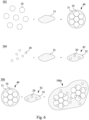
Fig. 6 is a schematic flowchart of a manufacturing method of battery cathode material according to some embodiments of the present disclosure. -
Fig. 7 is a schematic flowchart of a method of preparing a battery cathode material according to some embodiments of the present disclosure. -
Fig. 8 is a schematic flowchart of a method of preparing a battery cathode material according to some embodiments of the present disclosure. -
Fig. 1 is a schematic diagram of abattery cathode material 100 according to some embodiments of the present disclosure. As shown inFig. 1 , thebattery cathode material 100 includes acathode material 10, aceramic material 20, and a carbon-containinggel 30. Theceramic material 20 is attached to a surface of thecathode material 10, and the carbon-containinggel 30 wraps theceramic material 20 and thecathode material 10. Specifically,, the carbon-containinggel 30 forms a thin layer wrapping the surfaces of theceramic material 20 and thecathode material 10. - The
cathode material 10 includes lithium nickel cobalt manganese oxide (NCM), lithium nickel cobalt aluminum oxide (NCA), lithium nickel manganese oxide (LNMO), lithium cobalt oxide (LCO), lithium iron phosphate (LFP), lithium nickel cobalt manganese aluminum oxide (NCMA), or combinations thereof, or combinations of polycrystalline and monocrystalline. Herein, the combinations of polycrystalline and monocrystalline refer to the combinations of polycrystalline of the above materials, the combinations of monocrystalline of the above materials, and the combinations of both polycrystalline and monocrystalline of the above materials. In some embodiments, thecathode material 10 may be a 1: 1 mix of LCO and NCM or a 1:1 mix of LCO and NCMA. In some embodiments, thecathode material 10 has a particle size of about 4 µm to 8 µm. The particle size of thecathode material 10 has an impact on the battery rate and capacity. When the particle size is less than 4 µm, it may be difficult to mix uniformly due to large specific surface area. When the particle size is greater than 8 µm, the stacking density ofcathode material 10 on the electrode plate may poor and it may be unfavorable to the coating and rolling processes. The stacking condition of thecathode material 10 on the positive electrode plate will affect the battery energy density. - The
ceramic material 20 includes lithium lanthanum zirconium oxide (LLZO), lithium zinc titanate (LZTO), lithium aluminum titanium phosphate (LATP), lithium-zirconium phosphate (LZPO), lithium zirconate (LZO), or combinations thereof, that are doped with gallium, aluminum, or tantalum. In some embodiments, the doping ratio of gallium, aluminum, and tantalum in gallium-, aluminum-, or tantalum-doped lithium lanthanum zirconium oxide is 1-0.8: 0.2-0.05: 0.1-0.05. In some embodiments, theceramic material 20 has a particle size of about 50 nm to 350 nm. When the particle size is less than 50 nm, the active substance of theceramic material 20 tends to react with the ambient moisture and solvent during the mixing process and becomes passivated, thus losing the effect of enhancing ionic conductivity.. If the particle size of theceramic material 20 is too large, thecathode material 10 may wrap the surface of theceramic material 20, resulting in difficulty in uniform bonding between the materials. In some embodiments, the particle size ratio of thecathode material 10 to theceramic material 20 is about 4000-8000: 50-350. Specifically, the suitable particle size of theceramic material 20 may be selected depending on the particle size of thecathode material 10 used. If the particle ofceramic material 20 that wraps thecathode material 10 is too large, it may cause uneven wrapping or over-thick wrapping, making the conductive path too far and causing the counter-effect. Selecting thecathode material 10 andceramic material 20 within the above particle size ratio range has a more suitable wrapping during the mixing and wrapping, so that the wrapping on the surface of thecathode material 10 is more complete, and the thickness after sintering is more uniform. In some embodiments, a weight of theceramic material 20 is 0.5% to 10% of a weight of thecathode material 10. Thecathode material 10 is the source of lithium ions. If too much of theceramic material 20 is used, the capacity source may be reduced and the effective capacity may be lowered. If the proportionceramic material 20 is too small, the lithium-ion conductivity may not be enhanced and there is no effect of protecting thecathode material 10 and enhancing the capacity drawing rate. By modifying theceramic material 20 modified on the surface of thecathode material 10, a path for lithium ions to move can be provided, allowing lithium ions inside thecathode material 10 to be more quickly deintercalated and intercalated, further improving the lithium-ion conductivity and overall electrical conductivity of thebattery cathode material 100. - The carbon-containing
gel 30 includes a binder and a carbon-containing conductive material (not shown). Specifically, the carbon-containing conductive material may be distributed in the binder. In some embodiments, the binder includes polyvinylpyrrolidone, polyvinyl alcohol, sodium dodecyl sulfonate, sodium dodecyl benzenesulfonate, glucose, carboxymethyl cellulose, alginate, or combinations thereof. In some embodiments, the binder carbonizes after sintering to form a conductive carbon source. The binder forms carbon coating on thecathode material 10 during carbonization to improve the poor conductivity of thecathode material 10. Therefore, the amount of binder will affect the thickness and effectiveness of the carbon coating. In some embodiments, the weight of the binder is 0.5% to 2.5% of thecathode material 10. When the content of the binder is too high, the carbon coating may be too thick, resulting in poor capacity drawing rate and high irreversible capacitance. When the content of the binder is too low, the carbon coating may be too thin, resulting in insufficient electrical conductivity and poor capacity drawing rate. In some embodiments, the binder makes the carbon-containing conductive material dispersed therein wrap the surfaces of thecathode material 10 and theceramic material 20 to form a conductive path. Therefore, too less binder is hard to effectively bond theceramic material 20 and thecathode material 10. - In some embodiments, the carbon-containing conductive material includes a carbon nanotube. In some embodiments, the carbon nanotube may be a single-walled carbon nanotube, a multi-walled carbon nanotube, or a combination thereof. In some embodiments, the carbon nanotube may have a length of about 0.5 µm to 15 µm. In some embodiments, the carbon-containing conductive material includes about 70wt% to80 wt% of a first carbon nanotube, about 10wt% to 20wt% of a second carbon nanotube , and about 0wt% to 10wt% of a third carbon nanotube . In some embodiments, the first carbon nanotube, the second carbon nanotube, and the third carbon nanotube have different lengths. In some embodiments, the first carbon nanotube has a length of less than about 1 µm, the second carbon nanotube has a length of about 1 µm to less than 8 µm, and the third carbon nanotube has a length of about 8 µm to 15 µm. For example, the carbon nanotubes with a length of less than about 1 µm provide surface conductivity of the
battery cathode material 100; the carbon nanotubes with a length of about 1 µm to less than 8 µm provide a conductive bridge to the subspace within the sphere of thebattery cathode material 100; the carbon nanotubes with a length of about 8 µm to 15 µm provide conductive wrapping and expansion inhibition of the entire sphere of thebattery cathode material 100. In some embodiments, the weight of the carbon-containing conductive material is 0.1% to 0.5% of thecathode material 10. The carbon-containing conductive material can form a conductive bridge around thecathode material 10 and theceramic material 20, allowing electrons to be conducted betweendifferent cathode materials 10. By using the carbon-containing conductive material, the electrical conductivity can be improved, as well as the cycle performance and the thermal stability performance of thebattery cathode material 100. The much carbon-containing conductive material leads to poor capacity drawing rate and high irreversible capacitance. Too less carbon-containing conductive material cannot improve the conductivity effectively. In some embodiments, the weight ratio of the cathode material 10: the ceramic material 20: the binder: the carbon-containing conductive material is 100: 0.5-2.5: 0.1-1: 0.1-0.5. -
Fig. 2 is a schematic diagram of abattery cathode material 200 according to some embodiments of the present disclosure. As shown inFig. 2 , thebattery cathode material 200 includes acathode material 10, aceramic material 20, and a carbon-containinggel 30. Specifically, the carbon-containinggel 30 forms a thin layer wrapping the surface of thecathode material 10, and theceramic material 20 further attaches to the carbon-containinggel 30. The carbon-containinggel 30 includes a binder and a carbon-containing conductive material (not shown). The carbon-containing conductive material can be distributed in the binder. In some embodiments, the binder makes the carbon-containing conductive material dispersed therein wrap the surface of thecathode material 10. Moreover, through the binder, theceramic material 20 attaches to the surface of thecathode material 10 to form a conductive path. The details of particle size, material, and composition ratio of thecathode material 10, theceramic material 20, and the carbon-containinggel 30 of thebattery cathode material 200 can be referred to the embodiment of thebattery cathode material 100 above and are not repeated here. -
Fig. 3 is a schematic diagram of abattery cathode material 300 according to some embodiments of the present disclosure. As shown inFig. 3 , thebattery cathode material 300 includes acathode material 10, aceramic material 20, and a carbon-containinggel 30. Specifically, thecathode material 10 and theceramic material 20 are dispersed in the carbon-containinggel 30, and the carbon-containinggel 30 forms a thin layer wrapping the surfaces of thecathode material 10 and theceramic material 20. A carbon-containing conductive material can be distributed in a binder. In some embodiments, the binder makes the carbon-containing conductive material dispersed therein wrap the surfaces of thecathode material 10 and theceramic material 20, allowing thecathode material 10 and theceramic material 20 to adhere together to form a conductive path. The details of particle size, material, and composition ratio of thecathode material 10, theceramic material 20, and the carbon-containinggel 30 in thebattery cathode material 300 can be referred to the embodiment of thebattery cathode material 100 above and are not repeated here. -
Fig. 4 is a schematic diagram of a battery cathode material 400 according to some embodiments of the present disclosure. As shown inFig. 4 , the battery cathode material 400 includes acathode material 10, aceramic material 20, a first carbon-containinggel 31, and a second carbon-containinggel 32. A portion of theceramic material 20 is attached to the surface of thecathode material 10, and the first carbon-containinggel 31 forms a thin layer wrapping theceramic material 20 and thecathode material 10. A portion of theceramic material 20 is dispersed in the second carbon-containinggel 32, and the second carbon-containinggel 32 further wraps thecathode material 10, theceramic material 20, and the first carbon-containinggel 31. The details of size, material, and composition ratio of thecathode material 10 and theceramic material 20 in the battery cathode material 400 can be referred to the embodiment of thebattery cathode material 100 above and are not repeated here. - The first carbon-containing
gel 31 and the second carbon-containinggel 32 may respectively include a binder and a carbon-containing conductive material. In some embodiments, the carbon-containing conductive material may includecarbon nanotubes Fig. 4 . For example, the carbon-containing conductive material may include 70wt% to 80wt% of thecarbon nanotube 33, 10wt% to 20wt% of thecarbon nanotube 34, and 0wt% to 10wt% of thecarbon nanotubes 35. In some embodiments, thecarbon nanotube 33 has a length of less than about 1 µm, thecarbon nanotube 34 has a length of about 1 µm to less than 8 µm, and thecarbon nanotube 35 has a length of about 8 µm to 15 µm. In some embodiments, the material, composition ratio, and/or thickness of the first carbon-containinggel 31 may be the same as those of the second carbon-containinggel 32. In other embodiments, the material, composition ratio, and/or thickness of the first carbon-containinggel 31 may be different from those of the second carbon-containinggel 32. The details of the material and content of the binder and the content of thecarbon nanotubes battery cathode material 100 above and are not repeated here. -
Figs. 5 to 8 are flowcharts of amethod 500 of preparing the battery cathode material according to some embodiments of the present disclosure. As shown inFig. 5 , themethod 500 includesoperations - Referring first to
Figs. 5 and6 , the method of preparing the battery cathode material 100 (as shown inFig. 1 ) is described. In theoperation 510 of themethod 500, thecathode material 10, theceramic material 20, the binder, and the carbon-containing conductive material are mixed to form amixed mass 100a. - As shown in
Fig. 6 , theoperation 510 may includesub-operations sub-operation 502, thecathode material 10 is mixed with the first carbon-containinggel 31 to form acathode material precursor 40. In some embodiments, the first carbon-containinggel 31 includes a first binder and a first carbon-containing conductive material. Thecathode material 10, the first binder, and the first carbon-containing conductive material may be any of the above-described cathode materials, binders, and carbon-containing conductive materials, which are not repeated herein. In some embodiments, mixing thecathode material 10 with the first carbon-containinggel 31 is performed at a temperature of about 30°C to 40°C. In some embodiments, thecathode material 10 and the first carbon-containinggel 31 may be mixed and emulsified for 30 minutes to form a mixed gel. Afterwards, the mixed gel is spray dried to form thecathode material precursor 40. - Referring further to
Fig. 6 , in thesub-operation 504, theceramic material 20 is mixed with the second carbon-containinggel 32 to form aceramic material gel 42. In some embodiments, the second carbon-containinggel 32 includes a second binder and a second carbon-containing conductive material. Theceramic material 20, the second binder, and the second carbon-containing conductive material may be any of the above-described ceramic materials, binders, and carbon-containing conductive materials, which are not repeated herein. In some embodiments, the second carbon-containinggel 32 may be the same as the first carbon-containinggel 31. In other embodiments, the second carbon-containinggel 32 is different from the first carbon-containinggel 31. In some embodiments, mixing theceramic material 20 with the second carbon-containinggel 32 is performed at a temperature of about 25°C to 45°C. In some embodiments, theceramic material 20 and the second carbon-containinggel 32 may be mixed and emulsified for 1 hour to form the homogeneously mixedceramic material gel 42. - Thereafter, in the
sub-operation 506, thecathode material precursor 40 and theceramic material gel 42 are mixed to form amixed mass 100a. In some embodiments, thecathode material precursor 40 and theceramic material gel 42 are mixed in a planetary mixer at a speed of about 800 rpm for 1 hour. - Referring further to
Fig. 5 , in theoperation 520 of themethod 500, themixed mass 100a is spray dried to form a composite. Specifically, the composite may have the structure shown inFig. 1 . In some embodiments, after spray drying themixed mass 100a, a powder-like composite is formed. The composite may have theceramic material 20 attached to the surface of thecathode material 10, while the carbon-containing gel wraps thecathode material 10 and theceramic material 20. - In the
operation 530 of themethod 500, the composite is sintered. In some embodiments, sintering the composite includes sintering in an inert gas at a temperature of about 800°C to 880°C. For example, the temperature is increased to 800°C-880°C at a heating rate of 5°C/min under nitrogen (with 2 L/min feed), and thereafter, the temperature is maintained to sinter the composite for about 6 hours to form thebattery cathode material 100 as shown inFig. 1 . - Referring to
Fig. 5 andFig. 7 , the method of preparing the battery cathode material 200 (as shown inFig. 2 ) is described. In theoperation 510 of themethod 500, thecathode material 10, theceramic material 20, the binder, and the carbon-containing conductive material are mixed to form amixed mass 200a. - As shown in
Fig. 7 , theoperation 510 may includesub-operations 502' and 508. In the sub-operation 502', thecathode material 10 is mixed with the carbon-containinggel 30 to form thecathode material precursor 40. In some embodiments, the carbon-containinggel 30 includes a binder and a carbon-containing conductive material. Thecathode material 10, the binder, and the carbon-containing conductive material may be any of the above-described cathode materials, binders, and carbon-containing conductive materials, which are not repeated herein. In some embodiments, thecathode material 10 and the first carbon-containinggel 31 may be mixed and emulsified for 30 minutes to form a mixed gel. Afterwards, the mixed gel is spray dried to form thecathode material precursor 40. - Referring further to
Fig. 7 , in thesub-operation 508, theceramic material 20 and a solvent 22 are mixed with thecathode material precursor 40. In some embodiments, the solvent 22 is an anhydrous solvent or a low water content solvent (less than about 200ppm), including ethanol, isopropanol, dimethylacetamide (DMAC), methylpyrrolidone (NMP), ethyl acetate (EA), and dimethylformamide (DMF), and the like, or combinations thereof. In some embodiments, theceramic material 20 may be placed in the solvent first, and then mixed with thecathode material precursor 40 to form themixed mass 200a. In some embodiments, thecathode material precursor 40, theceramic material 20, and the solvent 22 were mixed in a planetary mixer at a speed of about 800 rpm for 1 hour. - Referring further to
Fig. 5 , in theoperation 520 of themethod 500, themixed mass 200a is spray dried to form a composite. Specifically, the composite may have the structure shown inFig. 2 . In some embodiments, after spray drying themixed mass 200a, a powder-like composite is formed. The composite may have the carbon-containinggel 30 wrapping thecathode material 10, and theceramic material 20 attached to thecathode material 10 by the carbon-containinggel 30. - In the
operation 530 of themethod 500, the composite is sintered. In some embodiments, sintering the composite includes sintering in an inert gas at a temperature of about 800°C to 880°C. For example, the temperature is increased to 800°C-880°C at a heating rate of 5°C/min under nitrogen (with 2 L/min feed), and thereafter, the temperature is maintained to sinter the composite for about 6 hours to form thebattery cathode material 200 as shown infig. 2 . - Referring to
Fig. 5 andFig. 8 , the method of preparing the battery cathode material 300 (as shown inFig. 3 ) is described. In theoperation 510 of themethod 500, thecathode material 10, theceramic material 20, the binder, and the carbon-containing conductive material are mixed to form amixed mass 300a. As shown inFig. 8 , thecathode material 10, theceramic material 20, and the carbon-containinggel 30 are mixed. In some embodiments, the carbon-containinggel 30 includes a binder and a carbon-containing conductive material. Thecathode material 10, theceramic material 20, the binder, and the carbon-containing conductive material may be any of the above-mentioned cathode materials, ceramic materials, binders, and carbon-containing conductive materials, which are not repeated herein. In some embodiments, thecathode material 10, theceramic material 20, and the carbon-containinggel 30 are mixed and emulsified for 2 hours to form a mixed gel. - Referring further to
Fig. 5 , in theoperation 520 ofmethod 500, themixed mass 300a is spray dried to form a composite. Specifically, the composite may have the structure shown inFig. 3 . In some embodiments, after spray drying themixed mass 300a, a powder-like composite is formed. The composite may have thecathode material 10 and theceramic material 20 dispersed in the carbon-containinggel 30 and wrapped by the carbon-containinggel 30. - In the
operation 530 of themethod 500, the composite is sintered. In some embodiments, sintering the composite includes sintering in an inert gas at a temperature of about 800°C to 880°C. For example, the temperature is increased to 800°C-880°C at a heating rate of 5°C/min under nitrogen (with 2 L/min nitrogen feed), and thereafter, the temperature is maintained to sinter the composite for about 6 hours to form thebattery cathode material 300 as shown inFig. 3 . - As described above, according to the embodiments of the present disclosure, there are provided the battery cathode material and the method of preparing the same. The battery cathode material of the present disclosure is ceramic material-modified and the ceramic material is bound to the surface of the cathode material. By adding nano - or micronized ceramic material, a path for lithium ions to move can be provided. In other words, the conductivity can be increased by establishing a conductive path through the ceramic material. Therefore, when the battery cathode material is applied to the solid-state battery, the lithium-ion conduction and the overall conductivity can be improved, which in turn improves the energy performance and the rate capacity of the solid-state battery.
Claims (14)
- A battery cathode material (100, 200, 300, 400), characterized by comprising:a cathode material (10) comprising lithium nickel cobalt manganese oxide, lithium nickel cobalt aluminum oxide, lithium nickel manganese oxide, lithium cobalt oxide, lithium iron phosphate, lithium nickel cobalt manganese aluminum oxide, or combinations thereof;a ceramic material (20) surrounding the cathode material (10) and comprising gallium-, aluminum-, or tantalum-doped lithium lanthanum zirconium oxide, lithium zinc titanate, lithium aluminum titanium phosphate, lithium-zirconium phosphate, lithium zirconate, or combinations thereof; anda first carbon-containing gel (30, 31) wrapping the cathode material (10) and comprising a binder and a carbon-containing conductive material, wherein the binder comprises polyvinylpyrrolidone, polyvinyl alcohol, sodium dodecyl sulfonate, sodium dodecyl benzene sulfonate, glucose, carboxymethyl cellulose, alginate, or combinations thereof, and the carbon-containing conductive material comprises a carbon nanotube (33, 34, 35).
- The battery cathode material (100, 200, 300, 400) of claim 1, characterized in that the weight ratio of the cathode material (10): the ceramic material (20): the binder: the carbon-containing conductive material is 100: 0.5-2.5: 0.1-1: 0.1-0.5.
- The battery cathode material (100, 200, 300, 400) of any one of claims 1 to 2, characterized in that the ratio of a particle size of the cathode material (10) to a particle size of the ceramic material (20) is about 4000-8000: 50-350.
- The battery cathode material (100) of any one of claims 1 to 3, characterized in that the ceramic material (20) is attached to a surface of the cathode material (10), and the first carbon-containing gel (30) wraps the ceramic material (20) and the cathode material (10).
- The battery cathode material (200) of any one of claims 1 to 3, characterized in that the first carbon-containing gel (30) wraps a surface of the cathode material (10), and the ceramic material (20) is attached on to the first carbon-containing gel (30).
- The battery cathode material (300) of any one of claims 1 to 3, characterized in that the cathode material (10) and the ceramic material (20) are dispersed in the first carbon-containing gel (30), and the first carbon-containing gel (30) wraps the cathode material (10) and the ceramic material (20).
- The battery cathode material (400) of any one of claims 1 to 6, characterized by further comprising a second carbon-containing gel (32) wrapping the cathode material (10), the ceramic material (20), and the first carbon-containing gel (31).
- The battery cathode material (100, 200, 300, 400) of any one of claims 1 to 7, characterized in that the carbon nanotube (33, 34, 35) has a length of about 0.5 µm to about 15 µm.
- The battery cathode material (100, 200, 300, 400) of claim 8, characterized in that the carbon nanotube (33, 34, 35) comprises about 70wt% to 80wt% of a first carbon nanotube (33), about 10wt% to 20wt% of a second carbon nanotube (34), and about 0wt% to 10wt% of a third carbon nanotube (35).
- The battery cathode material (100, 200, 300, 400) of claim 9, characterized in that the first carbon nanotube (33) has a length of less than about 1 µm, the second carbon nanotube (34) has a length of about 1 µm to less than 8 µm, and the third carbon nanotube (35) has a length of about 8 µm to 15 µm.
- A method of preparing battery cathode material, characterized by comprising:mixing a cathode material, a ceramic material, a binder, and a carbon-containing conductive material to form a mixed mass, wherein the cathode material comprises lithium nickel cobalt manganese oxide, lithium nickel cobalt aluminum oxide, lithium nickel manganese oxide, lithium cobalt oxide, lithium iron phosphate, lithium nickel cobalt manganese aluminum oxide, or combinations thereof, the ceramic material comprises gallium-, aluminum-, or tantalum-doped lithium lanthanum zirconium oxide, lithium zinc titanate, lithium aluminum titanium phosphate, lithium-zirconium phosphate, lithium zirconate, or combinations thereof, the binder comprises polyvinylpyrrolidone, polyvinyl alcohol, sodium dodecyl sulfonate, sodium dodecyl benzene sulfonate, glucose, carboxymethyl cellulose, alginate, or combinations thereof, and the carbon-containing conductive material comprises a carbon nanotube;spray drying the mixed mass to form a composite; andsintering the composite.
- The manufacturing method of claim 11, characterized in that mixing the cathode material, the ceramic material, the binder, and the carbon-containing conductive material comprises:mixing the cathode material with a first carbon-containing gel to form a cathode material precursor, wherein the first carbon-containing gel comprises a first binder and a first carbon-containing conductive material;mixing the ceramic material with a second carbon-containing gel to form a ceramic material gel, wherein the second carbon-containing gel comprises a second binder and a second carbon-containing conductive material; andmixing the cathode material precursor with the ceramic material gel.
- The manufacturing method of claim 11, characterized in that mixing the cathode material, the ceramic material, the binder, and the carbon-containing conductive material comprises:mixing the cathode material with a carbon-containing gel to form a cathode material precursor, wherein the carbon-containing gel comprises the binder and the carbon-containing conductive material; andmixing the ceramic material and a solvent with the cathode material precursor.
- The manufacturing method of any one of claims 11 to 13, characterized in that sintering the composite comprises sintering at a temperature of about 800°C-880°C in an inert gas.
Applications Claiming Priority (1)
| Application Number | Priority Date | Filing Date | Title |
|---|---|---|---|
| TW111113124A TWI818500B (en) | 2022-04-06 | 2022-04-06 | Battery positive electrode material and manufactureing method thereof |
Publications (1)
| Publication Number | Publication Date |
|---|---|
| EP4276943A1 true EP4276943A1 (en) | 2023-11-15 |
Family
ID=82433618
Family Applications (1)
| Application Number | Title | Priority Date | Filing Date |
|---|---|---|---|
| EP22189934.7A Pending EP4276943A1 (en) | 2022-04-06 | 2022-08-11 | Battery cathode material and method of preparing the same |
Country Status (4)
| Country | Link |
|---|---|
| US (1) | US12592381B2 (en) |
| EP (1) | EP4276943A1 (en) |
| CN (1) | CN114784247B (en) |
| TW (1) | TWI818500B (en) |
Families Citing this family (7)
| Publication number | Priority date | Publication date | Assignee | Title |
|---|---|---|---|---|
| JP7564838B2 (en) * | 2022-04-20 | 2024-10-09 | プライムプラネットエナジー&ソリューションズ株式会社 | Manufacturing method of the positive electrode plate |
| JP7473584B2 (en) * | 2022-04-20 | 2024-04-23 | プライムプラネットエナジー&ソリューションズ株式会社 | Manufacturing method of the positive electrode plate |
| CN115621450B (en) * | 2022-11-02 | 2024-07-09 | 广东邦普循环科技有限公司 | A composite coated modified positive electrode material and its preparation method and application |
| CN115911389A (en) * | 2022-12-23 | 2023-04-04 | 蜂巢能源科技股份有限公司 | A kind of cathode composite material and preparation method thereof, lithium ion battery |
| CN118367123A (en) * | 2024-04-09 | 2024-07-19 | 华南理工大学 | A three-element co-modified lithium cobalt oxide positive electrode material and its preparation method and application |
| TWM664554U (en) * | 2024-04-16 | 2024-12-21 | 大陸商深圳同興達科技股份有限公司 | Lithium cobalt oxide and carbon nanotube coated cathode particles |
| TWM662003U (en) * | 2024-06-05 | 2024-10-21 | 大陸商深圳同興達科技股份有限公司 | NCM cathode particles coated with LLZO and glass phase |
Citations (1)
| Publication number | Priority date | Publication date | Assignee | Title |
|---|---|---|---|---|
| US20220020974A1 (en) * | 2020-07-14 | 2022-01-20 | GM Global Technology Operations LLC | Battery separators comprising hybrid solid state electrolyte coatings |
Family Cites Families (9)
| Publication number | Priority date | Publication date | Assignee | Title |
|---|---|---|---|---|
| US9273399B2 (en) * | 2013-03-15 | 2016-03-01 | Ppg Industries Ohio, Inc. | Pretreatment compositions and methods for coating a battery electrode |
| DE102016215070A1 (en) * | 2016-08-12 | 2018-02-15 | Bayerische Motoren Werke Aktiengesellschaft | Electrode for solid-state cell with embedded conductivity additive |
| US20200280093A1 (en) * | 2017-11-07 | 2020-09-03 | The Regents Of The University Of Michigan | Solid-State Battery Electrolyte Having Increased Stability Towards Cathode Materials |
| CN110165152B (en) | 2018-02-11 | 2020-08-28 | 中国科学院苏州纳米技术与纳米仿生研究所 | Solid-state positive electrode composite material, preparation method and application thereof |
| CN109860550B (en) * | 2019-01-25 | 2020-12-15 | 浙江衡远新能源科技有限公司 | Preparation method of composite positive electrode film of solid-state lithium battery |
| CN113745455A (en) * | 2020-05-27 | 2021-12-03 | 北京卫蓝新能源科技有限公司 | Ternary positive plate for lithium battery with high safety, high capacity and long cycle, and preparation method and application thereof |
| CN113745638A (en) * | 2020-05-27 | 2021-12-03 | 北京卫蓝新能源科技有限公司 | High-safety and high-power ternary positive plate for lithium battery and preparation method and application thereof |
| CN111834620A (en) * | 2020-06-24 | 2020-10-27 | 湖南立方新能源科技有限责任公司 | A kind of lithium metal battery positive electrode, lithium metal battery and preparation method thereof |
| CN113363415B (en) * | 2021-03-29 | 2022-05-13 | 万向一二三股份公司 | High-nickel ternary composite positive electrode containing solid electrolyte and lithium ion battery |
-
2022
- 2022-04-06 TW TW111113124A patent/TWI818500B/en active
- 2022-04-27 CN CN202210458462.2A patent/CN114784247B/en active Active
- 2022-07-05 US US17/857,404 patent/US12592381B2/en active Active
- 2022-08-11 EP EP22189934.7A patent/EP4276943A1/en active Pending
Patent Citations (1)
| Publication number | Priority date | Publication date | Assignee | Title |
|---|---|---|---|---|
| US20220020974A1 (en) * | 2020-07-14 | 2022-01-20 | GM Global Technology Operations LLC | Battery separators comprising hybrid solid state electrolyte coatings |
Also Published As
| Publication number | Publication date |
|---|---|
| TWI818500B (en) | 2023-10-11 |
| TW202341551A (en) | 2023-10-16 |
| US12592381B2 (en) | 2026-03-31 |
| CN114784247A (en) | 2022-07-22 |
| CN114784247B (en) | 2024-09-03 |
| US20230327083A1 (en) | 2023-10-12 |
Similar Documents
| Publication | Publication Date | Title |
|---|---|---|
| EP4276943A1 (en) | Battery cathode material and method of preparing the same | |
| US8585935B2 (en) | Composite for Li-ion cells and the preparation process thereof | |
| JP4986629B2 (en) | Lithium ion secondary battery and manufacturing method thereof | |
| JP2024540630A (en) | Lithium metal electrode, its manufacturing method and lithium secondary battery including the same | |
| WO2006068066A1 (en) | Composite electrode active material for nonaqueous electrolyte secondary battery or nonaqueous electrolyte electrochemical capacitor, and method for producing same | |
| JP2007115687A (en) | Negative electrode active material, production method thereof, and negative electrode and lithium battery employing the same | |
| CN113097648B (en) | Separator for lithium metal battery and method for preparing the same | |
| JP2016103479A (en) | Manufacturing method of lithium electrode, and lithium secondary battery including lithium electrode | |
| CN117613233A (en) | Silicon carbon negative electrode material, battery negative electrode, battery and preparation method thereof | |
| CN108346523A (en) | A kind of preparation method containing lithium an- ode of mixed type energy storage device | |
| CN115440926A (en) | Solid-state battery composite electrode and its preparation method, solid-state battery and its preparation method and application | |
| CN111613771A (en) | Battery negative electrode and preparation method and application thereof | |
| CN112117486B (en) | All-solid-state battery | |
| CN115117344A (en) | Silicon-based composite negative electrode material and preparation method thereof, and all-solid-state lithium battery | |
| JP4827222B2 (en) | Manufacturing method of all-solid-state battery | |
| JP2009149462A (en) | Composite material, method for producing composite material, electrode structure, and power storage device | |
| JP2007059409A (en) | All solid-state battery | |
| JPH11111341A (en) | Gel electrolyte secondary battery | |
| KR20230071054A (en) | Method for preparing anode slurry, anode and secondary battery | |
| JPH0450707B2 (en) | ||
| JP2024049814A (en) | Anode material for secondary batteries and method for producing the same | |
| EP4657570A2 (en) | Cathode for lithium secondary battery and secondary battery including the same | |
| KR100439543B1 (en) | Lithium secondary battery using carbon composite electrode and having improved charge/discharge life cycle characteristics | |
| EP4685874A1 (en) | Cathode for lithium secondary battery and lithium secondary battery including the same | |
| EP4507014A1 (en) | Negative electrode material, negative electrode plate and preparation method therefor, and lithium ion battery and preparation method therefor |
Legal Events
| Date | Code | Title | Description |
|---|---|---|---|
| PUAI | Public reference made under article 153(3) epc to a published international application that has entered the european phase |
Free format text: ORIGINAL CODE: 0009012 |
|
| STAA | Information on the status of an ep patent application or granted ep patent |
Free format text: STATUS: REQUEST FOR EXAMINATION WAS MADE |
|
| 17P | Request for examination filed |
Effective date: 20220811 |
|
| AK | Designated contracting states |
Kind code of ref document: A1 Designated state(s): AL AT BE BG CH CY CZ DE DK EE ES FI FR GB GR HR HU IE IS IT LI LT LU LV MC MK MT NL NO PL PT RO RS SE SI SK SM TR |