EP4276698A1 - Machine learning device, machine learning method, and machine learning program - Google Patents
Machine learning device, machine learning method, and machine learning program Download PDFInfo
- Publication number
- EP4276698A1 EP4276698A1 EP21925813.4A EP21925813A EP4276698A1 EP 4276698 A1 EP4276698 A1 EP 4276698A1 EP 21925813 A EP21925813 A EP 21925813A EP 4276698 A1 EP4276698 A1 EP 4276698A1
- Authority
- EP
- European Patent Office
- Prior art keywords
- domain
- training
- model
- targeted
- data
- Prior art date
- Legal status (The legal status is an assumption and is not a legal conclusion. Google has not performed a legal analysis and makes no representation as to the accuracy of the status listed.)
- Granted
Links
Images




Classifications
-
- G—PHYSICS
- G06—COMPUTING OR CALCULATING; COUNTING
- G06N—COMPUTING ARRANGEMENTS BASED ON SPECIFIC COMPUTATIONAL MODELS
- G06N20/00—Machine learning
-
- G—PHYSICS
- G06—COMPUTING OR CALCULATING; COUNTING
- G06N—COMPUTING ARRANGEMENTS BASED ON SPECIFIC COMPUTATIONAL MODELS
- G06N3/00—Computing arrangements based on biological models
- G06N3/02—Neural networks
- G06N3/04—Architecture, e.g. interconnection topology
- G06N3/045—Combinations of networks
-
- G—PHYSICS
- G06—COMPUTING OR CALCULATING; COUNTING
- G06N—COMPUTING ARRANGEMENTS BASED ON SPECIFIC COMPUTATIONAL MODELS
- G06N3/00—Computing arrangements based on biological models
- G06N3/02—Neural networks
- G06N3/04—Architecture, e.g. interconnection topology
- G06N3/0464—Convolutional networks [CNN, ConvNet]
-
- G—PHYSICS
- G06—COMPUTING OR CALCULATING; COUNTING
- G06N—COMPUTING ARRANGEMENTS BASED ON SPECIFIC COMPUTATIONAL MODELS
- G06N3/00—Computing arrangements based on biological models
- G06N3/02—Neural networks
- G06N3/08—Learning methods
- G06N3/09—Supervised learning
-
- G—PHYSICS
- G06—COMPUTING OR CALCULATING; COUNTING
- G06N—COMPUTING ARRANGEMENTS BASED ON SPECIFIC COMPUTATIONAL MODELS
- G06N3/00—Computing arrangements based on biological models
- G06N3/02—Neural networks
- G06N3/08—Learning methods
- G06N3/096—Transfer learning
Definitions
- the present invention relates to machine learning technologies.
- Transfer learning is known as a technology of adapting a model trained in a domain to another domain.
- the domain that is a source is referred to as a source domain
- the domain that is a destination is referred to as a target domain. It is required to adapt a model trained in a source model to a target domain efficiently.
- Patent document 1 discloses domain transformation neural networks configured to receive an input image from a source domain and process a network input comprising the input image from the source domain to generate a transformed image that is a transformation of the input image from the source domain to a target domain that is different from the source domain.
- the present invention addresses the issue described above, and a purpose thereof is to provide a machine learning technology capable of performing transfer learning in accordance with the property of a domain.
- a machine learning device includes: a domain adaptation data richness determination unit that, when a first model trained by using training data of a first domain is trained by transfer learning by using training data of a second domain, determines a domain adaptation data richness based on the number of items of training data of the second domain, the first model being a neural network; a learning layer determining unit that determines a layer in the second model, which is a duplicate of the first model, targeted for training, based on the domain adaptation data richness; and a transfer learning unit that applies transfer learning to the layer in the second model targeted for training, by using the training data of the second domain.
- Another mode of the embodiment relates to a machine learning method.
- the method includes: when a first model trained by using training data of a first domain is trained by transfer learning by using training data of a second domain, determining a domain adaptation data richness based on the number of items of training data of the second domain, the first model being a neural network; determining a layer in the second model, which is a duplicate of the first model, targeted for training, based on the domain adaptation data richness; and applying transfer learning to the layer in the second model targeted for training, by using the training data of the second domain.
- Fig. 1 shows a configuration of a machine learning device 100 and an inference device 200 according to the embodiment.
- the machine learning device 100 includes a source model storage unit 30, a target domain acquisition unit 40, a transfer learning unit 50, and a target model storage unit 60.
- the inference device 200 includes a target domain acquisition unit 70, an inference unit 80, and an inference result output unit 90.
- Transfer learning is one of machine learning methods and is a method of adapting a model trained for a first task having sufficient data to learning of a second task related to the first task but not having sufficient data. Transfer learning can transfer the knowledge learned on the basis of sufficient data to a further task and so makes it possible to obtain highly precise results for the second task not having much data.
- domain adaptation a case in which the input domain of the first task and the input domain of the second task are of the same type and differ only in probability distribution is referred to as "domain adaptation".
- the input domain of the first task that is a source of transfer is referred to as “source domain”
- the input domain of the second task that is a destination of transfer is referred to as "target domain”.
- the model trained for the first task is referred to as “source model”
- the model trained for the second task is referred to as “target model”.
- CG computer graphics
- Web images for which it is easy to collect data
- target domain real images captured by a camera or the like.
- the forms of the source domain and the target domain are not limited to these.
- the machine learning device 100 is a device to generate a target model by transfer learning, based on a trained source model and a target domain.
- the source domain acquisition unit 10 acquires, as the source domain, CG images of persons, cars, bicycles, dogs, and motorcycles in a quantity sufficiently large to train the source model to categorize persons, cars, bicycles, dogs, and motorcycles with high precision.
- the learning unit 20 uses the source domain to train a neural network model by machine learning to generate a source model and stores the generated source model in the source model storage unit 30.
- the source model can categorize the source domain with high precision.
- the source model stored in the source model storage unit 30 is a trained source model used as a model at the source of transfer in transfer learning.
- the source model is a neural network model.
- the target domain acquisition unit 40 acquires, as the target domain, images of persons, cars, bicycles, dogs, and motorcycles captured by a camera.
- the target domain generally has a smaller quantity of data than the source domain.
- the transfer learning unit 50 uses the target domain acquired by the target domain acquisition unit 40 to generate a target model by applying transfer learning to the source model stored in the source model storage unit 30.
- the transfer learning unit 50 stores the generated target model in the target model storage unit 60.
- the target model stored in the target model storage unit 60 is a trained model generated by transfer learning.
- the target model is a neural network model.
- the target model is derived from re-training a part of the source model at the source of transfer that is duplicated, by using the target domain.
- the inference device 200 is a device that infers from and categorizes images by using the target model generated by the machine learning device 100.
- the inference device 200 is provided with, for example, an imaging unit, infers from images acquired from the imaging unit, and outputs a result of inference.
- the target domain acquisition unit 70 acquires the target domain targeted for inference and supplies the target domain to the inference unit 80.
- the inference unit 80 infers from the target domain based on the target model stored in the target model storage unit 60 and outputs a result of inference to the inference result output unit 90.
- the inference result output unit 90 outputs the categorization resulting from the inference.
- Fig. 2 shows a detailed configuration of the transfer learning unit 50 of the machine learning device 100.
- the transfer learning unit 50 includes a domain adaptation data richness determination unit 52, a learning layer determination unit 54, and a transfer learning execution unit 56.
- the domain adaptation data richness determination unit 52 determines domain adaptation data richness based on the number of items training data in the target domain.
- the domain adaptation data richness is a ratio between the number of items of training data in a class in the target domain in which class the per-class number of items of training data is the smallest and the predetermined number of items of training data TDNUM.
- the predetermined number of items of training data is the number of items of training data sufficient to perform learning accurately.
- the predetermined number of items training data depends on the neural network model. It is assumed here that the neural network model is VGG16 and the predetermined number of items of training data is 3000.
- the precision of learning according to the number of items of training data may be measured in advance by using the training data of the source domain, and the number of items of training data resulting in a precision higher than the desired precision may be used as the predetermined number of items of training data.
- the domain adaptation data richness is preferably calculated by the following equation.
- MIN(N,M) is a function to select the smallest value of n or m.
- the domain adaptation data richness is a value not smaller than 0 and not larger than 1.
- Domain adaptation data richness MIN(1,(number of items of training data in a class, in the target domain, with the smallest number of items of training data)/TDNUM).
- the learning layer determination unit 54 determines a layer in the target model (a neural network model) targeted for training, based on the domain adaptation data richness.
- the learning layer determination unit 54 may ensure that the higher the domain adaptation data richness, the larger the number of layers in the target model targeted for training, and, the lower the domain adaptation data richness, the smaller the number of layers in the target model targeted for training.
- the learning layer determination unit 54 may include a larger number of layers from higher layers (layers near the input) to lower layers (layers near the output) as targets of training when the domain adaptation data richness is higher, and, may define a smaller number of layers toward lower layers (layers near the output) to be targets of training when the domain adaptation data richness is lower. In other words, the learning layer determination unit 54 includes more of the layers near the input layer as layers targeted for training, as the domain adaptation data richness becomes higher.
- the learning layer determination unit 54 may determine only full-connected layers in the target model to be layers targeted for training when the domain adaptation data richness is equal to or lower than a predetermined value.
- the domain adaptation data richness is low, i.e., when the number of items of training data is small, it is possible, by training only lower layers in the target model, to adapt the source model to the target model such that the generalization capability of detailed feature extraction of higher layers in the source model is maintained and to maintain the precision of the target model trained by transfer learning at a high level.
- the domain adaptation data richness is high, i.e., when the number of items of training data is large, it is possible, by training a large number of layers in the target model, to increase the precision of the target model trained by transfer learning.
- the transfer learning execution unit 56 uses images of the target domain as training data to apply transfer learning to the layer(s) of the target model determined by the learning layer determination unit 54 to be targeted for training. Those layers other than the layers determined to be targeted for training are layers that are not trained. The layers of the duplicated source model are used as they are without being newly trained.
- Fig. 3 shows a structure of a neural network model used as a source model and a target model in the machine learning device 100.
- the source model and the target model are assumed to be a neural network model VGG16.
- VGG16 is comprised of 13 convolutional layers (CONV), 3 fully-connected layers (Dense), and 5 pooling layers.
- the layers that are targeted for training include convolutional layers and full-connected layers.
- the pooling layer is a layer that sub-samples the feature map output from the convolutional layer.
- the source model and the target model are not limited to VGG16, and the number of layers is not limited to that of the embodiment.
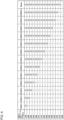
- Fig. 4 shows layers in the target model that are targeted for training in accordance with the domain adaptation data richness.
- the higher the domain adaptation data richness the larger the number of convolutional layers, including those near the input layer, are targeted for training, and, the lower the domain adaptation data richness, the smaller the number of convolutional layers, and, those near the output layer, are targeted for training.
- the relationship between the domain adaptation data richness and the layers targeted for training is not limited to the one described above. What is required is that the higher the domain adaptation data richness, the larger the number of layers from higher layers (layers near the input) to lower layers (layers near the output) are targeted for training, and the lower the domain adaptation data richness, the smaller the number of layers, and, lower layers (layers near the output), are targeted for training.
- Dense denotes the 3 full-connected layers. In this case, 3 full-connected layers are bundled for the purpose of control, but they may be controlled one by one as in the case of convolutional layers.
- the domain adaptation data richness is defined as a ratio between the number of items of training data in a class in the target domain in which class the per-class number of items of training data is the smallest and the predetermined number of items of training data TDNUM.
- the domain adaptation data richness may be the number of items of training data in a class in the target domain in which class the per-class number of items of training data is the smallest.
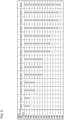
- Fig. 5 shows further exemplary layers that are targeted for training in accordance with the domain adaptation data richness.
- a plurality of convolutional layers are bundled in units of pooling layers for the purpose of control.
- the two convolutional layers CONV1-1 and CONV1-2 are bundled into one and are targeted for training when the domain adaptation data richness is not higher than 1.00 and not lower than 0.95
- the two convolutional layers CONV2-1 and CONV2-2 are bundled into one and are targeted for training when the domain adaptation data richness is not higher than 1.00 and not lower than 0.85.
- the rest remains the same, and two adjacent convolutional layers are bundled into one and are targeted for training.
- Fig. 6 shows further exemplary layers that are targeted for training in accordance with the domain adaptation data richness.
- layers near the input layer are not targeted for training invariably.
- the four convolutional layers CONV1-1, CONV1-2, CONV2-2, and CONV2-2 near the input layer are not targeted for training.
- Fig. 7 is a flowchart showing a sequence of machine learning steps executed by the machine learning device of Fig. 1 .
- the domain adaptation data richness determination unit 52 of the transfer learning unit 50 of the machine learning device 100 determines the domain adaptation data richness based on the number of items of training data of the target domain (S10).
- the learning layer determination unit 54 determines the layer in the target model, which is a duplicate of the source model, targeted for training, based on the domain adaptation data richness (S20).
- the transfer learning execution unit 56 applies transfer learning to the layer in the target model targeted for training, by using images of the target domain as training data (S30).
- the above-described various processes in the machine learning device 100 and the inference device 200 can of course be implemented by hardware-based devices such as a CPU and a memory and can also be implemented by firmware stored in a read-only memory (ROM), a flash memory, etc., or by software on a computer, etc.
- the firmware program or the software program may be made available on, for example, a computer readable recording medium.
- the program may be transmitted and received to and from a server via a wired or wireless network.
- the program may be transmitted and received in the form of data broadcast over terrestrial or satellite digital broadcast systems.
- the machine learning device 100 of the embodiment it is possible, according to the machine learning device 100 of the embodiment, to generate a target model adapted to the property of the domain, having high a processing efficiency, and having a high inference precision and generalization capability, by changing the layer in a neural network of the target model trained by transfer learning in accordance the domain adaptation data richness based on the number of items of training data of the target domain.
- the present invention relates to machine learning technologies.
Landscapes
- Engineering & Computer Science (AREA)
- Theoretical Computer Science (AREA)
- Physics & Mathematics (AREA)
- Software Systems (AREA)
- Computing Systems (AREA)
- Artificial Intelligence (AREA)
- Mathematical Physics (AREA)
- General Physics & Mathematics (AREA)
- Data Mining & Analysis (AREA)
- Evolutionary Computation (AREA)
- General Engineering & Computer Science (AREA)
- Biomedical Technology (AREA)
- Molecular Biology (AREA)
- General Health & Medical Sciences (AREA)
- Computational Linguistics (AREA)
- Biophysics (AREA)
- Life Sciences & Earth Sciences (AREA)
- Health & Medical Sciences (AREA)
- Computer Vision & Pattern Recognition (AREA)
- Medical Informatics (AREA)
- Image Analysis (AREA)
Abstract
Description
- The present invention relates to machine learning technologies.
- Transfer learning is known as a technology of adapting a model trained in a domain to another domain. In transfer learning, the domain that is a source is referred to as a source domain, and the domain that is a destination is referred to as a target domain. It is required to adapt a model trained in a source model to a target domain efficiently.
- Patent document 1 discloses domain transformation neural networks configured to receive an input image from a source domain and process a network input comprising the input image from the source domain to generate a transformed image that is a transformation of the input image from the source domain to a target domain that is different from the source domain.
- [patent document 1]
JP2020-502665 - When adapting a model trained in a source domain to a target domain in transfer learning, transfer learning has been performed by disregarding the property of the domain. This has led to a problem in that the quality of generalization of inference precision is lowered, or the volume of process grows unnecessarily large.
- The present invention addresses the issue described above, and a purpose thereof is to provide a machine learning technology capable of performing transfer learning in accordance with the property of a domain.
- A machine learning device according to an aspect of the embodiment includes: a domain adaptation data richness determination unit that, when a first model trained by using training data of a first domain is trained by transfer learning by using training data of a second domain, determines a domain adaptation data richness based on the number of items of training data of the second domain, the first model being a neural network; a learning layer determining unit that determines a layer in the second model, which is a duplicate of the first model, targeted for training, based on the domain adaptation data richness; and a transfer learning unit that applies transfer learning to the layer in the second model targeted for training, by using the training data of the second domain.
- Another mode of the embodiment relates to a machine learning method. The method includes: when a first model trained by using training data of a first domain is trained by transfer learning by using training data of a second domain, determining a domain adaptation data richness based on the number of items of training data of the second domain, the first model being a neural network; determining a layer in the second model, which is a duplicate of the first model, targeted for training, based on the domain adaptation data richness; and applying transfer learning to the layer in the second model targeted for training, by using the training data of the second domain.
- Optional combinations of the aforementioned constituting elements, and implementations of the embodiment in the form of methods, apparatuses, systems, recording mediums, and computer programs may also be practiced as additional modes of the present invention.
- According to the embodiment, it is possible to provide a machine learning technology capable of performing transfer learning in accordance with the property of a domain.
-
-
Fig. 1 shows a configuration of a machine learning device and an inference device according to the embodiment; -
Fig. 2 shows a detailed configuration of the transfer learning unit of the machine learning device ofFig. 1 ; -
Fig. 3 shows a structure of a neural network model used as a source model and a target model in the machine learning device ofFig. 1 ; -
Fig. 4 shows layers in the target model that are targeted for training in accordance with the domain adaptation data richness; -
Fig. 5 shows further exemplary layers that are targeted for training in accordance with the domain adaptation data richness; -
Fig. 6 shows further exemplary layers that are targeted for training in accordance with the domain adaptation data richness; and -
Fig. 7 is a flowchart showing a sequence of machine learning steps executed by the machine learning device ofFig. 1 . -
Fig. 1 shows a configuration of amachine learning device 100 and aninference device 200 according to the embodiment. Themachine learning device 100 includes a sourcemodel storage unit 30, a targetdomain acquisition unit 40, atransfer learning unit 50, and a targetmodel storage unit 60. Theinference device 200 includes a targetdomain acquisition unit 70, aninference unit 80, and an inferenceresult output unit 90. - Transfer learning is one of machine learning methods and is a method of adapting a model trained for a first task having sufficient data to learning of a second task related to the first task but not having sufficient data. Transfer learning can transfer the knowledge learned on the basis of sufficient data to a further task and so makes it possible to obtain highly precise results for the second task not having much data.
- In transfer learning, a case in which the input domain of the first task and the input domain of the second task are of the same type and differ only in probability distribution is referred to as "domain adaptation".
- The input domain of the first task that is a source of transfer is referred to as "source domain", and the input domain of the second task that is a destination of transfer is referred to as "target domain". Further, the model trained for the first task is referred to as "source model", and the model trained for the second task is referred to as "target model".
- In one example of domain adaptation, it is preferable to use, as the source domain, computer graphics (CG) and Web images, for which it is easy to collect data, and to use, as the target domain, real images captured by a camera or the like. The forms of the source domain and the target domain are not limited to these.
- By training the source model using a large quantity of CG images as the source domain and using images captured by the camera as the target domain, transfer learning from the source model is performed in domain adaptation to generate a target model. It will be assumed here that classes included in the domain are exemplified by persons, cars, bicycles, dogs, and motorcycles, and the task is categorization.
- The
machine learning device 100 is a device to generate a target model by transfer learning, based on a trained source model and a target domain. - The source
domain acquisition unit 10 acquires, as the source domain, CG images of persons, cars, bicycles, dogs, and motorcycles in a quantity sufficiently large to train the source model to categorize persons, cars, bicycles, dogs, and motorcycles with high precision. - The
learning unit 20 uses the source domain to train a neural network model by machine learning to generate a source model and stores the generated source model in the sourcemodel storage unit 30. The source model can categorize the source domain with high precision. - The source model stored in the source
model storage unit 30 is a trained source model used as a model at the source of transfer in transfer learning. The source model is a neural network model. - The target
domain acquisition unit 40 acquires, as the target domain, images of persons, cars, bicycles, dogs, and motorcycles captured by a camera. The target domain generally has a smaller quantity of data than the source domain. - The
transfer learning unit 50 uses the target domain acquired by the targetdomain acquisition unit 40 to generate a target model by applying transfer learning to the source model stored in the sourcemodel storage unit 30. Thetransfer learning unit 50 stores the generated target model in the targetmodel storage unit 60. - The target model stored in the target
model storage unit 60 is a trained model generated by transfer learning. The target model is a neural network model. The target model is derived from re-training a part of the source model at the source of transfer that is duplicated, by using the target domain. - The
inference device 200 is a device that infers from and categorizes images by using the target model generated by themachine learning device 100. Theinference device 200 is provided with, for example, an imaging unit, infers from images acquired from the imaging unit, and outputs a result of inference. - The target
domain acquisition unit 70 acquires the target domain targeted for inference and supplies the target domain to theinference unit 80. Theinference unit 80 infers from the target domain based on the target model stored in the targetmodel storage unit 60 and outputs a result of inference to the inferenceresult output unit 90. The inferenceresult output unit 90 outputs the categorization resulting from the inference. -
Fig. 2 shows a detailed configuration of thetransfer learning unit 50 of themachine learning device 100. Thetransfer learning unit 50 includes a domain adaptation datarichness determination unit 52, a learninglayer determination unit 54, and a transferlearning execution unit 56. - The domain adaptation data
richness determination unit 52 determines domain adaptation data richness based on the number of items training data in the target domain. - More specifically, the domain adaptation data richness is a ratio between the number of items of training data in a class in the target domain in which class the per-class number of items of training data is the smallest and the predetermined number of items of training data TDNUM. The predetermined number of items of training data is the number of items of training data sufficient to perform learning accurately. The predetermined number of items training data depends on the neural network model. It is assumed here that the neural network model is VGG16 and the predetermined number of items of training data is 3000. The precision of learning according to the number of items of training data may be measured in advance by using the training data of the source domain, and the number of items of training data resulting in a precision higher than the desired precision may be used as the predetermined number of items of training data. The domain adaptation data richness is preferably calculated by the following equation. MIN(N,M) is a function to select the smallest value of n or m. In this case, the domain adaptation data richness is a value not smaller than 0 and not larger than 1. Domain adaptation data richness=MIN(1,(number of items of training data in a class, in the target domain, with the smallest number of items of training data)/TDNUM).
- The learning
layer determination unit 54 determines a layer in the target model (a neural network model) targeted for training, based on the domain adaptation data richness. - To be specific, the learning
layer determination unit 54 may ensure that the higher the domain adaptation data richness, the larger the number of layers in the target model targeted for training, and, the lower the domain adaptation data richness, the smaller the number of layers in the target model targeted for training. - The learning
layer determination unit 54 may include a larger number of layers from higher layers (layers near the input) to lower layers (layers near the output) as targets of training when the domain adaptation data richness is higher, and, may define a smaller number of layers toward lower layers (layers near the output) to be targets of training when the domain adaptation data richness is lower. In other words, the learninglayer determination unit 54 includes more of the layers near the input layer as layers targeted for training, as the domain adaptation data richness becomes higher. - The learning
layer determination unit 54 may determine only full-connected layers in the target model to be layers targeted for training when the domain adaptation data richness is equal to or lower than a predetermined value. - Thus, when the domain adaptation data richness is low, i.e., when the number of items of training data is small, it is possible, by training only lower layers in the target model, to adapt the source model to the target model such that the generalization capability of detailed feature extraction of higher layers in the source model is maintained and to maintain the precision of the target model trained by transfer learning at a high level. Conversely, when the domain adaptation data richness is high, i.e., when the number of items of training data is large, it is possible, by training a large number of layers in the target model, to increase the precision of the target model trained by transfer learning.
- The transfer
learning execution unit 56 uses images of the target domain as training data to apply transfer learning to the layer(s) of the target model determined by the learninglayer determination unit 54 to be targeted for training. Those layers other than the layers determined to be targeted for training are layers that are not trained. The layers of the duplicated source model are used as they are without being newly trained. -
Fig. 3 shows a structure of a neural network model used as a source model and a target model in themachine learning device 100. - In the embodiment, the source model and the target model are assumed to be a neural network model VGG16. VGG16 is comprised of 13 convolutional layers (CONV), 3 fully-connected layers (Dense), and 5 pooling layers. The layers that are targeted for training include convolutional layers and full-connected layers. The pooling layer is a layer that sub-samples the feature map output from the convolutional layer. The source model and the target model are not limited to VGG16, and the number of layers is not limited to that of the embodiment.
-
Fig. 4 shows layers in the target model that are targeted for training in accordance with the domain adaptation data richness. - When the domain adaptation data richness is 1.00, all layers are targeted for training. When the domain adaptation data richness is less than 1.00 and equal to more than 0.95, the layers other than CONV-1 are targeted for training. A duplicate of the layer CONV1-1 of the source model is used as it is. When the domain adaptation data richness is less than 0.95 and equal to or more than 0.90, the layers other than CONV1-1 and CONV1-2 are targeted for training. The duplicates of the layers CONV1-1 and CONV1-2 of the source model are used as they are. The rest remains the same, and, when the domain adaptation data richness is less than 0.10 and equal to or more than 0.00, none of the layers are targeted for training. In this case, the duplicates of all layers in the source model are used as they are.
- Thus, the higher the domain adaptation data richness, the larger the number of convolutional layers, including those near the input layer, are targeted for training, and, the lower the domain adaptation data richness, the smaller the number of convolutional layers, and, those near the output layer, are targeted for training.
- The relationship between the domain adaptation data richness and the layers targeted for training is not limited to the one described above. What is required is that the higher the domain adaptation data richness, the larger the number of layers from higher layers (layers near the input) to lower layers (layers near the output) are targeted for training, and the lower the domain adaptation data richness, the smaller the number of layers, and, lower layers (layers near the output), are targeted for training. Dense denotes the 3 full-connected layers. In this case, 3 full-connected layers are bundled for the purpose of control, but they may be controlled one by one as in the case of convolutional layers. In addition, the domain adaptation data richness is defined as a ratio between the number of items of training data in a class in the target domain in which class the per-class number of items of training data is the smallest and the predetermined number of items of training data TDNUM. However, the domain adaptation data richness may be the number of items of training data in a class in the target domain in which class the per-class number of items of training data is the smallest.
-
Fig. 5 shows further exemplary layers that are targeted for training in accordance with the domain adaptation data richness. - In the example shown in
Fig. 5 , a plurality of convolutional layers are bundled in units of pooling layers for the purpose of control. For example, the two convolutional layers CONV1-1 and CONV1-2 are bundled into one and are targeted for training when the domain adaptation data richness is not higher than 1.00 and not lower than 0.95, and the two convolutional layers CONV2-1 and CONV2-2 are bundled into one and are targeted for training when the domain adaptation data richness is not higher than 1.00 and not lower than 0.85. The rest remains the same, and two adjacent convolutional layers are bundled into one and are targeted for training. With the above configuration, it is possible to maintain feature extraction of the source model for each resolution of the feature map. -
Fig. 6 shows further exemplary layers that are targeted for training in accordance with the domain adaptation data richness. - In the example shown in
Fig. 6 , layers near the input layer are not targeted for training invariably. In this case, the four convolutional layers CONV1-1, CONV1-2, CONV2-2, and CONV2-2 near the input layer are not targeted for training. With regard to the other convolutional layers, the higher the domain adaptation data richness, the smaller the number of convolutional layers, and, those near the output layer, are targeted for training. - This improves the precision and reduces the volume of computation by exploiting edge-level detailed feature extraction of the source model as it is and by starting with adapting a feature that is, to a degree, abstract in nature to the target domain.
-
Fig. 7 is a flowchart showing a sequence of machine learning steps executed by the machine learning device ofFig. 1 . - The domain adaptation data
richness determination unit 52 of thetransfer learning unit 50 of themachine learning device 100 determines the domain adaptation data richness based on the number of items of training data of the target domain (S10). - The learning
layer determination unit 54 determines the layer in the target model, which is a duplicate of the source model, targeted for training, based on the domain adaptation data richness (S20). - The transfer
learning execution unit 56 applies transfer learning to the layer in the target model targeted for training, by using images of the target domain as training data (S30). - The above-described various processes in the
machine learning device 100 and theinference device 200 can of course be implemented by hardware-based devices such as a CPU and a memory and can also be implemented by firmware stored in a read-only memory (ROM), a flash memory, etc., or by software on a computer, etc. The firmware program or the software program may be made available on, for example, a computer readable recording medium. Alternatively, the program may be transmitted and received to and from a server via a wired or wireless network. Still alternatively, the program may be transmitted and received in the form of data broadcast over terrestrial or satellite digital broadcast systems. - As described above, it is possible, according to the
machine learning device 100 of the embodiment, to generate a target model adapted to the property of the domain, having high a processing efficiency, and having a high inference precision and generalization capability, by changing the layer in a neural network of the target model trained by transfer learning in accordance the domain adaptation data richness based on the number of items of training data of the target domain. - Described above is an explanation based on an exemplary embodiment. The embodiment is intended to be illustrative only and it will be understood by those skilled in the art that various modifications to combinations of constituting elements and processes are possible and that such modifications are also within the scope of the present invention.
- The present invention relates to machine learning technologies.
- 10 source domain acquisition unit, 20 learning unit, 30 source model storage unit, 40 target domain acquisition unit, 50 transfer learning unit, 52 domain adaptation data richness determination unit, 54 learning layer determination unit, 56 transfer learning execution unit, 60 target model storage unit, 70 target domain acquisition unit, 80 inference unit, 90 inference result output unit, 100 machine learning device, 200 inference device
Claims (6)
- A machine learning device comprising:a domain adaptation data richness determination unit that, when a first model trained by using training data of a first domain is trained by transfer learning by using training data of a second domain, determines a domain adaptation data richness based on the number of items of training data of the second domain, the first model being a neural network;a learning layer determining unit that determines a layer in the second model, which is a duplicate of the first model, targeted for training, based on the domain adaptation data richness; anda transfer learning unit that applies transfer learning to the layer in the second model targeted for training, by using the training data of the second domain.
- The machine learning device according to claim 1, wherein
the learning layer determination unit ensures that the higher the domain adaptation data richness, the larger the number of layers targeted for training, and the lower the domain adaptation data richness, the smaller the number of layers targeted for training. - The machine learning device according to claim 1 or 2, wherein
the learning layer determination unit includes more of layers near an input layer as layers targeted for training, as the domain adaptation data richness becomes higher. - The machine learning device according to claim 1, wherein
the learning layer determination unit determines only full-connected layers to be layers targeted for training when the domain adaptation data richness is equal to or lower than a predetermined value. - A machine learning method comprising:when a first model trained by using training data of a first domain is trained by transfer learning by using training data of a second domain, determining a domain adaptation data richness based on the number of items of training data of the second domain, the first model being a neural network;determining a layer in the second model, which is a duplicate of the first model, targeted for training, based on the domain adaptation data richness; andapplying transfer learning to the layer in the second model targeted for training, by using the training data of the second domain.
- A machine learning program comprising computer-implemented modules including:a module that, when a first model trained by using training data of a first domain is trained by transfer learning by using training data of a second domain, determines a domain adaptation data richness based on the number of items of training data of the second domain, the first model being a neural network;a module that determines a layer in the second model, which is a duplicate of the first model, targeted for training, based on the domain adaptation data richness; anda module that applies transfer learning to the layer in the second model targeted for training, by using the training data of the second domain.
Applications Claiming Priority (2)
| Application Number | Priority Date | Filing Date | Title |
|---|---|---|---|
| JP2021019468A JP7729047B2 (en) | 2021-02-10 | 2021-02-10 | Machine learning device, machine learning method, and machine learning program |
| PCT/JP2021/045349 WO2022172569A1 (en) | 2021-02-10 | 2021-12-09 | Machine learning device, machine learning method, and machine learning program |
Publications (3)
| Publication Number | Publication Date |
|---|---|
| EP4276698A1 true EP4276698A1 (en) | 2023-11-15 |
| EP4276698A4 EP4276698A4 (en) | 2024-07-10 |
| EP4276698B1 EP4276698B1 (en) | 2026-02-25 |
Family
ID=82838632
Family Applications (1)
| Application Number | Title | Priority Date | Filing Date |
|---|---|---|---|
| EP21925813.4A Active EP4276698B1 (en) | 2021-02-10 | 2021-12-09 | Machine learning device, machine learning method, and machine learning program |
Country Status (5)
| Country | Link |
|---|---|
| US (1) | US20230385705A1 (en) |
| EP (1) | EP4276698B1 (en) |
| JP (2) | JP7729047B2 (en) |
| CN (1) | CN116615735A (en) |
| WO (1) | WO2022172569A1 (en) |
Families Citing this family (3)
| Publication number | Priority date | Publication date | Assignee | Title |
|---|---|---|---|---|
| US12160609B2 (en) | 2022-01-12 | 2024-12-03 | Optum Services (Ireland) Limited | Segment-wise prediction machine learning frameworks |
| US12271395B2 (en) * | 2022-09-01 | 2025-04-08 | Optum Services (Ireland) Limited | Focusing unstructured data and generating focused data determinations from an unstructured data set |
| JP7740560B2 (en) * | 2023-01-13 | 2025-09-17 | コニカミノルタ株式会社 | Learning device, program, and learning method |
Family Cites Families (3)
| Publication number | Priority date | Publication date | Assignee | Title |
|---|---|---|---|---|
| WO2018109505A1 (en) | 2016-12-15 | 2018-06-21 | Google Llc | Transforming source domain images into target domain images |
| JP6981554B2 (en) | 2018-09-14 | 2021-12-15 | 日本電気株式会社 | Identification system, parameter value update method and program |
| WO2020188971A1 (en) | 2019-03-15 | 2020-09-24 | 富士フイルム株式会社 | Characteristics estimation method, characteristics estimation device, program, and recording medium |
-
2021
- 2021-02-10 JP JP2021019468A patent/JP7729047B2/en active Active
- 2021-12-09 CN CN202180084373.XA patent/CN116615735A/en active Pending
- 2021-12-09 WO PCT/JP2021/045349 patent/WO2022172569A1/en not_active Ceased
- 2021-12-09 EP EP21925813.4A patent/EP4276698B1/en active Active
-
2023
- 2023-08-10 US US18/447,347 patent/US20230385705A1/en active Pending
-
2025
- 2025-08-07 JP JP2025132486A patent/JP2025147225A/en active Pending
Also Published As
| Publication number | Publication date |
|---|---|
| JP7729047B2 (en) | 2025-08-26 |
| CN116615735A (en) | 2023-08-18 |
| JP2022122326A (en) | 2022-08-23 |
| US20230385705A1 (en) | 2023-11-30 |
| WO2022172569A1 (en) | 2022-08-18 |
| EP4276698B1 (en) | 2026-02-25 |
| EP4276698A4 (en) | 2024-07-10 |
| JP2025147225A (en) | 2025-10-06 |
Similar Documents
| Publication | Publication Date | Title |
|---|---|---|
| US20230385705A1 (en) | Machine learning device, machine learning method, and non-transitory computer-readable recording medium having embodied thereon a machine learning program | |
| US20230289614A1 (en) | Machine learning device, machine learning method, and non-transitory computer-readable recording medium having embodied thereon a trained model | |
| CN116776964B (en) | Methods, program products, and storage media for distributed reinforcement learning | |
| WO2020061489A4 (en) | Training neural networks for vehicle re-identification | |
| EP3568810A1 (en) | Action selection for reinforcement learning using neural networks | |
| US11257217B2 (en) | Image segmentation using neural networks | |
| CN113094181A (en) | Multi-task federal learning method and device facing edge equipment | |
| JP2021189625A (en) | On-road obstacle detection device, on-road obstacle detection method, and on-road obstacle detection program | |
| US20250363339A1 (en) | Head architecture for deep neural network (dnn) | |
| CN114489043A (en) | Multi-agent path planning method and device, electronic equipment and storage medium | |
| US20230101250A1 (en) | Method for generating a graph structure for training a graph neural network | |
| CN111931799A (en) | Image recognition method and device | |
| CN118036706A (en) | A multi-task processing system for graph federated transfer learning based on graph subtree differences | |
| CN113822307B (en) | Image prediction method, device and storage medium | |
| CN116384516A (en) | A Cost-Sensitive Cloud-Edge Collaboration Method Based on Ensemble Learning | |
| Lian et al. | Cloud-edge collaborative continual adaptation for its object detection | |
| CN119760495A (en) | Recognition method for incremental learning of pre-trained models based on neural breakdown theory | |
| EP4695778A1 (en) | Performing image processing tasks based on demonstration examples | |
| US20250384583A1 (en) | Modeling graph-structured data with point grid convolution | |
| CN111126493A (en) | Deep learning model training method and device, electronic equipment and storage medium | |
| EP4577946A1 (en) | Point grid network with learnable semantic grid transformation | |
| CN111325210B (en) | Method and apparatus for outputting information | |
| CN117115225B (en) | Intelligent comprehensive informatization management platform for natural resources | |
| US20240394505A1 (en) | Method for determining an architecture of a multitasking model | |
| CN116958943B (en) | A method for detecting small targets for monitoring the behavior of special vehicle drivers |
Legal Events
| Date | Code | Title | Description |
|---|---|---|---|
| STAA | Information on the status of an ep patent application or granted ep patent |
Free format text: STATUS: THE INTERNATIONAL PUBLICATION HAS BEEN MADE |
|
| PUAI | Public reference made under article 153(3) epc to a published international application that has entered the european phase |
Free format text: ORIGINAL CODE: 0009012 |
|
| STAA | Information on the status of an ep patent application or granted ep patent |
Free format text: STATUS: REQUEST FOR EXAMINATION WAS MADE |
|
| 17P | Request for examination filed |
Effective date: 20230810 |
|
| AK | Designated contracting states |
Kind code of ref document: A1 Designated state(s): AL AT BE BG CH CY CZ DE DK EE ES FI FR GB GR HR HU IE IS IT LI LT LU LV MC MK MT NL NO PL PT RO RS SE SI SK SM TR |
|
| DAV | Request for validation of the european patent (deleted) | ||
| DAX | Request for extension of the european patent (deleted) | ||
| A4 | Supplementary search report drawn up and despatched |
Effective date: 20240610 |
|
| RIC1 | Information provided on ipc code assigned before grant |
Ipc: G06N 3/096 20230101ALI20240604BHEP Ipc: G06N 3/0464 20230101ALI20240604BHEP Ipc: G06N 3/045 20230101ALI20240604BHEP Ipc: G06N 20/00 20190101ALI20240604BHEP Ipc: G06N 3/08 20230101AFI20240604BHEP |
|
| STAA | Information on the status of an ep patent application or granted ep patent |
Free format text: STATUS: EXAMINATION IS IN PROGRESS |
|
| 17Q | First examination report despatched |
Effective date: 20250310 |
|
| GRAP | Despatch of communication of intention to grant a patent |
Free format text: ORIGINAL CODE: EPIDOSNIGR1 |
|
| STAA | Information on the status of an ep patent application or granted ep patent |
Free format text: STATUS: GRANT OF PATENT IS INTENDED |
|
| INTG | Intention to grant announced |
Effective date: 20250915 |
|
| GRAS | Grant fee paid |
Free format text: ORIGINAL CODE: EPIDOSNIGR3 |
|
| GRAA | (expected) grant |
Free format text: ORIGINAL CODE: 0009210 |
|
| STAA | Information on the status of an ep patent application or granted ep patent |
Free format text: STATUS: THE PATENT HAS BEEN GRANTED |
|
| AK | Designated contracting states |
Kind code of ref document: B1 Designated state(s): AL AT BE BG CH CY CZ DE DK EE ES FI FR GB GR HR HU IE IS IT LI LT LU LV MC MK MT NL NO PL PT RO RS SE SI SK SM TR |
|
| RAP3 | Party data changed (applicant data changed or rights of an application transferred) |
Owner name: JVCKENWOOD CORPORATION |
|
| REG | Reference to a national code |
Ref country code: CH Ref legal event code: F10 Free format text: ST27 STATUS EVENT CODE: U-0-0-F10-F00 (AS PROVIDED BY THE NATIONAL OFFICE) Effective date: 20260225 Ref country code: GB Ref legal event code: FG4D |
|
| REG | Reference to a national code |
Ref country code: DE Ref legal event code: R096 Ref document number: 602021048980 Country of ref document: DE |
|
| REG | Reference to a national code |
Ref country code: IE Ref legal event code: FG4D |