EP4274280A1 - Maximum number of pdu session handling per subscription per network - Google Patents
Maximum number of pdu session handling per subscription per network Download PDFInfo
- Publication number
- EP4274280A1 EP4274280A1 EP23171652.3A EP23171652A EP4274280A1 EP 4274280 A1 EP4274280 A1 EP 4274280A1 EP 23171652 A EP23171652 A EP 23171652A EP 4274280 A1 EP4274280 A1 EP 4274280A1
- Authority
- EP
- European Patent Office
- Prior art keywords
- snpn
- subscription
- pdu sessions
- maximum number
- access
- Prior art date
- Legal status (The legal status is an assumption and is not a legal conclusion. Google has not performed a legal analysis and makes no representation as to the accuracy of the status listed.)
- Granted
Links
Images




Classifications
-
- H—ELECTRICITY
- H04—ELECTRIC COMMUNICATION TECHNIQUE
- H04W—WIRELESS COMMUNICATION NETWORKS
- H04W48/00—Access restriction; Network selection; Access point selection
- H04W48/02—Access restriction performed under specific conditions
- H04W48/06—Access restriction performed under specific conditions based on traffic conditions
-
- H—ELECTRICITY
- H04—ELECTRIC COMMUNICATION TECHNIQUE
- H04W—WIRELESS COMMUNICATION NETWORKS
- H04W48/00—Access restriction; Network selection; Access point selection
- H04W48/18—Selecting a network or a communication service
-
- H—ELECTRICITY
- H04—ELECTRIC COMMUNICATION TECHNIQUE
- H04W—WIRELESS COMMUNICATION NETWORKS
- H04W8/00—Network data management
- H04W8/18—Processing of user or subscriber data, e.g. subscribed services, user preferences or user profiles; Transfer of user or subscriber data
- H04W8/183—Processing at user equipment or user record carrier
-
- H—ELECTRICITY
- H04—ELECTRIC COMMUNICATION TECHNIQUE
- H04W—WIRELESS COMMUNICATION NETWORKS
- H04W60/00—Affiliation to network, e.g. registration; Terminating affiliation with the network, e.g. de-registration
- H04W60/04—Affiliation to network, e.g. registration; Terminating affiliation with the network, e.g. de-registration using triggered events
-
- H—ELECTRICITY
- H04—ELECTRIC COMMUNICATION TECHNIQUE
- H04W—WIRELESS COMMUNICATION NETWORKS
- H04W88/00—Devices specially adapted for wireless communication networks, e.g. terminals, base stations or access point devices
- H04W88/02—Terminal devices
- H04W88/06—Terminal devices adapted for operation in multiple networks or having at least two operational modes, e.g. multi-mode terminals
Definitions
- the disclosed embodiments relate generally to wireless mobile communication network, and, more particularly, to methods for handling maximum number of PDU sessions per subscription per network.
- a Public Land Mobile Network is a network established and operated by an administration or recognized operating agency (ROA) for the specific purpose of providing land mobile communication services to the public.
- PLMN provides communication possibilities for mobile users.
- a PLMN may provide service in one or a combination of frequency bands. Access to PLMN services is achieved by means of an air interface involving radio communications between mobile phones and base stations with integrated IP network services.
- One PLMN may include multiple radio access networks (RAN) utilizing different radio access technologies (RAT) for accessing mobile services.
- RAN radio access networks
- RAT radio access technologies
- a radio access network is part of a mobile communication system, which implements a radio access technology.
- RAN resides between a mobile device and provides connection with its core network (CN).
- CN core network
- UE user equipment
- TE terminal equipment
- MS mobile stations
- MT mobile termination
- UE user equipment
- TE terminal equipment
- MS mobile stations
- MT mobile termination
- RATs include 2G GER_AN (GSM) radio access network, 3G UTRAN (UMTS) radio access network, 4G E-UTRAN (LTE), 5G new radio (NR) radio access network, NG-RAN (Next-Generation RAN), and other non-3GPP access RAT including WiFi.
- GSM 2G GER_AN
- UMTS 3G UTRAN
- LTE 4G E-UTRAN
- NR 5G new radio
- NG-RAN Next-Generation RAN
- WiFi Next-Generation RAN
- a non-public network is a network for non-public use.
- An NPN is either a Stand-alone Non-Public Network (SNPN), i.e., operated by an NPN operator and not relying on network functions provided by a PLMN; or a Public Network Integrated NPN (PNI-NPN), i.e., a non-public network deployed with the support of a PLMN.
- SNPN Stand-alone Non-Public Network
- PNI-NPN Public Network Integrated NPN
- a Credentials Holder may authenticate and authorize access to an SNPN separate from the Credentials Holder.
- the combination of a PLMN ID and Network identifier (NID) identifies an SNPN.
- a protocol data unit (PDU) session defines the association between the UE and the data network that provides a PDU connectivity service.
- the PDU session establishment is a parallel procedure of PDN connection (bearer) procedure in 4G/LTE.
- Each PDU session is identified by a PDU session ID (PSI), and may include multiple QoS flows and QoS rules.
- PSI PDU session ID
- Each PDU session can be established via a 5G access network (e.g.,3GPP radio access network (RAN), or via a non-3GPP access).
- the network and /or the UE can initiate different PDU session procedures, e.g., PDU session establishment, PDU session modification, and PDU session release, for managing the activation and deactivation of 5GS PDU sessions.
- the UE can only establish a maximum number of PDU sessions in a PLMN or SNPN. When the number of active 5GS PDU sessions reach the network's (PLMN or SNPN) maximum number of 5GS PDU sessions, then UE should not send request to establish additional PDU sessions. If UE supports access to an SNPN using credentials from a Credential Holder, a solution is sought on how to handle and maintain the maximum number of PDU sessions when UE uses different subscriptions to access the SNPN.
- a first aspect of the invention relates to a method, comprising: maintaining multiple subscriptions by a user equipment (UE) for accessing standalone non-public networks (SNPNs), wherein the UE supports access to the SNPNs using credentials from a Credentials Holder; selecting a first subscription to access a selected SNPN, wherein the UE maintains a first maximum number of PDU sessions for the selected SNPN associated with the first subscription; and selecting a second subscription to access the selected SNPN, wherein the UE maintains a second maximum number of PDU sessions for the selected SNPN associated with the second subscription.
- UE user equipment
- SNPNs standalone non-public networks
- the selected SNPN is included in a user controlled list of SNPNs of a UE configuration for SNPN selection.
- the selected SNPN is included in a credential holder controlled list of SNPNs of a UE configuration for SNPN selection.
- the first or the second subscription is an SNPN subscription and is contained in an entry of a list of subscriber data for SNPN.
- the first or the second subscription is a PLMN subscription of a Universal Subscription Identification Module (USIM).
- USIM Universal Subscription Identification Module
- the UE is registered to the selected SNPN using the first subscription, and wherein the UE receives an indication that a number of active PDU sessions has reached the first maximum number of PDU sessions of the selected SNPN during a PDU session establishment procedure.
- the UE refrains from sending a PDU SESSION ESTABLISHMENT REQUEST message when the number of active PDU sessions has reached the first maximum number of PDU sessions.
- the UE is registered to the selected SNPN using the second subscription, and wherein the UE receives an indication that a number of active PDU sessions has reached the second maximum number of PDU sessions of the selected SNPN during a PDU session establishment procedure.
- the UE refrains from sending a PDU SESSION ESTABLISHMENT REQUEST message when the number of active PDU sessions has reached the second maximum number of PDU sessions.
- a second aspect of the invention relates to a User Equipment (UE), comprising: a standalone non-public network (SNPN) information handling circuit that maintains multiple subscriptions for accessing SNPNs, wherein the UE supports access to the SNPNs using credentials from a Credentials Holder; a control circuit that selects a first subscription to access a selected SNPN, wherein the UE maintains a first maximum number of PDU sessions for the selected SNPN associated with the first subscription, wherein the control circuit also selects a second subscription to access the selected SNPN, and wherein the UE maintains a second maximum number of PDU sessions for the selected SNPN associated with the second subscription.
- SNPN non-public network
- the selected SNPN is included in a user controlled list of SNPNs of a UE configuration for SNPN selection.
- the selected SNPN is included in a credential holder controlled list of SNPNs of a UE configuration for SNPN selection.
- the first or the second subscription is an SNPN subscription and is contained in an entry of a list of subscriber data for SNPN.
- the first or the second subscription is a PLMN subscription of a Universal Subscription Identification Module (USIM).
- USIM Universal Subscription Identification Module
- the UE is registered to the selected SNPN using the first subscription, and wherein the UE receives an indication that a number of active PDU sessions has reached the first maximum number of PDU sessions of the selected SNPN during a PDU session establishment procedure.
- the UE refrains from sending a PDU SESSION ESTABLISHMENT REQUEST message when the number of active PDU sessions has reached the first maximum number of PDU sessions.
- the UE is registered to the selected SNPN using the second subscription, and wherein the UE receives an indication that a number of active PDU sessions has reached the second maximum number of PDU sessions of the selected SNPN during a PDU session establishment procedure.
- the UE refrains from sending a PDU SESSION ESTABLISHMENT REQUEST message when the number of active PDU sessions has reached the second maximum number of PDU sessions.
- a method of handling the maximum number of PDU sessions per SNPN per subscription is proposed. If a UE have multiple subscriptions to access a selected SNPN, then the UE maintains a maximum number of PDU session for the selected SNPN with respect to each selected subscription independently. If the UE selects a first subscription to access the selected SNPN, then the UE should not send a PDU session establishment request message if the number of active PDU sessions has reached the maximum number of PDU sessions for the selected SNPN associated with the first subscription, e.g., a first number.
- the UE should not send a PDU session establishment request message if the number of active PDU sessions has reached the maximum number of PDU sessions for the selected SNPN associated with the second subscription, e.g., a second number.
- FIG. 1 schematically shows a communication system 100 having a Public Land Mobile Network (PLMN) 110, a Stand-alone Non-public Network (SNPN) 120, and a Public Network Integrated NPN (PNI-NPN)/CAG 130 providing access for Localized services in accordance with one novel aspect.
- PLMN network 110 comprises control plane functionalities, user plane functionality (e.g., UPF), and applications that provides various services by communicating with a plurality of user equipments (UEs) including UE 101.
- Serving base station gNB 112 belong to part of a radio access network RAN 140.
- RAN 140 provides radio access for UE 101 via a radio access technology (RAT).
- An access and mobility management function (AMF) in PLMN 110 communicates with gNB 112.
- UE 101 may be equipped with a radio frequency (RF) transceiver or multiple RF transceivers.
- RF radio frequency
- SNPN network 120 comprises control plane functionalities, user plane functionality (e.g., UPF), and applications that provides various services by communicating with a plurality of user equipments (UEs) including UE 101.
- UEs user equipments
- NID Network identifier
- Serving base station gNB 122 belongs to part of RAN 150.
- RAN 150 provides radio access for UE 101 via a RAT.
- An AMF in SNPN 120 communicates with gNB 122.
- SNPN 120 is operated by an NPN operator and does not rely on network functions provided by a public network.
- a Credentials Holder (CH) may authenticate and authorize access to an SNPN separate from the Credentials Holder.
- CH Credentials Holder
- NG-RAN nodes which provide access to SNPNs broadcast the following information: One or multiple PLMN IDs, and a List of NIDs per PLMN ID identifying the non-public networks NG-RAN provides access to (123).
- An SNPN-enabled UE is configured with PLMN ID and NID (SNPN ID) of the subscribed SNPN, and an SNPN-enabled UE that supports access to an SNPN using credentials from a Credentials Holder may additionally be configured with information for SNPN selection (SNPN selection information or configuration) and registration using the SNPN subscription or using PLMN subscription (USIM) (in SNPN access mode) (102).
- PNI-NPN (CAG) network 130 comprises control plane functionalities (optional, it may rely on PLMN's control plane functionality), user plane functionality (optional, it may rely on PLMN's user plane functionality), and applications that provides various services by communicating with a plurality of user equipments (UEs) including UE 101.
- PNI-NPN (CAG) 130 is a non-public network deployed with the support of a PLMN, e.g., PLMN 110, by sharing e.g., RAN/gNB 112 and e.g., control plane functionalities.
- a Closed Access Group (CAG) identifies a group of subscribers who are permitted to access one or more CAG cells associated to the CAG.
- CAG is used for the PNI-NPNs to prevent UE(s), which are not allowed to access the NPN via the associated cell(s), from automatically selecting and accessing the associated CAG cell(s).
- a CAG is identified by a CAG Identifier which is unique within the scope of a PLMN ID.
- a CAG cell broadcasts one or multiple CAG Identifiers per PLMN (113), and a UE is configured with CAG related configuration/information (e.g., an (enhanced) CAG information list containing list of allowed CAGs per PLMN) (102).
- Local or Localized services are services that are localized (i.e., provided at specific/limited area and/or are bounded in time (a specific period of time)).
- a localized service provider is an application provider or a network operator who makes their services localized and to be offered to end user via a hosting network.
- a hosting network is a network that provides access for localized services and can be an SNPN or a PNI-NPN, while a home network is network owning the current in use subscription or credential of the UE.
- both SNPN 120 and PNI-NPN (CAG) 130 can be a hosting network providing access for Localized services to UE 101.
- a URSP rule may include an association of the UE application and the DNN or network slice which is meant for a specific localized service.
- a URSP rule can also include "Route Selection Validity Criteria” (Time Window and/or a Location Criteria Validity Conditions) with the time/location defined for the specific localized service.
- the LADN Local Access Data Network
- the PNI-NPN or SNPN operator configures the network with information enabling the UEs to access the localized services according to validity of the localized services, and the information is determined in agreement with the localized service provider, e.g.: (a) Identification of each localized service, e.g. to be used in URSP rules; (b) validity criteria/restriction for each localized service, e.g., the validity of time duration and/or (area of) location.
- UE can stop using the network resources for localized services for numerous reasons, e.g.: (a) Localized services in a network are completed; (b) Validity conditions of network selection information are no longer met; (c) The user decides to stop using the localized services before they are completed (e.g., end user disables to access Localized services); (d) A policy decision is taken by the network, with the effect that the UE is deregistered before the localized services are completed.
- Validity information or restrictions or criteria or conditions (103) are provided or configured to UE as part of the localized service information, which are used to restrict the UE's access of the SNPN/PNI-NPN (as hosting network) providing access for Localized services.
- UE For providing localized services to UE, UE needs to be able to discover, select and access a SNPN/PNI-NPN (as hosting network) providing access for the Localized services.
- the discovery mechanism is based on provisioning or configuring the UE with appropriate information.
- FIG. 2 illustrates simplified block diagrams of wireless devices, e.g., a UE 201 and network entity 211 in accordance with embodiments of the current invention.
- Network entity 211 may be a base station combined with an AMF.
- Network entity 211 has an antenna 215, which transmits and receives radio signals.
- a radio frequency RF transceiver module 214 coupled with the antenna, receives RF signals from antenna 215, converts them to baseband signals and sends them to processor 213.
- RF transceiver 214 also converts received baseband signals from processor 213, converts them to RF signals, and sends out to antenna 215.
- Processor 213 processes the received baseband signals and invokes different functional modules to perform features in base station 211.
- Memory 212 stores program instructions and data 220 to control the operations of base station 211.
- network entity 211 also includes a set of control functional modules and circuit 290.
- Registration circuit 231 handles registration and mobility procedure.
- Session management circuit 232 handles session management functionalities.
- Configuration and control circuit 233 provides different parameters to configure and control UE.
- UE 201 has memory 202, a processor 203, and radio frequency (RF) transceiver module 204.
- RF transceiver 204 is coupled with antenna 205, receives RF signals from antenna 205, converts them to baseband signals, and sends them to processor 203.
- RF transceiver 204 also converts received baseband signals from processor 203, converts them to RF signals, and sends out to antenna 205.
- Processor 203 processes the received baseband signals and invokes different functional modules and circuits to perform features in UE 201.
- Memory 202 stores data and program instructions 210 to be executed by the processor to control the operations of UE 201.
- Suitable processors include, by way of example, a special purpose processor, a digital signal processor (DSP), a plurality of micro-processors, one or more micro-processor associated with a DSP core, a controller, a microcontroller, application specific integrated circuits (ASICs), file programmable gate array (FPGA) circuits, and other type of integrated circuits (ICs), and/or state machines.
- DSP digital signal processor
- ASICs application specific integrated circuits
- FPGA file programmable gate array
- ICs integrated circuits
- UE 201 also comprises a set of functional modules and control circuits to carry out functional tasks of UE 201.
- Protocol stacks 260 comprise Non-Access-Stratum (NAS) layer to communicate with an AMF entity connecting to the core network, Radio Resource Control (RRC) layer for high layer configuration and control, Packet Data Convergence Protocol/Radio Link Control (PDCP/RLC) layer, Media Access Control (MAC) layer, and Physical (PHY) layer.
- System modules and circuits 270 may be implemented and configured by software, firmware, hardware, and/or combination thereof. The function modules and circuits, when executed by the processors via program instructions contained in the memory, interwork with each other to allow UE 201 to perform embodiments and functional tasks and features in the network.
- system modules and circuits 270 comprise registration circuit 221 that performs registration and mobility procedure with the network, a network and cell selection circuit 222 for performing network and cell selection, a PLMN/PNI-NPN(CAG)/SNPN information maintenance circuit 223 that handles the adding, removing, and resetting of one or more PLMN/PNI-NPN(CAG)/SNPN information in SIM/USIM and/or in UE (non-volatile) memory (source of the information may come from signaling as well), a config and control circuit 224 that handles configuration and control parameters.
- the network selection and registration related information such as HPLMN, Operator Controlled PLMN/SNPN Selector list, User Controlled PLMN/SNPN Selector list, may be stored in SIM/USIM 225 and/or in UE (non-volatile) memory.
- Figure 3A illustrates a first embodiment of a 5G system architecture with access to SNPN using credentials from credentials holder.
- Figure 3A depicts the 5G System architecture for SNPN with Credentials Holder using AAA Server for primary authentication and authorization.
- the AUSF and the UDM in SNPN may support primary authentication and authorization of UEs using credentials from a AAA Server in a Credentials Holder (CH).
- the SNPN in Figure 3A can be the subscribed SNPN for the UE (i.e. NG-RAN broadcasts SNPN ID of the subscribed SNPN).
- the SNPN in Figure 3A can also be another SNPN than the subscribed SNPN for the UE (i.e.
- the NSSAAF deployed in the SNPN can support primary authentication in the SNPN using credentials from Credentials Holder using a AAA Server (as depicted) and/or the NSSAAF can support Network Slice-Specific Authentication and Authorization with a Network Slice-Specific AAA Server (not depicted).
- Figure 3B illustrates a second embodiment of a 5G system architecture with access to SNPNs using credentials from credentials holder.
- Figure 3B depicts the 5G System architecture for SNPN with Credentials Holder using AUSF and UDM for primary authentication and authorization and network slicing.
- An SNPN may support primary authentication and authorization of UEs that use credentials from a Credentials Holder using AUSF and UDM.
- the Credentials Holder may be an SNPN or a PLMN.
- the Credentials Holder UDM provides to SNPN the subscription data.
- Figure 4 illustrates an example of NG-RAN mode(s) which broadcasts certain information in order to provide access to SNPNs.
- a Credentials Holder may authenticate and authorize access to an SNPN separate from the Credentials Holder.
- NID Network identifier
- the NID supports two assignment models. Under self-assignment model, NIDs are chosen individually by SNPNs at deployment time (and may therefore not be unique) but use a different numbering space than the coordinated assignment NIDs.
- NIDs are assigned using one of the following two options: 1) The NID is assigned such that it is globally unique independent of the PLMN ID used; or 2) The NID is assigned such that the combination of the NID and the PLMN ID is globally unique.
- the Group IDs for Network Selection supports two assignment models. Under self-assignment model, GINs are chosen individually and may therefore not be unique. Under coordinated assignment model, GIN uses a combination of PLMN ID and NID and is assigned using one of the following two options: 1) The GIN is assigned such that the NID is globally unique (e.g., using IANA Private Enterprise Numbers) independent of the PLMN ID used; or 2) The GIN is assigned such that the combination of the NID and the PLMN ID is globally unique.
- NG-RAN 401 provides access to SNPNs and broadcasts the following information (410): One or multiple PLMN IDs and List of NIDs per PLMN ID identifying the non-public networks the NG-RAN provides access to (e.g., SNPN 1 and SNPN 2).
- the broadcasted information further includes the following: a human-readable network name (HRNN) per SNPN; an indication per SNPN of whether access using credentials from a Credentials Holder is supported; a list of supported Group IDs for Network Selection (GINs) per SNPN (e.g., GIN 1 and GIN 2); and an indication per SNPN of whether the SNPN allows registration attempts from UEs that are not explicitly configured to select the SNPN, i.e., UEs that do not have any SNPN ID (PLMN ID + NID) nor GIN broadcast by the SNPN in the Credentials Holder controlled prioritized lists of preferred SNPNs/GINs.
- HRNN human-readable network name
- GINs Group IDs for Network Selection
- FIG. 5A illustrates an example of an SNPN-enabled UE that is configured with SNPN subscription information for each subscribed SNPN.
- an SNPN-enabled UE 501 is configured with the 2 SNPN subscriptions as depicted by 510/520 for each subscribed SNPN: SNPN ID (PLMN ID + NID) of the subscribed SNPN (e.g., SNPN 1 in Entry 1 of the "list of subscriber data", SNPN 2 in Entry 2 of the "list of subscriber data”); and Subscription identifier (SUPI) and credentials for each of the subscribed SNPN.
- PLMN ID + NID SNPN ID
- SNPN 2 in Entry 2 of the "list of subscriber data” Subscription identifier
- Credentials Holder controlled prioritized list of preferred SNPNs (e.g., SNPN 111, SNPN 112 for Entry 1; SNPN 211, SNPN 212 for Entry 2); 2) Credentials Holder controlled prioritized list of preferred SNPNs (e.g., SNPN 121, SNPN 122 for Entry 1; SNPN 221, SNPN 222 for Entry 2); and 3) Credentials Holder controlled prioritized list of GINs (e.g., GIN131, GIN132 for Entry 1; GIN 231, GIN 232 for Entry 2).
- GINs e.g., GIN131, GIN132 for Entry 1; GIN 231, GIN 232 for Entry 2.
- Figure 5B illustrates an example of an SNPN-enabled UE that is configured with 2 PLMN subscriptions (i.e., 2 USIMs).
- An SNPN-enabled UE that supports access to an SNPN using credentials from a Credentials Holder and that is equipped with a PLMN subscription (USIM) may additionally be configured with information for SNPN selection and registration using the PLMN subscription (in SNPN access mode).
- PLMN subscription 1 is associated with information for SNPN selection 530: 1) User controlled prioritized list of preferred SNPNs (e.g., SNPN 311, SNPN 312); 2) Credentials Holder controlled prioritized list of preferred SNPNs (e.g., SNPN 321, SNPN 322); and 3) Credentials Holder controlled prioritized list of GINs (e.g., GIN 331, GIN 332).
- SNPN selection 530 1) User controlled prioritized list of preferred SNPNs (e.g., SNPN 311, SNPN 312); 2) Credentials Holder controlled prioritized list of preferred SNPNs (e.g., SNPN 321, SNPN 322); and 3) Credentials Holder controlled prioritized list of GINs (e.g., GIN 331, GIN 332).
- PLMN subscription 2 is associated with information for SNPN selection 540: 1) User controlled prioritized list of preferred SNPNs (e.g., SNPN 411, SNPN 412); 2) Credentials Holder controlled prioritized list of preferred SNPNs (e.g., SNPN 421, SNPN 422); and 3) Credentials Holder controlled prioritized list of GINs (e.g., GIN 431, GIN 432) .
- SNPN selection 540 1) User controlled prioritized list of preferred SNPNs (e.g., SNPN 411, SNPN 412); 2) Credentials Holder controlled prioritized list of preferred SNPNs (e.g., SNPN 421, SNPN 422); and 3) Credentials Holder controlled prioritized list of GINs (e.g., GIN 431, GIN 432) .
- a subscription of an SNPN is either identified by a SUPI containing a network-specific identifier that takes the form of a Network Access Identifier (NAI).
- NAI Network Access Identifier
- the realm part of the NAI may include the NID of the SNPN; or identified by a SUPI containing an IMSI.
- SoR Steering of Roaming
- the Credentials Holder controlled prioritized lists of preferred SNPNs/GINs may be updated by the CH using the Steering of Roaming (SoR) procedure.
- SoR Steering of Roaming
- the Credentials Holder controlled prioritized lists of preferred SNPNs/GINs may be updated by the CH using the Steering of Roaming (SoR) procedure.
- SoR Steering of Roaming
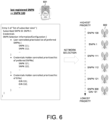
- Figure 6 illustrates Network selection in SNPN access mode with automatic SNPN network selection and manual SNPN network selection.
- An SNPN-enabled UE 601 supports to access SNPN (in SNPN access mode). When the UE is set to operate in SNPN access mode the UE only selects and registers with SNPNs. When a UE is set to operate in SNPN access mode the UE does not perform normal PLMN selection procedures. There are two SNPN network selection procedures: an automatic SNPN network selection procedure and a manual SNPN network selection procedure.
- UE Under automatic SNPN network selection, UE selects and attempts registration on available and allowable SNPNs in the following order: 1) the SNPN the UE was last registered with (if available) or the equivalent SNPN (if available); 2) the subscribed SNPN, which is identified by the SNPN ID (PLMN ID + NID) for which the UE has SUPI and credentials; 3) if the UEs supports access to an SNPN using credentials from a Credentials Holder then the UE continues by selecting and attempting registration on available and allowable SNPNs which broadcast the indication that access using credentials from a Credentials Holder is supported in the following order: a) SNPNs in the user controlled prioritized list of preferred SNPNs (in priority order); b) SNPNs in the Credentials Holder controlled prioritized list of preferred SNPNs (in priority order); c) SNPNs, which additionally broadcast a GIN contained in the Credentials Holder controlled prioritized list of preferred GINs (in priority order); and 4) SN
- UE 601 was registered to SNPN 100, the subscribed SNPN is SNPN 1 and has three lists for credentials.
- the User controller prioritized list of preferred SNPNs includes SNPN 111, SNPN 112; the Credential Holder controlled prioritized list of preferred SNPNs includes SNPN 121, SNPN 122; the Credential Holder controlled prioritized list of GINs includes GIN 131, GIN 132.
- UE 601 selects and attempts to register to an SNPN in the following preference/priority order: SNPN 100, SNPN 1, SNPN 111, SNPN 112, SNPN 121, and SNPN 300 which also broadcasts GIN 131.
- UEs operating in SNPN access mode provide to the user the list of SNPNs (each is identified by a PLMN ID and NID) and related human-readable network names (if available) of the available SNPNs the UE has respective SUPI and credentials for. If the UEs supports access to an SNPN using credentials from a Credentials Holder, the UE also presents available SNPNs which broadcast the "access using credentials from a Credentials Holder is supported" indication and the human-readable names related to the SNPNs (if available). When a UE performs Initial Registration to an SNPN, the UE shall indicate the selected PLMN ID and NID as broadcast by the selected SNPN to NG-RAN. NG-R_AN shall inform the AMF of the selected PLMN ID and NID.
- the AMF shall reject the UE with an appropriate cause code to temporarily prevent the UE from automatically selecting and registering with the same SNPN. If a UE performs the registration or service request procedure in an SNPN identified by a PLMN ID and a coordinated assigned NID and there is no subscription for the UE, then the AMF shall reject the UE with an appropriate cause code to permanently prevent the UE from automatically selecting and registering with the same SNPN.
- Unified Access Control information is configured per SNPN (i.e., as part of the subscription information that the UE has for a given SNPN) and provided to the UE.
- An SNPN-enabled UE can be configured with SNPN subscription information for each subscribed SNPN. If the UE supports access to an SNPN using credentials from a Credentials Holder for each subscribed SNPN, then for each subscribed SNPN, the SNPN subscription comprises an SNPN ID of the subscribed SNPN, credentials, and UE configuration for SNPN selection, e.g., a Credentials Holder controlled prioritized list of preferred SNPNs.
- an SNPN-enabled UE that supports access to an SNPN using credentials from a Credentials Holder and that is equipped with a PLMN subscription (USIM) may additionally be configured with information for SNPN selection and registration using the PLMN subscription (USIM) (in SNPN access mode).
- an SNPN-enabled UE When an SNPN-enabled UE is set to operate in SNPN access mode, the UE only selects and registers with SNPNs.
- automatic SNPN network selection UE selects and attempts registration on available and allowable SNPNs in predefined order.
- manual network selection UEs operating in SNPN access mode provide to the user the list of SNPNs (each is identified by a PLMN ID and NID) and related human-readable network names (if available) of the available SNPNs the UE has respective SUPI and credentials for. If the UEs supports access to an SNPN using credentials from a Credentials Holder, the UE also presents available SNPNs which broadcast the "access using credentials from a Credentials Holder is supported" indication.
- a protocol data unit (PDU) session defines the association between the UE and the data network that provides a PDU connectivity service.
- Each PDU session can be established via a 5G access network (e.g.,3GPP radio access network (RAN), or via a non-3GPP access).
- the network and /or the UE can initiate different PDU session procedures, e.g., PDU session establishment, PDU session modification, and PDU session release, for managing the activation and deactivation of 5GS PDU sessions.
- the UE can only maintain a maximum number of PDU sessions in a PLMN or SNPN. When the number of active 5GS PDU sessions reach the network's (PLMN or SNPN) maximum number of 5GS PDU sessions, the UE should not send requests to establish additional PDU sessions.
- UE supports access to an SNPN using credentials from a Credential Holder, during an SNPN selection process, the UE also needs to select an appropriate subscription (subscriber identifier + credentials) to access/register to the selected SNPN. This is because the UE may have multiple subscriptions that can be used to access/register to the selected SNPN.
- a subscription can be an SNPN subscription or a PLMN subscription.
- a method of handling the maximum number of PDU sessions per SNPN per subscription is proposed. If a UE have multiple subscriptions to access a selected SNPN, then the UE maintains a maximum number of PDU session for the selected SNPN with respect to each selected subscription independently.
- the UE should not send a PDU session establishment request message if the number of active PDU sessions has reached the maximum number of PDU sessions for the selected SNPN associated with the first subscription, e.g., a first number.
- the UE should not send a PDU session establishment request message if the number of active PDU sessions has reached the maximum number of PDU sessions for the selected SNPN associated with the second subscription, e.g., a second number.
- Figure 7 illustrates an embodiment of UE registering to a selected SNPN using a selected subscription from multiple SNPN or PLMN subscriptions.
- UE 701 is configured with SNPN subscription(s)
- the list of subscriber data includes two entries (i.e., two SNPN subscriptions): a first entry (Entry 1) for subscribed SNPN 1 with a user controlled prioritized list of referred SNPNs (SNPN 111, SNPN 112), and a credential holder controlled prioritized list of preferred SNPNS (SNPN 121), the list belongs to the SNPN selection parameters of the first entry (Entry 1) stored in the UE, and a second entry (Entry 2) for SNPN 2 with a user controlled prioritized list of referred SNPNs (SNPN 111, SNPN 112), and a credential holder controlled prioritized list of preferred SNPNS (SNPN 121), the list belongs to the SNPN selection parameters of the second entry (Entry 2) stored in the UE.
- UE 701 is also equipped with PLMN subscription(s) (USIM(s)), and is configured with information for SNPN selection (SNPN selection parameters) and registration using the PLMN subscription(s) (USIM(s)) in SNPN access mode.
- PLMN subscription 1 (USIM1) is associated with SNPN selection information comprising a user controlled prioritized list of referred SNPNs (SNPN 111, SNPN 112), and a credential holder controlled prioritized list of preferred SNPNS (SNPN 121), the lists belong to the SNPN selection parameters (for access in SNPN) of the USIM1 stored in the UE
- PLMN subscription 2 (USIM2) is associated with SNPN selection information comprising a user controlled prioritized list of referred SNPNs (SNPN 111, SNPN 112), and a credential holder controlled prioritized list of preferred SNPNS (SNPN 121), the lists belong to the SNPN selection parameters (for access in SNPN) of the USIM2 stored in
- UE selects Entry 1 of "list of subscriber data" to access/register SNPN 121.
- the 5GSM sublayer in the UE receives an indication that the 5GSM message was not forwarded because the SNPN's maximum number of PDU sessions has been reached.
- UE determines the SNPN's maximum number of PDU sessions as the number of active PDU sessions it has (e.g.: 3) and associates the determined maximum number of PDU sessions with the selected Entry 1 of the "list of subscriber data”.
- UE selects Entry 2 of "list of subscriber data" to access/register SNPN 121.
- the 5GSM sublayer in the UE receives an indication that the 5GSM message was not forwarded because the SNPN's maximum number of PDU sessions has been reached.
- UE determines the SNPN's maximum number of PDU sessions as the number of active PDU sessions it has (e.g.: 4) and associates the determined maximum number of PDU sessions with the selected Entry 2 of the "list of subscriber data”.
- UE selects PLMN subscription 1 (USIM 1), to access/register SNPN 121.
- PLMN subscription 1 USIM 1
- the 5GSM sublayer in the UE receives an indication that the 5GSM message was not forwarded because the SNPN's maximum number of PDU sessions has been reached.
- UE determines the SNPN's maximum number of PDU sessions as the number of active PDU sessions it has (e.g.: 5) and associates the determined maximum number of PDU sessions with the selected PLMN subscription 1 (USIM 1).
- UE selects PLMN subscription 2 (USIM 2), to access/register SNPN 121.
- PLMN subscription 2 USIM 2
- the 5GSM sublayer in the UE receives an indication that the 5GSM message was not forwarded because the SNPN's maximum number of PDU sessions has been reached.
- UE determines the SNPN's maximum number of PDU sessions as the number of active PDU sessions it has (e.g.: 6) and associates the determined maximum number of PDU sessions with the selected PLMN subscription 2 (USIM 2).
- FIG 8 is a flow chart of a method of using multiple subscriptions to access/register to a selected SNPN and corresponding maximum number of PDU session handling in accordance with one novel aspect.
- a UE maintains multiple subscriptions, e.g., zero, one or more SNPN subscription(s) (the "list of subscriber data") and/or zero, one or more PLMN subscription(s) (USIM(s)) for access to SNPNs.
- the UE selects a first subscription to register to a 1 st SNPN (e.g., SNPN 121).
- the 5GSM sublayer in the UE receives an indication that the 5GSM message was not forwarded because the SNPN's maximum number of PDU sessions has been reached.
- UE determines the 1 st SNPN's maximum number of PDU sessions as the number of active PDU sessions it has (a 1 st number) and associates the determined maximum number of PDU sessions with the 1 st subscription.
- the UE selects a 2 nd subscription to register to the 1 st SNPN (e.g., SNPN 121).
- the 5GSM sublayer in the UE receives an indication that the 5GSM message was not forwarded because the SNPN's maximum number of PDU sessions has been reached.
- UE determines the 1 st SNPN's maximum number of PDU sessions as the number of active PDU sessions it has (a 2 nd number) and associates the determined maximum number of PDU sessions with the 2 nd subscription.
- step 804 the UE selected back to the 1 st subscription, to access/register the 1 st SNPN (ex: SNPN 121). If the maximum number of PDU sessions as the number of active PDU sessions it has is equals to the 1 st number, and if the upper layers of the UE request connectivity to a DNN, then the UE shall not send a PDU SESSION ESTABLISHMENT REQUEST message. In step 805, the UE selected back to the 2 nd subscription, to access/register the 1 st SNPN (ex: SNPN 121).
- the UE shall not send a PDU SESSION ESTABLISHMENT REQUEST message.
- the first or the second subscription is an SNPN subscription and is contained in an entry of a list of subscriber data for SNPN.
- the first or the second subscription is a PLMN subscription of a Universal Subscription Identification Module (USIM) .
- USIM Universal Subscription Identification Module
Landscapes
- Engineering & Computer Science (AREA)
- Computer Networks & Wireless Communication (AREA)
- Signal Processing (AREA)
- Computer Security & Cryptography (AREA)
- Databases & Information Systems (AREA)
- Mobile Radio Communication Systems (AREA)
Abstract
Description
- The disclosed embodiments relate generally to wireless mobile communication network, and, more particularly, to methods for handling maximum number of PDU sessions per subscription per network.
- A Public Land Mobile Network (PLMN) is a network established and operated by an administration or recognized operating agency (ROA) for the specific purpose of providing land mobile communication services to the public. PLMN provides communication possibilities for mobile users. A PLMN may provide service in one or a combination of frequency bands. Access to PLMN services is achieved by means of an air interface involving radio communications between mobile phones and base stations with integrated IP network services. One PLMN may include multiple radio access networks (RAN) utilizing different radio access technologies (RAT) for accessing mobile services. A radio access network is part of a mobile communication system, which implements a radio access technology. Conceptually, RAN resides between a mobile device and provides connection with its core network (CN). Depending on the standard, mobile phones and other wireless connected devices are varyingly known as user equipment (UE, i.e., MS), terminal equipment (TE), mobile stations (MS, i.e., UE), mobile termination (MT), etc. Examples of different RATs include 2G GER_AN (GSM) radio access network, 3G UTRAN (UMTS) radio access network, 4G E-UTRAN (LTE), 5G new radio (NR) radio access network, NG-RAN (Next-Generation RAN), and other non-3GPP access RAT including WiFi.
- As compared to PLMN, a non-public network (NPN) is a network for non-public use. An NPN is either a Stand-alone Non-Public Network (SNPN), i.e., operated by an NPN operator and not relying on network functions provided by a PLMN; or a Public Network Integrated NPN (PNI-NPN), i.e., a non-public network deployed with the support of a PLMN. A Credentials Holder (CH) may authenticate and authorize access to an SNPN separate from the Credentials Holder. The combination of a PLMN ID and Network identifier (NID) identifies an SNPN.
- In 5GS, a protocol data unit (PDU) session defines the association between the UE and the data network that provides a PDU connectivity service. The PDU session establishment is a parallel procedure of PDN connection (bearer) procedure in 4G/LTE. Each PDU session is identified by a PDU session ID (PSI), and may include multiple QoS flows and QoS rules. Each PDU session can be established via a 5G access network (e.g.,3GPP radio access network (RAN), or via a non-3GPP access). The network and /or the UE can initiate different PDU session procedures, e.g., PDU session establishment, PDU session modification, and PDU session release, for managing the activation and deactivation of 5GS PDU sessions.
- The UE can only establish a maximum number of PDU sessions in a PLMN or SNPN. When the number of active 5GS PDU sessions reach the network's (PLMN or SNPN) maximum number of 5GS PDU sessions, then UE should not send request to establish additional PDU sessions. If UE supports access to an SNPN using credentials from a Credential Holder, a solution is sought on how to handle and maintain the maximum number of PDU sessions when UE uses different subscriptions to access the SNPN.
- A first aspect of the invention relates to a method, comprising: maintaining multiple subscriptions by a user equipment (UE) for accessing standalone non-public networks (SNPNs), wherein the UE supports access to the SNPNs using credentials from a Credentials Holder; selecting a first subscription to access a selected SNPN, wherein the UE maintains a first maximum number of PDU sessions for the selected SNPN associated with the first subscription; and selecting a second subscription to access the selected SNPN, wherein the UE maintains a second maximum number of PDU sessions for the selected SNPN associated with the second subscription.
- In a first embodiment of the first aspect, the selected SNPN is included in a user controlled list of SNPNs of a UE configuration for SNPN selection. In a second embodiment of the first aspect, the selected SNPN is included in a credential holder controlled list of SNPNs of a UE configuration for SNPN selection. In a third embodiment of the first aspect, the first or the second subscription is an SNPN subscription and is contained in an entry of a list of subscriber data for SNPN. In a fourth embodiment of the first aspect, the first or the second subscription is a PLMN subscription of a Universal Subscription Identification Module (USIM). In a fifth embodiment of the first aspect, the UE is registered to the selected SNPN using the first subscription, and wherein the UE receives an indication that a number of active PDU sessions has reached the first maximum number of PDU sessions of the selected SNPN during a PDU session establishment procedure. In a sixth embodiment of the first aspect in combination with the fifth embodiment of the first aspect, the UE refrains from sending a PDU SESSION ESTABLISHMENT REQUEST message when the number of active PDU sessions has reached the first maximum number of PDU sessions. In a seventh embodiment of the first aspect, the UE is registered to the selected SNPN using the second subscription, and wherein the UE receives an indication that a number of active PDU sessions has reached the second maximum number of PDU sessions of the selected SNPN during a PDU session establishment procedure. In an eighth embodiment of the first aspect in combination with the seventh embodiment of the first aspect, the UE refrains from sending a PDU SESSION ESTABLISHMENT REQUEST message when the number of active PDU sessions has reached the second maximum number of PDU sessions.
- A second aspect of the invention relates to a User Equipment (UE), comprising: a standalone non-public network (SNPN) information handling circuit that maintains multiple subscriptions for accessing SNPNs, wherein the UE supports access to the SNPNs using credentials from a Credentials Holder; a control circuit that selects a first subscription to access a selected SNPN, wherein the UE maintains a first maximum number of PDU sessions for the selected SNPN associated with the first subscription, wherein the control circuit also selects a second subscription to access the selected SNPN, and wherein the UE maintains a second maximum number of PDU sessions for the selected SNPN associated with the second subscription.
- In a first embodiment of the second aspect, the selected SNPN is included in a user controlled list of SNPNs of a UE configuration for SNPN selection. In a second embodiment of the second aspect, the selected SNPN is included in a credential holder controlled list of SNPNs of a UE configuration for SNPN selection. In a third embodiment of the second aspect, the first or the second subscription is an SNPN subscription and is contained in an entry of a list of subscriber data for SNPN. In a fourth embodiment of the second aspect, the first or the second subscription is a PLMN subscription of a Universal Subscription Identification Module (USIM). In a fifth embodiment of the second aspect, the UE is registered to the selected SNPN using the first subscription, and wherein the UE receives an indication that a number of active PDU sessions has reached the first maximum number of PDU sessions of the selected SNPN during a PDU session establishment procedure. In a sixth embodiment of the second aspect in combination with the fifth embodiment of the second aspect, the UE refrains from sending a PDU SESSION ESTABLISHMENT REQUEST message when the number of active PDU sessions has reached the first maximum number of PDU sessions. In a seventh embodiment of the second aspect, the UE is registered to the selected SNPN using the second subscription, and wherein the UE receives an indication that a number of active PDU sessions has reached the second maximum number of PDU sessions of the selected SNPN during a PDU session establishment procedure. In an eighth embodiment of the second aspect in combination with the seventh embodiment of the second aspect, the UE refrains from sending a PDU SESSION ESTABLISHMENT REQUEST message when the number of active PDU sessions has reached the second maximum number of PDU sessions.
- A method of handling the maximum number of PDU sessions per SNPN per subscription is proposed. If a UE have multiple subscriptions to access a selected SNPN, then the UE maintains a maximum number of PDU session for the selected SNPN with respect to each selected subscription independently. If the UE selects a first subscription to access the selected SNPN, then the UE should not send a PDU session establishment request message if the number of active PDU sessions has reached the maximum number of PDU sessions for the selected SNPN associated with the first subscription, e.g., a first number. Similarly, if the UE selects a second subscription to access the selected SNPN, then the UE should not send a PDU session establishment request message if the number of active PDU sessions has reached the maximum number of PDU sessions for the selected SNPN associated with the second subscription, e.g., a second number.
- Other embodiments and advantages are described in the detailed description below. This summary does not purport to define the invention. The invention is defined by the claims.
-
-
Figure 1 schematically shows a communication system having a Public Land Mobile Network (PLMN), a Stand-alone Non-public Network (SNPN), and a Public Network Integrated NPN (PNI-NPN) supporting (hosting) network and cell selection with Localized services in accordance with one novel aspect. -
Figure 2 illustrates simplified block diagrams of a user equipment and a network entity in accordance with embodiments of the current invention. -
Figure 3A illustrates a first embodiment of a 5G system architecture with access to SNPN using credentials from credentials holder. -
Figure 3B illustrates a second embodiment of a 5G system architecture with access to SNPNs using credentials from credentials holder. -
Figure 4 illustrates an example of NG-R_AN modes which broadcast certain information in order to provide access to SNPNs. -
Figure 5A illustrates an example of an SNPN-enabled UE that is configured with 2 SNPN subscriptions (i.e., 2 subscribed SNPNs in the "list of subscriber data"). -
Figure 5B illustrates an example of an SNPN-enabled UE that is configured with 2 PLMN subscriptions (i.e., 2 USIMs). -
Figure 6 illustrates Network selection in SNPN access mode with automatic SNPN network selection and manual SNPN network selection. -
Figure 7 illustrates an embodiment of UE registering to a selected SNPN using a selected subscription from multiple SNPN or PLMN subscriptions. -
Figure 8 is a flow chart of a method of using multiple subscriptions to register to a selected SNPN and corresponding maximum number of PDU session handling in accordance with one novel aspect. - Reference will now be made in detail to some embodiments of the invention, examples of which are illustrated in the accompanying drawings.
-
Figure 1 schematically shows acommunication system 100 having a Public Land Mobile Network (PLMN) 110, a Stand-alone Non-public Network (SNPN) 120, and a Public Network Integrated NPN (PNI-NPN)/CAG 130 providing access for Localized services in accordance with one novel aspect. PLMNnetwork 110 comprises control plane functionalities, user plane functionality (e.g., UPF), and applications that provides various services by communicating with a plurality of user equipments (UEs) including UE 101. Servingbase station gNB 112 belong to part of a radioaccess network RAN 140.RAN 140 provides radio access for UE 101 via a radio access technology (RAT). An access and mobility management function (AMF) inPLMN 110 communicates withgNB 112. UE 101 may be equipped with a radio frequency (RF) transceiver or multiple RF transceivers. -
SNPN network 120 comprises control plane functionalities, user plane functionality (e.g., UPF), and applications that provides various services by communicating with a plurality of user equipments (UEs) including UE 101. The combination of a PLMN ID and Network identifier (NID) identifies an SNPN. Servingbase station gNB 122 belongs to part ofRAN 150.RAN 150 provides radio access for UE 101 via a RAT. An AMF inSNPN 120 communicates withgNB 122.SNPN 120 is operated by an NPN operator and does not rely on network functions provided by a public network. A Credentials Holder (CH) may authenticate and authorize access to an SNPN separate from the Credentials Holder. NG-RAN nodes which provide access to SNPNs broadcast the following information: One or multiple PLMN IDs, and a List of NIDs per PLMN ID identifying the non-public networks NG-RAN provides access to (123). An SNPN-enabled UE is configured with PLMN ID and NID (SNPN ID) of the subscribed SNPN, and an SNPN-enabled UE that supports access to an SNPN using credentials from a Credentials Holder may additionally be configured with information for SNPN selection (SNPN selection information or configuration) and registration using the SNPN subscription or using PLMN subscription (USIM) (in SNPN access mode) (102). - PNI-NPN (CAG)
network 130 comprises control plane functionalities (optional, it may rely on PLMN's control plane functionality), user plane functionality (optional, it may rely on PLMN's user plane functionality), and applications that provides various services by communicating with a plurality of user equipments (UEs) including UE 101. PNI-NPN (CAG) 130 is a non-public network deployed with the support of a PLMN, e.g.,PLMN 110, by sharing e.g., RAN/gNB 112 and e.g., control plane functionalities. A Closed Access Group (CAG) identifies a group of subscribers who are permitted to access one or more CAG cells associated to the CAG. CAG is used for the PNI-NPNs to prevent UE(s), which are not allowed to access the NPN via the associated cell(s), from automatically selecting and accessing the associated CAG cell(s). A CAG is identified by a CAG Identifier which is unique within the scope of a PLMN ID. A CAG cell broadcasts one or multiple CAG Identifiers per PLMN (113), and a UE is configured with CAG related configuration/information (e.g., an (enhanced) CAG information list containing list of allowed CAGs per PLMN) (102). - Local or Localized services are services that are localized (i.e., provided at specific/limited area and/or are bounded in time (a specific period of time)). A localized service provider is an application provider or a network operator who makes their services localized and to be offered to end user via a hosting network. A hosting network is a network that provides access for localized services and can be an SNPN or a PNI-NPN, while a home network is network owning the current in use subscription or credential of the UE. In the example of
Figure 1 , bothSNPN 120 and PNI-NPN (CAG) 130 can be a hosting network providing access for Localized services to UE 101. - A URSP rule may include an association of the UE application and the DNN or network slice which is meant for a specific localized service. A URSP rule can also include "Route Selection Validity Criteria" (Time Window and/or a Location Criteria Validity Conditions) with the time/location defined for the specific localized service. The LADN (Local Access Data Network) can also be used for enabling the UE access to localized service.
- To enable a PNI-NPN or SNPN to provide access to localized services, the PNI-NPN or SNPN operator configures the network with information enabling the UEs to access the localized services according to validity of the localized services, and the information is determined in agreement with the localized service provider, e.g.: (a) Identification of each localized service, e.g. to be used in URSP rules; (b) validity criteria/restriction for each localized service, e.g., the validity of time duration and/or (area of) location.
- When localized services in a network are completed, all UEs registered with the network are expected to be moved to other network or to other cells within the same network. The other network can be HPLMN, VPLMN or another SNPN. UE can stop using the network resources for localized services for numerous reasons, e.g.: (a) Localized services in a network are completed; (b) Validity conditions of network selection information are no longer met; (c) The user decides to stop using the localized services before they are completed (e.g., end user disables to access Localized services); (d) A policy decision is taken by the network, with the effect that the UE is deregistered before the localized services are completed. Validity information or restrictions or criteria or conditions (103) are provided or configured to UE as part of the localized service information, which are used to restrict the UE's access of the SNPN/PNI-NPN (as hosting network) providing access for Localized services. For providing localized services to UE, UE needs to be able to discover, select and access a SNPN/PNI-NPN (as hosting network) providing access for the Localized services. The discovery mechanism is based on provisioning or configuring the UE with appropriate information.
-
Figure 2 illustrates simplified block diagrams of wireless devices, e.g., aUE 201 andnetwork entity 211 in accordance with embodiments of the current invention.Network entity 211 may be a base station combined with an AMF.Network entity 211 has anantenna 215, which transmits and receives radio signals. A radio frequencyRF transceiver module 214, coupled with the antenna, receives RF signals fromantenna 215, converts them to baseband signals and sends them toprocessor 213.RF transceiver 214 also converts received baseband signals fromprocessor 213, converts them to RF signals, and sends out toantenna 215.Processor 213 processes the received baseband signals and invokes different functional modules to perform features inbase station 211.Memory 212 stores program instructions anddata 220 to control the operations ofbase station 211. In the example ofFigure 2 ,network entity 211 also includes a set of control functional modules andcircuit 290.Registration circuit 231 handles registration and mobility procedure.Session management circuit 232 handles session management functionalities. Configuration and control circuit 233 provides different parameters to configure and control UE. - Similarly,
UE 201 hasmemory 202, aprocessor 203, and radio frequency (RF)transceiver module 204.RF transceiver 204 is coupled withantenna 205, receives RF signals fromantenna 205, converts them to baseband signals, and sends them toprocessor 203.RF transceiver 204 also converts received baseband signals fromprocessor 203, converts them to RF signals, and sends out toantenna 205.Processor 203 processes the received baseband signals and invokes different functional modules and circuits to perform features inUE 201.Memory 202 stores data andprogram instructions 210 to be executed by the processor to control the operations ofUE 201. Suitable processors include, by way of example, a special purpose processor, a digital signal processor (DSP), a plurality of micro-processors, one or more micro-processor associated with a DSP core, a controller, a microcontroller, application specific integrated circuits (ASICs), file programmable gate array (FPGA) circuits, and other type of integrated circuits (ICs), and/or state machines. A processor in associated with software may be used to implement and configure features ofUE 201. -
UE 201 also comprises a set of functional modules and control circuits to carry out functional tasks ofUE 201. Protocol stacks 260 comprise Non-Access-Stratum (NAS) layer to communicate with an AMF entity connecting to the core network, Radio Resource Control (RRC) layer for high layer configuration and control, Packet Data Convergence Protocol/Radio Link Control (PDCP/RLC) layer, Media Access Control (MAC) layer, and Physical (PHY) layer. System modules andcircuits 270 may be implemented and configured by software, firmware, hardware, and/or combination thereof. The function modules and circuits, when executed by the processors via program instructions contained in the memory, interwork with each other to allowUE 201 to perform embodiments and functional tasks and features in the network. In one example, system modules andcircuits 270 compriseregistration circuit 221 that performs registration and mobility procedure with the network, a network andcell selection circuit 222 for performing network and cell selection, a PLMN/PNI-NPN(CAG)/SNPNinformation maintenance circuit 223 that handles the adding, removing, and resetting of one or more PLMN/PNI-NPN(CAG)/SNPN information in SIM/USIM and/or in UE (non-volatile) memory (source of the information may come from signaling as well), a config and control circuit 224 that handles configuration and control parameters. Note that the network selection and registration related information, such as HPLMN, Operator Controlled PLMN/SNPN Selector list, User Controlled PLMN/SNPN Selector list, may be stored in SIM/USIM 225 and/or in UE (non-volatile) memory. -
Figure 3A illustrates a first embodiment of a 5G system architecture with access to SNPN using credentials from credentials holder.Figure 3A depicts the 5G System architecture for SNPN with Credentials Holder using AAA Server for primary authentication and authorization. The AUSF and the UDM in SNPN may support primary authentication and authorization of UEs using credentials from a AAA Server in a Credentials Holder (CH). The SNPN inFigure 3A can be the subscribed SNPN for the UE (i.e. NG-RAN broadcasts SNPN ID of the subscribed SNPN). As a deployment option, the SNPN inFigure 3A can also be another SNPN than the subscribed SNPN for the UE (i.e. none of the SNPN IDs broadcast by NG-RAN matches the SNPN ID corresponding to the subscribed SNPN). The NSSAAF deployed in the SNPN can support primary authentication in the SNPN using credentials from Credentials Holder using a AAA Server (as depicted) and/or the NSSAAF can support Network Slice-Specific Authentication and Authorization with a Network Slice-Specific AAA Server (not depicted). -
Figure 3B illustrates a second embodiment of a 5G system architecture with access to SNPNs using credentials from credentials holder.Figure 3B depicts the 5G System architecture for SNPN with Credentials Holder using AUSF and UDM for primary authentication and authorization and network slicing. An SNPN may support primary authentication and authorization of UEs that use credentials from a Credentials Holder using AUSF and UDM. The Credentials Holder may be an SNPN or a PLMN. The Credentials Holder UDM provides to SNPN the subscription data. -
Figure 4 illustrates an example of NG-RAN mode(s) which broadcasts certain information in order to provide access to SNPNs. A Credentials Holder (CH) may authenticate and authorize access to an SNPN separate from the Credentials Holder. For SNPN identification, the combination of a PLMN ID and Network identifier (NID) identifies an SNPN. The NID supports two assignment models. Under self-assignment model, NIDs are chosen individually by SNPNs at deployment time (and may therefore not be unique) but use a different numbering space than the coordinated assignment NIDs. Under coordinated assignment model, NIDs are assigned using one of the following two options: 1) The NID is assigned such that it is globally unique independent of the PLMN ID used; or 2) The NID is assigned such that the combination of the NID and the PLMN ID is globally unique. - The Group IDs for Network Selection (GIN) supports two assignment models. Under self-assignment model, GINs are chosen individually and may therefore not be unique. Under coordinated assignment model, GIN uses a combination of PLMN ID and NID and is assigned using one of the following two options: 1) The GIN is assigned such that the NID is globally unique (e.g., using IANA Private Enterprise Numbers) independent of the PLMN ID used; or 2) The GIN is assigned such that the combination of the NID and the PLMN ID is globally unique.
- In the example of
Figure 4 , NG-RAN 401 provides access to SNPNs and broadcasts the following information (410): One or multiple PLMN IDs and List of NIDs per PLMN ID identifying the non-public networks the NG-RAN provides access to (e.g.,SNPN 1 and SNPN 2). Optionally, the broadcasted information further includes the following: a human-readable network name (HRNN) per SNPN; an indication per SNPN of whether access using credentials from a Credentials Holder is supported; a list of supported Group IDs for Network Selection (GINs) per SNPN (e.g.,GIN 1 and GIN 2); and an indication per SNPN of whether the SNPN allows registration attempts from UEs that are not explicitly configured to select the SNPN, i.e., UEs that do not have any SNPN ID (PLMN ID + NID) nor GIN broadcast by the SNPN in the Credentials Holder controlled prioritized lists of preferred SNPNs/GINs. -
Figure 5A illustrates an example of an SNPN-enabled UE that is configured with SNPN subscription information for each subscribed SNPN. In the example ofFigure 5A , an SNPN-enabledUE 501 is configured with the 2 SNPN subscriptions as depicted by 510/520 for each subscribed SNPN: SNPN ID (PLMN ID + NID) of the subscribed SNPN (e.g.,SNPN 1 inEntry 1 of the "list of subscriber data",SNPN 2 inEntry 2 of the "list of subscriber data"); and Subscription identifier (SUPI) and credentials for each of the subscribed SNPN. If the UE supports access to an SNPN using credentials from a Credentials Holder for each subscribed SNPN: 1) User controlled prioritized list of preferred SNPNs (e.g.,SNPN 111,SNPN 112 forEntry 1;SNPN 211,SNPN 212 for Entry 2); 2) Credentials Holder controlled prioritized list of preferred SNPNs (e.g.,SNPN 121,SNPN 122 forEntry 1;SNPN 221,SNPN 222 for Entry 2); and 3) Credentials Holder controlled prioritized list of GINs (e.g., GIN131, GIN132 forEntry 1;GIN 231,GIN 232 for Entry 2). -
Figure 5B illustrates an example of an SNPN-enabled UE that is configured with 2 PLMN subscriptions (i.e., 2 USIMs). An SNPN-enabled UE that supports access to an SNPN using credentials from a Credentials Holder and that is equipped with a PLMN subscription (USIM) may additionally be configured with information for SNPN selection and registration using the PLMN subscription (in SNPN access mode). For example,PLMN subscription 1 is associated with information for SNPN selection 530: 1) User controlled prioritized list of preferred SNPNs (e.g.,SNPN 311, SNPN 312); 2) Credentials Holder controlled prioritized list of preferred SNPNs (e.g.,SNPN 321, SNPN 322); and 3) Credentials Holder controlled prioritized list of GINs (e.g.,GIN 331, GIN 332). Similarly,PLMN subscription 2 is associated with information for SNPN selection 540: 1) User controlled prioritized list of preferred SNPNs (e.g.,SNPN 411, SNPN 412); 2) Credentials Holder controlled prioritized list of preferred SNPNs (e.g.,SNPN 421, SNPN 422); and 3) Credentials Holder controlled prioritized list of GINs (e.g.,GIN 431, GIN 432) . - A subscription of an SNPN is either identified by a SUPI containing a network-specific identifier that takes the form of a Network Access Identifier (NAI). The realm part of the NAI may include the NID of the SNPN; or identified by a SUPI containing an IMSI. For an SNPN-enabled UE with SNPN subscription, the Credentials Holder controlled prioritized lists of preferred SNPNs/GINs may be updated by the CH using the Steering of Roaming (SoR) procedure. For an SNPN-enabled UE with PLMN subscription, the Credentials Holder controlled prioritized lists of preferred SNPNs/GINs may be updated by the CH using the Steering of Roaming (SoR) procedure. When the Credentials Holder updates a UE with the Credentials Holder controlled prioritized lists of preferred SNPNs and GINs, the UE may perform SNPN selection again, e.g., to potentially select a higher prioritized SNPN.
-
Figure 6 illustrates Network selection in SNPN access mode with automatic SNPN network selection and manual SNPN network selection. An SNPN-enabledUE 601 supports to access SNPN (in SNPN access mode). When the UE is set to operate in SNPN access mode the UE only selects and registers with SNPNs. When a UE is set to operate in SNPN access mode the UE does not perform normal PLMN selection procedures. There are two SNPN network selection procedures: an automatic SNPN network selection procedure and a manual SNPN network selection procedure. - Under automatic SNPN network selection, UE selects and attempts registration on available and allowable SNPNs in the following order: 1) the SNPN the UE was last registered with (if available) or the equivalent SNPN (if available); 2) the subscribed SNPN, which is identified by the SNPN ID (PLMN ID + NID) for which the UE has SUPI and credentials; 3) if the UEs supports access to an SNPN using credentials from a Credentials Holder then the UE continues by selecting and attempting registration on available and allowable SNPNs which broadcast the indication that access using credentials from a Credentials Holder is supported in the following order: a) SNPNs in the user controlled prioritized list of preferred SNPNs (in priority order); b) SNPNs in the Credentials Holder controlled prioritized list of preferred SNPNs (in priority order); c) SNPNs, which additionally broadcast a GIN contained in the Credentials Holder controlled prioritized list of preferred GINs (in priority order); and 4) SNPNs, which additionally broadcast an indication that the SNPN allows registration attempts from UEs that are not explicitly configured to select the SNPN, i.e. the broadcasted SNPN ID or GIN is not present in the Credentials Holder controlled prioritized lists of preferred SNPNs/GINs in the UE.
- In the example of
Figure 6 ,UE 601 was registered toSNPN 100, the subscribed SNPN isSNPN 1 and has three lists for credentials. The User controller prioritized list of preferred SNPNs includesSNPN 111,SNPN 112; the Credential Holder controlled prioritized list of preferred SNPNs includesSNPN 121,SNPN 122; the Credential Holder controlled prioritized list of GINs includesGIN 131, GIN 132. There are a list of SNPNs/GINs (broadcasted by one or more NG-RANs) available in current UE location e.g.,SNPN 100,SNPN 1,SNPN 111,SNPN 112,SNPN 121,SNPN 300/GIN 131.UE 601 selects and attempts to register to an SNPN in the following preference/priority order:SNPN 100,SNPN 1,SNPN 111,SNPN 112,SNPN 121, andSNPN 300 which also broadcastsGIN 131. - Under manual network selection, UEs operating in SNPN access mode provide to the user the list of SNPNs (each is identified by a PLMN ID and NID) and related human-readable network names (if available) of the available SNPNs the UE has respective SUPI and credentials for. If the UEs supports access to an SNPN using credentials from a Credentials Holder, the UE also presents available SNPNs which broadcast the "access using credentials from a Credentials Holder is supported" indication and the human-readable names related to the SNPNs (if available). When a UE performs Initial Registration to an SNPN, the UE shall indicate the selected PLMN ID and NID as broadcast by the selected SNPN to NG-RAN. NG-R_AN shall inform the AMF of the selected PLMN ID and NID.
- If a UE performs the registration or service request procedure in an SNPN identified by a PLMN ID and a self-assigned NID and there is no subscription for the UE, then the AMF shall reject the UE with an appropriate cause code to temporarily prevent the UE from automatically selecting and registering with the same SNPN. If a UE performs the registration or service request procedure in an SNPN identified by a PLMN ID and a coordinated assigned NID and there is no subscription for the UE, then the AMF shall reject the UE with an appropriate cause code to permanently prevent the UE from automatically selecting and registering with the same SNPN. If a UE performs the registration in an SNPN using credentials from a Credentials Holder and UE is not authorized to access that specific SNPN, then the UDM can reject the UE which results in AMF rejecting the registration request from the UE with an appropriate cause code to prevent the UE from selecting and registering with the same SNPN using credentials from the Credentials Holder. In order to prevent access to SNPNs for authorized UE(s) in the case of network congestion/overload, Unified Access Control information is configured per SNPN (i.e., as part of the subscription information that the UE has for a given SNPN) and provided to the UE.
- An SNPN-enabled UE can be configured with SNPN subscription information for each subscribed SNPN. If the UE supports access to an SNPN using credentials from a Credentials Holder for each subscribed SNPN, then for each subscribed SNPN, the SNPN subscription comprises an SNPN ID of the subscribed SNPN, credentials, and UE configuration for SNPN selection, e.g., a Credentials Holder controlled prioritized list of preferred SNPNs. Further, an SNPN-enabled UE that supports access to an SNPN using credentials from a Credentials Holder and that is equipped with a PLMN subscription (USIM) may additionally be configured with information for SNPN selection and registration using the PLMN subscription (USIM) (in SNPN access mode).
- When an SNPN-enabled UE is set to operate in SNPN access mode, the UE only selects and registers with SNPNs. There are two SNPN network selection procedures: an automatic SNPN network selection procedure and a manual SNPN network selection procedure. Under automatic SNPN network selection, UE selects and attempts registration on available and allowable SNPNs in predefined order. Under manual network selection, UEs operating in SNPN access mode provide to the user the list of SNPNs (each is identified by a PLMN ID and NID) and related human-readable network names (if available) of the available SNPNs the UE has respective SUPI and credentials for. If the UEs supports access to an SNPN using credentials from a Credentials Holder, the UE also presents available SNPNs which broadcast the "access using credentials from a Credentials Holder is supported" indication.
- In 5GS, a protocol data unit (PDU) session defines the association between the UE and the data network that provides a PDU connectivity service. Each PDU session can be established via a 5G access network (e.g.,3GPP radio access network (RAN), or via a non-3GPP access). The network and /or the UE can initiate different PDU session procedures, e.g., PDU session establishment, PDU session modification, and PDU session release, for managing the activation and deactivation of 5GS PDU sessions. The UE can only maintain a maximum number of PDU sessions in a PLMN or SNPN. When the number of active 5GS PDU sessions reach the network's (PLMN or SNPN) maximum number of 5GS PDU sessions, the UE should not send requests to establish additional PDU sessions.
- If UE supports access to an SNPN using credentials from a Credential Holder, during an SNPN selection process, the UE also needs to select an appropriate subscription (subscriber identifier + credentials) to access/register to the selected SNPN. This is because the UE may have multiple subscriptions that can be used to access/register to the selected SNPN. A subscription can be an SNPN subscription or a PLMN subscription. In accordance with one novel aspect, a method of handling the maximum number of PDU sessions per SNPN per subscription is proposed. If a UE have multiple subscriptions to access a selected SNPN, then the UE maintains a maximum number of PDU session for the selected SNPN with respect to each selected subscription independently. If the UE selects a first subscription to access the selected SNPN, then the UE should not send a PDU session establishment request message if the number of active PDU sessions has reached the maximum number of PDU sessions for the selected SNPN associated with the first subscription, e.g., a first number. Similarly, if the UE selects a second subscription to access the selected SNPN, then the UE should not send a PDU session establishment request message if the number of active PDU sessions has reached the maximum number of PDU sessions for the selected SNPN associated with the second subscription, e.g., a second number.
-
Figure 7 illustrates an embodiment of UE registering to a selected SNPN using a selected subscription from multiple SNPN or PLMN subscriptions. In the example ofFigure 7 ,UE 701 is configured with SNPN subscription(s), the list of subscriber data includes two entries (i.e., two SNPN subscriptions): a first entry (Entry 1) for subscribedSNPN 1 with a user controlled prioritized list of referred SNPNs (SNPN 111, SNPN 112), and a credential holder controlled prioritized list of preferred SNPNS (SNPN 121), the list belongs to the SNPN selection parameters of the first entry (Entry 1) stored in the UE, and a second entry (Entry 2) forSNPN 2 with a user controlled prioritized list of referred SNPNs (SNPN 111, SNPN 112), and a credential holder controlled prioritized list of preferred SNPNS (SNPN 121), the list belongs to the SNPN selection parameters of the second entry (Entry 2) stored in the UE. -
UE 701 is also equipped with PLMN subscription(s) (USIM(s)), and is configured with information for SNPN selection (SNPN selection parameters) and registration using the PLMN subscription(s) (USIM(s)) in SNPN access mode. PLMN subscription 1 (USIM1) is associated with SNPN selection information comprising a user controlled prioritized list of referred SNPNs (SNPN 111, SNPN 112), and a credential holder controlled prioritized list of preferred SNPNS (SNPN 121), the lists belong to the SNPN selection parameters (for access in SNPN) of the USIM1 stored in the UE, and PLMN subscription 2 (USIM2) is associated with SNPN selection information comprising a user controlled prioritized list of referred SNPNs (SNPN 111, SNPN 112), and a credential holder controlled prioritized list of preferred SNPNS (SNPN 121), the lists belong to the SNPN selection parameters (for access in SNPN) of the USIM2 stored in the UE. - In a first example, UE selects
Entry 1 of "list of subscriber data" to access/register SNPN 121. During a UE-requested PDU session establishment procedure, the 5GSM sublayer in the UE receives an indication that the 5GSM message was not forwarded because the SNPN's maximum number of PDU sessions has been reached. UE determines the SNPN's maximum number of PDU sessions as the number of active PDU sessions it has (e.g.: 3) and associates the determined maximum number of PDU sessions with the selectedEntry 1 of the "list of subscriber data". - In a second example, UE selects
Entry 2 of "list of subscriber data" to access/register SNPN 121. During a UE-requested PDU session establishment procedure, the 5GSM sublayer in the UE receives an indication that the 5GSM message was not forwarded because the SNPN's maximum number of PDU sessions has been reached. UE determines the SNPN's maximum number of PDU sessions as the number of active PDU sessions it has (e.g.: 4) and associates the determined maximum number of PDU sessions with the selectedEntry 2 of the "list of subscriber data". - In a third example, UE selects PLMN subscription 1 (USIM 1), to access/
register SNPN 121. During a UE-requested PDU session establishment procedure, the 5GSM sublayer in the UE receives an indication that the 5GSM message was not forwarded because the SNPN's maximum number of PDU sessions has been reached. UE determines the SNPN's maximum number of PDU sessions as the number of active PDU sessions it has (e.g.: 5) and associates the determined maximum number of PDU sessions with the selected PLMN subscription 1 (USIM 1). - In a fourth example, UE selects PLMN subscription 2 (USIM 2), to access/
register SNPN 121. During a UE-requested PDU session establishment procedure, the 5GSM sublayer in the UE receives an indication that the 5GSM message was not forwarded because the SNPN's maximum number of PDU sessions has been reached. UE determines the SNPN's maximum number of PDU sessions as the number of active PDU sessions it has (e.g.: 6) and associates the determined maximum number of PDU sessions with the selected PLMN subscription 2 (USIM 2). -
Figure 8 is a flow chart of a method of using multiple subscriptions to access/register to a selected SNPN and corresponding maximum number of PDU session handling in accordance with one novel aspect. Instep 801, a UE maintains multiple subscriptions, e.g., zero, one or more SNPN subscription(s) (the "list of subscriber data") and/or zero, one or more PLMN subscription(s) (USIM(s)) for access to SNPNs. Instep 802, the UE selects a first subscription to register to a 1st SNPN (e.g., SNPN 121). During a UE-requested PDU session establishment procedure the 5GSM sublayer in the UE receives an indication that the 5GSM message was not forwarded because the SNPN's maximum number of PDU sessions has been reached. UE determines the 1st SNPN's maximum number of PDU sessions as the number of active PDU sessions it has (a 1st number) and associates the determined maximum number of PDU sessions with the 1st subscription. Instep 803, the UE selects a 2nd subscription to register to the 1st SNPN (e.g., SNPN 121). During a UE-requested PDU session establishment procedure the 5GSM sublayer in the UE receives an indication that the 5GSM message was not forwarded because the SNPN's maximum number of PDU sessions has been reached. UE determines the 1st SNPN's maximum number of PDU sessions as the number of active PDU sessions it has (a 2nd number) and associates the determined maximum number of PDU sessions with the 2nd subscription. - In
step 804, the UE selected back to the 1st subscription, to access/register the 1st SNPN (ex: SNPN 121). If the maximum number of PDU sessions as the number of active PDU sessions it has is equals to the 1st number, and if the upper layers of the UE request connectivity to a DNN, then the UE shall not send a PDU SESSION ESTABLISHMENT REQUEST message. Instep 805, the UE selected back to the 2nd subscription, to access/register the 1st SNPN (ex: SNPN 121). If the maximum number of PDU sessions as the number of active PDU sessions it has is equals to the 2nd number, and if the upper layers of the UE request connectivity to a DNN, then the UE shall not send a PDU SESSION ESTABLISHMENT REQUEST message. In one embodiment, the first or the second subscription is an SNPN subscription and is contained in an entry of a list of subscriber data for SNPN. In another embodiment, the first or the second subscription is a PLMN subscription of a Universal Subscription Identification Module (USIM) . - Although the present invention has been described in connection with certain specific embodiments for instructional purposes, the present invention is not limited thereto. Accordingly, various modifications, adaptations, and combinations of various features of the described embodiments can be practiced without departing from the scope of the invention as set forth in the claims.
Claims (15)
- A method, comprising:maintaining (801) multiple subscriptions by a user equipment (201), UE, for accessing standalone non-public networks, SNPNs, wherein the UE (201) supports access to the SNPNs using credentials from a Credentials Holder;selecting (802) a first subscription to access a selected SNPN, wherein the UE (201) maintains a first maximum number of PDU sessions for the selected SNPN associated with the first subscription; andselecting (803) a second subscription to access the selected SNPN, wherein the UE (201) maintains a second maximum number of PDU sessions for the selected SNPN associated with the second subscription.
- The method of Claim 1, wherein the selected SNPN is included in a user controlled list of SNPNs of a UE configuration for SNPN selection.
- The method of Claim 1, wherein the selected SNPN is included in a credential holder controlled list of SNPNs of a UE configuration for SNPN selection.
- The method of Claim 1, wherein the first or the second subscription is an SNPN subscription and is contained in an entry of a list of subscriber data for SNPN, or wherein the first or the second subscription is a PLMN subscription of a Universal Subscription Identification Module, USIM.
- The method of Claim 1, wherein the UE (201) is registered to the selected SNPN using the first subscription, and wherein the UE (201) receives an indication that a number of active PDU sessions has reached the first maximum number of PDU sessions of the selected SNPN during a PDU session establishment procedure.
- The method of Claim 5, wherein the UE (201) refrains from sending a PDU SESSION ESTABLISHMENT REQUEST message when the number of active PDU sessions has reached the first maximum number of PDU sessions.
- The method of Claim 1, wherein the UE (201) is registered to the selected SNPN using the second subscription, and wherein the UE (201) receives an indication that a number of active PDU sessions has reached the second maximum number of PDU sessions of the selected SNPN during a PDU session establishment procedure.
- The method of Claim 7, wherein the UE (201) refrains from sending a PDU SESSION ESTABLISHMENT REQUEST message when the number of active PDU sessions has reached the second maximum number of PDU sessions.
- A User Equipment (201), UE, comprising:a standalone non-public network, SNPN, information handling circuit (223) that maintains multiple subscriptions for accessing SNPNs, wherein the UE (201) supports access to the SNPNs using credentials from a Credentials Holder;a control circuit (224) that selects a first subscription to access a selected SNPN, wherein the UE (201) maintains a first maximum number of PDU sessions for the selected SNPN associated with the first subscription, wherein the control circuit (224) also selects a second subscription to access the selected SNPN, and wherein the UE (201) maintains a second maximum number of PDU sessions for the selected SNPN associated with the second subscription.
- The UE (201) of Claim 9, wherein the selected SNPN is included in a user controlled list of SNPNs of a UE configuration for SNPN selection, or wherein the selected SNPN is included in a credential holder controlled list of SNPNs of a UE configuration for SNPN selection.
- The UE (201) of Claim 9, wherein the first or the second subscription is an SNPN subscription and is contained in an entry of a list of subscriber data for SNPN, or wherein the first or the second subscription is a PLMN subscription of a Universal Subscription Identification Module, USIM.
- The UE (201) of Claim 9, wherein the UE (201) is registered to the selected SNPN using the first subscription, and wherein the UE (201) receives an indication that a number of active PDU sessions has reached the first maximum number of PDU sessions of the selected SNPN during a PDU session establishment procedure.
- The UE (201) of Claim 12, wherein the UE (201) refrains from sending a PDU SESSION ESTABLISHMENT REQUEST message when the number of active PDU sessions has reached the first maximum number of PDU sessions.
- The UE (201) of Claim 9, wherein the UE (201) is registered to the selected SNPN using the second subscription, and wherein the UE (201) receives an indication that a number of active PDU sessions has reached the second maximum number of PDU sessions of the selected SNPN during a PDU session establishment procedure.
- The UE (201) of Claim 14, wherein the UE (201) refrains from sending a PDU SESSION ESTABLISHMENT REQUEST message when the number of active PDU sessions has reached the second maximum number of PDU sessions.
Applications Claiming Priority (2)
| Application Number | Priority Date | Filing Date | Title |
|---|---|---|---|
| US202263338499P | 2022-05-05 | 2022-05-05 | |
| US18/134,845 US20230362792A1 (en) | 2022-05-05 | 2023-04-14 | Maximum number of pdu session handling per subscription per network |
Publications (2)
| Publication Number | Publication Date |
|---|---|
| EP4274280A1 true EP4274280A1 (en) | 2023-11-08 |
| EP4274280B1 EP4274280B1 (en) | 2025-09-24 |
Family
ID=86330208
Family Applications (1)
| Application Number | Title | Priority Date | Filing Date |
|---|---|---|---|
| EP23171652.3A Active EP4274280B1 (en) | 2022-05-05 | 2023-05-04 | Maximum number of pdu session handling per subscription per network |
Country Status (3)
| Country | Link |
|---|---|
| US (1) | US20230362792A1 (en) |
| EP (1) | EP4274280B1 (en) |
| TW (1) | TWI864730B (en) |
Citations (6)
| Publication number | Priority date | Publication date | Assignee | Title |
|---|---|---|---|---|
| EP2453698A1 (en) * | 2010-11-11 | 2012-05-16 | Research In Motion Limited | Method in a mobile device for network selection to provide an enhanced number of IP sessions |
| WO2020155021A1 (en) * | 2019-01-31 | 2020-08-06 | 华为技术有限公司 | Method for session establishment and terminal device |
| WO2020250664A1 (en) * | 2019-06-13 | 2020-12-17 | Nec Corporation | Credential storage and selection of credentials for non-public network |
| EP3800917A1 (en) * | 2019-10-02 | 2021-04-07 | NTT DoCoMo, Inc. | Communication system and method for operating a communication system |
| US20210105712A1 (en) * | 2019-10-04 | 2021-04-08 | Qualcomm Incorporated | Standalone non-public network access |
| WO2021092561A1 (en) * | 2019-11-07 | 2021-05-14 | Ofinno, Llc | Session management for a network slice |
Family Cites Families (3)
| Publication number | Priority date | Publication date | Assignee | Title |
|---|---|---|---|---|
| US11729737B2 (en) * | 2020-02-11 | 2023-08-15 | Nokia Technologies Oy | Methods, apparatuses, and computer program products for handling emergency services in private networks |
| JP7776929B2 (en) * | 2020-05-21 | 2025-11-27 | シャープ株式会社 | UE (User Equipment) and communication control method |
| JP7614751B2 (en) * | 2020-06-29 | 2025-01-16 | シャープ株式会社 | UE (User Equipment) and communication control method |
-
2023
- 2023-04-14 US US18/134,845 patent/US20230362792A1/en not_active Abandoned
- 2023-05-04 EP EP23171652.3A patent/EP4274280B1/en active Active
- 2023-05-04 TW TW112116621A patent/TWI864730B/en active
Patent Citations (6)
| Publication number | Priority date | Publication date | Assignee | Title |
|---|---|---|---|---|
| EP2453698A1 (en) * | 2010-11-11 | 2012-05-16 | Research In Motion Limited | Method in a mobile device for network selection to provide an enhanced number of IP sessions |
| WO2020155021A1 (en) * | 2019-01-31 | 2020-08-06 | 华为技术有限公司 | Method for session establishment and terminal device |
| WO2020250664A1 (en) * | 2019-06-13 | 2020-12-17 | Nec Corporation | Credential storage and selection of credentials for non-public network |
| EP3800917A1 (en) * | 2019-10-02 | 2021-04-07 | NTT DoCoMo, Inc. | Communication system and method for operating a communication system |
| US20210105712A1 (en) * | 2019-10-04 | 2021-04-08 | Qualcomm Incorporated | Standalone non-public network access |
| WO2021092561A1 (en) * | 2019-11-07 | 2021-05-14 | Ofinno, Llc | Session management for a network slice |
Also Published As
| Publication number | Publication date |
|---|---|
| US20230362792A1 (en) | 2023-11-09 |
| TW202345639A (en) | 2023-11-16 |
| EP4274280B1 (en) | 2025-09-24 |
| TWI864730B (en) | 2024-12-01 |
Similar Documents
| Publication | Publication Date | Title |
|---|---|---|
| US12028710B2 (en) | Stand-alone Non-Public Network as service provider | |
| US12225375B2 (en) | Authentication reject handling for SNPN-enabled UE | |
| US12568430B2 (en) | Forbidden SNPN list handling for localized services | |
| US20230354183A1 (en) | Nas-as interface for accessing pni-npn as hosting network | |
| US20260006543A1 (en) | Ue auto update cag configuration when accessing pni-npn as hosting network for localized services | |
| US12513612B2 (en) | Hosting network manual selection and UE-triggered registration update | |
| US20230354178A1 (en) | Handling of updated cag configuration | |
| EP4274312A1 (en) | Manual network selection at switch on for ue supporting cag | |
| US20230354175A1 (en) | Enhanced npn manual selection mode for access localized services | |
| US20230354176A1 (en) | Enhanced network selection for pni-npn as hosting network | |
| CN117015077A (en) | Methods and user equipment for handling maximum number of protocol data unit sessions | |
| EP4274280B1 (en) | Maximum number of pdu session handling per subscription per network | |
| US12593370B2 (en) | Emergency service and hosting network access restriction | |
| US12598671B2 (en) | NAS connection release for hosting network | |
| US12550044B2 (en) | Limited service and hosting network | |
| US20230354239A1 (en) | Subscription selection for manual snpn hosting network selection | |
| US20260040189A1 (en) | Network and Method for Handling Network Access Control | |
| US20230354167A1 (en) | Cag configuration updated by downlink signal message | |
| US20230354177A1 (en) | Cag configuration updated by downlink signal message | |
| US20230354182A1 (en) | Congestion control backoff timer handling for hosting network | |
| US12457551B2 (en) | Multiple previously registered networks for network selection | |
| US20230354244A1 (en) | Abnormal handling of deregistration for hosting network |
Legal Events
| Date | Code | Title | Description |
|---|---|---|---|
| PUAI | Public reference made under article 153(3) epc to a published international application that has entered the european phase |
Free format text: ORIGINAL CODE: 0009012 |
|
| STAA | Information on the status of an ep patent application or granted ep patent |
Free format text: STATUS: THE APPLICATION HAS BEEN PUBLISHED |
|
| AK | Designated contracting states |
Kind code of ref document: A1 Designated state(s): AL AT BE BG CH CY CZ DE DK EE ES FI FR GB GR HR HU IE IS IT LI LT LU LV MC ME MK MT NL NO PL PT RO RS SE SI SK SM TR |
|
| STAA | Information on the status of an ep patent application or granted ep patent |
Free format text: STATUS: REQUEST FOR EXAMINATION WAS MADE |
|
| 17P | Request for examination filed |
Effective date: 20240503 |
|
| RBV | Designated contracting states (corrected) |
Designated state(s): AL AT BE BG CH CY CZ DE DK EE ES FI FR GB GR HR HU IE IS IT LI LT LU LV MC ME MK MT NL NO PL PT RO RS SE SI SK SM TR |
|
| STAA | Information on the status of an ep patent application or granted ep patent |
Free format text: STATUS: EXAMINATION IS IN PROGRESS |
|
| 17Q | First examination report despatched |
Effective date: 20250313 |
|
| GRAP | Despatch of communication of intention to grant a patent |
Free format text: ORIGINAL CODE: EPIDOSNIGR1 |
|
| STAA | Information on the status of an ep patent application or granted ep patent |
Free format text: STATUS: GRANT OF PATENT IS INTENDED |
|
| RIC1 | Information provided on ipc code assigned before grant |
Ipc: H04W 60/04 20090101ALN20250519BHEP Ipc: H04W 48/18 20090101ALI20250519BHEP Ipc: H04W 8/18 20090101AFI20250519BHEP |
|
| INTG | Intention to grant announced |
Effective date: 20250616 |
|
| GRAS | Grant fee paid |
Free format text: ORIGINAL CODE: EPIDOSNIGR3 |
|
| GRAA | (expected) grant |
Free format text: ORIGINAL CODE: 0009210 |
|
| STAA | Information on the status of an ep patent application or granted ep patent |
Free format text: STATUS: THE PATENT HAS BEEN GRANTED |
|
| RAP3 | Party data changed (applicant data changed or rights of an application transferred) |
Owner name: MEDIATEK INC. |
|
| AK | Designated contracting states |
Kind code of ref document: B1 Designated state(s): AL AT BE BG CH CY CZ DE DK EE ES FI FR GB GR HR HU IE IS IT LI LT LU LV MC ME MK MT NL NO PL PT RO RS SE SI SK SM TR |
|
| REG | Reference to a national code |
Ref country code: GB Ref legal event code: FG4D |
|
| REG | Reference to a national code |
Ref country code: CH Ref legal event code: EP |
|
| REG | Reference to a national code |
Ref country code: DE Ref legal event code: R096 Ref document number: 602023006874 Country of ref document: DE |
|
| REG | Reference to a national code |
Ref country code: IE Ref legal event code: FG4D |
|
| PG25 | Lapsed in a contracting state [announced via postgrant information from national office to epo] |
Ref country code: NO Free format text: LAPSE BECAUSE OF FAILURE TO SUBMIT A TRANSLATION OF THE DESCRIPTION OR TO PAY THE FEE WITHIN THE PRESCRIBED TIME-LIMIT Effective date: 20251224 |
|
| REG | Reference to a national code |
Ref country code: LT Ref legal event code: MG9D |
|
| PG25 | Lapsed in a contracting state [announced via postgrant information from national office to epo] |
Ref country code: FI Free format text: LAPSE BECAUSE OF FAILURE TO SUBMIT A TRANSLATION OF THE DESCRIPTION OR TO PAY THE FEE WITHIN THE PRESCRIBED TIME-LIMIT Effective date: 20250924 |
|
| PG25 | Lapsed in a contracting state [announced via postgrant information from national office to epo] |
Ref country code: HR Free format text: LAPSE BECAUSE OF FAILURE TO SUBMIT A TRANSLATION OF THE DESCRIPTION OR TO PAY THE FEE WITHIN THE PRESCRIBED TIME-LIMIT Effective date: 20250924 |
|
| PG25 | Lapsed in a contracting state [announced via postgrant information from national office to epo] |
Ref country code: GR Free format text: LAPSE BECAUSE OF FAILURE TO SUBMIT A TRANSLATION OF THE DESCRIPTION OR TO PAY THE FEE WITHIN THE PRESCRIBED TIME-LIMIT Effective date: 20251225 |
|
| PG25 | Lapsed in a contracting state [announced via postgrant information from national office to epo] |
Ref country code: SE Free format text: LAPSE BECAUSE OF FAILURE TO SUBMIT A TRANSLATION OF THE DESCRIPTION OR TO PAY THE FEE WITHIN THE PRESCRIBED TIME-LIMIT Effective date: 20250924 |
|
| PG25 | Lapsed in a contracting state [announced via postgrant information from national office to epo] |
Ref country code: LV Free format text: LAPSE BECAUSE OF FAILURE TO SUBMIT A TRANSLATION OF THE DESCRIPTION OR TO PAY THE FEE WITHIN THE PRESCRIBED TIME-LIMIT Effective date: 20250924 |
|
| PG25 | Lapsed in a contracting state [announced via postgrant information from national office to epo] |
Ref country code: BG Free format text: LAPSE BECAUSE OF FAILURE TO SUBMIT A TRANSLATION OF THE DESCRIPTION OR TO PAY THE FEE WITHIN THE PRESCRIBED TIME-LIMIT Effective date: 20250924 |
|
| PG25 | Lapsed in a contracting state [announced via postgrant information from national office to epo] |
Ref country code: RS Free format text: LAPSE BECAUSE OF FAILURE TO SUBMIT A TRANSLATION OF THE DESCRIPTION OR TO PAY THE FEE WITHIN THE PRESCRIBED TIME-LIMIT Effective date: 20251224 |
|
| REG | Reference to a national code |
Ref country code: NL Ref legal event code: MP Effective date: 20250924 |
|
| PG25 | Lapsed in a contracting state [announced via postgrant information from national office to epo] |
Ref country code: NL Free format text: LAPSE BECAUSE OF FAILURE TO SUBMIT A TRANSLATION OF THE DESCRIPTION OR TO PAY THE FEE WITHIN THE PRESCRIBED TIME-LIMIT Effective date: 20250924 |
|
| REG | Reference to a national code |
Ref country code: AT Ref legal event code: MK05 Ref document number: 1841418 Country of ref document: AT Kind code of ref document: T Effective date: 20250924 |
|
| PG25 | Lapsed in a contracting state [announced via postgrant information from national office to epo] |
Ref country code: SM Free format text: LAPSE BECAUSE OF FAILURE TO SUBMIT A TRANSLATION OF THE DESCRIPTION OR TO PAY THE FEE WITHIN THE PRESCRIBED TIME-LIMIT Effective date: 20250924 |
|
| PG25 | Lapsed in a contracting state [announced via postgrant information from national office to epo] |
Ref country code: ES Free format text: LAPSE BECAUSE OF FAILURE TO SUBMIT A TRANSLATION OF THE DESCRIPTION OR TO PAY THE FEE WITHIN THE PRESCRIBED TIME-LIMIT Effective date: 20250924 |
|
| PG25 | Lapsed in a contracting state [announced via postgrant information from national office to epo] |
Ref country code: AT Free format text: LAPSE BECAUSE OF FAILURE TO SUBMIT A TRANSLATION OF THE DESCRIPTION OR TO PAY THE FEE WITHIN THE PRESCRIBED TIME-LIMIT Effective date: 20250924 |
|
| PG25 | Lapsed in a contracting state [announced via postgrant information from national office to epo] |
Ref country code: IT Free format text: LAPSE BECAUSE OF FAILURE TO SUBMIT A TRANSLATION OF THE DESCRIPTION OR TO PAY THE FEE WITHIN THE PRESCRIBED TIME-LIMIT Effective date: 20250924 |
|
| PG25 | Lapsed in a contracting state [announced via postgrant information from national office to epo] |
Ref country code: IS Free format text: LAPSE BECAUSE OF FAILURE TO SUBMIT A TRANSLATION OF THE DESCRIPTION OR TO PAY THE FEE WITHIN THE PRESCRIBED TIME-LIMIT Effective date: 20260124 |
|
| PGFP | Annual fee paid to national office [announced via postgrant information from national office to epo] |
Ref country code: FR Payment date: 20260309 Year of fee payment: 4 |
|
| PG25 | Lapsed in a contracting state [announced via postgrant information from national office to epo] |
Ref country code: PT Free format text: LAPSE BECAUSE OF FAILURE TO SUBMIT A TRANSLATION OF THE DESCRIPTION OR TO PAY THE FEE WITHIN THE PRESCRIBED TIME-LIMIT Effective date: 20260126 Ref country code: CZ Free format text: LAPSE BECAUSE OF FAILURE TO SUBMIT A TRANSLATION OF THE DESCRIPTION OR TO PAY THE FEE WITHIN THE PRESCRIBED TIME-LIMIT Effective date: 20250924 |
|
| PG25 | Lapsed in a contracting state [announced via postgrant information from national office to epo] |
Ref country code: PL Free format text: LAPSE BECAUSE OF FAILURE TO SUBMIT A TRANSLATION OF THE DESCRIPTION OR TO PAY THE FEE WITHIN THE PRESCRIBED TIME-LIMIT Effective date: 20250924 |
|
| PG25 | Lapsed in a contracting state [announced via postgrant information from national office to epo] |
Ref country code: SK Free format text: LAPSE BECAUSE OF FAILURE TO SUBMIT A TRANSLATION OF THE DESCRIPTION OR TO PAY THE FEE WITHIN THE PRESCRIBED TIME-LIMIT Effective date: 20250924 Ref country code: EE Free format text: LAPSE BECAUSE OF FAILURE TO SUBMIT A TRANSLATION OF THE DESCRIPTION OR TO PAY THE FEE WITHIN THE PRESCRIBED TIME-LIMIT Effective date: 20250924 |