EP4274175A1 - Simple network management protocol object history collector management information base to curtail management traffic - Google Patents
Simple network management protocol object history collector management information base to curtail management traffic Download PDFInfo
- Publication number
- EP4274175A1 EP4274175A1 EP22179726.9A EP22179726A EP4274175A1 EP 4274175 A1 EP4274175 A1 EP 4274175A1 EP 22179726 A EP22179726 A EP 22179726A EP 4274175 A1 EP4274175 A1 EP 4274175A1
- Authority
- EP
- European Patent Office
- Prior art keywords
- data
- counters
- polled
- network device
- time interval
- Prior art date
- Legal status (The legal status is an assumption and is not a legal conclusion. Google has not performed a legal analysis and makes no representation as to the accuracy of the status listed.)
- Pending
Links
Images





Classifications
-
- H—ELECTRICITY
- H04—ELECTRIC COMMUNICATION TECHNIQUE
- H04L—TRANSMISSION OF DIGITAL INFORMATION, e.g. TELEGRAPHIC COMMUNICATION
- H04L43/00—Arrangements for monitoring or testing data switching networks
- H04L43/06—Generation of reports
- H04L43/065—Generation of reports related to network devices
-
- H—ELECTRICITY
- H04—ELECTRIC COMMUNICATION TECHNIQUE
- H04L—TRANSMISSION OF DIGITAL INFORMATION, e.g. TELEGRAPHIC COMMUNICATION
- H04L41/00—Arrangements for maintenance, administration or management of data switching networks, e.g. of packet switching networks
- H04L41/02—Standardisation; Integration
- H04L41/0213—Standardised network management protocols, e.g. simple network management protocol [SNMP]
-
- H—ELECTRICITY
- H04—ELECTRIC COMMUNICATION TECHNIQUE
- H04L—TRANSMISSION OF DIGITAL INFORMATION, e.g. TELEGRAPHIC COMMUNICATION
- H04L41/00—Arrangements for maintenance, administration or management of data switching networks, e.g. of packet switching networks
- H04L41/04—Network management architectures or arrangements
- H04L41/045—Network management architectures or arrangements comprising client-server management architectures
-
- H—ELECTRICITY
- H04—ELECTRIC COMMUNICATION TECHNIQUE
- H04L—TRANSMISSION OF DIGITAL INFORMATION, e.g. TELEGRAPHIC COMMUNICATION
- H04L43/00—Arrangements for monitoring or testing data switching networks
- H04L43/02—Capturing of monitoring data
- H04L43/022—Capturing of monitoring data by sampling
-
- H—ELECTRICITY
- H04—ELECTRIC COMMUNICATION TECHNIQUE
- H04L—TRANSMISSION OF DIGITAL INFORMATION, e.g. TELEGRAPHIC COMMUNICATION
- H04L43/00—Arrangements for monitoring or testing data switching networks
- H04L43/06—Generation of reports
- H04L43/067—Generation of reports using time frame reporting
-
- H—ELECTRICITY
- H04—ELECTRIC COMMUNICATION TECHNIQUE
- H04L—TRANSMISSION OF DIGITAL INFORMATION, e.g. TELEGRAPHIC COMMUNICATION
- H04L43/00—Arrangements for monitoring or testing data switching networks
- H04L43/08—Monitoring or testing based on specific metrics, e.g. QoS, energy consumption or environmental parameters
- H04L43/0805—Monitoring or testing based on specific metrics, e.g. QoS, energy consumption or environmental parameters by checking availability
- H04L43/0811—Monitoring or testing based on specific metrics, e.g. QoS, energy consumption or environmental parameters by checking availability by checking connectivity
-
- H—ELECTRICITY
- H04—ELECTRIC COMMUNICATION TECHNIQUE
- H04L—TRANSMISSION OF DIGITAL INFORMATION, e.g. TELEGRAPHIC COMMUNICATION
- H04L43/00—Arrangements for monitoring or testing data switching networks
- H04L43/08—Monitoring or testing based on specific metrics, e.g. QoS, energy consumption or environmental parameters
- H04L43/0805—Monitoring or testing based on specific metrics, e.g. QoS, energy consumption or environmental parameters by checking availability
- H04L43/0817—Monitoring or testing based on specific metrics, e.g. QoS, energy consumption or environmental parameters by checking availability by checking functioning
Definitions
- the simple network management protocol is an Internet standard protocol for collecting and organizing information about managed devices on networks (e.g., Internet protocol (IP) networks) and for modifying that information to change device behavior.
- IP Internet protocol
- SNMP is widely used in network management for network monitoring.
- SNMP exposes management data as variables that are organized in a management information base (MIB) describing device status and configuration. Such variables can then be remotely queried by network management systems and/or applications.
- MIB management information base
- the method may include utilizing a daemon to poll data for counters of a network device, and storing, for a first time interval, the data polled for the counters in a data structure associated with the network device.
- the method may include maintaining the data polled for the counters in the data structure for a second time interval that is longer than the first time interval, and receiving, from a network management system, a request for data polled for the counters with the second time interval.
- the method may include utilizing, based on the request, the daemon the daemon to determine whether the network management system is authorized to receive the data polled for the counters.
- the network device may include one or more memories and one or more processors.
- the one or more processors may be configured to utilize a daemon to poll data for counters of the network device, and store, for a first time interval, the data polled for the counters in a data structure associated with the network device.
- the one or more processors may be configured to maintain the data polled for the counters in the data structure for a second time interval that is longer than the first time interval, and receive, from a network management system, a request for data polled for the counters with the second time interval.
- the one or more processors may be configured to utilize, based on the request, the daemon to determine whether the network management system is authorized to receive the data polled for the counters.
- the one or more processors may be configured to selectively provide, to the network management system, the data polled for the counters, with the second time interval, based on the network management system being authorized to receive the data polled for the counters, or provide, to the network management system, a message indicating denial of the request based on the network management system not being authorized to receive the data polled for the counters.
- Some implementations described herein relate to a computer-readable medium that comprises a set of instructions for a network device.
- the set of instructions when executed by one or more processors of the network device, may cause the network device to poll data for counters of the network device, and store, for a first time interval, the data polled for the counters in a data structure associated with the network device.
- the set of instructions when executed by one or more processors of the network device, may cause the network device to maintain the data polled for the counters in the data structure for a second time interval that is longer than the first time interval, and receive, from a network management system, a request for data polled for the counters with the second time interval.
- the set of instructions when executed by one or more processors of the network device, may cause the network device to determine, based on the request, whether the network management system is authorized to receive the data polled for the counters.
- An SNMP daemon of a network device may provide data to counters when the data is polled by a network management system (NMS).
- NMS network management system
- An NMS when managing a network device, may require a particular data granularity (e.g., per second, ten seconds, minute, and/or the like) for the data associated with the network device counters (e.g., network management data).
- the NMS may be required to report (e.g., to a billing system) the network management data only once in a time interval (e.g., in minutes) that is longer than the particular data granularity. This requires all network devices managed by the NMS to be queried (e.g., for the network management data) by the NMS based on the particular data granularity, rather than based on the time interval.
- computing resources e.g., processing resources, memory resources, communication resources, and/or the like
- networking resources e.g., networking resources, and/or the like
- a network device may utilize a daemon to poll data for counters of the network device, and may store, for a first time interval, the data polled for the counters in a data structure associated with the network device.
- the network device may maintain the data polled for the counters in the data structure for a second time interval that is longer than the first time interval, and may receive, from an NMS, a request for data polled for the counters with the second time interval.
- the network device may utilize, based on the request, the daemon to determine whether the NMS is authorized to receive the data polled for the counters.
- the network device may selectively provide, to the NMS, the data polled for the counters, with the second time interval, based on the NMS being authorized to receive the data polled for the counters, or provide, to the NMS, a message indicating denial of the request based on the NMS not being authorized to receive the data polled for the counters.
- the network device stores network management data in a data structure to minimize management data traffic.
- the network device may include a data structure (e.g., an SNMP MIB) that is populated based on querying network management data (e.g., configured object identifiers) associated with the network device based on a first time interval.
- the network device may store the network management data in the data structure for a second time interval (e.g., determined for an NMS associated with the network device) that is longer than the first time interval.
- the network device may provide the network management data to the NMS (e.g., based on a query received from the NMS) so that the NMS receives data captured with a granularity of the first time interval.
- the network device conserves computing resources, networking resources, and/or the like that would otherwise have been consumed by reducing network bandwidth based on querying the network devices for the network management data, increasing network traffic based on transmission and/or receipt of queries and the network management data, increasing loads on the network devices based on processing the queries for the network management data, authorizing the NMS for each network management data query, and/or the like.
- Figs. 1A-1F are diagrams of an example 100 associated with storing network management data in a data structure to minimize management data traffic.
- example 100 includes a network management system (NMS) and a network with a plurality of network devices. Further details of the NMS, the network, and the network devices are provided elsewhere herein.
- NMS network management system
- the network device may utilize a daemon to poll data for counters of the network device.
- the network device may include a daemon (e.g., an SNMP daemon) that polls the data (e.g., network management data) for the counters of the network device.
- the daemon may provide the data to the counters at instances when the data is polled by the daemon.
- the counters may include SNMP counters, such as counters for interfaces, processors, applications, and/or the like associated with the network device.
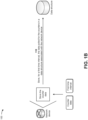
- the network device may store, at a first time interval, the data polled for the counters in a data structure associated with network device.
- the network device may include a data structure (e.g., a database, a table, a list, and/or the like), such as a management information base (MIB), which may be populated by querying the polled data (e.g., object identifiers (OIDs)) provided to the counters of the network device.
- the network device may store the polled data in the data structure at a particular granularity (e.g., the first time interval), such as per second, per multiple seconds, per minute, per multiple minutes, and/or the like.
- the first time interval may be configured by the network device or by a user of the network device.
- the network device may maintain the data polled for the counters in the data structure for a second time interval that is longer than the first time interval.
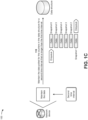
- the network device may maintain the polled data in the data structure for a time interval (e.g., the second time interval), such as multiple seconds, one minute, multiple minutes, and/or the like, that is longer than the first time interval.
- the second time interval may be configured by the network device or by a user of the network device.
- the first time interval may be set to one (1) minute and the second time interval may be set to fifteen (15) minutes for a particular object identifier (OID) to be stored in the data structure (e.g., the MIB), as follows:
- OID object identifier
- the network device may store a data point (e.g., a snapshot) of the polled data at each first time interval (e.g., one minute) and for the second time interval (e.g., fifteen minutes).
- the network device may store fifteen data points (e.g., snapshots) of the polled data in the data structure.
- the NMS may query the network device for data points of the polled data every fifteen minutes, which may greatly reduce traffic between the NMS and the network device.
- the NMS may also query the other network devices for data points every fifteen minutes (e.g., rather than every minute), which may greatly reduce traffic between the NMS and the other network devices.
- an example use case may include six snapshots of data (e.g., for an input octets counter for an interface of the network device) collected by the network device with a first time interval of ten seconds between each snapshot.
- Each of the six snapshots of the data e.g., a configured SNMP OID
- Any new snapshot enqueued by the daemon in the queue may displace (e.g., dequeue) an oldest snapshot from a front of the queue.
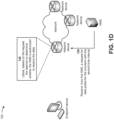
- the network device may receive, from the NMS, a request for the data polled for the counters with the second time interval.
- the NMS may generate the request for the data polled by the network device with the second time interval, and may provide the request to the network device.
- the network device may receive the request from the NMS.
- the request may query the network device for data points of the polled data with the second time interval, which may greatly reduce traffic between the NMS and the network device.
- the request may query a type and a value of the six snapshots in a single request (e.g., a bulk get request), as follows:
- the network device may utilize, based on the request, the daemon to determine whether the NMS is authorized to receive the data polled for the counters.
- the daemon of the network device may analyze credentials of the NMS included in the request for the data polled for the counters with the second time interval, and may determine, based on the credentials, whether the NMS is authorized to receive the data polled for the counters with the second time interval.
- the daemon of the network device may determine that the NMS is authorized to receive the data polled for the counters when the credentials of the NMS are authenticated by the daemon of the network device.
- the daemon of the network device may determine that the NMS is not authorized to receive the data polled for the counters when the credentials of the NMS are not authenticated by the daemon of the network device.
- the network device may determine that the NMS is authorized to receive the data polled for the counters.
- the daemon of the network device may determine that the NMS is authorized to receive the data polled for the counters when the credentials of the NMS are authenticated by the daemon of the network device.
- the daemon may determine that the credentials of the NMS are authentic when the credentials of the NMS match credentials stored in the network device and associated with the NMS and the data polled for the counters.
- the network device may provide, to the NMS, the data polled for the counters, with the second time interval, based on the NMS being authorized to receive the data. For example, when the daemon of the network device determines that the NMS is authorized to receive the data polled for the counters, the daemon of the network device may provide, to the NMS, the data polled for the counters with the second time interval.
- the NMS may receive the polled data and may report the polled data to (e.g., to a network billing system).
- the network device may determine that the NMS is not authorized to receive the data polled for the counters.
- the daemon of the network device may determine that the NMS is not authorized to receive the data polled for the counters when the credentials of the NMS are not authenticated by the daemon of the network device.
- the daemon may determine that the credentials of the NMS are not authentic when the credentials of the NMS fail to match credentials stored in the network device and associated with the NMS and the data polled for the counters.
- the network device may provide, to the NMS, a message indicating denial of the request based on the NMS not being authorized to receive the data. For example, when the daemon of the network device determines that the NMS is not authorized to receive the data polled for the counters, the daemon of the network device may provide, to the NMS, the message indicating denial of the request for the data polled for the counters with the second time interval. In such a scenario, the NMS may not receive the data polled for the counters with the second time interval.
- the network device may store historical groups of the polled data over a time period in the data structure. For example, the network device may store the polled data for minutes one through fifteen of a first day in a first historical group of the polled data, may store polled data for minutes sixteen through thirty of the first day in a second historical group of the polled data, and/or the like.
- the NMS may request, from the network device, a particular historical group of the polled data (e.g., minutes thirty-one through forty-five of the first day), and the network device may provide the particular historical group of the polled data to the NMS. In this way, the NMS may utilize the historical groups of polled data to compare a same time period of different days in order to determine whether the network device is experiencing an issue.
- the network device stores network management data in a data structure to minimize management data traffic.
- the network device may include a data structure that is populated based on querying network management data associated with the network device based on a first time interval.
- the network device may store the network management data in the data structure for a second time interval that is longer than the first time interval.
- the network device may provide the network management data to the NMS.
- the network device conserves computing resources, networking resources, and/or the like that would otherwise have been consumed by reducing network bandwidth based on querying the network devices for the network management data, increasing network traffic based on transmission and/or receipt of queries and the network management data, increasing loads on the network devices based on processing the queries for the network management data, authorizing the NMS for each network management data query, and/or the like.
- Figs. 1A-1F are provided as an example. Other examples may differ from what is described with regard to Figs. 1A-1F .
- the number and arrangement of devices shown in Figs. 1A-1F are provided as an example. In practice, there may be additional devices, fewer devices, different devices, or differently arranged devices than those shown in Figs. 1A-1F .
- two or more devices shown in Figs. 1A-1F may be implemented within a single device, or a single device shown in Figs. 1A-1F may be implemented as multiple, distributed devices.
- a set of devices (e.g., one or more devices) shown in Figs. 1A-1F may perform one or more functions described as being performed by another set of devices shown in Figs. 1A-1F .
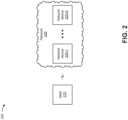
- Fig. 2 is a diagram of an example environment 200 in which systems and/or methods described herein may be implemented.
- environment 200 may include an NMS 210, a group of network devices 220 (shown as network device 220-1 through network device 220-N), and a network 230.
- Devices of the environment 200 may interconnect via wired connections, wireless connections, or a combination of wired and wireless connections.
- the NMS 210 includes one or more devices capable of receiving, generating, storing, processing, providing, and/or routing information, as described elsewhere herein.
- the NMS 210 may include a communication device and/or a computing device.
- the NMS 210 may include a server, such as an application server, a client server, a web server, a database server, a host server, a proxy server, a virtual server (e.g., executing on computing hardware), or a server in a cloud computing system.
- the NMS 210 includes computing hardware used in a cloud computing environment.
- the network device 220 includes one or more devices capable of receiving, processing, storing, routing, and/or providing traffic (e.g., a packet or other information or metadata) in a manner described herein.
- the network device 220 may include a router, such as a label switching router (LSR), a label edge router (LER), an ingress router, an egress router, a provider router (e.g., a provider edge router or a provider core router), a virtual router, a route reflector, an area border router, or another type of router.
- LSR label switching router
- LER label edge router
- an ingress router egress router
- a provider router e.g., a provider edge router or a provider core router
- a virtual router e.g., a route reflector, an area border router, or another type of router.
- the network device 220 may include a gateway, a switch, a firewall, a hub, a bridge, a reverse proxy, a server (e.g., a proxy server, a cloud server, or a data center server), a load balancer, and/or a similar device.
- the network device 220 may be a physical device implemented within a housing, such as a chassis.
- the network device 220 may be a virtual device implemented by one or more computer devices of a cloud computing environment or a data center.
- a group of network devices 220 may be a group of data center nodes that are used to route traffic flow through the network 230.
- the network 230 includes one or more wired and/or wireless networks.
- the network 230 may include a packet switched network, a cellular network (e.g., a fifth generation (5G) network, a fourth generation (4G) network, such as a long-term evolution (LTE) network, a third generation (3G) network, a code division multiple access (CDMA) network, a public land mobile network (PLMN), a local area network (LAN), a wide area network (WAN), a metropolitan area network (MAN), a telephone network (e.g., the Public Switched Telephone Network (PSTN)), a private network, an ad hoc network, an intranet, the Internet, a fiber optic-based network, a cloud computing network, or the like, and/or a combination of these or other types of networks.
- a packet switched network e.g., a fifth generation (5G) network, a fourth generation (4G) network, such as a long-term evolution (LTE) network, a third generation (3G
- the number and arrangement of devices and networks shown in Fig. 2 are provided as an example. In practice, there may be additional devices and/or networks, fewer devices and/or networks, different devices and/or networks, or differently arranged devices and/or networks than those shown in Fig. 2 . Furthermore, two or more devices shown in Fig. 2 may be implemented within a single device, or a single device shown in Fig. 2 may be implemented as multiple, distributed devices. Additionally, or alternatively, a set of devices (e.g., one or more devices) of the environment 200 may perform one or more functions described as being performed by another set of devices of the environment 200.
- a set of devices e.g., one or more devices
- Fig. 3 is a diagram of example components of one or more devices of Fig. 2 .
- the example components may be included in a device 300, which may correspond the NMS 210 and/or the network device 220.
- the NMS 210 and/or the network device 220 may include one or more devices 300 and/or one or more components of the device 300.
- the device 300 may include a bus 310, a processor 320, a memory 330, an input component 340, an output component 350, and a communication interface 360.
- the bus 310 includes one or more components that enable wired and/or wireless communication among the components of the device 300.
- the bus 310 may couple together two or more components of Fig. 3 , such as via operative coupling, communicative coupling, electronic coupling, and/or electric coupling.
- the processor 320 includes a central processing unit, a graphics processing unit, a microprocessor, a controller, a microcontroller, a digital signal processor, a field-programmable gate array, an application-specific integrated circuit, and/or another type of processing component.
- the processor 320 is implemented in hardware, firmware, or a combination of hardware and software.
- the processor 320 includes one or more processors capable of being programmed to perform one or more operations or processes described elsewhere herein.
- the memory 330 includes volatile and/or nonvolatile memory.
- the memory 330 may include random access memory (RAM), read only memory (ROM), a hard disk drive, and/or another type of memory (e.g., a flash memory, a magnetic memory, and/or an optical memory).
- the memory 330 may include internal memory (e.g., RAM, ROM, or a hard disk drive) and/or removable memory (e.g., removable via a universal serial bus connection).
- the memory 330 may be a computer-readable medium.
- the memory 330 stores information, instructions, and/or software (e.g., one or more software applications) related to the operation of the device 300.
- the memory 330 includes one or more memories that are coupled to one or more processors (e.g., the processor 320), such as via the bus 310.
- a computer readable medium may include non-transitory type media such as physical storage media including storage discs and solid state devices.
- a computer readable medium may also or alternatively include transient media such as carrier signals and transmission media.
- a computer-readable storage medium is defined herein as a non-transitory memory device.
- a memory device includes memory space within a single physical storage device or memory space spread across multiple physical storage devices.
- the input component 340 enables the device 300 to receive input, such as user input and/or sensed input.
- the input component 340 may include a touch screen, a keyboard, a keypad, a mouse, a button, a microphone, a switch, a sensor, a global positioning system sensor, an accelerometer, a gyroscope, and/or an actuator.
- the output component 350 enables the device 300 to provide output, such as via a display, a speaker, and/or a light-emitting diode.
- the communication interface 360 enables the device 300 to communicate with other devices via a wired connection and/or a wireless connection.
- the communication interface 360 may include a receiver, a transmitter, a transceiver, a modem, a network interface card, and/or an antenna.
- the device 300 may perform one or more operations or processes described herein.
- a computer-readable medium e.g., the memory 330
- the processor 320 may execute the set of instructions to perform one or more operations or processes described herein.
- execution of the set of instructions, by one or more processors 320 causes the one or more processors 320 and/or the device 300 to perform one or more operations or processes described herein.
- hardwired circuitry may be used instead of or in combination with the instructions to perform one or more operations or processes described herein.
- the processor 320 may be configured to perform one or more operations or processes described herein. Thus, implementations described herein are not limited to any specific combination of hardware circuitry and software.
- the number and arrangement of components shown in Fig. 3 are provided as an example.
- the device 300 may include additional components, fewer components, different components, or differently arranged components than those shown in Fig. 3 .
- a set of components (e.g., one or more components) of the device 300 may perform one or more functions described as being performed by another set of components of the device 300.
- Fig. 4 is a diagram of example components of one or more devices of Fig. 2 .
- the example components may be included in a device 400.
- the device 400 may correspond to the network device 220.
- the network device 220 may include one or more devices 400 and/or one or more components of the device 400.
- the device 400 may include one or more input components 410-1 through 410-B (B ⁇ 1) (hereinafter referred to collectively as input components 410, and individually as input component 410), a switching component 420, one or more output components 430-1 through 430-C (C ⁇ 1) (hereinafter referred to collectively as output components 430, and individually as output component 430), and a controller 440.
- the input component 410 may be one or more points of attachment for physical links and may be one or more points of entry for incoming traffic, such as packets.
- the input component 410 may process incoming traffic, such as by performing data link layer encapsulation or decapsulation.
- the input component 410 may transmit and/or receive packets.
- the input component 410 may include an input line card that includes one or more packet processing components (e.g., in the form of integrated circuits), such as one or more interface cards (IFCs), packet forwarding components, line card controller components, input ports, processors, memories, and/or input queues.
- the device 400 may include one or more input components 410.
- the switching component 420 may interconnect the input components 410 with the output components 430.
- the switching component 420 may be implemented via one or more crossbars, via busses, and/or with shared memories.
- the shared memories may act as temporary buffers to store packets from the input components 410 before the packets are eventually scheduled for delivery to the output components 430.
- the switching component 420 may enable the input components 410, the output components 430, and/or the controller 440 to communicate with one another.
- the output component 430 may store packets and may schedule packets for transmission on output physical links.
- the output component 430 may support data link layer encapsulation or decapsulation, and/or a variety of higher-level protocols.
- the output component 430 may transmit packets and/or receive packets.
- the output component 430 may include an output line card that includes one or more packet processing components (e.g., in the form of integrated circuits), such as one or more IFCs, packet forwarding components, line card controller components, output ports, processors, memories, and/or output queues.
- the device 400 may include one or more output components 430.
- the input component 410 and the output component 430 may be implemented by the same set of components (e.g., and input/output component may be a combination of the input component 410 and the output component 430).
- the controller 440 includes a processor in the form of, for example, a CPU, a GPU, an APU, a microprocessor, a microcontroller, a DSP, an FPGA, an ASIC, and/or another type of processor.
- the processor is implemented in hardware, firmware, or a combination of hardware and software.
- the controller 440 may include one or more processors that can be programmed to perform a function.
- the controller 440 may include a RAM, a ROM, and/or another type of dynamic or static storage device (e.g., a flash memory, a magnetic memory, an optical memory, etc.) that stores information and/or instructions for use by the controller 440.
- a RAM random access memory
- ROM read-only memory
- another type of dynamic or static storage device e.g., a flash memory, a magnetic memory, an optical memory, etc.
- the controller 440 may communicate with other devices, networks, and/or systems connected to the device 400 to exchange information regarding network topology.
- the controller 440 may create routing tables based on the network topology information, may create forwarding tables based on the routing tables, and may forward the forwarding tables to the input components 410 and/or output components 430.
- the input components 410 and/or the output components 430 may use the forwarding tables to perform route lookups for incoming and/or outgoing packets.
- the controller 440 may perform one or more processes described herein. The controller 440 may perform these processes in response to executing software instructions stored by a computer-readable medium.
- a computer-readable medium is may be a memory device.
- a memory device includes memory space within a single physical storage device or memory space spread across multiple physical storage devices.
- a computer readable medium may also or alternatively include transient media such as carrier signals and transmission media.
- Software instructions may be read into a memory and/or storage component associated with the controller 440 from another computer-readable medium or from another device via a communication interface. When executed, software instructions stored in a memory and/or storage component associated with the controller 440 may cause the controller 440 to perform one or more processes described herein. Additionally, or alternatively, hardwired circuitry may be used in place of or in combination with software instructions to perform one or more processes described herein. Thus, implementations described herein are not limited to any specific combination of hardware circuitry and software.
- the device 400 may include additional components, fewer components, different components, or differently arranged components than those shown in Fig. 4 . Additionally, or alternatively, a set of components (e.g., one or more components) of the device 400 may perform one or more functions described as being performed by another set of components of the device 400.
- Fig. 5 is a flowchart of an example process 500 for storing network management data in a data structure to minimize management data traffic.
- one or more process blocks of Fig. 5 may be performed by a network device (e.g., the network device 220).
- one or more process blocks of Fig. 5 may be performed by another device or a group of devices separate from or including the network device, such as an NMS (e.g., the NMS 210).
- NMS e.g., the NMS 210
- one or more process blocks of Fig. 5 may be performed by one or more components of the device 300, such as the processor 320, the memory 330, the input component 340, the output component 350, and/or the communication interface 360.
- one or more process blocks of Fig. 5 may be performed by one or more components of the device 400, such as the input component 410, the switching component 420, the output component 430, and/or the controller 440.
- process 500 may include utilizing a daemon to poll data for counters of the network device (block 510).
- the network device may utilize a daemon to poll data for counters of the network device, as described above.
- the daemon includes a simple network management protocol daemon provided on the network device.
- the data polled for the counters includes network management data.
- the data polled for the counters is associated with an object identifier.
- the data polled for the counters includes simple network management protocol objects.
- process 500 may include storing, for a first time interval, the data polled for the counters in a data structure associated with the network device (block 520).
- the network device may store, for a first time interval, the data polled for the counters in a data structure associated with the network device, as described above.
- the data structure includes a simple network management protocol management information base.
- the data structure includes a first-in-first-out queue data structure.
- process 500 may include maintaining the data polled for the counters in the data structure for a second time interval that is longer than the first time interval (block 530).
- the network device may maintain the data polled for the counters in the data structure for a second time interval that is longer than the first time interval, as described above.
- the first time interval defines a data granularity for the data polled for the counters and the second time interval defines a quantity of data points associated with the data polled for the counters.
- process 500 may include receiving, from a network management system, a request for data polled for the counters with the second time interval (block 540).
- the network device may receive, from a network management system, a request for data polled for the counters with the second time interval, as described above.
- process 500 may include utilizing, based on the request, the daemon to determine whether the network management system is authorized to receive the data polled for the counters (block 550).
- the network device may utilize, based on the request, the daemon to determine whether the network management system is authorized to receive the data polled for the counters, as described above.
- process 500 includes determining, by the daemon, that the network management system is not authorized to receive the data polled for the counters, and providing, to the network management system, a message indicating denial of the request based on the daemon determining that the network management system is not authorized to receive the data polled for the counters.
- process 500 includes determining, by the daemon, that the network management system is authorized to receive the data polled for the counters, and providing, to the network management system, the data polled for the counters, with the second time interval, based on the daemon determining that the network management system is authorized to receive the data polled for the counters.
- process 500 includes receiving, from the network management system, another request for additional data polled for the counters with another second time interval, utilizing, based on the other request, the daemon to determine that the network management system is not authorized to receive the additional data polled for the counters, and providing, to the network management system, a message indicating denial of the other request based on the daemon determining that the network management system is not authorized to receive the additional data polled for the counters.
- process 500 includes removing the data polled for the counters from the data structure after providing the data polled for the counters to the network management system. In some implementations, process 500 includes removing the data polled for the counters from the data structure after the second time interval expires.
- process 500 may include additional blocks, fewer blocks, different blocks, or differently arranged blocks than those depicted in Fig. 5 . Additionally, or alternatively, two or more of the blocks of process 500 may be performed in parallel.
- the term "component” is intended to be broadly construed as hardware, firmware, or a combination of hardware and software. It will be apparent that systems and/or methods described herein may be implemented in different forms of hardware, firmware, and/or a combination of hardware and software. The actual specialized control hardware or software code used to implement these systems and/or methods is not limiting of the implementations. Thus, the operation and behavior of the systems and/or methods are described herein without reference to specific software code - it being understood that software and hardware can be used to implement the systems and/or methods based on the description herein.
- the terms “has,” “have,” “having,” or the like are intended to be open-ended terms. Further, the phrase “based on” is intended to mean “based, at least in part, on” unless explicitly stated otherwise. Also, as used herein, the term “or” is intended to be inclusive when used in a series and may be used interchangeably with “and/or,” unless explicitly stated otherwise (e.g., if used in combination with “either” or “only one of ⁇ ).
- a network device may poll data for counters of the network device, and may store, for a first time interval, the data polled for the counters in a data structure.
- the network device may maintain the data polled for the counters in the data structure for a second time interval that is longer than the first time interval, and may receive, from a network management system (NMS), a request for data polled for the counters with the second time interval.
- NMS network management system
- the network device may determine, based on the request, whether the NMS is authorized to receive the data polled for the counter, and may provide, to the NMS, the data polled for the counters, with the second time interval, when on the NMS is authorized to receive the data polled for the counters.
Landscapes
- Engineering & Computer Science (AREA)
- Computer Networks & Wireless Communication (AREA)
- Signal Processing (AREA)
- Environmental & Geological Engineering (AREA)
- Data Exchanges In Wide-Area Networks (AREA)
Abstract
Description
- The simple network management protocol (SNMP) is an Internet standard protocol for collecting and organizing information about managed devices on networks (e.g., Internet protocol (IP) networks) and for modifying that information to change device behavior. SNMP is widely used in network management for network monitoring. SNMP exposes management data as variables that are organized in a management information base (MIB) describing device status and configuration. Such variables can then be remotely queried by network management systems and/or applications.
- Some implementations described herein relate to a method. The method may include utilizing a daemon to poll data for counters of a network device, and storing, for a first time interval, the data polled for the counters in a data structure associated with the network device. The method may include maintaining the data polled for the counters in the data structure for a second time interval that is longer than the first time interval, and receiving, from a network management system, a request for data polled for the counters with the second time interval. The method may include utilizing, based on the request, the daemon the daemon to determine whether the network management system is authorized to receive the data polled for the counters.
- Some implementations described herein relate to a network device. The network device may include one or more memories and one or more processors. The one or more processors may be configured to utilize a daemon to poll data for counters of the network device, and store, for a first time interval, the data polled for the counters in a data structure associated with the network device. The one or more processors may be configured to maintain the data polled for the counters in the data structure for a second time interval that is longer than the first time interval, and receive, from a network management system, a request for data polled for the counters with the second time interval. The one or more processors may be configured to utilize, based on the request, the daemon to determine whether the network management system is authorized to receive the data polled for the counters. The one or more processors may be configured to selectively provide, to the network management system, the data polled for the counters, with the second time interval, based on the network management system being authorized to receive the data polled for the counters, or provide, to the network management system, a message indicating denial of the request based on the network management system not being authorized to receive the data polled for the counters.
- Some implementations described herein relate to a computer-readable medium that comprises a set of instructions for a network device. The set of instructions, when executed by one or more processors of the network device, may cause the network device to poll data for counters of the network device, and store, for a first time interval, the data polled for the counters in a data structure associated with the network device. The set of instructions, when executed by one or more processors of the network device, may cause the network device to maintain the data polled for the counters in the data structure for a second time interval that is longer than the first time interval, and receive, from a network management system, a request for data polled for the counters with the second time interval. The set of instructions, when executed by one or more processors of the network device, may cause the network device to determine, based on the request, whether the network management system is authorized to receive the data polled for the counters.
-
-
Figs. 1A-1F are diagrams of an example associated with storing network management data in a data structure to minimize management data traffic. -
Fig. 2 is a diagram of an example environment in which systems and/or methods described herein may be implemented. -
Figs. 3 and4 are diagrams of example components of one or more devices ofFig. 2 . -
Fig. 5 is a flowchart of an example process for storing network management data in a data structure to minimize management data traffic. - The following detailed description of example implementations refers to the accompanying drawings. The same reference numbers in different drawings may identify the same or similar elements.
- An SNMP daemon of a network device may provide data to counters when the data is polled by a network management system (NMS). An NMS, when managing a network device, may require a particular data granularity (e.g., per second, ten seconds, minute, and/or the like) for the data associated with the network device counters (e.g., network management data). However, the NMS may be required to report (e.g., to a billing system) the network management data only once in a time interval (e.g., in minutes) that is longer than the particular data granularity. This requires all network devices managed by the NMS to be queried (e.g., for the network management data) by the NMS based on the particular data granularity, rather than based on the time interval.
- Thus, current techniques for receiving network management data from network devices consume computing resources (e.g., processing resources, memory resources, communication resources, and/or the like), networking resources, and/or the like, associated with reducing network bandwidth based on querying the network devices for the network management data, increasing network traffic based on transmission and/or receipt of queries and the network management data, increasing load on the network devices based on processing the queries for the network management data, authorizing the NMS for each network management data query, and/or the like.
- Some implementations described herein relate to a network device that stores network management data in a data structure to minimize management data traffic. For example, a network device may utilize a daemon to poll data for counters of the network device, and may store, for a first time interval, the data polled for the counters in a data structure associated with the network device. The network device may maintain the data polled for the counters in the data structure for a second time interval that is longer than the first time interval, and may receive, from an NMS, a request for data polled for the counters with the second time interval. The network device may utilize, based on the request, the daemon to determine whether the NMS is authorized to receive the data polled for the counters. The network device may selectively provide, to the NMS, the data polled for the counters, with the second time interval, based on the NMS being authorized to receive the data polled for the counters, or provide, to the NMS, a message indicating denial of the request based on the NMS not being authorized to receive the data polled for the counters.
- In this way, the network device stores network management data in a data structure to minimize management data traffic. For example, the network device may include a data structure (e.g., an SNMP MIB) that is populated based on querying network management data (e.g., configured object identifiers) associated with the network device based on a first time interval. The network device may store the network management data in the data structure for a second time interval (e.g., determined for an NMS associated with the network device) that is longer than the first time interval. When the second time interval expires, the network device may provide the network management data to the NMS (e.g., based on a query received from the NMS) so that the NMS receives data captured with a granularity of the first time interval. Thus, the network device conserves computing resources, networking resources, and/or the like that would otherwise have been consumed by reducing network bandwidth based on querying the network devices for the network management data, increasing network traffic based on transmission and/or receipt of queries and the network management data, increasing loads on the network devices based on processing the queries for the network management data, authorizing the NMS for each network management data query, and/or the like.
-
Figs. 1A-1F are diagrams of an example 100 associated with storing network management data in a data structure to minimize management data traffic. As shown inFigs. 1A-1F , example 100 includes a network management system (NMS) and a network with a plurality of network devices. Further details of the NMS, the network, and the network devices are provided elsewhere herein. - As further shown in
Fig. 1A , and byreference number 105, the network device may utilize a daemon to poll data for counters of the network device. For example, the network device may include a daemon (e.g., an SNMP daemon) that polls the data (e.g., network management data) for the counters of the network device. In some implementations, the daemon may provide the data to the counters at instances when the data is polled by the daemon. In some implementations, the counters may include SNMP counters, such as counters for interfaces, processors, applications, and/or the like associated with the network device. - As shown in
Fig. 1B , and byreference number 110, the network device may store, at a first time interval, the data polled for the counters in a data structure associated with network device. For example, the network device may include a data structure (e.g., a database, a table, a list, and/or the like), such as a management information base (MIB), which may be populated by querying the polled data (e.g., object identifiers (OIDs)) provided to the counters of the network device. The network device may store the polled data in the data structure at a particular granularity (e.g., the first time interval), such as per second, per multiple seconds, per minute, per multiple minutes, and/or the like. In some implementations, the first time interval may be configured by the network device or by a user of the network device. - As shown in
Fig. 1C , and byreference number 115, the network device may maintain the data polled for the counters in the data structure for a second time interval that is longer than the first time interval. For example, the network device may maintain the polled data in the data structure for a time interval (e.g., the second time interval), such as multiple seconds, one minute, multiple minutes, and/or the like, that is longer than the first time interval. In some implementations, the second time interval may be configured by the network device or by a user of the network device. - In one example, the first time interval may be set to one (1) minute and the second time interval may be set to fifteen (15) minutes for a particular object identifier (OID) to be stored in the data structure (e.g., the MIB), as follows:

- In this example, the network device may store a data point (e.g., a snapshot) of the polled data at each first time interval (e.g., one minute) and for the second time interval (e.g., fifteen minutes). Thus, the network device may store fifteen data points (e.g., snapshots) of the polled data in the data structure. The NMS may query the network device for data points of the polled data every fifteen minutes, which may greatly reduce traffic between the NMS and the network device. The NMS may also query the other network devices for data points every fifteen minutes (e.g., rather than every minute), which may greatly reduce traffic between the NMS and the other network devices.
- As further shown in
Fig. 1C , an example use case may include six snapshots of data (e.g., for an input octets counter for an interface of the network device) collected by the network device with a first time interval of ten seconds between each snapshot. Each of the six snapshots of the data (e.g., a configured SNMP OID) may be fetched by the daemon of the network device and enqueued by the daemon in a queue (e.g., with six entries) every ten seconds (e.g., based on a configuration for the SNMP OID). Any new snapshot enqueued by the daemon in the queue may displace (e.g., dequeue) an oldest snapshot from a front of the queue. - As shown in Fig. ID, and by
reference number 120, the network device may receive, from the NMS, a request for the data polled for the counters with the second time interval. For example, the NMS may generate the request for the data polled by the network device with the second time interval, and may provide the request to the network device. The network device may receive the request from the NMS. The request may query the network device for data points of the polled data with the second time interval, which may greatly reduce traffic between the NMS and the network device. - Based on the use case depicted in
Fig. 1C , the request may query a type and a value of the six snapshots in a single request (e.g., a bulk get request), as follows:

- As further shown in Fig. ID, and by
reference number 125, the network device may utilize, based on the request, the daemon to determine whether the NMS is authorized to receive the data polled for the counters. For example, the daemon of the network device may analyze credentials of the NMS included in the request for the data polled for the counters with the second time interval, and may determine, based on the credentials, whether the NMS is authorized to receive the data polled for the counters with the second time interval. In some implementations, the daemon of the network device may determine that the NMS is authorized to receive the data polled for the counters when the credentials of the NMS are authenticated by the daemon of the network device. Alternatively, the daemon of the network device may determine that the NMS is not authorized to receive the data polled for the counters when the credentials of the NMS are not authenticated by the daemon of the network device. - As shown in Fig. IE, and by
reference number 130, the network device may determine that the NMS is authorized to receive the data polled for the counters. For example, the daemon of the network device may determine that the NMS is authorized to receive the data polled for the counters when the credentials of the NMS are authenticated by the daemon of the network device. The daemon may determine that the credentials of the NMS are authentic when the credentials of the NMS match credentials stored in the network device and associated with the NMS and the data polled for the counters. - As further shown in Fig. IE, and by
reference number 135, the network device may provide, to the NMS, the data polled for the counters, with the second time interval, based on the NMS being authorized to receive the data. For example, when the daemon of the network device determines that the NMS is authorized to receive the data polled for the counters, the daemon of the network device may provide, to the NMS, the data polled for the counters with the second time interval. The NMS may receive the polled data and may report the polled data to (e.g., to a network billing system). - As shown in Fig. IF, and by
reference number 140, the network device may determine that the NMS is not authorized to receive the data polled for the counters. For example, the daemon of the network device may determine that the NMS is not authorized to receive the data polled for the counters when the credentials of the NMS are not authenticated by the daemon of the network device. The daemon may determine that the credentials of the NMS are not authentic when the credentials of the NMS fail to match credentials stored in the network device and associated with the NMS and the data polled for the counters. - As further shown in Fig. IF, and by
reference number 145, the network device may provide, to the NMS, a message indicating denial of the request based on the NMS not being authorized to receive the data. For example, when the daemon of the network device determines that the NMS is not authorized to receive the data polled for the counters, the daemon of the network device may provide, to the NMS, the message indicating denial of the request for the data polled for the counters with the second time interval. In such a scenario, the NMS may not receive the data polled for the counters with the second time interval. - In some implementations, the network device may store historical groups of the polled data over a time period in the data structure. For example, the network device may store the polled data for minutes one through fifteen of a first day in a first historical group of the polled data, may store polled data for minutes sixteen through thirty of the first day in a second historical group of the polled data, and/or the like. In such an example, the NMS may request, from the network device, a particular historical group of the polled data (e.g., minutes thirty-one through forty-five of the first day), and the network device may provide the particular historical group of the polled data to the NMS. In this way, the NMS may utilize the historical groups of polled data to compare a same time period of different days in order to determine whether the network device is experiencing an issue.
- In this way, the network device stores network management data in a data structure to minimize management data traffic. For example, the network device may include a data structure that is populated based on querying network management data associated with the network device based on a first time interval. The network device may store the network management data in the data structure for a second time interval that is longer than the first time interval. When the second time interval expires, the network device may provide the network management data to the NMS. Thus, the network device conserves computing resources, networking resources, and/or the like that would otherwise have been consumed by reducing network bandwidth based on querying the network devices for the network management data, increasing network traffic based on transmission and/or receipt of queries and the network management data, increasing loads on the network devices based on processing the queries for the network management data, authorizing the NMS for each network management data query, and/or the like.
- As indicated above,
Figs. 1A-1F are provided as an example. Other examples may differ from what is described with regard toFigs. 1A-1F . The number and arrangement of devices shown inFigs. 1A-1F are provided as an example. In practice, there may be additional devices, fewer devices, different devices, or differently arranged devices than those shown inFigs. 1A-1F . Furthermore, two or more devices shown inFigs. 1A-1F may be implemented within a single device, or a single device shown inFigs. 1A-1F may be implemented as multiple, distributed devices. Additionally, or alternatively, a set of devices (e.g., one or more devices) shown inFigs. 1A-1F may perform one or more functions described as being performed by another set of devices shown inFigs. 1A-1F . -
Fig. 2 is a diagram of anexample environment 200 in which systems and/or methods described herein may be implemented. As shown inFig. 2 ,environment 200 may include anNMS 210, a group of network devices 220 (shown as network device 220-1 through network device 220-N), and anetwork 230. Devices of theenvironment 200 may interconnect via wired connections, wireless connections, or a combination of wired and wireless connections. - The
NMS 210 includes one or more devices capable of receiving, generating, storing, processing, providing, and/or routing information, as described elsewhere herein. TheNMS 210 may include a communication device and/or a computing device. For example, theNMS 210 may include a server, such as an application server, a client server, a web server, a database server, a host server, a proxy server, a virtual server (e.g., executing on computing hardware), or a server in a cloud computing system. In some implementations, theNMS 210 includes computing hardware used in a cloud computing environment. - The
network device 220 includes one or more devices capable of receiving, processing, storing, routing, and/or providing traffic (e.g., a packet or other information or metadata) in a manner described herein. For example, thenetwork device 220 may include a router, such as a label switching router (LSR), a label edge router (LER), an ingress router, an egress router, a provider router (e.g., a provider edge router or a provider core router), a virtual router, a route reflector, an area border router, or another type of router. Additionally, or alternatively, thenetwork device 220 may include a gateway, a switch, a firewall, a hub, a bridge, a reverse proxy, a server (e.g., a proxy server, a cloud server, or a data center server), a load balancer, and/or a similar device. In some implementations, thenetwork device 220 may be a physical device implemented within a housing, such as a chassis. In some implementations, thenetwork device 220 may be a virtual device implemented by one or more computer devices of a cloud computing environment or a data center. In some implementations, a group ofnetwork devices 220 may be a group of data center nodes that are used to route traffic flow through thenetwork 230. - The
network 230 includes one or more wired and/or wireless networks. For example, thenetwork 230 may include a packet switched network, a cellular network (e.g., a fifth generation (5G) network, a fourth generation (4G) network, such as a long-term evolution (LTE) network, a third generation (3G) network, a code division multiple access (CDMA) network, a public land mobile network (PLMN), a local area network (LAN), a wide area network (WAN), a metropolitan area network (MAN), a telephone network (e.g., the Public Switched Telephone Network (PSTN)), a private network, an ad hoc network, an intranet, the Internet, a fiber optic-based network, a cloud computing network, or the like, and/or a combination of these or other types of networks. - The number and arrangement of devices and networks shown in
Fig. 2 are provided as an example. In practice, there may be additional devices and/or networks, fewer devices and/or networks, different devices and/or networks, or differently arranged devices and/or networks than those shown inFig. 2 . Furthermore, two or more devices shown inFig. 2 may be implemented within a single device, or a single device shown inFig. 2 may be implemented as multiple, distributed devices. Additionally, or alternatively, a set of devices (e.g., one or more devices) of theenvironment 200 may perform one or more functions described as being performed by another set of devices of theenvironment 200. -
Fig. 3 is a diagram of example components of one or more devices ofFig. 2 . The example components may be included in adevice 300, which may correspond theNMS 210 and/or thenetwork device 220. In some implementations, theNMS 210 and/or thenetwork device 220 may include one ormore devices 300 and/or one or more components of thedevice 300. As shown inFig. 3 , thedevice 300 may include abus 310, aprocessor 320, amemory 330, aninput component 340, anoutput component 350, and acommunication interface 360. - The
bus 310 includes one or more components that enable wired and/or wireless communication among the components of thedevice 300. Thebus 310 may couple together two or more components ofFig. 3 , such as via operative coupling, communicative coupling, electronic coupling, and/or electric coupling. Theprocessor 320 includes a central processing unit, a graphics processing unit, a microprocessor, a controller, a microcontroller, a digital signal processor, a field-programmable gate array, an application-specific integrated circuit, and/or another type of processing component. Theprocessor 320 is implemented in hardware, firmware, or a combination of hardware and software. In some implementations, theprocessor 320 includes one or more processors capable of being programmed to perform one or more operations or processes described elsewhere herein. - The
memory 330 includes volatile and/or nonvolatile memory. For example, thememory 330 may include random access memory (RAM), read only memory (ROM), a hard disk drive, and/or another type of memory (e.g., a flash memory, a magnetic memory, and/or an optical memory). Thememory 330 may include internal memory (e.g., RAM, ROM, or a hard disk drive) and/or removable memory (e.g., removable via a universal serial bus connection). Thememory 330 may be a computer-readable medium. Thememory 330 stores information, instructions, and/or software (e.g., one or more software applications) related to the operation of thedevice 300. In some implementations, thememory 330 includes one or more memories that are coupled to one or more processors (e.g., the processor 320), such as via thebus 310. A computer readable medium, as referred to herein, may include non-transitory type media such as physical storage media including storage discs and solid state devices. A computer readable medium may also or alternatively include transient media such as carrier signals and transmission media. A computer-readable storage medium is defined herein as a non-transitory memory device. A memory device includes memory space within a single physical storage device or memory space spread across multiple physical storage devices. - The
input component 340 enables thedevice 300 to receive input, such as user input and/or sensed input. For example, theinput component 340 may include a touch screen, a keyboard, a keypad, a mouse, a button, a microphone, a switch, a sensor, a global positioning system sensor, an accelerometer, a gyroscope, and/or an actuator. Theoutput component 350 enables thedevice 300 to provide output, such as via a display, a speaker, and/or a light-emitting diode. Thecommunication interface 360 enables thedevice 300 to communicate with other devices via a wired connection and/or a wireless connection. For example, thecommunication interface 360 may include a receiver, a transmitter, a transceiver, a modem, a network interface card, and/or an antenna. - The
device 300 may perform one or more operations or processes described herein. For example, a computer-readable medium (e.g., the memory 330) may store a set of instructions (e.g., one or more instructions or code) for execution by theprocessor 320. Theprocessor 320 may execute the set of instructions to perform one or more operations or processes described herein. In some implementations, execution of the set of instructions, by one ormore processors 320, causes the one ormore processors 320 and/or thedevice 300 to perform one or more operations or processes described herein. In some implementations, hardwired circuitry may be used instead of or in combination with the instructions to perform one or more operations or processes described herein. Additionally, or alternatively, theprocessor 320 may be configured to perform one or more operations or processes described herein. Thus, implementations described herein are not limited to any specific combination of hardware circuitry and software. - The number and arrangement of components shown in
Fig. 3 are provided as an example. Thedevice 300 may include additional components, fewer components, different components, or differently arranged components than those shown inFig. 3 . Additionally, or alternatively, a set of components (e.g., one or more components) of thedevice 300 may perform one or more functions described as being performed by another set of components of thedevice 300. -
Fig. 4 is a diagram of example components of one or more devices ofFig. 2 . The example components may be included in adevice 400. Thedevice 400 may correspond to thenetwork device 220. In some implementations, thenetwork device 220 may include one ormore devices 400 and/or one or more components of thedevice 400. As shown inFig. 4 , thedevice 400 may include one or more input components 410-1 through 410-B (B ≥ 1) (hereinafter referred to collectively asinput components 410, and individually as input component 410), aswitching component 420, one or more output components 430-1 through 430-C (C ≥ 1) (hereinafter referred to collectively asoutput components 430, and individually as output component 430), and acontroller 440. - The
input component 410 may be one or more points of attachment for physical links and may be one or more points of entry for incoming traffic, such as packets. Theinput component 410 may process incoming traffic, such as by performing data link layer encapsulation or decapsulation. In some implementations, theinput component 410 may transmit and/or receive packets. In some implementations, theinput component 410 may include an input line card that includes one or more packet processing components (e.g., in the form of integrated circuits), such as one or more interface cards (IFCs), packet forwarding components, line card controller components, input ports, processors, memories, and/or input queues. In some implementations, thedevice 400 may include one ormore input components 410. - The
switching component 420 may interconnect theinput components 410 with theoutput components 430. In some implementations, theswitching component 420 may be implemented via one or more crossbars, via busses, and/or with shared memories. The shared memories may act as temporary buffers to store packets from theinput components 410 before the packets are eventually scheduled for delivery to theoutput components 430. In some implementations, theswitching component 420 may enable theinput components 410, theoutput components 430, and/or thecontroller 440 to communicate with one another. - The
output component 430 may store packets and may schedule packets for transmission on output physical links. Theoutput component 430 may support data link layer encapsulation or decapsulation, and/or a variety of higher-level protocols. In some implementations, theoutput component 430 may transmit packets and/or receive packets. In some implementations, theoutput component 430 may include an output line card that includes one or more packet processing components (e.g., in the form of integrated circuits), such as one or more IFCs, packet forwarding components, line card controller components, output ports, processors, memories, and/or output queues. In some implementations, thedevice 400 may include one ormore output components 430. In some implementations, theinput component 410 and theoutput component 430 may be implemented by the same set of components (e.g., and input/output component may be a combination of theinput component 410 and the output component 430). - The
controller 440 includes a processor in the form of, for example, a CPU, a GPU, an APU, a microprocessor, a microcontroller, a DSP, an FPGA, an ASIC, and/or another type of processor. The processor is implemented in hardware, firmware, or a combination of hardware and software. In some implementations, thecontroller 440 may include one or more processors that can be programmed to perform a function. - In some implementations, the
controller 440 may include a RAM, a ROM, and/or another type of dynamic or static storage device (e.g., a flash memory, a magnetic memory, an optical memory, etc.) that stores information and/or instructions for use by thecontroller 440. - In some implementations, the
controller 440 may communicate with other devices, networks, and/or systems connected to thedevice 400 to exchange information regarding network topology. Thecontroller 440 may create routing tables based on the network topology information, may create forwarding tables based on the routing tables, and may forward the forwarding tables to theinput components 410 and/oroutput components 430. Theinput components 410 and/or theoutput components 430 may use the forwarding tables to perform route lookups for incoming and/or outgoing packets. - The
controller 440 may perform one or more processes described herein. Thecontroller 440 may perform these processes in response to executing software instructions stored by a computer-readable medium. A computer-readable medium is may be a memory device. A memory device includes memory space within a single physical storage device or memory space spread across multiple physical storage devices. A computer readable medium may also or alternatively include transient media such as carrier signals and transmission media. - Software instructions may be read into a memory and/or storage component associated with the
controller 440 from another computer-readable medium or from another device via a communication interface. When executed, software instructions stored in a memory and/or storage component associated with thecontroller 440 may cause thecontroller 440 to perform one or more processes described herein. Additionally, or alternatively, hardwired circuitry may be used in place of or in combination with software instructions to perform one or more processes described herein. Thus, implementations described herein are not limited to any specific combination of hardware circuitry and software. - The number and arrangement of components shown in
Fig. 4 are provided as an example. In practice, thedevice 400 may include additional components, fewer components, different components, or differently arranged components than those shown inFig. 4 . Additionally, or alternatively, a set of components (e.g., one or more components) of thedevice 400 may perform one or more functions described as being performed by another set of components of thedevice 400. -
Fig. 5 is a flowchart of anexample process 500 for storing network management data in a data structure to minimize management data traffic. In some implementations, one or more process blocks ofFig. 5 may be performed by a network device (e.g., the network device 220). In some implementations, one or more process blocks ofFig. 5 may be performed by another device or a group of devices separate from or including the network device, such as an NMS (e.g., the NMS 210). Additionally, or alternatively, one or more process blocks ofFig. 5 may be performed by one or more components of thedevice 300, such as theprocessor 320, thememory 330, theinput component 340, theoutput component 350, and/or thecommunication interface 360. Additionally, or alternatively, one or more process blocks ofFig. 5 may be performed by one or more components of thedevice 400, such as theinput component 410, theswitching component 420, theoutput component 430, and/or thecontroller 440. - As shown in
Fig. 5 ,process 500 may include utilizing a daemon to poll data for counters of the network device (block 510). For example, the network device may utilize a daemon to poll data for counters of the network device, as described above. In some implementations, the daemon includes a simple network management protocol daemon provided on the network device. In some implementations, the data polled for the counters includes network management data. In some implementations, the data polled for the counters is associated with an object identifier. In some implementations, the data polled for the counters includes simple network management protocol objects. - As further shown in
Fig. 5 ,process 500 may include storing, for a first time interval, the data polled for the counters in a data structure associated with the network device (block 520). For example, the network device may store, for a first time interval, the data polled for the counters in a data structure associated with the network device, as described above. In some implementations, the data structure includes a simple network management protocol management information base. In some implementations, the data structure includes a first-in-first-out queue data structure. - As further shown in
Fig. 5 ,process 500 may include maintaining the data polled for the counters in the data structure for a second time interval that is longer than the first time interval (block 530). For example, the network device may maintain the data polled for the counters in the data structure for a second time interval that is longer than the first time interval, as described above. In some implementations, the first time interval defines a data granularity for the data polled for the counters and the second time interval defines a quantity of data points associated with the data polled for the counters. - As further shown in
Fig. 5 ,process 500 may include receiving, from a network management system, a request for data polled for the counters with the second time interval (block 540). For example, the network device may receive, from a network management system, a request for data polled for the counters with the second time interval, as described above. - As further shown in
Fig. 5 ,process 500 may include utilizing, based on the request, the daemon to determine whether the network management system is authorized to receive the data polled for the counters (block 550). For example, the network device may utilize, based on the request, the daemon to determine whether the network management system is authorized to receive the data polled for the counters, as described above. - In some implementations,
process 500 includes determining, by the daemon, that the network management system is not authorized to receive the data polled for the counters, and providing, to the network management system, a message indicating denial of the request based on the daemon determining that the network management system is not authorized to receive the data polled for the counters. - In some implementations,
process 500 includes determining, by the daemon, that the network management system is authorized to receive the data polled for the counters, and providing, to the network management system, the data polled for the counters, with the second time interval, based on the daemon determining that the network management system is authorized to receive the data polled for the counters. - In some implementations,
process 500 includes receiving, from the network management system, another request for additional data polled for the counters with another second time interval, utilizing, based on the other request, the daemon to determine that the network management system is not authorized to receive the additional data polled for the counters, and providing, to the network management system, a message indicating denial of the other request based on the daemon determining that the network management system is not authorized to receive the additional data polled for the counters. - In some implementations,
process 500 includes removing the data polled for the counters from the data structure after providing the data polled for the counters to the network management system. In some implementations,process 500 includes removing the data polled for the counters from the data structure after the second time interval expires. - Although
Fig. 5 shows example blocks ofprocess 500, in some implementations,process 500 may include additional blocks, fewer blocks, different blocks, or differently arranged blocks than those depicted inFig. 5 . Additionally, or alternatively, two or more of the blocks ofprocess 500 may be performed in parallel. - The foregoing disclosure provides illustration and description but is not intended to be exhaustive or to limit the implementations to the precise form disclosed. Modifications may be made in light of the above disclosure or may be acquired from practice of the implementations.
- As used herein, the term "component" is intended to be broadly construed as hardware, firmware, or a combination of hardware and software. It will be apparent that systems and/or methods described herein may be implemented in different forms of hardware, firmware, and/or a combination of hardware and software. The actual specialized control hardware or software code used to implement these systems and/or methods is not limiting of the implementations. Thus, the operation and behavior of the systems and/or methods are described herein without reference to specific software code - it being understood that software and hardware can be used to implement the systems and/or methods based on the description herein.
- Although particular combinations of features are recited in the claims and/or disclosed in the specification, these combinations are not intended to limit the disclosure of various implementations. In fact, many of these features may be combined in ways not specifically recited in the claims and/or disclosed in the specification. Although each dependent claim listed below may directly depend on only one claim, the disclosure of various implementations includes each dependent claim in combination with every other claim in the claim set.
- No element, act, or instruction used herein should be construed as critical or essential unless explicitly described as such. Also, as used herein, the articles "a" and "an" are intended to include one or more items and may be used interchangeably with "one or more." Further, as used herein, the article "the" is intended to include one or more items referenced in connection with the article "the" and may be used interchangeably with "the one or more." Furthermore, as used herein, the term "set" is intended to include one or more items (e.g., related items, unrelated items, a combination of related and unrelated items, and/or the like), and may be used interchangeably with "one or more." Where only one item is intended, the phrase "only one" or similar language is used. Also, as used herein, the terms "has," "have," "having," or the like are intended to be open-ended terms. Further, the phrase "based on" is intended to mean "based, at least in part, on" unless explicitly stated otherwise. Also, as used herein, the term "or" is intended to be inclusive when used in a series and may be used interchangeably with "and/or," unless explicitly stated otherwise (e.g., if used in combination with "either" or "only one ofʺ).
- In the preceding specification, various example embodiments have been described with reference to the accompanying drawings. It will, however, be evident that various modifications and changes may be made thereto, and additional embodiments may be implemented, without departing from the broader scope of the invention as set forth in the claims that follow. The specification and drawings are accordingly to be regarded in an illustrative rather than restrictive sense.
- The invention is defined in the appended claims.
- Thus, from one perspective, there has now been described a network device that may poll data for counters of the network device, and may store, for a first time interval, the data polled for the counters in a data structure. The network device may maintain the data polled for the counters in the data structure for a second time interval that is longer than the first time interval, and may receive, from a network management system (NMS), a request for data polled for the counters with the second time interval. The network device may determine, based on the request, whether the NMS is authorized to receive the data polled for the counter, and may provide, to the NMS, the data polled for the counters, with the second time interval, when on the NMS is authorized to receive the data polled for the counters.
- Further examples of feature combinations taught by the present disclosure are set out in the following numbered clauses:
- 1. A method, comprising:
- utilizing, by a network device, a daemon to poll data for counters of the network device;
- storing, by the network device and for a first time interval, the data polled for the counters in a data structure associated with the network device;
- maintaining, by the network device, the data polled for the counters in the data structure for a second time interval that is longer than the first time interval;
- receiving, by the network device and from a network management system, a request for data polled for the counters with the second time interval; and
- utilizing, by the network device and based on the request, the daemon to determine whether the network management system is authorized to receive the data polled for the counters.
- 2. The method of
clause 1, further comprising:- determining, by the daemon, that the network management system is not authorized to receive the data polled for the counters; and
- providing, to the network management system, a message indicating denial of the request based on the daemon determining that the network management system is not authorized to receive the data polled for the counters.
- 3. The method of
clause - determining, by the daemon, that the network management system is authorized to receive the data polled for the counters; and
- providing, to the network management system, the data polled for the counters, with the second time interval, based on the daemon determining that the network management system is authorized to receive the data polled for the counters.
- 4. The method of any preceding clause, wherein the daemon includes a simple network management protocol daemon provided on the network device.
- 5. The method of any preceding clause, wherein the data polled for the counters includes network management data.
- 6. The method of any preceding clause, wherein the data structure includes a simple network management protocol management information base.
- 7. The method of any preceding clause, wherein the data structure includes a first-in-first-out queue data structure.
- 8. A network device, comprising:
- one or more memories; and
- one or more processors to:
- utilize a daemon to poll data for counters of the network device;
- store, for a first time interval, the data polled for the counters in a data structure associated with the network device;
- maintain the data polled for the counters in the data structure for a second time interval that is longer than the first time interval;
- receive, from a network management system, a request for data polled for the counters with the second time interval; and
- selectively:
- provide, to the network management system, the data polled for the counters, with the second time interval, based on the network management system being authorized to receive the data polled for the counters, or
- provide, to the network management system, a message indicating denial of the request based on the network management system not being authorized to receive the data polled for the counters.
- 9. The network device of clause 8, wherein the data polled for the counters is associated with an object identifier.
- 10. The network device of clause 8 or 9, wherein the first time interval defines a data granularity for the data polled for the counters and the second time interval defines a quantity of data points associated with the data polled for the counters.
- 11. The network device of any of clauses 8 to 10, wherein the one or more processors are further to:
- receive, from the network management system, another request for additional data polled for the counters with another second time interval;
- utilize, based on the other request, the daemon to determine that the network management system is not authorized to receive the additional data polled for the counters; and
- provide, to the network management system, a message indicating denial of the other request based on the daemon determining that the network management system is not authorized to receive the additional data polled for the counters.
- 12. The network device of any of clauses 8 to 11, wherein the data polled for the counters includes simple network management protocol objects.
- 13. The network device of any of clauses 8 to 12, wherein the one or more processors are further to:
remove the data polled for the counters from the data structure after providing the data polled for the counters to the network management system. - 14. The network device of any of clauses 8 to 13, wherein the one or more processors are further to:
remove the data polled for the counters from the data structure after the second time interval expires. - 15. A computer-readable medium storing a set of instructions, the set of instructions comprising:
one or more instructions that, when executed by one or more processors of a network device, cause the network device to:- poll data for counters of the network device;
- store, for a first time interval, the data polled for the counters in a data structure associated with the network device;
- maintain the data polled for the counters in the data structure for a second time interval that is longer than the first time interval;
- receive, from a network management system, a request for data polled for the counters with the second time interval; and
- determine, based on the request, whether the network management system is authorized to receive the data polled for the counters.
- 16. The computer-readable medium of clause 15, wherein the one or more instructions further cause the network device to:
- determine that the network management system is not authorized to receive the data polled for the counters; and
- provide, to the network management system, a message indicating denial of the request based on determining that the network management system is not authorized to receive the data polled for the counters.
- 17. The computer-readable medium of clause 15 or 16, wherein the one or more instructions further cause the network device to:
- determine that the network management system is authorized to receive the data polled for the counters; and
- provide, to the network management system, the data polled for the counters, with the second time interval, based on determining that the network management system is authorized to receive the data polled for the counters.
- 18. The computer-readable medium of any of clauses 15 to 17, wherein the data polled for the counters includes network management data.
- 19. The computer-readable medium of any of clauses 15 to 18, wherein the data structure includes a simple network management protocol management information base.
- 20. The computer-readable medium of any of clauses 15 to 19, wherein the first time interval defines a data granularity for the data polled for the counters and the second time interval defines a quantity of data points associated with the data polled for the counters.
Claims (15)
- A method, comprising:utilizing, by a network device, a daemon to poll data for counters of the network device;storing, by the network device and for a first time interval, the data polled for the counters in a data structure associated with the network device;maintaining, by the network device, the data polled for the counters in the data structure for a second time interval that is longer than the first time interval;receiving, by the network device and from a network management system, a request for data polled for the counters with the second time interval; andutilizing, by the network device and based on the request, the daemon to determine whether the network management system is authorized to receive the data polled for the counters.
- The method of claim 1, further comprising:determining, by the daemon, that the network management system is not authorized to receive the data polled for the counters; andproviding, to the network management system, a message indicating denial of the request based on the daemon determining that the network management system is not authorized to receive the data polled for the counters.
- The method of claim 1, further comprising:determining, by the daemon, that the network management system is authorized to receive the data polled for the counters; andproviding, to the network management system, the data polled for the counters, with the second time interval, based on the daemon determining that the network management system is authorized to receive the data polled for the counters.
- The method of any preceding claim, wherein the daemon includes a simple network management protocol daemon provided on the network device.
- The method of any preceding claim, wherein the data polled for the counters includes network management data.
- The method of any preceding claim, wherein the data structure includes a simple network management protocol management information base.
- The method of any preceding claim, wherein the data structure includes a first-in-first-out queue data structure.
- A network device, comprising:one or more memories; andone or more processors to:utilize a daemon to poll data for counters of the network device;store, for a first time interval, the data polled for the counters in a data structure associated with the network device;maintain the data polled for the counters in the data structure for a second time interval that is longer than the first time interval;receive, from a network management system, a request for data polled for the counters with the second time interval; andselectively:provide, to the network management system, the data polled for the counters, with the second time interval, based on the network management system being authorized to receive the data polled for the counters, orprovide, to the network management system, a message indicating denial of the request based on the network management system not being authorized to receive the data polled for the counters.
- The network device of claim 8, wherein the data polled for the counters is associated with an object identifier.
- The network device of claim 8 or 9, wherein the first time interval defines a data granularity for the data polled for the counters and the second time interval defines a quantity of data points associated with the data polled for the counters.
- The network device of any of claims 8 to 10, wherein the one or more processors are further to:receive, from the network management system, another request for additional data polled for the counters with another second time interval;utilize, based on the other request, the daemon to determine that the network management system is not authorized to receive the additional data polled for the counters; andprovide, to the network management system, a message indicating denial of the other request based on the daemon determining that the network management system is not authorized to receive the additional data polled for the counters.
- The network device of any of claims 8 to 11, wherein the data polled for the counters includes simple network management protocol objects.
- The network device of any of claims 8 to 12, wherein the one or more processors are further to:
remove the data polled for the counters from the data structure after providing the data polled for the counters to the network management system. - The network device of any of claims 8 to 13, wherein the one or more processors are further to:
remove the data polled for the counters from the data structure after the second time interval expires. - A computer-readable medium comprising a set of instructions, the set of instructions comprising one or more instructions that, when executed by one or more processors of a network device, cause the network device to carry out the method of any of claims 1 to 7.
Applications Claiming Priority (1)
| Application Number | Priority Date | Filing Date | Title |
|---|---|---|---|
| US17/737,317 US12284095B2 (en) | 2022-05-05 | 2022-05-05 | Simple network management protocol object history collector management information base to curtail management traffic |
Publications (1)
| Publication Number | Publication Date |
|---|---|
| EP4274175A1 true EP4274175A1 (en) | 2023-11-08 |
Family
ID=82115729
Family Applications (1)
| Application Number | Title | Priority Date | Filing Date |
|---|---|---|---|
| EP22179726.9A Pending EP4274175A1 (en) | 2022-05-05 | 2022-06-17 | Simple network management protocol object history collector management information base to curtail management traffic |
Country Status (2)
| Country | Link |
|---|---|
| US (1) | US12284095B2 (en) |
| EP (1) | EP4274175A1 (en) |
Family Cites Families (10)
| Publication number | Priority date | Publication date | Assignee | Title |
|---|---|---|---|---|
| US20060136424A1 (en) * | 2004-03-25 | 2006-06-22 | Jayasimha Nuggehalli | Approach for collecting and reporting status data from network devices |
| CN1858730A (en) * | 2005-05-06 | 2006-11-08 | 鸿富锦精密工业(深圳)有限公司 | Data automatic transfer system and method |
| JP4769805B2 (en) * | 2005-07-29 | 2011-09-07 | 株式会社サイバー・ソリューションズ | Network management system and network management information collection method |
| US7991865B2 (en) * | 2006-05-23 | 2011-08-02 | Cisco Technology, Inc. | Method and system for detecting changes in a network using simple network management protocol polling |
| CN102033882B (en) | 2009-09-25 | 2013-07-03 | 中兴通讯股份有限公司 | Method and system for storing performance data |
| US9832082B2 (en) * | 2015-06-30 | 2017-11-28 | Mist Systems, Inc. | Monitoring wireless access point events |
| US10827079B1 (en) * | 2015-12-31 | 2020-11-03 | Netcracker Technology Corp. | Methods and systems for reducing data traffic flow between a network and an online charging system |
| US10785278B2 (en) * | 2016-11-04 | 2020-09-22 | Google Llc | Network management interface |
| US10863256B2 (en) | 2018-10-16 | 2020-12-08 | Tibit Communications, Inc. | Plug-and-play PON systems with autonomous boot mode |
| US10986213B2 (en) * | 2019-01-30 | 2021-04-20 | GAVS Technologies Pvt. Ltd. | Method and system for streaming management information base data using simple network management protocol |
-
2022
- 2022-05-05 US US17/737,317 patent/US12284095B2/en active Active
- 2022-06-17 EP EP22179726.9A patent/EP4274175A1/en active Pending
Non-Patent Citations (4)
| Title |
|---|
| BEVERLY R: "RTG: a scalable SNMP statistics architecture for service providers", PROCEEDINGS OF THE SYSTEMS ADMINISTRATION CONFERENCE. LISA, XX, XX, 3 November 2002 (2002-11-03), pages 167 - 174, XP002367699 * |
| GLENN MANSFIELD KEENI CYBER SOLUTIONS INC: "The Managed Object Aggregation MIB; draft-glenn-mo-aggr-mib-08.txt", THE MANAGED OBJECT AGGREGATION MIB; DRAFT-GLENN-MO-AGGR-MIB-08.TXT, INTERNET ENGINEERING TASK FORCE, IETF; STANDARDWORKINGDRAFT, INTERNET SOCIETY (ISOC) 4, RUE DES FALAISES CH- 1205 GENEVA, SWITZERLAND, no. 8, 24 December 2005 (2005-12-24), XP015043466 * |
| ROUGHAN MATTHEW: "A Case Study of the Accuracy of SNMP Measurements", vol. 2010, 1 January 2010 (2010-01-01), pages 1 - 7, XP055978363, ISSN: 2090-0147, Retrieved from the Internet <URL:https://downloads.hindawi.com/journals/jece/2010/812979.pdf> DOI: 10.1155/2010/812979 * |
| WALDBUSSER S: "Remote Network Monitoring Management Information Base; rfc4502.txt", REMOTE NETWORK MONITORING MANAGEMENT INFORMATION BASE; RFC4502.TXT, INTERNET ENGINEERING TASK FORCE, IETF; STANDARD, INTERNET SOCIETY (ISOC) 4, RUE DES FALAISES CH- 1205 GENEVA, SWITZERLAND, 1 May 2006 (2006-05-01), XP015046278 * |
Also Published As
| Publication number | Publication date |
|---|---|
| US20230362078A1 (en) | 2023-11-09 |
| US12284095B2 (en) | 2025-04-22 |
Similar Documents
| Publication | Publication Date | Title |
|---|---|---|
| EP3304822B1 (en) | Method and apparatus for grouping features into classes with selected class boundaries for use in anomaly detection | |
| US9743367B2 (en) | Link layer discovery protocol (LLDP) on multiple nodes of a distributed fabric | |
| US20080016216A1 (en) | Method and system for data-structure management | |
| JP2022532731A (en) | Avoiding congestion in slice-based networks | |
| EP4050902B1 (en) | Real-time detection of completion of sensor wrap completion in gnmi telemetry of a network device | |
| US11632607B2 (en) | Supporting optical line terminals of a passive optical network | |
| US12147315B2 (en) | Using delta snapshots to facilitate intent policy model rollback and deployment | |
| EP4221098A1 (en) | Integrated broadband network gateway (bng) device for providing a bng control plane for one or more distributed bng user plane devices | |
| EP2763352A1 (en) | Communication device, communication method, and program | |
| US12120022B1 (en) | Traffic filtering based on destination address and incoming interface of a network device | |
| WO2016191180A1 (en) | Local object instance discovery for metric collection on network elements | |
| US12284095B2 (en) | Simple network management protocol object history collector management information base to curtail management traffic | |
| CN103178985B (en) | Network equipment polling method, network equipment polling system and network equipment polling device | |
| US11960943B2 (en) | Event log management | |
| US8275869B2 (en) | Re-synchronizing data between network elements and network management system using partial node discovery | |
| WO2007059667A1 (en) | A method for obtaining the network element alarm data | |
| US12120093B1 (en) | Providing subscriber aware network address filtering using an open configuration remote procedure call framework | |
| US12355752B2 (en) | Enabling a bulk release of multiple logins for a server device | |
| CN119814523B (en) | A data transmission alarm method, apparatus, device, and storage medium | |
| EP4198726A1 (en) | Event log management | |
| US12542758B1 (en) | Optimized dynamic host configuration protocol communication for an optical line terminal device | |
| EP4187848A1 (en) | Causing or preventing an update to a network address translation table | |
| Wang et al. | An efficient scheme of bulk traffic statistics collection for software-defined networks | |
| EP4478662A1 (en) | Supporting a vendor-neutral policy configuration on a network device with a vendor-specific policy configuration | |
| US20170033975A1 (en) | Methods for prioritizing failover of logical interfaces (lifs) during a node outage and devices thereof |
Legal Events
| Date | Code | Title | Description |
|---|---|---|---|
| PUAI | Public reference made under article 153(3) epc to a published international application that has entered the european phase |
Free format text: ORIGINAL CODE: 0009012 |
|
| STAA | Information on the status of an ep patent application or granted ep patent |
Free format text: STATUS: THE APPLICATION HAS BEEN PUBLISHED |
|
| AK | Designated contracting states |
Kind code of ref document: A1 Designated state(s): AL AT BE BG CH CY CZ DE DK EE ES FI FR GB GR HR HU IE IS IT LI LT LU LV MC MK MT NL NO PL PT RO RS SE SI SK SM TR |
|
| STAA | Information on the status of an ep patent application or granted ep patent |
Free format text: STATUS: REQUEST FOR EXAMINATION WAS MADE |
|
| 17P | Request for examination filed |
Effective date: 20240508 |
|
| RBV | Designated contracting states (corrected) |
Designated state(s): AL AT BE BG CH CY CZ DE DK EE ES FI FR GB GR HR HU IE IS IT LI LT LU LV MC MK MT NL NO PL PT RO RS SE SI SK SM TR |
|
| STAA | Information on the status of an ep patent application or granted ep patent |
Free format text: STATUS: EXAMINATION IS IN PROGRESS |
|
| 17Q | First examination report despatched |
Effective date: 20240702 |
|
| GRAP | Despatch of communication of intention to grant a patent |
Free format text: ORIGINAL CODE: EPIDOSNIGR1 |
|
| STAA | Information on the status of an ep patent application or granted ep patent |
Free format text: STATUS: GRANT OF PATENT IS INTENDED |
|
| INTG | Intention to grant announced |
Effective date: 20251201 |
|
| GRAJ | Information related to disapproval of communication of intention to grant by the applicant or resumption of examination proceedings by the epo deleted |
Free format text: ORIGINAL CODE: EPIDOSDIGR1 |
|
| STAA | Information on the status of an ep patent application or granted ep patent |
Free format text: STATUS: EXAMINATION IS IN PROGRESS |
|
| GRAP | Despatch of communication of intention to grant a patent |
Free format text: ORIGINAL CODE: EPIDOSNIGR1 |
|
| INTC | Intention to grant announced (deleted) | ||
| STAA | Information on the status of an ep patent application or granted ep patent |
Free format text: STATUS: GRANT OF PATENT IS INTENDED |