EP4273385B1 - Boost spool flow control and generator load matching via load compressor - Google Patents
Boost spool flow control and generator load matching via load compressor Download PDFInfo
- Publication number
- EP4273385B1 EP4273385B1 EP23171722.4A EP23171722A EP4273385B1 EP 4273385 B1 EP4273385 B1 EP 4273385B1 EP 23171722 A EP23171722 A EP 23171722A EP 4273385 B1 EP4273385 B1 EP 4273385B1
- Authority
- EP
- European Patent Office
- Prior art keywords
- compressor
- gas turbine
- outlet
- flow
- inlet
- Prior art date
- Legal status (The legal status is an assumption and is not a legal conclusion. Google has not performed a legal analysis and makes no representation as to the accuracy of the status listed.)
- Active
Links
Images


Classifications
-
- F—MECHANICAL ENGINEERING; LIGHTING; HEATING; WEAPONS; BLASTING
- F02—COMBUSTION ENGINES; HOT-GAS OR COMBUSTION-PRODUCT ENGINE PLANTS
- F02C—GAS-TURBINE PLANTS; AIR INTAKES FOR JET-PROPULSION PLANTS; CONTROLLING FUEL SUPPLY IN AIR-BREATHING JET-PROPULSION PLANTS
- F02C6/00—Plural gas-turbine plants; Combinations of gas-turbine plants with other apparatus; Adaptations of gas-turbine plants for special use
- F02C6/02—Plural gas-turbine plants having a common power output
-
- F—MECHANICAL ENGINEERING; LIGHTING; HEATING; WEAPONS; BLASTING
- F02—COMBUSTION ENGINES; HOT-GAS OR COMBUSTION-PRODUCT ENGINE PLANTS
- F02C—GAS-TURBINE PLANTS; AIR INTAKES FOR JET-PROPULSION PLANTS; CONTROLLING FUEL SUPPLY IN AIR-BREATHING JET-PROPULSION PLANTS
- F02C6/00—Plural gas-turbine plants; Combinations of gas-turbine plants with other apparatus; Adaptations of gas-turbine plants for special use
- F02C6/04—Gas-turbine plants providing heated or pressurised working fluid for other apparatus, e.g. without mechanical power output
- F02C6/06—Gas-turbine plants providing heated or pressurised working fluid for other apparatus, e.g. without mechanical power output providing compressed gas
- F02C6/08—Gas-turbine plants providing heated or pressurised working fluid for other apparatus, e.g. without mechanical power output providing compressed gas the gas being bled from the gas-turbine compressor
-
- F—MECHANICAL ENGINEERING; LIGHTING; HEATING; WEAPONS; BLASTING
- F02—COMBUSTION ENGINES; HOT-GAS OR COMBUSTION-PRODUCT ENGINE PLANTS
- F02C—GAS-TURBINE PLANTS; AIR INTAKES FOR JET-PROPULSION PLANTS; CONTROLLING FUEL SUPPLY IN AIR-BREATHING JET-PROPULSION PLANTS
- F02C7/00—Features, components parts, details or accessories, not provided for in, or of interest apart form groups F02C1/00 - F02C6/00; Air intakes for jet-propulsion plants
- F02C7/32—Arrangement, mounting, or driving, of auxiliaries
-
- F—MECHANICAL ENGINEERING; LIGHTING; HEATING; WEAPONS; BLASTING
- F02—COMBUSTION ENGINES; HOT-GAS OR COMBUSTION-PRODUCT ENGINE PLANTS
- F02C—GAS-TURBINE PLANTS; AIR INTAKES FOR JET-PROPULSION PLANTS; CONTROLLING FUEL SUPPLY IN AIR-BREATHING JET-PROPULSION PLANTS
- F02C7/00—Features, components parts, details or accessories, not provided for in, or of interest apart form groups F02C1/00 - F02C6/00; Air intakes for jet-propulsion plants
- F02C7/36—Power transmission arrangements between the different shafts of the gas turbine plant, or between the gas-turbine plant and the power user
-
- F—MECHANICAL ENGINEERING; LIGHTING; HEATING; WEAPONS; BLASTING
- F02—COMBUSTION ENGINES; HOT-GAS OR COMBUSTION-PRODUCT ENGINE PLANTS
- F02C—GAS-TURBINE PLANTS; AIR INTAKES FOR JET-PROPULSION PLANTS; CONTROLLING FUEL SUPPLY IN AIR-BREATHING JET-PROPULSION PLANTS
- F02C9/00—Controlling gas-turbine plants; Controlling fuel supply in air- breathing jet-propulsion plants
- F02C9/16—Control of working fluid flow
- F02C9/18—Control of working fluid flow by bleeding, bypassing or acting on variable working fluid interconnections between turbines or compressors or their stages
-
- F—MECHANICAL ENGINEERING; LIGHTING; HEATING; WEAPONS; BLASTING
- F02—COMBUSTION ENGINES; HOT-GAS OR COMBUSTION-PRODUCT ENGINE PLANTS
- F02C—GAS-TURBINE PLANTS; AIR INTAKES FOR JET-PROPULSION PLANTS; CONTROLLING FUEL SUPPLY IN AIR-BREATHING JET-PROPULSION PLANTS
- F02C9/00—Controlling gas-turbine plants; Controlling fuel supply in air- breathing jet-propulsion plants
- F02C9/16—Control of working fluid flow
- F02C9/20—Control of working fluid flow by throttling; by adjusting vanes
-
- F—MECHANICAL ENGINEERING; LIGHTING; HEATING; WEAPONS; BLASTING
- F02—COMBUSTION ENGINES; HOT-GAS OR COMBUSTION-PRODUCT ENGINE PLANTS
- F02C—GAS-TURBINE PLANTS; AIR INTAKES FOR JET-PROPULSION PLANTS; CONTROLLING FUEL SUPPLY IN AIR-BREATHING JET-PROPULSION PLANTS
- F02C9/00—Controlling gas-turbine plants; Controlling fuel supply in air- breathing jet-propulsion plants
- F02C9/26—Control of fuel supply
- F02C9/42—Control of fuel supply specially adapted for the control of two or more plants simultaneously
-
- F—MECHANICAL ENGINEERING; LIGHTING; HEATING; WEAPONS; BLASTING
- F02—COMBUSTION ENGINES; HOT-GAS OR COMBUSTION-PRODUCT ENGINE PLANTS
- F02K—JET-PROPULSION PLANTS
- F02K3/00—Plants including a gas turbine driving a compressor or a ducted fan
- F02K3/02—Plants including a gas turbine driving a compressor or a ducted fan in which part of the working fluid by-passes the turbine and combustion chamber
- F02K3/04—Plants including a gas turbine driving a compressor or a ducted fan in which part of the working fluid by-passes the turbine and combustion chamber the plant including ducted fans, i.e. fans with high volume, low pressure outputs, for augmenting the jet thrust, e.g. of double-flow type
- F02K3/075—Plants including a gas turbine driving a compressor or a ducted fan in which part of the working fluid by-passes the turbine and combustion chamber the plant including ducted fans, i.e. fans with high volume, low pressure outputs, for augmenting the jet thrust, e.g. of double-flow type controlling flow ratio between flows
-
- F—MECHANICAL ENGINEERING; LIGHTING; HEATING; WEAPONS; BLASTING
- F02—COMBUSTION ENGINES; HOT-GAS OR COMBUSTION-PRODUCT ENGINE PLANTS
- F02K—JET-PROPULSION PLANTS
- F02K3/00—Plants including a gas turbine driving a compressor or a ducted fan
- F02K3/02—Plants including a gas turbine driving a compressor or a ducted fan in which part of the working fluid by-passes the turbine and combustion chamber
- F02K3/04—Plants including a gas turbine driving a compressor or a ducted fan in which part of the working fluid by-passes the turbine and combustion chamber the plant including ducted fans, i.e. fans with high volume, low pressure outputs, for augmenting the jet thrust, e.g. of double-flow type
- F02K3/077—Plants including a gas turbine driving a compressor or a ducted fan in which part of the working fluid by-passes the turbine and combustion chamber the plant including ducted fans, i.e. fans with high volume, low pressure outputs, for augmenting the jet thrust, e.g. of double-flow type the plant being of the multiple flow type, i.e. having three or more flows
-
- F—MECHANICAL ENGINEERING; LIGHTING; HEATING; WEAPONS; BLASTING
- F02—COMBUSTION ENGINES; HOT-GAS OR COMBUSTION-PRODUCT ENGINE PLANTS
- F02K—JET-PROPULSION PLANTS
- F02K3/00—Plants including a gas turbine driving a compressor or a ducted fan
- F02K3/12—Plants including a gas turbine driving a compressor or a ducted fan characterised by having more than one gas turbine
-
- F—MECHANICAL ENGINEERING; LIGHTING; HEATING; WEAPONS; BLASTING
- F05—INDEXING SCHEMES RELATING TO ENGINES OR PUMPS IN VARIOUS SUBCLASSES OF CLASSES F01-F04
- F05D—INDEXING SCHEME FOR ASPECTS RELATING TO NON-POSITIVE-DISPLACEMENT MACHINES OR ENGINES, GAS-TURBINES OR JET-PROPULSION PLANTS
- F05D2220/00—Application
- F05D2220/50—Application for auxiliary power units (APU's)
Definitions
- the present disclosure relates generally to gas turbine engines and, more particularly, to gas turbine engines capable of operating in a high overall pressure ratio (OPR) mode and in a low OPR mode to adapt to the ambient conditions and to provide more efficient operation without exceeding thermal limits of the gas turbine engine.
- OPR overall pressure ratio
- the overall pressure ratio is a measure of the total pressure rise in a gas turbine engine (i.e., a pressure ratio equal to the air pressure discharged from the last compressor stage to the ambient air pressure entering the engine).
- OPR the thermodynamic efficiency of the gas turbine engine increases, enabling the engine to consume less fuel per unit of thrust (i.e., thrust specific fuel consumption or TSFC) than a corresponding engine with lower OPR.
- TSFC thrust specific fuel consumption
- air temperatures within the gas turbine engine increase with increasing OPR and can produce temperatures within the compressor section and/or turbine section that exceed permissible material and structural limits.
- the maximum temperature within the compressor and the turbine increase as the ambient temperature increases, adding to the temperature increase associated with the OPR of the engine.
- turbine temperatures are maintained within acceptable limits by limiting OPR to a ratio that produces acceptable turbine temperatures for worst case ambient conditions, typically, design conditions corresponding to hot day take-off. While this technique produces a gas turbine engine design that provides an acceptable compromise for a variety of operating conditions, limiting OPR for hot day take-off conditions produces a gas turbine engine that operates at less OPR than otherwise possible at cruise power, reducing engine efficiency when high efficiency, low fuel consumption operation is most advantageous to extend aircraft range or payload capacity.
- US 11143142 B2 relates to gas turbine engines capable of operating in a high overall pressure ratio (OPR) mode and in a low OPR mode to adapt to the ambient conditions and to provide more efficient operation without exceeding thermal limits of the gas turbine engine.
- OPR overall pressure ratio
- US 2020/263560 A1 relates to a system and method for diagnosing the health state of an auxiliary power unit power compressor.
- US 2008/245050 A1 relates to methods and apparatus for operating gas turbine engines used for aircraft propulsion and auxiliary power.
- a gas turbine engine in accordance with a first aspect of the invention is as claimed in claim 1.
- a gas turbine engine has a boost spool that can be selectively operated to increase overall pressure ratio (OPR) during certain engine power levels (e.g., cruise power) while operating the gas turbine engine without the boost spool during other power levels (e.g., takeoff power).
- the boost spool includes a load compressor having an inlet shared with the boost compressor. With this configuration, a flow division between the boost compressor and the load compressor can be used to increase operating efficiency of the gas turbine engine.
- the gas turbine engine can operate within thermal limits when ambient temperature limits the OPR and can operate with greater engine efficiency when ambient temperatures are lower and permit higher OPR operation.
- FIG. 1 is a schematic representation of gas turbine engine 10 that includes boost spool 12 in accordance with an exemplary embodiment of this disclosure.
- Gas turbine engine 10 is a turboprop engine that includes low pressure spool 14, high pressure spool 16, and power spool 18.
- Low pressure spool 14 includes low pressure compressor 20 mechanically and rotationally connected to low pressure turbine 22 by shaft 24, and high pressure spool 16 includes high pressure compressor 26 mechanically and rotationally connected to high pressure turbine 28 by shaft 30.
- Power spool 18 includes power turbine 32 mechanically and rotationally connected to shaft 34.
- Bearings 36 and 38 support shaft 24 of low pressure spool 14, and bearings 40 and 42 support shaft 30 of high pressure spool 16, each at one of a forward end, an aft end, or an intermediate location of respective shafts.
- Power shaft 34 is supported by bearings 44, 46, 48, 50, and 52 at the forward and aft ends as well as intermediate locations along shaft 34.
- Low pressure spool 14, high pressure spool 16, and power spool 18 are coaxial, each extending along and rotating about centerline 54 independently of one another (i.e., without a mechanical connection that couples two or more of low pressure spool 14, high pressure spool 16, and power spool 18 in a rotational direction).
- Compressors and turbines 20, 22, 26, 28, and 32 each include at least one compressor stage or turbine stage, each stage formed by a row of stationary vanes and a row of rotating blades.
- Blade rotors of compressors stages can be axial compressors, radial compressors, or mixed flow compressors.
- low pressure compressor 20 has three axial stages and low pressure turbine 22 has one axial stage.
- High pressure compressor 26 has a single radial compressor rotor, and high pressure turbine 28 has one axial stage.
- Power turbine 32 has two axial stages.
- the number of stages in each compressor or turbine, as well as the radial, axial, or mixed configuration can be selected based on the desired pressure ratios as is known in the art.
- boost spool 12, low pressure spool 14, high pressure spool 16, and power spool 18 may be referred to as a first spool, a second spool, a third spool, and/or a fourth spool in which "first”, “second”, “third”, and “fourth” correspond to one of boost spool 12, low pressure spool 14, high pressure spool 16, and power spool 18.
- first”, “second”, “third”, and/or “fourth” labels may be used in conjunction with corresponding components of the first spool, the second spool, the third spool, and/or the fourth spool in order to distinguish components of each spool from components of the other spools.
- gas turbine engine 10 includes diffuser 56 and combustor 58 (i.e., primary combustor).
- Diffuser 56 is a radial diffuser positioned radially outward from high pressure compressor 26, a radial compressor rotor.
- Diffuser 56 includes multiple ducts 60 (see FIG. 2 ).
- inlets of diffuser ducts 60 define an inlet to diffuser 56 in which individual duct inlets are distributed circumferentially about an outer periphery of high pressure compressor 26.
- the gear ratio of gearing 76 is less than one such that propeller shaft 78 rotates at a slower speed than shaft 34 of power spool 18.
- Bearings 82 and 84 support input shaft 74, and bearings 86, 88, and 90 support propeller shaft 78, each bearing supporting input shaft 74 of propeller shaft 78 with respect to a casing of gas turbine engine 10.
- gas turbine engine 10 can include electric machine 92.
- Electric machine 92 can be a motor, a generator, or a motor-generator mounted to low pressure shaft 24, high pressure shaft 30, power shaft 34, or propeller shaft 78.
- FIG. 1 depicts electric machine 92 mounted between bearings 36 and 40.
- a rotor of electric machine 92 can be mounted to shaft 30 of high pressure spool 16 while a stator of electric machine 92 can be mounted to shaft 24 of low pressure spool 14.
- Boost spool 12 includes variable inlet guide vane stage 94, boost compressor 96, secondary combustor 98, and boost turbine 100. Additionally, boost spool 12 includes variable inlet guide vane stage 102, load compressor 104, and electric machine 106.
- Boost compressor 96, boost turbine 100, and load compressor 104 include at least one compressor stage or turbine stage, each stage formed by a row of stationary vanes and a row of rotating blades.
- Boost compressor 96, boost turbine 100, load compressor 104, and electric machine 106 mount to boost shaft 108, each component rotatable about boost centerline 110. Bearings 112, 114, 116, and 118 support boost shaft 108 with respect to a casing surrounding boost spool 12.
- the casing can be a boost casing discrete from a casing surrounding low pressure spool 14 and high pressure spool 16 or boost spool 12 can be supported from a casing integrated with a casing or casings surrounding low pressure spool 14 and/or high pressure spool 16.
- Electric machine 106 can be a motor, a generator, or a motor-generator. Electric machine 106 can be mounted at any location along shaft 108. As shown in FIG. 1 , electric machine 106 is adjacent to load compressor 104.
- Secondary combustor 98 is disposed between and communicates with boost compressor 96 and boost turbine 100. Like primary combustor 58, secondary combustor 98 includes casing 122 that forms annular combustion chamber 124. Within annular combustion chamber 124, secondary combustor 98 includes injectors 126 for introducing fuel.
- variable inlet vane stage 94 and variable inlet vane stage 102 forms an array of circumferentially spaced vanes in communication with boost inlet plenum 128 upstream of boost compressor 96 and load compressor 104.
- Vanes of variable inlet guide vane stage 94 and vanes of variable inlet guide vane stage 102 are rotatable about respective spanwise vane axes.
- An angular position of variable inlet guide vane stage 94 and variable inlet guide vane stage 102 ranges between a closed position, a neutral or nominal position, and an open position to vary an open area into boost compressor 96 and load compressor 104, respectively.
- Boost spool 12 receives compressed air from diffuser 56 through inlet duct assembly 62, which fluidly connects diffuser 56 to inlet duct plenum 128.
- Outlet duct assembly 130 fluidly connects boost turbine 100 and load compressor 104 to diffuser 56 and/or combustor 58.
- Each of inlet duct assembly 62 and outlet duct assembly 130 includes one or more ducts, pipes, conduits, and/or manifolds to deliver a portion of gas turbine engine 10 flow to or from boost spool 12.
- boost centerline 110 can be parallel and offset from centerline 54 of gas turbine engine 10 as schematically shown by FIG. 1 .
- FIG. 1 shows boost spool 12 with a reverse flow orientation (i.e., aft-to-forward flow) such that a flow direction through boost spool 12 from compressor 96 to turbine 100 is opposite a flow direction (i.e., forward-to-aft flow) through gas turbine engine 10 from inlet 132 to an outlet of gas turbine engine 10 downstream from power turbine exit 133.
- boost centerline 110 can be oblique, perpendicular, or eccentric to centerline 54.
- boost spool 12 is located remotely from low pressure spool 14, high pressure spool 16, and power spool 18 while in other embodiments, boost spool 12 can be located directly adjacent to or attached to casings surrounding spools 14, 16, and 18. In either of these arrangements, boost spool 12 can be an auxiliary power unit (APU).
- APU auxiliary power unit
- boost spool 12 For all mounting positions of boost spool 12, the location and orientation of boost spool 12 permits boost spool 12 to receive a compressed air flow from gas turbine engine 10 and to discharge an expanded air flow to gas turbine engine 10.
- Boost spool 12 can receive a compressed airflow from any compressor stage of gas turbine engine 10 to achieve varying degrees of boost compression.
- boost spool 12 receives a compressed air flow from a location that is downstream from the last compressor stage of the gas turbine engine.
- boost spool 12 receives airflow from diffuser 56 and discharges an expanded airflow to diffuser 56.
- boost spool 12 receives airflow from diffuser 56 and discharges an expanded airflow to both diffuser 56 and combustor 58, which is downstream of high pressure compressor 26 and upstream from high pressure turbine 28.
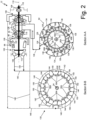
- FIG. 2 is a schematic depicting an exemplary implementation of inlet duct assembly 62 and outlet duct assembly 130.
- Section A-A depicts inlet duct assembly 62 taken along line A-A in FIG. 1 .
- Section B-B depicts outlet duct assembly 130 taken along line B-B in FIG. 1 .
- first ducts 60A and second ducts 60B of diffuser 56 are circumferentially distributed about high pressure compressor 26.
- Inlets 132A of first diffuser ducts 60A and inlets 132B of second diffuser ducts 60B are circumferentially arranged about a radially outer periphery of high pressure compressor 26.
- Each of inlets 132A are interposed with inlets 132B such that each inlet 132A is disposed between two circumferentially adjacent inlets 132B and each inlet 132B is disposed between two circumferentially adjacent inlets 132A.
- Each of first diffuser ducts 60A i.e., primary combustor ducts
- Each of second diffuser ducts 60B extend from high pressure compressor 26 to connect with inlet duct assembly 62.
- Inlet duct assembly 62 can include collection manifold 134, which may communicate directly with second diffuser ducts 60B.
- inlet duct assembly 62 can include inlet branch ducts 136 that fluidly connect and extend second diffuser ducts 60B to manifold 134.
- Collection manifold 134 can be a plenum with a cross-sectional area that is fixed along its circumferential length or increases with each or as a function of second diffuser duct 60B or inlet branch ducts 136.
- collection manifold 134 can be a pipe or duct that has a progressively increasing cross-sectional area along its circumferential length as each second diffuser duct 60B or inlet branch duct 136 connects to collection manifold 134.
- collection manifold 134 can be a series of pipe segments in which each branch duct 136 or second diffuser duct 60B joins one of the pipe segments with a y-section or a t-section.
- inlet duct assembly 62 include main inlet duct 138 that fluidly connects collection manifold 134 to inlet duct plenum 128 of boost spool 12.
- Outlet duct assembly 130 extends from an outlet of boost spool 12 downstream from boost turbine 100 to join first diffuser ducts 60A upstream of primary combustor 58.
- outlet duct assembly 130 can include turbine outlet duct 140 extending from the outlet of boost turbine 100 to outlet manifold 142, which extends circumferentially about diffuser 56.
- Outlet manifold 142 communicates with boost discharge ducts 144.
- Boost discharge ducts 144 are distributed circumferentially about centerline 54 radially outward from first diffuser ducts 60A.
- outlet duct assembly 130 can include load compressor duct 146 extending from an outlet of load compressor 104 to outlet manifold 148, which extends circumferentially about diffuser 56. Outlet manifold 148 communicates with load compressor discharge ducts 150. Discharge ducts 150 are distributed circumferentially about centerline 54 and are interposed between boost discharge ducts 144 radially outward of first diffuser ducts 60A.
- outlet duct assembly 130 can combine flow from discharged from load compressor 104 and boost turbine 100 prior to introduction into primary combustor 58 as shown in FIG. 3 . Accordingly, in place of outlet manifolds 142 and 148, outlet duct assembly 130 includes combined discharge manifold 152. Additionally, outlet duct assembly 130 includes ejector 154 and mixed flow duct 156. Turbine outlet duct 140 extends from an outlet of boost turbine 100 to inlet 158 of ejector 154, and load compressor duct 146 extends from an outlet of load compressor 104 to working fluid inlet 160 of ejector 154. Working fluid inlet 160 is centrally disposed within ejector 154.
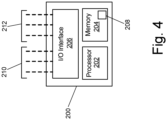
- FIG. 4 is a schematic of controller 200 that regulates the operation of gas turbine engine 10 and, more particularly, a flow division between boost compressor 96 and load compressor 104 of boost spool 12. Additionally, controller 200 regulates fuel flow rates to primary combustor 58 and secondary combustor 98 based on one or more engine parameters, aircraft parameters, and/or exterior conditions. Controller 200 can include a standalone control unit or a control module incorporated into another control unit. Furthermore, controller 200 can be an amalgamation of distinct control units and/or distinct control modules that together perform the functions described in this disclosure. In some embodiments, controller 200 can be a full authority digital engine control (FADEC), an electric engine controller (EEC), or an engine control unit (ECU).
- FADEC full authority digital engine control
- EEC electric engine controller
- ECU engine control unit
- Controller 200 includes processor 202, memory 204, and input/output interface 206.
- Processor 202 executes one or more control algorithms 208 stored within memory 204 to output engine control signals 210 based on one or more input signals 212.
- Examples of processor 202 can include any one or more of a microprocessor, a controller, a digital signal processor (DSP), an application specific integrated circuit (ASIC), a field-programmable gate array (FPGA), or other equivalent discrete or integrated logic circuitry.
- DSP digital signal processor
- ASIC application specific integrated circuit
- FPGA field-programmable gate array
- Engine control signals 210, input signals 212, or both engine control signals 210 and input signals 212 can be an analog signal or a digital signal.
- an analog signal can be a voltage that varies between a low voltage to a high voltage whereas digital signals can be a series of discrete voltage states distributed over a voltage range.
- engine control signals 210 cause various components of gas turbine engine 10 to change state or position.
- engine control signals 210 can be used to vary the position of one or more fuel valves to vary the fuel rate entering a combustor.
- Other examples of engine control signals 210 include signals associated with an angular position of variable vane stages.
- Input signals 212 are representative of one of engine parameters, aircraft parameters, and environmental parameters.
- gas turbine engine 10 receives ambient air flow 214 thorough inlet 132, which communicates with low pressure compressor 20. Rotation of low pressure compressor 20 and high pressure compressor 26 compresses air flow 214. High pressure compressor 26 discharges compressed air flow 214 into diffuser 56. Within diffuser 56, compressed air flow 214 divides into primary flow 216 and secondary flow 218.
- First diffuser ducts 60A deliver primary flow 216 from high pressure compressor 26 to combustor 58 while the second set of diffuser ducts 60B delivers secondary flow 218 to inlet plenum 128 of boost spool 12 via inlet duct assembly 62.
- Each of diffuser ducts 60A includes divergent walls that reduce primary flow 216 velocity and thereby increase static pressure of flow 216 before entering combustor 58. Fuel injected into combustor 58 mixes with primary flow 216, and one or more ignitors combust the fuel-to-air mixture to produce a compressed and heated primary flow 216 that is discharged into high pressure turbine 28.
- boost flow 220 passes through variable inlet guide vane stage 94 and into boost compressor 96.
- boost flow 220 is compressed and flows into secondary combustor 98.
- injectors 126 introduce fuel and the fuel-to-air mixture is ignited, further heating and increasing pressure of boost flow 220.
- Boost flow 220 discharges from secondary combustor 98 into boost turbine 100 and imparts work to boost turbine 100 to thereby rotate shaft 108, boost compressor 96, load compressor 104, and electric machine 106.
- Boost flow 220 discharges from boost turbine 100 into outlet duct assembly 130.
- Load compressor flow 222 passes through variable inlet guide vane stage 102 and into load compressor 104. Work imparted to load compressor flow 222 by load compressor 104 compresses load compressor flow 222.
- Load compressor flow 222 discharges from load compressor 104 into outlet duct assembly 130.
- Outlet duct assembly 130 returns boost flow 220 and load compressor flow 222 to a location upstream from primary combustor 58 proximate outlets of first diffuser ducts 60A.
- Boost flow 220 and load compressor flow 222 can remain separate until mixing with primary flow 216 discharged from first diffuser ducts 60A.
- boost flow 220 and load compressor flow 222 can mix prior to combining with primary flow 216 of first diffuser ducts 60A.
- primary flow 216, boost flow 220, and load compressor flow 222 enter primary combustor 58.
- injectors 68 introduce fuel to produce a fuel-to-air mixture and the fuel-to-air mixture ignites.
- Combined flow 224 discharges from combustor 58 and enters, in sequential order, high pressure turbine 28, low pressure turbine 22, and power turbine 32.
- Combined flow 224 interacts with vanes and blades of high pressure turbine 28 causing rotation of shaft 30 about centerline 54 and driving rotation of high pressure compressor 26.
- combined flow 224 interacting with vanes and blades of low pressure turbine 22 cause rotation of shaft 24 about centerline 54 to drive rotation of low pressure compressor 20.
- combined flow 224 interacting with vanes and blades of power turbine 32 cause rotation of shaft 34 about centerline 54 to drive rotation of propeller shaft 78 via torque shaft 70, input shaft 74, and gearing 76. Downstream of power turbine 32, combined flow 224 discharges from engine 10 as exhaust at a location downstream from outlet 133.
- the flow division between boost flow 220 and load compressor flow 222 can be managed by controller 200 to achieve increased efficiency of gas turbine engine 10 during operation of boost spool 12.
- controller 200 can vary the angular position of variable inlet guide vane stage 94 based on the engine pressure ratio of boost spool.
- the engine pressure ratio of boost spool (EPRB) is determined as the pressure of secondary flow 218 within inlet duct assembly 62 adjacent to diffuser 56 (i.e., pressure P3-2) divided by pressure of boost flow 220 discharged from boost turbine and within outlet duct assembly 130.
- the pressure of boost flow 220 is measured at a location upstream from the discharge end of outlet duct assembly 130 (i.e., pressure P5-2), whether outlet duct assembly 130 includes ejector 154 or not.
- the target engine pressure ratio of boost spool 12 is selected based on a desired overall pressure ratio of gas turbine engine 10 for a given operating condition or power level (i.e., cruise power). For instance, the target engine pressure ratio of boost spool can be from 0.67 to 0.85.
- controller 200 can vary the angular position of variable inlet guide vane stage 102 based on a pressure of load compressor flow 222 at a discharge end of outlet duct assembly 130 (i.e., pressure P5-3) relative to a pressure of boost flow 220 at a discharge end of outlet duct assembly 130 (i.e., pressure P5-2).
- a target discharge pressure for load compressor flow 222 can be at least 10% greater than the discharge pressure of boost flow 220.
- the discharge pressure of load compressor flow can be determined based on pressure loss incurred within inlet duct assembly 62 and outlet duct assembly 130 as well as any associated pressure loss associated with separating or mixing boost flow 220, load compressor flow 222, primary flow 216, and/or secondary flow 218.
- load compressor flow 222 can be used as a working fluid, entraining boost flow 220 into combustor 58 as facilitated by ejector 154 shown in FIG. 3 or duct arrangements shown in section A-A and section B-B of FIG. 2 .
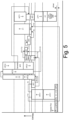
- FIG. 5 is an exemplary enthalpy graph showing relative enthalpy gains and losses associated with operation of gas turbine engine 10 and boost spool 12.
- P1 represents the enthalpy increase provided by propeller (not shown) as driven by propeller shaft 78.
- Flow faction i represents the portion of flow propellered through the propeller that enters gas turbine engine 10 through inlet 132.
- the reminder of propeller flow i.e., a flow fraction equal to 1-i
- the flow division between core flow or ambient flow i and bypass flow 1-i can be expressed as bypass flow ratio BPR, which is the mass flow rate of bypass flow 1-i divided by the mass flow rate of core flow i.
- core flow i is equal to one divided by the sum of one plus the bypass flow ratio, i.e., 1 / (1+BFR).
- Bypass flow is equal to the bypass flow ratio divided by the sum of one plus the bypass flow ratio, i.e., BFR / (1+BFR).
- LPC1 and HPC1 represent an increase of enthalpy between inlet 132 and an outlet of high pressure compressor 26.
- compressed air flow 214 divides into secondary flow 218 represented by flow fraction (k) and primary flow 216 represented by flow fraction [1-k].
- Second diffuser ducts 60B direct secondary flow 218 (i.e., flow fraction k) through inlet duct assembly 62 to inlet duct plenum 128.
- a first enthalpy loss (dH1) represents an enthalpy decrease associated with egress from diffuser 56 and flow through inlet duct assembly 62 associated with secondary flow 218 (i.e., flow fraction k).
- First diffuser ducts 60A direct primary flow 216 (i.e., flow fraction 1-k) to a location upstream from primary combustor 58.
- variable inlet guide vane stage 94 partitions secondary flow 218 (i.e., flow fraction k) as further divided into boost flow 220 represented by flow fraction (k x j) and load compressor flow 222 represented by flow fraction (k x (1-j)).
- Variable inlet guide vane stage 94 directs boost flow 220 into boost compressor 96.
- Boost compressor 96 compresses boost flow 220 as indicated by enthalpy increase HPC2.
- Compressed boost flow 220 enters secondary combustor 98 where it is mixed with fuel and the fuel-air mixture ignited as indicated by enthalpy increase C2.
- boost flow 220 discharges from secondary combustor 98 into boost turbine 100.
- Boost flow 220 expands across boost turbine 100 as indicated by the enthalpy decrease HPT2.
- Work extracted by boost turbine 100 drives boost compressor 96 and load compressor 104.
- boost turbine 100 drives electric machine 106.
- Variable inlet vane stage 102 directs load compressor flow 222 into load compressor 104.
- Load compressor 104 compresses load compressor flow 222 as indicated by enthalpy increase HPC3.
- boost flow 220 and load compressor flow 222 mix prior to reinduction at a location upstream from primary combustor 58.
- Enthalpy decrease dH2 represents the enthalpy change produced by mixing boost flow 220 and load compressor flow 222.
- Enthalpy decrease dH3 represents the enthalpy change associated with the ingress of secondary flow 218 (i.e., mixed boost flow 220 and load compressor flow 222) at a location upstream from primary combustor 58 and proximate a discharge location of first diffuser ducts 60A.
- Load compressor 104 can be operated such that enthalpy increase HPC3 equates to the enthalpy losses dH1, dH2, and dH3. Effectively, secondary flow 218 discharged from boost spool 12 can rejoin primary flow 216 with an enthalpy equal to or greater than the enthalpy of secondary flow 218 discharged from high pressure compressor 26 as shown in FIG. 5 .
- Primary flow 216 and secondary flow 218 mix upstream from primary combustor 58. Because the pressure P5-2 of boost spool 12 is greater than the pressure of diffuser 56 (i.e., pressure P3-1), mixing primary flow 216 and secondary flow 218 increases enthalpy of the mixed flow as indicated by dH4. Within primary combustor 58, injected fuel mixes with the flow and ignites producing the associated enthalpy increase C1.
- Combined flow 224 discharges from primary combustor 58 into high pressure turbine 28 and expands across high pressure turbine 28.
- HPT1 represents the enthalpy decrease associated with high pressure turbine 28.
- Work extracted from high pressure turbine 28 drives high pressure compressor 26.
- Downstream from high pressure turbine 28, combined flow 224 expands across low pressure turbine 22 as represented by enthalpy decrease LPT1.
- Work extracted from low pressure turbine 22 drives low pressure compressor 20.
- low pressure turbine 22, high pressure turbine 28, or both low pressure turbine 22 and high pressure turbine 28 drive one or more engine accessories and/or electric machine 92. Accordingly, the magnitude of LPT1 and/or HPT1 increases in proportion to the work required to drive these additional components.
- electrical output from electric machine 106 of boost spool 12 can be used to drive electric machine 92 as a motor as indicated by dH5 in FIG. 5 .
- boost spool 12 includes load compressor 104 reduces an average temperature of secondary flow 218 reintroduced with primary flow 216 at a location upstream from primary combustor 58.
- Lower temperatures of secondary flow 218 relative to operation of boost spool 12 in which the entirety of secondary flow 218 flows through secondary combustor 98 increases operational life of primary combustor 58 components.
- circumferentially distributing boost flow 220 discharged from ducts 144 about centerline 54 and between adjacent ducts 150 that discharge load compressor flow 222 contributes to temperature uniformity of the combined flow entering primary combustor 58.
- ejector 154 drives mixing of secondary flow 218 with primary flow 216.
- Operating boost spool 12 with load compressor 104 enables primary combustor 58 to operate at uncharacteristically low fuel-air-ratios (FAR) relative to conventional gas turbine engines (e.g., without boost spool 12 and load compressor 104) at intermediate power levels (e.g., cruise power). Furthermore, operating boost spool 12 with load compressor 104 enables primary combustor 58 to operate at uncharacteristically high fuel-air-ratios (FAR) relative to convention gas turbine engines at high power levels (e.g., takeoff and climb power).
- FAR fuel-air-ratios
- Exemplary fuel-air-ratios for gas turbine engine 10 operating with boost spool 12 are presented in Table 1, Table 2, and Table 3 below.
- Operation of gas turbine engine 10 with boost spool 12 and load compressor 104 can be characterized by engine operating condition (i.e., power level), a flow split between primary flow 216 and secondary flow 218 (i.e., k, 1-k), and a flow split of secondary flow 218 between boost flow 220 and load compressor flow 222 (i.e., j, 1-j).
- engine operating condition i.e., power level
- a flow split between primary flow 216 and secondary flow 218 i.e., k, 1-k
- a flow split of secondary flow 218 between boost flow 220 and load compressor flow 222 i.e., j, 1-j.
- gas turbine engine 10 can include, in order of increasing power level, flight idle, cruise, climb, and takeoff operating conditions, among other possible intermediate power levels.
- the flow split between primary flow 216 and secondary flow 218 is indicated by flow fraction k (i.e., the fraction of secondary flow taken from ambient or core flow 214).
- the flow split between boost flow 220 and load compressor flow 222 is indicated by flow fraction j (i.e., the fraction of boost flow k taken from secondary flow 218).
- the fuel-air-ratio corresponds to an exit or outlet of secondary combustor 98 and varies between a value necessary for minimum safe operation (.e.g., FAR approximately equal to 0.01) and a maximum fuel-air-ratio permitted by materials and/or cooling of casing 122 of secondary combustor 98 (e.g., FAR equal to or greater than 0.05).
- the fuel-air-ratio, "FAR Ingress” coincides with a location upstream from primary combustor 58 where boost flow 220 and load compressor flow 222 rejoin primary flow 216.
- FAR Ingress may correspond to a location between outlets of boost outlet ducts 144 or load compressor outlet ducts 146 and primary combustor 58 (see FIG. 2 ) or between outlets of discharge ducts 164 and primary combustor 58 (see FIG. 3 ).
- the fuel-air-ratio, "FAR Primary Combustor Exit”, is determined at the exit of primary combustor 58 and is based on total fuel flow added by primary combustor 58 and secondary combustor 98 divided by total flow through gas turbine engine 10 (e.g., ambient flow 214 or combined flow 224).
- the fuel-air-ratio "FAR Primary Combustor Exit Excluding Secondary Combustor Fuel Flow” is determined at the exit of primary combustor 58 and is based on fuel flow added by primary combustor 58 only divided by total flow through gas turbine engine 10 (e.g., ambient flow 214 or combined flow 224).
- the fuel-air-ratios at the exit of primary combustor 58 is greater than 0.010 for all operational conditions of gas turbine engine 10.
- the fuel-air-ratio at the exit of primary combustor 58 is greater than 0.05 and is equal to approximately 0.061 in the depicted case.
- such fuel-air-ratios at high power levels e.g., takeoff and climb power
- gas turbine engine 10 operating with boost spool 12 and load compressor 104 can achieve higher fuel-air-ratios at high power levels (e.g., takeoff and climb power) relative to conventional gas turbine engines. Furthermore, gas turbine engine 10 operating with boost spool 12 and load compressor 104 can achieve lower fuel-air-ratios relative to conventional gas turbine engines at cruise power levels. As shown by Table 2, the fuel-air-ratio (FAR) at the exit of primary combustor 58 can be less than 0.010 at cruise power (see "FAR Primary Combustor Exit").
- the fuel-air-ratio (FAR) at the exit of primary combustor 58 excluding secondary combustor fuel flow is between 0.016 and 0.020 at low engine thrust (Table 1) and high engine thrust (Table 3).
- the fuel-air-ratio at the exit of primary combustor 58 excluding secondary combustor fuel flow is reduced at cruise power, ranging from 0.001 to 0.005 (Table 2) and contributing to improved efficiency of gas turbine engine.
- Table 1 - Exemplary Fuel-Air-Ratio for Low Engine Thrust e.g.
Landscapes
- Engineering & Computer Science (AREA)
- Chemical & Material Sciences (AREA)
- Combustion & Propulsion (AREA)
- Mechanical Engineering (AREA)
- General Engineering & Computer Science (AREA)
- Physics & Mathematics (AREA)
- Fluid Mechanics (AREA)
- Structures Of Non-Positive Displacement Pumps (AREA)
Description
- The present disclosure relates generally to gas turbine engines and, more particularly, to gas turbine engines capable of operating in a high overall pressure ratio (OPR) mode and in a low OPR mode to adapt to the ambient conditions and to provide more efficient operation without exceeding thermal limits of the gas turbine engine.
- The overall pressure ratio (OPR) is a measure of the total pressure rise in a gas turbine engine (i.e., a pressure ratio equal to the air pressure discharged from the last compressor stage to the ambient air pressure entering the engine). Generally speaking, as OPR increases, the thermodynamic efficiency of the gas turbine engine increases, enabling the engine to consume less fuel per unit of thrust (i.e., thrust specific fuel consumption or TSFC) than a corresponding engine with lower OPR. However, air temperatures within the gas turbine engine increase with increasing OPR and can produce temperatures within the compressor section and/or turbine section that exceed permissible material and structural limits. Furthermore, the maximum temperature within the compressor and the turbine increase as the ambient temperature increases, adding to the temperature increase associated with the OPR of the engine.
- Conventionally, turbine temperatures are maintained within acceptable limits by limiting OPR to a ratio that produces acceptable turbine temperatures for worst case ambient conditions, typically, design conditions corresponding to hot day take-off. While this technique produces a gas turbine engine design that provides an acceptable compromise for a variety of operating conditions, limiting OPR for hot day take-off conditions produces a gas turbine engine that operates at less OPR than otherwise possible at cruise power, reducing engine efficiency when high efficiency, low fuel consumption operation is most advantageous to extend aircraft range or payload capacity.
-
US 11143142 B2 -
US 2020/263560 A1 relates to a system and method for diagnosing the health state of an auxiliary power unit power compressor. -
US 2008/245050 A1 relates to methods and apparatus for operating gas turbine engines used for aircraft propulsion and auxiliary power. - A gas turbine engine in accordance with a first aspect of the invention is as claimed in
claim 1. - Some embodiments of the invention are as claimed in the dependent claims.
-
-
FIG. 1 is a schematic representation of a gas turbine engine that includes a boost spool. -
FIG. 2 is a first schematic representation of an inlet duct assembly and outlet duct assembly of the gas turbine engine. -
FIG. 3 is a second schematic representation of an inlet duct assembly and outlet duct assembly of the gas turbine engine. -
FIG. 4 is a schematic representation of a controller operable to regulate operation of the gas turbine engine. -
FIG. 5 is an exemplary enthalpy graph showing relative enthalpy gains and losses associated with operation of the gas turbine engine and the boost spool. - As described herein, a gas turbine engine has a boost spool that can be selectively operated to increase overall pressure ratio (OPR) during certain engine power levels (e.g., cruise power) while operating the gas turbine engine without the boost spool during other power levels (e.g., takeoff power). In some configurations, the boost spool includes a load compressor having an inlet shared with the boost compressor. With this configuration, a flow division between the boost compressor and the load compressor can be used to increase operating efficiency of the gas turbine engine. Furthermore, the gas turbine engine can operate within thermal limits when ambient temperature limits the OPR and can operate with greater engine efficiency when ambient temperatures are lower and permit higher OPR operation.
-
FIG. 1 is a schematic representation ofgas turbine engine 10 that includesboost spool 12 in accordance with an exemplary embodiment of this disclosure.Gas turbine engine 10 is a turboprop engine that includeslow pressure spool 14,high pressure spool 16, andpower spool 18.Low pressure spool 14 includeslow pressure compressor 20 mechanically and rotationally connected tolow pressure turbine 22 by shaft 24, andhigh pressure spool 16 includeshigh pressure compressor 26 mechanically and rotationally connected to high pressure turbine 28 by shaft 30.Power spool 18 includespower turbine 32 mechanically and rotationally connected toshaft 34.Bearings low pressure spool 14, andbearings 40 and 42 support shaft 30 ofhigh pressure spool 16, each at one of a forward end, an aft end, or an intermediate location of respectiveshafts. Power shaft 34 is supported bybearings shaft 34.Low pressure spool 14,high pressure spool 16, andpower spool 18 are coaxial, each extending along and rotating aboutcenterline 54 independently of one another (i.e., without a mechanical connection that couples two or more oflow pressure spool 14,high pressure spool 16, andpower spool 18 in a rotational direction). - Compressors and
turbines FIG. 1 ,low pressure compressor 20 has three axial stages andlow pressure turbine 22 has one axial stage.High pressure compressor 26 has a single radial compressor rotor, and high pressure turbine 28 has one axial stage.Power turbine 32 has two axial stages. However, in other embodiments, the number of stages in each compressor or turbine, as well as the radial, axial, or mixed configuration can be selected based on the desired pressure ratios as is known in the art. - At times, boost
spool 12,low pressure spool 14,high pressure spool 16, andpower spool 18 may be referred to as a first spool, a second spool, a third spool, and/or a fourth spool in which "first", "second", "third", and "fourth" correspond to one ofboost spool 12,low pressure spool 14,high pressure spool 16, andpower spool 18. Similarly, "first", "second", "third", and/or "fourth" labels may be used in conjunction with corresponding components of the first spool, the second spool, the third spool, and/or the fourth spool in order to distinguish components of each spool from components of the other spools. - Between
high pressure compressor 26 and high pressure turbine 28,gas turbine engine 10 includes diffuser 56 and combustor 58 (i.e., primary combustor). Diffuser 56 is a radial diffuser positioned radially outward fromhigh pressure compressor 26, a radial compressor rotor. Diffuser 56 includes multiple ducts 60 (seeFIG. 2 ). Collectively, inlets of diffuser ducts 60 define an inlet to diffuser 56 in which individual duct inlets are distributed circumferentially about an outer periphery ofhigh pressure compressor 26. A first set ofducts 60A extend fromhigh pressure compressor 26 to communicate with a location adjacent and upstream fromcombustor 58 while a second set ofducts 60B extends fromhigh pressure compressor 26 to form part ofinlet duct assembly 62 ofboost spool 12, which fluidly connects diffuser 56 to boostspool 12. Combustor 58 includescasing 64 that forms anannular combustion chamber 66. Withincasing 64,combustor 58 includesinjectors 68 for introducing fuel.Combustor 58 discharges to high pressure turbine 28. -
Gas turbine engine 10 includestorque shaft 70 andreduction gearbox 72 for driving a propeller (not shown). An end ofpower shaft 34 includesinternal spline 73A that mates withexternal spline 73B oftorque shaft 70, rotationallycoupling shaft 34 totorque shaft 70.Reduction gearbox 72 includesinput shaft 74,gearing 76, andpropeller shaft 78.Torque shaft 70 mates withinput shaft 74 via a flanged or splined connection to transfer rotation ofpower spool 18 to gearing 76, which drivespropeller shaft 78 in rotation aboutpropeller axis 80. Gearing 76 can be a series of spline gears, an epicyclic arrangement, or other gear train. The gear ratio ofgearing 76 is less than one such thatpropeller shaft 78 rotates at a slower speed thanshaft 34 ofpower spool 18.Bearings support input shaft 74, andbearings support propeller shaft 78, each bearing supportinginput shaft 74 ofpropeller shaft 78 with respect to a casing ofgas turbine engine 10. - In some embodiments,
gas turbine engine 10 can includeelectric machine 92.Electric machine 92 can be a motor, a generator, or a motor-generator mounted to low pressure shaft 24, high pressure shaft 30,power shaft 34, orpropeller shaft 78. As shown,FIG. 1 depictselectric machine 92 mounted betweenbearings 36 and 40. A rotor ofelectric machine 92 can be mounted to shaft 30 ofhigh pressure spool 16 while a stator ofelectric machine 92 can be mounted to shaft 24 oflow pressure spool 14. - Boost spool 12 includes variable inlet
guide vane stage 94,boost compressor 96,secondary combustor 98, andboost turbine 100. Additionally, boostspool 12 includes variable inletguide vane stage 102,load compressor 104, andelectric machine 106.Boost compressor 96,boost turbine 100, andload compressor 104 include at least one compressor stage or turbine stage, each stage formed by a row of stationary vanes and a row of rotating blades.Boost compressor 96,boost turbine 100,load compressor 104, andelectric machine 106 mount to boostshaft 108, each component rotatable aboutboost centerline 110.Bearings support boost shaft 108 with respect to a casing surroundingboost spool 12. The casing can be a boost casing discrete from a casing surroundinglow pressure spool 14 andhigh pressure spool 16 orboost spool 12 can be supported from a casing integrated with a casing or casings surroundinglow pressure spool 14 and/orhigh pressure spool 16. -
Electric machine 106 can be a motor, a generator, or a motor-generator.Electric machine 106 can be mounted at any location alongshaft 108. As shown inFIG. 1 ,electric machine 106 is adjacent to loadcompressor 104. -
Secondary combustor 98 is disposed between and communicates withboost compressor 96 and boostturbine 100. Likeprimary combustor 58,secondary combustor 98 includescasing 122 that formsannular combustion chamber 124. Withinannular combustion chamber 124,secondary combustor 98 includesinjectors 126 for introducing fuel. - Each of variable
inlet vane stage 94 and variableinlet vane stage 102 forms an array of circumferentially spaced vanes in communication withboost inlet plenum 128 upstream ofboost compressor 96 andload compressor 104. Vanes of variable inletguide vane stage 94 and vanes of variable inletguide vane stage 102 are rotatable about respective spanwise vane axes. An angular position of variable inletguide vane stage 94 and variable inletguide vane stage 102 ranges between a closed position, a neutral or nominal position, and an open position to vary an open area intoboost compressor 96 andload compressor 104, respectively. - Boost
spool 12 receives compressed air from diffuser 56 throughinlet duct assembly 62, which fluidly connects diffuser 56 toinlet duct plenum 128.Outlet duct assembly 130 fluidly connectsboost turbine 100 andload compressor 104 to diffuser 56 and/orcombustor 58. Each ofinlet duct assembly 62 andoutlet duct assembly 130 includes one or more ducts, pipes, conduits, and/or manifolds to deliver a portion ofgas turbine engine 10 flow to or fromboost spool 12. - The position and orientation of
boost spool 12 relative to centerline 54 is selected based on the mechanical and/or electro-mechanical coupling.Boost centerline 110 can be parallel and offset fromcenterline 54 ofgas turbine engine 10 as schematically shown byFIG. 1 . Furthermore,FIG. 1 shows boostspool 12 with a reverse flow orientation (i.e., aft-to-forward flow) such that a flow direction throughboost spool 12 fromcompressor 96 toturbine 100 is opposite a flow direction (i.e., forward-to-aft flow) throughgas turbine engine 10 frominlet 132 to an outlet ofgas turbine engine 10 downstream frompower turbine exit 133. Alternatively, boostcenterline 110 can be oblique, perpendicular, or eccentric tocenterline 54. In some embodiments, boostspool 12 is located remotely fromlow pressure spool 14,high pressure spool 16, andpower spool 18 while in other embodiments, boostspool 12 can be located directly adjacent to or attached tocasings surrounding spools spool 12 can be an auxiliary power unit (APU). - For all mounting positions of
boost spool 12, the location and orientation ofboost spool 12 permits boostspool 12 to receive a compressed air flow fromgas turbine engine 10 and to discharge an expanded air flow togas turbine engine 10. Boostspool 12 can receive a compressed airflow from any compressor stage ofgas turbine engine 10 to achieve varying degrees of boost compression. In one exemplary embodiment, boostspool 12 receives a compressed air flow from a location that is downstream from the last compressor stage of the gas turbine engine. In the case ofgas turbine engine 10,boost spool 12 receives airflow from diffuser 56 and discharges an expanded airflow to diffuser 56. In other instance, boostspool 12 receives airflow from diffuser 56 and discharges an expanded airflow to both diffuser 56 andcombustor 58, which is downstream ofhigh pressure compressor 26 and upstream from high pressure turbine 28. -
FIG. 2 is a schematic depicting an exemplary implementation ofinlet duct assembly 62 andoutlet duct assembly 130. Section A-A depictsinlet duct assembly 62 taken along line A-A inFIG. 1 . Section B-B depictsoutlet duct assembly 130 taken along line B-B inFIG. 1 . As shown in Section A-A,first ducts 60A andsecond ducts 60B of diffuser 56 are circumferentially distributed abouthigh pressure compressor 26. Inlets 132A offirst diffuser ducts 60A and inlets 132B ofsecond diffuser ducts 60B are circumferentially arranged about a radially outer periphery ofhigh pressure compressor 26. Each of inlets 132A are interposed with inlets 132B such that each inlet 132A is disposed between two circumferentially adjacent inlets 132B and each inlet 132B is disposed between two circumferentially adjacent inlets 132A. Each offirst diffuser ducts 60A (i.e., primary combustor ducts) extend fromhigh pressure compressor 26 towardsprimary combustor 58. Each ofsecond diffuser ducts 60B (i.e., boost ducts) extend fromhigh pressure compressor 26 to connect withinlet duct assembly 62. -
Inlet duct assembly 62 can includecollection manifold 134, which may communicate directly withsecond diffuser ducts 60B. In other embodiments,inlet duct assembly 62 can includeinlet branch ducts 136 that fluidly connect and extendsecond diffuser ducts 60B tomanifold 134.Collection manifold 134 can be a plenum with a cross-sectional area that is fixed along its circumferential length or increases with each or as a function ofsecond diffuser duct 60B orinlet branch ducts 136. In other embodiments,collection manifold 134 can be a pipe or duct that has a progressively increasing cross-sectional area along its circumferential length as eachsecond diffuser duct 60B orinlet branch duct 136 connects tocollection manifold 134. For instance,collection manifold 134 can be a series of pipe segments in which eachbranch duct 136 orsecond diffuser duct 60B joins one of the pipe segments with a y-section or a t-section. Extending fromcollection manifold 134, some embodiments ofinlet duct assembly 62 includemain inlet duct 138 that fluidly connectscollection manifold 134 toinlet duct plenum 128 ofboost spool 12. Disposed between variable inletguide vane stage 94 associated withboost compressor 96 and variable inletguide vane stage 102 associated withload compressor 104,inlet duct plenum 128 extends circumferentially aboutboost shaft 108 to distribute air extracted from diffuser 56 evenly along annular inlets to variable inletguide vane stage 94 and variable inletguide vane stage 102. -
Outlet duct assembly 130 extends from an outlet ofboost spool 12 downstream fromboost turbine 100 to joinfirst diffuser ducts 60A upstream ofprimary combustor 58. As shown inFIG. 2 ,outlet duct assembly 130 can includeturbine outlet duct 140 extending from the outlet ofboost turbine 100 tooutlet manifold 142, which extends circumferentially about diffuser 56.Outlet manifold 142 communicates withboost discharge ducts 144. Boostdischarge ducts 144 are distributed circumferentially aboutcenterline 54 radially outward fromfirst diffuser ducts 60A. - Additionally,
outlet duct assembly 130 can includeload compressor duct 146 extending from an outlet ofload compressor 104 tooutlet manifold 148, which extends circumferentially about diffuser 56.Outlet manifold 148 communicates with loadcompressor discharge ducts 150.Discharge ducts 150 are distributed circumferentially aboutcenterline 54 and are interposed betweenboost discharge ducts 144 radially outward offirst diffuser ducts 60A. - Alternatively,
outlet duct assembly 130 can combine flow from discharged fromload compressor 104 and boostturbine 100 prior to introduction intoprimary combustor 58 as shown inFIG. 3 . Accordingly, in place ofoutlet manifolds outlet duct assembly 130 includes combineddischarge manifold 152. Additionally,outlet duct assembly 130 includesejector 154 andmixed flow duct 156.Turbine outlet duct 140 extends from an outlet ofboost turbine 100 toinlet 158 ofejector 154, and loadcompressor duct 146 extends from an outlet ofload compressor 104 to workingfluid inlet 160 ofejector 154. Workingfluid inlet 160 is centrally disposed withinejector 154. Accordingly, given proper pressure conditions atinlet 158 and workingfluid inlet 160,air entering ejector 154 fromload compressor 104 entrains air throughinlet 158.Mixed flow duct 156 extends fromoutlet 162 ofejector 154 to combineddischarge manifold 152. Combinedboost discharge ducts 164 extend fromdischarge manifold 152 towardsprimary combustor 58 along withfirst diffuser ducts 60A. Combinedboost discharge ducts 164 are circumferentially distributed aboutcenterline 54 and diffuser 56 radially outward fromfirst diffuser ducts 60A. -
FIG. 4 is a schematic ofcontroller 200 that regulates the operation ofgas turbine engine 10 and, more particularly, a flow division betweenboost compressor 96 andload compressor 104 ofboost spool 12. Additionally,controller 200 regulates fuel flow rates toprimary combustor 58 andsecondary combustor 98 based on one or more engine parameters, aircraft parameters, and/or exterior conditions.Controller 200 can include a standalone control unit or a control module incorporated into another control unit. Furthermore,controller 200 can be an amalgamation of distinct control units and/or distinct control modules that together perform the functions described in this disclosure. In some embodiments,controller 200 can be a full authority digital engine control (FADEC), an electric engine controller (EEC), or an engine control unit (ECU). -
Controller 200 includesprocessor 202,memory 204, and input/output interface 206.Processor 202 executes one ormore control algorithms 208 stored withinmemory 204 to output engine control signals 210 based on one or more input signals 212. Examples ofprocessor 202 can include any one or more of a microprocessor, a controller, a digital signal processor (DSP), an application specific integrated circuit (ASIC), a field-programmable gate array (FPGA), or other equivalent discrete or integrated logic circuitry. -
Memory 204 can be configured to store information withincontroller 200.Memory 204, in some examples, is described as computer-readable storage media. In some examples, a computer-readable storage medium can include a non-transitory medium. The term "non-transitory" can indicate that the storage medium is not embodied in a carrier wave or a propagated signal. In certain examples, a non-transitory storage medium can store data that can, over time, change (e.g., in RAM or cache).Memory 204 can include volatile and non-volatile computer-readable memories. Examples of volatile memories can include random access memories (RAM), dynamic random-access memories (DRAM), static random-access memories (SRAM), and other forms of volatile memories. Examples of non-volatile memories can include, e.g., magnetic hard discs, optical discs, flash memories, or forms of electrically programmable memories (EPROM) or electrically erasable and programmable (EEPROM) memories. - Input/output interface or I/
O interface 206 can be a series of input and output channels that electrically communicate with an engine control bus. The engine controlbus interconnects controller 200 with various components of thegas turbine engine 10 described above such that engine control signals 210 can be transmitted to individual engine components and input signals 212 can be received. - Engine control signals 210, input signals 212, or both engine control signals 210 and input signals 212 can be an analog signal or a digital signal. For example, an analog signal can be a voltage that varies between a low voltage to a high voltage whereas digital signals can be a series of discrete voltage states distributed over a voltage range. Operatively, engine control signals 210 cause various components of
gas turbine engine 10 to change state or position. For example, engine control signals 210 can be used to vary the position of one or more fuel valves to vary the fuel rate entering a combustor. Other examples of engine control signals 210 include signals associated with an angular position of variable vane stages. Input signals 212 are representative of one of engine parameters, aircraft parameters, and environmental parameters. Exemplary engine parameters include rotational speed of a low pressure spool, high pressure spool, boost spool, and/or fan shaft, the state or position of fuel valves, bleed valves, the state or position of clutch assemblies, propeller blade pitch angle, the temperature or pressure within the compressor, combustor, or turbine, and engine power. Aircraft parameters include various parameters associated with an aircraft such as power lever angle, altitude, pitch angle, yaw angle, roll angle, rate of climb, and airspeed, among other possible parameters. Exterior parameters include ambient temperature and pressure at the inlet ofgas turbine engine 10. - In operation,
gas turbine engine 10 receivesambient air flow 214thorough inlet 132, which communicates withlow pressure compressor 20. Rotation oflow pressure compressor 20 andhigh pressure compressor 26compresses air flow 214.High pressure compressor 26 discharges compressedair flow 214 into diffuser 56. Within diffuser 56,compressed air flow 214 divides into primary flow 216 andsecondary flow 218.First diffuser ducts 60A deliver primary flow 216 fromhigh pressure compressor 26 tocombustor 58 while the second set ofdiffuser ducts 60B deliverssecondary flow 218 toinlet plenum 128 ofboost spool 12 viainlet duct assembly 62. Each ofdiffuser ducts 60A includes divergent walls that reduce primary flow 216 velocity and thereby increase static pressure of flow 216 before enteringcombustor 58. Fuel injected intocombustor 58 mixes with primary flow 216, and one or more ignitors combust the fuel-to-air mixture to produce a compressed and heated primary flow 216 that is discharged into high pressure turbine 28. - Based on the angular position of variable inlet
guide vane stage 94 and the angular position of variable inletguide vane stage 102,secondary flow 218 is further divided intoboost flow 220 andload compressor flow 222.Boost flow 220 passes through variable inletguide vane stage 94 and intoboost compressor 96. Asboost compressor 96 rotates,boost flow 220 is compressed and flows intosecondary combustor 98. Withinsecondary combustor 98,injectors 126 introduce fuel and the fuel-to-air mixture is ignited, further heating and increasing pressure ofboost flow 220.Boost flow 220 discharges fromsecondary combustor 98 intoboost turbine 100 and imparts work to boostturbine 100 to thereby rotateshaft 108, boostcompressor 96,load compressor 104, andelectric machine 106.Boost flow 220 discharges fromboost turbine 100 intooutlet duct assembly 130. Load compressor flow 222 passes through variable inletguide vane stage 102 and intoload compressor 104. Work imparted to loadcompressor flow 222 byload compressor 104 compresses loadcompressor flow 222.Load compressor flow 222 discharges fromload compressor 104 intooutlet duct assembly 130.Outlet duct assembly 130 returns boostflow 220 andload compressor flow 222 to a location upstream fromprimary combustor 58 proximate outlets offirst diffuser ducts 60A.Boost flow 220 andload compressor flow 222 can remain separate until mixing with primary flow 216 discharged fromfirst diffuser ducts 60A. Alternatively,boost flow 220 andload compressor flow 222 can mix prior to combining with primary flow 216 offirst diffuser ducts 60A. - After mixing, primary flow 216,
boost flow 220, andload compressor flow 222 enterprimary combustor 58. Withinprimary combustor 58,injectors 68 introduce fuel to produce a fuel-to-air mixture and the fuel-to-air mixture ignites. Combinedflow 224 discharges fromcombustor 58 and enters, in sequential order, high pressure turbine 28,low pressure turbine 22, andpower turbine 32. Combinedflow 224 interacts with vanes and blades of high pressure turbine 28 causing rotation of shaft 30 aboutcenterline 54 and driving rotation ofhigh pressure compressor 26. Similarly, combinedflow 224 interacting with vanes and blades oflow pressure turbine 22 cause rotation of shaft 24 aboutcenterline 54 to drive rotation oflow pressure compressor 20. Additionally, combinedflow 224 interacting with vanes and blades ofpower turbine 32 cause rotation ofshaft 34 aboutcenterline 54 to drive rotation ofpropeller shaft 78 viatorque shaft 70,input shaft 74, andgearing 76. Downstream ofpower turbine 32, combinedflow 224 discharges fromengine 10 as exhaust at a location downstream fromoutlet 133. - The flow division between
boost flow 220 andload compressor flow 222 can be managed bycontroller 200 to achieve increased efficiency ofgas turbine engine 10 during operation ofboost spool 12. For example,controller 200 can vary the angular position of variable inletguide vane stage 94 based on the engine pressure ratio of boost spool. The engine pressure ratio of boost spool (EPRB) is determined as the pressure ofsecondary flow 218 withininlet duct assembly 62 adjacent to diffuser 56 (i.e., pressure P3-2) divided by pressure ofboost flow 220 discharged from boost turbine and withinoutlet duct assembly 130. The pressure ofboost flow 220 is measured at a location upstream from the discharge end of outlet duct assembly 130 (i.e., pressure P5-2), whetheroutlet duct assembly 130 includesejector 154 or not. The target engine pressure ratio ofboost spool 12 is selected based on a desired overall pressure ratio ofgas turbine engine 10 for a given operating condition or power level (i.e., cruise power). For instance, the target engine pressure ratio of boost spool can be from 0.67 to 0.85. - At the same time,
controller 200 can vary the angular position of variable inletguide vane stage 102 based on a pressure ofload compressor flow 222 at a discharge end of outlet duct assembly 130 (i.e., pressure P5-3) relative to a pressure ofboost flow 220 at a discharge end of outlet duct assembly 130 (i.e., pressure P5-2). For instance, a target discharge pressure forload compressor flow 222 can be at least 10% greater than the discharge pressure ofboost flow 220. At an upper end, the discharge pressure of load compressor flow can be determined based on pressure loss incurred withininlet duct assembly 62 andoutlet duct assembly 130 as well as any associated pressure loss associated with separating or mixingboost flow 220,load compressor flow 222, primary flow 216, and/orsecondary flow 218. Accordingly,load compressor flow 222 can be used as a working fluid, entrainingboost flow 220 intocombustor 58 as facilitated byejector 154 shown inFIG. 3 or duct arrangements shown in section A-A and section B-B ofFIG. 2 . -
FIG. 5 is an exemplary enthalpy graph showing relative enthalpy gains and losses associated with operation ofgas turbine engine 10 and boostspool 12. P1 represents the enthalpy increase provided by propeller (not shown) as driven bypropeller shaft 78. Flow faction i represents the portion of flow propellered through the propeller that entersgas turbine engine 10 throughinlet 132. The reminder of propeller flow (i.e., a flow fraction equal to 1-i) propelsgas turbine engine 10 and the aircraft in flight. The flow division between core flow or ambient flow i and bypass flow 1-i can be expressed as bypass flow ratio BPR, which is the mass flow rate of bypass flow 1-i divided by the mass flow rate of core flow i. Expressed in terms of bypass flow ratio BFR, core flow i is equal to one divided by the sum of one plus the bypass flow ratio, i.e., 1 / (1+BFR). Bypass flow is equal to the bypass flow ratio divided by the sum of one plus the bypass flow ratio, i.e., BFR / (1+BFR). - LPC1 and HPC1 represent an increase of enthalpy between
inlet 132 and an outlet ofhigh pressure compressor 26. At an outlet ofhigh pressure compressor 26,compressed air flow 214 divides intosecondary flow 218 represented by flow fraction (k) and primary flow 216 represented by flow fraction [1-k].Second diffuser ducts 60B direct secondary flow 218 (i.e., flow fraction k) throughinlet duct assembly 62 toinlet duct plenum 128. A first enthalpy loss (dH1) represents an enthalpy decrease associated with egress from diffuser 56 and flow throughinlet duct assembly 62 associated with secondary flow 218 (i.e., flow fraction k).First diffuser ducts 60A direct primary flow 216 (i.e., flow fraction 1-k) to a location upstream fromprimary combustor 58. - The relative positions of variable inlet
guide vane stage 94 and variable inlet guideduct vane stage 102 adjacent toinlet duct plenum 128, partitions secondary flow 218 (i.e., flow fraction k) as further divided intoboost flow 220 represented by flow fraction (k x j) andload compressor flow 222 represented by flow fraction (k x (1-j)). Variable inletguide vane stage 94 directsboost flow 220 intoboost compressor 96.Boost compressor 96 compresses boostflow 220 as indicated by enthalpy increase HPC2.Compressed boost flow 220 enterssecondary combustor 98 where it is mixed with fuel and the fuel-air mixture ignited as indicated by enthalpy increase C2. Heated andcompressed boost flow 220 discharges fromsecondary combustor 98 intoboost turbine 100.Boost flow 220 expands acrossboost turbine 100 as indicated by the enthalpy decrease HPT2. Work extracted byboost turbine 100 drives boostcompressor 96 andload compressor 104. Additionally, whereelectric machine 106 operates as a generator, boostturbine 100 driveselectric machine 106. Variableinlet vane stage 102 directsload compressor flow 222 intoload compressor 104.Load compressor 104 compresses loadcompressor flow 222 as indicated by enthalpy increase HPC3. In some embodiments,boost flow 220 andload compressor flow 222 mix prior to reinduction at a location upstream fromprimary combustor 58. Enthalpy decrease dH2 represents the enthalpy change produced by mixingboost flow 220 andload compressor flow 222. Enthalpy decrease dH3 represents the enthalpy change associated with the ingress of secondary flow 218 (i.e.,mixed boost flow 220 and load compressor flow 222) at a location upstream fromprimary combustor 58 and proximate a discharge location offirst diffuser ducts 60A. -
Load compressor 104 can be operated such that enthalpy increase HPC3 equates to the enthalpy losses dH1, dH2, and dH3. Effectively,secondary flow 218 discharged fromboost spool 12 can rejoin primary flow 216 with an enthalpy equal to or greater than the enthalpy ofsecondary flow 218 discharged fromhigh pressure compressor 26 as shown inFIG. 5 . - Primary flow 216 and
secondary flow 218 mix upstream fromprimary combustor 58. Because the pressure P5-2 ofboost spool 12 is greater than the pressure of diffuser 56 (i.e., pressure P3-1), mixing primary flow 216 andsecondary flow 218 increases enthalpy of the mixed flow as indicated by dH4. Withinprimary combustor 58, injected fuel mixes with the flow and ignites producing the associated enthalpy increase C1. - Combined
flow 224 discharges fromprimary combustor 58 into high pressure turbine 28 and expands across high pressure turbine 28. HPT1 represents the enthalpy decrease associated with high pressure turbine 28. Work extracted from high pressure turbine 28 driveshigh pressure compressor 26. Downstream from high pressure turbine 28, combinedflow 224 expands acrosslow pressure turbine 22 as represented by enthalpy decrease LPT1. Work extracted fromlow pressure turbine 22 driveslow pressure compressor 20. - In some embodiments,
low pressure turbine 22, high pressure turbine 28, or bothlow pressure turbine 22 and high pressure turbine 28 drive one or more engine accessories and/orelectric machine 92. Accordingly, the magnitude of LPT1 and/or HPT1 increases in proportion to the work required to drive these additional components. In other embodiments, electrical output fromelectric machine 106 ofboost spool 12 can be used to driveelectric machine 92 as a motor as indicated by dH5 inFIG. 5 . - Combined
flow 224 discharged fromlow pressure turbine 22 further expands acrosspower turbine 32. The associated enthalpy decrease PT represents work extracted from combinedflow 224 that drives a propulsor of an aircraft and the associated drive train components. Where the gas turbine engine is a turboprop engine, such asgas turbine engine 10 shown inFIG. 1 ,power turbine 32 drivestorque shaft 70,input shaft 74, gearing 76,propeller shaft 78, and propeller (not shown). However, in other embodiments, the gas turbine engine can be a turboshaft engine or a bypass engine. In these instances, the gas turbine engine does not includepower turbine 32 and, instead, the magnitude of LPT1 associated withlow pressure turbine 22 increases to drive the propulsor (e.g., a fan or main rotor) and associated drive train components (e.g., losses associated with shafts, gearboxes, and bearings). Downstream frompower turbine 32, combinedflow 224 discharges fromgas turbine engine 10 through exhaust nozzle as represented by enthalpy decrease dH6. As shown inFIG. 5 ,gas turbine engine 10 produces imparts a net enthalpy change, dHnet, to the ambient air to propel the aircraft in flight. - Operating
gas turbine engine 10 withboost spool 12 in which boostspool 12 includesload compressor 104 reduces an average temperature ofsecondary flow 218 reintroduced with primary flow 216 at a location upstream fromprimary combustor 58. Lower temperatures ofsecondary flow 218 relative to operation ofboost spool 12 in which the entirety ofsecondary flow 218 flows throughsecondary combustor 98 increases operational life ofprimary combustor 58 components. Where mixing ofboost flow 220 andload compressor flow 222 occurs upstream ofprimary combustor 58 with primary flow 216, circumferentially distributingboost flow 220 discharged fromducts 144 aboutcenterline 54 and betweenadjacent ducts 150 that dischargeload compressor flow 222 contributes to temperature uniformity of the combined flow enteringprimary combustor 58. Similar benefits are provided byembodiments utilizing ejector 154 to mixboost flow 220 andload compressor flow 222 withinoutlet duct assembly 130 upstream fromprimary combustor 58. Additionally,ejector 154 drives mixing ofsecondary flow 218 with primary flow 216. - Operating
boost spool 12 withload compressor 104 enablesprimary combustor 58 to operate at uncharacteristically low fuel-air-ratios (FAR) relative to conventional gas turbine engines (e.g., withoutboost spool 12 and load compressor 104) at intermediate power levels (e.g., cruise power). Furthermore, operatingboost spool 12 withload compressor 104 enablesprimary combustor 58 to operate at uncharacteristically high fuel-air-ratios (FAR) relative to convention gas turbine engines at high power levels (e.g., takeoff and climb power). - Exemplary fuel-air-ratios for
gas turbine engine 10 operating withboost spool 12 are presented in Table 1, Table 2, and Table 3 below. Operation ofgas turbine engine 10 withboost spool 12 andload compressor 104 can be characterized by engine operating condition (i.e., power level), a flow split between primary flow 216 and secondary flow 218 (i.e., k, 1-k), and a flow split ofsecondary flow 218 betweenboost flow 220 and load compressor flow 222 (i.e., j, 1-j). For instance,gas turbine engine 10 can include, in order of increasing power level, flight idle, cruise, climb, and takeoff operating conditions, among other possible intermediate power levels. The flow split between primary flow 216 andsecondary flow 218 is indicated by flow fraction k (i.e., the fraction of secondary flow taken from ambient or core flow 214). The flow split betweenboost flow 220 andload compressor flow 222 is indicated by flow fraction j (i.e., the fraction of boost flow k taken from secondary flow 218). - The fuel-air-ratio, "FAR Boost Spool", corresponds to an exit or outlet of
secondary combustor 98 and varies between a value necessary for minimum safe operation (.e.g., FAR approximately equal to 0.01) and a maximum fuel-air-ratio permitted by materials and/or cooling ofcasing 122 of secondary combustor 98 (e.g., FAR equal to or greater than 0.05). The fuel-air-ratio, "FAR Ingress", coincides with a location upstream fromprimary combustor 58 whereboost flow 220 andload compressor flow 222 rejoin primary flow 216. For example, "FAR Ingress" may correspond to a location between outlets ofboost outlet ducts 144 or loadcompressor outlet ducts 146 and primary combustor 58 (seeFIG. 2 ) or between outlets ofdischarge ducts 164 and primary combustor 58 (seeFIG. 3 ). The fuel-air-ratio, "FAR Primary Combustor Exit", is determined at the exit ofprimary combustor 58 and is based on total fuel flow added byprimary combustor 58 andsecondary combustor 98 divided by total flow through gas turbine engine 10 (e.g.,ambient flow 214 or combined flow 224). The fuel-air-ratio, "FAR Primary Combustor Exit Excluding Secondary Combustor Fuel Flow", is determined at the exit ofprimary combustor 58 and is based on fuel flow added byprimary combustor 58 only divided by total flow through gas turbine engine 10 (e.g.,ambient flow 214 or combined flow 224). - As shown by Table 1, Table 2, and Table 3, the fuel-air-ratios at the exit of primary combustor 58 (including fuel flow added by secondary combustor 98) is greater than 0.010 for all operational conditions of
gas turbine engine 10. At high power operation associated with climb and takeoff power (Table 3), the fuel-air-ratio at the exit ofprimary combustor 58 is greater than 0.05 and is equal to approximately 0.061 in the depicted case. In a gas turbine engine withoutboost spool 12 andload compressor 104, such fuel-air-ratios at high power levels (e.g., takeoff and climb power) cause excessive temperatures within high pressure turbine 28. Accordingly,gas turbine engine 10 operating withboost spool 12 andload compressor 104 can achieve higher fuel-air-ratios at high power levels (e.g., takeoff and climb power) relative to conventional gas turbine engines. Furthermore,gas turbine engine 10 operating withboost spool 12 andload compressor 104 can achieve lower fuel-air-ratios relative to conventional gas turbine engines at cruise power levels. As shown by Table 2, the fuel-air-ratio (FAR) at the exit ofprimary combustor 58 can be less than 0.010 at cruise power (see "FAR Primary Combustor Exit"). The fuel-air-ratio (FAR) at the exit ofprimary combustor 58 excluding secondary combustor fuel flow is between 0.016 and 0.020 at low engine thrust (Table 1) and high engine thrust (Table 3). However, the fuel-air-ratio at the exit ofprimary combustor 58 excluding secondary combustor fuel flow is reduced at cruise power, ranging from 0.001 to 0.005 (Table 2) and contributing to improved efficiency of gas turbine engine.Table 1 - Exemplary Fuel-Air-Ratio for Low Engine Thrust (e.g. Flight Idle) and Various Flow Divisions Operating Mode And Flow Division To Boost Spool 12Load Compressor Flow = High Load Compressor Flow = Low k = 0.1 j = 0.1 j = 0.9 FAR Boost Spool 0.010 0.050 0.010 0.050 FAR Ingress 0.001 0.005 0.009 0.045 FAR Primary Combustor Exit 0.021 0.021 0.021 0.021 FAR Primary Combustor Exit Excluding Secondary Combustor Fuel Flow 0.020 0.016 0.020 0.016 Table 2 - Exemplary Fuel-Air-Ratio for Cruise Thrust and Various Flow Divisions Operating Mode And Flow Division To Boost Spool 12Load Compressor Flow = High Load Compressor Flow = Low k = 0.9 j = 0.1 j = 0.9 FAR Boost Spool 0.010 0.050 0.010 0.050 FAR Ingress 0.001 0.005 0.009 0.045 FAR Primary Combustor Exit 0.014 0.046 0.014 0.046 FAR Primary Combustor Exit Excluding Secondary Combustor Fuel Flow 0.005 0.001 0.005 0.001 Table 3 - Exemplary Fuel-Air-Ratio for High Engine Thrust (e.g. Climb and Takeoff) and Various Flow Divisions Operating Mode And Flow Division To Boost Spool 12Load Compressor Flow = High Load Compressor Flow = Low k = 0.9 j = 0.1 j = 0.9 FAR Boost Spool 0.010 0.050 0.010 0.050 FAR Ingress 0.001 0.005 0.009 0.045 FAR Primary Combustor Exit 0.029 0.061 0.029 0.061 FAR Primary Combustor Exit Excluding Secondary Combustor Fuel Flow 0.020 0.016 0.020 0.016 - It is intended that the invention is not limited to the particular embodiment(s) disclosed, but that the invention will include all embodiments falling within the scope of the appended claims.
Claims (15)
- A gas turbine engine (10) comprising:a first spool (16) comprising a first compressor (26) and a first turbine (28) mounted to a first shaft (30);a primary combustor (58) disposed between the first compressor (26) and the first turbine (28);a diffuser (56) disposed between the primary combustor (58) and the first compressor (26), wherein a primary flow path (216) of the gas turbine engine (10) includes, in flow series, the first compressor (26), the diffuser (56), the primary combustor (58), and the first turbine (28);a second spool (12) comprising a second compressor (96), a second turbine (100), and a load compressor (104) mounted to a second shaft (108);an inlet plenum (128) fluidly connected to the second compressor (96) and the load compressor (104);a secondary combustor (98) disposed between the second compressor (96) and the second turbine (100), wherein a secondary flow path (220) of the gas turbine engine (10) includes, in flow series, the inlet plenum (128), the second compressor (96), the secondary combustor (98), and the second turbine (100), and a tertiary flow path (222) of the gas turbine engine (10) includes, in flow series, the inlet plenum (128) and the load compressor (104);an inlet duct assembly (62) extending between and fluidly connecting the diffuser (56) to the inlet plenum (128); andan outlet duct assembly (130) extending between and fluidly connecting the second turbine (100) and the load compressor (104) to the diffuser (56).
- The gas turbine engine (10) of claim 1, further comprising a first variable inlet guide vane stage (94) disposed along the secondary flow path (220) between the inlet plenum (128) and the second compressor (96), the first variable inlet guide vane stage (94) comprising a plurality of first vanes spaced circumferentially about the second shaft (108) and rotatable about respective first vane axes to vary a first open area of the first variable inlet guide vane stage (94).
- The gas turbine engine (10) of claim 1 or 2, further comprising a second variable inlet guide vane stage (102) disposed along the tertiary flow path (222) between the inlet plenum (128) and the load compressor (104), the second variable inlet guide vane stage (102) comprising a plurality of second vanes spaced circumferentially about the second shaft (108) and rotatable about respective second vane axes to vary a second open area of the second variable inlet guide vane stage (102).
- The gas turbine engine (10) of any preceding claim, further comprising an electric machine (106) mounted to the second shaft (108).
- The gas turbine engine (10) of any preceding claim, wherein the diffuser (56) comprises:a plurality of first diffuser ducts (60A) extending from the first compressor (26) to the inlet duct assembly (62); anda plurality of second diffuser ducts (60B) extending from the first compressor (26) to the primary combustor (58).
- The gas turbine engine (10) of claim 5, wherein the plurality of first diffuser ducts (60A) and the plurality of second diffuser ducts (60B) are circumferentially spaced about the first compressor (26), and the plurality of first diffuser ducts (60A) is interposed between the plurality of second diffuser ducts (60B);
- The gas turbine engine of claim 6, wherein the inlet duct assembly (62) comprises an inlet manifold (134) and an inlet duct (134) extends from the inlet manifold (134) to the inlet plenum (128), and the plurality of first diffuser ducts (60A) extends from the first compressor (26) to the inlet manifold (134).
- The gas turbine engine (10) of any of claims 5 to 7, wherein the outlet duct assembly (130) comprises a first outlet manifold (142) and a plurality of first outlet ducts (144) extending from the first outlet manifold (142) to the diffuser (56), and the outlet duct assembly (130) comprises a second outlet manifold (148) and a plurality of second outlet ducts (150) extending from the second outlet manifold (148) to the diffuser (56), and optionally:the plurality of first outlet ducts (144) and the plurality of second outlet ducts (150) are circumferentially spaced about the first shaft (30) upstream from the primary combustor (58), and each of the plurality of first outlet ducts (144) are interposed with the plurality of second outlet ducts (150) upstream from the diffuser (56); and/orthe plurality of first outlet ducts (144) and the plurality of second outlet ducts (150) are radially outward from the plurality of first diffuser ducts (60A), and the plurality of first outlet ducts (144), the plurality of second outlet ducts (150), and the plurality of first diffuser ducts (60A) extend into the primary combustor (58).
- The gas turbine engine (10) of any preceding claim, wherein the outlet duct assembly (130) includes:an ejector (154) comprising:a nozzle centrally disposed within the ejector (154);a first inlet (160) communicating with the nozzle;a second inlet (158) communicating with an annular region circumscribing the nozzle; andan outlet (162) communicating with the first inlet (160) and the second inlet (158);a first duct (146) extending between and fluidly connecting the load compressor (104) to the first inlet (160) of the ejector (154); anda second duct (140) extending between and fluidly connecting the second turbine (100) to the second inlet (158) of the ejector (154).
- The gas turbine engine (10) of claim 9, wherein the outlet duct assembly (130) includes:an outlet manifold (152);a third duct (156) extending between and fluidly connecting the outlet (162) of the ejector (154) to the outlet manifold (152); anda plurality of fourth ducts (164) extending from the outlet manifold (152) to the diffuser (56).
- The gas turbine engine (10) of claim 1, further comprising:a first variable inlet guide vane stage (94) disposed along the secondary flow path (220) between the inlet plenum (128) and the second compressor (96);a second variable inlet guide vane stage (102) disposed along the tertiary flow path (222) between the inlet plenum (128) and the load compressor (104); anda controller (200) comprising a processor (202) and memory (204) encoded with instructions that, when executed by the processor (202), cause the gas turbine engine (10) to:wherein the second shaft is eccentric to the first shaft (30).vary a first open area of the first variable inlet guide vane stage (94) based on an engine pressure ratio of the second spool (12), wherein the engine pressure ratio is equal to a first pressure (P5-2) measured within the outlet duct assembly (130) divided by a second pressure (P3-2) measured within the inlet duct assembly (62), and the first pressure (P5-2) is representative of an outlet pressure of the second turbine (100); andvary a second open area of the second variable inlet guide vane stage (102) based on a pressure difference between the first pressure (P5-2) and a third pressure (P5-3) measured within the outlet duct assembly (130) and is representative of an outlet pressure of the load compressor (104),
- The gas turbine engine (10) of claim 11, wherein the third pressure (P5-3) is at least ten percent greater than the first pressure (P5-2).
- The gas turbine engine (10) of claim 11 or 12, wherein the memory (204) of the controller (200) is encoded with instructions that, when executed by the processor (202), cause the gas turbine engine (10) to:deliver a first fuel flow rate to the primary combustor (58); anddeliver a second fuel flow rate to the secondary combustor (98), wherein a fuel-air-ratio measured between the primary combustor (58) and the first turbine (28) is less than 0.01, and optionally the fuel-air-ratio is greater than or equal to 0.001 and less than or equal to 0.005.
- The gas turbine engine (10) of any of claims 11 to 13, wherein the engine pressure ratio is greater than or equal to 0.67, and optionally the engine pressure ratio is less than or equal to 0.85.
- The gas turbine engine (10) of any of claims 11 to 14, further comprising:a first electric machine (106) rotationally coupled to the second shaft (108); anda second electric machine (92) rotationally coupled to the first shaft (30), wherein the memory (204) of the controller (200) is encoded with instructions that, when executed by the processor (202), cause the gas turbine engine (10) to deliver electric power produced by the first electric machine (106) to the second electric machine (92) to thereby drive the second electric machine (92) and the first shaft (30) in rotation.
Applications Claiming Priority (1)
| Application Number | Priority Date | Filing Date | Title |
|---|---|---|---|
| US17/662,202 US11639690B1 (en) | 2022-05-05 | 2022-05-05 | Boost spool flow control and generator load matching via load compressor |
Publications (2)
| Publication Number | Publication Date |
|---|---|
| EP4273385A1 EP4273385A1 (en) | 2023-11-08 |
| EP4273385B1 true EP4273385B1 (en) | 2025-04-02 |
Family
ID=86160589
Family Applications (1)
| Application Number | Title | Priority Date | Filing Date |
|---|---|---|---|
| EP23171722.4A Active EP4273385B1 (en) | 2022-05-05 | 2023-05-04 | Boost spool flow control and generator load matching via load compressor |
Country Status (2)
| Country | Link |
|---|---|
| US (1) | US11639690B1 (en) |
| EP (1) | EP4273385B1 (en) |
Families Citing this family (5)
| Publication number | Priority date | Publication date | Assignee | Title |
|---|---|---|---|---|
| FR3129375B1 (en) * | 2021-11-25 | 2026-01-30 | Safran | ELECTRICAL POWER CONVERSION AND TRANSPORT SYSTEM FOR THE INTERNAL HYBRIDIZATION OF AN AIRCRAFT TURBOMACHINE |
| US20240110522A1 (en) * | 2022-10-04 | 2024-04-04 | General Electric Company | Shaft coupling for a gas turbine engine |
| US12244209B2 (en) | 2023-06-08 | 2025-03-04 | Rtx Corporation | Aircraft powerplant with boosted gas turbine engine |
| US20240417092A1 (en) * | 2023-06-16 | 2024-12-19 | Pratt & Whitney Canada Corp. | System and method for controlling engines of a multi-engine aircraft engine assembly |
| US12552545B1 (en) | 2025-03-03 | 2026-02-17 | Rtx Corporation | Drivetrain for aircraft powerplant with boosted turbine engine |
Family Cites Families (28)
| Publication number | Priority date | Publication date | Assignee | Title |
|---|---|---|---|---|
| US3677012A (en) | 1962-05-31 | 1972-07-18 | Gen Electric | Composite cycle turbomachinery |
| US4147024A (en) * | 1977-09-15 | 1979-04-03 | Avco Corporation | Dual cycle gas turbine engine system |
| GB9313905D0 (en) | 1993-07-06 | 1993-08-25 | Rolls Royce Plc | Shaft power transfer in gas turbine engines |
| US7464533B2 (en) * | 2003-01-28 | 2008-12-16 | General Electric Company | Apparatus for operating gas turbine engines |
| GB0805177D0 (en) | 2008-03-20 | 2008-04-30 | Rolls Royce Plc | A gas turbine engine arrangement |
| US8684304B2 (en) | 2010-11-16 | 2014-04-01 | Rolls-Royce Corporation | Aircraft, propulsion system, and system for taxiing an aircraft |
| US8690099B2 (en) | 2010-11-16 | 2014-04-08 | Rolls-Royce Corporation | Aircraft and propulsion system |
| US8955335B2 (en) | 2010-12-30 | 2015-02-17 | Rolls-Royce Corporation | System, propulsion system and vehicle |
| US9752500B2 (en) * | 2013-03-14 | 2017-09-05 | Pratt & Whitney Canada Corp. | Gas turbine engine with transmission and method of adjusting rotational speed |
| WO2015069334A2 (en) | 2013-08-07 | 2015-05-14 | United Technologies Corporation | Variable area turbine arrangement for a gas turbine engine |
| GB201414661D0 (en) * | 2014-08-19 | 2014-10-01 | Rolls Royce Plc | Gas turbine engine and method of operation |
| US10151211B2 (en) * | 2015-01-10 | 2018-12-11 | Florida Turbine Technologies, Inc. | Apparatus and process for converting an aero gas turbine engine into an industrial gas turbine engine for electric power production |
| GB201518788D0 (en) | 2015-10-23 | 2015-12-09 | Rolls Royce Plc | Aircraft pneumatic system |
| US20170241336A1 (en) * | 2016-02-24 | 2017-08-24 | Russell B. Jones | Process for retrofitting an industrial gas turbine engine for increased power and efficiency |
| US10273883B2 (en) | 2016-02-26 | 2019-04-30 | The Boeing Company | Engine accessory drives systems and methods |
| US20170298826A1 (en) * | 2016-04-18 | 2017-10-19 | John E. Ryznic | Industrial gas turbine engine with turbine airfoil cooling |
| US10669940B2 (en) | 2016-09-19 | 2020-06-02 | Raytheon Technologies Corporation | Gas turbine engine with intercooled cooling air and turbine drive |
| US20180156121A1 (en) | 2016-12-05 | 2018-06-07 | United Technologies Corporation | Gas Turbine Engine With Intercooled Cooling Air and Controlled Boost Compressor |
| US10995673B2 (en) | 2017-01-19 | 2021-05-04 | Raytheon Technologies Corporation | Gas turbine engine with intercooled cooling air and dual towershaft accessory gearbox |
| US10961919B2 (en) * | 2017-08-29 | 2021-03-30 | Pratt & Whitney Canada Corp | Corrected parameters control logic for variable geometry mechanisms |
| US11015523B2 (en) * | 2018-06-05 | 2021-05-25 | Raytheon Technologies Corporation | Turbofan with bleed supercharged auxiliary engine |
| US11415044B2 (en) | 2018-06-19 | 2022-08-16 | Raytheon Technologies Corporation | Multi-engine architecture with linkages to multiple spools |
| US11143142B2 (en) | 2018-08-01 | 2021-10-12 | United Technologies Corporation | Adaptive engine with boost spool |
| US11319883B2 (en) * | 2019-02-20 | 2022-05-03 | Honeywell International Inc. | Auxiliary power unit power compressor health state diagnostic system and method |
| US11485503B2 (en) | 2019-03-29 | 2022-11-01 | Pratt & Whitney Canada Corp. | Hybrid aircraft propulsion power plants |
| US11041462B2 (en) | 2019-06-05 | 2021-06-22 | Raytheon Technologies Corporation | Hybrid turbofan with differential electrical and mechanical power transfer |
| US11193425B2 (en) | 2019-06-19 | 2021-12-07 | Raytheon Technologies Corporation | Gearbox for boost spool turbine engine |
| US10914234B1 (en) | 2019-08-23 | 2021-02-09 | Raytheon Technologies Corporation | Gas turbine engine and method for operating same |
-
2022
- 2022-05-05 US US17/662,202 patent/US11639690B1/en active Active
-
2023
- 2023-05-04 EP EP23171722.4A patent/EP4273385B1/en active Active
Also Published As
| Publication number | Publication date |
|---|---|
| US11639690B1 (en) | 2023-05-02 |
| EP4273385A1 (en) | 2023-11-08 |
Similar Documents
| Publication | Publication Date | Title |
|---|---|---|
| EP4273385B1 (en) | Boost spool flow control and generator load matching via load compressor | |
| EP3604784B1 (en) | Adaptive engine with boost spool | |
| US20220205394A1 (en) | Electric enhanced transmission for multi-spool load-sharing turbofan engine | |
| EP1577491B1 (en) | Turbine engine arrangements | |
| US6082967A (en) | Constant-speed twin spool turboprop unit | |
| US7107756B2 (en) | Turbofan arrangement | |
| US8356469B1 (en) | Gas turbine engine with dual compression rotor | |
| CN103906910B (en) | Gas turbine engine with variable overall pressure ratio | |
| EP2820278B1 (en) | Hybrid turbofan engine | |
| EP4151843B1 (en) | Integrated electro-aero-thermal engine | |
| US20170363043A1 (en) | Gas turbine engine | |
| EP4273381B1 (en) | Transmission and method for control of boost spool | |
| US10378439B2 (en) | Gas turbine engine with variable speed turbines | |
| CN121084614A (en) | Engine system for an aircraft | |
| EP4273390B1 (en) | Transmission and method for control of boost spool | |
| EP4273380B1 (en) | Transmission and method for control of boost spool | |
| EP4215731B1 (en) | Blower system | |
| US20250154904A1 (en) | Fuel control system | |
| EP4726189A1 (en) | Aircraft powerplant with boosted turbine engine and fuel cell system | |
| US20250154906A1 (en) | Turbine engine accessory system with multiple gearboxes |
Legal Events
| Date | Code | Title | Description |
|---|---|---|---|
| PUAI | Public reference made under article 153(3) epc to a published international application that has entered the european phase |
Free format text: ORIGINAL CODE: 0009012 |
|
| STAA | Information on the status of an ep patent application or granted ep patent |
Free format text: STATUS: THE APPLICATION HAS BEEN PUBLISHED |
|
| AK | Designated contracting states |
Kind code of ref document: A1 Designated state(s): AL AT BE BG CH CY CZ DE DK EE ES FI FR GB GR HR HU IE IS IT LI LT LU LV MC ME MK MT NL NO PL PT RO RS SE SI SK SM TR |
|
| STAA | Information on the status of an ep patent application or granted ep patent |
Free format text: STATUS: REQUEST FOR EXAMINATION WAS MADE |
|
| 17P | Request for examination filed |
Effective date: 20240508 |
|
| RBV | Designated contracting states (corrected) |
Designated state(s): AL AT BE BG CH CY CZ DE DK EE ES FI FR GB GR HR HU IE IS IT LI LT LU LV MC ME MK MT NL NO PL PT RO RS SE SI SK SM TR |
|
| GRAP | Despatch of communication of intention to grant a patent |
Free format text: ORIGINAL CODE: EPIDOSNIGR1 |
|
| STAA | Information on the status of an ep patent application or granted ep patent |
Free format text: STATUS: GRANT OF PATENT IS INTENDED |
|
| INTG | Intention to grant announced |
Effective date: 20241025 |
|
| GRAS | Grant fee paid |
Free format text: ORIGINAL CODE: EPIDOSNIGR3 |
|
| GRAA | (expected) grant |
Free format text: ORIGINAL CODE: 0009210 |
|
| STAA | Information on the status of an ep patent application or granted ep patent |
Free format text: STATUS: THE PATENT HAS BEEN GRANTED |
|
| AK | Designated contracting states |
Kind code of ref document: B1 Designated state(s): AL AT BE BG CH CY CZ DE DK EE ES FI FR GB GR HR HU IE IS IT LI LT LU LV MC ME MK MT NL NO PL PT RO RS SE SI SK SM TR |
|
| REG | Reference to a national code |
Ref country code: GB Ref legal event code: FG4D |
|
| REG | Reference to a national code |
Ref country code: CH Ref legal event code: EP |
|
| REG | Reference to a national code |
Ref country code: DE Ref legal event code: R096 Ref document number: 602023002673 Country of ref document: DE |
|
| REG | Reference to a national code |
Ref country code: IE Ref legal event code: FG4D |
|
| PGFP | Annual fee paid to national office [announced via postgrant information from national office to epo] |
Ref country code: DE Payment date: 20250423 Year of fee payment: 3 |
|
| PGFP | Annual fee paid to national office [announced via postgrant information from national office to epo] |
Ref country code: FR Payment date: 20250520 Year of fee payment: 3 |
|
| PGFP | Annual fee paid to national office [announced via postgrant information from national office to epo] |
Ref country code: AT Payment date: 20250721 Year of fee payment: 3 |
|
| REG | Reference to a national code |
Ref country code: NL Ref legal event code: MP Effective date: 20250402 |
|
| PG25 | Lapsed in a contracting state [announced via postgrant information from national office to epo] |
Ref country code: NL Free format text: LAPSE BECAUSE OF FAILURE TO SUBMIT A TRANSLATION OF THE DESCRIPTION OR TO PAY THE FEE WITHIN THE PRESCRIBED TIME-LIMIT Effective date: 20250402 |
|
| REG | Reference to a national code |
Ref country code: AT Ref legal event code: MK05 Ref document number: 1781463 Country of ref document: AT Kind code of ref document: T Effective date: 20250402 |
|
| PG25 | Lapsed in a contracting state [announced via postgrant information from national office to epo] |
Ref country code: FI Free format text: LAPSE BECAUSE OF FAILURE TO SUBMIT A TRANSLATION OF THE DESCRIPTION OR TO PAY THE FEE WITHIN THE PRESCRIBED TIME-LIMIT Effective date: 20250402 Ref country code: PT Free format text: LAPSE BECAUSE OF FAILURE TO SUBMIT A TRANSLATION OF THE DESCRIPTION OR TO PAY THE FEE WITHIN THE PRESCRIBED TIME-LIMIT Effective date: 20250804 Ref country code: ES Free format text: LAPSE BECAUSE OF FAILURE TO SUBMIT A TRANSLATION OF THE DESCRIPTION OR TO PAY THE FEE WITHIN THE PRESCRIBED TIME-LIMIT Effective date: 20250402 |
|
| REG | Reference to a national code |
Ref country code: LT Ref legal event code: MG9D |
|
| PG25 | Lapsed in a contracting state [announced via postgrant information from national office to epo] |
Ref country code: GR Free format text: LAPSE BECAUSE OF FAILURE TO SUBMIT A TRANSLATION OF THE DESCRIPTION OR TO PAY THE FEE WITHIN THE PRESCRIBED TIME-LIMIT Effective date: 20250703 Ref country code: NO Free format text: LAPSE BECAUSE OF FAILURE TO SUBMIT A TRANSLATION OF THE DESCRIPTION OR TO PAY THE FEE WITHIN THE PRESCRIBED TIME-LIMIT Effective date: 20250702 |
|
| PG25 | Lapsed in a contracting state [announced via postgrant information from national office to epo] |
Ref country code: PL Free format text: LAPSE BECAUSE OF FAILURE TO SUBMIT A TRANSLATION OF THE DESCRIPTION OR TO PAY THE FEE WITHIN THE PRESCRIBED TIME-LIMIT Effective date: 20250402 |
|
| PG25 | Lapsed in a contracting state [announced via postgrant information from national office to epo] |
Ref country code: BG Free format text: LAPSE BECAUSE OF FAILURE TO SUBMIT A TRANSLATION OF THE DESCRIPTION OR TO PAY THE FEE WITHIN THE PRESCRIBED TIME-LIMIT Effective date: 20250402 |
|
| PG25 | Lapsed in a contracting state [announced via postgrant information from national office to epo] |
Ref country code: HR Free format text: LAPSE BECAUSE OF FAILURE TO SUBMIT A TRANSLATION OF THE DESCRIPTION OR TO PAY THE FEE WITHIN THE PRESCRIBED TIME-LIMIT Effective date: 20250402 |
|
| PG25 | Lapsed in a contracting state [announced via postgrant information from national office to epo] |
Ref country code: AT Free format text: LAPSE BECAUSE OF FAILURE TO SUBMIT A TRANSLATION OF THE DESCRIPTION OR TO PAY THE FEE WITHIN THE PRESCRIBED TIME-LIMIT Effective date: 20250402 |
|
| PG25 | Lapsed in a contracting state [announced via postgrant information from national office to epo] |
Ref country code: RS Free format text: LAPSE BECAUSE OF FAILURE TO SUBMIT A TRANSLATION OF THE DESCRIPTION OR TO PAY THE FEE WITHIN THE PRESCRIBED TIME-LIMIT Effective date: 20250702 |
|
| PG25 | Lapsed in a contracting state [announced via postgrant information from national office to epo] |
Ref country code: IS Free format text: LAPSE BECAUSE OF FAILURE TO SUBMIT A TRANSLATION OF THE DESCRIPTION OR TO PAY THE FEE WITHIN THE PRESCRIBED TIME-LIMIT Effective date: 20250802 |
|
| PG25 | Lapsed in a contracting state [announced via postgrant information from national office to epo] |
Ref country code: LV Free format text: LAPSE BECAUSE OF FAILURE TO SUBMIT A TRANSLATION OF THE DESCRIPTION OR TO PAY THE FEE WITHIN THE PRESCRIBED TIME-LIMIT Effective date: 20250402 |
|
| REG | Reference to a national code |
Ref country code: DE Ref legal event code: R097 Ref document number: 602023002673 Country of ref document: DE |
|
| PG25 | Lapsed in a contracting state [announced via postgrant information from national office to epo] |
Ref country code: DK Free format text: LAPSE BECAUSE OF FAILURE TO SUBMIT A TRANSLATION OF THE DESCRIPTION OR TO PAY THE FEE WITHIN THE PRESCRIBED TIME-LIMIT Effective date: 20250402 Ref country code: SM Free format text: LAPSE BECAUSE OF FAILURE TO SUBMIT A TRANSLATION OF THE DESCRIPTION OR TO PAY THE FEE WITHIN THE PRESCRIBED TIME-LIMIT Effective date: 20250402 |
|
| PG25 | Lapsed in a contracting state [announced via postgrant information from national office to epo] |
Ref country code: LU Free format text: LAPSE BECAUSE OF NON-PAYMENT OF DUE FEES Effective date: 20250504 |
|
| PG25 | Lapsed in a contracting state [announced via postgrant information from national office to epo] |
Ref country code: CZ Free format text: LAPSE BECAUSE OF FAILURE TO SUBMIT A TRANSLATION OF THE DESCRIPTION OR TO PAY THE FEE WITHIN THE PRESCRIBED TIME-LIMIT Effective date: 20250402 |
|
| PG25 | Lapsed in a contracting state [announced via postgrant information from national office to epo] |
Ref country code: EE Free format text: LAPSE BECAUSE OF FAILURE TO SUBMIT A TRANSLATION OF THE DESCRIPTION OR TO PAY THE FEE WITHIN THE PRESCRIBED TIME-LIMIT Effective date: 20250402 |
|
| PG25 | Lapsed in a contracting state [announced via postgrant information from national office to epo] |
Ref country code: SK Free format text: LAPSE BECAUSE OF FAILURE TO SUBMIT A TRANSLATION OF THE DESCRIPTION OR TO PAY THE FEE WITHIN THE PRESCRIBED TIME-LIMIT Effective date: 20250402 |
|
| PG25 | Lapsed in a contracting state [announced via postgrant information from national office to epo] |
Ref country code: IT Free format text: LAPSE BECAUSE OF FAILURE TO SUBMIT A TRANSLATION OF THE DESCRIPTION OR TO PAY THE FEE WITHIN THE PRESCRIBED TIME-LIMIT Effective date: 20250402 |
|
| REG | Reference to a national code |
Ref country code: BE Ref legal event code: MM Effective date: 20250531 |
|
| PG25 | Lapsed in a contracting state [announced via postgrant information from national office to epo] |
Ref country code: MC Free format text: LAPSE BECAUSE OF FAILURE TO SUBMIT A TRANSLATION OF THE DESCRIPTION OR TO PAY THE FEE WITHIN THE PRESCRIBED TIME-LIMIT Effective date: 20250402 |
|
| PLBE | No opposition filed within time limit |
Free format text: ORIGINAL CODE: 0009261 |
|
| STAA | Information on the status of an ep patent application or granted ep patent |
Free format text: STATUS: NO OPPOSITION FILED WITHIN TIME LIMIT |
|
| REG | Reference to a national code |
Ref country code: CH Ref legal event code: L10 Free format text: ST27 STATUS EVENT CODE: U-0-0-L10-L00 (AS PROVIDED BY THE NATIONAL OFFICE) Effective date: 20260211 |
|
| PG25 | Lapsed in a contracting state [announced via postgrant information from national office to epo] |
Ref country code: RO Free format text: LAPSE BECAUSE OF FAILURE TO SUBMIT A TRANSLATION OF THE DESCRIPTION OR TO PAY THE FEE WITHIN THE PRESCRIBED TIME-LIMIT Effective date: 20250402 |
|
| 26N | No opposition filed |
Effective date: 20260105 |
|
| PG25 | Lapsed in a contracting state [announced via postgrant information from national office to epo] |
Ref country code: IE Free format text: LAPSE BECAUSE OF NON-PAYMENT OF DUE FEES Effective date: 20250504 |
|
| PG25 | Lapsed in a contracting state [announced via postgrant information from national office to epo] |
Ref country code: BE Free format text: LAPSE BECAUSE OF NON-PAYMENT OF DUE FEES Effective date: 20250531 |