EP4273251A1 - Recombinant bacillus sp. microorganism and method for producing human milk oligosaccharides using same - Google Patents
Recombinant bacillus sp. microorganism and method for producing human milk oligosaccharides using same Download PDFInfo
- Publication number
- EP4273251A1 EP4273251A1 EP21915742.7A EP21915742A EP4273251A1 EP 4273251 A1 EP4273251 A1 EP 4273251A1 EP 21915742 A EP21915742 A EP 21915742A EP 4273251 A1 EP4273251 A1 EP 4273251A1
- Authority
- EP
- European Patent Office
- Prior art keywords
- expression cassette
- microorganism
- bacillus
- nucleic acid
- gene expression
- Prior art date
- Legal status (The legal status is an assumption and is not a legal conclusion. Google has not performed a legal analysis and makes no representation as to the accuracy of the status listed.)
- Pending
Links
Images





Classifications
-
- C—CHEMISTRY; METALLURGY
- C12—BIOCHEMISTRY; BEER; SPIRITS; WINE; VINEGAR; MICROBIOLOGY; ENZYMOLOGY; MUTATION OR GENETIC ENGINEERING
- C12N—MICROORGANISMS OR ENZYMES; COMPOSITIONS THEREOF; PROPAGATING, PRESERVING, OR MAINTAINING MICROORGANISMS; MUTATION OR GENETIC ENGINEERING; CULTURE MEDIA
- C12N15/00—Mutation or genetic engineering; DNA or RNA concerning genetic engineering, vectors, e.g. plasmids, or their isolation, preparation or purification; Use of hosts therefor
- C12N15/09—Recombinant DNA-technology
- C12N15/63—Introduction of foreign genetic material using vectors; Vectors; Use of hosts therefor; Regulation of expression
- C12N15/74—Vectors or expression systems specially adapted for prokaryotic hosts other than E. coli, e.g. Lactobacillus, Micromonospora
- C12N15/75—Vectors or expression systems specially adapted for prokaryotic hosts other than E. coli, e.g. Lactobacillus, Micromonospora for Bacillus
-
- C—CHEMISTRY; METALLURGY
- C07—ORGANIC CHEMISTRY
- C07K—PEPTIDES
- C07K14/00—Peptides having more than 20 amino acids; Gastrins; Somatostatins; Melanotropins; Derivatives thereof
- C07K14/195—Peptides having more than 20 amino acids; Gastrins; Somatostatins; Melanotropins; Derivatives thereof from bacteria
- C07K14/32—Peptides having more than 20 amino acids; Gastrins; Somatostatins; Melanotropins; Derivatives thereof from bacteria from Bacillus (G)
-
- C—CHEMISTRY; METALLURGY
- C07—ORGANIC CHEMISTRY
- C07K—PEPTIDES
- C07K14/00—Peptides having more than 20 amino acids; Gastrins; Somatostatins; Melanotropins; Derivatives thereof
- C07K14/37—Peptides having more than 20 amino acids; Gastrins; Somatostatins; Melanotropins; Derivatives thereof from fungi
- C07K14/39—Peptides having more than 20 amino acids; Gastrins; Somatostatins; Melanotropins; Derivatives thereof from fungi from yeasts
-
- C—CHEMISTRY; METALLURGY
- C12—BIOCHEMISTRY; BEER; SPIRITS; WINE; VINEGAR; MICROBIOLOGY; ENZYMOLOGY; MUTATION OR GENETIC ENGINEERING
- C12N—MICROORGANISMS OR ENZYMES; COMPOSITIONS THEREOF; PROPAGATING, PRESERVING, OR MAINTAINING MICROORGANISMS; MUTATION OR GENETIC ENGINEERING; CULTURE MEDIA
- C12N15/00—Mutation or genetic engineering; DNA or RNA concerning genetic engineering, vectors, e.g. plasmids, or their isolation, preparation or purification; Use of hosts therefor
- C12N15/09—Recombinant DNA-technology
- C12N15/11—DNA or RNA fragments; Modified forms thereof; Non-coding nucleic acids having a biological activity
- C12N15/52—Genes encoding for enzymes or proenzymes
-
- C—CHEMISTRY; METALLURGY
- C12—BIOCHEMISTRY; BEER; SPIRITS; WINE; VINEGAR; MICROBIOLOGY; ENZYMOLOGY; MUTATION OR GENETIC ENGINEERING
- C12N—MICROORGANISMS OR ENZYMES; COMPOSITIONS THEREOF; PROPAGATING, PRESERVING, OR MAINTAINING MICROORGANISMS; MUTATION OR GENETIC ENGINEERING; CULTURE MEDIA
- C12N9/00—Enzymes; Proenzymes; Compositions thereof; Processes for preparing, activating, inhibiting, separating or purifying enzymes
- C12N9/10—Transferases (2.)
- C12N9/1048—Glycosyltransferases (2.4)
- C12N9/1051—Hexosyltransferases (2.4.1)
-
- C—CHEMISTRY; METALLURGY
- C12—BIOCHEMISTRY; BEER; SPIRITS; WINE; VINEGAR; MICROBIOLOGY; ENZYMOLOGY; MUTATION OR GENETIC ENGINEERING
- C12P—FERMENTATION OR ENZYME-USING PROCESSES TO SYNTHESISE A DESIRED CHEMICAL COMPOUND OR COMPOSITION OR TO SEPARATE OPTICAL ISOMERS FROM A RACEMIC MIXTURE
- C12P19/00—Preparation of compounds containing saccharide radicals
-
- C—CHEMISTRY; METALLURGY
- C12—BIOCHEMISTRY; BEER; SPIRITS; WINE; VINEGAR; MICROBIOLOGY; ENZYMOLOGY; MUTATION OR GENETIC ENGINEERING
- C12P—FERMENTATION OR ENZYME-USING PROCESSES TO SYNTHESISE A DESIRED CHEMICAL COMPOUND OR COMPOSITION OR TO SEPARATE OPTICAL ISOMERS FROM A RACEMIC MIXTURE
- C12P19/00—Preparation of compounds containing saccharide radicals
- C12P19/18—Preparation of compounds containing saccharide radicals produced by the action of a glycosyl transferase, e.g. alpha-, beta- or gamma-cyclodextrins
-
- C—CHEMISTRY; METALLURGY
- C12—BIOCHEMISTRY; BEER; SPIRITS; WINE; VINEGAR; MICROBIOLOGY; ENZYMOLOGY; MUTATION OR GENETIC ENGINEERING
- C12R—INDEXING SCHEME ASSOCIATED WITH SUBCLASSES C12C - C12Q, RELATING TO MICROORGANISMS
- C12R2001/00—Microorganisms ; Processes using microorganisms
- C12R2001/01—Bacteria or Actinomycetales ; using bacteria or Actinomycetales
-
- C—CHEMISTRY; METALLURGY
- C12—BIOCHEMISTRY; BEER; SPIRITS; WINE; VINEGAR; MICROBIOLOGY; ENZYMOLOGY; MUTATION OR GENETIC ENGINEERING
- C12R—INDEXING SCHEME ASSOCIATED WITH SUBCLASSES C12C - C12Q, RELATING TO MICROORGANISMS
- C12R2001/00—Microorganisms ; Processes using microorganisms
- C12R2001/01—Bacteria or Actinomycetales ; using bacteria or Actinomycetales
- C12R2001/07—Bacillus
- C12R2001/11—Bacillus megaterium
-
- C—CHEMISTRY; METALLURGY
- C12—BIOCHEMISTRY; BEER; SPIRITS; WINE; VINEGAR; MICROBIOLOGY; ENZYMOLOGY; MUTATION OR GENETIC ENGINEERING
- C12Y—ENZYMES
- C12Y204/00—Glycosyltransferases (2.4)
- C12Y204/01—Hexosyltransferases (2.4.1)
- C12Y204/01065—3-Galactosyl-N-acetylglucosaminide 4-alpha-L-fucosyltransferase (2.4.1.65), i.e. alpha-1-3 fucosyltransferase
-
- C—CHEMISTRY; METALLURGY
- C12—BIOCHEMISTRY; BEER; SPIRITS; WINE; VINEGAR; MICROBIOLOGY; ENZYMOLOGY; MUTATION OR GENETIC ENGINEERING
- C12Y—ENZYMES
- C12Y204/00—Glycosyltransferases (2.4)
- C12Y204/01—Hexosyltransferases (2.4.1)
- C12Y204/01069—Galactoside 2-alpha-L-fucosyltransferase (2.4.1.69)
-
- C—CHEMISTRY; METALLURGY
- C12—BIOCHEMISTRY; BEER; SPIRITS; WINE; VINEGAR; MICROBIOLOGY; ENZYMOLOGY; MUTATION OR GENETIC ENGINEERING
- C12Y—ENZYMES
- C12Y204/00—Glycosyltransferases (2.4)
- C12Y204/01—Hexosyltransferases (2.4.1)
- C12Y204/01152—4-Galactosyl-N-acetylglucosaminide 3-alpha-L-fucosyltransferase (2.4.1.152)
Definitions
- the present invention relates to a recombinant Bacillus sp. microorganism producing fucosyl transferase and a method for producing human milk oligosaccharides using the same.
- oligosaccharides with the highest contents among human milk are fucosylated and ratio thereof is about 77%, and the rest oligosaccharides are mostly sialylated (39 kinds) and correspond to about 28%.
- 2'-fucosyllactose and 3'-fucosyllactose have a prebiotic effect, an effect of inhibiting intestinal attachment of pathogens, and an effect of regulating an immunoregulatory system, and the like.
- human milk oligosaccharides of breast milk selectively enhance growth and development of Bifidobacterium bifidum, which grows as a dominant species initially in intestines of infants, whereas they cannot be used by harmful bacteria.
- the human milk oligosaccharides are known to inhibit intestinal attachment of pathogens, and this is because structures of cell wall polysaccharides of a pathogen that binds to intestinal lectin is often similar to some structures of human milk oligosaccharides. Therefore, it seems that breast-feeding infants have resistance to infection by pathogens as human milk oligosaccharides provide watersoluble ligand analogues.
- human milk oligosaccharides are found also in milk of most mammals (primates, cattle, pigs, goats, sheep, elephants) in a small amount.
- the milk of goats is most similar to the composition of the human milk oligosaccharides, and due to this, a large-scale membrane use separation technology from whey by-products of a goat milk cheese production process has been suggested.
- Lewis X-Lewis Y saccharides can be produced within one day, and when a crystalline intermediate technology is used, rapid synthesis of 2'-fucosyllactose becomes possible.
- a 2'-fucosyllactose synthesis gene uses 2-fucosyllactose secured from a Bio Safety Level 2 strain, Helicobacter pylori , and thus, it may act as a negative factor in perception of consumers when applied mainly to powdered milk for replacing breast-feeding and food for infants, and it is not appropriate for domestic production and sales permission. Therefore, it is needed to produce 2'-fucosyllactose as a food additive through development of a Bio Safety Level 1 strain by applying a gene with higher stability.
- An embodiment of the present invention is to provide a gene expression cassette expressing ⁇ -1,2-fucosyl transferase in a Bacillus sp. microorganism, comprising a nucleic acid sequence encoding ⁇ -1,2-fucosyl transferase, and a regulatory sequence operably linked thereto.
- Another embodiment of the present invention is to provide a vector comprising the gene expression cassette expressing ⁇ -1,2-fucosyl transferase.
- Another embodiment of the present invention is to provide a recombinant Bacillus sp. microorganism producing ⁇ -1,2-fucosyl transferase, comprising the gene expression cassette.
- compositions for producing 2'-fucosyllactose comprising at least one selected from the group consisting of ⁇ -1,2-fucosyl transferase obtained using the recombinant Bacillus sp. microorganism, a microbial cell of the microorganism, a culture of the microorganism, a lysate of the microorganism, and an extract of the lysate or culture.
- inventions are to provide a method for producing of 2'-fucosyllactose, comprising a step of culturing a recombinant Bacillus sp. microorganism comprising the gene expression cassette.
- the present invention relates to a gene expression cassette expressing ⁇ -1,2-fucosyl transferase in a Bacillus sp. microorganism, comprising a nucleic acid sequence encoding ⁇ -1,2-fucosyl transferase, and a regulatory sequence operably linked thereto, a recombinant Bacillus sp. microorganism comprising the gene expression cassette and a method for producing 2'-fucosyllactose among human milk oligosaccharides using the same, and relates to a method for preparing a recombinant Bacillus sp.
- the present invention relates to producing 2'-fucosyllactose by selection of enzymes involved in synthesis of 2'-fucosyllactose, ManB, ManC, WcaG, and Gmd, blocking a degradation pathway in order that a strain can use lactose which is a substrate well and overexpression of a membrane transport protein (lacY), selection of a novel constitutive expression promoter and introduction into a Bacillus sp. microorganism.
- lacY membrane transport protein
- expression cassette comprises a gene involved in expression of a nucleic acid sequence to be expressed
- the gene expression cassette expressing ⁇ -1,2-fucosyl transferase comprises a gene involved in production of ⁇ -1,2-fucosyl transferase, and specifically, it comprises a regulatory sequence functionally linked to a coding nucleic acid sequence of ⁇ -1,2-fucosyl transferase. Therefore, unlike an expression unit, the expression cassette comprises not only a nucleic acid sequence which regulates transcription and translation, but also a nucleic acid sequence necessary to be expressed as a protein as the result of transcription and translation.
- regulatory sequence means a nucleic acid which comprises a promoter and has activity of expressing the nucleic acid or the gene, that is, regulating transcription and translation, after being functionally linked to a nucleic acid sequence or gene to be expressed.
- promoter means a nucleic acid which is functionally linked to a target nucleic acid sequence to be transcribed and regulates transcription of the target nucleic acid sequence.
- the nucleic acid sequence to be transcribed does not necessarily require direct connection to a promoter in a chemical meaning, and may comprise an additional gene regulatory sequence and/or linker nucleic acid sequence, and the like. Arrangement in which the target nucleic acid sequence to be transcribed is located in the downstream of the promoter sequence (i.e., at the 3' end of the promoter sequence) is preferable.
- the distance between the promoter sequence and nucleic acid sequence to be transcribed may be for example, less than 200 bases, or less than 100 bases.
- a sequence of "ribosome binding site (RBS)" (or also referred to as Shine-Dalgarno sequence) means an A/G rich polynucleotide sequence.
- operably linked means a state in which a nucleic acid expression regulatory sequence and a nucleic acid sequence encoding a target protein or peptide are under functional linkage so as to perform general functions.
- the promoter and nucleic acid sequence encoding a protein or peptide are operably linked, so it may affect expression of a coding sequence.
- Operable linkage with an expression vector may be prepared using a gene recombination technology well known in the corresponding technical field, and for site-specific DNA cleavage and linkage, enzymes generally known in the corresponding technical field and the like may be used.
- nucleic acid molecules according to the present invention are preferably nonnaturally occurring, and are nucleic acid molecules in an isolated nucleic acid molecule form or synthesized or prepared by a recombination method.
- isolated nucleic acid molecule may be removed from other nucleic acid molecules present in natural sources of the nucleic acid, and in addition, when it is prepared by a recombination technology, essentially, other cellular material or culture medium may not be present, or when it is chemically synthesized, a chemical precursor or other chemical substance may not be present.
- One embodiment of the present invention relates to a gene expression cassette expressing ⁇ -1,2-fucosyl transferase in a Bacillus sp. microorganism, comprising a nucleic acid sequence encoding ⁇ -1,2-fucosyl transferase, and a regulatory sequence operably linked thereto.
- the regulatory sequence operably linked to the nucleic acid sequence encoding ⁇ -1,2-fucosyl transferase may be operably linked to the upstream of the nucleic acid sequence encoding ⁇ -1,2-fucosyl transferase, comprise a transcription promoter, and additionally comprise a ribosome binding site (RBS).
- RBS ribosome binding site
- the regulatory sequence operably linked to the nucleic acid sequence encoding ⁇ -1,2-fucosyl transferase may comprise at least one constitutive expression promoter selected from the group consisting of p3610, p12455, p24930, pTu (elongation factor Tu promoter on Bacillus megaterium 14581 genome), and pPDC (pyruvate decarboxylase promoter), and the promoter is illustratively described in Table 1 below.
- the promoter may comprise at least one nucleic acid sequence selected from the group consisting of SEQ ID NOs: 11 to 15.
- the promoter may comprise p12455 and/or pTu promoter.
- the promoter may comprise a nucleic acid molecule comprising the nucleic acid sequence of SEQ ID NO: 12 and/or SEQ ID NO: 14.
- SEQ ID NO: 12 and/or SEQ ID NO: 14.
- SEQ ID NO: 14 Name Sequence (5' to 3' direction) SEQ ID NO: p3610 11 p12455 12 p24930 13 pTu 14 pPDC 15
- the constitutive expression promoter may improve the 2'-fucosyllactose productivity by regulating transcription of a nucleic acid sequence encoding ⁇ -1,2-fucosyl transferase, which is located in downstream thereof. Specifically, the promoter may increase the 2'-fucosyllactose productivity by 1.05 times or more, 1.1 times or more, 1.2 times or more, 1.3 times or more, 1.4 times or more, 1.45 times or more, 1.5 times or more, 1.55 times or more, or 1.6 times or more, compared to a xylose inducible promoter (pxy1 promoter).
- the 2'-fucosyllactose productivity may be measured under conditions of a temperature of 30°C and pH 7.0.
- the constitutive expression promoter may improve the 2'-fucosyllactose productivity.
- the regulatory sequence may increase the 2'-fucosyllactose productivity by 1.05 times or more, 1.1 times or more, 1.2 times or more, 1.3 times or more, 1.4 times or more, 1.5 times or more, 1.6 times or more, 1.7 times or more, 1.8 times or more, 1.9 times or more, 2 times or more, 2.4 times or more, 3 times or more, 3.4 times or more, or 3.9 times or more, compared to a xylose inducible promoter (pxyl promoter).
- the 2'-fucosyllactose productivity may be measured under conditions of a temperature of 18°C and pH 7.0.
- the constitutive expression promoter may improve the 2'-fucosyllactose productivity at a low temperature.
- the low temperature may be a temperature of for example, 10 to less than 30°C, 10 to 29°C, 10 to 28°C, 10 to 27°C, 10 to 26°C, 10 to 25°C, 10 to 24°C, 10 to 23°C, 10 to 22°C, 10 to 21°C, 10 to 20°C, 15 to less than 30°C, 15 to 29°C, 15 to 28°C, 15 to 27°C, 15 to 26°C, 15 to 25°C, 15 to 24°C, 15 to 23°C, 15 to 22°C, 15 to 21°C, or 15 to 20°C, for example, 18°C.
- the regulatory sequence may increase the 2'-fucosyllactose productivity at a temperature of 18°C by over 1 time, 1.1 times or more, 1.2 times or more, 1.3 times or more, 1.4 times or more, 1.5 times or more, 1.6 times or more, 1.7 times or more, 1.75 times or more, 1.8 times or more, or 1.85 times or more, compared to the 2'-fucosyllactose productivity at a temperature of 30°C.
- One specific embodiment of the constitutive expression promoter improving the 2'-fucosyllactose productivity at a low temperature may be p12455, and as one embodiment, it may have the nucleic acid sequence of SEQ ID NO: 12.
- the regulatory sequence operably linked to the nucleic acid sequence encoding ⁇ -1,2-fucosyl transferase may further comprise a ribosome binding site (RBS), and specifically, it may further comprise an RBS sequence comprising the nucleic acid sequence of SEQ ID NO: 21.
- RBS ribosome binding site
- the gene expression cassette according to the present invention expresses ⁇ -1,2-fucosyl transferase in a Bacillus sp. microorganism, and the nucleic acid sequence encoding ⁇ -1,2-fucosyl transferase is not particularly limited, and for example, it may be derived from Akkermansia muciniphila or Bacillus megaterium.
- the ⁇ -1,2-fucosyl transferase may have at least one amino acid sequence selected from the group consisting of SEQ ID NOs: 1 to 5.
- the ⁇ -1,2-fucosyl transferase according to one embodiment of the present invention is illustratively described in Table 2 below.
- the nucleic acid sequence encoding ⁇ -1,2-fucosyl transferase may comprise a nucleic acid molecule comprising a nucleic acid sequence encoding at least one amino acid sequence selected from the group consisting of SEQ ID NOs: 1 to 5.
- the nucleic acid sequence encoding ⁇ -1,2-fucosyl transferase may comprise at least one nucleic acid sequence selected from the group consisting of SEQ ID NOs: 6 to 10.
- the nucleic acid sequence encoding ⁇ -1,2-fucosyl transferase according to one embodiment of the present invention is illustratively described in Table 3 below. [Table 3] Name Sequence SEQ ID NO: Am2FT_2 nucleic acid sequence 6 Bm2FT nucleic acid sequence 7 Bm2FT_2 nucleic acid sequence 8 Bm2FT_3 nucleic acid sequence 9 Bs2FT nucleic acid sequence 10
- the gene expression cassette expressing ⁇ -1,2-fucosyl transferase may further comprise a nucleic acid sequence encoding a lactose membrane transport protein (lactose permease).
- lactose membrane transport protein lactose permease
- the lactose membrane transport protein may be derived from Kluyveromyces lactis or Bacillus megaterium.
- the lactose membrane transport protein may be Lac12 and/or LacY.
- the lactose membrane transport protein may comprise an amino acid sequence of SEQ ID NO: 17 and/or SEQ ID NO: 18. More specifically, the Lac12 may have SEQ ID NO: 17, and the LacY may have SEQ ID NO: 18.
- the nucleic acid sequence encoding the lactose membrane transport protein may comprise a nucleic acid sequence of SEQ ID NO: 19 and/or SEQ ID NO: 20. More specifically, the nucleic acid sequence encoding Lac12 may comprise the nucleic acid sequence of SEQ ID NO: 19, and the nucleic acid sequence encoding LacY may comprise the nucleic acid sequence of SEQ ID NO: 20.
- the lactose membrane transport protein may improve the 2'-fucosyllactose productivity.
- the gene expression cassette further comprising a nucleic acid sequence encoding the lactose membrane transport protein may increase the 2'-fucosyllactose productivity by 1.1 times or more, 1.2 times or more, 1.25 times or more, or 1.3 times or more compared to a gene expression cassette not comprising nucleic acid sequence encoding the lactose membrane transport protein.
- the 2'-fucosyllactose productivity may be measured under conditions of a temperature of 30°C and pH 7.0.
- the lactose membrane transport protein is LacY, and may improve the 2'-fucosyllactose productivity.
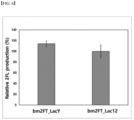
- the gene expression cassette comprising a nucleic acid sequence encoding LacY may increase the 2'-fucosyllactose productivity by 1.05 times or more, 1.1 times or more, 1.14 times or more, or 1.15 times or more, compared to a gene expression cassette comprising a nucleic acid sequence encoding Lac12.
- the 2'-fucosyllactose productivity may be measured under conditions of a temperature of 30°C and pH 7.0.
- the gene expression cassette expressing ⁇ -1,2-fucosyl transferase may further comprise a regulatory sequence of a nucleic acid sequence encoding the lactose membrane transport protein, and the regulatory sequence of the nucleic acid sequence encoding the lactose membrane transport protein may be a promoter and/or an RBS.
- the regulatory sequence of the nucleic acid sequence encoding the lactose membrane transport protein may comprise a ribosome binding site (RBS) comprising the nucleic acid sequence of SEQ ID NO: 22.
- the Bacillus sp. microorganism may be at least one selected from the group consisting of Bacillus megaterium, Bacillus subtilis, Bacillus cereus, Bacillus licheniformis, Bacillus amyloliquefaciens, and Bacillus thuringiensis, and as one embodiment, it may be Bacillus megaterium, but not limited thereto.
- the gene expression cassette expressing ⁇ -1,2-fucosyl transferase may comprise a transcription promoter, an RBS, and a nucleic acid molecule encoding ⁇ -1,2-fucosyl transferase, located sequentially in the direction from 5' end to 3' end.
- the gene expression cassette may comprise a transcription promoter, an RBS, a nucleic acid molecule encoding ⁇ -1,2-fucosyl transferase, and a nucleic acid sequence encoding a lactose membrane transport protein, located sequentially in the direction from 5' end to 3' end.
- the gene expression cassette may comprise a promoter, an RBS, a nucleic acid molecule encoding ⁇ -1,2-fucosyl transferase, a regulatory sequence of a nucleic acid sequence encoding a lactose membrane transport protein, and a nucleic acid sequence encoding a lactose membrane transport protein, located sequentially in the direction from 5' end to 3' end.
- the promoter, the RBS, the lactose membrane transport protein and the like are as described above.
- the expression cassette expressing ⁇ -1,2-fucosyl transferase may further comprise at least one sequence selected from the group consisting of a replication starting point, a leader, a selectable marker, a cloning site, and a restriction enzyme recognition site, as a polynucleotide sequence for expression.
- a vector particularly, a shuttle vector or plasmid vector, comprising the gene expression cassette expressing ⁇ -1,2-fucosyl transferase according to the present invention.
- the gene expression cassette expressing ⁇ -1,2-fucosyl transferase is as described above.
- the recombinant vector according to one embodiment of the present invention may be constructed as a vector for cloning or a vector for expression by a method widely known in the corresponding technical field.
- any vector used for gene recombination may be used, and for example, it may be selected from the group consisting of plasmid expression vectors, virus expression vectors (e.g., replication defective retrovirus, adenovirus, and adenoassociated virus) and virus vectors capable of performing the equivalent function thereto, but not limited thereto.
- the recombinant vector may be constructed from those selected from the group consisting of pMM1525, pHIS1525, pSTOP1622, and pMGBm19 vectors, and the like, and for example, it may be P3stop1623 2RBS vector.
- the polynucleotide of the gene expression cassette may be used as it is, or in a form of a recombinant vector comprising the polynucleotide.
- the recombinant vector means a recombinant nucleic acid molecule which can deliver an operably linked target polynucleotide, and the target polynucleotide may be operably linked to at least one transcription regulatory element consisting of a promoter and a transcription termination factor, and the like.
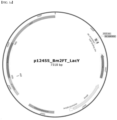
- the vector may be a recombinant vector having the cleavage map of FIG. 1a .
- the vector may further comprise a fucose synthesis gene expression cassette in addition to the expression cassette expressing ⁇ -1,2-fucosyl transferase.
- the fucose synthesis gene expression cassette may comprise a nucleic acid sequence encoding a fucose synthesis gene, and a regulatory sequence operably linked thereto.
- the fucose synthesis gene expression cassette may comprise at least one selected from the group consisting of a nucleic acid sequence encoding GTP mannose-1-phosphate guanylyltransferase (ManC), a nucleic acid sequence encoding phosphomannomutase (Hypo or MnB), a nucleic acid sequence encoding GDP-L-fucose synthase (WcaG), and a nucleic acid sequence encoding GDP-D-mannose-4,6-dehydratase (Gmd), and a regulatory sequence operably linked thereto.
- the fucose synthesis gene expression cassette may comprise GTP mannose-1-phosphate guanylyltransferase (ManC).
- the fucose synthesis gene expression cassette may comprise a nucleic acid sequence encoding at least one amino acid sequence selected from the group consisting of SEQ ID NOs: 23 to 26.
- the fucose synthesis gene expression cassette may comprise at least one nucleic acid sequence selected from the group consisting of SEQ ID NOs: 27 to 30.
- the regulatory sequence operably linked to the nucleic acid sequence encoding the fucose synthesis gene may be operably linked to the upstream of the fucose synthesis gene, and comprise a transcription promoter, and may additionally comprise a ribosome binding site (RBS).
- RBS ribosome binding site
- the regulatory sequence operably linked to the nucleic acid sequence encoding the fucose synthesis gene may comprise at least one constitutive expression promoter selected from the group consisting of p3610, p12455, p24930, p0706, pTu, and pPDC.
- the regulatory sequence may comprise at least one selected from the group consisting of SEQ ID NOs: 11 to 16.
- the regulatory sequence may comprise p12455 and/or p0706 promoters.
- the regulatory sequence may comprise a nucleic acid molecule comprising the nucleic acid sequence of SEQ ID NO: 12 and/or SEQ ID NO: 16.
- the regulatory sequence operably linked to the nucleic acid sequence encoding the fucose synthesis gene may further comprise a ribosome binding site (RBS) comprising the nucleic acid sequence of SEQ ID NO: 31.
- RBS ribosome binding site
- a recombinant microorganism in particular, Bacillus sp. microorganism, comprising a vector, in particular, shuttle vector or plasmid vector, which delivers at least one gene expression cassette according to the present invention.
- a vector in particular, shuttle vector or plasmid vector
- other one embodiment of the present invention relates to a recombinant Bacillus sp. microorganism comprising the gene expression cassette according to the present invention, or transformed with a vector comprising the expression cassette.
- all transformation methods known in the art may be selected and used without limitation, and for example, it may be selected from fusion of bacterial protoplasts, electroporation, projectable bombardment, and infection using a virus vector, and the like.
- the recombinant Bacillus sp. microorganism according to one embodiment of the present invention can overexpress introduced ⁇ -1,2-fucosyl transferase, and therefore, it can provide the high stable ⁇ -1,2-fucose converting activity for a long period of time. Therefore, the recombinant Bacillus sp. microorganism may be useful in preparation of ⁇ -1,2-fucose, and the ⁇ -1,2-fucose producing yield may be enhanced.
- the recombinant Bacillus sp. microorganism according to one embodiment of the present invention may have fucose synthesis activity, or may have an improved activity for fucose synthesis.
- the recombinant microorganism according to one embodiment of the present invention may be characterized by having fucose synthase, for example, at least one selected from the group consisting of GDP-D-mannose-4,6-dehydratase, GDP-L-fucose synthase (WcaG), phosphomannomutase, and GTP-mannose-1-phosphate guanylyltransferase.
- the recombinant Bacillus sp. microorganism with improved fucose synthesis activity may have been introduced with GDP-D-mannose-4,6-dehydratase, GDP-L-fucose synthase (WcaG), phosphomannomutase, and GTP-mannose-1-phosphate guanylyltransferase.
- the recombinant Bacillus sp. microorganism with improved fucose synthesis activity may have been introduced with GTP mannose-1-phosphate guanylyltransferase (ManC), and may have not been introduced with phosphomannomutase (Hypo).
- ManC mannose-1-phosphate guanylyltransferase
- Hypo phosphomannomutase
- the recombinant Bacillus sp. microorganism with improved fucose synthesis activity may have been introduced with phosphomannomutase (Hypo), and may have not been introduced with GTP mannose-1-phosphate guanylyltransferase (ManC).
- Hypo phosphomannomutase
- ManC GTP mannose-1-phosphate guanylyltransferase
- the recombinant Bacillus sp. microorganism with improved fucose synthesis activity may have been introduced with GDP-L-fucose synthase (WcaG), and may have not been introduced with GDP-D-mannose-4,6-dehydratase (Gmd).
- WcaG GDP-L-fucose synthase
- Gmd GDP-D-mannose-4,6-dehydratase
- the recombinant Bacillus sp. microorganism with improved fucose synthesis activity may have been introduced with GDP-D-mannose-4,6-dehydratase (Gmd), and may have been further introduced with phosphomannomutase and/or GTP-mannose-1-phosphate guanylyltransferase.
- Gmd GDP-D-mannose-4,6-dehydratase
- the recombinant Bacillus sp. microorganism may have an improved activity for fucose synthesis as the vector to be introduced into the recombinant Bacillus sp. microorganism comprises a fucose synthesis gene expression cassette, or as the recombinant Bacillus sp. microorganism further comprises a vector comprising a fucose synthesis gene expression cassette.
- microorganism according to one embodiment of the present invention may further comprise a separate vector comprising a gene expression cassette expressing a fucose synthesis gene, in addition to a vector comprising the gene expression cassette expressing ⁇ -1,2-fucosyl transferase according to the present invention.
- the vector comprising the fucose synthesis gene expression cassette may be a recombinant vector having the cleavage map of FIG. 1b .
- the recombinant Bacillus sp. microorganism according to one embodiment of the present invention has improved activity for fucose synthesis in addition to the characteristic of overexpressing ⁇ -1,2-fucosyl transferase, and the ⁇ -1,2-fucose production yield can be further enhanced.
- the recombinant Bacillus sp. microorganism having the fucose synthesis activity, or with improved fucose synthesis activity may increase the 2'-fucosyllactose productivity by 1.05 times or more, 1.1 times or more, 1.15 times or more, or 1.18 times or more, compared to a control group having no fucose synthesis activity.
- the control group having no fucose synthesis activity may be for example, a control group not overexpressing a fucose synthesis gene, or a control group not being introduced a fucose synthesis gene.
- control group may be a ⁇ LacZ mutant strain which expresses a lactose membrane transport protein, and fucosyl transferase linked to a constitutive expression promoter is introduced into, but a fucose synthesis gene is not introduced into.
- the recombinant Bacillus sp. microorganism according to one embodiment of the present invention may be one in which the activity of lactase is reduced or removed.
- the microorganism may be one in which LacZ gene is removed.
- the Bacillus sp. microorganism may be at least one selected from the group consisting of Bacillus megaterium, Bacillus subtilis, Bacillus cereus, Bacillus licheniformis, Bacillus amyloliquefacien, and Bacillus thuringiensis, and as one embodiment, it may be Bacillus megaterium, but not limited thereto.
- compositions for producing 2'-fucosyllactose comprising at least one selected from the group consisting of ⁇ -1,2-fucosyl transferase obtained by using the recombinant Bacillus sp. microorganism, a microbial cell of the microorganism, a culture of the microorganism, a lysate of the microorganism, and an extract of the lysate or culture.
- the recombinant Bacillus sp. microorganism, the ⁇ -1,2-fucosyl transferase, the 2'-fucosyllactose, and the like are as described above.
- the culture comprises an enzyme produced from the Bacillus sp. microorganism, and it may comprise the microorganism, or may be in a cell-free form not comprising the microorganism.
- the lysate means a lysate obtained by lysing the Bacillus sp. microorganism or a supernatant obtained by centrifuging the lysate, and comprises an enzyme produced from the Bacillus sp. microorganism. In the present description, unless otherwise mentioned, the Bacillus sp.
- microorganism used in preparation of 2'-fucosyllactose is used to mean at least one selected from the group consisting of a microbial cell of the microorganism, a culture of the microorganism and a lysate of the microorganism.
- One embodiment of the present invention relates to a method for producing 2'-fucosyllactose, comprising a step of culturing a recombinant Bacillus sp. host cell, which comprises the gene expression cassette according to the present invention, or is transformed with a vector comprising the expression cassette.
- the gene expression cassette, the vector comprising the expression cassette, the recombinant Bacillus sp. host cell, and the like are as described above.
- the gene expression cassette may comprise a constitutive expression promoter of p12455 as a regulatory sequence, and improve the 2'-fucosyllactose productivity in low temperature.
- the regulatory sequence may comprise a constitutive expression promoter of p12455, and the step of culturing may be culturing at a temperature of 10 to 25°C.
- the method for producing may produce 2'-fucosyllactose by reacting at least one selected from the group consisting of ⁇ -1,2-fucosyl transferase obtained from the culture, a microbial cell of the microorganism, a culture of the microorganism, a lysate of the microorganism, and an extract of the lysate or culture, with a lactose-containing raw material.
- the present invention can produce 2'-fucosyllactose by using a GRAS (Generally Recognized As Safe) strain with biosafety level 1, and can provide a recombinant Bacillus sp. microorganism having excellent productivity of 2'-fucosyllactose without consumer concern about stability, and a method for producing 2'-fucosyllactose using the same.
- GRAS Generally Recognized As Safe
- Bacillus megaterium 14581 selected for preparing microorganism in the present invention was obtained from Korean Culture Center of Microorganisms (KCCM) as Accession number KCCM 40441.
- LacZ ⁇ -galactosidase
- fucosyl transferase was to be artificially introduced, and five kinds of ⁇ -1,2-fucosyl transferase derived from the Biosafety level 1 strain were selected as enzymes.
- the selected fucosyl transferase are shown in Table 2.
- fucosyl transferase of SEQ ID NO: 1 was derived from Akkermansia muciniphila, and named Am2FT_2.
- the fucosyl transferases of SEQ ID NOs: 2 to 4 were derived from Bacillus megaterium, and named Bm2FT, Bm2FT_2, and Bm2FT_3, respectively.
- the fucosyl transferase of SEQ ID NO: 5 was derived from Bacillus sp., and named Bs2FT.
- Bacillus megaterium was transformed by the plasmids for the five enzymes, respectively, and then grown at 37°C. Two colonies were inoculated to each plate to perform overnight seed culture. Seed 200 uL was input to a 4mL medium added with 22mM and reacted at 30°C. After 20 hours, it was analyzed by HPLC.
- Am2FT_2 produced about 5 (mg/L)
- Bm2FT produced about 15 (mg/L)
- Bm2FT_2 produced about 3 (mg/L)
- Bm2FT_3 produced about 4 (mg/L)
- Bs2FT produced about 1 (mg/L) of 2'-fucosyllactose, and all five enzymes had the 2FL-producing activity.
- the Bm2FT enzyme was representatively selected and used for a subsequent experiment.
- a conventional promoter used mainly for overexpressing a recombinant protein in Bacillus megaterium is a xylose inducible promoter (hereinafter, pXyl).
- pXyl xylose inducible promoter
- a constitutive expression promoter was searched on Bacillus megaterium 14581 genome.
- constitutive expression promoters of p3610, p12455, and p24930 instead of the xylose inducible promoter were finally selected and plasmids were constructed to express Bm2FT, and transformed into the LacZ deleted strain prepared in Example 1. Final production of 2'-fucosyllactose was analyzed through HPLC method.
- Lac12 a lactose membrane transport protein derived from Kluyveromyces lactis
- ⁇ LacZ Bacillus megaterium prepared in Example 2 that the constitutive expression promoter p12455 was introduced, and effect thereof was analyzed.
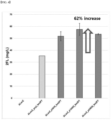
- the Lac12 and Bm2FT were introduced polycistronically as a plasmid form into the strain and the strain was cultured at a temperature of 30°C and pH 7, and then produced amount thereof after 65 hours was analyzed and compared with the strain introduced with only Bm2FT, to show in Table 6 and FIG. 5 . As shown in Table 6 and FIG.
- LacY Bacillus megaterium
- Gmd GDP-D-mannose-4,6-dehydratase
- WcaG GDP-L-fucose synthase
- phosphomannomutase hereinafter, Hypo or ManB
- ManC GTP mannose-1-phosphate guanylyltransferase
- SMMP 5mL SMMP was added to 15mL Falcon containing PEG-P 1.5mL, and the Falcon was carefully rolled to mix. After the cells were collected by centrifuging at 1,300g for 10 minutes, the cells were released into the SMMP, and 250rpm shaking was performed for 1.5mL at 37°C to complete transformation.
- the constructed strains were reacted at a temperature of 30°C, pH 7 for 80 hours. As shown in Table 8 and FIG. 7 , among various combinations which were constructed and productivity thereof was tested, when ManC, Hypo, WcaG, and Gmd were simultaneously expressed, the productivity was increased by about 15% or more compared to a control group of ⁇ LacZ_p12455_Bm2FT_Lac12 in which GDP-fuc synthase was not overexpressed.
- the wild type B. megaterium 14581 could not produce 2'-fucosyllactose, but could be modified to achieve significantly higher productivity of 2'-fucosyllactose compared to a conventional xylose inducible promoter, by introduction of ⁇ -1,2-fucosyl transferase, introduction of various constitutive expression promoters, deletion of LacZ, introduction of a lactose membrane transport protein, introduction of GDP-fuc synthase, and the like.
Landscapes
- Health & Medical Sciences (AREA)
- Chemical & Material Sciences (AREA)
- Life Sciences & Earth Sciences (AREA)
- Genetics & Genomics (AREA)
- Organic Chemistry (AREA)
- Engineering & Computer Science (AREA)
- Wood Science & Technology (AREA)
- Zoology (AREA)
- Bioinformatics & Cheminformatics (AREA)
- Biotechnology (AREA)
- General Engineering & Computer Science (AREA)
- General Health & Medical Sciences (AREA)
- Biochemistry (AREA)
- Biomedical Technology (AREA)
- Microbiology (AREA)
- Molecular Biology (AREA)
- Biophysics (AREA)
- Medicinal Chemistry (AREA)
- Plant Pathology (AREA)
- Physics & Mathematics (AREA)
- Chemical Kinetics & Catalysis (AREA)
- General Chemical & Material Sciences (AREA)
- Mycology (AREA)
- Gastroenterology & Hepatology (AREA)
- Proteomics, Peptides & Aminoacids (AREA)
- Micro-Organisms Or Cultivation Processes Thereof (AREA)
- Enzymes And Modification Thereof (AREA)
- Preparation Of Compounds By Using Micro-Organisms (AREA)
Abstract
Description
- The present invention relates to a recombinant Bacillus sp. microorganism producing fucosyl transferase and a method for producing human milk oligosaccharides using the same.
- 137 kinds including 3 kinds of oligosaccharides with the highest contents among human milk are fucosylated and ratio thereof is about 77%, and the rest oligosaccharides are mostly sialylated (39 kinds) and correspond to about 28%. Among them, in particular, 2'-fucosyllactose and 3'-fucosyllactose have a prebiotic effect, an effect of inhibiting intestinal attachment of pathogens, and an effect of regulating an immunoregulatory system, and the like. Prebiotic effect has been the most researched so far, and human milk oligosaccharides of breast milk selectively enhance growth and development of Bifidobacterium bifidum, which grows as a dominant species initially in intestines of infants, whereas they cannot be used by harmful bacteria. In addition, the human milk oligosaccharides are known to inhibit intestinal attachment of pathogens, and this is because structures of cell wall polysaccharides of a pathogen that binds to intestinal lectin is often similar to some structures of human milk oligosaccharides. Therefore, it seems that breast-feeding infants have resistance to infection by pathogens as human milk oligosaccharides provide watersoluble ligand analogues. However, it is known that due to mutation of fucosyl transferase which synthesizes 2'-fucosyllactose, about 20% of women cannot synthesize it in the body properly. Due to this, industrial production of 2'-fucosyllactose is required.
- Some of human milk oligosaccharides are found also in milk of most mammals (primates, cattle, pigs, goats, sheep, elephants) in a small amount. Among them, the milk of goats is most similar to the composition of the human milk oligosaccharides, and due to this, a large-scale membrane use separation technology from whey by-products of a goat milk cheese production process has been suggested. In addition, when recently developed solid-phase synthesis is used, Lewis X-Lewis Y saccharides can be produced within one day, and when a crystalline intermediate technology is used, rapid synthesis of 2'-fucosyllactose becomes possible. However, despite development of the above separation method or a chemical synthesis method, several obstacles remain for mass production for industrialization of human milk oligosaccharides, as the present technologies are not suitable for a food or pharmaceutical industry due to low stereoselectivity, low total yield and use of toxic reagents, and the like. Thus, more environmentally friendly and high yield producing method is required, and recently, a method for producing a highconcentration 2'-FL by a microorganism has been reported.
- However, a 2'-fucosyllactose synthesis gene uses 2-fucosyllactose secured from a
Bio Safety Level 2 strain, Helicobacter pylori, and thus, it may act as a negative factor in perception of consumers when applied mainly to powdered milk for replacing breast-feeding and food for infants, and it is not appropriate for domestic production and sales permission. Therefore, it is needed to produce 2'-fucosyllactose as a food additive through development of aBio Safety Level 1 strain by applying a gene with higher stability. - An embodiment of the present invention is to provide a gene expression cassette expressing α-1,2-fucosyl transferase in a Bacillus sp. microorganism, comprising a nucleic acid sequence encoding α-1,2-fucosyl transferase, and a regulatory sequence operably linked thereto.
- Another embodiment of the present invention, is to provide a vector comprising the gene expression cassette expressing α-1,2-fucosyl transferase.
- Other embodiment of the present invention, is to provide a recombinant Bacillus sp. microorganism producing α-1,2-fucosyl transferase, comprising the gene expression cassette.
- Other embodiment of the present invention, is to provide a composition for producing 2'-fucosyllactose, comprising at least one selected from the group consisting of α-1,2-fucosyl transferase obtained using the recombinant Bacillus sp. microorganism, a microbial cell of the microorganism, a culture of the microorganism, a lysate of the microorganism, and an extract of the lysate or culture.
- Other embodiment of the present invention, is to provide a method for producing of 2'-fucosyllactose, comprising a step of culturing a recombinant Bacillus sp. microorganism comprising the gene expression cassette.
- The present invention relates to a gene expression cassette expressing α-1,2-fucosyl transferase in a Bacillus sp. microorganism, comprising a nucleic acid sequence encoding α-1,2-fucosyl transferase, and a regulatory sequence operably linked thereto, a recombinant Bacillus sp. microorganism comprising the gene expression cassette and a method for producing 2'-fucosyllactose among human milk oligosaccharides using the same, and relates to a method for preparing a recombinant Bacillus sp. microorganism by introducing various gene mutations, and optimizing the output of 2'-fucosyllactose of the microorganism. Specifically, the present invention relates to producing 2'-fucosyllactose by selection of enzymes involved in synthesis of 2'-fucosyllactose, ManB, ManC, WcaG, and Gmd, blocking a degradation pathway in order that a strain can use lactose which is a substrate well and overexpression of a membrane transport protein (lacY), selection of a novel constitutive expression promoter and introduction into a Bacillus sp. microorganism.
- In the present description, "expression cassette" comprises a gene involved in expression of a nucleic acid sequence to be expressed, and the gene expression cassette expressing α-1,2-fucosyl transferase comprises a gene involved in production of α-1,2-fucosyl transferase, and specifically, it comprises a regulatory sequence functionally linked to a coding nucleic acid sequence of α-1,2-fucosyl transferase. Therefore, unlike an expression unit, the expression cassette comprises not only a nucleic acid sequence which regulates transcription and translation, but also a nucleic acid sequence necessary to be expressed as a protein as the result of transcription and translation.
- In the present invention, "regulatory sequence" means a nucleic acid which comprises a promoter and has activity of expressing the nucleic acid or the gene, that is, regulating transcription and translation, after being functionally linked to a nucleic acid sequence or gene to be expressed.
- In the present description, "promoter", "nucleic acid molecule having promoter activity" or "promoter sequence" means a nucleic acid which is functionally linked to a target nucleic acid sequence to be transcribed and regulates transcription of the target nucleic acid sequence.
- The nucleic acid sequence to be transcribed does not necessarily require direct connection to a promoter in a chemical meaning, and may comprise an additional gene regulatory sequence and/or linker nucleic acid sequence, and the like. Arrangement in which the target nucleic acid sequence to be transcribed is located in the downstream of the promoter sequence (i.e., at the 3' end of the promoter sequence) is preferable. The distance between the promoter sequence and nucleic acid sequence to be transcribed may be for example, less than 200 bases, or less than 100 bases.
- In the present description, a sequence of "ribosome binding site (RBS)" (or also referred to as Shine-Dalgarno sequence) means an A/G rich polynucleotide sequence.
- In the present invention, "operably linked" means a state in which a nucleic acid expression regulatory sequence and a nucleic acid sequence encoding a target protein or peptide are under functional linkage so as to perform general functions. For example, the promoter and nucleic acid sequence encoding a protein or peptide are operably linked, so it may affect expression of a coding sequence. Operable linkage with an expression vector may be prepared using a gene recombination technology well known in the corresponding technical field, and for site-specific DNA cleavage and linkage, enzymes generally known in the corresponding technical field and the like may be used.
- All the nucleic acid molecules according to the present invention are preferably nonnaturally occurring, and are nucleic acid molecules in an isolated nucleic acid molecule form or synthesized or prepared by a recombination method. "Isolated" nucleic acid molecule may be removed from other nucleic acid molecules present in natural sources of the nucleic acid, and in addition, when it is prepared by a recombination technology, essentially, other cellular material or culture medium may not be present, or when it is chemically synthesized, a chemical precursor or other chemical substance may not be present.
- Hereinafter, the present invention will be described in more detail.
- One embodiment of the present invention relates to a gene expression cassette expressing α-1,2-fucosyl transferase in a Bacillus sp. microorganism, comprising a nucleic acid sequence encoding α-1,2-fucosyl transferase, and a regulatory sequence operably linked thereto.
- The regulatory sequence operably linked to the nucleic acid sequence encoding α-1,2-fucosyl transferase according to one embodiment of the present invention, may be operably linked to the upstream of the nucleic acid sequence encoding α-1,2-fucosyl transferase, comprise a transcription promoter, and additionally comprise a ribosome binding site (RBS).
- The regulatory sequence operably linked to the nucleic acid sequence encoding α-1,2-fucosyl transferase according to one embodiment of the present invention may comprise at least one constitutive expression promoter selected from the group consisting of p3610, p12455, p24930, pTu (elongation factor Tu promoter on Bacillus megaterium 14581 genome), and pPDC (pyruvate decarboxylase promoter), and the promoter is illustratively described in Table 1 below. The promoter may comprise at least one nucleic acid sequence selected from the group consisting of SEQ ID NOs: 11 to 15. As one embodiment, the promoter may comprise p12455 and/or pTu promoter. As one embodiment, the promoter may comprise a nucleic acid molecule comprising the nucleic acid sequence of SEQ ID NO: 12 and/or SEQ ID NO: 14.
[Table 1] Name Sequence (5' to 3' direction) SEQ ID NO: p3610 
11 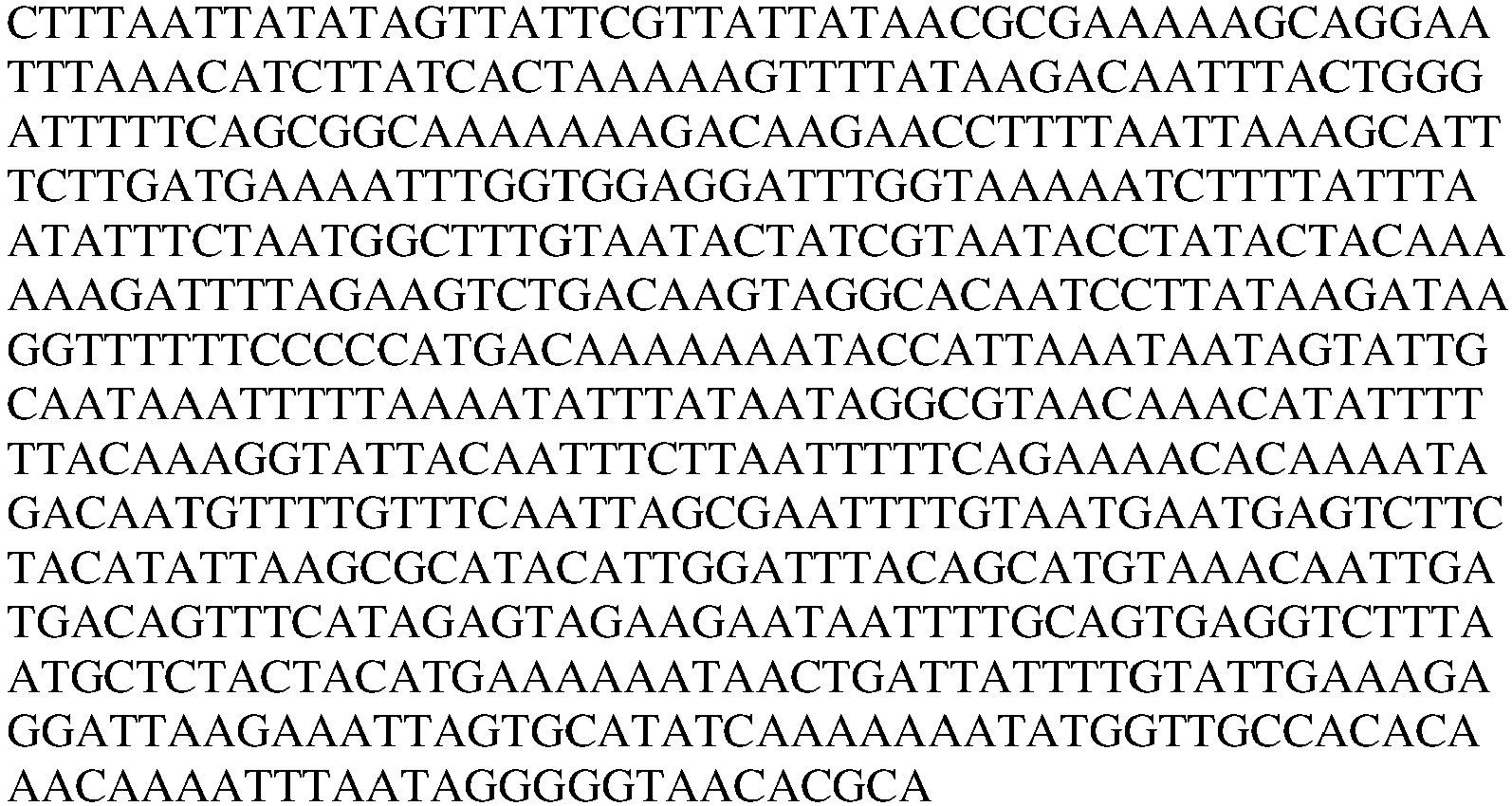
p12455 
12 p24930 
13 pTu 
14 pPDC 
15 - The constitutive expression promoter may improve the 2'-fucosyllactose productivity by regulating transcription of a nucleic acid sequence encoding α-1,2-fucosyl transferase, which is located in downstream thereof. Specifically, the promoter may increase the 2'-fucosyllactose productivity by 1.05 times or more, 1.1 times or more, 1.2 times or more, 1.3 times or more, 1.4 times or more, 1.45 times or more, 1.5 times or more, 1.55 times or more, or 1.6 times or more, compared to a xylose inducible promoter (pxy1 promoter). The 2'-fucosyllactose productivity may be measured under conditions of a temperature of 30°C and pH 7.0.
- The constitutive expression promoter may improve the 2'-fucosyllactose productivity. Specifically, the regulatory sequence may increase the 2'-fucosyllactose productivity by 1.05 times or more, 1.1 times or more, 1.2 times or more, 1.3 times or more, 1.4 times or more, 1.5 times or more, 1.6 times or more, 1.7 times or more, 1.8 times or more, 1.9 times or more, 2 times or more, 2.4 times or more, 3 times or more, 3.4 times or more, or 3.9 times or more, compared to a xylose inducible promoter (pxyl promoter). The 2'-fucosyllactose productivity may be measured under conditions of a temperature of 18°C and pH 7.0.
- The constitutive expression promoter may improve the 2'-fucosyllactose productivity at a low temperature. The low temperature may be a temperature of for example, 10 to less than 30°C, 10 to 29°C, 10 to 28°C, 10 to 27°C, 10 to 26°C, 10 to 25°C, 10 to 24°C, 10 to 23°C, 10 to 22°C, 10 to 21°C, 10 to 20°C, 15 to less than 30°C, 15 to 29°C, 15 to 28°C, 15 to 27°C, 15 to 26°C, 15 to 25°C, 15 to 24°C, 15 to 23°C, 15 to 22°C, 15 to 21°C, or 15 to 20°C, for example, 18°C. Specifically, the regulatory sequence may increase the 2'-fucosyllactose productivity at a temperature of 18°C by over 1 time, 1.1 times or more, 1.2 times or more, 1.3 times or more, 1.4 times or more, 1.5 times or more, 1.6 times or more, 1.7 times or more, 1.75 times or more, 1.8 times or more, or 1.85 times or more, compared to the 2'-fucosyllactose productivity at a temperature of 30°C. One specific embodiment of the constitutive expression promoter improving the 2'-fucosyllactose productivity at a low temperature may be p12455, and as one embodiment, it may have the nucleic acid sequence of SEQ ID NO: 12.
- The regulatory sequence operably linked to the nucleic acid sequence encoding α-1,2-fucosyl transferase according to one embodiment of the present invention may further comprise a ribosome binding site (RBS), and specifically, it may further comprise an RBS sequence comprising the nucleic acid sequence of SEQ ID NO: 21.
- The gene expression cassette according to the present invention expresses α-1,2-fucosyl transferase in a Bacillus sp. microorganism, and the nucleic acid sequence encoding α-1,2-fucosyl transferase is not particularly limited, and for example, it may be derived from Akkermansia muciniphila or Bacillus megaterium. For example, the α-1,2-fucosyl transferase may have at least one amino acid sequence selected from the group consisting of SEQ ID NOs: 1 to 5.
- Specifically, the α-1,2-fucosyl transferase according to one embodiment of the present invention is illustratively described in Table 2 below. Accordingly, the nucleic acid sequence encoding α-1,2-fucosyl transferase may comprise a nucleic acid molecule comprising a nucleic acid sequence encoding at least one amino acid sequence selected from the group consisting of SEQ ID NOs: 1 to 5.
[Table 2] Name Sequence SEQ ID NO: Am2FT_2 
1 Bm2FT 
2 Bm2FT_2 
3 Bm2FT_3 
4 Bs2FT 
5 - For example, the nucleic acid sequence encoding α-1,2-fucosyl transferase may comprise at least one nucleic acid sequence selected from the group consisting of SEQ ID NOs: 6 to 10. Specifically, the nucleic acid sequence encoding α-1,2-fucosyl transferase according to one embodiment of the present invention is illustratively described in Table 3 below.
[Table 3] Name Sequence SEQ ID NO: Am2FT_2 nucleic acid sequence 
6 
Bm2FT nucleic acid sequence 
7 Bm2FT_2 nucleic acid sequence 
8 
Bm2FT_3 nucleic acid sequence 
9 Bs2FT nucleic acid sequence 
10 
- The gene expression cassette expressing α-1,2-fucosyl transferase according to one embodiment of the present invention may further comprise a nucleic acid sequence encoding a lactose membrane transport protein (lactose permease). The lactose membrane transport protein may be derived from Kluyveromyces lactis or Bacillus megaterium.
- For example, the lactose membrane transport protein may be Lac12 and/or LacY. Specifically, the lactose membrane transport protein may comprise an amino acid sequence of SEQ ID NO: 17 and/or SEQ ID NO: 18. More specifically, the Lac12 may have SEQ ID NO: 17, and the LacY may have SEQ ID NO: 18.
- For example, the nucleic acid sequence encoding the lactose membrane transport protein may comprise a nucleic acid sequence of SEQ ID NO: 19 and/or SEQ ID NO: 20. More specifically, the nucleic acid sequence encoding Lac12 may comprise the nucleic acid sequence of SEQ ID NO: 19, and the nucleic acid sequence encoding LacY may comprise the nucleic acid sequence of SEQ ID NO: 20.
- The lactose membrane transport protein may improve the 2'-fucosyllactose productivity. Specifically, the gene expression cassette further comprising a nucleic acid sequence encoding the lactose membrane transport protein, may increase the 2'-fucosyllactose productivity by 1.1 times or more, 1.2 times or more, 1.25 times or more, or 1.3 times or more compared to a gene expression cassette not comprising nucleic acid sequence encoding the lactose membrane transport protein. The 2'-fucosyllactose productivity may be measured under conditions of a temperature of 30°C and pH 7.0.
- As one specific embodiment, the lactose membrane transport protein is LacY, and may improve the 2'-fucosyllactose productivity. Specifically, the gene expression cassette comprising a nucleic acid sequence encoding LacY, may increase the 2'-fucosyllactose productivity by 1.05 times or more, 1.1 times or more, 1.14 times or more, or 1.15 times or more, compared to a gene expression cassette comprising a nucleic acid sequence encoding Lac12. The 2'-fucosyllactose productivity may be measured under conditions of a temperature of 30°C and pH 7.0.
- The gene expression cassette expressing α-1,2-fucosyl transferase according to one embodiment of the present invention may further comprise a regulatory sequence of a nucleic acid sequence encoding the lactose membrane transport protein, and the regulatory sequence of the nucleic acid sequence encoding the lactose membrane transport protein may be a promoter and/or an RBS. For example, the regulatory sequence of the nucleic acid sequence encoding the lactose membrane transport protein may comprise a ribosome binding site (RBS) comprising the nucleic acid sequence of SEQ ID NO: 22.
- According to one specific embodiment of the present invention, the Bacillus sp. microorganism may be at least one selected from the group consisting of Bacillus megaterium, Bacillus subtilis, Bacillus cereus, Bacillus licheniformis, Bacillus amyloliquefaciens, and Bacillus thuringiensis, and as one embodiment, it may be Bacillus megaterium, but not limited thereto.
- The gene expression cassette expressing α-1,2-fucosyl transferase according to one embodiment of the present invention may comprise a transcription promoter, an RBS, and a nucleic acid molecule encoding α-1,2-fucosyl transferase, located sequentially in the direction from 5' end to 3' end. Preferably, the gene expression cassette may comprise a transcription promoter, an RBS, a nucleic acid molecule encoding α-1,2-fucosyl transferase, and a nucleic acid sequence encoding a lactose membrane transport protein, located sequentially in the direction from 5' end to 3' end. More preferably, the gene expression cassette may comprise a promoter, an RBS, a nucleic acid molecule encoding α-1,2-fucosyl transferase, a regulatory sequence of a nucleic acid sequence encoding a lactose membrane transport protein, and a nucleic acid sequence encoding a lactose membrane transport protein, located sequentially in the direction from 5' end to 3' end. The promoter, the RBS, the lactose membrane transport protein and the like are as described above.
- In one embodiment of the present invention, the expression cassette expressing α-1,2-fucosyl transferase may further comprise at least one sequence selected from the group consisting of a replication starting point, a leader, a selectable marker, a cloning stie, and a restriction enzyme recognition site, as a polynucleotide sequence for expression.
- Other one embodiment of the present invention relates to a vector, particularly, a shuttle vector or plasmid vector, comprising the gene expression cassette expressing α-1,2-fucosyl transferase according to the present invention. The gene expression cassette expressing α-1,2-fucosyl transferase is as described above.
- The recombinant vector according to one embodiment of the present invention may be constructed as a vector for cloning or a vector for expression by a method widely known in the corresponding technical field. For the recombinant vector, any vector used for gene recombination may be used, and for example, it may be selected from the group consisting of plasmid expression vectors, virus expression vectors (e.g., replication defective retrovirus, adenovirus, and adenoassociated virus) and virus vectors capable of performing the equivalent function thereto, but not limited thereto.
- For example, the recombinant vector may be constructed from those selected from the group consisting of pMM1525, pHIS1525, pSTOP1622, and pMGBm19 vectors, and the like, and for example, it may be P3stop1623 2RBS vector.
- The polynucleotide of the gene expression cassette may be used as it is, or in a form of a recombinant vector comprising the polynucleotide. The recombinant vector means a recombinant nucleic acid molecule which can deliver an operably linked target polynucleotide, and the target polynucleotide may be operably linked to at least one transcription regulatory element consisting of a promoter and a transcription termination factor, and the like.
- As one embodiment, the vector may be a recombinant vector having the cleavage map of
FIG. 1a . - According to one embodiment of the present invention, the vector may further comprise a fucose synthesis gene expression cassette in addition to the expression cassette expressing α-1,2-fucosyl transferase.
- The fucose synthesis gene expression cassette may comprise a nucleic acid sequence encoding a fucose synthesis gene, and a regulatory sequence operably linked thereto.
- Specifically, the fucose synthesis gene expression cassette may comprise at least one selected from the group consisting of a nucleic acid sequence encoding GTP mannose-1-phosphate guanylyltransferase (ManC), a nucleic acid sequence encoding phosphomannomutase (Hypo or MnB), a nucleic acid sequence encoding GDP-L-fucose synthase (WcaG), and a nucleic acid sequence encoding GDP-D-mannose-4,6-dehydratase (Gmd), and a regulatory sequence operably linked thereto. Preferably, the fucose synthesis gene expression cassette may comprise GTP mannose-1-phosphate guanylyltransferase (ManC).
- For example, the fucose synthesis gene expression cassette may comprise a nucleic acid sequence encoding at least one amino acid sequence selected from the group consisting of SEQ ID NOs: 23 to 26.
- For example, the fucose synthesis gene expression cassette may comprise at least one nucleic acid sequence selected from the group consisting of SEQ ID NOs: 27 to 30.
- The regulatory sequence operably linked to the nucleic acid sequence encoding the fucose synthesis gene, may be operably linked to the upstream of the fucose synthesis gene, and comprise a transcription promoter, and may additionally comprise a ribosome binding site (RBS).
- For example, the regulatory sequence operably linked to the nucleic acid sequence encoding the fucose synthesis gene, may comprise at least one constitutive expression promoter selected from the group consisting of p3610, p12455, p24930, p0706, pTu, and pPDC. For example, the regulatory sequence may comprise at least one selected from the group consisting of SEQ ID NOs: 11 to 16. As one embodiment, the regulatory sequence may comprise p12455 and/or p0706 promoters. Specifically, the regulatory sequence may comprise a nucleic acid molecule comprising the nucleic acid sequence of SEQ ID NO: 12 and/or SEQ ID NO: 16.
- The regulatory sequence operably linked to the nucleic acid sequence encoding the fucose synthesis gene, may further comprise a ribosome binding site (RBS) comprising the nucleic acid sequence of SEQ ID NO: 31.
- Other one embodiment of the present invention relates to a recombinant microorganism, in particular, Bacillus sp. microorganism, comprising a vector, in particular, shuttle vector or plasmid vector, which delivers at least one gene expression cassette according to the present invention. In other words, other one embodiment of the present invention relates to a recombinant Bacillus sp. microorganism comprising the gene expression cassette according to the present invention, or transformed with a vector comprising the expression cassette.
- For the method for transforming a host cell with the recombinant vector, all transformation methods known in the art may be selected and used without limitation, and for example, it may be selected from fusion of bacterial protoplasts, electroporation, projectable bombardment, and infection using a virus vector, and the like.
- The recombinant Bacillus sp. microorganism according to one embodiment of the present invention can overexpress introduced α-1,2-fucosyl transferase, and therefore, it can provide the high stable α-1,2-fucose converting activity for a long period of time. Therefore, the recombinant Bacillus sp. microorganism may be useful in preparation of α-1,2-fucose, and the α-1,2-fucose producing yield may be enhanced.
- The recombinant Bacillus sp. microorganism according to one embodiment of the present invention may have fucose synthesis activity, or may have an improved activity for fucose synthesis. Specifically, the recombinant microorganism according to one embodiment of the present invention may be characterized by having fucose synthase, for example, at least one selected from the group consisting of GDP-D-mannose-4,6-dehydratase, GDP-L-fucose synthase (WcaG), phosphomannomutase, and GTP-mannose-1-phosphate guanylyltransferase.
- As one specific embodiment, the recombinant Bacillus sp. microorganism with improved fucose synthesis activity may have been introduced with GDP-D-mannose-4,6-dehydratase, GDP-L-fucose synthase (WcaG), phosphomannomutase, and GTP-mannose-1-phosphate guanylyltransferase.
- As one specific embodiment, the recombinant Bacillus sp. microorganism with improved fucose synthesis activity may have been introduced with GTP mannose-1-phosphate guanylyltransferase (ManC), and may have not been introduced with phosphomannomutase (Hypo).
- As one specific embodiment, the recombinant Bacillus sp. microorganism with improved fucose synthesis activity may have been introduced with phosphomannomutase (Hypo), and may have not been introduced with GTP mannose-1-phosphate guanylyltransferase (ManC).
- As one specific embodiment, the recombinant Bacillus sp. microorganism with improved fucose synthesis activity may have been introduced with GDP-L-fucose synthase (WcaG), and may have not been introduced with GDP-D-mannose-4,6-dehydratase (Gmd).
- As one specific embodiment, the recombinant Bacillus sp. microorganism with improved fucose synthesis activity may have been introduced with GDP-D-mannose-4,6-dehydratase (Gmd), and may have been further introduced with phosphomannomutase and/or GTP-mannose-1-phosphate guanylyltransferase.
- Specifically, the recombinant Bacillus sp. microorganism may have an improved activity for fucose synthesis as the vector to be introduced into the recombinant Bacillus sp. microorganism comprises a fucose synthesis gene expression cassette, or as the recombinant Bacillus sp. microorganism further comprises a vector comprising a fucose synthesis gene expression cassette. In other words, the recombinant Bacillus sp. microorganism according to one embodiment of the present invention may further comprise a separate vector comprising a gene expression cassette expressing a fucose synthesis gene, in addition to a vector comprising the gene expression cassette expressing α-1,2-fucosyl transferase according to the present invention. As one embodiment, the vector comprising the fucose synthesis gene expression cassette may be a recombinant vector having the cleavage map of
FIG. 1b . - Accordingly, the recombinant Bacillus sp. microorganism according to one embodiment of the present invention has improved activity for fucose synthesis in addition to the characteristic of overexpressing α-1,2-fucosyl transferase, and the α-1,2-fucose production yield can be further enhanced.
- Specifically, the recombinant Bacillus sp. microorganism having the fucose synthesis activity, or with improved fucose synthesis activity, may increase the 2'-fucosyllactose productivity by 1.05 times or more, 1.1 times or more, 1.15 times or more, or 1.18 times or more, compared to a control group having no fucose synthesis activity. The control group having no fucose synthesis activity may be for example, a control group not overexpressing a fucose synthesis gene, or a control group not being introduced a fucose synthesis gene. As one embodiment, the control group may be a ΔLacZ mutant strain which expresses a lactose membrane transport protein, and fucosyl transferase linked to a constitutive expression promoter is introduced into, but a fucose synthesis gene is not introduced into.
- The recombinant Bacillus sp. microorganism according to one embodiment of the present invention may be one in which the activity of lactase is reduced or removed. Specifically, the microorganism may be one in which LacZ gene is removed.
- According to one embodiment of the present invention, the Bacillus sp. microorganism may be at least one selected from the group consisting of Bacillus megaterium, Bacillus subtilis, Bacillus cereus, Bacillus licheniformis, Bacillus amyloliquefacien, and Bacillus thuringiensis, and as one embodiment, it may be Bacillus megaterium, but not limited thereto.
- Other one embodiment of the present invention, relates to a composition for producing 2'-fucosyllactose, comprising at least one selected from the group consisting of α-1,2-fucosyl transferase obtained by using the recombinant Bacillus sp. microorganism, a microbial cell of the microorganism, a culture of the microorganism, a lysate of the microorganism, and an extract of the lysate or culture. The recombinant Bacillus sp. microorganism, the α-1,2-fucosyl transferase, the 2'-fucosyllactose, and the like are as described above.
- The culture comprises an enzyme produced from the Bacillus sp. microorganism, and it may comprise the microorganism, or may be in a cell-free form not comprising the microorganism. The lysate means a lysate obtained by lysing the Bacillus sp. microorganism or a supernatant obtained by centrifuging the lysate, and comprises an enzyme produced from the Bacillus sp. microorganism. In the present description, unless otherwise mentioned, the Bacillus sp. microorganism used in preparation of 2'-fucosyllactose is used to mean at least one selected from the group consisting of a microbial cell of the microorganism, a culture of the microorganism and a lysate of the microorganism.
- Other one embodiment of the present invention relates to a method for producing 2'-fucosyllactose, comprising a step of culturing a recombinant Bacillus sp. host cell, which comprises the gene expression cassette according to the present invention, or is transformed with a vector comprising the expression cassette. The gene expression cassette, the vector comprising the expression cassette, the recombinant Bacillus sp. host cell, and the like are as described above.
- As one specific embodiment, the gene expression cassette may comprise a constitutive expression promoter of p12455 as a regulatory sequence, and improve the 2'-fucosyllactose productivity in low temperature. As one embodiment, the regulatory sequence may comprise a constitutive expression promoter of p12455, and the step of culturing may be culturing at a temperature of 10 to 25°C.
- The method for producing may produce 2'-fucosyllactose by reacting at least one selected from the group consisting of α-1,2-fucosyl transferase obtained from the culture, a microbial cell of the microorganism, a culture of the microorganism, a lysate of the microorganism, and an extract of the lysate or culture, with a lactose-containing raw material.
- The present invention can produce 2'-fucosyllactose by using a GRAS (Generally Recognized As Safe) strain with
biosafety level 1, and can provide a recombinant Bacillus sp. microorganism having excellent productivity of 2'-fucosyllactose without consumer concern about stability, and a method for producing 2'-fucosyllactose using the same. -
-
FIG. 1a andFIG. 1b are vector cleavage maps according to an embodiment of the present invention. -
FIG. 1c is a drawing which shows the 2'-fucosyllactose biosynthesis pathway of the recombinant microorganism according to an embodiment of the present invention. -
FIG. 2 is a drawing which shows the result of comparing the phenotypes of the wild type and ΔLacZ mutant strain through X-gal experiment according to an embodiment of the present invention. -
FIG. 3 is a drawing which shows the result of comparing the amount of remaining lactose in the ΔLacZ mutant strain and wild type over time according to an embodiment of the present invention. -
FIG. 4 is a drawing which shows the 2'-fucosyllactose productivity effect according to introduction of a constitutive expression promoter into the ΔLacZ mutant strain according to an embodiment of the present invention. -
FIG. 5 is a drawing which shows the producing effect of 2'-fucosyllactose according to introduction of Lac12 into the ΔLacZ mutant strain according to an embodiment of the present invention. -
FIG. 6 is a drawing which shows the producing effect of 2'-fucosyllactose according to introduction of LacY into the ΔLacZ mutant strain according to an embodiment of the present invention. -
FIG. 7 is a drawing which shows the result of comparing productivity through combination of various GDP-fuc synthesis enzymes into the ΔLacZ mutant strain according to an embodiment of the present invention. -
FIG. 8 is a drawing which shows the result of comparing production of 2'-fucosyllactose for each combination strain of various GDP-fuc enzymes and constitutive expression promoters into the ΔLacZ mutant strain according to an embodiment of the present invention. - Hereinafter, the present invention will be described in more detail by the following Examples. However, these Examples are intended to illustrate the present invention only, but the scope of the present invention is not limited by these Examples.
-
Bacillus megaterium 14581 selected for preparing microorganism in the present invention was obtained from Korean Culture Center of Microorganisms (KCCM) as Accession number KCCM 40441. - β-galactosidase (hereinafter, LacZ) gene in the genome of Bacillus megaterium 14581 was deleted by a homologous recombination method, and the deletion of the gene was verified by genome sequencing again.
- In order to test whether the phenotype of the obtained
ΔLacZ bacillus megaterium 14581 strain was changed, an x-gal experiment was performed. As shown in inFig. 2 , the wild type had a blue color as it retained the LacZ gene and degraded x-gal, whereas the mutant strain ofΔLacZ bacillus megaterium 14581 prepared in the present Example maintained an original white color of the strain as it did not degrade x-gal. - In order to observe the degree of lactose degradation of the mutant strain, the change in the lactose amount over time by adding lactose into the prepared ΔLacZ mutant strain was analyzed through HPLC analysis. As shown in
FIG. 3 , it was confirmed that the prepared ΔLacZ mutant strain maintained the residual amount of lactose, unlike the wild type. -
Bacillus megaterium 14581 to be produced does not have fucosyl transferase and cannot produce 2'fucosyllatose. Therefore, fucosyl transferase was to be artificially introduced, and five kinds of α-1,2-fucosyl transferase derived from theBiosafety level 1 strain were selected as enzymes. The selected fucosyl transferase are shown in Table 2. In Table 2, fucosyl transferase of SEQ ID NO: 1 was derived from Akkermansia muciniphila, and named Am2FT_2. The fucosyl transferases of SEQ ID NOs: 2 to 4 were derived from Bacillus megaterium, and named Bm2FT, Bm2FT_2, and Bm2FT_3, respectively. The fucosyl transferase of SEQ ID NO: 5 was derived from Bacillus sp., and named Bs2FT. - In order to test the 2'-fucosyllactose producing activity of the selected five enzymes, Bacillus megaterium was transformed by the plasmids for the five enzymes, respectively, and then grown at 37°C. Two colonies were inoculated to each plate to perform overnight seed culture.
Seed 200 uL was input to a 4mL medium added with 22mM and reacted at 30°C. After 20 hours, it was analyzed by HPLC. As a result of testing the 2'-fucosyllactose-producing activity, Am2FT_2 produced about 5 (mg/L), Bm2FT produced about 15 (mg/L), Bm2FT_2 produced about 3 (mg/L), Bm2FT_3 produced about 4 (mg/L), and Bs2FT produced about 1 (mg/L) of 2'-fucosyllactose, and all five enzymes had the 2FL-producing activity. Among them, the Bm2FT enzyme was representatively selected and used for a subsequent experiment. - A conventional promoter used mainly for overexpressing a recombinant protein in Bacillus megaterium is a xylose inducible promoter (hereinafter, pXyl). In order to overexpress a protein without addition of xylose, a constitutive expression promoter was searched on
Bacillus megaterium 14581 genome. In order to overexpress the Bm2FT gene in a vector form, constitutive expression promoters of p3610, p12455, and p24930 instead of the xylose inducible promoter were finally selected and plasmids were constructed to express Bm2FT, and transformed into the LacZ deleted strain prepared in Example 1. Final production of 2'-fucosyllactose was analyzed through HPLC method. - Specifically, 22mM lactose was added until OD600 was about ~0.8, and then, it was analyzed by HPLC after 20 hours. In case of the five test tube reaction,
seed 200 uL was input to a 4mL medium added with 22mM and then analyzed by HPLC. - The effect of introduction of the constitutive expression promoter of the present invention on 2'-fucosyllactose productivity are shown in Table 4 and
FIG. 4 . When three kinds of the constitutive expression promoters were introduced, all of them showed the increased productivity of 2'-fucosyllactose compared to conventional pxyl at pH 7.0 and a temperature of 30°C, and in particular, the productivity of p12455 was increased by 60% or more compared to pXyl.[Table 4] Classification 2FL (mg/L), 30° C ΔLacZ 0 ΔLacZ_pxy1_bm2FT 35.4 ΔLacZ_p3610_bm2FT 51.8 ΔLacZ_p12455_bm2FT 57.6 ΔLacZ_p24930_bm2FT 53.5 - In order to test the change in the productivity of each promoter at a low temperature, five strains in which the constitutive expression promoter was introduced with Bm2FT were cultured at a temperature of 18°C for 65 hours, respectively, and then production of 2'-fucosyllactose over time was analyzed through HPLC method, and the amount (mg/L) of produced 2FL was shown in Table 5. As shown in Table 5, the productivity of p12455 was increased by about 1.8 times or more at a low temperature.
[Table 5] Classification 2FL (mg/L), 18° C ΔLacZ 0 ΔLacZ_pxy1_bm2FT 30.7 ΔLacZ_p3610_bm2FT 34.4 ΔLacZ_p12455_bm2FT 107 ΔLacZ_p24930_bm2FT 38.3 - In order to transport more lactose into cells, a lactose membrane transport protein derived from Kluyveromyces lactis (hereinafter, Lac12) was introduced into ΔLacZ Bacillus megaterium prepared in Example 2 that the constitutive expression promoter p12455 was introduced, and effect thereof was analyzed. The Lac12 and Bm2FT were introduced polycistronically as a plasmid form into the strain and the strain was cultured at a temperature of 30°C and
pH 7, and then produced amount thereof after 65 hours was analyzed and compared with the strain introduced with only Bm2FT, to show in Table 6 andFIG. 5 . As shown in Table 6 andFIG. 5 , it was confirmed that in case of introducing Lac12 together with Bm2FT, the amount of produced 2FL was increased by 30% or more, compared to that of introduction of only Bm2FT.[Table 6] Classification 2FL (mg/L), 30°C, 65h ΔLacZ_p12455 _bm2FT 51.3 ΔLacZ_p12455_bm2FT_Lac12 67.6 - A lactose membrane transport protein derived from Bacillus megaterium (hereinafter, LacY) was introduced into the strain as a plasmid form, and effect thereof was analyzed after culturing at a temperature of 30°C,
pH 7, and it was shown based on 100% of the activity of the mutant strain introduced by Lac12 in Example 3-1. As shown in Table 7 andFIG. 6 , it was confirmed that production of 2'-fucosyllactose was increased by about 15% or more.[Table 7] Classification 2FL (%) ΔLacZ_p 12455 _bm2FT _Lac 12 100 ΔLacZ_p 12455 _bm2FT _Lac Y 115 - Four kinds of GDP-fuc synthesis enzymes of the Bacillus megaterium 14581 strain, GDP-D-mannose-4,6-dehydratase (hereinafter, Gmd), GDP-L-fucose synthase (hereinafter, WcaG), phosphomannomutase (hereinafter, Hypo or ManB) and GTP mannose-1-phosphate guanylyltransferase (hereinafter, ManC) were transformed into the strain as a plasmid form so as to be overexpressed by using a constitutive expression promoter, for the purpose of improving the productivity. Specifically, 50 µl plasmid was mixed by 500ml B. megaterium protoplast treated with lysozyme. 5mL SMMP was added to 15mL Falcon containing PEG-P 1.5mL, and the Falcon was carefully rolled to mix. After the cells were collected by centrifuging at 1,300g for 10 minutes, the cells were released into the SMMP, and 250rpm shaking was performed for 1.5mL at 37°C to complete transformation.
- The constructed strains were reacted at a temperature of 30°C,
pH 7 for 80 hours. As shown in Table 8 andFIG. 7 , among various combinations which were constructed and productivity thereof was tested, when ManC, Hypo, WcaG, and Gmd were simultaneously expressed, the productivity was increased by about 15% or more compared to a control group of ΔLacZ_p12455_Bm2FT_Lac12 in which GDP-fuc synthase was not overexpressed. This tendency was shown also that in the case of expressing only ManC in a recombinant protein form, the 2'-fucosyllactose productivity was increased by about 15% or more compared to a control group of ΔLacZ_p12455_Bm2FT_Lac12 in which ManC was not introduced in a plasmid form.[Table 8] Classification 2FL (mg/L), 30°C, 80h ΔLacZ_p12455_bm2FT_Lac12 74.6 ΔLacZ_p12455_bm2FT_Lac12/p0706_ManC_Hypo 66.5 ΔLacZ_p12455_bm2FT_Lac12/p0706_WcaG_Gmd 73.3 ΔLacZ_p 12455_bm2FT_Lac_12/p0706_ManC_Hypo_WcaG_Gmd 88.3 ΔLacZ_p12455_bm2FT_Lac12/p0706_ManC 88.7 ΔLacZ_p12455_bm2FT_Lac12/p0706_Hypo 78.9 ΔLacZ_p12455_bm2FT_Lac12/p0706_WcaG 79.0 ΔLacZ_p12455_bm2FT_Lac12/p0706_Gmd 54.8 - In order to compare the productivity of the finally constructed strains, after the strains were cultured for 65 hours with adding lactose a temperature of 30°C,
pH 7, their production of 2'-fucosyllactose was compared. Through various combinations of the GDP-fuc enzyme and constitutive expression promoter, the productivities of 2'-fucosyllactose in the strains were compared (Table 9 andFIG. 8 ).[Table 9] Classification 2FL (mg/L), 30°C, 65h b. megaterium 145810 ΔLacZ_pxy1_bm2FT 35.4 ΔLacZ_p12455_bm2FT 57.8 ΔLacZ_p12455_bm2FT_Lac12 67.6 ΔLacZ_p12455_bm2FT_Lac12/ p12455_C_H_W_G 70 ΔLacZ_p12455_bm2FT_Lac12/p12455_C 74 ΔLacZ_p12455_bm2FT_Lac12/p0706_C_H_W_G 88.3 - As shown in Table 9 and
FIG. 8 , the wild type B. megaterium 14581 could not produce 2'-fucosyllactose, but could be modified to achieve significantly higher productivity of 2'-fucosyllactose compared to a conventional xylose inducible promoter, by introduction of α-1,2-fucosyl transferase, introduction of various constitutive expression promoters, deletion of LacZ, introduction of a lactose membrane transport protein, introduction of GDP-fuc synthase, and the like.
Claims (20)
- A gene expression cassette expressing α-1,2-fucosyl transferase in a Bacillus sp. microorganism, comprisinga nucleic acid sequence encoding α-1,2-fucosyl transferase, and a regulatory sequence operably linked thereto,wherein the regulatory sequence comprises a constitutive expression promoter.
- The gene expression cassette according to claim 1, wherein the constitutive expression promoter is at least one selected from the group consisting of p3610, p12455, p24930, pTu, and pPDC.
- The gene expression cassette according to claim 1, wherein the regulatory sequence comprises a ribosome binding site (RBS) comprising the nucleic acid sequence of SEQ ID NO: 21.
- The gene expression cassette according to claim 1, wherein the nucleic acid sequence encoding α-1,2-fucosyl transferase comprises a nucleic acid sequence encoding at least one amino acid sequence selected from the group consisting of SEQ ID NOs: 1 to 5.
- The gene expression cassette according to claim 1, wherein the nucleic acid sequence encoding α-1,2-fucosyl transferase comprises at least one nucleic acid sequence selected from the group consisting of SEQ ID NOs: 6 to 10.
- The gene expression cassette according to claim 1, wherein the gene expression cassette further comprises a nucleic acid sequence encoding a lactose membrane transport protein.
- The gene expression cassette according to claim 6, wherein the lactose membrane transport protein is at least one selected from the group consisting of Lac12 and LacY.
- The gene expression cassette according to claim 6, further comprising a regulatory sequence of the lactose membrane transport protein, wherein the regulatory sequence is at least one selected from the group consisting of a promoter and RBS.
- The gene expression cassette according to claim 1, wherein the Bacillus sp. microorganism is at least one selected from the group consisting of Bacillus megaterium, Bacillus subtilis, Bacillus cereus, Bacillus licheniformis, Bacillus amyloliquefaciens, and Bacillus thuringiensis.
- A vector comprising the gene expression cassette expressing α-1,2-fucosyl transferase according to any one of claim 1 to claim 9.
- The vector according to claim 10, wherein the vector is a recombinant vector having the cleavage map of FIG. 1a.
- A recombinant Bacillus sp. microorganism, comprising the gene expression cassette according to any one of claim 1 to claim 9, or transformed with a vector comprising the expression cassette.
- The microorganism according to claim 12, wherein the vector further comprises a fucose synthesis gene expression cassette.
- The microorganism according to claim 12, wherein the microorganism further comprises a vector comprising a fucose synthesis gene expression cassette.
- The microorganism according to claim 13 or claim 14, wherein the fucose synthesis gene expression cassette comprisesat least one selected from the group consisting of a nucleic acid sequence encoding GTP mannose-1-phosphate guanylyltransferase, a nucleic acid sequence encoding phosphomannomutase, a nucleic acid sequence encoding GDP-L-fucose synthase (WcaG), and a nucleic acid sequence encoding GDP-D-mannose-4,6-dehydradase, and a regulatory sequence operably linked thereto,wherein the regulatory sequence comprises a constitutive expression promoter.
- The microorganism according to claim 15, wherein the regulatory sequence comprised in the fucose synthesis gene expression cassette comprises at least one constitutive expression promoter selected from the group consisting of p3610, p12455, p24930, p0706, pTu, and pPDC.
- The microorganism according to claim 14, wherein the vector comprising a fucose synthesis gene expression cassette is a recombinant vector having the cleavage map of FIG. 1b.
- The microorganism according to claim 12, wherein the Bacillus sp. microorganism is at least one selected from the group consisting of Bacillus megaterium, Bacillus subtilis, Bacillus cereus, Bacillus licheniformis, Bacillus amyloliquefaciens, and Bacillus thuringiensis.
- A composition for producing 2'-fucosyllactose, comprising at least one selected from the group consisting of α-1,2-fucosyl transferase obtained using the recombinant Bacillus sp. microorganism according to claim 12, a microbial cell of the microorganism, a culture of the microorganism, a lysate of the microorganism, and an extract of the lysate or culture.
- A method for producing 2'-fucosyllactose, comprising a step of culturing a recombinant Bacillus sp. host cell which comprises the gene expression cassette according to any one of claim 1 to claim 9, or is transformed with a vector comprising the expression cassette.
Applications Claiming Priority (2)
| Application Number | Priority Date | Filing Date | Title |
|---|---|---|---|
| KR1020200189491A KR102633804B1 (en) | 2020-12-31 | 2020-12-31 | Recombinant Bacillus genus microorganism and Method for producing human milk oligosaccharides using the same |
| PCT/KR2021/020000 WO2022145944A1 (en) | 2020-12-31 | 2021-12-28 | Recombinant bacillus sp. microorganism and method for producing human milk oligosaccharides using same |
Publications (2)
| Publication Number | Publication Date |
|---|---|
| EP4273251A1 true EP4273251A1 (en) | 2023-11-08 |
| EP4273251A4 EP4273251A4 (en) | 2024-12-25 |
Family
ID=82259767
Family Applications (1)
| Application Number | Title | Priority Date | Filing Date |
|---|---|---|---|
| EP21915742.7A Pending EP4273251A4 (en) | 2020-12-31 | 2021-12-28 | RECOMBINANT BACILLUS SP. MICROORGANISM AND METHOD FOR PRODUCING HUMAN MILK HOLIGOSACCHARIDES THEREOF |
Country Status (6)
| Country | Link |
|---|---|
| US (1) | US20250304978A1 (en) |
| EP (1) | EP4273251A4 (en) |
| JP (1) | JP7653523B2 (en) |
| KR (1) | KR102633804B1 (en) |
| CN (1) | CN116761890A (en) |
| WO (1) | WO2022145944A1 (en) |
Families Citing this family (3)
| Publication number | Priority date | Publication date | Assignee | Title |
|---|---|---|---|---|
| CN115838682A (en) * | 2022-12-01 | 2023-03-24 | 南京诺云生物科技有限公司 | An engineering strain of Bacillus licheniformis that utilizes mannan to efficiently produce 2′-fucosyllactose |
| CN115948314B (en) * | 2022-12-01 | 2024-01-02 | 无锡特殊食品与营养健康研究院有限公司 | Bacillus licheniformis engineering strain for efficiently producing 2' -fucosyllactose |
| CN119331870A (en) * | 2024-11-11 | 2025-01-21 | 暨南大学 | Nucleic acid molecules, transcription elements, expression vectors, hosts and their applications |
Family Cites Families (12)
| Publication number | Priority date | Publication date | Assignee | Title |
|---|---|---|---|---|
| US9029136B2 (en) | 2012-07-25 | 2015-05-12 | Glycosyn LLC | Alpha (1,2) fucosyltransferases suitable for use in the production of fucosylated oligosaccharides |
| ES2962258T3 (en) | 2014-05-15 | 2024-03-18 | Glycosyn LLC | Alpha(1,2) fucosyltransferase syngenes for use in the production of fucosylated oligosaccharides |
| KR101544184B1 (en) | 2014-12-19 | 2015-08-21 | 서울대학교산학협력단 | Variant Microorganism for Producing 2-Fucosyllactose and Method of Producing 2-Fucosyllactose by Using the Same |
| KR101731263B1 (en) | 2016-04-25 | 2017-05-02 | 서울대학교 산학협력단 | Recombinant corynebacterium glutamicum for the production of fucosyllactose and method for the production of 2'-fucosyllactose therefrom |
| ES2856749T3 (en) | 2016-10-29 | 2021-09-28 | Chr Hansen Hmo Gmbh | Process for the production of fucosylated oligosaccharides |
| JP7075494B2 (en) | 2018-04-04 | 2022-05-25 | アドヴァンスド プロテイン テクノロジーズ コーポレーション | Production method of 2'-fucosyllactose using fucosyltransferase derived from Pseudopedophila sartans |
| PL3620510T3 (en) | 2018-09-06 | 2024-02-19 | Chr. Hansen HMO GmbH | Fermentative production of oligosaccharides by total fermentation utilizing a mixed feedstock |
| JP2022512574A (en) | 2018-10-02 | 2022-02-07 | ジミテック,インコーポレーテッド | Use of substrate importer for oligosaccharide export |
| CN109735479B (en) * | 2019-01-30 | 2022-04-01 | 光明乳业股份有限公司 | Recombinant bacillus subtilis for synthesizing 2' -fucosyllactose and construction method and application thereof |
| EP3751003A1 (en) * | 2019-06-12 | 2020-12-16 | Jennewein Biotechnologie GmbH | Production of fucosylated oligosaccharides in bacillus |
| CN111471605B (en) | 2020-03-17 | 2022-03-08 | 山东大学 | Saccharomyces cerevisiae engineering strain for high yield of fucosyllactose and application thereof |
| KR102793833B1 (en) * | 2020-12-31 | 2025-04-11 | 주식회사 삼양사 | Recombinant microorganism expressing fucosyltransferase and Method of producing 2’-fucolsylactose using thereof |
-
2020
- 2020-12-31 KR KR1020200189491A patent/KR102633804B1/en active Active
-
2021
- 2021-12-28 CN CN202180088889.1A patent/CN116761890A/en active Pending
- 2021-12-28 WO PCT/KR2021/020000 patent/WO2022145944A1/en not_active Ceased
- 2021-12-28 US US18/268,370 patent/US20250304978A1/en active Pending
- 2021-12-28 JP JP2023540465A patent/JP7653523B2/en active Active
- 2021-12-28 EP EP21915742.7A patent/EP4273251A4/en active Pending
Also Published As
| Publication number | Publication date |
|---|---|
| US20250304978A1 (en) | 2025-10-02 |
| WO2022145944A1 (en) | 2022-07-07 |
| JP2024502061A (en) | 2024-01-17 |
| CN116761890A (en) | 2023-09-15 |
| JP7653523B2 (en) | 2025-03-28 |
| KR20220096753A (en) | 2022-07-07 |
| EP4273251A4 (en) | 2024-12-25 |
| KR102633804B1 (en) | 2024-02-05 |
Similar Documents
| Publication | Publication Date | Title |
|---|---|---|
| US20240200112A1 (en) | Process for the Production of Fucosylated Oligosaccharides | |
| CN113166789B (en) | Synthesis of fucosylated oligosaccharide LNFP-V | |
| EP4273251A1 (en) | Recombinant bacillus sp. microorganism and method for producing human milk oligosaccharides using same | |
| CN115003812A (en) | Novel Major Facilitator Superfamily (MFS) proteins (BAD) in HMO production | |
| JP7728709B2 (en) | Production of fucosylated oligosaccharides in Bacillus | |
| CN111727253A (en) | Nucleic acid constructs for in vitro and in vivo gene expression | |
| US20240327885A1 (en) | Methods of producting hmo blend profiles with lnfp-1 and 2'-fl as the predominant compounds | |
| JP7605999B2 (en) | Recombinant microorganism expressing fucosyltransferase and method for producing 2'-fucosyllactose using the same | |
| US20240327886A1 (en) | Methods of producing hmo blend profiles with lnfp-i and lnt as the predominant compounds | |
| CA3203195A1 (en) | Glycosyltransferase deficient corynebacterium for the production of fucosyllactose | |
| CA2921430C (en) | Recombinant microorganisms and methods of use thereof | |
| KR20200023450A (en) | Microorganisms and Related Methods Having Stabilized Copy Numbers of Functional DNA Sequences | |
| DK202270138A1 (en) | Invertase/sucrose hydrolase strains | |
| EP4043571A1 (en) | Genetically modified corynebacterium for the production of fucosyllactose | |
| CN115003813A (en) | Novel Major Facilitator Superfamily (MFS) proteins (FRED) in HMO production | |
| KR102737740B1 (en) | Method for producing Lacto-N-fucopentaose using Corynebacterium glutamicum | |
| CN120350040A (en) | Coding gene of fucosyltransferase and application thereof | |
| CN119752754A (en) | Engineering bacterium for preparing human milk oligosaccharide and application thereof | |
| CN121472106A (en) | Production of sialic acid lactose | |
| NZ793011A (en) | Improved process for the production of fucosylated oligosaccharides |
Legal Events
| Date | Code | Title | Description |
|---|---|---|---|
| STAA | Information on the status of an ep patent application or granted ep patent |
Free format text: STATUS: THE INTERNATIONAL PUBLICATION HAS BEEN MADE |
|
| PUAI | Public reference made under article 153(3) epc to a published international application that has entered the european phase |
Free format text: ORIGINAL CODE: 0009012 |
|
| STAA | Information on the status of an ep patent application or granted ep patent |
Free format text: STATUS: REQUEST FOR EXAMINATION WAS MADE |
|
| 17P | Request for examination filed |
Effective date: 20230731 |
|
| AK | Designated contracting states |
Kind code of ref document: A1 Designated state(s): AL AT BE BG CH CY CZ DE DK EE ES FI FR GB GR HR HU IE IS IT LI LT LU LV MC MK MT NL NO PL PT RO RS SE SI SK SM TR |
|
| DAV | Request for validation of the european patent (deleted) | ||
| DAX | Request for extension of the european patent (deleted) | ||
| REG | Reference to a national code |
Ref country code: DE Ref legal event code: R079 Free format text: PREVIOUS MAIN CLASS: C12N0015750000 Ipc: C07K0014320000 |
|
| A4 | Supplementary search report drawn up and despatched |
Effective date: 20241125 |
|
| RIC1 | Information provided on ipc code assigned before grant |
Ipc: C12R 1/11 20060101ALI20241119BHEP Ipc: C12R 1/01 20060101ALI20241119BHEP Ipc: C12P 19/18 20060101ALI20241119BHEP Ipc: C12P 19/00 20060101ALI20241119BHEP Ipc: C12N 15/75 20060101ALI20241119BHEP Ipc: C12N 15/52 20060101ALI20241119BHEP Ipc: C12N 9/10 20060101ALI20241119BHEP Ipc: C07K 14/39 20060101ALI20241119BHEP Ipc: C07K 14/32 20060101AFI20241119BHEP |