EP4271578B1 - Module in expanded elastomeric material for filling a tire of a cycle or motorcycle - Google Patents
Module in expanded elastomeric material for filling a tire of a cycle or motorcycle Download PDFInfo
- Publication number
- EP4271578B1 EP4271578B1 EP21845111.0A EP21845111A EP4271578B1 EP 4271578 B1 EP4271578 B1 EP 4271578B1 EP 21845111 A EP21845111 A EP 21845111A EP 4271578 B1 EP4271578 B1 EP 4271578B1
- Authority
- EP
- European Patent Office
- Prior art keywords
- tyre
- modular assembly
- modules
- annular modular
- annular
- Prior art date
- Legal status (The legal status is an assumption and is not a legal conclusion. Google has not performed a legal analysis and makes no representation as to the accuracy of the status listed.)
- Active
Links
Images


Classifications
-
- B—PERFORMING OPERATIONS; TRANSPORTING
- B60—VEHICLES IN GENERAL
- B60C—VEHICLE TYRES; TYRE INFLATION; TYRE CHANGING; CONNECTING VALVES TO INFLATABLE ELASTIC BODIES IN GENERAL; DEVICES OR ARRANGEMENTS RELATED TO TYRES
- B60C17/00—Tyres characterised by means enabling restricted operation in damaged or deflated condition; Accessories therefor
- B60C17/04—Tyres characterised by means enabling restricted operation in damaged or deflated condition; Accessories therefor utilising additional non-inflatable supports which become load-supporting in emergency
- B60C17/06—Tyres characterised by means enabling restricted operation in damaged or deflated condition; Accessories therefor utilising additional non-inflatable supports which become load-supporting in emergency resilient
- B60C17/066—Tyres characterised by means enabling restricted operation in damaged or deflated condition; Accessories therefor utilising additional non-inflatable supports which become load-supporting in emergency resilient made-up of plural spherical elements provided in the tyre chamber
-
- B—PERFORMING OPERATIONS; TRANSPORTING
- B60—VEHICLES IN GENERAL
- B60C—VEHICLE TYRES; TYRE INFLATION; TYRE CHANGING; CONNECTING VALVES TO INFLATABLE ELASTIC BODIES IN GENERAL; DEVICES OR ARRANGEMENTS RELATED TO TYRES
- B60C17/00—Tyres characterised by means enabling restricted operation in damaged or deflated condition; Accessories therefor
- B60C17/04—Tyres characterised by means enabling restricted operation in damaged or deflated condition; Accessories therefor utilising additional non-inflatable supports which become load-supporting in emergency
- B60C17/06—Tyres characterised by means enabling restricted operation in damaged or deflated condition; Accessories therefor utilising additional non-inflatable supports which become load-supporting in emergency resilient
-
- B—PERFORMING OPERATIONS; TRANSPORTING
- B60—VEHICLES IN GENERAL
- B60C—VEHICLE TYRES; TYRE INFLATION; TYRE CHANGING; CONNECTING VALVES TO INFLATABLE ELASTIC BODIES IN GENERAL; DEVICES OR ARRANGEMENTS RELATED TO TYRES
- B60C17/00—Tyres characterised by means enabling restricted operation in damaged or deflated condition; Accessories therefor
- B60C17/04—Tyres characterised by means enabling restricted operation in damaged or deflated condition; Accessories therefor utilising additional non-inflatable supports which become load-supporting in emergency
- B60C17/06—Tyres characterised by means enabling restricted operation in damaged or deflated condition; Accessories therefor utilising additional non-inflatable supports which become load-supporting in emergency resilient
- B60C17/065—Tyres characterised by means enabling restricted operation in damaged or deflated condition; Accessories therefor utilising additional non-inflatable supports which become load-supporting in emergency resilient made-up of foam inserts
-
- B—PERFORMING OPERATIONS; TRANSPORTING
- B60—VEHICLES IN GENERAL
- B60C—VEHICLE TYRES; TYRE INFLATION; TYRE CHANGING; CONNECTING VALVES TO INFLATABLE ELASTIC BODIES IN GENERAL; DEVICES OR ARRANGEMENTS RELATED TO TYRES
- B60C7/00—Non-inflatable or solid tyres
- B60C7/10—Non-inflatable or solid tyres characterised by means for increasing resiliency
- B60C7/101—Tyre casings enclosing a distinct core, e.g. foam
- B60C7/1015—Tyre casings enclosing a distinct core, e.g. foam using foam material
-
- B—PERFORMING OPERATIONS; TRANSPORTING
- B60—VEHICLES IN GENERAL
- B60C—VEHICLE TYRES; TYRE INFLATION; TYRE CHANGING; CONNECTING VALVES TO INFLATABLE ELASTIC BODIES IN GENERAL; DEVICES OR ARRANGEMENTS RELATED TO TYRES
- B60C7/00—Non-inflatable or solid tyres
- B60C7/10—Non-inflatable or solid tyres characterised by means for increasing resiliency
- B60C7/12—Non-inflatable or solid tyres characterised by means for increasing resiliency using enclosed chambers, e.g. gas-filled
- B60C7/125—Non-inflatable or solid tyres characterised by means for increasing resiliency using enclosed chambers, e.g. gas-filled enclosed chambers defined between rim and tread
-
- B—PERFORMING OPERATIONS; TRANSPORTING
- B60—VEHICLES IN GENERAL
- B60C—VEHICLE TYRES; TYRE INFLATION; TYRE CHANGING; CONNECTING VALVES TO INFLATABLE ELASTIC BODIES IN GENERAL; DEVICES OR ARRANGEMENTS RELATED TO TYRES
- B60C17/00—Tyres characterised by means enabling restricted operation in damaged or deflated condition; Accessories therefor
- B60C17/04—Tyres characterised by means enabling restricted operation in damaged or deflated condition; Accessories therefor utilising additional non-inflatable supports which become load-supporting in emergency
- B60C17/06—Tyres characterised by means enabling restricted operation in damaged or deflated condition; Accessories therefor utilising additional non-inflatable supports which become load-supporting in emergency resilient
- B60C2017/063—Tyres characterised by means enabling restricted operation in damaged or deflated condition; Accessories therefor utilising additional non-inflatable supports which become load-supporting in emergency resilient comprising circumferentially extending reinforcements
-
- B—PERFORMING OPERATIONS; TRANSPORTING
- B60—VEHICLES IN GENERAL
- B60C—VEHICLE TYRES; TYRE INFLATION; TYRE CHANGING; CONNECTING VALVES TO INFLATABLE ELASTIC BODIES IN GENERAL; DEVICES OR ARRANGEMENTS RELATED TO TYRES
- B60C2200/00—Tyres specially adapted for particular applications
- B60C2200/10—Tyres specially adapted for particular applications for motorcycles, scooters or the like
-
- B—PERFORMING OPERATIONS; TRANSPORTING
- B60—VEHICLES IN GENERAL
- B60C—VEHICLE TYRES; TYRE INFLATION; TYRE CHANGING; CONNECTING VALVES TO INFLATABLE ELASTIC BODIES IN GENERAL; DEVICES OR ARRANGEMENTS RELATED TO TYRES
- B60C2200/00—Tyres specially adapted for particular applications
- B60C2200/14—Tyres specially adapted for particular applications for off-road use
Definitions
- the present invention generally relates to the technical field of accessories for cycles and motorcycles, and it particularly relates to an annular modular assembly for filling a tyre of a cycle or motorcycle.
- the invention also relates to the use of such assembly for filling a tyre of a cycle or motorcycle, a kit and a wheel which include such assembly.
- the filling element enhances the performance of the tyre in terms of damping against impacts, raises the grip of the tyre on different types of terrain and, more generally, it improves the comfort and riding feeling for the rider.
- a toroidal ring made of foamed elastomeric material for example butyl or EVA, which fills the entire section of the tyre is known.
- An object of the present invention is to at least partly overcome the drawbacks illustrated above by providing a module for filling a tyre of a cycle or motorcycle that is highly efficient and cost-effective.
- Another object of the present invention is to provide a filling module which that is easy and quick to fit into the tyre of any cycle or motorcycle.
- Another object of the present invention is to provide a filling module which allows to adapt the elastic response of the tyre of a cycle or motorcycle depending on the needs of the user.
- Another object of the present invention is to provide a long-life module for filling a tyre of a cycle or motorcycle.
- Another object of the present invention is to provide a module for filling a tyre of a cycle or motorcycle which is highly versatile in terms of adaptability to different types of tyres and/or rims.
- annular modular assembly for filling a tyre of a cycle or motorcycle and by the relative use for filling a tyre of a cycle or motorcycle according respectively to claim 1 and 9.
- the invention provides for a kit and a wheel which include such annular modular assembly.
- annular modular assembly 1 suitable for filling a tyre of a cycle or motorcycle, for example a mountain bike or a motocross motorcycle.
- the tyre is mounted on the rim of a wheel of the cycle or motorcycle. Given that it is per se known, the tyre and the rim of the cycle or motorcycle were not shown in the attached drawings.
- the present invention may be particularly useful for cycling or motorcycling sports activity on rough terrain, for example mountain bike or motocross.
- the present invention may be used in any situation wherein the cyclist or motorcyclist deems it appropriate to use it, without particular limitation.
- the use of the present invention is limited to cycling, motorcycling or applications in which the stresses on the tyre are substantially similar. Therefore, it is clear that the present invention cannot be used for filling the tyre of a motor vehicle, a tractor or similar vehicle.
- the annular modular assembly 1 consists of a plurality of modules 2 to be removably inserted into the tyre arranged side by side, so as to cover the entire circumferential extension of the tyre.
- FIG. 4 shows an embodiment of the annular modular assembly 1 which includes a number of modules 2 smaller than that of FIGS. 1-3 .
- modules 2 will tend to deform under load, due to the stresses to which they are subjected and the resulting thermal expansion, therefore they can in any case come into mutual contact.
- each module 2 of the annular modular assembly 1 will define a portion or section of the latter and it may consist of a body made of foamed elastomeric material, preferably with closed cells, for example butyl rubber or EVA.
- foamed elastomeric material is highly compressible and elastic, so as to absorb impacts and deformations in an optimum manner.
- the foamed elastomeric material may have a density comprised between 0.05 gr/cm 3 and 0.8 gr/cm 3 , measured according to the ASTM D297 standard, or a density comprised between 0.05 gr/cm 3 and 1 gr/cm 3 , for example measured according to the ISO 845 standard.
- a possible composition of the material may be:
- the basic elastomer may be IIR, BIIR or CIIR.
- the black fillers may optionally consist of carbon black, whereas the white ones, which may be reinforcing and non-reinforcing, may for example be silica and/or kaolin.
- the modules 2 can be made by vulcanisation, for example with sulphur or peroxide.
- the configuration of the modules 2 may be such that once inserted into the tyre, the entire internal volume of the latter may be filled, without any empty spaces.
- modules 2 entirely consisting of a body made of foamed elastomeric material, it is clear that the modules 2 may optionally include a central main body as described above and one or more surface covering layers, for example, one or more anti-friction layers or acting as a barrier against the leakage of gases, without departing from the scope of protection of the attached claims.
- each module 2 may have the circular-section shape, for example as illustrated in FIG. 8 , or ellipse-shaped, for example as illustrated in FIGS. 1 - 7 , with tapered end areas 3 preferably flat or slightly dome-shaped designed, as mentioned above, to remain facing or in contact with the corresponding tapered end areas 3 of the adjacent modules once inserted into the tyre to form the annular modular assembly 1.
- the end areas 3 may have a circular or elliptical cross-section, so as to optimally adhere to the corresponding end areas of the adjacent modules 2.
- Each module 2 may also have a lateral surface 5 interposed between the tapered end areas 3 designed for use to come into contact with the tyre and with the tyre and with the rim of the wheel on which the latter is mounted.
- the lateral surface 5 may have a first portion 6 designed to come into contact with the inside of the tyre and a second portion 7 designed to come into contact with the rim of the wheel.
- the modules 2 may also have an elongated cylindrical or ellipsoidal shape.
- the foamed elastomeric material may take the shape of a circular or ellipsoidal section, that is they may take a curved shape, once inserted into the tyre and elastically forced thereinto, as schematically illustrated in FIG. 9 where the solid line indicates the shape that the module 2 takes in the absence of stresses and the dashed line indicates the shape that the module 2 takes when elastically forced into the tyre.
- the tapered end areas 3 may define respective planes ⁇ incident with respect to each other and angularly spaced by an angle ⁇ comprised between 8° and 30°, preferably comprised between 10° and 25°, and even more preferably comprised between 12° and 22°.
- the number of modules 2 for covering the entire circumferential extension of the annular modular assembly 1 may be sufficiently high to allow the user to customise the elastic response of the tyre whenever required.
- the number of modules 2 sufficient to cover the entire circumferential extension of the tyre will vary depending on the size of the latter, without prejudice to the angular extension indicated above. Furthermore, the number and size of the modules may vary depending on whether the modules themselves are intended to fill the front or rear wheel.
- the compressibility of the foamed elastomeric material allows to insert - into the tyre - a number of modules 2 greater than those required to cover the entire circumferential extension of the annular modular assembly 1.
- a kit for filling a given tyre may include a packaging and a number of modules 2 greater than those required to cover the entire circumferential extension of the same tyre.
- the kit may contain 25, 26 or more modules.
- each module can have a weight of 25 g - 40 g, a length of the external cord measuring 70 mm - 90 mm and a diameter measuring 60 mm - 80 mm.
- the kit may contain 21, 22 or more modules.
- each module may have a weight of 60 g - 90 g, an external cord length measuring 80 mm - 100 mm and a diameter measuring 80 mm - 120 mm.
- the compressibility of the material may be different for the modules 2 designed for the rear or front wheel.
- the modules 2 are very simple to manufacture with respect to the toroidal filling elements of the state of the art, and very simple to fit and remove for the user or operator.
- the modules 2 have a longer life over time and better performance because they tend to overheat less during use thanks to the greater overall surface extension considering the same volume.
- the present invention is particularly cost-effective in the event of damage or breakage, because in this case it is possible to change the one or more damaged or broken modules and it is not necessary to change the whole filling element.
- a lubricating gel for example of the silicone type, may be applied to the modules 2. Besides facilitating the operation of insertion into the tyre, this gel increases the heat dissipation of the modules 2 and it acts as a barrier against the leakage of the gases therefrom, increasing the duration thereof over time.
- the present invention may include various parts and/or similar or identical elements. Unless otherwise specified, similar or identical parts and/or elements will be indicated by a single reference numeral, it being understood that the technical characteristics described are common to all similar or identical parts and/or elements.
Landscapes
- Engineering & Computer Science (AREA)
- Mechanical Engineering (AREA)
- Tires In General (AREA)
Description
- The present invention generally relates to the technical field of accessories for cycles and motorcycles, and it particularly relates to an annular modular assembly for filling a tyre of a cycle or motorcycle.
- The invention also relates to the use of such assembly for filling a tyre of a cycle or motorcycle, a kit and a wheel which include such assembly.
- It is known that in motorcycling or cycling sports, both competitive and amateur, on rough or in any case non-asphalted terrains it is advisable to fill the inside of the tyres of the cycle or motorcycle using a filling element.
- This increases the protection of the tyre against punctures and pinching compared, for example, to conventional air chambers. On the other hand, the filling element enhances the performance of the tyre in terms of damping against impacts, raises the grip of the tyre on different types of terrain and, more generally, it improves the comfort and riding feeling for the rider.
- Various types of filling elements are available on the market. In particular, a toroidal ring made of foamed elastomeric material, for example butyl or EVA, which fills the entire section of the tyre is known.
- The main drawbacks of this known filling element are the complex assembly in the tyre, a poor versatility of use and a limited duration over time.
- Furthermore, this known filling element is expensive in case of damage or breakage.
- From
US2019/054778 an annular modular assembly is known having all the features of the preamble ofclaim 1. - An object of the present invention is to at least partly overcome the drawbacks illustrated above by providing a module for filling a tyre of a cycle or motorcycle that is highly efficient and cost-effective.
- Another object of the present invention is to provide a filling module which that is easy and quick to fit into the tyre of any cycle or motorcycle.
- Another object of the present invention is to provide a filling module which allows to adapt the elastic response of the tyre of a cycle or motorcycle depending on the needs of the user.
- Another object of the present invention is to provide a long-life module for filling a tyre of a cycle or motorcycle.
- Another object of the present invention is to provide a module for filling a tyre of a cycle or motorcycle which is highly versatile in terms of adaptability to different types of tyres and/or rims.
- These and other objects which will be more apparent hereinafter, are attained by an annular modular assembly for filling a tyre of a cycle or motorcycle and by the relative use for filling a tyre of a cycle or motorcycle according respectively to claim 1 and 9.
- In a further aspect, the invention provides for a kit and a wheel which include such annular modular assembly.
- The dependent claims define advantageous embodiments of the invention.
- Further characteristics and advantages of the invention will be more apparent in light of the detailed description of a preferred but non-exclusive embodiment of the invention, illustrated by way of non-limiting example with reference to the attached drawings, wherein:
-
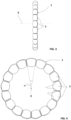
FIG. 1 is an axonometric view of a first embodiment of annularmodular assembly 1 for filling the tyre of a cycle or motorcycle, wherein themodules 2 are in contact with each other; -
FIGS. 2 and3 are respectively front and lateral views of the annularmodular assembly 1 ofFIG. 1 ; -
FIG. 4 is a front view of another embodiment of an annularmodular assembly 1 for filling the tyre of a cycle or motorcycle, in which themodules 2 are separated from each other; -
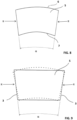
FIGS. 5, 6 and 7 are respectively axonometric, front and lateral views of an embodiment of amodule 2; -
FIG. 8 is a front view of another embodiment of amodule 2; -
FIG. 9 is a front view of a further embodiment of amodule 2. - With reference to the attached figures, herein described is an annular
modular assembly 1 suitable for filling a tyre of a cycle or motorcycle, for example a mountain bike or a motocross motorcycle. - In a per se known manner, the tyre is mounted on the rim of a wheel of the cycle or motorcycle. Given that it is per se known, the tyre and the rim of the cycle or motorcycle were not shown in the attached drawings.
- By way of non-limiting example, the present invention may be particularly useful for cycling or motorcycling sports activity on rough terrain, for example mountain bike or motocross. On the other hand, it is clear that the present invention may be used in any situation wherein the cyclist or motorcyclist deems it appropriate to use it, without particular limitation.
- However, by its nature, the use of the present invention is limited to cycling, motorcycling or applications in which the stresses on the tyre are substantially similar. Therefore, it is clear that the present invention cannot be used for filling the tyre of a motor vehicle, a tractor or similar vehicle.
- The annular
modular assembly 1 consists of a plurality ofmodules 2 to be removably inserted into the tyre arranged side by side, so as to cover the entire circumferential extension of the tyre. - More particularly, once inserted into the tyre, the
modules 2 may be in contact with each other, for example as illustrated inFIGS. 1 - 3 , or spaced from each other, for example as illustrated inFIG. 4 , for example a distance of 1 mm - 10 mm. It is clear thatFIG. 4 shows an embodiment of the annularmodular assembly 1 which includes a number ofmodules 2 smaller than that ofFIGS. 1-3 . - However, even when they are spaced apart, when using the cycle or motorcycle the
modules 2 will tend to deform under load, due to the stresses to which they are subjected and the resulting thermal expansion, therefore they can in any case come into mutual contact. - Basically, each
module 2 of the annularmodular assembly 1 will define a portion or section of the latter and it may consist of a body made of foamed elastomeric material, preferably with closed cells, for example butyl rubber or EVA. As known, the foamed elastomeric material is highly compressible and elastic, so as to absorb impacts and deformations in an optimum manner. - By way of example, the foamed elastomeric material may have a density comprised between 0.05 gr/cm3 and 0.8 gr/cm3, measured according to the ASTM D297 standard, or a density comprised between 0.05 gr/cm3 and 1 gr/cm3, for example measured according to the ISO 845 standard.
- A possible composition of the material may be:
- basic elastomer: 30% - 70% by weight;
- black fillers: 10% - 30% by weight;
- white fillers: 0% -10% by weight;
- plasticisers: 2% - 20% by weight;
- foaming agents (chemical and/or physical): 3% - 10% by weight.
- All the aforementioned components may be of the type per se known to the person skilled in the art.
- For example, the basic elastomer may be IIR, BIIR or CIIR. The black fillers may optionally consist of carbon black, whereas the white ones, which may be reinforcing and non-reinforcing, may for example be silica and/or kaolin.
- The
modules 2 can be made by vulcanisation, for example with sulphur or peroxide. - The configuration of the
modules 2 may be such that once inserted into the tyre, the entire internal volume of the latter may be filled, without any empty spaces. - Although the present description describes
modules 2 entirely consisting of a body made of foamed elastomeric material, it is clear that themodules 2 may optionally include a central main body as described above and one or more surface covering layers, for example, one or more anti-friction layers or acting as a barrier against the leakage of gases, without departing from the scope of protection of the attached claims. - Advantageously, each
module 2 may have the circular-section shape, for example as illustrated inFIG. 8 , or ellipse-shaped, for example as illustrated inFIGS. 1 - 7 , withtapered end areas 3 preferably flat or slightly dome-shaped designed, as mentioned above, to remain facing or in contact with the correspondingtapered end areas 3 of the adjacent modules once inserted into the tyre to form the annularmodular assembly 1. - Advantageously, the
end areas 3 may have a circular or elliptical cross-section, so as to optimally adhere to the corresponding end areas of theadjacent modules 2. - Each
module 2 may also have alateral surface 5 interposed between thetapered end areas 3 designed for use to come into contact with the tyre and with the tyre and with the rim of the wheel on which the latter is mounted. - More particularly, the
lateral surface 5 may have afirst portion 6 designed to come into contact with the inside of the tyre and asecond portion 7 designed to come into contact with the rim of the wheel. - On the other hand, for example as illustrated in
FIG. 9 , themodules 2 may also have an elongated cylindrical or ellipsoidal shape. As a matter fact, thanks to the elasticity of the foamed elastomeric material, they may take the shape of a circular or ellipsoidal section, that is they may take a curved shape, once inserted into the tyre and elastically forced thereinto, as schematically illustrated inFIG. 9 where the solid line indicates the shape that themodule 2 takes in the absence of stresses and the dashed line indicates the shape that themodule 2 takes when elastically forced into the tyre. - In any case, the
tapered end areas 3 may define respective planes π incident with respect to each other and angularly spaced by an angle α comprised between 8° and 30°, preferably comprised between 10° and 25°, and even more preferably comprised between 12° and 22°. - Thanks to this characteristic, the number of
modules 2 for covering the entire circumferential extension of the annularmodular assembly 1 may be sufficiently high to allow the user to customise the elastic response of the tyre whenever required. - The number of
modules 2 sufficient to cover the entire circumferential extension of the tyre will vary depending on the size of the latter, without prejudice to the angular extension indicated above. Furthermore, the number and size of the modules may vary depending on whether the modules themselves are intended to fill the front or rear wheel. - Furthermore, the compressibility of the foamed elastomeric material allows to insert - into the tyre - a number of
modules 2 greater than those required to cover the entire circumferential extension of the annularmodular assembly 1. - This will allow to stiffen the tyre, given that the
modules 2 inside the tyre are preloaded. - For this reason, a kit for filling a given tyre may include a packaging and a number of
modules 2 greater than those required to cover the entire circumferential extension of the same tyre. - This allows a user to customise the elastic response of the tyre to the maximum, given that the user may insert a number of modules greater than those required to cover the entire circumferential extension of the tyre.
- By way of non-limiting example for example if 24 circular-section shaped modules (
FIG. 8 ), 15° each, are required to cover the entire circumferential extension of a front tyre of a motorcycle, the kit may contain 25, 26 or more modules. - By way of example, each module can have a weight of 25 g - 40 g, a length of the external cord measuring 70 mm - 90 mm and a diameter measuring 60 mm - 80 mm.
- On the other hand, for example if 20 modules, 18° each are required to cover the entire circumferential extension of a rear tyre of a motorcycle, the kit may contain 21, 22 or more modules.
- Still by way of example, each module may have a weight of 60 g - 90 g, an external cord length measuring 80 mm - 100 mm and a diameter measuring 80 mm - 120 mm.
- The compressibility of the material may be different for the
modules 2 designed for the rear or front wheel. - Given the small size, the
modules 2 are very simple to manufacture with respect to the toroidal filling elements of the state of the art, and very simple to fit and remove for the user or operator. - Furthermore, still with respect to the known toroidal filling elements, the
modules 2 have a longer life over time and better performance because they tend to overheat less during use thanks to the greater overall surface extension considering the same volume. - Furthermore, with respect to known toroidal filling elements, the present invention is particularly cost-effective in the event of damage or breakage, because in this case it is possible to change the one or more damaged or broken modules and it is not necessary to change the whole filling element.
- Suitably, before inserting into the tyre, a lubricating gel, for example of the silicone type, may be applied to the
modules 2. Besides facilitating the operation of insertion into the tyre, this gel increases the heat dissipation of themodules 2 and it acts as a barrier against the leakage of the gases therefrom, increasing the duration thereof over time. - In the light of the above, it is clear that the invention attains the pre-set objectives.
- The present invention may include various parts and/or similar or identical elements. Unless otherwise specified, similar or identical parts and/or elements will be indicated by a single reference numeral, it being understood that the technical characteristics described are common to all similar or identical parts and/or elements.
- The invention is susceptible of numerous modifications and changes within the scope of the attached claims.
Claims (13)
- An annular modular assembly (1) suitable to fill a tyre of a cycle or motorcycle consisting of a plurality of identical modules (2), the tyre including a carcass and being designed to be mounted on the rim of a wheel, each module (2) being removably insertable in the tyre and comprising or consisting of a body made of compressible foamed elastomeric material defining a portion of said annular modular assembly (1), the body having tapered end areas (3) defining respective planes (π) designed - in use - to remain in contact with one of the tapered end areas (3) of the adjacent modules and a lateral surface (5) interposed between said tapered end areas (3) designed - in use - to come into contact with the tyre and with the rim on which the tyre is mounted,characterized in that the number of said modules (2) is greater than those required to cover the entire circumferential extension of said annular modular assembly (1), so that the modules (2) are mutually pre-compressed within the carcass of the tyre; and furthercharacterized in that:- said body has a curved shape with a circular or ellipsoidal section, said planes (π) being mutually incident and angularly spaced with respect to each other by an angle (α) comprised between 8° and 30°;
or alternatively- said body has an elongated cylindrical or ellipsoidal shape designed to conform to the shape of the tyre when the module (2) is inserted therein to take the shape ofa circular or ellipsoidal section with said planes (π) mutually incident and angularly spaced with respect to each other by an angle (α) comprised between 8° and 30°. - Annular modular assembly according to claim 1, wherein said angle (α) is comprised between 10° and 25°, and preferably comprised between 12° and 22°.
- Annular modular assembly according to any one of the preceding claims, wherein said tapered end areas (3) are substantially flat.
- Annular modular assembly according to any one of the preceding claims, wherein said foamed elastomeric material is butyl rubber or EVA.
- Annular modular assembly according to any one of the preceding claims, wherein said foamed elastomeric material is of the closed cell type.
- Annular modular assembly according to any one of the preceding claims, wherein said foamed elastomeric material has a density comprised between 0.05 g/cm3 to 0.8 g/cm3 measured according to the ASTM D297 standard.
- Annular modular assembly according to any one of claims 1 to 5, wherein said foamed elastomeric material has a density comprised between 0.05 g/cm3 and 1 g/cm3 measured according to the ISO 845 standard.
- Annular modular assembly according to any one of the preceding claims, wherein said lateral surface (5) has a first portion (6) designed to come into contact with the inside of the tyre and a second portion (7) designed to come into contact with the rim.
- The use of the annular modular assembly (1) according to one or more of the preceding claims for filling a tyre of a cycle or motorcycle, wherein a number of modules (2) is inserted into the tyre greater than those required to cover the entire circumferential extension of said annular modular assembly (1), so that the modules (2) are mutually pre-compressed within the carcass of the tyre.
- Use according to claim 9, wherein lubrication means, preferably silicone gel, are applied to each module (2) before insertion into the tyre.
- A kit for filling a tyre of a cycle or motorcycle comprising the annular modular assembly (1) according to one or more of claims 1 to 8 and a packaging for the packaging thereof, wherein the number of said modules is greater than those required to cover the entire circumferential extension of said annular modular assembly (1), so that the modules (2) are mutually pre-compressed within the carcass of the tyre.
- The kit according to claim 11, further comprising lubricating means which can be applied to the modules.
- A wheel comprising a rim and a tyre of a cycle or motorcycle, wherein the tyre is filled with an annular modular assembly (1) according to any one of claims 1 to 8, the tapered end areas (3) of each module (2) being in contact with the corresponding tapered end areas (3) of the adjacent modules, the lateral surface (5) of each module (2) having a first portion (6) in contact with the inside of the tire and a second portion (7) in contact with the rim of the wheel, wherein the number of said modules (2) is greater than those required to cover the entire circumferential extension of said annular modular assembly (1), so that the modules (2) are mutually pre-compressed within the carcass of the tyre.
Applications Claiming Priority (2)
| Application Number | Priority Date | Filing Date | Title |
|---|---|---|---|
| IT202000032705 | 2020-12-29 | ||
| PCT/IB2021/062419 WO2022144795A1 (en) | 2020-12-29 | 2021-12-29 | Module in expanded elastomeric material for filling a tire of a cycle or motorcycle |
Publications (3)
| Publication Number | Publication Date |
|---|---|
| EP4271578A1 EP4271578A1 (en) | 2023-11-08 |
| EP4271578C0 EP4271578C0 (en) | 2025-01-29 |
| EP4271578B1 true EP4271578B1 (en) | 2025-01-29 |
Family
ID=75252636
Family Applications (1)
| Application Number | Title | Priority Date | Filing Date |
|---|---|---|---|
| EP21845111.0A Active EP4271578B1 (en) | 2020-12-29 | 2021-12-29 | Module in expanded elastomeric material for filling a tire of a cycle or motorcycle |
Country Status (3)
| Country | Link |
|---|---|
| US (1) | US20240316995A1 (en) |
| EP (1) | EP4271578B1 (en) |
| WO (1) | WO2022144795A1 (en) |
Citations (1)
| Publication number | Priority date | Publication date | Assignee | Title |
|---|---|---|---|---|
| WO2007139772A2 (en) * | 2006-05-22 | 2007-12-06 | Gearguard Sports Llc | Rolling baggage wheels and method for manufacturing the same |
Family Cites Families (5)
| Publication number | Priority date | Publication date | Assignee | Title |
|---|---|---|---|---|
| US4197893A (en) * | 1977-12-15 | 1980-04-15 | Coin Bernard J O | Reuseable puncture shield for tire casings |
| US5073444A (en) * | 1990-01-11 | 1991-12-17 | Shanelec Dennis A | Molded polypropylene foam tire cores |
| BRPI0406446C1 (en) * | 2005-10-31 | 2006-10-24 | Kazuhiro Tanabe | tire puncture resistant system |
| JP6658874B2 (en) * | 2017-01-05 | 2020-03-04 | 横浜ゴム株式会社 | Tire / wheel assembly |
| US20190054778A1 (en) * | 2017-08-15 | 2019-02-21 | Jeffrey P. Douglas | Combination flat-proof tire and low friction tire insert |
-
2021
- 2021-12-29 EP EP21845111.0A patent/EP4271578B1/en active Active
- 2021-12-29 WO PCT/IB2021/062419 patent/WO2022144795A1/en not_active Ceased
- 2021-12-29 US US18/269,976 patent/US20240316995A1/en active Pending
Patent Citations (1)
| Publication number | Priority date | Publication date | Assignee | Title |
|---|---|---|---|---|
| WO2007139772A2 (en) * | 2006-05-22 | 2007-12-06 | Gearguard Sports Llc | Rolling baggage wheels and method for manufacturing the same |
Also Published As
| Publication number | Publication date |
|---|---|
| EP4271578C0 (en) | 2025-01-29 |
| US20240316995A1 (en) | 2024-09-26 |
| WO2022144795A1 (en) | 2022-07-07 |
| EP4271578A1 (en) | 2023-11-08 |
Similar Documents
| Publication | Publication Date | Title |
|---|---|---|
| EP3623174B1 (en) | Non-pneumatic tire | |
| US20080223497A1 (en) | Tire Inner Tube | |
| US6135568A (en) | Roller skate wheel assembly | |
| US11312178B2 (en) | Non-pneumatic tire | |
| US20190351702A1 (en) | Non-pneumatic tire and two-wheeled vehicle | |
| EP4271578B1 (en) | Module in expanded elastomeric material for filling a tire of a cycle or motorcycle | |
| US20190283495A1 (en) | Non-pneumatic tire | |
| JP3335110B2 (en) | Tire and rim assembly for motorcycle and shock absorber used therefor | |
| US6401773B1 (en) | Puncture-compensating tire | |
| CN107690394B (en) | Tire insert assembly | |
| GB2571980A (en) | Tyre assembly with protective insert | |
| JPH11245637A (en) | Tire and rim assembly for motorcycles | |
| CN210062574U (en) | Baby carriage tire and baby carriage | |
| CN210283793U (en) | Novel rubber explosion-proof air bag inner tube | |
| US20040177908A1 (en) | Tire assembly | |
| KR20180063446A (en) | No-punk tire structure that improves the buffer power of bicycles | |
| KR20220066776A (en) | Non-pneumatic tire | |
| US6309025B1 (en) | Roller skate wheel assembly | |
| US11780523B2 (en) | Multi-material support pad | |
| WO2017013427A1 (en) | A tyre wall protector | |
| US20100116399A1 (en) | Pneumatic Tire and Rim | |
| CN109203861A (en) | Wheel tyre | |
| JP4131565B2 (en) | Tubeless rubber tire device for bicycle and bicycle equipped with the same | |
| JP2001121907A (en) | Tire-rim assembly and cushion material | |
| EP3489034A1 (en) | Tubular casing for bicycle wheel, and bicycle wheel |
Legal Events
| Date | Code | Title | Description |
|---|---|---|---|
| STAA | Information on the status of an ep patent application or granted ep patent |
Free format text: STATUS: UNKNOWN |
|
| STAA | Information on the status of an ep patent application or granted ep patent |
Free format text: STATUS: THE INTERNATIONAL PUBLICATION HAS BEEN MADE |
|
| PUAI | Public reference made under article 153(3) epc to a published international application that has entered the european phase |
Free format text: ORIGINAL CODE: 0009012 |
|
| STAA | Information on the status of an ep patent application or granted ep patent |
Free format text: STATUS: REQUEST FOR EXAMINATION WAS MADE |
|
| 17P | Request for examination filed |
Effective date: 20230731 |
|
| AK | Designated contracting states |
Kind code of ref document: A1 Designated state(s): AL AT BE BG CH CY CZ DE DK EE ES FI FR GB GR HR HU IE IS IT LI LT LU LV MC MK MT NL NO PL PT RO RS SE SI SK SM TR |
|
| DAV | Request for validation of the european patent (deleted) | ||
| DAX | Request for extension of the european patent (deleted) | ||
| GRAP | Despatch of communication of intention to grant a patent |
Free format text: ORIGINAL CODE: EPIDOSNIGR1 |
|
| STAA | Information on the status of an ep patent application or granted ep patent |
Free format text: STATUS: GRANT OF PATENT IS INTENDED |
|
| INTG | Intention to grant announced |
Effective date: 20240703 |
|
| GRAS | Grant fee paid |
Free format text: ORIGINAL CODE: EPIDOSNIGR3 |
|
| GRAL | Information related to payment of fee for publishing/printing deleted |
Free format text: ORIGINAL CODE: EPIDOSDIGR3 |
|
| GRAS | Grant fee paid |
Free format text: ORIGINAL CODE: EPIDOSNIGR3 |
|
| GRAA | (expected) grant |
Free format text: ORIGINAL CODE: 0009210 |
|
| STAA | Information on the status of an ep patent application or granted ep patent |
Free format text: STATUS: THE PATENT HAS BEEN GRANTED |
|
| AK | Designated contracting states |
Kind code of ref document: B1 Designated state(s): AL AT BE BG CH CY CZ DE DK EE ES FI FR GB GR HR HU IE IS IT LI LT LU LV MC MK MT NL NO PL PT RO RS SE SI SK SM TR |
|
| REG | Reference to a national code |
Ref country code: GB Ref legal event code: FG4D |
|
| REG | Reference to a national code |
Ref country code: CH Ref legal event code: EP |
|
| REG | Reference to a national code |
Ref country code: DE Ref legal event code: R096 Ref document number: 602021025635 Country of ref document: DE |
|
| REG | Reference to a national code |
Ref country code: IE Ref legal event code: FG4D |
|
| U01 | Request for unitary effect filed |
Effective date: 20250214 |
|
| U07 | Unitary effect registered |
Designated state(s): AT BE BG DE DK EE FI FR IT LT LU LV MT NL PT RO SE SI Effective date: 20250221 |
|
| PG25 | Lapsed in a contracting state [announced via postgrant information from national office to epo] |
Ref country code: RS Free format text: LAPSE BECAUSE OF FAILURE TO SUBMIT A TRANSLATION OF THE DESCRIPTION OR TO PAY THE FEE WITHIN THE PRESCRIBED TIME-LIMIT Effective date: 20250429 |
|
| PG25 | Lapsed in a contracting state [announced via postgrant information from national office to epo] |
Ref country code: PL Free format text: LAPSE BECAUSE OF FAILURE TO SUBMIT A TRANSLATION OF THE DESCRIPTION OR TO PAY THE FEE WITHIN THE PRESCRIBED TIME-LIMIT Effective date: 20250129 |
|
| PG25 | Lapsed in a contracting state [announced via postgrant information from national office to epo] |
Ref country code: ES Free format text: LAPSE BECAUSE OF FAILURE TO SUBMIT A TRANSLATION OF THE DESCRIPTION OR TO PAY THE FEE WITHIN THE PRESCRIBED TIME-LIMIT Effective date: 20250129 |
|
| PG25 | Lapsed in a contracting state [announced via postgrant information from national office to epo] |
Ref country code: NO Free format text: LAPSE BECAUSE OF FAILURE TO SUBMIT A TRANSLATION OF THE DESCRIPTION OR TO PAY THE FEE WITHIN THE PRESCRIBED TIME-LIMIT Effective date: 20250429 Ref country code: IS Free format text: LAPSE BECAUSE OF FAILURE TO SUBMIT A TRANSLATION OF THE DESCRIPTION OR TO PAY THE FEE WITHIN THE PRESCRIBED TIME-LIMIT Effective date: 20250529 |
|
| PG25 | Lapsed in a contracting state [announced via postgrant information from national office to epo] |
Ref country code: HR Free format text: LAPSE BECAUSE OF FAILURE TO SUBMIT A TRANSLATION OF THE DESCRIPTION OR TO PAY THE FEE WITHIN THE PRESCRIBED TIME-LIMIT Effective date: 20250129 |
|
| PG25 | Lapsed in a contracting state [announced via postgrant information from national office to epo] |
Ref country code: GR Free format text: LAPSE BECAUSE OF FAILURE TO SUBMIT A TRANSLATION OF THE DESCRIPTION OR TO PAY THE FEE WITHIN THE PRESCRIBED TIME-LIMIT Effective date: 20250430 |
|
| PG25 | Lapsed in a contracting state [announced via postgrant information from national office to epo] |
Ref country code: SM Free format text: LAPSE BECAUSE OF FAILURE TO SUBMIT A TRANSLATION OF THE DESCRIPTION OR TO PAY THE FEE WITHIN THE PRESCRIBED TIME-LIMIT Effective date: 20250129 |
|
| PG25 | Lapsed in a contracting state [announced via postgrant information from national office to epo] |
Ref country code: CZ Free format text: LAPSE BECAUSE OF FAILURE TO SUBMIT A TRANSLATION OF THE DESCRIPTION OR TO PAY THE FEE WITHIN THE PRESCRIBED TIME-LIMIT Effective date: 20250129 |
|
| PG25 | Lapsed in a contracting state [announced via postgrant information from national office to epo] |
Ref country code: SK Free format text: LAPSE BECAUSE OF FAILURE TO SUBMIT A TRANSLATION OF THE DESCRIPTION OR TO PAY THE FEE WITHIN THE PRESCRIBED TIME-LIMIT Effective date: 20250129 |
|
| PLBE | No opposition filed within time limit |
Free format text: ORIGINAL CODE: 0009261 |
|
| STAA | Information on the status of an ep patent application or granted ep patent |
Free format text: STATUS: NO OPPOSITION FILED WITHIN TIME LIMIT |
|
| REG | Reference to a national code |
Ref country code: CH Ref legal event code: L10 Free format text: ST27 STATUS EVENT CODE: U-0-0-L10-L00 (AS PROVIDED BY THE NATIONAL OFFICE) Effective date: 20251210 |
|
| REG | Reference to a national code |
Ref country code: CH Ref legal event code: U11 Free format text: ST27 STATUS EVENT CODE: U-0-0-U10-U11 (AS PROVIDED BY THE NATIONAL OFFICE) Effective date: 20260101 |
|
| 26N | No opposition filed |
Effective date: 20251030 |
|
| PGFP | Annual fee paid to national office [announced via postgrant information from national office to epo] |
Ref country code: GB Payment date: 20251218 Year of fee payment: 5 |
|
| PGFP | Annual fee paid to national office [announced via postgrant information from national office to epo] |
Ref country code: IE Payment date: 20251219 Year of fee payment: 5 |
|
| U20 | Renewal fee for the european patent with unitary effect paid |
Year of fee payment: 5 Effective date: 20251216 |
|
| PGFP | Annual fee paid to national office [announced via postgrant information from national office to epo] |
Ref country code: CH Payment date: 20260101 Year of fee payment: 5 |