EP4271126A1 - At command for mo sms access domain preference selection - Google Patents
At command for mo sms access domain preference selection Download PDFInfo
- Publication number
- EP4271126A1 EP4271126A1 EP23167775.8A EP23167775A EP4271126A1 EP 4271126 A1 EP4271126 A1 EP 4271126A1 EP 23167775 A EP23167775 A EP 23167775A EP 4271126 A1 EP4271126 A1 EP 4271126A1
- Authority
- EP
- European Patent Office
- Prior art keywords
- access
- command
- sms
- access domain
- referred
- Prior art date
- Legal status (The legal status is an assumption and is not a legal conclusion. Google has not performed a legal analysis and makes no representation as to the accuracy of the status listed.)
- Withdrawn
Links
Images

Classifications
-
- H—ELECTRICITY
- H04—ELECTRIC COMMUNICATION TECHNIQUE
- H04W—WIRELESS COMMUNICATION NETWORKS
- H04W60/00—Affiliation to network, e.g. registration; Terminating affiliation with the network, e.g. de-registration
- H04W60/04—Affiliation to network, e.g. registration; Terminating affiliation with the network, e.g. de-registration using triggered events
-
- H—ELECTRICITY
- H04—ELECTRIC COMMUNICATION TECHNIQUE
- H04W—WIRELESS COMMUNICATION NETWORKS
- H04W92/00—Interfaces specially adapted for wireless communication networks
- H04W92/04—Interfaces between hierarchically different network devices
- H04W92/08—Interfaces between hierarchically different network devices between user and terminal device
-
- H—ELECTRICITY
- H04—ELECTRIC COMMUNICATION TECHNIQUE
- H04W—WIRELESS COMMUNICATION NETWORKS
- H04W4/00—Services specially adapted for wireless communication networks; Facilities therefor
- H04W4/12—Messaging; Mailboxes; Announcements
- H04W4/14—Short messaging services, e.g. short message services [SMS] or unstructured supplementary service data [USSD]
-
- H—ELECTRICITY
- H04—ELECTRIC COMMUNICATION TECHNIQUE
- H04M—TELEPHONIC COMMUNICATION
- H04M11/00—Telephonic communication systems specially adapted for combination with other electrical systems
- H04M11/06—Simultaneous speech and data transmission, e.g. telegraphic transmission over the same conductors
- H04M11/066—Telephone sets adapted for data transmision
-
- H—ELECTRICITY
- H04—ELECTRIC COMMUNICATION TECHNIQUE
- H04W—WIRELESS COMMUNICATION NETWORKS
- H04W88/00—Devices specially adapted for wireless communication networks, e.g. terminals, base stations or access point devices
- H04W88/02—Terminal devices
- H04W88/06—Terminal devices adapted for operation in multiple networks or having at least two operational modes, e.g. multi-mode terminals
Definitions
- the disclosed embodiments relate generally to wireless communication in mobile communication networks, and, more particularly, to AT command for mobile originating short message service (MO SMS) access domain preference selection.
- MO SMS mobile originating short message service
- LTE Long-Term Evolution
- 4G Long-Term Evolution
- UMTS Universal Mobile Telecommunication System
- E-UTRAN an evolved universal terrestrial radio access network
- eNodeBs or eNBs evolved Node-Bs
- UEs user equipments
- 3GPP 3 rd generation partner project
- the Next Generation Mobile Network (NGMN) board has decided to focus the future NGMN activities on defining the end-to-end requirements for 5G new radio (NR) systems (5GS).
- NGMN Next Generation Mobile Network
- a Protocol Data Unit (PDU) session defines the association between the UE and the data network that provides a PDU connectivity service.
- the PDU session establishment is a parallel procedure of PDN connection (bearer) procedure in 4G/LTE.
- Each PDU session is identified by a PDU session ID (PSI), and may include multiple QoS flows and QoS rules.
- PSI PDU session ID
- Each PDU session can be established via a 5G Access Network (e.g.,3GPP radio access network (RAN), or via a non-3GPP RAN).
- the network/UE can initiate different PDU session procedures, e.g., PDU session establishment, PDU session modification, and PDU session release.
- UEs Due to new radio conditions, load balancing, or due to specific service, different handover procedures and intersystem change are used to handover a UE from a source 5G access network to a target 5G access or to a target 4G access network. Operators are seeking ways to balance data traffic between mobile networks and non-3GPP access in a way that is transparent to users and reduces mobile network congestion.
- UEs can be simultaneously connected to both 3GPP access (in e.g., EPS or 5GS) and non-3GPP access (using 3GPP NAS signalling), thus the 5GS is able to take advantage of these multiple accesses to improves the user experience, optimizes the traffic distribution across various accesses.
- 3GPP access in e.g., EPS or 5GS
- non-3GPP access using 3GPP NAS signalling
- the 5G Session Management (5GSM) functionality can be provided towards the applications and the terminal devices using an Application Programming Interface (API).
- API Application Programming Interface
- the EPS/IP bearer in LTE/4G networks and corresponding PDN connection management and resource allocation functionality may be provided through an AT command API in accordance with 3GPP Technical Specification (TS) 27.007 "AT command set for User Equipment (UE)".
- AT commands are used for controlling Mobile Termination (MT) functions and GSM/UMTS network services from a Terminal Equipment (TE) through Terminal Adaptor (TA).
- a method of access domain preference selection for mobile originating short message service (MO SMS) using Attention (AT) command in EPS/5GS is provided.
- a new AT command is defined to specify the preferred access domain for UE to use for MO SMS over NAS messages when the UE supports non-3GPP access (e.g., in 5GS) and 3GPP access (e.g., in EPS/5GS).
- the read AT command (+CADSMS?) returns the currently selected access preference
- a UE performs a registration procedure in a non-5G system (non-5GS) mobile communication network.
- the UE requests to use mobile originating short message service (MO SMS) over non-access-stratum (NAS) signaling, wherein the UE supports both a 3GPP access domain and a non-3GPP access domain.
- the UE provides an Attention (AT) command between a modem and an Application Processor (AP) of the UE, wherein the AT command is for setting a preferred access domain or for reading a current access domain for MO SMS over NAS.
- the UE transmits an SMS message using MO SMS over the preferred access domain or over the current access domain.
- FIG. 1 illustrates an AT command for mobile originating short message service (MO SMS) access domain preference selection in a 4G evolved packet system or a 5G system (EPS/5GS) 100 in accordance with one novel aspect.
- 5GS/EPS network 100 comprises a user equipment UE 101, a 3GPP radio access network RAN 102, a non-3GPP radio access network RAN 103, an Access and Mobility Management Function (AMF) 110 or a mobility management entity (MME) 114, a Session Management Function (SMF) 111, or a serving gateway /packet data network gateway (SGW/PGW) 115, a Non-3GPP Interworking Function (N3IWF) 112, a User Plane Function (UPF) 113, and a 5G core (5GC) or Evolved Packet core (EPC) data network 120.
- AMF Access and Mobility Management Function
- MME mobility management entity
- SGW/PGW Serving gateway /packet data network gateway
- N3IWF Non
- the AMF/MME communicates with the base station, and is responsible for access and mobility management of wireless access devices in mobile communication network 100.
- the SMF/SGW/PGW is primarily responsible for interacting with the decoupled data plane, creating, updating, and removing Protocol Data Unit (PDU) sessions and managing session context with the UPF.
- the N3IWF functionality interfaces to 5GC/EPC core network control plane functions, responsible for routing messages outside 5G/4G RAN.
- RAN provides radio access for UE 101 via a radio access technology (RAT).
- RAT radio access technology
- AMF and SMF communicate with RAN and 5GC/EPC for access and mobility management and PDU session management of wireless access devices in 5G network 100.
- 3GPP Radio access network RAN 102 may include base stations (gNBs or eNBs) providing radio access for UE 101 via various 3GPP RATs including 5G, 4G, and 3G/2G.
- Non-3GPP radio access network RAN 103 may include access points (APs) providing radio access for UE 101 via non-3GPP RAT including WiFi.
- APs access points
- UE 101 can obtain access to data network 120 through 3GPP access 102, AMF 110, SMF 111, and UPF 113 in 5GS, or through 3GPP access 102, MME 114, and SGW/PGW 115 in EPS.
- UE 101 can obtain access to data network 120 through non-3GPP access 103, N3IWF 112, AMF 110, SMF 111, and UPF 113.
- UE 101 may be equipped with a single radio frequency (RF) module or transceiver or multiple RF modules or transceivers for services via different RATs/CNs.
- UE 101 may be a smart phone, a wearable device, an Internet of Things (IoT) device, a tablet, etc.
- IoT Internet of Things
- a Protocol Data Unit (PDU) session defines the association between the UE and the data network that provides a PDU connectivity service.
- the PDU session establishment is a parallel procedure of PDN connection (bearer) procedure in 4G/LTE.
- Each PDU session is identified by a PDU session ID (PSI), and may include multiple QoS flows and QoS rules.
- PSI PDU session ID
- Each PDU session can be established via a 5G Access Network (e.g.,3GPP radio access network (RAN), or via a non-3GPP RAN).
- the network/UE can initiate different PDU session procedures, e.g., PDU session establishment, PDU session modification, and PDU session release.
- UEs Due to new radio conditions, load balancing, or due to specific service, different handover procedures and intersystem change are used to handover a UE from a source 5G access network to a target 5G access or to a target 4G access network. Operators are seeking ways to balance data traffic between mobile networks and non-3GPP access in a way that is transparent to users and reduces mobile network congestion.
- UEs can be simultaneously connected to both 3GPP access (in e.g., EPS or 5GS) and non-3GPP access (using 3GPP NAS signalling), thus the 5GS is able to take advantage of these multiple accesses to improve the user experience, optimizes the traffic distribution across various accesses.
- 3GPP access in e.g., EPS or 5GS
- non-3GPP access using 3GPP NAS signalling
- the 5G Session Management (5GSM) functionality can be provided towards the applications and the terminal devices using an Application Programming Interface (API).
- API Application Programming Interface
- the EPS/IP bearer in LTE/4G networks and corresponding PDN connection management and resource allocation functionality may be provided through an AT command API in accordance with 3GPP Technical Specification (TS) 27.007 "AT command set for User Equipment (UE)".
- AT commands are used for controlling Mobile Termination (MT) functions and GSM/UMTS network services from a Terminal Equipment (TE) through Terminal Adaptor (TA).
- UE 101 includes a TE 102, a TA 103, and an MT 104.
- TE 102 can use AT commands to control MT 104 to perform management functionality.
- TE 102 can use AT commands for querying the current access domain preference and for setting the access domain preference.
- the TA 103, MT 104 and TE 102 may be implemented in the form of separate or integrated entities as needed.
- a new AT command is defined to configure UE 101 to select a preferred access domain for SMS when the UE is supporting a 3GPP 2G/3G/4G/5G access and non-3GPP access.
- the new set AT command +CADSMS is defined to set the preferred access domain for MO SMS over NAS messages when the UE supports a non-3GPP access in 5GS and a 3GPP access in EPS or in another 3GPP system.
- the upper layer of UE 101 can query for the current MO SMS access domain preference via an AT command.
- AT commands are used for controlling Mobile Termination (MT) functions and network services from a Terminal Equipment (TE) through Terminal Adaptor (TA).
- the AT commands can be a notification of an unsolicited result code, or a configuration command.
- MT104 receives an AT command from TE 102 for querying the MO SMS access domain preference.
- MT 104 sends an MT status back to TA 103, which converts to a response to be sent to TE 102, indicating the current MO SMS access domain preference.
- FIG. 2 illustrates a simplified block diagram of an architecture comprising a Terminal Equipment (TE) and a Mobile Termination (MT) in accordance with one novel aspect.
- TE 200 includes a processor 201, memory 202, and protocol stacks 210 including Application (APP) layer, Transport (TCP/UDP) layer, Network (IP) layer, Data Link layer, and Physical (PHY) layer.
- TE 200 further includes system control modules and circuits 220 including a user interface, a configuration and control module, a PDU session/PDN connection handler, a registration handler, an SMS handler, and a telephony module.
- Processor 201 processes different applications and invokes different system control modules to perform various features of TE 200.
- Memory 202 stores program instructions and data 203 to control the operations of TE 200.
- the system control modules and circuits can be implemented and configured to carry out functional tasks of TE 200.
- TE 200 may also be referred to as an Application Processor (AP).
- AP Application Processor
- TE 200 is also equipped with telephony framework circuits (e.g., a dialer, a call manager etc.) to support voice call functionality.
- TE 200 also supports the AT commands as defined by 3GPP TS 27.007 for controlling MT functions and GPRS packet domain services based on contexts for each PDP/PDN/PDU session identified by CID.
- MT 250 has an antenna 256, which transmits and receives radio signals.
- An RF transceiver module 254 coupled with the antenna, receives RF signals from antenna 256, converts them to baseband signals and sends them to processor 251 via baseband module 255.
- RF transceiver 254 also converts received baseband signals from processor 251 via baseband module 255, converts them to RF signals, and sends out to antenna 256.
- Processor 251 processes the received baseband signals and invokes different functional modules to perform features in MT 250.
- Memory 252 stores program instructions and data 253 to control the operations of MT 250.
- MT 250 also comprises a set of protocol stacks 260 and control circuits including various system modules 270 to carry out functional tasks of MT 250.
- Protocol stacks 260 includes Non-Access-Stratum (NAS) layer, Radio Resource Control (RRC) layer, Packet Data Convergence Protocol/Radio Link Control (PDCP/RLC) layer, Media Access Control (MAC) layer, and Physical (PHY) layer.
- System modules 270 includes a configuration and control module, a PDU/PDN session/connection handler, a registration handler, and an SMS handler.
- MT 250 may also be referred to as a modem.
- MT 250 further includes a Terminal Adaptor (TA 280) that receives and transmits AT commands and converts the AT commands to be processed by processor 251 for controlling MT functions.
- TA 280 receives an AT read command from TE 200 for MT 250 to provide the current MO SMS access domain preference.
- TE 200 sends an AT set command to MT 250 for configuring a preferred MO SMS access domain preference.
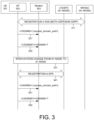
- FIG. 3 illustrates a message flow of using an AT command for MO SMS in 5GS and in EPS after intersystem change in one novel aspect.
- UE 301 comprises an AP 302 and a modem 303.
- UE 301 performs registration in NR/5G network.
- UE 301 may be both registered in a 3GPP access (e.g., in EPS/5GS) and in a non-3GPP access (e.g., in 5GS).
- UE 301 may switch between LTE and 5GS in the 3GPP domain depending on the radio signal quality and/or other conditions, and UE 301 is allowed to stay in both 3GPP (in e.g., EPS or 5GS) and non-3GPP access.
- UE 301 may want to use MO SMS over a preferred access domain (e.g., 3GPP or non-3GPP).
- the UE shall include the 5GS update type IE in the REGISTRATION REQUEST message with the SMS requested bit set to "SMS over NAS supported”. If the 5GS update type IE was included in the REGISTRATION REQUEST message with the SMS requested bit set to "SMS over NAS supported", and SMSF selection is successful, then the AMF shall send the REGISTRATION ACCEPT message after the SMSF has confirmed that the activation of the SMS service was successful.
- the AMF When sending the REGISTRATION ACCEPT message, the AMF shall set the SMS allowed bit of the 5GS registration result IE to "SMS over NAS allowed" in the REGISTRATION ACCEPT message, if the UE has set the SMS requested bit of the 5GS update type IE to "SMS over NAS supported" in the REGISTRATION REQUEST message and the network allows the use of SMS over NAS for the UE.
- the session management functionality may be provided through an AT command API in accordance with 3GPP TS 27.007 "AT command set for User Equipment (UE)".
- AT commands are used for controlling Mobile Termination (MT) functions and GSM/UMTS network services from a Terminal Equipment (TE) through Terminal Adaptor (TA).
- MT Mobile Termination
- TE Terminal Equipment
- TA Terminal Adaptor
- UE 301 performs intersystem change from 5GS (N1 mode) to EPS (S1 mode).
- UE 301 performs registration in LTE/EPS network.
- UE 301 may want to use MO SMS over NAS message, which is sent over a specific access domain (3GPP or non-3GPP).
- 3GPP or non-3GPP the existing AT command +C5GSMS only works in 5GS, and it does not work in EPS or in other non-5GS network.
- a new AT command +CADSMS is defined to specify the preferred access domain for UE 301 to use for MO SMS over NAS messages when the UE supports non-3GPP access (e.g., in 5GS) and 3GPP access (e.g., in EPS or 5GS).
- the AT commands can be a notification of an unsolicited result code, or a configuration command.
- AP 302 sends an AT command to MD 303 indicating the MO SMS access domain preference, and then MD 303 receives an AT command from AP 302 for querying the current MO SMS access domain preference.
- Modem 303 sends an MT status back to a TA, which converts to a response to be sent to AP 302, indicating the current MO SMS access domain preference.
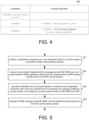
- Figure 4 illustrate one embodiment of an AT command +CADSMS for access domain preference selection in EPS/5GS in accordance with one novel aspect.
- the AT command +CADSMS is a set or read or test command.
- the set command is used to specify the preferred access domain for the MT to use for MO SMS over NAS messages when the UE supports a non-3GPP access in 5GS and a 3GPP access (e.g., in EPS or 5GS).
- the execution of the read command returns the currently selected access domain preference.
- the execution of the test command returns the supported access domain preference as a compound value.
- FIG. 5 illustrates a flow chart of a method of access domain preference selection for MO SMS in EPS/5GS in accordance with one novel aspect.
- a UE performs a registration procedure in a non-5G system (non-5GS) mobile communication network.
- the UE requests to use mobile originating short message service (MO SMS) over non-access-stratum (NAS) signaling, wherein the UE supports both a 3GPP access domain and a non-3GPP access domain.
- the UE provides an Attention (AT) command between a modem and an Application Processor (AP) of the UE, wherein the AT command is for setting a preferred access domain or for reading a current access domain for MO SMS over NAS.
- the UE transmits an SMS message using MO SMS over the preferred access domain or over the current access domain.
- AT Attention
- AP Application Processor
Landscapes
- Engineering & Computer Science (AREA)
- Computer Networks & Wireless Communication (AREA)
- Signal Processing (AREA)
- Mobile Radio Communication Systems (AREA)
Abstract
Description
- This application claims priority under 35 U.S.C. §119 from
U.S. Provisional Application Number 63/334,724, entitled "At command for MO SMS access domain preference selection," filed on April 26, 2022 - The disclosed embodiments relate generally to wireless communication in mobile communication networks, and, more particularly, to AT command for mobile originating short message service (MO SMS) access domain preference selection.
- The wireless communications network has grown exponentially over the years. A Long-Term Evolution (LTE) system offers high peak data rates, low latency, improved system capacity, and low operating cost resulting from simplified network architecture. LTE systems, also known as the 4G system, also provide seamless integration to older wireless network, such as GSM, CDMA and Universal Mobile Telecommunication System (UMTS). In LTE systems, an evolved universal terrestrial radio access network (E-UTRAN) includes a plurality of evolved Node-Bs (eNodeBs or eNBs) communicating with a plurality of mobile stations, referred to as user equipments (UEs). The 3rd generation partner project (3GPP) network normally includes a hybrid of 2G/3G/4G systems. The Next Generation Mobile Network (NGMN) board has decided to focus the future NGMN activities on defining the end-to-end requirements for 5G new radio (NR) systems (5GS).
- In 5G/NR, a Protocol Data Unit (PDU) session defines the association between the UE and the data network that provides a PDU connectivity service. The PDU session establishment is a parallel procedure of PDN connection (bearer) procedure in 4G/LTE. Each PDU session is identified by a PDU session ID (PSI), and may include multiple QoS flows and QoS rules. Each PDU session can be established via a 5G Access Network (e.g.,3GPP radio access network (RAN), or via a non-3GPP RAN). The network/UE can initiate different PDU session procedures, e.g., PDU session establishment, PDU session modification, and PDU session release.
- Due to new radio conditions, load balancing, or due to specific service, different handover procedures and intersystem change are used to handover a UE from a source 5G access network to a target 5G access or to a target 4G access network. Operators are seeking ways to balance data traffic between mobile networks and non-3GPP access in a way that is transparent to users and reduces mobile network congestion. In 5GS, UEs can be simultaneously connected to both 3GPP access (in e.g., EPS or 5GS) and non-3GPP access (using 3GPP NAS signalling), thus the 5GS is able to take advantage of these multiple accesses to improves the user experience, optimizes the traffic distribution across various accesses.
- The 5G Session Management (5GSM) functionality can be provided towards the applications and the terminal devices using an Application Programming Interface (API). Traditionally, for external applications, the EPS/IP bearer in LTE/4G networks and corresponding PDN connection management and resource allocation functionality may be provided through an AT command API in accordance with 3GPP Technical Specification (TS) 27.007 "AT command set for User Equipment (UE)". AT commands are used for controlling Mobile Termination (MT) functions and GSM/UMTS network services from a Terminal Equipment (TE) through Terminal Adaptor (TA).
- Currently there is no AT command to support the access domain preference selection for mobile originating short message service (MO SMS) over NAS when UE is both registered in a 3GPP access (in a 3GPP system) and in a non-3GPP access in 5G. The existing AT Command +C5GSMS only supports the access domain preference selection when UE is both registered in 5GS 3GPP and non-3GPP accesses. When UE is both registered in a 3GPP access (e.g., in EPS) and non-3GPP access, the MO SMS preference cannot be configured via AT command.
- A solution is sought.
- A method of access domain preference selection for mobile originating short message service (MO SMS) using Attention (AT) command in EPS/5GS is provided. A new AT command is defined to specify the preferred access domain for UE to use for MO SMS over NAS messages when the UE supports non-3GPP access (e.g., in 5GS) and 3GPP access (e.g., in EPS/5GS). The set AT command (+CADSMS=[<access domain preference>]) is provided for the purpose of specify the access preference that the UE will use to send MO SMS over NAS message, the read AT command (+CADSMS?) returns the currently selected access preference, and a test AT command (+CADSMS=?) returns the supported access preference as a compound value. A method and a user equipment according to the invention are defined in the independent claims. The dependent claims define preferred embodiments thereof.
- In one embodiment, a UE performs a registration procedure in a non-5G system (non-5GS) mobile communication network. The UE requests to use mobile originating short message service (MO SMS) over non-access-stratum (NAS) signaling, wherein the UE supports both a 3GPP access domain and a non-3GPP access domain. The UE provides an Attention (AT) command between a modem and an Application Processor (AP) of the UE, wherein the AT command is for setting a preferred access domain or for reading a current access domain for MO SMS over NAS. The UE transmits an SMS message using MO SMS over the preferred access domain or over the current access domain.
- Other embodiments and advantages are described in the detailed description below. This summary does not purport to define the invention. The invention is defined by the claims.
- The accompanying drawings, where like numerals indicate like components, illustrate embodiments of the invention.
-
Figure 1 illustrates an AT command for mobile originating short message service (MO SMS) access domain preference selection in EPS/5GS in accordance with one novel aspect. -
Figure 2 illustrates a simplified block diagram of an architecture comprising a Terminal Equipment (TE) and a Mobile Termination (MT) in accordance with one novel aspect. -
Figure 3 illustrates a message flow of using an AT command for MO SMS in 5GS and in EPS after intersystem change in one novel aspect. -
Figure 4 illustrate one embodiment of an AT command +CADSMS for access domain preference selection in EPS/5GS in accordance with one novel aspect. -
Figure 5 illustrates a flow chart of a method of access domain preference selection for MO SMS in EPS/5GS in accordance with one novel aspect. - Reference will now be made in detail to some embodiments of the invention, examples of which are illustrated in the accompanying drawings.
-
Figure 1 illustrates an AT command for mobile originating short message service (MO SMS) access domain preference selection in a 4G evolved packet system or a 5G system (EPS/5GS) 100 in accordance with one novel aspect. 5GS/EPS network 100 comprises a user equipment UE 101, a 3GPP radio access network RAN 102, a non-3GPP radio access network RAN 103, an Access and Mobility Management Function (AMF) 110 or a mobility management entity (MME) 114, a Session Management Function (SMF) 111, or a serving gateway /packet data network gateway (SGW/PGW) 115, a Non-3GPP Interworking Function (N3IWF) 112, a User Plane Function (UPF) 113, and a 5G core (5GC) or Evolved Packet core (EPC)data network 120. The AMF/MME communicates with the base station, and is responsible for access and mobility management of wireless access devices inmobile communication network 100. The SMF/SGW/PGW is primarily responsible for interacting with the decoupled data plane, creating, updating, and removing Protocol Data Unit (PDU) sessions and managing session context with the UPF. The N3IWF functionality interfaces to 5GC/EPC core network control plane functions, responsible for routing messages outside 5G/4G RAN. - In Access Stratum (AS) layer, RAN provides radio access for UE 101 via a radio access technology (RAT). In Non-Access Stratum (NAS) layer, AMF and SMF communicate with RAN and 5GC/EPC for access and mobility management and PDU session management of wireless access devices in
5G network 100. 3GPP Radio access network RAN 102 may include base stations (gNBs or eNBs) providing radio access for UE 101 via various 3GPP RATs including 5G, 4G, and 3G/2G. Non-3GPP radio access network RAN 103 may include access points (APs) providing radio access for UE 101 via non-3GPP RAT including WiFi. UE 101 can obtain access todata network 120 through3GPP access 102, AMF 110,SMF 111, and UPF 113 in 5GS, or through3GPP access 102,MME 114, and SGW/PGW 115 in EPS. UE 101 can obtain access todata network 120 throughnon-3GPP access 103, N3IWF 112, AMF 110, SMF 111, and UPF 113. UE 101 may be equipped with a single radio frequency (RF) module or transceiver or multiple RF modules or transceivers for services via different RATs/CNs. UE 101 may be a smart phone, a wearable device, an Internet of Things (IoT) device, a tablet, etc. - In 5G/NR, a Protocol Data Unit (PDU) session defines the association between the UE and the data network that provides a PDU connectivity service. The PDU session establishment is a parallel procedure of PDN connection (bearer) procedure in 4G/LTE. Each PDU session is identified by a PDU session ID (PSI), and may include multiple QoS flows and QoS rules. Each PDU session can be established via a 5G Access Network (e.g.,3GPP radio access network (RAN), or via a non-3GPP RAN). The network/UE can initiate different PDU session procedures, e.g., PDU session establishment, PDU session modification, and PDU session release.
- Due to new radio conditions, load balancing, or due to specific service, different handover procedures and intersystem change are used to handover a UE from a source 5G access network to a target 5G access or to a target 4G access network. Operators are seeking ways to balance data traffic between mobile networks and non-3GPP access in a way that is transparent to users and reduces mobile network congestion. In 5GS, UEs can be simultaneously connected to both 3GPP access (in e.g., EPS or 5GS) and non-3GPP access (using 3GPP NAS signalling), thus the 5GS is able to take advantage of these multiple accesses to improve the user experience, optimizes the traffic distribution across various accesses.
- The 5G Session Management (5GSM) functionality can be provided towards the applications and the terminal devices using an Application Programming Interface (API). Traditionally, for external applications, the EPS/IP bearer in LTE/4G networks and corresponding PDN connection management and resource allocation functionality may be provided through an AT command API in accordance with 3GPP Technical Specification (TS) 27.007 "AT command set for User Equipment (UE)". AT commands are used for controlling Mobile Termination (MT) functions and GSM/UMTS network services from a Terminal Equipment (TE) through Terminal Adaptor (TA).
- Currently there is no AT command to support the MO SMS over NAS access domain preference selection when UE is both registered in a 3GPP access (in a 3GPP system) and in a non-3GPP access in 5G. The existing AT Command +C5GSMS only supports the access domain preference selection when UE is both registered in 5GS 3GPP and non-3GPP accesses. When UE is both registered in a 3GPP access (e.g., in EPS) and non-3GPP access, the MO SMS preference cannot be configured via AT command. In accordance with one novel aspect, a method of access domain preference selection for MO SMS in EPS/5GS is provided.
- In the example of
Figure 1 ,UE 101 includes aTE 102, aTA 103, and anMT 104.TE 102 can use AT commands to controlMT 104 to perform management functionality. For example,TE 102 can use AT commands for querying the current access domain preference and for setting the access domain preference. TheTA 103,MT 104 andTE 102 may be implemented in the form of separate or integrated entities as needed. As depicted inFigure 1 , a new AT command is defined to configureUE 101 to select a preferred access domain for SMS when the UE is supporting a 3GPP 2G/3G/4G/5G access and non-3GPP access. For example, the new set AT command +CADSMS is defined to set the preferred access domain for MO SMS over NAS messages when the UE supports a non-3GPP access in 5GS and a 3GPP access in EPS or in another 3GPP system. - Further, the upper layer of
UE 101 can query for the current MO SMS access domain preference via an AT command. AT commands are used for controlling Mobile Termination (MT) functions and network services from a Terminal Equipment (TE) through Terminal Adaptor (TA). The AT commands can be a notification of an unsolicited result code, or a configuration command. InFigure 1 , for example, MT104 receives an AT command fromTE 102 for querying the MO SMS access domain preference. In response,MT 104 sends an MT status back toTA 103, which converts to a response to be sent toTE 102, indicating the current MO SMS access domain preference. -
Figure 2 illustrates a simplified block diagram of an architecture comprising a Terminal Equipment (TE) and a Mobile Termination (MT) in accordance with one novel aspect.TE 200 includes aprocessor 201,memory 202, andprotocol stacks 210 including Application (APP) layer, Transport (TCP/UDP) layer, Network (IP) layer, Data Link layer, and Physical (PHY) layer.TE 200 further includes system control modules andcircuits 220 including a user interface, a configuration and control module, a PDU session/PDN connection handler, a registration handler, an SMS handler, and a telephony module.Processor 201 processes different applications and invokes different system control modules to perform various features ofTE 200.Memory 202 stores program instructions anddata 203 to control the operations ofTE 200. The system control modules and circuits can be implemented and configured to carry out functional tasks ofTE 200. Note thatTE 200 may also be referred to as an Application Processor (AP). Typically,TE 200 is also equipped with telephony framework circuits (e.g., a dialer, a call manager etc.) to support voice call functionality. In addition,TE 200 also supports the AT commands as defined by 3GPP TS 27.007 for controlling MT functions and GPRS packet domain services based on contexts for each PDP/PDN/PDU session identified by CID. -
MT 250 has anantenna 256, which transmits and receives radio signals. AnRF transceiver module 254, coupled with the antenna, receives RF signals fromantenna 256, converts them to baseband signals and sends them toprocessor 251 viabaseband module 255.RF transceiver 254 also converts received baseband signals fromprocessor 251 viabaseband module 255, converts them to RF signals, and sends out toantenna 256.Processor 251 processes the received baseband signals and invokes different functional modules to perform features inMT 250.Memory 252 stores program instructions anddata 253 to control the operations ofMT 250.MT 250 also comprises a set ofprotocol stacks 260 and control circuits includingvarious system modules 270 to carry out functional tasks ofMT 250. Protocol stacks 260 includes Non-Access-Stratum (NAS) layer, Radio Resource Control (RRC) layer, Packet Data Convergence Protocol/Radio Link Control (PDCP/RLC) layer, Media Access Control (MAC) layer, and Physical (PHY) layer.System modules 270 includes a configuration and control module, a PDU/PDN session/connection handler, a registration handler, and an SMS handler. Note thatMT 250 may also be referred to as a modem. In the example ofFigure 2 ,MT 250 further includes a Terminal Adaptor (TA 280) that receives and transmits AT commands and converts the AT commands to be processed byprocessor 251 for controlling MT functions. In one example,TA 280 receives an AT read command fromTE 200 forMT 250 to provide the current MO SMS access domain preference. In another example,TE 200 sends an AT set command toMT 250 for configuring a preferred MO SMS access domain preference. -
Figure 3 illustrates a message flow of using an AT command for MO SMS in 5GS and in EPS after intersystem change in one novel aspect.UE 301 comprises anAP 302 and amodem 303. Instep 311,UE 301 performs registration in NR/5G network.UE 301 may be both registered in a 3GPP access (e.g., in EPS/5GS) and in a non-3GPP access (e.g., in 5GS).UE 301 may switch between LTE and 5GS in the 3GPP domain depending on the radio signal quality and/or other conditions, andUE 301 is allowed to stay in both 3GPP (in e.g., EPS or 5GS) and non-3GPP access. In addition,UE 301 may want to use MO SMS over a preferred access domain (e.g., 3GPP or non-3GPP). - For example, if
UE 301 requests the use of SMS over NAS, the UE shall include the 5GS update type IE in the REGISTRATION REQUEST message with the SMS requested bit set to "SMS over NAS supported". If the 5GS update type IE was included in the REGISTRATION REQUEST message with the SMS requested bit set to "SMS over NAS supported", and SMSF selection is successful, then the AMF shall send the REGISTRATION ACCEPT message after the SMSF has confirmed that the activation of the SMS service was successful. When sending the REGISTRATION ACCEPT message, the AMF shall set the SMS allowed bit of the 5GS registration result IE to "SMS over NAS allowed" in the REGISTRATION ACCEPT message, if the UE has set the SMS requested bit of the 5GS update type IE to "SMS over NAS supported" in the REGISTRATION REQUEST message and the network allows the use of SMS over NAS for the UE. - For external applications, the session management functionality may be provided through an AT command API in accordance with 3GPP TS 27.007 "AT command set for User Equipment (UE)". AT commands are used for controlling Mobile Termination (MT) functions and GSM/UMTS network services from a Terminal Equipment (TE) through Terminal Adaptor (TA). In 5GS, for example, if
UE 301 wants to use MO SMS over a preferred access domain (e.g., 3GPP or non-3GPP), then a set AT command (+C5GSMS=[<access domain preference>]) is provided for the purpose of specify the access preference that the UE will use to send MO SMS over NAS message (321), a read AT command (+C5GSMS?) returns the currently selected access preference (322), and a test AT command (+C5GSMS=?) returns the supported access preference as a compound value (322). - In
step 331,UE 301 performs intersystem change from 5GS (N1 mode) to EPS (S1 mode). Instep 341,UE 301 performs registration in LTE/EPS network.UE 301 may want to use MO SMS over NAS message, which is sent over a specific access domain (3GPP or non-3GPP). Note that the existing AT command +C5GSMS only works in 5GS, and it does not work in EPS or in other non-5GS network. In accordance with one novel aspect, a new AT command +CADSMS is defined to specify the preferred access domain forUE 301 to use for MO SMS over NAS messages when the UE supports non-3GPP access (e.g., in 5GS) and 3GPP access (e.g., in EPS or 5GS). The set AT command (+CADSMS=[<access domain preference>]) is provided for the purpose of specify the access preference that the UE will use to send MO SMS over NAS message (351), the read AT command (+CADSMS?) returns the currently selected access preference (352), and a test AT command (+CADSMS=?) returns the supported access preference as a compound value (352). - Note that the AT commands can be a notification of an unsolicited result code, or a configuration command. In
Figure 3 , for example,AP 302 sends an AT command toMD 303 indicating the MO SMS access domain preference, and thenMD 303 receives an AT command fromAP 302 for querying the current MO SMS access domain preference. In response,Modem 303 sends an MT status back to a TA, which converts to a response to be sent toAP 302, indicating the current MO SMS access domain preference. -
Figure 4 illustrate one embodiment of an AT command +CADSMS for access domain preference selection in EPS/5GS in accordance with one novel aspect. As illustrated in table 400, the AT command +CADSMS is a set or read or test command. The set command is used to specify the preferred access domain for the MT to use for MO SMS over NAS messages when the UE supports a non-3GPP access in 5GS and a 3GPP access (e.g., in EPS or 5GS). The execution of the read command returns the currently selected access domain preference. The execution of the test command returns the supported access domain preference as a compound value. The defined value of [<access_domain_pref>]: integer type, indicates the access preference to use to send MO SMS over NAS message, where a value of "0" indicates 3GPP access preferred, non-3GPP access is used if 3GPP access is not available; and a value of "1" indicates non-3GPP access preferred, 3GPP access is used if non-3GPP access is not available. -
Figure 5 illustrates a flow chart of a method of access domain preference selection for MO SMS in EPS/5GS in accordance with one novel aspect. Instep 501, a UE performs a registration procedure in a non-5G system (non-5GS) mobile communication network. Instep 502, the UE requests to use mobile originating short message service (MO SMS) over non-access-stratum (NAS) signaling, wherein the UE supports both a 3GPP access domain and a non-3GPP access domain. Instep 503, the UE provides an Attention (AT) command between a modem and an Application Processor (AP) of the UE, wherein the AT command is for setting a preferred access domain or for reading a current access domain for MO SMS over NAS. Instep 504, the UE transmits an SMS message using MO SMS over the preferred access domain or over the current access domain. - Although the present invention has been described in connection with certain specific embodiments for instructional purposes, the present invention is not limited thereto. Accordingly, various modifications, adaptations, and combinations of various features of the described embodiments can be practiced without departing from the scope of the invention as set forth in the claims.
Claims (11)
- A method, comprising:performing a registration procedure by a user equipment, in the following also referred to as UE, in a non-5G system, in the following also referred to as non-5GS, mobile communication network (501);requesting to use mobile originating short message service, in the following also referred to as MO SMS, over non-access-stratum (NAS) signaling, wherein the UE supports both a 3GPP access domain and a non-3GPP access domain (502);providing an Attention, in the following also referred to as AT, command between a modem and an Application Processor, in the following also referred to as AP, of the UE, wherein the AT command is for setting a preferred access domain or for reading a current access domain for MO SMS over NAS (503); andtransmitting an SMS message using MO SMS over the preferred access domain or over the current access domain (504).
- A User Equipment, in the following also referred to as UE, comprising:a registration handling circuit that performs a registration procedure in a non-5G system, in the following also referred to as non-5GS, mobile communication network;a configuration circuit that requests to use mobile originating short message service, in the following also referred to as MO SMS over non-access-stratum, in the following also referred to as NAS, signaling, wherein the UE supports both a 3GPP access domain and a non-3GPP access domain;a modem and an Application Processor, in the following also referred to as AP, of the UE that provides an Attention, in the following also referred to as AT, command, wherein the AT command is for setting a preferred access domain or for reading a current access domain for MO SMS over NAS; anda transmitter that transmits an SMS message using MO SMS over the preferred or current access domain.
- The method of Claim 1 or the UE of Claim 2, wherein the UE sends a REGISTRATION REQUEST message to the network with an SMS requested bit set to "SMS over NAS supported".
- The method of Claim 1 or 3, or the UE of Claim 2 or 3, wherein the AT command is a set command +CADSMS=[<access_domain_pref>] for configuring the preferred access domain for MO SMS.
- The method or the UE of Claim 4, wherein <access_domain_pref> is an integer indicating whether 3GPP access or non-3GPP access is the preferred access domain.
- The method of Claim 1 or 3, or the UE of Claim 2 or 3, wherein the AT command is a read command +CADSMS? for querying the current access domain preference for MO SMS.
- The method of Claim 1 or 3, or the UE of Claim 2 or 3, wherein the AT command is a test command +CADSMS=? for reporting supported MO SMS access domain preferences as a compound value.
- The method of any one of Claims 1 and 3 to 7, or the UE of any one of Claims 2 to 7, wherein the UE performs an intersystem change from a 5G system, in the following also referred to as 5GS, to the non-5GS.
- The method or the UE of Claim 8, wherein the UE is both registered in a 3GPP access and in a non-3GPP access in the SGS.
- The method or the UE of Claim 8 or 9, wherein the UE uses an AT command +CADSMS to set or read an access domain for MO SMS over NAS in the SGS.
- The method or the UE of any one of Claims 8 to 10, wherein the non-5GS is an evolved packet system, in the following also referred to as EPS.
Applications Claiming Priority (2)
| Application Number | Priority Date | Filing Date | Title |
|---|---|---|---|
| US202263334724P | 2022-04-26 | 2022-04-26 | |
| US18/108,281 US12593296B2 (en) | 2022-04-26 | 2023-02-10 | At command for MO SMS access domain preference selection |
Publications (1)
| Publication Number | Publication Date |
|---|---|
| EP4271126A1 true EP4271126A1 (en) | 2023-11-01 |
Family
ID=86052193
Family Applications (1)
| Application Number | Title | Priority Date | Filing Date |
|---|---|---|---|
| EP23167775.8A Withdrawn EP4271126A1 (en) | 2022-04-26 | 2023-04-13 | At command for mo sms access domain preference selection |
Country Status (3)
| Country | Link |
|---|---|
| US (1) | US12593296B2 (en) |
| EP (1) | EP4271126A1 (en) |
| TW (1) | TWI846428B (en) |
Family Cites Families (16)
| Publication number | Priority date | Publication date | Assignee | Title |
|---|---|---|---|---|
| WO2009018164A2 (en) * | 2007-07-27 | 2009-02-05 | Interdigital Patent Holdings, Inc. | Method and apparatus for handling mobility between non-3gpp to 3gpp networks |
| US9462086B2 (en) * | 2013-03-28 | 2016-10-04 | Telecommunication Systems, Inc. | Short message service (SMS) over SGs |
| US9749821B1 (en) * | 2014-12-19 | 2017-08-29 | Amazon Technologies, Inc. | LTE network interactions for non-duplication of SMS |
| US9787596B2 (en) * | 2015-01-26 | 2017-10-10 | Mediatek Inc. | Maximum transmission unit size reporting and discovery by a user equipment |
| CN107431918B (en) * | 2015-03-25 | 2020-09-04 | Lg 电子株式会社 | Method for monitoring UE accessibility in wireless communication system and device thereof |
| EP3348093A4 (en) * | 2015-09-10 | 2019-01-23 | LG Electronics Inc. | Method and apparatus for performing access barring check for high priority access in wireless communication system |
| KR102117098B1 (en) * | 2017-01-12 | 2020-06-02 | 주식회사 케이티 | Methods for controlling handover for inter-Network and Apparatuses thereof |
| US10624020B2 (en) * | 2017-02-06 | 2020-04-14 | Qualcomm Incorporated | Non-access stratum transport for non-mobility management messages |
| EP3756414B1 (en) * | 2018-03-23 | 2023-02-22 | Samsung Electronics Co., Ltd. | Methods, terminal and network entity for handling a service request procedure in a communication network |
| WO2019187483A1 (en) * | 2018-03-28 | 2019-10-03 | Nec Corporation | Handling of temporary non access stratum parameters during registration procedure for the ue supporting registration to the network using 3gpp network access and non-3gpp network access |
| US10911979B2 (en) * | 2018-04-09 | 2021-02-02 | Mediatek Inc. | AT commands for 5G session management |
| US20190313311A1 (en) * | 2018-04-09 | 2019-10-10 | Mediatek Inc. | Apparatuses, service networks, and methods for handling plmn-specific parameters for an inter-plmn handover |
| CN110392369B (en) * | 2018-04-16 | 2021-10-12 | 大唐移动通信设备有限公司 | Method, equipment and device for updating short message service capability |
| CN112385200B (en) * | 2018-05-21 | 2024-08-16 | 玛利基创新有限公司 | Support for emergency number descriptions |
| US11683847B2 (en) * | 2018-09-27 | 2023-06-20 | Lenovo (Singapore) Pte. Ltd. | Accessing a 5G network via a non-3GPP access network |
| EP3886530B1 (en) * | 2020-03-27 | 2025-08-27 | Samsung Electronics Co., Ltd. | System and methods to avail services of a network |
-
2023
- 2023-02-10 US US18/108,281 patent/US12593296B2/en active Active
- 2023-04-13 EP EP23167775.8A patent/EP4271126A1/en not_active Withdrawn
- 2023-04-17 TW TW112114182A patent/TWI846428B/en active
Non-Patent Citations (4)
| Title |
|---|
| "3rd Generation Partnership Project; Technical Specification Group Core Network and Terminals; AT command set for User Equipment (UE) (Release 16)", vol. CT WG1, no. V16.11.0, 25 March 2022 (2022-03-25), pages 1 - 410, XP052144850, Retrieved from the Internet <URL:https://ftp.3gpp.org/Specs/archive/27_series/27.007/27007-gb0.zip 27007-gb0.doc> [retrieved on 20220325] * |
| 3GPP TS 27.007 |
| QUALCOMM EUROPE INC (SPAIN): "Addition of 5GC TC - Initial registration / SMS over NAS service", vol. RAN WG5, no. Spokane, United States; 20181112 - 20181116, 12 November 2018 (2018-11-12), XP051561018, Retrieved from the Internet <URL:http://www.3gpp.org/ftp/Meetings%5F3GPP%5FSYNC/RAN5/Docs/R5%2D187260%2Ezip> [retrieved on 20181112] * |
| QUALCOMM INCORPORATED ET AL: "New AT command to set access selection preferences for MO SMS over NAS in 5GS", vol. CT WG1, no. Sophia-Antipolis (France); 20180709 - 20180713, 3 September 2018 (2018-09-03), XP051570834, Retrieved from the Internet <URL:http://www.3gpp.org/ftp/tsg%5Fct/TSG%5FCT/TSGC%5F81%5FGold%5FCoast/Docs/CP%2D182144%2Ezip> [retrieved on 20180903] * |
Also Published As
| Publication number | Publication date |
|---|---|
| US20230345404A1 (en) | 2023-10-26 |
| US12593296B2 (en) | 2026-03-31 |
| TW202344074A (en) | 2023-11-01 |
| TWI846428B (en) | 2024-06-21 |
Similar Documents
| Publication | Publication Date | Title |
|---|---|---|
| US20210250409A1 (en) | Handling of Multi-Access PDU Session Upgrade | |
| CN111034253B (en) | Wireless communication methods and user equipment in 5G networks | |
| US11553549B2 (en) | Multi-access PDU session state synchronization between UE and network | |
| US11503667B2 (en) | Enhancement for multi-access PDU session release | |
| TW202044905A (en) | Method for enhancing ps domain data-off mechanism and user equipment | |
| EP4207931A1 (en) | Method and device for adding 3gpp pdn leg to an ma pdu session with non-3gpp leg | |
| US12238790B2 (en) | MA PDU session and user plane resource establishment for data transmission | |
| US20220104075A1 (en) | Pdu session establishment accept handling for ma pdu sessions | |
| US12082065B2 (en) | Session continuity for 3GPP and non-3GPP interworking | |
| TWI843376B (en) | Methods and user equipment for wireless communications | |
| US12382526B2 (en) | Handling of collision between PDU session establishment and modification procedure | |
| US20220353937A1 (en) | Multi-access pdu session establishment abnormal handling | |
| EP4366384A1 (en) | Rsd parameters handling for pdn legged ma pdu session | |
| US12568549B2 (en) | MA PDU reactivation requested handling | |
| US12593296B2 (en) | At command for MO SMS access domain preference selection | |
| EP4135403B1 (en) | Enhanced 3gpp session establishment procedure | |
| CN116962999A (en) | Access domain preference selection method and user equipment | |
| EP4207935A1 (en) | Ma pdu deactivation procedure for ma pdu with pdn leg |
Legal Events
| Date | Code | Title | Description |
|---|---|---|---|
| PUAI | Public reference made under article 153(3) epc to a published international application that has entered the european phase |
Free format text: ORIGINAL CODE: 0009012 |
|
| STAA | Information on the status of an ep patent application or granted ep patent |
Free format text: STATUS: THE APPLICATION HAS BEEN PUBLISHED |
|
| AK | Designated contracting states |
Kind code of ref document: A1 Designated state(s): AL AT BE BG CH CY CZ DE DK EE ES FI FR GB GR HR HU IE IS IT LI LT LU LV MC ME MK MT NL NO PL PT RO RS SE SI SK SM TR |
|
| STAA | Information on the status of an ep patent application or granted ep patent |
Free format text: STATUS: REQUEST FOR EXAMINATION WAS MADE |
|
| 17P | Request for examination filed |
Effective date: 20240426 |
|
| RBV | Designated contracting states (corrected) |
Designated state(s): AL AT BE BG CH CY CZ DE DK EE ES FI FR GB GR HR HU IE IS IT LI LT LU LV MC ME MK MT NL NO PL PT RO RS SE SI SK SM TR |
|
| STAA | Information on the status of an ep patent application or granted ep patent |
Free format text: STATUS: EXAMINATION IS IN PROGRESS |
|
| 17Q | First examination report despatched |
Effective date: 20251117 |
|
| STAA | Information on the status of an ep patent application or granted ep patent |
Free format text: STATUS: THE APPLICATION HAS BEEN WITHDRAWN |
|
| 18W | Application withdrawn |
Effective date: 20260312 |