EP4270578A1 - Method for producing a coated ceramic particle based on a llzo material - Google Patents
Method for producing a coated ceramic particle based on a llzo material Download PDFInfo
- Publication number
- EP4270578A1 EP4270578A1 EP22305640.9A EP22305640A EP4270578A1 EP 4270578 A1 EP4270578 A1 EP 4270578A1 EP 22305640 A EP22305640 A EP 22305640A EP 4270578 A1 EP4270578 A1 EP 4270578A1
- Authority
- EP
- European Patent Office
- Prior art keywords
- ceramic particle
- groups
- coating
- anyone
- llzo
- Prior art date
- Legal status (The legal status is an assumption and is not a legal conclusion. Google has not performed a legal analysis and makes no representation as to the accuracy of the status listed.)
- Pending
Links
- 239000002245 particle Substances 0.000 title claims abstract description 94
- 239000000919 ceramic Substances 0.000 title claims abstract description 67
- 239000000463 material Substances 0.000 title claims abstract description 20
- 238000004519 manufacturing process Methods 0.000 title claims abstract description 9
- 239000011248 coating agent Substances 0.000 claims abstract description 61
- 238000000576 coating method Methods 0.000 claims abstract description 37
- 238000000034 method Methods 0.000 claims abstract description 28
- 239000007788 liquid Substances 0.000 claims abstract description 17
- 239000000203 mixture Substances 0.000 claims abstract description 17
- 238000001035 drying Methods 0.000 claims abstract description 8
- 229910052782 aluminium Inorganic materials 0.000 claims abstract description 6
- 229910052698 phosphorus Inorganic materials 0.000 claims abstract description 6
- 229910052715 tantalum Inorganic materials 0.000 claims abstract description 6
- 229910052796 boron Inorganic materials 0.000 claims abstract description 5
- 229910052733 gallium Inorganic materials 0.000 claims abstract description 5
- 229910052758 niobium Inorganic materials 0.000 claims abstract description 5
- 229910052710 silicon Inorganic materials 0.000 claims abstract description 5
- 229910052721 tungsten Inorganic materials 0.000 claims abstract description 5
- WEVYAHXRMPXWCK-UHFFFAOYSA-N Acetonitrile Chemical compound CC#N WEVYAHXRMPXWCK-UHFFFAOYSA-N 0.000 claims description 24
- 125000000962 organic group Chemical group 0.000 claims description 14
- 125000002467 phosphate group Chemical group [H]OP(=O)(O[H])O[*] 0.000 claims description 12
- 239000002904 solvent Substances 0.000 claims description 12
- 238000003825 pressing Methods 0.000 claims description 11
- 239000007784 solid electrolyte Substances 0.000 claims description 10
- BPQQTUXANYXVAA-UHFFFAOYSA-N Orthosilicate Chemical group [O-][Si]([O-])([O-])[O-] BPQQTUXANYXVAA-UHFFFAOYSA-N 0.000 claims description 9
- 239000012298 atmosphere Substances 0.000 claims description 9
- KGBXLFKZBHKPEV-UHFFFAOYSA-N boric acid Chemical group OB(O)O KGBXLFKZBHKPEV-UHFFFAOYSA-N 0.000 claims description 9
- QJMMCGKXBZVAEI-UHFFFAOYSA-N tris(trimethylsilyl) phosphate Chemical compound C[Si](C)(C)OP(=O)(O[Si](C)(C)C)O[Si](C)(C)C QJMMCGKXBZVAEI-UHFFFAOYSA-N 0.000 claims description 7
- CSCPPACGZOOCGX-UHFFFAOYSA-N Acetone Chemical compound CC(C)=O CSCPPACGZOOCGX-UHFFFAOYSA-N 0.000 claims description 6
- YMWUJEATGCHHMB-UHFFFAOYSA-N Dichloromethane Chemical compound ClCCl YMWUJEATGCHHMB-UHFFFAOYSA-N 0.000 claims description 6
- XEKOWRVHYACXOJ-UHFFFAOYSA-N Ethyl acetate Chemical compound CCOC(C)=O XEKOWRVHYACXOJ-UHFFFAOYSA-N 0.000 claims description 6
- ZMXDDKWLCZADIW-UHFFFAOYSA-N N,N-Dimethylformamide Chemical compound CN(C)C=O ZMXDDKWLCZADIW-UHFFFAOYSA-N 0.000 claims description 6
- 239000000243 solution Substances 0.000 claims description 6
- 239000012300 argon atmosphere Substances 0.000 claims description 5
- IAZDPXIOMUYVGZ-UHFFFAOYSA-N Dimethylsulphoxide Chemical compound CS(C)=O IAZDPXIOMUYVGZ-UHFFFAOYSA-N 0.000 claims description 4
- WYURNTSHIVDZCO-UHFFFAOYSA-N Tetrahydrofuran Chemical compound C1CCOC1 WYURNTSHIVDZCO-UHFFFAOYSA-N 0.000 claims description 4
- 229910010603 Li6.25La3Zr2Al0.25O12 Inorganic materials 0.000 claims description 3
- 229910010605 Li6.4La3Zr2 Inorganic materials 0.000 claims description 2
- 239000003880 polar aprotic solvent Substances 0.000 claims description 2
- RUOJZAUFBMNUDX-UHFFFAOYSA-N propylene carbonate Chemical compound CC1COC(=O)O1 RUOJZAUFBMNUDX-UHFFFAOYSA-N 0.000 claims description 2
- YLQBMQCUIZJEEH-UHFFFAOYSA-N tetrahydrofuran Natural products C=1C=COC=1 YLQBMQCUIZJEEH-UHFFFAOYSA-N 0.000 claims description 2
- 238000005406 washing Methods 0.000 description 11
- 239000000047 product Substances 0.000 description 10
- 239000000843 powder Substances 0.000 description 9
- WHXSMMKQMYFTQS-UHFFFAOYSA-N Lithium Chemical compound [Li] WHXSMMKQMYFTQS-UHFFFAOYSA-N 0.000 description 8
- 239000010410 layer Substances 0.000 description 8
- 230000000052 comparative effect Effects 0.000 description 7
- 229910052744 lithium Inorganic materials 0.000 description 7
- XKRFYHLGVUSROY-UHFFFAOYSA-N Argon Chemical compound [Ar] XKRFYHLGVUSROY-UHFFFAOYSA-N 0.000 description 6
- JYFHYPJRHGVZDY-UHFFFAOYSA-N Dibutyl phosphate Chemical compound CCCCOP(O)(=O)OCCCC JYFHYPJRHGVZDY-UHFFFAOYSA-N 0.000 description 6
- DZQISOJKASMITI-UHFFFAOYSA-N decyl-dioxido-oxo-$l^{5}-phosphane;hydron Chemical compound CCCCCCCCCCP(O)(O)=O DZQISOJKASMITI-UHFFFAOYSA-N 0.000 description 6
- 238000000157 electrochemical-induced impedance spectroscopy Methods 0.000 description 5
- WMFOQBRAJBCJND-UHFFFAOYSA-M Lithium hydroxide Chemical compound [Li+].[OH-] WMFOQBRAJBCJND-UHFFFAOYSA-M 0.000 description 4
- 238000002441 X-ray diffraction Methods 0.000 description 4
- 230000015572 biosynthetic process Effects 0.000 description 4
- 210000004027 cell Anatomy 0.000 description 4
- 239000003792 electrolyte Substances 0.000 description 4
- 239000012535 impurity Substances 0.000 description 4
- 230000008569 process Effects 0.000 description 4
- 239000007787 solid Substances 0.000 description 4
- 238000005033 Fourier transform infrared spectroscopy Methods 0.000 description 3
- 229910052786 argon Inorganic materials 0.000 description 3
- 238000005119 centrifugation Methods 0.000 description 3
- 125000002496 methyl group Chemical group [H]C([H])([H])* 0.000 description 3
- 239000000725 suspension Substances 0.000 description 3
- IJGRMHOSHXDMSA-UHFFFAOYSA-N Atomic nitrogen Chemical compound N#N IJGRMHOSHXDMSA-UHFFFAOYSA-N 0.000 description 2
- OAICVXFJPJFONN-UHFFFAOYSA-N Phosphorus Chemical compound [P] OAICVXFJPJFONN-UHFFFAOYSA-N 0.000 description 2
- QVGXLLKOCUKJST-UHFFFAOYSA-N atomic oxygen Chemical compound [O] QVGXLLKOCUKJST-UHFFFAOYSA-N 0.000 description 2
- 239000011324 bead Substances 0.000 description 2
- 229910052790 beryllium Inorganic materials 0.000 description 2
- ATBAMAFKBVZNFJ-UHFFFAOYSA-N beryllium atom Chemical compound [Be] ATBAMAFKBVZNFJ-UHFFFAOYSA-N 0.000 description 2
- 238000009826 distribution Methods 0.000 description 2
- 238000002149 energy-dispersive X-ray emission spectroscopy Methods 0.000 description 2
- 125000000524 functional group Chemical group 0.000 description 2
- 230000006872 improvement Effects 0.000 description 2
- XGZVUEUWXADBQD-UHFFFAOYSA-L lithium carbonate Chemical compound [Li+].[Li+].[O-]C([O-])=O XGZVUEUWXADBQD-UHFFFAOYSA-L 0.000 description 2
- 229910052808 lithium carbonate Inorganic materials 0.000 description 2
- 229910001416 lithium ion Inorganic materials 0.000 description 2
- WCYWZMWISLQXQU-UHFFFAOYSA-N methyl Chemical compound [CH3] WCYWZMWISLQXQU-UHFFFAOYSA-N 0.000 description 2
- 238000002156 mixing Methods 0.000 description 2
- 230000004048 modification Effects 0.000 description 2
- 238000012986 modification Methods 0.000 description 2
- 239000001301 oxygen Substances 0.000 description 2
- 229910052760 oxygen Inorganic materials 0.000 description 2
- 239000011574 phosphorus Substances 0.000 description 2
- ZOXJGFHDIHLPTG-UHFFFAOYSA-N Boron Chemical compound [B] ZOXJGFHDIHLPTG-UHFFFAOYSA-N 0.000 description 1
- OKTJSMMVPCPJKN-UHFFFAOYSA-N Carbon Chemical compound [C] OKTJSMMVPCPJKN-UHFFFAOYSA-N 0.000 description 1
- 229910002230 La2Zr2O7 Inorganic materials 0.000 description 1
- XUIMIQQOPSSXEZ-UHFFFAOYSA-N Silicon Chemical compound [Si] XUIMIQQOPSSXEZ-UHFFFAOYSA-N 0.000 description 1
- 150000007960 acetonitrile Chemical class 0.000 description 1
- 239000000654 additive Substances 0.000 description 1
- 230000000996 additive effect Effects 0.000 description 1
- 239000004411 aluminium Substances 0.000 description 1
- XAGFODPZIPBFFR-UHFFFAOYSA-N aluminium Chemical compound [Al] XAGFODPZIPBFFR-UHFFFAOYSA-N 0.000 description 1
- 238000004458 analytical method Methods 0.000 description 1
- 239000010405 anode material Substances 0.000 description 1
- 230000004888 barrier function Effects 0.000 description 1
- 230000002902 bimodal effect Effects 0.000 description 1
- 239000006227 byproduct Substances 0.000 description 1
- 229910052799 carbon Inorganic materials 0.000 description 1
- 239000006229 carbon black Substances 0.000 description 1
- 239000006182 cathode active material Substances 0.000 description 1
- 239000010406 cathode material Substances 0.000 description 1
- 210000003850 cellular structure Anatomy 0.000 description 1
- 229910010293 ceramic material Inorganic materials 0.000 description 1
- 238000012512 characterization method Methods 0.000 description 1
- 238000006243 chemical reaction Methods 0.000 description 1
- 239000011247 coating layer Substances 0.000 description 1
- 230000000295 complement effect Effects 0.000 description 1
- 239000002131 composite material Substances 0.000 description 1
- 229920001940 conductive polymer Polymers 0.000 description 1
- 239000000356 contaminant Substances 0.000 description 1
- 230000008021 deposition Effects 0.000 description 1
- 230000001627 detrimental effect Effects 0.000 description 1
- 230000000694 effects Effects 0.000 description 1
- 238000002474 experimental method Methods 0.000 description 1
- 239000011521 glass Substances 0.000 description 1
- 238000010438 heat treatment Methods 0.000 description 1
- 238000007731 hot pressing Methods 0.000 description 1
- 125000001183 hydrocarbyl group Chemical group 0.000 description 1
- 125000004435 hydrogen atom Chemical group [H]* 0.000 description 1
- 239000012212 insulator Substances 0.000 description 1
- 229910052746 lanthanum Inorganic materials 0.000 description 1
- FZLIPJUXYLNCLC-UHFFFAOYSA-N lanthanum atom Chemical compound [La] FZLIPJUXYLNCLC-UHFFFAOYSA-N 0.000 description 1
- 239000006193 liquid solution Substances 0.000 description 1
- 238000006138 lithiation reaction Methods 0.000 description 1
- 229910003002 lithium salt Inorganic materials 0.000 description 1
- 159000000002 lithium salts Chemical class 0.000 description 1
- 238000003760 magnetic stirring Methods 0.000 description 1
- 238000005259 measurement Methods 0.000 description 1
- 229910052757 nitrogen Inorganic materials 0.000 description 1
- 239000003960 organic solvent Substances 0.000 description 1
- 239000004033 plastic Substances 0.000 description 1
- VSZWPYCFIRKVQL-UHFFFAOYSA-N selanylidenegallium;selenium Chemical compound [Se].[Se]=[Ga].[Se]=[Ga] VSZWPYCFIRKVQL-UHFFFAOYSA-N 0.000 description 1
- 239000010703 silicon Substances 0.000 description 1
- 238000005245 sintering Methods 0.000 description 1
- 229910001251 solid state electrolyte alloy Inorganic materials 0.000 description 1
- 238000001228 spectrum Methods 0.000 description 1
- 239000007858 starting material Substances 0.000 description 1
- 238000003786 synthesis reaction Methods 0.000 description 1
- GUVRBAGPIYLISA-UHFFFAOYSA-N tantalum atom Chemical compound [Ta] GUVRBAGPIYLISA-UHFFFAOYSA-N 0.000 description 1
- 238000004627 transmission electron microscopy Methods 0.000 description 1
- 238000002834 transmittance Methods 0.000 description 1
- 125000004665 trialkylsilyl group Chemical group 0.000 description 1
Images

Classifications
-
- H—ELECTRICITY
- H01—ELECTRIC ELEMENTS
- H01M—PROCESSES OR MEANS, e.g. BATTERIES, FOR THE DIRECT CONVERSION OF CHEMICAL ENERGY INTO ELECTRICAL ENERGY
- H01M10/00—Secondary cells; Manufacture thereof
- H01M10/05—Accumulators with non-aqueous electrolyte
- H01M10/056—Accumulators with non-aqueous electrolyte characterised by the materials used as electrolytes, e.g. mixed inorganic/organic electrolytes
- H01M10/0561—Accumulators with non-aqueous electrolyte characterised by the materials used as electrolytes, e.g. mixed inorganic/organic electrolytes the electrolyte being constituted of inorganic materials only
- H01M10/0562—Solid materials
-
- H—ELECTRICITY
- H01—ELECTRIC ELEMENTS
- H01M—PROCESSES OR MEANS, e.g. BATTERIES, FOR THE DIRECT CONVERSION OF CHEMICAL ENERGY INTO ELECTRICAL ENERGY
- H01M10/00—Secondary cells; Manufacture thereof
- H01M10/05—Accumulators with non-aqueous electrolyte
- H01M10/052—Li-accumulators
- H01M10/0525—Rocking-chair batteries, i.e. batteries with lithium insertion or intercalation in both electrodes; Lithium-ion batteries
-
- H—ELECTRICITY
- H01—ELECTRIC ELEMENTS
- H01M—PROCESSES OR MEANS, e.g. BATTERIES, FOR THE DIRECT CONVERSION OF CHEMICAL ENERGY INTO ELECTRICAL ENERGY
- H01M2300/00—Electrolytes
- H01M2300/0017—Non-aqueous electrolytes
- H01M2300/0065—Solid electrolytes
- H01M2300/0068—Solid electrolytes inorganic
- H01M2300/0071—Oxides
-
- Y—GENERAL TAGGING OF NEW TECHNOLOGICAL DEVELOPMENTS; GENERAL TAGGING OF CROSS-SECTIONAL TECHNOLOGIES SPANNING OVER SEVERAL SECTIONS OF THE IPC; TECHNICAL SUBJECTS COVERED BY FORMER USPC CROSS-REFERENCE ART COLLECTIONS [XRACs] AND DIGESTS
- Y02—TECHNOLOGIES OR APPLICATIONS FOR MITIGATION OR ADAPTATION AGAINST CLIMATE CHANGE
- Y02E—REDUCTION OF GREENHOUSE GAS [GHG] EMISSIONS, RELATED TO ENERGY GENERATION, TRANSMISSION OR DISTRIBUTION
- Y02E60/00—Enabling technologies; Technologies with a potential or indirect contribution to GHG emissions mitigation
- Y02E60/10—Energy storage using batteries
Definitions
- the present invention deals with the field of LLZO-based materials, notably intended for producing solid electrolytes.
- LLZO are ceramics based on lithium (Li), lanthanum (La), zirconium (Zr) and oxygen (O), usually doped by aluminium (Al) or tantalum (Ta).
- LLZO-based materials have been intensively investigated for their high intrinsic ionic conductivity. Furthermore, LLZO-based electrolytes are particularly advantageous with regard to electrochemical stability, high temperature stability and safety.
- LLZO-based materials have high grain-boundary electrical resistance. Hence, so far, known products obtained by cold pressing LLZO powders are substantially non-conductive.
- KR10-2017-0092262 A1 teaches a solid electrolyte layer comprising a conductive polymer, a LLZO and a lithium salt. Unfortunately, this solution suffers from low ionic conductivity of polymeric components.
- the present invention relates to a method for producing a coated ceramic particle, the method comprising:
- a coated ceramic particle obtained by the method according to the invention has a high surface ionic conductivity.
- the coated ceramic particle can be cold pressed to manufacture a solid electrolyte having a low grain-boundary resistance providing a fast Li-ions transport.
- the contact area between the cold pressed particles is enhanced by the coating ductility.
- the method does not affect the LLZO structure of the base ceramic material, which remains unchanged.
- the invention also relates to a coated ceramic particle, preferably obtained by the method according to the invention, the coated ceramic particle comprising:
- the invention also relates to a powder comprising, or even consisting of, the coated ceramic particles according to the invention and/or obtained by the method according to the invention.
- the base ceramic particle can comprise 10 % at most of impurities, notably La 2 Zr 2 O 7 .
- the coefficient x can be greater than or equal to 6.2 and/or lower than or equal to 6.7.
- the coefficient y can be greater than or equal to 1.3 and/or lower than or equal to 2.
- the coefficient z is greater than 0.
- the coefficient z can be greater than or equal to 0.2 and/or lower than or equal to 0.7.
- the LLZO material is chosen among Li 6.25 La 3 Zr 2 Al 0.25 O 12 , Li 6.4 La 3 Zr 1.4 Ta 0.6 O 12 , Li 6.4 La 3 Zr 2 Ga 0.2 O 12 , Li 6.5 La 3 Zr 1.5 Nb 0.5 O 12 , Li 6.3 La 3 Zr 1.65 W 0.35 O 12 and their mixtures.
- the base ceramic particle has a size ranging between 0.1 ⁇ m and 30 ⁇ m.
- the "size" of a base ceramic particle corresponds to the minimum mesh of a standard sieve through which said grain can pass.
- the "size” of a particle can also be the size given conventionally by characterization of the grain size distribution carried out with a laser granulometer.
- the base ceramic particle can be in the shape of a bead.
- a bead has a sphericity, that is to say a ratio between its smallest diameter and its largest diameter, greater than or equal to 0.6, even greater than 0.7, even greater than 0.8, more preferably greater than 0.9.
- the lithium atoms can be present in the form of oxides.
- the base ceramic particle is free of standard surface contaminants. Preferably, it is free of Li 2 CO 3 and LiOH, adhering its surface.
- Such lithium-based molecules act as impurities that compromise the grafting of functional groups to the surface of base ceramic particles and lower the electrical performance of the coated ceramic particles.
- the base ceramic particle is produced in an inert atmosphere.
- An "inert atmosphere” does not react with the LLZO material.
- the inert atmosphere is preferably a H 2 O-free and CO 2 -free atmosphere, for instance in dry nitrogen, dry argon or dry oxygen.
- the base ceramic particle is stored in the inert atmosphere, to limit the formation of lithium-based surface impurities.
- the coating agent is of formula AO [OSi(C m H 2m+1 ) 3 ] 3 .
- the coefficient m can be such as 1 ⁇ m ⁇ 10.
- the coefficient m can be lower than or equal to 3, in particular lower than or equal to 2.
- A is chosen in the group consisting in phosphorus (P), silicon (Si), boron (B) and their mixtures. Notably, A can be P or Si or B. Preferably, A is phosphorus P.
- the coating agent is tris(trimethylsilyl) phosphate of formula PO[OSi(CH 3 ) 3 ] 3 .
- the liquid component comprises only the coating agent of formula AO[OSi(C m H 2m+1 ) 3 ] 3 as a coating agent.
- the liquid component can comprise a solvent, the coating agent being in solution in the solvent.
- the solution can consist in the solvent and the coating agent.
- the solvent is chosen among organic solvents, preferably chosen among polar aprotic solvents.
- the solvent can be chosen among acetonitrile, acetone, dichloromethane, dimethylformamide, dimethylsulfoxide, ethyl acetate, tetrahydrofuran, propylene carbonate and their mixtures.
- the solvent is acetonitrile.
- the concentration of the coating agent in the solution can be at least 0.1%.
- the liquid component can consist in the coating agent in a liquid form.
- the base ceramic particle is covered preferably entirely with the liquid component.
- a suspension comprising several base ceramic particles immersed in the liquid component can be formed.
- the content of base ceramic particles in the suspension can range between 0.1 % and 90 %, as percentages by weight based on the total weight of the liquid component and of the base ceramic particles.
- the covering step can be performed at a temperature ranging between 5 °C and 180 °C, notably between 20°C and 100°C. Preferably, the covering step is performed at 20°C. This ensures a uniform deposition and an optimal adhesion of the coating to the surface of the base ceramic particle during step c).
- the covering step can be performed by mixing the base ceramic particle with the liquid solution containing the coating agent.
- the mixing can be performed for at least 5 minutes, preferably at least 3 days.
- At least covering step b) is performed in an inert atmosphere, for instance in a dry argon atmosphere, to prevent the formation of lithium-based surface impurities, in particular to prevent the formation of Li 2 CO 3 and LiOH.
- the coating agent is adsorbed on the base ceramic particle surface and reacts to produce a coating layer.
- the base ceramic particle can be covered by a layer comprising the reacted coating agent, notably in the form of chemically bonded functional groups.
- the method comprises a washing step, performed after the covering step b) and before the drying step c), comprising washing the covered base ceramic particle obtained at the end of step b) with a washing liquid, in particular a solvent, for instance acetonitrile.
- a washing liquid in particular a solvent, for instance acetonitrile.
- the washing step allows advantageously to remove non-attached coating agent molecules and other soluble by-products.
- the washing step can further comprise centrifugation of the washed covered base layer, such as to separate the covered base layer from the washing liquid, for instance at a spin rate of 14000 rpm for 20 minutes.
- the method comprises performing at least three washing steps, with preferably each washing step comprising centrifugation of the washed covered base layer.
- the washing step is performed in inert atmosphere.
- Drying at step c) can be performed at a temperature ranging between 20 °C and 1000 °C, preferably between 20 °C and 200 °C.
- step c) is performed in vacuum.
- Drying is preferably performed until all the solvent is removed from the covered base ceramic particle.
- the coating preferably comprises more than 50 %, even more than 60 % of groups chosen among phosphate groups, silicate groups, borate groups and their mixtures, expressed in percentages as a mole number based on the sum of the number of moles of the phosphate groups, the silicate groups, the borate groups and the organic groups of the coating.
- An "organic group” comprises carbon and hydrogen atoms.
- the organic groups can comprise hydrocarbon groups, in particular methyl groups (CH 3 ).
- the organic groups lower the electrical properties of the coated particle.
- the coating preferably comprises less than 50 %, even less than 40 % of organic groups, expressed in percentages as a mole number based on the sum of the number of moles of the phosphate groups, the silicate groups, the borate groups and the organic groups of the coating.
- the coating is devoid of organic groups.
- the contents of phosphate groups, silicate groups, borate groups and organic groups of the coating can be measured by energy dispersive X-ray spectroscopy (EDX) in a scanning electron microscope (SEM).
- EDX energy dispersive X-ray spectroscopy
- the phosphate groups, the silicate groups, the borate groups and the organic groups represent more than 90 % of the weight of the coating.
- the coating comprises, even consists of, grafted groups, notably trialkylsilyl groups and/or phosphate groups, notably provided by the coating agent molecules.
- the coating thickness is less than 5 ⁇ m, notably ranges between 1 and 200 nm.
- the coating thickness can be measured by transmission electron microscopy (TEM).
- TEM transmission electron microscopy
- Such a thickness is low enough for the barrier effect to Li- ions of the coating to be minimized in a cold pressed electrolyte made from the coated ceramic particles.
- the coating agent is free of lithium, such a low thickness eases the coating lithiation provided by the LLZO.
- the coating covers entirely the base ceramic particle.
- the coated particle can consist of the base ceramic particle and the coating.
- the method according to the invention can comprise producing a plurality of coated ceramic particles and pressing said plurality such as to obtain a pressed product.
- the invention also relates to a process for manufacturing a product, the process comprising pressing a plurality of coated ceramic particles according to the invention or obtained by the method according to the invention, such as to obtain a pressed product.
- the median size of the base ceramic particles of the plurality of coated ceramic particles can range between 0.8 ⁇ m and 2 ⁇ m.
- the size distribution of the base ceramic particles of the plurality of coated ceramic particles is for example bimodal, for instance with a first fraction having a size of 0.2 ⁇ m and the second fraction complementary to the first fraction having a size of 2 ⁇ m.
- the pressed product is a solid electrolyte.
- Pressing is performed at a temperature ranging between 20 °C and 300 °C.
- Pressing can be performed by applying a pressure greater than 100 MPa, in particular ranging between 300 MPa and 600 MPa.
- pressing can be performed on a stacking of at least:
- pressing can be performed during the assembly of a solid battery.
- the pressed product presents advantageously a high ionic conductivity.
- the ionic conductivity can be measured by Electrochemical Impedance Spectroscopy (EIS).
- EIS Electrochemical Impedance Spectroscopy
- the ionic conductivity of the pressed product is greater than or equal to 1 ⁇ S/cm, and can be greater than or equal to 10 ⁇ S/cm.
- the typical ionic conductivity of the pressed product, manufactured with similar process conditions is about 0.01 ⁇ S/cm.
- the invention further relates to a solid electrolyte obtained by the method according to the invention or by the process according to the invention.
- the electrochemical system can be a lithium battery.
- the LLZO particles used in the following examples have been produced and stored in an argon atmosphere.
- the covered LLZO particles have been dried at 70°C under vacuum for 3 days until obtaining a solvent-free powder of LLZO particles coated with tris(trimethylsilyl) phosphate.
- Example 2 The same procedure has been performed as in Example 1 except that 0.63 g of dibutylphosphate has been used as a coating agent.
- a powder of LLZO particles coated with dibutylphosphate has been obtained.
- Example 2 The same procedure has been performed as in Example 1 except that 0.67 g of decylphosphonic acid has been used as a coating agent.
- a powder of LLZO particles coated with decylphosphonic acid has been obtained.
- the powders obtained in examples 1 to 3 have been characterized with Fourier-transform infrared spectroscopy (FTIR) and X-ray diffraction (XRD) in an argon atmosphere.
- FTIR Fourier-transform infrared spectroscopy
- XRD X-ray diffraction
- peaks not related to LLZO are present for the coated particles. They are related to bonding of new grafted groups to the surface of the base LLZO particle. Peaks related to phosphate groups are visible between about 900 and 1200 cm -1 for all three modified materials. Besides, peaks are visible between about 2800 and 2900 cm -1 in a region typical for CH3 groups after LLZO modification by DBP and DPA, indicating the presence of organic groups. This is not the case for the TMSP-modified material which presents only peaks related to phosphate groups.
- the chemistry of the groups grafted to the surface of the LLZO ceramics is different for LLZO particles coated with tris(trimethylsilyl) phosphate of example 1 compared to the LLZO particles of the comparative examples.
- Electrochemical Impedance Spectroscopy was carried out on the above obtained cold pressed products to evaluate the impact of the particle coating on the ionic conductivity of the product.
- the impedance has been measured at stacking pressures of 200 MPa and 400 MPa.
Landscapes
- Chemical & Material Sciences (AREA)
- Engineering & Computer Science (AREA)
- Manufacturing & Machinery (AREA)
- Chemical Kinetics & Catalysis (AREA)
- Electrochemistry (AREA)
- General Chemical & Material Sciences (AREA)
- Physics & Mathematics (AREA)
- Condensed Matter Physics & Semiconductors (AREA)
- General Physics & Mathematics (AREA)
- Inorganic Chemistry (AREA)
- Materials Engineering (AREA)
- Secondary Cells (AREA)
Abstract
Method for producing a coated ceramic particle, the method comprising:a) having at least one base ceramic particle comprising, for at least 90 % of its weight, a LLZO material of formula Li<sub>x</sub>La<sub>3</sub>Zr<sub>y</sub>M<sub>z</sub>O<sub>12</sub> wherein 6≤x≤7,1≤y≤2,0≤z≤1, and M is chosen in the group consisting in Al, Ga, Nb, Ta, W and their mixtures,b) covering, at least partially, the base ceramic particle with a liquid component containing a coating agent of formula AO[OSi(C<sub>m</sub>H<sub>2m+1</sub>)<sub>3</sub>]<sub>3</sub>, wherein 1 ≤ m ≤ 20 and A is chosen in the group consisting in P, Si, B and their mixtures,c) drying the liquid component such as to form a coating adhering to the surface of the base ceramic particle.
Description
- The present invention deals with the field of LLZO-based materials, notably intended for producing solid electrolytes.
- LLZO are ceramics based on lithium (Li), lanthanum (La), zirconium (Zr) and oxygen (O), usually doped by aluminium (Al) or tantalum (Ta).
- LLZO-based materials have been intensively investigated for their high intrinsic ionic conductivity. Furthermore, LLZO-based electrolytes are particularly advantageous with regard to electrochemical stability, high temperature stability and safety.
- The main limitation of LLZO-based materials is their high grain-boundary electrical resistance. Hence, so far, known products obtained by cold pressing LLZO powders are substantially non-conductive.
- In order to overcome this drawback, different techniques have been proposed.
- For instance, "Garnet-Type Solid-State Electrolytes: Materials, Interfaces, and Batteries", C. Wang et al., Chem. Rev. 2020, 120, 4257-4300, doi: 10.1021/acs.chemrev.9b00427 teaches a production of a solid electrolyte by sintering and hot-pressing. When manufacturing a solid cell containing a LLZO based solid electrolyte, this requires heat treatment of the solid cell components at a temperature greater than 1000°C during the solid cell assembly. However, this induces unwanted reactions between the LLZO and the material constitutive of the cathode.
-
KR10-2017-0092262 A1 - Therefore, there is a need for a LLZO-based material that alleviates the hereabove problems. More particularly, there is a need for LLZO-based material which can be processed by cold pressing to obtain a material with high ionic conductivity.
- The present invention relates to a method for producing a coated ceramic particle, the method comprising:
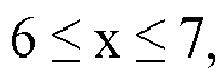
- a) having at least one base ceramic particle comprising, for at least 90 % of its weight, a LLZO material of formula LixLa3ZryMzO12 wherein


- b) covering, at least partially, the base ceramic particle with a liquid component containing a coating agent of formula AO[OSi(CmH2m+i)3]3 wherein 1 ≤ m ≤ 20 and A is chosen in the group consisting in P, Si, B and their mixtures,
- c) drying the liquid component such as to form a coating adhering to the surface of the base ceramic particle.
- Unexpectedly, the inventors have found that a coated ceramic particle obtained by the method according to the invention has a high surface ionic conductivity. The coated ceramic particle can be cold pressed to manufacture a solid electrolyte having a low grain-boundary resistance providing a fast Li-ions transport. Without being bound by any theory, the inventors believe that the contact area between the cold pressed particles is enhanced by the coating ductility. Furthermore, advantageously, the method does not affect the LLZO structure of the base ceramic material, which remains unchanged.
- The invention also relates to a coated ceramic particle, preferably obtained by the method according to the invention, the coated ceramic particle comprising:
- a base ceramic particle comprising, for at least 90 % of its weight, a LLZO material of formula LixLa3ZryMzO12 wherein


- a coating adhering to the surface of the base ceramic particle and covering at least partially the base ceramic particle, said coating comprising more than 40 % of groups chosen among phosphate groups, silicate groups, borate groups and their mixtures, and less than 60 % of organic groups, expressed in percentages as a mole number based on the sum of the number of moles of the phosphate groups, the silicate groups, the borate groups and the organic groups of the coating.
- The invention also relates to a powder comprising, or even consisting of, the coated ceramic particles according to the invention and/or obtained by the method according to the invention.
- The base ceramic particle can comprise 10 % at most of impurities, notably La2Zr2O7.
- The coefficient x can be greater than or equal to 6.2 and/or lower than or equal to 6.7. The coefficient y can be greater than or equal to 1.3 and/or lower than or equal to 2.
- Preferably, the coefficient z is greater than 0. In particular, the coefficient z can be greater than or equal to 0.2 and/or lower than or equal to 0.7.
- Preferably, the LLZO material is chosen among Li6.25La3Zr2Al0.25O12, Li6.4La3Zr1.4Ta0.6O12, Li6.4La3Zr2Ga0.2O12, Li6.5La3Zr1.5Nb0.5O12, Li6.3La3Zr1.65W0.35O12 and their mixtures.
- In particular, the base ceramic particle has a size ranging between 0.1 µm and 30 µm.
- Conventionally, the "size" of a base ceramic particle corresponds to the minimum mesh of a standard sieve through which said grain can pass. The "size" of a particle can also be the size given conventionally by characterization of the grain size distribution carried out with a laser granulometer.
- The base ceramic particle can be in the shape of a bead. A bead has a sphericity, that is to say a ratio between its smallest diameter and its largest diameter, greater than or equal to 0.6, even greater than 0.7, even greater than 0.8, more preferably greater than 0.9.
- The lithium atoms can be present in the form of oxides. In a preferred embodiment, the base ceramic particle is free of standard surface contaminants. Preferably, it is free of Li2CO3 and LiOH, adhering its surface. Such lithium-based molecules act as impurities that compromise the grafting of functional groups to the surface of base ceramic particles and lower the electrical performance of the coated ceramic particles.
- Preferably, the base ceramic particle is produced in an inert atmosphere. An "inert atmosphere" does not react with the LLZO material. The inert atmosphere is preferably a H2O-free and CO2-free atmosphere, for instance in dry nitrogen, dry argon or dry oxygen.
- Preferably, after being manufactured and before step b), the base ceramic particle is stored in the inert atmosphere, to limit the formation of lithium-based surface impurities.
- The manufacture of a LLZO ceramic particle is well known in the art. It is described for instance in S. Ramakumar et al., Progress in Materials Science 88 (2017) 325-411, doi.org/10.1016/j.pmatsci.2017.04.007.
- The coating agent is of formula AO [OSi(CmH2m+1)3]3.
- The coefficient m can be such as 1 ≤ m ≤ 10. The coefficient m can be lower than or equal to 3, in particular lower than or equal to 2. Preferably, m is equal to 1.
- A is chosen in the group consisting in phosphorus (P), silicon (Si), boron (B) and their mixtures. Notably, A can be P or Si or B. Preferably, A is phosphorus P.
- Preferably, the coating agent is tris(trimethylsilyl) phosphate of formula PO[OSi(CH3)3]3.
- Preferably, the liquid component comprises only the coating agent of formula AO[OSi(CmH2m+1)3]3 as a coating agent.
- The liquid component can comprise a solvent, the coating agent being in solution in the solvent. The solution can consist in the solvent and the coating agent.
- In particular, the solvent is chosen among organic solvents, preferably chosen among polar aprotic solvents.
- The solvent can be chosen among acetonitrile, acetone, dichloromethane, dimethylformamide, dimethylsulfoxide, ethyl acetate, tetrahydrofuran, propylene carbonate and their mixtures. Preferably, the solvent is acetonitrile.
- The concentration of the coating agent in the solution can be at least 0.1%.
- Alternatively, the liquid component can consist in the coating agent in a liquid form.
- At step b), the base ceramic particle is covered preferably entirely with the liquid component.
- A suspension comprising several base ceramic particles immersed in the liquid component can be formed. The content of base ceramic particles in the suspension can range between 0.1 % and 90 %, as percentages by weight based on the total weight of the liquid component and of the base ceramic particles.
- The covering step can be performed at a temperature ranging between 5 °C and 180 °C, notably between 20°C and 100°C. Preferably, the covering step is performed at 20°C. This ensures a uniform deposition and an optimal adhesion of the coating to the surface of the base ceramic particle during step c).
- In particular, the covering step can be performed by mixing the base ceramic particle with the liquid solution containing the coating agent. The mixing can be performed for at least 5 minutes, preferably at least 3 days.
- Preferably, at least covering step b) is performed in an inert atmosphere, for instance in a dry argon atmosphere, to prevent the formation of lithium-based surface impurities, in particular to prevent the formation of Li2CO3 and LiOH.
- After covering the base ceramic particle with the liquid component, the coating agent is adsorbed on the base ceramic particle surface and reacts to produce a coating layer. At the end of step b), the base ceramic particle can be covered by a layer comprising the reacted coating agent, notably in the form of chemically bonded functional groups.
- Preferably, the method comprises a washing step, performed after the covering step b) and before the drying step c), comprising washing the covered base ceramic particle obtained at the end of step b) with a washing liquid, in particular a solvent, for instance acetonitrile. The washing step allows advantageously to remove non-attached coating agent molecules and other soluble by-products.
- The washing step can further comprise centrifugation of the washed covered base layer, such as to separate the covered base layer from the washing liquid, for instance at a spin rate of 14000 rpm for 20 minutes.
- Preferably, the method comprises performing at least three washing steps, with preferably each washing step comprising centrifugation of the washed covered base layer.
- Preferably, the washing step is performed in inert atmosphere.
- Drying at step c) can be performed at a temperature ranging between 20 °C and 1000 °C, preferably between 20 °C and 200 °C. Preferably step c) is performed in vacuum.
- Drying is preferably performed until all the solvent is removed from the covered base ceramic particle.
- The coating preferably comprises more than 50 %, even more than 60 % of groups chosen among phosphate groups, silicate groups, borate groups and their mixtures, expressed in percentages as a mole number based on the sum of the number of moles of the phosphate groups, the silicate groups, the borate groups and the organic groups of the coating. An "organic group" comprises carbon and hydrogen atoms. In particular, the organic groups can comprise hydrocarbon groups, in particular methyl groups (CH3).
- The organic groups lower the electrical properties of the coated particle. The coating preferably comprises less than 50 %, even less than 40 % of organic groups, expressed in percentages as a mole number based on the sum of the number of moles of the phosphate groups, the silicate groups, the borate groups and the organic groups of the coating. Preferably, the coating is devoid of organic groups.
- The contents of phosphate groups, silicate groups, borate groups and organic groups of the coating can be measured by energy dispersive X-ray spectroscopy (EDX) in a scanning electron microscope (SEM).
- Preferably, the phosphate groups, the silicate groups, the borate groups and the organic groups represent more than 90 % of the weight of the coating.
- Preferably, the coating comprises, even consists of, grafted groups, notably trialkylsilyl groups and/or phosphate groups, notably provided by the coating agent molecules.
- Preferably, the coating thickness is less than 5 µm, notably ranges between 1 and 200 nm. The coating thickness can be measured by transmission electron microscopy (TEM). Such a thickness is low enough for the barrier effect to Li-ions of the coating to be minimized in a cold pressed electrolyte made from the coated ceramic particles. Furthermore, as the coating agent is free of lithium, such a low thickness eases the coating lithiation provided by the LLZO.
- Preferably, the coating covers entirely the base ceramic particle.
- In particular, the coated particle can consist of the base ceramic particle and the coating.
- Furthermore, the method according to the invention can comprise producing a plurality of coated ceramic particles and pressing said plurality such as to obtain a pressed product.
- The invention also relates to a process for manufacturing a product, the process comprising pressing a plurality of coated ceramic particles according to the invention or obtained by the method according to the invention, such as to obtain a pressed product.
- The median size of the base ceramic particles of the plurality of coated ceramic particles can range between 0.8 µm and 2 µm.
- The size distribution of the base ceramic particles of the plurality of coated ceramic particles is for example bimodal, for instance with a first fraction having a size of 0.2 µm and the second fraction complementary to the first fraction having a size of 2 µm.
- Preferably, the pressed product is a solid electrolyte.
- Pressing is performed at a temperature ranging between 20 °C and 300 °C.
- Pressing can be performed by applying a pressure greater than 100 MPa, in particular ranging between 300 MPa and 600 MPa.
- In particular, pressing can be performed on a stacking of at least:
- a first layer comprising a composite cathode material comprising a mixture of a cathode active material and a solid electrolyte which can comprise a portion of the plurality of coated ceramic particles, and optionally an additive for electronic conductivity, notably carbon black;
- a second layer comprising, preferably consisting in, the plurality of coated ceramic particles or if appropriate another portion of said plurality; and
- a third layer comprising an anode material, such as metallic lithium.
- For instance, pressing can be performed during the assembly of a solid battery.
- Thanks to surface modification resulting from coating of the base ceramic particles, the pressed product presents advantageously a high ionic conductivity. The ionic conductivity can be measured by Electrochemical Impedance Spectroscopy (EIS). In particular, the ionic conductivity of the pressed product is greater than or equal to 1 µS/cm, and can be greater than or equal to 10 µS/cm. Without the coating, the typical ionic conductivity of the pressed product, manufactured with similar process conditions, is about 0.01µS/cm.
- The invention further relates to a solid electrolyte obtained by the method according to the invention or by the process according to the invention.
- Eventually, it relates to an electrochemical system comprising a solid electrolyte according to the invention. The electrochemical system can be a lithium battery.
- The invention should be better understood from a reading of the exemplary and non-limiting following embodiments, and by the examination of the appended drawing, in which:
-
Figure 1 is a FTIR analysis representing the transmittance, in arbitrary units as a function of the wavenumber in cm-1 measured under argon, for a Reference LLZO particle (top curve), Example 1 (top-middle curve), Comparative example 2 (middle curve) and Comparative example 3 (bottom curve). -
Figure 2 is a XRD pattern representing the intensity of the diffracted signal in arbitrary units as a function of the diffraction angle measured under argon, for Example 1 (top curve), Comparative example 3 (second-top curve), Comparative example 2 (middle curve), a powder of Reference LLZO particles (second-bottom curve), and the empty cell without any particle (bottom curve), all the measurements being carried out with Beryllium (Be) window. - All experiments presented in the examples have been carried out with LLZO particles of formula Li6.25La3Zr2Al0.25O12 having a size of 0.1 to 30µm.
- The LLZO particles used in the following examples have been produced and stored in an argon atmosphere.
- All of the following synthesis actions have been carried out in an argon atmosphere.
- 2 g of LLZO particles were put into a glass bottle with a tight cap. 5 ml of acetonitrile as solvent and 0.94 g of tris(trimethylsilyl) phosphate as a coating agent were added into the bottle. The suspension obtained has been stirred under magnetic stirring at 700 rpm [rotation per minute] for 3 days at 23°C. Every LLZO particle was in contact with the coating agent.
- Then, all the thus covered particles have been put into another plastic bottle and have been washed three times with 100 ml of acetonitrile. After each washing, the contaminated acetonitrile was removed by centrifugation during 20 min at 11000 rpm. Between every washing cycle, the bottle was replenished with acetonitrile.
- Finally, the covered LLZO particles have been dried at 70°C under vacuum for 3 days until obtaining a solvent-free powder of LLZO particles coated with tris(trimethylsilyl) phosphate.
- The same procedure has been performed as in Example 1 except that 0.63 g of dibutylphosphate has been used as a coating agent.
- A powder of LLZO particles coated with dibutylphosphate has been obtained.
- The same procedure has been performed as in Example 1 except that 0.67 g of decylphosphonic acid has been used as a coating agent.
- A powder of LLZO particles coated with decylphosphonic acid has been obtained.
- The powders obtained in examples 1 to 3 have been characterized with Fourier-transform infrared spectroscopy (FTIR) and X-ray diffraction (XRD) in an argon atmosphere.
- As observed on
figure 1 , by comparison with the non-coated LLZO particles, peaks not related to LLZO are present for the coated particles. They are related to bonding of new grafted groups to the surface of the base LLZO particle. Peaks related to phosphate groups are visible between about 900 and 1200 cm-1 for all three modified materials. Besides, peaks are visible between about 2800 and 2900 cm-1 in a region typical for CH3 groups after LLZO modification by DBP and DPA, indicating the presence of organic groups. This is not the case for the TMSP-modified material which presents only peaks related to phosphate groups. - Thus, the chemistry of the groups grafted to the surface of the LLZO ceramics is different for LLZO particles coated with tris(trimethylsilyl) phosphate of example 1 compared to the LLZO particles of the comparative examples.
- The XRD analysis reported in
figure 2 was carried out using an air-tight cell with beryllium window. Accordingly, Be peaks are present in all spectra and have to be ignored. The results of XRD confirm that the peaks of LLZO indicated by vertical rods are equally present in the starting material and in modified samples. This confirms that the LLZO structure has been remained unchanged after implementation of the covering and drying. - Four electrolytes have been produced by cold pressing respectively the powder of non-coated LLZO and the powders obtained in example 1 to example 3. Cold pressing has been carried out in dry air having a dew point of -50°C under a 400 MPa pressure.
- Electrochemical Impedance Spectroscopy (EIS) was carried out on the above obtained cold pressed products to evaluate the impact of the particle coating on the ionic conductivity of the product. The impedance has been measured at stacking pressures of 200 MPa and 400 MPa.
- Numerical values of ionic conductivities obtained from EIS are presented in the table below.
LLZO ref LLZO-DPA LLZO-DBP LLZO- TMSP Ionic conductivity at 200 MPa (µS/cm) 0,008 < 10-4 1,6 × 10⁻⁴ 0,05 Ionic conductivity at 400 MPa (µS/cm) 0,011 < 10-4 2 × 10⁻⁴ 1,5 - These results indicate that the coating of LLZO base particle with DPA and DBP have detrimental effect on the ionic conductivity. The inventor believes this phenomenon might be related to the presence of CH3 groups on the surface of the LLZO particles which are believed to act as insulators. On the contrary, the coating of LLZO base particles with TMSP leads to an improvement of the ionic conductivity. This improvement is stronger when the conductivity is measured at higher pressures. It may be related to an increase of the contact surface between coated particle provided by the coating ductility.
- Needless to say, the invention is not limited to the embodiments and examples presented in the present description.
- Moreover, unless otherwise mentioned, an inequality of the type "A greater than B" or, respectively, "A less than B" is considered strictly. In other words, equality between A and B is excluded.
Claims (13)
- Method for producing a coated ceramic particle, the method comprising:a) having at least one base ceramic particle comprising, for at least 90 % of its weight, a LLZO material of formula LixLa3ZryMzO12 wherein


M is chosen in the group consisting in Al, Ga, Nb, Ta, W and their mixtures,b) covering, at least partially, the base ceramic particle with a liquid component containing a coating agent of formula AO[OSi(CmH2m+1)3]3, wherein 1 ≤ m ≤ 20 and A is chosen in the group consisting in P, Si, B and their mixtures,c) drying the liquid component such as to form a coating adhering to the surface of the base ceramic particle. - Method according to claim 1, drying being performed at a temperature ranging between 20 °C and 1000 °C, preferably between 20 °C and 200 °C.
- Method according to anyone claims 1 and 2, the coating agent being tris(trimethylsilyl) phosphate of formula PO[OSi(CH3)3]3.
- Method according to anyone of the preceding claims, at least covering step b) being performed in an inert atmosphere, preferably in CO2-free and H2O-free atmosphere, for instance in a dry argon atmosphere.
- Method according to anyone of the preceding claims, the liquid component being a solution comprising a solvent, the coating agent being in solution in the solvent, the solvent being chosen among polar aprotic solvents, in particular chosen among acetonitrile, acetone, dichloromethane, dimethylformamide, dimethylsulfoxide, ethyl acetate, tetrahydrofuran, propylene carbonate and their mixtures, preferably being acetonitrile.
- Method according to anyone of the preceding claims, the covering step being performed at a temperature ranging between 5 °C and 180 °C, preferably between 20 °C and 100 °C.
- Method according to anyone of the preceding claims, the LLZO material being chosen among Li6.25La3Zr2Al0.25O12, Li6.4La3Zr1.4Ta0.6O12, Li6.4La3Zr2Ga0.2O12, Li6.5La3Zr1.5Nb0.5O12, Li6.3La3Zr1.65W0.35O12 and their mixtures.
- Method according to anyone of the preceding claims, the base ceramic particle having a size ranging between 0.1 µm and 30 µm, preferably between 0.1 µm and 10 µm.
- Method according to anyone of the preceding claims, comprising producing a plurality of coated ceramic particles and pressing said plurality, notably by applying a pressure greater than 100 MPa, such as to obtain a pressed product, for instance being a solid electrolyte.
- Coated ceramic particle, preferably obtained by the method according to anyone of claims 1 to 8, the coated ceramic particle comprising:- a base ceramic particle comprising, for at least 90 % of its weight, a LLZO material of formula LixLa3ZryMzO12 wherein


M being chosen in the group consisting in Al, Ga, Nb, Ta, W and their mixtures,- a coating adhering to the surface of the base ceramic particle and covering at least partially the base ceramic particle, said coating comprising more than 40 % of groups chosen among phosphate groups, silicate groups, borate groups and their mixtures, and less than 60 % of organic groups, expressed in percentages as a mole number based on the sum of the number of moles of the phosphate groups, the silicate groups, the borate groups and the organic groups of the coating. - Coated ceramic particle according to the preceding claim, the coating thickness being less than 5 µm, ranging preferably between 1 and 200 nm.
- Coated ceramic particle according to anyone of claims 10 and 11, the coating covering entirely the surface of the base ceramic particle.
- Coated ceramic particle according to anyone of claims 10 to 12, the coating comprising, even consisting of, grafted groups provided by the coating agent molecules.
Priority Applications (1)
| Application Number | Priority Date | Filing Date | Title |
|---|---|---|---|
| EP22305640.9A EP4270578A1 (en) | 2022-04-29 | 2022-04-29 | Method for producing a coated ceramic particle based on a llzo material |
Applications Claiming Priority (1)
| Application Number | Priority Date | Filing Date | Title |
|---|---|---|---|
| EP22305640.9A EP4270578A1 (en) | 2022-04-29 | 2022-04-29 | Method for producing a coated ceramic particle based on a llzo material |
Publications (1)
| Publication Number | Publication Date |
|---|---|
| EP4270578A1 true EP4270578A1 (en) | 2023-11-01 |
Family
ID=87428318
Family Applications (1)
| Application Number | Title | Priority Date | Filing Date |
|---|---|---|---|
| EP22305640.9A Pending EP4270578A1 (en) | 2022-04-29 | 2022-04-29 | Method for producing a coated ceramic particle based on a llzo material |
Country Status (1)
| Country | Link |
|---|---|
| EP (1) | EP4270578A1 (en) |
Cited By (2)
| Publication number | Priority date | Publication date | Assignee | Title |
|---|---|---|---|---|
| CN118834599A (en) * | 2024-07-23 | 2024-10-25 | 瑞鑫集团有限公司 | VCI bimetal composite coating and VCI bimetal composite coating for cable bridge |
| US20250316749A1 (en) * | 2023-01-01 | 2025-10-09 | Beijing University Of Technology | Preparation And Application Of A Polymer-based Composite Solid Electrolyte With High Ionic Conductivity |
Citations (4)
| Publication number | Priority date | Publication date | Assignee | Title |
|---|---|---|---|---|
| KR20170092262A (en) | 2016-02-03 | 2017-08-11 | 한국생산기술연구원 | All solid lithium secondary batterie including llzo solid electrolyte and manufacturing method for the same |
| CN110176627A (en) * | 2019-06-18 | 2019-08-27 | 济宁克莱泰格新能源科技有限公司 | It can inhibit the lithium lanthanum zirconium oxygroup solid electrolyte material and its preparation method and application of Li dendrite |
| US20210257656A1 (en) * | 2020-02-14 | 2021-08-19 | GM Global Technology Operations LLC | Lithium phosphate coating for lithium lanthanum zirconium oxide solid-state electrolyte powders |
| CN114122507A (en) * | 2021-11-03 | 2022-03-01 | 复旦大学 | Low-temperature sintering preparation method of garnet type inorganic solid electrolyte sheet |
-
2022
- 2022-04-29 EP EP22305640.9A patent/EP4270578A1/en active Pending
Patent Citations (4)
| Publication number | Priority date | Publication date | Assignee | Title |
|---|---|---|---|---|
| KR20170092262A (en) | 2016-02-03 | 2017-08-11 | 한국생산기술연구원 | All solid lithium secondary batterie including llzo solid electrolyte and manufacturing method for the same |
| CN110176627A (en) * | 2019-06-18 | 2019-08-27 | 济宁克莱泰格新能源科技有限公司 | It can inhibit the lithium lanthanum zirconium oxygroup solid electrolyte material and its preparation method and application of Li dendrite |
| US20210257656A1 (en) * | 2020-02-14 | 2021-08-19 | GM Global Technology Operations LLC | Lithium phosphate coating for lithium lanthanum zirconium oxide solid-state electrolyte powders |
| CN114122507A (en) * | 2021-11-03 | 2022-03-01 | 复旦大学 | Low-temperature sintering preparation method of garnet type inorganic solid electrolyte sheet |
Non-Patent Citations (3)
| Title |
|---|
| C. WANG ET AL.: "Garnet-Type Solid-State Electrolytes: Materials, Interfaces, and Batteries", CHEM. REV., vol. 120, 2020, pages 4257 - 4300 |
| JIA MENGYANG ET AL: "Air-stable dopamine-treated garnet ceramic particles for high-performance composite electrolytes", JOURNAL OF POWER SOURCES, ELSEVIER, AMSTERDAM, NL, vol. 486, 31 December 2020 (2020-12-31), XP086442982, ISSN: 0378-7753, [retrieved on 20201231], DOI: 10.1016/J.JPOWSOUR.2020.229363 * |
| S. RAMAKUMAR ET AL., PROGRESS IN MATERIALS SCIENCE, vol. 88, 2017, pages 325 - 411 |
Cited By (2)
| Publication number | Priority date | Publication date | Assignee | Title |
|---|---|---|---|---|
| US20250316749A1 (en) * | 2023-01-01 | 2025-10-09 | Beijing University Of Technology | Preparation And Application Of A Polymer-based Composite Solid Electrolyte With High Ionic Conductivity |
| CN118834599A (en) * | 2024-07-23 | 2024-10-25 | 瑞鑫集团有限公司 | VCI bimetal composite coating and VCI bimetal composite coating for cable bridge |
Similar Documents
| Publication | Publication Date | Title |
|---|---|---|
| Yu et al. | Insights into a layered hybrid solid electrolyte and its application in long lifespan high-voltage all-solid-state lithium batteries | |
| EP3809425B1 (en) | Lgps-based solid electrolyte and production method | |
| EP3252024B1 (en) | Oxide electrolyte sintered body and method for producing the same | |
| EP2089316B1 (en) | Carbonated complex oxides | |
| KR101805079B1 (en) | Electrode material and use thereof in lithium ion batteries | |
| EP2159867B1 (en) | Aluminium-doped Li7La3Zr2O12 solid electrolyte and process for producing the same | |
| EP4270578A1 (en) | Method for producing a coated ceramic particle based on a llzo material | |
| US10818964B2 (en) | Composite solid electrolyte | |
| CN110462757B (en) | Containing Li3PS4Method for producing solid electrolyte | |
| CN111066103A (en) | Manufacturing method of LGPS-based solid electrolyte | |
| WO2013131005A2 (en) | High capacity solid state composite cathode, solid state composite separator, solid-state rechargeable lithium battery and methods of making same | |
| Saverina et al. | An environment-friendly approach to produce nanostructured germanium anodes for lithium-ion batteries | |
| EP4084180A1 (en) | Solid electrolyte composition and solid electrolyte particles | |
| Liu et al. | Utilization of Si/SiO x/Al 2 O 3 materials from recycled solar cells for a high-performance lithium-ion battery anode | |
| Stockham et al. | Evaluation of Ga 0.2 Li 6.4 Nd 3 Zr 2 O 12 garnets: exploiting dopant instability to create a mixed conductive interface to reduce interfacial resistance for all solid state batteries | |
| US20240051841A1 (en) | Solid electrolyte composition, solid electrolyte material, and method for producing solid electrolyte composition | |
| Cuevas et al. | Boron Surface Treatment of Li7La3Zr2O12 Enabling Solid Composite Electrolytes for Li‐Metal Battery Applications | |
| JP5418752B2 (en) | ZnO vapor deposition material, method for producing the same, and method for forming the ZnO film | |
| JP5418749B2 (en) | ZnO vapor deposition material, method for producing the same, and method for forming the ZnO film | |
| JP5418748B2 (en) | ZnO vapor deposition material, method for producing the same, and method for forming the ZnO film | |
| EP4300618A1 (en) | Solid electrolyte, active material layer, electrolyte layer and secondary battery | |
| JP5499453B2 (en) | ZnO vapor deposition material, method for producing the same, and method for forming the ZnO film | |
| JP5418750B2 (en) | ZnO vapor deposition material, method for producing the same, and method for forming the ZnO film | |
| EP2194158A1 (en) | ZnO VAPOR DEPOSITION MATERIAL, PROCESS FOR PRODUCING THE SAME, AND ZnO FILM | |
| CN118412526A (en) | A sulfide electrolyte membrane and its preparation method and all-solid-state battery |
Legal Events
| Date | Code | Title | Description |
|---|---|---|---|
| PUAI | Public reference made under article 153(3) epc to a published international application that has entered the european phase |
Free format text: ORIGINAL CODE: 0009012 |
|
| STAA | Information on the status of an ep patent application or granted ep patent |
Free format text: STATUS: REQUEST FOR EXAMINATION WAS MADE |
|
| 17P | Request for examination filed |
Effective date: 20220429 |
|
| AK | Designated contracting states |
Kind code of ref document: A1 Designated state(s): AL AT BE BG CH CY CZ DE DK EE ES FI FR GB GR HR HU IE IS IT LI LT LU LV MC MK MT NL NO PL PT RO RS SE SI SK SM TR |
|
| RAP3 | Party data changed (applicant data changed or rights of an application transferred) |
Owner name: COMMISSARIAT A L'ENERGIE ATOMIQUE ET AUX ENERGIESALTERNATIVES |