EP4270536A1 - Silicon-based composite material for negative electrode of lithium ion battery, preparation method therefor and application thereof - Google Patents
Silicon-based composite material for negative electrode of lithium ion battery, preparation method therefor and application thereof Download PDFInfo
- Publication number
- EP4270536A1 EP4270536A1 EP20967305.2A EP20967305A EP4270536A1 EP 4270536 A1 EP4270536 A1 EP 4270536A1 EP 20967305 A EP20967305 A EP 20967305A EP 4270536 A1 EP4270536 A1 EP 4270536A1
- Authority
- EP
- European Patent Office
- Prior art keywords
- silicon
- composite material
- graphite
- based composite
- pores
- Prior art date
- Legal status (The legal status is an assumption and is not a legal conclusion. Google has not performed a legal analysis and makes no representation as to the accuracy of the status listed.)
- Pending
Links
Images
Classifications
-
- H—ELECTRICITY
- H01—ELECTRIC ELEMENTS
- H01M—PROCESSES OR MEANS, e.g. BATTERIES, FOR THE DIRECT CONVERSION OF CHEMICAL ENERGY INTO ELECTRICAL ENERGY
- H01M4/00—Electrodes
- H01M4/02—Electrodes composed of, or comprising, active material
- H01M4/36—Selection of substances as active materials, active masses, active liquids
- H01M4/38—Selection of substances as active materials, active masses, active liquids of elements or alloys
- H01M4/386—Silicon or alloys based on silicon
-
- H—ELECTRICITY
- H01—ELECTRIC ELEMENTS
- H01M—PROCESSES OR MEANS, e.g. BATTERIES, FOR THE DIRECT CONVERSION OF CHEMICAL ENERGY INTO ELECTRICAL ENERGY
- H01M10/00—Secondary cells; Manufacture thereof
- H01M10/05—Accumulators with non-aqueous electrolyte
- H01M10/052—Li-accumulators
- H01M10/0525—Rocking-chair batteries, i.e. batteries with lithium insertion or intercalation in both electrodes; Lithium-ion batteries
-
- H—ELECTRICITY
- H01—ELECTRIC ELEMENTS
- H01M—PROCESSES OR MEANS, e.g. BATTERIES, FOR THE DIRECT CONVERSION OF CHEMICAL ENERGY INTO ELECTRICAL ENERGY
- H01M4/00—Electrodes
- H01M4/02—Electrodes composed of, or comprising, active material
- H01M4/13—Electrodes for accumulators with non-aqueous electrolyte, e.g. for lithium-accumulators; Processes of manufacture thereof
-
- H—ELECTRICITY
- H01—ELECTRIC ELEMENTS
- H01M—PROCESSES OR MEANS, e.g. BATTERIES, FOR THE DIRECT CONVERSION OF CHEMICAL ENERGY INTO ELECTRICAL ENERGY
- H01M4/00—Electrodes
- H01M4/02—Electrodes composed of, or comprising, active material
- H01M4/13—Electrodes for accumulators with non-aqueous electrolyte, e.g. for lithium-accumulators; Processes of manufacture thereof
- H01M4/133—Electrodes based on carbonaceous material, e.g. graphite-intercalation compounds or CFx
-
- H—ELECTRICITY
- H01—ELECTRIC ELEMENTS
- H01M—PROCESSES OR MEANS, e.g. BATTERIES, FOR THE DIRECT CONVERSION OF CHEMICAL ENERGY INTO ELECTRICAL ENERGY
- H01M4/00—Electrodes
- H01M4/02—Electrodes composed of, or comprising, active material
- H01M4/13—Electrodes for accumulators with non-aqueous electrolyte, e.g. for lithium-accumulators; Processes of manufacture thereof
- H01M4/134—Electrodes based on metals, Si or alloys
-
- H—ELECTRICITY
- H01—ELECTRIC ELEMENTS
- H01M—PROCESSES OR MEANS, e.g. BATTERIES, FOR THE DIRECT CONVERSION OF CHEMICAL ENERGY INTO ELECTRICAL ENERGY
- H01M4/00—Electrodes
- H01M4/02—Electrodes composed of, or comprising, active material
- H01M4/13—Electrodes for accumulators with non-aqueous electrolyte, e.g. for lithium-accumulators; Processes of manufacture thereof
- H01M4/139—Processes of manufacture
- H01M4/1395—Processes of manufacture of electrodes based on metals, Si or alloys
-
- H—ELECTRICITY
- H01—ELECTRIC ELEMENTS
- H01M—PROCESSES OR MEANS, e.g. BATTERIES, FOR THE DIRECT CONVERSION OF CHEMICAL ENERGY INTO ELECTRICAL ENERGY
- H01M4/00—Electrodes
- H01M4/02—Electrodes composed of, or comprising, active material
- H01M4/36—Selection of substances as active materials, active masses, active liquids
- H01M4/362—Composites
- H01M4/364—Composites as mixtures
-
- H—ELECTRICITY
- H01—ELECTRIC ELEMENTS
- H01M—PROCESSES OR MEANS, e.g. BATTERIES, FOR THE DIRECT CONVERSION OF CHEMICAL ENERGY INTO ELECTRICAL ENERGY
- H01M4/00—Electrodes
- H01M4/02—Electrodes composed of, or comprising, active material
- H01M4/36—Selection of substances as active materials, active masses, active liquids
- H01M4/362—Composites
- H01M4/366—Composites as layered products
-
- H—ELECTRICITY
- H01—ELECTRIC ELEMENTS
- H01M—PROCESSES OR MEANS, e.g. BATTERIES, FOR THE DIRECT CONVERSION OF CHEMICAL ENERGY INTO ELECTRICAL ENERGY
- H01M4/00—Electrodes
- H01M4/02—Electrodes composed of, or comprising, active material
- H01M4/36—Selection of substances as active materials, active masses, active liquids
- H01M4/38—Selection of substances as active materials, active masses, active liquids of elements or alloys
-
- H—ELECTRICITY
- H01—ELECTRIC ELEMENTS
- H01M—PROCESSES OR MEANS, e.g. BATTERIES, FOR THE DIRECT CONVERSION OF CHEMICAL ENERGY INTO ELECTRICAL ENERGY
- H01M4/00—Electrodes
- H01M4/02—Electrodes composed of, or comprising, active material
- H01M4/36—Selection of substances as active materials, active masses, active liquids
- H01M4/58—Selection of substances as active materials, active masses, active liquids of inorganic compounds other than oxides or hydroxides, e.g. sulfides, selenides, tellurides, halogenides or LiCoFy; of polyanionic structures, e.g. phosphates, silicates or borates
- H01M4/583—Carbonaceous material, e.g. graphite-intercalation compounds or CFx
- H01M4/587—Carbonaceous material, e.g. graphite-intercalation compounds or CFx for inserting or intercalating light metals
-
- H—ELECTRICITY
- H01—ELECTRIC ELEMENTS
- H01M—PROCESSES OR MEANS, e.g. BATTERIES, FOR THE DIRECT CONVERSION OF CHEMICAL ENERGY INTO ELECTRICAL ENERGY
- H01M4/00—Electrodes
- H01M4/02—Electrodes composed of, or comprising, active material
- H01M4/62—Selection of inactive substances as ingredients for active masses, e.g. binders, fillers
- H01M4/624—Electric conductive fillers
- H01M4/625—Carbon or graphite
-
- H—ELECTRICITY
- H01—ELECTRIC ELEMENTS
- H01M—PROCESSES OR MEANS, e.g. BATTERIES, FOR THE DIRECT CONVERSION OF CHEMICAL ENERGY INTO ELECTRICAL ENERGY
- H01M4/00—Electrodes
- H01M4/02—Electrodes composed of, or comprising, active material
- H01M2004/021—Physical characteristics, e.g. porosity, surface area
-
- H—ELECTRICITY
- H01—ELECTRIC ELEMENTS
- H01M—PROCESSES OR MEANS, e.g. BATTERIES, FOR THE DIRECT CONVERSION OF CHEMICAL ENERGY INTO ELECTRICAL ENERGY
- H01M4/00—Electrodes
- H01M4/02—Electrodes composed of, or comprising, active material
- H01M2004/026—Electrodes composed of, or comprising, active material characterised by the polarity
- H01M2004/027—Negative electrodes
-
- Y—GENERAL TAGGING OF NEW TECHNOLOGICAL DEVELOPMENTS; GENERAL TAGGING OF CROSS-SECTIONAL TECHNOLOGIES SPANNING OVER SEVERAL SECTIONS OF THE IPC; TECHNICAL SUBJECTS COVERED BY FORMER USPC CROSS-REFERENCE ART COLLECTIONS [XRACs] AND DIGESTS
- Y02—TECHNOLOGIES OR APPLICATIONS FOR MITIGATION OR ADAPTATION AGAINST CLIMATE CHANGE
- Y02E—REDUCTION OF GREENHOUSE GAS [GHG] EMISSIONS, RELATED TO ENERGY GENERATION, TRANSMISSION OR DISTRIBUTION
- Y02E60/00—Enabling technologies; Technologies with a potential or indirect contribution to GHG emissions mitigation
- Y02E60/10—Energy storage using batteries
Definitions
- This disclosure relates to the field of lithium-ion batteries, and specifically to a silicon-based composite material for lithium-ion battery negative electrode, and a preparation method and application thereof.
- One aspect of technological innovation in lithium-ion batteries is to continuously improve the energy density.
- the actual capacity of mainstream graphite materials is close to the theoretical capacity (372 mAh/g), and there is already a bottleneck in improving the energy density.
- Silicon-based negative electrode materials have attracted much attention and research because of their advantages such as abundant reserves, ultra-high theoretical capacity (4200 mAh/g), and environmental friendliness.
- the volume swelling (more than 300%) of the silicon-based negative electrode materials during cycling has seriously affected the process of industrial application of the silicon-based negative electrode materials.
- an objective of this disclosure is to provide a silicon-based composite material for lithium-ion battery negative electrode, where the silicon-based composite material features high capacity, good electrical conductivity, good cycling performance, or low swelling rate.
- this disclosure provides a silicon-based composite material.
- the silicon-based composite material includes: graphite, the graphite having a plurality of pores in surface; silicon particles, the silicon particles being filled in the pores of the graphite; and a carbon layer, the carbon layer being disposed on the surface of the graphite.
- the silicon-based composite material being used as the negative electrode material of lithium-ion battery allows the negative electrode material to have high capacity, good electrical conductivity, good cycling performance, or low swelling rate, thus effectively improving the performance and service life of the lithium-ion battery.
- an average pore diameter D1 of the pores and a median particle size D2 of the silicon particles satisfy the following relational expression: D1/D2 ⁇ 1.3.
- an average pore diameter D1 of the pores and a median particle size D3 of the silicon-based composite material satisfy the following relational expression: D3/D1 ⁇ 3.
- the silicon-based composite material satisfies at least one of the following conditions: an average pore diameter D1 of the pores is 100 nm to 10 ⁇ m; a median particle size D2 of the silicon particles is 30 nm to 5 ⁇ m; a median particle size D3 of the silicon-based composite material is 0.5 ⁇ m to 60 ⁇ m; a median particle size of the graphite is 1 ⁇ m to 50 ⁇ m; for the pores including the silicon particles, each pore includes at least one of the silicon particles; or based on a total mass of the silicon-based composite material and measured in mass percentage, the silicon-based composite material includes: 30% to 99% of the graphite; 0.9% to 60% of the silicon particles; and 0.1% to 5% of the carbon layer.
- the carbon layer satisfies at least one of the following conditions: the carbon layer has a thickness of 2 nm to 300 nm; and in Raman spectroscopy, a ratio of a peak height of the carbon layer at 1350 cm -1 to a peak height at 1580 cm -1 is 1.0 ⁇ I 1350 /I 1580 ⁇ 3.
- this disclosure provides a method for preparing the foregoing silicon-based composite material.
- the method for preparing the silicon-based composite material for lithium-ion battery negative electrode includes: mixing and ball milling graphite and a pore-forming agent to obtain a graphite/pore-forming agent composite material; adding the graphite/pore-forming agent composite material to a pore-forming agent removal solution, performing stirring and mixing to uniformity, and removing the pore-forming agent, to obtain graphite having a plurality of pores in surface; depositing silicon particles into the pores to obtain a graphite/silicon composite material; and forming a carbon layer on surface of the graphite/silicon composite material to obtain the silicon-based composite material, where optionally, a shape of the pore-forming agent is at least one of a spherical shape, a square shape, or an irregular shape, and optionally, a material of the pore-forming agent includes at least one of metal particles, metal alloy particles,
- the silicon-based composite material being used as the negative electrode material of lithium-ion battery allows the negative electrode material to have high capacity, good electrical conductivity, good cycling performance, or low swelling rate, thus effectively improving the performance and service life of the lithium-ion battery.
- the foregoing method is mature in technology, easy to implement, and suitable for industrial production.
- this disclosure provides a negative electrode material for lithium-ion battery.
- the negative electrode material includes: the foregoing silicon-based composite material; a carbon material; a conductive agent; and a binder.
- the negative electrode material has high capacity, good electrical conductivity, good cycling performance, or low swelling rate, thus effectively improving the performance and service life of the lithium-ion battery.
- this disclosure provides a negative electrode plate.
- the negative electrode plate includes the foregoing negative electrode material.
- the negative electrode plate has high capacity, good electrical conductivity, good cycling performance, or low swelling rate, thus effectively improving the performance and service life of the lithium-ion battery.
- this disclosure provides a lithium-ion battery.
- the lithium-ion battery includes the foregoing negative electrode plate.
- the lithium-ion battery has high capacity, good electrical conductivity, good cycling performance, or low swelling rate, thus effectively improving the performance and service life of the lithium-ion battery.
- the lithium-ion battery has all the features and advantages of the foregoing silicon-based composite material and the negative electrode plate, which is not described herein again.
- the silicon-based composite material includes: graphite 10, the graphite 10 having a plurality of pores 11 in surface; silicon particles 20, the silicon particles 20 being filled in the pores 11 in surface of the graphite; and a carbon layer 30, the carbon layer 30 being disposed on an outer surface of the graphite 10.
- the silicon-based composite material being used as a negative electrode material of lithium-ion battery allows the negative electrode material to have high capacity, good electrical conductivity, and good cycling performance, effectively alleviating the swelling of a battery negative electrode plate, thus effectively improving the performance and service life of the lithium-ion battery.
- the carbon layer 30 can further cover the pores 11, thus avoiding the silicon particles 20 separating from the pores 11 in a process of using the silicon-based composite material to prepare negative electrode plate.
- an average pore diameter D1 of the pores and a median particle size D2 of the silicon particles satisfy the following relational expression: D1/D2 ⁇ 1.3.
- the silicon particles can be well filled in the pores.
- the silicon particles have a specified swelling rate, and therefore as compared with the particle size of the silicon particles, pores with a large pore diameter leave some swelling room for the silicon particles, effectively alleviating the swelling of the battery negative electrode plate, thus effectively improving the performance and service life of the lithium-ion battery.
- an average pore diameter D1 of the pores and a median particle size D3 of the silicon-based composite material satisfy the following relational expression: D3/D1 ⁇ 3. This effectively ensures the electrical conductivity, gram capacity, and energy density of the battery negative electrode plate. If the average pore diameter of the pores is relatively large (that is, D3/D1 ⁇ 3), the gram capacity and energy density of the battery negative electrode plate are affected.
- the average pore diameter D1 of the pores is 100 nm to 10 ⁇ m, for example, 100 nm, 200 nm, 300 nm, 500 nm, 800 nm, 1 ⁇ m, 1.2 ⁇ m, 1.5 ⁇ m, 1.8 ⁇ m, 2 ⁇ m, 3 ⁇ m, 4 ⁇ m, 5 ⁇ m, 6 ⁇ m, 7 ⁇ m, 8 ⁇ m, 9 ⁇ m, or 10 ⁇ m.
- the median particle size D2 of the silicon particles is 30 nm to 5 ⁇ m, for example, 30 nm, 50 nm, 100 nm, 200 nm, 300 nm, 400 nm, 500 nm, 600 nm, 700 nm, 800 nm, 1 ⁇ m, 1.2 ⁇ m, 1.5 ⁇ m, 1.8 ⁇ m, 2 ⁇ m, 2.5 ⁇ m, 3 ⁇ m, 3.5 ⁇ m, 4 ⁇ m, 4.5 ⁇ m, or 5 ⁇ m.
- the silicon-based composite material has good electrical conductivity and capacity, effectively alleviating the swelling of the battery negative electrode plate, thus improving cycling performance of the negative electrode plate.
- the median particle size D3 of the silicon-based composite material is 0.5 ⁇ m to 60 ⁇ m, for example, 0.5 ⁇ m, 1 ⁇ m, 5 ⁇ m, 10 ⁇ m, 158 ⁇ m, 18 ⁇ m, 20 ⁇ m, 22 ⁇ m, 25 ⁇ m, 28 ⁇ m, 30 ⁇ m, 33 ⁇ m, 35 ⁇ m, 38 ⁇ m, 40 ⁇ m, 42 ⁇ m, 45 ⁇ m, 48 ⁇ m, 50 ⁇ m, 52 ⁇ m, 55 ⁇ m, 57 ⁇ m, or 60 ⁇ m.
- the silicon-based composite material with the above particle size has a suitable and large specific surface area, which helps to further improve the cycling performance and capacity of the negative electrode plate.
- the median particle size D4 of the graphite is 1 ⁇ m to 50 ⁇ m, for example, 1 ⁇ m, 5 ⁇ m, 10 ⁇ m, 158 ⁇ m, 18 ⁇ m, 20 ⁇ m, 22 ⁇ m, 25 ⁇ m, 28 ⁇ m, 30 ⁇ m, 33 ⁇ m, 35 ⁇ m, 38 ⁇ m, 40 ⁇ m, 42 ⁇ m, 45 ⁇ m, 48 ⁇ m, or 50 ⁇ m. This effectively ensures good electrical conductivity of the silicon-based composite material.
- each pore includes at least one of the silicon particles. Based on the foregoing average pore diameter of the pores and the median particle size of the silicon particles, one or more silicon particles can be filled in each pore, and some swelling room can be left for the silicon particles, thus ensuring good cycling performance of the negative electrode plate.
- a specific type of the graphite includes at least one of artificial graphite, natural graphite, or meso-carbon microbeads; and the carbon layer includes an amorphous carbon layer, carbon nanotubes, conductive carbon black, or graphene.
- the foregoing material facilitates preparation, features good electrical conductivity and low costs, and helps to ensure good use performance of the negative electrode material.
- the carbon layer has a thickness d of 2 nm to 300 nm, for example, 2 nm, 5 nm, 10 nm, 50 nm, 80 nm, 100 nm, 120 nm, 150 nm, 180 nm, 200 nm, 220 nm, 250 nm, 280 nm, or 300 nm.
- the carbon layer structure with the foregoing thickness can not only ensure good electrical conductivity of the silicon-based composite material, but also ensure good cycling performance and gram capacity of the lithium-ion battery.
- a ratio of a peak height of the carbon layer at 1350 cm -1 to a peak height at 1580 cm -1 is 1.0 ⁇ I 1350 /I 1580 ⁇ 3.
- the silicon-based composite material includes: 30 wt% to 99 wt% (for example, 30 wt%, 35 wt%, 40 wt%, 50 wt%, 60 wt%, 70 wt%, 80 wt%, 90 wt%, or 99 wt%) of the graphite; 0.9 wt% to 60 wt% (for example, 0.9 wt%, 15 wt%, 20 wt%, 30 wt%, 40 wt%, 50 wt%, or 60 wt%) of the silicon particles; and 0.1 wt% to 5 wt% (for example, 0.1 wt%, 0.5 wt%, 1 wt%, 1.5 wt%, 2 wt%, 2.5 wt%, 3 wt%, 3.5 wt%, 4 wt%, 4.5 wt%
- this disclosure provides a method for preparing the foregoing silicon-based composite material.
- the method for preparing silicon-based composite material for lithium-ion battery negative electrode includes the following steps.
- the graphite, the pore-forming agent, a dispersing agent, and a solvent can be further mixed and wet ball milled, to obtain the graphite/pore-forming agent composite material.
- a material of the pore-forming agent includes at least one of metal particles, metal alloy particles, or metal oxide particles.
- a specific material of the metal particles may be at least one of Al, Zn, Fe, or Sn. In this way, the pore-forming agent has high hardness and can be embedded and extruded into the graphite through ball milling.
- the dispersing agent is ethanol, ethylene glycol, or a combination of the two, and therefore can allow the graphite and the pore-forming agent to be mixed to uniformity during wet ball milling, which helps to obtain pores distributed uniformly.
- a shape of the pore-forming agent is at least one of a spherical shape, a square shape, or an irregular shape. In this way, corresponding preparation is performed to obtain pores in the spherical shape, the square shape, or the irregular shape.
- the pore-forming agent is at least one of metal, metal alloy particles, or a metal oxide, and dilute hydrochloric acid or dilute sulfuric acid can be selected as the pore-forming removal agent to remove the pore-forming agent through chemical reaction, so as to obtain the pores.
- the silicon particles can be deposited into the pores in surface of the graphite using the chemical vapor deposition or physical vapor deposition method, to obtain the graphite/silicon composite material. In this way, the foregoing method is mature in technology, easy to implement, and suitable for industrial production.
- S400 Form a carbon layer on surface of the graphite/silicon composite material to obtain a silicon-based composite material.
- the chemical vapor deposition or liquid phase method can be used to form the carbon layer on the surface of the graphite/silicon composite material, thus obtaining the silicon-based composite material.
- the foregoing method is mature in technology, easy to implement, and suitable for industrial production.
- the silicon-based composite material being used as a negative electrode material of lithium-ion battery allows the negative electrode material to have high capacity, good electrical conductivity, and good cycling performance, effectively alleviating the swelling of the battery negative electrode plate, thus effectively improving the performance and service life of the lithium-ion battery.
- the foregoing method is mature in technology, easy to implement, and suitable for industrial production.
- this disclosure provides a negative electrode material for lithium-ion battery.
- the negative electrode material includes: the foregoing silicon-based composite material; a carbon material; a conductive agent; and a binder.
- the negative electrode material has high capacity, good electrical conductivity, good cycling performance, or low swelling rate, thus effectively improving the performance and service life of the lithium-ion battery.
- the specific composition ratio of the silicon-based composite material, the carbon material, the conductive agent, and the binder in the negative electrode material there is no special requirement for the specific composition ratio of the silicon-based composite material, the carbon material, the conductive agent, and the binder in the negative electrode material, and persons skilled in the related art can make flexible selections based on actual situations. This is not limited herein.
- the carbon material includes at least one of artificial graphite or natural graphite.
- the conductive agent includes carbon nanotubes, vapor grown carbon fibers, conductive carbon black, acetylene black, Ketjen black, conductive graphite, or graphene.
- the binder includes at least one of polyacrylate, polyimide, polyamide, polyamideimide, polyfluoroethylene, styrene butadiene rubber, sodium alginate, polyvinyl alcohol, polytetrafluoroethylene, polyacrylonitrile, sodium carboxymethyl cellulose, potassium carboxymethyl cellulose, sodium hydroxymethyl cellulose, or potassium hydroxymethyl cellulose. In this way, the foregoing materials are widely sourced and have better use performance, which is conducive to improving performance of the negative electrode material.
- this disclosure provides a negative electrode plate.
- the negative electrode plate includes the foregoing negative electrode material.
- the negative electrode plate has high capacity, good electrical conductivity, good cycling performance, or low swelling rate, thus effectively improving the performance and service life of the lithium-ion battery.
- this disclosure provides a lithium-ion battery.
- the lithium-ion battery includes the foregoing negative electrode plate.
- the lithium-ion battery has high capacity, good electrical conductivity, good cycling performance, or low swelling rate, thus effectively improving the performance and service life of the lithium-ion battery.
- the lithium-ion battery has all the features and advantages of the foregoing silicon-based composite material and the negative electrode plate, which is not described herein again.
- Steps of preparing negative electrode material of negative electrode plate were as follows.
- a carbon layer was formed on surface of the graphite/silicon composite material to obtain a silicon-based composite material, where based on a total mass of the silicon-based composite material and measured in mass percentage, the silicon-based composite material included: 30 wt% to 99 wt% of the graphite; 0.9 wt% to 60 wt% of the silicon particles; and 3 wt% of the carbon layer.
- S500 The prepared silicon-based composite material was mixed with a carbon material (artificial graphite), a conductive agent (super P), and a binder (PAA) to obtain a negative electrode plate, where a mass ratio of the silicon-based composite material, the carbon material, the conductive agent, and the binder was 85:10:1.2:3.8.
- a carbon material artificial graphite
- a conductive agent super P
- PAA binder
- Steps of preparing negative electrode material of positive electrode plate were as follows.
- An active substance LiCoO 2 , a conductive carbon black, and a binder polyvinylidene fluoride (PVDF) were fully stirred and mixed to uniformity in an N-methylpyrrolidone solvent system at a mass ratio of 96.7:1.7:1.6, and then the resulting mixture was applied onto an Al foil, followed by drying and cold pressing to obtain a positive electrode plate.
- PVDF polyvinylidene fluoride
- the positive electrode plate, the separator, and the negative electrode plate were stacked in sequence, so that the separator was placed between negative and positive electrodes for separation, and the resulting stack was wound to obtain a bare cell.
- the bare cell was placed in an outer package, a prepared electrolyte was injected, and packaging was performed, followed by processes such as formation, degassing, and trimming, to obtain a full battery cell.
- Example 1 to 12 and Comparative examples 1 to 4 the negative electrode plate, the positive electrode plate, and the full battery cell of the lithium-ion battery were prepared according to the foregoing steps.
- Table 1 For differences of parameters in the examples, reference may be made to Table 1, and for the test results of the prepared battery, reference may be made to Table 2.
- Example 1 Amount of graphite (g) Graphite D v 50 ( ⁇ m) Average pore diameter of pores ( ⁇ m) Amount of silicon added (g) Silicon particle D v 50 ( ⁇ m)
- Example 1 100 20 0.15 10 0.1
- Example 2 100 20 0.7 10 0.5
- Example 3 100 20 3 10 2
- Example 4 100 20 5 10 3
- Example 5 100 20 3 10 0.1
- Example 6 100 20 3 10 0.5
- Example 7 100 20 4.5 10 2
- Example 8 100 20 6 10 2
- Example 9 100 9 3 10 2
- Example 10 100 15 3 10 2
- Example 11 100 20 3 5 2
- Example 12 100 20 3 20 2
- Example 13 100 20 3 10 3
- Example 14 100 20 2 10 2
- Example 15 100 6 3 10 2
- Example 16 100 20 3 30 2
- Table 2 Cycles when capacity decays to 80% Full charge swelling of battery cell after 500 cycles
- Example 2 574 8.9%
- Example 3 9.4%
- Example 498 9.7%
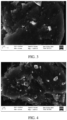
- the negative electrode material prepared in Example 2 was subjected to SEM test as follows: Scanning electron microscope characterization was recorded with a PhilipsXL-30 field emission scanning electron microscope. Testing was performed at 10 kV and 10 mA. For a scanning electron microscope SEM image, reference may be made to FIGs. 3 and 4 . It can be learned from the SEM test image that the silicon particles are filled in the pores in surface of the graphite.
- the method for testing the median particle sizes of the graphite, the silicon particles, and the silicon material in Table 1 was as follows: The silicon-based composite material was made into an electrode plate, a cross section of the electrode plate was cut for observation, particle sizes of the graphite in 100 particles were tested, and an average value was taken to serve as the median particle size of the graphite; and particle sizes of silicon particles in 100 particles were tested, and an average value was taken to serve as the median particle size of the silicon particles.
- High-temperature cycling test of battery cell At a test temperature of 45°C, the battery cell was charged to 4.4 V at a constant current of 0.7C, constant-voltage charged to 0.025C, left standing for 5 minutes, and then discharged to 3.0 V at 0.5C. A capacity obtained in this cycle was an initial capacity. Then, a 0.7C charge and 0.5C discharge cycling test was performed. A ratio of the capacity of each cycle to the initial capacity was calculated to obtain a capacity degradation curve.
- Full charge swelling rate test of battery cell Thickness of a fresh battery cell at half charge was measured by a spiral micrometer. After 400 cycles, when the battery cell was in a full charge state, the thickness of the battery cell was measured again by the spiral micrometer, and compared with the initial thicknesses of the fresh battery cell at half charge to obtain a full charge swelling rate of battery cell at that time.
- Comparisons between Examples 1 to 4 indicate that when the average pore diameter D1 of the pores and the median particle size D2 of the silicon particles satisfy the following relational expression: D1/D2 ⁇ 1.3, a smaller particle size of the silicon particles indicates a smaller local stress during lithium intercalation, less swelling of the silicon particles, and better cycling performance of the battery.
- Comparisons between Examples 3, 5, and 6 and Example 13 indicate that when the pore diameters in the surface of the graphite are the same, a larger particle size of the silicon particles indicates a larger local stress during lithium intercalation, and that more particles cannot be intercalated into the pores in surface of the graphite. This cannot effectively suppress the swelling of the silicon particles and causes deterioration in swelling and cycling of the battery cell.
- Comparisons between Examples 3, 7, and 8 and Example 14 indicate that when the particle sizes of the silicon particles are the same, a smaller pore diameter in surface of the graphite indicates that more silicon particles cannot effectively enter the pores in the surface of the graphite, and an effective space for accommodating swelling during lithium intercalation in silicon is reduced, which leads to significant deterioration in cycling performance and swelling of the battery cell.
Landscapes
- Chemical & Material Sciences (AREA)
- Chemical Kinetics & Catalysis (AREA)
- Electrochemistry (AREA)
- General Chemical & Material Sciences (AREA)
- Engineering & Computer Science (AREA)
- Materials Engineering (AREA)
- Composite Materials (AREA)
- Manufacturing & Machinery (AREA)
- Inorganic Chemistry (AREA)
- Battery Electrode And Active Subsutance (AREA)
Abstract
Description
- This disclosure relates to the field of lithium-ion batteries, and specifically to a silicon-based composite material for lithium-ion battery negative electrode, and a preparation method and application thereof.
- One aspect of technological innovation in lithium-ion batteries is to continuously improve the energy density. At present, the actual capacity of mainstream graphite materials is close to the theoretical capacity (372 mAh/g), and there is already a bottleneck in improving the energy density. Silicon-based negative electrode materials have attracted much attention and research because of their advantages such as abundant reserves, ultra-high theoretical capacity (4200 mAh/g), and environmental friendliness. However, the volume swelling (more than 300%) of the silicon-based negative electrode materials during cycling has seriously affected the process of industrial application of the silicon-based negative electrode materials.
- Therefore, further research is needed for the silicon-based negative electrode materials.
- This disclosure is intended to resolve at least one of the technical problems in the related art to some extent. In view of this, an objective of this disclosure is to provide a silicon-based composite material for lithium-ion battery negative electrode, where the silicon-based composite material features high capacity, good electrical conductivity, good cycling performance, or low swelling rate.
- According to an aspect of this disclosure, this disclosure provides a silicon-based composite material. According to an embodiment of this disclosure, the silicon-based composite material includes: graphite, the graphite having a plurality of pores in surface; silicon particles, the silicon particles being filled in the pores of the graphite; and a carbon layer, the carbon layer being disposed on the surface of the graphite. In this way, the silicon-based composite material being used as the negative electrode material of lithium-ion battery allows the negative electrode material to have high capacity, good electrical conductivity, good cycling performance, or low swelling rate, thus effectively improving the performance and service life of the lithium-ion battery.
- According to an embodiment of this disclosure, an average pore diameter D1 of the pores and a median particle size D2 of the silicon particles satisfy the following relational expression: D1/D2 ≥ 1.3.
- According to an embodiment of this disclosure, an average pore diameter D1 of the pores and a median particle size D3 of the silicon-based composite material satisfy the following relational expression: D3/D1 ≥ 3.
- According to an embodiment of this disclosure, the silicon-based composite material satisfies at least one of the following conditions: an average pore diameter D1 of the pores is 100 nm to 10 µm; a median particle size D2 of the silicon particles is 30 nm to 5 µm; a median particle size D3 of the silicon-based composite material is 0.5 µm to 60 µm; a median particle size of the graphite is 1 µm to 50 µm; for the pores including the silicon particles, each pore includes at least one of the silicon particles; or based on a total mass of the silicon-based composite material and measured in mass percentage, the silicon-based composite material includes: 30% to 99% of the graphite; 0.9% to 60% of the silicon particles; and 0.1% to 5% of the carbon layer.
- According to an embodiment of this disclosure, the carbon layer satisfies at least one of the following conditions: the carbon layer has a thickness of 2 nm to 300 nm; and in Raman spectroscopy, a ratio of a peak height of the carbon layer at 1350 cm-1 to a peak height at 1580 cm-1 is 1.0 < I1350/I1580 < 3.
- According to another aspect of this disclosure, this disclosure provides a method for preparing the foregoing silicon-based composite material. According to an embodiment of this disclosure, the method for preparing the silicon-based composite material for lithium-ion battery negative electrode includes: mixing and ball milling graphite and a pore-forming agent to obtain a graphite/pore-forming agent composite material; adding the graphite/pore-forming agent composite material to a pore-forming agent removal solution, performing stirring and mixing to uniformity, and removing the pore-forming agent, to obtain graphite having a plurality of pores in surface; depositing silicon particles into the pores to obtain a graphite/silicon composite material; and forming a carbon layer on surface of the graphite/silicon composite material to obtain the silicon-based composite material, where optionally, a shape of the pore-forming agent is at least one of a spherical shape, a square shape, or an irregular shape, and optionally, a material of the pore-forming agent includes at least one of metal particles, metal alloy particles, or metal oxide particles. In this way, the silicon-based composite material being used as the negative electrode material of lithium-ion battery allows the negative electrode material to have high capacity, good electrical conductivity, good cycling performance, or low swelling rate, thus effectively improving the performance and service life of the lithium-ion battery. In addition, the foregoing method is mature in technology, easy to implement, and suitable for industrial production.
- According to another aspect of this disclosure, this disclosure provides a negative electrode material for lithium-ion battery. According to an embodiment of this disclosure, the negative electrode material includes: the foregoing silicon-based composite material; a carbon material; a conductive agent; and a binder. In this way, the negative electrode material has high capacity, good electrical conductivity, good cycling performance, or low swelling rate, thus effectively improving the performance and service life of the lithium-ion battery.
- According to another aspect of this disclosure, this disclosure provides a negative electrode plate. According to an embodiment of this disclosure, the negative electrode plate includes the foregoing negative electrode material. In this way, the negative electrode plate has high capacity, good electrical conductivity, good cycling performance, or low swelling rate, thus effectively improving the performance and service life of the lithium-ion battery.
- According to another aspect of this disclosure, this disclosure provides a lithium-ion battery. According to this embodiment of this disclosure, the lithium-ion battery includes the foregoing negative electrode plate. In this way, the lithium-ion battery has high capacity, good electrical conductivity, good cycling performance, or low swelling rate, thus effectively improving the performance and service life of the lithium-ion battery. Persons skilled in the related art can understand that the lithium-ion battery has all the features and advantages of the foregoing silicon-based composite material and the negative electrode plate, which is not described herein again.
-
-
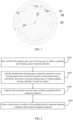
FIG. 1 is a schematic structural diagram of a silicon-based composite material according to an embodiment of this disclosure. -
FIG. 2 is a flowchart of a method for preparing silicon-based composite material according to another embodiment of this disclosure. -
FIG. 3 is a scanning electron microscope image of a silicon-based composite material in Example 2. -
FIG. 4 is a scanning electron microscope image of a silicon-based composite material in Example 2. - The following describes some embodiments of this disclosure in detail. The embodiments described below are illustrative and only used for explaining this disclosure, and cannot be construed as limitations on this disclosure. Embodiments whose technical solutions or conditions are not specified are made in accordance with technical solutions or conditions described in literature in the field or made in accordance with product instructions. The reagents or instruments used are all conventional products that are commercially available if no manufacturer is indicated.
- According to an aspect of this disclosure, this disclosure provides a silicon-based composite material. According to an embodiment of this disclosure, referring to
FIG. 1 , the silicon-based composite material includes:graphite 10, thegraphite 10 having a plurality of pores 11 in surface;silicon particles 20, thesilicon particles 20 being filled in the pores 11 in surface of the graphite; and acarbon layer 30, thecarbon layer 30 being disposed on an outer surface of thegraphite 10. In this way, the silicon-based composite material being used as a negative electrode material of lithium-ion battery allows the negative electrode material to have high capacity, good electrical conductivity, and good cycling performance, effectively alleviating the swelling of a battery negative electrode plate, thus effectively improving the performance and service life of the lithium-ion battery. - Further, the
carbon layer 30 can further cover the pores 11, thus avoiding thesilicon particles 20 separating from the pores 11 in a process of using the silicon-based composite material to prepare negative electrode plate. - According to an embodiment of this disclosure, an average pore diameter D1 of the pores and a median particle size D2 of the silicon particles satisfy the following relational expression: D1/D2 ≥ 1.3. In this way, the silicon particles can be well filled in the pores. In addition, the silicon particles have a specified swelling rate, and therefore as compared with the particle size of the silicon particles, pores with a large pore diameter leave some swelling room for the silicon particles, effectively alleviating the swelling of the battery negative electrode plate, thus effectively improving the performance and service life of the lithium-ion battery.
- According to an embodiment of this disclosure, an average pore diameter D1 of the pores and a median particle size D3 of the silicon-based composite material satisfy the following relational expression: D3/D1 ≥ 3. This effectively ensures the electrical conductivity, gram capacity, and energy density of the battery negative electrode plate. If the average pore diameter of the pores is relatively large (that is, D3/D1 < 3), the gram capacity and energy density of the battery negative electrode plate are affected.
- According to an embodiment of this disclosure, the average pore diameter D1 of the pores is 100 nm to 10 µm, for example, 100 nm, 200 nm, 300 nm, 500 nm, 800 nm, 1 µm, 1.2 µm, 1.5 µm, 1.8 µm, 2 µm, 3 µm, 4 µm, 5 µm, 6 µm, 7 µm, 8 µm, 9 µm, or 10 µm. The median particle size D2 of the silicon particles is 30 nm to 5 µm, for example, 30 nm, 50 nm, 100 nm, 200 nm, 300 nm, 400 nm, 500 nm, 600 nm, 700 nm, 800 nm, 1 µm, 1.2 µm, 1.5 µm, 1.8 µm, 2 µm, 2.5 µm, 3 µm, 3.5 µm, 4 µm, 4.5 µm, or 5 µm. In this way, in the foregoing particle size range, the silicon-based composite material has good electrical conductivity and capacity, effectively alleviating the swelling of the battery negative electrode plate, thus improving cycling performance of the negative electrode plate.
- According to this embodiment of this disclosure, the median particle size D3 of the silicon-based composite material is 0.5 µm to 60 µm, for example, 0.5 µm, 1 µm, 5 µm, 10 µm, 158 µm, 18 µm, 20 µm, 22 µm, 25 µm, 28 µm, 30 µm, 33 µm, 35 µm, 38 µm, 40 µm, 42 µm, 45 µm, 48 µm, 50 µm, 52 µm, 55 µm, 57 µm, or 60 µm. In this way, the silicon-based composite material with the above particle size has a suitable and large specific surface area, which helps to further improve the cycling performance and capacity of the negative electrode plate.
- According to this embodiment of this disclosure, the median particle size D4 of the graphite is 1 µm to 50 µm, for example, 1 µm, 5 µm, 10 µm, 158 µm, 18 µm, 20 µm, 22 µm, 25 µm, 28 µm, 30 µm, 33 µm, 35 µm, 38 µm, 40 µm, 42 µm, 45 µm, 48 µm, or 50 µm. This effectively ensures good electrical conductivity of the silicon-based composite material.
- According to an embodiment of this disclosure, for the pores including the silicon particles, each pore includes at least one of the silicon particles. Based on the foregoing average pore diameter of the pores and the median particle size of the silicon particles, one or more silicon particles can be filled in each pore, and some swelling room can be left for the silicon particles, thus ensuring good cycling performance of the negative electrode plate.
- According to this embodiment of this disclosure, a specific type of the graphite includes at least one of artificial graphite, natural graphite, or meso-carbon microbeads; and the carbon layer includes an amorphous carbon layer, carbon nanotubes, conductive carbon black, or graphene. In this way, the foregoing material facilitates preparation, features good electrical conductivity and low costs, and helps to ensure good use performance of the negative electrode material.
- According to this embodiment of this disclosure, the carbon layer has a thickness d of 2 nm to 300 nm, for example, 2 nm, 5 nm, 10 nm, 50 nm, 80 nm, 100 nm, 120 nm, 150 nm, 180 nm, 200 nm, 220 nm, 250 nm, 280 nm, or 300 nm. The carbon layer structure with the foregoing thickness can not only ensure good electrical conductivity of the silicon-based composite material, but also ensure good cycling performance and gram capacity of the lithium-ion battery.
- According to this embodiment of this disclosure, in Raman spectroscopy, a ratio of a peak height of the carbon layer at 1350 cm-1 to a peak height at 1580 cm-1 is 1.0 < I1350/I1580 < 3.
- According to this embodiment of this disclosure, based on a total mass of the silicon-based composite material and measured in mass percentage, the silicon-based composite material includes: 30 wt% to 99 wt% (for example, 30 wt%, 35 wt%, 40 wt%, 50 wt%, 60 wt%, 70 wt%, 80 wt%, 90 wt%, or 99 wt%) of the graphite; 0.9 wt% to 60 wt% (for example, 0.9 wt%, 15 wt%, 20 wt%, 30 wt%, 40 wt%, 50 wt%, or 60 wt%) of the silicon particles; and 0.1 wt% to 5 wt% (for example, 0.1 wt%, 0.5 wt%, 1 wt%, 1.5 wt%, 2 wt%, 2.5 wt%, 3 wt%, 3.5 wt%, 4 wt%, 4.5 wt%, or 5 wt%) of the carbon layer. In this way, the silicon-based composite material formed based on the foregoing composition ratio has good electrical conductivity, gram capacity, and energy density, thus ensuring good cycling performance of the negative electrode plate.
- According to another aspect of this disclosure, this disclosure provides a method for preparing the foregoing silicon-based composite material. According to an embodiment of this disclosure, referring to
FIG. 2 , the method for preparing silicon-based composite material for lithium-ion battery negative electrode includes the following steps. - S100: Mix and ball mill graphite and a pore-forming agent to obtain a graphite/pore-forming agent composite material.
- In some embodiments, the graphite, the pore-forming agent, a dispersing agent, and a solvent can be further mixed and wet ball milled, to obtain the graphite/pore-forming agent composite material. A material of the pore-forming agent includes at least one of metal particles, metal alloy particles, or metal oxide particles. A specific material of the metal particles may be at least one of Al, Zn, Fe, or Sn. In this way, the pore-forming agent has high hardness and can be embedded and extruded into the graphite through ball milling. In some embodiments, the dispersing agent is ethanol, ethylene glycol, or a combination of the two, and therefore can allow the graphite and the pore-forming agent to be mixed to uniformity during wet ball milling, which helps to obtain pores distributed uniformly.
- Further, a shape of the pore-forming agent is at least one of a spherical shape, a square shape, or an irregular shape. In this way, corresponding preparation is performed to obtain pores in the spherical shape, the square shape, or the irregular shape.
- S200: Add the graphite/pore-forming agent composite material to a pore-forming agent removal solution, perform stirring and mixing to uniformity, and remove the pore-forming agent, to obtain graphite having a plurality of pores in surface.
- Persons skilled in the related art can select a pore-forming removal agent based on the specific material of the pore-forming agent. In some embodiments, the pore-forming agent is at least one of metal, metal alloy particles, or a metal oxide, and dilute hydrochloric acid or dilute sulfuric acid can be selected as the pore-forming removal agent to remove the pore-forming agent through chemical reaction, so as to obtain the pores.
- S300: Deposit silicon particles into the pores to obtain a graphite/silicon composite material.
- In some embodiments, the silicon particles can be deposited into the pores in surface of the graphite using the chemical vapor deposition or physical vapor deposition method, to obtain the graphite/silicon composite material. In this way, the foregoing method is mature in technology, easy to implement, and suitable for industrial production.
- S400: Form a carbon layer on surface of the graphite/silicon composite material to obtain a silicon-based composite material.
- In some embodiments, the chemical vapor deposition or liquid phase method can be used to form the carbon layer on the surface of the graphite/silicon composite material, thus obtaining the silicon-based composite material. In this way, the foregoing method is mature in technology, easy to implement, and suitable for industrial production.
- According to this embodiment of this disclosure, the silicon-based composite material being used as a negative electrode material of lithium-ion battery allows the negative electrode material to have high capacity, good electrical conductivity, and good cycling performance, effectively alleviating the swelling of the battery negative electrode plate, thus effectively improving the performance and service life of the lithium-ion battery. In addition, the foregoing method is mature in technology, easy to implement, and suitable for industrial production.
- According to another aspect of this disclosure, this disclosure provides a negative electrode material for lithium-ion battery. According to an embodiment of this disclosure, the negative electrode material includes: the foregoing silicon-based composite material; a carbon material; a conductive agent; and a binder. In this way, the negative electrode material has high capacity, good electrical conductivity, good cycling performance, or low swelling rate, thus effectively improving the performance and service life of the lithium-ion battery.
- According to an embodiment of this disclosure, there is no special requirement for the specific composition ratio of the silicon-based composite material, the carbon material, the conductive agent, and the binder in the negative electrode material, and persons skilled in the related art can make flexible selections based on actual situations. This is not limited herein.
- According to an embodiment of this disclosure, the carbon material includes at least one of artificial graphite or natural graphite. The conductive agent includes carbon nanotubes, vapor grown carbon fibers, conductive carbon black, acetylene black, Ketjen black, conductive graphite, or graphene. The binder includes at least one of polyacrylate, polyimide, polyamide, polyamideimide, polyfluoroethylene, styrene butadiene rubber, sodium alginate, polyvinyl alcohol, polytetrafluoroethylene, polyacrylonitrile, sodium carboxymethyl cellulose, potassium carboxymethyl cellulose, sodium hydroxymethyl cellulose, or potassium hydroxymethyl cellulose. In this way, the foregoing materials are widely sourced and have better use performance, which is conducive to improving performance of the negative electrode material.
- According to another aspect of this disclosure, this disclosure provides a negative electrode plate. According to an embodiment of this disclosure, the negative electrode plate includes the foregoing negative electrode material. In this way, the negative electrode plate has high capacity, good electrical conductivity, good cycling performance, or low swelling rate, thus effectively improving the performance and service life of the lithium-ion battery.
- According to another aspect of this disclosure, this disclosure provides a lithium-ion battery. According to this embodiment of this disclosure, the lithium-ion battery includes the foregoing negative electrode plate. In this way, the lithium-ion battery has high capacity, good electrical conductivity, good cycling performance, or low swelling rate, thus effectively improving the performance and service life of the lithium-ion battery. Persons skilled in the related art can understand that the lithium-ion battery has all the features and advantages of the foregoing silicon-based composite material and the negative electrode plate, which is not described herein again.
- Steps of preparing negative electrode material of negative electrode plate were as follows.
- S 100: Graphite and a pore-forming agent were mixed and ball milled to obtain a graphite/pore-forming agent composite material.
- S200: The graphite/pore-forming agent composite material was added to a pore-forming agent removal solution, then stirring and mixing to uniformity were performed, and the pore-forming agent was removed, to obtain graphite having a plurality of pores in surface.
- S300: Silicon particles were deposited into the pores to obtain a graphite/silicon composite material.
- S400: A carbon layer was formed on surface of the graphite/silicon composite material to obtain a silicon-based composite material, where based on a total mass of the silicon-based composite material and measured in mass percentage, the silicon-based composite material included: 30 wt% to 99 wt% of the graphite; 0.9 wt% to 60 wt% of the silicon particles; and 3 wt% of the carbon layer.
- S500: The prepared silicon-based composite material was mixed with a carbon material (artificial graphite), a conductive agent (super P), and a binder (PAA) to obtain a negative electrode plate, where a mass ratio of the silicon-based composite material, the carbon material, the conductive agent, and the binder was 85:10:1.2:3.8.
- Steps of preparing negative electrode material of positive electrode plate were as follows.
- An active substance LiCoO2, a conductive carbon black, and a binder polyvinylidene fluoride (PVDF) were fully stirred and mixed to uniformity in an N-methylpyrrolidone solvent system at a mass ratio of 96.7:1.7:1.6, and then the resulting mixture was applied onto an Al foil, followed by drying and cold pressing to obtain a positive electrode plate.
- With a PE porous polymeric film as a separator, the positive electrode plate, the separator, and the negative electrode plate were stacked in sequence, so that the separator was placed between negative and positive electrodes for separation, and the resulting stack was wound to obtain a bare cell. The bare cell was placed in an outer package, a prepared electrolyte was injected, and packaging was performed, followed by processes such as formation, degassing, and trimming, to obtain a full battery cell.
- In Examples 1 to 12 and Comparative examples 1 to 4, the negative electrode plate, the positive electrode plate, and the full battery cell of the lithium-ion battery were prepared according to the foregoing steps. For differences of parameters in the examples, reference may be made to Table 1, and for the test results of the prepared battery, reference may be made to Table 2.
Table 1 Amount of graphite (g) Graphite Dv50 (µm) Average pore diameter of pores (µm) Amount of silicon added (g) Silicon particle Dv50 (µm) Example 1 100 20 0.15 10 0.1 Example 2 100 20 0.7 10 0.5 Example 3 100 20 3 10 2 Example 4 100 20 5 10 3 Example 5 100 20 3 10 0.1 Example 6 100 20 3 10 0.5 Example 7 100 20 4.5 10 2 Example 8 100 20 6 10 2 Example 9 100 9 3 10 2 Example 10 100 15 3 10 2 Example 11 100 20 3 5 2 Example 12 100 20 3 20 2 Example 13 100 20 3 10 3 Example 14 100 20 2 10 2 Example 15 100 6 3 10 2 Example 16 100 20 3 30 2 Table 2 Cycles when capacity decays to 80% Full charge swelling of battery cell after 500 cycles Example 1 625 8.5% Example 2 574 8.9% Example 3 538 9.4% Example 4 498 9.7% Example 5 527 8.2% Example 6 598 9.0% Example 7 549 9.2% Example 8 558 8.6% Example 9 461 9.7% Example 10 492 9.6% Example 11 645 7.2% Example 12 401 13.5% Example 13 478 11.5% Example 14 467 11.9% Example 15 398 10.2% Example 16 283 17.9% - The negative electrode material prepared in Example 2 was subjected to SEM test as follows: Scanning electron microscope characterization was recorded with a PhilipsXL-30 field emission scanning electron microscope. Testing was performed at 10 kV and 10 mA. For a scanning electron microscope SEM image, reference may be made to
FIGs. 3 and 4 . It can be learned from the SEM test image that the silicon particles are filled in the pores in surface of the graphite. - The method for testing the median particle sizes of the graphite, the silicon particles, and the silicon material in Table 1 was as follows: The silicon-based composite material was made into an electrode plate, a cross section of the electrode plate was cut for observation, particle sizes of the graphite in 100 particles were tested, and an average value was taken to serve as the median particle size of the graphite; and particle sizes of silicon particles in 100 particles were tested, and an average value was taken to serve as the median particle size of the silicon particles.
- High-temperature cycling test of battery cell: At a test temperature of 45°C, the battery cell was charged to 4.4 V at a constant current of 0.7C, constant-voltage charged to 0.025C, left standing for 5 minutes, and then discharged to 3.0 V at 0.5C. A capacity obtained in this cycle was an initial capacity. Then, a 0.7C charge and 0.5C discharge cycling test was performed. A ratio of the capacity of each cycle to the initial capacity was calculated to obtain a capacity degradation curve.
- Full charge swelling rate test of battery cell: Thickness of a fresh battery cell at half charge was measured by a spiral micrometer. After 400 cycles, when the battery cell was in a full charge state, the thickness of the battery cell was measured again by the spiral micrometer, and compared with the initial thicknesses of the fresh battery cell at half charge to obtain a full charge swelling rate of battery cell at that time.
- Comparisons between Examples 1 to 4 indicate that when the average pore diameter D1 of the pores and the median particle size D2 of the silicon particles satisfy the following relational expression: D1/D2 ≥ 1.3, a smaller particle size of the silicon particles indicates a smaller local stress during lithium intercalation, less swelling of the silicon particles, and better cycling performance of the battery.
- Comparisons between Examples 3, 5, and 6 and Example 13 indicate that when the pore diameters in the surface of the graphite are the same, a larger particle size of the silicon particles indicates a larger local stress during lithium intercalation, and that more particles cannot be intercalated into the pores in surface of the graphite. This cannot effectively suppress the swelling of the silicon particles and causes deterioration in swelling and cycling of the battery cell.
- Comparisons between Examples 3, 7, and 8 and Example 14 indicate that when the particle sizes of the silicon particles are the same, a smaller pore diameter in surface of the graphite indicates that more silicon particles cannot effectively enter the pores in the surface of the graphite, and an effective space for accommodating swelling during lithium intercalation in silicon is reduced, which leads to significant deterioration in cycling performance and swelling of the battery cell.
- Comparisons between Examples 3, 9, and 10 and Example 15 indicate that when the pore diameter of the pores is the same as the particle size of the silicon particles, a smaller particle size of the graphite causes more serious damage to the graphite, which leads to structural stability damage, thus causing deterioration in cycling and swelling.
- Comparisons between Examples 3, 11, and 12 and Example 16 indicate that with the increase of the silicon content, more silicon particles cannot effectively enter the pores in the surface of the graphite, which leads to significant deterioration in cycling performance and swelling of the battery cell.
- In the description of this specification, descriptions referring to the terms "an embodiment", "some embodiments", "an example", "a specific example", or "some examples" mean the specific features, structures, materials or characteristics described with reference to the embodiment or example are included in at least one embodiment or example of this disclosure. In this specification, illustrative expressions of these terms do not necessarily refer to the same embodiment or example. Moreover, the specific features, structures, materials, or characteristics described may be combined in any suitable manner in any one or more embodiments or examples. In addition, without mutual conflict, persons skilled in the art may incorporate and combine different embodiments or examples and features of the different embodiments or examples described in this specification.
- Although the examples of this disclosure have been shown and described, it can be understood that these examples are illustrative and should not be construed as limitations on this disclosure. Persons of ordinary skill in the art can make changes, modifications, substitutions, and transformations to the examples within the scope of this disclosure.
Claims (10)
- A silicon-based composite material, comprising:graphite, the graphite having a plurality of pores in surface;silicon particles, the silicon particles being filled in the pores of the graphite; anda carbon layer, the carbon layer being disposed on the surface of the graphite.
- The silicon-based composite material according to claim 1, wherein an average pore diameter D1 of the pores and a median particle size D2 of the silicon particles satisfy the following relational expression: D1/D2 ≥ 1.3.
- The silicon-based composite material according to claim 1, wherein an average pore diameter D1 of the pores and a median particle size D3 of the silicon-based composite material satisfy the following relational expression: D3/D1 ≥ 3.
- The silicon-based composite material according to claim 1, wherein an average pore diameter D1 of the pores is 100 nm to 10 µm.
- The silicon-based composite material according to claim 1, wherein the silicon-based composite material satisfies at least one of the following conditions:a median particle size D2 of the silicon particles is 30 nm to 5 µm;a median particle size D3 of the silicon-based composite material is 0.5 µm to 60 µm;a median particle size of the graphite is 1 µm to 50 µm;for the pores comprising the silicon particles, each pore comprises at least one of the silicon particles; orbased on a total mass of the silicon-based composite material and measured in mass percentage, the silicon-based composite material comprises:30% to 99% of the graphite;0.9% to 60% of the silicon particles; and0.1% to 5% of the carbon layer.
- The silicon-based composite material according to claim 1, wherein the carbon layer satisfies at least one of the following conditions:the carbon layer has a thickness of 2 nm to 300 nm; andin Raman spectroscopy, a ratio of a peak height of the carbon layer at 1350 cm-1 to a peak height at 1580 cm-1 is 1.0 < I1350/I1580 < 3.
- A method for preparing the silicon-based composite material according to any one of claims 1 to 6, comprising:mixing and ball milling graphite and a pore-forming agent to obtain a graphite/pore-forming agent composite material;adding the graphite/pore-forming agent composite material to a pore-forming agent removal solution, performing stirring and mixing to uniformity, and removing the pore-forming agent, to obtain graphite having a plurality of pores in surface;depositing silicon particles into the pores to obtain a graphite/silicon composite material; andforming a carbon layer on surface of the graphite/silicon composite material to obtain the silicon-based composite material, whereinoptionally, a shape of the pore-forming agent is at least one of a spherical shape, a square shape, or an irregular shape, andoptionally, a material of the pore-forming agent comprises at least one of metal particles, metal alloy particles, or metal oxide particles.
- A negative electrode material for lithium-ion battery, comprising:the silicon-based composite material according to any one of claims 1 to 6;a carbon material;a conductive agent; anda binder.
- A negative electrode plate, comprising the negative electrode material according to claim 8.
- A lithium-ion battery, comprising the negative electrode plate according to claim 9.
Applications Claiming Priority (1)
| Application Number | Priority Date | Filing Date | Title |
|---|---|---|---|
| PCT/CN2020/140293 WO2022140953A1 (en) | 2020-12-28 | 2020-12-28 | Silicon-based composite material for negative electrode of lithium ion battery, preparation method therefor and application thereof |
Publications (2)
| Publication Number | Publication Date |
|---|---|
| EP4270536A1 true EP4270536A1 (en) | 2023-11-01 |
| EP4270536A4 EP4270536A4 (en) | 2025-07-09 |
Family
ID=80134725
Family Applications (1)
| Application Number | Title | Priority Date | Filing Date |
|---|---|---|---|
| EP20967305.2A Pending EP4270536A4 (en) | 2020-12-28 | 2020-12-28 | Silicon-based composite for negative electrode of a lithium-ion battery, manufacturing method therefor, and application thereof |
Country Status (3)
| Country | Link |
|---|---|
| EP (1) | EP4270536A4 (en) |
| CN (1) | CN114041217A (en) |
| WO (1) | WO2022140953A1 (en) |
Families Citing this family (2)
| Publication number | Priority date | Publication date | Assignee | Title |
|---|---|---|---|---|
| CN116230885A (en) * | 2023-02-10 | 2023-06-06 | 江苏正力新能电池技术有限公司 | Silicon-based negative electrode materials, silicon electrodes and lithium-ion batteries |
| US20250006899A1 (en) * | 2023-06-28 | 2025-01-02 | GM Global Technology Operations LLC | Anode void space burnout for high-content silicon carbon anodes for lithium-ion batteries |
Family Cites Families (7)
| Publication number | Priority date | Publication date | Assignee | Title |
|---|---|---|---|---|
| CN101323447B (en) * | 2008-07-21 | 2012-02-22 | 深圳市贝特瑞新能源材料股份有限公司 | Graphite powder of lithium ionic cell cathode and preparation thereof |
| CN104269521B (en) * | 2014-10-20 | 2017-02-22 | 洛阳月星新能源科技有限公司 | Carbon/silicon/blocky graphite cathode material for lithium ion battery, preparation method and lithium ion battery |
| CN104577084A (en) * | 2015-01-20 | 2015-04-29 | 深圳市贝特瑞新能源材料股份有限公司 | Nano silicon composite negative electrode material for lithium ion battery, preparation method and lithium ion battery |
| CN110098380A (en) * | 2019-04-15 | 2019-08-06 | 合肥国轩高科动力能源有限公司 | A kind of preparation method of lithium ion battery silicon-based negative electrode material |
| CN110224125A (en) * | 2019-06-13 | 2019-09-10 | 长沙矿冶研究院有限责任公司 | A kind of porous carbon-nanometer silico-carbo Core-shell structure material and preparation method thereof |
| CN110400930A (en) * | 2019-08-15 | 2019-11-01 | 马鞍山科达普锐能源科技有限公司 | A kind of lithium-ion battery silicon-carbon anode material and preparation method thereof |
| CN110311125A (en) * | 2019-08-15 | 2019-10-08 | 马鞍山科达普锐能源科技有限公司 | A kind of lithium-ion battery silicon-carbon anode material and preparation method thereof |
-
2020
- 2020-12-28 WO PCT/CN2020/140293 patent/WO2022140953A1/en not_active Ceased
- 2020-12-28 CN CN202080034126.4A patent/CN114041217A/en active Pending
- 2020-12-28 EP EP20967305.2A patent/EP4270536A4/en active Pending
Also Published As
| Publication number | Publication date |
|---|---|
| EP4270536A4 (en) | 2025-07-09 |
| WO2022140953A1 (en) | 2022-07-07 |
| CN114041217A (en) | 2022-02-11 |
Similar Documents
| Publication | Publication Date | Title |
|---|---|---|
| CN110233259A (en) | Positive electrode active material, positive electrode plate and electrochemical energy storage device | |
| EP2543699A1 (en) | Electrode for lithium secondary battery, method of manufacturing the same, and lithium secondary battery including the same | |
| US20230343943A1 (en) | Negative electrode material, negative electrode plate, and electrochemical apparatus and electronic apparatus containing such negative electrode plate | |
| CN111564591B (en) | Lithium metal battery diaphragm modified slurry and application thereof | |
| JP2025519837A (en) | Secondary battery electrode plate, method for producing same, and secondary battery | |
| CN115911368A (en) | A kind of hard carbon negative electrode material, negative electrode sheet and battery | |
| CN117317203A (en) | A low-strain silicon-carbon negative electrode material and its preparation method and application | |
| WO2024217491A1 (en) | Lithium ion battery fast-charging negative electrode sheet, electrochemical device and electronic device | |
| CN116759540A (en) | A kind of lithium manganese iron phosphate composite electrode pole piece and its preparation method and application | |
| CN114373927B (en) | A negative electrode material and a negative electrode sheet comprising the negative electrode material | |
| CN117223120A (en) | A kind of negative electrode sheet and its application | |
| JP7228203B2 (en) | Lithium metal anode and manufacturing method thereof, Lithium ion battery including lithium metal anode | |
| EP4270536A1 (en) | Silicon-based composite material for negative electrode of lithium ion battery, preparation method therefor and application thereof | |
| CN115394951B (en) | Negative electrode active material of secondary battery and secondary battery | |
| CN115312684B (en) | Positive pole piece and battery | |
| CN119943858B (en) | Composite negative plate and preparation method and application thereof | |
| US20250300178A1 (en) | Hard carbon negative electrode material, negative electrode plate and battery | |
| CN121282128A (en) | Silicon negative electrode piece, all-solid-state battery and preparation method thereof | |
| CN114094079B (en) | Preparation method of quick-charge graphite anode material and lithium ion battery | |
| CN115064690A (en) | Lithium iron manganese phosphate positive pole piece, lithium ion battery and corresponding preparation method | |
| CN117080535B (en) | Cylindrical battery | |
| CN115332496B (en) | Preparation method of silica composite material for lithium ion battery | |
| CN115799445B (en) | Modified positive electrode particles for lithium battery and preparation method thereof, lithium battery positive electrode and all-solid-state lithium battery | |
| CN115939380A (en) | A kind of hard carbon negative electrode material, negative electrode sheet and battery | |
| CN114975955A (en) | Silicon-based material and battery |
Legal Events
| Date | Code | Title | Description |
|---|---|---|---|
| STAA | Information on the status of an ep patent application or granted ep patent |
Free format text: STATUS: THE INTERNATIONAL PUBLICATION HAS BEEN MADE |
|
| PUAI | Public reference made under article 153(3) epc to a published international application that has entered the european phase |
Free format text: ORIGINAL CODE: 0009012 |
|
| STAA | Information on the status of an ep patent application or granted ep patent |
Free format text: STATUS: REQUEST FOR EXAMINATION WAS MADE |
|
| 17P | Request for examination filed |
Effective date: 20230727 |
|
| AK | Designated contracting states |
Kind code of ref document: A1 Designated state(s): AL AT BE BG CH CY CZ DE DK EE ES FI FR GB GR HR HU IE IS IT LI LT LU LV MC MK MT NL NO PL PT RO RS SE SI SK SM TR |
|
| DAV | Request for validation of the european patent (deleted) | ||
| DAX | Request for extension of the european patent (deleted) | ||
| RIC1 | Information provided on ipc code assigned before grant |
Ipc: H01M 4/02 20060101ALN20250311BHEP Ipc: H01M 4/62 20060101ALI20250311BHEP Ipc: H01M 4/587 20100101ALI20250311BHEP Ipc: H01M 4/134 20100101ALI20250311BHEP Ipc: H01M 4/133 20100101ALI20250311BHEP Ipc: H01M 4/13 20100101ALI20250311BHEP Ipc: H01M 10/0525 20100101ALI20250311BHEP Ipc: H01M 4/38 20060101ALI20250311BHEP Ipc: H01M 4/36 20060101ALI20250311BHEP Ipc: H01M 4/1395 20100101AFI20250311BHEP |
|
| A4 | Supplementary search report drawn up and despatched |
Effective date: 20250611 |
|
| RIC1 | Information provided on ipc code assigned before grant |
Ipc: H01M 4/02 20060101ALN20250604BHEP Ipc: H01M 4/62 20060101ALI20250604BHEP Ipc: H01M 4/587 20100101ALI20250604BHEP Ipc: H01M 4/134 20100101ALI20250604BHEP Ipc: H01M 4/133 20100101ALI20250604BHEP Ipc: H01M 4/13 20100101ALI20250604BHEP Ipc: H01M 10/0525 20100101ALI20250604BHEP Ipc: H01M 4/38 20060101ALI20250604BHEP Ipc: H01M 4/36 20060101ALI20250604BHEP Ipc: H01M 4/1395 20100101AFI20250604BHEP |
|
| STAA | Information on the status of an ep patent application or granted ep patent |
Free format text: STATUS: EXAMINATION IS IN PROGRESS |