EP4270298A1 - Enhanced computer vision application programming interface - Google Patents
Enhanced computer vision application programming interface Download PDFInfo
- Publication number
- EP4270298A1 EP4270298A1 EP23169091.8A EP23169091A EP4270298A1 EP 4270298 A1 EP4270298 A1 EP 4270298A1 EP 23169091 A EP23169091 A EP 23169091A EP 4270298 A1 EP4270298 A1 EP 4270298A1
- Authority
- EP
- European Patent Office
- Prior art keywords
- node
- graph
- complex
- nodes
- library
- Prior art date
- Legal status (The legal status is an assumption and is not a legal conclusion. Google has not performed a legal analysis and makes no representation as to the accuracy of the status listed.)
- Pending
Links
Images


Classifications
-
- G—PHYSICS
- G06—COMPUTING OR CALCULATING; COUNTING
- G06T—IMAGE DATA PROCESSING OR GENERATION, IN GENERAL
- G06T1/00—General purpose image data processing
- G06T1/20—Processor architectures; Processor configuration, e.g. pipelining
-
- G—PHYSICS
- G06—COMPUTING OR CALCULATING; COUNTING
- G06F—ELECTRIC DIGITAL DATA PROCESSING
- G06F8/00—Arrangements for software engineering
- G06F8/40—Transformation of program code
- G06F8/41—Compilation
- G06F8/43—Checking; Contextual analysis
- G06F8/433—Dependency analysis; Data or control flow analysis
-
- G—PHYSICS
- G06—COMPUTING OR CALCULATING; COUNTING
- G06F—ELECTRIC DIGITAL DATA PROCESSING
- G06F8/00—Arrangements for software engineering
- G06F8/30—Creation or generation of source code
- G06F8/36—Software reuse
-
- G—PHYSICS
- G06—COMPUTING OR CALCULATING; COUNTING
- G06T—IMAGE DATA PROCESSING OR GENERATION, IN GENERAL
- G06T1/00—General purpose image data processing
-
- G—PHYSICS
- G06—COMPUTING OR CALCULATING; COUNTING
- G06T—IMAGE DATA PROCESSING OR GENERATION, IN GENERAL
- G06T11/00—Two-dimensional [2D] image generation
- G06T11/20—Drawing from basic elements
- G06T11/26—Drawing of charts or graphs
-
- G—PHYSICS
- G06—COMPUTING OR CALCULATING; COUNTING
- G06T—IMAGE DATA PROCESSING OR GENERATION, IN GENERAL
- G06T2207/00—Indexing scheme for image analysis or image enhancement
- G06T2207/20—Special algorithmic details
- G06T2207/20072—Graph-based image processing
-
- G—PHYSICS
- G06—COMPUTING OR CALCULATING; COUNTING
- G06T—IMAGE DATA PROCESSING OR GENERATION, IN GENERAL
- G06T7/00—Image analysis
Definitions
- Embodiments of the invention relate to a graph application programming interface (API) that simplifies and accelerates the deployment of a computer vision application on target devices.
- API application programming interface
- a computer vision application typically includes pipelined operations that can be described by a graph.
- the nodes of the graph represent operations (e.g., computer vision functions) and the directed edges represent data flow.
- API application programming interface
- OpenVX TM 1.3.1 specification released in February 2022 by the Khronos Group, is one example of a graph-based programming model for computer vision applications. OpenVX provides a graph-based API that separates the application from the underlying hardware implementations. OpenVX is designed to maximize function and performance portability across diverse hardware platforms, providing a computer vision framework that efficiently addresses current and future hardware architectures with minimal impact on applications.
- Hardware vendors implement graph compilers and executors that optimize the performance of computer vision functions on their devices.
- the API e.g., the OpenVX API
- application developers can build computer vision applications to gain the best performance without knowing the underlying hardware implementation.
- the API enables the application developers to efficiently access computer vision hardware acceleration with both functional and performance portability.
- existing APIs can be cumbersome to use for certain computer vision applications. Thus, there is a need to further enhance the existing APIs to ease the tasks of application development.
- a first aspect of the invention relates to a method for image processing, comprising: receiving a graph application programming interface (API) call to add a complex node to a graph, wherein the graph includes at least the complex node connected to other nodes by edges that are directed and acyclic; processing, by a graph compiler at compile time, the complex node by iteratively expanding the complex node into a plurality of nodes with each node corresponding to one operation in an image processing pipeline; and executing executable code compiled from each node on one or more target devices to perform operations of the image processing pipeline.
- API application programming interface
- each of the other nodes corresponds to a computer vision operation in the image processing pipeline.
- the complex node represents a multi-layered neural network model and each node of the complex node corresponds to one operation layer of the neural network model.
- the complex node represents a subgraph of nodes corresponding to a plurality of computer vision operations.
- the complex node corresponds to customer-defined code for image processing.
- operations corresponding to the complex node are selected from a first library of functions, and operations corresponding to the other nodes in the graph are selected from a second library of functions, and wherein the first library and the second library are based on different programming models optimized for different types of operations.
- the first library of functions is provided by a deep learning framework
- the second library of functions is provided by a computer vision framework.
- operations corresponding to the complex node and the other nodes in the graph are both selected from a same library of computer vision functions.
- the graph API call identifies a graph-based programming model used by operations corresponding to the complex node.
- the graph API call identifies the complex node as one of following: a proprietary computer vision (CV) node, a customer-defined node, a neural network model node, and a VX graph node based on OpenVX.
- CV computer vision
- a second aspect of the invention relates to a system for image processing, comprising: one or more processors to: receive a graph application programming interface (API) call to add a complex node to a graph, wherein the graph includes at least the complex node connected to other nodes by edges that are directed and acyclic; and process, by a graph compiler at compile time, the complex node by iteratively expanding the complex node into a plurality of nodes with each node corresponding to one operation in an image processing pipeline; one or more target devices to execute executable code compiled from each node to perform operations of the image processing pipeline; and memory to store the graph compiler and the executable code.
- API application programming interface
- each of the other nodes corresponds to a computer vision operation in the image processing pipeline.
- the complex node represents a multi-layered neural network model and each node in the complex node corresponds to one operation layer of the neural network model.
- the complex node represents a subgraph of nodes corresponding to a plurality of computer vision operations.
- the complex node corresponds to customer-defined code for image processing.
- operations corresponding to the complex node are selected from a first library of functions, and operations corresponding to the other nodes in the graph are selected from a second library of functions, and wherein the first library and the second library are based on different programming models optimized for different types of operations.
- the first library of functions is optimized for deep learning
- the second library of functions is optimized for computer vision.
- operations corresponding to the complex node and the other nodes in the graph are both selected from a same library of computer vision functions.
- the graph API call identifies a graph-based programming model used by operations corresponding to the complex node.
- the graph API call identifies the complex node as one of following: a proprietary computer vision (CV) node, a customer-defined node, a neural network model node, and a VX graph node based on OpenVX.
- CV computer vision
- a method for image processing.
- the method includes the step of receiving a graph API call to add a complex node to a graph.
- the graph includes at least the complex node connected to other nodes by edges that are directed and acyclic.
- the method further includes the steps of processing, by a graph compiler at compile time, the complex node by iteratively expanding the complex node into multiple nodes with each node corresponding to one operation in an image processing pipeline, and executing executable code compiled from each node on one or more target devices to perform operations of the image processing pipeline.
- a system for for image processing.
- the system includes one or more processors to receive a graph API call to add a complex node to a graph.
- the graph includes at least the complex node connected to other nodes by edges that are directed and acyclic.
- the one or more processors are further operative to process, by a graph compiler at compile time, the complex node by iteratively expanding the complex node into multiple nodes with each node corresponding to one operation in an image processing pipeline.
- the system further includes one or more target devices to execute executable code compiled from each node to perform operations of the image processing pipeline.
- the system further includes memory to store the graph compiler and the executable code.
- Embodiments of the invention provide a graph application programming interface (API) that enables a software developer to create a graph that describes an image processing pipeline.
- the image processing pipeline may be part of an image processing application that includes computer vision operations.
- the graph includes nodes corresponding to operations and edges representing dependencies among the nodes. The edges are directed and acyclic. Different nodes may correspond to different graph-based programming models, such as a computer vision programming model (e.g., OpenVX) and a deep learning programming model (e.g., TensorFlow or TensorFlow Lite). Other programming models may also be used. These programming models are supported by their respective frameworks, which provide respective libraries and other software infrastructures.
- a computer vision programming model e.g., OpenVX
- a deep learning programming model e.g., TensorFlow or TensorFlow Lite
- Other programming models may also be used. These programming models are supported by their respective frameworks, which provide respective libraries and other software infrastructures.
- a graph is composed of nodes that are added to the graph through node creation functions.
- a node represents a computer vision function associated with parameters. Nodes are linked together via data dependencies. Data objects are processed by the nodes.
- OpenVX improves the performance and efficiency of computer vision applications by providing an API as an abstraction for commonly-used vision functions. These vision functions are optimized to significantly accelerate their execution on target hardware.
- the graph API disclosed herein is an extension to the OpenVX API.
- the graph API enables a software developer to add nodes of different graph-based programming models to a graph.
- a software developer may add a complex node to a graph of OpenVX nodes.
- Each OpenVX node corresponds to an OpenVX function provided by an OpenVX library.
- the complex node is different from an OpenVX node in that the complex node may correspond to a sequence of functions such as general computer vision functions, customer-defined functions, neural network functions, or a subgraph of OpenVX functions.
- the graph API disclosed herein minimizes the efforts of integrating diverse programming models into an image processing pipeline; e.g., by integrating neural network operations into computer vision operations.
- a buffer is attached to the complex node to store the code and parameters associated with the complex node's operations.
- a graph compiler at compile time can decode the content of the buffer to convert the complex node's operations into an intermediate representation (IR), and then compile the IR into executable code for execution on target devices.
- IR intermediate representation
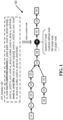
- FIG. 1 is a diagram of an image processing graph 100 ("graph 100") according to one embodiment.
- Graph 100 is an example of a graph model that represents a series of imaging operations and their connections. The series of imaging operations form an image processing pipeline.
- Graph 100 includes multiple nodes 120-125 (indicated by circles) with each node corresponding to one or more operations. Each operation may be a function selected, for example, from a library of image processing functions, neural network functions, or other types of functions.
- the edges (indicated by arrows) of graph 100 connect the nodes and define the data flow from source nodes 121 and 123 to a destination node 125.
- Graph 100 is directed and acyclic; that is, the edges of graph 100 only go one-way and do not loop back.
- Graph 100 is compiled into executable code and executed on target devices, such as image processing hardware.
- a central processing unit CPU may run a graph compiler to compile graph 100 into executable code.
- the executable code may be executed by the target devices as an image processing pipeline.
- data objects such as input data, output data, and intermediate data, may be stored in temporary buffers 101-108 (indicated by rectangles) accessible to the target devices.
- the CPU may invoke the execution of the image processing pipeline and receive the output of the image processing pipeline. The CPU does not invoke the execution of each individual operation in the image processing pipeline. Thus, the overhead caused by the interaction between the CPU and the target devices is significantly reduced during the execution of the image processing pipeline.
- a graph API enables a software developer to create graph 100 and add nodes 120-125 and edges to graph 100.
- the graph API enables a software developer to use a single API call to add a complex node (e.g., complex node 120) to graph 100.
- a complex node corresponds to multiple operations performed on a piece of image data.
- complex node 120 may be a general computer vision (CV) node, a customer-defined node, a neural network (NN) model node, an OpenVX (VX) graph node, etc.
- the general CV node, the customer-defined node, the neural network model node, and the VX graph node are based on different graph-based programming models.
- a general CV node may be based on a proprietary library of computer vision functions provided by the hardware vendor.
- a customer-defined node may contain proprietary code programmed by a software developer and provided to the hardware vendor. The proprietary code may contain already-compiled target-dependent code.
- a neural network model node may correspond to the operations of multiple layers of a neural network, and may be programmed based on a deep-learning library of functions (e.g., TensorFlow, TensorFlowLite, etc.).
- a VX graph node may contain a subgraph of nodes with each node programmed based on an OpenVX library of functions.
- complex node 120 may include computer vision functions, image processing functions, machine-learning functions, neural network functions, user-defined functions, and the like.
- complex node 120 may correspond to multiple operation (OP) layers of a deep-learning neural network (DNN).
- graph 100 may include nodes that correspond to different programming models; e.g., complex node 120 may be a neural network model node, and the other nodes in graph 100 may be OpenVX nodes.
- a neural network model node may be described in TensorFlow Lite, which provides a deep learning library for deploying machine learning models on edge devices.
- the graph API disclosed herein may provide an API_complex 160 that can be called by a software developer to add a complex node to a graph, where the complex node corresponds to a multi-layered neural network model described in TensorFlow Lite.
- API complex 160 includes a a parameter vx_array tflite, which corresponds to the complex node.
- a general CV node, a customer-defined node, a neural network model node, or a VX graph node may be added as a complex node to a graph using a corresponding graph API call.
- a unified graph API call may be used to add a complex node to a graph, where the complex node may be any of a general CV node, a customer-defined node, a neural network model node, or a VX graph node.
- a graph compiler at compile time decodes the complex node into a sequence of nodes with their respective input and output connections to adjacent node(s).
- Each of the nodes in the sequence corresponds to a function predefined in a library. That is, the complex node is expanded into a sequence of nodes at compile time.
- a software developer uses the disclosed graph API to add the complex node to the graph and the graph compiler handles the decoding of the complex node.
- the overhead is greatly reduced for creating a graph that contains multiple graph-based programming models.
- a node corresponds to one predetermined function.
- a software developer would add one node (one OP layer) at a time and connect input/output data objects for each node.
- the software developer would make an API call to add each node that corresponds to one OP layer.
- adding multiple OP layers would require the software developer to make multiple API calls.
- a software developer would first convert the multiple OP layers of a neural network into multiple nodes; e.g., multiple OpenVX nodes. Then these converted OpenVX nodes are added to the OpenVX graph. The conversion is performed by the software developer before compile time.
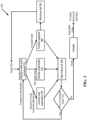
- FIG. 2 is a diagram illustrating a process 200 for processing a complex node according to one embodiment.
- the complex node being processed may correspond to the operations of a multi-layered neural network model.
- Process 200 includes three stages: a graph generation stage 210, a graph compilation stage 220, and an execution stage 230.
- graph generation stage 210 a software developer creates a graph at step 211 and adds nodes (e.g., nodes 120-125 in FIG. 1 ) to the graph at step 212 through the use of a graph API 240.
- a buffer is attached to the node at step 213 to store the code and parameters associated with the node.
- the code contained in a node is stored in a buffer attached to the node.
- graph compilation stage 220 starts with a graph compiler 250 processing each node in the graph at step 221.
- graph compiler 250 decodes the complex node at step 222 by decoding the information in the buffer attached to the complex node. The decoding of the complex node generates a set of nodes, each of which is added to the graph at step 223. Each node added to the graph corresponds to a function predefined in a function library.
- Graph compiler 250 then compiles the graph at step 224 into executable code.
- Process 200 proceeds to execution stage 230 in which target devices 260 executes the executable code at step 231.
- target devices 260 include a vision processing unit (VPU) 261, direct memory access (DMA) and/or enhanced DMA devices 262, a deep-learning accelerator (DLA) 263, and the like.
- VPU vision processing unit
- DMA direct memory access
- DLA deep-learning accelerator
- FIG. 3 is a diagram illustrating a process 300 for processing a graph 305 which includes a complex node according to one embodiment.
- the complex node being processed may correspond to a general CV node, a customer-defined node, a neural network model node, or a VX graph node.
- Graph 305 may be created and the nodes are added through graph API 240 in FIG. 2 .
- process 300 may be performed by graph compiler 250 in FIG. 2 .
- FIG. 3 shows the iterative processing of the nodes in graph 305.
- graph compiler 250 at step 310 first identifies the graph-based programming model used by the node; for example, whether the node is a general CV node, a customer-defined node, a neural network model node, a VX graph node, etc.
- the OpenVX node may be processed as a VX graph node containing a subgraph of one node (i.e., the rightmost path of process 300 as viewed).
- the graph API call that adds the complex node to the graph identifies a graph-based programming model used by the complex node.
- graph compiler 250 converts the parameters of the node into the parameters consistent with other nodes in graph 305; e.g., the parameters according to the OpenVX programming model.
- graph compiler 250 maps the code contained in the general CV node or the customer-defined node into an intermediate representation (IR).
- IR intermediate representation
- the customer-defined node may contain already-compiled target-dependent code.
- the mapping at step 360 may instead include copying the already-compiled code into a command archive for execution.
- the intermediate representation may be a proprietary format provided by a vendor of target devices 260.
- graph compiler 250 at step 330 decodes the model buffer attached to the neural network model node (i.e., decodes the code in the model buffer).
- a neural network model node may contain a series of nodes with each node corresponding to a neural network function; i.e., a neural network OP layer.
- Graph compiler 250 at step 360 maps each decoded node into a neural network function in an intermediate representation, where the neural network function is provided by a deep-learning function library.
- graph compiler 250 at step 350 processes the subgraph recursively one node at a time at steps 310, 340, and 350, and then at step 360 maps each node in the subgraph into an intermediate representation.
- Graph compiler 250 at step 370 determines whether there are any un-processed nodes in graph 305. If there is an un-processed node in graph 305, process 300 proceeds to step 310 to continue the graph processing. After all of the nodes in graph 305 are processed, the intermediate representation is compiled into machine-executable code and executed by target devices 260.
- FIG. 4 is a block diagram of a system 400 operative to perform image processing according to one embodiment.
- System 400 may be embodied in many form factors, such as a computer system, a server computer, a mobile device, a handheld device, a wearable device, and the like.
- System 400 includes processing hardware 410, a memory 420, and a network interface 430. It is understood that system 400 is simplified for illustration; additional hardware and software components are not shown.
- Non-limiting examples of processing hardware 410 may include one or more processors including but not limited to a central processing unit (CPU) on which a graph compiler 460 may run, a graphics processing unit (GPU), a vision processing unit (VPU), a deep learning accelerator (DLA), a DMA/eDMA device, and the like.
- CPU central processing unit
- GPU graphics processing unit
- VPU vision processing unit
- DLA deep learning accelerator
- One or more of the processors, processing units, and/or devices in processing hardware 410 may be the target devices that perform image processing pipeline operations according to executable code 450 compiled from a graph.
- Graph compiler 460 may be an example of graph compiler 250 in FIG. 2 .
- Memory 420 may store graph compiler 460, libraries of functions 470, and executable code 450. Different libraries may support different graph-based programming models. Memory 420 may include a dynamic random access memory (DRAM) device, a flash memory device, and/or other volatile or non-volatile memory devices.
- DRAM dynamic random access memory
- Graph compiler 460 compiles a graph received through graph API calls into executable code 450 for execution on target devices such as a VPU, an eDMA device, a DLA, etc.
- System 400 may receive graph API calls through network interface 430, which may be a wired interface or a wireless interface.
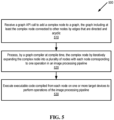
- FIG. 5 is a flow diagram illustrating a method 500 for image processing according to one embodiment.
- the image processing includes processing a graph that includes a complex node.
- method 500 may be performed by a system such as system 400 in FIG. 4 .
- Method 500 starts with step 510 when a system receives a graph API call to add a complex node to a graph, the graph including at least the complex node connected to other nodes by edges that are directed and acyclic.
- the system uses a graph compiler to process, at compile time, the complex node by iteratively expanding the complex node into a plurality of nodes with each node corresponding to one operation in an image processing pipeline.
- the system at step 530 executes the executable code compiled from each node on one or more target devices to perform operations of the image processing pipeline.
- each of the other nodes in the graph corresponds to a computer vision operation in the image processing pipeline.
- the complex node represents a multi-layered neural network model and each node of the complex node corresponds to one operation layer of the neural network model.
- the complex node represents a subgraph of nodes corresponding to a plurality of computer vision operations.
- the complex node corresponds to customer-defined code for image processing.
- the operations corresponding to the complex node are selected from a first library of functions, and the operations corresponding to the other nodes in the graph are selected from a second library of functions.
- the first library and the second library may be based on different programming models optimized for different types of operations.
- the first library of functions is provided by a deep learning framework
- the second library of functions is provided by a computer vision framework.
- the operations corresponding to the complex node and the other nodes in the graph are both selected from the same library of computer vision functions.
- the graph API call identifies a graph-based programming model used by operations corresponding to the complex node. In one embodiment, the graph API call identifies the complex node as one of the following: a proprietary computer vision (CV) node, a customer-defined node, a neural network model node, and a VX graph node based on OpenVX
- CV computer vision
- FIG. 5 The operations of the flow diagram of FIG. 5 have been described with reference to the exemplary embodiments of FIG. 2 and FIG. 4 . However, it should be understood that the operations of the flow diagram of FIG. 5 can be performed by embodiments of the invention other than the embodiments of FIG. 2 and FIG. 4 , and the embodiments of FIG. 2 and FIG. 4 can perform operations different than those discussed with reference to the flow diagram. While the flow diagram of FIG. 5 shows a particular order of operations performed by certain embodiments of the invention, it should be understood that such order is exemplary (e.g., alternative embodiments may perform the operations in a different order, combine certain operations, overlap certain operations, etc.).
- circuits either dedicated circuits or general-purpose circuits, which operate under the control of one or more processors and coded instructions
- the functional blocks will typically comprise transistors that are configured in such a way as to control the operation of the circuity in accordance with the functions and operations described herein.
Landscapes
- Engineering & Computer Science (AREA)
- Theoretical Computer Science (AREA)
- Physics & Mathematics (AREA)
- General Physics & Mathematics (AREA)
- General Engineering & Computer Science (AREA)
- Software Systems (AREA)
- Devices For Executing Special Programs (AREA)
- Image Processing (AREA)
Abstract
Description
- Embodiments of the invention relate to a graph application programming interface (API) that simplifies and accelerates the deployment of a computer vision application on target devices.
- Graph-based programming models have been developed to address the increasing complexity of advanced image processing and computer vision problems. A computer vision application typically includes pipelined operations that can be described by a graph. The nodes of the graph represent operations (e.g., computer vision functions) and the directed edges represent data flow. Application developers build a computer vision application using a graph-based application programming interface (API).
- Several graph-based programming models have been designed to support image processing and computer vision functions on modern hardware architectures, such as mobile and embedded system-on-a-chip (SoC) as well as desktop systems. Many of these systems are heterogeneous that contain multiple processor types including multicore central processing units (CPUs), digital signal processors (DSPs), graphics processing units (GPUs), vision processing units (VPUs), and the like. The OpenVX™ 1.3.1 specification released in February 2022 by the Khronos Group, is one example of a graph-based programming model for computer vision applications. OpenVX provides a graph-based API that separates the application from the underlying hardware implementations. OpenVX is designed to maximize function and performance portability across diverse hardware platforms, providing a computer vision framework that efficiently addresses current and future hardware architectures with minimal impact on applications.
- Hardware vendors implement graph compilers and executors that optimize the performance of computer vision functions on their devices. Through the API (e.g., the OpenVX API), application developers can build computer vision applications to gain the best performance without knowing the underlying hardware implementation. The API enables the application developers to efficiently access computer vision hardware acceleration with both functional and performance portability. However, existing APIs can be cumbersome to use for certain computer vision applications. Thus, there is a need to further enhance the existing APIs to ease the tasks of application development.
- A first aspect of the invention relates to a method for image processing, comprising: receiving a graph application programming interface (API) call to add a complex node to a graph, wherein the graph includes at least the complex node connected to other nodes by edges that are directed and acyclic; processing, by a graph compiler at compile time, the complex node by iteratively expanding the complex node into a plurality of nodes with each node corresponding to one operation in an image processing pipeline; and executing executable code compiled from each node on one or more target devices to perform operations of the image processing pipeline.
- In a first embodiment of the first aspect, each of the other nodes corresponds to a computer vision operation in the image processing pipeline. In a second embodiment of the first aspect, the complex node represents a multi-layered neural network model and each node of the complex node corresponds to one operation layer of the neural network model. In a third embodiment of the first aspect, the complex node represents a subgraph of nodes corresponding to a plurality of computer vision operations. In a fourth embodiment of the first aspect, the complex node corresponds to customer-defined code for image processing. In a fifth embodiment of the first aspect, operations corresponding to the complex node are selected from a first library of functions, and operations corresponding to the other nodes in the graph are selected from a second library of functions, and wherein the first library and the second library are based on different programming models optimized for different types of operations. In a sixth embodiment of the first aspect in combination with the fifth embodiment of the first aspect, the first library of functions is provided by a deep learning framework, and the second library of functions is provided by a computer vision framework. In a seventh embodiment of the first aspect, operations corresponding to the complex node and the other nodes in the graph are both selected from a same library of computer vision functions. In an eighth embodiment of the first aspect, the graph API call identifies a graph-based programming model used by operations corresponding to the complex node. In a ninth embodiment of the first aspect, the graph API call identifies the complex node as one of following: a proprietary computer vision (CV) node, a customer-defined node, a neural network model node, and a VX graph node based on OpenVX.
- A second aspect of the invention relates to a system for image processing, comprising: one or more processors to: receive a graph application programming interface (API) call to add a complex node to a graph, wherein the graph includes at least the complex node connected to other nodes by edges that are directed and acyclic; and process, by a graph compiler at compile time, the complex node by iteratively expanding the complex node into a plurality of nodes with each node corresponding to one operation in an image processing pipeline; one or more target devices to execute executable code compiled from each node to perform operations of the image processing pipeline; and memory to store the graph compiler and the executable code.
- In a first embodiment of the second aspect, each of the other nodes corresponds to a computer vision operation in the image processing pipeline. In a second embodiment of the second aspect, the complex node represents a multi-layered neural network model and each node in the complex node corresponds to one operation layer of the neural network model. In a third embodiment of the second aspect, the complex node represents a subgraph of nodes corresponding to a plurality of computer vision operations. In a fourth embodiment of the second aspect, the complex node corresponds to customer-defined code for image processing. In a fifth embodiment of the second aspect, operations corresponding to the complex node are selected from a first library of functions, and operations corresponding to the other nodes in the graph are selected from a second library of functions, and wherein the first library and the second library are based on different programming models optimized for different types of operations. In a sixth embodiment of the second aspect in combination with the fifth embodiment of the second aspect, the first library of functions is optimized for deep learning, and the second library of functions is optimized for computer vision. In a seventh embodiment of the second aspect, operations corresponding to the complex node and the other nodes in the graph are both selected from a same library of computer vision functions. In an eighth embodiment of the second aspect, the graph API call identifies a graph-based programming model used by operations corresponding to the complex node. In a ninth embodiment of the second aspect, the graph API call identifies the complex node as one of following: a proprietary computer vision (CV) node, a customer-defined node, a neural network model node, and a VX graph node based on OpenVX.
- In one embodiment, a method is provided for image processing. The method includes the step of receiving a graph API call to add a complex node to a graph. The graph includes at least the complex node connected to other nodes by edges that are directed and acyclic. The method further includes the steps of processing, by a graph compiler at compile time, the complex node by iteratively expanding the complex node into multiple nodes with each node corresponding to one operation in an image processing pipeline, and executing executable code compiled from each node on one or more target devices to perform operations of the image processing pipeline.
- In another embodiment, a system is provided for for image processing. The system includes one or more processors to receive a graph API call to add a complex node to a graph. The graph includes at least the complex node connected to other nodes by edges that are directed and acyclic. The one or more processors are further operative to process, by a graph compiler at compile time, the complex node by iteratively expanding the complex node into multiple nodes with each node corresponding to one operation in an image processing pipeline. The system further includes one or more target devices to execute executable code compiled from each node to perform operations of the image processing pipeline. The system further includes memory to store the graph compiler and the executable code.
- Other aspects and features will become apparent to those ordinarily skilled in the art upon review of the following description of specific embodiments in conjunction with the accompanying figures.
- The present invention is illustrated by way of example, and not by way of limitation, in the figures of the accompanying drawings in which like references indicate similar elements. It should be noted that different references to "an" or "one" embodiment in this disclosure are not necessarily to the same embodiment, and such references mean at least one. Further, when a particular feature, structure, or characteristic is described in connection with an embodiment, it is submitted that it is within the knowledge of one skilled in the art to effect such feature, structure, or characteristic in connection with other embodiments whether or not explicitly described.
-
FIG. 1 is a diagram of an image processing graph according to one embodiment. -
FIG. 2 is a diagram illustrating a process for processing a complex node according to one embodiment. -
FIG. 3 is a diagram illustrating a process for processing a graph that includes a complex node according to one embodiment. -
FIG. 4 a block diagram illustrating a system operative to perform image processing according to one embodiment -
FIG. 5 is a flow diagram illustrating a method for image processing according to one embodiment. - In the following description, numerous specific details are set forth. However, it is understood that embodiments of the invention may be practiced without these specific details. In other instances, well-known circuits, structures, and techniques have not been shown in detail in order not to obscure the understanding of this description. It will be appreciated, however, by one skilled in the art, that the invention may be practiced without such specific details. Those of ordinary skill in the art, with the included descriptions, will be able to implement appropriate functionality without undue experimentation.
- Embodiments of the invention provide a graph application programming interface (API) that enables a software developer to create a graph that describes an image processing pipeline. The image processing pipeline may be part of an image processing application that includes computer vision operations. The graph includes nodes corresponding to operations and edges representing dependencies among the nodes. The edges are directed and acyclic. Different nodes may correspond to different graph-based programming models, such as a computer vision programming model (e.g., OpenVX) and a deep learning programming model (e.g., TensorFlow or TensorFlow Lite). Other programming models may also be used. These programming models are supported by their respective frameworks, which provide respective libraries and other software infrastructures.
- In the OpenVX programming model, a graph is composed of nodes that are added to the graph through node creation functions. A node represents a computer vision function associated with parameters. Nodes are linked together via data dependencies. Data objects are processed by the nodes. As mentioned before, OpenVX improves the performance and efficiency of computer vision applications by providing an API as an abstraction for commonly-used vision functions. These vision functions are optimized to significantly accelerate their execution on target hardware.
- The graph API disclosed herein is an extension to the OpenVX API. The graph API enables a software developer to add nodes of different graph-based programming models to a graph. For example, a software developer may add a complex node to a graph of OpenVX nodes. Each OpenVX node corresponds to an OpenVX function provided by an OpenVX library. The complex node is different from an OpenVX node in that the complex node may correspond to a sequence of functions such as general computer vision functions, customer-defined functions, neural network functions, or a subgraph of OpenVX functions. The graph API disclosed herein minimizes the efforts of integrating diverse programming models into an image processing pipeline; e.g., by integrating neural network operations into computer vision operations. In one embodiment, a buffer is attached to the complex node to store the code and parameters associated with the complex node's operations. A graph compiler at compile time can decode the content of the buffer to convert the complex node's operations into an intermediate representation (IR), and then compile the IR into executable code for execution on target devices.
-
FIG. 1 is a diagram of an image processing graph 100 ("graph 100") according to one embodiment.Graph 100 is an example of a graph model that represents a series of imaging operations and their connections. The series of imaging operations form an image processing pipeline.Graph 100 includes multiple nodes 120-125 (indicated by circles) with each node corresponding to one or more operations. Each operation may be a function selected, for example, from a library of image processing functions, neural network functions, or other types of functions. The edges (indicated by arrows) ofgraph 100 connect the nodes and define the data flow fromsource nodes 121 and 123 to adestination node 125.Graph 100 is directed and acyclic; that is, the edges ofgraph 100 only go one-way and do not loop back. -
Graph 100 is compiled into executable code and executed on target devices, such as image processing hardware. A central processing unit (CPU) may run a graph compiler to compilegraph 100 into executable code. The executable code may be executed by the target devices as an image processing pipeline. During execution, data objects such as input data, output data, and intermediate data, may be stored in temporary buffers 101-108 (indicated by rectangles) accessible to the target devices. The CPU may invoke the execution of the image processing pipeline and receive the output of the image processing pipeline. The CPU does not invoke the execution of each individual operation in the image processing pipeline. Thus, the overhead caused by the interaction between the CPU and the target devices is significantly reduced during the execution of the image processing pipeline. - In one embodiment, a graph API enables a software developer to create
graph 100 and add nodes 120-125 and edges to graph 100. In one embodiment, the graph API enables a software developer to use a single API call to add a complex node (e.g., complex node 120) tograph 100. A complex node corresponds to multiple operations performed on a piece of image data. For example,complex node 120 may be a general computer vision (CV) node, a customer-defined node, a neural network (NN) model node, an OpenVX (VX) graph node, etc. The general CV node, the customer-defined node, the neural network model node, and the VX graph node are based on different graph-based programming models. Different graph-based programming models provide different libraries of functions. A general CV node may be based on a proprietary library of computer vision functions provided by the hardware vendor. A customer-defined node may contain proprietary code programmed by a software developer and provided to the hardware vendor. The proprietary code may contain already-compiled target-dependent code. A neural network model node may correspond to the operations of multiple layers of a neural network, and may be programmed based on a deep-learning library of functions (e.g., TensorFlow, TensorFlowLite, etc.). A VX graph node may contain a subgraph of nodes with each node programmed based on an OpenVX library of functions. - The operations corresponding to
complex node 120 may include computer vision functions, image processing functions, machine-learning functions, neural network functions, user-defined functions, and the like. As an example,complex node 120 may correspond to multiple operation (OP) layers of a deep-learning neural network (DNN). In one embodiment,graph 100 may include nodes that correspond to different programming models; e.g.,complex node 120 may be a neural network model node, and the other nodes ingraph 100 may be OpenVX nodes. - As an example, a neural network model node may be described in TensorFlow Lite, which provides a deep learning library for deploying machine learning models on edge devices. The graph API disclosed herein may provide an
API_complex 160 that can be called by a software developer to add a complex node to a graph, where the complex node corresponds to a multi-layered neural network model described in TensorFlow Lite. In the example shown inFIG. 1 ,API complex 160 includes a a parameter vx_array tflite, which corresponds to the complex node. - In one embodiment, a general CV node, a customer-defined node, a neural network model node, or a VX graph node may be added as a complex node to a graph using a corresponding graph API call. In another embodiment, a unified graph API call may be used to add a complex node to a graph, where the complex node may be any of a general CV node, a customer-defined node, a neural network model node, or a VX graph node.
- According to embodiments of the invention, a graph compiler at compile time decodes the complex node into a sequence of nodes with their respective input and output connections to adjacent node(s). Each of the nodes in the sequence corresponds to a function predefined in a library. That is, the complex node is expanded into a sequence of nodes at compile time. A software developer uses the disclosed graph API to add the complex node to the graph and the graph compiler handles the decoding of the complex node. Thus, the overhead is greatly reduced for creating a graph that contains multiple graph-based programming models.
- By contrast, in some conventional systems, a node corresponds to one predetermined function. To add multiple functions such as multiple OP layers of a neural network into a graph, a software developer would add one node (one OP layer) at a time and connect input/output data objects for each node. The software developer would make an API call to add each node that corresponds to one OP layer. Thus, adding multiple OP layers would require the software developer to make multiple API calls. In some other conventional systems, a software developer would first convert the multiple OP layers of a neural network into multiple nodes; e.g., multiple OpenVX nodes. Then these converted OpenVX nodes are added to the OpenVX graph. The conversion is performed by the software developer before compile time. These conventional approaches impose significant overhead on software development.
-
FIG. 2 is a diagram illustrating aprocess 200 for processing a complex node according to one embodiment. As an example, the complex node being processed may correspond to the operations of a multi-layered neural network model.Process 200 includes three stages: agraph generation stage 210, agraph compilation stage 220, and anexecution stage 230. Ingraph generation stage 210, a software developer creates a graph atstep 211 and adds nodes (e.g., nodes 120-125 inFIG. 1 ) to the graph atstep 212 through the use of agraph API 240. When a node is added to the graph, a buffer is attached to the node atstep 213 to store the code and parameters associated with the node. Thus, in the description herein, it is understood that the code contained in a node is stored in a buffer attached to the node. - After all of the nodes are added to the graph,
graph compilation stage 220 starts with agraph compiler 250 processing each node in the graph atstep 221. If the graph includes a complex node (e.g.,complex node 120 inFIG. 1 ),graph compiler 250 decodes the complex node atstep 222 by decoding the information in the buffer attached to the complex node. The decoding of the complex node generates a set of nodes, each of which is added to the graph atstep 223. Each node added to the graph corresponds to a function predefined in a function library.Graph compiler 250 then compiles the graph atstep 224 into executable code.Process 200 proceeds toexecution stage 230 in whichtarget devices 260 executes the executable code atstep 231. Non-limiting examples oftarget devices 260 include a vision processing unit (VPU) 261, direct memory access (DMA) and/orenhanced DMA devices 262, a deep-learning accelerator (DLA) 263, and the like. -
FIG. 3 is a diagram illustrating aprocess 300 for processing agraph 305 which includes a complex node according to one embodiment. In this example, the complex node being processed may correspond to a general CV node, a customer-defined node, a neural network model node, or a VX graph node.Graph 305 may be created and the nodes are added throughgraph API 240 inFIG. 2 . In one embodiment,process 300 may be performed bygraph compiler 250 inFIG. 2 . -
FIG. 3 shows the iterative processing of the nodes ingraph 305. For each node to be processed,graph compiler 250 atstep 310 first identifies the graph-based programming model used by the node; for example, whether the node is a general CV node, a customer-defined node, a neural network model node, a VX graph node, etc. For an OpenVX node that corresponds to a single OpenVX function (e.g., nodes 121-125 inFIG. 1 ), the OpenVX node may be processed as a VX graph node containing a subgraph of one node (i.e., the rightmost path ofprocess 300 as viewed). In one embodiment, the graph API call that adds the complex node to the graph identifies a graph-based programming model used by the complex node. - If the node is a general CV node or a customer-defined node,
graph compiler 250 atstep 320 converts the parameters of the node into the parameters consistent with other nodes ingraph 305; e.g., the parameters according to the OpenVX programming model. Atstep 360,graph compiler 250 maps the code contained in the general CV node or the customer-defined node into an intermediate representation (IR). In one scenario, the customer-defined node may contain already-compiled target-dependent code. Thus, the mapping atstep 360 may instead include copying the already-compiled code into a command archive for execution. In one embodiment, the intermediate representation may be a proprietary format provided by a vendor oftarget devices 260. - If the node is a neural network model node,
graph compiler 250 atstep 330 decodes the model buffer attached to the neural network model node (i.e., decodes the code in the model buffer). As shown in the example ofFIG. 2 , a neural network model node may contain a series of nodes with each node corresponding to a neural network function; i.e., a neural network OP layer.Graph compiler 250 atstep 360 maps each decoded node into a neural network function in an intermediate representation, where the neural network function is provided by a deep-learning function library. If the node is a VX graph node containing an OpenVX subgraph,graph compiler 250 atstep 350 processes the subgraph recursively one node at a time atsteps step 360 maps each node in the subgraph into an intermediate representation.Graph compiler 250 atstep 370 determines whether there are any un-processed nodes ingraph 305. If there is an un-processed node ingraph 305,process 300 proceeds to step 310 to continue the graph processing. After all of the nodes ingraph 305 are processed, the intermediate representation is compiled into machine-executable code and executed bytarget devices 260. -
FIG. 4 is a block diagram of asystem 400 operative to perform image processing according to one embodiment.System 400 may be embodied in many form factors, such as a computer system, a server computer, a mobile device, a handheld device, a wearable device, and the like.System 400 includesprocessing hardware 410, amemory 420, and anetwork interface 430. It is understood thatsystem 400 is simplified for illustration; additional hardware and software components are not shown. Non-limiting examples ofprocessing hardware 410 may include one or more processors including but not limited to a central processing unit (CPU) on which agraph compiler 460 may run, a graphics processing unit (GPU), a vision processing unit (VPU), a deep learning accelerator (DLA), a DMA/eDMA device, and the like. One or more of the processors, processing units, and/or devices inprocessing hardware 410 may be the target devices that perform image processing pipeline operations according toexecutable code 450 compiled from a graph.Graph compiler 460 may be an example ofgraph compiler 250 inFIG. 2 . -
Memory 420 may storegraph compiler 460, libraries offunctions 470, andexecutable code 450. Different libraries may support different graph-based programming models.Memory 420 may include a dynamic random access memory (DRAM) device, a flash memory device, and/or other volatile or non-volatile memory devices.Graph compiler 460 compiles a graph received through graph API calls intoexecutable code 450 for execution on target devices such as a VPU, an eDMA device, a DLA, etc.System 400 may receive graph API calls throughnetwork interface 430, which may be a wired interface or a wireless interface. -
FIG. 5 is a flow diagram illustrating amethod 500 for image processing according to one embodiment. In one embodiment, the image processing includes processing a graph that includes a complex node. In one embodiment,method 500 may be performed by a system such assystem 400 inFIG. 4 . -
Method 500 starts withstep 510 when a system receives a graph API call to add a complex node to a graph, the graph including at least the complex node connected to other nodes by edges that are directed and acyclic. Atstep 520, the system uses a graph compiler to process, at compile time, the complex node by iteratively expanding the complex node into a plurality of nodes with each node corresponding to one operation in an image processing pipeline. The system atstep 530 executes the executable code compiled from each node on one or more target devices to perform operations of the image processing pipeline. - In one embodiment, each of the other nodes in the graph corresponds to a computer vision operation in the image processing pipeline. In one embodiment, the complex node represents a multi-layered neural network model and each node of the complex node corresponds to one operation layer of the neural network model. In another embodiment, the complex node represents a subgraph of nodes corresponding to a plurality of computer vision operations. In yet another embodiment, the complex node corresponds to customer-defined code for image processing.
- In one embodiment, the operations corresponding to the complex node are selected from a first library of functions, and the operations corresponding to the other nodes in the graph are selected from a second library of functions. The first library and the second library may be based on different programming models optimized for different types of operations. In one embodiment, the first library of functions is provided by a deep learning framework, and the second library of functions is provided by a computer vision framework. In another embodiment, the operations corresponding to the complex node and the other nodes in the graph are both selected from the same library of computer vision functions.
- In one embodiment, the graph API call identifies a graph-based programming model used by operations corresponding to the complex node. In one embodiment, the graph API call identifies the complex node as one of the following: a proprietary computer vision (CV) node, a customer-defined node, a neural network model node, and a VX graph node based on OpenVX
- The operations of the flow diagram of
FIG. 5 have been described with reference to the exemplary embodiments ofFIG. 2 andFIG. 4 . However, it should be understood that the operations of the flow diagram ofFIG. 5 can be performed by embodiments of the invention other than the embodiments ofFIG. 2 andFIG. 4 , and the embodiments ofFIG. 2 andFIG. 4 can perform operations different than those discussed with reference to the flow diagram. While the flow diagram ofFIG. 5 shows a particular order of operations performed by certain embodiments of the invention, it should be understood that such order is exemplary (e.g., alternative embodiments may perform the operations in a different order, combine certain operations, overlap certain operations, etc.). - Various functional components or blocks have been described herein. As will be appreciated by persons skilled in the art, the functional blocks will preferably be implemented through circuits (either dedicated circuits or general-purpose circuits, which operate under the control of one or more processors and coded instructions), which will typically comprise transistors that are configured in such a way as to control the operation of the circuity in accordance with the functions and operations described herein.
- While the invention has been described in terms of several embodiments, those skilled in the art will recognize that the invention is not limited to the embodiments described, and can be practiced with modification and alteration within the scope of the appended claims. The description is thus to be regarded as illustrative instead of limiting.
Claims (15)
- A method (500) for image processing, comprising:receiving (510) a graph application programming interface, API, call to add a complex node to a graph, wherein the graph includes at least the complex node connected to other nodes by edges that are directed and acyclic;processing (520), by a graph compiler (460) at compile time, the complex node by iteratively expanding the complex node into a plurality of nodes with each node corresponding to one operation in an image processing pipeline; andexecuting (530) executable code (450) compiled from each node on one or more target devices (410) to perform operations of the image processing pipeline.
- The method (500) of claim 1, wherein each of the other nodes corresponds to a computer vision operation in the image processing pipeline.
- The method (500) of claim 1, wherein the complex node represents a multi-layered neural network model and each node of the complex node corresponds to one operation layer of the neural network model; or wherein the complex node represents a subgraph of nodes corresponding to a plurality of computer vision operations.
- The method (500) of claim 1, wherein the complex node corresponds to customer-defined code for image processing.
- The method (500) of claim 1, wherein operations corresponding to the complex node are selected from a first library of functions, and operations corresponding to the other nodes in the graph are selected from a second library of functions, and wherein the first library and the second library are based on different programming models optimized for different types of operations.
- The method (500) of claim 5, wherein the first library of functions is provided by a deep learning framework, and the second library of functions is provided by a computer vision framework.
- The method (500) of claim 1, wherein operations corresponding to the complex node and the other nodes in the graph are both selected from a same library of computer vision functions.
- The method (500) of claim 1, wherein the graph API call identifies a graph-based programming model used by operations corresponding to the complex node; or wherein the graph API call identifies the complex node as one of following: a proprietary computer vision, CV, node, a customer-defined node, a neural network model node, and a VX graph node based on OpenVX.
- A system (400) for image processing, comprising:one or more processors (410) to:receive a graph application programming interface, API, call to add a complex node to a graph, wherein the graph includes at least the complex node connected to other nodes by edges that are directed and acyclic; andprocess, by a graph compiler (460) at compile time, the complex node by iteratively expanding the complex node into a plurality of nodes with each node corresponding to one operation in an image processing pipeline;one or more target devices (410) to execute executable code (450) compiled from each node to perform operations of the image processing pipeline; andmemory (420) to store the graph compiler (460) and the executable code (450).
- The system (400) of claim 9, wherein each of the other nodes corresponds to a computer vision operation in the image processing pipeline.
- The system (400) of claim 9, wherein the complex node represents a multi-layered neural network model and each node in the complex node corresponds to one operation layer of the neural network model; or wherein the complex node represents a subgraph of nodes corresponding to a plurality of computer vision operations.
- The system (400) of claim 9, wherein the complex node corresponds to customer-defined code for image processing; or wherein operations corresponding to the complex node and the other nodes in the graph are both selected from a same library of computer vision functions.
- The system (400) of claim 9, wherein operations corresponding to the complex node are selected from a first library of functions, and operations corresponding to the other nodes in the graph are selected from a second library of functions, and wherein the first library and the second library are based on different programming models optimized for different types of operations.
- The system (400) of claim 13, wherein the first library of functions is optimized for deep learning, and the second library of functions is optimized for computer vision.
- The system (400) of claim 9, wherein the graph API call identifies a graph-based programming model used by operations corresponding to the complex node; or wherein the graph API call identifies the complex node as one of following: a proprietary computer vision, CV, node, a customer-defined node, a neural network model node, and a VX graph node based on OpenVX.
Applications Claiming Priority (3)
| Application Number | Priority Date | Filing Date | Title |
|---|---|---|---|
| US202263334728P | 2022-04-26 | 2022-04-26 | |
| US202263355143P | 2022-06-24 | 2022-06-24 | |
| US18/178,059 US12530732B2 (en) | 2022-04-26 | 2023-03-03 | Enhanced computer vision application programming interface |
Publications (1)
| Publication Number | Publication Date |
|---|---|
| EP4270298A1 true EP4270298A1 (en) | 2023-11-01 |
Family
ID=86142709
Family Applications (1)
| Application Number | Title | Priority Date | Filing Date |
|---|---|---|---|
| EP23169091.8A Pending EP4270298A1 (en) | 2022-04-26 | 2023-04-20 | Enhanced computer vision application programming interface |
Country Status (3)
| Country | Link |
|---|---|
| US (1) | US12530732B2 (en) |
| EP (1) | EP4270298A1 (en) |
| TW (1) | TWI866182B (en) |
Families Citing this family (1)
| Publication number | Priority date | Publication date | Assignee | Title |
|---|---|---|---|---|
| US20230342118A1 (en) * | 2022-04-26 | 2023-10-26 | Mediatek Inc. | Multi-level graph programming interfaces for controlling image processing flow on ai processing unit |
Citations (1)
| Publication number | Priority date | Publication date | Assignee | Title |
|---|---|---|---|---|
| US20190392296A1 (en) * | 2019-06-28 | 2019-12-26 | John Brady | Hardware agnostic deep neural network compiler |
Family Cites Families (17)
| Publication number | Priority date | Publication date | Assignee | Title |
|---|---|---|---|---|
| US20060274070A1 (en) | 2005-04-19 | 2006-12-07 | Herman Daniel L | Techniques and workflows for computer graphics animation system |
| US9411558B2 (en) * | 2012-10-20 | 2016-08-09 | Luke Hutchison | Systems and methods for parallelization of program code, interactive data visualization, and graphically-augmented code editing |
| CN104504143B (en) * | 2015-01-04 | 2017-12-29 | 华为技术有限公司 | A kind of flow graph optimization method and its device |
| US9710876B2 (en) * | 2015-01-16 | 2017-07-18 | Intel Corporation | Graph-based application programming interface architectures with equivalency classes for enhanced image processing parallelism |
| US9818166B2 (en) | 2015-01-16 | 2017-11-14 | Intel Corporation | Graph-based application programming interface architectures with producer/consumer nodes for enhanced image processing parallelism |
| US10613870B2 (en) * | 2017-09-21 | 2020-04-07 | Qualcomm Incorporated | Fully extensible camera processing pipeline interface |
| CN110321999B (en) * | 2018-03-30 | 2021-10-01 | 赛灵思电子科技(北京)有限公司 | Neural Network Computational Graph Optimization Method |
| US11561833B1 (en) * | 2018-06-28 | 2023-01-24 | Amazon Technologies, Inc. | Allocation and placement of resources for network computation |
| KR102579058B1 (en) * | 2018-09-11 | 2023-09-14 | 후아웨이 테크놀러지 컴퍼니 리미티드 | Heterogeneous scheduling to sequentially compute DAGs |
| US20220260596A1 (en) * | 2019-06-27 | 2022-08-18 | Case Western Reserve University | Compositions and methods for blood anemia detection |
| US20210149677A1 (en) * | 2019-11-15 | 2021-05-20 | Intel Corporation | Enhanced processor functions for calculation |
| US11861761B2 (en) * | 2019-11-15 | 2024-01-02 | Intel Corporation | Graphics processing unit processing and caching improvements |
| US11164359B2 (en) * | 2019-12-27 | 2021-11-02 | Intel Corporation | Apparatus and method for using alpha values to improve ray tracing efficiency |
| US12360777B2 (en) * | 2020-06-03 | 2025-07-15 | Ubotica Technologies Limited | Systems and methods for dynamically configuring multidimensional data processing pipelines in software-controlled hardware-software embedded systems |
| US11442711B2 (en) * | 2020-12-07 | 2022-09-13 | Sap Se | Serial ordering of software objects with cyclic dependencies |
| US12430166B2 (en) * | 2020-12-11 | 2025-09-30 | Ut-Battelle, Llc | Hierarchical task scheduling for accelerators |
| US20230376781A1 (en) * | 2022-05-20 | 2023-11-23 | Tata Consultancy Services Limited | Methods and systems for autonomous task composition of vision pipelines using an algorithm selection framework |
-
2023
- 2023-03-03 US US18/178,059 patent/US12530732B2/en active Active
- 2023-04-20 EP EP23169091.8A patent/EP4270298A1/en active Pending
- 2023-04-26 TW TW112115560A patent/TWI866182B/en active
Patent Citations (1)
| Publication number | Priority date | Publication date | Assignee | Title |
|---|---|---|---|---|
| US20190392296A1 (en) * | 2019-06-28 | 2019-12-26 | John Brady | Hardware agnostic deep neural network compiler |
Non-Patent Citations (3)
| Title |
|---|
| ANONYMOUS: "Node graph architecture - Wikipedia", 9 March 2022 (2022-03-09), pages 1 - 10, XP093266561, Retrieved from the Internet <URL:https://en.wikipedia.org/w/index.php?title=Node_graph_architecture&oldid=1076164113> [retrieved on 20250403] * |
| ETSI SECRETARIAT: "Khronos AR and VR Standards Jan18", vol. ISG ARF Augmented Reality Framework, 14 February 2018 (2018-02-14), pages 1 - 29, XP014311078, Retrieved from the Internet <URL:docbox.etsi.org/ISG/ARF/05-Contributions/2018/ARF(18)000005_Khronos_AR_and_VR_Standards_Jan18.pdf> [retrieved on 20180214] * |
| �ZKAN M AKIF ET AL: "HipaccVX: wedding of OpenVX and DSL-based code generation", JOURNAL OF REAL-TIME IMAGE PROCESSING, SPRINGER, DE, vol. 18, no. 3, 22 September 2020 (2020-09-22), pages 765 - 777, XP037460495, ISSN: 1861-8200, [retrieved on 20200922], DOI: 10.1007/S11554-020-01015-5 * |
Also Published As
| Publication number | Publication date |
|---|---|
| TWI866182B (en) | 2024-12-11 |
| US20230342876A1 (en) | 2023-10-26 |
| TW202343223A (en) | 2023-11-01 |
| US12530732B2 (en) | 2026-01-20 |
Similar Documents
| Publication | Publication Date | Title |
|---|---|---|
| JP4820912B2 (en) | System and method for executing graphics application program including shading language instruction at high speed | |
| US6003095A (en) | Apparatus and method for demand loading a dynamic link library | |
| KR102059705B1 (en) | Adaptive portable libraries | |
| US8701096B2 (en) | In-order execution in an asynchronous programming environment | |
| US20110161944A1 (en) | Method and apparatus for transforming program code | |
| CN114327655B (en) | Initialization processing method and device of component and electronic equipment | |
| US20070039010A1 (en) | Automatic generation of software code to facilitate interoperability | |
| JP5722448B2 (en) | Image processing software development method, image processing software development apparatus, and image processing software development program | |
| US8214812B2 (en) | Method of interpreting method bytecode and system operated by the same | |
| US12530732B2 (en) | Enhanced computer vision application programming interface | |
| CN113672232B (en) | Program compilation method and device | |
| US10795704B2 (en) | Serialization of objects to java bytecode | |
| US20010054177A1 (en) | Information processing apparatus | |
| US20240012626A1 (en) | Non-transitory computer-readable storage medium with executable development program stored thereon, information processing system, information processing apparatus, and information processing method | |
| CN114647413A (en) | Code processing method and related equipment | |
| KR101632027B1 (en) | Method for converting program using pseudo code based comment and computer-readable recording media storing the program performing the said mehtod | |
| CN112052051B (en) | Plug-in processing method, device, equipment and storage medium | |
| CN114169525A (en) | Inference framework calling method and device | |
| US8191054B2 (en) | Process for handling shared references to private data | |
| EP4270177A1 (en) | Multi-level graph programming interfaces for controlling image processing flow on ai processing unit | |
| CN116957909A (en) | Method and system for image processing | |
| JPH0869381A (en) | Compilation system | |
| CN116954577A (en) | Method and system for controlling image processing flow | |
| JP5845788B2 (en) | Execution control program, execution control apparatus, and execution control method | |
| US20250110662A1 (en) | Computer vision processing system and method thereof |
Legal Events
| Date | Code | Title | Description |
|---|---|---|---|
| PUAI | Public reference made under article 153(3) epc to a published international application that has entered the european phase |
Free format text: ORIGINAL CODE: 0009012 |
|
| STAA | Information on the status of an ep patent application or granted ep patent |
Free format text: STATUS: THE APPLICATION HAS BEEN PUBLISHED |
|
| AK | Designated contracting states |
Kind code of ref document: A1 Designated state(s): AL AT BE BG CH CY CZ DE DK EE ES FI FR GB GR HR HU IE IS IT LI LT LU LV MC ME MK MT NL NO PL PT RO RS SE SI SK SM TR |
|
| STAA | Information on the status of an ep patent application or granted ep patent |
Free format text: STATUS: REQUEST FOR EXAMINATION WAS MADE |
|
| 17P | Request for examination filed |
Effective date: 20240430 |
|
| RBV | Designated contracting states (corrected) |
Designated state(s): AL AT BE BG CH CY CZ DE DK EE ES FI FR GB GR HR HU IE IS IT LI LT LU LV MC ME MK MT NL NO PL PT RO RS SE SI SK SM TR |
|
| STAA | Information on the status of an ep patent application or granted ep patent |
Free format text: STATUS: EXAMINATION IS IN PROGRESS |
|
| 17Q | First examination report despatched |
Effective date: 20250408 |