EP4270259A1 - Systems and methods for defining data analytics pipelines - Google Patents
Systems and methods for defining data analytics pipelines Download PDFInfo
- Publication number
- EP4270259A1 EP4270259A1 EP23170548.4A EP23170548A EP4270259A1 EP 4270259 A1 EP4270259 A1 EP 4270259A1 EP 23170548 A EP23170548 A EP 23170548A EP 4270259 A1 EP4270259 A1 EP 4270259A1
- Authority
- EP
- European Patent Office
- Prior art keywords
- data
- knowledge graph
- semantic
- semantic annotations
- capability
- Prior art date
- Legal status (The legal status is an assumption and is not a legal conclusion. Google has not performed a legal analysis and makes no representation as to the accuracy of the status listed.)
- Pending
Links
Images




Classifications
-
- G—PHYSICS
- G06—COMPUTING OR CALCULATING; COUNTING
- G06N—COMPUTING ARRANGEMENTS BASED ON SPECIFIC COMPUTATIONAL MODELS
- G06N5/00—Computing arrangements using knowledge-based models
- G06N5/02—Knowledge representation; Symbolic representation
- G06N5/022—Knowledge engineering; Knowledge acquisition
-
- G—PHYSICS
- G06—COMPUTING OR CALCULATING; COUNTING
- G06F—ELECTRIC DIGITAL DATA PROCESSING
- G06F16/00—Information retrieval; Database structures therefor; File system structures therefor
- G06F16/20—Information retrieval; Database structures therefor; File system structures therefor of structured data, e.g. relational data
- G06F16/21—Design, administration or maintenance of databases
- G06F16/211—Schema design and management
-
- G—PHYSICS
- G06—COMPUTING OR CALCULATING; COUNTING
- G06F—ELECTRIC DIGITAL DATA PROCESSING
- G06F16/00—Information retrieval; Database structures therefor; File system structures therefor
- G06F16/20—Information retrieval; Database structures therefor; File system structures therefor of structured data, e.g. relational data
- G06F16/28—Databases characterised by their database models, e.g. relational or object models
- G06F16/284—Relational databases
- G06F16/288—Entity relationship models
-
- G—PHYSICS
- G06—COMPUTING OR CALCULATING; COUNTING
- G06N—COMPUTING ARRANGEMENTS BASED ON SPECIFIC COMPUTATIONAL MODELS
- G06N3/00—Computing arrangements based on biological models
- G06N3/02—Neural networks
-
- G—PHYSICS
- G08—SIGNALLING
- G08G—TRAFFIC CONTROL SYSTEMS
- G08G1/00—Traffic control systems for road vehicles
- G08G1/01—Detecting movement of traffic to be counted or controlled
- G08G1/0104—Measuring and analyzing of parameters relative to traffic conditions
- G08G1/0125—Traffic data processing
Definitions
- aspects of the present disclosure generally relate to systems and methods for defining data analytics pipelines.
- data flows from various internal and external sources, gets pre-processed, cleansed, and loaded into a data lake.
- data from different sources is not well integrated and the ability to convert this data into actionable insights depends on the ability of data scientists to integrate various data sources at the bit level, and define AI-, physics- or experience-based models to generate the insights and useful information.
- the process of integrating various data sources is problematic due to the facts that most data scientists do not have a good understanding of the specific application domain and most subject-matter experts do not have the necessary data-science background which requires a time consuming and slow collaboration. This becomes particularly difficult when new data sources become available (e. g. through new sensors being installed on existing devices or new devices being taken in operation) as the existing data pipeline is not able to evolve automatically and thus the new data is not immediately useful for the generation of new insights.
- a first aspect of the present disclosure provides a system for defining data analytics pipelines including at least one processor and at least one memory, the system comprising a data source comprising raw data, a semantic data lake, and a data integration module, wherein the data integration module is configured via computer executable instructions to create semantic annotations that describe a capability and a structure of the raw data of the data source, create or modify a knowledge graph utilizing the semantic annotations, and integrate the raw data and the semantic annotations into the semantic data lake, wherein the raw data are interpretable via the knowledge graph and the semantic annotations.
- a second aspect of the present disclosure provides a method for defining data analytics pipelines, the method comprising through at least one processor and at least one memory, receiving raw data of multiple data sources, creating semantic annotations describing a capability and structure of the raw data of each data source, creating or modifying a knowledge graph utilizing the semantic annotations, and integrating the raw data and the semantic annotations into a semantic data lake, wherein the raw data of the multiple data sources are interpretable via the knowledge graph and the semantic annotations.
- a third aspect of the present disclosure provides a non-transitory computer readable medium storing executable instructions that when executed by a computer perform a method for defining data analytics pipelines as described herein.
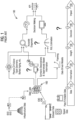
- FIG. 1 illustrates a diagram of a known data analytics workflow 100.
- data analytics pipelines or workflows such as workflow 100
- data flows from various internal and external sources gets pre-processed, cleansed, and loaded into a data lake.
- Our example illustrates a workflow for collecting and analyzing data in connection with railroad systems and/or traffic systems.
- Data 110 of different data sources include for example infrastructure data, onboard data, signal data and plan/timetable data.
- Infrastructure data may relate to railroad infrastructure including for example railroad tracks, railroad grade crossing etc.
- Onboard data may relate to data of a vehicle, such as a train or car, including for example speed data, location data etc., collected and stored by the vehicle.
- Signal data may relate to signals such as traffic lights or railroad signal lights, and plan/timetable data may relate to train schedules.
- the workflow 100 may comprise further data sources and data.
- the data 110 are collected and stored in data lake or data warehouse 160.
- Infrastructure data may be collected via manual batch upload and stored in data lake 160.
- Onboard data may be transmitted via a real-time data stream to data lake 160.
- Signal data and plan/timetable data may be manually input or periodically uploaded into data lake 160.
- the data 110 from the different sources are not well integrated and the ability to convert this data 110 into useful information 120 and actionable insights 130 depends on the ability of data scientists to integrate the various data sources at the bit level, and define artificial intelligence (AI)-, physics- or experience-based models. Such models or schemes may include data-driven models, planning models, etc. Further, the data 110 and information 120 may include symbolic descriptions and experience-based information.
- AI artificial intelligence
- the data 110 and information 120 may include symbolic descriptions and experience-based information.
- physics of failure is used to understand how physical, chemical, mechanical, thermal, or electrical stresses can degrade or cause the failure of items or components, specifically in view of the railroad/traffic infrastructure, such as track geometry, ballast aging etc.
- the information 120 is then utilized to generate the actionable insights 130.
- Insights 130 may be accurate diagnostics, based for example on the symbolic descriptions and experience-based information and the physics of failure.
- Further insights 130 may include remaining useful life (RUL) estimation(s) based on the physics of failure and data-driven models and planning.
- RUL remaining useful life
- Based on the insights 130, corresponding business decisions 140 can be made to achieve an impact 150.
- an objective of the workflow 100 can be to improve key performance indicators (KPI), which is a type of performance measurement, of a business or company.
- KPI key performance indicators
- workflow 100 current data analytics pipelines/workflows, such as workflow 100, are rigid and inflexible, and new data from new data sources, e. g. new systems, sensors, may not be directly useful. It is mainly a manual effort to define how the data can be integrated, interpreted, and used for decision making.
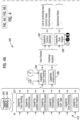
- FIG. 2 illustrates a diagram of a data analytics pipeline 200 in accordance with an exemplary embodiment of the present disclosure.
- data analytics pipeline 200 may relate to railroad systems and/or traffic systems, specifically collecting and analyzing data in connection with railroad systems and/or traffic systems.
- a plurality of data sources 208 comprise a plurality of data 210 including raw data 212.
- FIG. 2 illustrates an example plan/timetable data source 208 comprising data including raw data 212, relating for example to train schedules.
- infrastructure data may relate to railroad infrastructure including for example railroad tracks, railroad grade crossing etc.
- Onboard data may relate to data of a vehicle, such as a train or car, including for example speed data, location data etc., collected and stored by the vehicle.
- Signal data may relate to signals such as traffic lights or railroad signal lights.
- a data integration module 262 is configured via computer executable instructions to create semantic annotations 214 that describe a capability (or multiple capabilities) and/or behavior of the data source 208, and that describe a structure of the raw data 212 of the data source 208. Further, the data integration module 262 is configured to create or modify a knowledge graph 264 utilizing the semantic annotations 214 and to integrate the raw data 212 and the semantic annotations 214 into a semantic data lake 260. The raw data 212 are interpretable via the knowledge graph 264 and the semantic annotations 214. The raw data 212 and the knowledge graph 264 with the semantic annotations 214, are collected and stored in the semantic data lake 260.
- the semantic annotations 214 are based on attributes 216, 218 that describe behavior and/or capabilities of the data source 208 as well as structure of the raw data 212.
- attributes 216 may include a scheduling conflict detection capability (capability/service).
- semantic annotations 214 relating to the structure of the raw data 212 describe inputs and/or outputs 218 of the data source 208, and/or a data type of the data source 208.
- Inputs may include infrastructure data, e. g. railroad network information relating to for example railroad tracks.
- Outputs may include a conflict, utilizing the conflict detection capability, including conflict ID, locations and trains involved in a conflict.
- the attributes 216, 218 may be created and provided manually or may be generated automatically, for example by the integration module 262, for example when a new data source 208 is coupled and integrated into the pipeline 200.
- the semantic annotations 214 may be created according to a pre-defined schema. Such a pre-defined schema may include semantic annotations 214 based on attributes 216, 218 for at least input, output, and capability/service of the data source 208. Of course, many more attributes 216, 218 and/or semantic annotations 214 may be created, depending for example on the type of data source(s) 208 and data 210, 212.
- the knowledge graph 264 is constructed with the semantic annotations 214.
- the knowledge graph 264 harmonizes entities and relationships from many different data sources 208 and data 210, 212 to common identifiers and is thus able to connect data from numerous heterogeneous data silos, e. g. data sources 208, whether they are external or internal sources 208.
- This means that a single knowledge graph 264 connects data from many different data sources 208, specifically via common identifiers or common denominators that are shared and utilized by all data sources 208, coupled and integrated into the pipeline 200.
- the knowledge graph 264 may evolve, change, grow.
- the system/pipeline 200 comprises a knowledge reasoning engine 270 configured to interface with the knowledge graph 264.
- the knowledge reasoning engine 270 is configured for interference, evolution, validation of the knowledge graph 264.
- the knowledge reasoning engine 270 facilitates interaction, i. e. is an interface, between the knowledge graph 264 and a user/operator (human) 274, via user interface 272.
- an artificial intelligence (Al) module 276 may interact with the knowledge reasoning engine 270 and the knowledge graph 264.
- the knowledge reason engine 270 provides access to and interaction with the knowledge graph 264.
- the knowledge reasoning engine 270 can be configured to receive inputs, for example from user 274, for creating or modifying the knowledge graph 264 and/or associated workflows, validate and check consistency of the inputs in view of existing connections of the knowledge graph 264 and/or workflows, and create or modify the knowledge graph 264 and/or workflows based on validated or verified inputs.
- the knowledge graph 264 in combination with the knowledge reasoning engine 270 can be used to guide domain experts (user/operator 274 and/or AI module 276) to create and/or modify analytics workflows on a basis of capabilities/services (attributes 216, 218) rather than raw data bits (raw data 212).
- the knowledge reasoning engine 270 provides interactive support during such a process of interaction with the knowledge graph 264, for example via ⁇ drag and drop' of attributes 216, 218, automated validation and consistency checking via respectively forward/backward chaining of capabilities, and constraint solving and solving of first order predicate logic rules based on defined inputs/outputs of each capability.
- Exemplary process 280 illustrates how the knowledge graph 264 and associated pipeline 200 and workflows may be configured to operate and process data in connection with a modification or integration of a new data source, for example via knowledge reasoning engine 270 interfacing with the knowledge graph 264.
- Data analytics pipeline 220 includes conflict detection capability/service 282.
- Conflict detection capability 282 is described by the attributes 216, 218 and semantic annotations 214 created based on the attributes 216, 218.
- New capabilities of the pipeline 200 include train tracking capability 284 and network topology capability 286. Both new capabilities 284, 286 are described by attributes. Integration of train tracking capability 284 is performed, and connection(s) between train tracking capability 284 and conflict detection capability 282 validated and established. Train tacking capability 284 can provide one or more input(s) into conflict detection capability 282. For example, each train may have global identification (GID) data that can be used for conflict detection capability 282, e. g. when detecting a conflict between trains and identifying the trains.
- GID global identification
- a conflict may be detected by the conflict detection capability 282, which is subject to and input into conflict resolution capability 290.
- prioritization capability 292 can select an optimal solution for the detected conflict which may result in changes to train routes and/or traveling speeds of trains, see respective output 294.
- Network topology capability 286 relates to rail network topology including railway tracks, grade crossings etc., which is an important aspect when detecting a potential conflict between trains. Thus, network topology capability 286 should be integrated into the pipeline 200, specifically connected to conflict detection capability 282.
- User 274 and/or AI module 276 may define, for example via a drag & drop functionality, the network topology capability 286 as an input/influence for the conflict detection capability 282.
- the pipeline 200 utilizing the knowledge graph 264, performs an automated validation and consistency checking via respectively forward/backward chaining of the capabilities, and constraint solving and solving first order predicate logic rules (SAT solving) based on the defined inputs/outputs of each capability, see integration process 288.
- the pipeline 200 is configured to automatically check consistency, validate, and solve predicate logic rules of the network topology capability 286 in connection with the conflict detection capability 282 (and further capabilities that may be affected). While validating, checking and SAT solving, sections or certain parts of the knowledge graph 264 may be modified or new sections created. As shown by the "X" between conflict detection capability 282 and network topology capability 286, integrating or establishing a connection between capabilities 282, 286 has not been successful.
- the data analytics pipeline 200 provides results and outputs, see output 294, which can be used to make decisions 240 to achieve a certain impact 250, such as for example improving key performance indicators (KPI), which is a type of performance measurement, of a business or company.
- KPI key performance indicators
- a KPI may be to achieve no conflicts between trains travelling within the railroad network.
- FIG. 3 illustrates a diagram of a semantic data layer 300 to enable semantic integration of heterogeneous data sources in accordance with an exemplary embodiment of the present disclosure.
- Semantic data layer 300 illustrates attributes such as concepts, terms and relationship descriptions, that describe or define behavior(s), service(s), capability(ies), input(s)/output(s) of each data source integrated into a data analytics pipeline, such as for example pipeline 200 as shown in FIG. 2 .
- the semantic data layer 300 with its attributes including concepts, terms and relationship descriptions are used as semantic data annotations (metadata), see annotations 214 in FIG. 2 , for the knowledge graph 264.
- the knowledge graph 264 is stored in the semantic data lake 260, together with the semantic data annotations and raw data of the data sources.
- Train tracking service 350 provides localization capability 352 and generates output 354 including train ID(s) 356 and train position(s) 358 within the railroad network.
- Attribute train ID(s) 356 may include standard carrier alpha code (SCAC) information 360 and/or universally unique identifier (UUID) information 362.
- Attribute train position(s) 358 may include longitude 364 and latitude 366 of the respective position(s) 358.
- Input(s) 368 for train tracking service 350 are train ID(s) of trains/railroad vehicles relevant and participating in the railroad network. Further inputs or dependencies 370 may be relevant for the train tracking service 350.
- output 354 of train tracking service 350 provides train ID(s) 356 and position(s) 358.
- the output 354 is an input 324 for conflict detection service 310.
- Further input(s) for the conflict detection service 310 may include infrastructure data input 322.
- Conflict detection service 310 provides conflict detection capability 312.
- a conflict includes a conflict of trains that may travel on a same track at a same time.
- Conflict detection service 310 generates output 314 including one or more conflict(s).
- output 314 comprises conflict identification (ID) 316, conflict location 318 and identification 320 of trains involved in the conflict, such as train ID-1 etc.
- train tracking service 350 may provide train ID(s) and/or updated train position(s) when using the data analytics pipeline, wherein the updated train ID(s) and position(s) are then supplied to the conflict detection service 310.
- Output 354 may be continually or periodically updated, for example updated in real-time based on real-time information transmitted by trains travelling in the railroad network.
- FIG. 4A and FIG. 4B illustrate a diagram of a data analytics pipeline/workflow editor 400 in accordance with an exemplary embodiment of the present disclosure.
- the knowledge reasoning engine 270 is configured to interface with the knowledge graph 264.
- the knowledge reasoning engine 270 facilitates interaction between the knowledge graph 264 and a user/operator (human) 274 and/or AI module 276.
- a plurality of capabilities or services 410 are available, wherein each capability 410 comprises a data input and a data output.
- the capabilities 410 may comprise train tracking capability, infrastructure capability, conflict detection capability, conflict resolution capability, prioritization capability, authentication data capability, crew scheduling capability, rule engine capability. It should be noted that more, less or different capabilities may be available in the system/pipeline.
- An objective 278 of the data analytics pipeline 200 may be to optimize performance across the entire railroad network (see also impact 250 in FIG. 2 ).
- Such an objective 278 is formulated by user 274 and/or provided by AI-module 276.
- the user 274/AI-module 276 can create or modify analytics workflows, for example with respect to train tracking capability 284 and infrastructure capability 296.
- New inputs for train tracking capability 284 may include global positioning system (GPS) data and tachometer data.
- Train tracking capability 284 generates for example an output of train position(s), etc.
- Infrastructure capability 296 generates for example outputs of topology and gradient.
- Outputs of both capabilities 284, 296, e. g. train position(s), topology, gradient, etc., are input into conflict detection capability 282, wherein conflict detection capability 282 provides for example a list of conflicting trains, conflict times, conflict coordinates etc.
- rule engine capability 298 provides operational rules based on legal and operational regulations.
- Outputs of conflict detection capability 282 are input and utilized by further capabilities/services including visualization capabilities such as heatmap visualization capability 420 and localization visualization capability 422. Outputs of the conflict detection capability 282 may be further input into conflict resolution capability 290. Further input(s) for conflict resolution capability 290 are the operational rules provides by rule engine capability 298.
- Conflict resolution capability 290 may generate for example a list of potential train schedule changes to avoid conflicts between trains (output). To accommodate potential train schedule changes, changes may need to be made to working plans, working hours, dates/times of crew members, such as train operators or train engineers. Thus, crew scheduling capability 424 is considered. For example, crew scheduling capability 424 can be added to the workflow via drag & drop functionality of knowledge reasoning engine 270 (see FIG. 2 ). Crew scheduling capability 424 may include certain prioritization criteria, such as crew impact, on-time impact etc. Output of conflict resolution capability 290, e. g. list of potential train schedule changes, and prioritization criteria of crew scheduling capability 424 are input to prioritization capability 292.
- User 274 and/or AI-module 276 may further add restriction data capability 426 (via the drag & drop functionality) to the workflow/analytic pipeline.
- the knowledge graph 264 is used to the user 274, for example domain experts, and/or AI-module 276 to create and modify analytics workflows on the basis of capabilities, such as train tracking capability 284 and infrastructure capability 296, rather than raw data bits, thus providing interactive support during the process, in particular via drag & drop functionality, automated validation and consistency checking via respectively forward/backward chaining of capabilities, and constraint solving and first order predicate logic rules on the basis of the defined inputs/outputs of each capability, facilitated by the knowledge reasoning engine 270.
- capabilities such as train tracking capability 284 and infrastructure capability 296, rather than raw data bits
- the knowledge reasoning engine 270 is configured to discover new facts and/or new undefined relationships between data sources, utilizing AI-algorithms, such as random walk, path-recurrent neural network, or reinforcement learning algorithms, in such a way to provide the basis for defining new or expanding existing analytics workflows and pipelines.
- AI-algorithms such as random walk, path-recurrent neural network, or reinforcement learning algorithms
- FIG. 5 illustrates a flow chart of a method 500 for defining data analytics pipelines in accordance with embodiments of the present disclosure.
- the method 500 may be performed utilizing an arrangement/system 200 as described with reference to FIG. 2 .
- the method 500 is described as a series of acts or steps that are performed in a sequence, it is to be understood that the method 500 may not be limited by the order of the sequence. For instance, unless stated otherwise, some acts may occur in a different order than what is described herein. In addition, in some cases, an act may occur concurrently with another act. Furthermore, in some instances, not all acts may be required to implement a methodology described herein.
- the method 500 may start at 510 and comprises an act 520 of receiving raw data of multiple data sources, an act 530 of creating semantic annotations describing a capability and structure of the raw data of each data source, an act 540 of creating or modifying a knowledge graph utilizing the semantic annotations, and an act 550 integrating the raw data and the semantic annotations into a semantic data lake, wherein the raw data of the multiple data sources are interpretable via the knowledge graph and the semantic annotations.
- the method 500 may end.
- Act 540 of creating or modifying the knowledge graph may be based on common identifiers that connect the raw data of the multiple data sources.
- Act 530 of creating the semantic annotations comprises creating attributes that describe the capability and/or behavior, and inputs and/or outputs of each data source.
- the method 500 further comprises interfacing with the knowledge graph via a knowledge reasoning engine.
- the method 500 may comprise, via the knowledge reasoning engine, receiving user inputs for creating or modifying the knowledge graph, and validating and checking consistency of the user inputs in view of existing connections and semantic annotations of the knowledge graph. Further, the method 500 may comprise, via the knowledge reasoning engine, discovering and defining relationships between the multiple data sources utilizing artificial intelligence (AI)-algorithms.
- AI artificial intelligence
- a non-transitory computer readable medium storing executable instructions, wherein the executable instructions, when executed by a computer perform a method for defining data analytics pipelines as described herein, specifically as described in method 500 with reference to FIG. 5 and system 200 with reference to FIG. 2 .
- processors corresponds to any electronic device that is configured via hardware circuits, software, and/or firmware to process data.
- processors described herein may correspond to one or more (or a combination) of microprocessor, CPU, or any other integrated circuit (IC) or other type of circuit that is capable of processing data in a data processing system.
- the at least one processor that is described or claimed as being configured to carry out a particular described/claimed process or function may correspond to a CPU that executes computer/processor executable instructions stored in a memory in form of software and/or firmware to carry out such a described/claimed process or function.
- a processor may correspond to an IC that is hard wired with processing circuitry (e.g., an FPGA or ASIC IC) to carry out such a described/claimed process or function.
- the described systems and methods make use of semantic data annotations (metadata), wherein the semantic information provides an abstraction layer to raw data and a formal semantic to allow the generation of a knowledge graph.
- Raw data and semantic annotations from heterogenous sources are automatically integrated into a semantic data lake and made machine interpretable via the knowledge graph.
- a definition of the knowledge graph ensures harmonization of entities and relationships from various data sources, thus also identifies similar capabilities provided by different data sources.
- the knowledge graph enables reasoning and automatic discovery of new analytics pipelines and workflows based on information about inputs, outputs, and capabilities of new data sources.
- the knowledge graph also interactively supports users, such as domain experts, in defining their own analytics pipelines and workflows by allowing them to interact with the underlying raw data at a level of capabilities rather than bits and bytes.
- the semantic data lake continuously evolves as new data sources are added. This allows for analytics pipelines and workflows to automatically, or with minimal effort, in a a short time utilize the newly available data.
- Al-algorithms implemented as part of the knowledge reasoning engine, new knowledge can be discovered and quickly incorporated into new and/or existing pipelines and workflows.
Landscapes
- Engineering & Computer Science (AREA)
- Theoretical Computer Science (AREA)
- Physics & Mathematics (AREA)
- General Engineering & Computer Science (AREA)
- General Physics & Mathematics (AREA)
- Databases & Information Systems (AREA)
- Data Mining & Analysis (AREA)
- Software Systems (AREA)
- Computing Systems (AREA)
- Mathematical Physics (AREA)
- Evolutionary Computation (AREA)
- Computational Linguistics (AREA)
- Artificial Intelligence (AREA)
- Life Sciences & Earth Sciences (AREA)
- Health & Medical Sciences (AREA)
- Biomedical Technology (AREA)
- Biophysics (AREA)
- General Health & Medical Sciences (AREA)
- Molecular Biology (AREA)
- Chemical & Material Sciences (AREA)
- Analytical Chemistry (AREA)
- Management, Administration, Business Operations System, And Electronic Commerce (AREA)
Abstract
Description
- Aspects of the present disclosure generally relate to systems and methods for defining data analytics pipelines.
- In modem data analytics pipelines, data flows from various internal and external sources, gets pre-processed, cleansed, and loaded into a data lake. Typically, data from different sources is not well integrated and the ability to convert this data into actionable insights depends on the ability of data scientists to integrate various data sources at the bit level, and define AI-, physics- or experience-based models to generate the insights and useful information. The process of integrating various data sources is problematic due to the facts that most data scientists do not have a good understanding of the specific application domain and most subject-matter experts do not have the necessary data-science background which requires a time consuming and slow collaboration. This becomes particularly difficult when new data sources become available (e. g. through new sensors being installed on existing devices or new devices being taken in operation) as the existing data pipeline is not able to evolve automatically and thus the new data is not immediately useful for the generation of new insights.
- A first aspect of the present disclosure provides a system for defining data analytics pipelines including at least one processor and at least one memory, the system comprising a data source comprising raw data, a semantic data lake, and a data integration module, wherein the data integration module is configured via computer executable instructions to create semantic annotations that describe a capability and a structure of the raw data of the data source, create or modify a knowledge graph utilizing the semantic annotations, and integrate the raw data and the semantic annotations into the semantic data lake, wherein the raw data are interpretable via the knowledge graph and the semantic annotations.
- A second aspect of the present disclosure provides a method for defining data analytics pipelines, the method comprising through at least one processor and at least one memory, receiving raw data of multiple data sources, creating semantic annotations describing a capability and structure of the raw data of each data source, creating or modifying a knowledge graph utilizing the semantic annotations, and integrating the raw data and the semantic annotations into a semantic data lake, wherein the raw data of the multiple data sources are interpretable via the knowledge graph and the semantic annotations.
- A third aspect of the present disclosure provides a non-transitory computer readable medium storing executable instructions that when executed by a computer perform a method for defining data analytics pipelines as described herein.
-
-
FIG. 1 illustrates a diagram of a known data analytics workflow. -
FIG. 2 illustrates a diagram of a data analytics pipeline in accordance with an exemplary embodiment of the present disclosure. -
FIG. 3 illustrates a diagram of a semantic data layer to enable semantic integration of heterogeneous data sources in accordance with an exemplary embodiment of the present disclosure. -
FIG. 4A andFIG. 4B illustrate a diagram of a data analytics pipeline/workflow editor in accordance with an exemplary embodiment of the present disclosure. -
FIG. 5 illustrates a flow chart of a method for defining data analytics pipelines in accordance with embodiments of the present disclosure. - To facilitate an understanding of embodiments, principles, and features of the present disclosure, they are explained hereinafter with reference to implementation in illustrative embodiments. In particular, they are described in the context of being systems and methods for defining data analytics pipelines. Embodiments of the present disclosure, however, are not limited to use in the described devices or methods.
- The components and materials described hereinafter as making up the various embodiments are intended to be illustrative and not restrictive. Many suitable modules, elements, components and materials that would perform the same or a similar function as described herein are intended to be embraced within the scope of embodiments of the present disclosure.
-
FIG. 1 illustrates a diagram of a knowndata analytics workflow 100. Generally, in data analytics pipelines or workflows, such asworkflow 100, data flows from various internal and external sources, gets pre-processed, cleansed, and loaded into a data lake. Our example illustrates a workflow for collecting and analyzing data in connection with railroad systems and/or traffic systems. -
Data 110 of different data sources include for example infrastructure data, onboard data, signal data and plan/timetable data. Infrastructure data may relate to railroad infrastructure including for example railroad tracks, railroad grade crossing etc. Onboard data may relate to data of a vehicle, such as a train or car, including for example speed data, location data etc., collected and stored by the vehicle. Signal data may relate to signals such as traffic lights or railroad signal lights, and plan/timetable data may relate to train schedules. Of course, theworkflow 100 may comprise further data sources and data. - The
data 110 are collected and stored in data lake ordata warehouse 160. Infrastructure data may be collected via manual batch upload and stored indata lake 160. Onboard data may be transmitted via a real-time data stream todata lake 160. Signal data and plan/timetable data may be manually input or periodically uploaded intodata lake 160. - The
data 110 from the different sources are not well integrated and the ability to convert thisdata 110 intouseful information 120 andactionable insights 130 depends on the ability of data scientists to integrate the various data sources at the bit level, and define artificial intelligence (AI)-, physics- or experience-based models. Such models or schemes may include data-driven models, planning models, etc. Further, thedata 110 andinformation 120 may include symbolic descriptions and experience-based information. With respect to ourexample workflow 100 relating to railroad systems/traffic systems data, another aspect to consider is physics of failure. Physics of failure is used to understand how physical, chemical, mechanical, thermal, or electrical stresses can degrade or cause the failure of items or components, specifically in view of the railroad/traffic infrastructure, such as track geometry, ballast aging etc. - The
information 120, including different models or schemes, physics of failure etc., is then utilized to generate theactionable insights 130.Insights 130 may be accurate diagnostics, based for example on the symbolic descriptions and experience-based information and the physics of failure.Further insights 130 may include remaining useful life (RUL) estimation(s) based on the physics of failure and data-driven models and planning. Based on theinsights 130,corresponding business decisions 140 can be made to achieve animpact 150. For example, an objective of theworkflow 100 can be to improve key performance indicators (KPI), which is a type of performance measurement, of a business or company. - As noted, current data analytics pipelines/workflows, such as
workflow 100, are rigid and inflexible, and new data from new data sources, e. g. new systems, sensors, may not be directly useful. It is mainly a manual effort to define how the data can be integrated, interpreted, and used for decision making. -
FIG. 2 illustrates a diagram of adata analytics pipeline 200 in accordance with an exemplary embodiment of the present disclosure. In an embodiment,data analytics pipeline 200 may relate to railroad systems and/or traffic systems, specifically collecting and analyzing data in connection with railroad systems and/or traffic systems. - A plurality of
data sources 208 comprise a plurality ofdata 210 including raw data 212.FIG. 2 illustrates an example plan/timetable data source 208 comprising data including raw data 212, relating for example to train schedules. However, it should be noted that manymore data sources 208,data 210 and raw data 212 may be utilized and processed, such as for example infrastructure data, onboard data, signal data, etc. Infrastructure data may relate to railroad infrastructure including for example railroad tracks, railroad grade crossing etc. Onboard data may relate to data of a vehicle, such as a train or car, including for example speed data, location data etc., collected and stored by the vehicle. Signal data may relate to signals such as traffic lights or railroad signal lights. - In accordance with an exemplary embodiment of the present disclosure, a
data integration module 262 is configured via computer executable instructions to createsemantic annotations 214 that describe a capability (or multiple capabilities) and/or behavior of thedata source 208, and that describe a structure of the raw data 212 of thedata source 208. Further, thedata integration module 262 is configured to create or modify aknowledge graph 264 utilizing thesemantic annotations 214 and to integrate the raw data 212 and thesemantic annotations 214 into asemantic data lake 260. The raw data 212 are interpretable via theknowledge graph 264 and thesemantic annotations 214. The raw data 212 and theknowledge graph 264 with thesemantic annotations 214, are collected and stored in thesemantic data lake 260. - The
semantic annotations 214 are based onattributes data source 208 as well as structure of the raw data 212. In our example with respect to the plan/timetable source 208,such attributes 216 may include a scheduling conflict detection capability (capability/service). Further,semantic annotations 214 relating to the structure of the raw data 212 describe inputs and/oroutputs 218 of thedata source 208, and/or a data type of thedata source 208. Inputs may include infrastructure data, e. g. railroad network information relating to for example railroad tracks. Outputs may include a conflict, utilizing the conflict detection capability, including conflict ID, locations and trains involved in a conflict. Theattributes integration module 262, for example when anew data source 208 is coupled and integrated into thepipeline 200. - The
semantic annotations 214 may be created according to a pre-defined schema. Such a pre-defined schema may includesemantic annotations 214 based onattributes data source 208. Of course, manymore attributes semantic annotations 214 may be created, depending for example on the type of data source(s) 208 anddata 210, 212. - The
knowledge graph 264 is constructed with thesemantic annotations 214. Theknowledge graph 264 harmonizes entities and relationships from manydifferent data sources 208 anddata 210, 212 to common identifiers and is thus able to connect data from numerous heterogeneous data silos,e. g. data sources 208, whether they are external orinternal sources 208. This means that asingle knowledge graph 264 connects data from manydifferent data sources 208, specifically via common identifiers or common denominators that are shared and utilized by alldata sources 208, coupled and integrated into thepipeline 200. Thus, asmore data source 208 are integrated, theknowledge graph 264 may evolve, change, grow. - In an exemplary embodiment of the present disclosure, the system/
pipeline 200 comprises aknowledge reasoning engine 270 configured to interface with theknowledge graph 264. Generally, theknowledge reasoning engine 270 is configured for interference, evolution, validation of theknowledge graph 264. Specifically, theknowledge reasoning engine 270 facilitates interaction, i. e. is an interface, between theknowledge graph 264 and a user/operator (human) 274, viauser interface 272. In another example, either in combination with or instead ofuser 274, an artificial intelligence (Al)module 276 may interact with theknowledge reasoning engine 270 and theknowledge graph 264. - The
knowledge reason engine 270 provides access to and interaction with theknowledge graph 264. For example, theknowledge reasoning engine 270 can be configured to receive inputs, for example fromuser 274, for creating or modifying theknowledge graph 264 and/or associated workflows, validate and check consistency of the inputs in view of existing connections of theknowledge graph 264 and/or workflows, and create or modify theknowledge graph 264 and/or workflows based on validated or verified inputs. - For example, the
knowledge graph 264 in combination with theknowledge reasoning engine 270, can be used to guide domain experts (user/operator 274 and/or AI module 276) to create and/or modify analytics workflows on a basis of capabilities/services (attributes 216, 218) rather than raw data bits (raw data 212). Theknowledge reasoning engine 270 provides interactive support during such a process of interaction with theknowledge graph 264, for example via `drag and drop' ofattributes -
Exemplary process 280 illustrates how theknowledge graph 264 and associatedpipeline 200 and workflows may be configured to operate and process data in connection with a modification or integration of a new data source, for example viaknowledge reasoning engine 270 interfacing with theknowledge graph 264. -
Data analytics pipeline 220 includes conflict detection capability/service 282.Conflict detection capability 282 is described by theattributes semantic annotations 214 created based on theattributes - New capabilities of the
pipeline 200 includetrain tracking capability 284 andnetwork topology capability 286. Bothnew capabilities train tracking capability 284 is performed, and connection(s) betweentrain tracking capability 284 andconflict detection capability 282 validated and established. Train tackingcapability 284 can provide one or more input(s) intoconflict detection capability 282. For example, each train may have global identification (GID) data that can be used forconflict detection capability 282, e. g. when detecting a conflict between trains and identifying the trains. - With the modified workflow, a conflict may be detected by the
conflict detection capability 282, which is subject to and input intoconflict resolution capability 290. In case of multiple resolution options,prioritization capability 292 can select an optimal solution for the detected conflict which may result in changes to train routes and/or traveling speeds of trains, see respective output 294. -
Network topology capability 286 relates to rail network topology including railway tracks, grade crossings etc., which is an important aspect when detecting a potential conflict between trains. Thus,network topology capability 286 should be integrated into thepipeline 200, specifically connected toconflict detection capability 282. -
User 274 and/orAI module 276 may define, for example via a drag & drop functionality, thenetwork topology capability 286 as an input/influence for theconflict detection capability 282. Thepipeline 200, utilizing theknowledge graph 264, performs an automated validation and consistency checking via respectively forward/backward chaining of the capabilities, and constraint solving and solving first order predicate logic rules (SAT solving) based on the defined inputs/outputs of each capability, seeintegration process 288. In our example, thepipeline 200 is configured to automatically check consistency, validate, and solve predicate logic rules of thenetwork topology capability 286 in connection with the conflict detection capability 282 (and further capabilities that may be affected). While validating, checking and SAT solving, sections or certain parts of theknowledge graph 264 may be modified or new sections created. As shown by the "X" betweenconflict detection capability 282 andnetwork topology capability 286, integrating or establishing a connection betweencapabilities - The
data analytics pipeline 200 provides results and outputs, see output 294, which can be used to makedecisions 240 to achieve acertain impact 250, such as for example improving key performance indicators (KPI), which is a type of performance measurement, of a business or company. In our example, a KPI may be to achieve no conflicts between trains travelling within the railroad network. -
FIG. 3 illustrates a diagram of asemantic data layer 300 to enable semantic integration of heterogeneous data sources in accordance with an exemplary embodiment of the present disclosure. -
Semantic data layer 300 illustrates attributes such as concepts, terms and relationship descriptions, that describe or define behavior(s), service(s), capability(ies), input(s)/output(s) of each data source integrated into a data analytics pipeline, such as forexample pipeline 200 as shown inFIG. 2 . Thesemantic data layer 300 with its attributes including concepts, terms and relationship descriptions are used as semantic data annotations (metadata), seeannotations 214 inFIG. 2 , for theknowledge graph 264. Theknowledge graph 264 is stored in thesemantic data lake 260, together with the semantic data annotations and raw data of the data sources. - In our example, semantic data annotations are described for
conflict detection service 310 andtrain tracking service 350.Train tracking service 350 provideslocalization capability 352 and generatesoutput 354 including train ID(s) 356 and train position(s) 358 within the railroad network. Attribute train ID(s) 356 may include standard carrier alpha code (SCAC)information 360 and/or universally unique identifier (UUID)information 362. Attribute train position(s) 358 may includelongitude 364 andlatitude 366 of the respective position(s) 358. Input(s) 368 fortrain tracking service 350 are train ID(s) of trains/railroad vehicles relevant and participating in the railroad network. Further inputs ordependencies 370 may be relevant for thetrain tracking service 350. - As noted,
output 354 oftrain tracking service 350 provides train ID(s) 356 and position(s) 358. Theoutput 354 is aninput 324 forconflict detection service 310. Further input(s) for theconflict detection service 310 may includeinfrastructure data input 322. -
Conflict detection service 310 providesconflict detection capability 312. A conflict includes a conflict of trains that may travel on a same track at a same time.Conflict detection service 310 generatesoutput 314 including one or more conflict(s). Specifically,output 314 comprises conflict identification (ID) 316,conflict location 318 andidentification 320 of trains involved in the conflict, such as train ID-1 etc. - As shown by double arrows between
output 354 andinput 324, data/information may be exchanged between theconflict detection service 310 and thetrain tracking service 350. For example,train tracking service 350 may provide train ID(s) and/or updated train position(s) when using the data analytics pipeline, wherein the updated train ID(s) and position(s) are then supplied to theconflict detection service 310.Output 354 may be continually or periodically updated, for example updated in real-time based on real-time information transmitted by trains travelling in the railroad network. -
FIG. 4A andFIG. 4B illustrate a diagram of a data analytics pipeline/workflow editor 400 in accordance with an exemplary embodiment of the present disclosure. - As described earlier, the
knowledge reasoning engine 270, seeFIG. 2 , is configured to interface with theknowledge graph 264. For example, theknowledge reasoning engine 270 facilitates interaction between theknowledge graph 264 and a user/operator (human) 274 and/orAI module 276. - A plurality of capabilities or
services 410 are available, wherein eachcapability 410 comprises a data input and a data output. Thecapabilities 410 may comprise train tracking capability, infrastructure capability, conflict detection capability, conflict resolution capability, prioritization capability, authentication data capability, crew scheduling capability, rule engine capability. It should be noted that more, less or different capabilities may be available in the system/pipeline. - An objective 278 of the
data analytics pipeline 200 may be to optimize performance across the entire railroad network (see also impact 250 inFIG. 2 ). Such an objective 278 is formulated byuser 274 and/or provided by AI-module 276. In view of the objective 278, theuser 274/AI-module 276 can create or modify analytics workflows, for example with respect to traintracking capability 284 andinfrastructure capability 296. New inputs fortrain tracking capability 284 may include global positioning system (GPS) data and tachometer data.Train tracking capability 284 generates for example an output of train position(s), etc.Infrastructure capability 296 generates for example outputs of topology and gradient. Outputs of bothcapabilities conflict detection capability 282, whereinconflict detection capability 282 provides for example a list of conflicting trains, conflict times, conflict coordinates etc. - Further, legal regulations of countries where the railroad network and trains are operated must be considered. In our example, legal regulations of Canada, the United States of America and Mexico, i. e. North America, are considered, input, and applied via
rule engine capability 298.Rule engine capability 298 provides operational rules based on legal and operational regulations. - Outputs of
conflict detection capability 282, such as list of conflicting trains, conflict times, conflict coordinates, are input and utilized by further capabilities/services including visualization capabilities such asheatmap visualization capability 420 andlocalization visualization capability 422. Outputs of theconflict detection capability 282 may be further input intoconflict resolution capability 290. Further input(s) forconflict resolution capability 290 are the operational rules provides byrule engine capability 298. -
Conflict resolution capability 290 may generate for example a list of potential train schedule changes to avoid conflicts between trains (output). To accommodate potential train schedule changes, changes may need to be made to working plans, working hours, dates/times of crew members, such as train operators or train engineers. Thus,crew scheduling capability 424 is considered. For example,crew scheduling capability 424 can be added to the workflow via drag & drop functionality of knowledge reasoning engine 270 (seeFIG. 2 ).Crew scheduling capability 424 may include certain prioritization criteria, such as crew impact, on-time impact etc. Output ofconflict resolution capability 290, e. g. list of potential train schedule changes, and prioritization criteria ofcrew scheduling capability 424 are input toprioritization capability 292. -
User 274 and/or AI-module 276 may further add restriction data capability 426 (via the drag & drop functionality) to the workflow/analytic pipeline. - As described earlier, the
knowledge graph 264 is used to theuser 274, for example domain experts, and/or AI-module 276 to create and modify analytics workflows on the basis of capabilities, such astrain tracking capability 284 andinfrastructure capability 296, rather than raw data bits, thus providing interactive support during the process, in particular via drag & drop functionality, automated validation and consistency checking via respectively forward/backward chaining of capabilities, and constraint solving and first order predicate logic rules on the basis of the defined inputs/outputs of each capability, facilitated by theknowledge reasoning engine 270. - In another embodiment of the present disclosure, the
knowledge reasoning engine 270 is configured to discover new facts and/or new undefined relationships between data sources, utilizing AI-algorithms, such as random walk, path-recurrent neural network, or reinforcement learning algorithms, in such a way to provide the basis for defining new or expanding existing analytics workflows and pipelines. -
FIG. 5 illustrates a flow chart of amethod 500 for defining data analytics pipelines in accordance with embodiments of the present disclosure. In an example, themethod 500 may be performed utilizing an arrangement/system 200 as described with reference toFIG. 2 . - While the
method 500 is described as a series of acts or steps that are performed in a sequence, it is to be understood that themethod 500 may not be limited by the order of the sequence. For instance, unless stated otherwise, some acts may occur in a different order than what is described herein. In addition, in some cases, an act may occur concurrently with another act. Furthermore, in some instances, not all acts may be required to implement a methodology described herein. - The
method 500 may start at 510 and comprises anact 520 of receiving raw data of multiple data sources, anact 530 of creating semantic annotations describing a capability and structure of the raw data of each data source, anact 540 of creating or modifying a knowledge graph utilizing the semantic annotations, and anact 550 integrating the raw data and the semantic annotations into a semantic data lake, wherein the raw data of the multiple data sources are interpretable via the knowledge graph and the semantic annotations. At 560, themethod 500 may end. - Act 540 of creating or modifying the knowledge graph may be based on common identifiers that connect the raw data of the multiple data sources. Act 530 of creating the semantic annotations comprises creating attributes that describe the capability and/or behavior, and inputs and/or outputs of each data source.
- In another embodiment, the
method 500 further comprises interfacing with the knowledge graph via a knowledge reasoning engine. Themethod 500 may comprise, via the knowledge reasoning engine, receiving user inputs for creating or modifying the knowledge graph, and validating and checking consistency of the user inputs in view of existing connections and semantic annotations of the knowledge graph. Further, themethod 500 may comprise, via the knowledge reasoning engine, discovering and defining relationships between the multiple data sources utilizing artificial intelligence (AI)-algorithms. - In another exemplary embodiment of the present disclosure, a non-transitory computer readable medium storing executable instructions is provided, wherein the executable instructions, when executed by a computer perform a method for defining data analytics pipelines as described herein, specifically as described in
method 500 with reference toFIG. 5 andsystem 200 with reference toFIG. 2 . - It should be appreciated that acts associated with the above-described methodologies, features, and functions (other than any described manual acts) may be carried out by one or more data processing systems, via operation of at least one processor. As used herein, a processor corresponds to any electronic device that is configured via hardware circuits, software, and/or firmware to process data. For example, processors described herein may correspond to one or more (or a combination) of microprocessor, CPU, or any other integrated circuit (IC) or other type of circuit that is capable of processing data in a data processing system. The at least one processor that is described or claimed as being configured to carry out a particular described/claimed process or function may correspond to a CPU that executes computer/processor executable instructions stored in a memory in form of software and/or firmware to carry out such a described/claimed process or function. However, it should also be appreciated that such a processor may correspond to an IC that is hard wired with processing circuitry (e.g., an FPGA or ASIC IC) to carry out such a described/claimed process or function.
- The described systems and methods make use of semantic data annotations (metadata), wherein the semantic information provides an abstraction layer to raw data and a formal semantic to allow the generation of a knowledge graph. Raw data and semantic annotations from heterogenous sources (internal and external) are automatically integrated into a semantic data lake and made machine interpretable via the knowledge graph. A definition of the knowledge graph ensures harmonization of entities and relationships from various data sources, thus also identifies similar capabilities provided by different data sources. The knowledge graph enables reasoning and automatic discovery of new analytics pipelines and workflows based on information about inputs, outputs, and capabilities of new data sources. The knowledge graph also interactively supports users, such as domain experts, in defining their own analytics pipelines and workflows by allowing them to interact with the underlying raw data at a level of capabilities rather than bits and bytes. The semantic data lake continuously evolves as new data sources are added. This allows for analytics pipelines and workflows to automatically, or with minimal effort, in a a short time utilize the newly available data. Using Al-algorithms implemented as part of the knowledge reasoning engine, new knowledge can be discovered and quickly incorporated into new and/or existing pipelines and workflows.
-
- 1. A system for defining data analytics pipelines including at least one processor and at least one memory, the system comprising:
- a data source comprising raw data,
- a semantic data lake, and
- a data integration module, wherein the data integration module is configured via computer executable instructions to
- create semantic annotations that describe a capability and a structure of the raw data of the data source,
- create or modify a knowledge graph utilizing the semantic annotations, and
- integrate the raw data and the semantic annotations into the semantic data lake, wherein the raw data are interpretable via the knowledge graph and the semantic annotations.
- 2. The system of
embodiment 1, wherein the semantic annotations are created according to a pre-defined schema. - 3. The system of
embodiment 1, comprising a plurality of data sources, each data source comprising raw data, wherein the knowledge graph comprises common identifiers to connect the raw data of the plurality of data sources. - 4. The system of embodiment 3, wherein the data integration module is configured to
- create the semantic annotations for each data source, and
- create or modify the knowledge graph for the plurality data sources based on the semantic annotations and the common identifiers.
- 5. The system of
embodiment 1, wherein the semantic annotations are based on attributes that describe the capability and/or behavior of the data source. - 6. The system of
embodiment 1, wherein the semantic annotations are based on inputs and/or outputs and a data type of the data source. - 7. The system of embodiment 3, wherein the plurality of data sources comprise data relating to railroad systems and/or traffic systems including infrastructure data, onboard vehicle data, signal data, plan/timetable table.
- 8. The system of
embodiment 1, further comprising:
a knowledge reasoning engine configured to interface with the knowledge graph. - 9. The system of embodiment 8, wherein the knowledge reasoning engine is configured to
- receive user inputs for creating or modifying the knowledge graph, and
- validate and check consistency of the inputs in view of existing connections and semantic annotations of the knowledge graph.
- 10. The system of embodiment 9, wherein the knowledge reasoning engine is configured to solve first order logic rules based on inputs and/or outputs of each data source and associated capability.
- 11. The system of embodiment 10, wherein the knowledge reasoning engine is configured to create or modify the knowledge graph and associated workflows based on received and validated user inputs.
- 12. The system of embodiment 8, wherein the knowledge reasoning engine is configured to discover and define relationships between data sources utilizing artificial intelligence (AI)-algorithms.
- 13. The system of embodiment 12, wherein the AI-algorithms comprise random walk, path-recurrent neural network, and/or reinforcement learning algorithms.
- 14. A method for defining data analytics pipelines, the method comprising through at least one processor and at least one memory:
- receiving raw data of multiple data sources,
- creating semantic annotations describing a capability and structure of the raw data of each data source,
- creating or modifying a knowledge graph utilizing the semantic annotations, and
- integrating the raw data and the semantic annotations into a semantic data lake, wherein the raw data of the multiple data sources are interpretable via the knowledge graph and the semantic annotations.
- 15. The method of embodiment 14,
creating or modifying the knowledge graph based on common identifiers that connect the raw data of the multiple data sources. - 16. The method of embodiment 14, wherein creating the semantic annotations comprises creating attributes that describe the capability and/or behavior, and inputs and/or outputs of each data source.
- 17. The method of embodiment 14, further comprising:
interfacing with the knowledge graph via a knowledge reasoning engine. - 18. The method of embodiment 17, further comprising, via the knowledge reasoning engine,
- receiving user inputs for creating or modifying the knowledge graph, and
- validating and checking consistency of the user inputs in view of existing connections and semantic annotations of the knowledge graph.
- 19. The method of embodiment 17, further comprising, via the knowledge reasoning engine,
discovering and defining relationships between the multiple data sources utilizing artificial intelligence (AI)-algorithms. - 20. A non-transitory computer readable medium storing executable instructions that when executed by a computer perform a method for defining data analytics pipelines as claimed in embodiment 14.
Claims (15)
- A system (200) for defining data analytics pipelines including at least one processor and at least one memory, the system (200) comprising:a data source (208) comprising raw data (212),a semantic data lake (260), anda data integration module (262), wherein the data integration module (262) is configured via computer executable instructions tocreate semantic annotations (214) that describe a capability and a structure of the raw data (212) of the data source (208),create or modify a knowledge graph (264) utilizing the semantic annotations (214), andintegrate the raw data (212) and the semantic annotations (214) into the semantic data lake (260), wherein the raw data (212) are interpretable via the knowledge graph (264) and the semantic annotations (214).
- The system (200) of claim 1, wherein the semantic annotations (214) are created according to a pre-defined schema.
- The system (200) of claim 1 or 2, comprising a plurality of data sources (208), each data source comprising raw data (212), wherein the knowledge graph (264) comprises common identifiers to connect the raw data (212) of the plurality of data sources (208).
- The system (200) of claim 3, wherein the data integration module (262) is configured tocreate the semantic annotations (214) for each data source (208), andcreate or modify the knowledge graph (264) for the plurality data sources (208) based on the semantic annotations (214) and the common identifiers.
- The system (200) according to any of the preceding claims, wherein the semantic annotations (214) are based on attributes that describe the capability and/or behavior of the data source (208).
- The system (200) according to any of the preceding claims, wherein the semantic annotations (214) are based on inputs and/or outputs and a data type of the data source (208).
- The system (200) of claim 3, wherein the plurality of data sources (208) comprise data relating to railroad systems and/or traffic systems including infrastructure data, onboard vehicle data, signal data, plan/timetable table.
- The system (200) according to any of the preceding claims, further comprising:a knowledge reasoning engine (270) configured to interface with the knowledge graph (264), wherein the knowledge reasoning engine (270) is in particular configured toreceive user inputs for creating or modifying the knowledge graph (264), andvalidate and check consistency of the inputs in view of existing connections and semantic annotations (214) of the knowledge graph (264).
- The system (200) of claim 8, wherein the knowledge reasoning engine (270) is configured to solve first order logic rules based on inputs and/or outputs of each data source (208) and associated capability, wherein the knowledge reasoning engine (270) is in particular configured to create or modify the knowledge graph (264) and associated workflows based on received and validated user inputs.
- The system (200) of claim 8 or 9, wherein the knowledge reasoning engine (270) is configured to discover and define relationships between data sources (208) utilizing artificial intelligence (AI)-algorithms.
- The system (200) of claim 10, wherein the AI-algorithms comprise random walk, path-recurrent neural network, and/or reinforcement learning algorithms.
- A method (500) for defining data analytics pipelines, the method (500) comprising through at least one processor and at least one memory:receiving (520) raw data (212) of multiple data sources (208),creating (530) semantic annotations (214) describing a capability and structure of the raw data (212) of each data source (208),creating or modifying (540) a knowledge graph (264) utilizing the semantic annotations (214), andintegrating (550) the raw data (212) and the semantic annotations (214) into a semantic data lake (260), wherein the raw data (212) of the multiple data sources (208) are interpretable via the knowledge graph (264) and the semantic annotations (214).
- The method (500) of claim 12, further comprising:
creating or modifying (540) the knowledge graph (264) based on common identifiers that connect the raw data (212) of the multiple data sources (208). - The method according to any of the preceding method-based claims, wherein creating (530) the semantic annotations (214) comprises creating attributes that describe the capability and/or behavior, and inputs and/or outputs of each data source (208).
- The method (500) according to any of the preceding method-based claims, further comprising at least one of:interfacing with the knowledge graph (264) via a knowledge reasoning engine (270), further comprising, via the knowledge reasoning engine (270),receiving user inputs for creating or modifying the knowledge graph (264),validating and checking consistency of the user inputs in view of existing connections and semantic annotations (214) of the knowledge graph (264), anddiscovering and defining relationships between the multiple data sources (208) utilizing artificial intelligence (AI)-algorithms.
Applications Claiming Priority (1)
| Application Number | Priority Date | Filing Date | Title |
|---|---|---|---|
| US17/661,327 US20230351209A1 (en) | 2022-04-29 | 2022-04-29 | Systems and methods for defining data analytics pipelines |
Publications (1)
| Publication Number | Publication Date |
|---|---|
| EP4270259A1 true EP4270259A1 (en) | 2023-11-01 |
Family
ID=86282571
Family Applications (1)
| Application Number | Title | Priority Date | Filing Date |
|---|---|---|---|
| EP23170548.4A Pending EP4270259A1 (en) | 2022-04-29 | 2023-04-28 | Systems and methods for defining data analytics pipelines |
Country Status (2)
| Country | Link |
|---|---|
| US (1) | US20230351209A1 (en) |
| EP (1) | EP4270259A1 (en) |
Families Citing this family (2)
| Publication number | Priority date | Publication date | Assignee | Title |
|---|---|---|---|---|
| US12530478B2 (en) * | 2023-03-29 | 2026-01-20 | Nec Corporation | Automated data sharing and analytics using a privacy-preserving data space platform |
| CN121350019B (en) * | 2025-12-22 | 2026-03-31 | 西安明赋云计算股份有限公司 | An automated method and system for cleaning heterogeneous data based on a configurable rule engine |
Family Cites Families (7)
| Publication number | Priority date | Publication date | Assignee | Title |
|---|---|---|---|---|
| US4122523A (en) * | 1976-12-17 | 1978-10-24 | General Signal Corporation | Route conflict analysis system for control of railroads |
| US5554982A (en) * | 1994-08-01 | 1996-09-10 | Hughes Aircraft Co. | Wireless train proximity alert system |
| US8650022B2 (en) * | 2008-03-13 | 2014-02-11 | Siemens Aktiengesellschaft | Method and an apparatus for automatic semantic annotation of a process model |
| US9348815B1 (en) * | 2013-06-28 | 2016-05-24 | Digital Reasoning Systems, Inc. | Systems and methods for construction, maintenance, and improvement of knowledge representations |
| US10388406B2 (en) * | 2013-07-02 | 2019-08-20 | TapCloud LLC | System, method and apparatus for processing patient information and feedback |
| US9796400B2 (en) * | 2013-11-27 | 2017-10-24 | Solfice Research, Inc. | Real time machine vision and point-cloud analysis for remote sensing and vehicle control |
| EP3475885B1 (en) * | 2016-08-22 | 2023-10-11 | Oracle International Corporation | System and method for dynamic, incremental recommendations within real-time visual simulation |
-
2022
- 2022-04-29 US US17/661,327 patent/US20230351209A1/en active Pending
-
2023
- 2023-04-28 EP EP23170548.4A patent/EP4270259A1/en active Pending
Non-Patent Citations (4)
| Title |
|---|
| DIAMANTINI CLAUDIA C DIAMANTINI@UNIVPM IT ET AL: "A Semantic Data Lake Model for Analytic Query-Driven Discovery", 2022 2ND INTERNATIONAL CONFERENCE ON BIOINFORMATICS AND INTELLIGENT COMPUTING, ACMPUB27, NEW YORK, NY, USA, 29 November 2021 (2021-11-29), pages 183 - 186, XP058842913, ISBN: 978-1-4503-9719-3, DOI: 10.1145/3487664.3487783 * |
| POMP ANDRÉ ET AL: "Applying Semantics to Reduce the Time to Analytics within Complex Heterogeneous Infrastructures", TECHNOLOGIES, vol. 6, no. 3, 8 September 2018 (2018-09-08), pages 86, XP093074985, DOI: 10.3390/technologies6030086 * |
| SCHMID STEFAN ET AL: "Using Knowledge Graphs to Search an Enterprise Data Lake", 10 October 2019, 16TH EUROPEAN CONFERENCE - COMPUTER VISION - ECCV 2020, CORNELL UNIVERSITY LIBRARY, 201 OLIN LIBRARY CORNELL UNIVERSITY ITHACA, NY 14853, PAGE(S) 262 - 266, XP047524585 * |
| VALENTINA JANEV: "Semantic Intelligence in Big Data Applications", ARXIV.ORG, CORNELL UNIVERSITY LIBRARY, 201 OLIN LIBRARY CORNELL UNIVERSITY ITHACA, NY 14853, 8 July 2021 (2021-07-08), XP091009238 * |
Also Published As
| Publication number | Publication date |
|---|---|
| US20230351209A1 (en) | 2023-11-02 |
Similar Documents
| Publication | Publication Date | Title |
|---|---|---|
| US10255168B2 (en) | Method and device for generating test cases for autonomous vehicles | |
| US8392233B2 (en) | Rolling stock scheduling apparatus and method | |
| US20230351209A1 (en) | Systems and methods for defining data analytics pipelines | |
| Stary et al. | Behavior-centered digital-twin design for dynamic cyber-physical system development | |
| Dirnfeld et al. | Integrating AI and DTs: challenges and opportunities in railway maintenance application and beyond | |
| US20180232707A1 (en) | Vehicle maintenance scheduling systems and methods | |
| Kaiser et al. | The Vehicle Data Value Chain as a Lightweight Model to Describe Digital Vehicle Services. | |
| Dirnfeld et al. | Railway digital twins and artificial intelligence: Challenges and design guidelines | |
| Hiwase et al. | Predictive maintenance of automotive component using digital twin model | |
| DE102021118972B3 (en) | COMPUTER-IMPLEMENTED LEARNING-BASED ANOMALY DETECTION METHOD AND SYSTEM FOR DETERMINING A SOFTWARE DEFECT IN A CONNECTED VEHICLE | |
| Würtz et al. | Big data and discrete optimization for electric urban bus operations | |
| Babiyola et al. | Development of an Internet of Things-based Integrated System for Fleet Management in RealTime | |
| US10421472B2 (en) | Visual diagnostic system for railroad network | |
| CN121010294A (en) | A BeiDou-based method and system for data fusion and scheduling of manufacturing contract logistics | |
| Guan et al. | Bilevel optimization and heuristic algorithms for integrating latent demand into the design of large-scale transit systems | |
| CN117007062A (en) | Trip trajectory data processing method and device and traffic navigation method | |
| CN120110928A (en) | Intelligent vehicle cyber-physical system architecture design method based on system engineering | |
| KR20240155599A (en) | Predictive Maintenance Algorithm Providing Method for Bus Maintenance Priority Determination | |
| Chen et al. | Verification and validation in railway signalling engineering–an application of enterprise systems techniques | |
| Reuss12 et al. | Case-based agents within the omaha project | |
| Gresser et al. | Optimization of the Design of Diagnostic Systems through requirement-based Feature Selection | |
| Haddad et al. | Transportation Service Redundancy from a Spatio-Temporal Perspective | |
| Voland | Spatio-temporal visualization of automotive sensor data—A conceptual and implementational framework | |
| Rao | Engineering Requirements for the Development of Cloud Based Support for Autonomous Trucks | |
| Drogovoz et al. | Scientific and Methodological Support for the Interoperability of Intelligent Transport Systems |
Legal Events
| Date | Code | Title | Description |
|---|---|---|---|
| PUAI | Public reference made under article 153(3) epc to a published international application that has entered the european phase |
Free format text: ORIGINAL CODE: 0009012 |
|
| STAA | Information on the status of an ep patent application or granted ep patent |
Free format text: STATUS: THE APPLICATION HAS BEEN PUBLISHED |
|
| AK | Designated contracting states |
Kind code of ref document: A1 Designated state(s): AL AT BE BG CH CY CZ DE DK EE ES FI FR GB GR HR HU IE IS IT LI LT LU LV MC ME MK MT NL NO PL PT RO RS SE SI SK SM TR |
|
| STAA | Information on the status of an ep patent application or granted ep patent |
Free format text: STATUS: REQUEST FOR EXAMINATION WAS MADE |
|
| 17P | Request for examination filed |
Effective date: 20240409 |
|
| RBV | Designated contracting states (corrected) |
Designated state(s): AL AT BE BG CH CY CZ DE DK EE ES FI FR GB GR HR HU IE IS IT LI LT LU LV MC ME MK MT NL NO PL PT RO RS SE SI SK SM TR |