EP4270147B1 - Electronic device, and method for determining in-place of stylus - Google Patents
Electronic device, and method for determining in-place of stylus Download PDFInfo
- Publication number
- EP4270147B1 EP4270147B1 EP22921013.3A EP22921013A EP4270147B1 EP 4270147 B1 EP4270147 B1 EP 4270147B1 EP 22921013 A EP22921013 A EP 22921013A EP 4270147 B1 EP4270147 B1 EP 4270147B1
- Authority
- EP
- European Patent Office
- Prior art keywords
- circuit
- terminal
- capacitor
- resistor
- stylus
- Prior art date
- Legal status (The legal status is an assumption and is not a legal conclusion. Google has not performed a legal analysis and makes no representation as to the accuracy of the status listed.)
- Active
Links
Images


Classifications
-
- G—PHYSICS
- G06—COMPUTING OR CALCULATING; COUNTING
- G06F—ELECTRIC DIGITAL DATA PROCESSING
- G06F1/00—Details not covered by groups G06F3/00 - G06F13/00 and G06F21/00
- G06F1/16—Constructional details or arrangements
- G06F1/1613—Constructional details or arrangements for portable computers
- G06F1/1633—Constructional details or arrangements of portable computers not specific to the type of enclosures covered by groups G06F1/1615 - G06F1/1626
-
- G—PHYSICS
- G06—COMPUTING OR CALCULATING; COUNTING
- G06F—ELECTRIC DIGITAL DATA PROCESSING
- G06F1/00—Details not covered by groups G06F3/00 - G06F13/00 and G06F21/00
- G06F1/26—Power supply means, e.g. regulation thereof
- G06F1/263—Arrangements for using multiple switchable power supplies, e.g. battery and AC
-
- G—PHYSICS
- G01—MEASURING; TESTING
- G01D—MEASURING NOT SPECIALLY ADAPTED FOR A SPECIFIC VARIABLE; ARRANGEMENTS FOR MEASURING TWO OR MORE VARIABLES NOT COVERED IN A SINGLE OTHER SUBCLASS; TARIFF METERING APPARATUS; MEASURING OR TESTING NOT OTHERWISE PROVIDED FOR
- G01D5/00—Mechanical means for transferring the output of a sensing member; Means for converting the output of a sensing member to another variable where the form or nature of the sensing member does not constrain the means for converting; Transducers not specially adapted for a specific variable
- G01D5/12—Mechanical means for transferring the output of a sensing member; Means for converting the output of a sensing member to another variable where the form or nature of the sensing member does not constrain the means for converting; Transducers not specially adapted for a specific variable using electric or magnetic means
- G01D5/14—Mechanical means for transferring the output of a sensing member; Means for converting the output of a sensing member to another variable where the form or nature of the sensing member does not constrain the means for converting; Transducers not specially adapted for a specific variable using electric or magnetic means influencing the magnitude of a current or voltage
- G01D5/24—Mechanical means for transferring the output of a sensing member; Means for converting the output of a sensing member to another variable where the form or nature of the sensing member does not constrain the means for converting; Transducers not specially adapted for a specific variable using electric or magnetic means influencing the magnitude of a current or voltage by varying capacitance
-
- G—PHYSICS
- G06—COMPUTING OR CALCULATING; COUNTING
- G06F—ELECTRIC DIGITAL DATA PROCESSING
- G06F1/00—Details not covered by groups G06F3/00 - G06F13/00 and G06F21/00
- G06F1/16—Constructional details or arrangements
- G06F1/1613—Constructional details or arrangements for portable computers
- G06F1/1626—Constructional details or arrangements for portable computers with a single-body enclosure integrating a flat display, e.g. Personal Digital Assistants [PDAs]
-
- G—PHYSICS
- G06—COMPUTING OR CALCULATING; COUNTING
- G06F—ELECTRIC DIGITAL DATA PROCESSING
- G06F1/00—Details not covered by groups G06F3/00 - G06F13/00 and G06F21/00
- G06F1/16—Constructional details or arrangements
- G06F1/1613—Constructional details or arrangements for portable computers
- G06F1/1633—Constructional details or arrangements of portable computers not specific to the type of enclosures covered by groups G06F1/1615 - G06F1/1626
- G06F1/1684—Constructional details or arrangements related to integrated I/O peripherals not covered by groups G06F1/1635 - G06F1/1675
- G06F1/1698—Constructional details or arrangements related to integrated I/O peripherals not covered by groups G06F1/1635 - G06F1/1675 the I/O peripheral being a sending/receiving arrangement to establish a cordless communication link, e.g. radio or infrared link, integrated cellular phone
-
- G—PHYSICS
- G06—COMPUTING OR CALCULATING; COUNTING
- G06F—ELECTRIC DIGITAL DATA PROCESSING
- G06F1/00—Details not covered by groups G06F3/00 - G06F13/00 and G06F21/00
- G06F1/26—Power supply means, e.g. regulation thereof
- G06F1/266—Arrangements to supply power to external peripherals either directly from the computer or under computer control, e.g. supply of power through the communication port, computer controlled power-strips
-
- G—PHYSICS
- G06—COMPUTING OR CALCULATING; COUNTING
- G06F—ELECTRIC DIGITAL DATA PROCESSING
- G06F3/00—Input arrangements for transferring data to be processed into a form capable of being handled by the computer; Output arrangements for transferring data from processing unit to output unit, e.g. interface arrangements
- G06F3/01—Input arrangements or combined input and output arrangements for interaction between user and computer
- G06F3/03—Arrangements for converting the position or the displacement of a member into a coded form
- G06F3/033—Pointing devices displaced or positioned by the user, e.g. mice, trackballs, pens or joysticks; Accessories therefor
- G06F3/0354—Pointing devices displaced or positioned by the user, e.g. mice, trackballs, pens or joysticks; Accessories therefor with detection of two-dimensional [2D] relative movements between the device, or an operating part thereof, and a plane or surface, e.g. 2D mice, trackballs, pens or pucks
- G06F3/03541—Mouse/trackball convertible devices, in which the same ball is used to track the 2D relative movement
-
- G—PHYSICS
- G06—COMPUTING OR CALCULATING; COUNTING
- G06F—ELECTRIC DIGITAL DATA PROCESSING
- G06F3/00—Input arrangements for transferring data to be processed into a form capable of being handled by the computer; Output arrangements for transferring data from processing unit to output unit, e.g. interface arrangements
- G06F3/01—Input arrangements or combined input and output arrangements for interaction between user and computer
- G06F3/03—Arrangements for converting the position or the displacement of a member into a coded form
- G06F3/033—Pointing devices displaced or positioned by the user, e.g. mice, trackballs, pens or joysticks; Accessories therefor
- G06F3/0354—Pointing devices displaced or positioned by the user, e.g. mice, trackballs, pens or joysticks; Accessories therefor with detection of two-dimensional [2D] relative movements between the device, or an operating part thereof, and a plane or surface, e.g. 2D mice, trackballs, pens or pucks
- G06F3/03545—Pens or stylus
-
- H—ELECTRICITY
- H02—GENERATION; CONVERSION OR DISTRIBUTION OF ELECTRIC POWER
- H02J—ELECTRIC POWER NETWORKS; CIRCUIT ARRANGEMENTS OR SYSTEMS FOR SUPPLYING OR DISTRIBUTING ELECTRIC POWER; SYSTEMS FOR STORING ELECTRIC ENERGY
- H02J50/00—Circuit arrangements or systems for wireless supply or distribution of electric power
- H02J50/10—Circuit arrangements or systems for wireless supply or distribution of electric power using inductive coupling
-
- H—ELECTRICITY
- H02—GENERATION; CONVERSION OR DISTRIBUTION OF ELECTRIC POWER
- H02J—ELECTRIC POWER NETWORKS; CIRCUIT ARRANGEMENTS OR SYSTEMS FOR SUPPLYING OR DISTRIBUTING ELECTRIC POWER; SYSTEMS FOR STORING ELECTRIC ENERGY
- H02J50/00—Circuit arrangements or systems for wireless supply or distribution of electric power
- H02J50/10—Circuit arrangements or systems for wireless supply or distribution of electric power using inductive coupling
- H02J50/12—Circuit arrangements or systems for wireless supply or distribution of electric power using inductive coupling of the resonant type
-
- H—ELECTRICITY
- H02—GENERATION; CONVERSION OR DISTRIBUTION OF ELECTRIC POWER
- H02J—ELECTRIC POWER NETWORKS; CIRCUIT ARRANGEMENTS OR SYSTEMS FOR SUPPLYING OR DISTRIBUTING ELECTRIC POWER; SYSTEMS FOR STORING ELECTRIC ENERGY
- H02J50/00—Circuit arrangements or systems for wireless supply or distribution of electric power
- H02J50/90—Circuit arrangements or systems for wireless supply or distribution of electric power involving detection or optimisation of position, e.g. alignment
-
- G—PHYSICS
- G06—COMPUTING OR CALCULATING; COUNTING
- G06F—ELECTRIC DIGITAL DATA PROCESSING
- G06F2200/00—Indexing scheme relating to G06F1/04 - G06F1/32
- G06F2200/16—Indexing scheme relating to G06F1/16 - G06F1/18
- G06F2200/163—Indexing scheme relating to constructional details of the computer
- G06F2200/1632—Pen holder integrated in the computer
-
- Y—GENERAL TAGGING OF NEW TECHNOLOGICAL DEVELOPMENTS; GENERAL TAGGING OF CROSS-SECTIONAL TECHNOLOGIES SPANNING OVER SEVERAL SECTIONS OF THE IPC; TECHNICAL SUBJECTS COVERED BY FORMER USPC CROSS-REFERENCE ART COLLECTIONS [XRACs] AND DIGESTS
- Y02—TECHNOLOGIES OR APPLICATIONS FOR MITIGATION OR ADAPTATION AGAINST CLIMATE CHANGE
- Y02B—CLIMATE CHANGE MITIGATION TECHNOLOGIES RELATED TO BUILDINGS, e.g. HOUSING, HOUSE APPLIANCES OR RELATED END-USER APPLICATIONS
- Y02B70/00—Technologies for an efficient end-user side electric power management and consumption
- Y02B70/10—Technologies improving the efficiency by using switched-mode power supplies [SMPS], i.e. efficient power electronics conversion e.g. power factor correction or reduction of losses in power supplies or efficient standby modes
Definitions
- some tablet computers include a stylus.
- the stylus may be attached to the tablet, and may be separated from the tablet during use.
- the tablet may wirelessly charge on the stylus.
- the tablet needs to detect an in-position status of the stylus and start wireless charging only when the stylus is in position.
- a tablet computer is provided with an integral detection assembly including a Hall element, and the Hall element is used to detect whether a stylus is in position.
- the detection assembly usually includes parts with a relatively large volume, such as a soft board and a spring sheet, occupying a relatively large volume on a circuit board and causing relatively high costs.
- switching transistors provided in this embodiment of this application are implemented by using two vertically connected PMOS transistors.
- body diodes or anti-parallel diodes of the two PMOS transistors have opposite polarities.
- the switch module includes a first PMOS transistor and a second PMOS transistor. The first PMOS transistor and the second PMOS transistor are connected in series, and a body diode of the first PMOS transistor and a body diode of the second PMOS transistor are reversed.
- an output terminal of the filter circuit is connected to an I/O interface of the controller, and the interface may further have an analog-to-digital AD conversion function, that is, convert an analog voltage signal into a digital voltage signal, to facilitate processing by the controller.
- a larger value of a voltage signal on the I/O interface indicates a larger Q value.
- a second-order filter circuit may be used.
- the Q value detection circuit further includes: a first diode and a voltage divider circuit, where the first diode is configured to prevent current reverse, that is, provide a reverse cutoff function.
- a first terminal of the voltage divider circuit is configured to be connected to a first power supply, a second terminal of the voltage divider circuit is grounded, and the filter circuit is connected to a third terminal of the voltage divider circuit; and the third terminal of the voltage divider circuit is connected to the second terminal of the direct current blocking circuit, the second terminal of the direct current blocking circuit is connected to an anode of the first diode, and a cathode of the first diode is connected to the first terminal of the filter circuit.
- the first power supply and the voltage divider circuit are configured to generate a boosted voltage, to offset voltage drop consumption of the first diode.
- the filter circuit includes: a first resistor, a second resistor, a third capacitor, a third resistor, and a fourth capacitor; where a first terminal of the first resistor is connected to the cathode of the first diode, the anode of the first diode is connected to the second terminal of the direct current blocking circuit, a second terminal of the first resistor is connected to a first terminal of the second resistor, and a second terminal of the second resistor is grounded; and a first terminal of the third resistor is connected to the second terminal of the first resistor, a first terminal of the third capacitor is connected to the first terminal of the third resistor, a second terminal of the third resistor is connected to an output terminal of the filter circuit, a second terminal of the third capacitor is grounded, a first terminal of the fourth capacitor is connected to the output terminal of the filter circuit, and a second terminal of the fourth capacitor is grounded.
- the voltage divider circuit is implemented by a voltage divider resistor.
- the voltage divider circuit includes: a fifth resistor and a sixth resistor; where a first terminal of the fifth resistor is connected to the first terminal of the voltage divider circuit, a second terminal of the fifth resistor is connected to the third terminal of the voltage divider circuit, the second terminal of the fifth resistor is connected to a first terminal of the sixth resistor, and a second terminal of the sixth resistor is connected to the second terminal of the voltage divider circuit.
- the electronic device further includes: a pulse source circuit, where the pulse source circuit is configured to generate an oscillation source for Q value detection.
- the pulse source circuit includes a fourth resistor and a second diode; and a first terminal of the fourth resistor is connected to a second power supply, a second terminal of the fourth resistor is connected to an anode of the second diode, and a cathode of the second diode is connected to the resonance circuit.
- this application further provides a stylus in-position determining method, applied to the electronic device.
- the electronic device includes: an inverter circuit, a resonance circuit, a resonant capacitor adjustment circuit, and a Q value detection circuit; where the resonance circuit includes a first capacitor and a transmit coil that are connected in series; an output terminal of the inverter circuit is connected to the resonance circuit; the resonant capacitor adjustment circuit is connected to the resonance circuit; the Q value detection circuit is connected to the resonance circuit; the resonant capacitor adjustment circuit includes at least a second capacitor; and the Q value detection circuit is configured to obtain a voltage signal representing a Q value; and the method includes: when a Q value of the transmit coil is detected, controlling the resonant capacitor adjustment circuit to operate, so that the first capacitor and the second capacitor are connected in parallel; and when the Q value is greater than a preset threshold, determining that the stylus is attached to the electronic device.
- the structure illustrated in this embodiment of the present invention does not constitute a specific limitation on the electronic device 100.
- the electronic device 100 may include more or fewer components than those shown in the figure, or combine some components, or split some components, or have different component arrangements.
- the components shown in the figure may be implemented by using hardware, software, or a combination of software and hardware.
- a memory may be further disposed in the processor 110, and is configured to store instructions and data.
- the memory in the processor 110 is a cache.
- the memory may store instructions or data just used or cyclically used by the processor 110. If the processor 110 needs to use the instructions or the data again, the processor 110 may directly invoke the instructions or the data from the memory. This avoids repeated access and reduces waiting time of the processor 110, thereby improving system efficiency.
- the processor 110 may include one or more interfaces.
- the interface may include an inter-integrated circuit (inter-integrated circuit, I2C) interface, an inter-integrated circuit sound (inter-integrated circuit sound, I2S) interface, a pulse code modulation (pulse code modulation, PCM) interface, a universal asynchronous receiver/transmitter (universal asynchronous receiver/transmitter, UART) interface, a mobile industry processor interface (mobile industry processor interface, MIPI), a general-purpose input/output (general-purpose input/output, GPIO) interface, a subscriber identity module (subscriber identity module, SIM) interface, a universal serial bus (universal serial bus, USB) interface, and/or the like.
- I2C inter-integrated circuit
- I2S inter-integrated circuit sound
- PCM pulse code modulation
- PCM pulse code modulation
- UART universal asynchronous receiver/transmitter
- MIPI mobile industry processor interface
- GPIO general-purpose input/output
- the charging management module 140 is configured to receive a charging input from a charger.
- the charger may be a wireless charger or may be a wired charger.
- the charging management module 140 may receive a charging input of a wired charger by using a USB interface 130.
- the charging management module 140 may receive a wireless charging input through a wireless charging coil of the electronic device 100.
- the charging management module 140 may supply power for the electronic device by using the power management module 141 while charging the battery 142.
- the power management module 141 is configured to be connected to the battery 142, the charging management module 140, and the processor 110.
- the power management module 141 receives an input of the battery 142 and/or the charging management module 140, and supplies power to the processor 110, an internal memory 121, a display 194, a camera 193, a wireless communication module 160, and the like.
- the power management module 141 may also be configured to monitor parameters such as a battery capacity, a quantity of battery cycles, and a battery health status (power leakage and impedance).
- the power management module 141 may alternatively be disposed in the processor 110.
- the power management module 141 and the charging management module 140 may further be configured in a same device.
- an embodiment of this application provides an electronic device, including a host and a keyboard.
- the host can accurately detect whether the keyboard is connected, and can recover a level state of a detection pin, that is, recover a level state of a data pin, without affecting normal data communication between the keyboard and the host.
- a transmit end needs to have a transmit coil
- a receive end needs to have a receive coil
- electromagnetic induction is performed between the transmit coil and the receive coil to transmit energy.
- a tablet computer is used as an example of the electronic device.
- the tablet computer is used as a transmit end, and a stylus is used as a receive end.
- Gates of the first PMOS transistor P1 and the second PMOS transistor P2 may be controlled by the controller, for example, may be controlled by a GPIO1 interface of the controller, so as to control drive signals of the gates of the first PMOS transistor P1 and the second PMOS transistor P2, and implement turn-on and turn-off of the first PMOS transistor P1 and the second PMOS transistor P2.
- the first PMOS transistor P1 and the second PMOS transistor P2 perform synchronous actions, that is, are simultaneously turned off or turned on.
- the controller may be implemented by the wireless charging IC_Tx.
Landscapes
- Engineering & Computer Science (AREA)
- Theoretical Computer Science (AREA)
- General Engineering & Computer Science (AREA)
- Physics & Mathematics (AREA)
- General Physics & Mathematics (AREA)
- Computer Hardware Design (AREA)
- Human Computer Interaction (AREA)
- Power Engineering (AREA)
- Computer Networks & Wireless Communication (AREA)
- Electronic Switches (AREA)
- Position Input By Displaying (AREA)
- Transmitters (AREA)
Description
- This application claims priority to
Chinese Patent Application No. 202210121909.7, filed with the China National Intellectual Property Administration on February 9, 2022 - This application relates to the field of terminal technologies, and in particular, to an electronic device and a stylus in-position determining method.
- An electronic device is, for example, a tablet computer. A tablet computer, also referred to as a portable computer (Tablet Personal Computer, Tablet PC), is a computer that is small in size and easy to carry. For ease of use, currently, a tablet computer serving as a host may be externally connected to a keyboard. To be specific, the tablet computer may be operated and controlled through the keyboard.
- For more convenience in actual use, currently, some tablet computers include a stylus. For example, the stylus may be attached to the tablet, and may be separated from the tablet during use. When the stylus is attached to the tablet, the tablet may wirelessly charge on the stylus. The tablet needs to detect an in-position status of the stylus and start wireless charging only when the stylus is in position.
- In the conventional technology, a tablet computer is provided with an integral detection assembly including a Hall element, and the Hall element is used to detect whether a stylus is in position. However, the detection assembly usually includes parts with a relatively large volume, such as a soft board and a spring sheet, occupying a relatively large volume on a circuit board and causing relatively high costs.
-
CN 111 211 598 A relates to a wireless charging circuit comprising an oscillating circuit and a detection circuit which are connected in sequence, wherein the oscillation circuit includes an excitation voltage source, a full-bridge circuit and an LC series circuit which are connected in series; the LC series circuit includes an inductor and a resonance capacitor which are connected in series, and the LC series circuit outputs a resonance voltage signal of damped oscillation to the detection circuit when damped oscillation occurs; the detection circuit includes a comparison module and a processing module, and the comparison module is used for receiving a resonance voltage signal and converting the resonance voltage signal into a digital square wave signal; and the processing module is used for receiving and obtaining a number of wave crests and the number of wave troughs or a sum of the number of wave crests and the number of wave troughs which satisfy a first preset condition in a resonance voltage attenuation waveform, a quality factor Q is determined according to parameters, a foreign matter is detected according to a Q value, and a detection result is obtained. -
CN 111 769 655 A relates to a terminal device comprising a display screen, a shell and a middle frame. A transmitting circuit is arranged on the side, facing the shell, of the middle frame and comprises a matching network and a transmitting coil connected with the matching network. The matching network is used for carrying out impedance matching on a received alternating current power signal and then sending the alternating current power signal to the transmitting coil. The matching network comprises a parallel resonance capacitor connected with the transmitting coil in parallel. The transmitting circuit further comprises a resistance switching circuit connected with the parallel resonant capacitor in series. The resistance switching circuit is used for adjusting the Q value of the transmitting circuit by changing the resistance of the resistance switching circuit. -
CN 111 313 569 A relates to Q-factor determination of a foreign object detection circuit in a wireless charging system. In a wireless charging system, a power transmitting node (TX) has a power transmitter for wirelessly transmitting power to a power receiving node (RX), a sampling and sensing circuit, a processor, and a signal receiver for receiving a signal from the RX. The processor detects the presence of foreign matter (FO) during the power transfer session using the quality factor (QF) value. An estimated QF parameter is determined via exponential curve fitting using the peak of the damped sinusoidal waveform generated by the resonant circuit. Then, QF is calculated using the estimated parameters in the exponential curve. -
US 2019/044362 A1 describes a variety of charging circuits and current control techniques for use in portable medical devices to enable such devices to be powered by a mobile communication device such as a smart phone, tablet computer, etc. -
US 2019/267828 A1 relates to a wireless charging apparatus having a battery charging power source coupled to a charging circuit, a plurality of charging cells configured to provide a charging surface, and a controller. The controller may be configured to provide a pulse to the charging circuit, detect a frequency of oscillation of the charging circuit responsive to the pulse or a rate of decay of the oscillation of the charging circuit, and determine that a chargeable device has been placed in proximity to a coil of the charging circuit based on changes in a characteristic of the charging circuit. The pulse may have a duration that is less than half the period of a nominal resonant frequency of the charging circuit. - To resolve the foregoing problem, this application provides an electronic device and a stylus in-position determining method, to accurately detect whether a stylus is in position, and achieve low costs.
- According to a first aspect, this application provides an electronic device, including: an inverter circuit, a resonance circuit, a controller, a resonant capacitor adjustment circuit, and a Q value detection circuit, where the resonance circuit includes a first capacitor and a transmit coil that are connected in series; an output terminal of the inverter circuit is connected to the resonance circuit; the resonant capacitor adjustment circuit is connected to the resonance circuit; the Q value detection circuit is connected to the resonance circuit; the resonant capacitor adjustment circuit includes at least a second capacitor; the controller is configured to: when a Q value of the transmit coil is detected, control the resonant capacitor adjustment circuit to operate, so that the first capacitor and the second capacitor are connected in parallel; the Q value detection circuit is configured to obtain a voltage signal representing a Q value, and send the voltage signal to the controller; and the controller is configured to obtain the Q value based on the voltage signal, and when the Q value is greater than a preset threshold, determine that a stylus is attached to the electronic device.
- The resonant capacitor adjustment circuit is disposed in the electronic device provided in this application. During Q value detection, the controller controls the resonant capacitor adjustment circuit to participate in operation. This increases a capacitance value of a resonant capacitor, and slows down oscillation attenuation of the resonance circuit. In this way, the Q value can be accurately detected, and an accurate Q value can be used to determine whether the stylus is attached to the electronic device. In addition, a Hall device is simplified in the electronic device, and production costs of the electronic device can be reduced.
- In a possible implementation, the controller may control a switch module in the resonant capacitor adjustment circuit, so that the resonant capacitor adjustment circuit participates in operation. A specific implementation form of the switch module is not limited in this application. The switch module may include one or more switches. For example, the resonant capacitor adjustment circuit further includes: a switch module, where a first terminal of the first capacitor is connected to a first output terminal of the inverter circuit, a second terminal of the first capacitor is connected to a first terminal of the transmit coil, and a second terminal of the transmit coil is connected to a second output terminal of the inverter circuit; the second capacitor and the switch module are connected in series and then connected between the second terminal of the first capacitor and a ground; and the controller is configured to control the switch module to close, so that the resonant capacitor adjustment circuit operates; and control the switch module to open, so that the resonant capacitor adjustment circuit exits operation.
- In a possible implementation, during operation exit, to enable the resonant
capacitor adjustment circuit 100 to completely exit operation with no current flowing through it, that is, to completely disconnect a current path to avoid power consumption, switching transistors provided in this embodiment of this application are implemented by using two vertically connected PMOS transistors. To be specific, body diodes or anti-parallel diodes of the two PMOS transistors have opposite polarities. Specifically, the switch module includes a first PMOS transistor and a second PMOS transistor. The first PMOS transistor and the second PMOS transistor are connected in series, and a body diode of the first PMOS transistor and a body diode of the second PMOS transistor are reversed. - In a possible implementation, the Q value detection circuit includes: a direct current blocking circuit and a filter circuit; where a first terminal of the direct current blocking circuit is connected to the resonance circuit, a second terminal of the direct current blocking circuit is connected to a first terminal of the filter circuit, and a second terminal of the filter circuit is connected to the controller. The direct current blocking circuit may be implemented by a capacitor. The direct current blocking circuit is configured to block a direct current and allow an alternating current to flow through. The filter circuit is configured to filter out an unnecessary signal, so as to extract a voltage signal representing a Q value. For example, an output terminal of the filter circuit is connected to an I/O interface of the controller, and the interface may further have an analog-to-digital AD conversion function, that is, convert an analog voltage signal into a digital voltage signal, to facilitate processing by the controller. A larger value of a voltage signal on the I/O interface indicates a larger Q value. In a possible implementation, a second-order filter circuit may be used.
- In a possible implementation, the Q value detection circuit further includes: a first diode and a voltage divider circuit, where the first diode is configured to prevent current reverse, that is, provide a reverse cutoff function. A first terminal of the voltage divider circuit is configured to be connected to a first power supply, a second terminal of the voltage divider circuit is grounded, and the filter circuit is connected to a third terminal of the voltage divider circuit; and the third terminal of the voltage divider circuit is connected to the second terminal of the direct current blocking circuit, the second terminal of the direct current blocking circuit is connected to an anode of the first diode, and a cathode of the first diode is connected to the first terminal of the filter circuit. The first power supply and the voltage divider circuit are configured to generate a boosted voltage, to offset voltage drop consumption of the first diode.
- In a possible implementation, the following describes an implementation of a second-order filter circuit, and the filter circuit includes: a first resistor, a second resistor, a third capacitor, a third resistor, and a fourth capacitor; where a first terminal of the first resistor is connected to the cathode of the first diode, the anode of the first diode is connected to the second terminal of the direct current blocking circuit, a second terminal of the first resistor is connected to a first terminal of the second resistor, and a second terminal of the second resistor is grounded; and a first terminal of the third resistor is connected to the second terminal of the first resistor, a first terminal of the third capacitor is connected to the first terminal of the third resistor, a second terminal of the third resistor is connected to an output terminal of the filter circuit, a second terminal of the third capacitor is grounded, a first terminal of the fourth capacitor is connected to the output terminal of the filter circuit, and a second terminal of the fourth capacitor is grounded.
- In a possible implementation, the following describes an implementation of the voltage divider circuit. To be specific, the voltage divider circuit is implemented by a voltage divider resistor. For example, the voltage divider circuit includes: a fifth resistor and a sixth resistor; where a first terminal of the fifth resistor is connected to the first terminal of the voltage divider circuit, a second terminal of the fifth resistor is connected to the third terminal of the voltage divider circuit, the second terminal of the fifth resistor is connected to a first terminal of the sixth resistor, and a second terminal of the sixth resistor is connected to the second terminal of the voltage divider circuit.
- In a possible implementation, the electronic device further includes: a pulse source circuit, where the pulse source circuit is configured to generate an oscillation source for Q value detection. The pulse source circuit includes a fourth resistor and a second diode; and a first terminal of the fourth resistor is connected to a second power supply, a second terminal of the fourth resistor is connected to an anode of the second diode, and a cathode of the second diode is connected to the resonance circuit.
- In a possible implementation, the controller is further configured to: after determining that the stylus is attached to the electronic device, control the resonant capacitor adjustment circuit to exist operation and the transmit coil to wirelessly charge the stylus.
- In a possible implementation, a magnetic attraction device is disposed at a top end of the electronic device, and the magnetic attraction device is configured to attract the stylus.
- Based on the electronic device provided above, this application further provides a stylus in-position determining method, applied to the electronic device. The electronic device includes: an inverter circuit, a resonance circuit, a resonant capacitor adjustment circuit, and a Q value detection circuit; where the resonance circuit includes a first capacitor and a transmit coil that are connected in series; an output terminal of the inverter circuit is connected to the resonance circuit; the resonant capacitor adjustment circuit is connected to the resonance circuit; the Q value detection circuit is connected to the resonance circuit; the resonant capacitor adjustment circuit includes at least a second capacitor; and the Q value detection circuit is configured to obtain a voltage signal representing a Q value; and the method includes: when a Q value of the transmit coil is detected, controlling the resonant capacitor adjustment circuit to operate, so that the first capacitor and the second capacitor are connected in parallel; and when the Q value is greater than a preset threshold, determining that the stylus is attached to the electronic device.
- In a possible implementation, the method further includes: after determining that the stylus is attached to the electronic device, controlling the resonant capacitor adjustment circuit to exist operation and controlling the transmit coil to wirelessly charge the stylus.
- This application has at least the following advantages:
The electronic device provided in this application may be, for example, a tablet computer. The tablet computer may wirelessly charge a stylus. A transmit coil for wireless charging is disposed inside the tablet computer, and the transmit coil may be located in a metal frame. The metal frame affects a Q value of the transmit coil, causing inaccurate Q value detection. In this application, to accurately detect the Q value, the resonance capacitor adjustment circuit is added to increase a discrimination degree of the Q value. During Q value detection, the controller controls the resonance capacitor adjustment circuit to operate. This increases a capacitance value of a capacitor that participates in oscillation, and reduces a speed of oscillation attenuation. In this way, the Q value can be accurately detected. Therefore, an accurate Q value is used to determine whether the stylus is attached to the electronic device. The electronic device can wirelessly charge the stylus only when the stylus is attached to the electronic device. In the electronic device provided in this application, no Hall device needs to be disposed to detect whether the stylus is attached, that is, a conventional Hall device is omitted. Whether the stylus is in position can be determined simply by detecting a Q value, and this can reduce production costs of the electronic device. -
-
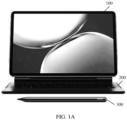
FIG. 1A is a schematic diagram of a connection between a host of a tablet computer and a keyboard; -
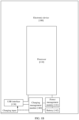
FIG. 1B is a diagram of an architecture of an electronic device; -
FIG. 2 is a schematic diagram of an electronic device according to an embodiment of this application; -
FIG. 3 is a circuit diagram of an electronic device according to an embodiment of this application; -
FIG. 4 is a circuit diagram of another electronic device according to an embodiment of this application; -
FIG. 5 is an equivalent circuit diagram corresponding toFIG. 4 according to an embodiment of this application; -
FIG. 6 is a circuit diagram of still another electronic device according to an embodiment of this application; and -
FIG. 7 is a flowchart of a stylus in-position determining method according to an embodiment of this application. - To enable those skilled in the art to understand the solutions of this application more clearly, application scenarios of the technical solutions of this application are first described below.
-
FIG. 1A is a schematic diagram of a connection between a host of a tablet computer and a keyboard. For ease of use, currently, many tablet computers are equipped with akeyboard 200, and the keyboard is directly connected to ahost 100 of the tablet computer by using three pins. The three pins include a data pin, a power pin, and a GND pin. Because thehost 100 needs to use the data pin in the three pins to detect whether the keyboard is connected, a level jump of the data pin is usually detected to determine whether the keyboard is connected. For example, the level changes from high to low, that is, is pulled down. - In addition, because the
host 100 has a touch function and a handwriting function, the tablet computer may further be provided with astylus 300. An implementation form of thestylus 300 is not specifically limited in this embodiment of this application. In a possible implementation, thestylus 300 may be attached to a top end of thehost 100, for example, a magnet device is disposed at the top end of thehost 100, and an attracting magnet is disposed in a corresponding position on thestylus 300. The magnet device and the attracting magnet are more securely attached. In this case, thestylus 300 may be attached to the magnet device disposed at the top end of thehost 100. When in use, thestylus 300 may be removed from thehost 100. When not in use, thestylus 300 may be attached to the top end of thehost 100. In addition, thehost 100 may further wirelessly charge thestylus 300. To be specific, when thestylus 300 is attached to the top end of thehost 100, a transmit coil disposed on thehost 100 may wirelessly charge thestylus 300. A receive coil is disposed inside thestylus 300. - The
host 100 and thekeyboard 200 inFIG. 1A are merely examples, and specific product forms may be different. -
FIG. 1B is a diagram of an architecture of an electronic device. - The
electronic device 100 may include aprocessor 110, acharging management module 140, apower management module 141, abattery 142, and the like. - It may be understood that the structure illustrated in this embodiment of the present invention does not constitute a specific limitation on the
electronic device 100. In some other embodiments of this application, theelectronic device 100 may include more or fewer components than those shown in the figure, or combine some components, or split some components, or have different component arrangements. The components shown in the figure may be implemented by using hardware, software, or a combination of software and hardware. - The
processor 110 may include one or more processing units. For example, theprocessor 110 may include an application processor (application processor, AP), a modem processor, a graphics processing unit (graphics processing unit, GPU), an image signal processor (image signal processor, ISP), a controller, a video codec, a digital signal processor (digital signal processor, DSP), a baseband processor, a neural-network processing unit (neural-network processing unit, NPU), and/or the like. Different processing units may be independent devices, or may be integrated into one or more processors. - The controller may generate an operation control signal based on instruction operation code and a timing signal, to complete control of instruction fetching and instruction execution.
- A memory may be further disposed in the
processor 110, and is configured to store instructions and data. In some embodiments, the memory in theprocessor 110 is a cache. The memory may store instructions or data just used or cyclically used by theprocessor 110. If theprocessor 110 needs to use the instructions or the data again, theprocessor 110 may directly invoke the instructions or the data from the memory. This avoids repeated access and reduces waiting time of theprocessor 110, thereby improving system efficiency. - In some embodiments, the
processor 110 may include one or more interfaces. The interface may include an inter-integrated circuit (inter-integrated circuit, I2C) interface, an inter-integrated circuit sound (inter-integrated circuit sound, I2S) interface, a pulse code modulation (pulse code modulation, PCM) interface, a universal asynchronous receiver/transmitter (universal asynchronous receiver/transmitter, UART) interface, a mobile industry processor interface (mobile industry processor interface, MIPI), a general-purpose input/output (general-purpose input/output, GPIO) interface, a subscriber identity module (subscriber identity module, SIM) interface, a universal serial bus (universal serial bus, USB) interface, and/or the like. - The
charging management module 140 is configured to receive a charging input from a charger. The charger may be a wireless charger or may be a wired charger. In some embodiments of wired charging, thecharging management module 140 may receive a charging input of a wired charger by using a USB interface 130. In some embodiments of wireless charging, thecharging management module 140 may receive a wireless charging input through a wireless charging coil of theelectronic device 100. Thecharging management module 140 may supply power for the electronic device by using thepower management module 141 while charging thebattery 142. - The
power management module 141 is configured to be connected to thebattery 142, thecharging management module 140, and theprocessor 110. Thepower management module 141 receives an input of thebattery 142 and/or thecharging management module 140, and supplies power to theprocessor 110, an internal memory 121, a display 194, a camera 193, a wireless communication module 160, and the like. Thepower management module 141 may also be configured to monitor parameters such as a battery capacity, a quantity of battery cycles, and a battery health status (power leakage and impedance). In some other embodiments, thepower management module 141 may alternatively be disposed in theprocessor 110. In some other embodiments, thepower management module 141 and thecharging management module 140 may further be configured in a same device. - To resolve the foregoing technical problem, an embodiment of this application provides an electronic device, including a host and a keyboard. The host can accurately detect whether the keyboard is connected, and can recover a level state of a detection pin, that is, recover a level state of a data pin, without affecting normal data communication between the keyboard and the host.
- To make those skilled in the art better understand technical solutions provided in the embodiments of this application, a concept of a Q value is first described.
- For wireless charging, a transmit end needs to have a transmit coil, a receive end needs to have a receive coil, and electromagnetic induction is performed between the transmit coil and the receive coil to transmit energy. In this embodiment of this application, a tablet computer is used as an example of the electronic device. The tablet computer is used as a transmit end, and a stylus is used as a receive end.
- The Q value is a main parameter used to measure an inductor device, and is a ratio of inductive reactance presented by an inductor to equivalent loss resistance of the inductor when the inductor operates at an alternating voltage of a frequency. A higher Q value of the inductor indicates a smaller loss and higher efficiency.
- For a definition of the Q value, refer to the following formula (1):

- L1 is an inductance value of the transmit coil, Rtx acr is an alternating current impedance of the transmit coil, and f is a resonance frequency of a resonance circuit for wireless charging.
- Because the transmit coil is disposed in the tablet computer, when the stylus approaches the tablet computer, a size of inductance of the transmit coil is affected, and equivalent resistance of the transmit coil is also changed. Therefore, the Q value is affected, and the host can determine, by simply detecting the Q value of the transmit coil, whether the stylus is attached. However, currently, the transmit coil of the tablet computer is placed in a metal frame. When the Q value is directly detected, oscillation in Q value detection is rapidly attenuated. Therefore, the detected Q value is inaccurate. Whether the stylus is attached cannot be accurately determined by using the Q value.
- To resolve the foregoing technical problem, a resonant capacitor adjustment circuit is disposed in the electronic device provided in this embodiment of this application. During Q value detection, the resonant capacitor adjustment circuit participates in operation, so that oscillation attenuation of the resonance circuit can be slowed down, to accurately detect the Q value and further accurately determine whether the stylus is attached.
-
FIG. 2 is a schematic diagram of an electronic device according to an embodiment of this application. - The electronic device provided in this embodiment includes: an
inverter circuit 101, aresonance circuit 102, acontroller 103, a resonantcapacitor adjustment circuit 104, and a Qvalue detection circuit 105. - Because the electronic device charges a stylus in a wireless charging manner, the
inverter circuit 101 needs to invert a direct current into an alternating current, so that energy is transmitted in a form of an alternating magnetic field by using a transmit coil of theresonance circuit 102. In this way, the stylus is wirelessly charged. A specific implementation form of theinverter circuit 101 is not specifically limited in this embodiment of this application. For example, theinverter circuit 101 may be a full-bridge inverter circuit, or may be a half-bridge inverter circuit. A specific implementation form of theresonance circuit 102 is not specifically limited in this embodiment of this application, either. In this embodiment of this application, an example in which theresonance circuit 102 includes a first capacitor and a transmit coil that are connected in series is used for description. In addition, theresonance circuit 102 may further include another circuit. - An output terminal of the
inverter circuit 101 is connected to theresonance circuit 102. Thecontroller 103 obtains a Q value of the transmit coil by testing attenuated oscillation of the LC circuit. When a capacitance value of a capacitor that participates in attenuated oscillation is small, oscillation attenuation is fast. When the attenuation is excessively fast, Q value detection is inaccurate. Therefore, in this embodiment of this application, to increase a discrimination degree of the Q value, the value of the capacitor that participates in the oscillation is increased during Q value detection, to reduce a speed of attenuated oscillation, so as to accurately detect the Q value. Specifically, the resonantcapacitor adjustment circuit 104 is added in the technical solution provided in this embodiment of this application. The resonantcapacitor adjustment circuit 104 is connected to theresonance circuit 102. The Q value detection circuit is connected to theresonance circuit 102. - The resonant
capacitor adjustment circuit 104 includes at least a second capacitor. - The
controller 103 is configured to: when the Q value of the transmit coil is detected, control the resonantcapacitor adjustment circuit 102 to operate, so that the first capacitor and the second capacitor are connected in parallel. In other words, the second capacitor is added, so that the second capacitor and the first capacitor are connected in parallel. This increases a capacitance value of a whole capacitor, and reduces a speed of attenuated oscillation. - The Q
value detection circuit 105 is configured to detect the Q value of the transmit coil, and send the Q value to thecontroller 103. - The
controller 103 is configured to: when the Q value is greater than a preset threshold, determine that the stylus is attached to the electronic device. When the stylus approaches, a value of inductance of the transmit coil is affected, and thus the Q value of the transmit coil is increased. Therefore, when it is determined that the Q value conforms to the preset threshold for attachment of the stylus, it is determined that the stylus is attached, and thecontroller 103 stops stylus attachment determining. Thecontroller 103 may send a digital ping to the stylus, to establish communication with the stylus. After the communication succeeds, the electronic device may wirelessly charge the stylus. - The electronic device provided in this application may be, for example, a tablet computer. The tablet computer may wirelessly charge a stylus. A transmit coil for wireless charging is disposed inside the tablet computer, and the transmit coil may be located in a metal frame. The metal frame affects a Q value of the transmit coil, causing inaccurate Q value detection. In this application, to accurately detect the Q value, the resonance capacitor adjustment circuit is added to increase a discrimination degree of the Q value. During Q value detection, the controller controls the resonance capacitor adjustment circuit to operate. This increases a capacitance value of a capacitor that participates in oscillation, and reduces a speed of oscillation attenuation. In this way, the Q value can be accurately detected. Therefore, an accurate Q value is used to determine whether the stylus is attached to the electronic device. The electronic device can wirelessly charge the stylus only when the stylus is attached to the electronic device. In the electronic device provided in this application, no Hall device needs to be disposed to detect whether the stylus is attached, that is, a conventional Hall device is omitted. Whether the stylus is in position can be determined simply by detecting a Q value, and this can reduce production costs of the electronic device.
- It should be understood that, after the stylus is removed, the
controller 103 starts to periodically determine whether the stylus is attached. To be specific, thecontroller 103 may periodically detect the Q value of the transmit coil, and determine, by using the Q value, whether the stylus is attached. The following describes a specific circuit for implementing Q value detection by the electronic device with reference to the accompanying drawings. -
FIG. 3 is a circuit diagram of an electronic device according to an embodiment of this application. This embodiment provides a specific implementation of a resonantcapacitor adjustment circuit 100. In addition to a second capacitor C2, the resonantcapacitor adjustment circuit 100 in this embodiment further includes: a switch module. - The following first describes a specific structure of the resonance circuit. In this embodiment, an example in which the resonance circuit includes an LC connected in series is used for description. A first terminal of a first capacitor C1 is connected to a first output terminal of the inverter circuit. In other words,
wireless charging IC_Tx 300 inFIG. 3 includes the inverter circuit. - A second terminal of the first capacitor C1 is connected to a first terminal of a transmit coil L, and a second terminal of the transmit coil L is connected to a second output terminal of the inverter circuit.
- The second capacitor C2 and the switch module are connected in series and then connected between the second terminal of the first capacitor C1 and a ground.
- The controller is configured to control the switch module to close, so that the resonant
capacitor adjustment circuit 100 operates; and control the switch module to open, so that the resonantcapacitor adjustment circuit 100 exits operation. - A specific implementation form of the switch module is not specifically limited in this embodiment of this application. The switch module may include any type of semiconductor switch device. For example, an example in which the switch module includes a PMOS transistor is used for description. Alternatively, the switch module may include another type of switching transistor. Specifically, the controller may control a switch status of the switch module in the resonant
capacitor adjustment circuit 100 to control whether the resonantcapacitor adjustment circuit 100 operates. For example, when the switch module is turned on, the resonantcapacitor adjustment circuit 100 participates in operation. When the switch module is turned off, the resonantcapacitor regulation circuit 100 exits operation. - During operation exit, to enable the resonant
capacitor adjustment circuit 100 to completely exit operation with no current flowing through it, that is, to completely disconnect a current path to avoid electric energy consumption, switching transistors provided in this embodiment of this application are implemented by using two vertically connected PMOS transistors. To be specific, body diodes or anti-parallel diodes of the two PMOS transistors have opposite polarities. - The switch module includes a first PMOS transistor P1 and a second PMOS transistor P2.
- The first PMOS transistor P1 and the second PMOS transistor P2 are connected in series, and a body diode of the first PMOS transistor P1 and a body diode of the second PMOS transistor P2 are reversed. It can be seen from the figure that, an anode of the body diode of the first PMOS transistor P1 is connected to an anode of the body diode of P2. When a current flows through the body diode of the first PMOS transistor P1, the current does not flow through the body diode of P2. Likewise, when a current flows through the body diode of the second PMOS transistor P2, the current does not flow through the body diode of the first PMOS transistor P1. Therefore, regardless of whether a direction of the current is from the first PMOS transistor P1 to the second PMOS transistor P2 or from the second PMOS transistor P2 to the first PMOS transistor P1, when the first PMOS transistor P1 and the second PMOS transistor P2 are turned off, no current path is formed, and the switching transistors are completely turned off. That is, when the resonant
capacitor adjustment circuit 100 exits operation, no current flows through the branch. - Gates of the first PMOS transistor P1 and the second PMOS transistor P2 may be controlled by the controller, for example, may be controlled by a GPIO1 interface of the controller, so as to control drive signals of the gates of the first PMOS transistor P1 and the second PMOS transistor P2, and implement turn-on and turn-off of the first PMOS transistor P1 and the second PMOS transistor P2. It should be understood that, the first PMOS transistor P1 and the second PMOS transistor P2 perform synchronous actions, that is, are simultaneously turned off or turned on. In a possible implementation, the controller may be implemented by the wireless charging IC_Tx. With reference to the accompanying drawings, the following describes in detail an operating principle of the resonant capacitor adjustment circuit participating in operation.
-
FIG. 4 is a circuit diagram of another electronic device according to an embodiment of this application. - Because the resonance circuit is connected to the output terminals of the inverter circuit, and the resonant
capacitor adjustment circuit 100 is connected to the resonance circuit, the following analyzes, with reference to the inverter circuit, a manner of implementing parallel connection between the first capacitor C1 and the second capacitor C2. - In this embodiment, that the inverter circuit is a full-bridge inverter circuit is used for description. The inverter circuit includes two bridge arms. A first bridge arm includes a switch S1 and a switch S3 that are connected in series, and a second bridge arm includes a switch S2 and a switch S4 that are connected in series. The first terminal of the first capacitor C1 is connected to the first output terminal of the inverter circuit, that is, the first capacitor C1 is connected between S1 and S3, and a second terminal of L is connected to the second output terminal of the inverter circuit, that is, the second terminal of L is connected between the switch S2 and the switch S4.
- When switching transistors in lower bridge arms of the two bridge arms of the inverter circuit are turned on, the first capacitor C1 and the second capacitor C2 can be connected in parallel, that is, a switching transistor S3 in the lower bridge arm of the first bridge arm is turned on, and a switching transistor S4 in the small bridge arm of the second bridge arm is turned on. Because a negative input terminal of the inverter circuit is grounded, the first terminal of the first capacitor C1 is grounded by turning on S3, and the second terminal of L is grounded by turning on S4. When the controller controls both P1 and P2 to be turned on, a second terminal of the second capacitor C2 is grounded, and a first terminal of the second capacitor C2 is connected to the second terminal of C1, so that the first capacitor C1 and the second capacitor C2 are connected in parallel.
- To more clearly understand the parallel connection solution of the first capacitor C1 and the second capacitor C2, refer to
FIG. 5 for details.FIG. 5 is an equivalent circuit diagram corresponding toFIG. 4 according to an embodiment of this application. - It can be seen from
FIG. 5 that, the second terminal of the first capacitor C1 and the first terminal of the second capacitor C2 are connected, the first terminal of the first capacitor C1 is grounded, and the second terminal of the second capacitor C2 is grounded. This is equivalent to the following: The first terminal of the first capacitor C1 and the second terminal of C2 are connected, so that the first capacitor C1 and the second capacitor C2 are connected in parallel, that is, C1, C2, and L form a resonant cavity together with the lower bridge arms of the inverter circuit. - When the first capacitor C1 and the second capacitor C2 are connected in parallel, a capacitance value of a total capacitor is increased, thereby increasing an oscillation period. In this way, attenuation is slowed down, a discrimination degree of a Q value is increased, and the Q value is accurately detected, so that whether a stylus is attached can be accurately determined based on an accurate Q value.
- The following describes an implementation of the Q value detection circuit provided in this embodiment of this application.
-
FIG. 6 is a circuit diagram of still another electronic device according to an embodiment of this application. - The Q value detection circuit in the electronic device provided in this embodiment includes: a direct current blocking circuit and a filter circuit.
- A first terminal of the direct current blocking circuit is connected to the resonance circuit, a second terminal of the direct current blocking circuit is connected to a first terminal of the filter circuit, and a second terminal of the filter circuit is connected to the controller. As shown in
FIG. 6 , the direct current blocking circuit is implemented by using a sixth capacitor C6. To be specific, a first terminal of C6 is connected to the first terminal of the second capacitor C2, and a second terminal of the sixth capacitor C6 is connected to an input terminal of the filter circuit. In this embodiment, an example in which the filter circuit is a second-order filter circuit is used for description. - In addition, in the electronic device provided in this embodiment, the Q value detection circuit further includes: a first diode D1 and a voltage divider circuit. The voltage divider circuit includes a fifth resistor R5 and a sixth resistor R6 that are connected in series. A first terminal of the fifth resistor R5 is connected to a first terminal of the voltage divider circuit, a second terminal of the fifth resistor R5 is connected to a third terminal of the voltage divider circuit, the second terminal of the fifth resistor R5 is connected to a first terminal of the sixth resistor R6, and a second terminal of the sixth resistor R6 is connected to a second terminal of the voltage divider circuit. The first diode D1 is configured to prevent current reverse, that is, provide a reverse cutoff function.
- The first terminal of the voltage divider circuit is configured to be connected to a first power supply VDD1P8. In this embodiment, an example in which a voltage of the first power supply is 1.8 V is used for description. The second terminal of the voltage divider circuit is grounded, and the filter circuit is connected to the third terminal of the voltage divider circuit. The third terminal of the voltage divider circuit is connected to the second terminal of the direct current blocking circuit, the second terminal of the direct current blocking circuit is connected to an anode of the first diode D1, and a cathode of the first diode D1 is connected to the first terminal of the filter circuit. The direct current blocking circuit includes the sixth capacitor C6, that is, the capacitor may be configured to block a direct current and allow an alternating current to flow through. The first power supply and the voltage divider circuit are configured to generate a boosted voltage, to offset voltage drop consumption of the first diode D1.
- As shown in
FIG. 6 , the filter circuit includes: a first resistor R1, a second resistor R2, a third capacitor C3, a third resistor R3, and a fourth capacitor C4. - A first terminal of the first resistor R1 is connected to the cathode of the first diode D1, the anode of the first diode D1 is connected to the second terminal of the direct current blocking circuit, a second terminal of the first resistor R1 is connected to a first terminal of the second resistor R2, and a second terminal of the second resistor R2 is grounded. A first terminal of the third resistor R3 is connected to the second terminal of the first resistor R1, a first terminal of the third capacitor C3 is connected to the first terminal of the third resistor R3, and a second terminal of the third resistor R3 is connected to an output terminal of the filter circuit.
- A second terminal of the third capacitor C3 is grounded, a first terminal of the fourth capacitor C4 is connected to the output terminal of the filter circuit, and a second terminal of the fourth capacitor C4 is grounded.
- In this embodiment, the filter circuit is configured to filter out an interfering signal, so as to extract a voltage signal representing a Q value. For example, the output terminal of the filter circuit is connected to a GPIO2 interface of the controller, and the interface may further have an analog-to-digital AD conversion function, that is, convert an analog voltage signal into a digital voltage signal, to facilitate processing by the controller. A larger value of a voltage signal of the GPIO2 interface indicates a larger Q value.
- In addition, the electronic device provided in this embodiment of this application further includes: a pulse source circuit. The pulse source circuit includes a fourth resistor R4 and a second diode D2. The pulse source circuit is configured to generate an oscillation source for Q value detection. A first terminal of the fourth resistor R4 is connected to a second power supply VDD5V, a second terminal of the fourth resistor R4 is connected to an anode of the second diode D2, and a cathode of the second diode D2 is connected to the resonance circuit.
- In the electronic device provided in this embodiment, in addition to the first capacitor C1 and the transmit coil L, the resonance circuit further includes a fifth capacitor C5. The fifth capacitor C5 is connected in parallel to the first output terminal and the second output terminal of the inverter circuit.
- In addition, a magnetic attraction device is disposed at a top end of the electronic device provided in this embodiment of this application, and the magnetic attraction device is configured to attract the stylus, that is, the stylus is disposed in a top attraction manner.
- Based on the electronic device provided in the foregoing embodiment, an embodiment of this application further provides a stylus in-position determining method. The method is described in detail below with reference to the accompanying drawings.
-
FIG. 7 is a flowchart of a stylus in-position determining method according to an embodiment of this application. - The stylus in-position determining method provided in this embodiment is applied to an electronic device, and the electronic device includes: an inverter circuit, a resonance circuit, a resonant capacitor adjustment circuit, and a Q value detection circuit; where the resonance circuit includes a first capacitor and a transmit coil that are connected in series; an output terminal of the inverter circuit is connected to the resonance circuit; the resonant capacitor adjustment circuit is connected to the resonance circuit; the Q value detection circuit is connected to the resonance circuit; the resonant capacitor adjustment circuit includes at least a second capacitor; and the Q value detection circuit is configured to obtain a voltage signal representing a Q value.
- The method includes the following steps.
- S701: When detecting a Q value of the transmit coil, control the resonant capacitor adjustment circuit to operate, so that the first capacitor and the second capacitor are connected in parallel. The second capacitor is added in the electronic device, so that the second capacitor and the first capacitor are connected in parallel. This increases a capacitance value of a whole capacitor, and reduces a speed of attenuated oscillation.
- S702: Obtain the Q value based on the voltage signal.
- Because the Q value detection circuit is connected to the resonance circuit, and is also connected to the second capacitor, the voltage signal representing the Q value may be detected.
- S703: When the Q value is greater than a preset threshold, determine that a stylus is attached to the electronic device.
- When the stylus approaches, a value of inductance of the transmit coil is affected, and thus the Q value of the transmit coil is increased. Therefore, when it is determined that the Q value conforms to the preset threshold for attachment of the stylus, it is determined that the stylus is attached, and the electronic device stops stylus attachment determining. When it is determined that the stylus is in position, the electronic device may send a digital ping to the stylus, to establish communication with the stylus. After the communication succeeds, the electronic device may wirelessly charge the stylus.
- According to the method provided in this embodiment, because the transmit coil for wireless charging is disposed inside the electronic device, and the transmit coil may be located in a metal frame, the metal frame affects the Q value of the transmit coil, causing inaccurate Q value detection. In this application, to accurately detect the Q value and increase a discrimination degree of the Q value, during Q value detection, the resonant capacitor adjustment circuit is controlled to operate This increases a capacitance value of a capacitor that participates in oscillation, and reduces a speed of attenuated oscillation. In this way, the Q value can be accurately detected, and the Q value can be used to determine whether the stylus is attached. The stylus can be wirelessly charged only when the stylus is attached. In the electronic device, no Hall device needs to be disposed, that is, a conventional Hall device is omitted. Stylus in-position detection can be implemented simply by detecting a Q value, and this can reduce production costs.
- In addition, the method provided in this embodiment further includes: after determining that the stylus is attached to the electronic device, controlling the resonant capacitor adjustment circuit to exit operation and controlling the transmit coil to wirelessly charge the stylus.
- It should be understood that, in this application, "at least one" refers to one or more, and "a plurality of" refers to two or more. The term "and/or" is used to describe an association relationship between associated objects, and indicates that there may be three relationships. For example, "A and/or B" may indicate that only A exists, only B exists, and both A and B exist, where A and B may be singular or plural. The character "/" generally indicates an "or" relationship between associated objects.
- "At least one of the following" or a similar expression thereof refers to any combination of these items, including one item or any combination of a plurality of items. For example, at least one of a, b, or c may represent a, b, c, "a and b", "a and c", "b and c", or "a, b, and c", where a, b, and c may be singular or plural.
Claims (12)
- An electronic device, comprising: an inverter circuit (101), a resonance circuit (102), a controller (103), a resonant capacitor adjustment circuit (104), and a Q value detection circuit (105); whereinthe resonance circuit (102) comprises a first capacitor (C1) and a transmit coil (L) that are connected in series; and an output terminal of the inverter circuit (101) is connected to the resonance circuit (102);the resonant capacitor adjustment circuit (104) is connected to the resonance circuit (102); and the Q value detection circuit (105) is connected to the resonance circuit (102);the resonant capacitor adjustment circuit (104) comprises at least a second capacitor (C2);the controller (103) is configured to: when a Q value of the transmit coil (L) is detected, control the resonant capacitor adjustment circuit (104) to operate, so that the first capacitor (C1) and the second capacitor (C2) are connected in parallel;the Q value detection circuit (105) is configured to obtain a voltage signal representing a Q value, and send the voltage signal to the controller (103); andthe controller (103) is configured to obtain the Q value based on the voltage signal, and when the Q value is greater than a preset threshold, determine that a stylus is attached to the electronic device.
- The device according to claim 1, wherein the resonant capacitor adjustment circuit (104) further comprises: a switch module; whereina first terminal of the first capacitor (C1) is connected to a first output terminal of the inverter circuit (101), a second terminal of the first capacitor (C1) is connected to a first terminal of the transmit coil (L), and a second terminal of the transmit coil (L) is connected to a second output terminal of the inverter circuit (101);the second capacitor (C2) and the switch module are connected in series and then connected between the second terminal of the first capacitor (C1) and a ground; andthe controller (103) is configured to control the switch module to close, so that the resonant capacitor adjustment circuit (104) operates; and control the switch module to open, so that the resonant capacitor adjustment circuit (104) exits operation.
- The device according to claim 2, wherein the switch module: comprises a first PMOS transistor (P1) and a second PMOS transistor (P2); wherein
the first PMOS transistor (P1) and the second PMOS transistor (P2) are connected in series, and a body diode of the first PMOS transistor (P1) and a body diode of the second PMOS transistor (P2) are reversed. - The device according to any one of claims 1 to 3, wherein the Q value detection circuit (105) further comprises: a direct current blocking circuit and a filter circuit; wherein
a first terminal of the direct current blocking circuit is connected to the resonance circuit (102), a second terminal of the direct current blocking circuit is connected to a first terminal of the filter circuit, and a second terminal of the filter circuit is connected to the controller (103). - The device according to claim 4, wherein the Q value detection circuit (105) further comprises: a first diode and a voltage divider circuit; wherein
a first terminal of the voltage divider circuit is configured to be connected to a first power supply, a second terminal of the voltage divider circuit is grounded, and the filter circuit is connected to a third terminal of the voltage divider circuit; and the third terminal of the voltage divider circuit is connected to the second terminal of the direct current blocking circuit, the second terminal of the direct current blocking circuit is connected to an anode of the first diode, and a cathode of the first diode is connected to the first terminal of the filter circuit. - The device according to claim 5, wherein the filter circuit comprises: a first resistor (R1), a second resistor (R2), a third capacitor (C3), a third resistor (R3), and a fourth capacitor (C4); whereina first terminal of the first resistor (R1) is connected to the cathode of the first diode, the anode of the first diode is connected to the second terminal of the direct current blocking circuit, a second terminal of the first resistor (R1) is connected to a first terminal of the second resistor (R2), and a second terminal of the second resistor (R2) is grounded; anda first terminal of the third resistor (R3) is connected to the second terminal of the first resistor (R1), a first terminal of the third capacitor (C3) is connected to the first terminal of the third resistor (R3), a second terminal of the third resistor (R3) is connected to an output terminal of the filter circuit, a second terminal of the third capacitor (C3) is grounded, a first terminal of the fourth capacitor (C4) is connected to the output terminal of the filter circuit, and a second terminal of the fourth capacitor (C4) is grounded.
- The device according to claim 5, wherein the voltage divider circuit comprises: a fifth resistor (R5) and a sixth resistor (R6); wherein
a first terminal of the fifth resistor (R5) is connected to the first terminal of the voltage divider circuit, a second terminal of the fifth resistor (R5) is connected to the third terminal of the voltage divider circuit, the second terminal of the fifth resistor (R5) is connected to a first terminal of the sixth resistor (R6), and a second terminal of the sixth resistor (R6) is connected to the second terminal of the voltage divider circuit. - The device according to any one of claims 1 to 7, further comprising: a pulse source circuit, wherein the pulse source circuit comprises a fourth resistor and a second diode; and
a first terminal of the fourth resistor is connected to a second power supply, a second terminal of the fourth resistor is connected to an anode of the second diode, and a cathode of the second diode is connected to the resonance circuit (102). - The device according to any one of claims 1 to 8, wherein the controller (103) is further configured to: after determining that the stylus is attached to the electronic device, control the resonant capacitor adjustment circuit (104) to exit operation and the transmit coil (L) to wirelessly charge the stylus.
- The device according to any one of claims 1 to 8, wherein a magnetic attraction device is disposed at a top end of the electronic device, and the magnetic attraction device is configured to attract the stylus.
- A stylus in-position determining method, applied to an electronic device, wherein the electronic device comprises: an inverter circuit (101), a resonance circuit (102), a resonant capacitor adjustment circuit (104), and a Q value detection circuit (105); wherein the resonance circuit (102) comprises a first capacitor (C1) and a transmit coil (L) that are connected in series; an output terminal of the inverter circuit (101) is connected to the resonance circuit (102); the resonant capacitor adjustment circuit (104) is connected to the resonance circuit (102); the Q value detection circuit (105) is connected to the resonance circuit (102); the resonant capacitor adjustment circuit (104) comprises at least a second capacitor (C2); and the Q value detection circuit (105) is configured to obtain a voltage signal representing a Q value; and
the method comprises:when a Q value of the transmit coil (L) is detected, controlling (S701) the resonant capacitor adjustment circuit (104) to operate, so that the first capacitor (C1) and the second capacitor (C2) are connected in parallel;obtaining (S702) the Q value based on the voltage signal; andwhen the Q value is greater than a preset threshold, determining (S703) that the stylus is attached to the electronic device. - The method according to claim 11, further comprising:
after determining that the stylus is attached to the electronic device, controlling the resonant capacitor adjustment circuit (104) to exit operation and controlling the transmit coil (L) to wirelessly charge the stylus.
Applications Claiming Priority (2)
| Application Number | Priority Date | Filing Date | Title |
|---|---|---|---|
| CN202210121909.7A CN116610192B (en) | 2022-02-09 | 2022-02-09 | Electronic equipment and method for judging presence of handwriting pen |
| PCT/CN2022/142069 WO2023151403A1 (en) | 2022-02-09 | 2022-12-26 | Electronic device, and method for determining in-place of stylus |
Publications (3)
| Publication Number | Publication Date |
|---|---|
| EP4270147A1 EP4270147A1 (en) | 2023-11-01 |
| EP4270147A4 EP4270147A4 (en) | 2024-08-07 |
| EP4270147B1 true EP4270147B1 (en) | 2025-07-09 |
Family
ID=87563541
Family Applications (1)
| Application Number | Title | Priority Date | Filing Date |
|---|---|---|---|
| EP22921013.3A Active EP4270147B1 (en) | 2022-02-09 | 2022-12-26 | Electronic device, and method for determining in-place of stylus |
Country Status (4)
| Country | Link |
|---|---|
| US (1) | US20250038583A1 (en) |
| EP (1) | EP4270147B1 (en) |
| CN (1) | CN116610192B (en) |
| WO (1) | WO2023151403A1 (en) |
Families Citing this family (3)
| Publication number | Priority date | Publication date | Assignee | Title |
|---|---|---|---|---|
| CN117691770B (en) * | 2024-02-04 | 2024-07-09 | 荣耀终端有限公司 | Wireless charging method and electronic device |
| CN120691612A (en) * | 2024-03-15 | 2025-09-23 | 荣耀终端股份有限公司 | Charging circuit, electronic device and electronic device component |
| WO2025211608A1 (en) * | 2024-04-01 | 2025-10-09 | 삼성전자 주식회사 | Electronic device comprising sensing circuit for recognizing stylus pen, operation method thereof, and recording medium |
Family Cites Families (18)
| Publication number | Priority date | Publication date | Assignee | Title |
|---|---|---|---|---|
| JP2011030404A (en) * | 2009-06-22 | 2011-02-10 | Felica Networks Inc | Information processing apparatus, program, and information processing system |
| JP6678494B2 (en) * | 2016-03-30 | 2020-04-08 | マクセル株式会社 | Non-contact power transmission and reception device |
| US10903675B2 (en) * | 2016-12-12 | 2021-01-26 | Avive Solutions, Inc. | Medical device draw current regulation |
| CN108173359B (en) * | 2018-02-06 | 2024-07-19 | 深圳劲芯微电子有限公司 | Method and circuit for judging wireless charging foreign matters based on Q value |
| US11171502B2 (en) * | 2018-02-23 | 2021-11-09 | Aira, Inc. | Free positioning charging pad |
| CN111313569A (en) * | 2018-12-11 | 2020-06-19 | 恩智浦美国有限公司 | Q Factor Determination of Foreign Object Detection Circuit in Wireless Charging System |
| CN110138062A (en) * | 2019-05-21 | 2019-08-16 | 深圳市优笔触控科技有限公司 | Twin coil wireless and passive time writer and its control circuit and control method |
| CN111999772A (en) * | 2019-05-27 | 2020-11-27 | 华为技术有限公司 | Detection device, transmitting terminal, wireless charging system and method for metal foreign matters |
| CN110350670B (en) * | 2019-05-29 | 2022-05-17 | 北京航空航天大学 | Universal wireless charging transmitting terminal device and control method |
| CN210899713U (en) * | 2019-09-24 | 2020-06-30 | 东莞市双平电源技术有限公司 | Composite resonance heating circuit |
| CN210608650U (en) * | 2019-11-13 | 2020-05-22 | 厦门新页微电子技术有限公司 | Wireless charging system and its foreign object detection circuit |
| CN112928825A (en) * | 2019-12-06 | 2021-06-08 | 恩智浦美国有限公司 | Method for determining quality factor and wireless charger |
| CN111211598B (en) * | 2020-02-12 | 2022-11-22 | 华为数字能源技术有限公司 | Wireless charging circuit, wireless charging method, wireless charging equipment and wireless charging system |
| CN111208357B (en) * | 2020-02-17 | 2020-12-08 | 珠海智融科技有限公司 | Q value detection circuit and working method thereof |
| KR20210128607A (en) * | 2020-04-17 | 2021-10-27 | 삼성전자주식회사 | Electronic device and method for providing charging status information of the same |
| CN111769655B (en) * | 2020-05-19 | 2022-09-23 | 华为技术有限公司 | Terminal equipment and control method thereof |
| CN113629894A (en) * | 2021-07-30 | 2021-11-09 | 荣耀终端有限公司 | Wireless charging system |
| CN113809835A (en) * | 2021-08-11 | 2021-12-17 | 荣耀终端有限公司 | Wireless charging method, device, chip, system, and computer-readable storage medium |
-
2022
- 2022-02-09 CN CN202210121909.7A patent/CN116610192B/en active Active
- 2022-12-26 EP EP22921013.3A patent/EP4270147B1/en active Active
- 2022-12-26 WO PCT/CN2022/142069 patent/WO2023151403A1/en not_active Ceased
- 2022-12-26 US US18/546,022 patent/US20250038583A1/en active Pending
Also Published As
| Publication number | Publication date |
|---|---|
| EP4270147A4 (en) | 2024-08-07 |
| EP4270147A1 (en) | 2023-11-01 |
| CN116610192A (en) | 2023-08-18 |
| US20250038583A1 (en) | 2025-01-30 |
| WO2023151403A1 (en) | 2023-08-17 |
| CN116610192B (en) | 2024-04-05 |
Similar Documents
| Publication | Publication Date | Title |
|---|---|---|
| EP4270147B1 (en) | Electronic device, and method for determining in-place of stylus | |
| US8198754B2 (en) | Power transmission control device, power transmitting device, electronic instrument, and non-contact power transmission system | |
| CN109742824B (en) | Charging systems and electronics | |
| US7847438B2 (en) | Power transmission device, electronic instrument, and waveform monitoring circuit | |
| US8004118B2 (en) | Power transmission control device, power transmitting device, electronic instrument, and non-contact power transmission system | |
| US7804197B2 (en) | Power transmission control device, power transmission device, electronic instrument, and non-contact power transmission system | |
| JP6026354B2 (en) | Wireless power transmission equipment | |
| WO2016138735A1 (en) | Wireless charging device | |
| WO2021238598A1 (en) | Quality factor detection circuit and detection method based on oscillating circuit, and electronic device | |
| JP6950608B2 (en) | Control device, power receiving device and electronic device | |
| US10291075B2 (en) | Over voltage protection detection | |
| CN110764023B (en) | A rectifier chip and terminal equipment | |
| US20230146055A1 (en) | Electronic device wirelessly receiving power, and operating method therefor | |
| WO2026045800A1 (en) | Wireless charging circuit, wireless charging module and electronic device | |
| EP4199337A1 (en) | Electronic device for wirelessly receiving power | |
| WO2025039524A1 (en) | Power supply circuit and related apparatus | |
| CN117895670B (en) | Charging circuit, electronic device and electronic device component | |
| CN117118097B (en) | Metal foreign body detection circuit, method and related device | |
| CN120433465A (en) | Wireless charging receiver, method, chip and electronic device | |
| CN117997148B (en) | Rectification and boosting circuit, wireless charging receiving module, chip and electronic equipment | |
| CN116250162B (en) | Wireless charging device and terminal device | |
| CN118040855A (en) | A wireless charging circuit, device, method and computer-readable storage medium | |
| CN206611208U (en) | A kind of mobile high-power wireless charging device | |
| CN120522460A (en) | Q value detection circuit, method, wireless charging circuit, chip and device | |
| CN119787799A (en) | Switching power supply circuit, switching power supply, electronic equipment and power supply system |
Legal Events
| Date | Code | Title | Description |
|---|---|---|---|
| STAA | Information on the status of an ep patent application or granted ep patent |
Free format text: STATUS: UNKNOWN |
|
| STAA | Information on the status of an ep patent application or granted ep patent |
Free format text: STATUS: THE INTERNATIONAL PUBLICATION HAS BEEN MADE |
|
| PUAI | Public reference made under article 153(3) epc to a published international application that has entered the european phase |
Free format text: ORIGINAL CODE: 0009012 |
|
| STAA | Information on the status of an ep patent application or granted ep patent |
Free format text: STATUS: REQUEST FOR EXAMINATION WAS MADE |
|
| 17P | Request for examination filed |
Effective date: 20230728 |
|
| AK | Designated contracting states |
Kind code of ref document: A1 Designated state(s): AL AT BE BG CH CY CZ DE DK EE ES FI FR GB GR HR HU IE IS IT LI LT LU LV MC ME MK MT NL NO PL PT RO RS SE SI SK SM TR |
|
| A4 | Supplementary search report drawn up and despatched |
Effective date: 20240709 |
|
| RIC1 | Information provided on ipc code assigned before grant |
Ipc: G06F 3/0354 20130101ALI20240703BHEP Ipc: G06F 1/26 20060101ALI20240703BHEP Ipc: H02J 50/90 20160101ALI20240703BHEP Ipc: H02J 50/12 20160101ALI20240703BHEP Ipc: G06F 1/16 20060101AFI20240703BHEP |
|
| GRAP | Despatch of communication of intention to grant a patent |
Free format text: ORIGINAL CODE: EPIDOSNIGR1 |
|
| STAA | Information on the status of an ep patent application or granted ep patent |
Free format text: STATUS: GRANT OF PATENT IS INTENDED |
|
| DAV | Request for validation of the european patent (deleted) | ||
| DAX | Request for extension of the european patent (deleted) | ||
| INTG | Intention to grant announced |
Effective date: 20250203 |
|
| GRAS | Grant fee paid |
Free format text: ORIGINAL CODE: EPIDOSNIGR3 |
|
| GRAA | (expected) grant |
Free format text: ORIGINAL CODE: 0009210 |
|
| STAA | Information on the status of an ep patent application or granted ep patent |
Free format text: STATUS: THE PATENT HAS BEEN GRANTED |
|
| AK | Designated contracting states |
Kind code of ref document: B1 Designated state(s): AL AT BE BG CH CY CZ DE DK EE ES FI FR GB GR HR HU IE IS IT LI LT LU LV MC ME MK MT NL NO PL PT RO RS SE SI SK SM TR |
|
| REG | Reference to a national code |
Ref country code: GB Ref legal event code: FG4D |
|
| REG | Reference to a national code |
Ref country code: CH Ref legal event code: EP |
|
| REG | Reference to a national code |
Ref country code: IE Ref legal event code: FG4D |
|
| REG | Reference to a national code |
Ref country code: DE Ref legal event code: R096 Ref document number: 602022017491 Country of ref document: DE |
|
| REG | Reference to a national code |
Ref country code: NL Ref legal event code: FP |
|
| PG25 | Lapsed in a contracting state [announced via postgrant information from national office to epo] |
Ref country code: PT Free format text: LAPSE BECAUSE OF FAILURE TO SUBMIT A TRANSLATION OF THE DESCRIPTION OR TO PAY THE FEE WITHIN THE PRESCRIBED TIME-LIMIT Effective date: 20251110 |
|
| PGFP | Annual fee paid to national office [announced via postgrant information from national office to epo] |
Ref country code: NL Payment date: 20251112 Year of fee payment: 4 |
|
| REG | Reference to a national code |
Ref country code: AT Ref legal event code: MK05 Ref document number: 1812413 Country of ref document: AT Kind code of ref document: T Effective date: 20250709 |
|
| PG25 | Lapsed in a contracting state [announced via postgrant information from national office to epo] |
Ref country code: IS Free format text: LAPSE BECAUSE OF FAILURE TO SUBMIT A TRANSLATION OF THE DESCRIPTION OR TO PAY THE FEE WITHIN THE PRESCRIBED TIME-LIMIT Effective date: 20251109 |
|
| PGFP | Annual fee paid to national office [announced via postgrant information from national office to epo] |
Ref country code: DE Payment date: 20251104 Year of fee payment: 4 |
|
| PG25 | Lapsed in a contracting state [announced via postgrant information from national office to epo] |
Ref country code: NO Free format text: LAPSE BECAUSE OF FAILURE TO SUBMIT A TRANSLATION OF THE DESCRIPTION OR TO PAY THE FEE WITHIN THE PRESCRIBED TIME-LIMIT Effective date: 20251009 |
|
| REG | Reference to a national code |
Ref country code: LT Ref legal event code: MG9D |
|
| PG25 | Lapsed in a contracting state [announced via postgrant information from national office to epo] |
Ref country code: AT Free format text: LAPSE BECAUSE OF FAILURE TO SUBMIT A TRANSLATION OF THE DESCRIPTION OR TO PAY THE FEE WITHIN THE PRESCRIBED TIME-LIMIT Effective date: 20250709 |
|
| PG25 | Lapsed in a contracting state [announced via postgrant information from national office to epo] |
Ref country code: FI Free format text: LAPSE BECAUSE OF FAILURE TO SUBMIT A TRANSLATION OF THE DESCRIPTION OR TO PAY THE FEE WITHIN THE PRESCRIBED TIME-LIMIT Effective date: 20250709 |
|
| PG25 | Lapsed in a contracting state [announced via postgrant information from national office to epo] |
Ref country code: HR Free format text: LAPSE BECAUSE OF FAILURE TO SUBMIT A TRANSLATION OF THE DESCRIPTION OR TO PAY THE FEE WITHIN THE PRESCRIBED TIME-LIMIT Effective date: 20250709 |
|
| PG25 | Lapsed in a contracting state [announced via postgrant information from national office to epo] |
Ref country code: GR Free format text: LAPSE BECAUSE OF FAILURE TO SUBMIT A TRANSLATION OF THE DESCRIPTION OR TO PAY THE FEE WITHIN THE PRESCRIBED TIME-LIMIT Effective date: 20251010 |
|
| PG25 | Lapsed in a contracting state [announced via postgrant information from national office to epo] |
Ref country code: SE Free format text: LAPSE BECAUSE OF FAILURE TO SUBMIT A TRANSLATION OF THE DESCRIPTION OR TO PAY THE FEE WITHIN THE PRESCRIBED TIME-LIMIT Effective date: 20250709 |
|
| PG25 | Lapsed in a contracting state [announced via postgrant information from national office to epo] |
Ref country code: LV Free format text: LAPSE BECAUSE OF FAILURE TO SUBMIT A TRANSLATION OF THE DESCRIPTION OR TO PAY THE FEE WITHIN THE PRESCRIBED TIME-LIMIT Effective date: 20250709 |
|
| PG25 | Lapsed in a contracting state [announced via postgrant information from national office to epo] |
Ref country code: BG Free format text: LAPSE BECAUSE OF FAILURE TO SUBMIT A TRANSLATION OF THE DESCRIPTION OR TO PAY THE FEE WITHIN THE PRESCRIBED TIME-LIMIT Effective date: 20250709 Ref country code: PL Free format text: LAPSE BECAUSE OF FAILURE TO SUBMIT A TRANSLATION OF THE DESCRIPTION OR TO PAY THE FEE WITHIN THE PRESCRIBED TIME-LIMIT Effective date: 20250709 |
|
| PG25 | Lapsed in a contracting state [announced via postgrant information from national office to epo] |
Ref country code: RS Free format text: LAPSE BECAUSE OF FAILURE TO SUBMIT A TRANSLATION OF THE DESCRIPTION OR TO PAY THE FEE WITHIN THE PRESCRIBED TIME-LIMIT Effective date: 20251009 |
|
| PG25 | Lapsed in a contracting state [announced via postgrant information from national office to epo] |
Ref country code: ES Free format text: LAPSE BECAUSE OF FAILURE TO SUBMIT A TRANSLATION OF THE DESCRIPTION OR TO PAY THE FEE WITHIN THE PRESCRIBED TIME-LIMIT Effective date: 20250709 |
|
| PG25 | Lapsed in a contracting state [announced via postgrant information from national office to epo] |
Ref country code: RO Free format text: LAPSE BECAUSE OF FAILURE TO SUBMIT A TRANSLATION OF THE DESCRIPTION OR TO PAY THE FEE WITHIN THE PRESCRIBED TIME-LIMIT Effective date: 20250709 |
|
| PG25 | Lapsed in a contracting state [announced via postgrant information from national office to epo] |
Ref country code: SM Free format text: LAPSE BECAUSE OF FAILURE TO SUBMIT A TRANSLATION OF THE DESCRIPTION OR TO PAY THE FEE WITHIN THE PRESCRIBED TIME-LIMIT Effective date: 20250709 |
|
| PG25 | Lapsed in a contracting state [announced via postgrant information from national office to epo] |
Ref country code: DK Free format text: LAPSE BECAUSE OF FAILURE TO SUBMIT A TRANSLATION OF THE DESCRIPTION OR TO PAY THE FEE WITHIN THE PRESCRIBED TIME-LIMIT Effective date: 20250709 |
|
| PG25 | Lapsed in a contracting state [announced via postgrant information from national office to epo] |
Ref country code: IT Free format text: LAPSE BECAUSE OF FAILURE TO SUBMIT A TRANSLATION OF THE DESCRIPTION OR TO PAY THE FEE WITHIN THE PRESCRIBED TIME-LIMIT Effective date: 20250709 |
|
| PG25 | Lapsed in a contracting state [announced via postgrant information from national office to epo] |
Ref country code: CZ Free format text: LAPSE BECAUSE OF FAILURE TO SUBMIT A TRANSLATION OF THE DESCRIPTION OR TO PAY THE FEE WITHIN THE PRESCRIBED TIME-LIMIT Effective date: 20250709 |
|
| PG25 | Lapsed in a contracting state [announced via postgrant information from national office to epo] |
Ref country code: SK Free format text: LAPSE BECAUSE OF FAILURE TO SUBMIT A TRANSLATION OF THE DESCRIPTION OR TO PAY THE FEE WITHIN THE PRESCRIBED TIME-LIMIT Effective date: 20250709 Ref country code: EE Free format text: LAPSE BECAUSE OF FAILURE TO SUBMIT A TRANSLATION OF THE DESCRIPTION OR TO PAY THE FEE WITHIN THE PRESCRIBED TIME-LIMIT Effective date: 20250709 |