EP4269894A1 - Method for detecting power consumption of multi-split air conditioner, heat recovery multi-split air conditioner, storage medium, and device - Google Patents
Method for detecting power consumption of multi-split air conditioner, heat recovery multi-split air conditioner, storage medium, and device Download PDFInfo
- Publication number
- EP4269894A1 EP4269894A1 EP22742111.2A EP22742111A EP4269894A1 EP 4269894 A1 EP4269894 A1 EP 4269894A1 EP 22742111 A EP22742111 A EP 22742111A EP 4269894 A1 EP4269894 A1 EP 4269894A1
- Authority
- EP
- European Patent Office
- Prior art keywords
- power consumption
- hydraulic device
- data
- indoor unit
- air conditioner
- Prior art date
- Legal status (The legal status is an assumption and is not a legal conclusion. Google has not performed a legal analysis and makes no representation as to the accuracy of the status listed.)
- Withdrawn
Links
Images



Classifications
-
- F—MECHANICAL ENGINEERING; LIGHTING; HEATING; WEAPONS; BLASTING
- F24—HEATING; RANGES; VENTILATING
- F24F—AIR-CONDITIONING; AIR-HUMIDIFICATION; VENTILATION; USE OF AIR CURRENTS FOR SCREENING
- F24F3/00—Air-conditioning systems in which conditioned primary air is supplied from one or more central stations to distributing units in the rooms or spaces where it may receive secondary treatment; Apparatus specially designed for such systems
- F24F3/06—Air-conditioning systems in which conditioned primary air is supplied from one or more central stations to distributing units in the rooms or spaces where it may receive secondary treatment; Apparatus specially designed for such systems characterised by the arrangements for the supply of heat-exchange fluid for the subsequent treatment of primary air in the room units
- F24F3/065—Air-conditioning systems in which conditioned primary air is supplied from one or more central stations to distributing units in the rooms or spaces where it may receive secondary treatment; Apparatus specially designed for such systems characterised by the arrangements for the supply of heat-exchange fluid for the subsequent treatment of primary air in the room units with a plurality of evaporators or condensers
-
- F—MECHANICAL ENGINEERING; LIGHTING; HEATING; WEAPONS; BLASTING
- F24—HEATING; RANGES; VENTILATING
- F24F—AIR-CONDITIONING; AIR-HUMIDIFICATION; VENTILATION; USE OF AIR CURRENTS FOR SCREENING
- F24F11/00—Control or safety arrangements
- F24F11/30—Control or safety arrangements for purposes related to the operation of the system, e.g. for safety or monitoring
-
- F—MECHANICAL ENGINEERING; LIGHTING; HEATING; WEAPONS; BLASTING
- F24—HEATING; RANGES; VENTILATING
- F24F—AIR-CONDITIONING; AIR-HUMIDIFICATION; VENTILATION; USE OF AIR CURRENTS FOR SCREENING
- F24F11/00—Control or safety arrangements
- F24F11/30—Control or safety arrangements for purposes related to the operation of the system, e.g. for safety or monitoring
- F24F11/46—Improving electric energy efficiency or saving
-
- F—MECHANICAL ENGINEERING; LIGHTING; HEATING; WEAPONS; BLASTING
- F24—HEATING; RANGES; VENTILATING
- F24F—AIR-CONDITIONING; AIR-HUMIDIFICATION; VENTILATION; USE OF AIR CURRENTS FOR SCREENING
- F24F11/00—Control or safety arrangements
- F24F11/62—Control or safety arrangements characterised by the type of control or by internal processing, e.g. using fuzzy logic, adaptive control or estimation of values
- F24F11/63—Electronic processing
-
- F—MECHANICAL ENGINEERING; LIGHTING; HEATING; WEAPONS; BLASTING
- F24—HEATING; RANGES; VENTILATING
- F24F—AIR-CONDITIONING; AIR-HUMIDIFICATION; VENTILATION; USE OF AIR CURRENTS FOR SCREENING
- F24F11/00—Control or safety arrangements
- F24F11/62—Control or safety arrangements characterised by the type of control or by internal processing, e.g. using fuzzy logic, adaptive control or estimation of values
- F24F11/63—Electronic processing
- F24F11/64—Electronic processing using pre-stored data
-
- F—MECHANICAL ENGINEERING; LIGHTING; HEATING; WEAPONS; BLASTING
- F24—HEATING; RANGES; VENTILATING
- F24F—AIR-CONDITIONING; AIR-HUMIDIFICATION; VENTILATION; USE OF AIR CURRENTS FOR SCREENING
- F24F2140/00—Control inputs relating to system states
- F24F2140/10—Pressure
- F24F2140/12—Heat-exchange fluid pressure
-
- F—MECHANICAL ENGINEERING; LIGHTING; HEATING; WEAPONS; BLASTING
- F24—HEATING; RANGES; VENTILATING
- F24F—AIR-CONDITIONING; AIR-HUMIDIFICATION; VENTILATION; USE OF AIR CURRENTS FOR SCREENING
- F24F2140/00—Control inputs relating to system states
- F24F2140/20—Heat-exchange fluid temperature
-
- F—MECHANICAL ENGINEERING; LIGHTING; HEATING; WEAPONS; BLASTING
- F24—HEATING; RANGES; VENTILATING
- F24F—AIR-CONDITIONING; AIR-HUMIDIFICATION; VENTILATION; USE OF AIR CURRENTS FOR SCREENING
- F24F2140/00—Control inputs relating to system states
- F24F2140/60—Energy consumption
Definitions
- the present disclosure relates to the field of air conditioner technologies, and more particularly, to a method for detecting power consumption of a multi-split air conditioner, a heat recovery multi-split air conditioner, a storage medium, and an apparatus.
- an existing power consumption detection system can only detect overall power consumption of the multi-split air conditioner system. Thus, it is impossible to optimize power consumption of the indoor units and the hydraulic device separately.
- Embodiments of the present disclosure provide a method for detecting power consumption of a multi-split air conditioner, a heat recovery multi-split air conditioner, a storage medium, and an apparatus, which can solve a technical problem in the related art of an inability to detect power consumed by each indoor unit and a hydraulic device.
- Embodiments of the present disclosure provide a method for detecting power consumption of a multi-split air conditioner.
- the method for detecting the power consumption of the multi-split air conditioner includes: acquiring hydraulic device data of a heat recovery multi-split air conditioner and determining a hydraulic device heat absorption value based on the hydraulic device data; acquiring outdoor unit data, indoor unit data, and power consumption data of the heat recovery multi-split air conditioner; determining a condenser heating capacity and an evaporator cooling capacity based on the outdoor unit data, the indoor unit data, and the hydraulic device data; and determining indoor unit power consumption and hydraulic device power consumption based on the hydraulic device heat absorption value, the power consumption data, the condenser heating capacity, and the evaporator cooling capacity.
- the determining the indoor unit power consumption and the hydraulic device power consumption based on the hydraulic device heat absorption value, the power consumption data, the condenser heating capacity, and the evaporator cooling capacity includes: acquiring a current operation mode of the heat recovery multi-split air conditioner; and determining the indoor unit power consumption and the hydraulic device power consumption based on the current operation mode, the hydraulic device heat absorption value, the power consumption data, the condenser heating capacity, and the evaporator cooling capacity.
- the determining the indoor unit power consumption and the hydraulic device power consumption based on the current operation mode, the hydraulic device heat absorption value, the power consumption data, the condenser heating capacity, and the evaporator cooling capacity includes: extracting target power consumption data from the power consumption data when the current operation mode of the heat recovery multi-split air conditioner is a predetermined main cooling mode; determining heating indoor unit power consumption through a first predetermined heating indoor unit power consumption model based on the hydraulic device heat absorption value, the target power consumption data, the condenser heating capacity, and the evaporator cooling capacity; determining cooling indoor unit power consumption through a first predetermined cooling indoor unit power consumption model based on the hydraulic device heat absorption value, the target power consumption data, the condenser heating capacity, and the evaporator cooling capacity; determining the hydraulic device power consumption through a first predetermined hydraulic device power consumption model based on the hydraulic device heat absorption value, the condenser heating capacity, and the evaporator cooling capacity; and determining the indoor unit power consumption based on the hydraulic
- the determining the indoor unit power consumption and the hydraulic device power consumption based on the current operation mode, the hydraulic device heat absorption value, the power consumption data, the condenser heating capacity, and the evaporator cooling capacity may also include: extracting first power consumption data and second power consumption data from the power consumption data when the current operation mode of the heat recovery multi-split air conditioner is a predetermined main cooling mode; determining heating indoor unit power consumption through a second predetermined heating indoor unit power consumption model based on the hydraulic device heat absorption value, the first power consumption data, the condenser heating capacity, and the evaporator cooling capacity; determining cooling indoor unit power consumption through a second predetermined cooling indoor unit power consumption model based on the hydraulic device heat absorption value, the first power consumption data, the condenser heating capacity, and the evaporator cooling capacity; determining the hydraulic device power consumption through a second predetermined hydraulic device power consumption model based on the first power consumption data, the second power consumption data, the hydraulic device heat absorption value, the condenser heating capacity, and the
- the acquiring the hydraulic device data of the heat recovery multi-split air conditioner and determining the hydraulic device heat absorption value based on the hydraulic device data includes: acquiring the hydraulic device data of the heat recovery multi-split air conditioner, and determining a return gas temperature, a compressor frequency, a compressor displacement, a compressor volumetric efficiency, a condenser outlet temperature, and a return gas pressure of a hydraulic device based on the hydraulic device data; determining a return gas density and a hydraulic device return gas enthalpy based on the return gas pressure and the return gas temperature; determining a hydraulic device circulation flow rate based on the compressor frequency, the compressor displacement, the compressor volumetric efficiency, and the return gas density; and determining a hydraulic device condenser outlet enthalpy based on the condenser outlet temperature, and determining hydraulic device absorption outdoor unit heat quantity based on the hydraulic device condenser outlet enthalpy, the hydraulic device circulation flow rate, and the hydraulic device return gas enthalpy.
- the determining the condenser heating capacity and the evaporator cooling capacity based on the outdoor unit data, the indoor unit data, and the hydraulic device data includes: determining a condenser average inlet enthalpy, a condenser average outlet enthalpy, an evaporator average outlet enthalpy, and an evaporator inlet enthalpy based on the outdoor unit data, the indoor unit data, and the hydraulic device data; extracting a compressor circulation flow rate of an outdoor unit from the outdoor unit data; determining the condenser heating capacity based on the compressor circulation flow rate, the condenser average inlet enthalpy, and the condenser average outlet enthalpy; and determining the evaporator cooling capacity based on the compressor circulation flow rate, the evaporator average outlet enthalpy, and the evaporator inlet enthalpy.
- the determining the condenser average inlet enthalpy, the condenser average outlet enthalpy, the evaporator average outlet enthalpy, and the evaporator inlet enthalpy based on the outdoor unit data, the indoor unit data, and the hydraulic device data includes: extracting a compressor return gas pressure, an external heat exchanger inlet temperature, an external heat exchanger outlet temperature, and a compressor exhaust pressure of an outdoor unit from the outdoor unit data; extracting a heat exchanger inlet temperature of a heating indoor unit, an outlet temperature of the heating indoor unit, and an outlet temperature of a cooling indoor unit from the indoor unit data; extracting a heat exchanger inlet temperature of a hydraulic device and a heat exchanger outlet temperature of the hydraulic device from the hydraulic device data; determining the condenser average inlet enthalpy based on the heat exchanger inlet temperature of the hydraulic device, the heat exchanger inlet temperature of the heating indoor unit, the external heat exchanger inlet temperature, and the compressor exhaust pressure;
- inventions of the present disclosure provide a heat recovery multi-split air conditioner.
- the heat recovery multi-split air conditioner includes a memory, a processor, and a multi-split air conditioner power consumption detection program stored in the memory and executable on the processor.
- the multi-split air conditioner power consumption detection program when executed by the processor, implements the method for detecting the power consumption of the multi-split air conditioner as described above.
- embodiments of the present disclosure provide a storage medium having a multi-split air conditioner power consumption detection program stored thereon.
- the multi-split air conditioner power consumption detection program when executed by a processor, implements the method for detecting the power consumption of the multi-split air conditioner as described above.
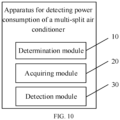
- inventions of the present disclosure provide an apparatus for detecting power consumption of a multi-split air conditioner.
- the apparatus includes a determination module, an acquiring module, and a detection module.
- the determination module is configured to acquire hydraulic device data of a heat recovery multi-split air conditioner and determine a hydraulic device heat absorption value based on the hydraulic device data.
- the acquiring module is configured to acquire outdoor unit data, indoor unit data, and power consumption data of the heat recovery multi-split air conditioner.
- the determination module is further configured to determine a condenser heating capacity and an evaporator cooling capacity based on the outdoor unit data, the indoor unit data, and the hydraulic device data.
- the detection module is configured to determine indoor unit power consumption and hydraulic device power consumption based on the hydraulic device heat absorption value, the power consumption data, the condenser heating capacity, and the evaporator cooling capacity.
- the hydraulic device data of the heat recovery multi-split air conditioner is acquired, and the hydraulic device heat absorption value is determined based on the hydraulic device data. Further, the outdoor unit data, the indoor unit data, and the power consumption data of the heat recovery multi-split air conditioner are acquired, and the condenser heating capacity and the evaporator cooling capacity are determined based on the outdoor unit data, the indoor unit data, and the hydraulic device data. Furthermore, the indoor unit power consumption and the hydraulic device power consumption are determined based on the hydraulic device heat absorption value, the power consumption data, the condenser heating capacity, and the evaporator cooling capacity.
- FIG. 1 is a schematic structural diagram of a hardware operating environment of a heat recovery multi-split air conditioner according to an embodiment of the present disclosure.
- the heat recovery multi-split air conditioner may include a processor 1001 such as a Central Processing Unit (CPU), a communication bus 1002, a user interface 1003, a network interface 1004, and a memory 1005.
- the communication bus 1002 is configured to implement connection and communication between these components.
- the user interface 1003 may include a display.
- the user interface 1003 may further include a standard wired interface and a wireless interface.
- the wired interface of the user interface 1003 may be a Universal Serial Bus (USB) interface.
- the network interface 1004 may include a standard wired interface and a wireless interface (e.g., a Wireless-Fidelity (WI-FI) interface).
- the memory 1005 may be a high-speed Random Access Memory (RAM) or a Non-Volatile Memory (NVM), such as a disk memory.
- the memory 1005 may further be a storage device independent of the aforementioned processor 1001.
- FIG. 1 does not constitute a limitation on the heat recovery multi-split air conditioner.
- the heat recovery multi-split air conditioner may include more or fewer components than those illustrated in the drawings, or combine some components, or have different arrangements of the components.
- the memory 1005 regarded as a computer storage medium may include an operating system, a network communication device, a user interface device, and a multi-split air conditioner power consumption detection program.
- the network interface 1004 is mainly configured to connect to a backend server to perform data communication with the backend server.
- the user interface 1003 is mainly configured to connect to a user device.
- the heat recovery multi-split air conditioner invokes, through the processor 1001, the multi-split air conditioner power consumption detection program stored in the memory 1005, and performs the method for detecting the power consumption of the multi-split air conditioner according to the embodiments of the present disclosure.
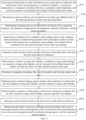
- FIG. 2 is a flowchart illustrating an embodiment of a method for detecting power consumption of a multi-split air conditioner of the present disclosure. As illustrated in FIG. 2 , an embodiment of a method for detecting the power consumption of the multi-split air conditioner of the present disclosure is provided.
- hydraulic device data of a heat recovery multi-split air conditioner is acquired, and a hydraulic device heat absorption value is determined based on the hydraulic device data.
- an executive body of the embodiment is the heat recovery multi-split air conditioner, and the embodiment is not limited in this regard.
- the hydraulic device data may include a return gas temperature, a compressor frequency, a compressor displacement, a compressor volumetric efficiency, a condenser outlet temperature, and a return gas pressure of a hydraulic device, and the embodiment is not limited in this regard.
- acquiring the hydraulic device data of the heat recovery multi-split air conditioner may include acquiring the hydraulic device data of the heat recovery multi-split air conditioner by a predetermined sensor provided on the hydraulic device.
- the predetermined sensor may be preset by a manufacturer of the heat recovery multi-split air conditioner, and the present disclosure is not limited to this embodiment.
- determining the hydraulic device heat absorption value based on the hydraulic device data may include determining the hydraulic device heat absorption value based on the hydraulic device data through a predetermined heat absorption model.
- the predetermined heat absorption model may be preset by the manufacturer of the heat recovery multi-split air conditioner, and the present disclosure is not limited to this embodiment.
- acquiring the hydraulic device data of the heat recovery multi-split air conditioner and determining the hydraulic device heat absorption value based on the hydraulic device data includes: acquiring the hydraulic device data of the heat recovery multi-split air conditioner, and determining a return gas temperature, a compressor frequency, a compressor displacement, a compressor volumetric efficiency, a condenser outlet temperature, and a return gas pressure of a hydraulic device based on the hydraulic device data; determining a return gas density and a hydraulic device return gas enthalpy based on the return gas pressure and the return gas temperature; determining a hydraulic device circulation flow rate based on the compressor frequency, the compressor displacement, the compressor volumetric efficiency, and the return gas density; and determining a hydraulic device condenser outlet enthalpy based on the condenser outlet temperature, and determining hydraulic device absorption outdoor unit heat quantity based on the hydraulic device condenser outlet enthalpy, the hydraulic device circulation flow rate, and the
- outdoor unit data, indoor unit data, and power consumption data of the heat recovery multi-split air conditioner are acquired.
- the outdoor unit data may include data such as a compressor return gas pressure, an external heat exchanger inlet temperature, an external heat exchanger outlet temperature, and compressor exhaust pressure of an outdoor unit, and the present disclosure is not limited to this embodiment.
- the indoor unit data may be data such as a heat exchanger inlet temperature of a heating indoor unit, an outlet temperature of the heating indoor unit, and an outlet temperature of a cooling indoor unit, and the present disclosure is not limited to this embodiment.
- the power consumption data may include first power consumption data and second power consumption data.
- the first power consumption data may be power consumption data of the outdoor unit.
- the second power consumption data may be power consumption data of the hydraulic device.
- the embodiment is not limited in this regard.
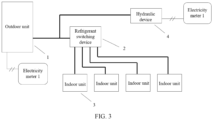
- FIG. 3 is a schematic diagram of a power consumption detection system of a heat recovery multi-split air conditioner.
- the outdoor unit of the heat recovery multi-split air conditioner is denoted at 1
- a refrigerant switching device of the heat recovery multi-split air conditioner is denoted at 2
- the indoor unit of the heat recovery multi-split air conditioner is denoted at 3
- the hydraulic device is denoted at 4
- a first electricity meter is denoted at 5
- a second electricity meter is denoted at 6.
- the first electricity meter is configured to measure the power consumption data of the outdoor unit.
- the second electricity meter is configured to measure the power consumption data of the hydraulic device.
- a condenser heating capacity and an evaporator cooling capacity are determined based on the outdoor unit data, the indoor unit data, and the hydraulic device data.
- the condenser heating capacity may be used to represent a total condensation capacity.
- the total condensation capacity includes a heat exchanger capacity of the outdoor unit, a heating indoor unit capacity, and the hydraulic device absorption outdoor unit heat.
- the heat recovery multi-split air conditioner is in a main heating mode, the total condensation capacity includes the heating indoor unit capacity and the hydraulic device absorption outdoor unit heat.
- Q h represents the total condensation capacity.
- the evaporator cooling capacity may be used to represent a total evaporation capacity.
- the total evaporation capacity includes a total cooling indoor unit capacity.
- the total evaporation capacity includes the total cooling indoor unit capacity and the heat exchanger capacity of the outdoor unit.
- Q c represents the total evaporation capacity.
- determining the condenser heating capacity and the evaporator cooling capacity based on the outdoor unit data, the indoor unit data, and the hydraulic device data may include: determining a condenser average inlet enthalpy, a condenser average outlet enthalpy, an evaporator average outlet enthalpy, and an evaporator inlet enthalpy based on the outdoor unit data, the indoor unit data, and the hydraulic device data; extracting a compressor circulation flow rate of an outdoor unit from the outdoor unit data; determining the condenser heating capacity based on the compressor circulation flow rate, the condenser average inlet enthalpy, and the condenser average outlet enthalpy; and determining the evaporator cooling capacity based on the compressor circulation flow rate, the evaporator average outlet enthalpy, and the evaporator inlet enthalpy.
- indoor unit power consumption and hydraulic device power consumption are determined based on the hydraulic device heat absorption value, the power consumption data, the condenser heating capacity, and the evaporator cooling capacity.
- determining the indoor unit power consumption and the hydraulic device power consumption based on the hydraulic device heat absorption value, the power consumption data, the condenser heating capacity, and the evaporator cooling capacity may include: acquiring a current operation mode of the heat recovery multi-split air conditioner; and determining the indoor unit power consumption and the hydraulic device power consumption based on the current operation mode, the hydraulic device heat absorption value, the power consumption data, the condenser heating capacity, and the evaporator cooling capacity.
- determining the indoor unit power consumption and the hydraulic device power consumption based on the current operation mode, the hydraulic device heat absorption value, the power consumption data, the condenser heating capacity, and the evaporator cooling capacity may include: extracting target power consumption data from the power consumption data when the current operation mode of the heat recovery multi-split air conditioner is a predetermined main cooling mode; determining heating indoor unit power consumption through a first predetermined heating indoor unit power consumption model based on the hydraulic device heat absorption value, the target power consumption data, the condenser heating capacity, and the evaporator cooling capacity; determining cooling indoor unit power consumption through a first predetermined cooling indoor unit power consumption model based on the hydraulic device heat absorption value, the target power consumption data, the condenser heating capacity, and the evaporator cooling capacity; determining the hydraulic device power consumption through a first predetermined hydraulic device power consumption model based on the hydraulic device heat absorption value, the condenser heating capacity, and the evaporator cooling capacity; and determining the indoor unit power consumption
- determining the indoor unit power consumption and the hydraulic device power consumption based on the current operation mode, the hydraulic device heat absorption value, the power consumption data, the condenser heating capacity, and the evaporator cooling capacity may include: extracting first power consumption data and second power consumption data from the power consumption data when the current operation mode of the heat recovery multi-split air conditioner is a predetermined main cooling mode; determining heating indoor unit power consumption through a second predetermined heating indoor unit power consumption model based on the hydraulic device heat absorption value, the first power consumption data, the condenser heating capacity, and the evaporator cooling capacity; determining cooling indoor unit power consumption through a second predetermined cooling indoor unit power consumption model based on the hydraulic device heat absorption value, the first power consumption data, the condenser heating capacity, and the evaporator cooling capacity; determining the hydraulic device power consumption through a second predetermined hydraulic device power consumption model based on the first power consumption data, the second power consumption data, the hydraulic device heat absorption value, the condenser heating capacity
- the hydraulic device data of the heat recovery multi-split air conditioner is acquired, and the hydraulic device heat absorption value is determined based on the hydraulic device data.
- the outdoor unit data, the indoor unit data, and the power consumption data of the heat recovery multi-split air conditioner are acquired, and the condenser heating capacity and the evaporator cooling capacity are determined based on the outdoor unit data, the indoor unit data, and the hydraulic device data.
- the indoor unit power consumption and the hydraulic device power consumption are determined based on the hydraulic device heat absorption value, the power consumption data, the condenser heating capacity, and the evaporator cooling capacity.
- the embodiment Compared with an existing method of detecting overall power consumption of the multi-split air conditioner only, in the embodiment, it is possible to determine the indoor unit power consumption and the hydraulic device power consumption based on the hydraulic device heat absorption value, the power consumption data, the condenser heating capacity, and the evaporator cooling capacity. Therefore, a defect in the related art that power consumed by each indoor unit and the hydraulic device cannot be detected is overcome. Accordingly, power consumption of each indoor unit and the hydraulic device of the heat recovery multi-split air conditioner can be quickly detected.
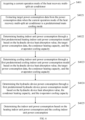
- FIG. 4 is a flowchart illustrating another embodiment of a method for detecting power consumption of a multi-split air conditioner of the present disclosure. This embodiment of the method for detecting the power consumption of the multi-split air conditioner of the present disclosure is provided based on the embodiment illustrated in FIG. 2 .
- the operation at block S10 includes operations at blocks S101 to S104.
- the hydraulic device data of the heat recovery multi-split air conditioner is acquired, and a return gas temperature, a compressor frequency, a compressor displacement, a compressor volumetric efficiency, a condenser outlet temperature, and a return gas pressure of a hydraulic device are determined based on the hydraulic device data.
- the hydraulic device data may include the return gas temperature, the compressor frequency, the compressor displacement, the compressor volumetric efficiency, the condenser outlet temperature, and the return gas pressure of the hydraulic device.
- the embodiment is not limited in this regard.
- a return gas density and a hydraulic device return gas enthalpy are determined based on the return gas pressure and the return gas temperature.
- the hydraulic device return gas enthalpy may be determined directly based on the return gas pressure and the return gas temperature of the hydraulic device.
- a hydraulic device circulation flow rate is determined based on the compressor frequency, the compressor displacement, the compressor volumetric efficiency, and the return gas density.
- determining the hydraulic device circulation flow rate based on the compressor frequency, the compressor displacement, the compressor volumetric efficiency, and the return gas density may include determining the hydraulic device circulation flow rate through a predetermined flow rate model based on the compressor frequency, the compressor displacement, the compressor volumetric efficiency, and the return gas density.
- the predetermined flow rate model may be preset by the manufacturer of the heat recovery multi-split air conditioner, and the present disclosure is not limited to this embodiment.
- a hydraulic device condenser outlet enthalpy is determined based on the condenser outlet temperature, and hydraulic device absorption outdoor unit heat quantity is determined based on the hydraulic device condenser outlet enthalpy, the hydraulic device circulation flow rate, and the hydraulic device return gas enthalpy.
- the hydraulic device condenser outlet enthalpy may be determined directly based on the condenser outlet temperature.
- Q hydraulic represents the hydraulic device absorption outdoor unit heat.
- the hydraulic device data of the heat recovery multi-split air conditioner is acquired, and the return gas temperature, the compressor frequency, the compressor displacement, the compressor volumetric efficiency, the condenser outlet temperature, and the return gas pressure of the hydraulic device are determined based on the hydraulic device data. Further, the return gas density and the hydraulic device return gas enthalpy are determined based on the return gas pressure and the return gas temperature, and the hydraulic device circulation flow rate is determined based on the compressor frequency, the compressor displacement, the compressor volumetric efficiency, and the return gas density.
- the hydraulic device condenser outlet enthalpy is determined based on the condenser outlet temperature
- the hydraulic device absorption outdoor unit heat quantity is determined based on the hydraulic device condenser outlet enthalpy, the hydraulic device circulation flow rate, and the hydraulic device return gas enthalpy. Therefore, the accuracy and reliability of the hydraulic device absorption outdoor unit heat quantity can be improved.
- the operation at block S30 includes operations at blocks S301 to S304.
- a condenser average inlet enthalpy, a condenser average outlet enthalpy, an evaporator average outlet enthalpy, and an evaporator inlet enthalpy are determined based on the outdoor unit data, the indoor unit data, and the hydraulic device data.
- determining the condenser average inlet enthalpy, the condenser average outlet enthalpy, the evaporator average outlet enthalpy, and the evaporator inlet enthalpy based on the outdoor unit data, the indoor unit data, and the hydraulic device data may include: determining the condenser average inlet enthalpy, the condenser average outlet enthalpy, the evaporator average outlet enthalpy, and the evaporator inlet enthalpy through a predetermined enthalpy model based on the outdoor unit data, the indoor unit data, and the hydraulic device data.
- the predetermined enthalpy model may be preset by the manufacturer of the heat recovery multi-split air conditioner, and the present disclosure is not limited to this embodiment.
- the operation at block S301 includes: extracting a compressor return gas pressure, an external heat exchanger inlet temperature, an external heat exchanger outlet temperature, and a compressor exhaust pressure of an outdoor unit from the outdoor unit data; extracting a heat exchanger inlet temperature of a heating indoor unit, an outlet temperature of the heating indoor unit, and an outlet temperature of a cooling indoor unit from the indoor unit data; extracting a heat exchanger inlet temperature of a hydraulic device and a heat exchanger outlet temperature of the hydraulic device from the hydraulic device data; determining the condenser average inlet enthalpy based on the heat exchanger inlet temperature of the hydraulic device, the heat exchanger inlet temperature of the heating indoor unit, the external heat exchanger inlet temperature, and the compressor exhaust pressure; determining the condenser average outlet enthalpy based on the heat exchanger outlet temperature of the hydraulic device, the outlet temperature of the heating indoor unit, and the external heat exchanger outlet temperature, and determining the condenser average outlet enthalpy based on the heat exchanger outlet temperature of
- the compressor exhaust pressure is a system high pressure and the compressor return gas pressure is a system low pressure, and the embodiment is not limited in this regard.
- determining the condenser average inlet enthalpy based on the heat exchanger inlet temperature of the hydraulic device, the heat exchanger inlet temperature of the heating indoor unit, the external heat exchanger inlet temperature, and the compressor exhaust pressure may include: determining inlet enthalpy of each component of a condenser based on the heat exchanger inlet temperature of the hydraulic device, the heat exchanger inlet temperature of the heating indoor unit, the external heat exchanger inlet temperature, and the compressor exhaust pressure, and determining the condenser average inlet enthalpy based on the inlet enthalpy of each component of the condenser.
- determining the condenser average outlet enthalpy based on the heat exchanger outlet temperature of the hydraulic device, the outlet temperature of the heating indoor unit, and the external heat exchanger outlet temperature may include: determining outlet enthalpy of each component of the condenser based on the heat exchanger outlet temperature of the hydraulic device, the outlet temperature of the heating indoor unit, and the external heat exchanger outlet temperature, and determining the condenser average outlet enthalpy based on the outlet enthalpy of each component of the condenser
- a compressor circulation flow rate of an outdoor unit is extracted from the outdoor unit data.
- extracting the compressor circulation flow rate of the outdoor unit from the outdoor unit data may include: performing an identifier extraction on the outdoor unit data to obtain a data identifier, and determining the compressor circulation flow rate of the outdoor unit based on the data identifier.
- the data identifier may be an identity identifier set for the outdoor unit data when the outdoor unit data is stored, and the embodiment is not limited in this regard.
- the condenser heating capacity is determined based on the compressor circulation flow rate, the condenser average inlet enthalpy, and the condenser average outlet enthalpy.
- the condenser heating capacity may be used to represent a total condensation capacity.
- the total condensation capacity includes the heat exchanger capacity of the outdoor unit, the heating indoor unit capacity, and the hydraulic device absorption outdoor unit heat.
- the heat recovery multi-split air conditioner is in the main heating mode, the total condensation capacity includes the heating indoor unit capacity and the hydraulic device absorption outdoor unit heat.
- Q h represents the total condensation capacity.
- the evaporator cooling capacity is determined based on the compressor circulation flow rate, the evaporator average outlet enthalpy, and the evaporator inlet enthalpy.
- the evaporator cooling capacity may be used to represent the total evaporation capacity.
- the total evaporation capacity includes the total cooling indoor unit capacity.
- the heat recovery multi-split air conditioner is in the main heating mode, the total evaporation capacity includes the total cooling indoor unit capacity and the heat exchanger capacity of the outdoor unit.
- Q c represents the total evaporation capacity.
- the condenser average inlet enthalpy, the condenser average outlet enthalpy, the evaporator average outlet enthalpy, and the evaporator inlet enthalpy are determined based on the outdoor unit data, the indoor unit data, and the hydraulic device data. Further, the compressor circulation flow rate of the outdoor unit is extracted from the outdoor unit data, and the condenser heating capacity is determined based on the compressor circulation flow rate, the condenser average inlet enthalpy, and the condenser average outlet enthalpy. Furthermore, the evaporator cooling capacity is determined based on the compressor circulation flow rate, the evaporator average outlet enthalpy, and the evaporator inlet enthalpy. Therefore, accuracy of the condenser heating capacity and the evaporator cooling capacity can be increased.
- the operation at block S40 includes operations at blocks S401 and S402.
- an operation mode of the heat recovery multi-split air conditioner may include a predetermined only hydraulic device ON mode, the predetermined main cooling mode, and a predetermined main heating mode, and the embodiment is not limited in this regard.
- the predetermined only hydraulic device ON mode may be an operation mode in which the hydraulic device of the heat recovery multi-split air conditioner is turned on and the indoor unit is not turned on.
- the predetermined main cooling mode may be an operation mode in which the indoor unit and the high-temperature hydraulic device of the heat recovery multi-split air conditioner are turned on simultaneously and an outdoor unit heat exchanger is the condenser.
- the predetermined main heating mode may be an operation mode in which the indoor unit and the high-temperature hydraulic device of the heat recovery multi-split air conditioner are turned on simultaneously and the outdoor unit heat exchanger is an evaporator.
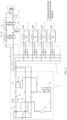
- FIG. 5 is a schematic diagram of a system circulation when only a high-temperature hydraulic device is turned on.
- the outdoor unit of the heat recovery multi-split air conditioner system is denoted at 1
- the refrigerant switching device is denoted at 2
- the indoor unit of the heat recovery multi-split air conditioner system is denoted at 3
- the high-temperature hydraulic device is denoted at 4.
- An interior of the outdoor unit is provided with a compressor 11, a four-way valve 12 for switching a state of an external heat exchanger 14 to determine whether the external heat exchanger 14 is used as the evaporator or the condenser, a four-way valve 13 for switching a state of a high-pressure gas pipe.
- the external heat exchanger is denoted at 14, an outdoor unit main electronic expansion valve is denoted at 15, an economizer is denoted at 16, an economizer auxiliary electronic expansion valve is denoted at 17, a liquid pipe stop valve is denoted at 18, a high-pressure gas pipe stop valve is denoted at 19, a low-pressure gas pipe stop valve is denoted at 110, and a low-pressure tank is denoted at 111, refrigerant switching device heating solenoid valves are denoted at 21 and 23, refrigerant switching device cooling solenoid valves are denoted at 22 and 24, an indoor unit electronic expansion valve is denoted at 31, an indoor unit heat exchanger is denoted at 32, a hydraulic device compressor is denoted at 41, a hydraulic device condenser for heat exchange between a refrigerant of the hydraulic device and water is denoted at 42, a first hydraulic device electronic expansion valve is denoted at 43, a hydraulic device evaporator for heat exchange between a refrigerant in the
- a circulation of an external refrigerant R410a only flows through the high-temperature hydraulic device.
- the high-temperature hydraulic device absorbs heat from the refrigerant R410a of the outdoor unit, and then heats water through a circulation of a refrigerant R134a.
- the second electricity meter measures power consumption of the hydraulic device itself.
- the first electricity meter measures power consumption of the outdoor unit.
- the power consumption of the hydraulic device is a total power measured by the first electricity meter and the second electricity meter.
- the indoor unit power consumption and the hydraulic device power consumption are determined based on the current operation mode, the hydraulic device heat absorption value, the power consumption data, the condenser heating capacity, and the evaporator cooling capacity.
- determining the indoor unit power consumption and the hydraulic device power consumption based on the current operation mode, the hydraulic device heat absorption value, the power consumption data, the condenser heating capacity, and the evaporator cooling capacity may include: extracting target power consumption data from the power consumption data when the current operation mode of the heat recovery multi-split air conditioner is a predetermined main cooling mode; determining heating indoor unit power consumption through a first predetermined heating indoor unit power consumption model based on the hydraulic device heat absorption value, the target power consumption data, the condenser heating capacity, and the evaporator cooling capacity; determining cooling indoor unit power consumption through a first predetermined cooling indoor unit power consumption model based on the hydraulic device heat absorption value, the target power consumption data, the condenser heating capacity, and the evaporator cooling capacity; determining the hydraulic device power consumption through a first predetermined hydraulic device power consumption model based on the hydraulic device heat absorption value, the condenser heating capacity, and the evaporator cooling capacity; and determining the indoor unit power consumption
- determining the indoor unit power consumption and the hydraulic device power consumption based on the current operation mode, the hydraulic device heat absorption value, the power consumption data, the condenser heating capacity, and the evaporator cooling capacity may include: extracting first power consumption data and second power consumption data from the power consumption data when the current operation mode of the heat recovery multi-split air conditioner is a predetermined main cooling mode; determining heating indoor unit power consumption through a second predetermined heating indoor unit power consumption model based on the hydraulic device heat absorption value, the first power consumption data, the condenser heating capacity, and the evaporator cooling capacity; determining cooling indoor unit power consumption through a second predetermined cooling indoor unit power consumption model based on the hydraulic device heat absorption value, the first power consumption data, the condenser heating capacity, and the evaporator cooling capacity; determining the hydraulic device power consumption through a second predetermined hydraulic device power consumption model based on the first power consumption data, the second power consumption data, the hydraulic device heat absorption value, the condenser heating capacity
- the current operation mode of the heat recovery multi-split air conditioner is acquired. Further, the indoor unit power consumption and the hydraulic device power consumption are determined based on the current operation mode, the hydraulic device heat absorption value, the power consumption data, the condenser heating capacity, and the evaporator cooling capacity. Therefore, the indoor unit power consumption and the hydraulic device power consumption can be determined quickly.
- FIG. 6 is a flowchart illustrating yet another embodiment of a method for detecting power consumption of a multi-split air conditioner of the present disclosure. This embodiment of the method for detecting the power consumption of the multi-split air conditioner of the present disclosure is provided based on the embodiment illustrated in FIG. 4 .
- the operation at block S402 includes operations at blocks S4021 to S4025.
- target power consumption data is extracted from the power consumption data when the current operation mode of the heat recovery multi-split air conditioner is a predetermined main cooling mode.
- FIG. 7 is a schematic diagram of a heat recovery multi-split air conditioner system operating in a main cooling mode.
- the current operation mode is the main cooling mode
- the indoor unit and the high-temperature hydraulic device are turned on simultaneously and the outdoor unit heat exchanger is the condenser
- the refrigerant R410a of the outdoor unit is condensed into a liquid refrigerant in the external heat exchanger, the heating indoor unit, and the high-temperature hydraulic device to release heat, enters the cooling indoor unit to be evaporated, and then flows back to the compressor for a recirculation.
- the hydraulic device can absorb heat from the refrigerant R410a of the outdoor unit, and then carry out one recirculation of R134a to exchange heat with water for condensation to release heat to heat the water.
- the refrigerant of the outdoor unit circulates through the high-temperature hydraulic device, the heating indoor unit, and the cooling indoor unit. Therefore, calculating a proportion of power consumption of each part requires calculation of a proportion of a capacity of the part.
- the target power consumption data may be measurement data of the first electricity meter, and the present disclosure is not limited to this embodiment.
- heating indoor unit power consumption is determined through a first predetermined heating indoor unit power consumption model based on the hydraulic device heat absorption value, the target power consumption data, the condenser heating capacity, and the evaporator cooling capacity.
- the heating indoor unit power consumption may be power consumption of an i -th heating indoor unit of the heat recovery multi-split air conditioner, where i may be preset by a user and the present disclosure is not limited to this embodiment.
- I i heating represents the power consumption of the i -th heating indoor unit
- j ⁇ j + n represent a time period during which power consumption is detected
- K i represents a heat transfer coefficient of the i -th heating indoor unit
- a i represents a heat transfer area of the i -th heating indoor unit
- T 1 i represents a high pressure saturation temperature
- K represents a heat transfer coefficient of the outdoor unit
- A represents a heat transfer area of the outdoor unit
- T 4 represents an ambient temperature of the outdoor unit
- Q hydraulic represents the hydraulic device absorption outdoor unit heat
- Q h represents the total condensation capacity, i.e., the condenser heating capacity
- Q c represents the total evaporation capacity, i.e., the evaporator cooling capacity
- M i 1 represents the target power consumption data.
- the heat transfer coefficient and the heat transfer area of the heating indoor unit may be obtained based on the indoor unit data
- the heat transfer coefficient, the heat transfer area, and the ambient temperature of the outdoor unit may be obtained based on the outdoor unit data
- the embodiment is not limited in this regard.
- cooling indoor unit power consumption is determined through a first predetermined cooling indoor unit power consumption model based on the hydraulic device heat absorption value, the target power consumption data, the condenser heating capacity, and the evaporator cooling capacity.
- cooling indoor unit power consumption may be power consumption of a k -th cooling indoor unit of the heat recovery multi-split air conditioner k may be preset by the user and the present disclosure is not limited to this embodiment.
- I k cooling represents the power consumption of the k -th cooling indoor unit
- j ⁇ j + n represent the time period during which the power consumption is detected
- cvk represents a flow rate coefficient of a k -th indoor unit
- K i represents the heat transfer coefficient of the i -th heating indoor unit
- a i represents the heat transfer area of the i -th heating indoor unit
- T 1 i represents the high pressure saturation temperature
- K represents the heat transfer coefficient of the outdoor unit
- A represents the heat transfer area of the outdoor unit
- T 4 represents the ambient temperature of the outdoor unit
- Q hydraulic represents the hydraulic device absorption outdoor unit heat
- Q h represents the total condensation capacity, i.e., the condenser heating capacity
- Q c represents the total evaporation capacity, i.e., the evaporator cooling capacity
- M i 1 represents the target power consumption data.
- the hydraulic device power consumption is determined through a first predetermined hydraulic device power consumption model based on the hydraulic device heat absorption value, the condenser heating capacity, and the evaporator cooling capacity.
- I hydraulic represents the power consumption of the hydraulic device
- j ⁇ j + n represent the time period during which the power consumption is detected
- K i represents the heat transfer coefficient of the i -th heating indoor unit
- a i represents the heat transfer area of the i -th heating indoor unit
- T 1 i represents the high pressure saturation temperature
- K represents the heat transfer coefficient of the outdoor unit
- A represents the heat transfer area of the outdoor unit
- T 4 represents the ambient temperature of the outdoor unit
- Q hydraulic represents the hydraulic device absorption outdoor unit heat
- Q h represents the total condensation capacity, i.e., the condenser heating capacity
- Q c represents the total evaporation capacity, i.e., the evaporator cooling capacity
- M i 1 represents the target power consumption data.
- the indoor unit power consumption is determined based on the heating indoor unit power consumption and the cooling indoor unit power consumption.
- the indoor unit power consumption may be a sum of the power consumption of the i -th heating indoor unit and the power consumption of the k -th cooling indoor unit, or a sum of power consumption of all heating indoor units and power consumption of all cooling indoor units.
- the target power consumption data is extracted from the power consumption data when the current operation mode of the heat recovery multi-split air conditioner is the predetermined main cooling mode. Further, the heating indoor unit power consumption is determined through the first predetermined heating indoor unit power consumption model based on the hydraulic device heat absorption value, the target power consumption data, the condenser heating capacity, and the evaporator cooling capacity, and the cooling indoor unit power consumption is determined through the first predetermined cooling indoor unit power consumption model based on the hydraulic device heat absorption value, the target power consumption data, the condenser heating capacity, and the evaporator cooling capacity.
- the hydraulic device power consumption is determined through the first predetermined hydraulic device power consumption model based on the hydraulic device heat absorption value, the condenser heating capacity, and the evaporator cooling capacity, and the indoor unit power consumption is determined based on the heating indoor unit power consumption and the cooling indoor unit power consumption. Therefore, power consumption of each heating indoor unit, each cooling indoor unit, and the hydraulic device is calculated separately when the current operation mode of the heat recovery multi-split air conditioner is the predetermined main cooling mode. Therefore, accuracy of power consumption measurements of the indoor unit and the hydraulic device can be enhanced.
- FIG. 8 is a flowchart illustrating still yet another embodiment of a method for detecting power consumption of a multi-split air conditioner of the present disclosure. This embodiment of the method for detecting the power consumption of the multi-split air conditioner of the present disclosure is provided based on the embodiment illustrated in FIG. 4 .
- the operation at block S402 includes operations at blocks S4021' to S4025'.
- first power consumption data and second power consumption data are extracted from the power consumption data when the current operation mode of the heat recovery multi-split air conditioner is a predetermined main cooling mode.
- FIG. 7 is a schematic diagram of a heat recovery multi-split air conditioner system operating in a main heating mode.
- the current operation mode of the heat recovery multi-split air conditioner is the predetermined main heating mode
- the indoor unit and the high-temperature hydraulic device are turned on simultaneously and the outdoor unit heat exchanger is the evaporator.
- the refrigerant R410a of the outdoor unit is condensed into a liquid refrigerant in the heating indoor unit and the high-temperature hydraulic device to release heat, enters the cooling indoor unit and the outdoor unit heat exchanger to be evaporated, and then flows back to the compressor for a recirculation.
- the hydraulic device can absorb heat from the refrigerant R410a of the outdoor unit, and then carry out one recirculation of R134a to exchange heat with water for condensation to release heat to heat the water.
- the refrigerant of the outdoor unit circulates through the high-temperature hydraulic device, the heating indoor unit, and the cooling indoor unit.
- calculating the proportion of the power consumption of each part requires calculation of the proportion of the capacity of the part.
- the first power consumption data may be the power consumption data of the outdoor unit
- the second power consumption data may be the power consumption data of the hydraulic device
- the embodiment is not limited in this regard.
- heating indoor unit power consumption is determined through a second predetermined heating indoor unit power consumption model based on the hydraulic device heat absorption value, the first power consumption data, the condenser heating capacity, and the evaporator cooling capacity.
- the heating indoor unit power consumption may be the power consumption of the i -th heating indoor unit of the heat recovery multi-split air conditioner, where i may be preset by the user and the present disclosure is not limited to this embodiment.
- I i heating ′ represents the power consumption of the i -th heating indoor unit
- j ⁇ j + n represent the time period during which the power consumption is detected
- K i represents the heat transfer coefficient of the i -th heating indoor unit
- a i represents the heat transfer area of the i -th heating indoor unit
- T 1 i represents the high pressure saturation temperature
- cvk represents the flow rate coefficient of the k -th indoor unit
- cv represents an electronic expansion valve flow rate coefficient of the outdoor unit
- Q hydraulic represents the hydraulic device absorption outdoor unit heat
- Q h represents the total condensation capacity, i.e., the condenser heating capacity
- Q c represents the total evaporation capacity, i.e., the evaporator cooling capacity
- M i 1 represents the first power consumption data.
- cooling indoor unit power consumption is determined through a second predetermined cooling indoor unit power consumption model based on the hydraulic device heat absorption value, the first power consumption data, the condenser heating capacity, and the evaporator cooling capacity.
- cooling indoor unit power consumption may be the power consumption of the k -th cooling indoor unit of the heat recovery multi-split air conditioner, where k may be preset by the user and the present disclosure is not limited to this embodiment.
- I k cooling ′ represents the power consumption of the k -th cooling indoor unit
- j ⁇ j + n represent the time period during which the power consumption is detected
- K i represents the heat transfer coefficient of the i -th heating indoor unit
- a i represents the heat transfer area of the i -th heating indoor unit
- T 1 i represents the high pressure saturation temperature
- cvk represents the flow rate coefficient of the k -th indoor unit
- cv represents the electronic expansion valve flow rate coefficient of the outdoor unit
- Q hydraulic represents the hydraulic device absorption outdoor unit heat
- Q h represents the total condensation capacity, i.e., the condenser heating capacity
- Q c represents the total evaporation capacity, i.e., the evaporator cooling capacity
- M i 1 represents the first power consumption data.
- the hydraulic device power consumption is determined through a second predetermined hydraulic device power consumption model based on the first power consumption data, the second power consumption data, the hydraulic device heat absorption value, the condenser heating capacity, and the evaporator cooling capacity.
- I hydraulic ′ represents the power consumption of the hydraulic device
- cvk represents the flow rate coefficient of the k -th indoor unit
- cv represents the electronic expansion valve flow rate coefficient of the outdoor unit
- Q hydraulic represents the hydraulic device absorption outdoor unit heat
- Q h represents the total condensation capacity, i.e., the condenser heating capacity
- Q c represents the total evaporation capacity, i.e., the evaporator cooling capacity
- M i 1 represents the first power consumption data
- M i 2 represents the second power consumption data.
- the indoor unit power consumption is determined based on the heating indoor unit power consumption and the cooling indoor unit power consumption.
- the indoor unit power consumption may be a sum of the power consumption of the i -th heating indoor unit and the power consumption of the k -th cooling indoor unit, or a sum of the power consumption of all the heating indoor units and the power consumption of all the cooling indoor units.
- the first power consumption data and the second power consumption data are extracted from the power consumption data when the current operation mode of the heat recovery multi-split air conditioner is the predetermined main cooling mode. Further, the heating indoor unit power consumption is determined through the second predetermined heating indoor unit power consumption model based on the hydraulic device heat absorption value, the first power consumption data, the condenser heating capacity, and the evaporator cooling capacity, and the cooling indoor unit power consumption is determined through the second predetermined cooling indoor unit power consumption model based on the hydraulic device heat absorption value, the first power consumption data, the condenser heating capacity, and the evaporator cooling capacity.
- the hydraulic device power consumption is determined through the second predetermined hydraulic device power consumption model based on the first power consumption data, the second power consumption data, the hydraulic device heat absorption value, the condenser heating capacity, and the evaporator cooling capacity, and the indoor unit power consumption is determined based on the heating indoor unit power consumption and the cooling indoor unit power consumption. Therefore, power consumption of each heating indoor unit, each cooling indoor unit, and the hydraulic device can be calculated separately when the current operation mode of the heat recovery multi-split air conditioner is the predetermined main heating mode. Therefore, the accuracy of the power consumption measurements of the indoor unit and the hydraulic device can be enhanced.
- embodiments of the present disclosure further provide a storage medium.
- the storage medium has a multi-split air conditioner power consumption detection program stored thereon.
- the multi-split air conditioner power consumption detection program when executed by a processor, implements the method for detecting the power consumption of the multi-split air conditioner as described above.
- embodiments of the present disclosure further provide an apparatus for detecting power consumption of a multi-split air conditioner.
- the apparatus for detecting the power consumption of the multi-split air conditioner includes a determination module 10, an acquiring module 20, and a detection module 30.
- the determination module 10 is configured to acquire hydraulic device data of a heat recovery multi-split air conditioner and determine a hydraulic device heat absorption value based on the hydraulic device data.
- the acquiring module 20 is configured to acquire outdoor unit data, indoor unit data, and power consumption data of the heat recovery multi-split air conditioner.
- the determination module 10 is further configured to determine a condenser heating capacity and an evaporator cooling capacity based on the outdoor unit data, the indoor unit data, and the hydraulic device data.
- the detection module 30 is configured to determine indoor unit power consumption and hydraulic device power consumption based on the hydraulic device heat absorption value, the power consumption data, the condenser heating capacity, and the evaporator cooling capacity.
- the hydraulic device data of the heat recovery multi-split air conditioner is acquired, and the hydraulic device heat absorption value is determined based on the hydraulic device data. Further, the outdoor unit data, the indoor unit data, and the power consumption data of the heat recovery multi-split air conditioner are acquired, and the condenser heating capacity and the evaporator cooling capacity are determined based on the outdoor unit data, the indoor unit data, and the hydraulic device data. Furthermore, the indoor unit power consumption and the hydraulic device power consumption are determined based on the hydraulic device heat absorption value, the power consumption data, the condenser heating capacity, and the evaporator cooling capacity.
- the indoor unit power consumption and the hydraulic device power consumption Compared with the existing method of detecting the overall power consumption of the multi-split air conditioner only, in this embodiment, it is possible to determine the indoor unit power consumption and the hydraulic device power consumption based on the hydraulic device heat absorption value, the power consumption data, the condenser heating capacity, and the evaporator cooling capacity. Therefore, the defect in the related art that the power consumed by each indoor unit and the hydraulic device cannot be detected is overcome. Accordingly, the power consumption of each indoor unit and the hydraulic device of the heat recovery multi-split air conditioner can be quickly detected.
- sequence numbers of the embodiments of the present disclosure are for description only, and do not represent superiority or inferiority of the embodiments.
- several of these devices may be specifically embodied by a same hardware item.
- the use of words first, second, third, etc., does not indicate any sequence.
- the words can be interpreted as names.
- the computer software product may be stored in a storage medium (such as a Read Only Memory (ROM)/Random Access Memory (RAM), a disk, and an optical disk) and contain instructions to enable a terminal device (which may be a mobile phone, a computer, a server, a heat recovery multi-split air conditioner, a network device, etc.) to perform the method described in each of the embodiments of the present disclosure.
- a storage medium such as a Read Only Memory (ROM)/Random Access Memory (RAM), a disk, and an optical disk
- a terminal device which may be a mobile phone, a computer, a server, a heat recovery multi-split air conditioner, a network device, etc.
Landscapes
- Engineering & Computer Science (AREA)
- Chemical & Material Sciences (AREA)
- Combustion & Propulsion (AREA)
- Mechanical Engineering (AREA)
- General Engineering & Computer Science (AREA)
- Signal Processing (AREA)
- Physics & Mathematics (AREA)
- Fuzzy Systems (AREA)
- Mathematical Physics (AREA)
- Air Conditioning Control Device (AREA)
Abstract
Description
- This application claims priority to
Chinese Patent Application No. 202110086371.6, filed on January 21, 2021 - The present disclosure relates to the field of air conditioner technologies, and more particularly, to a method for detecting power consumption of a multi-split air conditioner, a heat recovery multi-split air conditioner, a storage medium, and an apparatus.
- With the continuous progress of society and the ongoing development of science and technology, the use of a multi-split air conditioner as a heating, ventilation, and air conditioning device for a building is becoming more and more widespread. An existing heat recovery multi-split air conditioner system requires cooling, heating, and provision of hot water, which results in high energy consumption.
- However, instead of detecting power consumed by individual indoor units and a hydraulic device separately, an existing power consumption detection system can only detect overall power consumption of the multi-split air conditioner system. Thus, it is impossible to optimize power consumption of the indoor units and the hydraulic device separately.
- The above content is intended to assist in understanding of technical solutions of the present disclosure only, and does not represent an admission that the above content is the related art.
- Embodiments of the present disclosure provide a method for detecting power consumption of a multi-split air conditioner, a heat recovery multi-split air conditioner, a storage medium, and an apparatus, which can solve a technical problem in the related art of an inability to detect power consumed by each indoor unit and a hydraulic device.
- Embodiments of the present disclosure provide a method for detecting power consumption of a multi-split air conditioner. The method for detecting the power consumption of the multi-split air conditioner includes: acquiring hydraulic device data of a heat recovery multi-split air conditioner and determining a hydraulic device heat absorption value based on the hydraulic device data; acquiring outdoor unit data, indoor unit data, and power consumption data of the heat recovery multi-split air conditioner; determining a condenser heating capacity and an evaporator cooling capacity based on the outdoor unit data, the indoor unit data, and the hydraulic device data; and determining indoor unit power consumption and hydraulic device power consumption based on the hydraulic device heat absorption value, the power consumption data, the condenser heating capacity, and the evaporator cooling capacity.
- In one embodiment, the determining the indoor unit power consumption and the hydraulic device power consumption based on the hydraulic device heat absorption value, the power consumption data, the condenser heating capacity, and the evaporator cooling capacity includes: acquiring a current operation mode of the heat recovery multi-split air conditioner; and determining the indoor unit power consumption and the hydraulic device power consumption based on the current operation mode, the hydraulic device heat absorption value, the power consumption data, the condenser heating capacity, and the evaporator cooling capacity.
- In one embodiment, the determining the indoor unit power consumption and the hydraulic device power consumption based on the current operation mode, the hydraulic device heat absorption value, the power consumption data, the condenser heating capacity, and the evaporator cooling capacity includes: extracting target power consumption data from the power consumption data when the current operation mode of the heat recovery multi-split air conditioner is a predetermined main cooling mode; determining heating indoor unit power consumption through a first predetermined heating indoor unit power consumption model based on the hydraulic device heat absorption value, the target power consumption data, the condenser heating capacity, and the evaporator cooling capacity; determining cooling indoor unit power consumption through a first predetermined cooling indoor unit power consumption model based on the hydraulic device heat absorption value, the target power consumption data, the condenser heating capacity, and the evaporator cooling capacity; determining the hydraulic device power consumption through a first predetermined hydraulic device power consumption model based on the hydraulic device heat absorption value, the condenser heating capacity, and the evaporator cooling capacity; and determining the indoor unit power consumption based on the heating indoor unit power consumption and the cooling indoor unit power consumption.
- In one embodiment, the determining the indoor unit power consumption and the hydraulic device power consumption based on the current operation mode, the hydraulic device heat absorption value, the power consumption data, the condenser heating capacity, and the evaporator cooling capacity may also include: extracting first power consumption data and second power consumption data from the power consumption data when the current operation mode of the heat recovery multi-split air conditioner is a predetermined main cooling mode; determining heating indoor unit power consumption through a second predetermined heating indoor unit power consumption model based on the hydraulic device heat absorption value, the first power consumption data, the condenser heating capacity, and the evaporator cooling capacity; determining cooling indoor unit power consumption through a second predetermined cooling indoor unit power consumption model based on the hydraulic device heat absorption value, the first power consumption data, the condenser heating capacity, and the evaporator cooling capacity; determining the hydraulic device power consumption through a second predetermined hydraulic device power consumption model based on the first power consumption data, the second power consumption data, the hydraulic device heat absorption value, the condenser heating capacity, and the evaporator cooling capacity; and determining the indoor unit power consumption based on the heating indoor unit power consumption and the cooling indoor unit power consumption.
- In one embodiment, the acquiring the hydraulic device data of the heat recovery multi-split air conditioner and determining the hydraulic device heat absorption value based on the hydraulic device data includes: acquiring the hydraulic device data of the heat recovery multi-split air conditioner, and determining a return gas temperature, a compressor frequency, a compressor displacement, a compressor volumetric efficiency, a condenser outlet temperature, and a return gas pressure of a hydraulic device based on the hydraulic device data; determining a return gas density and a hydraulic device return gas enthalpy based on the return gas pressure and the return gas temperature; determining a hydraulic device circulation flow rate based on the compressor frequency, the compressor displacement, the compressor volumetric efficiency, and the return gas density; and determining a hydraulic device condenser outlet enthalpy based on the condenser outlet temperature, and determining hydraulic device absorption outdoor unit heat quantity based on the hydraulic device condenser outlet enthalpy, the hydraulic device circulation flow rate, and the hydraulic device return gas enthalpy.
- In one embodiment, the determining the condenser heating capacity and the evaporator cooling capacity based on the outdoor unit data, the indoor unit data, and the hydraulic device data includes: determining a condenser average inlet enthalpy, a condenser average outlet enthalpy, an evaporator average outlet enthalpy, and an evaporator inlet enthalpy based on the outdoor unit data, the indoor unit data, and the hydraulic device data; extracting a compressor circulation flow rate of an outdoor unit from the outdoor unit data; determining the condenser heating capacity based on the compressor circulation flow rate, the condenser average inlet enthalpy, and the condenser average outlet enthalpy; and determining the evaporator cooling capacity based on the compressor circulation flow rate, the evaporator average outlet enthalpy, and the evaporator inlet enthalpy.
- In one embodiment, the determining the condenser average inlet enthalpy, the condenser average outlet enthalpy, the evaporator average outlet enthalpy, and the evaporator inlet enthalpy based on the outdoor unit data, the indoor unit data, and the hydraulic device data includes: extracting a compressor return gas pressure, an external heat exchanger inlet temperature, an external heat exchanger outlet temperature, and a compressor exhaust pressure of an outdoor unit from the outdoor unit data; extracting a heat exchanger inlet temperature of a heating indoor unit, an outlet temperature of the heating indoor unit, and an outlet temperature of a cooling indoor unit from the indoor unit data; extracting a heat exchanger inlet temperature of a hydraulic device and a heat exchanger outlet temperature of the hydraulic device from the hydraulic device data; determining the condenser average inlet enthalpy based on the heat exchanger inlet temperature of the hydraulic device, the heat exchanger inlet temperature of the heating indoor unit, the external heat exchanger inlet temperature, and the compressor exhaust pressure; determining the condenser average outlet enthalpy based on the heat exchanger outlet temperature of the hydraulic device, the outlet temperature of the heating indoor unit, and the external heat exchanger outlet temperature, and determining the condenser average outlet enthalpy as the evaporator inlet enthalpy; and determining the evaporator average outlet enthalpy based on the cooling indoor unit outlet temperature and the compressor return gas pressure.
- In addition, embodiments of the present disclosure provide a heat recovery multi-split air conditioner. The heat recovery multi-split air conditioner includes a memory, a processor, and a multi-split air conditioner power consumption detection program stored in the memory and executable on the processor The multi-split air conditioner power consumption detection program, when executed by the processor, implements the method for detecting the power consumption of the multi-split air conditioner as described above.
- In addition, embodiments of the present disclosure provide a storage medium having a multi-split air conditioner power consumption detection program stored thereon. The multi-split air conditioner power consumption detection program, when executed by a processor, implements the method for detecting the power consumption of the multi-split air conditioner as described above.
- In addition, embodiments of the present disclosure provide an apparatus for detecting power consumption of a multi-split air conditioner. The apparatus includes a determination module, an acquiring module, and a detection module. The determination module is configured to acquire hydraulic device data of a heat recovery multi-split air conditioner and determine a hydraulic device heat absorption value based on the hydraulic device data. The acquiring module is configured to acquire outdoor unit data, indoor unit data, and power consumption data of the heat recovery multi-split air conditioner. The determination module is further configured to determine a condenser heating capacity and an evaporator cooling capacity based on the outdoor unit data, the indoor unit data, and the hydraulic device data. The detection module is configured to determine indoor unit power consumption and hydraulic device power consumption based on the hydraulic device heat absorption value, the power consumption data, the condenser heating capacity, and the evaporator cooling capacity.
- In the present disclosure, the hydraulic device data of the heat recovery multi-split air conditioner is acquired, and the hydraulic device heat absorption value is determined based on the hydraulic device data. Further, the outdoor unit data, the indoor unit data, and the power consumption data of the heat recovery multi-split air conditioner are acquired, and the condenser heating capacity and the evaporator cooling capacity are determined based on the outdoor unit data, the indoor unit data, and the hydraulic device data. Furthermore, the indoor unit power consumption and the hydraulic device power consumption are determined based on the hydraulic device heat absorption value, the power consumption data, the condenser heating capacity, and the evaporator cooling capacity. Compared with an existing method of detecting overall power consumption of a multi-split air conditioner only, in the present disclosure, it is possible to determine the indoor unit power consumption and the hydraulic device power consumption based on the hydraulic device heat absorption value, the power consumption data, the condenser heating capacity, and the evaporator cooling capacity. Therefore, a defect in the related art that power consumed by each indoor unit and the hydraulic device cannot be detected is overcome. Accordingly, power consumption of each indoor unit and the hydraulic device of the heat recovery multi-split air conditioner can be quickly detected.
-
-
FIG. 1 is a schematic structural diagram of a hardware operating environment of a heat recovery multi-split air conditioner according to an embodiment of the present disclosure. -
FIG. 2 is a flowchart illustrating an embodiment of a method for detecting power consumption of a multi-split air conditioner of the present disclosure. -
FIG. 3 is a schematic diagram of a power consumption detection system of a heat recovery multi-split air conditioner according to an embodiment of a method for detecting power consumption of a multi-split air conditioner of the present disclosure. -
FIG. 4 is a flowchart illustrating another embodiment of a method for detecting power consumption of a multi-split air conditioner of the present disclosure. -
FIG. 5 is a schematic diagram of a system circulation when only a high-temperature hydraulic device is turned on according to an embodiment of a method for detecting power consumption of a multi-split air conditioner of the present disclosure. -
FIG. 6 is a flowchart illustrating yet another embodiment of a method for detecting power consumption of a multi-split air conditioner of the present disclosure. -
FIG. 7 is a schematic diagram of a heat recovery multi-split air conditioner system operating in a main cooling mode according to an embodiment of a method for detecting power consumption of a multi-split air conditioner of the present disclosure. -
FIG. 8 is a flowchart illustrating still yet another embodiment of a method for detecting power consumption of a multi-split air conditioner of the present disclosure. -
FIG. 9 is a schematic diagram of a heat recovery multi-split air conditioner system operating in a main heating mode according to an embodiment of a method for detecting power consumption of a multi-split air conditioner of the present disclosure. -
FIG. 10 is a block diagram showing a structure of an embodiment of an apparatus for detecting power consumption of a multi-split air conditioner of the present disclosure. - Implementations of the objects, functional features, and advantages of the present disclosure will be further described in connection with the embodiments and with reference to the accompanying drawings.
- It should be understood that specific embodiments described herein are intended to explain the present disclosure only, rather than to limit the present disclosure.
- Reference can be made to
FIG. 1. FIG. 1 is a schematic structural diagram of a hardware operating environment of a heat recovery multi-split air conditioner according to an embodiment of the present disclosure. - As illustrated in
FIG. 1 , the heat recovery multi-split air conditioner may include aprocessor 1001 such as a Central Processing Unit (CPU), acommunication bus 1002, auser interface 1003, anetwork interface 1004, and amemory 1005. Thecommunication bus 1002 is configured to implement connection and communication between these components. Theuser interface 1003 may include a display. In some embodiments, theuser interface 1003 may further include a standard wired interface and a wireless interface. In the present disclosure, the wired interface of theuser interface 1003 may be a Universal Serial Bus (USB) interface. In some embodiments, thenetwork interface 1004 may include a standard wired interface and a wireless interface (e.g., a Wireless-Fidelity (WI-FI) interface). Thememory 1005 may be a high-speed Random Access Memory (RAM) or a Non-Volatile Memory (NVM), such as a disk memory. In some embodiments, thememory 1005 may further be a storage device independent of theaforementioned processor 1001. - It should be understood by those skilled in the art that the structure illustrated in
FIG. 1 does not constitute a limitation on the heat recovery multi-split air conditioner. The heat recovery multi-split air conditioner may include more or fewer components than those illustrated in the drawings, or combine some components, or have different arrangements of the components. - As illustrated in
FIG. 1 , thememory 1005 regarded as a computer storage medium may include an operating system, a network communication device, a user interface device, and a multi-split air conditioner power consumption detection program. - In the heat recovery multi-split air conditioner illustrated in
FIG. 1 , thenetwork interface 1004 is mainly configured to connect to a backend server to perform data communication with the backend server. Theuser interface 1003 is mainly configured to connect to a user device. The heat recovery multi-split air conditioner invokes, through theprocessor 1001, the multi-split air conditioner power consumption detection program stored in thememory 1005, and performs the method for detecting the power consumption of the multi-split air conditioner according to the embodiments of the present disclosure. - Based on the above hardware structure, embodiments of the method for detecting the power consumption of the multi-split air conditioner of the present disclosure are provided.
- Reference can be made to
FIG. 2, and FIG. 2 is a flowchart illustrating an embodiment of a method for detecting power consumption of a multi-split air conditioner of the present disclosure. As illustrated inFIG. 2 , an embodiment of a method for detecting the power consumption of the multi-split air conditioner of the present disclosure is provided. - At block S10, hydraulic device data of a heat recovery multi-split air conditioner is acquired, and a hydraulic device heat absorption value is determined based on the hydraulic device data.
- It should be understood that an executive body of the embodiment is the heat recovery multi-split air conditioner, and the embodiment is not limited in this regard.
- It should be noted that the hydraulic device data may include a return gas temperature, a compressor frequency, a compressor displacement, a compressor volumetric efficiency, a condenser outlet temperature, and a return gas pressure of a hydraulic device, and the embodiment is not limited in this regard.
- It should be understood that acquiring the hydraulic device data of the heat recovery multi-split air conditioner may include acquiring the hydraulic device data of the heat recovery multi-split air conditioner by a predetermined sensor provided on the hydraulic device. The predetermined sensor may be preset by a manufacturer of the heat recovery multi-split air conditioner, and the present disclosure is not limited to this embodiment.
- It should be understood that determining the hydraulic device heat absorption value based on the hydraulic device data may include determining the hydraulic device heat absorption value based on the hydraulic device data through a predetermined heat absorption model. The predetermined heat absorption model may be preset by the manufacturer of the heat recovery multi-split air conditioner, and the present disclosure is not limited to this embodiment.
- Further, in order to improve accuracy and reliability of hydraulic device absorption outdoor unit heat, acquiring the hydraulic device data of the heat recovery multi-split air conditioner and determining the hydraulic device heat absorption value based on the hydraulic device data includes: acquiring the hydraulic device data of the heat recovery multi-split air conditioner, and determining a return gas temperature, a compressor frequency, a compressor displacement, a compressor volumetric efficiency, a condenser outlet temperature, and a return gas pressure of a hydraulic device based on the hydraulic device data; determining a return gas density and a hydraulic device return gas enthalpy based on the return gas pressure and the return gas temperature; determining a hydraulic device circulation flow rate based on the compressor frequency, the compressor displacement, the compressor volumetric efficiency, and the return gas density; and determining a hydraulic device condenser outlet enthalpy based on the condenser outlet temperature, and determining hydraulic device absorption outdoor unit heat quantity based on the hydraulic device condenser outlet enthalpy, the hydraulic device circulation flow rate, and the hydraulic device return gas enthalpy.
- At block S20, outdoor unit data, indoor unit data, and power consumption data of the heat recovery multi-split air conditioner are acquired.
- It should be noted that the outdoor unit data may include data such as a compressor return gas pressure, an external heat exchanger inlet temperature, an external heat exchanger outlet temperature, and compressor exhaust pressure of an outdoor unit, and the present disclosure is not limited to this embodiment. The indoor unit data may be data such as a heat exchanger inlet temperature of a heating indoor unit, an outlet temperature of the heating indoor unit, and an outlet temperature of a cooling indoor unit, and the present disclosure is not limited to this embodiment. The power consumption data may include first power consumption data and second power consumption data. The first power consumption data may be power consumption data of the outdoor unit. The second power consumption data may be power consumption data of the hydraulic device. The embodiment is not limited in this regard.
- In an exemplary implementation, for ease of understanding, description is made with reference to
FIG. 3. FIG. 3 is a schematic diagram of a power consumption detection system of a heat recovery multi-split air conditioner. InFIG. 3 , the outdoor unit of the heat recovery multi-split air conditioner is denoted at 1, a refrigerant switching device of the heat recovery multi-split air conditioner is denoted at 2, the indoor unit of the heat recovery multi-split air conditioner is denoted at 3, the hydraulic device is denoted at 4, a first electricity meter is denoted at 5, and a second electricity meter is denoted at 6. The first electricity meter is configured to measure the power consumption data of the outdoor unit. The second electricity meter is configured to measure the power consumption data of the hydraulic device. - At block S30, a condenser heating capacity and an evaporator cooling capacity are determined based on the outdoor unit data, the indoor unit data, and the hydraulic device data.
- It should be noted that the condenser heating capacity may be used to represent a total condensation capacity. When the heat recovery multi-split air conditioner is in a main cooling mode, the total condensation capacity includes a heat exchanger capacity of the outdoor unit, a heating indoor unit capacity, and the hydraulic device absorption outdoor unit heat. When the heat recovery multi-split air conditioner is in a main heating mode, the total condensation capacity includes the heating indoor unit capacity and the hydraulic device absorption outdoor unit heat. In this and other embodiments, Qh represents the total condensation capacity.
- The evaporator cooling capacity may be used to represent a total evaporation capacity. When the heat recovery multi-split air conditioner is in the main cooling mode, the total evaporation capacity includes a total cooling indoor unit capacity. When the heat recovery multi-split air conditioner is in the main heating mode, the total evaporation capacity includes the total cooling indoor unit capacity and the heat exchanger capacity of the outdoor unit. In this and other embodiments, Qc represents the total evaporation capacity.
- It should be understood that determining the condenser heating capacity and the evaporator cooling capacity based on the outdoor unit data, the indoor unit data, and the hydraulic device data may include: determining a condenser average inlet enthalpy, a condenser average outlet enthalpy, an evaporator average outlet enthalpy, and an evaporator inlet enthalpy based on the outdoor unit data, the indoor unit data, and the hydraulic device data; extracting a compressor circulation flow rate of an outdoor unit from the outdoor unit data; determining the condenser heating capacity based on the compressor circulation flow rate, the condenser average inlet enthalpy, and the condenser average outlet enthalpy; and determining the evaporator cooling capacity based on the compressor circulation flow rate, the evaporator average outlet enthalpy, and the evaporator inlet enthalpy.
- At block S40, indoor unit power consumption and hydraulic device power consumption are determined based on the hydraulic device heat absorption value, the power consumption data, the condenser heating capacity, and the evaporator cooling capacity.
- It should be understood that determining the indoor unit power consumption and the hydraulic device power consumption based on the hydraulic device heat absorption value, the power consumption data, the condenser heating capacity, and the evaporator cooling capacity may include: acquiring a current operation mode of the heat recovery multi-split air conditioner; and determining the indoor unit power consumption and the hydraulic device power consumption based on the current operation mode, the hydraulic device heat absorption value, the power consumption data, the condenser heating capacity, and the evaporator cooling capacity.
- It should be understood that determining the indoor unit power consumption and the hydraulic device power consumption based on the current operation mode, the hydraulic device heat absorption value, the power consumption data, the condenser heating capacity, and the evaporator cooling capacity may include: extracting target power consumption data from the power consumption data when the current operation mode of the heat recovery multi-split air conditioner is a predetermined main cooling mode; determining heating indoor unit power consumption through a first predetermined heating indoor unit power consumption model based on the hydraulic device heat absorption value, the target power consumption data, the condenser heating capacity, and the evaporator cooling capacity; determining cooling indoor unit power consumption through a first predetermined cooling indoor unit power consumption model based on the hydraulic device heat absorption value, the target power consumption data, the condenser heating capacity, and the evaporator cooling capacity; determining the hydraulic device power consumption through a first predetermined hydraulic device power consumption model based on the hydraulic device heat absorption value, the condenser heating capacity, and the evaporator cooling capacity; and determining the indoor unit power consumption based on the heating indoor unit power consumption and the cooling indoor unit power consumption.
- Or, it should be understood that determining the indoor unit power consumption and the hydraulic device power consumption based on the current operation mode, the hydraulic device heat absorption value, the power consumption data, the condenser heating capacity, and the evaporator cooling capacity may include: extracting first power consumption data and second power consumption data from the power consumption data when the current operation mode of the heat recovery multi-split air conditioner is a predetermined main cooling mode; determining heating indoor unit power consumption through a second predetermined heating indoor unit power consumption model based on the hydraulic device heat absorption value, the first power consumption data, the condenser heating capacity, and the evaporator cooling capacity; determining cooling indoor unit power consumption through a second predetermined cooling indoor unit power consumption model based on the hydraulic device heat absorption value, the first power consumption data, the condenser heating capacity, and the evaporator cooling capacity; determining the hydraulic device power consumption through a second predetermined hydraulic device power consumption model based on the first power consumption data, the second power consumption data, the hydraulic device heat absorption value, the condenser heating capacity, and the evaporator cooling capacity; and determining the indoor unit power consumption based on the heating indoor unit power consumption and the cooling indoor unit power consumption.
- In the embodiment, the hydraulic device data of the heat recovery multi-split air conditioner is acquired, and the hydraulic device heat absorption value is determined based on the hydraulic device data. Further, the outdoor unit data, the indoor unit data, and the power consumption data of the heat recovery multi-split air conditioner are acquired, and the condenser heating capacity and the evaporator cooling capacity are determined based on the outdoor unit data, the indoor unit data, and the hydraulic device data. Furthermore, the indoor unit power consumption and the hydraulic device power consumption are determined based on the hydraulic device heat absorption value, the power consumption data, the condenser heating capacity, and the evaporator cooling capacity. Compared with an existing method of detecting overall power consumption of the multi-split air conditioner only, in the embodiment, it is possible to determine the indoor unit power consumption and the hydraulic device power consumption based on the hydraulic device heat absorption value, the power consumption data, the condenser heating capacity, and the evaporator cooling capacity. Therefore, a defect in the related art that power consumed by each indoor unit and the hydraulic device cannot be detected is overcome. Accordingly, power consumption of each indoor unit and the hydraulic device of the heat recovery multi-split air conditioner can be quickly detected.
- Reference can be made to
FIG. 4 , which is a flowchart illustrating another embodiment of a method for detecting power consumption of a multi-split air conditioner of the present disclosure. This embodiment of the method for detecting the power consumption of the multi-split air conditioner of the present disclosure is provided based on the embodiment illustrated inFIG. 2 . - In the embodiment, the operation at block S10 includes operations at blocks S101 to S104.
- At block S101, the hydraulic device data of the heat recovery multi-split air conditioner is acquired, and a return gas temperature, a compressor frequency, a compressor displacement, a compressor volumetric efficiency, a condenser outlet temperature, and a return gas pressure of a hydraulic device are determined based on the hydraulic device data.
- It should be noted that the hydraulic device data may include the return gas temperature, the compressor frequency, the compressor displacement, the compressor volumetric efficiency, the condenser outlet temperature, and the return gas pressure of the hydraulic device. The embodiment is not limited in this regard.
- At block S102, a return gas density and a hydraulic device return gas enthalpy are determined based on the return gas pressure and the return gas temperature.
- It should be understood that since the hydraulic device is in a one-phase region when returning gas, the hydraulic device return gas enthalpy may be determined directly based on the return gas pressure and the return gas temperature of the hydraulic device.
- At block S103, a hydraulic device circulation flow rate is determined based on the compressor frequency, the compressor displacement, the compressor volumetric efficiency, and the return gas density.
- It should be understood that determining the hydraulic device circulation flow rate based on the compressor frequency, the compressor displacement, the compressor volumetric efficiency, and the return gas density may include determining the hydraulic device circulation flow rate through a predetermined flow rate model based on the compressor frequency, the compressor displacement, the compressor volumetric efficiency, and the return gas density. The predetermined flow rate model may be preset by the manufacturer of the heat recovery multi-split air conditioner, and the present disclosure is not limited to this embodiment.
- At block S104, a hydraulic device condenser outlet enthalpy is determined based on the condenser outlet temperature, and hydraulic device absorption outdoor unit heat quantity is determined based on the hydraulic device condenser outlet enthalpy, the hydraulic device circulation flow rate, and the hydraulic device return gas enthalpy.
- It should be understood that since a refrigerant is in a liquid state when the hydraulic device returns gas, the hydraulic device condenser outlet enthalpy may be determined directly based on the condenser outlet temperature.
- It should be understood that determining the hydraulic device absorption outdoor unit heat quantity based on the hydraulic device condenser outlet enthalpy, the hydraulic device circulation flow rate, and the hydraulic device return gas enthalpy may be that the hydraulic device absorption outdoor unit heat quantity=to the hydraulic device circulation flow rate∗( the hydraulic device return gas enthalpy-the hydraulic device condenser outlet enthalpy). In this embodiment and other embodiments, Qhydraulic represents the hydraulic device absorption outdoor unit heat.
- In the embodiment, the hydraulic device data of the heat recovery multi-split air conditioner is acquired, and the return gas temperature, the compressor frequency, the compressor displacement, the compressor volumetric efficiency, the condenser outlet temperature, and the return gas pressure of the hydraulic device are determined based on the hydraulic device data. Further, the return gas density and the hydraulic device return gas enthalpy are determined based on the return gas pressure and the return gas temperature, and the hydraulic device circulation flow rate is determined based on the compressor frequency, the compressor displacement, the compressor volumetric efficiency, and the return gas density. Furthermore, the hydraulic device condenser outlet enthalpy is determined based on the condenser outlet temperature, and the hydraulic device absorption outdoor unit heat quantity is determined based on the hydraulic device condenser outlet enthalpy, the hydraulic device circulation flow rate, and the hydraulic device return gas enthalpy. Therefore, the accuracy and reliability of the hydraulic device absorption outdoor unit heat quantity can be improved.
- In the embodiment, the operation at block S30 includes operations at blocks S301 to S304.
- At block S301, a condenser average inlet enthalpy, a condenser average outlet enthalpy, an evaporator average outlet enthalpy, and an evaporator inlet enthalpy are determined based on the outdoor unit data, the indoor unit data, and the hydraulic device data.
- It should be understood that determining the condenser average inlet enthalpy, the condenser average outlet enthalpy, the evaporator average outlet enthalpy, and the evaporator inlet enthalpy based on the outdoor unit data, the indoor unit data, and the hydraulic device data may include: determining the condenser average inlet enthalpy, the condenser average outlet enthalpy, the evaporator average outlet enthalpy, and the evaporator inlet enthalpy through a predetermined enthalpy model based on the outdoor unit data, the indoor unit data, and the hydraulic device data. The predetermined enthalpy model may be preset by the manufacturer of the heat recovery multi-split air conditioner, and the present disclosure is not limited to this embodiment.
- Further, in order to improve accuracy of the enthalpy, the operation at block S301 includes: extracting a compressor return gas pressure, an external heat exchanger inlet temperature, an external heat exchanger outlet temperature, and a compressor exhaust pressure of an outdoor unit from the outdoor unit data; extracting a heat exchanger inlet temperature of a heating indoor unit, an outlet temperature of the heating indoor unit, and an outlet temperature of a cooling indoor unit from the indoor unit data; extracting a heat exchanger inlet temperature of a hydraulic device and a heat exchanger outlet temperature of the hydraulic device from the hydraulic device data; determining the condenser average inlet enthalpy based on the heat exchanger inlet temperature of the hydraulic device, the heat exchanger inlet temperature of the heating indoor unit, the external heat exchanger inlet temperature, and the compressor exhaust pressure; determining the condenser average outlet enthalpy based on the heat exchanger outlet temperature of the hydraulic device, the outlet temperature of the heating indoor unit, and the external heat exchanger outlet temperature, and determining the condenser average outlet enthalpy as the evaporator inlet enthalpy; and determining the evaporator average outlet enthalpy based on the cooling indoor unit outlet temperature and the compressor return gas pressure.
- It should be noted that the compressor exhaust pressure is a system high pressure and the compressor return gas pressure is a system low pressure, and the embodiment is not limited in this regard.
- It should be understood that determining the condenser average inlet enthalpy based on the heat exchanger inlet temperature of the hydraulic device, the heat exchanger inlet temperature of the heating indoor unit, the external heat exchanger inlet temperature, and the compressor exhaust pressure may include: determining inlet enthalpy of each component of a condenser based on the heat exchanger inlet temperature of the hydraulic device, the heat exchanger inlet temperature of the heating indoor unit, the external heat exchanger inlet temperature, and the compressor exhaust pressure, and determining the condenser average inlet enthalpy based on the inlet enthalpy of each component of the condenser.
- It should be understood that determining the condenser average outlet enthalpy based on the heat exchanger outlet temperature of the hydraulic device, the outlet temperature of the heating indoor unit, and the external heat exchanger outlet temperature may include: determining outlet enthalpy of each component of the condenser based on the heat exchanger outlet temperature of the hydraulic device, the outlet temperature of the heating indoor unit, and the external heat exchanger outlet temperature, and determining the condenser average outlet enthalpy based on the outlet enthalpy of each component of the condenser
- At block S302, a compressor circulation flow rate of an outdoor unit is extracted from the outdoor unit data.
- It should be understood that extracting the compressor circulation flow rate of the outdoor unit from the outdoor unit data may include: performing an identifier extraction on the outdoor unit data to obtain a data identifier, and determining the compressor circulation flow rate of the outdoor unit based on the data identifier. The data identifier may be an identity identifier set for the outdoor unit data when the outdoor unit data is stored, and the embodiment is not limited in this regard.
- At block S303, the condenser heating capacity is determined based on the compressor circulation flow rate, the condenser average inlet enthalpy, and the condenser average outlet enthalpy.
- It should be noted that the condenser heating capacity may be used to represent a total condensation capacity. When the heat recovery multi-split air conditioner is in the main cooling mode, the total condensation capacity includes the heat exchanger capacity of the outdoor unit, the heating indoor unit capacity, and the hydraulic device absorption outdoor unit heat. When the heat recovery multi-split air conditioner is in the main heating mode, the total condensation capacity includes the heating indoor unit capacity and the hydraulic device absorption outdoor unit heat. In this and other embodiments, Qh represents the total condensation capacity.
- It should be understood that determining the condenser heating capacity based on the compressor circulation flow rate, the condenser average inlet enthalpy, and the condenser average outlet enthalpy may be that the total condensation capacity Qh = the compressor circulation flow rate*(the condenser average inlet enthalpy-the condenser average outlet enthalpy).
- At block S304, the evaporator cooling capacity is determined based on the compressor circulation flow rate, the evaporator average outlet enthalpy, and the evaporator inlet enthalpy.
- It should be noted that the evaporator cooling capacity may be used to represent the total evaporation capacity. When the heat recovery multi-split air conditioner is in the main cooling mode, the total evaporation capacity includes the total cooling indoor unit capacity. When the heat recovery multi-split air conditioner is in the main heating mode, the total evaporation capacity includes the total cooling indoor unit capacity and the heat exchanger capacity of the outdoor unit. In this and other embodiments, Qc represents the total evaporation capacity.
- It should be understood that determining the evaporator cooling capacity based on the compressor circulation flow rate, the evaporator average outlet enthalpy, and the evaporator inlet enthalpy may be that the total evaporation capacity Qc = the compressor circulation flow rate*(the evaporator average outlet enthalpy-the evaporator inlet enthalpy).
- In this embodiment, the condenser average inlet enthalpy, the condenser average outlet enthalpy, the evaporator average outlet enthalpy, and the evaporator inlet enthalpy are determined based on the outdoor unit data, the indoor unit data, and the hydraulic device data. Further, the compressor circulation flow rate of the outdoor unit is extracted from the outdoor unit data, and the condenser heating capacity is determined based on the compressor circulation flow rate, the condenser average inlet enthalpy, and the condenser average outlet enthalpy. Furthermore, the evaporator cooling capacity is determined based on the compressor circulation flow rate, the evaporator average outlet enthalpy, and the evaporator inlet enthalpy. Therefore, accuracy of the condenser heating capacity and the evaporator cooling capacity can be increased.
- In the embodiment, the operation at block S40 includes operations at blocks S401 and S402.
- At block S401, a current operation mode of the heat recovery multi-split air conditioner is acquired.
- It should be noted that an operation mode of the heat recovery multi-split air conditioner may include a predetermined only hydraulic device ON mode, the predetermined main cooling mode, and a predetermined main heating mode, and the embodiment is not limited in this regard. The predetermined only hydraulic device ON mode may be an operation mode in which the hydraulic device of the heat recovery multi-split air conditioner is turned on and the indoor unit is not turned on. The predetermined main cooling mode may be an operation mode in which the indoor unit and the high-temperature hydraulic device of the heat recovery multi-split air conditioner are turned on simultaneously and an outdoor unit heat exchanger is the condenser. The predetermined main heating mode may be an operation mode in which the indoor unit and the high-temperature hydraulic device of the heat recovery multi-split air conditioner are turned on simultaneously and the outdoor unit heat exchanger is an evaporator.
- In an exemplary implementation, for ease of understanding, description is made with reference to
FIG. 5. FIG. 5 is a schematic diagram of a system circulation when only a high-temperature hydraulic device is turned on. InFIG. 5 , the outdoor unit of the heat recovery multi-split air conditioner system is denoted at 1, the refrigerant switching device is denoted at 2, the indoor unit of the heat recovery multi-split air conditioner system is denoted at 3, and the high-temperature hydraulic device is denoted at 4. An interior of the outdoor unit is provided with acompressor 11, a four-way valve 12 for switching a state of anexternal heat exchanger 14 to determine whether theexternal heat exchanger 14 is used as the evaporator or the condenser, a four-way valve 13 for switching a state of a high-pressure gas pipe. In addition, the external heat exchanger is denoted at 14, an outdoor unit main electronic expansion valve is denoted at 15, an economizer is denoted at 16, an economizer auxiliary electronic expansion valve is denoted at 17, a liquid pipe stop valve is denoted at 18, a high-pressure gas pipe stop valve is denoted at 19, a low-pressure gas pipe stop valve is denoted at 110, and a low-pressure tank is denoted at 111, refrigerant switching device heating solenoid valves are denoted at 21 and 23, refrigerant switching device cooling solenoid valves are denoted at 22 and 24, an indoor unit electronic expansion valve is denoted at 31, an indoor unit heat exchanger is denoted at 32, a hydraulic device compressor is denoted at 41, a hydraulic device condenser for heat exchange between a refrigerant of the hydraulic device and water is denoted at 42, a first hydraulic device electronic expansion valve is denoted at 43, a hydraulic device evaporator for heat exchange between a refrigerant in the hydraulic device and a refrigerant of the outdoor unit is denoted at 44, and a second hydraulic device electronic expansion valve is denoted at 45, which controls a flow rate of a refrigerant from the outdoor unit into the hydraulic device. - In this case, a circulation of an external refrigerant R410a only flows through the high-temperature hydraulic device. The high-temperature hydraulic device absorbs heat from the refrigerant R410a of the outdoor unit, and then heats water through a circulation of a refrigerant R134a. The second electricity meter measures power consumption of the hydraulic device itself. The first electricity meter measures power consumption of the outdoor unit. In addition, since the outdoor unit is only used to run the high-temperature hydraulic device in this case, all power measured by the first electricity meter is consumed by the hydraulic device. Therefore, the power consumption of the hydraulic device is a total power measured by the first electricity meter and the second electricity meter.
- At block S402, the indoor unit power consumption and the hydraulic device power consumption are determined based on the current operation mode, the hydraulic device heat absorption value, the power consumption data, the condenser heating capacity, and the evaporator cooling capacity.
- It should be understood that determining the indoor unit power consumption and the hydraulic device power consumption based on the current operation mode, the hydraulic device heat absorption value, the power consumption data, the condenser heating capacity, and the evaporator cooling capacity may include: extracting target power consumption data from the power consumption data when the current operation mode of the heat recovery multi-split air conditioner is a predetermined main cooling mode; determining heating indoor unit power consumption through a first predetermined heating indoor unit power consumption model based on the hydraulic device heat absorption value, the target power consumption data, the condenser heating capacity, and the evaporator cooling capacity; determining cooling indoor unit power consumption through a first predetermined cooling indoor unit power consumption model based on the hydraulic device heat absorption value, the target power consumption data, the condenser heating capacity, and the evaporator cooling capacity; determining the hydraulic device power consumption through a first predetermined hydraulic device power consumption model based on the hydraulic device heat absorption value, the condenser heating capacity, and the evaporator cooling capacity; and determining the indoor unit power consumption based on the heating indoor unit power consumption and the cooling indoor unit power consumption.
- Or, it should be understood that determining the indoor unit power consumption and the hydraulic device power consumption based on the current operation mode, the hydraulic device heat absorption value, the power consumption data, the condenser heating capacity, and the evaporator cooling capacity may include: extracting first power consumption data and second power consumption data from the power consumption data when the current operation mode of the heat recovery multi-split air conditioner is a predetermined main cooling mode; determining heating indoor unit power consumption through a second predetermined heating indoor unit power consumption model based on the hydraulic device heat absorption value, the first power consumption data, the condenser heating capacity, and the evaporator cooling capacity; determining cooling indoor unit power consumption through a second predetermined cooling indoor unit power consumption model based on the hydraulic device heat absorption value, the first power consumption data, the condenser heating capacity, and the evaporator cooling capacity; determining the hydraulic device power consumption through a second predetermined hydraulic device power consumption model based on the first power consumption data, the second power consumption data, the hydraulic device heat absorption value, the condenser heating capacity, and the evaporator cooling capacity; and determining the indoor unit power consumption based on the heating indoor unit power consumption and the cooling indoor unit power consumption.
- In this embodiment, the current operation mode of the heat recovery multi-split air conditioner is acquired. Further, the indoor unit power consumption and the hydraulic device power consumption are determined based on the current operation mode, the hydraulic device heat absorption value, the power consumption data, the condenser heating capacity, and the evaporator cooling capacity. Therefore, the indoor unit power consumption and the hydraulic device power consumption can be determined quickly.
- Reference can be made to
FIG. 6 , which is a flowchart illustrating yet another embodiment of a method for detecting power consumption of a multi-split air conditioner of the present disclosure. This embodiment of the method for detecting the power consumption of the multi-split air conditioner of the present disclosure is provided based on the embodiment illustrated inFIG. 4 . - In this embodiment, the operation at block S402 includes operations at blocks S4021 to S4025.
- At block S4021, target power consumption data is extracted from the power consumption data when the current operation mode of the heat recovery multi-split air conditioner is a predetermined main cooling mode.
- In an exemplary implementation, for ease of understanding, description is made with reference is to
FIG. 7. FIG. 7 is a schematic diagram of a heat recovery multi-split air conditioner system operating in a main cooling mode. When the current operation mode is the main cooling mode, the indoor unit and the high-temperature hydraulic device are turned on simultaneously and the outdoor unit heat exchanger is the condenser In this case, the refrigerant R410a of the outdoor unit is condensed into a liquid refrigerant in the external heat exchanger, the heating indoor unit, and the high-temperature hydraulic device to release heat, enters the cooling indoor unit to be evaporated, and then flows back to the compressor for a recirculation. In this case, the hydraulic device can absorb heat from the refrigerant R410a of the outdoor unit, and then carry out one recirculation of R134a to exchange heat with water for condensation to release heat to heat the water. For a use side, the refrigerant of the outdoor unit circulates through the high-temperature hydraulic device, the heating indoor unit, and the cooling indoor unit. Therefore, calculating a proportion of power consumption of each part requires calculation of a proportion of a capacity of the part. - In an exemplary implementation, the target power consumption data may be measurement data of the first electricity meter, and the present disclosure is not limited to this embodiment.
- At block S4022, heating indoor unit power consumption is determined through a first predetermined heating indoor unit power consumption model based on the hydraulic device heat absorption value, the target power consumption data, the condenser heating capacity, and the evaporator cooling capacity.
- It should be noted that the heating indoor unit power consumption may be power consumption of an i-th heating indoor unit of the heat recovery multi-split air conditioner, where i may be preset by a user and the present disclosure is not limited to this embodiment.
- It should be understood that the first predetermined heating indoor unit power consumption model may satisfy:

- In the above equation, I iheating represents the power consumption of the i-th heating indoor unit, j ~ j + n represent a time period during which power consumption is detected, Ki represents a heat transfer coefficient of the i-th heating indoor unit, Ai represents a heat transfer area of the i-th heating indoor unit, T 1i represents a high pressure saturation temperature, K represents a heat transfer coefficient of the outdoor unit, A represents a heat transfer area of the outdoor unit, T 4 represents an ambient temperature of the outdoor unit, Q hydraulic represents the hydraulic device absorption outdoor unit heat, Qh represents the total condensation capacity, i.e., the condenser heating capacity, Qc represents the total evaporation capacity, i.e., the evaporator cooling capacity, and M i1 represents the target power consumption data.
- It should be noted that, the heat transfer coefficient and the heat transfer area of the heating indoor unit may be obtained based on the indoor unit data, the heat transfer coefficient, the heat transfer area, and the ambient temperature of the outdoor unit may be obtained based on the outdoor unit data, and the embodiment is not limited in this regard.
- At block S4023, cooling indoor unit power consumption is determined through a first predetermined cooling indoor unit power consumption model based on the hydraulic device heat absorption value, the target power consumption data, the condenser heating capacity, and the evaporator cooling capacity.
- It should be noted that the cooling indoor unit power consumption may be power consumption of a k -th cooling indoor unit of the heat recovery multi-split air conditioner k may be preset by the user and the present disclosure is not limited to this embodiment.
- It should be understood that the first predetermined cooling indoor unit power consumption model may satisfy:

- In the above equation, I kcooling represents the power consumption of the k -th cooling indoor unit, j ~ j + n represent the time period during which the power consumption is detected, cvk represents a flow rate coefficient of a k -th indoor unit, Ki represents the heat transfer coefficient of the i-th heating indoor unit, Ai represents the heat transfer area of the i-th heating indoor unit, T 1i represents the high pressure saturation temperature, K represents the heat transfer coefficient of the outdoor unit, A represents the heat transfer area of the outdoor unit, T 4 represents the ambient temperature of the outdoor unit, Q hydraulic represents the hydraulic device absorption outdoor unit heat, Qh represents the total condensation capacity, i.e., the condenser heating capacity, Qc represents the total evaporation capacity, i.e., the evaporator cooling capacity, and M i1 represents the target power consumption data.
- At block S4024, the hydraulic device power consumption is determined through a first predetermined hydraulic device power consumption model based on the hydraulic device heat absorption value, the condenser heating capacity, and the evaporator cooling capacity.
- It should be understood that the first predetermined hydraulic device power consumption model may satisfy:

- In the above equation, I hydraulic represents the power consumption of the hydraulic device, j ~ j + n represent the time period during which the power consumption is detected, Ki represents the heat transfer coefficient of the i-th heating indoor unit, Ai represents the heat transfer area of the i-th heating indoor unit, T1i represents the high pressure saturation temperature, K represents the heat transfer coefficient of the outdoor unit, A represents the heat transfer area of the outdoor unit, T 4 represents the ambient temperature of the outdoor unit, Q hydraulic represents the hydraulic device absorption outdoor unit heat, Qh represents the total condensation capacity, i.e., the condenser heating capacity, Qc represents the total evaporation capacity, i.e., the evaporator cooling capacity, and M i1 represents the target power consumption data.
- At block S4025, the indoor unit power consumption is determined based on the heating indoor unit power consumption and the cooling indoor unit power consumption.
- It should be noted that the indoor unit power consumption may be a sum of the power consumption of the i-th heating indoor unit and the power consumption of the k -th cooling indoor unit, or a sum of power consumption of all heating indoor units and power consumption of all cooling indoor units.
- In the embodiment, the target power consumption data is extracted from the power consumption data when the current operation mode of the heat recovery multi-split air conditioner is the predetermined main cooling mode. Further, the heating indoor unit power consumption is determined through the first predetermined heating indoor unit power consumption model based on the hydraulic device heat absorption value, the target power consumption data, the condenser heating capacity, and the evaporator cooling capacity, and the cooling indoor unit power consumption is determined through the first predetermined cooling indoor unit power consumption model based on the hydraulic device heat absorption value, the target power consumption data, the condenser heating capacity, and the evaporator cooling capacity. Furthermore, the hydraulic device power consumption is determined through the first predetermined hydraulic device power consumption model based on the hydraulic device heat absorption value, the condenser heating capacity, and the evaporator cooling capacity, and the indoor unit power consumption is determined based on the heating indoor unit power consumption and the cooling indoor unit power consumption. Therefore, power consumption of each heating indoor unit, each cooling indoor unit, and the hydraulic device is calculated separately when the current operation mode of the heat recovery multi-split air conditioner is the predetermined main cooling mode. Therefore, accuracy of power consumption measurements of the indoor unit and the hydraulic device can be enhanced.
- Reference can be made to
FIG. 8 , which is a flowchart illustrating still yet another embodiment of a method for detecting power consumption of a multi-split air conditioner of the present disclosure. This embodiment of the method for detecting the power consumption of the multi-split air conditioner of the present disclosure is provided based on the embodiment illustrated inFIG. 4 . - In the embodiment, the operation at block S402 includes operations at blocks S4021' to S4025'.
- At block S4021', first power consumption data and second power consumption data are extracted from the power consumption data when the current operation mode of the heat recovery multi-split air conditioner is a predetermined main cooling mode.
- In an exemplary implementation, for ease of understanding, description is made with reference is to
FIG. 7. FIG. 7 is a schematic diagram of a heat recovery multi-split air conditioner system operating in a main heating mode. When the current operation mode of the heat recovery multi-split air conditioner is the predetermined main heating mode, the indoor unit and the high-temperature hydraulic device are turned on simultaneously and the outdoor unit heat exchanger is the evaporator. In this case, the refrigerant R410a of the outdoor unit is condensed into a liquid refrigerant in the heating indoor unit and the high-temperature hydraulic device to release heat, enters the cooling indoor unit and the outdoor unit heat exchanger to be evaporated, and then flows back to the compressor for a recirculation. In this case, the hydraulic device can absorb heat from the refrigerant R410a of the outdoor unit, and then carry out one recirculation of R134a to exchange heat with water for condensation to release heat to heat the water. For a use side, the refrigerant of the outdoor unit circulates through the high-temperature hydraulic device, the heating indoor unit, and the cooling indoor unit. Likewise, calculating the proportion of the power consumption of each part requires calculation of the proportion of the capacity of the part. - It should be noted that the first power consumption data may be the power consumption data of the outdoor unit, the second power consumption data may be the power consumption data of the hydraulic device, and the embodiment is not limited in this regard.
- At block S4022', heating indoor unit power consumption is determined through a second predetermined heating indoor unit power consumption model based on the hydraulic device heat absorption value, the first power consumption data, the condenser heating capacity, and the evaporator cooling capacity.
- It should be noted that the heating indoor unit power consumption may be the power consumption of the i -th heating indoor unit of the heat recovery multi-split air conditioner, where i may be preset by the user and the present disclosure is not limited to this embodiment.
- It should be understood that the second predetermined heating indoor unit power consumption model may satisfy:

- In the above equation,

- At block S4023', cooling indoor unit power consumption is determined through a second predetermined cooling indoor unit power consumption model based on the hydraulic device heat absorption value, the first power consumption data, the condenser heating capacity, and the evaporator cooling capacity.
- It should be noted that the cooling indoor unit power consumption may be the power consumption of the k -th cooling indoor unit of the heat recovery multi-split air conditioner, where k may be preset by the user and the present disclosure is not limited to this embodiment.
- It should be understood that the second predetermined cooling indoor unit power consumption model may satisfy:

- In the above equation,

- At block S4024', the hydraulic device power consumption is determined through a second predetermined hydraulic device power consumption model based on the first power consumption data, the second power consumption data, the hydraulic device heat absorption value, the condenser heating capacity, and the evaporator cooling capacity.
- It should be understood that the second predetermined hydraulic device power consumption model may satisfy:

- In the above equation,

- At block S4025', the indoor unit power consumption is determined based on the heating indoor unit power consumption and the cooling indoor unit power consumption.
- It should be noted that the indoor unit power consumption may be a sum of the power consumption of the i -th heating indoor unit and the power consumption of the k -th cooling indoor unit, or a sum of the power consumption of all the heating indoor units and the power consumption of all the cooling indoor units.
- In this embodiment, the first power consumption data and the second power consumption data are extracted from the power consumption data when the current operation mode of the heat recovery multi-split air conditioner is the predetermined main cooling mode. Further, the heating indoor unit power consumption is determined through the second predetermined heating indoor unit power consumption model based on the hydraulic device heat absorption value, the first power consumption data, the condenser heating capacity, and the evaporator cooling capacity, and the cooling indoor unit power consumption is determined through the second predetermined cooling indoor unit power consumption model based on the hydraulic device heat absorption value, the first power consumption data, the condenser heating capacity, and the evaporator cooling capacity. Furthermore, the hydraulic device power consumption is determined through the second predetermined hydraulic device power consumption model based on the first power consumption data, the second power consumption data, the hydraulic device heat absorption value, the condenser heating capacity, and the evaporator cooling capacity, and the indoor unit power consumption is determined based on the heating indoor unit power consumption and the cooling indoor unit power consumption. Therefore, power consumption of each heating indoor unit, each cooling indoor unit, and the hydraulic device can be calculated separately when the current operation mode of the heat recovery multi-split air conditioner is the predetermined main heating mode. Therefore, the accuracy of the power consumption measurements of the indoor unit and the hydraulic device can be enhanced.
- In addition, embodiments of the present disclosure further provide a storage medium. The storage medium has a multi-split air conditioner power consumption detection program stored thereon. The multi-split air conditioner power consumption detection program, when executed by a processor, implements the method for detecting the power consumption of the multi-split air conditioner as described above.
- In addition, as illustrated in
FIG. 7 , embodiments of the present disclosure further provide an apparatus for detecting power consumption of a multi-split air conditioner. The apparatus for detecting the power consumption of the multi-split air conditioner includes adetermination module 10, an acquiringmodule 20, and adetection module 30. - The
determination module 10 is configured to acquire hydraulic device data of a heat recovery multi-split air conditioner and determine a hydraulic device heat absorption value based on the hydraulic device data. The acquiringmodule 20 is configured to acquire outdoor unit data, indoor unit data, and power consumption data of the heat recovery multi-split air conditioner. Thedetermination module 10 is further configured to determine a condenser heating capacity and an evaporator cooling capacity based on the outdoor unit data, the indoor unit data, and the hydraulic device data. Thedetection module 30 is configured to determine indoor unit power consumption and hydraulic device power consumption based on the hydraulic device heat absorption value, the power consumption data, the condenser heating capacity, and the evaporator cooling capacity. - In the embodiments, the hydraulic device data of the heat recovery multi-split air conditioner is acquired, and the hydraulic device heat absorption value is determined based on the hydraulic device data. Further, the outdoor unit data, the indoor unit data, and the power consumption data of the heat recovery multi-split air conditioner are acquired, and the condenser heating capacity and the evaporator cooling capacity are determined based on the outdoor unit data, the indoor unit data, and the hydraulic device data. Furthermore, the indoor unit power consumption and the hydraulic device power consumption are determined based on the hydraulic device heat absorption value, the power consumption data, the condenser heating capacity, and the evaporator cooling capacity. Compared with the existing method of detecting the overall power consumption of the multi-split air conditioner only, in this embodiment, it is possible to determine the indoor unit power consumption and the hydraulic device power consumption based on the hydraulic device heat absorption value, the power consumption data, the condenser heating capacity, and the evaporator cooling capacity. Therefore, the defect in the related art that the power consumed by each indoor unit and the hydraulic device cannot be detected is overcome. Accordingly, the power consumption of each indoor unit and the hydraulic device of the heat recovery multi-split air conditioner can be quickly detected.
- Reference of other embodiments or exemplary implementations of the apparatus for detecting the power consumption of the multi-split air conditioner of the present disclosure may be made to the above method embodiments, and description thereof in detail will be omitted herein.
- It should be noted that in the present disclosure, terms "include", "have", and any variations thereof are intended to cover non-exclusive inclusions, such that a process, method, product, or system that includes a series of elements is not necessarily limited to those clearly listed elements, and may also include other elements that are not clearly listed or are inherent to the process, method, product, or system. Without further limitation, an element defined by the phrase "including a ..." does not preclude the presence of additional identical elements in the process, method, product, or system that includes the element.
- The above sequence numbers of the embodiments of the present disclosure are for description only, and do not represent superiority or inferiority of the embodiments. In a unit claim listing several devices, several of these devices may be specifically embodied by a same hardware item. The use of words first, second, third, etc., does not indicate any sequence. The words can be interpreted as names.
- From the above description of the implementations, it will be clear to those skilled in the art that the method of the above embodiments can be implemented with the aid of software and a necessary common hardware platform or can be implemented through hardware. In many cases, the former one is a better implementation. Based on this understanding, all or part of the technical solutions according to the embodiments of the present disclosure, or the part thereof that contributes to the related art, can be embodied in the form of a software product. The computer software product may be stored in a storage medium (such as a Read Only Memory (ROM)/Random Access Memory (RAM), a disk, and an optical disk) and contain instructions to enable a terminal device (which may be a mobile phone, a computer, a server, a heat recovery multi-split air conditioner, a network device, etc.) to perform the method described in each of the embodiments of the present disclosure.
- Although some embodiments of the present disclosure are described above, the scope of the present disclosure is not limited to the embodiments. Any equivalent structure or equivalent process transformation made using the contents of the specification and the accompanying drawings, or any direct or indirect application of the contents of the specification and the accompanying drawings in other related fields, shall equally fall within the scope of the present disclosure.
| 1 | |
22 | refrigerant switching device |
| 11 | outdoor unit |
23 | refrigerant switching device |
| 12 | four- |
24 | refrigerant switching device |
| 13 | four- |
3 | |
| 14 | |
31 | indoor unit |
| 15 | outdoor unit main |
32 | indoor |
| 16 | |
4 | |
| 17 | economizer auxiliary |
41 | |
| 18 | liquid |
42 | hydraulic device condenser |
| 19 | high-pressure gas |
43 | first hydraulic device electronic expansion valve |
| 110 | low-pressure gas |
44 | hydraulic device evaporator |
| 111 | low- |
45 | second hydraulic device |
| 2 | refrigerant switching device | 5 | |
| 21 | refrigerant switching device heating solenoid valve | 6 | second electricity meter |
Claims (10)
- A method for detecting power consumption of a multi-split air conditioner, the method comprising: acquiring hydraulic device data of a heat recovery multi-split air conditioner and determining a hydraulic device heat absorption value based on the hydraulic device data; acquiring outdoor unit data, indoor unit data, and power consumption data of the heat recovery multi-split air conditioner; determining a condenser heating capacity and an evaporator cooling capacity based on the outdoor unit data, the indoor unit data, and the hydraulic device data; and determining indoor unit power consumption and hydraulic device power consumption based on the hydraulic device heat absorption value, the power consumption data, the condenser heating capacity, and the evaporator cooling capacity.
- The method for detecting the power consumption of the multi-split air conditioner according to claim 1, wherein said determining the indoor unit power consumption and the hydraulic device power consumption based on the hydraulic device heat absorption value, the power consumption data, the condenser heating capacity, and the evaporator cooling capacity comprises: acquiring a current operation mode of the heat recovery multi-split air conditioner; and determining the indoor unit power consumption and the hydraulic device power consumption based on the current operation mode, the hydraulic device heat absorption value, the power consumption data, the condenser heating capacity, and the evaporator cooling capacity.
- The method for detecting the power consumption of the multi-split air conditioner according to claim 2, wherein said determining the indoor unit power consumption and the hydraulic device power consumption based on the current operation mode, the hydraulic device heat absorption value, the power consumption data, the condenser heating capacity, and the evaporator cooling capacity comprises: extracting target power consumption data from the power consumption data when the current operation mode of the heat recovery multi-split air conditioner is a predetermined main cooling mode; determining heating indoor unit power consumption through a first predetermined heating indoor unit power consumption model based on the hydraulic device heat absorption value, the target power consumption data, the condenser heating capacity, and the evaporator cooling capacity; determining cooling indoor unit power consumption through a first predetermined cooling indoor unit power consumption model based on the hydraulic device heat absorption value, the target power consumption data, the condenser heating capacity, and the evaporator cooling capacity; determining the hydraulic device power consumption through a first predetermined hydraulic device power consumption model based on the hydraulic device heat absorption value, the condenser heating capacity, and the evaporator cooling capacity; and determining the indoor unit power consumption based on the heating indoor unit power consumption and the cooling indoor unit power consumption.
- The method for detecting the power consumption of the multi-split air conditioner according to claim 2, wherein said determining the indoor unit power consumption and the hydraulic device power consumption based on the current operation mode, the hydraulic device heat absorption value, the power consumption data, the condenser heating capacity, and the evaporator cooling capacity comprises: extracting first power consumption data and second power consumption data from the power consumption data when the current operation mode of the heat recovery multi-split air conditioner is a predetermined main cooling mode; determining heating indoor unit power consumption through a second predetermined heating indoor unit power consumption model based on the hydraulic device heat absorption value, the first power consumption data, the condenser heating capacity, and the evaporator cooling capacity; determining cooling indoor unit power consumption through a second predetermined cooling indoor unit power consumption model based on the hydraulic device heat absorption value, the first power consumption data, the condenser heating capacity, and the evaporator cooling capacity; determining the hydraulic device power consumption through a second predetermined hydraulic device power consumption model based on the first power consumption data, the second power consumption data, the hydraulic device heat absorption value, the condenser heating capacity, and the evaporator cooling capacity; and determining the indoor unit power consumption based on the heating indoor unit power consumption and the cooling indoor unit power consumption.
- The method for detecting the power consumption of the multi-split air conditioner according to any one of claims 1 to 4, wherein said acquiring the hydraulic device data of the heat recovery multi-split air conditioner and determining the hydraulic device heat absorption value based on the hydraulic device data comprises: acquiring the hydraulic device data of the heat recovery multi-split air conditioner, and determining a return gas temperature, a compressor frequency, a compressor displacement, a compressor volumetric efficiency, a condenser outlet temperature, and a return gas pressure of a hydraulic device based on the hydraulic device data; determining a return gas density and a hydraulic device return gas enthalpy based on the return gas pressure and the return gas temperature; determining a hydraulic device circulation flow rate based on the compressor frequency, the compressor displacement, the compressor volumetric efficiency, and the return gas density; and determining a hydraulic device condenser outlet enthalpy based on the condenser outlet temperature, and determining hydraulic device absorption outdoor unit heat quantity based on the hydraulic device condenser outlet enthalpy, the hydraulic device circulation flow rate, and the hydraulic device return gas enthalpy.
- The method for detecting the power consumption of the multi-split air conditioner according to any one of claims 1 to 4, wherein said determining the condenser heating capacity and the evaporator cooling capacity based on the outdoor unit data, the indoor unit data, and the hydraulic device data comprises: determining a condenser average inlet enthalpy, a condenser average outlet enthalpy, an evaporator average outlet enthalpy, and an evaporator inlet enthalpy based on the outdoor unit data, the indoor unit data, and the hydraulic device data; extracting a compressor circulation flow rate of an outdoor unit from the outdoor unit data; determining the condenser heating capacity based on the compressor circulation flow rate, the condenser average inlet enthalpy, and the condenser average outlet enthalpy; and determining the evaporator cooling capacity based on the compressor circulation flow rate, the evaporator average outlet enthalpy, and the evaporator inlet enthalpy.
- The method for detecting the power consumption of the multi-split air conditioner according to claim 6, wherein said determining the condenser average inlet enthalpy, the condenser average outlet enthalpy, the evaporator average outlet enthalpy, and the evaporator inlet enthalpy based on the outdoor unit data, the indoor unit data, and the hydraulic device data comprises: extracting a compressor return gas pressure, an external heat exchanger inlet temperature, an external heat exchanger outlet temperature, and a compressor exhaust pressure of an outdoor unit from the outdoor unit data; extracting a heat exchanger inlet temperature of a heating indoor unit, an outlet temperature of the heating indoor unit, and an outlet temperature of a cooling indoor unit from the indoor unit data; extracting a heat exchanger inlet temperature of a hydraulic device and a heat exchanger outlet temperature of the hydraulic device from the hydraulic device data; determining the condenser average inlet enthalpy based on the heat exchanger inlet temperature of the hydraulic device, the heat exchanger inlet temperature of the heating indoor unit, the external heat exchanger inlet temperature, and the compressor exhaust pressure; determining the condenser average outlet enthalpy based on the heat exchanger outlet temperature of the hydraulic device, the outlet temperature of the heating indoor unit, and the external heat exchanger outlet temperature, and determining the condenser average outlet enthalpy as the evaporator inlet enthalpy; and determining the evaporator average outlet enthalpy based on the cooling indoor unit outlet temperature and the compressor return gas pressure.
- A heat recovery multi-split air conditioner, comprising: a memory; a processor; and a multi-split air conditioner power consumption detection program stored in the memory and executable on the processor, wherein the multi-split air conditioner power consumption detection program, when executed by the processor, implements the method for detecting the power consumption of the multi-split air conditioner according to any one of claims 1 to 7.
- A storage medium, having a multi-split air conditioner power consumption detection program stored thereon, wherein the multi-split air conditioner power consumption detection program, when executed by a processor, implements the method for detecting the power consumption of the multi-split air conditioner according to any one of claims 1 to 7.
- An apparatus for detecting power consumption of a multi-split air conditioner, the apparatus comprising a determination module, an acquiring module, and a detection module, wherein: the determination module is configured to acquire hydraulic device data of a heat recovery multi-split air conditioner and determine a hydraulic device heat absorption value based on the hydraulic device data; the acquiring module is configured to acquire outdoor unit data, indoor unit data, and power consumption data of the heat recovery multi-split air conditioner; the determination module is further configured to determine a condenser heating capacity and an evaporator cooling capacity based on the outdoor unit data, the indoor unit data, and the hydraulic device data; and the detection module is configured to determine indoor unit power consumption and hydraulic device power consumption based on the hydraulic device heat absorption value, the power consumption data, the condenser heating capacity, and the evaporator cooling capacity.
Applications Claiming Priority (2)
| Application Number | Priority Date | Filing Date | Title |
|---|---|---|---|
| CN202110086371.6A CN112665133B (en) | 2021-01-21 | 2021-01-21 | Multi-connection power consumption detection method, heat recovery multi-connection, storage medium and device |
| PCT/CN2022/072344 WO2022156632A1 (en) | 2021-01-21 | 2022-01-17 | Method for detecting power consumption of multi-split air conditioner, heat recovery multi-split air conditioner, storage medium, and device |
Publications (2)
| Publication Number | Publication Date |
|---|---|
| EP4269894A1 true EP4269894A1 (en) | 2023-11-01 |
| EP4269894A4 EP4269894A4 (en) | 2024-05-29 |
Family
ID=75414104
Family Applications (1)
| Application Number | Title | Priority Date | Filing Date |
|---|---|---|---|
| EP22742111.2A Withdrawn EP4269894A4 (en) | 2021-01-21 | 2022-01-17 | METHOD FOR DETECTING ENERGY CONSUMPTION OF A MULTI-BLOCK AIR CONDITIONER, MULTI-BLOCK HEAT RECOVERY AIR CONDITIONER, STORAGE MEDIUM AND DEVICE |
Country Status (4)
| Country | Link |
|---|---|
| US (1) | US20230366574A1 (en) |
| EP (1) | EP4269894A4 (en) |
| CN (1) | CN112665133B (en) |
| WO (1) | WO2022156632A1 (en) |
Families Citing this family (4)
| Publication number | Priority date | Publication date | Assignee | Title |
|---|---|---|---|---|
| CN112524746B (en) * | 2019-09-17 | 2021-11-26 | 青岛海尔空调电子有限公司 | Control method for outdoor unit balanced frosting in multi-split air conditioning system |
| CN112665133B (en) * | 2021-01-21 | 2022-05-17 | 广东美的暖通设备有限公司 | Multi-connection power consumption detection method, heat recovery multi-connection, storage medium and device |
| CN112728712B (en) * | 2021-01-21 | 2022-05-06 | 广东美的暖通设备有限公司 | Multi-connection operation capability detection method, multi-connection, storage medium and device |
| CN118361825A (en) * | 2024-05-08 | 2024-07-19 | 广东美的暖通设备有限公司 | Refrigeration capacity calculation method, refrigeration capacity calculation device, air conditioning system and storage medium |
Family Cites Families (13)
| Publication number | Priority date | Publication date | Assignee | Title |
|---|---|---|---|---|
| JP3104625B2 (en) * | 1996-09-30 | 2000-10-30 | ダイキン工業株式会社 | Power calculation device and power calculation method for air conditioner |
| JP2001033076A (en) * | 1999-07-21 | 2001-02-09 | Mitsubishi Electric Corp | Heat storage air conditioner |
| EP2677251B1 (en) * | 2011-02-14 | 2016-01-13 | Mitsubishi Electric Corporation | Refrigeration cycle device and refrigeration cycle control method |
| JP6495064B2 (en) * | 2015-03-26 | 2019-04-03 | 三菱重工サーマルシステムズ株式会社 | Air conditioning system control device, air conditioning system, air conditioning system control program, and air conditioning system control method |
| CN106771566B (en) * | 2016-12-09 | 2019-04-05 | 珠海格力电器股份有限公司 | Multi-split air conditioner household charging method, device and system |
| CN106839340A (en) * | 2017-03-16 | 2017-06-13 | 广东美的制冷设备有限公司 | A kind of air conditioner refrigerating measuring method, device and air-conditioner |
| KR102399915B1 (en) * | 2017-09-12 | 2022-05-18 | 엘지전자 주식회사 | Air conditioner |
| CN110094848B (en) * | 2019-05-27 | 2020-03-31 | 珠海格力电器股份有限公司 | Multi-split air conditioner control method, device and system and computer readable storage medium |
| CN110736200A (en) * | 2019-09-25 | 2020-01-31 | 青岛海尔空调器有限总公司 | Control method and control device for air conditioner and air conditioner |
| CN110567104B (en) * | 2019-09-26 | 2020-09-11 | 珠海格力电器股份有限公司 | Method and device for controlling operation of internal machine of multi-split air conditioning system and computer equipment |
| CN111473498B (en) * | 2020-04-29 | 2021-10-08 | 广东美的暖通设备有限公司 | Air conditioning system and anti-condensation control method and device thereof, and storage medium |
| CN111854064A (en) * | 2020-07-23 | 2020-10-30 | 珠海格力电器股份有限公司 | Energy consumption calculation method and system and air conditioning unit |
| CN112665133B (en) * | 2021-01-21 | 2022-05-17 | 广东美的暖通设备有限公司 | Multi-connection power consumption detection method, heat recovery multi-connection, storage medium and device |
-
2021
- 2021-01-21 CN CN202110086371.6A patent/CN112665133B/en active Active
-
2022
- 2022-01-17 EP EP22742111.2A patent/EP4269894A4/en not_active Withdrawn
- 2022-01-17 WO PCT/CN2022/072344 patent/WO2022156632A1/en not_active Ceased
-
2023
- 2023-07-20 US US18/224,537 patent/US20230366574A1/en active Pending
Also Published As
| Publication number | Publication date |
|---|---|
| US20230366574A1 (en) | 2023-11-16 |
| CN112665133B (en) | 2022-05-17 |
| EP4269894A4 (en) | 2024-05-29 |
| CN112665133A (en) | 2021-04-16 |
| WO2022156632A1 (en) | 2022-07-28 |
Similar Documents
| Publication | Publication Date | Title |
|---|---|---|
| US20230366574A1 (en) | Method for Detecting Power Consumption of Multi-Split Air Conditioner, Heat Recovery Multi-Split Air Conditioner, Storage Medium, and Apparatus | |
| EP4276374A1 (en) | Multi-split unit operational capacity detection method, multi-split unit, storage medium, and device | |
| EP4269895A1 (en) | Indoor unit power consumption measurement method, heat recovery multi-split unit, storage medium, and apparatus | |
| EP2910869B1 (en) | Heat pump device | |
| CN114593497B (en) | Bypass loop refrigerant flow detection method, device, system and storage medium | |
| CN114608848B (en) | Multi-line system operation capability detection method, device, system and storage medium | |
| CN112362197A (en) | Throttling device-based multi-online air-conditioning heat exchange heat metering method and device | |
| CN110553440A (en) | Multi-connection system, anti-liquid shock control method, device and readable storage medium | |
| Wu et al. | Modeling and experiments for a CO2 ground-source heat pump with subcritical and transcritical operation | |
| WO2025025649A1 (en) | Refrigerant diagnosis method and apparatus, and multi-split air conditioner and storage medium | |
| KR20100108056A (en) | Real time performance evaluation method for ground source heat pump system and evaluation device programming the same | |
| CN113375320B (en) | Air conditioner control method, air conditioner, storage medium and device | |
| CN114110994B (en) | Air conditioning system throttling control method and device based on pipe length | |
| CN111397104B (en) | Control method, device, control device, medium and air-conditioning system for air-conditioning system | |
| CN113465131A (en) | Air conditioner and method for determining refrigerant quantity | |
| CN118329494A (en) | Fin performance detection method, fin detector and storage medium | |
| CN107576008A (en) | Air conditioner and its efficiency computational methods | |
| Zong et al. | Range enhancement of electric vehicles with R744 thermal system under cold conditions | |
| CN106196444B (en) | Method and system for detecting evaporation temperature of air conditioner | |
| CN114110993B (en) | Throttle control method, device, storage medium and apparatus for air conditioning system | |
| US20240142148A1 (en) | Air conditioner and method for calculating operating parameter of indoor unit | |
| US11933528B2 (en) | Methods and systems for determining phase state or subcooling state | |
| Anka et al. | Study on the Performance of a Newly Designed Cooling System Utilizing Dam Water for Internet Data Centers. Energies 2022, 15, 9274 | |
| US20250216133A1 (en) | Refrigerant amount determination system | |
| CN116659061A (en) | Air conditioner control method, device, equipment and storage medium |
Legal Events
| Date | Code | Title | Description |
|---|---|---|---|
| STAA | Information on the status of an ep patent application or granted ep patent |
Free format text: STATUS: THE INTERNATIONAL PUBLICATION HAS BEEN MADE |
|
| PUAI | Public reference made under article 153(3) epc to a published international application that has entered the european phase |
Free format text: ORIGINAL CODE: 0009012 |
|
| STAA | Information on the status of an ep patent application or granted ep patent |
Free format text: STATUS: REQUEST FOR EXAMINATION WAS MADE |
|
| 17P | Request for examination filed |
Effective date: 20230724 |
|
| AK | Designated contracting states |
Kind code of ref document: A1 Designated state(s): AL AT BE BG CH CY CZ DE DK EE ES FI FR GB GR HR HU IE IS IT LI LT LU LV MC MK MT NL NO PL PT RO RS SE SI SK SM TR |
|
| DAV | Request for validation of the european patent (deleted) | ||
| DAX | Request for extension of the european patent (deleted) | ||
| A4 | Supplementary search report drawn up and despatched |
Effective date: 20240426 |
|
| RIC1 | Information provided on ipc code assigned before grant |
Ipc: F24F 11/63 20180101ALI20240422BHEP Ipc: F24F 3/06 20060101ALI20240422BHEP Ipc: F24F 140/60 20180101ALI20240422BHEP Ipc: F24F 140/20 20180101ALI20240422BHEP Ipc: F24F 140/12 20180101ALI20240422BHEP Ipc: F24F 11/88 20180101ALI20240422BHEP Ipc: F24F 11/64 20180101ALI20240422BHEP Ipc: F24F 11/58 20180101ALI20240422BHEP Ipc: F24F 11/46 20180101AFI20240422BHEP |
|
| STAA | Information on the status of an ep patent application or granted ep patent |
Free format text: STATUS: THE APPLICATION HAS BEEN WITHDRAWN |
|
| 18W | Application withdrawn |
Effective date: 20260313 |