EP4269409A1 - Amide oxazole compound - Google Patents
Amide oxazole compound Download PDFInfo
- Publication number
- EP4269409A1 EP4269409A1 EP21909334.1A EP21909334A EP4269409A1 EP 4269409 A1 EP4269409 A1 EP 4269409A1 EP 21909334 A EP21909334 A EP 21909334A EP 4269409 A1 EP4269409 A1 EP 4269409A1
- Authority
- EP
- European Patent Office
- Prior art keywords
- compound
- added
- synthesis
- solution
- reaction
- Prior art date
- Legal status (The legal status is an assumption and is not a legal conclusion. Google has not performed a legal analysis and makes no representation as to the accuracy of the status listed.)
- Pending
Links
Images

Classifications
-
- A—HUMAN NECESSITIES
- A61—MEDICAL OR VETERINARY SCIENCE; HYGIENE
- A61P—SPECIFIC THERAPEUTIC ACTIVITY OF CHEMICAL COMPOUNDS OR MEDICINAL PREPARATIONS
- A61P35/00—Antineoplastic agents
-
- C—CHEMISTRY; METALLURGY
- C07—ORGANIC CHEMISTRY
- C07D—HETEROCYCLIC COMPOUNDS
- C07D471/00—Heterocyclic compounds containing nitrogen atoms as the only ring hetero atoms in the condensed system, at least one ring being a six-membered ring with one nitrogen atom, not provided for by groups C07D451/00 - C07D463/00
- C07D471/02—Heterocyclic compounds containing nitrogen atoms as the only ring hetero atoms in the condensed system, at least one ring being a six-membered ring with one nitrogen atom, not provided for by groups C07D451/00 - C07D463/00 in which the condensed system contains two hetero rings
- C07D471/04—Ortho-condensed systems
-
- C—CHEMISTRY; METALLURGY
- C07—ORGANIC CHEMISTRY
- C07D—HETEROCYCLIC COMPOUNDS
- C07D487/00—Heterocyclic compounds containing nitrogen atoms as the only ring hetero atoms in the condensed system, not provided for by groups C07D451/00 - C07D477/00
- C07D487/02—Heterocyclic compounds containing nitrogen atoms as the only ring hetero atoms in the condensed system, not provided for by groups C07D451/00 - C07D477/00 in which the condensed system contains two hetero rings
- C07D487/04—Ortho-condensed systems
-
- C—CHEMISTRY; METALLURGY
- C07—ORGANIC CHEMISTRY
- C07D—HETEROCYCLIC COMPOUNDS
- C07D519/00—Heterocyclic compounds containing more than one system of two or more relevant hetero rings condensed among themselves or condensed with a common carbocyclic ring system not provided for in groups C07D453/00 or C07D455/00
Definitions
- the present disclosure relates to a class of amide oxazole compounds, specifically a compound shown in formula (IV) or a pharmaceutically acceptable salt thereof.
- Interleukin-1 receptor-associated kinase 4 is a serine/threonine-specific protein kinase, a member of the tyrosine like kinase (TLK) family, and a key node in the innate immune response involving interleukin-1, 18, 33 receptors and Toll-like receptors.
- Extracellular signal molecules bind with interleukin receptor or Toll-like receptor to form MyD88:
- IRAK4 IRAK1/2 multiprotein complex, leading to phosphorylation of IRAK1/2 and mediating a series of downstream signal transduction, thus activating p38, JNK and NF- ⁇ B signaling pathways, and finally leading to the expression of proinflammatory cytokines.
- IRAK4 has become an important therapeutic target for the treatment of inflammatory diseases, immune diseases, tumor diseases and many other diseases.
- BAY-1 and BAY-2 are small molecule IRAK4 inhibitors developed by Bayer Company, and clinical research on immune and tumor diseases has been carried out.
- Activated B-cell-like diffuse large B-cell lymphoma is a highly invasive and poorly prognostic DLBCL, which is usually characterized by abnormalities of B-cell receptor (BCR) pathway and myeloid-like differentiation factor 88 (MyD88) pathway, which further leads to the continuous activation of nuclear factor ⁇ B protein (NF- ⁇ B) signaling pathway.
- BCR B-cell receptor
- MyD88 myeloid-like differentiation factor 88
- NF- ⁇ B nuclear factor ⁇ B protein
- CD79 mutation is a common abnormal mutation in BCR pathway, and BTK inhibitors such as Ibrutinib can inhibit the abnormal activation of NF- ⁇ B signaling pathway caused by CD79 mutation, thus inhibiting the proliferation of ABC-DLBCL cells.
- the abnormality of MyD88 pathway is mainly caused by MyD88 L265P site mutations, which accounts for about 30%, IRAK4 inhibitors can effectively block the abnormally activated MyD88 signaling pathway and further block the abnormal activation of the NF- ⁇ B pathway.
- IRAK4 inhibitors can effectively block the abnormally activated MyD88 signaling pathway and further block the abnormal activation of the NF- ⁇ B pathway.
- ABC-DLBCL patients with MyD88 L265P mutations have a poor response to BCR inhibitors due to abnormal MyD88 signaling pathway, and a large number of research data from Bayer, Nimbus and AstraZeneca indicate that the combination of IRAK4 inhibitor and BTK inhibitor can significantly improve the in vivo efficacy of Ibrutinib in ABC-DLBCL xenotransplantation animal model.
- the R a is selected from H, CH 3 , CH 2 CH 3 and CH(CH 3 ) 2 , and the other variables are as defined in the present disclosure.
- the R 1 and R 4 are attached to form pyrrolyl with the attached atoms, so that the structural fragment forms and the other variables are as defined in the present disclosure.
- the R 2 is selected from and and the other variables are as defined in the present disclosure.
- the R 4 , R 5 and R 6 are independently selected from H, F, Cl, Br, I, OH, CN, NH 2 , NH(CH 3 ), N(CH 3 ) 2 , CH 3 , CH 2 CH 3 and CH(CH 3 ) 2 , and the CH 3 , CH 2 CH 3 and CH(CH 3 ) 2 are optionally substituted with 1, 2 or 3 F, and the other variables are as defined in the present disclosure.
- the R 4 , R 5 and R 6 are independently selected from H, F, Cl, Br, I, CH 3 and CF 3 , and the other variables are as defined in the present disclosure.
- the present disclosure provides a compound represented by formula (II) or a pharmaceutically acceptable salt thereof, wherein,
- the R a is selected from H, CH 3 , CH 2 CH 3 and CH(CH 3 ) 2 , and the other variables are as defined in the present disclosure.
- the R b is selected from H, CH 3 , CH 2 CH 3 , CH(CH 3 ) 2 , -C(O)-CH 3 , -C(O)-CH 2 CH 3 and -C(O)-C(CH 3 ) 2 , and the other variables are as defined in the present disclosure.
- the R 1 is selected from NHz, -NHCH 3 , -N(CH 3 ) 2 , -NHC(O)CH 3 , CH 3 and -OCH 3 , and the other variables are as defined in the present disclosure.
- the Ri and R 4 are attached to form a ring with the attached atoms so that the structural fragment forms and the other variables are as defined in the present disclosure.
- the R 2 is selected from and the other variables are as defined in the present disclosure.
- the R 4 , R 5 and R 6 are independently selected from H, F, Cl, Br, I, OH, CN, NH 2 , NH(CH 3 ), N(CH 3 ) 2 , CH 3 , CH 2 CH 3 and CH(CH 3 ) 2 , and the CH 3 , CH 2 CH 3 and CH(CH 3 ) 2 are optionally substituted with 1, 2 or 3 F, and the other variables are as defined in the present disclosure.
- the R 4 , R 5 and R 6 are independently selected from H, F, Cl, Br, I, CH 3 and CF 3 , and the other variables are as defined in the present disclosure.
- the present disclosure provides a compound represented by formula (II) or a pharmaceutically acceptable salt thereof, wherein,
- the R a is selected from H, CH 3 , CH 2 CH 3 and CH(CH 3 ) 2 , and the other variables are as defined in the present disclosure.
- the R b is selected from H, CH 3 , CH 2 CH 3 , CH(CH 3 ) 2 , -C(O)-CH 3 , -C(O)-CH 2 CH 3 and -C(O)-C(CH 3 ) 2 , and the other variables are as defined in the present disclosure.
- the R 1 is selected from NHz, -NHCH 3 , -N(CH 3 ) 2 , -NHC(O)CH 3 and -OCH 3 , and the other variables are as defined in the present disclosure.
- the R 1 and R 4 are attached to form a ring with the attached atoms so that the structural fragment forms and the other variables are as defined in the present disclosure.
- the R 2 is selected from and the other variables are as defined in the present disclosure.
- the R 4 , R 5 and R 6 are independently selected from H, F, Cl, Br, I, OH, CN, NH 2 , NH(CH 3 ), N(CH 3 ) 2 , CH 3 , CH 2 CH 3 and CH(CH 3 ) 2 , and the CH 3 , CH 2 CH 3 and CH(CH 3 ) 2 are optionally substituted with 1, 2 or 3 F, and the other variables are as defined in the present disclosure.
- the R 4 , R 5 and R 6 are independently selected from H, F, Cl, Br, I, CH 3 and CF 3 , and the other variables are as defined in the present disclosure.
- the present disclosure provides a compound represented by formula (I) or a pharmaceutically acceptable salt thereof, wherein,
- the R a is selected from H, CH 3 , CH 2 CH 3 and C(CH 3 ) 2 , and the other variables are as defined in the present disclosure.
- the R b is selected from H, CH 3 , CH 2 CH 3 , C(CH 3 ) 2 , -C(O)-CH 3 , -C(O)-CH 2 CH 3 and -C(O)-C(CH 3 ) 2 , and the other variables are as defined in the present disclosure.
- the R 1 is selected from NH 2 , NHCH 3 , N(CH 3 ) 2 , NHC(O)CH 3 and OCH 3 , and the other variables are as defined in the present disclosure.
- the R 1 and R 4 are attached to form a ring with the attached atoms so that the structural fragment forms and the other variables are as defined in the present disclosure.
- the R 2 is selected from and the other variables are as defined in the present disclosure.
- the R 4 , R 5 and R 6 are independently selected from H, F, Cl, Br, I, OH, CN, NH 2 , NH(CH 3 ), N(CH 3 ) 2 , CH 3 , CH 2 CH 3 and C(CH 3 ) 2 , and the CH 3 , CH 2 CH 3 and C(CH 3 ) 2 are optionally substituted with 1, 2 or 3 R c , and the other variables are as defined in the present disclosure.
- the R 4 , R 5 and R 6 are independently selected from H, F, Cl, Br, I, CH 3 and CF 3 , and the other variables are as defined in the present disclosure.
- the compound or the pharmaceutically acceptable salt thereof, wherein the compound is selected from wherein, R 1 , R 2 , R 3 , R 4 , R 5 and R 6 are as defined in the present disclosure.
- the compound or the pharmaceutically acceptable salt thereof, wherein the compound is selected from wherein,
- the compound or the pharmaceutically acceptable salt thereof, wherein the compound is selected from wherein,
- the R 4 is selected from H, F, Cl, Br, I, OH, CN, NH 2 , NH(CH 3 ), N(CH 3 ) 2 , CH 3 , CH 2 CH 3 and CH(CH 3 ) 2 , and the CH 3 , CH 2 CH 3 and CH(CH 3 ) 2 are optionally substituted with 1, 2 or 3 F, and the other variables are as defined in the present disclosure.
- the R 4 is selected from H, F, Cl, Br, I, CH 3 and CF 3 , and the other variables are as defined in the present disclosure.
- the present disclosure also provides a compound represented by the following formula or a pharmaceutically acceptable salt thereof,
- the present disclosure also provides a use of the compound or the pharmaceutically acceptable salt thereof in the manufacture of a medicament for the treatment of hematoma-related.
- the hematoma is a diffuse large B-cell lymphoma.
- the compound of the present disclosure generally exhibits good inhibitory activity against IRAK4 and BTK.
- the compound of the present disclosure generally exhibits a good activity of inhibiting cell TNF- ⁇ production in THP-1 cells, and a good activity of inhibiting cell proliferation in OCI-LY10, TMD-8 and OCI-LY3 cells.
- the compound of the present disclosure can reduce the secretion of TNF- ⁇ in animal plasma.
- the compound of the present disclosure exhibits remarkable tumor inhibitory effect in the in vivo pharmacodynamic study of TMD8 cell subcutaneous xenograft tumor model.
- the compound of the present disclosure has excellent pharmacokinetic properties.
- pharmaceutically acceptable is used herein in terms of those compounds, materials, compositions, and/or dosage forms, which are suitable for use in contact with human and animal tissues within the scope of reliable medical judgment, with no excessive toxicity, irritation, an allergic reaction or other problems or complications, commensurate with a reasonable benefit/risk ratio.
- pharmaceutically acceptable salt refers to a salt of the compound of the present disclosure that is prepared by reacting the compound having a specific substituent of the present disclosure with a relatively non-toxic acid or base.
- a base addition salt can be obtained by bringing the compound into contact with a sufficient amount of base in a pure solution or a suitable inert solvent.
- the pharmaceutically acceptable base addition salt includes a salt of sodium, potassium, calcium, ammonium, organic amine or magnesium, or similar salts.
- an acid addition salt can be obtained by bringing the compound into contact with a sufficient amount of acid in a pure solution or a suitable inert solvent.
- the pharmaceutically acceptable acid addition salt examples include an inorganic acid salt, wherein the inorganic acid includes, for example, hydrochloric acid, hydrobromic acid, nitric acid, carbonic acid, bicarbonate, phosphoric acid, monohydrogen phosphate, dihydrogen phosphate, sulfuric acid, hydrogen sulfate, hydroiodic acid, phosphorous acid, and the like; and an organic acid salt, wherein the organic acid includes, for example, acetic acid, propionic acid, isobutyric acid, maleic acid, malonic acid, benzoic acid, succinic acid, suberic acid, fumaric acid, lactic acid, mandelic acid, phthalic acid, benzenesulfonic acid, p-toluenesulfonic acid, citric acid, tartaric acid, and methanesulfonic acid, and the like; and salts of amino acid (such as arginine and the like), and a salt of an organic acid such as glucuronic acid and the
- the pharmaceutically acceptable salt of the present disclosure can be prepared from the parent compound that contains an acidic or basic moiety by conventional chemical method.
- such salt can be prepared by reacting the free acid or base form of the compound with a stoichiometric amount of an appropriate base or acid in water or an organic solvent or a mixture thereof.
- the compounds of the present disclosure may exist in specific geometric or stereoisomeric forms.
- the present disclosure contemplates all such compounds, including cis and trans isomers, (-)-and (+)-enantiomers, ( R )-and (S)-enantiomers, diastereomers isomers, (D)-isomers, (L)-isomers, and racemic and other mixtures thereof, such as enantiomers or diastereomeric enriched mixtures, all of which are within the scope of the present disclosure.
- Additional asymmetric carbon atoms may be present in substituents such as alkyl. All these isomers and their mixtures are included within the scope of the present disclosure.
- the compound of the present disclosure may contain an unnatural proportion of atomic isotope at one or more than one atom(s) that constitute the compound.
- the compound can be radiolabeled with a radioactive isotope, such as tritium ( 3 H), iodine-125 ( 125 I) or C-14 ( 14 C).
- deuterated drugs can be formed by replacing hydrogen with heavy hydrogen, the bond formed by deuterium and carbon is stronger than that of ordinary hydrogen and carbon, compared with non-deuterated drugs, deuterated drugs have the advantages of reduced toxic and side effects, increased drug stability, enhanced efficacy, extended biological half-life of drugs, etc. All isotopic variations of the compound of the present disclosure, whether radioactive or not, are encompassed within the scope of the present disclosure.
- substituted means one or more than one hydrogen atom(s) on a specific atom are substituted with the substituent, including heavy hydrogen and hydrogen variables, as long as the valence of the specific atom is normal and the substituted compound is stable.
- it means two hydrogen atoms are substituted.
- Positions on an aromatic ring cannot be substituted with a ketone.
- optionally substituted means an atom can be substituted with a substituent or not, unless otherwise specified, the type and number of the substituent may be arbitrary as long as being chemically achievable.
- variable such as R
- the definition of the variable at each occurrence is independent.
- the group can be optionally substituted with up to two R, wherein the definition of R at each occurrence is independent.
- a combination of the substituent and/or the variant thereof is allowed only when the combination results in a stable compound.
- the direction for linking is arbitrary, for example, the linking group L contained in is -M-W-, then - M-W- can link ring A and ring B to form in the direction same as left-to-right reading order, and link ring A and ring B form in the direction contrary to left-to-right reading order.
- a combination of the linking groups, substituents and/or variables thereof is allowed only when such combination can result in a stable compound.
- any one or more sites of the group can be linked to other groups through chemical bonds.
- the linking site of the chemical bond is not positioned, and there is H atom at the linkable site, then the number of H atom at the site will decrease correspondingly with the number of chemical bond linking thereto so as to become the group with the corresponding valence.
- the chemical bond between the site and other groups can be represented by a straight solid bond a straight dashed bond or a wavy line
- the straight solid bond in -OCH 3 means that it is linked to other groups through the oxygen atom in the group
- the straight dashed bonds in means that it is linked to other groups through the two ends of nitrogen atom in the group
- the wave lines in means that the phenyl group is linked to other groups through carbon atoms at position 1 and position 2
- C 1-3 alkyl refers to a linear or branched saturated hydrocarbon group containing 1 to 3 carbon atoms.
- the C 1-3 alkyl group includes C 1-2 and C 2-3 alkyl groups and the like; it can be monovalent (such as methyl), divalent (such as methylene) or multivalent (such as methine).
- Examples of C 1-3 alkyl include but are not limited to methyl (Me), ethyl (Et), propyl (including n-propyl and isopropyl), etc.
- C 1-3 alkoxy refers to an alkyl group containing 1 to 3 carbon atoms that are connected to the rest of the molecule through an oxygen atom.
- the C 1-3 alkoxy includes C 1-2 , C 2-3 , C 1 , C 2 and C 3 alkoxy, etc.
- Examples of C 1-3 alkoxy include, but are not limited to, methoxy, ethoxy, propoxy (including n-propoxy and isopropoxy), etc.
- halo or halogen by itself or as part of another substituent refers to fluorine, chlorine, bromine or iodine atom.
- the compounds of the present disclosure can be prepared by a variety of synthetic methods known to those skilled in the art, including the specific embodiments listed below, the embodiments formed by their combination with other chemical synthesis methods, and equivalent alternatives known to those skilled in the art, preferred embodiments include but are not limited to the embodiments of the present disclosure.
- DMSO dimethyl sulfoxide
- EtOH refers to ethanol
- MeOH refers to methanol
- M refers to mol/L
- N/A untested
- MgCl 2 refers to magnesium chloride
- EGTA ethylenebis(oxyethylenenitrilo)tetraacetic acid
- Na 3 VO 4 refers to sodium vanadate.
- the structure of the compounds of the present disclosure can be confirmed by conventional methods known to those skilled in the art, and if the disclosure involves an absolute configuration of a compound, then the absolute configuration can be confirmed by conventionally technical means in the art.
- SXRD single crystal X-ray diffraction
- the crystal structure can be further analyzed by direct method (Shelxs97), and the absolute configuration can be confirmed.
- the compounds of the present disclosure are named according to the conventional naming principles in the art or by ChemDraw ® software, and the commercially available compounds use the supplier catalog names.
- Table 1 Number Structure CAS B2-1 14794-31-1 B1 479195-19-2 B3 241820-91-7 B4 98-80-6 B5 70-23-5 B6 6457-49-4 B7 13176-46-0
- BB-8-1 (0.75 g), compound BB-1-3 (368.60 mg), 1,1- bis (diphenylphosphine) ferrocene palladium chloride (191.11 mg), cesium carbonate (2.55 g) and N,N- dimethylformamide (7.5 mL) were added into a pre-dried reaction flask, and the reaction system was replaced with nitrogen for three times, and reacted at 60°C for 16 hours.
- 1,2- dichloromethane 150 mL was added to the hydrobromide (10.5 g) of compound 1-5, and then phosphorus oxybromide (15.47 g) was added, and the obtained solution was stirred at 100-110°C for 34 hours. Then phosphorus oxybromoxide (15.5 g) was added, and the solution was stirred at 110°C for 36 hours. The solution was cooled to room temperature and then slowly poured into water (150 mL). After poured, 2 M sodium hydroxide aqueous solution was added dropwise to the quenched solution, so that the pH of the solution was about 10.
- N,N- dimethylformamide (3 mL) was added to compound 1-9 (30 mg), and then compound BB-3 (32.76 mg), O-(7- azabenzotriazole -1- yl) -N,N,N,N- tetramethylurea hexafluorophosphate (56.58 mg) and N,N- diisopropylethylamine (25.64 mg) were added, and the mixture was stirred at 40°C for 16 hours.
- N,N- dimethylformamide (5 mL) was added to compound 1-9 (30 mg) and then compound BB-4 (24.29 mg), O-(7- azabenzotriazole -1- yl) -N,N,N,N- tetramethylurea hexafluorophosphate (56.58 mg) and triethylamine (30.11 mg) were added, and the mixture was stirred at 40°C for 16 hours.
- reaction solution was directly purified by machine separation (column: Phenomenex Gemini-NX C18 (80 ⁇ 30mm ⁇ 3 ⁇ m); mobile phase: [aqueous solution containing ammonium bicarbonate (10 mM)-acetonitrile]; gradient B%: 48%-78%, 9min), the fraction was concentrated and then separated and purified by preparative HPLC again (column: Welch Xtimate C18 (100*40 mm*3 ⁇ m); mobile phase: [Aqueous solution containing trifluoroacetic acid (0.075%)-acetonitrile]; gradient: acetonitrile %: 41%-71%, 8min) to obtain trifluoroacetate of compound WX004.
- N,N- dimethylformamide (5 mL) and N,N- diisopropylethylamine (38.06 mg) were added to compound BB-5 (27 mg), and then O-(7- azabenzotriazole -1- yl)-N,N,N,N- tetramethylurea hexafluorophosphate (67.19 mg) was added. Finally, the mixed solution of compound 1-9 (35.63 mg) and N,N- dimethylformamide (0.5 mL) was added, and the solution was stirred at 30°C for 1 hour.
- N,N- dimethylformamide (5 mL) was added to compound 1-9 (30 mg) and then compound BB-6 (23.92 mg), O-(7- azabenzotriazole -1- yl) -N,N,N,N- tetramethylurea hexafluorophosphate (56.58 mg) and triethylamine (72.70 mg) were added, and the mixture was stirred at 40°C for 2 hours.
- N,N- dimethylformamide (20 mL) was added to trifluoroacetate (1.6 g) of compound 11-2, and then BB-1 (997.11 mg), O-(7- azabenzotriazole -1- yl) -N,N,N,N- tetramethylurea hexafluorophosphate (2.92 g) and potassium carbonate (1.59 g) were added.
- the mixture was stirred at 40°C for 2 hours.
- Dichloromethane (50 mL) was added to the reaction solution, the mixture was washed with water (50 mL) for three times, and the organic phase was collected and dried with anhydrous sodium sulfate.
- Tetrahydrofuran (20 mL) was added to the compound 11-3 (550 mg), cooled to -20°C, and then a mixed solution of tetrahydroaluminum lithium (88.50 mg) in tetrahydrofuran (2 mL) was added dropwise, and the temperature of the obtained mixed solution was raised from -20°C to 10°C, and the reaction was stirred at this temperature for 16 hours.
- Saturated potassium sodium tartrate solution (0.2 mL) was added dropwise to the reaction solution for quenching.
- aqueous phase was extracted with ethyl acetate (30 ml ⁇ 4), then the organic phases were combined, dried with anhydrous sodium sulfate, filtered and concentrated under reduced pressure, and the crude product was directly separated and purified by preparative HPLC (column: Phenomenex Gemini-NX C18 (75 ⁇ 30mm ⁇ 3gm); mobile phase: [aqueous solution containing ammonium bicarbonate (10 mM)-acetonitrile]; gradient: acetonitrile %: 25%-45%, 8min) to obtain compound WX012 .
- Step 2 synthesis of trifluoroacetate of compound WX021.
- Tetrahydrofuran (10 mL) was added to the reaction flask, and the reaction system was replaced with nitrogen for three times, the temperature was lowered to 0°C, 3 M tetrahydrofuran solution of methylmagnesium chloride (7.47 mL) was added, and then the mixture of compound 21-1 (0.35 g) and tetrahydrofuran (5 mL) was added, and the temperature was raised to 25°C, and the reaction was carried out for 1 hour.
- reaction solution was slowly poured into water (10 mL), extracted and separated with ethyl acetate (10 mL ⁇ 3), and the organic phases were spin-dried under reduced pressure, then separated and purified by preparative HPLC (column: phenomenex Luna(80 ⁇ 30mm ⁇ 3m); mobile phase: [water (trifluoroacetic acid)-acetonitrile]; gradient: acetonitrile %: 15%-37%, 8 min) to obtain trifluoroacetate of compound WX021.
- the obtained crude product was purified by machine separation (column: Waters Xbridge Prep OBD C18 (150 ⁇ 40 mm ⁇ 10 ⁇ m); flow phase: [water (ammonium bicarbonate)-acetonitrile]; gradient: acetonitrile %: 25%-45%, 8min) to obtain compound WX024.
- the crude product was homogenized with 0.5 M aqueous solution of lithium hydroxide (130 mL) for 10 minutes, filtered, the filter cake was slurried with acetonitrile (100 mL), filtered, and the filter cake was concentrated to remove the dissolved residue to obtain compound 25-5.
- reaction solution was added into saturated ammonium chloride aqueous solution (20 mL), then ethyl acetate (20 mL ⁇ 3) was added for extraction and liquid separation, the organic phases were combined, concentrated to obtain a crude product, which was separated and purified by preparative HPLC (column: Waters Xbridge Prep OBD C18 (150 ⁇ 40 mm ⁇ 10 ⁇ m); mobile phase: [water (ammonium bicarbonate)-acetonitrile]; gradient: acetonitrile %: 15%-50%, 8min) to obtain compound WX025.
- preparative HPLC columnumn: Waters Xbridge Prep OBD C18 (150 ⁇ 40 mm ⁇ 10 ⁇ m); mobile phase: [water (ammonium bicarbonate)-acetonitrile]; gradient: acetonitrile %: 15%-50%, 8min
- reaction solution was slowly added into water (20 mL), extracted and separated with ethyl acetate (20 mL ⁇ 3), and the organic phase was spin-dried under reduced pressure, then separated and purified by preparative HPLC (column: Waters Xbridge Prep OBD C18 (150 ⁇ 40 mm ⁇ 10 ⁇ m); mobile phase: [water (ammonium bicarbonate)-acetonitrile]; gradient: acetonitrile %: 20%-50%, 8min) to obtain compound WX026.
- reaction solution was slowly added into saturated ammonium chloride aqueous solution (30 mL), extracted with ethyl acetate (30 mL ⁇ 3), the organic phases were combined, dried with anhydrous sodium sulfate and filtered, and the filtrate was spin-dried under reduced pressure, and the obtained crude product was separated and purified by preparative HPLC (column: Waters Xbridge Prep OBD C18 (150 ⁇ 40 mm ⁇ 10 ⁇ m); mobile phase: [water (ammonium bicarbonate)-acetonitrile]; gradient: acetonitrile %: 10%-40%, 8min) to obtain compound WX039.
- IC 50 values were determined using 33 P isotope-labeled kinase activity assay (Reaction Biology Corp) to evaluate the inhibitory ability of the tested compounds on human IRAK4.
- Buffer conditions 20 mM Hepes (pH 7.5), 10 mM MgCl 2 , 1 mM EGTA, 0.02% Brij35, 0.02 mg/mL BSA, 0.1 mM Na 3 VO 4 , 2 mM DTT, 1% DMSO.
- Test procedure At room temperature, the tested compound was dissolved in DMSO and a 10 mM solution was prepared for use. The substrate was dissolved in a newly prepared buffer solution, and the tested IRAK4 kinase was added thereto and mixed evenly. The DMSO solution dissolved with the tested compound was added to the above mixed evenly reaction solution using acoustic technique (Echo 550). After incubation for 15 minutes, 33 P- ATP was added to initiate the reaction. The reaction was carried out at room temperature for 120 minutes, and the reaction mixture was dropped on P81 ion exchange filter paper (Whatman # 3698-915). The filter paper was washed repeatedly with 0.75 % phosphoric acid solution, and the radioactivity of phosphorylated substrate residues on the filter paper was determined.
- P81 ion exchange filter paper Whatman # 3698-915
- the kinase activity data were expressed by comparing the kinase activity of the group containing the tested compound with the kinase activity of the blank group (only containing DMSO), and the IC 50 value was obtained by curve fitting by Prism4 software (GraphPad), the experimental results were shown in Table 2.
- Table 2 In vitro IRAK4 kinase activity screening test results of the compounds of the present disclosure Number of the compound IRAK4 / IC 50 (nM) WX001 1.8 WX002 6.6 WX003 0.6 WX004 12 WX005 1.5 WX006 1.0 WX007 0.4 WX008 4.3 WX009 0.9 WX010 2.1 WX011 4.7 WX012 0.4 WX013 1.8 WX014 2.5 WX015 0.4 WX016 2.0 WX017 0.1 WX018 5.1 WX021 0.3 WX022 0.1 WX023 0.1 WX025 0.1 WX027 0.1 WX028 0.1 WX029 0.1 WX032 0.9 WX036 0.4 WX038 0.3
- IC 50 values were determined using 33 P isotope-labeled kinase activity assay (Reaction Biology Corp) to evaluate the inhibitory ability of the tested compounds on human BTK.
- Buffer conditions 20 mM Hepes (pH 7.5), 10 mM MgCl 2 , 1 mM EGTA, 0.02% Brij35, 0.02 mg/mL BSA, 0.1 mM Na 3 VO 4 , 2 mM DTT, 1% DMSO.
- Test procedure At room temperature, the tested compound was dissolved in DMSO and a 10 mM solution was prepared for use. The substrate was dissolved in a newly prepared buffer solution, and the BTK kinase was added thereto and mixed evenly. The compound dissolved in DMSO was added to the kinase reaction mixture through Echo 550 (Acoustic technology; Nanoliter range). After incubation for 20 minutes at room temperature, 33 P- ATP was added to initiate the reaction. The reaction was carried out at room temperature for 2 hours, and the radioactivity of the reaction solution drop was detected by filtration-binding method with P81 ion exchange filter paper.
- the kinase activity data were expressed by comparing the kinase activity of the group containing the tested compound with the kinase activity of the blank group (only containing DMSO), and the IC 50 value was obtained by curve fitting by Prism4 software (GraphPad), the experimental results were shown in Table 3.
- Table 3 In vitro BTK kinase activity screening test results of the compounds of the present disclosure Number of the compound BTK/ IC 50 (nM) WX001 7.9 WX003 15.4 WX005 0.6 WX006 0.7 WX007 4.1 WX008 71 WX009 20.1 WX010 21.2 WX011 1.3 WX012 14.4 WX013 2.9 WX014 0.5 WX015 5.6 WX016 1.6 WX017 5.2 WX021 19.8 WX022 45 WX023 1.0 WX027 2.9
- THP-1 human acute single cell leukemia cells were purchased from ATCC (Cat # TIB-202) and cultured at 37 °C in 5% CO 2 incubator.
- the composition of medium was RPMI1640 (Gibco, Cat # 22400-105), and the supplementary compositions were 10% FBS (Gibco, Cat # 10091148); 1% PenStrep (Gibco, Cat # 15140); 0.05 mM ⁇ -mercaptoethanol (Sigma, Cat # M6250).
- TNF- ⁇ Elisa kit was used to detect the content of TNF- ⁇ in cell culture supernatant samples.
- TNF- ⁇ was produced by stimulating THP-1 cells with 150 ng/mL LPS (Sigma, Cat # L6529).
- THP-1 cells cultured normally at logarithmic growth period were seeded in a 96-well plate (Corning # 3599) at a certain concentration (1 ⁇ 10 5 /100 ⁇ L) and then put into a cell incubator for incubation. After two hours, 16.7 ⁇ L of different concentrations of the compound to be tested (8 ⁇ final concentration) were added and incubated in an incubator. After one hour, 16.7 ⁇ L of 1200 ng/mL LPS was added and incubated in an incubator. After 18 hours, the culture supernatant samples were collected by centrifugation, and the content of TNF- ⁇ could be detected by TNF- ⁇ Elisa kit. Finally, OD signals (OD450-OD570) were read on envision board reader.
- Inhibition rate % ZPE ⁇ sample / ZPE ⁇ HPE * 100 .
- HPE OD450-OD570 signal value of the control well without LPS stimulated cells
- ZPE OD450-OD570 signal value of the control well with LPS stimulated cells.
- Table 4 In vitro screening test results of the compounds of the present disclosure Number of the compound THP-1 / IC 50 (nM) WX001 20 WX002 116 WX005 171 WX006 94 WX009 60 WX013 6 WX015 60 WX017 15.9 WX027 41.9 WX036 57.1
- the compound of the present disclosure generally exhibited better activity of inhibiting cell TNF- ⁇ generation in THP-1 cell activity experiment.
- the tumor cell lines OCI-LY10 and TMD-8 were used to detect the effect of the compound of the disclosure on inhibiting tumor cell proliferation in vitro.
- the compound was diluted with DMSO to a final concentration of 10 mM.
- the compound was freshly prepared and ready for use.
- Table 5 In vitro screening test results of the compounds of the present disclosure Number of the compound OCI-LY10 / IC 50 (nM) TMD-8 / IC 50 (nM) WX001 29 10 WX002 125 / WX005 / 325 WX006 36 183 WX009 48 37 WX011 6 28 WX012 20 / WX013 8 20 WX014 18 40 WX015 36 / WX016 3 6 WX017 7 10 WX023 14 / WX027 26 32.2 WX029 48 / WX036 15.2 16.7
- the tumor cell line OCI-LY3 was used to detect the effect of the compound of the disclosure on inhibiting tumor cell proliferation in vitro.
- the tumor cell line used in this experiment was provided by Nanjing Cobioer Biotechnology Co., Ltd. See Table 6 below for specific information.
- Table 6 Experimental cell line information Cell name Cell source Cell culture medium OCI-LY3 Nanjing Cobioer Biotechnology Co., Ltd IMDM+20%FBS+0.05mM 2-mercaptoethanol+1% penicillin/streptomycin
- the OCI-LY3 cell line was cultured in the corresponding medium at 37 °C and 5% CO 2 , and the logarithmic growth period cells were used for experimental planking.
- the cells were collected and centrifuged at 800 rpm for 5 minutes, and the culture medium was re-suspended and spread in a 96-well plate. After being cultured overnight in 37°C, 5% CO 2 incubator, drugs with different concentration gradients (10 ⁇ L of prepared diluent of test compound was added) were added, and incubated in 37°C, 5% CO 2 incubator for 72 hours.
- the cell culture plate was incubated with CTG reagent at room temperature in the dark for 30 minutes and return to room temperature.
- CTG solution was added into the biosafety cabinet in the dark 100 ⁇ L/well, and was shaken and mixed evenly on plate shaker in the dark for 2 minutes, and incubated at room temperature in the dark for 10 minutes.
- the luminous value was read and recorded with Perkin Elmer Envision instrument.
- the luminous value of the blank control group was substracted from the luminous value measured at each drug concentration, the ratio of this value to DMSO group was taken as the cell inhibition rate (%).
- GraphPad software was used, the logarithm of drug concentration (log drug concentration) versus inhibition rate was plotted, and the IC 50 value and 95% confidence value were automatically fitted and calculated by log (inhibitor) vs. response-variable slop (four parameters) algorithm of nonlinear regression by software.
- Table 7 In vitro screening test results of the compounds of the present disclosure Number of the compound OCI-LY3 / IC 50 (nM) WX001 57 WX009 121 WX011 26 WX013 34 WX014 41 WX016 37 WX017 18 WX027 48 WX036 42
- the compound of the disclosure had a significant inhibition effect on cell proliferation in OCI-LY3 cell line.
- the purpose of this experiment was to study the pharmacokinetics of the test compound in the plasma of CD-1 male mice after intravenous injection and oral administration.
- Intravenous injection group the tested compound was weighed and dissolved with 5%DMSO/10%Solutol/85%H 2 O, and the pH was adjusted to 4-5 with 6M hydrochloric acid, and a clear solution of 1.5 mg/mL was prepared by vortex, which was filtered by 0.22 ⁇ m microporous membrane for later use.
- CD-1 male mice from 6 to 10 weeks old were selected and the test compound solution was injected intravenously at a dose of 3 mg/kg.
- the sample collection time was: 0.083, 0.25, 0.5, 1, 2, 4, 6, 8, 24 hours.
- Oral administration group the tested compound was weighed and dissolved with 5%DMSO/10%Solutol/85%H 2 O, the pH was adjusted to 3-4 with 6M hydrochloric acid, and a clear solution of 2.0 mg/mL was prepared by vortex for later use.
- CD-1 male mice from 6 to 10 weeks old were selected and the test compound was administered orally at a dose of 10 mg/kg.
- the sample collection time was: 0.25, 0.5, 1, 2, 4, 6, 8, 10, 24 hours.
- the purpose of this experiment was to study the pharmacokinetics of the tested compound in the plasma of SD male rats after intravenous injection and oral administration.
- Drug preparation operation in the intravenous injection group, the compound was weighed and dissolved with 5%DMSO/10%Solutol/85%H 2 O, and a clear solution of 0.5 mg/mL was prepared by vortex, which was filtered by a 0.22 ⁇ m microporous membrane for later use.
- the compound was dissolved in 5%DMSO/10%Solutol/85%H 2 O, and a uniform suspension was prepared by vortex.
- the animals in the intravenous group were given the corresponding compound by a single injection through the tail vein, and the dosage volume was 2 mL/kg.
- the corresponding compounds were given by single gavage, and the dosage volume was 5 mL/kg.
- the animals before administration were weighed, and the administration volume was calculated according to the weight.
- the sampling time was 0.083 (injection group), 0.25, 0.5, 1, 2, 4, 6, 8, 10 (gavage group), 24 hours.
- Approximately 250 ⁇ L of whole blood was collected through the jugular vein at each time point for plasma preparation for concentration determination by high performance liquid chromatography-tandem mass spectrometry (LC-MS/MS). All animals were euthanized by CO 2 anesthesia after collecting PK samples at the last time point.
- the non-atrioventricular model of WinnonLin TM Version 6.3 (Pharsight, Mountain View, CA) pharmacokinetic software was used to process the plasma concentration, and the pharmacokinetic parameters were calculated by linear logarithmic trapezoid method.
- mice Female SD rats were randomly divided into four groups according to the animal weight, namely Sham group, Model group and Dexamethasone (dosage: 0.5mpk, DEX-0.5mpk) group and tested drug WX009 (dosage: 25mpk, WX009-25mpk) group, with 6-9 animals in each group.
- the model was established by a single intraperitoneal injection of 1 mg/kg LPS. Dexamethasone and tested drug were given orally by gavage 0.5 h before modeling. After modeling for 2 hours, the animals were weighed, and all the experimental animals were anesthetized by intraperitoneal injection of pentobarbital sodium. An anticoagulant whole blood was collected through sublingual vein, anticoagulant: EDTA-K2, the plasma was separated, and the plasma volume was about 200 ⁇ L, which was used to detect the content of inflammatory factor, TNF- ⁇ .
- Experimental example 9 Pharmacodynamic study of test compound WX009 on subcutaneous xenograft tumor model of human diffuse large B lymphoma TMD8 cells in vivo.
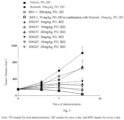
- the antitumor effects of the compounds ibrutinib, BAY-1, ibrutinib in combination with BAY-1, and WX009 at high, medium, and low doses were evaluated using in vivo efficacy of human diffuse large B lymphoma TMD8 cell subcutaneous xenografts in a female SCID mouse model.
- TMD8 cells were cultured in RPMI-1640 medium containing 10% FBS and maintained in a 37°C saturated humidity incubator with 5% COz. TMD8 cells in logarithmic period were collected, resuspended in RPMI-1640 basal medium, and Matrigel was added at 1:1, and the cell concentration was adjusted to 4 ⁇ 10 7 /mL. Under aseptic conditions, 0.1mL of cell suspension was inoculated under the skin of the right back of SCID mice, and the inoculation concentration was 4 ⁇ 10 6 /0.1mL/ mouse.
- the animals with too large, too small or irregular tumor shape were excluded, and the animals with tumor volume of 100.72 ⁇ 184.05 mm 3 were selected.
- the animals were divided into 7 groups by random block method, with 8 mice in each group, and the average tumor volume was about 140.82 mm 3 .
- the health status and death of animals were monitored every day, and routine examinations included observing the effects of tumor growth and drug treatment on daily behaviors of animals, such as behavioral activities, food intake and water intake, weight change (weight was measured twice a week), tumor size (tumor volume was measured twice a week), appearance signs or other abnormal conditions.
- the formula for calculating tumor volume (TV) was: 1/2 ⁇ a ⁇ b 2 , where a and b were the measured length and width of the tumor respectively.
- the formula for calculating the tumor inhibition rate TGI (%) [1-(average tumor volume at the end of administration in a treatment group-average tumor volume at the beginning of administration in the treatment group))/(average tumor volume at the end of treatment in solvent control group-average tumor volume at the beginning of treatment in solvent control group)] ⁇ 100%.
- This experiment evaluated the efficacy of compound ibrutinib, BAY-1, BAY-1 in combination with ibrutinib and WX009 at high, medium, and low doses in subcutaneous xenograft tumor of human diffuse large B lymphoma TMD8 cells in female SCID mouse model.
- the average body weight of animals in all experimental groups did not decrease significantly during the whole administration period, and the mice were well tolerated.
- the experimental results were shown in Table 11 and Figure 2 . Table 11.
- Test compound TGI (%) Vehicle -- ibrutinib 20mg/kg QD 12.95 BAY-1 50mg/kg QD 17.65 BAY-1 50mg/kg QD in combination with ibrutinib 20mg/kg QD 107.56 WX009 20mg/kg BID 96.55 WX009 10mg/kg BID 85.10 WX009 5mg/kg BID 86.28
- Experimental example 10 Pharmacodynamic study of test compound WX017 and WX027 on subcutaneous xenograft tumor model of human diffuse large B lymphoma TMD8 cells in vivo.
- the antitumor effects of the compounds ibrutinib, BAY-1, ibrutinib in combination with BAY-1, and WX017 and WX027 at high, medium, and low doses were evaluated using in vivo efficacy of human diffuse large B lymphoma TMD8 cell subcutaneous xenografts in a female SCID mouse model.
- the animals with too large, too small or irregular tumor shape were excluded, and the animals with tumor volume of 108.76 ⁇ 188.11 mm 3 were selected.
- the tumor volume the animals were divided into 10 groups by random block method, with 6 mice in each group, and the average tumor volume was about 152.11 mm 3 .
- the health status and death of animals were monitored every day, and routine examinations included observing the effects of tumor growth and drug treatment on daily behaviors of animals, such as behavioral activities, food intake and water intake, weight change (weight was measured twice a week), tumor size (tumor volume was measured twice a week), appearance signs or other abnormal conditions.
- the formula for calculating tumor volume (TV) was: 1/2 ⁇ a ⁇ b 2 , where a and b were the measured length and width of the tumor respectively.
- the formula for calculating the tumor inhibition rate TGI (%) [1-(average tumor volume at the end of administration in a treatment group-average tumor volume at the beginning of administration in the treatment group))/(average tumor volume at the end of treatment in solvent control group-average tumor volume at the beginning of treatment in solvent control group)] ⁇ 100%.
- This experiment evaluated the efficacy of compound ibrutinib, BAY-1, BAY-1 in combination with ibrutinib and WX017 and WX027 at high, medium, and low doses in subcutaneous xenograft tumor of human diffuse large B lymphoma TMD8 cells in female SCID mouse model.
- the average body weight of animals in all experimental groups did not decrease significantly during the whole administration period, and the mice were well tolerated.
- the experimental results were shown in Table 13 and Figure 3 . Table 13.
- Test compound TGI (%) Vehicle -- ibrutinib 20mg/kg QD 39 BAY-1 50mg/kg QD 43 BAY-1 50mg/kg QD in combination with ibrutinib 20mg/kg QD 113 WX017 3mg/kg BID 86 WX017 10mg/kg BID 100 WX017 20mg/kg BID 114 WX027 3mg/kg BID 78 WX027 10mg/kg BID 90 WX027 20mg/kg BID 104
Landscapes
- Chemical & Material Sciences (AREA)
- Organic Chemistry (AREA)
- Health & Medical Sciences (AREA)
- Life Sciences & Earth Sciences (AREA)
- General Chemical & Material Sciences (AREA)
- Medicinal Chemistry (AREA)
- Nuclear Medicine, Radiotherapy & Molecular Imaging (AREA)
- Pharmacology & Pharmacy (AREA)
- Chemical Kinetics & Catalysis (AREA)
- Animal Behavior & Ethology (AREA)
- General Health & Medical Sciences (AREA)
- Public Health (AREA)
- Veterinary Medicine (AREA)
- Pharmaceuticals Containing Other Organic And Inorganic Compounds (AREA)
- Nitrogen Condensed Heterocyclic Rings (AREA)
- Nitrogen And Oxygen Or Sulfur-Condensed Heterocyclic Ring Systems (AREA)
Abstract
Description
- The present disclosure claims the right of the following priorities:
-
CN202011568684.7, filed on December 25, 2020 -
CN202110749304.8, filed on July 1, 2021 -
CN202110930084.9, filed on August 13, 2021 -
CN202111165942.1, filed on September 30, 2021 - The present disclosure relates to a class of amide oxazole compounds, specifically a compound shown in formula (IV) or a pharmaceutically acceptable salt thereof.
- Interleukin-1 receptor-associated kinase 4 (IRAK4) is a serine/threonine-specific protein kinase, a member of the tyrosine like kinase (TLK) family, and a key node in the innate immune response involving interleukin-1, 18, 33 receptors and Toll-like receptors. Extracellular signal molecules bind with interleukin receptor or Toll-like receptor to form MyD88: IRAK4: IRAK1/2 multiprotein complex, leading to phosphorylation of IRAK1/2 and mediating a series of downstream signal transduction, thus activating p38, JNK and NF-κB signaling pathways, and finally leading to the expression of proinflammatory cytokines. Clinicopathological studies have shown that individuals with IRAK4 mutation have a protective effect on chronic lung disease and inflammatory bowel disease. IRAK4 deficiency itself is not lethal, and individuals can survive until adulthood with a reduced risk of infection with age. Therefore, IRAK4 has become an important therapeutic target for the treatment of inflammatory diseases, immune diseases, tumor diseases and many other diseases. As shown in the following figures, BAY-1 and BAY-2 are small molecule IRAK4 inhibitors developed by Bayer Company, and clinical research on immune and tumor diseases has been carried out.

- Activated B-cell-like diffuse large B-cell lymphoma (ABC-DLBCL) is a highly invasive and poorly prognostic DLBCL, which is usually characterized by abnormalities of B-cell receptor (BCR) pathway and myeloid-like differentiation factor 88 (MyD88) pathway, which further leads to the continuous activation of nuclear factor κB protein (NF-κB) signaling pathway. CD79 mutation is a common abnormal mutation in BCR pathway, and BTK inhibitors such as Ibrutinib can inhibit the abnormal activation of NF-κB signaling pathway caused by CD79 mutation, thus inhibiting the proliferation of ABC-DLBCL cells. The abnormality of MyD88 pathway is mainly caused by MyD88L265P site mutations, which accounts for about 30%, IRAK4 inhibitors can effectively block the abnormally activated MyD88 signaling pathway and further block the abnormal activation of the NF-κB pathway. However, ABC-DLBCL patients with MyD88L265P mutations have a poor response to BCR inhibitors due to abnormal MyD88 signaling pathway, and a large number of research data from Bayer, Nimbus and AstraZeneca indicate that the combination of IRAK4 inhibitor and BTK inhibitor can significantly improve the in vivo efficacy of Ibrutinib in ABC-DLBCL xenotransplantation animal model. If the abnormalities of BCR pathway and MyD88 pathway can be effectively inhibited at the same time, it will be a more effective way to treat ABC-DLBCL, therefore, developing RAK4 and BTK dual-target inhibitors can obtain double benefits in blocking NF-κB pathway, which is a very efficient and effective strategy in terms of therapeutic mechanism and provides a potentially effective new therapeutic method for ABC-DLBCL patients.
- The present disclosure provides a compound represented by formula (IV) or a pharmaceutically acceptable salt thereof,
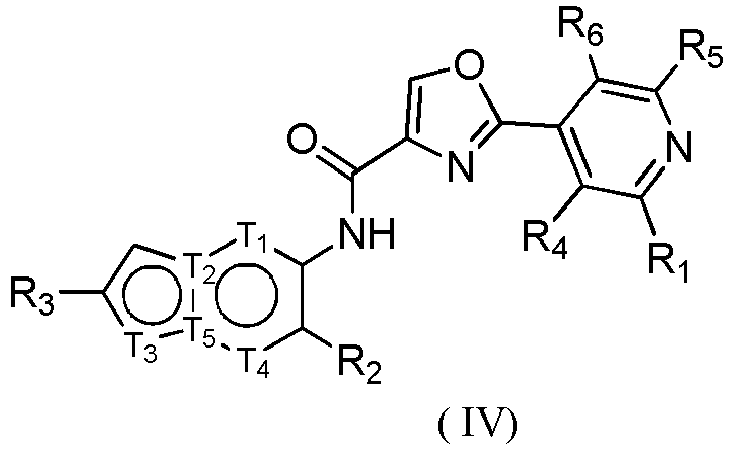
- T1, T2, T3, T4 and T5 are independently selected from CH and N;
- the structural unit


- R1 is selected from H, F, Cl, Br, I, OH, CN, NRaRb, CH3, -C(=O)-C1-3 alkyl and C1-3 alkoxy, and the C1-3 alkyl and C1-3 alkoxy are independently and optionally substituted with 1, 2 or 3 halogens;
- R4 is selected from H, F, Cl, Br, I, OH, CN, NRaRb, C1-3 alkyl and -C(=O)-C1-3 alkyl, and the C1-3 alkyl is optionally substituted with 1, 2 or 3 halogens;
- or, R1 and R4 are attached to form pyrrolyl with the attached atoms;
- R2 is selected from


- R3 is selected from


- E1 is selected from NH, O and S;
- R5 and R6 are independently selected from H, F, Cl, Br, I, OH, CN,-C(=O)-C1-3 alkyl and C1-3 alkyl, and the C1-3 alkyl is optionally substituted with 1, 2 or 3 halogens;
- m is 1 or 2;
- n is 1 or 2;
- Ra is independently selected from H and C1-3 alkyl;
- Rb is independently selected from H, C1-3 alkyl and -C(=O)-C1-3 alkyl;
- on condition that:
- 1) when the structural unit


- 2) when the structural unit


- 3) when the structural unit


- 1) when the structural unit
- In some embodiments of the present disclosure, the Ra is selected from H, CH3, CH2CH3 and CH(CH3)2, and the other variables are as defined in the present disclosure.
- In some embodiments of the present disclosure, the Rb is selected from H, CH3, CH2CH3, CH(CH3)2, -C(=O)-CH3, -C(=O)-CH2CH3 and -C(=O)-C(CH3)2, and the other variables are as defined in the present disclosure.
- In some embodiments of the present disclosure, the R1 is selected from H, F, Cl, Br, I, OH, CN, NRaRb, CH3, -C(=O)-CH3 and OCH3, and the OCH3 is optionally substituted with 1, 2 or 3 halogens, and the other variables are as defined in the present disclosure.
- In some embodiments of the present disclosure, the R1 is selected from NHz, -NHCH3, -N(CH3)2, -NHC(=O)CH3, CH3 and -OCH3, and the other variables are as defined in the present disclosure.
- In some embodiments of the present disclosure, the R1 and R4 are attached to form pyrrolyl with the attached atoms, so that the structural fragment


- In some embodiments of the present disclosure, the R2 is selected from


- In some embodiments of the present disclosure, the R4, R5 and R6 are independently selected from H, F, Cl, Br, I, OH, CN, NH2, NH(CH3), N(CH3)2, CH3, CH2CH3 and CH(CH3)2, and the CH3, CH2CH3 and CH(CH3)2 are optionally substituted with 1, 2 or 3 F, and the other variables are as defined in the present disclosure.
- In some embodiments of the present disclosure, the R4, R5 and R6 are independently selected from H, F, Cl, Br, I, CH3 and CF3, and the other variables are as defined in the present disclosure.
- The present disclosure provides a compound represented by formula (II) or a pharmaceutically acceptable salt thereof,

- T1, T2, T3, T4 and T5 are independently selected from CH and N;
- the structural unit


- R1 is selected from H, F, Cl, Br, I, OH, CN, NRaRb, CH3, -C(=O)-C1-3 alkyl and C1-3 alkoxy, and the C1-3 alkyl and C1-3 alkoxy are independently and optionally substituted with 1, 2 or 3 halogens;
- R4 is selected from H, F, Cl, Br, I, OH, CN, NRaRb, C1-3 alkyl and -C(=O)-C1-3 alkyl, and the C1-3 alkyl is optionally substituted with 1, 2 or 3 halogens;
- or, R1 and R4 are attached to form pyrrolyl with the attached atoms;
- R2 is selected from

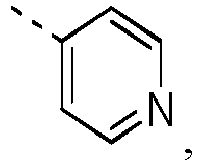

- R3 is selected from


- E1 is selected from NH, O and S;
- R5 and R6 are independently selected from H, F, Cl, Br, I, OH, CN,-C(=O)-C1-3 alkyl and C1-3 alkyl, and the C1-3 alkyl is optionally substituted with 1, 2 or 3 halogens;
- m is 1 or 2;
- n is 1 or 2;
- Ra is selected from H and C1-3 alkyl;
- Rb is selected from H, C1-3 alkyl and -C(O)-C1-3 alkyl;
- on condition that:
- 1) when the structural unit


- 2) when the structural unit


- 3) when the structural unit


- 1) when the structural unit
- In some embodiments of the present disclosure, the Ra is selected from H, CH3, CH2CH3 and CH(CH3)2, and the other variables are as defined in the present disclosure.
- In some embodiments of the present disclosure, the Rb is selected from H, CH3, CH2CH3, CH(CH3)2, -C(O)-CH3, -C(O)-CH2CH3 and -C(O)-C(CH3)2, and the other variables are as defined in the present disclosure.
- In some embodiments of the present disclosure, the R1 is selected from H, F, Cl, Br, I, OH, CN, NRaRb, CH3, -C(=O)-CH3 and OCH3, and the OCH3 is optionally substituted with 1, 2 or 3 Rc, and the other variables are as defined in the present disclosure.
- In some embodiments of the present disclosure, the R1 is selected from NHz, -NHCH3, -N(CH3)2, -NHC(O)CH3, CH3 and -OCH3, and the other variables are as defined in the present disclosure.
- In some embodiments of the present disclosure, the Ri and R4 are attached to form a ring with the attached atoms so that the structural fragment


- In some embodiments of the present disclosure, the R2 is selected from


- In some embodiments of the present disclosure, the R4, R5 and R6 are independently selected from H, F, Cl, Br, I, OH, CN, NH2, NH(CH3), N(CH3)2, CH3, CH2CH3 and CH(CH3)2, and the CH3, CH2CH3 and CH(CH3)2 are optionally substituted with 1, 2 or 3 F, and the other variables are as defined in the present disclosure.
- In some embodiments of the present disclosure, the R4, R5 and R6 are independently selected from H, F, Cl, Br, I, CH3 and CF3, and the other variables are as defined in the present disclosure.
- The present disclosure provides a compound represented by formula (II) or a pharmaceutically acceptable salt thereof,

- T1, T2, T3, T4 and T5 are independently selected from CH and N;
- the structural unit


- R1 is selected from H, F, Cl, Br, I, OH, CN, NRaRb, CH3, -C(=O)-C1-3 alkyl and C1-3 alkoxy, and the C1-3 alkyl and C1-3 alkoxy are independently and optionally substituted with 1, 2 or 3 Rc;
- R4 is selected from H, F, Cl, Br, I, OH, CN, NRaRb, C1-3 alkyl and -C(=O)-C1-3 alkyl, and the C1-3 alkyl is optionally substituted with 1, 2 or 3 Rd;
- or, R1 and R4 are attached to form pyrrolyl with the attached atoms;
- R2 is selected from

- R3 is selected from

- E1 is selected from NH, O and S;
- R5 and R6 are independently selected from H, F, Cl, Br, I, OH, CN, -C(=O)-C1-3 alkyl and C1-3 alkyl, and the C1-3 alkyl is optionally substituted with 1, 2 or 3 Re;
- m is selected from 1 and 2;
- n is selected from 1 and 2;
- Ra is selected from H and C1-3 alkyl;
- Rb is selected from H, C1-3 alkyl and -C(O)-C1-3 alkyl;
- Rc is selected from F, Cl, Br and I;
- Rd is selected from F, Cl, Br and I;
- Re is selected from F, Cl, Br and I;
- on condition that:
- 1) when the structural unit


- 2) when the structural unit

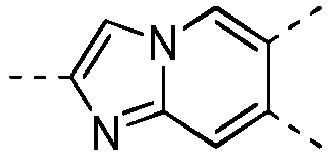


- 3) when the structural unit


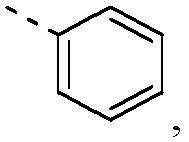

- 1) when the structural unit
- In some embodiments of the present disclosure, the Ra is selected from H, CH3, CH2CH3 and CH(CH3)2, and the other variables are as defined in the present disclosure.
- In some embodiments of the present disclosure, the Rb is selected from H, CH3, CH2CH3, CH(CH3)2, -C(O)-CH3, -C(O)-CH2CH3 and -C(O)-C(CH3)2, and the other variables are as defined in the present disclosure.
- In some embodiments of the present disclosure, the R1 is selected from H, F, Cl, Br, I, OH, CN, NRaRb, CH3, -C(=O)-CH3 and OCH3, and the OCH3 is optionally substituted with 1, 2 or 3 Rc, and the other variables are as defined in the present disclosure.
- In some embodiments of the present disclosure, the R1 is selected from NHz, -NHCH3, -N(CH3)2, -NHC(O)CH3 and -OCH3, and the other variables are as defined in the present disclosure.
- In some embodiments of the present disclosure, the R1 and R4 are attached to form a ring with the attached atoms so that the structural fragment


- In some embodiments of the present disclosure, the R2 is selected from
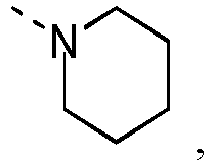

- In some embodiments of the present disclosure, the R4, R5 and R6 are independently selected from H, F, Cl, Br, I, OH, CN, NH2, NH(CH3), N(CH3)2, CH3, CH2CH3 and CH(CH3)2, and the CH3, CH2CH3 and CH(CH3)2 are optionally substituted with 1, 2 or 3 F, and the other variables are as defined in the present disclosure.
- In some embodiments of the present disclosure, the R4, R5 and R6 are independently selected from H, F, Cl, Br, I, CH3 and CF3, and the other variables are as defined in the present disclosure.
- The present disclosure provides a compound represented by formula (I) or a pharmaceutically acceptable salt thereof,

- R1 is selected from H, F, Cl, Br, I, OH, CN, NRaRb, CH3, -C(=O)-C1-3 alkyl and C1-3 alkoxy, and the C1-3 alkyl and C1-3 alkoxy are optionally substituted with 1, 2 or 3 Rc;
- R4 is selected from H, F, Cl, Br, I, OH, CN, NRaRb, C1-3 alkyl and -C(=O)-C1-3 alkyl, and the C1-3 alkyl is optionally substituted with 1, 2 or 3 Rd;
- or, R1 and R4 are attached to form pyrrolyl with the attached atoms;
- R2 is selected from

- R3 is selected from

- E1 is selected from NH, O and S;
- R5 and R6 are independently selected from H, F, Cl, Br, I, OH, CN,-C(=O)-C1-3 alkyl and C1-3 alkyl, and the C1-3 alkyl is optionally substituted with 1, 2 or 3 Re;
- m is selected from 1 and 2;
- n is selected from 1 and 2;
- Ra is selected from H and C1-3 alkyl;
- Rb is selected from H, C1-3 alkyl and -C(O)-C1-3 alkyl;
- Rc is selected from F, Cl, Br and I;
- Rd is selected from F, Cl, Br and I;
- Re is selected from F, Cl, Br and I;
- on condition that:
- 1) when R2 is selected from

- 2) when R2 is selected from


- 3) when R2 is selected from


- 4) when R2 is selected from


- 1) when R2 is selected from
- In some embodiments of the present disclosure, the Ra is selected from H, CH3, CH2CH3 and C(CH3)2, and the other variables are as defined in the present disclosure.
- In some embodiments of the present disclosure, the Rb is selected from H, CH3, CH2CH3, C(CH3)2, -C(O)-CH3, -C(O)-CH2CH3 and -C(O)-C(CH3)2, and the other variables are as defined in the present disclosure.
- In some embodiments of the present disclosure, the R1 is selected from H, F, Cl, Br, I, OH, CN, NRaRb, CH3, -C(=O)-CH3 and OCH3, and the OCH3 is optionally substituted with 1, 2 or 3 Rc, and the other variables are as defined in the present disclosure.
- In some embodiments of the present disclosure, the R1 is selected from NH2, NHCH3, N(CH3)2, NHC(O)CH3 and OCH3, and the other variables are as defined in the present disclosure.
- In some embodiments of the present disclosure, the R1 and R4 are attached to form a ring with the attached atoms so that the structural fragment


- In some embodiments of the present disclosure, the R2 is selected from


- In some embodiments of the present disclosure, the R4, R5 and R6 are independently selected from H, F, Cl, Br, I, OH, CN, NH2, NH(CH3), N(CH3)2, CH3, CH2CH3 and C(CH3)2, and the CH3, CH2CH3 and C(CH3)2 are optionally substituted with 1, 2 or 3 Rc, and the other variables are as defined in the present disclosure.
- In some embodiments of the present disclosure, the R4, R5 and R6 are independently selected from H, F, Cl, Br, I, CH3 and CF3, and the other variables are as defined in the present disclosure.
- In some embodiments of the present disclosure, the compound or the pharmaceutically acceptable salt thereof, wherein the compound is selected from


R1, R2, R3, R4, R5 and R6 are as defined in the present disclosure. - In some embodiments of the present disclosure, the compound or the pharmaceutically acceptable salt thereof, wherein the compound is selected from

- R1 and R4 are as defined in the present disclosure;
- T6 is selected from CH and N;
- T7 is selected from CH and N;
- and T6 and T7 are not simultaneously N;
- R3 is selected from


- p is 0 or 1.
- In some embodiments of the present disclosure, the compound or the pharmaceutically acceptable salt thereof, wherein the compound is selected from

- R1 and R4 are as defined in the present disclosure;
- R3 is selected from


- In some embodiments of the present disclosure, the R4 is selected from H, F, Cl, Br, I, OH, CN, NH2, NH(CH3), N(CH3)2, CH3, CH2CH3 and CH(CH3)2, and the CH3, CH2CH3 and CH(CH3)2 are optionally substituted with 1, 2 or 3 F, and the other variables are as defined in the present disclosure.
- In some embodiments of the present disclosure, the R4 is selected from H, F, Cl, Br, I, CH3 and CF3, and the other variables are as defined in the present disclosure.
- There are also some embodiments of the present disclosure obtained by an arbitrary combination of the above variables.
- The present disclosure also provides a compound represented by the following formula or a pharmaceutically acceptable salt thereof,


- The present disclosure also provides a use of the compound or the pharmaceutically acceptable salt thereof in the manufacture of a medicament for the treatment of hematoma-related.
- In some embodiments of the present disclosure, the hematoma is a diffuse large B-cell lymphoma.
- The compound of the present disclosure generally exhibits good inhibitory activity against IRAK4 and BTK. The compound of the present disclosure generally exhibits a good activity of inhibiting cell TNF-α production in THP-1 cells, and a good activity of inhibiting cell proliferation in OCI-LY10, TMD-8 and OCI-LY3 cells. The compound of the present disclosure can reduce the secretion of TNF-α in animal plasma. The compound of the present disclosure exhibits remarkable tumor inhibitory effect in the in vivo pharmacodynamic study of TMD8 cell subcutaneous xenograft tumor model. The compound of the present disclosure has excellent pharmacokinetic properties.
- Unless otherwise specified, the following terms and phrases when used herein have the following meanings. A specific term or phrase should not be considered indefinite or unclear in the absence of a particular definition, but should be understood in the ordinary sense. When a trade name appears herein, it is intended to refer to its corresponding commodity or active ingredient thereof.
- The term "pharmaceutically acceptable" is used herein in terms of those compounds, materials, compositions, and/or dosage forms, which are suitable for use in contact with human and animal tissues within the scope of reliable medical judgment, with no excessive toxicity, irritation, an allergic reaction or other problems or complications, commensurate with a reasonable benefit/risk ratio.
- The term "pharmaceutically acceptable salt" refers to a salt of the compound of the present disclosure that is prepared by reacting the compound having a specific substituent of the present disclosure with a relatively non-toxic acid or base. When the compound of the present disclosure contains a relatively acidic functional group, a base addition salt can be obtained by bringing the compound into contact with a sufficient amount of base in a pure solution or a suitable inert solvent. The pharmaceutically acceptable base addition salt includes a salt of sodium, potassium, calcium, ammonium, organic amine or magnesium, or similar salts. When the compound of the present disclosure contains a relatively basic functional group, an acid addition salt can be obtained by bringing the compound into contact with a sufficient amount of acid in a pure solution or a suitable inert solvent. Examples of the pharmaceutically acceptable acid addition salt include an inorganic acid salt, wherein the inorganic acid includes, for example, hydrochloric acid, hydrobromic acid, nitric acid, carbonic acid, bicarbonate, phosphoric acid, monohydrogen phosphate, dihydrogen phosphate, sulfuric acid, hydrogen sulfate, hydroiodic acid, phosphorous acid, and the like; and an organic acid salt, wherein the organic acid includes, for example, acetic acid, propionic acid, isobutyric acid, maleic acid, malonic acid, benzoic acid, succinic acid, suberic acid, fumaric acid, lactic acid, mandelic acid, phthalic acid, benzenesulfonic acid, p-toluenesulfonic acid, citric acid, tartaric acid, and methanesulfonic acid, and the like; and salts of amino acid (such as arginine and the like), and a salt of an organic acid such as glucuronic acid and the like. Certain specific compounds of the present disclosure contain both basic and acidic functional groups, thus can be converted to any base or acid addition salt.
- The pharmaceutically acceptable salt of the present disclosure can be prepared from the parent compound that contains an acidic or basic moiety by conventional chemical method. Generally, such salt can be prepared by reacting the free acid or base form of the compound with a stoichiometric amount of an appropriate base or acid in water or an organic solvent or a mixture thereof.
- The compounds of the present disclosure may exist in specific geometric or stereoisomeric forms. The present disclosure contemplates all such compounds, including cis and trans isomers, (-)-and (+)-enantiomers, (R)-and (S)-enantiomers, diastereomers isomers, (D)-isomers, (L)-isomers, and racemic and other mixtures thereof, such as enantiomers or diastereomeric enriched mixtures, all of which are within the scope of the present disclosure. Additional asymmetric carbon atoms may be present in substituents such as alkyl. All these isomers and their mixtures are included within the scope of the present disclosure.
- The compound of the present disclosure may contain an unnatural proportion of atomic isotope at one or more than one atom(s) that constitute the compound. For example, the compound can be radiolabeled with a radioactive isotope, such as tritium (3H), iodine-125 (125I) or C-14 (14C). For another example, deuterated drugs can be formed by replacing hydrogen with heavy hydrogen, the bond formed by deuterium and carbon is stronger than that of ordinary hydrogen and carbon, compared with non-deuterated drugs, deuterated drugs have the advantages of reduced toxic and side effects, increased drug stability, enhanced efficacy, extended biological half-life of drugs, etc. All isotopic variations of the compound of the present disclosure, whether radioactive or not, are encompassed within the scope of the present disclosure.
- The term "optional" or "optionally" means that the subsequent event or condition may occur but not requisite, and the term includes the instance in which the event or condition occurs and the instance in which the event or condition does not occur.
- The term "substituted" means one or more than one hydrogen atom(s) on a specific atom are substituted with the substituent, including heavy hydrogen and hydrogen variables, as long as the valence of the specific atom is normal and the substituted compound is stable. When the substituent is an oxygen (i. e. , =O), it means two hydrogen atoms are substituted. Positions on an aromatic ring cannot be substituted with a ketone. The term "optionally substituted" means an atom can be substituted with a substituent or not, unless otherwise specified, the type and number of the substituent may be arbitrary as long as being chemically achievable.
- When any variable (such as R) occurs in the constitution or structure of the compound more than once, the definition of the variable at each occurrence is independent. Thus, for example, if a group is substituted with 0-2 R, the group can be optionally substituted with up to two R, wherein the definition of R at each occurrence is independent. Moreover, a combination of the substituent and/or the variant thereof is allowed only when the combination results in a stable compound.
- When the enumerative linking group does not indicate the direction for linking, the direction for linking is arbitrary, for example, the linking group L contained in


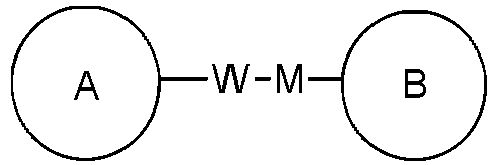
- Unless otherwise specified, when a group has one or more linkable sites, any one or more sites of the group can be linked to other groups through chemical bonds. When the linking site of the chemical bond is not positioned, and there is H atom at the linkable site, then the number of H atom at the site will decrease correspondingly with the number of chemical bond linking thereto so as to become the group with the corresponding valence. The chemical bond between the site and other groups can be represented by a straight solid bond


- Unless otherwise specified, the term "C1-3 alkyl" refers to a linear or branched saturated hydrocarbon group containing 1 to 3 carbon atoms. The C1-3 alkyl group includes C1-2 and C2-3 alkyl groups and the like; it can be monovalent (such as methyl), divalent (such as methylene) or multivalent (such as methine). Examples of C1-3 alkyl include but are not limited to methyl (Me), ethyl (Et), propyl (including n-propyl and isopropyl), etc.
- Unless otherwise specified, the term "C1-3 alkoxy" refers to an alkyl group containing 1 to 3 carbon atoms that are connected to the rest of the molecule through an oxygen atom. The C1-3 alkoxy includes C1-2, C2-3, C1, C2 and C3 alkoxy, etc. Examples of C1-3 alkoxy include, but are not limited to, methoxy, ethoxy, propoxy (including n-propoxy and isopropoxy), etc.
- Unless otherwise specified, the term "halo" or "halogen" by itself or as part of another substituent refers to fluorine, chlorine, bromine or iodine atom.
- The compounds of the present disclosure can be prepared by a variety of synthetic methods known to those skilled in the art, including the specific embodiments listed below, the embodiments formed by their combination with other chemical synthesis methods, and equivalent alternatives known to those skilled in the art, preferred embodiments include but are not limited to the embodiments of the present disclosure.
- The solvent used in the present disclosure is commercially available. The following abbreviations are used in the present disclosure: DMSO refers to dimethyl sulfoxide; EtOH refers to ethanol; MeOH refers to methanol; M refers to mol/L; N/A refers to untested; MgCl2 refers to magnesium chloride; EGTA refers to ethylenebis(oxyethylenenitrilo)tetraacetic acid; and Na3VO4 refers to sodium vanadate.
- The structure of the compounds of the present disclosure can be confirmed by conventional methods known to those skilled in the art, and if the disclosure involves an absolute configuration of a compound, then the absolute configuration can be confirmed by conventionally technical means in the art. For example, in the case of single crystal X-ray diffraction (SXRD), collecting diffraction intensity data from the cultured single crystal using a Bruker D8 venture diffractometer with CuKα radiation as the light source and scanning mode: ϕ/ω scan, and after collecting the relevant data, the crystal structure can be further analyzed by direct method (Shelxs97), and the absolute configuration can be confirmed.
- The compounds of the present disclosure are named according to the conventional naming principles in the art or by ChemDraw® software, and the commercially available compounds use the supplier catalog names.
-
-
Figure 1 shows a graph of plasma TNF-α concentration. -
Figure 2 shows the tumor growth curve of human diffuse large B lymphoma TMD8 cell subcutaneous xenograft tumor model tumor bearing mice after administration of the test compound WX009. -
Figure 3 shows the tumor growth curve of human diffuse large B lymphoma TMD8 cell subcutaneous xenograft tumor model tumor bearing mice after administration of the test compounds WX017 and WX027. - The following embodiments further illustrate the present disclosure, but the present disclosure is not limited thereto. The present disclosure has been described in detail herein, and its specific embodiments have also been disclosed, for one skilled in the art, it is obvious to make various modifications and improvements to the embodiments of the present disclosure without departing from the spirit and scope of the present disclosure.
-

-

- Compound BB-1-1 (5 g) was added to dichloromethane (20 mL), and then 4-dimethylaminopyridine (353.07 mg) and di-tert-butyl dicarbonate (15.77 g) were added, and the resulting mixed solution was stirred at 25°C for 16 hours. After the reaction solution was concentrated under reduced pressure, the crude product was purified by column chromatography (eluent: petroleum ether/ethyl acetate = 100:0 to 70:30) to obtain compound BB-1-2.
LCMS (ESI) m/z: 216.9 [M-55]+ - N, N- dimethylformamide (10 mL) was added to compound BB-1-2 (1.0 g), and then compound BB-1-3 (620.04 mg), cesium carbonate (2.39 g) and [1,1'- bis (diphenylphosphino) ferrocene] palladium dichloride (267.90 mg) were added, the reaction solution was stirred at 60°C for 16 hours under nitrogen protection. The reaction solution was concentrated under reduced pressure, the solvent was removed and the crude product was purified by column chromatography (eluent: petroleum ether/ethyl acetate=100:0 to 0:100) to obtain compound BB-1-4.
LCMS (ESI) m/z: 278.1 [M-55]+ - Compound BB-1-4 (0.6 g) was dissolved in methanol (20 mL) and water (20 mL), then sodium hydroxide (144.00 mg) was added and the reaction mixture was stirred at 40°C for 0.5 hours. The reaction solution was concentrated under reduced pressure to remove methanol, then water (50 mL) was added, and 1 M diluted hydrochloric acid was added dropwise while stirring at 0°C to adjust the pH to about 2, and solids were precipitated. After filtration, the filter cake was washed with water (10 mL). The filter cake was collected and concentrated under reduced pressure to obtain compound BB-1.
- 1H NMR (400 MHz, DMSO-d6 ) δ = 13.34 (s, 1H), 10.14 (s, 1H), 8.96 (s, 1H), 8.59 - 8.25 (m, 2H), 7.56 (dd, J = 1.2 Hz, J = 5.2 Hz, 1H), 1.51 (s, 9H).
LCMS (ESI) m/z: 250.0 [M-55]+ -

-
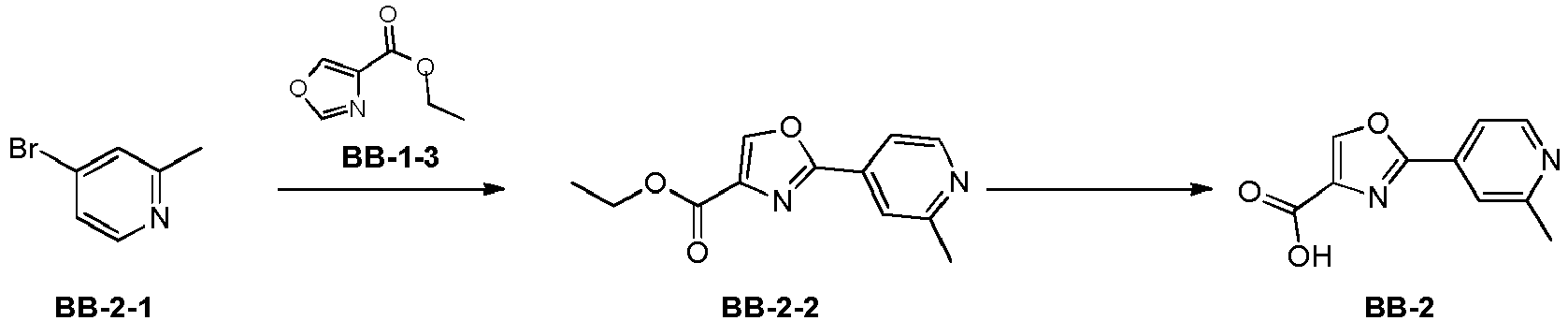
- Compound BB-2-1 (16 g) and compound BB-1-3 (13.13 g) were added into N,N-dimethylformamide (200.0 mL), then palladium acetate (4.18 g), cesium carbonate (60.61 g), tri-o-tolylphosphine (11.32 g) were added, and reaction solution was stirred at 100°C for 12 hours. The reaction solution was filtered and concentrated under reduced pressure, and the crude product was purified by column chromatography (eluent: petroleum ether/ethyl acetate=100:0 to 87:13) to obtain compound BB-2-2.
- 1H NMR (400MHz, CD3OD) δ = 8.73 (s, 1H), 8.62 (s, 1H), 7.97 (s, 1H), 7.87 (s, 1H), 4.45-4.40 (m, 2H), 2.66 (s, 3H), 1.43-1.40 (m, 3H).
LCMS (ESI) m/z= 233.2[M+H]+ - Compound BB-2-2 (6 g) was added to anhydrous methanol (30 mL) and water (30 mL), then sodium hydroxide (2.07 g) was added, and the reaction was carried out at 30°C for 6 hours. After the reaction solution was concentrated under reduced pressure to remove methanol, the pH was adjusted to about 5 with 6 M hydrochloric acid, and after filtration, the filter cake was concentrated under reduced pressure. Toluene (100.0 mL) was added and the system was concentrated under reduced pressure to remove water to obtain compound BB-2.
- 1H NMR (400MHz, CD3OD) δ = 8.69 (s, 1H), 8.62 (s, 1H), 7.99 (s, 1H), 7.89 (s, 1H), 2.66 (s, 3H).
LCMS (ESI) m/z= 205.2[M+H]+ -

-

- N,N- dimethylformamide (1 mL) was added to compound BB-3-1 (230 mg), and then compound BB-1-3 (207.16 mg), potassium tert-butoxide (274.52 mg), palladium acetate (27.46 mg) and tri-o-tolylphosphine (37.23 mg) were added, the mixed solution was stirred at 110°C for 16 hours under nitrogen atmosphere. The reaction solution was concentrated under reduced pressure to remove the solvent and the crude product was purified by column chromatography (eluent: petroleum ether/ethyl acetate=100:0 to 50:50) to obtain compound BB-3-2.
LCMS m/z: 249.1 [M+H]+ - Compound BB-3-2 (150 mg) was dissolved in methanol (3 mL) and water (3 mL), then sodium hydroxide (48.34 mg) was added to the reaction system and the mixture was stirred at 40°C for 2 hours. The reaction solution was concentrated under reduced pressure to remove methanol, then water (20 mL) was added, and 1 M diluted hydrochloric acid was added dropwise with stirring at 0°C to adjust the pH to about 2, and solids were precipitated. After filtration, the filter cake was washed with water (2 mL), the filter cake was collected, and concentrated under reduced pressure to obtain compound BB-3.
- 1H NMR (400MHz, DMSO-d6 ) δ = 8.95 (s, 1H), 8.36 (d, J=5.2 Hz, 1H), 7.52 (dd, J=1.2 Hz, J=5.2 Hz, 1H), 7.27 (s, 1H), 3.91 (s, 3H).
LCMS m/z: 221.0[M+H]+ -

-

- N, N- dimethylformamide (20 mL) was added to compound BB-4-1 (1 g), and then compound BB-1-3 (842.27 mg), cesium carbonate (3.24 g) and [1,1'- bis (diphenylphosphino) ferrocene] palladium dichloride (363.92 mg) were added, the obtained mixed solution was stirred at 60°C for 16 hours under nitrogen protection. The reaction solution was concentrated under reduced pressure to remove the solvent and the crude product was purified by column chromatography (eluent: dichloromethane/methanol = 100:0 to 80:20) to obtain compound BB-4-2.
LCMS m/z: 261.9[M+H]+ - Methanol (10 mL) and water (10 mL) were added to compound BB-4-2 (250 mg), then aqueous sodium hydroxide solution (3 M, 637.90 µL) was added, and the mixed solution was stirred at 25°C for 16 hours. The reaction solution was concentrated under reduced pressure to remove methanol, water (50 mL) was added, 1 M diluted hydrochloric acid was added dropwise at 0°C while stirring, the pH was adjusted to about 2, and solids were precipitated, after filtration, the filter cake was washed with water (10 mL), and collected to obtain compound BB-4.
- 1H NMR (400MHz, DMSO-d6 ) δ = 13.30 (s, 1H), 8.92 (s, 1H), 8.26 (d, J=5.6 Hz, 1H), 7.09 (s, 2H), 3.10 (s, 6H).
LCMS m/z: 233.9[M+H]+ -

-

- Compound BB-5-1 (1 g), compound BB-1-3 (716.25 mg), cesium carbonate (4.96 g) and [1,1'- bis (diphenylphosphino) ferrocene] palladium dichloride (371.36 mg) were added successively into the reaction flask, and then N,N- dimethylformamide (20mL) was added, the reaction solution was stirred at 90°C for 3 hours under nitrogen protection. Ethyl acetate (50 mL), saturated brine (50 mL) and water (50 mL) were added to the reaction solution, after filtration, the filtrate was extracted and separated, the aqueous phase was extracted with ethyl acetate (30 mL), the organic phases were combined, dried with anhydrous sodium sulfate, filtered, and concentrated under reduced pressure, and the crude product was purified by column chromatography (eluent: petroleum ether/ethyl acetate=100:0 to 0:100) to obtain compound BB-5-2.
LCMS (ESI) m/z: 258.0[M+H]+ - Compound BB-5-2 (130 mg) was added to the reaction flask, then anhydrous ethanol (2.5 mL) was added, and finally the mixed solution of water (1.5 mL) and sodium hydroxide (60.64 mg) were added, and the reaction solution was stirred at 50°C for 2 hours. The solvent was concentrated under reduced pressure, water (5 mL) was added for ultrasonic dissolution, then ethyl acetate (5 mL) was added for extraction and liquid separation, the aqueous phase was collected and the pH was adjusted to 4 with 4 M hydrochloric acid, after filtration, and the filter cake was rinsed with water (5 mL). The filter cake was concentrated under reduced pressure to remove the solvent to obtain compound BB-5.
LCMS (ESI) m/z: 230.0[M+H]+ -

-

- N,N- dimethylformamide (5 mL) was added to compound BB-6-1 (0.5 g), and then compound BB-1-3 (452.72 mg), cesium carbonate (1.74 g) and [1,1'- bis (diphenylphosphino) ferrocene] palladium dichloride (7.80 mg) were added, the obtained mixed solution was stirred at 60°Cfor 16 hours under nitrogen protection. After concentrated under reduced pressure, the obtained crude product was purified by column chromatography (eluent: dichloromethane/methanol = 100:0 to 80:20) to obtain compound BB-6-2.
LCMS (ESI) m/z: 247.9[M+H]+ - Methanol (10 mL) and water (10 mL) were added to compound BB-6-2 (200 mg), then aqueous sodium hydroxide solution (3 M, 539.27 µL) was added, and the mixed solution was stirred at 25°C for 16 hours. After the system was concentrated under reduced pressure, water (50 mL) was added, 1 M diluted hydrochloric acid was added dropwise at 0°C while stirring to adjust the pH to about 7, and solids were precipitated, after filtration, the filter cake was washed with water (10 mL), and collected to obtain compound BB-6.
- 1H NMR (400MHz, DMSO-d6 ) δ = 8.88 (s, 1H), 8.16 (d, J =5.2 Hz, 1H), 7.15-6.96 (m, 2H), 6.91 (d, J =4.4 Hz, 1H), 2.83 (d, J=4.4 Hz, 3H).
LCMS (ESI) m/z: 219.9[M+H]+ - Each intermediate in Table 1 below was a commercially available reagent.
Table 1 Number Structure CAS B2-1 
14794-31-1 B1 
479195-19-2 B3 
241820-91-7 B4 
98-80-6 B5 
70-23-5 B6 
6457-49-4 B7 
13176-46-0 -

-

- Compound B2-1 (25 g) was added to acetonitrile (25 g), and then trimethylsilyl diazomethane (2 M, 113.92 mL) was added, and the reaction was carried out at 25°C for 1 hour. After cooled to 0°C, the solution of hydrobromic acid (46.55 g, purity: 33%) in acetic acid was added slowly, after the adding, the reaction solution was heated to 25°C and stirred for 1 hour. The solvent was concentrated under reduce pressure to obtain a crude product, and the crude product was purified by column chromatography (eluent: petroleum ether/ethyl acetate=100:0 to 90:10) to obtain compound B2.
- 1H NMR (400MHz, CDCl3) δ = 4.05-3.98 (m, 3H), 3.84 (s, 1H), 2.84-2.75 (m, 2H), 2.55-2.51 (m, 2H), 1.15-1.12 (m, 3H).
-

-

- Compound BB-2 (1 g) was dissolved in N,N- dimethylformamide (15 mL), and then ammonium chloride (523.96 mg), N-(3- dimethylaminopropyl) -N- ethylcarbodiimide (1.41 g), 1- hydroxybenzotriazole (992.67 mg) and diisopropylethylamine (3.16 g) were added, and the reaction was carried out at 25°C for 16 hours. Then water (20 mL) was added to the reaction solution, then the mixture was extracted with ethyl acetate (20 mL), the aqueous phase was collected, and concentrated under reduced pressure to obtain the crude compound. The obtained crude product was purified by machine separation (column: Waters Xbridge BEH C18 (250*50 mm*10 µm); eluent: [Water (ammonium bicarbonate)-acetonitrile]; gradient acetonitrile %: 1%-35%, 10min) to obtain compound BB-7.
LCMS (ESI) m/z: 204.2[M+H]+ - 1H NMR (400 MHz, DMSO-d6 ) δ = 8.67 (s, 1H), 8.23 (s, 1H), 7.83-7.80 (m, 2H), 7.75-7.73 (m, 1H), 7.60 (s, 1H), 2.59(, 3H).
-

-

- Compound BB-6-1 (1 g) was added to anhydrous tetrahydrofuran (20 mL), the temperature was lowered to -5°C, 1M solution of lithium bis (trimethylsilylamine) in hexane (10.69 mL) was added, after stirred for 10min, di-tert-butyl carbonate (1.17 g) was added, and the temperature was raised to 25°C and the reaction was carried out for 1h. The reaction solution was added into saturated ammonium chloride aqueous solution (40 mL), extracted with ethyl acetate (40 mL*3), the organic phases were combined, dried with anhydrous sodium sulfate, filtered, the filtrate was concentrated under reduced pressure, and crude product was purified by column chromatography (eluent: petroleum ether/ethyl acetate =100:0 to 95:5) to obtain compound BB-8-1.
LCMS (ESI) m/z: 287.0[M+H]+ - BB-8-1 (0.75 g), compound BB-1-3 (368.60 mg), 1,1- bis (diphenylphosphine) ferrocene palladium chloride (191.11 mg), cesium carbonate (2.55 g) and N,N- dimethylformamide (7.5 mL) were added into a pre-dried reaction flask, and the reaction system was replaced with nitrogen for three times, and reacted at 60°C for 16 hours. The reaction solution was poured into water (10 mL), extracted with ethyl acetate (10 mL*3), the organic phases were combined, washed with saturated brine (50 mL), dried with anhydrous sodium sulfate, filtered by suction, and spin-dried under reduced pressure, and then the crude product was purified by column chromatography (eluent: petroleum ether/ethyl acetate =100:0 to 0:100) to obtain compound BB-8-2.
LCMS (ESI) m/z: 348.2[M+H]+ - Compound BB-8-2 (0.55 g) was added to methanol (10 mL) and water (2 mL), then sodium hydroxide (126.66 mg) was added, and the reaction was carried out at 25°C for 2 hours. The reaction solution was concentrated under reduced pressure until methanol was removed, the pH was adjusted to about 4 with 2M hydrochloric acid, after filtration, the filter cake under reduced pressure to obtain compound BB-8.
- LCMS (ESI) m/z: 320.0[M+H]+
- 1H NMR (400MHz, CD3OD) δ =8.64 (s, 1H), 8.54 (d, J-5.20 Hz, 1H), 8.34 (s, 1H), 7.76-7.75 (m, 1H), 3.42 (s, 3H), 1.56 (s, 9H).
-

-

- Compound BB-9-1 (2 g), 2,4-dimethoxybenzylamine (1.53 g), dimethyl sulfoxide (10 mL) and N,N diisopropylethylamine (3.22 g) were added into the reaction flask, the reaction system was replaced by nitrogen for three times and the reaction was carried out at 120°C for 2 hours. Then water (10 mL) and methyl tert-butyl ether (30 mL *3) were added to the reaction solution for extraction, the organic phases were combined, and concentrated to obtain compound BB-9-2.
- 1H NMR (400 MHz, CDCl3) δ = 7.56 (d, J=5.20 Hz, 1 H), 7.25 (d, J=8.00 Hz, 1 H), 6.84 (dd, J=5.20 Hz, J=4.00 Hz, 1 H), 6.53-6.40 (m, 2 H), 5.08 (s, 1 H), 4.58 (d, J=5.60 Hz, 2 H), 3.85 (s, 3 H), 3.81 (s, 3 H).
- Compound BB-9-2 (3 g) and trifluoroacetic acid (15 mL) were added into a reaction flask, and the reaction was carried out at 20°C for 3h, and ice water (50 mL) was added to the reaction solution, saturated sodium bicarbonate solution was added to adjust the pH to about 8, then dichloromethane (50 mL *2) was added for extraction, the organic phases were combined, washed with saturated brine, and dried with anhydrous sodium sulfate, filtered, and the filtrate was concentrated to obtain compound BB-9-3.
- LCMS: m/z (ESI) = 238.9[M+H]+
- 1H NMR (400 MHz, CDCl3) δ =7.50 (d, .7=5.20 Hz, 1 H), 7.00 (dd, J=5.20 Hz, J=4.00 Hz, 1 H), 4.72 (s, 2 H).
- Compound BB-9-3 (1.6 g), dichloromethane (30 mL), di-tert-butyl carbonate (2.93 g), triethylamine (2.04 g) and 4- dimethylaminopyridine (328.52 mg) were added into a reaction flask, and then the reaction was carried out at 20°C for 12 hours. The reaction solution was concentrated to obtain a crude product, and the crude product was separated and purified by silica gel column chromatography (eluent: petroleum ether: ethyl acetate =90:10 to 80:20) to obtain compound BB-9-4.
- 1H NMR (400 MHz, CDCl3) δ = 7.96 (d, J=5.20 Hz, 1 H), 7.69 (dd, J=4.80 Hz, J=4.20 Hz, 1 H), 1.44 (s, 18 H).
- Compound BB-9-4 (1.6 g), compound BB-1-3 (541.01 mg), N, N- dimethylformamide (3 mL), 1,1- bis (diphenylphosphine) ferrocene palladium chloride (267.15 mg) and cesium fluoride (1.66 g) were added into a reaction flask, and the reaction was carried out at 60°C for 12 hours. Then saturated brine (30mL), methyl tert-butyl ether (30 mL *3) were added for extraction, the organic phases were combined, concentrated to obtain a crude product, and the crude product was purified by silica gel column chromatography (eluent: petroleum ether: ethyl acetate =95:5 to 94:6) to obtain compound BB-9-5.
LCMS: m/z (ESI) = 452.2[M+H]+ - Compound BB-9-5 (1.1 g), methanol (5 mL), water (5 mL) and sodium hydroxide (194.93 mg) were added into a reaction flask and reacted at 25°C for 1h. The reaction solution was concentrated, the pH was adjusted to about 3 with 2M hydrochloric acid, and solids were precipitated. After filtration, the filter cake was concentrated to remove water and the compound BB-9 was obtained.
LCMS: m/z (ESI) = 324.1[M+H]+ -

-

- Compound BB-10-1 (1 g), compound BB-1-3 (1.16 g), N,N- dimethylformamide (10 mL), cesium carbonate (4.48 g) and 1,1- bis (diphenylphosphine) ferrocene palladium chloride (502.68 mg) were added into a reaction flask, and reacted at 60°C for 12h. The reaction solution was concentrated to obtain a crude product, and the crude product was separated and purified by silica gel column chromatography (eluent: petroleum ether: ethyl acetate =100:0 to 90:10) to obtain compound BB-10-2.
- 1H NMR (400 MHz, CDCl3) δ = 8.44-8.38 (m, 2 H), 7.86 (t, J=5.20 Hz, 1 H), 4.45 (d, J=7.20 Hz, 2 H), 2.63 (d, J=3.20 Hz, 3 H), 1.42 (t, J=7.20 Hz, 3 H).
- Compound BB-10-2 (1 g), water (5 mL), ethanol (10 mL) and lithium hydroxide monohydrate (191.43 mg) were added into a reaction flask and react at 25°C for 3h; the reaction solution was concentrated to remove ethanol, and the pH was adjusted to 4 with 2 M hydrochloric acid, and solids were precipitated and the mixture was filtered, and the filter cake was concentrated to remove water to obtain compound BB-10.
- 1H NMR (400MHz, DMSO-d6 ) δ = 9.02 (s, 1 H), 8.46 (d, J=4.80 Hz, 1 H), 7.83 (t, J=5.20 Hz, 1 H), 2.55 (d, J=3.60 Hz, 3 H).
-

-
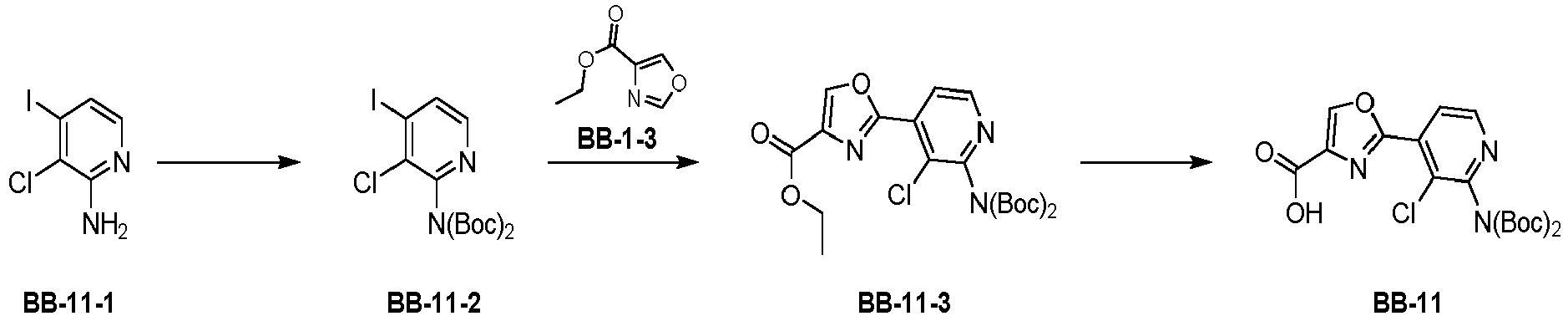
- Compound BB-11-1 (1 g), dichloromethane (10 mL), di-tert-butyl carbonate (2.14 g), triethylamine (1.19 g) and 4- dimethylaminopyridine (96.02 mg) were added into a reaction flask, and then reacted at 20°C for 12 hours. The reaction solution was concentrated to obtain a crude product, and the crude product was separated and purified by silica gel column chromatography (gradient eluent: petroleum ether: ethyl acetate =90:10 to 83:17) to obtain compound BB-11-2.
- 1H NMR (400 MHz, CDCl3) δ = 8.03 (d, J=5.20 Hz, 1 H), 7.77 (d, J=5.20 Hz, 1 H), 1.42 (s, 18 H).
- Compound BB-11-2 (1.6 g), compound BB-1-3 (521.43 mg), N,N- dimethylformamide (16 mL), 1,1- bis (diphenylphosphine) ferrocene palladium chloride (257.48 mg) and cesium carbonate (3.44 g) were added into a reaction flask, and reacted at 60°C for 12h. Saturated brine (30 mL), methyl tert-butyl ether (30 mL*3) were added to the reaction solution for extraction, and the organic phases were combined and concentrated to obtain a crude product. The crude products were separated and purified by silica gel column chromatography (gradient eluent: petroleum ether: ethyl acetate =95:5 to 0:100) to obtain compound BB-11-3.
- LCMS: m/z (ESI) = 312.0[M+ H-156]+;
- 1H NMR (400MHz, DMSO-d6 ) δ = 9.18 (s, 1 H), 8.65 (d, J=5.20 Hz, 1 H), 8.06 (d, J=5.20 Hz, 1 H), 4.35 (t, J=7.20 Hz, 2 H), 1.37-1.34 (m, 21 H).
- Compound BB-11-3 (1 g), ethanol (5 mL), water (2.5 mL) and lithium hydroxide monohydrate (102.37 mg) were added to a reaction flask and reacted at 25°C for 2.5 hours. The pH of the reaction solution was adjusted to 4 with 2M hydrochloric acid, and solids were precipitated, after filtration, the filter cake was dissolved with dichloromethane: methanol =8:1 (100 mL), then dried with anhydrous sodium sulfate, filtered, and the filtrate was concentrated to obtain compound BB-11.
- LCMS: m/z (ESI) = 340.1[M+H-100]+
- 1H NMR (400MHz, DMSO-d6 ) δ =9.01 (s, 1 H),8.64 (d, J=5.20 Hz, 1 H),8.05 (d, J=5.20 Hz, 1 H),1.36 (s, 18 H).
-

-

- Compound BB-12-1 (5.0 g) was dissolved in tetrahydrofuran (50.0 mL), then triethylamine (8.95 g) was added, the temperature was reduced to 0°C, and a tetrahydrofuran (10.0 mL) solution of N- phenylbis (trifluoromethylsulfonyl) imine (18.95 g) was added, and the reaction solution was reacted at 25°C for 16 hours. Saturated ammonium chloride (50.0 mL) was added to the reaction solution, and the mixture was extracted with ethyl acetate (50.0 mL*3), the organic phases were combined, dried with anhydrous sodium sulfate, filtered by suction and concentrated under reduced pressure, and the crude product was purified by column chromatography (eluent: petroleum ether: ethyl acetate =91:9 to 50:50) to obtain compound BB-12-2.
LCMS (ESI) m/z: 246.1[M+H]+ - Compound BB-12-2 (1 g) and bis(pinacolato)diboron (1.24 g) were added into a reaction flask and dissolved in 1,4- dioxane (30 mL), then 1,1- bis (diphenylphosphorus) ferrocene palladium chloride (596.88 mg) and potassium acetate (800.59 mg) were added, and the reaction was carried out at 70°C for 1.5 hours. Water (50.0 mL) was added to the reaction solution, the mixture was extracted with ethyl acetate (50.0 mL*3), the organic phases were combined, dried with anhydrous sodium sulfate, filtered by suction and concentrated under reduced pressure to obtain the crude compound BB-12, which can be directly used in the next step.
-

-

- Compound BB-13-1 (5.0 g) and tetrahydrofuran (60 mL) were added into a reaction flask, the reaction system was replaced with nitrogen, and the temperature was lowered to -78°C, a solution of n-butyl lithium (2.5 M, 11.36 mL) in hexane was added while stirring, then tributyltin chloride (10.25 g) was added dropwise at -78°C, and the reaction was continued at -78°C for 2 hours. Then the reaction solution was slowly poured into saturated ammonium chloride (100 mL), extracted with ethyl acetate (20 mL*3), the organic phases were combined, dried with anhydrous sodium sulfate, filtered by suction, concentrated under reduced pressure, and purified by column chromatography (eluent: petroleum ether: ethyl acetate=100:0 to 90:10) to obtain compound BB-13.
-

-

- Compound 1-1 (50 g) was dissolved in tetrahydrofuran (500 mL), compound 1-2 (122.65 g) was added, and the solution was stirred at 20°C for 16 hours. The reaction solution was filtered, and the filtrate was concentrated to obtain a solid crude product. A mixed solvent of methyl tert-butyl ether and petroleum ether (1:1, 200 mL) was added to the crude product, then filtered after homogenized for 16 hours, and the solid was collected to obtain compounds 1-3.
- 1H NMR (400MHz, DMSO-d6) δ = 8.55 (s, 1H), 6.92 (s, 2H), 5.92 (s, 1H), 3.08-2.85 (m, 4H), 1.59 (d, J=4.0 Hz, 6H).
LCMS (ESI) m/z: 223.1[M+H]+ - Compound 1-4 (83.05 g) was added to compound 1-3 (11 g), and the obtained solution was stirred at 40°C for 16 hours. The solution was filtered and the filter cake was washed twice with ethyl acetate (10 mL). The filter cake was collected and dried to obtain hydrobromide of compound 1-5.
LCMS (ESI) m/z: 309.2[M+H]+ - 1,2- dichloromethane (150 mL) was added to the hydrobromide (10.5 g) of compound 1-5, and then phosphorus oxybromide (15.47 g) was added, and the obtained solution was stirred at 100-110°C for 34 hours. Then phosphorus oxybromoxide (15.5 g) was added, and the solution was stirred at 110°C for 36 hours. The solution was cooled to room temperature and then slowly poured into water (150 mL). After poured, 2 M sodium hydroxide aqueous solution was added dropwise to the quenched solution, so that the pH of the solution was about 10. Then dichloromethane (200 mL*3) was added for extraction, the organic phases were combined, saturated brine (200 mL) was added for washing, the organic phases were collected, dried with anhydrous sodium sulfate, filtered and concentrated, and the crude product was purified by column chromatography (eluent: petroleum ether: ethyl acetate=100:0 to 20:80) to obtain compound 1-6.
LCMS (ESI) m/z: 327.1[M+H]+ - Dioxane (10 mL) was added to compound 1-6 (0.8 g), then compound 1-7 (2.12 g), potassium carbonate (1.02 g), palladium dichloride (87.26 mg) and tricyclohexylphosphine (137.99 mg) were added, and the solution was stirred at 110°C for 16 hours under nitrogen protection. The solution was filtered through diatomite, and the filter cake was washed twice with dichloromethane: methanol (1:1, 20 mL). The filtrate was collected and concentrated under reduced pressure to obtain a crude product, which was purified by column chromatography (eluent: dichloromethane/methanol = 100:0 to 70:30) to obtain compound 1-8.
- 1H NMR (400MHz, CD3OD) δ = 9.39 - 9.30 (m, 1H), 7.92 - 7.80 (m, 1H), 7.04 (s, 1H), 6.71 - 6.58 (m, 2H), 3.27 (s, 4H), 2.00 (s, 1H), 1.74 (s, 6H), 1.40 (s, 6H).
LCMS (ESI) m/z: 331.3[M+H]+ - Methanol (100 mL) was added to compound 1-8 (650 mg), and wet palladium/carbon (50 mg, purity: 10%) was added under the micro nitrogen flow, and the solution was reacted at 25 °C for 16 hours under hydrogen (50 psi). The solution was filtered through diatomite, and the filter cake was washed with methanol (20 mL). The filtrate were combined and concentrated under reduced pressure to obtain compounds 1-9.
LCMS (ESI) m/z: 303.3[M+H]+ - Compound 1-9 (100 mg) was added to N,N- dimethylformamide (5 mL), and then compound BB-1 (106.00 mg), O-(7- azabenzotriazole -1- yl) -N,N,N,N- tetramethylurea hexafluorophosphate (188.60 mg) and triethylamine (100.38 mg) were added, and the mixture was stirred at 40°C for 2 hours. After the solution was filtered, the crude product was separated and purified by preparative HPLC (column: Welch Xtimate C18 (100*40 mm*3 µm); mobile phase: [aqueous solution containing trifluoroacetic acid (0.075%)-acetonitrile]; gradient: acetonitrile %: 41%-71%, 8min) to obtain trifluoroacetate of compound 1-10.
LCMS (ESI) m/z: 590.4[M+H]+ - Dichloromethane (5 mL) was added to trifluoroacetate of compound 1-10 (5 mg), then trifluoroacetic acid (32.26 mg) was added, and the obtained mixture was stirred at 40°C for 0.5 hours. The solution was concentrated under reduced pressure to remove the solvent, and acetonitrile (10 mL) and water (1 mL) were added for dissolution to obtain the trifluoroacetate of compound WX001.
- 1H NMR (400MHz, CD3OD) δ =9.58 (s, 1H), 8.90 (s, 1H), 8.08 (d, J=6.4 Hz, 1H), 7.86 (s, 1H), 7.59 (s, 1H), 7.45 (d, J=6.4 Hz, 1H), 7.36 (s, 1H), 3.17-3.12 (m, 4H), 2.98-2.91 (m, 2H), 1.99-1.89 (m, 6H), 1.78 (s, 2H), 1.30 (s, 6H).
LCMS (ESI) m/z: 490.4[M+H]+ -

-

- Dichloromethane (5 mL) was added to compound WX001 (40 mg), then acetic anhydride (43.60 mg) and triethylamine (82.68 mg) were added, and the obtained mixture was stirred at 20°C for 16 hours, then the mixture was heated to 40°C and stirred for 16 hours. 3 M aqueous sodium hydroxide solution (5 mL) was added to the reaction solution and stirred at 40°C for 16 hours. After the reaction solution was concentrated, the crude product was separated and purified by preparative HPLC (column: Welch Xtimate C18 (100*40 mm*3 µm); mobile phase: [aqueous solution containing trifluoroacetic acid (0.075%)-acetonitrile]; gradient: acetonitrile %: 27%-57%, 8min) to obtain trifluoroacetate of compound WX002.
LCMS (ESI) m/z: 532. 5 [M+H]+ -

-

- N,N- dimethylformamide (3 mL) was added to compound 1-9 (30 mg), and then compound BB-3 (32.76 mg), O-(7- azabenzotriazole -1- yl) -N,N,N,N- tetramethylurea hexafluorophosphate (56.58 mg) and N,N- diisopropylethylamine (25.64 mg) were added, and the mixture was stirred at 40°C for 16 hours. The solution was filtered and directly separated and purified by preparative HPLC (column: Welch Xtimate C18 (100*40 mm*3 µm); mobile phase: [aqueous solution containing trifluoroacetic acid (0.075%)-acetonitrile]; gradient: acetonitrile %: 45%-67%, 8min) to obtain trifluoroacetate of compound WX003.
- 1H NMR (400MHz, DMSO-d6) δ = 13.83 (s, 1H), 9.69 (s, 1H), 9.57 (s, 1H), 9.16 (s, 1H), 8.45 (d, J=5.2 Hz, 1H), 8.10 (s, 1H), 7.55 (d, J=4.4 Hz, 1H), 7.34 (s, 2H), 3.94 (s, 3H), 3.07 (s, 4H), 2.88 - 2.78 (m, 2H), 1.87 (s, 4H), 1.81 - 1.73 (m, 2H), 1.68 (s, 2H), 1.17 (s, 6H).
LCMS m/z: 505.3[M+H]+ -

-

- N,N- dimethylformamide (5 mL) was added to compound 1-9 (30 mg) and then compound BB-4 (24.29 mg), O-(7- azabenzotriazole -1- yl) -N,N,N,N- tetramethylurea hexafluorophosphate (56.58 mg) and triethylamine (30.11 mg) were added, and the mixture was stirred at 40°C for 16 hours. The reaction solution was directly purified by machine separation (column: Phenomenex Gemini-NX C18 (80∗30mm∗3µm); mobile phase: [aqueous solution containing ammonium bicarbonate (10 mM)-acetonitrile]; gradient B%: 48%-78%, 9min), the fraction was concentrated and then separated and purified by preparative HPLC again (column: Welch Xtimate C18 (100*40 mm*3 µm); mobile phase: [Aqueous solution containing trifluoroacetic acid (0.075%)-acetonitrile]; gradient: acetonitrile %: 41%-71%, 8min) to obtain trifluoroacetate of compound WX004.
- 1H NMR (400MHz, CD3OD) δ = 9.64 (s, 1H), 8.85 (s, 1H), 8.20 (d, J=6.0 Hz, 1H), 7.87 (s, 1H), 7.59 (s, 1H), 7.41-7.35 (m, 2H), 3.31 (s, 6H), 3.19-3.09 (m, 4H), 3.01-2.88 (m, 2H), 2.09-1.88 (m, 6H), 1.77 (d, J=5.2 Hz, 2H), 1.30 (s, 6H).
LCMS m/z: 518.4[M+H]+ -

-

- N,N- dimethylformamide (5 mL) and N,N- diisopropylethylamine (38.06 mg) were added to compound BB-5 (27 mg), and then O-(7- azabenzotriazole -1- yl)-N,N,N,N- tetramethylurea hexafluorophosphate (67.19 mg) was added. Finally, the mixed solution of compound 1-9 (35.63 mg) and N,N- dimethylformamide (0.5 mL) was added, and the solution was stirred at 30°C for 1 hour. Ethyl acetate (10 mL) and saturated brine (10 mL) were added to the reaction solution, after separation, the organic phase was dried with anhydrous sodium sulfate and filtered, and after the solvent was concentrated under reduced pressure, the obtained crude product was separated and purified by preparative HPLC (column: Phenomenex Luna C18 (100∗30mm∗5µm); mobile phase: [aqueous solution containing hydrochloric acid (0.04%)-acetonitrile]; gradient: acetonitrile %: 10%-40%, 10min) to obtain the hydrochloride of compound WX005.
- 1H NMR (400MHz, CD3OD) δ = 9.62 (s, 1H), 8.91 (s, 1H), 8.49 (d, J=4.8 Hz, 1H), 7.96 (d, J=5.6 Hz, 1H), 7.87 (s, 1H), 7.76 (d, .7=3.2 Hz, 1H), 7.46 (d, .7=2.8 Hz, 1H), 7.37 (s, 1H), 3.18-3.10 (m, 4H), 2.98-2.88 (m, 2H), 2.03-1.88 (m, 6H), 1.79-1.67 (m, 2H), 1.32-1.27 (s, 6H).
LCMS (ESI) m/z: 514.3[M+H]+ -

-

- N,N- dimethylformamide (5 mL) was added to compound 1-9 (30 mg) and then compound BB-6 (23.92 mg), O-(7- azabenzotriazole -1- yl) -N,N,N,N- tetramethylurea hexafluorophosphate (56.58 mg) and triethylamine (72.70 mg) were added, and the mixture was stirred at 40°C for 2 hours. After the solution was filtered, the crude product was directly separated and purified by preparative HPLC (column: Welch Xtimate C18 (100*40 mm*3 µm); mobile phase: [aqueous solution containing trifluoroacetic acid (0.075%)-acetonitrile]; gradient: acetonitrile %: 17%-47%, 8min) to obtain trifluoroacetate of compound WX006.
- 1H NMR (400MHz, DMSO-d6) δ = 9.66 (s, 1H), 9.59 (s, 1H), 9.17 (s, 1H), 8.22 (d, J=5.6 Hz, 1H), 8.12 (s, 1H), 7.36 (s, 1H), 7.18 (s, 1H), 7.15-7.09 (m, 1H), 3.09 (d, J=4.4 Hz, 4H), 2.90 (s, 3H), 2.87-2.80 (m, 2H), 2.68 (s, 1H), 2.34 (s, 1H), 1.87 (s, 4H), 1.82-1.74 (m, 2H), 1.69 (s, 2H), 1.19 (s, 6H).
LCMS (ESI) m/z: 504.4[M+H]+ -

-

- Compound 1-1 (1.0 g) and compound B1 (1.1 g) were added to anhydrous ethanol (12.0 mL), then N,N- diisopropylethylamine (2.23 g) was added, and the solution was stirred at 90°C for 16 hours. Ethyl acetate (80 mL) was added to the reaction solution for dilution, the organic phase was washed three times with saturated ammonium chloride aqueous solution (30 mL), and the organic phase was dried with anhydrous sodium sulfate, filtered and concentrated under reduced pressure to obtain compound 7-1.
- 1H NMR (400MHz, DMSO-d6 ) δ = 8.55 (s, 1H), 6.94 (s, 2H), 5.92 (s, 1H), 3.77-3.73 (m, 2H), 3.48 (s, 2H), 3.02-2.97 (m, 4H), 1.76-1.73 (s, 2H), 1.66-1.58 (m, 4H).
LCMS (ESI) m/z: 279.2[M+H]+ - Compound 7-1 (1.5 g) and sodium bicarbonate (1.1 g) were added to 1,4- dioxane (33.0 mL), and compound B2 (2.1 g) was added while stirring, and the reaction solution was stirred at 75°C for 12 hours under nitrogen atmosphere. The solution was poured into saturated aqueous ammonium chloride solution (50.0 mL), extracted with ethyl acetate (30.0 mL*4), and the organic phases were combined and dried with anhydrous sodium sulfate, filtered and concentrated under reduced pressure, and the obtained crude product was purified by a silica gel plate (eluent: dichloromethane/methanol=20:1) to obtain compound 7- 2.
LCMS (ESI) m/z: 403.3[M+H]+ - Wet Pd/C (0.3 g) was added into a dry hydrogenation bottle under argon protection, then ethanol (15.0 mL) was added and compound 7-2 (0.45 g) was added, and the reaction solution was reacted at 30°C for 3 hours under the condition of hydrogen (50 psi). The solution was filtered through diatomite to remove the catalyst, and the filtrate was concentrated to dryness under reduced pressure to obtain compound 7-3.
LCMS (ESI) m/z: 373.3[M+H]+ - Compound 7-3 (200.0 mg), Compound BB-2 (131.5 mg), O-(7- azabenzotriazole -1- yl) - N,N,N,N- tetramethylurea hexafluorophosphate (408.3 mg) and N,N-diisopropylethylamine (173.5 mg) were added to N,N-dimethylformamide (3.0 mL) and the mixture was stirred at 25 °C for 12 hours. The solution was poured into saturated aqueous ammonium chloride solution (50.0 mL), extracted with dichloromethane (50.0mL∗ 3), and the organic phases were combined and dried with anhydrous sodium sulfate, filtered to remove desiccant, the filtrate was concentrated under reduced pressure to obtain crude product, and purified by preparative silica gel plate (eluent: dichloromethane/methanol =20:1) to obtain compound 7- 4.
LCMS (ESI) m/z: 559.4[M+H]+ - A solution of methyl magnesium chloride (3 M, 3.76 mL) in tetrahydrofuran was slowly added to anhydrous tetrahydrofuran (8.0 mL) at 0°C, and then a solution (2.0 mL) of compound 7-4 (90.0 mg) in anhydrous tetrahydrofuran was slowly added dropwise, and the solution was heated to 25°C and stirred for 0.5 hour. The solution was poured into saturated aqueous ammonium chloride solution (50.0 mL), extracted with ethyl acetate (50.0 mL*3), and the organic phases were combined and dried with anhydrous sodium sulfate, filtered to remove desiccant, the filtrate was concentrated to obtain crude product, which was directly separated and purified by preparative HPLC (column: Waters Xbridge BEH C18 (100*25 mm*5 µm); mobile phase: [aqueous solution containing ammonium bicarbonate (10 mM)-acetonitrile]; gradient: acetonitrile %: 20%-60%, 10min) to obtain compound WX007.
- 1H NMR (400MHz, DMSO-d 6) δ = 9.82 (s, 1H), 9.33 (s, 1H), 9.08 (s, 1H), 8.69 (s, 1H), 7.80 (s, 1H), 7.73 (s, 2H), 7.23 (s, 1H), 4.32 (s, 1H), 3.81-3.78 (m, 2H), 3.60 (s, 2H), 2.93-2.91 (m, 4H), 2.68-2.64 (m, 2H), 2.59 (s, 3H), 1.86-1.83 (m, 6H), 1.75-7.71 (m, 2H), 1.13 (s, 6H).
- LCMS (ESI) m/z: 545.4[M+H]+.
-

-

- Compound 1-1 (0.65 g) and compound B3 (500.14 mg) were added to anhydrous ethanol (7.5 mL), then N,N- diisopropylethylamine (1.45 g) was added, and the solution was stirred at 90°C for 12 hours. After the reaction solution was concentrated under reduced pressure, the crude product was purified by column chromatography (eluent: petroleum ether/ethyl acetate = 100:0 to 50:50) to obtain compound 8-1.
- 1H NMR (400MHz, DMSO-d 6) δ = 8.57 (s, 1H), 6.96 (s, 2H), 5.92 (s, 1H), 4.35 (s, 4H), 2.93-2.90 (s, 4H), 1.92-1.9 (m, 4H).
- LCMS (ESI) m/z: 265.2[M+H]+,
- Compound 8-1 (0.38 g) and sodium bicarbonate (289.91 mg) were added to 1,4- dioxane (8.0 mL), and compound B2 (577.33 mg) was added while stirring, and the solution was stirred at 75°C for 12 hours after replacement of nitrogen. The solution was concentrated under reduced pressure, and the obtained crude product was purified by a silica gel plate (eluent: dichloromethane/methanol =20:1) to obtain compound 8- 2.
LCMS (ESI) m/z: 389.2[M+H]+ - Raney nickel (13.23 mg) was added into a dry hydrogenation bottle under argon protection, then anhydrous ethanol (10.0 mL) and compound 8-2 (0.06 g) were added, and the solution was reacted at 30°C for 3 hours under the condition of hydrogen (50 psi). The catalyst was removed by filtration, and the filtrate was concentrated to dryness under reduced pressure to obtain compound 8-3.
LCMS (ESI) m/z: 359.3[M+H]+ - Compound 8- 3 (30 mg), Compound BB-2 (20.51 mg), O-(7- azabenzotriazole -1- yl) -N,N,N',N'-tetramethylurea hexafluorophosphate (47.74 mg) and N,N-diisopropylethylamine (21.63 mg) were added to N,N-dimethylformamide (2.0 mL) and the mixture was stirred at 25 °C for 12 hours. The solution was poured into saturated aqueous ammonium chloride solution (15.0 mL), extracted with ethyl acetate (20.0 mL*3), and the organic phases were combined and dried with anhydrous sodium sulfate, filtered to remove desiccant, and the filtrate was concentrated under reduced pressure to obtain crude product, which was purified by preparative silica gel plate (eluent: dichloromethane/methanol =20:1) to obtain compound 8-4.
LCMS (ESI) m/z: 545.3[M+H]+ - A solution of methyl magnesium chloride (3 M, 244.83 µL) in tetrahydrofuran was slowly added to anhydrous tetrahydrofuran (2.0 mL) at 0°C, and then a solution (0.5 mL) of compound 8-4 (5 mg) in anhydrous tetrahydrofuran was slowly added dropwise, and the solution was heated to 10°C and stirred for 0.5 hour. Then the solution was poured into saturated ammonium chloride aqueous solution (10.0 mL), extracted with ethyl acetate (20.0 mL*3), the organic phases were combined, dried with anhydrous sodium sulfate, filtered to remove the desiccant, the filtrate was concentrated under reduced pressure, and the obtained crude product was purified by preparative silica gel plate (eluent: dichloromethane/methanol =20:1) to obtain compound WX008.
LCMS (ESI) m/z: 531.4[M+H]+ -

-

- Compound 1-1 (2.0 g), compound B4 (1.69 g) were dissolved in toluene (24.0 mL) and ethanol (6.0 mL), then tetrakis(triphenylphosphine)palladium (665.8 mg) and 1 M aqueous sodium carbonate (34.5 mL) were added. After the solution was stirred at 100°C for 12 hours, ethyl acetate (100 mL) was added for dilution, after liquid separation, the obtained organic phase was washed twice with saturated ammonium chloride aqueous solution (50 mL). The organic phase was dried with anhydrous sodium sulfate and filtered, and the filtrate was concentrated under reduced pressure to obtain the crude product, which was purified by column chromatography (eluent: petroleum ether/ethyl acetate=80:20 to 0:100) to obtain compound 9-1.
- 1H NMR (400MHz, DMSO-d 6) δ = 8.81-8.74 (m, 1H), 7.43-7.29 (m, 7H), 6.40-6.31 (m, 1H).
- Compound 9-1 (2.0 g) and compound B5 (18.1 g) were added into a reaction flask, and the reaction solution was stirred at 90°C for 12 hours under nitrogen atmosphere. The mixture of methyl tert-butyl ether/ethyl acetate (15:1, 15 mL) was poured into the reaction solution, stirred to precipitate the solid and filtered, and the filter cake was concentrated to dryness under reduced pressure to obtain compound 9-2.
- 1H NMR (400MHz, DMSO-d 6) δ =9.76 (s, 1H), 8.76 (s, 1H), 7.77 (s, 1H), 7.51-7.43 (m, 5H), 4.40-4.35(m, 2H), 1.37-1.32(m, 3H).
- Raney nickel (247.69 mg) was added into a dry hydrogenation bottle under argon protection, then anhydrous ethanol (10.0 mL) was added and compound 9-2 (0.9 g) was added, and the solution was reacted at 25°C for 2 hours under the condition of hydrogen (50 psi). The solution was filtered through diatomite to remove the catalyst, and the filtrate was concentrated to dryness under reduced pressure to obtain compound 9-3.
LCMS (ESI) m/z: 282.1[M+H]+ - Compound 9- 3 (0.5 g), Compound BB-2 (544.37 mg), O-(7- azabenzotriazole -1- yl) -N,N,N,N-tetramethylurea hexafluorophosphate (1.35 g) and N,N-diisopropylethylamine (574.29 mg) were added to N,N-dimethylformamide (10.0 mL) and the mixture was stirred at 25 °C for 12 hours. The solution was poured into saturated ammonium chloride aqueous solution (100 mL), extracted with dichloromethane (100 mL*3), the organic phases were combined and dried with anhydrous sodium sulfate, filtered to remove the desiccant, the filtrate was concentrated, and the obtained crude product was purified by preparative silica gel plate (eluent: dichloromethane/methanol=20:1) to obtain compound 9- 4.
LCMS (ESI) m/z: 468.2[M+H]+ - A solution of methyl magnesium chloride in tetrahydrofuran (3 M, 5.13 mL) was slowly added to anhydrous tetrahydrofuran (5.0 mL) at 0°C, and then anhydrous tetrahydrofuran solution (5.0 mL) of compound 9-4 (90 mg) was slowly added dropwise, and the solution was heated to 25°C and stirred for 0.5 hour. The reaction solution was poured into saturated ammonium chloride aqueous solution (50. 0 mL), extracted with ethyl acetate (50.0 mL*3), the organic phases were combined and dried with anhydrous sodium sulfate, filtered to remove the desiccant, the filtrate was concentrated, and the crude product was purified by preparative silica gel plate (eluent: dichloromethane/methanol =15:1) to obtain compound WX009.
- 1H NMR (400MHz, DMSO-d6 ) δ = 9.72 (s, 1H), 9.00 (s, 1H), 8.92 (s, 1H), 8.68 (s, 1H), 7.86 (s, 1H), 7.72 (s, 1H), 7.66 (s, 1H), 7.56-7.48 (m, 6H), 5.08 (s, 1H), 2.59 (s, 3H), 1.51 (s, 6H).
- LCMS (ESI) m/z: 454.2[M+H]+
-

-

- Compound 1-1 (2.2 g) and compound B6 (1.53 g) were added to anhydrous ethanol (25.0 mL), then N,N- diisopropylethylamine (4.91 g) was added, and the reaction was carried out at 90°C for 12 hours. After the reaction solution was concentrated under reduced pressure, the crude product was purified by column chromatography (eluent: petroleum ether/ethyl acetate = 100:0 to 40:60) to obtain compound 10-1.
- 1H NMR (400MHz, DMSO-d 6) δ = 8.60 (s, 1H), 6.97 (s, 2H), 5.98 (s, 1H), 4.59-4.57 (m,1H), 3.37-3.34 (m,2H), 3.29-3.23 (m,2H), 2.86-2.80 (m,2H), 1.78-1.75 (m,2H), 1.37-1.31 (m,2H).
- 10-1 (1 g) and compound B2 (1.3 g) were dissolved in 1,4- dioxane (20.0 mL), sodium bicarbonate (333.00 mg) was added and the reaction system was replaced with nitrogen, and the reaction solution was reacted at 75°C for 12 hours under nitrogen atmosphere. The solution was directly concentrated under reduced pressure, and the obtained crude product was purified by column chromatography (eluent: dichloromethane/methanol = 100:0-99: 1) to obtain compound 10-2.
- 1H NMR (400MHz, CDCl3) δ = 8.83 (s, 1H), 8.11 (s, 1H), 7.15 (s, 1H), 4.49-4.44 (m,2H), 3.60-3.59 (m,2H), 3.35-3.32 (m,2H), 2.86-2.80 (m,2H), 1.89-1.86 (m,2H), 1.72(s, 1H), 1.52-1.51 (m,2H), 1.49-1.43 (m, 3H).
- LCMS (ESI) m/z: 349.2[M+H]+
- Raney nickel (0.1 g) was added into a dry hydrogenation bottle under argon protection, then anhydrous ethanol (10.0 mL) and compound 10-2 (0.2 g) were added, and the solution was reacted at 35°C for 3 hours under the condition of hydrogen (50 psi). The catalyst was removed by filtration, and the filtrate was concentrated to dryness under reduced pressure to obtain compound 10-3.
LCMS (ESI) m/z: 319. 2[M+H]+ - Compound 10-3 (0.2 g), Compound BB-2 (128.27 mg), O-(7- azabenzotriazole -1- yl) -N,N,N',N'-tetramethylurea hexafluorophosphate (358.29 mg) and N,N-diisopropylethylamine (202.98 mg) were added to N,N-dimethylformamide (2.0 mL) and stirred at 35°C for 12 hours. The reaction solution was poured into semi-saturated brine (20.0 mL), extracted with ethyl acetate (20 mL*3), and the organic phases were combined and dried with anhydrous sodium sulfate, filtered to remove desiccant, the filtrate was concentrated under reduced pressure to obtain crude product, which was purified by preparative silica gel plate (eluent: dichloromethane/methanol =20:1) to obtain compound 10- 4.
- 1H NMR (400MHz, DMSO-d 6) δ = 9.71 (s, 2H), 9.67 (s, 1H), 9.32 (s, 1H), 8.86 (s, 1H), 8.14-8.10 (m,2H), 7.27 (s,1H), 4.47-4.41 (m,2H), 3.49-3.41 (m,4H), 2.93-2.88 (m,2H), 2.74 (s,3H) 1.92-1.89 (m,2H), 1.74-1.72 (m,3H), 1.41-1.36 (m,3H)
- LCMS (ESI) m/z: 505.3[M+H]+
- A solution of methyl magnesium chloride in tetrahydrofuran (3 M, 3.17 mL) was slowly added to anhydrous tetrahydrofuran (5.0 mL) at 0°C, and then a solution (2.0 mL) of compound 10-4 (0.04 g) in anhydrous tetrahydrofuran was slowly added dropwise, and the solution was stirred at 10°C for 0.5 hour. The reaction solution was poured into saturated aqueous ammonium chloride solution (30.0 mL), then extracted with ethyl acetate (30.0mL*3), and the organic phases were combined and dried with anhydrous sodium sulfate, filtered to remove desiccant, and the filtrate was concentrated under reduced pressure to obtain crude product, which was purified by preparative silica gel plate (eluent: dichloromethane/methanol =10:1) to obtain compound WX010.
LCMS (ESI) m/z: 491.4[M+H]+. -

-

- Compound B7 (18.81 g) was added to compound 1-3 (10 g), and the obtained mixture was stirred at 90°C for 2 hours. A mixture of dichloromethane and methanol (1:1, 100 mL) was added to the solution, and purified by column chromatography (eluent: dichloromethane/methanol = 100:0 to 70:30) to obtain compound 11-1.
LCMS (ESI) m/z: 333.2[M+H]+ - Compound 11-1 (6.5 g) was dissolved in ethanol (300 mL), raney nickel (150 mg) was added, and the reaction solution was reacted at 50°C under the condition of hydrogen (50 psi) for 16 hours. The solution was filtered through diatomite, the filtrate was collected, concentrated under reduced pressure, and purified (column: Welch Xtimate C18 (100*40 mm*3 µm); mobile phase: [aqueous solution containing trifluoroacetic acid (0.075%)-acetonitrile]; gradient B%: acetonitrile %: 15%-45%, 8min) to obtain trifluoroacetate of compound 11-2.
LCMS (ESI) m/z: 303.3[M+H]+ - N,N- dimethylformamide (20 mL) was added to trifluoroacetate (1.6 g) of compound 11-2, and then BB-1 (997.11 mg), O-(7- azabenzotriazole -1- yl) -N,N,N,N- tetramethylurea hexafluorophosphate (2.92 g) and potassium carbonate (1.59 g) were added. The mixture was stirred at 40°C for 2 hours. Dichloromethane (50 mL) was added to the reaction solution, the mixture was washed with water (50 mL) for three times, and the organic phase was collected and dried with anhydrous sodium sulfate. The desiccant was removed by filtration, and the crude product obtained by filtration and concentration under reduced pressure was homogenized with methanol (5 mL) for 16 hours, and solids were precipitated. After filtration, the filter cake was collected and dried to obtain compound 11-3.
LCMS (ESI) m/z: 590.0[M+H]+ - Tetrahydrofuran (20 mL) was added to the compound 11-3 (550 mg), cooled to -20°C, and then a mixed solution of tetrahydroaluminum lithium (88.50 mg) in tetrahydrofuran (2 mL) was added dropwise, and the temperature of the obtained mixed solution was raised from -20°C to 10°C, and the reaction was stirred at this temperature for 16 hours. Saturated potassium sodium tartrate solution (0.2 mL) was added dropwise to the reaction solution for quenching. After filtration with diatomite, the filter cake was washed with tetrahydrofuran (5 mL), and the filtrate was collected and dried with anhydrous sodium sulfate, filtered to remove desiccant, the obtain crude product through filtration and concentration under reduced pressure was purified by preparative silica gel plate (eluent: dichloromethane: methanol =10:1) to obtain compound 11-4.
- 1H NMR (400MHz, CDCl3) δ = 9.87 (s, 1H), 9.39 (s, 1H), 8.71 (s, 1H), 8.45 - 8.36 (m, 2H), 7.57 (dd, J=1.6, Hz J=5.2 Hz, 1H), 7.52 (s, 1H), 7.35 (s, 1H), 7.21 (s, 1H), 4.00 (t, J=5.6 Hz, 2H), 3.71 (t, J=5.6 Hz, 1H), 3.03 - 2.89 (m, 6H), 2.18 (s, 2H), 2.04 - 1.94 (m, 4H), 1.57 (s, 9H).
- LCMS (ESI) m/z: 548.0[M+H]+
- Chloroform (10 mL) and triethylamine (102.56 mg) were added to compound 11-4 (185 mg), the mixture of methane sulfonyl chloride (0.88 g) in chloroform (5 mL) was added dropwise at 0°C, and the obtained mixed solution was heated from 0°C to 20°C and stirred for 1 hour. The reaction solution was slowly added into stirred ice water (10 mL), dichloromethane (10 mL) was added and the reaction solution was extracted twice, then the organic phases were combined, dried with anhydrous sodium sulfate and filtered, and the filtrate was concentrated under reduced pressure to obtain crude product, which was purified by column chromatography (eluent: dichloromethane/methanol = 100:0 to 80:20) to obtain compound 11- 5.
LCMS (ESI) m/z: 626.3 [M+H]+ - Compound 11-5 (35 mg) and sodium methyl sulfinate (11.42 mg) were dissolved in N,N-dimethylformamide (1 mL), and then potassium iodide (18.57 mg) was added. The reaction was carried out at 80°C in a microwave apparatus for 1 hour. The solution was directly concentrated under reduced pressure to remove the solvent to obtain compound 11-6.
LCMS (ESI) m/z: 610.0[M+H]+ - Dichloromethane (5 mL) was added to compound 11-6 (35 mg), and trifluoroacetic acid (65.45 mg) was added, and the obtained mixture was stirred at 40°C for 2 hours. The solution was concentrated under reduced pressure to remove the solvent, and the obtained crude product was separated and purified by preparative HPLC (column: Welch Xtimate C18 (100*40 mm*3 µm); mobile phase: [aqueous solution containing trifluoroacetic acid (0.075%)-acetonitrile]; gradient: acetonitrile %: 11%-41%, 8min) to obtain trifluoroacetate of compound WX011.
LCMS (ESI) m/z: 510.2[M+H]+ -

-

- Compound 9-1 (3.5 g) and compound B-7 (10.20 g) were added into a reaction flask, and the solution was reacted at 90°C for 12 hours. Ethyl acetate (50 mL) was added to the reaction solution for dilution, and then it was poured into sodium bicarbonate aqueous solution (50 mL) for liquid separation. The aqueous phase was extracted with ethyl acetate (50 mL∗3), and then the organic phases were combined, dried with anhydrous sodium sulfate, and filtered, the filtrate was concentrated under reduced pressure, and the crude product was purified by column chromatography (eluent: dichloromethane/methanol =100:0 to 99.5:0.5) to obtain compound 12-1.
LCMS (ESI) m/z: 326.2[M+H]+. - Palladium carbon (500 mg, purity: 10%) was added into a dry hydrogenation bottle under argon protection, then anhydrous ethanol (10.0 mL) and compound 12-1 (0.8 g) were added, and the reaction solution was reacted at 35°C under hydrogen (50 psi) atmosphere for 3 hours. The catalyst was removed by filtration, and the filtrate was concentrated to dryness under reduced pressure to obtain compound 12-2.
LCMS (ESI) m/z: 296.2[M+H]+. - Compound 12-2 (0.7 g) and compound BB-2 (580.74 mg) were added to N,N- dimethylformamide (15.0 mL), then O-(7- azabenzotriazole -1- yl) -N,N,N',N'- tetramethylurea hexafluorophosphate (1.35 g) and N,N-diisopropylethylamine (612.66 mg) were added, and the mixture was stirred at 25 °C for 12 hours. The solution was poured into semi-saturated brine (50.0 mL) and extracted with ethyl acetate (30 mL∗3). The combined organic phases were dried with anhydrous sodium sulfate, filtered, concentrated under reduced pressure to obtain crude product, and purified by column chromatography (eluent: dichloromethane/methanol =100:0 to 99:1) to obtain compound 12-3.
LCMS (ESI) m/z: 482.3 [M+H]+. - Compound 12-3 (200 mg) was dissolved in tetrahydrofuran (10 mL), then the temperature was lowered to -10°C, and then lithium aluminum tetrahydro (15.76 mg) was added, and the reaction was carried out for 1 hour. Saturated potassium sodium tartrate solution (0.3 mL) was added dropwise into the reaction solution, stirred for 5 minutes, then dried with anhydrous sodium sulfate, and filtered, the filtrate was concentrated under reduced pressure to obtain crude product, which was purified by column chromatography (eluent: dichloromethane/methanol = 100:0 to 97.5:2.5) to obtain compound 12- 4.
LCMS (ESI) m/z: 440.3 [M+H]+. - Compound 12-4 (40 mg) was added to chloroform (2.0 mL), then triethylamine (27.63 mg) was added. After cooled to 10°C, a solution of methanesulfonyl chloride (15.64 mg) in chloroform (0.5 mL) was added, and then the temperature was raised to 25°C and the reaction was carried out for 20 minutes. The reaction solution was poured into water (10.0 mL) and then separated. The aqueous phase was extracted with dichloromethane (10 mL∗3), the organic phases were combined, dried and filtered with anhydrous sodium sulfate, and the filtrate was concentrated under reduced pressure to obtain compound 12-5.
LCMS (ESI) m/z: 518.3[M+H]+. - Compound 12-5 (30 mg) and sodium methyl sulfite salt (10.65 mg) were added into N,N-dimethylformamide (2.0 mL), then potassium iodide (28.87 mg) was added, and the reaction was carried out under microwave at 80°C for 1 hour. The reaction solution was diluted with ethyl acetate (10.0 mL), then poured into semi-saturated brine solution (30.0 mL). After liquid separation, the aqueous phase was extracted with ethyl acetate (30 ml∗4), then the organic phases were combined, dried with anhydrous sodium sulfate, filtered and concentrated under reduced pressure, and the crude product was directly separated and purified by preparative HPLC (column: Phenomenex Gemini-NX C18 (75∗30mm∗3gm); mobile phase: [aqueous solution containing ammonium bicarbonate (10 mM)-acetonitrile]; gradient: acetonitrile %: 25%-45%, 8min) to obtain compound WX012.
- 1H NMR (400MHz, DMSO-d 6) δ = 9.06 (s, 1H), 8.94 (s, 1H), 8.67 (s, 1H), 7.95 (s, 1H), 7.72 (s, 1H),7.66-7.64 (m, 1H), 7.58-7.49 (m, 6H), 3.56-3.53 (m, 2H), 3.19-3.16 (m, 2H), 3.04 (m, 3H), 2.60 (s, 3H).
-
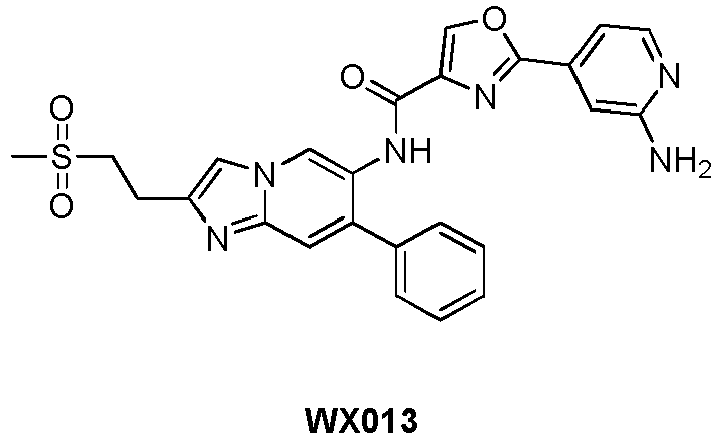
-

- Compound BB-1 (659.50 mg) and N, N-dimethylformamide (10 mL) were added in a pre-dried single-mouth bottle, then diisopropylethylamine (558.40 mg) was added, and then O-(7- azabenzotriazole-1-yl)-N, N, N, N-tetramethylurea hexafluorophosphine salt was added, and the reaction was carried out at 20°C for 0.5 hour. Compound 12-2 (638 mg) was added and the reaction was stirred at 20°C for 15.5 hours. Ethyl acetate (10 mL) and saturated brine (10 mL) were added to the reaction solution, and then separated. The organic phase was dried with anhydrous sodium sulfate, filtered, concentrated under reduced pressure, and the crude product was purified by column chromatography (eluent: dichloromethane/methanol =100:0 to 50:50), methanol (1 mL) and ethyl acetate (5 mL) were added to the product obtained after concentrating the fraction, then the mixture was ultrasonated for 5 minutes and filtered, and the filter cake was collected to obtain compound 13-1.
- 1H NMR (400MHz, DMSO-d 6) δ = 10.14 (s, 1H), 9.75 (s, 1H), 9.05 (s, 1H), 8.91 (s, 1H), 8.45 (d, J= 5.2 Hz, 1H), 8.41 (s, 1H), 7.96 (s, 1H), 7.60 - 7.40 (m, 7H), 3.82 (s, 2H), 3.32 - 3.16 (m, 2H), 1.50(s, 9H), 1.07-1.04 (m, 3H).
- LCMS (ESI) m/z:583.4 [M+ H]+
- Compound 13-1 (460 mg) and anhydrous tetrahydrofuran (10 mL) were added to a pre-dried single-mouth bottle, and lithium aluminum tetrahydro (37.46 mg) was added under ice bath at 0°C, and the reaction solution was stirred at 0°C for 0.5 hour. Water (2.0 mL) was slowly added into the reaction solution to quench the reaction, then ethyl acetate (5.0 mL) was added after quenching, and the filter cake after filtration was rinsed with mixed solvent of dichloromethane/methanol (1:1, 10.0 mL); the filtrate was washed with saturated brine (5.0 mL) and separated, and the obtained organic phase was mixed with the previous mixed solvent, dried with anhydrous sodium sulfate and filtered, and the filtrate was concentrated under reduced pressure to obtain a crude product, which was purified by column chromatography (eluent: dichloromethane/methanol = 100:0 to 95:5) to obtain compound 13- 2.
- 1H NMR (400MHz, DMSO-d 6) δ = 10.16 (s, 1H), 9.74 (s, 1H), 8.99 (s, 1H), 8.91 (s, 1H), 8.47 - 8.43 (m, 1H), 8.41 (s, 1H), 7.84 (s, 1H), 7.59 - 7.39 (m, 7H), 4.73 - 4.67 (m, 1H), 3.79 - 3.70 (m, 2H), 2.83 - 2.90 (m, 2H), 1.51 (s, 9H)
- LCMS (ESI) m/z:541.4 [M+ H]+
- Compound 13-2 (50 mg) was added to chloroform (2.0 mL), triethylamine (46.26 mg) was added, the temperature was lowered to 0°C and then the mixture was stirred for 10 minutes, then a solution (1.0 mL) of methanesulfonyl chloride (63.58 mg) in chloroform was slowly added, and the temperature was raised to 20°C and the reaction was carried out for 13 hours and 50 minutes. Saturated aqueous ammonium chloride solution (5.0 mL) was added to the reaction solution, and the mixture was extracted and separated, the organic phase was washed with 5 M citric acid aqueous solution (5.0 mL), separated, washed with water (5.0 mL), separated, the organic phase was collected, dried with anhydrous sodium sulfate, and filtered, and the filtrate was concentrated under reduced pressure to dryness to obtain compound 13-3.
- 1H NMR (400MHz, CDCl3) δ =9.85 (s, 1H), 9. 29 (s, 1H), 8.44 (s, 1H), 8.40-8.35 (m, 2H), 7.83 - 7.69 (m, 3H), 7.65 (s, 1H), 7.57-7.52 (m, 2H), 7.36-7.30 (m, 2H),4.88-4.73 (m, 2H), 3.53-3.44 (m, 2H), 3.14 (s, 3H), 1.62 (S, 9H).
- LCMS (ESI) m/z:619.4 [M+ H]+
- Compound 13-3 (35 mg), potassium iodide (28.17 mg) and sodium methyl sulfinate (16.18 mg) were added into a pre-dried reaction flask, then N,N- dimethylformamide (2.0 mL) was added and the mixture was stirred at 80°C for 16 hours under oil bath. Ethyl acetate (10 mL) and saturated brine (10 mL) were added to the reaction solution, after liquid separation, the aqueous phase was extracted with a mixed solution (5.0 mL∗3) of dichloromethane/methanol (10:1), after liquid separation, the organic phases were combined, dried with anhydrous sodium sulfate, filtrated, and the solvent was concentrated under reduced pressure to dryness. The residue was purified by column chromatography (eluent: dichloromethane/methanol = 100:0 to 95:5) to obtain compound 13- 4.
- 1H NMR (400MHz, DMSO-d 6) δ = 10.15 (s, 1H), 9.74 (s, 1H), 9.05 (s, 1H), 8.91 (s, 1H), 8.45 (d, J = 4.8 Hz, 1H), 8.41 (s, 1H), 7.93 (s, 1H), 7.60 - 7.40 (m, 7H), 3.54 (m, 2H), 3.21 - 3.13 (m, 2H), 3.03 (s, 3H), 1.52 (s, 9H)
- LCMS (ESI) m/z:603.4 [M+ H]+
- Compound 13-4 (20 mg) was added into a pre-dried single-mouth bottle, hydrochloric acid/methanol (4 M, 16.67 mL) was added, and the solvent was distilled under reduced pressure at 40°C to dryness, and the above operations were repeated to obtain the hydrochloride of compound WX013.
- 1H NMR (400MHz, DMSO-d 6) δ = 9.96 (s, 1H), 9.37-9.28 (m, 1H), 9.02 (s, 1H), 8.24-8.18 (m, 1H), 8.13 (d, J= 6.4 Hz, 2H), 7.90-7.81 (m, 1H), 7.65-7.50 (m, 6H), 7.34-7.24 (m, 1H), 7.14-7.06 (m, 1H), 3.65-3.56 (m, 2H), 3.35-3.28 (m, 2H), 3.08 (s, 3H).
- LCMS (ESI) m/z:503.3 [M+ H]+
-

-

- Compound 11-5 (40 mg), dimethylamine aqueous solution (14.41 mg, purity: 40%) were added to 1,4- dioxane (5 mL), then potassium iodide (21.22 mg) and triethylamine (19.41 mg) were added, and the reaction solution was stirred at 80°C for 5 hours. After the reaction solution was filtered, the filtrate was collected and concentrated directly under reduced pressure to obtain compound 14-1.
LCMS (ESI) m/z: 575.1 [M+H]+ - Dichloromethane (10 mL) and trifluoroacetic acid (79.36 mg) were added to compound 14-1 (40 mg), and the obtained mixture was stirred at 40°C for 1 hour. After concentrated under reduce pressure, the crude product was separated and purified by preparative HPLC (column: Welch Xtimate C18 (100∗40 mm∗3 µm); mobile phase: [aqueous solution containing trifluoroacetic acid (0.075%))-acetonitrile]; gradient: acetonitrile %: 5%-36%, 8min) to obtain trifluoroacetate of compound WX014.
LCMS (ESI) m/z: 475.4[M+H]+ -

-

- Compound 12-5 (25 mg), dimethylamine aqueous solution (27.22 mg, purity: 40%) were added to dioxane (2.0 mL), then potassium iodide (24.06 mg) was added, and the reaction was carried out at 90°C for 12 hours. Then the reaction solution was poured into water (10 mL), extracted with ethyl acetate (20 mL∗3), the organic phases were combined, dried with anhydrous sodium sulfate, filtered, concentrated under reduced pressure, and the obtained crude product was directly separated and purifiedby preparative HPLC (column: Waters Xbridge BEH C18 (100∗30
mm ∗10 µm); mobile phase: [aqueous solution containing ammonium bicarbonate (10 mM) -acetonitrile]; gradient: acetonitrile %: 10%-40%, 10min) to obtain compound WX015. - 1H NMR (400MHz, DMSO-d 6) δ = 9.71 (s, 1H), 8.99 (s, 1H), 8.91 (s, 1H), 8.67 (s, 1H), 7.86 (s, 1H), 7.72 (s, 1H),7.65 (s, 1H), 7.56-7.46 (m, 5H), 2.91-2.87 (m, 3H), 2.75-2.74 (m, 3H), 2.67 (s, 1H), 2.59 (s, 4H), 2.30 (s, 3H).
- LCMS (ESI) m/z:467.3 [M+ H]+
-
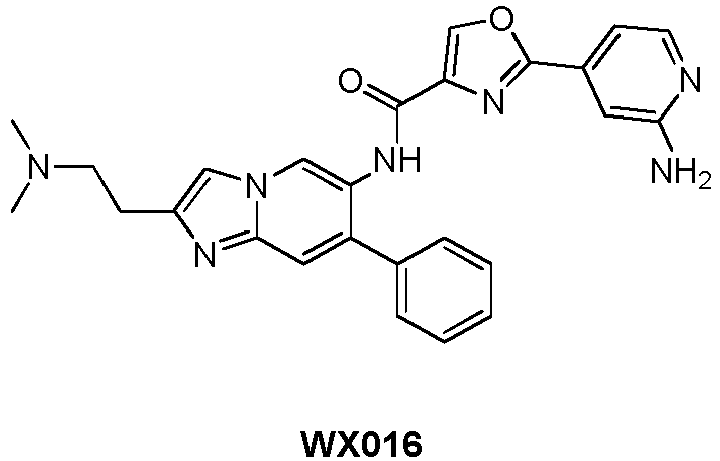
-

- Compound 13-3 (50 mg) and 1,4- dioxane (10 mL) were added into a pre-dried microwave tube, and then potassium iodide (33.54 mg), triethylamine (18.18 mg) and dimethylamine aqueous solution (178.00 mg, purity: 40%) were added, then heated to 80°C and stirred for 2 hours, then aqueous solution of dimethylamine (267.00 mg, purity: 40%) was added, and the reaction was stirred at 80°C for 2 hours. Ethyl acetate (10 mL), saturated brine (10 mL) and water (10 mL) were added to the reaction solution, and the solution was separated. The mixed solution of dichloromethane/methanol (10:1, 10 mL) was added to the aqueous phase for extraction and separation, and the organic phases were combined, dried with anhydrous sodium sulfate, filtered and concentrated under reduced pressure to obtain compound 16-1.
LCMS (ESI) m/z: 568.4[M+H]+ - Compound 16-1 (60.00 mg) was added to a single-mouth bottle, then hydrochloric acid/methanol (4 M, 83.3 mL) was added to the bottle, and the solvent was distilled under reduced pressure at 45°C to dryness, and the operation was repeated several times to obtain a crude product, which was separated and purified by preparative HPLC (column: Phenomenex Luna C18 (100∗30mm∗5µm); mobile phase: [aqueous solution containing hydrochloric acid (0.04%)-acetonitrile]; gradient: acetonitrile %: 10%-40%, 10min) to obtain the hydrochloride of compound WX016.
- LCMS (ESI) m/z: 468.3[M+H]+
- 1H NMR (400 MHz, D2O) δ = 9.01 (s, 1H), 8.51 (s, 1H), 8.05 (s, 1H), 7.94-7.85 (m, 2H), 7.57-7.44 (m, 6H), 7.34-7.29 (m, 1H), 3.90 (s, 1H), 3.65-3.57 (m, 2H), 3.46-3.37 (m, 2H), 2.97 (s, 6H).
-

-

- Compound 9-1 (0.5 g) was dissolved in 1,4- dioxane (10 mL), then compound 17-1 (630.88 mg) and sodium bicarbonate (585.55 mg) were added, and the reaction was carried out at 70°C for 16 hours. The reaction solution was concentrated under reduced pressure, then poured into water (50 mL) and ethyl acetate (50 mL), after liquid separation, the organic phase was dried with anhydrous sodium sulfate, and filtered and concentrated to obtain the crude compound. The residue was purified by column chromatography (eluent: petroleum ether/ethyl acetate=10:1 to 1:1) to obtain compound 17- 2.
- Compound 17-2 (0.13 g) was dissolved in ethanol (3 mL) and acetic acid (1 mL), then iron powder (146.51 mg) was added, and the reaction was carried out at 40°C for 2 hours. The reaction solution was concentrated under reduced pressure, then poured into water (20 mL) and ethyl acetate (20 mL), filtered and separated, and the organic phase was dried with anhydrous sodium sulfate, filtered and concentrated to obtain compound 17-3.
LCMS (ESI) m/z: 268.3[M+H]+ - Compound 17-3 (0.12 g) was dissolved in N,N- dimethylformamide (1 mL), and then O-(7-azabenzotriazole -1-YL)-N,N,N,N- tetramethylurea hexafluorophosphine salt (256.02 mg) and compound BB-1 (274.08 mg), diisopropylethylamine (174.04 mg) were added, and the reaction was carried out at 25°C for 16 hours. Ethyl acetate (20 mL) and water (20 mL) were added to the reaction solution, after filtration, the filter cake was concentrated under reduced pressure to obtain crude compound 17-4.
LCMS (ESI) m/z: 842.4[M+H]+ - Compound 17-4 (0.08 g) was dissolved in tetrahydrofuran (1 mL), water (0.5 mL) and methanol (1 mL), then lithium hydroxide monohydrate (7.98 mg) was added, and the reaction was carried out at 25°C for 48 hours. The pH value of the reaction solution was adjusted to 7 with 1 M hydrochloric acid, and then the reaction solution was concentrated under reduced pressure to dryness to obtain compound 17-5.
LCMS (ESI) m/z: 555.3[M+H]+ - Compound 17-5 (0.03 g) was dissolved in dichloromethane (1 mL) and trifluoroacetic acid (0.5 mL), and the reaction was carried out at 25°C for 1 hour. The reaction solution was concentrated under reduced pressure to obtain the crude compound. The obtained crude product was separated and purified by preparative HPLC (column: Waters Xbridge BEH C18 (100∗30
mm ∗10 µm); mobile phase: [water (ammonium bicarbonate)-acetonitrile]; gradient: acetonitrile %: 15%-45%, 8min) to obtain compound WX017. - LCMS (ESI) m/z: 455.3[M+H]+
- 1H NMR (400 MHz, D2O) δ = 8.88 (s, 1H), 8.34 (s, 1H), 7.82 (s, 1H), 7.71-7.68 (m, 2H), 7.36-7.31 (m, 6H), 7.11-7.10 (m, 1H), 1.53 (s, 6H).
-

-

- Compound 18-1 (2 g) and phenylboronic acid (1.36 g) were dissolved in 1,4- dioxane (20 mL) and water (10 mL), then sodium carbonate (5.92 g) and triphenylphosphine palladium (645.54 mg) were added, and the reaction was carried out at 100°C for 16 hours. The reaction solution was poured into water (50 mL), then extracted with ethyl acetate (50 mL∗3), the organic phase was dried with anhydrous sodium sulfate, filtered and concentrated to obtain the crude compound. The residue was purified by column chromatography (eluent: petroleum ether/ethyl acetate=10:1 to 3:1) to obtain compound 18- 2.
LCMS (ESI) m/z: 221.2[M+H]+ - Under the protection of nitrogen, wet palladium carbon (0.5 g, 10% purity) was dissolved in methanol (10 mL), then compound 18-2 (1.1 g) and sodium hydroxide aqueous solution (996.95 mg, 20% purity) were added, and the reaction solution was reacted at 25°C under the condition of hydrogen (15 psi) for 1 hour. The reaction solution was filtered, and the filtrate was concentrated under reduced pressure to obtain a crude compound. The residue was purified by column chromatography (eluent: petroleum ether/ethyl acetate=10:1 to 3:1) to obtain compound 18-3.
- Compound 18-3 (0.3 g) and compound 17-1 (437.47 mg), sodium bicarbonate (406.02 mg) were dissolved in 1,4- dioxane (5 mL), and the reaction was carried out at 80°C for 16 hours. The reaction solution was concentrated under reduced pressure, then water (20 mL) was added and the mixture was extracted with ethyl acetate (20 mL), the organic phase was dried with anhydrous sodium sulfate, filtered, and concentrated to obtain the crude compound. The residue was purified by column chromatography (eluent: petroleum ether/ethyl acetate=10:1 to 1:1) to obtain compound 18- 4.
- LCMS (ESI) m/z: 269.2[M+H]+
- 1H NMR (400 MHz, DMSO-d 6) δ = 8.25 (s, 1H), 7.81-7.79 (m, 2H), 7.59 (s, 1H), 7.52-7.48 (m, 3H), 4.98 (s, 1H), 4.67 (s, 2H), 1.48 (s, 6H).
- Compound 18-4 (0.24 g) was dissolved in N,N- dimethylformamide (3 mL), and then O-(7-azabenzotriazole -1-YL)-N,N,N,N- tetramethylurea hexafluorophosphine salt (510.16 mg), compound BB-2 (182.64 mg) and diisopropylethylamine (346.81 mg) were added, the reaction was carried out at 25°C for 16 hours. Ethyl acetate (5 mL) and water (5 mL) were added to the reaction solution, after filtration, the filter cake was concentrated under reduced pressure to obtain compound WX018.
- LCMS (ESI) m/z: 455.3[M+H]+
- 1H NMR (400 MHz, DMSO-d 6) δ = 10.24 (s, 1H), 9.28 (s, 1H), 8.96 (s, 1H), 8.69-8.68 (m, 1H), 7.82-7.79 (m, 4H), 7.73-7.71 (m, 1H), 7.50-7.49 (m, 3H), 5.21 (s, 1H), 2.74 (s, 3H), 1.53 (s, 6H).
-

-

- Compound 19-1 (10 g) was dissolved in water (200 mL), then hydrazine sulfate (7.47 g) was added and the reaction was carried out at 100°C for 16 hours. The reaction solution was directly filtered, the filter cake was rinsed with water (200 mL), and the filter cake was concentrated under reduced pressure to obtain compound 19-2.
- 1H NMR (400 MHz, CD3OD) δ = 8.62 (s, 2H), 8.25-8.23 (m, 5H), 7.99 (s, 1H).
- Compound 19-2 (3 g) was dissolved in phosphorus oxychloride (24.44 g) and the reaction was carried out at 80°C for 16 hours. The reaction solution was poured into water (300 mL), stirred for 1 hour and then filtered, and the filter cake was stirred with water (100 mL) for 1 hour and then filtered to obtain compound 19-3.
- 1H NMR (400 MHz, DMSO-d 6) δ = 8.20 (s, 1H), 7.64-7.62 (m, 2H), 7.57-7.55 (m, 3H).
- Compound 19-3 (2 g) was dissolved in dimethyl sulfoxide (1 mL), then p-methoxybenzylamine (6.09 g) was added, and the reaction was carried out at 120°C for 16 hours. The reaction solution was poured into saturated ammonium chloride (50 mL), then extracted with ethyl acetate (50 mL∗3), the organic phase was washed with saturated brine (50 mL∗3), dried with anhydrous sodium sulfate, filtered and concentrated to obtain the crude compound. The residue was purified by column chromatography (eluent: petroleum ether/ ethyl acetate=10:1 to 3:1) to obtain compound 19-4.
LCMS (ESI) m/z: 326.2[M+H]+ - Compound 19-4 (2 g) was dissolved in trifluoroacetic acid (25 mL) and the reaction was carried out at 70°C for 2 hours. The reaction solution was concentrated under reduced pressure, then poured into sodium bicarbonate solution (50 mL), then extracted with ethyl acetate (50 mL∗3), and the organic phase was dried with anhydrous sodium sulfate, filtered and concentrated to obtain the crude compound. The residue was purified by column chromatography (eluent: petroleum ether/ethyl acetate = 3:1 to 1:1) to obtain compound 19-5.
LCMS (ESI) m/z: 206.1 [M+H]+ - Compound 19-5 (0.1 g), compound 17-1 (132.04 mg) and sodium bicarbonate (122.55 mg) were dissolved in 1,4- dioxane (2 mL), and the reaction was carried out at 70°C for 16 hours. The reaction solution was poured into water (50 mL), then extracted with ethyl acetate (50 mL∗3), the organic phase was dried with anhydrous sodium sulfate, filtered and concentrated to obtain the crude compound. The residue was purified by column chromatography (eluent: petroleum ether/ethyl acetate=10:1 to 1:1) to obtain compound 19- 6.
- Compound 19-6 (0.1 g) and compound BB-7 (70.62 mg) were dissolved in 1,4- dioxane (0.5 mL), and then cesium carbonate (339.70 mg), 4,5- bis (diphenyl phosphino) -9,9- dimethyl xanthene (20.11 mg) and tris(dibenzylideneacetone)dipalladium were added. The reaction was carried out at 120°C for 1 hour under
microwave 0 psi. The reaction solution was concentrated under reduced pressure to obtain a crude compound. The obtained crude product was separated and purified by preparative HPLC (column: phenomenex C18(80 ∗ 40mm ∗ 3m); mobile phase: [water (ammonium bicarbonate)-acetonitrile]; gradient: acetonitrile %: 35%-65%, 8min) to obtain compound WX019. - LCMS (ESI) m/z: 455.3[M+H]+
- 1H NMR (400 MHz, D2O) δ = 8.30-8.32 (m, 2H), 7.91 (s, 1H), 7.81-7.76 (m, 3H), 7.25-7.14 (m, 5H), 2.41 (s, 3H), 1.29(, 6H).
-

-

- Compound 1-1 (5.0 g) was dissolved in 1,4- dioxane (100.0 mL), then ethyl bromopyruvate (8.43 g) and sodium bicarbonate (4.84 g) were added, and the reaction solution was stirred at 70°C for 16 hours. The reaction solution was directly spin-dried under reduced pressure, and the crude product was homogenized by adding water (150.0 mL), and after filtration, the compound 20-1 was obtained.
LCMS (ESI) m/z: 270.1[M+H]+ - 20-1 (5.0 g) was added to the reaction flask and dissolved in ethyl acetate (75.0 mL), and then tin chloride dihydrate (25.11 g) was adde, the reaction solution was carried out at 50°C for 16 hours. 25% Ammonia water was added to the reaction solution to adjust the pH to 7, after filtration, the filtrate was concentrated under reduced pressure and purified it by column chromatography (eluent: petroleum ether: ethyl acetate=100:0 to 91:9) to obtain compound 20- 2.
LCMS (ESI) m/z: 240.2[M+H]+ - 20-2 (0.5 g), compound BB-2 (511.18 mg), N,N- diisopropylethylamine (674.09 mg), O-(7-azabenzotriazole-1-yl)-N,N,N,N- tetramethylurea hexafluorophosphine salt (1.19g) and N, N-dimethylformamide (12 mL) were added into the reaction flask, the reaction was carried out at 25°C for 16 hours after the reaction system was replaced with nitrogen. Water (3 mL) and ethyl acetate (3 mL) were added to the reaction solution, stirred for 10 minutes, filtered and the filter cake was collected. The filter cake was homogenized with 0.1 M sodium hydroxide solution (10 mL) for 1 hour, filtered, and the filter cake was collected to obtain compound 20-3.
LCMS (ESI) m/z: 426.2[M+H]+ - Compound 20-3 (0.3 g), 4- pyridylboronic acid (129.90 mg), sodium carbonate (2 M, 880.64 µL), bis (triphenylphosphine) palladium dichloride (24.72 mg) and N,N- dimethylformamide (10 mL) were added into a microwave tube, and after the reaction system was replaced with nitrogen, the reaction was carried out at 110°C and 1 bar under microwave. The reaction solution was filtered and the filter cake was collected to obtain compound 20-4.
LCMS (ESI) m/z: 469.2[M+H]+ - 3 M tetrahydrofuran solution of methyl magnesium chloride (2.42 mL) was added to anhydrous tetrahydrofuran (5 mL) at 0°C, then the anhydrous tetrahydrofuran solution (2 mL) of compound 20-4 (170.00 mg) was slowly added dropwise, and the temperature was raised to 25°C, and the reaction was carried out for 0.5 hour. The reaction solution was added into water (20 mL), then ethyl acetate (20 mL ∗3) was added for extraction and separation, the organic phases were combined, dried with anhydrous sodium sulfate, filtered, and the filtrate was concentrated under reduced pressure. The obtained crude product was separated and purified by preparative HPLC (column: Waters Xbridge BEH C18 (100∗30
mm ∗10 µm); mobile phase: [water (ammonium bicarbonate)-acetonitrile]; gradient: acetonitrile %: 20%-40%, 8min) to obtain compound WX020. - LCMS (ESI) m/z: 455.3 [M+H]+
- 1H NMR (400MHz, DMSO-d 6) δ = 10.08 (s, 1H), 8.89 (s, 1H), 8.45 (m, 1H), 8.69-8.68 (m, 1H), 8.63-8.68 (m, 2H), 7.88 (s, 1H), 7.81(s, 1H), 7.73-7.72 (m, 1H), 7.64 (s, 1H), 7.56-7.55 (m, 2H), 5.13 (s, 1H), 2.60 (s, 3H), 1.52 (s, 6H).
-

-

- Compound 20-3 (0.1 g), 2-(tributylstannyl) pyridine (129.68 mg), chlorine (2-dicyclohexylphosphino-2,4,6-triisopropyl-1,1-biphenyl)[2-(2-amino-1,1- biphenyl)]palladium were dissolved in 1,4-dioxane, and the reaction solution was stirred at 100°C for 16 hours. The reaction solution was directly filtered, the filter cake was washed with water (10 mL), and the filter cake was collected to obtain compound 21-1.
LCMS (ESI) m/z: 469.2[M+H]+ - Tetrahydrofuran (10 mL) was added to the reaction flask, and the reaction system was replaced with nitrogen for three times, the temperature was lowered to 0°C, 3 M tetrahydrofuran solution of methylmagnesium chloride (7.47 mL) was added, and then the mixture of compound 21-1 (0.35 g) and tetrahydrofuran (5 mL) was added, and the temperature was raised to 25°C, and the reaction was carried out for 1 hour. The reaction solution was slowly poured into water (10 mL), extracted and separated with ethyl acetate (10 mL∗3), and the organic phases were spin-dried under reduced pressure, then separated and purified by preparative HPLC (column: phenomenex Luna(80 ∗ 30mm ∗ 3m); mobile phase: [water (trifluoroacetic acid)-acetonitrile]; gradient: acetonitrile %: 15%-37%, 8 min) to obtain trifluoroacetate of compound WX021.
- LCMS (ESI) m/z: 455.3[M+H]+
- 1H NMR (400MHz, DMSO-d 6) δ = 10.00 (s, 1H), 9.12 (s, 1H), 9.08-9.03 (m, 1H), 8.79-8.75 (m, 1H), 8.43 (s, 1H), 8.25 (s, 1H) 8.24-8.21 (m, 2H), 7.89 (s, 1H), 7.86-7.83 (m, 1H), 7.79-7.75 (m, 1H), 2.66 (s, 3H), 1.61 (s, 6H).
-

-

- Compound 9-1 (5 g) was added to anhydrous dichloromethane (100 mL), and after cooled to 0°C, triethylamine (3.53 g) and trifluoroacetic anhydride (6.93 g) were slowly added and the reaction mixture was stirred at 0°C for 1 hour. The reaction solution was added into saturated ammonium chloride aqueous solution (100 mL), extracted and separated with dichloromethane (50 mL∗2), the organic phases were combined, dried with anhydrous sodium sulfate, and filtered, and the filtrate was concentrated under reduced pressure to obtain compound 22-1.
LCMS (ESI) m/z: 312.0[M+H]+ - Wet palladium carbon (2 g, 10% purity) was added into a dry hydrogenation bottle under argon protection, anhydrous methanol (100 mL), compound 22-1 (7 g) were added and reacted at 30°C for 2h under hydrogen (50psi). After the reaction, the reaction solution was filtered with diatomite, and the filtrate was concentrated under reduced pressure and purified by column chromatography (eluent: petroleum ether: ethyl acetate=100:0 to 75:25) to obtain compound 22-2.
- LCMS (ESI) m/z: 282.0[M+H]+
- 1H NMR (400MHz, CD3OD) δ = 7.91 (s, 1H), 7.63 (s, 1H), 7.48-7.41 (m, 4H), 7.40 (s, 1H).
- Compound 22-2 (0.6 g) and compound BB-3 (563.70 mg) were added to N,N- dimethylformamide (3 mL), then O-(7- azabenzotriazole -1- yl) -N,N,N,N- tetramethylurea hexafluorophosphate (1.22 g) and N,N-diisopropylethylamine (827.19 mg) were added, and the mixture was stirred at 25 °C for 12 hours. Water (10 mL) was added to the reaction solution, and the mixture was stirred for 2 hours and filtered, and the filter cake was concentrated under reduced pressure to obtain compound 22-3.
- LCMS (ESI) m/z: 484.0[M+H]+
- 1H NMR (400MHz, DMSO-d 6) δ = 12.25-12.15 (m, 1H), 9.93 (s, 1H), 8.80 (s, 1H), 8.40 (s, 1H), 8.39 (s, 1H), 8.00 (s, 1H), 7.56-7.47 (m, 6H), 7.26 (s, 1H), 3.93 (s, 3H).
- Compound 22-3 (0.32 g) was added to anhydrous methanol (5 mL), and anhydrous potassium carbonate (228.73 mg) was added and the reaction was carried out at 60°C for 2 hours. Water (4 mL) was added to the reaction solution, and the mixture was stirred for 0.5 hours and filtered, and the filter cake was concentrated under reduced pressure to obtain compound 22-4.
- Compound 22-4 (0.22 g) and compound 17-1 (185.05 mg) were added to anhydrous dioxane (4 mL), and sodium bicarbonate (119.27 mg) was added and the reaction was carried out at 75°C for 12 hours. The reaction solution was slowly poured into water (30 mL), extracted and separated with ethyl acetate (30 mL∗3), the organic phases were combined, dried with anhydrous sodium sulfate and filtered, and the organic phases were spin-dried under reduced pressure and separated and purified by preparative HPLC (column: phenomenex C18(80 ∗ 40mm ∗ 3m); mobile phase: [water (ammonium bicarbonate)-acetonitrile]; gradient: acetonitrile %: 25%-45%, 8min) to obtain compound WX022.
- LCMS (ESI) m/z: 470.2[M+H]+
- 1H NMR (400MHz, CD3OD) δ = 9.23 (s, 1H), 8.56 (s, 1H), 8.28-8.27 (m, 1H), 7.80 (s, 1H), 7.57-7.55 (m, 5H), 7.45 (s, 1H), 7.40-7.38 (m, 1H), 7.23 (s, 1H), 3.96 (s, 3H), 1.62 (s, 6H).
-

-

- Compound 22-2 (0.3 g) and compound BB-8 (408.74 mg) were added to N,N- dimethylformamide (6 mL), then O-(7- azabenzotriazole -1- yl) -N,N,N,N- tetramethylurea hexafluorophosphate (608.41 mg) and N,N-diisopropylethylamine (344.67 mg) were added, and the mixture was stirred at 40 °C for 16 hours. Water (10 mL) was added to the reaction solution, and the mixture was stirred for 1 hour, then filtered, the filter cake was concentrated under reduced pressure, the crude product was poured into 0.1M aqueous solution of sodium hydroxide (10 mL), stirred for 2 hours, and filtered, the filter cake was concentrated under reduced pressure to obtain compound 23-1.
LCMS (ESI) m/z: 583.2[M+H]+ - Compound 23-1 (0.46 g) was added to anhydrous methanol (10 mL), and then potassium carbonate (272.84 mg) was added and the reaction was carried out at 60°C for 16 hours. Water (10 mL) was added to the reaction solution, and the mixture was stirred for 1 hour and filtered, and the filter cake was concentrated under reduced pressure to obtain compound 23-2.
LCMS (ESI) m/z: 487.3 [M+H]+ - Compound 23-2 (0.32 g) and compound 17-1 (214.32 mg) were added to anhydrous dioxane (6 mL), and sodium bicarbonate (138.13 mg) was added, the reaction solution was reacted at 75°C for 5 hours. Water (6 mL) was added to the reaction solution, stirred for 1 hour and the mixture was filtered, and the filter cake was concentrated under reduced pressure to remove water to obtain compound 23-3.
LCMS (ESI) m/z: 569.3[M+H]+ - Compound 23-3 (0.3 g) were added to the mixture of anhydrous dichloromethane (36 mL) and trifluoroacetic acid (12 mL), and the reaction solution was reacted at 25°C for 2 hours. After the reaction solution was concentrated under reduced pressure, the obtained crude product was separated and purified by preparative HPLC (column: Waters Xbridge BEH C18 (100∗30
mm ∗10 µm); mobile phase: [Water (ammonium bicarbonate)-acetonitrile]; gradient: acetonitrile %: 20%-50%, 10min) to obtain compound WX023. - LCMS (ESI) m/z: 469.3 [M+H]+
- 1H NMR (400MHz, DMSO-d 6) δ =9.69 (s, 1H), 9.05 (s, 1H), 8.85 (s, 1H), 8.17 (s, 1H), 7.90 (s, 1H), 7.57-7.45 (m, 6H), 6.94-6.93 (m, 3H), 5.18 (s, 1H), 2.83 (s, 3H), 1.52 (s, 6H).
-

-

- Compound 9-1 (15 g) and methyl bromoacetate (106.62 g) were placed in a vial, and the reaction was stirred at 40°C for 16 hours. Methyl tert-butyl ether (200.0 mL) was added to the reaction solution, then filtered, and the filter cake was concentrated under reduced pressure to obtain hydrobromate of compound 24-1.
- 1H NMR (400MHz, DMSO-d 6) δ = 9.36 (s, 1H), 7.60-7.40 (m, 5H), 7.16 (s, 1H), 5.35 (s, 2H).
- Hydrobromate of compound 24-1 (21 g) was dissolved in acetonitrile (20 mL), and then a solution of phosphorus oxybromide (35.82 g) in acetonitrile (20 mL) was added and the reaction was carried out at 80°C for 144 hours. The reaction solution was poured into saturated sodium bicarbonate solution (200.0 mL), then extracted with ethyl acetate (50.0 mL∗3), the organic phases were combined, dried with anhydrous sodium sulfate, filtered by suction and spin-dried under reduced pressure, and then purified by column chromatography (eluent: petroleum ether: ethyl acetate =91:9 to 0:100) to obtain compound 24-2.
- Compound 24-2 (0.6 g) and compound BB-12 (1.51 g) dissolved in 1,4- dioxane (20 mL) were added to the reaction flask, and then [1,1- bis (di-tert-butylphosphine) ferrocene] palladium (II) dichloride (61.64 mg) and potassium carbonate (2M, 1.89 mL) were added, and the reaction was carried out at 100°C for 2.5 hours. Water (50.0 mL) was added to the reaction solution, and the mixture was extracted with dichloromethane (50.0 mL), the organic phases were combined, concentrated to obtain a crude product, and the crude product was purified by silica gel column chromatography (eluent: dichloromethane: methanol =99:1 to 91:9) to obtain compound 24-3.
LCMS (ESI) m/z: 335.2 [M+H]+ - Under the protection of nitrogen, compound wet palladium carbon (0.1 g, 10% purity) was put in a hydrogenation bottle, then methanol (10 mL) was added, and then compound 24-3 (0.06 g) was added, and the reaction was carried out at 30°Cfor 16 hours under hydrogen with the pressure of 50 psi. The reaction solution was filtered with diatomite, and the filtrate was concentrated under reduced pressure to obtain compound 24-4.
LCMS (ESI) m/z: 307.2 [M+H]+ - Compound 24-4 (0.1 g) was dissolved in N,N- dimethylformamide (2 mL), then O-(7-azabenzotriazole -1- yl) -N,N,N,N- tetramethylurea hexafluorophosphate (186.17 mg) and N,N-diisopropylethylamine (126.56 mg), compound BB-2 (79.98 mg) were added, and the mixture was stirred at 40 °C for 16 hours. Water (50.0 mL) was added to the reaction solution and the mixture was filtered, and the filter cake was concentrated under reduced pressure to obtain crude compound. The obtained crude product was purified by machine separation (column: Waters Xbridge Prep OBD C18 (150∗40 mm∗10µm); flow phase: [water (ammonium bicarbonate)-acetonitrile]; gradient: acetonitrile %: 25%-45%, 8min) to obtain compound WX024.
- LCMS (ESI) m/z: 493.2 [M+H]+
- 1H NMR (400MHz, D2O-d 2) δ = 8.82 (s, 1H), 8.34-8.32 (m, 1H), 8.25 (s, 1H), 7.90-7.85 (m, 2H), 7.64-7.62 (m, 1H), 7.48 (s, 1H), 7.20 (s, 5H), 3.10-3.09 (m, 1H), 3.08-3.07 (m, 2H), 2.58-2.52 (m, 1H), 2.45 (s, 3H), 2.32-2.25 (m, 1H), 1.97-1.95 (m, 1H), 1.69-1.67 (m, 1H).
-

-

- Compound 9-1 (78 g), dichloromethane (390 mL), 4- dimethylaminopyridine (6.64 g), Boc anhydride (237.30 g) were added into a reaction flask, and then the mixture was reacted at 20°C for 12 hours. The reaction solution was added into saturated ammonium chloride (50 mL), separated, the organic phase was washed once with saturated ammonium chloride aqueous solution (50 mL), and the organic phase was concentrated to obtain the crude product. The crude product was heated to 80°C with methanol (1200 mL) and dissolved. The reaction solution was moved to
room temperature 20°C, and water (600 mL) was added, and the mixture was stirred for 30min, filtered and the filter cake was concentrated to obtain the product. - 1H NMR (400 MHz, CDCl3) δ = 1.55 (s, 18 H), 7.35 (dd, J=6.40 Hz, J=3.20 Hz, 2 H), 7.50-7.44 (m, 3 H), 7.66 (s, 1 H), 8.93 (s, 1 H).
- Wet palladium carbon (7.4 g, 10% purity) was added into a hydrogenation bottle, wetted with methanol (10 mL), then a methanol (730 mL) solution of compound 25-1 (74 g) was added, and then the reaction was carried out at 30°C for 12 hours under hydrogen with pressure of 50 psi. The solution was filtered through diatomite, and the filter cake was rinsed with dichloromethane: methanol = 10: 1(3000 mL). The filtrate was concentrated to obtain compound 25-2.
- 1H NMR (400MHz, CD3OD) δ = 1.43 (s, 18 H), 6.96 (s, 1 H), 7.55-7.43 (m, 5 H), 7.94 (s, 1 H).
- Compound 25-2 (128 g), methanol (1280 mL), water (300 mL) and sodium hydroxide (53.13 g) were added to the reaction flask and reacted at 40°C for 12 hours. Water (65 mL) was added to the reaction solution, and ethyl acetate (45 mL ∗2) was added for extraction, the organic phases were combined, and concentrated to obtain compound 25-3.
- 1H NMR (400 MHz, CDCl3) δ = 1.52 (s, 9 H), 3.61 (s, 2 H), 7.51-7.40 (m, 6 H), 7.76 (s, 1 H), 7.84 (s, 1 H).
- Compound BB-2 (40.00 g), compound 25-3 (46.58 g), N,N- dimethylformamide (120 mL), N,N-diisopropylethylamine (63.29 g) and O-(7- azabenzotriazole-1-yl)-N,N,N,N-tetramethylurea hexafluorophosphate (93.11 g) were added to the reaction flask and reacted at 40°C for 12 hours. The reaction solution was filtered, and the filter cake was homogenized with 1M sodium hydroxide solution (200 mL) for 30min, filtered and the filter cake was dried for 24h at 45°C to obtain compound 25-4.
- LCMS (ESI) m/z: 472.3 [M+H]+
- 1H NMR (400MHz, DMSO-d 6) δ =9.95 (s, 1H), 9.83 (s, 1H), 8.89 (s, 1H), 8.66-8.65 (m, 1H), 8.50 (s, 1H), 7.84 (s, 1H), 7.75 (s, 1H), 7.67-7.66 (m, 1H), 7.51-7.46 (m, 5H), 2.57 (s, 3H), 1.46 (s, 9H).
- Compound 25-4 (66.5 g), trifluoroacetic acid (220 mL) and dichloromethane (660 mL) were added into a reaction flask, and then the mixture was reacted at 20°C for 12 hours and concentrated to obtain a crude product, and the pH value of the crude product was adjusted to 7 by adding 1M sodium hydroxide aqueous solution (400 mL), and dichloromethane: methanol =3:1 (500 mL∗5) was added for extraction, and the organic phases were combined and concentrated to obtain the crude product. The crude product was homogenized with 0.5 M aqueous solution of lithium hydroxide (130 mL) for 10 minutes, filtered, the filter cake was slurried with acetonitrile (100 mL), filtered, and the filter cake was concentrated to remove the dissolved residue to obtain compound 25-5.
- LCMS (ESI) m/z: 372.2[M+H]+
- 1H NMR (400MHz, DMSO-d 6) δ =9.58 (s, 1H), 8.82 (s, 1H), 8.66-8.65 (m, 1H), 8.04 (s, 1H), 7.77 (s, 1H), 7.69-7.68 (m, 1H), 7.47.39 (m, 5H), 6.47 (s, 1H), 6.06 (s, 2H), 2.57 (s, 3H).
- Compound 25-5 (1 g) 1,4- dioxane (10 mL), compound B7 (1.41 g) and sodium bicarbonate (678.58 mg) were added into a reaction flask and reacted at 75°C for 12 hours. Water (10 mL) was added to the reaction solution, solids were precipitated, filtered, and the filter cake was concentrated to obtain a crude product. The crude product was separated and purified by silica gel column chromatography (gradient eluent: dichloromethane: methanol =95:5 to 90:10) to obtain compound 25-6.
LCMS: m/z (ESI) = 482.2[M+H]+ - Compound 25-6 (0.44 g) and ethanol (6 mL) were added to the reaction flask, and then a aqueous solution (2 mL) of lithium hydroxide monohydrate (43.77 mg) was added, and the reaction was carried out at 25°C for 3 hours. 1M hydrochloric acid was added to the reaction solution to adjust the pH value to 4, and dichloromethane: methanol =8:1 (50 mL ∗3) was added for extraction, organic phases were combined, and concentrated to obtain the crude compound WX037.
- A part of crude WX037 (0.18g, 396.96mol, 1 eq) was separated and purified by preparative HPLC (column: Phenomenex Luna C18 (75∗30mm∗3µm); mobile phase: [water (formic acid)-acetonitrile]; gradient: acetonitrile %: 20%-50%, 8min) to obtain the compound WX037.
- LCMS: m/z (ESI) = 453.2[M+H]+
- 1H NMR (400MHz, DMSO-d 6) δ = 9.88 (s, 1 H), 9.43 (s, 1 H), 9.00 (s, 1 H), 8.69 (d, J=4.80 Hz, 1 H), 8.28 (s, 1 H), 7.86 (s, 1 H), 7.72 (s, 1 H), 7.66-7.57 (m, 6 H), 3.99 (s, 2 H), 2.60 (s, 3 H).
- Compound WX037 (0.2 g), ammonium chloride (117.96 mg), N,N dimethylformamide (2 mL), 1-(3- dimethylaminopropyl) -3- ethylcarbodiimide hydrochloride (126.83 mg), diisopropylethylamine (570.03 mg), 1- hydroxybenzotriazole (89.39 mg) were added to the reaction flask and reacted at 25°C for 12 hours. Then the reaction solution was added into saturated ammonium chloride aqueous solution (20 mL), then ethyl acetate (20 mL∗3) was added for extraction and liquid separation, the organic phases were combined, concentrated to obtain a crude product, which was separated and purified by preparative HPLC (column: Waters Xbridge Prep OBD C18 (150∗40 mm∗ 10µm); mobile phase: [water (ammonium bicarbonate)-acetonitrile]; gradient: acetonitrile %: 15%-50%, 8min) to obtain compound WX025.
- LCMS: m/z (ESI) = 453.2[M+H]+
- 1H NMR (400MHz, DMSO-d 6) δ = 9.73 (s, 1 H), 9.02 (s, 1 H), 8.92 (s, 1 H), 8.67 (d, J=520 Hz, 1 H), 7.91 (s, 1 H), 7.73 (s, 1 H), 7.65 (d, J=5.20 Hz, 1 H), 7.58-7.44 (m, 7 H), 6.98 (s, 1 H), 3.56 (s, 2 H), 2.59 (s, 3 H).
-

-

- Compound 9-4 (0.2 g) was dissolved in ethanol (4 mL) and water (4 mL), then lithium hydroxide monohydrate (53.86 mg) was added, and the reaction solution was stirred at 25°C for 3 hours. The reaction solution was spin-dried under reduced pressure, the ethanol phase was removed, and the remaining aqueous phase was adjusted to pH 4~5 with 1 M aqueous hydrochloric acid, stirred for 10 min and filtered directly, then the filter cake was washed with water (10 mL), collected and homogenized with acetonitrile (10 mL) for 1 h and filtered, and the filter cake was collected to obtain compound 26-1.
- 26-1 (0.14 g), ammonium chloride (34.08 mg), 1- ethyl -(3- dimethylaminopropyl) carbonyldiimide hydrochloride (91.61 mg), 1- hydroxybenzotriazole (64.58 mg), N,N-diisopropylethylamine (205.88 mg) and N, N-dimethylformamide (5mL) were added to the reaction flask, the reaction system was replaced with nitrogen three times, and the reaction solution was stirred at 40 °C for 16 h. The reaction solution was slowly added into water (20 mL), extracted and separated with ethyl acetate (20 mL∗3), and the organic phase was spin-dried under reduced pressure, then separated and purified by preparative HPLC (column: Waters Xbridge Prep OBD C18 (150∗40 mm∗10µm); mobile phase: [water (ammonium bicarbonate)-acetonitrile]; gradient: acetonitrile %: 20%-50%, 8min) to obtain compound WX026.
- LCMS (ESI) m/z: 439.1[M+H]+
- 1H NMR (400MHz, D2O-d 2) δ =9.00 (s, 1H), 8.30-8.29 (m, 1H), 8.24 (s, 2H), 7.84 (s, 1H), 7.81-7.79 (m, 1H), 7.54 (s, 1H) 7.71 (s, 5H), 2.42 (s, 3H).
-
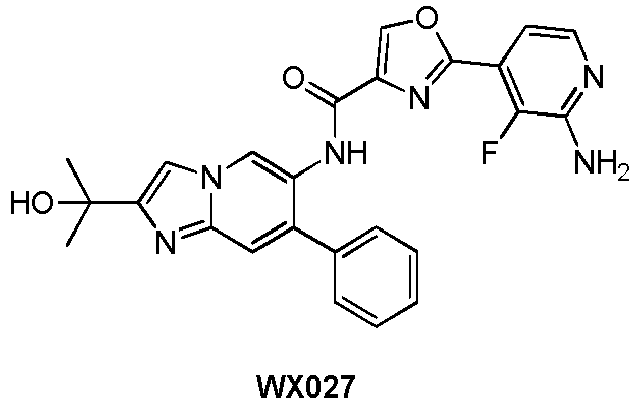
-

- Compound BB-9 (0.44 g), compound 22-2 (459.33 mg), N,N dimethylformamide (5 mL), 2-(7-azobenzotriazole)-N,N,N,N-tetramethyluronium hexafluorophosphate (776.28 mg), diisopropylethylamine (527.71 mg) were added to the reaction flask and reacted at 40 °C for 12 h. The reaction solution was added with saturated ammonium chloride solution (15 mL), stirred for 10 min, filtered, and the filter cake was concentrated to remove water to obtain the crude compound 27-1.
LCMS: m/z (ESI) = 587.2[M+H]+ - Compound 27-1 (0.7 g), methanol (15 mL), and potassium carbonate (412.40 mg) were added to the reaction flask and reacted at 60 °C for 1 h. The reaction solution was added with water (20 mL) and solids were precipitated, after filtration, and the filter cake was concentrated to remove water to obtain the crude product, and the crude product was separated and purified by silica gel column chromatography (eluent: dichloromethane: methanol = 96:4 to 95:5 to 90. 10) to give compound 27-2.
LCMS: m/z (ESI) = 491.1[M+H]+ - Compound 27-2 (260 mg), compound 17-1 (160.06 mg), 1,4 dioxane (3 mL), and sodium bicarbonate (111.42 mg) were added to the reaction flask and reacted at 75 °C for 3 h. Water (15 mL) was added to the reaction solution and after filtration, solids were obtained, and the filter cake was concentrated to remove water to obtain compound 27-3.
LCMS: m/z (ESI) = 573.3[M+H]+ - Compound 27-3 (0.18 g), dichloromethane (2 mL) and trifluoroacetic acid (0.5 mL) were added into a reaction flask and reacted at 25°C for 12 hours. The reaction solution was concentrated to obtain a crude product, which was separated and purified by preparative HPLC (column: Phenomenex C18(80 ∗ 30mm ∗ 3 um); mobile phase: [water (ammonium bicarbonate)-acetonitrile]; gradient: acetonitrile %: 15%-45%, 8min) to obtain compound WX027.
- LCMS: m/z (ESI) = 473.2[M+H]+
- 1H NMR (400MHz, DMSO-d 6) δ = 9.67 (s, 1 H), 9.04 (s, 1 H), 8.92 (s, 1 H), 7.93-7.87 (m, 2 H), 7.57-7.45 (m, 6 H), 6.96-6.92 (m, 1 H), 6.62 (s, 2 H), 5.17-5.04 (m, 1 H), 1.51 (s, 6 H).
-

-

- Compound BB-10 (0.89 g), compound 22-2 (1.02 g), N,N dimethylformamide (10 mL), 2-(7-azobenzotriazole)-N,N,N,N-tetramethyluronium hexafluorophosphate (2.08 g), and diisopropylethylamine (1.41 g) were added to the reaction flask and reacted at 40 °C for 12 h. After the reaction, water (15 mL) was added to the reaction solution, stirred for 10 min, filtered, and the filter cake was concentrated to remove water to obtain compound 28-1.
- LCMS: m/z (ESI) = 486.1[M+H]+
- 1H NMR (400MHz, DMSO-d 6) δ = 12.17 (d, J=3.60 Hz, 1 H), 9.93 (s, 1 H), 9.00 (s, 1 H), 8.81 (s, 1 H), 8.49 (d, J=4.80 Hz, 1 H), 8.00 (s, 1 H), 7.76 (t, J=5.20 Hz, 1 H), 7.59-7.48 (m, 5 H), 2.56 (d, J=3.20 Hz, 3 H).
- Compound 28-1 (1.1 g), methanol (15 mL) and potassium carbonate (626.41 mg) were added to the reaction flask and reacted at 25°C for 12 hours. Water (30 mL) was added to the reaction solution, and dichloromethane (20 mL) was added for extraction and separation. The aqueous phase was extracted and separated with dichloromethane: methanol =10:1 (30 mL ∗3), and the organic phases were combined and concentrated to obtain compound 28-2.
- LCMS: m/z (ESI) = 390.1[M+H]+
- 1H NMR (400MHz, DMSO-d 6) δ = 9.57 (s, 1 H), 8.87 (s, 1 H), 8.47 (d, J=5.20 Hz, 1 H), 8.03 (s, 1 H), 7.78 (t, J=5.20 Hz, 1 H), 7.47-7.36 (m, 5 H), 6.46 (s, 1 H), 6.06 (s, 2 H), 2.54 (d, J=3.20 Hz, 3 H).
- Compound 28-2 (0.15 g), 1,4 dioxane (2 mL), compound 17-1 (106.18 mg) and sodium bicarbonate (82.12 mg) were added to the reaction flask and reacted at 75 °C for 3 h. The reaction solution was cooled to 25 °C, added with water (15 mL) and stirred for 10 min, filtered and the filter cake was concentrated to obtain the crude product, which was added with methanol (5 mL) and stirred at 70 °C for 2 h, filtered while hot, and the filter cake was homogenized with ethanol (3 mL) at 25 °C for 1 hour and then filtered to obtain compound WX028.
- MeOH=20: m/z (ESI) = 472.2[M+H]+
- 1H NMR (400MHz, DMSO-d 6) δ = 9.71 (s, 1 H), 8.98 (d, J=10.00 Hz, 2 H), 8.49 (d, J=5.20 Hz, 1 H), 7.85 (s, 1 H), 7.74 (t, J=5.20 Hz, 1 H), 7.57-7.52 (m, 2 H), 7.51-7.42 (m, 4 H), 5.08 (s, 1 H), 2.56 (d, J=3.20 Hz, 3 H), 1.51 (s, 6 H).
-

-

- Compound 24-2 (1 g) was dissolved in ethyl acetate (5 mL), and then tin dichloride dihydrate (4.26 g) was added, and the reaction was carried out at 50°C for 16 hours. Ethyl acetate (50 mL) was added into the reaction solution, then the pH value was adjusted to 7 with 25% ammonia water, after filtration, the filtrate was concentrated under reduced pressure to obtain a crude product, and the crude product was separated and purified by silica gel column chromatography (eluent: petroleum ether: ethyl acetate =50:50 to 25:75) to obtain compound 29-1.
LCMS: m/z (ESI) = 288.1[M+H]+ - Compound 29-1 (0.7 g) was dissolved in N,N-dimethylformamide (14 mL), then 2-(7-azobenzotriazole)-N,N,N,N-tetramethyluronium hexafluorophosphate (1.39 g), diisopropylethylamine (941.93 mg) and compound BB-6 (595.24 mg) were added and the reaction solution was stirred at 40 °C for 16 h. Water (30 mL) and ethyl acetate (30 mL) were added to the reaction solution, after filtration, and the filter cake was stirred with 0.1 M aqueous sodium hydroxide (20 mL) for 0.5 h. The filter cake was concentrated under reduced pressure to remove water to obtain compound 29-2.
- 1H NMR (400 MHz, CDCl3) δ = 9.57 (s, 1H), 9.08 (s, 1H), 8.66-8.65 (m, 1H), 8.33 (s, 1H), 7.66-7.64 (m, 4H), 7.56-7.52 (m, 4H), 7.44 (s, 1H), 2.68 (s, 3H).
- Compound 29-2 (0.4 g) was dissolved in dimethyl sulfoxide (1 mL), then cuprous iodide (481.84 mg) and sodium methyl sulfite (258.28 mg) were added, and the reaction was carried out under microwave at 120°C for 1 hour. Water (50 mL) was added to the reaction solution, after filtration, ethyl acetate (20 mL) was added to the filtrate, after liquid separation, and the organic phase was concentrated under reduced pressure to obtain crude compound, and the obtained crude product was separated and purified by preparative HPLC (column: Waters Xbridge BEH C18 (100∗30
mm ∗10 µm); mobile phase: [water (ammonium bicarbonate)-acetonitrile]; acetonitrile %: 20%-50%, 8min) to obtain compound WX029. - LCMS: m/z (ESI) = 474.2[M+H]+
- 1H NMR (400MHz, D2O) δ = 9.02 (s, 1 H), 9.37 (s, 1 H), 8.30-8.28 (m, 1 H), 8.21 (s, 1 H), 7.81-7.77 (m, 2 H), 7.54 (s, 1 H), 7.21-7.16 (m, 5 H), 3.07 (s, 3 H), 2.41 (s, 3 H).
-
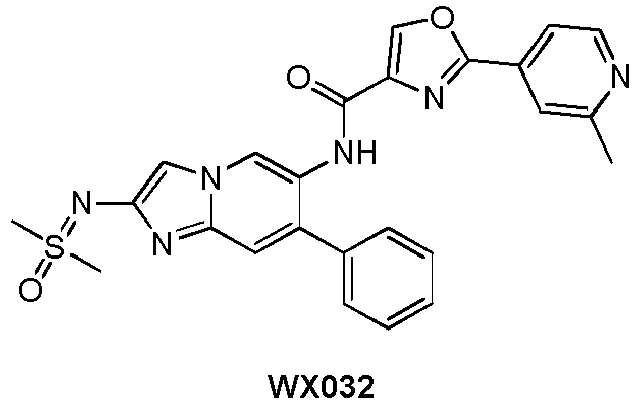
-

- Compound 29-2 (0.2 g) and dimethylsulfimide (58.92 mg) were added to dioxane (4 mL), then sodium tert-butoxide (81.05 mg), 2- di-tert-butylphosphino -2',4',6'- triisopropylidene (17.91 mg) and methanesulfonic acid (2- di-tert-butylphosphino -2,4,6- triisopropyl -1,1- biphenyl) (2- amino -1,1- biphenyl -2- yl) palladium (II) (33.50 mg) were added, and the mixture was reacted at 100 °C for 16 hours. The reaction solution was added to water (50 mL), then extracted with ethyl acetate (30 mL∗3), the organic phases were combined and dried with anhydrous sodium sulfate, filtered, and the filtrate was concentrated under reduced pressure. The crude product was separated and purified by preparative HPLC (column: Waters Xbridge BEH C18 (100∗30
mm ∗10 µm); mobile phase: [water (ammonium bicarbonate)-acetonitrile]; gradient: acetonitrile %: 30%-50%, 8min) to obtain compound WX032. - LCMS (ESI) m/z: 487.2[M+H]+
- 1H NMR (400MHz, DMSO-d 6) δ = 9.68 (s, 1H), 8.92 (s, 1H), 8.88 (s, 1H), 8.68(s, 1H), 7.73 (s, 1H), 7.57-7.55 (m, 1H), 7.52-7.50 (m, 2H), 7.48-7.45 (m, 3H), 7.40 (s, 1H), 7.35 (s, 1H), 3.37 (s, 6H), 2.60 (s, 3H).
-

-

- Compound 33-1 (2.0 g) was dissolved in chloroform (20.0 mL), and the reaction system was replaced with nitrogen for three times, aluminum trichloride (33.33 mg) and bromine (2.58 g) were added, and the reaction solution was reacted at 25°C for 16 hours. Water (20 mL) was added to the reaction solution, the mixture was extracted with dichloromethane (10 mL∗3), the organic phases were combined, dried with anhydrous sodium sulfate, filtered by suction and concentrated under reduced pressure, and purified by column chromatography (eluent: petroleum ether: ethyl acetate=100:0 to 0:100) to obtain compound 33- 2.
- Compound 25-5 (0.1 g), compound 33-2 (86.86 mg), sodium bicarbonate (67.86 mg) and 1,4-dioxane (3 mL) were added into the reaction flask, the reaction system was replaced with nitrogen for three times, and react at 100°C for 16 hours. The reaction solution was directly concentrated, the crude product was dissolved in methanol (5 mL) and dichloromethane (5 mL), filtered, and the filtrate was concentrated under reduced pressure to obtain the crude product, which was separated and purified by preparative HPLC (column: Phenomenex Luna C18 (75∗30mm∗10µm); mobile phase: [water (formic acid)-acetonitrile]; gradient: acetonitrile %: 1%-45%, 8min) to obtain the compound WX033.
- LCMS (ESI) m/z: 488.1 [M+H]+
- 1H NMR (400MHz, DMSO-d 6) δ = 9.75 (s, 1H), 9.13 (s, 1H), 8.94 (s, 1H), 8.68-8.66 (m, 1H), 8.13 (s, 1H), 7.72 (s, 1H), 7.66-7.64 (m, 1H), 7.59-7.56 (m, 3H), 7.54-7.47 (m, 3H), 4.64 (s, 2H), 3.08 (s, 3H), 2.59 (s, 3H).
-

-

- Compound 22-2 (0.85 g), compound BB-11 (486.20 mg), N,N- dimethylformamide (5 mL), O-(7-azabenzotriazole-1-yl)-N,N,N,N-tetramethylurea hexafluorophosphate (1.31g) and diisopropylethylamine (1.12 g) were added to the reaction flask and reacted at 40°C for 12 hours. Water (20 mL) was added to the reaction solution, the mixture was stirred for 10 minutes, filtered, and the filter cake was concentrated to remove water to obtain a crude product. The crude product was separated and purified by silica gel column chromatography (gradient eluent: dichloromethane: methanol =94:6 to 91:9) to obtain compound 36-1.
LCMS: m/z (ESI) = 703.2[M+H]+ - Compound 36-1 (0.22 g), methanol (5 mL) and potassium carbonate (129.74 mg) were added to the reaction flask and reacted at 25°C for 24 hours. Water (10 mL) was added to the reaction solution, the reaction solution was filtered, the filter cake was dissolved with dichloromethane: methanol =5:1 (30 mL), the organic phase was dried with anhydrous sodium sulfate, filtered and the filtrate was concentrated to obtain compound 36-2.
LCMS: m/z (ESI) = 507.3[M+H-100]+ - Compound 36-2 (0.122 g) 1,4-dioxane (2 mL), compound 17- 1 (72.76 mg) and sodium bicarbonate (50.65 mg) were added into a reaction flask and reacted at 75°C for 3 hours. Water (20 mL) was added to the reaction solution, dichloromethane: methanol =6:1 (70 mL ∗2) was added for extraction and liquid separation, the organic phases were combined, and concentrated to obtain compound 36-3.
LCMS: m/z (ESI) = 589.2[M+H-100]+ - Compound 36-3 (0.12 g) and dichloromethane (1 mL) were added to the reaction flask, and the temperature was lowered to 0°C, and trifluoroacetic acid (1 mL) was added dropwise, and the reaction was carried out at 25°C for 12 hours. The reaction solution was concentrated to obtain a crude product, which was separated and purified by preparative HPLC (column: Phenomenex Luna C18 (75∗30mm∗3µm); mobile phase: [water (formic acid)-acetonitrile]; gradient: acetonitrile %: 1%-40%, 8min) to obtain the compound WX036.
- 1H NMR (400MHz, DMSO-d 6) δ = 9.56 (s, 1 H), 9.12 (s, 1 H), 8.95 (s, 1 H), 8.06 (d, J=4.80 Hz, 1 H), 7.90 (s, 1 H), 7.57- 7.53 (m, 2 H), 7.51-7.44 (m, 4 H), 7.02 (d, J=4.80 Hz, 1 H), 6.70 (s, 2 H), 5.14 (s, 1 H), 1.52 (s, 6H).
-
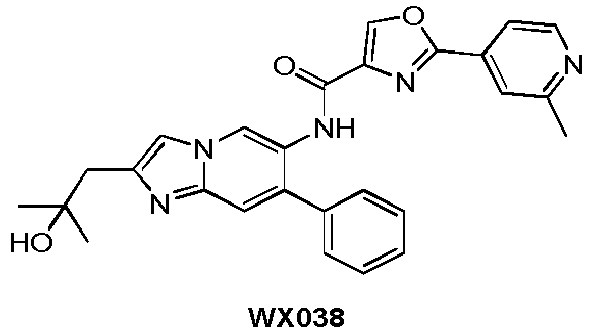
-

- Compound 38-1 (0.5 g) was added to anhydrous methanol (3 mL), then the temperature was lowered to 0°C, and then bromine (687.89 mg) was slowly added dropwise, and the reaction was continued to react at 0°C for 3 hours. After the reaction solution was added into water (30 mL), then extracted with dichloromethane (40 mL∗3), and the organic phases were combined, dried with anhydrous sodium sulfate and filtered, and the filtrate was concentrated under reduced pressure to obtain compound 38-2.
- 1H NMR (400 MHz, CDCl3) δ = 3.86 (s, 2 H), 2.77 (s, 2 H), 1.23 (s, 6 H).
- Compound 25-5 (0.11 g) and compound 38-2 (103.99 mg) were added to anhydrous dioxane (2 mL), and then sodium bicarbonate (62.20 mg) was added and the reaction was carried out at 75 °C for 16 hours. The reaction solution was added into water (30 mL), then extracted with ethyl acetate (30 mL∗3), the organic phases were combined, dried with anhydrous sodium sulfate, filtered, and the filtrate was concentrated under reduced pressure. The crude product was separated and purified by preparative HPLC (column: Waters Xbridge Prep OBD (150∗40 mm∗10µm); mobile phase: [water (ammonium bicarbonate)-acetonitrile]; gradient: acetonitrile %: 30%-55%, 8min) to obtain compound WX038.
- LCMS (ESI) m/z: 468.2[M+H]+
- 1H NMR (400MHz, DMSO) δ =9.72 (s, 1H), 9.02 (s, 1H), 8.93 (s, 1H), 8.68(s, 1H), 7.86 (s, 1H), 7.72 (s, 1H), 7.57 (s, 1H), 7.51-7.50 (m, 2H), 7.49-7.48 (m, 4H), 4.71 (s, 1H), 2.82 (s, 2H), 2.60 (s, 3H), 1.16(s, 6H).
-

-

- Compound 1-1 (10.0 g) was dissolved in 2- butanone (100.0 mL), then hydroiodic acid (8.84 g) and sodium iodide (25.91 g) were added, and the reaction solution was stirred at 85°C for 12 hours. The reaction solution was directly concentrated under reduced pressure, and the crude product was added with water (250.0 mL) and stirred for 15 minutes, then filtered to obtain the crude product. 15 g sodium sulfite was prepared into saturated aqueous solution, and the crude product was mixed with saturated sodium sulfite solution, stirred for 1 hour, and filtered to obtain compound 39-1.
- LCMS (ESI) m/z: 265.9 [M+H]+
- 1H NMR (400MHz, DMSO) δ =8.72 (s, 1H), 7.42 (s, 2H), 7.12 (s, 1H).
- Compound 39-1 (5.0 g) was added to the reaction flask and dissolved in 1,4- dioxane (75.0 mL), then ethyl bromopyruvate (5.52 g) and sodium bicarbonate (4.76 g) were added, and the reaction solution was reacted at 70 °C for 16 hours. The reaction solution was concentrated under reduced pressure, dissolved with water (50 mL) and ethyl acetate (50 mL), separated, the aqueous phase was extracted with ethyl acetate (50 mL), the organic phases were combined, dried with anhydrous sodium sulfate, filtered, and the filtrate was concentrated under reduced pressure and purified by column chromatography (eluent: petroleum ether/ethyl acetate=100:0 to 50:50) to obtain compound 39- 2.
LCMS (ESI) m/z: 362.0 [M+H]+ - Compound 39-2 (2.0 g), tin dichloride dihydrate (7.50 g) and ethyl acetate (30 mL) were added to the reaction flask, and the reaction was carried out at 50 °C for 16 hours after the reaction system was replaced with nitrogen. Ethyl acetate (30.0 mL) was added to the reaction solution, the pH value was adjusted to 7~8 with 25% ammonia water, after filtration, the filtrate was collected, concentrated under reduced pressure, and purified by column chromatography (eluent: petroleum ether/ethyl acetate=100:0 to 50:50) to obtain compound 39- 3.
LCMS (ESI) m/z: 332.1 [M+H]+ - Compound 39-3 (1.0g), compound BB-2 (739.99 mg), N,N- diisopropylethylamine (975.83 mg), O-(7- azabenzotriazole-1-yl)-N,N,N,N- tetramethylurea hexafluorophosphate (1.72g) and N, N-dimethylformamide (5 mL) were added into the reaction flask, the reaction was carried out at 40°C for 16 hours after the reaction system was replaced with nitrogen. Water (10 mL) and ethyl acetate (10 mL) were added to the reaction solution, the mixture was stirred for 0.5 hour, filtered, the filter cake was collected with 0.1 M sodium hydroxide aqueous solution (20 mL), stirred for 1 hour, filtered and the filter cake was collected to obtain compound 39-4.
LCMS (ESI) m/z: 518.1 [M+H]+ - Compound 39-4 (0.44 g), compound BB-13 (492.47 mg), bis (tri-tert-butylphosphine) palladium (43.47 mg) and dioxane (5 mL) were added into the reaction flask, the reaction system was replaced with nitrogen and reacted at 100 °C for 16 hours. The reaction solution was concentrated under reduced pressure and purified by column chromatography (eluent: petroleum ether/ethyl acetate =100:0 to 90:10) to obtain compound 39-5.
LCMS (ESI) m/z: 487.2 [M+H]+ - 3 M tetrahydrofuran solution of methylmagnesium chloride (2.06 mL) was slowly added into tetrahydrofuran (4 mL) dropwise at 0 °C, and then tetrahydrofuran (1 mL) solution of compound 39-5 (0.05 g) was added and the mixture was reacted at 25 °C for 1 hour. The reaction solution was slowly added into saturated ammonium chloride aqueous solution (30 mL), extracted with ethyl acetate (30 mL∗3), the organic phases were combined, dried with anhydrous sodium sulfate and filtered, and the filtrate was spin-dried under reduced pressure, and the obtained crude product was separated and purified by preparative HPLC (column: Waters Xbridge Prep OBD C18 (150∗40 mm∗10µm); mobile phase: [water (ammonium bicarbonate)-acetonitrile]; gradient: acetonitrile %: 10%-40%, 8min) to obtain compound WX039.
- LCMS (ESI) m/z: 473.2 [M+H]+
- 1H NMR (400MHz, DMSO-d 6) δ = 10.00 (s, 1H), 8.87-8.84 (m, 2H), 8.68-8.64 (m, 2H), 8.48-8.46 (m, 1H), 7.92 (s, 1H), 7.77 (s, 1H), 7.70-7.68 (m, 1H), 7.67 (s, 1H), 7.55-7.50 (m, 1H), 5.13 (s, 1H), 2.58 (s, 3H), 1.51 (s, 6H).
- The IC50 values were determined using 33P isotope-labeled kinase activity assay (Reaction Biology Corp) to evaluate the inhibitory ability of the tested compounds on human IRAK4.
- Buffer conditions: 20 mM Hepes (pH 7.5), 10 mM MgCl2, 1 mM EGTA, 0.02% Brij35, 0.02 mg/mL BSA, 0.1 mM Na3VO4, 2 mM DTT, 1% DMSO.
- Test procedure: At room temperature, the tested compound was dissolved in DMSO and a 10 mM solution was prepared for use. The substrate was dissolved in a newly prepared buffer solution, and the tested IRAK4 kinase was added thereto and mixed evenly. The DMSO solution dissolved with the tested compound was added to the above mixed evenly reaction solution using acoustic technique (Echo 550). After incubation for 15 minutes, 33P- ATP was added to initiate the reaction. The reaction was carried out at room temperature for 120 minutes, and the reaction mixture was dropped on P81 ion exchange filter paper (Whatman # 3698-915). The filter paper was washed repeatedly with 0.75 % phosphoric acid solution, and the radioactivity of phosphorylated substrate residues on the filter paper was determined. The kinase activity data were expressed by comparing the kinase activity of the group containing the tested compound with the kinase activity of the blank group (only containing DMSO), and the IC50 value was obtained by curve fitting by Prism4 software (GraphPad), the experimental results were shown in Table 2.
Table 2: In vitro IRAK4 kinase activity screening test results of the compounds of the present disclosure Number of the compound IRAK4 / IC50(nM) WX001 1.8 WX002 6.6 WX003 0.6 WX004 12 WX005 1.5 WX006 1.0 WX007 0.4 WX008 4.3 WX009 0.9 WX010 2.1 WX011 4.7 WX012 0.4 WX013 1.8 WX014 2.5 WX015 0.4 WX016 2.0 WX017 0.1 WX018 5.1 WX021 0.3 WX022 0.1 WX023 0.1 WX025 0.1 WX027 0.1 WX028 0.1 WX029 0.1 WX032 0.9 WX036 0.4 WX038 0.3 - Conclusion: The compound of the present disclosure generally exhibited good inhibitory activity against IRAK4.
- The IC50 values were determined using 33P isotope-labeled kinase activity assay (Reaction Biology Corp) to evaluate the inhibitory ability of the tested compounds on human BTK.
- Buffer conditions: 20 mM Hepes (pH 7.5), 10 mM MgCl2, 1 mM EGTA, 0.02% Brij35, 0.02 mg/mL BSA, 0.1 mM Na3VO4, 2 mM DTT, 1% DMSO.
- Test procedure: At room temperature, the tested compound was dissolved in DMSO and a 10 mM solution was prepared for use. The substrate was dissolved in a newly prepared buffer solution, and the BTK kinase was added thereto and mixed evenly. The compound dissolved in DMSO was added to the kinase reaction mixture through Echo 550 (Acoustic technology; Nanoliter range). After incubation for 20 minutes at room temperature, 33P- ATP was added to initiate the reaction. The reaction was carried out at room temperature for 2 hours, and the radioactivity of the reaction solution drop was detected by filtration-binding method with P81 ion exchange filter paper. The kinase activity data were expressed by comparing the kinase activity of the group containing the tested compound with the kinase activity of the blank group (only containing DMSO), and the IC50 value was obtained by curve fitting by Prism4 software (GraphPad), the experimental results were shown in Table 3.
Table 3: In vitro BTK kinase activity screening test results of the compounds of the present disclosure Number of the compound BTK/ IC50(nM) WX001 7.9 WX003 15.4 WX005 0.6 WX006 0.7 WX007 4.1 WX008 71 WX009 20.1 WX010 21.2 WX011 1.3 WX012 14.4 WX013 2.9 WX014 0.5 WX015 5.6 WX016 1.6 WX017 5.2 WX021 19.8 WX022 45 WX023 1.0 WX027 2.9 - Conclusion: The compound of the present disclosure generally exhibited good inhibitory activity against BTK.
- THP-1 human acute single cell leukemia cells were purchased from ATCC (Cat # TIB-202) and cultured at 37 °C in 5% CO2 incubator. The composition of medium was RPMI1640 (Gibco, Cat # 22400-105), and the supplementary compositions were 10% FBS (Gibco, Cat # 10091148); 1% PenStrep (Gibco, Cat # 15140); 0.05 mM β-mercaptoethanol (Sigma, Cat # M6250).
- TNF-α Elisa kit was used to detect the content of TNF-α in cell culture supernatant samples. TNF-α was produced by stimulating THP-1 cells with 150 ng/mL LPS (Sigma, Cat # L6529).
- THP-1 cells cultured normally at logarithmic growth period were seeded in a 96-well plate (Corning # 3599) at a certain concentration (1∗105 /100 µL) and then put into a cell incubator for incubation. After two hours, 16.7 µL of different concentrations of the compound to be tested (8∗ final concentration) were added and incubated in an incubator. After one hour, 16.7 µL of 1200 ng/mL LPS was added and incubated in an incubator. After 18 hours, the culture supernatant samples were collected by centrifugation, and the content of TNF-α could be detected by TNF-α Elisa kit. Finally, OD signals (OD450-OD570) were read on envision board reader.
- The OD450-OD570 signal value was converted into a percentage inhibition rate.

- "HPE" referred to the OD450-OD570 signal value of the control well without LPS stimulated cells, and "ZPE" referred to the OD450-OD570 signal value of the control well with LPS stimulated cells. The IC50 value of the compound was calculated by XLFit in the excel add-in.

- A summary of the test results was shown in Table 4.
Table 4: In vitro screening test results of the compounds of the present disclosure Number of the compound THP-1 / IC50(nM) WX001 20 WX002 116 WX005 171 WX006 94 WX009 60 WX013 6 WX015 60 WX017 15.9 WX027 41.9 WX036 57.1 - Conclusion: The compound of the present disclosure generally exhibited better activity of inhibiting cell TNF-α generation in THP-1 cell activity experiment.
- The tumor cell lines OCI-LY10 and TMD-8 were used to detect the effect of the compound of the disclosure on inhibiting tumor cell proliferation in vitro.
-
- OCI-LY10 human diffuse large B lymphoma cells, from Nanjing Cobioer Biotechnology Co., Ltd
- TMD-8 human diffuse large B lymphoma cells, from Nanjing Cobioer Biotechnology Co., Ltd
-
- Cell Titer Glo (Cat# G7571, Promega)
- 96-well Transparent bottom white cell culture plate (Cat# 3610, Corning Costar)
- Fetal Bovine Serum (Cat# 10099-141, GIBCO)
- Culture medium (Invitrogen)
- Benchtop Enzyme Labeler ENVISION (PE, 2104)
-
Cell lines Culture medium TMD-8 MEM + 10%FBS OCI-LY10 IMDM+20%FBS+55 µM 2-mercaptoethanol - The compound was diluted with DMSO to a final concentration of 10 mM. The compound was freshly prepared and ready for use.
-
- a) Logarithmic growth period cells were collected, counted, resuspended with complete culture medium, the cell concentration was adjusted to an appropriate concentration (determined according to the results of cell density optimization test), inoculated on 96-well plates, and 100 µL of cell suspension was added to each well. Cells were incubated in an incubator with 37°C, 100% relative humidity and 5% CO2 for 24 hours.
- b) The compound to be tested was diluted to 50 µM with culture medium and then gradient diluted for 8 times. Cells were added with 25 µE/well. The final concentrations of the compound were from 10 µM to 0 µM, 3-fold gradient dilution, with a total of 9 concentration points.
- c) Cells were incubated in an incubator with 37°C, 100% relative humidity and 5% CO2 for 72 hours;
- d) 60 µL of CTG test reagent was added to the culture medium.
- e) Shaked fully and reacted in the dark for 10 min. Luminescence was measured on ENVISION and the inhibition rate was calculated.
-

- RLUs: RLU (cell+compound to be tested+CTG) of sample-treated cells (sample-treated group)
- RLUv: RLU (cell+DMSO+CTG) of solvent treated cells (solvent control group)
- RLUb: RLU (culture medium+DMSO+CTG) of cell-free blank control (blank group)
- Experimental results were shown in Table 5.
Table 5: In vitro screening test results of the compounds of the present disclosure Number of the compound OCI-LY10 / IC50(nM) TMD-8 / IC50(nM) WX001 29 10 WX002 125 / WX005 / 325 WX006 36 183 WX009 48 37 WX011 6 28 WX012 20 / WX013 8 20 WX014 18 40 WX015 36 / WX016 3 6 WX017 7 10 WX023 14 / WX027 26 32.2 WX029 48 / WX036 15.2 16.7 - Conclusion: The compounds of the present disclosure exhibited good inhibitory activity on cell proliferation in OCI-LY10 and TMD-8 cell lines, respectively.
- The tumor cell line OCI-LY3 was used to detect the effect of the compound of the disclosure on inhibiting tumor cell proliferation in vitro.
- The tumor cell line used in this experiment was provided by Nanjing Cobioer Biotechnology Co., Ltd. See Table 6 below for specific information.
Table 6: Experimental cell line information Cell name Cell source Cell culture medium OCI-LY3 Nanjing Cobioer Biotechnology Co., Ltd IMDM+20%FBS+0.05mM 2-mercaptoethanol+1% penicillin/streptomycin - The OCI-LY3 cell line was cultured in the corresponding medium at 37 °C and 5% CO2, and the logarithmic growth period cells were used for experimental planking. The cells were collected and centrifuged at 800 rpm for 5 minutes, and the culture medium was re-suspended and spread in a 96-well plate. After being cultured overnight in 37°C, 5% CO2 incubator, drugs with different concentration gradients (10 µL of prepared diluent of test compound was added) were added, and incubated in 37°C, 5% CO2 incubator for 72 hours. The cell culture plate was incubated with CTG reagent at room temperature in the dark for 30 minutes and return to room temperature. CTG solution was added into the biosafety cabinet in the dark 100 µL/well, and was shaken and mixed evenly on plate shaker in the dark for 2 minutes, and incubated at room temperature in the dark for 10 minutes. The luminous value was read and recorded with Perkin Elmer Envision instrument.
- The luminous value of the blank control group was substracted from the luminous value measured at each drug concentration, the ratio of this value to DMSO group was taken as the cell inhibition rate (%). GraphPad software was used, the logarithm of drug concentration (log drug concentration) versus inhibition rate was plotted, and the IC50 value and 95% confidence value were automatically fitted and calculated by log (inhibitor) vs. response-variable slop (four parameters) algorithm of nonlinear regression by software.
- Experimental results were shown in Table 7.
Table 7: In vitro screening test results of the compounds of the present disclosure Number of the compound OCI-LY3 / IC50(nM) WX001 57 WX009 121 WX011 26 WX013 34 WX014 41 WX016 37 WX017 18 WX027 48 WX036 42 - Conclusion: The compound of the disclosure had a significant inhibition effect on cell proliferation in OCI-LY3 cell line.
- The purpose of this experiment was to study the pharmacokinetics of the test compound in the plasma of CD-1 male mice after intravenous injection and oral administration.
- Intravenous injection group: the tested compound was weighed and dissolved with 5%DMSO/10%Solutol/85%H2O, and the pH was adjusted to 4-5 with 6M hydrochloric acid, and a clear solution of 1.5 mg/mL was prepared by vortex, which was filtered by 0.22 µm microporous membrane for later use. CD-1 male mice from 6 to 10 weeks old were selected and the test compound solution was injected intravenously at a dose of 3 mg/kg. The sample collection time was: 0.083, 0.25, 0.5, 1, 2, 4, 6, 8, 24 hours.
- Oral administration group: the tested compound was weighed and dissolved with 5%DMSO/10%Solutol/85%H2O, the pH was adjusted to 3-4 with 6M hydrochloric acid, and a clear solution of 2.0 mg/mL was prepared by vortex for later use. CD-1 male mice from 6 to 10 weeks old were selected and the test compound was administered orally at a dose of 10 mg/kg. The sample collection time was: 0.25, 0.5, 1, 2, 4, 6, 8, 10, 24 hours.
- Approximately 50 µL of whole blood was collected through the jugular vein at each time point for plasma preparation for concentration determination by high performance liquid chromatography-tandem mass spectrometry (LC-MS/MS). All animals were euthanized by CO2 anesthesia after collecting PK samples at the last time point. The non-atrioventricular model of WinnonLin™ Version 6.3 (Pharsight, Mountain View, CA) pharmacokinetic software was used to process the plasma concentration, and the pharmacokinetic parameters were calculated by linear logarithmic trapezoid method. The experimental results were shown in Table 8.
Table 8: Pharmacokinetic results of the tested compounds Dose Pharmacokinetic parameters Compound WX009 Compound WX017 Compound WX027 IV Half-life T1/2 (h) 8.1 2.3 1.9 Clearance rate CL (ml/min/kg) 5.9 15.1 28.2 Apparent volume of distribution Vdss (L/kg) 1.5 0.5 0.8 Area under the plasma concentration-time curve AUC0- 24h (nM.h) 17877 7672 3766 PO Peak time Tmax (h) 0.5 0.8 0.3 Peak concentration Cmax (nM) 17800 6520 4930 Area under the plasma concentration-time curve AUC (nM.h) 47983 10432 8079 Bioavailability (%) 78% 41% 64% - Conclusion: The pharmacokinetic study of the compound of the present disclosure in CD-1 mice showed a low drug clearance rate, and after oral administration, the peak could be quickly reached, and showed a high oral absorption bioavailability.
- The purpose of this experiment was to study the pharmacokinetics of the tested compound in the plasma of SD male rats after intravenous injection and oral administration.
- SD male rats from 7 to 10 weeks old were selected, and the dosage of intravenous and oral administration was 1 mg/kg and 3 mg/kg respectively. Rats in the gavage group fasted for at least 12 hours before administration, and feeding was resumed after administration for 4 hours. Intravenous injection group was free to eat and drink during the whole experiment.
- Drug preparation operation: in the intravenous injection group, the compound was weighed and dissolved with 5%DMSO/10%Solutol/85%H2O, and a clear solution of 0.5 mg/mL was prepared by vortex, which was filtered by a 0.22 µm microporous membrane for later use. In the gavage group, the compound was dissolved in 5%DMSO/10%Solutol/85%H2O, and a uniform suspension was prepared by vortex. On the day of the experiment, the animals in the intravenous group were given the corresponding compound by a single injection through the tail vein, and the dosage volume was 2 mL/kg. In the oral group, the corresponding compounds were given by single gavage, and the dosage volume was 5 mL/kg. The animals before administration were weighed, and the administration volume was calculated according to the weight. The sampling time was 0.083 (injection group), 0.25, 0.5, 1, 2, 4, 6, 8, 10 (gavage group), 24 hours. Approximately 250 µL of whole blood was collected through the jugular vein at each time point for plasma preparation for concentration determination by high performance liquid chromatography-tandem mass spectrometry (LC-MS/MS). All animals were euthanized by CO2 anesthesia after collecting PK samples at the last time point. The non-atrioventricular model of WinnonLin™ Version 6.3 (Pharsight, Mountain View, CA) pharmacokinetic software was used to process the plasma concentration, and the pharmacokinetic parameters were calculated by linear logarithmic trapezoid method. The experimental results were shown in Table 9.
Table 9: Pharmacokinetic results of compounds Dose Pharmacokinetic parameters Compound WX009 Compound WX017 Compound WX027 IV Half-life T1/2 (h) 2.5 4.1 1.4 Clearance rate CL (ml/min/kg) 1.1 7.0 4.0 Apparent volume of distribution Vdss (L/kg) 0.2 0.8 0.3 Area under the plasma concentration-time curve AUC0- 24h (nM.h) 35541 5513 8838 PO Peak time Tmax (h) 1.3 0.8 0.3 Peak concentration Cmax (nM) 10080 1016 4329 Area under the plasma concentration-time curve AUC (nM.h) 59138 4769 10168 Bioavailability (%) 55% 29% 38% - Conclusion: The pharmacokinetic study of the compound of the present disclosure in SD rats showed a low drug clearance rate, and after oral administration, the peak could be quickly reached, and showed a high oral absorption bioavailability.
- a) The pharmacokinetic effect of compound WX009 on TNF-α secretion model induced by LPS in SD rats.
- Female SD rats were randomly divided into four groups according to the animal weight, namely Sham group, Model group and Dexamethasone (dosage: 0.5mpk, DEX-0.5mpk) group and tested drug WX009 (dosage: 25mpk, WX009-25mpk) group, with 6-9 animals in each group. The model was established by a single intraperitoneal injection of 1 mg/kg LPS. Dexamethasone and tested drug were given orally by gavage 0.5 h before modeling. After modeling for 2 hours, the animals were weighed, and all the experimental animals were anesthetized by intraperitoneal injection of pentobarbital sodium. An anticoagulant whole blood was collected through sublingual vein, anticoagulant: EDTA-K2, the plasma was separated, and the plasma volume was about 200 µL, which was used to detect the content of inflammatory factor, TNF-α.
- At the end of the experiment, the test results of TNF-α concentration in animal plasma were showed (
Figure 1 ). Compared with the Sham group, the TNF-α content in the plasma in the Model group increased significantly (p<0.001). Compared with the Model group, the TNF-α content in the plasma in Dexamethasone-0.5 mpk group decreased significantly (p < 0.01). The tested compound WX009-25mpk group could significantly reduce the content of TNF-α in animal plasma, with significant statistical difference (p<0.01). - The antitumor effects of the compounds ibrutinib, BAY-1, ibrutinib in combination with BAY-1, and WX009 at high, medium, and low doses were evaluated using in vivo efficacy of human diffuse large B lymphoma TMD8 cell subcutaneous xenografts in a female SCID mouse model.
- TMD8 cells were cultured in RPMI-1640 medium containing 10% FBS and maintained in a 37°C saturated humidity incubator with 5% COz. TMD8 cells in logarithmic period were collected, resuspended in RPMI-1640 basal medium, and Matrigel was added at 1:1, and the cell concentration was adjusted to 4×10⁷/mL. Under aseptic conditions, 0.1mL of cell suspension was inoculated under the skin of the right back of SCID mice, and the inoculation concentration was 4×10⁶/0.1mL/ mouse.
- When the tumor grew to a certain size, the animals with too large, too small or irregular tumor shape were excluded, and the animals with tumor volume of 100.72~184.05 mm3 were selected. According to the tumor volume, the animals were divided into 7 groups by random block method, with 8 mice in each group, and the average tumor volume was about 140.82 mm3. The health status and death of animals were monitored every day, and routine examinations included observing the effects of tumor growth and drug treatment on daily behaviors of animals, such as behavioral activities, food intake and water intake, weight change (weight was measured twice a week), tumor size (tumor volume was measured twice a week), appearance signs or other abnormal conditions.
Table 10 Research scheme of human diffuse large B lymphoma TMD8 SCID mouse xenograft tumor model Group Test compound Number of animals Dose (mg/kg) Route of administr ation Frequency of administratio n 1 Vehicle 8 / PO QD 2 ibrutinib 8 20 PO QD 3 BAY-1 8 50 PO QD 4 BAY-1 in combination of ibrutinib 8 50 PO QD 20 PO QD 5 WX009 8 20 PO BID 6 WX009 8 10 PO BID 7 WX009 8 5 PO BID - The formula for calculating tumor volume (TV) was: 1/2×a×b2, where a and b were the measured length and width of the tumor respectively. The formula for calculating the tumor inhibition rate TGI (%) = [1-(average tumor volume at the end of administration in a treatment group-average tumor volume at the beginning of administration in the treatment group))/(average tumor volume at the end of treatment in solvent control group-average tumor volume at the beginning of treatment in solvent control group)] × 100%.
- In this study, the experimental data were all expressed by Mean±SEM. Statistical analysis was based on the data of RTV at the end of the experiment and analyzed by IBM SPSS Statistics software. T test was used to analyze the comparison between two groups, and one-way ANOVA was used to analyze the comparison between three or more groups. If the variance was even (there was no significant difference in F value), Tukey's method was used to analyze it, and if the variance was uneven (there was significant difference in F value), Games-Howell method was used to test it. p < 0.05 was deemed to a significant difference.
- This experiment evaluated the efficacy of compound ibrutinib, BAY-1, BAY-1 in combination with ibrutinib and WX009 at high, medium, and low doses in subcutaneous xenograft tumor of human diffuse large B lymphoma TMD8 cells in female SCID mouse model. In this experiment, the average body weight of animals in all experimental groups did not decrease significantly during the whole administration period, and the mice were well tolerated. The experimental results were shown in Table 11 and
Figure 2 .Table 11. Evaluation of the antitumor efficacy of the compound in the subcutaneous xenograft tumor model of human diffuse large B lymphoma TMD8 cells (Calculated based on tumor volume on 18th day after administration) Test compound TGI (%) Vehicle -- ibrutinib 20mg/kg QD 12.95 BAY-1 50mg/kg QD 17.65 BAY-1 50mg/kg QD in combination with ibrutinib 20mg/kg QD 107.56 WX009 20mg/kg BID 96.55 WX009 10mg/kg BID 85.10 WX009 5mg/kg BID 86.28 - Experimental conclusion: In the low-dose group of IRAK4 and BTK double-target inhibitor WX009, a single drug of 5mg/kg (BID) showed significant antitumor effect (TGI=86%), which was significantly better than the single drug efficacy of BTK inhibitor Ibrahim (20 mg/kg, QD) (TGI=13%) and the single drug efficacy of IRAK4 inhibitor BAY-1 (50 mg, QD) (TGI=18%), and showed the remarkable effect of simultaneous inhibition of IRAK4 and BTK.
- The antitumor effects of the compounds ibrutinib, BAY-1, ibrutinib in combination with BAY-1, and WX017 and WX027 at high, medium, and low doses were evaluated using in vivo efficacy of human diffuse large B lymphoma TMD8 cell subcutaneous xenografts in a female SCID mouse model.
-
- a) TMD8 cells were cultured in RPMI-1640 medium containing 10% FBS and maintained in a 37 °C saturated humidity incubator with 5% COz. TMD8 cells in logarithmic period were collected, resuspended in RPMI-1640 basal medium, and Matrigel was added at 1:1, and the cell concentration was adjusted to 4×10⁷/mL. Under aseptic conditions, 0.1mL of cell suspension was inoculated under the skin of the right back of SCID mice, and the inoculation concentration was 4×10⁶/0.1mL/ mouse.
- When the tumor grew to a certain size, the animals with too large, too small or irregular tumor shape were excluded, and the animals with tumor volume of 108.76∼188.11 mm3 were selected. According to the tumor volume, the animals were divided into 10 groups by random block method, with 6 mice in each group, and the average tumor volume was about 152.11 mm3. The health status and death of animals were monitored every day, and routine examinations included observing the effects of tumor growth and drug treatment on daily behaviors of animals, such as behavioral activities, food intake and water intake, weight change (weight was measured twice a week), tumor size (tumor volume was measured twice a week), appearance signs or other abnormal conditions.
Table 12 Research scheme of human diffuse large B lymphoma TMD8 SCID mouse xenograft tumor model Group Test compound Number of animals Dose (mg/kg) Route of administration Frequency of administration 1 Vehicle 6 / PO QD 2 ibrutinib 6 20 PO QD 3 BAY-1 6 50 PO QD 4 BAY-1 in combination of ibrutinib 6 50 PO QD 20 PO QD 5 WX017 6 3 PO BID 6 WX017 6 10 PO BID 7 WX017 6 20 PO BID 8 WX027 6 3 PO BID 9 WX027 6 10 PO BID 10 WX027 6 20 PO BID - The formula for calculating tumor volume (TV) was: 1/2×a×b2, where a and b were the measured length and width of the tumor respectively. The formula for calculating the tumor inhibition rate TGI (%) = [1-(average tumor volume at the end of administration in a treatment group-average tumor volume at the beginning of administration in the treatment group))/(average tumor volume at the end of treatment in solvent control group-average tumor volume at the beginning of treatment in solvent control group)] × 100%.
- In this study, the experimental data were all expressed by Mean±SEM. Statistical analysis was based on the data of RTV at the end of the experiment and analyzed by IBM SPSS Statistics software. T test was used to analyze the comparison between two groups, and one-way ANOVA was used to analyze the comparison between three or more groups. If the variance was even (there was no significant difference in F value), Tukey's method was used to analyze it, and if the variance was uneven (there was significant difference in F value), Games-Howell method was used to test it. p < 0.05 was deemed to a significant difference.
- This experiment evaluated the efficacy of compound ibrutinib, BAY-1, BAY-1 in combination with ibrutinib and WX017 and WX027 at high, medium, and low doses in subcutaneous xenograft tumor of human diffuse large B lymphoma TMD8 cells in female SCID mouse model. In this experiment, the average body weight of animals in all experimental groups did not decrease significantly during the whole administration period, and the mice were well tolerated. The experimental results were shown in Table 13 and
Figure 3 .Table 13. Evaluation of the antitumor efficacy of the compound in the subcutaneous xenograft tumor model of human diffuse large B lymphoma TMD8 cells (Calculated based on tumor volume on 11th day after administration) Test compound TGI (%) Vehicle -- ibrutinib 20mg/kg QD 39 BAY-1 50mg/kg QD 43 BAY-1 50mg/kg QD in combination with ibrutinib 20mg/kg QD 113 WX017 3mg/kg BID 86 WX017 10mg/kg BID 100 WX017 20mg/kg BID 114 WX027 3mg/kg BID 78 WX027 10mg/kg BID 90 WX027 20mg/kg BID 104 - Experimental conclusion: In the low-dose group of IRAK4 and BTK double-target inhibitor WX017 and WX027, a single drug of 3 mg/kg (BID) showed significant antitumor effect (TGI=86% and 78% respectively), which was significantly better than the single drug efficacy of BTK inhibitor Ibrahim (20 mg/kg, QD) (TGI=39%) and the single drug efficacy of IRAK4 inhibitor BAY-1 (50 mg, QD) (TGI=43%), and showed the remarkable effect of simultaneous inhibition of IRAK4 and BTK.
Claims (14)
- A compound represented by formula (IV) or a pharmaceutically acceptable salt thereof,
 T1, T2, T3, T4 and T5 are independently selected from CH and N; the structural unit

 R1 is selected from H, F, Cl, Br, I, OH, CN, -NRaRb, CH3, -C(=O)-C1-3 alkyl and C1-3 alkoxy, and the C1-3 alkyl and C1-3 alkoxy are independently and optionally substituted with 1, 2 or 3 halogens;R4 is selected from H, F, Cl, Br, I, OH, CN, -NRaRb, C1-3 alkyl and -C(=O)-C1-3 alkyl, and the C1-3 alkyl is optionally substituted with 1, 2 or 3 halogens;or, R1 and R4 are attached to form pyrrolyl with the attached atoms;R2 is selected from
 R3 is selected from
 E1 is selected from NH, O and S;R5 and R6 are independently selected from H, F, Cl, Br, I, OH, CN,-C(=O)-C1-3 alkyl and C1-3 alkyl, and the C1-3 alkyl is optionally substituted with 1, 2 or 3 halogens;m is 1 or 2;n is 1 or 2;Ra is independently selected from H and C1-3 alkyl;Rb is independently selected from H, C1-3 alkyl and -C(=O)-C1-3 alkyl; on condition that:1) when the structural unit

 2) when the structural unit


 3) when the structural unit


- The compound or the pharmaceutically acceptable salt thereof as defined in claim 1, wherein, Ra is selected from H, CH3, CH2CH3 and CH(CH3)2.
- The compound or the pharmaceutically acceptable salt thereof as defined in claim 1, wherein, Rb is selected from H, CH3, CH2CH3, CH(CH3)2, -C(=O)-CH3, -C(=O)-CH2CH3 and -C(=O)-C(CH3)2.
- The compound or the pharmaceutically acceptable salt thereof as defined in any one of claims 1 to 3, wherein, R1 is selected from H, F, Cl, Br, I, OH, CN, -NRaRb, CH3, -C(=O)-CH3 and -OCH3, and the -OCH3 is optionally substituted with 1, 2 or 3 halogens.
- The compound or the pharmaceutically acceptable salt thereof as defined in claim 4, wherein, R1 is selected from NH2, -NHCH3, -N(CH3)2, -NHC(=O)CH3, CH3 and -OCH3.
- The compound or the pharmaceutically acceptable salt thereof as defined in claim 1, wherein R1 and R4 are attached to form pyrrolyl with the attached atoms, so that the structural fragment


- The compound or the pharmaceutically acceptable salt thereof as defined in any one of claims 1 to 3, wherein R2 is selected from


- The compound or the pharmaceutically acceptable salt thereof as defined in claim 1, wherein R4, Rs and R6 are independently selected from H, F, Cl, Br, I, OH, CN, NH2, -NH(CH3), -N(CH3)2, CH3, CH2CH3 and -CH(CH3)2, and the CH3, CH2CH3 and -CH(CH3)2 are optionally substituted with 1, 2 or 3 F.
- The compound or the pharmaceutically acceptable salt thereof as defined in claim 8, wherein, R4, Rs and R6 are independently selected from H, F, Cl, Br, I, CH3 and CF3.
- The compound or the pharmaceutically acceptable salt thereof as defined in any one of claims 1-9, wherein the compound is selected from,


R1, R2, R3, R4, R5 and R6 are as defined in any one of claims 1-9. - The compound or the pharmaceutically acceptable salt thereof as defined in any one of claims 1-9, wherein the compound is selected from,
 R1 is as defined in any one of claims 1, 4 or 5;R4 is as defined in any one of claims 1, 8 or 9;T6 is selected from CH and N;T7 is selected from CH and N;and T6 and T7 are not simultaneously N;R3 is selected from

- A compound represented by the following formula or a pharmaceutically acceptable salt thereof,





- A use of the compound or the pharmaceutically acceptable salt thereof as defined in any one of claims 1-12 in the manufacture of a medicament for the treatment of hematoma-related.
- The use as defined in claim 13, wherein the hematoma is a diffuse large B-cell lymphoma.
Applications Claiming Priority (5)
| Application Number | Priority Date | Filing Date | Title |
|---|---|---|---|
| CN202011568684 | 2020-12-25 | ||
| CN202110749304 | 2021-07-01 | ||
| CN202110930084 | 2021-08-13 | ||
| CN202111165942 | 2021-09-30 | ||
| PCT/CN2021/139649 WO2022135338A1 (en) | 2020-12-25 | 2021-12-20 | Amide oxazole compound |
Publications (2)
| Publication Number | Publication Date |
|---|---|
| EP4269409A1 true EP4269409A1 (en) | 2023-11-01 |
| EP4269409A4 EP4269409A4 (en) | 2024-12-11 |
Family
ID=82157363
Family Applications (1)
| Application Number | Title | Priority Date | Filing Date |
|---|---|---|---|
| EP21909334.1A Pending EP4269409A4 (en) | 2020-12-25 | 2021-12-20 | OXAZOLE AMIDE COMPOUND |
Country Status (5)
| Country | Link |
|---|---|
| US (1) | US20230391776A1 (en) |
| EP (1) | EP4269409A4 (en) |
| JP (1) | JP7620711B2 (en) |
| CN (1) | CN116745294A (en) |
| WO (1) | WO2022135338A1 (en) |
Family Cites Families (13)
| Publication number | Priority date | Publication date | Assignee | Title |
|---|---|---|---|---|
| DK2303021T3 (en) * | 2008-06-16 | 2019-04-08 | Univ Tennessee Res Found | RELATIONSHIPS FOR TREATING CANCER |
| BR112016015983A2 (en) * | 2014-01-10 | 2017-08-08 | Aurigene Discovery Tech Ltd | INDAZOLE COMPOUNDS AS IRAK4 INHIBITORS, THEIR USES, AND PHARMACEUTICAL COMPOSITION |
| SMT202400142T1 (en) * | 2014-01-13 | 2024-05-14 | Aurigene Oncology Ltd | (r) and (s) enantiomers of n-(5-(3-hydroxypyrrolidin-1-yl)-2-morpholinooxazolo[4,5-b]pyridin-6-yl)-2-(2-methylpyridin-4-yl)oxazole-carboxamide as irak4 inhibitors for the treatment of cancer |
| KR20170016500A (en) * | 2014-06-20 | 2017-02-13 | 오리진 디스커버리 테크놀로지스 리미티드 | Substituted indazole compounds as irak4 inhibitors |
| CN108024971A (en) * | 2015-07-15 | 2018-05-11 | 奥列基因发现技术有限公司 | Substituted nitric heterocyclic compound as IRAK-4 inhibitor |
| AU2016293441A1 (en) * | 2015-07-15 | 2018-02-01 | Aurigene Discovery Technologies Limited | Indazole and azaindazole compounds as IRAK-4 inhibitors |
| US20170035881A1 (en) * | 2015-10-19 | 2017-02-09 | Acerta Pharma B.V. | Therapeutic Combinations of an IRAK4 Inhibitor and a BTK Inhibitor |
| CN120267671A (en) * | 2017-03-31 | 2025-07-08 | 奥锐金肿瘤有限公司 | Compounds and compositions for treating hematological disorders |
| JP2020524663A (en) * | 2017-06-21 | 2020-08-20 | エフ.ホフマン−ラ ロシュ アーゲーF. Hoffmann−La Roche Aktiengesellschaft | Isoindolinone derivatives as IRAK4 modulators |
| MX2020003666A (en) * | 2017-10-31 | 2020-08-03 | Curis Inc | Compounds and compositions for treating hematological disorders. |
| CN110835338A (en) * | 2018-08-17 | 2020-02-25 | 浙江海正药业股份有限公司 | Imidazopyridine derivative, preparation method and medical application thereof |
| US20220089592A1 (en) * | 2019-01-18 | 2022-03-24 | Biogen Ma Inc. | Imidazo[1,2-a]pyridinyl derivatives as irak4 inhibitors |
| WO2021004533A1 (en) * | 2019-07-10 | 2021-01-14 | 南京明德新药研发有限公司 | Oxazole compound as multi-targeted inhibitor of irak4 and btk |
-
2021
- 2021-12-20 EP EP21909334.1A patent/EP4269409A4/en active Pending
- 2021-12-20 JP JP2023538960A patent/JP7620711B2/en active Active
- 2021-12-20 WO PCT/CN2021/139649 patent/WO2022135338A1/en not_active Ceased
- 2021-12-20 CN CN202180086314.6A patent/CN116745294A/en active Pending
- 2021-12-20 US US18/269,065 patent/US20230391776A1/en active Pending
Also Published As
| Publication number | Publication date |
|---|---|
| JP7620711B2 (en) | 2025-01-23 |
| WO2022135338A1 (en) | 2022-06-30 |
| US20230391776A1 (en) | 2023-12-07 |
| EP4269409A4 (en) | 2024-12-11 |
| JP2024500247A (en) | 2024-01-05 |
| CN116745294A (en) | 2023-09-12 |
Similar Documents
| Publication | Publication Date | Title |
|---|---|---|
| JP7773987B2 (en) | Spiro ring-containing quinazoline compounds | |
| JP7850663B2 (en) | Spiro ring-containing quinazoline compounds | |
| EP4293027A1 (en) | Pyrimidine aromatic ring compounds | |
| JP7710223B2 (en) | Substituted pyrrolotriazine compounds and pharmaceutical compositions thereof and their uses | |
| EP4606803A1 (en) | Kras g12d degradation agent, and preparation method and use therefor | |
| EP4631942A1 (en) | Pan-kras degrading agent, and preparation method therefor and use thereof | |
| KR20210032430A (en) | Dimeric immune-modulating compounds for cerebloon-based mechanisms | |
| US10550101B2 (en) | Crystalline forms of mesylate salt of pyridinyl amino pyrimidine derivative, preparation methods therefor, and applications thereof | |
| EP3878852A1 (en) | Substituted pyrazolo[1,5-a]pyridine compound, composition containing the same and use thereof | |
| CN113956269A (en) | Di (hetero) aryl macrocycles for inhibiting protein kinase activity | |
| EP4353724A1 (en) | Compound as cdk kinase inhibitor and use thereof | |
| EP3741753A1 (en) | Substituted diamino heterocyclic carboxamide compound and a composition containing the compound and use thereof | |
| KR20250033301A (en) | Compounds as MYT1 inhibitors | |
| EP3845538B1 (en) | Dihydroimidazopyrazinone compound, composition including same, and use thereof | |
| CN107151250A (en) | Miazines compounds with 7-member cycle, its preparation method, Pharmaceutical composition and its application | |
| EP4079733A1 (en) | Heterocyclic compound, and pharmaceutical composition thereof, preparation method therefor, intermediate thereof and application thereof | |
| CN101973989B (en) | Thiazole amide compound and medicinal application thereof for treating malignancy | |
| WO2022063297A1 (en) | Quinazoline derivative, preparation method therefor and use thereof | |
| CN117083265A (en) | Kinase inhibitors and their uses | |
| EP4484427A1 (en) | Substituted fused ring compound, pharmaceutical composition thereof, preparation method therefor and uses thereof | |
| US20230391776A1 (en) | Amide oxazole compound | |
| EP3816162B1 (en) | Diarylpyrazole compound, composition comprising same, and use thereof | |
| CN113582994B (en) | Compound with TRK kinase inhibitory activity, preparation method, composition and application thereof | |
| EP4467536A1 (en) | Crystalline form of sulfur-containing isoindoline derivative | |
| CN111808105A (en) | Pyrimidinopyrazole compounds containing cyclic group, preparation method and use thereof |
Legal Events
| Date | Code | Title | Description |
|---|---|---|---|
| STAA | Information on the status of an ep patent application or granted ep patent |
Free format text: STATUS: THE INTERNATIONAL PUBLICATION HAS BEEN MADE |
|
| PUAI | Public reference made under article 153(3) epc to a published international application that has entered the european phase |
Free format text: ORIGINAL CODE: 0009012 |
|
| STAA | Information on the status of an ep patent application or granted ep patent |
Free format text: STATUS: REQUEST FOR EXAMINATION WAS MADE |
|
| 17P | Request for examination filed |
Effective date: 20230704 |
|
| AK | Designated contracting states |
Kind code of ref document: A1 Designated state(s): AL AT BE BG CH CY CZ DE DK EE ES FI FR GB GR HR HU IE IS IT LI LT LU LV MC MK MT NL NO PL PT RO RS SE SI SK SM TR |
|
| DAV | Request for validation of the european patent (deleted) | ||
| DAX | Request for extension of the european patent (deleted) | ||
| A4 | Supplementary search report drawn up and despatched |
Effective date: 20241113 |
|
| RIC1 | Information provided on ipc code assigned before grant |
Ipc: A61P 35/00 20060101ALI20241107BHEP Ipc: A61K 31/519 20060101ALI20241107BHEP Ipc: A61K 31/5025 20060101ALI20241107BHEP Ipc: A61K 31/4985 20060101ALI20241107BHEP Ipc: A61K 31/437 20060101ALI20241107BHEP Ipc: C07D 487/04 20060101ALI20241107BHEP Ipc: C07D 471/04 20060101AFI20241107BHEP |
|
| RAP1 | Party data changed (applicant data changed or rights of an application transferred) |
Owner name: SHANGHAI FOSUN PHARMACEUTICAL INDUSTRIALDEVELOPMENT CO., LTD. |