EP4269393A1 - Quinolin-2-yl nitrones useful for the prevention and/or treatment of neurodegenerative diseases - Google Patents
Quinolin-2-yl nitrones useful for the prevention and/or treatment of neurodegenerative diseases Download PDFInfo
- Publication number
- EP4269393A1 EP4269393A1 EP23169661.8A EP23169661A EP4269393A1 EP 4269393 A1 EP4269393 A1 EP 4269393A1 EP 23169661 A EP23169661 A EP 23169661A EP 4269393 A1 EP4269393 A1 EP 4269393A1
- Authority
- EP
- European Patent Office
- Prior art keywords
- compound according
- alkyl
- oxide
- benzyl
- methanimine
- Prior art date
- Legal status (The legal status is an assumption and is not a legal conclusion. Google has not performed a legal analysis and makes no representation as to the accuracy of the status listed.)
- Pending
Links
- 230000004770 neurodegeneration Effects 0.000 title claims abstract description 16
- 208000015122 neurodegenerative disease Diseases 0.000 title claims abstract description 16
- 230000002265 prevention Effects 0.000 title claims 3
- BOHDZKSQXXJHBO-UHFFFAOYSA-N N-(quinolin-2-ylmethylidene)hydroxylamine Chemical class C1=CC=CC2=NC(C=NO)=CC=C21 BOHDZKSQXXJHBO-UHFFFAOYSA-N 0.000 title abstract description 5
- 150000001875 compounds Chemical class 0.000 claims abstract description 64
- 239000003814 drug Substances 0.000 claims abstract description 8
- -1 (Z)-N-tert-Butyl-1-(8-(3-(piperidin-1-yl)propoxy)quinolin-2-yl)methanimine oxide Chemical compound 0.000 claims description 32
- 125000004178 (C1-C4) alkyl group Chemical group 0.000 claims description 24
- 125000001997 phenyl group Chemical group [H]C1=C([H])C([H])=C(*)C([H])=C1[H] 0.000 claims description 14
- 208000018737 Parkinson disease Diseases 0.000 claims description 13
- 208000024827 Alzheimer disease Diseases 0.000 claims description 11
- 125000000956 methoxy group Chemical group [H]C([H])([H])O* 0.000 claims description 11
- 125000004433 nitrogen atom Chemical group N* 0.000 claims description 10
- 125000001797 benzyl group Chemical group [H]C1=C([H])C([H])=C(C([H])=C1[H])C([H])([H])* 0.000 claims description 9
- 239000008194 pharmaceutical composition Substances 0.000 claims description 9
- 125000004432 carbon atom Chemical group C* 0.000 claims description 8
- 125000002496 methyl group Chemical group [H]C([H])([H])* 0.000 claims description 8
- 229910052736 halogen Inorganic materials 0.000 claims description 7
- 150000002367 halogens Chemical class 0.000 claims description 7
- 125000004435 hydrogen atom Chemical group [H]* 0.000 claims description 7
- 125000002887 hydroxy group Chemical group [H]O* 0.000 claims description 7
- 206010002026 amyotrophic lateral sclerosis Diseases 0.000 claims description 6
- 125000003118 aryl group Chemical group 0.000 claims description 6
- 229910052799 carbon Inorganic materials 0.000 claims description 6
- 229920006395 saturated elastomer Polymers 0.000 claims description 6
- 229910052760 oxygen Inorganic materials 0.000 claims description 5
- 125000000999 tert-butyl group Chemical group [H]C([H])([H])C(*)(C([H])([H])[H])C([H])([H])[H] 0.000 claims description 5
- 238000009098 adjuvant therapy Methods 0.000 claims description 4
- 125000000217 alkyl group Chemical group 0.000 claims description 4
- 125000005842 heteroatom Chemical group 0.000 claims description 4
- 150000003839 salts Chemical class 0.000 claims description 4
- 229910052711 selenium Inorganic materials 0.000 claims description 4
- 125000001424 substituent group Chemical group 0.000 claims description 4
- 229910052717 sulfur Inorganic materials 0.000 claims description 4
- 125000000876 trifluoromethoxy group Chemical group FC(F)(F)O* 0.000 claims description 4
- 239000000546 pharmaceutical excipient Substances 0.000 claims description 2
- 229910052739 hydrogen Inorganic materials 0.000 claims 2
- 239000001257 hydrogen Substances 0.000 claims 2
- 102000010909 Monoamine Oxidase Human genes 0.000 abstract description 10
- 108010062431 Monoamine oxidase Proteins 0.000 abstract description 10
- 230000002401 inhibitory effect Effects 0.000 abstract description 7
- 230000009920 chelation Effects 0.000 abstract description 5
- 229910052751 metal Inorganic materials 0.000 abstract description 4
- 239000002184 metal Substances 0.000 abstract description 4
- 230000003078 antioxidant effect Effects 0.000 abstract description 3
- 229940079593 drug Drugs 0.000 abstract description 3
- 230000009286 beneficial effect Effects 0.000 abstract description 2
- HEDRZPFGACZZDS-MICDWDOJSA-N Trichloro(2H)methane Chemical compound [2H]C(Cl)(Cl)Cl HEDRZPFGACZZDS-MICDWDOJSA-N 0.000 description 36
- OKKJLVBELUTLKV-UHFFFAOYSA-N Methanol Chemical compound OC OKKJLVBELUTLKV-UHFFFAOYSA-N 0.000 description 30
- LFQSCWFLJHTTHZ-UHFFFAOYSA-N Ethanol Chemical compound CCO LFQSCWFLJHTTHZ-UHFFFAOYSA-N 0.000 description 16
- 239000000203 mixture Substances 0.000 description 16
- 239000000243 solution Substances 0.000 description 16
- JPVYNHNXODAKFH-UHFFFAOYSA-N Cu2+ Chemical compound [Cu+2] JPVYNHNXODAKFH-UHFFFAOYSA-N 0.000 description 12
- IAZDPXIOMUYVGZ-UHFFFAOYSA-N Dimethylsulphoxide Chemical compound CS(C)=O IAZDPXIOMUYVGZ-UHFFFAOYSA-N 0.000 description 12
- 230000015572 biosynthetic process Effects 0.000 description 12
- 238000004440 column chromatography Methods 0.000 description 11
- 238000003786 synthesis reaction Methods 0.000 description 11
- 238000005160 1H NMR spectroscopy Methods 0.000 description 10
- GPWNWKWQOLEVEQ-UHFFFAOYSA-N 2,4-diaminopyrimidine-5-carbaldehyde Chemical compound NC1=NC=C(C=O)C(N)=N1 GPWNWKWQOLEVEQ-UHFFFAOYSA-N 0.000 description 10
- SLBPIHCMXPQAIQ-UHFFFAOYSA-N 8-hydroxyquinoline-2-carbaldehyde Chemical compound C1=C(C=O)N=C2C(O)=CC=CC2=C1 SLBPIHCMXPQAIQ-UHFFFAOYSA-N 0.000 description 10
- YMWUJEATGCHHMB-UHFFFAOYSA-N Dichloromethane Chemical compound ClCCl YMWUJEATGCHHMB-UHFFFAOYSA-N 0.000 description 10
- PMZURENOXWZQFD-UHFFFAOYSA-L Sodium Sulfate Chemical compound [Na+].[Na+].[O-]S([O-])(=O)=O PMZURENOXWZQFD-UHFFFAOYSA-L 0.000 description 10
- 239000002904 solvent Substances 0.000 description 10
- 239000007832 Na2SO4 Substances 0.000 description 9
- 229910052938 sodium sulfate Inorganic materials 0.000 description 9
- 238000001644 13C nuclear magnetic resonance spectroscopy Methods 0.000 description 8
- VLKZOEOYAKHREP-UHFFFAOYSA-N n-Hexane Chemical compound CCCCCC VLKZOEOYAKHREP-UHFFFAOYSA-N 0.000 description 8
- 230000036515 potency Effects 0.000 description 8
- VMHLLURERBWHNL-UHFFFAOYSA-M Sodium acetate Chemical compound [Na+].CC([O-])=O VMHLLURERBWHNL-UHFFFAOYSA-M 0.000 description 7
- 238000006243 chemical reaction Methods 0.000 description 7
- 238000007429 general method Methods 0.000 description 7
- 230000005764 inhibitory process Effects 0.000 description 7
- 239000007787 solid Substances 0.000 description 7
- 238000002835 absorbance Methods 0.000 description 6
- HHEAADYXPMHMCT-UHFFFAOYSA-N dpph Chemical compound [O-][N+](=O)C1=CC([N+](=O)[O-])=CC([N+]([O-])=O)=C1[N]N(C=1C=CC=CC=1)C1=CC=CC=C1 HHEAADYXPMHMCT-UHFFFAOYSA-N 0.000 description 6
- 108010053652 Butyrylcholinesterase Proteins 0.000 description 5
- 102100032404 Cholinesterase Human genes 0.000 description 5
- 102000003914 Cholinesterases Human genes 0.000 description 5
- 108090000322 Cholinesterases Proteins 0.000 description 5
- 238000000862 absorption spectrum Methods 0.000 description 5
- 230000000694 effects Effects 0.000 description 5
- PKYCWFICOKSIHZ-UHFFFAOYSA-N 1-(3,7-dihydroxyphenoxazin-10-yl)ethanone Chemical compound OC1=CC=C2N(C(=O)C)C3=CC=C(O)C=C3OC2=C1 PKYCWFICOKSIHZ-UHFFFAOYSA-N 0.000 description 4
- HBAQYPYDRFILMT-UHFFFAOYSA-N 8-[3-(1-cyclopropylpyrazol-4-yl)-1H-pyrazolo[4,3-d]pyrimidin-5-yl]-3-methyl-3,8-diazabicyclo[3.2.1]octan-2-one Chemical class C1(CC1)N1N=CC(=C1)C1=NNC2=C1N=C(N=C2)N1C2C(N(CC1CC2)C)=O HBAQYPYDRFILMT-UHFFFAOYSA-N 0.000 description 4
- PQUXJODDQQAICY-UHFFFAOYSA-N C#CCN1CCN(CCCCl)CC1 Chemical compound C#CCN1CCN(CCCCl)CC1 PQUXJODDQQAICY-UHFFFAOYSA-N 0.000 description 4
- HEDRZPFGACZZDS-UHFFFAOYSA-N Chloroform Chemical compound ClC(Cl)Cl HEDRZPFGACZZDS-UHFFFAOYSA-N 0.000 description 4
- FAPWRFPIFSIZLT-UHFFFAOYSA-M Sodium chloride Chemical compound [Na+].[Cl-] FAPWRFPIFSIZLT-UHFFFAOYSA-M 0.000 description 4
- DZGWFCGJZKJUFP-UHFFFAOYSA-N Tyramine Natural products NCCC1=CC=C(O)C=C1 DZGWFCGJZKJUFP-UHFFFAOYSA-N 0.000 description 4
- ADEBPBSSDYVVLD-UHFFFAOYSA-N donepezil Chemical compound O=C1C=2C=C(OC)C(OC)=CC=2CC1CC(CC1)CCN1CC1=CC=CC=C1 ADEBPBSSDYVVLD-UHFFFAOYSA-N 0.000 description 4
- 238000002474 experimental method Methods 0.000 description 4
- 239000003112 inhibitor Substances 0.000 description 4
- 238000000034 method Methods 0.000 description 4
- 238000007745 plasma electrolytic oxidation reaction Methods 0.000 description 4
- BWHMMNNQKKPAPP-UHFFFAOYSA-L potassium carbonate Chemical compound [K+].[K+].[O-]C([O-])=O BWHMMNNQKKPAPP-UHFFFAOYSA-L 0.000 description 4
- 238000012360 testing method Methods 0.000 description 4
- 102100033639 Acetylcholinesterase Human genes 0.000 description 3
- 108010022752 Acetylcholinesterase Proteins 0.000 description 3
- XEKOWRVHYACXOJ-UHFFFAOYSA-N Ethyl acetate Chemical compound CCOC(C)=O XEKOWRVHYACXOJ-UHFFFAOYSA-N 0.000 description 3
- 229940022698 acetylcholinesterase Drugs 0.000 description 3
- 238000003556 assay Methods 0.000 description 3
- 230000007760 free radical scavenging Effects 0.000 description 3
- 238000011534 incubation Methods 0.000 description 3
- 229910021645 metal ion Inorganic materials 0.000 description 3
- YSNXOQGDHGUKCZ-UHFFFAOYSA-N n-benzylhydroxylamine;hydron;chloride Chemical compound Cl.ONCC1=CC=CC=C1 YSNXOQGDHGUKCZ-UHFFFAOYSA-N 0.000 description 3
- DCSATTBHEMKGIP-UHFFFAOYSA-N n-tert-butylhydroxylamine;hydron;chloride Chemical compound Cl.CC(C)(C)NO DCSATTBHEMKGIP-UHFFFAOYSA-N 0.000 description 3
- 239000013641 positive control Substances 0.000 description 3
- 230000002829 reductive effect Effects 0.000 description 3
- 238000001228 spectrum Methods 0.000 description 3
- 125000006650 (C2-C4) alkynyl group Chemical group 0.000 description 2
- JKMHFZQWWAIEOD-UHFFFAOYSA-N 2-[4-(2-hydroxyethyl)piperazin-1-yl]ethanesulfonic acid Chemical compound OCC[NH+]1CCN(CCS([O-])(=O)=O)CC1 JKMHFZQWWAIEOD-UHFFFAOYSA-N 0.000 description 2
- NTBLZMAMTZXLBP-UHFFFAOYSA-M 2-acetylsulfanylethyl(trimethyl)azanium;iodide Chemical compound [I-].CC(=O)SCC[N+](C)(C)C NTBLZMAMTZXLBP-UHFFFAOYSA-M 0.000 description 2
- WEQAAFZDJROSBF-UHFFFAOYSA-M 2-butanoylsulfanylethyl(trimethyl)azanium;iodide Chemical compound [I-].CCCC(=O)SCC[N+](C)(C)C WEQAAFZDJROSBF-UHFFFAOYSA-M 0.000 description 2
- RNISDHSYKZAWOK-UHFFFAOYSA-N 4-(2-aminoethyl)phenol;hydron;chloride Chemical compound Cl.NCCC1=CC=C(O)C=C1 RNISDHSYKZAWOK-UHFFFAOYSA-N 0.000 description 2
- CIWBSHSKHKDKBQ-JLAZNSOCSA-N Ascorbic acid Chemical compound OC[C@H](O)[C@H]1OC(=O)C(O)=C1O CIWBSHSKHKDKBQ-JLAZNSOCSA-N 0.000 description 2
- IJGRMHOSHXDMSA-UHFFFAOYSA-N Atomic nitrogen Chemical compound N#N IJGRMHOSHXDMSA-UHFFFAOYSA-N 0.000 description 2
- 229910021592 Copper(II) chloride Inorganic materials 0.000 description 2
- 235000004694 Eucalyptus leucoxylon Nutrition 0.000 description 2
- 244000166102 Eucalyptus leucoxylon Species 0.000 description 2
- 239000007995 HEPES buffer Substances 0.000 description 2
- 229910021577 Iron(II) chloride Inorganic materials 0.000 description 2
- TWRXJAOTZQYOKJ-UHFFFAOYSA-L Magnesium chloride Chemical compound [Mg+2].[Cl-].[Cl-] TWRXJAOTZQYOKJ-UHFFFAOYSA-L 0.000 description 2
- VYPSYNLAJGMNEJ-UHFFFAOYSA-N Silicium dioxide Chemical compound O=[Si]=O VYPSYNLAJGMNEJ-UHFFFAOYSA-N 0.000 description 2
- 238000010521 absorption reaction Methods 0.000 description 2
- 238000007792 addition Methods 0.000 description 2
- VSCWAEJMTAWNJL-UHFFFAOYSA-K aluminium trichloride Chemical compound Cl[Al](Cl)Cl VSCWAEJMTAWNJL-UHFFFAOYSA-K 0.000 description 2
- 239000000872 buffer Substances 0.000 description 2
- 125000000484 butyl group Chemical group [H]C([*])([H])C([H])([H])C([H])([H])C([H])([H])[H] 0.000 description 2
- 210000003169 central nervous system Anatomy 0.000 description 2
- ORTQZVOHEJQUHG-UHFFFAOYSA-L copper(II) chloride Chemical compound Cl[Cu]Cl ORTQZVOHEJQUHG-UHFFFAOYSA-L 0.000 description 2
- 125000000753 cycloalkyl group Chemical group 0.000 description 2
- 229960003530 donepezil Drugs 0.000 description 2
- VYFYYTLLBUKUHU-UHFFFAOYSA-N dopamine Chemical compound NCCC1=CC=C(O)C(O)=C1 VYFYYTLLBUKUHU-UHFFFAOYSA-N 0.000 description 2
- 238000009093 first-line therapy Methods 0.000 description 2
- 150000004677 hydrates Chemical class 0.000 description 2
- NMCUIPGRVMDVDB-UHFFFAOYSA-L iron dichloride Chemical compound Cl[Fe]Cl NMCUIPGRVMDVDB-UHFFFAOYSA-L 0.000 description 2
- 125000001449 isopropyl group Chemical group [H]C([H])([H])C([H])(*)C([H])([H])[H] 0.000 description 2
- 239000013642 negative control Substances 0.000 description 2
- 230000003647 oxidation Effects 0.000 description 2
- 238000007254 oxidation reaction Methods 0.000 description 2
- 230000000144 pharmacologic effect Effects 0.000 description 2
- 229910000027 potassium carbonate Inorganic materials 0.000 description 2
- 230000003389 potentiating effect Effects 0.000 description 2
- 230000000750 progressive effect Effects 0.000 description 2
- 150000003254 radicals Chemical class 0.000 description 2
- 238000012216 screening Methods 0.000 description 2
- 239000000741 silica gel Substances 0.000 description 2
- 229910002027 silica gel Inorganic materials 0.000 description 2
- 239000011780 sodium chloride Substances 0.000 description 2
- 239000001488 sodium phosphate Substances 0.000 description 2
- 229910000162 sodium phosphate Inorganic materials 0.000 description 2
- 239000000758 substrate Substances 0.000 description 2
- 238000002560 therapeutic procedure Methods 0.000 description 2
- 238000004448 titration Methods 0.000 description 2
- RYFMWSXOAZQYPI-UHFFFAOYSA-K trisodium phosphate Chemical compound [Na+].[Na+].[Na+].[O-]P([O-])([O-])=O RYFMWSXOAZQYPI-UHFFFAOYSA-K 0.000 description 2
- XLYOFNOQVPJJNP-UHFFFAOYSA-N water Substances O XLYOFNOQVPJJNP-UHFFFAOYSA-N 0.000 description 2
- QFLWZFQWSBQYPS-AWRAUJHKSA-N (3S)-3-[[(2S)-2-[[(2S)-2-[5-[(3aS,6aR)-2-oxo-1,3,3a,4,6,6a-hexahydrothieno[3,4-d]imidazol-4-yl]pentanoylamino]-3-methylbutanoyl]amino]-3-(4-hydroxyphenyl)propanoyl]amino]-4-[1-bis(4-chlorophenoxy)phosphorylbutylamino]-4-oxobutanoic acid Chemical compound CCCC(NC(=O)[C@H](CC(O)=O)NC(=O)[C@H](Cc1ccc(O)cc1)NC(=O)[C@@H](NC(=O)CCCCC1SC[C@@H]2NC(=O)N[C@H]12)C(C)C)P(=O)(Oc1ccc(Cl)cc1)Oc1ccc(Cl)cc1 QFLWZFQWSBQYPS-AWRAUJHKSA-N 0.000 description 1
- GQNNWVWTRHOSBC-UHFFFAOYSA-N 1-(3-chloropropyl)piperazine;dihydrochloride Chemical compound [Cl-].[Cl-].ClCCC[NH+]1CC[NH2+]CC1 GQNNWVWTRHOSBC-UHFFFAOYSA-N 0.000 description 1
- HDDNBUNZJIQDBQ-UHFFFAOYSA-N 1-(3-chloropropyl)piperidine Chemical compound ClCCCN1CCCCC1 HDDNBUNZJIQDBQ-UHFFFAOYSA-N 0.000 description 1
- 238000004791 1D NOESY Methods 0.000 description 1
- IDOQDZANRZQBTP-UHFFFAOYSA-N 2-[2-(2,4,4-trimethylpentan-2-yl)phenoxy]ethanol Chemical compound CC(C)(C)CC(C)(C)C1=CC=CC=C1OCCO IDOQDZANRZQBTP-UHFFFAOYSA-N 0.000 description 1
- 125000000069 2-butynyl group Chemical group [H]C([H])([H])C#CC([H])([H])* 0.000 description 1
- 125000001494 2-propynyl group Chemical group [H]C#CC([H])([H])* 0.000 description 1
- KIUMMUBSPKGMOY-UHFFFAOYSA-N 3,3'-Dithiobis(6-nitrobenzoic acid) Chemical compound C1=C([N+]([O-])=O)C(C(=O)O)=CC(SSC=2C=C(C(=CC=2)[N+]([O-])=O)C(O)=O)=C1 KIUMMUBSPKGMOY-UHFFFAOYSA-N 0.000 description 1
- NPUKDXXFDDZOKR-UHFFFAOYSA-N 3-(1-phenylethyl)-4-imidazolecarboxylic acid ethyl ester Chemical compound CCOC(=O)C1=CN=CN1C(C)C1=CC=CC=C1 NPUKDXXFDDZOKR-UHFFFAOYSA-N 0.000 description 1
- 125000000474 3-butynyl group Chemical group [H]C#CC([H])([H])C([H])([H])* 0.000 description 1
- 102000002659 Amyloid Precursor Protein Secretases Human genes 0.000 description 1
- 108010043324 Amyloid Precursor Protein Secretases Proteins 0.000 description 1
- 206010006100 Bradykinesia Diseases 0.000 description 1
- UXVMQQNJUSDDNG-UHFFFAOYSA-L Calcium chloride Chemical compound [Cl-].[Cl-].[Ca+2] UXVMQQNJUSDDNG-UHFFFAOYSA-L 0.000 description 1
- 241001155433 Centrarchus macropterus Species 0.000 description 1
- 229910021580 Cobalt(II) chloride Inorganic materials 0.000 description 1
- 102000004190 Enzymes Human genes 0.000 description 1
- 108090000790 Enzymes Proteins 0.000 description 1
- 241001191009 Gymnomyza Species 0.000 description 1
- 101000768078 Homo sapiens Amine oxidase [flavin-containing] B Proteins 0.000 description 1
- VEXZGXHMUGYJMC-UHFFFAOYSA-N Hydrochloric acid Chemical compound Cl VEXZGXHMUGYJMC-UHFFFAOYSA-N 0.000 description 1
- 102000004157 Hydrolases Human genes 0.000 description 1
- 108090000604 Hydrolases Proteins 0.000 description 1
- 208000006083 Hypokinesia Diseases 0.000 description 1
- 229910021578 Iron(III) chloride Inorganic materials 0.000 description 1
- WTDRDQBEARUVNC-LURJTMIESA-N L-DOPA Chemical compound OC(=O)[C@@H](N)CC1=CC=C(O)C(O)=C1 WTDRDQBEARUVNC-LURJTMIESA-N 0.000 description 1
- WTDRDQBEARUVNC-UHFFFAOYSA-N L-Dopa Natural products OC(=O)C(N)CC1=CC=C(O)C(O)=C1 WTDRDQBEARUVNC-UHFFFAOYSA-N 0.000 description 1
- 208000002740 Muscle Rigidity Diseases 0.000 description 1
- 230000002292 Radical scavenging effect Effects 0.000 description 1
- QNVSXXGDAPORNA-UHFFFAOYSA-N Resveratrol Natural products OC1=CC=CC(C=CC=2C=C(O)C(O)=CC=2)=C1 QNVSXXGDAPORNA-UHFFFAOYSA-N 0.000 description 1
- UIIMBOGNXHQVGW-UHFFFAOYSA-M Sodium bicarbonate Chemical class [Na+].OC([O-])=O UIIMBOGNXHQVGW-UHFFFAOYSA-M 0.000 description 1
- LUKBXSAWLPMMSZ-OWOJBTEDSA-N Trans-resveratrol Chemical compound C1=CC(O)=CC=C1\C=C\C1=CC(O)=CC(O)=C1 LUKBXSAWLPMMSZ-OWOJBTEDSA-N 0.000 description 1
- 206010044565 Tremor Diseases 0.000 description 1
- 229920004929 Triton X-114 Polymers 0.000 description 1
- GLEVLJDDWXEYCO-UHFFFAOYSA-N Trolox Chemical compound O1C(C)(C(O)=O)CCC2=C1C(C)=C(C)C(O)=C2C GLEVLJDDWXEYCO-UHFFFAOYSA-N 0.000 description 1
- QTBSBXVTEAMEQO-UHFFFAOYSA-N acetic acid Substances CC(O)=O QTBSBXVTEAMEQO-UHFFFAOYSA-N 0.000 description 1
- OIPILFWXSMYKGL-UHFFFAOYSA-N acetylcholine Chemical compound CC(=O)OCC[N+](C)(C)C OIPILFWXSMYKGL-UHFFFAOYSA-N 0.000 description 1
- 229960004373 acetylcholine Drugs 0.000 description 1
- 102000003802 alpha-Synuclein Human genes 0.000 description 1
- 108090000185 alpha-Synuclein Proteins 0.000 description 1
- HSFWRNGVRCDJHI-UHFFFAOYSA-N alpha-acetylene Natural products C#C HSFWRNGVRCDJHI-UHFFFAOYSA-N 0.000 description 1
- 230000004075 alteration Effects 0.000 description 1
- 239000004411 aluminium Substances 0.000 description 1
- 229910052782 aluminium Inorganic materials 0.000 description 1
- XAGFODPZIPBFFR-UHFFFAOYSA-N aluminium Chemical compound [Al] XAGFODPZIPBFFR-UHFFFAOYSA-N 0.000 description 1
- 150000001412 amines Chemical class 0.000 description 1
- 239000003963 antioxidant agent Substances 0.000 description 1
- 235000006708 antioxidants Nutrition 0.000 description 1
- 229960005070 ascorbic acid Drugs 0.000 description 1
- 235000010323 ascorbic acid Nutrition 0.000 description 1
- 239000011668 ascorbic acid Substances 0.000 description 1
- QVGXLLKOCUKJST-UHFFFAOYSA-N atomic oxygen Chemical compound [O] QVGXLLKOCUKJST-UHFFFAOYSA-N 0.000 description 1
- 239000008366 buffered solution Substances 0.000 description 1
- 239000001110 calcium chloride Substances 0.000 description 1
- 229910001628 calcium chloride Inorganic materials 0.000 description 1
- 239000011203 carbon fibre reinforced carbon Substances 0.000 description 1
- 238000001460 carbon-13 nuclear magnetic resonance spectrum Methods 0.000 description 1
- 210000004027 cell Anatomy 0.000 description 1
- 239000013522 chelant Substances 0.000 description 1
- 239000003153 chemical reaction reagent Substances 0.000 description 1
- 230000001684 chronic effect Effects 0.000 description 1
- 239000012230 colorless oil Substances 0.000 description 1
- 229940125773 compound 10 Drugs 0.000 description 1
- 229940125782 compound 2 Drugs 0.000 description 1
- 229940126214 compound 3 Drugs 0.000 description 1
- 229910052802 copper Inorganic materials 0.000 description 1
- 239000010949 copper Substances 0.000 description 1
- 229910001431 copper ion Inorganic materials 0.000 description 1
- 238000005100 correlation spectroscopy Methods 0.000 description 1
- 230000003247 decreasing effect Effects 0.000 description 1
- 230000006735 deficit Effects 0.000 description 1
- 238000001514 detection method Methods 0.000 description 1
- 230000006866 deterioration Effects 0.000 description 1
- IJKVHSBPTUYDLN-UHFFFAOYSA-N dihydroxy(oxo)silane Chemical compound O[Si](O)=O IJKVHSBPTUYDLN-UHFFFAOYSA-N 0.000 description 1
- 238000010790 dilution Methods 0.000 description 1
- 239000012895 dilution Substances 0.000 description 1
- 229960003638 dopamine Drugs 0.000 description 1
- 210000005064 dopaminergic neuron Anatomy 0.000 description 1
- 239000003937 drug carrier Substances 0.000 description 1
- 238000009510 drug design Methods 0.000 description 1
- 238000000921 elemental analysis Methods 0.000 description 1
- 229940088598 enzyme Drugs 0.000 description 1
- 125000001495 ethyl group Chemical group [H]C([H])([H])C([H])([H])* 0.000 description 1
- 125000002534 ethynyl group Chemical group [H]C#C* 0.000 description 1
- 238000011156 evaluation Methods 0.000 description 1
- 238000003818 flash chromatography Methods 0.000 description 1
- 239000003269 fluorescent indicator Substances 0.000 description 1
- 230000006870 function Effects 0.000 description 1
- 229960003692 gamma aminobutyric acid Drugs 0.000 description 1
- BTCSSZJGUNDROE-UHFFFAOYSA-N gamma-aminobutyric acid Chemical compound NCCCC(O)=O BTCSSZJGUNDROE-UHFFFAOYSA-N 0.000 description 1
- 238000003919 heteronuclear multiple bond coherence Methods 0.000 description 1
- 238000005570 heteronuclear single quantum coherence Methods 0.000 description 1
- RGZRSLKIOCHTSI-UHFFFAOYSA-N hydron;n-methylhydroxylamine;chloride Chemical compound Cl.CNO RGZRSLKIOCHTSI-UHFFFAOYSA-N 0.000 description 1
- 230000000215 hyperchromic effect Effects 0.000 description 1
- 230000001771 impaired effect Effects 0.000 description 1
- 238000000338 in vitro Methods 0.000 description 1
- 238000000099 in vitro assay Methods 0.000 description 1
- 238000001727 in vivo Methods 0.000 description 1
- 238000002329 infrared spectrum Methods 0.000 description 1
- 229910052742 iron Inorganic materials 0.000 description 1
- RBTARNINKXHZNM-UHFFFAOYSA-K iron trichloride Chemical compound Cl[Fe](Cl)Cl RBTARNINKXHZNM-UHFFFAOYSA-K 0.000 description 1
- 208000028867 ischemia Diseases 0.000 description 1
- ZLVXBBHTMQJRSX-VMGNSXQWSA-N jdtic Chemical compound C1([C@]2(C)CCN(C[C@@H]2C)C[C@H](C(C)C)NC(=O)[C@@H]2NCC3=CC(O)=CC=C3C2)=CC=CC(O)=C1 ZLVXBBHTMQJRSX-VMGNSXQWSA-N 0.000 description 1
- 229960004502 levodopa Drugs 0.000 description 1
- 210000004558 lewy body Anatomy 0.000 description 1
- 239000008176 lyophilized powder Substances 0.000 description 1
- 229910001629 magnesium chloride Inorganic materials 0.000 description 1
- 238000005259 measurement Methods 0.000 description 1
- 238000002844 melting Methods 0.000 description 1
- 230000008018 melting Effects 0.000 description 1
- WZHJKEUHNJHDLS-QTGUNEKASA-N metergoline Chemical compound C([C@H]1CN([C@H]2[C@@H](C=3C=CC=C4N(C)C=C(C=34)C2)C1)C)NC(=O)OCC1=CC=CC=C1 WZHJKEUHNJHDLS-QTGUNEKASA-N 0.000 description 1
- 230000003228 microsomal effect Effects 0.000 description 1
- 230000001730 monoaminergic effect Effects 0.000 description 1
- 238000010172 mouse model Methods 0.000 description 1
- SQDFHQJTAWCFIB-UHFFFAOYSA-N n-methylidenehydroxylamine Chemical compound ON=C SQDFHQJTAWCFIB-UHFFFAOYSA-N 0.000 description 1
- 210000001577 neostriatum Anatomy 0.000 description 1
- 230000001537 neural effect Effects 0.000 description 1
- 210000002569 neuron Anatomy 0.000 description 1
- 230000004112 neuroprotection Effects 0.000 description 1
- 230000000324 neuroprotective effect Effects 0.000 description 1
- 239000002858 neurotransmitter agent Substances 0.000 description 1
- 239000002547 new drug Substances 0.000 description 1
- 229910052757 nitrogen Inorganic materials 0.000 description 1
- 239000012044 organic layer Substances 0.000 description 1
- 230000036542 oxidative stress Effects 0.000 description 1
- 239000001301 oxygen Substances 0.000 description 1
- 231100000915 pathological change Toxicity 0.000 description 1
- 230000036285 pathological change Effects 0.000 description 1
- 230000007170 pathology Effects 0.000 description 1
- DHRLEVQXOMLTIM-UHFFFAOYSA-N phosphoric acid;trioxomolybdenum Chemical compound O=[Mo](=O)=O.O=[Mo](=O)=O.O=[Mo](=O)=O.O=[Mo](=O)=O.O=[Mo](=O)=O.O=[Mo](=O)=O.O=[Mo](=O)=O.O=[Mo](=O)=O.O=[Mo](=O)=O.O=[Mo](=O)=O.O=[Mo](=O)=O.O=[Mo](=O)=O.OP(O)(O)=O DHRLEVQXOMLTIM-UHFFFAOYSA-N 0.000 description 1
- 230000001144 postural effect Effects 0.000 description 1
- 239000012286 potassium permanganate Substances 0.000 description 1
- 238000011533 pre-incubation Methods 0.000 description 1
- 229940002612 prodrug Drugs 0.000 description 1
- 239000000651 prodrug Substances 0.000 description 1
- YORCIIVHUBAYBQ-UHFFFAOYSA-N propargyl bromide Chemical compound BrCC#C YORCIIVHUBAYBQ-UHFFFAOYSA-N 0.000 description 1
- 125000006412 propinylene group Chemical group [H]C#CC([H])([H])* 0.000 description 1
- 125000001436 propyl group Chemical group [H]C([*])([H])C([H])([H])C([H])([H])[H] 0.000 description 1
- 238000000425 proton nuclear magnetic resonance spectrum Methods 0.000 description 1
- RUOKEQAAGRXIBM-GFCCVEGCSA-N rasagiline Chemical compound C1=CC=C2[C@H](NCC#C)CCC2=C1 RUOKEQAAGRXIBM-GFCCVEGCSA-N 0.000 description 1
- 229960000245 rasagiline Drugs 0.000 description 1
- 239000011535 reaction buffer Substances 0.000 description 1
- 235000021283 resveratrol Nutrition 0.000 description 1
- 229940016667 resveratrol Drugs 0.000 description 1
- 238000012552 review Methods 0.000 description 1
- NEMGRZFTLSKBAP-LBPRGKRZSA-N safinamide Chemical compound C1=CC(CN[C@@H](C)C(N)=O)=CC=C1OCC1=CC=CC(F)=C1 NEMGRZFTLSKBAP-LBPRGKRZSA-N 0.000 description 1
- 229950002652 safinamide Drugs 0.000 description 1
- 125000002914 sec-butyl group Chemical group [H]C([H])([H])C([H])([H])C([H])(*)C([H])([H])[H] 0.000 description 1
- 238000013207 serial dilution Methods 0.000 description 1
- 238000009097 single-agent therapy Methods 0.000 description 1
- 229940126586 small molecule drug Drugs 0.000 description 1
- 239000012064 sodium phosphate buffer Substances 0.000 description 1
- HPALAKNZSZLMCH-UHFFFAOYSA-M sodium;chloride;hydrate Chemical class O.[Na+].[Cl-] HPALAKNZSZLMCH-UHFFFAOYSA-M 0.000 description 1
- 239000012453 solvate Substances 0.000 description 1
- 241000894007 species Species 0.000 description 1
- 239000007921 spray Substances 0.000 description 1
- 239000011550 stock solution Substances 0.000 description 1
- 210000003523 substantia nigra Anatomy 0.000 description 1
- 208000024891 symptom Diseases 0.000 description 1
- 230000000946 synaptic effect Effects 0.000 description 1
- 230000003956 synaptic plasticity Effects 0.000 description 1
- 230000016978 synaptic transmission, cholinergic Effects 0.000 description 1
- 230000015883 synaptic transmission, dopaminergic Effects 0.000 description 1
- 238000001308 synthesis method Methods 0.000 description 1
- CZDYPVPMEAXLPK-UHFFFAOYSA-N tetramethylsilane Chemical compound C[Si](C)(C)C CZDYPVPMEAXLPK-UHFFFAOYSA-N 0.000 description 1
- 230000001256 tonic effect Effects 0.000 description 1
- 238000002371 ultraviolet--visible spectrum Methods 0.000 description 1
- 229910052725 zinc Inorganic materials 0.000 description 1
- 239000011592 zinc chloride Substances 0.000 description 1
- JIAARYAFYJHUJI-UHFFFAOYSA-L zinc dichloride Chemical compound [Cl-].[Cl-].[Zn+2] JIAARYAFYJHUJI-UHFFFAOYSA-L 0.000 description 1
Images
Classifications
-
- C—CHEMISTRY; METALLURGY
- C07—ORGANIC CHEMISTRY
- C07D—HETEROCYCLIC COMPOUNDS
- C07D215/00—Heterocyclic compounds containing quinoline or hydrogenated quinoline ring systems
- C07D215/02—Heterocyclic compounds containing quinoline or hydrogenated quinoline ring systems having no bond between the ring nitrogen atom and a non-ring member or having only hydrogen atoms or carbon atoms directly attached to the ring nitrogen atom
- C07D215/16—Heterocyclic compounds containing quinoline or hydrogenated quinoline ring systems having no bond between the ring nitrogen atom and a non-ring member or having only hydrogen atoms or carbon atoms directly attached to the ring nitrogen atom with hetero atoms or with carbon atoms having three bonds to hetero atoms with at the most one bond to halogen, e.g. ester or nitrile radicals, directly attached to ring carbon atoms
- C07D215/20—Oxygen atoms
- C07D215/24—Oxygen atoms attached in position 8
- C07D215/26—Alcohols; Ethers thereof
-
- A—HUMAN NECESSITIES
- A61—MEDICAL OR VETERINARY SCIENCE; HYGIENE
- A61P—SPECIFIC THERAPEUTIC ACTIVITY OF CHEMICAL COMPOUNDS OR MEDICINAL PREPARATIONS
- A61P25/00—Drugs for disorders of the nervous system
- A61P25/14—Drugs for disorders of the nervous system for treating abnormal movements, e.g. chorea, dyskinesia
- A61P25/16—Anti-Parkinson drugs
-
- A—HUMAN NECESSITIES
- A61—MEDICAL OR VETERINARY SCIENCE; HYGIENE
- A61P—SPECIFIC THERAPEUTIC ACTIVITY OF CHEMICAL COMPOUNDS OR MEDICINAL PREPARATIONS
- A61P25/00—Drugs for disorders of the nervous system
- A61P25/28—Drugs for disorders of the nervous system for treating neurodegenerative disorders of the central nervous system, e.g. nootropic agents, cognition enhancers, drugs for treating Alzheimer's disease or other forms of dementia
-
- C—CHEMISTRY; METALLURGY
- C07—ORGANIC CHEMISTRY
- C07D—HETEROCYCLIC COMPOUNDS
- C07D401/00—Heterocyclic compounds containing two or more hetero rings, having nitrogen atoms as the only ring hetero atoms, at least one ring being a six-membered ring with only one nitrogen atom
- C07D401/02—Heterocyclic compounds containing two or more hetero rings, having nitrogen atoms as the only ring hetero atoms, at least one ring being a six-membered ring with only one nitrogen atom containing two hetero rings
- C07D401/12—Heterocyclic compounds containing two or more hetero rings, having nitrogen atoms as the only ring hetero atoms, at least one ring being a six-membered ring with only one nitrogen atom containing two hetero rings linked by a chain containing hetero atoms as chain links
Definitions
- the present invention relates to the fields of medicinal chemistry and medicine, and quinolin-2-yl nitrones as pharmacologically active compounds. These compounds can be in the form of a mixture of enantiomers or in the form of pure enantiomers, in the form of pharmaceutically acceptable salts, as hydrates or solvates thereof.
- the compounds of the present invention are useful for the treatment of neurodegenerative diseases such as Alzheimer's disease, Parkinson's disease and amyotrophic lateral sclerosis.
- AD Alzheimer's disease
- CNS central nervous system
- ChEs cholinesterases
- AChE acetylcholinesterase
- BChE butyrylcholinesterase
- MAO-A/B monoamine oxidases
- ⁇ -secretase in addition to modulation of monoaminergic receptors
- Inhibiting MAO imparts potent neuroprotective effects by decreasing oxidative stress, and restores impaired synaptic plasticity, memory and learning in mouse model of AD via control of tonic GABA levels ( Manzoor, S.; Hoda, N. Eur. J. Med. Chem. 2020, 206, 112787 ; Youdim, M. B. H. J. Neural Transm. 2018, 125, 1719-1733 ; Jo, S.; Yarishkin, O.; Hwang, Y. J.; Chun, Y. E.; Park, M.; Woo, D. H.; Bae, J.
- Parkinson's disease is a chronic neurodegenerative disease affecting 1% of people over the age of 60.
- PD is characterized by the progressive death of dopaminergic neurons in the substantia nigra, and the formation of Lewy bodies containing aggregates of ⁇ -synuclein ( Bloem, B. R.; Okun, M. S.; Klein, C. The Lancet 2021, 397, 2284-2303 ; Hayes, M. T. Am. J. Med. 2019, 132, 802-807 ).
- the deficit in dopaminergic neurotransmission is the basis for the well-known symptoms associated with PD pathology, namely tremor, rigidity, bradykinesia, and postural instability.
- Approved therapies for PD increase dopamine levels in striatum via selective MAO-B inhibition - for example, rasagiline is prescribed as monotherapy in the early stages of PD and as add-on therapy to levodopa in advanced stages of PD ( Armstrong, M. J.; Okun, M. S. JAMA 2020, 323, 548-560 ).
- Inhibition of MAO-B is thus a validated approach in PD, while a recently developed reversible MAO-B inhibitor also rescued memory impairment and learning in in APP/PS1 mice model of AD ( Park, J.-H.; Ju, Y. H.; Choi, J. W.; Song, H. J.; Jang, B.
- the invention relates to quinolin-2-yl nitrones with the formula I, in the form of pure enantiomers or mixtures of enantiomers, and their pharmaceutically acceptable salts. These compounds can be used as drugs for the treatment of neurodegenerative diseases by inhibiting BChE or MAO-B, either alone or in combination with other beneficial activities, such as antioxidant properties and metal chelation.
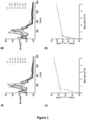
- FIG. 1 Metal chelating properties of compounds 10 and 11.
- UV-Vis spectra of QNs (A) 10 and (B) 11 (30 ⁇ M) alone or in the presence of equimolar quantity of metal ions in buffer (20 mM HEPES, 150 mM NaCl, pH 7.4) at room temperature.
- the present invention provides in a first aspect a compound of general formula I wherein
- R 1 is a -C 1-4 alkyl.
- R 1 is a substituted or unsubstituted phenyl, wherein the phenyl, if substituted, is substituted by one or more (such as one, two or three) substituents independently selected from -H, -F, -Cl, -Br, -I, -Me, -Et, -Pr, -/Pr, -OMe, -OEt, -OiPr, -OH, -NO 2 , -NH 2 , -CF 3 , and -OCF 3 ;.
- substituents independently selected from -H, -F, -Cl, -Br, -I, -Me, -Et, -Pr, -/Pr, -OMe, -OEt, -OiPr, -OH, -NO 2 , -NH 2 , -CF 3 , and -OCF 3 ;.
- R 1 is a substituted or unsubstituted benzyl, wherein the benzyl, if substituted, is substituted by one or more (such as one, two or three) substituents independently selected from -H, -F, -Cl, -Br, -I, -Me, -Et, -Pr, - i Pr, -OMe, -OEt, -O i Pr, -OH, -NO 2 , -NH 2 , -CF 3 , and -OCF 3 ;.
- substituents independently selected from -H, -F, -Cl, -Br, -I, -Me, -Et, -Pr, - i Pr, -OMe, -OEt, -O i Pr, -OH, -NO 2 , -NH 2 , -CF 3 , and -OCF 3 ;.
- R 2 is H.
- R 2 is -C 1-4 alkyl.
- R 2 is phenyl
- R 2 is halogen
- R 2 is OR 3 .
- R 3 in OR 3 is H.
- R 3 in OR 3 is C 1-4 alkyl, optionally substituted by one or more R 4 groups selected from halogen, -OH, -OC 1-4 alkyl, -NH 2 , -NH(C 1-4 alkyl) or Cy 1 .
- R 3 in OR 3 is C 1-4 alkyl, optionally substituted by Cy 1 .
- Cy 1 represents a 6-membered ring, saturated, partially unsaturated or aromatic, which contains optionally from 1 to 3, such as 1 or 2, heteroatoms selected among N, O, Se and S; Cy 1 may be attached to rest of the molecule through any C or N atom available, and Cy 1 is optionally substituted by one or more R 5 groups.
- Cy 1 represents a 6-membered ring, saturated, partially unsaturated or aromatic, which contains optionally from 1 to 3 N atoms, such as 1 or 2 N atoms; Cy 1 may be attached to rest of the molecule through any C or N atom available, and Cy 1 is optionally substituted by one or more R 5 groups.
- R 2 NHR 3 R 2 NHR 3 .
- R 3 in -NHR 3 is H.
- R 3 in -NHR 3 is C 1-4 alkyl, optionally substituted by one or more R 4 groups selected from halogen, -OH, -OC 1-4 alkyl, -NH 2 , -NH(C 1-4 alkyl) or Cy 1 .
- R 3 in -NHR 3 is C1-4 alkyl, optionally substituted by Cy 1 .
- Cy 1 represents a 6-membered ring, saturated, partially unsaturated or aromatic, which contains optionally from 1 to 3, such as 1 or 2, heteroatoms selected among N, O, Se and S; Cy 1 may be attached to rest of the molecule through any C or N atom available, and Cy 1 is optionally substituted by one or more R 5 groups.
- Cy 1 represents a 6-membered ring, saturated, partially unsaturated or aromatic, which contains optionally from 1 to 3 N atoms, such as 1 or 2 N atoms; Cy 1 may be attached to rest of the molecule through any C or N atom available, and Cy 1 is optionally substituted by one or more R 5 groups.
- Non-limiting examples of compounds of the present invention are:
- the compound is selected from the group consisting of:
- a Particularly preferred compound of the present invention is quinolin-2-yl nitrone ( Z )-N-benzyl-1-(8-hydroxyquinolin-2-yl)methanimine oxide, which structural formula (formula II) is described below:
- C 1-4 alkyl means a straight or branched chain non-cyclic hydrocarbon having 1, 2, 3 or 4 carbon atoms.
- C 1-4 alkyl includes methyl, ethyl, propyl, isopropyl, butyl, sec-butyl and tert-butyl.
- Preferred examples of "C 1-4 alkyl” are methyl and tert-butyl.
- C 2-4 alkynyl means a straight or branched chain non-cyclic hydrocarbon having 2, 3 or 4 carbon atoms and including at least one carbon-carbon triple bond.
- C 2-4 alkynyl includes ethynyl, 2-propynyl, 3-propynyl, 2-butynyl and 3-butynyl.
- any of the compounds mentioned as examples throughout the present invention can be used separately or in combination, particularly as adjuvant therapy administered simultaneously, alternatively or successively with respect to a first-line therapy suitable for the treatment of a neurodegenerative disease, such as Alzheimer's disease, Parkinson's disease and amyotrophic lateral sclerosis.
- a neurodegenerative disease such as Alzheimer's disease, Parkinson's disease and amyotrophic lateral sclerosis.
- the present invention provides a pharmaceutical composition
- a pharmaceutical composition comprising a compound of the present invention, or geometric isomers thereof, and a pharmaceutically acceptable excipient and/or carrier.
- the present invention provides a compound or pharmaceutical composition of the present invention for use in medicine.
- the present invention provides a compound or pharmaceutical composition of the present invention for use in the treatment of a neurodegenerative disease, such as Alzheimer's disease, Parkinson's disease and amyotrophic lateral sclerosis.
- a neurodegenerative disease such as Alzheimer's disease, Parkinson's disease and amyotrophic lateral sclerosis.
- the present invention provides a compound or pharmaceutical composition of the present invention for use as adjuvant therapy.
- the adjuvant therapy may be administered simultaneously, alternatively or successively with respect to a first-line therapy suitable for the treatment of a neurodegenerative disease, such as Alzheimer's disease, Parkinson's disease and amyotrophic lateral sclerosis.
- a neurodegenerative disease such as Alzheimer's disease, Parkinson's disease and amyotrophic lateral sclerosis.
- IR spectra were obtained on a Perkin-Elmer Spectrum One spectrophotometer. 1 H NMR spectra were recorded with a Varian VXR-200S spectrometer, using tetramethylsilane as internal standard and 13 C NMR spectra were recorded with a Bruker WP-200-SY. All the assignments for protons and carbons were in agreement with 2D COSY, HSQC, HMBC, and 1D NOESY spectra. Values with (*) can be interchanged. The purity of compounds was checked by elemental analyses, conducted on a Carlo Erba EA 1108 apparatus, and confirmed to be ⁇ 95%.
- IC 50 values were determined by plotting RA against the applied inhibitor concentrations, with the experimental data fitted to a four-parameter logistic function (GraphPad Prism 9.3, GraphPad Software, San Diego, CA, USA). Donepezil was used as a positive control (Table 1).
- RA (vi - b) / (vo - b), where vi is the velocity in the presence of the test compounds, and v0 is the control velocity in the presence of DMSO.
- IC 50 values were determined by plotting the residual MAO activities against the applied inhibitor concentrations, with the experimental data fitted to a Hill four-parameter equation (GraphPad Prism 9.3, GraphPad Software, San Diego, CA, USA).
- hMAO-B was incubated at 100-fold final concentration with the inhibitors at 10-fold IC50 concentration at 37 °C (volume, 50 ⁇ L). After 15 min, the mixture was diluted 100-fold into the reaction buffer containing Amplex Red, HRP, and p-tyramine hydrochloride. The final concentrations of all reagents and of hMAO-B were the same as described above. Control experiments were performed in the same manner, replacing the inhibitor solution with DMSO (Table 1). Table 1.
- IC 50 values are average of three independent experiments, each performed in triplicate; b n.a., not active (residual activity - RA at 100 ⁇ M ⁇ 50%). c nonspecific inhibition at the screening concentration (100 ⁇ M) due to solubility issues, inhibition disappears upon dilution (10 ⁇ M). d IC 50 value do not reflect the true affinity of the compound due to the IC 50 value approaching the concentration of the hBChE (approx. 1 nM) in the in vitro assays.
- DPPH (2,2-diphenyl-1-picrylhydrazyl radical) was dissolved in MeOH (150 ⁇ L, 140 ⁇ M) and added to 150 ⁇ L methanol solution of the test sample (screening at 100 ⁇ M, serial dilution of compounds for EC 50 determination) or methanol (negative control) on 96-well microtiter plates (Brand microplate, pureGrade, F-bottom). The microtiter plate was incubated at room temperature in the dark for 90 min.
- the free-radical scavenging potency is expressed as the concentration that scavenged 50% of the DPPH free radicals (EC 50 ) ⁇ SEM.
- Compounds 10 and 11 displayed the free-radical scavenging potency with EC 50 values of 119.2 ⁇ 1.2 ⁇ M and 126.0 ⁇ 0.1 ⁇ M, respectively. Resveratrol and Trolox were used as the positive controls under the same assay conditions.
- the chelation properties were determined in HEPES buffer (20 mM, 150 mM NaCl, pH 7.4) using a 96-well microplate reader (Synergy HT; BioTek Instruments, Inc., VT, USA).
- 30 ⁇ M compound solution was treated with equimolar concentrations of CuCl 2 , ZnCl 2 , CoCl 2 , MgCl 2 , CaCl 2 , FeCl 2 , FeCl 3 , and AlCl 3 .
- the solution of FeCl 2 was prepared in the presence of 1 mM ascorbic acid.
- the absorption spectra were recorded after 30 min incubation at room temperature.
- the chelation was detected by the change in the absorption spectra, which was specific for each metal ion.
- the Cu 2+ binding stoichiometry was resolved by titration of a 30 ⁇ M buffered solution of the compounds with additions of CuCl 2 buffered stock solution.
- the absorption of the compounds in the absence and presence of increasing Cu 2+ concentrations (0-150 ⁇ M) were recorded at the most responsive wavelength after 30 min incubation at room temperature.
- the absorbance differences in the absence and presence of Cu 2+ were plotted against the Cu 2+ /compound molar ratio.
Landscapes
- Chemical & Material Sciences (AREA)
- Organic Chemistry (AREA)
- Health & Medical Sciences (AREA)
- Engineering & Computer Science (AREA)
- Bioinformatics & Cheminformatics (AREA)
- Biomedical Technology (AREA)
- Neurology (AREA)
- Neurosurgery (AREA)
- General Chemical & Material Sciences (AREA)
- Animal Behavior & Ethology (AREA)
- Veterinary Medicine (AREA)
- Medicinal Chemistry (AREA)
- Nuclear Medicine, Radiotherapy & Molecular Imaging (AREA)
- Pharmacology & Pharmacy (AREA)
- Life Sciences & Earth Sciences (AREA)
- Chemical Kinetics & Catalysis (AREA)
- General Health & Medical Sciences (AREA)
- Public Health (AREA)
- Hospice & Palliative Care (AREA)
- Psychiatry (AREA)
- Psychology (AREA)
- Pharmaceuticals Containing Other Organic And Inorganic Compounds (AREA)
Abstract

Description
- The present invention relates to the fields of medicinal chemistry and medicine, and quinolin-2-yl nitrones as pharmacologically active compounds. These compounds can be in the form of a mixture of enantiomers or in the form of pure enantiomers, in the form of pharmaceutically acceptable salts, as hydrates or solvates thereof. The compounds of the present invention are useful for the treatment of neurodegenerative diseases such as Alzheimer's disease, Parkinson's disease and amyotrophic lateral sclerosis.
- Alzheimer's disease (AD) is a neurodegenerative disease characterized by progressive deterioration of memory and learning ability due to a variety of pathological changes in the central nervous system (CNS) (Scheltens, P.; Strooper, B. D.; Kivipelto, M.; Holstege, H.; Chételat, G.; Teunissen, C. E.; Cummings, J.; Flier, W. M. van der. The Lancet 2021, 397, 1577-1590). The literature review shows that inhibition of cholinesterases (ChEs), namely acetylcholinesterase (AChE) and butyrylcholinesterase (BChE), monoamine oxidases (MAO-A/B), and β-secretase in addition to modulation of monoaminergic receptors remains the focus of AD-related small molecule drug design (do Carmo Carreiras, M.; Ismaili, L.; Marco-Contelles, J. Bioorg. Med. Chem. Lett. 2020, 30, 126880; Kucwaj-Brysz, K.; Baltrukevich, H.; Czarnota, K.; Handzlik, J. Bioorg. Med. Chem. Lett. 2021, 49, 128275; N. M. Moussa-Pacha, S. M. Abdin, H. A. Omar, H. Alniss, T. H. Al-Tel. Med. Res. Rev. 2020, 40, 339-384; Lalut, J.; Karila, D.; Dallemagne, P.; Rochais, C. Future Med. Chem. 2017, 9, 781-795.) Selective loss of cholinergic neurons leads to a decrease in acetylcholine (ACh) levels in specific brain regions that mediate cognition (Hampel, H.; Mesulam, M.-M.; Cuello, A. C.; Farlow, M. R.; Giacobini, E.; Grossberg, G. T.; Khachaturian, A. S.; Vergallo, A.; Cavedo, E.; Snyder, P. J.; Khachaturian, Z. S. Brain 2018, 141, 1917-1933). Therefore, the inhibition of AChE or BChE increases ACh levels at the synaptic cleft and restores cholinergic neurotransmission (Wang, H.; Zhang, H. ACS Chem. Neurosci. 2019, 10, 852-862). On the other hand, MAOs catalyze the oxidation of amines that act as neurotransmitters, releasing H2O2 and consequently reactive oxygen and nitrogen species (Jones, D. N.; Raghanti, M. A. J. Chem. Neuroanat. 2021, 114, 101957). Inhibiting MAO imparts potent neuroprotective effects by decreasing oxidative stress, and restores impaired synaptic plasticity, memory and learning in mouse model of AD via control of tonic GABA levels (Manzoor, S.; Hoda, N. Eur. J. Med. Chem. 2020, 206, 112787; Youdim, M. B. H. J. Neural Transm. 2018, 125, 1719-1733; Jo, S.; Yarishkin, O.; Hwang, Y. J.; Chun, Y. E.; Park, M.; Woo, D. H.; Bae, J. Y.; Kim, T.; Lee, J.; Chun, H.; Park, H. J.; Lee, D. Y.; Hong, J.; Kim, H. Y.; Oh, S.-J.; Park, S. J.; Lee, H.; Yoon, B.-E.; Kim, Y.; Jeong, Y.; Shim, I.; Bae, Y. C.; Cho, J.; Kowall, N. W.; Ryu, H.; Hwang, E.; Kim, D.; Lee, C. J. Nat. Med. 2014, 20, 886-896; Cho, H.-U.; Kim, S.; Sim, J.; Yang, S.; An, H.; Nam, M.-H.; Jang, D.-P.; Lee, C. J. Exp. Mol. Med. 2021, 53, 1148-1158).
- Parkinson's disease (PD) is a chronic neurodegenerative disease affecting 1% of people over the age of 60. PD is characterized by the progressive death of dopaminergic neurons in the substantia nigra, and the formation of Lewy bodies containing aggregates of α-synuclein (Bloem, B. R.; Okun, M. S.; Klein, C. The Lancet 2021, 397, 2284-2303; Hayes, M. T. Am. J. Med. 2019, 132, 802-807). The deficit in dopaminergic neurotransmission is the basis for the well-known symptoms associated with PD pathology, namely tremor, rigidity, bradykinesia, and postural instability. Approved therapies for PD increase dopamine levels in striatum via selective MAO-B inhibition - for example, rasagiline is prescribed as monotherapy in the early stages of PD and as add-on therapy to levodopa in advanced stages of PD (Armstrong, M. J.; Okun, M. S. JAMA 2020, 323, 548-560). Inhibition of MAO-B is thus a validated approach in PD, while a recently developed reversible MAO-B inhibitor also rescued memory impairment and learning in in APP/PS1 mice model of AD (Park, J.-H.; Ju, Y. H.; Choi, J. W.; Song, H. J.; Jang, B. K.; Woo, J.; Chun, H.; Kim, H. J.; Shin, S. J.; Yarishkin, O.; Jo, S.; Park, M.; Yeon, S. K.; Kim, S.; Kim, J.; Nam, M.-H.; Londhe, A. M.; Kim, J.; Cho, S. J.; Cho, S.; Lee, C.; Hwang, S. Y.; Kim, S. W.; Oh, S.-J.; Cho, J.; Pae, A. N.; Lee, C. J.; Park, K. D. Sci. Adv. 5, eaav0316).
- The invention relates to quinolin-2-yl nitrones with the formula I, in the form of pure enantiomers or mixtures of enantiomers, and their pharmaceutically acceptable salts. These compounds can be used as drugs for the treatment of neurodegenerative diseases by inhibiting BChE or MAO-B, either alone or in combination with other beneficial activities, such as antioxidant properties and metal chelation.

-
Figure 1 . Metal chelating properties ofcompounds - Several drugs have been approved for the treatment of neurodegenerative diseases, but they cause serious side effects and have limited efficacy in vivo. Therefore, there is an urgent need for the discovery of new drugs for the treatment of neurodegenerative diseases, especially Alzheimer's disease, Parkinson's disease, and amyotrophic lateral sclerosis.
- The above problem is solved by the present invention based on the surprising finding that quinolin-2-yl nitrones with general formula (I) show pharmacological activities benefitial for the treatment of neurodegenerative diseases.
- The present invention provides in a first aspect a compound of general formula I

- R1 represents a -C1-4 alkyl, a substituted or unsubstituted phenyl or a substituted or unsubstituted benzyl, wherein the phenyl or benzyl, if substituted, is substituted by one or more (such as one, two or three) substituents independently selected from -H, -F, -Cl, -Br, -I, -Me, -Et, -Pr, - iPr, -OMe, -OEt, -OiPr, -OH, -NO2, -NH2, -CF3, and -OCF3;
- R2 represents -H, -C1-4 alkyl, phenyl, halogen, -OR3 or -NHR3;
- R3 represents -H or -C1-4 alkyl, with -C1-4 alkyl being optionally substituted by one or more R4 groups;
- each R4 independently represents halogen, -OH, -OC1-4 alkyl, -NH2, - NH(C1-4 alkyl) or Cy1;
- Cy1 represents a 5 to 8-membered ring, saturated, partially unsaturated or aromatic, which contains optionally from 1 to 3 heteroatoms selected among N, O, Se and S; Cy1 may be attached to rest of the molecule through any C or N atom available, and Cy1 is optionally substituted by one or more R5 groups;
- each R5 independently represents -C1-4 alkyl optionally substituted by one or more R6; and
- each R6 independently represents -C2-4 alkynyl.
- According to some embodiments, R1 is a -C1-4 alkyl.
- According to some embodiments, R1 is a substituted or unsubstituted phenyl, wherein the phenyl, if substituted, is substituted by one or more (such as one, two or three) substituents independently selected from -H, -F, -Cl, -Br, -I, -Me, -Et, -Pr, -/Pr, -OMe, -OEt, -OiPr, -OH, -NO2, -NH2, -CF3, and -OCF3;.
- According to some embodiments, R1 is a substituted or unsubstituted benzyl, wherein the benzyl, if substituted, is substituted by one or more (such as one, two or three) substituents independently selected from -H, -F, -Cl, -Br, -I, -Me, -Et, -Pr, -iPr, -OMe, -OEt, -OiPr, -OH, -NO2, -NH2, -CF3, and -OCF3;.
- According to some embodiments, R2 is H.
- According to some embodiments, R2 is -C1-4 alkyl.
- According to some embodiments, R2 is phenyl.
- According to some embodiments, R2 is halogen.
- According to some embodiments, R2 is OR3.
- According to some embodiments, R3 in OR3 is H.
- According to some embodiments, R3 in OR3 is C1-4 alkyl, optionally substituted by one or more R4 groups selected from halogen, -OH, -OC1-4 alkyl, -NH2, -NH(C1-4 alkyl) or Cy1.
- According to some embodiments, R3 in OR3 is C1-4 alkyl, optionally substituted by Cy1.
- According to some embodiments, Cy1 represents a 6-membered ring, saturated, partially unsaturated or aromatic, which contains optionally from 1 to 3, such as 1 or 2, heteroatoms selected among N, O, Se and S; Cy1 may be attached to rest of the molecule through any C or N atom available, and Cy1 is optionally substituted by one or more R5 groups.
- According to some embodiments, Cy1 represents a 6-membered ring, saturated, partially unsaturated or aromatic, which contains optionally from 1 to 3 N atoms, such as 1 or 2 N atoms; Cy1 may be attached to rest of the molecule through any C or N atom available, and Cy1 is optionally substituted by one or more R5 groups.
- According to some embodiments, R2 NHR3.
- According to some embodiments, R3 in -NHR3 is H.
- According to some embodiments, R3 in -NHR3 is C1-4 alkyl, optionally substituted by one or more R4 groups selected from halogen, -OH, -OC1-4 alkyl, -NH2, -NH(C1-4 alkyl) or Cy1.
- According to some embodiments, R3 in -NHR3 is C1-4 alkyl, optionally substituted by Cy1.
- According to some embodiments, Cy1 represents a 6-membered ring, saturated, partially unsaturated or aromatic, which contains optionally from 1 to 3, such as 1 or 2, heteroatoms selected among N, O, Se and S; Cy1 may be attached to rest of the molecule through any C or N atom available, and Cy1 is optionally substituted by one or more R5 groups.
- According to some embodiments, Cy1 represents a 6-membered ring, saturated, partially unsaturated or aromatic, which contains optionally from 1 to 3 N atoms, such as 1 or 2 N atoms; Cy1 may be attached to rest of the molecule through any C or N atom available, and Cy1 is optionally substituted by one or more R5 groups.
- Non-limiting examples of compounds of the present invention are:
- compounds of formula I, wherein R1 is a methyl (CH3) group, R2 is a hydrogen atom, hydroxyl, a methoxy group, -NH-CH3, or -N-(CH3)2;
- compounds of formula I, wherein R1 is a tert-butyl (t-C4H9) group, R2 is a hydrogen atom, hydroxyl, a methoxy group, -NH-CH3, or -N-(CH3)2; and
- compounds of formula I, wherein R1 is a benzyl (CH2C6H5) group, R2 is a hydrogen atom, hydroxyl, a methoxy group, -NH-CH3, or -N-(CH3)2.
- According to some embodiments, the compound is selected from the group consisting of:
- (Z)-N-tert-Butyl-1-(8-(3-(piperidin-1-yl)propoxy)quinolin-2-yl)methanimine oxide;
- (Z)-N-Benzyl-1-(8-(3-(piperidin-1-yl)propoxy)quinolin-2-yl)methanimine oxide;
- (Z)-N-tert-Butyl-1-(8-(3-(4-(prop-2-yn-1-yl)piperazin-1-yl)propoxy)quinolin-2-yl)methanimine oxide;
- (Z)-N-Benzyl-1-(8-(3-(4-(prop-2-yn-1-yl)piperazin-1-yl)propoxy)quinolin-2-yl)methanimine oxide;
- (Z)-1-(8-Hydroxyquinolin-2-yl)-N-methylmethanimine oxide;
- (Z)-N-tert-butyl-1-(8-hydroxyquinolin-2-yl)methanimine oxide; and
- (Z)-N-Benzyl-1-(8-hydroxyquinolin-2-yl)methanimine oxide.
- A Particularly preferred compound of the present invention is quinolin-2-yl nitrone (Z)-N-benzyl-1-(8-hydroxyquinolin-2-yl)methanimine oxide, which structural formula (formula II) is described below:

- (Z)-N-Benzyl-1-(8-hydroxyquinolin-2-yl)methanimine oxide showed striking antioxidant capacity against hydroxyl radicals and thus a remarkable activity for neuroprotection of primary cultured neurons after experimental ischemia, as well as a very potent and selective capacity to inhibit human MAO-B and human BChE, as well as strong bio-metal (Zn, Fe, Cu) chelating properties.
- Pharmaceutically acceptable pro-drugs, polymorphs, salts and hydrates of any of the above compounds of formula I are included within the present invention.
- As used herein, the term "C1-4 alkyl" means a straight or branched chain non-cyclic hydrocarbon having 1, 2, 3 or 4 carbon atoms. The term "C1-4 alkyl" includes methyl, ethyl, propyl, isopropyl, butyl, sec-butyl and tert-butyl. Preferred examples of "C1-4 alkyl" are methyl and tert-butyl.
- As used herein, the term "C2-4 alkynyl" means a straight or branched chain non-cyclic hydrocarbon having 2, 3 or 4 carbon atoms and including at least one carbon-carbon triple bond. The term "C2-4 alkynyl" includes ethynyl, 2-propynyl, 3-propynyl, 2-butynyl and 3-butynyl.
- It is noted that any of the compounds mentioned as examples throughout the present invention can be used separately or in combination, particularly as adjuvant therapy administered simultaneously, alternatively or successively with respect to a first-line therapy suitable for the treatment of a neurodegenerative disease, such as Alzheimer's disease, Parkinson's disease and amyotrophic lateral sclerosis.
- Therefore, in a further aspect the present invention provides a pharmaceutical composition comprising a compound of the present invention, or geometric isomers thereof, and a pharmaceutically acceptable excipient and/or carrier.
- In a further aspect the present invention provides a compound or pharmaceutical composition of the present invention for use in medicine.
- In a further aspect the present invention provides a compound or pharmaceutical composition of the present invention for use in the treatment of a neurodegenerative disease, such as Alzheimer's disease, Parkinson's disease and amyotrophic lateral sclerosis.
- In a further aspect the present invention provides a compound or pharmaceutical composition of the present invention for use as adjuvant therapy.
- The adjuvant therapy may be administered simultaneously, alternatively or successively with respect to a first-line therapy suitable for the treatment of a neurodegenerative disease, such as Alzheimer's disease, Parkinson's disease and amyotrophic lateral sclerosis.
- The invention is illustrated, though not limited, by the following examples:
- General Synthesis Methods. Reactions were monitored by TLC using precoated silica gel aluminium plates containing a fluorescent indicator (Merck, 5539). Detection was done by UV (254 nm) followed by charring with sulfuric-acetic acid spray, 1% aqueous potassium permanganate solution or 0.5% phosphomolybdic acid in 95% EtOH. Anhydrous Na2SO4 was used to dry organic solutions during work-ups and the removal of solvents was carried out under vacuum with a rotary evaporator. Flash column chromatography was performed using silica gel 60 (230-400 mesh, Merck). Melting points were determined on a Kofler block and are uncorrected. IR spectra were obtained on a Perkin-Elmer Spectrum One spectrophotometer. 1H NMR spectra were recorded with a Varian VXR-200S spectrometer, using tetramethylsilane as internal standard and 13C NMR spectra were recorded with a Bruker WP-200-SY. All the assignments for protons and carbons were in agreement with 2D COSY, HSQC, HMBC, and 1D NOESY spectra. Values with (*) can be interchanged. The purity of compounds was checked by elemental analyses, conducted on a Carlo Erba EA 1108 apparatus, and confirmed to be ≥95%.
- General procedure for the synthesis of nitrones. A solution of the corresponding carbaldehyde (1 mmol), Na2SO4 (3 mmol), AcONa (2 mmol) and the appropriate N-alkylhydroxylamine hydrochloride (1.5 mmol) in EtOH (5 mL) was heated at 90 °C for 2-3 h under MWI. After that time, the solvent was evaporated and the crude mixture was purified on column chromatography using the indicated mixtures of solvents.

- 8-(3-(Piperidin-1-yl)propoxy)quinoline-2-carbaldehyde (2). A solution of commercial 8-hydroxyquinoline-2-carbaldehyde (1) (103.9 mg, 0.6 mmol) in CHCl3 (3.6 mL)/ water (0,6 mL), K2CO3 (249 mg, 1.8 mmol) and commercial 1-(3-chloropropyl)piperidine (178.32 mg, 0.9 mmol) were added. The mixture was vigorously stirred and heated at 80 °C for 1 d. After that time, the solvent was evaporated under reduced pressure and the crude mixture was purified on column chromatography (DCM/MeOH 7%) to yield compound 2 as a yellow solid (158.7 mg, 89%): mp 44-6°C; IR (KBr) ν 2932, 1709, 1462, 1323, 1102 cm-1; 1H NMR (400 MHz, CDCl3) δ 10.20 (s, 1H), 8.18 (dd, J = 8.5, 0.9 Hz, 1H), 7.97 (d, J = 8.4 Hz, 1H), 7.52 (t, J = 8.0 Hz, 1H), 7.37 (dd, J = 8.3, 1.1 Hz, 1H), 7.12 (dd, J = 7.9, 1.2 Hz, 1H), 4.29 (t, J = 6.8 Hz, 2H), 2.62 - 2.51 (m, 2H), 2.50 - 2.30 (m, 4H), 2.25 - 2.12 (m, 2H), 1.55 (p, J = 5.6 Hz, 4H), 1.39 (q, J = 5.7, 4.3 Hz, 2H); 13C NMR (101 MHz, CDCl3) δ 193.9, 155.5, 151.4, 140.1, 137.2, 131.4, 129.8, 119.5, 117.7, 109.9, 67.9, 55.78, 54.6 (2C), 26.33, 25.8 (2C), 24.3. HRMS (ESI_ACN) Calcd. for C18H22N2O2: 298.1682. Found: 298.1690.
- (Z)-N-tert-Butyl-1-(8-(3-(piperidin-1-yl)propoxy)quinolin-2-yl)methanimine oxide (3). Following the general method for the synthesis of nitrones, a solution of carbaldehyde 2 (79.35 mg, 0.27 mmol), Na2SO4 (76.68 mg, 0.54 mmol), AcONa (26.57 mg, 0.324 mmol) and N-tert-butylhydroxylamine hydrochloride (40.69 mg, 0.324 mmol) in EtOH (5 mL) was heated at 95 °C for 3 h under MWI. Then, the solvent was evaporated and the crude mixture was purified on column chromatography (DCM/MeOH 7%) to yield
compound 3 as a yellow solid (52.3 mg, 52%): mp 135-7 °C; IR (KBr) v 3493, 2942, 1615, 1261, 1096 cm-1; 1H NMR (400 MHz, CDCl3) δ 9.27 (d, J = 8.8 Hz, 1H), 8.36 - 8.13 (m, 1H), 7.53 - 7.41 (m, 2H), 7.16 - 7.04 (m, 1H), 4.37 (t, J = 5.7 Hz, 2H), 3.61 (d, J = 11.9 Hz, 2H), 3.43 - 3.28 (m, 2H), 2.68 (dd, J = 15.8, 6.7 Hz, 4H), 2.32 (d, J = 13.8 Hz, 2H), 2.00 - 1.79 (m, 4H), 1.67 (s, 9H); 13C NMR (101 MHz, CDCl3) δ 137.5, 132.1, 129.6, 127.6, 127.5, 121.9, 120.4, 119.1, 110.2, 110.0, 72.5. 66.7, 55.4, 53.5 (2C), 28.4 (3C), 23.9, 22.7 (2C), 22.2. HRMS (ESI_ACN) Calcd. for C22H31N3O2: 369.24163. Found: 369.24136. - (Z)-N-Benzyl-1-(8-(3-(piperidin-1-yl)propoxy)quinolin-2-yl)methanimine oxide (4). Following the general method for the synthesis of nitrones, a solution of carbaldehyde 2 (79.35 mg, 0.27 mmol), Na2SO4 (76.68 mg, 0.54 mmol), AcONa (26.57 mg, 0.324 mmol) and N-benzylhydroxylamine hydrochloride (51.71 mg, 0.324 mmol) in EtOH (5 mL) was heated at 90 °C for 2 h under MWI. After that time, the solvent was evaporated and the crude mixture was purified on column chromatography (DCM/MeOH 7%) to yield compound 4 as a mixture of Z and E isomers in a 3.5:1 ratio, that we were unable to separate, as a yellow solid (59.7 mg, 55%): mp 108-10 °C; IR (KBr) v 3420, 2935, 1600, 1455, 1105 cm-1; 1H NMR (400 MHz, CDCl3) [(minor isomer E) 8.17 (d, J = 8.8 Hz, 1H, H4), 7.79 (s, 1H, CH=N), 7.74 (dd, J = 8.4, 1.1 Hz, 1H, H3), 7.55 (dd, J= 7.0, 2.5 Hz, 1H, H5), 7.09 (br d, J= 1.5 Hz, 1H, H7), 5.43 (s, 1H, CH 2C6H5), (major isomer Z) 9.15 (d, J = 8.8 Hz, 1H, H4), 8.17 (d, J = 8.8 Hz, 1H, H3), 8.08 (s, 1H, CH=N), 7.07 (br d, J= 7.5 Hz, 1H, H7), 5.15 (s, 1H, CH 2C6H5)], 8.28 - 8.26 (m, 1H, C6H5), 7.54 (br d, J= Hz, 1H, H5), 7.44 - 7.38 (m, 6H, H6, C6H5), 7.45 (t, J= Hz, 1H, H6), 7.52 - 7.37 (m, 4H, C6H5), 4.31 (t, J= Hz., 2H, OCH2), 3.15 - 2.65 (m, 6H), 2.43-2.41 (m, 2H), 1.98-1.70 (m, 4 H), 1.65-1.51 (m, 2H). HRMS (ESI_ACN) Calcd. for C25H29N3O2: 403.22598. Found: 403.22528.

- 1-(3-Chloropropyl)-4-(prop-2-yn-1-yl)piperazine (5). To solution of commercial 1-(3-chloropropyl)piperazine dihydrochloride (702 mg, 3 mmol, 1 equiv), TEA (0,84 mL, 6 mmol, 2 equiv) in dry CH2Cl2 (5 mL), cooled at 0 °C, propargyl bromide (0,81 mL, 9 mmol, 3 equiv) was added over 30 min under Ar. The mixture was stirred at rt for 24 h and then treated with a saturated sodium bicarbonate solution (10 mL). The organic layer was separated and washed with saturated brine, and dried over anhydrous sodium sulfate. The solvent was removed under reduced pressure and the residue purified by column chromatography through silica gel (CH2Cl2/
MeOH 1%-2%), to yield 5 (312 mg, 52%) as a colorless oil: 1H NMR (400 MHz, CDCl3) δ 3.53 (t, J = 6.6 Hz, 2H), 3.23 (d, J = 2.5 Hz, 2H), 2.54 - 2.39 (m, 10H), 2.18 (t, J = 2.5 Hz, 1H), 1.88 (p, J = 6.7 Hz, 2H); 13C NMR (101 MHz, CDCl3) δ 78.8, 73.2, 55.4, 53.1 (2C), 51.9 (2C), 46.8, 43.2, 29.9. - 8-(3-(4-(Prop-2-yn-1-yl)piperazin-1-yl)propoxy)quinoline-2-carbaldehyde (6). A solution of commercial 8-hydroxyquinoline-2-carbaldehyde (1) (91.69 mg, 0.53 mmol) in CHCl3 (5 mL) was added K2CO3 (219.42 mg, 1.59 mmol) and 1-(3-chloropropyl)-4-(prop-2-yn-1-yl)piperazine (5) (138 mg, 0.69 mmol); then, water (1 mL) was added. The mixture was vigorously stirred and heated at 80 °C for 2 d. After that time, the solvent was evaporated under reduced pressure and the crude mixture was purified on column chromatography (DCM/
MeOH 4%) to yield compound 6 as a yellow solid (95.5 mg, 53%): mp 99-101°C; IR (KBr) v 3128, 2829, 1715, 1462, 1320, 1094 cm-1; 1H NMR (400 MHz, CDCl3) δ 10.20 (s, 1H), 8.20 (d, J = 8.4 Hz, 1H), 7.98 (d, J = 8.5 Hz, 1H), 7.53 (t, J = 8.5 Hz, 1H), 7.39 (d, J = 8.5 Hz, 1H), 7.13 (d, J = 8.4 Hz, 1H), 4.31 (t, J = 6.5 Hz, 2H), 3.24 (s, 2H), 2.76 - 2.36 (m, 10H), 2.26 - 2.13 (m, 3H); 13C NMR (101 MHz, CDCl3) δ 193.8, 155.5, 151.4, 140.1, 137.2, 131.4, 129.8, 119.6, 117.8, 110.0, 78.8, 73.2, 67.7, 55.0, 53.0 (2C), 51.8 (2C), 46.8, 26.3. HRMS (ESI_ACN) Calcd. for C20H23N3O2: 337.1790. Found: 337.1790. - (Z)-N-tert-Butyl-1-(8-(3-(4-(prop-2-yn-1-yl)piperazin-1-yl)propoxy)quinolin-2-yl)methanimine oxide (7). Following the general method for the synthesis of nitrones, the reaction of carbaldehyde 6 (69 mg, 0.20 mmol) with Na2SO4 (57 mg, 0.4 mmol), AcONa (26 mg, 0.32 mmol) and N-tert-butylhydroxylamine hydrochloride (38 mg, 0.3 mmol) in EtOH (5 mL) after 5 min, and column chromatography (DCM/MeOH 3%) yielded compound 7 as a yellow gum (55.7 mg, 66%): IR (KBr) v 3428, 2819, 1451, 13206, 1155, 1104 cm-1; 1H NMR (400 Hz, CDCl3) δ 9.26 (d, J = 8.8 Hz, 1H), 8.19 (d, J = 8.8 Hz, 1H), 8.13 (s, 1H), 7.44-7.38 (m, 2H,), 7.08-7.06 (m, 1H), 4.29 (t, J = 6.9 Hz, 2H), 3.30-3.28 (m, 2H), 2.63 (s, 10H), 2.32 - 2.17 (m, 3H), 1.65 (s, 9H); 13C NMR (126 MHz, CDCl3) δ 154.6, 149.8, 140.2, 136.6, 132.6, 129.5, 127.3, 121.7, 119.5, 109.0, 78.7, 73.4, 72.0, 67.7, 55.0, 53.0 (2C), 51.8 (2C), 46.8, 28.3 (3C), 26.3. HRMS (ESI_ACN) Calcd for C24H32N4O2: 408,2525. Found: 408,2525.
- (Z)-N-Benzyl-1-(8-(3-(4-(prop-2-yn-1-yl)piperazin-1-yl)propoxy)quinolin-2-yl)methanimine oxide (8). Following the general method for the synthesis of nitrones, a solution of carbaldehyde 6 (95.5 mg, 0.28 mmol), treated with Na2SO4 (79.52 mg, 0.56 mmol), NaHCOs (35.28 mg, 0.42 mmol) and N-benzylhydroxylamine hydrochloride (67.03 mg, 0.42 mmol), in THF (5 mL), reacted instantly. After that time, the solvent was evaporated and the crude mixture was purified on column chromatography (DCM/MeOH 3%) to yield compound 8 as a mixture of E and Z isomers in a 1.5:1 ratio, that we were unable to separate, as a yellow gum (92.5 mg, 75%): IR (KBr) v 3429, 2817, 1457, 1320, 1151, 1104 cm-1; 1H NMR (500 MHz, CDCl3) δ [(major isomer E) 8.17 (d, J = 8.5 Hz, 1H, H4), 7.81 (d, J = 8.5 Hz, 1H, H3), 7.75 (s, 1H, CH=N), 7.55 (dd, J= 7.8, 1.7 Hz, 1H, H5), 7.12 (dd, J= 7.7, 1.2 Hz, 1H, H7), 5.44 (s, 1H, CH2C6H5), 3.30 (d, J = 2.4 Hz, 2H, CH 2C≡CH), (minor isomer Z) 9.18 (d, J = 8.7 Hz, 1H, H4), 8.19 (d, J = 8.7 Hz, 1H, H3), 8.06 (s, 1H, CH=N), 7.10 (dd, J= 7.7, 1.3 Hz, 1H, H7), 5.14 (s, 1H, CH 2C6H5), 3.31 (d, J = 2.4 Hz, 2H, CH 2C≡CH)], 8.26 - 8.24 (m, 1H, C6H5), 7.45 (t, J= Hz, 1H, H6), 7.52 - 7.37 [m, 4H, H5 (minor)], C6H5), 4.31 (t, J= Hz, 2H, OCH2), 2.75 - 2.50 (m, 10H), 2.25-2.24 (m, 1H, CH2C≡CH), 2.24-2.16 (h, J= Hz, 2H, NCH2CH 2CH2O). HRMS (ESI_ACN) Calcd for C27H30ClN4O2: 442.2369. Found: 442.2369.
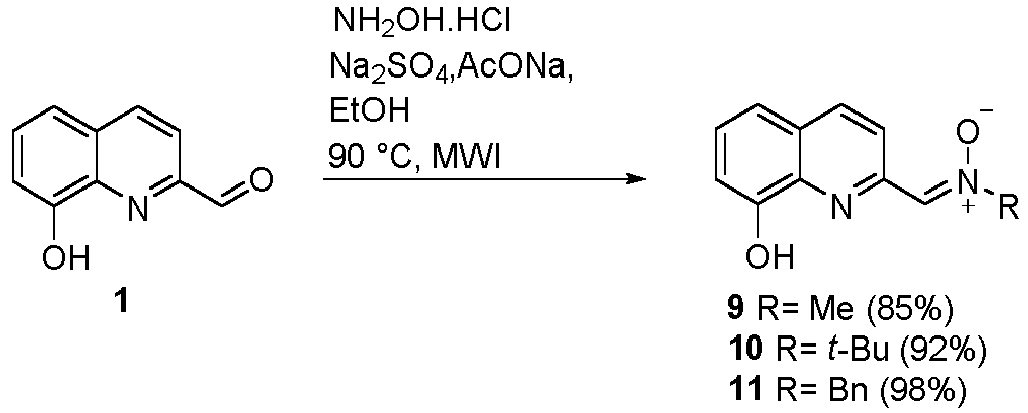
- (Z)-1-(8-Hydroxyquinolin-2-yl)-N-methylmethanimine oxide (9). Following the general method for the synthesis of nitrones, the reaction of 8-hydroxyquinoline-2-carbaldehyde (1) (173 mg, 1 mmol, 1 equiv) with Na2SO4 (426 mg, 3 mmol, 3 equiv), AcONa (160 mg, 2 mmol, 1.6 equiv) and N-methylhydroxylamine hydrochloride (239 mg, 1.5 mmol, 1.5 equiv) in EtOH (7 mL) at 90 °C for 10 min, after column chromatography (hexane/AcOEt 9/1) yielded compound 9 as a pale yellow solid (171 mg, 85%): 149-151 °C; 1H NMR (300 MHz, CDCl3) δ 9.16 (d, J = 8.8 Hz, 1H), 8.25 (d, J = 8.8 Hz, 1H), 8.03 (br s, 1H), 7.86 (s, 1H), 7.51-7.46 (m, 1H), 7.36 (dd, J = 7.6, 1.3 Hz, 1H), 7.18 (dd, J = 7.6, 1.3 Hz, 1H), 4.01 (s, 3H); 13C NMR (100 MHz, CDCl3) δ 152.1, 147.7, 138.1, 136.8, 136.4, 128.7, 128.6, 121.4, 117.8, 110.1, 55.1. HRMS (ESI_ACN) Calcd. for C11H10N2O2: 202,0742. Found 202,0742.
- (Z)-N-tert-butyl-1-(8-hydroxyquinolin-2-yl)methanimine oxide (10). Following the general method for the synthesis of nitrones, the reaction of 8-hydroxyquinoline-2-carbaldehyde (1) (173 mg, 1 mmol, 1 equiv) with Na2SO4 (426 mg, 3 mmol, 3 equiv), AcONa (160 mg, 2 mmol, 1.6 equiv) and N- tert-butylhydroxylamine hydrochloride (188 mg, 1.5 mmol, 1.5 equiv) in EtOH (7 mL) at 90 °C for 5 min, after column chromatography (hexane/AcOEt 9/1), yielded compound 10 as a pale yellow solid (159 mg, 92%): 103-4 °C; 1H NMR (400 MHz, CDCl3) δ 9.16 (d, J = 8.8 Hz, 1H), 8.16 (d, J = 8.8 Hz, 1H), 8.04 (br s , 1H), 7.97 (s, 1H), 7.41-7.39 (m, 1H), 7.27 (dd, J = 7.6, 1.2 Hz, 1H), 7.09 (dd, J = 7.6, 1.2 Hz, 1H), 1.62 (s, 9H); 13C NMR (100 MHz, CDCl3) δ 152.0, 148.5, 138.1, 136.7, 131.5, 128.5, 128.4, 121.7, 117.8, 110.0, 72.1, 28.4 (3C). HRMS (ESI_ACN) Calcd. for C14H16N2O2: 244,1212. Found 244,1212.
- (Z)-N-Benzyl-1-(8-hydroxyquinolin-2-yl)methanimine oxide (11). Following the general method for the synthesis of nitrones, the reaction of 8-hydroxyquinoline-2-carbaldehyde (1) (173 mg, 1 mmol, 1 equiv), Na2SO4 (426 mg, 3 mmol, 3 equiv.), AcONa (160 mg, 2 mmol, 1.6 equiv.) and N-benzylhydroxylamine hydrochloride (239 mg, 1.5 mmol, 1.5 equiv.) in EtOH (7 mL) was heated at 90°C during 10 min under mw irradiation. After that time, the solvent was evaporated and the crude mixture was purified on column chromatography (Hexanes/AcOEt 9/1) to yield
compound 11 as a pale yellow solid (272 mg, 98%): 110-1 °C; 1H NMR (400 MHz, CDCl3) δ 9.15 (d, J = 8.8 Hz, 1H), 8.22 (d, J = 8.8 Hz, 1H), 8.00 (br s, 1H), 7.88 (s, 1H), 7.55-7.51(m, 2H), 7.44-7.37 (m, 4H), 7.26 (dd, J = 7.6, 1.2 Hz, 1H), 7.08 (dd, J = 7.6, 1.2 Hz, 1H), 5.09 (s, 2H); 13C NMR (100 MHz, CDCl3) δ 152.1, 147.7, 138.1, 136.8, 135.3, 132.7, 129.5 (2C), 129.3, 129.2 (2C), 128.7, 128.6, 121.6, 117.8, 110.1, 72.1. HRMS (ESI_ACN) Calcd. for C17H14N2O2: 278,1055. Found 278,1055. - Inhibition of Cholinesterases. The inhibitory potencies of compounds against the ChEs were determined by the method of Ellman (Ellman, G. L.; Courtney, K. D.; Andres, V.; Featherstone, R. M. Biochem. Pharmacol. 1961, 7, 88-95). Briefly, compounds were incubated with Ellman's reagent (final concentration, 370 µM) and the ChEs (final concentration, approx. 1 nM or 100 pM hBChE or hAChE, respectively) in 0.1 M sodium phosphate (pH 8.0) for 5 min at 20 °C on 96-well microplates (Brand microplate, pureGrade, F-bottom). Reactions were started adding the substrate (final concentration, 500 µM butyrylthiocholine iodide [BTCI] or acetylthiocholine iodide [ATCI] for hBChE and hAChE, respectively). The final content of DMSO was always 1% (v/v). The increase in absorbance (λ = 412 nm) was monitored for 2 min using a microplate reader (Synergy HT, BioTek Instruments, VT, USA). The initial velocities in the presence (vi) and absence (vo) of the compounds were calculated, and the inhibitory potencies were expressed as residual activities (RA = vi / vo). The IC50 values were determined by plotting RA against the applied inhibitor concentrations, with the experimental data fitted to a four-parameter logistic function (GraphPad Prism 9.3, GraphPad Software, San Diego, CA, USA). Donepezil was used as a positive control (Table 1).
- Inhibition of Monoamine Oxidases. Recombinant microsomal hMAOs expressed in BTI-TN-5B1-4 cells, HRP (type II, lyophilized powder) and p-tyramine hydrochloride were purchased from Sigma Aldrich (Sigma Aldrich, MO, USA). 10-Acetyl-3,7-dihydroxyphenoxazine (Amplex Red) was synthesized as described previously (
von der Eltz, H.; DE; Guder, H.-J.; DE; Muhlegger, K.; DE. United States Patent: 5035998 - Hydrolase Substrates. 5035998, July 30, 1991). Briefly, 100 µL of 50 mM sodium phosphate (pH 7.4, 0.05% [v/v] Triton X-114) containing the test compounds, and hMAO-A or hMAO-B were incubated at 37 °C for 15 min in 96-well microplates (Nunc Microwell microplates, Thermo Fisher). After preincubation, the reaction was started by adding Amplex Red (final concentration, 200 µM), HRP (2 U/mL), and p-tyramine (1 mM). The increase in fluorescence intensity (λex = 530 nm, λem = 590 nm) was monitored at 37 °C for 30 min using a microplate reader (Synergy HT; BioTek Instruments, Inc., VT, USA). DMSO was used for control experiments (1%, v/v). To determine the blank value (b), sodium phosphate buffer replaced the enzyme solution. Initial velocities were calculated from the trends obtained, with each measurement performed in duplicate. The inhibitory potencies are expressed as the RAs according to equation: RA = (vi - b) / (vo - b), where vi is the velocity in the presence of the test compounds, and v0 is the control velocity in the presence of DMSO. IC50 values were determined by plotting the residual MAO activities against the applied inhibitor concentrations, with the experimental data fitted to a Hill four-parameter equation (GraphPad Prism 9.3, GraphPad Software, San Diego, CA, USA). For the reversibility assay, hMAO-B was incubated at 100-fold final concentration with the inhibitors at 10-fold IC50 concentration at 37 °C (volume, 50 µL). After 15 min, the mixture was diluted 100-fold into the reaction buffer containing Amplex Red, HRP, and p-tyramine hydrochloride. The final concentrations of all reagents and of hMAO-B were the same as described above. Control experiments were performed in the same manner, replacing the inhibitor solution with DMSO (Table 1).Table 1. In vitro MAO and ChE inhibitory potencies of compounds and positive controls. Compound Structure IC50 ± SEM [µM] a hMAO-A hMAO- B hAChE hBChE 3 
n.a. b n.a. b n.a. b,c 0.0254 ± 0.0021 4 
n.a. b n.a. b n.a. b,c 0.0769 ± 0.0063 7 
n.a. b n.a. b n.a. b 0.0073 ± 0.0011 8 
n.a. b,c n.a. b n.a. b 0.0310 ± 0.0064 9 
n.a. b,c 10.1 ± 2.5 n.a. b n.a. b 10 
n.a. b 16.4 ± 1.0 n.a. b 0.0051 ± 0.0006 11 
n.a. b 4.46 ± 0.18 0.0290± 0.0030 0.0011 ± 0.00031 d Donepezil 
n.d. e n.d. e 0.0220± 0.0024 4.15 ± 0.56 Safinamide 
n.a. b 0.029± 0.002 n.d. e n.d. e a SEM, standard error of the mean, IC50 values are average of three independent experiments, each performed in triplicate; b n.a., not active (residual activity - RA at 100 µM ≥50%). c nonspecific inhibition at the screening concentration (100 µM) due to solubility issues, inhibition disappears upon dilution (10 µM). d IC50 value do not reflect the true affinity of the compound due to the IC50 value approaching the concentration of the hBChE (approx. 1 nM) in the in vitro assays. - DPPH radical-scavenging potency of
compounds Compounds - Metal-chelating properties of 10 and 11. The chelation properties were determined in HEPES buffer (20 mM, 150 mM NaCl, pH 7.4) using a 96-well microplate reader (Synergy HT; BioTek Instruments, Inc., VT, USA). To determine the chelation of the metal ions by the compounds, 30 µM compound solution was treated with equimolar concentrations of CuCl2, ZnCl2, CoCl2, MgCl2, CaCl2, FeCl2, FeCl3, and AlCl3. To prevent oxidation of Fe2+, the solution of FeCl2 was prepared in the presence of 1 mM ascorbic acid. The absorption spectra were recorded after 30 min incubation at room temperature. The chelation was detected by the change in the absorption spectra, which was specific for each metal ion. The Cu2+ binding stoichiometry was resolved by titration of a 30 µM buffered solution of the compounds with additions of CuCl2 buffered stock solution. The absorption of the compounds in the absence and presence of increasing Cu2+ concentrations (0-150 µM) were recorded at the most responsive wavelength after 30 min incubation at room temperature. The absorbance differences in the absence and presence of Cu2+ were plotted against the Cu2+/compound molar ratio. The curves were approximated using data points at the lowest and highest Cu2+/compound ratios, and the intercepts were calculated (Yoe-Jones method) (Bosque-Sendra, J. M.; Almansa-López, E.; García-Campaña, M.; Cuadros-Rodríguez, L. Anal. Sci. 2003, 19, 1431-1439).
- The absorption spectra of 10 (λabs, max = 286 nm) incubated with equimolar quantity of Zn2+, Cu2+, and Al3+ showed characteristic bathochromic shift with new absorption maxima at 309, 310 and 296 nm, respectively (
Figure 1A ), whereas addition of Fe2+ and Fe3+ resulted in hyperchromic shift, i.e., the increase in absorbance at 286 nm, and appearance of secondary maxima at ~230 nm. On the other hand, no major changes in absorption spectra were observed for Ca2+ and Mg2+ ions. Similar was observed for nitrone 19 (λabs, max = 287 nm): i) appearance of maxima at 310, 311 and 296 nm for Zn2+, Cu2+, and Al3+, respectively; ii) hypochromic change in absorbance spectra for 19 in the presence of Fe2+ and Fe3+, and iii) no major alterations in spectra upon incubation with Ca2+ and Mg2+ (Figure 1B ). This indicated that both QNs generated corresponding complexes with Zn2+, Cu2+, Al3+, Fe2+ and Fe3+, whereas they did not chelate Ca2+ and Mg2+. Copper ion is of particular interest in AD,59,60 thus the stoichiometry of the Cu2+ complexes withcompounds Figure 1 ).
Claims (17)
- Compound of formula I,
 R1 represents a -C1-4 alkyl, a substituted or unsubstituted phenyl or a substituted or unsubstituted benzyl, wherein the phenyl or benzyl, if substituted, is substituted by one or more (such as one, two or three) substituents independently selected from -H, -F, -Cl, -Br, -I, -Me, -Et, -Pr, - iPr, -OMe, -OEt, -OiPr, -OH, -NO2, -NH2, -CF3, and -OCF3;R2 represents -H, C1-4 alkyl, phenyl, halogen, -OR3 or -NHR3;R3 represents -H or -C1-4 alkyl, and -C1-4 alkyl is optionally substituted by one or more R4 groups;each R4 independently represents halogen, -OH, -OC1-4 alkyl, -NH2, - NH(C1-4 alkyl) or Cy1; andCy1 represents a 5 to 8 member ring, saturated, partially insaturated or aromatic, which contains optionally from 1 to 3 heteroatoms selected among N, O, Se and S; Cy1 may be attached to rest of the molecule through any C or N atom available, and Cy1 is optionally substituted by one or more R5 groups;each R5 independently represent -C1-4 alkyl optionally substituted by one or more R6; andeach R6 independently represents -C2-4 alkynyl,or a pharmaceutically acceptable salt or hydrate thereof.
 - Compound according to claim 1, wherein R1 is -C1-4 alkyl.
- Compound according to claim 1 or 2, wherein R1 is a methyl (CH3) group or tert-butyl (t-C4H9) group.
- Compound according to claim 1, wherein R1 is a benzyl (CH2C6H5) group.
- Compound according to any one of claims 1 to 4, wherein R2 is a hydrogen atom, hydroxyl, a methoxy group, -NH-CH3, or -N-(CH3)2.
- Compound according to claim 1, wherein R1 is a methyl (CH3) group, and R2 is a hydrogen atom, hydroxyl, a methoxy group, -NH-CH3, or -N-(CH3)2.
- Compound according to claim 1, wherein R1 is a tert-butyl (t-C4H9) group, and R2 is a hydrogen, hydroxyl, a methoxy group, -NH-CH3, or -N-(CH3)2.
- Compound according to claim 1, wherein R1 is a benzyl (CH2C6H5) group, and R2 is a hydrogen, hydroxyl, a methoxy group, -NH-CH3, or -N-(CH3)2.
- Compound according to claim 1, selected from the group consisting of:(Z)-N-tert-Butyl-1-(8-(3-(piperidin-1-yl)propoxy)quinolin-2-yl)methanimine oxide;(Z)-N-Benzyl-1-(8-(3-(piperidin-1-yl)propoxy)quinolin-2-yl)methanimine oxide;(Z)-N-tert-Butyl-1-(8-(3-(4-(prop-2-yn-1-yl)piperazin-1-yl)propoxy)quinolin-2-yl)methanimine oxide;(Z)-N-Benzyl-1-(8-(3-(4-(prop-2-yn-1-yl)piperazin-1-yl)propoxy)quinolin-2-yl)methanimine oxide;(Z)-1-(8-Hydroxyquinolin-2-yl)-N-methylmethanimine oxide;(Z)-N-tert-butyl-1-(8-hydroxyquinolin-2-yl)methanimine oxide; and(Z)-N-Benzyl-1-(8-hydroxyquinolin-2-yl)methanimine oxide.
- Compound according to claim 1, wherein said compound is (Z)-N-benzyl-1-(8-hydroxyquinolin-2-yl)methanimine oxide.
- The compound according to any one of claims 1 to 10 for use in medicine.
- The compound according to any one of claims 1 to 10 for use in the prevention and/or treatment of a neurodegenerative disease.
- A pharmaceutical composition comprising a compound according to any of claims 1 to 10, and a pharmaceutically suitable excipient and/or carrier.
- The pharmaceutical composition according to claim 13 for use in medicine.
- The pharmaceutical composition according to claim 13 for use in the prevention and/or treatment of a neurodegenerative disease.
- The compound for use according to claim 12 or the pharmaceutical composition for use according to claim 15, wherein for the neurodegenerative disease is Alzheimer's disease, Parkinson's disease amyotrophic lateral sclerosis.
- The compound according to any one of claims 1 to 10 or the pharmaceutical composition according to claim 13 for use as adjuvant therapy for a neurodegenerative disease.
Applications Claiming Priority (1)
| Application Number | Priority Date | Filing Date | Title |
|---|---|---|---|
| LU501919A LU501919B1 (en) | 2022-04-25 | 2022-04-25 | Novel quinolin-2-yl nitrones useful for the prevention and/or treatment of neurodegenerative diseases |
Publications (1)
| Publication Number | Publication Date |
|---|---|
| EP4269393A1 true EP4269393A1 (en) | 2023-11-01 |
Family
ID=82214099
Family Applications (1)
| Application Number | Title | Priority Date | Filing Date |
|---|---|---|---|
| EP23169661.8A Pending EP4269393A1 (en) | 2022-04-25 | 2023-04-25 | Quinolin-2-yl nitrones useful for the prevention and/or treatment of neurodegenerative diseases |
Country Status (3)
| Country | Link |
|---|---|
| US (1) | US20230382868A1 (en) |
| EP (1) | EP4269393A1 (en) |
| LU (1) | LU501919B1 (en) |
Citations (2)
| Publication number | Priority date | Publication date | Assignee | Title |
|---|---|---|---|---|
| US5035998A (en) | 1986-12-24 | 1991-07-30 | Boehringer Mannheim Gmbh | Hydrolase substrates |
| WO2020074666A1 (en) * | 2018-10-10 | 2020-04-16 | Isquaemia Biotech, S.L. | Quinolylnitrones for the treatment and prevention of a cerebral stroke or ischaemia |
-
2022
- 2022-04-25 LU LU501919A patent/LU501919B1/en active IP Right Grant
-
2023
- 2023-04-21 US US18/137,893 patent/US20230382868A1/en not_active Abandoned
- 2023-04-25 EP EP23169661.8A patent/EP4269393A1/en active Pending
Patent Citations (2)
| Publication number | Priority date | Publication date | Assignee | Title |
|---|---|---|---|---|
| US5035998A (en) | 1986-12-24 | 1991-07-30 | Boehringer Mannheim Gmbh | Hydrolase substrates |
| WO2020074666A1 (en) * | 2018-10-10 | 2020-04-16 | Isquaemia Biotech, S.L. | Quinolylnitrones for the treatment and prevention of a cerebral stroke or ischaemia |
Non-Patent Citations (20)
| Title |
|---|
| ARMSTRONG, M. J.OKUN, M. S., JAMA, vol. 323, 2020, pages 548 - 560 |
| BOSQUE-SENDRA, J. M.ALMANSA-LOPEZ, E.GARCIA-CAMPANA, M.CUADROS-RODRIGUEZ, L., ANAL. SCI., vol. 19, 2003, pages 1431 - 1439 |
| CHIOUA MOURAD ET AL: "Novel Quinolylnitrones Combining Neuroprotective and Antioxidant Properties", ACS CHEMICAL NEUROSCIENCE, vol. 10, no. 6, 3 April 2019 (2019-04-03), US, pages 2703 - 2706, XP055977976, ISSN: 1948-7193, DOI: 10.1021/acschemneuro.9b00152 * |
| CHO, H.-U.KIM, S.SIM, J.YANG, S.AN, H.NAM, M.-H.JANG, D.-P.LEE, C. J., EXP. MOL. MED., vol. 53, 2021, pages 1148 - 1158 |
| DO CARMO CARREIRAS, M.ISMAILI, L.MARCO-CONTELLES, J., BIOORG. MED. CHEM. LETT., vol. 30, 2020, pages 126880 |
| ELLMAN, G. L.COURTNEY, K. D.ANDRES, V.FEATHERSTONE, R. M., BIOCHEM. PHARMACOL., vol. 7, 1961, pages 88 - 95 |
| HAMPEL, H.; MESULAM, M.-M.; CUELLO, A. C.; FARLOW, M. R.; GIACOBINI, E.; GROSSBERG, G. T.; KHACHATURIAN, A. S.; VERGALLO, A.; CAVE, BRAIN, vol. 141, 2018, pages 1917 - 1933 |
| HAYES, M. T., AM. J. MED., vol. 132, 2019, pages 802 - 807 |
| JO, S.YARISHKIN, O.HWANG, Y. J.CHUN, Y. E.PARK, M.WOO, D. H.BAE, J. Y.KIM, T.LEE, J.CHUN, H., NAT. MED., vol. 20, 2014, pages 886 - 896 |
| JONES, D. N.RAGHANTI, M. A., J. CHEM. NEUROANAT., vol. 114, 2021, pages 101957 |
| KUCWAJ-BRYSZ, K.BALTRUKEVICH, H.CZARNOTA, K.HANDZLIK, J., BIOORG. MED. CHEM. LETT., vol. 49, 2021, pages 128275 |
| LALUT, J.KARILA, D.DALLEMAGNE, P.ROCHAIS, C, FUTURE MED. CHEM., vol. 9, 2017, pages 781 - 795 |
| MANZOOR, S.HODA, N., EUR. J. MED. CHEM., vol. 206, 2020, pages 112787 |
| N. M. MOUSSA-PACHA, S. M. ABDIN, H. A. OMAR, H. ALNISS, T. H. AL-TEL, MED. RES. REV., vol. 40, 2020, pages 339 - 384 |
| PARK, J.-H.JU, Y. H.CHOI, J. W.SONG, H. J.JANG, B. K.WOO, J.CHUN, H.KIM, H. J.SHIN, S. J.YARISHKIN, O., SCI. ADV., vol. 5, pages eaav0316 |
| PETKOVA ELENA G. ET AL: "Nickel(II) and tridentate 8-hydroxyquinoline-2-carbaldehyde-N-methylnitrone (HL): enantioselective association of octahedral [M(HL)(L)]+ moieties driven by strong hydrogen bonding", POLYHEDRON, vol. 20, no. 7-8, 1 April 2001 (2001-04-01), GB, pages 747 - 753, XP055978105, ISSN: 0277-5387, DOI: 10.1016/S0277-5387(01)00710-0 * |
| SCHELTENS, P.STROOPER, B. D.KIVIPELTO, M.HOLSTEGE, H.CHETELAT, G.TEUNISSEN, C. E.CUMMINGS, J.FLIER, W. M. VAN DER, THE LANCET, vol. 397, 2021, pages 2284 - 2303 |
| WANG, H.ZHANG, H, ACS CHEM. NEUROSCI., vol. 10, 2019, pages 852 - 862 |
| WITIAK D T ET AL: "Quinoline-2-aldoxime methiodide", THE JOURNAL OF ORGANIC CHEMISTRY, AMERICAN CHEMICAL SOCIETY, vol. 51, 1 January 1986 (1986-01-01), pages 3237 - 3239, XP002231194, ISSN: 0022-3263, DOI: 10.1021/JO00366A042 * |
| YOUDIM, M. B. H., J. NEURAL TRANSM., vol. 125, 2018, pages 1719 - 1733 |
Also Published As
| Publication number | Publication date |
|---|---|
| LU501919B1 (en) | 2023-10-25 |
| US20230382868A1 (en) | 2023-11-30 |
Similar Documents
| Publication | Publication Date | Title |
|---|---|---|
| Kou et al. | Design, synthesis and anti-Alzheimer's disease activity study of xanthone derivatives based on multi-target strategy | |
| Kim et al. | Synthesis of 1-/2-substituted-[1, 2, 3] triazolo [4, 5-g] phthalazine-4, 9-diones and evaluation of their cytotoxicity and topoisomerase II inhibition | |
| Carradori et al. | Design, synthesis and biochemical evaluation of novel multi-target inhibitors as potential anti-Parkinson agents | |
| Scipioni et al. | Synthesis of novel vanillin derivatives: novel multi-targeted scaffold ligands against Alzheimer's disease | |
| Parlar et al. | Synthesis, bioactivity and molecular modeling studies on potential anti-Alzheimer piperidinehydrazide-hydrazones | |
| Cai et al. | New 4-N-phenylaminoquinoline derivatives as antioxidant, metal chelating and cholinesterase inhibitors for Alzheimer’s disease | |
| AU2009279949A1 (en) | Urea derivatives as antibacterial agents | |
| WO2009053808A2 (en) | Histone deacetylase inhibitors | |
| US9790158B2 (en) | Substituted tropolone derivatives and methods of use | |
| CA2728210A1 (en) | Synthesis and use of heterocyclic antibacterial agents | |
| WO2011058582A1 (en) | Histone deacetylase inhibitors for the treatment of fungal infections | |
| US11840514B2 (en) | Catalysts and methods for enantioselective conjugate addition of amines to unsaturated electrophiles | |
| EP2727916A1 (en) | Neuroprotective multi-target directed drugs | |
| WO2009047615A2 (en) | Novel histone deacetylase inhibitors | |
| US12060330B2 (en) | Therapeutic indazoles | |
| Chen et al. | Tricyclic pyrazolo [1, 5-d][1, 4] benzoxazepin-5 (6H)-one scaffold derivatives: synthesis and biological evaluation as selective BuChE inhibitors | |
| Koufaki et al. | Synthesis of tropolone derivatives and evaluation of their in vitro neuroprotective activity | |
| El-Damasy et al. | Novel coumarin benzamides as potent and reversible monoamine oxidase-B inhibitors: Design, synthesis, and neuroprotective effects | |
| AU2006228787A1 (en) | Substituted aminoalkyl- and amidoalkyl-benzopyran derivatives | |
| US20230382868A1 (en) | Novel quinolin-2-yl nitrones useful for the prevention and/or treatment of neurodegenerative diseases | |
| Dizdar et al. | Synthesis and bioactivity of 1-substituted tetrahydroisoquinolines derived from phenolic aldehydes | |
| Wu et al. | Synthesis of derivatives of cleistopholine and their anti-acetylcholinesterase and anti-β-amyloid aggregation activity | |
| Walmik et al. | Synthesis of novel indolyl-azetidinone and thiazolidinone derivatives as a potent antioxidant, antimicrobial and antitubercular agents | |
| JP5220601B2 (en) | Use of chorismycin and its derivatives as oxidative stress inhibitors | |
| EP3426634B1 (en) | Disubtituted azetidines, pyrrolidines, piperidines and azepanes as inhibitors of monoamine oxidase b for the treatment of neurodegenerative diseases |
Legal Events
| Date | Code | Title | Description |
|---|---|---|---|
| PUAI | Public reference made under article 153(3) epc to a published international application that has entered the european phase |
Free format text: ORIGINAL CODE: 0009012 |
|
| STAA | Information on the status of an ep patent application or granted ep patent |
Free format text: STATUS: THE APPLICATION HAS BEEN PUBLISHED |
|
| AK | Designated contracting states |
Kind code of ref document: A1 Designated state(s): AL AT BE BG CH CY CZ DE DK EE ES FI FR GB GR HR HU IE IS IT LI LT LU LV MC ME MK MT NL NO PL PT RO RS SE SI SK SM TR |
|
| STAA | Information on the status of an ep patent application or granted ep patent |
Free format text: STATUS: REQUEST FOR EXAMINATION WAS MADE |
|
| 17P | Request for examination filed |
Effective date: 20240425 |
|
| RBV | Designated contracting states (corrected) |
Designated state(s): AL AT BE BG CH CY CZ DE DK EE ES FI FR GB GR HR HU IE IS IT LI LT LU LV MC ME MK MT NL NO PL PT RO RS SE SI SK SM TR |