EP4268370B1 - Detection of pulse patterns - Google Patents
Detection of pulse patterns Download PDFInfo
- Publication number
- EP4268370B1 EP4268370B1 EP21847499.7A EP21847499A EP4268370B1 EP 4268370 B1 EP4268370 B1 EP 4268370B1 EP 21847499 A EP21847499 A EP 21847499A EP 4268370 B1 EP4268370 B1 EP 4268370B1
- Authority
- EP
- European Patent Office
- Prior art keywords
- signal
- pulse
- detector
- clock signal
- analog
- Prior art date
- Legal status (The legal status is an assumption and is not a legal conclusion. Google has not performed a legal analysis and makes no representation as to the accuracy of the status listed.)
- Active
Links
Images



Classifications
-
- H—ELECTRICITY
- H03—ELECTRONIC CIRCUITRY
- H03K—PULSE TECHNIQUE
- H03K5/00—Manipulating of pulses not covered by one of the other main groups of this subclass
- H03K5/19—Monitoring patterns of pulse trains
-
- B—PERFORMING OPERATIONS; TRANSPORTING
- B60—VEHICLES IN GENERAL
- B60B—VEHICLE WHEELS; CASTORS; AXLES FOR WHEELS OR CASTORS; INCREASING WHEEL ADHESION
- B60B23/00—Attaching rim to wheel body
- B60B23/04—Attaching rim to wheel body by bayonet joint, screw-thread, or like attachments
Definitions
- Quantum information systems are data processing systems that use a quantum system, e.g. a qubit, as an information carrier rather than classical bits '0' and '1' as used by conventional data processing system.
- Qubits can be represented as superposition of two orthogonal quantum states
- ⁇ ⁇
- 2 are the probabilities to find the qubit in the
- An example of a quantum information system is a so-called quantum key distribution (QKD) system, which allows two or more users at different locations to securely generate cryptographic keys based on the laws of quantum mechanics.
- QKD quantum key distribution
- Optical quantum communication systems and quantum computing systems rely on quantum measurement stations, which may comprise a set of photon detectors configured to measure and detect optical pulses.
- quantum repeater networks and MDI-QKD systems require receiver stations which are configured to measure so-called Bell state measurements (BSMs).
- BSMs Bell state measurements
- Such receiver stations may be configured to simultaneously register detector signals of a particular subset of detectors and checking that the specific detector timing response of that set (referred to as a detection pattern) corresponds to a Bell state measurement.
- numerous sub-sets of detectors need to be registered and checked simultaneously.
- the measurement station In order to facilitate high throughput communication or computation, the measurement station must operate at high frequencies, e.g. 200 MHz or more. In that case, information regarding quantum measurements of pulses has to be communicated at a rate of 10 8 per second.
- devices that process detector responses should be able to operate in real time.
- the logical operation required from the measurement station to check for specific detection patterns may depend on the specific quantum measurement or quantum communication protocol or quantum computing algorithm (e.g. Bell state measurements, or other large entangled state projective measurements, etc.).
- quantum measurement or quantum communication protocol or quantum computing algorithm e.g. Bell state measurements, or other large entangled state projective measurements, etc.
- devices that are configured to process detector responses would ideally have the flexibility to be quickly reprogrammed to check for different detection patterns, and should easily scale to many quantum computing system within the set.
- a solution satisfying the above requirements should also be as cheap and small as possible.
- Boso Gianluca et al "High-throughput gated photon counter with two detection windows programmable down to 70 ps width", REVIEW OF SCIENTIFIC INSTRUMENTS, vol. 85, no. 1, 21 January 2014 , describes a high-throughput gated photo-counter able to count electrical pulses occuring within two well-defined and programmable detection windows.
- the methods, systems, modules, functions and/or algorithms described with reference to the embodiments in this application may be realized in hardware, software, or a combination of hardware and software.
- the methods, systems, modules, functions and/or algorithms may be realized in a centralized fashion in at least one computing system, or in a distributed fashion where different elements are spread across several interconnected computing systems. Any kind of computing system or other apparatus adapted for carrying out the embodiments (or parts thereof) described in this application is suited.
- a typical implementation may comprise one or more digital circuits such as application specific integrated circuits (ASICs), one or more field programmable gate arrays (FPGAs), and/or one or more processors (e.g., x86, x64, ARM, PIC, and/or any other suitable processor architecture) and associated supporting circuitry (e.g., storage, DRAM, FLASH, bus interface circuits, etc.).
- ASICs application specific integrated circuits
- FPGAs field programmable gate arrays
- processors e.g., x86, x64, ARM, PIC, and/or any other suitable processor architecture
- associated supporting circuitry e.g., storage, DRAM, FLASH, bus interface circuits, etc.
- Each discrete ASIC, FPGA, processor, or other circuit may be referred to as "chip,” and multiple such circuits may be referred to as a "chipset.”
- the programmable logic devices may be provided with fast RAM, in particular block RAM (BRAM).
- BRAM block RAM
- Another implementation may comprise a non-transitory machine-readable (e.g., computer readable) medium (e.g., FLASH drive, optical disk, magnetic storage disk, or the like) having stored thereon one or more lines of code that, when executed by a machine, cause the machine to perform processes as described in this disclosure.
- a non-transitory machine-readable (e.g., computer readable) medium e.g., FLASH drive, optical disk, magnetic storage disk, or the like
- each block in a flowchart or a block diagrams may represent a module, segment, or portion of code, which be implemented as software, hardware or a combination of software and hardware.
- the invention in a first aspect, relates to a method of determining a detector pattern signal.
- the method comprises: receiving a base clock signal and an analog detector signal at a clock cycle of a clock signal, the analog detector signal being generated by a photon detection system, wherein the analog detector signal comprises one or more detector pulses of a predetermined pulse width at one or more temporal positions respectively, each detector pulse representing an optical pulse detected by the photon detection system, the one or more temporal positions being defined relative to the rising edge of the base clock signal; generating a first clock signal based on the base clock signal, the generating of the first clock signal including applying a first phase shift to the base clock signal so that the rising edge of first clock signal is at a first temporal position relative to the rising edge of the base clock signal; generating a first pulse signal based on the analog detector signal, the first pulse signal having a first pulse width that is smaller than the pulse width of the one or more detector pulses, the first pulse width being selected between 10 and 200 ps; the generating of the first pulse
- the invention relates to a method of determining a pulse detection pattern signal associated with an analog detector signal that may comprise different pulses representing different time bins in an optical signal that is detected by a detector. These pulses need to be detected and the pulse pattern formed by the pulses need to be analyzed, typically in real-time.
- a clock signal may be copied into one or more phase shifted clock signals.
- Each individual clock signal may be phase-shifted to target a different temporal bin in the analog pulse signal (separated by at most 2 ns).
- the width of one or more pulses in the analog pulse signal may be reduced to narrower pulses (e.g. down to 100 ps).
- narrow pulses may be fed to a d-flipflop which is clocked by one of the phase-shifted clock signals, thus achieving time-filtering, i.e. filtering in the time domain.
- a digital signal may be generated indicating that a time bin at a certain temporal position has been detected.
- the invention is scalable as the number of pulse pattern detectors can be stacked while providing input for the FPGA pattern analyzer.
- the pulse pattern detector may act as a time-filtering system as it only propagates digital pulses at its output, if analog pulses occur at its input within one of the temporal windows defined by the clock and d-flipflops.
- the pulse pattern analyzer may be programmed to search for any particular detection pattern so that can be used in a pulse counter system, a time-sensitive coincidence counter system, bell-state measurement system, a system configured to perform large entangled state projective measurements, etc.
- the first pulse signal may be determined by logically combining the analog detector signal and an inverted version of the analog detector signal.
- the rising edge of the first pulse signal may be determined by the rising edge of the analog detection signal and the falling edge of the first pulse signal may be determined inverted analog detection signal.
- the second digital signal may be generated by a second logic block configured to receive the second pulse signal and the second clock signal as input and to generate the second digital signal as output, preferably the second logic block including a second D flipflop clocked by the second clock signal.
- phase of the first digital signal and the phase of the second digital signal may be realigned.
- the resulting digital pulses may be easily interfaced with an FPGA-based pattern analysis system that may be clocked based on the same clock signal as the pulse pattern detector.
- the FPGA logic may be programmed to analyze the detection pattern of each set of digital pulses, look for temporal correlations between each input (thus each detector) and outputs digital results.
- the analog detector signal may be generated by a pulse detection system, preferably an optical pulse detection system such as a Bell state measurement system, the pulse detection system including one or more photon detectors, each photon detector being coupled to a transformer, e.g. a comparator, to transform an analog detector signal of the photon detector into the analog detector signal, which may comprise one or more detection pulses of a predetermined pulse width at the one or more temporal positions.
- a pulse detection system preferably an optical pulse detection system such as a Bell state measurement system
- the pulse detection system including one or more photon detectors, each photon detector being coupled to a transformer, e.g. a comparator, to transform an analog detector signal of the photon detector into the analog detector signal, which may comprise one or more detection pulses of a predetermined pulse width at the one or more temporal positions.
- the frequency of the base clock signal may be selected between 50 and 500 MHz, preferably between 100 and 400 MHz.
- the invention relates to a system for determining a detector pattern signal
- the system comprises: a clock configured to generate a base clock signal; a phase adjustment module comprising one or more logic blocks configured to receiving the base clock signal and to generate a first clock signal based on the base clock signal, the generating including applying a first phase shift to the base clock signal so that the rising edge of first adjusted clock signal is at a first temporal position defined relative to the rising edge of the base clock signal; a pulse generator comprising one or more logic blocks configured to receive at least one analog detection signal generated by a photon detection system at a first clock cycle of the base clock signal, wherein the analog detector signal comprises one or more detector pulses of a predetermined pulse width at one or more temporal positions respectively, each detector pulse representing an optical pulse detected by the optical pulse detection system, the one or more temporal positions being defined relative to the rising edge of the base clock signal; and configured to generate a first pulse signal based on the analog detection signal, the first pulse signal having a pulse width that is smaller than the
- the first pulse signal may be determined by logically combining the analog detector signal and an inverted version of the analog detector signal.
- the rising edge of the first pulse signal may be determined by the rising edge of the analog detection signal and wherein the falling edge of the first pulse signal is determined inverted analog detection signal.
- the first digital signal may be generated by a first logic block configured to receive the first pulse signal and the first clock signal as input and to generate the first digital signal as output, preferably the first logic block including a first D flipflop clocked by the first clock signal.
- the analog detector signal may be generated by a pulse detection system, preferably an optical pulse detection system such as a Bell state measurement system, the pulse detection system including one or more photon detectors, each photon detector being coupled to a transformer, e.g. a comparator, to transform an analog detector signal of the photon detector into the analog detector signal, which may comprise one or more detection pulses of a predetermined pulse width at the one or more temporal positions.
- a pulse detection system preferably an optical pulse detection system such as a Bell state measurement system
- the pulse detection system including one or more photon detectors, each photon detector being coupled to a transformer, e.g. a comparator, to transform an analog detector signal of the photon detector into the analog detector signal, which may comprise one or more detection pulses of a predetermined pulse width at the one or more temporal positions.
- the width of the first pulse signal may be selected 10 and 200 ps, preferably between 20 and 100 ps; and/or, wherein the frequency of the base clock signal is selected between 50 and 500 MHz, preferably between 100 and 400 MHz.
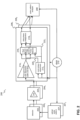
- Fig. 1A and 1B illustrate a pulse pattern processing system according to an embodiment of the invention.
- the system may include an optical pulse detection system 102 for detecting optical pulses originating optical encoders.
- the optical pulse detection system may comprise one or more optical detectors, e.g. photon detectors, which are configured to detect photon pulses. Such photon detector may transform an optical pulse into an electronic pulse.
- the outcome of a measurement may be an analog detector signal representing a sequence of analog pulses 109 1,2 forming a certain pulse pattern.
- a pulse pattern detector 104 may receive an analog pulse signal comprising one or more analog pulses that may be translated into a digital signal that can be readily processed by a pulse pattern analyzer 106.
- the optical pulse detection system may be for example a Bell state measurement (BSM) setup comprising a beam splitter 110 and a first and second photon detector 108 1,2 . for detecting time-bin qubits 112 1,2 that may be generated by two different optical qubit generators.
- An optical time-bin qubit may be regarded as a coherent superposition of two temporal modes of a single-photon excitation.
- Such optical time-bin qubits may be generated using a Mach Zehnder interferometer or sending a long single photon with a long coherence time through an optical intensity modulator to carve out two different temporal modes. These modes may include a "early" mode
- l ⁇ so that a ⁇ e + e i ⁇ l / 2 .
- a pulse pattern detector may include a clock phase adjustment module 212 1 .
- a clock signal may be copied and phase shifted by the clock phase adjustment module into one or more phase shifted clock signals, e.g. a first clock signal 220 1 and a second clock signal 222 1 .
- a rising edge of the clock signal may be phase-shifted to target different temporal bins in the analog detector signal.
- the pulse pattern detector may further include a pulse generator 214 1 , which may be configured to receive the analog detector signal that may comprise one or more pulses of a first pulse width and to modify (decrease) the width of the one or more pulses.
- the pulse generator may generate an analog pulse signal comprising pulses of a second pulse width, which is substantially smaller than the first pulse width.
- the one or more pulses in the analog pulse signal may be very narrow pulses having a width of around 100 ps or smaller.
- the analog pulse signal and the one or more phase shifted clock signals may be fed to the input of an edge-sensitive pulse detector 216 1 . If the pulse signal comprises a time bin at the temporal position of the rising edge of the phase-shifted clock signal, a digital output signal may be generated by the pulse detector, indicating that a time bin at a certain temporal position relative to the base clock signal has been identified.
- the different phase-shifted clock signals may be used to determine if the analog pulse signal may comprise different pulses at different temporal positions. For each of these temporal positions, a digital output signal may be generated so that the digital output signals together may represent a digital representation of a certain pulse pattern. Due to the phase of the phase-delayed clock signal, a phase difference may be present between the different digital output signals.
- the pulse pattern detector may further comprise a data phase realignment module 218 1 , which may be configured to realign the different digital output signals of the pulse detector. Thereafter, the phase-realigned digital output signals may be provided as a digital signal representing a pulse pattern to the pulse pattern analyzer, e.g. an FPGA-based data processing system, which is synchronized based on the clock signal.
- the pulse pattern detector may be configured to detect a detection pattern signal associated with an analog detector signal that may comprise different pulses.
- the pulses may represent different time bins in an optical signal that is detected by a detector, e.g. a BSM detector. These pulses need to be detected and the pulse pattern formed by the pulses need to be analyzed, typically in real-time.
- a pulse pattern detector may be configured to receive (at least) two inputs: a clock signal and an analog detector signal which may comprise different pulses at certain temporal positions in a clock cycle.
- the temporal positions in the signal may be determined relative to the start of a clock cycle, e.g. the rising edge of a clock signal.
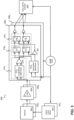
- Fig. 3 depicts an implementation of pulse detecting system according to an embodiment of the invention.
- the pulse detecting system may include one or more optical detectors 302 1-n and one or more pulse pattern detectors 306 1-n configured to detect pulses patterns in analog detector signals generated by the detectors.
- an optical pulse pattern 301 1 a first logic block 304 1-n that is configured to transform the non-linear shaped signal into an analog detector signal comprising one or more pulses of a predetermined width and amplitude.
- pulse pattern detector 306 1 may comprise a clock phase adjustment module 312 1 , a pulse generator 314 1 , an edge-sensitive pulse detector 316 1 and a data phase realignment module 318 1 . Further, the process of generating an optical pulse pattern 301 1 and the detection of pulse patterns in an analog detector signal by the pulse pattern detector and analysis of the pulse pattern by the pulse pattern analyzer may be synchronized based on a base clock signal of a clock 310. A pulse pattern detection method executed by the pulse detecting system will be described hereunder in greater detail with reference to the signals illustrated in Fig. 4-6 .
- a detection cycle may start with the generation of an optical pulse pattern 301 1 , which is detected by a photon detector 302 1 , which in response generates an analog non-linear detector signal.
- An example of such detector signal 402 is illustrated in Fig. 4 .
- Detector capable of generating such detector signals include superconducting nanowire single-photon detectors (SNSPD).
- the signal may include a very sharp rising edge 406 1 followed by a decaying flank 406 2 .
- SNSPD superconducting nanowire single-photon detectors
- the signal may include a very sharp rising edge 406 1 followed by a decaying flank 406 2 .
- the detector signal may be transformed into an analog pulse signal of a predetermined amplitude using a first logic circuit 304 1 as depicted in Fig. 3 .
- the analog detector signal may be fed to the input of the pulse generator 314 1 that is part of the pulse pattern detector 306 1 , which may be configured to modify the pulse width of the one or more pulses in the analog detector signal at the input of the pulse generator.
- the pulse generator may generate an analog pulse signal comprising one or more pulses of a second pulse width, which is substantially smaller than the first pulse width.
- the analog detector signal and an inverted version of the analog detector signal may be provided to the input of a delay circuit 313 1 which will generate a first delayed detector signal based on a first delay value and an inverted second delayed detector signal based on a second delay value, which are subsequently combined using a logic block, e.g. a NAND logic block 315.
- Fig. 5 depicts this process in terms of signals, including the analog detector signal 502, the first delayed detector signal 504 and the inverted second delayed detector signal 506.
- the first and second delay value may be selected such that the rising edge of the first delayed detector signal 504 is positioned before the falling edge of the inverted second detector signal 506 so that a narrow pulse 508 is formed when combining both signals, wherein the pulse width of the narrow pulse is determined by the first and second delay value.
- a clock phase adjustment module 312 1 may receive a base clock signal and produce one or more phase-delayed clock signals, including a first (phase-delayed) clock signal and a second (phase-delayed) clock signal. Then, both the one or more phase-delayed clock signals and the analog pulse signal (the output of the pulse generator 314 1 ) which may be fed to the input of the edge-sensitive pulse detector 316 1 , which may include one or more D flipflops 317 1,2 , e.g. a first D flipflop and a second D flipflop. Hence, the pulse signal may be fed to the input of the first D flipflop which is clocked based on the first clock signal.
- the pulse detector will generate a first digital signal indicating that a time bin at the firs temporal position.
- the pulse signal may also be fed to the input of the second D flipflop which is clocked based on the second clock signal, so that if the analog pulse signal comprises a second time bin at a second temporal position of the rising edge of the second clock signal, the pulse detector will generate a second digital signal.
- the pulse detector will generate a pulse detection pattern representing the detection of a plurality of time bins, e.g. an early and/or a late time bin.
- Fig. 6 The signals processed by the edge-sensitive pulse detector are illustrated in Fig. 6 .
- This figure depicts an analog pulse signal 602 and the first and second clock signals 604,606 with a first rising edge at a first temporal position t o and a second rising edge at a second temporal position t 1 .
- the analog pulse signal 602 comprises a first pulse 601 (representing a first time bin) at a first temporal position of the rising edge of the first clock signal
- the pulse detector will set the first digital signal Do 606 to a logical high indicating that a time bin at the firs temporal position.
- the pulse detector will keep the digital signal D1 606 at a logical low indicating that a time bin at the firs temporal position.
- This figure illustrates why a very narrow pulse signal is used for the pulse detector.
- a narrow pulse will reduce the chance that non-correlated signals in the analog pulse signal may influence the determination of the digital signals at the output of the pulse detector.
- a narrow pulse signal will decrease the chance of errors.
- both the first and second digital signal is set to a logical high, both signals will have a phase difference that is caused by the phase difference between the first and second clock signal.
- the signals may be realigned based on a data phase realignment module 3181, which may include two D flipflops 319 1,2 which are clocked based on the second (late) clock signal so that both signals are aligned and can be fed to the input of the pulse pattern analyzer.
- a second d-flipflop that is clocked with the same clock signal in both channels, the resulting digital pulses may be easily interfaced with an FPGA-based pattern analysis system that may be clocked based on the same clock signal as the pulse pattern detector.
- the FPGA logic may be programmed to analyze the detection pattern of each set of digital pulses, look for temporal correlations between each input (thus each detector) and outputs digital results.
- Fig. 7 depicts a flow diagram of determining a pulse pattern signal according to an embodiment of the invention.
- the method may include a step of receiving a base clock signal and an analog detector signal (step 702 ).
- the reception of new analog detector signals may take place at every clock cycle of the clock signal.
- the analog detector signal may comprise one or more pulses, i.e. analog pulses, of a predetermined pulse width at one or more temporal positions respectively relative to the start of the clock cycle, e.g. a rising edge of the clock signal.
- the one or more temporal positions of the one or more pulses may be being defined relative to the rising edge of the base clock signal.
- a first clock signal may be determined based on the base clock signal, wherein the determining may include copying the base clock signal and applying a first phase shift to the copied base clock signal so that the rising edge of first clock signal is at a first temporal position relative to the rising edge of the base clock signal.
- a first pulse signal may be determined based on the analog detector signal, wherein the first pulse signal may have a pulse width that is substantially smaller than the pulse width of the one or more detector pulses (step 706 ). Then, a digital pulse pattern signal may be determined.
- This step may include determining a first digital signal based on the first pulse signal and the first clock signal, wherein the first digital signal may be indicative whether the analog detector signal comprises a first detection pulse at the first temporal position as indicated by the rising edge of the first clock signal (step 708 ).
- This method may be executed by a pulse pattern detector which effectively functions as analog-to-digital time-filtering system as it only propagates a pattern of digital pulses if analog pulses occur within one of the temporal windows defined by one of the phase-shifted clock signals.
- Both qubit generating modules may be configured to prepare qubits and send them via optical fibers 806 1,2 , 808 1,2 to a central measurement station 810, which may include a so-called Bell state measurement (BSM) module, which may comprise a pulse pattern detector as described with reference to the embodiments in this application.
- BSM Bell state measurement
- the first intensity modulator may "carve out" time-bin optical modes, early and/or late time bins, to define a photonic qubit.
- the time-bin optical modes may be processed by a phase modulator PM 818 to control a phase between optical modes.
- a further second intensity modulator IM2 820 may be used to control the average number of photons associated with the qubit.
- both qubit generating modules (Alice and Bob) may generate time-bin qubits in a synchronized way which are transmitted via fiber connections 806 2 , 808 2 to a central measurement station 810.
- the optical modes transmitted by the qubit generating module should be indistinguishable in all degrees of freedom (spatial, spectral, polarization and temporal).
- the central measurement station 810 may include a clock distribution system, including a 822 connected to a system of lasers 824 to produce an optical clock signal for the qubit generators.
- This clock signal may be transmitted via the optical fibers 806 1 , 808 1 to the qubit generating modules, which use this high-quality clock signal to both synchronize the qubit generation and to produce a high-quality clock signal for generating the pulses that drive the optical modulator.
- Further central measurement station may further comprise polarization beam splitters (BS) 830 1,2 and a polarization maintaining beam splitter 832 and superconducting nanowire single-photon detectors (SNSPDs) 834 1,2 to form a BSM measurement setup, wherein the detectors are configured to generate analog detector signals which Bell state measurement (BSM) module, which may comprise pulse pattern detectors configured to detect pulse patterns in the analog detector signals and produce digital signals representation of the detected pulses pattern.
- BSM Bell state measurement
- the measurement station may further include a so-called Hong-Ou-Mandel dip measurement (HOM) 832 for determining the indistinguishability of the time bins and a BSM analyzer module 836 which is configured to analyze the electrical signals produced by the SNSPDs for the generation of a secret key.
- HOM Hong-Ou-Mandel dip measurement
- pulse generating systems are particularly suitable for an MDI-QKD QKQ system, they may also be advantageously used in other QKD systems, optical (quantum) communication systems, quantum signal processing systems as well as a signal generator for generating stimulus and clock signals to analyze and test electrical devices.
- the techniques of this disclosure may be implemented in a wide variety of devices or apparatuses, including a wireless handset, an integrated circuit (IC) or a set of ICs (e.g., a chip set).
- IC integrated circuit
- a set of ICs e.g., a chip set.
- Various components, modules, or units are described in this disclosure to emphasize functional aspects of devices configured to perform the disclosed techniques, but do not necessarily require realization by different hardware units. Rather, as described above, various units may be combined in a codec hardware unit or provided by a collection of interoperative hardware units, including one or more processors as described above, in conjunction with suitable software and/or firmware.
Landscapes
- Physics & Mathematics (AREA)
- Nonlinear Science (AREA)
- Engineering & Computer Science (AREA)
- Mechanical Engineering (AREA)
- Photometry And Measurement Of Optical Pulse Characteristics (AREA)
Description
- The invention relates to detection of pulse patterns, and, in particular, though not exclusively, to methods and systems for pulse pattern detection, a quantum measurement apparatus, such as a Bell state measurement apparatus, comprising such pulse pattern detector and a computer program product for executing such methods.
- Quantum information systems are data processing systems that use a quantum system, e.g. a qubit, as an information carrier rather than classical bits '0' and '1' as used by conventional data processing system. Qubits can be represented as superposition of two orthogonal quantum states |0〉 and |1〉: |ψ〉 = α|0〉 + β|1〉 wherein α and β are complex amplitudes and |α|2 and |β|2 are the probabilities to find the qubit in the |0〉 and |1〉 respectively. An example of a quantum information system is a so-called quantum key distribution (QKD) system, which allows two or more users at different locations to securely generate cryptographic keys based on the laws of quantum mechanics.
- Optical quantum communication systems and quantum computing systems rely on quantum measurement stations, which may comprise a set of photon detectors configured to measure and detect optical pulses. For example, in the domain of quantum communication, quantum repeater networks and MDI-QKD systems require receiver stations which are configured to measure so-called Bell state measurements (BSMs). Such receiver stations may be configured to simultaneously register detector signals of a particular subset of detectors and checking that the specific detector timing response of that set (referred to as a detection pattern) corresponds to a Bell state measurement. In general, numerous sub-sets of detectors need to be registered and checked simultaneously. In order to facilitate high throughput communication or computation, the measurement station must operate at high frequencies, e.g. 200 MHz or more. In that case, information regarding quantum measurements of pulses has to be communicated at a rate of 108 per second. To avoid the need of large storage systems, devices that process detector responses should be able to operate in real time.
- Furthermore, the logical operation required from the measurement station to check for specific detection patterns may depend on the specific quantum measurement or quantum communication protocol or quantum computing algorithm (e.g. Bell state measurements, or other large entangled state projective measurements, etc.). Thus, devices that are configured to process detector responses would ideally have the flexibility to be quickly reprogrammed to check for different detection patterns, and should easily scale to many quantum computing system within the set. Furthermore, in order to bring quantum communication and quantum computing systems to market a solution satisfying the above requirements should also be as cheap and small as possible.
- Known devices that can detect detection patterns and perform detection pattern analysis are either entirely analogue or entirely digital. The former devices are difficult to scale to large sets of detectors and cannot be readily reprogrammed for various detection patterns. The latter typically are FPGA-based time taggers and time-to-digital converters which may need a substantial amount of resources on the FGPA lattice, generate large amounts of superfluous data and can be quite expensive. An example of such a dedicated FPGA-based time-to-digital converter (TDC) is described in the article by, Arabul et al. A precise high count rate FPGA based multi-channel coincidence counting system for quantum photonic applications, IEEE Photonics Journal, Vol. 12, No. 2, April 2020. Boso Gianluca et al: "High-throughput gated photon counter with two detection windows programmable down to 70 ps width", REVIEW OF SCIENTIFIC INSTRUMENTS, vol. 85, no. 1, 21 January 2014, describes a high-throughput gated photo-counter able to count electrical pulses occuring within two well-defined and programmable detection windows.
- Hence, from the above it follows there is a need in the art for improved pulse pattern detection. In particular, there is a need for methods and system for high-frequency, real-time pulse pattern detection that provide a scalable and low-cost solution to determine a particular detection pattern associated with a particular measurement setup that can be readily processed by a subsequent pattern analyzer.
- As will be appreciated by one skilled in the art, aspects of the present invention may be embodied as a system, method or computer program product. Accordingly, aspects of the present invention may take the form of an entirely hardware embodiment, an entirely software embodiment (including firmware, resident software, micro-code, etc.) or an embodiment combining software and hardware aspects that may all generally be referred to herein as a "circuit," "module" or "system." Functions described in this disclosure may be implemented as an algorithm executed by a microprocessor of a computer. Furthermore, aspects of the present invention may take the form of a computer program product embodied in one or more computer readable medium(s) having computer readable program code embodied, e.g., stored, thereon.
- The methods, systems, modules, functions and/or algorithms described with reference to the embodiments in this application may be realized in hardware, software, or a combination of hardware and software. The methods, systems, modules, functions and/or algorithms may be realized in a centralized fashion in at least one computing system, or in a distributed fashion where different elements are spread across several interconnected computing systems. Any kind of computing system or other apparatus adapted for carrying out the embodiments (or parts thereof) described in this application is suited. A typical implementation may comprise one or more digital circuits such as application specific integrated circuits (ASICs), one or more field programmable gate arrays (FPGAs), and/or one or more processors (e.g., x86, x64, ARM, PIC, and/or any other suitable processor architecture) and associated supporting circuitry (e.g., storage, DRAM, FLASH, bus interface circuits, etc.). Each discrete ASIC, FPGA, processor, or other circuit may be referred to as "chip," and multiple such circuits may be referred to as a "chipset." In an implementation, the programmable logic devices may be provided with fast RAM, in particular block RAM (BRAM). Another implementation may comprise a non-transitory machine-readable (e.g., computer readable) medium (e.g., FLASH drive, optical disk, magnetic storage disk, or the like) having stored thereon one or more lines of code that, when executed by a machine, cause the machine to perform processes as described in this disclosure.
- The flowcharts and block diagrams in the figures may represent architecture, functionality, and operation of possible implementations of the methods, systems and/or modules to various embodiments of the present invention. In this regard, each block in a flowchart or a block diagrams may represent a module, segment, or portion of code, which be implemented as software, hardware or a combination of software and hardware.
- It should also be noted that, in some alternative implementations, the functions noted in the blocks may occur out of the order noted in the figures. For example, two blocks shown in succession may, in fact, be executed substantially concurrently, or the blocks may sometimes be executed in the reverse order, depending upon the functionality involved. It will also be noted that each block of the block diagrams and/or flowchart illustrations, and combinations of blocks in the block diagrams and/or flowchart illustrations, can be implemented by special purpose hardware-based systems that perform the specified functions or acts, or combinations of special purpose hardware and computer instructions.
- In a first aspect, the invention relates to a method of determining a detector pattern signal. The method comprises: receiving a base clock signal and an analog detector signal at a clock cycle of a clock signal, the analog detector signal being generated by a photon detection system, wherein the analog detector signal comprises one or more detector pulses of a predetermined pulse width at one or more temporal positions respectively, each detector pulse representing an optical pulse detected by the photon detection system, the one or more temporal positions being defined relative to the rising edge of the base clock signal; generating a first clock signal based on the base clock signal, the generating of the first clock signal including applying a first phase shift to the base clock signal so that the rising edge of first clock signal is at a first temporal position relative to the rising edge of the base clock signal; generating a first pulse signal based on the analog detector signal, the first pulse signal having a first pulse width that is smaller than the pulse width of the one or more detector pulses, the first pulse width being selected between 10 and 200 ps; the generating of the first pulse signal including: forming a first delayed detector signal by applying a first delay to the analog detector signal; forming a second delayed detector signal by applying a second delay to the analog detector signal and, determining the first pulse signal based on the first and second delayed detector signal; and, generating a digital detector pattern signal, the generating including determining a first digital signal based on the first pulse signal and the first clock signal, the first digital signal indicating whether the analog detector signal comprises a first detection pulse at the first temporal position as indicated by the rising edge of the first clock signal.
- Hence, the invention relates to a method of determining a pulse detection pattern signal associated with an analog detector signal that may comprise different pulses representing different time bins in an optical signal that is detected by a detector. These pulses need to be detected and the pulse pattern formed by the pulses need to be analyzed, typically in real-time.
- To determine a temporal position of the rising edge of a pulse in the analog pulse signal with respect to the clock, a clock signal may be copied into one or more phase shifted clock signals. Each individual clock signal may be phase-shifted to target a different temporal bin in the analog pulse signal (separated by at most 2 ns). Further, the width of one or more pulses in the analog pulse signal may be reduced to narrower pulses (e.g. down to 100 ps). Subsequently such narrow pulses may be fed to a d-flipflop which is clocked by one of the phase-shifted clock signals, thus achieving time-filtering, i.e. filtering in the time domain. If the analog pulse signal comprises a time bin at the temporal position, a digital signal may be generated indicating that a time bin at a certain temporal position has been detected.
- The invention is scalable as the number of pulse pattern detectors can be stacked while providing input for the FPGA pattern analyzer. The pulse pattern detector may act as a time-filtering system as it only propagates digital pulses at its output, if analog pulses occur at its input within one of the temporal windows defined by the clock and d-flipflops. The pulse pattern analyzer may be programmed to search for any particular detection pattern so that can be used in a pulse counter system, a time-sensitive coincidence counter system, bell-state measurement system, a system configured to perform large entangled state projective measurements, etc.
- In an embodiment, the first pulse signal may be determined by logically combining the analog detector signal and an inverted version of the analog detector signal.
- In an embodiment, the rising edge of the first pulse signal may be determined by the rising edge of the analog detection signal and the falling edge of the first pulse signal may be determined inverted analog detection signal.
- In an embodiment, the first digital signal may be generated by a first logic block configured to receive the first pulse signal and the first clock signal as input and to generate the first digital signal as output, preferably the first logic block including a first D flipflop clocked by the first clock signal.
- In an embodiment, the method may further comprise: generating a second clock signal based on the base clock signal, the determining including copying the base clock signal and applying a second phase shift to the copied base clock signal so that the rising edge of second adjusted clock signal is at a second temporal position relative to the rising edge of the base clock signal; generating a second pulse signal based on the analog detector signal, the second pulse signal having a pulse width that is substantially smaller than the pulse width of the one or more detector pulses; and, generating a digital detector pattern signal, the determining further including: determining a second digital signal based on the second pulse signal and the second clock signal, the second digital signal being indicative whether the analog detection signal comprises a second detection pulse at the second temporal position.
- In an embodiment, the second digital signal may be generated by a second logic block configured to receive the second pulse signal and the second clock signal as input and to generate the second digital signal as output, preferably the second logic block including a second D flipflop clocked by the second clock signal.
- In an embodiment, the phase of the first digital signal and the phase of the second digital signal may be realigned.
- By following up with a second d-flipflop that is clocked with the same clock signal in both channels the resulting digital pulses may be easily interfaced with an FPGA-based pattern analysis system that may be clocked based on the same clock signal as the pulse pattern detector. The FPGA logic may be programmed to analyze the detection pattern of each set of digital pulses, look for temporal correlations between each input (thus each detector) and outputs digital results.
- In an embodiment, the analog detector signal may be generated by a pulse detection system, preferably an optical pulse detection system such as a Bell state measurement system, the pulse detection system including one or more photon detectors, each photon detector being coupled to a transformer, e.g. a comparator, to transform an analog detector signal of the photon detector into the analog detector signal, which may comprise one or more detection pulses of a predetermined pulse width at the one or more temporal positions.
- In an embodiment, the frequency of the base clock signal may be selected between 50 and 500 MHz, preferably between 100 and 400 MHz.
- In a further aspect, the invention relates to a system for determining a detector pattern signal wherein the system comprises: a clock configured to generate a base clock signal; a phase adjustment module comprising one or more logic blocks configured to receiving the base clock signal and to generate a first clock signal based on the base clock signal, the generating including applying a first phase shift to the base clock signal so that the rising edge of first adjusted clock signal is at a first temporal position defined relative to the rising edge of the base clock signal; a pulse generator comprising one or more logic blocks configured to receive at least one analog detection signal generated by a photon detection system at a first clock cycle of the base clock signal, wherein the analog detector signal comprises one or more detector pulses of a predetermined pulse width at one or more temporal positions respectively, each detector pulse representing an optical pulse detected by the optical pulse detection system, the one or more temporal positions being defined relative to the rising edge of the base clock signal; and configured to generate a first pulse signal based on the analog detection signal, the first pulse signal having a pulse width that is smaller than the pulse width of the one or more detection pulses, the first pulse width being selected between 10 and 200 ps, the generating of the first pulse signal including: forming a first delayed detector signal by applying a first delay to the analog detector signal; forming a second delayed detector signal by applying a second delay to the analog detector signal and, determining the first pulse signal based on the first and second delayed detector signal; and, a clock edge sensitive pulse detector comprising one or more logic blocks configured to receive the first pulse signal and the first clock signal and to determine a digital detector pattern signal based on the first pulse signal and the first phase clock signal, the digital detector pattern signal including a first digital signal, the first digital signal indicating whether the analog detector signal comprises a first detection pulse at the first temporal position as indicated by the rising edge of the first clock signal.
- In an embodiment, the first pulse signal may be determined by logically combining the analog detector signal and an inverted version of the analog detector signal.
- In an embodiment, the rising edge of the first pulse signal may be determined by the rising edge of the analog detection signal and wherein the falling edge of the first pulse signal is determined inverted analog detection signal.
- In an embodiment, the first digital signal may be generated by a first logic block configured to receive the first pulse signal and the first clock signal as input and to generate the first digital signal as output, preferably the first logic block including a first D flipflop clocked by the first clock signal.
- In an embodiment, the analog detector signal may be generated by a pulse detection system, preferably an optical pulse detection system such as a Bell state measurement system, the pulse detection system including one or more photon detectors, each photon detector being coupled to a transformer, e.g. a comparator, to transform an analog detector signal of the photon detector into the analog detector signal, which may comprise one or more detection pulses of a predetermined pulse width at the one or more temporal positions.
- In an embodiment, the width of the first pulse signal may be selected 10 and 200 ps, preferably between 20 and 100 ps; and/or, wherein the frequency of the base clock signal is selected between 50 and 500 MHz, preferably between 100 and 400 MHz.
- In a further aspect, the invention may relate to a receiver system, preferably a receiver system for a quantum key distribution system or a quantum communication system, wherein the receiver system comprises as a system for determining a detector pattern signal according to any of the embodiments described above.
- The invention may also relate to a computer program product comprising software code portions configured for, when run in the memory of a computer, executing the method steps according to any of process steps described above.
- The invention will be further illustrated with reference to the attached drawings, which schematically will show embodiments according to the invention. It will be understood that the invention is not in any way restricted to these specific embodiments.
-
-
Fig. 1A and 1B illustrate a pulse pattern processing system according to an embodiment of the invention. -
Fig. 2 illustrates a pulse pattern processing system according to an embodiment of the invention; -
Fig. 3 depicts an implementation of a pulse pattern processing system according to an embodiment of the invention; -
Fig. 4 depicts part of a process of detecting pulses using a pulse pattern processing system according to an embodiment of the invention; -
Fig. 5 depicts part of a process of detecting pulses using a pulse pattern processing system according to an embodiment of the invention; -
Fig. 6 depicts part of a process of detecting pulses using a pulse pattern processing system according to an embodiment of the invention; -
Fig. 7 depicts a flow diagram of method of determining a pulse pattern signal according to an embodiment of the invention; -
Fig. 8 depicts an example of a QKD system comprising a pulse pattern detector according to an embodiment of the invention. -
Fig. 1A and 1B illustrate a pulse pattern processing system according to an embodiment of the invention. As shown inFig. 1A , the system may include an opticalpulse detection system 102 for detecting optical pulses originating optical encoders. The optical pulse detection system may comprise one or more optical detectors, e.g. photon detectors, which are configured to detect photon pulses. Such photon detector may transform an optical pulse into an electronic pulse. Hence, the outcome of a measurement may be an analog detector signal representing a sequence ofanalog pulses 109 1,2 forming a certain pulse pattern. Apulse pattern detector 104 may receive an analog pulse signal comprising one or more analog pulses that may be translated into a digital signal that can be readily processed by apulse pattern analyzer 106. - The optical pulse detection system may be for example a Bell state measurement (BSM) setup comprising a
beam splitter 110 and a first andsecond photon detector 1081,2 . for detecting time-bin qubits 1121,2 that may be generated by two different optical qubit generators. An optical time-bin qubit may be regarded as a coherent superposition of two temporal modes of a single-photon excitation. Such optical time-bin qubits may be generated using a Mach Zehnder interferometer or sending a long single photon with a long coherence time through an optical intensity modulator to carve out two different temporal modes. These modes may include a "early" mode |e〉 and a "late mode" |l〉 so that a
- The BSM may be regarded as a projective measurement onto one of the four maximally entangled Bell states |Ψ±〉, |Φ±〉. The photon detectors of
Fig. 1A are able to detect photons with sufficient time resolution such that it is possible to distinguish between early and late photons. Thus, depending detection pattern at the output of the detectors different Bell states can distinguished. For example, as shown inFig. 1B , detection of an early and a late pulse detection at one detector relates to a projection on the state |Ψ+〉. Similarly, one pulse (early or late) at each detector relates to a projection on the state |Ψ-〉. The illustrate BSM measurement may be executed based on a clock signal, resulting in a BSM result each clock cycle. Executing the measurement at high frequencies, e.g. 200 MHz or more, requires high frequency real-time pulse pattern detection and analysis based on a scheme as depicted inFig. 1A . More generally, many quantum computing schemes require real-time detection and analysis of a set of incoming analogue pulses to find time-sensitive correlations between those pulses. Additionally, the measurement scheme should be scalable in terms of input pulses and is required to be flexible in terms of (re)programming the search for different detection patterns/correlations. -
Fig. 2 illustrates a pulse pattern processing system according to an embodiment of the invention. In particular, this figure depicts a pulsepattern processing system 200 comprising a detection system which may comprise one or more optical detectors 2021-n and one or more pulse pattern detectors 2061-n configured to detect pulses patterns in analog detector signals generated by the detectors. The detectors 2021-n may be configured to generate ultra-fast, non-linear pulses in response to the occurrence of an optical event 2011-n such as the arrival of optical pulse signals such as optical time bins. Typically, the detector has a non-linear pulse-shaped response. To make the signal suitable for input to a pulse pattern detector, the non-linear analog detector response may first need to be fed to the input of a first logic bloc 2041-n that is configured to transform the non-linear shaped signal into an analog detector signal comprising one or more pulses of a predetermined width and amplitude. In an embodiment, the first logic bloc may include a comparator or an electronic circuit equivalent to a comparator. - Each of the one or more pulse pattern detectors may be configured to detect a pulse pattern in an analog detector signal originating from the detector and to transform information about the detected pattern in a digital output signal. The one or more digital output signals generated by the one or more pulse pattern detectors respectively may be forwarded to a
pulse pattern analyzer 208, e.g. an FPGA-based pulse pattern analyzer which may collectively process the digital outputs of the pulse pattern detectors. The process of generating an optical pulse pattern 2011 and the detection of pulse patterns in an analog detector signal by the pulse pattern detector and analysis of the pulse pattern by the pulse pattern analyzer may be synchronized based on a base clock signal of aclock 210 so that the processing of different optical pulse patterns may be executed at high frequencies, e.g. 100 MHz or more. - A pulse pattern detector may include a clock phase adjustment module 2121. To determine a temporal position of a pulse, e.g. a rising edge of a pulse, in an analog detector signal with respect to (a rising edge of) the clock signal, a clock signal may be copied and phase shifted by the clock phase adjustment module into one or more phase shifted clock signals, e.g. a first clock signal 2201 and a second clock signal 2221. A rising edge of the clock signal may be phase-shifted to target different temporal bins in the analog detector signal. The pulse pattern detector may further include a pulse generator 2141, which may be configured to receive the analog detector signal that may comprise one or more pulses of a first pulse width and to modify (decrease) the width of the one or more pulses. This way, the pulse generator may generate an analog pulse signal comprising pulses of a second pulse width, which is substantially smaller than the first pulse width. This way, the one or more pulses in the analog pulse signal may be very narrow pulses having a width of around 100 ps or smaller.
- The analog pulse signal and the one or more phase shifted clock signals may be fed to the input of an edge-sensitive pulse detector 2161. If the pulse signal comprises a time bin at the temporal position of the rising edge of the phase-shifted clock signal, a digital output signal may be generated by the pulse detector, indicating that a time bin at a certain temporal position relative to the base clock signal has been identified.
- Hence, the different phase-shifted clock signals may be used to determine if the analog pulse signal may comprise different pulses at different temporal positions. For each of these temporal positions, a digital output signal may be generated so that the digital output signals together may represent a digital representation of a certain pulse pattern. Due to the phase of the phase-delayed clock signal, a phase difference may be present between the different digital output signals. To remove these phase differences, the pulse pattern detector may further comprise a data phase realignment module 2181, which may be configured to realign the different digital output signals of the pulse detector. Thereafter, the phase-realigned digital output signals may be provided as a digital signal representing a pulse pattern to the pulse pattern analyzer, e.g. an FPGA-based data processing system, which is synchronized based on the clock signal.
- Hence, as shown in the figure, invention relates to a pulse pattern processing system and a pulse pattern detector used in such pulse pattern processing system. The pulse pattern detector may be configured to detect a detection pattern signal associated with an analog detector signal that may comprise different pulses. The pulses may represent different time bins in an optical signal that is detected by a detector, e.g. a BSM detector. These pulses need to be detected and the pulse pattern formed by the pulses need to be analyzed, typically in real-time. To that end, a pulse pattern detector may be configured to receive (at least) two inputs: a clock signal and an analog detector signal which may comprise different pulses at certain temporal positions in a clock cycle. Here, the temporal positions in the signal may be determined relative to the start of a clock cycle, e.g. the rising edge of a clock signal.
- The invention is scalable as the number of pulse pattern detectors can be stacked while providing input for the FPGA pattern analyzer. The pulse pattern detector may act as a time-filtering system as it only propagates digital pulses if analog pulses occur within one of the temporal windows defined by the clock and d-flipflops. The pulse pattern analyzer may be programmed to search for any particular detection pattern, e.g. pulse counters, time-sensitive coincidence counters, bell-state measurements, large entangled state projective measurements, etc.
-
Fig. 3 depicts an implementation of pulse detecting system according to an embodiment of the invention. In particular, the figure depicts an implementation of a pulse pattern processing system as described with reference toFig. 2 . The pulse detecting system may include one or more optical detectors 3021-n and one or morepulse pattern detectors 3061-n configured to detect pulses patterns in analog detector signals generated by the detectors. anoptical pulse pattern 3011, a first logic block 3041-n that is configured to transform the non-linear shaped signal into an analog detector signal comprising one or more pulses of a predetermined width and amplitude. Similar to the one described with reference toFig. 2 ,pulse pattern detector 3061, may comprise a clock phase adjustment module 3121, a pulse generator 3141, an edge-sensitive pulse detector 3161 and a dataphase realignment module 3181. Further, the process of generating anoptical pulse pattern 3011 and the detection of pulse patterns in an analog detector signal by the pulse pattern detector and analysis of the pulse pattern by the pulse pattern analyzer may be synchronized based on a base clock signal of aclock 310. A pulse pattern detection method executed by the pulse detecting system will be described hereunder in greater detail with reference to the signals illustrated inFig. 4-6 . - As shown in
Fig. 3 , a detection cycle may start with the generation of anoptical pulse pattern 3011, which is detected by a photon detector 3021, which in response generates an analog non-linear detector signal. An example ofsuch detector signal 402 is illustrated inFig. 4 . Detector capable of generating such detector signals include superconducting nanowire single-photon detectors (SNSPD). The signal may include a very sharp rising edge 4061 followed by a decaying flank 4062. Each time a photon is absorbed by the SNSPD, a detector response as shown in this figure will be generated. To prepare this highly non-linear signal for input to a pulse pattern detector, the detector signal may be transformed into an analog pulse signal of a predetermined amplitude using a first logic circuit 3041 as depicted inFig. 3 . - For example, in an embodiment, the detector response may be input to a comparator which may generate a pulse-shaped signal that is suitable for the pulse pattern detector.
Fig. 4 depicts an example of a pulse-shapedsignal 404 which has a rising edge that coincides with the rising edge of thedetector signal 402. This signal may be referred to as an analog detector signal. Depending on the photon signal that is detected, the analog detector signal include one or multiple pulses. For example, in case of a BSM measurement, within one clock cycle the analog detector signal may either comprise no, one or two pulses. In case of one pulse, the pulse may either be an early pulse located at a first temporal position in the clock cycle or a late pulse located at a second temporal position. - The analog detector signal may be fed to the input of the pulse generator 3141 that is part of the
pulse pattern detector 3061, which may be configured to modify the pulse width of the one or more pulses in the analog detector signal at the input of the pulse generator. This way, the pulse generator may generate an analog pulse signal comprising one or more pulses of a second pulse width, which is substantially smaller than the first pulse width. To that end, the analog detector signal and an inverted version of the analog detector signal may be provided to the input of a delay circuit 3131 which will generate a first delayed detector signal based on a first delay value and an inverted second delayed detector signal based on a second delay value, which are subsequently combined using a logic block, e.g. aNAND logic block 315. -
Fig. 5 depicts this process in terms of signals, including theanalog detector signal 502, the first delayeddetector signal 504 and the inverted second delayeddetector signal 506. As shown in the figure, the first and second delay value may be selected such that the rising edge of the first delayeddetector signal 504 is positioned before the falling edge of the invertedsecond detector signal 506 so that anarrow pulse 508 is formed when combining both signals, wherein the pulse width of the narrow pulse is determined by the first and second delay value. - Further, a clock phase adjustment module 3121 may receive a base clock signal and produce one or more phase-delayed clock signals, including a first (phase-delayed) clock signal and a second (phase-delayed) clock signal. Then, both the one or more phase-delayed clock signals and the analog pulse signal (the output of the pulse generator 3141 ) which may be fed to the input of the edge-sensitive pulse detector 3161, which may include one or more D flipflops 3171,2, e.g. a first D flipflop and a second D flipflop. Hence, the pulse signal may be fed to the input of the first D flipflop which is clocked based on the first clock signal. Hence, if the analog pulse signal comprises a first time bin at a first temporal position of the rising edge of the first clock signal, the pulse detector will generate a first digital signal indicating that a time bin at the firs temporal position. Similarly, the pulse signal may also be fed to the input of the second D flipflop which is clocked based on the second clock signal, so that if the analog pulse signal comprises a second time bin at a second temporal position of the rising edge of the second clock signal, the pulse detector will generate a second digital signal. This way, the pulse detector will generate a pulse detection pattern representing the detection of a plurality of time bins, e.g. an early and/or a late time bin.
- The signals processed by the edge-sensitive pulse detector are illustrated in
Fig. 6 . This figure depicts ananalog pulse signal 602 and the first and second clock signals 604,606 with a first rising edge at a first temporal position to and a second rising edge at a second temporal position t1. Because theanalog pulse signal 602 comprises a first pulse 601 (representing a first time bin) at a first temporal position of the rising edge of the first clock signal, the pulse detector will set the first digital signal Do 606 to a logical high indicating that a time bin at the firs temporal position. Similarly, because theanalog pulse signal 602 does not comprise a second pulse (representing a second time bin) at a second temporal position of the rising edge of the second clock signal, the pulse detector will keep thedigital signal D1 606 at a logical low indicating that a time bin at the firs temporal position. - This figure illustrates why a very narrow pulse signal is used for the pulse detector. In particular, it shows that a narrow pulse will reduce the chance that non-correlated signals in the analog pulse signal may influence the determination of the digital signals at the output of the pulse detector. A narrow pulse signal will decrease the chance of errors.
- This figure further illustrates that if both the first and second digital signal is set to a logical high, both signals will have a phase difference that is caused by the phase difference between the first and second clock signal. To make the digital signals suitable for input to the FGPA based
pulse pattern analyser 308, the signals may be realigned based on a data phase realignment module 3181, which may include twoD flipflops 3191,2 which are clocked based on the second (late) clock signal so that both signals are aligned and can be fed to the input of the pulse pattern analyzer. Thus, a second d-flipflop that is clocked with the same clock signal in both channels, the resulting digital pulses may be easily interfaced with an FPGA-based pattern analysis system that may be clocked based on the same clock signal as the pulse pattern detector. The FPGA logic may be programmed to analyze the detection pattern of each set of digital pulses, look for temporal correlations between each input (thus each detector) and outputs digital results. -
Fig. 7 depicts a flow diagram of determining a pulse pattern signal according to an embodiment of the invention. As shown in the figure, the method may include a step of receiving a base clock signal and an analog detector signal (step 702). The reception of new analog detector signals may take place at every clock cycle of the clock signal. The analog detector signal may comprise one or more pulses, i.e. analog pulses, of a predetermined pulse width at one or more temporal positions respectively relative to the start of the clock cycle, e.g. a rising edge of the clock signal. Hence, the one or more temporal positions of the one or more pulses may be being defined relative to the rising edge of the base clock signal. - In a
further step 704, a first clock signal may be determined based on the base clock signal, wherein the determining may include copying the base clock signal and applying a first phase shift to the copied base clock signal so that the rising edge of first clock signal is at a first temporal position relative to the rising edge of the base clock signal. Then, a first pulse signal may be determined based on the analog detector signal, wherein the first pulse signal may have a pulse width that is substantially smaller than the pulse width of the one or more detector pulses (step 706). Then, a digital pulse pattern signal may be determined. This step may include determining a first digital signal based on the first pulse signal and the first clock signal, wherein the first digital signal may be indicative whether the analog detector signal comprises a first detection pulse at the first temporal position as indicated by the rising edge of the first clock signal (step 708). - This method may be executed by a pulse pattern detector which effectively functions as analog-to-digital time-filtering system as it only propagates a pattern of digital pulses if analog pulses occur within one of the temporal windows defined by one of the phase-shifted clock signals.
-
Fig. 8 depicts an example of a QKD system comprising an optical encoder according to an embodiment of the invention. In particular, the figure illustrates an MDI-QKD design known from the article by Valivarthi et al, A cost-effective measurement-independent quantum key distribution system for quantum networks, Quantum Sic. Technol. 2(2017) that includes one or more optical encoders as described with the embodiments in this application. Thesystem 800 may include a first and secondqubit generating modules optical fibers 8061,2, 8081,2 to acentral measurement station 810, which may include a so-called Bell state measurement (BSM) module, which may comprise a pulse pattern detector as described with reference to the embodiments in this application. - These optical fibers may be part of a conventional standard optical fiber communication network. Each qubit generating module may include an
optical controller 812 for controlling alaser system 814, such as a continuous wave laser, to generate coherent optical pulses. In an embodiment,optical controller 812 may comprise a pulse generating system as e.g. described with reference toFig. 2-5 for generating each clock cycle a pulse signal wherein the pulse signal may either include zero, one or two pulses. The optical pulses generated by the laser system may be processed by firstintensity modulator IM1 816, which is controlled by the pulse signals of the pulse generating system. In particular, based on the pulse signal, the first intensity modulator may "carve out" time-bin optical modes, early and/or late time bins, to define a photonic qubit. The time-bin optical modes may be processed by aphase modulator PM 818 to control a phase between optical modes. A further secondintensity modulator IM2 820 may be used to control the average number of photons associated with the qubit. This way, both qubit generating modules (Alice and Bob) may generate time-bin qubits in a synchronized way which are transmitted viafiber connections 8062, 8082 to acentral measurement station 810. For successful performance of the BSM module, the optical modes transmitted by the qubit generating module should be indistinguishable in all degrees of freedom (spatial, spectral, polarization and temporal). - The
central measurement station 810, usually referred to as Charlie, may include a clock distribution system, including a 822 connected to a system oflasers 824 to produce an optical clock signal for the qubit generators. This clock signal may be transmitted via theoptical fibers 8061, 8081 to the qubit generating modules, which use this high-quality clock signal to both synchronize the qubit generation and to produce a high-quality clock signal for generating the pulses that drive the optical modulator. Further central measurement station may further comprise polarization beam splitters (BS) 8301,2 and a polarization maintainingbeam splitter 832 and superconducting nanowire single-photon detectors (SNSPDs) 8341,2 to form a BSM measurement setup, wherein the detectors are configured to generate analog detector signals which Bell state measurement (BSM) module, which may comprise pulse pattern detectors configured to detect pulse patterns in the analog detector signals and produce digital signals representation of the detected pulses pattern. The measurement station may further include a so-called Hong-Ou-Mandel dip measurement (HOM) 832 for determining the indistinguishability of the time bins and aBSM analyzer module 836 which is configured to analyze the electrical signals produced by the SNSPDs for the generation of a secret key. - Although the pulse generating systems according to the embodiments in this application are particularly suitable for an MDI-QKD QKQ system, they may also be advantageously used in other QKD systems, optical (quantum) communication systems, quantum signal processing systems as well as a signal generator for generating stimulus and clock signals to analyze and test electrical devices.
- The techniques of this disclosure may be implemented in a wide variety of devices or apparatuses, including a wireless handset, an integrated circuit (IC) or a set of ICs (e.g., a chip set). Various components, modules, or units are described in this disclosure to emphasize functional aspects of devices configured to perform the disclosed techniques, but do not necessarily require realization by different hardware units. Rather, as described above, various units may be combined in a codec hardware unit or provided by a collection of interoperative hardware units, including one or more processors as described above, in conjunction with suitable software and/or firmware.
- The terminology used herein is for the purpose of describing particular embodiments only and is not intended to be limiting of the invention. As used herein, the singular forms "a," "an," and "the" are intended to include the plural forms as well, unless the context clearly indicates otherwise. It will be further understood that the terms "comprises" and/or "comprising," when used in this specification, specify the presence of stated features, integers, steps, operations, elements, and/or components, but do not preclude the presence or addition of one or more other features, integers, steps, operations, elements, components, and/or groups thereof.
- The corresponding structures, materials, acts, and equivalents of all means or step plus function elements in the claims below are intended to include any structure, material, or act for performing the function in combination with other claimed elements as specifically claimed. The description of the present invention has been presented for purposes of illustration and description, but is not intended to be exhaustive or limited to the invention in the form disclosed. Many modifications and variations will be apparent to those of ordinary skill in the art without departing from the scope of the claims. The embodiment was chosen and described in order to best explain the principles of the invention and the practical application, and to enable others of ordinary skill in the art to understand the invention for various embodiments with various modifications as are suited to the particular use contemplated.
Claims (15)
- Method of determining a detection pattern signal comprising:receiving a base clock signal and an analog detector signal (404) at a clock cycle of a clock signal, the analog detector signal being generated by a photon detection system (202), wherein the analog detector signal comprises one or more detector pulses of a predetermined pulse width at one or more temporal positions respectively, each detector pulse representing an optical pulse detected by the photon detection system (202), the one or more temporal positions being defined relative to the rising edge of the base clock signal;generating a first clock signal (604) based on the base clock signal, the generating of the first clock signal including applying a first phase shift to the base clock signal so that the rising edge of first clock signal is at a first temporal position relative to the rising edge of the base clock signal;generating a first pulse signal (508) based on the analog detector signal, the first pulse signal having a first pulse width that is smaller than the pulse width of the one or more detector pulses, the first pulse width being selected between 10 and 200 ps; the generating of the first pulse signal including: forming a first delayed detector signal (504) by applying a first delay to the analog detector signal; forming a second delayed detector signal (508) by applying a second delay to the analog detector signal and, determining the first pulse signal based on the first and second delayed detector signal; and,generating a digital detector pattern signal, the generating including determining a first digital signal (606) based on the first pulse signal and the first clock signal, the first digital signal indicating whether the analog detector signal comprises a first detection pulse at the first temporal position as indicated by the rising edge of the first clock signal.
- Method according to claim 1 wherein the first pulse signal is generated by logically combining the analog detector signal and an inverted version of the analog detector signal.
- Method according to claims 1 or 2 wherein the rising edge of the first pulse signal is determined by the rising edge of the analog detection signal and wherein the falling edge of the first pulse signal is determined by the inverted analog detection signal.
- Method according to any of claims 1-3, wherein the first digital signal is generated by a first logic block configured to receive the first pulse signal and the first clock signal as input and to generate the first digital signal as output, preferably the first logic block including a first D flipflop clocked by the first clock signal.
- Method according to any of claims 1-4 further comprising:generating a second clock signal based on the base clock signal, the determining including applying a second phase shift to the base clock signal so that the rising edge of second adjusted clock signal is at a second temporal position relative to the rising edge of the base clock signal;generating a second pulse signal based on the analog detector signal, the second pulse signal having a pulse width that is substantially smaller than the pulse width of the one or more detector pulses; and,generating a digital detector pattern signal, the determining further including: determining a second digital signal based on the second pulse signal and the second clock signal, the second digital signal being indicative whether the analog detection signal comprises a second detection pulse at the second temporal position.
- Method according to any of claims 1-5, wherein the second digital signal is generated by a second logic block configured to receive the second pulse signal and the second clock signal as input and to generate the second digital signal as output, preferably the second logic block including a second D flipflop clocked by the second clock signal.
- Method according to any of claims 1-6, wherein the phase of the first digital signal and the phase of the second digital signal are realigned; and/or, wherein the frequency of the base clock signal is selected between 50 and 500 MHz, preferably between 100 and 400 MHz.
- Method according to any of claims 1-7 wherein the pulse detection system includes one or more photon detectors, each photon detector being coupled to a transformer, e.g. a comparator, to transform an analog detector signal of the photon detector into the analog detector signal, which may comprise one or more detection pulses of a predetermined pulse width at the one or more temporal positions.
- A system for determining a detector pattern signal comprising:a clock (210) configured to generate a base clock signal;a phase adjustment module (212) comprising one or more logic blocks configured to receiving the base clock signal and to generate a first clock signal based on the base clock signal, the generating including applying a first phase shift to the base clock signal so that the rising edge of first adjusted clock signal is at a first temporal position defined relative to the rising edge of the base clock signal;a pulse generator (214) comprising one or more logic blocks configured to receive at least one analog detection signal generated by a photon detection system (202) at a first clock cycle of the base clock signal, wherein the analog detector signal comprises one or more detector pulses of a predetermined pulse width at one or more temporal positions respectively, each detector pulse representing an optical pulse detected by the optical pulse detection system, the one or more temporal positions being defined relative to the rising edge of the base clock signal; and configured to generate a first pulse signal based on the analog detection signal, the first pulse signal having a pulse width that is smaller than the pulse width of the one or more detection pulses, the first pulse width being selected between 10 and 200 ps, the generating of the first pulse signal including: forming a first delayed detector signal by applying a first delay to the analog detector signal; forming a second delayed detector signal by applying a second delay to the analog detector signal and, determining the first pulse signal based on the first and second delayed detector signal; and,a clock edge sensitive pulse detector (216) comprising one or more logic blocks configured to receive the first pulse signal and the first clock signal and to determine a digital detector pattern signal based on the first pulse signal and the first phase clock signal, the digital detector pattern signal including a first digital signal, the first digital signal indicating whether the analog detector signal comprises a first detection pulse at the first temporal position as indicated by the rising edge of the first clock signal.
- System according to claim 9 wherein the first pulse signal is generated by logically combining the analog detector signal and an inverted version of the analog detector signal.
- System according to claims 9 or 10 wherein the rising edge of the first pulse signal is determined by the rising edge of the analog detection signal and wherein the falling edge of the first pulse signal is determined by the inverted analog detection signal.
- System according to any of claims 9-12, wherein the first digital signal is generated by a first logic block configured to receive the first pulse signal and the first clock signal as input and to generate the first digital signal as output, preferably the first logic block including a first D flipflop clocked by the first clock signal; and/or, wherein the frequency of the base clock signal is selected between 50 and 500 MHz, preferably between 100 and 400 MHz.
- System according to any of claims 9-12 wherein the pulse detection system includes one or more photon detectors, each photon detector being coupled to a transformer, e.g. a comparator, to transform an analog detector signal of the photon detector into the analog detector signal, which may comprise one or more detection pulses of a predetermined pulse width at the one or more temporal positions.
- Receiver system, preferably a receiver system for a quantum key distribution system or a quantum communication system, wherein the receiver system comprises as a system for determining a detector pattern signal according to any of claims 9-13.
- Computer program product comprising software code portions configured for, when run in the memory of a computer, executing the method steps according to any of claims 1-8.
Applications Claiming Priority (2)
| Application Number | Priority Date | Filing Date | Title |
|---|---|---|---|
| NL2027232A NL2027232B1 (en) | 2020-12-24 | 2020-12-24 | Detection of pulse patterns |
| PCT/EP2021/087624 WO2022136695A1 (en) | 2020-12-24 | 2021-12-23 | Detection of pulse patterns |
Publications (3)
| Publication Number | Publication Date |
|---|---|
| EP4268370A1 EP4268370A1 (en) | 2023-11-01 |
| EP4268370C0 EP4268370C0 (en) | 2025-03-26 |
| EP4268370B1 true EP4268370B1 (en) | 2025-03-26 |
Family
ID=74871780
Family Applications (1)
| Application Number | Title | Priority Date | Filing Date |
|---|---|---|---|
| EP21847499.7A Active EP4268370B1 (en) | 2020-12-24 | 2021-12-23 | Detection of pulse patterns |
Country Status (4)
| Country | Link |
|---|---|
| EP (1) | EP4268370B1 (en) |
| ES (1) | ES3028984T3 (en) |
| NL (1) | NL2027232B1 (en) |
| WO (1) | WO2022136695A1 (en) |
Families Citing this family (1)
| Publication number | Priority date | Publication date | Assignee | Title |
|---|---|---|---|---|
| WO2025017365A1 (en) * | 2023-07-20 | 2025-01-23 | Quantized Technologies Inc. | Method and system for ongoing polarization feedback and control during quantum key distribution using data analysis |
Family Cites Families (3)
| Publication number | Priority date | Publication date | Assignee | Title |
|---|---|---|---|---|
| US7298226B2 (en) * | 2005-05-24 | 2007-11-20 | Finisar Corporation | Noise tolerant voltage controlled oscillator |
| GB2491115B (en) * | 2011-05-19 | 2013-08-14 | Toshiba Res Europ Ltd | Synchronisation of weak light pulse communication system |
| US10725361B1 (en) * | 2017-10-02 | 2020-07-28 | SeeQC Inc. | Superconducting optical-to-digital converter |
-
2020
- 2020-12-24 NL NL2027232A patent/NL2027232B1/en active
-
2021
- 2021-12-23 WO PCT/EP2021/087624 patent/WO2022136695A1/en not_active Ceased
- 2021-12-23 ES ES21847499T patent/ES3028984T3/en active Active
- 2021-12-23 EP EP21847499.7A patent/EP4268370B1/en active Active
Also Published As
| Publication number | Publication date |
|---|---|
| EP4268370C0 (en) | 2025-03-26 |
| ES3028984T3 (en) | 2025-06-23 |
| EP4268370A1 (en) | 2023-11-01 |
| NL2027232B1 (en) | 2022-07-20 |
| WO2022136695A1 (en) | 2022-06-30 |
Similar Documents
| Publication | Publication Date | Title |
|---|---|---|
| Spiess et al. | Clock synchronization with correlated photons | |
| EP3018840B1 (en) | Apparatus and method for QKD quantum communication channel continuous synchronization and alignment | |
| TWI821549B (en) | Phase predictor and associated method of use | |
| EP2525489B1 (en) | Bit sequence generation device and bit sequence generation method | |
| Zhao et al. | Experimental Violation of Local Realism by Four-Photon<? format?> Greenberger-Horne-Zeilinger Entanglement | |
| JP7070862B2 (en) | Self-test for safety logic | |
| US12278885B2 (en) | System and method for sparse data synchronization and communication | |
| US7876246B1 (en) | Photonic analog-to-digital converter | |
| US9553600B1 (en) | Skew detection and correction in time-interleaved analog-to-digital converters | |
| EP4268370B1 (en) | Detection of pulse patterns | |
| Stanco et al. | Efficient random number generation techniques for CMOS single-photon avalanche diode array exploiting fast time tagging units | |
| WO2023016534A1 (en) | Gating apparatus for single photon detector and quantum communication device | |
| CN107144781A (en) | Measuring system with digital edge detection trigger circuit | |
| CN109240981A (en) | Synchronous collection method, equipment and the computer readable storage medium of multi-channel data | |
| EP3992776A1 (en) | Quantum random number generation device and quantum random number generation method | |
| WO2018233502A1 (en) | Data transmission method, device, and system | |
| Altorio et al. | Metrology with unknown detectors | |
| EP3179225B1 (en) | Apparatus and method for low latency, reconfigurable and picosecond resolution time controller | |
| Jofre | Qubit rate modulation-based time synchronization mechanism for multi-node quantum networks | |
| RU2710663C1 (en) | Cyclo-generative system of ultra-short-pulse signals spectral-time recuperation | |
| JP4939525B2 (en) | Measuring method and apparatus of polarization state and polarization mode dispersion in photonic transmission system | |
| JP7748038B2 (en) | Systems and methods for clock synchronization and time transfer between quantum orchestration platform elements | |
| Nande et al. | TCEP Based Synchronisation for Practical Communication Network | |
| Bilgin et al. | PYNQ-based rapid FPGA implementation of quantum key distribution | |
| Kaltenbaek | Entanglement swapping and quantum interference with independent sources |
Legal Events
| Date | Code | Title | Description |
|---|---|---|---|
| STAA | Information on the status of an ep patent application or granted ep patent |
Free format text: STATUS: UNKNOWN |
|
| STAA | Information on the status of an ep patent application or granted ep patent |
Free format text: STATUS: THE INTERNATIONAL PUBLICATION HAS BEEN MADE |
|
| PUAI | Public reference made under article 153(3) epc to a published international application that has entered the european phase |
Free format text: ORIGINAL CODE: 0009012 |
|
| STAA | Information on the status of an ep patent application or granted ep patent |
Free format text: STATUS: REQUEST FOR EXAMINATION WAS MADE |
|
| 17P | Request for examination filed |
Effective date: 20230717 |
|
| AK | Designated contracting states |
Kind code of ref document: A1 Designated state(s): AL AT BE BG CH CY CZ DE DK EE ES FI FR GB GR HR HU IE IS IT LI LT LU LV MC MK MT NL NO PL PT RO RS SE SI SK SM TR |
|
| DAV | Request for validation of the european patent (deleted) | ||
| DAX | Request for extension of the european patent (deleted) | ||
| GRAP | Despatch of communication of intention to grant a patent |
Free format text: ORIGINAL CODE: EPIDOSNIGR1 |
|
| STAA | Information on the status of an ep patent application or granted ep patent |
Free format text: STATUS: GRANT OF PATENT IS INTENDED |
|
| INTG | Intention to grant announced |
Effective date: 20241025 |
|
| GRAS | Grant fee paid |
Free format text: ORIGINAL CODE: EPIDOSNIGR3 |
|
| GRAA | (expected) grant |
Free format text: ORIGINAL CODE: 0009210 |
|
| STAA | Information on the status of an ep patent application or granted ep patent |
Free format text: STATUS: THE PATENT HAS BEEN GRANTED |
|
| AK | Designated contracting states |
Kind code of ref document: B1 Designated state(s): AL AT BE BG CH CY CZ DE DK EE ES FI FR GB GR HR HU IE IS IT LI LT LU LV MC MK MT NL NO PL PT RO RS SE SI SK SM TR |
|
| REG | Reference to a national code |
Ref country code: GB Ref legal event code: FG4D |
|
| REG | Reference to a national code |
Ref country code: CH Ref legal event code: EP |
|
| REG | Reference to a national code |
Ref country code: DE Ref legal event code: R096 Ref document number: 602021028276 Country of ref document: DE |
|
| REG | Reference to a national code |
Ref country code: IE Ref legal event code: FG4D |
|
| U01 | Request for unitary effect filed |
Effective date: 20250424 |
|
| U07 | Unitary effect registered |
Designated state(s): AT BE BG DE DK EE FI FR IT LT LU LV MT NL PT RO SE SI Effective date: 20250502 |
|
| REG | Reference to a national code |
Ref country code: ES Ref legal event code: FG2A Ref document number: 3028984 Country of ref document: ES Kind code of ref document: T3 Effective date: 20250623 |
|
| PG25 | Lapsed in a contracting state [announced via postgrant information from national office to epo] |
Ref country code: RS Free format text: LAPSE BECAUSE OF FAILURE TO SUBMIT A TRANSLATION OF THE DESCRIPTION OR TO PAY THE FEE WITHIN THE PRESCRIBED TIME-LIMIT Effective date: 20250626 |
|
| PG25 | Lapsed in a contracting state [announced via postgrant information from national office to epo] |
Ref country code: NO Free format text: LAPSE BECAUSE OF FAILURE TO SUBMIT A TRANSLATION OF THE DESCRIPTION OR TO PAY THE FEE WITHIN THE PRESCRIBED TIME-LIMIT Effective date: 20250626 |
|
| PG25 | Lapsed in a contracting state [announced via postgrant information from national office to epo] |
Ref country code: HR Free format text: LAPSE BECAUSE OF FAILURE TO SUBMIT A TRANSLATION OF THE DESCRIPTION OR TO PAY THE FEE WITHIN THE PRESCRIBED TIME-LIMIT Effective date: 20250326 |
|
| PG25 | Lapsed in a contracting state [announced via postgrant information from national office to epo] |
Ref country code: GR Free format text: LAPSE BECAUSE OF FAILURE TO SUBMIT A TRANSLATION OF THE DESCRIPTION OR TO PAY THE FEE WITHIN THE PRESCRIBED TIME-LIMIT Effective date: 20250627 |
|
| PG25 | Lapsed in a contracting state [announced via postgrant information from national office to epo] |
Ref country code: SM Free format text: LAPSE BECAUSE OF FAILURE TO SUBMIT A TRANSLATION OF THE DESCRIPTION OR TO PAY THE FEE WITHIN THE PRESCRIBED TIME-LIMIT Effective date: 20250326 |
|
| PG25 | Lapsed in a contracting state [announced via postgrant information from national office to epo] |
Ref country code: PL Free format text: LAPSE BECAUSE OF FAILURE TO SUBMIT A TRANSLATION OF THE DESCRIPTION OR TO PAY THE FEE WITHIN THE PRESCRIBED TIME-LIMIT Effective date: 20250326 |
|
| PG25 | Lapsed in a contracting state [announced via postgrant information from national office to epo] |
Ref country code: SK Free format text: LAPSE BECAUSE OF FAILURE TO SUBMIT A TRANSLATION OF THE DESCRIPTION OR TO PAY THE FEE WITHIN THE PRESCRIBED TIME-LIMIT Effective date: 20250326 |
|
| PG25 | Lapsed in a contracting state [announced via postgrant information from national office to epo] |
Ref country code: IS Free format text: LAPSE BECAUSE OF FAILURE TO SUBMIT A TRANSLATION OF THE DESCRIPTION OR TO PAY THE FEE WITHIN THE PRESCRIBED TIME-LIMIT Effective date: 20250726 |
|
| PGFP | Annual fee paid to national office [announced via postgrant information from national office to epo] |
Ref country code: GB Payment date: 20251229 Year of fee payment: 5 |
|
| PG25 | Lapsed in a contracting state [announced via postgrant information from national office to epo] |
Ref country code: CZ Free format text: LAPSE BECAUSE OF FAILURE TO SUBMIT A TRANSLATION OF THE DESCRIPTION OR TO PAY THE FEE WITHIN THE PRESCRIBED TIME-LIMIT Effective date: 20250326 |
|
| U20 | Renewal fee for the european patent with unitary effect paid |
Year of fee payment: 5 Effective date: 20251229 |
|
| PLBE | No opposition filed within time limit |
Free format text: ORIGINAL CODE: 0009261 |
|
| STAA | Information on the status of an ep patent application or granted ep patent |
Free format text: STATUS: NO OPPOSITION FILED WITHIN TIME LIMIT |
|
| REG | Reference to a national code |
Ref country code: CH Ref legal event code: L10 Free format text: ST27 STATUS EVENT CODE: U-0-0-L10-L00 (AS PROVIDED BY THE NATIONAL OFFICE) Effective date: 20260211 |
|
| 26N | No opposition filed |
Effective date: 20260105 |
|
| PGFP | Annual fee paid to national office [announced via postgrant information from national office to epo] |
Ref country code: ES Payment date: 20260102 Year of fee payment: 5 |