EP4267436B1 - Inflator for a passive vehicle safety device - Google Patents
Inflator for a passive vehicle safety device Download PDFInfo
- Publication number
- EP4267436B1 EP4267436B1 EP21852095.5A EP21852095A EP4267436B1 EP 4267436 B1 EP4267436 B1 EP 4267436B1 EP 21852095 A EP21852095 A EP 21852095A EP 4267436 B1 EP4267436 B1 EP 4267436B1
- Authority
- EP
- European Patent Office
- Prior art keywords
- filter
- inflator
- separating member
- insulating member
- gas generant
- Prior art date
- Legal status (The legal status is an assumption and is not a legal conclusion. Google has not performed a legal analysis and makes no representation as to the accuracy of the status listed.)
- Active
Links
Images



Classifications
-
- B—PERFORMING OPERATIONS; TRANSPORTING
- B60—VEHICLES IN GENERAL
- B60R—VEHICLES, VEHICLE FITTINGS, OR VEHICLE PARTS, NOT OTHERWISE PROVIDED FOR
- B60R21/00—Arrangements or fittings on vehicles for protecting or preventing injuries to occupants or pedestrians in case of accidents or other traffic risks
- B60R21/02—Occupant safety arrangements or fittings, e.g. crash pads
- B60R21/16—Inflatable occupant restraints or confinements designed to inflate upon impact or impending impact, e.g. air bags
- B60R21/26—Inflatable occupant restraints or confinements designed to inflate upon impact or impending impact, e.g. air bags characterised by the inflation fluid source or means to control inflation fluid flow
-
- B—PERFORMING OPERATIONS; TRANSPORTING
- B01—PHYSICAL OR CHEMICAL PROCESSES OR APPARATUS IN GENERAL
- B01D—SEPARATION
- B01D46/00—Filters or filtering processes specially modified for separating dispersed particles from gases or vapours
- B01D46/0002—Casings; Housings; Frame constructions
- B01D46/001—Means for connecting filter housings to supports
-
- B—PERFORMING OPERATIONS; TRANSPORTING
- B01—PHYSICAL OR CHEMICAL PROCESSES OR APPARATUS IN GENERAL
- B01D—SEPARATION
- B01D46/00—Filters or filtering processes specially modified for separating dispersed particles from gases or vapours
- B01D46/0039—Filters or filtering processes specially modified for separating dispersed particles from gases or vapours with flow guiding by feed or discharge devices
- B01D46/0041—Filters or filtering processes specially modified for separating dispersed particles from gases or vapours with flow guiding by feed or discharge devices for feeding
-
- B—PERFORMING OPERATIONS; TRANSPORTING
- B01—PHYSICAL OR CHEMICAL PROCESSES OR APPARATUS IN GENERAL
- B01D—SEPARATION
- B01D46/00—Filters or filtering processes specially modified for separating dispersed particles from gases or vapours
- B01D46/24—Particle separators, e.g. dust precipitators, using rigid hollow filter bodies
- B01D46/2403—Particle separators, e.g. dust precipitators, using rigid hollow filter bodies characterised by the physical shape or structure of the filtering element
-
- B—PERFORMING OPERATIONS; TRANSPORTING
- B01—PHYSICAL OR CHEMICAL PROCESSES OR APPARATUS IN GENERAL
- B01D—SEPARATION
- B01D2265/00—Casings, housings or mounting for filters specially adapted for separating dispersed particles from gases or vapours
- B01D2265/02—Non-permanent measures for connecting different parts of the filter
-
- B—PERFORMING OPERATIONS; TRANSPORTING
- B01—PHYSICAL OR CHEMICAL PROCESSES OR APPARATUS IN GENERAL
- B01D—SEPARATION
- B01D2279/00—Filters adapted for separating dispersed particles from gases or vapours specially modified for specific uses
- B01D2279/10—Filters adapted for separating dispersed particles from gases or vapours specially modified for specific uses for air bags, e.g. inflators therefor
-
- B—PERFORMING OPERATIONS; TRANSPORTING
- B60—VEHICLES IN GENERAL
- B60R—VEHICLES, VEHICLE FITTINGS, OR VEHICLE PARTS, NOT OTHERWISE PROVIDED FOR
- B60R21/00—Arrangements or fittings on vehicles for protecting or preventing injuries to occupants or pedestrians in case of accidents or other traffic risks
- B60R21/02—Occupant safety arrangements or fittings, e.g. crash pads
- B60R21/16—Inflatable occupant restraints or confinements designed to inflate upon impact or impending impact, e.g. air bags
- B60R21/26—Inflatable occupant restraints or confinements designed to inflate upon impact or impending impact, e.g. air bags characterised by the inflation fluid source or means to control inflation fluid flow
- B60R2021/26011—Inflatable occupant restraints or confinements designed to inflate upon impact or impending impact, e.g. air bags characterised by the inflation fluid source or means to control inflation fluid flow using a filter through which the inflation gas passes
-
- B—PERFORMING OPERATIONS; TRANSPORTING
- B60—VEHICLES IN GENERAL
- B60R—VEHICLES, VEHICLE FITTINGS, OR VEHICLE PARTS, NOT OTHERWISE PROVIDED FOR
- B60R21/00—Arrangements or fittings on vehicles for protecting or preventing injuries to occupants or pedestrians in case of accidents or other traffic risks
- B60R21/02—Occupant safety arrangements or fittings, e.g. crash pads
- B60R21/16—Inflatable occupant restraints or confinements designed to inflate upon impact or impending impact, e.g. air bags
- B60R21/26—Inflatable occupant restraints or confinements designed to inflate upon impact or impending impact, e.g. air bags characterised by the inflation fluid source or means to control inflation fluid flow
- B60R2021/2607—Inflatable occupant restraints or confinements designed to inflate upon impact or impending impact, e.g. air bags characterised by the inflation fluid source or means to control inflation fluid flow characterised by heating or heat insulating means, e.g. for use under extreme temperatures
-
- B—PERFORMING OPERATIONS; TRANSPORTING
- B60—VEHICLES IN GENERAL
- B60R—VEHICLES, VEHICLE FITTINGS, OR VEHICLE PARTS, NOT OTHERWISE PROVIDED FOR
- B60R21/00—Arrangements or fittings on vehicles for protecting or preventing injuries to occupants or pedestrians in case of accidents or other traffic risks
- B60R21/02—Occupant safety arrangements or fittings, e.g. crash pads
- B60R21/16—Inflatable occupant restraints or confinements designed to inflate upon impact or impending impact, e.g. air bags
- B60R21/26—Inflatable occupant restraints or confinements designed to inflate upon impact or impending impact, e.g. air bags characterised by the inflation fluid source or means to control inflation fluid flow
- B60R21/263—Inflatable occupant restraints or confinements designed to inflate upon impact or impending impact, e.g. air bags characterised by the inflation fluid source or means to control inflation fluid flow using a variable source, e.g. plural stage or controlled output
- B60R2021/2633—Inflatable occupant restraints or confinements designed to inflate upon impact or impending impact, e.g. air bags characterised by the inflation fluid source or means to control inflation fluid flow using a variable source, e.g. plural stage or controlled output with a plurality of inflation levels
-
- B—PERFORMING OPERATIONS; TRANSPORTING
- B60—VEHICLES IN GENERAL
- B60R—VEHICLES, VEHICLE FITTINGS, OR VEHICLE PARTS, NOT OTHERWISE PROVIDED FOR
- B60R21/00—Arrangements or fittings on vehicles for protecting or preventing injuries to occupants or pedestrians in case of accidents or other traffic risks
- B60R21/02—Occupant safety arrangements or fittings, e.g. crash pads
- B60R21/16—Inflatable occupant restraints or confinements designed to inflate upon impact or impending impact, e.g. air bags
- B60R21/26—Inflatable occupant restraints or confinements designed to inflate upon impact or impending impact, e.g. air bags characterised by the inflation fluid source or means to control inflation fluid flow
- B60R21/264—Inflatable occupant restraints or confinements designed to inflate upon impact or impending impact, e.g. air bags characterised by the inflation fluid source or means to control inflation fluid flow using instantaneous generation of gas, e.g. pyrotechnic
- B60R21/2644—Inflatable occupant restraints or confinements designed to inflate upon impact or impending impact, e.g. air bags characterised by the inflation fluid source or means to control inflation fluid flow using instantaneous generation of gas, e.g. pyrotechnic using only solid reacting substances, e.g. pellets, powder
Definitions
- the present disclosure generally concerns an inflator to provide inflation gases for a passive vehicle safety device, such as an inflatable airbag. More particularly, the present disclosure relates to an inflator for a passive vehicle safety device with an insulating member on a first axial side of a filter coupled to a separating member on a second, opposite axial side of the filter.
- Inflatable occupant restraints or airbags are commonly included on motor vehicles.
- a sensor within the vehicle measures abnormal deceleration, for example, and triggers inflation of the airbag within a few milliseconds with gas produced by a device commonly referred to as an "inflator".
- the inflated airbag cushions the vehicle occupant from impact forces.
- Inflators may commonly have one or more chambers containing gas generant materials.
- each such gas generant material-containing chamber may be referred to as a “combustion chamber” as the gas generant material therein is combusted or otherwise reacted to produce gas used to inflate an associated occupant restraint.
- the inflator is a dual stage inflator device including a housing defining first and second chambers each containing a quantity of gas generant combustible to produce inflation gases.
- the present teachings provide an inflator for generating inflation gases for a safety device.
- the inflator includes a housing having an internal cavity including a combustion chamber and a filter chamber.
- a filter is disposed in the filter chamber.
- a separating member is disposed in the housing on a first axial side of the filter and separates the filter chamber from the combustion chamber.
- An insulating member is disposed in the filter chamber on a second axial side of the filter. The second axial side is opposite the first axial side. The separating member is coupled to the insulating member.
- connection to refers to any form of interaction between two or more entities, including mechanical, electrical, magnetic, electromagnetic, fluid, and thermal interaction. Two components may be coupled to each other even though they are not in direct contact with each other.
- adjacent refers to items that are in close physical proximity with each other, although the items may not necessarily be in direct contact.
- fluid communication refers to two features that are connected such that a fluid within one feature is able to pass into the other feature.
- Exemplary as used herein means serving as a typical or representative example or instance, and does not necessarily mean special or preferred.
- an inflator for an inflatable occupant protection device in accordance with the present teachings is illustrated and generally identified at reference character 10.
- the inflator 10 is part of an occupant restraint system of a motor vehicle that includes an inflatable airbag (not particularly shown).
- the inflator 10 shown in the drawings is a dual-stage inflator particularly adapted for a driver side front airbag. It will be understood, however, that various aspects of the present teachings may be readily adapted for use with passenger side front airbags and other airbags.
- the inflator 10 is generally illustrated to include housing 12 having a first housing portion 14 and a second housing portion 16.
- the housing 12 has a generally circular cross section.
- the first housing portion 14 may be inertia welded or otherwise suitably attached to the second housing portion 16.
- the first and second housing portions 14 and 16 cooperate to define an internal cavity 20 having a filter chamber 22 separated from a combustion chamber 24 by an internal wall 26.
- the combustion chamber 24 includes a first portion or first combustion chamber portion 28 containing a first gas generant material 30.
- the combustion chamber 24 further includes a second portion or second combustion chamber portion 32 containing a second gas generant material 34.
- the first and second gas generant materials 30 and 34 may be the same material or may be different materials.
- the internal wall may be a vented wall or gas generant retaining wall 26 for retaining the first and second gas generant materials 30 and 34 within the combustion chamber 24.
- the gas generant retaining wall 26 includes a plurality of openings 36 for venting combustion gases from the combustion chamber 24 to the filter chamber 22.
- a foam disc 38 may be disposed in the combustion chamber 24 adjacent to the gas generant retaining wall 26. As will be understood by those skilled in the art, the foam disc conventionally functions to provide stability to the storage of the first and second gas generant materials 30 and 34 which may settle within the combustion chamber 24 over time. The foam disc may be consumed upon combustion of the first and second gas generant materials 30 and 34.
- a first stage ignition device 40 is disposed in the first portion 28 of the combustion chamber 24 for combusting the first gas generant material 30.
- a second stage ignition device 42 is correspondingly disposed in the second portion 32 of the combustion chamber 24 for combusting the second gas generant material 34.
- the first and second stage ignition devices 40 and 42 will be understood to be conventional in construction and operation insofar as the present teachings are concerned.
- the first and second stage ignition devices 40 and 42 may be conventional mounted to or mated with the housing 12.
- the second portion 32 of the combustion chamber 24 is defined by one or more sidewalls 44 and a lid 46.
- the one or more sidewalls includes a single, continuous wall or chamber wall 44.
- the wall 44 may be oval, circular or of any other cross-sectional shape.
- the chamber wall 44 receives the second stage ignition device 42 and a base 48 of the second stage ignition device 42 closes the first end.
- the lid 46 normally (i.e., prior to activation of the inflator 10) closes the second portion 32 of the combustion chamber 24.
- the lid 46 may be oval in shape or otherwise cooperatively configured with the chamber wall 44 to close the second portion 32 of the combustion chamber 24.
- the lid 46 is movable in an axial direction from a first or closed position prior to combustion of the gas generant materials to a second or open position following combustion of the gas generant materials.
- the inflator 10 is shown prior to combustion of the gas generant materials 30 and 34 in Figure 1 and after combustion of the gas generant materials 30 and 34 in Figure 1 .
- the lid 46 is axially spaced from the generant retaining wall 26. As illustrated, the lid 46 may be spaced from the generant retaining wall 26 by the foam disk 38.
- the foam disk 38 is consumed by the heat of the reaction and the lid 46 is axially displaced (upward as shown in the drawings) to a position adjacent to the generant retaining wall 26 in response to an increase of pressure within the second portion 32 of the combustion chamber 24.
- An outer side 50 of the lid 46 and an adjacent side 52 of the generant retaining wall 26 may be cooperatively configured to allow an improved flow of combustion gas between the gas generant retaining wall 26 and the lid 46 when the lid abuts the gas generant retaining wall 26 in the open position.
- at least one of the outer side 50 of the lid and the adjacent side 52 of the gas generant retaining wall 26 includes a planar portion 54 and a raised portion 56.
- the lid 46 includes the planar portion and the raised portion 56 and the adjacent side 52.
- the raised portion may be stamped into the lid 46 or otherwise formed with or into the lid 46, and may outwardly extend from the planar portion 54 in a direction away from the second portion 32 of the combustion chamber 24.
- the raised portion 56 of the lid 46 is configured to cooperate with the gas generant retaining wall 26 and maintain a generally parallel orientation between the gas generant retaining wall 26 and the planar portion 54 of the lid 46 when the lid 46 is in the open position and abutting the gas generant retaining wall 26.
- the raised portion 56 includes at least three spaced apart points defining a plane perpendicular to an axial direction that abut the gas generant retaining wall 26 to maintain the generally parallel orientation.
- the raised portion 56 includes at least three legs 58 each outwardly extending from a common point 60 in a direction parallel to the gas generant retaining wall 26.
- the raised portion has a cruciform shape with four legs 58 each outwardly extending from the common point 60 in the direction parallel to the gas generant retaining wall 26.
- Each of the legs 58 may have a generally convex shape. It will be appreciated that the legs 58 of the raised portion 56 may alternatively be spaced from each other (i.e., not connected to one another through a common point 60).
- At least one of the gas generant retaining wall 26 and the raised portion 56 of the lid 46 may be constructed of a material that partially deforms upon movement of the lid 46 from the first position to the second position under the heat and pressure of the reaction. This partial deformation may increase surface area contact between the lid 46 and the gas generant retaining wall 26 to avoiding tilting of the lid 46 while maintaining the combustion gas flow path therebetween.
- the lid 46 may be constructed of carbon steel and the gas generant retaining wall may similarly be constructed of carbon steel.
- a filter 62 is disposed in the filter chamber 22 for filtering combustion gases before the combustion gases are exhausted through radially extending ports 64 in the second portion 16 of the housing 12.
- the second portion 16 of the housing 12 may be a diffuser cap portion.
- the filter 62 includes a main body 66 and an opening 68 that axially passes through the main body 66.
- the opening 68 has a first end 70 at a first axial side 72 of the main body portion 66 and a second end 74 at a second axial side 76 of the main body portion 66.
- the first end 70 of the opening 68 has a first diameter D 1 .
- the second end 74 has a second diameter D 2 .
- the second diameter D 2 is greater than the first diameter D 1
- the opening 68 includes a first axially extending portion 68A inwardly extending into the main body portion 66 from the first axial side 72 and a second axially extending portion 68B inwardly extending into the main body portion 66 from the second axial side 76.
- the first axially extending portion 68A may have a cylindrical shape.
- the second axially extending portion 68B may have a frustoconical shape.
- the frustoconical shape of the second axially extending portion 68B may outwardly taper from the first diameter D 1 adjacent the first axially extending portion 68A to the second diameter D 2 at the second end 74.
- the second axially extending portion 68A may outwardly taper at an angle ⁇ .
- the first axially extending portion 68A has a first height H 1 of approximately 3.5mm
- the second extending portion 68B has a second height H2 of approximately 7.2mm
- the second axially extending portion 68A outwardly tapers at an angle between 45 degrees and 70 degrees, and more preferably at an angle of approximately 60 degrees.
- the first diameter D 1 of the first end 70 of the opening 68 is approximately 19.5mm and the second diameter D2 of the second end 74 of the opening 68 is approximately 27.8mm.
- the opening 68 of the filter 62 may alternatively include a stepped shape.
- the opening 68 may be alternatively defined by one or more cylindrical portions of different diameters.
- the second axially extending portion 68B of the opening 68 may alternatively be cylindrically shaped with a stepped portion between the first and second axially extending portions 68A and 68B.
- the filter 62 may include a first filter portion 62A radially surrounding the first axially extending portion 68A and a second filter portion 62B radially surrounding the second axially extending portion 68B.
- the first filter portion 62A may have a first radial density in a radial direction and the second filter portion may have a second radial density in the radial direction.
- the second radial density may be greater than the first radial density such that combustion gases more easily radially flow through the first filter portion 62A as compared to radially through the second filter portion 62B.
- the second filter portion 68B may have a variable density in the radial direction that increases from the first filter portion 62A to the second axial side 76 of the filter 62.
- the variable density of the second filter portion 68B may linearly increase from adjacent the first filter portion 62A to the second axial side 76 of the filter 62.
- the filter 62 may be constructed of metal. More preferably, the filter may be a woven wire mesh filter.
- the frustoconical shape of the portion of the opening 68 passing through the second filter portion 62B may be defined by a correspondingly shaped mandrel.
- a mandrel (not shown) used to create the frustoconical shape of the second axially extending portion 68B of the opening 68 may have a male frustoconical shape corresponding to the shape of the second axially extending portion 68B.
- the wire mesh filter 62 may be compressed from an initial, generally toroidal shape by the mandrel which is inserted into the opening 68.
- Compression of the wire mesh of the filter 62 with the mandrel may simultaneously axially compress the wire mesh of the first and second filter portions 62A and 62B and radially compress the wire mesh of the second filter portion 62B.
- the density of the second filter portion 62B is greater than the density of the first filter portion 62A.
- the separating member 78 includes a plate portion 78A disposed adjacent the first axial side 72 of the filter 62.
- the plate portion 72A and may include a weakened zone 80.
- the weakened zone 80 may be adapted to open in response to an increase in pressure within the combustion chamber 24.
- the weakened zone 80 is shown prior to opening in Figures 1 and 7A .
- the weakened zone 80 is shown after opening in Figures 2 and 7B .
- the weakened zone 80 has a cruciform shape. As such, the weakened zone 80 opens to define four petals 82.
- weakened zones may be employed within the scope of the present teachings to define a greater or lesser number of petals 82.
- a plurality of petals 82 of the plate portion 78A axially extend into the filter chamber 22.
- the first axially extending portion 68A of the filter 62 is sized and positioned to oppose radial movement of the plurality of petals 82 upon opening of the weakened zone 80.
- the petals 82 of the plate portion 78A are radially spaced from the second diameter of the second axially extending portion 68B of the opening 68 upon opening of the weakened zone.
- An insulating member 84 is axially disposed between the filter 62 and the second housing portion 16. Combustion gases passing through the filter 62 elevate the temperature of the filter 62.
- the insulating member 84 includes a plate portion 86 including a plurality of vent holes 88.
- the insulating member 84 functions to protect the second housing portion 16 from these elevated filter temperatures.
- the insulating member 84 is coupled to the separating member 78 such that the insulating member 84 is radially and axially captured by the separating member 78.
- the separating member 78 and the insulating member 84 are cooperatively configured to be coupled together.
- the separating member includes a circumferential flange axially extending from the plate portion 78A in a direction away from the combustion chamber 24.
- the insulating member 84 includes a plurality of engagement elements 90.
- the engagement elements 90 may be hook shaped engagement elements sized and positioned to be press-fit to the separating member 78.
- the hook shaped engagement elements 90 axially extend from a circumferential flange 92 that axially extends from the plate portion 86 of the insulating member 84.
- the insulting member 84 includes four (4) engagement elements 90 equally spaced circumferentially about the insulating member. While the hook shaped engagement elements 90 may be preferred for particular applications, it will be understood that other types of engagement elements may be incorporated within the scope of the present teachings. It will also be understood that the engagement elements 90 may be alternatively carried by the separating member 78.
- the filter 62 is axially captured between the insulating member 84 and the separating member 78 such that movement of the filter 62 within the filter chamber 22 is directly opposed in a first axial direction by the plate portion 86 of the insulating member 84 and directly opposed in a second, opposite axial direction by the plate portion 78A of the separating member 78.
- the filter 62 is radially captured by at least one of the insulating member 84 and the separating member 78 such that movement in any radial direction is opposed. In the embodiment illustrated, radial movement of the filter 62 within the filter chamber 22 is directly opposed by the circumferential flange 92 of the insulating member 84.
- the first gas generant material 30 Upon activation of the inflator 10, the first gas generant material 30 begins to ignite and produce inflation gases which pressurize the first portion 28 of the combustion chamber 24.
- the increased pressure within the first portion 28 of the combustion chamber 24 open the weakened zone 80 of the plate portion 78A of the separating member 78 causing the petals 82 to extend into the filter chamber 22.
- the petals 82 of the plate portion 78A extend into the opening 68 of the filter 62.
- the petals 82 continue to open until they are radially opposed by the first portion 62A of the filter 62 at the first axially extending portion 68A of the opening 68.
- the petals 82 are radially spaced from the second portion 62B of the filter 62 at the second axially extending portion 68B of the opening 68 for unimpeded flow of combustion gases in a radial direction.
- the combustion gases from the first gas generant material 30 pass radially through the filter 62 and are exhausted through the radially extending ports 64.
- flow of the combustion gases radially passes not only through the second portion 62B of the filter 62 but also through the first portion 62A. It will be appreciated that the reduced diameter portion of the opening 68 of the filter 62 services to block movement of the petals 82 and thereby reduces variability in performance of the inflator 10.
- the second gas generant material 34 When the second ignition device 42 is activated, the second gas generant material 34 is activated to produce a second source of inflation gases. Upon activation of the second gas generant material 34, the second source of combustion gases pressurize the second portion 32 of the combustion chamber 24. The increased pressure within the second portion 32 of the combustion chamber 24 displaces the lid 46 from the closed position to the open position. A flow path is maintained between the lid 46 and the gas generant retaining wall 26. Again, it will be understood that this flow path maintained between the lid 46 and the gas generant retaining wall 26 is not specifically represented by arrows in Figure 1A . It will be further understood, however, that this flow path even further reduces variability in performance of the inflator 10.
- the combustion gases from the second gas generant material 34 similarly pass through the openings 36 in the gas generant retaining wall, through the opening in the plate portion 78A of the separating member 78, axially into the opening 68 of the filter 62, radially through the filter 62 and out the ports 64.
Landscapes
- Chemical & Material Sciences (AREA)
- Chemical Kinetics & Catalysis (AREA)
- Physics & Mathematics (AREA)
- Fluid Mechanics (AREA)
- Engineering & Computer Science (AREA)
- Mechanical Engineering (AREA)
- Geometry (AREA)
- Air Bags (AREA)
Description
- This application claims priority to
U.S. Patent Application No. 17/130,111 filed on December 22, 2020 - The present disclosure generally concerns an inflator to provide inflation gases for a passive vehicle safety device, such as an inflatable airbag. More particularly, the present disclosure relates to an inflator for a passive vehicle safety device with an insulating member on a first axial side of a filter coupled to a separating member on a second, opposite axial side of the filter.
- This section provides background information related to the present disclosure which is not necessarily prior art.
- Inflatable occupant restraints or airbags are commonly included on motor vehicles. In the event of an accident, a sensor within the vehicle measures abnormal deceleration, for example, and triggers inflation of the airbag within a few milliseconds with gas produced by a device commonly referred to as an "inflator". The inflated airbag cushions the vehicle occupant from impact forces.
- Inflators may commonly have one or more chambers containing gas generant materials. Adaptive pyrotechnic inflators having gas generant materials in two chambers, which are independently activated by two ignition devices commonly referred to as "dual stage" inflators. In practice, each such gas generant material-containing chamber may be referred to as a "combustion chamber" as the gas generant material therein is combusted or otherwise reacted to produce gas used to inflate an associated occupant restraint.
- One known inflator is shown and described in commonly assigned
U.S. Patent No. 7,950,693 . The inflator is a dual stage inflator device including a housing defining first and second chambers each containing a quantity of gas generant combustible to produce inflation gases. - While known inflators for inflatable occupant restraints, including the inflator of
U.S. Patent No. 7,950,693 , have generally proven to be suitable for their intended uses, a continuous need for improvement in the relevant art remains. The documentEP0012627A2 discloses an inflator according to the preamble of claim 1. - This section provides a general summary of the disclosure, and is not a comprehensive disclosure of its full scope or all of its features.
- In accordance with one particular aspect, the present teachings provide an inflator for generating inflation gases for a safety device. The inflator includes a housing having an internal cavity including a combustion chamber and a filter chamber. A filter is disposed in the filter chamber. A separating member is disposed in the housing on a first axial side of the filter and separates the filter chamber from the combustion chamber. An insulating member is disposed in the filter chamber on a second axial side of the filter. The second axial side is opposite the first axial side. The separating member is coupled to the insulating member.
- Further areas of applicability will become apparent from the description provided herein.
- The drawings described herein are for illustrative purposes only of selected embodiments and not all possible implementations, and are not intended to limit the scope of the present disclosure.
-
Figure 1 is a cross-sectional view of an inflator for an inflatable occupant restraint in accordance with the present teachings, the inflator shown prior to activation. -
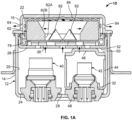
Figure 1A is a cross-sectional view of the inflator of the present teachings similar toFigure 1 , the inflator shown after activation. -
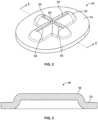
Figure 2 is a perspective view of a lid of a second stage ignitor device in accordance with the present teachings. -
Figure 3 is a cross-sectional view taken along the line 3-3 ofFigure 2 . -
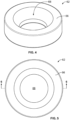
Figure 4 is a simplified perspective view of a filter of the inflator of the present teachings. -
Figure 5 is a top view of the filter ofFigure 4 . -
Figure 6 is a cross-sectional view taken along the line 6-6 ofFigure 5 . -
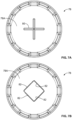
Figure 7A is a top view of a separating member of the inflator of the present teachings, the separating member shown prior to activation of the inflator. -
Figure 7B is a top view similar toFigure 7A , the separating member shown after activation of the inflator. -
Figure 8 is perspective view of an insulating member of the inflator of the present teachings. -
Figure 9 is a bottom view of the insulating member ofFigure 9 . - One or more example embodiments will now be described more fully with reference to the accompanying drawings. The one or more example embodiments are provided so that this disclosure will be thorough and will fully convey the scope to those who are skilled in the art. Numerous specific details are set forth, such as examples of specific components, devices, and methods, to provide a thorough understanding of embodiments of the present disclosure. It will be apparent to those skilled in the art that specific details need not be employed, and that the example embodiment should not be construed to limit the scope of the present disclosure. Well-known processes, well-known device structures, and well-known technologies are not described herein in detail.
- The phrases "connected to", "coupled to" and "in communication with" refer to any form of interaction between two or more entities, including mechanical, electrical, magnetic, electromagnetic, fluid, and thermal interaction. Two components may be coupled to each other even though they are not in direct contact with each other. The term " adjacent" refers to items that are in close physical proximity with each other, although the items may not necessarily be in direct contact. The phrase "fluid communication" refers to two features that are connected such that a fluid within one feature is able to pass into the other feature. "Exemplary" as used herein means serving as a typical or representative example or instance, and does not necessarily mean special or preferred.
- With reference to drawings, an inflator for an inflatable occupant protection device in accordance with the present teachings is illustrated and generally identified at
reference character 10. Theinflator 10 is part of an occupant restraint system of a motor vehicle that includes an inflatable airbag (not particularly shown). Theinflator 10 shown in the drawings is a dual-stage inflator particularly adapted for a driver side front airbag. It will be understood, however, that various aspects of the present teachings may be readily adapted for use with passenger side front airbags and other airbags. - The
inflator 10 is generally illustrated to includehousing 12 having afirst housing portion 14 and asecond housing portion 16. In the embodiment illustrated, thehousing 12 has a generally circular cross section. Thefirst housing portion 14 may be inertia welded or otherwise suitably attached to thesecond housing portion 16. The first andsecond housing portions internal cavity 20 having afilter chamber 22 separated from acombustion chamber 24 by aninternal wall 26. - The
combustion chamber 24 includes a first portion or firstcombustion chamber portion 28 containing a first gasgenerant material 30. Thecombustion chamber 24 further includes a second portion or secondcombustion chamber portion 32 containing a second gasgenerant material 34. Insofar as the present teachings are concerned, the first and second gasgenerant materials - The internal wall may be a vented wall or gas generant
retaining wall 26 for retaining the first and second gasgenerant materials combustion chamber 24. The gas generantretaining wall 26 includes a plurality ofopenings 36 for venting combustion gases from thecombustion chamber 24 to thefilter chamber 22. Afoam disc 38 may be disposed in thecombustion chamber 24 adjacent to the gasgenerant retaining wall 26. As will be understood by those skilled in the art, the foam disc conventionally functions to provide stability to the storage of the first and secondgas generant materials combustion chamber 24 over time. The foam disc may be consumed upon combustion of the first and secondgas generant materials - A first
stage ignition device 40 is disposed in thefirst portion 28 of thecombustion chamber 24 for combusting the firstgas generant material 30. A secondstage ignition device 42 is correspondingly disposed in thesecond portion 32 of thecombustion chamber 24 for combusting the secondgas generant material 34. The first and secondstage ignition devices stage ignition devices housing 12. - The
second portion 32 of thecombustion chamber 24 is defined by one or more sidewalls 44 and alid 46. In the embodiment illustrated, the one or more sidewalls includes a single, continuous wall orchamber wall 44. Thewall 44 may be oval, circular or of any other cross-sectional shape. At a first end (the lower end as shown in the drawings) of thechamber wall 44, thechamber wall 44 receives the secondstage ignition device 42 and abase 48 of the secondstage ignition device 42 closes the first end. At a second or opposite end (the upper end as shown in the drawings) of thechamber wall 44, thelid 46 normally (i.e., prior to activation of the inflator 10) closes thesecond portion 32 of thecombustion chamber 24. Thelid 46 may be oval in shape or otherwise cooperatively configured with thechamber wall 44 to close thesecond portion 32 of thecombustion chamber 24. - The
lid 46 is movable in an axial direction from a first or closed position prior to combustion of the gas generant materials to a second or open position following combustion of the gas generant materials. The inflator 10 is shown prior to combustion of thegas generant materials Figure 1 and after combustion of thegas generant materials Figure 1 . Explaining further, prior to combustion of the second gas generant material 34 (as shown in the cross-sectional view ofFigure 1 ), thelid 46 is axially spaced from thegenerant retaining wall 26. As illustrated, thelid 46 may be spaced from thegenerant retaining wall 26 by thefoam disk 38. Upon combustion of the second gas generant material 34 (as shown in the cross-sectional view ofFigure 1A ), thefoam disk 38 is consumed by the heat of the reaction and thelid 46 is axially displaced (upward as shown in the drawings) to a position adjacent to thegenerant retaining wall 26 in response to an increase of pressure within thesecond portion 32 of thecombustion chamber 24. - An
outer side 50 of thelid 46 and anadjacent side 52 of thegenerant retaining wall 26 may be cooperatively configured to allow an improved flow of combustion gas between the gasgenerant retaining wall 26 and thelid 46 when the lid abuts the gasgenerant retaining wall 26 in the open position. In this regard, at least one of theouter side 50 of the lid and theadjacent side 52 of the gasgenerant retaining wall 26 includes aplanar portion 54 and a raisedportion 56. In the embodiment illustrated, thelid 46 includes the planar portion and the raisedportion 56 and theadjacent side 52. The raised portion may be stamped into thelid 46 or otherwise formed with or into thelid 46, and may outwardly extend from theplanar portion 54 in a direction away from thesecond portion 32 of thecombustion chamber 24. - The raised
portion 56 of thelid 46 is configured to cooperate with the gasgenerant retaining wall 26 and maintain a generally parallel orientation between the gasgenerant retaining wall 26 and theplanar portion 54 of thelid 46 when thelid 46 is in the open position and abutting the gasgenerant retaining wall 26. To this end, the raisedportion 56 includes at least three spaced apart points defining a plane perpendicular to an axial direction that abut the gasgenerant retaining wall 26 to maintain the generally parallel orientation. Perhaps more preferably, the raisedportion 56 includes at least threelegs 58 each outwardly extending from acommon point 60 in a direction parallel to the gasgenerant retaining wall 26. In the embodiment illustrated, the raised portion has a cruciform shape with fourlegs 58 each outwardly extending from thecommon point 60 in the direction parallel to the gasgenerant retaining wall 26. Each of thelegs 58 may have a generally convex shape. It will be appreciated that thelegs 58 of the raisedportion 56 may alternatively be spaced from each other (i.e., not connected to one another through a common point 60). - At least one of the gas
generant retaining wall 26 and the raisedportion 56 of thelid 46 may be constructed of a material that partially deforms upon movement of thelid 46 from the first position to the second position under the heat and pressure of the reaction. This partial deformation may increase surface area contact between thelid 46 and the gasgenerant retaining wall 26 to avoiding tilting of thelid 46 while maintaining the combustion gas flow path therebetween. In one embodiment, thelid 46 may be constructed of carbon steel and the gas generant retaining wall may similarly be constructed of carbon steel. - A
filter 62 is disposed in thefilter chamber 22 for filtering combustion gases before the combustion gases are exhausted through radially extendingports 64 in thesecond portion 16 of thehousing 12. Thesecond portion 16 of thehousing 12 may be a diffuser cap portion. Thefilter 62 includes amain body 66 and anopening 68 that axially passes through themain body 66. Theopening 68 has afirst end 70 at a firstaxial side 72 of themain body portion 66 and asecond end 74 at a secondaxial side 76 of themain body portion 66. Thefirst end 70 of theopening 68 has a first diameter D1. Thesecond end 74 has a second diameter D2. The second diameter D2 is greater than the first diameter D1 - The
opening 68 includes a firstaxially extending portion 68A inwardly extending into themain body portion 66 from the firstaxial side 72 and a secondaxially extending portion 68B inwardly extending into themain body portion 66 from the secondaxial side 76. The first axially extendingportion 68A may have a cylindrical shape. The second axially extendingportion 68B may have a frustoconical shape. The frustoconical shape of the second axially extendingportion 68B may outwardly taper from the first diameter D1 adjacent the first axially extendingportion 68A to the second diameter D2 at thesecond end 74. The second axially extendingportion 68A may outwardly taper at an angle α. - In one particular application, the first axially extending
portion 68A has a first height H1 of approximately 3.5mm, the second extendingportion 68B has a second height H2 of approximately 7.2mm, and the second axially extendingportion 68A outwardly tapers at an angle between 45 degrees and 70 degrees, and more preferably at an angle of approximately 60 degrees. In this particular example, the first diameter D1 of thefirst end 70 of theopening 68 is approximately 19.5mm and the second diameter D2 of thesecond end 74 of theopening 68 is approximately 27.8mm. - The
opening 68 of thefilter 62 may alternatively include a stepped shape. In this regard, theopening 68 may be alternatively defined by one or more cylindrical portions of different diameters. For example, the second axially extendingportion 68B of theopening 68 may alternatively be cylindrically shaped with a stepped portion between the first and second axially extendingportions - The
filter 62 may include afirst filter portion 62A radially surrounding the first axially extendingportion 68A and asecond filter portion 62B radially surrounding the second axially extendingportion 68B. Thefirst filter portion 62A may have a first radial density in a radial direction and the second filter portion may have a second radial density in the radial direction. The second radial density may be greater than the first radial density such that combustion gases more easily radially flow through thefirst filter portion 62A as compared to radially through thesecond filter portion 62B. Thesecond filter portion 68B may have a variable density in the radial direction that increases from thefirst filter portion 62A to the secondaxial side 76 of thefilter 62. The variable density of thesecond filter portion 68B may linearly increase from adjacent thefirst filter portion 62A to the secondaxial side 76 of thefilter 62. - The
filter 62 may be constructed of metal. More preferably, the filter may be a woven wire mesh filter. The frustoconical shape of the portion of theopening 68 passing through thesecond filter portion 62B may be defined by a correspondingly shaped mandrel. In this regard, a mandrel (not shown) used to create the frustoconical shape of the second axially extendingportion 68B of theopening 68 may have a male frustoconical shape corresponding to the shape of the second axially extendingportion 68B. Thewire mesh filter 62 may be compressed from an initial, generally toroidal shape by the mandrel which is inserted into theopening 68. Compression of the wire mesh of thefilter 62 with the mandrel may simultaneously axially compress the wire mesh of the first andsecond filter portions second filter portion 62B. Insofar as the wire mesh of thefirst filter portion 62A is not radially compressed (or at least radially compressed to a lesser degree), the density of thesecond filter portion 62B is greater than the density of thefirst filter portion 62A. - A separating
member 78 disposed in thehousing 12 axially separates thefilter chamber 22 and thecombustion chamber 24. The separatingmember 78 includes aplate portion 78A disposed adjacent the firstaxial side 72 of thefilter 62. The plate portion 72A and may include a weakenedzone 80. The weakenedzone 80 may be adapted to open in response to an increase in pressure within thecombustion chamber 24. The weakenedzone 80 is shown prior to opening inFigures 1 and7A . The weakenedzone 80 is shown after opening inFigures 2 and7B . In the embodiment illustrated, the weakenedzone 80 has a cruciform shape. As such, the weakenedzone 80 opens to define fourpetals 82. It will be understood, however, that alternately shaped weakened zones may be employed within the scope of the present teachings to define a greater or lesser number ofpetals 82. After the weakenedzone 80 opens, a plurality ofpetals 82 of theplate portion 78A axially extend into thefilter chamber 22. The first axially extendingportion 68A of thefilter 62 is sized and positioned to oppose radial movement of the plurality ofpetals 82 upon opening of the weakenedzone 80. Thepetals 82 of theplate portion 78A are radially spaced from the second diameter of the second axially extendingportion 68B of theopening 68 upon opening of the weakened zone. - An insulating
member 84 is axially disposed between thefilter 62 and thesecond housing portion 16. Combustion gases passing through thefilter 62 elevate the temperature of thefilter 62. The insulatingmember 84 includes aplate portion 86 including a plurality of vent holes 88. The insulatingmember 84 functions to protect thesecond housing portion 16 from these elevated filter temperatures. In the embodiment illustrated, the insulatingmember 84 is coupled to the separatingmember 78 such that the insulatingmember 84 is radially and axially captured by the separatingmember 78. - The separating
member 78 and the insulatingmember 84 are cooperatively configured to be coupled together. In this regard, the separating member includes a circumferential flange axially extending from theplate portion 78A in a direction away from thecombustion chamber 24. The insulatingmember 84 includes a plurality ofengagement elements 90. Theengagement elements 90 may be hook shaped engagement elements sized and positioned to be press-fit to the separatingmember 78. The hook shapedengagement elements 90 axially extend from acircumferential flange 92 that axially extends from theplate portion 86 of the insulatingmember 84. In the embodiment illustrated, the insultingmember 84 includes four (4)engagement elements 90 equally spaced circumferentially about the insulating member. While the hook shapedengagement elements 90 may be preferred for particular applications, it will be understood that other types of engagement elements may be incorporated within the scope of the present teachings. It will also be understood that theengagement elements 90 may be alternatively carried by the separatingmember 78. - The
filter 62 is axially captured between the insulatingmember 84 and the separatingmember 78 such that movement of thefilter 62 within thefilter chamber 22 is directly opposed in a first axial direction by theplate portion 86 of the insulatingmember 84 and directly opposed in a second, opposite axial direction by theplate portion 78A of the separatingmember 78. Thefilter 62 is radially captured by at least one of the insulatingmember 84 and the separatingmember 78 such that movement in any radial direction is opposed. In the embodiment illustrated, radial movement of thefilter 62 within thefilter chamber 22 is directly opposed by thecircumferential flange 92 of the insulatingmember 84. - With particular reference to the cross-sectional views of
Figures 1 and2 , operation of theinflator 10 of the present teachings will be described. Flow of combustion gases is represented inFigure 1A with arrows. It will be understood, however, that the arrows included inFigure 1A identify the primary flow of combustion gases through the inflator 10 in a simplified manner. - Upon activation of the inflator 10, the first
gas generant material 30 begins to ignite and produce inflation gases which pressurize thefirst portion 28 of thecombustion chamber 24. The increased pressure within thefirst portion 28 of thecombustion chamber 24 open the weakenedzone 80 of theplate portion 78A of the separatingmember 78 causing thepetals 82 to extend into thefilter chamber 22. More specifically, thepetals 82 of theplate portion 78A extend into theopening 68 of thefilter 62. As shown inFigure 1A , thepetals 82 continue to open until they are radially opposed by thefirst portion 62A of thefilter 62 at the first axially extendingportion 68A of theopening 68. As such, thepetals 82 are radially spaced from thesecond portion 62B of thefilter 62 at the second axially extendingportion 68B of theopening 68 for unimpeded flow of combustion gases in a radial direction. The combustion gases from the firstgas generant material 30 pass radially through thefilter 62 and are exhausted through theradially extending ports 64. Given the lower density of thefilter 62 at thefirst portion 62A, flow of the combustion gases radially passes not only through thesecond portion 62B of thefilter 62 but also through thefirst portion 62A. It will be appreciated that the reduced diameter portion of theopening 68 of thefilter 62 services to block movement of thepetals 82 and thereby reduces variability in performance of theinflator 10. - When the
second ignition device 42 is activated, the secondgas generant material 34 is activated to produce a second source of inflation gases. Upon activation of the secondgas generant material 34, the second source of combustion gases pressurize thesecond portion 32 of thecombustion chamber 24. The increased pressure within thesecond portion 32 of thecombustion chamber 24 displaces thelid 46 from the closed position to the open position. A flow path is maintained between thelid 46 and the gasgenerant retaining wall 26. Again, it will be understood that this flow path maintained between thelid 46 and the gasgenerant retaining wall 26 is not specifically represented by arrows inFigure 1A . It will be further understood, however, that this flow path even further reduces variability in performance of theinflator 10. The combustion gases from the secondgas generant material 34 similarly pass through theopenings 36 in the gas generant retaining wall, through the opening in theplate portion 78A of the separatingmember 78, axially into theopening 68 of thefilter 62, radially through thefilter 62 and out theports 64. - While specific embodiments and applications of the present disclosure have been illustrated and described, it is to be understood that the invention is not limited to the precise configuration and components disclosed herein. Various modifications, changes, and variations, which will be apparent to those skilled in the art, may be made in the arrangement, operation, and details of the methods and systems of the present disclosure, within the scope of the appended claims.
Claims (10)
- An inflator (10) for generating inflation gases for a safety device, the inflator (10) comprising:a housing (12) having an internal cavity including a combustion chamber (20) and a filter chamber (22);a filter (62) disposed in the filter chamber (22);a separating member (78) disposed in the housing (12) on a first axial side (72) of the filter (62) and separating the filter chamber (22) from the combustion chamber (20);an insulating member (84) disposed in the filter chamber (22) on a second axial side (76) of the filter (62), the second axial side (76) being opposite the first axial side (72),characterized in that the separating member (78) is coupled to the insulating member (84).
- The (10) inflator according to claim 1, characterized in that the separating member (78) includes a plate portion (78A) having a weakened zone (80) which opens in response to an increase in pressure within the combustion chamber (20).
- The (10) inflator according to claim 2, characterized in that the weakened zone (80) opens in response to the increase in pressure within the combustion chamber (20) to form a plurality of petals (82) axially extending into the filter chamber (22).
- The (10) inflator according to claim 3, characterized in that the filter (62) includes an axially extending opening (68) and the plurality of petals (82) axially extend into the axially extending opening (68).
- The inflator (10) according to one of the preceding claims, characterized in that the insulating member (84) is radially and axially captured by the separating member (78).
- The inflator (10) according to claim 5, characterized in that the insulating member (84) and the separating member (78) are press-fit together.
- The inflator (10) according to one of the preceding claims, characterized in that the insulating member (84) includes a plurality of engagement elements (90) engaging the separating member (78).
- The inflator (10) according to claim 7, characterized in that the plurality of engagement elements (90) are hook shaped engagement elements press-fit to the separating member (78).
- The inflator (10) according to one of the preceding claims, characterized in that the filter (62) is axially captured between the insulating member (84) and the separating member (78).
- The inflator of (10) according to one of the preceding claims, characterized in that the filter (62) is radially captured by at least one of the insulating member (84) and the separating member (78).
Applications Claiming Priority (2)
| Application Number | Priority Date | Filing Date | Title |
|---|---|---|---|
| US17/130,111 US11548470B2 (en) | 2020-12-22 | 2020-12-22 | Inflator for a passive vehicle safety device |
| PCT/US2021/064042 WO2022140179A1 (en) | 2020-12-22 | 2021-12-17 | Inflator for a passive vehicle safety device |
Publications (2)
| Publication Number | Publication Date |
|---|---|
| EP4267436A1 EP4267436A1 (en) | 2023-11-01 |
| EP4267436B1 true EP4267436B1 (en) | 2024-11-13 |
Family
ID=80168375
Family Applications (1)
| Application Number | Title | Priority Date | Filing Date |
|---|---|---|---|
| EP21852095.5A Active EP4267436B1 (en) | 2020-12-22 | 2021-12-17 | Inflator for a passive vehicle safety device |
Country Status (4)
| Country | Link |
|---|---|
| US (1) | US11548470B2 (en) |
| EP (1) | EP4267436B1 (en) |
| CN (1) | CN116615360A (en) |
| WO (1) | WO2022140179A1 (en) |
Families Citing this family (1)
| Publication number | Priority date | Publication date | Assignee | Title |
|---|---|---|---|---|
| DE102022124029A1 (en) * | 2022-09-20 | 2024-03-21 | Zf Airbag Germany Gmbh | Gas generator |
Family Cites Families (14)
| Publication number | Priority date | Publication date | Assignee | Title |
|---|---|---|---|---|
| CA1140058A (en) | 1978-12-18 | 1983-01-25 | Fred E. Schneiter | Gas inflator structures with improved cooling filters and method of making the filters |
| DE69105179T2 (en) * | 1990-09-06 | 1995-06-22 | Nippon Oils & Fats Co Ltd | Gas generator device. |
| US6315322B1 (en) * | 1999-03-05 | 2001-11-13 | Trw Inc. | Air bag inflator |
| US6189927B1 (en) * | 1999-12-16 | 2001-02-20 | Autoliv Asp, Inc. | Adaptive output inflator |
| FR2922007A1 (en) * | 2007-10-03 | 2009-04-10 | Livbag Soc Par Actions Simplif | PYROTECHNIC GAS GENERATOR FOR AUTOMOBILE SAFETY, DISCOIDED |
| US7950693B2 (en) * | 2008-05-20 | 2011-05-31 | Autoliv Asp, Inc. | Dual stage inflator |
| US9550471B1 (en) * | 2013-06-30 | 2017-01-24 | Tk Holdings Inc. | Gas generating system movable divider |
| FR3053456B1 (en) * | 2016-06-29 | 2018-06-29 | Autoliv Development Ab | GAS GENERATOR |
| DE112017005654B4 (en) * | 2016-11-10 | 2025-03-06 | Daicel Corporation | Gas generator for an airbag device with radial partition |
| JP6714495B2 (en) * | 2016-11-10 | 2020-06-24 | 株式会社ダイセル | Gas generator |
| US11292424B2 (en) | 2017-12-22 | 2022-04-05 | Autoliv Development Ab | Gas generator for a safety system |
| JP7199296B2 (en) * | 2018-10-05 | 2023-01-05 | 日本化薬株式会社 | gas generator |
| US11485313B2 (en) * | 2020-06-23 | 2022-11-01 | Autoliv Asp, Inc. | Inflator for a passive vehicle safety device |
| US11273787B2 (en) * | 2020-06-23 | 2022-03-15 | Autoliv Asp, Inc. | Inflator for a passive vehicle safety device and filter for an inflator of a passive vehicle safety device |
-
2020
- 2020-12-22 US US17/130,111 patent/US11548470B2/en active Active
-
2021
- 2021-12-17 CN CN202180084714.3A patent/CN116615360A/en active Pending
- 2021-12-17 EP EP21852095.5A patent/EP4267436B1/en active Active
- 2021-12-17 WO PCT/US2021/064042 patent/WO2022140179A1/en not_active Ceased
Also Published As
| Publication number | Publication date |
|---|---|
| CN116615360A (en) | 2023-08-18 |
| WO2022140179A1 (en) | 2022-06-30 |
| US20220194314A1 (en) | 2022-06-23 |
| EP4267436A1 (en) | 2023-11-01 |
| US11548470B2 (en) | 2023-01-10 |
Similar Documents
| Publication | Publication Date | Title |
|---|---|---|
| KR100417766B1 (en) | Gas generator | |
| US6142515A (en) | Air bag inflator with heat sink and retainer | |
| US7726687B2 (en) | Inflator second stage combustion control | |
| US6543805B2 (en) | Dual stage air bag inflator | |
| US20140145421A1 (en) | Dual stage air bag inflator | |
| US7806954B2 (en) | Gas generator | |
| US6701849B2 (en) | Dual stage air bag inflator with secondary propellant cap | |
| US7347448B2 (en) | Inflator device for airbag installations | |
| JP7325567B2 (en) | Initiators for gas generators in vehicle safety equipment | |
| JP3986184B2 (en) | Gas generator | |
| EP4168277B1 (en) | Inflator for a passive vehicle safety device | |
| EP1369316B1 (en) | Gas generator for air bag and air bag device | |
| EP4267436B1 (en) | Inflator for a passive vehicle safety device | |
| US11273787B2 (en) | Inflator for a passive vehicle safety device and filter for an inflator of a passive vehicle safety device | |
| US20220281405A1 (en) | Dual stage inflator | |
| EP4308421B1 (en) | Dual stage inflator | |
| US20230044860A1 (en) | Dual stage inflator |
Legal Events
| Date | Code | Title | Description |
|---|---|---|---|
| STAA | Information on the status of an ep patent application or granted ep patent |
Free format text: STATUS: UNKNOWN |
|
| STAA | Information on the status of an ep patent application or granted ep patent |
Free format text: STATUS: THE INTERNATIONAL PUBLICATION HAS BEEN MADE |
|
| PUAI | Public reference made under article 153(3) epc to a published international application that has entered the european phase |
Free format text: ORIGINAL CODE: 0009012 |
|
| STAA | Information on the status of an ep patent application or granted ep patent |
Free format text: STATUS: REQUEST FOR EXAMINATION WAS MADE |
|
| 17P | Request for examination filed |
Effective date: 20230711 |
|
| AK | Designated contracting states |
Kind code of ref document: A1 Designated state(s): AL AT BE BG CH CY CZ DE DK EE ES FI FR GB GR HR HU IE IS IT LI LT LU LV MC MK MT NL NO PL PT RO RS SE SI SK SM TR |
|
| DAV | Request for validation of the european patent (deleted) | ||
| DAX | Request for extension of the european patent (deleted) | ||
| GRAP | Despatch of communication of intention to grant a patent |
Free format text: ORIGINAL CODE: EPIDOSNIGR1 |
|
| STAA | Information on the status of an ep patent application or granted ep patent |
Free format text: STATUS: GRANT OF PATENT IS INTENDED |
|
| INTG | Intention to grant announced |
Effective date: 20240710 |
|
| GRAS | Grant fee paid |
Free format text: ORIGINAL CODE: EPIDOSNIGR3 |
|
| GRAA | (expected) grant |
Free format text: ORIGINAL CODE: 0009210 |
|
| STAA | Information on the status of an ep patent application or granted ep patent |
Free format text: STATUS: THE PATENT HAS BEEN GRANTED |
|
| AK | Designated contracting states |
Kind code of ref document: B1 Designated state(s): AL AT BE BG CH CY CZ DE DK EE ES FI FR GB GR HR HU IE IS IT LI LT LU LV MC MK MT NL NO PL PT RO RS SE SI SK SM TR |
|
| REG | Reference to a national code |
Ref country code: GB Ref legal event code: FG4D |
|
| REG | Reference to a national code |
Ref country code: CH Ref legal event code: EP |
|
| REG | Reference to a national code |
Ref country code: IE Ref legal event code: FG4D |
|
| REG | Reference to a national code |
Ref country code: DE Ref legal event code: R096 Ref document number: 602021021915 Country of ref document: DE |
|
| REG | Reference to a national code |
Ref country code: LT Ref legal event code: MG9D |
|
| REG | Reference to a national code |
Ref country code: NL Ref legal event code: MP Effective date: 20241113 |
|
| PG25 | Lapsed in a contracting state [announced via postgrant information from national office to epo] |
Ref country code: HR Free format text: LAPSE BECAUSE OF FAILURE TO SUBMIT A TRANSLATION OF THE DESCRIPTION OR TO PAY THE FEE WITHIN THE PRESCRIBED TIME-LIMIT Effective date: 20241113 Ref country code: PT Free format text: LAPSE BECAUSE OF FAILURE TO SUBMIT A TRANSLATION OF THE DESCRIPTION OR TO PAY THE FEE WITHIN THE PRESCRIBED TIME-LIMIT Effective date: 20250313 Ref country code: IS Free format text: LAPSE BECAUSE OF FAILURE TO SUBMIT A TRANSLATION OF THE DESCRIPTION OR TO PAY THE FEE WITHIN THE PRESCRIBED TIME-LIMIT Effective date: 20250313 |
|
| PG25 | Lapsed in a contracting state [announced via postgrant information from national office to epo] |
Ref country code: FI Free format text: LAPSE BECAUSE OF FAILURE TO SUBMIT A TRANSLATION OF THE DESCRIPTION OR TO PAY THE FEE WITHIN THE PRESCRIBED TIME-LIMIT Effective date: 20241113 Ref country code: NL Free format text: LAPSE BECAUSE OF FAILURE TO SUBMIT A TRANSLATION OF THE DESCRIPTION OR TO PAY THE FEE WITHIN THE PRESCRIBED TIME-LIMIT Effective date: 20241113 |
|
| REG | Reference to a national code |
Ref country code: AT Ref legal event code: MK05 Ref document number: 1741467 Country of ref document: AT Kind code of ref document: T Effective date: 20241113 |
|
| PG25 | Lapsed in a contracting state [announced via postgrant information from national office to epo] |
Ref country code: BG Free format text: LAPSE BECAUSE OF FAILURE TO SUBMIT A TRANSLATION OF THE DESCRIPTION OR TO PAY THE FEE WITHIN THE PRESCRIBED TIME-LIMIT Effective date: 20241113 |
|
| PG25 | Lapsed in a contracting state [announced via postgrant information from national office to epo] |
Ref country code: ES Free format text: LAPSE BECAUSE OF FAILURE TO SUBMIT A TRANSLATION OF THE DESCRIPTION OR TO PAY THE FEE WITHIN THE PRESCRIBED TIME-LIMIT Effective date: 20241113 |
|
| PG25 | Lapsed in a contracting state [announced via postgrant information from national office to epo] |
Ref country code: NO Free format text: LAPSE BECAUSE OF FAILURE TO SUBMIT A TRANSLATION OF THE DESCRIPTION OR TO PAY THE FEE WITHIN THE PRESCRIBED TIME-LIMIT Effective date: 20250213 |
|
| PG25 | Lapsed in a contracting state [announced via postgrant information from national office to epo] |
Ref country code: LV Free format text: LAPSE BECAUSE OF FAILURE TO SUBMIT A TRANSLATION OF THE DESCRIPTION OR TO PAY THE FEE WITHIN THE PRESCRIBED TIME-LIMIT Effective date: 20241113 Ref country code: GR Free format text: LAPSE BECAUSE OF FAILURE TO SUBMIT A TRANSLATION OF THE DESCRIPTION OR TO PAY THE FEE WITHIN THE PRESCRIBED TIME-LIMIT Effective date: 20250214 Ref country code: AT Free format text: LAPSE BECAUSE OF FAILURE TO SUBMIT A TRANSLATION OF THE DESCRIPTION OR TO PAY THE FEE WITHIN THE PRESCRIBED TIME-LIMIT Effective date: 20241113 |
|
| PG25 | Lapsed in a contracting state [announced via postgrant information from national office to epo] |
Ref country code: PL Free format text: LAPSE BECAUSE OF FAILURE TO SUBMIT A TRANSLATION OF THE DESCRIPTION OR TO PAY THE FEE WITHIN THE PRESCRIBED TIME-LIMIT Effective date: 20241113 |
|
| PG25 | Lapsed in a contracting state [announced via postgrant information from national office to epo] |
Ref country code: RS Free format text: LAPSE BECAUSE OF FAILURE TO SUBMIT A TRANSLATION OF THE DESCRIPTION OR TO PAY THE FEE WITHIN THE PRESCRIBED TIME-LIMIT Effective date: 20250213 |
|
| PG25 | Lapsed in a contracting state [announced via postgrant information from national office to epo] |
Ref country code: SM Free format text: LAPSE BECAUSE OF FAILURE TO SUBMIT A TRANSLATION OF THE DESCRIPTION OR TO PAY THE FEE WITHIN THE PRESCRIBED TIME-LIMIT Effective date: 20241113 |
|
| PG25 | Lapsed in a contracting state [announced via postgrant information from national office to epo] |
Ref country code: DK Free format text: LAPSE BECAUSE OF FAILURE TO SUBMIT A TRANSLATION OF THE DESCRIPTION OR TO PAY THE FEE WITHIN THE PRESCRIBED TIME-LIMIT Effective date: 20241113 |
|
| PG25 | Lapsed in a contracting state [announced via postgrant information from national office to epo] |
Ref country code: EE Free format text: LAPSE BECAUSE OF FAILURE TO SUBMIT A TRANSLATION OF THE DESCRIPTION OR TO PAY THE FEE WITHIN THE PRESCRIBED TIME-LIMIT Effective date: 20241113 |
|
| PG25 | Lapsed in a contracting state [announced via postgrant information from national office to epo] |
Ref country code: RO Free format text: LAPSE BECAUSE OF FAILURE TO SUBMIT A TRANSLATION OF THE DESCRIPTION OR TO PAY THE FEE WITHIN THE PRESCRIBED TIME-LIMIT Effective date: 20241113 |
|
| PG25 | Lapsed in a contracting state [announced via postgrant information from national office to epo] |
Ref country code: SK Free format text: LAPSE BECAUSE OF FAILURE TO SUBMIT A TRANSLATION OF THE DESCRIPTION OR TO PAY THE FEE WITHIN THE PRESCRIBED TIME-LIMIT Effective date: 20241113 |
|
| PG25 | Lapsed in a contracting state [announced via postgrant information from national office to epo] |
Ref country code: CZ Free format text: LAPSE BECAUSE OF FAILURE TO SUBMIT A TRANSLATION OF THE DESCRIPTION OR TO PAY THE FEE WITHIN THE PRESCRIBED TIME-LIMIT Effective date: 20241113 |
|
| PG25 | Lapsed in a contracting state [announced via postgrant information from national office to epo] |
Ref country code: IT Free format text: LAPSE BECAUSE OF FAILURE TO SUBMIT A TRANSLATION OF THE DESCRIPTION OR TO PAY THE FEE WITHIN THE PRESCRIBED TIME-LIMIT Effective date: 20241113 |
|
| REG | Reference to a national code |
Ref country code: CH Ref legal event code: PL |
|
| REG | Reference to a national code |
Ref country code: DE Ref legal event code: R097 Ref document number: 602021021915 Country of ref document: DE |
|
| PG25 | Lapsed in a contracting state [announced via postgrant information from national office to epo] |
Ref country code: LU Free format text: LAPSE BECAUSE OF NON-PAYMENT OF DUE FEES Effective date: 20241217 |
|
| PG25 | Lapsed in a contracting state [announced via postgrant information from national office to epo] |
Ref country code: SE Free format text: LAPSE BECAUSE OF FAILURE TO SUBMIT A TRANSLATION OF THE DESCRIPTION OR TO PAY THE FEE WITHIN THE PRESCRIBED TIME-LIMIT Effective date: 20241113 |
|
| PG25 | Lapsed in a contracting state [announced via postgrant information from national office to epo] |
Ref country code: MC Free format text: LAPSE BECAUSE OF FAILURE TO SUBMIT A TRANSLATION OF THE DESCRIPTION OR TO PAY THE FEE WITHIN THE PRESCRIBED TIME-LIMIT Effective date: 20241113 |
|
| PLBE | No opposition filed within time limit |
Free format text: ORIGINAL CODE: 0009261 |
|
| STAA | Information on the status of an ep patent application or granted ep patent |
Free format text: STATUS: NO OPPOSITION FILED WITHIN TIME LIMIT |
|
| REG | Reference to a national code |
Ref country code: BE Ref legal event code: MM Effective date: 20241231 |
|
| PG25 | Lapsed in a contracting state [announced via postgrant information from national office to epo] |
Ref country code: BE Free format text: LAPSE BECAUSE OF NON-PAYMENT OF DUE FEES Effective date: 20241231 |
|
| PG25 | Lapsed in a contracting state [announced via postgrant information from national office to epo] |
Ref country code: CH Free format text: LAPSE BECAUSE OF NON-PAYMENT OF DUE FEES Effective date: 20241231 |
|
| 26N | No opposition filed |
Effective date: 20250814 |
|
| PG25 | Lapsed in a contracting state [announced via postgrant information from national office to epo] |
Ref country code: IE Free format text: LAPSE BECAUSE OF NON-PAYMENT OF DUE FEES Effective date: 20241217 |
|
| PGFP | Annual fee paid to national office [announced via postgrant information from national office to epo] |
Ref country code: GB Payment date: 20251223 Year of fee payment: 5 |
|
| PGFP | Annual fee paid to national office [announced via postgrant information from national office to epo] |
Ref country code: FR Payment date: 20251223 Year of fee payment: 5 |
|
| PGFP | Annual fee paid to national office [announced via postgrant information from national office to epo] |
Ref country code: DE Payment date: 20251229 Year of fee payment: 5 |