EP4266716A1 - Communication method and apparatus applied to remote driving, and medium and electronic device - Google Patents
Communication method and apparatus applied to remote driving, and medium and electronic device Download PDFInfo
- Publication number
- EP4266716A1 EP4266716A1 EP22831539.6A EP22831539A EP4266716A1 EP 4266716 A1 EP4266716 A1 EP 4266716A1 EP 22831539 A EP22831539 A EP 22831539A EP 4266716 A1 EP4266716 A1 EP 4266716A1
- Authority
- EP
- European Patent Office
- Prior art keywords
- remote driving
- mode
- remote
- vehicle terminal
- pdu session
- Prior art date
- Legal status (The legal status is an assumption and is not a legal conclusion. Google has not performed a legal analysis and makes no representation as to the accuracy of the status listed.)
- Granted
Links
Images



Classifications
-
- H—ELECTRICITY
- H04—ELECTRIC COMMUNICATION TECHNIQUE
- H04W—WIRELESS COMMUNICATION NETWORKS
- H04W28/00—Network traffic management; Network resource management
- H04W28/02—Traffic management, e.g. flow control or congestion control
- H04W28/0268—Traffic management, e.g. flow control or congestion control using specific QoS parameters for wireless networks, e.g. QoS class identifier [QCI] or guaranteed bit rate [GBR]
-
- H—ELECTRICITY
- H04—ELECTRIC COMMUNICATION TECHNIQUE
- H04W—WIRELESS COMMUNICATION NETWORKS
- H04W4/00—Services specially adapted for wireless communication networks; Facilities therefor
- H04W4/30—Services specially adapted for particular environments, situations or purposes
- H04W4/40—Services specially adapted for particular environments, situations or purposes for vehicles, e.g. vehicle-to-pedestrians [V2P]
-
- H—ELECTRICITY
- H04—ELECTRIC COMMUNICATION TECHNIQUE
- H04W—WIRELESS COMMUNICATION NETWORKS
- H04W4/00—Services specially adapted for wireless communication networks; Facilities therefor
- H04W4/30—Services specially adapted for particular environments, situations or purposes
- H04W4/40—Services specially adapted for particular environments, situations or purposes for vehicles, e.g. vehicle-to-pedestrians [V2P]
- H04W4/44—Services specially adapted for particular environments, situations or purposes for vehicles, e.g. vehicle-to-pedestrians [V2P] for communication between vehicles and infrastructures, e.g. vehicle-to-cloud [V2C] or vehicle-to-home [V2H]
-
- B—PERFORMING OPERATIONS; TRANSPORTING
- B60—VEHICLES IN GENERAL
- B60W—CONJOINT CONTROL OF VEHICLE SUB-UNITS OF DIFFERENT TYPE OR DIFFERENT FUNCTION; CONTROL SYSTEMS SPECIALLY ADAPTED FOR HYBRID VEHICLES; ROAD VEHICLE DRIVE CONTROL SYSTEMS FOR PURPOSES NOT RELATED TO THE CONTROL OF A PARTICULAR SUB-UNIT
- B60W60/00—Drive control systems specially adapted for autonomous road vehicles
- B60W60/005—Handover processes
-
- B—PERFORMING OPERATIONS; TRANSPORTING
- B60—VEHICLES IN GENERAL
- B60W—CONJOINT CONTROL OF VEHICLE SUB-UNITS OF DIFFERENT TYPE OR DIFFERENT FUNCTION; CONTROL SYSTEMS SPECIALLY ADAPTED FOR HYBRID VEHICLES; ROAD VEHICLE DRIVE CONTROL SYSTEMS FOR PURPOSES NOT RELATED TO THE CONTROL OF A PARTICULAR SUB-UNIT
- B60W60/00—Drive control systems specially adapted for autonomous road vehicles
- B60W60/007—Emergency override
-
- G—PHYSICS
- G05—CONTROLLING; REGULATING
- G05D—SYSTEMS FOR CONTROLLING OR REGULATING NON-ELECTRIC VARIABLES
- G05D1/00—Control of position, course, altitude or attitude of land, water, air or space vehicles, e.g. using automatic pilots
- G05D1/20—Control system inputs
- G05D1/22—Command input arrangements
- G05D1/221—Remote-control arrangements
- G05D1/225—Remote-control arrangements operated by off-board computers
-
- G—PHYSICS
- G05—CONTROLLING; REGULATING
- G05D—SYSTEMS FOR CONTROLLING OR REGULATING NON-ELECTRIC VARIABLES
- G05D1/00—Control of position, course, altitude or attitude of land, water, air or space vehicles, e.g. using automatic pilots
- G05D1/20—Control system inputs
- G05D1/22—Command input arrangements
- G05D1/221—Remote-control arrangements
- G05D1/227—Handing over between remote control and on-board control; Handing over between remote control arrangements
- G05D1/2279—Handing over between remote control and on-board control; Handing over between remote control arrangements involving allocation of control between two or more remote operators, e.g. tele-assistance
-
- H—ELECTRICITY
- H04—ELECTRIC COMMUNICATION TECHNIQUE
- H04W—WIRELESS COMMUNICATION NETWORKS
- H04W28/00—Network traffic management; Network resource management
- H04W28/16—Central resource management; Negotiation of resources or communication parameters, e.g. negotiating bandwidth or QoS [Quality of Service]
-
- H—ELECTRICITY
- H04—ELECTRIC COMMUNICATION TECHNIQUE
- H04W—WIRELESS COMMUNICATION NETWORKS
- H04W28/00—Network traffic management; Network resource management
- H04W28/16—Central resource management; Negotiation of resources or communication parameters, e.g. negotiating bandwidth or QoS [Quality of Service]
- H04W28/24—Negotiating SLA [Service Level Agreement]; Negotiating QoS [Quality of Service]
-
- H—ELECTRICITY
- H04—ELECTRIC COMMUNICATION TECHNIQUE
- H04W—WIRELESS COMMUNICATION NETWORKS
- H04W76/00—Connection management
- H04W76/10—Connection setup
-
- G—PHYSICS
- G05—CONTROLLING; REGULATING
- G05D—SYSTEMS FOR CONTROLLING OR REGULATING NON-ELECTRIC VARIABLES
- G05D2105/00—Specific applications of the controlled vehicles
- G05D2105/20—Specific applications of the controlled vehicles for transportation
- G05D2105/22—Specific applications of the controlled vehicles for transportation of humans
-
- G—PHYSICS
- G05—CONTROLLING; REGULATING
- G05D—SYSTEMS FOR CONTROLLING OR REGULATING NON-ELECTRIC VARIABLES
- G05D2107/00—Specific environments of the controlled vehicles
- G05D2107/10—Outdoor regulated spaces
- G05D2107/13—Spaces reserved for vehicle traffic, e.g. roads, regulated airspace or regulated waters
-
- G—PHYSICS
- G05—CONTROLLING; REGULATING
- G05D—SYSTEMS FOR CONTROLLING OR REGULATING NON-ELECTRIC VARIABLES
- G05D2109/00—Types of controlled vehicles
- G05D2109/10—Land vehicles
-
- H—ELECTRICITY
- H04—ELECTRIC COMMUNICATION TECHNIQUE
- H04W—WIRELESS COMMUNICATION NETWORKS
- H04W76/00—Connection management
- H04W76/20—Manipulation of established connections
Definitions
- This disclosure relates to the field of computers and communication technologies, and specifically, to a communication method and apparatus applied to remote driving, a medium, and an electronic device.
- Remote driving is a technology for implementing control on a vehicle by using long distance mobile communication, and is an important means to solve the problem of working in a dangerous and harsh environment (for example, earthquake relief, a toxic environment, a dangerous tunnel, fire-fighting and rescue, cliff path opening, or explosion site cleaning).
- a dangerous and harsh environment for example, earthquake relief, a toxic environment, a dangerous tunnel, fire-fighting and rescue, cliff path opening, or explosion site cleaning.
- remote driving also includes a plurality of driving modes, for example, a human remote control (HRC) mode and a machine remote control (MRC) mode.
- HRC human remote control
- MRC machine remote control
- Embodiments of this disclosure provide a communication method and apparatus applied to remote driving, a medium, and an electronic device, which can further resolve the problem of remote driving mode switching in a process of remote driving at least to a certain extent, so that the remote driving can flexibly adapt to complex road working conditions and network conditions.
- a communication method applied to remote driving including:
- a communication method applied to remote driving including:
- a communication apparatus applied to remote driving including:
- a communication apparatus applied to remote driving including:
- a computer-readable medium storing a computer program, the computer program, when executed by a processor, implementing the communication method applied to remote driving as described in the above embodiments.
- an electronic device including: one or more processors; and a storage apparatus, configured to store one or more programs, the one or more programs, when executed by the one or more processors, causing the one or more processors to implement the communication method applied to remote driving as described in the above embodiment.
- a computer program product or computer program including computer instructions, the computer instructions being stored in a computer-readable storage medium.
- a processor of a computer device reads the computer instructions from the computer-readable storage medium, and the processor executes the computer instructions, so that the computer device performs the communication method applied to remote driving provided in the embodiments described above.
- the PDU session parameters corresponding to the plurality of remote driving modes of the vehicle terminal are obtained, when the vehicle terminal is controlled to perform remote driving according to the PDU session parameter corresponding to the first remote driving mode, if the mode switching information transmitted by the application function entity is received, the vehicle terminal is controlled, based on the mode switching information, to switch to remote control according to the PDU session parameter corresponding to the second remote driving mode, so that the problem of switching between the remote driving modes in the remote driving process can be resolved, and further the remote driving can flexibly adapt to complex road working conditions and network conditions.
- the block diagrams shown in the drawings are merely functional entities and do not necessarily correspond to physically independent entities. That is, the functional entities may be implemented in software, in one or more hardware modules or integrated circuits, or in different networks and/or processor devices and/or microcontroller devices.
- the term "plurality of mentioned in this specification means two or more.
- the term “and/or” describes an association relationship between associated objects, and represents that three relationships may exist, for example, A and/or B may represent that, only A exists, both A and B exist, and only B exists.
- the character “/” generally indicates that the related objects are an "or" relationship.
- An autonomous driving technology relies on cooperation of artificial intelligence, visual computing, a radar system, a monitoring apparatus system, and a global positioning system, so that a computer can automatically and safely operate a motor vehicle without any active human operation.
- the autonomous driving technology usually includes high-precision maps, environment perception, behavior decision-making, path planning, motion control, and other technologies.
- the self-determined driving technology has a wide range of disclosure prospects.
- Remote driving is a technology between autonomous driving and manual driving
- remote driving is a technology that controls a vehicle by using long distance mobile communication, which mainly includes a manual remote control (HRC) mode and a machine remote control (MRC) mode.
- HRC manual remote control
- MRC machine remote control
- HRC is manually performing remote driving
- MRC is performing remote driving by a machine
- MRC belongs to autonomous driving.
- a remote driving mode there may be two remote driving modes, one is an MRC mode, and the other is an HRC mode.
- HRC mode a driver need to obtain video information in the field of vision of a remote vehicle through a network, and therefore, higher network bandwidth is required.
- MRC mode information on a vehicle terminal can be transmitted by using structured data or original format data, and therefore, network bandwidth occupied is lower.
- Downlink control instructions have similar network transmission requirements for the HRC and MRC modes.
- the challenge of uplink transmission is greater than that of downlink transmission, especially for 5G remote driving.
- 5G remote driving requires high jitter characteristics of network transmission, this is because jitter may affect an algorithm design of the vehicle terminal and cloud. Based on this, in a process of controlling a vehicle in a remote driving mode, it may be necessary to switch to another remote driving mode, for example, switching from MRC to HRC or from HRC to MRC, due to the influence of a network state or road conditions.
- a network side (such as a core network element) can obtain PDU session parameters corresponding to a plurality of remote driving modes of a vehicle terminal, for example, the PDU session parameters can be determined through communication negotiation with an application function (AF). Furthermore, when the vehicle terminal is controlled on the network side to perform remote driving according to the PDU session parameter corresponding to the first remote driving mode, if mode switching information transmitted by the AF is received, the vehicle terminal can be controlled to switch to remote control according to the PDU session parameter corresponding to the second remote driving mode based on the mode switching information.
- AF application function
- the MRC mode can be switched to the HRC mode by transmitting the mode switching information.
- the vehicle terminal performs remote driving in the HRC mode, and if the AF senses that the vehicle terminal is about to pass through an area with poor network state, it can switch the HRC mode to the MRC mode by transmitting the mode switching information, so as to avoid possible driving risks caused by using the HRC mode when the network state is poor.
- the technical solution of the embodiments of this disclosure can help address the problem of remote driving mode switching in the remote driving process, so that the remote driving can flexibly adapt to complex road working conditions and network conditions.
- FIG. 2 shows a flowchart of a communication method applied to remote driving according to some embodiments of this disclosure.
- the communication method applied to remote driving may be performed by a core network element, and the core network element may be, for example, a session management function (SMF).
- SMS session management function
- the communication method applied to remote driving includes at least steps S210 to S230, which are described in detail as follows:
- step S210 PDU session parameters corresponding to a plurality of remote driving modes of a vehicle terminal are obtained.
- the plurality of remote driving modes include a first remote driving mode and a second remote driving mode, where the first remote driving mode may be one of the MRC mode and the HRC mode, and the second remote driving mode may be the other of the MRC mode and the HRC mode.
- the PDU session parameters corresponding to the remote driving modes may be determined by communication and interaction between the AF and a policy control function (PCF).
- PCF policy control function
- the AF can communicate with PCF through a network exposure function (NEF).
- NEF network exposure function
- the AF can communicate with the PCF directly.
- the PDU session parameter include a QoS parameter, where the QoS parameter may include an uplink QoS parameter and a downlink QoS parameter.
- Uplink QoS parameters corresponding to the plurality of remote driving modes may be different. For example, for HRC and MRC, because data types and data volumes of uplink transmission are different, corresponding uplink QoS parameters are also different. However, for the downlink QoS parameter, downlink QoS parameters corresponding to the plurality of remote driving modes may be the same or different.
- step S220 when the vehicle terminal is controlled to perform remote driving according to the PDU session parameter corresponding to the first remote driving mode, the mode switching information transmitted by the application function entity is received.
- the application function entity may transmit mode switching information to the core network element when sensing that the road condition information and/or network state information of the road section traveled by the vehicle terminal has changed (or is about to change).
- the mode switching information transmitted by the application function entity indicates switching from a first remote driving mode to a second remote driving mode. For example, when the vehicle terminal performs remote driving in the MRC mode, if the AF senses that the vehicle terminal is about to pass through complex road conditions and needs manual intervention, it can switch the MRC mode to the HRC mode by transmitting the mode switching information. In another example, when the vehicle terminal performs remote driving in the HRC mode, if the AF senses that the vehicle terminal is about to pass through an area with poor network state, it can switch the HRC mode to the MRC mode by transmitting the mode switching information, so as to avoid possible driving risks caused by still using the HRC mode when the network state is poor.
- the core network element before receiving the mode switching information transmitted by the application function entity, can control the vehicle terminal to establish PDU sessions corresponding to a plurality of remote driving modes according to PDU session parameters corresponding to a plurality of remote driving modes respectively.
- PDU sessions corresponding to each remote driving mode can be established in advance, so that the switching of the driving mode can be realized as soon as possible when the switching of the remote driving mode is needed.
- the core network element needs to maintain the PDU session corresponding to the second remote driving mode in an active state before controlling the vehicle terminal to switch to remote control according to the PDU session parameter corresponding to the second remote driving mode, so as to reduce the time spent in switching the remote driving mode.
- the core network element when establishing a PDU session for the remote driving mode, can control the vehicle terminal to establish the same PDU session for a plurality of remote driving modes and respectively use different PDU session parameters for the plurality of remote driving modes.
- the core network element can also control the vehicle terminal to establish different PDU sessions for the plurality of remote driving modes, and use different PDU session parameters for the plurality of remote driving modes.
- step S230 the vehicle terminal is controlled to switch to remote control by PDU session parameter corresponding to the second remote driving mode based on the mode switching information.
- switching processing of the PDU session is required at the time of switching, i.e. switching a PDU session for transmitting remote driving data, and adjusting corresponding PDU session parameters, etc.
- the core network element can transmit the PDU session parameters switched by the vehicle terminal to the application function entity, and then the application function entity can transmit a remote control instruction to the vehicle terminal accordingly.
- the process of negotiating PDU session parameters corresponding to the remote driving mode between the PCF and the AF may be performed before the remote driving is performed, for example, before the core network element controls the vehicle terminal to perform remote driving according to the PDU session parameter corresponding to the first remote driving mode, the communication negotiation is performed by the AF and the PCF, and the PDU session parameter corresponding to the first remote driving mode and the second remote driving mode respectively are determined.
- the core network element controls the vehicle terminal to perform remote driving according to the PDU session parameter corresponding to the first remote driving mode
- the PDU session parameter corresponding to the first remote driving mode can be negotiated between the AF and the PCF, but the PDU session parameter corresponding to the second remote driving mode need to be negotiated between the AF and the PCF before switching, that is, in the process of performing remote driving according to the PDU session parameter corresponding to the first remote driving mode.
- FIG. 2 The technical solution of the embodiment shown in FIG. 2 is described from the perspective of core network elements, and the implementation details of the technical solution of the embodiments of this disclosure are described from the perspective of the AF with reference to FIG. 3 :
- FIG. 3 shows a flowchart of a communication method applied to remote driving according to some embodiments of this disclosure.
- the communication method applied to remote driving may be performed by an AF.
- the communication method applied to remote driving includes at least steps S310 to S320, which are described in detail as follows:
- step S310 communication negotiation is performed with the core network element to determine PDU session parameters corresponding to a plurality of remote driving modes of a vehicle terminal.
- PDU session parameters corresponding to each remote driving mode may be determined by communication interaction between the AF and the PCF.
- the AF can communicate with the PCF through NEF;
- the AF can communicate with the PCF directly.
- PDU session parameters include QoS parameters.
- Uplink QoS parameters corresponding to the plurality of remote driving modes may be different. For example, for HRC and MRC, because data types and data volumes of uplink transmission are different, corresponding uplink QoS parameters are also different. However, for the downlink QoS parameter, downlink QoS parameters corresponding to the plurality of remote driving modes may be the same or different.
- step S320 when the vehicle terminal performs remote driving according to the PDU session parameter corresponding to the first remote driving mode among the plurality of remote driving modes, if it is determined that the vehicle terminal needs to switch from the first remote driving mode to the second remote driving mode, mode switching information is transmitted to the core network element, and the mode switching information is used for instructing the core network element to control the vehicle terminal to switch to remote control according to the PDU session parameter corresponding to the second remote driving mode.
- the AF determines that the driving section is suitable for the machine remote control mode according to the road condition information and the network state information of the driving road section at the vehicle terminal, it determines that the vehicle terminal can switch from the manual remote control mode to the machine remote control mode. For example, if the AF senses that the vehicle terminal driven by manual remote driving is about to pass through the area with poor network state, and the area is suitable for machine remote driving, it can be determined that the vehicle terminal can be switched from manual remote control mode to machine remote control mode, so as to avoid possible driving risks caused by using the HRC mode when the network state is poor.
- the vehicle terminal In the process of remote driving by the machine remote control mode at the vehicle terminal, if it is determined that the driving road section is not suitable for the machine remote control mode according to the road condition information and network state information of the driving road section at the vehicle terminal, it is determined that the vehicle terminal needs to switch from the machine remote control mode to the manual remote control mode. For example, if the AF senses that the vehicle terminal driven remotely by the machine is about to pass through complex road conditions and needs manual intervention, it can be determined that the vehicle terminal can be switched from the machine remote control mode to the manual remote control mode.
- negotiation interaction can be performed between the AF and 5G Core (5GC) network elements to negotiate PDU session parameters for two modes of remote driving application (that is, HRC and MRC).
- 5GC 5G Core
- the negotiation process between the AF and the 5GC network element may be performed through step S401a or step S401b.
- the AF can perform negotiation processing between the NEF and the PCF;
- the AF can directly negotiate with the PCF.
- the HRC and MRC modes may be switched at any time, so it may not be possible to wait until the mode is switched before establishing a new PDU session or negotiating PDU session parameters. Instead, PDU sessions should be established for these two remote driving modes before switching, and PDU session parameters should be negotiated.
- the HRC and MRC may establish different PDU sessions to meet the needs of the HRC and MRC, an approach that may be appropriate for scenarios where the HRC and MRC are respectively applied to different servers (or server farms).
- HRC and MRC can also establish a same PDU session, but different PDU session parameters can be set for the HRC and MRC modes, for example, a QoS profile.
- the remote driving mode can be switched from HRC to MRC, or from MRC to HRC.
- the mode switching information can be synchronized to the 5GC by step S402a or step S402b.
- step S402a the AF can synchronize the mode switching information with the SMF through the NEF and PCF;
- step S402b the AF can directly synchronize the mode switching information with the SMF through the PCF.
- the remote driving mode when the remote driving mode is switched from the HRC mode to the MRC mode, the PDU session of the 5G network is switched from the PDU session corresponding to HRC to the PDU session corresponding to MRC.
- the QoS parameters of 5G network change from the QoS parameters corresponding to HRC to the QoS parameters corresponding to MRC.
- the PDU sessions of the MRC mode and the HRC mode are associated with a series of parameters, including but not limited to single network slice selection assistance information (S-NSSAI) in the HRC mode or the MRC mode, a data network name (DNN), QoS parameters of a radio bearer and the core network bearer corresponding to the PDU session, and the like.
- S-NSSAI single network slice selection assistance information
- DNN data network name
- QoS parameters of a radio bearer and the core network bearer corresponding to the PDU session and the like.
- the vehicle terminal needs to ensure that the PDU sessions corresponding to the two remote driving modes are maintained in an active state, or need to be established and/or activated before the mode switching.
- the MRC mode and the HRC mode employ different QoS parameters/profiles, and the QoS parameters corresponding to each mode include, but are not limited to, bandwidth, delay, jitter, packet loss rate, and the like.
- the MRC mode and the HRC mode can configure separate uplink (UL) QoS parameters, but share the same downlink (DL) QoS parameters.
- the MRC mode and the HRC mode can not only configure independent LTL QoS parameters, but also share the same DL QoS parameters.
- the core network element may transmit the switched PDU session/QoS parameter information to the AF through step S403a or step S403b.
- step S403a the SMF transmits the switched PDU session/QoS parameter information to the AF through the PCF and the NEF;
- step S403b the SMF directly transmits the switched PDU session/QoS parameter information to the AF through the PCF.
- remote driving can be continued based on the switched remote driving mode.
- the technical scheme of the embodiments of this disclosure can resolve the adaptation problem of 5G network characteristics when the mode switching of remote driving occurs, so that the 5G remote driving scheme can flexibly adapt to complex road conditions and network conditions.
- Embodiments of the apparatus of this disclosure are described below, which may be used to perform the communication method applied to remote driving in the above-described embodiments of this disclosure.
- the communication method applied to remote driving of this disclosure please refer to the above embodiment of the communication method applied to remote driving of this disclosure.
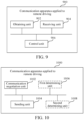
- FIG. 9 shows a block diagram of a communication apparatus applied to remote driving according to some embodiments of this disclosure.
- the communication apparatus applied to remote driving may be configured in a core network element, and the core network element may be, for example, an SMF.
- a communication apparatus 900 applied to remote driving includes: an obtaining unit 902, a receiving unit 904, and a control unit 906.
- the obtaining unit 902 is configured to obtain PDU session parameters corresponding to a plurality of remote driving modes of a vehicle terminal, the plurality of remote driving modes including a first remote driving mode and a second remote driving mode; the receiving unit 904 is configured to receive mode switching information transmitted by the application function entity when the vehicle terminal is remotely controlled according to the PDU session parameter corresponding to the first remote driving mode, the mode switching information being used for instructing to switch from the first remote driving mode to the second remote driving mode; and the control unit 906 is configured to control, based on the mode switching information, the vehicle terminal to switch to remote control according to the PDU session parameter corresponding to the second remote driving mode.
- control unit 906 is further configured to: before receiving the mode switching information transmitted by the application function entity, control the vehicle terminal to establish PDU sessions corresponding to the plurality of remote driving modes based on the PDU session parameters respectively corresponding to the plurality of remote driving modes.
- control unit 906 is further configured to: maintain a PDU session corresponding to the second remote driving mode in an active state before controlling the vehicle terminal to switch to remote control according to the PDU session parameter corresponding to the second remote driving mode.
- control unit 906 is configured to: control the vehicle terminal to establish a same PDU session for the plurality of remote driving modes and respectively use different PDU session parameters for the plurality of remote driving modes.
- control unit 906 is configured to: control the vehicle terminal to respectively establish different PDU sessions for the plurality of remote driving modes and respectively use different PDU session parameters for the plurality of remote driving modes.
- the PDU session parameter includes a QoS parameter;
- the QoS parameter includes an uplink QoS parameter and a downlink QoS parameters;
- control unit 906 is further configured to: after controlling the vehicle terminal to switch to remote control according to the PDU session parameter corresponding to the second remote driving mode, transmit the PDU session parameters switched by the vehicle terminal to the application function entity, where the application function entity transmits a remote control instruction to the vehicle terminal based on the received PDU session parameter.
- the PDU session parameters corresponding to the first remote driving mode and the second remote driving mode are respectively determined by the policy control function entity and the application function entity through communication negotiation before the vehicle terminal is remotely controlled according to the PDU session parameter corresponding to the first remote driving mode;
- the PDU session parameter corresponding to the first remote driving mode is determined by performing communication negotiation between a policy control function entity and the application function entity before the vehicle terminal is controlled to perform remote driving according to the PDU session parameter corresponding to the first remote driving mode
- the PDU session parameter corresponding to the second remote driving mode is determined by performing communication negotiation between the policy control function entity and the application function entity while the vehicle terminal is controlled to perform remote driving according to the PDU session parameter corresponding to the first remote driving mode.
- FIG. 10 shows a block diagram of a communication apparatus applied to remote driving according to some embodiments of this disclosure.
- the communication apparatus applied to remote driving may be configured in the AF.
- a communication apparatus 1000 applied to remote driving includes: a communication negotiation unit 1002 and a transmitting unit 1004.
- the communication negotiation unit 1002 is configured to perform communication negotiation with the core network elements to determine PDU session parameters corresponding to a plurality of remote driving modes of a vehicle terminal.
- the plurality of remote driving modes includes a first remote driving mode and a second remote driving mode.
- the transmitting unit 1004 is configured to transmit mode switching information to the core network element if it is determined that the vehicle terminal needs to switch from the first remote driving mode to the second remote driving mode when the vehicle terminal performs remote driving according to the PDU session parameter corresponding to the first remote driving mode, and the mode switching information is used for instructing the core network element to control the vehicle terminal to switch to remote control according to the PDU session parameter corresponding to the second remote driving mode.
- the first remote driving mode is any one of a machine remote control mode and a manual remote control mode
- the second remote driving mode is the other of the machine remote control mode and the manual remote control mode based on the foregoing scheme.
- the communication apparatus 1000 further includes: a first determining unit 1006, configured to, while the vehicle terminal performs remote driving in the manual remote control mode, and if it is determined based on road condition information and network state information of a driving road section of the vehicle terminal, that the driving road section is suitable for the machine remote control mode, determining that the vehicle terminal is capable of switching from the manual remote control mode to the machine remote control mode.
- the first remote driving mode is any one of a machine remote control mode and a manual remote control mode
- the second remote driving mode is the other of the machine remote control mode and the manual remote control mode based on the foregoing scheme.
- the communication apparatus 1000 further includes: a second determining unit 1008, configured to, while the vehicle terminal performs remote driving in the machine remote control mode, and if it is determined, based on road condition information and network state information of a driving road section of the vehicle terminal, that the driving road section is not suitable for the machine remote control mode, determining that the vehicle terminal needs to switch from the machine remote control mode to the manual remote control mode.
- FIG. 11 shows a schematic structural diagram of a computer system adapted to implement an electronic device according to an embodiment of this disclosure.
- the computer system 1100 of an electronic device shown in FIG. 11 is only one example and does not constitute any limitation on the function and scope of use of the embodiments of this disclosure.
- the computer system 1100 includes a central processing unit (CPU) 1101 that can perform various appropriate actions and processes according to a program stored in a read-only memory (ROM) 1102 or a program loaded into a random access memory (RAM) 1103 from a storage section 1108, such as performing the methods described in the above-described embodiments.
- the RAM 1103 further stores various programs and data required for system operations.
- the CPU 1101, the ROM 1102, and the RAM 1103 are connected to each other through a bus 1104.
- An input/output (I/O) interface 1105 is also connected to the bus 1104.
- the following components are connected to the I/O interface 1105: an input section 1106 including a keyboard a mouse and the like; an output section 1107 including a cathode ray tube (CRT), a liquid crystal display (LCD), and the like, and a speaker; a storage section 1108 including a hard disk or the like; and a communication section 1109 including a network interface card such as a local area network (LAN) card a modem and the like.
- the communication portion 1109 performs communication processing by using a network such as the Internet.
- a driver 1110 is also connected to the I/O interface 1105 as required.
- a removable medium 1111 such as a magnetic disk, an optical disc, a magneto-optical disk, or a semiconductor memory, is installed on the driver 1110 as required, so that a computer program read from the removable medium is installed into the storage part 1108 as required.
- the process described above with reference to the flowchart may be implemented as a computer software program.
- an embodiment of this disclosure provides a computer program product, including a computer program carried on a computer-readable medium, where the computer program includes a computer program for performing the method shown in the flowchart.
- the computer program may be downloaded and installed from the network through the communication section 1109 and/or installed from the removable medium 1111.
- CPU central processing unit
- the computer-readable medium shown in embodiments of this disclosure may be a computer-readable signal medium or a computer-readable storage medium or any combination of the above.
- the computer-readable storage medium may be, for example, but is not limited to, an electric, magnetic, optical, electromagnetic, infrared, or semi-conductive system, apparatus, or component, or any combination thereof. More specific examples of the computer readable storage medium may include, but are not limited to: a portable computer disk, a hard disk, a random access memory (RAM), a read-only memory (ROM), an erasable programmable read only memory (EPROM), a flash memory, an optical fiber, a portable compact disc read-only memory (CD-ROM), an optical memory device, a magnetic memory device, or any suitable combination of the above.
- the computer-readable storage medium may be any tangible medium including or storing a program that may be used by or used in combination with an instruction execution system, apparatus, or device.
- the computer-readable signal medium may include a data signal propagated in the baseband or as part of a carrier wave, in which a computer-readable computer program is carried. The data signal propagated in such a way may assume a plurality of forms, including, but not limited to, an electromagnetic signal, an optical signal, or any appropriate combination thereof.
- the computer-readable signal medium may also be any computer-readable medium other than a computer-readable storage medium that may transmit, propagate, or transmit a program for use by or in conjunction with an instruction execution system, apparatus, or device.
- the computer program included in the readable storage medium may be transmitted using any suitable medium, including but not limited to: wireless, wired, etc., or any suitable combination of the above.
- Each box in a flowchart or a block diagram may represent a module, a program segment, or a part of code.
- the module, the program segment, or the part of code includes one or more executable instructions used for implementing specified logic functions.
- the functions indicated in the boxes may also occur in a different order than those indicated in the drawings. For example, two blocks represented in succession can actually be executed substantially in parallel or they can sometimes be executed in reverse order depending on the functionality involved.
- Each box in a block diagram or a flowchart and a combination of boxes in the block diagram or the flowchart may be implemented by using a dedicated hardware-based system configured to perform a designated function or operation, or may be implemented by using a combination of dedicated hardware and a computer instruction.
- the unit described in the embodiments of this disclosure may be implemented by software or hardware, and the described unit may also be arranged in a processor. Names of the units do not constitute a limitation on the units in a specific case.
- this disclosure further provides a computer readable medium.
- the computer readable medium may be included in the electronic device described in the above embodiments, or may exist alone without being assembled into the electronic device.
- the computer-readable medium carries one or more programs, the one or more programs, when executed by the electronic device, causing the electronic device to implement the method described in the foregoing embodiments.
- the exemplary implementations described herein may be implemented by using software, or may be implemented by combining software and necessary hardware. Therefore, the technical solutions of the embodiments of this disclosure may be implemented in a form of a software product.
- the software product may be stored in a non-volatile storage medium (which may be a CD-ROM, a USB flash drive, a removable hard disk, or the like) or on the network, including several instructions for instructing a computing device (which may be a personal computer, a server, a touch terminal, a network device, or the like) to perform the methods according to the embodiments of this disclosure.
Landscapes
- Engineering & Computer Science (AREA)
- Computer Networks & Wireless Communication (AREA)
- Signal Processing (AREA)
- Automation & Control Theory (AREA)
- Quality & Reliability (AREA)
- Aviation & Aerospace Engineering (AREA)
- Transportation (AREA)
- Mechanical Engineering (AREA)
- Human Computer Interaction (AREA)
- Radar, Positioning & Navigation (AREA)
- Remote Sensing (AREA)
- Physics & Mathematics (AREA)
- General Physics & Mathematics (AREA)
- Mobile Radio Communication Systems (AREA)
- Telephonic Communication Services (AREA)
- Telephone Function (AREA)
Abstract
Description
- This disclosure claims priority to
Chinese Patent Application No. 202110749253.9, filed with the China National Intellectual Property Administration on July 1, 2021 - This disclosure relates to the field of computers and communication technologies, and specifically, to a communication method and apparatus applied to remote driving, a medium, and an electronic device.
- Remote driving is a technology for implementing control on a vehicle by using long distance mobile communication, and is an important means to solve the problem of working in a dangerous and harsh environment (for example, earthquake relief, a toxic environment, a dangerous tunnel, fire-fighting and rescue, cliff path opening, or explosion site cleaning). With the development of a 5G network, strong support is provided for this low-delay driving manner.
- In the related art, the basic principle of remote driving is to transmit driving instructions to a vehicle terminal in a downlink direction through a network, while the premise of transmitting the driving instructions is to transmit state parameters and visual information of the vehicle terminal to a remote driving terminal in an uplink direction through the network. In addition, remote driving also includes a plurality of driving modes, for example, a human remote control (HRC) mode and a machine remote control (MRC) mode. However, currently, there is no complete solution for switching between the remote driving modes.
- Embodiments of this disclosure provide a communication method and apparatus applied to remote driving, a medium, and an electronic device, which can further resolve the problem of remote driving mode switching in a process of remote driving at least to a certain extent, so that the remote driving can flexibly adapt to complex road working conditions and network conditions.
- Other features and advantages of this disclosure will become apparent through the following detailed description or will be partially learned through the practice of this disclosure.
- According to an aspect of the embodiments of this disclosure, a communication method applied to remote driving is provided, including:
- obtaining protocol data unit (PDU) session parameters corresponding to a plurality of remote driving modes of a vehicle terminal, the plurality of remote driving modes including a first remote driving mode and a second remote driving mode;
- receiving mode switching information transmitted by an application function entity in response to the vehicle terminal is remotely controlled according to the PDU session parameter corresponding to the first remote driving mode; the mode switching information being used for instructing to switch from the first remote driving mode to the second remote driving mode; and
- controlling, based on the mode switching information, the vehicle terminal to switch to remote control according to the PDU session parameter corresponding to the second remote driving mode.
- According to an aspect of the embodiments of this disclosure, a communication method applied to remote driving is provided, including:
- performing communication negotiation with a core network element to determine PDU session parameters corresponding to a plurality of remote driving modes of a vehicle terminal, the plurality of remote driving modes including a first remote driving mode and a second remote driving mode; and
- while the vehicle terminal performs remote driving according to the PDU session parameter corresponding to the first remote driving mode, and if it is determined that the vehicle terminal needs to switch from the first remote driving mode to the second remote driving mode, transmitting mode switching information to the core network element, the mode switching information being used for instructing the core network element to control the vehicle terminal to switch to remote control according to the PDU session parameter corresponding to the second remote driving mode.
- According to an aspect of the embodiments of this disclosure, a communication apparatus applied to remote driving is provided, including:
- an obtaining unit, configured to obtain PDU session parameters respectively corresponding to a plurality of remote driving modes of a vehicle terminal, the plurality of remote driving modes including a first remote driving mode and a second remote driving mode; and
- a receiving unit, configured to receive mode switching information transmitted by an application function entity in response to the vehicle terminal is remotely controlled according to the PDU session parameter corresponding to the first remote driving mode, the mode switching information being used for instructing to switch from the first remote driving mode to the second remote driving mode; and
- a control unit, configured to control, based on the mode switching information, the vehicle terminal to switch to remote control according to the PDU session parameter corresponding to the second remote driving mode.
- According to an aspect of the embodiments of this disclosure, a communication apparatus applied to remote driving is provided, including:
- a communication negotiation unit, configured to perform communication negotiation with a core network element to determine PDU session parameters respectively corresponding to a plurality of remote driving modes of a vehicle terminal, the plurality of remote driving modes including a first remote driving mode and a second remote driving mode; and
- a transmitting unit, configured to transmit, while the vehicle terminal performs remote driving according to the PDU session parameter corresponding to the first remote driving mode, mode switching information to the core network element if it is determined that the vehicle terminal needs to switch from the first remote driving mode to the second remote driving mode, the mode switching information being used for instructing the core network element to control the vehicle terminal to switch to remote control according to the PDU session parameter corresponding to the second remote driving mode.
- According to an aspect of the embodiments of this disclosure, a computer-readable medium is provided, storing a computer program, the computer program, when executed by a processor, implementing the communication method applied to remote driving as described in the above embodiments.
- According to an aspect of the embodiments of this disclosure, an electronic device is provided, including: one or more processors; and a storage apparatus, configured to store one or more programs, the one or more programs, when executed by the one or more processors, causing the one or more processors to implement the communication method applied to remote driving as described in the above embodiment.
- According to an aspect of the embodiments of this disclosure, a computer program product or computer program is provided, the computer program product or computer program including computer instructions, the computer instructions being stored in a computer-readable storage medium. A processor of a computer device reads the computer instructions from the computer-readable storage medium, and the processor executes the computer instructions, so that the computer device performs the communication method applied to remote driving provided in the embodiments described above.
- In the technical solutions provided in some embodiments of this disclosure, the PDU session parameters corresponding to the plurality of remote driving modes of the vehicle terminal are obtained, when the vehicle terminal is controlled to perform remote driving according to the PDU session parameter corresponding to the first remote driving mode, if the mode switching information transmitted by the application function entity is received, the vehicle terminal is controlled, based on the mode switching information, to switch to remote control according to the PDU session parameter corresponding to the second remote driving mode, so that the problem of switching between the remote driving modes in the remote driving process can be resolved, and further the remote driving can flexibly adapt to complex road working conditions and network conditions.
- It is to be understood that the above general description and the following detailed description are exemplary and explanatory only, and are not intended to limit this disclosure.
- The accompanying drawings which are incorporated in and constitute a part of the specification illustrate embodiments consistent with this disclosure and together with the description serve to explain the principles of this disclosure. Apparently, the drawings described below are only some embodiments of this disclosure, and other drawings may be obtained from them without creative effort for those of ordinary skill in the art. In the drawings:
-
FIG. 1 shows a schematic diagram of an exemplary system architecture to which a technical solution according to an embodiment of this disclosure is applicable. -
FIG. 2 shows a flowchart of a communication method applied to remote driving according to some embodiments of this disclosure. -
FIG. 3 shows a flowchart of a communication method applied to remote driving according to some embodiments of this disclosure. -
FIG. 4 shows a flowchart of a communication method applied to remote driving according to some embodiments of this disclosure. -
FIG. 5 shows a schematic diagram of a PDU session switching process when switching from an HRC mode to an MRC mode according to some embodiments of this disclosure. -
FIG. 6 shows a schematic diagram of a QoS parameter switching process when switching from an HRC mode to an MRC mode according to some embodiments of this disclosure. -
FIG. 7 shows a schematic diagram of QoS parameters of an HRC mode and an MRC mode according to some embodiments of this disclosure. -
FIG. 8 shows a schematic diagram of QoS parameters of an HRC mode and an MRC mode according to some embodiments of this disclosure. -
FIG. 9 shows a block diagram of a communication apparatus applied to remote driving according to some embodiments of this disclosure. -
FIG. 10 shows a block diagram of a communication apparatus applied to remote driving according to some embodiments of this disclosure. -
FIG. 11 shows a schematic structural diagram of a computer system adapted to implement an electronic device according to an embodiment of this disclosure. - Example embodiments will now be described in a more complete manner with reference to the accompanying drawings. However exemplary embodiments can be implemented in various forms and shall not be construed as being limited to these examples; Rather these embodiments are provided to make this disclosure more comprehensive and complete and to fully convey the idea of the example embodiments to those skilled in the art.
- Furthermore, the features, structures, or characteristics described herein may be incorporated in any suitable manner in one or more embodiments. In the following description there are many specific details so that the embodiments of this disclosure can be fully understood. However, it will be appreciated by those skilled in the art that all the detailed features of the embodiments may not be required, one or more specific details may be omitted, or other methods, elements, devices, steps, etc. may be employed in implementing the technical aspects of this disclosure.
- The block diagrams shown in the drawings are merely functional entities and do not necessarily correspond to physically independent entities. That is, the functional entities may be implemented in software, in one or more hardware modules or integrated circuits, or in different networks and/or processor devices and/or microcontroller devices.
- The flowcharts shown in the accompanying drawings are merely exemplary descriptions and do not necessarily include all of the content and operations/steps, nor are the flowcharts necessarily performed in the order described. For example, some operations/steps can also be decomposed, while others can be merged or partially merged, so the actual order of execution may be changed according to the actual situation.
- The term "plurality of mentioned in this specification means two or more. The term "and/or" describes an association relationship between associated objects, and represents that three relationships may exist, for example, A and/or B may represent that, only A exists, both A and B exist, and only B exists. The character "/" generally indicates that the related objects are an "or" relationship.
- An autonomous driving technology relies on cooperation of artificial intelligence, visual computing, a radar system, a monitoring apparatus system, and a global positioning system, so that a computer can automatically and safely operate a motor vehicle without any active human operation. The autonomous driving technology usually includes high-precision maps, environment perception, behavior decision-making, path planning, motion control, and other technologies. The self-determined driving technology has a wide range of disclosure prospects.
- Remote driving is a technology between autonomous driving and manual driving, and remote driving is a technology that controls a vehicle by using long distance mobile communication, which mainly includes a manual remote control (HRC) mode and a machine remote control (MRC) mode. As the name implies, HRC is manually performing remote driving, MRC is performing remote driving by a machine, and MRC belongs to autonomous driving.
- As shown in
FIG. 1 , in a remote driving scenario of this disclosure, there may be two remote driving modes, one is an MRC mode, and the other is an HRC mode. In the HRC mode, a driver need to obtain video information in the field of vision of a remote vehicle through a network, and therefore, higher network bandwidth is required. In the MRC mode, information on a vehicle terminal can be transmitted by using structured data or original format data, and therefore, network bandwidth occupied is lower. Downlink control instructions have similar network transmission requirements for the HRC and MRC modes. - For a 5G system, the challenge of uplink transmission is greater than that of downlink transmission, especially for 5G remote driving. Because driving safety is involved, requirements for network data transmission are higher. In addition, 5G remote driving requires high jitter characteristics of network transmission, this is because jitter may affect an algorithm design of the vehicle terminal and cloud. Based on this, in a process of controlling a vehicle in a remote driving mode, it may be necessary to switch to another remote driving mode, for example, switching from MRC to HRC or from HRC to MRC, due to the influence of a network state or road conditions.
- Based on a service requirement of switching between the remote driving modes, embodiments of this disclosure provide a switching processing scheme. Specifically, a network side (such as a core network element) can obtain PDU session parameters corresponding to a plurality of remote driving modes of a vehicle terminal, for example, the PDU session parameters can be determined through communication negotiation with an application function (AF). Furthermore, when the vehicle terminal is controlled on the network side to perform remote driving according to the PDU session parameter corresponding to the first remote driving mode, if mode switching information transmitted by the AF is received, the vehicle terminal can be controlled to switch to remote control according to the PDU session parameter corresponding to the second remote driving mode based on the mode switching information.
- In some embodiments, if the vehicle terminal performs remote driving in the MRC mode, and if the AF senses that the vehicle terminal is about to pass through complex road conditions and requires manual intervention, the MRC mode can be switched to the HRC mode by transmitting the mode switching information. In another example, if the vehicle terminal performs remote driving in the HRC mode, and if the AF senses that the vehicle terminal is about to pass through an area with poor network state, it can switch the HRC mode to the MRC mode by transmitting the mode switching information, so as to avoid possible driving risks caused by using the HRC mode when the network state is poor.
- It can be seen that the technical solution of the embodiments of this disclosure can help address the problem of remote driving mode switching in the remote driving process, so that the remote driving can flexibly adapt to complex road working conditions and network conditions.
- The implementation details of the technical scheme of the embodiments of this disclosure are described in detail below
FIG. 2 shows a flowchart of a communication method applied to remote driving according to some embodiments of this disclosure. The communication method applied to remote driving may be performed by a core network element, and the core network element may be, for example, a session management function (SMF). Referring toFIG. 2 , the communication method applied to remote driving includes at least steps S210 to S230, which are described in detail as follows:
In step S210, PDU session parameters corresponding to a plurality of remote driving modes of a vehicle terminal are obtained. - In some embodiments of this disclosure, the plurality of remote driving modes include a first remote driving mode and a second remote driving mode, where the first remote driving mode may be one of the MRC mode and the HRC mode, and the second remote driving mode may be the other of the MRC mode and the HRC mode. The PDU session parameters corresponding to the remote driving modes may be determined by communication and interaction between the AF and a policy control function (PCF). In this case, the AF can communicate with PCF through a network exposure function (NEF). Alternatively, when the AF is in a trusted network environment, the AF can communicate with the PCF directly.
- In some embodiments, the PDU session parameter include a QoS parameter, where the QoS parameter may include an uplink QoS parameter and a downlink QoS parameter. Uplink QoS parameters corresponding to the plurality of remote driving modes may be different. For example, for HRC and MRC, because data types and data volumes of uplink transmission are different, corresponding uplink QoS parameters are also different. However, for the downlink QoS parameter, downlink QoS parameters corresponding to the plurality of remote driving modes may be the same or different.
- In step S220, when the vehicle terminal is controlled to perform remote driving according to the PDU session parameter corresponding to the first remote driving mode, the mode switching information transmitted by the application function entity is received.
- In some embodiments of this disclosure, the application function entity may transmit mode switching information to the core network element when sensing that the road condition information and/or network state information of the road section traveled by the vehicle terminal has changed (or is about to change).
- In some embodiments, the mode switching information transmitted by the application function entity indicates switching from a first remote driving mode to a second remote driving mode. For example, when the vehicle terminal performs remote driving in the MRC mode, if the AF senses that the vehicle terminal is about to pass through complex road conditions and needs manual intervention, it can switch the MRC mode to the HRC mode by transmitting the mode switching information. In another example, when the vehicle terminal performs remote driving in the HRC mode, if the AF senses that the vehicle terminal is about to pass through an area with poor network state, it can switch the HRC mode to the MRC mode by transmitting the mode switching information, so as to avoid possible driving risks caused by still using the HRC mode when the network state is poor.
- In some embodiments of this disclosure, before receiving the mode switching information transmitted by the application function entity, the core network element can control the vehicle terminal to establish PDU sessions corresponding to a plurality of remote driving modes according to PDU session parameters corresponding to a plurality of remote driving modes respectively. According to the technical solution of the embodiment, PDU sessions corresponding to each remote driving mode can be established in advance, so that the switching of the driving mode can be realized as soon as possible when the switching of the remote driving mode is needed.
- In some embodiments of this disclosure, the core network element needs to maintain the PDU session corresponding to the second remote driving mode in an active state before controlling the vehicle terminal to switch to remote control according to the PDU session parameter corresponding to the second remote driving mode, so as to reduce the time spent in switching the remote driving mode.
- In some embodiments of this disclosure, when establishing a PDU session for the remote driving mode, the core network element can control the vehicle terminal to establish the same PDU session for a plurality of remote driving modes and respectively use different PDU session parameters for the plurality of remote driving modes. Alternatively, the core network element can also control the vehicle terminal to establish different PDU sessions for the plurality of remote driving modes, and use different PDU session parameters for the plurality of remote driving modes.
- Continue to refer to
FIG. 2 in step S230, the vehicle terminal is controlled to switch to remote control by PDU session parameter corresponding to the second remote driving mode based on the mode switching information. - In some embodiments of this disclosure, if different PDU sessions are established for the second remote driving mode and the first remote driving mode, switching processing of the PDU session is required at the time of switching, i.e. switching a PDU session for transmitting remote driving data, and adjusting corresponding PDU session parameters, etc.
- In some embodiments of this disclosure, if the same PDU session is established for the second remote driving mode and the first remote driving mode, handover processing of the PDU session is not required at the time of handover, but adjustment of PDU session parameters is required.
- In some embodiments of this disclosure, after controlling the vehicle terminal to switch to remote control according to the PDU session parameter corresponding to the second remote driving mode, the core network element can transmit the PDU session parameters switched by the vehicle terminal to the application function entity, and then the application function entity can transmit a remote control instruction to the vehicle terminal accordingly.
- In some embodiments of this disclosure, the process of negotiating PDU session parameters corresponding to the remote driving mode between the PCF and the AF may be performed before the remote driving is performed, for example, before the core network element controls the vehicle terminal to perform remote driving according to the PDU session parameter corresponding to the first remote driving mode, the communication negotiation is performed by the AF and the PCF, and the PDU session parameter corresponding to the first remote driving mode and the second remote driving mode respectively are determined.
- Of course, before the core network element controls the vehicle terminal to perform remote driving according to the PDU session parameter corresponding to the first remote driving mode, only the PDU session parameter corresponding to the first remote driving mode can be negotiated between the AF and the PCF, but the PDU session parameter corresponding to the second remote driving mode need to be negotiated between the AF and the PCF before switching, that is, in the process of performing remote driving according to the PDU session parameter corresponding to the first remote driving mode.
- The technical solution of the embodiment shown in
FIG. 2 is described from the perspective of core network elements, and the implementation details of the technical solution of the embodiments of this disclosure are described from the perspective of the AF with reference toFIG. 3 : -
FIG. 3 shows a flowchart of a communication method applied to remote driving according to some embodiments of this disclosure. The communication method applied to remote driving may be performed by an AF. Referring toFIG. 3 , the communication method applied to remote driving includes at least steps S310 to S320, which are described in detail as follows: - In step S310, communication negotiation is performed with the core network element to determine PDU session parameters corresponding to a plurality of remote driving modes of a vehicle terminal.
- In some embodiments of this disclosure, PDU session parameters corresponding to each remote driving mode may be determined by communication interaction between the AF and the PCF. In this case, the AF can communicate with the PCF through NEF; Alternatively, when the AF is in a trusted network environment, the AF can communicate with the PCF directly.
- In some embodiments, PDU session parameters include QoS parameters. Uplink QoS parameters corresponding to the plurality of remote driving modes may be different. For example, for HRC and MRC, because data types and data volumes of uplink transmission are different, corresponding uplink QoS parameters are also different. However, for the downlink QoS parameter, downlink QoS parameters corresponding to the plurality of remote driving modes may be the same or different.
- In step S320, when the vehicle terminal performs remote driving according to the PDU session parameter corresponding to the first remote driving mode among the plurality of remote driving modes, if it is determined that the vehicle terminal needs to switch from the first remote driving mode to the second remote driving mode, mode switching information is transmitted to the core network element, and the mode switching information is used for instructing the core network element to control the vehicle terminal to switch to remote control according to the PDU session parameter corresponding to the second remote driving mode.
- Specifically, in the process of remote driving by the manual remote control mode at the vehicle terminal, if the AF determines that the driving section is suitable for the machine remote control mode according to the road condition information and the network state information of the driving road section at the vehicle terminal, it determines that the vehicle terminal can switch from the manual remote control mode to the machine remote control mode. For example, if the AF senses that the vehicle terminal driven by manual remote driving is about to pass through the area with poor network state, and the area is suitable for machine remote driving, it can be determined that the vehicle terminal can be switched from manual remote control mode to machine remote control mode, so as to avoid possible driving risks caused by using the HRC mode when the network state is poor.
- In the process of remote driving by the machine remote control mode at the vehicle terminal, if it is determined that the driving road section is not suitable for the machine remote control mode according to the road condition information and network state information of the driving road section at the vehicle terminal, it is determined that the vehicle terminal needs to switch from the machine remote control mode to the manual remote control mode. For example, if the AF senses that the vehicle terminal driven remotely by the machine is about to pass through complex road conditions and needs manual intervention, it can be determined that the vehicle terminal can be switched from the machine remote control mode to the manual remote control mode.
- The technical scheme of the embodiments of this disclosure is described above from the perspective of the core network element and the AF respectively. Taking HRC and MRC remote driving modes as examples, the implementation details of the technical scheme of the embodiments of this disclosure are described in detail in combination with
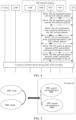
FIG. 4 to FIG. 8 : - In an embodiment of this disclosure, negotiation interaction can be performed between the AF and 5G Core (5GC) network elements to negotiate PDU session parameters for two modes of remote driving application (that is, HRC and MRC).
- Specifically, as shown in
FIG. 4 , the negotiation process between the AF and the 5GC network element may be performed through step S401a or step S401b. In step S401a, the AF can perform negotiation processing between the NEF and the PCF; In step S401b, the AF can directly negotiate with the PCF. - Considering the service requirements of remote driving, the HRC and MRC modes may be switched at any time, so it may not be possible to wait until the mode is switched before establishing a new PDU session or negotiating PDU session parameters. Instead, PDU sessions should be established for these two remote driving modes before switching, and PDU session parameters should be negotiated.
- In some embodiments, the HRC and MRC may establish different PDU sessions to meet the needs of the HRC and MRC, an approach that may be appropriate for scenarios where the HRC and MRC are respectively applied to different servers (or server farms).
- Of course, HRC and MRC can also establish a same PDU session, but different PDU session parameters can be set for the HRC and MRC modes, for example, a QoS profile.
- In the process of remote driving, if the road condition of the road section where the vehicle travels permits and the network quality meets the corresponding driving mode requirements, the remote driving mode can be switched from HRC to MRC, or from MRC to HRC.
- Specifically, as shown in
FIG. 4 , when mode switching is required, the mode switching information can be synchronized to the 5GC by step S402a or step S402b. In step S402a, the AF can synchronize the mode switching information with the SMF through the NEF and PCF; In step S402b, the AF can directly synchronize the mode switching information with the SMF through the PCF. - As shown in
FIG. 5 , when the remote driving mode is switched from the HRC mode to the MRC mode, the PDU session of the 5G network is switched from the PDU session corresponding to HRC to the PDU session corresponding to MRC. As shown inFIG. 6 , when the remote driving mode is switched from the HRC mode to the MRC mode, the QoS parameters of 5G network change from the QoS parameters corresponding to HRC to the QoS parameters corresponding to MRC. - In some embodiments of this disclosure, in a manner in which the MRC mode and the HRC mode employ different PDU sessions, the PDU sessions of the MRC mode and the HRC mode are associated with a series of parameters, including but not limited to single network slice selection assistance information (S-NSSAI) in the HRC mode or the MRC mode, a data network name (DNN), QoS parameters of a radio bearer and the core network bearer corresponding to the PDU session, and the like. In addition, the vehicle terminal needs to ensure that the PDU sessions corresponding to the two remote driving modes are maintained in an active state, or need to be established and/or activated before the mode switching.
- In some embodiments, the MRC mode and the HRC mode employ different QoS parameters/profiles, and the QoS parameters corresponding to each mode include, but are not limited to, bandwidth, delay, jitter, packet loss rate, and the like.
- As shown in
FIG. 7 , the MRC mode and the HRC mode can configure separate uplink (UL) QoS parameters, but share the same downlink (DL) QoS parameters. Alternatively, as shown inFIG. 8 , the MRC mode and the HRC mode can not only configure independent LTL QoS parameters, but also share the same DL QoS parameters. - Continue to refer to
FIG. 4 , after performing the mode switching, the core network element may transmit the switched PDU session/QoS parameter information to the AF through step S403a or step S403b. In step S403a, the SMF transmits the switched PDU session/QoS parameter information to the AF through the PCF and the NEF; In step S403b, the SMF directly transmits the switched PDU session/QoS parameter information to the AF through the PCF. After the mode is switched, remote driving can be continued based on the switched remote driving mode. - To sum up, the technical scheme of the embodiments of this disclosure can resolve the adaptation problem of 5G network characteristics when the mode switching of remote driving occurs, so that the 5G remote driving scheme can flexibly adapt to complex road conditions and network conditions.
- Embodiments of the apparatus of this disclosure are described below, which may be used to perform the communication method applied to remote driving in the above-described embodiments of this disclosure. For details not disclosed in the embodiment of the apparatus of this disclosure, please refer to the above embodiment of the communication method applied to remote driving of this disclosure.
-
FIG. 9 shows a block diagram of a communication apparatus applied to remote driving according to some embodiments of this disclosure. The communication apparatus applied to remote driving may be configured in a core network element, and the core network element may be, for example, an SMF. - Referring to
FIG. 9 , acommunication apparatus 900 applied to remote driving according to some embodiments of this disclosure includes: an obtainingunit 902, a receivingunit 904, and acontrol unit 906. - The obtaining
unit 902 is configured to obtain PDU session parameters corresponding to a plurality of remote driving modes of a vehicle terminal, the plurality of remote driving modes including a first remote driving mode and a second remote driving mode; the receivingunit 904 is configured to receive mode switching information transmitted by the application function entity when the vehicle terminal is remotely controlled according to the PDU session parameter corresponding to the first remote driving mode, the mode switching information being used for instructing to switch from the first remote driving mode to the second remote driving mode; and thecontrol unit 906 is configured to control, based on the mode switching information, the vehicle terminal to switch to remote control according to the PDU session parameter corresponding to the second remote driving mode. - In some embodiments of this disclosure, based on the foregoing solution, the
control unit 906 is further configured to: before receiving the mode switching information transmitted by the application function entity, control the vehicle terminal to establish PDU sessions corresponding to the plurality of remote driving modes based on the PDU session parameters respectively corresponding to the plurality of remote driving modes. - In some embodiments of this disclosure, based on the foregoing solution, the
control unit 906 is further configured to: maintain a PDU session corresponding to the second remote driving mode in an active state before controlling the vehicle terminal to switch to remote control according to the PDU session parameter corresponding to the second remote driving mode. - In some embodiments of this disclosure, based on the foregoing solution, the
control unit 906 is configured to: control the vehicle terminal to establish a same PDU session for the plurality of remote driving modes and respectively use different PDU session parameters for the plurality of remote driving modes. - In some embodiments of this disclosure, based on the foregoing solution, the
control unit 906 is configured to: control the vehicle terminal to respectively establish different PDU sessions for the plurality of remote driving modes and respectively use different PDU session parameters for the plurality of remote driving modes. - In some embodiments of this disclosure, based on the foregoing solution, the PDU session parameter includes a QoS parameter; the QoS parameter includes an uplink QoS parameter and a downlink QoS parameters;
- uplink QoS parameters corresponding to the plurality of remote driving modes are different; and
- downlink QoS parameters corresponding to the plurality of remote driving modes are the same or different.
- In some embodiments of this disclosure, based on the foregoing solution, the
control unit 906 is further configured to: after controlling the vehicle terminal to switch to remote control according to the PDU session parameter corresponding to the second remote driving mode, transmit the PDU session parameters switched by the vehicle terminal to the application function entity, where the application function entity transmits a remote control instruction to the vehicle terminal based on the received PDU session parameter. - In some embodiments of this disclosure, based on the foregoing solution, the PDU session parameters corresponding to the first remote driving mode and the second remote driving mode are respectively determined by the policy control function entity and the application function entity through communication negotiation before the vehicle terminal is remotely controlled according to the PDU session parameter corresponding to the first remote driving mode; or
- the PDU session parameter corresponding to the first remote driving mode is determined by performing communication negotiation between a policy control function entity and the application function entity before the vehicle terminal is controlled to perform remote driving according to the PDU session parameter corresponding to the first remote driving mode, and the PDU session parameter corresponding to the second remote driving mode is determined by performing communication negotiation between the policy control function entity and the application function entity while the vehicle terminal is controlled to perform remote driving according to the PDU session parameter corresponding to the first remote driving mode.
-
FIG. 10 shows a block diagram of a communication apparatus applied to remote driving according to some embodiments of this disclosure. The communication apparatus applied to remote driving may be configured in the AF. - Referring to
FIG. 10 , acommunication apparatus 1000 applied to remote driving according to some embodiments of this disclosure includes: acommunication negotiation unit 1002 and atransmitting unit 1004. - The
communication negotiation unit 1002 is configured to perform communication negotiation with the core network elements to determine PDU session parameters corresponding to a plurality of remote driving modes of a vehicle terminal. The plurality of remote driving modes includes a first remote driving mode and a second remote driving mode. Thetransmitting unit 1004 is configured to transmit mode switching information to the core network element if it is determined that the vehicle terminal needs to switch from the first remote driving mode to the second remote driving mode when the vehicle terminal performs remote driving according to the PDU session parameter corresponding to the first remote driving mode, and the mode switching information is used for instructing the core network element to control the vehicle terminal to switch to remote control according to the PDU session parameter corresponding to the second remote driving mode. - In some embodiments of this disclosure, the first remote driving mode is any one of a machine remote control mode and a manual remote control mode, and the second remote driving mode is the other of the machine remote control mode and the manual remote control mode based on the foregoing scheme. The
communication apparatus 1000 further includes:
a first determiningunit 1006, configured to, while the vehicle terminal performs remote driving in the manual remote control mode, and if it is determined based on road condition information and network state information of a driving road section of the vehicle terminal, that the driving road section is suitable for the machine remote control mode, determining that the vehicle terminal is capable of switching from the manual remote control mode to the machine remote control mode. - In some embodiments of this disclosure, the first remote driving mode is any one of a machine remote control mode and a manual remote control mode, and the second remote driving mode is the other of the machine remote control mode and the manual remote control mode based on the foregoing scheme. The
communication apparatus 1000 further includes:
a second determiningunit 1008, configured to, while the vehicle terminal performs remote driving in the machine remote control mode, and if it is determined, based on road condition information and network state information of a driving road section of the vehicle terminal, that the driving road section is not suitable for the machine remote control mode, determining that the vehicle terminal needs to switch from the machine remote control mode to the manual remote control mode. -
FIG. 11 shows a schematic structural diagram of a computer system adapted to implement an electronic device according to an embodiment of this disclosure. - The
computer system 1100 of an electronic device shown inFIG. 11 is only one example and does not constitute any limitation on the function and scope of use of the embodiments of this disclosure. - As shown in
FIG. 11 , thecomputer system 1100 includes a central processing unit (CPU) 1101 that can perform various appropriate actions and processes according to a program stored in a read-only memory (ROM) 1102 or a program loaded into a random access memory (RAM) 1103 from astorage section 1108, such as performing the methods described in the above-described embodiments. TheRAM 1103 further stores various programs and data required for system operations. TheCPU 1101, theROM 1102, and theRAM 1103 are connected to each other through abus 1104. An input/output (I/O)interface 1105 is also connected to thebus 1104. - The following components are connected to the I/O interface 1105: an
input section 1106 including a keyboard a mouse and the like; anoutput section 1107 including a cathode ray tube (CRT), a liquid crystal display (LCD), and the like, and a speaker; astorage section 1108 including a hard disk or the like; and acommunication section 1109 including a network interface card such as a local area network (LAN) card a modem and the like. Thecommunication portion 1109 performs communication processing by using a network such as the Internet. Adriver 1110 is also connected to the I/O interface 1105 as required. A removable medium 1111, such as a magnetic disk, an optical disc, a magneto-optical disk, or a semiconductor memory, is installed on thedriver 1110 as required, so that a computer program read from the removable medium is installed into thestorage part 1108 as required. - In particular, according to the embodiments of this disclosure, the process described above with reference to the flowchart may be implemented as a computer software program. For example, an embodiment of this disclosure provides a computer program product, including a computer program carried on a computer-readable medium, where the computer program includes a computer program for performing the method shown in the flowchart. In such an embodiment, the computer program may be downloaded and installed from the network through the
communication section 1109 and/or installed from the removable medium 1111. When the computer program is executed by a central processing unit (CPU) 1101 various functions defined in the system of this disclosure are performed. - The computer-readable medium shown in embodiments of this disclosure may be a computer-readable signal medium or a computer-readable storage medium or any combination of the above. The computer-readable storage medium may be, for example, but is not limited to, an electric, magnetic, optical, electromagnetic, infrared, or semi-conductive system, apparatus, or component, or any combination thereof. More specific examples of the computer readable storage medium may include, but are not limited to: a portable computer disk, a hard disk, a random access memory (RAM), a read-only memory (ROM), an erasable programmable read only memory (EPROM), a flash memory, an optical fiber, a portable compact disc read-only memory (CD-ROM), an optical memory device, a magnetic memory device, or any suitable combination of the above. In this disclosure, the computer-readable storage medium may be any tangible medium including or storing a program that may be used by or used in combination with an instruction execution system, apparatus, or device. In this disclosure, the computer-readable signal medium may include a data signal propagated in the baseband or as part of a carrier wave, in which a computer-readable computer program is carried. The data signal propagated in such a way may assume a plurality of forms, including, but not limited to, an electromagnetic signal, an optical signal, or any appropriate combination thereof. The computer-readable signal medium may also be any computer-readable medium other than a computer-readable storage medium that may transmit, propagate, or transmit a program for use by or in conjunction with an instruction execution system, apparatus, or device. The computer program included in the readable storage medium may be transmitted using any suitable medium, including but not limited to: wireless, wired, etc., or any suitable combination of the above.
- The flowcharts and block diagrams in the accompanying drawings illustrate possible system architectures, functions and operations that may be implemented by a system, a method, and a computer program product according to various embodiments of this disclosure. Each box in a flowchart or a block diagram may represent a module, a program segment, or a part of code. The module, the program segment, or the part of code includes one or more executable instructions used for implementing specified logic functions. In some alternative implementations the functions indicated in the boxes may also occur in a different order than those indicated in the drawings. For example, two blocks represented in succession can actually be executed substantially in parallel or they can sometimes be executed in reverse order depending on the functionality involved. Each box in a block diagram or a flowchart and a combination of boxes in the block diagram or the flowchart may be implemented by using a dedicated hardware-based system configured to perform a designated function or operation, or may be implemented by using a combination of dedicated hardware and a computer instruction.
- The unit described in the embodiments of this disclosure may be implemented by software or hardware, and the described unit may also be arranged in a processor. Names of the units do not constitute a limitation on the units in a specific case.
- In another aspect, this disclosure further provides a computer readable medium. The computer readable medium may be included in the electronic device described in the above embodiments, or may exist alone without being assembled into the electronic device. The computer-readable medium carries one or more programs, the one or more programs, when executed by the electronic device, causing the electronic device to implement the method described in the foregoing embodiments.
- Although several modules or units of the apparatus for action execution are mentioned in the above detailed description, this division is not mandatory. Actually, according to the implementations of this disclosure, the features and functions of two or more modules or units described above may be specified in one module or unit. Conversely, the features and functions of one module or unit described above may be further divided to be embodied by a plurality of modules or units.
- According to the foregoing descriptions of the implementations, a person skilled in the art may readily understand that the exemplary implementations described herein may be implemented by using software, or may be implemented by combining software and necessary hardware. Therefore, the technical solutions of the embodiments of this disclosure may be implemented in a form of a software product. The software product may be stored in a non-volatile storage medium (which may be a CD-ROM, a USB flash drive, a removable hard disk, or the like) or on the network, including several instructions for instructing a computing device (which may be a personal computer, a server, a touch terminal, a network device, or the like) to perform the methods according to the embodiments of this disclosure.
- After considering the specification and practicing the disclosed implementations, a person skilled in the art may easily conceive of other implementations of this disclosure. This disclosure is intended to cover any variations, uses, or adaptive changes of this disclosure following the general principles of this disclosure, and includes well-known knowledge and conventional technical means in the art and undisclosed in this disclosure.
- This disclosure is not limited to the accurate structures that are described above and that are shown in the accompanying drawings, and modifications and changes may be made without departing from the scope of this disclosure. The scope of this disclosure is limited only by the appended claims.
Claims (16)
- A communication method applied to remote driving, comprising:obtaining, by a session management function entity, PDU session parameters corresponding to a plurality of remote driving modes of a vehicle terminal, the plurality of remote driving modes comprising a first remote driving mode and a second remote driving mode;receiving, by the session management function entity while the vehicle terminal is controlled according to the PDU session parameter corresponding to the first remote driving mode, mode switching information from an application function entity, the mode switching information indicating the first remote driving mode is to be switched to the second remote driving mode; andcontrolling, by the session management function entity based on the mode switching information, the vehicle terminal to switch to remote control according to the PDU session parameter corresponding to the second remote driving mode.
- The method according to claim 1, wherein before receiving the mode switching information from the application function entity, the method further comprises:
controlling, by the session management function entity, the vehicle terminal to establish PDU sessions respectively corresponding to the plurality of remote driving modes based on the PDU session parameters respectively corresponding to the plurality of remote driving modes. - The method according to claim 2, further comprising:
maintaining, by the session management function entity, the PDU session corresponding to the second remote driving mode in an active state before the vehicle terminal is controlled to switch to remote control according to the PDU session parameter corresponding to the second remote driving mode. - The method according to claim 2, wherein the controlling, by the session management function entity, the vehicle terminal to establish PDU sessions respectively corresponding to the plurality of remote driving modes based on the PDU session parameters respectively corresponding to the plurality of remote driving modes comprises:
controlling, by the session management function entity, the vehicle terminal to establish a same PDU session for the plurality of remote driving modes and respectively use different PDU session parameters for the plurality of remote driving modes. - The method according to claim 2, wherein the controlling, by the session management function entity, the vehicle terminal to establish PDU sessions respectively corresponding to the plurality of remote driving modes based on the PDU session parameters corresponding to the plurality of remote driving modes comprises:
controlling, by the session management function entity, the vehicle terminal to establish different PDU sessions for the plurality of remote driving modes and respectively use different PDU session parameters for the plurality of remote driving modes. - The method according to any one of claims 1 to 5, wherein the PDU session parameter comprises a quality of service QoS parameter; the QoS parameter comprises an uplink QoS parameter and a downlink QoS parameters; and
the uplink QoS parameters corresponding to the plurality of remote driving modes are different. - The method according to any one of claims 1 to 5, further comprising:
transmitting, by the session management function entity, the PDU session parameters for the switch by the vehicle terminal to the application function entity after the vehicle terminal is controlled to switch to remote control according to the PDU session parameter corresponding to the second remote driving mode, wherein the application function entity transmits a remote control instruction to the vehicle terminal based on the received PDU session parameter. - The method according to any one of claims 1 to 5, whereinthe PDU session parameters corresponding to the first remote driving mode and the second remote driving mode are respectively determined by a policy control function entity and the application function entity through communication negotiation before the vehicle terminal is controlled to perform remote driving according to the PDU session parameter corresponding to the first remote driving mode; orthe PDU session parameter corresponding to the first remote driving mode is determined by performing communication negotiation between a policy control function entity and the application function entity before the vehicle terminal is controlled to perform remote driving according to the PDU session parameter corresponding to the first remote driving mode, and the PDU session parameter corresponding to the second remote driving mode is determined by performing communication negotiation between the policy control function entity and the application function entity while the vehicle terminal is controlled to perform remote driving according to the PDU session parameter corresponding to the first remote driving mode.
- A communication method applied to remote driving, comprising:performing, by an application function entity, communication negotiation with a core network element to determine PDU session parameters corresponding to a plurality of remote driving modes of a vehicle terminal, the plurality of remote driving modes comprising a first remote driving mode and a second remote driving mode; andtransmitting, by the application function entity while the vehicle terminal performs remote driving according to the PDU session parameter corresponding to the first remote driving mode, mode switching information to the core network element when the vehicle terminal is to switch from the first remote driving mode to the second remote driving mode, the mode switching information indicating the core network element that the vehicle terminal is to switch to remote control according to the PDU session parameter corresponding to the second remote driving mode.
- The method according to claim 9, wherein the first remote driving mode is any one of a machine remote control mode and a manual remote control mode, and the second remote driving mode is the other of the machine remote control mode and the manual remote control mode; and the communication method further comprises:
while the vehicle terminal performs remote driving in the manual remote control mode, and if it is determined, based on road condition information and network state information of a driving road segment of the vehicle terminal, that the driving road section is suitable for the machine remote control mode, determining that the vehicle terminal is to switch from the manual remote control mode to the machine remote control mode. - The method according to claim 9, wherein the first remote driving mode is any one of a machine remote control mode and a manual remote control mode, and the second remote driving mode is the other of the machine remote control mode and the manual remote control mode; and the communication method further comprises:
while the vehicle terminal performs remote driving in the machine remote control mode, and if it is determined, based on road condition information and network state information of a driving road segment of the vehicle terminal, that the driving road segment is not suitable for the machine remote control mode, determining that the vehicle terminal is to switch from the machine remote control mode to the manual remote control mode. - A communication apparatus applied to remote driving, comprising:an obtaining unit, configured to obtain PDU session parameters respectively corresponding to a plurality of remote driving modes of a vehicle terminal, the plurality of remote driving modes comprising a first remote driving mode and a second remote driving mode;a receiving unit, configured to receive mode switching information transmitted by an application function entity in response to the vehicle terminal is remotely controlled according to the PDU session parameter corresponding to the first remote driving mode, the mode switching information being used for instructing to switch from the first remote driving mode to the second remote driving mode; anda control unit, configured to control, based on the mode switching information, the vehicle terminal to switch to remote control according to the PDU session parameter corresponding to the second remote driving mode of the plurality of remote driving modes.
- A communication apparatus applied to remote driving, comprising:a communication negotiation unit, configured to perform communication negotiation with a core network element to determine PDU session parameters respectively corresponding to a plurality of remote driving modes of a vehicle terminal, the plurality of remote driving modes comprising a first remote driving mode and a second remote driving mode; anda transmitting unit, configured to transmit, while the vehicle terminal performs remote driving according to the PDU session parameter corresponding to the first remote driving mode of the plurality of remote driving modes, mode switching information to the core network element if it is determined that the vehicle terminal needs to switch from the first remote driving mode to the second remote driving mode of the plurality of remote driving modes, the mode switching information being used for instructing the core network element to control the vehicle terminal to switch to remote control according to the PDU session parameter corresponding to the second remote driving mode.
- A computer-readable medium, storing a computer program, the computer program, when executed by a processor, implementing the method according to any one of claims 1 to 8, or implementing the method according to any one of claims 9 to 11.
- An electronic device, comprising:one or more processors; anda storage apparatus, configured to store one or more programs, the one or more programs, when executed by the one or more processors, causing the one or more processors to implement the method as claimed in any one of claims 1 to 8, or to implement the method as claimed in any one of claims 9 to 11.
- A computer program product, comprising computer instructions stored in a computer-readable storage medium, the computer instructions, when executed, implementing the method according to any one of claims 1 to 8, or implementing the method according to any one of claims 9 to 11.
Applications Claiming Priority (2)
| Application Number | Priority Date | Filing Date | Title |
|---|---|---|---|
| CN202110749253.9A CN113365245B (en) | 2021-07-01 | 2021-07-01 | Communication method and device applied to remote driving, medium and electronic equipment |
| PCT/CN2022/095144 WO2023273716A1 (en) | 2021-07-01 | 2022-05-26 | Communication method and apparatus applied to remote driving, and medium and electronic device |
Publications (3)
| Publication Number | Publication Date |
|---|---|
| EP4266716A1 true EP4266716A1 (en) | 2023-10-25 |
| EP4266716A4 EP4266716A4 (en) | 2024-07-24 |
| EP4266716B1 EP4266716B1 (en) | 2026-02-18 |
Family
ID=77537881
Family Applications (1)
| Application Number | Title | Priority Date | Filing Date |
|---|---|---|---|
| EP22831539.6A Active EP4266716B1 (en) | 2021-07-01 | 2022-05-26 | Communication method and apparatus applied to remote driving, and medium and electronic device |
Country Status (4)
| Country | Link |
|---|---|
| US (1) | US20230397040A1 (en) |
| EP (1) | EP4266716B1 (en) |
| CN (1) | CN113365245B (en) |
| WO (1) | WO2023273716A1 (en) |
Families Citing this family (5)
| Publication number | Priority date | Publication date | Assignee | Title |
|---|---|---|---|---|
| CN113365245B (en) * | 2021-07-01 | 2024-03-22 | 腾讯科技(深圳)有限公司 | Communication method and device applied to remote driving, medium and electronic equipment |
| CN113611098B (en) * | 2021-08-02 | 2024-08-20 | 腾讯科技(深圳)有限公司 | Remote driving control method, device, computer readable medium and electronic device |
| CN113771876B (en) * | 2021-09-13 | 2024-07-12 | 荆州智达电动汽车有限公司 | Port vehicle control method based on multiple driving modes |
| CN117400959A (en) * | 2022-07-07 | 2024-01-16 | 腾讯科技(深圳)有限公司 | Control methods, devices, computer-readable media and electronic equipment for remote driving |
| WO2026060658A1 (en) * | 2024-09-20 | 2026-03-26 | 影石创新科技股份有限公司 | Movable apparatus control method, remote control device, and movable apparatus |
Family Cites Families (12)
| Publication number | Priority date | Publication date | Assignee | Title |
|---|---|---|---|---|
| CA2947158A1 (en) * | 2014-05-01 | 2015-11-05 | Coho Data, Inc. | Systems, devices and methods for generating locality-indicative data representations of data streams, and compressions thereof |
| US11873005B2 (en) * | 2017-05-18 | 2024-01-16 | Driveu Tech Ltd. | Device, system, and method of wireless multiple-link vehicular communication |
| CN112074790B (en) * | 2018-03-18 | 2024-09-06 | 德利沃科技有限公司 | Autonomous driving devices, systems and methods and remotely operated vehicles |
| US11671941B2 (en) * | 2018-07-26 | 2023-06-06 | Lg Electronics Inc. | Method and apparatus for transmitting signal by sidelink terminal in wireless communication system |
| US11678252B2 (en) * | 2018-10-05 | 2023-06-13 | Huawei Technologies Co., Ltd. | Quality of service information notification to user equipment, users, and application server |
| CN109040322B (en) * | 2018-10-08 | 2021-05-11 | 腾讯科技(深圳)有限公司 | Vehicle communication method, apparatus, computer readable medium and electronic device |
| WO2020133208A1 (en) * | 2018-12-28 | 2020-07-02 | 驭势科技(北京)有限公司 | Control method for self-driving vehicle, and self-driving system |
| WO2020172491A1 (en) * | 2019-02-21 | 2020-08-27 | Convida Wireless, Llc | Meeting strict qos requirements through network control of device route and location |
| CN110083161B (en) * | 2019-05-16 | 2022-07-05 | 广州文远知行科技有限公司 | Remote take-over method, device, equipment and storage medium for unmanned vehicle |
| CN110794818A (en) * | 2019-11-11 | 2020-02-14 | 新石器慧通(北京)科技有限公司 | Remote driving method, device and system |
| CN111634286B (en) * | 2020-06-09 | 2022-07-05 | 北京百度网讯科技有限公司 | Automatic driving vehicle control method, device and equipment and readable storage medium |
| CN113365245B (en) * | 2021-07-01 | 2024-03-22 | 腾讯科技(深圳)有限公司 | Communication method and device applied to remote driving, medium and electronic equipment |
-
2021
- 2021-07-01 CN CN202110749253.9A patent/CN113365245B/en active Active
-
2022
- 2022-05-26 WO PCT/CN2022/095144 patent/WO2023273716A1/en not_active Ceased
- 2022-05-26 EP EP22831539.6A patent/EP4266716B1/en active Active
-
2023
- 2023-08-21 US US18/236,258 patent/US20230397040A1/en active Pending
Also Published As
| Publication number | Publication date |
|---|---|
| CN113365245A (en) | 2021-09-07 |
| US20230397040A1 (en) | 2023-12-07 |
| EP4266716A4 (en) | 2024-07-24 |
| WO2023273716A1 (en) | 2023-01-05 |
| CN113365245B (en) | 2024-03-22 |
| EP4266716B1 (en) | 2026-02-18 |
Similar Documents
| Publication | Publication Date | Title |
|---|---|---|
| EP4266716B1 (en) | Communication method and apparatus applied to remote driving, and medium and electronic device | |
| CN113611098B (en) | Remote driving control method, device, computer readable medium and electronic device | |
| US20220101727A1 (en) | Method and apparatus of assisting vehicle driving, electronic device and storage medium | |
| US20200336918A1 (en) | 5g edge cloud network design | |
| WO2020073678A1 (en) | Vehicle communication method, device, computer readable medium and electronic device | |
| CN111064788B (en) | Signal transmission method, robot and computer readable storage medium | |
| CN113110435A (en) | Unmanned vehicle driving mode switching method and device, electronic equipment and medium | |
| KR102736283B1 (en) | System and method for re-evaluating user device root selection policy rules | |
| CN116708301B (en) | Data transmission method, device, equipment and storage medium | |
| CN112699326B (en) | Webpage rendering control method and device | |
| CN116546574A (en) | Communication link switching method, device and medium | |
| US20210400657A1 (en) | Communication method and apparatus, computer-readable medium, and electronic device | |
| CN117082477A (en) | Task processing method, device, system, storage medium and electronic equipment | |
| US12610301B2 (en) | Network handover processing method, network handover processing apparatus, computer-readable medium, and electronic device | |
| Figueiredo et al. | Maneuver coordination service with reliability and relevance enhancements | |
| CN114567665A (en) | Method, device, equipment and medium for communication between nodes and automatic driving vehicle | |
| CN114189890A (en) | Method, device, equipment and storage medium for updating network service quality model | |
| HK40051786B (en) | Communication method applied to remote driving, device, medium and electronic equipment | |
| EP4092990A2 (en) | Data processing method and apparatus | |
| HK40051786A (en) | Communication method applied to remote driving, device, medium and electronic equipment | |
| CN115065894B (en) | Remote control method, device and medium for tunnel boring machine | |
| CN115107792B (en) | Time synchronization method, device, equipment and autonomous driving vehicle | |
| EP3989201B1 (en) | Light state data processing method, apparatus and system | |
| EP4266650A1 (en) | Method, apparatus and system for capability negotiation, and storage medium | |
| CN116520753A (en) | Vehicle remote control method, device, electronic equipment and computer readable medium |
Legal Events
| Date | Code | Title | Description |
|---|---|---|---|
| STAA | Information on the status of an ep patent application or granted ep patent |
Free format text: STATUS: THE INTERNATIONAL PUBLICATION HAS BEEN MADE |
|
| PUAI | Public reference made under article 153(3) epc to a published international application that has entered the european phase |
Free format text: ORIGINAL CODE: 0009012 |
|
| STAA | Information on the status of an ep patent application or granted ep patent |
Free format text: STATUS: REQUEST FOR EXAMINATION WAS MADE |
|
| 17P | Request for examination filed |
Effective date: 20230721 |
|
| AK | Designated contracting states |
Kind code of ref document: A1 Designated state(s): AL AT BE BG CH CY CZ DE DK EE ES FI FR GB GR HR HU IE IS IT LI LT LU LV MC MK MT NL NO PL PT RO RS SE SI SK SM TR |
|
| A4 | Supplementary search report drawn up and despatched |
Effective date: 20240621 |
|
| RIC1 | Information provided on ipc code assigned before grant |
Ipc: H04W 4/44 20180101ALI20240617BHEP Ipc: H04W 76/20 20180101ALI20240617BHEP Ipc: H04W 4/40 20180101AFI20240617BHEP |
|
| DAV | Request for validation of the european patent (deleted) | ||
| DAX | Request for extension of the european patent (deleted) | ||
| GRAP | Despatch of communication of intention to grant a patent |
Free format text: ORIGINAL CODE: EPIDOSNIGR1 |
|
| STAA | Information on the status of an ep patent application or granted ep patent |
Free format text: STATUS: GRANT OF PATENT IS INTENDED |
|
| RIC1 | Information provided on ipc code assigned before grant |
Ipc: H04W 4/40 20180101AFI20250725BHEP Ipc: H04W 76/20 20180101ALI20250725BHEP Ipc: H04W 4/44 20180101ALI20250725BHEP |
|
| INTG | Intention to grant announced |
Effective date: 20250827 |
|
| GRAS | Grant fee paid |
Free format text: ORIGINAL CODE: EPIDOSNIGR3 |
|
| GRAA | (expected) grant |
Free format text: ORIGINAL CODE: 0009210 |
|
| STAA | Information on the status of an ep patent application or granted ep patent |
Free format text: STATUS: THE PATENT HAS BEEN GRANTED |
|
| AK | Designated contracting states |
Kind code of ref document: B1 Designated state(s): AL AT BE BG CH CY CZ DE DK EE ES FI FR GB GR HR HU IE IS IT LI LT LU LV MC MK MT NL NO PL PT RO RS SE SI SK SM TR |
|
| REG | Reference to a national code |
Ref country code: CH Ref legal event code: F10 Free format text: ST27 STATUS EVENT CODE: U-0-0-F10-F00 (AS PROVIDED BY THE NATIONAL OFFICE) Effective date: 20260218 Ref country code: GB Ref legal event code: FG4D |
|
| REG | Reference to a national code |
Ref country code: IE Ref legal event code: FG4D |
|
| REG | Reference to a national code |
Ref country code: DE Ref legal event code: R096 Ref document number: 602022030803 Country of ref document: DE |
|
| PGFP | Annual fee paid to national office [announced via postgrant information from national office to epo] |
Ref country code: GB Payment date: 20260324 Year of fee payment: 5 |
|
| REG | Reference to a national code |
Ref country code: NL Ref legal event code: MP Effective date: 20260218 |
|
| PG25 | Lapsed in a contracting state [announced via postgrant information from national office to epo] |
Ref country code: RS Free format text: LAPSE BECAUSE OF FAILURE TO SUBMIT A TRANSLATION OF THE DESCRIPTION OR TO PAY THE FEE WITHIN THE PRESCRIBED TIME-LIMIT Effective date: 20260518 |
|
| PG25 | Lapsed in a contracting state [announced via postgrant information from national office to epo] |
Ref country code: ES Free format text: LAPSE BECAUSE OF FAILURE TO SUBMIT A TRANSLATION OF THE DESCRIPTION OR TO PAY THE FEE WITHIN THE PRESCRIBED TIME-LIMIT Effective date: 20260218 |
|
| PG25 | Lapsed in a contracting state [announced via postgrant information from national office to epo] |
Ref country code: PL Free format text: LAPSE BECAUSE OF FAILURE TO SUBMIT A TRANSLATION OF THE DESCRIPTION OR TO PAY THE FEE WITHIN THE PRESCRIBED TIME-LIMIT Effective date: 20260218 |
|
| PG25 | Lapsed in a contracting state [announced via postgrant information from national office to epo] |
Ref country code: GR Free format text: LAPSE BECAUSE OF FAILURE TO SUBMIT A TRANSLATION OF THE DESCRIPTION OR TO PAY THE FEE WITHIN THE PRESCRIBED TIME-LIMIT Effective date: 20260519 |
|
| REG | Reference to a national code |
Ref country code: LT Ref legal event code: MG9D |
|
| PG25 | Lapsed in a contracting state [announced via postgrant information from national office to epo] |
Ref country code: LT Free format text: LAPSE BECAUSE OF FAILURE TO SUBMIT A TRANSLATION OF THE DESCRIPTION OR TO PAY THE FEE WITHIN THE PRESCRIBED TIME-LIMIT Effective date: 20260218 |
|
| PGFP | Annual fee paid to national office [announced via postgrant information from national office to epo] |
Ref country code: DE Payment date: 20260520 Year of fee payment: 5 |
|
| PG25 | Lapsed in a contracting state [announced via postgrant information from national office to epo] |
Ref country code: NO Free format text: LAPSE BECAUSE OF FAILURE TO SUBMIT A TRANSLATION OF THE DESCRIPTION OR TO PAY THE FEE WITHIN THE PRESCRIBED TIME-LIMIT Effective date: 20260518 |
|
| PG25 | Lapsed in a contracting state [announced via postgrant information from national office to epo] |
Ref country code: FI Free format text: LAPSE BECAUSE OF FAILURE TO SUBMIT A TRANSLATION OF THE DESCRIPTION OR TO PAY THE FEE WITHIN THE PRESCRIBED TIME-LIMIT Effective date: 20260218 Ref country code: SE Free format text: LAPSE BECAUSE OF FAILURE TO SUBMIT A TRANSLATION OF THE DESCRIPTION OR TO PAY THE FEE WITHIN THE PRESCRIBED TIME-LIMIT Effective date: 20260218 Ref country code: AT Free format text: LAPSE BECAUSE OF FAILURE TO SUBMIT A TRANSLATION OF THE DESCRIPTION OR TO PAY THE FEE WITHIN THE PRESCRIBED TIME-LIMIT Effective date: 20260218 |
|
| REG | Reference to a national code |
Ref country code: AT Ref legal event code: MK05 Ref document number: 1889551 Country of ref document: AT Kind code of ref document: T Effective date: 20260218 |
|
| PG25 | Lapsed in a contracting state [announced via postgrant information from national office to epo] |
Ref country code: HR Free format text: LAPSE BECAUSE OF FAILURE TO SUBMIT A TRANSLATION OF THE DESCRIPTION OR TO PAY THE FEE WITHIN THE PRESCRIBED TIME-LIMIT Effective date: 20260218 |
|
| PG25 | Lapsed in a contracting state [announced via postgrant information from national office to epo] |
Ref country code: PT Free format text: LAPSE BECAUSE OF FAILURE TO SUBMIT A TRANSLATION OF THE DESCRIPTION OR TO PAY THE FEE WITHIN THE PRESCRIBED TIME-LIMIT Effective date: 20260618 Ref country code: IS Free format text: LAPSE BECAUSE OF FAILURE TO SUBMIT A TRANSLATION OF THE DESCRIPTION OR TO PAY THE FEE WITHIN THE PRESCRIBED TIME-LIMIT Effective date: 20260618 |
|
| PG25 | Lapsed in a contracting state [announced via postgrant information from national office to epo] |
Ref country code: NL Free format text: LAPSE BECAUSE OF FAILURE TO SUBMIT A TRANSLATION OF THE DESCRIPTION OR TO PAY THE FEE WITHIN THE PRESCRIBED TIME-LIMIT Effective date: 20260218 |
|
| PGFP | Annual fee paid to national office [announced via postgrant information from national office to epo] |
Ref country code: FR Payment date: 20260522 Year of fee payment: 5 |
|
| PG25 | Lapsed in a contracting state [announced via postgrant information from national office to epo] |
Ref country code: LV Free format text: LAPSE BECAUSE OF FAILURE TO SUBMIT A TRANSLATION OF THE DESCRIPTION OR TO PAY THE FEE WITHIN THE PRESCRIBED TIME-LIMIT Effective date: 20260218 |
|
| PG25 | Lapsed in a contracting state [announced via postgrant information from national office to epo] |
Ref country code: BG Free format text: LAPSE BECAUSE OF FAILURE TO SUBMIT A TRANSLATION OF THE DESCRIPTION OR TO PAY THE FEE WITHIN THE PRESCRIBED TIME-LIMIT Effective date: 20260218 |