EP4266404A1 - Positive active material for rechargeable lithium battery, and rechargeable lithium battery including same - Google Patents
Positive active material for rechargeable lithium battery, and rechargeable lithium battery including same Download PDFInfo
- Publication number
- EP4266404A1 EP4266404A1 EP21906876.4A EP21906876A EP4266404A1 EP 4266404 A1 EP4266404 A1 EP 4266404A1 EP 21906876 A EP21906876 A EP 21906876A EP 4266404 A1 EP4266404 A1 EP 4266404A1
- Authority
- EP
- European Patent Office
- Prior art keywords
- active material
- positive electrode
- electrode active
- group
- ppm
- Prior art date
- Legal status (The legal status is an assumption and is not a legal conclusion. Google has not performed a legal analysis and makes no representation as to the accuracy of the status listed.)
- Pending
Links
- 239000007774 positive electrode material Substances 0.000 title claims abstract description 89
- 229910052744 lithium Inorganic materials 0.000 title claims abstract description 35
- WHXSMMKQMYFTQS-UHFFFAOYSA-N Lithium Chemical compound [Li] WHXSMMKQMYFTQS-UHFFFAOYSA-N 0.000 title claims abstract description 30
- 239000000463 material Substances 0.000 claims abstract description 71
- 239000011248 coating agent Substances 0.000 claims abstract description 63
- 238000000576 coating method Methods 0.000 claims abstract description 63
- WMFOQBRAJBCJND-UHFFFAOYSA-M Lithium hydroxide Chemical compound [Li+].[OH-] WMFOQBRAJBCJND-UHFFFAOYSA-M 0.000 claims abstract description 59
- 150000001875 compounds Chemical class 0.000 claims abstract description 37
- PXHVJJICTQNCMI-UHFFFAOYSA-N nickel Substances [Ni] PXHVJJICTQNCMI-UHFFFAOYSA-N 0.000 claims abstract description 37
- 229910021478 group 5 element Inorganic materials 0.000 claims abstract description 18
- 229910021476 group 6 element Inorganic materials 0.000 claims abstract description 18
- RSNHXDVSISOZOB-UHFFFAOYSA-N lithium nickel Chemical compound [Li].[Ni] RSNHXDVSISOZOB-UHFFFAOYSA-N 0.000 claims abstract description 11
- INHCSSUBVCNVSK-UHFFFAOYSA-L lithium sulfate Chemical compound [Li+].[Li+].[O-]S([O-])(=O)=O INHCSSUBVCNVSK-UHFFFAOYSA-L 0.000 claims description 52
- 239000011163 secondary particle Substances 0.000 claims description 25
- 239000000126 substance Substances 0.000 claims description 19
- 229910052808 lithium carbonate Inorganic materials 0.000 claims description 18
- 239000011164 primary particle Substances 0.000 claims description 18
- XGZVUEUWXADBQD-UHFFFAOYSA-L lithium carbonate Chemical compound [Li+].[Li+].[O-]C([O-])=O XGZVUEUWXADBQD-UHFFFAOYSA-L 0.000 claims description 16
- 229910052782 aluminium Inorganic materials 0.000 claims description 10
- 229910052721 tungsten Inorganic materials 0.000 claims description 8
- 229910052796 boron Inorganic materials 0.000 claims description 7
- 229910052708 sodium Inorganic materials 0.000 claims description 7
- 229910052725 zinc Inorganic materials 0.000 claims description 6
- 229910052726 zirconium Inorganic materials 0.000 claims description 6
- 229910052710 silicon Inorganic materials 0.000 claims description 5
- 229910052719 titanium Inorganic materials 0.000 claims description 5
- 229910052758 niobium Inorganic materials 0.000 claims description 3
- 229910052720 vanadium Inorganic materials 0.000 claims description 3
- 239000011255 nonaqueous electrolyte Substances 0.000 claims description 2
- 230000000052 comparative effect Effects 0.000 description 29
- 239000002994 raw material Substances 0.000 description 27
- 238000010438 heat treatment Methods 0.000 description 22
- 239000000203 mixture Substances 0.000 description 22
- 239000000047 product Substances 0.000 description 20
- -1 tungsten halide Chemical class 0.000 description 20
- 238000000034 method Methods 0.000 description 18
- 239000007773 negative electrode material Substances 0.000 description 18
- 239000011230 binding agent Substances 0.000 description 17
- 239000004020 conductor Substances 0.000 description 17
- 239000010410 layer Substances 0.000 description 17
- 238000002156 mixing Methods 0.000 description 15
- 239000000243 solution Substances 0.000 description 14
- 229910052751 metal Inorganic materials 0.000 description 13
- 239000002184 metal Substances 0.000 description 13
- 239000002904 solvent Substances 0.000 description 13
- XLYOFNOQVPJJNP-UHFFFAOYSA-N water Substances O XLYOFNOQVPJJNP-UHFFFAOYSA-N 0.000 description 13
- 239000011572 manganese Substances 0.000 description 12
- 238000001816 cooling Methods 0.000 description 11
- 229910052759 nickel Inorganic materials 0.000 description 11
- HBBGRARXTFLTSG-UHFFFAOYSA-N Lithium ion Chemical compound [Li+] HBBGRARXTFLTSG-UHFFFAOYSA-N 0.000 description 9
- 229910001416 lithium ion Inorganic materials 0.000 description 9
- 238000004519 manufacturing process Methods 0.000 description 9
- 239000002245 particle Substances 0.000 description 9
- 239000004743 Polypropylene Substances 0.000 description 8
- 238000006243 chemical reaction Methods 0.000 description 8
- 150000005676 cyclic carbonates Chemical class 0.000 description 8
- 229920001155 polypropylene Polymers 0.000 description 8
- 239000002243 precursor Substances 0.000 description 8
- 239000004698 Polyethylene Substances 0.000 description 7
- 239000011149 active material Substances 0.000 description 7
- 238000000975 co-precipitation Methods 0.000 description 7
- 230000000694 effects Effects 0.000 description 7
- 229920000573 polyethylene Polymers 0.000 description 7
- 238000002360 preparation method Methods 0.000 description 7
- KMTRUDSVKNLOMY-UHFFFAOYSA-N Ethylene carbonate Chemical compound O=C1OCCO1 KMTRUDSVKNLOMY-UHFFFAOYSA-N 0.000 description 6
- XBDQKXXYIPTUBI-UHFFFAOYSA-M Propionate Chemical compound CCC([O-])=O XBDQKXXYIPTUBI-UHFFFAOYSA-M 0.000 description 6
- HEMHJVSKTPXQMS-UHFFFAOYSA-M Sodium hydroxide Chemical compound [OH-].[Na+] HEMHJVSKTPXQMS-UHFFFAOYSA-M 0.000 description 6
- 239000007864 aqueous solution Substances 0.000 description 6
- 150000001639 boron compounds Chemical class 0.000 description 6
- 150000005678 chain carbonates Chemical class 0.000 description 6
- 229910017052 cobalt Inorganic materials 0.000 description 6
- 239000010941 cobalt Substances 0.000 description 6
- GUTLYIVDDKVIGB-UHFFFAOYSA-N cobalt atom Chemical compound [Co] GUTLYIVDDKVIGB-UHFFFAOYSA-N 0.000 description 6
- 239000003792 electrolyte Substances 0.000 description 6
- JBTWLSYIZRCDFO-UHFFFAOYSA-N ethyl methyl carbonate Chemical compound CCOC(=O)OC JBTWLSYIZRCDFO-UHFFFAOYSA-N 0.000 description 6
- 239000011356 non-aqueous organic solvent Substances 0.000 description 6
- PWHULOQIROXLJO-UHFFFAOYSA-N Manganese Chemical compound [Mn] PWHULOQIROXLJO-UHFFFAOYSA-N 0.000 description 5
- BFNBIHQBYMNNAN-UHFFFAOYSA-N ammonium sulfate Chemical compound N.N.OS(O)(=O)=O BFNBIHQBYMNNAN-UHFFFAOYSA-N 0.000 description 5
- 229910052921 ammonium sulfate Inorganic materials 0.000 description 5
- 235000011130 ammonium sulphate Nutrition 0.000 description 5
- 125000003118 aryl group Chemical group 0.000 description 5
- 239000003660 carbonate based solvent Substances 0.000 description 5
- 125000004093 cyano group Chemical group *C#N 0.000 description 5
- 238000007599 discharging Methods 0.000 description 5
- 239000012153 distilled water Substances 0.000 description 5
- 239000008151 electrolyte solution Substances 0.000 description 5
- 150000002430 hydrocarbons Chemical group 0.000 description 5
- 229910003002 lithium salt Inorganic materials 0.000 description 5
- 159000000002 lithium salts Chemical class 0.000 description 5
- 229910052748 manganese Inorganic materials 0.000 description 5
- 239000003960 organic solvent Substances 0.000 description 5
- 150000003839 salts Chemical class 0.000 description 5
- OKTJSMMVPCPJKN-UHFFFAOYSA-N Carbon Chemical group [C] OKTJSMMVPCPJKN-UHFFFAOYSA-N 0.000 description 4
- 239000004215 Carbon black (E152) Substances 0.000 description 4
- RYGMFSIKBFXOCR-UHFFFAOYSA-N Copper Chemical compound [Cu] RYGMFSIKBFXOCR-UHFFFAOYSA-N 0.000 description 4
- LFQSCWFLJHTTHZ-UHFFFAOYSA-N Ethanol Chemical compound CCO LFQSCWFLJHTTHZ-UHFFFAOYSA-N 0.000 description 4
- 239000002033 PVDF binder Substances 0.000 description 4
- 229910052783 alkali metal Inorganic materials 0.000 description 4
- XAGFODPZIPBFFR-UHFFFAOYSA-N aluminium Chemical compound [Al] XAGFODPZIPBFFR-UHFFFAOYSA-N 0.000 description 4
- 238000001035 drying Methods 0.000 description 4
- FKRCODPIKNYEAC-UHFFFAOYSA-N ethyl propionate Chemical compound CCOC(=O)CC FKRCODPIKNYEAC-UHFFFAOYSA-N 0.000 description 4
- 239000011888 foil Substances 0.000 description 4
- 229930195733 hydrocarbon Natural products 0.000 description 4
- 239000001257 hydrogen Substances 0.000 description 4
- 229910052739 hydrogen Inorganic materials 0.000 description 4
- 239000012046 mixed solvent Substances 0.000 description 4
- 125000000449 nitro group Chemical group [O-][N+](*)=O 0.000 description 4
- 239000002002 slurry Substances 0.000 description 4
- 239000010936 titanium Substances 0.000 description 4
- PBKONEOXTCPAFI-UHFFFAOYSA-N 1,2,4-trichlorobenzene Chemical compound ClC1=CC=C(Cl)C(Cl)=C1 PBKONEOXTCPAFI-UHFFFAOYSA-N 0.000 description 3
- RFFLAFLAYFXFSW-UHFFFAOYSA-N 1,2-dichlorobenzene Chemical compound ClC1=CC=CC=C1Cl RFFLAFLAYFXFSW-UHFFFAOYSA-N 0.000 description 3
- QGZKDVFQNNGYKY-UHFFFAOYSA-O Ammonium Chemical compound [NH4+] QGZKDVFQNNGYKY-UHFFFAOYSA-O 0.000 description 3
- UHOVQNZJYSORNB-UHFFFAOYSA-N Benzene Chemical compound C1=CC=CC=C1 UHOVQNZJYSORNB-UHFFFAOYSA-N 0.000 description 3
- XEKOWRVHYACXOJ-UHFFFAOYSA-N Ethyl acetate Chemical compound CCOC(C)=O XEKOWRVHYACXOJ-UHFFFAOYSA-N 0.000 description 3
- KFZMGEQAYNKOFK-UHFFFAOYSA-N Isopropanol Chemical compound CC(C)O KFZMGEQAYNKOFK-UHFFFAOYSA-N 0.000 description 3
- ZMXDDKWLCZADIW-UHFFFAOYSA-N N,N-Dimethylformamide Chemical compound CN(C)C=O ZMXDDKWLCZADIW-UHFFFAOYSA-N 0.000 description 3
- SECXISVLQFMRJM-UHFFFAOYSA-N N-Methylpyrrolidone Chemical compound CN1CCCC1=O SECXISVLQFMRJM-UHFFFAOYSA-N 0.000 description 3
- YXFVVABEGXRONW-UHFFFAOYSA-N Toluene Chemical compound CC1=CC=CC=C1 YXFVVABEGXRONW-UHFFFAOYSA-N 0.000 description 3
- 150000001340 alkali metals Chemical class 0.000 description 3
- 125000000217 alkyl group Chemical group 0.000 description 3
- 229910045601 alloy Inorganic materials 0.000 description 3
- 239000000956 alloy Substances 0.000 description 3
- QVGXLLKOCUKJST-UHFFFAOYSA-N atomic oxygen Chemical compound [O] QVGXLLKOCUKJST-UHFFFAOYSA-N 0.000 description 3
- 125000004432 carbon atom Chemical group C* 0.000 description 3
- 239000003575 carbonaceous material Substances 0.000 description 3
- 239000002738 chelating agent Substances 0.000 description 3
- 229910052802 copper Inorganic materials 0.000 description 3
- 239000010949 copper Substances 0.000 description 3
- IEJIGPNLZYLLBP-UHFFFAOYSA-N dimethyl carbonate Chemical compound COC(=O)OC IEJIGPNLZYLLBP-UHFFFAOYSA-N 0.000 description 3
- 238000011156 evaluation Methods 0.000 description 3
- 239000001301 oxygen Substances 0.000 description 3
- 229910052760 oxygen Inorganic materials 0.000 description 3
- 229920002981 polyvinylidene fluoride Polymers 0.000 description 3
- 229910052717 sulfur Inorganic materials 0.000 description 3
- 238000005406 washing Methods 0.000 description 3
- ZZXUZKXVROWEIF-UHFFFAOYSA-N 1,2-butylene carbonate Chemical compound CCC1COC(=O)O1 ZZXUZKXVROWEIF-UHFFFAOYSA-N 0.000 description 2
- GOYDNIKZWGIXJT-UHFFFAOYSA-N 1,2-difluorobenzene Chemical compound FC1=CC=CC=C1F GOYDNIKZWGIXJT-UHFFFAOYSA-N 0.000 description 2
- VAYTZRYEBVHVLE-UHFFFAOYSA-N 1,3-dioxol-2-one Chemical compound O=C1OC=CO1 VAYTZRYEBVHVLE-UHFFFAOYSA-N 0.000 description 2
- UHOPWFKONJYLCF-UHFFFAOYSA-N 2-(2-sulfanylethyl)isoindole-1,3-dione Chemical compound C1=CC=C2C(=O)N(CCS)C(=O)C2=C1 UHOPWFKONJYLCF-UHFFFAOYSA-N 0.000 description 2
- QGZKDVFQNNGYKY-UHFFFAOYSA-N Ammonia Chemical compound N QGZKDVFQNNGYKY-UHFFFAOYSA-N 0.000 description 2
- XKRFYHLGVUSROY-UHFFFAOYSA-N Argon Chemical compound [Ar] XKRFYHLGVUSROY-UHFFFAOYSA-N 0.000 description 2
- ZOXJGFHDIHLPTG-UHFFFAOYSA-N Boron Chemical compound [B] ZOXJGFHDIHLPTG-UHFFFAOYSA-N 0.000 description 2
- 229920000049 Carbon (fiber) Polymers 0.000 description 2
- 229920002134 Carboxymethyl cellulose Polymers 0.000 description 2
- OIFBSDVPJOWBCH-UHFFFAOYSA-N Diethyl carbonate Chemical compound CCOC(=O)OCC OIFBSDVPJOWBCH-UHFFFAOYSA-N 0.000 description 2
- RTZKZFJDLAIYFH-UHFFFAOYSA-N Diethyl ether Chemical compound CCOCC RTZKZFJDLAIYFH-UHFFFAOYSA-N 0.000 description 2
- IAYPIBMASNFSPL-UHFFFAOYSA-N Ethylene oxide Chemical compound C1CO1 IAYPIBMASNFSPL-UHFFFAOYSA-N 0.000 description 2
- UFHFLCQGNIYNRP-UHFFFAOYSA-N Hydrogen Chemical compound [H][H] UFHFLCQGNIYNRP-UHFFFAOYSA-N 0.000 description 2
- 229910001290 LiPF6 Inorganic materials 0.000 description 2
- RJUFJBKOKNCXHH-UHFFFAOYSA-N Methyl propionate Chemical compound CCC(=O)OC RJUFJBKOKNCXHH-UHFFFAOYSA-N 0.000 description 2
- 229920000265 Polyparaphenylene Polymers 0.000 description 2
- 239000004372 Polyvinyl alcohol Substances 0.000 description 2
- BQCADISMDOOEFD-UHFFFAOYSA-N Silver Chemical compound [Ag] BQCADISMDOOEFD-UHFFFAOYSA-N 0.000 description 2
- WYURNTSHIVDZCO-UHFFFAOYSA-N Tetrahydrofuran Chemical compound C1CCOC1 WYURNTSHIVDZCO-UHFFFAOYSA-N 0.000 description 2
- MCMNRKCIXSYSNV-UHFFFAOYSA-N Zirconium dioxide Chemical compound O=[Zr]=O MCMNRKCIXSYSNV-UHFFFAOYSA-N 0.000 description 2
- 239000006230 acetylene black Substances 0.000 description 2
- 229920005993 acrylate styrene-butadiene rubber polymer Polymers 0.000 description 2
- 239000000654 additive Substances 0.000 description 2
- 239000005456 alcohol based solvent Substances 0.000 description 2
- 229910052784 alkaline earth metal Inorganic materials 0.000 description 2
- 150000001342 alkaline earth metals Chemical class 0.000 description 2
- 239000000010 aprotic solvent Substances 0.000 description 2
- 229910021383 artificial graphite Inorganic materials 0.000 description 2
- 230000015572 biosynthetic process Effects 0.000 description 2
- KGBXLFKZBHKPEV-UHFFFAOYSA-N boric acid Chemical compound OB(O)O KGBXLFKZBHKPEV-UHFFFAOYSA-N 0.000 description 2
- 229910052795 boron group element Inorganic materials 0.000 description 2
- 229910052799 carbon Inorganic materials 0.000 description 2
- 239000004917 carbon fiber Substances 0.000 description 2
- 229910052800 carbon group element Inorganic materials 0.000 description 2
- 239000001768 carboxy methyl cellulose Substances 0.000 description 2
- 235000010948 carboxy methyl cellulose Nutrition 0.000 description 2
- 239000005466 carboxylated polyvinylchloride Substances 0.000 description 2
- 239000008112 carboxymethyl-cellulose Substances 0.000 description 2
- 239000001913 cellulose Substances 0.000 description 2
- 229920002678 cellulose Polymers 0.000 description 2
- MVPPADPHJFYWMZ-UHFFFAOYSA-N chlorobenzene Chemical compound ClC1=CC=CC=C1 MVPPADPHJFYWMZ-UHFFFAOYSA-N 0.000 description 2
- 239000011247 coating layer Substances 0.000 description 2
- 229920001940 conductive polymer Polymers 0.000 description 2
- 238000007796 conventional method Methods 0.000 description 2
- 229920001577 copolymer Polymers 0.000 description 2
- JHIVVAPYMSGYDF-UHFFFAOYSA-N cyclohexanone Chemical compound O=C1CCCCC1 JHIVVAPYMSGYDF-UHFFFAOYSA-N 0.000 description 2
- VUPKGFBOKBGHFZ-UHFFFAOYSA-N dipropyl carbonate Chemical compound CCCOC(=O)OCCC VUPKGFBOKBGHFZ-UHFFFAOYSA-N 0.000 description 2
- 239000003822 epoxy resin Substances 0.000 description 2
- 239000004210 ether based solvent Substances 0.000 description 2
- QKBJDEGZZJWPJA-UHFFFAOYSA-N ethyl propyl carbonate Chemical compound [CH2]COC(=O)OCCC QKBJDEGZZJWPJA-UHFFFAOYSA-N 0.000 description 2
- 239000000835 fiber Substances 0.000 description 2
- 239000006260 foam Substances 0.000 description 2
- 125000005843 halogen group Chemical group 0.000 description 2
- 150000002431 hydrogen Chemical class 0.000 description 2
- 239000011261 inert gas Substances 0.000 description 2
- 150000002500 ions Chemical class 0.000 description 2
- 239000005453 ketone based solvent Substances 0.000 description 2
- KWGKDLIKAYFUFQ-UHFFFAOYSA-M lithium chloride Chemical compound [Li+].[Cl-] KWGKDLIKAYFUFQ-UHFFFAOYSA-M 0.000 description 2
- 150000002642 lithium compounds Chemical class 0.000 description 2
- IIPYXGDZVMZOAP-UHFFFAOYSA-N lithium nitrate Chemical compound [Li+].[O-][N+]([O-])=O IIPYXGDZVMZOAP-UHFFFAOYSA-N 0.000 description 2
- 239000007769 metal material Substances 0.000 description 2
- VNWKTOKETHGBQD-UHFFFAOYSA-N methane Chemical compound C VNWKTOKETHGBQD-UHFFFAOYSA-N 0.000 description 2
- 229940017219 methyl propionate Drugs 0.000 description 2
- KKQAVHGECIBFRQ-UHFFFAOYSA-N methyl propyl carbonate Chemical compound CCCOC(=O)OC KKQAVHGECIBFRQ-UHFFFAOYSA-N 0.000 description 2
- 229910021382 natural graphite Inorganic materials 0.000 description 2
- 230000003647 oxidation Effects 0.000 description 2
- 238000007254 oxidation reaction Methods 0.000 description 2
- 239000003002 pH adjusting agent Substances 0.000 description 2
- 229920000647 polyepoxide Polymers 0.000 description 2
- 229920000642 polymer Polymers 0.000 description 2
- 229920001343 polytetrafluoroethylene Polymers 0.000 description 2
- 239000004810 polytetrafluoroethylene Substances 0.000 description 2
- 229920002635 polyurethane Polymers 0.000 description 2
- 239000004814 polyurethane Substances 0.000 description 2
- 229920002451 polyvinyl alcohol Polymers 0.000 description 2
- 229920000915 polyvinyl chloride Polymers 0.000 description 2
- 239000004800 polyvinyl chloride Substances 0.000 description 2
- 229920002620 polyvinyl fluoride Polymers 0.000 description 2
- 229920000973 polyvinylchloride carboxylated Polymers 0.000 description 2
- 229910052700 potassium Inorganic materials 0.000 description 2
- 239000000843 powder Substances 0.000 description 2
- YKYONYBAUNKHLG-UHFFFAOYSA-N propyl acetate Chemical compound CCCOC(C)=O YKYONYBAUNKHLG-UHFFFAOYSA-N 0.000 description 2
- RUOJZAUFBMNUDX-UHFFFAOYSA-N propylene carbonate Chemical compound CC1COC(=O)O1 RUOJZAUFBMNUDX-UHFFFAOYSA-N 0.000 description 2
- 229910052761 rare earth metal Inorganic materials 0.000 description 2
- 229910052709 silver Inorganic materials 0.000 description 2
- 239000004332 silver Substances 0.000 description 2
- 229920003048 styrene butadiene rubber Polymers 0.000 description 2
- XOLBLPGZBRYERU-UHFFFAOYSA-N tin dioxide Chemical compound O=[Sn]=O XOLBLPGZBRYERU-UHFFFAOYSA-N 0.000 description 2
- 229910052723 transition metal Inorganic materials 0.000 description 2
- 229910000314 transition metal oxide Inorganic materials 0.000 description 2
- 150000003624 transition metals Chemical class 0.000 description 2
- 239000010937 tungsten Substances 0.000 description 2
- JYVXNLLUYHCIIH-UHFFFAOYSA-N (+/-)-mevalonolactone Natural products CC1(O)CCOC(=O)C1 JYVXNLLUYHCIIH-UHFFFAOYSA-N 0.000 description 1
- LNAZSHAWQACDHT-XIYTZBAFSA-N (2r,3r,4s,5r,6s)-4,5-dimethoxy-2-(methoxymethyl)-3-[(2s,3r,4s,5r,6r)-3,4,5-trimethoxy-6-(methoxymethyl)oxan-2-yl]oxy-6-[(2r,3r,4s,5r,6r)-4,5,6-trimethoxy-2-(methoxymethyl)oxan-3-yl]oxyoxane Chemical compound CO[C@@H]1[C@@H](OC)[C@H](OC)[C@@H](COC)O[C@H]1O[C@H]1[C@H](OC)[C@@H](OC)[C@H](O[C@H]2[C@@H]([C@@H](OC)[C@H](OC)O[C@@H]2COC)OC)O[C@@H]1COC LNAZSHAWQACDHT-XIYTZBAFSA-N 0.000 description 1
- LHOGNQZQKDZOBP-UHFFFAOYSA-N 1,2,3-trichloro-4-methylbenzene Chemical compound CC1=CC=C(Cl)C(Cl)=C1Cl LHOGNQZQKDZOBP-UHFFFAOYSA-N 0.000 description 1
- RELMFMZEBKVZJC-UHFFFAOYSA-N 1,2,3-trichlorobenzene Chemical compound ClC1=CC=CC(Cl)=C1Cl RELMFMZEBKVZJC-UHFFFAOYSA-N 0.000 description 1
- LRQPEHJWTXCLQY-UHFFFAOYSA-N 1,2,3-trifluoro-4-methylbenzene Chemical compound CC1=CC=C(F)C(F)=C1F LRQPEHJWTXCLQY-UHFFFAOYSA-N 0.000 description 1
- AJKNNUJQFALRIK-UHFFFAOYSA-N 1,2,3-trifluorobenzene Chemical compound FC1=CC=CC(F)=C1F AJKNNUJQFALRIK-UHFFFAOYSA-N 0.000 description 1
- HXDPORRJTJUJIF-UHFFFAOYSA-N 1,2,3-triiodo-4-methylbenzene Chemical compound CC1=CC=C(I)C(I)=C1I HXDPORRJTJUJIF-UHFFFAOYSA-N 0.000 description 1
- RIWAPWDHHMWTRA-UHFFFAOYSA-N 1,2,3-triiodobenzene Chemical compound IC1=CC=CC(I)=C1I RIWAPWDHHMWTRA-UHFFFAOYSA-N 0.000 description 1
- PEBWOGPSYUIOBP-UHFFFAOYSA-N 1,2,4-trifluorobenzene Chemical compound FC1=CC=C(F)C(F)=C1 PEBWOGPSYUIOBP-UHFFFAOYSA-N 0.000 description 1
- KSXFNGRHPAHIQJ-UHFFFAOYSA-N 1,2,4-triiodobenzene Chemical compound IC1=CC=C(I)C(I)=C1 KSXFNGRHPAHIQJ-UHFFFAOYSA-N 0.000 description 1
- OKLGPXYADUOPGA-UHFFFAOYSA-N 1,2,5-trichloro-3-methylbenzene Chemical compound CC1=CC(Cl)=CC(Cl)=C1Cl OKLGPXYADUOPGA-UHFFFAOYSA-N 0.000 description 1
- ZQWBCGBMUFLFPC-UHFFFAOYSA-N 1,2,5-trifluoro-3-methylbenzene Chemical compound CC1=CC(F)=CC(F)=C1F ZQWBCGBMUFLFPC-UHFFFAOYSA-N 0.000 description 1
- YMZNUPTUGITAHW-UHFFFAOYSA-N 1,2,5-triiodo-3-methylbenzene Chemical compound CC1=CC(I)=CC(I)=C1I YMZNUPTUGITAHW-UHFFFAOYSA-N 0.000 description 1
- GWLKCPXYBLCEKC-UHFFFAOYSA-N 1,2-dichloro-3-methylbenzene Chemical compound CC1=CC=CC(Cl)=C1Cl GWLKCPXYBLCEKC-UHFFFAOYSA-N 0.000 description 1
- ZNEHIDGAPGVZSA-UHFFFAOYSA-N 1,2-difluoro-3-methylbenzene Chemical compound CC1=CC=CC(F)=C1F ZNEHIDGAPGVZSA-UHFFFAOYSA-N 0.000 description 1
- PFLNKRGFZQUABS-UHFFFAOYSA-N 1,2-diiodo-3-methylbenzene Chemical compound CC1=CC=CC(I)=C1I PFLNKRGFZQUABS-UHFFFAOYSA-N 0.000 description 1
- BBOLNFYSRZVALD-UHFFFAOYSA-N 1,2-diiodobenzene Chemical compound IC1=CC=CC=C1I BBOLNFYSRZVALD-UHFFFAOYSA-N 0.000 description 1
- FSSPGSAQUIYDCN-UHFFFAOYSA-N 1,3-Propane sultone Chemical compound O=S1(=O)CCCO1 FSSPGSAQUIYDCN-UHFFFAOYSA-N 0.000 description 1
- ZPQOPVIELGIULI-UHFFFAOYSA-N 1,3-dichlorobenzene Chemical compound ClC1=CC=CC(Cl)=C1 ZPQOPVIELGIULI-UHFFFAOYSA-N 0.000 description 1
- UEMGWPRHOOEKTA-UHFFFAOYSA-N 1,3-difluorobenzene Chemical compound FC1=CC=CC(F)=C1 UEMGWPRHOOEKTA-UHFFFAOYSA-N 0.000 description 1
- SFPQFQUXAJOWNF-UHFFFAOYSA-N 1,3-diiodobenzene Chemical compound IC1=CC=CC(I)=C1 SFPQFQUXAJOWNF-UHFFFAOYSA-N 0.000 description 1
- WNXJIVFYUVYPPR-UHFFFAOYSA-N 1,3-dioxolane Chemical compound C1COCO1 WNXJIVFYUVYPPR-UHFFFAOYSA-N 0.000 description 1
- KFAKZJUYBOYVKA-UHFFFAOYSA-N 1,4-dichloro-2-methylbenzene Chemical compound CC1=CC(Cl)=CC=C1Cl KFAKZJUYBOYVKA-UHFFFAOYSA-N 0.000 description 1
- OCJBOOLMMGQPQU-UHFFFAOYSA-N 1,4-dichlorobenzene Chemical compound ClC1=CC=C(Cl)C=C1 OCJBOOLMMGQPQU-UHFFFAOYSA-N 0.000 description 1
- YSNVKDGEALPJGC-UHFFFAOYSA-N 1,4-difluoro-2-methylbenzene Chemical compound CC1=CC(F)=CC=C1F YSNVKDGEALPJGC-UHFFFAOYSA-N 0.000 description 1
- QUGUFLJIAFISSW-UHFFFAOYSA-N 1,4-difluorobenzene Chemical compound FC1=CC=C(F)C=C1 QUGUFLJIAFISSW-UHFFFAOYSA-N 0.000 description 1
- UOQKIFBSLBFTMS-UHFFFAOYSA-N 1,4-diiodo-2-methylbenzene Chemical compound CC1=CC(I)=CC=C1I UOQKIFBSLBFTMS-UHFFFAOYSA-N 0.000 description 1
- LFMWZTSOMGDDJU-UHFFFAOYSA-N 1,4-diiodobenzene Chemical compound IC1=CC=C(I)C=C1 LFMWZTSOMGDDJU-UHFFFAOYSA-N 0.000 description 1
- DURPTKYDGMDSBL-UHFFFAOYSA-N 1-butoxybutane Chemical compound CCCCOCCCC DURPTKYDGMDSBL-UHFFFAOYSA-N 0.000 description 1
- MMZYCBHLNZVROM-UHFFFAOYSA-N 1-fluoro-2-methylbenzene Chemical compound CC1=CC=CC=C1F MMZYCBHLNZVROM-UHFFFAOYSA-N 0.000 description 1
- RINOYHWVBUKAQE-UHFFFAOYSA-N 1-iodo-2-methylbenzene Chemical compound CC1=CC=CC=C1I RINOYHWVBUKAQE-UHFFFAOYSA-N 0.000 description 1
- OFEAOSSMQHGXMM-UHFFFAOYSA-N 12007-10-2 Chemical compound [W].[W]=[B] OFEAOSSMQHGXMM-UHFFFAOYSA-N 0.000 description 1
- FUNUTBJJKQIVSY-UHFFFAOYSA-N 2,4-Dichlorotoluene Chemical compound CC1=CC=C(Cl)C=C1Cl FUNUTBJJKQIVSY-UHFFFAOYSA-N 0.000 description 1
- MPXDAIBTYWGBSL-UHFFFAOYSA-N 2,4-difluoro-1-methylbenzene Chemical compound CC1=CC=C(F)C=C1F MPXDAIBTYWGBSL-UHFFFAOYSA-N 0.000 description 1
- YCBAXGRWBIRFHY-UHFFFAOYSA-N 2,4-diiodo-1-methylbenzene Chemical compound CC1=CC=C(I)C=C1I YCBAXGRWBIRFHY-UHFFFAOYSA-N 0.000 description 1
- JWUJQDFVADABEY-UHFFFAOYSA-N 2-methyltetrahydrofuran Chemical compound CC1CCCO1 JWUJQDFVADABEY-UHFFFAOYSA-N 0.000 description 1
- DNMSBVYZDQGYLU-UHFFFAOYSA-N 2-oxo-1,3-dioxolane-4-carbonitrile Chemical compound O=C1OCC(C#N)O1 DNMSBVYZDQGYLU-UHFFFAOYSA-N 0.000 description 1
- HIGQQEOWQNDHJD-UHFFFAOYSA-N 4,4-dichloro-1,3-dioxolan-2-one Chemical compound ClC1(Cl)COC(=O)O1 HIGQQEOWQNDHJD-UHFFFAOYSA-N 0.000 description 1
- RKDNQLPSWHNCFU-UHFFFAOYSA-N 4,5-dibromo-1,3-dioxolan-2-one Chemical compound BrC1OC(=O)OC1Br RKDNQLPSWHNCFU-UHFFFAOYSA-N 0.000 description 1
- DSMUTQTWFHVVGQ-UHFFFAOYSA-N 4,5-difluoro-1,3-dioxolan-2-one Chemical compound FC1OC(=O)OC1F DSMUTQTWFHVVGQ-UHFFFAOYSA-N 0.000 description 1
- KQDOUXAQOUQPQW-UHFFFAOYSA-N 4-bromo-1,3-dioxolan-2-one Chemical compound BrC1COC(=O)O1 KQDOUXAQOUQPQW-UHFFFAOYSA-N 0.000 description 1
- OYOKPDLAMOMTEE-UHFFFAOYSA-N 4-chloro-1,3-dioxolan-2-one Chemical compound ClC1COC(=O)O1 OYOKPDLAMOMTEE-UHFFFAOYSA-N 0.000 description 1
- BJWMSGRKJIOCNR-UHFFFAOYSA-N 4-ethenyl-1,3-dioxolan-2-one Chemical compound C=CC1COC(=O)O1 BJWMSGRKJIOCNR-UHFFFAOYSA-N 0.000 description 1
- SBLRHMKNNHXPHG-UHFFFAOYSA-N 4-fluoro-1,3-dioxolan-2-one Chemical compound FC1COC(=O)O1 SBLRHMKNNHXPHG-UHFFFAOYSA-N 0.000 description 1
- GPSZQZDENOVTHL-UHFFFAOYSA-N 4-nitro-1,3-dioxolan-2-one Chemical compound [O-][N+](=O)C1COC(=O)O1 GPSZQZDENOVTHL-UHFFFAOYSA-N 0.000 description 1
- 229910015148 B2H6 Inorganic materials 0.000 description 1
- 229910052580 B4C Inorganic materials 0.000 description 1
- 229910052582 BN Inorganic materials 0.000 description 1
- BTBUEUYNUDRHOZ-UHFFFAOYSA-N Borate Chemical compound [O-]B([O-])[O-] BTBUEUYNUDRHOZ-UHFFFAOYSA-N 0.000 description 1
- PZNSFCLAULLKQX-UHFFFAOYSA-N Boron nitride Chemical compound N#B PZNSFCLAULLKQX-UHFFFAOYSA-N 0.000 description 1
- XTHFKEDIFFGKHM-UHFFFAOYSA-N Dimethoxyethane Chemical compound COCCOC XTHFKEDIFFGKHM-UHFFFAOYSA-N 0.000 description 1
- 229920002153 Hydroxypropyl cellulose Polymers 0.000 description 1
- 229910000733 Li alloy Inorganic materials 0.000 description 1
- 229910001560 Li(CF3SO2)2N Inorganic materials 0.000 description 1
- 229910010092 LiAlO2 Inorganic materials 0.000 description 1
- 229910013188 LiBOB Inorganic materials 0.000 description 1
- 229910001559 LiC4F9SO3 Inorganic materials 0.000 description 1
- 229910013131 LiN Inorganic materials 0.000 description 1
- 229910013385 LiN(SO2C2F5)2 Inorganic materials 0.000 description 1
- 229910013417 LiN(SO3C2F5)2 Inorganic materials 0.000 description 1
- 229910003005 LiNiO2 Inorganic materials 0.000 description 1
- HSHXDCVZWHOWCS-UHFFFAOYSA-N N'-hexadecylthiophene-2-carbohydrazide Chemical compound CCCCCCCCCCCCCCCCNNC(=O)c1cccs1 HSHXDCVZWHOWCS-UHFFFAOYSA-N 0.000 description 1
- 229910002651 NO3 Inorganic materials 0.000 description 1
- NHNBFGGVMKEFGY-UHFFFAOYSA-N Nitrate Chemical compound [O-][N+]([O-])=O NHNBFGGVMKEFGY-UHFFFAOYSA-N 0.000 description 1
- 229920000459 Nitrile rubber Polymers 0.000 description 1
- 239000004677 Nylon Substances 0.000 description 1
- CTQNGGLPUBDAKN-UHFFFAOYSA-N O-Xylene Chemical compound CC1=CC=CC=C1C CTQNGGLPUBDAKN-UHFFFAOYSA-N 0.000 description 1
- 239000004962 Polyamide-imide Substances 0.000 description 1
- 239000004642 Polyimide Substances 0.000 description 1
- 239000004793 Polystyrene Substances 0.000 description 1
- JYVXNLLUYHCIIH-ZCFIWIBFSA-N R-mevalonolactone, (-)- Chemical compound C[C@@]1(O)CCOC(=O)C1 JYVXNLLUYHCIIH-ZCFIWIBFSA-N 0.000 description 1
- 229910008326 Si-Y Inorganic materials 0.000 description 1
- VYPSYNLAJGMNEJ-UHFFFAOYSA-N Silicium dioxide Chemical compound O=[Si]=O VYPSYNLAJGMNEJ-UHFFFAOYSA-N 0.000 description 1
- 229910006773 Si—Y Inorganic materials 0.000 description 1
- 229910020997 Sn-Y Inorganic materials 0.000 description 1
- 229910008859 Sn—Y Inorganic materials 0.000 description 1
- RTAQQCXQSZGOHL-UHFFFAOYSA-N Titanium Chemical compound [Ti] RTAQQCXQSZGOHL-UHFFFAOYSA-N 0.000 description 1
- RLTFLELMPUMVEH-UHFFFAOYSA-N [Li+].[O--].[O--].[O--].[V+5] Chemical compound [Li+].[O--].[O--].[O--].[V+5] RLTFLELMPUMVEH-UHFFFAOYSA-N 0.000 description 1
- XHCLAFWTIXFWPH-UHFFFAOYSA-N [O-2].[O-2].[O-2].[O-2].[O-2].[V+5].[V+5] Chemical compound [O-2].[O-2].[O-2].[O-2].[O-2].[V+5].[V+5] XHCLAFWTIXFWPH-UHFFFAOYSA-N 0.000 description 1
- XKGMHABTFTUWDV-UHFFFAOYSA-N [W+4].CC(C)[O-].CC(C)[O-].CC(C)[O-].CC(C)[O-] Chemical compound [W+4].CC(C)[O-].CC(C)[O-].CC(C)[O-].CC(C)[O-] XKGMHABTFTUWDV-UHFFFAOYSA-N 0.000 description 1
- JHZFYDXXWXXVRM-UHFFFAOYSA-N [W+6].CC[O-].CC[O-].CC[O-].CC[O-].CC[O-].CC[O-] Chemical compound [W+6].CC[O-].CC[O-].CC[O-].CC[O-].CC[O-].CC[O-] JHZFYDXXWXXVRM-UHFFFAOYSA-N 0.000 description 1
- KXKVLQRXCPHEJC-UHFFFAOYSA-N acetic acid trimethyl ester Natural products COC(C)=O KXKVLQRXCPHEJC-UHFFFAOYSA-N 0.000 description 1
- 230000000996 additive effect Effects 0.000 description 1
- 230000032683 aging Effects 0.000 description 1
- WNROFYMDJYEPJX-UHFFFAOYSA-K aluminium hydroxide Chemical compound [OH-].[OH-].[OH-].[Al+3] WNROFYMDJYEPJX-UHFFFAOYSA-K 0.000 description 1
- 229910021502 aluminium hydroxide Inorganic materials 0.000 description 1
- 150000001408 amides Chemical class 0.000 description 1
- 229910003481 amorphous carbon Inorganic materials 0.000 description 1
- 229910052786 argon Inorganic materials 0.000 description 1
- 150000004945 aromatic hydrocarbons Chemical class 0.000 description 1
- YCOXTKKNXUZSKD-UHFFFAOYSA-N as-o-xylenol Natural products CC1=CC=C(O)C=C1C YCOXTKKNXUZSKD-UHFFFAOYSA-N 0.000 description 1
- 239000012298 atmosphere Substances 0.000 description 1
- KCXMKQUNVWSEMD-UHFFFAOYSA-N benzyl chloride Chemical compound ClCC1=CC=CC=C1 KCXMKQUNVWSEMD-UHFFFAOYSA-N 0.000 description 1
- 229910052790 beryllium Inorganic materials 0.000 description 1
- 229910052810 boron oxide Inorganic materials 0.000 description 1
- 229920005549 butyl rubber Polymers 0.000 description 1
- 229910052792 caesium Inorganic materials 0.000 description 1
- 229910052791 calcium Inorganic materials 0.000 description 1
- 150000001721 carbon Chemical group 0.000 description 1
- FQNHWXHRAUXLFU-UHFFFAOYSA-N carbon monoxide;tungsten Chemical group [W].[O+]#[C-].[O+]#[C-].[O+]#[C-].[O+]#[C-].[O+]#[C-].[O+]#[C-] FQNHWXHRAUXLFU-UHFFFAOYSA-N 0.000 description 1
- 239000003610 charcoal Substances 0.000 description 1
- 229910052801 chlorine Inorganic materials 0.000 description 1
- 238000004140 cleaning Methods 0.000 description 1
- KTVIXTQDYHMGHF-UHFFFAOYSA-L cobalt(2+) sulfate Chemical compound [Co+2].[O-]S([O-])(=O)=O KTVIXTQDYHMGHF-UHFFFAOYSA-L 0.000 description 1
- 230000008602 contraction Effects 0.000 description 1
- 239000011889 copper foil Substances 0.000 description 1
- 230000001186 cumulative effect Effects 0.000 description 1
- XAYGUHUYDMLJJV-UHFFFAOYSA-Z decaazanium;dioxido(dioxo)tungsten;hydron;trioxotungsten Chemical compound [H+].[H+].[NH4+].[NH4+].[NH4+].[NH4+].[NH4+].[NH4+].[NH4+].[NH4+].[NH4+].[NH4+].O=[W](=O)=O.O=[W](=O)=O.O=[W](=O)=O.O=[W](=O)=O.O=[W](=O)=O.O=[W](=O)=O.[O-][W]([O-])(=O)=O.[O-][W]([O-])(=O)=O.[O-][W]([O-])(=O)=O.[O-][W]([O-])(=O)=O.[O-][W]([O-])(=O)=O.[O-][W]([O-])(=O)=O XAYGUHUYDMLJJV-UHFFFAOYSA-Z 0.000 description 1
- 238000009831 deintercalation Methods 0.000 description 1
- 238000011161 development Methods 0.000 description 1
- 230000018109 developmental process Effects 0.000 description 1
- 229920005994 diacetyl cellulose Polymers 0.000 description 1
- LCWVIHDXYOFGEG-UHFFFAOYSA-N diboron tetrachloride Chemical compound ClB(Cl)B(Cl)Cl LCWVIHDXYOFGEG-UHFFFAOYSA-N 0.000 description 1
- JKWMSGQKBLHBQQ-UHFFFAOYSA-N diboron trioxide Chemical compound O=BOB=O JKWMSGQKBLHBQQ-UHFFFAOYSA-N 0.000 description 1
- SBZXBUIDTXKZTM-UHFFFAOYSA-N diglyme Chemical compound COCCOCCOC SBZXBUIDTXKZTM-UHFFFAOYSA-N 0.000 description 1
- 150000004862 dioxolanes Chemical class 0.000 description 1
- 238000009826 distribution Methods 0.000 description 1
- 229920001971 elastomer Polymers 0.000 description 1
- 238000003487 electrochemical reaction Methods 0.000 description 1
- 239000011883 electrode binding agent Substances 0.000 description 1
- 239000003759 ester based solvent Substances 0.000 description 1
- 239000002360 explosive Substances 0.000 description 1
- 238000001914 filtration Methods 0.000 description 1
- 229910052731 fluorine Inorganic materials 0.000 description 1
- 229920001973 fluoroelastomer Polymers 0.000 description 1
- 229910052730 francium Inorganic materials 0.000 description 1
- 239000007789 gas Substances 0.000 description 1
- 238000001879 gelation Methods 0.000 description 1
- 229910001679 gibbsite Inorganic materials 0.000 description 1
- 150000004820 halides Chemical class 0.000 description 1
- 125000001188 haloalkyl group Chemical group 0.000 description 1
- 229910052736 halogen Inorganic materials 0.000 description 1
- 150000002367 halogens Chemical class 0.000 description 1
- XLYOFNOQVPJJNP-UHFFFAOYSA-M hydroxide Chemical compound [OH-] XLYOFNOQVPJJNP-UHFFFAOYSA-M 0.000 description 1
- 239000001863 hydroxypropyl cellulose Substances 0.000 description 1
- 235000010977 hydroxypropyl cellulose Nutrition 0.000 description 1
- 239000001866 hydroxypropyl methyl cellulose Substances 0.000 description 1
- 229920003088 hydroxypropyl methyl cellulose Polymers 0.000 description 1
- 235000010979 hydroxypropyl methyl cellulose Nutrition 0.000 description 1
- 229920002681 hypalon Polymers 0.000 description 1
- 239000012535 impurity Substances 0.000 description 1
- 229910052738 indium Inorganic materials 0.000 description 1
- 238000009830 intercalation Methods 0.000 description 1
- 229910052740 iodine Inorganic materials 0.000 description 1
- SNHMUERNLJLMHN-UHFFFAOYSA-N iodobenzene Chemical compound IC1=CC=CC=C1 SNHMUERNLJLMHN-UHFFFAOYSA-N 0.000 description 1
- 239000010416 ion conductor Substances 0.000 description 1
- KQNPFQTWMSNSAP-UHFFFAOYSA-N isobutyric acid Chemical compound CC(C)C(O)=O KQNPFQTWMSNSAP-UHFFFAOYSA-N 0.000 description 1
- 229920000126 latex Polymers 0.000 description 1
- 239000004816 latex Substances 0.000 description 1
- 229910052745 lead Inorganic materials 0.000 description 1
- 150000002641 lithium Chemical class 0.000 description 1
- 229910001547 lithium hexafluoroantimonate(V) Inorganic materials 0.000 description 1
- 229910001540 lithium hexafluoroarsenate(V) Inorganic materials 0.000 description 1
- 229910021450 lithium metal oxide Inorganic materials 0.000 description 1
- MHCFAGZWMAWTNR-UHFFFAOYSA-M lithium perchlorate Chemical compound [Li+].[O-]Cl(=O)(=O)=O MHCFAGZWMAWTNR-UHFFFAOYSA-M 0.000 description 1
- 229910001486 lithium perchlorate Inorganic materials 0.000 description 1
- 229910001537 lithium tetrachloroaluminate Inorganic materials 0.000 description 1
- 229910001496 lithium tetrafluoroborate Inorganic materials 0.000 description 1
- 229910000686 lithium vanadium oxide Inorganic materials 0.000 description 1
- GLXDVVHUTZTUQK-UHFFFAOYSA-M lithium;hydroxide;hydrate Chemical compound [Li+].O.[OH-] GLXDVVHUTZTUQK-UHFFFAOYSA-M 0.000 description 1
- 238000011068 loading method Methods 0.000 description 1
- 229910052749 magnesium Inorganic materials 0.000 description 1
- WPBNNNQJVZRUHP-UHFFFAOYSA-L manganese(2+);methyl n-[[2-(methoxycarbonylcarbamothioylamino)phenyl]carbamothioyl]carbamate;n-[2-(sulfidocarbothioylamino)ethyl]carbamodithioate Chemical compound [Mn+2].[S-]C(=S)NCCNC([S-])=S.COC(=O)NC(=S)NC1=CC=CC=C1NC(=S)NC(=O)OC WPBNNNQJVZRUHP-UHFFFAOYSA-L 0.000 description 1
- SQQMAOCOWKFBNP-UHFFFAOYSA-L manganese(II) sulfate Chemical compound [Mn+2].[O-]S([O-])(=O)=O SQQMAOCOWKFBNP-UHFFFAOYSA-L 0.000 description 1
- 229910000357 manganese(II) sulfate Inorganic materials 0.000 description 1
- 229910021645 metal ion Inorganic materials 0.000 description 1
- 150000002739 metals Chemical class 0.000 description 1
- 229920000609 methyl cellulose Polymers 0.000 description 1
- 239000001923 methylcellulose Substances 0.000 description 1
- 235000010981 methylcellulose Nutrition 0.000 description 1
- 229940057061 mevalonolactone Drugs 0.000 description 1
- PYLWMHQQBFSUBP-UHFFFAOYSA-N monofluorobenzene Chemical compound FC1=CC=CC=C1 PYLWMHQQBFSUBP-UHFFFAOYSA-N 0.000 description 1
- LGQLOGILCSXPEA-UHFFFAOYSA-L nickel sulfate Chemical compound [Ni+2].[O-]S([O-])(=O)=O LGQLOGILCSXPEA-UHFFFAOYSA-L 0.000 description 1
- 229910000363 nickel(II) sulfate Inorganic materials 0.000 description 1
- 150000002825 nitriles Chemical class 0.000 description 1
- QGLKJKCYBOYXKC-UHFFFAOYSA-N nonaoxidotritungsten Chemical compound O=[W]1(=O)O[W](=O)(=O)O[W](=O)(=O)O1 QGLKJKCYBOYXKC-UHFFFAOYSA-N 0.000 description 1
- 229920001778 nylon Polymers 0.000 description 1
- GHZRKQCHJFHJPX-UHFFFAOYSA-N oxacycloundecan-2-one Chemical compound O=C1CCCCCCCCCO1 GHZRKQCHJFHJPX-UHFFFAOYSA-N 0.000 description 1
- 239000005011 phenolic resin Substances 0.000 description 1
- 229920002627 poly(phosphazenes) Polymers 0.000 description 1
- 229920002239 polyacrylonitrile Polymers 0.000 description 1
- 229920002312 polyamide-imide Polymers 0.000 description 1
- 239000004645 polyester resin Substances 0.000 description 1
- 229920001225 polyester resin Polymers 0.000 description 1
- 229920001721 polyimide Polymers 0.000 description 1
- 229920000307 polymer substrate Polymers 0.000 description 1
- 229920002223 polystyrene Polymers 0.000 description 1
- 235000019422 polyvinyl alcohol Nutrition 0.000 description 1
- 229920002717 polyvinylpyridine Polymers 0.000 description 1
- 229920000036 polyvinylpyrrolidone Polymers 0.000 description 1
- 239000001267 polyvinylpyrrolidone Substances 0.000 description 1
- 235000013855 polyvinylpyrrolidone Nutrition 0.000 description 1
- 239000002244 precipitate Substances 0.000 description 1
- BDERNNFJNOPAEC-UHFFFAOYSA-N propan-1-ol Chemical compound CCCO BDERNNFJNOPAEC-UHFFFAOYSA-N 0.000 description 1
- 238000010926 purge Methods 0.000 description 1
- 238000011160 research Methods 0.000 description 1
- 229920005989 resin Polymers 0.000 description 1
- 239000011347 resin Substances 0.000 description 1
- 238000005096 rolling process Methods 0.000 description 1
- 239000005060 rubber Substances 0.000 description 1
- 229910052701 rubidium Inorganic materials 0.000 description 1
- 238000001878 scanning electron micrograph Methods 0.000 description 1
- 229910052814 silicon oxide Inorganic materials 0.000 description 1
- 239000007787 solid Substances 0.000 description 1
- 239000010935 stainless steel Substances 0.000 description 1
- 229910001220 stainless steel Inorganic materials 0.000 description 1
- 229910052712 strontium Inorganic materials 0.000 description 1
- IAHFWCOBPZCAEA-UHFFFAOYSA-N succinonitrile Chemical compound N#CCCC#N IAHFWCOBPZCAEA-UHFFFAOYSA-N 0.000 description 1
- HXJUTPCZVOIRIF-UHFFFAOYSA-N sulfolane Chemical class O=S1(=O)CCCC1 HXJUTPCZVOIRIF-UHFFFAOYSA-N 0.000 description 1
- ZUHZGEOKBKGPSW-UHFFFAOYSA-N tetraglyme Chemical compound COCCOCCOCCOCCOC ZUHZGEOKBKGPSW-UHFFFAOYSA-N 0.000 description 1
- YLQBMQCUIZJEEH-UHFFFAOYSA-N tetrahydrofuran Natural products C=1C=COC=1 YLQBMQCUIZJEEH-UHFFFAOYSA-N 0.000 description 1
- 239000002562 thickening agent Substances 0.000 description 1
- 229910052718 tin Inorganic materials 0.000 description 1
- 229910001930 tungsten oxide Inorganic materials 0.000 description 1
- 229910001935 vanadium oxide Inorganic materials 0.000 description 1
- 239000008096 xylene Substances 0.000 description 1
- PAPBSGBWRJIAAV-UHFFFAOYSA-N ε-Caprolactone Chemical compound O=C1CCCCCO1 PAPBSGBWRJIAAV-UHFFFAOYSA-N 0.000 description 1
Images



Classifications
-
- H—ELECTRICITY
- H01—ELECTRIC ELEMENTS
- H01M—PROCESSES OR MEANS, e.g. BATTERIES, FOR THE DIRECT CONVERSION OF CHEMICAL ENERGY INTO ELECTRICAL ENERGY
- H01M4/00—Electrodes
- H01M4/02—Electrodes composed of, or comprising, active material
- H01M4/36—Selection of substances as active materials, active masses, active liquids
- H01M4/362—Composites
- H01M4/366—Composites as layered products
-
- C—CHEMISTRY; METALLURGY
- C01—INORGANIC CHEMISTRY
- C01G—COMPOUNDS CONTAINING METALS NOT COVERED BY SUBCLASSES C01D OR C01F
- C01G53/00—Compounds of nickel
-
- C—CHEMISTRY; METALLURGY
- C01—INORGANIC CHEMISTRY
- C01G—COMPOUNDS CONTAINING METALS NOT COVERED BY SUBCLASSES C01D OR C01F
- C01G53/00—Compounds of nickel
- C01G53/40—Complex oxides containing nickel and at least one other metal element
- C01G53/42—Complex oxides containing nickel and at least one other metal element containing alkali metals, e.g. LiNiO2
- C01G53/44—Complex oxides containing nickel and at least one other metal element containing alkali metals, e.g. LiNiO2 containing manganese
- C01G53/50—Complex oxides containing nickel and at least one other metal element containing alkali metals, e.g. LiNiO2 containing manganese of the type (MnO2)n-, e.g. Li(NixMn1-x)O2 or Li(MyNixMn1-x-y)O2
-
- C—CHEMISTRY; METALLURGY
- C01—INORGANIC CHEMISTRY
- C01G—COMPOUNDS CONTAINING METALS NOT COVERED BY SUBCLASSES C01D OR C01F
- C01G53/00—Compounds of nickel
- C01G53/80—Compounds containing nickel, with or without oxygen or hydrogen, and containing one or more other elements
- C01G53/82—Compounds containing nickel, with or without oxygen or hydrogen, and containing two or more other elements
-
- H—ELECTRICITY
- H01—ELECTRIC ELEMENTS
- H01M—PROCESSES OR MEANS, e.g. BATTERIES, FOR THE DIRECT CONVERSION OF CHEMICAL ENERGY INTO ELECTRICAL ENERGY
- H01M10/00—Secondary cells; Manufacture thereof
- H01M10/05—Accumulators with non-aqueous electrolyte
- H01M10/052—Li-accumulators
-
- H—ELECTRICITY
- H01—ELECTRIC ELEMENTS
- H01M—PROCESSES OR MEANS, e.g. BATTERIES, FOR THE DIRECT CONVERSION OF CHEMICAL ENERGY INTO ELECTRICAL ENERGY
- H01M10/00—Secondary cells; Manufacture thereof
- H01M10/05—Accumulators with non-aqueous electrolyte
- H01M10/052—Li-accumulators
- H01M10/0525—Rocking-chair batteries, i.e. batteries with lithium insertion or intercalation in both electrodes; Lithium-ion batteries
-
- H—ELECTRICITY
- H01—ELECTRIC ELEMENTS
- H01M—PROCESSES OR MEANS, e.g. BATTERIES, FOR THE DIRECT CONVERSION OF CHEMICAL ENERGY INTO ELECTRICAL ENERGY
- H01M4/00—Electrodes
- H01M4/02—Electrodes composed of, or comprising, active material
- H01M4/13—Electrodes for accumulators with non-aqueous electrolyte, e.g. for lithium-accumulators; Processes of manufacture thereof
- H01M4/131—Electrodes based on mixed oxides or hydroxides, or on mixtures of oxides or hydroxides, e.g. LiCoOx
-
- H—ELECTRICITY
- H01—ELECTRIC ELEMENTS
- H01M—PROCESSES OR MEANS, e.g. BATTERIES, FOR THE DIRECT CONVERSION OF CHEMICAL ENERGY INTO ELECTRICAL ENERGY
- H01M4/00—Electrodes
- H01M4/02—Electrodes composed of, or comprising, active material
- H01M4/36—Selection of substances as active materials, active masses, active liquids
- H01M4/38—Selection of substances as active materials, active masses, active liquids of elements or alloys
-
- H—ELECTRICITY
- H01—ELECTRIC ELEMENTS
- H01M—PROCESSES OR MEANS, e.g. BATTERIES, FOR THE DIRECT CONVERSION OF CHEMICAL ENERGY INTO ELECTRICAL ENERGY
- H01M4/00—Electrodes
- H01M4/02—Electrodes composed of, or comprising, active material
- H01M4/36—Selection of substances as active materials, active masses, active liquids
- H01M4/48—Selection of substances as active materials, active masses, active liquids of inorganic oxides or hydroxides
- H01M4/485—Selection of substances as active materials, active masses, active liquids of inorganic oxides or hydroxides of mixed oxides or hydroxides for inserting or intercalating light metals, e.g. LiTi2O4 or LiTi2OxFy
-
- H—ELECTRICITY
- H01—ELECTRIC ELEMENTS
- H01M—PROCESSES OR MEANS, e.g. BATTERIES, FOR THE DIRECT CONVERSION OF CHEMICAL ENERGY INTO ELECTRICAL ENERGY
- H01M4/00—Electrodes
- H01M4/02—Electrodes composed of, or comprising, active material
- H01M4/36—Selection of substances as active materials, active masses, active liquids
- H01M4/48—Selection of substances as active materials, active masses, active liquids of inorganic oxides or hydroxides
- H01M4/50—Selection of substances as active materials, active masses, active liquids of inorganic oxides or hydroxides of manganese
- H01M4/505—Selection of substances as active materials, active masses, active liquids of inorganic oxides or hydroxides of manganese of mixed oxides or hydroxides containing manganese for inserting or intercalating light metals, e.g. LiMn2O4 or LiMn2OxFy
-
- H—ELECTRICITY
- H01—ELECTRIC ELEMENTS
- H01M—PROCESSES OR MEANS, e.g. BATTERIES, FOR THE DIRECT CONVERSION OF CHEMICAL ENERGY INTO ELECTRICAL ENERGY
- H01M4/00—Electrodes
- H01M4/02—Electrodes composed of, or comprising, active material
- H01M4/36—Selection of substances as active materials, active masses, active liquids
- H01M4/48—Selection of substances as active materials, active masses, active liquids of inorganic oxides or hydroxides
- H01M4/52—Selection of substances as active materials, active masses, active liquids of inorganic oxides or hydroxides of nickel, cobalt or iron
- H01M4/525—Selection of substances as active materials, active masses, active liquids of inorganic oxides or hydroxides of nickel, cobalt or iron of mixed oxides or hydroxides containing iron, cobalt or nickel for inserting or intercalating light metals, e.g. LiNiO2, LiCoO2 or LiCoOxFy
-
- H—ELECTRICITY
- H01—ELECTRIC ELEMENTS
- H01M—PROCESSES OR MEANS, e.g. BATTERIES, FOR THE DIRECT CONVERSION OF CHEMICAL ENERGY INTO ELECTRICAL ENERGY
- H01M4/00—Electrodes
- H01M4/02—Electrodes composed of, or comprising, active material
- H01M4/36—Selection of substances as active materials, active masses, active liquids
- H01M4/58—Selection of substances as active materials, active masses, active liquids of inorganic compounds other than oxides or hydroxides, e.g. sulfides, selenides, tellurides, halogenides or LiCoFy; of polyanionic structures, e.g. phosphates, silicates or borates
- H01M4/5825—Oxygenated metallic salts or polyanionic structures, e.g. borates, phosphates, silicates, olivines
-
- H—ELECTRICITY
- H01—ELECTRIC ELEMENTS
- H01M—PROCESSES OR MEANS, e.g. BATTERIES, FOR THE DIRECT CONVERSION OF CHEMICAL ENERGY INTO ELECTRICAL ENERGY
- H01M4/00—Electrodes
- H01M4/02—Electrodes composed of, or comprising, active material
- H01M4/62—Selection of inactive substances as ingredients for active masses, e.g. binders, fillers
-
- C—CHEMISTRY; METALLURGY
- C01—INORGANIC CHEMISTRY
- C01P—INDEXING SCHEME RELATING TO STRUCTURAL AND PHYSICAL ASPECTS OF SOLID INORGANIC COMPOUNDS
- C01P2004/00—Particle morphology
- C01P2004/01—Particle morphology depicted by an image
- C01P2004/03—Particle morphology depicted by an image obtained by SEM
-
- C—CHEMISTRY; METALLURGY
- C01—INORGANIC CHEMISTRY
- C01P—INDEXING SCHEME RELATING TO STRUCTURAL AND PHYSICAL ASPECTS OF SOLID INORGANIC COMPOUNDS
- C01P2004/00—Particle morphology
- C01P2004/60—Particles characterised by their size
- C01P2004/61—Micrometer sized, i.e. from 1-100 micrometer
-
- C—CHEMISTRY; METALLURGY
- C01—INORGANIC CHEMISTRY
- C01P—INDEXING SCHEME RELATING TO STRUCTURAL AND PHYSICAL ASPECTS OF SOLID INORGANIC COMPOUNDS
- C01P2006/00—Physical properties of inorganic compounds
- C01P2006/40—Electric properties
-
- Y—GENERAL TAGGING OF NEW TECHNOLOGICAL DEVELOPMENTS; GENERAL TAGGING OF CROSS-SECTIONAL TECHNOLOGIES SPANNING OVER SEVERAL SECTIONS OF THE IPC; TECHNICAL SUBJECTS COVERED BY FORMER USPC CROSS-REFERENCE ART COLLECTIONS [XRACs] AND DIGESTS
- Y02—TECHNOLOGIES OR APPLICATIONS FOR MITIGATION OR ADAPTATION AGAINST CLIMATE CHANGE
- Y02E—REDUCTION OF GREENHOUSE GAS [GHG] EMISSIONS, RELATED TO ENERGY GENERATION, TRANSMISSION OR DISTRIBUTION
- Y02E60/00—Enabling technologies; Technologies with a potential or indirect contribution to GHG emissions mitigation
- Y02E60/10—Energy storage using batteries
Definitions
- the highest capacity material is LiNiO 2 (275mAh/g).
- structural collapse occurs easily during charging and discharging, and thermal stability due to oxidation number problem is low, making it difficult to commercially available.
- One embodiment is to provide a positive electrode active material for a lithium secondary battery with excellent electrochemical stability.
- Another embodiment is to provide a lithium secondary battery including the positive electrode active material.
- a positive electrode active material for lithium secondary battery comprising: a core containing a lithium nickel-based compound having a Ni content of 80 mol% or more; and@@@a coating material positioned on at least a portion of the core surface; wherein, the coating material includes a first coating material containing at least one of group 5 elements and group 6 elements; and S; and a second coating material including B, LiOH, Li 2 CO 3 and Li 2 SO 4 , and the second coating material is a needle-like material.
- the needle-like material has a major axis and a minor axis, and the length ratio of the major axis L1 and the minor axis L2 satisfies the relationship of Equation 1 below.
- the core in the positive electrode active material includes a secondary particle assembled with at least one primary particle including the lithium nickel-based compound.
- the lithium nickel-based compound is represented by Chemical Formula 1 below.
- Chemical Formula 1 Li (Ni 1-(x+y) Co x Mn y X z )O 2 ,
- the first coating material is positioned on at least a portion of the primary particle surface and at least a portion of the secondary particle surface. Also, the second coating material is to position at least part of the secondary particle surface.
- At least one of the Group 5 and Group 6 elements is V, Nb, W or a combination thereof.
- the content of the group 5 element and group 6 element is 10 ppm to 10,000 ppm based on the total amount of the positive electrode active material.
- the content of the LiOH is 100 ppm to 10,000 ppm based on the total amount of the positive electrode active material.
- the content of the Li 2 SO 4 is 10 ppm to 3,000 ppm based on the total amount of the positive electrode active material.
- a lithium secondary battery including a positive electrode including the positive electrode active material, a negative electrode including a negative active material, and a non-aqueous electrolyte is provided.
- a positive electrode active material for a lithium secondary battery according to one embodiment may exhibit an excellent cycle characteristic and a low resistance increase rate.
- % means wt%
- 1ppm means 0.0001 wt%
- a positive electrode active material for lithium secondary battery comprising: a core containing a lithium nickel-based compound having a Ni content of 80 mol% or more; and@@@a coating material positioned on at least a portion of the core surface; wherein, the coating material includes a first coating material containing at least one of group 5 elements and group 6 elements; and S; and a second coating material including B, LiOH, Li 2 CO 3 and Li 2 SO 4 .
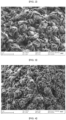
- the second coating material is a needle-like material
- the needle-like material has a major axis and a minor axis, and the length ratio of the major axis L1 and the minor axis L2 satisfies the relationship of Equation 1 below. 0.1 ⁇ L 2 / L 1 ⁇ 1.00
- a length ratio (L2/L1) of the major axis L1 and the minor axis L2 of the needle-like material satisfies the Equation 1, a more excellent cycle characteristic and a low resistance increasing rate can be exhibited.
- a length ratio (L2/L1) of the major axis L1 and the minor axis L2 may be greater than 0.2 and less than or equal to 0.5.
- the length ratio (L2/L1) of the major axis L1 and the minor axis L2 is 0.1 or less, the length of the major axis is too large compared to the minor axis, and there may be a problem that resistance may increase due to impurities being contained.
- a case where the length ratio (L2/L1) of the major axis L1 and the minor axis L2 is 1.0 or more is not appropriate because the length of the major axis and the minor axis are the same or the minor axis is longer than the major axis.
- a coating material in the positive electrode active material includes a first coating material and a second coating material, and then high-capacity of the positive electrode active material can be secured. Excellent high temperature cycle characteristics can be obtained, and initial resistance and resistance increasing rate can be reduced. The effect is obtained, when it is included such a coating material, wherein a first coating material containing any one or more of group 5 elements and group 6 elements, and S, and a second coating material including B, LiOH, Li 2 CO 3 and Li 2 SO 4 , particularly, the second coating material is a needle-like material.
- the effect of using such a coating material is more excellent when using a high-nickel (High-Ni) lithium nickel-based compound having a Ni content of 80 mol% or more as a core, for example, a compound represented by Chemical Formula 1 below.
- a coating material including a first coating material and a second coating material according to one embodiment is included, when using a lithium nickel-based compound having a Ni content of less than 80 mol% as a core or using a compound that does not contain nickel, as the resistance and resistance increase rate are sufficiently small, the effect of including the first coating material and the second coating material cannot be obtained.
- X may be Zr and Al. Since Zr ions occupy Li sites, Zr serves as a kind of pillar and can further stabilize the layered structure by alleviating contraction of the lithium ion path (lithium ion path) during the charging and discharging process. In addition, Al can further stabilize the layered structure of the positive electrode active material. Therefore, the cycle-life characteristics of the lithium secondary battery can be further improved.
- the core may include secondary particles assembled with at least one primary particle including the lithium nickel-based compound.
- the first coating material is positioned on at least a portion of the primary particle surface and at least a portion of the secondary particle surface.
- the second coating material is to position at least part of the secondary particle surface.
- the effect of suppressing the increase in resistance and improving cycle-life can be obtained.
- This effect cannot be obtained when both the first coating material and the second coating material are positioned only on the secondary particle surface, because the primary particle surface deteriorates.
- the effect of suppressing the resistance increase rate and improving cycle-life according to one embodiment cannot be obtained, because resistance increases.
- the resistance increases even when the first coating material is positioned only on the secondary particle surface and the second coating material is positioned on both the primary and secondary particle surfaces, the desired effect cannot be obtained.
- At least one of a group 5 elements and a group 6 elements may be V, Nb, W or a combination thereof.
- the content of the group 5 element and the group 6 element may be 10 ppm to 10,000 ppm, 30 ppm to 5,000 ppm, 80 ppm to 2,000 ppm, 300 ppm to 800 ppm based on the total amount of the positive electrode active material.
- the content of the Group 5 element and the Group 6 element when included in the range, excellent cycle characteristics can be exhibited without increasing the resistance increase rate.
- the content of the LiOH may range from 100 ppm to 10,000 ppm, more specifically from 500 ppm to 7,000 ppm, and more specifically from 1,200 ppm to 3,000 ppm based on the total amount of the positive electrode active material.
- the positive electrode active material if the content of LiOH satisfies the range, excellent initial charge and discharge efficiency and cycle characteristics can be further improved.
- the content of the Li 2 CO 3 may range from 1,000ppm to 5,000ppm, more specifically from 1,500ppm to 4,000ppm, and more specifically from 2,000ppm to 3,500ppm based on the total amount of the positive electrode active material.
- the content of Li 2 CO 3 satisfies the range, excellent room temperature and high temperature cycle-life characteristics can be further improved, and the resistance increase rate can be further reduced.
- the content of the Li 2 SO 4 may range from 10ppm to 10,000ppm, more specifically from 80ppm to 3,000ppm, more specifically from 100ppm to 2,000ppm, more specifically from 100ppm to 800ppm, more specifically from 100ppm to 400ppm, based on the total amount of the positive electrode active material.
- excellent capacity characteristics can be well secured, while cycle characteristics can be further improved and the initial resistance value can be further reduced.
- the content of the B may be 300 ppm to 2,000 ppm or 300 ppm to 1,000 ppm based on the total amount of the positive electrode active material.
- Another embodiment provides a manufacturing method of the positive electrode active material. This manufacturing method comprises:
- a precursor compound including nickel, cobalt and manganese, a lithium-containing compound, and an X-containing compound (X is at least one of Zr, Al, Ti, B, Mg, Ce, Si, Na and Zn) are mixed and prepare the first mixture.
- the precursor compound containing nickel, cobalt and manganese is formed by mixing nickel raw material, cobalt raw material and manganese raw material in water to prepare a metal salt aqueous solution, performing co-precipitation reaction, filtering and drying. At this time, the amount of nickel raw material, cobalt raw material and manganese raw material used can be appropriately adjusted so as to obtain the final core composition of the Chemical Formula 1.
- the co-precipitation reaction can be performed by purging inert gas to prevent oxidation of metal ions, and can be performed at 10 °C to 70 °C temperature.
- the inert gas may be N 2 , argon gas or a combination thereof.
- the co-precipitation reaction can be carried out by adding a chelating agent and a pH adjusting agent to the metal salt aqueous solution.
- the chelating agent may be NH 4 (OH), but is not limited thereto, and the pH adjusting agent may be NaOH, but is not limited thereto.
- the drying process can be carried out at 80°C to 200°C for 1 hour to 48 hours.
- the average particle diameter D50 of the precursor compound can be 10 ⁇ m to 20 ⁇ m, but is not limited thereto. Unless otherwise defined in this specification, average particle diameter D50 means the diameter of particles whose cumulative volume is 50% by volume in the particle size distribution, and can be measured with a particle size analyzer (PSA).
- PSD particle size analyzer
- lithium compound lithium hydroxide, lithium carbonate, lithium nitrate, a hydrate thereof, or a combination thereof may be used.
- the X-containing raw material may be an X-containing oxide, an X-containing nitrate, an X-containing hydroxide, or a combination thereof.
- the mixing ratio of the precursor compound, the lithium compound and the X-containing raw material can be appropriately adjusted so that a core of the Chemical Formula 1 is obtained.
- the first heat treatment process is, for example, after preliminary heat treatment in the range of 300°C to 500°C, followed by heating in the range of 700°C to 900°C at a heating rate of 1°C/min to 10°C/min. After raising the temperature, it can be carried out as a process of maintaining at this temperature for 1 hour to 48 hours.
- the first heat treatment process can be carried out while inflowing oxygen from 100ml/min to 100,000ml/min.
- the core primary particles of the Chemical Formula 1 assemble to form secondary particles.
- the cooling process can be carried out up to room temperature by a conventional method, for example, natural cooling.
- the cooling product is washed with a first solution containing a compound containing any one or more elements of Group 5 and Group 6 and a second solution containing a source of S to prepare a cleaned product.
- a first solution containing a compound containing any one or more elements of Group 5 and Group 6 and a second solution containing a source of S to prepare a cleaned product.
- residual lithium on the surface of the product can be removed, and the cooling product can also be coated with a solution containing a compound containing any one or more elements of group 5 and group 6 and a source of S.
- the first solution and the second solution may exist impregnated into the first particles.
- a compound containing one or more of the Group 5 and Group 6 elements is ammonium meta-tungstate, ammonium para-tungstate, tungsten oxide, or tungsten halide (halide can be F, Cl, I or combination thereof), tungsten hexaethoxide, tungsten isopropoxide, tungsten boride, tungsten nitride, tungsten carbonyl, or a combination thereof, and the S raw material source may be ammonium sulfate, Li 2 SO 4 , S or combination thereof.
- the solvent may be water, ethanol, propanol or a combination thereof.
- the solution may contain 0.0001M to 0.1M, or 0.001M to 0.005M of a compound containing any one or more elements of Group 5 and Group 6 elements.
- the solution may include 0.01M to 0.5M of the S raw material source, and may also include 0.01M to 0.2M.
- the cleaning product is mixed with the second coating raw material to form a second mixture.
- the mixing process can be carried out as a dry process that does not use a solvent.
- the second coating raw material may include boron compound, LiOH, and Li 2 SO 4 . That is, Li 2 CO 3 included in the second coating of the finally obtained positive electrode active material is formed by the internal reaction of the raw materials input during the manufacturing process, and is not formed by inputting a separate raw material.
- the boron compound may be H 3 BO 3 , boron oxide, boron nitride, B 4 C, B 2 H 6 , B 2 F 4 , B 2 Cl 4 , B 2 Br 4 , B 2 I 4 or a combination thereof.
- the amount of the boron compound can be used so that boron is included in an amount of 300 ppm to 2,000 ppm, more specifically, 300 ppm to 1,000 ppm, based on the total amount of the second coating raw material.
- the amount of LiOH may be in the range of 100 ppm to 1,000 ppm, more specifically 50 ppm to 700 ppm, and more specifically 120 ppm to 300 ppm, based on the entire second coating raw material.
- the content of LiOH injected as the second coating raw material satisfies the range, it is possible to manufacture slurry in a state that can be applied to the electrode when manufacturing a positive electrode by suppressing the gelation phenomenon of slurry caused by residual lithium.
- the Li 2 SO 4 content may be in the range of 10ppm to 500ppm, more specifically 10ppm to 200ppm, more specifically 10ppm to 100ppm, and more specifically 20ppm to 5ppm, based on the entire second coating raw material.
- the content of the Li 2 SO 4 satisfies the range, it is a lithium secondary battery with excellent cycle-life characteristics by improving the mobility of lithium ions on the surface of the positive electrode active material, can be implemented because a Li-B-C-SO 4 type ion conductor is formed on the surface.
- the input amount of LiOH and Li 2 SO 4 is smaller than that of LiOH and Li 2 SO 4 present as the second coating material of the finally obtained positive electrode active material. This is expected to be caused by the reaction of lithium and metal raw materials present in lithium metal oxide in the secondary heat treatment process after mixing with the second coating raw material.
- the second mixture can be subjected to a second heat treatment.
- This second heat treatment process can be carried out in the temperature range of 200 °C to 450 °C, and the heat treatment time can range from 1 hour to 12 hours.
- the compound containing one or more elements from the group 5 and group 6 elements, and the S raw material source, included in the first solution and the second solution are decomposed, the first coating material including any one or more elements of the group the group 5 element and 6 element, and S, will be present in the positive electrode active material.
- the boron compound is also decomposed and exists as boron (B) in the positive electrode active material, and LiOH and Li 2 SO 4 remain and exist as LiOH and Li 2 SO 4 in the positive electrode active material.
- some of LiOH may react with CO 2 in the atmosphere to form Li 2 CO 3 , and this Li 2 CO 3 may exist in the positive electrode active material.
- the compound containing any one or more elements of the Group 5 and Group 6 elements and the S raw material source are used in the form of a solution, as described above, they can be impregnated between primary particles and can exist on the secondary particle surface, so that within the final an active material, it is present on at least part of the primary particle surface and at least part of the secondary particle surface. Due to this, it is possible to more effectively reduce the resistance increase rate.
- LiOH, B and Li 2 SO 4 exist only on the secondary particle surface, and Li 2 CO 3 also exists only on the secondary particle surface.
- a lithium secondary battery including a positive electrode, a negative electrode and an electrolyte is provided.
- the positive electrode includes a current collector and a positive electrode active material layer including a positive electrode active material formed on the current collector.
- the positive electrode active material includes a positive electrode active material according to an embodiment.
- the content of the positive electrode active material may be 90 wt% to 98 wt% with respect to the entire weight of the positive electrode active material layer.
- the positive electrode active material layer may further include a binder and a conductive material.
- the content of the binder and the conductive material may be 1 wt% to 5 wt%, respectively, with respect to the entire weight of the positive electrode active material layer.
- the binder serves to attach the positive electrode active material particles well to each other and to attach the positive electrode active material to the current collector well.
- Representative examples of the binder include polyvinyl alcohol, carboxymethylcellulose, hydroxypropylcellulose, diacetylcellulose, polyvinylchloride, carboxylated polyvinylchloride, polyvinylfluoride, polymers containing ethylene oxide, polyvinylpyrrolydone, polyurethane, polytetrafluoroethylene, polyvinylidene fluoride, polyethylene, polypropylene, styrene-butadiene rubber, acrylated styrene-butadiene rubber, epoxy resin, nylon, etc. may be used, but are not limited thereto.
- the conductive material is used to impart conductivity to the electrode, and any electronic conductive material can be used without causing chemical change in the battery to be configured.
- the conductive material include carbon-based materials such as natural graphite, artificial graphite, carbon black, acetylene black, ketchen black, and carbon fiber; metal-based materials such as metal powder or metal fibers such as copper, nickel, aluminum, and silver; conductive polymers such as polyphenylene derivatives; or a conductive material containing a mixture thereof.
- aluminum foil, nickel foil, or a combination thereof may be used, but is not limited thereto.
- the positive electrode active material layer is formed by mixing the positive electrode active material, a binder and optionally a conductive material in a solvent to prepare an active material composition, and applying the active material composition to a current collector. Since such an active material layer formation method is widely known in the art, a detailed description thereof will be omitted in this specification.
- the solvent N-methylpyrrolidone and the like can be used, but is not limited thereto.
- the negative electrode may include a current collector and a negative active material layer formed on the current collector and including the negative active material according to an embodiment.
- the content of the negative active material in the negative active material layer may be 80 wt% to 98 wt% with respect to the entire weight of the negative active material layer.
- the negative active material layer includes a binder and may optionally further include a conductive material.
- the content of the binder in the negative active material layer may be 1 wt% to 5 wt% based on the entire weight of the negative active material layer.
- 90 wt% to 98 wt% of the negative active material, 1 wt% to 5 wt% of the binder, and 1 wt% to 5 wt% of the conductive material may be used.
- the negative active material includes a material capable of intercalating/deintercalating lithium ions reversibly, lithium metal, an alloy of lithium metal, a material capable of doping and undoping lithium, or a transition metal oxide.
- a material that can intercalate/deintercalate the lithium ion reversibly is a carbon material
- any generally-used carbon-based negative active material can be used in a lithium ion secondary battery, and typical examples thereof include crystalline carbon, amorphous carbon or combination thereof.
- the alloy of the lithium metal is from the group consisting of lithium and Na, K, Rb, Cs, Fr, Be, Mg, Ca, Sr, Si, Sb, Pb, In, Zn, Ba, Ra, Ge, Al and Sn. Any alloy of selected metals may be used.
- Materials capable of doping and undoping the lithium include Si, SiOx (0 ⁇ x ⁇ 2), Si-Y alloy (the Y is an element selected from the group consisting of an alkali metal, an alkaline earth metal, a group 13 element, a group 14 element, a transition metal, and a rare earth element and its combination thereof, but not Si), Sn, SnO 2 , Sn-Y (the Y is an element selected from the group consisting of an alkali metal, an alkaline earth metal, a group 13 element, a group 14 element, a transition metal, a rare earth element and the combination thereof, not Sn), and the like.
- the negative active material layer also includes a binder and may optionally further include a conductive material.
- the binder serves to adhere the negative active material particles to each other well and to adhere the negative active material to the current collector well.
- a non-aqueous binder, an aqueous binder, or a combination thereof may be used as the binder.
- the non-aqueous binders include ethylenepropylene copolymer, polyacrylnitrile, polystyrene, polyvinyl chloride, carboxylated polyvinyl chloride, polyvinyl fluoride, polyurethane, polytetrafluoroethylene, polyvinylidene fluoride, polyethylene, polypropylene, polyamideimide, polyimide or a combination thereof.
- aqueous binder styrene-butadiene rubber, acrylated styrene-butadiene rubber, acrylonitrile-butadiene rubber, acryl rubber, butyl rubber, fluororubber, polymers containing ethylene oxide, polyvinylpyrrolidone, and polyepichlorohydrine, polyphosphazene, ethylenepropylene diene copolymer, polyvinylpyridine, chlorosulfonated polyethylene, latex, polyester resin, acryl resin, phenol resin, epoxy resin, polyvinyl alcohol or a combination thereof.
- a cellulose-based compound capable of imparting viscosity may be further included.
- the cellulose-based compound one or more of carboxymethyl cellulose, hydroxypropylmethyl cellulose, methyl cellulose, or alkali metal salts thereof may be mixed and used. Na, K or Li can be used as the alkali metal.
- the amount of the thickener used may be 0.1 part by weight to 3 parts by weight with respect to 100 parts by weight of the negative active material.
- the conductive material is used to impart conductivity to the electrode, and any electronic conductive material can be used without causing chemical change in the battery.
- the conductive material include carbon-based materials such as natural graphite, artificial graphite, carbon black, acetylene black, ketchen black, and carbon fiber; metal-based materials such as metal powder or metal fibers such as copper, nickel, aluminum, and silver; conductive polymers such as polyphenylene derivatives; or a conductive material containing a mixture thereof.
- the current collector one selected from the group consisting of copper foil, nickel foil, stainless steel foil, titanium foil, nickel foam, copper foam, a conductive metal-coated polymer substrate, and a combination thereof may be used.
- the negative electrode is formed by mixing a negative active material, a binder and optionally a conductive material in a solvent to prepare an active material composition, and applying the active material composition to a current collector.
- Water can be used as the solvent.
- the electrolyte includes a non-aqueous organic solvent and a lithium salt.
- the non-aqueous organic solvent serves as a medium through which ions involved in the electrochemical reaction of the battery can move.
- non-aqueous organic solvent carbonate-based, ester-based, ether-based, ketone-based, alcohol-based, or aprotic solvents may be used.
- the carbonate-based solvent includes dimethyl carbonate (DMC), diethyl carbonate (DEC), dipropyl carbonate (DPC), methylpropyl carbonate (MPC), ethylpropyl carbonate (EPC), methylethyl carbonate (MEC), ethylene carbonate (EC), propylene carbonate (PC), butylene carbonate (BC), etc.
- DMC dimethyl carbonate
- DEC diethyl carbonate
- DPC dipropyl carbonate
- MPC methylpropyl carbonate
- EPC ethylpropyl carbonate
- MEC methylethyl carbonate
- EC ethylene carbonate
- PC propylene carbonate
- BC butylene carbonate
- the ester solvent includes methyl acetate, ethyl acetate, n-propyl acetate, dimethyl acetate, methyl propionate, ethyl propionate, propyl propionate, decanolide, mevalon
- ether-based solvent dibutyl ether, tetraglyme, diglyme, dimethoxyethane, 2-methyltetrahydrofuran, tetrahydrofuran, and the like may be used.
- ketone-based solvent cyclohexanone or the like may be used.
- nitriles such as R-CN (R is a hydrocarbon group having a carbon atom of 2 to 20 in a linear, branched, or ring structure, including double bonding, aromatic ring or ether linkage), amides such as dimethylformamide, dioxolanes such as 1,3-dioxolane, sulfolanes, etc. may be used.
- the non-aqueous organic solvent may be used alone or in combination with one or more of them.
- the mixing ratio can be appropriately adjusted according to the desired battery performance, which can be widely understood by those skilled in the art.
- the performance of the electrolyte solution can be excellent when cyclic carbonate and chain carbonate are mixed in a volume ratio of 1:1 to 1:9.
- a mixed solvent of cyclic carbonate and chain carbonate a mixed solvent of cyclic carbonate and propionate solvent or a mixed solvent of cyclic carbonate, chain carbonate and propionate solvent
- propionate-based solvent methyl propionate, ethyl propionate, propyl propionate or a combination thereof may be used.
- the non-aqueous organic solvent may further include an aromatic hydrocarbon-based organic solvent in addition to the carbonate-based solvent.
- the carbonate-based solvent and the aromatic group hydrocarbon-based organic solvent may be mixed in a volume ratio of 1:1 to 30:1.
- aromatic group hydrocarbon-based organic solvent an aromatic group hydrocarbon-based compound of Chemical Formula 2 below may be used.
- R 1 to R 6 are the same as or different from each other and are selected from the group consisting of hydrogen, halogen, an alkyl group having 1 to 10 carbon atoms, a haloalkyl group, and a combination thereof.
- aromatic group hydrocarbon hydrogen-based organic solvent examples include benzene, fluorobenzene, 1,2-difluorobenzene, 1,3-difluorobenzene, 1,4-difluorobenzene, 1,2,3-Trifluorobenzene, 1,2,4-trifluorobenzene, chlorobenzene, 1,2-dichlorobenzene, 1,3-dichlorobenzene, 1,4-dichlorobenzene, 1,2,3-trichlorobenzene , 1,2,4-trichlorobenzene, iodobenzene, 1,2-diiodobenzene, 1,3-diiodobenzene, 1,4-diiodobenzene, 1,2,3-triiodobenzene, 1,2,4-triiodobenzene, toluene, fluorotoluene, 2,3-difluorotoluene, 2,4-difluor
- the electrolyte may further include vinylene carbonate or an ethylene carbonate-based compound of Chemical Formula 3 as a cycle-life improving additive to improve battery cycle-life.
- R 7 and R 8 are the same as or different from each other and are selected from the group consisting of hydrogen, halogen group, cyano group (CN), nitro group (NO 2 ) and fluorinated alkyl group having 1 to 5 carbon atoms, and at least one of the R 7 and R 8 is selected from the group consisting of a halogen group, a cyano group (CN), a nitro group (NO 2 ) and a fluorinated alkyl group having 1 to 5 carbon atoms, and both R 7 and R 8 are not hydrogen.
- ethylene carbonate compound examples include difluoroethylene carbonate, chloroethylene carbonate, dichloroethylene carbonate, bromoethylene carbonate, dibromoethylene carbonate, nitroethylene carbonate, cyanoethylene carbonate or fluoroethylene carbonate.
- the amount thereof may be appropriately adjusted.
- the electrolyte may further include vinyl ethylene carbonate, propane sultone, succinonitrile or a combination thereof, and the amount used may be appropriately adjusted.
- the lithium salt is a material that dissolves in an organic solvent and acts as a supply source of lithium ion in the battery to enable basic operation of the lithium secondary battery and promotes the movement of lithium ion between the positive electrode and the negative electrode.
- Representative examples of these lithium salts can contain one or more than one as a supporting electrolytic salt, which are selected from the group consisting of LiPF 6 , LiBF 4 , LiSbF 6 , LiAsF 6 , LiN(SO 2 C 2 F 5 ) 2 , Li(CF 3 SO 2 ) 2 N, LiN(SO 3 C 2 F 5 ) 2 , LiC 4 F 9 SO 3 , LiClO 4 , LiAlO 2 , LiAlCl 4 , LiN(C x F 2x+1 SO 2 )(C y F 2y+i SO 2 ) (where, x and y are natural numbers, for example, integers from 1 to 20), LiCl, LiI and LiB(C 2 O 4 ) 2 (lithium bis
- concentration of lithium salt it is recommended to use the concentration of lithium salt within the range of 0.1 M to 2.0M. When the concentration of lithium salt is included in the range, excellent electrolyte performance can be shown because the electrolyte has appropriate conductivity and viscosity, and lithium ion can move effectively.
- a separator may exist between the positive electrode and the negative electrode.
- a separator polyethylene, polypropylene, polyvinylidene fluoride or a multilayer of two or more of these may be used, and polyethylene/polypropylene 2-layer separator, polyethylene/polypropylene/polyethylene 3-layer separator, polypropylene/polyethylene/polypropylene 3-layer separator can be used.
- FIG. 1 shows an exploded perspective view of a lithium secondary battery according to an embodiment of the present invention.
- the lithium secondary battery according to one embodiment is described as an example of a prismatic shape, the present invention is not limited thereto, and can be applied to various types of batteries such as cylindrical and pouch-type.
- a lithium secondary battery 100 may include an electrode assembly 40 wound between a positive electrode 10 and a negative electrode 20 with a separator 30 interposed therebetween, and a case 50 in which the electrode assembly 40 is embedded.
- the positive electrode 10, the negative electrode 20 and the separator 30 may be impregnated in an electrolyte solution (not shown).
- NiSO 4 ⁇ 6H 2 O as a nickel raw material
- CoSO 4 ⁇ 7H 2 O as a cobalt raw material
- MnSO 4 ⁇ H 2 O as a manganese raw material
- the metal salt aqueous solution is purged with N 2 using a co-precipitation reaction device, and NH 4 (OH) is added as a chelating agent to the co-precipitation reaction device while the temperature of the reaction device is maintained at 50°C.
- a co-precipitation process was performed using NaOH for pH control.
- the precipitate obtained according to the co-precipitation process was filtered, washed with distilled water, and dried in an oven at 100 °C for 24 hours to obtain (Ni 0.88 Co 0.05 Mn 0.07 )(OH) 2 , precursor of positive electrode active material with an average particle diameter of 14.8 ⁇ m.
- a first mixture was prepared by uniformly mixing 1.05 moles of LiOH H 2 O (Samjeon Chemical, battery grade) and an X-containing compound.
- LiOH H 2 O Sudjeon Chemical, battery grade
- ZrO 2 Aldrich, 3N
- Al(OH) 3 Aldrich, 4N
- the amount of the X-containing compound was used as the amount to obtain the desired compound composition.
- the first mixture was charged into a tube furnace, and the first heat treatment was performed while oxygen was inflowed at 200 mL/min.
- the first heat treatment process was carried out by preliminary heat treatment at 480 °C for 5 hours, followed by raising the temperature to 760 °C at a temperature raising speed of 5 °C/min, and maintaining at this temperature for 16 hours.
- the first heat treatment product was naturally cooled to 25°C to prepare a positive electrode active material, which is a cooling product expressed as LiNi 0.85 Co 0.09 Mn 0.06 Zr 0.0037 Al 0.0001 O 2 .
- the cooling product was formed as secondary particles assembled from primary particles.
- the cooled product prepared in the Comparative Example 1 was washed with distilled water, filtered, and dried.
- the obtained dried product was subjected to secondary heat treatment at 280 °C for 5 hours to obtain a positive electrode active material having a core containing secondary particles in which primary particles expressed as LiNi 0.85 Co 0.09 Mn 0.06 Zr 0.0037 Al 0.0001 O 2 were assembled, and a coating layer containing 500 ppm LiOH, and 2,000 ppm Li 2 CO 3 on the surface of the core.
- the cooling product prepared in the Comparative Example 1 was washed with water using an aqueous solution in which 0.0004M ammonium meta-tungstate (AMT) was added to distilled water, filtered, and dried.
- AMT ammonium meta-tungstate
- the obtained dried product was treated with secondary heat at 280 °C for 5 hours to obtain a positive electrode active material having a core containing secondary particles in which primary particles expressed as LiNi 0.85 Co 0.09 Mn 0.06 Zr 0.0037 Al 0.0001 O 2 were assembled, and a coating layer containing 2,500 ppm LiOH, 2,000ppm Li 2 CO 3 , 500ppm B and 300ppm Li 2 SO 4 on the surface of the core.
- the cooling product prepared in the Comparative Example 1 was washed with water using an aqueous solution in which 0.0004M ammonium meta-tungstate (AMT) and 0.04M ammonium sulfate (AS) were added to distilled water, and then filtered and dried.
- AMT ammonium meta-tungstate
- AS ammonium sulfate
- the obtained dry product was dry mixed with 500ppm of LiOH, 500ppm of H 3 BO 3 and 30ppm of Li 2 SO 4 , and secondary heat treatment was performed on this mixture at 280°C for 5 hours to prepare a positive electrode active material.
- the manufactured positive electrode active material includes a core containing secondary particles in which primary particles represented by LiNi 0.85 Co 0.09 Mn 0.06 Zr 0.0037 Al 0.0001 O 2 are assembled, and a coating material positioned on the surface of the core, and the W and S positioned on the primary particle surface, and W, S, LiOH, Li 2 CO 3 , B, and Li 2 SO 4 on the secondary particle surface, wherein the W content is 200ppm, the LiOH content is 2,500ppm, the Li 2 CO 3 content is 2,000ppm, and the B content is 500 ppm, and the Li 2 SO 4 content was 500 ppm.
- the AMT content and AS content used in the exemplary embodiment 1 and the Comparative Example 1 to 3 and the W, S and Li 2 SO 4 content included in the active material are summarized in Table 1 below.
- Table 1 Content of AMT (M) Content of AS (M) Content of W (ppm) Content of B (ppm) Content of Li 2 SO 4 (ppm) Comparative Example 1 Comparative Example 2 - - - - 300 Comparative Example 3 0.0004 0.04 200 - 300 exemplary embodiment 1 0.0004 0.04 200 500 500
- Positive electrode active material prepared according to Exemplary Embodiment 1 and Comparative Example 1 to 3 Denka black conductive material, and polyvinylidene fluoride binder (trade name: KF1100) were mixed at a weight ratio of 92.5:3.5:4, and this mixture was added to N-Methyl-2-pyrrolidone solvent to have a solid content of about 30 wt% to prepare a positive electrode active material slurry.
- the slurry was coated on aluminum foil (Al foil, thickness: 15 ⁇ m), which is a positive electrode current collector, using a doctor blade (Doctor blade), dried, and rolled to prepare a positive electrode.
- the loading amount of the positive electrode was 14.6 mg/cm 2 , and the rolling density was 3.1 g/cm 3 .
- a 2032 coin-type half cell was prepared by a conventional method using the positive electrode, lithium metal negative electrode (200 ⁇ m, Honzo metal), electrolyte solution and polypropylene separator.
- EC ethylene carbonate
- DMC dimethyl carbonate
- EMC ethylmethyl carbonate
- FIG. 2 and FIG. 3 exemplary embodiment 1, FIG. 4 : Comparative Example 1, FIG. 5 : Comparative Example 2, FIG. 5 : Comparative Example 3).
- the positive electrode active material of exemplary embodiment 1 including the first coating material and the second coating material is clearly seen that needle-like material exists on the surface, as shown in Fig. 2 .
- the result of obtaining the major axis/minor axis length ratio (average ratio) was 0.27.
- Charging and discharging is performed once at 2.5V to 4.25V with constant current/constant voltage, 0.1C charging and 0.1C discharge under 1/20C cut-off condition, and the charging capacity and discharge capacity are obtained, and the result is shown in Table 1 below.
- the ratio of discharge capacity to charge capacity was obtained, and the result is shown in Table 2 as one-time efficiency.
- the reference capacity was 215 mAh/g.
- the initial resistance is 4.25V full-charge (charging rate: 100%) at 0.2C, and while discharging at 0.2C, the voltage value after 60 seconds and the change in voltage value for the current applied at this time, that is, the voltage change for 60 seconds was measured and calculated.
- the results are shown in Table 2 below.
- the fabricated coin-type half cell was subjected to 30 cycles of 0.3C charge and 0.3C discharge under 1/20C cut-off condition at 2.5V to 4.25V with constant current/constant voltage at 45°C.
- the ratio of one discharge capacity to discharge capacity in 30 cycles was obtained, and the result was shown in Table 3 as the cycle characteristic.
- the resistance increase rate is 4.25V full-charge (charging rate: 100%) at 0.2C at high temperature 45°C, 0.2C discharge, and measuring the voltage fluctuation for 60 seconds to obtain the resistance once, and after performing full-charge and full-discharge 30 times, the resistance measured 30 times with voltage fluctuations for 60 seconds was obtained, and the results are shown in Table 3 below.
- 30-time resistance ratio for 1-time resistance was obtained, and the results are shown in Table 3 below.
- the half cell using the positive electrode active material of Example Embodiment 1 exhibits a low resistance increase rate at high temperature, while maintaining low initial resistance and excellent one-time efficiency and high temperature cycle characteristic.
- the positive electrode active material of Comparative Example 1 to 3 has a rather low one-time efficiency and a very large resistance increase rate.
- the present invention is not limited to the exemplary embodiment, but can be manufactured in a variety of different forms, and a person of an ordinary skill in the technical field to which the present invention belongs does not change the technical idea or essential characteristics of the present invention. It will be appreciated that it may be embodied in other specific forms. Therefore, the exemplary embodiment described above should be understood as illustrative in all respects and not limiting.
Landscapes
- Chemical & Material Sciences (AREA)
- Chemical Kinetics & Catalysis (AREA)
- Electrochemistry (AREA)
- General Chemical & Material Sciences (AREA)
- Inorganic Chemistry (AREA)
- Organic Chemistry (AREA)
- Engineering & Computer Science (AREA)
- Composite Materials (AREA)
- Manufacturing & Machinery (AREA)
- Materials Engineering (AREA)
- Crystallography & Structural Chemistry (AREA)
- Battery Electrode And Active Subsutance (AREA)
- Inorganic Compounds Of Heavy Metals (AREA)
Abstract
Description
- This application claims priority to and the benefit of
Korean Patent Application No. 10-2020-0178623 filed in the Korean Intellectual Property Office on December 18, 2020 - It is related that a positive electrode active material, its manufacturing method, and a lithium secondary battery including the same.
- Recently, there is an explosive increase in demand for IT mobile devices and small electric power devices (e-bikes, small EVs, etc.), and there is a demand for electric vehicles with a driving distance of 400 km or more. Accordingly, the development of secondary batteries having high-capacity and a high energy density to drive them is being actively conducted worldwide.
- In order to manufacture such a high-capacity battery, it is necessary to use a high-capacity positive electrode active material. Among the existing layered positive electrode active materials, the highest capacity material is LiNiO2 (275mAh/g). However, structural collapse occurs easily during charging and discharging, and thermal stability due to oxidation number problem is low, making it difficult to commercially available.
- Therefore, research on high-capacity positive electrode active materials continues.
- One embodiment is to provide a positive electrode active material for a lithium secondary battery with excellent electrochemical stability.
- Another embodiment is to provide a lithium secondary battery including the positive electrode active material.
- According to one embodiment, it is provided a positive electrode active material for lithium secondary battery, comprising: a core containing a lithium nickel-based compound having a Ni content of 80 mol% or more; and@@@a coating material positioned on at least a portion of the core surface; wherein, the coating material includes a first coating material containing at least one of group 5 elements and group 6 elements; and S; and a second coating material including B, LiOH, Li2CO3 and Li2SO4, and the second coating material is a needle-like material.
the needle-like material has a major axis and a minor axis, and the length ratio of the major axis L1 and the minor axis L2 satisfies the relationship ofEquation 1 below.
- The core in the positive electrode active material includes a secondary particle assembled with at least one primary particle including the lithium nickel-based compound.
- The lithium nickel-based compound is represented by Chemical Formula 1 below.
[Chemical Formula 1] Li (Ni1-(x+y)CoxMnyXz)O2,
- (In the
Chemical Formula 1, 0<(x+y)<0.2, 0≤x ≤0.2, 0≤ y ≤0.2 and 0 ≤ z ≤ 0.2, and - X includes at least one or more of Zr, Al, Ti, B, Mg, Ce, Si, Na, and Zn.)
- The first coating material is positioned on at least a portion of the primary particle surface and at least a portion of the secondary particle surface. Also, the second coating material is to position at least part of the secondary particle surface.
- At least one of the Group 5 and Group 6 elements is V, Nb, W or a combination thereof.
- The content of the group 5 element and group 6 element is 10 ppm to 10,000 ppm based on the total amount of the positive electrode active material.
- The content of the LiOH is 100 ppm to 10,000 ppm based on the total amount of the positive electrode active material.
- The content of the Li2SO4 is 10 ppm to 3,000 ppm based on the total amount of the positive electrode active material.
- According to another embodiment, a lithium secondary battery including a positive electrode including the positive electrode active material, a negative electrode including a negative active material, and a non-aqueous electrolyte is provided.
- A positive electrode active material for a lithium secondary battery according to one embodiment may exhibit an excellent cycle characteristic and a low resistance increase rate.
-
-
FIG. 1 is a drawing schematically showing the structure of a lithium secondary battery according to one embodiment. -
FIG. 2 is a SEM of the positive electrode active material prepared according toexemplary embodiment 1. -
FIG. 3 is a photograph showing the major axis and minor axis of the SEM image shown inFig. 2 . -
FIG. 4 is a SEM of the positive electrode active material prepared according to Comparative Example 1. -
FIG. 5 is a SEM of the positive electrode active material prepared according to Comparative Example 2. -
FIG. 6 is a SEM of the positive electrode active material prepared according to Comparative Example 3. - Hereinafter, embodiments of the present invention will be described in detail. However, this is presented as an example, and the present invention is not limited thereby, and the present invention is only defined by the scope of claims to be described later.
- In this specification, unless otherwise noted, % means wt%, and 1ppm means 0.0001 wt%.
- According to one embodiment, it is provided a positive electrode active material for lithium secondary battery, comprising: a core containing a lithium nickel-based compound having a Ni content of 80 mol% or more; and@@@a coating material positioned on at least a portion of the core surface; wherein, the coating material includes a first coating material containing at least one of group 5 elements and group 6 elements; and S; and a second coating material including B, LiOH, Li2CO3 and Li2SO4.
- Particularly, the second coating material is a needle-like material
- The needle-like material has a major axis and a minor axis, and the length ratio of the major axis L1 and the minor axis L2 satisfies the relationship of
Equation 1 below.
- When the length ratio (L2/L1) of the major axis L1 and the minor axis L2 of the needle-like material satisfies the
Equation 1, a more excellent cycle characteristic and a low resistance increasing rate can be exhibited. According to one embodiment, a length ratio (L2/L1) of the major axis L1 and the minor axis L2 may be greater than 0.2 and less than or equal to 0.5. - If the length ratio (L2/L1) of the major axis L1 and the minor axis L2 is 0.1 or less, the length of the major axis is too large compared to the minor axis, and there may be a problem that resistance may increase due to impurities being contained. A case where the length ratio (L2/L1) of the major axis L1 and the minor axis L2 is 1.0 or more is not appropriate because the length of the major axis and the minor axis are the same or the minor axis is longer than the major axis.
- In addition, a coating material in the positive electrode active material according to one embodiment, includes a first coating material and a second coating material, and then high-capacity of the positive electrode active material can be secured. Excellent high temperature cycle characteristics can be obtained, and initial resistance and resistance increasing rate can be reduced. The effect is obtained, when it is included such a coating material, wherein a first coating material containing any one or more of group 5 elements and group 6 elements, and S, and a second coating material including B, LiOH, Li2CO3 and Li2SO4, particularly, the second coating material is a needle-like material.
- In addition, the effect of using such a coating material is more excellent when using a high-nickel (High-Ni) lithium nickel-based compound having a Ni content of 80 mol% or more as a core, for example, a compound represented by Chemical Formula 1 below. Even if a coating material including a first coating material and a second coating material according to one embodiment is included, when using a lithium nickel-based compound having a Ni content of less than 80 mol% as a core or using a compound that does not contain nickel, as the resistance and resistance increase rate are sufficiently small, the effect of including the first coating material and the second coating material cannot be obtained.
[Chemical Formula 1] Li (Ni1-(x+y)CoxMnyXz)O2,
- (In the
Chemical Formula 1, 0<(x+y)<0.2, 0≤x ≤0.2, 0≤ y ≤0.2 and 0 ≤ z ≤ 0.2, and - X includes at least one or more of Zr, Al, Ti, B, Mg, Ce, Si, Na, and Zn.)
- According to one embodiment, X may be Zr and Al. Since Zr ions occupy Li sites, Zr serves as a kind of pillar and can further stabilize the layered structure by alleviating contraction of the lithium ion path (lithium ion path) during the charging and discharging process. In addition, Al can further stabilize the layered structure of the positive electrode active material. Therefore, the cycle-life characteristics of the lithium secondary battery can be further improved.
- The core may include secondary particles assembled with at least one primary particle including the lithium nickel-based compound. The first coating material is positioned on at least a portion of the primary particle surface and at least a portion of the secondary particle surface. Also, the second coating material is to position at least part of the secondary particle surface.
- In this way, as the first coating material is positioned on both the primary and secondary particle surfaces, and the second coating material is positioned only on the secondary particle surface, the effect of suppressing the increase in resistance and improving cycle-life can be obtained. This effect cannot be obtained when both the first coating material and the second coating material are positioned only on the secondary particle surface, because the primary particle surface deteriorates. Alternatively, even when the first coating material and the second coating material are positioned on both the primary particle surface and the secondary particle surface, the effect of suppressing the resistance increase rate and improving cycle-life according to one embodiment cannot be obtained, because resistance increases. In addition, since the resistance increases even when the first coating material is positioned only on the secondary particle surface and the second coating material is positioned on both the primary and secondary particle surfaces, the desired effect cannot be obtained.
- Among the first coating materials, at least one of a group 5 elements and a group 6 elements may be V, Nb, W or a combination thereof.
- In the positive electrode active material, the content of the group 5 element and the group 6 element may be 10 ppm to 10,000 ppm, 30 ppm to 5,000 ppm, 80 ppm to 2,000 ppm, 300 ppm to 800 ppm based on the total amount of the positive electrode active material. In the positive electrode active material, when the content of the Group 5 element and the Group 6 element are included in the range, excellent cycle characteristics can be exhibited without increasing the resistance increase rate.
- The content of the LiOH may range from 100 ppm to 10,000 ppm, more specifically from 500 ppm to 7,000 ppm, and more specifically from 1,200 ppm to 3,000 ppm based on the total amount of the positive electrode active material. In the positive electrode active material, if the content of LiOH satisfies the range, excellent initial charge and discharge efficiency and cycle characteristics can be further improved.
- The content of the Li2CO3 may range from 1,000ppm to 5,000ppm, more specifically from 1,500ppm to 4,000ppm, and more specifically from 2,000ppm to 3,500ppm based on the total amount of the positive electrode active material. When the content of Li2CO3 satisfies the range, excellent room temperature and high temperature cycle-life characteristics can be further improved, and the resistance increase rate can be further reduced.
- The content of the Li2SO4 may range from 10ppm to 10,000ppm, more specifically from 80ppm to 3,000ppm, more specifically from 100ppm to 2,000ppm, more specifically from 100ppm to 800ppm, more specifically from 100ppm to 400ppm, based on the total amount of the positive electrode active material. When the content of Li2SO4 satisfies the range, excellent capacity characteristics can be well secured, while cycle characteristics can be further improved and the initial resistance value can be further reduced.
- The content of the B may be 300 ppm to 2,000 ppm or 300 ppm to 1,000 ppm based on the total amount of the positive electrode active material. When the content of B satisfies the range, it is possible to secure a capacitance characteristic well, simultaneously further improve the cycle characteristic and further reduce the initial resistance value.
- Another embodiment provides a manufacturing method of the positive electrode active material. This manufacturing method comprises:
- preparing a first mixture by mixing a precursor compound containing nickel, cobalt and manganese with a compound containing X (where X is at least one of Zr, Al, Ti, B, Mg, Ce, Si, Na and Zn),
- preparing a cooling product by performing a first heat treatment and cooling the first mixture;
- preparing a cleaned product by washing the cooled product with a solution containing a compound containing any one or more of a Group 5 elements and a Group 6 element and a S source,
- preparing a second mixture by mixing the cleaned product with LiOH, boron compound and Li2SO4 to and
- performing a secondary heat treatment of the second mixture.
- Hereinafter, the manufacturing method will be described in more detail.
- First, a precursor compound including nickel, cobalt and manganese, a lithium-containing compound, and an X-containing compound (X is at least one of Zr, Al, Ti, B, Mg, Ce, Si, Na and Zn) are mixed and prepare the first mixture.
- The precursor compound containing nickel, cobalt and manganese is formed by mixing nickel raw material, cobalt raw material and manganese raw material in water to prepare a metal salt aqueous solution, performing co-precipitation reaction, filtering and drying. At this time, the amount of nickel raw material, cobalt raw material and manganese raw material used can be appropriately adjusted so as to obtain the final core composition of the
Chemical Formula 1. - The co-precipitation reaction can be performed by purging inert gas to prevent oxidation of metal ions, and can be performed at 10 °C to 70 °C temperature.
- The inert gas may be N2, argon gas or a combination thereof.
- In addition, the co-precipitation reaction can be carried out by adding a chelating agent and a pH adjusting agent to the metal salt aqueous solution. The chelating agent may be NH4(OH), but is not limited thereto, and the pH adjusting agent may be NaOH, but is not limited thereto.
- The drying process can be carried out at 80°C to 200°C for 1 hour to 48 hours.
- The average particle diameter D50 of the precursor compound can be 10 µm to 20 µm, but is not limited thereto. Unless otherwise defined in this specification, average particle diameter D50 means the diameter of particles whose cumulative volume is 50% by volume in the particle size distribution, and can be measured with a particle size analyzer (PSA).
- As the lithium compound, lithium hydroxide, lithium carbonate, lithium nitrate, a hydrate thereof, or a combination thereof may be used.
- The X-containing raw material may be an X-containing oxide, an X-containing nitrate, an X-containing hydroxide, or a combination thereof.
- The mixing ratio of the precursor compound, the lithium compound and the X-containing raw material can be appropriately adjusted so that a core of the
Chemical Formula 1 is obtained. - Subsequently, the first mixture is subjected to a first heat treatment and cooled to prepare a cooling product. The first heat treatment process is, for example, after preliminary heat treatment in the range of 300°C to 500°C, followed by heating in the range of 700°C to 900°C at a heating rate of 1°C/min to 10°C/min. After raising the temperature, it can be carried out as a process of maintaining at this temperature for 1 hour to 48 hours. The first heat treatment process can be carried out while inflowing oxygen from 100ml/min to 100,000ml/min.
- When the primary heat treatment process is performed under the temperature condition, particularly while oxygen is inflowed, there may be merit in improving the cycle-life. According to the first heat treatment process, the core primary particles of the
Chemical Formula 1 assemble to form secondary particles. - The cooling process can be carried out up to room temperature by a conventional method, for example, natural cooling.
- The cooling product is washed with a first solution containing a compound containing any one or more elements of Group 5 and Group 6 and a second solution containing a source of S to prepare a cleaned product. With this process, residual lithium on the surface of the product can be removed, and the cooling product can also be coated with a solution containing a compound containing any one or more elements of group 5 and group 6 and a source of S. At this time, the first solution and the second solution may exist impregnated into the first particles.
- A compound containing one or more of the Group 5 and Group 6 elements is ammonium meta-tungstate, ammonium para-tungstate, tungsten oxide, or tungsten halide (halide can be F, Cl, I or combination thereof), tungsten hexaethoxide, tungsten isopropoxide, tungsten boride, tungsten nitride, tungsten carbonyl, or a combination thereof, and the S raw material source may be ammonium sulfate, Li2SO4, S or combination thereof.
- In the solution, the solvent may be water, ethanol, propanol or a combination thereof.
- The solution may contain 0.0001M to 0.1M, or 0.001M to 0.005M of a compound containing any one or more elements of Group 5 and Group 6 elements. In addition, the solution may include 0.01M to 0.5M of the S raw material source, and may also include 0.01M to 0.2M. When the solution includes the element-containing compound and S raw material source in the range, it is possible to effectively manufacture a positive electrode active material having a further improved cycle characteristic and a low resistance increase rate while maintaining excellent initial efficiency and initial resistance.
- Then, the cleaning product is mixed with the second coating raw material to form a second mixture. The mixing process can be carried out as a dry process that does not use a solvent. The second coating raw material may include boron compound, LiOH, and Li2SO4. That is, Li2CO3 included in the second coating of the finally obtained positive electrode active material is formed by the internal reaction of the raw materials input during the manufacturing process, and is not formed by inputting a separate raw material.
- The boron compound may be H3BO3, boron oxide, boron nitride, B4C, B2H6, B2F4, B2Cl4, B2Br4, B2I4 or a combination thereof. The amount of the boron compound can be used so that boron is included in an amount of 300 ppm to 2,000 ppm, more specifically, 300 ppm to 1,000 ppm, based on the total amount of the second coating raw material.
- The amount of LiOH may be in the range of 100 ppm to 1,000 ppm, more specifically 50 ppm to 700 ppm, and more specifically 120 ppm to 300 ppm, based on the entire second coating raw material. When the content of LiOH injected as the second coating raw material satisfies the range, it is possible to manufacture slurry in a state that can be applied to the electrode when manufacturing a positive electrode by suppressing the gelation phenomenon of slurry caused by residual lithium.
- The Li2SO4 content may be in the range of 10ppm to 500ppm, more specifically 10ppm to 200ppm, more specifically 10ppm to 100ppm, and more specifically 20ppm to 5ppm, based on the entire second coating raw material. When the content of the Li2SO4 satisfies the range, it is a lithium secondary battery with excellent cycle-life characteristics by improving the mobility of lithium ions on the surface of the positive electrode active material, can be implemented because a Li-B-C-SO4 type ion conductor is formed on the surface.
- That is, in one embodiment, the input amount of LiOH and Li2SO4 is smaller than that of LiOH and Li2SO4 present as the second coating material of the finally obtained positive electrode active material. This is expected to be caused by the reaction of lithium and metal raw materials present in lithium metal oxide in the secondary heat treatment process after mixing with the second coating raw material.
- Subsequently, the second mixture can be subjected to a second heat treatment. This second heat treatment process can be carried out in the temperature range of 200 °C to 450 °C, and the heat treatment time can range from 1 hour to 12 hours.
- As the second heat treatment process is carried out, the compound containing one or more elements from the group 5 and group 6 elements, and the S raw material source, included in the first solution and the second solution are decomposed, the first coating material including any one or more elements of the group the group 5 element and 6 element, and S, will be present in the positive electrode active material. In addition, the boron compound is also decomposed and exists as boron (B) in the positive electrode active material, and LiOH and Li2SO4 remain and exist as LiOH and Li2SO4 in the positive electrode active material. In addition, according to the second heat treatment process, some of LiOH may react with CO2 in the atmosphere to form Li2CO3, and this Li2CO3 may exist in the positive electrode active material.
- Since the compound containing any one or more elements of the Group 5 and Group 6 elements and the S raw material source are used in the form of a solution, as described above, they can be impregnated between primary particles and can exist on the secondary particle surface, so that within the final an active material, it is present on at least part of the primary particle surface and at least part of the secondary particle surface. Due to this, it is possible to more effectively reduce the resistance increase rate.
- In addition, since the mixing of LiOH, boron compound and Li2SO4 is performed in a dry process, LiOH, B and Li2SO4 exist only on the secondary particle surface, and Li2CO3 also exists only on the secondary particle surface.
- According to another embodiment, a lithium secondary battery including a positive electrode, a negative electrode and an electrolyte is provided.
- The positive electrode includes a current collector and a positive electrode active material layer including a positive electrode active material formed on the current collector. The positive electrode active material includes a positive electrode active material according to an embodiment.
- In the positive electrode, the content of the positive electrode active material may be 90 wt% to 98 wt% with respect to the entire weight of the positive electrode active material layer.
- In one embodiment, the positive electrode active material layer may further include a binder and a conductive material. In this case, the content of the binder and the conductive material may be 1 wt% to 5 wt%, respectively, with respect to the entire weight of the positive electrode active material layer.
- The binder serves to attach the positive electrode active material particles well to each other and to attach the positive electrode active material to the current collector well. Representative examples of the binder include polyvinyl alcohol, carboxymethylcellulose, hydroxypropylcellulose, diacetylcellulose, polyvinylchloride, carboxylated polyvinylchloride, polyvinylfluoride, polymers containing ethylene oxide, polyvinylpyrrolydone, polyurethane, polytetrafluoroethylene, polyvinylidene fluoride, polyethylene, polypropylene, styrene-butadiene rubber, acrylated styrene-butadiene rubber, epoxy resin, nylon, etc. may be used, but are not limited thereto.
- The conductive material is used to impart conductivity to the electrode, and any electronic conductive material can be used without causing chemical change in the battery to be configured. Examples of the conductive material include carbon-based materials such as natural graphite, artificial graphite, carbon black, acetylene black, ketchen black, and carbon fiber; metal-based materials such as metal powder or metal fibers such as copper, nickel, aluminum, and silver; conductive polymers such as polyphenylene derivatives; or a conductive material containing a mixture thereof.
- As the current collector, aluminum foil, nickel foil, or a combination thereof may be used, but is not limited thereto.
- The positive electrode active material layer is formed by mixing the positive electrode active material, a binder and optionally a conductive material in a solvent to prepare an active material composition, and applying the active material composition to a current collector. Since such an active material layer formation method is widely known in the art, a detailed description thereof will be omitted in this specification. As the solvent, N-methylpyrrolidone and the like can be used, but is not limited thereto.
- The negative electrode may include a current collector and a negative active material layer formed on the current collector and including the negative active material according to an embodiment.
- In the negative active material layer, the content of the negative active material in the negative active material layer may be 80 wt% to 98 wt% with respect to the entire weight of the negative active material layer.
- The negative active material layer includes a binder and may optionally further include a conductive material. The content of the binder in the negative active material layer may be 1 wt% to 5 wt% based on the entire weight of the negative active material layer. In addition, when the conductive material is further included, 90 wt% to 98 wt% of the negative active material, 1 wt% to 5 wt% of the binder, and 1 wt% to 5 wt% of the conductive material may be used.
- The negative active material includes a material capable of intercalating/deintercalating lithium ions reversibly, lithium metal, an alloy of lithium metal, a material capable of doping and undoping lithium, or a transition metal oxide.
- A material that can intercalate/deintercalate the lithium ion reversibly is a carbon material, any generally-used carbon-based negative active material can be used in a lithium ion secondary battery, and typical examples thereof include crystalline carbon, amorphous carbon or combination thereof.
- The alloy of the lithium metal is from the group consisting of lithium and Na, K, Rb, Cs, Fr, Be, Mg, Ca, Sr, Si, Sb, Pb, In, Zn, Ba, Ra, Ge, Al and Sn. Any alloy of selected metals may be used.
- Materials capable of doping and undoping the lithium include Si, SiOx (0 < x < 2), Si-Y alloy (the Y is an element selected from the group consisting of an alkali metal, an alkaline earth metal, a group 13 element, a group 14 element, a transition metal, and a rare earth element and its combination thereof, but not Si), Sn, SnO2, Sn-Y (the Y is an element selected from the group consisting of an alkali metal, an alkaline earth metal, a group 13 element, a group 14 element, a transition metal, a rare earth element and the combination thereof, not Sn), and the like.
- Examples of the transition metal oxide include vanadium oxide and lithium vanadium oxide. The negative active material layer also includes a binder and may optionally further include a conductive material.
- The binder serves to adhere the negative active material particles to each other well and to adhere the negative active material to the current collector well. As the binder, a non-aqueous binder, an aqueous binder, or a combination thereof may be used.
- The non-aqueous binders include ethylenepropylene copolymer, polyacrylnitrile, polystyrene, polyvinyl chloride, carboxylated polyvinyl chloride, polyvinyl fluoride, polyurethane, polytetrafluoroethylene, polyvinylidene fluoride, polyethylene, polypropylene, polyamideimide, polyimide or a combination thereof.
- As the aqueous binder, styrene-butadiene rubber, acrylated styrene-butadiene rubber, acrylonitrile-butadiene rubber, acryl rubber, butyl rubber, fluororubber, polymers containing ethylene oxide, polyvinylpyrrolidone, and polyepichlorohydrine, polyphosphazene, ethylenepropylene diene copolymer, polyvinylpyridine, chlorosulfonated polyethylene, latex, polyester resin, acryl resin, phenol resin, epoxy resin, polyvinyl alcohol or a combination thereof.
- When an aqueous binder is used as the negative electrode binder, a cellulose-based compound capable of imparting viscosity may be further included. As the cellulose-based compound, one or more of carboxymethyl cellulose, hydroxypropylmethyl cellulose, methyl cellulose, or alkali metal salts thereof may be mixed and used. Na, K or Li can be used as the alkali metal. The amount of the thickener used may be 0.1 part by weight to 3 parts by weight with respect to 100 parts by weight of the negative active material.
- The conductive material is used to impart conductivity to the electrode, and any electronic conductive material can be used without causing chemical change in the battery. Examples of the conductive material include carbon-based materials such as natural graphite, artificial graphite, carbon black, acetylene black, ketchen black, and carbon fiber; metal-based materials such as metal powder or metal fibers such as copper, nickel, aluminum, and silver; conductive polymers such as polyphenylene derivatives; or a conductive material containing a mixture thereof.
- As the current collector, one selected from the group consisting of copper foil, nickel foil, stainless steel foil, titanium foil, nickel foam, copper foam, a conductive metal-coated polymer substrate, and a combination thereof may be used.
- The negative electrode is formed by mixing a negative active material, a binder and optionally a conductive material in a solvent to prepare an active material composition, and applying the active material composition to a current collector. Water can be used as the solvent.
- Since such a negative electrode formation method is widely known in the art, a detailed description will be omitted in this specification.
- The electrolyte includes a non-aqueous organic solvent and a lithium salt.
- The non-aqueous organic solvent serves as a medium through which ions involved in the electrochemical reaction of the battery can move.
- As the non-aqueous organic solvent, carbonate-based, ester-based, ether-based, ketone-based, alcohol-based, or aprotic solvents may be used.
- The carbonate-based solvent includes dimethyl carbonate (DMC), diethyl carbonate (DEC), dipropyl carbonate (DPC), methylpropyl carbonate (MPC), ethylpropyl carbonate (EPC), methylethyl carbonate (MEC), ethylene carbonate (EC), propylene carbonate (PC), butylene carbonate (BC), etc. may be used. The ester solvent includes methyl acetate, ethyl acetate, n-propyl acetate, dimethyl acetate, methyl propionate, ethyl propionate, propyl propionate, decanolide, mevalonolactone, caprolactone and the like can be used. As the ether-based solvent, dibutyl ether, tetraglyme, diglyme, dimethoxyethane, 2-methyltetrahydrofuran, tetrahydrofuran, and the like may be used. In addition, as the ketone-based solvent, cyclohexanone or the like may be used. In addition, ethanol, isopropyl alcohol, etc. may be used as the alcohol-based solvent, and as the aprotic solvent, nitriles such as R-CN (R is a hydrocarbon group having a carbon atom of 2 to 20 in a linear, branched, or ring structure, including double bonding, aromatic ring or ether linkage), amides such as dimethylformamide, dioxolanes such as 1,3-dioxolane, sulfolanes, etc. may be used.
- The non-aqueous organic solvent may be used alone or in combination with one or more of them. When using one or more mixtures, the mixing ratio can be appropriately adjusted according to the desired battery performance, which can be widely understood by those skilled in the art.
- In addition, in the case of the carbonate-based solvent, it is good to use a mixture of cyclic carbonate and chain carbonate. In this case, the performance of the electrolyte solution can be excellent when cyclic carbonate and chain carbonate are mixed in a volume ratio of 1:1 to 1:9.
- When the non-aqueous organic solvent is mixed and used, a mixed solvent of cyclic carbonate and chain carbonate, a mixed solvent of cyclic carbonate and propionate solvent or a mixed solvent of cyclic carbonate, chain carbonate and propionate solvent can be used. As the propionate-based solvent, methyl propionate, ethyl propionate, propyl propionate or a combination thereof may be used.
- At this time, when mixing cyclic carbonate and chain carbonate or cyclic carbonate and propionate-based solvent, mixing at a volume ratio of 1: 1 to 1: 9 can show excellent performance of the electrolyte solution. In addition, when cyclic carbonate, chain carbonate and propionate-based solvent are mixed and used, they can be mixed in a volume ratio of 1:1:1 to 3:3:4. Of course, the mixing ratio of the solvents may be appropriately adjusted according to desired properties.
- The non-aqueous organic solvent may further include an aromatic hydrocarbon-based organic solvent in addition to the carbonate-based solvent. At this time, the carbonate-based solvent and the aromatic group hydrocarbon-based organic solvent may be mixed in a volume ratio of 1:1 to 30:1.
- As the aromatic group hydrocarbon-based organic solvent, an aromatic group hydrocarbon-based compound of Chemical Formula 2 below may be used.


- (In the Chemical Formula 2, R1 to R6 are the same as or different from each other and are selected from the group consisting of hydrogen, halogen, an alkyl group having 1 to 10 carbon atoms, a haloalkyl group, and a combination thereof.)
- Specific examples of the aromatic group hydrocarbon hydrogen-based organic solvent include benzene, fluorobenzene, 1,2-difluorobenzene, 1,3-difluorobenzene, 1,4-difluorobenzene, 1,2,3-Trifluorobenzene, 1,2,4-trifluorobenzene, chlorobenzene, 1,2-dichlorobenzene, 1,3-dichlorobenzene, 1,4-dichlorobenzene, 1,2,3-trichlorobenzene , 1,2,4-trichlorobenzene, iodobenzene, 1,2-diiodobenzene, 1,3-diiodobenzene, 1,4-diiodobenzene, 1,2,3-triiodobenzene, 1,2,4-triiodobenzene, toluene, fluorotoluene, 2,3-difluorotoluene, 2,4-difluorotoluene, 2,5-difluorotoluene, 2,3,4-trifluorotoluene, 2,3,5-trifluorotoluene, chlorotoluene, 2,3-dichlorotoluene, 2,4-dichlorotoluene, 2,5-dichlorotoluene, 2,3,4-trichlorotoluene, 2,3,5-trichlorotoluene, iodotoluene, 2,3-diiodotoluene, 2,4-diiodotoluene, 2,5-diiodotoluene, 2,3,4-triiodotoluene, 2,3,5-triiodotoluene, xylene, and a combination thereof.
- The electrolyte may further include vinylene carbonate or an ethylene carbonate-based compound of Chemical Formula 3 as a cycle-life improving additive to improve battery cycle-life.

- (In the Chemical Formula 3, R7 and R8 are the same as or different from each other and are selected from the group consisting of hydrogen, halogen group, cyano group (CN), nitro group (NO2) and fluorinated alkyl group having 1 to 5 carbon atoms, and at least one of the R7 and R8 is selected from the group consisting of a halogen group, a cyano group (CN), a nitro group (NO2) and a fluorinated alkyl group having 1 to 5 carbon atoms, and both R7 and R8 are not hydrogen.)
- Representative examples of the ethylene carbonate compound include difluoroethylene carbonate, chloroethylene carbonate, dichloroethylene carbonate, bromoethylene carbonate, dibromoethylene carbonate, nitroethylene carbonate, cyanoethylene carbonate or fluoroethylene carbonate. In the case of further use of these cycle-life improving additives, the amount thereof may be appropriately adjusted.
- The electrolyte may further include vinyl ethylene carbonate, propane sultone, succinonitrile or a combination thereof, and the amount used may be appropriately adjusted.
- The lithium salt is a material that dissolves in an organic solvent and acts as a supply source of lithium ion in the battery to enable basic operation of the lithium secondary battery and promotes the movement of lithium ion between the positive electrode and the negative electrode. Representative examples of these lithium salts can contain one or more than one as a supporting electrolytic salt, which are selected from the group consisting of LiPF6, LiBF4, LiSbF6, LiAsF6, LiN(SO2C2F5)2, Li(CF3SO2)2N, LiN(SO3C2F5)2, LiC4F9SO3, LiClO4, LiAlO2, LiAlCl4, LiN(CxF2x+1SO2)(CyF2y+iSO2) (where, x and y are natural numbers, for example, integers from 1 to 20), LiCl, LiI and LiB(C2O4)2 (lithium bis(oxalato) borate: LiBOB). It is recommended to use the concentration of lithium salt within the range of 0.1 M to 2.0M. When the concentration of lithium salt is included in the range, excellent electrolyte performance can be shown because the electrolyte has appropriate conductivity and viscosity, and lithium ion can move effectively.
- Depending on the type of lithium secondary battery, a separator may exist between the positive electrode and the negative electrode. As such a separator, polyethylene, polypropylene, polyvinylidene fluoride or a multilayer of two or more of these may be used, and polyethylene/polypropylene 2-layer separator, polyethylene/polypropylene/polyethylene 3-layer separator, polypropylene/polyethylene/polypropylene 3-layer separator can be used.
-
FIG. 1 shows an exploded perspective view of a lithium secondary battery according to an embodiment of the present invention. Although the lithium secondary battery according to one embodiment is described as an example of a prismatic shape, the present invention is not limited thereto, and can be applied to various types of batteries such as cylindrical and pouch-type. - FIG. Referring to 1, a lithium
secondary battery 100 according to an embodiment may include anelectrode assembly 40 wound between apositive electrode 10 and anegative electrode 20 with aseparator 30 interposed therebetween, and acase 50 in which theelectrode assembly 40 is embedded. Thepositive electrode 10, thenegative electrode 20 and theseparator 30 may be impregnated in an electrolyte solution (not shown). - An exemplary embodiment and a Comparative Example will be described below. Such an exemplary embodiment described below is only an exemplary embodiment, and the present invention is not limited to the exemplary embodiment described below.
- Using NiSO4·6H2O as a nickel raw material, CoSO4·7H2O as a cobalt raw material, and MnSO4·H2O as a manganese raw material, these raw materials were dissolved in distilled water to prepare a metal salt aqueous solution.
- The metal salt aqueous solution is purged with N2 using a co-precipitation reaction device, and NH4(OH) is added as a chelating agent to the co-precipitation reaction device while the temperature of the reaction device is maintained at 50°C. A co-precipitation process was performed using NaOH for pH control.
- The precipitate obtained according to the co-precipitation process was filtered, washed with distilled water, and dried in an oven at 100 °C for 24 hours to obtain (Ni0.88Co0.05Mn0.07)(OH)2, precursor of positive electrode active material with an average particle diameter of 14.8 µm.
- Based on 1 mole of the positive electrode active material precursor prepared in Preparation Example 1, a first mixture was prepared by uniformly mixing 1.05 moles of LiOH H2O (Samjeon Chemical, battery grade) and an X-containing compound. At this time, ZrO2 (Aldrich, 3N) and Al(OH)3 (Aldrich, 4N) were used as the X-containing compound, and the amount of the X-containing compound was used as the amount to obtain the desired compound composition.
- The first mixture was charged into a tube furnace, and the first heat treatment was performed while oxygen was inflowed at 200 mL/min. The first heat treatment process was carried out by preliminary heat treatment at 480 °C for 5 hours, followed by raising the temperature to 760 °C at a temperature raising speed of 5 °C/min, and maintaining at this temperature for 16 hours. Subsequently, the first heat treatment product was naturally cooled to 25°C to prepare a positive electrode active material, which is a cooling product expressed as LiNi0.85Co0.09Mn0.06Zr0.0037Al0.0001O2. The cooling product was formed as secondary particles assembled from primary particles.
- The cooled product prepared in the Comparative Example 1 was washed with distilled water, filtered, and dried.
- The obtained dried product was subjected to secondary heat treatment at 280 °C for 5 hours to obtain a positive electrode active material having a core containing secondary particles in which primary particles expressed as LiNi0.85Co0.09Mn0.06Zr0.0037Al0.0001O2 were assembled, and a coating layer containing 500 ppm LiOH, and 2,000 ppm Li2CO3 on the surface of the core.
- The cooling product prepared in the Comparative Example 1 was washed with water using an aqueous solution in which 0.0004M ammonium meta-tungstate (AMT) was added to distilled water, filtered, and dried.
- The obtained dried product was treated with secondary heat at 280 °C for 5 hours to obtain a positive electrode active material having a core containing secondary particles in which primary particles expressed as LiNi0.85Co0.09Mn0.06Zr0.0037Al0.0001O2 were assembled, and a coating layer containing 2,500 ppm LiOH, 2,000ppm Li2CO3, 500ppm B and 300ppm Li2SO4 on the surface of the core.
- The cooling product prepared in the Comparative Example 1 was washed with water using an aqueous solution in which 0.0004M ammonium meta-tungstate (AMT) and 0.04M ammonium sulfate (AS) were added to distilled water, and then filtered and dried.
- The obtained dry product was dry mixed with 500ppm of LiOH, 500ppm of H3BO3 and 30ppm of Li2SO4, and secondary heat treatment was performed on this mixture at 280°C for 5 hours to prepare a positive electrode active material. The manufactured positive electrode active material includes a core containing secondary particles in which primary particles represented by LiNi0.85Co0.09Mn0.06Zr0.0037Al0.0001O2 are assembled, and a coating material positioned on the surface of the core, and the W and S positioned on the primary particle surface, and W, S, LiOH, Li2CO3, B, and Li2SO4 on the secondary particle surface, wherein the W content is 200ppm, the LiOH content is 2,500ppm, the Li2CO3 content is 2,000ppm, and the B content is 500 ppm, and the Li2SO4 content was 500 ppm.
- The AMT content and AS content used in the
exemplary embodiment 1 and the Comparative Example 1 to 3 and the W, S and Li2SO4 content included in the active material are summarized in Table 1 below.(Table 1) Content of AMT (M) Content of AS (M) Content of W (ppm) Content of B (ppm) Content of Li2SO4 (ppm) Comparative Example 1 Comparative Example 2 - - - - 300 Comparative Example 3 0.0004 0.04 200 - 300 exemplary embodiment 10.0004 0.04 200 500 500 - Positive electrode active material prepared according to
Exemplary Embodiment 1 and Comparative Example 1 to 3, Denka black conductive material, and polyvinylidene fluoride binder (trade name: KF1100) were mixed at a weight ratio of 92.5:3.5:4, and this mixture was added to N-Methyl-2-pyrrolidone solvent to have a solid content of about 30 wt% to prepare a positive electrode active material slurry. - The slurry was coated on aluminum foil (Al foil, thickness: 15 µm), which is a positive electrode current collector, using a doctor blade (Doctor blade), dried, and rolled to prepare a positive electrode. The loading amount of the positive electrode was 14.6 mg/cm2, and the rolling density was 3.1 g/cm3.
- A 2032 coin-type half cell was prepared by a conventional method using the positive electrode, lithium metal negative electrode (200µm, Honzo metal), electrolyte solution and polypropylene separator. The electrolyte solution is the product obtained by dissolving 1M LiPF6 in a mixed solvent of ethylene carbonate (EC), dimethyl carbonate (DMC) and ethylmethyl carbonate (EMC) (mixing ratio EC:DMC:EMC=3:4:3 volume ratio), and 1.5 wt% of vinylene carbonate was added to 100 wt% of the entire solution.
- Measure the SEM of the positive electrode manufactured using the positive electrode active material manufactured in the
exemplary embodiment 1 and the Comparative Example 1 to 3, and the result is shown inFIG. 2 to FIG. 5 (FIG. 2 and FIG. 3 :exemplary embodiment 1,FIG. 4 : Comparative Example 1,FIG. 5 : Comparative Example 2,FIG. 5 : Comparative Example 3). - As shown in
Fig. 4 , the surface of the positive electrode active material of Comparative Example 1, which was not subjected to the water washing process, was non-uniform, whereas as shown inFig. 5 , the surface of the positive electrode active material of Comparative Example 2, which was subjected to the water washing process was smooth. In addition, as shown inFig. 6 , it can be seen that the positive electrode active material of Comparative Example 3 containing only the first coating material does not have needle-like coating material on the surface. - On the other hand, the positive electrode active material of
exemplary embodiment 1 including the first coating material and the second coating material is clearly seen that needle-like material exists on the surface, as shown inFig. 2 . In addition, from the SEM ofFig. 2 and 3 , the result of obtaining the major axis/minor axis length ratio (average ratio) was 0.27. - After aging the prepared coin-type half cell at room temperature 25 °C for 10 hours, charging and discharging were performed.
- Charging and discharging is performed once at 2.5V to 4.25V with constant current/constant voltage, 0.1C charging and 0.1C discharge under 1/20C cut-off condition, and the charging capacity and discharge capacity are obtained, and the result is shown in Table 1 below. In addition, the ratio of discharge capacity to charge capacity was obtained, and the result is shown in Table 2 as one-time efficiency. When evaluating the capacity, the reference capacity was 215 mAh/g.
- The initial resistance is 4.25V full-charge (charging rate: 100%) at 0.2C, and while discharging at 0.2C, the voltage value after 60 seconds and the change in voltage value for the current applied at this time, that is, the voltage change for 60 seconds was measured and calculated. The results are shown in Table 2 below.
- The fabricated coin-type half cell was subjected to 30 cycles of 0.3C charge and 0.3C discharge under 1/20C cut-off condition at 2.5V to 4.25V with constant current/constant voltage at 45°C. The ratio of one discharge capacity to discharge capacity in 30 cycles was obtained, and the result was shown in Table 3 as the cycle characteristic.
- In addition, the resistance increase rate is 4.25V full-charge (charging rate: 100%) at 0.2C at high temperature 45°C, 0.2C discharge, and measuring the voltage fluctuation for 60 seconds to obtain the resistance once, and after performing full-charge and full-
discharge 30 times, the resistance measured 30 times with voltage fluctuations for 60 seconds was obtained, and the results are shown in Table 3 below. In addition, 30-time resistance ratio for 1-time resistance was obtained, and the results are shown in Table 3 below.(Table 2) Charging capacity 0.1C (mAh/g) 0.1C discharge capacity (mAh/g) One-time efficiency Initial resistance (Ω) Comparative Example 1 224.5 201.2 89.6 26.5 Comparative Example 2 220.4 196.5 89.2 25.6 Comparative Example 3 229.5 209.5 91.3 21.1 exemplary embodiment 1231.4 214.0 92.5 19.7 (Table 3) High temperature cycle characteristic (%) One-time resistance (Ω) 30 times resistance (Ω) Ratio of increasing resistance (%) Comparative Example 1 98.5 15.5 30.1 94.2 Comparative Example 2 98.6 13.8 30.5 121.0 Comparative Example 3 97.5 12.5 22.2 77.6 exemplary embodiment 196.4 11.8 17.3 46.7 - As shown in the Tables 2 and 3, it can be seen that the half cell using the positive electrode active material of
Example Embodiment 1 exhibits a low resistance increase rate at high temperature, while maintaining low initial resistance and excellent one-time efficiency and high temperature cycle characteristic. On the other hand, it can be seen that the positive electrode active material of Comparative Example 1 to 3 has a rather low one-time efficiency and a very large resistance increase rate. - The present invention is not limited to the exemplary embodiment, but can be manufactured in a variety of different forms, and a person of an ordinary skill in the technical field to which the present invention belongs does not change the technical idea or essential characteristics of the present invention. It will be appreciated that it may be embodied in other specific forms. Therefore, the exemplary embodiment described above should be understood as illustrative in all respects and not limiting.
Claims (11)
- A positive electrode active material for lithium secondary battery, comprising:a core containing a lithium nickel-based compound having a Ni content of 80 mol% or more; anda coating material positioned on at least a portion of the core surface;wherein, the coating material includes a first coating material containing at least one of group 5 elements and group 6 elements; and S; and a second coating material including B, LiOH, Li2CO3 and Li2SO4, andthe second coating material is a needle-like material.
- The positive electrode active material of claim 1, wherein:
the needle-like material has a major axis and a minor axis, and the length ratio of the major axis L1 and the minor axis L2 satisfies the relationship of Equation 1 below.
- The positive electrode active material of claim 1, wherein:
the core in the positive electrode active material includes a secondary particle assembled with at least one primary particle including the lithium nickel-based compound. - The positive electrode active material of claim 1, wherein:the lithium nickel-based compound is represented by Chemical Formula 1 below.
[Chemical Formula 1] Li (Ni1-(x+y)CoxMnyXz)O2,
(In the Chemical Formula 1, 0<(x+y)<0.2, 0≤x ≤0.2, 0≤ y ≤0.2 and 0 ≤ z ≤ 0.2, andX includes at least one or more of Zr, Al, Ti, B, Mg, Ce, Si, Na, and Zn.) - The positive electrode active material of claim 2, wherein:
the first coating material is positioned on at least a portion of the primary particle surface and at least a portion of the secondary particle surface. - The positive electrode active material of claim 2, wherein:
the second coating material is to position at least part of the secondary particle surface. - The positive electrode active material of claim 1, wherein:
at least one of the Group 5 and Group 6 elements is V, Nb, W or a combination thereof. - The positive electrode active material of claim 1, wherein:
the content of the group 5 element and group 6 element is 10 ppm to 10,000 ppm based on the total amount of the positive electrode active material. - The positive electrode active material of claim 1, wherein:
the content of the LiOH is 100 ppm to 10,000 ppm based on the total amount of the positive electrode active material. - The positive electrode active material of claim 1, wherein:
the content of the Li2SO4 is 10 ppm to 3,000 ppm based on the total amount of the positive electrode active material. - A lithium secondary battery comprising:a positive electrode comprising the positive electrode active material of any one of claims 1 to 10;negative electrode; andnon-aqueous electrolyte.
Applications Claiming Priority (2)
| Application Number | Priority Date | Filing Date | Title |
|---|---|---|---|
| KR1020200178623A KR102582017B1 (en) | 2020-12-18 | 2020-12-18 | Positive active material for rechargeable lithium battery, and rechargeable lithium battery including same |
| PCT/KR2021/016664 WO2022131571A1 (en) | 2020-12-18 | 2021-11-15 | Positive active material for rechargeable lithium battery, and rechargeable lithium battery including same |
Publications (2)
| Publication Number | Publication Date |
|---|---|
| EP4266404A1 true EP4266404A1 (en) | 2023-10-25 |
| EP4266404A4 EP4266404A4 (en) | 2025-01-15 |
Family
ID=82057856
Family Applications (1)
| Application Number | Title | Priority Date | Filing Date |
|---|---|---|---|
| EP21906876.4A Pending EP4266404A4 (en) | 2020-12-18 | 2021-11-15 | POSITIVE ACTIVE MATERIAL FOR A RECHARGEABLE LITHIUM BATTERY AND RECHARGEABLE LITHIUM BATTERY THEREOF |
Country Status (6)
| Country | Link |
|---|---|
| US (1) | US20240006594A1 (en) |
| EP (1) | EP4266404A4 (en) |
| JP (1) | JP7682276B2 (en) |
| KR (1) | KR102582017B1 (en) |
| CN (1) | CN116601797A (en) |
| WO (1) | WO2022131571A1 (en) |
Cited By (1)
| Publication number | Priority date | Publication date | Assignee | Title |
|---|---|---|---|---|
| EP4266410A4 (en) * | 2020-12-21 | 2025-03-12 | POSCO Holdings Inc. | POSITIVE ELECTRODE ACTIVE MATERIAL, PRODUCTION METHOD THEREOF, AND LITHIUM ION BATTERY COMPRISING THE SAME |
Family Cites Families (21)
| Publication number | Priority date | Publication date | Assignee | Title |
|---|---|---|---|---|
| JP4923397B2 (en) * | 2004-09-06 | 2012-04-25 | 日産自動車株式会社 | Non-aqueous electrolyte lithium ion secondary battery positive electrode material and method for producing the same |
| JP2010040383A (en) | 2008-08-06 | 2010-02-18 | Sony Corp | Method of manufacturing positive electrode active material, and positive electrode active material |
| JP6052176B2 (en) * | 2011-08-05 | 2016-12-27 | 旭硝子株式会社 | Positive electrode active material for lithium ion secondary battery |
| JP2014067508A (en) | 2012-09-25 | 2014-04-17 | Nichia Chem Ind Ltd | Positive electrode active material for nonaqueous electrolyte secondary battery, nonaqueous electrolyte secondary battery using the same, and method for manufacturing positive electrode active material for nonaqueous electrolyte secondary battery |
| CN104919631B (en) * | 2012-12-14 | 2019-08-02 | 尤米科尔公司 | Lithium metal oxide particles coated with a mixture of core material elements and one or more metal oxides |
| JP6233101B2 (en) * | 2013-03-06 | 2017-11-22 | 日亜化学工業株式会社 | Cathode active material for non-aqueous electrolyte secondary battery |
| JP2013191579A (en) | 2013-05-27 | 2013-09-26 | Nissan Motor Co Ltd | Cathode material for nonaqueous electrolyte lithium ion battery, battery using the same, and manufacturing method of cathode material for nonaqueous electrolyte lithium ion battery |
| JP6128393B2 (en) | 2014-06-04 | 2017-05-17 | トヨタ自動車株式会社 | Non-aqueous electrolyte secondary battery and method of manufacturing the battery |
| JP6090249B2 (en) * | 2014-07-10 | 2017-03-08 | トヨタ自動車株式会社 | Composite active material and method for producing the same |
| KR102323215B1 (en) * | 2015-05-20 | 2021-11-08 | 삼성전자주식회사 | Electrode active material, electrode and energy storage device including the same, and method for preparing the electrode active material |
| JP6724571B2 (en) * | 2016-06-07 | 2020-07-15 | トヨタ自動車株式会社 | Solid battery |
| KR102332440B1 (en) * | 2016-10-28 | 2021-11-26 | 삼성에스디아이 주식회사 | Positive active material for rechargeable lithium battery, method of preparing the same, and rechargeable lithium battery including the same |
| JP2018106974A (en) * | 2016-12-27 | 2018-07-05 | 三星電子株式会社Samsung Electronics Co.,Ltd. | Lithium ion secondary battery, method for producing electrode active material particles, and method for producing lithium ion secondary battery |
| US12315915B2 (en) * | 2017-07-14 | 2025-05-27 | Umicore | Ni based cathode material for rechargeable lithium-ion batteries |
| EP3683873B1 (en) * | 2017-11-06 | 2023-04-12 | LG Energy Solution, Ltd. | Lithium secondary battery |
| KR102698845B1 (en) * | 2017-12-27 | 2024-08-26 | 주식회사 엘지에너지솔루션 | Cathode active material for lithium rechargeable battery, manufacturing method thereof, cathode including the same, and lithium rechargeable battery including the same |
| KR102220491B1 (en) * | 2018-09-11 | 2021-02-25 | 주식회사 포스코 | Positive active materials for rechargable lithium battery, method of preparing the same and rechargable lithium battery using the same |
| KR102177041B1 (en) * | 2018-09-28 | 2020-11-10 | 주식회사 포스코 | Positive active material for rechargeable lithium battery, method of preparing the same, and rechargeable lithium battery including the same |
| CN111056577B (en) | 2018-10-16 | 2022-08-16 | 三星Sdi株式会社 | Nickel-based active material precursor, method for preparing same, nickel-based active material, and lithium secondary battery |
| JP7100808B2 (en) | 2019-02-08 | 2022-07-14 | トヨタ自動車株式会社 | Method for manufacturing lithium-ion secondary batteries and active material |
| EP3932871A4 (en) | 2019-02-27 | 2022-05-04 | Panasonic Intellectual Property Management Co., Ltd. | METHOD OF PREPARING A POSITIVE ELECTRODE ACTIVE FOR AN ANHYDROUS ELECTROLYTE SECONDARY BATTERY |
-
2020
- 2020-12-18 KR KR1020200178623A patent/KR102582017B1/en active Active
-
2021
- 2021-11-15 US US18/268,046 patent/US20240006594A1/en active Pending
- 2021-11-15 CN CN202180085367.6A patent/CN116601797A/en active Pending
- 2021-11-15 WO PCT/KR2021/016664 patent/WO2022131571A1/en not_active Ceased
- 2021-11-15 JP JP2023537011A patent/JP7682276B2/en active Active
- 2021-11-15 EP EP21906876.4A patent/EP4266404A4/en active Pending
Cited By (1)
| Publication number | Priority date | Publication date | Assignee | Title |
|---|---|---|---|---|
| EP4266410A4 (en) * | 2020-12-21 | 2025-03-12 | POSCO Holdings Inc. | POSITIVE ELECTRODE ACTIVE MATERIAL, PRODUCTION METHOD THEREOF, AND LITHIUM ION BATTERY COMPRISING THE SAME |
Also Published As
| Publication number | Publication date |
|---|---|
| WO2022131571A1 (en) | 2022-06-23 |
| EP4266404A4 (en) | 2025-01-15 |
| JP7682276B2 (en) | 2025-05-23 |
| CN116601797A (en) | 2023-08-15 |
| JP2024500126A (en) | 2024-01-04 |
| KR20220088015A (en) | 2022-06-27 |
| KR102582017B1 (en) | 2023-09-21 |
| US20240006594A1 (en) | 2024-01-04 |
Similar Documents
| Publication | Publication Date | Title |
|---|---|---|
| US20260024801A1 (en) | Negative active material for rechargeable lithium battery, method of preparing the same and rechargeable lithium battery including the same | |
| JP5622627B2 (en) | Lithium secondary battery | |
| JP5208176B2 (en) | Negative electrode active material for lithium secondary battery, manufacturing method thereof, and lithium secondary battery including the same | |
| EP4266405A1 (en) | Positive electrode active material for rechargeable lithium battery, method of preparing same, and rechargeable lithium battery including same | |
| EP2221903B1 (en) | Positive electrode for rechargeable lithium battery and rechargeable lithium battery including same | |
| US8802300B2 (en) | Rechargeable lithium battery | |
| US11031594B2 (en) | Positive electrode for rechargeable lithium battery, rechargeable lithium battery including same and battery module | |
| KR101456201B1 (en) | Negative electrode active material for rechargeable lithium battery, method for preparing the same, and rechargeable lithium battery including the same | |
| KR20120102375A (en) | Positive active material for rechargeable lithium battery and rechargeable lithium battery including the same | |
| CN110892564A (en) | Lithium secondary battery | |
| KR20130085256A (en) | Rechargeable lithium battery | |
| KR20240078423A (en) | Positive active material for rechargeable lithium battery, method for preparing same, and rechargeable lithium battery including same | |
| EP4266404A1 (en) | Positive active material for rechargeable lithium battery, and rechargeable lithium battery including same | |
| EP3435453B1 (en) | Positive active material for rechargeable lithium battery and rechargeable lithium battery including the same | |
| JP6806739B2 (en) | Positive electrode active material for lithium secondary batteries and lithium secondary batteries containing them | |
| KR101504698B1 (en) | Negative active material for secondary battery and secondary battery including the same | |
| EP4239710A1 (en) | Negative electrode for rechargeable lithium battery and rechargeable lithium battery including same |
Legal Events
| Date | Code | Title | Description |
|---|---|---|---|
| STAA | Information on the status of an ep patent application or granted ep patent |
Free format text: STATUS: THE INTERNATIONAL PUBLICATION HAS BEEN MADE |
|
| PUAI | Public reference made under article 153(3) epc to a published international application that has entered the european phase |
Free format text: ORIGINAL CODE: 0009012 |
|
| STAA | Information on the status of an ep patent application or granted ep patent |
Free format text: STATUS: REQUEST FOR EXAMINATION WAS MADE |
|
| 17P | Request for examination filed |
Effective date: 20230717 |
|
| AK | Designated contracting states |
Kind code of ref document: A1 Designated state(s): AL AT BE BG CH CY CZ DE DK EE ES FI FR GB GR HR HU IE IS IT LI LT LU LV MC MK MT NL NO PL PT RO RS SE SI SK SM TR |
|
| DAV | Request for validation of the european patent (deleted) | ||
| DAX | Request for extension of the european patent (deleted) | ||
| A4 | Supplementary search report drawn up and despatched |
Effective date: 20241217 |
|
| RIC1 | Information provided on ipc code assigned before grant |
Ipc: H01M 4/485 20100101ALI20241211BHEP Ipc: H01M 4/131 20100101ALI20241211BHEP Ipc: H01M 4/1391 20100101ALI20241211BHEP Ipc: H01M 4/04 20060101ALI20241211BHEP Ipc: H01M 4/02 20060101ALI20241211BHEP Ipc: H01M 10/052 20100101ALI20241211BHEP Ipc: C01G 53/00 20060101ALI20241211BHEP Ipc: H01M 4/62 20060101ALI20241211BHEP Ipc: H01M 4/505 20100101ALI20241211BHEP Ipc: H01M 4/525 20100101ALI20241211BHEP Ipc: H01M 4/36 20060101AFI20241211BHEP |