EP4265698A1 - Electrical steel sheet and laminate thereof - Google Patents
Electrical steel sheet and laminate thereof Download PDFInfo
- Publication number
- EP4265698A1 EP4265698A1 EP21911418.8A EP21911418A EP4265698A1 EP 4265698 A1 EP4265698 A1 EP 4265698A1 EP 21911418 A EP21911418 A EP 21911418A EP 4265698 A1 EP4265698 A1 EP 4265698A1
- Authority
- EP
- European Patent Office
- Prior art keywords
- electrical steel
- unsubstituted
- substituted
- steel sheet
- group
- Prior art date
- Legal status (The legal status is an assumption and is not a legal conclusion. Google has not performed a legal analysis and makes no representation as to the accuracy of the status listed.)
- Pending
Links
- 229910000976 Electrical steel Inorganic materials 0.000 title claims abstract description 89
- 239000010410 layer Substances 0.000 claims abstract description 107
- 239000011247 coating layer Substances 0.000 claims abstract description 68
- 239000000178 monomer Substances 0.000 claims description 28
- 239000000126 substance Substances 0.000 claims description 26
- 239000012948 isocyanate Substances 0.000 claims description 17
- 239000007822 coupling agent Substances 0.000 claims description 16
- 239000004840 adhesive resin Substances 0.000 claims description 14
- 229920006223 adhesive resin Polymers 0.000 claims description 14
- 125000000008 (C1-C10) alkyl group Chemical group 0.000 claims description 13
- 239000003795 chemical substances by application Substances 0.000 claims description 13
- 150000002513 isocyanates Chemical class 0.000 claims description 13
- IQPQWNKOIGAROB-UHFFFAOYSA-N isocyanate group Chemical group [N-]=C=O IQPQWNKOIGAROB-UHFFFAOYSA-N 0.000 claims description 11
- FZHAPNGMFPVSLP-UHFFFAOYSA-N silanamine Chemical compound [SiH3]N FZHAPNGMFPVSLP-UHFFFAOYSA-N 0.000 claims description 11
- 239000000080 wetting agent Substances 0.000 claims description 10
- 239000000654 additive Substances 0.000 claims description 9
- 230000000996 additive effect Effects 0.000 claims description 9
- 239000003054 catalyst Substances 0.000 claims description 9
- YZCKVEUIGOORGS-OUBTZVSYSA-N Deuterium Chemical group [2H] YZCKVEUIGOORGS-OUBTZVSYSA-N 0.000 claims description 8
- 229910052805 deuterium Inorganic materials 0.000 claims description 8
- 125000005442 diisocyanate group Chemical group 0.000 claims description 8
- 150000002431 hydrogen Chemical group 0.000 claims description 8
- 229910052739 hydrogen Inorganic materials 0.000 claims description 8
- 239000001257 hydrogen Substances 0.000 claims description 8
- 229920005862 polyol Polymers 0.000 claims description 8
- 150000003077 polyols Chemical class 0.000 claims description 8
- 229920002635 polyurethane Polymers 0.000 claims description 8
- 239000004814 polyurethane Substances 0.000 claims description 8
- 125000006832 (C1-C10) alkylene group Chemical group 0.000 claims description 6
- 229910007991 Si-N Inorganic materials 0.000 claims description 6
- 229910006294 Si—N Inorganic materials 0.000 claims description 6
- 125000004419 alkynylene group Chemical group 0.000 claims description 6
- 238000005204 segregation Methods 0.000 claims description 5
- -1 C1 to C10 alkyl isocyanate Chemical class 0.000 claims description 4
- 239000000853 adhesive Substances 0.000 description 15
- 230000001070 adhesive effect Effects 0.000 description 15
- 239000000306 component Substances 0.000 description 14
- 238000000576 coating method Methods 0.000 description 12
- XEEYBQQBJWHFJM-UHFFFAOYSA-N Iron Chemical group [Fe] XEEYBQQBJWHFJM-UHFFFAOYSA-N 0.000 description 10
- 230000000052 comparative effect Effects 0.000 description 10
- RAXXELZNTBOGNW-UHFFFAOYSA-N imidazole Natural products C1=CNC=N1 RAXXELZNTBOGNW-UHFFFAOYSA-N 0.000 description 9
- 239000011248 coating agent Substances 0.000 description 8
- 238000000034 method Methods 0.000 description 6
- SJECZPVISLOESU-UHFFFAOYSA-N 3-trimethoxysilylpropan-1-amine Chemical compound CO[Si](OC)(OC)CCCN SJECZPVISLOESU-UHFFFAOYSA-N 0.000 description 5
- 229910000831 Steel Inorganic materials 0.000 description 5
- 229920005749 polyurethane resin Polymers 0.000 description 5
- 239000010959 steel Substances 0.000 description 5
- 239000006087 Silane Coupling Agent Substances 0.000 description 4
- 238000000137 annealing Methods 0.000 description 4
- 239000000203 mixture Substances 0.000 description 4
- 238000003466 welding Methods 0.000 description 4
- 230000015572 biosynthetic process Effects 0.000 description 3
- 238000006243 chemical reaction Methods 0.000 description 3
- 239000008199 coating composition Substances 0.000 description 3
- 230000000694 effects Effects 0.000 description 3
- 238000009413 insulation Methods 0.000 description 3
- 229920001451 polypropylene glycol Polymers 0.000 description 3
- 229920001296 polysiloxane Polymers 0.000 description 3
- 229920005989 resin Polymers 0.000 description 3
- 239000011347 resin Substances 0.000 description 3
- 239000005057 Hexamethylene diisocyanate Substances 0.000 description 2
- 229910000565 Non-oriented electrical steel Inorganic materials 0.000 description 2
- QGBSISYHAICWAH-UHFFFAOYSA-N dicyandiamide Chemical compound NC(N)=NC#N QGBSISYHAICWAH-UHFFFAOYSA-N 0.000 description 2
- 238000010438 heat treatment Methods 0.000 description 2
- RRAMGCGOFNQTLD-UHFFFAOYSA-N hexamethylene diisocyanate Chemical compound O=C=NCCCCCCN=C=O RRAMGCGOFNQTLD-UHFFFAOYSA-N 0.000 description 2
- 229910052742 iron Inorganic materials 0.000 description 2
- 238000004519 manufacturing process Methods 0.000 description 2
- 239000011368 organic material Substances 0.000 description 2
- 229920000642 polymer Polymers 0.000 description 2
- 238000001556 precipitation Methods 0.000 description 2
- 238000002360 preparation method Methods 0.000 description 2
- RTTZISZSHSCFRH-UHFFFAOYSA-N 1,3-bis(isocyanatomethyl)benzene Chemical compound O=C=NCC1=CC=CC(CN=C=O)=C1 RTTZISZSHSCFRH-UHFFFAOYSA-N 0.000 description 1
- ALQLPWJFHRMHIU-UHFFFAOYSA-N 1,4-diisocyanatobenzene Chemical compound O=C=NC1=CC=C(N=C=O)C=C1 ALQLPWJFHRMHIU-UHFFFAOYSA-N 0.000 description 1
- CDMDQYCEEKCBGR-UHFFFAOYSA-N 1,4-diisocyanatocyclohexane Chemical compound O=C=NC1CCC(N=C=O)CC1 CDMDQYCEEKCBGR-UHFFFAOYSA-N 0.000 description 1
- JIABEENURMZTTI-UHFFFAOYSA-N 1-isocyanato-2-[(2-isocyanatophenyl)methyl]benzene Chemical compound O=C=NC1=CC=CC=C1CC1=CC=CC=C1N=C=O JIABEENURMZTTI-UHFFFAOYSA-N 0.000 description 1
- LFSYUSUFCBOHGU-UHFFFAOYSA-N 1-isocyanato-2-[(4-isocyanatophenyl)methyl]benzene Chemical compound C1=CC(N=C=O)=CC=C1CC1=CC=CC=C1N=C=O LFSYUSUFCBOHGU-UHFFFAOYSA-N 0.000 description 1
- XDLMVUHYZWKMMD-UHFFFAOYSA-N 3-trimethoxysilylpropyl 2-methylprop-2-enoate Chemical compound CO[Si](OC)(OC)CCCOC(=O)C(C)=C XDLMVUHYZWKMMD-UHFFFAOYSA-N 0.000 description 1
- UPMLOUAZCHDJJD-UHFFFAOYSA-N 4,4'-Diphenylmethane Diisocyanate Chemical compound C1=CC(N=C=O)=CC=C1CC1=CC=C(N=C=O)C=C1 UPMLOUAZCHDJJD-UHFFFAOYSA-N 0.000 description 1
- 239000005058 Isophorone diisocyanate Substances 0.000 description 1
- 241000282337 Nasua nasua Species 0.000 description 1
- 238000005299 abrasion Methods 0.000 description 1
- 239000012790 adhesive layer Substances 0.000 description 1
- 238000004220 aggregation Methods 0.000 description 1
- 230000002776 aggregation Effects 0.000 description 1
- 150000004982 aromatic amines Chemical class 0.000 description 1
- 238000005452 bending Methods 0.000 description 1
- 238000004132 cross linking Methods 0.000 description 1
- ZBCBWPMODOFKDW-UHFFFAOYSA-N diethanolamine Chemical compound OCCNCCO ZBCBWPMODOFKDW-UHFFFAOYSA-N 0.000 description 1
- 239000004205 dimethyl polysiloxane Substances 0.000 description 1
- 230000000977 initiatory effect Effects 0.000 description 1
- NIMLQBUJDJZYEJ-UHFFFAOYSA-N isophorone diisocyanate Chemical compound CC1(C)CC(N=C=O)CC(C)(CN=C=O)C1 NIMLQBUJDJZYEJ-UHFFFAOYSA-N 0.000 description 1
- 238000010030 laminating Methods 0.000 description 1
- 238000005259 measurement Methods 0.000 description 1
- 150000002736 metal compounds Chemical class 0.000 description 1
- 238000002156 mixing Methods 0.000 description 1
- 229920000435 poly(dimethylsiloxane) Polymers 0.000 description 1
- 239000002952 polymeric resin Substances 0.000 description 1
- 238000006116 polymerization reaction Methods 0.000 description 1
- 230000000379 polymerizing effect Effects 0.000 description 1
- 230000008569 process Effects 0.000 description 1
- 230000009257 reactivity Effects 0.000 description 1
- 230000009467 reduction Effects 0.000 description 1
- 239000007787 solid Substances 0.000 description 1
- 229920003002 synthetic resin Polymers 0.000 description 1
- DVKJHBMWWAPEIU-UHFFFAOYSA-N toluene 2,4-diisocyanate Chemical compound CC1=CC=C(N=C=O)C=C1N=C=O DVKJHBMWWAPEIU-UHFFFAOYSA-N 0.000 description 1
- RUELTTOHQODFPA-UHFFFAOYSA-N toluene 2,6-diisocyanate Chemical compound CC1=C(N=C=O)C=CC=C1N=C=O RUELTTOHQODFPA-UHFFFAOYSA-N 0.000 description 1
- BPSIOYPQMFLKFR-UHFFFAOYSA-N trimethoxy-[3-(oxiran-2-ylmethoxy)propyl]silane Chemical compound CO[Si](OC)(OC)CCCOCC1CO1 BPSIOYPQMFLKFR-UHFFFAOYSA-N 0.000 description 1
- 238000009736 wetting Methods 0.000 description 1
- 238000004804 winding Methods 0.000 description 1
Images


Classifications
-
- B—PERFORMING OPERATIONS; TRANSPORTING
- B32—LAYERED PRODUCTS
- B32B—LAYERED PRODUCTS, i.e. PRODUCTS BUILT-UP OF STRATA OF FLAT OR NON-FLAT, e.g. CELLULAR OR HONEYCOMB, FORM
- B32B15/00—Layered products comprising a layer of metal
- B32B15/04—Layered products comprising a layer of metal comprising metal as the main or only constituent of a layer, which is next to another layer of the same or of a different material
- B32B15/043—Layered products comprising a layer of metal comprising metal as the main or only constituent of a layer, which is next to another layer of the same or of a different material of metal
-
- C—CHEMISTRY; METALLURGY
- C09—DYES; PAINTS; POLISHES; NATURAL RESINS; ADHESIVES; COMPOSITIONS NOT OTHERWISE PROVIDED FOR; APPLICATIONS OF MATERIALS NOT OTHERWISE PROVIDED FOR
- C09J—ADHESIVES; NON-MECHANICAL ASPECTS OF ADHESIVE PROCESSES IN GENERAL; ADHESIVE PROCESSES NOT PROVIDED FOR ELSEWHERE; USE OF MATERIALS AS ADHESIVES
- C09J175/00—Adhesives based on polyureas or polyurethanes; Adhesives based on derivatives of such polymers
- C09J175/04—Polyurethanes
-
- B—PERFORMING OPERATIONS; TRANSPORTING
- B32—LAYERED PRODUCTS
- B32B—LAYERED PRODUCTS, i.e. PRODUCTS BUILT-UP OF STRATA OF FLAT OR NON-FLAT, e.g. CELLULAR OR HONEYCOMB, FORM
- B32B15/00—Layered products comprising a layer of metal
- B32B15/01—Layered products comprising a layer of metal all layers being exclusively metallic
- B32B15/011—Layered products comprising a layer of metal all layers being exclusively metallic all layers being formed of iron alloys or steels
-
- B—PERFORMING OPERATIONS; TRANSPORTING
- B32—LAYERED PRODUCTS
- B32B—LAYERED PRODUCTS, i.e. PRODUCTS BUILT-UP OF STRATA OF FLAT OR NON-FLAT, e.g. CELLULAR OR HONEYCOMB, FORM
- B32B15/00—Layered products comprising a layer of metal
- B32B15/18—Layered products comprising a layer of metal comprising iron or steel
-
- B—PERFORMING OPERATIONS; TRANSPORTING
- B32—LAYERED PRODUCTS
- B32B—LAYERED PRODUCTS, i.e. PRODUCTS BUILT-UP OF STRATA OF FLAT OR NON-FLAT, e.g. CELLULAR OR HONEYCOMB, FORM
- B32B7/00—Layered products characterised by the relation between layers; Layered products characterised by the relative orientation of features between layers, or by the relative values of a measurable parameter between layers, i.e. products comprising layers having different physical, chemical or physicochemical properties; Layered products characterised by the interconnection of layers
- B32B7/04—Interconnection of layers
- B32B7/12—Interconnection of layers using interposed adhesives or interposed materials with bonding properties
-
- C—CHEMISTRY; METALLURGY
- C08—ORGANIC MACROMOLECULAR COMPOUNDS; THEIR PREPARATION OR CHEMICAL WORKING-UP; COMPOSITIONS BASED THEREON
- C08G—MACROMOLECULAR COMPOUNDS OBTAINED OTHERWISE THAN BY REACTIONS ONLY INVOLVING UNSATURATED CARBON-TO-CARBON BONDS
- C08G18/00—Polymeric products of isocyanates or isothiocyanates
- C08G18/06—Polymeric products of isocyanates or isothiocyanates with compounds having active hydrogen
- C08G18/08—Processes
- C08G18/16—Catalysts
- C08G18/18—Catalysts containing secondary or tertiary amines or salts thereof
- C08G18/20—Heterocyclic amines; Salts thereof
- C08G18/2009—Heterocyclic amines; Salts thereof containing one heterocyclic ring
- C08G18/2027—Heterocyclic amines; Salts thereof containing one heterocyclic ring having two nitrogen atoms in the ring
-
- C—CHEMISTRY; METALLURGY
- C08—ORGANIC MACROMOLECULAR COMPOUNDS; THEIR PREPARATION OR CHEMICAL WORKING-UP; COMPOSITIONS BASED THEREON
- C08G—MACROMOLECULAR COMPOUNDS OBTAINED OTHERWISE THAN BY REACTIONS ONLY INVOLVING UNSATURATED CARBON-TO-CARBON BONDS
- C08G18/00—Polymeric products of isocyanates or isothiocyanates
- C08G18/06—Polymeric products of isocyanates or isothiocyanates with compounds having active hydrogen
- C08G18/28—Polymeric products of isocyanates or isothiocyanates with compounds having active hydrogen characterised by the compounds used containing active hydrogen
- C08G18/2805—Compounds having only one group containing active hydrogen
- C08G18/288—Compounds containing at least one heteroatom other than oxygen or nitrogen
- C08G18/289—Compounds containing at least one heteroatom other than oxygen or nitrogen containing silicon
-
- C—CHEMISTRY; METALLURGY
- C08—ORGANIC MACROMOLECULAR COMPOUNDS; THEIR PREPARATION OR CHEMICAL WORKING-UP; COMPOSITIONS BASED THEREON
- C08G—MACROMOLECULAR COMPOUNDS OBTAINED OTHERWISE THAN BY REACTIONS ONLY INVOLVING UNSATURATED CARBON-TO-CARBON BONDS
- C08G18/00—Polymeric products of isocyanates or isothiocyanates
- C08G18/06—Polymeric products of isocyanates or isothiocyanates with compounds having active hydrogen
- C08G18/28—Polymeric products of isocyanates or isothiocyanates with compounds having active hydrogen characterised by the compounds used containing active hydrogen
- C08G18/30—Low-molecular-weight compounds
- C08G18/38—Low-molecular-weight compounds having heteroatoms other than oxygen
- C08G18/3819—Low-molecular-weight compounds having heteroatoms other than oxygen having nitrogen
- C08G18/3838—Low-molecular-weight compounds having heteroatoms other than oxygen having nitrogen containing cyano groups
-
- C—CHEMISTRY; METALLURGY
- C08—ORGANIC MACROMOLECULAR COMPOUNDS; THEIR PREPARATION OR CHEMICAL WORKING-UP; COMPOSITIONS BASED THEREON
- C08G—MACROMOLECULAR COMPOUNDS OBTAINED OTHERWISE THAN BY REACTIONS ONLY INVOLVING UNSATURATED CARBON-TO-CARBON BONDS
- C08G18/00—Polymeric products of isocyanates or isothiocyanates
- C08G18/06—Polymeric products of isocyanates or isothiocyanates with compounds having active hydrogen
- C08G18/28—Polymeric products of isocyanates or isothiocyanates with compounds having active hydrogen characterised by the compounds used containing active hydrogen
- C08G18/40—High-molecular-weight compounds
- C08G18/48—Polyethers
- C08G18/4825—Polyethers containing two hydroxy groups
-
- C—CHEMISTRY; METALLURGY
- C08—ORGANIC MACROMOLECULAR COMPOUNDS; THEIR PREPARATION OR CHEMICAL WORKING-UP; COMPOSITIONS BASED THEREON
- C08G—MACROMOLECULAR COMPOUNDS OBTAINED OTHERWISE THAN BY REACTIONS ONLY INVOLVING UNSATURATED CARBON-TO-CARBON BONDS
- C08G18/00—Polymeric products of isocyanates or isothiocyanates
- C08G18/06—Polymeric products of isocyanates or isothiocyanates with compounds having active hydrogen
- C08G18/28—Polymeric products of isocyanates or isothiocyanates with compounds having active hydrogen characterised by the compounds used containing active hydrogen
- C08G18/65—Low-molecular-weight compounds having active hydrogen with high-molecular-weight compounds having active hydrogen
- C08G18/66—Compounds of groups C08G18/42, C08G18/48, or C08G18/52
- C08G18/6666—Compounds of group C08G18/48 or C08G18/52
- C08G18/667—Compounds of group C08G18/48 or C08G18/52 with compounds of group C08G18/32 or polyamines of C08G18/38
- C08G18/6681—Compounds of group C08G18/48 or C08G18/52 with compounds of group C08G18/32 or polyamines of C08G18/38 with compounds of group C08G18/32 or C08G18/3271 and/or polyamines of C08G18/38
- C08G18/6685—Compounds of group C08G18/48 or C08G18/52 with compounds of group C08G18/32 or polyamines of C08G18/38 with compounds of group C08G18/32 or C08G18/3271 and/or polyamines of C08G18/38 with compounds of group C08G18/3225 or polyamines of C08G18/38
-
- C—CHEMISTRY; METALLURGY
- C08—ORGANIC MACROMOLECULAR COMPOUNDS; THEIR PREPARATION OR CHEMICAL WORKING-UP; COMPOSITIONS BASED THEREON
- C08G—MACROMOLECULAR COMPOUNDS OBTAINED OTHERWISE THAN BY REACTIONS ONLY INVOLVING UNSATURATED CARBON-TO-CARBON BONDS
- C08G18/00—Polymeric products of isocyanates or isothiocyanates
- C08G18/06—Polymeric products of isocyanates or isothiocyanates with compounds having active hydrogen
- C08G18/70—Polymeric products of isocyanates or isothiocyanates with compounds having active hydrogen characterised by the isocyanates or isothiocyanates used
- C08G18/72—Polyisocyanates or polyisothiocyanates
- C08G18/721—Two or more polyisocyanates not provided for in one single group C08G18/73 - C08G18/80
- C08G18/724—Combination of aromatic polyisocyanates with (cyclo)aliphatic polyisocyanates
-
- C—CHEMISTRY; METALLURGY
- C08—ORGANIC MACROMOLECULAR COMPOUNDS; THEIR PREPARATION OR CHEMICAL WORKING-UP; COMPOSITIONS BASED THEREON
- C08G—MACROMOLECULAR COMPOUNDS OBTAINED OTHERWISE THAN BY REACTIONS ONLY INVOLVING UNSATURATED CARBON-TO-CARBON BONDS
- C08G18/00—Polymeric products of isocyanates or isothiocyanates
- C08G18/06—Polymeric products of isocyanates or isothiocyanates with compounds having active hydrogen
- C08G18/70—Polymeric products of isocyanates or isothiocyanates with compounds having active hydrogen characterised by the isocyanates or isothiocyanates used
- C08G18/72—Polyisocyanates or polyisothiocyanates
- C08G18/73—Polyisocyanates or polyisothiocyanates acyclic
-
- C—CHEMISTRY; METALLURGY
- C08—ORGANIC MACROMOLECULAR COMPOUNDS; THEIR PREPARATION OR CHEMICAL WORKING-UP; COMPOSITIONS BASED THEREON
- C08G—MACROMOLECULAR COMPOUNDS OBTAINED OTHERWISE THAN BY REACTIONS ONLY INVOLVING UNSATURATED CARBON-TO-CARBON BONDS
- C08G18/00—Polymeric products of isocyanates or isothiocyanates
- C08G18/06—Polymeric products of isocyanates or isothiocyanates with compounds having active hydrogen
- C08G18/70—Polymeric products of isocyanates or isothiocyanates with compounds having active hydrogen characterised by the isocyanates or isothiocyanates used
- C08G18/72—Polyisocyanates or polyisothiocyanates
- C08G18/74—Polyisocyanates or polyisothiocyanates cyclic
-
- C—CHEMISTRY; METALLURGY
- C08—ORGANIC MACROMOLECULAR COMPOUNDS; THEIR PREPARATION OR CHEMICAL WORKING-UP; COMPOSITIONS BASED THEREON
- C08G—MACROMOLECULAR COMPOUNDS OBTAINED OTHERWISE THAN BY REACTIONS ONLY INVOLVING UNSATURATED CARBON-TO-CARBON BONDS
- C08G18/00—Polymeric products of isocyanates or isothiocyanates
- C08G18/06—Polymeric products of isocyanates or isothiocyanates with compounds having active hydrogen
- C08G18/70—Polymeric products of isocyanates or isothiocyanates with compounds having active hydrogen characterised by the isocyanates or isothiocyanates used
- C08G18/72—Polyisocyanates or polyisothiocyanates
- C08G18/74—Polyisocyanates or polyisothiocyanates cyclic
- C08G18/75—Polyisocyanates or polyisothiocyanates cyclic cycloaliphatic
- C08G18/751—Polyisocyanates or polyisothiocyanates cyclic cycloaliphatic containing only one cycloaliphatic ring
- C08G18/752—Polyisocyanates or polyisothiocyanates cyclic cycloaliphatic containing only one cycloaliphatic ring containing at least one isocyanate or isothiocyanate group linked to the cycloaliphatic ring by means of an aliphatic group
- C08G18/753—Polyisocyanates or polyisothiocyanates cyclic cycloaliphatic containing only one cycloaliphatic ring containing at least one isocyanate or isothiocyanate group linked to the cycloaliphatic ring by means of an aliphatic group containing one isocyanate or isothiocyanate group linked to the cycloaliphatic ring by means of an aliphatic group having a primary carbon atom next to the isocyanate or isothiocyanate group
- C08G18/755—Polyisocyanates or polyisothiocyanates cyclic cycloaliphatic containing only one cycloaliphatic ring containing at least one isocyanate or isothiocyanate group linked to the cycloaliphatic ring by means of an aliphatic group containing one isocyanate or isothiocyanate group linked to the cycloaliphatic ring by means of an aliphatic group having a primary carbon atom next to the isocyanate or isothiocyanate group and at least one isocyanate or isothiocyanate group linked to a secondary carbon atom of the cycloaliphatic ring, e.g. isophorone diisocyanate
-
- C—CHEMISTRY; METALLURGY
- C08—ORGANIC MACROMOLECULAR COMPOUNDS; THEIR PREPARATION OR CHEMICAL WORKING-UP; COMPOSITIONS BASED THEREON
- C08G—MACROMOLECULAR COMPOUNDS OBTAINED OTHERWISE THAN BY REACTIONS ONLY INVOLVING UNSATURATED CARBON-TO-CARBON BONDS
- C08G18/00—Polymeric products of isocyanates or isothiocyanates
- C08G18/06—Polymeric products of isocyanates or isothiocyanates with compounds having active hydrogen
- C08G18/70—Polymeric products of isocyanates or isothiocyanates with compounds having active hydrogen characterised by the isocyanates or isothiocyanates used
- C08G18/72—Polyisocyanates or polyisothiocyanates
- C08G18/74—Polyisocyanates or polyisothiocyanates cyclic
- C08G18/75—Polyisocyanates or polyisothiocyanates cyclic cycloaliphatic
- C08G18/758—Polyisocyanates or polyisothiocyanates cyclic cycloaliphatic containing two or more cycloaliphatic rings
-
- C—CHEMISTRY; METALLURGY
- C08—ORGANIC MACROMOLECULAR COMPOUNDS; THEIR PREPARATION OR CHEMICAL WORKING-UP; COMPOSITIONS BASED THEREON
- C08G—MACROMOLECULAR COMPOUNDS OBTAINED OTHERWISE THAN BY REACTIONS ONLY INVOLVING UNSATURATED CARBON-TO-CARBON BONDS
- C08G18/00—Polymeric products of isocyanates or isothiocyanates
- C08G18/06—Polymeric products of isocyanates or isothiocyanates with compounds having active hydrogen
- C08G18/70—Polymeric products of isocyanates or isothiocyanates with compounds having active hydrogen characterised by the isocyanates or isothiocyanates used
- C08G18/72—Polyisocyanates or polyisothiocyanates
- C08G18/74—Polyisocyanates or polyisothiocyanates cyclic
- C08G18/76—Polyisocyanates or polyisothiocyanates cyclic aromatic
- C08G18/7614—Polyisocyanates or polyisothiocyanates cyclic aromatic containing only one aromatic ring
-
- C—CHEMISTRY; METALLURGY
- C08—ORGANIC MACROMOLECULAR COMPOUNDS; THEIR PREPARATION OR CHEMICAL WORKING-UP; COMPOSITIONS BASED THEREON
- C08G—MACROMOLECULAR COMPOUNDS OBTAINED OTHERWISE THAN BY REACTIONS ONLY INVOLVING UNSATURATED CARBON-TO-CARBON BONDS
- C08G18/00—Polymeric products of isocyanates or isothiocyanates
- C08G18/06—Polymeric products of isocyanates or isothiocyanates with compounds having active hydrogen
- C08G18/70—Polymeric products of isocyanates or isothiocyanates with compounds having active hydrogen characterised by the isocyanates or isothiocyanates used
- C08G18/72—Polyisocyanates or polyisothiocyanates
- C08G18/74—Polyisocyanates or polyisothiocyanates cyclic
- C08G18/76—Polyisocyanates or polyisothiocyanates cyclic aromatic
- C08G18/7614—Polyisocyanates or polyisothiocyanates cyclic aromatic containing only one aromatic ring
- C08G18/7621—Polyisocyanates or polyisothiocyanates cyclic aromatic containing only one aromatic ring being toluene diisocyanate including isomer mixtures
-
- C—CHEMISTRY; METALLURGY
- C08—ORGANIC MACROMOLECULAR COMPOUNDS; THEIR PREPARATION OR CHEMICAL WORKING-UP; COMPOSITIONS BASED THEREON
- C08G—MACROMOLECULAR COMPOUNDS OBTAINED OTHERWISE THAN BY REACTIONS ONLY INVOLVING UNSATURATED CARBON-TO-CARBON BONDS
- C08G18/00—Polymeric products of isocyanates or isothiocyanates
- C08G18/06—Polymeric products of isocyanates or isothiocyanates with compounds having active hydrogen
- C08G18/70—Polymeric products of isocyanates or isothiocyanates with compounds having active hydrogen characterised by the isocyanates or isothiocyanates used
- C08G18/72—Polyisocyanates or polyisothiocyanates
- C08G18/74—Polyisocyanates or polyisothiocyanates cyclic
- C08G18/76—Polyisocyanates or polyisothiocyanates cyclic aromatic
- C08G18/7614—Polyisocyanates or polyisothiocyanates cyclic aromatic containing only one aromatic ring
- C08G18/7628—Polyisocyanates or polyisothiocyanates cyclic aromatic containing only one aromatic ring containing at least one isocyanate or isothiocyanate group linked to the aromatic ring by means of an aliphatic group
- C08G18/7642—Polyisocyanates or polyisothiocyanates cyclic aromatic containing only one aromatic ring containing at least one isocyanate or isothiocyanate group linked to the aromatic ring by means of an aliphatic group containing at least two isocyanate or isothiocyanate groups linked to the aromatic ring by means of an aliphatic group having a primary carbon atom next to the isocyanate or isothiocyanate groups, e.g. xylylene diisocyanate or homologues substituted on the aromatic ring
-
- C—CHEMISTRY; METALLURGY
- C08—ORGANIC MACROMOLECULAR COMPOUNDS; THEIR PREPARATION OR CHEMICAL WORKING-UP; COMPOSITIONS BASED THEREON
- C08G—MACROMOLECULAR COMPOUNDS OBTAINED OTHERWISE THAN BY REACTIONS ONLY INVOLVING UNSATURATED CARBON-TO-CARBON BONDS
- C08G18/00—Polymeric products of isocyanates or isothiocyanates
- C08G18/06—Polymeric products of isocyanates or isothiocyanates with compounds having active hydrogen
- C08G18/70—Polymeric products of isocyanates or isothiocyanates with compounds having active hydrogen characterised by the isocyanates or isothiocyanates used
- C08G18/72—Polyisocyanates or polyisothiocyanates
- C08G18/74—Polyisocyanates or polyisothiocyanates cyclic
- C08G18/76—Polyisocyanates or polyisothiocyanates cyclic aromatic
- C08G18/7657—Polyisocyanates or polyisothiocyanates cyclic aromatic containing two or more aromatic rings
- C08G18/7664—Polyisocyanates or polyisothiocyanates cyclic aromatic containing two or more aromatic rings containing alkylene polyphenyl groups
- C08G18/7671—Polyisocyanates or polyisothiocyanates cyclic aromatic containing two or more aromatic rings containing alkylene polyphenyl groups containing only one alkylene bisphenyl group
-
- C—CHEMISTRY; METALLURGY
- C09—DYES; PAINTS; POLISHES; NATURAL RESINS; ADHESIVES; COMPOSITIONS NOT OTHERWISE PROVIDED FOR; APPLICATIONS OF MATERIALS NOT OTHERWISE PROVIDED FOR
- C09D—COATING COMPOSITIONS, e.g. PAINTS, VARNISHES OR LACQUERS; FILLING PASTES; CHEMICAL PAINT OR INK REMOVERS; INKS; CORRECTING FLUIDS; WOODSTAINS; PASTES OR SOLIDS FOR COLOURING OR PRINTING; USE OF MATERIALS THEREFOR
- C09D5/00—Coating compositions, e.g. paints, varnishes or lacquers, characterised by their physical nature or the effects produced; Filling pastes
-
- C—CHEMISTRY; METALLURGY
- C09—DYES; PAINTS; POLISHES; NATURAL RESINS; ADHESIVES; COMPOSITIONS NOT OTHERWISE PROVIDED FOR; APPLICATIONS OF MATERIALS NOT OTHERWISE PROVIDED FOR
- C09J—ADHESIVES; NON-MECHANICAL ASPECTS OF ADHESIVE PROCESSES IN GENERAL; ADHESIVE PROCESSES NOT PROVIDED FOR ELSEWHERE; USE OF MATERIALS AS ADHESIVES
- C09J1/00—Adhesives based on inorganic constituents
-
- C—CHEMISTRY; METALLURGY
- C09—DYES; PAINTS; POLISHES; NATURAL RESINS; ADHESIVES; COMPOSITIONS NOT OTHERWISE PROVIDED FOR; APPLICATIONS OF MATERIALS NOT OTHERWISE PROVIDED FOR
- C09J—ADHESIVES; NON-MECHANICAL ASPECTS OF ADHESIVE PROCESSES IN GENERAL; ADHESIVE PROCESSES NOT PROVIDED FOR ELSEWHERE; USE OF MATERIALS AS ADHESIVES
- C09J11/00—Features of adhesives not provided for in group C09J9/00, e.g. additives
- C09J11/02—Non-macromolecular additives
- C09J11/06—Non-macromolecular additives organic
-
- C—CHEMISTRY; METALLURGY
- C09—DYES; PAINTS; POLISHES; NATURAL RESINS; ADHESIVES; COMPOSITIONS NOT OTHERWISE PROVIDED FOR; APPLICATIONS OF MATERIALS NOT OTHERWISE PROVIDED FOR
- C09J—ADHESIVES; NON-MECHANICAL ASPECTS OF ADHESIVE PROCESSES IN GENERAL; ADHESIVE PROCESSES NOT PROVIDED FOR ELSEWHERE; USE OF MATERIALS AS ADHESIVES
- C09J175/00—Adhesives based on polyureas or polyurethanes; Adhesives based on derivatives of such polymers
- C09J175/04—Polyurethanes
- C09J175/08—Polyurethanes from polyethers
-
- C—CHEMISTRY; METALLURGY
- C09—DYES; PAINTS; POLISHES; NATURAL RESINS; ADHESIVES; COMPOSITIONS NOT OTHERWISE PROVIDED FOR; APPLICATIONS OF MATERIALS NOT OTHERWISE PROVIDED FOR
- C09J—ADHESIVES; NON-MECHANICAL ASPECTS OF ADHESIVE PROCESSES IN GENERAL; ADHESIVE PROCESSES NOT PROVIDED FOR ELSEWHERE; USE OF MATERIALS AS ADHESIVES
- C09J5/00—Adhesive processes in general; Adhesive processes not provided for elsewhere, e.g. relating to primers
- C09J5/06—Adhesive processes in general; Adhesive processes not provided for elsewhere, e.g. relating to primers involving heating of the applied adhesive
-
- H—ELECTRICITY
- H01—ELECTRIC ELEMENTS
- H01F—MAGNETS; INDUCTANCES; TRANSFORMERS; SELECTION OF MATERIALS FOR THEIR MAGNETIC PROPERTIES
- H01F1/00—Magnets or magnetic bodies characterised by the magnetic materials therefor; Selection of materials for their magnetic properties
- H01F1/01—Magnets or magnetic bodies characterised by the magnetic materials therefor; Selection of materials for their magnetic properties of inorganic materials
- H01F1/03—Magnets or magnetic bodies characterised by the magnetic materials therefor; Selection of materials for their magnetic properties of inorganic materials characterised by their coercivity
- H01F1/12—Magnets or magnetic bodies characterised by the magnetic materials therefor; Selection of materials for their magnetic properties of inorganic materials characterised by their coercivity of soft-magnetic materials
- H01F1/14—Magnets or magnetic bodies characterised by the magnetic materials therefor; Selection of materials for their magnetic properties of inorganic materials characterised by their coercivity of soft-magnetic materials metals or alloys
- H01F1/147—Alloys characterised by their composition
- H01F1/14766—Fe-Si based alloys
- H01F1/14775—Fe-Si based alloys in the form of sheets
- H01F1/14783—Fe-Si based alloys in the form of sheets with insulating coating
-
- B—PERFORMING OPERATIONS; TRANSPORTING
- B32—LAYERED PRODUCTS
- B32B—LAYERED PRODUCTS, i.e. PRODUCTS BUILT-UP OF STRATA OF FLAT OR NON-FLAT, e.g. CELLULAR OR HONEYCOMB, FORM
- B32B2255/00—Coating on the layer surface
- B32B2255/06—Coating on the layer surface on metal layer
-
- B—PERFORMING OPERATIONS; TRANSPORTING
- B32—LAYERED PRODUCTS
- B32B—LAYERED PRODUCTS, i.e. PRODUCTS BUILT-UP OF STRATA OF FLAT OR NON-FLAT, e.g. CELLULAR OR HONEYCOMB, FORM
- B32B2255/00—Coating on the layer surface
- B32B2255/20—Inorganic coating
-
- B—PERFORMING OPERATIONS; TRANSPORTING
- B32—LAYERED PRODUCTS
- B32B—LAYERED PRODUCTS, i.e. PRODUCTS BUILT-UP OF STRATA OF FLAT OR NON-FLAT, e.g. CELLULAR OR HONEYCOMB, FORM
- B32B2255/00—Coating on the layer surface
- B32B2255/26—Polymeric coating
-
- B—PERFORMING OPERATIONS; TRANSPORTING
- B32—LAYERED PRODUCTS
- B32B—LAYERED PRODUCTS, i.e. PRODUCTS BUILT-UP OF STRATA OF FLAT OR NON-FLAT, e.g. CELLULAR OR HONEYCOMB, FORM
- B32B2255/00—Coating on the layer surface
- B32B2255/28—Multiple coating on one surface
-
- B—PERFORMING OPERATIONS; TRANSPORTING
- B32—LAYERED PRODUCTS
- B32B—LAYERED PRODUCTS, i.e. PRODUCTS BUILT-UP OF STRATA OF FLAT OR NON-FLAT, e.g. CELLULAR OR HONEYCOMB, FORM
- B32B2307/00—Properties of the layers or laminate
- B32B2307/70—Other properties
- B32B2307/748—Releasability
-
- C—CHEMISTRY; METALLURGY
- C09—DYES; PAINTS; POLISHES; NATURAL RESINS; ADHESIVES; COMPOSITIONS NOT OTHERWISE PROVIDED FOR; APPLICATIONS OF MATERIALS NOT OTHERWISE PROVIDED FOR
- C09J—ADHESIVES; NON-MECHANICAL ASPECTS OF ADHESIVE PROCESSES IN GENERAL; ADHESIVE PROCESSES NOT PROVIDED FOR ELSEWHERE; USE OF MATERIALS AS ADHESIVES
- C09J2400/00—Presence of inorganic and organic materials
- C09J2400/10—Presence of inorganic materials
- C09J2400/16—Metal
- C09J2400/163—Metal in the substrate
-
- C—CHEMISTRY; METALLURGY
- C09—DYES; PAINTS; POLISHES; NATURAL RESINS; ADHESIVES; COMPOSITIONS NOT OTHERWISE PROVIDED FOR; APPLICATIONS OF MATERIALS NOT OTHERWISE PROVIDED FOR
- C09J—ADHESIVES; NON-MECHANICAL ASPECTS OF ADHESIVE PROCESSES IN GENERAL; ADHESIVE PROCESSES NOT PROVIDED FOR ELSEWHERE; USE OF MATERIALS AS ADHESIVES
- C09J2475/00—Presence of polyurethane
-
- C—CHEMISTRY; METALLURGY
- C22—METALLURGY; FERROUS OR NON-FERROUS ALLOYS; TREATMENT OF ALLOYS OR NON-FERROUS METALS
- C22C—ALLOYS
- C22C38/00—Ferrous alloys, e.g. steel alloys
- C22C38/02—Ferrous alloys, e.g. steel alloys containing silicon
Definitions
- An exemplary embodiment of the present invention relates to an electrical steel sheet and a laminate thereof. More specifically, an exemplary embodiment of the present invention relates to an electrical steel sheet for bonding and a laminate thereof.
- a non-oriented electrical steel sheet is a steel sheet with uniform magnetic properties in all directions on a rolled sheet, and is widely used in motors, generator iron cores, electric motors, small transformers, and the like.
- Electrical steel sheets may be divided into two types of those which need to be subjected to stress relief annealing (SRA) in order to improve magnetic properties after a blanking processing and those in which stress relief annealing is omitted when the cost loss due to heat treatment is greater than the magnetic property effect due to stress relief annealing.
- SRA stress relief annealing
- Insulation coatings are typically required to have electrical properties that suppress the generation of eddy current as coatings coated in the finishing manufacturing process of laminates such as motors, generator iron cores, electric motors, and small transformers.
- insulation coatings are required to have continuous blanking workability, adhesion resistance, surface adhesion, and the like.
- Continuous blanking workability means the ability to suppress abrasion of a die when laminating a large number of sheets after blanking processing into a predetermined shape to form an iron core.
- Adhesion resistance means the ability of the iron core steel sheets not to adhere to each other after the stress relief annealing process which restores magnetic properties by removing the working stress of the steel sheets.
- insulation coatings can be prepared as electrical steel sheet laminates only when separate fastening methods such as welding, clamping, and interlocking are used.
- An exemplary embodiment of the present invention provides an electrical steel sheet on which a staked layer is formed and a laminate thereof, which can bond (fasten) the electrical steel sheet without using existing fastening methods such as welding, clamping, and interlocking.
- an exemplary embodiment of the present invention is intended to provide an electrical steel sheet with improved adhesive strength by controlling the interfacial properties of a staked layer formed between the electrical steel sheets.
- the present invention provides an electrical steel sheet including: an electrical steel sheet; and a bonding coating layer positioned on the electrical steel sheet, and further including: a first interfacial layer positioned in the electrical steel sheet and brought into contact with the bonding coating layer; and a second interfacial layer positioned in the bonding coating layer and brought into contact with the first interfacial layer, in which 70 mol% or more of total Si content in the bonding coating layer including the second interfacial layer is present in the second interfacial layer.
- the present invention provides a laminate including: a plurality of electrical steel sheets; and a bonding layer positioned between the plurality of electrical steel sheets, and further including: a first interfacial layer positioned in the electrical steel sheet and brought into contact with the bonding layer; and a second interfacial layer positioned in the bonding layer and brought into contact with the first interfacial layer, in which 70 mol% or more of total Si content in the bonding layer including the second interfacial layer is present in the second interfacial layer.
- electrical steel sheets can be bonded without using existing fastening methods such as welding, clamping, and interlocking.
- an adhesive coating composition for electrical steel sheets that is excellent in noise characteristics, vibration characteristics, tensile strength, coating film adhesion, peeling characteristics, and the like.
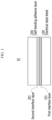
- the electrical steel sheet 10 of FIG. 1 includes an electrical steel sheet 100; and a bonding coating layer 200 positioned on the electrical steel sheet.
- the bonding coating layer of the present invention is a coating layer capable of bonding the surfaces of two or more steel sheets, and the use thereof is not particularly limited, but may be, for example, a self-bonding coating layer for electrical steel sheets for providing self-bonding of electrical steel sheets.
- the electrical steel sheet of the present invention may be an electrical steel sheet for self-bonding.
- a bonding coating layer provided on one surface of an electrical steel sheet has special interface properties when applied to the electrical steel sheet and formed as a coating layer. More specifically, the interface may be examined separately as the interface on the electrical steel sheet side and the interface on the bonding coating layer side. That is, the interface may be examined separately as a first interface layer 101 positioned in the electrical steel sheet and brought into contact with the bonding coating layer; and a second interface layer 201 positioned in the bonding coating layer and brought into contact with the first interface layer.
- total Si may be present in an amount of 70 mol% or more and 100 mol% or less, or 80 mol% or more and 95 mol% or less, or 85 mol% or more and 90 mol% or less. That is, a portion containing most of Si in the bonding coating layer 200 may be called the second interface layer 201.
- the Si content in the second interface layer is high, most of the Si-N bonds in the bond coating layer may be included in the second interface layer.
- the Si-N bond in the bonding coating layer is generated by reaction between the Si component of the first interface layer and the bonding coating layer, of the electrical steel sheet. That is, part of the Si in the electrical steel sheet migrates to the bonding coating layer to be bonded to N. When this Si-N bond is mainly present in the second interface layer, the adhesive strength between the bonding coating layer and the electrical steel sheet becomes excellent.
- the content of Si in the second interface layer 201 may be 10 mol% or more of the total Si content of the first interface layer and the second interface layer. Specifically, the content may be 20 mol% or more and 55 mol% or less, or 40 mol% or more and 53 mol% or less of the total Si content of the first interface layer and the second interface layer. That is, the Si component of the first interface layer reacts with the bonding coating layer, so that Si in the first interface layer and the electrical steel sheet migrates to the second interface layer.
- the first interface layer 101 present in the electrical steel sheet 100 may include 90 wt% to 97 wt% of Fe oxides, 3 wt% to 6 wt% of Si oxides, and 1 wt% to 4 wt% of segregation elements.
- the Fe oxide content in the first interface layer may be reduced by 1 wt% to 3 wt% compared to the content before the bonding coating layer is formed.
- the Si oxide content in the first interface layer may be reduced by 0.5 wt% to 1 wt% compared to the content before the bonding coating layer is formed.
- the segregation element content in the first interface layer may be reduced by 0.5 wt% to 1 wt% compared to the content before the bonding coating layer is formed.
- Such a bonding coating layer 200 may include an adhesive resin and a bonding additive.
- the adhesive resin is a polyurethane formed by reacting a diisocyanate monomer and a polyol.
- the bonding additive is one or more selected from the group consisting of a coupling agent, a wetting agent, a curing agent, and a curing catalyst.
- the coupling agent may be included in an amount of 0.5 parts by weight or more and 5 parts by weight or less with respect to 100 parts by weight of the adhesive resin in the bonding coating layer.
- the bonding coating layer may include 0.5 parts by weight or more and 3 parts by weight or less of the coupling agent with respect to 100 parts by weight of the adhesive resin.
- the aminosilane when excessively added, it may cause an aggregation phenomenon in the bonding layer and degrade mechanical properties such as tensile strength and elongation, thereby leading to a problem in that adhesion between the base iron and the bonding layer is not improved.
- the content of aminosilane in the bonding coating layer for electrical steel sheets may be controlled within the above range.
- the coupling agent may be a coupling agent including an aminosilane represented by the following Chemical Formula 1.
- R1 to R5 are each independently hydrogen, deuterium, a substituted or unsubstituted C1 to C10 alkyl group, a substituted or unsubstituted C6 to C20 aryl group, a substituted or unsubstituted C5 to C20 heteroaryl group, or an isocyanate group
- L1 to L4 are each independently a substituted or unsubstituted C1 to C10 alkylene group, a substituted or unsubstituted C2 to C10 alkynylene group, a substituted or unsubstituted C6 to C20 arylene group, or a substituted or unsubstituted C5 to C20 heteroarylene group
- n1 to n4 are each independently any one integer from 0 to 10.
- the coupling agent may be a coupling agent including an aminosilane represented by the following Chemical Formula 1-2.
- R1 to R5 are each independently hydrogen, deuterium, a substituted or unsubstituted C1 to C10 alkyl group, a substituted or unsubstituted C6 to C20 aryl group, a substituted or unsubstituted C5 to C20 heteroaryl group, or an isocyanate group
- L4 is a substituted or unsubstituted C1 to C10 alkylene group, a substituted or unsubstituted C2 to C10 alkynylene group, a substituted or unsubstituted C6 to C20 arylene group, or a substituted or unsubstituted C5 to C20 heteroarylene group
- n is any one integer from 1 to 10.
- aminosilane coupling agent may be 3-aminopropyl trimethoxysilane.
- the diisocyanate monomer may include an aromatic diisocyanate monomer, an aliphatic diisocyanate monomer, or a mixture thereof. That is, the polyurethane resin included in the bonding coating layer 200 of an exemplary embodiment of the present invention may include an adhesive resin obtained by polymerizing an aromatic diisocyanate monomer, an aliphatic diisocyanate monomer, or a mixed monomer thereof.
- the aromatic diisocyanate monomer is the following Chemical Formula 2, Chemical Formula 3, or a combination thereof.
- any one of R 1 to R 5 is an isocyanate
- any one of R 6 to R 10 is an isocyanate
- the case where both R 3 and R 8 are an isocyanate is excluded, and the case where both R 1 and R 10 are an isocyanate may be further excluded.
- any one of R 1 to R 5 is an isocyanate
- any one of R 6 to R 10 is an isocyanate
- any one of R 1 to R 5 and any one of R 6 to R 10 are simultaneously an isocyanate symmetrically about L.
- the aromatic diisocyanate monomer may be a monomer which is the following Chemical Formulae 2-1 and 3-1, or a combination thereof.
- L is a substituted or unsubstituted C1 to C10 alkylene group, a substituted or unsubstituted C2 to C10 alkynylene group, a substituted or unsubstituted C6 to C20 arylene group, or a substituted or unsubstituted C5 to C20 heteroarylene group.
- R 11 may be hydrogen, deuterium, a substituted or unsubstituted C1 to C10 alkyl group, a substituted or unsubstituted C6 to C20 aryl group, or a substituted or unsubstituted C5 to C20 heteroaryl group.
- aromatic diisocyanate monomer it is possible to use one or more selected from the group consisting of 2,4-toluene diisocyanate, 2,6-toluene diisocyanate, p-phenylene diisocyanate, 2,2'-methylene diphenyl diisocyanate, 2,4'-methylene diphenyl diisocyanate, 4,4'-methylene diphenyl diisocyanate, and m-xylene diisocyanate.
- the aliphatic diisocyanate monomer is the following Chemical Formula 4.
- R is a substituted or unsubstituted C1 to C10 alkyl group, or a substituted or unsubstituted C3 to C12 cycloalkyl group.
- the aliphatic diisocyanate monomer includes one or more selected from the group consisting of hexamethylene diisocyanate (HDI), 1,4-cyclohexane diisocyanate, 4,4'-dicyclohexylmethane diisocyanate, isophorone diisocyanate and hydrogenated xylene diisocyanate.
- HDI hexamethylene diisocyanate
- 1,4-cyclohexane diisocyanate 1,4-cyclohexane diisocyanate
- 4,4'-dicyclohexylmethane diisocyanate 4,4'-dicyclohexylmethane diisocyanate
- isophorone diisocyanate and hydrogenated xylene diisocyanate.
- the polyurethane may include 50 parts by weight or less of the aliphatic diisocyanate monomer with respect to the total 100 parts by weight of the diisocyanate monomer used during the polymerization.
- the polyol may be a polyol represented by Chemical Formula 6. [Chemical Formula 6] HO-R'-OH
- R' may be a substituted or unsubstituted C1 to C10 alkyl group, a substituted or unsubstituted C6 to C20 aryl group, or a substituted or unsubstituted C5 to C20 heteroaryl group.
- the polyol may have a number average molecular weight of 400 g/mol to 1000 g/mol. Furthermore, the polyol may be polypropylene glycol).
- the bonding coating layer may contain 90 wt% or more of the polyurethane resin. That is, the bonding coating layer of the present invention may include only polyurethane as an adhesive resin component.
- the bonding coating layer may further include other bonding additive components which can be used in the bonding composition in addition to the polymer resin, which includes a polyurethane, and aminosilane.
- the other bonding additive components are not limited as long as they are used in a general bonding coating layer, and may include, for example, a wetting agent, a curing agent, a curing catalyst, and the like.
- the wetting agent may include a silicone-based wetting agent.
- a silicone-based wetting additive may be polyether-modified polydimethylsiloxane.
- the wetting agent may be added to the bonding coating layer to enhance the interfacial adhesion between the electrical steel sheet and the bonding layer.
- the curing agent may include aliphatic amine-based, aromatic amine-based, amino amine-based, or imidazole-based curing agents. More specifically, a dicyandiamide-based curing agent can be included.
- an imidazole-based curing catalyst may be included.
- the bonding coating layer 200 may further include 0.50 parts by weight to 2.50 parts by weight of a curing agent based on 100 parts by weight of the adhesive resin. Specifically, a curing agent may be further included in an amount of 0.90 parts by weight to 1.10 parts by weight.
- the curing agent serves to adjust the reactivity of the surface of the bonding coating layer. When the curing agent is included too little, the curing reaction of the bonding layer deteriorates, so that there may be a problem in that the stickiness of the surface of the bonding layer deteriorates. Conversely, when too much curing agent is added, the fastening force may deteriorate after low-temperature staking.
- the bonding coating layer may further include 0.05 parts by weight to 0.50 parts by weight of a wetting agent based on 100 parts by weight of the adhesive resin. Specifically, a wetting agent may be further included in an amount of 0.09 parts by weight to 0.11 parts by weight.
- the bonding coating layer may further include 0.10 parts by weight to 1.00 part by weight of a curing catalyst with respect to 100 parts by weight of the adhesive resin.
- a curing catalyst may be further included in an amount of 0.40 parts by weight to 0.60 parts by weight.
- an electrical steel sheet 100 of an electrical steel sheet 10 for bonding As the electrical steel sheet 100 of an electrical steel sheet 10 for bonding according to an exemplary embodiment of the present invention, a general non-oriented or oriented electrical steel sheet can be used without limitation. In an exemplary embodiment of the present invention, it is the main configuration to manufacture an electrical steel sheet laminate 20 by forming a bonding coating layer 30 between a plurality of electrical steel sheets 100, so that a detailed description on the electrical steel sheet 10 is omitted.
- the laminate 20 of FIG. 2 includes a plurality of electrical steel sheets 100; and a bonding layer 210 positioned between the plurality of electrical steel sheets.
- the bonding layer 210 of the laminate 20 is obtained by heat-staking the bonding coating layer 200 applied on the electrical steel sheet 10 for bonding.
- the bonding layer 210 provided on one surface of the electrical steel sheet 100 of the laminate 20 has special interface properties when applied to the electrical steel sheet and formed as a coating layer.
- the interface includes a first interface layer 101 positioned in the electrical steel sheet and brought into contact with the bonding layer; and a second interface layer 201 positioned in the bonding layer and brought into contact with the first interface layer.
- the bonding layer 210 may include an adhesive resin and a bonding additive, and the adhesive resin is polyurethane formed by reacting a diisocyanate monomer and a polymer. A detailed description on the bonding layer 210 is as described for the bonding coating layer 200 of the electrical steel sheet 10.
- the bonding layer 210 of the electrical steel sheet laminate 20 may have a thickness of 0.1 ⁇ m to about 10 ⁇ m. When the thickness of the bonding layer is too small, the adhesive strength may sharply deteriorate, and when the thickness of the bonding layer is too large, a problem with stickiness may occur after coating winding
- the bonding layer may have a thickness of 2 ⁇ m to 5 ⁇ m.
- a coupling agent, a wetting agent, a curing catalyst, a curing agent, and the like may remain in the bonding layer 210 of the electrical steel sheet laminate.
- the electrical steel sheet laminate 20 may be a laminate obtained by forming a bonding coating layer simply using the above-described adhesive coating composition without using existing methods such as welding, clamping, and interlocking, and heat-staking different electrical steel sheets including a bonding coating layer.
- the adhesive coating composition is coated on the surface of the electrical steel sheet 100 and cured to form an adhesive coating layer 200, and the adhesive coating layer 200 is laminated and heat-staked to form a bonding layer 210.
- a resin component in the bonding coating layer 200 is heat-staked to form a bonding layer 210, which is a polymer adhesive layer.
- an inorganic metal compound is included in a main component of an organic material.
- An inorganic component can be uniformly dispersed in an organic material in the bonding layer to form a micro phase.
- An adhesive coating solution included a polyurethane obtained by including total two types of diisocyanate monomers of one aliphatic diisocyanate monomer and one aromatic diisocyanate monomer and reacting the diisocyanate monomers with a polyol.
- a polypropylene glycol)(PPG) having a number molecular weight of 425 g/mol was used.
- composition of the adhesive coating solution other than the polyurethane resin obtained above varied the type and content of the silane coupling agent as an additive as shown in Table 1 based on 100 parts by weight of the polyurethane resin.
- the adhesive coating solution also includes 0.1 parts by weight of a silicone wetting agent, 1 part by weight of a dicyandiamide curing agent and 0.5 parts by weight of an imidazole-based curing catalyst.
- a non-oriented electrical steel sheet (50 X 50 mm, 0.35 mmt) was prepared as an empty specimen.
- the adhesive coating solution was applied to the top and bottom of the empty specimen, each prepared to a certain thickness using a bar coater and a roll coater, cured at a sheet temperature standard of 150°C to 200°C for 20 seconds, and then slowly cooled in the air to form a bonding coating layer.
- Example 1 to 6 the component ratio and adhesion of the interface layer were confirmed using 3-aminopropyl trimethoxysilane as an aminosilane coupling agent including Si-N bonds, and in Comparative Examples 1 to 6, the component ratio and adhesion of the interface layer were confirmed with and without using other types of coupling agents.
- the coating thickness was set to 2 ⁇ m to 5 ⁇ m.
- the peel adhesion (T-peel, N/mm) was measured as follows.
- a specimen standard for T-peeloff measurement was produced in accordance with ISO 11339.
- a tensile specimen in the form of T was produced by adhering two specimens with 25 ⁇ 200 mm in an area of 25 ⁇ 150 mm 2 , and then bending an unadhered part at 90°.
- the shear adhesive strength was measured using a device that measures the tensile force of a laminated sample while being pulled at a predetermined speed. In this case, in the case of the shear method, the measured value was measured at the point where the interface with the minimum adhesive strength fell off from the interface of the laminated samples. After maintaining the temperature of the specimen at 60°C through a heating device, the adhesive strength was measured.
- the Si element is an average value obtained by randomly selecting 10 points at each position and measuring the content.
- the thickness of the first interface layer was 0.1 ⁇ m
- the thickness of the second interface layer was 0.1 ⁇ m.
- Table 1 Main resin Silane coupling agent Electri cal steel sheet Bonding coating layer avera ge coati ng thick ness ( ⁇ m) T-Pee I (Av g, N/m m)
- Type Solid conte nt wt% comp ared to solve nt
- Type Conte nt (wt% comp ared to main resin) Si compo nent of first interfa ce layer (mol% ) Si compo nent of secon d interfa ce layer (mol% ) Si compo nent (mol% ) of remain ing bondin 9 layers exclud ing secon d interfa ce layer exempl ary embodi ment1
- the stability of the bonding composition solution may deteriorate during the preparation step and partial precipitation may occur, and the partial precipitation may act as a factor that interferes with the initiation of the crosslinking reaction of the silane coupling agent during the formation of the coating layer.
Landscapes
- Chemical & Material Sciences (AREA)
- Organic Chemistry (AREA)
- Polymers & Plastics (AREA)
- Medicinal Chemistry (AREA)
- Chemical Kinetics & Catalysis (AREA)
- Health & Medical Sciences (AREA)
- Engineering & Computer Science (AREA)
- Inorganic Chemistry (AREA)
- Power Engineering (AREA)
- Physics & Mathematics (AREA)
- Dispersion Chemistry (AREA)
- Electromagnetism (AREA)
- Life Sciences & Earth Sciences (AREA)
- Materials Engineering (AREA)
- Wood Science & Technology (AREA)
- Laminated Bodies (AREA)
- Chemical Treatment Of Metals (AREA)
- Manufacturing Of Steel Electrode Plates (AREA)
- Soft Magnetic Materials (AREA)
Abstract
Description
- An exemplary embodiment of the present invention relates to an electrical steel sheet and a laminate thereof. More specifically, an exemplary embodiment of the present invention relates to an electrical steel sheet for bonding and a laminate thereof.
- A non-oriented electrical steel sheet is a steel sheet with uniform magnetic properties in all directions on a rolled sheet, and is widely used in motors, generator iron cores, electric motors, small transformers, and the like.
- Electrical steel sheets may be divided into two types of those which need to be subjected to stress relief annealing (SRA) in order to improve magnetic properties after a blanking processing and those in which stress relief annealing is omitted when the cost loss due to heat treatment is greater than the magnetic property effect due to stress relief annealing.
- Insulation coatings are typically required to have electrical properties that suppress the generation of eddy current as coatings coated in the finishing manufacturing process of laminates such as motors, generator iron cores, electric motors, and small transformers. In addition, insulation coatings are required to have continuous blanking workability, adhesion resistance, surface adhesion, and the like. Continuous blanking workability means the ability to suppress abrasion of a die when laminating a large number of sheets after blanking processing into a predetermined shape to form an iron core. Adhesion resistance means the ability of the iron core steel sheets not to adhere to each other after the stress relief annealing process which restores magnetic properties by removing the working stress of the steel sheets.
- In addition to these basic properties, excellent application workability of a coating solution and solution stability that can be used for a long time after blending are also required. These insulation coatings can be prepared as electrical steel sheet laminates only when separate fastening methods such as welding, clamping, and interlocking are used.
- An exemplary embodiment of the present invention provides an electrical steel sheet on which a staked layer is formed and a laminate thereof, which can bond (fasten) the electrical steel sheet without using existing fastening methods such as welding, clamping, and interlocking. Specifically, an exemplary embodiment of the present invention is intended to provide an electrical steel sheet with improved adhesive strength by controlling the interfacial properties of a staked layer formed between the electrical steel sheets.
- The present invention provides an electrical steel sheet including: an electrical steel sheet; and a bonding coating layer positioned on the electrical steel sheet, and further including: a first interfacial layer positioned in the electrical steel sheet and brought into contact with the bonding coating layer; and a second interfacial layer positioned in the bonding coating layer and brought into contact with the first interfacial layer, in which 70 mol% or more of total Si content in the bonding coating layer including the second interfacial layer is present in the second interfacial layer.
- Further, the present invention provides a laminate including: a plurality of electrical steel sheets; and a bonding layer positioned between the plurality of electrical steel sheets, and further including: a first interfacial layer positioned in the electrical steel sheet and brought into contact with the bonding layer; and a second interfacial layer positioned in the bonding layer and brought into contact with the first interfacial layer, in which 70 mol% or more of total Si content in the bonding layer including the second interfacial layer is present in the second interfacial layer.
- According to an exemplary embodiment of the present invention, electrical steel sheets can be bonded without using existing fastening methods such as welding, clamping, and interlocking.
- According to an exemplary embodiment of the present invention, it is possible to provide an adhesive coating composition for electrical steel sheets that is excellent in noise characteristics, vibration characteristics, tensile strength, coating film adhesion, peeling characteristics, and the like.
-
-
FIG. 1 is a schematic view of an electrical steel sheet in which a bonding layer according to an exemplary embodiment of the present invention is formed. -
FIG. 2 is a schematic view of an electrical steel sheet laminate according to an exemplary embodiment of the present invention. -
FIG. 3 is a schematic cross-sectional view of an electrical steel sheet laminate according to an exemplary embodiment of the present invention. - Hereinafter, exemplary embodiments of the present invention will be described in detail. However, the exemplary embodiments are suggested as an example, the present invention is not limited thereby, and the present invention is defined only by the scope of the claims to be described below.
- The
electrical steel sheet 10 ofFIG. 1 according to an exemplary embodiment of the present invention includes anelectrical steel sheet 100; and abonding coating layer 200 positioned on the electrical steel sheet. - The bonding coating layer of the present invention is a coating layer capable of bonding the surfaces of two or more steel sheets, and the use thereof is not particularly limited, but may be, for example, a self-bonding coating layer for electrical steel sheets for providing self-bonding of electrical steel sheets. In addition, the electrical steel sheet of the present invention may be an electrical steel sheet for self-bonding.
- A bonding coating layer provided on one surface of an electrical steel sheet has special interface properties when applied to the electrical steel sheet and formed as a coating layer. More specifically, the interface may be examined separately as the interface on the electrical steel sheet side and the interface on the bonding coating layer side. That is, the interface may be examined separately as a
first interface layer 101 positioned in the electrical steel sheet and brought into contact with the bonding coating layer; and asecond interface layer 201 positioned in the bonding coating layer and brought into contact with the first interface layer. - 70 mol% or more of total Si content in a
bonding coating layer 200 including the second interface layer is present in the second interface layer. Specifically, total Si may be present in an amount of 70 mol% or more and 100 mol% or less, or 80 mol% or more and 95 mol% or less, or 85 mol% or more and 90 mol% or less. That is, a portion containing most of Si in thebonding coating layer 200 may be called thesecond interface layer 201. Furthermore, since the Si content in the second interface layer is high, most of the Si-N bonds in the bond coating layer may be included in the second interface layer. The Si-N bond in the bonding coating layer is generated by reaction between the Si component of the first interface layer and the bonding coating layer, of the electrical steel sheet. That is, part of the Si in the electrical steel sheet migrates to the bonding coating layer to be bonded to N. When this Si-N bond is mainly present in the second interface layer, the adhesive strength between the bonding coating layer and the electrical steel sheet becomes excellent. - Further, the content of Si in the
second interface layer 201 may be 10 mol% or more of the total Si content of the first interface layer and the second interface layer. Specifically, the content may be 20 mol% or more and 55 mol% or less, or 40 mol% or more and 53 mol% or less of the total Si content of the first interface layer and the second interface layer. That is, the Si component of the first interface layer reacts with the bonding coating layer, so that Si in the first interface layer and the electrical steel sheet migrates to the second interface layer. - The
first interface layer 101 present in theelectrical steel sheet 100 may include 90 wt% to 97 wt% of Fe oxides, 3 wt% to 6 wt% of Si oxides, and 1 wt% to 4 wt% of segregation elements. - The Fe oxide content in the first interface layer may be reduced by 1 wt% to 3 wt% compared to the content before the bonding coating layer is formed. In addition, the Si oxide content in the first interface layer may be reduced by 0.5 wt% to 1 wt% compared to the content before the bonding coating layer is formed. The segregation element content in the first interface layer may be reduced by 0.5 wt% to 1 wt% compared to the content before the bonding coating layer is formed. By controlling the reduction of the segregation elements in an appropriate range, the fastening force between the bonding coating layer and the steel sheet may be strengthened.
- Such a
bonding coating layer 200 may include an adhesive resin and a bonding additive. - The adhesive resin is a polyurethane formed by reacting a diisocyanate monomer and a polyol.
- The bonding additive is one or more selected from the group consisting of a coupling agent, a wetting agent, a curing agent, and a curing catalyst.
- The coupling agent may be included in an amount of 0.5 parts by weight or more and 5 parts by weight or less with respect to 100 parts by weight of the adhesive resin in the bonding coating layer. Specifically, the bonding coating layer may include 0.5 parts by weight or more and 3 parts by weight or less of the coupling agent with respect to 100 parts by weight of the adhesive resin. When the aminosilane is not added or is added too little during the formation of the bonding coating layer, the effect of improving the adhesion at the interface between the base iron and the bonding coating layer cannot be expected, so that there may be a problem in that peel adhesion and ATF resistance characteristics deteriorate. In contrast, when the aminosilane is excessively added, it may cause an aggregation phenomenon in the bonding layer and degrade mechanical properties such as tensile strength and elongation, thereby leading to a problem in that adhesion between the base iron and the bonding layer is not improved. Preferably, the content of aminosilane in the bonding coating layer for electrical steel sheets may be controlled within the above range.
- The coupling agent may be a coupling agent including an aminosilane represented by the following Chemical Formula 1.

- In Chemical Formula 1, R1 to R5 are each independently hydrogen, deuterium, a substituted or unsubstituted C1 to C10 alkyl group, a substituted or unsubstituted C6 to C20 aryl group, a substituted or unsubstituted C5 to C20 heteroaryl group, or an isocyanate group, L1 to L4 are each independently a substituted or unsubstituted C1 to C10 alkylene group, a substituted or unsubstituted C2 to C10 alkynylene group, a substituted or unsubstituted C6 to C20 arylene group, or a substituted or unsubstituted C5 to C20 heteroarylene group, and n1 to n4 are each independently any one integer from 0 to 10.
- More specifically, the coupling agent may be a coupling agent including an aminosilane represented by the following Chemical Formula 1-2.

- In Chemical Formula 1-2, R1 to R5 are each independently hydrogen, deuterium, a substituted or unsubstituted C1 to C10 alkyl group, a substituted or unsubstituted C6 to C20 aryl group, a substituted or unsubstituted C5 to C20 heteroaryl group, or an isocyanate group, L4 is a substituted or unsubstituted C1 to C10 alkylene group, a substituted or unsubstituted C2 to C10 alkynylene group, a substituted or unsubstituted C6 to C20 arylene group, or a substituted or unsubstituted C5 to C20 heteroarylene group, and n is any one integer from 1 to 10.
- Specifically, the aminosilane coupling agent may be 3-aminopropyl trimethoxysilane.
- The diisocyanate monomer may include an aromatic diisocyanate monomer, an aliphatic diisocyanate monomer, or a mixture thereof. That is, the polyurethane resin included in the
bonding coating layer 200 of an exemplary embodiment of the present invention may include an adhesive resin obtained by polymerizing an aromatic diisocyanate monomer, an aliphatic diisocyanate monomer, or a mixed monomer thereof. - The aromatic diisocyanate monomer is the following Chemical Formula 2, Chemical Formula 3, or a combination thereof.


- In Chemical Formula 2,
- R1 to R10 are each independently hydrogen, deuterium, a substituted or unsubstituted C1 to C10 alkyl group, a substituted or unsubstituted C6 to C20 aryl group, a substituted or unsubstituted C5 to C20 heteroaryl group, or an isocyanate group,
- any one of R1 to R5 is an isocyanate, and any one of R6 to R10 is an isocyanate,
- the case where both R3 and R8 are isocyanate is excluded,
- L is a substituted or unsubstituted C1 to C10 alkylene group, a substituted or unsubstituted C2 to C10 alkynylene group, a substituted or unsubstituted C6 to C20 arylene group, or a substituted or unsubstituted C5 to C20 heteroarylene group, and
- n is any one integer of 1 to 10,
- in Chemical Formula 3,
- R11 to R16 are each independently hydrogen, deuterium, a substituted or unsubstituted C1 to C10 alkyl group, a substituted or unsubstituted C6 to C20 aryl group, or a substituted or unsubstituted C5 to C20 heteroaryl group, an isocyanate group or a substituted or unsubstituted C1 to C10 alkyl isocyanate group, and at least two of R11 to R16 are an isocyanate or a substituted or unsubstituted C1 to C10 alkyl isocyanate.
- In the monomer represented by Chemical Formula 1, any one of R1 to R5 is an isocyanate, any one of R6 to R10 is an isocyanate, the case where both R3 and R8 are an isocyanate is excluded, and the case where both R1 and R10 are an isocyanate may be further excluded.
- In the monomer represented by Chemical Formula 1, it is possible to further exclude those in which any one of R1 to R5 is an isocyanate, any one of R6 to R10 is an isocyanate, and any one of R1 to R5 and any one of R6 to R10 are simultaneously an isocyanate symmetrically about L.
- Specifically, the aromatic diisocyanate monomer may be a monomer which is the following Chemical Formulae 2-1 and 3-1, or a combination thereof.

- In Chemical Formula 2-1,
L is a substituted or unsubstituted C1 to C10 alkylene group, a substituted or unsubstituted C2 to C10 alkynylene group, a substituted or unsubstituted C6 to C20 arylene group, or a substituted or unsubstituted C5 to C20 heteroarylene group.
- In Chemical Formula 3-1,
R11 may be hydrogen, deuterium, a substituted or unsubstituted C1 to C10 alkyl group, a substituted or unsubstituted C6 to C20 aryl group, or a substituted or unsubstituted C5 to C20 heteroaryl group. - More specifically, as the aromatic diisocyanate monomer, it is possible to use one or more selected from the group consisting of 2,4-toluene diisocyanate, 2,6-toluene diisocyanate, p-phenylene diisocyanate, 2,2'-methylene diphenyl diisocyanate, 2,4'-methylene diphenyl diisocyanate, 4,4'-methylene diphenyl diisocyanate, and m-xylene diisocyanate.
- The aliphatic diisocyanate monomer is the following Chemical Formula 4.

- In Chemical Formula 4, R is a substituted or unsubstituted C1 to C10 alkyl group, or a substituted or unsubstituted C3 to C12 cycloalkyl group.
- The aliphatic diisocyanate monomer includes one or more selected from the group consisting of hexamethylene diisocyanate (HDI), 1,4-cyclohexane diisocyanate, 4,4'-dicyclohexylmethane diisocyanate, isophorone diisocyanate and hydrogenated xylene diisocyanate.
- The polyurethane may include 50 parts by weight or less of the aliphatic diisocyanate monomer with respect to the total 100 parts by weight of the diisocyanate monomer used during the polymerization.
- The polyol may be a polyol represented by Chemical Formula 6.
[Chemical Formula 6] HO-R'-OH
- In Chemical Formula 6, R' may be a substituted or unsubstituted C1 to C10 alkyl group, a substituted or unsubstituted C6 to C20 aryl group, or a substituted or unsubstituted C5 to C20 heteroaryl group.
- The polyol may have a number average molecular weight of 400 g/mol to 1000 g/mol. Furthermore, the polyol may be polypropylene glycol).
- The bonding coating layer may contain 90 wt% or more of the polyurethane resin. That is, the bonding coating layer of the present invention may include only polyurethane as an adhesive resin component.
- The bonding coating layer may further include other bonding additive components which can be used in the bonding composition in addition to the polymer resin, which includes a polyurethane, and aminosilane.
- The other bonding additive components are not limited as long as they are used in a general bonding coating layer, and may include, for example, a wetting agent, a curing agent, a curing catalyst, and the like.
- Specifically, the wetting agent may include a silicone-based wetting agent. An example of a silicone-based wetting additive may be polyether-modified polydimethylsiloxane. The wetting agent may be added to the bonding coating layer to enhance the interfacial adhesion between the electrical steel sheet and the bonding layer.
- Specifically, the curing agent may include aliphatic amine-based, aromatic amine-based, amino amine-based, or imidazole-based curing agents. More specifically, a dicyandiamide-based curing agent can be included.
- Specifically, as the curing catalyst, an imidazole-based curing catalyst may be included.
- The
bonding coating layer 200 may further include 0.50 parts by weight to 2.50 parts by weight of a curing agent based on 100 parts by weight of the adhesive resin. Specifically, a curing agent may be further included in an amount of 0.90 parts by weight to 1.10 parts by weight. The curing agent serves to adjust the reactivity of the surface of the bonding coating layer. When the curing agent is included too little, the curing reaction of the bonding layer deteriorates, so that there may be a problem in that the stickiness of the surface of the bonding layer deteriorates. Conversely, when too much curing agent is added, the fastening force may deteriorate after low-temperature staking. - The bonding coating layer may further include 0.05 parts by weight to 0.50 parts by weight of a wetting agent based on 100 parts by weight of the adhesive resin. Specifically, a wetting agent may be further included in an amount of 0.09 parts by weight to 0.11 parts by weight.
- The bonding coating layer may further include 0.10 parts by weight to 1.00 part by weight of a curing catalyst with respect to 100 parts by weight of the adhesive resin. Specifically, a curing catalyst may be further included in an amount of 0.40 parts by weight to 0.60 parts by weight.
- As the
electrical steel sheet 100 of anelectrical steel sheet 10 for bonding according to an exemplary embodiment of the present invention, a general non-oriented or oriented electrical steel sheet can be used without limitation. In an exemplary embodiment of the present invention, it is the main configuration to manufacture an electricalsteel sheet laminate 20 by forming a bonding coating layer 30 between a plurality ofelectrical steel sheets 100, so that a detailed description on theelectrical steel sheet 10 is omitted. - The
laminate 20 ofFIG. 2 according to an exemplary embodiment of the present disclosure includes a plurality ofelectrical steel sheets 100; and abonding layer 210 positioned between the plurality of electrical steel sheets. Thebonding layer 210 of the laminate 20 is obtained by heat-staking thebonding coating layer 200 applied on theelectrical steel sheet 10 for bonding. - As with the
electrical steel sheet 10, thebonding layer 210 provided on one surface of theelectrical steel sheet 100 of the laminate 20 has special interface properties when applied to the electrical steel sheet and formed as a coating layer. The interface includes afirst interface layer 101 positioned in the electrical steel sheet and brought into contact with the bonding layer; and asecond interface layer 201 positioned in the bonding layer and brought into contact with the first interface layer. - 70 mol% or more of total Si content in the
bonding layer 210 including the second interface layer is present in the second interface layer, and the specific description on this is as described for theelectrical steel sheet 10. - The
bonding layer 210 may include an adhesive resin and a bonding additive, and the adhesive resin is polyurethane formed by reacting a diisocyanate monomer and a polymer. A detailed description on thebonding layer 210 is as described for thebonding coating layer 200 of theelectrical steel sheet 10. - The
bonding layer 210 of the electricalsteel sheet laminate 20 may have a thickness of 0.1 µm to about 10 µm. When the thickness of the bonding layer is too small, the adhesive strength may sharply deteriorate, and when the thickness of the bonding layer is too large, a problem with stickiness may occur after coating winding - More specifically, the bonding layer may have a thickness of 2 µm to 5 µm.
- A coupling agent, a wetting agent, a curing catalyst, a curing agent, and the like may remain in the
bonding layer 210 of the electrical steel sheet laminate. - The electrical
steel sheet laminate 20 may be a laminate obtained by forming a bonding coating layer simply using the above-described adhesive coating composition without using existing methods such as welding, clamping, and interlocking, and heat-staking different electrical steel sheets including a bonding coating layer. - The adhesive coating composition is coated on the surface of the
electrical steel sheet 100 and cured to form anadhesive coating layer 200, and theadhesive coating layer 200 is laminated and heat-staked to form abonding layer 210. - When a plurality of
electrical steel sheets 100, in which abonding coating layer 200 is formed, are laminated and heat-staked, a resin component in thebonding coating layer 200 is heat-staked to form abonding layer 210, which is a polymer adhesive layer. - In the
bonding layer 210, an inorganic metal compound is included in a main component of an organic material. An inorganic component can be uniformly dispersed in an organic material in the bonding layer to form a micro phase. - When a laminate 20 is constructed so as to satisfy these factors, it is possible to obtain a laminate (core) capable of satisfying all of the various characteristics currently required in the EV market.
- Hereinafter, preferred Examples of the present invention and Comparative Examples will be described. However, the following Examples are only a preferred Example of the present invention, and the present invention is not limited to the following Examples.
- An adhesive coating solution included a polyurethane obtained by including total two types of diisocyanate monomers of one aliphatic diisocyanate monomer and one aromatic diisocyanate monomer and reacting the diisocyanate monomers with a polyol. As the polyol, a polypropylene glycol)(PPG) having a number molecular weight of 425 g/mol was used.
- The composition of the adhesive coating solution other than the polyurethane resin obtained above varied the type and content of the silane coupling agent as an additive as shown in Table 1 based on 100 parts by weight of the polyurethane resin. The adhesive coating solution also includes 0.1 parts by weight of a silicone wetting agent, 1 part by weight of a dicyandiamide curing agent and 0.5 parts by weight of an imidazole-based curing catalyst.
- A non-oriented electrical steel sheet (50 X 50 mm, 0.35 mmt) was prepared as an empty specimen. The adhesive coating solution was applied to the top and bottom of the empty specimen, each prepared to a certain thickness using a bar coater and a roll coater, cured at a sheet temperature standard of 150°C to 200°C for 20 seconds, and then slowly cooled in the air to form a bonding coating layer.
- In Examples 1 to 6, the component ratio and adhesion of the interface layer were confirmed using 3-aminopropyl trimethoxysilane as an aminosilane coupling agent including Si-N bonds, and in Comparative Examples 1 to 6, the component ratio and adhesion of the interface layer were confirmed with and without using other types of coupling agents. The coating thickness was set to 2 µm to 5 µm.
- The peel adhesion (T-peel, N/mm) was measured as follows.
- A specimen standard for T-peeloff measurement was produced in accordance with ISO 11339. A tensile specimen in the form of T was produced by adhering two specimens with 25 × 200 mm in an area of 25 × 150 mm2, and then bending an unadhered part at 90°. After the specimen produced by the T-Peeloff was fixed to the upper/lower jig (JIG) with a predetermined force, the shear adhesive strength was measured using a device that measures the tensile force of a laminated sample while being pulled at a predetermined speed. In this case, in the case of the shear method, the measured value was measured at the point where the interface with the minimum adhesive strength fell off from the interface of the laminated samples. After maintaining the temperature of the specimen at 60°C through a heating device, the adhesive strength was measured.
- The Si element is an average value obtained by randomly selecting 10 points at each position and measuring the content.
- In this experimental example, the thickness of the first interface layer was 0.1 µm, and the thickness of the second interface layer was 0.1 µm.
(Table 1) Main resin Silane coupling agent Electri cal steel sheet Bonding coating layer avera ge coati ng thick ness (µm) T-Pee I (Av g, N/m m) Type Solid conte nt wt% comp ared to solve nt) Type Conte nt (wt% comp ared to main resin) Si compo nent of first interfa ce layer (mol% ) Si compo nent of secon d interfa ce layer (mol% ) Si compo nent (mol% ) of remain ing bondin 9 layers exclud ing secon d interfa ce layer exempl ary embodi ment1 Polyure thane 30 3-aminopropyl trimethoxysi lane 0.5 1.3 1.0 0.1 2 2.5 exempl ary embodi ment2 1.5 1.2 0.0 5 4.0 exempl ary embodi ment3 1 1.0 1.1 0.2 2 2.5 exempl ary embodi ment4 1.2 0.9 0.1 5 3.8 exempl ary embodi ment5 2 1.6 1.2 0.0 2 1.8 exempl ary embodi ment6 2.2 0.8 0.1 5 3.4 Compar ative Exampl e1 3-Glycidoxypr opyltrimethoxysi lane 1 4.1 0.1 0.1 2 1.4 Compar ative Exampl e2 3.8 0.0 0.2 5 2.2 Compar ative Exampl e3 3-Methacrylo xypropyl trimethoxysi lane 1 3.2 0.2 0.1 2 1.5 Compar ative Exampl e4 5.2 0.1 0.1 5 2.1 Compar ative Exampl e5 - - 4.5 0.0 0.0 2 1.5 Compar ative Exampl e6 - - 3.5 0.0 0.1 5 2.2 - As can be seen from the results in Table 1 above, it could be confirmed that in the case of Examples 1 to 6 using 3-aminopropyltrimethoxysilane, which is an aminosilane coupling agent including Si-N bonds, the T-peel adhesion was excellent compared to Comparative Examples 1 to 6. This is because aminosilane components of 3-aminopropyl trimethoxysilane may form a hard bond with Si in the electrical steel sheet, thereby causing a part of Si in the electrical steel sheet to migrate to the second interface layer. As a result, the Si concentration in the second interface layer is shown to be high.
- In addition, it could be confirmed that when the Si content included in the first interface layer is compared with that of the second interface layer between Examples 1 to 6 and Comparative Examples 1 to 6, in the case of Examples 1 to 6, the Si present in the first interface layer migrated to the second interface layer.
- However, when the silane coupling agent is included in an excessively large amount, the stability of the bonding composition solution may deteriorate during the preparation step and partial precipitation may occur, and the partial precipitation may act as a factor that interferes with the initiation of the crosslinking reaction of the silane coupling agent during the formation of the coating layer.
- The present invention is not limited to the Examples, but may be prepared in various forms, and a person with ordinary skill in the art to which the present invention pertains will understand that the present invention can be implemented in another specific form without changing the technical spirit or essential feature of the present invention. Therefore, it should be understood that the above-described Examples are illustrative only in all aspects and are not restrictive.
[Explanation of Reference Numerals and Symbols] 10 Electrical steel sheet 20 Laminate 100 Electrical steel sheet 101 First interface 200 Bonding coating layer 201 Second interface 210 Bonding layer
Claims (12)
- An electrical steel sheet comprising: an electrical steel sheet; anda bonding coating layer positioned on the electrical steel sheet, andfurther comprising a first interface layer positioned in the electrical steel sheet and brought into contact with the bonding coating layer; anda second interface layer positioned in the electrical steel sheet and brought into contact with the first interface layer,wherein 70 mol% or more of total Si content in the bonding coating layer comprising the second interface layer is present in the second interface layer.
- The electrical steel sheet of claim 1,
wherein the first interface layer comprises:90 wt% to 97 wt% of Fe oxides,2 wt% to 6 wt% of Si oxides, and1 wt% to 4 wt% of segregation elements. - The electrical steel sheet of claim 1,wherein the Fe oxide content in the first interface layer is reduced by 1 wt% to 3 wt% compared to a content before the bonding coating layer is formed,the Si oxide content in the first interface layer is reduced by 0.5 wt% to 1 wt% compared to a content before the bonding coating layer is formed, andthe segregation element content in the first interface layer is reduced by 0.5 wt% to 1 wt% compared to a content before the bonding coating layer is formed.
- The electrical steel sheet of claim 1,
wherein 70 mol% or more of the total content of Si-N bonds in the bonding coating layer comprising the second interface layer is present in the second interface layer. - The electrical steel sheet of claim 1,wherein the bonding coating layer comprises an adhesive resin and a bonding additive, andthe adhesive resin is a polyurethane formed by reacting a diisocyanate monomer and a polyol.
- The electrical steel sheet of claim 5,
wherein the bonding additive is one or more selected from the group consisting of a coupling agent, a wetting agent, a curing agent, and a curing catalyst. - The electrical steel sheet of claim 6,
wherein the coupling agent is included in an amount of 0.5 parts by weight or more and 5 parts by weight or less with respect to 100 parts by weight of the adhesive resin in the bonding coating layer. - The electrical steel sheet of claim 6,
wherein the coupling agent is a coupling agent comprising an aminosilane represented by the following Chemical Formula 1:
- The electrical steel sheet of claim 5,
wherein the diisocyanate monomer is one or more selected from the group consisting of an aromatic diisocyanate monomer and an aliphatic diisocyanate monomer. - The electrical steel sheet of claim 9,
wherein the aromatic diisocyanate monomer is the following Chemical Formula 2, Chemical Formula 3, or a combination thereof:

 R1 to R10 are each independently hydrogen, deuterium, a substituted or unsubstituted C1 to C10 alkyl group, a substituted or unsubstituted C6 to C20 aryl group, a substituted or unsubstituted C5 to C20 heteroaryl group, or an isocyanate group,any one of R1 to R5 is an isocyanate, and any one of R6 to R10 is an isocyanate,the case where both R3 and R8 are isocyanate is excluded,L is a substituted or unsubstituted C1 to C10 alkylene group, a substituted or unsubstituted C2 to C10 alkynylene group, a substituted or unsubstituted C6 to C20 arylene group, or a substituted or unsubstituted C5 to C20 heteroarylene group, andn is any one integer of 1 to 10,in Chemical Formula 3,R11 to R16 are each independently hydrogen, deuterium, a substituted or unsubstituted C1 to C10 alkyl group, a substituted or unsubstituted C6 to C20 aryl group, or a substituted or unsubstituted C5 to C20 heteroaryl group, an isocyanate group or a substituted or unsubstituted C1 to C10 alkyl isocyanate group, and at least two of R11 to R16 are an isocyanate or a substituted or unsubstituted C1 to C10 alkyl isocyanate.
 - The electrical steel sheet of claim 9,
wherein the aliphatic diisocyanate monomer is the following Chemical Formula 4:
R is a substituted or unsubstituted C1 to C10 alkyl group, or a substituted or unsubstituted C3 to C12 cycloalkyl group. - A laminate comprising: a plurality of electrical steel sheets; anda bonding layer positioned between the plurality of the electrical steel sheets, andfurther comprising: a first interface layer positioned in the electrical steel sheet and brought into contact with the bonding layer; and a second interface layer positioned in the bonding layer and brought into contact with the first interface layer,wherein 70 mol% or more of total Si content in the bonding layer comprising the second interface layer is present in the second interface layer.
Applications Claiming Priority (2)
| Application Number | Priority Date | Filing Date | Title |
|---|---|---|---|
| KR1020200180151A KR102391988B1 (en) | 2020-12-21 | 2020-12-21 | Electrical steel sheet, and electrical steel sheet laminate |
| PCT/KR2021/019319 WO2022139351A1 (en) | 2020-12-21 | 2021-12-17 | Electrical steel sheet and laminate thereof |
Publications (2)
| Publication Number | Publication Date |
|---|---|
| EP4265698A1 true EP4265698A1 (en) | 2023-10-25 |
| EP4265698A4 EP4265698A4 (en) | 2024-06-12 |
Family
ID=81390161
Family Applications (1)
| Application Number | Title | Priority Date | Filing Date |
|---|---|---|---|
| EP21911418.8A Pending EP4265698A4 (en) | 2020-12-21 | 2021-12-17 | Electrical steel sheet and laminate thereof |
Country Status (7)
| Country | Link |
|---|---|
| US (1) | US20240278535A1 (en) |
| EP (1) | EP4265698A4 (en) |
| JP (1) | JP7688709B2 (en) |
| KR (1) | KR102391988B1 (en) |
| CN (1) | CN116917433A (en) |
| MX (1) | MX2023007362A (en) |
| WO (1) | WO2022139351A1 (en) |
Families Citing this family (1)
| Publication number | Priority date | Publication date | Assignee | Title |
|---|---|---|---|---|
| KR102560531B1 (en) * | 2020-12-21 | 2023-07-26 | 주식회사 포스코 | Adhesive coating composition for electrical steel sheet, electrical steel sheet laminate, and method for manufacturing the electrical steel sheet product |
Family Cites Families (16)
| Publication number | Priority date | Publication date | Assignee | Title |
|---|---|---|---|---|
| JP3369939B2 (en) * | 1997-11-27 | 2003-01-20 | 日本鋼管株式会社 | Manufacturing method of electrical steel sheet for bonded iron core with excellent adhesive strength, corrosion resistance and blocking resistance |
| JP2003165947A (en) * | 2001-11-28 | 2003-06-10 | Sumitomo Bakelite Co Ltd | Epoxy resin powder coating material |
| JP5098327B2 (en) * | 2005-12-28 | 2012-12-12 | Jfeスチール株式会社 | Electrical steel sheet with insulating coating |
| KR101069950B1 (en) * | 2008-12-26 | 2011-10-04 | 주식회사 포스코 | Steel Sheet Having Superior Electro-Conductivity and Resin Composition Therefor |
| JP5353559B2 (en) * | 2009-08-24 | 2013-11-27 | Dic株式会社 | Alcohol-soluble polyurethane coating agent, adhesive, and leather-like sheet obtained using the same |
| CN102365333B (en) * | 2009-12-10 | 2014-05-14 | Dic株式会社 | Urethane resin composition, coating material, adhesive, cured product obtained using same, and process for production of cured product |
| WO2012133671A1 (en) * | 2011-03-29 | 2012-10-04 | 新日本製鐵株式会社 | Surface-treated steel sheet and method for producing same |
| JP6080670B2 (en) * | 2013-04-22 | 2017-02-15 | 日本パーカライジング株式会社 | Ground treatment composition for coated steel sheet, plated steel sheet subjected to ground treatment and method for producing the same, painted steel sheet and method for producing the same |
| KR101623872B1 (en) * | 2013-12-23 | 2016-05-24 | 주식회사 포스코 | Grain oriented electrical steel having excellent rolling and magnetic properties and method for manufacturing the same |
| JP6037055B2 (en) | 2014-07-29 | 2016-11-30 | Jfeスチール株式会社 | LAMINATED ELECTRIC STEEL, LAMINATED ELECTRIC STEEL STEEL, METHOD FOR PRODUCING LAMINATED ELECTRIC STEEL STEEL, AND AUTOMOBILE MOTOR CORE |
| JP6404977B2 (en) * | 2016-03-31 | 2018-10-17 | Jfeスチール株式会社 | Heat-resistant adhesive insulating coating composition and electrical steel sheet with insulating coating |
| KR101904306B1 (en) * | 2016-12-23 | 2018-10-04 | 주식회사 포스코 | Adhesive coating composition for non-oriented electrical steel, and method for non-oriented electrical steel product |
| KR102033029B1 (en) * | 2017-12-26 | 2019-10-16 | 주식회사 포스코 | Electrical steel sheet laminate, and method for manufacturing the same |
| US20210395851A1 (en) * | 2020-06-17 | 2021-12-23 | Axalta Coating Systems Ip Co., Llc | Coated grain oriented electrical steel plates, and methods of producing the same |
| KR102560531B1 (en) | 2020-12-21 | 2023-07-26 | 주식회사 포스코 | Adhesive coating composition for electrical steel sheet, electrical steel sheet laminate, and method for manufacturing the electrical steel sheet product |
| KR102560656B1 (en) | 2020-12-21 | 2023-07-26 | 주식회사 포스코 | Adhesive coating composition for electrical steel sheet, electrical steel sheet laminate, and method for manufacturing the electrical steel sheet product |
-
2020
- 2020-12-21 KR KR1020200180151A patent/KR102391988B1/en active Active
-
2021
- 2021-12-17 MX MX2023007362A patent/MX2023007362A/en unknown
- 2021-12-17 JP JP2023537526A patent/JP7688709B2/en active Active
- 2021-12-17 US US18/268,755 patent/US20240278535A1/en active Pending
- 2021-12-17 EP EP21911418.8A patent/EP4265698A4/en active Pending
- 2021-12-17 WO PCT/KR2021/019319 patent/WO2022139351A1/en not_active Ceased
- 2021-12-17 CN CN202180094234.5A patent/CN116917433A/en active Pending
Also Published As
| Publication number | Publication date |
|---|---|
| KR102391988B1 (en) | 2022-04-27 |
| WO2022139351A1 (en) | 2022-06-30 |
| JP2024509030A (en) | 2024-02-29 |
| US20240278535A1 (en) | 2024-08-22 |
| CN116917433A (en) | 2023-10-20 |
| MX2023007362A (en) | 2023-08-22 |
| EP4265698A4 (en) | 2024-06-12 |
| JP7688709B2 (en) | 2025-06-04 |
Similar Documents
| Publication | Publication Date | Title |
|---|---|---|
| JP7704865B2 (en) | Adhesive coating composition for electrical steel sheets, electrical steel sheet laminate and method for producing same | |
| EP4269515A1 (en) | Electrical steel sheet, and electrical steel sheet laminate | |
| JP7701979B2 (en) | Adhesive coating composition for electrical steel sheets, electrical steel sheet laminate and method for producing same | |
| JP7701978B2 (en) | Adhesive coating composition for electrical steel sheets, electrical steel sheet laminate and method for producing same | |
| JP7688709B2 (en) | Electrical steel sheets and laminates thereof | |
| JP7812926B2 (en) | Adhesive coating composition for electrical steel sheets, electrical steel sheet laminate and method for producing the same | |
| EP4640782A1 (en) | Adhesive coating composition for electrical steel sheet, electrical steel sheet laminate, and method for manufacturing same | |
| EP4450582A1 (en) | Adhesive coating composition for electrical steel sheet, electrical steel sheet laminate, and method for manufacturing same | |
| KR20250092778A (en) | Adhesive coating composition for electrical steel sheet, electrical steel sheet laminate, and method for manufacturing the same |
Legal Events
| Date | Code | Title | Description |
|---|---|---|---|
| STAA | Information on the status of an ep patent application or granted ep patent |
Free format text: STATUS: THE INTERNATIONAL PUBLICATION HAS BEEN MADE |
|
| PUAI | Public reference made under article 153(3) epc to a published international application that has entered the european phase |
Free format text: ORIGINAL CODE: 0009012 |
|
| STAA | Information on the status of an ep patent application or granted ep patent |
Free format text: STATUS: REQUEST FOR EXAMINATION WAS MADE |
|
| 17P | Request for examination filed |
Effective date: 20230712 |
|
| AK | Designated contracting states |
Kind code of ref document: A1 Designated state(s): AL AT BE BG CH CY CZ DE DK EE ES FI FR GB GR HR HU IE IS IT LI LT LU LV MC MK MT NL NO PL PT RO RS SE SI SK SM TR |
|
| DAV | Request for validation of the european patent (deleted) | ||
| DAX | Request for extension of the european patent (deleted) | ||
| REG | Reference to a national code |
Ref country code: DE Ref legal event code: R079 Free format text: PREVIOUS MAIN CLASS: C09J0007500000 Ipc: C09J0175040000 |
|
| A4 | Supplementary search report drawn up and despatched |
Effective date: 20240515 |
|
| RIC1 | Information provided on ipc code assigned before grant |
Ipc: B32B 37/12 20060101ALI20240508BHEP Ipc: B32B 15/01 20060101ALI20240508BHEP Ipc: C09D 1/00 20060101ALI20240508BHEP Ipc: C08K 5/5415 20060101ALI20240508BHEP Ipc: C09J 5/06 20060101ALI20240508BHEP Ipc: C09J 175/04 20060101AFI20240508BHEP |